
As we move towards the celebration of Epiphany, we think, among other things, of Light. Of course that which “shines through” (the meaning of the word) is the person and work of Christ, His divinity and His redemptive plan to restore the cosmos. Themes of Christ being the Light from heaven are a central liturgical motif and a true word from Scripture. In John 1 it reminds us that the true Word has come into the world as light and the darkness has not be able to put it out.
Although, as we shall see, it tries.
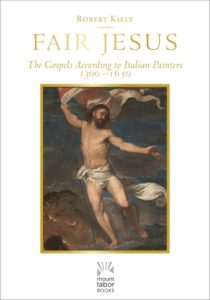 Naturally, this is a time to refocus on Christ, on His saving power, his merciful grace, the way the Wise men culminate what we already know in the incarnation — that Christ comes also for those outside of Israel. (Ahhh, just think of those four women named in the genealogy in Matthew!). I was drawn this past season to a book we mentioned a week or so ago which was a hefty hardback full of great reproductions of renaissance paintings of Jesus. It is called Fair Jesus: The Gospels According to Italian Painters 1300 – 1650 by Robert Kiely (Paraclete Press; $39.99.) We still have it at that announced 20% off (making it $31.99) and it might be a good resource for your meditations this season, or any.
For this edition of BookNotes I’d light to run a bit of a riff on the Epiphany light theme, inviting you to join me in, in naming some things that need exploring in light of the Light; as the saying goes, “holding it up to the light.”
It is an exceedingly important role, investigative journalism or expose. Creatively done non-fiction that calls us to study and understand hard things is a gift; such work is prophetic some might even say, if it warns of idols and the consequences of our misguided ways. Here are four brand new books that are thoughtful and helpful and wise and bold in telling us – in light of the Light – about some distortions and dysfunctions, sins and sadnesses. If we are to live in the light of Christ’s truth, we have to face this stuff. We commend these authors to you, beseeching you to buy their books, born of love and tears, I’m sure. The publisher, naturally, will be encouraged to continue to take the risks of publishing this kind of (perhaps controversial) work if these sorts of titles actually sell. We want to support this kind of deeply Christian investigation into the shadows and hurts, and we hope you agree that you need to know this kind of stuff. Some religious bookstores don’t carry this kind of thing, so we hope we are offering you a service in highlighting at least these four. All are marked down 20% off and can be ordered easily by using the order tab link at the very bottom of this column. Thanks for caring. Happy Epiphany!
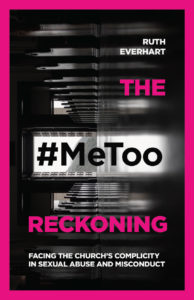
 The #MeToo Reckoning: Facing the Church’s Complicity in Sexual Abuse and Misconduct Ruth Everhart (IVP) $17.00 You may remember that we reviewed the amazing, gripping, important memoir, Ruined, Everhart wrote about being raped as a college student decades ago and how her conservative Christian college, admirable in so many ways, didn’t seem to have the heart or mind, the resources or interests, to help her much. As we learned in that book Ms. Everhart went on to get a seminary degree and was called into ordained ministry through the PC(USA.). She has served several churches in her calling (rural and suburban, multi-staff and smaller.) As a loyal shepherd in Christ’s church she continues to care for those who have been abused and has, in fact, be involved in churches where there has been sexual misconduct. Not every pastor faces this ugly stuff, but more do than you might realize.
Since the flood of stories that have come out since the #metoo movement started a few years ago, there have been other books highlighting sexual aggression against women and men, girls and boys, and this one may be the best book on this topic I’ve yet seen. Of course the child sexual abuse scandal and the scandal of cover-up within the Roman Catholic church has been catastrophic and there has been award-winning investigative reports, movies, and books about it. Everhart’s book focuses on Protestant churches and, like most #metoo stories, is more about sexual harassment and abuse of women and less about the crime of pedophilia.
The #MeToo Reckoning: Facing the Church’s Complicity is powerful and readable. The prose is straight forward and captures the reader easily—it is not lurid but neither is it bloodlessly clinical. It is not explicit or graphic but there is some awful stuff reported (if not described in detailed.) It has a pastoral tone of listening well, naming things clearly, caring for victims and of demanding justice. The notion of “complicity” in the book is important, as, like the #metoo movement, has exposed cover-ups and refusal to be honest about all this. Yet, Everhart still loves the church, is a dedicated follower of Jesus and is a Christian leader; she desires the best not only for wounded victims but for our religious institutions and faith communities as well. Shining the light is not an act of vindictiveness but of faithful truth-telling, offered in a spirit of righteousness — wanting to make things right. If you care about how women are treated in churches and have a hunch that some of these #metoo concerns are more prevalent than we like to admit, you need to read this book. If you are perhaps a bit naïve and can’t quite imagine that youth pastors or ministers or personnel committees or elder boards would commit these kinds of sins (or cover up misbehavior) you have to read The #MeToo Reckoning.
One of the great benefits of reading these hard stories, testimonials of clergy abuse, and other sexist acts of abuse of power, is that we are introduced to the victims and survivors, hearing their own stories in nearly their own voices. This is a must, and Ruth is a safe and trusted ally for these women to tell their own stories. This safe space has been a gift to the women, too, as many of these wounded sisters have reported that they weren’t believed or were not taken seriously. Their stories were minimized or silenced; sometimes, fearing this would happen, they just were never told in the first place. Holding this up to the light is good for the tellers and it is good for us to hear.
A second really good reason to buy this book is for the Bible reflections offered within each chapter. Each chapter is a telling of a certain sexual assault or #metoo type misconduct and as that story is told, a Bible story is told, in tandem. In a way, the Biblical narrative brings light to the victims story; the Scriptures are opened up in their relevance and power, even in the messy way a patriarchal culture (then) tells the stories of abuse and rape and aggression. While the stupid patriarchy of our churches is being described (including, I might add, denominations and judicatories that pride themselves in being progressive and justice-seeking!) the Bible’s own engagement with this stuff is explored. Ruth is really good in this back and forth, allowing the Light of the Word to shine on these contemporary injustice.
But there is more: in fact, she is doing much more in these Bible studies: she admittedly is reading and interpreting them through the lens of abuse. That is, since nobody reads the Bible plainly or without some lens or interpretive grid, she is trying to allow the pain of our sisters in these modern church settings to inform how we grappled with the meaning of the text. It’s not overly academic or abstract womanist hermeneutics, just good honest back and forth interpretation by a Bible scholar and pastor, in light of what she knows to be true about the world. Again, she has experienced this, even as an associate pastor, in a story she bravely tells about her own almost unbelievable situation.
In every chapter Ruth ends with a few key points, including insights into the Biblical text and then a hashtag point of what she is hoping the church will learn from these tragic fiascos. The take-aways are useful and every church needs to be attentive to these kinds of practical recommendations.
When we pre-ordered our copies of The #Metoo Reckoning we assumed we would want to tell folks about it. We have had a section of books about sexual abuse and domestic violence (also in the church) since the day we opened. We’ve always tried to facilitate conversations about what the Bible does and doesn’t say about gender justice and we’ve always carried a good amount of feminist theology, evangelical and Catholic and mainline. In our years of stocking this kind of stuff, I’ve not found in many years a fresh, new resource that is as gripping and as powerful and as prophetic and yet as deeply faithful with a wholesome sort of spiritual piety and pastoral sense as The #MeToo Reckoning by Ruth Everhart. Yes, we ordered a bunch and yes we intended to feature it. Now that I’ve read it in its entirety, I can’t say enough about it. We are ordering more now so we have plenty on hand. We hope you order a couple. It’s time this crisis in our churches, even in our best and seemingly most healthy, is understood and, where necessary, exposed.
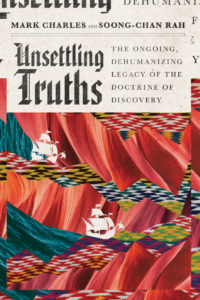
 Unsettling Truths: The Ongoing Dehumanizing Legacy of the Doctrine of Discovery Mark Charles and Soong-Chan Rah (InterVarsity Press) $18.00 This recent release has been a much-anticipated book, in part because Mark Charles, a man of Navajo and Dutch American descent, has been a tireless speaker, an inspiring and powerful teacher, and a helpful mentor to many, speaking out about Native issues for years. Soong-Chan Rah is also quite well known (he teaches Church Growth and Evangelism at North Park Theological Seminary) and has published several important books. This recent one is perhaps the first in its genre being published within the evangelical world so it is, in a way, historic; it is a strong theological critique of the fifteenth century church edict which gave Christian explorers the right to claim territories they “discovered.” Exploration, missionary work and crass colonialism combined in ways that were hardly ever helpful for indigenous people. (See the powerful award winning film The Mission for a compelling, tragic, beautiful treatment.)
Many have documented how this kind of colonialism often lead to injustices and even genocide. (See, for instance, the important Rescuing the Gospel from the Cowboys by Richard Twiss or a few of the chapters in Forgive Us: Confessions of a Compromised Faith co-edited by Rah, by the way) but few have tackled the fundamental legal question about this institutionalized legitimization of repression by church and state as has Mr. Charles in Unsettling Truths.
As Unsettling Truths — get the double entendre of the title — explains, such institutionalized “divine right” to grab land and subjugate indigenous peoples naturally led to other unhealthy and detrimental notions, from American exceptionalism and triumphalism to white supremacy and slavery. As Bruce Cockburn starts his song “Stolen Lands”, “From Tierra del Fuego to Ungava Bay/The history of betrayal continues to today…”
No one can ever justify to brutal treatment that many First Nations peoples faced but we have to do more than lament and shrug. We must understand and critique and deconstruct the powers that set this awful history of stolen land in place. We must figure out what to say about the “Doctrine of Discovery” and what to think about a church that would declare such thing. It all has to be brought into the light of truth, the light of Christ, the light that can reveal ways to move forward.
There are amazing chapters in here — agree or not with all of them, you should read “The Doctrine of Discovery and Why It Matters” and “The Power of Narratives and the Imagination” and the beautiful “The Kingdom of God Is About Relationship Not Empire.” These authors explore the “Dysfunctional Theology Brought to the ‘New’ World” and explores not just settle colonialism but even stuff about Abraham Lincoln (including, then, the era of Native Genocide.” He asks about the complexities of American trauma in our historic story and invites a “truth and conciliation” project. The sharp words about the failure of “re-concilation” is urgent, I think. There is a lot of vital content in here.
I so respect the esteemed historian Mark Noll. I appreciate his thoughts here saying that he may wish for other interpretations of some of the events in described in this book and he finally does not fully agree with all of their conclusions. But yet, he endorses and recommend reading it. Listen to the always prudent Professor Noll:
“Why should I endorse a book when I do not agree with some of its historical judgments? Answer: for the same reason you should read it. Charles and Rah attack a pernicious principle (the Doctrine of Discovery), review an evil history (the United States’ treatment of Native peoples), challenge a persistent stereotype (American exceptionalism), and psychoanalyze white America (in denial about the nation’s history). The entire book, even when you think things could be evaluated differently, will make you think, and think hard, about crucially important questions of Christian doctrine, American history, and God’s standards of justice.”
Listen to these two passionate endorsements, among many:
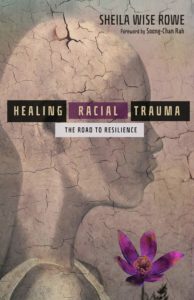
 Healing Racial Trauma: The Road to Resilience Sheila Wise Rowe (InterVarsity Press) $17.00 This is a brand new book and we must say that there is, to the best of our knowledge, nothing in print that approximates it. This is not a general book about racial injustices, not just a call to racial justice and reconciliation, not even a handbook for minority Christians to navigate the tensions of living and working in largely white culture and institutions. There are many good books on those topics, many done by this same publisher (who has by far contributed more to evangelical awareness of racial and ethnic concerns and ministries that any other publisher in the last 50 years) but this, this is something unique. It is, as the title plainly notes, a book about healing from trauma caused by racism. Ms Rowe’s Healing Racial Trauma is a rare and important book.
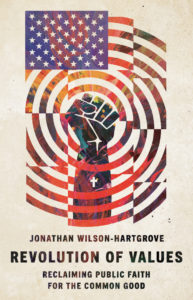
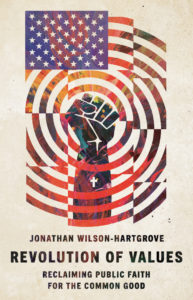 Revolution of Values: Reclaiming Public Faith for the Common Good Jonathan Wilson-Hartgrove (InterVarsity Press) $22.00 Talk about bringing things into the light. I am nearly positive that you will learn things in this book you didn’t know, you will be inspired to hear about stories you may have not heard about, and you will see things — mostly, the Bible and the social ethics demanded by a Christ-like worldview — in a very new way. Might I say, in a new Light?
A few quick comments: there is too much to discuss in the very impressive (but very readable) Revolution of Values to cover here, now, so I hope to do an extended treatment where I can let loose a bit more. (For starters, for reasons I might discuss more later, I don’t approve of the late-60s clenched fist on the cover. I have no idea who that is supposed to appeal to or why conjuring up connections to SDS and leftist revolutionaries of the late 60s has much to do with this book. There are a lot of stories in Revolution of Values but most are about Christians that had little connection to that particular era. I suspect the art designer for the publisher knows little about this era; I know that Wilson-Hartgrove was not connected to that period, either, so it’s an unhelpful choice in my view; cheap appropriation that’s a miss. But I digress already.)
Revolution of Values puts words to the inarticulate frustrations, confusion, and righteous anger many have felt in response to the increasingly visible distance between the teachings of Jesus Christ and the actions of his followers. Jonathan Wilson-Hartgrove aims a pointed critique at the way some Christians have weaponized the Bible to promote policies that work against the poor, the immigrant, and people of color. He puts a face to the systemic and institutional abuses that have occurred over the past several decades by sharing the stories of people he personally knows. This book encourages all of us to work for nothing less than a revolution in our morality that will usher in more justice, equity, and love in the twenty-first century.” — Jemar Tisby, president of The Witness, author of The Color of Compromise
“Jonathan Wilson-Hartgrove’s urgent message for the church is both a return to Jesus and a call for the body of Christ to no longer be held captive by the politics of our day. Revolution of Values returns to the heart of the Christian message―to follow Jesus, love our neighbor, bless those who persecute us, and pursue justice on behalf of the least of these. Revolution is an inspiring and prophetic book at a critical time in our country’s history!” — Mae Elise Cannon, executive director of Churches for Middle East Peace, author of Social Justice Handbook and Just Spirituality
BookNotes

SPECIAL
DISCOUNT
20% OFF
ANY BOOK MENTIONED
+++
order here
this takes you to the secure Hearts & Minds order form page
just tell us what you want
inquire here
if you have questions or need more information
just ask us what you want to know
Hearts & Minds 234 East Main Street Dallastown PA 17313
read@heartsandmindsbooks.com
717-246-3333