
One of the events we do each year, setting up a large display of books, is the conference of the Eastern region of APCE (Association of Presbyterian Church Educators.) Your denomination, if you have one, probably has a similar professional association for encouragement, training and networking of educators. If your faith tradition has church educators—heck, even if you have Sunday school teachers—you should befriend them. Judging from our experiences, and certainly at EAPCE each year, these are stellar folks, creative, caring, forward-thinking, working (hard, at too little pay) to make things happen in the churches. From training nursery care-givers to recruiting Sunday school teachers, from doing small group training to organizing service-learning and short-term mission trips, educators are truly “in the trenches.” They buy books for their own spiritual formation and tons of kids books. We spent about 10 hours setting up a large display full of stuff on everything from programming for special needs kids to spiritual formation of teenagers, from intergenerational curriculum to picture books about cultural diversity and God’s love for all the peoples of the Earth. These last few days were exhilarating as we talked about the most artful illustrations in children’s Bibles to the theology of suffering in the Psalms.
The main speaker was Dr. Beth Tanner who teaches Old Testament at New Brunswick seminary and has been working hard with some other women Hebrew scholars on the forthcoming Psalm’s volume in the prestigious NICOT commentary series for Eerdmans. It will be a while yet, but she does have a delightful, new, introductory-level book, The Psalms for Today (Westminister/John Knox; $14.95.) Very useful for small group study or adult classes.
There were good and serious conversations about the Psalms of lament. Many of these dear educators had pretty weird stories of people in the church who were not permitted to share grief or express anguish about God’s seeming lack of care. My goodness, a third of the Psalms have lament and rage and I sort of thought our churches had gotten over this overblown sense of propriety and fake faith; to shame those who express doubt or pain is just wrong.
Walter Brueggemann wrote a classic reflection on the Psalms years ago, The Message of the Psalms: A Theological Commentary (Augsburg; $18), one that Tanner drew upon and which reminds us that there is a shape to the Psalter: there are Psalms of orientation, Psalms of disorientation, and then, mostly after exile, Psalms of re-orientation. This “good–bad–better” flow naturally reminds us of the bigger theme of the entire Bible, the schema of the Story, “creation-fall-redemption.” That the Psalms can take us through these realities, give voice to these emotions, frame our experience in faithful and true ways is a great benefit of spending much time in the book of Psalms. The publisher Wipf & Stock recently re-issued Walt’s smaller book Praying the Psalms, too ($14.) Very nice.
I got back from APCE late last night, thinking about the Psalms of lament, the church’s occasional failure to be a safe space of honest conversation and authentic sharing. Today, I heard a first hand story of a very unpleasant episode where a fella unloaded a host a Bible verses on a very hurting guy, offering discouragement and what seemed like judgment on this guy—a combat vet—who had shared his pain and frustrations. None of the verses this guy cited included the lament Psalms. So, it looks like we do need to remind God’s people of the Psalms of lament, the ways in which God invites (through these holy poems) us to share our deepest stuff. It sort of reminds me of Bill Hybel’s recent book title Holy Discontent.
For someone new to this notion, I have noted here before Michael Card’s A Sacred Sorrow: Reaching Out to God in The Lost Language of Lament (NavPress; $13.99)and his The Hidden Face of God: Finding the Missing Door to the Father Through Lament (NavPress; $12.99.) Both are fabulous examples of how lament is not only permitted in the Bible, but a way in which we can come to know the deep care of a God who can take our cries of anguish. Highly recommended! Here is a review of the CD that Card did to give voice to his own sorrow, sort of a soundtrack for the book. Let us know if you want us to ship you one.
The Cry of the Soul by Dan Allender & Tremper Longman (NavPress; $14) is another amazing book, co-authored by a psychologist and an Old Testament scholar. The subtitle reads “How Our Emotions Reveal Our Deepest Questions About God” and it a study of the various emotions of the Bible. There are chapters on “righteous anger” and “redemptive despair” and ” constructive fear” (even as they are contrasted with in appropriate versions of these emotional state. I’ve read everything these two guys have written together and it is all good.
Sally Brown and Patrick Miller compiled an extraordinary volume on the laments of the Palms and how to used them in preaching and counseling and in daily life, simply called Lament: Reclaiming Practices in Pulpit, Pew & Public Square (Westminster/John Knox; $24.) A bit academic, rooted in the most thoughtful scholarship and long involvement in mainline church ministry.
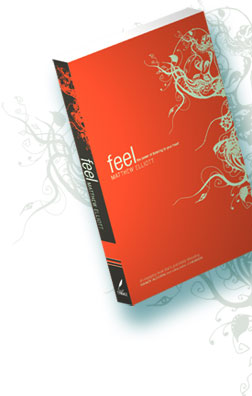 Speaking of emotions, we just got the new book by Matthew Elliott called Feel: The Power of Listening to Your Heart (Tyndale; $13.99) Some reviewers have called it “the definitive book on the proper God-given place for emotions in our lives.” This really looks good—Elliott has a PhD in New Testament from Aberdeen and works in publishing in the developing world. (You can visit his website here.)
I didn’t get to share these titles with my APCE friends, although Dr. Tanner drove them to the Psalms. If we all remain rooted in the practices of reading, studying, teaching, praying and singing the Psalter, I am sure we will deepen in our emotional lives, find hope and courage in hard times. And we will “see” life in light of these grand themes of orientation/disorientation/re-orientation.
Hey, this is a great list of books. It is an honor to have “Feel” among them. If you are going to go toward the academic side as some of these books on emotion do, you could also include “Faithful Feelings.” I hope that people regain a passionate heart for God through your work and ministry! All the best and may God bless all that you are doing.
Love the new site….great photo:)
I thank God for your wise observations on emotions and lament. I have gone through so much anguish and personal loss of loved ones that when my husband came down with a serious disease the church was not the sanctuary I thought it was. I regretted opening up to anyone as stoicism seems to be equated with faith and being a “good christian”. God forbid I let a tear trickle down my face and I was surrounded by people telling me I had no faith, that I was making an idol out of my loved one, that worry/concern was a sin and worst of all I have been told that if I worry, then God will bring upon my husband the very thing I fear. I would never hurt him. Many people who have lost loved ones have a guilt complex the way it is, “If I only did this or that” “If I only didn’t do or say this or that they’d be around”. Do I need the church to tell me I am guilty of something I pray to God about? Is God a God of mercy or condemnation? If I cannot open up to church brethren or pastors who then can I talk to ( on this earth). It seems that I get more comfort from the world out there. Where is the ministry of comfort? Why are the victims the ones who are chastized and not those who offend? How can we help others if we do not feel emotional pain. Empathy is necessary. David had anguish, Christ has compassion, are church people “better” than them? God has emotions, all kinds. I don;t know where to turn anymore as I distrust the very people I should feel safe with. Thank you very much for your bringing this up.
Lynne,
Thanks so much for sharing this wrenching story, of your husbands illness and of the awful response from your church “freinds.” (Job had similar friends, ya know, and you know what the Bible thinks of them!)
I wish I had your email address so I could write a longer, personal note, but please know that we are grateful for your interest in reading our reviews, and we are grateful for your honest insights. I sure don’t want to be glib about this, I really don’t, but it sounds to me like you should find another church family. Those folks are not living in the truth of grace, and sound pretty weird to me. You read what I wrote and know I share your concerns about the church not being adequately open to lament, but I would hope that most congregations would have treated you much better than the way you’ve described here. What kind of people would say that kind of stuff to someone with great sadness? Ugh.
God bless you on your journey. I hope you have some like-minded friends who know that God made us human, not to be stoic, but to laugh and cry, praise and protest, trust and doubt. Churches that don’t attend to that end up way too stuffy and often rather hurtful.