Redeeming Law

redeeming law.jpg
It has been a while since I’ve posted because Beth and I have been on the first of what is the most brisk whirlwind bookselling tour we’ve seen in years.  Last week, among some other good stuff, we had the great privilege of setting up a large book room for the renowned professional group for Christian lawyers, judges and law students, the Christian Legal Society.  CLS has made it possible to be their “bookstore in residence” during their annual conferences and this year—in a swanky place with beachy weather in Western Florida—we had the opportunity to recommend books to all kinds of CLS members.  Their speakers included the famous (for the filibuster against him when appointed to a federal judgeship by President Bush) and wonderful Christian gentleman, Judge Charles Pickering (read the 60 Minutes interview with him here), blogger extraordinaire and author Hugh Hewett, (he plugged his book Blog, which we highly recommend, and gave a remarkable speech against theological inquisition in the public square) and the dynamic (and I mean dynamic) John Lynch, who co-wrote TrueFaced which NavPress ($11.99) put our a few years back.  It is a marvelous book on God’s grace, and the interpersonal implications of living out of the confidence of God’s mercy, and not out of our own need to please God or prove anything. It makes a great small group study, and now that we’ve met him, we are all the more convinced it is important stuff.  His mentor and colleague, Bill Thrall, joined us as well. Mr. Thrall, as you may know, co-wrote TrueFaced and one of our favorite leadership books ever, The Ascent of a Leader (Jossey-Bass $25) 

With these kind of keynote speeches, the jurists, legal scholars, judges, lawyers, mediators, first amendment activists and law students—-hey to that gang from Pepperdine we shared a hot tub with at 2 am—had plenty to inspire them, but much of their time was spent in serious workshops and seminars.  And book-buying.  It isn’t every day we get to schmooze over thoughtful Christian books with culture-formers and justice-seekers and peace-makers like these very sharp Christian leaders. It was a bit intimidating, and very exciting for us. We wanted our larger circle of BookNotes readers and Hearts & Minds friends to know our whereabouts, and to rejoice that serious Christian books are made available in the most remarkable places. (The load-out and drive back was exhausting, and we’ve got several other large gigs in the next weeks, include a drive back to FL for the big Ivy Jungle event). Pray for our stamina, and the van’s endurance, please.)

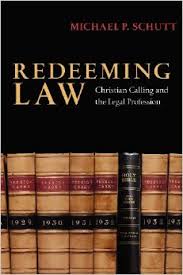
And we must say this:  every field, academic discipline or job area should be so fortunate as to have a single must-read, absolutely foundational, solid and interesting book as do these CLS folks.  Our friend (he’s posted here once or twice) Michael P. Schutt, has recently had published his major work, Redeeming Law: Christian Calling and the Legal Profession (IVP; $24)  a readable, insightful, introduction to the field of law, trying to develop, out of a coherent Christian worldview, a Godly perspsective on jurisprudence, a Christian philosophy of law that could fund and equip the practices of being a uniquely Christian attorney.  I found the book fascinating (I’m not quite done, for the record)—and nobody in my life has ever suggested I was smart enough to go to law school—so I would like to commend it far and near.  At least anyone interested in current affairs, government, public life or politics could enjoy it, and benefit quite a bit.  Mike is a winsome and fine writer (and a heck of a funny guy) who has done for the field of law what every field needs: write the classic, basic, must-have, go-to book on developing a Christian perspective on the calling of that career.  I can’t say enough about this (without doing a true review, which I’m hardly qualified to do, and which I needn’t do here.)  CLS is behind this book big-time, and Mike will be out and about (like at Jubilee 2008.)  His creds are impressive, his spirit right, his scholarship impressive.  What more can I say?  Know anybody you can buy this book for?  Know any church or community libraries that might benefit from having this around?  I know it is a bit of a stretch, being rather specific, as it is.  But come on, folks.  This is the kind of book you won’t find many places, the exact kind of a book we are thrilled to tell you about.  Check it out. Forward this on to somebody you know. 

BLOG SPECIAL
REDEEMING LAW
2O+% off
regularly $24
now
$19
order here
or
717.246.3333

What to Think About the Golden Compass: A Long Answer to a Good Question

WHAT TO THINK ABOUT THE GOLDEN COMPASS: A LONG ANSWER TO A GOOD QUESTION

There has been much discussion about the book trilogy His Dark Material by Philip Pullman and new film based on the first book, The Golden Compass.  We have long defended Harry Potter, as you can imagine, and, also as you can imagine, took some serious hits, especially here in the bookshop.  Still, there are so many books that argue for reading that kind of fantasy, and the seriously Christian insights in Potter that we’ve boldly placed each volume on our counter as they’ve arrived over the years.  Making a statement, inviting conversation, causing trouble, having fun.  Harry Potter is not of the devil, and we’ve assured customers who worry that if there was truly an affirmation of the occult, we would not be cavalier about that at all.  And so, we’ve promoted Rowling and her Potter series.

But Pullman and his Dark Materials?  Well, we’ve stocked his trilogy over the years too—our best friends were reading the first one, The Golden Compass, out loud to their and our family during a vacation get-away when it first came out, and we were struck by the exciting story, provocative message, the truly extraordinary writing, and, yes, the anti-Christian vibe.  There is no doubt that they are, as the author has himself said, “anti-Narnian” and that the next two releases became even more troubling as the authors worldview—freedom comes from killing God—-is woven into the stunning stories.

I needn’t argue here for a thoughtfully Christian response, although Jeffrey Overstreet does one of the best jobs here.  (His book on film and his collection of movie reviews, by the way, is really worth having; more on that below.)  Some young friends have, unwisely, I think, advocated boycotting the whole Golden Compass film business, and we’ve had some conversations over at Facebook.  A few customers have asked for resources to figure this one out.  To be sure, this isn’t like Potter where the critics are flat-out wrong.  Pullman is thoroughly anti-Christian and he is proud of it.

Here are a few bookish ideas–starting very broadly as we unpeel the layers of this kind of onion— that may be helpful as you talk about this with your friends, neighbors and church.  Forgive us for offering a very long answer to a very good question.  Think of this tutorial perhaps not only as an answer to this quandary, but as a case study.

CULTURAL ENGAGEMENT
First, any conversation around what novels, film or art is appropriate for followers of Jesus, who trying to live Scripturally-shaped lives, might best be framed by a proper perspective generally about culture and the relationship of Christian faith to the world in which we live.  This is a constant theme here at Hearts & Minds so I won’t list again the books on a basic Christian worldview or the ways in which Christ’s Kingdom has “this-worldly” implications.  My Christmas column from our local newspaper, shown at the BookNotes blog, here, gets at some of that. Another thing to remember is that it may be a bit unclear for folks like me to talk about the Biblical mandate to be engaged in culture.  Firstly, that doesn’t mean to be engaged “to” culture—we are not to be wedded to any worldly ideology or established way of doing things.  (Thanks to Ken Meyers for the good quip.)

  More germane, though, for our readers, is the insight from Cal Seerveld that “culture is not optional.”  That is, we are made by God as cultural beings, and it is an impossibility to act in ways that are not cultural.  Our friends at *cino take this is their motto, and it guides them as they do their marvelous lit mag that invites normative reflections on just how to be engaged in culture in redemptive ways.  Their current (and quite fabulous) catapult e-zine, in fact, is about the arts, so would be a fabulous part of the background reading around these themes.

 Still, you should be reminded of the great book on common grace by Richard Mouw called—do you know the hymn text?—He Shines in All That’s Fair (Eerdmans; $14.) Does God smile at human culture?  Do the good things of human fruitfulness please Him?  What about the less than righteous creations and dysfunctional institutions?  In a fallen world, how do we appreciate, appropriate, and/or resist the artifacts, cultural habits, and ethos of idolatrous culture around us?  Was Francis Schaeffer correct when he noted that even pagan artists and storytellers and professors can be doing the Lord’s work, insofar as they raise the right questions, and expose the emptiness of some bankrupt answers? 

A favorite author of ours is T.M. Moore, who works with a mentoring program affiliated with Prison Fellowship that nurtures leaders in this way of thinking called The Centurion Program.  (He wrote a fine book on the need for a creational theology, and other on popular culture, among others on church renewal and spirituality.)  As he guides thoughtful Centurions to take up their calling in this world, with cultural discernment and wisdom for social innovation and reformation, he has drawn on sources historic and ecumenical.  I just love his 2007 paperback Culture Matters: A Call for a Consensus on Christian Cultural Engagement (Baker; $16.95.)  He has chapters on how others in the past have navigated this terrain—St. Augustine, St. Patrick and the rise of Celtic art, Calvin and his work in starting theological education, Abraham Kuyper whose renown for all things reformational has shaped us, here, and the contemporary Eastern European poet and Nobel Laureate, Czeslaw Milosz.  This book is very interesting (including features like an interview with guitarist Phil Keaggy) makes specific suggestions for reaching a consensus about cultural renewal and we think it is an important little book.

Dick Staub did a spectacular book this year, released in hardcover, called The Culturally Savvy Christian that bears a long sub-title: A Manifesto for Deepening Faith and Enriching Popular Culture in an Age of Christianity-Lite  (Jossey-Bass; $21.95.)  That authors like N.T. Wright insist that it is urgent (“for our times—and for our health”) may illustrate its significance.  (What other book sports endorsements from Martin Marty and Makoto Fujimura, and the late, great Dwight Ozard?)  Whether it is Potter or Pullman or Pirates of the Caribbean en our front-line conversations about movies and books and art will be shaped by our deepest convictions about culture, society, the work of God in the world and the like.  I’ve gone through much of this book for a second time and want to shout about how good it is, how well written, and truly insightful.  If you know anybody who has thought about this stuff a little bit, but needs more, or anybody who is deep in the trenches, this book could be a Godsend.  Spread the word!

Eyes Wide Open: Finding God in Popular Culture William D. Romonowski (Brazos; $19.99) This is still the definitive book on thinking about popular culture from a uniquely Christian worldview; I mention it at this foundational level because it is about so much more than just movies and rock music.  Bill’s exploration on what culture is, and a theologically rich take on the task of human flourishing, and engagement with cultural development, is right on, and helpful for anyone, in any endeavor.  When the first edition came out, it was truly a pioneering voice, and Bill has worked on this stuff—-reading widely, sp
eaking all over, being involved in music and film projects—for decades, now.  If this newly updated edition isn’t on your bookshelf, I would say forthrightly that you are remiss!  This really is a great book, thoughtful, involved, deep, and wise, and very useful to loan out to those who haven’t heard of this kind of expression of faith in culture.  Plus, he’s an old housemate, and I’m mentioned in it, so for crying out loud, order a couple from us.  Please?

ART AND CREATIVTY
Once one has this worldviewish, creation-restored, Kingdom-of-God, socially-reforming, in-but-not-of, missional vision, and has well under the belt some fluency in thinking faithfully about culture and cultural engagement, then, it seems to me, the next layer that we must know well would be some basic stuff about the arts.  We should be able to explain to friends and foe why people made in God’s image care about creativity and imagination, and how the aesthetic dimension of life—and, specifically, the arts— is important to shape our thinking about stuff like R-rated movies or anti-Christian children’s novels.

We’ve offered a listing and description of some of our favorite books on the arts at our website bibliography “Books by Vocation.”  This is a great, starter list, but there are so very many more.  Of course we’ve often said that Rainbows for the Fallen World by Calvin Seerveld (Toronto Tuppence Press; $25) is one of my all-time favorite books, and his sequel to that, Bearing Fresh Olives Leaves (Toronto Tuppence Press; $35) is a must for any serious thinker about the arts.  The updated version of his first book on these themes, lectures given in the late 60s and still powerful today, is called A Christian Critique of Art and Literature and it is still in print (Dordt College Press; $15.)  Aesthetic life is part of life; God calls us to live embodied in a world of color, sound, taste, sight, culture, art.  How can we be a bit intentional about that, reading up and learning together to discern how our discipleship might inform that side of life? 

More recently, we’ve been very happy to promote Luci Shaw’s new book, a fabulous, gentle, winsome call to a richer aesthetic life entitled Breath for the Bones: Art, Imagination and Spirit: A Reflection on Creativity and Faith (Word; $19.99.)  What a great gift this would be, a delicious read to encourage us all.

Madeline L’Engle, Luci’s very good friend, is a writer whose memoirs, novels, juvenile fantasy, essays and Biblical reflections have stood the test of time and have been nearly iconic for many of us who hold up a high standard for Christian contributions to the culture.  We commend books like the handsome hardcover The Rock That Is Higher (Shaw Publishers; $14.99) which is about how story conveys truth, but her classic in this arena is—-and it may be our biggest seller in this category—- Walking on Water: Reflections on Faith and Art. (There are two editions of this, same book, a hardback published by Shaw and a paperback by North Point Press; both are $13.99.)  I don’t know how many spiritually sensitive, young artists I know who have been nurtured by this— it is very useful, thoughtfully provocative, and inspiring.

New this year also is a great introductory essay, a brief and handsome little paperback, was written by Philip Ryken called Art for God’s Sake: A Call to Recover the Arts (P&R; $5.99.)  It stands alongside of Francis Schaeffer’s fabulous two-chapter paperback, Art and the Bible (IVP; $8) as a perfect, brief starter for the integration of faith and the arts.  The new paperback edition of that, by the way, has a sweet forward by Michael Card, who himself has written a fine book called Scribbles in the Sand: Christ and Creativity (IVP; $13.)  Any of these will help shape our view of life, our evaluative grid, and will help inform our perception of how to react to the artifacts—books, TV, media, advertising, schools, politicians—all around us.  No point in jumping into specific debates about Pullman, say, without some solid footing to think about the broader questions and concerns.

My sense is that many of us do dive into debates and conversations about watching movies, critiquing cultural phenomenon, boycotting stuff, and we haven’t done the homework, the uniquely Christian thinking, that such evaluations necessitate.  So I again implore you to buy books about the formation of a Christian worldview, the nurturing of the Christian mind, and to read some of these books on cultural engagement and, specifically, some stuff on the arts.

No better friend to the Christian artist community in the publishing world can be found than Ned Bustard of Square Halo Books.  As I’ve exclaimed often, Ned’s work in stewarding a small, indie publishing venture is inspiring, and he has contributed several essential volumes for anyone interested in the inter-face of faith and art.  Ned was recently interviewed by Leanne Martin, who offers a fabulous blog called “Christians in the Arts“ where she has done interviews with a host of remarkable Christian in this field.  Check out Ned’s brief story, telling of his work at Square Halo, his reading suggestions, and why all of this matters.

Of course my favorite book of Square Halo’s—soon enough to be touted as one of the premier books to be released in 2007—is the glorious It Was Good: Making Art to the Glory of God (edited by Ned Bustard; Square Halo; $24.)  Please go back to my blogged review to see why this book is so useful, and why we need to raise the bar in our conversations about these matters.  I am positive that if we raised a generation of younger Christians reading Square Halo books, our response to things like the call to boycott the Golden Compass movie would be much more faithful and wise.  I am aware that if you are a parent wondering if you should allow your younger ones to see this, reading Dick Staub and Ned Bustard and Calvin Seerveld won’t immediately solve your problem.  Nonetheless, without this kind of broad framework, built brick by brick with these Biblically-informed, culturally-aware, open-minded and spiritually-astute books, we just won’t be the kind of “salt and light and leaven” disciples of Jesus we are called to be. 

Okay, we are nearly there: soon some suggestions for books about Pullman and The Golden Compass.  But first, yet another foundational layer of our proverbial onion: to get at a faithful response to any particular work of literature or film, we should, well, know something about a Christian understanding of film and literature.

A CHRISTIAN VIEW OF LITERATURE
Here are a couple that could be useful.  Since you are reading this, I presume you care about books and literature, novels and the printed page.  And if you are alive in the 21st century, you simply must care about film. 

Windows to the World: Literature in Christian Perspective Leland Ryken (Wipf & Stock; $22)  How wonderful to see this old chestnut re-issued for a new generation of thoughtful book lovers.  Wheaton’s Professor Ryken is one of the foremost evangelical scholars in the humanities in the last 50 years, and this book is a gem.

From Achilles to Christ: Why Christian Should Read the Pagan Classics Louis Markos (IVP; $24) One can learn quite a bit about Homer, Aeschylus, Sophocles, Euripides or Virgil in this, but, for our purposes, it is also a magnificent case study in why people of devout religious faith should engage pagan literature.  The author wrote a very, very good b
ook on C.S. Lewis (Lewis Agonistes: How Lewis Can Train Us to Wrestle with the Modern and Postmodern World) and this book is a deeper indication of his learned views.  Speaking of Lewis, I suspect you know his great collection, On Stories: And Other Essays on Literature (Harcourt; $13) and his Of Other Words: Essays and Stories (Harcourt; $13) is another important classic in this field.

From Homer to Harry Potter: A Handbook on Myth & Fantasy  Matthew Dickerson & David O’Hara (Brazos; $19.99)  This is doubtlessly the best book of its kind.  Drawing from a viewpoint informed by Lewis & Tolkien, these authors give us here brilliant scholarship on ancient myth and fun stuff on our contemporary epics.  Wow.  (By the way, if you’ve read Dickerson’s Following Gandolf and recall his section on how it is informed by Beowulf, you’ll get some of the genius of this book.)  They look at all kinds of stuff, with excellent sections on Homer, or MacDonald, and, yes, on Mr. Pullman.  Wow-o-wow, this is faithful scholarship at its best, offered up in service of the people of God, learning to enjoy and be discerning.

Shouts and Whispers: Twenty-One Writers Speak About Their Writing and Their Faith  edited by Jennifer L. Holberg (Eerdmans; $16) Well, before we go off angry about this or that writer, or suspicious of this or that bookstore that sells those authors or books, or before we make over-blown accusations about who is or isn’t faithful in their literature or film, it would do us well to walk along-side of serous writers as they do their work.  Ms Holberg, English professor at Calvin College, does just this, inviting us into conversations with authors (some Christians, some not quite, some clearly not) who have much to say about how faith does or doesn’t inform their work.  This is a fun book, with interviews with the likes of Anne Lamott or Paul Schrader, and essays from David James Duncan, Ron Hanson, Madeleine L’Engle, Jan Karon and many others.

A CHRISTIAN APPROACH TO FILM STUDIES
Again, we have stocked books of this sort since our earliest days, and it is remarkable how many folks comment that most “Christian bookstores” don’t have a film or media or pop culture section.  Call us or write if you want some older classics in this field.  The previously mentioned Eyes Wide Open by Romanowski remains a foundational text, and the newer edition includes some new material on recent films.  If you don’t have that, start there.

The Gospel According to Hollywood Greg Garrett (WJK; $16.95) We’ve appreciated Garrett’s novels, his early work on The Matrix, and his excellent memoir, Crossing Myself.  Here, we have one of the best, serious, fun, and thoughtful recent overviews of the worldviews of Hollywood, deeply discerned, seriously written.  A must for movie buffs, and very insightful for the casual fan.

Through a Screen Darkly: Looking Closer at Beauty, Truth and Evil in the Movies Jeffrey Overstreet (Gospel Light; $17.99)  This is one of the best books on the topic, and includes some of the best film reviews we know about; Jeff is a professional film reviewer (his own website is www.lookingcloser.org) and his writes provocative pieces  for Christianity Today on line.  What a fine companion to have, a wise Christian brother, artfully helping us see and understand.  (Mr. Overstreet, by the way, has also written a fine fantasy novel that came out this fall, Auralia’s Colors.  If you like good writing, a blazing story, amazing characters, and a very well reviewed fantasy experience, check it out.  It is the first in a projected trilogy.)

Useless Beauty: Ecclesiastes Through the Lens of Contemporary Film Robert K. Johnston (Baker; $17.99) Those interested in creatively engaging the art of movies, from a Christian view, will know Johnston’s several books.  This one is truly amazing, as he explores some of the more edgy recent films (American Beauty, Monster’s Ball,  Magnolia, About Schmidt, etc) and relates them to the Biblical book of Ecclesiastes.  An exceptional book, thoughtful, deep, careful, serious about film and Word.  Wow.

Behind the Screen: Hollywood Insiders on Faith, Film and Culture edited by Spencer Lewerenz & Barbara Nicolosi (Baker; $14.99) Applause, applause, again, to Baker Books for releasing these kinds of contemporary reflections on faith and film.  Here, as I said above regarding contemporary authors, you have the chance to peer over the shoulders of followers of Christ who happen to live and work in Hollywood.  They speak of their ups and downs, tells stories of their efforts within the movie industry, and offer advice for film buffs and aspiring actors, writers or filmmakers.  These media professionals have much to teach us, and it is fascinating to listen in on their sense of God’s presence in city of Angels.

Reframing Theology and Film: New Focus for an Emerging Discipline edited by Robert K. Johnston (Baker; $24.99) More than a dozen scholars who regularly write or teach about the relationship of theology and film are gathered here, each offering a contribution to how the discipline is emerging, and how best to nurture thoughtful Christian engagement in the arena of film studies.  This is a mature and top-notch text, important for anyone who intends to follow this dynamic emerging field.

CHRISTIAN ENGAGEMENT WITH THE DARK MATERIALS
At last.  We’ve suggested educating yourself, your family, your faith community, your neighbors, in the contours of a Christian world-and-life-perspective; from that foundational imaginative vision we can make meaning out of society, culture, history: we need a Christian basis for thinking about culture.  Out of such a view we then can meaningfully and faithful reflect on theories and notions, habits and practices, dispositions and insights about approaching the creative artifacts of the entertainment industry: from TV shows to computer games, from novels to films, CDs to gameshows, we can study and learn and evaluate appropriately the nuances of the story and it’s impact.  (This is where so many jump to, pronouncing this or that in black and white tones, boycotting or endorsing, with little background of a Christian foundation or even knowledge about the artifact or issue being debates.)  But, with the kinds of resources we’ve suggested, we will be better equipped to offer Godly and wise leadership in conversations and social initiatives around controversial media or entertainment matters.  And so, finally, you may want to read up on Pullman’s worldview, and use some books about his powerful and influential writing.

Dark Matter: Shedding Light on Philip Pullman’s Trilogy, His Dark Materials Tony Watkins (IVP; $15)  This is perhaps the best, most thoughtful, solid evangelical study of the trilogy, the author’s worldview, and the ways in which we can both appreciate and rightfully be concerned.  Highly recommended.

The Devil’s Account: Philip Pullman & Christianity Hugh Rayment-Pickard (DLT; $14) Imported from England, written by an Anglican parish priest with a PhD in philosophy.  A very thoughtful and helpful overview.  This guy has enthusiastically read all of Pullman’s other works, and is intrigued by his deep commitment to being an atheistic apologist.

Shedding Light on His Dark Materials
Kurt Bruner & Jim Ware (SaltRiver; $14.99)  This is the third of basic, small hardbacks this good duo has done (they’ve previously collaborated on an introduction to the religious themes in Lord of the Rings, and another on Narnia.)  Happily, they appreciate Pullmans good, Oxford-based writing, yet they show the stark difference in worldview between Lewis & Tolkien and Pullman.  Still, they reflect o
n some of the deeper themes, offering a reasonable response, and celebrate spiritual themes that appear, perhaps even in spite of Mr. Pullman’s efforts to keep them out.  Very nicely done.

Killing the Imposter God: Philip Pullman’s Spiritual Imagination in His Dark Materials  Donna Freitas & Jason King (Jossey-Bass; $17.95)  This will be a much-talked about book, a creative and thoughtful read, well done in every way.  Lauren Winner writes on the back, “Pullman emerges not as the atheist he always said he was, but as an unwitting witness to a divine force that longs to be with creation.  It will not only change how you read Pullman—it may change how you think about your own story, too.”  Fun, feisty, helpful, and, well, maybe even right. 

Navigating the Golden Compass: Religion, Science and Daemonology in Philip Pullman’s His Dark Materials  Glen Yeffeth (Benbella Books; $17.95)  Just so you know that evangelical Christians aren’t the only ones attempting to discern what to make of Mr. Pullman’s deep philosophy, atheism, magic and revulsion against the church.  Several thoughtful authors, including well-known novelist Michael Chabon, scientists and philosophers weigh in with their critical evaluations.

***
There are just bunches of resources on the web for film reviews, thoughtful Christian cultural engagement, and places for open discussion.  I really want to remind you of two, two staffed by very good friends, reliable and like-minded folks.  Any friends of Hearts & Minds or readers of the BookNotes blog should also tune in to these:

Critique magazine, is a journal for Christian discernment, published by Ransom Fellowship.  Their website is spectacularly chock-full of movie and music reviews, articles, essays and useful teaching tools to help you grow in Biblical faithfulness.  www.ransomfellowship.org

And, for those interested in youth ministry, parents, teachers or those who care about teen culture, our favorite resource is doubtlessly the good folks at the center for parent and youth understanding.  In fact, they’ve got a brief review of The Golden Compass in their current issue of their online journal, Engage.  They are really good at helping youth think through this in-the-world-but-not-of-it  worldview perspective on pop culture.   

A Short List of Great New Books

What Would Jesus De.gifBeautiful Fight.jpgSome of our BookNotes family of friends expressed gratitude that I offered some criticism of the light-weight zeitgist of the Christian Booksellers Association, the less than faithful nature of some Christian best-sellers, and the way in which the Bible’s clear call to cultural reformation, public justice and social righteousness is often ignored in the popular view of mainstream, middle-class, evangelical faith.  I’m glad folks got a kick out of my little diatribe, and also glad a few folks ordered Mark Bertrand’s new (Re)Thinking Worldview that I promoted a few days ago.  It really does illustrate some of the best sorts of thinking and writing that has graced the Christian book world these days”¦

Just to (re)make (tee hee) the point I often share here, though—there are plenty of great authors and more than enough really good books out these days and most CBA publishers are doing great work.  It isn’t just the academic publishers or the heavy theological ones that grapple with important stuff, and not all the serious books are overly deep.  Every day we are thankful to God for the good kinds of books that go beyond the trite or predictable, but are nonetheless fruitful, good and accessable for ordinary, educated readers.

For instance (hold on tight, we are going to go fast!)

The Beautiful Fight Gary Thomas (Zondervan) $14.99  This introductory price (the hardcover will be later priced at $18.99) is a great asset to what looks to be a fabulous book of orindary holiness and contemplative spirituality, by a writer we greatly admire.  Thomas is one of our favorites, and his writing is mature, wise, and yet very, very readable.  The subtitle is “Surrendering to the Transforming Presence of God Every Day of Your Life” and if it helps us explore that, it is well worth the couple of bucks it costs.  This pleasant writer draws on deep wells—how many evangelicals know Kallistos Ware, let alone Austin Farrar and place them beside John Piper or John Wesley?

Intelligent Design: William A. Dembski & Michael Ruse in Dialogue Edited by Robert B. Stewart (Fortress) $22.00  Well, maybe this isn’t as easy to read as some on this list, but it is a wonderful collection from a wide variety of folks, each weighing in pro and con and other, on the ID debate.  Dembski, of course, is a senior fellow with the Discovery Institute’s Center for Science and Culture, and Ruse is an internationally known philosopher of science and skeptic.  From Sir John Polkinghorne to Nancey Murphy, from Francis Beckwith to Alister McGrath, Wolfhart Pannenberg to several scholars from the National Center for Science Education, this is a fastinating discussion to follow.

The Late Great Evangelical Church C. Vaughn Doner (Oakdown) $27.99  Okay, this is a pricey hardcover, but it makes a powerful, powerful case against the contemporary manifestations of the age-old heresy of Gnosticism in modern, evangelical guise. Mad about dualism?  Frustrated with corny church growth stuff and sentimental piety? With blurbs from newly Orthodox thinker Frank Schaeffer and older Reformed guys like Thomas Schirrmacher and John H. Armstrong, or emergent leaders like Sweet and McLaren, this book has been widely endorsed by all kinds of folks who long for a renewing movement that would recover ancient orthodoxy and discover fresh embodiments of wholistic discipleship, rooted in mature, liturgically-rich church life.  What a book!

The Year I Got Everything I Wanted: A Spiritual Crisis Cameron Conant (NavPress) $12.99  I have mentioned before this new “Deliberate” imprint, an edgy, thoughtful and authentic line of books from this traditionally conservative, evangelical press.  I was very moved by Conant’s previous memoir, published by Relevant, about the break-up of his marriage.  This raises age-old themes from Ecclesiastes, and, while it may seem like a cliché to say that about a young writer who shares his story in ways that are both poigant and provocative, well, it is only a cliché if it is merely a marketing scam to say so.  Read this and see for yourself.  This guy is a straight-shooter, honest and a fine, young writer. 

Monk Habits for Everyday People: Benedictine Spirituality for Protestants Dennis Okholm (Brazos) $12.99  Monk-habits.  Monk habits. Get it?  Of course you do.  With a remarkable forward by Kathleen Norris (author of The Cloister Walk they say on the front, as if they need to tell you) this is one fabulous little book.  Not every day you see a blurb from Tony Jones, Mark Noll and Ms Norris on the same back cover.  Okholm is a Presbyterian, by the way, making this a truly ecumenical goldmine.  Way to go, Braz-os.

What Would Jesus Deconstruct? The Good News of Post-Modernism for the Church John Caputo (Baker Academic) $19.99  Okay, this ain’t the easiest sledding, but it is fun and funny and very, very provocative, written by an provocative, controversial Roman Catholic philospher.  It means a lot to me, and should to BookNotes friends, that this is the second in the series that our friend Jamie K.A. Smith edits (the first in the series was Smith’s brief and brilliant Whose Afraid of Post-Modernism: Taking Derrida, Lyotard and Foucalt To Church.) This new one just came today and although I’ve talked with those who’ve read the manuscript, I am not prepared to say I agree with it, despite Brian McLaren’s exceptionally nice, complimentary and generous foreward.  Perhaps he is, as one pundit quipped, “a sheep in wolf’s clothing.”  And maybe deconstruction can be the hermeneutics of the Kingdom of God, as Christ reconstructs our lives.  You will be hearing more of this, I’m sure. 

BLOG SPECIAL
buy any two
25% off both
order here
or
717.246.3333

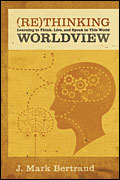
(Re)Thinking Worldview

As you know, I’ve taken a bit of a risk in writing critically about the shallowness and bad Biblical theology of tworethinking worldview.jpg quintessential evangelical writers, each writing on two exceptionally profound Old and New Testament texts. (Scroll back two entries if you didn’t seem em.)  Because some of this CBA silliness comes from the lack of an integrated and broad Christian worldview, it seems a perfect time to promote a book that may be in our the top handful of books of the year.  It is a fascinating and fun read, an important and weighty set of teacherly essays on what we mean by worldview, what it means to think Christianly, how the much-noted narrative flow of creaiton-fall-redemption fits into one’s life picture, and why a comprehensive vision for the Christian life is so important to reflect upon.  And reflect upon it he does.

J. Mark Bertrand may be known to hip bloggers for his great website (if you’re a big coffee fan, or lover of fine pens, or swanky book bindings, say, you’ll love his bourgeois push for the best.)  Better, if you’re a book lover of any kind, but especially a fan of serious fiction, you simply have to read his Comment piece from this summer, about the huge question of what to read while traveling.  What a great, great essay, fun and interesting and, surely, a good encouragement to be intentional about your reading habits. 

Besides being a blogger, coffee snob and bookman par excellance, Mr. Bertrand works teaching young folks about the importance of serious worldview thinking.  I so badly wanted to put his new book, (Re)Thinking Worldview: Learning to Think, Live, and Speak in This World (Crossway; $16.99) on that list which I compiled in August, but it wasn’t out yet, and I hadn’t laid eyes on it.  I was sure it would be great but, you know, that little integrity piece of the Christian worldview really kept me from pushing it sight unseen, on intuition alone. Now, I am happy to report, advance claims and good suggestions from those in the know, are spot on.  This is a great, great book.

Here’s is what our friend and worldview guru David Naugle writes of it:

For those of you suffering from “worldview fatigue.” or who think it’s a theologically unhelpful concept, or who are new to the notion altogether, read this book.  It’s like a satisfying draught of ice-cold, refreshing water on a hot summer day!  Bertrand’s book is a rich gift to serious citizens of the Kingdom of God.

There is so much here I could comment on (and just a few things to quibble about, but no upside-down cover for him!)  One section is especially useful, where he explains how to move from being a consumer of culture, to a critic, to a contributor.   That he is contributing to culture is doubtless;  that he is a fine writer is evident.  In case you wondered, though, listen to lit guy Leland Ryken: “Bertrand maintains our interest througout with an incipient narrative thread…The book actually has the quality of a suspense story in which the reader is led to wonder what Bertrand discovered next in regard to worldview.”   If a feisty guy like Marvine Olasky says it “throws off sparks” you should take notice.

We think that in the growing set of resources to counter dualism, personalized sentimental faith and a thoughtful approach to cultural engagement, this is an important one.  We are glad to promote it, encourage you to join us in moving your faith community towards wholistic dischipleship, non-partisan cultural reformation, and learning, as he shows in this book, how to move from worldview to wisdom to witness (and, in a brief epilogue, the role of worship.). He is a savvy young writer, aware of the role of story (and of stories—gotta love his quotes from movies and novels) who is honest about many, many things.  Including, his own foibles, the frustrations of the evangelical sub-culture, and, of course, about another key to worldviewish faith: mystery.   Thanks, Mark.  If only, now, we could talk over some of that great java you show on your classy website. 

BLOG SPECIAL
(Re)Thinking Worldview
25% off
regularly $16.99 now $12.75
Order here
or
717.246.3333 

Justice and the World Restored

We received some good emails in response to the previous BookNotes post sharing my frustrations with two mega-selling authors in the CBA (Christian Bookseller’s Association) market, and their most recent books.  I noted that they were popular but lite, although my biggest frustration was the way guys who should know better—Charles Swindoll and Max Lucado–mishandled the Biblical texts that their respective new books are based upon.  As I wrote in that blog entry, we have two nearly iconic evangelical authors doing what I take to be a less than honorable job in exegeting two quintessential Biblical texts, Micah 6:8 and John 3:16.  Chuck’s refusal to talk about justice in his study of Micah 6:8 is the most egregious, although Max’s utterly personalistic take on the word “world” (kosmos), while less clearly wrong, is more interesting.  I said I’d offer some positive books that might help clarify these bad boys botching of the Bible.  Here goes.

I don’t think that most readers of Chuck’s book will need a serious commentary of Micah, so nearly any one would do.  The best, doubtlessly, is A Commentary on Micah by the extraordinary Bruce K. Waltke  (Eerdmans; $32.00.)  If you are the kind of person who has a academic, Biblical studies library, you should own this one.  Scholars, pastors, laypeople—anyone who cares to read carefully will cherish this mature commentary.

If one is interested, as I am, in the classic and beloved text of 6:8** you will appreciate the brief collection of three essays entitled To Act Justly, Love Tenderly, Walk Humbly: An Agenda for Ministers by, respectively, Walter Brueggemann, Sharon Parks and Thomas Groome (Wipf & Stock; $8.95.)  This rare book, only 65 pages, is a gem comprising three moving chapters, obviously given, initially, at some pastor’s event.  Don’t let the sub-title worry you, as this is a splendidly moving set of sermons for anyone.  The Brueggemann one alone is worth the price and you will read it more than once, I’m sure.

The rub in my critique of the Swindoll book was how it was fine, with one exception: it didn’t deal with the word justice in the text, and didn’t even admit it wasn’t dealing with the text.  How a conservative like Swindoll, on an evangelical publishing house, can, in good conscience, fail to stand honestly before the Word like that is just beyond me.  Really, it is, and my essay was not a playful poke to the cheesy CBA subculture.  It was a heart cry that our fellow believers, especially those of influence and status like Swindoll, be more faithful before the living Word of God.  I am not a Bible scholar, and I do not pretend to be.  I am confident, though, that to talk about any of the Minor Prophets without a comment on the call to do justice, is a travesty.

And so, here is one of the best little fair-minded book on what the Bible says about justice, a gem of a resource that you most likely never heard of: A Covenant to Keep: Meditations on the Biblical Theme of Justice by James W. Skillen (Center for Public Justice & CRC Publications.)  $10.00  This is a bargain of a price for a well-written set of nearly devotional essays showing various usages of the word justice in the Bible.  It has some practical application ideas, a few contemporary testimonials, and some helpful suggestions for helping this shape our convictions and practices about public life.  Mostly, though, it is just darn good Bible study.  It is highly recommended by a friend and mentor I’ve admired for most of my adult life.

Bring Forth Justice: Basics for Just Christians  Archbishop Daniel Pilarczyk (St. Anthony Messenger Press) $5.95  Are you kidding me?  Five-ninty-five?  Yep, this inexpensive and very brief book is a fabulous overview of how Catholic social teaching, has described various sorts of justice.  It explains what is meant by commutative justice, distributive justice, social justice, and such.  It distinguishes, in clear but sophisticated way, what we mean by different sorts of social obligations, how to determine who owes whom what, and so forth.  For anyone who wants to thoughtful explore social ethics beyond the rhetoric of justice, this is a helpful little guide.  Of course there are more thorough resources, but this could be read by the most basic believer, even those drawn most typically to the likes of Mr. Swindoll. 

***

As to the truncated reading of kosmos that inflicts Lucado’s mega-seller 3:16: The Numbers of Hope, I will continue to write again and again.  Creation Regained by Al Wolters (Eerdmans; $13) remains the best book which draws the links between creation-fall-redemption, showing how a Christian worldview will “see” life in terms of this cosmic scope of redemption.  Michael Wittmer’s fine Heaven Is A Place On Earth (Zondervan; $16.95) is a truly lovely and very helpful guide, too, into this Kingdom vision that Christ is bringing restoration to every zone of his good, but fallen, creation.  There is a great study guide, making it a very useful resource for small groups.

 Simply Christian
by N.T. Wright (Harper; $22.95) is a splendid antidote to the false piety that afflicts Max’s syrupy best-seller.  It starts with this intuition we all have that things are not the way they are supposed to be, this yearning for the world to be made right.  He not only looks at our deepest foibles and anxieties, but also names the injustices against the planet, from terrorism to global warming.  We really do need things to be straightened out, don’t we?  Is not the restoration, the victory over evil, the creational healing, the grand hope of a planet renewed provided in the gospel of the Kingdom?  Is this not—to use just one example—what Tolkien said often to C.S. Lewis, that we are sub-creators, making stories where good wins in the end, even if in a eucatastrophy, because we deeply know that that is, indeed, the way of the truest truth?  Isn’t that the message of Narnia, that the death and resurrection of Aslan brings glorious Spring, at last, to the frozen creation?  Ahhh, if only Mr. Lucado had remembered that ancient truth: wrong turns to right when Aslan is in sight!  That would have moved him from his sweetly safe individualistic pietism.  Sure Jesus loves “whosoever will” and the Bible is clear that God draws His elect into eternal life.  But the point is not just God’s gracious mercy for sinners, but, more, the way in which those sinners are then transformed and given gifts, like Father Christmas gives to the children in Narnia–weapons!—for the part we get to play in the full-orbed Missio Dei, the renewal of all things, to the glory and pleasure of God 

What’s wrong with evangelical publishing? Two bad best sellers

I mentioned in a blog last week that I was irked about two new popular titles, and that I wanted to share my frustrations. Sorry I have posted lately–we’ve been on the road a bit—selling books with pastors of small churches at a Presbyterians for Renewal gig, for instance, and setting up a UCC retreat on the theme of hope in the writings of Desmond Tutu. We were at a glorious wedding in Western Pennsylvania and I am speaking at the chapel of Eastern University in, well, Eastern Pennsylvania. We’re preparing for an important conference on sexual trafficking and human rights at the John Newton Center in Carlisle, PA (October 27th) which will end with a free showing of Amazing Grace at the lovely downtown theatre. (The DVD of that important film, by the way, will be out soon, so do contact us to order it.) We are happy that our new van (with only 69 thousand miles) can journey the miles dispatching our books hither and yon.

And, these books are—we are happy to say–really diverse. We are told that we have a mix in our inventory that is really wide-ranging, and we hope you like the thought. Unlike some so-called “Christian bookstores”, we stock books on a really wide variety of topics, and from a really wide range of theological perspectives. We like the clarity of John Piper, the broad thinking of N.T. Wright, and the neo-Calvinist worldview of Abraham Kuyper. We appreciate the deeper spirituality of Richard Foster and Henri Nouwan, and have enjoyed selling books with Catholic sisters like Joyce Rupp, or contemplatives like good friends Russell Hart, Kent Groft or Graham Standish. You know that we’ve often named Os Guinness and Ron Sider as friends and mentors, and we often write about social concerns, cultural engagement, and the reformation of higher education. Cal Seerveld on the arts and Steve Garber on how to relate learning to a lifetime of moral seriousness are among our favorite books. We stock books for all kinds of church groups, and love telling people about novels and memoirs. Nurturing the Christian mind ought to be a high priority for a bookstore, and our work on worldviews and the integration of faith and learning can be easily seen by looking back to the “top ten” lists on these topics we did here and here, in August.

Why do we do all this? Well, because the Bible tells us to, I suppose. Christ is the King of all creation, and as renewed agents of His reconciliation, we are trying to advance a view of faith that relates discipleship to each and every zone of life, fostering conversations about social innovations and culturally relevant ministry. We hope this is why you sign up for the blog subscription, so we can tell you every time we announce new books or post new reviews.

What we tend to sell a lot of here in the Dallastown shop, though, and what has been common in Protestant bookselling over the last several decades, has been what only can be called faith lite. Simplistic and cheesy stuff is easy to spot, and the popularity of the repetitive and shallow Joel Osteen notwithstanding, it is our delight to get folks who have never read a religious book, or have only read the most crass and silly ones, to move a step towards thoughtful discipleship, and books that are beautifully written and practical in their application, even though they are clear and easy to follow and down-to-earth. I do not expect everyone to tackle Brian Walsh and Sylvia Keesmaat and their provocative postmodern reading of Colossians (Colossians Remixed)– even though I raved about it here repeatedly. I am aware not everyone wants to read my friend Ned Bustard’s good anthology on beauty and the arts (It Was Good: Making Art to the Glory of God.) Heck, I know that some might even be flustered by the deeply warm and graceful prose of Ruth Haley Barton in her important call to solitude and silence. (Invitation to Silence and Solitude.) I was pleased that we’ve gotten a few orders from UnChristian which I reviewed last week—but more came from mail order than from folks here. These are all books that Hearts & Minds fans will know about, as I’ve noted them here often. But we don’t sell many of these. But I am happy, most days, to sell Max Lucado and Chuck Swindoll, two of the most popular and balanced and clear and accessible inspirational writers of our time. Considering what other less reliable authors are sometimes popular, I am grateful and happy that folks want to read whatever they write.

And therein lies my beef. I could write more thoroughly about this, but I will just protest now, and send something off to Nelson, their publisher. As the two premier popular-level Bible teachers, esteemed by many as balanced and useful, they both have dropped the ball big time.

These two men are perhaps the two quintessential evangelical authors. (And they both have sold millions of books!) Two months ago they both released brand new titles. Chuck has tackled perhaps the quintessential Old Testament summary verse, one of the most popular texts in the entire Bible, Micah 6:8. And he gets it way, way wrong. Max has tackled what is undeniably the most popular New Testament verse, John 3:16, and, guess what? He botches it.

What in the world is going on here, when two level-headed and esteemed evangelical pastors write on two of the most popular passages in the most popular book in the world, and neither can exegete their way to even using the correct words? This, dear readers, is what is wrong with evangelicalism. Despite their history of being Bible believing, and their passion for making Bible truth come alive in vibrant ways for ordinary folks, the desire to make it accessible and real and middle class has caused them to scrub down the passages, truncating their meaning, missing the point and, too often, superimposing a personalistic and middle-class message of self-improvement (with God’s help, of course) onto a misreading of the text.

Micah 6:8, as I trust you know, answers the rhetorical question of what God requires of us, and it is the subject of Swindoll’s newest book, A Life Well Lived. And the first phrase in the tripart answer is to “do justice.” Believe it or not—for reasons that I cannot even speculate upon—Chuck Swindoll doesn’t use the word. His chapter tells of personal integrity and honesty. There is not an iota of a demand for social righteousness, public justice, concern for making things right, mercy for the poor, covanantal goodness, none of the good stuff that is conjured by the Hebrew word in the text, the word typically translated justice. Is Swindoll the only evangelical left who separates faith from politics, who fails the wholistic call to an integrated faith that is both personal and public, concerned about personal kindness and public justice? Some authors may overstate the trajectory in the text towards public justice and utterly politicize the text. But for an evangelical publisher to allow a leading celebrity author, mega-church pastor, radio preacher and former Seminary professor to stand so ineptly before the Word of God is a travesty.

Lucado is increasingly the main evangelical star, writing children’s books, stories and parables, inspiring gift lines, very cool greeting cards, even contemporary praise CDs. If Swindoll has been typically down to Earth and a moving, clever wordsmith, Max is a master; his books have wonderfully tapped in to the real hurts and anxieties of ordinary folks and have reminded us of God’s love in Christ, our acceptance through God’s merciful grace, told with a wonderful knack for the turn of a phrase. Given all the truly odd Christian writers, and all the poor wordsmiths, Max has been a huge blessing to the publishing world, bringing simple faith into common language, yet in a way that soars with sentiment and care. A bit purple, at times, perhaps, as he nearly overdoes the tender sentences, but we have been fans. His new book is called 3:16 The Numbers of Hope.

It does not surprise me, though, that Max misses, as most of evangelicalism misses, the cosmic scope of the theater (Calvin’s word) of God’s redemption when the passage famously says that God loves the world: the cosmos (also sometimes spelled kosmos in some translations from the Greek.) John 3:16 is a key verse in my spiritual journey, as I realized that the text clearly does not say that God died for our souls, or our religious lives, or our churches. Christ died, the passage says, for the whole created order. Romans 8 reminds us, similarly, that the whole creation is groaning, awaiting for people to get right with God (a la the whosoever will of John 3:16b) so that it might be released from the bondage of brokenness, and be set free. The Biblical theme of (re)new(ed) creation is very, very important, and, along with the theme of the Kingdom of God, is perhaps the most important Biblical insight of our time. From the Orthodox (who have always be strong on this) to the Reformed worldview folks, from mainline writers like Pannenberg or Volf to recent Catholic writing, to the emergent conversation, everyone is writing about how God’s healing reign is a reintroduction of the ordered shalom of creation back to his fallen world. Creation-fall-redemption-consumation. For God so loved the world.

Does Mr. Lucado say any of this? Does he even tell what the word world means in its original Greek? He gets it flat wrong, ignoring the plain meaning of the word, and implying that God loves all the people of the nations. This is true enough, but not what the text says.

This truncated view of the gospel, this pietistic and sentimental virtue stuff about honesty and personalized salvation is such a half-truth to be hardly a truth at all. I want to hear the real truth: that God in Christ is buying back his whole fallen world, and that the Kingdom is coming (“on Earth”) and that Christ is Lord of every aspect of life, and that this demands stuff like standing for social justice and creation-care, like Micah 6:8 says and as John 3;16 affirms. In these two books, Chuck Swindoll and Max Lucado are a hindrance to faithful discipleship—but how do we tell nice customers who don’t know any better??

We sell Chuck and Max, and will continue to be glad that fine Christian leaders like them can handle words so well, and inspire us with books of basic Christian growth. But I have recommitted myself to be discerning of the wrong-headed and misguided stuff that the big evangelical publishers push. I want to glorify God by selling books that talk about His sovereign grace over all things. I want books that honor the complexity and nuance of this rowdy and demanding book called the Bible. And I want to hear about social justice and I want to hear about the ways in which God’s atoning death brings wholeness and restoration to all of creation.

Chuck Swindoll slaughters Micah 6:8 and I will be sending the books back, with a firm letter of protest to Nelson. (And if there is any justice, they will pay for the shipping costs.) How dare they mishandle the Word of God like this? What were they thinking? What’s next, Swindoll watering down Amos, with personal integrity flowing down like a mighty water? What, Isaiah 58, saying we should be nice, and then God will hear us? This justice for the poor, this demand for structural change, this call to redemptive economics and righteous policy, that is all so un-pious and un-American! And, apparantly, so easily ignored. Aaaaggh.

Max Lucado misses the full import of the meaning of the word world and thereby diminishes the glory of grace, God’s inclination to incarnation, the death and resurrection of Jesus. It robs us of the vast implications for those who have faith, the daily relevance of their believe, the proper scope of redemption, and the very nature of the everlasting life the text so gloriously proclaims. That the book has this market-driven feel to it—the cover has this nifty logo of the numerals 3-16, and it was released on 9-11–which I must admit leaves me with mixed feelings. (I’m a sucker for the genius behind such marketing campaigns and clever graphics. Yet, sometimes, it seems like somebody came up with an ad first, and then built a slight book around the big idea of the advertising. Did the book follow the tee-shirt, or the CD? Yes, indeed, this is what makes working in the business so darn complicated: shallow books that disregard the very Words of God, presented in a very, very cool package.

Two great contemporary authors on perhaps the two most beloved passages in the Bible. Soon, I will recommend some that get these passage right. And celebrate some of the very solid and useful books that are coming out from evangelical presses. Things are not all bleak. But the mainstream marketing power, making these hugely popular authors immediate bestsellers will misguide many. Let’s redouble our efforts to talk about the best books, the most honest Bible study, the most relevant application. After all, as Swindoll has told us, it is important to be honest.

UnChristian & The Tribal Church and brand new home to the BookNotes blog

I hope you saw the last post–nothing about any books, but very important. It was an announcement that we are happily moving the blog over to the newly redesigned Hearts & Minds bookstore website. We are still transferring the tons of lists, biblios, essays and book review articles that we’ve archived for years. It will be a while ’til that is all there, but the great news is that we will now be able to edit and add to the website easily. The regular blog posts will continue, but will be more integrated into the bigger website. It’s pretty nifty even now, so browse on over.
As we said, though, you have to re-subscribe in the little address box if you want notifications whenever I do a new post. I’ve got the list of those who do—friends and neighbors, relatives and loved ones–so sign up soon, or you’ll throw me into more self-doubt and endless anxiety. Being a small-mart indie bookseller up against the Goliaths of A-zon & Company is hard enough. Don’t let a guy hangin’…

Which makes me think, perhaps circuitously, of the big splash made online by UnChristian: What A New Generation Really Thinks About Christianity…And Why It Matters (Baker; $17.99.) This groundbreaking bit of research and commentary (and you will be hearing more of it this fall, I’d bet) was done under the prestigious auspices of the Barna Research Group. David Kinnaman is the very young new Prez of the pollster group, and has turned their research work on young adults and what they think about Christianity, church, and evangelical faith. The study is powerful, clear, and nearly devastating: classic Christianity has an image problem.
As my old protest buddy, Charlie, still at an urban church in Pittsburgh, would shout, with feigned alarm: Call the Doctor! No, nobody with half an eye open, will be really surprised by this sad news. If you hang around with anyone under 30, with or without body piercings, or you go to any kind of ordinary church, you know where this is heading.
Ahh, but, here are three reasons this book is so very, very important.
1. This provides the hard data, so we don’t have to speculate what young adults think about the church. We have surmised and intuited this before, but here are the goods. UnChristian gives us the facts which we need to work on. Read it and weep.
2. The book is laden with sidebars, counter-stories, examples of testimonies of those who are, in fact, doing the sort of stuff (or, as the case may be, not doing the kind of stuff) that younger folks talk about in this book. That is, the truth of the matter is that there are cultural creatives, edgy folks with compassionate hearts, who are passionate about loving God and following Jesus, who bear little resemblance to the picture held by most non-churched folks. They simply don’t match the assumptions that are carrying the day in the imaginations of the young adult population. These interviews and testimonial are in many cases folks we know, readers of BookNotes, even or people we admire, so we are thrilled to commend the book for this portion, too. The research piece of the book is supplemented and contrasted with stuff from Andy Crouch and Louie Giglio, Brian McLaren and Chuck Colson, Sarah Cunningham and Mark Rodgers, Jim Wallis and Margaret Feinberg, Jonalyn Fincher and Gary Haugen. If you don’t know at least a couple of these names, you haven’t been paying attention. And, sadly, that is exactly the problem: the brave and good witness of faithful, interesting Christian folks like this is evidently not changing the perception of the watching world.
3. This book is co-authored by Gabe Lyons, a friend of a friend who I can’t wait to meet at Ivy Jungle later this fall. He is the genius behind the Fermi Project, who do the snazzy Q events. This is, if I can sound like the baby boomer I am, where it’s at.


Tribal Church: Ministering to the Missing Generation by Carol Howard Merritt was just published by the Alban Institute ($17.) A bit pricey for a paperback, but the Alban I. folks are the best mainline denominational publisher for getting solid studies done with no-nonsense evaluations and clear-headed guidance. Much of what they do is based on a solid lay of the land, written by researchers and practitioners in the parishes sharing what they know. I haven’t spent enough time with this new release to know how brilliant it may be, but I am very confident it is worth reading, if you are concerned about the lack of 20-somethings in your congregation.
Carol Howard Merritt is a very fine writer, and has been influenced by the popular books a few years ago that documented what some have called “urban tribes” of 20/30-somethings. Seen Friends? Here is a short piece drawn from the book, called “Ministering to the Missing Generation” which will tell you of her title, and draw you in to her journey of thinking about this.
I wish Merritt was more interested in the work of folks like the Fermi Project, and had the movement of transforming, evangelical cultural engagement in view. She is a Presbyterian pastor, so her book is informed by her day-to-day efforts in a fairly traditional church. This is, of course, her strength, and (not to sound too contradictory) that may be the vital contribution she makes. Q will attract some and connect their God-given yearnings for relevance and cultural engagement, purpose and vocation, with a vibrant and clear Christian faith. Wooly, emerging conversations will surely spark the hearts and minds of some, drawing skeptics and seekers, post-evangelicals and others. And, surely, Merritt’s ordinary, multi-generational, mainline congregation that isn’t chasing after hipster trends or zippy worship fashions, but is just doing what must be done, surely that is a very significant call. She helps us understand her own age demographic, and draws insights for congregational leaders. Her thoughtful (left of center) views and lovely meandering reflections can be found in her blog, here.
Of course, oodles of questions remain. I could offer concerns about either of these titles. It is my job, though, to commend them with great gusto, to hope and pray our announcements here get them purchased and discussed, and that—please, Lord!—churches of all sorts re-double their efforts to think about the unfortunate images we’ve presented to the young adult generation, the ways in which we’ve failed to present a compelling reason for young adults to be involved in the community of faith and serious discipleship, and to think hard about what to do. Either or both of these books could help. What do you say?

Watch Bono preach. Get a Free Book.


The last few posts have been about books that we care about, and wish were better known within the circle of those who follow religious publishing. Those that know us hopefully know that we invite our friends to buy and discuss these books because we believe deeply that the Bible teaches that we must care about the world and it’s problems. Whether these particular books get it all perfectly—they may not—they are current and inspiring and thoughtful. We commend them sincerely and hope they help you live more faithfully in these times.
So, while on this roll, a good friend forwarded me a link to Think Christian, a fine website that shares our concerns about evangelical cultural engagement. Here, they offer the nine minute youtube clip of rock star Bono getting an award from the NAACP. It includes a great tribute, but then he comes to the podium. He tells of how the vision that poured forth from black pulpits about racial unity during the civil rights struggles inspired him as a teen-ager in the violent and religiously-segregated Ireland. Anyone that knows anything about the Irish troubles, or the rise of u2, can see how that very white Irish punk was changed by an understanding of the black experience in America, and the music and preaching that gripped his soul and shaped his politics.
Let this clip load well because you won’t want it to stall on ya. By the end, you will be on your feet, or maybe on your knees. And maybe— I say this with all seriousness and righteous hope—you will buy more books on the great issues of our time, pass them around, review them, form book clubs, give them to preachers and teachers. That is, you know, how McLaren starts his Everything Must Change, wondering what the world’s biggest problems are, and what Jesus might say about them. Bono gives us a way into that question, and calls us to action, finding God among the poor and abused, and learning to love in a global way. His stirring speech reminds us of some very important things…

Blog Special
Buy any book I’ve mentioned in the last several posts,
and we will offer a
free copy
of the little book of pictures Bono took in Africa
On the Move

which has the text of his famous National Prayer Breakfast Speech.
Buy a book, get a free one. Thanks for your involvement in our work.

Everything Must Change


It is after 3 am, and it has been a hard day in many ways. I won’t renumerate the ways here.
Yet, despite a hefty speaking engagement set for tomorrow morning—and more books to set up, first—I just have to tell you about two new items that we got in the store today. They have brought me joy and some hope, even amidst my goofy mood.
Brian McLaren’s long-awaiting new book arrived, a bit earlier than I had expected. It is called Everything Must Change: Jesus, Global Crisis and a Revolution of Hope (Word; $21.99.) I have been carrying around a beat-up early draft for a while, now, and have been itching to write about it, and now, the time has come, and I don’t have time or energy. Still, this my not a sleep-deprived rant, but a well-considered evaluation: this really, really, is a very, very important book. Brian (or the publisher, at least) has billed it as a sequel to the very good The Secret Message of Jesus, which was a great book about the Kingdom of God. I would highly recommend reading that, but EMC would still be useful and inspiring and informative for many of our readers, even if you passed on the Jesus book. It may be his most complex book, yet, and will stretch readers into some important new territory. Good.
Everything Must Change starts, as many of Brian’s books do, with some casual and, I find, charmingly honest statements about himself, how the book came to be, and inviting the reader to either agree or not. He says that it may seem presumptious, but he has long had two big questions—very big questions—that have burned within him. Since I gave a talk tonight with an amazing group of 30 some college students on 1 Chronicals 12:32 (look it up, if you have to) and talked about Barth’s famous quip about “reading the Bible with the newspaper in the other hand” Brian’s two big questions surely resonate. He asks, firstly, what is the biggest problem in the world? And, next, what does Jesus have to do with that? Not a bad way to drawn this reader in. I hope you fall for it, too.
I don’t think McLaren would mind if I note here (my lack of sleep may be causing a lowering of inhabitions) that we sent him a manuscript that a friend of mine co-wrote, back before it was published. It was Hope For Troubled Times: A New Vision for Confronting Global Crisis by Bob Goudzewaard, Mark VanderVennen, David Van Heemst (See the April book review column over at the website for some more on that one!) I’m excited to note that Brian cites it several times, and says some very nice things about it. So, if you are a Bob Goudzewaard fan, as some BookNotes readers must surely are, know that his imprint is on McLaren’s heart and mind. Brian is not new to this struggle of living out Kingdom faithfulness in a complicated and impoverished world. His affliation with the Call to Renewal–and his own activism in creation care, explained in even his earliest books—give him the right to speak authoritatively on this global stuff. We will write more about it later, but for now, consider ordering it, or at least saying a pray of thanksgiving for one more contribution of deep faithfulness, as I described in my last posting. Things are changing, as church folk connect the dots, live into the promises of God, and dare to dream the biggest dreams. As McLaren puts it, we join a revolution of hope.

The new David Crowder Band CD released today as well. I’ve listened to it for days, now, and, as I told my wife, while up late packing books last night, it “brought me to my knees.” His simple addition of a brief bridge in O For A Thousand Tongues to Sing that there are, “few words that last” and that there is “one great love–Jesus” just made me weep. The second to last cut is called Remedy and it is a splendid, slightly nuanced but not obscure telling of the tale of redemption. Remedy. A good way to say it, eh?
The last song could be the sweet soundtrack to your reading of Brian’s new book. It is called Surely We Can Change and it calls us to experience change, to be change, to realize that the whole world is going to change; that is, it is a song about hope–modest hope, on one hand (“surely we can change, something”) and grand, eschatological hope, as well. (Yes, Crowder, unlike most CCM stars, knows what that word means.) My description doesn’t do it justice—it is a powerfully poetic song, an acoustically driven quiet tune, with a very, very compelling lyric. Other songs are by turn rowdy, electronica, very contemporary. He is a thoughtful writer, a clever lyricist, has a strong and wholistic passion. The last two songs are worth the price of the whole disc. Highly recommended.

Three Books about Justice: in the burbs and around the globe

Last week I mentioned this important classic of the social gospel movement, by Walter Rauschenbusch, Christianity and the Social Crisis. This new anniversary edition not only retains the original classic, but offers insights by the likes of Cornel West, Stanley Hauerwas or Tony Campolo. I found it thrilling and informative, an important work we should know, made only more important with these contemporary reflections.
And, as you may have seen, I mentioned this great new book, Shaking the System, by Tim Stafford, offering things that he learned about, and from, the great faith-based movements of social reform, from abolition to civil rights, etc. Great, great stuff.
I thought I would mention just three other books which offer a radical social critique, and that give resource, aid and support to those of us who desire to be “morally serious” in our historical setting. These are each more practical than the historical and theological ones I mentioned in the last post. It is fascinating that there are more faith-based books out now about social action and prophetic critique of the ideologies of our time than I’ve seen in recent decades, and the extraordinary things is that many of these are being published by evangelical or charismatic publishing houses, Christian industry pillars who have not been known in recent memory for doing these kinds of books. Resisting the sex trade or standing for ecological practices, working for racial justice or getting involved in short term mission work, younger evangelicals, especially, are everywhere talking and acting on Biblically-based principles for social transformation. Some, even who indentify themselves as politically conservative are out there doing great socially significant work. (As opposed to decades ago when there were many who identified themselves as liberal socially, but didn’t get very involved in actual social activism.)
I have reasons to think why this is, and as one who has spoken for, taught about, hawked books on and generally tried to make a bit of a racket around these things for thirty years, I am now very, very glad, if a bit perplexed, to see these concerns popping up in the evangelical religious press. I am grateful for having known and in some cases worked with (or protested alongside of) with stalwarts like Tony Campolo, Jim Wallis, Ron Sider or John Perkins—great saints whose books you should have on your shelves, if you don’t— but the new generation of activists are coming with fresh voices, often clear, if progressive, evangelical faith, and a connection to spirituality and worship that these older men would surely affirm. These are exciting times to be about the work of nurturing the Christian political vision. Here are three examples of new titles that might not have even gotten published six or seven years ago…

Shaking the Gates of Hell: Faith-Led Resistance to Corporate Globalization Sharon Delgado (Fortress) $20.00 Perhaps the edgiest-looking book this mainline Lutheran publisher has released, this eye-opening journey into the heart of the anti-globalization movement is provocative and disturbing. It makes your heart beat, wondering if her radical critique is really true, whether her lived out resistance to the powers is an authentic example of Kingdom hope, whether, you, too, should be involved in active protest, resistance and forming communities who model different ways of living and being that are not co-opted by the forces of conformity and complicity to injustice.
Rev. Delgado so badly wants to teach about the horrors of our abuse of the Earth, the trampling of the poor, the dangers of arms escalation and the spread of toxic fumes and ideologies, that she doesn’t worry about every theological jot and tittle–she blazes away, building a powerful critique and a persuasive call for serious change. This book reminds me of stuff I read by Phil Berrigan decades ago, indeed, draws on Phil’s old teacher and pal, William Stringfellow (and his fellow contemplative protester, Jim Douglas.) If you wonder how to best understand “the principalities and powers” and you’ve read, say, Walter Wink, (or even Sojourners magazine) this spiritually-motivated call to witness against the forces of globalization is a must-read. Sharon has been at this for years, working for sustainable communities and economic empowerment as an ordained United Methodist minister and Director of the interfaith Earth Justice Ministries.

Dangerous Faith: Growing in God and Service to the World Joel Vestal (NavPress) $13.99 First this: this is the first in a great new series called Deliberate, an imprint of books that seem to speak the language of emerging evangelicals, with the tone and passion of newer generation voices, somewhat in the mold of Donald Miller, say. (It is, happily, also a line that is committed to a green approach to book manufacturing, with the vital Earth stats listed for each book. Way to go, NavPress!) This book is seriously evangelical, very wholistic, profoundly cross-cultural, yet it is committed less to the political resistance of globalization as Delgado’s book is, but more to missionary partnerships that serve, reach out, care for the needy, showing Christ’s compassion and love to the hurting around the globe. Deliberate intends their books to be voices of the new generation, and they combine writing about passionate worship (Louie Giglio of the Passion worship conferences wrote the forward–you can check out his podcast about it here), prayer, simplicity, compassion and justice. It is fun and feisty and, it, too makes the heart race, and invites us to think how we can be agents of global outreach, God’s Kingdom coming, serving others, seeking social transformation in Christ-honoring ways. Vestal is the founder of the amazing ServLife International, (check out the great website!) and his story includes traipsing off to all sorts of dangerous places, as hands and feet of a Holy God who calls us to serve the lost. You will learn a lot about the world here, and some of these stories will send shivers down your spine; it is not your mama’s missionary story (ahh, but maybe it is. Some of those old timers did extraordinary things, despite the bad rap some of ’em get from novels like the powerful Poisonwood Bible.) Forget those old stereotypes. This here is the real deal. You won’t be able to put it down. And it will draw you closer to God in the process.

Justice in the Burbs: Being the Hands of Jesus Wherever You Live Will and Lisa Sampson (Baker/emergent village) $14.99 Wow, what a gentle and challenging little book, the perfect guide to the conversation happening all over—how evangelicals, who major in Bible reading and evangelism, have so often missed the cultural engagement piece, the call to action for the oppressed, the structural stuff about economics, justice and racial reconciliation. Has life in the ‘burbs made us immune to how many folks really live, and what, in life, really matters? Has the American Dream edged out the dream of God’s shalom, coming in our midst? This is a lovely set of stories to guide us into taking small steps towards what Shane Clairborn called “The Irresitible Revolution” but explored in the middle class context. It is no surprise that dear Shane–urban activist and radical prophet, more akin to Delgado’s liberation movement than with most suburban mega-churches, offers a sweet and insightful endorsement to Will and Lisa.
Here’s something else you should know. This is the same Lisa Sampson who writes very well-done and truly enjoyable, thoughtful and contemporary Christian fiction. She starts each chapter in this book with a story device, a fictional episode which unfolds as the book goes on. In these vignettes, we watch as fairly ordinary Christian folks in the fairly ordinary suburbs, grapple with bigger questions, and take steps to align their hearts with the passions and demands of God’s story. After excellent teaching in each chapter, too, unpacking Bible truth and sharing their own journey toward these issues, there are devotional sidebars, reflections and meditations by friends and collegues of the Sampsons, who, like them, have attempted to live out the implications of Christ’s way amidst the complicated 21st century world. From Len Sweet to Brian McLaren, Shane to Luci Shaw, Tony Jones to Christine Pohl, Christine Sine to Kester Brewin, these important voices add a community conversation feel to the book. This is a great book to study, easy (on one hand) to understand and not at all alienating. It would be a great small group study or book for your reading group. From the delightful fictional portions to the insightful discussion questions, this is a great resource. Highly recommended.
PLEASE check out this great youtube video of them talking about the book. If this doesn’t get you interested, I don’t know what will….come on back and order from us. Thanks.