
As a non-fiction geek I have to admit — insert eye roll here, if you’d like — that I really, truly, loved reading the books I’ve recommended lately. I know they were intense: serious Christian engagement with the ethos of modern art, Biblical insight about racial inequality, Bob Goudzwaard & Craig Bartholomew deconstructing the entire Western culture. Even John Van Sloten’s delightfully inspiring book about finding God in the work-world that is upbeat and unexpected, enters an exceptionally serious subject: spiritual formation and whole-life discipleship as it relates to the vocation and calling and our often difficult jobs. I know these aren’t simple books, but I just loved turning the pages, learning, being inspired to think. It is part of my job to tell others about them, making a case that this sort of book should be bought and studied and talked about. Granted, sometimes these books are slow-going, but the rewards are notable.

And yet I also need books (and TV shows and CDs) that are taken up for the sheer pleasure of it, books that are chosen not primarily to learn or study or engage or find God or serve the common good, but because they provide just old fashioned, good-old entertainment.
Novels come to mind, obviously, so I’m going to skip suggesting those for now.
Rather, here are nonfiction books that you might enjoy on these summery days. Maybe you get some vacation (I know, some of us don’t) but I suspect your schedule and lifestyle feels a little different in these new few months. Here are some convivial books that we think you might get a real kick out of. Oh, and by the way: you’ll learn something too. A few might even be transformational. What a bargain!
 Revenge of Analog: Real Things and Why They Matter David Sax (Public Affairs) $25.99 Oh man, what a book. From the first chapter about a new record store (that’s real records, a store selling vinyl, like I used to in the early 70s in the Platter Palace shops in Hanover and Gettysburg) that opened in his Toronto neighbor, I was hooked, absolutely hooked. Sax visits the manufacturing plants that make vinyl, discusses the rise of the sales of record players, and weighs in on why the listening experience via vinyl is superior. (I almost cried when he explained how, despite his own huge digital music library he just doesn’t listen to music much anymore; there are too many choices, too much to dip in to, and it can be so incidental. Selecting an album, among a limited selection, and putting it on carefully, brings an full-orbed intentionality, and something deep within me resonated.)
In other chapters Sax uses the creative nonfiction styles of memoir and sociology, reporting and interviews, to weave a narrative that moves from the Moleskine plant in Italy (in a fascinating chapter called “The Revenge of Paper”) to a fabulous chapter on schools and the debate about the over-use of digital technologies in education.
If you love bookstores you will love the chapter called “The Revenge of Retail” as he walks us through several small shops, critiques the ubiquity of Amazon, and listens in to readers as they talk about their Kindles. Is there a way to humanize and make more really real the e-commerce experience? (We try, here, which is why I always reply to our on-line orders with a personal email.) There is a really great chapter in Revenge of… on board games (which, if you are youngish, you know are on the rise) and a great chapter on film, where the shift to digital was swift and decisive; but guess what? There is a chapter called “The Revenge of Work” and the book ends (I skipped ahead) with an epilogue called “The End of Summer.” This is happy, narrative non-fiction at its best, interesting and informative and at times exciting.
Two years ago we reviewed at Booknotes and promoted a book about basic Christian living that explored artisan and maker culture called Jesus Bread and Chocolate: Crafting a Handmaid Faith in a Mass-Market World by indie rock reviewer, musician, bread-maker and craft beer aficionado John J. Thompson (Zondervan; $15.99.) A number of our customers continue to tell us how much they enjoyed it; well, if you liked that one, you’ll really appreciate this.
 More Theology and Less Heavy Cream: The Domestic Life of Pietro and Madeleine Robert Farrar Capon (Mockingbird) $16.00 Okay, I can’t review this thoroughly now, but will just set it up for you. It’s more or less a follow up to a nonfiction book, so although it isn’t non-fiction, I’m listing it here now. I hope you know the award-winning, wonderfully written and rather intense theological cookbook by Capon called Supper of the Lamb: A Culinary Reflection (Moder Library; $16.00.) It is exactly that, a memoir about cooking, including a large leg of lamb recipe, by theologian and Episcopal priest, the late Fr. Robert Farrar Capon.
(To appreciate the impact a book like that can have, read the breathtakingly good chapter “And She Took Flour: Cooking Lessons from Supper of the Lamb” by our friend Denise Frame Harlan, in the spectacular collection of essays The Spirit of Food: Essays on Food and Faith edited by Leslie Leyland Fields [Wipf & Stock; $32.00] which is one of my all time favorite books.)
You might know that alongside the food writing for the New York Times and the aforementioned classic Supper of the Lamb, Capon wrote a novel or two, several works of Biblical studies, and a handful of very interesting theology books. Only his best fans, though, know that Cowley Press released, with a woefully silly cover that did not do the book justice, a collection of fictional conversations between Pietro and Madleine that originally had been published in the wickedly funny and now folded Christian satire mag The Wittenburg Door. (Yes, yes, it was misspelled.) That book remains in print and is called Light Theology and Heavy Cream: The Culinary Adventures of Pietro and Madeline. At this point it is helpful to know that the blowhard Pietro was Fr. Capon’s alter ego and Madeleine was his wife, Valeria Capon. More Theology and Less Heavy Cream is, in fact – drum roll please – a collection of never-before-published essays featuring the two colorful characters, at it again. As it says on the back cover, “Armed only with oven mitts and a razor-sharp wit, this unforgettable couple spars over God, food, grace, and everything in between.” Kudos to Mockingbird for bringing this into print. And, speaking of kudos, we can thank them for bringing out in a slim colorful paperback, the rare Capon novel, The Man Who Met God in a Bar: The Gospel According to Marvin. We’ve got it in stock now, but we’ll tell you more about it when we list some fiction favorites, soon. For now, know of this hilarious newly released, grace-filled, bit of clever theology from Pietro and Madeleine. Bon appetite.
 A Perfect Score: The Art, Soul, and Business of a 21st Century Winery Craig and Kathryn Hall (Center Street) $26.00 I have been trying to learn more about wine in recent years, but my budget and stubbornness insist that I stay at the budget bin, buying stuff that even those who aren’t fervent wine snobs cannot imagine. I have a few foodie friends and I’ve got pals who gush over the latest craft brew beers, too. It’s right and important, even, in God’s good world, to appreciate such gifts and I’m glad for their enthusiasms. (Read Capon’s chapter on the glories of the onion in Supper of the Lamb if you don’t believe me, or just the preface to Calvin Seerveld’s classic Rainbows for the Fallen World.) But, still, for me, I enjoy a lot of things vicariously – in the new creation there will be plenty of time to enjoy stuff unhindered – so reading a book about wine is, for many of us, delicious in its own way.
I know there are oodles of books about Napa Valley and French wine country trips and memoirs about wine-making. We raved about the significance of the important The Spirituality of Wine by Gisela Kreglinger with its marvelous foreword by Eugene Peterson (Eerdmans; $24.00) but, I’ll admit, as tasty as it was, it didn’t always glow on the page. This one is captivating, told with a light touch. Many reviewers talk about being on the edge of their seat as they learn how the Hall’s run their winery. As they write, “Our personalities and passions, along with those of our team, have dictated our decisions and shaped everything from the design of our wineries to the taste of the wine itself.” Granted there’s a bit about how their work represents “the intersection of art, nature, globalization, and technology” and there’s some discussion of state-of-the-art equipment. Still, this is a fine book about a husband and wife team who recount their twenty-year climb from amateur winemakers to recipients of an “exceedingly rare” perfect score from Robert Parker’s Wine Advocate. Nice.
 Books for Living Will Schwalbe(Knopf) $25.95 I announced this book about books and recommended it heartily when it first came out a half year ago, but I want to highlight it here, now, if only briefly. I want to say as clearly as I can that this will be loved by nearly any book lover, that it is a delight to read – a perfect shape and feeling making it even a delight to hold and page through, as we do with books we love and want to just dip into serendipitously. You may recall Schwalbe for the wonderful book he wrote about the books he read with his dying mother — both voracious readers — called The End of Your Life Book Club. We so loved that and it is worth owning. This one is somewhat of a companion volume with Will sharing stories from his life, his loved ones, people he knows (his mom shows up again on occasion) all woven through what are almost book reviews. I call him Will, by the way, because he has revealed much about his life in these essays and he feels like a friend.
When Books for Living first came out I over-simplified it by saying it was a collection of book reviews, how various books can help one live well. It is that, I suppose, and each essay ruminates and revolves around a particular book. But while the wonderful Bird By Bird chapter does explain a bit of how Anne Lamotte came up with that marvelous line in her beloved book about writing, Will’s chapter strays from Bird quickly, touching down and nicely citing a number of other books by Lamotte, who he adores and commends.
Most chapters are lovely, beautifully rendered, anchored in a well told story that brings his life into conversation with the book and/or the author in question. From his passion for the characters in David Copperfield to the impact of E.B. White’s classic Stewart Little to a riveting piece about his coming of age in the gay community in the earliest days of the AIDS epidemic (and the book The Gifts of the Body) these chapters read like memoir mashed up with review. He is a sharp and open-hearted reader and could be an astute critic, but this isn’t academic literary criticism. These are stories about life, a good life in many ways, informed by books.
Each chapter of Books for Living has a one or two word subtitle, a bit of homage to classic self-help books, preceded by the book that will inform the advice subtly offered in that essay. For instance, his extraordinary telling of the YA book Wonder by R.J. Palacio has the subtitle “Choosing Kindness.” Gift from the Sea is followed by the simple “Recharging.” The chapter on Zen and the Art of Archery has as its subtitle “Mastering the Art of Reading” and the advice gleaned from Reading Lolita in Tehran is on “Choosing Your Life.” Interestingly, “Praying” is the theme of his reflections on Death Be Not Proud and he draws lovely insight about “Finding Friends” from The Little Prince.
I know it sounds extravagant to say that a few pages are “worth the price of the book” but I am not exaggerating to say that the long introduction on the importance and joys of reading, how we can learn and take great pleasure as well, is, indeed, worth the price of admission. For what it is worth, I am going to quote an extended page or two in a workshop I’m planning, and if you do any teaching or need to motivate yourself or others to be more intentional about making time for relaxed reading, these first 20 pages will be very useful.
This book is a pleasure and a joy and while I may not pick up every book he recommends, the way he tells how these books affected him and others is itself a lesson to absorb, and it very well introduce you to some important new authors. Most of these pieces are written with a straightforward, nice touch although a few are adamant. Will gets a bit preachy at the end, which I like, and it’s worth quoting:
Books remain on of the strongest bulwarks we have against tyranny – but only as long as people are free to read all different kinds of books, and only as long as they actually do so. The right to read whatever you want whenever you want is one of the fundamental rights that helps preserve all the other rights. It’s a right we need to guard with unwavering diligence. But it’s also a right we can guard with pleasure. Reading isn’t just a strike against narrowness, mind control, and domination. It’s one of the world’s great joys.
How ’bout that, Hearts & Minds friends and supporters?
Will Schwalbe continues:
How we live is no trivial matter. Racing around in a state of agitation and greed and envy isn’t just wasting our lives; it’s a symbol of much that is wrong with our world. And reading all different kinds of books is not simply reading all different kinds of books; it’s a way of becoming more fully human and humane.
When I read, I’m reminded to be more thoughtful about how I approach each day. And that’s not just important for living; it’s the least I can do for the dead.
 The First Love Story: Adam and Eve and Us Bruce Feiler (The Penguin Press)$28.00 I’ve already mentioned this national best-seller a time or two and I want to remind you that it is nearly the quintessential book of fun, informative, non-fiction. We don’t know where to put a book like this in the store – yes, it’s good for self-help type readers as it is about marriage and relationships, gender and sexuality. But yet, we don’t think it quite fits in with our marriage books and it isn’t a full-on memoir. He’s an upbeat reporter, intrepid, happily investigating his topic, exploring by travel, taking us along, offering tales and insight as he discovers insights from often unusual sources. And, yes, it is sort of a memoir, with Feiler chronicling his days traveling around the ancient Near East. (Who literally goes looking for Eden, except maybe archeologists and nut-jobs, for crying out loud – what a hoot!) And although it is about Adam and Eve, it isn’t a Scripture commentary, so it doesn’t go there on our shelves. Its nonfiction reporting, offering history and science and philosophy and Bible study and travelogue and storytelling and marriage advise along the way. This book is fun, and it is helpful. What a good book to take on vacation with just enough bold storytelling and just enough serious content, shared by a respected and talented writer. Creative non-fiction, fun summer reads, learning with a laugh. Get The First Love Story, and then backtrack and read other books by this wonderful, upbeat, educated author.
There are plenty of rave reviews of this substantive work, but the endorsements are peppered with words like wit, grace, wisdom, joy. James Martin, the very funny Jesuit scholar, says:
Mr. Feiler has the unique ability to introduce readers to the insights of art, history, and theology in a way that makes a seemingly hidebound topic come alive and the oldest Bible stories seem fresh, inspiring, even exciting.
 Roughneck Grace: Farmer Yoga, Creeping Codgerism, Apple Golf, and Other Brief Essays from On and Off the Back Forty Michael Perry (Wisconsin Historical Society Press) $18.95 I know I mentioned this before, but Beth, my wife and Heart & Minds partner, has declared this her favorite reading experience of the year -and, man, does she love her Fredrik Backman; she’s still talking about that man Ove and she finished Beartown in like a day. But she’s a big Michael Perry fan and I, too, want to chime in saying how much I admire this great, great writer. Almost everyone I know who gives Perry a try enjoys him, and his full-length nonfiction romps through rural life – Coop, Truck, Population 483, Meeting Tom. He is known for funny storytelling mixed with really poignant observations about life and times and things that matter most (including a nearly palpable sense of his being an earnestly good father, the kind of dad I admit I wish I had been.) This collection of brief essays from his Sunday Wisconsin State Journal column is a perfect introduction to Perry’s oddball look at life and his touching writing style. It would be a great book to take with you if your heading out this summer, or a good one to read a bit each night, perhaps outside on a lawn chair.
I want to say a couple of quick things about this marvelous book: it is wholesome in the very best sense; Perry is a good man, who cares about his neighbors and children and land and he does so not only with very good humor, but without being self-righteous or maudlin about it. I can hardly think of a more delightful writer, somebody who brings a smile for his big heart for his small place and the pleasure he takes in noticing stuff in his day to day world. What a joy that he can go on and on about whacking apples with a golf club and the different sorts of detritus or can write a whole column, actually several whole columns, on how cold it is in his parts. (Yeah, his parts.) I love this short essay genre, and Perry is a master, pleasant and interesting, drawing some kind of meaning from the mundane. For instance, he does one on lawn mowing (“Mower Maintenance”) that starts like this:
I am not your leading lawn guy. Don’t get me wrong – I admire a neat lawn, in very much the same way I admire a nicely knotted tie. Looks good, good for you for doing it, and I’ll be over here in my ratty old T-shirt.
So, he’s a roughneck slob, a real small town guy who writes about hunting and fixing trailers and the tire swing he made for his children. (And, I might add, it’s the best tire swing thing I’ve ever read.) He writes well about the glories of nature. His nature writing really is beautiful, but not in an Annie Dillard way, if you know what I mean; I adore his wordsmith in describing pheasants and spring melt and ordinary stuff like getting foolishly stuck in a chapter called “Mudded Up.” He talks about “brush-hogging the burdock and wild cucumber that are lately threatening to overtake our farm. They have become the kudzu of the North.”
His clever wordplay and cadence and how he often brings his ruminations back to an early trope or phrase strikes me as brilliant. How do writers have the ability to do this, tie a package together, connecting the dots like that? I so enjoy writers that are not deep in some fancy-pants literary way, but still have a way with words with something to say. Consider this, for instance, in his piece called “So Long Summer.” The whole bit works, but I loved how he writes “its shoulder to the sun” and how it ends up being about his daughter growing up.
And yet as our hemisphere enters the time of turning its shoulder to the sun, I am not impervious: On a cool autumn day when my elder daughter was four years old I found her sitting in her backyard rope swing, disconsolately sobbing. Between deep breaths she told me she was sad about the falling leaves. I said something about autumn bringing us new and pretty colors. This only refreshed her tears, and she exclaimed, “But I want summer to be here every day!”
Today she is a teenager taller than I and just got asked to homecoming. I couldn’t be happier for her…even as I wish summer could be here every day.
There’s some rock and roll stuff that goes on here – he knows a bit about alt-country and old Americana, too. He admits to taking “guilty delight” to having once written that “Johnny Paycheck is to Kenny Chesney as corn whiskey is to wine coolers” but then notes that “Mr. Chesney’s career did not waver in face of my wit.” (What a line!) Perry continues, with typical self-deprecation, “Should we ever meet I will apologize personally. Then we’ll rap out a nice set of ab crunches. If he wishes, I’ll hold his ankles.”
Perry is very funny, but not exactly a humorist (although, granted, his only novel was called The Jesus Cow about a calf born with a picture of Jesus on its hide.) He’s often out on book tours, doing readings in swanky places (well, in grange halls and county fairs, too, I suppose) so it isn’t all small town goofiness. I enjoy and admire this blend of personality and worldview and I, again, Beth and I both adore his well-honed craft, his writing abilities. Not a few of the pieces talk about his writing shed, his deadlines, doing readings, and the stuff that happens when one has a vocation of being a writer. Unless you don’t want to read about Fruit of the Loom tube socks or sheep hoofs whose claws had “overgrown and curled under like a bad Frito” I would highly recommend Roughneck Grace and anything else by Michael Perry. He’s got another Wisconsin Historical Society collection coming at the end of the summer, so get going on this now. You’ll want more, later, for sure.
 Downstream: Reflections on Brook Trout, Fly Fishing and the Waters of Appalachia David L. O’Hara & Matthew T. Dickerson (Cascade Books) $18.00 In creating this list of fun reads for summer, I didn’t mean to suggest they’d all be silly or funny. This one, for instance, is charming but wonderfully written, by two seriously Christian environmentalists, fishermen, and scholars. O’Hara is a professor of philosophy at Augustana College (he has written for the Chronicle of Higher Education, the late, great, Books & Culture, and the literary environmental journal, Orion.) Dickerson is a professor at Middlebury College and prolific as a writer of literary works about C.S. Lewis and Tolkien, a wonderful survey of epic fantasy (From Homer to Harry Potter) and a trilogy of his own creative fantasy. I say all this to assure you that this is thoughtful and mature, sophisticated, even, in vision and literary quality. But yet, at the end of the day, it is a set of narratives about fishing (including some wonderful pages about Central Pennsylvania, for those that know Spruce Creek and Bald Eagle Creek and Spring Creek near State College. There is an afterword, by the way, by their friend the nature writer and activist Bill McKibben who – although not a fisher himself – says:
This gentle book is no activist’s tract. It’s better than that, by far. It bears witness to what we have right now, the beauty that surrounds all of us who live in the rural East. It bears witness to the stories of those places in the past, and to their possibilities for the future. The prose is calm, composed, and strong: appropriately, there’s a strong and deep current that runs through the book, a current of care. It swept me along, start to finish.
 Love Lives Here: Finding What You Need in a World Telling You What You Want Maria Goff (B+H) $17.99 I hope you know Love Does by Bob Goff, a book that would go on this list in a heartbeat if I haven’t mentioned it so often before. Goff is fun, funny, inspiring, profound, even, even though his book is loaded with whimiscal antics and love-you-neighbor shenanigans. He mentions his Sweet Maria often in his books and talks, even though she rarely goes with him to wage peace in war zones or to start a school in Uganda or when he uses his high-powered lawyer skills to chase down child traffickers. She’s a ying to his yang, I suppose, and an introvert to his super, super extroverted outgoing style. She says Bob is “all gas and no break” and “his favorite number of people to be with is more.” Her, not so much. It even surprised me to hear she was writing a book.
When Love Lives Here came I wanted to announce it promptly so gave it a good description after having only dipped in a bit, skimming a couple of pages. I quoted others who raved and said what they said. I noted nice things that were true, but I hadn’t really been captivated by it at that point.
Now that I’ve read it, I want to just shout — shout! — how much I enjoyed it, how good it truly is, and how much I like the gumption and style and freedom of this courageous wife and mom. She tells some remarkable stories, and while she always draws lessons from each — and they are lovely, nice, encouraging, empowering, brave lessons — her honesty about her life is what just blew me away.
This book deserves to be discussed and a review that does it justice would necessarily describe every chapter. Not a one is a let down, and several are very deeply moving.
And they are all fun. Man, does Sweet Maria have a load of wit. Reading these stories is a blast; the episodes are great. How could they not be, as Maria invites us into their extraordinary lives.
The first chapter left me stunned: I had not heard that their beloved Lodge in British Columbia that has served so many people as a get away and retreat center burned to the ground. How they coped with the loss and grief was so Goff, so real and raw and yet trusting in God and finding something to laugh about. This is a theme of Love Lives Here that created a life and home and community of love takes risks and it will not be easy. Just read what she learned when they bought their wedding ring from a guy who had just been shot; see how she balances an exuberant joy in living with a realism about hurts and pains and the baggage we all bring to our relationships, including her own insecurities. Maria tells early on in the book about her experience being in rehab for an eating disorder; she does not trivialize the trauma but does not dwell on it, either. She is about honoring our hurts and moving on, working hard to be real about our limits but always being guided by the Holy Spirit to become more like Jesus.
Being like Jesus; it’s that simple and that hard, living love. There’s a chapter about Bob proving to her that he had inherited an old gold mine. She explains a bit about the hot trip to the desolate territory where they found his little whole in the ground mine, and we learn a bit about gold mining. Miners often found gold in big veins of quartz. Follow the quartz and your find the gold. In other words, dig in for the long haul.
There are fun stories here — their first date almost ended in a stove fire on a boat, their second was rock climbing (even though Maria is scared of heights.) She talks about loud early mornings with their kids, likening it to the New York Stock Exchange and their colorful personalities (and has them each write a short contribution at the end which is nice.) There are tender bits about being who you are, the struggle to realize God loves us — she was held back after her fifth grade year due to a learning disability and wore orthopedic shoes, which didn’t help her self esteem. There were hard times growing up with a hard to get along with father. There are moments that will make you smile, and there are moments that might have you pondering your own life, as she is honest about the mess.
Love Lives Here is a great book to read straight through, or to dip into, reading each chapter by itself as you can. It feels to me like a summertime book, a great book to read and talk about and share. One of the chapters advises us to find good friends — okay, it’s a little more interesting than that, as it always is in their interesting life. Maybe this book will inspire you to do life well with others. It would make Maria happy, I’m sure, to hear that her stories brought a smile, and deepened your own love.
 Refractions: A Journey of Faith, Art, and Culture Makoto Fujimura (NavPress) $24.99 Many of our friends now of our fondness for the art and the art advocacy of the esteemed Japanese-American abstract painter, Mako Fujimura. We have promoted his books over the years, including a wonderful small book called Soliloquies showing his art in comparison with reproductions of some previously un-shown works of George Rouault, his serious study of suffering in the Endo novel Silence (entitled Silence and Beauty) and his broad and wise manifesto of faith-based cultural renewal called Culture Care. This older book, though, is in ways lighter, more fun, more engaging than any of those – as good and wonderful and important as they truly are. This very handsome paperback book (it includes much of his early work, nicely reproduced on heavier glossy paper) is a set of almost 30 reflections, ruminations — “refractions” he calls them. Consider them a collection of essays or an anthology of his early writings about faith, culture, life, joy, sorrow, awe… Some were written after the 9-11 attack near his home in Manhattan, and through the displacement and grief of those months he helped organize some public spaces for art to be created and displayed, so there are some essays about that, heavy but glorious, about aesthetics and peace and suffering and hope. But other pieces are about films or novels or art shows or making good stuff for the common good; there is an essay on paper, a story about experiencing Christmas in Japan, a lovely refraction on Peter Pan, among other things.
I so enjoy this and every so often get to show it to a customer and am reminded afresh what a lovely, wise, wonderful book it really is. Ian Morgan Cron calls it “elegantly penned” and Nancy Pearcy says “his translucent prose warrants close, meditative reading” while Jeremy Begbie calls these dispatches “at once bold and gracious.” As Rev. Susan Johnson of Hyde Park Union Church in Chicago writes of how it evidences Gods healing and grace and that “even in moments that seem to beg for closure, he pleases for a certain openness and wonder.” Openness and wonder – how’s that for a description of pleasurable, meaningful, fascinating, creative non-fiction. Highly recommended.
 Fire and Rain: The Beatles, Simon and Garfunkel, James Taylor, CSNY and the Lost Story of 1970 David Browne (De Capo Press) $16.00 This wonderful book may not appeal to most of our readers, but if you have any interest in the late 1960s as they morphed into the early 70s, as seen through the most popular pop stars and the biggest-selling albums of that era, this book will hold your interest and bring loads of insight from the very first page. I lived through that era and this music truly is among my all-time favorites. Reading this was beyond fun, it was deeply meaningful and interesting and even though I knew every and artist and album mentioned, the studio musicians, even most of the producers, I learned so much about my one-time heroes. And, wow, there’s a lot to learn.
Think of it: the largest bands and entertainers the world had known at that point – The Beatles, Simon and Garfunkel, Crosby Still, Nash and Young – broke up that year. They each released defining albums (Let It Be, Bridge Over Troubled Water, Déjà vu — each created amidst drug abuse and interpersonal animosity and new sorts of recording possibilities. The break-ups of the groups gave rise to solo albums, records that remain perennial favorites. What a year which yielded solo work in 71– the first releases by John Lennon, by Paul McCartney, by Ringo, and of course Harrison’s three-album set, All Things Must Pass, not to mention the wonderful first album by Paul Simon and soon enough, the solo Neil Young release (After the Gold Rush followed by Harvest), the exquisite If Only I Could Remember My Name by David  Crosby and Songs for Beginners by Graham Nash. And Stills, with that odd stuffed giraffe on the cover. In the background of all if this is, sometimes literally, (well, yes, Joni Mitchell) was none other than a rising star named James Taylor. Most of his fans know his first (unsuccessful) album was the first release on the Beatles own fated Apple Records; his drug and mental health problems plagued him even as he became the number one singer-songwriter in the world. Did you know that three or four other acts had covered “Fire and Rain” before his label released it as a single in February of 1970?
This book shifts back and forth as these world-class artists create their masterpieces, fall apart, get back together, fall apart, and release solo material that changed the face of popular culture. And the story is told in light of the big changes in society, the inevitable backdrop of  the rise of counterculture, anti-war activism, and back-to-nature communes. (Even Dylan went country with his Nashville Skyline album.) From the campus uprisings of 68 and 69, the nihilistic, terrorist bombings of The Weatherman, the horrific Manson murders, the massacre of students at Kent State by the National Guard, to the oddly calm campus culture in the fall of 1970, Browne, a long-time journalist for Rolling Stone, tells the story of the shift in music, too Did the rise of quieter singer-songwriters like Cat Stevens and Carol King and, of course, James Taylor, help tone down the uprisings and protests, or did the calmer times give rise to more introspective sounds? (Ahh, the old question about art and culture, shaping or reflecting the zeitgeist?)

Those of us baby boomers who lived through these years surely know this music. You’ll get a kick out of hearing not only big picture stuff, but fabulous details (like the old fashioned, Civil War era cameras used for the cover of Déjà vu that had that black corky cover designed to resemble an old Bible or hymnbook, or the way Carole King and JT became friends, or which Beatles played on whose albums, usually without credit.) What an entertaining, informative book about important, wonderful, music.
 Beatles ’66: The Revolutionary Year Steve Turner (Ecco) $27.99 I can’t talk about that 1970s Fire and Rain book that features a lot about the Beatles breaking up and going solo without giving a shout out to the respected rock critic Steve Turner and his amazing book about the making of a “new” Beatles image, the year, he says, everything changed. As the subtitle insists, the most revolutionary year for the fab four was 1966. Turner knows the Beatles well, and has written mainstream, respected stuff on the backstories of their songs. He also has a fascinating book called The Gospel According to the Beatles and several great books on a Christian view of the arts, such as the recently re-issued, expanded Imagine: A Vision for Christians in the Arts and the very helpful PopCultured: Thinking Christianly about Style, Media and Entertainment.
(That Steve spent some of his early Christian years being mentored at L’Abri should tell us much about his wholistic and culturally-engaged worldview.)
Anyway, this big book was hard for me to put down, even though the earliest Beatles work has never been that interesting to me. (I know, I’m sorry. Give me The White Album over Revolver any day, although reading Turner gave me a whole new interest in that period.) With extraordinary research and exceedingly rich insight about the culture – what books were being read, what artists were in which galleries, who was buying what fashions in the London scene, and why – Beatles ’66 unfolds as an amazing look at the rise of the Beat and Mod scene, and what quickly became the counterculture.
Before the back-to-the-land denim of CNS, the beards of The Band, and the long flowing dresses of the hippies of 1970, say, there was the frilly Edwardian fashion and psychedelic, colorful stuff of Magical Mystery Tour and Sgt. Pepper. But, as Turner painstakingly documents, their shift to those iconic looks and sounds and all it represented for our world wouldn’t have happened without the transitions of 1966, a year so important he insists on calling it “revolutionary.” So many things changed for them that year, from small details of how they recorded to the fact that it was the last time they performed live. (Revolver was, in fact, the first record they created not to be performed live but to be listened to as an album and it was signaled extraordinary new recording processes and the use of new instruments and arrangements.) Steve Turner’s Beatles ’66 book offers cultural studies, social history, music and fashion, and a hard-to-put-down, joyfully interesting study of that year in the lives of John, Paul, George, and Ringo. What a year, and what a book!
 The Day Alternative Music Died: Dylan, Zeppelin, Punk, Glam, Alt, Majors, Indies, and the Struggle Between Art and Money for the Soul of Rock Adam Caress (New Troy Books) $16.99 I reviewed this a year or so ago when it first came out, and then we named it one of the best books of 2015. I cannot review it in full here so commend my sprawling BookNotes review to you, here. If you like rock music and want to explore how labels and commerce and cheap imitation of serious artist’s work – a pendulum swinging back and forth from this style to that – you will adore this wild ride through decades of rock music. Granted, it is centered in the question of what we used to call “alternative” – that Seattle grunge sound and all that is spawned – but it starts with the singers of the 1950s, the rise of rock journalism in the mid-60s, spends some time with Zooropa-era U2, and ends up almost 300 pages later with a candid reflection on indie rock in the digital age.
The Day Alternative Music Died and its hefty subtitle is a blast to read, a must-have for rock music aficionados. It is not only a great read for fans, but a must for anyone interested in the business of music. It happens to be very well written by a thoughtful cultural critic, a friend who teaches at Montreat College, an evangelical Christian college in North Carolina. It ought to be better known that it is as it is a very important book, fun as it is. Sven Birkerts, eloquent author of the acclaimed Gutenberg Elegies, says it is “chillingly persuasive. A carefully wrought and necessary book.” Enjoy.
 At Home in the World: Reflections on Belonging While Wandering Around the Globe Tsh Oxenreider (Nelson) $22.99 The subtitle is “And Adventure Across 4 Continents with 3 Kids, 1 Husband, and 5 Backpacks.” You know how I wrote above how I don’t buy fancy wine, but enjoyed that book about winemaking? Ditto with this: I don’t travel, let alone with backpacks and kids, but I so enjoy books that take us vicariously on these remarkable journeys. This is a handsome, wonderfully-crafted, generous, and thought-provoking story. Shauna Niequist – no slouch of a traveler or writer herself – says that At Home in the World is “A beautiful reminder of how travel shapes us, how beautiful the world is, and how parenting doesn’t need to mean the end of adventuring.” Jefferson Bethke wisely says, “This isn’t a stereotypical travel memoir about ‘finding yourself’ – it’s about a family that adventures because they already have.” It’s a really good read, perfect for your summer days, especially if you don’t get to go on such wild adventures. Highly recommended, with pleasure.
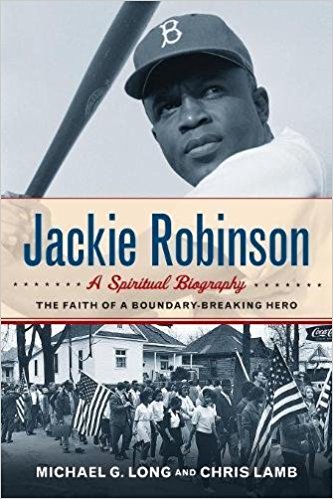
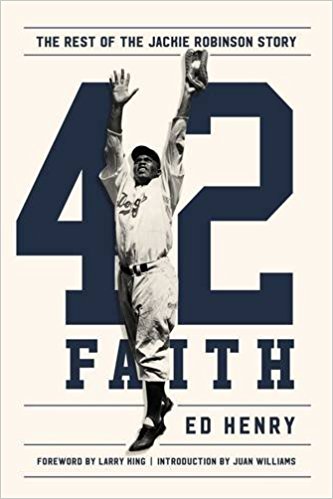 42 Faith: The Rest of the Jackie Robinson Story Ed Henry (Nelson) $24.99 and
Jackie Robinson: A Spiritual Biography: The Faith of a Boundary-Breaking Hero Michael Long & Chris Lamb (WJK) $17.00
How can I invite you to some summer pleasure reading without naming something about baseball? Well, this is a big year to recall Jackie Robinson, and in keeping with this BookNotes theme of pleasurable words with good content, these are both extraordinary volumes, full of stories and information, background that you most likely will enjoy learning about. It I hard to explain which of these is better – it’s a toss-up, really – although I previously announced the Long & Lamb one, in part because it focuses more on the progressive faith that inspired Robinson (and others that make appearances, from Martin Luther King on) to be agents of desegregation and social justice. I think we sometimes forget the hard, hard work that goes into radical experiments for social progress and Long and Lamb (who have published a previous book on the letters of Jackie Robinson called First Class Citizenship: The Civil Rights Letters of Jackie Robinson) know this advocacy work well. They are both scholars as well as huge fans and have researched racial issues in American baseball and have both written widely; in fact Ed Henry draws on Chris Lamb’s seminal work, Blackout about Jackie Robinsons first Spring training. So, I’ve pushed the “spiritual biography” for promoting his radical “boundary-breaking.”
However, the Ed Henry 42 book captured me from the first page. The author is himself a journalist (and the book opens with an admirable conversation he has with President Obama, with the President asking Henry to relay a message to Jackie Robinson’s wife, who was still alive, and who Henry was going to be visiting.) Maybe that is part of the difference between these two biographies: Ed Henry allows his own story to enter into the book as he tells of visiting this person or reports on the trip to that stadium or as he explains how he felt meeting this old-timer or interviewing that one. Clearly, both are excellently researched, and both draw upon little known papers, including a manuscript by Jackie Robinson himself that was never published. Both are really informative, well written, captivating, especially if you care about either race relations during the civil rights era or Christian faith or baseball.
Maybe I’d say this: 42 Faith is the work of an expert communicator, a modern-day TV journalist, and carries a foreword by Larry King (who interviewed the great Jackie Robinson more than once) and a powerful forward by Juan Williams. Blurbs on the back include raves from Jim Brown and New York Times bestseller Brad Thor. Jackie Robinson: A Spiritual Biography carries endorsements on the back by preacher and activist James Forbes, investigative journalist and cultural critic Tom Krattenmaker, and the important Lee Lowenfish who wrote one of the definitive biographies of Branch Rickey. Both of these books are a treat, both are fun to read, and both are important. Maybe 42 Faith, a sturdy hardback, is the one to start with. But please, please, don’t miss the more intense, important work by Long and Lamb.
 The Seventeen Traditions: Lessons from an American Childhood Ralph Nader (Harper) $13.99 The politicos among us might know Nader’s manifesto, The Seventeen Solutions. You surely know Nader as a consumer activist, a liberal-leaning populist, a leader cited by The Atlantic as one of the hundred most influential figures in American history. This is part memoir, part civics lesson, part a reminiscence of when families taught stuff like the tradition of listening, the tradition of charity, the tradition of civics, work, patriotism, simple enjoyment. Such family traditions, Nader says, “challenge the notion that the fads, technologies, how-to manuals, and addictions of modern life have somehow taken the place of the time-tested wisdom fashioned in the crucibles of earlier generations.”
It is a delightful read, a perfect summer dip into older ways – ways that we need today, perhaps now more than ever. Called “warmly human,” The Seventeen Traditions is a surprising book, highly recommended.
 The Moth Presents: All These Wonders: True Stories About Facing the Unknown Foreword by Neil Gaiman (Crown Archtype) $25.00 I suppose you have heard of The Moth Radio Hour, put together by Atlantic Public Media. It is simply a cultural phenomenon, a modern-day storytelling festival on public radio. All These Wonders presents forty-five unforgettable true stories about risk, courage, and facing the unknown, drawn from “the best ever told on (The Moth’s) stages.” As it says on the back cover, these talks have been “adapted to the page to preserve the raw energy of live storytelling.” These stories feature voices familiar and new, speaking with pathos and humor, bravery and a touch of weirdness. When we wanted to list fun books for summer, I knew I wanted to highlight this – truth sometimes is stranger than fiction, and honest testimonials of human courage can sometimes be the most important things we can enjoy taking in.
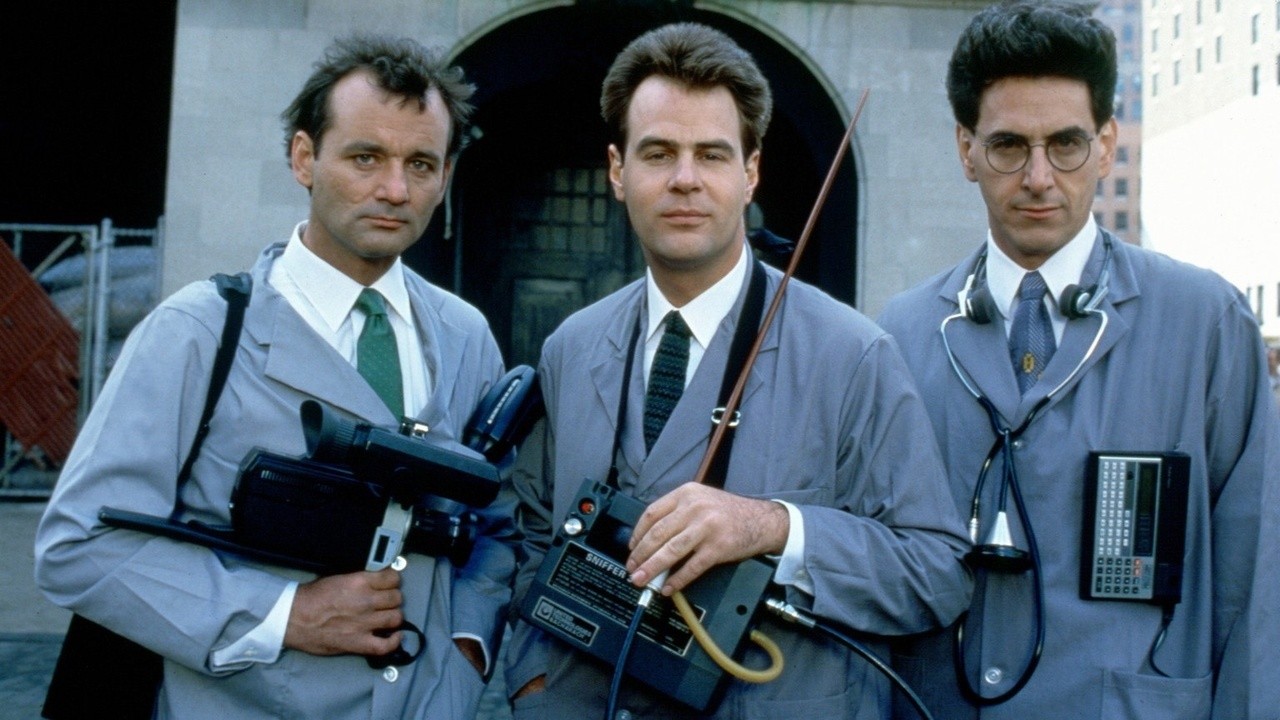
 The Tao of Bill Murray: Real Life Stories of Joy, Enlightenment, and Party Crashing Gavin Edwards (Random House) $26.00 What an odd book. As Danny Rubin, screen writer of Groundhog Day says, “Reading The Tao of Bill Murray is like spending time with Bill, but probably safer.” No one will ever believer you” is the famous line Bill Murray says when he shows up at somebody’s wedding reception or hospital room or pickup basketball game. The famous actor’s adventure off screen are, for some, as entertaining as his movies, and his antics rival the most popular of popular culture. Is there some plan behind all this, some point, something earnest and real? This book insists that it is “more than just a collection of wacky anecdotes.” It puts the actor’s public clowning around into a larger context. It has plenty of celebrity gossip and movie-set stories, but it is also a “sideways mix of comedy and philosophy.” I’m not endorsing Murray’s behavior, let alone his philosophy of life, whatever it is. But this is a fun book full of surprises and maybe even some insight. Here’s what I wonder: what would it be like if Bob Goff, author of Love Does and popular storyteller and advocate of whimsical escapades for Christ ever met Bill Murray. Who would surprise whom? Ha.
 I’ll Push You: A Journey of 500 Miles, Two Best Friends, and One Wheelchair Patrick Gray & Justin Skeesuck (Tyndale) $15.99 I can’t wait to read this – maybe I’ll tell you more later in the year once I do. But I’m telling you, it looks just fantastic. A trusted friend inside its large publishing house assured me that it was his favorite book of the many they’ve released this season. There’s a documentary about the guys, too, that got some buzz at a few festivals, I’m told. It’s said to be “full of love, humor and faith” which sounds, I know, a bit tame. But I’m telling you now: this is a book about two life-long buddies, one now in a wheelchair, who go on a spiritual pilgrimage on the legendary (and difficult, I’m told) Camino de Santiago spiritual pilgrimage through the rough terrain of northern Spain. There must be a dozen books on the Camino, and the trail and the pilgrimage was made more popular by the wonderful movie with Martin Sheen called The Walk. This new book looks like a lovely and even powerful read, with pictures, a discussion guide, and a website full of extra content. Learn more about it here. The foreword is by Donald Miller, who says, after reflecting on his own love of stories and his studies about what make good stories work,
Rarely have I encountered such a story lived out in the everyday, where the hero – or in this case, heroes – could easily be you and me, ordinary people choosing to embrace an extraordinary life.
Well, I don’t know about that, since I can’t ever imagine myself doing such a thing. (I’ve pushed my share of wheelchairs through rough terrain, by the way, thanks to the opportunity for shenanigans at the Easter Seal Society’s now-shuttered Camp Harmony Hall.) But, whether we could do this thing or not, these guys really did. And that’s gotta be a blast to read about, an inspiring and fun story. As Miller says, noticing less about the arduous adventure, but the intimacy of true friendship and community,
They show us the redeeming power that exists in giving others the opportunity to love all of who we are, in spite of our flaws and imperfections… Be careful! When you choose to read this incredible testament of life, friendship, and faith, you will be challenged and will begin to look for those adventures that are already part of your life, the ones you haven’t embraced.
 Blue Highways: A Journey to America William Least Heat-Moon (Back Bay Books) $16.00 This book was a huge bestseller when it was released in the early 1980s, and we so enjoyed stocking it then. Back then, as now, folks are sometimes surprised to see books that aren’t on Christian publishing houses or aren’t “religious” on the shelves of a Christian bookstore. This was a book that we’d tell folks about for the sheer joy of it, the profundity of the journey, the great writing. It is considered a masterpiece of American travel writing; it is an exploration of backroads. Annie Dillard says, “Heat-Moon is a witty, generous, sophisticated, and democratic observer. His modesty, kindly humor, and his uncanny gift of catching good people at good moments make Blue Highways a joy to read.”
And, local friends, catch this Heat-Moon line, describing his journey to, “those little towns that get on the map – if they get on at all – only because some cartographer has a blank space to fill: Remote, Oregon; Simplicity, Virginia, New Freedom, Pennsylvania; New Hope Tennessee; Why, Arizona; Whynot, Mississippi.”
A group of pastors that do a book club retreat each year are reading this together this fall, which reminded me how much we enjoyed selling it. The newer edition has a nice foreword by Bill McKibben who says it is a book “that makes writers want to weep.” Even Walker Percy had an endorsement.

 The Book of Joy: Lasting Happiness in a Changing World the Dalai Lama & Desmond Tutu (Avery) $26.00
Wow, His holiness and the Archbishop on joy – what an idea for an interfaith book! Both men are known for their overall happiness and fun, spry, spirits. I haven’t read this yet, but I can’t lie – I’ve smiled every time I’ve turned it over to peek at the back cover of them dancing. You have to love that.
The first page says this:
To celebrate one of our special birthdays, we met for a week in Dharamsala to enjoy our friendship and to create something that we hope will be a birthday gift for others. There is perhaps nothing more joyous than birth, and yet so much of life is spent in sadness, stress, and suffering. We hope this small book will be an invitation to more joy and more happiness.
They insist that “no dark fate” determines our future. The remind us that lasting happiness cannot be found in pursuit of any goal or achievement, but in the human mind and heart.
The book itself is co-authored by Douglas Abrhams, a legendary editor, who interviewed the two throughout their week together, and then wove together the stories and interviews that he drew out of them. He knows and understands them well.
He writes,
During the week their fingers were often wagging at each other teasingly, moments before their hand were clasped together affectionately. During our first lunch the Archbishop told the story of a talk they were giving together. As they were getting ready to walk on stage, the Dalai Lama – the world’s icon of compassion and peace – pretended to choke his spiritual older brother. The Archbishop turned to the Dalai Lama and said, “Hey, the cameras are on us, act like a holy man.”
Yep, even holy men have to fool around, and then have to determine to act like holy men. Can we act up, learn to be real and fun and people of joy, for real, by living into it? This hoot of a book can help. Enjoy!
 The Road Back to You: An Enneagram Journey to Self-Discovery Ian Cron & Suzanne Stabile (IVP) $24.00 As I was creating this list of fun non-fiction, making a case that learning can be uplifting and that we can read stuff for the sheer fun of it, but also be inspired along the way, I right away knew I wanted to include this. Yes, it is about the enneagram, so you might think it is a nearly tedious methodology to practice some self-discernment, being coming more self-aware about your deepest motivations (perhaps even drawing from your deepest hurts.) And you would be right about the self-awareness stuff, but it isn’t tedious at all. Yes, this could be described as ancient psychology meeting contemplative spirituality. Yes, it sounds a little weird if you aren’t used to it. But trust me: this makes the Meyers-Briggs tests seem dry and mechanical by comparison. In the hands of these two very clever writers, this topic comes alive. The Road Back to You is a ton of fun, offers lots of healthy insight and a bunch of stories. A whole lot of stories. Some of the stories are funny, a few are very touching, and a lot of them will help you know yourself more accurately and live better, with greater centeredness and, I suspect, a greater joy. It’s not about joy, per say, but it offers a window into knowing yourself in a way that sure is interesting. It’s a curiously popular book, in part because it is a fun read. Check it out.
By the way, there is a participants workbook for Road Back… that you can get to go along with it; we often don’t promote extra books but in this case, at just $9.00, the study guide is a very wise investment. Highly recommended.
BookNotes

DISCOUNT
ANY ITEM MENTIONED
20% off
order here
takes you to the secure Hearts & Minds order form page
just tell us what you want
inquire here
if you have questions or need more information
just ask us what you want to know
Hearts & Minds 234 East Main Street Dallastown, PA 17313
read@heartsandmindsbooks.com
717-246-3333
 Every Job a Parable: What Walmart Greeters, Nurses & Astronauts Tell Us About God John Van Sloten (NavPress) $14.99
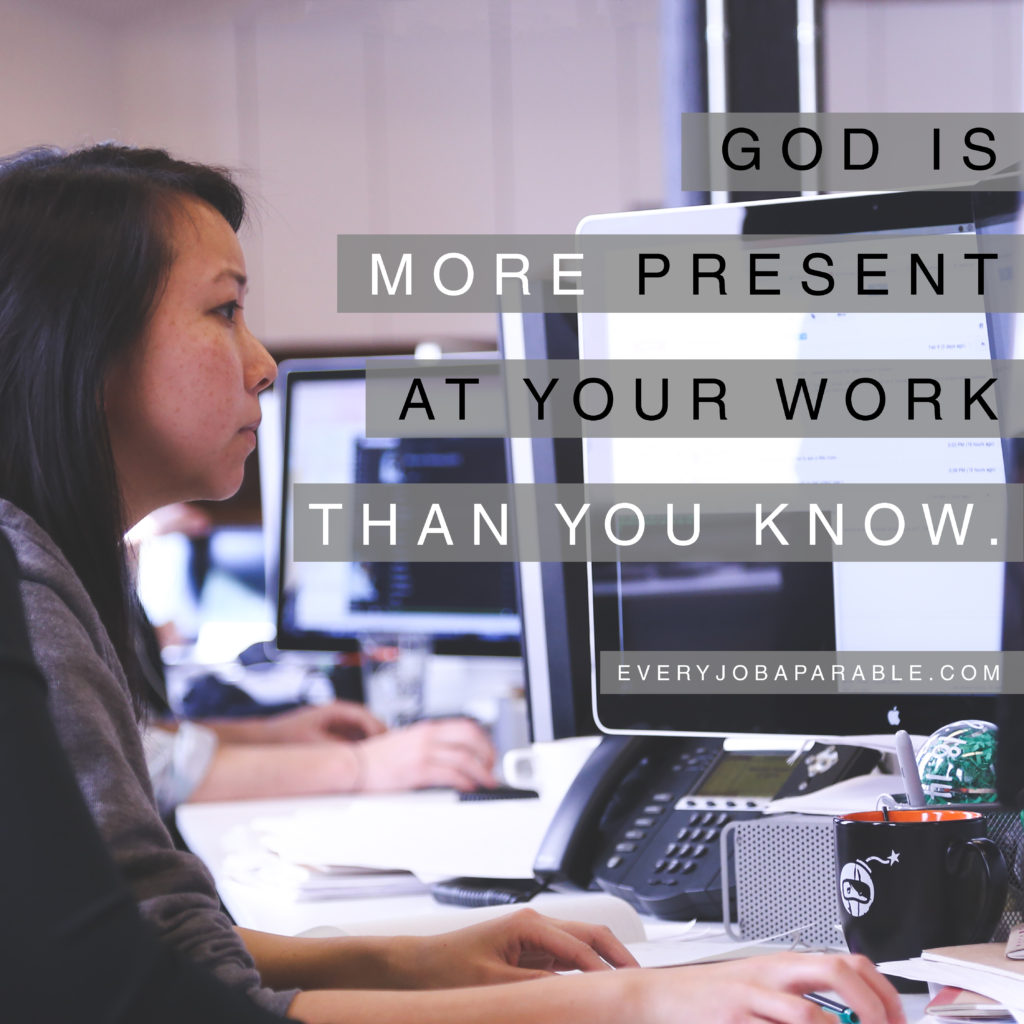 down-to-Earth stuff, imaging God in this good if fallen world. But, yet, by mirroring God and partnering with God, we can indeed experience God in the midst of all this: it is not merely that we work and honor God in this task of being human. We honor God and serve the common good and learn more about God by observing the very structures of reality and the ways different jobs work. Just like the Bible says we can learn something about God from the stars or from other aspects of creation (Job suggests we talk to the fish and Isaiah says farmers are instructed by God how to learn about seeds!) Van Sloten says we can learn about God by opening our eyes and seeing what’s going on in our workplaces. Work is an icon, work is a parable, work is a school for spiritual formation, work is the venue for knowing God.

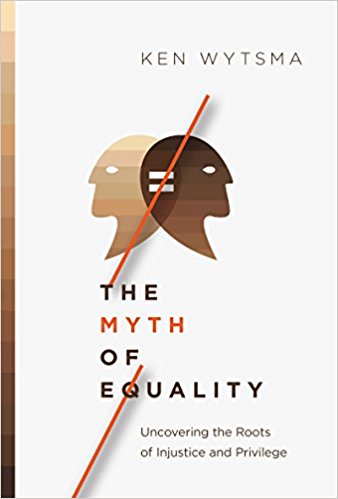 The Myth of Equality: Uncovering the Roots of Injustice and Privilege Ken Wytsma (IVP) regularly $18.00 ON SALE NOW 20% off our sale price $14.40
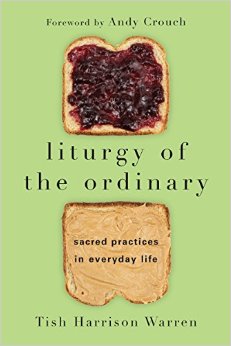 litanies and prayers around communion, we learn to welcome all to God’s table. My confessing our sins week by week we get in the habit of being those who are able to lament and own up to sin in and around us. By listening well to a sermon, you deepen your habit of being a life-long learner. You get the point: this wonderful book that reads like a memoir shows us how to translate worship theory and practice into ordinary living. At its best, good worship reminds us of God’s presence, announces Christ’s victory, and imagines the Kingdom coming, equipping us to serve well in the world. However – and here’s why I mention it – even in good churches with good rituals and healthy worship habits and solid preaching, I’m afraid we still don’t get around to hearing much about this stuff on most Sundays. We need all the help we can learning about and being responsible within our racially troubled times. Being formed in worship well we should want to learn more, to be better servants of Christ in the world, we should desire to be better at loving our neighbors. If you are worshiping well, and wanting to serve God with wisdom and vigor, you should want to buy some books and think this stuff through. Amen?)
 START HERE ALWAYS: THE GOSPEL IS VERY GOOD
 pleasure to serve you further in finding just the right couple of books on this topic.
 am not attempting to be the authoritative voice on race in America, and I can only really speak from a perspective of privilege and my experience. I am simply addressing a topic to which Scripture speaks clearly, a reality that in many ways has helped to shape my story. Indeed it has played a significant role in shaping the stories of all Americans, whether we know it or not. Speaking only to safe topics, where agreement comes easily, can’t be the chief goal of faithful witness. It wasn’t for Jesus.

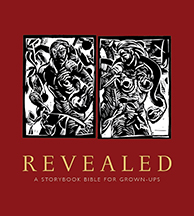 Ned himself did a workshop on print making there this weekend which gave him a chance to show off his own work as a print maker, some of which is seen in the adult Bible story book he created called Revealed: A Storybook Bible for Grown-Ups.
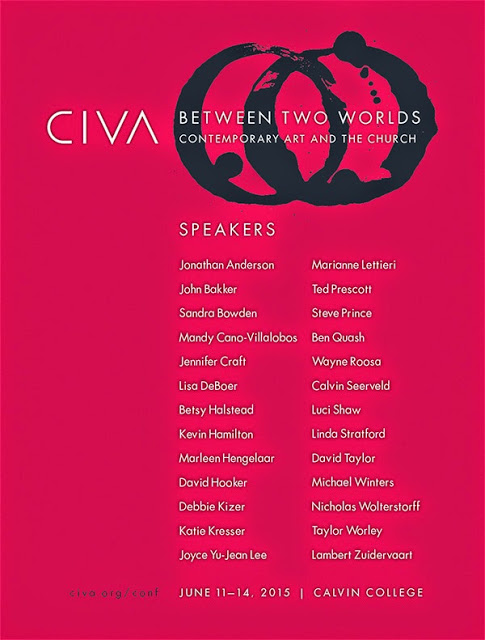
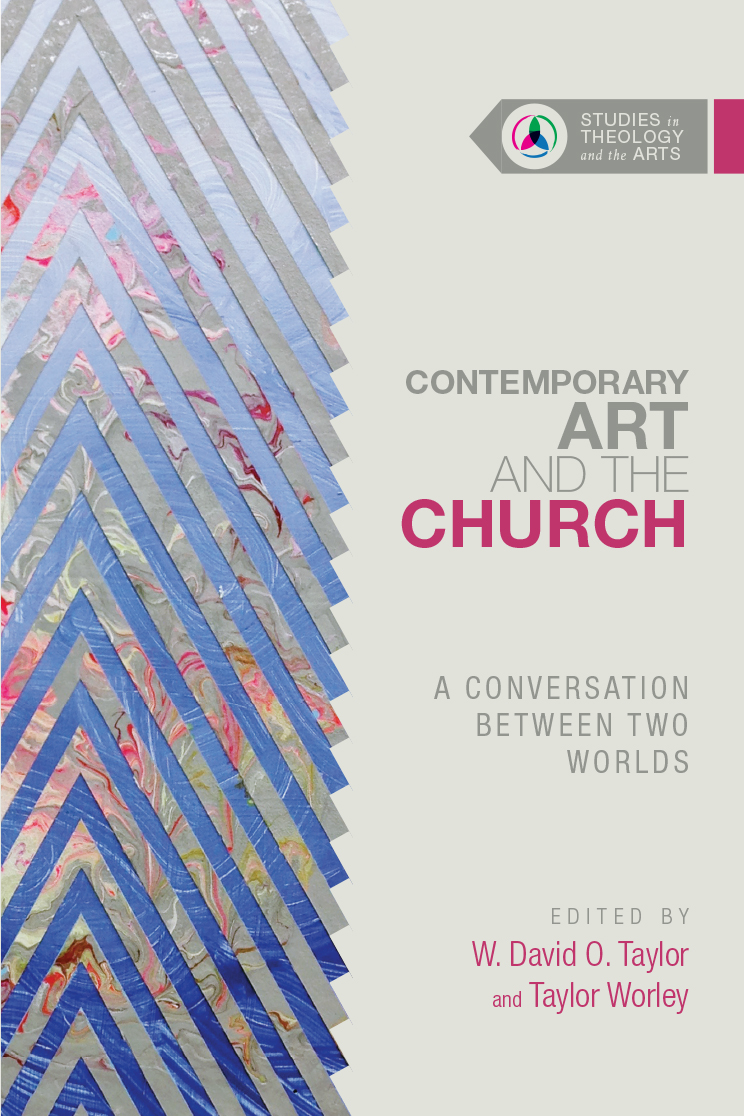
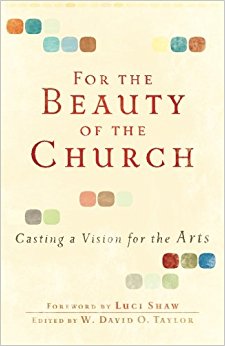 expressed in worship. W. David Taylor’s response (“What Art? Which Worship?”) is worth reading twice. You should know Taylor, by the way, as he compiled a wonderful little book for church folks interested in being more thoughtful and engaged in the arts called For the Beauty of the Church: Casting a Vision for the Art (Baker; $18.00.) He is an ordained Anglican minister and director of Fuller’s Brehm, Texas. (If some of this is new to you or your congregation, Taylor’s very approachable book includes great pieces by Eugene Peterson, Luci Shaw, Lauren Winner, Andy Crouch, John Witvliet, and Jeremy Begbie. It is the kind of book that I’d think every church should have in their church library or resource center.)
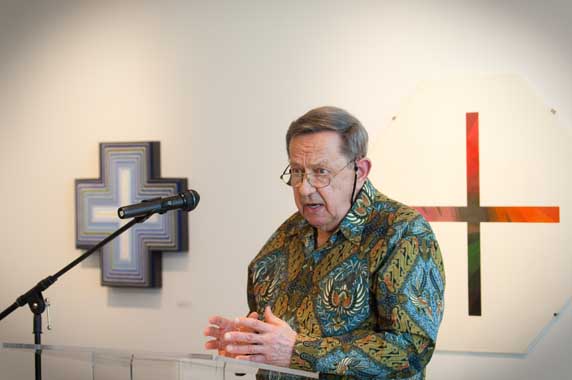
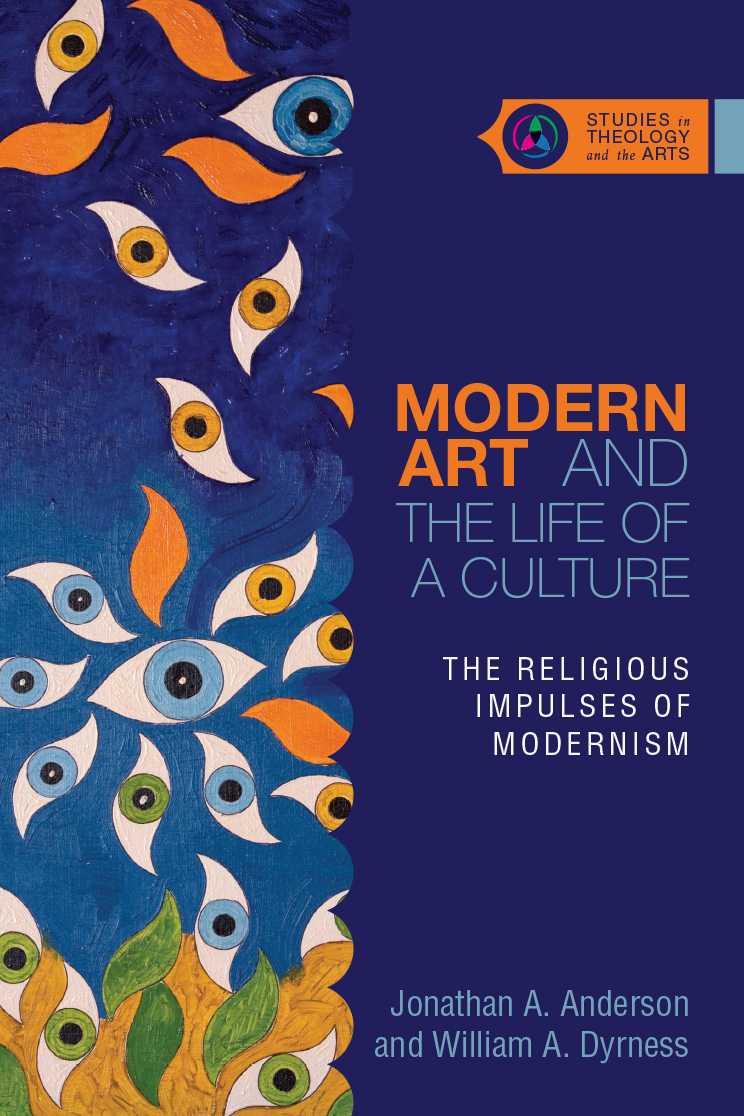
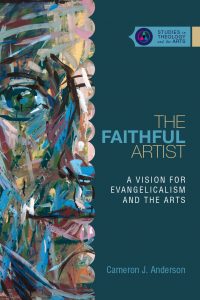 The Faithful Artist: A Vision for Evangelicalism and the Arts by Cameron J. Anderson (IVP Academic) $26.00. I mentioned earlier that Cam has a wonderful chapter in the new one. He has worked in campus ministry with faculty and grad students, has his own MFA and is now the Executive Director of Christians in the Visual Arts.

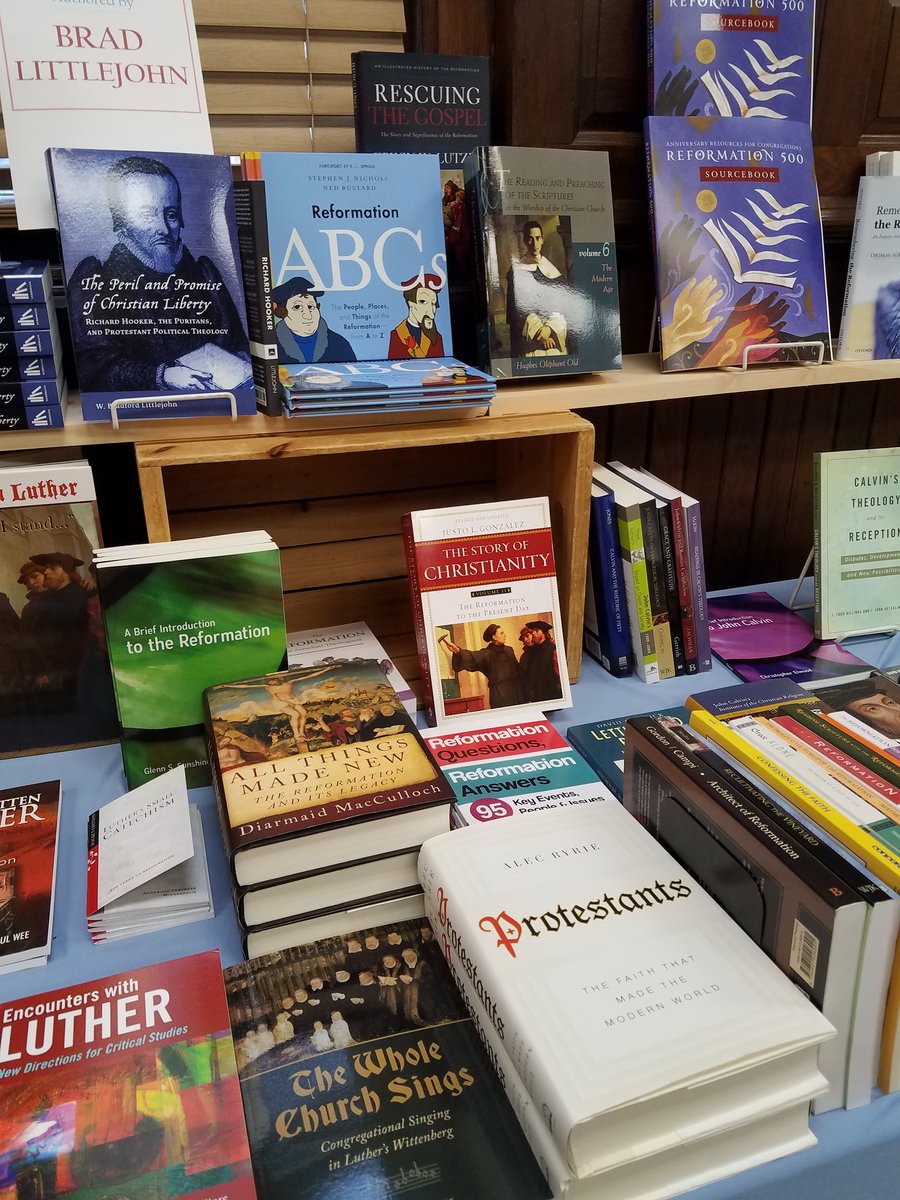
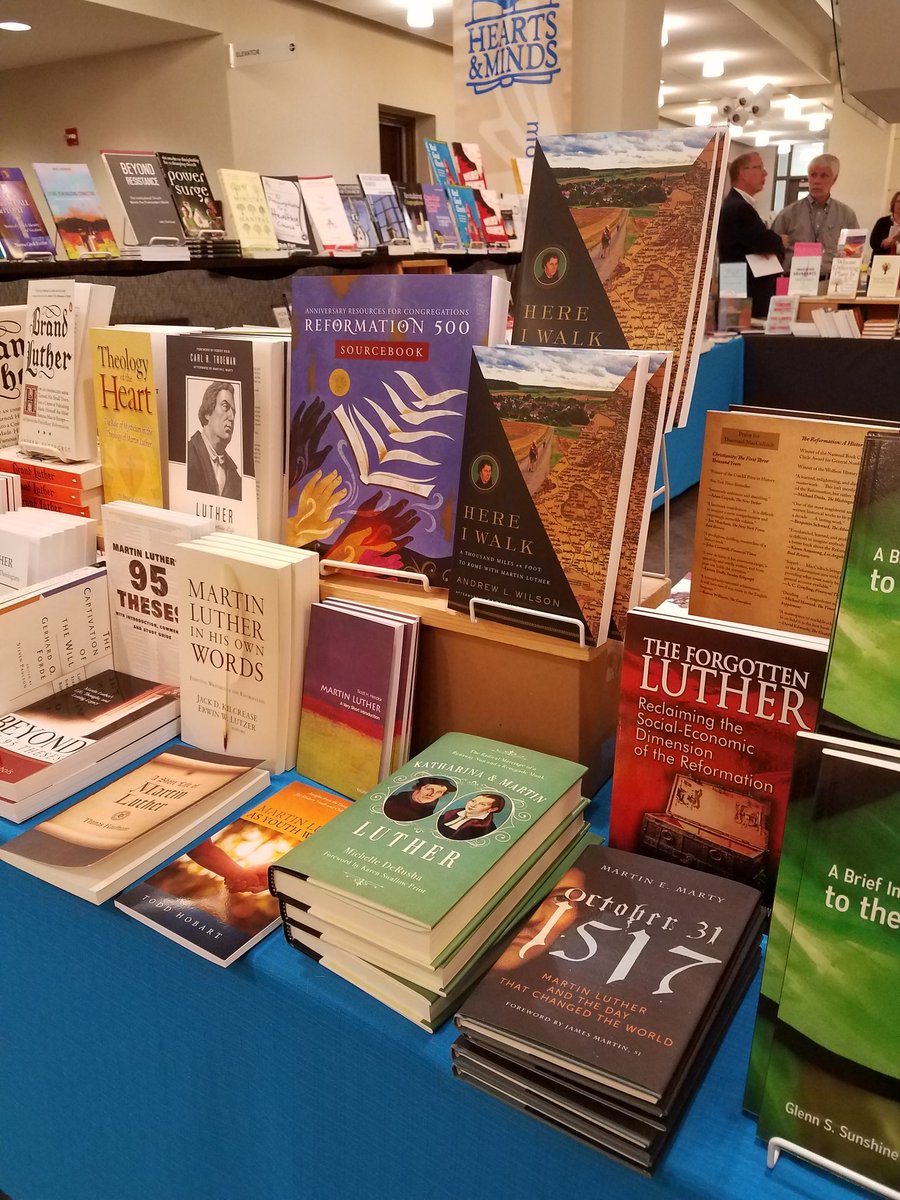
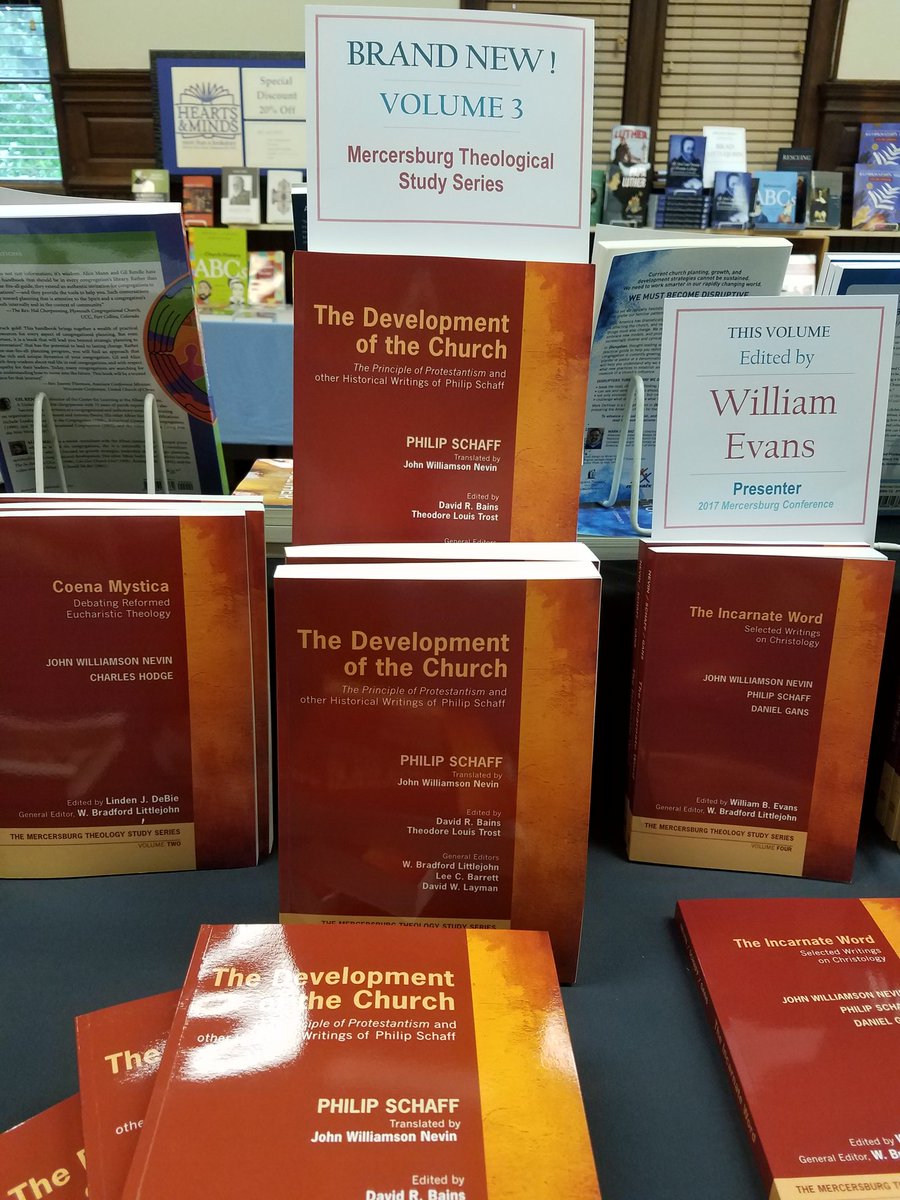
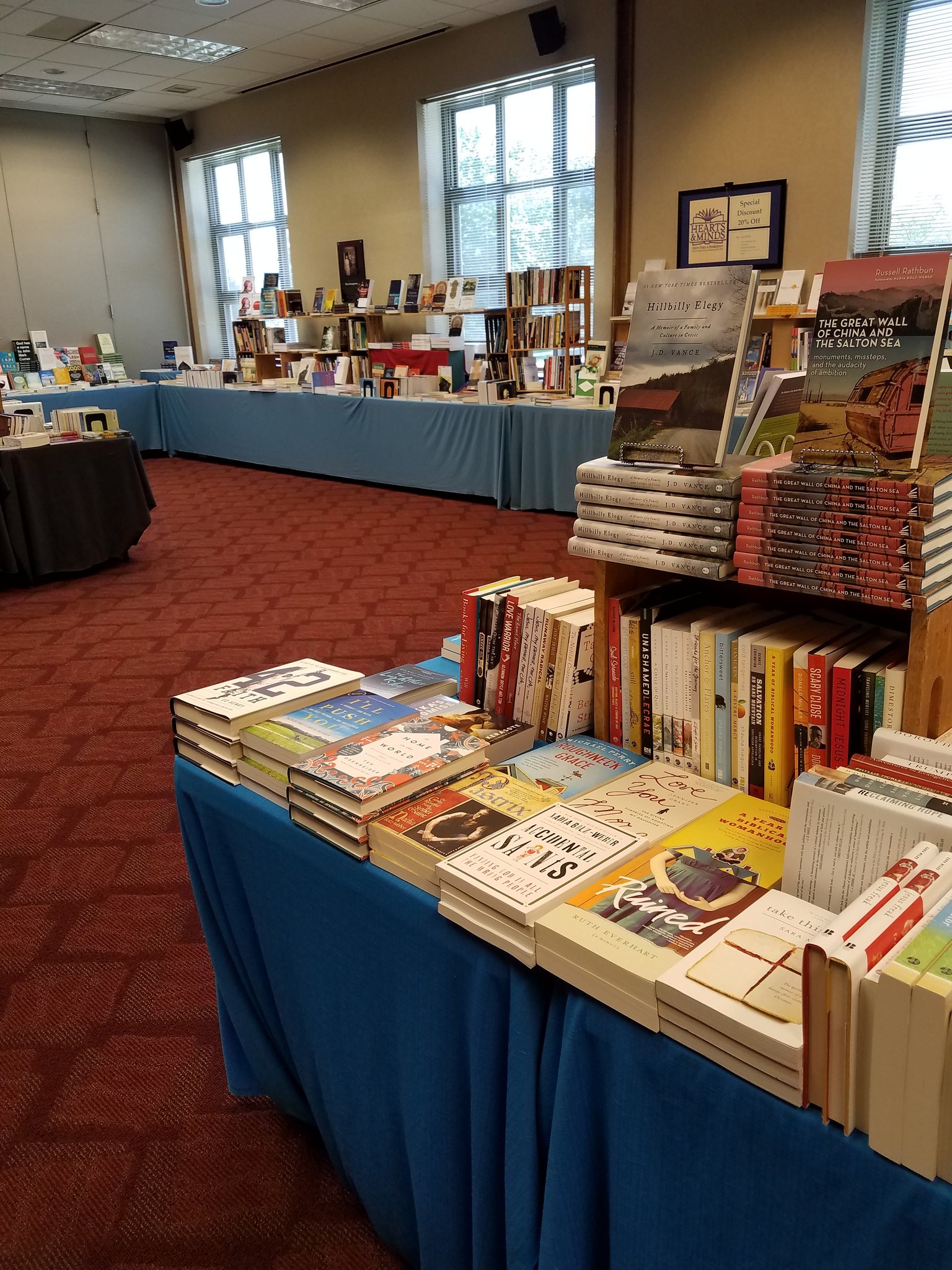
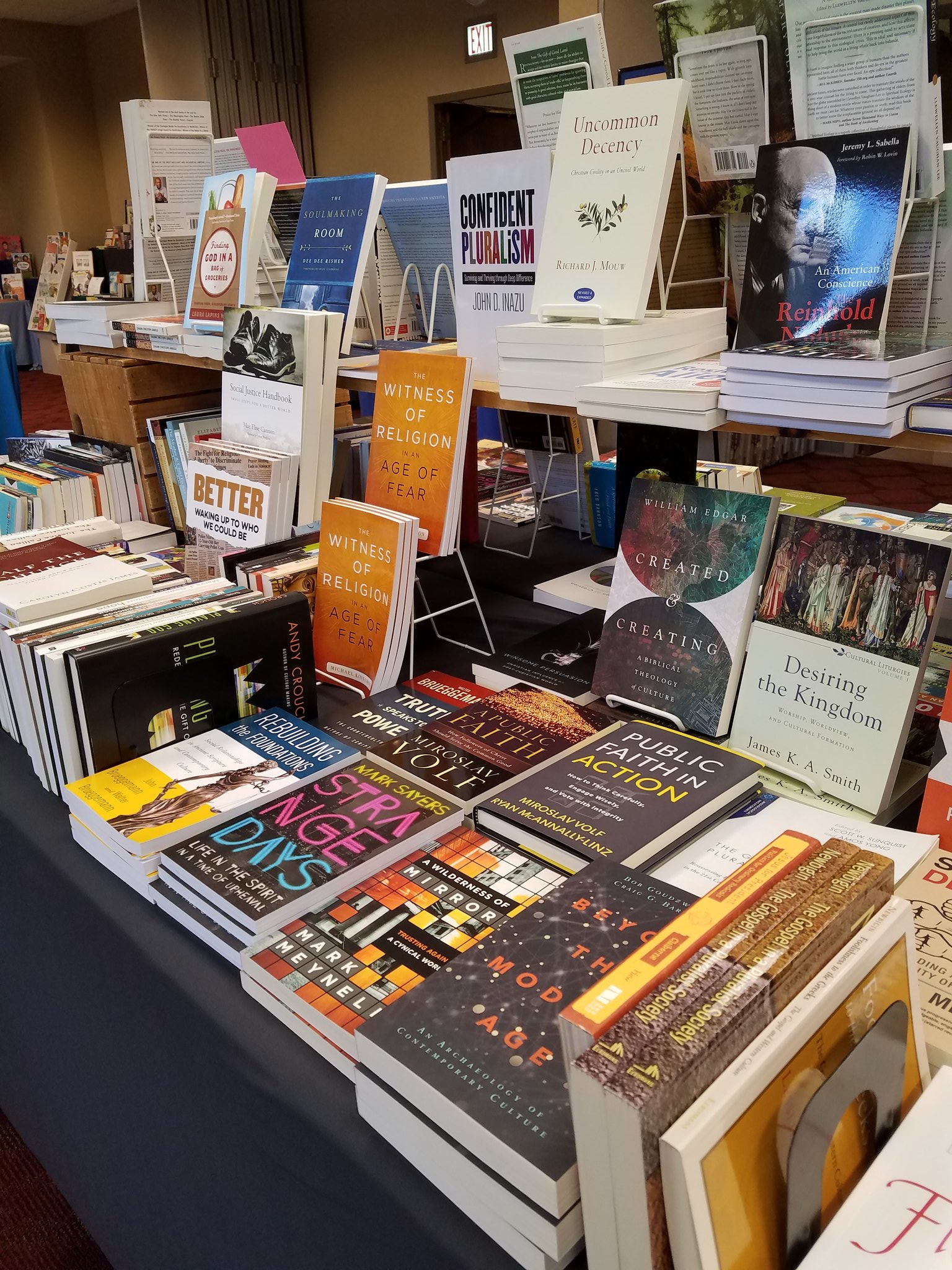
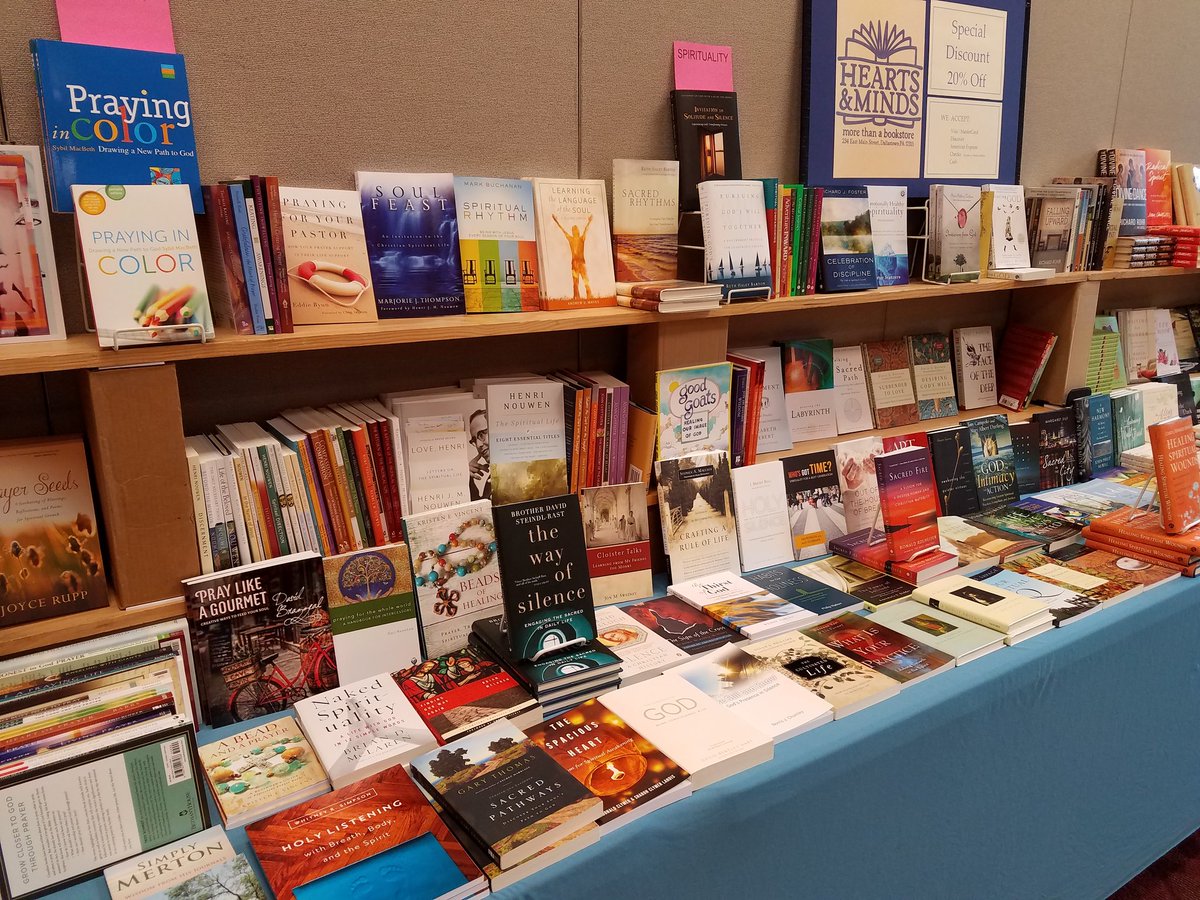
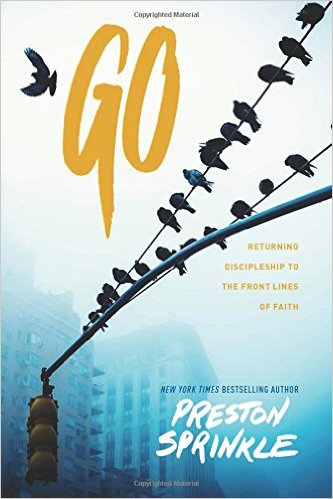 Lucado books, and other accessible evangelical authors that aren’t too progressive or odd. It makes us happy to sell books that are helpful in turning ordinary church goers into disciples of Jesus, titles like Think, Act Believe Like Jesus: Becoming a New Person in Christ by Randy Frazee or Bible studies like Discipleship Essentials by Greg Ogden or the new God Has A Name by John Mark Comer, or Eugene Peterson’s Long Obedience in the Same Direction, a classic. I was very excited when a Lutheran Synod staff member asked if we had Go: Returning Discipleship to the Front Lines of Faith, a NavPress book by Preston Sprenkle. As a matter of fact we did.
 of social concern. I first waxed about the value of reading, quoted the must-read book by Chris Smith Reading for the Common Good: How Books Help Our Churches and Neighborhoods Flourish and Neil Postman’s Amusing Ourselves to Death and Nicholas Carr’s The Shallows: What the Internet Is Doing To Our Brains. I told even laypeople they might enjoy Reading for Preaching by Cornelius Plantinga, a book any church-going book lover will cherish. I told a few stories of people whose lives were changed by reading, and how reading together can be transforming — I told about Wilberforce and Hannah More and Wedgewood and commended Eric Metaxas’ marvelous book Amazing Grace: William Wilberforce and the Heroic Campaign to End Slavery which illustrates how cultural renewal and social justice movements are sustained by communities who read. I hoped to inspire reading widely, thinking well, and enjoying the koinonia that develops when big ideas are in the air because people are reading books together.
 All Things New: Rediscovering the Four Chapter Gospel Hugh Whelchel (Institute of Faith, Work, Economics) $6.99 This six-week Bible study explains the full story the Bible presents, cover to cover – the goodness of the blessed creation, the ruination of the sin-wracked creation, the decisive victory over death in Christ’s atonement, and the full-orbed promise of the restoration of creation. The next two studies invite conversations about how the gospel is best expressed in this full four-chapter story (and not the truncated middle two parts) and why this matters. Liberal or conservative, progressive or old school evangelical, nobody gets this quite right and I think this little Bible study resource would be revolutionary, rocking your group with fresh insights and new resolve to live out a hopeful faith in all areas of life. Not too many people bought it – maybe mainline churches don’t have many small group Bible studies going on. We’ve got plenty and hope you order it soon.
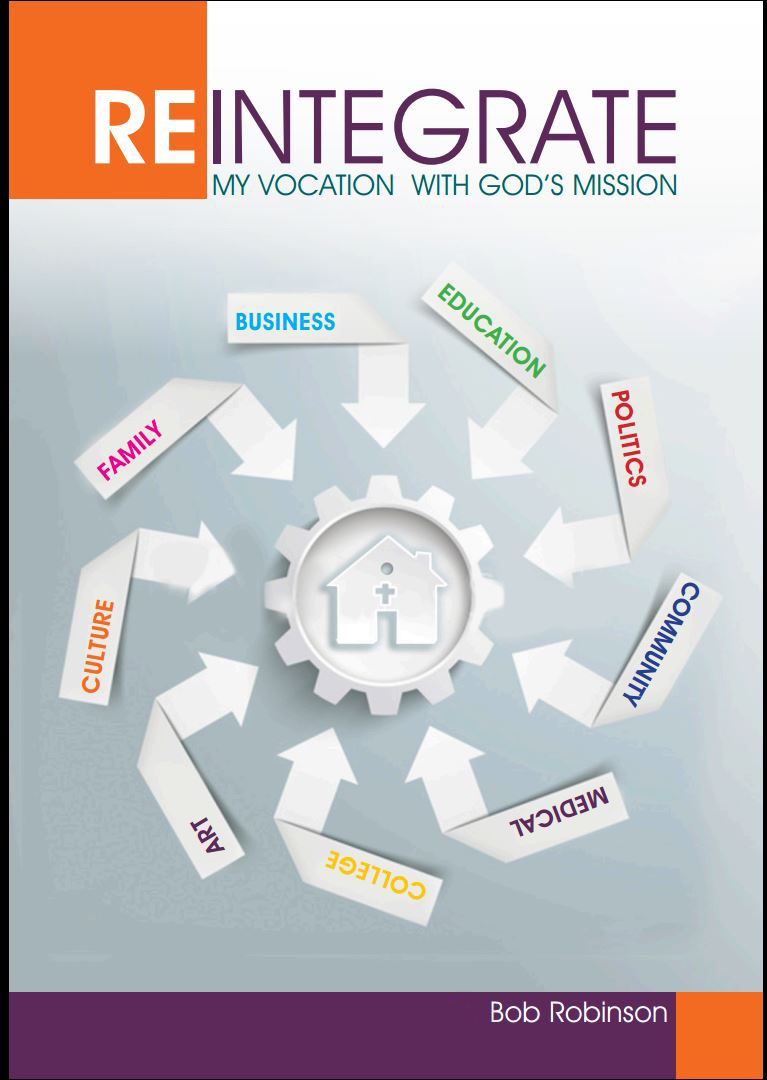 Reintegrate Your Vocation with God’s Mission Bob Robinson (Good Place Publishing) $12.00 This is also a small group Bible study resource, a great book for those who want to have both a book to read and lots of Bible verses to look up and discuss. It has just a bit of content each week, sidebars and good quotes, and excellent discussion questions. This, like Whelchel’s more concise booklet above, covers this four-chapter plot of the Bible and then goes to wonderful measures to show us just why this matters, especially for our vocational lives, relating worship and work, Sunday and Monday, so to speak. There is simply no small group resource like this in print and we highly recommend it. Full disclosure: Bob is a dear friend, he kindly re-publishes many of my Facebook posts, tweets, and BookNotes columns, and I have a rave endorsement on the back of this little book.
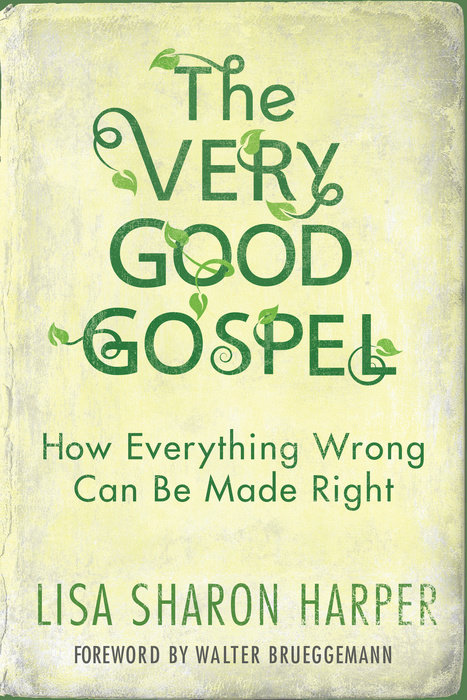
 The Very Good Gospel: How Everything Wrong Can Be Made Right Lisa Sharon Harper (Waterbrook) $19.99 This is a book that came out about a year ago and we take it everywhere we go. Lisa is a friend, a hero in many ways to Beth and me, and we enjoy explaining this book. It is rich, full of big ideas, but yet intimate and even tender at times, as Lisa shares about this question haunting her: does the gospel as it is typically explained come across as truly good news, especially to those who are hurting, who have been oppressed or marginalized. She is a strong African American woman with some Native American blood and she re-imagines the gospel story using the same sort of “unfolding drama” of four chapters that Whelchel and Robinson commend above, showing how the promised restoration brings a promise of shalom. Indeed, her description of the Bible story uses really helpful language, telling how God gave us blessed shalom, our sin brought alienation, and Christ’s redemption brings reconciliation. Isn’t that a great way to understand things? The second half of the book explores the implications of gospel-reconciliation for race relations, creation care, injustices between men and women, even international tensions. God’s good news is a very good gospel, indeed, and her call to be agents of reconciliation in all aspects of life is really, really worth reading. If I were the head of the UCC, I’d have everybody reading this together.
 Uncommon Decency: Christian Civility in an Uncivil World Richard Mouw (IVP) $16.00 As you may know, I really, really like this book and recommend it often. I thought that just showing it would cause it to fly off our shelves — we had a bunch. I expected a bit more lament and expressions of frustration with the quality and tone of our current statecraft — we did sell a few of the brand new Preaching in an Age of Trump by (Chalice Press) — and although it is true that many of us feel we must speak clearly against immorality, narcissism, dishonesty, and bad policy in high places, as Christians we must always be gracious and fair. Anyway, this is a book we take everywhere we go and it is shown off with hope that folks will read it and take it to heart.
 The Call: Finding and Fulfilling the Central Purpose of Your Life Os Guinness (Word) $17.99 I often highlight newer books in these little book workshops but sometimes I pull out an old chestnut like this and get all verklempt telling why it means so much to me. This, truly, is one of my top five books ever, and it is so eloquent, wise, insightful, rich, and important that I take it almost everywhere we go. I am sad that many in mainline churches don’t know his big body of work – we had his newest Impossible People about being steadfast and faithful, Renaissance about being hopeful God will bring God’s own renewal to us in Christ’s own way, and that exceptionally thoughtful Fool’s Talk although, truth be told, nobody bought any. I did convince a few to try The Call, perhaps because they liked the idea of reading a book by a relative of the Guinness beer family or just because I insisted it was one of my own favorites. One chapter is called “Everyone, Everywhere, Everything” and captures the dynamic of the social revolution of the Reformation that liberated the laity to use the language of calling and empowered all of us to serve God, for His glory alone, in all that we do, everywhere. The discussion questions in the back are exceptional, making this a book I recommend most heartily.
 Moveable Feast: Worship for the Other Six Days Terry Timm (Imagination Press) $12.99 One of the brilliant features of the above mentioned Liturgy of the Ordinary is how Tish Warren relates worship practices to daily life, mostly a day in her life as a homemaking mom. Here, Rev. Terry Timm, pastor of a great church in Pittsburgh, reflects on the “front end” of this equation – how to worship well, how to plan worship, and how to frame church as a formative center which shapes us for our vocational callings in all of life the rest of the week. I do not know of any other book that does this so nicely, so thoughtfully, so accessibly. Every pastor and worship leader should be thinking like this, and I believe it could be helpful to anyone who plans, leads, or attends worship. Yep. We’re happy to tell folks of any faith tradition about this gem.
 Break Open the Sky: Saving Our Faith from a Culture of Fear Stephan Bauman (Multnomah) $15.99 Do you recall my naming this in that big review I did of the Goudzwaard & Bartholomew Beyond the Modern Age just two weeks ago? I was listing books that offer a bit of cultural discernment, naming where we’ve been and what’s going on. Bauman is not heavy-handed and the book is a delight to read, inviting us (by way of moving stories and solid Bible exposition) into a spacious world where fear need not bind us so. I really loved this wise book, found it enjoyable and challenging, and I can’t say enough about it. It would make a great book club title, pushing us to be aware of the pressures of our world and allowing faith to give us fresh insight, courage, resolve, and love. Yes, love. I told all about it during this workshop, but I’m not sure I did a great job so I’m commending it to you here, now. Give it a try, I’m sure you’ll be touched by it.
 The Tech Wise Family: Everyday Steps for Putting Technology in It’s Proper Place Andy Crouch (Baker) $13.99 I simply held this up and said that anybody who cares about family life should have this, and anybody who works with children or youth should have this and anybody who has grand-kids should have this and, well, anybody who uses the internet at all really should consider this as well. Yep, I want to say that this is the best brief book on the role of screens and digital devices in our technological world and it is a wise guide into this brave new world of ours. I so enjoyed this, found it richer and more interesting than I expected (and you know I esteem Andy Crouch very, very much, always pushing his books Culture Making, Playing God, and the more recent Strong and Weak.) Read any of his good books, I implored my friends in the workshop, but this one is a must for most of us.
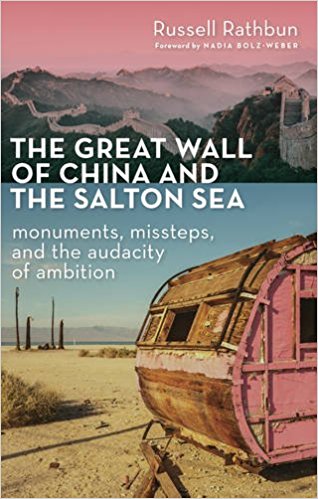 Great Wall of China and the Salton Sea: Monuments, Missteps, and the Audacity of Ambition Russell Rathbun (Eerdmans) $21.99 I mused about this a bit, citing the lovely and insightful foreword by Nadia Bolz-Weber (who they most likely know, if only from her great Krista Tippett “On Being” interview, and her spicy memoir Pastrix.) I explained it is a memoir, but also a travelogue, as our intrepid writer moseys around these two massive monuments to ambition and hubris. From a rumination on the Tower of Babel to a reflection on why we like to look at pictures of ruins, from his own family’s connections to the massive failure that created the Salton Sea to his visits to China, Rathbun gives us an entertaining, quirky, and very moving book that is creative in its conception, creative in its writing, and very serious in its message for those that may have the ears to hear. What a great book.
 Hallelujah Anyway: Rediscovering Mercy Anne Lamott (Riverhead) $20.00 We hardly had to introduce Annie to anyone in this crowd. She is the sort of religious writer many appreciate – honest, colorful, culturally liberal, but very serious about expressing the love and grace she discovered from Jesus. Few writers are as expansive in their big hearts and few are as honest about their own sins and foibles and fears and stupidity. She owns it, and I think that may be why many relate to her. This book is about mercy. It was one of our biggest seller
 The Great Spiritual Migration: How the World’s Largest Religion Is Seeking a Better Way to Be Christian Brian McLaren (Convergent) $21.00 I think those who tilt conservative and traditional theologically should read this because he is naming what is, in fact, a bit of a shift in the American religious landscape. I don’t know if it is as widespread as Brian suggests – otherwise the UCC might be growing in more lively ways – but I do think he is documenting a huge conversation that has been going on in recent years. I suggested to my UCC friends in the workshop that although I might wish they would also read more conventional evangelical formulations, this former evangelical pastor understands their own DNA and describes their theological tradition’s strengths. They would do well to study this and see if it gives a coherent voice to their own “God is still speaking” ways.
 Love Let Go: Radical Generosity for the Real World Laura Truax & Amalya Campbell (Eerdmans) $21.99 I’ll admit we don’t quite know what to do this with exceptionally interesting, really fun and fascinating memoir, a creative telling of a church that was given a boatload of money and basically said “we don’t want it.” That part of the story is interesting enough, and makes for a provocative read, but that’s just the very beginning of this enchanting and radical tale. Church leadership decides to take the money and give $500 to every parishioner with the instruction to “do something good” with it. Wow, this is paying it forward, writ large! Love Let Go is the well-told story of what folks did, how it affected them, and the lessons learned about generosity, greed, philanthropy, development, and more.
 As Kingfishers Catch Fire: A Conversation on the Ways of God Formed by the Words of God Eugene Peterson (Tyndale) $24.99 As a former PC(USA) pastor, Eugene Peterson is respected within most mainline denominations and is claimed by many evangelicals. After his long stint as a pastor and a decade teaching spiritual theology at Regent in British Columbia (taking a professorship alongside the likes of James Houston and J.I. Packer and adjunct teacher Marva Dawn) he has earned the right to be considered one of the most respected and appreciated religious writers of the last 50 years. This is a new book of sermons that were preached in the late 60s and early 70s at the church start-up he did in those years, Christ Our King Presbyterian Church in Bel Air Maryland. There are a few new essays where Peterson puts these old sermons in context. This is worth having and savoring.
 The Soul of Shame: Retelling the Stories We Tell About Ourselves Curt Thompson (IVP) $22.00 We named this one of the Hearts & Minds very “best books of the year” a few years back and continue to feature this almost everywhere we go. I think some who browse are not sure if they want to pick it up – it could be a bit intense to grapple with such heart level stuff – but we are earnest in describing how well it is written, how deeply Biblical it is, and how insightful Curt is (he is a psychiatrist and knows quite a bit about neuro-science.) It is a marvelous book – very highly recommended, as is his previous one, The Anatomy of the Soul: Surprising Connections Between Neuroscience and Spiritual Practices Than Can Transform Your Life and Relationship. We have raved about this before, and any number of customers have told us how much this book means to them. It is an enduring, deeply and profoundly Christian resource that we continue to promote. Whether you carry deep shame or not, this is very highly recommended.
 Be Still: Departure From Our Collective Madness Gordon Stewart (Wipf & Stock) $21.00 Oh, how I wish I had had time to read some of these short pieces out loud during my “show and tell” workshops about books these days. They were all written by a Presbyterian pastor – his brother is a UCC pastor, and I flubbed a joke about God calling one of them to a better denomination – but were crafted to be spoken out loud on “All Things Considered” and an NPR feature on Minnesota public radio. Can you imagine someone trained in the best tradition of mainline Protestant seminaries, reading the likes of Augustine and Aquinas, Luther and Calvin, Barth and Niebuhr, spicing up their radio op ed ruminations with contemporary writers and poets like Buechner and Updike, Mary Oliver and Wendell Berry? Stewart is nearly what one might call a public intellectual (if only he were better known.) In these well-crafted short pieces, designed for a public listenership, he draws connections from the things that matter most to the things most on our mind these days. He writes about racial injustice experienced by urban youth, and hospital ministry with the dying. He writes about fear and doubt and goodness and hope. The title might make you think it is mostly about politics — it was written before the resist Trump movement, I might add — and there is plenty of public theology for the common good in here. But these thought-provoking pieces are more than just a sane rant again the “collective madness” of our contentious discourse these days. It may be more like Thoreau, short reflection on what he sees, what he deeply knows, and what we can do as we ponder together ways to make our lives more sane. I’ve appreciated these calm reflections a lot and have been taken to re-reading a few for the sheer joy of spending time with a well-crafted essay. Nicely done.
 Rebuilding the Foundations: Social Relationships in Ancient Scripture and Contemporary Culture John Brueggemann and Walter Brueggemann (Westminster John Knox) $20.00 A certain generation of UCC leaders knew Brueggemann well. His father was an E & R pastor (before they merged into the UCC in the 50s) and Walt himself held membership in the denomination of his youth. He publishes a lot, but this is fascinating. As I described in our BookNotes when I first announced it, Rebuilding the Foundations is co-written with his son, the Department Chair and Professor of Sociology at Skidmore College. He is a scholar about inequalities and has a book called, curiously, Rich, Free, and Miserable: The Failure of Success in America. Here, Walt and son John explore what Rabbi Michael Lerner in Tikkun called “a startlingly insight and important book” which “addresses some of the most important issues facing the human race today.” Okay, so there’s that.
 Revelation: A Search for Faith in a Violent Religious World Dennis Covington (Little Brown) $26.00 Covington is one of my favorite writers, classy, thoughtful, yet intense and vivid. His searing books such as Salvation on Sand Mountain are on many people’s list of all time favorites. My copy has post-it notes stuck throughout as I dreamed about reading moving excerpts in my little workshop. Of course I ran out of time and rather in-eloquently shouted out that it is about this guy who travels around the world to some of the most violent spots, wondering how, oddly, religion is a cause of some of the world’s worst stuff, and, yet, seems also to be the only real answer to averting the awful violence we humans commit. In high-octane, energetic prose, Covington takes us to drug cartels and ISIS camps and sneaks across borders in places the State Department would not have permitted him to go. This report back is part travelogue, part war-on-terror journalism, part seekers heart cry, trying to figure out the meaning of faith in a troubled world. Highly recommended.

 Sundays and Seasons: Guide to Worship Planning Year B 2018 (Augsburg Fortress) $39.00
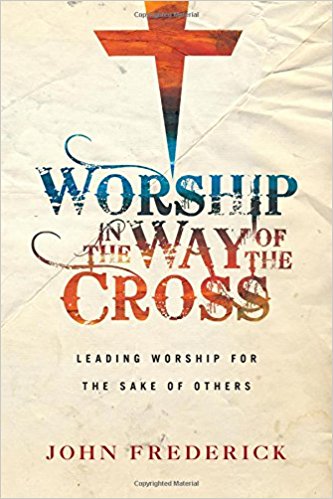 Worship in the Way of the Cross: Leading Worship for the Sake of Others John Frederick (IVP) $18.00 It is not a cheap shot, although it is increasingly said, that “worship” must be more than “just the music, an onstage performance that puts the spotlight on the worship leader.” I know many worship leaders who are essentially musicians who lead songs of praise and they don’t want to be in the spotlight, but the very structure of the worship event puts them there. (In other traditions it is the preacher who is in the center of the up-front activity and the church becomes very preacher-centric.) In any event, whether one is in a hip urban church plant or an old school, denominational preacher in a smaller church, the question of what constitutes artful, high-quality, and theologically faithful worship is pressing. It needs to be revisited regularly, and — given that it is one of the most important and routine things local churches do — I’m surprised that pastors and worship leaders don’t read and study and revisit this topic regularly. Maybe they do, but we don’t sell that many of the oodles of books on worship that we stock, and I wish they sold better.
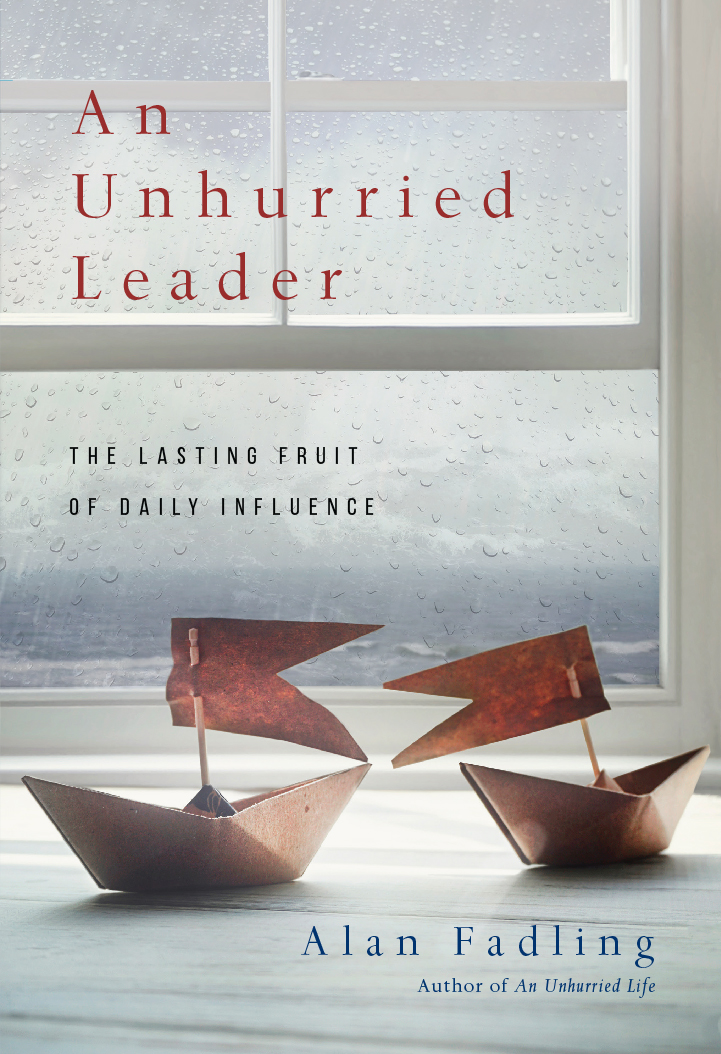 An Unhurried Leader: The Lasting Fruit of Daily Influence Alan Fadling (IVP) $20.00 This is a must read for pastors or other church leaders or anyone involved in ministry, or in leadership of any kind. What a great, great idea for a book, and what a fine writer to do it.
 when faced with so many responsibilities and opportunities to do good to “frantically take control of situations in hopes of making good things happen.” Rather, he offers good examples and guidance for alternative ways to lead; as Mindy Caliguire puts in, “to lead from a place of overflow rather than deficit.”
 The Church Guide for Making Decisions Together Terence Corkin & Julia Kuhn Wallace (Abingdon Press) $22.99 Allow me to suggest that this is a very, very important book for anyone on a journey to put into place more — what to call it — spiritual ways of being together as the Body of Christ. Much has been written about how the church is not just any institution and we ought not borrow without caution any old strategic plan from the world of business or corporations. We need uniquely Christian spiritual practices to guide and shape us to be the kind of people God desires, and to be in tun with the new work the Holy Spirit is doing in and through us. So, yes, we all know that — even if we are slow to enact fresh ways of doing stuff day by day in our church. I know church polity courses that still teach from Roberts Rules of Order, which, I suppose, isn’t a bad thing, if it is supplemented by organizational practices informed by more faith-based, spiritual disciplines.
 Breaking the Huddle: How Your Community Can Grow Its Witness Don Everts & Doug Schaupp (IVP) $16.00 This is a surprisingly excited book, a really interesting read that is based on some creative research and new descriptions of sorts of communities and stages of faith development within congregational life.
 who had come to Christian faith out of an utterly secularized and postmodern background. What were the steps these folks went through to come to a point when the Christian gospel could even be considered as interesting and plausible? What stages did they go through from being disinterested to interested? What were the common paths they took from religiously apathetic (if not out and out skeptical) to becoming a seeker to being one who took the claims of Christ seriously, to actually finding themselves to be Christians? As you might guess, that book documented the role of kind and caring friends that helped seekers navigate these stages of the journey and walked with them towards increasing belief. I Once Was Lost is a one-of-a-kind book and remains a great read for those who are serious about reaching post-Christian young adults with plausible and meaningful and fruitful conversations about deepening faith.
 Fresh Expressions: A New Kind of Methodist Church for People Not in Church Kenneth H. Carter Jr. & Audrey Warren (Abingdon Press) $14.99 I’ll say it right away: despite the fact that this has “Methodist” in the subtitle, I truly think it is suitable and valuable for nearly any congregational type. If you are interested in creative outreach, even church planting or para-church ministry, this tells some great stories which you can apply within your own context and theological tradition. I can’t tell you how excited I am that this documents a “wave of new Methodist churches emerging to reach unchurched and dechurched people who live in a culture that is increasingly nonreligious and multi-religious.” And what it is documenting is, in fact, deeply ecumenical. The “Fresh Expressions” movement began in the United Kingdom where it ignited over 3,000 new faith communities.
 Welcome to Dinner, Church Verlon Fosner (Seedbed) $9.95 We love the fairly recent publishing house created in affiliation with Asbury Seminary in Kentucky. They do great little books, an array of liturgical, Biblical, and spiritual resources for growing Christians. The Fresh Expressions USA movement has partnered with them to publish some books, and we stock them. This one is quite new, and it was the most popular book we had on sale at the Fresh Expressions conference in Harrisburg that we’ve mentioned. Verlon and his lovely wife were at the event, and although they are from the Pacific Northwest (Seattle, Washington) they have done some helpful church consulting here in Pennsylvania. We are delighted to know them and delighted to tell you about this powerhouse of a little book. It is compact and short and perfect for a small group read.
 Recovering from Un-Natural Disasters: A Guide for Pastors and Congregations After Violence and Trauma Laurie Kraus, David Holyan, and Bruce Wismer (Westminster John Knox) $20.00 Oh, how sad that we need a resource like this, and oh how great that somebody has compiled such a seasoned and practical guidebook.

 Beyond the Modern Age: An Archaeology of Contemporary Culture by Craig Bartholomew & Bob Goudzwaard (IVP Academic) $35.00 Our sale price $28.00

 Koyzis and James Skillen) which left its mark in ways that to this day have kept me disenchanted with simple bipolar partisanship. And Goudzwaard’s wise, justice-oriented set of punchy essays Aid for the Overdeveloped West forever (along with Ron Sider’s Rich Christians in an Age of Hunger and Art Simon’s Bread for the World) influenced how I thought about structures and ideologies that shaped and moved our world’s economic arrangements and how such systems are never neutral, but informed by values and priorities that may indicate the presence of false gods and distorted ideologies. These two books reminded me that (just for instance) simple charity is inadequate to fight poverty and simple living and recycling isn’t enough to fight global environmental disasters.
 1984 IVP published a controversial and widely discussed book, a small paperback called Idols of Our Time with a forward by Howard Snyder. After its first publisher dropped it, for a while Dordt College Press kept it in print, until it became too outdated, in part due to its discussion of the nuclear arms race between the US and the USSR, the nature of which changed with the collapse of the Soviet Union in those years.) For what it is worth, I helped write one paragraph of that book – my friend Mark Vander Vennen was translating it from the Dutch and he needed a few lines about US arms manufacturers since Goudzwaard’s Dutch version cited European corporations and policies and data. That I helped with a few sentences of one page of Idols of Our Time remains one of the great privileges of my life.

 Strange Days: Life in the Spirit in a Time of Upheaval Mark Sayers (Moody Press) $13.99 Unlike the big Goudzwaard & Bartholomew book, this is casual, upbeat, easy to read, filled with personal anecdotes, and is pretty cool, even though it walks us through the unsettling days that are spinning so fast that things seem almost out of control. I respect Sayers, who is very informed by serious reading and deep considerations, but he has a way to communicate (especially younger, energetic readers) that really works. He has a wonderful book on consumerism and hyper-reality called The Trouble with Paris and another exploring the deeper sense of self in our glitzy culture called The Vertical Self. He wrote an insightful book called The Road Trip That Changed the World which is about Jack Kourac and his influential book On the Road. Sayers’s last book was called The Disappearing Church which should be read by anyone curious about the decline of church life in our contemporary culture. Anyway, this new book looks at global stuff a bit, speaks to concerns I know you have such as the fears of international terrorism and radical Islam, and the other forces that cause us to characterize our era as a time of upheaval. If you’ve never read any books about the fast-spinning modern times and the array of social changes that bring anxiety and confusion to most, this is a fine, very interesting book with which to start. He says he “writes from the future” but I think this strangeness is upon us now. I recommend it highly.
 Everything Must Change: When the World’s Biggest Problems and Jesus’ Good News Collide Brian McLaren (Nelson) $14.99 Several years ago Bob Goudzwaard, Mark Vander Vennen, and David Van Heemst, wrote a deep and thoughtful book about the relationship of global poverty, degradation of the environment, and the threat of terrorism and war. It was called Hope for Troubled Times: A New Vision for Confronting Global Crisis and we still carry it and try to sell it to those interested in these global concerns. In a way, HFTT predicted the deeper work found in Beyond the Modern Age as it asked us to understand the faith-like/ideological engine that drives, the fuel that is spent, in the running of the modern world. What convictions and forces keep it going as it does? Can we see the interrelationship of our most pressing social problems and re-frame things in a healing and hopeful way? Well, Brian McLaren read that book and it moved him deeply and it stimulated his own thinking. Inspired by these three authors (which he playfully called the hopesters) he wrote his own version, which is, admittedly, more engaging and clever than Hope for Troubled Times. I really like this book and very highly recommend it.
 Completing Capitalism: Heal Business to Heal the World Bruno Roche and Jay Jakub (Berrett Koehler) $19.95 I am thrilled to tell you about this and hope to write more about it at BookNotes once I read it more carefully. Completing Capitalism just released and we couldn’t be more eager to have you know about it. Maybe the best way to introduce BookNotes readers to it is to remind you of some of the stories my friend Steve Garber tells in his extraordinary book Visions of Vocation about his work as a fellow on a team working with the Mars Corporation – yes, the family-owned candy company – helping them think through the world of work in that company, he character of modern day agriculture, the nature of business ethics, the vision that might underpin a new way of thinking about profit and corporate sustainability, the integral aspect of social responsibility of the corporation. These two authors – who are respected in high level economic circles, especially in Europe – have forged a manifesto of sorts that takes issue with a singular view of profit-making, insisting that the task and calling of a business, and the rubrics that measure its success, simply has to be about more than money-making. They are not the first or only economists calling for a more multi-dimensional definition of business success (they’ve read Bob Goudzwaard on this, I’m sure) but this book is nonetheless very significant, fleshing out, as it does, what this might look like, even in a corporation like Mars, Inc.
 The Gods in Whom They Trusted: A Foundation for Transitioning to a New Social World Arnold De Graaff (Heathwood Press) $37.99 When I first met Goudzwaard in the 1970s he was doing some teaching at the heady grad school in Toronto called ICS, the Institute for Christian Studies. Arnold De Graaf taught there then and, along with James Olthius, brought philosophical anthropology to the interdisciplinary learning community until he left to become a therapist. Although De Graaf continues to work as a psychotherapist (perhaps because he works as a deep psychotherapist) he is very much aware of the deeper cultural forces that hurt us and here he studies in a deep and transformative radical way the social dysfunctions that lead to stuff like the destruction of our land, air, and seas, the global climate change crisis, and systemic violence built in to many of our ways of ordering life. This book is quite new, very thick (just over 900 pages) a project he’s worked on for years, apparently. In the acknowledgements he credits Lambert Zuidervaart’s Artistic Truth: Aesthetics, Discourse, and Imaginative Disclosure which is curious (and reminds me of Goudzwaard and Bartholomew’s fondness for Calvin Seerveld, Zuidervaart’s mentor.) Zuidervaart, by the way, has recently done his own scholarly book on how the study of philosophy might help evoke and social change; see his Religion, Truth, and Social Transformation: Essays in Reformational Philosophy.
 Thank You for Being Late: An Optimist’s Guide to Thriving in the Age of Accelerations Thomas L. Friedman (Farrar, Straus and Giroux) $28.00 Goudzwaard and Bartholomew are quick to suggest reading widely and, although as Christians we should be critical about answers that are too entwined with the very assumptions of Enlightenment rationalism and faith in progress that causes our most intractable global economic problems, it is still valuable to be aware of the world’s leading thinkers. There is no doubt that the often cited, award-winning New York Times columnist is one of these world-class leading thinkers. This is his new collection of pieces, a very engaging and important volume, especially because he is attuned to some of the oddly paradoxical forces of modernity that he describes as “an age of accelerations.” This is a provocative insight and I’d love to hear what Goudzwaard says of this angle. In part, Friedman is concerns about “reconstructing social ties so that people feel respected and welcomed.” This has gotten rave reviews from The Wall Street Journal, Kirkus Reviews, and The New York Times Book Review which said it was his “most ambitious book yet.” That reviewer said “after your session with Dr. Friedman, you have a much better idea of the forces that are upending your world, how they work together, and what people. companies, and governments can do to proser. You’ll have a coherent narrative for why the world is the way it is.” Well, I suspect he hasn’t yet read Beyond the Modern World so I’ll take that line with a grain of salt, but it sure indicates the sweeping and important nature of this recent best-seller. We’re glad to stock it here.
 Cultural Problems in Western Society: Sundry Writings and Occasional Lectures Calvin Seerveld (Dordt College Press) $17.99 I did a long, breathy review of Seerveld’s stunning six-part collection of essays, lectures, sermons, papers, and articles, published as a series of “Sundry Writings and Occasional Lectures” when they first came out. Three are about the arts and philosophical aesthetics, one shows forth his remarkable writings about the Bible, and one is mostly about education and the writing of history. This one, Cultural Problems, introduced by Barbara Carvill, looks mostly at European conditions, and some of the essays are, in fact, about the role of artists within the political and economic situations in Europe. Some of these pieces actually cite his good friend Bob Goudzwaard and a few have great resonance with the vision found in Beyond the Modern Age: An Archeology of Contemporary Culture. Some of Seerveld’s dense and colorful chapters were first speeches given to the European Union and a few look at issues such as “Human Multiculturality” and gender justice, and another is on the development of cities which explores “cultural dialogue as a human resource for the integration of Europe.” If you are interested in how serious work on aesthetics and good art can play a healing, helpful role in a broken and injustice society, see another in this six part series of sundry writings, the volume entitled Redemptive Art in Society.
 Subversive Christianity: Imaging God in a Dangerous Time Brian J. Walsh (Wipf & Stock) $15.00 When this was re-issued a few years back with a serious new chapter I did a pretty extensive description in BookNotes, and I started it off noting that Brian was friends with Dutch economist Bob Goudzwaard. Which makes me naturally want to list it here, now.
 Makers of Modern Christian Social Thought: Leo XIII and Abraham Kuyper on the Social Question Jordan J. Ballor (Acton Institute) $14.95 In my above reflection on how Goudzwaard and Bartholomew draw on so many old (as well as recent) cultural critics I mentioned that they draw on both Kuyper and Pope Leo XIII. Both deserve more credit and discussion then this review allows, and I’m sure both Bartholomew and Goudzwaard would agree that in many ways there are overlapping themes among these two intellectual giants of the late 1800s. Even as the Industrial Revolution was being exposed as a very mixed blessing and danger (with oppression of the working classes, child labor, severe working conditions, and the like) Karl Marx cried out. But his was not the only voice raised against the excesses of unrestrained capitalism, and many Christians talked about “the social question.” In the year of 1891 Pope Leo developed key insights from the Roman Catholic tradition (most powerfully seen in his encyclical Rerum Novarum) and Abraham Kuyper gave his passionate speech “Christianity and the Class Struggle” to The Christian Social Congress. (That Kuyper book has more recently been released under the name The Problem of Poverty.) Ballor (with a PhD from the University of Zurich) knows much about the history of thinking about markets and such, and in this small, meaty paperback he provides a good overview of both of these seminal thinkers as they shaped some consensus between Catholics and Calvinists about the nature of a nuanced, gospel-informed vision of social theory and has a large excerpt of each of the two men’s writings. Ballor’s introductions are very helpful and the primary source material is vital. Very highly recommended.
 Contours of the Kuyperian Tradition: A Systematic Introduction Craig Bartholomew (IVP Academic) $40.00 I would be remiss not to mention this recent, magisterial, definitive treatment of the theological and social tradition of the great Dutch Reformed thinker and leader, Abraham Kuyper. He was a remarkable figure in the early 1900s and it is significant that Goudzwaard worked within a modern version of Kuyper’s AR political party. There is nothing like this book and it serves as an excellent background book to understand why Bartholomew and Goudzwaard think as they do in Beyond the Modern Age. Some of their insight clearly is in the line of this great Dutch statesman and critic of the French Revolution and although they are exceptionally ecumenical, this reveals their deepest theological tradition. Apart of influence some of this has on Beyond the Modern Age, Contours of the Kuyperian Tradition is certainly one of the most important theological books of the year and should be on the reading list of certainly any Reformed thinkers, and I’d say nearly anyone interested in contemporary theological trends.

 A Spirituality of Homecoming Henri Nouwen (Upper Room Books) $7.99 I hope you know this little one, from the lovely set of 5 small Nouwen books in the “Henri Nouwen Spirituality series” nicely produced by Upper Room. This invites us to respond to the deep love of God that shows us our truest home.
 Real Love for Real Life: The Art and Work of Caring Andi Ashworth (Rabbit Room Press) $12.00 One of our very favorite books. It is on the art of home-making, written mostly for woman, but a great read for anyone. I can’t tell you how intelligent and graceful and thoughtful this is. Highly recommended and dearly beloved.
 Hallowed Be This House: Finding Signs of Heaven in Your Home Thomas Howard (Ignatius) $14.95 A conservative Roman Catholic walks through the house, seeing signals of transcendence in each room. Very, very, impressive, by a very classy writer you should know.
 Household Gods: Freed from the Worship of Family to Delight in the Glory of God Ted and Kristin Kluck (NavPress) $14.99 A bold and interesting evangelical writer noting that we have made home and successful family life into an idol that we must break free from.
 The Year of Small Things: Radical Faith for the Rest of Us Sarah Arthur & Erin F. Wasinger (Brazos Press) $17.99 I so loved this wonderfully written book, and promoted it when it first came out this past Winter. It’s a charming, provocative, expertly crafted, fun and challenging memoir of two families who pledge to support one another as they take baby steps (and some not-so-baby-steps, you may think) to be more faithful, more caring, more committed to the ways of Jesus in this crazy world. What does home-life look like when couples bond in friendship and supportive community to push one another on to do greater things, daily steps of intentional discipleship? This is a great, great book, sure to inspire your own risk-taking baby steps and evoke good conversation among serious Christian friends. Read it and you’ll see why I thought of it while reading Keeping Place.
 At Home in the World: Reflections on Belonging While Wandering the Globe Tsh Oxenreider (Thomas Nelson) $22.99 What a thrilling memoir of travel; hovering around this fun, new book is the question of how to be at home while away, the tension between settling down and going forth. We sold her earlier, quite classy book Notes from a Blue Bike and she has matured as a writer and offered even wilder adventures, here. As it says on the cover, this is “an adventure across 4 continents, with 3 kids, 1 husband, and 5 backpacks. Really fun.
 Staying Put: Making a Home in a Restless World Scott Russell Sanders (Beacon) $19.95 One of the truly great American writers, a delightful and moving set of literary essays about home. Imagine if Wendell Berry was a lived not on a farm in Kentucky but in a small town in the Mid-West.
 Secrets of the Universe: Essays on Family, Community, Spirit and Place Scott Russell Sanders (Beacon) $18.00 Another remarkable book by the esteemed Mid-Western memoirist. I hope you know this author. Don’t miss it. One reviewer (editor of the Best American Essays) says “Scott Sanders knows in his bones what it means to write the personal essay: it means to take risks. These are personal essays in the best sense of personal — candid, intimate, thoughtful, individual.”
 The Place of Imagination: Wendell Berry and the Poetics of Community, Affection, and Identity Joseph Wiebe (Baylor University Press) Well, there are any number of important studies of Berry’s fiction, poetry, and non-fiction, and this hones in on his affection for place. Seriously, this is a major bit of literary criticism, incredibly well documented from Berry’s work. Less pricey and more accessible, see, of course, the great new overview of Berry by Ragan Sutterfield called Wendell Berry and the Given Life (Franciscan Media; $22.99.) What a beautiful, insightful, truly valuable book!
 Where Mortals Dwell: A Christian View of Place for Today Craig Bartholomew (Baker Academic) $32.00 I’m glad Jen Pollock Michel cites this a time or two as it is the definitive theological study on place. As we said in our BookNotes review when it first came out, it includes history, philosophy, theology, geography, all in an extraordinary bit of scholarly enrichment from what some call a reformational worldview. There is nothing like it in print, extraordinary. Bartholomew, by the way, recentlly did a major work on Kuyperian theology, and has a brand new one coming co-written by Bob Goudzwaar, Beyond the Modern Age. Genius.
 No Home Like Place: A Christian Theology of Place Leonard Hjalmarson (Urban Loft Publishing) $18.99 If one is not ready yet to tackle the must-read Where Mortals Dwell this is a bit more accessible and has a few more moments that make it passionately clear why we should care about this topic. Explored through the lens of neighborhood-ish missional church outreach, it is urgent and very, very good. To “keep place” as Pollock Michel invites us to do in our home-life, we simply must think about this bigger sense of place.
 Staying is the New Going: Choosing to Love Where God Places You Alan Briggs (NavPress) $14.99 I have said that the forward by Michael Frost on two kinds of American literature (staying vs going) is itself worth the price of the book, but Briggs does such a good job making this topic so interesting, I sometimes say this is the first book to read if one is approaching the topic of place. Very inspiring, full of insight and charm and, frankly, is a transformational book. Can we learn to love where God has put us? Game-changing!
 Renovate: Changing Who You Are By Loving Where You Are Leonce Crump (Multnomah) $14.99 I have touted this nearly everywhere we’ve gone this past yea; it is a passionate, Biblically-solid study of why place matters in the Biblical narrative, how God’s promises to restore the whole of creation, and showing you how that can inform your affection for your own places. And what can happen as we are transformed by learning to love well. Crump tells some of his own story of allowing God to transform his attitude as he fall in love with his new home in Atlanta Georgia. Very highly recommended!
 The Wisdom of Stability: Rooting Faith in a Mobile Culture Jonathan Wilson-Hartgrove (Paraclete Press) $16.99 Perhaps you will recall a list of books I developed that would supplement or be in conversation with discussions of Rod Dreher’s The Benedict Option, a list about Saint Benedict and his famous monastic rule, mostly. I wrote about this, as I do whenever I can, as it is a rich, thoughtful, stimulating and highly regarded meditation on the notion from Benedict that a good life comes from staying put, the virtue of “stability.” In a mobile culture where we don’t commit to a place (let alone a group of people) it is hard to be church, to develop roots, to live well. This book is a very fine, enriching rumination with a nice foreword by Kathleen Norris.
 Beyond Homelessness: Christian Faith in a Culture of Displacement Brian Walsh & Steven Bouma-Prediger (Eerdmans) $29.00 Oh my, I mentioned this above, and really meant it — it is an amazing work about a sense of place, about the motifs of exile and homecoming in Scripture, and how that might influence our own sense of calling to the task of radical home-making, being stewards of God’s home, here on Earth. If redemption is a coming home to a restored Eden, then environmental stewardship and water-shed attentive sorts of discipleship is of utmost importance, preparing now and pointing the way to a renewal of our creational home. This book is very serious and one of the most important volumes I’ve ever read. Order it today to study seriously what it means to be at home and to be a home-maker in a culture that does not value such things. Or consider it a studious follow-up to the splendor of Pollock Michel’s beautiful Keeping Place.
 Race and Place: How Urban Geography Shapes the Journey to Reconciliation David Leong (IVP) $16.00 It is simply not true that it is new agronomists or rural folks that develop a sense of place, and although a few of the above writers are small town or rural, some, above, are not. (Oh, please read Renovate, mentioned above by my acquaintance Leonce Crump, an urban, black pastor who cites Wendell Berry!) Not only is it a myth that those who care about place are quaint and rural, it is, as a matter of fact, simply not true that all African American’s in North America are urban. (Hey, I’ve had some great conversation about fishing with black men and women!) Anyway, having said that, it does seem that Jen Pollock’s book doesn’t speak much about race and racism, a topic that is deeply entwined with American geography. This fine book, which I reviewed favorably when it came out a few months ago, is the book to read to bring a reorganization of the relationship of race and place. What a rare voice, what an important contribution. This book works well, and serves readers with insight on various levels on several topics. A win, win, win, they say, well worth having.

 seminary professors such as Kenda Creasy Dean (Almost Christian
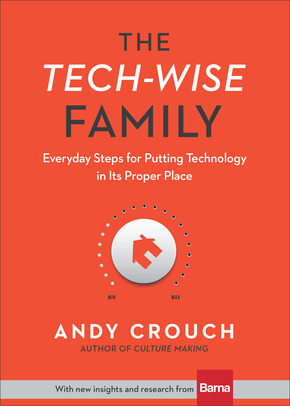
 ‘s going to be a fun and informative night. Dan’s a great speaker, lively and funny, and he and his wife Carol have double the experience many of us have — they have raised two sets of twins! And what good parents they are.


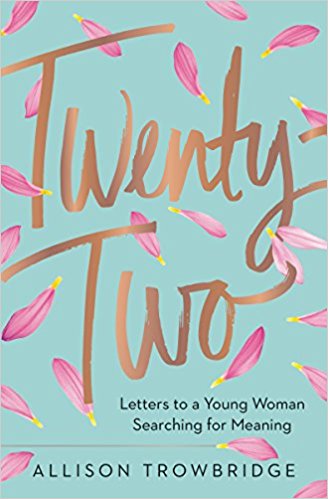 Twenty-Two: Letters to a Young Woman Searching for Meaning (Thomas Nelson Publishing) $22.99 Did you see my BookNotes comments about this a week ago? This is a very handsome hardback designed as a set of letters to a young woman who is graduating from college. As I described it,
 Visions of Vocation: Common Grace for the Common Good Steve Garber (IVP) $17.99 I won’t say again the many reasons we love this book but you may know that I’ve mentioned it here often. Steve is a fine, fine writer, a deep thinker, and a personable, intense friend to many. He loves little more – other than being with his family, hiking or bike riding, or reading or watching movies, that is – he loves little more than inviting people to earnest chat with “conversations with consequence.” He networks beautifully, bringing folks together to tell stories of grace and goodness, and of struggle and pain, of hope and the effort to make a difference. This book has emerged from his “come and see” pedagogy, his many stories of people doing life together, telling their stories of hanging in as God’s great grace allows. Can we care about the common good, remaining faithful over the long haul of our lives, not giving in to cynicism or “whatever”? This book allows careful readers to learn to love the things God loves, loving the world despite its deep sorrow. What an amazing, rich, thoughtful book, a perfect gift to honor a major life transition for anyone who is serious about the things that matter most.
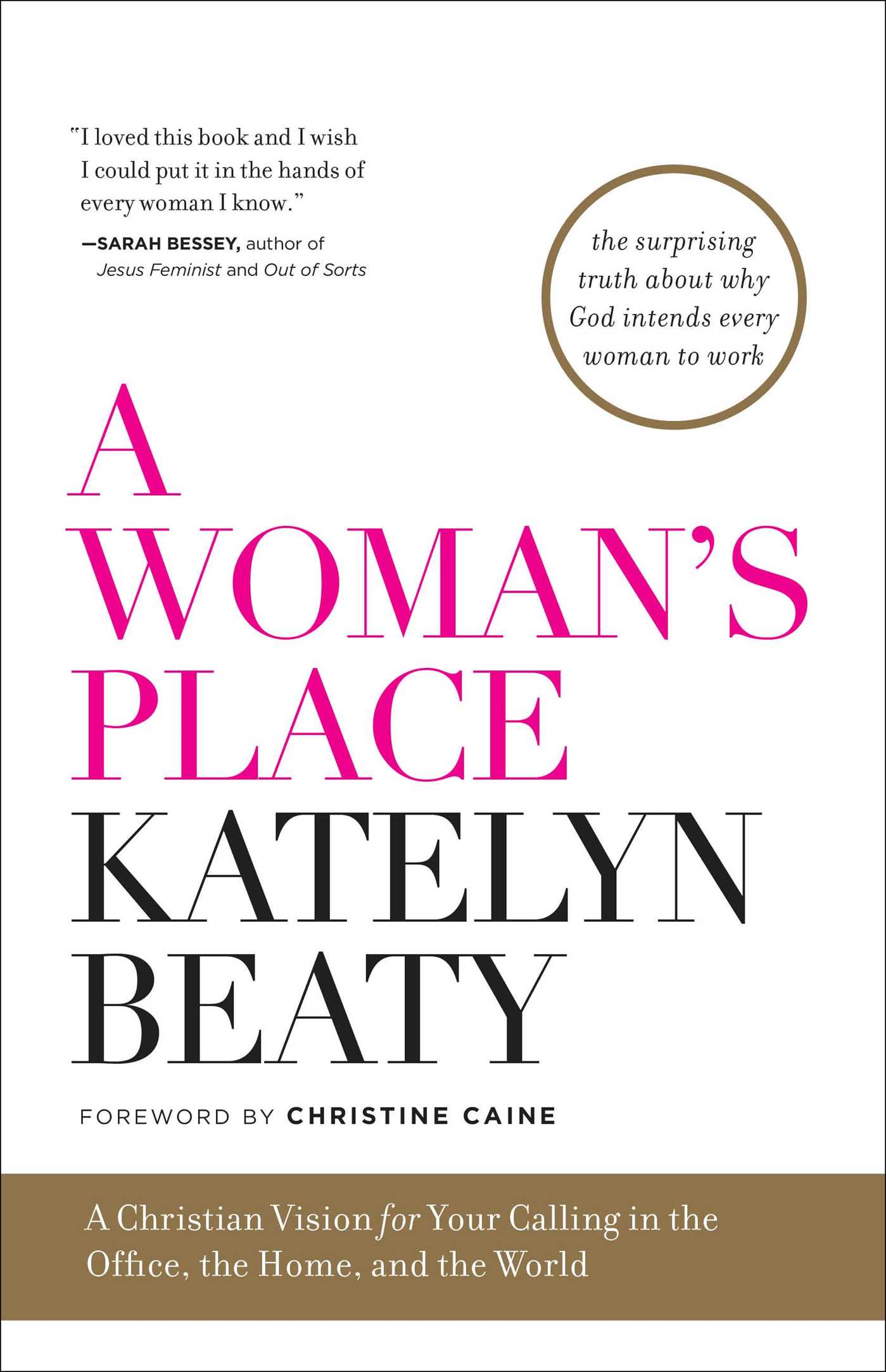 A Woman’s Place: A Christian Vision for Your Calling in the Office, the Home, and the World Katelyn Beaty (Howard Books) $22.99 I am sure you understand that we don’t think that any sort of graduate – let alone college graduates – should be given a little token gift that trivializes the momentous occasion of their matriculation or that trivializes the way the Christian faith can provide insight and comfort and vision for the seasons to come. This is a key time to offer something sturdy and vital so we gravitate to books about calling and career, about vocation and transformation, about lasting faith and discipleship There are many other books than the few I’ve listed above but, for what it is worth, there are none this good that are particularly about women’s callings into the workplace, making this book a rare treat and a real gift. It would make a great gift for a college woman.
 Leading Lives That Matter: What We Should Do and Who We Should Be edited by Dorothy Bass and Mark Schwen (Eerdmans) $31.00
