Is a comment an aside if it is the first thing written? Regardless, here it is, an opening aside: on my wife’s birthday a few weeks ago, we needed a new alternator for the van, and a new hot water heater. There was just flat-out nothing sentimental or nice about her gifts this year.
Which brings me to this: your wife (if you are a reader who is a husband), should she be a mom, most likely does not want an appliance for Mother’s Day. And certainly not a part for under the hood of the mini-van.
But I also have a hunch, and I bet you are with me on this, that she doesn’t really need some fancy piece of jewelry like I saw in all the Sunday paper Mother’s Day ads today. Or a sexy little cocktail dress (what were those models, like, twenty?)
So, I guess the “don’t celebrate motherhood with an appliance or auto part (or glitzy bling — it ain’t Valentine’s Day, after all)” advise isn’t an aside, it is a lead-in. A set up. I think it is a great way to honor a mom by getting her a book which celebrates her desire to take up her parenting vocation with intentionality and care. Mother’s Day is this coming Sunday, and we’d love for you to order a book from us as a Mother’s Day gift — which we can gift wrap for free, and enclose a little note if we send it to her for you. Most good moms would love a good book, especially if it is smart and practical. And today’s feature is a great suggestion. And you can give it for Father’s Day, too, so order extras for some guys you know!
The Christian Parenting Handbook: 50 Heart-Based Strategies for All the Stages of Your Child’s Life by Dr. Scott Turansky and Joanne Miller (Thomas Nelson) sells typical for $16.99 although we have it at a Hearts & Minds BookNotes 20% or so discount. This upbeat and lovely paperback would make a great gift for any parent you know. It seems to me that while Christian parenting books are nearly “a dime a dozen” some are either too psychological and formulaic, without much distinctively Christian insight, or they are so laden with theology and heady analysis that they aren’t that practical. Some are so full of tender care that they drip with sappy sentimentality; others are so strict that they just seem harsh. (Including, I think, some authors who make much of God and grace and a “gospel-centered” approach. Yikes!) Finding a thoughtful, well-written, insightful but user-friendly handbook from a balanced perspective is not as easy as it seems, even in bookstores where there are dozens and dozens of mostly fine choices.
We have our handful of favorites and the previous books of Turansky and Miller have been high on our list. Parenting is Heart Work, Say Good-Bye to Whining, Complaining and Bad Attitudes… in You and Your Kids, and Good and Angry: Exchanging Frustration for Character… in You and Your Kids are each must-reads. In these, and in this new one, they are clear that they believe that parents are to evoke “heart change” in their children. That is, behavior modification and compliance — raising “nice” well-behaved kids who don’t embarrass us in public — is not the goal. We don’t wish only for kids to obey us in dutiful compliance, but for children to desire to do the right thing, to be people of character, to be followers of Christ who enhance the family with good energy, not draining it with bad. We want them to learn to take responsibility and to be kids of compassion. In a way, they have set the bar high, but they write and work with a light touch. Very nice!
Turansky and Miller take up their position within the plethora of family-oriented self-help books wisely in the philosophical and theological middle. They aren’t about just having fine-looking outcomes; they want deeper heart change, although they aren’t so religious and into character formation that they are in la-la land. No, these are real parents, who understand real children and real parents, and realize that through God’s grace, with some intentional effort, laughter, outside help (from coaches, teachers, church groups and the like) and a little luck, children can be mentored into gracious maturity and can turn out to be kids we enjoy and young adults we admire. And they are masters at showing us how it it is done, pointing to example after example.
In many ways, The Christian Parenting Handbook is a culmination of their 25 years of work on this. It offers their 50 best ideas, their top 50 strategies, short chapters that have proven to be the most fruitful (some of these were previously published in the newsletter of their National Center for Biblical Parenting and Biblical Parenting University, an on-line course they have taught for years. Watch their brief introductory video to get a sense of their style. This new handbook really provides the cream of the crop, the best work they’ve done, distilled into enjoyable, easy-to-understand bites.
When I say that this represents the best of the research, work, writing and prayerful consideration of Scott and Joanne, that is truly significant! They have been at this a long time, have been on endless speaking tours, have tirelessly done workshops and conferences, large and small events, here in the mid-Atlantic and (honestly) in places quite far away. They have listened, observed, talked with thousands of parents of all ages and cultures. They are always busy, have a spectacular array of good resources at their useful website (more on that anon) and can talk for hours about all that they have come to learn. Yes, to say that this is their best work is really saying something!
Again, The Christian Parenting Handbook offers 50 good strategies for creating the sort of parenting style and home-life that hopes for gospel-driven, wholesome heart transformation. It invites creativity, flexibility, and prayerful attentiveness rather than a formula. It doesn’t give formulas, as they just aren’t technique-driven teachers. But, as I’ve hinted, they don’t (like some authors) over-react against easy steps and simple formulas so much that all they offer is broad, visionary ideals. No, they have case studies and stories and examples which illustrate their principles, underscoring that you can do this! We have heard from our own customers — and from my own use of one in a time of personal struggle — about how applying the insights of their previous books that this material can be life changing.
We all want better home lives, and those who have children at home — from little ones to teenagers — can certainly benefit from the guidance, gentle support, wise teaching, and helpful ideas shared in this wonderful resource.
The wonderful opening chapter sets the tone and, in a way actually illustrates much of their own philosophy of parenting. It is called “Developing Your Own Biblical Philosoph
y of Parenting” and that’s it! They don’t want to force compliance or demand that they have all the answers or that their perfect plan is all you need. No, they invite you to have your own heart touched by the profound grace of God, to have your own mind formed by a Biblical worldview, to have your own family habits guided by the lovely mercies (and, yes, hard teachings) of the Lord Jesus Christ. So, yes, even in this first chapter they are not bludgeoning readers, but inviting you to think along with them and consider with your own discernment and then to be creative and find a pattern of parenting that is faithful and fruitful, for you and your kids. My kids are mostly grown, and I was deeply moved by this book, even the introduction!
Here are just a few the kinds of chapters they offer. I hope it gives you an indication of how interesting and fun, wise and helpful, these diverse entries are.
Consistency is Overrated
Build Internal Motivation
Consequences Aren’t the Only Answer
Parenting is an Investment — Think Long Term
Bookmark Good Days
It Takes Two to Argue But Only One to Stop
Children Can Only Take as Much Pressure as the Relationship Will Allow
Be Prepared for the Three Arenas of Resistance
Use Creativity to Teach Your Kids Spiritual Truths
Teach Kids to Communicate Emotions Wisely
Firmness Doesn’t Require Harshness
Good Character Qualities Misused
In a bit more than 200 pages, they offer 50 of these sorts of well thought-through, Biblically-grounded, very practical, and quite interesting, short pieces. They aren’t random, really, but they can be dipped in to as needed. It really is a handbook — one you will use over time, keeping it handy for years to come. I am sure of it.
By the way, to illustrate their fairly centrist, balanced view, consider their thoughtful chapter on spanking. The book has been out a week (although many bloggers have been promoting it beforehand) and they have already gotten some firm rebuking letters from both sides — some say they are too conservative, some say they are too liberal (or something like that.) Although they do not rule it out, they fear that spanking is often used in anger, which is troubling, and that it frankly isn’t that helpful, anyway. (The Turansky’s have served as foster parents and to foster kids one has to pledge not to spank. And guess what? They learned, even though they think it is Biblically-permissible, that there are a whole lot of other, better strategies that can be used in times when discipline is needed.) So, they are moderate, practical, living in the “real world” and yet have remarkably good hopes to see Christ honored and children nurtured in transforming ways by the gospel, and by the fruit our own on-going inner formation.
We are big fans of The Christian Parenting Handbook and are happy to commend it, even now, as a way to honor and assist some mother you may know. What a nice gift it would make! We carry all their other resources as well, including a brand new set that Turansky and Miller, with some help from others, have created, a set of five books, covering parenting ideas throughout the developmental stages of a child’s life. Let us know if you have questions about any of their other good work.
The authors have other good resources at their National Center for Biblical Parenting website. Check ’em out.
Of course, there are oodles of other family-related books of various styles, formats and theological tones. We have a lot! And other kinds of books are certainly appreciated as Mother’s Day gifts. We realize, naturally, that your own mom may not be the target audience for this or any other parenting book. So, buy her a cookbook or gardening book, a novel, a women’s Bible, a memoir, a current event study or historical biography, or a guide to deeper spirituality. We’ve got so many great books here at the shop, and books make such wonderful gifts. As always, we have gift certificates, too, which we can send to you, or to your mom on your behalf. Just let us know how we can help. Thanks. To you and your mom.
BookNotes
SPECIAL DISCOUNT The Christian Parenting Handbook regularly $16.99 sale price $13.50 more than 20% off order here takes you to the secure Hearts & Minds order form page just tell us what you want
inquire here if you have questions or need more information just ask us what you want to know
Hearts & Minds 234 East Main Street Dallastown, PA 17313 717-246-3333 read@heartsandmindsbooks.com
MUSIC &POP CULTURE I hope you saw the book list I did on music and popular culture (inspired by the fabulous Calvin College Festival of Faith and Music in Grand Rapids which Beth and I attended a week or so ago.) I love some of these books and could have suggested others; from books about faith-based approaches to video games (like Of Games and God: A Christian Exploration of Video Games by Kevin Schut [Baker; $17.99]) to our section on media ecology, from books on film to books on theater, we love sharing these sorts of resources. And especially books about good old rock and roll. Do you know the 33 1/3 books, for instance, published by Bloomsbury, each which examine a particularly interesting and often quite important rock album? We stock a lot of them and think they’re pretty cool.
Studying books about pop culture does at least three two things, or so it seems to me. Firstly, it helps us “practice the presence of God.” We can find God everywhere more easily when we don’t just look for inspiration, or emotional/spiritual highs, or Holy Spirited shivers throughout the day, but find signals of grace and divine goodness in the ordinary, in our actual encounter with the stuff of life. This is easier for some of us to imagine in nature, finding God in the out of doors, but it is equally true that God is found in the spheres of entertainment and pop culture. So this is a spiritual discipline, in many ways, learning to attend to Holy Things in our common lives, including listening to rock songs or going to movies with, as Romanowki’s book puts it, “eyes wide open.”
Secondly, intentionally attending to the possibility of common grace in popular culture also trains us in discernment. That is, we can use movies and music as case studies on how to observe not only the good and true, but the odd and disconcerting. Idols and ideologies bring distortion and danger and we must keep our antennae up to be sure we are not being hoodwinked, ever so subtly, by the stories and values which we take in. I think it is a tad simplistic to say we are like computers –“garbage in/garbage out” –but there is something to this notion. We are shaped and formed by the stuff we engage in. Read Jamie Smith’s essential Desiring the Kingdom: Worship, Worldview, and Cultural Formation (Baker; $21.99) to be reminded of this in quite sophisticated terms; see Walt Mueller’s How to Use Your Head to Guard Your Heart: A 3(D) Guide to Making Responsible Media Choices over at CPYU for an easy to apply process for talking about this with teens in pretty simple terms. Although it is not just on the popular arts, I love Walt’s important book Engaging the Soul of Youth Culture: Bridging Teen Worldviews and Christian Truth published by IVP; $18.00) which certainly is relevant here.
And, thirdly, it just makes things more interesting. Maybe this makes it more demanding — yup, we have to faithfully think about stuff, all of this stuff — but, I’d say, and I bet you agree, that this also makes life’s adventure much more fun. We can enjoy music and dancing and playing and watching movies when we understand the art form a bit and have eyes to see all that is going on in terms of style and content and vision.
ALSO, THE VISUAL ARTS The process and approach of engaging this side of life is a bit different when considering visual art or literature, but our basic point is the same: we glorify God when we take seriously our human calling to steward the gifts of Earth, which includes culture and culture-making. Music and film and paintings all matter. We can appreciate and make art for God’s sake, as acts of devotion and love of neighbor.
So here are some new books on the heels of our music and pop culture list that are about the arts more generally and about creativity in the life of faith.
We have much bigger lists on the arts, aesthetics and more, for instance, here. Here are some that focus more on enhancing or deepening our own creative lives.
Not just for artists, you know.
Drawn In: A Creative Process for Artists, Activists, and Jesus Followers Troy Bronsink (Paraclete) $16.99 Troy is a Presbyterian pastor, indie musician, street activist and faith-based organizer and he has here given us a tremendously cool book, full of substance and verve, theology and vision, hope and healing. If you are an artist, patron, fan, or simply a person wanting to learn how to be more imaginative, this guide is hard to beat. What a great title (and cover, too, eh?) Love it.
Sally Morgenthaler (who calls it “one of the finest books on art, creativity and the nature of God to date” says it is a manifesto. Indeed. It is a call to live a creative life as a follower of Jesus, inviting us into God’s own creative work and “redemptive rhythms” in the world. It is serious, thoughtful, very interesting and highly recommended.
Art + Faith: Reclaiming the Artistic Essence of the Church Jon Bowles (House Studio) book $12.99; DVD $36.99 This is a small, nifty book that could be read on its own, but I suppose is designed to go with the DVD curriculum of the same name. It is not a “participants guide” or simplistic workbook, though, but a real book that certainly invites great imagination. Informed by the narrative of the Beggars Table,a community that meets in a gallery in Kansas City’s art district. This is not about “arts programming” but, not unlike the Bronsink book above, it really is more about helping all of us appreciate the arts, engage in meaning-making by being formed in disciplines of seeing. This is a story, they say, of “how art has shaped the imagination of one church toward the Kingdom. This could be a story about your church, too.” I like this study of mystery (and our “mystery deprived world) and beauty and awe, and the necessary relationship of faith, religion, art and wonder.
The Art + Faith DVD includes six session and PDF transcripts, discussion guides and other bonus material. The package includes the DVD and one book.
Life After Art: What You Forgot About Life and Faith Since You Left the Art Room Matt Appling (Moody Press) $13.99 I am excited about this new imprint of books published by the stalwart evangelical house called Moody Collective. This tremendous book is a great new kind of book for Moody, it seems, young, creative, fresh, interesting for those who need something other than standard basic Christian growth or self-help books, or mere theology (as helpful as all that can be.) This book invites us to realize that we are creative people, we make things (for better or worse) so we might as well, as Appling says, do it on purpose. He wonders how we lost our confidence to create, crumbling under the pressure of the so-called “real, grown-up world.” Appling is an art teacher, having worked with pre-K through high school, in fact. This is a hopeful book, fun and a bit challenging. Has something been lost along the way, for you? This will help you get it back!
Eyes of the Heart: Photography as a Christian Contemplative Practice Christine Valters Paintner (Sorin Books) $15.95 We have carried the previous books by Ms Paintner which includeThe Artist’s Rule: Nurturing Your Creative Soul With Monastic Wisdom (Sorin; $14.95) and a fabulous book about being attentive to God’s goodness revealed in creation called Water, Wind, Earth and Fire: The Christian Practice of Praying with the Elements (Sorin; $14.95.) I really love this new one on photography and recommend it to any number of those who like to take pictures with their iPhones, who are learning to pay greater attention to daily life as they hone the skills of “seeing” by way of their cameras. Valtgers Paintner is the on-line “Abby of the Arts” and here she helps us with “viso divina” (she is a Benedictine oblate, after all) and cites great contemplative and monastic sources, as well has helpful technical suggestions about lighting, composition, framing, printing, equipment. This is a lovely, good, book which many will enjoy and by which many will be blessed.
Awake My Soul: A Contemplative Art Journal Aletheia Schmidt $25.99 Aletheia is a Lancaster, PA-based artist who has created this wonderful, full-color book which shows her abstract work with plenty of nice spaces for you to journal, reflect, or draw along. She is a vibrant, kind, and talented young woman and she sees these paintings as prayers. She believes “the arts, imagination, and creativity offer life.”
You can check out her website to get a sense of her sense of things. You can even buy her cards and prints. But this book, which we are thrilled to carry, is a wonder. The reflection questions are not simplistic or one-dimensional, and I would think that it would be a beautiful thing to do together, even if it is more likely to be used individually. There are 52 paintings, so you use it for a long while. Congrats to this new friend, a fine artist who has offered her playing and painting and praying to us.
Qu4rtets artwork by Mako Fujimura, Bruce Herman, and Christopher Theofanidis, and others; inspired by T. S. Eliot $35.00 You might want to revisit my previous review of this splendid, remarkable book — superlatives elude me to tell you how good this is. Two stellar, respected, deeply Christian painters (Fujimura and Herman), and a classical musical composer (Theofanidis), collaborated to do these works, collated in this marvelous coffee-table paperback book, inspired by the famous poem Four Quartets by T. S. Eliot. This is a lovely book, handsome, intriguing, illuminating. The combination of visual arts, a music score, and the historic, important poetry is so very interesting and fruitful. The great introduction by Image journal editor, Gregory Wolfe, sets it up perfectly.
As I explain in my earlier description of Qu4tets, there are included three very significant essays (also enhanced with lovely type and smaller art pieces throughout) by Matthew Milliner, James McCullough,and Jeremy Begbie. These critical reflections add gravitas to the project (as if it needed more) and are themselves very well done. Highly recommended. — perhaps as a graduation gift?
BookNotes
SPECIAL DISCOUNT ANY ITEM MENTIONED 20% off order here takes you to the secure Hearts & Minds order form page just tell us what you want
inquire here if you have questions or need more information just ask us what you want to know
Hearts & Minds 234 East Main Street Dallastown, PA 17313 717-246-3333 read@heartsandmindsbooks.com
If you followed the Hearts & Minds facebook page (or my own) you know that last weekend we attended the Calvin College Festival of Faith & Music. It may have been the first vacation we’ve had in years and it was just wonderful to be with our good, good friends, Ken & Gail Heffner. Ken and his Student Activities Organization (our daughter Marissa helps out a bit) run this extraordinary conference on pop culture every other year. (In the off years there is this little breathtaking thing known as the Calvin Festival of Faith & Writing.) Just reading through the FFM workshop speakers, topics, and conversations is instructive, not to mention seeing the artists who played, so visit their site, here.It’s the kind of event that many of our BookNotes readers care about, so I figured you’d like to hear about it, the authors who spoke, the books that were discussed (or that should have been, imho.) You follow our bookstore’s work for a reason, and I trust this is one of them. I can’t wait to tell you about it…
This year’s FFM was, as always, a heady mix of lectures, workshops, concerts large and small, and some fabulously interesting late night after-parties. What fun to get to hear musicians perform their sets in intimate rooms, artists as diverse as the Soil and the Sun, Care, and, say, Julie Lee and Sarah Mason; and there were bigger shows with Welcome Wagon, Andrew Bird, and Josh Garrels with Mason Jar Music collective. It was so cool crossing paths with Noisetrade founders Derek Webb and Brannon McAllister, her.menutics.com and Christianity Today editor Katelyn Beaty (herself an alum of Calvin.) Being with friends like singer-songwriter (and now author) Justin McRoberts, or Redeemer Presbyterian’s art guru (and harp blowing bluesman) Kenyon Adams, was precious for Beth and I. As Ken Heffner put it, this gathering is a bit unique as participants get to learn and think and reflect, even with scholarly papers, and then also actually experience the very art and music which is being explored. That we did this with wise, Christian leaders and bunches of college-age young adults — the event is held at a college, after all — makes the Festival especially interesting. Never has the interface of theory and praxis been so much fun. Woo-hooo.
Vacation-time is over, though, so I’m back to being the book guy. For our purposes, here, then, allow me to name a few books by the authors who spoke at the festival (forgive me if I miss some) and a handful of other books that are new or important. These will help us as we think as people of Biblical faith about the contemporary music scene.
The Soul of Hip Hop: Rims, Timbs and a Cultural Theology Daniel White Hodge (IVP) $17.00 I’ve said this before, but this may be the very best book on hip hop culture and the amazing art form of rap. Hodge is an astute observer, knows the history of the style, and – thank goodness, for a book like this! – enjoys it. His presentation the first night of the Calvin Festival was riveting, bold and passionate, well beyond a surface look, engaged with the passion of a devotee and evangelist. He wanted us to get it, to appreciate the lyrical power and social themes of the prophetic imagination emerging from the often disenfranchised artists who have shaped this genre. This is radical, Biblical reflection, and his book deserves to be known, read, considered. Certainly if you know young adults who like hip hop you should tell them about this book. We have a few others, but this is the best. Kudos to Calvin for once again hosting this good brother.
Sin Boldly: A Field Guide for Grace Cathleen Falsini (Zondervan) $19.99 I adore this book and it was so wonderful hearing Ms Falsini again. It was, in fact, deeply moving – Beth and I fought back tears when she played “Born at the Right Time” from Paul Simon’s Rhythm of the Saints as she talked about adopting her son from Malawi. And I got choked up when she told about her travels with Bono while playing a post 9-11 live video version of one of the many U2 songs that helped so many of us cope after that tragedy. Falsani has written before about the first time she heard the first single from Mumford & Sons new album, Babel, as she was on her way to be with her dying father. So, she certainly did a marvelous job, as she does in Sin Boldly, finding glimpses of grace all over the world, in the good and the bad, in politics and poverty and film and rock and roll. Her other books include the wonderfully curious The Dude Abides: The Gospel According to the Coen Brothers (Zondervan; $14.99) and -okay, I’ll just say it, Belieber: Fame, Faith, and the Heart of Justin Beiber (Worthy; $16.99.) As she said, offhandedly, “Lord have mercy, we should pray for that little boy.” Cathleen Falsani is an excellent writer and you should read her books.
Sex, Drugs, and Cocoa Puffs: A Low Culture Manifesto Chuck Klosterman (Scribner) $15.00 Many participants adored this edgy, Gen X writer, one of the more popular novelists and essayists of his generation, as he rambled through a hip talk pondering what in the world he was doing at a conference on religion and rock music. Well, for starters, his novels are packed full of references to religion and music, and his collections of essays -fun, profane, pushy, witty, insightful – sometimes tackle the topic directly. (Chuck K is a sports writer, too, and his journalism there is also highly regarded among those who favor a certain informal, provocative style. In his talk he dismissed the recent pundit who compared him to Hunter S. Thompson but to even have to do that, well, ’nuff said.) Okay, so, anyway, he wondered how he got himself into this gig.
Way to go, Calvin College SOA, for inviting this somewhat controversial guest into our conversation, for allowing us to (again) find insight from various quarters. One of the great 19th century disciples of John Calvin was Abraham Kuyper, and it is Kuyper’s sort of neo-Calvinism that animates Calvin College and the Festival with its blessed, if a bit dangerous, commitment to living into the themes of common grace. The phrase “Common grace for the common good” often is applied to politics, how we should draw on all manner of gifts and insights to build a public square that is just for all. At FFM such nods to common grace, also for the common good, means be willing to hear and engage the gifts of art, music, and cultural criticism, no matter from where it comes.
By the way, Klosterman told us his next book is a study of evil, by way of lo
oking at literary and film villains. Philosophy, lit crit, pop culture and a heckuva creative prose style will combine to give us a great book, I’m sure. I Wear the Black Hat: Grappling with Villains (Real and Imagined) will release early June 2013. It will be a hardback, selling for $25.00. Let us know if you want to pre-order it (at the 20% BookNotes discount.)
Right By Her Roots: Americana Women and Their Songs Jewly Hight (Baylor University Press) $24.95 I really intended to catch this workshop, but the schedule didn’t permit. So glad we have had the book on our shelves for a year. I’ve read a few of these good chapters (about Julie Miller, Victoria Williams, Michelle Shocked) and will now read more. One reviewer said when it came out that it “will end up being the best book written about American music this year” FFM speaker David Dark invites us to be enriched saying, “With a powerful wit, intense attentiveness, and eloquent empathy, Jewly Hight is a dream come true for the songwriters to whom she pays careful and affectionate heed. By calling our attention to them, she lifts their voices, testifying concerning the ways their work uplifts, invigorates, and challenges our otherwise all-too-settled imaginations.”
Everyday Apocalypse: The Sacred Revealed in Radiohead, the Simpsons, and other Pop Culture Icons David Dark (Brazos) $18.00 What can I say? Being with David is itself a bit of performance art; he’s a genius, a wordsmith, and a dear, dear, loyal friend to many. He has written several other books, all of which we commend (and, in fact, I’ve got an endorsing blurb on one of them, an honor I did not take lightly.) Pop culture fans young and old, artists, filmmakers, writers, and thought leaders in this whole arena (like FFM’s Ken Heffner) will regularly say that David Dark is one of their best supporters and his book truly seminal. No one can talking knowingly about this topic without having read Everyday Apocalypse; it is that important. If you are interested and into this topic and haven’t read this amazingly rich, mind-blowing work, treat yourself and be prepared to have your world rocked. Really.
Personal Jesus: How Popular Music Shapes Our Souls Clive Marsh & Vaughan S. Roberts (Baker Academic) $22.99 It was a delight to meet Vaughan (who gave an outstanding, research-based workshop) and to chat with some of his editorial staff at Baker who do so many good books in this series – what a fascinating gentleman scholar who is doing such fine work! Yes, this book is a bit academic (and yes, the cover is, uh, well, you know.) But at its heart is something basic, something passionate, something nearly primal: how does listening to music effect us? Is it a religious experience and if so, how? What do people say when asked? What is going on here? (And, is it the lyric, mostly, or the music itself?) This is a very serious, and I think groundbreaking rumination on how popular music works, the role it plays for listeners, and the phenomenon of its popularity. It really does have a missional edge, asking how we as Christians might engage the music itself, more faithfully, and with awareness of why we and our neighbors are influenced as we are by the music we love.
As Brett McCracken writes in the forward “Personal Jesus is one of the best theological treatments of pop culture I have ever read. Marsh & Roberts offer a many-layered, comprehensive model for how we can more thoughtfully understand and engage pop music.” Or, as Catholic Gen X scholar Tom Beaudoin (Virtual Faith) writes, “Marsh & Roberts prepare the way for a new style of making theological sense of popular culture… they show us why studying the lived experience of popular music is an imperative if we want to find out where religion cohabitates with ordinary stuff, more or less openly, today: in the spaces of meaning communicated by music in everyday life.” Roberts is a Vicar of Collegiate Church in Warwick, England. I hope this book is bought and studied, discussed and taught.
Broken Hallelujahs: Why Popular Music Matters to Those Seeking God Christian Scharen (Baker) $18.00 I love this book, and really appreciate the work of this excellent author. (Scharen used to be at the Center for Faith and Culture at Yale Divinity School, but now teaches worship and theology at Luther Seminary in St. Paul.) I’ve reviewed it before, so for how, here’s what it says on the back cover: “Building on the success of One Step Closer: Why U2 Matters to Those Seeking God, Christian Scharen shows how to engage faith and culture through a wide range of popular music, including the blues, hip-hop, and rock. He examines artists such as Arcade Fire, Kanye West, Leonard Cohen, and Billie Holiday, offering a fresh, compelling theology of culture in conversation with C. S. Lewis that can look suffering and brokenness in the face because it knows of a love deeper than hate, a hope stronger than despair. Written engagingly yet with theological depth, this book will resonate with readers interested in the interface between pop culture, music, and theology, as well as with pastors and youth ministers.”
Don’t Stop Believin’: Popular Culture and Religion from Ben Hur to Zombies edited by Robert K. Johnston, Craig Detweiler, and Barry Taylor (Westminster/John Knox) $20.00 I hope you know these authors, who form nearly an entire school of thought in this whole area of study. Each have written thoughtful books on film, music, entertainment, digital culture, media and the popular arts. Together, now, they’ve edited a fine collection of mature essays on hundreds and hundreds of topics. Don’t Stop… can be used as a conversation starter, as background for deeper thinking, or to dip in to whenever you have a spare moment or two (but be aware, it can be addicting!) Skip to pedestrian cover and dive right in — this is good, good content! Read succinct insights about the Beatles, the significance of Star Trek, the meaning of Dr. Who, making sense of South Park, the aesthetics of Andy Warhol, the role of Calvin Klein and Nike ads, the theological significance of SimCity.
There are interesting pieces of culture-shaping events like the Super Bowl and on artifacts like the iPod and a good reflection on the impact of Facebook.
Of course there are entries on influential writers in the field such as Marshal McLuhen. Naturally, there are pieces on classic musicians like Dylan, Marvin Gaye, Madonna, and Bob Marley and on filmmakers such as Woody Allen and Quentin Tarantino. There is a lovely piece on Les Mis, and good ones on pop icons such as Mary
Tyler Moore.
This remarkable reference guide is arranged chronologically from the 1950s – Johnny Cash shows up here, as does C.S. Lewis, and Mickey Mantle and Marilyn Monroe – and ends with the 2000s. This last section includes dozens of entries, including Bansky, The Daily Show, Lost, Project Runway, Twilight, Wicked, World of Warcraft and more.
The pieces are succinct and informative; a few are nearly sublime. And, often, the connection of topic and author is itself quite fabulous: Lauren Winner on Mitford, David Dark on Amy Grant, Steve Turner on the Beatles, Jana Riess on Buffy the Vampire Slayer, Gareth Higgins on Desomd Tutu, Daniel White Hodge on Tupac Amaru Shakur, Mark Pinsky, of course, on The Simpsons. From contributions by sports writers to those exploring influential ad campaigns, from ruminations on socially-significant literature to the popular impact of certain political figures, this really is a glimpse into the making of the contemporary Western (and, increasingly, global) imagination. It is well worth your time to read these, bit by bit. Enjoy!
There is a tremendous introduction, by the way, and the epilogue is equally fantastic, inviting us all into “The Mystery Discerning Business.” If you know this growing field of study, the interface of faith and popular culture, you know you want this. If you don’t (preachers? teachers?) perhaps it will bring you up to speed on how to think about the stuff so many of your neighbors take for granted.
The Day Metallica Came to Church: Searching for the Everywhere God in Everything John Van Sloten (Faith Alive/Square Inch) $14.99 Although the lead-off Metallica piece here really is a fine, fine essay, this isn’t a book about heavy metal music; it isn’t even a book about music in the church, really, at all. It is a book about popular culture, about how to find the presence of God — “the everywhere God” — in all sorts of places, artifacts, experiences. This is the kind of book you can enjoy by dipping in almost anywhere: a piece on No Country for Old Men, perhaps? “Common Grace in The Dark Knight“? A reflection on Van Gogh? Race relations explored Christianly by way of the movie Crash? Yes, yes, yes, you can enjoy these, use them in classes, ponder them so that you might deepen your own cultural discernment skills. John Van Sloten is my kind of guy — he loves U2, he is able to talk theology, and he exhibits a wide reading/listening/viewing pallet. And he’s mostly quite right about all this: as Richard Mouw writes, “Don’t go — or refuse to go! — to another rock concert or soccer match without first reading this marvelous book. It is a reliable and inspiring guide to hearing the Lord speak to us in new and exciting places.”
Listening to Popular Music (Compass Guides to Christian Explorations of Daily Living) Don H. Compier (Augsburg) $15.00 I have commended this series of books before, and glad that they’ve now included this great topic alongside the others (such as Clothing, Shopping, Eating and Drinking, Play, Parenting, Work.) Compier could have presented a scholarly paper at the FFM, for sure, as his general effort is consistent with their discerning “common grace for the common good” project, and he takes up the gifts of pop music in thoughtful, faith-informed, sociologically-astute ways. His style at times, especially in a chapter about the fear of music in church history, illustrates his role as a theological thinker of mainline Protestant orientation. Still, this is a solid, interesting, brief, contribution to this whole project. Compier is dean and professor of theology at Community of Christ Seminary at Graceland University in Independence Missouri. Another book he wrote is What is Rhetorical Theology: Textual Practice and Public Discourse — this one, gladly, isn’t laden with that kind of arcane rhetoric. He does cite some fairly contemporary singers (Death Cab; Lady Gaga, Green Day, Rage Against the Machine) but as he explains, he’s been a rock and roll fan all of his boomer life. So he digs the the Beatles and Springsteen and Los Lobos and Aretha Franklin and Johnny Cash; even the Dead! And he writes about them alongside Augustine, Calvin, Wesley, and James Cone. No matter your musical tastes, he has given us some important, serious stuff, here, a method for thinking intentionally about popular arts. Like the others in the series, it is well worth reading.
Popologetics: Popular Culture in Christian Perspective Ted Turnau (Presbyterian & Reformed) $19.99 If I had been selling books at this event, I’d have had this on a double-decker book stand, featured and promoted. In part, I’d do it just to be ornery, since this author calls us to be a bit more concerned about the possible negative influences of pop culture, and such “Christ against culture” themes (or, better, what Kuyper called “the antithesis”) isn’t discussed much at FFM. But I’d be being sincere, too, as this really is a great book, and those attending the conference surely would benefit from it. Despite the quirky title, Popologetics is a profound, serious, important, and — at times — exquisitely exciting study, inviting us to really dig deep into the “in the world but not of it” teaching of Jesus. Just so you know how very good this is, read this short review by our good friend (and pop music lover) Denis Haack, from his lovely, wise journal, Critique. Further, Bill Edgar of Westminster Theological Seminary says it is a “tour de force…there is nothing remotely like it in print today.” A senior editor at IVP UK writes, “This is one of the freshest and most original books I have read in ages.” At 368 pages, this isn’t a simple, breezy read, but it is one you should commit yourself to work through, sooner than later.
I didn’t get to sell it at the event, so I’m prentending now: “Hey, hi — uh, didja see this one? Man, it’s good – check it out. A little tougher than some, but, you know, we need to think about this stuff, really. Yeah, yeah, I know, it isn’t as funny as that Klosterman your looking at. No, it isn’t just about music. Yeah, I know, it’s thick. Yep, I’ve read it.” (Aside, under my breath: “Well, most of it, anyway.”) “And look at these killer quotes on the back. This dude says it is a freakin’ tour de force! That’s gotta be good, right?” Well, yes, thanks. And it’s on sale, too. Thank you. Hope you find it helpful.”
There. All weekend at FFM I was wanting to do that.
Eyes Wide Open: Looking for God in Popular Culture William D. Romanowski (Brazos Press) $23.00 This is surely one of the best books in this field, doubtlessly a watershed work, esteemed and cited by everybody in the field. If you follow BookNotes or visit the shop, you may recall
me saying this before — it’s a book I love to tell people about, and not a few have thanked me for doing so! Did I mention how much I love this author, as a very old friend and a very good scholar? Or that he teaches, also at Calvin College, home of the FFM? (But used to work for the CCO near Pittsburgh?) This second (expanded) edition has a bit more material in it about film than music, but the worldviewish and cultural studies frame he uses to allow us to discern idols and ideologies, and appreciate goodness and grace, in all kinds of popular artifacts, remains unparallelled. Not even a short list like this would be complete without naming Eyes Wide Open. Very, very nicely done.
AND ANNOUNCING: YOU CAN PRE-ORDER It Was Good: Making Music to the Glory of God edited by Ned Bustard (Square Halo Books) $24.99 Not Yet Released; due late summer/early fall 2013 It is a bit early to promote this, perhaps, and you can be sure I’ll do a thorough discussion of it when it releases later this year. I’ve read much of it already in early drafts, and, like its earlier, spectacular, must-have companion volume, It Was Good: Making Art to the Glory of God (also edited by Bustard and published by Square Halo Books; $24.99 ) it is truly, exceptionally fantastic. There is no other volume like this, that’s for sure!
This forthcoming anthology has original pieces on all kinds of music (from jazz to blues to rock to hymnody) and explores many aspects of music (with good chapters on listening, on technical stuff by producers, even a truly wonderfully-rendered piece on booking and promotion by one of the former staff of the Calvin College SAO who produces the FFM.) IWG:MM includes contributions by some well-known people (including, for instance, a piece on modern hymnody, by Keith Getty (who wrote In Christ Alone), one on songwriting by Welcome Wagon’s Vito Aiuto who preformed at FFM, a chapter by prestigious Grammy Award-winning jazz bassist John Patitucci on improvisation and one notable one on collaboration by the very cool Michael Roe of 77s fame.) Some chapters are by folks I know and respect (Joy Ike, Sandra McCraken, Charlie Peacock) and many are from authors I do not know. There are some neato surprises (Brian Moss on silence, Stephen Nichols on fame, Mark Foreman, father of the Switchfoot boys, on training, Katie Bowser on kids music.)
I won’t spill all the beans now, but you get the drift. This is awesome. You can pre-order it from us now if you’d like at our BookNotes 20% off.
BookNotes
SPECIAL DISCOUNT ANY ITEM MENTIONED 20% off order here takes you to the secure Hearts & Minds order form page just tell us what you want
inquire here if you have questions or need more information just ask us what you want to know
Hearts & Minds 234 East Main Street Dallastown, PA 17313 717-246-3333 read@heartsandmindsbooks.com
Perhaps you read my Easter essay, originally published in the Washington Institute on Faith, Vocation and Culture. I tried to make the case that in the death and resurrection of Christ the “death of death” has been accomplished, which means not only that those in Christ are promised eternal life, but that God’s own rulership of the world is assured — the divine restoration of all things has begun! The brokenness and hurt of this fallen world is being healed! This in-breaking of the rescue plan of the world God so loves means we have to learn how to live as new creations in a new world coming; a Christ-centered commonwealth called in the Bible the Kingdom of God, into which we are transplanted. Being savingly liberated from the bondage of the old order is, of course, only the start of the Christian journey and we are now tasked with discerning the shape and texture of Christian discipleship in our place, in our time.
Part of that task of new creation living includes eschewing the anti-intellectualism and sentimentality that is commonplace in many churches (liberal or conservative, or so it seems to me.) To blaze new trails of 21st century fidelity, we need groups who take up resurrectionary reading. “Study to show thyself approved” the apostle wrote to young Timothy (2 Timothy 2:15.) If you hunger to learn more, if you agree that books are tools for discipleship, and you desire a “renewed mind” (Romans 12:2) or what Philippians 2:5 calls “the mind” of Christ then you know that thoughtful reading must be part of your regimen of spiritual disciplines. Buying and giving (and begging and borrowing) books is part of what we do. We are, as they say, “people of the Book” and our faith communities must be communities of discourse where books and their ideas of commonly discussed. We treasure the printed page, Holy Writ and more ordinary books as well. We resist the easy tendency to “amuse ourselves to death” and take up the task of becoming well read.
In the most recent post, then, I described five books that I thought might point us towards renewed conversations about Kingdom living, learning to think in fresh ways about culture, society, about impacting the world around us. From Francis Schaeffer to Jim Wallis to Leslie Newbigin, and more, they are very good and remain on sale as BookNotes features. If you haven’t browsed through that little list, I hope you do. Reading in light of the resurrection can help us be more effective as salt and light and leaven. And – I hope you agree – it is often a pleasant discipline; well-written non-fiction is in many cases an artful joy, beautiful words bringing beautiful ideas.
Resurrectionary reading, though, is not always all about big ideas for social change, cultural studies and public faith. Sometimes, it is good to read more personal stories (you know we love memoir and find it truly wonderful to see how others narrate their lives.) Here is a new book written by a woman who ruminates nicely on her own spiritual journeys. This book is at time page-turning riveting and at times poignantly tender and poetic. It points to the goodness of glimpses – glimpses of hope and healing, glimpses of meaning and purpose, glimpses of joy and freedom amidst very hard times. It is a book I hope you consider buying from us.
Freefall to Fly: A Breathtaking Journey Toward a Life of Meaning Rebekah Lyons (Tyndale) $19.99
This is the story of a thoughtful, well-connected, upbeat young woman who seemed to many, and perhaps herself, and to her husband, Q Ideas founder and author Gabe Lyons, to be a poster child for the kind of hip and idealistic “next generation” Christian who talks about vocations of transforming culture, being a catalyst of change, embracing servant leadership, creating social initiatives, impacting the world and the like. One who seems to have it all together. Rebekah Lyons was part of a recent renaissance of Southern evangelicals without the conservative cultural baggage (let alone the right-wing religious belligerence), a talented cohort that is building bridges and starting shiny new organizations, creating signposts of a new way of being Christian. Gabe and Rebekah lived in the suburbs but had exciting lives, working in the rising young evangelical church communities in Atlanta even as they started their new family.
A few years ago they discerned a call to move from their close network of energetic compatriots to the Big Apple, establishing Q Ideas in the heart of Manhattan. Ms Lyons’ compelling narrative begins with a tearful goodbye to close friends in Atlanta. I am sure I am not the only reader who was immediately drawn in – emotionally hit in the gut, choked up on her behalf, and having a deep spot of grief touched in my own life. (Oh, how Beth and I recall our last nights in our reformational community in Pittsburgh 30 years ago when our brothers and sisters there commissioned us to move to central Pennsylvania to follow our bookstore dream.) Who hasn’t said hard goodbyes? I think many readers will be hooked at the very first, realizing how momentous this transition will be. And so, the first few pages tell us much. Rebekah is being stretched by this move and while she claims to be on board with the vision of Q and Gabe’s righteous aspirations, she is paying a price, leaving friends and relationships and a culture in which she knows her place, her calling, her gifts. She is leaving home.
I really like the video trailer for this good book and knowing Gabe and Rebekah just a bit, I know that their passion is to help facilitate networking and conversations around themes of evangelical cultural witness, promoting “common grace for the common good” sorts of projects. They are remarkably talented, bold, and visionary with sharp instincts and notable expertise. I don’t know how they do it — from the finances of running classy nationally-known events like the annual Q gathering to creating and offering regional workshops, creative confabs and networking soirées. But this book is not just about dreaming big and making a difference and getting to do cool stuff. It is not primarily Rebekah’s invitation for women to take risks and do good work, as she has done in her own journey to New York. Rather, it is about the cost of doing that. It is about learning how. It is about a woman and her identity and how that is sometimes hard to discern, even in these modern times. I was taken aback – I really was – by how I misunderstood the nature of this book. I should know better, but sometimes I jump too quickly to presume what a writer has to offer, what a book really is about. Freefall is much more painful and real than I expected — more authentic, gritty story and not just a call to fly high. I wasn’t fully off base — in some ways this is about women dreaming big, about engaging the world with one’s gifts and passions, about serving and trusting God with gusto. Lean in, ladies. Or, as she says, lean out! This is Mrs. Gabe Lyons, after all, so let’s get some big ideas going and Make It Happen.
But more, this is an honest, and at times raw look at Rebekah’s interior life, her fears and struggles and doubts. She is admirably candid about her sense of being overwhelmed and she is candid about her weaknesses. For a nationally-known emerging leader in a fairly fashionable setting (they literally work with fashion designers; just sayin’) it is beautiful to hear Rebekah talk with such transparency about her anxieties living in Manhattan, the difficulties with buses and crowds and heat and the cost of living. If somebody as vital and strong and with such a supportive and forward-thinking man of faith as a husband as she has experiences hardship adjusting to new living conditions and new work contexts, my goodness, do those of us without such supports stand a chance?
Many of us know (as they have told part of this story before) that Gabe and Rebekah’s first child was born with Down’s Syndrome. Some parts of the book are directly about the challenges of parenting a special needs child (including two of the most riveting scenes in the book) but it isn’t mostly about that. Some parts of the book are about her debilitating anxiety attacks, a disorder she was brave to reveal and which also brings some incredible drama to the story – wow. Some parts of the book are just about coping with raising three children in an extraordinary, complex neighborhood while trying to do extraordinary ministry; the lessons learned about forming supportive friendships, working honestly with her husband, staying connected with older friends and family, having rituals and caring about places, all of this is helpful for any of us in times of transition. All of this storytelling and reflection creates a moving memoir, packed with gems of insight, some offered forthrightly, others that sneak in between the lines.
As you can surmise, this is the sort of book we love to promote and I think that you – our BookNotes readers and Hearts & Minds friends – will especially appreciate it. This is not a literary memoir written only for its own sake, really, but it is also not just a self-help book of practical guidance, either. It is a lovely mix of story and suggestions. It narrates the authors ups and downs, sharing her insights along the way, learned often the hard way. She tells of her marriage and kids but also episodes with life-long friends — she importantly has a group of women who gather yearly for intentional times of support and life-sharing (and a bit of shopping.) Hearing about those times of retreat was very inspiring to me. I think you will be glad to learn what she learned and will take courage in your own life as you hear how she coped with her own struggles and perplexing opportunities and reliable relationships.
Ms Lyons’ unique voice as a woman struggling to “fly” but feeling like she is in a dangerous freefall, is a major feature of this book. As a male reader, I really, really liked it, and appreciated her good writing and her relevant faith and her revealing candor. This makes for a meaningful, poignant book that is both enjoyable and helpful. I realize it is written primarily for women, but I do hope guys read it; men can learn about their own anxieties and fears of flying from this sister who has been there.
And also there is this quiet subtext of how women navigate their faith journey and discern various facets of their callings when the navigation and discernment is tied to homemaking and child rearing. Most decent married men know of the profound calling they have to be active in their families involved as husbands and dads, but most are also clear about their vocations in the world, that they might make a difference here or there, for God’s sake. It may be otherwise for many women. Alas, unless married men talk about these things with their wives and women friends, many wives themselves will feel like they may not be able to adequately pursue their own dreams, their own callings, their own network of friends and mentors. This book isn’t directly about gender roles in Kingdom ministry, but learning the art of navigating the complexity of calling and career and home and children and community is certainly a part of Lyons’ story. Learning to support and encourage one another in times of despair and hurt, too, is part of this story. (Again, how many of us long to be better spouses or friends to those who are emotionally distraught, struggling, or in chronic pain?) I am grateful to learn from her, and hope many will appreciate her vulnerability in sharing her story of loneliness and frustration and hope and deeper faith.
The lovely cover of Freefall to Fly is done by a chalk artist that was befriended by Ms Lyons and in many ways that little touch speaks volumes about the vision of this book. The Brooklyn-based woman did chalk art for local projects, serving social initiatives with her talents, and was encouraged by others to pursue this not as a small side project but as a calling, perhaps a career. The side hustle can become the dream, and Rebekah getting the publisher to use this artist’s work shows not only how Rebekah encourages others to pursue their passions, but how this leads to beautiful collaboration, to friendships, to really “flying” in life. Yes, flying fully may feel like a freefall. It can be terrifying; it can even be devastating – to say yes to some possibilities means to necessarily say no to some other possibilities. Plans can be derailed and there are seasons when we simply don’t know what we should do next. Can we let go of our preconceptions of what our life should be like? As men and women, can we take risks, stepping out in faith to find a life of purpose and coherence and significance? And what does it look like to do that?
Rebekah gives some very useful guidelines which you can use in your own discernment process but is perhaps best captured in this epigram, from chapter 9, a line from Kobi Yamada: “She took the leap and built her wings on the way down.”
Or maybe it is captured in this lovely blurb from Ann Voskamp,
Rebekah Lyons writes a vulnerable story of her unexpected winging into the light and dark of mothering, womanhood, and visionary living, only to discover what it means to find the full hope of the sky.
“The full hope of the sky.” Now that’s a book you gotta love!
This is a book of raw, real hope for women about letting go of fear, learning to surrender to God, finding courage to embrace new realities, to be self-aware about one’s own talents and passions, to nurture friendships and supportive community, to find contentment and strength to pursue dreams and vocations. It is a book about motherhood, about marriage, about making sense of faith and life amidst crippling anxieties. As the back cover colorfully says, it is about “the dark night of the soul in the city that never sleeps.” It is a book you will enjoy, that you will want to talk about, that you will learn from. We are happy to feature it, glad to offer it here, on sale. Happy reading — and may you experience freedom to fail, freedom to fall, and freedom to fly.
BookNotes
SPECIAL DISCOUNT Freefall to Fly Rebekah Lyons regularly $19.99 on sale $15.00 order here takes you to the secure Hearts & Minds order form page just tell us what you want
inquire here if you have questions or need more information just ask us what you want to know
Hearts & Minds 234 East Main Street Dallastown, PA 17313 717-246-3333 read@heartsandmindsbooks.com
Do you recall how in the last post I invited you to an agenda of “resurrectionary reading”? Here are some books that will help us gain greater clarity about the Lordship of the risen Christ in the world. They are enjoyable, vibrant, helpful, and good. Christ is Risen! These help us live it out…
Schaeffer on the Christian Life: Countercultural Spirituality William Edgar (Crossway) $17.99 There are other biographies of Francis Schaeffer and of course he and the late Edith Schaeffer have between them nearly 50 books of their own. With Edith’s passing last week, many have written on-line tributes. (At the Hearts & Minds bookstore’s facebook page I even told a brief, fun story of how Edith held and comforted our daughter Stephanie — and us — when Steph was an infant.) Now is an excellent time to reconsider the impact of the Schaeffers and this new book is the place to begin.
I think this is my favorite book about Schaeffer, written by a man I trust immensely; Bill Edgar is a respected and beloved professor at Westminster Theological Seminary, theologically balanced, thoughtful, gracious, and particularly insightful (especially about culture, the arts, and how best to witness to the goodness of God’s ways within the contemporary zeitgeist) not to mention a great jazz pianist. That he is a Harvard graduate who was converted from agnosticism during his own time at Schaeffer’s Swiss L’Abri gives this survey a real integrity – Edgar knew Schaeffer, was influenced by Schaeffer and has studied with others in his orbit (from art historian Hans Rookmaaker to philosopher Herman Dooyeweerd.) He knows first-hand what he’s talking about.
The heart of this beautiful book is a serious look at what Edgar maintains is the heart of Schaeffer’s call for cultural renewal and relevant, reformational faith; namely, his warm, wholistic piety. Edgar’s explication of Schaeffer’s True Spirituality helps us see how his broader themes – the combination of heart and mind, the call to honor Christ across all of life, the passion for the arts and for social justice – are grounded in the reality of this daily walk with God in union with the living Christ. Edgar explains Schaeffer on spiritual formation, so to speak, and it is immensely helpful (especially in this age when many of us are learning well from medieval saints and contemporary monastics.) Schaeffer’s views of spirituality are as fresh and insightful as ever. This is a book for our time. As Schaeffer biographer Colin Duriez writes of Schaeffer on the Christian Life, “This engaging book captures the fire of Schaeffer’s thought and concerns, and revisits and reinvigorates the still-urgent challenge he presented to the church in the modern world.”
Two wonderful chapters – the first and the last – offer more of Mr. Edgar’s own story and while these chapters are still clearly about Schaeffer and L’Abri, it is always wonderful to hear a thoughtful person share their own testimony of conversion and how they grew into deeper faith and discipleship. These two chapters are full of impressions and neat recollections and are enlightening for us all and especially instructional for those who do ministry and mentor others — how this whole process of impacting others can work is lovely to behold. These two chapters and their more personal recollections provide a lived, first-hand example of the very serious stuff with which this book profoundly grapples. It is affectionate and personal, emerging from a writer with an obviously deep interior life, about a writer with a deep, trusting faith, even as it ruminates on some of the most important issues of our postmodern times.
Fran Schaeffer continues to be important to us, here, and we think it would be good if more of our customers bought his work, or books about his work. Edgar is an excellent author himself, a perfect choice for an engaging study of this sort, so this book consequently is very highly recommended. Schaeffer on the Christian Life: Countercultural Spirituality by the way, is part of a series called “The Theologians on the Christian Life.” Kudos to Crossway for helping us, as they put it, “gaining wisdom from the past for life in the present.”
On God’s Side: What Religion Forgets and Politics Hasn’t Learned About Serving the Common Good Jim Wallis (Brazos Press) $21.99 I think Jim may have been the first nationally-known author we had in our little shop maybe 25 years ago. I am proud to say I read Sojourners magazine in college when it was still called Post-American — a housemate even had a Post-American cover with a picture of Thomas Merton taped to our bedroom wall. And I have read all of Jim’s writings; The Call to Conversion remains one of my all-time favorite books. He may not be my favorite public theologian, necessarily; I am not the only Sojo fan who finds some of their important work less than fully adequate at times. Still, as I insist even to those who don’t like his left-leaning tendencies, Wallis is a good writer, makes tons of sense, and is more balanced and careful than many who mostly traffic in slogans and clichés on the far left or right. So, I really, really think we should read and engage his contributions to our on-going efforts to discern a Biblically-faithful public witness in our post-Christian, pluralistic and woefully polarized culture. We have promoted each of his books over the years, and are especially excited about this one.
This is not the first time Wallis has introduced the phrase “the common good” but it is, perhaps surprisingly, the first time he has made it the central organizing theme of a whole book, and it makes it certainly one of his very best. One of the burdens of this book – and, again, this is not new to Wallis – is to encourage “common ground for the common good.” He encourages dialogue and healthy debate, multi-faith conversations and mutual efforts (informal and programmatic) to overcome the ideological divides that are tearing our social fabric. He has modeled this in his own life (and, in fact, has done his share of dialogues and debates with right-leaning people of Christian faith and with those of other faiths.) That there is an endorsement by former Republican speechwriter Michael Gerson is a nice indication of this very thing. Gerson writes, “Jim Wallis and I have a variety of differences on domestic and international policy, but there is no message more timely or urgent than his call to actively consider the common good.” To his credit, Wallis cites him in the book.
Speaking of endorsements, this is one of the books that already has a huge reputation from prestigious followers – from Bono to Scot McKnight, Anne Lamott to Miroslov Volf, Cornel West to Lynne Hybels. Older leaders like William Willimon calls it “hopeful and incisive” even though it “pulls no punches.” He says it has “fresh insights on almost every page.” Younger social media cats like Jonathan Merritt, similarly, say “every chapter of this book will stretch your mind, challenging your thinking, and push you to consider the hope summed up in its opening words: ‘Our life together can be better.'”
Jim explains early on that he wrote this book while on a sabbatical from his travel, activism, and fast-paced, Washington-based journalism. There are (not surprisingly for those that know him) stories of baseball, stuff about his family – two boys and wife,
Joy, a Church of England priest serving in an inner city DC parish – and a groundedness that reminds us of his inner formation shaped through years of involvement with folks like the late Gordon Cosby, Catholic spiritual directors, and good friendships with the likes of Richard Rohr. I was thrilled to read some of the little stories and illustrations that are set in a retreat center or insights gleaned from a renewed season of prayer and play. And – get this! – his ruminations on Aslan from yet another reading of the Chronicles of Narnia are fantastic. Aslan is, indeed, on the move, even at Sojourners! This makes the book very enjoyable and very inspiring! Sure there are some policy recommendations, but, at heart, Wallis is a preacher. And it comes through well in On God’s Side.
Besides the enjoyable writing from this Sabbath-time book, and the fairly standard-fair, but always inspiring Biblical studies about peace and justice (Luke 4, Isiah 58, and the like) and racial reconciliation, there are important contributions to our consideration of the nature of public justice for the common good. He helpfully and succinctly explores this notion, reminding us of what it means to care for the commonwealth; the good of the commons, including civil society.
And there are extraordinary (sadly, too rare these days) overtures of what common ground liberals and conservatives might find in this search for making the society better for all. Joel Hunter, himself a fairly traditional Southern mega-church evangelical, says “This is the finest of all Jim Wallis’ writings. Jim’s comprehension of how Scripture and political issues relate to each other is surpassed only by the number of bridges he builds so that we can all solve problems together. Reading this book will help you be more like Jesus, especially in the public square.” That is a hearty endorsement, and On God’s Side deserves it. With its beautiful cover and good Lincoln quote on the front, even, this really is a very, very good book to have.
By the way, we will be selling books with Jim Wallis on Tuesday evening, April 9th, in Baltimore at the Ecumenical Institute of Theology at Saint Mary’s Seminary & University (easy to get to near Towson, Maryland at 5400 Roland Avenue Baltimore, MD 21210.) Following his lecture in their beautiful public hall there will be a great panel discussion, including a woman who is a Reform Jewish rabbi, a United Methodist pastor and urban leader, and a moral theologian from St. Mary’s. Jim will sign books both before and after the talk. It is free and open to the public and we (once again) thank the Ecumenical Institute for inviting us to be a part of their good work in their very classy setting.
If you would like an autographed copy, we can probably swing that. Just let us know to whom you want us to have it inscribed, or if you’d just prefer an signature. We will gladly mail them to you promptly.
Bonhoeffer, Christ and Culture edited by Keith Johnson & Timothy Larsen (IVP Academic) $20.00 Every year, Wheaton College hosts a top-drawer, extraordinary theology conference and this new book gathers together the excellent papers which were presented at the 2012 event. Although most of the presenters self-identify as evangelicals, not all do, making this a very interesting, provocative, and delightfully multi-vocal anthology. A few of the chapters are thrilling to me (one great one was on how evangelicals, particularly, have engaged Bonhoeffer – from curiously positive Moody Monthly articles in the mid-60s to Cornelius Van Til’s philosophical criticisms, to the nearly superstar status of Eric Metaxas’ important 2011 biography, Bonhoeffer: Pastor, Martyr Prophet, Spy.) One chapter is exquisitely moving, as Jim Belcher narrates a trip to several Bonhoeffer sites in Germany. Charles Marsh is here writing on grace; Stephen Plant on politics, Joel Lawrence gives a powerful chapter on being “a church for others.” Daniel Treier has a fascinating chapter using Bonhoeffer to help us navigate modernity and its machines. Reggie Williams offers a fabulous piece on Bonhoeffer’s time amidst the Harlem Renaissance (which is, by the way, a tremendous, tremendous chapter on a topic that most of us could stand to learn more about.) Lutheran professor Lori Brandt Hale, co-author of the great little Bonhoeffer for Armchair Theologians (Westminster/John Knox; $17.00) offers a very helpful chapter on Bonhoeffer’s teachings about vocation.
This new collection is very, very informative, perhaps a bit academic for some tastes, with tons of great footnotes and helpful citations. Despite the serious quality of the scholarship, the many extensive chapters are mostly very well-written, inspiring, even. I was told as a young bookseller decades ago that books by Bonhoeffer sell well while books about Bonhoeffer do not. With Metaxas, that has changed. Let’s disprove the adage again, and get this book known, studied, discussed, and celebrated. It deserves a wide readership.
Here you can watch most of the Theology Conference lectures for free. I share this because it is great to have generous access to these sorts of resources and because I think once you see some of this serious stuff, you just may want to buy the book. Enjoy!
Faith in a Changing World Lesslie Newbigin edited by Paul Weston (St. Paul’s Theology Centre) $12.99 Just when you thought you had known of everything in print by the famous missionary to India, here comes a wonderful newly edited volume including two of his important, but long out-of-print (British) books in one nice paperback. Included here are two of Newbigin’s classic works, Discovering Hope in a Changing World and Living Hope in a Changing World. As it says on the back cover, “Together, they present the Christian story as a lens through which to view and understand God and the world, demonstrating that Christianity is a viable way to live one’s life today, and that Christians need not retreat to a private world where faith is presumed to be ‘mere opinion.'”
Newbigin was an astute thinker, a dear man (by all accounts) and a good speaker. The influence of his work in our time is inestimable (fueling as he did the “missional church” perspective and the “Gospel in Our Culture Network.”
His Foolishness to the Greeks (Eerdmans; $16.00) by the way, is my favorite book of his and remains the one I tell folks to start with, although this new one may replace that as the go-to starter. These two seem to cover much of his oeuvre – Scripture, authority, doctrine, Trinitarian wisdom, cultural engagement, world religions. Lesslie Newbigin (who died in 1998) always placed the Christian faith squarely at the center of public life – his biggest selling book is bluntly called The Gospel in a Pluralistic Society (Eerdmans; $25.00)- and in this new one, here, he again explores in his inc
isive way, the impact of secular Enlightenment philosophy and scientism, asking if the gospel (“as public truth”) can offer a coherent life-giving alternative worldview. We just discovered this book and just got it in and are quite pleased to commend it.
God’s Good World: Reclaiming the Doctrine of Creation Jonathan R. Wilson (Baker Academic) $24.99 I have been waiting for a book like this for years, and am so very happy this has arrived. Our best theologians have reminded us that to fully understand Christ’s work of redemption and the very nature of God’s Kingdom we must start – as the Biblical narrative itself does – with the doctrine of creation. This world of original blessing, what Calvin called “the theater of God,” is the location, the context, the setting, the focus, of God’s redemption. The whole creation groans, Romans 8 tells us, awaiting humans (the original caretakers of creation) to be reconciled with their Creator; in Christ (the second Adam) we can again take up our task to image God in the world of God’s good creation. Any fruitful exploration of faith and discipleship that missed this given context of our lives will be, at best, inadequate and, worse, woefully distorted — gnostic, quietistic, weird.
I think it was Al Wolters in his influential Creation Regained (Eerdmans; $15.00) who quipped that a robust doctrine of creation is useful for more than defeating evolutionists, and, in fact, includes the structures and institutions built into the created order (like, say, obviously, family and government or the possibility for art and science, work and recreation) and not just rocks, bears and galaxies. To have a full-orbed and fully fruitful view of creation, we will have to examine all the implications of the reality, and this fine book takes up this challenge wonderfully.
Leaders in the faith-based environmental movement urging better theology about and efforts of caring for creation have endorsed it, raving. (Loren Wilkinson of Regent College has a long, glowing endorsement, and says it is “a very important book.” Peter Harris of A Rocha says it is “a major contribution.”) Others remind us that this book is useful in ways far beyond the obvious concerns of creation care and environmental stewardship. Brian Brock of the King’s College of the University of Aberdeen insists, “This book should be mandatory reading for pastors, theological students and believers who care about the burning moral issues of our day and want to rethink them theologically.” I cannot easily explain how far-reaching this book is, but invite you to look at the table of contents here. (Then come back and order it from us!)
Old Testament scholar Tremper Longman writes of God’s Good World “In the current discussions concerning the biblical doctrine of creation, we often bypass what is most important to us as Christians as we debate the issues like the age of the earth or the length of creation days. Jonathan Wilson corrects this oversight as he masterfully guides us to a rich appreciation of God as our Creator and Redeemer.” Yes, not only does this book unlock important — essential! — insights about the nature of creation, and the implications of living in a created reality but it points us towards the very character of a God who is a creator. And who sustains and redeems and restores the creation.
Yes, this is a beautiful book, wonderfully written, far-ranging (and it even includes some truly lovely woodcuts enhancing each vital chapter.) We are very, very glad for this, hoping it is widely read and deeply pondered. I wrote a week ago about “resurrectionary reading” programs that explore the issues of life in light of the grand truth of Christ’s victory of death, as witnessed by the empty tomb. Reading a book like this is an absolutely central aspect of this agenda, since Christ is risen (indeed) with a physical body, the resurrection points to the newness Christ is bringing to all creation! Knowing resurrection faith well requires that we know creation faith. This is a great book. Happy resurrectionary reading!
BookNotes
SPECIAL DISCOUNT ANY ITEM MENTIONED 20% off order here takes you to the secure Hearts & Minds order form page just tell us what you want
inquire here if you have questions or need more information just ask us what you want to know
Hearts & Minds 234 East Main Street Dallastown, PA 17313 717-246-3333 read@heartsandmindsbooks.com
One of my very dear friends, a leader and author I respect very much, is Steve Garber, author of Fabric of Faithfulness: Weaving Together Belief and Behavior (IVP; $16.00) an eloquent, serious, mature work, about how to keep a radical, wholistic faith alive beyond the idealism of young adulthood and over the longer haul of one’s life. In recent years Steve has called together a team of people to work together in what he calls the Washington Institute on Faith, Vocation, and Culture. He has been working with authors like Amy Sherman — Steve has a great afterword in her Kingdom Calling: Vocational Stewardship for the Common Good (IVP; $16.00) and Tom Nelson, who wrote Work Matters: Connecting Sunday Worship to Monday Work (Crossway; $15.99) and many other good folks. They help churches, seminaries, colleges, and para-church groups equip ordinary folks take up their callings in the world, with a sense that vocation is “essential, not incidental, to the missio dei.”
I was delighted when he asked me to write a piece for their website on the relationship between reading and the resurrection. I suspect he liked the alliteration, but he also knows that, as I try to spell out below, the cross and resurrection have vast, all-of-life implications. In many ways, this is the raison d’etre for our bookstore, to provide resources as we talk about these things.
So, for this Easter BookNotes post, I’d like to share the piece which I wrote for the Washington Institute, which they graciously published last week. First I spell out the biggest picture I can of the implications of redemption — think N.T. Wright’s Surprised by Hope: Rethinking Heaven, the Resurrection, and the Mission of the Church (HarperOne) or Al Wolter’s Creation Regained: The Biblical Basis for a Reformational Worldview(Eerdmans) or even the recent, profound work of James K.A. Smith Desiring the Kingdom and Imagining the Kingdom (Baker Academic.) Nearer the end of my essay, I mention the need for what I call “resurrectionary research” and suggest a strategic plan of resurrectionary reading groups. I cite one small booklet, one that in very helpful ways reminds us of this missional vision of being life-long learners, and gives some guidelines for developing the mind of Christ and how to use books as tools to help be better fit for God’s Kingdom in this post-Chrisitan culture. The book is Your Minds Mission by Greg Jao (IVP; $4.00.) Now is a prefect time to read it. Let me tell you why. Our offer to give you one for free is explained at the end. Enjoy.
Poland, 1984. “Christ is risen!” As the cry went out, the crowd of
mostly Catholic trade unionists shouted back with confidence “He is
risen indeed!” Not unusual for a resurrection service, the cadence of
the call and response echoing centuries of proclamation and hope. Yet,
as this crowd understood, such public proclamation was pregnant with
possibility — revolutionary, even. Soon, the dictatorial regime of
communist Poland fell to non-violent protestors, Solidarity workers,
alternative civic organizations, all swarming the streets inspired by
the hope of the gospel, the truth of Christ’s goodness unleashed in the
world. Many of those history-makers understood the vast implications of
Christ’s bursting forth from the empty tomb. We might borrow an image
from musician Bruce Cockburn’s Santiago Dawn, which tells of the
Christian hope that drove peaceful protestors to resist the junta in
1980’s Chile, the people “rising like grass through cement.” Indeed, in
every hemisphere and continent the good news of Christ’s resurrection
has supplied courage for those resisting injustice.
For many the resurrection is a vindication of the belief that through
Christ and his cross, God forgives our sins and we are reconciled with
Him. This is gloriously true! Yet, we might ponder these brave
revolutionaries resisting totalitarianism, inspired by Easter; why did
their belief in Christ’s resurrection cause them to take on dictators?
The answer is endlessly provocative: they realized that Christ’s
resurrection is more than a final touch on the process that assures us
of salvation but also a socio-political event. The Roman regime had
locked Christ in his tomb, secured with a draconian royal seal and armed
guards. Easter’s uprising broke the Imperial seal and in doing so
broke the power of all repressive forces.
This aspect of the Easter morning narrative includes vivid
anti-empire imagery, suggesting that Christ’s sacrificial death
accomplished more than the forgiveness of solitary sins. The gospel’s
implications are broader: Christ does more than show mercy, but also
transforms all of life. His resurrection revokes the power of personal sin and
systemic evil, inner disorder and corporate dysfunction. Christ is
victorious over death as it is writ large over a cursed creation. Colossians
2:15 exclaims that Christ has disarmed even the “principalities and powers”
by triumphing over them. Romans 8 reminds us that the entire creation has
been groaning, oppressed. The visionary of Revelation promises “all
things new” (the “all things” an echo of the early praise chorus of
Colossians 1.) A core New Testament conviction concerning the meaning
of Christ’s bodily resurrection is that Christ rules over this material
world, across all aspects of life, in every sphere of culture, and that
His new regime is coming “On Earth as it is in Heaven.”
The resurrection is the central reality of human history, the truest
truth that upsets idols and ugliness, defeats disorder and disaster.
This means that in the living Christ there can be a restoration of
order, rightness, shalom. God’s Kingdom is best understood as a
renewal of the good but fallen creation. Christ is King of His
creation, and those united in His death, resurrection and reign are
called to live into this shalom. The distorted ways of the broken
culture are replaced, as we – like grass through cement – bring forth
healing examples of new life. From sustainable economics to meaningful
aesthetics, from dignified labor to trusting families, we imagine and
then work to create hospitable neighborhoods, holistic health care
systems, wise schools, responsible engineering; we explore all the
implications of the resurrected life in a creation that is being
restored. The deathly Imperial seal lays broken, hurt is healed, God’s
life-giving Spirit is loose in the world, ambassadors of His holy rescue
plan scattered like salt, like leaven, like light.
Ahh, but here is the rub. To announce socially-constructive,
culturally-relevant, Biblically-directed new life, we must necessarily
ask what it looks like to embody this great good news. Christ’s victory
extends “far as the curse is found” (as we sang in promissory hope
during Christmastide) but what in the world do we do about it?
One of the answers–besides gathering regularly to announce through
Word and sacrament the truth of Death’s defeat in Christ’s
resurrection–is to read, and to read seriously.
If
we are to do more than be “hearers” of the resurrection news, but are
to embody it as good citizens of God’s movement, we must unlearn a lot
of the old ways and relearn even more. Our way of life in the world is
informed considerably by the ideas that we hold, which is why the Bible
calls for the “renewal of our minds.” We are formed as new creatures by
Word and worship, but also by study. If Christ is bringing newness to
all of life, then we must study all of life. Christian people, God’s
vanguard of newness, must think well about “every square inch” of our
lives, and should read and learn and talk about it all. Where should we
shop? What parenting styles might we embrace? What do we think about
gender assumptions, how has racism distorted our attitudes and
relationships, can we possibly have Christ-like holiness amidst
sexualized media? What sort of entertainments are most renewing? How do
we fruitfully embrace technology, with whom should we live, for whom
should we vote, how do we think about are careers and callings?
If Christ is risen and brings renewalto all of life, and we are to be agents of reconciliationin all of life – well, we’ve got work to do.
The printed page has long been a tool of the trade for those wanting
to learn. Study has long been considered a spiritual discipline for
those wanting to be formed into the ways of Christ. Reading widely is
not only a mark of a learned person, but often of those who are the most
robust, the truest lovers of life. There is a reason that nearly every
book on leadership tells us to explore the world of books, to ask our
mentors what to read, to commit ourselves to more rigorous reading
habits.
Those of us who are swept up into Christ’s agenda of bringing newness
might do well to step back from public proposals and pontificating,
instead committing ourselves to a season of what might be called
resurrectionary research. Given that Christ is risen, what should we
think about the nature of our culture (its worst idols and greatest
dysfunctions; its best graces and most normative strengths?) What are
the most pressing problems in our world, and what insights might come
from the creation-regained worldview brought by Jesus the risen King?
Our habits of heart and the subsequent social architecture of our land
must be transformed – what might the resurrection mean for that? All of
this will demand considerable and concentrated thought. And we will have
to be intentionally standing on the shoulders – by that, I mean reading
the books of – those who have come before. Can we be agents of
reformation by thinking deeply, offering well-informed glimpses of
resurrection life?
Reading groups, lending libraries, study circles — on-line and in
living rooms — will be important as we take up the task of reformulating
our ideas and subsequent practices, discerning what it means to be
agents of resurrected newness. We will have to think of learning as part
of our mission. Greg Jao has given us a phrase that helps us with
this. In a small book with big ideas he invites us to think about Your Mind’s Mission(IVP.) He writes,
Christian intellectual stewardship inevitably advances
God’s redemptive mission, as well as the acquisition of knowledge. When
Christians engage a field of study’s presuppositions and practices from
a perspective shaped by the scriptural narrative and a biblical
worldview, we reclaim the contested terrain of the academy in the same
way that a gospel invitation reclaims souls of sinners…
Speaking to those with missions within higher education, he continues,
The university is not a polluted environment from which
students and faculty must be rescued. Instead, the university is a
valuable ecosystem of ideas and ideals, values and visions, skills and
resources that must be renewed. We will beat swords into plowshares by
consecrating ideas and art, technology and techniques toward human
flourishing for the glory of God.
Of course, this is true for all of us, no matter where we find
ourselves, or what vocations we have. As John Stott put it decades ago,
“your mind matters.”
If we do not ground our Christian proposals in studied conversation,
shaped by habits of reading widely and deeply, we will not have
substantive contributions to make, our ideas will be thin, our proposals
less than adequately wise or fruitful. For the full force of
resurrection power to shake the world we will need to do more than shout
out the truth of the victory. We will have to think through its
implications, reading widely and deeply, unlearning and learning much,
praying and working for the mind of Christ, so that we offer truly good
news of healing and hope to the watching world.
There are implications to Resurrection. One of them is that we must be readers.
BookNotes
FREE BOOK OFFER Your Mind’s Mission (Greg Jao) WITH THE PURCHASE OF ANY OTHER BOOK
PLEASE USE PROMO CODE REZ READING THIS WEEK ONLY while supplies last Offer ExpiresApril 5, 2013 order here takes you to the secure Hearts & Minds order form page just tell us what you want justtype the REZ READING promo code in there
inquire here if you have questions or need more information just ask us what you want to know
Hearts & Minds 234 East Main Street Dallastown, PA 17313 717-246-3333 read@heartsandmindsbooks.com
I know it is a bit late, but I want to commend the most recent book by United Methodist author, preacher, scholar, Bishop William Willimon. Thank God It’s Thursday: Encountering Jesus at the Lord’s Table As If for the Last Time (Abingdon; $13.99) is a great read, interesting and helpful. Some of it is just fantastic and, I’ll admit it it had me at the first sentence: “It’s odd, even for the odd gospel of John.”
In a colorfully imagined dialogue of Jesus and Lazarus, describing a dinner with Mary and Martha in John 12, it is noted as if in passing that Lazarus “whom he had just raised from the dead” was seated for dinner. Willimon quips, “Lazarus whom he had just raised from the dead? Are you kidding?”
Willimon continues,
Imagine being seated at that dinner table: “You know our rabbi, Jesus, don’t you? And seated next to him is our brother Lazarus, who died last week. Thanks to Jesus, he’s back among the living. No telltale grave stench, even. Please make yourself comfortable between them.
Settling uneasily in your seat, just being polite, you ask the table companion on your right, “Had a good week?”
Your fellow dinner guest replies, “Well, I was sick unto death, my sisters were frantic with worry, then I died, was entombed for three days, wrapped like a mummy. Jesus graciously stopped by the cemetery, shouted, ‘Lazarus, come out!’ and raised me from the dead just in time for my sister’s dinner party. How was your week?”
The guest to your left, the young rabbi, says, “Unfortunately, no sooner had I raised Lazarus than my enemies vowed to kill me. I give myself no more than a week before they succeed.”
Where are we? Welcome to the wonderfully weird world of the Gospel of John and the holiest week of the church’s year. And welcome to the truth about what God in Jesus Christ is up to in the world. God isn’t just good and great; God is on the move toward us. Jesus joins us at the table, and whenever Jesus shows up, hold on to your hat; corpses rise from the dead,and we are shocked that God is more active than we imagined. The predictable, dull world is rendered strange, and even at a meal, Jesus, though unarmed, is extremely dangerous.
And then, this, sort of a preview of the ever-interesting topic of this fabulous book:
In intensifying his whole ministry at a meal, Jesus leads us into a world that is thick with subtle, secret meaning. A meal in which a piece of bread is called “my body broken for you,” a cup of wine designated as “my blood shed for you,” is almost too rich a metaphorical feast. We can spend a lifetime attempting to plumb the depths of such a mystery and never exhaust, much less consume, the meaning. This book on Maundy Thursday’s mysteries is meant to increase your enjoyment of this holy mystery rather than merely explain it.
Willimon wrote decades ago a book that is still one of my very favorites on the last supper, called Sunday Dinner: The Lord’s Supper and the Christian Life (Abingdon; $14.00) and it remains a great study book for small groups, a great refresher for pastors or elders. More recently, he did an good book on the last words of Jesus from the Cross called Thank God It’s Friday: Encountering the Seven Last Words from the Cross (Abingdon; $14.00). I guess this one is sort of a follow up to both.
In a few rich paragraphs, Willimon tells of his love for the “luxuriant figurative world” of the gospel of John where few things are as they first appear. “In heaps of symbols, metaphors, similes, and images, John teaches us how to read the world as Christians, gradually, sign by sing, leading us into a reality we might have missed without John’s words.”
Augustine, you may recall, was taught by his teacher Ambrose, how to read the Bible well, and as he learned to do this, he became a Christian leader. We must work and pray, using reason and imagination, to grow into this, too. As Willimon writes, “God’s incarnation, Jesus’ act of redemption, our grand reconciliation — all these weighty, true, but unfathomable mysteries are on the table on Thursday.”
So, in this easy to read, creatively written, but exegetically thoughtful study, we really are invited to the table, to the table where God’s love is shown, and we are invited — and challenged — to be a part of it all.
Here is another excerpt, that will give you a sense of what is going on in this fine study.
Feet are literally the lowest, earthiest part of the body. “To put under the feet” was a humiliating gesture of the victor over the vanquished. (Ps. 8:6) In the ancient world, feet got dirty on dusty roads (Mark 6:11). Washing a guest’s feet was an act of highest hospitality (Genesis 18:4; Luke 7:44). Moses removed his shoes in a holy place in order not to defile (Ex. 3:5). To “fall at the feet” of someone is an act of humility and self-abasement (1 Sam. 25:24; Mk. 5:22).[1] Just a few days before Maundy Thursday Mary anointed Jesus’ feet (Jn. 12:1-8).
It’s a touching gesture, washing of feet. It’s nice to see the Pope kneel and wash the feet of a young priest Maundy Thursday at the Vatican.[2] But when Jesus arrives at the feet of Judas, I react with revulsion. Amid all of Jesus’ high sounding and loving words at the table, I almost forgot. At the table with the Twelve, there was Judas who a short time from now will by a kiss send Jesus off to a diabolical death.
In scripture, vanquished enemies are put under the victors’ feet (Josh. 10:24; Mal. 4:3). Here at table, Jesus does a shocking reversal, placing himself under the feet of his worst enemy who also happens to be one of his good friends.
How much easier this gesture if it had been offered to the rest of the Twelve but not to Judas, if Jesus had drawn the line between the passive acquiesce with evil of the Eleven and the active betrayal of Judas. At least the others got not a dime from their disloyalty of their master. We wish that Jesus had waited until Judas made his exit before Jesus knelt and washed his disciples’ feet.
No, there’s Jesus tenderly caressing the feet of Judas as if he were the Beloved Disciple at his bosom. Judas will shortly use those same feet to walk from the meal to sell out his Savior. Is the foot washing John’s version of Jesus’ abrasive command to love our enemies and to pray for those who persecute us (Matthew 5:44)? Or it’s John’s way of having Jesus say, as he says elsewhere, “I’ve come to seek and to save the lost”? (Luke 15) How much easier for us, the remaining Eleven, if Jesus had not given his life (only) for sinners and if he had not stooped down and lovingly washed the feet of Judas Iscariot.
When the Alabama legislature passed a law that penalized our citizens for giving aid, comfort, food, housing, jobs or transportation to undocumented immigrants, many churches of Alabama knew that the immigration law as an attack upon our Christ-assigned work. As I argued with the governor (and a retired Methodist pastor turned politician who shamelessly defended the law), “Unfortunately, Jesus doesn’t allow his people choose between the deserving and the undeserving poor, the documented and the undocumented homeless and hungry. He commands us actively to love all those in need.”
Some legislators replied, “But these people are illegal. The church shouldn’t be aiding and abetting law breakers.”
Hey, before Jesus Christ, so far as our relationship to God
was concerned, we were all illegal! His New Covenant, given at table, documented a bunch of illicit sinners as God’s beloved. At the time I was dooking it out with our right wing, ill-advised Governor I didn’t think about this Judas-foot-washing episode from John 13, but I wish I had. If Jesus had reason to wash Judas’ feet, in effect aiding and abetting his own murderer, harboring the worst of criminals at his own table, well, he’ll wash anybody’s feet. Anybody’s — even mine, even the Governor’s, even yours, no matter where your dirty feet have taken you.
Judas receives more attention (13:1-30) than any other person in the story other than Jesus. Is this a warning to contemporary disciples? Thus that great Catholic apologist for the faith, G. K. Chesterton dared to call Judas the very first Christian: “Judas Iscariot was one of the very earliest of all possible early Christians. And the whole point about him was that his hand was in the same dish; the traitor is always a friend, or he could never be a foe.”[3] Sorry, if your idea of “Christian” is someone who has overcome the problem of sin and now sits at Jesus’ table with clean hands and a spotless conscience. Watch Jesus wash Judas’ feet and repeat after me: Jesus Christ came to seek and to save sinners, only sinners.
If Judas can be thought of as the first Christian, then that also makes this supper our earliest glimpse of the church.
We can send this out right away if you want, and this week we’ll sell it at just $10.00.
BookNotes
SPECIAL DISCOUNT Thank God It’s Thursday $10.00 this week only order here takes you to the secure Hearts & Minds order form page just tell us what you want
inquire here if you have questions or need more information just ask us what you want to know
Hearts & Minds 234 East Main Street Dallastown, PA 17313 717-246-3333 read@heartsandmindsbooks.com
Since my first two reviews (the shorter intro here and the big column, here) of the new Rob Bell book, What We Talk About When We Talk About God (HarperOne) which we have on sale at an introductory price for just $20.00, there have been some fascinating responses. Of course there are gobs of blogs. I’ve weighed in a time or two at various internet sites, and continue to worry that Christian people, not unlike others, I guess, are sometimes not very skilled in analyzing things and making fair-minded cases for or against something. We mostly liked the book, even though it had weaknesses (properly emphasizing the nearness of God but not saying much about the holy transcendence of God; strongly proclaiming the mercy of God’s grace, but not much about repentance or judgement; telling good Bible stories, but not being very didactic about how God is or isn’t revealed by Scripture.) Still, the book is interesting and useful, and I don’t think it deserves to be attacked in the cyncial way some have done. And some who have criticized it have dipped into accusations about the authors motives or intentions, which I think is just plain wrong.
So, again, let’s play fair out there. And don’t go out alone. Reading clubs, book groups, Sunday school classes, and prayer partners are all good places to talk about provocative books — find somebody to read and talk with. Read for the Kingdom, by reading in community.
In this complex matter of what we talk about when we talk about God, (or, for that matter, what we talk about when we talk about Rob Bell) a lot of thoughts have crossed my feeble brain this week. We’ve got bookshelves jam-packed with titles about God and theology, and I can hardly read a blog or hear an opinion of somebody about Mr. Bell and his book without thinking of other titles that might also be interesting, somewhat enlightening, fruitful or fun.
15 BOOKS You’re a book lover or you wouldn’t be following along here, so I know you’re gonna love this. Here’s a list of 15 titles that I grabbed off our shelves (most of them new) that for one reason on another, are worthy of a shout-out here in March of 2013, post-Bell’s new book. Whether you like Rob Bell or not, whether you’ve read What We Talk About… or not, here are some more to consider adding to your collection. I’ll share a few that are quite good, not terribly academic, and tell you why they matter in this conversation. In no particular order. You can order them at our Hearts & Minds bookstore website order form link below at a BookNotes sale of 20% off any books mentioned.
We’ve shown the regular retail price. We’ll knock off the 20% discount when we process your order. Enjoy!
A Force of Will: The Reshaping of Faith in a Year of Grief Mike Stavlund (Baker) $14.99 In his new book, Rob Bell makes (among other things) at least one clear-headed, simple case: huge and gross human suffering may cause us to re-think God. This is not controversial, and is a situation, leading to a quest for clarity about God which is older than Job. This new book is a ragged, honest journal kept by a missional church planting pastor whose 4 year old died. Nicholas Wolterstorff, whose own journal after the death of his son remains a quiet classic, writes of Savlund’s book that it is a “gripping, unflinchingly honest, beautifully-written model of how to live with grief in faith.” As Shane Claiborne says of it, “Mike talks about pain without trying to theologize it away…” This takes some re-thinking about the ways of God with humankind, and Bell is right to invite us to this conversation. There are, sadly, many books like this and some are exquisitely well done. People who have suffered and struggled like this have much to teach us. You should read several of these kinds of books, keeping your heart tender and your mind grappling — maybe read one of this sort of book every year if you can bear it. Start with this.
Snake Oil: The Art of Healing and Truth Telling Becca Stevens (Jericho Books) $21.99 This is the memoir of a gentle and deeply spiritual writer who has previously done poetic little books about her work with homeless and abused women in her shelter/community Thistle Farms. The Very Widely Read Phyllis Tickle says it is “one of the best reads I have had in a very long time. Stevens is a consummate storyteller…poignant, persuasive, witty, wise, and, ultimately, a passionate lover of God.” Mr. Bell doesn’t write about this much, but he hints at how God can bring inner healing, how Christ is alive in redemptive ways that, if we are brave and open, we can embrace all this, for our growth and restoration, in great hope. This story is an example of just that, wounded women finding new hope. Becca Stevens is a great writer, an Episcopal priest with a radical faith and mature social conscience and she’s got a truly amazing story. Many people have been waiting for this major book for quite a while. She helps us see God alive and well in the very nitty gritty, even the sensuous; how many books, after all, quote the Book of Common Prayer and includes recipes? I think this is the sort of faith journey Bell would like, and you will too. You will be encouraged with this narrative and you’ll want to share it with others.
Faith Interrupted: A Spiritual Journey Eric Lax (Knopf) $26.00 This is the sort of mature thing that anybody interested in learning about newer ways people are leaving or coming to faith, or thinking about God in smart, fresh ways, should know. It is very perceptive and a well-crafted memoir. Many spiritual memoirs these days are either slight, new agey and esoteric, or they are mostly evangelical (some wonderfully written, others less so.) Lax’s story is neither of these and it is, by all accounts, a remarkably written, prestigious book, pondering the biggest things in ways that are interesting and sad. It is published by one of the classiest of New York publishing houses, and carries endorsements from the likes of Elie Wiesel and Jack Miles. Some have called it “luminous” and while it is mostly about loss of faith and an unfinished story of doubt and trials, it glows and shimmers with beautiful sentences and profound ruminations. Karen Armstrong says it is “poignant, sensitive, a thoughtful memoir that illuminates the complexity of the phenomenon that we call faith and delineates its flow and ebb.” Mr. Lux, by the way, wrote an New York Times best-selling book on Woody Allen. Who else quotes Woody alongside Augustine, Aquinas, and Anselm? I’m surprised this book isn’t better known.
Sensible Shoes: A Story About the Spiritual Journey Sharon Garlough Brown (IVP/Crescendo) $18.00 In his new book, Rob Bell’s view of God is not a distant deity, let alone a distant one that is out to get you. God is near and gracious, alive, even in the hard times. In this amazing new book — a novel about Christian spirituality! — four very different women met up at a Catholic monastery, while attending a retreat there. They learn about spiritual disciplines and how we are formed in the ways of Jesus by these classic practices, but more, they learn to relate as honest friends on a journey together. Hannah, Meg, Mara, and Charissa are the four women whose lives and longings unfold in this well told story. It is a perfect introduction — or window into — the ways in which there is a deep hunger for authentic spirituality these days. Bell, of course, talks about this (as does Diana Butler Bass, whose exploration of spirituality outside conventional churches — Christianity After Religion — is now available in paperback!) and so if you want to explore more of where all this God-is-Near talk might lead, check out this grand, great story. Jana Riess, whose hilariously honest memoir, Flunking Sainthood is itself a great example of how to be honest and real about this stuff, writes that Sensible Shoes “provides a way for readers to vicariously dip into deep spiritual practices through the realistic struggles and joys of four women. Through emotionally resonant characters (it) encourages us to communicate with God in new ways, broadening our spiritual journey one step at a time.” Ms Brown, by the way, is a pastor and spiritual director in the Evangelical Covenant Church, with a M.Div from Princeton. Check out the book club resources at www.sensibleshoesclub.comand get some friends together.
No Argument for God: Going Beyond Reason in Conversations About Faith John Wilkinson (IVP) $15.00 Okay, get this. This guy works at a high-energy but pretty conservative evangelical mega-church church and teaches as an adjunct at Lancaster Bible College. Not usually the sort of context for deconstructing rationalism and pondering how (as Scot McKnight put it) “cock-sure confidence is both admirable and annoying.” You know that Rob Bell replies nicely to the new atheists a bit in his What We Talk About WhenWe Talk About God and he exposes the shallowness of naturalistic materialism. But he also touts mystery and “weirdness” in everything from cell biology to black holes and string theory. Nice! So when Wilkinson says that the odd irrationality of faith is its greatest asset, because rationalism itself sets artificial limits on all that we know, well, it sounds a bit like Bell. Logic alone cannot make us believers, and I like how McKnight calls this “a wonderful post-apologetics apologetic for an authentic faith.” This is fascinating.
The Myth of Certainty: The Reflective Christian and the Risk of Commitment Daniel Taylor (IVP) $15.00 I was more than perplexed when one well respected blogger applauded a review of Bell’s new book that took Bell to task for not offering enough certainty, and pulled the sophomoric tautology saying that Bell seems certain about his claim that much is uncertain. That little skewering is maybe good for scoring points in a bull session debate in the dorm after a couple of Red Bulls, but frankly is not all that helpful or important. This old book cuts through the foolishness, reflecting maturely and wisely about what we can know and what we can’t and how one knows the difference. There is a risk to faith, to commitment, and we are called to be “reflective” about it all. I love this, and think Taylor, who has continued to write great books, is right. Publisher’s Weekly called it “splendid” and poet Luci Shaw said “I recognize myself on every page.” Bash Bell if you must, but, regarding this aspect of his views at least, after you read this good book you’ll feel embarrassed for having done so.
Truth Speaks to Power: The Counter-cultural Nature of Scripture Walter Brueggemann (Westminster/John Knox) $17.00 What can I say. There is maybe no more influential Bible scholar in our time, and it is clear that this unnerving message of how the Bible is subversive — a counter-narrative to the powers that be — has been important to Bell. Here, the endlessly working Bruggemann looks at a few key Bible stories, and unpacks them to surprising effect, by doing a close, political reading he comes up with some very compelling insights. He invites readers (as the back cover puts it) “into this thick complexity of textual reading, where the authority of power is undermined in cunning and compelling ways. He insists that we are — as readers and interpreters — always contestants for truth.” Right on. I love his phrases such as when he asserts that the Bible presents “a sustained contestation” over truth. Whether Bell stands in this Brueggemann-esque tradition of prophetic imagination, but this is a good example of how it works.
If you don’t like Bell’s reading of the Bible, I dare you to grapple with a couple of these chapters and come to see how the Scriptures can be read in closer more imaginative ways that is often done. If you do appreciate the seriously faith-based approach that isn’t fundamentalist, again, you will appreciate the exciting vistas this lover of Scripture can open. This is a great book, quintessential B-mann.
Jesus the King: Understanding the Life and Death of the Son of God Timothy Keller (Riverhead Books) $16.00 The earlier title of this when it was in hardback was Kings Cross. It is now renamed and in a paperback that feels perfect in the hand. I suppose that Keller disapproves of Bell, and that I’d be on thin ice trying to link What We Think About… with the renowned pastor of Redeemer in NYC. But, no matter. If you like Bell and want to rethink God and life and faith, you simply have to be grounded in the story of Jesus. Bell himself says that clearly — Christ’s Kingdom coming as new creation is the narrative that captures our imaginations, no? So, ya want to follow in the way of Jesus, because His love wins? Do it. Study up. Learn to desire Christ’s reign, showing His grace. There are a dozen good books that came out in the last few years about the King and his cross. This is a straight-arrow, very well-written study of Mark and we recommend it to one and all.
Wonder Struck: Awaken to the Nearness of God Margaret Feinberg (Worthy) $14.99 In the new book, Mr. Bell makes a big deal in his idiosyncratic style
that God is awesome. The world is crazy-awesome, too. Maybe it does takes his paragraph long run-on poetic sentences with lots of spaces between the lines to give us space to get it, to even begin to get it — there is something sublime about the really real, and God surely is in this place! Okay. He nails it, and if somebody didn’t trot out the screwy accusation of pantheism, maybe he wasn’t capturing adequately the wondrous, radical way God is near (as the Bible tells us, upholding all things by His Word, which itself speaks to us.) And, sure enough, Bell has been accused of pantheism, even though he says he’s not falling for that age-old heresy. But, granted, he comes close — God is so near, so very, very close, all the day, everywhere. Is there anywhere, the Psalmist asks, where we can go where God is not? The very stuff of creation reveals God and God’s intentions to us — Calvin Seerveld in a meditation on Psalm 19 in the first chapter of Rainbows for the Fallen World calls it “God’s glossolalia.” So, Bell reminds us of how great the world is, and how God is near it all and why we should pay attention.
Do you really know that? My, my, if not, then you need this wonderful, evocative, beautiful book — at once chatty and majestic — by a woman who knows God intimately, loves the Scriptures (she “turns exegesis into an art” says Ed Stetzer), and is awestruck by God’s very holy presence. The first chapter is about the auraora borealis and hooked me the first time I read it. (I’ve read most of this book twice, now!) Margaret is filled with the Holy Spirit in ways that, it seems, have given her new eyes to see — really see — the wonder all around. Is this a book about being struck by the wonder of creation? Or the wonder of our Creator-God and beloved Redeemer? Yes! Yes to both! It is a moving book that will teach you how to know God and how to appreciate creation. It will get under your skin. (Bob Goff says “you can’t read this book and remain the same.”) The famous Jewish theologian, Bible scholar and peace activist, Abraham Heschel, once famously described his prayer by saying “I asked for wonder!” This popular writer, who has been through quite a lot, as she shares in this book full of stories from her own quite interesting life, has too. As Nancy Ortberg puts it, “Margaret recenters wonder at the heart of our relationship with God with seismic results. This book shook my soul awake and made it impossible for me to continue following a God of my own design.” Have you (as Feinberg puts it) “misplaced marvel”? Do you need God to wake you up? That is surely what is behind much of the attraction to What We Talk About When… This joyful read can help. By the way, there is a great 30-day guide in the back, too, which will help you process the material. And a soundtrack. Go, go Margaret!
Breaking Old Rhythms: Answering the Call of a Creative God Amena Brown (IVP/Crescendo) $15.00 Bell is edgy and hip but he isn’t just trying to be cool when he talks about God the creator as being active and creative. We are made in God’s own image so humans, too, are active, creative beings. (And, as he points out, we live in an visual era, where aesthetics and design and the environment matter.) This recent book by hip hop spoken word poet Amena Brown isn’t a treatise on the arts, let alone dance, but it does play with that image and metaphor. (Michael Gungor the singer-song writer and worship musician says “Amena Brown uses words to fill the soul like music.”) She clearly is a gifted wordsmith, a young woman of color, poet, speaker, and organizer. She explains to us in helpful ways that God is love, and that God’s love carries us beyond our rhythms into a fuller, more fulfilling life. But that is just the beginning — she invites us to dance, sing, clap, breathe, live. We can so this! As the exciting communicator and author Jo Saxton says — “Breaking Old Rhythms reminds us of God’s passion to rewrite the soundtracks of our lives with faithful, redemptive love. Warm, poignant and deeply soulful, Amena Brown invites us into her story, showing us how to let god and embrace God. Spoken word, indeed.” Hey, she has 25 songs listed in the back, too, that have helped her break old rhythms. For men or women who want to experience fresh ways of knowing God and living into God’s work in the world, this is a gem.
Four Views on Divine Providence edited by Stanley Gundry (Zondervan) $19.99 I am sure you are aware at how complex this topic is, and that while Bell didn’t exactly weigh in on this, it has to come up in any conversation about God, or what the Bible shows us about God. Is God sovereign? What does that mean? Are all things superintended by Divine Providence? Here are four very interesting positions, each offered and then critiqued by the other three contributors. Paul Kjoss Helseth believes that the Bible teaches that “God Causes All Things” and William Lane Craig believes that “God Directs All Things.” The third chapter is by Ron Highfield, and his position is that “God Controls by Liberating” and Gregory Boyd posits that “God Limits His Control.” These Counterpoints books by Zondervan (some other publishers do them, too) give us splendid ways to learn, to hear the various views and to wrestle with the rebuttals and critiques. This is like a seminary class, for a couple of bucks. Sure Bell has stirred the pot a bit. Ha, but his brief book, nice as it is, offers, on this topic, mostly kid’s stuff, though. This offers sustained and serious debate. Join in and try to determine what you believe. From election to theodicy to knowing how to pray and what to say during times of grief or discernment, this matters. Sure, there are deep mysteries here, but this book explores the sovereignty of God in important ways.
Three Free Sins: God’s Not Mad At You Steve Brown (Howard) $14.99 It is understandable, I guess, when some people accuse Rob Bell of being theologically liberal. Perhaps he is. But this fine book is written by a doctrinally conservative, impeccably evangelical Reformed elder statesman. He was a pastor for 25 years and is Professor Emeritus of Preaching at Reformed Theological Seminary. He’s written tons of books (and runs one crazy-wild, upbeat syndicated talk show called Steve Brown, Unlimited that proves that while he is doctrinally stuffy, he’s also open-minded, unflappable, and very engaging.) The subtitle of this says “The Reason We’re So Bad Is That We’re Trying So Hard to Be Good.” Let that sink in! (Any Lutheran readers out there? You get that, eh?) This book is funny, powerful, and although Bell is considered suspect when he says stuff like this, Brown rightfully gets a hearing because he is well grounded in very solid theology and has real gospel-centered pastoral concerns. I can’t say enough about this great book. If you don’t like Bell, please read it. If you do like Bell, please read it.
Surprised
By Meaning: Science, Faith, and How We Make Sense of Things Alister McGrath (Westminster/John Knox) $17.00 Alister McGrath is one of the most respected and prolific theological writers of our time (and his new bio of C.S. Lewis, btw, is getting rave reviews!) His first PhD was in the sciences although he is now a teacher of theology at the prestigious King’s College in London. He has written widely in theology, cultural studies, apologetics, church history, spirituality, and science. This recent one is such a vital, useful work because he is asking something Rob Bell approaches — how do we seek, name, and construe meaning? What is the role of religion in a scientific/technological culture? What can we know, and what is God like, given what we know? Catholic scientist John Haught of Georgetown writes “McGrath provides a crisp, readable, and deeply personal witness to Christian faith in an age of science… Those who have been taken captive by the extravagant claims of Richard Dawkins will find here a fresh and reasonable alternative.” As you know, this is part of the urgency of Bell’s project and those “taken captive” are part of his intended audience. This goes deeper and could be even more helpful.
Science & Its Limits: The Natural Sciences in Christian Perspective Del Ratzsch (IVP) $18.00 As you hopefully recall, I mostly raved about how Rob Bell, in What We Talk About When We Talk About God, does a very enjoyable take-down of the contemporary gods of scientism, his invitation to realize that we live in a perplexing world that surely cannot be described solely in secular, scientific terms. Rejecting a faith/science conflict, but also rejecting reductionistic scientism, he nicely hints at what I can only call a philosophy of science. Okay, there, I said it. This is, in my opinion, the best introduction to that important topic, the philosophy of science. Alvin Plantinga, whose heavy weight Oxford University Press book on this topic (Where the Conflict Really Lies) says of this one that “Ratzsch is eminently successful.” Professor Ratzsch is also the author of The Battle for Beginnings: Why Neither Side is Winning the Creation-Evolution Debate (IVP.) If you were taken by Bell’s Everything Is Spiritual DVD and especially if you were struck by his exciting teaching about science and scientism, you have to go further. Read this.
Permission Granted (and other thoughts on living graciously among sinners and saints) Margot Starbuck (Baker) $14.99 You should know that I have a little fan-crush on this gal, and Beth and I have hosted her in Dallastown where she did a fabulous job speaking and reading from her first two books. She’s a feisty writer and at times exceptionally moving. (Her memoir TheGirl In The Orange Dress is a must-read!) Starbuck a funny speaker, an insightful leader, and a hippy-ish leader-ish of the Presby-emergent sort. Or something like that. She is a grand wordsmith and can tell a story like nobody’s business. And she is passionate about serving Jesus in the guise of others. This new book tries to grant us permission to lighten up, to love everybody, to cross over and reach out and find ourselves with new friends who maybe aren’t in our little Christian circle. Her previous book accomplished this fantastically — we raved about Small Things With Great Love (IVP) and this more or less keeps going. And keeps us going. We don’t just love the poor and hurting and needy, we must reach out to those who are excluded and judged and despised. It is, as you can surmise, a book about grace. Holy-moley, this is powerful, energetic, enjoyable (and convicting.) We need these kinds of books that help us live into this vision of sharing God’s love with others, becoming the sort of people we know our Lord wants us to be, kind and good. We really need to know what graciousness looks like. Margot is a godsend with her tales and reports from the journey. Do I need to tell you that this is a good part of Rob Bell’s vision, that his book points us towards this? I really don’t know exactly what Rob believes and I don’t know what Margot would say about it, but if you are a fan of the kind of God Bell describes in What We Talk About… you will love this guidebook to taking steps towards living it out. If you are suspicious of some grand re-think of the attributes of God, why not just read this? See what happens. Learn to love others like Christ, reaching out to those excluded, showing mercy. God will be there, I promise. Margot is a sure guide. Maybe this is what we should talk about when we talk about God.
BookNotes
SPECIAL DISCOUNT ANY ITEM MENTIONED 20% off order here takes you to the secure Hearts & Minds order form page just tell us what you want
inquire here if you have questions or need more information just ask us what you want to know
Hearts & Minds 234 East Main Street Dallastown, PA 17313 717-246-3333 read@heartsandmindsbooks.com
Sorry this is so long. That’s why I placed it as a monthly review column — it’s too long for a BookNotes blog post. But at least I didn’t do numerous posts like I did for Love Does. Whew.
Thanks to those who wrote nice remarks about yesterday’s prelude of a post about the new Rob Bell book, What We Talk About When We Talk About God (HarperOne; regularly $25.99, now on sale for $20.00. Just click on the order link below.) I tried to generate some interest in purchasing the book from us — it’s what we do, after all, as a bookstore — but mostly reminded readers to be gracious and fair in expressing thoughts about Bell or the new book. Like with the 2011 Bellapalooza battle about Love Wins, already some are weighing in with strong views about the new one, even though they admit they haven’t even read the book. We think this is beyond tacky. My piece last night mostly hoped to set a little higher bar for discourse. Writing, as one person did, that this book will be bad because in his last book Bell didn’t use “true Scriptures” simply is inadequate. Saying he is a bad boy looking for attention, again, just won’t do. So, if you didn’t see that post about how to engage this new book, you might appreciate it. I’m no saint when it comes to on-line debating, but I do wish to honor God and be more understanding, and kindly. I bet you do, too.
But I did promise a few more thoughts about the new book.
It is hard to be succinct since reading Bell is, for me, a very enjoyable, thought-proving, and yet sometimes a frustrating experience. I was irked by the second page, in fact. Ha. I needn’t digress about my own experience of turning his pages, but I can at least say this: I don’t mind his style. I like his moody versification, his writing as if narrating a Nooma video. Some don’t care for it — fine. Some go too far, though, suggesting it is somehow intentionally vague (which I think is an unfair accusation: one can say it may be ambiguous, or sloppy, but to say it is intentionally slippery enters into a judgement of his motives, which isn’t yours to know, without evidence, at least.)
So, mostly I like his style; in fact, it actually helps me focus on his thoughts, line by line. I thought a few of the Nooma’s, by the way, were absolutely brilliant and many were quite good (even if a few were disappointing, in both style and content.) But saying that his books can be read/heard as one might hear a Nooma I mean to be a very sincere compliment.
Sure, I read dense theology sometimes, and still – when I want to think about God – I might pull down a copy of the rigorous J. I. Packer’s Knowing God or mull over the lovely depth of Richard Foster’s Celebration of Discipline and I hope our readers know A.W. Tozer’s Pursuit of God. Rob Bell himself routinely (and in this new one, too) raves about the tedious, but important, The Divine Conspiracy by the remarkable Dallas Willard. Most of us like different sorts of books in our literary diet, and so appreciate Bell’s bohemian edge, even if it isn’t the only kind of medium we like. People that gripe about his style strike me as a bit myopic. Would you critique a poem for being a poem? A reflective meditation for being a meditation?
Further, I like books with which I can converse, and his flamboyant style is well suited for this. I like books to which I can talk back, scribble in the margins, smack my head, call my wife. Listen to this, can you believe this? Agree or not, being provoked to think, to engage, to exercise the mind, to piece together parts of a growing worldview and wonder what difference it may make, all of this makes for a good read, and Bell delivers in spades.
Maybe you are a very young Christian, or at least unfamiliar with reliable Christian books about basic Christian beliefs. I don’t think this interesting Bell book will hurt you – and it just might help! – but there are tons of other books that lay out the basic orthodox views of faith with greater systematic clarity, and you should own a few. Those are important to read, and we regularly recommend them to our customers depending on what they tell us about their needs. New to Christian reading? Unsure of the basics? Mentoring a new believer? Shoot us an email and let’s talk. But don’t badmouth Bell because this book is not quite right for that purpose. Okay?
In yesterday’s post I wondered who is intended as the primary audience for Rob Bell. As I insinuated, it seems to me that there are several key audiences. Certainly, it is suited for seekers, agnostics, those who have given up on God. It is an old apologetic retort, but it is common to hear it said that when somebody says they don’t believe in God, we might reply “Tell me about the God you don’t believe in. Chances are, I don’t believe in that God, either.” So right!
Rob Bell is very effective in reaching out and speaking with those who feel exiled from traditional faith communities, who are ex-churched or de-churched, or even hostile to Christian convictions. There are lots of people who may not feel comfortable in the most conventional of congregations (conservative or liberal) but yet are willing to consider Biblical claims when shared creatively, as Bell can. It is a cliché to say he is post-modern, and almost as clichéd to say he is artsy, even if he is as cool as they come, cites a number of very cool bands, uses his share of irony, and embodies – as do his stylized book covers – a very particular aesthetic. It’s how he rolls, it’s who he is, it is his own subculture. (He mentioned Sigur Ros in his live streaming event on Tuesday — see what I mean?) Nobody writes off the work of Larry the Cable guy because of his cut-off flannel sleeves or the business casual slacks of Bill Hybels as we works the suburban crowd or the numbered jerseys of the many sports stars who have been given platforms to express their understanding of the gospel in terms to which jocks can relate. To criticize Bell because he has a certain look is unfair and I think betrays a misunderstanding of cross cultural witness. I do not think this is a marketing ploy but it is just who Rob is, and it is just who naturally likes his work, his ethos, his books. Coach Tony Dungy talks about Christian leadership using sports images while wearing expensive athletic shoes; Bell cites ironic mustaches and en vogue art installations.
Yet, as I said last night, I think others, too, are in that tribe of core readers, besides the hip un-churched and the interested but exiled. There are many of us who are not necessarily jaded, not de-churched, but we are sensitive to those who are. We want to be sure faith isn’t unnecessarily turning people off. Like Rob, we have heard harmful things said about God, and harmful things said in the name of God. We want this to stop, and we are looking for allies in the campaign to share the gospel in meaningful ways, learning how to contextualize faith in and to the 21st century, especially to younger adults. So we are drawn to Bell’s honesty and his hopeful vision, appreciate his speaking out against the dumber versions of faith, and his creative and earnest desire to help those alienated from faith imagine a different kind of religious exper
ience than those that have turned them off.
As he says in his apropos Oldsmobile metaphor, for many, faith is outdated, for then, not now, for others, not themselves. Kind of like the great old cars that are not even made any more and are soon to be seen as merely a relic of the olden days. Bell, it should be repeated, does not say that God has to change or be made to seem fashionable, but only that our way of telling the old old story may need to be updated; how we talk about God is what may need to be revisited. (I wish he were more clear about this in the video, frankly, but I think is is adequately clear about it in the book.) Do you disagree with this idea, as a matter of principle? Why or why not? Saying God doesn’t change isn’t necessary to say, since that isn’t the point here, as Bell does not suggest otherwise. God is God. We don’t make up what we think God should be like. But we may need to wonder why ways of talking about God and faith and salvation are considered by some to be irrelevant, or worse. Bell does not use the word missional or evangelistic, but those of us with a heart for outreach will surely appreciate his intent, here (or at least we should.) For those bloggers who have already taken him to task for this “we have to update God” meme, I’d suggest reconsidering, since that is not what he says, and I don’t think that is what he means.
And there are other readers. You, perhaps. You maybe are not a cynic or agnostic. You aren’t particularly interested or called to a ministry of reaching out to design-conscious, edgy, young post-Christian professionals who are jaded and de-churched. Maybe you are in a solid church, and know most of the right answers, you trust God and know His Word. But you still feel like something is wrong. Something isn’t computing, stuff you hear doesn’t fully seem right. Or answers with which you were once satisfied no longer ring as true as they once did. This can be scary, or exhilarating, or both, and I think Bell’s way of talking about things may be helpful for you.
You realize, I assume, that there are quandaries galore. There just are. For instance, many churches thank God for specific good things that have occurred, but does that mean God has caused the bad things? (For every person for whom we give a “praise report” there are more whose similar prayers were not answered in that happy way, right?) We thank God if a tornado shifts it’s course and doesn’t hit our town, but what about the town it did hit? What we say when we say things about God’s work in the world is complicated and it isn’t wrong, and may be helpful, to just admit that. So, maybe, this book isn’t just for the skeptic seekers or the jaded cynics, the prodigals or the exiles (or those who want to learn how to be in conversation with them.) Maybe it is also for anyone who has the curiosity (faith? courage?) to want to learn more, to follow their noses, to think through some big ideas about the very nature of what we can know about the God who is there.
So, give it to your scientific agnostic friends, give it to your cynical de-churched friends, and give it to anybody who wants a fresh, inviting take on some very heavy questions. Young or old, seeker or disciple, scientist or artist, I think there is content in What We Talk About When We Talk About God that can point you to new and appropriate ways to think about God and to embrace the goodness and wonder of God’s Spirit in our midst. As I said last night, it isn’t the only book to read, and it doesn’t cover everything – not at all. It is not prefect. But what it does, it does with verve and passion and candor, fascinating illustrations and great stories. As a bookseller, I think this is a fine specimen, and you will get your monies worth. (By the way, it is available as an audio book and we stock the CD as well.)
WHAT HE DOES NOT SAY What does Mr. Bell actually say about how we talk about God?
Well, (sorry) first I want to note, briefly, two things he does not say, which I think are notable.
He doesn’t say anything about the various attributes of God – God’s omnipresence, God’s holiness, God’s power, and the like. At least he doesn’t catalog them systematically and explicate them. Other books do that (it is a time-honored habit, although the Bible itself, we might note, doesn’t actually give us a formal list like that, but we pick it up along the way of narrative and songs and mysteries.) Anyway, if a person isn’t even sure there is a divine being or intelligent designer or higher power, detailed descriptions of omniscience or immutability maybe isn’t what’s needed. (Some have argued that these ways of getting at our knowledge of God is itself perhaps more entangled with pagan Greek philosophy than the Bible, anyway, but that is a different discussion.) For those who are convinced the God of the Bible, or at least the one they’ve heard about, is not glorious, perhaps even a moral monster, we need a different way to even get at this question than a listing of attributes.
Secondly, Bell doesn’t spend much time telling us that much of what we know about God is revealed to us in the Scriptures. He cites the Scriptures, so there is this clear assumption that they are the primary resource for what we know (that, and our experience, itself a common enough insight.) But he doesn’t go on about this. Many will wish he’d have talked about that, this question of revelation, and how we know anything about God at all. (Happily, as we will see, he is clear that the best illustration of who God is is seen in the person of Jesus, so he is more than solid there.) So that, in my view, is a weakness, to not even discuss this.
Well, if he doesn’t offer a standard fare cataloging of the attributes of God, and he doesn’t offer a perspective on the authority of Scripture as that which mediates the stories of God for us, what does he do?
What We Talk About When We Talk About God is fairly simple in format and the chief points it makes. And, I think, he right about them.
His three big points about God are preceded by three big preliminaries. These are important for Bell, and for us, and are about half the book. Let’s start there.
HUM // OPEN Not unlike the Nooma videos, and his other books, if I recall, each chapter title is one evocative word. After a grand opening chapter called “Hum” where he suggests we all know there is something bigger than us, something going on, something alive and meaningful loose in the world, and in our lives, Bell invites us in a chapter called “Open” to be open to the plausibility of God, and he does this mostly by explaining quantum physics, black holes, the expanding universe and a whole lot of wacky stuff like Einstein’s theory of relativity and Heisenberg’s Uncertainty Principle.
This is the same Rob Bell the science guy we met in his amazing long-form DVD “Everything Is Spiritual” so we shouldn’t be surprised, and it is very nicely done. This is as painless and wondrous a study of this stuff as you can find, so it will be beneficial to those of us who struggle to stay awake, despite the wonder of it all. (The next step up for lay folks can be found in the short and glorious book by Barbara Brown Taylor called The Luminous Web: Essays on Science and Religion (Cowley; $13.95) which has a similar jaw-dropping wide-eyed wonder to it, offering a theological/doxological response to these stupefying discoveries. Rob himself offers some other suggestions in the endnotes, including the work of Anglican physicist, John Polkinghorne. We carry his books, too, by the way.)
Bell says we all know there is some sort of Something going on out there as we consider the magnitude of the universe – or inside us, as we are enjoying a good meal with dear friends and we know it has moved us deeply, in a soulful sort of way. Why do we feel as we do when we see a newborn baby? Many human experiences seem to only make sense if they point to something Beyond us. He is poetic and honest and good on this, very good. As another excellent book puts it (that I describe briefly below) we are “yearning for more.”
This is nothing all that new, of course — it’s just the argument from design spoken with edgy examples for post-moderns; it’s the the “signals of transcendence” argument for ordinary folks, as we are invited to wonder why we glory at the birth of a baby or are so stunned when we hear of heroism or tragedy or beauty. Life simply is not meaningless, there is a hum just below the surface, and if you don’t think this is helpful to say when you’re talking with atheists or agnostics, I suspect you haven’t talked deeply with folks like that very much. The sublime reality of the reality of God around us in this glorious but sin-damaged universe can only be said in countless metaphors and images, and Bell offers us a fabulous way to get it said, one more time. What he says and how he says it isn’t all we need to say – Something is Out There – but it is a good start, and he does it delightfully, with a moral seriousness that is more than commendable, it is honorable. In his heart, it seems he is an evangelist, wanting to share gospel news, blessings of grace and peace, to those distrustful or immunized against it.
I think of conversations I have had about these most deeply important things and I am nearly moved to tears just wondering if my agnostic friends would resonate with this…
CRITIQUE OF SCIENTISM An important part of this conversation is a huge, huge matter in our culture (and has been for more than a hundred years, as he explains) and What We Talk About… broaches it head on with gusto. It is the matter of scientism, the ideology that goes beyond saying that science is good, that the deductions we make using the scientific method can yield amazing data about how the world works, but insists that this is the only way to know anything at all.
Beauty, love, justice, dignity? How does one measure such things? To those under the boot heel of scientism – perhaps the largest competing religion to Christianity in the last few hundred years – we cannot talking meaningfully about such matters. If it cannot be measured, it cannot be known as true. (I was told this directly by more than one college professor in my days as a special ed major!) We may experience things like that — awe, beauty, love — but they are inconsequential, chemical firings in an evolving brain, and we cannot speak of such things as anything other than cause and effect, data, chemicals, accidents of nature, so to speak. This is sometimes called scientific materialism (not meaning that greedy scientists want a lot of consumer stuff, but that all that matters is matter.) This reductionism to the merely natural/material is a dead-end worldview, and fundamentally inhumane. Interestingly, Bell says that our best scientists themselves reject this view. I don’t know how true that is, how many scientists reject naturalistic reductionism, but the mystery and wonder of the world is certainly discussed by the likes of Einstein, just for once example. (It was his call to wonder, you might remember, that led Madeline L’Engle to study quantum physics, deepen her Christian faith, and write Wrinkle in Time.) One needn’t fully agree with all of the woozy Ken Wilber stuff that Bell is enamored with to celebrate his primary point: there is some weird goings on in this crazy world of ours, and most of it points to something grand, nearly inexplicable, and many of the deepest scientific thinkers are nearly mystical about it. String theorists nearly sound like poets. Scientism and naturalism is boring and intellectually unsustainable in comparison.
An aside. Last week we had the opportunity to set up a book display at a Veritas Forum discussion at the prestigious University of Pennsylvania. The agenda – which attracted up towards 1000 participants – was to explore this question: is scientific knowledge the only true knowledge? A winsome Christian professor from MIT, Dr. Ian Hutchinson, exposed the hegemony of this sort of scientism, and we sold his book with a very important title: Monopolizing Knowledge: A Scientist Refutes Religion-Denying, Reason-Destroying Scientism (Lulu; $18.95.) An popular atheist professor from U of Penn replied, and the event was educational, enlightening in some ways, and altogether cordial. But Hutchinson the scientist is right, and in reading Rob Bell this week, I realized, again, how important his thesis is. “Monopolizing Knowledge” is a way to describe how traditional ways of knowing and therefore traditional religions have been marginalized or mocked in the modern world, that scientific naturalism, itself founded on shaky presuppositions, cannot adequately account for the very nature of the complex universe we all experience. (Ahh, remember that Walt Whitman poem, When I Heard the Learned Astronomer?)
Bell is not strident in rebuking this dumb idol, but he makes no bones about it: such a mechanistic view is not liberal or open-minded or generous, but is closed-minded and ideological and stuffy. I wonder if Bell been reading Hutchinson?
Another aside: I have mentioned Dallas Willard. He has written amazing books about the process of becoming more Christ-like, works like the aforementioned The Divine Conspiracy (HarperOne), The Spirit of the Disciplines(HarperOne) and Renovation of the Heart (NavPress.) He is interested in questions of spiritual formation and disciple-making. But he is also a top-notch philosopher, and has done in his own profession some important work on how we know what we know, and what kind of knowing counts. He has written about this, and although it is a tad heady, it is very important. You should know his book Knowing Christ Today: Why We Can Trust Spiritual Knowledge (HarperOne.) It has gotten blurbs by the likes of sociologist Peter Berger. Richard Foster calls it a “must read” and says, that Willard “focuses like a laser beam on the issue of moral knowledge as a
legitimate source for understanding reality and applying it to daily
life.” I wonder if Rob Bell is reading this one of Dallas Willard?
Another aside. Bell does not explore this question, but we might as well bring it up: if there is only a closed system of atoms and material, and no possibility of Something Else, that is, if mere naturalism is the worldview that is true, then it also must be said (although few are courageous enough to follow this out to its logical consequence) that therefore there can be no binding right or wrong. My friend Dick Cleary wrote a good novel about this, set on a modern college campus where the monopolizing of knowledge has been being played full court. In The Absence of God (Xulon Press; $24.99)is a captivating fictional story that imagines the conversations among faculty and students who want to be revolted by a sadistic killer loose on campus, but are unclear how–given what they’ve been taught about relativism and atheism–to make moral judgments against it. If there is no God, there can be no absolute truth, and therefore no real right or wrong, so whose to say, ya know? It is a book about campus life, faculty politics, collegiate football, a bit of romance, and a suspenseful thriller, too, but it is finally an exploration about the reductionism and inhumanity of the modernist worldview that says what you see is all you get. I wonder if Bell has been reading Cleary?
BOTH The next preliminary chapter doesn’t take much to explain, but it is fascinating. It is called “Both” and, as you can guess, Bell criticizes black/white dichotomous thinking, and insists that this is part of our starting problem when thinking about religious truth and God and faith. Things are most often both/and, not either/or, he says. This could get funky, and I suspect it does, but Bell is persuasive insisting that simple answers and knee-jerk reactions and bolting down rigid formulaic replies aren’t adequate to explain the deepest matters of the heart. One could say that this is a “straw man” argument but I think that it mostly is not, and to say so is nearly a cheap shot. There are, in fact, overly simplistic formulas and narrowed down views of truth and God that are too often promoted, with no questions or nuanced allowed, and this is not good or helpful, and Mr. Bell is not wrong to say so. Not everyone with orthodox views is such a reductionist and it would be silly to suggest that traditional faith always leads to dry, dead black/white constructions. Bell draws on the classic Promise of Paradox by Parker Palmer here, if that gives you a sense of where he’s coming from. Yet, as Trevin Wax at the Gospel Coalition has noted, traditional, robust, historic orthodox faith holds many paradoxes, perhaps more profoundly, than the somewhat one-sided “God is for you” view of Bell’s book.
This both/and approach is important to Bell, though, and he makes his point talking about a very honest, forthright, but kind counselor he had once. Of him, Bell says,
He was kind and humble and open, and yet firm and rock solid and unshakable. All at the same time. He was a man of faith, deeply grounded in his convictions, and yet those firm convictions didn’t close him down or harden him or make him brittle and close minded; they had the exact opposite effect. They seemed to make him more flexible and limber and engaging. Like a tree, planted near the water, with deep roots. A storm comes and the tree doesn’t break because it’s ground enough to… bend.
He continues,
I believe this is one of the most urgent questions people are asking at this time about the very nature of faith: can convictions and humility coexist as the dance partners we need them to be?
I say yes, they can. I have seen it up close, and it’s possible. It requires that we pay as much attention to how we are talking as to what we are talking about, and it requires us to leave the paradox as it is, the tension unresolved, holding our convictions with humility.
THE THREE BIG WORDS WITH // FOR // AHEAD You are going to have to read the book yourself to get to the heart of his teaching, and grapple with the implications, but it is found most clearly in three central chapters. His one word starters are “With” (as in God is with us) “For” (God is for us) and “Ahead” (God is calling us into a future of God’s own making, a restoring/healing/hope that is already on the move.)
The first half of What We Talk About… is not at all inconsequential – these questions with which he starts are vital, and I am glad to have allowed Bell to remind me of them, for my own sake, and to give me more tools and insights as I speak with others.
I am glad to be called to attend to the hum in and around all things, to be reminded of the inadequacy of scientistic ideologies that are closed to wonder and mystery, even in spite of the direction the greatest scientific discoveries are pointing us, and for the invitation to a both/and, wholistic vision of the meaning of life that is more than brittle formulas. An early review noted that these sorts of questions seem themselves to have a Hebraic stamp on them. I hope this is not “foolishness to the Greeks” but it may be. On the other hand, in this new postmodern era, these reflections themselves offer wise hints towards bearing witness in fruitful ways. Scientism has its limits and despite the upswing of the “new atheists” it seems that many people know, deeply, that there is more to life than meets the eye. Geesh, just watch TV for one night and look at the best-seller list of highbrow novels.
But it is the second half of What We Talk About When We Talk About God that will be most interesting to some. It explores how the Bible teaches that God is with us, upholding every bit of life in this material world; God is known in Jesus Christ, Immanuel, which makes evident that God is truly for us, which draws us into God’s rescue work in a world made new. His discussions of the cross are fine, and the role of the Spirit is interesting and obviously informed by the magisterial work of Jurgen Multmann. (Bell cites as “incredible” Moltmann’s The Spirit of Life in his endnotes. Do I need to mention that we stock a number of the famous German’s books? Yes, we do.)
You should grapple with this yourself, but I was frustrated that Bell seems disinterested in the sovereign transcendence of God. That is, he is so intent on telling us about God’s nearness, that he avoids talk of holiness, Otherness, and such. And, in this “advance” bit, he seems to suggest that everyone, everywhere, is caught up in this good news, an implication of the position developed in his last book, a view that leaves some Biblical teaching out, or so it seems to me. You will hopefully talk about this kind of thing with others as you are provoked to deeper thoughts by reading this for yourself. I am glad Bell offers good news and seems so full of hope, but I also hope it isn’t mere wishful thinking, a one-sided account of the end for which the world was made.
Bell’s helpful teaching about the way in which God is so very near all things, and how God’s own Word upholds all things is good. Again, as I said last night, this is not pantheism, a wrong-headed view he directly renounces. (Some may call it panentheism and that will be debated and criticized, I predict.) Call it what you will, but it is, I think, just what the Bible teaches. You should see Barbara Brown Taylor’s lovely Altar in This World: A Geography of Faith (HarperOne; $14.99) for a wonderful set of meditations on this; we have a whole shelf of these “finding God in the ordinary” sorts of ruminations, by the way, and Bell suggests a few in his own endnotes, too. <
br />Bell’s view of the immanence of God, and God’s upholding Word of power, over ground that can now be called “holy” is something close to what Abraham Kuyper and Herman Dooyeweerd taught, I think, and leads more conventional theologians to the doctrine of creational ordinances, the discovery of which can happen through common grace. That Bell sees God’s hand in all manner of things and sees the flourishing of the planet as part of God’s merciful desires in a world Christ loves, shouldn’t be shocking, although some may find it somehow irreligious.
I hope you know Richard Mouw’s fine book on this notion of common grace called He Shines In All That’s Fair: Culture and Common Grace (Eerdmans; $14.00.) If Bell’s exotic vision sounds controversial, perhaps critics should read the exquisitely careful Mouw — who draws on that fine line from the famous hymn “This Is Our Father’s Word” — and then go back and re-read Bell. Or maybe serious readers should struggle with the huge argument made in the weighty Beyond Homelessness: Christian Faith in a Culture of Displacement by Stephen Bouma-Prediger and Brian Walsh (Eerdmans; $27.00) who make a powerful, intriguing, complex case for why we feel so ill at ease, nearly displaced for our earthly homes (and for some, literally so), and how bad theology is partially to blame. It opens up remarkably just how such displacement from place leads to a less than sustainable economy, carelessness about the environment, and our needy brothers and sisters. In great and prophetic detail, this is the sort of stuff that Bell’s argument about God’s nearness to all creation, God’s saving work for us, and God’s restoring work around us naturally leads us to.
SO Which leads to the last chapter of What We Talk About When We Talk About God called “So.” I have my tongue in my cheek a little when I say there ought to be a publishing world law: every book should have to have a chapter like this at the end, asking “So what?”
For Mr. Bell, this isn’t a tacked-on quick ending, an epilogue, but a substantial and vital rumination on how all this matters. This is the part where he lists a handful of peculiar illustrations, and a few people who had heard about this right away mocked him for saying he was going to talk about monkeys eating peanuts, for instance. Well, hey, the monkey/peanut eating research is pretty darn amazing, and it works well as an illustration. Bell uses some other equally fabulously interesting illustrations to get to his point about what N.T. Wright might call “realized eschatology.” In Bell’s rubric, it is how we are pulled into the future of God, by God, into a way of life that is Christ-like and perceives the presence of God in all things.
Here, in this last strong chapter, Bell offers some very helpful suggestions about seeing God behind our common sayings (getting something off our chest; being struck in such ways that we go “over the moon” etc.) and how we might confess our sins to one another, being in touch more with our shadow sides (which, too, disclose God’s activity in our lives and can become holy ground.) He alludes to some neuroscience research, invites us to consider ways to be more integrated as whole people, becoming more Christ-like in the process. Not surprisingly, he mentions architecture and aesthetics, reminding us (has he been reading Jamie Smith?) that embodied practices and habits learned in concrete communities matter profoundly. I like this call to (counter-cultural) reverential practices that might help us re-enchant our daily lives and help create the sort of renewal in the world we long for. Be the change you want to see, you know… Again, this is helpful, good stuff, but not terribly controversial. It is fresh and fascinating and funny and I enjoyed it a lot. You just might, too. And I bet you know somebody who would.
Bell puts it eloquently in the second to last page (before a less than satisfying closing) when he describes Paul writing in Philippians 1:6
Paul does something really, really clever here in this letter that many of his contemporary Jewish writers often did: he uses particular words in a particular order so that he can say multiple things at the same time. Paul uses the words begin and good work and complete very deliberately; those are loaded words, because they’re used in that same order in the Genesis creation poem that begins the Bible… So when Paul, a man thoroughly versed in the ancient Hebrew Scriptures, uses those particular words in that particular order in his letter to his friends, he’s connecting their story to the creation of the universe.
His point is that the same creative bang that formed the universe is unleashed in us through our trust in what God is doing in the world through Jesus. His insistence is that this extraordinary energy in all its diverse and expansive forms is deeply personal and readily available and on our side.
I believe this is true.
HERE ARE SOME OTHER BOOKS THAT COME TO MIND Here are a handful of books that I thought of when I read through What We Talk About When… This is not to say that any of these were influential to Bell or that these authors would appreciate being connected to Bell’s project. I like the head-bone’s-connected-to-the-neck-bone approach where one thing sort of leads to another. Check these out.
Yearning for More: What Our Longs Tell Us About God and Ourselves Barry Morrow (IVP) $15.00 If you liked his opening chapter “the hum” this will be amazingly helpful, really interesting, and I am sure you’ll order more to share with others. Kenneth Boa writes the foreword where he affirms the author for “a penchant for leveraging culture to illuminate timeless spiritual issues.” This is one of the best books of the year, and I very highly recommend it.
Monopolizing Knowledge: A Scientist Refutes Religion-Denying, Reason-Destroying Scientism Ian Hutchinson (Lulu) $18.95 I wrote about this above, and, again, suggest it as a great example of one of the largest philosophical matters of our time. Lewis approached this in The Abolition of Man and it is the topic of the amazing recent Oxford University Press book Where the Conflict Lies: Science, Religion, and Naturalism by Alvin Plantinga. Even more philosophical, the atheist philosopher of science Thomas Nagel recently released, to much publicity in journals of opinion, Mind and Cosmos: Why the Materialist Neo-Darwinist Conception of Nature is Almost Certainly False (Oxford University Press.) Hutchinson’s is new and interesting and accessible, and a fine one with which to start.
Rationality and the Calvinian Tradition edited by Henk Hart, Johan Van Der Hoeven & Nicholas Wolterstorff (Wipf & Stock) $58.00 This rare book used to be on waiting lists at used bookstores everywhere, and is finally been quietly re-issued. These were the papers from a hugely important and much-talked about conference in the early 1980s co-sponsored by the Institute for Christian Studies in Toronto, asking this major question of what is the best way to explain the legitimate role of reason (while rejecting Rationalism) within Reformed thinking. If Rob Bell has helped us expose the secularizing assumptions of Enlightenment modernity and its idol of reductionist rationalism – he does this astutely, by showing how it effects ordinary people and their search for meaning – then what is the proper use of reason? Who has most helped us see this, and what theological traditions have wrongly wedded our rhetoric and ideas to Enlightenment rationalism? From Al Wolters to John Frame, Danie Strauss to Charles Partee, Alvin Plantinga and many others, this is a truly amazing band of world-c
lass scholars! As Wolterstorff himself put it in his small but powerful treatise, we must seek Reason within the Bounds of Religion (Eerdmans.) This is a perennial matter and this heavy, complex, and radical rethinking of it all is essential for serious philosophers. I’ve been wanting to tell our scholarly readers about this and waiting for the right moment. Here it is utterly germane. The last section of it, by the way, is about the problem of our language about God. Rob Bell, call your office. This is amazing stuff.
Your God is Too Safe: Rediscovering the Wonder of a God You Can’t Control Mark Buchanan (Multnomah) $15.99 I love this writer (Eugene Peterson wrote the foreword, by the way) and commend him for those who want fine writing that isn’t odd or deep. He is more substantive, I think, than Max Lucado, but he’s warm like that. But a bit wilder, as the book title suggests. Listen to what the conventional Reformed heavy weight J.I. Packer says of it: “Within a framework of biblical orthodoxy, Mark Buchanan’s jabbing insights minister a salutary pastoral shake-up, drawing and driving us sluggards to come closer to our God.” Ha. Sluggards. I dare ya to read this, you sluggards. I admit, this isn’t exactly how Rob Bell puts it, but if you like Bell, you don’t mind being jabbed a bit. This is a great book.
Finding the Lost Images of God: Uncover the Ancient Culture, Discover Hidden Meanings Timothy S. Laniak (Zondervan) $12.99 This full color, handsome handbook series (“Ancient Context, Ancient Faith”) includes several lovely books, each drawing on key insights from the original languages and cultures of the Biblical lands. Informed by good scholarship from middle eastern cultures – informed by writers like the brilliant Kenneth Bailey, for instance – this series allows us to realize fabulous insights embedded in the Bible that we might not otherwise see. In this case, these are nice cultural studies about buildings, warfare, fields, flocks, and the like. What divine images are used to tell us about God? How can our own creativity relate to God’s? Bell does some of this sort of stuff, opening up basic insights about the culture from which the Bible was written, and helps us learn more. This is a very nice book, clear and helpful for anyone.
The Unfolding Mystery of the Divine Name: The God of Sinai in Our Midst Michael P. Knowles (IVP Academic) $22.00 I noted that Bell’s book was not strong on using the Bible as the key document for knowing about the nature of God. He uses the Bible a lot, often creatively, but this is the sort of book that as you work slowly through it, will pay off in loads of wisdom and insight. John Goldingay says “How marvelous it would be if Christians started believing that God is as Scripture portrays him and as Dr. Knowles expounds its portrayal with such a wideness of vision and breadth of insight.” This is about God’s own self-disclosure in Exodus 34, and Walter Brueggemann says of this close textual study, that it “teems with fresh insight and will reward a careful reading.”
Jesus Made in America: A Cultural History From the Puritans to The Passion of Christ Stephen J. Nichols (IVP Academic) $20.00 One of the big beefs that drives Bell, as well it should, is how God has been domesticated and how those who claim to follow Jesus often seem to have a culturally-created image of the Master. (Who was it that said you know you’ve made God in your own image when God tends to have the same enemies that you have.) Well, this is the best — and surely most fascinating — historical study of the uniquely American usage of Jesus. Nichols is good at pop culture, and he is a conservative Reformed thinker (from nearby Lancaster Bible College.) I doubt if he’d see himself similar to Bell, but they share this in common — they are interested in deconstructing how God (and in this case, the second Person of the Trinity) is misconstrued and abused by what we might call cultural captivity. With rave reviews from historians like Mark Noll and D.G. Hart and Doug Sweeney, this is a masterful bit of legitimate scholarship, and a huge wake-up call, warning us against distorted images that creep in to the popular vocabulary and mindset. No wonder Bell has to shake us up with this nonsense in the air. A very interesting and very important book.
The Idolatry of God: Breaking Our Addiction to Certainty and Satisfaction Peter Rollins (Howard) $14.99 Rollins is a hot young theologian, storyteller, mystic, who is deep and not just a little eccentric. Bell likes him, as do those who tend to identify with the emergent conversations. Some serious thinkers esteem him and I’m told he is a captivating speaker. I enjoy and have read many of the authors who like him, but, to be honest, I just don’t quite get him or his several books. I get that he affirms questioning and doubt. Fine. I like the title of his first book (even if the book was boring to me) How (Not) to Talk About God (Paraclete.) Bell draws on him from time to time, it seems. One of the major points of his project and most of his books is both sensible and yet profoundly unsettling: when we talk to confidently about God we’ve already transgressed, making some sort of idol, reducing God to the words we’ve said about God. We confuse the image and the Reality. Ancient Jews knew this – even Abraham Heschel, for instance, gets at this, another vital author Bell cites. This new book of Rollins’ (which the back cover calls “incendiary”) invites us to embrace our brokenness and our unknowing. This is some funky stuff.
BookNotes
SPECIAL DISCOUNT
What We Talk About When We Talk About God by Rob Bell ON SALE introductory sale price $20.00 order here takes you to the secure Hearts & Minds order form page just tell us what you want
inquire here if you have questions or need more information just ask us what you want to know
Hearts & Minds 234 East Main Street Dallastown, PA 17313 717-246-3333 &n
bsp; read@heartsandmindsbooks.com
It was two years ago that I wrote pages and pages and pages (and pages and more pages) in several long posts (and a short video podcast of me preaching about it a bit.) The first few were merely preface to my eventual ruminations on the controversial Rob Bell book Love Wins (now out in paperback, HarperOne; $14.99.) After a column or two about civility and not complaining about books one hasn’t read, I eventually told what I appreciated and what I found troublesome about Rob’s book. I listed some others, too, that would be helpful if one were studying the question of hell — some that went further in the direction he was apparently heading, and some that were quite critical, early volumes written in response to Love Wins. Anyway, it was interesting to see the diversity of customers we have, some who felt like I was too wordy, some that said my rambling reflections themselves should have been published as an ebook, claiming it was the best thing they read about what somebody called Bellapalloza. I think I ended up writing more words about the dust-up and book than were actually in the book.
I am not going to do that again, although I’ve still got my concerns about the civility matter.
I wanted to slyly call this part “What We Talk About When We Talk About What We Talk About When We Talk About God.” Funny, huh? Okay, maybe not. But you read it here first, though, since somebody surely is going to pull that one.
I do have a few preliminary things to say but first I am glad to announce that we’ve got the new Rob Bell book, What We Talk About When We Talk About God (HarperOne; regularly $25.99) offered at an introductory sale price of $20.00. You can order it by clicking on the order from link, below.
This new book (which I have read cover to cover) is really, really interesting and explores a lot of material, although — given his poetic style and sentences that are set apart like separate paragraphs — it can be read nearly in one sitting. We are happy to sell it. It isn’t a perfect book, and there are a few things about which I really wished he would have been just a tad clearer. There were a couple of pages that bored me (but will surely thrill a science geek.) One or two phrases, I think, were off-base, or at least could be misconstrued. But a whole lot was fantastic — much of it really good, quite helpful, very interesting, and Biblically solid in the things that he is actually teaching about. One early reviewer said it was incoherent, that he couldn’t figure out what Bell was saying, and I have no idea why he said that, as the book is mostly quite clear, or so it seemed to me. So, it is indeed a good book, if at times allusive, even mysterious, and even if it leaves some matters unresolved. (It is about GOD, after all — what do you expect? Put Him in a box? I think that’s been tried, and, in fact, Bell has a few pages on the whole Temple era, the curtain being torn, Jesus saying “I am the temple” and the like No, it will not do to reduce God to a formula, a list of attributes, flatten out the Mystery; no serious theologian or lover of God wants that.) But before I tell you a bit more about why I commend it and invite you to consider reading it for yourself, a few introductory remarks.
NO BOOK IS PERFECT No book is perfect. No matter what theological camp you are in, you have your favorite writers who explain things well, or advocate for certain ways of thinking and who offer a contribution to your perspective. But, of course, none of them, humans that they are, get it fully right, and no author is infallible. So why denounce with such venom those you don’t like, as if they have to be impeccable? Every book is flawed. So what? We always recommend books presuming that you know that there are errors, gaps, lapses, and sometimes pretty stupid gaffes and that readers must learn to interact with the printed page with open-minded but critical thinking. Good, friendly discussion among trusted friends is great, and provocative books sometimes make the best conversation partners. I want books to be stimulating, fruitful, interesting, charming, beautiful, challenging, helpful, but don’t expect them to be perfect. You may want to critique Rob Bell — and the hollering about this new one has already begun in some quarters, again, based mostly on a promo video — but do recall that he doesn’t suggest that his are the final words. He is a bit edgy, sort of experimental, and should be read with the proverbial grain of salt. Some authors, by the way, on the left and right, do not come across so provisionally, and they almost suggest that if you don’t agree with them, you are seriously flawed. They want to you take their words as gospel. And they should get over themselves. While Bell perhaps isn’t the most humble man in publishing today, there is a playfulness to his work that suggests he is aware that he’s floating ideas and giving it his best shot at this point in his thought process, inviting you to investigate some notions and try them on for size. I like his passion and his earnest commitment to helping us think things through, even as he makes jokes — and some are really funny, if you’re paying attention — and doesn’t take himself too seriously.
Bell does take his core readers seriously, interacting with questions he’s been asked, responding to heart-rending episodes he’s witnessed as a pastor, bearing witness to God’s presence in the midst of some pretty horrible stuff. So I respect his intentions, which counts for a lot; he isn’t in a safe enclave where everyone colors inside the lines, after all, and he works with those who are often questioning, intellectually energetic, and often alienated from conventional churches. He is trying to give an honest answer to those with honest questions. Having said that, take him up, read him generously, and realize that he doesn’t have to say everything in the world that needs said; he doesn’t even have to say everything that needs saying about this topic. Don’t judge him for the book he didn’t write or the things he neglects to say, but engage what he does say. I think you just might find it fascinating, helpful, important, and fun.
READ WIDELY, WITH DISCERNMENT You know we believe in reading widely, with Biblically-informed discernment. There are insights from old Puritans and there are insights from modern process theologians; we read old books and new ones, traditionalists and oddballs, Christian writers and non-Christians, too. I trust that in recommending What We Talk About When We Talk About God to our readers you know that this is not the only theological book we recommend. We trust it is not the only theological book you will read. It is part of the puzzle, and may prove helpful in forming your ideas, but, obviously, you should read more, including those from other camps, with other styles. But do see this as a portal to more learning. Bell himself says this. He has a child-like curiosity and has spent a few years reading very widely to prepare for this book — he told me a bit about it when I was with him two years ago, with great glee about what he was learning, and I’ve been jazzed thinking about it since.
He has a fabulous set of endnotes exclaiming about stuff he recommends for further study — he loves this book, suggests that TED talk, reminds you of this author or that website, and suggests this chapter of that book! Man, he’s energetic as a teacher and thought-promoter — an evangelist of ideas — so he’d agree that any given book is only a doorway to other books. That doesn’t earn him a pass from criticism nor does it mean you needn’t critique bad books, but it does relativize things a bit — it is what it is, one piece of the puzzle. I spent a good chunk of my Love Wins posts reviewing what Bell had contributed in his previous body of work and why his earlier insights were important, so don’t forget that, either. There is some context to these things. (I still think, by the way, that his second book, Jesus Wants to Save Christians [HarperOne paperback; $14.99] is vastly under-appreciated and may still be his best work; his very short book on suffering and creativity, Drops Like Stars [HarperOne paperback; $12.99] is very evocative, and a beautiful essay. )
WORRIED? TWO THINGS If you are worried that we are leading people astray, I suggest two things.
Firstly, read What We Talk About When We Talk About God for yourself before fretting or gossiping, because, really, this is fascinating stuff, even a bit radical, but nothing that is going to lead people away from Christ. Disregard any wild accusations saying that he is a pantheist (that is, one who believes that God is in all things, a heresy which he specifically repudiates.) Disregard those who are offering a literalistic reading of his Oldmobile metaphor in the promo video — he isn’t saying God is old-fashioned and needs to be gussied up for the 21st century. Some bloggers are just embarrassing themselves with false accusations of this sort. It is not as controversial as some may presume it will be — but if, after reading it, it is seen as provocative, so be it; I think he is on to some good insights here, even if I might have said it (wouldn’t we all?) a bit more prosaically. Anyway, as Francis Schaeffer used to say, we should value the critics of traditional expressions of faith if they are asking good questions, even if they don’t have all the answers, and there is no doubt that Bell is asking good questions.
Secondly, again, don’t overstate the detrimental role of one short book. It is rare that one book will ruin somebody, so lighten up a bit. There are other things people should read and this book can be supplemented with other books, other essays, other authors. Even if you don’t like Bell’s tone or conclusions, talking through it with a friend or in a small group could be very fruitful. Look up the Biblical texts he cites; get a Bible dictionary and study his occasional, but important, use of Hebrew and Greek. Come on, open your mind, grapple with his contributions, give him a chance. If you are that concerned about the dangers of being open-minded or don’t yet feel confident enough in your knowledge of orthodox faith to engage creatively proposed ideas about God, and consider yourself a “weaker brethren” well, then, don’t read it. We will graciously understand. But for heaven’s sake, don’t think ill of those who can handle reading interesting stuff that may be a bit new or think ill of us for suggesting that many readers of contemporary books will find this worthwhile, enjoyable and inspiring.
WHO IS THE AUDIENCE? WHEN YOU READ IT WHO COMES TO MIND? I am not sure who this book is really written for, but I immediately thought of several friends as I read it. The stuff about science, the bits about God’s nearness, the good news of Christ being for us — certain folks came to mind who I think need this said for them in this fresh manner. I invite you to read it, prayerfully wondering if it would be the right resource for someone you know.
It seems to me that a good bit of it is offered to those who have given up on God, who are secular, rationalist, who, due to their interest in science, think that exploring faith is somehow lacking in intellectual credibility. I will tell you more later about what Bell covers, the moves he makes to address this narrowing of what really counts, but you might guess that he critiques Enlightenment rationalism and scientism. That is, there are other things going on out there and within us, that we are not be able to measure as scientific data, and our most astute scientists and observers of the cosmos know it. So, it is good for seekers, or those who need to have their faith in scientism shaken a bit.
I suspect it will appeal to anyone tired of fundamentalisms or who wants a more generous view of God and God’s presence in their daily lives then they hear from the religious right. Some people you know (maybe you, yourself) have been burned by toxic sorts of faith and this could be a real life-line for them, for you. Social sciences (and your own experience, if you have conversations with non-church folk) tells us that there are many people interested in spirituality and God, even if they recoil from what they think God is like, based on stuff they may have heard in churches or from ill-informed Christians. This book could help them.
Actually, if you think you have God and God’s involvement with the world all figured out (that is, if you are a fairly mature, traditional Christian, confident and impatient with those who are asking big questions about what we can know about the nature of God) read Bell — he’ll shake you up in a good way. If you aren’t sure that the idea of God can fit with our modern times and are vexed, read Bell — he’ll shake you up in a good way, too. If you are a person who just wonders about the appeal of this hipster surfer dude with an artsy bohemian sensibility, by all means, read Bell. In many ways he is a master communicator, taking remarkably complex things (in this case everything from astronomy and astrophysics to eucharistic theology and the divine nature of Jesus) and making them interesting, understandable, and relevant. And what a storyteller! No wonder he has such a following — he’s fun to listen to and captivating to read, if you enjoy creative communicators with punchy illustrations. I wish more preachers would study him, if only to learn how to communicate with certain sorts of young adult thinkers these days.
By the way, the cover is incredibly retro, isn’t it? I’m not a fan, but I don’t like the comeback of mustaches and corny caps on the hipster men in indie bands these days, either. There is an aesthetic going on here, and it is chosen for a reason. It may not be your style, but that may be just the reason to have it on your desk, grandpa.
SPEAK THE TRUTH IN LOVE As I wrote in the prolegomenon to my review of Love Wins, we are called to speak the truth in love. There is nothing wrong with being critical or disagreeing with how an author says something. In fact, if they are teaching nonsense, then somebody should call them out on it. But we must do this with great care, firstly making sure we properly understand what is at stake, and then never de
meaning or mocking another person made in God’s image. (There is a place for sarcasm in some settings, too, I think, but, again, we must be careful and honorable.) To speak in love means we are to give the benefit of the doubt, not presume the worst, read generously, and write kindly. I find it helpful to say what we like about a book before we say what we find disconcerting. That is, we are to be civil in our debates and not go for the jugular.
Similarly, by the way, those who like Bell and are irritated that some don’t appreciate him, should also be generous to his critics. Not everybody who takes issue with some of his approaches or conclusions are haters and we should be careful not to caricature those who rebuke him. It is fair to push back against critics, but, again, be civil and fair-minded, presuming the best about their intentions. (You know those who are beyond the pale of civil discourse and are not interested in the edifying give and take of healthy conversation and I have learned the hard way that they should be avoided.)
Look: some fans are not too discerning, and we might wish they were a bit more critical. Some critics are mean-spirited and nasty and we might wish they’d just shut up. But most readers (certainly Hearts & Minds friends and customers) are not thoughtless loyalists or fundamentalist meanies. So — both sides! — if you find yourself using those kind of cheap stereotypes and speaking with needless hostility, take it elsewhere.
I’ll tell you more about why I like the book in my next BookNotes column, but don’t wait for me. It is an important book, it is interesting, and we’ve got it on sale, now. You might be called upon to enter the conversation, so why wait? Order it today.
AND join Rob at a live streaming book launch event, Tuesday evening, March 12th. You can tune into watch “Live from the powerHouse Arena” in Brooklyn, NY at 7PM EST. (That would be 4PM on the West Coast.)? Join the conversation via USTREAM at www.robbelllive.com.
BookNotes
SPECIAL DISCOUNT
What We Talk About When We Talk About God by Rob Bell ON SALE introductory sale price $20.00 order here takes you to the secure Hearts & Minds order form page just tell us what you want
inquire here if you have questions or need more information just ask us what you want to know
Hearts & Minds 234 East Main Street Dallastown, PA 17313 717-246-3333 read@heartsandmindsbooks.com

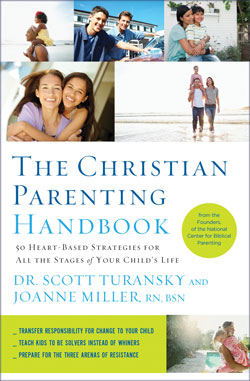 he Christian Parenting Handbook: 50 Heart-Based Strategies for All the Stages of Your Child’s Life by Dr. Scott Turansky and Joanne Miller (Thomas Nelson) sells typical for $16.99 although we have it at a Hearts & Minds BookNotes 20% or so discount. This upbeat and lovely paperback would make a great gift for any parent you know. It seems to me that while Christian parenting books are nearly “a dime a dozen” some are either too psychological and formulaic, without much distinctively Christian insight, or they are so laden with theology and heady analysis that they aren’t that practical. Some are so full of tender care that they drip with sappy sentimentality; others are so strict that they just seem harsh. (Including, I think, some authors who make much of God and grace and a “gospel-centered” approach. Yikes!) Finding a thoughtful, well-written, insightful but user-friendly handbook from a balanced perspective is not as easy as it seems, even in bookstores where there are dozens and dozens of mostly fine choices.
 been high on our list. Parenting is Heart Work, Say Good-Bye to Whining, Complaining and Bad Attitudes… in You and Your Kids, and Good and Angry: Exchanging Frustration for Character… in You and Your Kids are each must-reads. In these, and in this new one, they are clear that they believe that parents are to evoke “heart change” in their children. That is, behavior modification and compliance — raising “nice” well-behaved kids who don’t embarrass us in public — is not the goal. We don’t wish only for kids to obey us in dutiful compliance, but for children to desire to do the right thing, to be people of character, to be followers of Christ who enhance the family with good energy, not draining it with bad. We want them to learn to take responsibility and to be kids of compassion. In a way, they have set the bar high, but they write and work with a light touch. Very nice!
 on this. It offers their 50 best ideas, their top 50 strategies, short chapters that have proven to be the most fruitful (some of these were previously published in the newsletter of their National Center for Biblical Parenting and Biblical Parenting University, an on-line course they have taught for years. Watch their brief introductory video to get a sense of their style. This new handbook really provides the cream of the crop, the best work they’ve done, distilled into enjoyable, easy-to-understand bites.
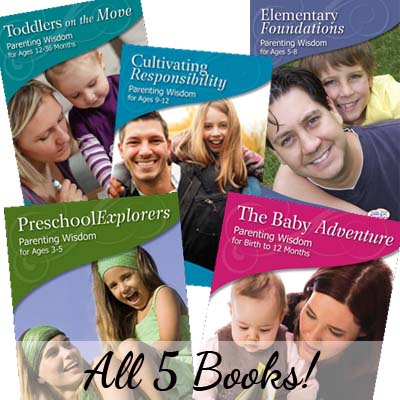 now, as a way to honor and assist some mother you may know. What a nice gift it would make! We carry all their other resources as well, including a brand new set that Turansky and Miller, with some help from others, have created, a set of five books, covering parenting ideas throughout the developmental stages of a child’s life. Let us know if you have questions about any of their other good work.

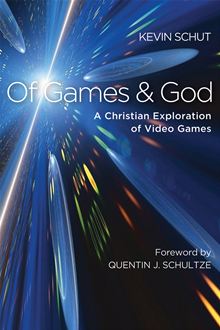 of Video Games by Kevin Schut [Baker; $17.99]) to our section on media ecology, from books on film to books on theater, we love sharing these sorts of resources. And especially books about good old rock and roll. Do you know the
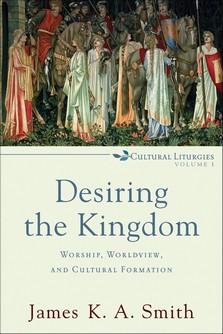 his notion. We are shaped and formed by the stuff we engage in. Read Jamie Smith’s essential Desiring the Kingdom: Worship, Worldview, and Cultural Formation (Baker; $21.99) to be reminded of this in quite sophisticated terms; see Walt Mueller’s
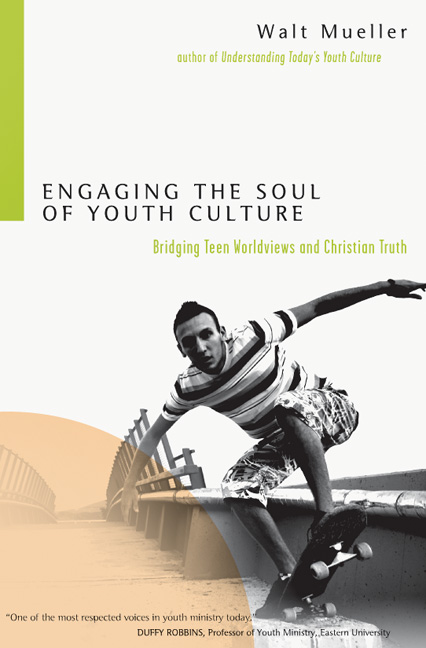 relevant here.
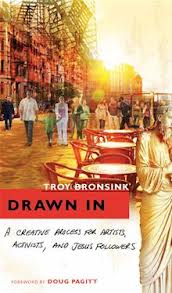 rawn In: A Creative Process for Artists, Activists, and Jesus Followers Troy Bronsink (Paraclete) $16.99 Troy is a Presbyterian pastor, indie musician, street activist and faith-based organizer and he has here given us a tremendously cool book, full of substance and verve, theology and vision, hope and healing. If you are an artist, patron, fan, or simply a person wanting to learn how to be more imaginative, this guide is hard to beat. What a great title (and cover, too, eh?) Love it.
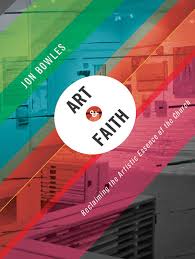 rt + Faith: Reclaiming the Artistic Essence of the Church Jon Bowles (House Studio) book $12.99; DVD $36.99 This is a small, nifty book that could be read on its own, but I suppose is designed to go with the DVD curriculum of the same name. It is not a “participants guide” or simplistic workbook, though, but a real book that certainly invites great imagination. Informed by the narrative of the Beggars Table,a community that meets in a gallery in Kansas City’s art district. This is not about “arts programming” but, not unlike the Bronsink book above, it really is more about helping all of us appreciate the arts, engage in meaning-making by being formed in disciplines of seeing. This is a story, they say, of “how art has shaped the imagination of one church toward the Kingdom. This could be a story about your church, too.” I like this study of mystery (and our “mystery deprived world) and beauty and awe, and the necessary relationship of faith, religion, art and wonder
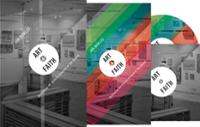 .
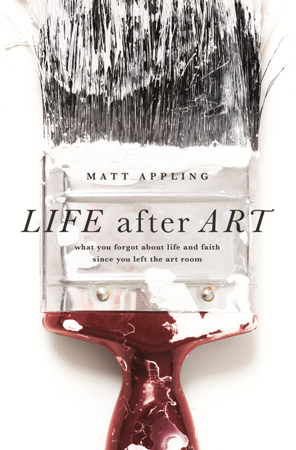 ife After Art: What You Forgot About Life and Faith Since You Left the Art Room Matt Appling (Moody Press) $13.99 I am excited about this new imprint of books published by the stalwart evangelical house called Moody Collective. This tremendous book is a great new kind of book for Moody, it seems, young, creative, fresh, interesting for those who need something other than standard basic Christian growth or self-help books, or mere theology (as helpful as all that can be.) This book invites us to realize that we are creative people, we make things (for better or worse) so we might as well, as Appling says, do it on purpose. He wonders how we lost our confidence to create, crumbling under the pressure of the so-called “real, grown-up world.” Appling is an art teacher, having worked with pre-K through high school, in fact. This is a hopeful book, fun and a bit challenging. Has something been lost along the way, for you? This will help you get it back!
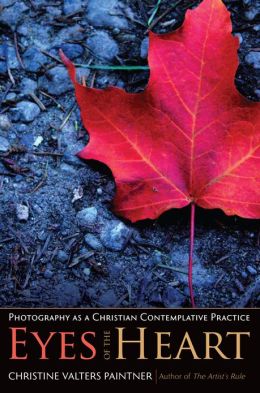 yes of the Heart: Photography as a Christian Contemplative Practice Christine Valters Paintner (Sorin Books) $15.95 We have carried the previous books by Ms Paintner which includeThe Artist’s Rule: Nurturing Your Creative Soul With Monastic Wisdom (Sorin; $14.95) and a fabulous book about being attentive to God’s goodness revealed in creation called Water, Wind, Earth and Fire: The Christian Practice of Praying with the Elements (Sorin; $14.95.) I really love this new one on photography and recommend it to any number of those who like to take pictures with their iPhones, who are learning to pay greater attention to daily life as they hone the skills of “seeing” by way of their cameras. Valtgers Paintner is the on-line “Abby of the Arts” and here she helps us with “viso divina” (she is a Benedictine oblate, after all) and cites great contemplative and monastic sources, as well has helpful technical suggestions about lighting, composition, framing, printing, equipment. This is a lovely, good, book which many will enjoy and by which many will be blessed.
 wake My Soul: A Contemplative Art Journal Aletheia Schmidt $25.99 Aletheia is a Lancaster, PA-based artist who has created this wonderful, full-color book which shows her abstract work with plenty of nice spaces for you to journal, reflect, or draw along. She is a vibrant, kind, and talented young woman and she sees these paintings as prayers. She believes “the arts, imagination, and creativity offer life.”
 u4rtets artwork by Mako Fujimura, Bruce Herman, and Christopher Theofanidis, and others; inspired by T. S. Eliot $35.00 You might want to

 Heffner. Ken and his
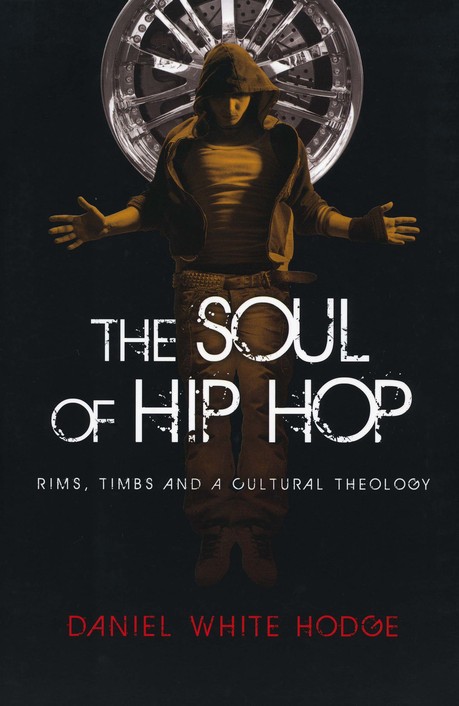 he Soul of Hip Hop: Rims, Timbs and a Cultural Theology Daniel White Hodge (IVP) $17.00 I’ve said this before, but this may be the very best book on hip hop culture and the amazing art form of rap. Hodge is an astute observer, knows the history of the style, and – thank goodness, for a book like this! – enjoys it. His presentation the first night of the Calvin Festival was riveting, bold and passionate, well beyond a surface look, engaged with the passion of a devotee and evangelist. He wanted us to get it, to appreciate the lyrical power and social themes of the prophetic imagination emerging from the often disenfranchised artists who have shaped this genre. This is radical, Biblical reflection, and his book deserves to be known, read, considered. Certainly if you know young adults who like hip hop you should tell them about this book. We have a few others, but this is the best. Kudos to Calvin for once again hosting this good brother.
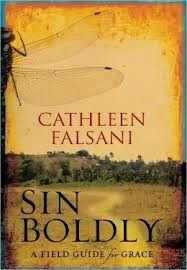 in Boldly: A Field Guide for Grace Cathleen Falsini (Zondervan) $19.99 I adore this book and it was so wonderful hearing Ms Falsini again. It was, in fact, deeply moving – Beth and I fought back tears when she played “Born at the Right Time” from Paul Simon’s Rhythm of the Saints as she talked about adopting her son from Malawi. And I got choked up when she told about her travels with Bono while playing a post 9-11 live video version of one of the many U2 songs that helped so many of us cope after that tragedy. Falsani has
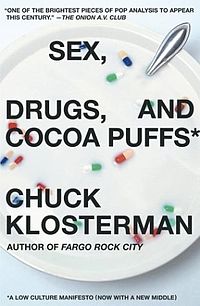 ex, Drugs, and Cocoa Puffs: A Low Culture Manifesto Chuck Klosterman (Scribner) $15.00 Many participants adored this edgy, Gen X writer, one of the more popular novelists and essayists of his generation, as he rambled through a hip talk pondering what in the world he was doing at a conference on religion and rock music. Well, for starters, his novels are packed full of references to religion and music, and his collections of essays -fun, profane, pushy, witty, insightful – sometimes tackle the topic directly. (Chuck K is a sports writer, too, and his journalism there is also highly regarded among those who favor a certain informal, provocative style. In his talk he dismissed the recent pundit who compared him to Hunter S. Thompson but to even have to do that, well, ’nuff said.) Okay, so, anyway, he wondered how he got himself into this gig.
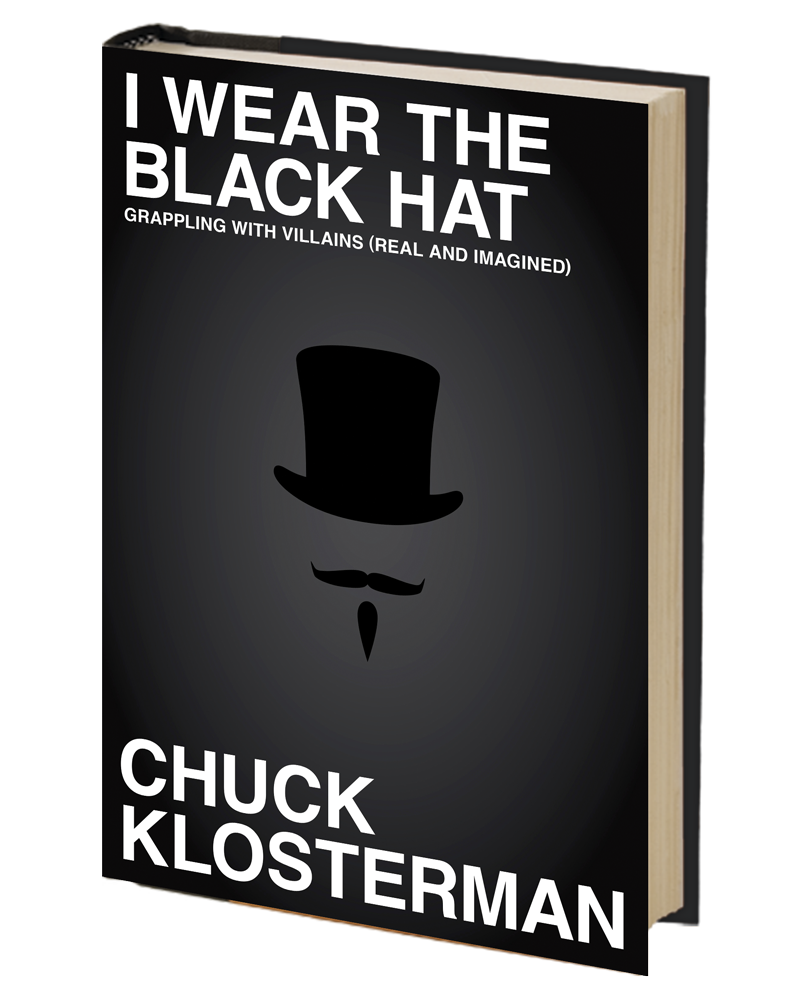 comes.
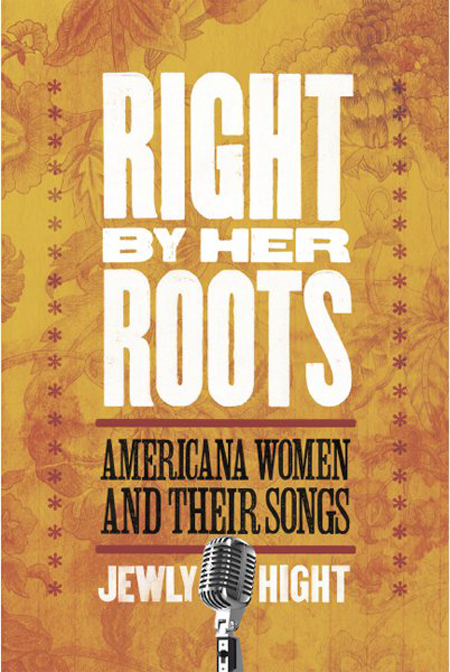 ight By Her Roots: Americana Women and Their Songs Jewly Hight (Baylor University Press) $24.95 I really intended to catch this workshop, but the schedule didn’t permit. So glad we have had the book on our shelves for a year. I’ve read a few of these good chapters (about Julie Miller, Victoria Williams, Michelle Shocked) and will now read more. One reviewer said when it came out that it “will end up being the best book written about American music this year” FFM speaker David Dark invites us to be enriched saying, “With a powerful wit, intense attentiveness, and eloquent empathy, Jewly Hight is a dream come true for the songwriters to whom she pays careful and affectionate heed. By calling our attention to them, she lifts their voices, testifying concerning the ways their work uplifts, invigorates, and challenges our otherwise all-too-settled imaginations.”
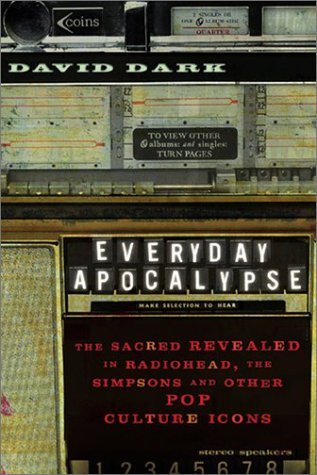 veryday Apocalypse: The Sacred Revealed in Radiohead, the Simpsons, and other Pop Culture Icons David Dark (Brazos) $18.00 What can I say? Being with David is itself a bit of performance art; he’s a genius, a wordsmith, and a dear, dear, loyal friend to many. He has written several other books, all of which we commend (and, in fact, I’ve got an endorsing blurb on one of them, an honor I did not take lightly.) Pop culture fans young and old, artists, filmmakers, writers, and thought leaders in this whole arena (like FFM’s Ken Heffner) will regularly say that David Dark is one of their best supporters and his book truly seminal. No one can talking knowingly about this topic without having read Everyday Apocalypse; it is that important. If you are interested and into this topic and haven’t read this amazingly rich, mind-blowing work, treat yourself and be prepared to have your world rocked. Really.
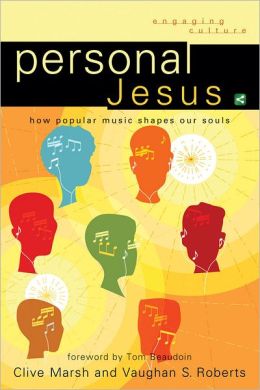 ersonal Jesus: How Popular Music Shapes Our Souls Clive Marsh & Vaughan S. Roberts (Baker Academic) $22.99 It was a delight to meet Vaughan (who gave an outstanding, research-based workshop) and to chat with some of his editorial staff at Baker who do so many good books in this series – what a fascinating gentleman scholar who is doing such fine work! Yes, this book is a bit academic (and yes, the cover is, uh, well, you know.) But at its heart is something basic, something passionate, something nearly primal: how does listening to music effect us? Is it a religious experience and if so, how? What do people say when asked? What is going on here? (And, is it the lyric, mostly, or the music itself?) This is a very serious, and I think groundbreaking rumination on how popular music works, the role it plays for listeners, and the phenomenon of its popularity. It really does have a missional edge, asking how we as Christians might engage the music itself, more faithfully, and with awareness of why we and our neighbors are influenced as we are by the music we love.
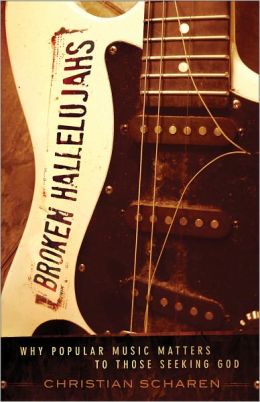 roken Hallelujahs: Why Popular Music Matters to Those Seeking God Christian Scharen (Baker) $18.00 I love this book, and really appreciate the work of this excellent author. (Scharen used to be at the Center for Faith and Culture at Yale Divinity School, but now teaches worship and theology at Luther Seminary in St. Paul.) I’ve reviewed it before, so for how, here’s what it says on the back cover: “Building on the success of One Step Closer: Why U2 Matters to Those Seeking God, Christian Scharen shows how to engage faith and culture through a wide range of popular music, including the blues, hip-hop, and rock. He examines artists such as Arcade Fire, Kanye West, Leonard Cohen, and Billie Holiday, offering a fresh, compelling theology of culture in conversation with C. S. Lewis that can look suffering and brokenness in the face because it knows of a love deeper than hate, a hope stronger than despair. Written engagingly yet with theological depth, this book will resonate with readers interested in the interface between pop culture, music, and theology, as well as with pastors and youth ministers.”
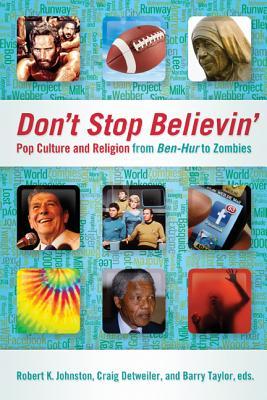 Robert K. Johnston, Craig Detweiler, and Barry Taylor (Westminster/John Knox) $20.00 I hope you know these authors, who form nearly an entire school of thought in this whole area of study. Each have written thoughtful books on film, music, entertainment, digital culture, media and the popular arts. Together, now, they’ve edited a fine collection of mature essays on hundreds and hundreds of topics. Don’t Stop… can be used as a conversation starter, as background for deeper thinking, or to dip in to whenever you have a spare moment or two (but be aware, it can be addicting!) Skip to pedestrian cover and dive right in — this is good, good content! Read succinct insights about the Beatles, the significance of Star Trek, the meaning of Dr. Who, making sense of South Park, the aesthetics of Andy Warhol, the role of Calvin Klein and Nike ads, the theological significance of SimCity.
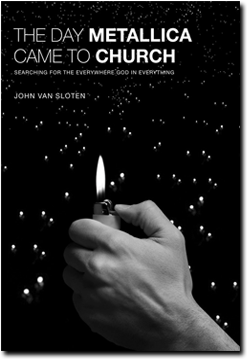 he Day Metallica Came to Church: Searching for the Everywhere God in Everything John Van Sloten (Faith Alive/Square Inch) $14.99 Although the lead-off Metallica piece here really is a fine, fine essay, this isn’t a book about heavy metal music; it isn’t even a book about music in the church, really, at all. It is a book about popular culture, about how to find the presence of God — “the everywhere God” — in all sorts of places, artifacts, experiences. This is the kind of book you can enjoy by dipping in almost anywhere: a piece on No Country for Old Men, perhaps? “Common Grace in The Dark Knight“? A reflection on Van Gogh? Race relations explored Christianly by way of the movie Crash? Yes, yes, yes, you can enjoy these, use them in classes, ponder them so that you might deepen your own cultural discernment skills. John Van Sloten is my kind of guy — he loves U2, he is able to talk theology, and he exhibits a wide reading/listening/viewing pallet. And he’s mostly quite right about all this: as Richard Mouw writes, “Don’t go — or refuse to go! — to another rock concert or soccer match without first reading this marvelous book. It is a reliable and inspiring guide to hearing the Lord speak to us in new and exciting places.”
 istening to Popular Music (Compass Guides to Christian Explorations of Daily Living) Don H. Compier (Augsburg) $15.00 I have commended this series of books before, and glad that they’ve now included this great topic alongside the others (such as Clothing, Shopping, Eating and Drinking, Play, Parenting, Work.) Compier could have presented a scholarly paper at the FFM, for sure, as his general effort is consistent with their discerning “common grace for the common good” project, and he takes up the gifts of pop music in thoughtful, faith-informed, sociologically-astute ways. His style at times, especially in a chapter about the fear of music in church history, illustrates his role as a theological thinker of mainline Protestant orientation. Still, this is a solid, interesting, brief, contribution to this whole project. Compier is dean and professor of theology at Community of Christ Seminary at Graceland University in Independence Missouri. Another book he wrote is What is Rhetorical Theology: Textual Practice and Public Discourse — this one, gladly, isn’t laden with that kind of arcane rhetoric. He does cite some fairly contemporary singers (Death Cab; Lady Gaga, Green Day, Rage Against the Machine) but as he explains, he’s been a rock and roll fan all of his boomer life. So he digs the the Beatles and Springsteen and Los Lobos and Aretha Franklin and Johnny Cash; even the Dead! And he writes about them alongside Augustine, Calvin, Wesley, and James Cone. No matter your musical tastes, he has given us some important, serious stuff, here, a method for thinking intentionally about popular arts. Like the others in the series, it is well worth reading.
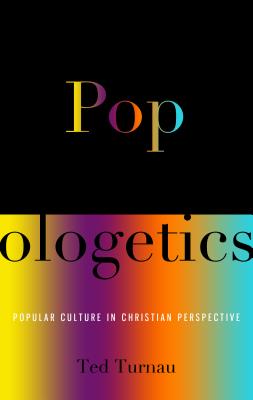 opologetics: Popular Culture in Christian Perspective Ted Turnau (Presbyterian & Reformed) $19.99 If I had been selling books at this event, I’d have had this on a double-decker book stand, featured and promoted. In part, I’d do it just to be ornery, since this author calls us to be a bit more concerned about the possible negative influences of pop culture, and such “Christ against culture” themes (or, better, what Kuyper called “the antithesis”) isn’t discussed much at FFM. But I’d be being sincere, too, as this really is a great book, and those attending the conference surely would benefit from it. Despite the quirky title, Popologetics is a profound, serious, important, and — at times — exquisitely exciting study, inviting us to really dig deep into the “in the world but not of it” teaching of Jesus. Just so you know how very good this is, read
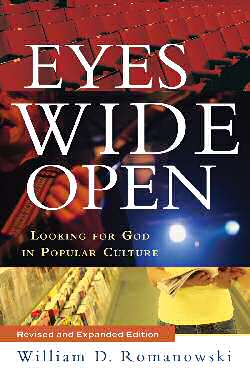 yes Wide Open: Looking for God in Popular Culture William D. Romanowski (Brazos Press) $23.00 This is surely one of the best books in this field, doubtlessly a watershed work, esteemed and cited by everybody in the field. If you follow BookNotes or visit the shop, you may recall
 Books) $24.99 Not Yet Released; due late summer/early fall 2013 It is a bit early to promote this, perhaps, and you can be sure I’ll do a thorough discussion of it when it releases later this year. I’ve read much of it already in early drafts, and, like its earlier, spectacular, must-have companion volume, It Was Good: Making Art to the Glory of God (also edited by Bustard and published by Square Halo Books; $24.99 ) it is truly, exceptionally fantastic. There is no other volume like this, that’s for sure!

 , Vocation and Culture. I tried to make the case that in the death and resurrection of Christ the “death of death” has been accomplished, which means not only that those in Christ are promised eternal life, but that God’s own rulership of the world is assured — the divine restoration of all things has begun! The brokenness and hurt of this fallen world is being healed! This in-breaking of the rescue plan of the world God so loves means we have to learn how to live as new creations in a new world coming; a Christ-centered commonwealth called in the Bible the Kingdom of God, into which we are transplanted. Being savingly liberated from the bondage of the old order is, of course, only the start of the Christian journey and we are now tasked with discerning the shape and texture of Christian discipleship in our place, in our time.
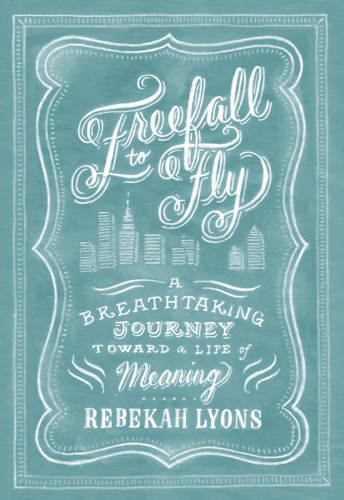 reefall to Fly: A Breathtaking Journey Toward a Life of Meaning Rebekah Lyons (Tyndale) $19.99

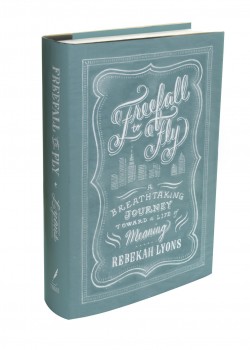
 chaeffer on the Christian Life: Countercultural Spirituality William Edgar (Crossway) $17.99 There are other biographies of Francis Schaeffer and of course he and the late Edith Schaeffer have between them nearly 50 books of their own. With Edith’s passing last week, many have written on-line tributes. (At the Hearts & Minds bookstore’s facebook page I even told a brief, fun story of how Edith held and comforted our daughter Stephanie — and us — when Steph was an infant.) Now is an excellent time to reconsider the impact of the Schaeffers and this new book is the place to begin.
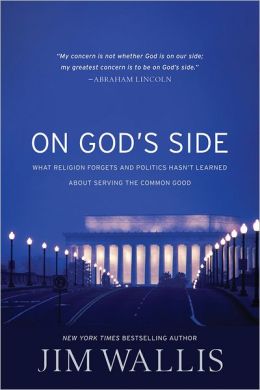 n God’s Side: What Religion Forgets and Politics Hasn’t Learned About Serving the Common Good Jim Wallis (Brazos Press) $21.99 I think Jim may have been the first nationally-known author we had in our little shop maybe 25 years ago. I am proud to say I read Sojourners magazine in college when it was still called Post-American — a housemate even had a Post-American cover with a picture of Thomas Merton taped to our bedroom wall. And I have read all of Jim’s writings; The Call to Conversion remains one of my all-time favorite books. He may not be my favorite public theologian, necessarily; I am not the only Sojo fan who finds some of their important work less than fully adequate at times. Still, as I insist even to those who don’t like his left-leaning tendencies, Wallis is a good writer, makes tons of sense, and is more balanced and careful than many who mostly traffic in slogans and clichés on the far left or right. So, I really, really think we should read and engage his contributions to our on-going efforts to discern a Biblically-faithful public witness in our post-Christian, pluralistic and woefully polarized culture. We have promoted each of his books over the years, and are especially excited about this one.
 Baltimore at the
 onhoeffer, Christ and Culture edited by Keith Johnson & Timothy Larsen (IVP Academic) $20.00 Every year, Wheaton College hosts a top-drawer, extraordinary theology conference and this new book gathers together the excellent papers which were presented at the 2012 event. Although most of the presenters self-identify as evangelicals, not all do, making this a very interesting, provocative, and delightfully multi-vocal anthology. A few of the chapters are thrilling to me (one great one was on how evangelicals, particularly, have engaged Bonhoeffer – from curiously positive Moody Monthly articles in the mid-60s to Cornelius Van Til’s philosophical criticisms, to the nearly superstar status of Eric Metaxas’ important 2011 biography, Bonhoeffer: Pastor, Martyr Prophet, Spy.) One chapter is exquisitely moving, as Jim Belcher narrates a trip to several Bonhoeffer sites in Germany. Charles Marsh is here writing on grace; Stephen Plant on politics, Joel Lawrence gives a powerful chapter on being “a church for others.” Daniel Treier has a fascinating chapter using Bonhoeffer to help us navigate modernity and its machines. Reggie Williams offers a fabulous piece on Bonhoeffer’s time amidst the Harlem Renaissance (which is, by the way, a tremendous, tremendous chapter on a topic that most of us could stand to learn more about.) Lutheran professor Lori Brandt Hale, co-author of the great little Bonhoeffer for Armchair Theologians (Westminster/John Knox; $17.00) offers a very helpful chapter on Bonhoeffer’s teachings about vocation.
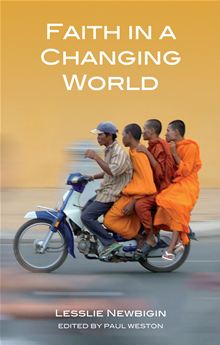 aith in a Changing World Lesslie Newbigin edited by Paul Weston (St. Paul’s Theology Centre) $12.99 Just when you thought you had known of everything in print by the famous missionary to India, here comes a wonderful newly edited volume including two of his important, but long out-of-print (British) books in one nice paperback. Included here are two of Newbigin’s classic works, Discovering Hope in a Changing World and Living Hope in a Changing World. As it says on the back cover, “Together, they present the Christian story as a lens through which to view and understand God and the world, demonstrating that Christianity is a viable way to live one’s life today, and that Christians need not retreat to a private world where faith is presumed to be ‘mere opinion.'”
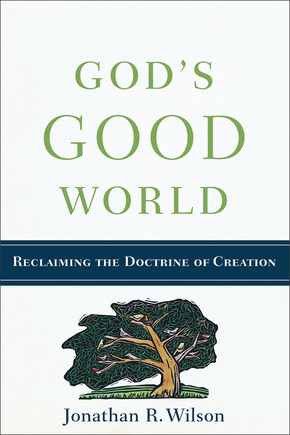 od’s Good World: Reclaiming the Doctrine of Creation Jonathan R. Wilson (Baker Academic) $24.99 I have been waiting for a book like this for years, and am so very happy this has arrived. Our best theologians have reminded us that to fully understand Christ’s work of redemption and the very nature of God’s Kingdom we must start – as the Biblical narrative itself does – with the doctrine of creation. This world of original blessing, what Calvin called “the theater of God,” is the location, the context, the setting, the focus, of God’s redemption. The whole creation groans, Romans 8 tells us, awaiting humans (the original caretakers of creation) to be reconciled with their Creator; in Christ (the second Adam) we can again take up our task to image God in the world of God’s good creation. Any fruitful exploration of faith and discipleship that missed this given context of our lives will be, at best, inadequate and, worse, woefully distorted — gnostic, quietistic, weird.

 Poland, 1984. “Christ is risen!” As the cry went out, the crowd of
 peaceful protestors to resist the junta in
 This aspect of the Easter morning narrative includes vivid
 If
 been considered a spiritual discipline for
 important as we take up the task of reformulating

 know it is a bit late, but I want to commend the most recent book by United Methodist author, preacher, scholar, Bishop William Willimon. Thank God It’s Thursday: Encountering Jesus at the Lord’s Table As If for the Last Time (Abingdon; $13.99) is a great read, interesting and helpful. Some of it is just fantastic and, I’ll admit it it had me at the first sentence: “It’s odd, even for the odd gospel of John.”

 b Bell book, What We Talk About When We Talk About God (HarperOne) which we have on sale at an introductory price for just $20.00, there have been some fascinating responses. Of course there are gobs of blogs. I’ve weighed in a time or two at various internet sites, and continue to worry that Christian people, not unlike others, I guess, are sometimes not very skilled in analyzing things and making fair-minded cases for or against something. We mostly liked the book, even though it had weaknesses (properly emphasizing the nearness of God but not saying much about the holy transcendence of God; strongly proclaiming the mercy of God’s grace, but not much about repentance or judgement; telling good Bible stories, but not being very didactic about how God is or isn’t revealed by Scripture.) Still, the book is interesting and useful, and I don’t think it deserves to be attacked in the cyncial way some have done. And some who have criticized it have dipped into accusations about the authors motives or intentions, which I think is just plain wrong.
 Force of Will: The Reshaping of Faith in a Year of Grief Mike Stavlund (Baker) $14.99 In his new book, Rob Bell makes (among other things) at least one clear-headed, simple case: huge and gross human suffering may cause us to re-think God. This is not controversial, and is a situation, leading to a quest for clarity about God which is older than Job. This new book is a ragged, honest journal kept by a missional church planting pastor whose 4 year old died. Nicholas Wolterstorff, whose own journal after the death of his son remains a quiet classic, writes of Savlund’s book that it is a “gripping, unflinchingly honest, beautifully-written model of how to live with grief in faith.” As Shane Claiborne says of it, “Mike talks about pain without trying to theologize it away…” This takes some re-thinking about the ways of God with humankind, and Bell is right to invite us to this conversation. There are, sadly, many books like this and some are exquisitely well done. People who have suffered and struggled like this have much to teach us. You should read several of these kinds of books, keeping your heart tender and your mind grappling — maybe read one of this sort of book every year if you can bear it. Start with this.
 nake Oil: The Art of Healing and Truth Telling Becca Stevens (Jericho Books) $21.99 This is the memoir of a gentle and deeply spiritual writer who has previously done poetic little books about her work with homeless and abused women in her shelter/community Thistle Farms. The Very Widely Read Phyllis Tickle says it is “one of the best reads I have had in a very long time. Stevens is a consummate storyteller…poignant, persuasive, witty, wise, and, ultimately, a passionate lover of God.” Mr. Bell doesn’t write about this much, but he hints at how God can bring inner healing, how Christ is alive in redemptive ways that, if we are brave and open, we can embrace all this, for our growth and restoration, in great hope. This story is an example of just that, wounded women finding new hope. Becca Stevens is a great writer, an Episcopal priest with a radical faith and mature social conscience and she’s got a truly amazing story. Many people have been waiting for this major book for quite a while. She helps us see God alive and well in the very nitty gritty, even the sensuous; how many books, after all, quote the Book of Common Prayer and includes recipes? I think this is the sort of faith journey Bell would like, and you will too. You will be encouraged with this narrative and you’ll want to share it with others.
 aith Interrupted: A Spiritual Journey Eric Lax (Knopf) $26.00 This is the sort of mature thing that anybody interested in learning about newer ways people are leaving or coming to faith, or thinking about God in smart, fresh ways, should know. It is very perceptive and a well-crafted memoir. Many spiritual memoirs these days are either slight, new agey and esoteric, or they are mostly evangelical (some wonderfully written, others less so.) Lax’s story is neither of these and it is, by all accounts, a remarkably written, prestigious book, pondering the biggest things in ways that are interesting and sad. It is published by one of the classiest of New York publishing houses, and carries endorsements from the likes of Elie Wiesel and Jack Miles. Some have called it “luminous” and while it is mostly about loss of faith and an unfinished story of doubt and trials, it glows and shimmers with beautiful sentences and profound ruminations. Karen Armstrong says it is “poignant, sensitive, a thoughtful memoir that illuminates the complexity of the phenomenon that we call faith and delineates its flow and ebb.” Mr. Lux, by the way, wrote an New York Times best-selling book on Woody Allen. Who else quotes Woody alongside Augustine, Aquinas, and Anselm? I’m surprised this book isn’t better known.
 ensible Shoes: A Story About the Spiritual Journey Sharon Garlough Brown (IVP/Crescendo) $18.00 In his new book, Rob Bell’s view of God is not a distant deity, let alone a distant one that is out to get you. God is near and gracious, alive, even in the hard times. In this amazing new book — a novel about Christian spirituality! — four very different women met up at a Catholic monastery, while attending a retreat there. They learn about spiritual disciplines and how we are formed in the ways of Jesus by these classic practices, but more, they learn to relate as honest friends on a journey together. Hannah, Meg, Mara, and Charissa are the four women whose lives and longings unfold in this well told story. It is a perfect introduction — or window into — the ways in which there is a deep hunger for authentic spirituality these days. Bell, of course, talks about this (as does Diana Butler Bass, whose exploration of spirituality outside conventional churches — Christianity After Religion — is now available in paperback!) and so if you want to explore more of where all this God-is-Near talk might lead, check out this grand, great story. Jana Riess, whose hilariously honest memoir, Flunking Sainthood is itself a great example of how to be honest and real about this stuff, writes that Sensible Shoes “provides a way for readers to vicariously dip into deep spiritual practices through the realistic struggles and joys of four women. Through emotionally resonant characters (it) encourages us to communicate with God in new ways, broadening our spiritual journey one step at a time.” Ms Brown, by the way, is a pastor and spiritual director in the Evangelical Covenant Church, with a M.Div from Princeton. Check out the book club resources at
 o Argument for God: Going Beyond Reason in Conversations About Faith John Wilkinson (IVP) $15.00 Okay, get this. This guy works at a high-energy but pretty conservative evangelical mega-church church and teaches as an adjunct at Lancaster Bible College. Not usually the sort of context for deconstructing rationalism and pondering how (as Scot McKnight put it) “cock-sure confidence is both admirable and annoying.” You know that Rob Bell replies nicely to the new atheists a bit in his What We Talk About When We Talk About God and he exposes the shallowness of naturalistic materialism. But he also touts mystery and “weirdness” in everything from cell biology to black holes and string theory. Nice! So when Wilkinson says that the odd irrationality of faith is its greatest asset, because rationalism itself sets artificial limits on all that we know, well, it sounds a bit like Bell. Logic alone cannot make us believers, and I like how McKnight calls this “a wonderful post-apologetics apologetic for an authentic faith.” This is fascinating.
 he Myth of Certainty: The Reflective Christian and the Risk of Commitment Daniel Taylor (IVP) $15.00 I was more than perplexed when one well respected blogger applauded a review of Bell’s new book that took Bell to task for not offering enough certainty, and pulled the sophomoric tautology saying that Bell seems certain about his claim that much is uncertain. That little skewering is maybe good for scoring points in a bull session debate in the dorm after a couple of Red Bulls, but frankly is not all that helpful or important. This old book cuts through the foolishness, reflecting maturely and wisely about what we can know and what we can’t and how one knows the difference. There is a risk to faith, to commitment, and we are called to be “reflective” about it all. I love this, and think Taylor, who has continued to write great books, is right. Publisher’s Weekly called it “splendid” and poet Luci Shaw said “I recognize myself on every page.” Bash Bell if you must, but, regarding this aspect of his views at least, after you read this good book you’ll feel embarrassed for having done so.
 ruth Speaks to Power: The Counter-cultural Nature of Scripture Walter Brueggemann (Westminster/John Knox) $17.00 What can I say. There is maybe no more influential Bible scholar in our time, and it is clear that this unnerving message of how the Bible is subversive — a counter-narrative to the powers that be — has been important to Bell. Here, the endlessly working Bruggemann looks at a few key Bible stories, and unpacks them to surprising effect, by doing a close, political reading he comes up with some very compelling insights. He invites readers (as the back cover puts it) “into this thick complexity of textual reading, where the authority of power is undermined in cunning and compelling ways. He insists that we are — as readers and interpreters — always contestants for truth.” Right on. I love his phrases such as when he asserts that the Bible presents “a sustained contestation” over truth. Whether Bell stands in this Brueggemann-esque tradition of prophetic imagination, but this is a good example of how it works.
 esus the King: Understanding the Life and Death of the Son of God Timothy Keller (Riverhead Books) $16.00 The earlier title of this when it was in hardback was Kings Cross. It is now renamed and in a paperback that feels perfect in the hand. I suppose that Keller disapproves of Bell, and that I’d be on thin ice trying to link What We Think About… with the renowned pastor of Redeemer in NYC. But, no matter. If you like Bell and want to rethink God and life and faith, you simply have to be grounded in the story of Jesus. Bell himself says that clearly — Christ’s Kingdom coming as new creation is the narrative that captures our imaginations, no? So, ya want to follow in the way of Jesus, because His love wins? Do it. Study up. Learn to desire Christ’s reign, showing His grace. There are a dozen good books that came out in the last few years about the King and his cross. This is a straight-arrow, very well-written study of Mark and we recommend it to one and all.
 onder Struck: Awaken to the Nearness of God Margaret Feinberg (Worthy) $14.99 In the new book, Mr. Bell makes a big deal in his idiosyncratic style
 reaking Old Rhythms: Answering the Call of a Creative God Amena Brown (IVP/Crescendo) $15.00 Bell is edgy and hip but he isn’t just trying to be cool when he talks about God the creator as being active and creative. We are made in God’s own image so humans, too, are active, creative beings. (And, as he points out, we live in an visual era, where aesthetics and design and the environment matter.) This recent book by hip hop spoken word poet Amena Brown isn’t a treatise on the arts, let alone dance, but it does play with that image and metaphor. (Michael Gungor the singer-song writer and worship musician says “Amena Brown uses words to fill the soul like music.”) She clearly is a gifted wordsmith, a young woman of color, poet, speaker, and organizer. She explains to us in helpful ways that God is love, and that God’s love carries us beyond our rhythms into a fuller, more fulfilling life. But that is just the beginning — she invites us to dance, sing, clap, breathe, live. We can so this! As the exciting communicator and author Jo Saxton says — “Breaking Old Rhythms reminds us of God’s passion to rewrite the soundtracks of our lives with faithful, redemptive love. Warm, poignant and deeply soulful, Amena Brown invites us into her story, showing us how to let god and embrace God. Spoken word, indeed.” Hey, she has 25 songs listed in the back, too, that have helped her break old rhythms. For men or women who want to experience fresh ways of knowing God and living into God’s work in the world, this is a gem.
 our Views on Divine Providence edited by Stanley Gundry (Zondervan) $19.99 I am sure you are aware at how complex this topic is, and that while Bell didn’t exactly weigh in on this, it has to come up in any conversation about God, or what the Bible shows us about God. Is God sovereign? What does that mean? Are all things superintended by Divine Providence? Here are four very interesting positions, each offered and then critiqued by the other three contributors. Paul Kjoss Helseth believes that the Bible teaches that “God Causes All Things” and William Lane Craig believes that “God Directs All Things.” The third chapter is by Ron Highfield, and his position is that “God Controls by Liberating” and Gregory Boyd posits that “God Limits His Control.” These Counterpoints books by Zondervan (some other publishers do them, too) give us splendid ways to learn, to hear the various views and to wrestle with the rebuttals and critiques. This is like a seminary class, for a couple of bucks. Sure Bell has stirred the pot a bit. Ha, but his brief book, nice as it is, offers, on this topic, mostly kid’s stuff, though. This offers sustained and serious debate. Join in and try to determine what you believe. From election to theodicy to knowing how to pray and what to say during times of grief or discernment, this matters. Sure, there are deep mysteries here, but this book explores the sovereignty of God in important ways.
 hree Free Sins: God’s Not Mad At You Steve Brown (Howard) $14.99 It is understandable, I guess, when some people accuse Rob Bell of being theologically liberal. Perhaps he is. But this fine book is written by a doctrinally conservative, impeccably evangelical Reformed elder statesman. He was a pastor for 25 years and is Professor Emeritus of Preaching at Reformed Theological Seminary. He’s written tons of books (and runs one crazy-wild, upbeat syndicated talk show called Steve Brown, Unlimited that proves that while he is doctrinally stuffy, he’s also open-minded, unflappable, and very engaging.) The subtitle of this says “The Reason We’re So Bad Is That We’re Trying So Hard to Be Good.” Let that sink in! (Any Lutheran readers out there? You get that, eh?) This book is funny, powerful, and although Bell is considered suspect when he says stuff like this, Brown rightfully gets a hearing because he is well grounded in very solid theology and has real gospel-centered pastoral concerns. I can’t say enough about this great book. If you don’t like Bell, please read it. If you do like Bell, please read it.
 urprised
 cience & Its Limits: The Natural Sciences in Christian Perspective Del Ratzsch (IVP) $18.00 As you hopefully recall, I mostly raved about how Rob Bell, in What We Talk About When We Talk About God, does a very enjoyable take-down of the contemporary gods of scientism, his invitation to realize that we live in a perplexing world that surely cannot be described solely in secular, scientific terms. Rejecting a faith/science conflict, but also rejecting reductionistic scientism, he nicely hints at what I can only call a philosophy of science. Okay, there, I said it. This is, in my opinion, the best introduction to that important topic, the philosophy of science. Alvin Plantinga, whose heavy weight Oxford University Press book on this topic (Where the Conflict Really Lies) says of this one that “Ratzsch is eminently successful.” Professor Ratzsch is also the author of The Battle for Beginnings: Why Neither Side is Winning the Creation-Evolution Debate (IVP.) If you were taken by Bell’s Everything Is Spiritual DVD and especially if you were struck by his exciting teaching about science and scientism, you have to go further. Read this.
 ermission Granted (and other thoughts on living graciously among sinners and saints) Margot Starbuck (Baker) $14.99 You should know that I have a little fan-crush on this gal, and Beth and I have hosted her in Dallastown where she did a fabulous job speaking and reading from her first two books. She’s a feisty writer and at times exceptionally moving. (Her memoir The Girl In The Orange Dress is a must-read!) Starbuck a funny speaker, an insightful leader, and a hippy-ish leader-ish of the Presby-emergent sort. Or something like that. She is a grand wordsmith and can tell a story like nobody’s business. And she is passionate about serving Jesus in the guise of others. This new book tries to grant us permission to lighten up, to love everybody, to cross over and reach out and find ourselves with new friends who maybe aren’t in our little Christian circle. Her previous book accomplished this fantastically — we raved about Small Things With Great Love (IVP) and this more or less keeps going. And keeps us going. We don’t just love the poor and hurting and needy, we must reach out to those who are excluded and judged and despised. It is, as you can surmise, a book about grace. Holy-moley, this is powerful, energetic, enjoyable (and convicting.) We need these kinds of books that help us live into this vision of sharing God’s love with others, becoming the sort of people we know our Lord wants us to be, kind and good. We really need to know what graciousness looks like. Margot is a godsend with her tales and reports from the journey. Do I need to tell you that this is a good part of Rob Bell’s vision, that his book points us towards this? I really don’t know exactly what Rob believes and I don’t know what Margot would say about it, but if you are a fan of the kind of God Bell describes in What We Talk About… you will love this guidebook to taking steps towards living it out. If you are suspicious of some grand re-think of the attributes of God, why not just read this? See what happens. Learn to love others like Christ, reaching out to those excluded, showing mercy. God will be there, I promise. Margot is a sure guide. Maybe this is what we should talk about when we talk about God.

 ob Bell is very effective in reaching out and speaking with those who feel exiled from traditional faith communities, who are ex-churched or de-churched, or even hostile to Christian convictions. There are lots of people who may not feel comfortable in the most conventional of congregations (conservative or liberal) but yet are willing to consider Biblical claims when shared creatively, as Bell can. It is a cliché to say he is post-modern, and almost as clichéd to say he is artsy, even if he is as cool as they come, cites a number of very cool bands, uses his share of irony, and embodies – as do his stylized book covers – a very particular aesthetic. It’s how he rolls, it’s who he is, it is his own subculture. (He mentioned Sigur Ros in his live streaming event on Tuesday — see what I mean?) Nobody writes off the work of Larry the Cable guy because of his cut-off flannel sleeves or the business casual slacks of Bill Hybels as we works the suburban crowd or the numbered jerseys of the many sports stars who have been given platforms to express their understanding of the gospel in terms to which jocks can relate. To criticize Bell because he has a certain look is unfair and I think betrays a misunderstanding of cross cultural witness. I do not think this is a marketing ploy but it is just who Rob is, and it is just who naturally likes his work, his ethos, his books. Coach Tony Dungy talks about Christian leadership using sports images while wearing expensive athletic shoes; Bell cites ironic mustaches and en vogue art installations.