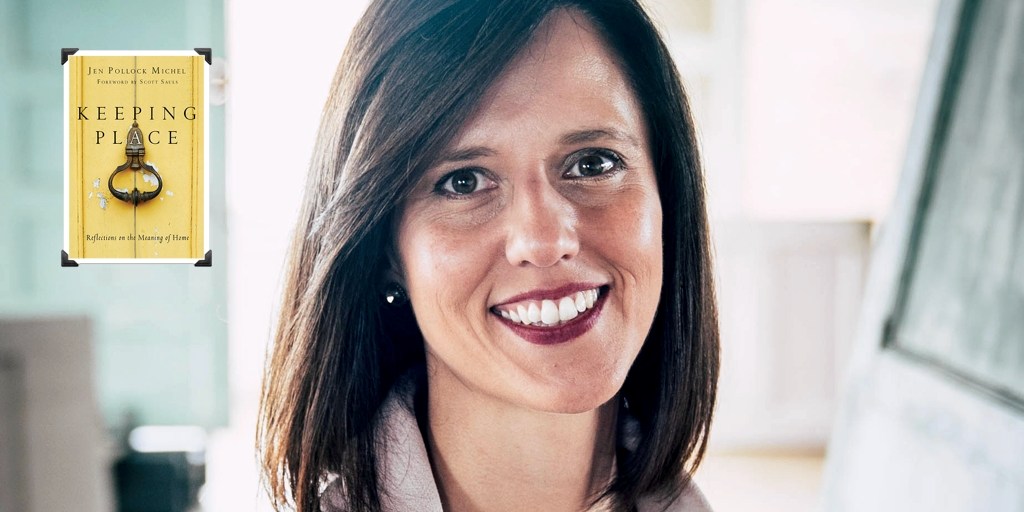
Keeping Place: Reflections on the Meaning of Home Jen Pollock Michel (IVP) $16.00
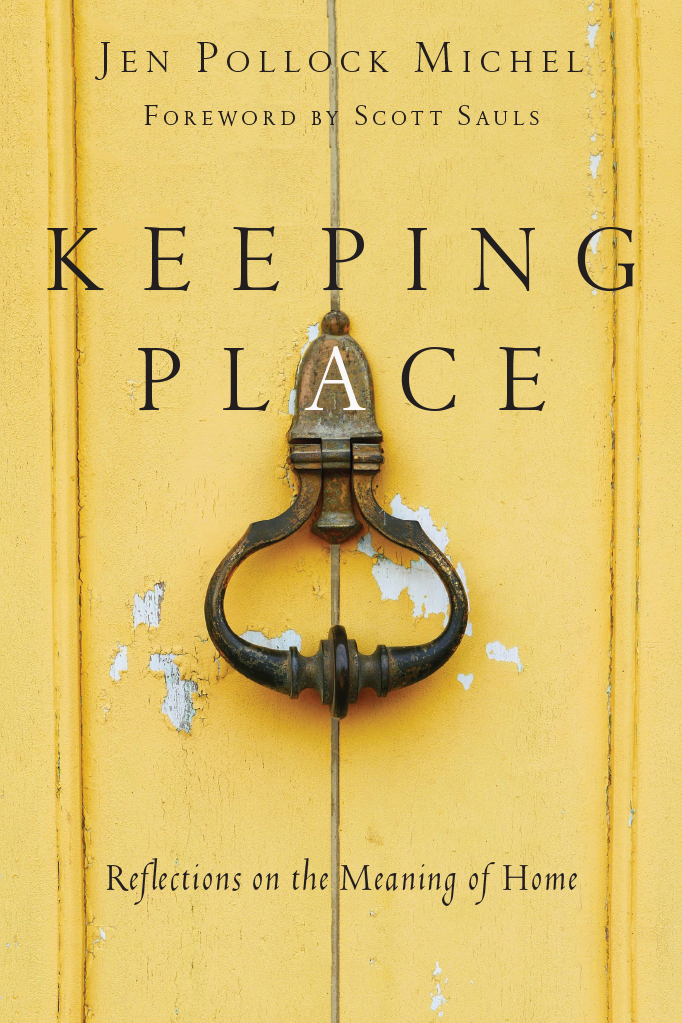 From the first page, this book utterly captivated me, as Jen Pollock Michel beautifully tells of an international group of expats sharing a Christmas meal around her table in Toronto where the vignettes speak of the longing for home. Besides the obvious pathos of these tender stories, I recognized that this was going to be an amazing book, beautifully written, full of memoir and storytelling and more profound than perhaps some readers may expect in a book about home-making. You will be hooked and eager to turn the pages!
Maybe it is because I heard Brian Walsh, another guy from Toronto, years ago, speak about the angst of all of us feeling displaced by the forces of modernity that I am attuned to stories of exile and longing. He was one of the first to alert us to this motif in Scripture as a way of understanding our own times, inviting us to think about redemptive home-coming. Brian’s profound insights about home and home-making found their way into a big, co-authored book, Beyond Homelessness: Christian Faith in a Culture of Displacement (Eerdmans; $29.00.)
Or maybe it is because we just saw the powerful movie Lion, a film about a college-age young man who was raised by adoptive parents in Australia, searching literally for his long-forgotten home and family in India. The longing for home is powerfully portrayed in this beautiful movie, based on the wonderful memoir by Saroo Brierley, A Long Way Home (Berkley Books; $16.00.)
Or maybe it is because this is a theme I have written about before, naming books about a sense of place, about how our personal cultural homesickness leads to often grief and dysfunction, and, as documented in Beyond Homelessness, unsustainable economic and environmental policies. One could make a case that much of the recent controversy and social concern about immigration policy involves anxiety about who is in and who is out, about belonging, about identity. For a captivating recent memoir about this experience of displacement, searching for home, being a sojourner in this world, living among refugees please see At Home in Exile: Finding Jesus Among My Ancestors and Refugee Neighbors by Russell Jeung (Zondervan; $17.99.)
Searching for home is a universal human calling, it seems, and since we all live East of Eden, all but the most numb get choked up when we hear the pathos of a good version of the song telling of Dorothy’s Kansas longings, that begins Somewhere, over the rainbow…
I’ll admit I knew I’d Keeping Place when I first turned to the endnotes and saw she early on cited Jayber Crow, the great American novel about place by Saint Wendell Berry and the eloquent book Longing for Home by the Presbyterian wordsmith Frederick Buechner. Of course, I knew I’d like a book that cites another personal favorite, Home: A Short History of an Idea by Witold Rybczynski (Penguin; $16.00), the wise and very popular writer of books about architecture.
Keeping Place itself is such an evocative title: all the markers indicated it would be a fabulous book, an important book. And it most certainly is — both fabulous and important!
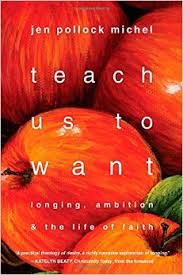 I also knew I was going to like this book because the author, Jen Pollock Michel, is, I know, a serious thinker, a deeply spiritual woman, and a great writer; her previous book Teach Us to Want: Longing, Ambition & the Life of Faith (IVP; $16.00) is a rumination on desire, on ambition, on a woman’s search for purpose and identity, a book we named as one of the very best Best Books of 2015 (and it won the coveted Christianity Today Best Book.)
That book, like this new one, has a DVD curriculum that can be used, an indication that the publisher not only believes in the content, but finds the author a compelling communicator. IVP doesn’t do many DVDs so that is significant; having Jen as a speaker (well, almost) in your small group, book club, or adult ed class via video is pretty great. Each of the two companion DVDs for Teach Us To Want and Keeping Place sell for just $20.00 and the discussion guide in the back of the paperback book serves as a guide for the DVD curriculum, too.
The literary structure of the brand new Keeping Place: Reflections on the Meaning of Home is clever and fun, too. Pollock Michel arranges her studies of the “most fundamental human longing” in a memoir that bounces around geographically; it isn’t fully chronological. In fact, Michel visits some of her previous childhood homes with her mother and daughter on a road-trip worthy story which allows for some lively reports of stuff that happens along the way, but, more, allows for memories to be recovered, for stories to unfold as she recalls old moments of her rather nomadic upbringing.
 Jen’s father died, suddenly, rather young (and her brother died later that year) so there is great grief associated with some old locations. In a brief scene that oddly gripped me as almost devastating, she visits Kent, Ohio, where her father was working on a dissertation. She visits the Kent State University library, trying to learn if he had finished and published his work – she tries various configurations of his first name, his middle name, and the like. The sadness and exhaustion of that era is so great, it seems, that her mother doesn’t know if her husband ever published his dissertation. For all of us, I am sure, some memories are a blur, and not all homes are lovely. Some are not even safe.
So Keeping Places travels around, giving a subtle, structural indication that having a home is not necessarily about, as Scott Russell Saunders writes, “staying put.” I suspect strongly that Michel will deny the “home is where ever you lay your head” nonsense, this distorted valorization of being on the road – thank you Jack Kerouac for that ruinous counter-cultural idea – and invites us to take our places serious. The “meaning of home” in the title, of course, is about “keeping place.” (I thinking keeping evokes “keeping house” which should imply stewardly care, not necessarily forever “staying put.”) She herself doesn’t have just one place, and most of us don’t either. In fact, one chapter is called “Border Crossings: On (Not) Staying Put.” So there’s that.
One of the things other than the moving stories, good writing, and poignant memories that I like about Keeping Place is that it explores fairly widely some stuff that is often in the background of our home life, holding things up to the light, inviting us to consider what we might otherwise not think about. It is an important reminder, to be self-reflective, and it makes for a fun book.
For instance, there is a wonderful chapter on time; she writes thoughtfully about the daily nature of marriage (with shades of Tish Harris’s The Liturgy of the Ordinary) and “the routine work of I Do.” There is a good discussion helping us get beyond the disdain of housework, what Caitlin Flanagan writes about in To Hell With All That (a funny book I promoted to some consternation a few years back.) Of course there’s a great chapter on meals called “Saying Grace: Feasting Together” that makes me envious.
A few of these things are so common – housework, meals, the pace of life – that we don’t think about them, but when we do, we know she is right: these are avenues for spiritual formation, holy placed to embody grace.
But other things she proposes may be new for some of us, even radical. For instance, Jen Pollock Michel writes significantly and insightfully about the role of the church family in helping us with our own families. Drawing on Wesley Hill’s must-read Spiritual Friendship: Finding Love in the Church… and the kind of model proposed in books like The New Parish and Slow Church. She reminds us that the domestic term “household” is a metaphor the apostle Paul uses to describe the local church. In writing about how parents are not alone in caring for their children, she quotes James K.A. Smith who reminds us that “at a child’s baptism bloodlines are relativized, and the nuclear family rejects the modern domestic ideal of the family as ‘closed, self-sufficient, autonomous unit.'” She cites Smith citing the Orthodox author Alexander Schmemann (who wrote For the Life of the World.) The upshot is that we cannot parent alone.
It does, after all, take a village, Biblically speaking.
She writes,
I doubt my unmarried friends know my gratitude for their friendship – how they willingly abide the din of dribbling basketballs in the from hallway to linger of Saturday brunch and easily forgive long stretches of unintended silence when I fail to call. I imagine they see themselves in the role of taker rather than giver in the relationship, but I’d like to assure them that their presence in our home immediately changes the dynamic of our family, especially now that there are teenagers in the house, who are nearly catatonic with boredom that is their parents.
She speaks for all of us when she says,
The church is home and part of our daily housekeeping is learning to belong to one another. If this is good news for the unmarried, it is also good news for me. The nuclear family cannot bear the full weight of human hope and expectation, struggle and need. It’s too fragile and human an entity. As a married woman with children, I need relational connection and commitment beyond the circle of my immediate family, both for myself as well as for the sake of my family.
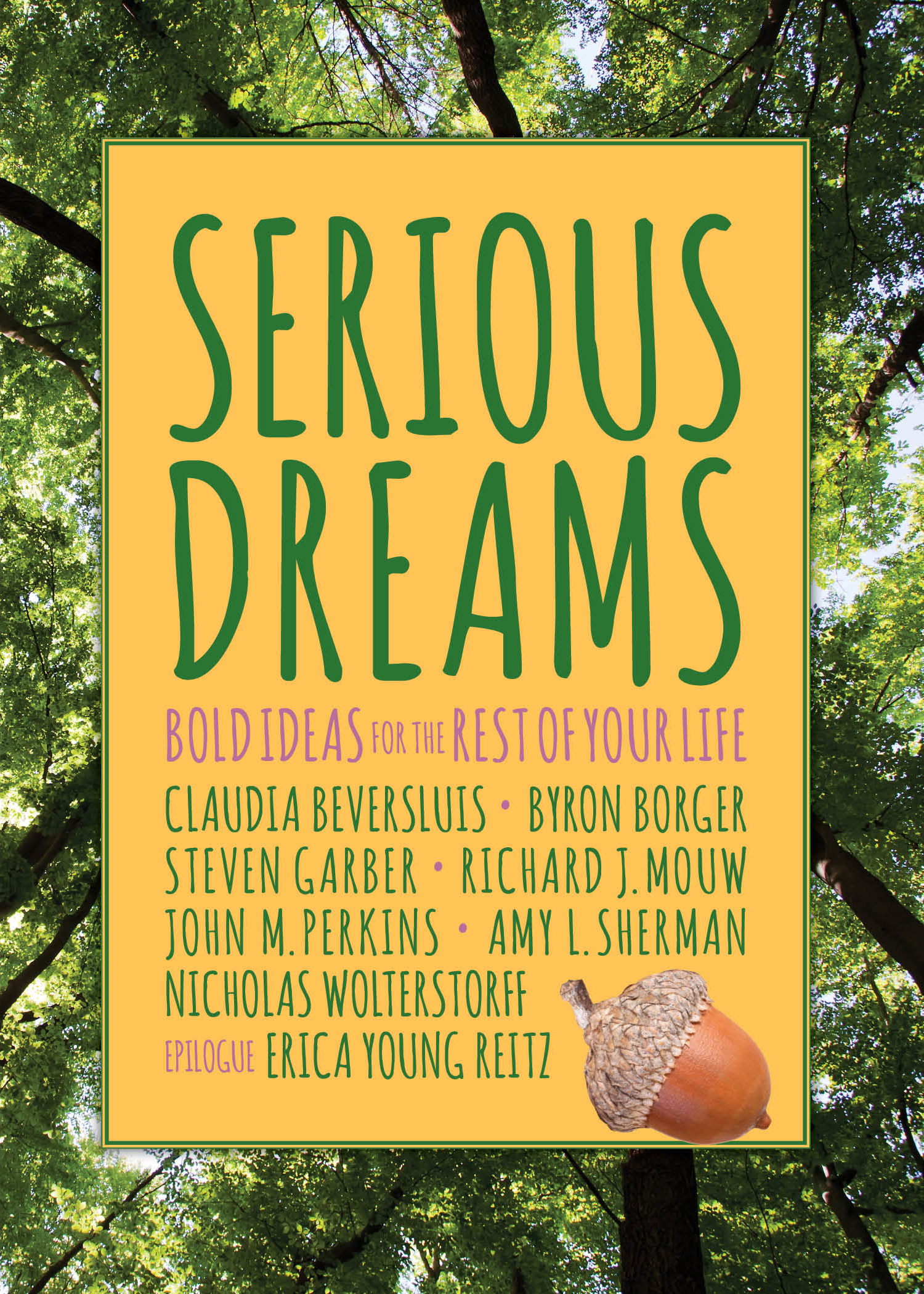
Like her church in Toronto, which prays in their weekly liturgy for their city, she realizes that her family and her home are for the sake of the world. She quotes Amy Sherman from her must-read, remarkable book on work, Kingdom Callings (and, I might add, it is a portion that is also found in Sherman’s wonderful, brief chapter in my own collection Serious Dreams) which riffs on Proverbs 11:1.
Sherman tells of some churches doing good work in their city and continues:
Are we engaged in efforts that are relevant to the groans of creation and the cries of the poor? Are we producing disciples whose work is contributing to profound transformations that set people dancing in the streets? Have we joined King Jesus in his grand, sweeping missions of restoration? In cooperation with him, are we bringing foretastes of justice and shalom?
Jen Pollock Michel provocatively then writes,
These are questions for the church related to housekeeping. They remind us that we make a home for the wandering lost in our cities not simply by throwing open our church doors but by identifying and attending to their most desperate needs. If we want to sing the stories of home, let’s make a real, dry place out of the rain for our closest neighbors.
And so it goes, from travelogue and memoir to some serious Bible study to citing important authors about the sociology of home, the politics of place, the rhythms of rest, and stewardly economics of house-keeping. She writes nicely about finding furniture that suits their modest home, she tells of efforts to discern a spirituality of housework, and she frames these teachings with a big picture of God’s redemptive work in the world.
Of course, in any book that offers a Biblically Christian vision of the meaning of home, framed by the longing for a true home (shades of Lewis there, eh?) Michel has to deal with the question of whether our ultimate home is heaven or Earth. She’s thoughtful, helpful, and faithful in this, drawing – just for instance – on N.T. Wright’s Surprised by Hope and it’s singular vision that God’s intent is to restore the planet as part of Christ’s redemptive healing of all things in the whole cosmos. In her chapter “The City of God: Finally Home” she quotes a portion of a poem I did not know by G.K. Chesterton (“The House of Christmas” written in 1912.) Wow!
It invites a few pages of ponderings about justice and healing and hope and judgement – think The Great Divorce and relevant portions of The Weight of Glory. It’s a powerful, good chapter, and it reminds me that this book shifts seamlessly from reflections on nostalgia and memory of childhood homes to advice on daily housekeeping tasks to Biblical teaching on geography and place and sojourning and mission. God’s sweeping narrative and the promise of fulfillment frame all she writes about, whether it is a bit of analysis of our exceptional mobility, a reminder of the ways consumerism has shaped our views of home and house-keeping chores, or some lovely prose about cooking (or not) she has this big picture of Home in the background.
“The longing for home is associated with memory: a paradise was in fact lost. It looks ahead, inspiring our hope for inhabiting the eternal City of God. Redeemed humanity has a keeping place.”
Jen Pollock Michel is drawing here on her previous book, Teach Us To Want: Longing, Ambition, and the Life of Faith, reminding us that much depends on what we most long for and whether we’ve allowed God to purify our own longings and wants. Our own deepest desires — as Jamie Smith as so powerfully explored in You Are What You Love — must be reformed and properly shaped in order to truly want the right stuff in the right way. Smith makes a good case that much of this recalibration of our desires happens through symbolic liturgy and worship and ritual habit (not only or even mostly intellectual argument, since we can hardly “think our way to a new way of living.”) As the last portions of his widely read book pushes us towards rituals that shape public theology — lived, embodied, incarnate, quotidian – so too does this lovely, fine rumination on the homemaking God who offers welcome into a family, that sends us into a place. Yes, Keeping Place is a book about home, but it is also a very good book about spiritual formation and Kingdom vision and living well in a broken culture, “lovers in a dangerous time” as one Canadian singer once put it.
I especially like that Keeping Place does not commend some romanticized, evangelical vision of home life and I am glad it does not spout platitudes or dispense advise on how to successfully focus on the family. As it says on the back cover, even, “Keeping Place offers hope to the wanderer, help to the stranded, and a new vision of what it means to live today with our longings for an eternal home.”
Men and woman who care about the world, who are making sense of their own lives, who have even an inchoate sense of longing for sustainable neighborhoods and a sense of place in our hot-wired, mobile culture, will love the books of Jen Pollock Michel, her first one (Teach Us To Want) and this brand new one, Keeping Place: Reflections on the Meaning of Home. Why not get some folks together in your house and start a reading group? Or buy the books and use the DVDs, too? We very highly recommend them both.
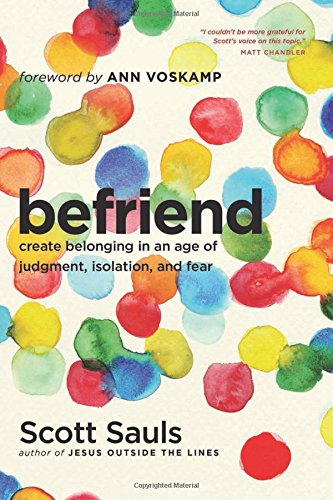 There’s more I could say and I’d bet there’s a lot of good reviews on line (I have intentionally avoided reading any, yet, but now that I’ve shared my earnest heart of how good this is, I’ll explore what others might have written.) I might note there is a sizable foreword by Scott Sauls, which is a tremendous move, since his own latest book, Befriend: Create Belonging in an Age of Judgement, Isolation and Fear dovetails nicely with Michel’s since it is a lovely and challenging guide to be less judgmental and more inviting with a hospitable sense of building relationships. For now, we do hope you order this from us at our BookNotes discount. The button below takes you to our secure order form page.
HERE OTHER BOOKS THAT CAME TO MIND AS I READ AND WROTE ABOUT
Keeping Place: Reflections on the Meaning of Home
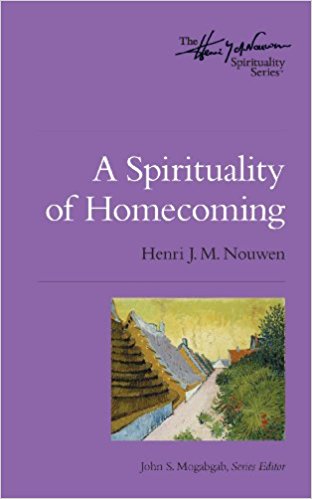 A Spirituality of Homecoming Henri Nouwen (Upper Room Books) $7.99 I hope you know this little one, from the lovely set of 5 small Nouwen books in the “Henri Nouwen Spirituality series” nicely produced by Upper Room. This invites us to respond to the deep love of God that shows us our truest home.
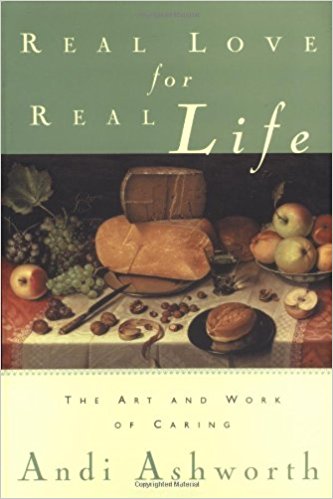 Real Love for Real Life: The Art and Work of Caring Andi Ashworth (Rabbit Room Press) $12.00 One of our very favorite books. It is on the art of home-making, written mostly for woman, but a great read for anyone. I can’t tell you how intelligent and graceful and thoughtful this is. Highly recommended and dearly beloved.
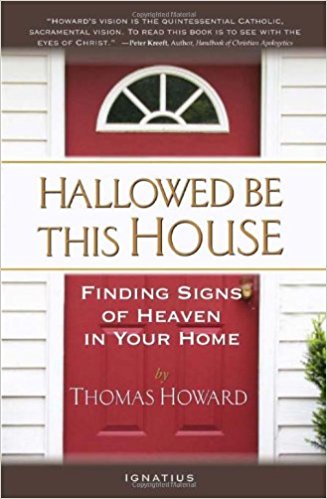 Hallowed Be This House: Finding Signs of Heaven in Your Home Thomas Howard (Ignatius) $14.95 A conservative Roman Catholic walks through the house, seeing signals of transcendence in each room. Very, very, impressive, by a very classy writer you should know.
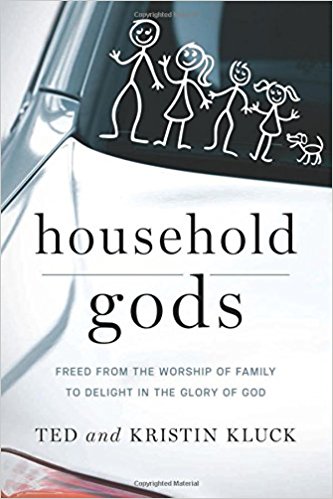 Household Gods: Freed from the Worship of Family to Delight in the Glory of God Ted and Kristin Kluck (NavPress) $14.99 A bold and interesting evangelical writer noting that we have made home and successful family life into an idol that we must break free from. Praise the Lord that somebody from a fairly conservative tradition is able to put this in perspective. For some of us, this will be very challenging. For others, we might rejoice saying “it’s about time sombody had the wisdom to say this.” Read it and pass it around.
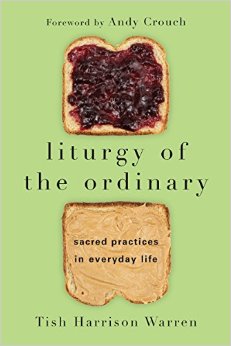 The Liturgy of the Ordinary: Sacred Practices in Everyday Life Tish Harrison Warren (IVP) $16.00 This almost goes without saying, and I hope you don’t find it so obvious to have me list it here — these books are both so very good and it seems that Jen Michel and Tish Warren ought to be fast friends. Besides that they both go by three names, they are smart, deeply interested in the spirituality of the ordinary, and see home and place as a key location for spiritual formation. If you care at all about faithful living, about the “every square inch” vision of God claiming all of life, of exploring this topic of home and place and God and life, this book is without a doubt a must-read. It is beautiful, fun, and so very insightful. Read it in tandem with Keeping Place and you’ll see what I mean. Somebody ordered both of these on line from us the other day and it made my day. Praise be to God.
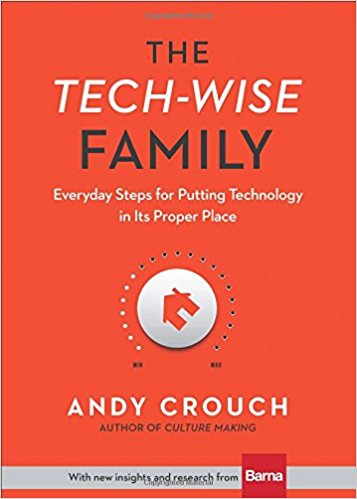 The Tech-Wise Family: Everyday Steps for Putting Technology in Its Proper Place Andy Crouch (Baker) $13.99 If there is one small fault with my first perusal of Keeping Place is that I didn’t notice Jen Michel talking much about the impact of our digital culture on our sense of place or how stability in the home may demand thinking in creative ways about what to make of our virtual realities, screens and devices. Andy Crouch is the perfect guy to help us, here and this is without a doubt the most important book about family life this year. (Yes, I’ll affirm it now: like Keeping Place, Crouch’s Tech-Wise Family will surely be named as one of the Best Books of 2017!) Short and insightful, it offers a gentle critique of our fixation with technology and pushes us towards embodiment, even recommending cooking together, inspired by Father Robert Capon’s glorious theological cookbook, Supper of the Lamb. Want to follow up or read something along-side Jen Michel’s Keeping Place. Read this.
 The Year of Small Things: Radical Faith for the Rest of Us Sarah Arthur & Erin F. Wasinger (Brazos Press) $17.99 I so loved this wonderfully written book, and promoted it when it first came out this past Winter. It’s a charming, provocative, expertly crafted, fun and challenging memoir of two families who pledge to support one another as they take baby steps (and some not-so-baby-steps, you may think) to be more faithful, more caring, more committed to the ways of Jesus in this crazy world. What does home-life look like when couples bond in friendship and supportive community to push one another on to do greater things, daily steps of intentional discipleship? This is a great, great book, sure to inspire your own risk-taking baby steps and evoke good conversation among serious Christian friends. Read it and you’ll see why I thought of it while reading Keeping Place.
 At Home in the World: Reflections on Belonging While Wandering the Globe Tsh Oxenreider (Thomas Nelson) $22.99 What a thrilling memoir of travel; hovering around this fun, new book is the question of how to be at home while away, the tension between settling down and going forth. We sold her earlier, quite classy book Notes from a Blue Bike and she has matured as a writer and offered even wilder adventures, here. As it says on the cover, this is “an adventure across 4 continents, with 3 kids, 1 husband, and 5 backpacks. Really fun.
 Staying Put: Making a Home in a Restless World Scott Russell Sanders (Beacon) $19.95 One of the truly great American writers, a delightful and moving set of literary essays about home. Imagine if Wendell Berry was a lived not on a farm in Kentucky but in a small town in the Mid-West. Thoughtful and wise and truly eloquent. This is a collection to dip in to and enjoy for a lifetime.
 Secrets of the Universe: Essays on Family, Community, Spirit and Place Scott Russell Sanders (Beacon) $18.00 Another remarkable book by the esteemed Mid-Western memoirist. I hope you know this author. Don’t miss it. One reviewer (editor of the Best American Essays) says “Scott Sanders knows in his bones what it means to write the personal essay: it means to take risks. These are personal essays in the best sense of personal — candid, intimate, thoughtful, individual.”
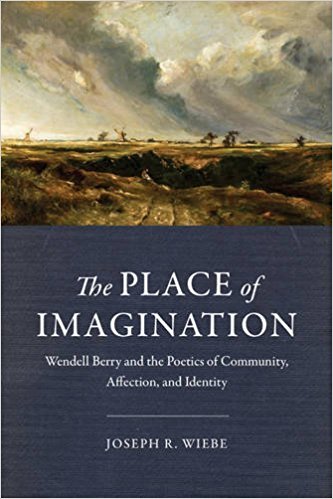
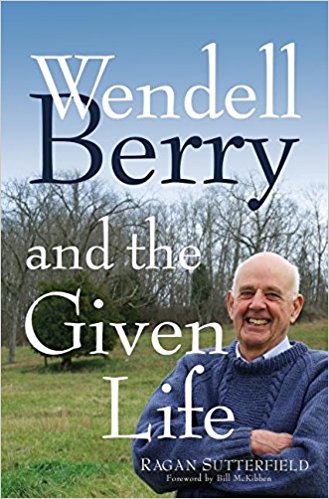 The Place of Imagination: Wendell Berry and the Poetics of Community, Affection, and Identity Joseph Wiebe (Baylor University Press) Well, there are any number of important studies of Berry’s fiction, poetry, and non-fiction, and this hones in on his affection for place. Seriously, this is a major bit of literary criticism, incredibly well documented from Berry’s work. Less pricey and more accessible, see, of course, the great new overview of Berry by Ragan Sutterfield called Wendell Berry and the Given Life (Franciscan Media; $22.99.) What a beautiful, insightful, truly valuable book!
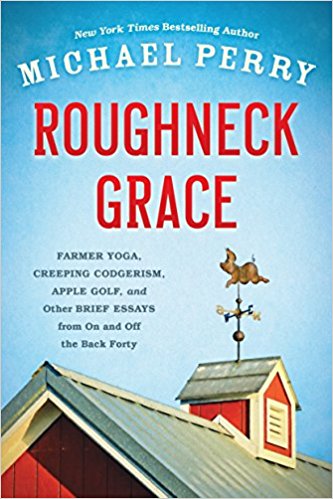 Roughneck Grace: Farmer Yoga, Creeping Codgerism, Apple Golf, and Other Brief Essays from On and Off the Back Forty Michael Perry (Wisconsin Historical Society) $18.95 Beth and I both have agreed this is our favorite book these days, so nicely, nicely written, with so many clever (ad hilarious) turns of phrases, warm and earnest and profound, in a roughneck sort of way. It is a wonder. Short pieces about the author’s Wisconsin life which is not quite a farming one, even if he does have a back forty, tractors and some chickens, sometimes. Wholesome, funny, and so darn interesting. Read his larger books, from Population 485 to Coop to Truck and the essay collection Off Main Street, and more. You’ll thank us with a big ol’ country smile.
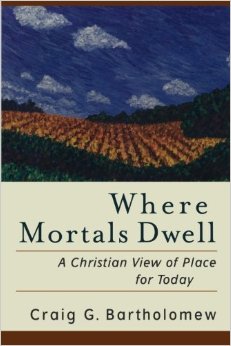 Where Mortals Dwell: A Christian View of Place for Today Craig Bartholomew (Baker Academic) $32.00 I’m glad Jen Pollock Michel cites this a time or two as it is the definitive theological study on place. As we said in our BookNotes review when it first came out, it includes history, philosophy, theology, geography, all in an extraordinary bit of scholarly enrichment from what some call a reformational worldview. There is nothing like it in print, extraordinary. Bartholomew, by the way, recentlly did a major work on Kuyperian theology, and has a brand new one coming co-written by Bob Goudzwaar, Beyond the Modern Age. Genius.
 No Home Like Place: A Christian Theology of Place Leonard Hjalmarson (Urban Loft Publishing) $18.99 If one is not ready yet to tackle the must-read Where Mortals Dwell this is a bit more accessible and has a few more moments that make it passionately clear why we should care about this topic. Explored through the lens of neighborhood-ish missional church outreach, it is urgent and very, very good. To “keep place” as Pollock Michel invites us to do in our home-life, we simply must think about this bigger sense of place.
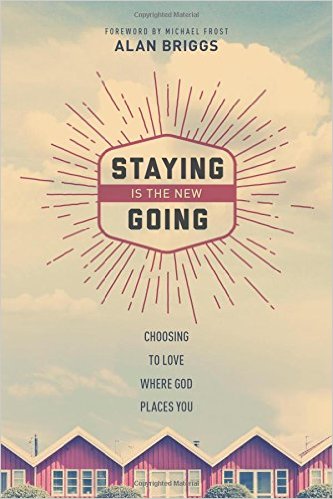 Staying is the New Going: Choosing to Love Where God Places You Alan Briggs (NavPress) $14.99 I have said that the forward by Michael Frost on two kinds of American literature (staying vs going) is itself worth the price of the book, but Briggs does such a good job making this topic so interesting, I sometimes say this is the first book to read if one is approaching the topic of place. Very inspiring, full of insight and charm and, frankly, is a transformational book. Can we learn to love where God has put us? Game-changing!
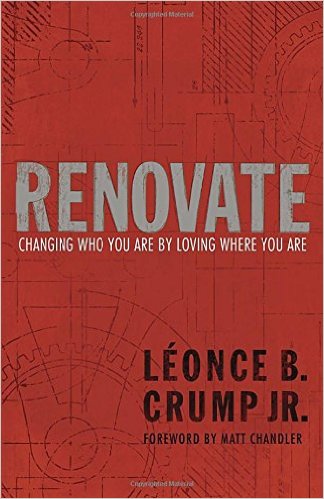 Renovate: Changing Who You Are By Loving Where You Are Leonce Crump (Multnomah) $14.99 I have touted this nearly everywhere we’ve gone this past yea; it is a passionate, Biblically-solid study of why place matters in the Biblical narrative, how God’s promises to restore the whole of creation, and showing you how that can inform your affection for your own places. And what can happen as we are transformed by learning to love well. Crump tells some of his own story of allowing God to transform his attitude as he fall in love with his new home in Atlanta Georgia. Very highly recommended!
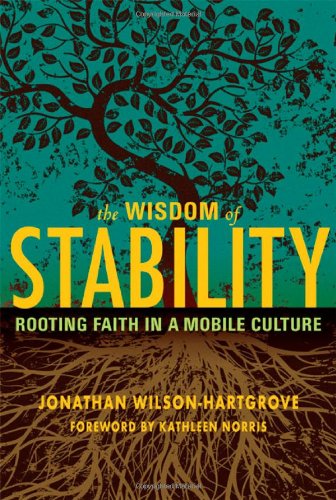 The Wisdom of Stability: Rooting Faith in a Mobile Culture Jonathan Wilson-Hartgrove (Paraclete Press) $16.99 Perhaps you will recall a list of books I developed that would supplement or be in conversation with discussions of Rod Dreher’s The Benedict Option, a list about Saint Benedict and his famous monastic rule, mostly. I wrote about this, as I do whenever I can, as it is a rich, thoughtful, stimulating and highly regarded meditation on the notion from Benedict that a good life comes from staying put, the virtue of “stability.” In a mobile culture where we don’t commit to a place (let alone a group of people) it is hard to be church, to develop roots, to live well. This book is a very fine, enriching rumination with a nice foreword by Kathleen Norris.
 Beyond Homelessness: Christian Faith in a Culture of Displacement Brian Walsh & Steven Bouma-Prediger (Eerdmans) $29.00 Oh my, I mentioned this above, and really meant it — it is an amazing work about a sense of place, about the motifs of exile and homecoming in Scripture, and how that might influence our own sense of calling to the task of radical home-making, being stewards of God’s home, here on Earth. If redemption is a coming home to a restored Eden, then environmental stewardship and water-shed attentive sorts of discipleship is of utmost importance, preparing now and pointing the way to a renewal of our creational home. This book is very serious and one of the most important volumes I’ve ever read. Order it today to study seriously what it means to be at home and to be a home-maker in a culture that does not value such things. Or consider it a studious follow-up to the splendor of Pollock Michel’s beautiful Keeping Place.
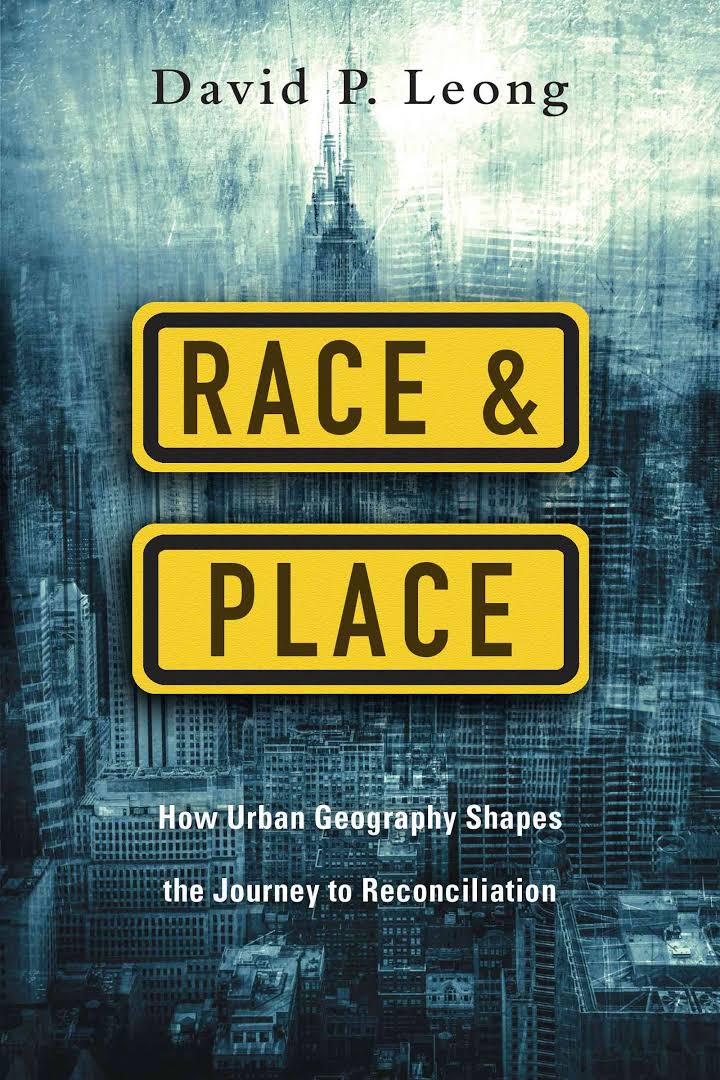 Race and Place: How Urban Geography Shapes the Journey to Reconciliation David Leong (IVP) $16.00 It is simply not true that it is new agronomists or rural folks that develop a sense of place, and although a few of the above writers are small town or rural, some, above, are not. (Oh, please read Renovate, mentioned above by my acquaintance Leonce Crump, an urban, black pastor who cites Wendell Berry!) Not only is it a myth that those who care about place are quaint and rural, it is, as a matter of fact, simply not true that all African American’s in North America are urban. (Hey, I’ve had some great conversation about fishing with black men and women!) Anyway, having said that, it does seem that Jen Pollock’s book doesn’t speak much about race and racism, a topic that is deeply entwined with American geography. This fine book, which I reviewed favorably when it came out a few months ago, is the book to read to bring a reorganization of the relationship of race and place. What a rare voice, what an important contribution. This book works well, and serves readers with insight on various levels on several topics. A win, win, win, they say, well worth having.
BookNotes

DISCOUNT
ANY ITEM MENTIONED
10% off
order here
takes you to the secure Hearts & Minds order form page
just tell us what you want
inquire here
if you have questions or need more information
just ask us what you want to know
Hearts & Minds 234 East Main Street Dallastown, PA 17313
read@heartsandmindsbooks.com
717-246-3333
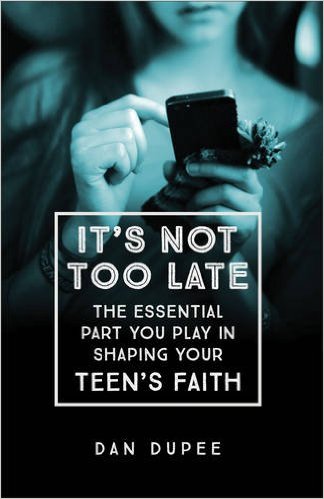
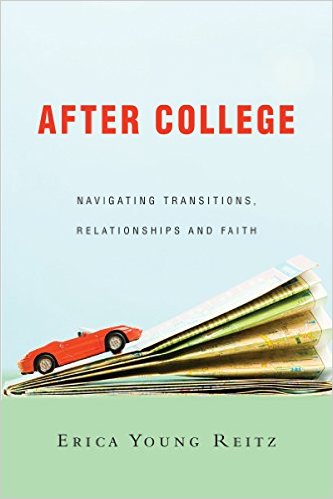
 seminary professors such as Kenda Creasy Dean (Almost Christian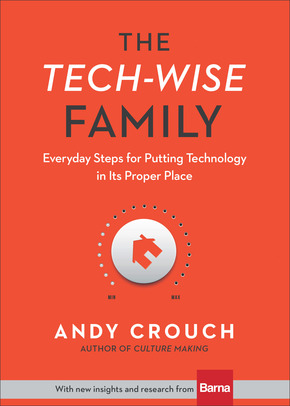
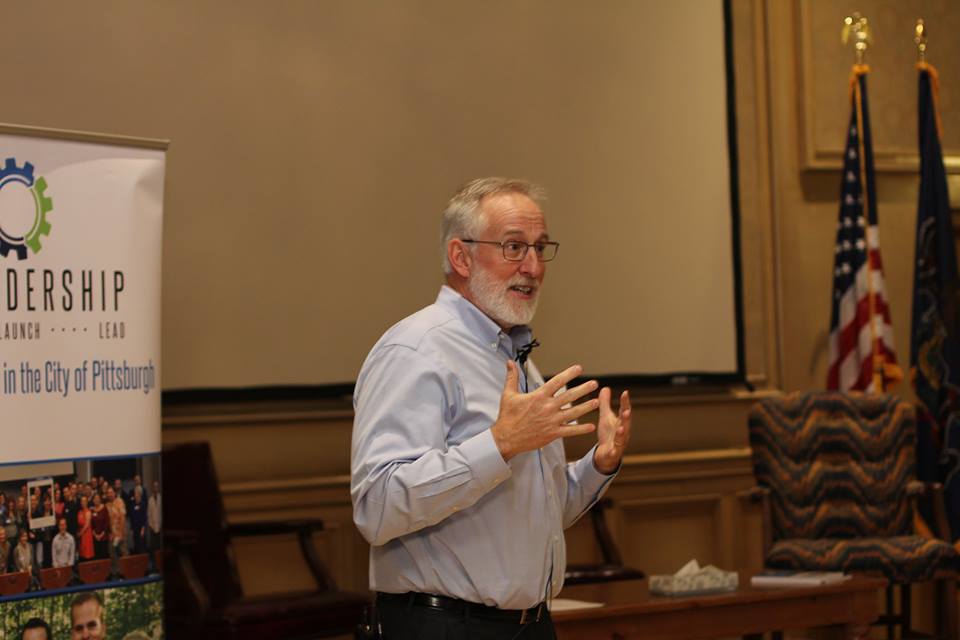
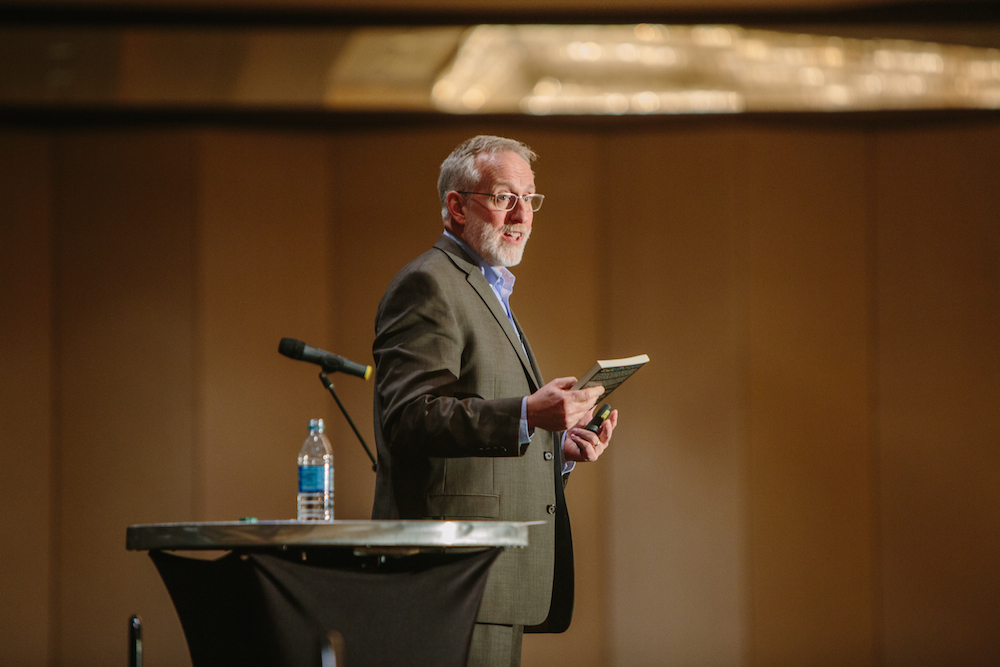 ‘s going to be a fun and informative night. Dan’s a great speaker, lively and funny, and he and his wife Carol have double the experience many of us have — they have raised two sets of twins! And what good parents they are.

 The Call: Finding and Fulfilling the Central Purpose of Your Life Os Guinness (Word Publishing) $17.99 This is eloquent and elegant and wise and mature, short chapters that can be read by those who want a deep and thoughtful reminder of their own sense of purpose as it aligns with God’s decisive call upon their lives. Nearly any book these days about vocation or any book about a Christian view of work draws on this at one point or another; it is a classic.
 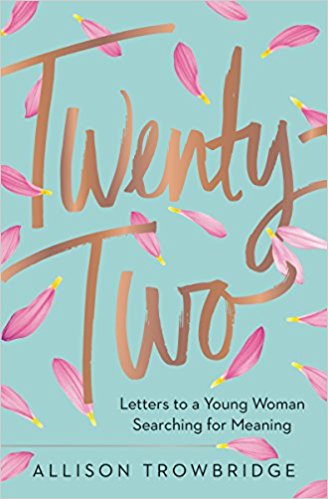 Twenty-Two: Letters to a Young Woman Searching for Meaning (Thomas Nelson Publishing) $22.99 Did you see my BookNotes comments about this a week ago? This is a very handsome hardback designed as a set of letters to a young woman who is graduating from college. As I described it,
  Visions of Vocation: Common Grace for the Common Good Steve Garber (IVP) $17.99 I won’t say again the many reasons we love this book but you may know that I’ve mentioned it here often. Steve is a fine, fine writer, a deep thinker, and a personable, intense friend to many. He loves little more – other than being with his family, hiking or bike riding, or reading or watching movies, that is – he loves little more than inviting people to earnest chat with “conversations with consequence.” He networks beautifully, bringing folks together to tell stories of grace and goodness, and of struggle and pain, of hope and the effort to make a difference. This book has emerged from his “come and see” pedagogy, his many stories of people doing life together, telling their stories of hanging in as God’s great grace allows. Can we care about the common good, remaining faithful over the long haul of our lives, not giving in to cynicism or “whatever”? This book allows careful readers to learn to love the things God loves, loving the world despite its deep sorrow. What an amazing, rich, thoughtful book, a perfect gift to honor a major life transition for anyone who is serious about the things that matter most.
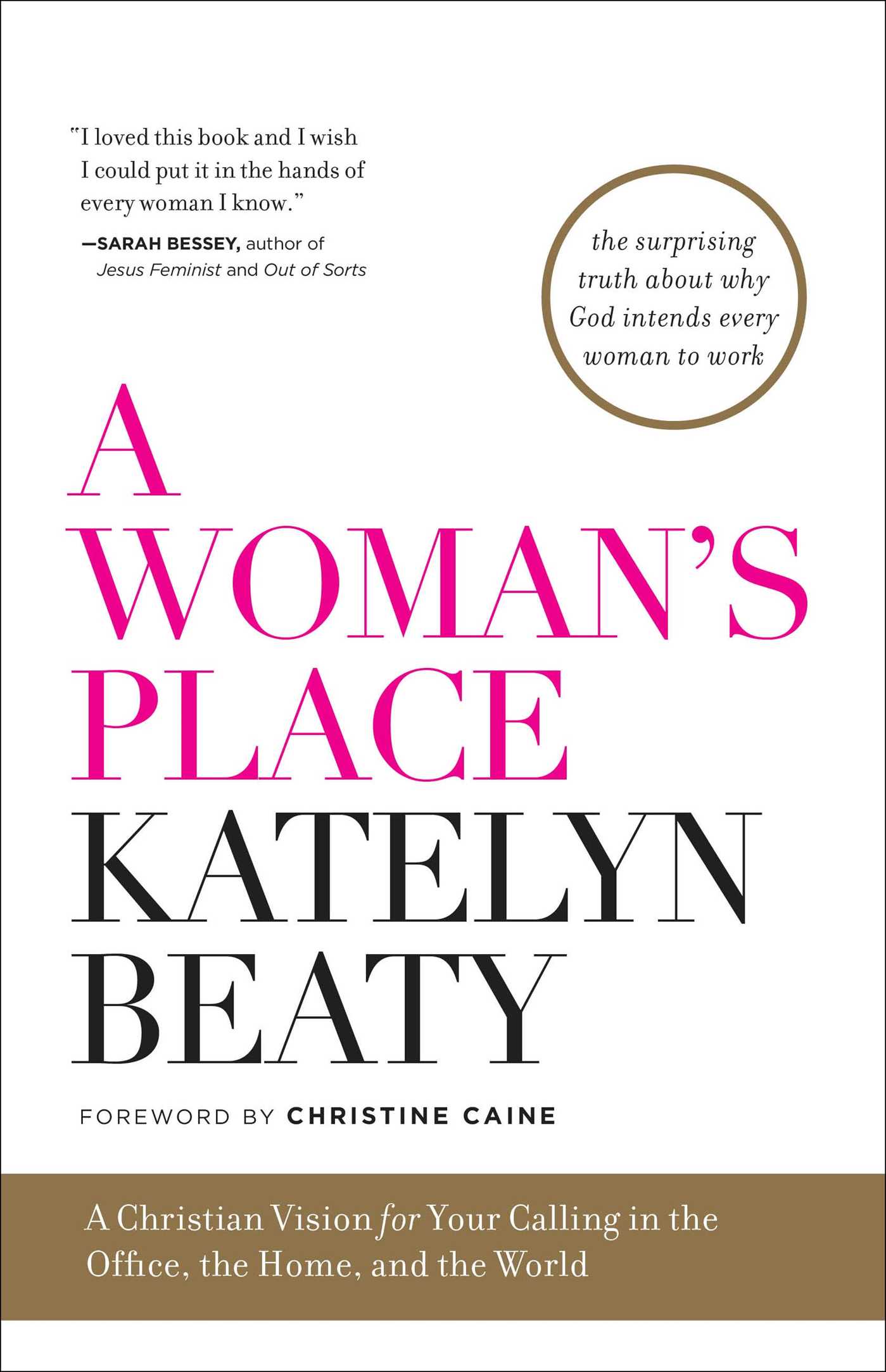 A Woman’s Place: A Christian Vision for Your Calling in the Office, the Home, and the World Katelyn Beaty (Howard Books) $22.99 I am sure you understand that we don’t think that any sort of graduate – let alone college graduates – should be given a little token gift that trivializes the momentous occasion of their matriculation or that trivializes the way the Christian faith can provide insight and comfort and vision for the seasons to come. This is a key time to offer something sturdy and vital so we gravitate to books about calling and career, about vocation and transformation, about lasting faith and discipleship There are many other books than the few I’ve listed above but, for what it is worth, there are none this good that are particularly about women’s callings into the workplace, making this book a rare treat and a real gift. It would make a great gift for a college woman.
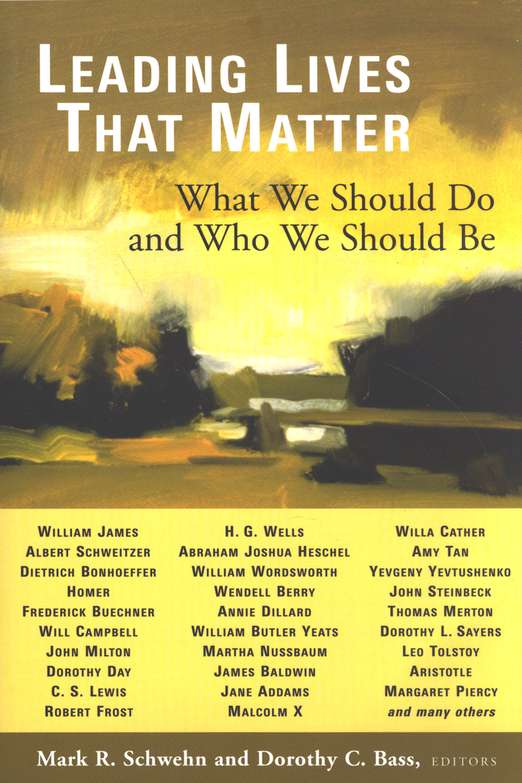 Leading Lives That Matter: What We Should Do and Who We Should Be edited by Dorothy Bass and Mark Schwen (Eerdmans) $31.00
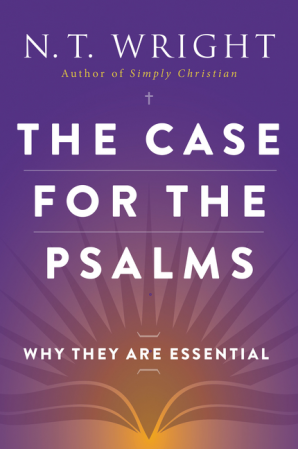 church about the Psalms and have read out loud large chunks of N. T. Wright’s wonderful paperback The Case for the Psalms: Why They Are Essential. His important overview of the Psalter is helpful to understand the Psalms — email me if you want a list of some other good resources — but a main point is that praying these poems over and over roots us in the story of God, a past of God’s great deeds, a present of great sorrow and turbulence, and a trust in the promises that have been somewhat fulfilled in the death and resurrection of David’s heir, Christ Jesus. And yet, the story isn’t over, and we even now live in a “now but not yet” sort of world. We have to work at “seeing” life through the lens of faith, relating God’s redemptive story to all of life. The Psalms are not the only place the Bible talks about thinking or work or pondering the great wonders of God, but they are evocative and helpful.
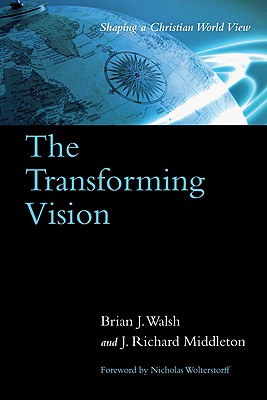 BUY The Transforming Vision: Shaping a Christian World View Brian Walsh & J. Richard Middleton (IVP Academic) $22.00 I have often said that this sweeping study of the history of the dualism between what we sometimes call “the sacred and the secular” and the secularizing rise of Enlightenment rationalism driven by the idols of scientism and faith in economic progress, literally changed my life. Anytime folks ask me for the most important books in our store, this one invariably comes up. This Biblically-informed call to a wholistic Christian worldview — good creation, radical fall, wholistic redemption, future restoration — came to influence N.T. Wright, and it mirrors the Biblical teaching of Al Wolter’s Creation Regained: The Biblical Basis for a Reformational Worldview, with whom they studied, but adds a lot of scholarship about the need for a a Christian social imagination, the Christian mind, an engagement with the ideas and structures of the culture, and even a rousing call at the end to consider reading interdisciplinary, even taking up Christian philosophy. I think Transforming Vision is an excellent example of thoughtful Christian scholarship for the sake of the common good and you will be know more about your world, your faith, and be more eager to read widely once you’ve processed it.
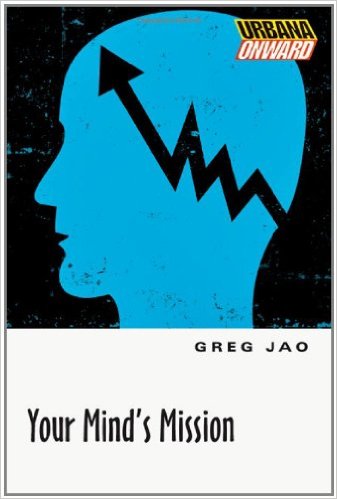 AND GET THIS FREE: Your Mind’s Mission Greg Jao (IVP) $7.00 I mention this to college students quite often, but, you know, I wish non-students would read it, too, as it offers a wholistic vision of a transformed worldview, a thoughtful process of learning to think well, and a call to see our ideas shaped in ways that they become missional.
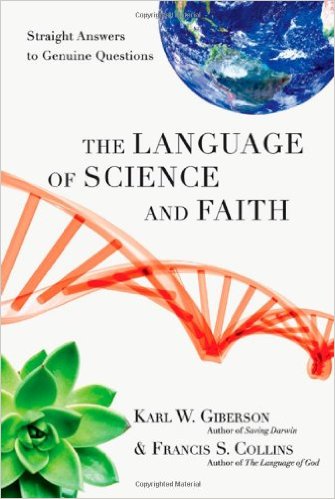 BUY The Language of Science and Faith: Straight Answers to Genuine Questions Karl W. Giberson & Francis S. Collins (IVP Books/BioLogos) $22.00 We have written from time to time about this book, always listing it on bibliographies we do about the sciences. We are fond of it and want to encourage you to get it, perhaps to share with someone who has somehow heard that religious people are disinterested in science, or that evangelicals are anti-science.
 AND GET THIS FREE God in the Lab: How Science Enhances Faith Ruth M. Bancewicz (Monarch) $16.99 First published in the UK, we are so glad to stock this book, happy about it for several reasons. And we’re happy to send you a free one with a purchase of one of the above mentioned science books.
 BUY For the Beauty of the Earth: A Christian Vision for Creation Care Steven Bouma-Prediger (Baker Academic) $26.00 It is hard to pick just one favorite book in this field. We often recommend for starters, Tending to Eden: Environmental Stewardship for God’s People by old friend Scott Sabin, and we have enjoyed telling readers that are new to the topic about Serving God, Saving the Planet: A Call to Care for Creation and Your Soul by Matthew Sleeth. We highly respect the seriously thoughtful work of Introducing Evangelical Ecotheology: Foundations in Scripture, Theology, History, and Praxis by Daniel Brunner, Jennifer Butler, and A.J. Swoboda. And anyone wanting to get behind all this with good, Biblically-informed thinking should make it a priority to work through Norman Wirzba’s potent little book edited by James K.A. Smith, From Nature to Creation: A Christian Vision for Understanding and Loving Our World. If you want a really, really practical, down-to-Earth Biblical overview, see one that Dr. Wirzba co-wrote with farmer Fred Bahnson called Making Peace with the Land: God’s Call to Reconcile with Creation. It is mostly about food and eating, and shows how a good creation-care theology can influence our day to day lifestyle.
 AND GET THIS FREE Caring for Creation: The Evangelicals Guide to Climate Change and a Healthy Environment Mitch Hescox & Paul Douglas (Bethany House) $14.99 Yep, these authors are the dynamic duo that we hosted in the store when this book first came out last fall, and we’re still smiling about how fun it was. Paul Douglas is a world-class meteorologist who happened to have invented some meteorology Doppler-type computer gadget that Stephen Spielberg used in Jurassic Park and Twister (and in which Paul made a cameo.) We have never had a Hollywood blockbuster actor in the store, but more importantly, his scientific discussion about global climate change and the energy crisis was fascinating, helpful, inspiring, even. To have a humble Christian man at the top of his professional field visiting with us and his friend and co-author Mitch Hescox — a United Methodist pastor, former global energy corporation executive, and now full time Director of the Evangelical Environmental Network — was one of the highlights of our year. You can read about it here.
 The Dawn of Christianity: How God Used Simple Fisherman, Soldiers, and Prostitutes to Transform the World Robert Hutchinson (Thomas Nelson) $24.99 Let’s start here – at the time of rise of Christianity, right after the resurrection of Christ. What a great time of year to dive into the fabulously interesting book which draws on the most recent discoveries and scholarship in archaeology of the first-century Near East. Hutchinson (who studied Hebrew in Israel and has an advanced degree in New Testament) asks “How did a beleaguered group of followers of a crucified rabbis become the founders of a world-changing faith?” Using both Christian and secular scholars, Hutchinson reconstructs these post-resurrection accounts, tells about the persecution of the earliest church (at the hands of, for instance, a religious terrorist named Saul of Tarsus) and shows how they thrived as the gospel moved from Antioch, Damascus to Athens and Rome. From ancient writers like Josephus and Philo and Eusebius to 20
 The Way of the Dragon or the Way of the Lamb? Searching for Jesus’s Path of Power in a Church That Has Abandoned It Jamin Goggin & Kyle Strobel (Nelson Books) $16.99 I have mentioned this before but want to suggest it again. There are oodles of basic Christian growth sorts of resources that help us in our interior lives, our understanding of the faith, books that strengthen our resolve to live well in the world. But few take seriously the fallen nature of our messed up world, the seductions and dysfunctions that surround us, and those that do often are very scholarly, or utterly pessimistic. (God bless Jacque Ellul, if you get my drift.) I benefited immensely from reading about this topic of how we should think about power and fallen institutions years ago – I recall the little book by Berkof called Christ and the Powers and a really important book by Marva Dawn which offered some friendly critique to Walter Wink and his impressive work on the principalities and powers. There is not enough discussion about this in most churches, not enough about what these authors call “The Way of the Dragon” let alone enough about the radical nature of Christ’s “Way of the Lamb.” Andy Crouch, of course, has written very wisely about power in Playing God and even in the his must-read book from a year ago, the brief Strong and Weak. There are many authors who write about Biblical nonviolence but, as much as I appreciate them, they somehow seem disconnected to the lives of ordinary middle class folks making their way through their typical lives.
 The Essentials of Christian Thought: Seeing the World Through the Biblical Story Roger E. Olson (Zondervan) $18.99 You probably know that we believe that one of the best things to read for living Christianly in the world, books that can help us grow in our faith, are what we sometimes call “worldview books.” Daily discipleship and basic Christian growth resources are best framed by the big picture of a Christian view of life and an overview of the redemptive story that unfolds in the great drama of the Bible. This book does just that and it is fantastic!
  The New City Catechism: 52 Questions & Answers for our Hearts & Minds The Gospel Coalition with Introduction by Kathy Keller (Crossway) $7.99 This is a really cool little volume with classic evangelical truths portrayed in the once-popular Q & A format. Beth and I are members of the Presbyterian Church (USA) so we happily have a good handful of creedal statements in our Book of Confessions, including a newly added one about racism and human dignity that emerged from Reformed churches fighting apartheid. We crafted a fresh Q & A Catechism a few years ago but it didn’t quite take off; it indicated, though, the desire for contemporary Christians of a variety of types to return to this kind of easily memorized instruction. As Kathy Keller tells in her fascinating short introduction, even those working in hard, inner-city settings are finding success in teaching these pithy, theologically-sound answers. This is a very useful and timely idea and The New City Catechism is a very, very useful tool to use. Whether you are young or mature in your faith, whether you’ve studied a lot or not, this set of orthodox formulations – sounding a bit like the Heidelberg Catechism or some of the answers to the Shorter Westminster Catechism – is highly
 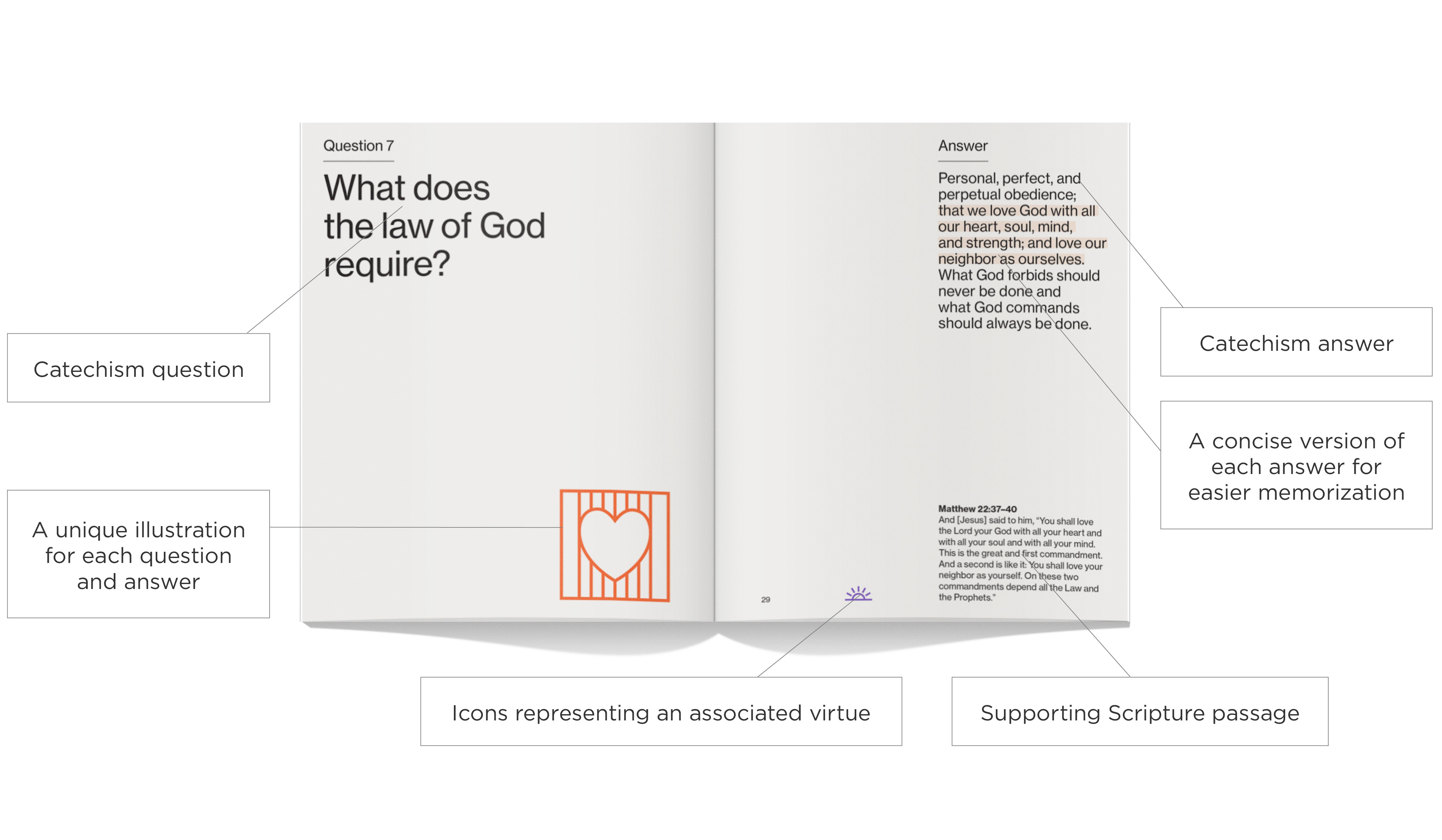 recommended.
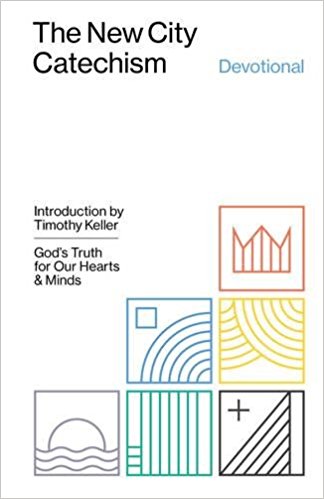 The New City Catechism Devotional: God’s Truth for our Hearts & Minds The Gospel Coalition, with Introduction by Timothy Keller (Crossway) $19.99 This hardback devotional has the same hip design and similar look – sans dust jacket, Helvetica type, two-color pages design – and is a perfect supplement to The New City Catechism. It has much to commend it. I might take issue with a thing or two, including the oddity that all the authors are men, but we’re eager to have our customers use it. Supplement it with stuff from your own tradition if you want, use it as conversation starters to determine if you agree with their formulations of the answers, but these are standard, mature, solid ruminations on these classic answers to key theological questions. If lack of theological awareness and superficiality of faith is a curse of our time, this could be an asset to rehabilitate weak knees and strengthen us all.
 The Sin of Certainty: Why God Desires Our Trust More Than Our “Correct” Beliefs Peter Enns (HarperOne) $15.99 This came out to much discussion a year ago and was just released in paperback last week so I can list it as “new” – at least new in paperback. I do not mean to be clever in listing this book after the important New City Catechism, although a cynic might think that I’m deconstructing the doctrinal Q & A approach in those books. Nope, I’m just balancing the two; Enns is quick to tell us that any reductionism that equates proper beliefs with real faith is not Biblically faithful. The strict Reformed theological tradition that he once was a part of left him with questions, fundamental things about what it means to trust God, what it means to truly know something, what the role of theological formulations play in faith formation. He’s a great storyteller and a passionate thinker who wants to call us to a more wholistic and deeper level sort of belief.
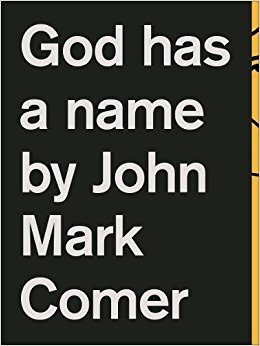 God Has a Name John Mark Comer (Zondervan) $16.99 I hope you recall how we’ve promoted Comer’s Garden City which is one of the coolest, most interesting, clarifying, and inspiring books we’ve seen in recent years. It has been a big seller at the Jubilee conference, for instance, and seems to resonate well with its intended audience (mostly younger, upbeat readers who want a big picture of the meaning of faith and service in the world.) This brand new one is paperback, but has some very hip design features, too (see that little orange slip on the inside edge of the cover?) Kudos to Zondervan for showing how books can look and feel just a little bit different these days with color and graphics and page weight…
 This book carries oodles of endorsing blurbs by all sorts of great thinkers and writers, pastors and worship leaders.
 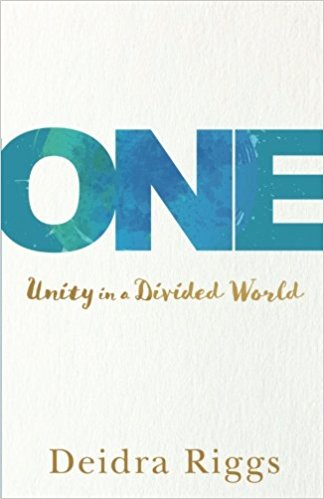 One: Unity in a Divided World Deidra Riggs (Baker Books) $14.99 I love this author – Deidra is a fine writer, a wise woman, an involved editor in a variety of important social media venues. She has worked at The High Calling blog, been a contributor to Dayspring’s (in)courage online community, and been a speaker for TEDx. She has been at the big Jubilee conference in Pittsburgh and has written a marvelous previous book called Every Little Thing: Making a Difference Right Where You Are which is a fabulous read that helps you, literally, do just what it promises. Although I suppose that one is mostly written for women, I really enjoyed it and found it wise and interesting and inspiring. Want to learn to live out your faith in little ways, day by day, taking up your mission in the world? She’s an ally and friend and understands your struggles.
 One is more than a book on civility, although it moves in that direction, helping us learn to be more gracious in our disagreements in our public life. It is more than a book about theological unity within various denominations and faith traditions, although it has plenty of insight about our essential unity in Christ and how we should seek ways to make that clearer. It is more than a book on racial reconciliation although, as a black woman, she has much to say about this topic. That it carries endorsements on the back from the vital Jo Saxton and the important John Perkins speaks volumes.
 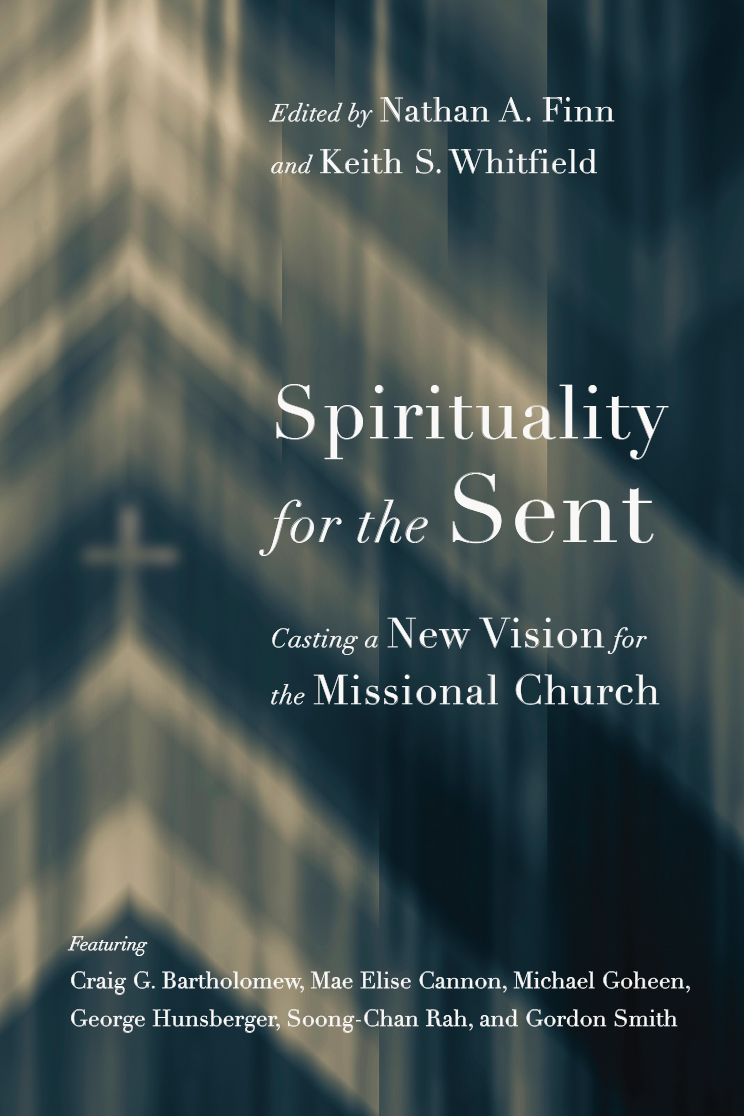 Spirituality for the Sent: Casting a New Vision for the Missional Church edited by Nathan A. Finn & Keith S. Whitfield (IVP Academic) $30.00 We wanted to include this amazing new book on this list even though it is a bit demanding and on a premier academic press. Still, it isn’t that hard, and I’m currently deep in reflection about it, reading it carefully, chapter by chapter. It is excellent.
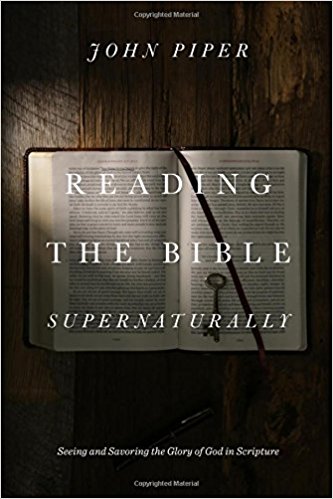 Reading the Bible Supernaturally: Seeing and Savoring the Glory of God in Scripture John Piper (Crossway) $32.99 Pastor Piper has retired from his position at Bethlehem Baptist but his writing career has perhaps reached a new zenith. He has over the years given us major works such as his hallmark Desiring God, Future Grace, and The Pleasures of God; he has written smaller volumes of deeply moving, passionate preaching in books like Seeking and Savoring Christ. He has done scholarly work on Jesus’s many demands (not enough have read his
 this kind of jolt, reminding us to pray for God’s blessing as we read, to grapple with the very holiness of the text, to dig and dig and, as one of my hero’s, Calvin Seerveld, put it, “take hold of God and pull.” (And to live with, as Piper himself says “paradoxes, pleasures, and the transformed life.” Reading this all will be a major project, but that’s okay — one doesn’t have to read it all at once — as Piper reminds us, “The Bible beckons us to look for a long time.” And, yes, good Baptist that he is, he has a few proof-texts.
 continue to recommend books from Rowan Williams’
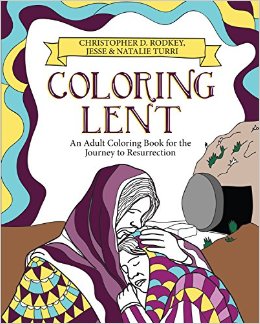
  The Sign and the Sacrifice: The Meaning of the Cross and Resurrection (WJK; $15.00) to one by our UCC pastor friend Chris Rodkey, his lectionary-based Coloring Lent: An Adult Coloring Book for the Journey to Resurrection (Chalice Press; $12.99) an adult coloring book that includes some thoughtful and provocative meditations and great art.
 Into Your Hand: Confronting Good Friday by Walter Brueggemann (Cascade; $11.00) which were a set of sermons Walt preached at St. Timothy’s Episcopal Church in Cincinnati one long Good Friday afternoon. We suggest classic books about the atonement, justification, Christ’s suffering, and, of course, the Resurrection. I know many of us are in the thick of this hard stuff.
 Mother Tongue: How Your Heritage Shapes Your Story Leonard Sweet (NavPress) $15.99 This remarkable book deserves a bigger review than I can give it here, but I can tell you this much: if you have liked any of Len Sweet’s many books or are all curious about his colorful approach to faith and discipleship and congregational renewal, this book is one you simply have to read. He has described it as his most personal and he seems to be feeling a bit vulnerable about it all.
 new metaphors for doing church. Aqua Church remains a must-read in my view, and hope you’ll order it from us if you haven’t read it yet. He has a clear-headed but really interesting book on using digital culture for renewal, perfectly called called Viral. Who tells Protestants that we should stop with our individualistic, modernist slogans like “Here I Stand” and replace them with “There We Go”? Who writes books about clever, contemporary preaching and authors books like his recent Bad Habits of Jesus? What kind of edgy, outlier is he?
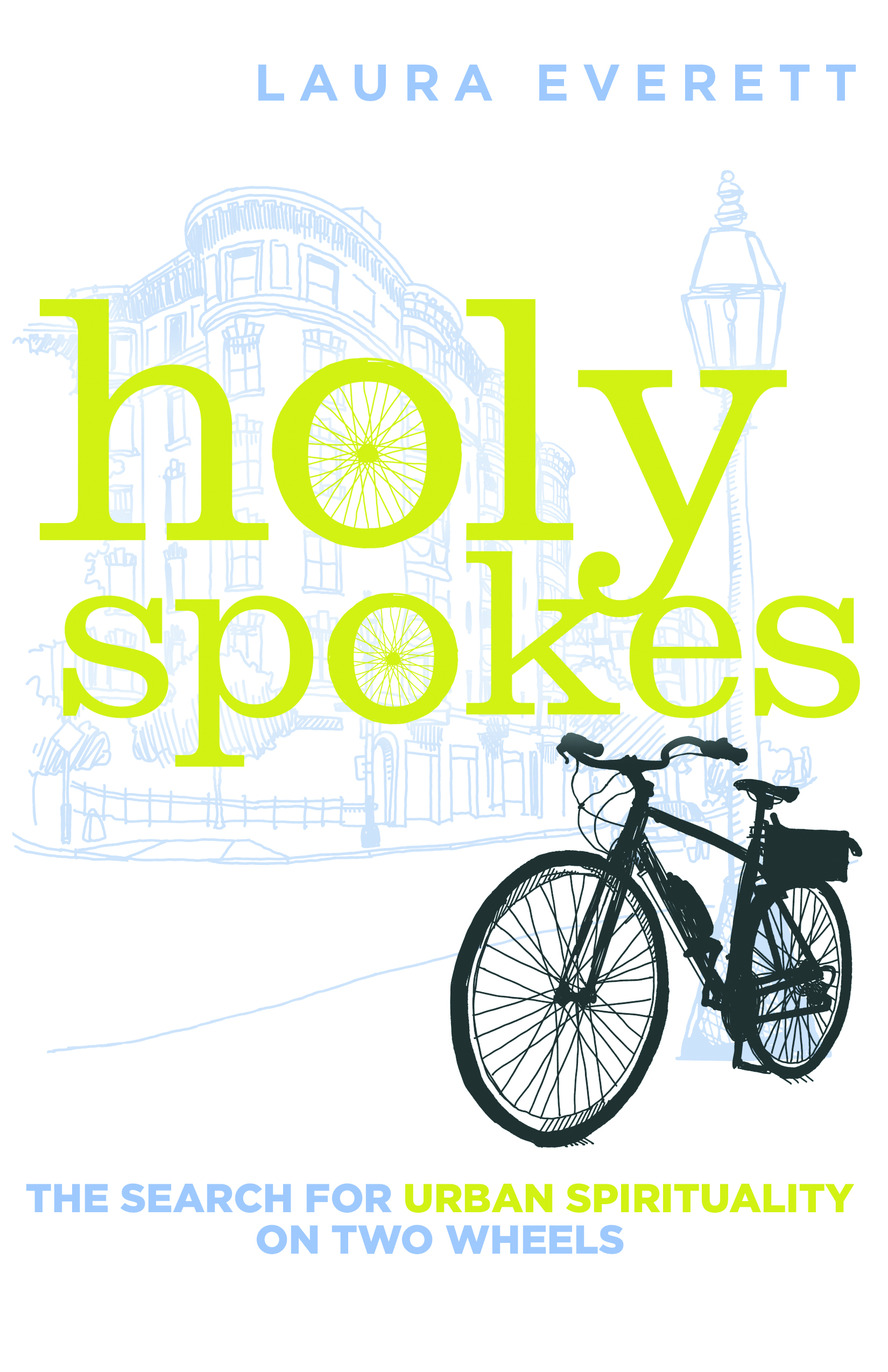 Holy Spokes: The Search for Urban Spirituality on Two Wheels Laura Everett (Eerdmans) $22.99 I don’t even bike and I was eager to see this; the book-lovin’ folks at Eerdmans in bike-friendly Grand Rapids had assured us this was going to be a huge book this spring, that it would be very interesting, a lot of fun, and very well written.
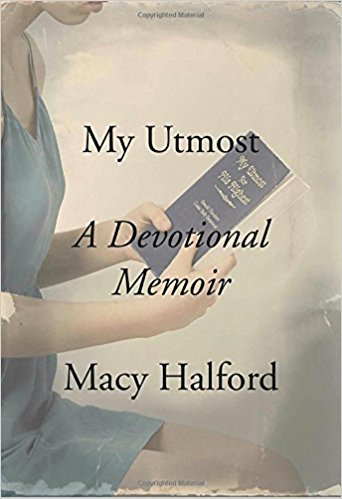 My Utmost: A Devotional Memoir Macy Halford (Knopf) $26.95 This remarkable book has brought me much pleasure, has caused me to ponder–about my life, faith, Christian growth, and the curiosities of Oswald Chambers (author of My Utmost for His Highest, a staple here) who was a much more complicated and curious person than I ever, ever knew. Ms. Halford wonderfully tells the story of her own fascination with Chambers and his famous devotional. This would be good even if it were not so well written, but it just glows at times, making it a truly luminous, artful and sophisticated read. But more, there’s this: Halford’s memoir tells of her growing up in a fundamentalist Texas family, heading off to Barnard College, and landing a prestigious writing job in Manhattan at The New Yorker. Her taking inspiration from this old evangelical chestnut in the city that never sleeps, working with folks who (we can only imagine) never heard of any daily devotional, is quite a plot for a story, no?
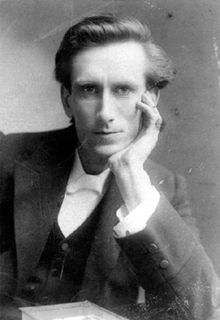 legacy lives on as one of the best-selling authors in all of history. That such a fascinating, artful, intellectually rigorous, missionary zealot is so popular among ordinary and often culturally conservative American evangelicals – some who would blanch if they knew of the artists he admired, the philosophy he read, the books he loved – is a wonderment.
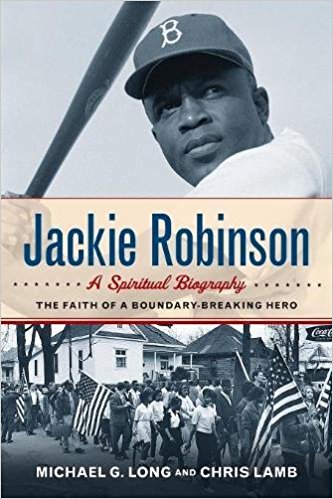 Jackie Robinson: A Spiritual Biography –The Faith of a Boundary-Breaking Hero Michael Long & Chris Lamb (WJK) $ I don’t have to say much about this; we all know who Jackie Robinson is, and we may also know that there haven’t been quite enough voices really telling his remarkable story that well. This is the best book, I have reason to believe, that has yet been done about the great black player who also was an outspoken critic of racial segregation and early advocate for civil rights. He was a hero to many and he paid up, using his fame as a way to speak wisely about this hard, hard, stuff.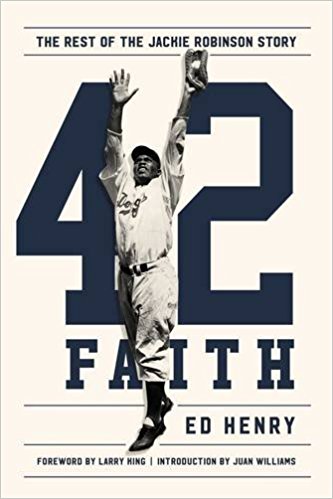
 Ourselves To Death or The Shallows, this is one of those great books that meanders through a lot of great truth. There are chapters like “Shaping Space” and “The Deep End of the (Car) Pool” and “The Good New About Boredom.” There is a chapter on embodiment (okay, it’s about sex) and a lovely chapter called “Why Singing Matters” and a powerful one called “In Sickness and Health.”
 nother helpful bit of The Tech-Wise Family, besides its wise rumination on walking through ordinary days with a deeper sense of family living in a particular place with particular habits and postures, there is some brand new data presented with some fresh insights from the Barna Group. Sort of like their wonderful little Frames books, these considerable essays surround info-graphics and comment a bit on some of the latest data about technology, our habits, and our deepest longings as found by this useful research project.
 Borgmann. Borgmann’s work (somewhat influenced, perhaps, by his friendship with Presbyterian Eugene Peterson) has become very important to many of us, from his engagement with post-modernity, his worries about the way technology has shaped the quintessential American character, and how, to navigate this well, we need to discover attentive focal practices, as he calls them. (See the wonderful book about all that by called Living Into Focus: Choosing What Matters in an Age of Distractions by Art Boers. See also Professor Borgmann’s most overtly Christian reflection on our technological age called Power Failure: Christianity in the Culture of Technology.)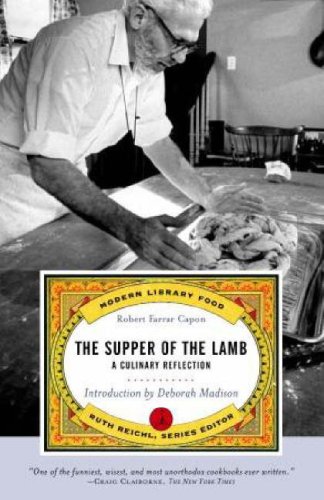
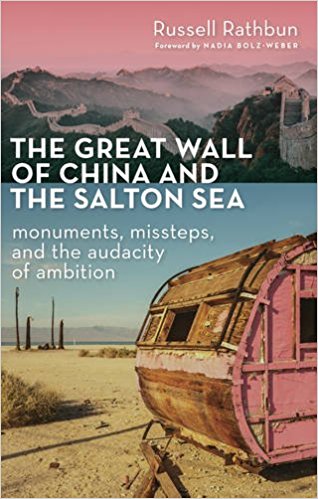 The Great Wall of China and the Salton Sea: Monuments, Missteps, and the Audacity of Ambition
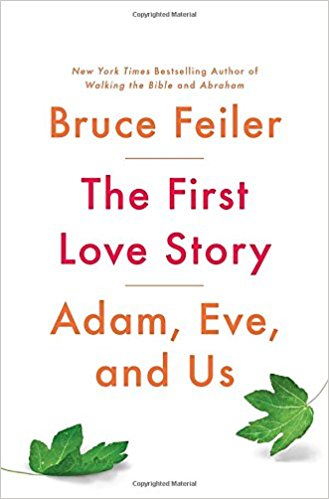 The Very First Love Story: Adam, Even, and Us Bruce Feiler (Penguin Press) $28.00 I am sure I don’t have to tell you who Feiler is or what a fun writer he is. He edits the “This Life” column for The New York Times and became famous for doing embedded sorts of creative nonfiction, such as the one where he joins the circus or the one about his journeys to the far East called Learning to Bow. His Council of Dads was a heart-warming, tear-jerking powerhouse – he was diagnosed with a terminal cancer and gathered a group of dads to promise to help raise his daughter after he was gone. His most famous, certainly among church folk, was Walking the Bible where he searched for his own long-lost Jewish faith by, literally, trekking around the Holy Land. The similar interfaith hike to hang out with Arabs, Jews, and ancient Christians in the Middle East called Abraham was remarkable, too. We highly recommend them all as just wonderful books to have and enjoy and from which to learn much.
 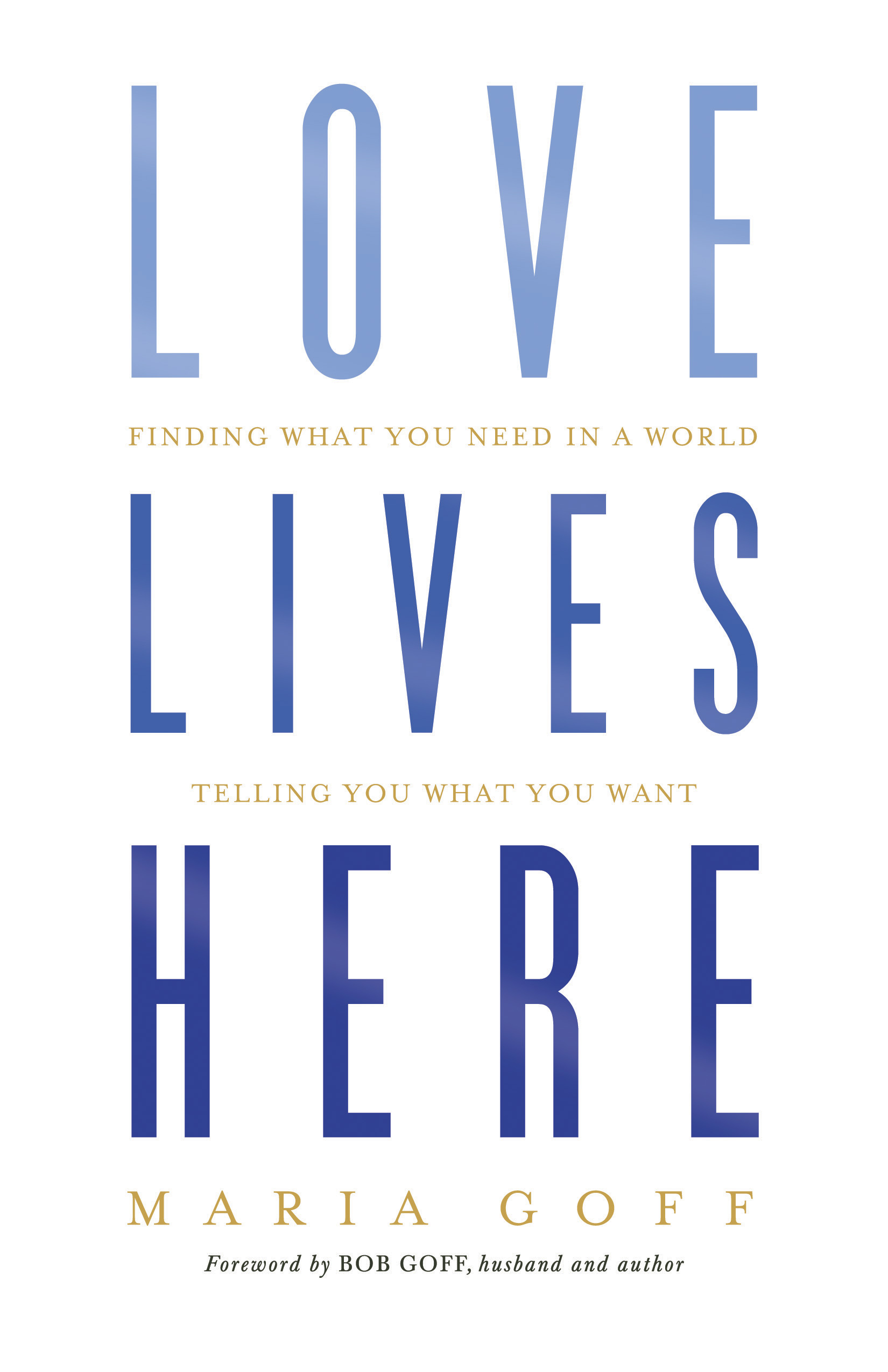 Love Lives Here: Finding What You Need in a World Telling You What You Want Maria Goff (Thomas Nelson) $17.99 I hate to pitch a book by a woman primarily in light of what her husband has done, but Bob Goff and Sweet Maria are such a couple, partners-in-crime, a pair — dare I say, a pair of wild cards? Bob Goff is one of the most popular and well-loved speakers traveling around conferences and events, hosting folks at his own gigs (sometimes he and Maria bring crews of folks to their own getaway lodge along the coast in British Columbia, just because they want folks to meet other folks, genuine, relational, loving service, yes, but also a bit of strategic planning, what is dully called networking. The Goffs turn hospitality into a gracious gift, yes, but sometimes as Kingdom asset. So and so should know so and so as they really ought to partner in this project or that trip or this ministry. Without it seeming forced, these capers they tell us about (and other people tell about in their own books, famously Donald Miller in A Million Years in a Thousand Days) bring good stuff into the world, and always with a belly laugh. If you know Bob, you know he sincerely says “How cool is that?” probably every single day. His book, loaded with these stories, is simply called Love Does.
  does. But Bob doesn’t do this cool stuff alone, and he is always clear about that. He tells of his wife’s role in his life sometimes, but it is, after all, her story, and we are all so, so glad she has allowed us into her journey in this new book.
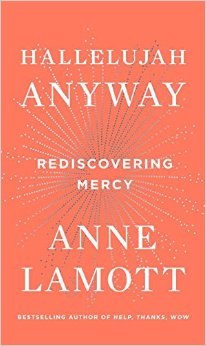 Hallelujah Anyway: Rediscovering Mercy Anne Lamott (Random House) $20.00 I wrote briefly about this the other day although I myself have shown great restraint in not reading this yet. It’s sitting here calling out to me, and after Easter I’ll so enjoy it, I’m sure. I hear she’s doing a speaking tour to promote the book and if you intend to hear her, you could get the book now, and not wait in line at the author gig. Anyway, if you’re an Annie fan, you’ll love this further collection of well written, casual, remarkably-told stories and essays. She is not Marilyn Robinson in her writing style, but she is full of important substance, honest self-revelation, interesting glimpses of memoir and creative writing. She’s blunt and funny and at times deeply moving. This is going to be one of the bigger books of the Spring, and we’re happy to alert you to it, now. As you can get from the subtitle, the theme of the book is mercy.
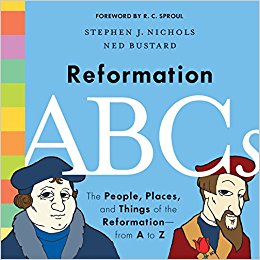 Reformation ABCs: The People, Places, and Things of the Reformation — from A to Z Stephen Nichols, illustrated by Ned Bustard (Crossway) $16.99 We cannot tell you how thrilled we are to tell you about this, although a fuller description will wait for some future list about the 500th anniversary of the start of the Protestant Reformation. Steve Nichols is one of our best popularizers of great insights from church history (seen especially in a good series of biographies he’s done, showing great insights from people in church history.) His book appropriating Bonhoeffer for daily Christian living is remarkably helpful. So I like Steve a lo. He serves currently as the President of Reformation Bible College and is the chief academic officer of Ligonier Ministries. Ned Bustard should be a name you recognize as he comes up from time to time here at BookNotes since he is the man guy managing Square Halo Books, known not only for doing my own book, Serious Dreams, but the widely acclaimed recent volume Deeper Magic: The Theology Behind the Writings of C.S. Lewis by Donald T. Williams (Square Halo; $16.99.) Ned’s last Square Halo Book release was co-edited with Greg Thornbury, Bigger on the Inside which pop culture aficionados will immediately recognize as a study of the long-running British TV show, Doctor Who. The subtitle is simply “Christianity and Doctor Who.” That’s Ned’s work on the cover of that one, too.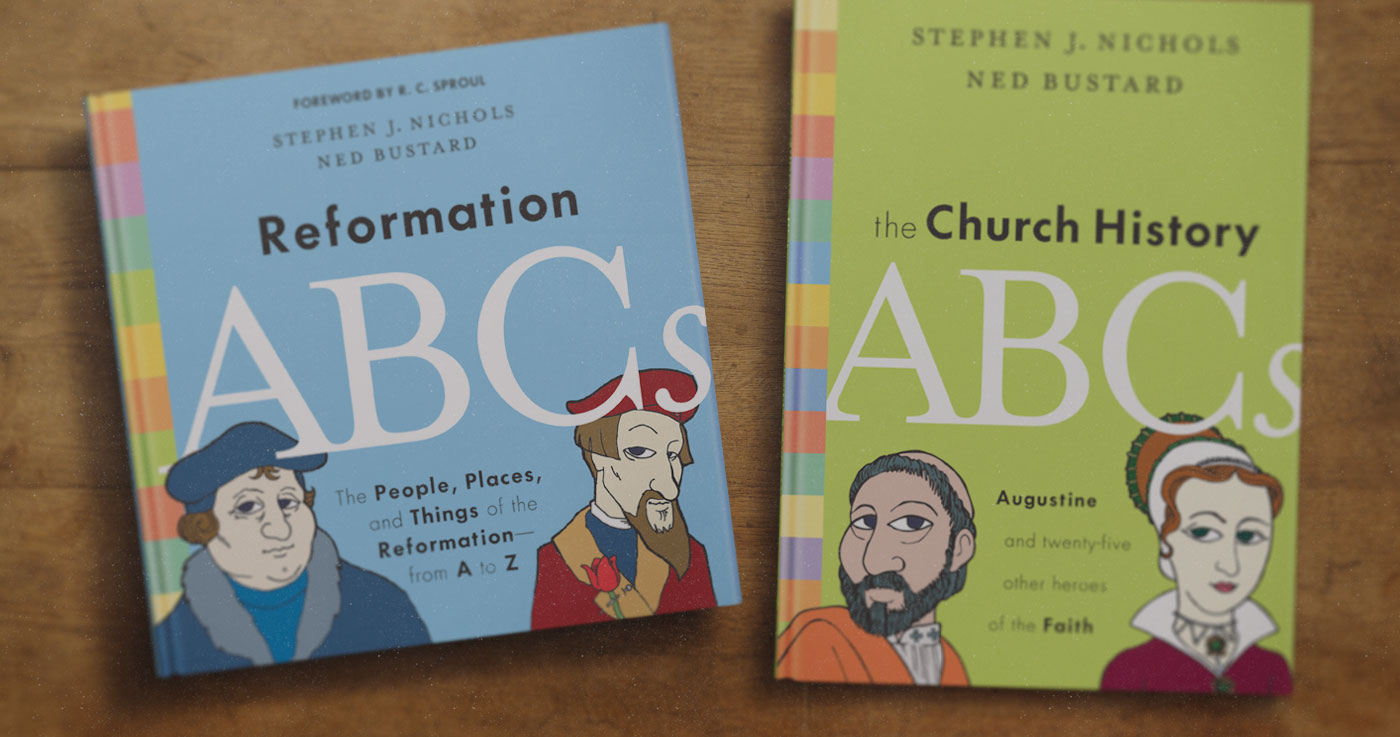
 But it is the artwork that makes this interesting book so incredibly wonderful. I anticipate it will get some award at the end of the year by Christian Publishing associations for being such a fabulously designed book. Bustard’s playful, colorful, and very well informed illustrations (sometimes cleverly overlaid with photographs) have so much going on in them that not only invites but demands repeated readings.
 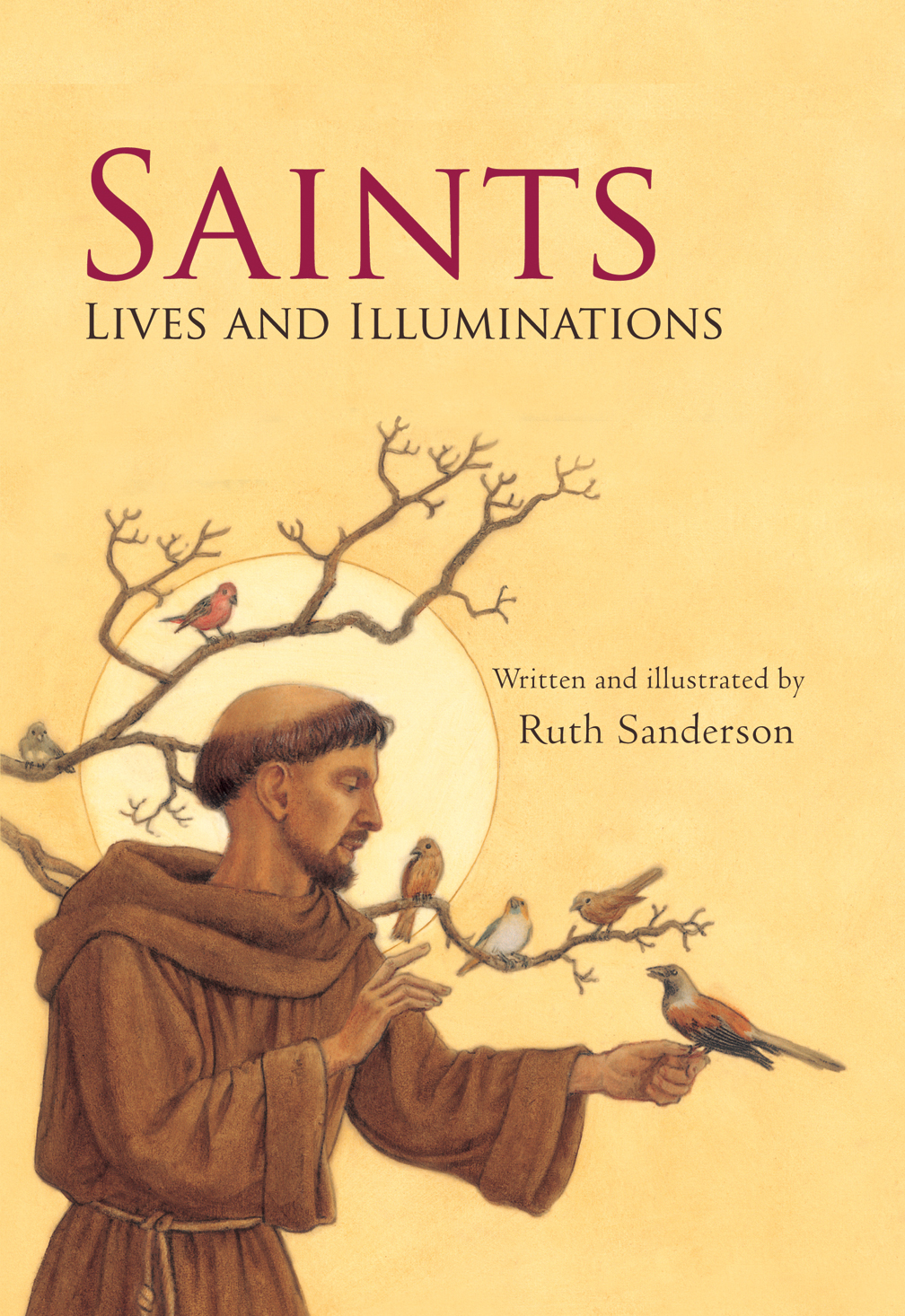 Saints: Lives and Illuminations Ruth Sanderson (Eerdmans Books for Young Readers) $16.00 This was once a large sized picture book and I really like how Eerdmans re-designed it as a 5 x 8 trim sized hardback. It’s really nice, and it could be appreciated by a sharp 7 or 8 year old, I think it is best for older elementary children, or any older age if they like nicely illustrated compendiums like this. This beautiful book tells the stories of over 70 men and women saints from various centuries. There’s a lovely watercolor picture (lavishly illuminated with a border giving it a look something like an icon or piece of medieval liturgical art) while the facing page tells the story of who that person was and what he or she was known to have done. It includes stories about first century leaders like Saint Stephen or Saint Christopher through the saints from early centuries such as Benedict and Scholastica and Paula and Jerome, St. Theresa of
 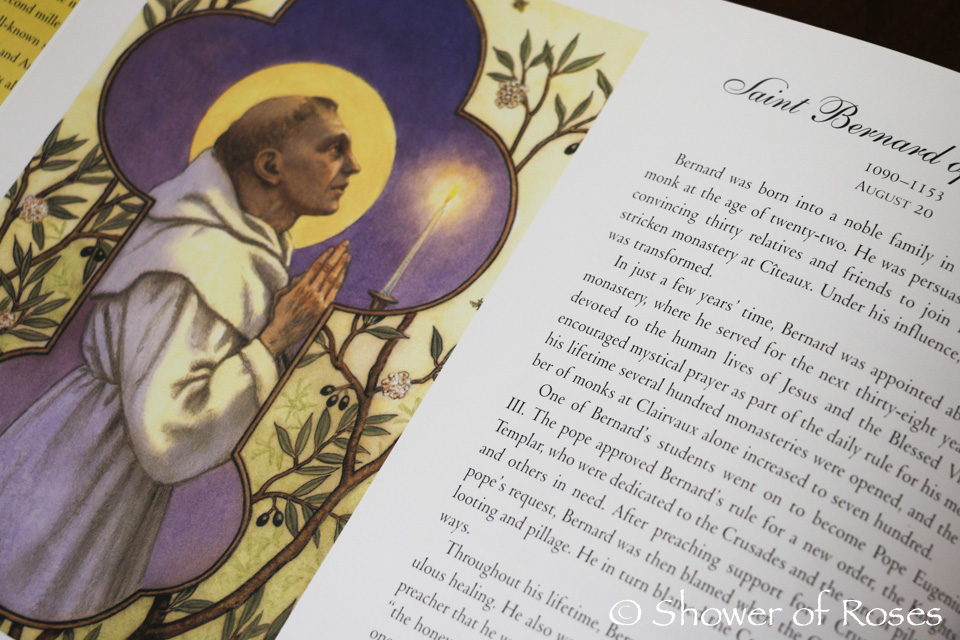 Lisieux, St. John of the Cross, up to famous ones like Brendan, Aquinas, Joan of Arc, Francis, Clare, (and some lesser known canonized ones like Rita and Maud.) The most recent ones included are the compassionate Maximilian Kolbe (who died under Hitler), the Pennsylvania saint Katherine Drexel, the mystical healer who cared for sinners and the suffering, Padre Pio and, of course, the Blessed Mother Theresa of Calcutta.)
 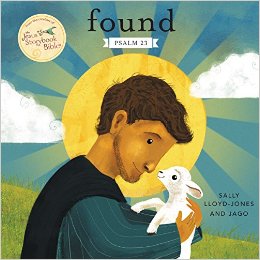 Found: Psalm 23 Sally Lloyd Jones, illustrated by Jago (Zonderkidz) $9.99 How glad we were to hear that the creative, stylized, modern art done by Jago would once again be teamed up with the wise and beautiful Bible storytelling of Sally Lloyd-Jones. Almost universally appreciated, and considered by many to be the best young children’s Bible, The Jesus Storybook Bible: Every Chapter Whispers His Name remains a staple of our children’s Bible department. The sequel, Thoughts to Make Your Heart Sing, while less intentionally showing the unfolding Biblical story with that Christ-centered, historical-redemptive approach of Jesus Storybook Bible it, too, is just brilliant. So both are great. This new one is a padded hardcover, almost like a bigger-than-usual board book, that nicely tells the famous 23rd Psalm. The lyrical text is drawn from the Jesus Story Book Bible but the engaging artwork and book design are completely new.
 The Story of God’s Love for You Sally Lloyd-Jones (ZonderKidz) $14.99 Don’t you still like to give some special Easter gift to your older children or grandchildren? Do kids ever outgrow the joy of this little holiday tradition? I wanted to tell you again about this hand-sized hardback as it would fit perfectly in an Easter basket, gift-wrapped nicely or not. Here is what I wrote about this in our BookNotes newsletter blog when it first came out December of 2015:
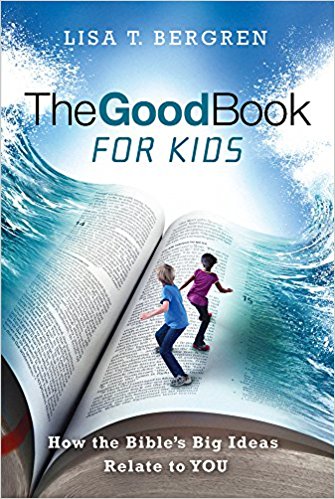 The Good Book for Kids: How the Bible’s Big Ideas Relate to You Lisa Bergren (Cook) $12.99 You will hear more, I hope, about this set of related products built around the abridged and adapted Bible called The Good Book that attempts to offer in a handful of chapters the key points of the unfolding Biblical drama. The adult version (which we also carry, of course) is hardback, has introductory comments, discussion questions, some key verses to study and more, although it’s main feature is that it really captures the key moments of the entire Bible, showing how they all build together into a coherent, easy-to-understand narrative with key, thematic, worldview-shaping, life-transforming concepts. This youth version (designed, they say, for ages 7 – 13) has five readings categorized in 8 units, so it can be used, daily, for 8 weeks, starting with Older Testament portions with units entitled “In the Beginning” and “God is Good When Life Gets Messy”, on to “God Is Big” and concluding “Tough Love, Troubled Times.” Four more weeks have daily Bible readings introducing the life of Jesus and the New Testament.
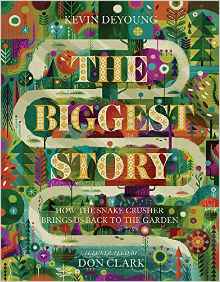 The Biggest Story: How the Snake Crusher Brings Us Back to the Garden Kevin DeYoung, illustrated by Don Clark (Crossway) $17.99 Oh my, this is the most creatively designed children’s religious book in recent history, and I so appreciate DeYoung’s overview of the Bible with this historical-redemptive vision — that Christ’s defeat of death at Easter is the outworking of the promises of Genesis 3. What a story, what a colorful book. Here is what I said in BookNotes when I reviewed it as a Christmas gift suggestion last year: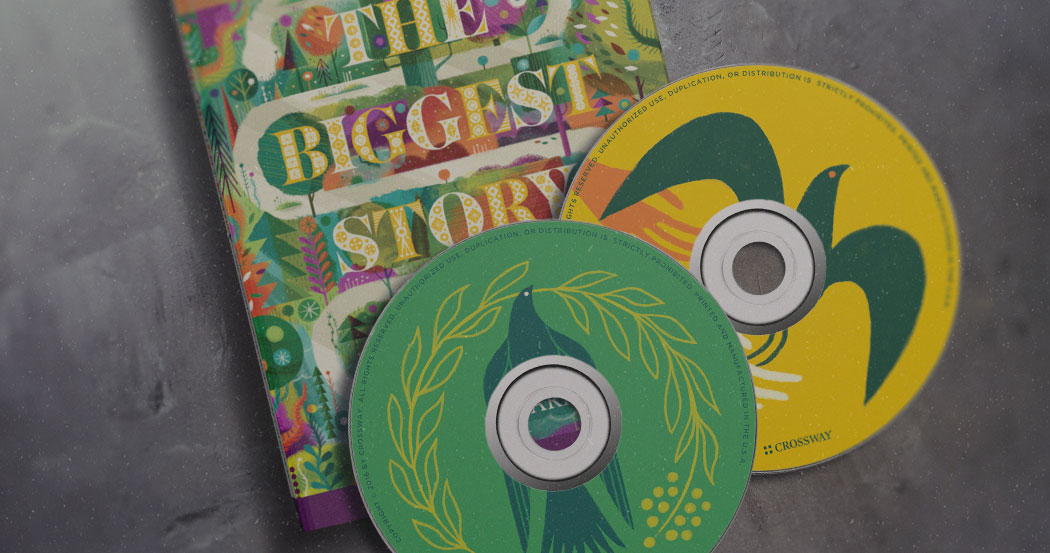
 The Garden, The Curtain, and the Cross: The True Story of Why Jesus Died and Rose Again Carl Laferton, illustrated by Catalina Echeverri (The Good Book Company) $14.99 Except maybe for the extraordinary hip art of the “snake-crusher” book by DeYoung and Don Clark, this is a fabulously cool, very colorful, very contemporary book that will delight young, hip parents as well as their design savvy kiddos. More importantly, it offers a solid, visionary, wholistic view of the unfolding drama of the Bible’s story of redemption — yep, in a few short pages it moves from the Garden of Eden to the rending of the curtain the temple on Good Friday, up to the glorious story of the resurrection. I’m struck by the gospel-centered focus of this whole series of very cool hardback children’s books from this company in the UK.
 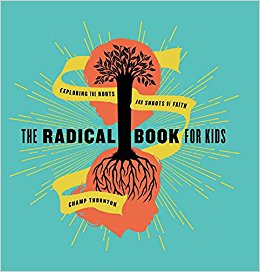 The Radical Book: Exploring the Roots and Shoots of Faith Champ Thornton (New Growth Press) $24.99 We are on a roll, here, presenting non-traditional looking religious books, designed with hip, urbane parents in mind, that offer a wild visual appeal with a creative but utterly faithful approach to gospel-centered faith and whole-life discipleship for kids. This book is simply remarkable, big, heavy, glorious, very entertaining and useful.
 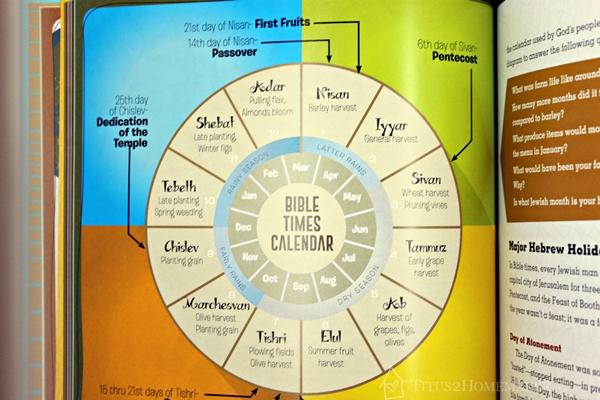 drawings and fun, random fonts, presenting fun, informative stuff. It’s a visual spectacle but not so much that it becomes a distraction.
 For the Beauty of the Earth Folliot S. Pierpoint, illustrated by Lucy Fleming (Spark House Family) $16.99 I hope you know the hymn, written in 1864, For the Beauty of the Earth (and, while I’m out it, the top-of-the-line, best book on eco-theology, the very wonderful For the Beauty of the Earth: A Christian Vision for Creation Care by Steven Bouma-Prediger; Baker Academic; $26.00.) Both the brilliant creation care text and the beautiful hymn have been important to me, formative, even. It was one of my mother’s favorites, too.
 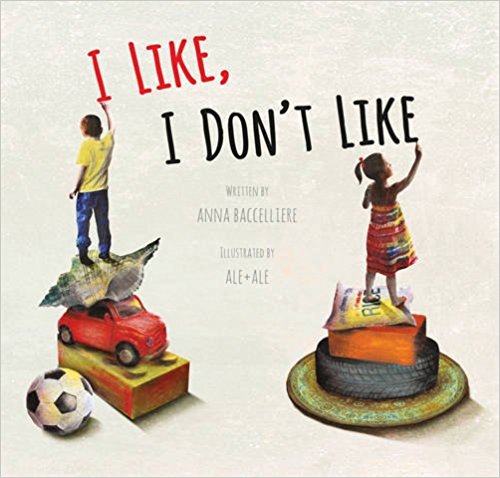 I Like, I Don’t Like Anna Baccelliere, illustrated by Ale + Ale (Eerdmans Books for Young Readers) $16.00 Perhaps offering this in the Easter basket isn’t quite the right time and place but perhaps for some families it would be very useful to have around during Easter celebrations. I hope I can tell you more about this book (and the series of which it is a part) another time as we want to champion it. For now, just know it is beautiful, moving, although a bit disturbing. The counter-facing pages are a study in contrast between rich and less privileged children. For instance, one spread shows a fairly normal child form the middle class or privileged West that likes “cars” (showing the child playing with toy cars) but that is contrasted with another child shown working washing car windows, saying “I don’t like cars.” One spread shows a child eating a nice bowl of rice saying “I like rice” but another child, perhaps in Viet Nam, saying “I don’t like rice” as she is working in the paddies. The one about soccer balls, which shows some kids playing happily and another child working to manufacture the ball, is stunning.
 Preparing for Easter: Fifty Devotional Readings from C.S. Lewis C.S. Lewis (HarperOne) $17.99 We’ve blogged before about good Lent books, and this obviously, at first glance, is designed to be read during this time before Easter. However — come on, people — it’s C.S. Lewis, by jove. And he didn’t write this as a Lenten resource, but it was compiled from his various readings. I’ve looked at this carefully, and I’m more than confident to say that this totally would work any time of any season. The marketing is genius to select readings that point us to the cross and resurrection, but it is Lewisy enough to be a great Easter gift.
 Living the Resurrection: The Risen Christ in Everyday Life Eugene Peterson (NavPress) $11.99 paperback/$14.99 hardback I recommend this book every year about this time as I so appreciate it. There are three great chapters on post-Easter appearances of Jesus described in the gospels, “Resurrection Wonder”, “Resurrection Friends”, and “Resurrection Meals.” Each is linked to Christian practices, things we should do more intentionally and attentively as we live out the power of resurrection in our ordinary lives. This is a great, great book, and would make a fabulous little gift for anyone in the next few weeks.
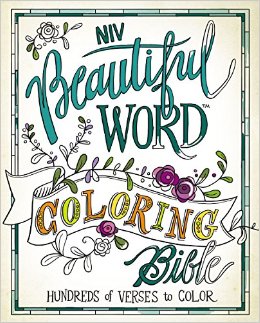 The NIV Beautiful Word Coloring Bible (Zondervan) $39.99 Okay, there are obviously more scholarly and useful study editions available, but this is might make a perfect gift for a special person, so figured we should mention it. There are hundreds of verses illustrated in detailed, ready-to-color line art and, as they say “employs the proven stress-relieving benefits of coloring to help quiet your soul so you can reflect on the precious truths of Scripture.” (The thicker white paper with lightly ruled lines in the extra-wide margins provides ample space for journaling or extra artistic expressions, too.) There are hundreds of verses illustrated so even in the act of coloring them you are engaging thoughtfully and intentionally with the Word.
 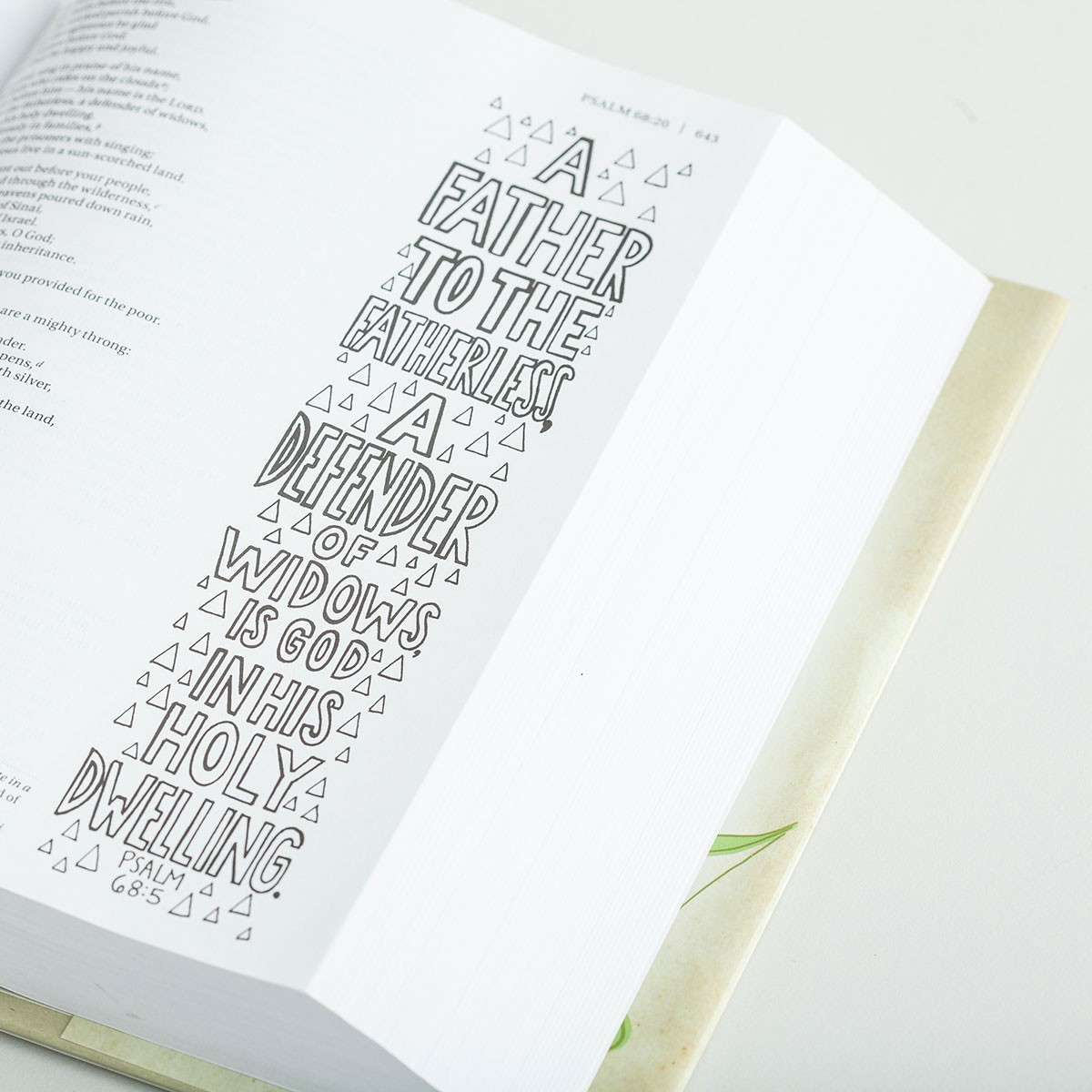 There’s a nice ribbon marker and, as with other well made Zondervan Bibles, it has a good binding that allows it to lay flat in your hand or desk. Nice.
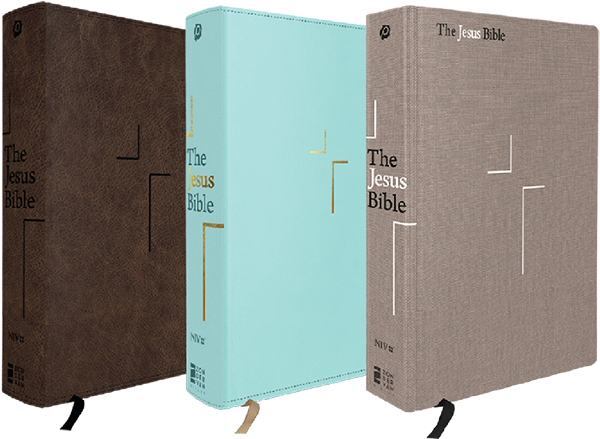 The NIV Jesus Bible: Sixty Six Books. One Story. All About One Name (Passion Publishing /Zondervan) $44.99 in sturdy linen hardback; $69.99 in Brown Leathersoft or a Robin’s Egg pale blue Leathersoft. All have a 8.7 font size with a nice ribbon marker.

 ESV
ESV 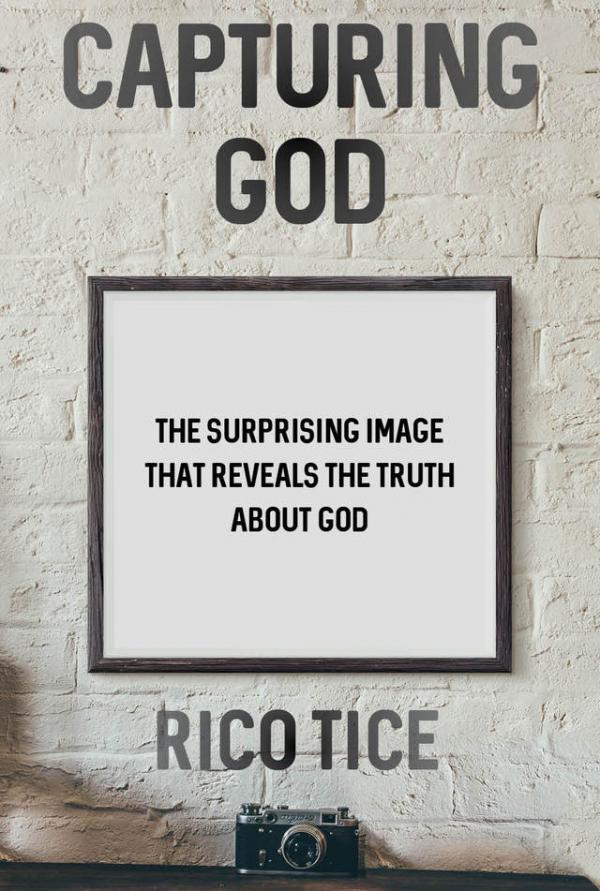 Capturing God: The Surprising Image That Reveals the Truth About God Rico Tice (The Good Books Company) $4.99 The premise of this short little paperback is simple: if somebody said that actually had a picture of God, wouldn’t you want to see it? Who wouldn’t? Tice goes from there suggesting that the story of Jesus on the cross reveals the best picture of God we’ve got: why he loved us so much, why he sacrificed for us, what the cross reveals about the extraordinary love of God. It simply walks readers through the passion and death and — yes — the resurrection of Jesus. It ends with Christ offering the amazing offer of grace and peace. Becky Pippert asks, “Ever read a book so gripping you can’t put it down?” Shen then insists — “This is one of them!”
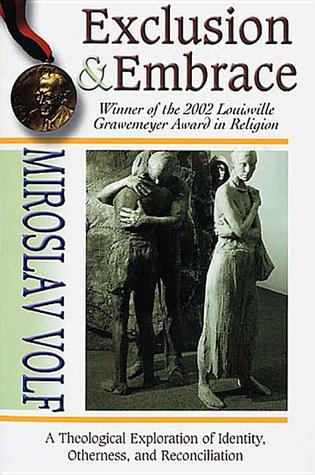
 You Lost Me: Why Young Christians Are Leaving Church . . . and Rethinking Faith by David Kinnaman (Baker; $15.99) and was reminded again of how important it is, how I wish a handful of folks in every church would read it and discuss its proposals for retaining young adults in the life of the church. Or gather to watch the DVD which is very good. His previous book, co-written with Gabe Lyon, UnChristian: What a New Generation Really Thinks about Christianity… and Why It Matters (Baker; $15.99) is well worth reading as it was one of the groundbreaking bits of research (released just five years ago) of what young adults thought about Christianity. And, yes, some of the perception is that Christianity teaches stuff that is bigoted, unsavory, unkind, untrue.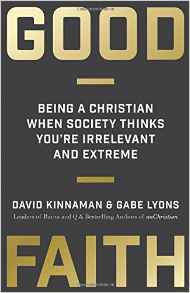
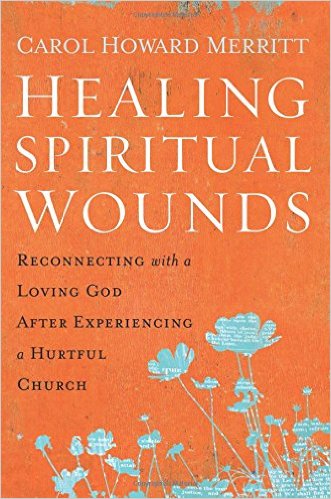
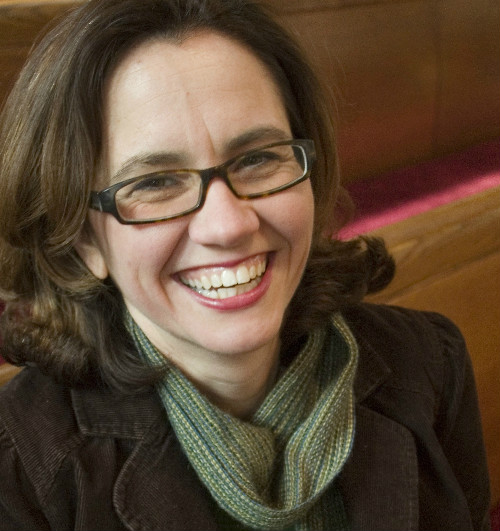 Healing Spiritual Wounds is full of stories, well told and often painful testimonials of folks who have gone through hurtful stuff. Much of this is grounded in Merritt’s own narrative, making this nearly a spiritual memoir. She tells of her own journey in a pretty strict church, in a complicated family, with a violent father. She reveals something else significant about her father later in the book – I don’t want to spoil the literary power of his one small reveal – but she is both empathetic and remains resolute to not justify domestic violence, let alone religious-motivated violence. She writes well about parts of her life and it is at times riveting, sometimes anguishing, sometimes entertaining.
 gender roles. Granted, she used her blog at the Christian Century to rail against the award being given by Princeton Theological Seminary to Timothy Keller who, as she saw it, was hostile to the basic theological task of PTS which includes preparing women and members of the LGTBQ+ community for Christian ministry and ordination. (I wrote about that in a previous BookNotes newsletter, trying to respect both those who disagree with Keller’s view, as I do, and to yet affirm his mostly excellent contributions for which the Kuyper Award was to have been given.) But my point here is that Healing Spiritual Wounds is not only, or not even mostly, about this kind of faith which she names as toxic that excludes gays and women from leadership. This is part of her agenda, of course, but the book covers much, much, more.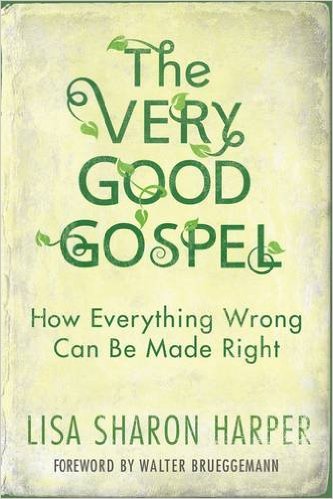
 out to get you, and we have to formulate our creeds and doctrines in ways that are consistent with the gospel itself.
 Runaway Radical: When Doing Good Goes Wrong Amy Hollingsworth and Jonathan Hollingsworth (Thomas Nelson) $15.99 I have reviewed this before and recommend it often. It is a riveting story of “a young man’s reckless journey to save the world” inspired, as he was, by passionate leaders, popular books, serious views of radical discipleship and a demanding God (even if what was demanded was social justice, simple living, and a global concern.) Much good is perverted by harsh leaders and legalistic readings, and this fascinating memoir — co-written in alternating chapters by a son and his mother — tells of distorted expectations, a missionary calling that goes awry, a faith almost lost, and a very, very corrupt, authoritarian church. Wow.
 Faith Unraveled: How a Girl Who Knew All The Answers Learned to Ask Questions Rachel Held Evans (Thomas Nelson) $15.99 Evans is somewhat of a poster-girl of young, formerly evangelical women who’s faith journey has been documented on blogs and in books and at conferences, and this, her first, is a great example of coping with styles of strict faith that shuts down questions, and insists on pat answers and social conformity. Evans was raised in the town famous for the Scopes “Monkey Trials” and this is her telling of her coming of age in that milieu, facing trials of her own, and realizing how her own faith had to adapt and evolve if it was to survive. So, yep, this is one good example of less than helpful understandings of evangelical faith and the reflections of a woman whose voice is needed in these kinds of conversations. Previously released as Evolving in Monkey Town.
 Undone: When Coming Apart Puts You Back Together Laura Sumner Truax (IVP) $15.00 I’ve often commended this moving story about a woman who felt like her life was falling apart, how Scripture and an encouraging community helped her embrace life with its varying joys and sorrows. She is the pastor of a church that Carol Merritt attended for a season that is described in her book and which was influential for her. Honest, raw, this is a story of owning one’s faith, no matter what.
 You Are Free: Be Who You Already Are Rebekah Lyons (Zondervan) $19.99 I think if I were convening a rount-table discussion around Carol’s book I’d want Rebekah Lyons there because so much of her new book is just a simple cry for women — and all of us, really — to feel accepted. God loves us, Christ redeems us, we don’t have to fret about what others think (or, what we think) about us. This is a book about freedom and she writes what one author called “an anthem for healing, freedom, and hope.” The ever poetic Ann Voskamp says “Hold these pages like a burning flame in the palm of your hands, like a bit of glowing sun that will grow you into freedom soaring on wind.” So, who doesn’t need a bit of that? I’d recommend Rebekah’s wise book for anyone wanting to grief past disappointments and “discover the courage to begin again — and use your newfound freedom to set others free.” We carry the DVD of this, too, by the way, if you want to gather some folks together and watch her teach this freedom song.
 Disappointment with God: Three Questions No One Asks Aloud Philip Yancey (Zondervan) $14.99 I sometimes am reluctant to recommend Yancey just because so many do; he is considered a smart, thoughtful, open-minded evangelical, and like, oh, say, Frederick Beuchner, is an author intelligent folks like. Well, there’s a reason for that: he is often brilliant, really interesting, an excellent writer, and he has a lot to say. I have revisited this over and over and really do recommend it. By the way, he tells of his own struggle to maintain commitment to the faith and to church in his great Soul Survivor: How Thirteen Unlikely Mentors Helped My Faith Survive the Church (Waterbrook) $14.99. His voice and approach — offering great thinkers and leaders with edgy integrity as inspiration for how to heal and why to endure — is a different approach than Merritt’s and would be a good contribution in our strategies to help others recovery from bad church experiences. And I suppose you know his classic What’s So Amazing About Grace. Get a few and give ’em out!
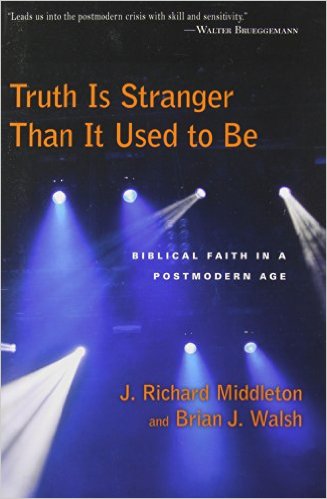 Truth Is Stranger Than It Used to Be: Biblical Faith in a Postmodern Age Brian Walsh & Richard Middleton (IVP Academic) $22.00 Let’s get this said at some point in our round-table conversation: the rise in disaffected folks from conventional religion is at least in some ways a consequence of post-modernity, not to mention the postmodern teachings about the marginalized, the dangers of power, the way those in charge tend to oppress others with their totalizing narratives that squeeze out all others. Not everyone needs to grapple with postmodern philosophers and this huge cultural shift but for those that do, I think this is still the best — and certainly the most Biblical — engagement with that stream of thought and cultural posture. Walsh & Middleton were deeply, deeply touched by the marginalized in their own settings and by listening well to postmodern scholars, the cries from the streets, artists like Bruce Cockburn, and, naturally, the women in their lives who were often less than accepted among male-dominated faith-based institutions, they came to grapple well with the ideas and orientations and opportunities of postmodernism. The heavy last half of the book shows how an opened up understanding of the drama of Scripture — perhaps a la Walter Brueggemann’s The Prophetic Imagination and Israel’s Praise with the potent sub-title “Doxology Against Idolatry and Ideology” — is, in fact, the way to engage our postmodern culture and those soured on conventional arrangements. Brian and his wife, Bible scholar Sylvia Keesmaat, continued this project in their nearly revolutionary Colossians Remixed: Subverting the Empire (IVP Academic; $24.00) which I also think would be very, very helpful for those working their way into more liberating and healthy understandings.
 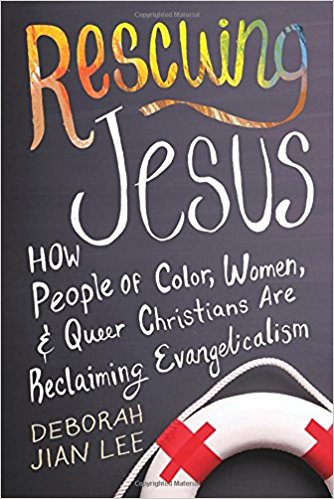 Rescuing Jesus: How People of Color, Women, & Queer Christians Are Reclaiming Evangelicalism Deborah Jian Lee (Beacon Press) $26.95 Yes, Deborah Lee should be at this conversation as she has listened well — for years, all over the country, as she was writing this book. She embraced evangelical faith as a youth and matured in faith in her college years. Slowly, though, she came to have that faith eroded by the injustices and inconsistencies she witnesses within the evangelical young adult campus ministry cultures at college and elsewhere. After leaving the faith, though, she couldn’t shake this sense that things are changing within evangelicalism as people on the margins — women, people of color and LGBTQ persons — are seen and sometimes heard. As I said when I awarded this one of the Best Books of 2016, I found it deeply moving, an extraordinary read and, agree or not with her evaluations, the stories of people in this book are stories that must be taken seriously. I am grateful for her work; here’s hoping she herself might find a refreshed sort of Christian experience. Perhaps she is the sort of person who might benefit from Carol’s book.
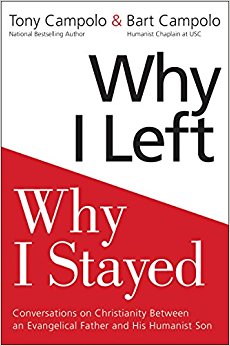 Why I Left, Why I Stayed: Conversations on Christianity Between an Evangelical Father and His Humanist Son Tony Campolo & Bart Campolo (HarperOne) $24.99 These two might add insight to our conversation, and certainly they bring a unique perspective. Campolo, as you know, is an evangelical with progressive leanings and in recent years his son, Bart, could no longer intellectually accept the tenants of the Christian faith. I’m not sure Bart was hurt by Christians, but he just found the core essentials of Christianity no longer tenable. He is now a humanist chaplain at a big college, offering some sort of pastoral, ethical guidance to those who are not aligned with a more conventional religion. This new book is a powerful back and forth, heartbreaking and raw, honest and thought-provoking. There is much to be learned here for those who have the ears to hear.
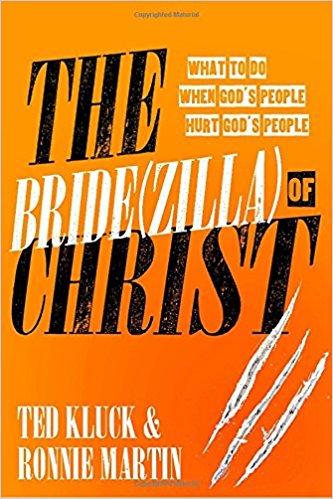 The Bride(zilla) of Christ Ted Kluck & Ronnie Martin (Multnomah) $15.99 This has a different tone — upbeat, clever, and quite theologically evangelical — but is nonetheless honest about the wounds inflicted by the church and steps we can take to move forward in those times when the church hurts. There is much mercy here, good stuff about hope and grace. Kluck teaches at Union University in Tennessee and has worked in sports journalism; Ronnie Martin has been a pastor in small town Pennsylvania and Ohio and previously was known in the Christian music scene, doing electronica music under the name Joy Electric.
  The Emotionally Healthy Church: A Strategy for Discipleship that Actually Changes Lives Peter Scazzero (Zondervan) $22.99 Yes, yes, most Christians do want to be transformed by Christ and we want to be eager disciples, not just casual church attendees. This book invites us, as so many do, to find the power and programming to actually help folks grow in their faith. But here’s the thing: we need healthy people to create healthy communities. This is a very important book, balanced, clear, helpful; it’s not terribly sophisticated or heavy. Fostering some emotional intelligence and becoming more of a safe place won’t prevent all hurtful ideas, but it is a good start, no? See also his Emotionally Healthy Leader, Emotionally Healthy Spirituality and Geri Scazzero’s Emotionally Healthy Woman. I think Peter and Geri Scazzero have something to teach us, a bit more than “common sense” and needed today.
 The Vulnerable Pastor: How Human Limitations Empower Our Ministry Mandy Smith (IVP) $16.00 I think that sometimes pastors are particularly hurtful — at least in some of the stories we hear — as they are necessarily authority figures and formative for their flock. Humility is important, but it seems that Smith — herself a successful pastor of a church in Cincinnati — is on to something here by insisting, firstly, that “pastors are human, too” and that sharing vulnerability, admitting limits and failures and weakness, opens up a generative space for real faith development to occur. We don’t need clergy with all the answers or authoritarian teachers who tell us what to believe. We need people of integrity to walk with us in our brokenness, modeling a Christ-like faith. This is a great book and would go a long way to heal the harsh view some have of Christian leaders.
  Unexpected Gifts: Discovering the Way of Community Christopher Heuertz (Howard) $14.99 I think any further discussion of Carol’s important book about hurtful faith would have to next explore the nature of Christian community, what it means that we are in this together, and how our betrayals and failures and doubts are part of the mix when one enters into deeper involvement in the lives of faith communities. I don’t think I know a better book that gets at how relationships within our churches and fellowships can be painful, but that staying together can create something beyond the pain. We can take risks being more intentionally commitment to community, receive the gifts that emerge and create something healing and good and beautiful.
 Space for Grace: Creating Inclusive Churches Giles Goddard (Canterbury) $20.99 Why not bring a British voice into this conversation, a Rector in South London who has struggled with this, thought it through, researched much about various models of being both pastoral and prophetic and offering a grace-filled view of the good news within mainline churches. How can we share leadership, treat everyone as equal before God, balance freedom and limits, drawing people from the margins to the center? (Or, as this UK book puts it, the centre.)
 The Welcoming Congregation: Roots and Fruits of Christian Hospitality Henry G. Brinton (WJK) $17.00 There are bunches of books that we stock about hospitality and some are very, very thoughtful, deep, rich. Others are quite practical and lovely. Some are for individuals, others are for congregations. This is one written by a Presbyterian pastor who looks at the “roots” of hospitality” — the Biblical basis, the locations where we must be attentive to be hospitable, how to think about worship and small groups and meals in hospitable ways. Then he looks at the “fruits” which might include reconciliation, outreach, and fresh perceptions, mostly about “the other.” I think if we are reading Carol’s book about the dangers of hostile forms of religion and ways to help others heal from bad experiences with church, this would be a major step towards reforming our churches. Endorsements by thoughtful scholars like Serene Jones and Amy Oden and a moving foreword by Will Willimon.
 Wearing God: Clothing, Laughter, Fire, and Other Overlooked Ways of Meeting God Lauren Winner (HarperOne) $15.99 You know that we esteem Lauren’s remarkable ability to craft good words into good sentences, and that we read anything she writes. We appreciate her honestly told stories of faith — part memoir, part confession, part teaching — and we’re glad this is out in paperback, offering her insights about various images and metaphors for God. This explains images she finds in the Bible and she not only colorfully describes how these odd-ball images effected her own inner life and faith practices, but how early church, medieval and other mystics down through the ages have used these generative metaphors for the Divine One. Anybody talking about hurtful images of God or bad spiritual teaching or pushy, single-minded churches should spend some time ruminating along with this writer, teacher, and interesting Episcopal priest.
  The Wisdom of Tenderness: What Happens When God’s Fierce Mercy Transforms Our Lives Brennan Manning (HarperSanFranciso) $13.95 Oh yes, if he were still with us, this ragamuffin gospel-lover would add much about views of God, about grace and intimacy and trust and risk and faith and hope. This book — despite the lovely, evocative “tenderness” in the title, is a serious call to real religion. As the Publishers Weekly starred review put it “Maning writes for both the individual and the institution, and both will benefit from listening to his words. Especially for those who long to hear more about divine mercy from the pulpit and see it reflected in their leaders and institutions.”
 The Curious Christian: How Discovering Wonder Enriches Every Part of Life Barnabas Piper (Broadman & Holman) $16.99 This author was raised in the home of exceptionally intense theologian/pastor/writer, the controversial John Piper. He tells of some of that in The Pastor’s Kid and has offered wise counsel about doubt in his Help My Unbelief: Why Doubt Is Not the Enemy of Faith. I think in this conversation about hurtful images of faith, I’d invite Barnabas to join in not only because of his own unique experiences in such a passionate home (with such fierce convictions) but because this book offers so much delightful wisdom, so much lovely insight that can counter harsh and unyielding views of faith. His call to wonder, his invitation to ask questions, his spiritual quest for beauty, his insistence that we are all called to deep curiosity, is a transforming counterbalance to those with pat answers, strict rules, unbending data. This nice book is dedicated to his mother.
 Between the Dark and the Daylight: Embracing the Contradictions of Life Joan Chittister (Image) $20.00 Sister Joan is beloved in many liturgical churches and is admired as a fine writer from within her generous Benedictine tradition. It seems to me she’s always a voice to listen to, but this idea that there are paradoxs at the heart of life, and certainly of faith, could be helpful for many hung up on more rigid systems of belief that they find intolerable. Barbara Brown Taylor says, “Here, at last, is a book for those ready to make peace with the unsolvable riddles of present-day life. Sister Joan has good news for you: these are the questions that make you human, and they can make you more joyously human if you choose.”
  The Answer to Bad Religion Is Not No Religion: A Guide to Good Religion for Seekers, Skeptics and Believers Martin Thielen (WJK) $15.00 I hope you recall us telling of his colorful What’s the Least I Can Believe and Still Be a Christian which differentiates between essential core truths that are pretty much non-negotiable and, well, everything else. Thielen is, like Merritt, concerned about bad religion and here reminds us that “no religion” isn’t the answer. He offers a view of faith that isn’t hurtful or harmful and why we might endure, seeking better spiritual answers and practices. You want a dose of love, grace, forgiveness? You know folks who have been turned off, perhaps almost entirely so? Give this a try or share it with one who might feel that Christianity is more bad news than good.
 The Whole Christ: Legalism, Antinomianism, and Gospel Assurance–Why the Marrow Controversy Still Matters Sinclair Ferguson (Crossway Books) $24.99 Okay, here me out; I don’t think I’m just being ornery to include this exceedingly weighty tome about an 18th century Scottish Presbyterian controversy. If we’re going to convene a “panel discussion” to explore the insight and wisdom of Carol’s book, we have to sooner or later approach the question of whether her progressive views of God and grace and inclusion that seem so healing and helpful are theologically substantive, Biblically faithful, and how these formulations of faith compare with older more historic views. I don’t know if there is some way to blend her views with, say, historic Reformed thought about guilt and grace, but this book, written by a beloved Scottish theology professor and writer, explores an old controversy about legalism and grace and the role of the law in our spiritual growth. This is heady theological stuff, but some conservative evangelicals have said it is one of the most important books of the decade. Asking questions like this push us to consider first things: what is the gospel? Is talking about God’s good news in these sorts of terms overly harsh? Ferguson is a tough thinker and a kind man. As we journey towards caring for the wounded and offering warm grace to those turned off by toxic faith, we do have to grapple with what these sorts of books have to say. Whew.
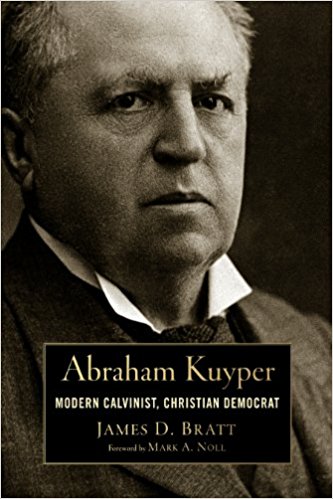 Christian people be involved in the world around them and what rights might society afford those who have religious convictions to live in ways that are true to their own consciences? Or, in more popular theological lingo, channeling the famous book by H. RIchard Niebuhr, what is the relationship between Christ and culture? Or, again, as one of the early church fathers asked “What does Athens have to do with Jerusalem?” It remains a live-wire question.
 Fleming Rutledge — the wonderful author of books such as The Crucifixion, The Undoing of Death, The Seven Last Words from the Cross and more — and her husband complemented me after I highlighted a few of her books at event with her last week, declaring with enthusiasm that I was good at marketing. I don’t know about that, but I agreed that I can work myself into a good lather over books I believe in, resources that I think will bring pleasure and goodness and insight and truth to readers, as her learned ones surely do. And even she, theologian that she is, knows a bit about culcha: she has a collection of sermons sharply called The Bible and the New York Times as well as a very thorough literary study called
 to re-tell much of what the good doctor taught us about Tertullian and the other early church fathers, but his main point was that the older story of the development of freedom of conscience in the West as a creation of the reasonable secular humanists of the Enlightenment, pushing back against sectarian religious impulses that caused wars and inquisitions is inadequate, that it was the earliest voices of the early Christians who cried out for religious freedom. He is not the first to say this but he documented it copiously.
 Library of Congress, finding original books there, of course, from Jefferson’s own library.) This underlined sentence from the third century theologian made its way into one of Jefferson’s own books. Ahh, I thought, the power of a bookseller to get the right old book into the hands of a history-maker! I was encouraged and took pride as Wilken told the colorful story. His point was less about the virtue of the bookseller but was clear: even the wonderful American ideas — conscientious objection, free expression and the like — came not just from Quakers like William Penn or Baptists like Roger Williams or Reformers citing the developing tradition of human rights based on reformation thought, but it came (via Jefferson, in this case) from the early church! This is apparently astonishing news in the academy and the topic warranted Wilken delivering the prestigious Dunning Lecture in Baltimore, and will make its way into a bigger book, perhaps next year.
 The Christians as the Romans Saw Them Robert Louis Wilken (Yale University Press) $15.95 What a great little book, erudite, influential, important, and so interesting. Numerous reviewers mention how gracious and eloquent the writing is, and it is true. It is not too lengthy nor expensive. The Atlantic Monthly review wrote that it “should fascinate any reader with an interest in the history of human thought.” One reviewer said it “draws upon well-known sources–both pagan and Christian–to provide the general reader with an illuminating account… of how Christianity appeared to the Romans before it became the established religion of the empire.”
 The Spirit of Early Christian Thought: Seeking the Face of God Robert Wilken (Yale University Press) $22.00 This book came out about a decade ago and remains a true standard, eloquent and fascinating, important and good.
  The First Thousand Years: A Global History of Christianity Robert Louis Wilken (Yale University Press) $22.00 Increasingly there has been academic attention to the global nature of church history and there have been new and surprising titles about the spread of Christianity centuries ago, and how the church grew and struggled, to supplement more typical tellings of the tale which focus on Europe. This book came out in 2013 and is required reading in many colleges and seminary courses. It is considered a one of the best of its kind. We were thrilled to have this on sale at the author event in Baltimore and are happy to offer you a great savings now.
 Remembering the Christian Past Robert Louis Wilken (Eerdmans) $21.50 Readers in the know about these things realize Wilken is a major thinker, one of the most esteemed scholars in this field, and it made sense that decades ago Eerdmans got him to compile a collection of essays, pithy and smart, wise, and elegant, making a case that we should draw on the past, that knowing something about church history matters, and that the earliest days of the church under the Roman Empire — and on into Christendom — generated insights (and problems) that are with us yet today.
 A Week in the Life of Corinth Ben Witherington III (IVP Academic) $16.00 While this is published by a scholarly, academic imprint, I must say it is good for nearly anyone, even high school students. It is a work of historical fiction, an imaginative and creative way to introduce us to what was going on in Corinth about the time the Apostle Paul wrote his famous letters to them. This is a one of a kind sort of window into the travels around the Mediterranean basin from which Paul wrote, and, more, how the Christians in this Greco-Roman city lived, related to their culture, and how they were caught up in the cultural, sexual, ethnic, and philosophical trends of their day. Fascinating for any study of the Bible book called Corinthians, but, more broadly, for anyone wondering how the early Christians really lives and related to their social world.
 A Week in the Life of a Roman Centurion Gary Burge (IVP Academic) $16.00 This, too, is a very creatively done bit of historical fiction, a story set which, I believe, can help readers grapple with the “Christ and culture” questions. In this case, we get a window into the life of the Roman Empire, told through the eyes of a centurion mentioned in the Biblical text who seeks a healing for his Jewish slave from the itinerant Rabbi from Galilee. It is fast-paced, full of first century color, and highly recommended — especially for this time of the church year when we think of the Roman’s imperial power in the execution of Jesus.
 The Mestizo Augustine: A Theologian Between Two Cultures Justo Gonzalez (IVP Academic) $24.00 This is a recent book written by one of the great church historians of our time. We have carried his big and small works for those wanting an overview of the flow of Western church history. This one, though, is very special and a unique contribution. In keeping with the theme of this post, it seems so relevant to our questions today about justice and racial-reconciliation and globalization and how we are not the first ones to navigate such things. Augustine, as we should know, was both a Roman and an African — he was, after all, the Bishop of Hippo, in the Roman occupied region of Numbidia, what today we call Algeria (in Northern Africa.) He lived in that historical space between early Christianity and medieval Christendom, interacting with literature, philosophy, culture, theology, politics, church growth and parish life. Historian Mark Noll calls this new exploration “particularly insightful.” The brilliant scholar from Princeton, Eric Gregory, noting how many books there are on Augustine, says that “It is hard to think of one more timely for a new generation of readings than The Mestizo Augustine.
 No dualisms between the sacred and secular? All of life redeemed? We are culture-makers? Salvation means creation regained? The drama of Scripture is a four-chapter story, sometimes described as creation/fall/redemption/restoration? The integration of faith and scholarship? We must learn to see through the lens of a Christian worldview? You Are What You Love? These are all big picture slogans that carry transforming visions that have become increasingly embraced within evangelicalism, because, as religious historian George Marsden once quipped, “We are all Kuyperians now.” Whether we know it or not.
 Abraham Kuyper: A Short and Personal Introduction Richard Mouw (Eerdmans) $16.00 Oh how I wish folks would order this from us. They use it at Redeemer’s Gotham Fellows program (I know because they order them from us) and it serves as an easy introduction to the main strengths of the hefty, Dutch public intellectual. And if anybody can help us see easily why this matters, it is the always interesting Rich Mouw. As noted above, Mouw himself was an Kuyper Center honoree, quite deservedly so.
 He Shines in All That’s Fair: Culture and Common Grace Richard Mouw (Eerdmans) $15.95 I think I tossed this off in passing in my review of Dreher’s Benedict Option book saying I’d love to hear him ruminate on these wild ideas of Kuyper as presented so nicely by Rich Mouw. Does God love jazz music, a good golf putt, the flight of a hawk? That is, are there seemingly secular or non-consequential and non-religious things that make up a good life that pleases God? And if so, does affirming those things and being active in those very things — playing, learning, art appreciation, making stuff — matter for eternity? Kuyper’s view of common grace does not negate the need for saving faith in Christ,but it does offer generative notions to sustain greater involvement in the world, building bridges with others who are made in God’s image, advancing a generally positive view of life in the world and our callings to be engaged well in culture. I have mentioned this book often, and think it should be better known among us.
 The Challenges of Cultural Discipleship: Essays in the Line of Abraham Kuyper Richard Mouw (Eerdmans) $20.00 This starts to get a bit deep, I must say; here are thirteen essays that are uniquely neo-Calvinist, evaluating and engaging some of the unique issues and theories that circle around the air of those in the heritage of Abraham Kuyper and his tribe. As it says in the promo copy: “In this volume Mouw provides the scholarly backstory to his popular books as he interprets, applies, expands on — and at times even corrects — Kuyper’s remarkable vision for faith and public life.” Pretty heavy stuff. Wow.
 On Kuyper: A Collection of Readings on the Life, Work & Legacy of Abraham Kuyper edited by Steve Bishop and John H. Kok (Dordt College Press) $36.00 This. I mean it: this. This is a magisterial, unique, colorful, scholarly, flamboyant and at times nearly mind-boggling collection of very important pieces about Kuyper. It is slightly oversized and over 475 pages. Some are reprints from years ago, some are in print for the first time. They evaluate Kuyper and Kuyperian philosophy and explore the implications of his thought-system for (among other things) the church, culture, gender, politics, education, fashion, evolution, and more. There is discussion about the implications of common grace, sphere sovereignty, pluralism, all somehow giving tribute to this robust thinker who promoted the Lordship of Christ over all zones of life.
 The Spirit in Public Theology: Appropriating the Legacy of Abraham Kuyper
  Makers of Modern Christian Social Thought: Leo XIII and Abraham Kuyper on the Social Question Jordon Ballor (Acton Institute for the Study of Religion and Liberty) $14.95 This is an extraordinary book, one that covers a topic some of us have alluded to for years — namely, that there is much overlap between Pope Leo XIII and Kuyper. Leo’s pivotal social encyclical Rerum Novarum and Kuyper’s dramatic speech, published in English as Christianity and the Class Struggle and, later, as The Problem of Poverty) are both very, very important and we are indebted to the always brilliant Jordan Ballor for doing this good work, comparing and contrasting these two somewhat connected social justice traditions.
 Lectures on Calvinism Abraham Kuyper (Eerdmans) $18.00 This is the book that first introduced me to Kuyper and it is dry and complex, written in the style of public addresses at Princeton at the turn of the 19th century into the 20th. These were given in 1898 as the “Stone Lectures” and the rocked the world, changing much about Presbyterianism, lasting even to today. Alas they are not thrilling for most readers. These lectures explore the notion that God is sovereign, and therefore, we should honor Christ as King over all of life — the English translation renders the first chapter “Christianity as a Life System.” He specifically looks at science, the arts, commerce, and education and the future — and hearing about it was life-changing for me. His complex lectures never turned me on, but the idea that religion is an all-encompassing world-and-life view and that Calvinism’s importance is therefore more than theological debates about predestination, but about God’s rulership over all creation, still resonates today.
 Wisdom & Wonder: Common Grace in Science & Art Abraham Kuyper (Christian’s Library Press) $14.99 We were one of the first places to review this when it first came out a few years back and we still enjoy telling folks about it — and pointing out the very cool cover. This is a good way into Kuyper’s own writings on common grace, on how to address issues of the arts and sciences. Edited by Jordan Ballor and Stephen Grabill (yes, the guy in For the Life of the World) Wisdom & Wonder includes a foreword by Q founder Gabe Lyons and a great introduction by Wheaton College political theologian, Vincent Bacote.
 Near Unto God Abraham Kuyper (Dordt College Press) $17.00 This is a slightly modernized (by novelist James Schaap) and somewhat abridged edition of Kuyper’s beloved devotional based on the phrase from Psalm 73:28. I was moved and inspired by RIchard Mouw’s introduction, explaining how this deeply spiritual piety motivated not only the public activism and myriad of reforms of the busy Kuyper but of generations of Dutch Christian leaders in the 20th century.
 PRE-ORDER Contours of the Kuyperian Tradition: A Systematic Introduction Craig C. Bartholomew (IVP Academic) $40.00 I have been itching to see this since I heard about it a while ago, and I’ve not yet seen any of the manuscript. I can tell you this much: it is going to be academically sound and yet exciting. And important. When the publisher says Kuyper is “much discussed but little read” I think they are right, and there are reasons for that. Not unlike other great writers of the past, delving into older ways of writing is hard even for some scholars. We need a guide. We need some assistance. We need a teacher to tell us about it all. Philosopher, theologian, artist, farmer from South Africa, we have our guide here in Mr. Bartholomew. I cannot wait for this and suspect it is going to be a blessing to many. Agree or disagree with Kuyper — and some view him as too conservative and totalizing, and some view him as too liberal and pluralizing — this will be the indispensable resource to help us understand his importance, his legacy, and how many are working out his faith-based vision for just and healing multi-dimensional societal reform today in our own time and place. I’m hoping many are glad to hear about it, and will send us an order. It is due out in mid April, 2017 and we will be among the very first to have it, I’m sure.
 Every Square Inch: An Introduction to Cultural Engagement for Christians (Lexham Press) $14.99 Okay, this little hardback isn’t exactly a bio of Kuyper, or even about him, exactly, but his Dutch fingerprints are all over it. It looks at what contemporary neo-Calvinists in the line of Kuyper are thinking about culture, about engagement with the world from a radically Christian life perspective, and how to relate faith and public life in principled but gracious ways. It tends a bit conservative at times and some readers will not agree with it all, but it captures much about what is going on it this stream of renewal within both Reformed and, interestingly, some Southern Baptist circles. A nice little read, good to know about and helpful for beginners.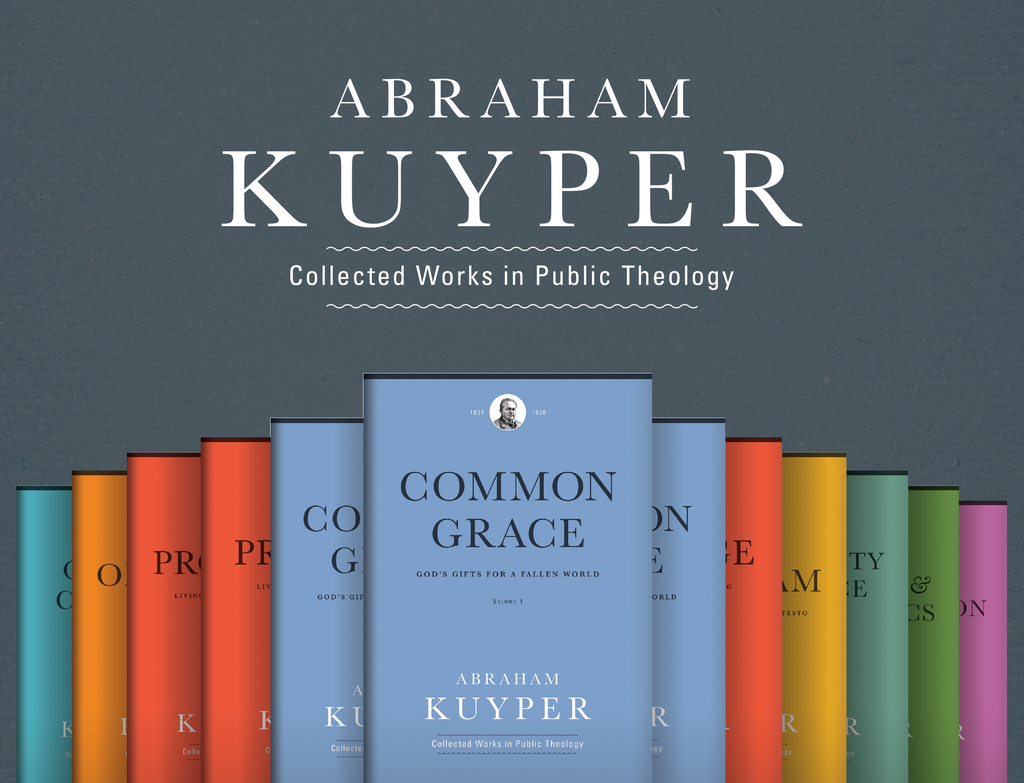

 and various studies from the gospels are all thoughtful, insightful, and very helpful. Many pastors find them very useful in preparing their own studies and sermons although they are not exceedingly scholarly and any thoughtful reader can take them up. From his recent devotional (written with his wife,
  Kathy Keller) on the Psalms (The Songs of Jesus) to his excellent book co-authored with former corporate exec, Katherine Leary Alsdorf, Every Good Endeavor: Connecting Your Work to God’s Work, to the older, but still very popular short take on the misunderstood Prodigal Son story, The Prodigal God: Recovering the Heart of Christian Faith, Keller
  has a way with words that are lucid and often thought-provoking. His Counterfeit Gods: The Empty Promises of Money, Sex, and Power, and the Only Hope That Matters is a very serious critique of modern idols; oh, if other evangelical (or progressive) thinkers were so incisive and so clear and so gospel-centered.

 Gospel in Life: Grace Changes Everything (DVD and study book) Timothy Keller (Zondervan) $36.99 This is a classy DVD curriculum that offers eight fairly brief mini-lectures by Keller coupled with a very thorough (230 page) workbook for participants to process the information. In some cases, some DVD participant’s guides aren’t always necessary but in this case, the Gospel In Life workbook is an amazing resource and each participant must have one, as it includes much of the content of the course, lots of discussion stuff, a narrative from Keller, and more. (Extra Participant’s Guides sell for $12.99 each without the DVD.)

 Center Church: Doing Balanced, Gospel-Centered Ministry in Your City Timothy Keller (Zondervan) $34.99 In the Fall of 2012 Keller, surely with good help from his innovative, missional team, released a major work, this big Center Church textbook-like volume. We named it one of the Books of the Year that year and we told many — even folks in smaller towns and in smaller churches — that his emphasis on a “gospel-centered” ministry that was balanced and informed by the first things of the gospel was profound and needed.
 Shaped by the Gospel: Doing Balanced, Gospel-Centered Ministry in Your City Timothy Keller, with new chapters by Michael Horton and Dane Calvin Ortlund (Zondervan) $15.99
 Loving the City: Doing Balanced, Gospel-Centered Ministry in Your City Timothy Keller, with new chapters by Daniel Strange, Gabriel Salguero, and Andy Crouch (Zondervan) $18.99
  Serving a Movement: Doing Balanced, Gospel-Centered Ministry in Your City Timothy Keller, with new chapters by Tim Chester, Daniel Montgomery, Mike Cosper and Alan Hirsch (Zondervan) $18.99