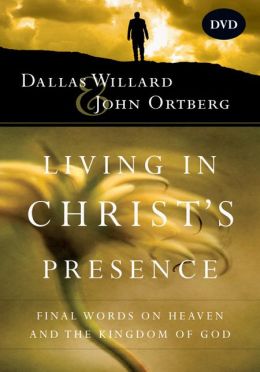
A few to add to the last list AND a new Dallas Willard: Living in Christ’s Presence ON SALE

After sharing a list of 10 recommended Lenten books at BookNotes, I compiled another list of some of my favorite books about spiritual formation; books that help us practice spiritual disciplines and books that help us resist the world’s seductions, replacing the dysfunctions of our lives with God’s glorious (and often messy) work in us, granting us Christlikeness. The ones I listed are either true classics or personal favorites, and I am confident they will be useful resources in your spiritual journey.

Of course, even as I went through the grueling process  — and, if you are a serious book lover, you can imagine just how grueling — of narrowing down the list, I kept thinking of other books that fit in, that could be mentioned, that ought to be named.  Here I will give a quick shout out to just a few other titles that I really want to add to our conversations about this topic, and then I will tell you about a very, very precious new book, a posthumously published book by one of the great leaders of in this field, the late Dallas Willard.

 BOOKS YOU SHOULD KNOW ABOUT AS BACKGROUND TO SPIRITUAL FORMATION

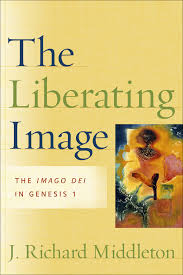
The Lliberating image.jpgiberating Image: The Imago Dei In Genesis 1 J. Richard Middleton (Brazos Press) $27.00  I suppose this isn’t for everyone as it is serious, rather scholarly, and not a quick read.  Yet, for one wanting a mature and ground-breaking work of Biblical studies, this is one of the most important books I could recommend because it is about what it means to be made in the image of God (and how in Christ that scarred image is restored.) Let me briefly say why it is important in this conversation.

Much of the rhetoric that comes up in many recent books on spirituality revolves around the notion that in Christ we can reject our “false selves” and become our true selves. (See, for instance, David Brenner’s small but useful The Gift of Being Yourself.) Yet, without a robust theology of the human person made to image God in God’s creation, and a profound awareness of the cultural damage caused by humans misappropriating their high and holy calling to reflect the true King of the Universe as stewards, such emphasis on rediscovering our authentic selves can drift off into psycho-babble and fund a very un-Christ-like narcissism. 

This tension seems to even emerge between the lines on occasion in Richard Rohr’s popular The Immortal Diamond: The Search for Our True Self, just for example.  No one would fault Father Rohr for not being socially and culturally engaged (in fact, he founded a spiritual center https://cac.org/ specifically designed to explore the social implications of an active contemplative lifestyle. Like Thomas Merton, say, or Parker Palmer, Rohr stands in a tradition that is usually very intentional about making overt the nuanced interface of what some call “the journey inward and the journey outward” and draws on contemplative prayer to empower us to work for peace and justice.  But, still, there is this shift in books about the self that are worrying to some.) 

So, I am convinced that Middleton’s sound and sophisticated treatment of the meaning of the imago dei and the implications of the Biblical call to reflect God’s rule over a blessed, pregnant-with-possibility, but very damaged creation is a needed foundation for any development of fruitful and humane spirituality.  In my small BookNotes review when The Liberating Image came out in 2005, I noted that extraordinary Biblical scholars such as Walter Brueggemann have said that this may be the best book on this topic every written.  Here is what Patrick Miller, then of Princeton Theological Seminary wrote of it: “The book is probably the most comprehensive treatment of this topic in the English language and will be an automatic point of reference in the continuing effort to understand the human in the light of scripture.” 

A book like this maybe wouldn’t come to mind as essential for most who are entering spiritual direction or who are exploring the classic spiritual disciplines or who are teaching a new class on prayer or fasting. Which is why I felt compelled to mention it here, in this Lenten context. It really does offer a brilliant and needed perspective!

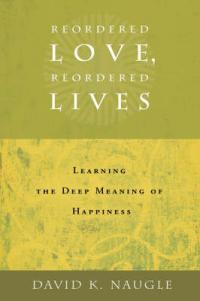
Rreordered love.jpgeordered Love Reordered Lives: Learning the Deep Meaning of Happiness David Naugle (Eerdmans) $18.00  This marvelous and wise book really should be on any list about spirituality but even I who love it so will admit that we sometimes don’t know where to shelve it in the shop; it isn’t a typical book about spiritual practices, but is about, well, about being happy by being human (God’s way!)

Professor Naugle has his PhD in philosophy and teaches at Dallas Baptist University and runs a wonderful student-oriented learning community there as well; he is one of the most thoughtful teachers I know, and one of the happiest, too. The heart of this book is on learning to love the right stuff, in the right way, and have our deepest desires shaped by the ways of God. In this is an ancient as the Hebrew prophets and draws on St. Augustine (and laid good groundwork for Jamie Smith in his magisterial Imagining the Kingdom and Desiring the Kingdom.)This necessarily draws on the same insights about being made to image God and to serve the creation (as explained in the cultural mandate of Genesis 1) as is so expertly explored by Middleton, as well. 

Naugle covers a lot of ground — including a study of the historic “seven deadly sins” and what he calls “the expulsive power of a new affection.” He cites many authors, from spiritual classics to contemporary scholars (and throws in some lyrics of his beloved Switchfoot, too.) He talks of a mended heart, new lives, and how that is part of God’s restoration of all things.  In this he is a rare voice, placing spirituality and our interior lives in the broader context of God’s creation regained.  It is a very useful resource, a truly good book. Publisher’s Weekly said his discussion of virtues was particularly compelling “and his presentation breaths new life into this topic.”

Listen to Steve Garber’s comment about David Naugle: “…amazingly wise, incredibly well-read, he is always attentive to what matters most, and his book should find its way into hearts and minds, courses and colleges, far and wide.”

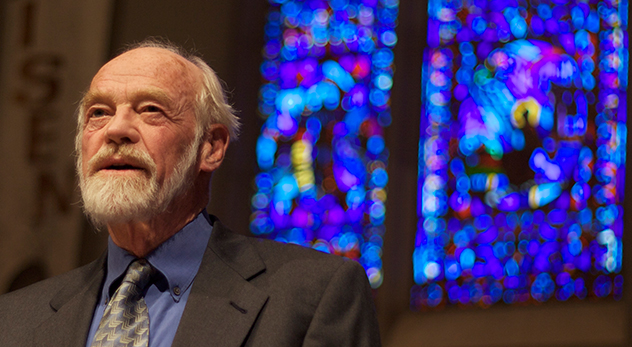
THE SPIRITUAL CONVERSATIONS SERIES BY EUGENE PETERSONPeterson.jpg

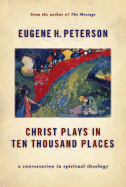
Christ Plays in Ten Thousand Places: A Conversation in Spiritual Theology Eugene H.Eat This Book.gifChrist Plays in Ten Thousand Places.gif Peterson (Eerdmans) $17.00

Eat This Book: A Conversation in the Art of Spiritual Reading  Eugene H. Peterson (Eerdmans) $17.00

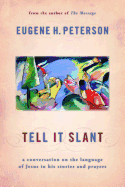
Tell It Slant: A Conversation on the Language of Jesus in His Stories and Prayers  Eugene H. Peterson (Eerdmans) $17.00

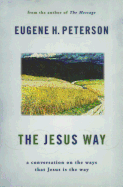
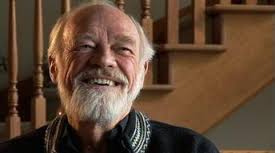
The Jesus Way: A Conversation on the Ways ThatThe Jesus Way.gif Jesus is the WayTell It Slant- A Conversation on the Language of Jesus.gif Practice Resurrection- A Conversation on Growing Up in Christ.gif Eugene H.peterson smiling.jpg Peterson (Eerdmans) $17.00

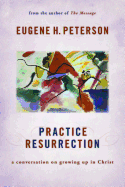
Practice Resurrection: A Conversation on Growing Up in Christ   Eugene H. Peterson (Eerdmans) $17.00  

Well, well. This famous five-volume magnum opus of the prolific Presbyterian Pastor Peterson are, I believe, some of the finest books written in our generation, and among the best books we’ve sold in our 30-plus years of book-selling.  We’ve always promoted all of Gene’s books, and we continue to respect him immensely for his no-nonsense and (literally) down to Earth approach to the basic stuff we need to know about being a sensible Christian.  He sometimes is beautiful as a writer, sometimes plainspoken and direct. He sometimes ruminates and reflects, drawing on classic theology and important literature (novels and poetry inform his work, the titles themselves often drawn from lines of poems — for instance, Christ Plays… is from Gerard Manley Hopkins and Practice Resurrection is inspired by the famously revolutionary poem by Wendell Berry; the covers, by the way, are from Jewish painter Marc Chagall.)

As one decidedly not influenced by the fast-paced and hip, Peterson occasionally meanders into brusk cultural criticism, all the while wisely teaching folks to realize God’s faithfulness and presence and God’s wondrous call to be human beings. He knows that the meaning of life, and the essential characteristic of spiritual formation is an increased capacity to serve God in the day to day of ordinary life in the world; in each of these meaty books he points us to what ought to be well-known habits and practices among us. 

In each of these amazing volumes, Peterson takes up topics such as attending to God in creation and Scripture, learning to read the Bible well, learning to pray, (re)thinking things like leadership in the way that Jesus does, rooting ourselves deeply in the church, realizing the majesty of the work God is doing in quiet ways in our lives together.  All of his books are treasures, and these five, especially, conversations that they are, are to be read slowly, carefully. 

Although these can be read in any order, I do recommend them all, and I suppose you might read them sequentially. (I will admit that I myself am savoring them, and have not gotten to the last one yet myself. Like all true classics, though, we may take our time, and work with them over a lifetime.) Highly recommended for your personal library.  Send us a note if you want further detail about what each is about.

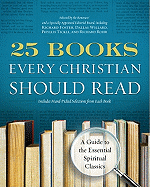
225 books.gif5 Books Every Christian Should Read A Guide to the Essential Spiritual Classics  edited by Richard Foster, Dallas Willard, Phyllis Tickle, and RIchard Rohr (HarperOne) $18.99  This Renovare-produced book is so useful on so many levels and for many reasons.  Mostly, it is a fine set of reviews of (and excerpts of) spiritual classics and whether you are led to read the full primary sources or not, these are books you should know about. This allows a perfect “toe in the water” and educational tasting experience.  The title of this is good, but could be amended to at least read “books every Christian should know about.” 

Besides having the good reviews of the best of the best of enduring spiritual and devotional classics,  this slightly over-sized book also offers numerous sidebars listing the “top ten” books recommended by many contemporary Christian leaders.  Those intriguing lists are themselves a delight and a helpful guide for those wanting to develop longer term reading lists.  This is my favorite guide into these kinds of books and very, very useful. 

The books I wrote about the other day are so, so helpful, and I believe will encourage and assist and even teach you new things about how to proceed in your walk with God and how to be more faithful in your times of solitude, in your prayers, in your spiritual practices that will help shape your soul.  Read Foster, read Haley Barton, read Rolheiser. Read John Ortberg and Gary Thomas.

But then read these other more foundational works, background, so to speak, that will help you frame your practice of the disciplines by these bigger themes, growing in this vital theological soil. They are deep and solid and will be fruit of wisdom and maturity.

DALLAS WILLARD

Living in Christ’s Presence: Final Words On Heaven and the Kingdom of God  Dallas Willard (InterVarsity Press) $20.00

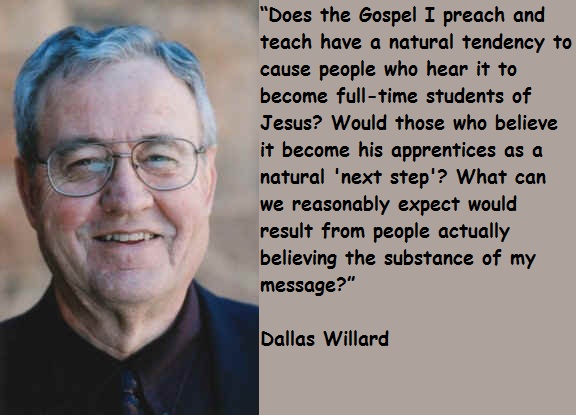
One simply cannot underestimate the role of the late Dallas Willard in the contemporary religiousDallas-Willard-Quotes-1.jpg landscape.  The first book he wrote was a wise and good work on discerning the will of God — a common question among evangelicals and charismatics, at least — which brought good sense and a non-sensational approach that we trusted. That book, after having been out of print for a few decades, was recently expanded and reissued as Hearing God: Developing a Conversational Relationship with God (IVP; $17.00. and there is a DVD curriculum, too.) We are glad to recommend it — it is deeply spiritual but yet very thoughtful and not weird. (Interesting that we have to qualify that, eh?) That Dallas was a philosophy professor at UCLA was striking —  how many evangelicals who write books of basic Christian growth have that as their day gig?

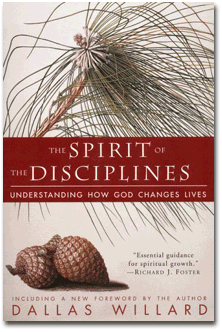
Little did we know back then that Willard would take his impeccable scholarly credentials and use his sharp mind to help folks explore the very meaning of discipleship, what it means to bespirit of the disciplines.gif transformed by Christ as we find ourselves united with Him in faith, and how to deepen our confidence in the ways of Christian transformation. His Spirit of the Disciplines: Understanding How God Changes Lives came out in the late 80s, and remains a strong paperback seller to this day. (That he had a chapter on the role of the body in that early book is, come to think of it, remarkable.)

Dallas Willard’s many books have been exceedingly well reviewed and his teaching and speaking and mentoring has influenced some of those who have been influential in recent years.  Willard befriended young emergent types and he shared speaking events with older-school church types. He’s written with Eugene Peterson; he helped create the movement within evangelicalism that focused upon Christ-centered spiritual formation (think of the NavPress line once called “Spiritual Formation Books” or the excellent IVP line of formatio books.) He co-edited the spiritual formation-oriented NRSV Life WIth God Study Bible (HarperOne; $24.99 -paperback; $39.99 – leather) with Peterson, Walter Brueggemann and Richard Foster.  

Foster is perhaps better known among those who are drawn to monastic practices – it is hard to name a book more influential than Celebration of Discipline – but Foster himself has insisted that Willard is one of our most important spiritual writers.  Those that value Foster should read Willard; it is that simple.

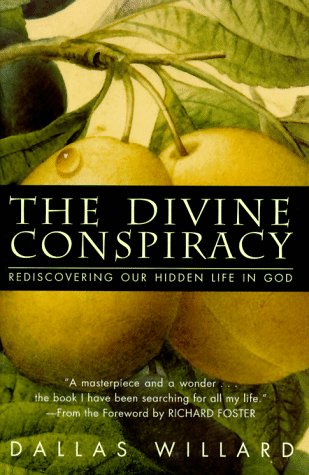
I sometimes mention that I have never read a more interesting and complimentary preface to adivine-conspiracy.jpg book than the amazing one written by Richard Foster in his 1998 introduction to Willard’s seminal The Divine Conspiracy: Rediscovering Our Hidden Life in God (HarperOne; $24.99.) That  Mr. Foster places it as an enduring and important book, standing with other all- time great works from church history may be a bit of an overstatement, but it certainly indicates how important and rich and thoughtful that book is.

We are taking pre-orders, by the way, for a sequel of sorts, The Divine Conspiracy Continued… that is going to be released in June by HarperOne (regularly selling for $27.95 although our orders here will get the 20% discount.) It is being finished up posthumously by Gary Black, who wrote a very fine study of Willard that we carry called The Theology of Dallas Willard: Discovering Protoevangelical Faith (Wipf & Stock; $29.00)

For many of our customers, the somewhat more accessible Renovation of the Heart: Putting On the Character of Christ (Navpress; $16.99) is a better place to start. Also, the practical, devotionally oriented guidebook co-written by Jan Johnson, Renovation of the Heart in Daily Practice: Experiments in Spiritual Transformation (NavPress; $14.99) is a great supplemental tool to process the teaching. There is even a teen edition which we carry. These are life-changing resources, and we commend them to you.

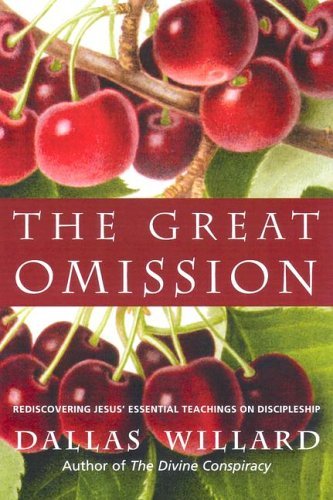
I have read and re-read certain chapters of his feisty book on the failure of the church to make disciples with the great title The Great Omission: Reclaiming Jesus’ Essential Teachings on Discipleship (HarperOne;GreatOmissionLg.jpg $23.99.) It is very, very important.   Listen to this line from the back cover: “Willard boldly challenges the thought that we can be Christians without being disciples, or call ourselves Christians without applying this understanding of life in the Kingdom of God to every aspect of life on earth. He calls on believers to restore what should be the heart of Christianity — being active disciples of Jesus Christ. Willard shows us that in the school of life, we are apprentices of the Teacher whose brilliance encourages us to rise above traditional church understanding and embrace the true meaning of discipleship — an active, concrete, 24/7 life with Jesus.” This, in itself, is important to hear, but he isn’t alone in saying it. His significance comes in the very concrete way he helps us understand our apprenticeship to the Teacher.  This is very, very useful stuff.

Although it may be his most philosophically minded, his rumination on what we can know, and what it means to know (and whether religious knowledge is of the same sort as other knowledge) is amazing. If you enjoy deeperknowing christ today.jpg stuff, you should ponder Knowing Christ Today: Why We Can Trust Spiritual Knowledge (HarperOne; $24.99)   His claim that reality simply isn’t “secular” and therefore religious knowledge as a kind of knowing ought not be ruled out of the modern university (let alone be mistrusted in our own hearts) is splendidly provocative and important.

College prof Mary Poplin just released a large and significant (and well written) book inspired by Willard on this very matter entitled Is Reality Secular? Testing the Assumptions of Four Global Worldviews (IVP; $18.00)  Willard would approve of her desire to show the truthfulness, experienced in the real world, of real knowledge about real things, and you see his work in this book shaping hers.  It is a theme he draws on from time to time, but makes it most explicit here. It warrants a careful, slow reading.

This reveals something important about Willard, and it bears saying, even in this short overview: he not only believes that Christ’s claims, as shown in the Bible are true, but because they are true, they are in a profound way, do-able.  The “dog in the fight” he has, here, is more than about epistemology, but it is about how people of faith live into and out of their convictions, and how authentic Christian discipleship can be, well, the best way to life.  As churches help people be free in Christ, a joyful and fruitful lifestyle emerges, and it is to that way of life, based on the really real, that will draw people to Christ who is “the way, the truth, the life.” He is a philosopher, as we’ve noted, but it seems he is a pastor and an evangelist, too. May his tribe increase!

So, we hope you are familiar with the good work of the late Dallas Willard and esteem his contributions to public theology, discipleship, and how he has shaped our insights about spiritual transformation in our time.  He was, as I’ve said, a very important author. He isn’t always simple to follow (although he is writing for an ordinary audience of lay people and church folk as well as those tasked with offering pastoral leadership.) Don’t discount him as simple (again, mature thinkers like Foster and Peterson commend him) and don’t think he’s too philosophical. He’s perfect for Hearts & Minds kind of readers!

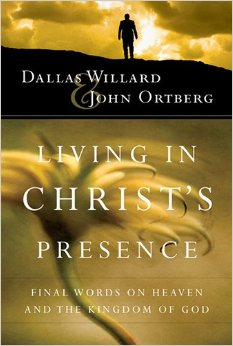
WLiving In Christ.jpghich brings us to his brand new book, Living in Christ’s Presence (IVP; $20.00) which was produced out of a conference held at Menlo Park Presbyterian Church with Willard and his good friend John Ortberg one year ago, just months before Willard’s untimely death. 

The popular and upbeat Ortberg gave a few of the lectures at this gathering, so he has a few chapters in here.

Besides his own good chapters, Ortberg played another very important role at the event to help translate and unpack Willard for the audience.  After each Willard lecture, in fact, Ortberg interviewed him, asking him to repeat certain phrases and explain particularly dense sentences or his occasionally counter-intuitive insights.  Ortberg had shown his ability to insightfully do this in a previous DVD they did together and it is a great, great approach, a very good teaching device.

The chapters by Dallas Willard in the aptly named Living in Christ’s Presence are truly great, but these conversations at the and of each are even better. They are sizable (not just a quickie line or two) and themselves are wonderful to read. Ortberg is a fine interlocutor and Willard is so good on his feet, extemporaneously reflecting upon Ortberg’s probing, practical questions. They made an excellent team and this book is worth every dollar spent on it.

Willard is being a bit more conversational here than he sometimes was – these were talks, not formal book chapters – and having Ortberg conversing with him throughout makes this certainly one of his most accessible books and, therefore, perhaps one of his most important. We recommend it strongly.

Although he is now in heaven, his legacy will deepen, not only because of the ongoing importance and popularity of his earlier body of work, but because of this wonderful, wonderful living in DVD.jpgtitle.

By the way, there is a fine study guide in the back (very insightfully written by Gary W. Moon) making this an ideal resource for small groups, book clubs, or soul friends to do together.

Further, there is a great DVD, a companion to the book that show Willard and Ortberg live from the “Living in Christ’s Presence” conference.  The package has two discs with seven hours of material, making it a great value.  It sells usually for $30.00 but with our 20% off we have it for $24.00.

You can get a glimpse of the DVD here.

BookNotes

SPECIAL
DISCOUNT
ANY ITEM MENTIONED

20% off
order here
takes you to the secure Hearts & Minds order form page
just tell us what you want

inquire here
if you have questions or need more information
just ask us what you want to know

                   Hearts & Minds 234 East Main Street  Dallastown, PA  17313     717-246-3333
                                                       read@heartsandmindsbooks.com 

Wonderful Books on Spiritual Formation — Especially Good for Lent

Perhaps you are like me and sometimes have a hard time keeping up with a dailylent word.jpg devotional; maybe it just isn’t your style.

Even if the list of Lenten devotionals and study resources that we shared in the last BookNotes didn’t quite appeal to your reading style, I would bet you still hunger for more depth in your life.  Maybe you are a little jealous of those who seem to be able to use the church calendar as a seasonal reminder to re-focus and live in to discipleship in a deeper way.

Ruth Haley Barton starts her fabulous book Sacred Rhythms: Arranging Our Lives for Spiritual Transformation with an invitation to be in touch with our deepest longings, and to attend to those desires for “more.” Not more stuff, of course, but more life, more love; a faith that is evident and meaningful and helpful for real life. She writes, “One of things that still surprises me this far along in life is how and when and with what power my longing stirs.”  After some moving personal anecdotes, she suggests that we attend to these longings of our own soul.  

When was the last time you felt it – your own longing, that is? Your longing for love, your longing for God, your longing to live your life as it is meant to be live in God? When was the last time you felt a longing for healing and fundamental change growing within you?

Do not rush past this question; it may be the most important question you ever ask. But this is hard, I know. In religious circles we are much more accustomed to silencing our desire, distancing ourselves from it, because we are suspicious and afraid of its power.

Her next pages are brilliant in inviting us to name some of these deep longings of the soul, these very human questions. These can be explored any time, but many of our churches invite us to these things now, in this season.

Here I suggest some wonderful books on spiritual formation, a few that are well known and a few that may less recognizable, and few that are obvious and a few surprise recommendations. All of these are wonderfully done, my own (partial) “best of” list for ordinary folks wanting to think about what the theologians call sanctification and what some now call spiritual formation. Do you want renewal, revival, transformation, on-going growth, depth, holiness, even? Do you long to be (re)formed into the image of Christ? To want to deepen your interior life so the Spirit can do in and with you what God wills?

These books will help, I am sure of it. 

Also, if you mentor others, work in ministry, are a disciple-maker or spiritual friend, these are tools you should have at the ready to share with those who are hungry. If you want to give up something for Lent, give up buying something that would allow you to afford buying a few of these.  Give up something that sucks time away from time alone, reading, pondering, praying.

Maybe God might even be inviting you to give up some of your admittedly precious time and individualism; maybe you (really do) long for a small group, a safe community to explore your deepest desires for a better life. Why not call somebody, start a group, or a better group, even if only for Lent. It isn’t weird to invite a friend or two to join you in reading a book together, you know.  Who knows, maybe you’ll end up true soul friends, spiritual companions as you dive deeper into the way of Jesus.

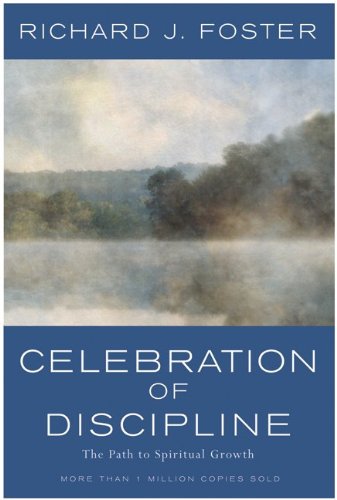
Ccelebration of d.jpgelebration of Discipline: The Path to Spiritual Growth Richard J. Foster (HarperOne) $25.99 I simply must start with this. This is a perennial best seller, a hugely significant book and, although a bit deep for real beginners to spiritual disciplines, it is still a true “must-read.” But it on your bucket list, have an extra copy on hand to share, refer to it often. This is a true 20th century classic, guiding us to disciplines of depth and joy.  There are three major parts, explaining practices that he says are inward (working on our own inner lives), upward (such as praise and worship which are oriented towards God) and outward in service in the world.  Good stuff, an anecdote to superficiality, which he says in his famous first page, is “the curse of our times.”

PPrayer- foster.jpgrayer: Finding the Heart’s True Home Richard J. Foster (HarperOne) $24.99 This is one of my all-time favorite books, beautifully offering more than a dozen ways to pray. It is every bit as good, and every bit as helpful as the more famous Celebration of Discipline. He wisely guides us into deeper intercession, praise, confession and such, but also shows how to meditate, pray the ordinary, use our grief as prayers of lament, and offers a stunning chapter on “radical prayer” about bringing the needs for social change before God’s throne, pleading and working for history-making cultural transformation. Wow.

Iinvitation to solitude and silence (black).jpgnvitation to Solitude and Silence: Experiencing God’s Transforming Presence  Ruth Haley Barton (IVP) $17.00  Ruth invites us to one of the most important spiritual practices one can imagine, one which is counter-cultural and for some of us, desperately important.  I might note that some may not think a book about silence would be very interesting, and this one is more than interesting, it is fascinating, fun, vital, and very much appreciated by those who read it.  Highly recommended.


Ssacred r.jpgacred Rhythms: Arranging Our Lives for Spiritual Transformation  Ruth Haley Barton (IVP) $17.00  I know we recommend this a lot, and you may know we’ve hosted Ruth here in the area – her gracious, clear depth and helpful approach is a rare gift, and it comes through in her books.  In many ways, this is the perfect book – perhaps not quite as deep or heady or mystical as some of the spiritual classics, but not light-weight or simplistic.  She is forthright calling us into a life-style of spiritual practices that create a deeper sense of Gods transforming power and she draws on the spiritual classics to help us make it happen. Highly recommended.


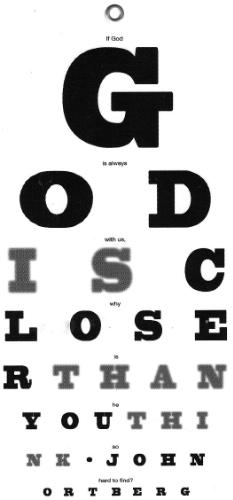
Ggod is closer than.pngod is Closer Than You Think John Ortberg (Zondervan) $18.99  I think Ortberg is one the great gifts to religious publishing, a deep thinker (he worked with the impressive Dallas Willard on his last book) but a fabulous, fun communicator. The DVD to this is excellent and great for small groups. The cover declares “This Can Be the Greatest Moment of Your Life Because This Moment Is the Place Where You Can Meet God.” Okay, a bit over-wrought, but the plain-spoken guidance Reverend O offers on practicing the presence of Godgod is closer eye chart.jpg is rich and thoughtful and clear and profound. Is God maybe a bit like Waldo – hidden in plain view? You will learn much and laugh a bit along the way.  (By the way, the first edition of this had a fantastic cover design that looked like an eye chart; many didn’t quite “get” it, and they gave it a more typical kind of look. It is the same book, though.)

Tlife you always.jpghe Life You Always Wanted: Spiritual Disciplines for Ordinary People John Ortberg (Zondervan) $18.99 This is the first Ortberg book I read and the first DVD of his I viewed; loved them both! We recommend it often, noting that, as he says, it is “Dallas (Willard) for Dummies.” Or, put another way, it is Richard Foster for beginners. Yes, it is a book about the classic spiritual disciplines, but he delightful shows how to weave them into an ordinary life, and how a spiritually attuned and God-centered life isn’t odd or pasty, but full and good. I love that he says this isn’t about your (so-called) “spiritual life” but about your life. This book can be life-changing and a nice window into how spiritual disciplines can enhance daily discipleship and gently transform real life, perfect for those who can’t imagine themselves reading heavy monastic literature or experiencing the mysticism of the contemplatives.

Ggod in my everything.jpgod in My Everything: How An Ancient Rhythm Helps Busy People Enjoy God  Ken Shigematsu (Zondervan) $16.99  We have written about this before, and promoted it at several gatherings this fall – perhaps I over-emphasize the unique backstory, although that is interesting. The author was a driven and successful Japanese business man who ended up at the wonderful Regent College in British Columbia, studying theology. He ends up on a pilgrimage to Ireland which piques his interest in Celtic spirituality.  Yes, this could be considered a delightfully cross-cultural, multi-ethnic experience, but it is mostly just solid guidance on creating a life-giving rhythm to experience God in everyday moments. This guy knows our busyness and the challenges of living out faith in a secularized world. He helps us journey down this ancient pathway to learn to enjoy God and draw closer to Christ, day by day. An endorsement by Shane Claiborne indicates that it isn’t disengaged religiosity, but a new take on older monastic insights. It will help you create your own rule of life, your own sense of how to walk out your own sense of calling and vocation, truly guided by God. There are wonderful questions for reflection, guidance for your own processing, and tremendous stories helping you apply it all.

SSpiritual Disciplines for the Christian Life Donald Whitney.jpgpiritual Disciplines for the Christian Life Donald Whitney (NavPress) $15.99 I think this book is an under-rated gem and should be widely known among us.  Whitney offers wise and practical counsel about spiritual disciplines and calls us to serious practice of stuff that leads to a deeper kind of discipleship and fuller awareness of God’s glory and grace in our lives.  He is very fluent in the best of the Puritans – don’t let that scare you with dumb biases about their harshness, as that is mostly untrue.  I sometimes say this is a book comparable to Foster’s classic, but where Foster draws on medieval, monastic, and pietistic sources, Whitney uses thoughtful Puritan and Reformed sources. Highly recommended.


SSpiritualDisciplinesHandbook.jpgpiritual Disciplines Handbook: Practices That Transform Us Adele Ahlberg Calhoun (IVP) $18.00 This is a majestic, amazingly useful, big handbook that tells you much of what you need to know – from the theological to the Biblical to the practical – about doing the many sorts of disciplines, practices, and experiences that put us into a posture of being encountered and changed by God. If you do any teaching on this, if you are any sort of a disciple-maker or spiritual friend this will be a go-to, often-used resource, chock-full of great information, insights, principles, and useful suggestions. Nice that it is endorsed so widely, from Ruth Haley Barton to Timothy Keller.


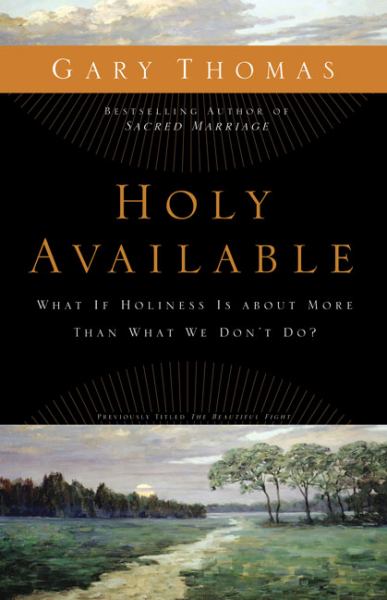
HHoly Available.jpgoly Available: What If Holiness Is About More Than What We Don’t Do? Gary Thomas (Zondervan) $14.99 We recommend any of the many books of Gary Thomas who, perhaps akin to Ortberg, brings ancient, contemplative insights into very modern parlance.  He is greatly influenced by the deep spiritual classics (and has a great book introducing the classics to modern readers called Thirsting for God: Spiritual Refreshment for the Sacred Journey [Harvest House; $13.99.]) In Holy Available he shows his wide reading and deep debt to even the Orthodox tradition. (In fact, its original title was The Beautiful Fight which was a nod to an Orthodox phrase.) So he reads widely and knows this stuff well.

This one is actually one of my favorite books in this genre and reminds anyone who has been influenced by legalism or moralism that gospel transformation isn’t mostly about “does and don’ts” but about a Christ-centered change from the inside out, making us more available to join God’s holy work in the world. The grace that pardons also transforms, but this goes beyond merely “preaching the gospel to yourself” and standing firm against idols in one’s life (as some guidebooks emphasize these days.) This is robust, deep, wide, delightfully so, and very practical as it helps us literally take on the ways of Christ in our mind, our eyes, our feet, our hands. He calls us to be a “God oasis in a God-forgetting world, and shows what winsome holiness can look like, and how to join the beautiful struggle.  By the way, if you think this sounds soft of Biblical obedience or just a tirade against moralism, please know that it is not: it really is about being transformed into the image of Christ.  Thomas has another book on this, too, that is all about how the virtues of Christ can be embedded into our own lives as our own character is transformed into Christ-likeness.  See his very important Glorious Pursuit: Pursuing the Virtues of Christ (NavPress; $14.99) which is one of the best books on that topic.  I am surprised we don’t hear more about this kind of stuff – is being Christ-like beyond our reach? Thomas thinks not.

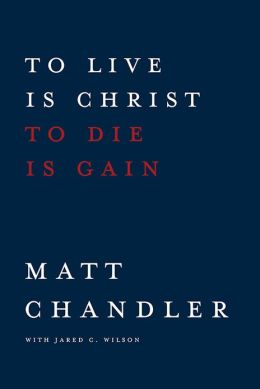
Tto-live-is-christ.jpgo Live Is Christ To Die Is Gain  Matt Chandler with Jared Wilson (Crossway) $17.99  I liked Chandler’s previous book, The Explicit Gospel and this has a similar tone – solid, Reformed, mature, but yet casual, winsome, teacherly.  He explains things well, lapses into hipster jokes and allusions some times, but yet still maintains a certain gravitas about the material.  This is a set of sermons working through the wonderful book of Philippians. You will learn why Paul yearned for these folks, how he commended them, what it means to take up a way of living that puts Christ first (and to promote and even join Him in his cross of suffering.)  Chandler’s friend Louie Giglio writes on the back “To know Jesus is the essence of life, and I love how Matt Chandler stirs up our affections for Him in To Live Is Christ, To Die is Gain. Matt’s beautiful, practical, and straightforward unpacking of Philippians will nudge you toward maturity… and a more robust walk with the Savior. Get it, and dive in today.”

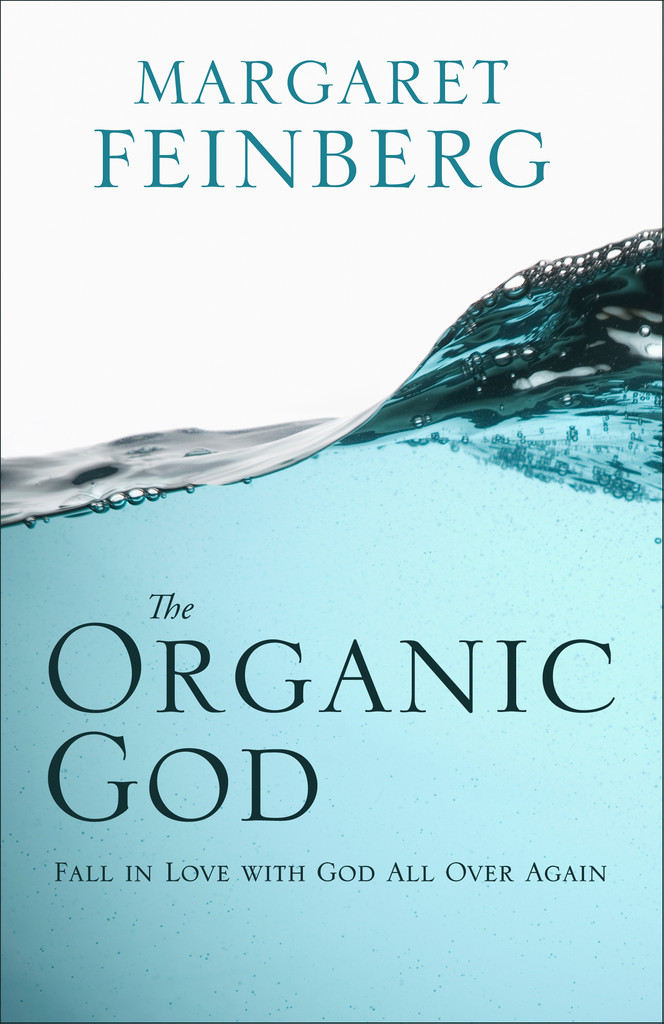
Torganic_god.jpghe Organic God: Fall in Love with God All Over Again  Margaret Feinberg (Zondervan) $14.99 I think that Margaret is nearly a poster-child of a new kind of evangelical writing – she is young, hip, funny, passionate, mature but not at all stuffy or off-putting.  Publishers Weekly notes she is “a popular writer for culture-savvy evangelicals.” In this book, she gives us an upbeat and very cool version of a classic sort of book: a study of the attributes of God. If you want to deepen your knowledge of God, it is wise to study God.  Knowing God by J. I. Packer or The Knowledge of the Holy by A.W. Tozer come to mind as older-school, heady classics. Here, Margaret invites wonder and a real encounter, an organic, natural encounter, with a big-hearted, beautiful, mysterious God.  This isn’t odd or unusual, but it is fresh and inviting. Very nicely done.

We stock all of her other books, too, and several dynamic DVD video lessons by Margaret, too.  Give us a call if you want more info.

Tlife god blesses.jpghe Life God Blesses: Weathering the Storms of Life That Threaten the Soul  Gordon MacDonald (Nelson) $12.99  Gordon MacDonald is a very gifted communicator, a splendid and mature man of God, one who is able to bridge the best of old-school evangelical piety and missionary zeal and the very real needs of contemporary people. He has the ability to make even younger readers long for depth and maturity, for character and virtue, for an interior life that is solid and good. There are fabulous stories, great Bible stories re-told, and tons of good advice about going beneath the surface to a life-giving and substantial life that can only be called “blessed.” I recommend any of his books — for instance the very useful Ordering Your Private World or the very honest and raw Renewing Your Spiritual Passion, but I re-read this recently and was reminded at how very good it is. One widely read and respected friend of ours thinks it is his very best.

By the way, you’ve heard the old adage about not judging a book by it’s cover?  Please.

Lluminous.jpguminous: Living the Presence and Power of Jesus  T. David Beck (IVP) $16.00  We named this as one of the books of the year a few months ago, and have heard nothing but good reports from those who purchased it from us. Beck is a pastor, a great storyteller, a solid Bible guy with a heart for the poor and oppressed (he has done considerable work in Haiti.) One reviewer put it well saying “David Beck writes with the head of a scholar and the heart of a pastor” making the book both thoughtfully well-written but also very useful for those of us needing some guidance.  I love how he arranges the book around the purposes of God, the presence of Christ, the power of the Holy Spirit, and the call to harness this presence and power to peacemaking in the world.  A great book for Lenten reading.

Tholy longing.jpghe Holy Longing: The Search for Christian Spirituality Ronald Rolheiser (Image) $15.00  Finally, this contemporary classic is being released paperback!  I don’t think this is one for beginners, but it is doubtlessly one of the best books on spiritual formation written in the last 25 years. (Some very conservative Catholics, I should note, have disagreed.)  Note the title’s allusion to desire, to our restlessness; he starts with this, helping to define what spirituality is, including what we do with this restlessness. Many adore this book, and many of our best customers have read all of Father Rolheiser’s several good books.  He has a wise take on spiritual disciplines, invites us into a deeper life and an encounter with our real selves (even our sexuality) and the crazy-making false gods we serve, without falling into needless mysticism or shallow psychobabble. Rolheiser is a powerful cultural critic, so understands how our faith must develop “in but not of” the social pressures around us.  Recommended for a slow, careful read, for those wanting to delve deeper into spirituality and inner transformation.

By the way, if you are a fan, you may have missed his small paperback release a few months ago called Prayer: Our Deepest Longing (Franciscan Media; $8.99.)

Twell-played-life-why-pleasing-god-doesnt-have-to-be-such-hard-work.jpghe Well Played Life: Why Pleasing God Doesn’t Have to Be Such Hard Work  Leonard Sweet (Tyndale Momentum) $15.99 You know we carry every new book by this prolific author and regularly exclaim about his writerly strengths –  he offers more illustrations and analogies than anybody writing, can turn an illuminating, witty phrase as cleverly as anyone, he has the best footnotes in the business, and anyone familiar with Sweet is astounded by his wide reading, how he knows so much about so much, and, of course, about his passionate commitments to Christ and His church.  He’s a postmodern and hot-wired media guru and yet maintains an utterly orthodox, solid theology. (Yikes — he’s written about being fluid and aquatic and may not like be called solid.) Regardless, we dig Sweet and you should check him out.

I will write more about this new one later, I’m sure, as I both greatly appreciate his call to play (even if maybe a little annoyed about how he seems to use “work” as a foil, as if we fail to embrace the gift of play because of recent teachings about vocation and work.) For now, though: this is a book about grace and freedom and child-like joy, and is (yes!) perfect for Lent. Lent is not (we must be reminded) about being gloomy, let alone about earning God’s favor by our own sacrificial practices. Len Sweet wisely asks “Do you secretly think that the harder you work the more God is pleased with you?” Do you think that this very month, harboring guilt rather than celebrating graced? This “offers a new spiritual direction for enjoying (and being enjoyed by) God. You’ll start to recognize that the things in your life that give God pleasure are the same things that give you the most joy – and that playing and rejoicing are core components of what makes God’s face radiate with joy because of you.”  Read The Well Played Life along with your Lenten fasting. I dare ya.

Nnot-who-i-imagined-surprised-by-a-loving-god.jpgot Who I Imagined: Surprised by a Loving God Margot Starbuck (Baker) $14.99  You know that Margot is one of our favorite contemporary writers, feisty and fun and radical and challenging.  She can weave words like nobody’s business, and is witty and snarky and a great, great storyteller. Her last two books (Small Things With Great Love and Permission Granted) are about reaching out to those on the margins, about inclusive love and radical servanthood; I fancy her as a suburban mom with a dash of Dorothy Day.  Can one gal be part Tiny Fey and part Lauren Winner?  I don’t know, maybe I’m trying too hard to conjure up a fun image of her. She is fascinating and truly worth reading — I assure you that she is full of lively writing and mature depth.  

This book is brand new and is, quite simply, a moving treatise against legalism, a balm for those who have been burdened by guilt and religious fear. Wounded by or concerned about toxic faith? Wonder about the chronic fear so many children of God seem to endure?  Or maybe you harbor garden variety insecurities and doubts. The very fine writer Amy Julia Becker notes “If you are a good Christian who secretly worries that you aren’t quite good enough for God’s love, this book will confound you, delight you, and bring joy to your heart and soul.”  A Lenten type read?  Why not?  It will, I promise, remind you of your true identity: beloved.

Ssabbath as resistance.jpgabbath As Resistance: Saying No to the Culture of Now Walter Brueggemann (WJK) $14.00 I suppose part of the appeal of this season of the liturgical calendar is the reminder to re-focus clearly on Christ and, in a sense, unhinging from the world — the idols and dysfunctions and false seductions of the world, that is. In other words, it seems to me that authentic Lenten practices not only draw us to God, calling us to follow Christ, but necessarily leads to denouncing hurtful aspects of the society in which we live, disentangling ourselves as best we can from unhealthy ways of living. For those of who ponder these sorts of things, we’ve come to realize it is harder than it sounds.

Welcome here your ally, the always provocative, utterly Biblical, and often inspiring Old Testament scholar and servant of the church, Walt Brueggemann. In this accessible slim new book he names the consumerism and drivenness of our society as the sin that it is, and invites us to a revolutionary Sabbath way of life that can slowly undo the harm to ourselves, others and creation that our way of life has engendered. I intend to sit with this a bit this Lenten season, and although it will make me squirm, hope it will be a properly joyful kind of call to repentance.  Maybe you need just such a guide into inhabiting a Biblical worldview, and some of what that entails. This really is classic Brueggemann, and we can be glad he has put into writing these matters he has explicated so passionately before about liberation, freedom, and a richer new way of life offered in these ancient Bible stories.

BookNotes
SPECIAL
DISCOUNT
ANY ITEM MENTIONED

20% off
order here
takes you to the secure Hearts & Minds order form page
just tell us what you want

inquire here
if you have questions or need more information
just ask us what you want to know

                   Hearts & Minds 234 East Main Street  Dallastown, PA  17313     717-246-3333
                                                       read@heartsandmindsbooks.com 


10 Books for Lent – 2014

Yesterday’s review was meaningful for me to write; I hope you read my remarks about the new Sara Miles book, City of God: Faith in the Streets.  Although it is a memoir about her experiences of mostly one Ash Wednesday, it raises profound and urgent questions about how the church will (or won’t) adapt its liturgies and symbols and language to reach a “spiritual but not religious” or syncretistic, confused un- or de-churched population.  Sara loves her liturgy, loves her liberal Episcopal church, andcity of god.jpg loves her neighborhood.  Her assumption that it is that very geography, outside the walls of the sanctuary, that is the locus of the Kingdom of God is missional and more.  Those that follow our blog here know that these questions have circled around our own hearts and minds for decades. Her new City of God is, without her saying so, a reply to the early fifth century book you should also know about, Augustine’s classic City of God. The question is real: where can we see God’s redemptive work on Earth even as the cities of human hands are such as they are. What is the relationship between the church and the world? What can we say about God’s will be unfolded in history? What does it mean that Jesus’ Kingdom is coming? Her feisty and very contemporary memoir is pregnant with the most important questions we can ask, isn’t it?

Another reviewer might have chosen to highlight views, anecdotes and practices in Sara’s book that are perplexing, and different than St. Augustine’s, and that would be fair enough. I choose to say what I admired about her book and why it is so very interesting and even valuable. I hope my comments drew you towards her story, her questions, her efforts, for you to ponder and to be provoked.  How do you effectively serve the poor and the refugee and the lonely? Do you draw on other ethnic and cultural traditions and strengths, as she so heartily does? And how does your own preferred style of liturgy and ritual and tradition contribute to faithful living in the world God loves?  Would you do church in public?

The questions about the role of liturgy as it shapes embodied practices are the questions steaming up from the streets there in Sara’s Mission District neighborhood, but they are, in a different way and with considerably more theological and philosophical refinement, also emerging from James K.A. Smith and his grand, profound (and for some, game-changing) work in Desiring the Kingdom and Imagining the Kingdom (both Baker; $22.99 each.) To ask about embodied faith, a (re)new(ed) creation coming into being through the grace of the killed and resurrected One, to ponder the implications of what Jamie might call a neo-Calvinist or neo-Kuyperian worldview and way of life, leads us to, I believe, similar questions as are raised by Sara’s good tale.  I know that some of our customers are reading Smith so hope they see the connection; other friends love Sara’s other books, and wanted to commend Smith to them.  Anyway, I hope you found the Ash Wednesday story of City of God somewhat interesting. 

Such a wild and wooly adventure story maybe isn’t for everyone, or isn’t what everyLentIntro.png small group needs during this meditative time of Lent.

So here are a few excellent resources that follow a bit more conventional devotional structure. (See a previous year’s list here.) We highly recommend using such books as companions for your spiritual reflections this time of year, and if this isn’t your custom, to build this sort of quiet and intentional reading into your own schedule this time of year, we invite you to consider it.  These books will help, I’m sure.


                                                                                                                Thanks to Margaret Feinberg for her #LentChallenge

Ggod-for-us-rediscovering-the-meaning-of-lent-and-easter-7.jpgod for Us: Rediscovering the Meaning of Lent and Easter  edited by Greg Pennoyer & Gregory Wolfe (Paraclete Press) $29.99  There is no doubt that this is the most eagerly awaited volume of this sort, with some customers praying for it (literally, I hope) for several years, now.  It is the fantastic, luxurious follow-up to the splendid and beloved devotional God With Us which is an Advent/Christmas volume. Here is what you should know about it: it was produced in cooperation with one of the most classy literary journals being published, the wonderful, rich, sophisticated, artful Image Journal. Image brings together serious writers, literary figures, and quarterly offers weighty essays, short stories, poetry, interviews with artists and musicians, and generally holds up a wonderfully crafted flag for the art/faith dialogue. It is less about the dialogue – what is a Christian view of aesthetics, how does faith impact literature and the like – but is an example of it. It is highly regarded.

Alas, when editors like this set out to do an Advent or Lenten devotional, it will be replete with Biblical reflections by artists and poets and it will be handsomely designed, with visual art and typography and color and all that makes a book truly a multi-faceted delight.  And this is it, as good or better than God With Us, God for Us shines with wonder, inviting us to savor the spiritual mood and themes of this season of the church calendar.   As they put it, “Lent is about nurturing a posture that holds all things lightly, that ensures that our passions are subject to us and not the other way around.”

They insist that Lent is not “a time of vaguely spiritualized gloominess” and who better to help us realize the “bright sadness” of Lent than good poets and deep thinkers and those gifted with artful skills of offering rich and evocative meditations on the Bible?  

These fine daily reflections and prayers (and a few other pieces, too) are by Beth Bevis, Scott Cairns, Kathleen Norris, James Schaap, Luci Shaw, Richard Rohr, Ronald Rolheiser and Lauren Winner. What an absolutely great gathering of perspectives, from an a Orthodox poet to a Presbyterian contemplative, Catholic mystics, an Episcopalian priest and writer, a Dutch Reformed short story writer and a scholar of Victorian literature.  And dear, beloved Luci Shaw – oh how her work thrills us!  There is art and iconography aplenty, useful for lectio vizio, and delight.  

On the back cover it says “Lent and Easter reveal the God who is for us in all of life – for our liberation, for our healing, for our wholeness. Lent and Easter reminds us that even in death there can be found resurrection. 

This is a book to own, to give, to cherish.  Kudos to Paraclete Press and Image for this magnificent book and for the great honor of getting to sell it.  

HHe Set His Face to Jerusalem- A Lenten Study for Adults .jpge Set His Face to Jerusalem: A Lenten Study for Adults  Richard Wilke(Abingdon) $8.99  We heard Bishop Wilke years ago when he was passionately working and writing for renewal within the United Methodist church.  He has done Advent books, contributed to the popular Disciple Bible Study series, and is a strong, good leader. This is a fairly straight-on, obvious study (which is to say, it isn’t trendy or odd) of Jesus’ own journey to Jerusalem (announced so tersely in Luke 9:51.) There are seven chapters, one for each week in Lent and one for Holy Week and Easter. Each session includes a Scripture reference, a personal reading, questions for reflection, a closing prayer, and a focus for the week. The book can be used for personal devotions but is ideal for small groups wanting a no-nonsense study of the seasons main story.

Aworld worth saving.jpg World Worth Saving: Lenten Spiritual Practices for Action George Hovaness Donigian (Upper Room) $14.00  Perhaps you have been inspired by the memoirs of Sara Miles or others who have given themselves to organize their communities, to work for justice, to take stands in the name of the gospel for peace and human rights? Maybe you were inspired by the recent simulcasts of the Justice Conference or even attended Jubilee, the college conference that invites students into the good news of the gospel in ways that “transform everything.”  If you are a bit reluctant to celebrate Lent through spiritual practices that are too internal, too quiet, too seemingly disengaged for the world of need, this guide is for you.  God believes the world is worth saving, and you can help!

This is a 6-week study for Lent and it will help you grow your prayer life. You learn to pray about the new, discern the needs of those around you, and it helps you see how you can respond with greater compassion.  Can you fast from apathy? Starve our guilt? Serve God by serving others? Refine our friendships?  This is a praxis-oriented spiritual guide, a rare blend of the journey inward and the journey outward. Each weekly session has great readings, and good reflection questions for personal pondering and good ones for your small group to discuss together.  It does give each reader some daily readings, too.  Very nicely done.

FForgiveness- A Lenten Study.jpgorgiveness: A Lenten Study Marjorie J. Thompson (Westminster/John Knox) $12.00  Many of us value Marj Thompson’s Soul Feast as one of the best overviews and handbooks for developing a deeper spiritual life and as an excellent guide to enter into practices and disciplines for spiritual growth.  Along with Richard Foster, say, she is a hero in the genre, and highly respected across denominational lines. It has been a while since she has published, and this lovely little books is a real gift. There are six chapters and there is a fine six-part study guide.  She writes, “Forgiveness is the healing stream flowing out from the crucified Christ over a world that does not know how desperately it needs the healing.” This is a fine study of this perennial topic and offers remarkably detailed insight and guidance about the bold love we need to forgive those who have hurt us. It uses Biblical teaching and real-life stories.

This really is so appropriate for the Lenten journey for almost all of us, although I suspect it will be well-used in other times and seasons as well.  This is theologically rich and pastorally sound, and very, very inspiring.

HHidden in Christ.jpgidden in Christ: Living as God’s Beloved James Bryant Smith (IVP) $17.00  We just love the trilogy of “apprenticeship” books by Smith (The Good and Beautiful God, The Good and Beautiful Life, and The Good and Beautiful Community) and this amazing month of daily devotionals is a chunky hand-sized hardback.  This is very, very good; here’s what the publisher says about it:  “In this unique introduction to the hidden life in Christ, James Bryan Smith walks readers through a thirty-day immersion in Colossians 3:1-17. Each of the thirty short chapters of this book bring out the main truth of just one word or phrase of this rich passage. You’ll also find a very simple daily practice to take up, reflection questions and a guide for five weeks of group discussion. The only way to tell a story is to use words. May the words of Colossians 3 become a companion to you as God continues to write your story.” You will benefit from using this, I assure you. 


Tkingdom and the cross.jpghe Kingdom and the Cross James Bryant Smith (IVP) $8.00. Speaking of Smith, by the way, last year we promoted this slim book, co-produced by Renovare, which prayerfully asks “why did Jesus have to die?” and offers good responses to the false narratives about the nature of God and our dumb ideas about religion. In six short meditations, this zooms in on Christ’s work on the cross and what it all means about who God is and how we’re to live as His people. It invites readers to see themselves as apprentices of Jesus and offers these reflections as crucial to help us live more faithfully into His Kingdom.

Mmaking crosses.jpgaking Crosses: A Creative Connection to God  Ellen Morris Prewitt (Paraclete) $17.99  Paraclete has published a number of books that invite a more interactive approach to prayer (for instance their Praying with the Body and their Praying in Color) and this is one of the more interesting interactive one’s they done. It shows you how to take found and abandoned objects and turn them into crosses.  It is a lovely, even at times moving, exercise, and she offers step-by-step guidance.  She mentions the “discarded bits of brokenness” which become, as Sybil MacBeth notes, “physical ways to offer our own broken selves to God, who loves, redeems, and repairs us.”


Wwho.pngho Is This Man: The Unpredictable Impact of the Inescapable Jesus  John Ortberg (Zondervan) $22.99 It is customary to think about Jesus during this liturgical cycle, and although we should always affix our eyes on Him, and keep always in our mind the work of the cross, now is certainly a time to ponder who He is, and what he has done.  I think this is one of the best recent books about Jesus for ordinary readers, especially for those that aren’t familiar with heady theology or deep doctrine. In fact, this is ideal for seekers and skeptics, and has, despite its casual style and reportage of basic stuff, moved more than one mature reader to tears.  May we suggest you use this time of the year to share this basic book about Jesus with someone who may not warm up to a typical devotional. This one is well worth it, and I highly, highly recommend it.

Cchrist in conflict.jpghrist in Conflict: Lessons from Jesus and His Controversies John Stott (IVP)$16.00 I recommended this before, celebrating that the always reliable, thoughtful, solid early work of John Stott has been re-issued in this updated version.  This is a fabulous study of the trouble Christ caused, the questions he asked, the ruckus that followed him.  He invites us to ponder the meanings behind these controversies, and to see how he modeled a passion for truth and a life of grace.  This is a marvelous book and I think you’ll come away knowing the gospel accounts better, and the Lord Himself better as well.  That’s a big promise for a small book, but I am confident it will bear good fruit as you read Stott’s accounts of these dramatic encounters.


Tcross of christ.JPGhe Cross of Christ John Stott (IVP) $26.00 By the way, one can not go wrong studying carefully this magisterial work which offers good accounts of mostly traditional understandings of the many sides of Christ’s death and the saving power of the cross.  Stott is very clear, serious but accessible, and always appealing to both the heart and the mind. This is a meaty evangelical work, worth pondering for Lent and well beyond. There are other ways to understand the crucifixion, and we would be wise to reflect on many authors, from many cultures and with different insights. This a classic, even beautiful rendering of a core, historic approach.  If you don’t have a book like this in your library, you should consider it.

BookNotes
SPECIAL
DISCOUNT
ANY ITEM MENTIONED

20% off
order here
takes you to the secure Hearts & Minds order form page
just tell us what you want

inquire here
if you have questions or need more information
just ask us what you want to know

                   Hearts & Minds 234 East Main Street  Dallastown, PA  17313     717-246-3333
                                                       read@heartsandmindsbooks.com 


City of God: Faith in the Streets by Sara Miles ON SALE – 20% OFF

Tomorrow I will offer a list of very nice Lenten books. They are useful for one’s own spiritual reading, for your small group, or adult ed class. We hope you will enjoy seeing them recommended. These are books about Jesus and/or our own response of undertaking spiritual disciplines which invite us into a season that many in the church have long found very meaningful, that intentional joining of our lives to Christ’s as He moves towards the cross.  Look for that list coming soon.

First, though, I want to tell you about one of the most interesting books I’ve read in quite a while and it is perfect to read here as we approach Lent; as you’ll see it is a memoir mostly about experiencing Ash Wednesday. It arrived into the shop a few weeks ago, but, because I know this writer is thoughtful and such a very good wordsmith (and would be writing about some fairly intense stuff that I would want to consider carefully) I wanted to hold it until I had time to savor, to appreciate, to ponder, and to grapple with it. 

Today I feel a little like Jacob after that long night of struggle, a bit banged-up myself, but blessed for the effort. I read the new book City of God: Faith in the Streets (Jericho Books; $20.00) by a truly fascinating person and gifted, remarkable writer, self-confessed Episcopalian “church nerd” Sara Miles. I have read her earlier books and spent a few days at an event with her a year ago. I respect her a lot, as a writer and as a follower of Christ.

Tcity of god.jpghe City of God: Faith in the Streets is mostly about celebrating in high church fashion the service of putting ashes on the forehead on Ash Wednesday (the first day of Lent.) And doing it out on the streets, for one and all.

City of God: Faith in the Streets is an amazing book for several reasons. Firstly, it chronicles one day in Mile’s life, a busy Ash Wednesday, and three Ash Wednesday services in which she was involved that day.

The book opens with preparations for an early morning liturgy in the church at which she works, the liturgically rich and eccentric St. Gregory’s of Nyssa in San Francisco.  It ends with a late evening service, also at St. Gregory’s. This is an Episcopal church that is experimental in liturgy and while expansive and broad in theology, claims to be well-rooted in the best of the Christian tradition. It wouldn’t be confused with a formal Anglo-Catholic church, let alone an indie-evangelical congregation; many from other traditions find them nearly heretical even though they clearly see themselves as a herald of God’s good news in Christ. 

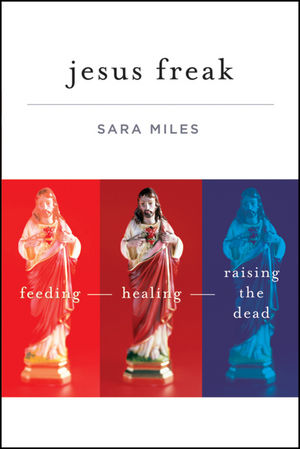
It is ancient and future, weird and, apparently, full of wonder. It is a chanting, dancing, singing, liturgically-driven parish that serves the poor and hungry and crazyjesus-freak.jpg and needy within its progressive, urban neighborhood through ministries often led by Ms Miles; she tells about all this with great spunk, breath-taking detail and vivid writing in the second book she wrote after her conversion, called Jesus Freak: Feeding, Healing, Raising the Dead (Jossey Bass; $21.95.) It is extraordinary for what it tells and for how gloriously it is told, her living out this radical faith in her Mission District setting.

You can read a brief excerpt here, but skip the cheesy amazon link, and come back to us, please.)

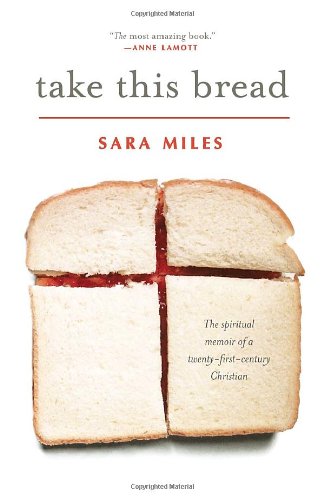
Her first religious book, Take This Bread: A Radical Conversion (Ballentine; $16.00) put hertake this bread.jpg on the map of mainline denominational folks, earning accolades from The Christian Century and Sojourners and the like; Anne Lamott wrote that it “blew me away… I am going to foist this on every single hard-core left-wing religious nut I know.”  Of course the emergent villagers came to know her, but, even some doctrinally-conservative evangelicals (like, for instance, PCA pastor Steve Brown on his Steve Brown Etc radio show) noticed her conversion narrative and have counted her as an ally for the gospel.  It isn’t every day, after all, that a left-wing, atheist foodie is immediately touched by the living Christ, causing her to be baptized and join the church, precipitated by the unexpected receiving of communion at an open table.

As she puts it, “I came late to Christianity, knocked upside down by a mid-life conversion centered around eating a literal chunk of bread. I hadn’t decided to profess an article of doctrine, but discovered a force blowing uncontrollably through the world.” Get a short glimpse of her reading a brief summary of her intriguing and moving story, told so well in Take This Bread in a “This I Believe” piece on NPR.

Miles’ story unfolds in those first two books — her conversion, her learning about church history and theology and joining the church, her radical service to the poor, her zany antics of bringing ancient faith to her hurting neighbors, her admirable willingness to work with fundamentalists and others, her wife’s secular Judaism and their caring relationship, her ups and downs within the ecumenical Body of Christ, and the specific Body of Christ known in tangible bread (and the bodies of the strangers, if you take Matthew 25 literally, which she does.) She has a good eye for the good line, is a bit snarky and funny at times, but often poignant and kind and occasional nearly luminous.  

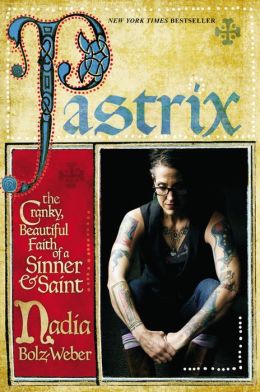
Hsaramiles.jpger story is a surprisely wild one. Wilder, I think, than, say, Anne Lamotte, to whom I sometimes compare her. Her tatted up friend, writer and emergent Lutheran pastor Nadia Bolz-Weber looks a bit more edgy (well, a lot more edgy) than Sara, but Sara’s story is even more unexpected, curious and deeper, and her prose is more eloquent than the cool stuff in NBWs Pastix.  If you read Diana Butler Bass or Barbara Brown Taylor, or, better, if you read Dorothy Day, you will be attracted to this postmodern example of the work of the Risen Christ, bewildering as it may be for some readers. Strap on, folks, this isn’t an easy ride, and it does get bumpy.  She certainly upsets conventional views of the devout life, but as Becky Garrison puts it, she is just “so dang Jesus-y.”

The heart of the book centers around a particular narrative and holds to a certain theme. I will not do it justice so If you are inclined you really should buy the book, take in her story, and ponder it in your own heart. It would make for a lively book club read, that’s for sure. 

Firstly, the obvious center to the story’s plot is her planning and prepping and actuallysarah doing ashes.jpg offering an Ash Wednesday distribution of ashes in public.  She flashes back and forth to other services and of some people who, like her, were un-churched until they encountered thick, meaningful (mystical?) liturgical rituals that drew them to faith.  And she tells of the conversations she had with other local religious types (for instance, a transgressive punk rocker who is also a seminary trained deacon at his church) about this event. Can a distribution of ashes on this Holy Day to one and all in the public square be liturgically and theologically sound? Can it bear some fruit as witness?  Why do it, and what will people get out of it? This memoir includes some fabulous tellings of interesting episodes from her larger life and the life of her neighbors and friends and some very insightful reflections on the spirituality of it all. It is a tenderly told story, but laden with complex theological questions.

I think many readers will relate to different aspects of her work – the frustrations of trying help an indigent friend, trying to remain gracious in grid-locked traffic jams when there is the Lord’s work to do, realizing the hypocrisies of preaching about love for others while not paying much attention to a grumpy neighbor, etcetera, etcetera. Her willingness to lay bear her own fears and foibles invites us to similar vulnerabilities, I think and that may be a good outcome of reading her work, too.

As one who has done public protest and liturgical reenactments in high traffic urban areas, I related to Miles’ own conflicts about this very public act of Christian street theater. (She hopes nobody she knows from her neighborhood sees her, decked out in cassock and carrying a thurible, but then wonders if she is so reticent, why does she want to do this in public in the first place? Been there!)  

Miles and her comrades wonder if it is adequate to just take an “in-door” liturgy and do it outdoors, or might the (sacred) space of the secular plaza help define what might besarah and friend in cassocks.jpg done?  And how will the whole affair come loose (evolve or devolve?) as folks want in on it – children, immigrants, commuters coming up from the BART subway elevators, believers and others, too?  From where they set up a make-shift altar with a card table and after they have censed the area properly, she and another liturgist walk down the street, being invited in to local joints to offer ashes, compelled, blown by the Spirit into nail salons and Asian markets and burrito shops and, eventually, McDonalds where they gently used their thumbs to make the sign of the cross with the little jars of ashes they’ve brought.  It is a chapter I’ve read twice already and was thrilled each time to read about her grace and grit during this intensely joyful hour.

Why do people hunger for a symbol of their own mortality? (Granted the largely immigrant neighborhood may have been mostly Catholic and had familiarity with the ritual.) What does it mean to do this “ashes to ashes” ritual, and can this counter-intuitive human fascination with death actually become good news? Can a Christian ritual find substantive meaning when taken out of the grounding context of the bigger liturgy and church year? (One of her priest friends thinks not, that the “dust to dust” affirmation must yield to repentance, which must be done in the context of a proclamation of the gospel of Christ, which is to say, the whole kit-and-caboodle of the church year.) That is, they wonder if it is it even wise or sound to offer this ritual to the un-churched in this abbreviated out-of-the-sanctuary tableaux? As you might guess, Sara has few misgivings about it, and her impulse is to take risks to live out faith in ways that appeal to the people. (“The people” — ha, wait til you read her line about that lefty phrase, as she passes a Socialist Workers Party bookstore.) This has now become somewhat of a trend, and she does have some slight concerns about differing motivations and expectations. Do “Ashes to Go” experiences just play into fast-food style consumerism, gutting the substance (and community) of thicker, slower liturgies?

My, my, this is important stuff, and her human and humane observations about it all are perhaps more theologically profound than any number of abstract and dry books offering proper teaching on the sacraments.  Her passion for the outsider, the excluded, the marginalized and the poor – and her real neighbors in this largely Chicano neighborhood – is palpable and her sense of being an oddball ambassador for an inclusive, mestizo church is amazing to behold. Scary, for some of us, to be sure, but amazing, still.

Think what you will of the soundness of this whole scene, the liberal Episcopalian ethos, her unashamed identity as a lesbian, her mystical bent of finding God in ritual, her penchant for liturgical chant and  ancient song, her openness to meaningful interfaith spiritual experiences, her affinity for liberation theology. It is a remarkable story, a beautifully-written book, and even if it makes you sputter, it is worth reading.   

I looked around at the members of the congregation, their faces smudged with ashes. The marks reminded me of the cross of sticky ointment a priest had sealed my forehead with at baptism, and the mark God put on the forehead of the fratricidal Cain to place him outside human judgement. We were all so messed up.

“The worst thing we can imagine is that we’re made out of dirt and going to die,” Paul said to me once. “But when we say it aloud, we discover the worst thing isn’t the last thing. The last thing is forgiveness.”

Iashes.jpgf you know little about Ash Wednesday and the custom of marking the sign of the cross on another’s forehead with ashes (are they a reminder of our mortality or a call to repentance, or both?) or if you don’t have much experience with creative urban outreach, this book will be an eye-opening and helpful introduction to some of our sisters and brothers who do this kind of stuff. You learn about liturgy and you learn about justice, and you learn about the relationship between the two.

If you fancy yourself an urban activist or peace and justice fan, I suspect you’ll dig this, but be aware: her compassion for the poor and her insistence upon treating all with human dignity may end up sounding nearly conservative: like Dorothy Day or Desmond Tutu she bases her revolutionary politics on personal encounters with real people who are poor and upon basic apostolic truths of a Triune God who saves us through the person of Jesus the Christ who is made manifest in His church. I don’t know that she cites it, but I’m reminded of Dorothy’s famous line, “The church may be a whore, but she is still my mother.”  

I don’t know if Sara sees the church as her mother, as she is a woman not reared in the church and whose own heart beats for the fast and furious, smelly and secular, perplexing and political vibes of the real city in which she lives.  On this she is like Wendell Berry on steroids of urban concrete and glass, maybe a postmodern Jane Jacobs. 

Which brings us to the second important thing to say about City of God: Faith in the Streets. Yes, it is a narrative about one day in the life of a woman who offers Lenten ashes on the streets and loves the worship in her local church.  Got it.

But it is more profoundly a meditation on how Miles seems to have faith in the streets themselves. In a world created, blessed, sustained, and being redeemed by the Christ, there is no sacred/secular divide, no real split between the life of the church and the life of the world; she is utterly right to realize that the spiritual is not to be contrasted with the material, that faith is incarnated. She is way beyond “missional” and more akin to the Russian Orthodox view of a sacramental life (think of the wonderful, dense work of Alexander Schmemann such as For the Life of the World.) Although it is not her tradition, she wouldn’t disagree with the Kuyperian slogan of God in Christ re-claiming “every square inch” of a good but fallen creation.

A theme of Miles’ City of God: Faith in the Streets is how God is really at work in the world, and how this simple realization allows her to see her place – this particular neighborhood of this exact city – as, literally, the geography of the Kingdom coming, “on earth as it is in heaven.” She might like the down-to-Earth concerns of new urbanist Eric Jacobsen who wrote a book we like, with a great preface by Eugene Peterson, called Sidewalks of the Kingdom (Brazos Press; $22.00.) And, as an aside, don’t miss Jacobsen’s spectacular and very important The Space Between: A Christian Engagement with the Built Environment (Baker Academic; $25.00.) The implications of a down-to-Earth, all-of-life-redeemed faith, and the Bible’s insistence that it is this very world that God so loves, are vast and also minute; sidewalks of the Kingdom, indeed.

Miles isn’t a systematic theologian and this is a memoir, not a textbook, so she doesn’t get everything said that needs saying about all of this. For instance, she doesn’t mention much about Augustine’s “city of man” (in his famous book City of God to which she surely alludes) as an aspect of or a counterpoint to the “city of God.” Her book surely isn’t a thorough theological study of what we mean by “God’s work in the world.” 

But her impulse is right, her generous instincts helpful, as she names some signals of what some of us call “common grace.”  Her assumptions about all of this — since the Bible story moves from a garden to a city, real geography matters as a locus of the Kingdom of God — are stated outright, occasionally, and are pervasive between the lines of this moving set of reminiscences. I think many of our readers will appreciate this, and it would make a wonderful study, even if one isn’t particularly interested in Ash Wednesday or liberal Episcopalians who maybe make a fetish out of good ritual. City of God is about Ash Wednesday in the streets, about God’s Kingdom coming in those streets, and what she means by that, and how she experiences it that is the heart of the book.

Here is how Phyllis Tickle’s important endorsement reads:

Rarely, if ever, have I heard or read or experienced a more poignant or persuasive presentation of the city as metaphor and prototype for the Kingdom of God.  Mile’s panorama is lived theology, and its result is a kind of holy magnificence.

I am smart enough not to quibble with Phyllis very often, but as good and beautiful as this blurb is, I think it is not quite right; I suspect Miles doesn’t view her city as a metaphor for anything. Maybe it’s a prototype, although even that implies it isn’t the real thing. I believe Sara believes it is the real deal. Thy Kingdom Coming, right here, right now. 

Here is how the deep Catholic thinker James Alison writes about City of God:

Sara Miles gives us much more than a beautiful love song to her neighborhood… she offers us a glimpse of how living Christian faith can re-enchant the world.

Ponder these lines of endorsement:

Sara is so inspiring… Where most of us aim for the clouds, she’s focused on the dirt and sweat and blood and struggle of this world and the presence here in it with us – which is, of course, the best news of all. (Rob Bell)

Gorgeously written, City of God takes Jesus from the walls of the church to the streets of the city, showing us that where two or three or more Anglicans or prostitutes or head-injured junkies or housewives are gathered, He is with us. I cannot recommend this book highly enough. (Nadia Bolz-Weber)

city of god.jpg

Although this book is a fascinating study of Ash Wednesday, and good to read now, early in Lent, it is, mostly, a memoir. Like her savior, the rabbi Jesus, Ms Miles tells stories. She comes at it all quite slant, bringing insight through a rip-roaring narrative, teaching and explaining and offering illumination, but mostly just showing us a glimpse into her daily life, set as it is within the ministry of this fascinating neighborhood and this fascinating parish. 

Read City of God: Faith in the Streets by Sara Miles to learn a bit, to be informed about important stuff, to raise questions about the very nature of Christian faith lived out in the real world, about how these sorts of Christian folk construe their faith and use their rituals to reach out and serve their neighbors; yes. 

Read it also if you want a glimpse into the life of a gritty multi-ethnic contemporary urban neighborhood and parish.

But read it more for the thrill of the story, as a great memoir, to enjoy colorful characters we meet, scenes so vivid we can find ourselves there, places she allows us to nearly see, tastes she describes so well we can almost savor them on our own tongues. It is an enjoyable read, I assure you.

I wished the book were longer. I didn’t want it to be over.

Reading it now might help frame your Lenten journey, and it might help you ponder your own story, and your own place —  imagining it as, at least, a holy signpost of the coming City of God.

BookNotes
SPECIAL
DISCOUNT
ANY ITEM MENTIONED

20% off
order here
takes you to the secure Hearts & Minds order form page
just tell us what you want

inquire here
if you have questions or need more information
just ask us what you want to know

                   Hearts & Minds 234 East Main Street  Dallastown, PA  17313     717-246-3333
                                                       read@heartsandmindsbooks.com 

JUBILEE IN YOUR MAIL-BOX — deep discounts on Jubilee-ish book packages ONE WEEK ONLY

I hope you took the extra few minutes it took to read my essay describing some key books, authors and overlapping connections in my post-Jubilee column a few days ago — you can find it at our Heartseverything matters.jpg & Minds website here. 

I named some books and authors that we really believe in, and that mean a lot to us, described as I explained some of the moving experiences we had at the Jubilee Conference in Pittsburgh.

The campus ministry organization CCO runs Jubilee and (in partnership with the outstanding Serving Leaders ministry of Pittsburgh Leadership Foundation) the adult mini-conference Jubilee Professional, events that bring together speakers and students and so many others to celebrate God’s gracious care for all areas of life. 


Andy Crouch’s Playing God: Redeeming the Gift of Power (for the adults gathered at the JubileePro pre-conference) and his magnificent Culture-Making: Recovering Our Creative Calling  (for the big opening Friday night for the students) framed much of the event.  

Our launching there the brand new books Learning for the Love of God: A Student’s Guide tolearning for the love of god.jpgvisions of vocation.jpg Academic Faithfulness by Derek Melleby & Donald Optiz and Steve Garber’s Visions of Vocation: Common Grace for the Common Good made this year’s event particularly meaningful and joyous for us. 

CCO talks a lot about the unfolding flow of the Biblical narrative, and the main-stage plenary conference talks are about the goodness of creation, the shame and dysfunction of sin, the grace of Christ’s mercy seen in the offer of gospel redemption, and the surprising hope for a renewed cosmos where all things are made new.  

Ycfrc - W.jpges, the creation/fall/redemption/restoration acts of the drama, explored so well by N.T. Wright (or, more succinctly, in Al Wolter’s Creation Regained) shapes the very structure of Jubilee conference, inviting participants into this developing saga as the weekend evolves. 


Brilliant! (Kudos Chris Carson!)

Within this broad framework for Biblical thinking (drawing, almost subconsciously) on the generous, historic insights of Dutch neo-Calvinism (which is to say, the theological writings of the likes of Herman Bavinck, Louis Berkhof, and Abraham Kuyper, and even the philosopher Herman Dooyeweerd, for those who follow such things) there is a strong emphasis on what they call the “cultural mandate” of Genesis 1:26-28. 

That is, we learn from Genesis 1 & 2 (and the creation poems and hymns in Psalms and Job) much about the goodness of creation, God’s delight in creating things (in love), God’s wise ordering of things, and the wonder and beauty and glory of it all.


The Biblical story does not — it. does. not. — start with original sin, but original blessing. 

But, perhaps more importantly (if only because it is often not plumbed for its deep meaning) the cultural mandate tells us that we are made in the image of a creator/worker God who is in relationship, and who authorizes us women and men to be image-bearers, reflecting God’s rule over the good, and potential-laden creation. In other words, as Andy Crouch so wonderfully put it Friday night, we are to “make stuff and make sense.”  

We are call to “take dominion” which of course does not mean to stomp down or abuse or conquer, but to tenderly steward all that is around us. Genesis 2:15 retells this part of the creation story by using the famous gardening metaphorculturemaking.jpg.  Adam and Eve are to “tend and keep the garden” of creation.


This is why environmental concerns are always part of the workshop selections at Jubilee.

And it seems to me that it is why there is a connection between Jubilee and Jubilee Pro.  Creation bids us to be busy, and to find meaning in daily work.


This mandate really is the first and only task given to humankind before the fall into sin: to be busy developing the raw stuff of Earth and giving shape to history.  Interestingly, Adam firstly named the animals, and even wrote a little couplet for his wife, using his God-given language abilities. From the playful use of arts and natural sciences, and more, creation is to be developed by humans; we are, indeed, culture-makers, Earthlings with dignity, invited into partnership with the God we reflect, doing God’s work as the teeming, good creation is developing into societies. (Not a few writers in this tradition observe that the flow of the Bible itself starts in a garden but ends in a city.) This is what it means to be made in God’s image: we rule/serve and develop culture on God’s behalf as managers, house keepers, stewards, vice-regents; we play and we work, we create and we rest.

That’s a lot of freight to get out of one or two verses, but there you have it. We “occupy creation” as Jamie Smith evocatively put it a few years back from the Jubilee stage.  Too few churches teach much about this foundational stuff, from our book of beginnings. We are proud that the CCO Jubilee team thinks enough about this to arrange the conference itself this way.

Plumbing the depths of the cultural mandate and how we image God in this way isn’t unique to the Dutch neo-Calvinist tradition, but Abraham Kuyper (even in his newly translated work on common grace) makes a big deal of it.  It is the start of what Jubilee is all about, helping college students develop theological resources for “making stuff and making sense” particularly as they relate their faith and their future careers to this robust vision of a Biblically-informed way of seeing things.

Similarly, Jubilee explores the other “acts” in the Biblical drama. The fall and the alienation and pain of human sin and shame were explored in plenary gatherings by IJM human rights activist Bethany Hoang and the exquisitely honest psychologist and author Dan Allender (who came to faith in the 70s along with his roommate Tremper Longman, the now-famous Biblical scholar, with the help of thisyork moore.jpg broad vision of Christian thinking as CCO staff befriended him in his own college days at Ohio Wesleyan.)  It won’t do to minimize the pain and injustices of this fallen world, so we face it head on.


The grace of the gospel was brought home in utter clarity by the passionate black preacher from urban Philadelphia, Eric Mason, on Saturday night, and what a service it was! 


Sunday morning reminded us of the “all things new” hope for the (re)new(ed) creation and how that wedding imagery of final consummation can become our own wedding-work, now.  Kudos to author York Moore for a very thoughtful sermon, developing and consummating much of the work of the conference that went on that jam-packed weekend.

And, of course, that was just the four major plenary gatherings — which also featured the best and most talented and most lively worship band I’ve ever been with, hilarious skits and tomfoolery, testimonials from important ministries and organizations (three cheers for Margot Starbuck and her good Compassion International pitch.  She reminded us of a lot, and observed that sexual trafficking and child slavery is simply “off the table” when a child is adopted through Compassion. Wow.)  

There were dozens of workshops exploring faith and learning, vocation and calling, making a difference and growing in practices of whole-life Christian discipleship.

AByron on stage w_ D Jubilee 2014.jpgnd then there are my book announcements.

What a joy to get to highlight key books and important resources in front of thousands of people.  We don’t take this responsibility lightly and spend a lot of time thinking it through, finding a good and coherent mix of titles and authors.

Which brings me to this.

Sometimes I have great success in highlighting some books succinctly, and it seems to strike a nerve, with students snapping up almost everything I suggest.  

Or not.  One never knows what resource capture people’s imaginations and what will sell well at gigs like this.

Sometimes, there are just so many good workshop leaders recommending their own resources, and so many books by powerful keynote speakers (we sold out of almost every Dan Allender book we took!) that we have plenty of books left over.  

It is precious for us to realize the role we get to play in this work, and through God’s grace, it seems to be considerable. It blows us away every single year when somebody says that the books they bought the year before changed their life, or brought them to faith, or encouraged them to explore more faithful living in some aspect of their work. The spontaneous bookish testimonials are just amazing to hear! 

Quite a few people tell us that the book display and our non-stop conversations there about books, ideas, resources, and further study, are central to their Jubilee experience.

We hear that often, at other events, too, to be honest, and we are very grateful to be able to serve atderek stack of books.jpg various sorts of gatherings and conferences. Buying books at events allows participants to take ideas home, interact more thoughtfully with those ideas over time, maybe joining with others to think through “next steps” gleaned from an educational event where motivation and energy is high. Careful later study is, we believe, a key aspect of attending events, allowing a process of engaging with and an avenue for applying truths and dreams and insights learned.

We had over 75 categories of books at Jubilee this year.  And we sold stuff from every single category, from prayer to politics, math to mothering, social work to sexuality, racial diversity to theological diversity.  Where else do we get to focus on worldview and work, the mind and the body,jubilee  booktable.JPG too.  No wonder I want to tell you about it.


So, you couldn’t be at Jubilee, you say?

You can still be a part of the post-Jubilee follow-up, taking in the core insights and the practical application of a Kingdom vision, living into the dream of a creation restored.


We’ve come up with take-home idea.

You can buy some books and start up a Jubilee-ish reading plan.  Maybe get some pals to join in.


Here is an introductory Jubilee reading list, and we will send to you Jubilee in a box (minus the almost 3000 folks, high energy, loud music, joyful tomfoolery, cross-cultural opportunities, mighty, youthful prayer and amazing conversations that surrounds the actual event.)


And they are at great discounts. 


Discounts good for one week only, until February 28th, 2014.

JUBILEE IN A BOX 

PACKAGE 1.

Pick one from each category and get 25% OFF 

PACKAGE 2.

Pick two from each category and get 30% OFF

And we’ll throw in some good freebies, too, we promise.

The regular prices are shown; we will deduct either 25% or 30% off.

These offers are good this week only, expiring February 28, 2014. While supplies last.

CATEGORY A

BOOKS ABOUT  CALLING, WORK & CAREER

Wwork matters smaller.gifork Matters: Connecting Sunday Worship to Monday Work Tom Nelson (Crossway) $15.99  Written by the pastor of one of the nation’s best congregations nurturing of culturally-engaged, thoughtful expression of the gifts and insights of laypeople and professionals for marketplace service.  Nelson has learned to equip the people for relating faith and work, Sunday and Monday.  They are really doing it, and their vision for why it all matters is nicely spelled out in a way you’ll surely appreciate.  There are numerous two-page sidebars, too, documenting the stories of some of the folks in the church—a brilliant, Christ-honoring architect, an ethical businessperson, a good teacher, a Christian lawyer, and the like. 

If this topic is somewhat new to you, consider buying this (and, even better, buy one for your pastor.) It is excellent.

Eevery good e.jpgvery Good Endeavor: Connecting Your Work to God’s Plan for the World  Timothy Keller & Katherine Leary Alsdorf (Dutton) $26.95  I hope you know about the Redeemer Presbyterian Center for Faith & Work, one of the premier ministries offering encouragement to professionals in several spheres of service. This book emerges from Keller’s good concern for the laypeople in his Manhattan church and his strong realizations that we are all called to serve in various institutions across all of culture as agents of God’s Kingdom.  

Early on, he knew to hire a director for this ministry who had extensive corporate experience, and who knew how to relate faith and work in ways that are gospel-centered, profound, and practical. Ms Alsdorf knows as much about this as anyone, was the perfect leader for this job, and her role as co-author is important, giving the book an extra gravitas and informed realism.

Many of our readers know the intellectual integrity and clear insight offered by Keller’s helpful books. This is the very best book on a theology of work; that Katherine Leary Alsdorf co-wrote it, as I’ve said, makes it that much better. It is a must-read, must-have book for anyone who cares about this topic.  As a review in Comment magazine put it, “This book is theologically rich and philosophically informed, yet accessible and filled with practical wisdom. Drawing on decades of study and ministry, Every Good Endeavor may soon become one of the most important contemporary books on faith and work.”  A classic.

Wwork a kingdom p.jpgork: A Kingdom Perspective on Labor Ben Witherington (Eerdmans) $18.00  This is pretty short but don’t be deceived by its simple size.  Witherington is one of the finest New Testament scholars around and has a profound awareness of the NT teachings about the Kingdom of God.  As he writes about work one can sense his practical, Biblical insight, especially as he unpacks some of the parables of Jesus to help us get a Kingdom vision for our jobs and labor. This helpfully breaks down the pagan sacred-secular divide and calls us all to a robust way of life where discipleship colors all we do, even our daily 9-to-5 labor. 


Wwork matters stevens.jpgork Matters: Lessons from Scripture R. Paul Stevens (Eerdmans) $16.00  Paul Stevens, professor at Regent College in B.C., has long been one of the most steadfast allies in the effort to educate about the meaning and dignity of labor. He has encouraged this conversation for decades, and he has written very widely about it.

Stevens’ newest book is gleaned from hundreds of workshops, lectures, and classes where he has offered Biblical case studies of those who viewed their jobs as related to the unfolding work of God. He avoids forced or cheesy interpretations, but has the eyes to see remarkable insights in stories as familiar as Joseph in Pharaoh’s empire and Daniel exiled in Babylon, and as freshly interesting as Bezalel and Ezekiel. He visits Ruth, to teach about “survival work,” David, to ponder “royal work,” and Martha, to esteem “contemplative work.” I can hardly think of a better small group study or adult Christian education resource that combines insightful Scripture reflections and helpful application as we think about our work as integral to God’s mission in the modern world. Discussion questions are included. 

Kkingdom calling.gifingdom Calling: Vocational Stewardship for the Common Good by Amy Sherman (IVP) $16.00 We have celebrated this excellent book on several occasions, thinking it to be one of the very best books ever on this topic.  Truly, this is masterful and adds excellent new insight, new layers of meaning, and teaches in great and helpful detail about four ways of relating faith and work.  Kingdom Calling is a serious, thorough, study of how our jobs can become avenues of social change honoring God and loving neighbor as we steward our vocations for the sake of the common good.  Not for beginners, but if you’ve read a book or two on calling and on work, this is simply a must-have, must-read. 

CATEGORY B

BOOKS ABOUT VARIOUS SPHERES OF LIFE

By Design: Ethics, Theology and the Practice of Engineering  Brad Kallenberg (Wipf & Stock)by design.jpg $36.00  Pretty serious; fantastic to see this kind of discourse. We sold a number of books about engineering and the philosophy of technology, and I wish more folks knew about this one.

The Space Between: A Christian Engagement with the Built Environment Eric O. Jacobsen (Baker) $25.00  I’ve raved about this for two years, now.  His Sidewalks of the Kingdom is a fine introduction to new urbanism, but this is brilliant.  What a great book!

Making a Difference: Christian Educators in Public Schools  Donovan Graham (Purposeful Design) $16.95  Always popular at Jubilee.  Nicely done, about character formation and more.

Called to Care: A Christian Worldview for Nursing Judith Shelley & Arlene Miller (IVP) $25.00  Still my go-to book for anyone in health care related fields.  So important.

Of God and Games: A Christian Exploration of Video Games  Kevin Schut  (Baker) $16.99 Really, really good by a thoughtful young man who is not only a gamer, but has spent time pondering the joy and dangers of this complex, popular arena. Somebody you know will love this.

Christianity and Counseling: Five Views edited by Stephen Greggo & Timothy Sisemore (IVP) $22.00 A wonderfully provocative study, with fivec and c 5 views.jpg impressive Christians who are professional counselors in dialogue with just how faith shapes counseling and what model or approach they think is most faithful and fruitful.  We told students at Jubilee that this sort of thing is a very helpful way to get up to speed on the conversations happening among Christians in this field, an opportunity to do foundational thinking about basic matters.  Every career should have this kind of mature, comparative overview.  I is my hunch that many devout church folks who happen to be counselors just use whatever model they were taught by whichever teacher they most liked during their formative training.  This kind of book may be a chance to revisit what we do, if we do this kind of work, and why.  There is also a more theoretical, and more foundational one called Christianity and Psychology: Five Views edited by Eric Johnson (IVP; $22.00.)

Healing for a Broken World: Perspectives  on Public Policy Steve Monsma (Crossway) $16.99 Balanced, thoughtful, a fine introduction, with Kuyperian nuance.  Highly recommended.

Real Sex: The Naked Truth about Chastity Lauren Winner (Baker) $14.99 Simply the best. I think every adult should read this, although it is especially poignant for younger adults who are unmarried.

Bbusiness-for-the-common-good-a-christian-vision-_publication.jpgusiness for the Common Good: A Christian Vision for the Marketplace  Kenman Wong & Scott Rae (IVP) $24.00 One of our top few books on this vital topic.  Anyone who does business should know this.

Shaping Digital Culture: Faith, Culture and Computer Technology  Derek Schuurman  (IVP) $18.00 Again, there isn’t much in this field that is comprehensively Christian.  I raved about it in a long review last year, and appreciated his thoughtful presence at Jubilee.

Eat with Joy: Redeeming God’s Gift of Food  Rachel Marie Stone (IVP) $16.00  Love it.  Love it some more.  We take this everywhere we go, and showed it from up on the main stage at Jubilee.

Ppced.jpgopcultured: Thinking Christianly About Style, Media, and Entertainment Steve Turner (IVP) $17.00  I think we should all read a couple of books on this topic from time to time, helping us navigate wisely the ubiquitous pop culture air we breath.  Some books in this genre are too cantankerous, some are needlessly academic and not much fun,and some are hardly faithful in Biblical discernment. This is simply the best recent one and really, really great. Gladly, it includes good insights about fashion and advertising, video games and some other stuff not in the earlier books that focused mostly on film and music.


Turner is nothing short of brilliant, so you should read whatever he does.  This one rocks.

Nnot just science.jpgot Just Science: Questions Where Christian Faith and Natural Science Intersect edited by Dorothy Chappell & E. David Cook (Zondervan) $24.99  I tout this at Jubilee some years, as it is a fine overview of many different scientific specialities, including the natural sciences, but also astronomy, pharmacy, engineering, math, chemistry, agronomy, and more.  Very useful.

It Was Good: Making Art to the Glory of God edited by Ned Bustard (Square Halo Books) $24.99 We took almost everything Square Halo Books publishes to Jubilee, and they are always shown off with great pride.  They are excellent books, and this is their finest. A must-read collection for anyone interested in the arts.

Why Study History? Reflecting on the Importance of the Past  John Fea (Baker)$19.99 The latest by our friend from Messiah College, the award-wining historian, John Fea. Short and solid.

Redeeming Law: Christian Calling and the Legal Profession  Michael Schutt (IVP) $24.00  Again, this is simply the best book in this field. So glad for Mike’s work and this fine resource.

A Little Manual for Knowing Esther Lightcap Meek (Cascade) $14.00  Dr. Meek has been workinlittle manuel on knowing.jpgg for years using the insights of (among others) of the brilliant philosopher of science, Michael Polanyi, to come up with a Biblically-shaped, wholistic vision of what it means to know. Yada, yada, yada, you know.  With endorsements from friends of Jubilee like Gideon Strauss and Steve Garber, you can tell she is respected and working on important stuff.  Her valuable work needs to be more widely known. While her major book on covenantal epistomology is excellent for philosophers this handy little book is useful for anyone. 

Creating a Missional Culture: Equipping the Church for the Sake of the World JR Woodward foreword by Alan Hirsch (IVP) $16.00 Of course we have plenty of books about the nature of the church and thinking fruitfully about congregational life.  This one seems appropriate today, thoughtful and urgent.

CATEGORY C

BOOKS ABOUT MISSIONAL SERVICE IN THE WORLD

Ppreemptive love.jpgreemptive Love: Pursing Peace One Heart at a Time Jeremy Courtney (Howard) $24.00 We named this a Best Book of 2013 and having Jeremy fly to Jubilee from Iraq where he does medical missionary work– procuring heart surgery for the epidemic of heart problems among children in that war-torn country — was a major event for us.  He left Pittsburgh, heading to the nationally-known LA Justice Conference. This is a very, very moving book.

Good News About Injustice: A Witness of Courage in a Hurting World Gary Haugen (IVP) $16.00 The first book by the founder of IJM, thoughtful and nuanced and wise. Highly recommended.

Just Courage: God’s Great Expedition for a Restless Christian Gary Haugen (IVP) $18.00 Dramatic and powerful chapters, mostly talks and sermons and passionate invitations to live for others, seek public justice, and make some sort of effort to better the world.

Mmany colors.jpgany Colors: Cultural Intelligence for a Changing Church Soong-Chan
Rah (Moody) $17.99 Doubtlessly one of the most important books to
explore multi-ethnic stuff, racial reconciliation, and the need for
greater competency in cross cultural ministry.
Concerns about racism should continue to be on our radar screen, it seems to me, and a celebration of multi-ehnic ministries has long been important to the CCO. We are proud for their efforts in this area, and proud to say that Rah spoke from the main stage at Jubilee a few years ago. He is an very astute observer and highly recommend reading widely in this field.

Living in Color: Embracing God’s Passion for Racial Diversity  Randy Woodely (IVP) $18.00  This is another go-to standard book we often recommend, highly recommended for anyone, anywhere. This names the sins of racism, but also happily explores the Biblically-required realities of multi-racial faith communities, and celebrates ways the Body of Christ, inspired by the same Spirit that united tongues at Pentecost, can bring us together in bold acts of racial healing.

Ppermission granted.jpgermission Granted: And Other Thoughts on Living Graciously Among Sinners and Saints  Margot Starbuck (Baker) $14.99 Oh, my, having Margot at Jubilee was such a joy — she’s a passionate, funny, creative, caring woman of such color and such integrity.  What a good writer, sharing with us all how to push the boundaries and be every more full of grace and care. Very inspiring and a very enjoyable read.


Why Cities Matter: To God, the Culture, and the Church  Stephen Um (Crossway) $15.99 Strategic stuff from a gospel-centered angle, inviting us to think about the role of urban life in the new century. 

Evangelicals on Public Policy Issues: Sustaining a Respectful Political Conversation  Harold Heie (Abilene Christian University Press) $17.99  I reviewed this in my CPJ “Capital Commentary” column this month, noting how lovely it was to see seven different thoughtful authors engaging in civil dialogue around key issues.  Narrated by the gentle and discerning Dr. H. Heie, this is a grand example of how to think about justice and peace and citizenship — and civility. Nice.

Just Spirituality: How Faith Practices Fuel Social Action Mae Elise Cannon (IVP) $16.00 Oh my,just spirituality.jpg how I love this book. It includes a whole bunch of short but informative biographies of great justice leaders, showing us about their deeper spirituality, and how their interior lives and contemplative practices informed their outward mission, service and activism.  From well known Catholic leaders to evangelical missionaries, this is fabulous for understanding the relationship of faith and action, prayer and politics, spirituality and service.  Right on.

Pursuing Justice: The Call to Live and DIe for Bigger Things Ken Wytsma  (Nelson) $19.99 Some of our Jubilee speakers made a bee-line out to Los Angeles for the very impressive Justice Conference the following week.  Wystrma is the man who cooked that who thing up, and this is the fabulous handbook explaining why justice matters, and why evangelicals, especially, should continue to engage the issues of the day, pouring our lives out for others, and standing for God’s mercy in the world.

CATEGORY D

BOOKS BY (some) JUBILEE SPEAKERS

Culture Making: Recovering Our Creative Calling  Andy Crouch (IVP) $20.00  Okay, this is just essential. Pivotal stuff, refreshing and helpful.

Pplaying god.jpglaying God: Redeeming the Gift of Power Andy Crouch (IVP) $25.00  We named this one of the top books of last year, and it is a wise and provocative study of institutions and taking up power within them. My, my, how we recommend this, a superlative book, grappling with questions few of explored.

Fabric of Faithfulness: Weaving Together Believe and Behavior Steve Garber (IVP) $17.00 Started out as a study of how higher educational practices do or do not help young adult Christians develop lasting faith, it ended up being a classic for any serious thinker about culture, sustained faith, wholistic discipleship and the ways in which “convictions, character and community” can be shaped over the long haul of whole-life discipleship in a complex world. It is one of the most influential books I know, with very important folks indicating that this book is one of their all time favorites. You should know about it.

Vvisions of vocation.jpgisions of Vocation: Common Grace for the Common Good Steve Garber (IVP) $17.00  I said much about this in a little review inviting folks to pre-order this from us and it became the largest pre-order of a book in our three decades of book-sellilng.  I ruminated a bit about how influential it was in yesterday’s column, and trust you believe me when I predicted that it will be one of the most talked books of the decade.  Simply amazing.

Sabbath (The Ancient Practices Series)  Dan Allender (Nelson) $12.99 Dan Allender was tapped by Phyllis Tickle to do the “sabbath” teaching in this seriessabbath.jpg of “ancient practices” books, and it is fantastic. He makes the case that playfulness is central to sabbath-keeping.  Re-creation, you know. This is very interesting, and a bit different then some of the other standard books available on sabbath and rest. This is an important aspect of living into our freedom in Christ, and a nearly counter-cultural practice. Nice.

You Lost Me: Why Young Christians Are Leaving the Faith…and Rethinking Faith David Kinnaman (Baker) $17.99  The definitive book on this topic, drawing from thousands of interviews with un-churched young adults.  Very, very impressive.  Having David at Jubilee again was a true privilege.

In Search of Deep Faith: Pilgrimage into the Beauty, Goodness, and Heart of Christianity Jim Belcher (IVP) $17.00  You know how much we think of this, since we named it one of the Best Books of 2013. It is truly a luminously written narrative of his journey to key cites in Europe, helping re-capture (and explain to his kids) the wonder of historic faith, as learned from the likes of Lewis, Bonhoeffer, Trocme, Ten Boom, Van Gogh, and more. Steve Garber calls it “a 21st century Pilgrim’s Progress” and it deserves to be considered so highly. Very, very nicely done, thoughtful, rich, rewarding.

CCMYK book.jpgMYK: The Process of Doing Life Together Justin McRoberts (Justin McRoberts) $24.99  Hanging out late at night with Justin was one of the high-points of Jubilee for me; missing his concert was one of the low-points. We love this colorfully designed book of stories, inviting us to wonder, to honest struggle, to be in community, to seek authentic faith in tough times. What a great storyteller, and what a great collection. Highly recommended.

Learning for God’s Sake Derek Melleby & Donald Opitz (Brazos) $14.99  Okay, we announced this at Jubilee, and I raved about it in yesterday’s column. It is the best book of its kind, hands-down, about something that few explore with much passion, although I am convinced it is absolutely essential to comprehend.  Written with the Jubilee conference in mind, naming Hearts & Minds as a resource, it is a topic, and a book, as you can tell, something I am very, very committed to.  Can’t have “Jubilee in a box” without something like this!

Kking of the campus_house.jpging of the Campus Steve Lutz (House Studio) $17.99  I love this book and it deserves to be on the shelf of anyone in college, or anyone who does campus ministry. It is, basically, a guide to multi-faceted living, growing in gospel grace, and helping reader name and appreciate the ways in which the cross can defeat the idols of the campus. There are not too many books on basic Christian growth for students and this is the best of ’em all.  One of the highlights is that there is a section on “academic faithfulness” and he cites Kuyper’s “every square inch.” It’s a CCO-ish handbook, ideal for anyone wanting to mature in grace and obedient faith.

Deepening the Soul for Justice  Bethany Hoang (IVP) $5.00  A small booklet, with a big, big message, all about praying for justice, and doing justice work out of a deep awareness of the heart of God for these concerns.  Lovely.

Growing Your Faith by Giving it Away: Telling the Gospel Story with Grace and Passion R. York Moore (IVP) $15.00  Yes, this is a book about evangelism. And, yes, we all need to brush up on this great adventure of sharing faith with others.  The theme of this includes this interesting notion that we grow and understand our own faith better as we explain it to others and have to say what we believall things new.pnge and why.  I think this is an overlooked gem, and should be highly recommended.

All Things New: God’s Dream for Global Justice R. York Moore (IVP) $15.00  It was perhaps on the strength of this great study that York was invited to do the grand final sermon on Sunday of Jubilee, tying together God’s great story of creation/fall/redemption/consummation. It includes a good study of future hope as found in Revelation and a bit of concrete storytelling about his own passion to fight sexual trafficking and abolition.  He has quite a story, and good eye for bringing together things that matter.  This is a very useful book, unlike almost any you’ve ever read.

Fframes season 1 collection.jpgRAMES: Season 1: The Complete Collection Boxed Sets edited by Roxanne Stone & David Kinnaman $59.99  You may recall our reviewing each of these pocket-sized research booklets, each wise and smart and fun.  Kinnaman and Stone were interviewed on the main stage of Jubilee, and it’s cool to offer all 8 of ’em in this handsome boxed set. Buying the boxed set is itself quite a bargain, and with this discount, it’s a really sweet deal.  You can learn about each of these Frames books and their authors, here.  In a way, these were ideal for Jubilee — brightly colored, solid up-to-date data about trends that matter, excellent writing, helping us think anew about current issues. Yes!


BONUS OFFER


If you are buying either PACKAGE 1 (one from each of the four categories at 25% discount) or PACKAGE 2 (two from each of the four categories at 30% discount) you may then order any of these, also at either a 25% discount or 30% discount (matching your discount level from your package.)

These are fantastic, important, worldview-shaping books that we featured at Jubilee 2014.  Offers good while supplies last.

Desiring the Kingdom: Worship, Worldview, and Cultural Formation James K.A. Smith (Bakerimagining the kingdom cover.jpg Academic) $22.99  If anyone has deepened the evangelical conversations around worldview and education and what it means to be shaped in the ways of wanting God’s Kingdom, it is this serious, young philosopher from Calvin College.  You need this book.

Imagining the Kingdom: How Worship Works James K.A. Smith (Baker Academic) $22.99 This is the second in this series on cultural engagement, the role of litanies, and the power of liturgy. This is heavy stuff, especially important for anyone who works in the church, hoping that worship is deep and thick.

Whwho.pngo Is This Man? The Unpredictable Impact of the Inescapable Jesus John Ortberg (Zondervan) $22.99  This is just a lovely book, clearly written, informative, inspiring. Perfect for any seeker, or anyone who wants to be struck anew by the power of this spectacular person who once walked His Earth.

Common Grace Book 1 Volume 1 Abraham Kuyper (Christian’s Library Press) $25.00  We talk about Kuyper a lot and I am the first to admit that reading 19th century theology is, well, an acquired taste. But if you want to buckle down and dig deep, this is historic stuff, important to have in English, as it was so seminal shaping neo-Calvinism and its celebration of God’s goodness in sustaining ordinary life and wholesome culture.

Aabraham-kuyper-short-personal-introduction-richard-j-mouw-paperback-cover-art.jpgbraham Kuyper: A Short and Personal Introduction Richard Mouw (Eerdmans) $16.00 One of my favorite books, this explains the Kuyperian vision and why his pioneering work at the end of the 19th century and into the early 20th was a way out of the brewing dead-end between liberal social gospel stuff and fundamentalist pietism. This is the third way, wise and epic, explained simply by one of the finest example of gracious, Kingdom thinking writing today. Mouw, by the way, was influential in the early days of the CCO; his friend, the Dutch philosophy titan, Peter J. Steen, had us reading him in the early and mid 70s.


Heaven is Not My Home: Living in the Now of God’s Creation Paul Marshalheaven is not my home.jpg (Nelson) $15.99 Marshal says he was inspired to write this by Os Guinness, and it draws out uniquely Christian insights for thinking about key spheres of life.  Kuyper’s fingerprints are seen here as he offers playful stories and riveting teaching about politics, work, education, art, science, leisure, worship, and more. If ever there was a post-Jubilee handbook, this is it!

Reality, Grief, Hope: Three Urgent Prophetic Tasks Walter Brueggemann (Westminster/John Knox)reality grief hope.gif $15.00  We take a lot of Brueggemann books to Jubilee, but many youngsters aren’t quite ready for his evocative, profound insights, and his dense, moving rhetorical stylings. This is nearly a sequel to Prophetic Imagination, and invites serious consideration about what it means to be prophetic in our day and age. 

DVD Love Does Small Group Study (Zondervan) $36.99 Yes, the popular Jubilee speaker, storyteller, prankster and global human rights activist, has distilled his book, telling stories live and shared some of himself live, in this very well produced, fascinating 5-part video curriculum.  Wow. Just wow.  You. will. love. this.


Hgoff- ballooons.jpgere is a short video promo about the Love Does  book upon which the DVDs are based.

Here is an short video promo for the DVD curriculum.

BookNotes
SPECIAL
DISCOUNT
offer expires 2-28-2014

PACKAGE 1.  25% off
PACKAGE 2.  30% off
order here
takes you to the secure Hearts & Minds order form page
just tell us what you want

inquire here
if you have questions or need more information
just ask us what you want to know

                   Hearts & Minds 234 East Main Street  Dallastown, PA  17313     717-246-3333
                                                       read@heartsandmindsbooks.com 

NEW IJM BOOK – The Locust Effect: Why the End of Poverty Requires the End of Violence by Gary A. Haugen ON SALE 20% OFF

The Locust Effect: Why the End of Poverty Requires the End of Violence  Gary A. Haugen with Victor Boutros  (Oxford University Press; 2014) $27.95 our sale price $22.35

Olocust effect.jpgne would be hard-pressed to suggest a more emotionally-gripping book as this new one by Gary Haugen, the State Department lawyer turned human rights activist, founder of the extraordinarily important International Justice Mission. In my estimation, it was Mr. Haugen and IJM that almost single-handedly put sexual trafficking and contemporary slavery on the radar of evangelical Christians, which, in turn, has helped make contemporary abolition work a cause celebre.  IJM really did help pave the way on this, both helping cement the renaissance of social concern happening within the young evangelical world, and awakening the world at large to the stunning statistics on the prevalence of contemporary slavery. There are many other important scholars/reporters (like Kevin Bales whose writing is invaluable) and effective organizations like the Salvation Army Initiative against sexual trafficking, the respected legal aid ministry Advocates International, or Not for Sale — I hope you know their must-read, amazingly important book by David Batstone Not for Sale: The Return of the Global Slave Trade and How We Can Fight It (HarperOne; $16.99.) Alongside these and others, IJM is truly one of the preeminent faith-based human rights organizations fighting systematic evil.  


Those who are looking to support an organization or learn more about this dreadful scourge on the planet, IJM is very, very highly regarded.  It is wonderful to see a group that is so clearly gospel-centered and rooted in the evangelical tradition that is also utterly respected as a major NGO in the global scene.

I myself first talked with Haugen many years ago — he had just come back from Rwanda andhaugen.jpg as I recall he was interested that an evangelical like me was involved with Amnesty International. I have chatted with him since and have heard him several times over the years (at an international CLS event and at our Pittsburgh Jubilee conference) and believe him to be one of the most inspired individuals I have ever met.  His organization is serious, thoughtful, principled, and effective. (And — although it is a topic for another day — he brings in our friend Ruth Haley Barton for spiritual direction; the staff at his headquarters have found that being steeped in prayer and profound spiritual practices allows them to look to unwaveringly at some of the greatest evils on can behold, and survive.)

He has written three other books that are important to know about. Good News Aboutgood news about injustice.gif Injustice: A Witness of Courage in a Hurting World (IVP; $16.00) is a fine introduction to a public faith, being committed to the common good, and to the ways in which God’s gospel can equip us to understand and fight complex evil. It is not just a rousing call to activism, but a wise and prudent study of how to proceed in being better citizens and more aware about our world. There are good stories and it is a fine reminder that God stands against all injustices, and we should too. I like Andy Crouch’s fine comment on the 10th anniversary expanded edition that was released a few years ago: “Very few books are better after ten years than when they were first published. This is one of them. Its vision has become more relevant, compelling and, most of all, achievable than we ever could have hoped.” 

The second book Haugen did Terrify No More: Young Girls Held Captive and the Daring Undercover Operation to Win Their Freedom (Nelson; $14.99) is aterrify no more sm.gif moving and dramatic portrait of some of the rescue operations IJM has done, walking alongside lawyers and humanitarians in the field as they bust up cruelly oppressive brothels. IJM’s work is always dramatic, but often it includes long and dreary litigations, conversations with police and local beurocrats, wondering why this law against child labor or that regulation about worker safety or that UN Declaration against sexual trafficking isn’t being enforced. (Indeed, this is much of what the new book is about, the biggest picture of structural and legal reform needed to protect the poor from systemic violations of the dignity.) But in this book, they showcase the occasional project of literally setting captives free by risky and dramatic intervention. Even the cover is dramatic in a gritty kind of way — and I’ve even met people whose pictures are shown inside, and who were part of the team in this op.  

Just Courage: God’s Great Expedition for the Restless Christian  (IVP; $18.00) was thejust courage sm.gif third book Haugen wrote is the one I most often recommend as it is basic, clear, and has great stories. It is a collection of talks, sermons, essays and study pieces that are  exquisite, powerful, and very highly recommended. Haugen has a way of inviting those on the sidelines into the struggle, and he motivates those who care about the Bible most of all.  You really should know this book, especially if you need an inspiring guide to profoundly Christian social action.

This new book, The Locust Effect: Why the End of Poverty Requires the End of Violence takes Haugen’s work to a new level, and to a new more general reading public. It is published as a major hardback by one of the world’s leading scholarly houses (Oxford University Press) As I said, it is emotional; at times it is hard to read, laden as it is with intimately told stories of injustice, rape and un-prosecuted crime.  But one would also be hard-pressed to find a more urgent book, clear, informative, well-researched and very persuasive.   This is a book that makes a major contribution to the discussions about global concerns, and I am very, very glad for its release.

As always, Haugen reports from his work on the front-lines against human trafficking with relentless passion and hope. But this one digs a bit deeper, explores the background cultures of the places of crisis, and makes connections that were not explicit before.  This may be his most important book yet.

While some have heard him tell his story before, Haugen’s opening pages describing his grisly on-the-ground documentation of genocide in Rwanda when he worked for the United Nations special commission there is breathtaking.  His stunning insight — which is the theme and purpose of this new work — began as a realization even then; namely, that all manner of  anti-poverty social improvements (such as clean water or needed medicines or opportunities for economic development) can be wiped away in an instance if there is vile lawlessness.  If there is not a renewed priority of establishing stable orders of human rights, sound laws and strong, fair enforcement by trained and reliable police and judges, nearly all other anti-poverty and development goals will be for naught.

The Locust Effect reads very well and is truly riveting, but there are a lot of footnotes for those who want further documentation. For over 350 pages, he tells stories, explains the details of cases, and draws exceptionally important new insights. It is nothing short of remarkable.

Tthe-problem-1_0.jpghe book opens with three powerful case studies (in Peru, India and Kenya) of grotesque, systematic practices of failures to enforce laws against murder, rape, torture, and human slavery, reminding us that this global crisis is not merely occasional, nor is it abstract. Haugen’s keen ability to tell gut-wrenching stories is helpful, showing us in deeply human terms exactly what is at stake. He and his co-author, Victor Boutros, (himself an investigator and prosecutor for the Department of Justice’s Human Trafficking Prosecution Unit) teach us that this vulnerability to violence — the locust effect — is endemic to being poor. They do not mince words, insisting it is “catastrophically crushing the global poor.”  The ways in which violence causes poverty is what they explain in this book.  And no one on the planet could do it better.

Haugen writes,

This plague of predatory violence is different from other problems facing the poor; and so, the remedy to the locust effect must also be different. In the lives of the poor, violence has the power to destroy everything — and is unstopped by our other responses to their poverty. 

Of course other things such as hunger and disease can wipe out everything, but, mostly, the world knows this.There are global responses; we are attempting to address these other great needs by drilling wells, serving refugees, helping with crops, doing micro-financing, and such.

Interestingly, though, the near constant violation of law among the poor is hardly reported and not well understood. (Even readers who know much about economic development, world hunger, or international law will learn much from this excellent, thorough, book.) Just for instance, the esteemed “Millennium Development Goals” of the United Nations (affirmed strategically by many NGOs and world relief agencies of many church bodies) never mentions anything about the need for safety against predatory violence or the significance of the rule of law.

But how to establish justice? How to create civil society with reasonable laws, reliable police, skilled, impartial judges? How can poor villages be resourced to enforce the laws against violence that may already be on the books in their states or provinces?  How can we restrain the evil configurations of the powerful who abuse the helpless?  

To accomplish this, Haugen warns us, we will have to first “walk with them into the secret terror that lies beneath the surface of their poverty.”  

He realizes that some of this is hard to take in. He writes,

We would ask you to decided to persevere through these first chapters as they take you, with some authentic trauma, through that darkness — because there is real hope on the other side. Later, not only will we discover together a fresh and tangible reminder from history of how diverse developing societies reversed spirals of chaotic violence and established levels of safety and order once considered unimaginable, but we will also explore a number of concrete examples of real hope emerging today, including projects from IJM and other non-governmental organizations…

It is a rare book indeed that can be so very riveting and yet so thoroughly researched, solocust effect.jpg beautifully humane and pragmatically driven, so strong on astute analysis and yet so visionary about hopeful policy reforms and proposals.  The stories in The Locust Effect will captivate you, the studies of the rise of coherent criminal justice systems will fascinate you, and the copious footnotes will take you into another world of study. (Haugen and his team have truly scoured the planet for best practices of securing legal protections for the vulnerable and have an amazing grasp of the scholarly research on everything from police training to judicial reform to the legal foundations to anti-slavery efforts.) 

As Moises Naim, former editor-in-chief of Foreign Policy exclaims, “This extraordinary book offers surprising and valuable insights about the nature and the drivers of the plague of violence that haunts the global poor, as well as smart ideas about how to tackle it. A must-read.”

CPJ has long proclaimed the need for strong and good laws, balancing human liberty and social justice, deeply aware of God’s desire for the common good, upheld in part by God-ordained, appropriate legal authority.  Haugen takes our grand worldview and subsequent theories of a multi-dimensional view of the social order, made strong and safe by legitimate governance, and shows us why it all matters so very, very much.  In some ways, this is the most important book I have read in a long time for those of us who ponder a proper view of politics, the role of the state, civil society and so forth. I don’t know if Gary reads the social theology of Abraham Kuyper (like some of us who writer for Comment and CPJ do) but this has that kind of insight, that there are various culture spheres and different social institutions that must somehow work together. The state cannot do it all, but is plays a God-given role to justly wield its God’s given sword of authority.  I cannot commend it with any greater enthusiasm.  Mr. Haugen and Mr. Boutros and their IJM team deserve our appreciation and, more, our support. 

Vijm logo.jpgisit www.thelocusteffect.com for more information.  You’ll be impressed.  And come on back and order the book from us.

As always, we appreciate your support — as a small town indie bookstore that cares about this sort of thing, we are glad to be able to sell books like this. Sure, we are glad to encourage fun reading, we sell lots of novels and prayer books and guides to this and that, from renewing marriages to resolving local church conflict to gluten free cookbooks. You know the breadth of our interests and our untamed  inventory. But when a book like The Locust Effect comes along on a prestigious publisher, with such a big and astute picture, and such moral urgency (and integrity) written in a way that has appeal to those outside the community of faith, and is such a useful work to help us learn more about the beauty and brokenness of God’s world, we are especially eager to promote it.

Yes, the world is beautiful.  And yes, it is broken.  Very.  And this shows us what to do.

In the power of the Spirit, followers of the rightful King, the redeeming One who has come to rescue the planet from its distortions and dysfunctions, its idols and ideologies, our sin and our sin-againstness, can do important work to push back the darkness.  We can all learn to care more, our hearts can be enlarged, we can buckle down and connect some dots.  Haugen can help, it is as simple as that. Read this book, even if you aren’t drawn to human rights activism or third world development issues. But who know, maybe it will break your heart and move to to action, more study, or giving.  The Locust Effect certainly is one of the most important books of the year.

FOUR MORE

By the way, if this prompts you to wonder about a few big things, allow us also recommend four more, each that I’ve recommended before.

Uunspeakable.gifnspeakable: Facing Up to the Challenge of Evil Os Guinness (HarperOne) $14.99  Guineess is always worth reading and one of our most valued cultural critics. This is “why does God allow evil” asked in light of genocide and torture and trafficking. Os’ famous family has long been involved in abolitionist causes and he himself has lived all over the world, seeing oppression close up. (His son worked for IJM for a while, in fact.) So his learned, philosophical mind and his lucid, eloquent writing is well suited for asking this hard, complex, and painful human question about the nature of suffering, well applied for contemporary activists.  This is an important book, moving and interesting and urgent. It is very highly recommended for those needing to ponder the very deepest questions behind Haugen’s vivid and passionate book.


Tjust church sm.gifhe Just Church: Becoming a Risk-Taking, Justice-Seeking, Disciple-Making Congregation Jim Martin (Tyndale/Momentum) $14.99  Want to get your own congregation more involved in thinking about social justice, even fighting systemic evil of this sort?  Jim is the director of church relations for IJM and this is an amazing book — really, really good, visionary and practical, helping overcome obstacles of instituting more viable options for local church concern and involvement. Regardless of your denomination, this is, I believe, the best handbook I’ve yet seen exploring this kind of ministry, making sure that justice work isn’t marginalizes or seen as a fad or interest of the few, but a central part of the basic formation and disciple-making process of the church. The author is evangelical and the book is especially helpful for those whose vision is gospel-centered and perhaps skeptical of taking on big, political concerns…

Ddeepening soul of j.pngeepening the Soul for Justice  Bethany H. Hoang (IVP) $5.00  Bethany Hoang (who is speaking on the main stage at the CCO Jubilee conference this year) has worked for IJM for years, and this small booklet is a powerhouse of a resource, wonderfully written, calling us to make prayerfulness a central part of our justice work, and social justice concerns a central part of our prayer lives.  It is a theme I noted above, that IJM values.  She insists that engaging in spiritual formation practices are part of how we sustain robust discipleship in the world, amidst all its hurt and heavy demands.  She and her IJM colleagues should know.  This is a beautiful little book, inspiring, thoughtful, and helpful, allowing us to deepen our souls, and connect the journey inward to God’s missional work in the world. 

Listen carefully to what Skye Jethani wisely writes about it:


Let’s be honest. Trends dominate the contemporary church, but some ideas are too important to succumb to the here-today-gone-tomorrow nature of consumer religion. Justice is one of them. Bethany Hoang recognizes the need to anchor justice to a foundation of theology, Scripture, and communion with God if it is to avoid becoming another disposable trend among Christians. This book is a critical beginning for anyone serious about seeking justice for a lifetime.

Rreality grief hope.gifeality Grief Hope: Three Urgent Prophetic Tasks  Walter Brueggemann (Eerdmans) $15.00  I will need to review this more carefully soon, but for now, I wanted to recommend this for anyone who is struggling with these great burdens of caring about the world, about the needs of our neighbors, about the seemingly intransigence  and complexity of the issues of our time and who wants a thick, richly consider Biblical rumination about it all.  How do we face reality and not cover up the pain and brokenness? What is the role of lament, sharing grief, naming our pains and losses and fears?  And can hope emerge from that? Is there a connection between the tragedy of Jewish exile in 587 BC and our 21st century dislocations? How do we imagine all this?  I am not sure if Walt wrote this as a long-awaited sequel to the seminal, dense, generative work he did decades ago in The Prophetic Imagination and The Hopeful Imagination, but it sure seems like it to me.  Those two books are among my all time favorites, and I cannot underestimate how they have shaped and sustained me. This brand new book is heading to the top of my stack, and I thought you should know of it — perhaps to read alongside Gary Haugen. 

As Stanley Hauerwas notes,

It is one thing to call for a prophetic imagination, it is quiet another matter to actually have a prophetic imagination. This book clearly shows Brueggemann to have the ‘unrelenting realism’ that possessed the imagination of the ancient prophets… With steely eyed observation he helps us see, amid the despair that has gripped American life [since 9-11] that this is hope — a hope grounded in the everyday work of the church. This is Brueggemann at his very best.

BookNotes
SPECIAL
DISCOUNT
ANY ITEM MENTIONED

20% off
order here
takes you to the secure Hearts & Minds order form page
just tell us what you want

inquire here
if you have questions or need more information
just ask us what you want to know

                   Hearts & Minds 234 East Main Street  Dallastown, PA  17313                                                             717-246-3333
                                                read@heartsandmindsbooks.com 


Good times, good books, a retrospective of 2013 — and another list: Books That Made Us Glad. ON SALE

Sorry if some of the pictures here are missing, as they may be.  I’m perplexed. 

Thanks to the authors, publishers, bloggers and friends who complimented us or shared our recent two-part Best Books of 2013 BookNotes columns (here, here.)  It is rewarding to know that some important folks read BookNotes, of course, but it is most rewarding when our customers pay us the compliment of sending orders our way. We are very glad some think that our reviews are informative or inspiring. That folks from across the theological and P1030042.JPGpolitical spectrum hang in there with us is particularly gratifying, and we thank you all. We’re happy that many agree that books matter, that reading is a spiritual discipline, and that a good bookstore can be an outpost of the Kingdom of God.

There is no time to rest this busy month, but it is nice to pause for a moment and think back about some of the things that rekindled our flames, reminded us why we’re in this crazy work.  Listen in if you’d like…

It’s a lot of fun telling people about books, here at the shop, in personal email correspondence, and when invited to do book announcements at gathering and conferences. That so many groups honor us with the privilege of speaking to their gang is still a little surprising to me, and the goodimage.jpgbyron showing mouw book.jpg feedback we get when I stand up and wave my arms around, laden with titles and blurbs and yellow stickie-notes indicating a good line or two to read is, again, very rewarding.  Thanks for trusting us to help curate for you books that you should know about and thanks to those who value us doing that, here on line, but also at the off site gigs.

We’ve always thought that our business has a role of collaboration, and that is now more evident than ever, the contempo style of many organizations.  This is an important part of our educational/entrepreneurial vocation and we are glad to have it confirmed, and hope it serves you well.  It is, as I’ve said, a lot of fun.

So keep those invitations, and emailed inquiries, coming.  

Sometimes my gushing reviews miss the mark with this one or that, or I irritate folks by pushing an author or perspective for which they don’t share my enthusiasm. Then, I fall back on our only half-joking slogan, nearly a brand: yes, folks, “we have something to offend everyone.”

We had a blast in 2013 serving a wide variety of groups and we put some miles on our van hustling here and there, heading out of state one week, and then to, say, a local hospital or library or parish event here in York the next. We’ve worked late into the night setting upP1030068.JPG displays a real variety of events, from UCC clergy gatherings to the remarkable BLUE conference at Fairfax Community Church to, of course, our beloved CCO and their on-going staff training gigs.  We hosted our second annual Hearts & Minds lectureship in Pittsburgh (with our friend Bill Edgar lecturing on his Crossway book Francis Schaeffer on the Christian Life: Countercultural Spirituality.) We participated at several important theological and Biblical studies educational events at the Ecumenical Institute at St. Mary’s Seminary in Baltimore [hint: you should click on this link for a good announcement about a world-famous speaker coming in April] and we sold books with artists at Mako Fujimuro’s IAM conference;  we set up a large book display and I spoke at a youth ministry conference at near-by Messiah College.  

Of course our biggest event of the year is Pittsburgh’s Jubilee and Jubilee Professional (which is coming up again in a few weeks and you should be there!)

Weeverything matters.jpg allowed the staff of the Center for Faith & Work (Redeemer Presbyterian in New York) to talk us into setting up our whole large display right in front of their classy stage (and it worked quite nicely, as you see in the picture) at their big event last fall — certainly one of the highlights of the year for us.

We did a big display for church educators with our friends at Eastern APCE, and event we always love. (What a joy to tell about kid’s books!)  We served Synod level gatherings keller on stage w_ books.jpgwith ECLA friends here in the Susquehanna Valley and an East Coast Presbytery event with EPC. One of our favorite regular events is the Mid Atlantic Wee Kirk (Presby-talk for small church) event held at each year at a lovely Mennonite camp in Western PA. 

We went to a conference on peacemaking at Georgetown (and a book came out of it, Evangelical Peacemaking edited by David Gushee which I reviewed here) and another on creation care (jointly sponsored by an evangelical Baptist and a Lutheran church) at State College. I got to speak there and at a few other places this year (including at Montreat College in North Carolina which was a wonderful experience for me.) 

It is such an encouragement when well-read authors such as Phyllis Tickle say niceFollowing Jesus.jpg things about us (kudos to the Episcopal Diocese of Pennsylvania for their good book buying and serious conversations about the church of the future, guided expertly by Mrs. Tickle, including conversations around her new Baker book The Age of the Spirit; we were the first to have it, which was cool, I must say.)

And it was a joy to be with long-distance mentor Ron Sider (at the 30th anniversary conference of ESA) and friends there both old and new.  In fact, a party in honor of Ron’s retirement where we helped launch the wonderful book in his honor (Following Jesus: Essays in Radical Discipleship) was a highlight of our year.  I hope you take to heart my accolades about this.  It really is worth reading!

Speaking of the joy of book-selling and the vocation of curating lists for folks, last summer I was invited to do something that was a hoot, and I really owe my upbeat friends Walt Mueller and Derek Melleby from CPYU for allowing me to talk to their people about books. I did a live, on-line webinar with Derek over at their Elizabethtown offices.  What a joy to get to be interviewed about my suggestions for books for good summer reading – which, of course, are good for reading in any season.  I zipped through 50 books in about an hour and we then offered a free DVD of this online show.  We still have some of these discs and will gladly send one out if you are interested.  (You only have to promise that if you are inspired to buy any of the recommended books that you buy them from us.  It would be cheesy to do otherwise, you know.) You can watch Derek and me on youtube, here.  Or, you can just read about the list here. 

And we enjoy hosting a few events locally, from a reading/concert with Phil Madeira, author of a fine memoir God on the Rocks: Distilling Religion, Savorinphil reading.jpggbyron - phil M.jpg Faith (Jericho Books; $24.99) (congrats on that Grammy picked up by the Civil Wars for a song you co-wrote, Phil) to a great event with Michael Card (another book launch by a sing-song-writer) co-sponsored by IVP and our friends at Living Word Community Church. Michael read from one of his “Biblical Imagination” commentaries on the Gospels Matthew: The Gospel of Identity (IVP; $18.00) and previewed the just-released CD of the same name. Also, we thank LWCC for allowing us to use their good space to host Andy Crouch this fall, who lectured on his new book Playing God (IVP; $25.00.) I guess you know how much we value those works, and how impressed we are with Andy’s smart, warm, articulate presence. It was a real delight that he and his family paid us the honor of a visit here in South Central PA.

We’ve hosted groups in the store, too and we love getting out the coffee pot. Van-loads of students from several CCOshipp gang in store.jpg campus ministry groups from Central Pennsylvania colleges (and, on a lovely summer night, a group of thoughtful mission leaders literally from around the world) made trips here and put up with my preaching about developing the Christian mind and imagining a Biblical way of being in the world by reading widely.  Every group got my pitch for a lovely little book that mentions our store’s resources for just this project – relating faith and thinking, across the spectrum of careers, callings, topics, and social concerns – by Greg Jao (Your Mind’s Mission; $5.00.)  What a joy to get to lead workshops and sell books and run this business with joyful feet of clay. 

It should be said more often that none of this would happen without the commitments of our staff, Amy, Patti, Kimberlee, Diana and Robin, all whose dedication is obvious. (Not to mention a few volunteers that help out here and there along the way.  You know who you are.)  

Beth and I are blessed to be in this biz and hope you join us is giving thanks to God.  We are glad for our many supporters and advocates and friends, those who invite us to events, those who order books and those who send us notes and those who say their prayers.

As much as we get great energy from hanging around writers and by being invited to play a role in significant events, it is still, at the end of the day (and it often is the end of the day) about the books. We are here for the reader who plunks down some of her hard-earned dough to purchase a book, hold it in her hand, glad that they bought it from someplace that cares, and heads off to read it, alone or with others, learning, growing, having an encounter with the printed page that matters. Books that are serious, and some that are not, books that are fiction, and books that are not, all are means of grace, helping grant us the benefit of the moving cry from Psalm 119:32 –  “enlarge my heart.”  

Here are a few books that I didn’t list in the big Best Books list, but that I might have.  These were notable books for us last year, for one reason or another, books that we got a kick out of, titles we enjoyed selling, and sharing about them here gives you another glimpse of our work here, the joys we’ve had talking about odd-ball books and indie presses and in some cases authors who aren’t too famous. Or who are.  Either way, welcome to one more look back at 2013.  It was a good year for books.  Enjoy.

Hholy luck.jpgoly Luck Eugene Peterson (Eerdmans) $12.00 I have read a few of these (mostly) short poems out loud at clergy gatherings and have found that they work nicely out loud.  They are strong little poems, art pieces inspired by the poetical mind of Rev. Peterson.  Those that know him know he is as comfortable in the outdoors as he is behind a pulpit and he realizes the Bible, too, is, well, grounded, about God at work in the world.  So these poems, inspired mostly by Biblical texts, are still earthy and clear, not too fancy. I’d like to think of him as a kin to Gerard Manley Hopkins (he the namesake of Peterson’s stunningly good work Christ Plays in Ten Thousand Places, of course) but he just isn’t that fussy.  Maybe he’s closer to Wendell Berry.  Anyway, these are lovely and good, a delight and an aid in helping us draw closer to God and see His world afresh.  The main title, by the way, is from Peterson’s not-too-implausible translation of the idea of “blessed-ness” from the Beatitudes.  Lucky is how The Message puts it, and these poems help say why.  Selling a new Eugene Peterson book is always a great privilege.  Having this handsome, small paperback, nearly a surprise to some, available for us to sell was really fun. Holy luck, indeed.

Ssober m.jpgober Mercies: A Memoir How Love Caught up with a Christian Drunk  Heather Kopp (Jericho) $19.99  I must say I should have said this was a “best book of the year” but I couldn’t think of a category name in which to honor it. It certainly was one of the very best memoirs I read, and it certainly was one of the books to which I was riveted – when they say you can’t put a book down, this was exactly my experience with this. Beth and I were both blown away by the candid story, the artful writing, the pathos, the insight, the humor, even. This is a good story showing what it is like being an alcoholic in recovery, doing so while being a religious leader (both Kopp and her husband had written wholesome evangelical books and worked in Christian publishing) with the consequential shame and self doubt and prayer and faith and expectations and… well, you can imagine.  This is one of the most honest books I have read this year, one that is both painful and truly beautiful.  We talked about it earlier in the year and telling people about it was a thrill. It is great for anybody that likes getting drawn into a good story, who wants to “walk a mile in another’s shoes.” I think it is very good for clergy and pastoral caregivers to learn about this condition, although Kopp is perhaps not like other drunks. But surely it is insightful (and achingly moving) to learn about how this effected her marriage, not to mention a whole other store with her son… and her work… And, oh how I loved getting to know her though this open look into her life.

I enjoy selling a good book like this in part because when I press it in to somebody’s hands, I know they will enjoy it, and that it will offer a good glimpse of important matters. In a way, with a good book like this, is nearly something sacred, telling one person of another’s story.  Susan Isaacs writes that it is “funny, heartbreaking, compelling and wise.” Rachel Held Evans promises that “this book will challenge and change you.”  Another reviewer even compared it with Mary Karr, and if that is even half right, and it is, it is therefore well worth reading.  And it is worth celebrating, as a victory of the art of memoir, and of a victory of the art of spiritual writing, and a victory of the art of living a redeemed life in a very broken world. 

Ggood god, lousy world.jpgood God, Lousy World: The Improbably Journey of a Human Rights Activist from Unbelief to Faith  Holly Burkhalter  (Convergent)  $22.99  Well, I have to say we haven’t sold this book very successfully, or at least not yet.  I raved about it an a brief review earlier, but had no takers.  But I am enthused nonetheless as it is indicative of a few very cool things.  Firstly, it is one of the first batch of books on a new imprint from a big publisher, an imprint or line of books launched under the publishing house “Convergent.”  Nobody from Crown told us much about these, but one can see that the first batch them are what Phil Yancey recently called “Hip Christian Books.” Perhaps a bit like the Jericho line, Convergent Books are very well-written, honest and raw and real, and perhaps the sort of book that is a cut above what we might think of as typical evangelical fare, a bit less sure about old truths and a bit more open to faith that comes through story, emerging from an engagement with the culture, maybe attractive to young adult readers, or even those who are “spiritual but not religious.”

That this book, by an evangelical, carries a front-cover, top-shelf endorsement from the Washington Post may say something, too, about the respect and credibility this authors carries with her.  This is, I’d say, right from the start, a very impressive author and a very important book.

This is indeed a remarkable story (with a solid foreword by Andy Crouch) about a human rights activist who had worked in the passionate world of NGOs fighting some of the worst evils in the world (such as sexual trafficking.) As the author grapples with huge questions, becoming a heartbroken idealist — witnessing the brutalities of genocide, rape, greed — she comes (to make a complex and wondrous story simple) to a Christian conversion.  These stories of seeking real answers to very tough questions – where is God in all of this? – and how glimpses of God’s Kingdom are breaking in to human history in redemptive ways will inspire you, I am sure. If you know anyone who struggles with big questions or are engaged in issues of social change, or if you know folks whose humanitarianism is admirable, but not grounded in Christian faith, this book would make an ideal gift.  I was so happy to learn of it, glad for the sort of writing the editors of convergent were going to release (if this was any indication) and very glad to have it displayed right insight our door.  

Here is what Andy Crouch said about it – and, again, it illustrates for you why I think it has been a good year for books.  What a blast to get to tell people about books like this.

Holly’s story, from a distance, is absolutely fascinating – one of the world’s top experts in human rights turns out to be a person of deep Christian commitments. But her story up close is even better; by turns laugh out loud funny, poignant, wrenching, and hopeful. I think this is a voice the wider world needs to hear.

A HAPPY 2013 BUZZ ABOUT C.S. LEWIS 

C.c s lewis- A Life.jpgS. Lewis: A Life — Eccentric Genius, Reluctant Prophet Alister McGrath (Tyndale) $24.99   It seems that almost every year there is notable Lewis scholarship and we have several important new ones — Don King on Lewis’ poetry comes to mind — but two books on the great Oxford don created quit a stir. McGrath, himself a former Oxford don, is a sheer genius, and any of his many books are worth having. He had a youtube video explaining just why yet another Lewis biography was needed (yes, I was wondering that, too) and he makes a very compelling case that he unearthed new information, and that in his biography he shifts the chronological order of Lewis’ journey to faith, undoing some conventional tellings of his conversion. There is a near consensus that this is one of the best Lewis bios yet done, and it was exciting to be selling this kind of a book, at once charming and interesting and making a viable and necessary contribution to the scholarship.  A good price for a thick hardback, too.  

After releasing this fine biography, Professor McGrath soon released the second part of his big research project, a serious collection of eight important essays dissecting various aspects of Lewis’ literary and and stylistic work. Again, there was sort of a gathering buzz as those who knew about it anticipated reading The Intellectual World of C.S. Lewis (Blackwell-Wiley; $32.95.) These are top notch, serious and winsome and a few make truly innovative and new arguments about Lewis’ keen work and should be studied by those how are interested in Lewis.

As fun as it was in the wake of the 50th anniversary of Lewis’ death to anticipate so many good new books, and especially these by Alister McGrath, there is a very special joy in getting to announce a major contribution to Lewis studies that are exceptionally important, but  — ahh — virtually unknown because they are published by an indie press, locally run here in central PA.  You may guess that I am talking about the always remarkable Square Halo Books, which is managed by our friend Ned Bustard (he of the graphic design firm World’s End Images.) Ned and Square Halo released a book this year that was deserving to be well known, one which should be known by anyone with a serious interest in Old Saint Jack. 

C.S. Lewis and the Arts: Creativity in the Shadowlands edited by Rod MillerCS Lewis and the Arts.jpg (Square Halo Books) $18.99 These essays are deep and thoughtful, perfect for those who love the literary and aesthetic insights and style of the great man.  As many sometimes forget, Lewis was not a cold apologist, arguing for rational reasons about God, but used story and myth and imagination.  His vision was, indeed, profound, and some of his best work was in the realm of imagination and poetics.  Not only were we so honored and pleased to be the first bookstore to have this, we were glad that another Square Halo book had been released to add to their backlist of nearly essential books for anyone interested in the interplay of faith and the arts.I hope you read my BookNotes review of it here. Creativity in the Shadowlands — a cool subtitle, eh? And that cover!

By the way, another shout out for Square Halo, even though I already awarded it one of the very best books in our Best Books of the Year awards: you should get It Was Good: Making Music to the Glory of God (Square Halo Books; $24.99.) I must say, this was one of the top three or four books I was most excited to sell this year, one of our favorite titleIt was Good Making Music.jpgs to talk about, one of the most interesting books I read myself all year.  How can one get too discouraged in these discouraging times when Ned and his Square Haloian elves or hobbits or whatever he’s got over there helping him put out such well designed, amazingly diverse, wonderfully-imagined, unique books like this.  When I heard of this project (years ago, I might note) I thought to myself, I can’t quite this hard business now, I’ve got It Was Good 2 to sell.  I hear he is work on a third installment — maybe on the preforming arts, dance and theater and the like?  Wow, what a job I’m lucky to have, selling good stuff like this. If you order IWG: Making Music to the Glory of God from us, you will literally make me sing! 

A QUIET, UNHERALDED PUBLISHING EVENT

I often say how much I appreciate the work of InterVarsity Press.  They have been in the leadership for years of books for serious lay readers, educated, but not necessarily scholarly.  (Their scholarly line, IVP Academic has done brilliant work, too, and deserves its own kudos.) I’m enamored with other good presses as well, but IVP did something this fall that deserves a special kind of award. They re-released two of my all-time favorite books, books that were formative for me decades ago and have been out of print for way too long.  I want to celebrate this publishing event, thank InterVarsity Press, and try to make bringing out these old books worth their while. (No matter how well respected an old book may be, if it doesn’t sell when a publisher re-issues it, they lose money, and the new coat of paint has been practically pointless and a loss of money and moral to boot.)  

So, let’s get excited, Hearts & Minds friends and fans: two of John Stott’s earliest bookJohn_Stott.jpgs are now available again, and they are, I believe, as timely as ever. John Stott, as you may know, was a conservative evangelical who had the ability to present historic claims of the church in fresh ways to a changing world, especially in the later half of the 20th century.  Perhaps not as doctrinally strict as the brilliant J.I. Packer, nor as philosophically-minded as Francis Schaeffer, or quite as socially activist as Ron Sider or Tony Campolo, or as exclusively oriented to worldview studies as early Al Wolters or Brian Walsh or James Sire, Stott was one nonetheless one who brought all these concerns to his writing (and by all accounts, in his life) wanting evangelicals to be missionally-minded, orthodox but contextualized, passionate about the poor, about justice, about creation-care, even as we share the gospel wisely with a skeptical world. From his magnificent book on the cross (The Cross of Christ) to his extensive book The Incomparable Christ to his anthology of thinking about social issues (Issues Facing Christians Today) to his many useful commentaries, his books are reliable, interesting and more than good, they are excellent.

It was Stott, some of you may recall, that a decade ago was honored in a New York Times op-ed by David Brooks who invited journalists and pundits to use Stott as a better spokesperson for evangelicalism in their stories about evangelical religion rather than the unreliable and immoderate likes of Falwell and Robertson.

Stott is, you should know, my kind of guy.  So much so that, in fact, we passed out free copies of his wonderful little IVP book Your Mind Matters to local visitors and new customers during our grand opening 31 years ago. And nearly two years after his death, it is good to see him honored by having these older books re-issued. 

Cchrist in conflict.jpghrist in Conflict: Lessons From Jesus in His Controversies  John Stott (IVP) $16.00  This is a revised version of what was once called Christ the Controversialist which was one of the first serious Christian books I became familiar with in the early 70s.  It is a solid and provocative study of Christ’s controversies.  He was often causing trouble, a habit that some churches, even as they read the gospels, seem to mute or ignore.  In this fine study we learn a lot about the basic message of Jesus, which shines through over and over, and we learn a bit about his strategies and styles.  We are brought into the inner logic of these episodes -Jesus debating the Pharisees, over and over, about the role of Scripture, about the meaning of justice, about his own role, about miracles, about salvation and grace, and so much more. Further, it seems to be Stott’s goal to show us not only the gospel of Jesus, and his controversial (freeing?) message, but also his style.  That is, we can learn how to  “speak the truth in love” in a way that is faithful and consistent with the hard truths we need to proclaim.  Read this to fall in love with Jesus again, to be introduced to some of his core teachings and how they may cause some controversy (even among the religious) and read it to be inspired to be Christ-like in your own methods and manners.

Bbalanced christianity.jpgalanced Christianity  John Stott (IVP) $8.00  This slim, pocket sized book is slightly updated here, and the expanded edition is well worth having.  My, my, how this book was a godsend to many who had fallen off the horse, as they say, on one side or the other.  Stott, in his warm but clear-eyed style, warns against over-emphasizing emotion, or over-emphasizing dogmatism; he invites us to a balanced expression of faith, that is both internal and outward, that is liturgical but not rigid, that is “conservative and radical.”  I think this call to live into tension  — what Mark Labberton described as Stott’s “vigorous act of faithful both/and living” — is ideal for any of us who want to navigate “form and freedom” and is also helpful for those interested in ecumenical conversations.  Many faithbalanced old.jpg traditions and denominations have an ethos or strength that can become unbalanced, so this call to resist the polarization that comes from extremist over-emphasis of one side of faith or the other, is wise and good and helpful.  In fact, Scot McKnight says “In your hands is one of the great tracts of the twentieth-century evangelicalism. Savor it.”

Pproblems of christian leadership.jpgroblems of Christian Leadership John Stott (IVP) $8.00 This is very cool, too — a previously unreleased (in English) book by John Stott.  These were talks “Uncle John” did in Quito, Ecuador, and were previously only available in Spanish, available now for the first time in North America in English.  We know Stott was a world-traveled leader, a leader in the Lausanne missions movement (not to mention an avid global bird watcher) so this shouldn’t surprise us. But, still, I was taken aback when I heard there was a book never translated into English. Wow. (Might there be more?) This is short and sweet, and could be read by anyone, of course, leader or not. He shares his candid observations about discouragement and especially the obstacles faced by younger leaders.  Certainly fans of Stott will want to add this to their libraries.  In keeping with my theme, allow me to say it again: it is a joy being a bookseller in moments like this, when one hears that there is a new John Stott, and that we can carry it. It will be a blessing to the reading public and to the church, and we get to play a part in it. Hooray!

TSecrets-of-happy-families_custom-8118a64a774e239a74862ef2cee8fd1958d0cf64-s6-c30.jpghe Secrets of Happy Families: Improve Your Mornings, Tell Your Family History, Fight Smarter, Go Out and Play, and Much More…  Bruce Feiler (Morrow) $14.99 I mentioned the webinar I did with Derek Melleby.  Derek himself had ordered this book from us when it first came out and we agreed it should be one to mention – perfect for parents who like to think about “best practices” of parenting, who like enjoyable writing, who are up for a clever memoir of a family trying to document what really works best.  Feiler is a great writer (maybe you know his memoirs of traveling with a circus, or his book about walking through the holy land as a skeptical, nominal Jewish man, his story about gathering dads around himself as he thought he was going to die of cancer.  He is a fun and funny but also tender writer, and in this recent book, just out in paperback, he walks us through his family’s efforts to do what the parenting experts say to do. There are about 13 chapters here, arranged by three units, the best ideas he’s learned from the research. The first batch of chapters are about “Adapt All the Time” and the second section is called “Talk. A Lot.”  The third unit offers fun chapters about the theme “Go Out and Play.”  I can’t tell you how fun it is to get to sell books as creative and solid and interesting as this.  If you have about five minutes, check out this nice NPR story, and read the little interview.  You’ll know why we enjoy promoting this kind of stuff.

Tchristian parenting handbook.jpghe Christian Parenting Handbook: 50 Heart-Based Strategies for All the Stages of Your Child’s Life  Dr. Scott Turansky and Joanne Miller (Nelson) $16.99  One of the great joys of this line of work is the opportunity to get to know people who have great passion for a particular thing, a ministry with others who have certain needs and who have given their lives to share their insight, build their ministry, serving well.

Scott and Joanne have been friends of the store for a long time, and one of their behind-the-scenes staff (Joanne’s husband Ed) has been a very, very dear friend and supporter of all things Hearts & Minds.  We were very pleased to help promote this book with this BookNotes review as it launched last spring and we noted to many that we thought it was very, very helpful.  Funny that there hasn’t been a book with this title before, and I’m glad they named it this, as it is just the kind of reference tool one might imagine with a big title like that.  But, yet, is isn’t dry and it isn’t heavy-handed.  It is nice to have such pleasant, passionate writers who have learned from years of research and speaking and listening, offering the “best of” their research and advice.  They are strong on character formation, helping parents build internal motivation into their kids, using creativity and grace to teach kids spiritual truths.  It is not as strict as some conservative family values types might like, but it is more intensely Biblical than maybe some mainstream authors might be.  We think it has a nice tone, and the way these short chapters offer basic, good stuff across the ages and stages of children’s maturity makes for a very nice book.  We are happy to list it here as one of the happy moments we’ve had this year, telling people about our friends who wrote this very good book.

TStange Death.jpghe Strange Death of Captain John Buckman and Other Obscure Stories Harry L.harry camping.jpg Borger (Sheridan Press) $14.99  I announced this curious book a while back and have to give it another shout-out here.  When I think of what has been special about this year in book-selling, I can certainly say this: it isn’t every year (in fact it has never been a year until now) to sell a book by my older brother. This isn’t the time or place to offer accolades to my bro, but he is known in some local circles – he was a renowned speech and language therapist in the local (Lincoln) Intermediate Unit and an occasional Gettysburg Battlefield guide and has written forewords to books about the paranormal stuff going on there.  He is legendary among his friends in geo-caching and used to organize memorable canoe trips that, well… you’ll have to read his book to learn about some of those wacky stories.  Harry Lee is a born storyteller, and has an amazing curiosity which serves him well. His capacity to learn stuff about stuff is astonishing.  So, naturally, this anthology includes mostly his reports from the field, curious things one might want to know about local history, about the great outdoors, about Americana, about his own eccentric interests and research (and some other random stuff he wanted to publish, re-print or have said.)  I don’t know who wouldn’t get a kick out of some of these short entries, and it is a nifty book to dip into from time to time.  Harry is my only sibling and we have been proud to have his book of “obscure stories” on display here.  You should check it out.

LDVD Love Does.jpgove Does DVD (with participant’s guide) Bob Goff (Nelson) $36.99   You know how we are fans of Bob Goff, and fans of his Love Does book.  Everybody should know this fun collection of pieces about his zany faith and audacious trust which ends up being an inspiring guide to be fun and creative in our living out Jesus’ own love and grace. “Discover a Secretly Incredible Life in an Ordinary World” the subtitle reads.  There is good wisdom in this upbeat book, but as easy to read as it is, and as funny as some of it may be, and as touching as much of it is, there is still something about Bob that cannot be captured on the printed page.  Bob is an amazing communicator, the vignettes are so much fun to watch, and they create such great open doors for further conversations about how we are to live our lives, and how to embody the joy of the Lord in our own pranks and projects, that I really want to promote it.  What does it mean to really “do” love, to move from Bible study to “Bible doing”Bob goff.jpg?

  These videos came out just at the end of the year, so perhaps I’ll celebrate in next year’s retrospective what joy they brought us selling them, and how we heard of the impact they made.  Having these and making them available is a perfect reminder that this work can be fun, that we have great resources to offer, including for those who aren’t drawn to rigid doctrinal study or arcane theological debate.  Use this with youth, with young adults, or anybody who needs a playful kick in the pants, a holy invitation to get busy.  We love recommending this.

TThe Impossible Museum.jpghe Impossible Museum: The Best Art You’ll Never See  Celine Delavaux (Prestel) $24.95  There are many, many (many) books of art, collections that are lavish and lovely, coffee table books of nearly any artist, famous or not.  We have highlighted a few from indie publishers, including serious Christian works by painters such as Bruce Herman (we named his fabulous Through Your Eyes as one of the Best of the Year) or Sadao Watanabe or Makoto Fujimura.  This, though, has maybe been the most fun book to show folks, and it is such a cool idea, I wanted to share it here.  What a blast to get to describe a book that makes me say, “Who thinks of stuff like this?” or “Here’s a book that I don’t think has ever been done before.”  Or, “This would make a surprising gift for any serious art lover and I bet they’d be blown away by it; it is that unique and it is that well done!” 

What is this, you ask?

I could tell you about each of the 40 wonders of the art world that this book shows and describes, but the short description is simply this: The Impossible Museum is a compendium of “lost art”  for a museum that could not exist. It takes readers on a journey of missing art objects and explores how art can disappear from our cultural landscape; think of endangered species.  Some of these works are simply missing (da Vinci’s Leda and the Swan or the Romanov jewels.  Others were intentionally transformed such as Robert Smithson’s Spiral Jetty, never to be known in the way there were again, or destroyed, like the Buddhas of Bamyan.  Some pieces are hidden away, such as the paintings of Lascaux or the frescoes from the Pompeiian house of Lucretius.  Others were stolen, such as a Stradivarius violin or Jackson Pollock’s Spring Winter and Caravaggio’s Nativity.  As the book notes, “however they disappeared from view, these works represent significant gaps in art history.”  Yeah, and this book represents one very fun way to learn a whole lot about not only important art, but some great mysteries.

Fflip the script.jpglip the Script Christian Acker (Handselecta) $35.00  Talk about one of the great delights of the year – I was seriously jazzed meeting this guy who spent years – years! – following the trail of the unique nuances of graffiti found in major cities in the US.  Sooner or later, the best travel around and tag public spaces in key cities, so, with the expert use of the internet, he invited major players to come forward, to show him their style, to talk about why they do their art in the way they do and to not only learn their stories, but study their fonts.  This script, that font, this flourish, that symbol.  The art of oral history on display here is itself the amazing backstory of this amazing book, and Acker’s fascination with the social history of the rise of typography allowed him to earn the trust of these underground artists.  This book is a showcase of the type fonts invented by these outlaw artists and includes some amazing stuff about how he came to connect with so many of them.  Again, it isn’t every day I can say that I’ve never, ever seen a book like this, and I suspect I’ll never see one like it again.  Christian is a very good guy (and one of the first interns and artistic assistants for Mako Fujimura) and maintains a nuanced and thoughtful Reformed Christian worldview.  His view of the arts is well thought out, and his field work and care for these often misunderstood graffiti guys (most are middle aged guys, by the way) is profound. You won’t find this book in many bookstores, especially outside of New York where Acker lives, and we think it is very neat to carry it. Check it out here, and give us a holler.

PPastrix.jpgastrix: The Cranky, Beautiful Faith of a Sinner & Saint  Nadia Bolz-Weber  (Jericho) $22.00  Well, this has certainly attracted a lot of attention this last year — it may have been the most anticipated and much discussed book of the year for us.  This funny, tattooed, ECLA pastor who swears like a sailor and invites the lost and abused and out of it and needy into Christ’s caring community can’t help but create a buzz — she has the liturgical calendar tattooed across her arms and chest and sounds like no pastor you’ve ever met. In the things that matter the most — Christ’s holy death and true resurrection, the Holy Spirit’s ability to enliven us to love, our call to announce gospel good news to the world —  she is orthodox.

There is no doubt that some of this book will be off putting to many, and yet there are parts that are profoundly moving; I was choked up more than once.  We’ll meet her soon enough, and I’m sure it will be a rare experience.  I used to say that the spectacular writing of author Sarah Miles made Anne Lamott look tame. Pastrix nearly makes the energetic writing of Sarah Miles seem like Lawrence Welk, makes Rob Bell, say, seem stylish but conventional.  Between my laughter and hand-wringing and audible gasps, sometimes even while on the same page, I whisper a prayer that God is pleased as folks read and discuss this very unusual and very provocative book.  I say we like to mix it up a bit, so I guess I should be glad for this and the healthy conversations it enabled, even though it is a bit outside my own comfort zone, in more ways than one.  What a job we have, helping folks learn about various kinds of books, read widely and sometimes wildly.

Aafter cloven tongues.jpgfter Cloven Tongues of Fire: Protestant Liberalism in Modern American History  David Hollinger (Princeton University Press) $29.95  One of the fun things – maybe it is pride, but whatever -about our work here is the surprise some show when they find books from scholarly, academic presses here on the shelves in Dallastown, PA.  We are not an academic bookstore, but we carry important releases (or at least stuff we think is important) from the likes of Oxford University Press,University of Notre Dame Press, Baylor University Press, or, in this case, Princeton University Press.  We were interested in this assessment offered by this important writer – no less a scholar than Michael Kazin has called him “America’s leading intellectual historian” and this book as “essential reading for anyone who cares to understand the rise, decline, and enduring legacy of what was once our dominant religious tradition.”  James Kloppenberg of Harvard University says “Hollinger’s book will take its place as one of the most important works in modern American intellectual history published in recent decades.”  Wow – read that again!  What bookstore wouldn’t want to carry a book like that?  (Most Christian bookstores, actually, I guess.)  People I respect, such as George Marsden, are less sure this book is right, and you should read Marsden’s informed and fair critique from Books & Culture.  Still, we are thrilled to be able to stock this kind of stuff.  If only we had more customers who cared to buy these kinds of books. 

Kking of the campus_house.jpging of the Campus  Steve Lutz (House Studio) $14.99 I want to give this book a very special shout-out now for a couple of reasons. It was released just at the end of the year and certainly will grow in popularity as the word gets out about it.  I will do a longer review later, but in keeping with my theme of sharing nifty stuff that brought us joy and energy this past year, I can say this much: Steve is a good friend, I got to read a draft of the book before it was released and weigh in with my red pen, and am thereby thanked in the acknowledgements. I’ve got a big blurb on the back cover, too, and while this isn’t reason to crow – Steve wrote the book, not me, and he didn’t even take all of my insistent recommendations – it is great to be involved with writers and leaders I admire. 

Steve works for the CCO and in this fine book he offers some gospel-centered Kingdom vision about how students can say no to the idols in their on-campus lives (as they are revealed through discernment and gospel wakefulness) and come alive to what it means and looks like to honor the Lordship of Christ over all areas of life.  As you may guess, Steve is solid on basic Christian nurture and he brings a lively cultural awareness (he works at Penn State, after all, and some of his anecdotes set in Happy Valley are very moving.) But what makes the book even better is what some call a reformational worldview – unlike any other basic discipleship guide for students he teaches about the need for the development of a distinctive Christian mind and a holy sense of vocation to catapult students towards academic faithfulness and missional visions for the calling of the classroom. And his stuff on partying and pleasure is better than anything like it in print. 

Anyway, it’s really, truly fun to sell books by authors whom we’ve befriended (or who have befriended us.)  To see books which we sold to an author appear in their footnotes kinda makes us proud. We’ve been mentioned in a few other books this year, but none makes us prouder – and none may be as important – as this one. Thanks, Steve! 

Wwriting in the margins.jpgriting in the Margins: Connection with God on the Pages of Your Bible  Lisa Nichols Hickman (Abingdon) $16.99  I’ve already awarded this as a Best Book of 2013, and I assure you it wasn’t because, as I’ve explained before, I got to write the foreword. Still, in this column naming the most fun we’ve had this year in our vocation of book-selling I have to admit to the thrill of seeing one’s own work in print.  A few years ago I had a short chapter – a review of Os Guinness’ The Call – in a book called Besides the Bible: 100 Books (edited by Dan Gibson, Jordon Green and John Patttison, now carried by IVP) and that was a great opportunity for which I remain very grateful. A chapter in a book!  But somehow, this was a bigger blast, working hard to send my piece in to an editor I admire, for a book I believed in, by an author I respect. And it ended up so nicely. The cover is handsome (ahem – was it our feedback that helped them change some things?) and the book is very nicely designed.  We have sold some, and want to continue to promote it.  Thanks, Lisa, and thanks, Abingdon, for inviting me into this important project of yours. It was fearful fun, and a great honor. If you haven’t read my introduction, here it is.  I hope it inspires you to buy it.

Ffeasting on the gospels banner.pngeasting on the Gospels (A Feasting on the Word Commentary)                   Volume 1 and Volume 2  edited by Cynthia A. Jarvis and E. Elizabeth Johnson (Westminster/John Knox) $40.00 each. We have been fans and promoters of the 12-volume set of Feasting on the Word commentaries for preachers that in each volume develops four angles on every pericope of the whole three year lectionary cycle, Years A, B, and C.  Many have benefited from these explications of the Scriptures, offered by some of the best mainline denominational voices writing and preaching today.  Edited by Barbara Brown Taylor and others, there is a winsome, literary style to many of the entries and yet they bring top-notch exegetical and theological insight to the texts at hand.

We have also carried the Feasting on the Word daily devotional called Daily Feast (soFeasting Worship Companion Year A 1.jpgDaily Feast A.jpg far they have them for year C and a new one for this year, Year A) and the liturgy-planning resources, Feasting on the Word Worship Companion, now available for the first half of year A, called Liturgies for Year A, Volume 1 also drawing on the same authors and insights as the FotW Commentaries. 

So, we were naturally glad when we heard that the franchise was being expanded with a two volume Matthew Commentary (not following the lectionary, but like any commentary, covering every passage, in order.)

Tfeasting-on-the-gospels-matthew-volume-2.jpghese two new volumes are the same size and shape and format of the previous ones, are fully new, edited in the spirit of the original lectionary-based commentaries, but not only exploring the limited lections from Matthew, but the entire book.  With four angles of vision on each text (exegetical, theological, homiletical, and pastoral) these are still very, very useful for preachers and teachers and I think for nearly anyone wanting a new look at this beloved Gospel.  What interesting, fresh and useful resources these are.  Kudos one and all.

A guide to pray for all.jpgGuide to Prayer for All Who Walk With God  Rueben P. Job & Norman Shawchuck & John Mogabgab (The Upper Room) $32.00 Speaking of a viable franchise or book series that is respected and beloved, this is the fourth one, and there was a notable buzz when a few customers learned of it — some bought it without batting an eye because they found the others so useful and rewarding to use.  The first three are now available in paperback (the first blue one is A Guide to Prayer for Ministers and Other Servants, the next red one is A Guide to Pray for All God’s People, the third is the green one, A Guide to Prayer for All Who Seek God.) This new one is a rich, deep, black with gold edging and is a very handsome leather-bound volume.  It is a joy to recommend them to those who like this sort of a guide with Scripture, prayers, and planned daily reading for reflection and prayer.

There are so many beautiful and niche marketed Bibles that keep coming out that our feeling changes — sometimes feeling overwhelmed, and sometimes even frustrated that Bible publishers seem to be flooding the market with what some might see as nearly trivial editions and versions that have such a finely tuned niche that one wonders if such an item is really necessary.  Yet, the publishers research these things and are convinced that their offerings are helpful to folks, responding to needs and feedback of what various sorts of consumes want.  I get that, and try not to be cynical, but it is hard to generate much enthusiasm for some of these.

But then there are items I great with great enthusiasm, and that respected friends and good customers seem glad to see.  For better or worse, here are two  study Bibles that were released this year that I got a bit giddy about, eager to show and happy to sell.  One seems to be marketed in mostly mainline denominational circles while the other is aimed at the evangelical, Reformed folks networked perhaps by the Gospel Coalition.  I sort of wish each demographic and constituency might try the one that least appeals to them, just for the sheer fun of it all.  Either way, there is much to learn, and these are fine resources for any Bible readers.

Cceb study bible.jpgEB Study Bible (Abingdon) hardback – $47.99  I talked about these before in a Bible review I did late in the year, but wanted to name this here, since a fully new study Bible is almost always a cause for celebration.  That our friend Michael Gorman does the Romans notes for this is a good indication of how it has drawn on serious scholars that want to serve the contemporary church with thoughtful, somewhat progressive insight.  The Senior Editor was the very well respected Joel Green. This is a upbeat, reliable, and clear, contemporary version, and these study notes are very, very helpful. This comes in a hardback and several leather editions.  Check ’em out here, and let us know if you want to order. Please ignore their links to the chains stores, as if indies don’t exist.  

By the way, here is a line from the PR that explains the translation teams of the Common English Bible. They note that it included “the work of over one hundred and twenty
scholars–men and women from twenty-four faith traditions in American,
African, Asian, European and Latino communities. As a result, the English
translation of ancient words has an uncommon relevance for a broad audience of
Bible readers–from children to scholars.”

Tgospel transformation bible.jpghe ESV Gospel Transformation Bible (Crossway) hardback – $39.99 This may be a study resource that is in some ways limited to those with conservative, mostly Reformed leanings, but I do think it is well worth any serious Bible student’s time — it has notes that show how the Bible is a coherent story, an unfolding drama, with Christ at the apex.  Not only is this historical-redemptive hermeneutic at play here, but there is a clear gospel-centered angle that makes nearly pastoral moves, linking the good news of any given text to the modern need for grace.  Can the Bible be read well, and applied profoundly, with the fruit being Christ-given transforming power? These notes have a certain agenda, but it is one that is close to the heart of the gospel itself — grace for all of life. I think it is very nicely done.  This comes in two different hardback colors and several leather editions, all very nicely made by Crossway.  You can learn about it here; please let us know if you want to order or if we can serve you in any way.

BookNotes
SPECIAL
DISCOUNT
ANY ITEM MENTIONED

20% off
order here
takes you to the secure Hearts & Minds order form page
just tell us what you want

inquire here
if you have questions or need more information
just ask us what you want to know

                   Hearts & Minds 234 East Main Street  Dallastown, PA  17313     717-246-3333
                                                       read@heartsandmindsbooks.com 


Hearts & Minds BEST BOOKS OF 2013 — PART TWO

best books of 2013.jpgI do so hope you saw our Hearts & Minds Bookstore’s Best Books of 2013 PART ONE posted just a day ago.  We named some of very, very good books, honored them the best we could, and invited you to consider adopting a few of these award-winners into your own home.  Okay, I didn’t really say that, but I hope you know that we make our living selling these resources and we do hope they all find good homes. It would be dishonorable to honor them by buying them elsewhere, I’d say (since you heard about ’em here, after all.)  You wouldn’t want a Worst Faux Pas of the Year Award, now would you? 

Do help us spread the word about these cheery accolades!  These are great, significant titles, our recent favorites and some of the very best, duly noted, circa 2013 A.D. 

Thanks be to God for books and writers, publishers and readers.

PART TWO

We will start with a very special award, sort of a life time achievement award, a book we are naming as one of the Best Books of the Year, and more, one of the very book-selling experiences we’ve ever been a small party of.  It is in honor of a hero of ours, but the book, well the book gets a Hearts & Minds award, for sure.

A VERY SPECIAL HONORABLE MENTION — BEST BOOK TO HONOR AN ESTEEMED AUTHOR FOR A LIFETIME OF WRITING AND SERVICE (AND MORE)

FFollowing Jesus.jpgollowing Jesus: Journeys in Radical Discipleship: Essays in Honor of Ronald J. Sider  edited by Paul Alexander & Al Tizon (Regnum) $39.99 OUR SALE PRICE $25.00  In the interests of time and space, I will try to be reserved in explaining our enthusiasm for naming this as one of the Hearts & Minds Best Books of the Year in 2013.  I believe we were the first place in the world to write about this book, and I know we were the first place in the world to sell it. 

You can read my longer review of it from our BookNotes column last July.


Following Jesus was created as a surprise collection (published by an outfit overseas, in part to keep it a surprise) of essays in honor of (and on the occasion of the retirement of) Ron Sider, professor at Palmer Seminary, and founder of Evangelicals for Social Action.  I admire most of the authors who contributed to this tribute (not quite a festschrift, since that is a book offered by one’s students; this is by many world leaders and thinkers and activists, all who want to honor Ron. In many ways, anyway, we are have been his students, even if not formally, by reading is essays and buying his many books.) I know several of the authors, and, as I hope you know, I view Ron himself not only as a friend and hero, but as a bit of a long-distant mentor. I have read all of his books, have been in conversations with him for years, and have appreciated so very much about his life and ministry, his tenacious commitment to solid evangelical theology, his broad and faithful concerns about so many issues of our day, and his call to be Biblically-informed as we work for a better world. 


One need not agree with every detail of the work of Evangelicals for Social Action or appreciate Sider’s thick evangelical approach as much as I do to recognize the importance of this very informative and valuable book. I am not alone to insist that Sider is a very, very important figure within the religious landscape of our lifetime, and this collection of pieces, done as a tribute to him from authors from all over the globe, exploring various aspects of radical discipleship, illustrates that he has left his mark all over the world, on all sorts of issues. 

Few bookstores have promoted this book, and that is a shame, as it stands as a great primer on Christian social ethics and is a wonderfully useful resource to own.  You can read my previous review to realize the many topics covered, the good writers, the important issues explored, the helpful insight offered on many fronts. Christian people should know this material, and should know these perspectives.  This is a book we honor, and it is a book we think you should buy.

Further, it is a book offered as a gift to the watching world, helping others come to appreciate Ron and his years of good work, and an invitation to pick up the challenge of living in service to our Servant King Jesus.  For this and for many other reasons, I am eager to celebrate this as a book of huge significance and of great joy, certainly one of the best of the year.  Being a part of its launch last spring was one of the great privileges of our work this year and we offer our hearty congratulations to Al Tizon and Paul Alexander for their good effort in creating this marvelous, honoring anthology. Congrats to Ron, of course, but more, for those who dreamed up, wrote and published this very good book. Hooray!

BEST INSPIRATIONAL EXAMPLE OF A PERSON MAKING A DIFFERENCE

Preemptive Love: Pursuing Peace One Hearts at a Time  Jeremy Courtney (Howard) $24.00  I hope you saw our BookNotes review of this where I insisted it was one of the great stories of our time.  Courtney is an amazing young man, doing good, good work, and anyone interested in development work, medical missions, cross cultural relationships or global peacemaking will want to have a few of these to give away — it is such a rewarding story and such an urgent cause.  Preemptive Love is an organization that helps do heart surgeries for the children of Iraq, where there is an epidemic of childhood heart disease as a result of radiation and other toxins left behind from the Gulf Wars. Please buy this book, please. It is amazing, you will learn much and you will contribute to a very urgent cause.  We are grateful to know of this good ministry, and glad that young and effective leaders like Jeremy are able to pull this kind of stuff off.  Wow, what a mission, what a dream — what a book! 

BEST NEW BOOK TO CAPTURE THE OLD SPIRIT OF “THE CATHOLIC WORKER” BY YOUNG RADICAL BAPTIST

Strangers At My Door: A True Story of Finding Jesus in Unexpected Guests 

Jonathan Wilson-Hartgrove (Convergent) $14.99  I gather than most BookNotes readers have heard of Dorothy Day, a convert to Catholicism back before WW II who, besides being somewhat like a Mother Theresa that cared for the poor and lonely in the slums of New York, also edited a radical religious newspaper, organized unions, resisted militarism, and did civil disobedience in her most Christ-like, nearly Franciscan way.  Her “Catholic Worker” movement was based on a simple gospel truth or two, one being that Christ calls His followers to share lives with the poor, in personal and humble ways, face-to-face.  Enter Jonathan Wilson-Hartgrove, a former right-wing evangelical boy, who meets up with Shane Claiborne while in college and learns about the radical faith perspectives of the likes of Dorothy and so many others, from Sojourners to Oscar Romero to early church fathers and mothers who lived on the fringes of the establishment . Eventually, during a Witness for Peace trip to Iraq, when they are injured in a US bombing attack, they are saved by Iraqi Muslims, who (even though we had just bombed their small hospital) took them in, showing grace, and helped them recover.  That happened in the town of Rutba, which became somewhat of a parable, parallel to the “Good Samaritan” for them. Those that know Jonathan’s story, know that he and his wife started what they now call Rutba House in Durham NC, a new monastic community that see itself as a counter-witness to American empire and power and serves the poor as a way to say no to typical religiosity and yes to the simple ways of Jesus.


Call them un-American, call them idealists, (call them crazy), but you will, after reading Strangers At My Door, a powerful, poetic, beautiful and messy book, realize that their witness is not driven by a mere ideological agenda, but emerges out of their deep historic spirituality, their grappling with Scripture, their standing in the sturdy traditions of folk like Francis and Dorothy Day.  This book is mostly stories, ruminations on the good and the beautiful seen even in the very and complicated (and sometimes violent) lives they encounter in their broken down neighborhood. Rutba House is a house of hospitality, and their household is a space to welcome Christ Himself, as it says in Matthew 25. Jonathan W-H is a fabulous storyteller, he’s had some amazing stories (no wonder he had to write ’em down!), is obviously well read and nicely able to weave the poems of Rumi or the reflections of Clarence Jordan or the lines from old African American spirituals into a lively, inspiriting, and very, very good testimony of their trying to find Jesus among the outcasts.  

BEST BOOK OF CHRISTIAN JOURNALISM, EXAMINING THE DIVERSITY OF THE CHURCH

Discerning the Body: Searching for Jesus in the World  Jason Byassee (Cascade Books) $29.00  Some of you may have read Rev. Byassee’s other books (such as his beautiful book about being a pastor of a small membership church and the benefits of such congregations or his little on on the desert fathers or another brief one Reading Augustine.) He is a keen observer of the religious landscape and a very gifted journalist, having filed articles and essays in many prominent journals in recent years.  Some of the chapters in this collection have appeared in The Christian Century or the Sojo blog or Christianity Today, but, together, they are a powerhouse overview of the nature of religiosity in America here in the new millennium. And can he ever draw good insights and suggestive ideas from his on-the-ground coverage.  From his time at Nadia Bolz-Weber’s emergent Lutheran church (“It’s Simul Justus, Not the Tattoos”) to his time with the Fellowship of Christian Athletes, from his journeys among small town liberal parishes to big city mega-churches (what other book profiles Chicago’s Trinity UCC and Joel Osteen’s arena?) he tells it like it is, giving testimony to the places God’s people gather, their practices and ethos, and the good and bad ways God’s grace can be discerned in those contexts. This is a real travelogue (he ends up with, for instance, a new monastic community in North Carolina and then hangs a right to go visit to the Creation Museum in Kentucky; one whole section reports on churches and ministries in Africa.)  About a half a dozen or more of these fine-crafted pieces are about Roman Catholics, and a bunch are under the section “Searching for Jesus in Popular Culture.”  This is a fabulous collection of very thoughtful essays, a wonderful reader, good for learning about different sorts of religious expression and good for pondering the state of the Body of Christ in this day. What a collection, what an author. This deserves a lot of attention and we are happy to add our accolades to Jason Byassee’s discerning eye.

BEST REPORTAGE ABOUT SPIRITUALITY

Atchison Blue: A Search for Silence, A Spiritual Home, and a Living Faith Judith Valente (Sorin) $15.95  I have awarded, in our previous list, and in this list, again, memoir-like narratives of folks learning to grow in their faith, deepen their discipleship or reflect on the interface of their own lives and the work of God in the world.  This one is quite specifically a memoir about the author’s interest in the spirituality of a group of nuns in a convent.  As a high-profile writer and fast-paced Catholic journalist, the author had certain professional reasons to visit the Mount St. Scholastica monastery. Not unlike Kathleen Norris, who wrote so wonderfully about her own immersion in the monastic culture in The Cloister Walk, Valente writes of what she sees, what she experiences, what she longs for, and how her times with the nuns influenced her own interior life, and how the Benedictine vision enhanced her own life in the world. 


Macrina Wiederkehr says “I joyfully applaud this book” and Richard Rohr writes “There will be very few who would not find Valente’s journey helpful to their own” and Paul Huston says “Compelling in its honesty, overflowing with grace, Atchison Blue is a marvelous addition to the spiritual writing genre made famous by Thomas Merton, Henri Nouwen, and Kathleen Norris.”  Wow — those are some reviews! I really enjoyed this quiet story and I knew half way through that I’d want to award it with one of our “best of” accolades. 

A SPECIAL HONORABLE MENTION FOR BEST WRITTEN AND MOST ARTFULLY DESIGNED BOOK (THAT SUPPLEMENTS A CD, TOO)

CMYK: The Process of Doing Life Together  Justin McRoberts (Justin McRoberts) $24.99 WhatCMYK book.jpg can I say?  This is in a rare niche as a book, and is very good as a book, but is kicked up a real big notch with its incredibly interesting, full-color design, and is made extraordinary for having a great CD on which it is based.  This is, I must admit, hard to explain, and complicated to award, as it is a big trifecta of deserving-ness for Writing/Design/Music and some mojo thrown in just for the big idea of it all.  I love this creatively designed, full-color book that goes with a set of fabulous singer-song-writer CDs, offering the back stories to and reflections upon the songs. I hope you saw my long review at BookNotes  — I think it is worth reading, if you haven’t.  Now that the three smaller EP CDs have been compiled onto one full CD you can buy the disc or you can just buy the book; but together they are an innovative and synergistic project, each enhancing the art of the other.


Not every recording artist has the prose writing gifts to pull off a project like this.  Not every recording artist has this much to say, (or they can only say it within their allusive songs.)  Justin has the chops to do this, and he pulled it off with flying colors. I think this is more than charming, more than clever, it is brilliant. I am very honored to have an endorsing blurb on the back, and am not alone in sharing great enthusiasm for this stellar project. One of the coolest things we’ve sold all year, a big award winner from us in 2013. 


BEST BOOKS OF CHRISTIAN GROWTH DISGUISED AS MEMOIR (OR BEST MEMOIRS DISGUISED AS BASIC CHRISTIAN LIVING BOOKS)

A THREE WAY TIE

Holy Is the Day: Living in the Gift of the Present Carolyn Weber (IVP/Crescendo) $15.00  Oh my, what an amazing book, one of the very best books we’ve read all year, elegant, interesting, full of fascinating episodes of a fascinating life as a writer, mother, teacher.  You may know Ms Weber from her highly regarded  conversion memoir Surprised by Oxford and now you should know her for this fabulous book of wise Christian instruction, guidance for finding God in the ordinary, and how to embrace a busy life with grace and a sense of God’s daily presence.  Oh, the writing in this — what a joy to read! This is a wise and good book, certainly worthy of the highest praise: a Hearts & Minds Best Book of 2013 award.

The Easy Burden of Pleasing God  Patty Kirk (IVP/Crescendo) $15.00  Oh my, another truly amazing book, again in this fine Crescendo line — not exactly or solely for women, but I suppose branded as a young and thoughtful women’s imprint.  Kirk is a skilled and highly regarded writer who has done more than one very moving memoir (an earlier one was all about learning to cook; well, it was more than that, but you get the idea.) Here she does just what the book promises, invites us to give up our efforts to earn God’s favor or please God by all our religious activities. Kirk is a born Southern storyteller, a learned literature professor, and a very smart (and very witty) writer.  Her book’s insight is lauded by the likes of Lauren Winner, whose endorsement graces the front cover.  What a handsome, elegant, honest book — you will enjoy it, and learn from it, and be invited to a better way of life; I am sure of it.  One of the Best Books of 2013.

Undone: When Coming Apart Put
s You Back Together 
 Laura Sumner Truax (IVP/Crescendo) $15.00  With this Crescendo imprint release the deal was sealed for me: I can boldly say you should consider buying any book in this expanding line of thoughtful, literate, interesting yet substantive guides to deeper, mature Christian living, written (or so it seems) in the guise of engaging literary memoir. I am sure we will promote any Crescendos that arrive. In this case, the raw story of Ms Truax falling apart starts on the gripping first page and unfolds as her marital and personal failures nearly ruin her.  As I noted in a previous rave review, the story does not gloss over her failings, but it gives immense and realistic hope: one can have second chances, God can bring us out of the rubble, and we can find a new lease on life, renewed calling, and greater appreciation of God’s great grace, even after painful failings. This is a very compelling narrative, a strong story, and an important message written by a beloved pastor of a rough and tumble urban church in Chicago-land.  I know that out of the ashes religious success stories are (happily) a dime a dozen — we do serve a God of second chances!  But this one is head and shoulders above most, beautifully rendered, powerfully told, wisely extrapolated without formulas or false promises. Undone is certainly one of the Best Books of 2013.

*I realize it may seem a bit fishy to award all three of these, all recent releases by women authors in the new Crescendo line, published by the folks at InterVarsity Press.  I omitted them from PART ONE of this list as I just didn’t want to appear pandering.  I revisited them and realized the writing is so good, the stories are so compelling, and the Christian insight so helpful that I wanted to honor them, as they are deserving. They are each different, too, and I couldn’t conclude which I liked better. They are the consummate three way tie.  Congratulations.  Check out the Crescendo line, here.

BEST COLLECTION OF ESSAYS BY A PROMINENT NOVELIST (AND BOOKSELLER)
This Is the Story of a Happy Marriage  Ann Patchett (Harper) $27.99  Ahhh, a book lovers dream, right here, a fine collection of often sweet, wonderfully-written, very smart essays spanning a number of years from one of our most esteemed and popular working novelists.  Who owns a bookstore.  Oh my, what is not to love about this — Ann Patchett telling tales of her life, talking about grandma and her failed marriage, and the happy one of which the title alludes, and about writing and novels and art.  And about starting that now famous bookstore and loving indies, buying local, and loving her own loyal customers. You have to love a book in which there is a chapter called “The Bookstore Strikes Back” (which was previously published in The Atlantic Monthly, as were a few other entries.)  Being Ann Patchett, her lovely, well-stocked store became a national symbol of the charms of real bookstores and of course it must be exquisite. (Have any of our Nashville friends been?) She writes about dogs and families and Catholic nuns and books and short stories and Tennessee and so much more. Yes, an award winner of 2013, to be savored for years to come.

BEST LEADERSHIP BOOK 

The Catalyst Leader: 8 Essentials for Becoming a Change Maker Brad Lomenick (Nelson) $22.99 We stock a lot of leadership books and for a number of reasons, this one stands out.  I so appreciate Lomenick’s candor, his passion, his own great integrity, the good stories and the solid eight topics. You may know him of being the creator of the hugely popular young leaders culture conference, Catalyst. This interaction with so many movers and shakers, old-timers and up and comers, has allowed him to observe much, and he has distilled years of work with Catalyst change-makers into these key, prudent, important lessons. This excellent book (and the good DVD that you can get as well) invites us not just to managerial skills or a take-charge style, but to be thoughtful about cultural engagement and learning to make significant change and lasting reforms as we help lead the way. Over the long haul.  Very impressive.

BEST BOOK OF PHILOSOPHY

Journey Toward Justice: Personal Encounters in the Global South  Nicholas Wolterstorff (Baker)$ 21.99 Okay, I am aware there are many other major works of philosophy that have been released this year (and we have a number of them!) But this is extraordinary, truly extraordinary: a world-renowned Christian philosopher telling his own story of ways in which coming face to face with those where oppressed in the global south influenced his thinking and shaped the direction and character of his work (towards political philosophy.) This is a serious read, but as pleasant and interesting as writing in this usually abstract field can be; it is outstanding for any number of profound reasons, but also for this: for those who don’t quite see the value of such (philosophical) reasoning, this helps keep the discipline grounded, and shows the “so what” nature of the good call to philosophizing.  The reviews have been stellar and the book deserves our highest honors.  It is the first in a new series of how scholars have been impacted by their involvement in the broader world, so that idea, itself, is worthy of praise: best idea for a book series!  Big thanks to Wolterstorff for sharing his heart, for offering this lucid intro to his work, and to those who came up with the engaging series. Congratulations!

BEST BOOK OF WOMEN’S STUDIES (BUT NOT JUST FOR WOMEN)

Talking Taboo: American Christian Women Get Frank About Faith Erin S. Lane & Enuma Okoro (White Could Press) $16.95 I almost celebrated this under the “memoir” category as each chapter allows a different woman to tell her story, doing first-person autobiographical creative writing. The book is simply created to allow real women to tell their own stories, and as I said in an earlier announcement of it at BookNotes, the stories are interesting, compelling, and from a variety of viewpoints and sorts of experiences. I know a number of these good writers, and many of our readers will recognize a number of their names.  Many are very good essayists and most have truly insightful stories to tell, sharing their own experiences within Christian churches.  We award this for a few reasons, not the least of which is that it is entertaining reading, good writing, finely crafted essays and engaging storytelling.  More obviously, though, the pain and disenfranchisement experienced by many women in many religious settings is simply a matter that must be talked about. In many places sins against women are legend and the voices of women nearly excluded. 


Whether these stories will help solve our theological and social problems I cannot say, but I am confident that without them we will make no God-pleasing progress.  Kudos to the indie publisher who offered this project and to the editors who compiled the pieces and to the many women who gladly told their stories and shared their lives. This is not on a major-market publisher making it all that much more interesting and worthy of our support.  Check it out.  We are glad to give it due credit!


BEST BOOK TO INSPIRE COMMUNITIES OF EARTH-KEEPING & CREATION-CARE
Planted: A Story of Creation, Calling, and Community  Leah Kostamo (foreword by Eugene Peterson) (Cascade Books) $20.00 Oh, how I want to honor this honorable book, written by a woman with a good background in campus ministry, an American transplanted to British Columbia, who tells the lively story of the formation of an intentional community (on 10 acres) to serve as a bit of a pilot project for evangelical creation care and the organization she went to work for.  She and her husband work on Kingfisher Farm (serving with the creation-care ministry of A Rocha)  and Planted brings the beauty, joy, hardships and pains of this sacrificial project, this journey into A Rocha. As Peterson assures us, it is artfully written by a great storyteller — Peterson couldn’t help himself and read it in one long sitting!  Green theology activist Ben Lowe writes that this lovely book is “one of the most captivating and inspiring books I have read in a long time.”  Poet Luci Shaw says “grace, beauty, humor, and truth-telling combine in Leah Kostamo’s story of the growth of A Rocha…a fascinating narrative.” Matthew and Nancy Sleeth say it is written “with humility, grace and candor” and ecological philosopher Loren Wilkinson say it is written with “humor, irony, wisdom, and a refreshingly iconoclastic voice…”   You see, I am not alone in raving about this quiet little book that is truly one of the best of this year.

My, my, this is my kind of book, a real story, framed by the biggest issues, told (as these other leaders testify) by a person of mature character and deep Christian hopefulness.  Look: I’ve read twenty-five books on this topic, and it is rare that one says anything new, in a new way, that is both refreshing and sane.  This book is both.  It is spiritually mature, theologically wise, but, mostly, a courageous, faithful story, very nicely told, inviting us all to think and live in the newness of life of Christ, the One who redeems the creation.  So, yes, yes, this really is one of the best books of the year! And, most likely, one you haven’t seen reviewed or touted.  Let’s hear three big green cheers!  Better, why not order it, enjoy it yourself, and share the good news with others.  Please do!

BEST BOOK OF THEOLOGICALLY-INSPIRED  NATURE WRITING

Consider the Birds: A Provocative Guide to Birds of the Bible  Debbie Blue (Abingdon) $16.99 This is the third book I’ve read by Debbie Blue and we are so appreciative of her hippy style, her cool, hipster voice, her edgy theology.  She’s emergent and post-evangelical, I guess, if one needs labels, but know this: she plays very close attention to the Biblical text, she asks reasonable and valuable questions of the text (and of our traditional readings, sometimes) and she does it with high-octane literary chops, showing forth a writing style that is loads of fun.  Oh, and did I say this is mostly a book about natural history — yes, birds of and in the Bible, but she explains all sorts of biological and mythical and cross-cultural wisdom accumulated around pelicans and ravens and ostriches and vultures and more. This is an entertaining read and it is even lovely to hold — it is a beautifully manufactured book (one of the very best paperbacks of the year, with French fold flaps and beautiful wood-cut-like artwork enhancing every chapter.) And, I think there is much to learn about faith, God’s own revelation, and the way of being Christian to learn here.  Call it natural science, call it literary art, call it a collection of interesting sermons, Consider the Birds is one of the most intriguing and enjoyable books of the year.

BEST CONTRIBUTION TO MEDIEVAL STUDIES

St Hildegard of Bingen: Doctor of the Church: A Spiritual Reader  Carmen Acevedo Butcher (Paraclete Press) $16.99  Oh, all right, I made this category up, and I have no clue what other contributions there have been to serious medieval studies.  But Hildegard is a very important figure in the history of spirituality, of science, of medicine, of liturgy, of music and more, and because of this there is a fascinating with her, in both scholarly circles and among lay people wanting a taste of her whole-life, creation-based mystical spirituality.  I’m glad this older compilation of her work has been given a new publication, and we wanted to honor Paraclete for re-issuing it.

BEST BOOK OF THE YEAR FOR CHRISTIAN TEACHERS

Faithful Education: Themes and Values for Teaching, Learning, and Leading  Amy Lynn Dee & Gary Tiffin (Pickwick Publications) $20.00 There is only a small handful of books of substance for Christians who teach, and some very good ones are unappealing to most as they presume that one teachers in an alternative Christian day school or some other parochial school.  We carry anything we can find for public school teachers to think faithfully about their vocation as educators, and this one is splendid, provocative, highlighting profound Christian traits and characteristics that shape the practice of teaching well, and Christianly.  What a joy to find this.  One of the best books in this field.

HEARTS & MINDS AWARD FOR FAVORITE NOVEL 

TIE

Want Not  Jonathan Miles (HMH) I must be careful in announcing this as the rough languagewant not novel.jpg and sexual situations make this a novel I do not recommend for everyone. One must judge for oneself whether in the realm of literature this sort of gross realism is appropriate, enjoyable or worthy.  I cringed a bit, myself, and felt the author was gratuitous at times, although the characters spouting the vulgarities were, well, those kind of characters.  Nonetheless, the vivid writing blew me away, the characters were indeed fascinating (bizarre, actually, in some cases) and the interlocking stories, so full of pathos, just remarkable in their creative unfolding.  This complex, multi-layered, fast-paced modern novel tells stories that seem mostly unrelated, and the people are themselves complicated and wounded and interesting, and, eventually, most are endearing. Some critics raved, while a few found the themes and “message” a bit heavy handed; in each of the three main plots, in one way or another, the topic is the sadnesses and oddities of our throw-away culture.  Much of the book is about human waste (sometimes with nuanced symbolism, and sometimes, oh, quite literally) and one whole fascinating plot is about a pair of (religious?) anarchist dumpster divers. What does it mean to “waste not, want not” as we use to say?  Why is there a Bible verse (Matthew 26:8) cited in the epigram? This important novel has been called “warm, complex, comic, honest, and never flinching” and another novelist called it “powerful, blisteringly funny” and yet another says it is “clear-eyed, exuberant entertainment.” Want Not exposes the hollow abundance of our contemporary society which “squanders all we hold dear.” Can one enjoy such a novel designed to shake us up? Is it fund to be drawn into the deconstruction?  Certainly.  I can’t stop thinking about it and I finished it weeks ago. It’s weird, unlike anything I’ve ever read, with such colorful detail and odd-ball people that I didn’t want it to end. My favorite fiction of 2013.

Frances and Bernard Carlene Bauer (Houghton Mifflin/Mariner) $14.95 My other choice forfrances and bernard.jpg best novel of the year, now out in paperback, couldn’t be further in style or context or language than Want Not, although, come to think of it, that might be a subtitle for this classy novel about religious and romantic longing. Loosely inspired by the correspondence of Catholic novelist Flannery O’Connor and poet Robert Lowell, this story unfolds in nothing but a series of letters.  This epistolary approach has been used before, of course, and this is a great example of how it can work well — one gets to know the interior lives and intellectual views of these two verbose literary figures. I don’t want to give away the plot, although I could describe it simply in a sentence or so, but their religious convictions — sneering at Bishop Sheen while they read Maritain and Aquinas and Kierkegaard — are intense and their friendship profound, making for a very good book for many literate BookNotes readers, I think. 


The coveted starred review in Booklist notes that it is “a novel of stunning subtlety, grace and depth (with) letters of breathtaking wit” and novelist Jane Hamilton calls it “a perfect novel.”  Ann Packer writes that it is “dazzling and gorgeously written.”  Dear Frances and Bernard the poet are classic intellectuals of the late 50s who are well read and published and seriously Catholic in their worldviews, writing smartly about faith and work, art and poetry, marriage and friendship (and their own parents and lovers and jobs and hopes.)  A few other characters (friends of Frances and friends of Bernard) appear but mostly the story is the intellectual sparring of these two people who end up being quite different and with different hopes for their correspondence. The cadence and language (and goings-on in their lives) are as one might imagine if one was a well-educated and cosmopolitan writer of the mid-20th century, who meets a soul mate at a writer’s colony. I found it utterly captivating. Again, I didn’t want it to end… one of the most interesting, artistic, and creative novels I’ve read in years.

BEST POETRY VOLUME

This Day: Collected and new Sabbath Poems Wendell Berry (Counterpoint) $30.00  ThisThis Day.jpg was a good year for poetry, I think, and although I’m no critic, we were glad to stock the new Mary Oliver, a wonderful and some indie press released about which I hope to tell you soon.  But this is doubtlessly the one that we want to most honor, by a farmer, novelist, poet, cultural critic, environmental activist and Southern storyteller. I need not go on and on about this, and you most likely know that for nearly thirty-five years, Berry has written poems on Sundays on his solitary walks around his farm in Kentucky. This is a big, beautiful book, spanning the years from 1979- 2012.  Very, very nicely done in a nice hardcover edition.

BEST SHORT BOOK OF MOVING ESSAYS

Stitches: A Handbook on Meaning, Hope and Repair  Anne Lamott (Riverhead) $17.95 Some of Anne Lamott’s books are novels, of course, and some are longer form memoirs (about being a grandmother) or nonfiction (Bird by Bird is one of our favorite books about writing.) This newest release, handsomely designed and packaged as a companion to her short and wonderful Please,Thanks Wow, is an extended rumination on what it means to find meaning in pain, in sadnesses, in brokenness and injustice. And she is colorful and specific as she names the random stuff we all have experienced, from cancer to Sandy Hook.  Yet, as with all her books, her prose just sings, her vocabulary is such fun to read (I’ve read a few of these sections several times) and her stories are exquisite parables for life and goodness.  Agree or not with her hippy-dippy customs (who else would talk about coffee-filter crafts made in her special needs Sunday school class as a cross between Betsy Ross and Wavy Gravy) or her rather inclusive theology, this is a book to enjoy, to ponder, to give to those who may not responses well to more conventional religious reading. This is fun and funny, sad and even tragic.  It is one of the best books she has done, and one of my favorite books of the year!  

BEST BOOK OF PERSONAL GROWTH

Daring Greatly: How the Courage to Be Vulnerable Transforms the Way W Live, Love, Parent and Lead  Brene Brown (Gotham Books) $26.00  I suppose it will come as no surprise to know that this book has been one that has gotten such a buzz, so much publicity, so much internet conversation, that one simply has to be aware of  it. Her previous, moving rumination The Blessings of Imperfection seems to have the seeds of the core of this book, that we must courageous, and to do that, we must be willing to be vulnerable. This exciting and nicely written work is a breath-taking combination of sophisticated social science,  research-based psychology, very cool storytelling, and postmodern motivational bravado.  Endorsements are from across the range of cultural leaders, from Sir Ken Robinson to Harriet Lerner to Maria Shriver to Seth Godin.  Hip evangelicals have drawn on it, and it has been a Godsend to those who must step up, get “skin in the game” and be willing to risk much to pursue their callings. This is an important book, but practical.  Here’s the subtitle, again, worthy of its own Best Of The Year award: “How the Courage to Be Vulnerable Transforms the Way W Live, Love, Parent and Lead.” Oh yes.

BEST PARENTING BOOK THE YEAR

Hopes and Fears: Everyday Theology for New Parents, and Other Tired Anxious People  Bromleigh McCleneghan & Lee Hull Moses (Alban Institute) $17.00 I know this is written by two women and some of it is about their pregnancies and mothering, but, as the titles suggests, it really is for all parents (and others!) I was so absolutely taken with it, their good writing and their interesting ruminations on their lives as mainline denominational pastors, wives, mothers, about their husbands and their fathering roles, that I want to recommend it to everyone, male or female, parent or not.  This is a wonderful little book, loaded with insight, lovely reflections  well worth pondering, and poignant episodes from their lives together. I love the writerly tone and the rather worldly and down-to-Earth style of these mainline pastors; that is, they offer a very distinctive theological voice, but it isn’t that of formulaic or traditionalist evangelicalism.


The foreword by Bonnie Miller-McLemore is beautiful (as is her wonderful book In the Midst of Chaos: Caring for Children as Spiritual Practice which the authors name in their acknowledgments as formative for them. So that explains why I love this book so much.)  Carol Howard Merritt endorsed it saying “By cultivating the rich ground of motherhood and ministry, McCleneghan and Moses present us with an abundance of messy, beautiful, and human theology.”  Or listen to this, from the spectacular writer Heidi Neumark (author of Breathing Space about her rugged ministry in the South Bronx), “This is a book you can pick up when you are sleep deprived and emerge laughing with recognition and buoyed by grace.”

By the way, I said this in an earlier listing of this book, but it should be noted that the Alban Institute is known mostly for helpful resources designed for managing mainline churches and synagogues, and they are very good at what they do.  This sort of personal growth, family-oriented book isn’t their strong suit, and they are to be commended for publishing such a fine, luminous, helpful book that is theologically aware, but not the least bit preachy or condesending.  Maybe they should share the award, too — kudos one and all.

NOTABLE BOOK FOR EVANGELICAL CHRISTIAN MOTHERS ABOUT THE THEOLOGY OF GRACE IN THE HOME
Glimpses of Grace: Treasuring the Gospel in Your Home  Gloria Furman (Crossway) $14.99  I have to say this was a hard call for me. It is a book that is very, very different than the one I so lauded above. I wanted to award it, I wanted to celebrate it, I wanted to honor the obviously sincere and thoughtful and very dedicated mom (and missionary doula) who wrote it amid church planting in a hard, hot, Middle Eastern country.  Her desire to be funny with her children, to be utterly gracious and giving and kind to one and all, her eagerness to have Christ glorified in all things as she clings to the cross and Christ’s grace, well, it is so very obviously good that who wouldn’t want to honor such a book?  It is deserving of accolades, in part because there is very little like this available, a book that with some humor and detailed Reformed preaching and clear Bible teaching, brings the key truths of the gospel front and center into homemaking, hospitality, marital kindness and mothering. Furman is honest about her stinky kitchen floor, her piled up dishes, and her annoyance when people from her ministry team use items from her refrigerator without replacing them.  Her husband is thoughtless at times and her kids are, well, her kids are kids. She has, like most of us, been reluctant to invite folks into her home because of embarrassment, naming the stingy sin as an “idolatry of a picture perfect home.”  And she wants Jesus’ grace to transform all of this from the inside out.  Indeed, she wants to practice the presence of God in the mundane, allow God’s great glories to be manifest in the ordinary stuff of her days, so that she can be that much more loving and good and glad.

This is all so very well and so very good, and we celebrate this lovely book for these reasons.  Hooray.  But allow one caveat, or two. I sometimes wonder if this “gospel centered life” following Luther’s admonition to “preach the gospel to yourself” is, maybe, sometimes, a bit much.  Christ’s yoke is easy, we are told. That is, her sanctification, and the sanctification of her home, seems to somehow (in her always troubled soul and always guilty mind) relate to whether or not she can announce grace and trust Christ alone. She gets to amazing grace, but always after a bit of wallowing, or so it seemed to me. Think of her reluctance to offer hospitality.  Need we beat ourselves up over sin and idolatry (for pity’s sake) or just, well, swallow our pride a little and lighten up a bit, learning to go with the flow?  I know that doesn’t sound nearly as righteous or as spiritual, but – really – must we make a huge doctrinal issue out of everything? Maybe we need to be reminded of the audacious claims of the Christ-centered gospel, confessing sin, or maybe we just need to chill a bit and smile at our foibles and let it go at that. After a while, despite truly beautiful and lovely reminders of the splendor of the ordinary and the messiness of spiritual formation, and a Piper-esque sense of making much of God, these self rebukes begin not to sound like grace, but sound a bit obsessive, maybe to some even toxic.  If anything might have improved this sweet and helpful book it might have been that the author just take a dose of her own teaching and then lighten up a little bit.  Grace is not a work, and the glory of the gospel is, always, in some part mystery. In other words, the book verges on becoming tendentious, like an overwrought Puritan sermon, wearing us down. She wants to be humble, but calling so much attention to her own struggles, making a Big Deal out of every small failing (even as she rightfully assures us that Christ’s finished work has redeemed her) seems to hint at something other than humility.  The gospel centered life misapplied could and sometime does lead to an ironic new bondage and an unhealthy bit of over-spiritualization of everything.

Oddly, even though we honor this book as notable, I wish its tone were a wee bit less heavy-handed, and that Mrs. Furman saw the gospel as the in-breaking of God’s reign “On Earth as it is in Heaven” rather than seeming to reduce it to her own spiritual issues (as if this life is somehow merely an inner preparation for living eternally in heaven, which she actually says — were the Crossway editors asleep at the wheel on that one?)  Why doesn’t she sound more missional (even though her husband is a church planter and she is in a foreign land?) Why doesn’t she talk about the ethics of her economy or the cross cultural conflicts her children surely are facing? What is happening in her neighborhood and her host country? We never hear a bit about that.  Her personalistic view of the gospel, it seems, allows her to seem disinterested in the Kingdom implications of stewarding a home, in a place, and grace seems reduced mostly to a inner category of her own heart.  These are the downsides of a less than fully Biblical understanding of the gospel, I’m afraid. Still, I’m happy to applaud this book about desiring God and future grace, custom-made for messy moms who want to serve God in their house-holding. It is a  fine first step, a helpful resource, a good title from an obviously serious woman of God.  Shalom, friend.

BEST HEALTH BOOK

All Natural: A Skeptics Quest to Discover if the Natural Approach to Diet, Childbirth, Healing and the Environment Really Keeps Us Healthier and Happier  Nathanael Johnson (Rodale) $26.99  The first chapter of this was long, all about various school of thought about childbirth, and since Beth and I have read quite a bit about midwifery, home birth and the like, we couldn’t put it down. (Anybody who interviews Ana Mae Gaskin deserves an award in my book!) This is a fun and entertaining and valuable story: the author was raised with nearly every radical living idea and health fad, natural eating and innovative diet, and Earth-friendly practices known to late 20th century counter-cultural mamas and hip daddios. Some of us will smile the smile or recognition, even if we only causally read Prevention magazine or the Foxfire Books. Yet, as he came of age, he wondered, as we all do, why some who have made impeccable lifestyle choices get sick and why some slobs live on.  What gives? Does sprouting your own mung beans really make a difference? Are the toxins in vaccinations really that bad?  What’s really wrong with some low level radiation, anyway? 

Get again the important subtitle, which is not a subtext, but the real text: “A Skeptics Quest to Discover if the Natural Approach to Diet, Childbirth, Healing and the Environment Really Keeps Us Healthier and Happier.”  This is first hand, very classy reportage, almost like a memoir, of one guy’s personal quest to figure out good science, wise living, and evaluate the maybe crazy stuff he was raised to believe. I fully agree with Bill McKibben’s sage review when he says “This guy can really write and he can really report, and he can help you understand why some things you believe don’t make as much sense as you might imagine. It is a book both gentle and wry.” Now for that — besides it being really pretty funny at times and very, very informative — it deserves some kind of all natural Award.  But don’t believe me, be like Nate Johnson —  read this book and see for yourself.


BEST BOOK ABOUT CHILDREN’S MINISTRY AND CHURCH VITALITY

Children’s Ministry in the Way of Jesus  David M. Csinos & Ivy Beckwith foreword by John H. Westerhoff (IVP/Praxis) $18.00  Some background: in 2012 a fascinating conference was held about the role of children and youth in the changing church and cultural settings we are seeing; this was emergent, somewhat post-evangelical, diverse and progressive, with voices sometimes not heard at such events. The papers from that conference have been published in a stimulating, important book about emerging children and youth ministry, especially among congregations with a progressive vision and creative new theology (searching for a better way than the old debates between conservatives and liberals.) That book is called Faith Forward edited by Melvin Bray and David Csinos and I announced it here. Out of that gathering has come an organization, Faith Forward, and the founder and president is David Csinos, co-author of this new, excellent book. Ivy Beckwith (PhD, Trinity Evangelical Divinity School) has done other very good books on children’s ministry, especially in the postmodern setting, and has a chapter in that first Faith Forward anthology. That Csinos and Beckwith have here collaborated to give us a first-rate, theologically robust, culturally savvy, psychologically aware, congregationally serious book about the role of children in our churches is a great, great gift. Long-time scholar of these things, John Westerhoff raves in the foreword about the fresh, solid ideas, and many leaders from across the ecclesiastical landscape have endorsed it. (Scottie May of Wheaton College, for instance, raves, and says it will “help to change children’s ministry as we have known it.”  Bonnie J. Miller-McLemore calls it a “wonderful guide.” I am sure we should declare it one of the best books in the field.  It is a must for anyone working in churches, anyone who cares about kids, anyone interested in vital congregational education and formation. Cheers!

BEST BOOK ABOUT YOUTH MINISTRY AND CHURCH VITALITY

Teenagers Matter: Making Student Ministry a Priority in Your Church
 Mark Cannister (Baker) $21.99  This is a fairly serious read in a
fairly serious series edited by uber youth worker scholar Chap Clark.
Cannister may himself be a scholar, too, but some of us know him as a
wild and crazy youth worker, one of those quintessential nuts who loves
teens and would do anything to make an impression, to give ’em a good
time, to turn them on to Jesus and His church.  Cannister (now professor
of Christian ministers at Gordon College and former president of North
American Professors of Christian Education) used to be in Pittsburgh,
and I can vouch for the kid’s lives he touched, the networking of youth
workers he developed, and the consulting services he provided to many
churches and their youth. With rave, exuberant endorsements from Andrew
Root, Walt Mueller, Duffy Robbins and many others, this was almost a
no-brainer: what a valuable, important work, reminding church folks why
youth ministry is vital to vital congregations and why we need to
cultivate space for teens to be involved in the life of the church.  As
Root (of Luther Seminary) notes, “On every page you’ll see a wise
teacher, devoted parent, and ferocious advocate for the young.” Three
big cheers for one of the most important books of the year for the life
of the church.

BEST BOOK ABOUT YOUNG ADULT MINISTRY

Spiritual Formation in Emerging Adulthood: A Practical Theology for College and Young Adult Ministry  David Setran & Chris Kiesling (BakerAcademic) $21.99  I realize that many churches do not have a young adult ministry, let alone a college ministry.  And for many, this rigorous, thorough work will be more than they need.  Email us if you want a more general list for those seeking to attract younger adults and how to work a bit on that.  But for those who are serious, who want the best research and the most frusitful practices in the field, then this exploration of spiritual formation among emerging adults is just the best. It has the best professionals in the field endorsing it (Jeffrey Arnett, for instance, or James Wilhoit or Sharon Daloz Parks.) This eplores human development, cultural rends, and insists that this life stage has some unique features, features which those serious about ministry must know.  Impressive stuff.

BEST BOOK OF CONTEMPORARY RELIGIOUS HISTORY

God’s Forever Family: The Jesus People Movement in America  Larry Eskridge (Oxford University Press) $35.00  I wasn’t sure about this, even though the esteemed editor of the prestigious Books & Culture said it was one of the best books of the year, and CT named it as the book of the year.  I just wasn’t sure and although we had it in stock, hadn’t really studied it.  Once I read the preface I was hooked and I was more than fascinated I was nearly stunned by the immense research and great storytelling that went into this.  The author uncovers some of the very first conversions to Christ among the youth counter culture that spilled over into others and others until a new social phenomenon was beginning.  She documents the good, the bad and the very ugly, she explores the backstories of everything from Explo ’72 to the founding of JUPUSA, from the radical street communes to the big business of contemporary Christian music, from the rise of dangerous cults like the Children of God and The Way International to the ways in which the Jesus People influenced mainline denominational churches.

I think this is truly fascinating social history and anyone interested in the 60’s counter-culture or the era of the wild and crazy 70s in US history will find this a great, great read.  But more so, it is very valuable for anyone that is interested in ecumenicity, in current congregational life, in the on-going diversity that makes up the religious landscape in American culture and nearly every church in America today. From the charismatic renewal and folk mass movement in the Roman Catholic tradition to the emergent movement in the mainline churches discussed by Phyllis Tickle and lived out by Nadia Bolz Weber to the “young restless and reformed” movement of neo-Puritans like Mark Driscoll, the connections with the awakening which started in this era is nearly a direct line. The rise of evangelicalism, the rise of the religious publishing industry, the rise of the religious right, the rise of the evangelical left, the rise of contemporary worship teams, the rise of mega churches, the rise of Christian colleges, the rise of para-church ministries — from Young Life to the CCO to various work-world ministries (to even fairly calm outfits like Steve Garber’s Washington Institute for Faith, Culture and Vocation) to the new denominations breaking away from old line denominations —  all can in one way or another be traced to the renewal of hippy kids and the “one way” movement of the early 70s. 

My friend Bill Romanowski has a strong blurb on the back of this serious work and he says it well, “Blossoming amidst the fads and frenzy of the youthful counterculture, the Jesus People blurred traditional boundaries between conservative religion and consumer popular culture. With clarity and insight Larry Eskridge unearths the backstories and central dynamics of this curious phenomenon to show how it left a lasting mark on American evangelicalism.” Tanya Marie Luhrmann, herself an impressive secular scholar of American religious studies says “This long-awaited book tells one of the most important untold stories in postwar American religious life. One cannot understand the resurgence of American evangelical Christianity without taking into account the way hippie Christians shaped its character and development. God’s Forever Family is a splendid history…” We think it deserves every award it gets, including our little shout out here.

BEST BOOK OF CROSS CULTURAL STUDIES

Searching for Zion: The Quest for Home in the African Diaspora  (Atlantic Monthly Press) $25.00  When the blurbs are from fine and caring writers such as Edwidge Danticat (who calls it “exceptionally beautiful”) and Cheryl Strayed (who says “Raboteau has written a poignant, passionate, human-scale memoir about the biggest things”) and Dave Eggers (“my head gets blown off on every page…I doubt if there will be a more important work of nonfiction this year”) you know you have to pay attention.  That one of the people I respect the most, who works with African-Americans and Africans in campus ministry, has found it immensely helpful, is a good reminder, too.  I love telling people about books they can use in their unique settings, and it is wonderful when the books we promote actually stimulate conversations of consequence.  Hooray!

MOST SCARY BOOK OF 2013

Command and Control: Nuclear Weapons, the Damascus Accident, and the Illusion of Safety  Eric Scholosser (The Penguin Press) $36.00  With small pertinent details blacked out on the cover design you already know this is messing with classified information.  Some readers will recall the horrors of the Titan Missiles, what these nuclear weapons can do, etc., etc., ad nauseam, literally. If you need a wake-up call about what can go wrong here in the land of the largest and most costly military in the history of the world, leave it to fast-paced, wild-man writer Slosser — who wrote Fast Food Nation a few years back — to blow the lid off things, carefully researching cover-ups and dangers galore.  This lively big book is immensely important to understand, a thriller and a large morality tale, and, frankly, the scariest book I have read in ages. It is big and thick and worth every penny if it can convince us that things are not as they seem, and that we must renew our commitments to dismantle these horrible technologies.  

HONORABLE MENTION FOR MOST INTERESTINGLY DESIGNED BOOK

TIE


TGorgeous Nothings.jpghe Gorgeous Nothings: Emily Dickinson’s Envelope Poems  Emily Dickinson, Jen Bervin, Marta Werner (New Directions) $39.95  This has gotten great acclaim and really has to be seen to be appreciated.  This is a wonderful collection of real pictures of the many famous “envelope poems” by Ms Dickinson.  Yes, she wrote on envelopes, and these 52 facsimilies are from late in her life. This shows these hand-done lines on full size ragged, torn papers. The overall effect is nothing short of breath-taking. This hardback book is shows these folded and re-used envelopes with scribbled lines and side-ways cursive… front and back, and are not the easiest to read, for obvious reasons (but they have a full transcription, too.) As a stunning design project and a glorious artifact, this is certainly a beautiful and strangely moving book.

dickinsonone.jpg


S-book-cover.jpg


SS JJ Abrams.jpg  J.J. Abrams and Doug Dorst (Mulholland Books) $35.00  Even the title of this was under wraps for a while, with sales reps promoting it without knowing much with the publishers catalog refusing to say the title or show the cover. Now we know why: it is a book within a book, surrounded by yet another story, and some postcards and other supplies as well. The artful interfacing of these dual stories and paraphernalia is mid-rash (maybe? Or not connected?) and is part of the fun. Is this just a high-end prank? Ostentatious artists gone haywire?  Or are there glimpses of literary brilliance,  mysteriously referential, postmodern, mystical, maybe? Who knows? (J.J. Abrams, you will recall, brought us most famously the epic TV show Lost. So go figure.)

In S you have a novel, and in the margins of that novel the hand scribbled notations by (who?) another couple, themselves writing another story. I haven’t read either of the stories, let alone tried to figure out the puzzle between and beyond them, but as a clever work of publishing art, as an innovative package and creative project, it deserves very high marks for good effort. I can’t speak to its literary merit, but it is one of the coolest book ideas I’ve seen in a while.


congratulations.png

AN HONORARY “EVERY SQUARE INCH” AWARD OF MERIT

TO THE ACTON INSTITUTEkuyper portrait.jpg FOR DILIGENT EFFORTS TO TRANSLATE THE WRITINGS OF DUTCH STATESMAN AND THEOLOGIAN, ABRAHAM KUYPER

I don’t know how the Dutch say “congratulations” but we can offer thanks by saying hartelijk bedankt for this large on-going project of translating both smaller and larger works of the creative and prodigious Calvinist activist of the late 19th century who lived on into the 20th, helping us all learn about worldviews and ways of life, cultural diversity and strong principles, the non-compromising call to honor Christ in all of life  and the gracious goodness of the open-minded notion of common grace which honors the best ways all people (Christians or not) can contribute to human flourishing and the common good.


In Part One of this Best of the Year listing I listed James Bratt’s monumental new Eerdmans biography of Kuyper as one of the best books of 2013 (and last year at this time we celebrated the small introductory monograph by Rich Mouw on why Kuyper matters today) but here we now have more of the real deal. 

The Acton Institute just released two brand new Kuyper volumes at the end of 2013, neither having been translated into English before.  Either one would be a noteworthy publishing event and Kuyperian or not, those who value a learned and important theological library will be glad for these coming out in English. I know some have prayed for this for decades. 


We are pleased to offer our honorable mention to those involved in this noteworthy occasion. 

Tguidance for Christian engagement in Gov.pnghe first new release (which deserves a major review of its own) is now in English called Guidance for Christian Engagement in Government by Abraham Kuyper (CLP Academic; $25.00.) It is a translation (by Harry Van Dyke) of what many from Holland called Our Program. Not quite a manifesto, it was the presentation of first principles, and the policies that evolved from those principles, offered by Kuyper when he first started the uniquely Christian, pro-democratic political party in 1879. Political historians, contemporary civic educators, poly sci majors, pundits of all persuasions and those interested in public theology will be thrilled to know of this.  

Our friend (and former South African justice activist) Gideon Strauss writes that “although Kuyper’s context differs from those of present day readers, his practical wisdom, infectious passion, and sparkling intellect continues to inspire and illuminate.”  The Center for Public Justice (CPJ) founder James Skillen observes “Our Program is stunning for its depth and breadth when compared with the empty chatter and cheap sloganeering that constitutes so much of our politics today.”

Beyond this 385 page treatise on a Dutch Calvinist view of government and the call for a distinctive Christian political movement (different, we would say, today, than the right or the left, but beholden to the deepest currents of Christian social thinking in the great tradition) the project of Kuyper-translation saw a major milestone being reached in 2013 — the first part of Kuyper’s magnum opus, his multi-volume work on common grace.

Ccommon grace vol 1- Part 1.jpgommon Grace, Volume 1, Part 1(Noah – Adam) was released last month and should, again, be valued and honored as a publishing event. Translated by Nelson D. Kloosterman and Ed  M. van der Maas, this first part of the major first volume of Common Grace was edited by Jordon Ballor and Stephen Grabill.  Happily, Richard Mouw has a lovely and helpful introduction. Considered the capstone of Kuyper’s theology, this is the first time a complete translation into English has been attempted and we are grateful, very grateful, to be able to stock and promote it.  (CLP Academic; $25.00)

(Kuyperian) kudos to project partners, Acton Institute, Kuyper College, Calvin College, Dordt College, Fuller Theological Seminary and Mid-American Reformed Seminary.  Of course the Kuyper library is housed at Princeton Seminary (the site of his famed Lectures on Calvinism where he introduced in 1904 the notion that Reformed faith leads to a distinctive way of engaging the arts and sciences, business and politics.  From that came the 20th century interest in worldviews and evangelical intellectual and cultural engagement, and, I might add, the impetus behind a cluttered little bookshop in southern York County. Hearts & Minds is grateful for this project and raises a glass to toast this great effort and the milestone of the first volume being released in 2013.  Surely a Best of the Year Award.  Soli deo gloria.

BookNotes
SPECIAL
DISCOUNT
ANY ITEM MENTIONED

20% off
order here
takes you to the secure Hearts & Minds order form page
just tell us what you want

inquire here
if you have questions or need more information
just ask us what you want to know

                   Hearts & Minds 234 East Main Street  Dallastown, PA  17313     717-246-3333
                                                       read@heartsandmindsbooks.com 


Hearts & Minds BEST BOOKS OF 2013 — PART ONE

Sometimes I start with a feeble little effort at creative writing, asking for a drum roll, please, yada yada.  Not this time.  We’re heading right into it: part one my list for books of great worth, true merit, important or fun, favorites of the year, the very best of 2013.  

Yes, I’ll use that “best of” phrase, but you know the caveats.  Best is a malleable term, at best, and I’ll twist it the best I can to give me the excuse to crow about these great books, my picks for the Hearts & Minds awards of 2013 (whether they are, truly, the very best or not.)  I’m no specialist, and don’t have a large circle of critics to help evaluate everything – obviously, this is one guy’s guess.  So, from our small corner of southern York county, and this spot in cyberspace, these are my modest salutes.  Offered with great confidence, but aware that we’re not the Pulitzer. 
best books of 2013.jpggraphic from School Library Journal


So here we go, PART ONE of a list of our favorites of the year.  More coming soon, so stay tuned. All are 20% OFF and you can order (from us, please) by clicking on the links at the bottom of the list.  Thanks for caring, thanks for reading.

HEARTS & MINDS BEST BOOK OF 2013

Playing God: Redeeming the Gift of Power  Andy Crouch (InterVarsity Press) $25.00  I had 
playing god.jpg

tipped my hand in my first review of this, even before we had Andy do a program and autographing time with us here; I knew this was going to be my choice for one of the very best books of our time.  Most who have read it agreed: it is wonderfully written,  thoughtful and elegant, mature and eminently readable.  There is a fine blend of serious scholarly analysis, some power-house storytelling, and some very creative and compelling Bible study.  How do we respond to the commonly-held assumption that power corrupts and that people of faith, in the quest to be humble and Christ-like, ought not wield power?  If you want to make a difference in the world, if you care at all about social reform, institutional renewal, or the health of our culture, this is not just relevant and rewarding but one of the truly essential reads of our time. Here is my long review from a September BookNotes. We are very, very enthusiastic naming this as a true general category award winner, Best Book of 2013.

HEARTS & MINDS BOOK OF THE YEAR – ACADEMIC

Imagining the Kingdom: How Worship Works  James K.A. Smith (BakerAcademic) $22.99imagining the kingdom cover.jpg  I have thought long and hard about this.  I will admit that this book is, for many of us, a bit slow going at times.  Some of it (helpfully, in my view) reviews some of the provocative ideas and proposals of the first volume, Desiring the Kingdom: Worship, Worldview, and Cultural Formation and a few readers may find that duplication annoying.  But I do not, and I do not think it distracts from this great book.  Another reason a few readers might not be drawn immediately to this is because of the subtitle – most know that his first book insists that the most thick and lasting rituals -secular or Christian, at the mall or at church – are those that shape our desires, what we most love.  So, having critiqued in the first volume the rather thin habits of most Christian congregations, and warned of the formative influences of the seemingly more substantial secular litanies, he now turns to how true Christian worship can, in fact, help turn us into robust Christians who live for Christ in all areas of life.  
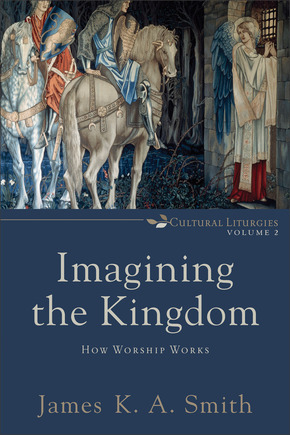
Smith has been a student at the Dooyeweerdian Institute for Christian Studies in Toronto and he has taught much about the integration of faith and learning at Calvin College in Grand Rapids, and he has served as editor for Comment, the prestigious journal of the neo-Calvinist think-tank, Cardus.  Some readers may want him to get on to the work of cultural engagement, social reformation, doing public theology and helping us thinking about how to work for human flourishing and the common good.  We like it when he writes about politics and poetry and philosophy, even.  But worship?  Well, yes — yes, this is it.  We are lovers, of course, which is what is at the heart of worship, and what we love most will shape our lives and our cultures.  We simply have to move with him into this discourse on church and worship and the roles and ways of rituals and liturgy and such.  (Naturally, if you are among the minority of Christians who is a pastor, preacher, or worship leader, this is right up your alley.)  And so, while I am aware (unlike most of our wonderfully-written and usually very accessible picks for favorite books) that this is a particularly demanding and at times even obtuse work, it is none-the-less of extraordinary importance.  This book should be widely known among us, widely read, struggled with, studied and lived out. It, is, like its predecessor, truly one of the most important books published in this decade. Here were my early remarks about it from a January 2013 BookNotes We are glad to honor it. Without a doubt, a best book of 2013. 

Discipleship in the Present Tense: Reflections on Faith and Culture  James K.A. Smithdiscipleship in the present tense.jpg (Calvin College Press) $14.00 This is a no-brainer, as they say.  As I’ve noted, Jamie Smith’s award-winning Imagining the Kingdom is surely one of the most talked about books of the year. (Besides our little award, a recent Books & Culture essay insisted that it, together with the previous Desiring the Kingdom, are the most important works of public theology in our time!) Doubtlessly, Smith will continue to be a major figure to wrestle with. (He has two new books coming in Spring of 2014, by the way — one to be published by Eerdmans [How (Not) To Be Secular] on the eminent and heavyweight Canadian philosopher Charles Taylor and a sure-to-be provocative one in the Baker series he edits (“The Church in the Postmodern Culture”) to be called Who’s Afraid of Relativism?)  Professor Smith is known in the arcane guild of philosophy, he is known within the theological world (he has written on Augustine, on Kuyper, as a Pentecostal, and more) and he edits the premier neo-Calvinst journal about renewing our social architecture, Comment. (Of course he has spoken at Jubilee in Pittsburgh, at places like Q Ideas, and he is scheduled to be with us here in York next summer.) 
This recent little volume is significant for a few reasons, as I explained in my breathy celebration of it when we first got it in this fall. I hope you read that review, but I can easily explain our naming it as an overall Best Book of 2013. There are two reasons:  first, Smith is such an important writer that any anthology or collection of his work is very valuable, and those wanting to keep up with his prodigious output will want it. His shorter essays have ways of complimenting and supplementing and clarifying his other work; anyone wanting to follow his career should have these numerous previously published pieces at their disposal.  Secondly, and more importantly for many of us, for those who have found Imagining and Desiring to be a bit dense, a bit too philosophical, or who haven’t worked up the courage to buy them yet, this collection of articles, reviews, sermons, essays, letters and columns is a perfect way to better understand just what the fuss is all about.  I am a huge fan of Desiring the Kingdom, and, as you have seen, have declared Imagining the Kingdom one of the most important books of 2013.  This valuable collection could build a helpful bridge into those important tomes.  Dip in, enjoy, and appreciate this fine writer whose vision of how we live creatively in the world as it is seems to be nearly essential reading for our times.   Can I say that?  Yes I can. Kudos to the Calvin College Press for bringing this out and congrats to Jamie for the provocative and teacherly way he has helped us all.  

BEST BOOK IN HOMILETICS and BEST BOOK ABOUT BOOKS

Reading for Preaching: The Preacher in Conversation with Storytellers, Biographers,reading for preaching.jpg Poets and Journalists  Cornelius Plantinga, Jr. (Eerdmans) $14.00 I am fully aware that I say this a lot, but it is none the less true: I was very deeply moved by this, had to fight back tears as I sat on my couch and read the first pages of this wonderful, elegant, wonderfully-crafted book about books.  I know, I know, this is how I make my living, peddling books, and I know the community of authors is part of my tribe.  I get it.  But you do, too – don’t you? You read books, book reviews, you care about the world, and know that reading widely can make you a better person.  I bet you are glad for books about books, that remind us that God cares about this glorious art of good writing and these marvelous gifts of paper and page. 
If you are not a preacher, I suspect you are glad for the best ones you know, and I bet the best ones you know are readers.  Plantinga, as I have explained elsewhere, has lead workshops for years introducing preachers and pastors to the best writers, convinced they will be better Christian leaders as they delve deeply into the best writers we can find.  This book is designed for preachers, but it is good for anyone who wants to know how to be shaped and nurtured by the printed page, especially if you a leader or teacher.  Being in conversation with biographers and historians and poets and reports – not to mention fiction writers young and old, who write for adults and children – will make you a better person, and certainly, a better communicator.  Buy this for yourself, and buy another for preachers you know.  If they know of Plantinga’s reading program, they will love this book.  If they don’t, you have done them a lasting service.  To make our enthusiasm clear, we are naming this as one of the very, very best Books of 2013, in two categories, no less.  I don’t think I am overstating matters to say that this is a book I have been waiting for for 30 years.

BEST BOOK FOR THOUGHTFUL CHRISTIAN GROWTH

In Search of Deep Faith: A Pilgrimage into the Beauty, Goodness and Heart of Christianity  Jim Belcher  (InterVarsity Press) $17.00  I know I am sometimes swayed by the raves of people I respect, and when friends like Steve Garber (and so many others) endorsed this with gusto, I realized I had to take it very seriously. And did I ever enjoy it!  I loved Jim’s previous book (Deep Church: A Third Way Beyond Emerging and Traditional) and like him a lot; I trust his instincts and appreciate his good storytelling and agree with his Reformed worldview. I hope you saw the review I did when In Search of Deep Faith released this fall -you can tell that I was really taken with it. I can confidently recommend this to many kinds of readers, knowing it is a fun travel story, and an informative book about important Christian writers, and a very, very wise guide to deeper faith and lived faithfulness. Congratulations, Jim.  I am sure this book will be esteemed widely, and awarded often.  It deserves to be consider as one of the best books of the year.

HEARTS & MINDS AWARD FOR MOST INSPIRING BOOK AND PROJECT

More or Less: Choosing a Lifestyle of Excessive Generosity Jeff Shinabarger (David C. Cook) $17.99  I don’t expect even our most careful readers and most loyal customers to remember, but we premiered this book at Jubilee 2013 last February and almost instantly sold out the one carton the publisher let us have early — the book was releasing several weeks later, and they simply didn’t have enough printed, yet. Once the audience heard Jeff talk about how this book came about, what it was for, and how it would help readers make good choices about their lifestyle, and once they saw the videos (now  available on line) they lined up to shell out.  This is rare and notable, and we were glad to be part of the buzz.  And part of the buzz is that this book invites us all to do the sorts of things (in our own way and place) that Shinabarger does.  His creative entrepreneurial abilities are amazing, and his willingness to start sustainable projects and do good stuff that serve others, is remarkably inspiring. That the Love Does guy Bob Goff writes the forward to this might give you hint of the energy and the challenge. 

Happily, More or Less deserves to be known and popular, and it will make a difference in your life, I’m sure.  There are many books —  very good ones, thank goodness – that critique American materialism, that reject the consumerist worldview, that invite us to be more generous with our time and money.  This  book is written in a way that even non-religious folks could enjoy it, tells so many great stories, and frames the questions of “how much is enough” by bigger questions about relationships and calling and service and care and joy and our shared humanness, that I can hardly recommend it enough.  We could award it for being such a good book, we could award it for having such stimulating on-line videos and other extra features, and we could award it for being the fastest selling book all year when we ran out in like five minutes.  Our hat is off to Shinabarger and his own generous, giving way of life, and his excellent ability to so honestly invite others into this joyful, innovative way of making a difference. Check out his good website here (and then come back and order it from us.)

BEST COFFEE TABLE BOOK  (TIE)

Qu4tets  Makoto Fujimura, Bruce Herman, Christopher Theofanidis, et al (Fujimura Institute) $35.00  When I first heard of this I thought the plan was nothing short of genius — visual artists and a contemporary classic musician doing a multi-media project inspired by T.S. Eliot’s famous Four Quartets.  Such a clever plan deserves an award merely for being such a very great idea! Realizing the caliber of artistic insight and skill accumulated by these collaborators, I knew it would be truly splendid.  My early BookNotes review noted not only how cool the idea was but how handsome and classy the over-sized paperback was, how truly interesting the essays were that compliment the moving artwork.   I wrote, 

Further, there are three very significant essays (also enhanced with lovely type and smaller art pieces throughout.)  Matthew Milliner, James McCullough, and Jeremy Begbie are the authors who add their critical reflections, celebrating and exploring not only the original work of Elliot but of these recent works done in response to him.  What a joy to see them reflecting on Eliot and Herman, Eliot and Mako.  What a grand, collaborative effort this all is and what a grand gift that results.  Qu4rtets is simply magnificent.

 It was a tremendously valuable project, and we are honored to carry it.  And we are confident to name it – amidst hundreds of art catalogs and coffee table books — one of the very best such books of 2013. Qu4tets is truly, truly unique and exceedingly notable.

Through Your Eyes: Dialogues on the Paintings of Bruce Herman Bruce Herman & G. Walter Hansen (Eerdmans) $50.00  If this were only a handsome hardback portfolio of some of the works of talented painter (and Gordon College art professor) Bruce Herman, it would be worth every penny; he is an artist of huge talent and deep faith commitments and has been in our generation of true leader of the “faith and arts” conversations.  This volume is made even more exquisite by his collaboration with his friend, an art collector and patron and New Testament scholar who contributes good essays.  Modern artists Makoto Fujimura writes of it, 

It isn’t too often that we get a glimpse into a behind-the-scenes relationship between a patron of art and an artist. In this case, Walter Hansen and Bruce Herman have journeyed together as a theologian and a cultural commentator, two men with cultural stewardship as a goal for the next generation. Bruce Herman is one of the wisest practitioners of art today, and Walter Hansen one of the key influencers and patrons of Christians in the arts. This book is a treasure chest full of wisdom for those serving in the world of art and faith — it’s a work of deep friendship and conversation originating from the highest realm of integrity.

 This is a book you will be glad to own, happy to share, and pleased to display.

BEST BOOK OF THE YEAR ABOUT MUSIC

It Was Good: Making Music to the Glory of God edited by Ned Bustard (Square Halo Books) $24.99  It isn’t every book that gets two reviews at our Hearts & Minds BookNotes. I did a lengthy review last fall explaining this brilliantly-conceived compilation – a musical sequel to the previous (award winning) must-have It Was Good: Making Art to the Glory of God. Then, I did another expanded review, describing every one of the 31 good chapters, exclaiming what was so thrilling, insightful, fun, or moving about each.  Ned Bustard is a good friend of Hearts & Minds, and I’d be tempted to just award him an H&M Best Book for anything he releases, but I do not want to suggest I am doing that. I am not.  Trust me, this is truly a well-earned, truly deserved, (and much-needed) volume, drawing on a truly amazing array of musicians of various sorts, sharing good thinking about all aspects of music making in God’s world.  This book is handsomely designed, consistently well-written, and fills a big spot on the bookshelf – there is nothing like it in print!  It is for music lovers of all sorts and, obviously, any person of faith who is involved in music making, in church or world. Sing it out, choir — this is one of the very best books of 2013!  

FAVORITE GUILTY-PLEASURE READ ABOUT MUSIC

Rocks Off: 50 Tracks That Tell the Story of the Rolling Stones Bill Janovitz (St. Martin’s Press) $25.99 I know. And I’m not even a huge Stones fan. But when I borrowed this from the library, I couldn’t put it down, and then wanted to extend the pleasures, just reading a chapter a day.  It chronicles the social context, cultural ethos, relational issues (yikes), musicological matters and nerdy, recording techy details of 50 representative songs that capture the good, the bad, the ugly, the serious and the stupid, of this amazing band of brothers and their world-changing work.  If you are interested at all in the popular culture of the last 50 years or enjoy learning about how songs (and albums) are made, recorded and marketed, this detailed set of glimpses into these songs is more than fun, it is illuminating and at times even lyrical.  The author is a good writer, himself a rock musician (of the important indie band Buffalo Tom) and author of the 331/3 guide to Exile on Main Street.  This is, I suppose I don’t have to say, R rated, for all the imaginable reasons, and some you can’t even.  I cringed at times, but loved it. 

BEST BOOK ABOUT POPULAR CULTURE

Popcultured: Thinking Christianly About Style, Media and Entertainment Steve Turner (IVP) $17.00  Any year when there is a new book by Steve Turner is a good one. His solid, basic books on faith and the arts and pop music (start with Imagine) and his more specific ones such as the one on the history of the song Amazing Grace, the one about the music played as the Titantic sank, his authorized biography of Johnny Cash and his Gospel According to the Beatles shows his great awareness of so much going on in our world, his serious (if playful) approach to the faith/culture interface, and his prominent position as a rock journalist and cultural critic.   This is one we have needed, though, and I’m very glad to announce it being one we want to honor this year.  Popcultured moves the conversation about a Christian framework for engaging pop culture forward considerably, not only as Turner offers new insights and formulations and concerns, but because of the way in which he guides us into thinking faithfully about topics about which little theologically aware has been written.  Kudos for years of good writing, but we really want to celebrate this important collection on topics such as fashion, comedy, advertising, celebrity culture, photography, technology, alongside more regularly approached (but still vexing) aspects of culture such as film and TV. He gives very helpful insight about how people of faith might wisely consume, critique and create artful leisure pursuits. Excellent.

BEST BOOK ON DIGITAL TECHNOLOGIES

Shaping a Digital World: Faith, Culture and Computer Technology by Derek C. Schuurman (IVP) $18.00  If the length of my BookNotes remarks in announcing a new book is any indication, this is clearly vying for the book of the year — I hope you saw my long rumination about the general themes of how Christians should engage culture, what we might fruitfully say about technology, and why a book of this wise (Kuyperian) tone is so very, very needed.  This is now the go-to book for a clear-headed study of technology, written by a guy who has done significant research, serving in industry (and, now, good teaching) about computations and high-tech, digital innovation. Yes — this is the very best book yet done in this genre and one of my personal favorite books of the year.

BEST BOOK OF BIBLICAL STUDIES  (ACADEMIC LEVEL)

Paul and the Faithfulness of God  N.T. Wright (Fortress) $89.00 I am not a Biblical scholar (ha–I’m not any kind of a scholar) but the guild of Biblical scholars were as eager to see this as any book in recent memory, and weighing in at 1700-some pages (and a supplemental volume entitled Pauline Perspectives: Essays on Paul)  this deserves a couple of awards.  We could joke about its depth and thoroughness and we can quibble about, well, about a lot, it seems.  But there is no doubt – none whatsoever – that this is the most significant book in Biblical studies in years.  When the final volume(s) are done in the utterly magisterial Christian Origins series, we will surely be able to say it is the most important such work in our lifetime.  Kudos to Tom for his dedication to church and academy, for doing such astute research, and for being in conversation with so many different constituencies.  It is rare for a scholar to have so many genuine relationships in so many quarters, and we want to add our voice to those who insist not only that he is a scholar to be read, but that we are glad for his support and friendship.  I should also note that as heavy (and detailed) as this material is, it is readable, gladly free from much of the arcane jargon that afflicts most scholarly writing, even in the field of New Testament studies.  This deserves every award it gets, and we hope our little one adds to the respect this work deserves.

BEST BOOK OF BIBLICAL STUDIES (ACADEMIC LEVEL) 

HONORABLE MENTION

Pauline Perspectives: Essays on Paul, 1978 – 2013  N.T. Wright (Fortress) $69.00  Did I mention that this nearly 650 page tome also came out this year, the same day as the two volume Paul and the Faithfulness of God?  I have read much of this and some is slow-going, but it is an ideal way to get up to speed on some of the most important conversations around Pauline studies in recent years.  This is an essential collection of Wright’s most important (and in some cases, influential) articles on Paul that have been published in the last 35 years.  

As it says on the catalogue copy, “The book begins with N. T. Wright’s auspicious essay of 1978, when as a young, aspiring scholar he gave the annual Tyndale lecture in Cambridge, and proposed, for the first time, ‘a new perspective’ on Pauline theology. The book ends with an expanded version of a paper he gave in Leuven in 2012, when as a seasoned scholar at the height of his powers he explored the foundational role of Abraham in Romans and Galatians. In all, the thirty-three articles published here provide a rich feast for all students of Paul, both seasoned and aspiring. Each one will amply reward those looking for detailed, incisive and exquisitely nuanced exegesis, resulting in a clearer, deeper and more informed appreciation of Paul’s great theological achievement.”

For these obvious reasons, we believe it goes nearly without saying — but we want to say it loudly — that Pauline Perspectives is one of the most important books of the year and its value should not be underestimated or missed in light of the publicity of the new Paul volumes.  

BEST BOOK OF BIBLICAL STUDIES (ACADEMIC LEVEL)

RUNNER UP 

Jesus Is Lord, Caesar Is Not: Evaluating Empire in New Testament Studies Joe Modica (InterVarsity Press) $22.00  I am a big fan of Scot McKnight, and a friend of Joe Modica, and I trust them both a lot.  If other more ideologically-driven authors gathered together scholars to debunk the anti-Empire themes and progressive politics that have appeared in recent years in New Testament studies, I might be skeptical (or worse.)  Happily, this isn’t a project of reactionary debunking, but one seeking faithful refinement. These editors pulled together reasonable pieces that offer critique of some of the (alleged) excesses and over-reaching about the politics of Jesus and Paul, pushing back just a bit against the recent trend which begins to read anti-Empire themes too quickly into too many of the Biblical texts. It walks through each part of the NT, offering very fair and insightful scholarship, some that is in conversation with other popular authors. For instance, some chapters criticize Dominic Crossan; another one that is in conversation with one of my own personal favorite books, Colossians Remixed by Walsh & Keesmaat.  Agree or not with the details of the exegesis or socio-political implications of these critics, this is the sort of debate we need to have if we are going to engage the Bible and live out the implications of it all today. By the way, there is a very nice preface by Andy Crouch, who offers his good writing to set the table for this interesting book.  Highly recommended.

BEST BOOK OF BIBLICAL STUDIES  (POPULAR LEVEL)

Case for Psalms: Why They Are Essential  N.T Wright (HarperOne) $22.99 Again, I tipped my hand when I reviewed this at BookNotes; I said that when I got to the last page, I went back to page one and started it all over again.  This is rare for me, and I must say I was as taken with this as any book in this category all year long. You can read my BookNotes review here. Tom Wright will be talked about for decades as one of the most significant church leaders and Bible scholars of our time, and 2013 will be recalled as a year when he released his long-awaited, multi-volume work on Paul. We want to celebrate this fine, small book which offers profound insights on the worldview of the Hebrew Psalms and invites us to consider their value in our personal devotion and our liturgical worship.  This is truly a great little book and some of what he says here is fresh and profound!  Join us in offering praise for this as we honor it with a Best of the Year award from Hearts & Minds, please!

BEST BOOK OF BIBLICAL STUDIES (POPULAR LEVEL) 

RUNNER UP

Jesus on Every Page: 10 Simple Ways to Seek and Find Christ in the Old Testament  David Murray (Nelson) $16.99 Years ago I found immense clarity and coherence in the Reformed insight that the Bible unfolds as a drama, with Christ’s incarnation and work as the heart and highlight of the story.  Soon, I began to realize that some of our best Bible preachers and teachers have a Christ-centric view of the whole Bible and some, either deftly or with a ham-fist, begin to see hints and whispers and types and symbols of Christ all over the Hebrew Scriptures.  There are many books on this historic-redemptive approach to the Bible and there seems to be a rediscovery of this “Christ in all of Scripture” hermeneutic.  I’m glad, too since one of my own favorite texts — the story of the post-resurrection walk on the road to Emmaus in Luke 24 — has Jesus telling the disciples about himself from the law and the prophets.  So it can (it must!) be done.  This new book shows us how.  With its ten different styles and types and models, it offers the Bible student and teacher wise and careful suggestions on how to properly move into this important bit of faithful proclamation.  Puritan scholar and Banner of Truth editor Ian Murray says it is “one of the most helpful and most needed new books that I have seen in a long while.” Murray is a classic, old time Scottish Bible teacher, and this book is refreshing for being non-sensational and unhip.  It is clear and wise and very good.  It deserves an honorable mention.

BEST BOOK OF BIBLICAL STUDIES (POPULAR LEVEL)

RUNNER UP

Writing in the Margins: Connecting with God in the Pages of Your Bible  Lisa Nichols Hickman (Abingdon) $16.99  Is it fair to award a book that I was lightly involved with?  I wrote a lengthy foreword to this and, to be honest, am a bit proud of it. (I posted it here, if you want to read my few pages.)  What I said there I meant, and we really want to honor Lisa for this, her second book, one that isn’t quite like anything else of which we are familiar.  It includes guidance about Bible study, invites folks to interact with the text by writing in the margins, and gives tons of appealing stories about those who have scribbled in their books, especially in their Bibles.  I loved reading this, was inspired by her nice style and how she both teaches and motivates, explains and challenges, promising us – as I promised in the preface – that we will come to know God better if we enter in to this kind of engaged, creative process of attending to the Word of the Lord, even in our daily lives.  Pick up this book, pick up a pen. Enjoy the interesting design, do the exercises, ponder the questions. And then join us in celebrating this book, one of our favorite books of 2013.

BEST BOOK OF BIBLICAL STUDIES THAT IS MORE THAN BIBLICAL STUDIES 

God’s World: Reclaiming the Doctrine of Creation Jonathan R. Wilson (Baker Academic) $24.99  I know this is mostly a work of Biblical studies, and it is rather academic, but I think it is so very significant that it transcends the genre, making it a tremendous and important resource for basic Christian growth and for anyone who cares about Christian cultural engagement and social action.  Too many of our artistic, political, and social reforms are advanced unrelated to the norms and ordinances built into the creation and this study helps us bring the “theater of God” (as Calvin called it) into view.  I thoroughly enjoyed this meaty work (even if I wished for a different word or emphasis here or there, or another insight or better teasing out of the implications) and really want to honor it as a much-needed contribution, one of the most valuable books of the year. There are some handsome art pieces, too, and I’m glad when publishers go that extra step to make a book interesting and useful.

HEARTS & MINDS AWARD FOR BEST BIOGRAPHY OF THE YEAR

Abraham Kuyper: Modern Calvinist, Christian Democrat James D. Bratt (Eerdmans) $30.00  I don’t think I have to explain much about this, but allow us to remind you that when I reviewed it earlier in the year I suggested that this was the grand, thorough, well-written biography we have been waiting for for years.  No other biography of Kuyper has covered his life and times and beliefs and work with such historical detail and such clarity of understanding. I always tell those who are interested (please, please be a little interested!) that Richard Mouw’s little book, Abraham Kuyper: A Short and Personal Introduction is the place to start, and it should be honored and used — it really does explain the generative neo-Calvinist vision of Kuyper who has influenced the modern evangelical fascination with culture so very much.  But there is no doubt that this is the very best serious work on Kuyper, and the biography of the year, breathtaking, important, historic.  Kudos.

BEST MEMOIRS:  

DULY NOTED, HONORABLY MENTIONED, GREATLY APPRECIATED

North of Hope: A Daughter’s Arctic Journey  Shannon Huffman Polson (Zondervan) $16.99  I as floored when I saw that the evangelical publisher was going to publish a memoir with a blazing endorsement by Terry Tempest Williams and another by the esteemed writer Scott Russell Sanders (who would call it “Daring, perceptive, and eloquent.” This remarkable story is almost too much to tell, but it artfully tells the story of a woman retracing the Alaskan wilderness journey to the very spot where her beloved father and step mother were mauled and apparently eaten by a grizzle bear.  Part wilderness travelogue, part memoir of unimaginable grief from unimaginable tragedy (and, curiously, part beautifully written reflections on rehearsing and preforming in the acclaimed Seattle Pro Musica choir of a Mozart Requiem) this quest for healing is lyrical, raw, and unlike anything you’ve ever read.  I appreciate the lines of an endorsing blurb by former National Park Ranger, author Cindy Crosby, who notes that Polson “comes to believe that there is grace and wonder in the most unlikely places, that the landscape’s wildness can teach you about letting go of control, and that Easter doesn’t arrive until you’ve experience Good Friday.”  Even when I was only part way through it, I knew I would name is as one of the most memorable books I’d ever read, and surely one of the Best Books of 2013.

The Little Way of Ruthie Leming Ron Dreher (Grand Central Publishing) $25.99  I cannot tell you how often I have talked about this book this year, surely one of the books I’ve most often held up, quoted from, and cited the eloquent back cover blurbs. It isn’t every book that gets a lovely endorsement from Elizabeth Gilbert, the Eat Pray Love lady  — herself a heck of a writer, in my view – as well as good religious writers such Ann Voskamp and serious critics like Alan Jacobs. The short version is that “crunchy con Catholic” pundit Dreher reluctantly moves from the high-powered, fast-paced big city to the funky, rural town in the deep south to help care for his dying sister, the unforgettable Ruthie Leming, who we learn about in the first part of the book.  He finds, though, a way of life there, a substantial, communal, life-giving, sustainable way of life that seems to come out of a Wendell Berry novel.  This is a book you should read with a box of tissues handy, as it is a true tear-jerker (but not cheap or sentimental, either, as Dreher is both a mature thinker and expert wordsmith) but you should also consider a note pad or highlighter to process it all (did I mention that the author is a mature thinker and expert wordsmith?)  This is a complex book that is wise and good and valuable, one that you gladly will never forget.  You should find a group and talk about it together, as it is (forgive the cliché) about learning to live and learning to die. This fully deserves an award from us — one of the very best books of the year.

Moving Miss Peggy: A Story of Dementia, Courage and Consolation Robert Benson (Abingdon) $15.99  If the previously mentioned memoirs were long, often painful dramas of rejecting and finding faith, stories of betrayal and angst and the journey of finding one’s way in the world, this is in many ways the exact opposite.  Benson is, as you know, one of our favorite authors, and his economic, sensible prose is perfect for the quiet sensible advice that comes to us in this story of the Benson family matriarch and the families decision that their beloved Miss Peggy has to be moved to an assisted living facility.  A writer like Benson brings his tender heart and wise ways to anything he writes about but there is something extraordinary about this forthright telling of such a seemingly sad tale.  I cried through much of it – bringing my own story and my own mother’s needs into my reading of every page – and I think you might too. This is a short book, telling a story that is not particularly spicy and I suppose not even all that exceptional. No matter.  It is clearly one of the most cherished books I’ve owned all year, and  we want to honor it any way we can.  Thank you, Mr. Benson. 

When We Were on Fire: A Memoir of Consuming Faith, Tangled Love, and Starting Over  Addie Zierman (Convergence) $14.99  When I saw that Publishers Weekly had named this as one of the top five religious books of the year, I knew I had to read it promptly.  I am not sure I want to crow that loudly about it (they also named the new book by N.T. Wright, which is a different matter altogether.)  Actually, it is very good, and neither Beth nor I could put it down; we enjoyed it, pondered it, and (at times) were frustrated by it.  It is (mostly) very well written, an occasionally funny, often sad and strangely moving tale of a young woman’s journey through the conservative evangelical sub-culture of her youth and young adulthood, and how many of the clichés that seemed so true and assuring came undone as she left home, went to college, got married, and tried to find a sane church and reasonable faith community.  As you might guess, she goes through quiet a lot and there were, indeed, some hurtful episodes and some weird shaming and some clueless leaders along the way.  Some of this is heartbreaking and much is spot on.  As she takes up cynicism, drinking, and struggles to deepen a marriage and faith (both which seemed to be in jeopardy) I at times wondered why she couldn’t more easily adjudicate the cheesy and superficial and odd aspects of American fundamentalism, and why she didn’t realize that most Christian theologies and communities aren’t like that.  But she is not alone in her myopia and grown-up disdain for her religious past – this is nearly a trend, now, tell-all exposes of the mixed-bag of fundamentalist faith, and the conflicted experience of wanting to escape toxic religiosity, but being unable to shake the appeal of Jesus and the charm of a life of devotion.  And so, Zierman’s tale is captivating and insightful and perhaps emblematic.  It deserves the applause it is getting, certainly one of the best memoirs of the year. She is a good writer, and is well worth listening to.  Cheers!

God on the Rocks: Distilling Religion, Savoring Faith  Phil Madeira (Jericho Books) $24.99  Not unlike Addie Zierman, Phil grew up in a strict, evangelical home and he has come to reject some of the beliefs and many of the habits of his conservative upbringing.  Like any good child of an evangelical family from a conservative church, he struggles with both the wonder and joy, and the weird and the toxic, and this beautifully-realized memoir invites us into the turmoil and excitement of breaking free, or trying to. This book accomplishes much – it is a rip-roaring story and it shines a light onto a particular time and place in the American religious landscape, even as it invites us into the tales of a in-demand studio musician who has played with some of the best musicians of our generation.  But it is in this same genre, the falling somewhat out of faith story, the journey out of the stricter aspects of American evangelicalism. 

But God on the Rocks is different then Zierman’s  When We Were On Fire in at least three ways: Phil came of age not in the commercialized, programmed evangelicalism of the early years of the new millennium (with True Love Waits campaigns and Veggie Tales and Meet You at the Flagpole prayer meetings and I Kissed Dating Goodbye nuttiness) but came alive in his faith at the tale end of the Jesus People movement in the early 70s (which becomes fertile soil for some crazy stories of his own, some that might have completely undone poor Zierman.) Phil is a baby boomer, and the story is wonderful for those of us who recall growing up in that world of conventional religion, mostly, and the arrival of the Beatles… Secondly, Phil did have a bit of a unique angle into the evangelical world as he travelled with CCM rock star Phil Keaggy and eventually worked his way into producing literally hundreds and hundreds of other albums with mostly faith-based performing artists as diverse as Carmen, Steve Taylor, Mark Heard and the like.  And, thirdly, unlike Zierman, Phil seems to have more than a literary agenda — Zierman’s intent is mostly to write her story and she accomplishes it beautifully — but Madeira begins to ruminate on a reformulated set of convictions, a re-doing of evangelical faith, as it were.  He’s not a trained theologian, but he knows enough to find a path beyond fundamentalism, and is familiar with the likes of Frederick Buechner and Barbara Brown Taylor and Brian Maclaren, just for instance.  That he is a professional musician who plays with Emmy Lou Harris and hangs out with the likes of Bruce Cockburn (and continues to produce projects such as his Mercyland: Hymns for the Rest of Us) makes this particularly fun;  that he is involved in a mainline Episcopalian church and not terribly unhappy how he has (as the Quakers might put it) “come ’round right” makes this book a bit less tragic than others in this genre.  Phil’s gracious visit to our store last summer was a highlight of the year for us. (You can read my overview of his work and the book written before he came, here.)  

The Dark Path: A Memoir by David Schickler (Riverhead) $27.95  I think this was one of the best-written memoirs that I’ve read all year – certainly a thrilling read, maturely written, and very, very revealing.  I must admit that am a bit reluctant in naming this as a best of the year because there is much of what the movie ratings systems would tersely call adult content. The short version of this complex story is that the author feels called into the Catholic priesthood and yet does not want to be celibate.  It was really fascinating to read about a devout religious person struggling with the sexcapades at his major university a decade ago, and how the hook-up culture and party scene conflicted with his faith (Charlotte Simmons, anyone?)  He wants to be strong like his father was and he often recalls the “dark path” under a set of trees in his boyhood home where he felt a mysterious presence of God.  Despite the candid description of the young adult misbehaviors, the angst of trying to discern a religious vocation, the sexual and romantic heartbreak, this is an enjoyable tale which is very well told, and I found it not only as engaging as any novel I’ve read this year, but illuminating in so many ways.  As an evangelical Protestant myself I wanted often to whisper into his year a Biblical truth or two, and there were moments when I winced.  Oh, how I longed for another religious voice to appear, somebody who could guide him and mentor him in more sensible ways — especially when a relationship with a trusted priest gets ugly.  But this is his story, not mine, and it was deeply touching, very interesting, and truly deserving of being lauded as a Book of the Year.

Jujitsu Rabbi and the Godless Blond: A True Story Rebecca Dana (Putnam) $25.95  Okay. Whew. Man, should I even mention this?  What a crazy, crazy book. What insight, what prose. What a story, what a character.  This was all the rage in Brooklyn, I’m told, last summer, and I grabbed it because I like interfaith stories, and this hip gal was from Pittsburgh, and I read several reviews that told how well-written and entertaining (and odd) it was. Once I started the first couple pages – narrating a vulgar knock-down fight between she and her jujitsu Hasidic rabbi roommate — yes, you read that right — I could not put it down. What an attitude she has, what skill as a high-octane, new millennial writer. This creatively told memoir is multi-layered and fast paced and tons of fun; the short version is weird but true: she grew up among engineers in Pittsburgh admiring Sex in the City and reading the romantic New York tales of Nora Ephron, worked in high fashion in Manhattan, has her heart broken, needs a new apartment, and finds on Craigslist an opening in a Lubavticher part of Brooklyn.  Her soon-to-be roommate, Cosmo, is a heavy-metal-loving, martial arts-learning, Hasidic Russian rabbi who is in the process of losing his faith while she is showing some signs of wanting to regain her own.  Stranger things have happened, I suppose, but I don’t know any novelist who would be so audacious as to make up a story like this.  I like the copy on the back that notes that her story shuttles “between the worlds of religious extremism and secular excess, faith and fashion” as she searches for meaning.  The new paperback has a readers guide. I suspect you already know this: it isn’t for everyone.  And she doesn’t quite find the deep meaning we hope she discovers.  But I loved it, still, as a glimpse into another’s life, odd as it is.

BEST BOOK OF MEMOIR, TEACHING AND ENCOURAGEMENT

Bread & Wine: A Love Letter to Life Around the Table, with Recipes  Shauna Niequest (Zondervan) $18.99  I don’t know how to tell you why this book is so very, very great, or why it moved me so much, but it did.  I think it may be the book that we’ve had the most feedback about this year, one of our best sellers, and one that nearly everyone loves.  It includes a bit of memoir (not unlike her wonderful collections of essays Cold Tangerines and Bittersweet) and some teaching about a lively Christian vision of food and hospitality and the glories of “life around the table.”  Some of our friends have raved about some of the recipes and I know some are working their way through all of them.  We are not organized or energetic enough to do this, but it was even fun reading her recommended menus.  I suppose there have been other books inviting us to deeper relationships formed around food and faith; I know hospitality is a big concern among church folks these days.  I don’t think I don’t anything like this, and it is truly one of the best books of the year!  Kudos to Zondervan for giving us such a lovely book, and thanks to Niequest for sharing her life, once again, in her own beautiful style.

BEST BOOK OF MEMOIR, TEACHING AND ENCOURAGEMENT
RUNNER UP
Freefall to Fly: A Breathtaking Journey Toward a Life of Meaning Rebekah Lyons (Tyndale) $19.99 I so loved reading this and loved writing about it at our store’s BookNotes blog went it came out early in the year.  In many ways it is a memoir, but it is more than a literary telling of a life story; the author offers her hard won insights about being a woman (with young children, in a strange, new home) and how we can all step into our sense of vocations by trusting God.  Lyons does not make it sound easy. As the wife of a high-powered, busy evangelical leader (Gabe Lyons, founder of Q Ideas) and the mother of a special needs child, with anxieties about living in crowded New York city, her tale is riveting.  That she draws on a circle of women friends is not only nice to read about but is significantly instructive.  This is a very good book, enjoyable as a memoir-like story, important as a call to freedom and trust and Christian growth, and helpful as a guide to discovering a more healthy, hopeful, happy life. Yes, it is written by and for and about women and their own unique callings and vocations, but I enjoyed it as a male.  Guess that’s one of the things that makes it deserving of a Best of the Year Award.  Nicely done.

BEST THEOLOGICAL ESSAYS: RUMINATIONS & REFLECTIONS

My Bright Abyss: Meditation of a Modern Believer  Christian Wiman (Farrar Straus and Giroux) $24.00  This is not exactly a memoir, but a set of (very) serious reflections, remembrances and writerly essays about the famous poet’s convictions about life, meaning, suffering, faith, God, the gospel, and what it all meant as he learned he had little chance to live with a terminal illness.  The essay that appeared in The New Yorker several years ago had many intellectuals wondering if Mr. Wiman would write more, and his book had been eagerly awaited and very enthusiastically received.  As a writer he is exquisite, as a thinker he is deep and well-read, and as a person of faith he is at times insightful, sometimes profound, and, at times (or so it seems to me) nearly indecipherable.  Still, this is a very highly regarded work (it was reviewed in The New York Times Book Review by Kathleen Norris, by the way.)  To ponder just some of his many important insights making reading this well worth the cost; to be able to have such a important, well-written book is, obviously, a great gift.  Even if his faith wavers and his formulations waver from the orthodox to the quizzical, this is surely one of the fine examples of a major intellectual writing publicly about Christian faith. I am not alone in being grateful for Mr. Wiman’s writing (some lines in this work are so vivid I had to close the book and close my eyes) and work (he continues to teach literature at Yale Divinity School, by the way) and for God’s own gracious work in Wiman’s life.  This is doubtlessly, one of the more notable books of 2013.

BEST BOOK OF ORDINARY CHRISTIAN LIVING

Eat with Joy: Redeeming Gods’ Gift of Food  Rachel Marie Stone (IVP) $16.00  This book came out just in time for the Jubilee conference last year, and I highlighted it from up front, suggesting to the gathered crowd of 2500 college students that this is a perfect example of the sorts of things we most like to promote–a well written book that has a near-perfect blend of thoughtful analysis, fun stories, clear Biblical teaching and practical advice.  From a profoundly Christian perspective, Stone shows the good and the bad, the beautiful and the broken, and offers radical, but not extremist suggestions for a faithful Christian lifestyle in this time of agribusiness and industrial food systems.  There are many fantastic books on food and faith, and we stock a lot.  Some are more artful, some more scholarly, some more detailed. None strike just the right balance as this lovely little book, and we are happy to declare it a key book on this important topic, and surely one of our very favorite books released in 2013. 

I realize there are oodles of books on how to grow in faith, trust God, be more Christ-like and such. Some are very good, many are helpful.  But this shows forth a particular aspect of daily discipleship that is neglected, and deserves to be known not only as a good book on the foodie shelf, but as an essential resource for what some simply call Christian living.

BEST BOOK OF ORDINARY CHRISTIAN LIVING

HONORABLE MENTION

When Spiritual But Not Religious Is Not Enough: Seeing God in Surprising Places, Even the Church Lillian Daniels (Jericho)  I know that there are authors and many, many younger people especially, who like this phrase “spiritual but not religious.” Some are substantive people but many mean they are vaguely interested in their inner lives, and appreciate the beauty of a sunset or the serenity they feel when practicing yoga. (This is a different tact then the one offered by evangelicals like the popular Jefferson Bethke who insist that a living, demanding relationship with Jesus is different than the nominal and delusional “religion” that one sometimes gets from merely being a part of a church.  That view sounds a bit like the old saw that just because a mouse is in a cookie jar doesn’t make him a cookie or that going into a garage doesn’t make one a car.)  Anyway, the shots against religion, cheap or not (and Rev. Daniels tends to think they are cheap and is pointed in her rebuke) come into focus here as he counters with wonderful stories of mundane stuff, stellar writing explaining the not-so-stellar ways in which God shows up as the gathered faithful do church day by day, in small places, neighborhoods and conventional ministry.  Daniels is a pastor in the UCC and her testimony of what God is doing within mainline liberal Protestantism – not to mention as God shows God’s self in ordinary and oddball settings – makes for joyous, heartening reading. It is a collection of short essays, so it is lovely to pick up and reflect upon.  There are no serious arguments and much about storytelling, which is, I suppose, its own poignant apologetic.  I loved this book, read some chapters more than once, and think it is a great antidote to the easy move away from the messiness of church as most of us experience it.  Read this book, listen to this author, enjoy the reminder that God is alive and well, even in places like the local small town parish, the small member youth group, the church picnic or choir,  or a nursing home Bible study or food pantry ministry. And, as many chapters note, in places outside of the local church. Yep, this is the real deal, gloriously reported, wonderful for being so darn ordinary and interestingly told.  We are happy to honorably mention it again! 


BEST BOOK OF ORDINARY CHRISTIAN LIVING  

RUNNER UP

Both-And: Living the Christ-Centered Life in an Either-Or World Rich Nathan & Insoo Kim (IVP) $16.00  There are, as I’ve mentioned, and as you surely know, dozens and dozens of helpful, gospel-based, even profound guides to authentic and fruitful living.  So many are solid and helpful, and we have ’em all. But there are a few that stand out, and this one is one that deserves special end of the hear affirmation.  I am a bit sad that it doesn’t handle more dichotomies than it does (ahh, what a long book it would be) and I am afraid it won’t appeal much to mainline folks who aren’t caught up in the either/or of, say, word vs deeds or evangelical vs charismatic, or orthodoxy vs orthopraxis.  Some may be a bit uncharitable (and I think wrong-headed) to think “I’ve got this down, these old tensions pretty well resolved, and, anyway, his Vineyard-based charismatic tradition isn’t mine anyway.” Fair enough. But I agree with mystic Richard Foster who says “Both-And is a prophetic word for our day. It is relevant.  It is challenging. It is compassionate.  It is courageous.” This book transcends much of the polarization one hears about among conservative congregations, and this delightful call to be “both-and” (not settling in a lukewarm middle) is very helpful.  If you are concerned that culture war rhetoric has hijacked our faith, if you resent voices from one side or the other trying to suck us into one-sided ideologies, I think this fine call to proclamation and demonstration, justice and mercy, unity and diversity, may be just for you.  I like it. I’m doing what it says, too, both and.  I have both some critique and want to loudly award it as a fantastic book for 2013.  How’s that?  Yay.

BEST BOOK ABOUT HISTORY

Why Study  History: Reflecting on the Importance of the Past  John Fea (Baker) $19.99  This deserves an award – it seems that nearly every book he writes deserves an award – although this one is simple, short, clear, and yet (as he explains) very important. There are more scholarly works (indeed, one that he co-edited a few years ago is called Confessing History) that explore a sophisticated philosophy of history from a Christian perspective, but for a quick read, succinct and compelling and helpful, this simply can’t be beat. Eric Miller notes that his “love of his craft is infectious and his knowledge of it inspiring.” Thomas Albert Howard calls it “a splendid, engaging book at once erudite and accessible.”  I wish that every academic discipline had such an introductory level book of such fine insight so admirably written.  Kudos, John.  You have gotten more significant awards than this, but we are happy to tip our (tricorn) hats, as well.  Hip hip hooray.

BEST BOOK OF HISTORY

Heretics & Heroes: How Renaissance Artists and Reformation Priests Created Our World  Thomas Cahill (Doubleday) $29.95  I am sure most of our readers know of this “Hinges of History” series, and the first in that set (How the Irish Saved Civilization) remains a perennial good seller.  Here, the quite classy, certainly brilliant, good guy raconteur Renaissance man brings his keen eye and lovely story-telling abilities (the Washington Post called him “a felicitous writer” while the coveted starred review at Kirkus called him “jocular”) and astute discernment together for a passionate study of some of he most important people and events in Western history. The wonder of the book is enhanced by some fabulous full color artwork and lavish illustrative material.  This is a very, very handsome, thick hardback, beautifully-made, as good or better than his much-appreciated, glorious one on the medieval era (Mysteries of the Middle Ages.)  This is one history book that deserves to be known, a book that brings mature insight to regular readers, smart, accessible, inspiring, even. 

BEST BOOK ABOUT THE CIVIL RIGHTS ERA

The King Years: Historic Moments in the Civil Rights Movement  Taylor Branch (Simon & Schuster) $26.00 Anyone familiar with the magisterial, highly regarded, prominently awarded massive three volume series “American in the King Years” will be glad to know that 2013 saw a greatly abridged, one-volume title, where the insightful Mr. Branch offers a guided tour to the best portions of the series.  I wrote about this a time or two (including this short piece in my monthly column the Center for Public Justice’s Capitol Commentary newsletter) and continue to want to shout about it. You can see it nearly topped the great list of books I recommended during the weekend late last summer as we commemorated the fiftieth anniversary of the March on Washington. There may be other essential books
of the era, but for an introduction, one would be hard-pressed to find a
better text than this.

BEST BOOK OF PASTORAL CARE (FOR ALL OF US)

Good Funeral: Death, Grief, and the Community of Care Tom Long & Thomas Lynch (Westminster/John Knox) $25.00  In our announcement of this, I shared that I read the entire preface by Barbara Brown Taylor out loud to Beth the day it arrived and we were both all choked up as she tells of her own experiences of funerals and why this book by the two Toms is so very, very important.  Mainline Protestants should know Tom Long for his many books of pastoral theology and homiletics and Biblical studies, and I hope all BookNotes fans know of our love for undertaker and poet Tom Lynch. Some of their strong opinions about how we ought to do funerals, and how good funeral practices can help us grief well have been published over recent years in The Christian Century and elsewhere. Some pastors have told me that their work is as valuable as any pastoral care training they have ever received.  There is little doubt that this book is exceptional, a rare contribution by the best thinkers on this topic.  Surely the best book on the topic, this year or any year. Is it right to celebrate a book on death, dying, grief and the business of funerals?  In quiet tones, at least, yes, indeed!

BEST BOOK OF PASTORAL CARE (FOR ALL OF US)

RUNNER UP

Walking with God Through Pain and Suffering  Timothy Keller (Dutton)  $26.95  Early in 2014 Philip Yancey released a short and important follow up to his old book Where Is God When It Hurts called The Question That Won’t Go Away. It is brief and good. Indeed, this question simply will not go away and any faith tradition that doesn’t have care for the suffering (and some hint at answers for those who need help understanding and enduring the pains of the human condition) ought to be ignored.  When evangelical and Reformed faith has such a sharp mind and caring pastoral sensibility as revealed in this major work, we want to gladly honor it, to shout about it, to award it. 


Keller’s book is in three good parts: the first is fairly philosophical, asking the big question of theodicy, the second provides Biblical studies that can help the hurting, and the third portion offers more practical strategies for walking through the fire of suffering. Each part is excellently done, and together, the book is surely worthy of being named as one of the very best in the field. As with any book (especially on such an unfathomable topic) there will be lines with which you disagree, there will be a tone or touch that rubs you the wrong way.  What book isn’t like this? In many ways, it is the mark of a better book, and I hope this book gets a wide readership and that it incites better guidance, philosophically, Biblically, and practically, for those who are walking through pain and suffering.

BEST BOOK ABOUT PASTORING

(TIE) 

Relational Pastor: Sharing in Christ By Sharing Ourselves  Andrew Root (IVP) $18.00 There are oodles of good books for pastors, some that are a bit heavy, some that are bit simple, and a few that are in that sweet spot of serious but well-written, theological and practical.  I think this is one of the more urgent, important topics for many, and this is doubtlessly one of the most substantive and interesting books I’ve ever seen on this.  What is is about?  It isn’t easy to explain, although the title is pretty self-evident.  What does it mean to be a person who cares for others?  How are relationships at the core of what we do?  What is ministry, especially if we start to think about it as relational?  (Root wrote a very impressive book a few years ago taking to task those in youth ministry who talk about “relational” ministry by which they really mean (not to be too cynical about it) “using” relationships as an avenue to mentor youth.  That is, these are not real relationships, but quasi/pseudo relationships, with the minister always holding (consciously or sub-consciously) another (often noble) agenda.  Can we be in real community together? Can clergy be authentic, and learn to do their work in the context of the messiness of real relationships.  You know, and I know, pastors who are pretty lacking in social skills.  And there are those who are perhaps too skilled in the techniques of “relationships.”  This book helps us all get it right, and while it is a professional book for clergy folk, I think it is useful for any of us, since we are all called to exhibit authentic caring in real relationships, and have to learn to do ministry together in the context of redemptive relationships.

Sensing Jesus: Life and Ministry as a Human Being Zack Eswine (Crossway) $19.99  Those that have shopped with us here or have seen us at clergy convocations or retreats know that we stock hundreds of books about the life of clergy, about pastoral and prophetic care, about preaching, and leading worship, and keeping sane in the ministry, in churches large and small, conservative and liberal.  If you are a pastor, or want to help your pastor, we have a book for him or her.  This one, I believe, is exceptional.  It is a long and often luminously written reflection o, as the subtitle suggests, the human and human side of being in ministry.  Eswine wrote a book about preaching a few years ago that we liked (Preaching to a Post-Everything World) and although he is in a fairly conservative faith tradition, I think that his incredible honesty about his own failures, burnout, and pain, could be helpful to nearly anyone in ministry.  As it says on the back cover this “presents sound pastoral theology couched in autobiographical musings and powerful prose.”  Listen to what Scotty Smith writes, “Where was this book when I was stuck in the unrelenting grind of performance-based pastoring; the spiritual schizophrenia of preaching the gospel of grace with a frozen heart; the lonely pedestal of a pulpit surrounded by thousands of people? Zack, thank you for stewarding your pain and God’s gospel.” Jerram Barrs exclaims that it is “one of the finest books on being a pastor in this generation…” I can certainly name it one of the best in this topic for 2013, can’t I?  Yes, I can.  I hope you will too.

BEST BOOK OF ENVIRONMENTAL STUDIES

Soil & Sacrament: A Spiritual Memoir of Food and Faith Fred Bahnson (Simon & Schuster) $26.00  We have been talking about a down-to-Earth faith for decades, and our environmental studies section – not to mention our titles about farming and agriculture – has been a good window into what makes us a bit distinctive among religious bookstores.  We are seriously committed to a discipleship that is embodied and a spirituality that equips us for living in the real world; caring for the creation is integral to being human, and (it should be obvious) essential for healthy human survival.  We are at a crisis point in Western industrial history and we are glad that many publishers are bringing out books about faith and food .  This is, to put it bluntly,  one of the very best we’ve read, and deserves to be widely celebrated, received with great gratitude, and – we pray – discussed and applied, sooner than later.  Join us in giving thanks for this book, a true Best Book of 2013.  The title of this shows, by the way, that it is nicely written with plenty of personal anecdotes (although I’d not exactly call it a memoir.)  Hilarious memoirist and feisty wordsmith Rhoda Janzen writes of it, “Fred Bahnson had me at the hairy vetch and crimson clover. He bumped me off the couch and into the garden even before I could finish the book. I’m all for seekers who sit around asking, ‘What does it mean to be fully alive?’ But it’s even better when they stop asking and start doing.  Faith, it turns out, is not unlike a hand-cranked spreader. Works on all kinds of soil.”

BEST BOOK FOR RELIGIOUS SEEKERS (AND FOLLOWERS OF JESUS, TOO)

Who Is This Man? The Unpredictable Impact of the Inescapable Jesus John Ortberg (Zondervan) $22.99 We love this author and this book, but wonder how to describe it, and – we wonder, sometimes -where to best shelf it in the store? Who really is it for?  It is a book about Jesus, obviously, so it goes there.  It is the latest in the long line of wonderful, readable books by Ortberg, so it goes on the “distinguished authors” section right inside the front door. But, also, should it go under history (since it shows how so very much of Western culture has been influenced by the teachings of Jesus)?  Yes, it should.  And should it also be placed with other books about apologetics, for seekers, since it makes such a winsome case about the lovely draw of the person of Christ?  Yes, yes, I think that is a great place for it, as it really is a great book to give to anyone who wants an introduction to who Jesus was and is, and the implications that flow from his personhood.  Or, should it just go under what we call “basic Christian growth” as it will surely remind church folks why they call themselves Christians, underscoring our basic convictions about the glorious answer to this vital question: who is this man?  This book is warm and interesting and thoughtful and persuasive.  In workshops  about reading I often suggest that folks read at least one book about Jesus every year.  This clearly could be one for this year.

BEST BOOK FOR RELIGIOUS SEEKERS (AND FOLLOWERS OF JESUS, TOO)

RUNNER UP

Encounters with Jesus: Unexpected Answers to Life’s Biggest Questions Timothy Keller (Dutton) $19.95  I loved this small, hardback book, and as I explained in my earlier BookNotes review, it offers Keller’s sermons drawn from the book of John, highlighting people who are reported to have met Jesus, and the impact He had on their lives, and the implications of such a living encounter with the Divine and Human One can have for us, today.  The first half of the book were messages given in Oxford to a gathering of skeptics and seekers.  The second half are talks delivered to a high-powered business group of professionals in Manhattan (again, not necessarily a religious crowd.) These are fine Bible studies for anyone who likes to be inspired, hearing good explications of the Scriptures.  But they are also invitations to seekers to investigate the claims the gospels offer about Jesus, and what it means to meet Him.  Very nicely done.

BEST BOOK FOR THE COMMON GOOD

On God’s Side: What Religion Forgets and Politics Hasn’t Learned About Serving the Common Good  Jim Wallis (Brazos) $ 21.99 Fans of Sojourners get all of Jim’s books and those who are distractors tend not to at all.  This is unfortunate, and I think this one is a splendid example of a third voice between the so called religious right and secular left.  But it isn’t exactly the Christian left, either – with endorsements by prudent, sophisticated conservative pundits such as Michael Gerson, this is a huge step for Wallis.  Here he has given us his best book in years, and an important set of considerations for citizens who have long worked for the common good, and a great starter book for anyone beginning to read for the first time about evangelical faith and public life.  I really love much about this, and very sincerely want to honor it.

BEST BOOK OF EVANGELICAL SOCIAL ENGAGEMENT

Evangelical Peacemakers: Gospel Engagement in a War-Torn World  edited by David Gushee (Wipf & Stock) $19.00  One of our favorite events we served this year with a big set up of books was a gathering pulled together by Rick Love and his peacemakers ministry.  I reviewed this book here and I hope you enjoyed hearing about it, if you say that CPJ column.  It was a thrilling day, an important event, and this book is a great testimony of the ways in which the gospel can guide us into thinking about our role in this scary, modern world filled with wars and rumors of wars (and terrorists and rumors of terrorists.) For the diversity of view, the many different angles and perspectives, and the many different themes and sub-topics, we are happy to honor this book as one of the best of the year.  Kudos to those who put the event together and to David Gushee for the labor of love pulling together the papers and getting them published. 

BEST (AND MOST SURPRISING) BOOK ON CHRISTIAN ETHICS

Fight: A Christian Case for Nonviolence  Preston Sprinkle (David C. Cook) $14.99  I have only mentioned this and regret that I have not done it justice in a longer review, earlier.  We have shelves (and shelves) of books about peacemaking and quite a few on the Biblical-theological discussion of nonviolence.  We have books that favor the just war theory and we have books that argue for pacifism.  This is not the first and it will not be the last of books about this urgent question.  Jesus said that if His Kingdom originated and was informed by “this world” then his disciples would fight.  But, apparently, we should not.  This book makes this claim, and what is truly exceptional about it — as Sprinkle says in the beginning – is that he does not come at this as a Mennonite (let alone a liberal social gospel guy.) When passionate evangelicals like Francis Chan endorse it, and it is released by a stalwart publisher of standard-fare pop evangelicalism like David C. Cook, you know something exceptional is going on.  I commend Cook for releasing this, commend the author for his candid struggle with what the Bible teaches, and am very glad for one who is not an Anabaptist to take up the Anabaptist challenge and end up with a version of their doctrine of nonviolence. 


Agree or not, you should read it – you really should!  This is a great book that is very, very helpful, on a topic that will not go away.  I cannot name a book in decades that is as clear about this topic that is published into the evangelical subculture by a publisher of this stature.  I fear that many stores have not sold it (and even we have sadly not sold it well.) It deserves to be widely known and the author deserves to be listed as one of the major contributors to religious discourse this year.  Surely, this is a Hearts & Minds Book of the Year.  Kudos, one and all.

BEST BOOK FOR SOCIAL ACTIVISTS

VERY HONORABLE MENTION

The World Is Not Ours to Save: Finding the Freedom to Do Good  Tyler Wigg-Stevenson  (IVP) $16.00  I don’t know if this means much to you, but when I reviewed this earlier in the year – it came out last January, I think – I sincerely said that I truly wished I had read this 35 years ago.  I think I knew the truth this books proclaims – heck, I gave sermons about this exactly topic – but nobody that I have read in 40-plus years of social activism of one sort or another has offered such a sustained and inspiring wise word for us all.  If you know young (or not so young) folks wanting to engage the issues of the day or who are drawn to social reform, this book is for them.  Even more so, if you know any seasoned activists, folks already involved in fighting the powers, standing for justice, working for life, saving the Earth, freeing the slaves, serving the poor, getting involved in campaigns of human betterment of any sort, then, please, please, let them know about this. Tyler has been a leader working on issues of global peacemaking and particularly nuclear disarmament, and it is clear from his story that we can burn out and be ineffective if we do our work out of guilt or fear or anger. We are to be people of hope and joy, and, in the face of the cruelties of our time, this isn’t easy. This is a no-brainer for me – this is one of the most important books I’ve ever read, and surely a 2013 Best Book of the Year. 

BEST BOOK OF SPIRITUAL FORMATION (ACADEMIC LEVEL) 

Reading the Spiritual Classics: A Guide for Evangelicals edited by Kyle Strobel and Jamin Goggin (IVP) $24.00  Some of us have been reading spiritual classics of the Western tradition for decades, and for some, especially within the evangelical camp, learning about desert fathers and mothers, medieval mystics and Eastern Orthodox monks and Puritan sages is all somewhat new.  Even for those who read Richard Foster’s guides to these great writers, we sometimes wonder what is helpful and what is troubling.  We long for partners who can help guide us, with discernment, informed by basic assumptions of evangelical clarity.  This book is meaty, big, wise, and altogether extraordinary.  The many authors are solid and mature and generous and their views are discerning and helpful.  I am sad that few people are drawn to this – maybe not enough of us are reading the classics, or maybe not enough of us hunger for theologically wise and orthodox engagement – but I do hope that our naming it as an award winner this year will help.  Hearts & Minds fans know we are exceptionally ecumenical and carry all manner of books from across the theological spectrum.  I hope you not only value that, but also trust us when we say that this kind of a book is immeasurably valuable for all of us.   Here is my earlier BookNotes rumination on it.  I hope you find it persuasive– this is one of the best books of 2013.

BEST BOOK OF SPIRITUAL FORMATION (POPULAR LEVEL)

God in My Everything: How An Ancient Rhythm Helps Busy People Enjoy God Ken Shigematsu (Zondervan) $16.99  When I first reviewed this at BookNotes I shared my delight in the backstory —  a stressed out overworked Japanese businessman ends up an urban pastor in Vancouver, stressed out and overworked.  He goes to Ireland to discover monastic spirituality, and takes up the idea of a Rule of Life (including sabbath practices and practicing the presence of God.)  How this man whose ancestors were samurais could link his Eastern past and his evangelical Christian theology and this Celtic, contemplative spirituality is just wonderful.  What is also wonderful is that Shigematsu gets to very much right, including how spiritual formation practices transform us into the ways of Christ, which makes us more human (not less) and more engaged in our callings and careers. No hyper-spiritual or overly sentimental dualism here, his journey down ancient pathways equips us to live deeply and sanely in the here and now.  The forward by his mentor, seasoned Presbyterian pastor Leighton Ford is lovely, testifying that he has known Ken for years (since his days as head of the class at Gordon Conwell) and that he lives the stuff he writes about.  That bold claim is nearly worthy of an award these days, and the practical advise so winsomely explained in this book does, indeed, have the ring of emerging from a life well lived. God in My Everything really is one of the best books about sacred rhythms and embodied spirituality I’ve seen all year.  Praise be.

BEST REPRINT OF A PREVIOUSLY PUBLISHED BOOK OF SPIRITUALITY

Strangers to the City: Reflections on the Beliefs and Values of the Rule of Saint Benedict  Michael Casey (Paraclete Press) $15.99  I hope you know the mature writings of this “monk of Tarrawarra” who has done some very good books on the interior life.  Here, he gives a very nice overview of the famous Rule, and he gives wise counsel — not breathy or overblown or fabulous, just clear, theologically-wise and substantive.  I have one very well-read friend who does spiritual direction who was thrilled to read this, insisting it was one of the best such books he has read in years.  There is thick wisdom here, applied and good.  And some fine stuff on reading. Oh yeah.  This really does deserve applause, and I’m glad that Paraclete (who does so many good books of this sort) gave it a new cover and re-issued it.  One of the best, for sure!

BEST DAILY DEVOTIONAL
Awakening Faith: Daily Devotions from the Early Church James Stuart Bell with Patrick J. Kelly (Zondervan) $24.99  There are oodles of great devotionals, some that are small, some that are hefty, some that are eloquent, some that are plain, some that focus exclusively on the Bible, others where the daily readings emerge from certain topics or themes.  This is unique, and I hestitate to commend it to one and all, but I really am proud that we stock it, glad for it’s sturdy, lasting, compelling insights.  This allows anyone to dip into a bit of reading of early church fathers (and mothers) and learn from some of the earliest sermons and writings from our forebears.  In my BookNotes review in early December I named some of those whose writings are represented here, and a few are true classics. I’m sure you’ve heard of Augustine, Athanasius, John Chrysostom and Polycarp; there are also a bunch I bet you’ve never heard of.  Some I couldn’t even pronounce. These are our people, our tribe, those pastors and bishops and leaders who were mentored, in some cases, by those who had been influenced by the disciples of the apostles.  Wow. Truly, this is a great gift to the reading public, important for churches of all kinds, and a fine way to be nicely introduced to insights and passions and visions of another era. The compiler, James Bell, has been a publishing executive for both Doubleday and Moody Press.  Man, that wingspan deserves an award, too.  Kudos!


A SPECIAL HEARTS & MINDS FUTURE OF THE CHURCH AWARD FOR GLOBAL CONCERNS and BEST BOOK ABOUT WORLD MISSIONS

From Times Square to Timbuktu: The Post Christian West Meets the Non-Western Church Wesley Granberg-Michaelson (Eerdmans) $20.00  Although this is a complex and dizzying topic, I read this almost in one long sitting.  You may not care to know everything about the Christian faith and its face in the global South, let alone how this is increasingly effecting us here in North America. But most serious Christian leaders suggest that we should, and I agree.  You’ve got to read something on this, sooner rather than later.  Further, I don’t know if you are interested in big-picture ecumenical affairs, but I think knowing a bit about the work of God in the conversations between various denominations and Christian agencies is good.  That  Granberg-Michaelson’s work as General Secretary of the Reformed Church of America and then as an executive within the World Council of Churches has given him a front row seat to much of the ecumenical discussions of our day makes him an invaluable observer of these things, and here he shares what he has learned, seeing how the global growth of non-Western churches impacts our sense of ecumenicity. (Just for instance, he more than once laments that the headquarters of many global agencies – from evangelical world relief groups to the WCC headquarters in Geneva – are situated away from the center of gravity of Christian religion, which, geographically, is actually Timbuktu, in Northern Africa.)  Timbuktu, Granberg-Michaelson reminds us, is a metaphor and symbol of the far-away and exotic, still used as short-hand for something distant and weird.  Alas, this will be changing, is changing, as he so colorfully tells us. 


Philip Jenkins and Andrew Wall and Lamin Sanneh and other scholars of world religions and global missions have documented this major, simultaneous shift, epoch making shift of the secularization of the Western and the Christianization of nearly everywhere else.  But nobody tells this tale with as much zest and gusto and first hand wisdom as Wes.  He is a scholar – the esteemed majordomo James Billington of the Library of Congress wrote the forward! – and he is a faithful church leader.  He is a Reformed evangelical and he is a servant of the global church. 

I love this guy, love this book, and think it is not only an important work, but a very, very interesting one.  I am not alone.  Among the many raves includes this from Joel Carpenter of the Nagel Institute for the Study of World Christianity at Calvin College: “Over the past decade, we have seen many books that announce the rise of Christianity from the global South and East, but this new book by Wes Granberg-Michaelson is different. Yes, world Christianity is here, he says — but now what? . . . Offering wise and winsome advice for intercultural fellowship and partnership, this book is both eye-opening and deeply practical. I hope it provokes fresh Christian thinking and engagement, far and wide.” It deserves to be called a Book of the Year, and – decades from now, mark my words – you can pull it off your shelf and say “I told you so.”  


SPECIAL AWARD FOR “BEST” ENDORSEMENT ON A BOOK

Theology of Mission: A Believer’s Church Perspective John Howard Yoder (IVP) $45.00

I raved about this earlier, based on my own intuition that this looked very good, and the stellar endorsements. It was called “a major work” and “a treasure trove” and is “near the top (of a list of his books) in terms of importance.” Darrell Guder at Princeton said “it will strengthen every syllabus in the field, stimulate research and foster incisive missional inquiry…” A quick browse through will assure you it is spectacular. But that aside, I was so struck by this blurb on the back, that just cried out for some kind of award, so here ya go, a fun little award for what is one of the most amazing blurbs we’ve come across in quite a while. The always eloquent, but no-bs leader Will Willimon wrote this. (I added the emphasis added to increase the “wow” factor.)  This is the kind of a blurb publicists get once in a lifetime:

The discovery and publication of John Howard Yoder’s notes on mission is
one of the great events in the history of the church’s missionary
impulse.
Fresh, provocative, engaging insights are found on every page.
Here is Yoder, one of our great theologians of this past century,
teaching us about the missionary significance of Jesus for today. I
received this manuscript when I was in the middle of teaching the Local
Church in Mission class at Duke Divinity School. I read it in one day
and immediately redesigned the course midsemester! John Howard Yoder
taught many of us how to think about church, Christology, the politics
of Jesus and Christian witness. Now he teaches us how to think
faithfully about mission.

WATCH FOR

PART TWO OF OUR BEST OF 2013 AWARDS

COMING SOON

Stay tuned, Hearts & Minds customers and BookNotes fans. I’ve got another list coming,More-Coming-Soon.png which will include a description of my two favorite novels, two special awards to publishers for particular projects, an award for DVD curriculum, some honorable mention for a few children’s books, a couple of real doozies and several other fun selections.


And, we will proudly bestow a BookNotes Best Award as a tribute to a book that is nearly the same as a “lifetime achievement award.” This will be a line-up you aren’t going to want to miss.  It’s been a good year, and we are glad that so many still care about books, reading, reviewing.  We appreciate

your support.

BookNotes
SPECIAL
DISCOUNT
ANY ITEM MENTIONED

20% off
order here
takes you to the secure Hearts & Minds order form page
just tell us what you want

inquire here
if you have questions or need more information
just ask us what you want to know

                   Hearts & Minds 234 East Main Street  Dallastown, PA  17313     717-246-3333
                                                       read@heartsandmindsbooks.com 


MORE ABOUT FRAMES: EACH ONE DESCRIBED. 20% OFF, TOO.

IBGF.jpg hope you enjoyed reading my last BookNotes post about how excited we were here at the shop about the brand new FRAMES books created by the Barna Group, and published by Zondervan. 


We have them all marked down from their regular retail price of $7.99 to $6.39 each.

As I explained, there are 9 of these mini-books (and a DVD coming in February) which combine up-to-date statistics and research about contemporary trends with top notch authors framing and reframing this data.  The interplay of full-color charts and fun info-graphics with wonderful writing of faithful insight makes these pocket-sized books wonderful little tools for those wanting a new kind of quick-read, high-impact, book. 

I want to tell you a bit more about each of them, but first a comment or two about the project.

In my last post I mentioned the Biblical call to (as Jesus Himself put it) understand the signs of the times, or (as I put it) the invitation for us to become “sons and daughters of Issachar” (I Chronicles 12:32) who “understood the times and knew what God’s people should do.” I suggested that it is part of the mission of Hearts & Minds, our Dallastown bookstore, to evoke different sorts of book buying and reading habits, encouraging folks to read more than only conventional devotional books, bit to read in ways that help us “think Christianly” about all of life and these particular times.  

We use various terms to get at this, from “worldview studies” to “social engagement,” fromyour minds mission.jpg  “developing the Christian mind” to “cultural transformation” and the like.  We are glad that in recent years the term “missional” has become commonplace, and are thrilled that our bookstore is mentioned in Greg Jao’s little booklet Your Mind’s Mission (IVP; $5.00) which makes an argument for just this very thing: reading widely about the world to think faithfully in the world so we might live missionally for the world.  I sometimes just shout out that we must “Read for the Kingdom!”  If you are buying the FRAMES, maybe you should pick up one of these small booklets as well — we’re sort of proud of being a part of it.

These just-released FRAMES mini-books help us do just this sort of culturally-engaged Kingdom reading, and they make it easy.  You would have to spend quite a bit of dough to buy all the background papers from a research firm like The Barna Group that would enable you to understand the trends these books explore. It would take many hours of tedious searching to do the research yourself, even if you could find up-to-date, reliable data (not to mention the vexing questions of how to interpret the data, what to make of it, and how to respond to it.)  David Kinnaman and his team at the research firm, The Barna Group are to be applauded for making this research available to us, presented so interestingly, at such low cost.  So, there’s that: you can in a very short amount of time get “up to speed” on matters that are trending in our culture, and have a pleasant reading experience learning some facts about our place in these times, and the issues that are facing us as God’s people.  The writers that then do the reflections on the data, and offer their proposals for how to frame and re-frame their given topic, are (as I’ve said) top-notch, experts or activists in their respective fields.  The matching of the data about these trending concerns with wise and experienced leaders to guide us through it all is truly remarkable. 
Secondly, in last week’s review I made a quip about the foolishness of their ad slogan “Read Less. Know More.” I want to underscore my frustration with this ludicrous phrase, but that does not in any way take away the value of these splendid little essays, or my personal pleasure in reading and recommending them.  These are stellar and pleasurable pocket-rockets that will catapult you into new thinking about stuff that really matters.  Their slogan should be “Read Just a Little and Know a Good Bit” but that just doesn’t cut it as a spiffy marketing campaign, now, does it? Where’s Don Draper when you need him? 


Anyway, I know Mr. Kinnaman and most of the other FRAMES writers will continue to write long-form books which demand more conscientious reading habits than these slim volumes require.  So, again, these are good ways to enter into the conversations that we need to be having about the “signs of the times” in our culture, and David has pulled together some very thoughtful leaders to help us consider these things. They are short, well done, and in some cases will be just about enough to bring you up to speed about the state of the matter.  If you are a leader, I propose, along with the FRAMES team, that this is the least you can do — you need to know the lay of the land in our rapidly changing cultural context.  There are a few starting questions to ponder in the beginning, and very good discussion questions in the “reframe” sections, too, so they are perfect little tools for small groups or planning teams, helping others learn about and imagine how we will respond to this trending data.

Although I already listed last time all of the titles in the FRAMES series, I wanted to offer a few of my own evaluations and reports about them. 


Thanks to those who have already ordered the slip-cased boxed sets of them all (which saves quite a bit, actually — the boxed set sells usually for $59.99 but at our 20% off discount, they are just $47.99) and thanks to those who have pre-ordered the DVD.  We will ship that out whenever it arrives, hopefully early February.

In the meantime, here’s the skinny on these handsome, skinny-minis.  Again, they each sell for just $7.99, but we have them at 20% off.  You can tell us which you want by clicking on the “order form” tab shown below.  Thanks for caring.

Frames Authors.jpg

Wonder Woman: Navigating the Challenges of Motherhood, Career, and Identity   Kate Harris,FR Wonder Women.gif Re/Frame by Andy Crouch I think this is very, very good and while I do not mean to take away from the other excellent writers in this FRAMES series, I think it may be the best one of them all. Kate is a very good writer, eloquent and astute. She has been through a lot in life, and is yet a classy and insightful leader and mother of several children.  She offers her organizational gifts as Director of  Steve Garber’s nonprofit, The Washington Institute on Faith, Vocation, and Culture, and it is no criticism to say that Garber’s fingerprints can be seen on this: she quotes, as he does, authors from Simon Weil to Wendell Berry to Andi Ashcroft. She mentions novelists and tells stories about people she knows well.  As a husband and father I absolutely resonated with her concerns about the need for a rich framework to help understand the different tugs and demands of our different callings, and her stories about finding refreshment amidst her busy schedule were very, very helpful.  Andy Crouch does the “Re-Frame” piece at the end and it, too, offering a beautifully rendered description of his own family and the mystery and messiness of all human households.  My, my, this is nice, and I think it an extraordinarily useful little volume, with stats about contemporary women, reflections about the nature of our stresses and vying vocations, and a framework for thinking freshly about it all.  Very, very well done.

20 and Something: Have the Time of Your Life (And Figure It All Out, Too)  David H. Kim,FR 20 and Something.gif Re/Frame by Phyllis Tickle  David is the Director of Redeemer Presbyterian’s Center for Faith and Work and a man I like and admire very, very much. Previously he worked in campus ministry (at Princeton University) bringing an “all of life redeemed” relevant worldview to the hungry 20-somethings there.  Which is to say, he has a robust and big vision of orthodox faith and he knows well the realities on the ground, the real young people dealing with real issues as they emerge into adulthood in the 21st century.  If you are a 20-something, some of the framing stats might surprise you (but most will not)  but I am confident you will be encouraged by David’s essay to walk through this phase of life, in this complicated culture, with integrity and Christ-shaped joy.  Hearing the voice of an feisty and creative octogenarian as renowned as Phyllis TIckle is fun, too, and her ecumenical insight is always worth reading.  They reflect on the fact that most young adults do not have clear goals and offer (among other things) some good advice to help young adults be prepared for the future that comes after the “quarterlife.”

It seems to me, though, that this book documenting and reflecting up the data about young adults is not, finally, only for young adults.  Parents, youth workers, preachers wanting to know their audiences, college professors (obviously, campus ministers or those who are involved in young adult ministry) simply must know this stuff.  This little booklet could be used profitably in any church wanting to be a bit more aware of what 20-somethings are going through.  

Greater Expectations: Succeed (And Stay Sane) in an On-Demand, All-Access, Always-On AgFR greater expectations.gife  Clair Diaz-Ortiz,  Re/Frame by Diane Paddison  Wow. Just wow.  This describes much of my life and yours (I’ll bet) and if you struggle with issues of burn out — or fear burning out since you don’t quite know how to navigate the internal and external forces pressuring us to be “always on” then this is for you.  46% of Americans, this tells us, have expressed unhappiness with their work/life balance; the other info-graphics in this one were especially interesting to me, and the data is frightening. Authors from Lauren Winner to Matthew Sleeth to Eugene Peterson to Ruth Haley Barton and so many more have invited us to disengage from the hot-wired, always busy culture, to embrace rhythms of rest and sabbath, but it seems to me that some writings are unrealistic or they are a bit too complicit allowing us to “go with the flow” of desires and habits that are shaped by a story that is not the Story of God.  Claire is a Silicon Valley innovator who was named as one of the 100 Most Creative People in Business by Fast Company. And she helps us be intentional about our response to the greater expectations within our culture and shows us briefly how to “reorder your days — and by extension, your life.”

Schools in Crisis: They Need Your Help (Whether You Have Kids or Not) Nicole Baker FulghamFR Schools in Crisis.gif, Re/Frame by Kristine Somers & Jeff Martin  I hope you remember that we’ve promoted the book by our friend Nicole Baker Fulgham, Educating All God’s Children.  This does just what FRAMES can do — in a quick read you can be armed with all sorts of statistics about public schools, about the desires and hopes of parents, about citizen’s viewpoints, and the info-graphics here are stunning in their sweep and relevance.  Educational inequity — linked to matters of race and poverty and so much more — is one of the biggest social problems of our time.  Jonathan Kozol, known by many BookNotes readers, I’m sure, is not the only prophetic voice speaking out about the “savage inequalities” of our educational policies.  Here, Nicole explains why churches should care about the common good, and how they can engage the local schools in their communities.  This book is excellent, compelling, and not nearly enough.  But it is perfect way to start the conversation, to get a foot in the door, to touch the conscience of you or your church friends. It will make you think and show you many things you and your congregation could do.
This great little book is for parents, mentors, friends, or anyone who cares about kids and wants them to succeed. Ms Fulgham is the founder and President of The Expectations Project, and the Re/Frame piece here is written by the producers of the important documentary Undivided.  Somers and Martin work with  BeUndivided, which can offer additional resources and help.

Sacred Roots: Why the Church Still Matters  Jon Tyson,  Re/Frame by Rich Villodas  Tyson is a hipFR Sacred Roots.gif young church planter in Manhattan, and he is known for his trenchant cultural analysis and Biblically faithful ministry.  He is a fascinating speaker and writer, too (how many pastors quote E. B. White and Noam Chomsky and Eusebius in the same message?) The stats offered here are important for all of us, I’d say, and while we all know the general sense that folks don’t attend church (or even value church) as they once did, it is illuminating to be brought up to speed on the most recent data.  The “least churched” parts of the country maps are fascinating, as are the other bright infographics. The main “frame” piece by Tyson is absolutely excellent — I loved his wholistic vision and this multi-faceted discussion of the local body of Christ. I know a lot of good pastors who couldn’t make this clear of a case as to what church is and why it matters, so I think it would be good to pass this out to clergy folk you know.  (They will thank you, I’m sure!)  As with the other FRAMES, it is handsome and brief, ideal for a small group, or to give out to the those who are less than regular in church involvement.  Why not buy a bunch of these and have them at the ready…

Hyper Linked: Live with Wisdom in an Age of Information Overload Jun Young & David FR Hyperlinked Life.gifKinnaman, Re/Frame by Brandon Schulz   I have to admit I wasn’t going to study this one first, but I got drawn in, absolutely taken with it!  I suspect I am not the only one who sees himself as a fairly mature, fairly well-adjusted, fairly thoughtful Christian leader who still — ugh! — struggles with dumb stuff like internet compulsions, digital temptations, falling into odd on-line conversation styles and other foibles from being on line too much.  Why am I tempted to check my facebook one more time late at night? Why do I care how many people re-tweeted my latest post?  Why don’t I just turn the thing off and go do something less virtual?  Yep, let’s all face it, this new digital culture is demanding and is altering our lifestyles and attitudes and maybe even our neurology.  Not enough people have read the important critics of technology, let alone digital technology, so this short piece is ideal, offering good data, colorful stories, and expert wisdom.  The research shows that many are dissatisfied with their hyper-linked lives and the Barna Group has done us all a service by bringing some of their most salient data together into easy to grasp info-graphics with these moving essays alongside.  

But here is something even more foundational going on with this excellent piece: 71% of the people surveyed admitted to being overwhelmed with informational overload. The phrase “info-glut” was coined years ago, and the breathtaking options of the interwebs have only deepened our crisis of epistemology: that is, what we know, how we know it, and how we know if we know it.  Oh my, this is something that cuts to the very quick of our being human — what does it mean to know, how do we know, what do we care about, what do we do with what we know? How do we get information that we trust (and who do we trust as reliable?) What is the difference between knowledge and wisdom? In this important FRAMES, Jun Young (a communication specialist and founder of ZUM Communications) and David Kinnaman himself help us come to grips with this information crisis. They present, in a quick and readily understandably way, the contours of a “theology of information.”  This is brilliant stuff, and in this quick little read, they offer insight I’ve hardly seen anywhere else put so succinctly and practically. Kudos to Barna for this vital research, for offering such a nice bit of solid insight to help us all figure out how to be more responsible in the information age.

Fighting for Peace: Your Role in a Culture Too Comfortable with Violence  Carol Howard MerrittFR Fighting for Peace.gif & Tyler Wiggs Stevenson,  Re/Frame by Stephan Joubert You may know that in a previous era of my life I spent a lot of time doing anti-war work. I’ve done everything from protesting the manufacturing of nuclear weapons to lobbying about military funding to trying to get local convenience stores to quite carrying pornography that is inherently violent to women.  I remain convinced that the gospel calls us to Christ-like peacemaking and that this includes not just being anti-war, but to embracing a nonviolent resistance to all manner of forces that degrade our neighbors and the whole of creation, even as we learn to be more gracious and civil in our families and neighborhoods.  My sense is some might see this as controversial, and I myself often feel alone in this passion for reconciliation.  Apparently, I am not as alone as I think I am, because the Barna Group has unearthed a lot of research data about American Christians concerns about violence.  Nobody is happy about the crudity of our culture’s entertainment, and certainly no one relishes the thought of waging war.  But yet, on we go — failing to adequately grapple with the violence embedded in so many aspects of contemporary culture.  Kudos to Barna for offering this essential little reflection, an excellent thought-piece that we should all read and discuss.  It is one of the most surprising and most passionate of all of them, and I hope it sells well.  We commend it to you.
One of the good features of this good little book is that it has two authors — both acquaintances of mine, by the way — who focus on both the international scene and our domestic settings. Rev. Tyler Wiggs-Stevenson has done upstanding work in helping world leaders think about responsible disarmament and Rev. Carol Howard Merritt is a young, urban, Presbyterian pastor who has struggled against violence in the streets and homes of our nation’s capitol and, before that, in urban Chicago. What a story she has!) They both talk about matters such as war and gun violence, but also about what we watch on television and how we respond to family violence. I was very inspired by the documented trend that people of faith (even conservative evangelical faith) think we must consider the “things that make for peace” and very impressed with these two short pieces, loaded with good insight and good ideas.


May God bless this effort to deepen the dialogue, to not only appreciate the trending data, but to respond with Biblical faithfulness.  The Re/Frame piece, by the way, is brief, but very compelling and includes a miraculous story from South Africa, one that I guarantee will make you grin and praise God. Don’t miss it.

Multi-Careering: Do Work That Matters At Every Stage of Your Journey  Bob Goff, Re/Frame byFR Encore Careers.gif Scott Harrison & Keaton Rannow  Just yesterday I watched some of the brand new 5-session Bob Goff Love Does DVD (also nicely published by Zondervan; $29.99) and (as if I needed reminded) remembered how much I love that guy.  He “leaks Jesus” over everybody he meets with winsome, adventurous, faith and a way of leaning into life that is both exciting and even a bit scary.  (Can I do that?  Take chances by loving others, no matter what? Trust God as we live for others? Have fun by going on faith-filled capers?) Anyway, Goff wrote this one, and if you’ve read Love Does, I hardly have to say more.  He tells some hilarious stories about his own failures in career options and how he works in a variety of venues.  You want this, I know you do.
But don’t allow me to sell you on this merely based upon the whimsical reputation of the author. As with the other FRAMES this is serious stuff, responding to trends The Barna Group has uncovered in their sophisticated research.  Did you know that three quarters of all adult Americans (75%) say they are “looking for ways to live a more meaningful life.” Wow. Let that sink in!  David Kinnaman, in his important book You Lost Me, indicates that research shows that one of the reasons young adults leave the churches of their youth is because they perceive that Christian churches don’t seem to care about their work and have been unhelpful as they attempt to navigate the world of vocations and careers.  This “Christian view of work” and forming meaning through visions of vocation isn’t just a little whim of us here at Hearts & Minds.

In this FRAMES they offer new data on this theme, how multi-careering is the “new normal.” Bob Goff gives us a new framework for thinking about calling and career along all the ages and stages of our lifetimes.  Sometimes, he reminds us, this longing for great purpose and meaning and service may lead to finding a new vocation or job.  Yet, “you won’t always find that work in the 8 to 5, which means you have to find it elsewhere. Sometimes following your calling means taking a risk, getting creative.”  He advocates what some have called “a side hustle” or a passionate, missional avocation.  Goff is a construction lawyer, himself, but also a human rights activist and philanthropist.  He has worked with Young Life and he has founded Restore International, working for legal justice in Uganda and India. 


The first of the two Re/Frame afterwords is by Scott Harrison, a former night club owner who started an amazing charity getting clean water to third world villages. It is a tremendous interview with him and is worth the price of the book for its inspirational vision and practical wisdom for anyone wanting to explore other avenues of Kingdom service. The other, by the way, is written by a 10-year old.  I suspect Goff had something to do with that.

Becoming Home: Adoption, Foster Care, and Mentoring — Living Out God’s Heart for OrphanFR Becoming Home.gifs  Jedd Medefind,  Re/Frame by Francis Chan, Jim Daly, Ruslan Maliuta, David Platt and Crissa Woodwyk  Jedd Medefind is a mover and shaker, a young guy who has worked in the White House, who co-wrote a couple of excellent books.  I respect him a lot, and admire his recent work founding the Christian Alliance for Orphans.  He is perfect for this important little volume.

The statistics in this FRAME are fascinating and, for me at least, were very informative and even eye-opening. There are layers of complications around this data, indicating that many of us worry about inter-racial adoptions, about wounded children, attachment disorder, and so much more. There is interesting Barna Research indicating what many think about adoption, and who believes that we have responsibilities to involve ourselves as mentors to troubled youth.  God’s call to care for the orphan surely has some consequence for all of us, and if you have wrestled about how to address the orphan crisis, this manifesto will help.  Becoming Home is eloquent, packed for of good ideas, and has lots of moving stories, making it a lovely and useful book to read.  It unpacks specific steps anyone could take to care for those in distress.

As it says on the back, “Some of these steps are “big” choices like fostering or adopting; some are simpler choices like supporting work abroad or mentoring a foster youth. But all are ways we can practically show love to orphans — not because of a sense of duty, guilt, or even idealism, but because we have first been loved by God.”  Nice, eh?

Unlike most of the Barna FRAMES, this one has several short afterwords by several different perspectives on the adoption issue.  These Re/Frames help remind us how important this is, and how to being to think about it faithfully.  The discussion questions are very thought-provoking and would allow you to use this in any adult class, study group or Bible study.

BookNotes
SPECIAL
DISCOUNT
ANY ITEM MENTIONED

20% off
order here
takes you to the secure Hearts & Minds order form page
just tell us what you want

inquire here
if you have questions or need more information
just ask us what you want to know

                   Hearts & Minds 234 East Main Street  Dallastown, PA  17313     717-246-3333
                                                       read@heartsandmindsbooks.com