 I hope you noticed in our last BookNotes (the one about creatively written, passionate, narrative nonfiction and the value of memoir) that we announced that we are hosting author, college professor, and activist Karen Swallow Prior on September 14th, 2018, to talk about her brand new book On Reading Well: Finding the Good Life Through Great Books. Join us here in Dallastown for what is sure to be a lovely, stimulating evening.
I’ll be doing an extended review of that book soon, so look for that shortly.
For this new early September BookNotes we offer an omnibus sort of piece — a collection of reviews and announcements of a dozen new books that are all well worth reading. We have oodles more new books in the shop, of course, but these are the best of the best that have arrived in the last month or so that we though you should know about.
ALL BOOKS MENTIONED ARE 20% OFF.
Our website order form page is secure and you can reach it at the link below, at the bottom of this column. As you’ll see, you can safely enter credit card digits there or you can just ask us to send you a bill. We’re happy to trust you, and will gladly fill your order promptly and enclose en invoice in the package. Thanks for caring about good books and supporting our family-owned, indie bookstore. Let’s stay in touch.
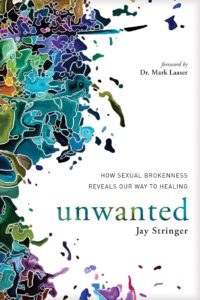 Unwanted: How Sexual Brokenness Reveals Our Way to Healing Jay Stringer (NavPress) $15.99 We are really thrilled and deeply gratified to tell you about this brand new book. We are happy to celebrate its release in part because we knew the author when he was a young adult. His family lived nearby while his father did incredible work at a local church years ago. Many knew even then that Jay was destined for some kind of really thoughtful ministry. It’s nice when a former friend and Dallastown kid gets onto the national stage like this. Stringer has an MDiv. and an LMHC (which is to say he’s an ordained pastor and a licensed therapist) so he’s done some serious scholarship to back up his current private practice and consulting work. (More about that in a moment.)
More significantly, we are grateful to be able to recommend a book so unequivocally, so confidant that it is not only really, really good, but truly breaking new ground in a particular field. Unwanted: How Sexual Brokenness Reveals Our Way to Healing is pioneering, offering new insights about men and women with unwanted sexual temptations and behaviors, from using porn to being involved in an affair. There are bunches of books about our porn epidemic and sexual addictions but here Jay Stringer offers something that seems to me to be new and quite profound. The important Dr. Mark Laaser wrote a good foreword.
As you may know, many of the books that offer help to those with unhealthy sexual desires or behaviors, in one way or another, with different levels of sophistication, recommend that we “just say no.” Or, as Stringer describes those “fighting lust” approaches, we must “put a  tourniquet on it.” To their credit, many of the standard books designed to help porn-users offer gospel-based grace and the power that comes from surrendering to Christ. They don’t simply recommend we “say no” on our strength, but we allow God to give us fortitude to resist temptations. Although I believe Christian growth – what the theologians call sanctification – is more complicated than cheaply intoning that Luther line about “preaching the gospel to yourself” or insisting that Christ is sufficient, obviously gospel-based trust in Christ’s cross, God’s imputed righteousness, and the gifts and power of the Holy Spirit are essential resources. Of course, we don’t go it alone, and God is with us and promises to help us. True enough.
Still, in this fallen world, East of Eden as we are, things are harder than any simple answers or formulas our accountability programs can meaningful address. And Stringer – in part because he studied at the Allender Center at the Seattle School of Theology — knows this well. He knows we are living out our lives as part of a story, and knowing our past is an important part of re-directing our current path. One doesn’t need to read You Are What You Love by James K.A. Smith (although it doesn’t hurt) to know about the central role of desire and imagination and story to shape the texture of our lives.
You may know how we’ve promoted Dr. Dan Allender’s body of work, especially his To Be Told: God Invites You to Coauthor Your Future. You may know that Allender (who has written compassionately and wisely about sexual abuse in books like The Wounded Heart and Healing the Wounded Heart) has a recent book (co-written by his pal, Bible scholar Tremper Longman) called God Loves Sex: An Honest Conversation about Sexual Desire and Holiness. So Allender knows a thing or two about joy and goodness and desires gone amuck and the holy re-ordering of passion, including sexual passion. Dan also wrote a lovely book called Leading With a Limp that notes that even leaders shouldn’t shy away from their wounds and failures, that being in touch with our brokenness reveals something vital about ourselves and about God’s great kindness in our lives. This restoration of hope is, as Allender puts it in yet another book, The Path of Healing.
I write all this because some of our readers will know Allender and his Center in Seattle. And because that one paragraph about Dan’s books give you a nice introduction to the tone and framework for Jay Stringer’s new book, Unwanted. Yep, Stringer has deep connections with friends at the Alllender Center, and makes the claim that our storied lives impact how we live now, and that to redirect how our lives unfold we must be in touch with past wounds and see what they tell us about ourselves, about God’s presence, and about the basis for solid hope moving forward. He has a remarkable hashtag slogan for his new book: listen to your lust.
Oh my.
Here is a fabulous endorsement (one among so very many) of the Stringer’s book, Unwanted, by Dan Allender himself:
Unwanted is, without rival, the best book on broken sexuality I have ever read. It is heartbreaking and hope-restoring, and with immense kindness, it proceeds to where most work stalls and refuses to enter. Jay’s research is groundbreaking. No one has pursued these dark waters with as much light-offering, data-bound research. Even more, Jay offers the heart of the gospel in a manner that doesn’t trivialize sin or addiction but lifts the battle up to the ambivalence we have about freedom. This book will be a classic that anchors us in brilliant research, soul honesty, and biblical reflection.
Stringer explains that we need to learn to name that deeper background stuff, to tell our stories well. His own honest telling of his own episodes of troubling fantasies in the first fantastic chapter (“A Theology of Unwanted Sexual Behavior”) offers a helpful framework and some unforgettable lines:
- Lust-centered approaches are Ineffective
- Fantasies are road maps
- Sexual brokenness offers the geography of God’s arrival
Stringer ends that important chapter with a brief reflection on “God’s curious pursuit” which is a study of the abused Egyptian teenager in Genesis 15 named Hagar.
Like Hagar, Jay suggests, we are on the run. At least those of us with chronic sin (and, in this case, particularly sexual sin) sure are. If we ponder our restlessness, our running, if we learn to pay attention, our brokenness can itself disclose the way of our healing. As becomes clear, especially in the many stories Stringer shares, we can best pay attention when we let go of shame and adopt an earnest curiosity about our own lives.
“As we begin this journey,” Stringer invites, “ask yourself, Where is it that I come from? And where is it that I’m going?” I suspect he might also ask, What are you running from?
Here is yet another thing that makes this deep dive into self-awareness and a Christian approach to everything from dysfunctional family systems and issues of abandonment or triangulation and trauma and such. Unwanted offers, for the first time, the report about what the publisher suggests is the largest survey yet done of women and men who replied about their unwanted sexual behaviors.
Stringer has studied the survey responses of nearly 4,000 people, making this a hugely significant new body of data about sexual fantasies, eroticism, sexual compulsions and other unwanted sexual behaviors. There is an appendix about the research for any statistic geeks or those wanting info about the scientific methodology and content of the survey.
 The data, Stringer insists, is not only intriguing, but also remarkably revealing about what is really going on among men and women who have sexual addictions, endure unwanted fantasies, act out in inappropriate ways, or are deeply involved in pornography and the like. As a clinician and therapist he has heard people talk about their sense of losing their very souls through experiences of trauma. Some have experienced sexual abuse, which has caused lasting pain and corrupted their desires in various ways. The first third of the book, under the unit “How Did I Get Here” draws on amazingly important research and assures us that understanding our unrelenting unwanted behaviors and our deepest stories is important.
The second part of Unwanted is called “Why Do I Stay?” and it looks at “six core experiences of unwanted sexual behavior” and “three hijackers of our souls.” He starts off this illuminating section noting that “Most people have a clear understanding of the behavior they wish to stop but have far less clarity regarding the key drivers that inform why they stay involved in unwanted sexual behavior.”
Stringer has a strong critique of male violence against women—knowing that about the porn industry is essential, for both women and men users. Few people really want to be involved in that cruelty, but something is driving us to these hard distortions of God’s good gifts.
The last seven chapters are too complex and important to summarize here; these are jam-packed with good stuff. They offer “a new sexual story” to get at “sexual healing.” Some of this uses language and practices from therapy (attunement and containment in relationships) and he explains them well show how to develop these habits. He holds up both strength and vulnerability in relationships and reminds us beautifully about the need to invest in community. The last few chapters, in fact, are about community being that place where we experience support and offer empathy for the stories of others. Does your faith community offer a place to discover purpose and “living for a bigger story”? I think any congregational leader or small group facilitator or anyone hungering for greater community could benefit from these last chapters as we learn to maximize the true transformative impact of authentic communities.
There are helpful reflection questions, too, making Unwanted that much more of a useful resource for individuals or counselors or groups.
Was the famously witty British novelist and lay theologian G.K. Chesterton correct in saying that “every man who knocks on the door of a brothel is looking for God”? Jay Stringer seems to think so. Importantly, he has this remarkable research to back him up. Unwanted is a powerful read, a useful book for anyone interested in the interface of orthodox Christian faith and psychology. More specifically it for anyone wanting to uncover the roots of shame and the bad decisions in their lives. It is for anyone who needs “to be told” about the deeper issues of our fallen world and, better, how to enter the story, the better story, of the good graces of a God of mercy and true intimacy who is making all things new.
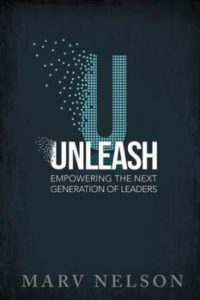 Unleash: Empowering the Next Generation of Leaders Marv Nelson (Abingdon Press) $15.99 Speaking of books written by authors we know and love, this brand new book is by a former youth pastor friend from Pittsburgh. In fact, after a stint doing Middle School ministry and youth work, Marv Nelson worked with young adults and pastored a college and career age, campus church plant near the University of Pittsburgh. A few of my dear CCO friends worked intimately with him and everyone who knows him stands in awe at his genuine care, his kind spirit, his fun and effective approach and his keen ability to serve others even while leading them well. He is a pastor and leader that I greatly admire. We are happy to stock his previous book (good for anyone with doubts or in need of Christian basics, but especially for seekers and skeptics, called What Good is Jesus?)
I read this newly released book in earlier manuscript form and am so glad the real copy just arrived. It is part of the new imprint offering a series published by Abingdon called “Burlap” which is a growing book line about young adult ministry. This new one by Marv helps those who desire to understand and equip millennial and Generation Z leaders.
I think Unleash is a vital book for several reasons and a serious review would need to be much longer than I now have space for. But I can say at least this much: firstly, it is a book about leadership development. It seems to me that many who are in leadership positions don’t think enough about leadership, as such, and many don’t even view themselves as leaders. Pastors, youth workers, teachers, coaches, campus workers, teen outreach volunteers, and others who are in significant, influential roles should study up and be clearer about the complex calling and task of leadership. So this book at least reminds leaders to lead.
 But here is what’s better: this is about leadership development not only within yourself but among others around you. Marv Nelson has a knack for, as they say, investing in others. For pouring into others. (Well, it seems like a knack, just a natural thing, but as this book shows, Marv has thought a lot about how this works and has worked hard to explore what is faithful and effective as he’s sharpened those ministry arts.) Still, he easily calls out the best in others, he invites folks along in his own leadership work, slowly passing the reigns to others; he creates teams and delegates stuff and sets folks up to succeed (or maybe not) always guiding them with care and intentionality. He mentors others and knows how to get the deep stuff said and the good stuff accomplished. This book shows you how it’s done.
It’s not every leadership book, you know, that cite the spiritual formation guide David Benner; I’m glad he’s attentive to the interior life of leaders, and quotes Reggie McNeals A Work of Heart: How God Shapes Spiritual Leaders
It is a bit of a cliché, but still too often true, that many leadership books within the church are too indebted to power principles that have emerged from the marketplace. That is, they presume that the church is something like a business and that church leadership is the same as corporate leadership. Of course, we can wisely plunder what we can from other schools of thought but, mostly, Christian leaders must be driven by a Biblical worldview and a distinctively Christ-like form of servant leadership. Marv Nelson gets that and his book is so obviously rooted in the ways of Jesus. It isn’t a thinly disguised book about corporate leadership aimed at recruiting and manipulating others for one’s agenda. It is a wise guide to nurturing faithful habits and character and skills and the ability to influence other for the sake of God’s work in the world. It is about leading others to realize their own capacities and unleashing them for ministry and work
But here is where it gets really valuable. Everybody knows there is great debate about the notion of generations – should we stereotype Baby Boomers or Gen Xers or Millenials or the new iGen? (Yep, just the other day I was talked to a group of older teens and realized they have no memory of 9-11 and are true digital natives; they don’t recall a time without smart phones. There were significant conversations within their own learning community about the role of phones and pads in their lives and the impact these high-tech mediums plays in their faith formation and discipleship.) Sure, some overstate the caricatures, but some awareness of broad cultural realities is very important. Marv draws on Barna research, of course – books like Unchristian, You Lost Me, The Next Christians, or Good Faith by David Kinnamen and Gabe Lyon – but uses his own insights and experiences to help remind us of the cultural context of young adult ministry and leadership formation today.
So, again, iGen or Generation Z is what some call the current emerging generation of young adults that tend to have certain shared experiences and dispositions and are shaping up 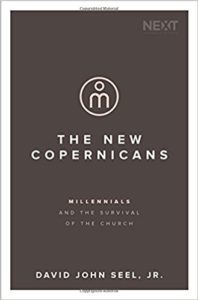 differently than the previous millennial cohort. How do we understand these Gen Z older youth? How can we work with millennials, most who are in their late 20s, now. (We can read John Seel’s brilliant, provocative, well-written The New Copernicans: Millennial and the Survival of the Church for starters!) Marv Nelson has worked with college-age twenty somethings for years and is a good, experienced guide.
The book is brief, full of stories, informally written (so it isn’t dense or heady) and offers three big movements, three phases of leading others. He invites us to empower the next generation by knowing them, equipping them, and releasing them.
I like how Nelson’s friend, Bible scholar Warren Bird, describes the book:
Millennial pastor and friend Marv Nelson boils down empowering the next generation of leaders to knowing, equipping, and releasing. Within that insightful framework, he offers practical advice, pitfalls to avoid, personal stories, and rich insight from Scripture to help you accept the challenge to ‘unleash them to do even greater things than you have done.’
Listen to this, by a seasoned youth and young adult worker:
I am completely weary of dismissive and demeaning articles and books focused on the weak, lazy, entitled character of Millennials and Gen Z. This book is different — it’s helpful and hopeful. I’m glad to have a book to recommend to people leading younger generations into their full capacities – Mark Oestreicher, The Youth Cartel
Another small bonus of Unleash: Empowering the Next Generation of Leaders is a beautifully written afterword by my pal Joe Wimer who worked under Nelson for the CCO, doing campus ministry in Pittsburgh. In that epilogue, Joes tells some of his own story of working with collegiates and other young adults, and it is honest and inspiring. Well done.
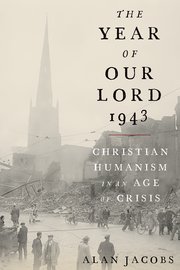 The Year of Our Lord 1943: Christian Humanism in an Age of Crisis Alan Jacobs (Oxford University Press) $29.95 We get any number of new academic books from university and other scholarly presses into the store but none have excited me lately as much as this. It is on my short list of books to read very soon – I am guessing I will name it as one of the most significant books of 2018. Anything Alan Jacobs writes is well worth reading; he is a wise scholar and public intellectual esteemed by many within evangelicalism and beyond. (Dr. Jacobs is distinguished Professor of the Humanities in the Honors Program at Baylor University.) His most recent previous book is the wonderful 2017 release How to Think: A Survival Guide for a World at Odds although we still tout his lovely The Pleasures of Reading in an Age of Distraction. In some circles he is known for his “biography” of the Book of Common Prayer while in others he is most beloved for the great bio of C.S. Lewis called The Narnian.
In this new Oxford University Press volume, just released this summer, Professor Jacobs does a serious historical study of five key scholars standing clearly in the Christian tradition who wrote vital, much-discussed, major works right after World War II, offering prophetic imagination for what might be coming in the years ahead as the vast project of rebuilding and renewing the West would have to occur.
The five thinkers he examines are Jacques Maritain, T. S. Eliot, C. S. Lewis, W. H. Auden, and Simone Weil. What we wouldn’t give for just one of these sorts of weighty, respected scholars, speaking into our time now; can you imagine a publishing year with major works by all five? Can you imagine Christian thinker talking seriously in ways the world would notice about the contours of Western civilization and the need for revitalization?
In 1943 we had extraordinary output of serious Christian cultural analysis by these writers, and Jacobs deftly walks us through what we need to know about these authors and their work. It starts a few years prior, aa other historic events and important voices set the stage. (Reinhold Niebuhr, for one; other intellectuals are named, such as, among others, Lewis Mumford, J.R.R. Tolkien, Eric Gill, Jacques Ellul. The good reflection on Ellul, by the way, is in a long afterword.)
The book is already starting to garner good reviews (including excellent ones in Publishers Weekly and the Library Journal.) Several key Christian intellectuals (think of James Davison Hunter) and period historians have endorsed it. This is an enduring, important work, no doubt.
Allow me to cite the dusk jacket and publishers explanation; it explains the project of the book so well:
By early 1943, it had become increasingly clear that the Allies would win the Second World War. Around the same time, it also became increasingly clear to many Christian intellectuals on both sides of the Atlantic that the soon-to-be-victorious nations were not culturally or morally prepared for their success. A war won by technological superiority merely laid the groundwork for a post-war society governed by technocrats. These Christian intellectuals-Jacques Maritain, T. S. Eliot, C. S. Lewis, W. H. Auden, and Simone Weil, among others-sought both to articulate a sober and reflective critique of their own culture and to outline a plan for the moral and spiritual regeneration of their countries in the post-war world.
In this book, Alan Jacobs explores the poems, novels, essays, reviews, and lectures of these five central figures, in which they presented, with great imaginative energy and force, pictures of the very different paths now set before the Western democracies. Working mostly separately and in ignorance of one another’s ideas, the five developed a strikingly consistent argument that the only means by which democratic societies could be prepared for their world-wide economic and political dominance was through a renewal of education that was grounded in a Christian understanding of the power and limitations of human beings. The Year of Our Lord 1943 is the first book to weave together the ideas of these five intellectuals and shows why, in a time of unprecedented total war, they all thought it vital to restore Christianity to a leading role in the renewal of the Western democracies.
Such a detailed study or such urgent, deep matters, naturally invites reflection on if this body of scholars and critics were wise or not, if they were heeded or not. Jacobs himself summarized saying:
Each of the writers I have studied here worked with astonishing energy to rescue their world for a deeply thoughtful, culturally rich Christianity, and to rescue that Christianity for their world. They put forth every effort to redeem the time…. Their diagnostic powers were great indeed: they saw uncanny clarity and exposed with incisive intelligence the means by which technocracy had arisen and the damage it had inflicted, and would continue to inflict on human persons.
Jacobs says on page 206 in what has to be a somber voice, that their mighty words were not taken to heart in part because they came too late, “after the reign of technocracy had become so complete that none can foresee the end of it while this world lasts.”
I am curious to see if Jacob’s asks if, perhaps, none of the scholars he explored broke radically enough with the spirits of modernity that gave rise to the faith in science and technology that lead to such dehumanization and the rise of the evils of the atomic age. I wonder if they rejected the fabled Enlightenment project, but the very roots of Western culture, autonomy of thought, grounded as much was, in accommodation to Greco-Roman thought in the earliest days of the church. That’s the basic claim of philosophers like Herman Dooyeweerd, or more recent cultural critics like Dutch economist Bob Goudzwaard, or neo-Calvinist cultural prophet Calvin Seerveld, and it might be interesting so see if any of that intellectual critique makes it way around Dr. Jacob’s good work.
There is a serious final paragraph, asking if there are such sturdy Christian voices today, advising any rising voices to study these five former prophets. James D. Hunter suggests as much, saying that in this book, Jacobs has “opened a window for thinking about our own troubled times.” At the very least, we can benefit from Jacob’s keen study, hear these voices from the past, ponder how to makes sense of a word in chaos, as they once did.
As Charles Marsh writes of The Year of Our Lord 1943,
This is a major achievement, wonderfully readable, the crowning work of our own era’s most resourceful Christian intellectual.
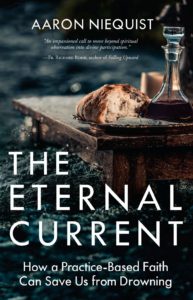 The Eternal Current: How a Practice-Based Faith Can Save Us From Drowning Aaron Niequist (Waterbrook) $19.99 That evangelicals have been in the forefront of writing great books and advocating for deeper, even classic spiritual practices is nothing new, nowadays. For decades, I’ve said that this confluence – perhaps starting with Richard Foster – of previously skeptical evangelicals and monastic and mystical literature is one of the most significant religious trends of our lifetime. One only need to think of the beautiful body of literature in the last decades written by those in the evangelical tradition – Ruth Haley Barton, Adele Ahlberg Calhoun, Gary Moon, John Ortberg, Jan Johnson, Donald Whitney, Dallas Willard, Marlena Graves, to name only a few. Or, one only has to think of the broader tradition of spirituality that these evangelicals are in conversation with, popular authors from Richard Rohr to Joan Chittister, Elizabeth Liebert, Marjorie Thompson, Martin Laird, Joyce Rupp, Ronald Rolheiser, Thomas Keating; obviously, writers like Henri Nouwen and Thomas Merton are on everybody’s lists. And nearly everybody in this field is now interested in Saint Benedict and Ignatius of Loyola and Practicing the Presence of God and works by medievals like Julian of Norwich and St. John of the Cross and St. Teresa of Avila. Evangelicals used to protest our store because we carried those kinds of books; now folks don’t find it that surprising (even though most big-box chain evangelical bookstores still don’t carry them.)
I explain all this to say that as a part of this trend there is a shift in language from disciplines to practices, so this new book by Aaron Niequist is spot on in that regard. And, there is also a new interest in liturgy, or “neo-liturgy” as the flyleaf of Aaron Niequist’s new book puts it. (Just think of James K.A. Smith’s magnificent cultural liturgies project, the rise among young evangelicals within liturgical traditions like the renewed Anglican church plants, the popularity of Taize, Tish Harrison Warren’s book The Liturgy of the Ordinary, or the popularity of the prayer-book Common Prayer: A Liturgy for Everyday Radicals by Shane Claiborne and his pals, or the beautiful, boutique book of daily liturgies published by the Rabbit Room.)
I am glad that Aaron has served in some of the larger and notable big churches in America – Rob Bell’s former Grand Rapids church, Mars Hill, and Chicagoland’s Willow Creek – where he’s learned about innovation and music and deeper worship. Out of these innovative spaces Aaron, who is himself a musician and worship leader, has recorded contemporary music to be used in modern neo-liturgical settings. (His wife, Shauna Niequist, you should know, is a moving memoirist and is widely known for her artfully stylized books about finding God in the ordinary.) You can expect that The Eternal Current taps into this spiritual formation movement, draws on the Niequist’s experiences within innovative church settings, and is at least somewhat interested in ecumenical conversations around the renewal of liturgical practices. He seems the perfect person to bring a book like this to us, and it seems, truly, like a fresh contribution, unlike many on the market.
You can see the energy and joy and passion for this stuff as Aaron explains the book in 3 minutes in this little video, here:
Ruth Haley Barton says this is “winsome” and “refreshing, honest, and true.” She says it is a “compelling invitation” and if she finds it compelling, that means a lot. Here is her full endorsement about it, well worth reading:
I value this book because of Aaron’s winsome way of inviting us to swim in the Eternal Current of God’s kingdom by engaging in the life-giving practices spiritual seekers have used through the ages to open themselves to God. And what a clear and compelling invitation it is, emerging from his own life and witness! I share Aaron’s vision for practice-based communities that learn together how to swim in the deep end of the pool for the sake of others, and I am glad we have taken the deep dive together.
For those that like Father Richard Rohr, his name is on the front cover, saying that The Eternal Current is “an impassioned call to move beyond spiritual observation into divine participation.”
If you have eyes to see you can already pick up some of the beauty and importance of this. There is this image of a river in the title and subtitle. He works it throughout the book. For instance:
A mighty River flows throughout history, ushering in healing and restoration of all things. If you’ve read the Bible, you know how the story ends: love conquers death, a new heaven and earth are established, and the Creator finally makes everything right.
But if Jesus called this River “the Kingdom of God” then we know it is more than an idea to which we must intellectual subscribe. It’s a movement, an experience, an adventure, a flow into which we can get swept. God’s redemptive work in our lives and in God’s world is like that. “We can move from the dry riverbed of a static faith into the gushing Current of a practice-based faith. We can let go of the heavy burden of tribal certainty and get swept into the wise and wise River of rich, historical, body-of-Christ belonging.”
So, as it says on the back cover, this is “an invitation to participate. It is about this Eternal Current and how to swim in it. The Eternal Current promises a vision and set of practices for a deeper, more vibrant, beatitude-like faith rooted in sacred memory and holy imagination.”
There is so much here, good stuff about liturgy and imagination and memory and ecumenism and mission and community and life. For a book which at first glance seems to be about inner spirituality and spiritual formation and a bit about new forms of liturgical expression, I think this is surprisingly robust and visionary and fresh.
Episcopal priest, storyteller, and fun Enneagram guru, Ian Morgan Cron writes,
You hold in your hand a brilliant exploration of those ancient but evergreen practices the church must recover to remain vital and prophetic in the world. This field-tested and practical guide will equip and empower you to live I n and lead other into the life-giving waters of a practice-based faith.
Are you ready to enter sacred waters? This book could be for you.
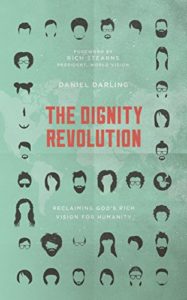 The Dignity Revolution: Reclaiming God’s Rich Vision for Humanity Daniel Darling (The Good Book Company) $16.99 It’s not every day that serious theology is discussed on national TV, but Daniel Darling was set up nicely by “Morning Joe” on MSNBC as they talked about the Bible, God having made human’s in God’s image, and why that means we have certain Christian obligations to stand for those whose dignity is assaulted. (Check out that interview here.) This new book is published by, and in the tradition of, conventional, historic evangelical faith and is fully gospel-centered and Biblically informed. Southern Baptist conservative thinker Albert Mohler says it is “a welcome resource for the church” because it is “a compelling and careful articulation of human dignity.”
David Darling is Vice President for Communications for the Ethics and Religious Liberty Commission of the Southern Baptists (and therefore works with Russell Moore who, by the way, has a new book coming out soon, too.) As a public figure with ERLC Darling is very interested in the public implications of Christian faith. Here, he invites us – no, he rigorously calls us to a new movement, a new cause for our times — The Dignity Revolution. I suspect everyone here will be mostly glad for this visionary reminder but also pushed just a bit to reconsider his or her own views and biases. He’s wanting to be consistently committed to the inherent dignity and worth of all, from the disabled to the unborn, from the aged to the vulnerable immigrant. He looks at healthcare and the prison system; he looks at the work-world and at issues such as race and poverty. The Dignity Revolution is far less partisan than other books like this and for that we should be very grateful. Highly recommended.
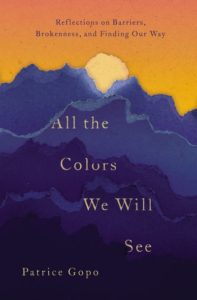 All the Colors We Will See: Reflections on Barriers, Brokenness, and Finding Our Way Patrice Gopo (Thomas Nelson) $16.99 Beth and I have been eager for this book to arrive as we are reading even more than ever on books by people of color, memoirs and reflections to help us understand our culture these days and learn to be more effective agents navigating various subcultures and to somehow be able to do the work of being agents of God’s reconciliation. As we noted in the last big BookNotes column, we love memoirs and are most eager to promote books when they are well written and nicely packaged. Well, All the Colors We Will See is a simply lovely volume, and the author is remarkable, as a gifted writer and as one with a curious, interesting story. A great blurb on the back by award-winning writer Bret Lott is pretty darn special, too. He notes Gopo’s “calm voice and winsome demeanor” which allows her to speak hard truths… including “what it takes to continue in Christ’s love despite the fallen and falling world around us.”
This is truly one of the great books of the year.
Another reviewer said it was written with “eloquence born of pain and longing.”
Patrice Gopo grew up in Anchorage, Alaska, the child of Jamaican immigrants who had little experience being black in America. How’s that for an opening salvo, an intriguing invitation to lean in and say, “tell me more!”
 Later, we learn that she studied chemical engineering in Pittsburgh, at CMU, was married in South Africa, and then moved to a new home in the American Southland (with a husband who wasn’t American.) She has learned to be an evocative and luminous essayist, as a quick dip into nearly any page will show. As it says on the back cover, “Patrice’s life is a testament to the challenges and beauty of the world we live in, a world in which cultures overlap every day.”
We haven’t spent much time in this yet, but surely will as soon as we are able. For now, this back cover copy is just exquisite, convincing me this is a book that should be on the top of the stack for many of us.
Listen to this – just this description is itself so beautiful:
Patrice Gopo grew up in Anchorage, Alaska, the child of Jamaican immigrants who had little experience being black in America. From her white Sunday school classes as a child, to her early days of marriage in South Africa, to a new home in the American South with a husband from another land, Patrice’s life is a testament to the challenges and beauty of the world we each live in, a world in which cultures overlap every day.
In All the Colors We Will See, Patrice seamlessly moves across borders of space and time to create vivid portraits of how the reality of being different affects her quest to belong. In this poetic and often courageous collection of essays, Patrice examines the complexities of identity in our turbulent yet hopeful time of intersecting heritages. As she digs beneath the layers of immigration questions and race relations, Patrice also turns her voice to themes such as marriage and divorce, the societal beauty standards we hold, and the intricacies of living out our faith.
With an eloquence born of pain and longing, Patrice’s reflections guide us as we consider our own journeys toward belonging, challenging us to wonder if the very differences dividing us might bring us together after all.

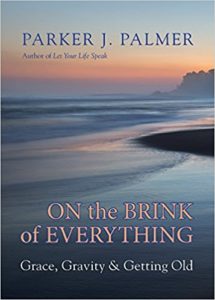
On the Brink of Everything: Grace, Gravity, & Getting Old Parker J. Palmer (Berrett-Koehler) $19.95 Parker Palmer is one of those important and gracious writers whose books you should read; you should just read ‘em all. We find his book about vocation, Let Your Life Speak, is one of our all time most beloved books among customers almost everywhere. His thoughtful study of education (To Know As We Are Known) is a must-read for anyone serious about learning. His book for teachers, The Courage to Teach, is nearly legendary. I wrote in these BookNotes pages how important I thought the righteously civil Healing the Heart of Democracy is. It’s needed now more than ever. We could go on, from his early Company of Strangers on the renewal of America’s public life to his Promise of Paradox, from Hidden Wholeness: The Journey to an Undivided Life (the title is drawn from a phrase of Thomas Merton’s) to his also Merton-esque The Active Life: A Spirituality of Work, Creativity and Caring. He even has a book on renewing the values and spirit of higher education called The Heart of Higher Education that I wish was better known.
And so, after years of loving people, mentoring many, serving God in his poetic, quiet way, trying to lead others into circles of conversation and respect, working for the renewal education and civic life, Parker Palmer continues on. At age 80 he remains a thoughtful Quaker, shaped by both a profound interior life and a deep commitment to peace and justice in the world, living out that “hidden wholeness” that can be called wise and integrated. Maybe you’ve heard him on Krista Tippett’s “On Being” interview show on Public Radio. He’s got that sort of reputation as a deeply spiritual public intellectual.

In this book Palmer talks about what it is like being an elder. As his friend Richard Rohr writes on the back,
Our entire culture I in need of true elders, and you can’t be one until you have arrived there – chronologically, spiritually, and intellectually. Here’s a man who has arrived and with another book that’s a generous gift to all of us.
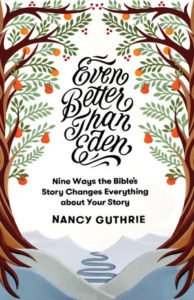 Even Better than Eden: Nine Ways the Bible’s Story Changes Everything About Your Story Nancy Guthrie (Crossway) $16.99 We really respect this thoughtfully conservative, Reformed Bible teacher. She has a podcast through the Gospel Coalition on learning how to teach the Bible that I hear is very good. (Michael Horton, the tough-minded, serious theologian, has said that Ms. Guthrie is “one of the best Scripture teachers I have ever heard or read.” Guthrie is obviously a good exegete, a fine teacher, and a colorful, if careful, wordsmith. Her books are valuable for many purposes and we commend them often. (That she has several books on grief and the ministry of walking with those in grief is itself significant, too.) Perhaps you know her several-volume study set called “Seeing Jesus in the Old Testament.” I like that she has that historical-redemptive hermeneutic, seeing the unfolding drama of the coherent Bible study, all of it pointing to Christ and his redemptive work.
Well, in this brand new one she lets loose and offers us nine creative themes that flow through the Bible story and how they can effect us. In a handsomely done paperback she tells about
The Story of the Wilderness
The Story of the Tree
The Story of His Image
The Story of Clothing
The Story of the Bridegroom
The Story of Sabbath
The Story of Offspring
The Story of a Dwelling Place
The Story of the City
This book is about 200 pages (with serious footnotes) which also includes a very useful study guide. Highly recommended.
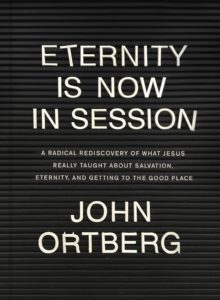 Eternity Is Now in Session: A Radical Rediscovery of What Jesus Really Taught About Salvation, Eternity and Getting to the Good Place John Ortberg (Tyndale) $17.99 I love this, even though it just came yesterday and I’ve only glanced at it. Just holding it in my hand feels right – it’s a tiny bit differently shaped and the textured cover is cool. The title just shouts “N.T. Wright” but he’s not cited at all in the footnotes. (I checked.) I doubt he says “realized eschatology” because it just isn’t’ that kind of book. It is thoughtful and solid and lucid and passionate and very, very useful, I’m sure. And it does quote Dallas Willard, as all of John’s books do.
So, this is the hardback book that I’m sure will be non-controversial to most Hearts & Minds friends, but may be new material, or a new emphasis for some. It’s obvious right – just read John 10:10 or any number of Jesus’s teachings about the present reality of the Kingdom. To use Amy Sherman’s colorful image (in her book about work, Kingdom Callings) we can snatch a bit of future heavenly joy and goodness and yank it back into the present; that is, we can live and experience now, in a not fully consummated way, something of what the new creation will be like. At the very least, we can enjoy a foretaste and live as a witness now of what we anticipate life will be like, then.
Always be ready to give an account of that hope, Peter tells us.
I think Ortberg – truly one of our favorite writers as he is so solid and so easy to read and so inviting and so inspiring — is one to something here, helping us figure out why and how we can bear witness to that hope.
I am sure this book will help us figure out how better to live in what some call (in describing the paradox of Christ saying the Kingdom is here, yet telling us to pray for it to come) the “already and not yet.”
Of course, a book that is asking about how eternity breaks into our lives now must ask, what, really, then, is salvation? Perhaps the age old question “Are we there yet” is an opening to a big, big answer… maybe heaven isn’t just someplace we go after we die? Maybe we should stop thinking about eternal life as a place that we go after we die.
Eternity is Now in Session is a great 7 chapter hardback (part one has three chapters exploring “Rethinking Salvation” and part two are chapters called “Walking with Jesus.”)
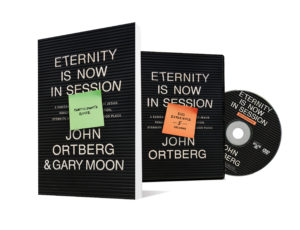 DVD Eternity Is Now in Session Video Experience John Ortberg (Tyndale Momentum) $36.99 There is also a DVD curriculum that is based on the content of the book. The DVD is creatively done, showing Ortberg teaching this material in five sessions. Perfect for an adult Sunday school class or a small home group. The package comes with a DVD and one workbook. You can buy extra participants guides singularly for $10.99.
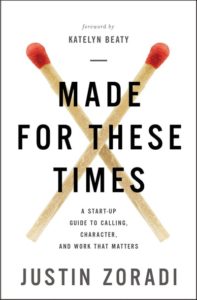 Made for These Times: A Start-Up Guide to Calling, Character, and Work that Matters Justin Zoradi (Zondervan) $16.99 Oh my, how I wish I could explain the energy and vision of this author and our enthusiasm for telling you about it. I can brag a little, saying that the author tells more than once about his experienced of being mentored by dear, dear friends of ours at Calvin College in Grand Rapids Michigan. There, in his college years, Justin met Katelyn Beaty who wrote a very good forward (also giving a shout out to the influences of her college years and her engagement with pop culture, issues of the day, and learning the art of cultural discernment through our friends there in GR.) When an early reader wrote to me a week ago and said Zoradi sounds like he’d make a great speaker for our big Jubilee conference in Pittsburgh, I knew exactly why that is so. This guy was influenced by folks who helped shape that impressive annual gathering of young adults when they themselves were involved with the conference some 45 years ago. Zoradi is our kind of guy!
And now, Justin Zoradi tells it like it is. He gives a theological vision for calling and invites us to consider deeply the kind of character we need if we are going to be faithful witnesses and effective change agents in these complicated times. As one who has lived in and experienced “the troubles” in Northern Ireland and has lived in Africa, he knows well how hard it is to make a difference. He not only speaks dreamily about finding our own spark, discerning what we were made for, but he talks about the character and grit we need to rise to the challenges and endure. He gets the vision of “all of life redeemed” and the storied nature of our own life narratives. He gets the big picture about the forces of injustice. He is a perfect example of an upbeat social entrepreneur who wants to use his gifts and considerable talent for the sake of others, for the sake of joining God’s restoration project of repairing the planet. And he thinks others can learn from his own journey, helping others with a “conspiracy of goodness” that lasts a lifetime. (Ha – one of the many small chapters is called “Peak When Your Sixty.”)

Justin Zoradi is the founder of These Numbers Have Faces, a social enterprise investing in the next generation of African leaders. He also serves as the president of GivingFuel, a fundraising platform empowering thousands of organizations worldwide. Justin lives with his family in Portland, Oregon and Made for These Times is his first book. Highly recommended.
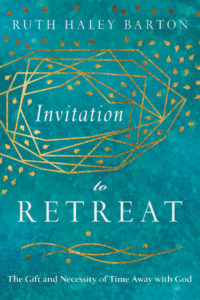 Invitation to Retreat: The Gift and Necessity of Time Away with God Ruth Haley Barton (IVP) $22.00 Once again, InterVarsity Press and its “formatio” line of books has given us a gift, a beautiful even if challenging one. Many books about spirituality are lovely and warm, inviting us to disciplines or practices, but they are often mostly a reminder of God’s presence and of the gift of God’s daily guidance. Sweet. Ruth Haley Barton is one of the truly gifted teachers of our time and she has this sweet way in her books and DVD (Sacred Rhythms) that is exceptional; extraordinary. She is gentle, winsome, inviting, welcoming, encouraging, but also very clear about the sort of things that the classic tradition (and her hard-earned wisdom) has taught her, things that are asked of us, things we must do if we are going to be in a place where God’s transforming work can be fruitful. She doesn’t offer a new legalism or expect us to all become monastics. But yet, she knows the freedom and health that comes from submitted to some sort of rule of life. And, naturally, this comes to the question of finding space for God.
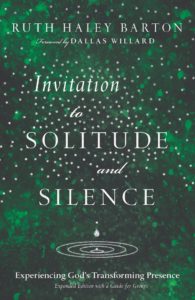 In fact, one of her early books, Invitation to Silence and Solitude now given a beautiful new dust jacket to match this brand new Invitation to Retreat) was very dear to her. Many loved it. On the speaking tour that ensued, and her teaching based on the book, so many folks replied that they’d just love to spend time away with God, they’d truly value solitude and scheduled silence – but they just don’t have the time. I’m not saying I was one of those people, but I might have been.
And so, she wrote a string of other books, including Sacred Rhythm: Arranging Our Lives for Spiritual Transformation about how to arrange our days in ways that do indeed reflect the things that matter most to us. Monks and nuns have long used a “rule of life” to order their time in the monastery or mission field and many contemporary spiritual directors advise some contemporary adaptation of those classic monastic rules. (Ruth’s own Sacred Rhythms has a penultimate chapter all about that; IVP later published Crafting a Rule of Life: An Invitation to the Well-Ordered Way by Stephen Macchia, which is a workbook to apply St Benedict’s Rule that is very useful.) That there are so many books about Sabbath and about monastic rules and about Benedict reminds us that there is a hunger for better life patterns and a desire to figure out how to create space to know God deeply even in our hectic lives.
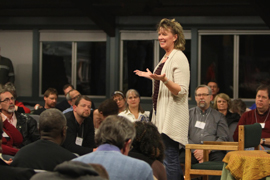 To wit, we come to this long-awaited book by Ruth Haley Barton, emerging from this long appreciation she has had about how difficult it is for many of us to do this kind of thing. She has taught (through her Transforming Center) spiritual practices for years, in many settings, and it often comes up: how in the world does one do a spiritual retreat, anyway?
As it says on the back cover,
There has never been a time when the invitation to retreat is so radical and so relevant, so needed and so welcome. It is not a luxury, but a necessity of the spiritual life.
Remember what I said about her being gentle and inviting? And clear about what needs saying?
I think this is one of those times when she is going to shake us up just a bit – maybe I’m projecting my own fear of realizing I need this kind of thing – and insist that this isn’t a luxury, but a necessity, for a healthy interior life. With great grace she is going to stretch us to new depths and new commitments to create ways to do what we so deeply need.
In this new Retreat… book, Ruth is looking at the “significant why” (as Emilie Griffin puts it) as well as bunches of very practical matters. It is said to be honest and clever and very, very real. Even if you know in your heart of hearts that you need a “strategic withdrawal” and have great spiritual wisdom about the historic disciplines and practices, there still is that moment of truth when you have to plan and ask – what do I do? Where? When? How?
And can I bring snacks?
Beth and I have a mantra here at the bookstore that way too many books are essentially Readers Digest stories, hefty, good blog posts, maybe even long Atlantic articles. But publishers are foolish to take a magazine or Internet article and stretch it into a book. Some concepts and some writings are best for the shorter form. I will be honest, I wondered if this book was perhaps one of those – a great article for a spirituality journal, perhaps, but not a full book.
And, how wrong I was! Invitation to Retreat is majestic, covering all sorts of stuff about the sources of our exhaustion, what is meant by relinquishment, and Sabbath and fear and trust and what she calls recalibration. It is about our use of time and our schedules and the need for the spiritual practice of retreat. I didn’t know so much could be said about this (even though I thought I knew the old song “Sweet Hour of Prayer”) and am so glad Ruth is the one saying this.
I am going to treasure this book, carrying it carefully throughout this next busy season of our year. Who knows where it will lead. My hunch is – even if she wouldn’t put it this way, I’m sure — at the very least, reading Invitation to Retreat: The Gift and Necessity of Time Away with God will serve as a retreat. A few hours or intentionally planned reflection on this latest resource from The Transforming Center — that’s a start, eh? Maybe it can be for you, too. We invite you to order this, or her other good books, today.
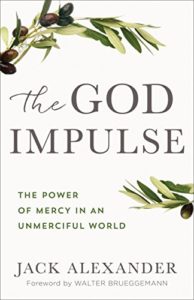 The God Impulse: The Power of Mercy in an Unmerciful World Jack Alexander (Baker) $14.99 Almost anyone with some Biblical knowledge and a couple of good stories can write a book about showing God’s love, about the power of mercy. With a bit more savvy, one can analyze the culture a bit and show how very unmerciful we are. This isn’t rocket science, but not too many have done it very well.
Here, in Jack Alexander’s much anticipated follow up to The God Guarantee – a largely overlooked book on resisting anxiety and economic fears by relying on the utter fidelity of God — we have a truly exceptional study of the ways in which God’s great grace can influence us, the way we can perhaps alter how folks see the church and understand God – not as a demanding or even scary taskmaster, but as a loving, caring, father – and thereby shift how we bear witness to God’s love but also how we build that love more deeply into the patterns and ways of our culture. Whew. Yep, this is remarkable stuff.
This is a tall order if it is going to be done well. A book that covers such familiar ground but that is truly going to be helpful to refresh our vision for hope and healing in the world is going to have to be savvy and smart and honest and creative. And written by someone who has the integrity to write from his own experiences.
Jack Alexander is the chairman of The Reimagine Group and a senior fellow at the extraordinary, balanced and fruitful public policy think tank, The Sagamore Institute. (In fact, much of their work, although laden with policy implications, is also about civic life, public faith, social interactions, mediating structures, and such, not exactly about politics, per se. It’s a grand, Indianapolis project and he does good work there.) Out of his work with the Sagamore Institute he has come to realize that God’s love and the showing of real acts of mercy is a hugely needed virtue in our lives, our churches, and in our society. In fact, he commissioned The Barna Group to research the topic of mercy in our churches and some of the surprising results are shared in the book – most will follow in a major release in 2019. We simply have to deepen our commitments to this virtue. The God Impulse helps us get at that.
Here is another reason I think that many readers of Hearts & Minds BookNotes will find this book better than most, a “basic Christian living” book that is somehow more than just spiritual guidance or the expected same stuff. It has a very powerful forward by Walter Brueggemann, the brilliant and controversial Old Testament scholar.
(By the way, Walt’s most important book, The Prophetic Imagination, is just out from Fortress Press in a 40th anniversary edition, complete with a new foreword explaining the sturdy endurance of the book and what things have changed a bit in his understanding these days.)
In his meaty, compelling foreword to The God Impulse Brueggemann speaks forthrightly about his own more liberal/mainline orientation in contrast to Jack Alexander’s more conservative/evangelical theology. That he so respects this cultural leader and his Biblical reflections is no small thing. (That Tim Keller has a big blurb on the back, too, is notable; Keller wrote the foreword to Alexander’s previous book.)
Much of Alexander’s new book is drawn from the Good Samaritan story, and he outlines four steps or stages of embodying human mercy, four steps about which Brueggemann weighs in. Get this:
The book will be of immense interest to conservative Christian who tend, by a reductionistic packaging of the gospel, not to see or go to human need because the gospel story is made much too vertical. But the book will be equally of immense interest to liberal Christians. The latter, of which I am one, readily embrace the first step of seeing and pondering human need. It may be what we do best. But where liberal Christians often fail is in the readiness to actually go to human need. Liberal Christians love to talk about and analyze human issues of need. Or they act, but do not follow through, Thus Alexander’s third and fourth steps of God’s impulse – to do and to endure – matter enormously. The third step – do – requires displacement, being drawn out of one’s comfort zone to be fully present to the person in need and on that persons terms…. And the fourth step, endurance, or disciplined durability, is difficult because our self-indulgent consumerism is elementally resistant to the discipline of mercy that entails staying with people in need for a low time.
Alexander talks about God’s “strange arithmetic” which, of course, as Brueggemann reminds us, “completely contradicts our society of greed and anxiety. Our usual calculation is with a sharp pencil in the service of our own advantage.”
God’s impulse, of course, is different.
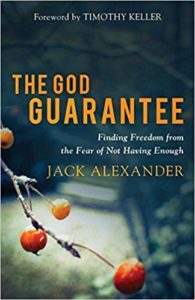 One does not have to read The God Guarantee but this does feel a bit like a sequel or spin off of that previous work. If God is so reliable that we can trust the gospel above all things, then we can be free with our assets, we can be Good Samaritans, we can be liberated from self-concern and give ourselves away, we can forgive and show mercy. We can live as Kingdom people, as Sermon on the Mount people.
As Alexander says in his acknowledgements, years ago he sensed something in his evangelical faith was missing. He thanks God for becoming informed by such solid thinkers as Tim Keller and Gary Haugen and Crawford Lorritts and Bob Lupton about the Biblical theme of the Kingdom of God. This was his answer to his need for a “sturdier and thicker” gospel. (It sounds to me like he got that wording from Brueggemann, too.) So, again, this good book is rooted in the best Kingdom thinking of our best evangelical scholars, leavened a bit by other voices like Bruggemann and a line or two from Anne Lamott. The author is a serious leader, well read and an impressive visionary.
The God Impulse: The Power of Mercy in an Unmerciful World is a book about God’s instinct to love, about the mercy God shows, and how our own disposition towards mercy may cost us. But as he explained in the previous book, God is faithful and will provide. We can resist the spirit of the times and even risk being displaced in our acts of compassion, service, and radical commitment.
The endorsements for this book are voluminous. You’ve got recommendations from Cheryl Bachelder, author of Dare to Serve; Eric Mason, the black, inner city gospel preacher from Epiphany Fellowship in Philly; Bob Lupton (of Toxic Charity among other must-read books about urban mission) who says it is “Powerful. Deep.” Ms. Shaunti Feldhahn says, “take out your highlighter, because you’re going to use it.” John Beckett – whose work-world/Christian business books Loving Monday and Mastering Monday are enduring – notes that although Jack Alexander is an esteemed CEO, there was something different about him. Beckett says the theme of God’s mercy “runs through his veins.” Visionary founder of Plywood People (and author of the challenging More or Less) Jeff Shinabarger says, “The idea of this book might be the most attractive shape of my faith I could ever aspire to live.” So many good thinkers, writers, pastors, activists have commend it. Here’s what Keller said:
Jack draws a straight line from the lack of teaching and underrepresentation of biblical mercy in the church to the lack of love so many feel from the church. He reminds us that true healing, justice, and reconciliation begin with the impulse of mercy toward our neighbors and enemies. I heartily recommend this book.”– Dr. Timothy Keller, pastor emeritus and founder, Redeemer Presbyterian Church; chairman, Redeemer City to City
BookNotes

SPECIAL
DISCOUNT
ANY ITEM MENTIONED
20% OFF
order here
this takes you to the secure Hearts & Minds order form page
just tell us what you want
inquire here
if you have questions or need more information
just ask us what you want to know
Hearts & Minds 234 East Main Street Dallastown PA 17313
read@heartsandmindsbooks.com
717-246-3333
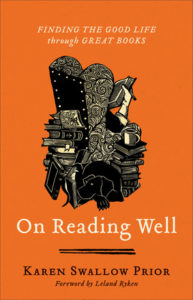
 more, later, about one of our big events of the fall, hosting author Karen Swallow Prior here at the shop on September 14thas we celebrate her new book, On Reading Well: Finding the Good Life Through Great Books. While that book is about how we can be spiritually and ethically formed by novels, she herself has also written a straight biography (of the poet-abolitionist Hannah More) and a memoir arranged around the books she most loved growing up, wonderfully called Booked: Literature in the Soul of Me (T.S. Poetry Press; $17.95.) We are glad for that lovely work, Prior’s first book, a small, literary memoir.
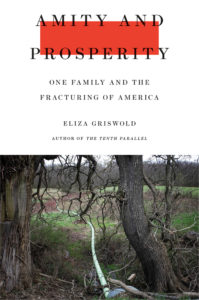 Amity and Prosperity: One Family and the Fracturing of America Eliza Griswold (MacMillan) $27.00 Few readers outside of the greater Pittsburgh area will catch the reference of the title of the stunning new book, Amity and Prosperity, not realizing that they are names of two neighboring towns near Washington, PA. Locals know that these small towns are classic examples of the post-industrial geography of Western Pennsylvania. If Hillbilly Elegy famously portrayed the rustbelt ethos of Appalachian transplants into southern Ohio, Amity and Prosperity tells with vivid detail the contours of daily life in Washington and Green counties, the northern edge of Appalachia that is no longer sustained by coal fields or steel mills and that less than a decade ago faced an “energy gold rush” with an influx of workers and money and drugs, drilling for natural gas.
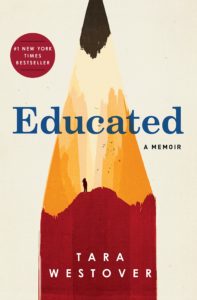 Educated: A Memoir Tara Westover (Random House) $28.00 This is one of those books that I can’t stop thinking about, well written and moving, but very sad and painfully hard, at times. The story cannot be captured briefly as it is multi-layered and the plot takes turns and turns and more turns as the author grows up in a secluded, dangerously off-the-grid family, goes to college, and, eventually, against all odds, to Cambridge and eventually earning a PhD from Harvard. What is so breathtakingly stunning about this story is that the author was raised with hardly any formal education on a mountainside farm in rural Idaho where her parents were fundamentalist Mormon extremists. Although she later comes to believe her father may have been bi-polar, she and her many siblings grew up fearing the Illuminati, the brain-washing forces of the public schools, the medical establishment, all part of a vast, Satanic government conspiracy, all of which they militantly avoided. Her father passionately preaches against the government, expecting the ends times and a violent apocalyptic attack on their property. This is made all the more real when some of their nearby militia neighbors, the Weavers, were murdered by government officials at the Ruby Ridge stand-off in 1992; even with that story as part of their growing up, they never knew the full truth of it as their father was so skewed in his paranoia.)
 That Tara ended up getting her GED and passing the ACT was itself a miracle — she really had no schooling to speak of — and we are brought into her deep quandary as she bravely determines to leave her stern, bizarre, family and enter the devil’s territory in higher education. That she got to know some “normal” people and found ways to handle college is a large part of the story, and it is truly fascinating, at times funny, and at times exasperating as she makes wrong-headed choices, over and over. (How could she not – her mother is brain-damaged and yet a mogul making essential oils and homeopathic remedies and her father is a cruel, deluded, demanding patriarch.) The writing isn’t as witty as the extraordinary Liars Club, Cherry, and Lit by the spunky Mary Karr, but I kept thinking of those colorful stories as I was racing through Educated. Oh what some people go through, and how they find the means to cope and thrive.
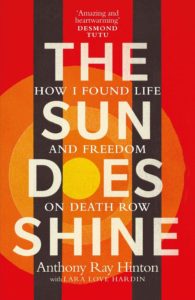 The Sun Does Shine: How I Found Life and Freedom on Death Row Anthony Ray Hinton (St. Martin’s Press) $26.99 . When the extraordinary legal aid advocate and founder of Equal Justice Initiative Bryan Stevenson says that former death row prisoner Anthony Ray Hinton inspired him more than anyone he has ever met and when he notes that this new memoir will “inspire our nation and readers all over the world” it is not just typical back-cover hype. The Sun Does Shine will be remembered as a book that is both illuminating and emotionally powerful, simple and complex, and destined to be considered a classic in American prison literature.
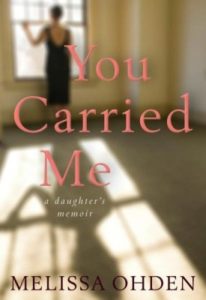 You Carried Me: A Daughter’s Memoir Melissa Ohden (Plough Publishing) $19.99 I may have mentioned this in a previous BookNotes but must name it again — it was a beautiful, captivating read, well told, but not exceptionally dense or heavy. The story is (on the surface, at least) a simple one, but it is rendered with such wise introspection and honesty that it became not only a great, entertaining read, but a gentle, good reminder about the meaning of love and redemption.
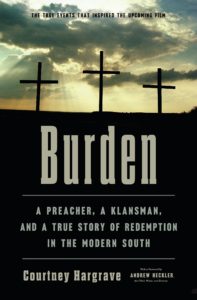 Burden: A Preacher, a Klansman, and a True Story of Redemption in the Modern South Courtney Hargrave (Convergent) $26.00 It isn’t every day a book comes along that was written in parallel at the same time an esteemed Hollywood film-maker was making a major motion picture of the same story. Andrew Heckler wrote the foreword to Hargrave’s book, telling how he was drafting the movie script even as she was writing the book; neither was based on the other. Still, the film will get a lot of attention as it is produced by Robbie Brenner of Dallas Buyers Club fame and stars Forest Whitaker, Usher, and other big names. It premiered briefly at Sundance, and will open nation-wide, soon.
 Everything You Love Will Burn: Inside the Rebirth of White Nationalism in America Vegas Tenold (Nation Books) $27.00 I started this new book the weekend of the anniversary of the awful alt-right uprising in Charlottesville VA a few weeks ago. I guess I wanted a way to commemorate the weekend and understand this growing nationalist impulse in American culture; I wanted to learn more and somehow spend time pondering this cancer in the culture.
 Still, while a few of the alt-right white guys this intrepid reporter meets are truly unhinged, some are somewhat intelligent and seem, at times, almost reasonable and somewhat likable. Matthew Heimbach of the Traditionalist Worker Party, is one of the major characters that Tenold comes to know. He is a person that a good friend of mine crossed paths with years ago (Episodes of him starting white pride student clubs at places like Towson State University are described. I recall talking with Christian groups on campus a few years ago about how to respond to this stuff and as I was reading Everything You Love Will Burn I got this sinking feeling in my gut – oh, God, it’s that guy that my friends used to debate, trying to call him to repentance and sanity. Little did we know how ideologically dangerous he’d become, how prominent…)
 The Hundred Story Home: A Memoir About Finding Faith in Ourselves and Something Bigger Kathy Izard (Nelson) $16.99 I hope that most Hearts & Minds readers know the moving story of the formerly homeless artist Denver Moore who co-authored, with Ron Hall, his story Same Kind of Different as Me, made into a very touching movie last year. The wonderful follow-up to that memoir was What Difference Do It Make? and, just released this season, the eagerly awaited new one by Hall, Working’ Our Way Home. Those books (whether you’ve read them or not) and that story is a key to Izard’s good book.
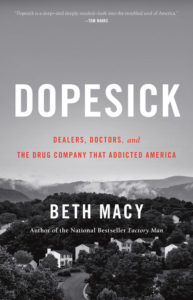 Dopesick: Dealers, Doctors, and the Drug Company That Addicted America Beth Macy (Little Brown) $28.00 I have not started this yet, but it is on my bedside table and I can’t wait. Beth Macy, you may recall, is the author of Factory Man: How One Furniture Maker Battled Offshoring, Stayed Local – And Helped Save an American Town a book we’ve touted often – it is such a thrilling read of narrative nonfiction, delving deep into small town intrigue and heroic, reformist sorts of business-world efforts as a furniture manufacturer tries to keep his plant open and his workers employed. Macy is a talented storyteller and excellent journalist, reporting well after doing months and months (if not years and years) of tenacious research. After Factory Man she released, in 2016, TrueVine, a brilliant true crime expose, laden with sorrow and racism and also delight and complexity and goodness. I suspect neither gets as much attention as they deserved.
 Do Something Beautiful: The Story of Everything and A Guide to Finding Your Place in It
 (Re)Union: The Good News of Jesus for Seekers, Saints, and Sinners
 Debra and Alan Hirsch (who are known world-wide for their missional work and visionary approach to wholistic, risk-taking discipleship) say
 I’m Still Here: Black Dignity in a World Made for Whiteness
 The Sound of a Million Dreams: Awakening to Who You Are Becoming
 Reframing the Soul: How Words Transform Our Faith
 King of the Campus
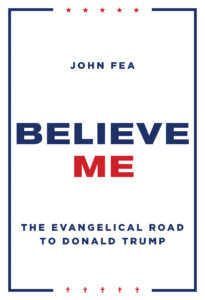
 We are glad Dr. Fea is coming to the shop on Friday night (August 10th at 7:00 pm) and we hope many will come to hear him talk about his new book, Believe Me: The Evangelical Road to Trump and chat together over refreshments as we ponder the nature of the intersection of faith and public life these days. Since he is such a passionate historian, I’m sure the conversation will be informative and interesting.
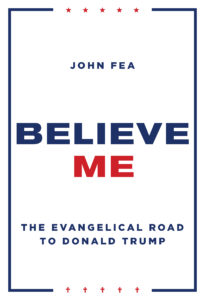 Believe Me: The Evangelical Road to Donald Trump (Eerdmans) $24.99 This, of course, is the new release that Dr. Fea has been researching for the last year or so. We are thrilled to have recommended it early on and appreciate Fea’s concern that many of the religious leaders who support President Trump are theologically muddled and that too many citizens are driven by concerns (fear? nostalgia?) that are not healthy or faithful. Regardless of your view of the religious right or the current President, this is a fine work, offering an evangelical historian’s assessment of these peculiar days in which we live.
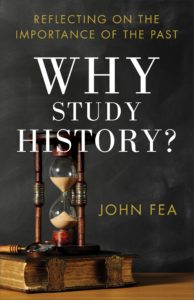 Why Study History?: Reflecting on the Importance of the Past (Baker Academic) $20.00 This slim volume is worth its weight in gold, ideal not only for history majors or younger students but for any of us that need reminded of the importance and value of the study of history. And my, oh my, we all need that reminder in this postmodern era that seems to glory only in the “right now.” That professor Fea brings a particularly Christian slant to his fine essay makes it that much more useful for many. What a great, great little book. Very highly recommended for one and all.
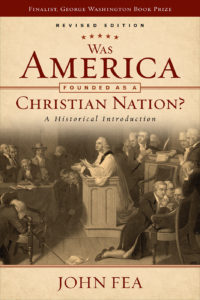 Was America Founded as a Christian Nation? An Historical Introduction (Westminster/John Knox) $30.00 This fabulous and important work was a finalist in the prestigious George Washington Book Prize and is considered by some to be the best (and most evenhanded, insightful) book on the question. It is one of Dr. Fea’s great accomplishments and is respected even by scholars who may have wished for a different emphasis here or there. It’s a live question, and an important matter, and is very highly recommended.
 Confessing History: Explorations in Christian Faith and the Historian’s Vocation (University of Notre Dame Press) $40.00 This was co-edited by John with two other exceptional evangelical historians on the notion of the call to be a Christian scholar and professor and the nature of Christian historiography. In a way, Jay Green (of Covenant College) and Eric Miller (of Geneva College) and Fea (of Messiah College) and the others who contributed to this volume represent a newer generation of historians who were informed decisively by the groundbreaking work and reputation of the likes of Mark Noll, Nathan Hatch, and George Marsden.
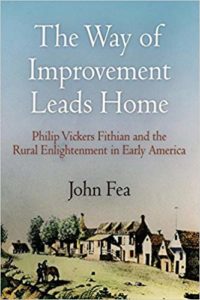 The Way of Improvement Leads Home: Philip Vickers Fithian and the Rural Enlightenment in Early America (University of Pennsylvania Press) $24.99 In this first full biography of Philip Vickers Fithian, John Fea tells the story of how one young man sought to pursue the life of an eighteenth-century Presbyterian gentleman while continuing to yearn for the everyday passions that defined what it meant for him to be human. What a fascinating study in early American experiences. I rhink rhia
 Everybody Always: Becoming Love in a World Full of Setbacks and Difficult People Bob Goff (Thomas Nelson Publishing) regularly $16.99; BOOK CLUB PRICE $13.59
 Not God Enough: Why Your Small God Leads to Big Problems J.D. Greear (Zondervan) regularly $16.99; BOOK CLUB PRICE $13.59
 To Be Told: God Invites You to Coauthor Your Future Dan Allender (Waterbrook) regularly $15.99; BOOK CLUB PRICE $12.79
 Disruptive Witness: Speaking Truth in an Age of Distraction Alan Noble (IVP) regular price $16.00; BOOK CLUB PRICE $12.80
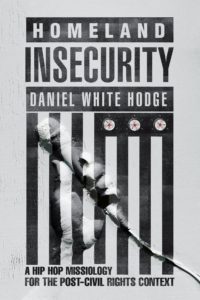 Homeland Insecurity: A Hip Hope Missiology for the Post-Civil Rights Context Daniel White Hodge (IVP Academic) regularly $27.00; BOOK CLUB PRICE $21.60
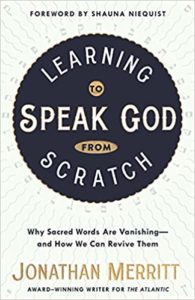
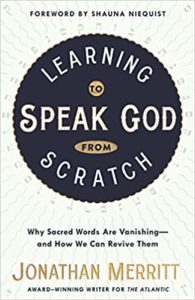 As you can tell from the title and important sub-title of his soon-to-be-released Learning to Speak God from Scratch:Why Sacred Words are Vanishing and How We Can Revive Them is exactly about how the meanings of ancient religious expressions and previously understood sacred terms are up for grabs in much of post-modern America. Heck, forget the hip and diverse postmodern enclaves of Brooklyn, RINO in Denver, Portlandia, or keeping it weird Austin, even in fairly white-bread, middle-American small towns the older religious consensus is long gone. We don’t have to rehearse here the contours of our post-Christian age (and will only give a quick shout-out about our BookNotes review a few weeks ago of the very thoughtful cultural study Disruptive Witness: Speaking Truth in a Distracted Age by Alan Noble.)
 So, it’s complicated. Urgently so. And Jonathan uses his great gift as a storyteller (who has his fingers to the pulse of the generation John Seel calls “the New Copernicans”) to explore the conundrums of contemporary communication and guide us towards helpful ways to breathe new life into your spiritual conversations. Or to perhaps equip you with deeper confidence to have conversations about things that matter most.
 Heron River: A Novel Hugh Cook (Mosaic Press) $16.00 Hugh Cook is a novelist who has been known in the Dutch Reformed faith communities of Ontario for quite some time; I used to read him in a magazine called Vanguard decades ago and he has often read or lectured at the popular and widely esteemed Calvin College Festival of Faith and Writing. (That should nearly settle it; to be involved in that bi-annual event is a great marker for faith-informed writers. It is its own kind of recommendation.) Cook is a vivid writer and a great storyteller (and, I happen to know, a voracious reader of excellent literature, from Flannery O’Conner to Kent Haruf.) One of his previous novels earned a regional award in Canada and another has been adapted for the stage. He is Canadian writer that I wish was better known in the States.
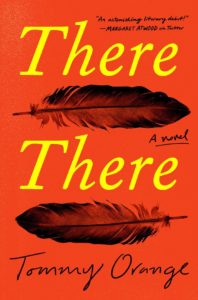 There There: A Novel Tommy Orange (Knopf) $25.95 This is a complex novel comprised of many interlocking characters who are all urban Native peoples (and it, too, for the record, has characters who use the F word a lot.) So much of contemporary fiction about American Indians is set on the rez and There There breaks new ground, set in the rough streets of inner city Oakland CA. It is vulgar and written with, as one reviewer put it, “A rush of intensity and fervor… bursting with talent and big ideas… Funny and profane and conscious of the violence that runs like a scar thorough American culture.” Ron Charles calls is “Masterful… White-hot. A devastating debut novel.” It has been described in extraordinary ways; Margaret Atwood says it is “astonishing” and Dwight Garner in the New York Times writes of his “Bravura… There There has so much jangling energy and brings so much news from a distinct corner of American life that it’s a revelation. Its appearance marks the passing of a generational baton.”
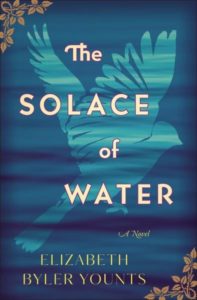 The Solace of Water: A Novel Elizabeth Byler Younts (Thomas Nelson) $15.99 Several of our staff have just adored this fascinating story that gives a very thoughtful and unexpected twist on the “Amish” fiction genre. Younts lives in Central Pennsylvania and the novel is set in the 1950s in a rural community in Pennsylvania. The well-written plot revolves around two women in great grief – an African American woman who has moved North from the Jim Crow South and a local Amish woman. They initially bond over their losses – both have lost children (and in one case, water was involved.) The author believes that it is “eminently relevant to the beauty and struggle in America today.” What a lovely, thoughtful, serious and eloquent book – Beth was very taken with it and has been telling others!
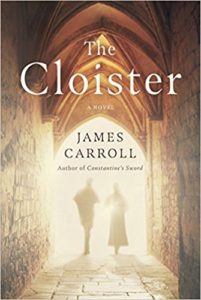 The Cloister: A Novel James Carroll (Nan Talese/Doubleday) $27.95 You may know Carroll as a left-wing Catholic who has written widely about mendacity and complicity and corrupt money in our public lives. He has called the church to greater commitments to integrity and justice. He also, by the way, wrote one of the most moving memoirs I have ever read, An American Requiem: God, My Father, and the War That Came Between Us for which he won the American Book Award in 1996. (That book, by the way, eloquently tells of his increasing involvement in the anti-Viet Nam war movement even as his father was a strategist for the war at the Pentagon and family friends with President Johnson’s family. It is one of the important books in my life and my dad and I talked about it deeply.) The Cloister is Mr. Carroll’s first novel and it is a modern-day re-working of the famous medieval illicit love story of Aberlard and Heloise – set in the The Cloisters in New York City. (Ha – bet you didn’t see that coming.) Nicholas Delbanco says it is “wonder-filled” and another reviewer says it is an “enlightening, vitally important book, a necessity for our time.” There are overlapping narrative arcs (the lovers are a Catholic priest and a French Jewish woman) as the story moves from the Nazi holocaust to the Crusades to the “startling mysteries of prejudice, brutality, and love.” One writer compared it to All the Light We Cannot See and another says, “like all the best fiction, it commandeers the reader’s heart.” I am really looking forward to it.

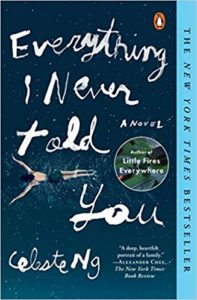 Everything I Never Told You Celeste Ng (Penguin) $16.00 Beth tell us that in her opinion Everything… is even better than the excellent Little Fires Everywhere. Again, it is a deep and heartfelt portrait of a family. Full of pathos about the mysterious death of a teen, it might be compared to The Lovely Bones The Los Angeles Review of Books noted that “Ng moves gracefully… creating a series of mysteries and revelations that lead back to the original question: what happened to Lydia. Masterful.” It is “wonderfully moving, a beautifully crafted study of dysfunction and grief that will resonate with anyone who has ever had a family drama.” A thoughtful and passionate Christian friend who is Asian American and speaks of the challenges of growing up as a minority in these times quipped once that folks should read this because “it explains everything.”
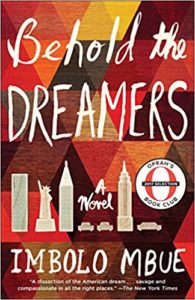
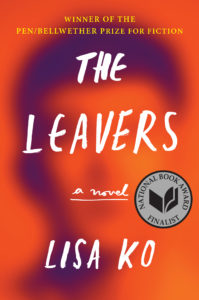 The Leavers Lisa Ko (Algonquin) $15.95 This remarkable book is beautifully written and ambitious and was a just deserved National Book Award Finalist. It also won the PEN award and the Bellwether Prize for Fiction which was created by Barbara Kingsolver for socially conscious novels. (Aside: we are taking pre-orders for the much-anticipated Barbara Kingsolver novel called Unsheltered which releases October 16.)
 Jabbok and Beulah: A Sequel to Jabbok Kee Sloan (Peake Road/Mercer University Press) $18.99 each Sometimes we discover lesser known sources for good books, publishers of independent spirit but high quality. University Presses are usually brilliant, but often price themselves out of the market, so to speak, or are just too scholarly or obscure. Here are two very fine, very accessible novels published by the literary imprint of Mercer University Press; I bet you’ve never heard of them. They are, as you might expect from a publisher in Macon Georgia, rooted in deep Southern culture, and they are a genuine delight. In the first book, Jabbok, Buddy Hinton, a young boy who lives in the country outside of Vicksburg Mississippi, meets Jake,
 an older, black fisherman, ex-convict, former tent preacher – and their friendship deepens. It captures the late 50s boyhood of the south (including a serious lot about racism and other sorrows.) I think you will be hooked by the first sentence and the first moving paragraph of the Prelude.
 Caroline: Little House, Revisited Sarah Miller (William Morrow) $15.99 We announced this when it was out in hardback and we’re glad it’s now in a more affordable paperback edition. Beth adored it, but not everyone will, we suppose. It is, in fact, an imaginative re-telling of the Little House stories from the point of view of Ma. Isn’t that a great idea? It is impeccably researched and was authorized by Little House Heritage Trust and is very well done.
 The Day the Angels Fell and The Edge of Over There Shawn Smucker (Revell) $17.99 We wanted to suggest at least something in the “speculative fiction” genre and for those that like fantasy – and have already finished the must-read Steve Lawhead, In the Region of the Summer Stars, Book One of the Eirlandia series) – these two are among the best of the year. Shawn is a well-respected writer and a great guy.
 The new one, The Edge of Over There, is just out (in a fantastic hardback design for $17.99), a fine sequel that itself has gotten good reviews. Here’s the official summary:
 Anatomy of a Miracle: A Novel* Jonathan Miles (Hogarth $27.00 I hope you know this fascinating, talented author who has been widely reviewed and critically acclaimed. I gave a shout out about how intriguing this book was before I read it and now that I’ve spent many pleasurable days immersed in its captivating story I can say it is one of my favorite books of the year. Miles has always been a social critic who seems familiar with questions of faith and religion. (See his acclaimed Dear American Airlines and especially Want Not.) This recent novel is equally rich in themes that matter.
 A month or more ago at BookNotes
 As James K.A. Smith in his brilliant How (Not) to Be Secular: Reading Charles Taylor (Eerdmans; $16.00) explains, the world-class Canadian philosopher Charles Taylor has written profoundly and deeply to show us how the tensions of the modern age and the secularism that it has brought has rendered much of our lives in our era, not to mention our religious sensibilities, shallow, contradictory, and confused. Like the frog in the kettle accommodated to the rising temperatures, we don’t even realize the mess we’re in.
 Add to this Noble’s considerable awareness of and candor about how many of us are nearly addicted to our smart phones – I laughed when he says he even uses it in the bathroom – and how literally distracted we are with the beeps and buzzes and notices from our ubiquitous devices. There are many books about this these days, from the practical 12 Ways Your Cell Phone Has Changed You by Tony Reinke to Andy Crouch’s wonderful Tech Wise Family: Everyday Steps for Putting Technology in Its Proper Place to the serious Distracted: The Erosion of Attention in the Coming Dark Age by Maggie Jackson and it is good that Noble plumbs some of the implications of electronic distraction. We all know this is really, really important, but few of us study it, let alone do much about it. I like how Alan calls us to the simple (well, not so simple, after all) task of silence and solitude so we can contemplate and wrestle with ideas. How can we do that when we are so busy, so saturated by constant connection with content, or just “move on” to the next curious thing? Watch
 The second half of this ambitious book offers three large meditations on strategies we can use to resist, to disrupt, the distraction and secularizing ethos of our times. To make a way through the noise towards the fullness of life. He offers deep, philosophical notions and then backs them up with theological insights and proposes ordinary practices that emerge from his own efforts and stories. In a way, this is the biggest strategy of all – we simply must be more attentive to the real, the down to Earth, nurturing virtue by way of daily practices. We have to do stuff well, and show how it points beyond ourselves to the God who is there, in a world that is loved. How do we become agents of that kind of disruption?
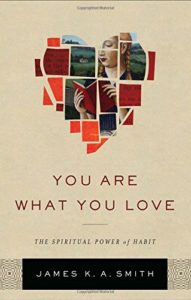
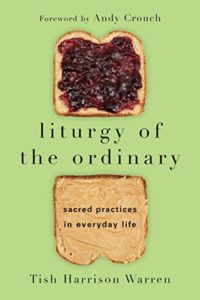 In a way, this approach is very much like what James K.A. Smith does in the urgent You Are What You Love: The Spiritual Power of Habit and what Tish Harrison Warren does in her lovely Liturgy of the Ordinary: Sacred Practices in Everyday Life. This book is a bit more dense than those, but if you’ve read those, this maybe should come next.
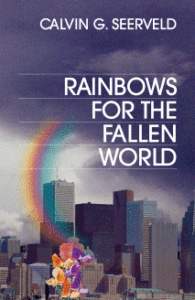 sold to him.) That is, there is a creative/artistic side to our human experience and the use of our imaginations – so often captured by popular tastes and popular culture – need to be redeemed and deepened so that we can be more colorful and curious. I hardly know any book – even those that are written about aesthetics and the arts – that draws on Seerveld’s Rainbows as much as one of the chapters in this book does. Noble is wise to show that this imaginative way of living with greater attention to the arts and daily aesthetics helps us take in more of life as we should, but also to bear witness to God’s hopeful, richly human, wholesome ways in this world. Noble’s part about beauty is very, very nicely done.
 And so, we are thrilled to once again commend to you a serious summer read, a book of cultural analysis and deft critique of the forces of modernity and post-modernity, that, while slogging through some serious stuff, is still loaded with brilliant ideas and practical suggestions. We commend this book to help you and yours thinking intentionally about the nature of our witness in this hot-wired, saturated age.
 Impossible People: Christian Courage and the Struggle for the Soul of Civilization Os Guinness (IVP) $20.00 I have said before that this is a great way to understand our modern and postmodern era; it is a one-volume lesson in discerning and urgent cultural analysis. The always incisive Guinness (with his PhD degree studying the work of sociologist Peter Berger) brings out many of the themes he has explored before – how, just for instance, speed and choice and change have disrupted traditional ways of knowing and believing. He shows how modernity itself has eroded the very notion of authority. Of course he explores how we in the evangelical churches, especially, have too often attempted to link the gospel to marketing, the growth of technology, and such. Have these things come back to haunt us? Have forces we’ve too often ignored actually displaced our first love of the gospel itself? What will it take to be bold, principled, people who will rise up and say no to unfaithful compromise and unhelpful patterns? I have written before in greater detail why I think this is a very important book, sounding an alarm as it does, and read it now would be a another way to understand the need for what Noble calls “disruptive practices” in our personal, church, and cultural lives. If you’re reading Alan Noble, you should (seriously) buy this, too!
 Fool’s Talk: Recovering the Art of Christian Persuasion Os Guinness (IVP) $22.00 This is a remarkable, one-of-a-kind study which we raved about here at BookNotes when it came out in 2015. Considered by some a magnum opus, it was 40 years in the making, drawing on broad and historically informed cultural studies, incisive insights about apologetics, and a mash-up of three of Guinness’s most decisive influences – C.S. Lewis, Francis Schaeffer, and Peter Berger. Granted, as Alan Noble explains (and as Os himself admits) the times are complex, the ideas and the structures and habits of culture often a large obstacle, but we can still learn how best to persuade. There is an art to learning these ways of persuasion, and Guinness has thought about this for a lifetime. Highly recommended. (By the way, just a parenthetical shout out, here: we expect any day his brand new revised and expanded 20th anniversary edition of The Call: Finding and Fulfilling Your Greatest Purpose, which remains one of my all time favorite books.)
 Evangelism After Pluralism: The Ethics of Christian Witness Bryan Stone (Baker Academic) $21.99 We have oodles of books about how better to share one’s faith and wish we sold more Despite the good and helpful social analysis offering in books like the Alan Noble (above) we still need to keep trying to talk face to face to people about things that matter most This remarkable volume, though, is less a practical “how to” do better evangelism, but a rich and deep study of — as Noble asks — how to even think about evangelism given what we know about communication in “the secular age” and the buffered nature of our selves. Stone has read his Taylor and any other deep cultural critics and he has drunk wisely from the wells of some of our best mainline denominational thinkers — from George Lindbeck to Rowan Williams to Lamin Sanneh to Kathyrn Tanner. I like his counter-cultural posture (citing early church fathers and mothers and modern radical saints like Dorothy Day.) He cites my hero Ron Sider and asks seriously what embodied Christian witness looks like in an era such as ours. Stone is associate dean for academic affairs and E. Stanley Jones Professor of Evangelism at the Boston University School of Theology. You may recall his book Evangelism After Christendom, which also would be a good, serious read for those exploring foundational stuff about worldviews and culture and sharing the gospel well. For what it is worth, not surprisingly, Evangelism After Pluralism has rave reviews on the back from Will Willimon and Stanley Hauerwas as well as rising scholars such as Joon-Sik Park (of Methodist Theological School in Ohio) and Duke’s Laceye Warner, who calls it a “must-read.”
 Localism in a Mass Age: A Front Porch Republic Manifesto edited by Mark T. Mitchell & Jason Peters (Front Porch Republic Books) $32.00 This fabulously interesting and curious collection takes more time than I’ve got here, now, to explain. In a sense, the title evokes much – the “front porch republic” is a movement that is, mostly, localist and conservative. (That is, they want to conserve, so they tend to be cranky about suburban sprawl and big Wal Marts and global wars and utopian dreams.) Although Wendell Berry isn’t in here, his spirit hovers near several of the chapters.
 The World Beyond Your Head: On Becoming an Individual in an Age of Distraction Matthew Crawford (Farrar, Straus, Giroux) $16.00 From time to time I enjoy reminding people about Crawford’s first big book, Shop Class as Soul Craft which was, although a bit heady, a call to rediscover the joys of working with one’s hands, of his own departure from a white collar think-tank to starting his own motorcycle repair shop. What do we lose when we gush about the information age or digital culture and defund shop classes and trade schools? The World Beyond Your Head continues these questions, offering more vintage Crawford, investigating the challenging of mastering crafts and how some workers have done well in taking up their jobs as vocations. Of course, as with Noble, is has the word “distraction” in the title, although he may be reflecting a bit more deeply than Noble on kinds of distractions we encounter. The World Beyond Your Head is in a way a study about digital culture vs. “real world” work and how abstraction messes with our minds. Does learning to pay attention to and have focus upon our bodies (by way of manual work) have anything to do with Alan Noble’s “disruption” challenges in his Disruptive Witness: Speaking the Truth in a Distracted Age? What role does embodiment play in Noble’s vision? How about a dose of Crawford, here, who says, “attention sculpts the self”? Do you recall that quotable line from James K.A. Smith when he insists that “the things we do, do things to us”? Do you know Nicholas Carr’s elegant but alarming books The Shallows: What the Internet is Doing to Our Brains and The Glass Cage: How Our Computers Are Changing Us? Noble is truly concerned about this stuff and I wish he’d have engaged Matthew Crawford as a conversation partner.
 Subversive Christianity: Imaging God in a Dangerous Time Brian Walsh (Wipf & Stock) $17.00 I know you know that I regularly suggest reading Walsh. From his early The Transforming Vision and Truth Is Stranger Than It Used to Be (co-authored with Richard Middleton) to a deep study of place and mobility (Beyond Homelessness: Christian Faith in a Culture of Displacement, co-authored with Steven Bouma-Prediger) through his study of Bruce Cockburn as a way to think about imagination and the arts, to the Wine Without Breakfast Bible studies and worship litanies (St. John Before Breakfast and Habakkuk Before Breakfast) to his must-read Colossians Remixed: Subverting the Empire (co-authored with his Biblical scholar/organic farmer and bio-regional activist wife, Sylvia Keesmaat) we see over and over in his work a deeply Biblical world and life vision that necessarily says no to the dysfunctional ways of the culture (and the powers that be) when they are in opposition to a Biblically-informed vision of flourishing, gracious love and justice, and care for all of creation. Walsh preaches the Bible with breathtaking adeptness, hearing the echoes and connecting the dots and knows economics and philosophy; he writes about the arts and ancient archeology; he knows homeless folks and hangs out with the marginalized even when he’s writing chapters in books about or with other Biblical scholars (such as his friend N.T. Wright.) Brian is in many ways one of my mentors and a thoughtful example of ways to be deeply rooted – radical, that is – and subversive against the idols and ideologies of the culture. I wish I had his Bible knowledge, his relentless passion, and his guts.
 Grateful: The Transformative Power of Giving Thanks Diana Butler Bass (HarperOne) $26.99 We recently did two reviews of this at BookNotes, one rather long, so I hope you know that we are fans, even if I wasn’t confident, at first, that this book would be that interesting to me or important for serving the cause of of the flourishing of the common good. We’re very glad to report that it is exceptionally well-written, deep, good stuff, and that we think it deserves the acclaim that it has been getting. Grateful is a fabulous, inspiring book to read over the summer. The whole business of happiness and gratitude and such is being researched by scientists and while Diana is a social scientist and spiritual writer, she does discuss some of the brain studies data and such. It is certainly timely and a topic many are interested in.
 Sacred Signposts: Words, Water, and Other Acts of Resistance Benjamin J. Dueholm (Eerdmans) $16.99 I so, so want to recommend this and admit from the start that it deserves its own long review; I can only suggest a bit about it now. Dueholm is a Lutheran pastor who is also skilled as a great writer – his sentences are truly a delight to read – while his theological vision is provocative and interesting and generative. Here, as you might guess, he is showing how the church’s most elemental practices are themselves subversive to the secularized culture in which we live. Had this book been out previously (it came just this week) Alan Noble might have used it for his own chapter on disruptive practices in the local congregation.
 The Holy No: Worship as a Subversive Act Adam Hearlson (Eerdmans) $24.00 With this boldly subversive, nay-saying title, you can see why I might want to commend this alongside the profound study of the secular age by Alan Noble. Hearlson, a UCC pastor, puzzles out a bit about worship and liturgy as counter-cultural and formative in ways to help us resist distraction; good worship should help us understand God’s transformative work in our lives, and help us bear witness well in the world. But to do that, we must be resistant. How ‘bout a book that just shouts it – The Holy No!
 Interrupting Silence God’s Command to Speak Out: A Bible Study for Adults Walter Brueggemann (WJK) $14.00 Walt Brueggemann is very important to me for many reasons, but in the context of the theme of this newsletter — riffing off of the insights of Alan Noble’s Disruptive Witness —I might note that Brueggemann is not only a master Old Testament scholar and evocative Bible teacher, but he is exceptionally well read, especially in the social sciences and history and in what we might call cultural studies. So all of his rich Scriptural teaching is somewhat shaped by worldviewish vision and cultural critique. (Indeed, his old, extraordinary, brief book The Bible Makes Sense starts with two “bad” acculturated views of the Bible, showing ways the left-brain, establishment rationalists and the lefty, counter-cultural romantics each misread the very meaning of the Biblical drama which cannot be tamed and dare not be turned into an ideology of the right or the left.) Anyway, this new pithy book by Brueggemann offers eight fairly short but potent Bible reflections — one from Exodus, one from Amos, one on a few verses from Psalm 32, and five New Testament texts, each with provocative study questions for a serious adult class. Each chapter runs about 10 profound, pages. Brueggemann-esque pages, that is, so you’re getting your money’s worth.
 In telling you about Interrupting Silence I must note that I’m reminded of a brand new book I spoke about in my little video for last week’s BookNotes — Kathy Khang’s Raise Your Voice: Why We Stay Silent and How to Speak Up (IVP; $16.00.) We all can use some extra help in learning when and why and how to speak up, and Ms. Khang not only reminds us to use our voice with (as Rachel Held Evans puts it) “holy force” but also has done some good work herself exploring the social, cultural, and familial forces the sometimes intimidate us.
 Romans 8 – 16 for You Timothy Keller (The Good Books Company) $22.99 We like this whole on-going series of Bible lessons that have some helpful application points. This is obviously the second volume of a two-volume pair on Romans. Get Romans 1 – 7 for You as well.
 The Bible Speaks Today: The Message of Romans John Stott (IVP Academic) $20.00 As I explain in the video, the entire Bible Speaks Today series is a standard, go-to recommendation for us. They are mature and thoughtful, but not tooo critical or scholarly. Stott was the editor of the NT portion of the BST series and they are just so reliable, thoughtful, and relevant. He handles Romans 13 thoughtfully with good balance and insight. Highly recommended
 I also suggested that it would be wise just to study the life and teachings of Paul. There’s so, so much, but I gave a quick shout out to Paul: A Biography by N.T. Wright (HarperOne; $29.99.) I think the impressive, passionate scholar Douglas Campbell’s recent Paul: An Apostle’s Journey (Eerdmans; $22.00) sure looks great. And you really should know Reading Paul by the aforementioned Michael J. Gorman. (Cascade; $22.00.) I really should have mentioned that one last night, since I linked to his Facebook post on reading Romans 13 in context.
 God in Public: How the Bible Speaks Truth to Power Today N.T. Wright (SPCK) $18.00 These are lectures given by the great New Testament prof on justice, government, public life, political theology and faithful civic engagement. This was published in England (where Wright goes by Tom rather than N.T. on his more popular level books. This is a great collection, highly recommended!
 The Political Disciple: A Theology of Public Life Vincent Bacote (Zondervan) $11.99 I love this little volume in the “Ordinary Theology” series. He doesn’t cover Romans 13 much, but offers keen insights on public life, pluralism, and various postures and strategies for being “in but not of” the world as we take up our duties as Christian in society and as faithful citizens.
 One Nation Under God: A Christian Hope for American Politics Bruce Ashford & Chris Pappalardo (B&H) $14.99 This is a small hardback written by two very sharp Southern Baptist thinkers who have studied Kuyper, pluralism, law, and understand much about the framework of a Christian view of political order. There’s a lot of meat here for a small book.
 The Good of Politics: A Biblical, Historical and Contemporary Introduction James Skillen (Baker Academic) $24.00 My goodness, this overview of how the best thinkers of the Christian West have thought about politics and the state, down through the ages, is brilliant. He is helpful in showing how many have a core conviction about the state being God’s good gift, but many (perhaps influenced by some sacred/secular dualism or some private/public or church/world dichotomy) fail to develop a robust, Biblically-rooted political theory.This is a must for anyone serious about having an informed Christian perspective.
 A Covenant to Keep: Meditations on the Biblical Theme of Justice James Skillen (The Center for Public Justice) $12.95 We are so glad to still have a few of these books around, first published by the Christian Reformed Church, solid Biblical reflections and a few nice case studies of people of faith serving as public officials. These Scriptural reflections emerged from Skillen’s work as founder of the Center for Public Justice, a non-partisan think tank for the development of Christian citizenship in light of a Biblical vision of society and the important but limited calling of the state.
 Five Views on the Church and Politics edited by Amy Black (Zondervan) $19.99 Those who follow BookNotes know that I’ve commended this recent “Counterpoints” book often. Nice to see the debate and dialogue between a Lutheran, a classic black church activist, a Roman Catholic, a Mennonite, and a Dutch Reformed Kuyper guy (our friend James K.A. Smith.)
 Church, State, and Public Justice: Five Views edited by P.C. Kemeny (IVP Academic) $20.00 I gave a quick shout out about this one, too, as it so helpfully allows a variety of good thinkers across a range of views to debate. There’s a Roman Catholic in the consistent, Catholic social teaching tradition, a Baptist, an Anabaptist, a principled pluralism view of the Kuyperian sort, and a social justice, mainline denominational view.
 I Pledge Allegiance: A Believers Guide to Kingdom Citizenship in 21st Century America David Crump (Eerdmans) $24.99 Oh man, what a book, feisty, challenging, important. I offers a good study of the Kingdom of God, and it isn’t cheap or simple. I noted that there is a very good chapter on civil disobedience, with this New Testament professor telling of his own involvement in non-violent direct action and the solidarity he felt with those with whom he was arrested. Ron Sider calls it “a must read.” If we are going develop a more singular devotion to Christ and His Kingdom without being co-opted by the political powers that be, we will need this sort of tough thinking. Good discussion questions, too, make this a great study resource for engaged readers.
 Jesus for President Shane Claiborne & Chris Haw (Zondervan) $19.99 What a wild and creative book with edgy artwork and colorful illustrations and eccentric, youthful design. More importantly, it shows how the Bible offers an alternative story to the story of economic growth, nationalism, and military might and calls us to embody a counter-cultural community which testifies to the King who rides a donkey (not a warhorse) and whose political victory comes through a nonviolent act of suffering servanthood. Agree or not with the “anti-institutional” tone of this, it is Biblically-rich, capturing an important theme in the Bible. I wish I had said more positive about it in my little video talk as it really is worth reading.
 Jesus vs. Caesar: For People Tired of Serving the Wrong God Joerge Rieger (Abingdon) $19.99 Time was running out on my little book talk so I didn’t say much about this, but it is a powerful, liberationist critique of mammon, power, and how the gospel always puts us in conflict with the principalities and powers. I tend to find great value in this strong critique but was frustrated a bit by some of his zealous overstatements. Still, it is true that many of us say we are following Jesus but we are deeply complicit in a violent Empire and we simply must learn to say no to the death-dealing ways of the status quo. Could it be that many who talk about religion in public life are actually serving a false God? Wow.
 Raise Your Voice: Why We Stay Silent and How to Speak Up Kathy Khang (IVP) $16.00 I ended my video presentation with an invitation to read this thrilling new book. I described it too quickly, but hope you picked up how thrilled we are to have such a resource and how much I’m enjoying it. I really, really hope many consider it as it is wonderfully written and offers both serious Biblical and spiritual insight, lots of anecdotes, and good strategies and guidance. Khan has worked in campus ministry with IVCF and has previously written a book for Asian American women rising to leadership positions (More Than Serving Tea: Asian American Women on Expectations, Relationships, Leadership and Faith) which of course we stock. Kathy Khang is an voice we should listen to.
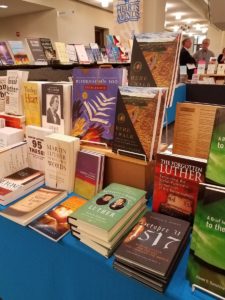 tear down and load out, we zoomed to an ecumenical conference at Lancaster Theological Seminary on “Mercersburg Theology” (a 19th century German Reformed tradition that was significant and remains a curious influence in central Pennsylvania United Church of Christ (UCC.) This year, alongside academic papers on Nevin and Schaff (the founders of the “Mercersburg school”) there were Orthodox theologians, a graduate of Westminster Seminary, a Mennonite presenter and an Episcopalian scholar who studied at the Presbyterian seminary in Pittsburgh and works for the Eastern Rite Catholic Seminary in Pittsburgh. (Did you know there were Catholics who are Eastern?) What a world, so many scooped up in the big net of God’s saving catch.
 Which brings us to one of the very best books about church life I’ve read in ages, an important and interesting and insightful work by one of the most interesting, ecumenical, globally-connected persons you could ever meet, Wesley Granberg-Michaelson. The book, recently published by Fortress, is called Future Faith: Ten Challenges Reshaping Christianity in the 21st Century.
 And, by the way, he is an ideal author to reach both mainline folk and evangelicals. As Wes tells so pleasantly in his fascinating memoir, Unexpected Destinations: An Evangelical Pilgrimage to World Christianity [Eerdmans; $24.00] he grew up on the fundamentalist side of the pew but his journey has taken him into nearly every corner of the broader Body of Christ. As he develops then in his 2013 masterpiece, From Times Square to Timbuktu: The Post-Christian West Meets the Non-Western Church (Eerdmans; $20.00) the realities of the global church — well known from all the recent books with all the statistics that indicate the majority of Christians (for the first time in 2000 years) are now in the global South and Asia and not white, European or North American – are now coming through migration and immigration, to our own towns. That is, even as world Christianity’s center of gravity has moved to some point near Timbuktu, many of these brothers and sisters are, in fact, moving to North America, bringing their experiences and theological frameworks with them.
 He sees the good, the bad, and the ugly, in the church these days and remains hopeful. The book is hard-hitting and challenging (not least for Western church folks who are the primary intended readers) but it isn’t strident or pessimistic or alarmist. Well, it’s a little alarming since, well, we simply can’t abide the status quo much longer; things must change in our faith communities. The gloomy statistics about church decline and the disastrous trajectory for many aging and dying congregations are self-evident and it is foolish to disregard the writing on the wall, as they say. Granberg-Michaelson clearly summarizes some of the most recent data on this hard stuff and it was both bracing and helpful.
 Future Faith will help churches re-vamp their way of doing life together in their parishes, sure, which will help them practically be more sustainable in these changing times, but more importantly, it will help them be more Biblical. More faithful, more coherent and consistent and natural at bearing witness to the very good gospel of God’s Kingdom. Reading and discussing it will transfigure the church and transform us, hopefully making a difference in the world. This is an interesting book about global trends and includes some data and research and predictions but truly it is a book about theological principles which are too often missed and which simply must be embraced, now, before it is too late.
 The stories he tells are often about churches from all over – some international, some from North America, many mainline, some not. Wes has this extraordinary calling and exceptional grace to be able to be in fellowship with and learn from folks from all over the theological spectrum so there are plenty of cool stories and lots of provocative insights and some jaw-dropping stories offered. Did I say this would make a great study for a small group or book club?