I know that some who subscribe to our free Hearts & Minds BookNotes newsletter do so because they are eager for our sale prices on important new books. They like to hear what we recommend each week and they appreciate – or so we hear – our diverse selection. We stock a lot of books that might be considered mainline denominational and progressive theologically, and we have a huge selection of what might be considered thoughtfully conservative/evangelical. Not to mention Catholic and Orthodox authors and nearly everything in-between. Likewise with our cultural studies and current affairs books — a bit of everything, carefully chosen. We regularly hear that folks like learning about titles we are most interested in, especially when they are books they might not otherwise have heard of or otherwise considered.
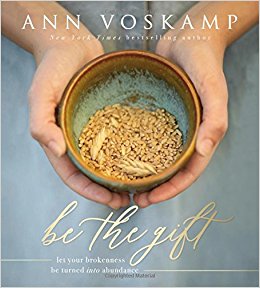
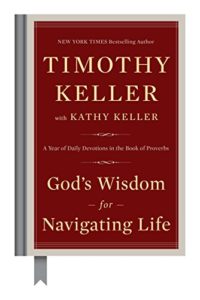 We also regularly write, about bestsellers including relatively simple, inspiring, religious titles that dominate the Christian bookstore marketplace – the brand new gift book by Ann Voskamp with full-color photography called Be the Gift: Let Your Broken Be Turned Into Abundance is a wonder, not unlike another we highlighted lately, Love Heals by Episcopal priest and activist Becca Stevens, or consider the brand new devotional on Proverbs by Tim & Kathy Keller, God’s Wisdom for Navigating Life: A Year of Daily Devotions in the Book of Proverbs
And we’ve got all kinds of mainstream, general-market bestsellers, too.
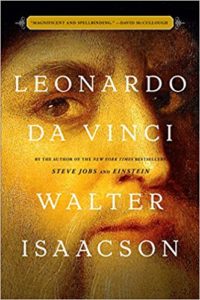 What bookstore wouldn’t want to carry any new biography by Walter Isaacson (the new one is on Leonardo Da Vinci) or the latest Ron Chernow, famous for Alexander Hamilton, simply called Grant? What bookstore that has any desire to offer deeper analysis of the culture wouldn’t be happy to stock stuff like Kurt Andersen’s Fantasyland: How American Went Haywire: A 500 Year History or the important collection of pieces posthumously collected called Scalia Speaks: Reflections on Law, Faith, and Life Well Lived (with a forward by Ruth Bader Ginsburg, no less.) My goodness, shouldn’t every bookstore carry the companion book to the much-discussed Ken Burn’s PBS series, The Vietnam War: An Intimate History and the remarkably written collection by Ta-Nehisi Coates, We Were Eight Years in Power: An American Tragedy.
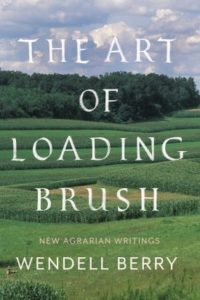 Speaking of important new non-fiction, if you follow us at all on social media you know we’ve been celebrating a new hardback collection of agrarian essays by Wendell Berry, nicely entitled The Art of Loading Brush.
I am sorry I don’t take enough time here to tell you about important novels such as New People by Danzy Senna or Little Fires Everywhere by Celeste Ng, or Swingtime by Zadie Smith or poetry like The Sun and Her Flowers, the new one from Rupi Kaur.
Oh my, there are a lot of great new books.
Let me be honest: I started off listing these recent books for three reasons.
Firstly, we need to continue to get the word out that we carry all kinds of books and that we are looking for readers to order books from our full-service independent bookstore. No matter what your tastes or topics, we here at the shop would be eager to serve you further.
Secondly, I wanted to highlight some authors you might be familiar with if you are a fairly general reader – I really hope you know Voskamp and Coates and Keller and Berry – mostly because I’m about to share some titles that might seem, in comparison, a bit (shall we say) less than mainstream, edging towards the obscure. I don’t want you to think our bookstore is (too) weird. We really do have a great selection of normal, good books.
Thirdly, we list some of these popular bestsellers that we stock because I want those new to BookNotes to know that what I share below is a little unusual; we don’t always tell such long-winded, personal stories about our own background, and we know that our own eccentric past and unique tastes are, admittedly, maybe not for everyone. But marketers say that these days loyal customers usually do care about the story behind a business; sure, the fact is that we sell books, but for those of you who sense some connection to us here in south central Pennsylvania, you should know a bit more of what makes us tick. We aren’t just a faceless algorithm toting up data but we are telling a story in our shop, here. We’d like to think that maybe you are part of it, too. Maybe hearing some of what has influenced us will help you curate your own lives and legacy.
ADVENT LIST COMING SOON
In a day or so we’ll do a big list of Advent books which should appeal to everyone, so please bear with us now as we share some of our back-story, and few heady lines about a very moving event we had the privilege of serving this past weekend in our old stomping ground out in Pittsburgh PA. We thought you might like to hear about it.
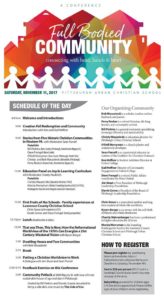 BOOKS AT THE FULL BODIED COMMUNITY CONFERENCE
It was a conference called “Full Bodied Community.”
That event was organized by a group of old friends, mostly, most who we met in the mid 1970s, with some younger energy coming from a handful of folks currently involved with the CCO campus ministry with whom I serve as an associate staff; Beth and I, you probably know, attend a lot of their staff training events as booksellers and as occasional speaker.)
We want to mention some of the important books we sold there and mention a few we wish we had had time to promote better for that particular audience.
But first, I hope you don’t mind learning (or hearing again, if you know us well) a bit about this event, the movement from which it grew, and why it matters so much to us.
BIG BACK-STORY
To do that, you have to bear with me even more. Allow me a few quick moments to remind you of, if you don’t know, a bit about our own story and how we ended up speaking and selling books at the Full Bodied Community Conference at Pittsburgh Urban Christian School.
You see, as I explained in my talk at the event, my own faith journey included a nearly schizophrenic sense in the early 1970s of being part of two or three colliding movements, two or three groups that seemed to care little for each other.
I imagined myself a bit of a social action guy during the tail end of the 60s counter-culture. I was part of the first-ever Earth Day (thanks, mom, and to whoever from church loaned us that pickup truck) and was a conscientious objector during the last years of the draft. As a follower of Christ I wasn’t into the “sex, drugs, and rock-n-roll” of those rowdy years (well, maybe the rock-n-roll part) but I did care about civil rights stuff, worked against the death penalty, attended the first ever national Right-to-Life conference, picketed and boycotted with the United Farm Workers – standing for what we nowadays call “fair trade” practices for migrant workers — advocated for the Americans with Disabilities Act (I was a special ed major and met life-long friends at a camp for handicapped kids) as well as the American Indian Movement (not unrelated to the Standing Rock protests of this past winter.) The odd thing was that none of my fellow Jesus Freaks cared one whit about any of this. Nada.
There were some devout Roman Catholics that I met in 72 or so who had a consistent pro-life vision and helped me resist both the on-going war in Viet Nam and the nuclear arms race, got us involved in Amnesty International, and came to understand the awfulness of Roe v Wade in unleashing unlimited abortion-on-demand.They stood with workers and helped me get involved in a nationally-known safe energy movement. We worked for anti-hunger policies through Bread for the World and learned about boycotting Nestles, not to mention companies that wouldn’t divest from apartheid South Africa. We started a crisis pregnancy center at my college. Almost universally, my evangelical friends had little interest in joining in any of the campaigns or causes.
I will never forget when one Christian gal involved in charismatic giftings said that fighting hunger was against God’s will. Another woman, when I said we should do a Bible study on Amos or Micah, for once, said maybe I had a demon because I was interested in political change.
That wacky stuff aside, I also want to understand what was being debated in the university proper and was curious about the counter-cultural critique of the rational, bland, secularity of the establishment. I wanted to study what was “happening in the air” by reading existentialist literature and paying attention to bohemian artists and learning from the best philosophical critiques of what eventually I learned to call modernity.
I was really disillusioned with some mainline denominational pastors I met who didn’t want to read the Bible at all and seemed to have little regard for evangelism and prayer, and seemed to resent the vibrant faith of younger evangelicals. I didn’t understand their disinterest in conversion and spirituality or their typically critical attitude about the Scriptures. I met one young man at a faith-based peace protest who was in seminary who was an agnostic at best, and was on his way to be affirmed by his denomination as a pastor.
I don’t know if you know what I’m talking about but I felt like I knew folks who loved Jesus but didn’t care about the world or its needs.
On the other hand there were people I knew who cared deeply about the world and its concerns but had no interest in faith or any solutions that would be connected to historic faith.
Theodore Roszak, in an often-read book from those years that I still cite as an example of the quandary of those days, famously said that “Christianity, while still personally engaging for some, has become culturally irrelevant.”
I loved my social action hippy friends even though they mocked my faith. I loved my brothers and sisters in Christ, even though they hardly tolerated my interest in world poverty, environmentalism, and making some impact in the world outside our fellowships and churches. I was lonely in many ways, and frustrated, but tried always to unite these two different communities.
Liberal Christianity didn’t have the wherewithal to offer radical challenges to the culture because the churches I knew seemed so comfortable, accommodated to the world (despite what Bonhoeffer and Kierkegaard and Martin Luther King, Jr. implored.) Evangelicalism was my newfound spiritual home, and I loved the zeal of the charismatics who seemed so full of the Spirit, even though they had their head in the clouds — “so heavenly minded they were no earthly good” was a fair description.
And the SDS type radicals were slowly losing their way, ending up in cults or drugs or back-to-nature communes, giving up the struggle for a just and healthy world. These were the days of Patty Hearst and Jim Jones and the political counter-cultural moving to the hard, Marxist left.
I could say more about the cluelessness of many churches and the harshness of many left-wing activists as well as heroic Christian folks we met in those years from Phil Berrigan to John Perkins, from Dorothy Day to Millard Fuller. But you get the point. Roszak, it seemed, was mostly right.
And into this quandary of being a church kid wanting to change the world, I met a world of folks who were doing just that, thoughtfully engaging the times, aware of the films and music and politics of the counter-culture, but moving beyond its dead end bankruptcy.
There were writers like Francis Schaeffer, wonderful witnesses like Os Guinness, new heroes from Ron Sider to Richard Mouw to John Perkins. We learned of evangelical feminists and Biblically-based racial reconciliation and Christian ecological activists working on what we called “Earth-keeping” and “creation care.” I discovered a new kind of Christian literature, Biblically grounded but culturally engaged. I discovered Thomas Merton and Jacques Ellul and James Sire and William Stringfellow and C.S. Lewis and Letha Scanzoni and Virginia Mollenkott and Lewis Smedes. I started reading King and a Mennonite named John Howard Yoder (who years later was disgraced as a sexual abuser.) A whole world opened up to me that I knew nothing about.
And, importantly, I met a professor who travelled from college to college, offering adjunct workshops and seminars on Christian perspectives on society and truly faithful ways of thinking about issues, related to a old tradition I never heard of.
His name was Peter J. Steen.
He and his colleagues changed my life.
He told us about a revival of faith and social renewal in Holland in the late 1800s into the early 1900s, lead by an extraordinary Dutch thinker named Abraham Kuyper.
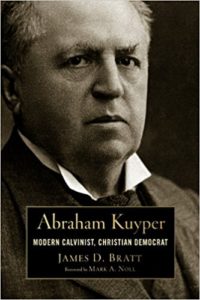 Forgive me if you’ve heard all this before but Kuyper became a leader in the Reformed churches in Holland in the very late 1800s; he was an exceptionally vibrant intellectual leader, first a pastor/theologian who became a journalist, started a university, a political party, and eventually Prime Minister. Those today who draw on his particular kinds of insights sometimes call themselves Kuyperians. There is a major collection and study center at Princeton Seminary about Kuyper, although few there pay it much mind.
Kuyper’s offered a robust call to renew the social architecture of the secularizing culture – yes, even in the early 1900s there were the tectonic shifts in what was formerly terra firma which lead to rationalistic faith in science, economic growth, technology, and bureaucracy to solve our problems, privatizing faith at best, eliminating it altogether; think of C.S. Lewis’s Abolition of Man a half century later, just to be reminded of the dehumanization and loss of meaning and beauty that was creeping into the West. Kuyper’s work was, in that first half of the century, second only in this regard to the magisterial Rerum Novarum, the stunning social teaching of Pope Leo XIII, who also warned about the secularizing forces of late modern capitalism. See, for a good comparison, by the way, the useful, little book Makers of Modern Christian Social Thought: Leo XIII and Abraham Kuyper on the Social Question edited by Jordon Ballor, published by the Acton Institute ($14.95.)
As the publisher explains about that book:
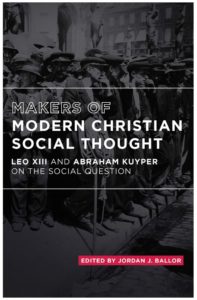 Leo XIII’s encyclical on the relationship between capital and labor (Rerum Novarum) and Abraham Kuyper’s speech to the first Christian Social Congress (“The Social Question and the Christian Religion”), both published in 1891, are foundational sources for subsequent Christian social thought in their respective traditions—Roman Catholic and Reformed. This volume, in celebration of the 125th anniversary of these two landmark publications, includes authoritative English translations of these works and an introduction that outlines their context and significance. The thought of these two theologians—one an Italian scholar-pope and the other a Dutch Reformed pastor, professor, and politician—provide enduring wisdom for developing and articulating a Christian witness in the modern world.
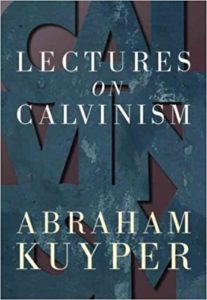 Kuyper’s social vision, his passion for pluralism and democracy and a Christ-honoring order of social shalom, goodness, and justice for all, rooted in a broad and visionary application of Calvinism to all areas of life, was famously explained in his “Stone Lectures” at Princeton University in 1898 (still in print as Lectures on Calvinism; we stock the proper Eerdmans edition that sells for $18.00 or the Hendrickson hardback for $14.95.)
When added to some feisty reformed philosophy of culture (largely generated at the Vrije (Free) University of Amsterdam, the university Kuyper founded) by heavy continental philosophers Herman Dooyeweerd and D. H. Th. Vollenhoven it developed into a global, worldviewish movement that has come to be called neo-Calvinism.
[This is not to be confused, for the record, with a recent fascination for traditional Calvinism among highly organized and often publishing young evangelicals and older leaders in the Gospel Coalition and Southern Baptist circles, which some unhelpful journalists wrongly call neo-Calvinism. That recent appreciation of conventional, older-school Calvinism (call it a new interest in old Calvinism) is a robust force in American evangelicalism these days – think of the massive Passion conferences or the many books by John Piper or nearly anything coming out of Crossway Publishing. Such influential Calvinism might more accurately be described as a neo-Puritanism, and isn’t quite the same as the Dutch Dooyeweerdian strain in the line of Abraham Kuyper that has for decades been called neo-Calvinism. If any of this is interesting to you, read my friend Bob Robertson’s piece about this here.]
Anyway, after World War II there was a significant influx of neo-Calvinist Dutch folks coming as immigrants to the shores of both the US and Canada. As Kuyperians they were used to an orthodox but generous “wide as life” view of discipleship and a wholistic view of the Kingdom of God defined largely as “creation-being-restored” — the sort of view of the good creation (and God’s common grace within it) which lead to culture-making and renewing efforts of public life which included stuff like faith-based art movements and Christian labor unions and Christian farmer’s organizations and serious missions to offer Biblical witness in higher education, and even third-way political parties that they knew back in Holland. I’ve heard older Dutch immigrants decades ago still expressing surprise that American Presbyterianism and Reformed evangelicalism had so little interest in reforming culture and no robust institutional witness in the various realms and spheres of society. Why no Christian political party or a world-class Christian university? (This was, of course, before the disastrous rise of the so-called Christian right, with embarrassing, thoughtless leaders like Falwell and Pat Robertson trying to speak into the public square. That is not what the great grand-children of Kuyper with his commitment to principled pluralism were hoping for!)
Uneducated farmers and blue-collar workers in the 60s saved nickels and dimes to support a uniquely Reformed Christian graduate school in North American since in the middle of the 20th century there was no such place. One could get advanced degrees in theology, of course, and there were fine Christian institutions of higher learning for undergrads (although in those years it was rare to hear much about the integration of faith and learning; Christian higher education was often practiced as teaching regular stuff in regular ways, but with wholesome campus life and required chapel added on; the dualism between the classroom and the chapel was huge and the lack of a distinctive intellectual tradition of “taking every idea captive for Christ” was, even in well known Christian colleges, virtually nonexistent.) If one wanted to study evangelical Protestant thinking as it related to politics or science or philosophy or art or economics or history or psychology at the graduate and PhD level, there simply was no such learning community to be found anywhere.
 The Institute for Christian Studies was founded, then, fifty years ago, for just such a purpose –- not to offer theology as such or Biblical studies or pastoral preparation, but to work out of a (Christian) philosophical orientation that could contribute to a true “inner reformation of all the sciences” as Dooyeweerd put it — in a building near the University of Toronto. It attracted some deep thinkers and those disillusioned (perhaps like I was) in conventional churchianity and pious evangelicalism, since neither seemed to have the resources or capacity to make a serious philosophical contribution to the renewal of the culture.They were fired up about bringing fresh reform to their own tradition and opened their doors to “junior members” who would do high level philosophical research ion various disciplines in the name of Christ.
And, yes, Pete Steen was bridge between the CCO and other emerging communities in Eastern Ohio and throughout Western Pennsylvania.
ICS was misunderstood right from the start as the Canadian government wanted to accredit them as a seminary, which they had to go to court to resist, since they were, in fact, not a seminary. Few could even imagine that Christians wanted to study in light of Biblical faith, philosophers such as Kant or Derrida, economists such as Marx or Samuelson, linguists like Chomsky or Charles Taylor, political scientists like Seymour Lipset, Hannah Arendt, or Eric 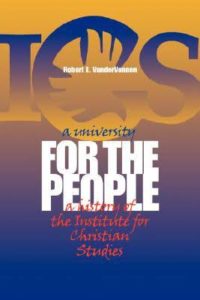 Voegelin, or sociologists like Auguste Comte, Emil Durkheim, or Jurgen Habermas, bringing a Christian evaluation to each of these influential scholars in their respective scholarly fields. Some ordinary churches – maybe even some that seemed Kuyperian – were worried that they were too edgy and radical in their thinking. The story of their founding can be found in an interesting book called A University for the People: A History of the Institute for Christian Studies by Robert Vandervennen (Dordt College Press; $18.00.) Here is a link from their website that explains their background. I visited there more than once during my college years — meeting remarkable scholars who are friends yet today like Paul Marshall and Stanley Carlson-Thies and Brian Walsh.
But here’s what is important, really important.
Through Dr. Steen, some of their founders and boosters – many who spoke still with a heavy Dutch accent and had stories of standing as children against the Nazi’s in their occupied homeland – ended up forming friendships with other people in the Reformed and Presbyterian tradition in Philadelphia and the greater Pittsburgh area.
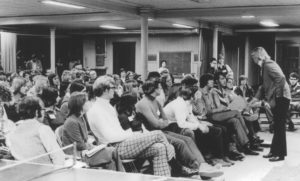
Some evangelical leaders I knew – such as the founders of Pittsburgh’s Coalition for Christian Outreach (CCO) that were being influenced by extraordinary thinkers like R.C. Sproul and Francis Schaeffer and also African American evangelicals like Tom Skinner and John Perkins – took notice.
You see, this influence contributed to Beth and I starting Hearts & Minds 35 years ago, and it began by learning about all this Kuyperian higher learning and social action stuff happening in Toronto and in Iowa and Grand Rapids and enclaves all over, all because of the aforementioned Peter J. Steen.
Steen was a Dutchman born in North Jersey who became a Dooyeweerdian philosopher after studying in Holland in this field of Christian philosophy. Pete had studied at Westminster Theological Seminary with a guy named Cornelius Van Til for a while, got a PhD at the Vrije, taught at a small college called Trinity in Palos Heights IL (where he teamed up with Calvin Seerveld, whose devotionals from those years, Take Hold of God and Pull are extraordinary) and ended up at Geneva College in Western Pennsylvania. After some conflict there he was eventually hired by the CCO to teach about what in those days we called a “world-and-life-view” and the implications of the Lordship of Christ over all of life. Soon enough he started his own ministry, “Christian Educational Services” or CES.
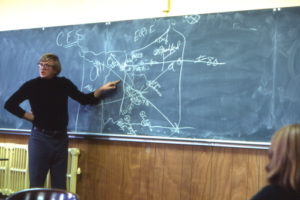 Steen travelled around tirelessly to various campuses and organized small conferences and hosting guest lectures by professors affiliated with “Toronto” which was short hand for the ICS grad school and other Kuyperian organizations there, from the Christian Farmers Federation to the Patmos Art Gallery.
This Steen guy was larger than life, like some visionary combo of Francis Schaeffer and Tony Campolo, a righteous Saul Alinksy, a brilliant thinker, tireless organizer, passionate preacher, itinerant philosopher/social activist/teacher and bookseller.(He pressed into my hands my first Walter Brueggemann book, by the way, had us reading new urbanist Jane Jacobs before most people knew who she was, was the first person I ever heard quote Lesslie Newbigin – who himself understood Dooyeweerd’s critique of the autonomy of Enlightenment rationalism, by the way — and, of course, insisted we read Herman Dooyeweerd, which to this day I don’t really understand. I will never forget Steen ripping open a brand new case of hardback copies of The Roots of Western Culture in the ally behind the CCO home offices and making me promise I’d read it.)
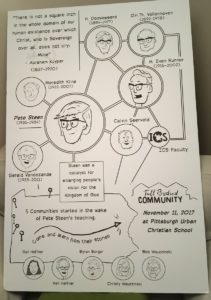 Through Steen, we came to meet the philosopher of aesthetics Calvin Seerveld, Al Wolters, the Biblical scholar (also with a degree in philosophy) and a member of the Dutch Parliament, an economist who later had influence in a significant working group of the World Council of Churches on globalization, named Bob Goudzwaard. From South African resistance leader Alan Boesak to (then) Notre Dame philosopher Nicholas Wolterstorff, from evangelical sociologist Mary Stewart Van Leeuwen to creation-care scientist Cal DeWitt, from world class philosopher Elaine Botha to one of the great interpreters of Kuyper for ordinary folks, who later became the President of Fuller Theological Seminary, Richard Mouw, from award-winning historian George Marsden to Roman Catholic mystic Adrian van Kaam to Alvin Plantinga (now widely considered one of the most important philosophers in the world) we in Western Pennsylvania – through this wild-man traveling seminar leader Pete Steen – met authors and leaders whose names and books are now, in some circles, themselves nearly legendary.
(The poster above was drawn by Sean Purcell, trying to show some of the influences from Kuyper through Steen to our Full Bodied Community event.)
I will never forget hearing Pete’s friend and fellow Kuyperian Dutchman Gerald Vandezande (who before his death was given any number of honorary awards for his relentless advocacy for public justice in Canada) who was leading protests in the courts against a large oil pipeline that was disrupting the land and culture of First Nation peoples in the MacKenzie Valley of Canada, and how they linked it to our spiritually-bereft, economically rich over-development, exposing the idolatry of our dependency on fossil fuels. This was in the 70s, long before Bill McKibben and others have made equally cogent cases against the XL Pipelines. To hear theologically conservative Calvinists talk like this was nearly overwhelming, new, transforming.
Some of you know where this is going: as I’ve suggested, I met Pete in my college years, and he had a huge impact on my faith, my vision of the meaning of discipleship and social action, and, eventually, Beth and I —-hailing from small town mainline churches that never heard of such stuff – dove into helping form social action organizations, alternative inner city schools, philosophy clubs, arts and theater ministries, reading groups, and other social platforms to help promote what we started calling reformational worldview. Steen’s philosophical Kuyperianism wasn’t the only influence on us, but it was decisive.
And from that deep dive into the nature of worldviews we came to get a vision for what our bookstore would be.
Granted, some have used the world worldview to merely catalogue other  religions and in some circles the word seems to imply mean-spirited critique of other’s life visions. Philosopher Charles Taylor uses the phrase social imaginaries to conjure a sense of these imagined assumptions and Jamie Smith in Desiring the Kingdom, drawing on ICS professor James Olthius and worldview scholar and storyteller Brian Walsh, reminds us that worldviews aren’t just intellectual ideas, presuppositions, not even quite “glasses” but storied, imagined, ways of life, shaped by our deepest longings and desires. Some Kuyperians who use this lingo released a book a bit ago called After Worldview edited by Matt Bonzo and Michael Stevens (Dordt College Press; $13.00) wondering if the phrase is still viable. So there has been on-going consideration of the word worldview, but learning about it — starting with its German root weltanschauung on through the extraordinary, thorough study released a decade ago, Worldview: The History of a Concept by David Naugle (Eerdmans; $34.00) — set us on a journey to love books, literature, reading.
READ FOR THE KINGDOM
 I wasn’t much of reader until I learned that God cared about all this stuff and that thinking well about the deepest issues and the foundational matters that must be grappled with if we are going to make a lasting difference demands that we read widely. I think it was mostly this reformational worldview and other similar strains within world-transformative faith that God used to give me a passion for reading and teaching others about good books. Nowadays, I point people to Reading for the Common Good by C. Christopher Smith (IVP; $16.00) to help express “How Books Help Our Churches and Neighborhoods Flourish” as the best reminder of all this.
I don’t know if Steen used the slogan, but I started calling out “read for the Kingdom!” to rally folks to the book tables at our events. In a way, if you appreciate Hearts & Minds, you should thank the late, great Peter J. Steen.
JUBILEE
Perhaps the most enduring outgrowth of those years working with others in Western Pennsylvania was Steen’s influence within the CCO — they still used the phrase “whole life discipleship” and seek to help students integrate faith and learning, as seen in wonderful books such as Derek Melleby & Don Optiz’s Learning for the Love of God: A Student’s Guide to Academic Faithfulness (Brazos; $14.99.) And, of course, how we developed the Jubilee Conference.
(See HERE for the stunning trailer for last years conference if you don’t quite know what I’m referring to. Please, please see the longer spoken word version that kicked off the conference last year, HERE — it is only 7 minutes and you will be blown away, knowing this was shown too 3000 college students. HERE is the loudly colorful trailer for this year’s event. And HERE I am doing a 20-minute talk on Sunday morning of the conference two years ago at its 40th anniversary. If I had more time I would have explained to the college crowd our deep, deep debt to Pete Steen for introducing us to this whole vision of a renewed Earth and the subsequent calling to develop the Christian mind, allowing ideas to grow legs and shape within us new practices in how we live out our faith, even in our careers, giving embodied flesh to the big hope of a Christian worldview.)
Well, I could say more about our back-story, about how all of that lead Beth and I to start Hearts & Minds, including our stocking books about the interface of faith and work, business, art, education, science, engineering, nursing, film studies, and the like, but will restrain myself to telling just these two final points (and some quickie book suggestions, leading up to the big list.)
1. Our Hearts & Minds bookstore is said to be unlike any other Christian bookstore in the land. I don’t know if that is true, and there are great ones we respect – Eighth Day Books in Wichita comes to mind… But insofar as we are trying something somewhat rare here, we owe it to what we learned in Pittsburgh during the late 70s as we were influenced by folks from ICS and others in that creation-regained worldview movement that swept through Western PA in those years. I often say that reading an early Os Guinness book was very seminal for me; James Sire on developing the Christian mind; meeting a rowdy itinerant bookseller named Wes Seerveld who accompanied Pete Steen was also a real inspiration. I explain all this stuff about Kuyper and ICS and reading for the Kingdom as we develop the Christian mind for hopeful discipleship so that you understand who we are and what we’re about here at Hearts & Minds. It’s our story, and hopefully, in one way or another, yours too.
2. Everywhere Pete informally taught (often in church classrooms, collegiate resident hall basements, even over McDonald’s tables) groups that took Kuyper and Dooyeweerd, and reformational scholars like James Skillen and Evan Runner, Bob Goudzwaard and Calvin Seerveld, and their books seriously, concluded that we needed to stick together to figure this stuff out. Not unlike the famous Clapham community that former around William Wilberforce we realized we needed to be – as the saying went in those days – “living together in a world falling apart.” That is, house-holding in intentional community, living communally, or at least as near-by neighbors in specific neighborhoods, became part of the story. We visited or corresponded with several other intentional communities (from Reba Place to Sojourners to Voice of Calvary to The Other Side community in Germantown to learn about models and approaches.) When modern mega-churches try to mitigate the often atomized, suburban ethos of their large congregations by saying they should “do life together” it makes me glad.
The “Full Bodied Community” event this past weekend was, in a sense, an opportunity to tell the stories of some of those intentional communities, including one Beth and I helped found, now called the “Rippey Street Community” on and around Rippey Street in the East Liberty neighborhood of Pittsburgh. Folks from rust-belt Newcastle and Beaver Falls shared their stories, too, and folks enjoyed hearing from some of us about the efforts of being good stewards of homes – some geodesic domes, even – and the strengths and weaknesses of a “theology of geography” and a “communal imagination” that grew up alongside the neo-Calvinist reformational movement in Western PA.
Such talk reminds me of the upbeat and insightful book Renovate: Changing Who You Are By Loving Where You Are by Leonce Crump (Multnomah Press; $14.99) a book I highlighted at the conference. I love it! Alan Brigg’s Staying is the New Going: Choosing to Love Where God Places  You (NavPress; $14.99) offers a similar missional vision for our place, and is a sweet read, too. We also displayed a new book about place — set in Philadelphia, written by a person I think might have known Pete, through a wholistic urban minister named Harvie Conn, back in the day — called Place Matters: The Church for the Community by Bill Krispin & Coz Crosscombe (CLC Publications; $13.99.) The most significant theological work written on any of this comes from an ICS-related scholar, Craig Bartholomew, entitled Where Mortals Dwell: A Christian View of Place for Today (Baker Academic; $32.00.) Less academic but an excellent, enjoyable book is one I often show off, No Home Like Place: A Christian Theology of Place by Leonard Hjarlmarson (Urban Loft; $16.99.) This stuff is all urgent reading, I think, making sure our theology and perspectives are, as they say, grounded.
 Interestingly, another book that fits in here has direction connections to the reformational movement in 1970s Western Pennsylvania. Again, I’m not making this stuff up — it’s a lovely little book that was just published (which I had a tiny hand in, helping just a bit with the bibliography.) It is called The Embrace of Buildings: A Second Look at Walkable City Neighborhoods (Calvin College Press; $16.99) by Lee Hardy. It is a wonderfully interesting book, highly recommended to all BookNotes fans. And guess what? Hardy was influenced by Pete Steen when Lee was studying in Pittsburgh in the late 70s. He has made his mark as a philosopher and college teacher, and has published some good work, but this captures a wonderful avocation of his, perhaps started when Steen helped many of us discover Jane Jacobs so many years ago.
From growing ones own healthy foods to having resources to do hospitality (taking in the hurting and needy) to learning the basic skills of “body life” in ways that ordinary churches often don’t, we heard of stories of ways Steen’s all-of-life-redeemed vision called forth a deeper desire to live in ways other than the “do your own thing” individualism. We heard from several locales about efforts to do life together that continue on to this day.
At the weekend conference we realized afresh some important things:
That we were influenced in our idealism by the colorful teaching and Kingdom instigation of Pete Steen is certain. At the event we recalled his legacy.
That we took cues from Toronto’s ICS is no surprise. Our conference was more storytelling and inspiration so wasn’t a workshop on Dooyeweerd’s reformational philosophy, but the work of the group that founded ICS – the Association for the Advancement of Christian Scholarship and one of their early leaders, Dr. Evan Runner, and its long-extinct Vanguard magazine — was never far from our stories.
That some good fruit grew, lasting institutions other than our own fledgling communal living experiences such as some pretty innovative Christian schools (such as Pittsburgh Urban Christian School who hosted the event) – is wondrous, and we give God thanks.
That the CCOs Jubilee conference every February is a fabulously energetic and visionary evangelistic event for college students (not to mention the excellent pre-conference for adults, Jubilee Professional sponsored by the Pittsburgh Leadership Foundation) that is significantly related to Steen’s work in and around the CCO is important.
Jubilee is perhaps the most obvious outgrowth of Steen’s reformational worldview teaching, perhaps one of the leading examples of the impact of Kuyperian thought within the evangelical world of North America. (That another obvious outworking of that Kuyperian vision, the very creative Center for Faith and Work, sponsored by Tim Keller’s Redeemer Presbyterian Church in New York, has certain connections to Pittsburgh is another interesting story.)
It could even be argued (although we need a better historian of 20th century evangelicalism to weigh in) that some of the great Christian professional associations – I’m thinking of CIVA (Christians in the Visual Arts) and CLS (Christian Legal Society) and ASA (American Scientific Affiliation) and the Christian Scholars Review, managed, now, by Pete Steen’s son, Hope College professor Todd Steen, just for instance – have, among their earliest founders, people whose worldviews were animated by ideas that have their roots in Kuyper’s “every square inch” revival in Holland. In some cases, people that were inspired by Pete Steen and his associates were in the forefront of some of these visionary organizations.
I know, just for another instance, that Chuck Colson, the Watergate bad guy who was born again on his way to prison and who came out a changed man wanting to work in prison ministry, moved increasingly from doing only prison evangelism to working on the more architectonic/structural matters of prison reform – Christian views of criminology and coining the term “restorative justice” even – after reading Kuyper’s Lectures on Calvinism and Al Wolter’s Creation Regained. Colson had named these two books often before he died, noting how he learned – in part from his association in those years, the ICS graduate Nancy Pearcey, author of Total Truth: Liberating Christianity From Its Cultural Captivity (Crossway; $23.99) – to develop not just a Christian theology and Biblical view of ministry, but a wide-as-life Christian worldview that lead to efforts for cultural, societal, and institutional transformation.
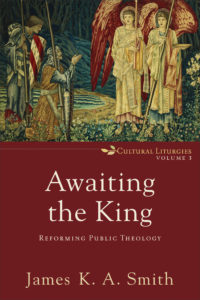 And, to be utterly relevant and timely, the book that we just named as The Hearts & Minds Book of the Year for 2017 (in the last BookNotes) is the brand new Awaiting the King: Reforming Public Theology (Baker Academic; $22.99.) It is, in fact, an ongoing ecumenical conversation about Kuyperian thought. That James K.A. Smith somewhat deconstructs the notion of worldview (especially in the first of the “Cultural Liturgy” trilogy, Desiring the Kingdom) is only further proof that this topic is hot, that we have to deepen and widen our conversation about what we mean by worldview, and how it impacts our public theology. Smith knows Dooyeweerd well, and his own popular work is in no small way indebted to the Institute for Christian Studies where he did his own formative graduate work.
 I loved that at our Full-Bodied Community conference, speaker Gail Heffner quoted at length from Smith’s small but wise and very informative book Letters to a Young Calvinist: An Invitation to the Reformed Tradition (Brazos; $14.99) which reminds those of us in the Reformed tradition (and others too) that our faith need not be conservatively doctrinaire but opened up to fresh insights about the creation, that we stand within an on-going, broad, catholic tradition, and that we can appreciate both John Piper and Abraham Kuyper.
And, by the way, as Gail and Ken walked us through a beautiful Biblical narrative, inviting us to embody wonder, lament, and reconciliation, they used evocative music and a powerful video clip of the movie trailer for the just-released Wendell Berry documentary, “Look and See.” Although Gail has come to know Wendell, she was reading him in the early 80s, when we shared a copy of The Unsettling of America. Her use of this Berry poem and the vivid 2-minute video was a highlight of the event and well worth watching.
Further, for what it is worth, N.T. Wright readily admits to having learned much of his most foundational approach to worldviews (see, for instance, the first major volume of his influential “Christian Origins and the Question of God” series) to then ICS professor of Worldview Studies, Brian Walsh. Brian used to do CCO staff training and has spoken at Jubilee as has his ICS colleague from those years, Al Wolters. I don’t know if Wright has read any Dooyeweerd, or even much Kuyper, but his overall perspective is shaped by 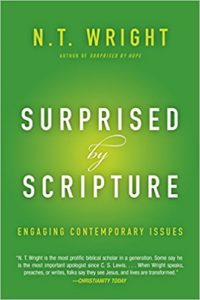 some of the same influences from Toronto that captured my attention decades ago. I know a Kuyperian friend who just used with great success a collection of talks by Wright on how the Bible speaks to many issues in contemporary culture, from creation care to the arts, from the sciences to the role of women in society. I love reading Wright and commend this diverse collection of talks he gave that were not primarily in settings of theologians or Bible scholars, but professional associations, artists, scientists, social justice activists and the like. See Surprised by Scripture: Engaging Contemporary Issues (HarperOne; $15.99.)
See? I’m not making this stuff up. Kuyper’s influences, in ways direct and indirect, are everywhere. And it’s good stuff.
One of the widely anticipated and certainly most-discussed theological works of the year, Smith’s Awaiting… is in direct conversation with this material. And one of the most acclaimed theological and Biblical scholars of our time, Tom Wright, has been influenced by those in the line of Pete Steen.
And so, we went to this “Full Bodied Community” conference, to share in some old memories from some old friends whose lives paralleled my own, but also to name ways in which this reformational legacy in Western PA could be made fresh for the 21st century. It was, for me, a metaphorical exercise in connecting the dots.
And for our friend Sean Purcell, it was a literal exercise in illustration. What fun!
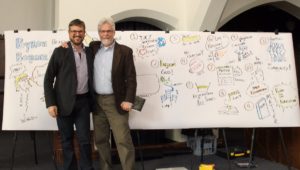
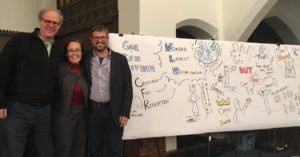
As you can see above, I got to do one of the plenary talks, as did our best friends Ken & Gail Heffner who are both on staff at Calvin College in Grand Rapids. (I think videos of these will be available on line before too long.) And Sean drew and drew as we talked.
Other folks spoke on topics as interesting as the “Joy in Learning” curriculum used in some of the innovative Christian schools and Pittsburgh’s own Mr. Robert Lavelle’s famous radical, inner-city bank, Dwelling House Savings and Loan, and interviews and conversations about how we move from “worldview to way of life” and how to take “worldview to work.”
A few big questions loomed – where to we go from here? How can we make a transforming difference in our own places? How do we keep hope alive in these times, pressing into visions of vocation? How might we encourage ministries like the CCO and their wonderful Jubilee conference to remain true to their earliest ideals and goals? What is the role of intentional community? We were so glad to see some friends from the Bruderhof there, and we should have drawn them into the conversation more, since they have great experience with communal living inspired by the New Testament.(I was glad we had some of their books, beautifully published by their Plough Publishing.) And, always, how to we find time and space not only to pray and be shaped by spiritual disciplines to sustain us but how do we find time and space to read, learn, discuss, dialogue and become the “communities of discourse” that world-changing communities need to be? In an era when we are busier then ever, and the issues are more complex then ever, we simply have to be life-long learners, loving books as much as Kuyper and Steen did!
It is a burning question for my vocation, and yours, too, no doubt: how do we get folks to read more deeply as Steen always challenged us to do?
How does the ecumenical and missional church movement fund a Kingdom imagination that bears fruit in but not of the world around us? (I reminded folks that it was Steen that gave me my first book by Walter Brueggemann, The Land, and Walt’s Prophetic Imagination remains a fertile text for all such conversations about faithful living.)
And, too, quite urgently, we asked out loud how tragic social realities such as income inequality and white privilege and current climate changes effect how we live out robust, missional discipleship these days?
What will it take for us to become known as men and women of Issachar (I Chronicles 12:32) who “knew the times and knew what God’s people should do”?
Dare we “take courage and work” waiting for God to bring peace to our places (as in Haggai 2?)
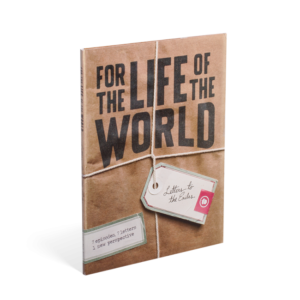 Can we truly be innovative as we serve “For the Life of the World” – as in the beautiful DVDs created by Kuyperians, published by the Roman Catholic Acton Institute, named after a book by Russian Orthodox theologian Alexander Schmemann?
That is a great, great resource and a beautifully fun way to enter this Kuyperian conversation. If you’ve never seen it, drop everything and watch the trailer for it here. (It retails for $25.00 but with the 20% off discount it’s just $20.00. and worth every penny.) In one of the episodes, the host, Evan, is wearing a Kuyper tee-shirt. (In other episodes he is wearing the visage of other key writers, like the Catholic poet Gerard Manley Hopkins and the aforementioned Alexander Schmemann. Another has Hans Urs von Balthasar, a Catholic theologian known for writing, densely, about beauty. How funny!)
Maybe there in those tee shirts is a clue to living faithfully and holistically in the new era: we must be ecumenical. We must read widely. We must learn from each other.
Which brings us back to why we do what we do, developing ecumenical book lists and curating book displays for important gatherings and running this small town bookstore, working with local customers and area churches. We’d like to think that our work is in service to this big Kingdom vision, helping God’s glory to be known as the culture is renewed and as human flourishing takes roots in every zone of life, all over the place. We learned that mostly from Pete Steen, I suppose, and we not only want to honor him, but thank all of those who reminded us of him this past weekend by participating in the Pittsburgh Full Bodied Community gathering.
And to all our customers who have read along with us thus far – again, thank you. We hope you enjoyed learning yet again a bit about at least part of our story, and hope that we can somehow serve you in yours. Together, despite the oddness of our times, and the diversity of our own stories and influences, with God’s help, we can carry on.
SOME VITAL, RELEVANT BOOKS
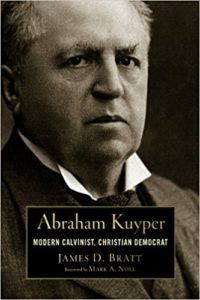 Abraham Kuyper: Modern Calvinist, Christian Democrat James Bratt (Eerdmans) $24.99 Okay, this is the big, real deal. This is surely the definitive biography, almost 500 pages, certainly the best yet — with lots about his political views and his struggles in public life. It is well written and, I might add, by a guy who knew Steen back when he lived in Pittsburgh. Dr. Bratt is now an esteemed professor of history at Calvin College. See a great review of the book, here.
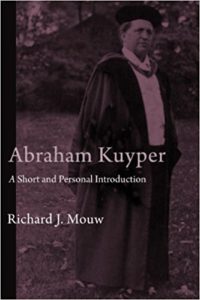 Abraham Kuyper: A Short and Personal Introduction Richard Mouw (Eerdmans) $16.00 This is the shortest most delightful introduction to Kuyper (and why he matters today) that we know of and we really hope you will consider it. Whether one is seriously interested in this particular strain of the Dutch Reformed tradition or not, one really ought to know a bit about this heroic leader and seminal thinker. I can name a handful of lesser known theological voices and Christian saints we simply all should know. This is one. I love this book. Highly recommended.
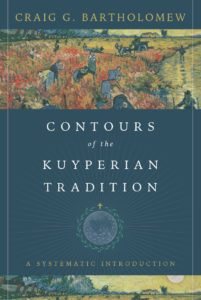 Contours of the Kuyperian Tradition: A Systematic Introduction Craig Bartholomew (IVP Academic) $40.00 I’m soon going to announce this as an award-winning “Best of” book for 2017 so, again, if you are even vaguely interested in this deep and profound tradition, this is one of the best resources in which you can invest. Get this book, work through it carefully, learn and be aware of the extraordinary riches in this complex, century-old tradition of Christian worldview thinking and social renewal. It has become a touchstone for this tradition, a very important resource.
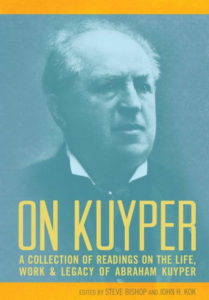 On Kuyper: A Collection of Readings on the Life, Work & Legacy of Abraham Kuyper edited by Steve Bishop & John Kok (Dordt College Press) $36.00 When this came out a few years ago I thought to myself as I opened the cover of the slightly over-sized book, that this was a book Steen would have insisted we all read. It is a collection of essays about Kuyper, yes. It is also a collection of those truly in the known, those who are living out this Kuyperian, neo-Cal, reformational worldviewy stuff, with vibrancy and radical insight. It breaths ongoing reform, it cries out to be taken seriously. It is both academic — some of the essays are rigorous theologically and/or philosophically, but they have this lively trajectory towards making a difference in God’s world. That is, it isn’t armchair speculating, it isn’t arcane study for the sake of the academic guild. This is a vital collection of reformational dynamite — highly recommended.
Here is how the publisher explains it’s importance:
This anthology gathers thirty-one articles, some in print for the first time, from twenty-eight authors who use the Kuyperian framework to critique and to develop Christian perspectives on, among other things, the church, culture, gender, common grace, education, politics, scholarship, fashion, art, science, and evolution. This book provides an introduction to Kuyper’s life and thought through the eyes of others. The breadth and scope of these articles stand as testimony to Abraham Kuyper’s desire to see the lordship of Christ extend to every area of life.
 Beyond the Modern Age: An Archaeology of Contemporary Culture Bob Goudzwaard & Craig Bartholomew (IVP Academic) $30.00 I hope you saw my long review of this marvelously profound work in BookNotes when it first came out. Goudzwaard (who I mentioned in my above narrative) is certainly is one of the most significant Christian leaders of our time that most never heard of. This is his studious bit of cultural criticism, not just about economics (although that is his field and he makes significant economic proposals nearer the end.) Heady as it is, he has a knack for summarizing and clarifying profound thinkers and there is a delightful device in the book where a group of college students are involved, asking questions and offering feedback. That makes it more readable and approachable and less abstract.
Listen to how the publisher describes this important volume:
The modern age has produced global crises that modernity itself seems incapable of resolving deregulated capitalism, consumerism, economic inequality, militarization, overworked laborers, environmental destruction, insufficient health care, and many other problems. The future of our world depends on moving beyond the modern age. Bob Goudzwaard and Craig G. Bartholomew have spent decades listening to their students and reflecting on modern thought and society. In Beyond the Modern Age they explore the complexities and challenges of our time. Modernity is not one thing but many, encompassing multiple worldviews that contain both the source of our problems and the potential resources for transcending our present situation. Through an archaeological investigation and critique of four modern worldviews, Goudzwaard and Bartholomew demonstrate the need for new ways of thinking and living that overcome the relentless drive of progress. They find guidance in the work of Rene Girard on desire, Abraham Kuyper on pluralism and poverty, and Philip Rieff on culture and religion. These and other thinkers point the way towards a solution to the crises that confront the world today. Beyond the Modern Age is a work of grand vision and profound insight. Goudzwaard and Bartholomew do not settle for simplistic analysis and easy answers but press for nuanced engagement with the ideologies and worldviews that shape the modern age. The problems we face today require an honest, interdisciplinary, and global dialogue. Beyond the Modern Age invites us to the table and points the way forward.
And read carefully these fine endorsements by folks who represent different theological and cultural views; it is an education just reading how they briefly interact with the book:
Beyond the Modern Age is essential reading for all seeking to navigate their way through the complex cultural and worldview issues associated with the modernization of our world. Offering skillful and insightful analysis shaped and informed by the Kuyperian tradition, Goudzwaard and Bartholomew guide readers through the worlds of philosophy, economics, politics, theology, and culture in a compelling way. This volume is vitally important not because all readers will agree with the proposals and conclusions offered, nor because the authors provide us with a final word, but because Goudzwaard and Bartholomew have constructively advanced the conversation and modeled the kind of serious intellectual engagement needed by thoughtful Christians in our day. (David S. Dockery, president, Trinity International University)
This is an invaluable contribution to the necessary conversation about the worldviews shaping modernity and its cultures; it is an important primer for living in a confessionally pluralistic Western society. More importantly, it articulates the way an authentically Christian worldview can disclose the fault lines of contemporary worldviews and open up alternative and constructive paths forward from the seemingly intractable problems we face. (Bruce J. Clemenger, president, The Evangelical Fellowship of Canada)
As a consequence of the process of globalization, the inner contradictions of modernity have become apparent. In particular, the affirmation that modernization inevitably leads to secularization is being questioned in view of the so-called ‘return of religion.’ People are beginning to critically review the basic assumptions of the modern worldview, looking for new perspectives of meaning in the highly confusing contemporary world. The new publication Beyond the Modern Age by Bob Goudzwaard and Craig G. Bartholomew offers a constructively critical approach to the economic, social, and environmental challenges facing the globalized society. Both authors are rooted in the ‘reformational,’ neo-Calvinist tradition of Christian social thinking initiated by Abraham Kuyper. The book grew out of a course for students that Bob Goudzwaard has taught for many years. It has retained the attractive character of an argument developed in dialogical partnership with students drawn from different parts of the world. The authors take the reader through an informed review of the historical origins of the modern worldview and the main efforts to critically adjust it in response to its inner paradoxes. Taking their cues from contemporary scholars like José Casanova, Philip Rieff, René Girard, and Lenn E. Goodman, they seek to move beyond the ideological constraints of the modern worldview by arguing for a biblically rooted perspective from ‘outside’ that opens up constructive ways of thinking and acting while respecting the plurality of worldviews. The book can be recommended as an excellent textbook for courses in contemporary Christian social philosophy. (Konrad Raiser, former general secretary of the World Council of Churches)
I suppose this isn’t a “selling point” to most BookNotes readers, but in keeping with my theme, above, I can say with certainty that if Pete Steen were alive, he’d make us all read this book. Interestingly, there is a marvelous Epilogue written by – yep – a former Pittsburgher, our dear pal Mark Vandervennen, explaining a bit about Goudzwaard’s very interesting life and many public accomplishments, some of which are quite remarkable.
 Subversive Christianity: Imaging God in a Dangerous Time Brian Walsh (Wipf & Stock) $17.99 I have often said in these pages that Walsh is an author well worth reading, one of my favorites. I won’t recount all that now (although I explain about his body of work and review his latest one, here.) I really wanted to hold this one up as an example of the sorts of powerful, Biblical, culturally-engaged, transforming vision that we heard from Steen and Vandezande and others critics of the status quo that so influenced many of us years ago. This one takes seriously the sadness of our times and, in a way, move further into the study of the “idols of the age” that appeared concisely in Transforming Vision and Truth is Stranger Than It Used to Be. This short book includes extraordinarily insightful talks and sermons — one given at Jubilee, in fact — drawing inspiration on poets and thinkers from Bob Goudzwaard to Bruce Cockburn to Walter Brueggemann. Tom Wright offers a very enthusiastic forward; I’ve even got a blurb on the back. This second edition has a powerful radded chapter that is worth the price of the book as Walsh challenges us to live into the redemptive Biblical story with guts and grace. Subversive Christianity: Imaging God… book will make you think, especially in these dangerous times. I promise you.
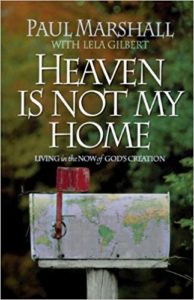 Heaven is Not My Home: Living in the Now God’s Creation Paul Marshall (Nelson) $15.99 I know this title turns off some people, but it really is one of the finest books about Christian living in the modern world of which I know. Marshall, now a world-renowned expert on human rights in the modern world (and especially human rights violations against people of faith and the particular injustices within the Muslim world), started out as a professor at Toronto’s ICS. He wrote this book – in part with encouragement from Os Guinness, I’ve heard – to flesh out a balanced and coherent Christian perspective on all of life.
There are just wonderful, playful, interesting chapters that offer expert advise on thinking faithfully about work, rest, business, the arts, recreation, technology, citizenship and more. This “all of life redeemed” worldview is shown not to be an abstract notion but truly a guiding bit of wisdom for faithful whole-life discipleship. The chapters on the “full gospel” as seen as the telling of the creation/fall/redemption story are classic; the chapter on worship and the chapter on evangelism are lovely and wise. This is a handbook for missional living written before anyone used that word and it is lively reformational worldview without jargon or philosophy. It would make a great group study, introducing folks in a winsome way to a better, wholistic vision of Kingdom living, covering sides of life we all, in fact, have to engage and into which surely the gospel speaks.
I am sure you know we recommend “worldview” books often, and we implore folks to read titles such as (my favorite) The Transforming Vision: Shaping a Christian Worldview by Brian Walsh & Richard Middleton (IVP; $22.00) and the classic, influential, Creation Regained: The Biblical Basis for a Reformational Worldview by Albert Wolters (Eerdmans; $15.00); we often suggest the pleasant and inviting Heaven is a Place on Earth: Why Everything You Do Matters to God by Michael Wittmer (Zondervan; $16.99) and Mark Bertrund’s wonderful, engaging (Re)Thinking Worldview: Learning to Think, Live, and Speak in the World (Crossway; $22.99.) For real beginners or interested teen readers I suggest the fun The Story of Everything: How You, Your Pets, and the Swiss Alps Fit Into God’s Plan for the World by Jared C. Wilson (Crossway; $15.99.)
But you know what? As much as I love these worldview books and as committed as we are to stocking them, this Paul Marshall book about actually living out faith in distinctive, normative ways in various sides of life really does capture what it is all about. Don’t skip the studies of worldviews themselves, but, really, Heaven Is Not My Home is a gem. Highly recommended.
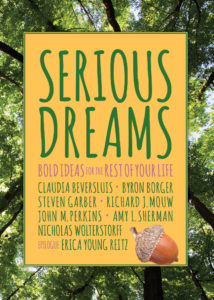 Serious Dreams: Bold Ideas for the Rest of Your Life edited by Byron Borger (Square Halo Books) $14.99 I was thinking of highlighting this in my “Full Bodied Community” book announcement but just ran out of time, so never mentioned it. Since I edited it myself, it always feels awkward to promote it. However, I’m a believer in this book and just recently got an exceptionally moving note from a reader who shared how much the book helped him.
It started, as you may know, with a commencement address I gave at Geneva College in which I made a reference or two to Pete Steen and his impact there. When folks wanted copies of my speech, I decided to add in a bunch of others that offered similarly visionary graduation addresses that celebrate integrated Christian learning, a deep vision of vocation and call, a dream of seeking meaning and purpose as we serve God by serving the common good. Funny, I think most of the speakers whose talks I included in the book knew Pete Steen and most would call themselves, in one way or another, Kuyperians, or at least have learned to think “wordlviewishly” in conversation with reformational folk. From Steve Garber to Richard Mouw, Amy Sherman to John Perkins, Nicholas Wolterstorff to Claudia Beversluis, these are all fabulous chapters, to which we’ve added some reflection questions. I also did a forward that many have found helpful and our friend Erica Young Reitz (of After College fame) wrote a great, practical epilogue. Serious Dreams is compact, colorful, and is, obviously, a great gift for those graduating from college and taking up new callings and careers. But, frankly, is seemed right to share it with this crowd at this event and I wish I’d have promoted it there. So here ya, go — I’d even sign ’em if you order now.

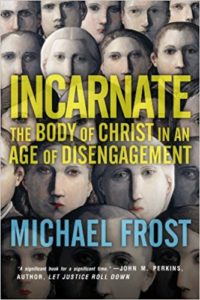 Incarnate: The Body of Christ in an Age of Disengagement Michael Frost (IVP) $16.00 This brilliant work is both a cultural analysis — in the virtual age we tend towards disengagement, almost gnostic — and it is a call to be the local church, living for real in the local Body in a local place. My goodness, this is deeply profound, an important contribution to what it means to be embodied.
It is a great example of what Michael Frost and other missional writers are doing — exegeting the culture and thinking about the implications of our North American context for how we do church and live our our discipleship.
You know, that Kuyperian type conference in Pittsburgh really was also about community; Full Bodied Community they allusively called it. I think one of the reasons that intentional house-holding experiments grew up in the wake of Steen teaching was that he often critiqued a false dualism — Plato’s dichotomy between the body and soul or, as it is sometimes put, the flesh and the spirit, or as in the church’s classic split between sacred and secular. Steen suggested that sometimes this was nearly the heresy of gnosticism, and once we had a robust, Hebraic view of the creation, and a “creation-restored” view of redemption, then we need a full-bodied, real-world, life-on-life view of the church. If Steen were around today, he’d love this book, and anybody who talks about being reformational should know it. Michael Frost is a remarkable writer and we should follow his work closely.
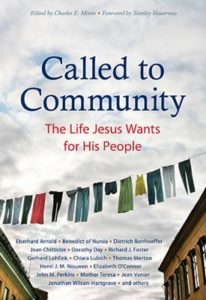 Called to Community: The Life Jesus Wants for His People edited by Charles Moore (Plough Publishing) $18.00 Like the above listed books, I reviewed this at length in a previous BookNotes column. It obviously needs to be noted here as any conversation about community – whether it is intentional house-holding or just “doing life together” with fellow-travelers, or trying to figure what it means to be the local church – can wonderfully benefit from this utterly delightful collection. Included are authors that are wise and diverse, short pieces by Bonhoeffer, Eberhard Arnold, C.S. Lewis, Saint Benedict, Jean Vanier, Thomas Merton, Eugene Peterson, Richard Foster, John Perkins, Christine Pohl, Joan Chittister, and so many more. Very highly recommended.
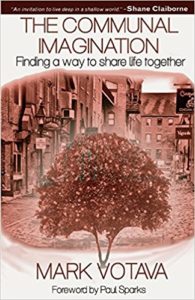 The Communal Imagination: Finding a Way to Share Life Together Mark Votava (Createspace) $14.99 I suspect you’ve never heard of this great and provocative book. There isn’t too much that we highly recommend for those wanting to truly live together within an intentional community and although this has great benefit for folks in such households, it is good for anyone, I think. It isn’t the most beautifully written book you’ll ever come across, but I’m convinced we need to read this book! We may not all be able to move near one another and most churches don’t have the capacity to make this happen, but to at least read about it as a goal, or part of our imagination, at least, could be valuable, eh?
Here is how the publisher describes it, by explaining the importance for church folk to live nearby and create a lively spirituality, together, within the context of life together in a neighborhood:
We need to create the context to reimagine the body of Christ in everyday life as embodied through its proximity and shared life together. Without the value of inhabiting and listening to the place where we live, we will have very little expression of faith together in everyday life. There needs to be an embodied expression for our ecclesiology to make sense. If we do not have a local expression together, we will create a duality between our spirituality and our everyday lives in the ordinary. The Communal Imagination will draw out a new way of being for ourselves into this transition of embodied expression by stressing the importance of proximity and shared life within a particular neighborhood where we live, work and play.
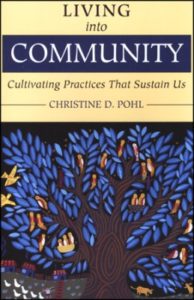 Living Into Community: Cultivating Practices That Sustain Us Christine Pohl (Eerdmans) $20.00 One of the most important books of the last decade, I think, one that smart and informed folks everywhere tell me they appreciate, is the hefty but deeply wise Making Room: Recovering Hospitality as a Christian Tradition. This isn’t precisely a sequel, but it is similar in that it is based on some research (interviews with lots of church folk, pastors and congregants) and great Bible study. She offers four chief practices that sustain our life together and also explores those things that weakens each of those practices. Pohl teaches social ethics as Asbury Seminary so is connected profoundly to both the evangelical tradition and a mainline denomination, so she has very much to offer us all.
As Marva Dawn puts it, “Every Christian should read this provocative book!”
Marva continues,
Christine thoroughly delineates the interlocking relationships and dangerous deformities of practices that could deepen our communities but often destroy them. This volume is pertinent to our families, churches, even places of work.
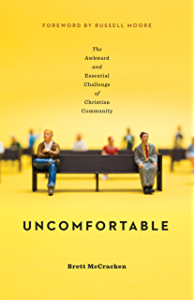 Uncomfortable: The Awkward and Essential Challenge of Christian Community Brett McCracken (Crossway) $15.99 . This recent book has gotten some great, great reviews since it came out a month or so ago, and we really want to tell you about it. It isn’t about alternative Christian communes, really, but more about why ordinary church life should be more relational and real, and why we simply have to be a part of a local congregation to thrive as a Christian. Yes, yes, we mostly know that, but McCracken shows — in prose that’s pretty cool and candid — that this is, if we are truly doing it, going to be awkward. Messy, as we sometimes say. John Ortberg, a writer I so admire, has a few books about how our own sin and foibles, and the sin and foibles of others, have to be admitted in community, so we can take people “as is.” (See his wonderful Everybody’s Normal Till You Get to Know Them [Zondervan; $15.99.])
McCracken asks some uncomfortable questions here, asking why we fear discomfort? Why do we take the easy way? What could church look like if we weren’t consumers looking for easy answers? How can the gospel transform our self-centeredness and help us be the Body of Christ? His view of the church is solid, mature, but expressed in a lively style. A very fine book.
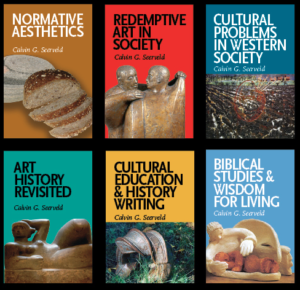 Cultural Problems in Western Society Calvin Seerveld (Dordt College Press) $18.00
Cultural Education and History Writing Calvin Seerveld (Dordt College Press) $23.00
Biblical Studies and Wisdom for Living Calvin Seerveld (Dordt College Press) $25.00
These three which I want to highlight here are part of a six-volume set of what in BookNotes I called “a bona fide publishing event” made up of “Sundry Writings and Occasional Lectures” by the learned and passionate emeritus ICS Professor Seerveld. Others in the set include Normative Aesthetics, Art History Revisited and Redemptive Art in Society and they are each brilliant in their own way. His other work includes his classic books on the arts, Rainbows for the Fallen World and Bearing Fresh Olive Leaves, a marvelous resource on using the Palms in worship (Voicing God’s Psalms) and two very colorful, powerfully written Biblical devotionals that we carry, Take Hold of God and Pull and On Being Human: Imaging God in the Modern World. I suppose some know his drama script based on “Song of Songs” called The Greatest Song which we also stock.
I mention these three above as they seem the closest to the sorts of things Steen specialized in, big picture theorizing about the spirit of the times, Bible-based prophetic critique of the idols of the age, and creative, healing, proposals for social renewal which allows us to, God willing, re-claim and embody gospel hope for our broken but blessed world which is so loved by the Triune God.
Some of the essays in Cultural Problems were lectures given in Western Europe, somewhat about labor issues, somewhat about immigration, and also about the role of the arts in addressing dislocating times. It is incisive and relevant. Here is what the publisher has said to describe some of it:
Seerveld masterfully locates current quandaries in the large timeframe stretching from Ancient Greece to the present, all the while introducing normative alternatives that are biblically oriented.
Funny, but I fear some BookNotes readers may be thinking exactly what I as a young man thought when I heard Steen, who sounded rather like this. Namely, that I loved the energy and vision and sense that it all mattered, but, really – is it practical? People are starving, Seerveld, and you are talking about Greek philosophies and art? Well, if you are thinking that, you are in good company, and brother Calvin himself will not demean or disregard your questions, but will be kind as he walks with you through these very doubts and concerns, showing – if you stick with him – why seemingly arcane philosophical background really, truly matters if we are going to find lasting proposals for our complex times. This is good scholarship, with tones of both the pastoral and prophetic.
Cultural Education & History Writing itself is a remarkable bit of reformational writing, a must-read for anyone wanting to enter this tradition and get the cadences and insights deep into their bones. How do we think about education, about forming others and passing along a built-up body of insights? What is the meaning of history, of our times, and how do we do discern the nature of things as they are related to the past?
Again, quoting from the publishers description, you can hopefully see why this sort of mature (if colorful) writing is illustrative of the visionary stuff we who studied with Pete Steen cut our own teeth on. This is great, provocative, stuff:
Seerveld sees a central role in education for “understanding and developing history,” but then “history” not as rote rehearsal of what has transpired but as past and present events in their complex interrelation. Education is inevitably an induction into our cultural heritage; conceived ecumenically, in the spirit of loving our neighbors and their “mistaken visions,” wherever and whenever they may be. But as Cultural Education and History Writing makes plain, we are initiators — culture-makers, shapers of history, and also history-keepers — as much as we are inductees. These seventeen essays are introduced by Doug Blomberg and Gideon Strauss.
As for Biblical Studies & Wisdom for Living what can I say? The neo-Calvinist worldview of Bavinck and Kuyper and the reformational philosophy of Dooyeweerd and Vollenhoven, and the trajectory it set for Steen’s students in Western PA, leading to the formation of urban housing projects, food co-ops, Christian schools, a Christian arts group, a labor-management reconciliation project, an associated chapter of Christian citizens under the umbrella of CPJ, the energy efficient contracting of Morning Sun Builders, the big Jubilee conference, and even the formation of Hearts & Minds all are finally dependent on the lived out faith of folk inspired by the Bible. Seerveld is an extraordinary expositor, a learned student of the printed page, and his pieces here – some rather academic and meaty, others simple instruction a child can understand – are prayerful and gritty and powerful. They open up the Word for life, allowing the power of God’s revelation in Christ to shine for every square inch. What a unique, passionate book to revisit time and again.
Interestingly, as Sean Purcell was hosting some of the conference, and facilitation some of the panels and on-stage conversations, I saw him carrying his dogeared copy of this, with some yellow sticky-notes affixed. It seems he was thinking, as I was, that this is a book to enhance full-bodied community.
BookNotes

SPECIAL
DISCOUNT
ANY ITEM MENTIONED
20% OFF
takes you to the secure Hearts & Minds order form page
just tell us what you want
if you have questions or need more information
just ask us what you want to know
Hearts & Minds 234 East Main Street Dallastown, PA 17313
read@heartsandmindsbooks.com
717-246-3333

 Intruding Upon the Timeless: Meditations on Art, Faith, and Mystery (revised, expanded) Gregory Wolfe (Square Halo Books) $22.99 I suppose I could name other books on aesthetics and the creative arts that have come out this year; we have, in fact, reviewed here at BookNotes books such as A Subversive Gospel: Flannery O’Connor and the Reimagining of Beauty, Goodness, and Truth by Michael Mears Bruner, The Faithful Artist: A Vision for Evangelicalism and the Arts by my friend and respected President of CIVA (Christians in the Visual Arts) Cam Anderson, and an earlier book in the Studies in Faith & Theology series, Modern Art and the Life of a Culture: The Religious Impulses of Modernism by Jonathan Anderson & William Dryness. Not too long ago I reviewed Teaching Beauty: A Vision for Music & Art in Christian Education, a collected anthology by mostly classical educators, but a fabulous manifesto for anyone interested in such things. One of the chapters in that book of book reviews released in our honor (Books for Hearts & Minds: Books You Should Read and Why) has a chapter on books about the arts, all of which we stock. And, of course, I drop Calvin Seerveld’s name whenever I can – many great books on faith and the arts refer to him and we are delighted to always promote his stimulating prose.
 The Canticles of the Creatures – for Saint Francis of Assisi Luigi Santucci (translated by Demetrio S. Yocum) illustrated by Brother Martin Erspamer, OSB (Paraclete Press) $18.99 If the aforementioned collection by Gregory Wolfe is one sort of beautiful writing – essays about the arts, about mystery and spirituality and creativity within cultures – this lovely hand-sized volume has a very different feel; it’s creative writing is truly a work of art. The book itself has textured French-folded covers, dappled edges, pastel art, some full color touches of illumination on the printed fonts. With some reminisces of older styles, Erspamer (a multi-media artist and monk from the Abbey at St. Meinrad) is a contemporary liturgical artist and his visuals supplement the text wonderfully.
 Mary Oliver (Penguin Press) $30.00 The Penguin Press imprint is increasingly prestigious and books they release are often notable. Mary Oliver – I hope I don’t have to tell you – is one of the finest and most beloved poets of our time. She has won the Pulitzer Prize and the National Book Award. Some of her tender, spiritual, passionate poems have lines that are often quoted and it is not surprising that they have entitled this new collection Devotions. Some readers are caught up in devotion when they ponder her luminous work.
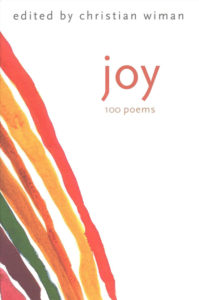 Joy: 100 Poems edited by Christian Wiman (Yale University Press) $25.00 Mr. Wiman is another well-respected, widely appreciated poet you should know. He now teaches at Yale Divinity School and is a generative thinker and very thoughtful writer. His own memoir of growing up fundamentalist in Texas, becoming a nationally-known literary figure, drifting from conventional historic faith, getting cancer and finding renewed Christian conviction is called My Bright Abyss: Meditations of a Modern Believer. We have had the privilege of selling books for him and hearing him lecture and are fans.
 Can You See Anything Now? A Novel Katherine James (Paraclete) $16.99 I have heard that Christianity Today named this the best novel of 2017 and I concur. I did not read that review (or others) as I didn’t want it to color my own thoughts as I ploughed through this extraordinary, beautifully-written and wonderfully artful glimpse into the lives of a whole bunch of folks whose comings and goings — often tinged by pain and loss — intersect in a small New England town. The book is episodic, each chapter about a certain episode or glimpse into a relationship, so it felt to me almost like a set of short stories, or a high-end TV series one would binge-watch. I was struck as much by the artfulness of the writing and the vivid character formation as the plot itself. Which is not to say the plot was insignificant. Like real life, it was messy, scrambled, about a lot of stuff, and one does not see it all at the same time. But there are glimpses.
 Dreamfield Ethan D. Bryan (50/50 Press) $15.99 I’m not going to lie – I have several reasons to be biased in favor of this book – the author is a friend who I truly respect and a real cheerleader for our work here. I’ve reviewed his memoir and children’s books and his near-constant writing about baseball. And I make a passing appearance in one line of the book. But, truth be told, I thought I had several reasons to not like it – I’ll come clean and just say I’m not that interested in baseball, let alone books about baseball and I’m sure not interested in sci-fi, mind-bending stories about time travel. Wikipedia properly calls the quintessential baseball book, Shoeless Joe (which inspired the movie Field of Dreams) as “magical realism” but I still don’t care for that weirdo stuff. I think I picked this up out of loyalty to Ethan more than really wanting to read a magical realism time-travel story, no matter how much I did really like Back to the Future.
 Still stuck for a last minute gift idea? Maybe you are looking for a book that is just right. Or maybe one that is quirky, a surprise. Here are some amazing works that would be unforgettable gifts and some that might make just a little stocking stuffer or gift for that person you don’t want to give something tooo intimate or mundane; you know, not a piece of jewelry but not a pack of tube socks, either. Books make great gifts for nearly anyone.
 God’s Country: Faith, Hope, and the Future of the Rural Church Brad Roth (Herald Press) $16.99 There are only a small handful of books about thinking Christianly about rural life and about doing ministry in a country church. This is fairly serious and well written, by a Mennonite pastor from middle-of-nowhere Kansas. There’s a forward by Leonard Sweet, so that’s nifty. I’ve written about it a bit before and think it is very wise and really interesting — the author is a very good writer. If you know anybody who might recognize those roads on the book cover, they’ve got to have this book. Written with “the poetic force of Kathleen Norris and the pastoral warmth of Eugene Peterson” there is nothing quite like it.
 The Art of Loading Brush: New Agrarian Writings Wendell Berry (Counterpoints) $26.00 This is a very new hardback book by one of our most esteemed writers. Berry, as you know, writes poetry, novels, short stories, and is a master of the dense, serious essay. He has numerous collections and although they often include stuff about his farming life in Western Kentucky, it has been a while since he has done a book exclusively about agrarianism. In some circles, this is what Berry is most known for, or what he most stands for. Even if the person you are giving this to isn’t a farmer, if they care about rural culture or if they like Berry, this new book is a treasure. Give it to someone who cares, and they will thank you for caring about such things, too. Tell ’em you made a decision to buy it from a place that has carried Berry for decades. It means a lot.
 Reforming the Liberal Arts Ryan C. Mcilhenny (Falls City Press) $14.95 You may know not this but there is quite a cottage industry of books about college and university life – some that end up as best-sellers and culturally significant, actually. Christians have written wisely into that world, and this brand new little book is a perfect example of how people of faith can offer a unique perspective on the meaning of learning and the significance of a liberal arts education. Not only is this a good book for any teacher, dean, administrator, or resident hall director, I think any church near a college and certainly anyone working in campus ministry needs to be able to be familiar with this wise and compelling argument for what Bob Sweetman (of the Institute for Christian Studies) says on his front-cover blurb is “a venerable Christian educational project.”
 Four Birds of Noah’s Ark: A Prayer Book from the Time of Shakespeare Thomas Dekker, edited by Robert Hudson (Eerdmans) $17.99 We have so enjoyed selling this beautifully designed, somewhat updated nearly timeless prayer-book, a true literature classic that, in our lifetime, has become virtually unknown. This prayer book – written in the middle of the plague in London in the mid-1500s (yes, that’s the time of Shakespeare and the eve of the Protestant reformation) — was in print continuously from the 16th century until 1924 when it went out of print. A few years ago a modern Bible scholar (who works as an editor at Zondervan Academic) and poet, Robert Hudson, discovered it and put in to motion a plan to get it re-published.
 Halos and Avatars: Playing Video Games with God edited by Craig Detweiler (WJK) $25.00
 Of Games & God: A Christians Exploration of Video Games Kevin Schut (Brazos Press) $22.00
 Sing! How Worship Transforms Your Life, Family, and Church Keith & Kristyn Getty (B+H Publishing) $12.99 What a handsome little hardback book this is, compact and yet solid. And, my, my, the content is powerful. I suppose you have heard of the Getty’s, the Irish couple who have written modern hymns such as In Christ Alone. In this book they reflect not only on music and singing – although this would be great for a choir member or anyone a part of a praise team – but on the very heart of Christian worship. Alister Begg encourages many to buy it and says it will “revolutionize congregational singing.”
 Beyond Colorblind: Redeeming our Ethnic Journey Sarah Shin (IVP) $16.00 If you follow BookNotes you know we often offer lengthy lists and serious annotations of books about race and faith-based solutions to racial injustice; there are so many theologically sound, even evangelically-minded, robust books that get at this topic. This one is quite new and reminds us that (a) claiming to be “color-blind” isn’t helpful or theologically sound and (b) not all racial justice issues are those between blacks and whites. This has been called a “groundbreaking work” and a book which will – in the language of the popular missional speaker Jo Saxton – “prod your heart at times, but also serves to equip you…”
 In the Beauty of Holiness: Art and the Bible in Western Culture David Lyle Jeffrey (Eerdmans) $49.00 This splendid book is surely one of the most significant books published this year and even more certainly one of the most significant books on art, faith, and aesthetics in many a year. It is hefty, although not quite a coffee table book. There are gorgeously reproduced full color art pieces on glossy paper but there is very, very extensive text. David Lyle Jeffrey, you should know, is one of our most brilliant literary critics – he teaches at Baylor and has written for top-notch journals such as First Things, Books & Culture, and Image. This is not only a lavishly illustrated book on faith and art but it is a major work by a major scholar.
 Inspired by the Word: The Bible Through the Eyes of the Great Masters Dr. J. Sage Elwell (Museum of the Bible Books/Worthy) $24.99 If one doesn’t want a book quite as learned and quite as lavish as the expensive and glorious David Lyle Jeffrey one shown above, this is also a great choice – less costly, less academic, and a bit less weighty. The artwork here is not reproduced on heavy, glossy paper, but it is nonetheless a beauty to behold with lots and lots of color. It is only a slightly oversized hardback and makes a nice gift without being too intense or deep.
 A Book for Hearts & Minds: What You Should Read and Why edited by Ned Bustard (Square Halo Books) $18.99 This book is a “festschrift” honoring Beth and I and the work we do here at Hearts & Minds, so it’s a little embarrassing touting it. But it is amazing – almost 20 authors weighed in offering well-written chapters – inspired by my BookNotes, I’m told – surveying the best books in their own specialized field of study. What a great idea.
 Contours of the Kuyperian Tradition: A Systematic Introduction Craig C. Bartholomew (IVP Academic) $40.00 It is interesting to me how many people these days know Kuyper – in part because of his famous preaching point about Christ reclaiming “every square inch” of creation. His views of “common grace” and “the antithesis” and “sphere sovereignty” have influenced us, here, and I’ve written about them often. I’ve recommended, often, Richard Mouw’s lovely little book Abraham Kuyper: A Short and Personal Introduction (Eerdmans; $16.00) and the magisterial, large biography Abraham Kuyper: Modern Calvinist and Christian Democrat by James Bratt (Eerdmans; $32.00.) Besides being a newspaperman, the founder of a college, a philosopher and statesman and Prime Minister of Holland, he was, of course, a pastor and theologian. This studies not only Kuyper’s theology, as such, but explores the subsequent neo-Calvinist tradition, those who, in the line of Kuyper, have worked out a comprehensive Christian world and life view. This is a remarkably important volume and I hope many theologians grapple with it. It should be better known than it is, and it would make a great, great gift.
 Theologygrams: Theology Explained in Diagrams Rich Wyld (IVP) $15.00 Okay, this is just about the funniest theology book I’ve seen and while it is way goofy and spoofy, it actually conveys some really good information. And some stuff written by this British dufus wanting to have fun making us smile while studying various doctrines and Biblical teachings.
 If you want something really amazing for your lovable theology gift, ask us about our box o Theological Trading Cards. I’m not kidding; there’s a good, cool box with tons of info on each card. ($29.99.) There are photos of contemporary theologians and good drawings of the old guys. You’ll be amazed.
 After College: Navigating Transitions, Relationships and Faith Erica Young Reitz (IVP) $16.00 We’ve touted this for a year, now, and there is hardly any book on the market like it. If it were just okay, it would be great, because we need to encourage our college seniors to transition well into the so-called real world. A resource to help them think about that as they enter their last semester of college is golden.
 My Favorite Color Is Blue. Sometimes. A Journey Through Loss with Art and Color Roger Hutchison (Paraclete Press) $16.99 I know that giving a book about grief is a tricky matter. We have so many books – many very, very, very good – about loss and grief and suffering and it takes some discernment to find just the right book for someone who is suffering loss. We have curated a large selection in this part of our store – from Gerald Sittser’s classic A Grace Disguised: How the Soul Grows Through Loss to the beautiful, moving, recent best-seller When Breath Becomes Air.
 Wounds Are Where Light Enters: Stories of God’s Intrusive Grace Walter Wangerin, Jr. (Zondervan) $19.99 I think if you asked people in the know who the finest Christian wordsmiths are these days, whose books have been the most well-crafted and sturdy and thoughtful and wise and beautiful, National Book Aware-winner Walt Wangerin’s name would be in the top few, alongside masters such as Frederick Buechner, Eugene Peterson, Luci Shaw, Philip Yancey, Barbara Brown Taylor, and the like. Wangerin has written theology, Bible commentary, memoir, poetry, fiction, and children’s books. His book on marriage (As For Me and My House) remains a classic and his fantasy books continue to enchant. Anyway, this is his brand new one, poignantly pointing us to stories of grace, of God’s presence amidst both hard suffering and more daily sorts of wounds and disappointments. His storytelling is wonderful and these stories are encouraging.
 Seeking Allah, Finding Jesus: A Devout Muslim Encounters Christianity Nabeel Qureshi (Zondervan) $17.99 When brother Nabeel died not long ago the outpouring of concern and of those who shared how much his books meant to him was nothing short of remarkable. A famous apologist named Ravi Zacharias preached at his funeral and it has been widely shared and has touched many. There is no doubt that this book about this Muslim’s journey to intelligent Christian faith (and this second edition has some bonus content) is respected and beloved. It has been a New York Times bestseller and earned a number of Christian Book Awards last year. For anyone who likes this kind of story, it is a great choice.
 Grace for Amateurs: Field Notes on a Journey Back to Faith Lily Burana (Nelson) $22.99 I am fond of these rough-around-the-edges kind of memoirs where brave writers tell what it is like walking in their wounded skin, celebrating their messy lives and sharing how, though it all, God is there and somehow meaningful for them. I don’t read some of my favorite writers such as Anne Lamott or Sara Miles or Nadia Bolz-Weber as systematic theology, as they are writers of narrative, story, memoir. Having said that, there is such insight and raw honesty in this story that I cheered (and occasionally wiped a tear) while reading this rowdy story. Burana has struggled with depression, is an activist for inclusive faith, and has taken more than a few walks on the wild side. I loved this writing, I loved the personality that shone through, and I appreciate her instincts about grace and standing up for the marginalized, including LGTBQ friends. What a book. It will blow somebody away with joy — I’m not alone! — if you give it to just the right person.
 The Cultural Liturgies Boxed Set James K.A. Smith (Baker Academic) $66.99 If you’ve read BookNotes the last few years you know I’ve exclaimed how important there vital, interesting, but weighty books are. Smith teaches philosophy at Calvin College in Michigan and edits Comment journal – the organ of the Canadian think-tank Cardus which promotes “public theology for the common good.” His PhD is in postmodern studies and he has written widely on Augustine, radical orthodoxy, secularization, education, hermeneutics, epistemology and other heady philosophical topics (we stock all his books) so he might point out that this trilogy of books isn’t precisely philosophy. They are fairly dense, and the footnotes draw on philosophy, theology, history, and cultural criticism, even if they aren’t philosophical studies as such.
 They are, nonetheless, some of the most generative, talked-about, important Christian writing of our time. I cannot overstate their value.

 Making Marriage Beautiful: Lifelong Love, Joy, and Intimacy Start With You Dorothy Littell Greco (David C. Cook) $22.99 This publisher has done some very good books lately, and this is a beautiful example – ha! Yes, it is beautiful because it is beautifully written and beautifully conceived and because I think there is nothing quite like this. There are bunches of books about marriage renewal, helping ordinary folks deepen their relationships and make their families more pleasing. Here, Dorothy (with some help from her husband Greg) tells of how a Christ-centered marriage can be full of trust and joy and honesty. (And this book is very honest!) It shows how to acknowledge our own hurts and failures and holds that up as not just necessary “conflict resolution” but as a deeply good thing – our human foibles and God’s grace collide and we become agents of healing and witnesses to another way. Showing how to sacrifice and endure is beautifully, finally, and this book points to a good and healthy way to think about our marriages.
 Keeping Place: Reflections on the Meaning of Home Jen Pollock Michel (IVP) $17.00 Oh my, do you recall our long review of this in a previous BookNotes? We talked about how very much we liked it and how rare it was – not just a book about being better parents or creating a healthier home life, but about the very meaning of home. What does it mean to care for a place, to be homemakers, to long for a place? It invites us to think of God as a home-maker and it draws on rich literary and theological stuff to help us come to a better sense of place and to dig deeper roots into our own neighborhoods and homes.
 The Tech-Wise Family: Everyday Steps for Putting Technology in Its Proper Place Andy Crouch (Baker) $13.99 Andy is one of our favorite speakers, authors, thinkers, and a wise voice in so many areas. Here he analysis new insights from research done by Barna – research that is similar to other work done by the likes of Jean Twenge that has been discussed everywhere from The Atlantic to NPR. Most everyone is alarmed by the sheer hours young people spend on their phones and devices and how the hot-wired and fast-paced nature of the “easy everywhere” culture of computers has effected our views of life. What habits might we embrace if we as parents are going to help our kids navigate this 24/7 digital culture? In a book that is profound and serious but simple and practical, Crouch offers 10 key principles for putting technology in a proper place.
 Life’s Too Short to Pretend You’re Not Religious David Dark (IVP) $17.00 Just out in paperback, this would be a great gift for somewhat contemporary thinkers and writers — you know, folks that like Infinite Jest, say, or David Eggers, or Okay Computer and have great passions about pop culture. David Dark, in fact, has written one of the enduring, good book on pop culture (called Everyday Apocalypse) and has also written wisely about the haunted culture of America, and another about the virtues of questioning things. Here, he is questioning this assumption that some folks aren’t religious. Nope, he says we are all driven by deep things, we believe in stuff, we are inspired by things. As humans, we tell stories, and in this provocative, very creatively written work, he invites readers to think about their own stories, their childhoods, their artistic sensibilities, their politics, and the signals of transcendence that emerge from the movements for social justice and a better world. David can make you laugh, can elicit tears and, on occasion, make you scratch your head in wonderment. This book was written to an rather sophisticated and hip young adult you told him she wasn’t religious, and, well, a book later, he’s offered a manifest for good living, deep thinking, and a willingness to admit we all have deep convictions that come from somewhere. Dare we admit that? Can we talk about it? What, really, is it all about? This wild and artful book isn’t for everyone, but for those that like stories and philosophizing a bit, who like pop culture and are willing to host some vital considerations, who appreciate honest doubts and lots of nuance, Life’s Too Short could be a life line.
 Martin Luther: The Man Who Rediscovered God and Changed the World Eric Metaxas (Viking) $30.00 I really hope you saw our BookNotes post listing all manner of books – some scholarly, some not – on Luther and the forces and implications of the Protestant reformation. We still have a table right in the middle of our shop displaying maybe 50 titles relating to this historic yearlong celebration of Luther and the reformations that follow. So there’s a lot.
 Vintage Saints and Sinners: 25 Christians Who Transformed My Faith Karen Wright Marsh with a foreword by Lauren Winner (IVP) $20.00 My goodness, this is a splendid book, handsome and cool looking and full of great writing about stuff that matters. I wish these sorts of books – stories of older saints and serious Christians – would sell more, but it hasn’t been our experience. But yet, I’m sure that nearly anyone wanting to grow in his or her faith, or be inspired, or learn something about church history, would love this book. It’s so well written, as the author – herself a person who does Christian ministry at UVa – tells of discovering these old saints. It is, as Diana Butler Bass puts it, “a gracious book full of charming prose and profound truths with just the right complexity of spiritual insight for everyday life.”
 As Kingfishers Catch Fire: A Conversation on the Ways of God Formed by the Words of God Eugene Peterson (Tyndale) $24.99 This handsome, solid hardback is a treasure trove of sermons once preached by Presbyterian pastor, spiritual director and Bible translator (known for the paraphrase The Message.) In the mid-to-late 1960s Peterson planted a church in a suburb of Baltimore and it was there he forged his distinctive approach to “a long obedience in the same direction” and learned to teach notions of prayer, holiness, whole-life discipleship, radical Sabbath-keeping and more. He is considered one of the great Christian thinkers and leaders of our time and here you can listen in to his early sermons, lessons, and talks. There is some recent content with some new headings and summary sections, but mostly these are older messages of the famous pastor Pete. These never-before-published teachings are for anyone who hungers for a richer, truer sort of spirituality. It would make a lovely gift\ for many BookNotes friends, I’m sure; it isn’t too academic or dense but it isn’t simple or clichéd, either. Very nicely done.
 Preaching Adverbially F. Russell Mitman (Eerdmans) $30.00 I wrote about this nicely a few weeks ago and raved about the idea. Mitman is an admired UCC pastor (and former Conference Minister, which called him to supervisor and train pastors.) He is a bit more highly liturgical than some mainline Protestants (and the thoughtful, colorful, Lutheran worship scholar Gordon Lathrop wrote the foreword.) I love the adverbs he uses to describe Christian worship and the role of preaching within worship.
 Sustaining Ministry: Foundations and Practices for Serving Faithfully Sondra Wheeler (Baker Academic) $21.99 I am not sure I understand all the training that most pastors get these days – evangelical seminaries are very studious in detailed theology and Bible; more mainline ones, I gather, learn radical theologies and eccentric stuff along with pastoral care and liturgies. I’m not sure most seminaries do a great job equipping pastors to, well, be pastors. Of course, I certainly was glad last year for books that called pastors to be theologians, even public ones, serving us all by using their Christian minds well. For instance, we highly recommend the highly touted collection of papers from a Wheaton theology conference edited by Todd Wilson & Gerald Hiestand called Becoming a Pastor Theologian: New Possibilities for Church Leadership (IVP Academic; $25.00) or the remarkable The Pastor as Public Theologian: Reclaiming a Lost Vision by Kevin Vanhoozer & Owen Strachan (Baker Academic; $21.99) or the excellent The Pastor Theologian: Resurrecting an Ancient Vision by Todd Wilson & Gerald Hiestand (Zondervan; $18.99.)
 From Weakness to Strength: 8 Vulnerabilities That Can Bring Out the Best in Your Leadership Scott Sauls (David C. Cook) $22.99 I love Scott Sauls and his previous books. He is a PCA pastor and known for books like Jesus Outside the Lines: A Way Forward for Those Who Are Tired of Taking Sides and Befriend: Create Belonging in an Age of Judgment, Isolations, and Fear. His goal of witnessing to God’s grace by moving beyond “culture wars” and “us versus them” sorts of attitudes resonates with many, and he’s preaching a gospel-centered way.
 A Subversive Gospel: Flannery O’Connor and the Reimagining of Beauty, Goodness, and Truth Michael Mears Bruner (IVP Academic) $30.00 This is the fourth volume in the increasingly known and seriously respected series of “Studies in Theology and the Arts” and the first in the series to deal with literary culture. (The others were more on the contemporary visual arts.) Like the others, this is top-class scholarship, engagingly written, about the inter-face of faith and the arts and creative culture.
 Practices of Love: Spiritual Disciplines for the Life of the World Kyle David Bennett (Brazos Press) $17.99 I have written about this widely and talked about it nearly everywhere I’ve gone this fall. Kyle is a scholar to watch, a recently minted PhD and now writer about spiritual formation and one’s interior life. But there is something pretty unique going on here, and it deserves to be read widely. I’d think anyone involved in contemplative practices or inner disciplines of faith formation will find this generative, worth pondering, and a book with which they will spend time pondering.
 You Are Free: Be Who You Already Are Rebekah Lyons (with a foreword by Ann Voskamp) $19.99 We have written about this before and although it isn’t new, I think it should be much more popular. Rebekah is the wife of Q Ideas found Gabe Lyons and her first book was so very good as she talked about her life as a young mother moving to New York to be involved in Gabe’s big culture-forming, life-changing projects. This one is also memoiristic with lots of self-revelation, lots of stories, beautiful examples of her own Christian growth. But it isn’t just a set of stories, it is a coherent and wise call for women to grow into their own, to be true to their own callings, and to find a freedom in that visionary sense of call.
 How to Fix a Broken Record: Thoughts on Vinyl Records, Awkward Relationships and Learning to Be Myself Amena Brown (Zondervan) $16.99 What a cool paperback this is, written by a fabulous, edgy, spoken-word/poetry slam performer and hip-hop woman (with a very cool husband DJ named Opdiggy.) I hope you know her work, maybe her previous book (which we loved!) or her role in the excellent Zondervan DVDs 12 Women of the Bible and 12 More Women of the Bible. She is a performing artist, poet, dancer, and a great public speaker. We’ve been with her several times and really respect her.
 Love Heals Becca Stevens (Nelson) $15.99 I hope you recall the longer review I did of this telling about Stevens’ work with marginalized women, former prostitutes and those who are addicted. She runs a marvelous community and job-training ministry called Thistle Farms that is deeply routed in faith and the grand traditions of working in solidarity for betterment and social justice. She is an Episcopal priest and philanthropist and this devotional beautifully renders spiritual messages that form the heart of their Thistle Farms work – love heals. Love is the answer. Love wins.
 Be The Gift: Let Your Broken Be Turned into Abundance Ann Voskamp (Zondervan) $16.99 This is an amazingly cool gift book, with very warm and inviting photographs on every other page. It is an amazing, very handsome hardback book, sort of standing between her upbeat One Thousand Gifts and the more serious The Broken Way. This new one, in short, moving, poetic essays coupled with amazingly pleasing pictures, reminds us that we, even in our broken and messy ways, get to be the gift to others. Yes, there are thousands of gifts in God’s glorious world of wonder. And we are among them. This book will touch others, I’m sure, and invite them to lives of caring, of service, yes, being the gift.
 The True Story of the Whole World: Finding Your Place in the Biblical Drama Craig Bartholomew & Michael Goheen (Faith Alive) $15.99 This is my favorite, basic, one-volume overview of the whole Bible and is lively, thoughtful, and really helpful. It is an abridged and somewhat more youthful version of the very important Drama of Scripture: Finding Our Place in the Biblical Story (Baker Academic; $22.99.) Anyone wanting a road map to better understanding the flow of the Biblical plotline from Genesis to Revelation – and how it informs our own story and worldview – will enjoy this wonderful, slim, book.
 A New Heaven and a New Earth: Reclaiming Biblical Eschatology J. Richard Middleton (Baker Academic) $26.99 When this came out a few years ago it got rave reviews and we reviewed it extensively. It is a serious read, showing how the promised restoration of creation, the cosmic renewal of all things, is a key to understanding the whole structure of the Bible. Middleton’s high regard for the Bible and his passion to teach it well (and to explode some common mis-readings) makes this a very useful book. That is may be the definitive book on the topic of new creation makes it a must for anyone who is a serious Bible student.
 Exile: A Conversations with N.T. Wright edited by James M. Scott (IVP Academic) $40.00 . If you have any Biblical scholars on your list, this is a book I am sure they would love. It’s a little pricey and a bit detailed, so it may be the sort of book some wouldn’t want to get with their own limited budget. But it would be a perfect give as they’d love to own it. Here’s the short version: N.T. Wright has an influential and somewhat contested theory about the First Century Jews believing they were still in exile. He thinks this is very important for how to few the Jewish understanding of the work of the Messiah and therefore how we, too, should interpret Jesus’s words and work. There is a chapter about this that sets the stage for the debate in this book and then a very good piece by Wright himself summarizing his generative thesis.
 Visions of Vocation: Common Grace for the Common Good Steve Garber (IVP) $17.00 A few customers of ours have occasionally said that they want us to just send whatever I think would serve them well. Or they ask for my own favorite book of recent years. This extraordinary book almost always is on my short-list of the best books I’ve read in the last decade. I love Steve deeply and I have a very profound appreciation for his learning, his passion, his gentle style, his focus on things that matter most. He helps people through what he sometimes calls “conversations of consequence” and believes that in sharing our stories we can see our roles within and obligations for God’s Kingdom more clearly. Using literature, movies, stories and real-life examples, Steve shows how we can move beyond cynicism to care deeply about the world – as God does – and work for human flourishing and Godly, normative principles, even in a world of hurt and pain.
 Letters to a Young Farmer: On Food, Farming, and Our Future Stone Barns Center for Food & Agriculture (Princeton Architectural Press) $19.95 This is a great looking, very solid paperback with nice fold-over sleeves, with short chapters by almost 30 influential and seasoned farmers or food activists. We have other books on faith and farming and on Christian views of land, food, and such, but this is really something. It includes insightful, impassioned essays (and letters) to an upcoming generation of farmers by the likes of Wendell Berry and Barbara Kingsolver, Bill McKibben and Alice Waters, Dan Barber and Wes Jackson, Joel Salatin and Michael Pollan. There are all sorts of farmers and food workers and it is inspiring to hear their stories. This is a great book. As Neil Young (of Farm Aid) says on the back “New young farmers are on the front lines of the struggle for survival, the future of our children and theirs.” Three cheers!
 Good Posture: Engaging Current Culture with Ancient Faith Tom Becker (Square Halo Books) $16.99 This book came out just a few days ago and unless one is a supporter of Tom and his Row House Forums in Lancaster, PA, it is most likely you’ve never seen this. We are, I am told, the only store that has it at this point. Soooo, it’s a great gift idea for anyone who likes the idea of reflecting about cultural issues, nurturing better postures for healthy engagement, how to be less critical and more eager to listen, and how to be faithful in hosting conversations about how to make a difference in this messy world God so loves. If you know anybody who likes this kind of thing, this book is a Godsend and it is brand spanking new.
 Tom Becker has been shaped – as I say in my blurb on the inside – by Francis Schaeffer and C.S. Lewis, by the Beatles and by foreign art films and other creative influences. The closest thing to his Row House ministry might be Denis and Margie Haack’s Ransom Fellowship (and Critique journal.) Denis, in fact, has a lovely blurb on the back of this, as do other great leaders in faithful in-but-not-of-the-world cultural discerners. This little book tells of Tom’s good efforts, his ups and downs in learning to be a voice of reasonable, gracious faith in his own city of Lancaster and how he’s offered “civility, hospitality, humanity, and creativity” in the conversations about and in the public square. It offers, as he says, “a modicum of uncommon sense on how to be a faithful presence in our communities.” You’ll be hearing more about this earnest proposal, but for now, grab it and give it to anyone you know who longs for better postures among evangelical Christians and looks for example of how to move forward. It’s a gem, and we’re honored to make it available just days after it has been released.
 God’s Wisdom for Navigating Life Timothy & Kathy Keller (Viking) $20.00 This is arranged and looks very much like last year’s wonderful The Songs of Jesus (which they did on the Psalms.) This handsome, compact hardback is a year’s worth of readings on the wisdom of the Proverbs. Interestingly, it doesn’t just wade through them, chapter by chapter, but groups them thematically, making their wisdom more understandable and attainable. Although Keller is a serious scholar, this is warm and clear. He brings good insight to bear – he’s done lots of homework on the background of the Hebrew culture and the genre of Proverbs, and so forth. But it really is a lovely, thoughtful, daily devotional. It’s less than a month old, now, so it’s still new and would make a great little gift. Highly recommended.
 Unshakeable: 365 Devotions for Finding Unwavering Strength in God’s Word Christine Caine (Zondervan) $19.99 This is a really classy gift, and somewhat hefty hardback, handsome and well designed, with readings from the dynamic speaker and anti-slavery activist. Her books have motivated hundreds of thousands to be more faithful, undaunted, in their faith, and to realize that God is bigger than our own small stories. As she puts it, God’s work allows us to be who we were meant to me. Christ’s story is:
 The Kingdom Tales Trilogy – 30th Anniversary Edition David & Karen Mains, newly illustrated by Zhivko Zhelelev (Mainstay Ministry) $29.95 each.
 Tales of the Kingdom $29.95
 and great stories. We are so, so pleased to tell you about these new editions of these wonderful stories that tell of a good creation, a terrible disruption that leads to a holy resistance and a future restoration. In some circles – including some of our ‘90s era CCO staff friends – loved these books so very much and used them with high schoolers, college students, and, eventually, their own young ones. To say these have been among the most beloved books of our 35 years of bookselling is not an overstatement.
 Here is part of the story: the lovely hardbacks went out of print and small, cheesy paperbacks were released with artwork that was so bad the authors and many fans were beyond disappointed. They didn’t capture the mature themes and grand adventures of these marvelously told stories, and so those dumb little paperback versions went out of print, too.

 God’s Great Love for You Rick Warren, illustrated by Chris Saunders (Zonderkidz) $19.99 We have loved the books Rick Warren has done for children such as the wonderful Lord’s Prayer. This hardback is simple, but beautiful, cool, contemporary, very impressive, just a lovely book for anyone. The main character is a lovable girl that looks like she stepped over the scene of the latest Disney or Pixar film. It is for younger readers, simple, and a reminder that God’s love is with them no matter where they go, so would be good as a basic truth for anyone, and certain for little ones with anxiety or fears. Illustrator Saunders has created atmospheric landscapes that are just beautiful, without being overdone.
 No One Else Like You Siska Goeminne & Merel Eyckerman (Westminster/John Knox) $16.00 This is a slightly “tall” sized book, without a dust jacket, expertly designed. The author is Belgian and this was first done in Europe – it has a hip feel and modern look. We love this book as it affirms how very different everybody is (in a healthy way, it seems, just declaring it as interesting.) It explains that everybody has different religions and beliefs, everybody feels differently about their bodies, their families and more. One page is about how everybody lives in different sorts of situations and places; others explore other things that make us unique. Again, this is presented as a cool fact to know and an okay thing, affirming that there isn’t one expected “normal.” We like it, although it isn’t overtly Christian. It does say we all have one thing in common: that we are all unique.
 Beautiful Hands Kathryn Otoshi & Bret Baumgarten (Blue Dot Press) ($17.99) We’ve talked about this before and when we take it to book displays it is gushed over as adults love thinking about how they will share it with their children. It is stunningly cool, with artwork made by kid’s hands dripping in paint. In each spread there is a word and the artwork colorfully shows the hands of the kids, in vivid pictures the publisher calls “illustrative surprises.”
 “what will you imagine?” and it answers each one, with creative answers like “spirits” (that is, lifting “spirits” answers the questions “what will you lift today?” To the “what will you touch?” the answer is “hearts.”) It moves deftly from these quesitons to imaginative (sometimes surprising) ideas for answers. It celebrates imaginative, inspiring capacities. It isn’t Christian, but you can work with it, I’m sure. What fun!
 En la mesa de Dios / At God’s Table Maria Eugenia Cornou, Carrie Steenwyk, John Witvliet, illustrated by Joel Schoon-Tanis (Calvin College Press) $18.99 What a great book this is – we’ve mentioned it before but because it is published by a small college-related press, and is bi-lingual, it hasn’t gotten nearly as much publicity as it deserves. These artwork pieces that illustrate the simple Spanish and English text, are rich, deeply hued, a bit sloppy – giving them weight and motion and energy. This retells the Last Supper and offers simple language about what some traditions call Eucharist. Done in cooperation with the legendary Calvin Institute on Christian Worship this is a fabulous small hardback. It includes good explanations for younger elementary children and some information for parents or educators. Highly recommended.
 The Day God Made Church: A Child’s First Book About Pentecost Rebekah McLeod Hutto, illustrated by Stephani Hig (Paraclete) $15.99 Again, I’ve recommended this here before and we display it at churchy events and folks love it. There is very little on the Pentecost story and this is one which – in really colorful and creative text — captures the mystery and importance of this day which many consider “the birthday of the church.” This is powerful storytelling and healthy Biblical education and a stimulating, creative picture book helping us learn to celebrate a day in the church calendar that is sometimes overlooked. Alleluia!
 You Are With Me: Prayers for Every Part of the Day illustrated by Birgit Antoni (Spark House Family) $7.99 How fun to find a chunky board book that reminds kids that God is with them all day long. This is, in some ways, the first prayer book a child may have as it helps children talk to God throughout the day. It’s fun without being overly silly, and helps kids realize God is with them. Perfect for a stocking stuffer or small gift for a little one.
 First Bible Basics: A Counting Primer Danielle Hitchen, art by Jessica Blanchard (Harvest House) $12.99 Consider this a first catechesis, one of the most fun and substantive little books like this I’ve ever seen. Some may this the “baby believer” saying might be a bit audacious, or goofy, but this almost 7 x 7 board book is a gem. It is a counting book, and teaches things like 1 is for 1 God (and looks at “I Am”) and 2 is for the two natures of Christ (yes, Saint Nicholas would be glad that there’s a baby book on Jesus being fully God and fully human!) 3 is for the Trinity (what did you expect) and is for the 4 gospels (with very cool pictures of Matthew, Mark, Luke and John.) 5 is for, well…. you get the picture. This is a great little book. Kudos to all involved.
 Stepping Stones: A Refugee Family’s Journey Margriet Ruurs, artwork by Nizar Ali Badr (Orca Book Publishers) $20.00 Whenever we take this book to book displays, everyone is so excited to see it and it always becomes a conversation starter. It is a poignant story of a Syrian family that takes everything they can carry on their backs and seeks refuge in Europe. What an important and moving story, what socially engaged, award-winning children’s author Jane Yolen says “both childlike and sophisticated; a text that will both break and mend your heart.”
 Riachel Spier Weaver & Anna Haggard, illustrated by Eric Elwell (Harvest House) $14.99 I suppose you know that there aren’t many really great books for elementary aged children about women of the Bible. This is the first in a series by women who work for HOPE International, and it is great. Miriam, as you know, was raised as a slave, and learned courage from her mother when they had to be creative to save her brother, Moses. Miriam matured and became a gifted musician and discovered other God-given talents. As it says on the back cover, “When God called Miriam –along with her siblings – to guide the Israelites out of slavery in Egypt, she was ready to lead.” I respect these women who have written this interesting, solid book, and the illustrator who has blended traditional and digital art techniques. Keep an eye out for the second in this series about girls and women of the Bible that will be called An Extraordinary Teacher: A Bible Story about Priscilla.
 The Memory Box: A Book About Grief Joanna Rowland, illustrations by Thea Baker (Spark House Family) $16.99 I can hardly think of a sadder thing then the grief of a child who has lost a loved one. We have a number of books about this and this new one is one of the very best. “I’m scared I’ll forget you,” the young child cries out, and we all know the profound fear that is.
 touching, the idea is beautiful, and I want to say how important I think this is – perhaps you could donate one to your local library or bereavement center or hospital chaplain’s office.
 The Watcher: Inspired by Psalm 121 Nikki Grimes, illustrated by Bryan Collier (Eerdmans) $17.00 This is one of the most amazing children’s books of the year – of many a year. It combines stunning artwork, a poignant, powerful, important story, and another feature that will take your breath away.
 most will find really interesting. There is bullying at school, issues on the bus, and this full-colored, big book shows it in some nuance and detail. It’s powerful, even as a third boy enters the story, a new kid named Israel.
 But then comes the truly amazing surprise, woven into the story. It is a device called “The Golden Shovel” where the last word of every line – that is, the last word on the far right of the paragraph – forms another story, read vertically. The printer has bolded these words so it becomes quite clear, that the last line of each sentence makes another story read vertically throughout The Watcher.
 Stories from the Bible: 17 Treasure Tales from the World’s Greatest Book Kathleen Long Bostrom, illustrated by Dinara Mirtalipova (Francis Lincolns) $19.99 There are a lot of children’s Bibles we really like; to have a truly great kid’s picture Bible there needs to be the right blend of artful illustration, good-looking and well-written text, theologically-wise telling of the story with some sensitivity to questions of gender and violence, and, of course, the complex matter of an artful illustration that is interesting and aesthetically pleasing in a manner that will appeal to a child’s best instincts. There are lots of fine, but goofy, kids Bibles, but really
 great ones are rare. (We like, by the way, the brilliant Jesus Storybook Bible by Sally Lloyd-Jones, Desmond Tutu’s glorious, internationally illustrated Children of God Story Bible, and The Doubleday Illustrated Children’s Bible by Sandol Stoddard, illustrated by Tony Chen, among a few others.)
 This new Stories from the Bible is one of them.
 Who Counts? 100 Sheep, 10 Coins, and 2 Sons Amy Jill Levine & Sandy Eisenberg Sasso, illustrated by Margaux Meganck (WJK) $16.00 Well, if you’ve been around contemporary New Testament studies these days you may know the name of the Jewish scholar Amy-Jill Levine who teaches gospel studies at Vanderbilt — she’s amazing. And if you been involved in contemporary conversations or workshops on children’s faith formation you may know the name of the very popular interfaith author, Rabbi Sandy Sasso (who is known for lovely books like God’s Paintbrush.) That the two of these Jewish educators would team up with a Presbyterian publishing house to tell fabulous versions of three of Jesus’ most beloved and important parables is genius! Who Counts? is a delight to hear or read, with wise and insightful lines and a vivid capturing of the gospel parables. There’s some subtle stuff, too, that might help you talk about this with your kids in fresh and sensible ways. This is a very, very interesting book.
 God’s Very Good Idea Trillia Newbell, illustrated by Cataline Echeverri (Good Book Company) $14.99 I think I will name this as our top children’s book of the year, or very near the top. It’s just stunning in how interesting it is, how it relates the simple gospel to remarkable implications, and how it gets the full-orbed vision of the Kingdom of God being that redemptive force which rescues and renews the very creation. We sometimes talk about creation-fall-redemption and this book gets it! God’s very good idea was a good and safe and colorful creation and God is not giving up on God’s good idea. Jesus will come –as the big story of the whole Bible shows in it’s unfolding drama – to save the lost and redeem the creation, which includes a restoration of the (get this!) ethnic and personality and gender diversity of the original creation.
 I simply know of know other book that so faithfully tells the gospel story in terms of the rescue of creation, the restoration of humankind’s role in God’s good world, and how racial reconciliation is central to that. God’s Very Idea of a church that models racial and ethnic diversity so that God’s plan of restoration of the diverse creation is seen by the whole world, is nothing short of brilliant. If only adults understood this creation-regained, racially diverse, upbeat and visionary theology! This book is whimsical and clever and witty and fun, and one heckuva story. The author has written an adult book on themes of racial reconciliation (called United) and the artist that did the illustrations is very accomplished. This is the real deal, friends, a gospel-centered, Kingdom book for Christian kids about stuff that matters in our world.. And anybody else who needs to hear the old old story in fresh, fun ways. Highly recommended.
 Exploring the Bible: A Bible Reading Plan for Kids David Murray, illustrations by Scotty Reifsnuyder (Crossway) $14.99 This is not a kid’s picture book but I wanted to offer at least one recommended daily devotional for middle- elementary kids. (They say this one is for ages 6 – 12, but I’d say maybe 8 – 12.) I’ve been waiting to see this for a while as David Murray is really good at creating Bible reading plans and guides to helping folks understand and apply the big Biblical story. He’s a conservative Reformed pastor and has some popular books on evangelical publishing houses that we carry.
 Toomey (by former Yorker Susan Wojciechowski and those marvelous illustrations by Irishman P.J. Lynch) to a family favorite Why Christmas Trees Aren’t Perfect to the wildly dazzling art of Julie Vivas’s The Nativity (where the robed angel wears army boots and we get a glimpse of the holy buck-naked baby Jesus.) We have handsome versions of The Gift of the Magi and some beautifully mature picture books telling the story of the famous World War I Christmas truce; and don’t forget great read-alouds like The Worst Christmas Pageant Ever and so many more. So call us if you need suggestions.
 That Baby in a Manger Anne E. Neuberger, illustrated by Chloe E. Pitkoff (Paraclete Press) $15.99 I believe this is our favorite new Christmas book for children. It’s colorfully done in nice watercolors, soft and yet somehow rich, mostly conventional with a few touches of whimsy. There is a bit of a story here and it is so touching it will move you deeply by the surprising ending, I’m sure. Your children will, I hope, want to read it over and over.
 The Night Before Christmas in Bethlehem Cheryl Wagner, illustrated by Carol Salomon-Bryant (All-In Publishing) $24.99 This is one of the most lavishly illustrated books we’ve seen this year, with gold foil on the rich cover and the full color oil paintings, with lots going on, a lot of allusions and symbols and intentional signals pointing to deep truths. (There is a guide to the back for each page helping children and grown-ups, too, understand each page and the Biblical texts that inform it.)
 The Song of the Stars: A Christmas Story Sally Lloyd-Jones, paintings by Alison Jay (Zonderkidz) full children’s hardback – $16.99; board book – $7.99 We have promoted this gem as often as we can since it came out three years ago as we love it! What a great, perfectly realized book, combining fabulous art, creatively portrayed but with an antique edge, and a simple, poetic, text that faithfully reminds us that all of creation gets in on this redemptive moment. How refreshing to see whales and lions and angels! You know Sally Lloyd-Jones from her many, many children’s books, but mostly The Jesus Storybook Bible and Thoughts That Make Your Heart Sing both which we adore. But this simple telling of the Christmas story showing the glory of God, the goodness of creation, the grace of the gospel is wonderfully crafted, told with eagerness and wonder, all helping us appreciate anticipation. Highly recommended.

 The Littlest Watchman Scott James, illustrated by Geraldine Rodriguez (The Good Book Company) $14.99 I am less fond of this kind of artwork that seems perhaps computer generated but I am told that kids today love this style – it is the sort one would see in the expertly done animation of the Disney films. It is bright and cartoony.
 Goodnight, Manger Laura Sassi, illustrated by Jane Chapman (Zonderkidz) full sized children’s picture book – $16.99; padded board book – $8.99 There are a few reasons I love to show this one. First, it is just happy. There are some tellings of the nativity story that are too happy, zany, light-weight, which end up, in my view, being a glib distraction from the story. But, still, this is just pleasant and it’s fun. The folks look natural. There is a lot of orange, and it feels fun. But, it is helpful that the characters look Middle Eastern and multi-ethnic. Again, most of the silly, upbeat ones are pretty goofy, where he the pleasant art touches reveal some reality. There is one scene, though, where the joyous angels seem to look like dark-haired, olive-skinned men (playing instruments, including one with a small accordion – how ‘bout that?) Anyway, this cheery story has animals and shepherds and astronomers and all the rest, but it’s a cheery, colorful version for little kids.
 Saint Nicholas & The Nine Gold Coins Jim Forest, illustrated by Vladislav Andrejev (St Vladimir’s Seminary Press) $20.00 Okay, this isn’t directly a Christmas book but it is one of the several books we have about the early church Bishop who became known as Saint Nicholas. Yep, Sinterklaas, himself (as the Dutch called him.) Jolly old St. Nick. I suppose you know that the real Nicholas grew up Patara, in what we sometimes call Asia Minor. He learned about life and faith and quiet service to those in need from his uncle (who had himself been a bishop and had a ministry with the poor, and especially with sailors from all over the world, there in their seaport town.)
 compassion and wise church leadership.
 A Christmas Promise Alison Mitchell, illustrated by Catalina Echeverri (The Good Book Company) $14.99 I believe I might have said last year that this was our favorite Christmas kids book of 2016. It has a whimsy and playfulness to it that is hard to not like, but the flow of the Biblical story and Christ’s coming within that big redemptive narrative is similarly hard to miss. Too few books really show the big picture, and The Good Book Company’s handful of gospel-centered kids books do this very well. We love this great telling of the big story of the Baby King come to restore the planet.
 A Cold Night: A Christmas Fable Emanuele Bertossi (Spark House Family) $14.95 This is a fairly large-sized hardback with modern-esque illustration; I believe this book was first released in Italy. There is lots of sparse space in this text and the haunting illustrations are odd, evocative. The plot is simple – several animals notice how cold it is and observe a man and a woman looking for lodging. A star appears after their baby is born and, again, it is cold and quiet and peculiar. The strength of this unusually creative work is how empathy emerges, with so few words, and how much it leaves unsaid; it is sparse and cannot be accused of being preachy. Parents can discuss what else is happening in the story, which makes it very useful for conversations.
 Messy Christmas Lucy Moore & Jane Leadbetter (IVP) $14.00 I hope you saw my longer description of this when we did a post about Advent devotionals a month or so ago. As I explained there, this is a new supplemental book that follows the new Americanized version of the popular Messy Church curriculum from the UK. Ideally, this is for congregations wanting to do an experimental worship programming, perhaps offering a fresh expression of a faith community, inviting non-church guests to a creative, inter-generational arts and crafts activity. People have found it really exciting to use and some smaller churches have used it as a VBS type thing on a weeknight, say. Of course, any family can adapt it to their own use, so why not give it a try with your extended clan? This offers three complete sessions and a treasure trove of ideas for Advent, Christmas, and Epiphany. We’ve got the new Messy Lent, now, too.
 The Wonder of the Greatest Gift: An Interactive Family Celebration of Advent Ann Voskamp (Tyndale House Publishers) $34.99 This fabulously interesting interactive book is the third in a series, all which are stellar, wonderfully produced and substantive.
 Based on her bestseller Unwrapping the Greatest Gift, Ann Voskamp expands her presentation of the timeless Advent tradition of the Jesse Tree with this beautiful keepsake that can be handed down and enjoyed for generations. Each December, families can celebrate the coming of Jesus by opening the book to see a 13-inch, three-dimensional Jesse Tree pop-up from the page. At its foot are 25 doors, one for each day of Advent, which hide meaningful, beautifully detailed ornaments, including the Christmas star, that are ready to be hung on the tree. Also inside is a simple devotional book with a reading for each ornament. Create precious holiday memories with The Wonder of the Greatest Gift pop-up book and recapture the sacredness of the Advent season as you celebrate the epic pageantry of the coming of the Messiah.
 For each group we take classic theology, maybe some stuff that pushes them outside of their comfort zone, books about spirituality and books about social concerns from racial justice to environmental care to global poverty. There are a few authors whose books we take nearly everywhere and there are specialty titles (some may say weird) that we trot out once a year for this or that annual gig, just to impress that particular tribe.
 If we were with Lutherans, we’d be heavier on Augsburg and Fortress; when we serve UCC folks we take more Pilgrim Press titles; the PCUSA publishing house is called Westminster/John Knox and the official United Methodist one is Abingdon, although Upper Room is one of their affiliated spiritual formation imprints that is delightfully ecumenical.) Serious religious book lovers should know these names, even if you are drawn to more independent, evangelical publishing imprints like Zondervan, Tyndale or Crossway. Of course we always take a mix of all sorts of publishers – heavy on the ecumenically evangelical, always thoughtful, Eerdmans, IVP, and Baker/Brazos – including Herald Press which is Mennonite and a whole cavalcade of Catholic and even Orthodox publishing houses. Not to mention books by quality indie and boutique publishers like Square Halo Books or Urban Loft or Kalos Press or Falls City Press or so many more.
 authors and by Christians of all sorts. From the brand new Barking at the Choir: The Power of Radical Kinship by Gregory Boyle (Simon & Schuster; $26.00) to the much-discussed best-seller The Benedict Option by Rod Dreher (Penguin Group; $25.00) to The Book of Joy co-authored by Desmond Tutu and the Dalai Lama (Avery Publishing Group; $26.00) and the large backlist of authors such as Kathleen Norris, Henri Nouwen, Thomas Merton, Timothy Keller, Frederick Buechner, Anne Lamotte, Madeline L’Engle, Wendell Berry, Richard Foster, and so many of the older spiritual classics, the so-called “secular” publishers offer rich, rich, religious titles and we are happy to promote them.
 Tracking Down the Holy Ghost: Reflections on Love and Longing Frank T. Griswold (Church Publishing) $18.00 We were thrilled that Church Publishing arranged it for us to have this brand new book immediately after it was in their warehouse, making our gathering a launch party for its release. We were the very first place to have it.
 The good Bishop wrote a small, lovely book of ruminations and reflections years ago called Going Home: Reflections on Jubilee and a hand-sized prayer book Praying Our Days that we have carried for years. Both are very nice. It was nice to sit under his teaching a bit.
 Feasting on the Word Advent Companion: A Thematic Resource for Preaching and Worship edited by David Bartlett, Barbara Brown Taylor, and Kimberly Bracken Long (WJK) $25.00 Everyone in this crowd knew well the respected, vulti-volume Feasting on the World preaching resources, the set of four-volume commentaries on the lectionary readings for preachers. (That’s four volumes for each liturgical year, making the whole series a 12 volume sets.) They also know the two-volume Feasting on the Word Worship Companion set that is available for each liturgical year that draws on the insights and perspectives of the Feasting preaching aids that help craft lectionary-based, theologically mature but somewhat creative worship services. The Feasting preaching commentaries and the Feasting Worship Companions are standard fare at any clergy event, and are almost always well received.

 Will Willimon’s Lectionary Sermon Resource Year B Part 1 and Year B Part 2 William Willimon (Abingdon Press) $24.99 each If you’ve been part of mainline church life for very long you know the name of Will Willimon. (And, for any CCO campus ministry folks reading over my shoulder here, you may want to smile a bit recalling how Messiah College’s Doug Bradbury – now teaching radical youth ministry at Geneva College – was the playfully boisterous emcee at our collegiate Jubilee Conference a few decades ago and when he brought Willimon to the main stage and got everybody singing in Rasta-reggae style Will-eee, Will-eee Will-eee-mon. I think the dapper Methodist clergyman didn’t quite know what to do.)
 Love Big Be Well: Letters to a Small Town Church Winn Collier (Eerdmans) $16.99 If there was one book that I wished I had even more time to talk about – although they give me a three very generous time slots to announce books — it very well could be this one. I felt like I didn’t need to say much as the premise is pretty straight-forward: it’s a novel comprised of fictional letters by a down-to-Earth, no-nonsense, very caring and very eloquent pastor to his small-town, a bit cranky and certainly eccentric Presbyterian church. With the blurb on the front from Eugene Peterson (in which he calls it a “tour de force” and says “an angle on understanding the life of both congregation and pastor that exceeds anything I have ever read”) and my assurance that it is captivating, funny, and brilliantly written, I figured I didn’t need to say much more. When I described it here in BookNotes a month ago, again, I didn’t feel like I needed to explain much else. What’s not to love? If it is one of the best books about church life or the life of a pastor Peterson has ever read, you should buy it immediately, no? If I say it’s one of my favorite books of the year – and I have said that often – why not order a handful and start a book group?
 A Word to Live By: Church’s Teachings for a Changing World Volume 7 Lauren Winner (Church Publishing) $12.00 I have often said, in workshops on reading as a spiritual discipline, to find an author and stick with her through thick and thin. I name a few authors I have committed myself to read and ponder whatever they write. Lauren is one such writer and I have not yet tired of her good writing, her fascinating stories, her insightful teaching. This very small book is in an ongoing series about key teachings of the Episcopal Church, but it is good for anyone. A Word to Live By is a short introduction to the role of the Scriptures in our lives (and, particularly in the worship and life of Episcopalians) and I commend it heartily.
 The Jesus Heist: Recovering the Gospel From the Church C. Andrew Doyle (Church Publishing) $18.00 This book promises to “flip the script” on Bible stories, “allowing us to hear Jesus’s call to change as one that is directed at us rather than as one we should direct at others.” Fair enough. But this book is more than that, what Becca Stevens of Thistle Farms (and herself a priest) says “is an ecclesiastical breath of fresh air.” As she continues, naming how this book will help those who are bored with church or stuck in their faith:
 A Bigger Table: Building Messy, Authentic, and Hopeful Spiritual Community John Pavlovitz (WJK) $16.00 Pavlovitz is known among younger mainline clergy folks mostly due to his engaging blog “Stuff That Needs to Be Said.” This carries forward the energetic call to be prophetic, full of love and grace, pushing boundaries in ways the prophets, Jesus, and the anti-Empire Paul might if they were around today. It offers “very wise reflections of a pastor with a heart like Jesus” says David Gushee. Pavlovitz calls us to four “marks of the bigger table” which are radical hospitality, total authenticity, true diversity, and agenda-free community.” Not everyone will agree with all of this, I suppose, although the Episcopal group didn’t mind that I named the “Church Must Be Queer” chapter, which is a chapter that draws, among other things, on a brilliant Homer Simpson admission in an old The Simpson’s episode, and the fact that in the early church, the word Christian was first a name of derision.
 Preaching Adverbially F. Russell Mitman (Eerdmans) $30.00 This book was stacked up in the shop the day we got back from the Episcopal retreat so I didn’t get to announce it there but if it had arrived in time, I would have, for sure. Mitman is a remarkable church leader – of fairly high-church German Reformed heritage, a former Conference Minister in the Penn Southeast Conference of the UCC. He has written several books of liturgical resources (years and years ago he had an creative, faithful one published by Harper and, in recent years, two or three from Pilgrim Press, with endorsements from the likes of his friend Marva Dawn.) So he’s been at this a while, guiding churches to more rich and robust, creative and faithful, forms or worship.
 In Preaching Adverbially Mitman uses a handful of adverbs to identify what essentially happens in preaching. After a good foreword by his friend Gordon Lathrop and a short introductory chapter, Mitman dives right in. The chapter titles are Preaching… Biblically, Liturgically, Sacramentally, Evangelically, Contextually, Invitationally, Metaphorically, Multisensorially, Engagingly, Doxologically, Eschatologically.
 Strategic Leadership, Planning, and Management for Christians Peter M. Danilchick (St Vladimir’s Seminary Press) $26.00 Okay, maybe I’m just showing off, or trying extra hard to show that we are ecumenically-minded. St Vlad’s is a very classy, somewhat academic publishing house from the legendary Russian Orthodox Press. They are known for doing handsome trim-sized paperbacks of many of the church fathers. (And, in that same series, some not-so-ancient; they just published a set of previously unpublished pieces by Alexander Schmemann called The Liturgy of Death.)
 Sustaining Ministry: Foundations and Practices for Serving Faithfully Sondra Wheeler (Baker Academic) $21.99 It isn’t uncommon to have pastors, or those who supervise pastors, ask for books about what we sometimes call the “human” side of ministry — avoiding burnout, dealing with clergy stress, managing time and demands, holding up under the “fish-bowl” life in a parsonage, and the like. Maybe one way to get at that is to ask about sustainability; how can one serve the church in a “long obedience in the same direction”? This book is a new one in this genre, and it looks very, very good. One reviewer says it is “a must-read for everyone in ministry.” Hauerwas says it has “unusual good sense and insight.” Pastoral theology is vital to recapture and Professor Wheeler (who teaches at Wesley in DC) has learned much wisdom about what makes for healthy ministry over the long haul. Are there moral dangers to being a shepherd, pastor, preacher? Of course, and she names them. Are tehre pitfalls unique to this calling? Of course. Wheeler is very astute about much of this stuff — and has a companion volume out, too, which I hope to write about later (called The Minister as Moral Theologian: Ethical Dimensions of Pastoral Leadership.) Both books bring mature and thoughtful, balanced guidance.
 Recovering From Un-Natural Disasters Lauri Kraus, David Holyan, and Bruce Wismer (WJK) $20.00 I have named this here at BookNotes before but needed to highlight it for the gathered clergy and church leaders last week. It is a wise and thoughtful guide for congregations wanting to be prepared for the next tragic mass shooting or arson or outbreak of gun violence or sexual abuse or public suicides and other human-caused disasters. This is a handbook that says what to do, what not to do, how to mobilize public lament, how to offer services and help and more. There are some recommended worship planning guides, song suggestions and such, even a bit about what to do at a one-year anniversary of a man-made tragedy. It’s sad to say, but I think every congregation needs to be doing some advanced planning on how to respond when something awful happens in your community.
 Saving Images: The Presence of the Bible in Christian Liturgy Gordon W. Lathrop (Fortress Press) $34.00 This is a handsome, solid hardback with Lathrop’s customary passion for both high quality, well-executed liturgical worship and the generative, leading role of the Holy Scriptures. He has done workshops and classes on this for years, and this book is one that I am sure many will say, as Walter Brueggemann did, it is “a wise and remarkable book from which I have learned a great deal.” Lathrop explores seriously how Scripture and liturgy converge and how gathered assemblies of Christians should be shaped by this dynamism. Notre Dame theologian Robin Jensen notes that this new work “urges the faithful to comprehend the Scriptures in multisensuous ways.
 Four Views on the Church’s Mission Jonathan Leeman, Christopher J.H. Wright, John R. Franke, Peter J. Leithart (Zondervan) $16.99 I think nearly every church I know is in some kind of conversations – often filled with anxiety and sometimes leading to acts of desperation — about what the church should be about. From the edgiest new church plant to the staunchest old cathedral (and all the quite ordinary congregations in between) there are intuitions that we are not to be keepers of the status quo, and that our task is to somehow equip saints for ministry. Almost no one says we should keep to ourselves, doing the same-old, same old.
 Church in Ordinary Time: A Wisdom Ecclesiology Amy Plantinga Pauw (Eerdmans) $20.00 I loved highlighting this to those who are so steeped in the church calendar, who would appreciate how Professor Pauw brings together Biblical wisdom literature with church. congregational stuff. Trying to offer a “Trinitarian ecclesiology that is properly attuned to the church’s life and the realities of today’s world” is daunting; doing it in light of wisdom and the ordinariness of daily life is, well, extraordinary. Rave reviews from Willie James Jennings of Yale Divinity School and worship prof Don Saliers of Candler remind us that this is rich, ecumenical, respected. Amy Plantinga Pauw is a professor at Louisville Presbyterian Seminary, has written on Jonathan Edwards, and is the author of a theological commentary on Proverbs as well. This is a thought-provoking book with some genuinely new insights.
 Women’s Voices and the Practice of Preaching Nancy Lammers Gross (Eerdmans) $20.00 We are always glad when we are in communities of faith where many of the leaders and pastors and priests are women. Yet we are infuriated when we hear, even in so-called progressive denominations, of the hardships woman have faced as they have risen to their calling to serve the church. I know of one woman whose Episcopal bishop disapproved of her and when he laid hands on her head to ordain her whispered into her ear “you are going to feel this” and pressed down so hard as to cause a serious disc injury. One just wants to cry out against such cruelty in the church!
 The Art of Transformation: Three Things Churches Do That Change Everything Paul Fromberg (Church Publishing) $18.00 I hope you know the wonderful, energetic, artful memoirist author Sara Miles who came to Christian faith by receiving communion at a church she knew nothing about, the extraordinary St. Gregory of Nyssa in San Francisco. Miles has written Take This Bread and Jesus Freak and City of God and they are each among my favorite reads in this genre of spiritual autobiography. She doesn’t cuss as much as her pal Nadia Bolz-Weber, but her passion for an inclusive church, serious worship with creative liturgy, and radical social service in the community is somewhat similar.
 show-casing their uniquely crafted, multi-ethnic, participatory liturgy) Fr. Fromberg is the eccentric and energetic pastor and rector (who also teaches at the Church Divinity School of the Pacific) behind this wild and holy place. From hip events like Wild Goose and Greenbelt, he’s addressed seekers and artists and church innovators all over the world; he has worked hard at gracious outreach and helping the church offer inviting, radical hospitality (including St. Gregory’s famously open Eucharist.) St. Gregory’s colorfully communicated but classic and often ancient liturgy over which Paul presides is well worth studying, but only makes sense as part of the larger ethos of the community and the spirituality of the parish.
 At the Episcopal event last week I pushed them to get this book as it has the ability to challenge and invite transformation for those who may be a bit too conventional, maybe feeling stuck. It is a beautifully written book in many ways, “full of compassion and humanity” as one reviewer put it. The Art of Transformation is animated by community, it is serious about theology and liturgy, but it really does call us to be a part of the life God has for us; it is anything but formulaic, despite the “three things” in the subtitle.
 Incarnational Ministry: Being With the Church Samuel Wells (Eerdmans) $22.00 I was thrilled to get to announce to this group a few new Samuel Wells books (one is called How Then Shall We Live? Christian Engagement with Contemporary Issues where Wells weighs in on two and a half dozen social issues with this characteristic theological acumen and agile mind) but we wanted especially to highlight this new one. I love this “being with” approach and agree with Elaine Heath (of Duke Divinity School) who says it is a beautiful volume, laying out “a path for us to become more fully present to God, self, others, and creation.” The Archbishop of Canterbury, Justin Welby, says it is a “must read” which I neglected to point out to these gathered Episcopalians. As I’ve said in a previous BookNotes, Incarnational Ministry offers the concept of “being with” in eight different dimensions: presence, attention, mystery, delight, partition, partnership, enjoyment, and glory. It is excellent.
 Strength for the Journey: A Pilgrimage of Faith in Community (Second Edition) Diana Butler Bass (Church Publishing) $22.00 I was happy to tell about this book up front at the Episcopal clergy gathering because, of course, they all knew Diana. (She is Episcopalian, had been one of their retreat leaders a few years back, and most modern clergy know her important books on congregational life and new visions of spirituality in works like Christianity for the Rest of Us, Christianity After Religion and Grounded.)
 No less an observer of the religious landscape than the late-great Phyllis Tickle (an early supporter of Diana’s work) noted that there is hardly a book on the market like this. Strength for the Journey is in the now exceptionally popular genre of religious autobiography or what some call spiritual memoir. But here’s the thing: Butler Bass narrates her own journey chapter by chapter, stage by stage of her own faith development, in light of and in the contexts of the various congregations of which she was a part. From her first taste of liturgical worship at All Saints in Pasadena in 1996 to her concluding chapter set at Christ Church in Alexandria in 2001, she offers insights about faith, about her own story, about life and times as a church person in our times, and about the ways local congregations do or don’t live out vibrant, helpful faith in their own locales. It is her story, but it is hopefully true of all of us, that our faith has been shaped decisively by the congregations of which we have been a part. This book is a wonderful mash-up of the sociology of religion, congregational studies, and personal memoir. Still, years after it came out, there is hardly anything like it in print.
 Forbearance: A Theological Ethic for a Disagreeable Church James Calvin Davis (Eerdmans) $25.00 I have tried making jokes about this book when showing it off – you know, saying that your church doesn’t need this, but other pathetic congregations might. But you know what? That’s dumb of me, for two reasons. First, church conflict is nothing to joke about (and is often quite painful for folks who are deeply invested in their local congregations) and the need to find Christian unity is one of the great, great tasks of any time. It is Jesus’s last great wish and the “final apologetic.” We must learn to get along. And, secondly, this really is a useful book, not just a screed against disunity or a call to be one. It is a mature and thoughtful and a bit creative rumination on this old fashioned word, forbearance.
 Living Wisely with the Church Fathers Christopher Hall (IVP) $24.00 Chris Hall is the director of Renovare Institute of Christian Formation and is the Associate Editor of the Ancient Christian Commentary on Scripture. He has taught, and been an academic leader at Eastern University and has been a member of a diocesan church there in Philadelphia, so these pastors should know Chris.
 Confess Your Sins: The Way of Reconciliation John Stott (Eerdmans) $12.00 I so wish that folks all over the broad Body of Christ would read John Stott. Father John was a clear, faithful, serious, writer without artificial pizzazz, consistently giving good, balanced, solid, Bible teaching. Many of his books are considered classics and are read within the more thoughtful evangelical community and among many mainline denominational folk who want a reasonable, respectable, moderate theological voice. Stott is evangelically minded, committed to what Lewis called “mere Christianity” and what he termed, in one of his popular small works, “basic Christianity.” His major works on Christ, on the cross, on missions, and the newly re-issued Between Two Worlds (on preaching) are excellent and highly recommended. The work he did near the end of his life on gospel-centered creation-care, railing against consumerism and materialism and calling for renewed interest in social outreach, were powerful.
 As Kingfishers Catch Fire: A Conversation on the Ways of God Formed by the Words of God Eugene Peterson (Waterbrook) $24.99 As folks browse our book display – almost everywhere we go, including last week at the Episcopalian gig – people tell us that their faith was decisively influenced by the early books of Eugene Peterson. A Long Obedience in the Same Direction is often cited, as are his “vocational holiness” ones about being a pastor. Of course, many love The Message (even if they don’t know it was Peterson that did that, and that he is a very able translator of Hebrew and Greek.) It’s always fun to promote his books, of which there are many.
 Peterson is known for rich, beautifully written prose, Biblically based, often accented with lines from good poetry and literature. In some of these teachings you’ll find reflections, took on racial injustice that was prevalent even then in nearby Baltimore and a reference to the first moon landing. As never-before-published messages, you’ll think some were preached just this season. Whether you are looking for book to read together with a book club or growth group or whether you are a pastor seeking fresh ways to think about how to preach and teach, or whether you just need a more substantive set of messages to supplement your own study and devotional time, As Kingfishers Catch Fire is certainly one of the best resources released this year. Thanks be to God for how Peterson helps us live out the good news, based always on his insistences of “the Word made flesh.” Amen!
 The first prophetic task, Old Testament scholar and modern day prophet Walter Brueggemann says in his important Reality Grief, Hope: Three Urgent Prophetic Tasks (WJK; $16.00) is to name the realities that we must grieve. One cannot find deep, faith-driven hope without a sturdy realism about the hard facts on the ground.
 rejoice in all things, after all; this is the day the Lord hath made and we know how we are to respond. We don’t have to sweep our deep brokenness and the world’s great need under the rug to find gladness. Indeed, I’m thankful for that (and for good writers who say such things, which keep me going.) Maybe we should list the quotidian graces we experience, day by day, rejoicing without embarrassment. I have to admit, I appreciate Ann Voskamp in her honest reminders about that. She’s right; there are a thousand gifts. And, as her new one invokes, sometimes we must be the gift.
 And, certainly, as I’ve said before, I’m glad for writers, editors, publishers, sales reps, booksellers (including our own staff), reviewers, bookstore lovers, and book buyers — all those who care about the printed page and keep books alive in these digital days. If you’ve been around here much, you know such things makes me want to tell you about books by the wonderful wordsmith Marilyn McEntyre, such as her extraordinary volume Caring for Words in a Culture of Lies (Eerdmans; $19.00) and Word by Word: A Daily Spiritual Practice (Eerdmans; $17.99.) I recently again dipped into Wendell Berry’s classic Standing By Words (Counterpoint; $16.95.) There are so many good voices that remind us of the value of words, lines, paragraphs and pages.
 We are this season amazingly grateful – stunned, actually – with the gift of a book created and published in our honor, just released by Square Halo Books. When they presented it to us a few weeks ago, on an unusually busy Saturday here at the shop, Beth and I both got choked up. It is rare that I can truly say I was speechless, and in that moment I stood there with tears in my eyes, holding Beth’s hand, looking at Ned & Leslie Bustard and Alan & Diana Bauer, the beautiful box of pastries from a classy bakery in Lancaster that they brought for the occasion, and allowed the audacious fact of the matter to sink in.
 Yes. In fact, they published a book to honor us, a book of book reviews done by friends and fans of the store. A real book that now we get to sell.
 link from their publishing website to our retail one; we appreciate this direct partnership that allows us to easily serve their interested readers.) We have diligently reviewed at BookNotes nearly every book they’ve released, and stock all their books, not out of duty or reciprocity but because we really believe in these books. We have always valued their work and we were honored when they published my own edited project, Serious Dreams: Big Ideas for the Rest of Your Life (Square Halo Books; $13.99.) Ned did the delightful design of that, the acorns and oak trees thing, the leaves on the inside, which has brought many readers a small, extra aesthetic pleasure.
 Unbeknownst to us, Ned talked with a number of folks who know us well and asked them who we might want in a book that would honor our work. Who are the experts and specialists and wise leaders who inquiring readers might consult about this or that topic? Ned called those people and invited them to contribute a chapter to honor us, to create a book of book reviews. A few were unable to be involved but many worked quickly and offered the gift of a new chapter, doing book reviews of the best books they’d recommend to develop a Christian perspective in their sphere or field..
 This is a book about books and a handbook for being well read and it is a thrill for book-lovers and a boon to those of us who don’t know “what to read next.” From Brad Frey’s really excellent ramble through books about sociology to Tom Becker’s good words on urban planning to Karen Swallow Prior’s inspiring, thoughtful piece about literature to Michael Kucks chapter mostly on the philosophy and theology of thinking well about science, these are informative and helpful guides to significant books in each field. Books for Hearts & Minds (quite apart from the sentimental aspect of it being a tribute to our 35 years of bookselling service) is a resource you should have.


 There are a few classic Advent readers that we often recommend.
 And don’t miss — especially if you’re a lover of classic, great literature — the glorious Light Upon Light: A Literary Guide to Prayer for Advent, Christmas, and Epiphany compiled by Sarah Arthur (Paraclete Press; $18.99) which is a prayer book using classy writers of fiction, poetry, memoir, and creative nonfiction essays.
 Last year we celebrated at Redeemer the release of Hidden Christmas: The Surprising Truth Behind the Birth of Christ by Timothy Keller (Viking; $20.00) which I really think is a great read, a very strong, short explanation, good even for seekers and skeptics.
 Maybe you should know an unusual, artfully illustrated set of reflections on animals during winter that works in an allusive sort of way for Advent: All Creation Waits: The Advent Mystery of New Beginnings Gayle Boss, illustrated by David G. Klein (Paraclete; $18.99.)
 The One True Story: Daily Readings for Advent from Genesis to Jesus Tim Chester (The Good Book Company) $7.99 We have really appreciated Tim Chester’s many books as he is a fine church planter (in the UK) and leader for a thoughtful, wholistic, culturally-relevant but orthodox Kingdom vision. I’d read nearly anything he writes and when we heard, last year, that he had done this collection of 24 short, meditative readings (with the standard ideas for reflection, prayer, and application) I knew it could excite many for the gospel.

 By the way, although I have not read them, there are two others with uniform covers that seem to be companion volumes, also written by Tim Chester and published by The Good Book Company. They are The One True Gift: Daily Readings for Advent to Encourage and Inspire and The One True Light: Daily Readings for Advent from the Gospel of John
 Advent for Everyone: A Journey with the Apostles N.T. Wright (WJK) $16.00 I don’t have to tell BookNotes readers how fond we are of Wright’s vision of the relevance of historic orthodoxy, his insistence that the gospel must be seen as the inauguration of the Kingdom, and his creative but reliable Biblical exegesis that so beautifully captures Older Testament echoes in the narrative of the New. Not to mention his knack for offering just the right common sense illustration to explain complex insights. His small “New Testament for Everyone” series of commentaries are lovely, potent, and usable and this brand new inspirational guide for the Advent season is in that tone. It Advent for Everyone includes reflections from the first Sunday in Advent through the Saturday after the Fourth Sunday in Advent. He bases his comments on his own translation (which, I suppose you know, is available as The Kingdom New Testament.) Each week discusses key themes for the season: thanksgiving, patience, humility, and joy and are based on Epistles –1 and 2 Corinthians, Hebrews, Galatians, 1 John, James, and the like. Nice.
 Celebrating Abundance: Devotions for Advent Walter Brueggemann (WJK) $13.00 As much as we like Tom Wright on the New Testament, Walter Brueggemann remains one of our great guides into the Older Testament; he is always generative and provocative and still able to surprise us with keen insights about the Biblical texts. Few authors are as attentive to the literary and political, social contexts of Hebrew Scriptures and few scholars are as passionately prophetic about the nature of the churches mission. I never tire of imagining his slow, drawling voice speaking he words on the pages of his books. This powerful new devotional has short readings for each day of the season, each followed by a prayer drawn from Brueggemann’s words, and twelve evocative, beautiful prayers he wrote for the “twelve days of Christmas.” It’s worth the price of the book just to have these poetic prayers at your fingertips.
 Coloring Advent: An Adult Coloring Book for the Journey to Bethlehem Christopher D. Rodkey and Jesse & Natalie Turri (CBP) $12.99 Perhaps you recall the long review I offered for the Coloring Lent volume that Rev. Rodkey wrote (the Turri’s did the curiously interesting artwork) where I exclaimed that I had never seen anything quite like this. Well, this companion volume for Advent is not quite as unique but, still, is an extraordinary stand out piece of work.
 Like his stunningly provocative Coloring Lent Rodkey offers some endnotes, that explain more about the references and allusions in the text or the artwork, a very thoughtful introduction, and allusive language throughout. The ecumenical nature of this is educational, too, in a low-key way, as he offers prayers from the Orthodox tradition, includes a postscript picture called Sol Invictus which is “the solemnity of Mary” which is drawn from Revelation 12 and shows a learned understanding of the broader Christian community.
 Come Let Us Adore Him: A Daily Advent Devotional Paul David Tripp (Crossway) $17.99 Do you know the profound, practical, Biblically-based, gospel-centered guidance offered by theologian/psychologist Tripp? He’s a leading light in the CCEF (a conservative, mostly Reformed center for Biblical counseling) and his writings are beloved by many. He has a few devotionals, includiing a big year’s-worth call New Morning Mercies, a recent book on awe, a couple of resources on parenting and family, one for younger adults interestingly called Relationships” A Mess Worth Making. This new Advent one is a handsome hardback with no frills, offering solid, Christ-centered reflections on the historically-redemptive vision of the coming of the rescuing King.
 Your Light Gives Us Hope: 24 Daily Practices for Advent Anselm Grun (Paraclete Press) $16.99 Father Grun is a very well-known author of both adult and children’s books, especially in Europe. (I’ll show some of his classy children’s work in a future BookNotes about kid’s books.) He is a German Benedictine monk, Cellarer of Munsterschwarzach Abbey. I just wanted to write that; don’t ask me how to say it. But, importantly, his courses on formation and his ministry of spiritual direction are universally appreciated—he’s sold over 15 million copies of his many books in over 30 languages! He brings to mind, at least in this regard, the irony of Thomas Merton, a huge, best-selling author and public speaker known the world over, despite his having been a Cistercian who took a vow of silence, and was usually silent when at his Abbey. In any event, Grun is known as gentle, still, man, and his calm spirit is nearly felt in his books; this one is no exception. He invites you to come “face to face with the God who loves you” and he helps illuminate a path towards that encounter by helping you learn to experience, to practice, even in our waiting. Each chapter, in fact, pairs a Scripture, an Advent tradition, and a simple practice.
 All Earth Is Waiting: Good News for God’s Creation at Advent Katie Z. Dawson (Abingdon) $12.99 As you might guess, we care deeply about what some call “creation care” and are always on the look-out for spiritual resources that do not reflect a dualism between what theologians called “nature and grace.” (Just consider the long story I told in the last BookNotes about how much we’ve been influenced by the likes of Al Wolters whose Eerdmans book is called, notably, Creation Regained and how in a recent conference about the theologian Abraham Kuyper Mary Oliver and Wendell Berry used to evoke a sense of awe about the goodness of God’s world and to lament of the brokenness of creation.) Well, one needn’t be that sort of reformational worldview visionary to appreciate deeply the ways in which the entire cosmos is described in the Scriptures as central to the saving work of Christ. The whole created world waits – it says so quite directly in Romans 8, just for example – and somehow the coming of Christ is good news not just for people but also for creation itself. This is a strong but neglected Bible truth, even though the carol rejoices that “heaven and nature sing!”
 My Soul Waits: Praying with the Psalms Through Advent, Christmas & Epiphany Martin Shannon, CJ (Paraclete Press) $14.99 We can always count on Paraclete Press of Brewster Massachusetts (where they live in a liturgical community called the Community of Jesus on Cape Cod) to offer profound and classy reflections for the church year. Some of our favorite books are from them! This one looks just wonderful, with endorsements from Patrick Henry Reardon (the Orthodox scholar who wrote Christ in the Psalms and edits Touchstone Magazine) who recommends this as a guide to helping us know how to pray the Psalms appropriately during Advent and the Christmas season. You may know that Fr. Shannon, himself an Episcopal priest with a PhD in liturgical studies from Catholic University, wrote According to Your Mercy: Praying with the Psalms from Ash Wednesday to Easter. I hope it isn’t in keeping with the tone of the quest, Biblical book to say that this guy knows his stuff! My Soul Waits is unlike any resource I know (using the Psalms during Advent) and is highly recommended.
 In Days to Come: From Advent to Epiphany George H. Donigian (Upper Room) $12.99 I’ve always appreciated books by The Upper Room for their gentle, sometimes quiet tone, their contemplative spiritual approach. This maybe isn’t as liturgical or monastic as some books that they do, but it is perfect for those who are – as it says on the back – “tired of Christmas coming and going too quickly.”

 Faithful: Christmas Through the Eyes of Jospeh Adam Hamilton (Abingdon) $19.99
 The Lord Is Our Light – Advent 2017 A Elaine Brown Crawford (Abingdon) $9.99 Every year for Lent and for Advent Abingdon Press offers a small group Bible study that explores the Revised Common Lectionary Texts for that year; this year, that is Year B, of course. They call it the ”Scriptures for the Church Seasons” and is perfect for small groups or Adult Ed classes or lectionary study groups that help the preacher prepare week by week. There is a Leader’s Guide included (written by curriculum development professional Nan Duerling) and – as the author puts it – it helps us “understand the meaning of Advent hope, its message of salvation, and how we are called to live “in the meantime.” Crawford is an ordained pastor in the United Methodist Church and holds a PhD in historical theology from Union Theological Seminary.
 Loving My Actual Christmas: An Experiment in Relishing the Season Alexandra Kuykendall (Baker) $9.99 Sometimes, after an author has a lot of success with a best-selling and much-appreciated book the publisher invites them to do another, maybe a supplement to the main book, or another re-hash. I was worried that this was the case in Kuykendall’s Christmas book because it just sounded like it was Loving My Actual Life done up with a red and green cover.
 Yes, this follows the formula of her previous, popular book, Loving My Actual Life: An Experiment in Relishing What’s Right in Front of Me (which we’ve heard nothing but good stuff about, by the way, especially from somewhat younger women; I love the cover, too!) It is a bit of a chatty memoir since it is posed as an experiment and she tells of her journey. What does it look like to be completely present? What does it mean to relish? And, in the holiday one, especially, there looms this question: ow do we handle common holiday stressors such as finances, schedules, and visits with extended family? Can we enjoy the season as it really isn not the one we wished it was? Can we resist the Hallmark-ish captivity of our imagination to free us to accept and be present to our real, actual Christmas?
 Rescuing Christmas: The Search for Joy That Lasts Carl Laferton (The Good Book Company) $2.99 We brought this small paperback into our store to show to our customers not only because of the fun cover showing a penguin with a string of lights – you gotta love that! – but because it is a prefect little gift to share as a housewarming present or to give to somebody who you want to give something to, but not a gift that is toooo much, or a book that is too heavy. This light-hearted book invites us to explore the real source of Christmas joy — certainly even among post-churched folks, a pretty widely-named quest.
 Messy Christmas: Three Complete Sessions and a Treasure Trove of Ideas for Advent, Christmas, and Epiphany Lucy Moore & Jane Leadbetter (IVP) $14.00 I hope you know about the Messy Church movement that has become a really wonderful thing in many parishes all over.
 experiences, maybe once a month, in Wednesday night programs, in home groups and more. Alas, the UK ones were a little quirky (from certain products they suggest using that aren’t available stateside to British-isms that left many American readers scratching their heads, not to mention the metric measurements, etc.) Well, rejoice, messy church lovers: InterVarsity Press has adapted and re-done Volume One of Messy Church (and added another small book about why and how to use the Messy Church activities that was also previously only available in England) and, with spiffy new covers, have made a product that really allows US faith communities to experience the same messy church stuff.
 So, now, as you can see above, they’ve released an Advent/Christmas one, with, as it says on the front cover, “Three Complete Sessions and a Treasure Trove of Ideas for Advent, Christmas and Epiphany.” These programs really are designed for congregational use, so Christian educators and other parish teachers will want to get it asap, but we know of many families that have enjoyed messing around with them, too.
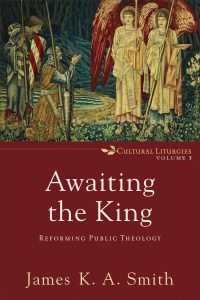 Awaiting the King: Reforming Public Theology James K.A. Smith (Baker Academic) $22.95 — our 20% off sale price = $18.39
 If you have purchased from us the previous two, or are doing so now, let us know if you would like us to include with your purchase of Awaiting the King a new very handsome heavy-stock paper slipcase to show off all three books together. You can buy all three shrink wrapped in the slipcase, for that matter, but if you already have the previous two, we’ll send along a slipcase for free. Just let us know if you want it.
 I will explain more later, but I am convinced this is the Book of the Year.
 Especially if you’ve read his nicely summarizing one volume version, You Are What You Love, you are ready to dig deep into Awaiting the King: Reforming Public Theology.
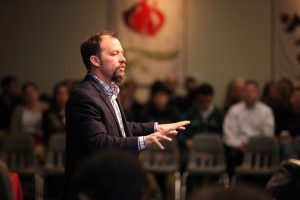 I will say this again, in my longer rumination below, but for the record I want to say that the footnotes (and the helpful comments within them) are extraordinary; Smith is an amazingly widely read scholar and an excellent teacher. Just reading the footnotes themselves is like joining an advanced seminar in political theology, learning about Rawls and Stout, Hauerwas and Van Prinsterer, Dooyeweerd and Bauckham. From civic thinkers John Inazu and Yuval Levin discussed alongside the
 philosophers Alvin Plantinga and Charles Taylor, for instance, you will learn much and will be challenged to ponder much. If you want to be brought up to speed – at a graduate school level – on the most important thinkers writing in this field these days, Awaiting the King will assist you. In a way, for those of us too busy or limited to grapple with all the array of scholars Smith is paid to think about, this book is a fabulous summary that will allow you to follow the biggest conversations happening in confabs and journals and meetings and debates all over the country. Awaiting is admittedly serious writing about serious thinking, but these are, after all, serious times.
 Don’t forget that Smith has wonderfully, significantly, summarized the gist of these three books in his best-selling You Are What You Love: The Spiritual Power of Habits (Baker; regularly $19.99; on sale now for $15.99.) I have touted this one, too, as practically a book of the decade, largely because we are fully aware that this sort of more accessible volume is needed to give many readers a powerful overview of Smith’s work in this “cultural liturgies” project. If you’ve appreciated that great book, it may be time to dig deeper and explore where it all goes in this third installment of the big set.
 I do not want to overstate this, but Awaiting the King even surprised Smith himself a bit as it unfolded in the writing process. Smith wrote the singular You Are What You Love after having written the first two volumes of the bigger “Cultural Liturgies” set. He had done Imagining the Kingdom and Desiring the Kingdom and speculated on what he’d be writing in the third, putting it all into You Are What You Love, so that last portion of You Are What You Love gives a glimpse of what he thought it would be like to write a third volume about embodying the Kingdom.
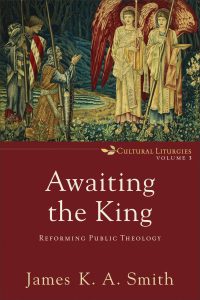
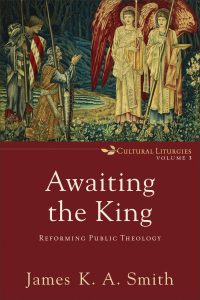 I’m sitting here in the conference meeting room with my spiral bound advanced copy of Awaiting the King: Reforming Public Theology, the third volume in the highly regarded and much-discussed “Cultural Liturgies” trilogy by Calvin College philosopher and Comment magazine helmsman, James K.A. Smith. My lap top literally on my lap, I hardly know where to begin, even though I’ve been reading and thinking and jotting notes about this for weeks.
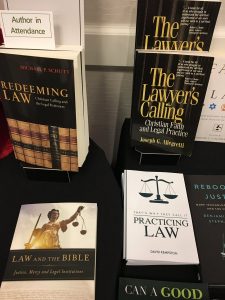 You can access a series of a dozen lectures by Dean Eric Enlow on Youtube from a law class he teaches, and
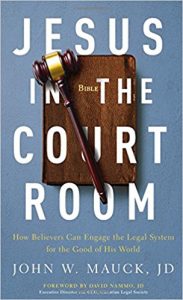 tell us they find it helpful to actually browse in an intentionally selected display of relevant books about being a Christian lawyer. We’ve got introductory ones like John Mauck’s recent Jesus in the Courtroom: How Believers Can Engage the Legal System for the Good of His World (Moody; $13.99) or Michael Schutt’s serious classic Redeeming Law: Christian Calling and the Legal Profession (IVP; $22.00), which, by the way, is now available in Chinese. We gave books of a more general sort for spiritual formation and vocational discipleship from Richard Foster to
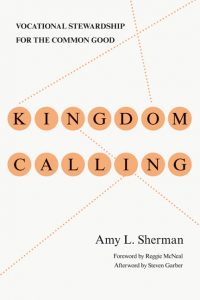 Tim Keller, from Amy Sherman’s Kingdom Callings to Steve Garber’s Visions of Vocation to wonderfully important reads by authors that were with us such as Angry Like Jesus by Sarah Sumner (Fortress Press) and The Peacemaker by Ken Sande (Baker) and the provocative monograph From Telos to Technos: Implications for a Christian Public Life and Ethic by Jeffrey J. Ventrella of the Alliance Defense Fund (which, at $7.99, is really worth reading.)
 One book that sold well at CLS should be of interest to many Hearts & Minds friends. It is brand new, written by former law school Dean Jeffrey A. Brauch, called Flawed Perfection: What It Means to Be Human and Why It Matters for Culture, Politics, and Law (Lexham Press; $15.99.)
 It is invigorating to offer thoughtful books to help people in their faith and life, and we were thrilled to sell almost all of the copies of Smith’s one-volume You Are What You Love which, I trust you know by now, is a summary of Imagining the Kingdom and Desiring the Kingdom and what would become Awaiting the King. It gives me hope that there is a big market for thoughtful books, for resources about vibrant and faithful discipleship in the context of the secularizing, complex, hurting modern world.
 which means “root” so a “radical” view must be foundational, starting at the level of assumptions and presuppositions, considering the deepest roots of things, perhaps even the nature of the soil those roots are rooted in. We dare not be firstly loyal to the soil of conservative principles or progressive values (let alone the status quo, which may be the biggest danger of all) but Biblical teaching, putting ourselves deeply into the redemptive narrative, forming a Christian imagination out of which can emerge more finely tuned Christian consideration of visions and policies. One serious book about this very matter is by David Koyzis, entitled Political Visions and Illusions: A Survey & Christian Critique of Contemporary Ideologies (IVP; $27.00) which I often suggest but rarely sell. Hmmm.
 anticipate? How do we wait in true hopefulness? The conclusion of Smith’s Awaiting the King ends exactly with this, drawing nicely on the wonderful book by Bethany Hanke Hoang & Kristen Deede Johnston, The Justice Calling: Where Passion Meets Perseverance (Brazos Press; $18.99.) Drawing on their remarkable insight, gleaned from years on the front lines fighting sexual abuse and human trafficking, and in the classroom nurturing a rising generation, Smith tells us that our Kingdom waiting, our posture and approach, is “not the timid waiting of quietism or the resigned waiting of indifference.” In The Justice Calling, Smith reports, Hoang & Johnson “look back to Habakkuk as an exemplar.” Smith tells us about their reminders:
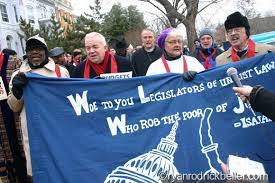 Nam war and have been locked up for protesting nuclear weapons and arrested for protesting abortion. I’ve stood arm in arm with Holocaust survivors speaking out against anti-Semitism and aged two decades in half as many years as a pro-immigration activist, standing with imprisoned Chinese asylum seekers here in York, PA. I’ve preached in front of the Capitol and I’ve had rifles aimed at me,
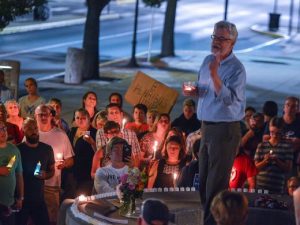 been stomped on by police horses, volunteered at soup kitchens, served in a Crisis Care Center and so on. I’ve tried to be active in mostly small ways about public life and the common good but find hope hard to come by. Times have always been perilous, more in the two-thirds world than here. I get that, too.
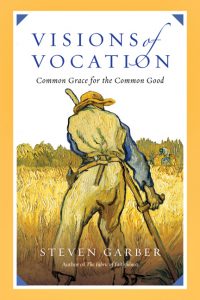 have thought this through and I fear we are not up to the challenge of the rising racism and the reign of crass, stupid stuff from the nation’s capital. I read and re-read Garber’s beautiful Visions of Vocation book about enduring faith amidst deep sorrow for our hurting world and try to take heart. I sense that a lifetime of speaking and writing and teaching and bookselling is nearly for naught as fellow citizens and many sincere church folks are falling like flies into the far right or the far left or, as Garber warns, devolving into cynicism or jaded apathy. I am glad that Christian hope is a different sort of thing than mere optimism, because I am not optimistic about these days in which we live.
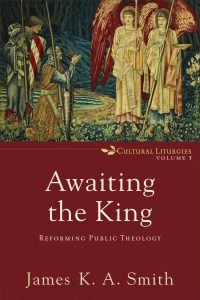 Maybe it would help to catch the word play of the double entendre in the subtitle. We need a reforming sort of public theology – one that works hard to change things, to bring Godly reform. But we need to be about reforming our public theology itself, as it has not served us well. Saying, as most do, that we shouldn’t “mix church and state,” while true enough, simply isn’t enough. We must revisit our theology and see what cues and hints and stories are implicit (or sometimes even explicit) in our theological truths and see how they might equip us to be more faithful in our public vocations.
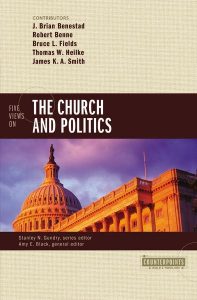 That he is fluent in many different approaches to Christian theorizing about public life is seen wonderfully, by the way, in his sizable contributions to the five-fold conversation in Five Views on the Church and Politics edited by Amy Black (Zondervan; $19.99) where his response to Lutheran, Catholic, Mennonite, and African American/black liberationist authors indicate a profound awareness of the nuances of their own positions. I’ve reviewed this great book elsewhere at BookNotes, and I’m a fan. Smith’s chapter there about the neo-Calvinist “transformational” view is very, very good and he truly dazzles in his responses to the others.
 about how his Pentecostal leanings have influenced his work as a serious philosopher, called, with amazing wit, Thinking in Tongues.) He has served campus ministry organizations like the CCO and IVCF and has spoken in churches of varying denominations. His little handbook of Christian guidance for sturdy young Calvinists called Letters to a Young Calvinist attempts to broaden the horizons of Gospel Coalition types, inviting them to the longer and broader catholic tradition. Some of his varied influences and passion for robust contemporary application of faith to life can be seen in the collection of short pieces in Discipleship in the Present Tense: Reflections on Faith and Culture (Calvin College Press; $15.99.) It’s a personal favorite and we’re glad to stock it.
 One theme of the Kuyper tradition is the lovely notion of “common grace.” That is, in God’s good world, our loving creator wants humans to flourish and good stuff happens among those of any and all religions. We can affirm – as Dean Enlow explained to the CLS gathering – good laws for public justice, whether they were crafted by atheists or Marxists or God-fearing fundamentalists. A good ball game (as many know these days) is a joy to behold and God takes pleasure in humans finding such pleasures. God allows for lovely stuff in our wondrous world and we are free to enjoy the goodness that flows upon us all, even if we remain dangerously alienated from God and sinfully disinterested in the glory of Christ.
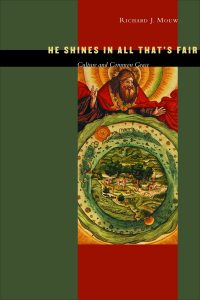 ponders if the line of the hymn is correct. He thinks it is, that God somehow is glorified in anything “fair” and good – from a finely executed golf putt to an aesthetically-mature painting to a trusting, happy marriage to a properly functioning electronic gizmo or government. Does God get glory when atheist scientists discover something good? When bohemian baristas roast a particularly good bean? Is God pleased when brutal communists get something right? When vile Hollywood sexists make a good film? Mouw says yes, and we should understand the goodness of common grace as a Godly grace of sorts so we have the framework for rightly praising such good stuff.)
 The other strong theme in Kuyper’s voluminous work, though, is what he calls “the anti-thesis.” That is, the Bible also teaches – alongside the claim that “this is our Father’s world” and, in the spirit of Kuyper’s common grace, we can happily enjoy much of our daily lives – that the principalities and powers are doing their best to deepen the rebellion happening on the planet. This isn’t just irreligious, but evil. To reject God’s ways and ignore God’s presence is worse than dishonorable and damaging. The gospel of Christ demands that we honor only one Lord and so any person, institution, social organization, business, cultural agency, political movement or society that doesn’t “kiss the sun” (as Psalm 1 poetically puts it, or “bow the knee” as Philippians has it) is bound for conflict with the only King of Kings. In other words, this emphasis reminds us, that a good school that is wholesome and safe and effective, but teaches students that God is not involved in the matters of daily life, is, most foundationally, a bad school. A body of artwork, no matter how excellently-produced, if it offers a world emptied of God is hostile. Any vision of marginalizing the authority of the Bible for life, any view that implies that humans dare be autonomous (“a law unto themselves”) or that any aspect of life is religiously neutral, is wrong-headed and worse.
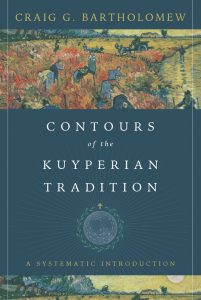 Maybe Kuyperian thought isn’t this simple. The hefty hardback Contours of the Kuyperian Tradition: A Systematic Introduction by Craig Bartholomew (IVP; $40.00) is a highly recommended, wonderfully detailed study of Kuyperian cultural renewal and the theology that funds it. For those really interested in where Smith is coming from, this explains a part of it.
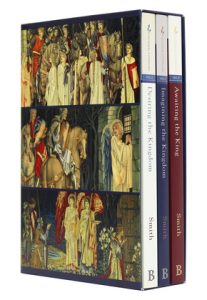 These three books in the “Cultural Liturgies” trilogy, Desiring the Kingdom, Imagining the Kingdom, and, now, at last, Awaiting the King, will help by probing deeply our radical convictions as Westerners. Smith’s ecumenical Kuyperian combo of common grace plus the antithesis shaping a vision of public life is offered – helping us get it better than we have in our previous thinking, re-shaping our hopes for the good, and guiding our actual habits and practices. It will help us navigate what he calls “the craters in the gospel” and become more wholistic and attentive, which, in turn, will help us resist secularizing, classic liberalism that erodes truth and goodness.
 faith-based community development a la John Perkins (good, good, good as those projects are.) In Awaiting the Kingdom Smith engages in serious academic discourse about some of the finest Christian scholars of race writing these days, namely Willie James Jennings, author of The Christian Imagination: Theology and the Origins of Race (published by Yale University Press; $27.95) and Brian Bantum and his book Redeeming Mulatto: A Theology of Race and Christian Hybridity (published by Baylor University Press; $29.95.) Jamie does this to show the failures of much liturgy and how whiteness is a social construct that has impacted how we approach God, worship, and church. It is demands some serious study, but it will help us get beyond sloganeering and shallow moralism. It’s a radical/radix kind of approach.
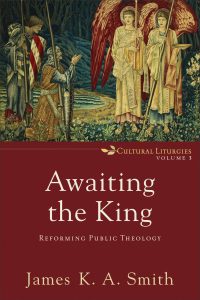
 Many central Pennsylvania Hearts & Minds customers have noted our big display of books about Martin Luther and the Protestant Reformation, the world-changing movement that rocked the church and world starting, symbolically, at least, on October 31, 1517 – 500 years ago. That we need to commemorate this huge historic occasion — 500 years! — goes without saying. For everyone in our Western culture, but especially those of us in the Protestant wing of the church, this really is a huge deal. And if you are Lutheran, Presbyterian or Reformed, well, let’s get out the party hats.
 It is a hard thing, though: Luther and Zwingli and Calvin and most of the earliest reformers didn’t imagine starting a new non-catholic church; they were reformers, after all, not revolutionaries. So there is much to lament about the subsequent brokenness of the one Body of Christ. We agree with the major Lutheran assemblies who have said that while we should commemorate this extraordinary era and use the Luther anniversary as an opportunity to revisit the major theological and spiritual matters that galvanized the Protestant movement, we don’t exactly want to use the language of “celebration.” Any renting of the global Body of Christ is a bad thing, even if, as most Protestants attest, it was a necessary thing.
 Here I Stand: A Life of Martin Luther Roland Bainton (Abingdon) $19.99 This small biography written decades ago is still considered a classic stand-out, just a really engaging read. Highly recommended even if a bit dated, now… there is another edition, but I suggest this one as the print is just a bit better.
 The Reformation: How a Monk and a Mallet Changed the World Stephen Nichols (Crossway) $14.99 I like Steve Nichols so much — he is now with RC Sproul in Florida but he used to teach near us at Lancaster Bible College. (And, besides a bunch of popular level books, he’s got a marvelous book on the blues, so he’s my kind of theologian.) Professor Nichols is a very dynamic teacher, a lively theologian, a great writer, able to take mature, complex scholarship and make it quite relevant and readable for ordinary folks. This is a fun “behind the scenes” look which uncovers some of the dynamics behind this era, and behind the stories of the Reformation. …Monk and Mallet… is a fantastic, readable and inspiring book, very nicely done — history comes alive in about 180 pages. There are some interesting plates and pictures, too; highly recommended.
 Luther for Armchair Theologians Steven Paulson (Westminster/John Knox) $18.00 I love this series of upbeat and witty books that offer solid introductions of various theological voices from the past, complete with goofy cartoons offer some helpful illustration and insight. In this case, Paulson is a professor of Systematic Theology at Luther Seminary in St. Paul, Minnesota, so is ideally suited for this daunting task. How to explain Luther – his life and his thinking and his legacy – in one sprightly volume? Paulson pulls it off. Despite the cartoony covers, these “Armchair” books are not silly, (and the series includes good introductions to everybody from Augustine and Aquinas to Calvin and Knox from Wesley and Edwards to Bonhoeffer and Martin Luther King, and more. There is even one on Heretics for Armchair Theologians which is a layperson’s study of the classic heresies of the earliest days of the church. Anyway, check out Luther for Armchair Theologians.
 Here is one interesting and slightly confusing marketing matter: some of these clever books, each with often insightful cartoons, are being reissued without the illustrations, with much more sober covers, and standard if rather uninspiring titles. For instance, this exact same book is available sans cartoons and creative title, as A Brief Introduction to Martin Luther. It is $20.00. Choose your format.
 The Reformation for Armchair Theologians Glenn S. Sunshine (Westminster/John Knox) $18.00 This one is also a part of that series which takes serious theologians and makes them accessible to ordinary folks. Again, there are some whimsical cartoons and there’s some wit about them. This one looks at all the key players and the various places where the Reformers worked during this tumultuous time and I really learned a lot. I need this kind of clear but interesting resource so I highly recommend it.
 Reformation teaching broke out. It makes the over-all narrative come alive.
 Reformation Questions, Reformation Answers: 95 Key Events, People & Issues Donald McKim (Westminster/John Knox) $15.00 In my own PC(USA) denomination, Dr. McKim is a beloved teacher and author who has done resources such as Presbyterian Questions, Presbyterian Answers which are very interesting and helpful Q&A books. This one is formatted the same, with a page or so on a whole bunch of common questions. The first part includes lots of stuff about history (from questions about the historical background such as “What Is the Reformation?” “How Did the Reformation Develop?” “What does Protestant mean?”) to questions and answers about events, people, and places. There’s so much clear, simple information here that it is a great resource to have on hand even if you are well-schooled. Following that portion there are more sections under the general headline of the theology of the Reformation; his explanations are clear and not overly fiery or polemical. A final unit of questions offers answers about the legacy of the Reformation. This small book is easy-to-read and interesting from a fine and respected mainline denominational church historian. McKim’s latest book, by the way, is Moments with Martin Luther: 95 Daily Devotions.
 Luther on the Christian Life: Cross and Freedom Carl Trueman (Crossway) $17.99 This thoughtful work is in a series of books called “Theologians on the Christian Life” on the likes of Calvin, Wesley, Jonathan Edwards, Bavinck, Bonhoeffer, and Francis Schaeffer, that are less designed to be full historical biographies (although each does offer a great overview of the life and times of each theologian) but more to take the thinker’s key ideas and apply them to our spiritual lives today. In this case, it’s Luther’s view of freedom in Christ that is aptly explored by this strong professor from Westminster Theological Seminary. Any study of the Reformation has to start with Luther, of course, and although this has the orientation about how Luther’s idea on freedom can inform your own faith, it still is a good biography. In fact, this is a great way to read biography as it makes the connections clearly about how to live into his best ideas.
 Martin Luther: The Man Who Rediscovered God and Changed the World Eric Metaxas (Viking) $30.00 I wish I had more time to review this – well, what I really mean is I wish I had more time to read this 800 page tome – as I suspect it is the most engaging and compulsively readable of the major biographies of Luther ever written. I need to say that while I disagree with most of Metaxas’s recent politics and readily admit he is a popularizer (not a precise, scholarly historian of the top order) his books are marvelously written, insightful, and to be happily celebrated for the great good they do in introducing curious folks to good, good stuff. Not all will agree but I think they should try to overcome their bias and enjoy his fabulously interesting prose and obviously sincere dedication to the work. (You know Metaxas did a ground-breaking and excellent biography of William Wilberforce called Amazing Grace and then did that massive, exceptionally popular, if a bit controversial, biography of Dietrich Bonhoeffer.) Here he has put his considerable wit, eye for detail, and insight about the big historical and spiritual picture to work explaining the life of this seminal, provocative, fascinating man the Pope called “a wild boar.” This big book is very engaging, loaded with great information, and I am glad to recommend it. There are some lovely full-color plates and a fascinating appendix you really should know about.
 The Un-reformed Martin Luther: A Serious (and Not So Serious) Look at the Man Behind the Myths Andreas Malessa with a foreword by Paul Maier (Kregel) $14.99 Andreas Malessa, besides being a theologian, is a lyricist (most recently for the play Amazing Grace.) Luther would like him I’m sure. Here he attempts to “set the record straight” about varying myths and misunderstandings. It’s a well-known approach – setting forth the common confusion and clarifying it with a good, solid chapter but as you can tell from the cover he does it with wit and verve. I can’t weigh in on whether this really allows “the real Martin Luther to please stand up” (as the old game show put it.) But at least, it is lively and entertaining. Not many books on world-renowned theologians like Luther are written “gleefully” as this one promises to be, so I wanted to list it here. Looks great.
 Martin Luther: A Very Short Introduction Scott H. Hendrix (Oxford University Pres) $11.99 Do you know these pocket-sized “Very Short Introduction” books? We have them on all kinds of topics (the ones on spirituality, on theology, on various Bible topics, on Calvin, not to mention many on scientific topics and political history are all very, very good.) There are hundreds of them, actually. Oxford selects a world-class scholar in the field to give us the very shortest introduction in a compact book the size of a pocket Testament. Dr. Hendrix is Professor Emeritus of Reformation History at Princeton Theological Seminary and is active in many professional associations pertaining to Luther studies.
 Katharina & Martin Luther: The Radical Marriage of a Runaway Nun and a Renegade Monk Michelle DeRusha (Baker) $19.99 I hope you get to read something about the famous Katie Luther; she is important and fascinating. We even have a comic book version for children about this marvelous and important reformation leader. This recent book by the young, upbeat writer Michelle DeRusha explores Katie’s role and, particularly, the often-discussed marriage of the two. What a radical gesture for this ex-monk and ex-nun to marry in those times! There is a lovely and well-written foreword by Karen Swallow Prior that will make you want to dive right in to this moving love story.
 way, although I haven’t read it yet, we really appreciate the fine biographies and historical writing of Ruth A. Tucker. Tucker has just released Katie Luther, First Lady of the Reformation: The Unconventional Life of Katharina Von Bora (Zondervan; $17.99) and it surely should be on any list we’re making. It will show that Katie Luther was a strong woman, a modern “equal partner” in the big work of the Luther household. Check it out.
 Martin Luther: A Biography for the People Dyron B. Caughrity (Abilene Christian University Press) $19.99 I love that this is designed to be a readable introduction by way of a lively but substantive biography for “the people.” Luther would like that. Martin Luther: A Biography for… is a “fresh retelling” for ordinary readers. Scholars such as Philip Jenkins say the author “deserves all praise for this readable and reader-friendly account.” Others have called it “riveting” and “exciting yet scholarly.” It is supposed to be one of those rare books that “makes good scholarship into a good read.” Yay. By the way, we stock a book of his called Roots: Uncovering Why We Do What We Do in Church which looks really good.
 Martin Luther: A Late Medieval Life Volker Leppin, with a foreword by Timothy J. Wengert (Baker Academic) $22.99 This is a slim but eloquent hardback book, wonderfully translated (or so I’m told) by a marvelous, respected theologian from the University of Tubingen. He is widely regarded as the leading German historian of this time period and has served as the “scientific director” of the Ecumenical Working Group of Protestant and Catholic Theologians. He is known and respected world wide so we were grateful to get this very new release.
 Luther Vs. Pope Leo: A Conversation in Purgatory Paul Hinlicky (Abingdon Press) $19.99 Oh my, does this look delicious! Even the subtitle – alluding to a conversation in Purgatory, which is part of what Luther’s protest on October 31st 1517 was about, after all – is brilliant. This is the third in a series this publisher has done imagining conversational debates between two standoff figures from church history, such as the one they did called Calvin Vs. Wesley penned by Don Thorsen. And, yes, obviously, it is an imaginative conversation between these two intellectual giants. But what a creative thought experiment it is! What a way to appreciate more fully the nature of the sixteenth century debates and the very meaning of the gospel for our lives today. Hinlicky is the Professor of Lutheran Studies at Roanoke College in Virginia and not only a Reformation-era scholar, but, like the Reformers themselves, is a scholar of patristic theology and the early church.
 October 31 1517: Martin Luther and the Day That Changed the World Martin Marty (Paraclete) $19.99 Well, this is one you can probably read in almost one sitting, by one of the great Lutheran leaders and respected church historians of our time. There is a very nice forward by Father James Martin, a Jesuit, which I think is kinda fun and funny. (Not to mention that the Lutheran’s name is Martin, the Catholic’s name is Martin and it is about the thinking of one monk named Martin.) It’s a splendidly designed hand-sized hardback, a short rumination on the call of that key day – the first of the 95 Theses is about repentance – if less about exactly what happened that day. Not as much history, here, actually, as you might expect and more of an extended reflection. Rave reviews on the back are from former Fuller President Richard Mouw, Rev. John O’Malley, a Jesuit from Georgetown University, and Protestant contemplative Kathleen Norris. Nice.
 Why the Reformation Still Matters Michael Reeves & Tim Chester (Crossway) $16.99 I haven’t read this little one yet as it just came out a few months ago. It is written by a respected, conservative, evangelical and it seems truly to be about “why it matters today” (particularly to evangelicals.) I’m sure he is stern about Luther being right to reject Catholic dogma and insists that the 11 things he says the Reformation stood for are in fact things that we need to clarify and affirm again today.
 The Reformation Experience: Living Through the Turbulent 16th Century Eric Ives (Lion Press) $16.95 I haven’t read this yet myself, but Ives is an expert on the Tudor period and here he gives us a “down to Earth” street level view of life in England during the era of the Reformation. What did common people do and experience? How did the new teaching of the Reformers affect them, their views and their beliefs and their behavior? This book is a bit different, not only because it looks mostly at British history but because it is less about the “great figures” (Luther, Melanchthon, Calvin, Cranmer, Bucer, etc.) and more about the common people. One of our customers who is well read in this whole field reported back how very much he loved it.
 Martin Luther: A Spiritual Biography Herman Selderhuis (Crossway) $30.00 Some may know the Dutch theologian and professor Herman Selderhuis for his important biography of John Calvin or his work as Director of Refo500, an international platform proclaiming the value of the Protestant Reformation. This work is brand new, a handsome hardback, which I almost listed in the “introductory” list, as it comes with rave reviews for being so enjoyable and approachable. “This is how a biography should be written,” says one. “He writes with an enviable, conversational ease,” declares another. Peter Lillback, professor of historical theology at Westminster West says “Don’t miss reading this fascinating, fun, poignant foray into the spiritual life and tumultuous times of the one who, as Calvin described, ‘gave the gospel back to us.’” Even the esteemed Volker Leppin has an endorsement.
 Brand Luther Andrew Pettegree (Penguin) $18.00 We raved about this when it first came out in hardback a year or so ago and have been telling folks about it now that it is a more affordable paperback. Here is what it properly says on the cover, in Gutenburg-esque font: “How an Unheralded Monk Turned His Small Town into a Center of Publishing, Made Himself the Most Famous Man in Europe – and Started the Protestant Reformation.” Brand Luther is so interesting as it extols Luther not just for being a revitalizing theological voice or church reformer but as the first to exploit the new technologies of printing, advertising, and marketing. He was the world’s first master of mass communications. Wow.
 Getting the Reformation Wrong: Correcting Some Misunderstandings James Payton (IVP Academic) $23.00 Many say this is tremendous, and one reviewer said it is one to start with. Professor Payton teaches history with Al Wolters and other remarkable folks at Redeemer University College in Ancaster, Ontario. It is fairly heady, but seems to be an important, historical one, naming some of the worst misunderstandings and confusions about the era. Just in my own reading these last weeks in preparation for my adult ed class at church, I’ve had to double-check all kinds of things that seem to be only partly true, at best. This book fills a real need, I think.
 Christianity’s Dangerous Idea: The Protestant Revolution — A History from the Sixteenth Century to the Twenty-first Alistair McGrath (HarperOne) $15.99 I wanted to mention this because it does offer very good insights into the 16th century but is also just a great overview of the social, political, theological and cultural implications and legacy of the “revolution” that that Reformation began. This is a pretty fresh interpretation; it seems, unique and really interesting. You may know McGrath, who holds both a theological PhD and one in science as well. He is theologically solid, brilliant, and a fine writer. Cool “revolutionary” cover, too, eh?
 The Reformation: A History Diarmaid MacCulloch (Viking) $25.00 This really is magisterial, considered not only one of the best books of the Reformation era, but one of the very best books of history produced in recent years. It has won some prestigious awards (including the coveted National Book Award) and is quite hefty (865 pages.) This is truly stellar work, following on the heels of his previous major work on the first half of church history. It is highly recommended by folks from various quarters – from within the academic world and among theological scholars.
 The esteemed Mr. MacCulloch has a much newer one on the legacy of the reformation as well, which those collecting a serious library on these things should know about. It is called All Things Made New: The Reformation and Its Legacy and was released earlier this year in a thick, sturdy hardback by Oxford University Press ($29.95.)
 Remembering the Reformation: An Inquiry Into the Meanings of Protestantism Thomas Albert Howard (Oxford University Press) $40.00 This is a slim book, overpriced, I’d say, even if published by the prestigious Oxford University Press. Still, it is, as Philip Jenkins writes, “a thoughtful and rewarding book. At one level, it tells the story of how successive generations have recast that pivotal event according to the changing needs and obsessions of each new ear…” It is doubtlessly well-written, even elegant, so will appeal to many who like good, semi-scholarly and insightful work.
 Theology of the Heart: The Role of Mysticism in the Theology of Martin Luther Bengt R. Hoffman (Kirk House Publishers) $26.00 This is a rare but important book and we hare happy to stock it. We met the author decades ago when he was a professor of ethics and ecumenics at Gettysburg Lutheran Theological Seminary. It should be clear that Luther was influenced in some way by the famous Rhineland mystics and that there are key writers, preachers, contemplatives and mystics who shaped Luther’s deepest spirituality. The author of this remarkable work was himself “a man of the heart” as one of his friends put it and it compelled him to do this unusual study of the spiritual experiences that shaped the piety of our brave outspoken monk.
 Martin Luther’s Theology of Beauty: A Reappraisal Mark C. Mattes (Baker Academic) $35.00 Special kudos to Baker Academic for giving us a number of thoughtful and classy new volumes to add to the growing list of important new reformation-ear studies. This one is what Donald McKim calls “intriguing and richly textured” and it relates not only the standard insights about Luther’s view of the crucified Christ but about the very “gospel beauty” that shines through. It is not a stretch, as far as I can tell, but few have mined Luther’s thought as a source for aesthetic reflection. Granted, Luther despised the fancy “theologies of glory” but even in his understanding of suffer, Mattes shows, there is beauty. Luther had a richly developed aesthetic and as Gerald McDermott writes, it is “clear and learned, this book draws connections that will surprise many.” You heard about it here!
 Rebel in the Ranks: Martin Luther, the Reformation, and the Conflicts That Continue to Shape Our World Brad S. Gregory (HarperOne) $27.99 This is considered a major contribution by a Catholic scholar, an authoritative account and a “profound examination of how both the man and the movement continue to shape the world today.” I suspect he says mostly for the worst. Professor Gregory (he teaches European history at the University of Notre Dame) wrote a major, much-discussed volume called The Unintended Reformation: How a Religious Revolution Secularized Society (Harvard University Press; $22.95) which is very well worth working through.
 Martin Luther and the Seven Sacraments: A Contemporary Protestant Reappraisal Brian C. Brewer (Baker Academic) $26.99 Wow, this could be really helpful for some budding theologians or anyone interested in ecumenical discourse. Brewer has a PhD from Drew (which is United Methodist, largely) and is a professor at Truett Theological Seminary, which is Baptist. This is considered by some a very fresh and important exploration of Luther’s sacramental theology and how many conservative heirs of the Reformation have lost the profound sense of rituals and beauty and liturgy. Brewer is very Protestant but offers a great appreciation for Luther’s Christian practices as learned from the Catholic church. Brewer explores how, as R. Ward Holder at Saint Anselm College puts it, “the modern church is impoverished by the loss of its own rich heritage, and he proposes doctrinally and pastorally sensitive roads to recovery of that treasure.
 Counseling Under the Cross: How Martin Luther Applied the Gospel to Daily Life Bob Kellemen (New Growth Press) $19.99 What a fascinating and important book this looks to be! Dr. Kellemen is a leader of the movement known as Biblical counseling and he is the author of many books on theology, robust Christian living, as well as psychology and counseling. Luther, he insists, not only reformed theology but he reformed notions of pastoral counseling. Ed Welch, the legendary faculty member of CCEF says,
 The Division of Christendom: Christianity in the Sixteenth Century Hans Hillerbrand (Westminster/John Knox) $50.00 Here is what the publisher says about this important, respected work by an esteemed historian:
 Recultivating the Vineyard: The Reformation Agendas of Christianization Scott Hendrix (Westminster/John Knox) $30.00 Here is what one scholar said about this: “Hendrix argues that 16th century reformers all had the same goal in Christianizing Christendom, that is, to replant authentic Christianity in the vineyard of the Lord. He believes it is more acute and useful to speak of one Reformation and to locate its diversity in the various theological and practical agendas that were developed to realizing the goal of Christianization.” It appears on many of the best reformation-era bibliographies and is considered very important.
 Reformations: The Early Modern World, 1450 – 1650 Carolos M. N. Eire (Yale University Press) $40.00 This is an oversized hardback text that is often mentioned in scholarly bibliographies; we are told this has a very solid academic reputation and is major work, placing the reformation-era changes into the very best historical context. It is interesting, of course, that the author doesn’t frame this as “late medieval” but as “early modern.” In any event, the brilliant and very widely-read Dr. Lee Barrett at Lancaster Theological Seminary has said it is “spectacular.”
 The Age of Reform, 1250-1550: An Intellectual and Religious History of Late Medieval and Reformation Europe Steven T. Ozment (Yale University Press) $29.99 This 1981 text is fairly new to me but a scholar I trust says it is the best historical study of the reformation-era ever. Ozment apparantly was exceptionally well-regarded as scholar and teacher of the high Middle Ages and he seems to have great sympathies for the reformation project. Reviews from both historians and theologians have repeatedly called it masterful and stimulating and clear and essential and the like. We started to stock it because of these notable recommendations.
 Reformation ABCs: The People, Places, and Things of the Reformation—From A to Z Stephen J. Nichols and Ned Bustard (Crossway) $16.99 This brightly colored book with zippy illustration by our friend Ned Bustard is just a blast; it has great information, great art, lots of color, lots of fun. We really hope you can find an excuse to get it for some young one in your circles. Or, of course, just for yourself.
 This dynamic duo brought us the slightly oversized kids book Church History ABCs and this is like that, but smaller. Wow, it so good it could be used with older kids or even adults, as long as the ABC approach doesn’t turn people off. It shouldn’t for adults who can use it playfully, but teens might think it is for kiddies. But they would be wrong; it has value for older youth, too. There is absolutely nothing like it in print. The historical material is strong and solid and reliable even if the artwork is sly and whimsical.
 I am sure you’ll learn something new from Reformation ABCs and I’m sure you’ll smile a bit (maybe a lot, even, if you have a sense of humor as Luther certainly did.) Why not buy a few to give away – you’ll be glad you did if you help spread the message of the reformation to little ones everywhere.
 The Life and Times of Martin Luther Meike Roth-Beck, illustrated by Klaus Ensikatg (Eerdmans) $18.00 Wow, this is one of the most well-designed and beautiful children’s non-fiction books I’ve seen and really is worth looking at. It is a very well done picture book for somewhat older kids as it has a large amount of detail and important text (the publisher calls it “sophisticated” which it is.) Even though it is done in soft pastels and careful illustrations, it has notable strength of purpose to it. Ensikatg is one of Germany’s most beloved illustrators. His artwork has earned him several awards, including the Hans Christian Andersen Award, which commemorates his lifetime achievements. Indeed, this is a book to study and to keep. Very highly recommended.
 Renegade: Martin Luther: The Graphic Biography Andrea Grosso Ciponte and Dacia Palmerino (Plough Publishing) $19.99 Oh my, this is something; truly. It is hard to describe, as it is so raw and powerful, dark and gripping. Most is very realistic although there is a small touch of surrealism (such as in the frontispiece and the back cover.) Renegade is an oversized graphic novel which makes much of the dark times in which the Reformation began. There was the Black Death, gross poverty, and much ugliness; there were inquisitions and vicious violence against religious dissidents, there was vile warfare between regions (motivated by religion – ugh.) This excellently produced, oversized graphic novel (printed on heavy stock glossy paper as you would expect) will captivate older teens and young adults who read that sort of book, although it is intense. The design team of Ciponte and Palmerino are award-winning artists who live in Italy and have told the story of this brave God-soaked reformer who discovered beauty and goodness and God’s saving grace amidst much turmoil. Very well done.

 By the way, we have more modestly conceived, conventional comic book/graphic novel versions of the lives of both Martin Luther and Katie Luther that are themselves very nicely done. See Luther: Echoes of the Hammer by Susan K. Leigh and Dave Hill (Concordia; $13.99) which is 144 pages and Katie Luther: Mother of the Reformation, also by Susan Leigh and Dave Hill (Concordia; $12.99) which is a full 96 pages. These are great.
 DVD This Changed Everything: 500 Years of Reformation with David Suchet (Vision Video) $39.99 Here is a DVD curriculum I’ve mentioned and want to commend it to you. I like its tone and approach — it is a vivid documentary of the Reformation, but it does include ecumenical voices (that is, Catholic, Orthodox and Protestant) and it feels acutely that having such deep divisions within the church is not as it should be.