Please feel free to order these from us — we will deduct a complimentary 10% off discount on any item mentioned — by using our secure order form page. Just click on the link at the bottom. Happy reading.
What a season it has been for excellent, important, passionate interesting books.
A BookNotes post I did a week ago reviewed four (and mentioned more) very new books about public justice, an example of the shift these days where evangelical Christian thinkers and activists are doing some of the best books about living out faith in a broken and needy world. Look at that post and see if something tugs at your heart — they are important resources for your journey. And let’s affirm those publishers for doing these kinds of books, by making sure they are shared and promoted.
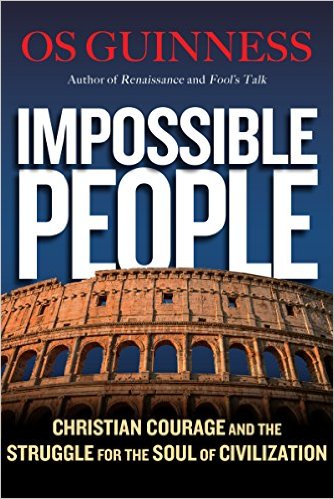 In our last Hearts & Minds post I described (for those who may not know) Os Guinness, a writer that I think is simply a “must read” – serious, mature, elegant and eloquent – who brings warning and insight and analysis and hope about our changing times. I described a few of the books he did the last few years, and described as best I could the brand new Impossible People: Christian Courage and the Struggle for the Soul of Civilization. It is published by InterVarsity Press (regularly priced at $20.00, but on sale from us for our BookNotes freinds.)
Since it is so important, and timely, here’s quick review of my review, for those that didn’t get to it:
After explaining how important Os has been to me personally, and how I admire his many books, I noted that those who know the book (or even know about the book) by James K.A. Smith entitled How (Not) to be Secular: Reading Charles Taylor will find Guinness’s Impossible People an inspiring read. Smith guides us through the dense word of world-class philosopher Charles Taylor to understand not so much what is lost in our secular age, but what has been added, a new way of being in the world and different ways of determining meaning. It is the same Taylor-esque lens, by the way, through which Robert Joustra and Alissa Wilkinson interpret the dystopian, end-of-the-world (or after-the-end-of-the-world-as-we-know-it) shows so popular these days, from the Walking Dead to Game of Thrones to Mad Men, in their extraordinary book How to Survive the Apocalypse.
Without citing Taylor, or even Smith, let alone zombies or sci-fi cylons, Guinness teaches us much about the forces of modernity, the pressure points and stresses — sometime intellectual/ ideological, but always material, including technologies, trends, customs, social arrangements, shopping patterns, laws, mores, media, entertainment, attitudes and postures, all which form habits that become what De Tocqueville called “habits of the heart.” If we think debating atheists or fighting rulings in the courts is the primary way to recovery greater good for our fraying society, if we think that faith is primarily lived out as a culture war, then we are fooling ourselves. Guinness gives us quite a bit more than Sociology 101, but this new book could serve as an overview of why mere anti-atheist apologetics or why mere “cultural engagement” or why just doing “social justice” work isn’t enough, although he is fully committed to each of those aspects of faithful discipleship and has spoken articulately about them all. Obviously, the truth of historic, orthodox faith must be nurtured in our churches as the Word of God is proclaimed with authority and relevance. As he so beautifully wrote in Renaissance (a companion volume to Impossible People) we can be people of hope as we do God’s work in God’s ways and learn to trust that Christ’s Kingdom comes less through our cultural machinations but through the mysterious work of the Spirit.
In this, Os — although terse in his rebuke of thoroughly revisionist Christian writers, pastors and church leaders who have severed ties with historic, classic orthodoxy — is hopeful and properly ecumenical. Many in various denominations and faith traditions are united in broad hope for church revitalization of the sort that leads by God’s grace to authentic cultural renewal and he is gladly appreciative of Christians of various persuasions and denominations who desire to live boldly for Christ.
Still, we have to be more savvy about how not to capitulate to the ways of living swallowing us up, almost without notice, by the forces of modernity and late modern capitalism. We have to be on guard that our enjoyment of choice and change in our shopping or on-line entertainment, for instance, doesn’t somehow color historic theological truths and spiritual practices, as if we are just shopping for beliefs that suit our wishes that day. (The customer is always right, you know, and how does thinking of ourselves continually as “consumers” effect our self image and our tendencies even as we think about our religion?) Inevitably, though, resistant as we may be, our imaginations are often too-easily captured by the ways of the world, which is why Romans 12:1-2 calls for radical non-conformity and the renewal of the mind, lived out in our real-world bodies; life as worship. Without directly linking his call in Impossible People to these texts, it is essentially a guide for living out their thrilling vision. If you count those two verses among your favorite, you need this book. If you don’t know those two pivotal verses, perhaps you really need this book!
Again, it is interesting to compare Impossible People: Christian Courage and the Struggle for the Soul of Civilization and how it pushes us (with a different style and approach) to take seriously what Jamie Smith teaches in his cultural liturgies project (the serious, meaty Desiring the Kingdom and Imagining the Kingdom and the much-discussed, nicely done You Are What You Love.) If you are reading James K.A. Smith, I think you’d benefit from Dr. Os Guinness. If you intend to read Guinness, you will surely want to add in some Jamie Smith.
Once we learn, or reconsider the urgency of resisting cultural accommodation, even gaining guidance on how to more spiritually discern the impact of the principalities and powers — Guinness cautiously draws on the work of Walter Wink (Naming the Powers, Unmasking the Powers, Engaging the Powers) to remind us of what is at stake in resisting evil’s thrust — we will have to double down in humble submission to the ways of God, learn to be people of trust and obedience, of prayer and spiritual strength. We simply must be clear about the first things of the gospel. We must become more Christ-like and courageous, humble but principled, working hard to become people who are so deeply committed that we become the impossible ones of the book’s title. We will be the sort who are unable to be bought off, not concerned with fashion or status, power or privilege. We cannot be beaten down — “unclubbable” is an old fashioned word the vivid writer George Orwell used to describe those who live with such firm resolve. Guinness’s insights are truly striking, his knowledge tremendous, his concerns important, his writing exceptional, and his new book, even when it is stern, is a blessing. It is one of the most important titles of the year.
Sorry to repeat some of what I said last time. I summarized that last BookNotes post here because I’m told some people missed it last week, and I certainly would be sad if you didn’t consider it – I worked hard to explain it all, earnestly trying to let folks know that Guinness’s book is an important work. I do hope you read my review, long as it was.
But I also review it now because it in some ways sets the table, or offers some sort of framework, for the exceptional importance of the two books I want to tell you about now.
Oh my, this is going to be fun.
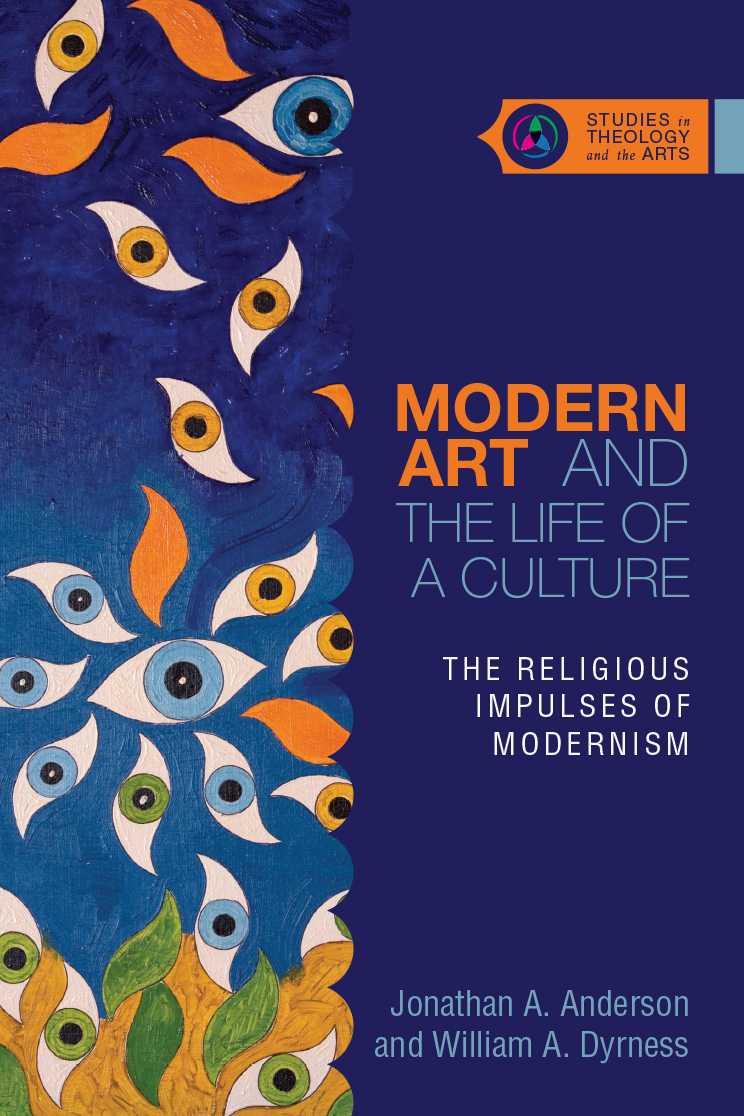
One is a long, serious, study, admittedly not for everyone, but truly a major contribution to the development of a Christian view of modern history – art history, to be precise. It is called Modern Art and the Life of a Culture: The Religious Impulses of Modernism by Jonathan Anderson & William Dyrness (IVP Academic; $24.00) and I hope you enjoy my remarks about it; I am sure you will see the connections to the big picture overview of modernity that Dr. Guinness sketches for us. I will describe it for you shortly.
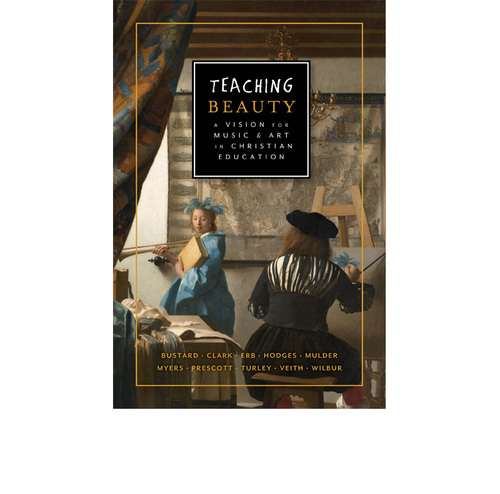
The other brand new book is relatively short (159 pages) published from a small set of talks that were given at a conference reflecting on how teachers (in Christian schools) can be more wise and faithful in teaching the fine arts. I loved reading this and am convinced it should be read beyond the obvious audience of teachers. Teaching Beauty: A Vision for Music & Art in Christian Education was edited by G. Tyler Fischer & Ned Bustard (Square Halo Books; $24.99) and is a wonderfully enjoyable book, a book that almost anyone can appreciate and which many will want to discuss, debate, and pass on to anyone who has any influence over the education of our children (including, I’d think, parents and youth workers.) It is not well known, but I hope we can change that — it deserves to be known!
The two books are both excellent in their own way, yet both very different. It seems right to mention them together.
Teaching Beauty: A Vision for Music & Art in Christian Education edited by G. Tyler Fischer & Ned Bustard (Square Halo Books) $24.99
Like all of the best books, there is a bit of a story behind Teaching Beauty. For what it is worth, these chapters were delivered live in March of 2010 – a few have a lively, chatty tone, while a few were more formal academic papers, complete with great footnotes – at a small conference hosted by the Veritas Academy, a classical Christian school in Lancaster PA. The event from which these chapters were drawn was called The Veritas Academy Fine Arts Symposium and they are great for anyone who likes to think about serious Christian cultural engagement, who enjoys books about the arts, or who likes to hear about renewal happening in educational reforms. I found myself wanting to underline sentence after sentence (and found myself provoked to think, too – why did this or that section annoy me so?) so that I didn’t want to put it down, chapter by chapter drawing me on, reading it almost in two straight sittings. It is an ideal book for many of us as it isn’t too academic or weighty (although it certainly isn’t light-weight) nor too extensive, although one surely gets one’s money’s worth with 11 chapters and a handful of useful appendices. The chapters are quite motivational and none are too long. Published by a small, craft publisher who cares deeply about all of this, I hope you’d appreciate the indie feel and purchase it soon. Who knows, maybe there is somebody you could bless by giving it away once you’ve read it.
Some of the contributors to Teaching Beauty are educators themselves and they are all well-schooled in history, philosophy, theology, the flow of ideas, the importance of virtue, and the way the gospel invites us to a nearly sacramental worldview. Classical educators are nothing if not really smart. What a great gathering of women and men this was with slightly differing views, but in agreement that the Earth is the Lord’s and we can take delight in its bounty. To a person, they value the arts as God’s good gift for God’s good world, and several cite one of my all-time favorite books, Rainbows for a Fallen World, a study of aesthetics by Calvin Seerveld.
After a very fine introductory chapter opening with a line from Dante, written by Veritas Academy Headmaster Ty Fischer (“Art as a Guide to the Sacred”) the next two chapters of Teaching Beauty are spectacular – kudos to Square Halo for bringing these essays to us. And what a treat it all is.
The first chapter is by Ken Myers. Maybe you know Ken Myers who offers the subscription  audio magazine called The Mars Hill Audio Journal. If you read Ken’s pieces that sometimes appear at his fabulous website, or listen to his ruminations with his guests – the show is produced like a set of NPR features, although a bit more intellectual than most – you will know he is very, very interested in the same concerns Os Guinness raises in the above mentioned Impossible People book; that is, how do the forms and styles and habits of a modern consumer society influence our social imaginaries? What does it mean to be “in the world but not of it” as we consider the subtle influences of our 21st century society and up-the-the-minute zeitgeist we breath in? Ken Myers knows well the work of Jamie Smith – not just his introduction to Charles Taylor (again, named above), but his vibrant You Are What You Love and “cultural liturgies” project – so many of our customers will love that about him. He appreciates the localism of Wendell Berry; again, this is thoughtful, wise, interesting stuff that I would think many of our customers would enjoy.
Myers is very concerned about how a tradition of practices is transmitted, and how the power of that is eroded in a self-centered (de-centered?) modern culture. So, his chapter on “Sustaining a Fine Arts Education in a Consumer Society” is astute and very, very important. How can we teach youngsters to submit to a way of learning and a body of wisdom that has come before if they are cut off from all notions of the past, and from any mediating structures that help them experience such embeddedness? His story tracing who studied under who – starting with an influential high school music teacher he met in his own youth all the way back to Bach!! – was thrilling, and made his point well.
Such a hard-hitting critique of consumerism isn’t what one often hears on the conservative side of evangelicalism, although his profound analysis of capitalism’s dangers aren’t the sort usually spoken by most social justice advocates, either. You see, Myers does much more than lament our materialism, our shopping, as such. He’s exploring what Marx meant when he said that “everything solid melts into air” and what Guinness exposes when he explores the impact of choice and change upon traditions and values. Ken Myers’s overview of how to inform and develop a desire for the good and the beautiful and how doing so is a counter-cultural practice (given our disinterest in history and our fast-paced embrace of the moment) is brilliant. It is important, I’d say, not just for art and music educators, but for all of us, living as we do in these times. It certainly sets the table well for the feast of papers that follows.
Myers isn’t too heady, but he is intellectually stimulating. His (brief) critique of Kant’s influence in the high-Enlightenment era – causing us to now think of aesthetics in purely subjective terms – is essential for this whole project and is a painless way to get up to speed on this topic. But he (like Guinness, and one of Guinness’s intellectual mentors, Peter Berger) knows that merely analyzing the influence of bad ideas isn’t an adequate way to analysis our current malaise (in culture, or in arts education, generally.) Myers not only exposes relativism (from Kant) but how social experience influences us less consciously. He goes after consumerism, like this:
The consumer worldview perceives the world as raw material, not a sacred trust requiring sacrificial stewardship. The consumer worldview regards culture as a series of autonomously selected commodities, not a valuable inheritance. The consumer worldview is an orientation toward creation and toward culture that promotes the modern ideal of the sovereign self.
To see culture as an inheritance which we must steward and contribute to is very different, and offers a different starting point to think about enjoyment of the arts and music, and certainly to think about arts education. Art is not fundamentally about self-expression, a view of the artistic endeavor tied up with Enlightenment views of the autonomous self, and which usually sees emotive expression as a counter to the elevation of reason in the philosophy of Rationalism.
Myers (like several other authors in the book) does a little philosophical archeology here, but he shows just how important it is by drawing on Christian Smith’s important study of what older teens believe these days, Souls in Transition: The Religious and Spiritual Lives of Emerging Adults (popularized in Kenda Creasy Dean’s Oxford University Press hardback, Almost Christian: What the Faith of Our Teenagers Is Telling the American Church.) Smith and Dean tell us about how older teens, even those involved in churches, are so thoroughly modern, with little language to talk about truth or goodness or beauty (or even God, for that matter.) Our faith communities have, almost across the board of denominations, their research shows, failed our youth by not successfully transmitting to them giving strong foundations for thinking about and talking about faith and life. The erosion of generation to generation traditions is painfully obvious, and it matters.
It is an arrogant assumption to think that history doesn’t matter, that old stuff can’t be right, the boundaries offered by Biblical truth represses kids, that classic formulations are hindrances to self expression, as if that is the key to the happy, good life. Cue Frank Sinatra’s “I Did It My Way” or his pal Sammy Davis Jr’s “I Gotta Be Me” right about here, or for that matters, John Lennon’s rocking “Whatever Gets You Through the Night” or any number of hits playing on the radio this very week.
But this is the way young adults have developed their view of God and culture and purpose and meaning, drifting feebly because for whatever reasons, even good churches haven’t been able to give them strong words to convey a vision of God and the good life other than what Smith calls “moralistic therapeutic deism” or strong enough practices to deeply shape the desires of their hearts.
Ken Myers moves from a succinct but profound critique of secularizing modernity to a vivid Christian vision where creation is a gratuitous epiphany, and submission to the real leads us away from individualism and gnosticism and shallow, feel-good religiosity; his great chapter in Teaching Beauty shows how learning the very forms and structures and ways of ordering life inspired by music and art can enliven us as humans and, of course, deepen us as Christians.
Ken’s reading is wide and sophisticated and his comments so blessedly well-informed that it is almost worth the price of the book to read this one chapter. He moves adeptly from the Canadian philosopher George Grant to Jesuit poet Gerard Manley Hopkins, from Reformed theologian Peter Leithart to the former Archbishop of Canterbury Rowan Williams, from the Orthodox historian Jaroslav Pelikan to Orthodox scholar David Bentley Hart, from the lively cultural historian Jackson Lears to the dense, dense, Colin Gunton.
Here Myers cites and tells about Josef Pieper, to help us get at a way of seeing, even a way of knowing, that is deeply human and more than rationalistic. (That he has had Esther Meek and Steve Garber on his audio journal talking about this covenantal way of knowing and appreciates the work of philosopher of science Michael Polanyi doesn’t hurt, either. He’s so good at this…)
The Catholic philosopher Josef Pieper has a little book of essays called Only the Lover Sings: Art and Contemplation, in which he observes that “to contemplate means first of all to see – and not to think.” This kind of seeing is receptive and open, not just accurate; as practiced by artists, it is not unlike the tradition of contemplative prayer, and is thus another link between worship and the arts.
Despite this amazingly rich way of thinking about knowing and seeing and the task of the artist, I have to say, for what it is worth, that Ken may not be as resistant to the influences of modernity as he thinks he is, and his assumptions about aesthetics might be refined, made more deeply Christian, by adopting the ways in which authors like Calvin Seerveld and Nicholas Wolterstorff, have critiqued the conventional notion of beauty.
(Okay, I’m on a roll, so might I 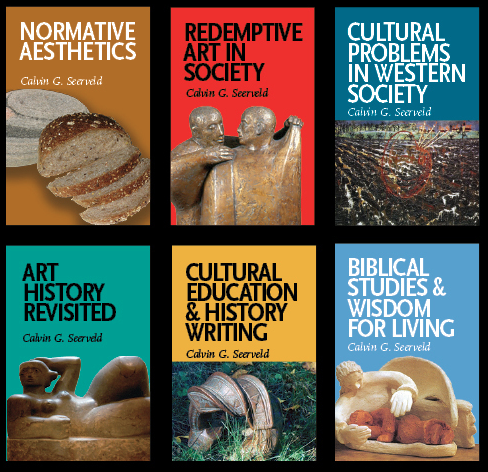 suggest, if you are seriously thinking and teaching about all this — like every author in this book, that is — you should at least read some of the key pieces in Calvin Seerveld’s Normative Aesthetics [Dordt College Press; $21.00.]) I would read Ken Myers regardless, but besides his seemingly unreformed adaptation of “beauty” as a norm for the arts, there is something that some might call elitist hovering around all this. I guess the classical schools educators might think this a cheap shot, and I don’t mean it as such.
Such anti-modern assumptions, and the talk about the virtue of “the beautiful” leading to elitist (or, at least, high-culture) approaches, are, in my view, a nearly fatal flaw of the entire classical education movement, no matter how fastidious they are about Reformed theology and proper doctrine; they are too religiously loyal to (pagan) Greek thought — the essays here (many of which share this assumption about the value of “the good, the true and the beautiful” as a faithful umbrella under which to do the Lord’s work) are anti-modernist, happily, but seem nonplussed by their own accommodation to sources and ways of thinking that are, in others ways, perhaps also anti-Biblical.
For instance, I think there is much value in John Mason Hodge’s piece (“Beauty in Music: Inspiration and Excellence”) and commend it to you. I would be glad for anyone saying this sort of thing in any school, Christian or otherwise, as it is so remarkably thoughtful and interesting and important, to raise the stakes of why we should think about music in our culture. Further he is not only a respected scholar but is an experienced symphonic conductor and an esteemed classical musician. Having said that, I still fretted about his drawing on Plato as much as he did, affirming Greek notions of order and harmony – where is that in the Bible, really? – and drawing on peculiar thinkers like Pythagoras and “the music of the spheres.” There’s nothing wrong with studying “The Greek Muses” although it is odd that an evangelical would cite Exodus 31:2 in perfunctory passing, but spend much more energy singing the praises of Calloipe, Clio, Erato, Euterpe and the other offspring of the evil Zeus. What’s going on here? Why does he simply assert the necessity of “unity and diversity” in any good art piece? I actually really like where Hodges ended up with his chapter – writing about a sacramental worldview and the purpose of music (even if I disapprove of his wanting to “relate” matter and spirit, a huge concession to pagan thought which ought to be denounced.) Read with critical discernment, this stuff is stimulating and well worth pondering.
(And, an important aside: as we think about the very commonly assumed distinctions between high and low culture, I’d suggest a careful study of the groundbreaking, historically informed and deeply insightful Pop Culture Wars: Religion and the Role of Entertainment in American Life by William D. Romanowski of Calvin College [Wipf & Stock; $45.00.])
Ken Myers himself isn’t involved in the “classical education” movement, and says so, and it is to their credit that this group of classical school teachers brought him to Lancaster to kick off their days of reflection. Still, he’s got this fascinating (and not unimportant) interest in how the harmony and orderedness of art and music reflects the nature of God, a line of thinking that has been rejected by many reformational philosophers of aesthetics.
For instance, Myers’s cites David Bentley Hart, writing beautifully about the infinite love experienced by the members of the Trinity. Myers writes,
Hart goes on to suggest that the relationships among the members of the Trinity are not only beautiful, they are beautiful in a way that has analogies with our experience of music…. If Hart is right, then the presence of music in our worship and in our lives is witness to a deep reality of difference and unity in Creation, which itself has its sources in the inner life of the Triune God.
I’m not sure seeing art as pointing us to the attributes of God, rather than the creation itself, is the most faithful way to think about the human calling of doing art or the point of experiencing it. But that’s an in-house debate about aesthetic theory and I suppose above my own pay grade. But the practical upshot, for Myers is right on:
Art provides us with ways of perceiving reality aright, although not all art does this, or does it well. And not all of us have allowed our imaginations to be disciplined to encourage that perception.
And that is a major theme of this great little Square Halo book. In almost all of the essays we have ideas about how schooling can discipline us to perceive reality aright, of how to help shape desire, bending it towards the good, hints of how education can inform and inspire and transform us, how our dispositions can be reformed (what Jamie Smith calls “the recalibration of the heart”) so that we have new tastes, not just more data, more wisdom, not just more information. Indeed, one great chapter is on the “aesthetics of classical education” by Stephen Richard Turley is called “Redeeming the Senses.” Dr. Turley is a teacher of Theology, Greek, and Rhetoric at Tall Oaks Classical School in Delaware and a professor of Fine Arts at Eastern University. Wow.
So here is what I think: even if I don’t quite appreciate all of the classical fetish with Greco-Roman ways (even when they dress it up with Calvin and Chesterton and quote The Abolition of Man and their Patron Saint Dorothy Sayers and her trivium and love for Latin) and even though I think they are woefully wrong in not adequately seeing “common grace” in the popular culture of rock and pop and rap, they are mostly right in insisting that there is much, much work to be done in thinking faithfully about serious arts education In our schools; they are right in grounding that project not in Romantic self-expression, but in submitting to good traditions and virtuous insights of the past. I cannot say how glad I am that this Veritas Symposium’s reflections are now available for all of us, maybe especially those of us not connected to the classical schooling movement, who might otherwise not get to read this kind of stuff very often. As I regularly say, agree or not with every sentence, I heartily commend this book.
The blessedness of this (radical?) way of thinking about good art and teaching it well (and how different it is from more commonly used approaches by too hip art teachers trying their best, untrained in aesthetics, or even art history, as they are) was illustrated in a story told in Gene Edward Veith’s fantastic chapter (another chapter that, even if I quibble a tiny bit, was worth reading twice!)
Veith tells of a Lutheran school in Casper Wyoming where five years olds were being shown and taught about great art. (Of course, most art programs just give little ones paste and crayons and allow them to mess around, which is lovely and fun and valuable in many ways, but a far cry from serious arts education.) During a field trip to the local art museum, the children were appalled by the museum’s children’s exhibit, that – in some goofy effort to make art appealing to kids – had the Mona Lisa with a cowboy hat. The Lutheran kids were indignant. “She wasn’t a cowgirl!” they exclaimed to the docent. “She was painted by Leonard da Vinci during the Renaissance!”
Veith continued,
Throughout the tour, the children were picking up the styles and genres they were seeing: “That’s impressionism!” “Look at that landscape!”
The docent was astonished at the level of artistic sophistication she saw in these five-year olds. She concluded that since she was not that conversant with art history, being a product of progressive education, some of these little kids knew more about art than she did.
Amazing.
 The manager of Square Halo Books, Ned Bustard, has a chapter in here that is fantastic. With a lighter, clever tone, Ned reminded the conference participants that as they help children and youth come to a deeper appreciate of art and music in God’s world, it could lead to trouble; that is, it is hard to make a living as an artist in our culture, and if even a few respond to a holy sense of vocation, being called into the world of the arts, they must be prepared to be perceived as not as serious as those with more “useful” careers. It is legendary how the arts are viewed as a waste (professionally speaking a least) and yet, Bustard playfully twists that a bit, asking if maybe it is so: there really is a gratuitous, wastefulness to art – it doesn’t do – anything, really. He draws on Seerveld and tells about interviews with artists and quotes those who have written in books he has edited such as It Was Good: Making Art to the Glory of God and It Was Good: Making Music to the Glory of God. Who knew that Ned started out as a business major and that Francis Schaeffer (Art and the Bible) and Madeline L’Engle (Walking on Water: Reflections on Faith and Art) “saved not just my art, but also my soul. Art and the Bible gave me a theology that made room for art and Walking on Water filled that room near to bursting.” Indeed, there are many wastes we cherish.
I love how Ned weaves together his personal story, his friendship with art historian James Romaine and tells how he has strolled through museums (with his children in tow) with esteemed artists such as Ed Knippers or Mako Fujimura. And, how he cites N.T. Wright, from Simply Christian,
The arts are not pretty but irrelevant bits around the border of reality. There are highways into the center of a reality that cannot be glimpsed, let alone grasped, any other way. The present world is good, but broken and in any case incomplete; art of all kinds enables us to understand that paradox in its many dimensions.
Ned’s chapter not only makes a delightful case for “knowing beauty” and “art and the kingdom” but he shares the “poetic underpinnings” of their own homeschooling efforts, bringing an awareness of aesthetics and the arts to their own educational work. (Ned, you should know, has recently created for Veritas Press a major art curriculum for children, which we will be reviewing more thoroughly soon.) You will love his call to “put beauty into practice” and his honest report of how he and Leslie did the best they could with the resources they had. Taking time to pursue these things sometimes seems (again) less productive, but after reading this chapter, you, too, will want to evaluate how you can deepen your experience with the aesthetic dimension of daily life, and how you can allow art to play a more intentional part of your life. His practical pointers will make the task seem approachable, and fun.
Bustard’s isn’t the only practical chapter, even if all are framed by a very thoughtful vision of deeper things. I loved Karen Mulder’s broad and brilliant chapter, “Balancing Binaries: Teaching Appreciation in the Visual Arts” which named many authors and books indicating her remarkably fluent familiarity with the best of Christian considerations, Catholic, Protestant, evangelical and beyond. Her visionary manifesto was practical in that it invited us to continue the conversation, join professional associations, find a cohort, and nurture others wisely to deepen the general movement of serious Christians in the real world of arts. My hat is off to her! David Erb, whose own Master’s was from the Westminster College Choir at Princeton,and whose PhD is in Choral Conducting from the University of Wisconsin, is now involved in the choral community in a university town, has a piece called “Sing with Understanding, Play Skillfully: Musical Literacy for All the Saints.” Speaking of practical, there’s a useful appendix called “How to Hire a Fine Arts Teacher” (one pointer: have him or her make a pledge to be friends with the math teacher) and a set of charts offering curricular objectives for various ages. What a great little resource for or parents or teachers or church educators.
But, again, I hope I am clear in saying this is not just a book for those working in classical Christian schools, or even for those who are working in Christian schools. In fact, it’s not even just for those who are in schools. Parents, choir-directors, church school teachers, Christian ed professionals all will all be informed and aided in their efforts to think well about shaping the lives of those God has given them to influence. Anybody who wants to learn more – maybe not having been schooled in aesthetics all (which, as they document, maybe include even art teachers and many with MFA degrees! – will benefit from listening in to these thinkers and educators about how to teach music and art within a context of learning to love goodness, truth, and beauty.
I truly respect Ken Meyers, and am so excited to see his chapter here. I mentioned that I read Gene Veith’s chapter twice, and it is great. I loved Ned’s chapter – a lot, actually – and I have admired Karen Mulder for years and her piece is exceptionally helpful, a great primer.
I think, though, the chapter that thrilled me most was by Theodore Prescott, a legendary artist and art educator, the former head of the excellent art department at nearby Messiah College. Ted became a Christian as a college age student and a very young artist. He has thought as deeply as almost anyone I know about aesthetics and creativity and art and beauty, but he has done so as a working artist and a college teacher and mentor. He has been a significant leader of CIVA (Christians in the Visual Arts) and has produced much good art, good scholarship, and born fruit in releasing many serious young artists and art teachers into the world. I have enjoyed hearing him speak on occasion and respect him immensely.
His chapter cuts to the chase: “Jerusalem, Athens, and the Education of Young Artists.” I hope you get his allusion to the early church leader, Tertullian, who, even then, pondered deeply the relationship between the Judeo-Christian community (Jerusalem) and the pagan centers of thought, power, and culture (Athens.) This is the question for those of us in mainline denominational circles who seem easily accommodated to the ways of the status quo society in which they are so established. It is the question for the emerging church folks, who seem quite eager to accommodate themselves (albeit missionally) to the hip trends of the postmodern counterculture. It is also the question for the classical educators who seem so unashamed to root their thinking so uncritically in the school of Athens.
But that is my own sense of why Ted’s piece is important – it invites us to ask how to navigate all these complex waters. His presentation at the conference must have been inspiring; the chapter isn’t all that philosophical and not at all pedantic. Ted is a deeply Christian educator and offers great, mature insight from years of experience helping church kids learn to think more deeply about their calling into the vocation of the arts. It is as concise a manifesto for developing a Christian view of the arts as I’ve seen, and it is a marvelous, deep, joy to be able to commend it to you.
The last, short, chapter of Teaching Beauty: A Vision for Music and Art in Christian Education is plain and remarkable and needs to be read and discussed. Matthew L. Clark is a woodcutter and printmaker and his chapter is called “Art and Charity.” It is a very helpful call to be more generous in our appreciation of art and artists (especially modern art.) He even uses the Bible word “submission” as a principle which contrasts with what some literary authors have called the cynical “hermeneutic of suspicion.” Matt is a very good musician and a very talent artist himself; I value his contribution here and the Symposium and the book editors for arranging it. This consideration is a good way to end, on a note not of criticism or concern, or even of zealous cultural transformation, but simply on openness and kindness.
It is charitable to believe the best about someone and something they have made until you have reasons to believe otherwise. Some artwork is difficult and perhaps it is not immediately accessible. That should not be an insurmountable barrier to appreciation. Many good things are, at first, inaccessible to us. It takes time to develop a taste and to understand why a thing is held in such high regard by so many. It may turn out that many people are simply wrong. Of course, it may turn out that your initial reaction is the one that needs reconsideration.
There is more here. There is a document offered as an appendix which they have called the Lancaster Declaration on Classical Christian Education and the Arts. That their small central Pennsylvania symposium in 2010 drafted this statement may not strike you as all that important, or interesting. (What even is classical education, you may be asking?) But I want to sound my bookseller’s/educator’s note again: this is a very rich and stimulating, generative document, curious as it may be. It would be a fun thing to talk about if you are an art or music major in college (or if you are a campus minister serving students in art or music educational programs.) It would be a fabulous to talk about it with friends over coffee. Pastors, youth leaders, anyone wanting to influence others to think about the good, the true, and the beautiful, need to (re)visit these themes from time to time, and this Declaration offers it succinctly. This bold set of assertion and guidelines for practices would be a great resource to use to generate on-going conversation in your family, fellowship, or church community. And certainly, if you are connected to a religious school, it is simply a must.
Thanks be to God for these dedicated folks who put these papers together and called this gathering. Thanks be to God for Square Halo, for investing their own finances in order to publish a limited number of this great little book, Teaching Beauty: A Vision for Music and Art in Christian Education. Order it today!
Modern Art and the Life of a Culture: The Religious Impulses of Modernism by Jonathan Anderson & William Dyrness (IVP Academic; $24.00) is nothing short of magisterial, a work years in the making, and I am thrilled to tell you about it, even if I realize not everyone will buy it.
Interestingly, there is a connection to the aforementioned Os Guinness. Modern Art and the Life… begins with a fabulous, fabulous chapter in tribute to Dr. Hans Rookmaaker, a person who I believe was a friend of Os Guinness. Rookmaaker was a Dutch art historian (who came to Christian faith in a Nazi concentration camp, by the way, led to salvation by a fellow prisoner, a Dutch philosopher.) His impact at L’Abri and elsewhere — offering lectures on American blues and jazz, knowing much about modern art, offering the reformational philosophy of Herman Dooyeweerd to other scholars — is legendary. His small book Art Needs No Justification is in print again, and is a vital example of his impact among aspiring Christian artists at the end of the 20th century. Professor Rookmaaker had a certain pessimistic view of the Enlightenment and consequently a certain critique of modernity (drawing significantly from Abraham Kuyper, who was seriously opposed to the French Revolution) and it informed his particular interpretation of our the story of the West that retains much, much insight.
Grounded in that profound, critical assessment of the eroding forces of the Enlightenment, and the intellectual idolatry pervasive to secular rationalism — think only for yourself said Kant, smash the infamous (Christian church), said Voltaire, tip your hat to no man, Whitman later 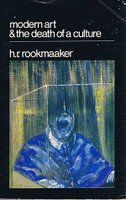 preached — Rookmaaker then told the story about his own love for the arts, even the very contemporary arts of his mid-twentieth century world. His book Modern Art and the Death of a Culture remains a very important work for many, many of my peers and heroes. I do recall, before understanding much of it (and understanding how much of it was misunderstood!) a college pal startling me by throwing it across the room. (You know who you are!) Alas, it ends up that Rookmaaker was a cultural and intellectual genius and a tireless encourager to those who wanted to “engage culture” before that was a phrase, but he failed in some critical points in his analysis of the spirit of much modern art.
See the difference in the title, his, and the new one? This newly released Modern Art and the Life of a Culture changes one word and it means by that to offer a fully different interpretive approach, shaped by a very different story and different sorts of research that has been done in the nearly fifty years since Rookmaaker first wrote. Bill Dyrness means no disrespect; he studied under Rookmaaker, in fact, and loved the man. But this is a book that needed to be written, in part so that a new generation of thoughtful Christian artists could grapple with the stuff Rookmaaker brought to us, and so that all of us could move past his errors or mis-readings.
To spell it out in detail would take me longer than you most likely would have patience for, here, but the oversimplified version is that Rookmaaker, as much as he loved modern art, jazz, and more, thought that contemporary art forms in the spirit of modernism were, perhaps trickling down from Romanticism, which reacted to Rationalism, basically were portraying a world bereft of meaning. He was understandably pessimistic about the “line of despair” as Schaeffer put it. Were the painters such as Bacon and the traumatized scream that was on the cover portraying wisely (through tears, even as his friend Francis Schaeffer put it) the loss of meaning in our existential time of crisis? Or were they evangelizing for that world, promoting a worldview that was nihilistic and ultimately harmful? Was it coincidence that a number of modern artists (Jackson Pollack?) took their own lives? How did atonal John Cage fit into that world? Does art reflect or shape culture? Is it fruitful to even explore the “ideas” or “message” of a painting or sculpture?
H. R. Rookmaaker wasn’t simplistically against modern art — it would be almost intentionally dishonest for anyone to say that — nor did he reduce art to merely conduits of ideas, but he exposed what he thought was the ethos of that world, the spirit of the times, captured in full color by Rothko and Dali and Warhol and Kandinsky and Hopper and Picasso.
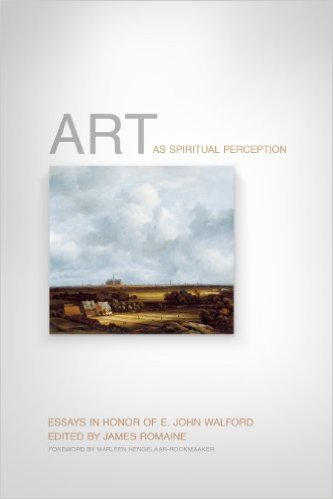
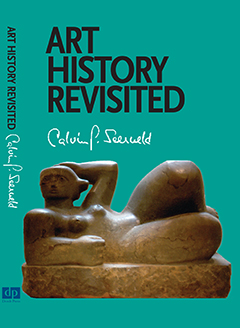 For the record, one should know a bit about the assumptions and methodologies of Rookmaaker’s approach, the orbit in which he traveled, and the legacy of some of his students. There is a very impressive example of such found in the spectacular, lavish anthology, Art as Spiritual Perception: Essays in Honor of E. John Walford, edited by James Romaine, with a foreword by Hans Rookmaaker’s active, art historian daughter, Marleen Hengelaar-Rookmaaker (Crossway; $40.00, which I reviewed here.) For a similarly impressive approach, drawing on similar Dutch philosophical roots, see this breathtaking collection of art history essays and articles by
 Calvin Seerveld, Art History Revisited (Dordt College Press; $20.00, which I announced, here.)
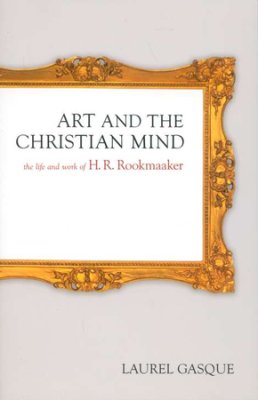
For a more accessible introduction to the life and work of Rookmaaker himself, see Art and the Christian Mind: The Life and Work of H.R. Rookmaaker by Laurel Gasque (Crossway; $16.99.)
We, by the way, have several of the major hardbacks in the Complete Works of Hans Rookmaaker left in stock. Write to us if you want to know more!
Despite the value of his evaluative approach, despite his prophetic warning about the loss of meaning amidst a secularizing modernity — is this were Guinness gets some of his fire for his cultural critique? — maybe something else is going on, and maybe Mr. Rookmaaker’s art historical method lead him somewhat astray. I think that many in this important world of Christian art historians, and those of us who read them, and the artists who take courage and inspiration from them will agree, it is time for a major reconsideration.
As Nicholas Wolterstorff puts it,
This is a book we have needed for a long time. The standard story of modern art is that it is the art of secularism and pervaded by nihilism. Anderson and Dyrness tell a very different story. Only those who refuse to read it can ever again think of modern art in the old way.
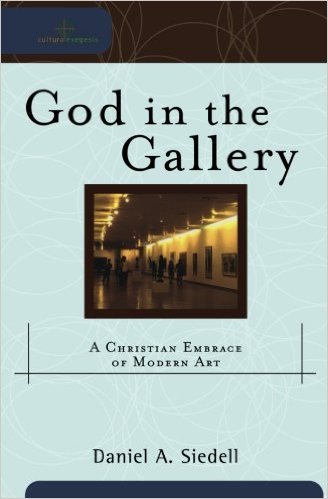
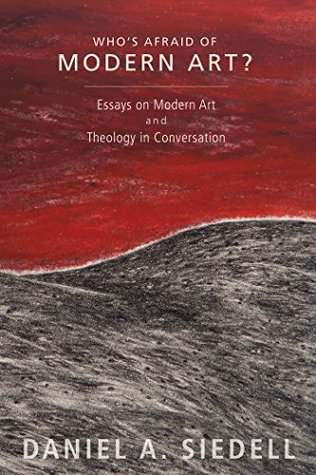 I await better reviews by those more qualified than myself; there have been other scholars and faith-based artists working on this for years, so I know there are others who will be taking this book very seriously. Dan Siedell has written importantly on this theme, offering his own critique of Rookmaaker and his heirs. See his very important God in the Gallery: A Christian Embrace of Modern Art (Baker; $25.00) and his 2015 collection of essays Who’s Afraid of Modern Art? (Cascade; $23.00.) Siedell wrote an afterword to Modern Art and the Life of a Culture called “So What?” which I actually read right away. Nicely done!
I am glad for much of the tone and approach of this book, as much as I’ve gleaned so far, at least. As associate professor of faith and culture at Trinity International University Taylor Worley says this is “more than a response to the original, Modern Art and the Life of a Culture is an invaluable companion to Rookmaaker.” It pushes back, yes, but it builds upon the major contribution that controversial 1970 volume made.
I also like that while Dyrness is a theologian and philosopher of culture (he has written widely in the arts) his co-author Jonathan Anderson is a practicing artist.
The introduction called “Religion and the Discourse of Modernism.” is remarkably interesting — a philosophically astute overview of many of the things many of us care deeply about currently — secularity and modernity, meaning and the common good, cultural engagement and more. Excellent.
The next major chapter is worth the price of the book to get a bit of the Rookmaaker bio, a survey of his most famous book and its strengths and weaknesses. I think anyone interested in the faith and art conversation these days needs to read it, and I am glad for their balance and grace throughout.
The rest of the book traces the history of modern art in the following chapters, under the rubric of “geographies, histories and encounters.” And there are encounters aplenty – even full color artwork:
Chapter 3 – France, Britain and the Sacramental Image
Chapter 4 – Germany, Holland and Northern Romantic Theology
Chapter 5 – Russian Icons, Dada Liturgies and Rumors of Nihilism
Chapter 6 – North America and the Expressive Image
Chapter 7 – North America in the Age of Mass-Media
This is a book that should be taken seriously. Modern Art and the Life of a Culture: The Religious Impulses of Modernism is the first major release in highly anticipated new series by IVP Academic, “Studies in Theology and the Arts.
Their advisory board is a who’s who in this field, with the likes of Jeremy Begbie, Nic Wolterstorff, Linda Stratford, Judith Wolfe, Makoto Fujimura, Ben Quash and others.
The second volume is due in the Fall of 2016, entitled The Faithful Artist by Cameron J. Anderson, the current President of CIVA. You can pre-order it from us, also, of course, at a discounted price. Just use the secure order form link below.
BookNotes
DISCOUNT
ANY ITEM MENTIONED
10% off
order here
takes you to the secure Hearts & Minds order form page
just tell us what you want
inquire here
if you have questions or need more information
just ask us what you want to know
Hearts & Minds 234 East Main Street Dallastown, PA 17313 717-246-3333
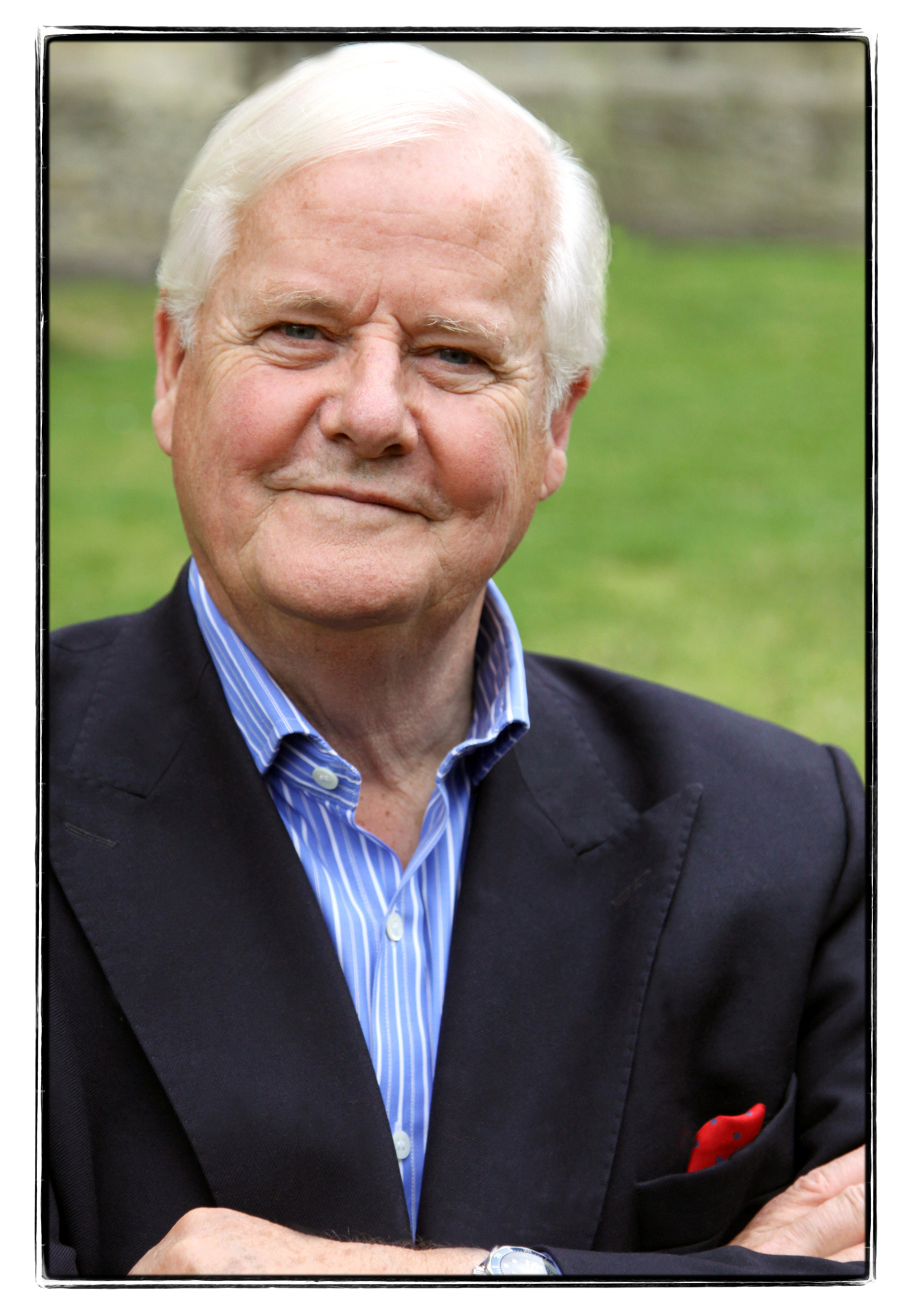 over the last four decades he has done seminal, stimulating, beautifully-written, challenging, books that combine Biblical faith and sociological analysis with glorious erudition that have created for him not only a huge following of fans (folks like me who would read any book he wrote on any topic) but also a major group of people who read him seriously, if critically, wanting to spend adequate time grappling with his mature observations. Agree or not, they know he is a major contributor to religious and cultural discourse in our day and know they should have read his work.
 I still think his book The Call:
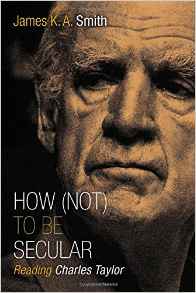 philosophical work that if Smith’s intro to reading Charles Taylor — called How (Not) To Be Secular: Reading Charles Taylor (Eerdmans; $16.00) — is a bit much, there is one brilliant chapter which summarizes Taylor in Tim Keller’s small book called Preaching: Communicating Faith in an Age of Skepticism (Viking; $19.95) insisting as he does that familiarity with Taylor is crucial for relevant teaching and preaching a proclamation to those living at the heart of our modern age.) At any rate, Taylor’s thesis about the seemingly disenchanted era in which we live – the quandary of finding meaning and purpose within the still-God-haunted post Christian secular age – runs in some ways parallel to Guinness’s, and reading Guinness (while serious and sophisticated) will be an easier and more engaging experience for many than Taylor or even Smith.
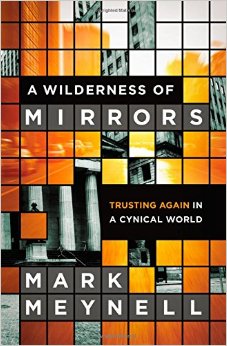 A Wilderness of Mirrors: Trusting Again in a Cynical World Mark Meynell (Zondervan) $18.99 This is an amazingly rich, thoughtful, interesting book by a young writer that deserves your attention. I’ve mentioned it before and it came to mind while reading Guinness. Here is how reviewer described it:
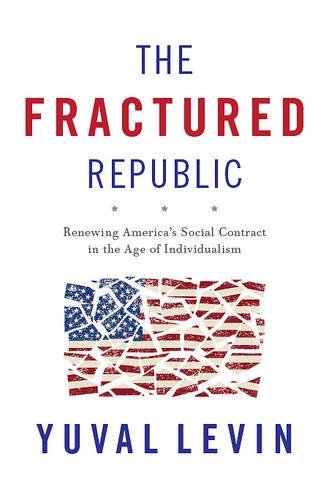 The Fractured Republic: Renewing America’s Social Contract in an Age of Individualism Yuval Levin (Basic Books) $27.50 I hope that you have seen this reviewed and cited on the internet or in significant journals — I cannot wait to read this yet this summer as it has been promoted across the political spectrum as substantive and thoughtful. Left-leaning Jonathan Haidt (The Righteous Mind) says “this is the book American most needs in 2016” and Paul Ryan says “Yuval Levin is one of the most insightful and original thinkers of our time.” Weaknesses? Strengths? Partisanship? We are dangerously fragmented in this “age of individualism” which is to say Guinness’s call to radically rethink our embeddedness in the ways of modernity are played out here. George Packer says of his humane and good writing that “His work gives the sense that our future needn’t be as grimly divided and dysfunctional as the present seems.” Don’t skip Guinness’s bigger picture for this, but this will make even that much more sense once you’ve gotten Guinness’s work in view.
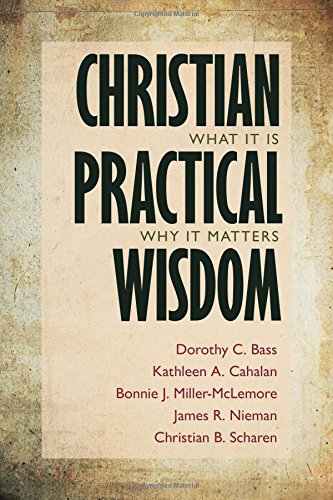 Christian Practical Wisdom: What It Is, Why It Matters Dorothy Bass et al (Eerdmans) $30.00 You may be surprised to see this listed here, but I think their semi-scholarly study of the role of wisdom in modern life will resonate with those interested in Guinness’s theme that our battle is not only against the ideas of modernism but the patterns of modernity. Here, they resist the abstraction of the modern world — the very way we’ve been taught to think about knowing — and restore insights about living wisely. Many of their grand, serious essays are about “the modern world” and how embodying daily practices discerning in light of spiritual truths from the Bible can offer restored and redemptive counter-voices to the way things are. As I’ve explained before, these pieces are written beautifully by astute theological educators from mainline circles and I think it is generative in inviting us to (as Mary Boys says of it) “ponder deeply and live with great intentionality…”
 How to Survive the Apocalypse: Zombies, Cylons, Faith, and Politics at the End of the World Robert Joustra & Alissa Wilkinson (Eerdmans) $16.00 Okay, maybe you want to follow up Guinness’s nearly magisterial overview of secularization, the forces of modernity, and the call to live faithfully within but sometimes against the culture, discerningly and bravely. Want to follow Christ even in the details of life, like, say, your entertainment? Do you watch The Walking Dead or Game of Thrones or House of Cards? Did you like the Academy Award winning Her? As I have said before, these two brilliant young social critics offer half of their remarkable book as an introduction to Charles Taylor (and yes, they draw on James K.A. Smith.) The second half wonders how we can be impossible people, if you will — resolute as followers of King Jesus, people of grace and wisdom, caring about the common good — even as the culture is awash in apocalyptic pessimism and anti-heroes. As they say in the first paragraph: “The world is going to hell. Just turn on the television — no, not the news. Flip over to the prestige dramas and sci-fi epics and political dramas.” But why? And how then shall we live? Read Guinness, please. But read this, too. It is serious and seriously fun.
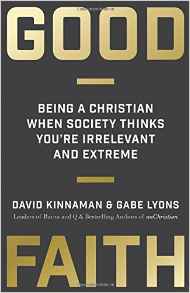 Good Faith: Being a Christian When Society Thinks You’re Irrelevant and Extreme David Kinnaman & Gabe Lyons (Baker Books) $19.99 I have announced this previously and mentioned it often. It seems perfect to list here, as a read for those who aren’t up to the big story stuff as Guinness walks us through the rise of modernity and the forces of liquid modernity as it is sometimes now called. His call to be uncompromising and diligent in our faithfulness is powerful and sophisticated but it is a bit heady. This quite readable book follows on similar tracks, inviting us to know the research (developed by the respected Barna Group) and consider how to respond to the increasing hostility about faith from the progressive secularist movement and others who, it seems, are more and more convinced that faith is just irrelevant, at best, and extremist dangerous, at worst. Guinness’s book is more profound — Gabe Lyon’s himself has a rave blurb on Impossible People — but this “cuts to the chase” as they say. It speaks (as human rights activist Christine Caine puts it) “prophetically to the church by diagnosing our condition and prescribing a course of powerful treatment.” Those with conventional Christian views or connections to churches are no longer part of the majority of the West. How we live out “good faith” in our generation will make a huge difference for the future of America. It is “an accessible guide” as one sharp reviewer put it. Again, agree or not with all their assumptions and conclusions, it is a very helpful, practical, useful resource to learn from and to talk about.

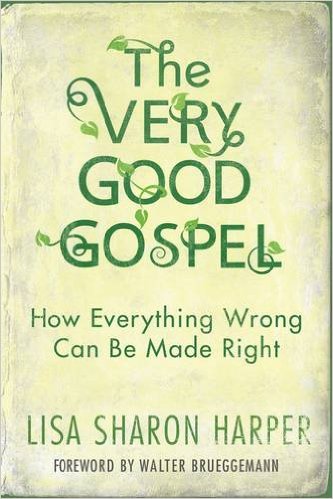 Harper’s fine introduction to the social implications of gospel reconciliation in her marvelous, new The Very Good Gospel, published by the evangelical publishing house Waterbrook; $19.99. Did you see our review of it a few weeks back, and recall that we’re hosting her out in Pittsburgh on July 26th? More on that later, but, again, it illustrates my point.)
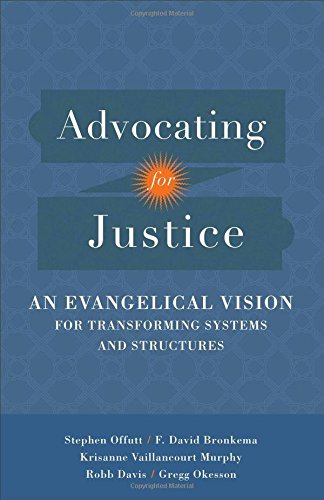 Advocating for Justice: An Evangelical Vision for Transforming Systems and Structures Stephen Offutt, F. David Bronkema, Krisanne Vaillancourt Murphy, Robb Davis, Gregg Okesson (Baker Academic) $22.99 sale price = $20.69 Well, again, that a book like this even exists – with such a blunt title and such serious content — and is promoted as a major release from an evangelical publishing house is further indication that something is afoot in our times. That Stephan Bauman (President of World Relief and author of the inspiring Possible about how we can make a difference in the world) calls it “a watershed book” is perhaps another way of noting how important it is. Wow.
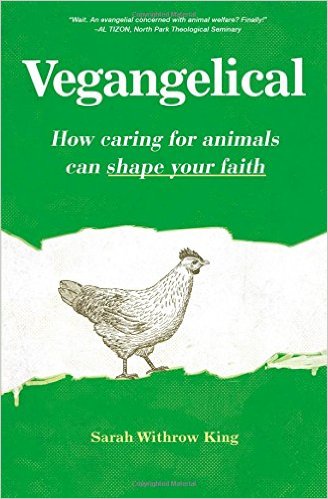 Vegangelical: How Caring for Animals Can Shape Your Faith Sarah Withrow King (Zondervan) $16.99 sale price = $15.29 Sarah King starts off this short book telling about her growing up with good family devotions, becoming born again, the purity ring she wore as a younger Christian girl, and her wholesome recollections of being raised in a Godly, evangelical Christian family. She’s been a vegan for years, has been an animal rights activist as an evangelical (talking about Christ with her colleagues in PETA) and now offers this, her second book on the topic — published by perhaps the quintessential evangelical publisher. Do I really need to say “I rest my case” regarding the shifts within evangelical publishing?

 the Common Good: How Books Help Our Churches and Neighborhoods Flourish – I asked you to re-send my reflections, and almost begged you to buy the book. If you haven’t yet read that review I hope you do as it shared much of dearest things to our hearts (the role of reading, learning, Kingdom vision and missional outreach) and explained why Reading for… is such a great book to enjoy and from which to gain missional energy and vision and quite a bit of helpful insight. I don’t mind featuring a quintessentially Hearts & Minds-ish column for a while, hoping many read it. I think it’s one you should save and send, discuss and hopefully act upon. That is, buy the book!

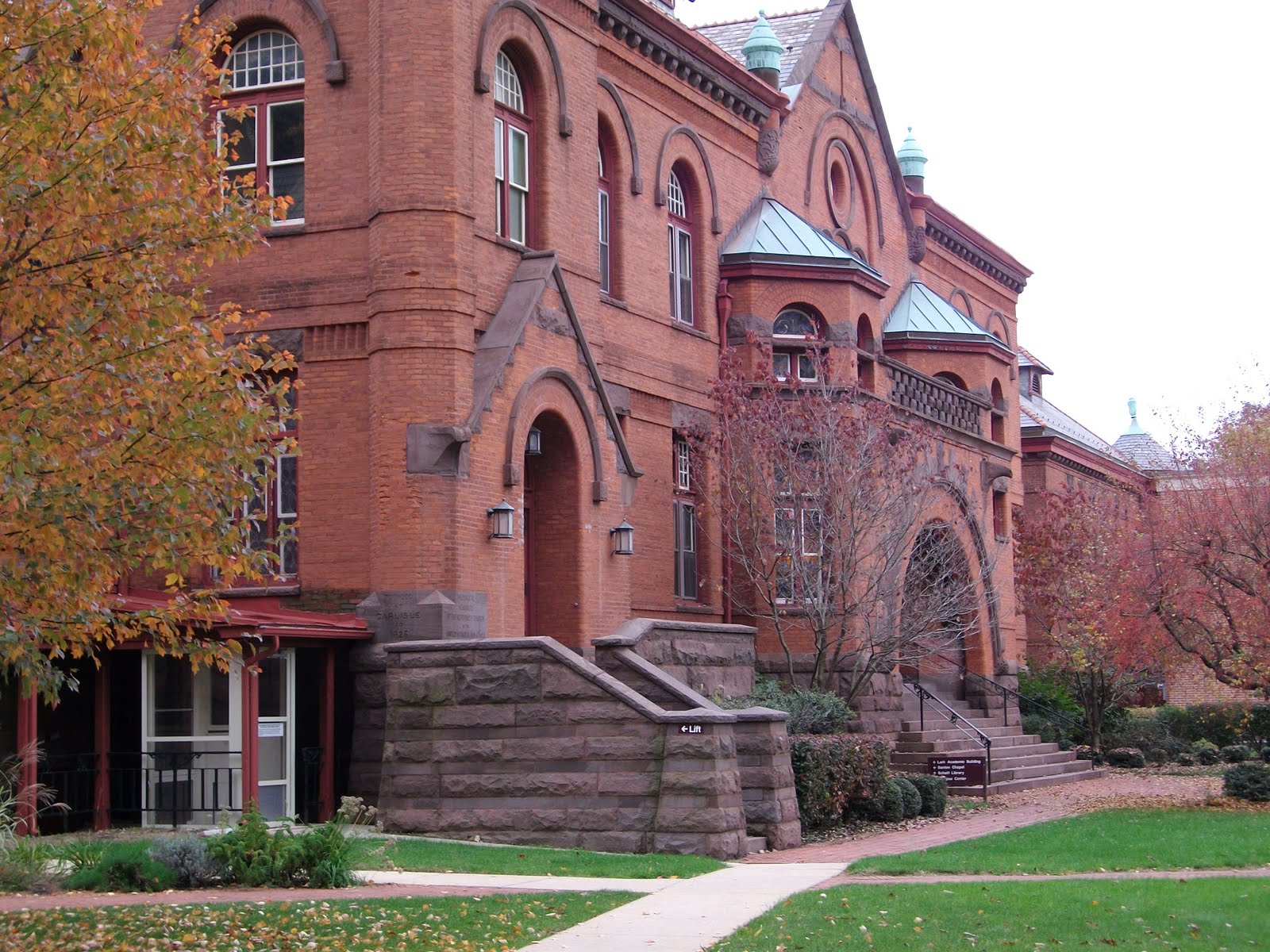 became the now-Ivy League Franklin & Marshall, and the beautiful, small, UCC seminary across the street. Suffice it to say that these “high Eucharistic Calvinists” are of interest to UCC friends seeking substantive theological discourse and renewal within their own denomination, and that there is a growing interest within conservative PCA (Presbyterian Church of America) folks. To have Dr. Annette Aubert from Westminster Theological Seminary lecturing about her sophisticated, scholarly book, The German Roots of Nineteenth-Century
 American Theology (Oxford University Press; $78.00) at an admittedly pluralistic/liberal seminary like Lancaster, with rigorous conversations with Barthians (and, for instance, Church History professor Dr Anne Thayer, with her PhD from Harvard — and a degree in science! –who edited Christ, Creeds and Life and Dr. Lee Barrett, who wrote a book comparing Kierkegaard and Augustine, Eros and Self-Emptying) was tremendous. You should pick up on sale, now, his great, contemporary translation of the Heidelberg Catechism, published by Pilgrim Press; it is usually $9.99 but on sale it is only $6.99, until Sunday, or as long as we have some left.
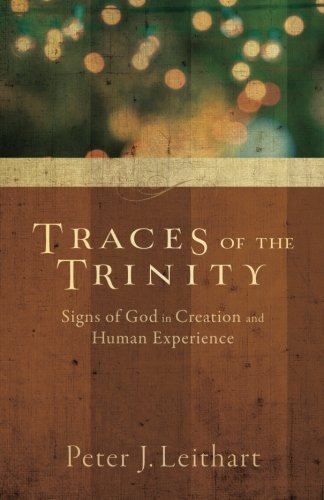 Traces of the Trinity: Signs of God in Creation and Human Experience (Brazos Press) $20.00 This is brilliant, nothing quite like it in print. I love books about the spirituality of the ordinary, and believe strongly that reading about the doctrine of creation — the reality of God’s good world, here and now, as a created order upheld by God’s own Word — is vital. This is neither a straight, typical study of the Trinity, although you will learn about that anew, nor a standard affirmation of God’s presence in the daily, although it gets at that “creation regained” worldview and the nearness of God in the world quite nicely. But it is more.. It does just what is says in the title.
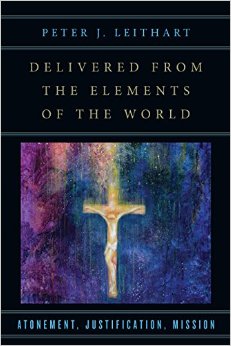 Delivered from the Elements of the World: Atonement, Justification, Mission (InterVarsity Press) $30.00 This is his latest and perhaps his most significant yet.

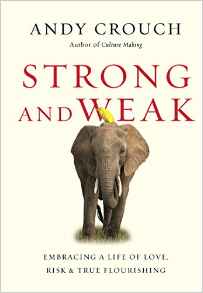 Strong and Weak: Embracing a Life of Love, Risk and True Flourishing Andy Crouch (IVP) $20.00 Once again, this is a must-read, exceptionally well-done book, a personal favorite and one I am committed to promoting. It seems easy enough to explain — the four quadrant balance of vulnerability and power, and the need to understand how we can be strong and weak, culturally influential by taking meaningful risk in the world. But it doesn’t seem to grab most people, and it’s harder to sell then it should be. I have even said I’d give people their money back if they don’t think this is wise and thoughtful and good and important.
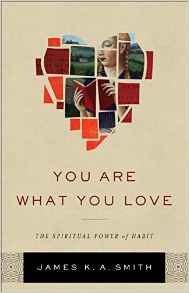 You Are What You Love: The Spiritual Power of Habit James K.A. Smith (Brazos) $19.99 Yes, once again, I said this is the Book of the Year, incredibly important, potent, needed. I don’t know who needs this more, independent, evangelical community churches with their general distaste for sophisticated liturgy and seeker-sensitive piety or stodgy but often theologically fuzzy mainline churches. Across the spectrum, I hear no one saying this sort of stuff with such power and clarity and conviction and urgency. This is a readable and practical version of his heavier, serious works, Desiring the Kingdom and Imagining the Kingdom. You need this book, and I urge you to get a few. I’m not kidding.
 Slow Church: Cultivating Community in the Patient Way of Jesus C. Christopher Smith (IVP) $17.00 Needless to say, I promoted Smith’s Reading for the Common Good but to do so had to set up the story with his previous, remarkable, very good 2015 book, Slow Church. I’m thrilled to offer it now, at this deep discount. Hey, talk about risking something new: how about reading a book calling us away from speed, efficiency, success, growth? How about this counter-cultural call to pay attention to our place, to care for community, for taking the notions of the “slow food movement” and applying them to church life, living out congregational life and mission in slower, more authentic, more Christ-like ways? What an amazing book, now with a study guide. We’ll do the discount even on that if you want.
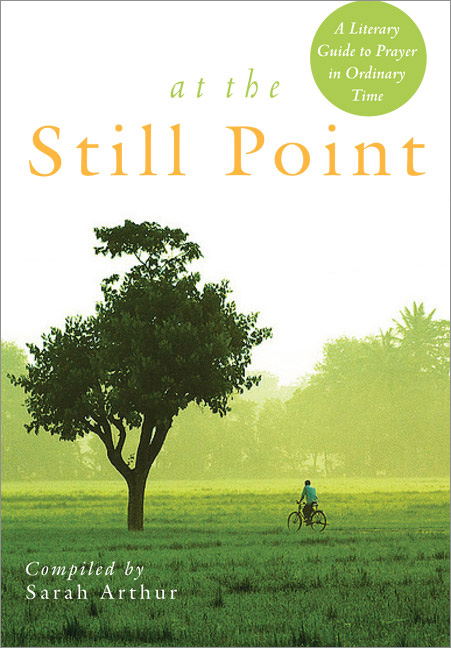 At the Still Point: A Literary Guide to Prayer in Ordinary Time compiled by Sarah Arthur (Paraclete) $17.99 We sold a nice number of her earlier works by this thoughtful Wheaton College grad — Between Midnight and Dawn was her literary prayer book for Lent and Holy Week and her Light Upon Light is her literary guide to prayer for Advent, Christmas and Epiphany. This one, At the Still Point, like the others, brings together all sorts of poets, writers, and literary works, but this one arranged for daily devotional reading during the long weeks of what some churches call ordinary time. It has beautiful endorsing blurbs by Leland Ryken and Kathleen Norris. (Pretty great, eh?) You should get this now, while we have some left at this bargain price. Kudos to Paraclete Press for doing such handsome volumes.
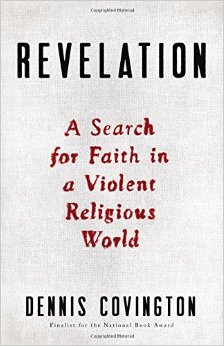 Revelation: A Search for Faith in a Violent Religious World Dennis Covington (Little Brown) $26.00 I can’t tell you how moving this book was, full of spunk and adventure and pathos and brilliant sentences and haunting episodes. I trust you know his 1995 American Book Award winner, Salvation on Sand Mountain, to this day one of the most unforgettable books I’ve ever read. What a great writer, her exploring through first hand memoir how violence and faith and hope and goodness can flourish, even as he wanders around war zones, crossing borders in the Middle East, and bringing back reports that are harrowing and humane and, hinting at hope.
 Way of Love: Recovering the Heart of Christianity Norman Wirzba (HarperOne) $25.99 I was surprised this didn’t sell well – it’s Norman Wirzba, people, theological voice of the land and place, friend of Wendell Berry, author of lovely radical books like Keeping the Sabbath and Making Peace with the Land and, recently, the brilliant From Nature to Creation. A book by a localist, a mainline theologian (he teaches at Duke) on love, and on how love is truly the heart of the Christian faith. Mainline folks who have generally been less hung up on proper doctrine have had this as their mantra, and this articulates it as well as anything, with good theological insight. I have before quoted this blurb by Eugene Peterson:
 The Sin of Certainty: Why God Desires Our Trust More Than Our “Correct” Beliefs
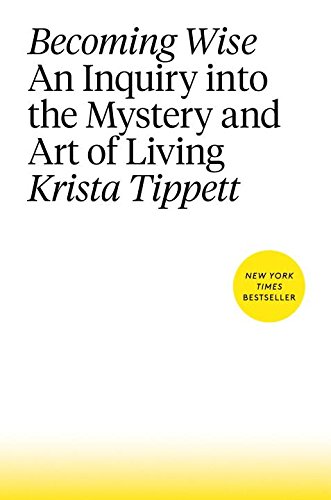 Becoming Wise: An Inquiry Into the Mystery and Art of Living Krista Tippett (Penguin Press) $28.00 This was naturally of interest among our mainline friends, and we are happy to commend it to you here. This beautifully written book emerges from Tippett’s acclaimed NPR show, “On Meaning” and expresses much she has learned from these many years of interviewing deep, good people.
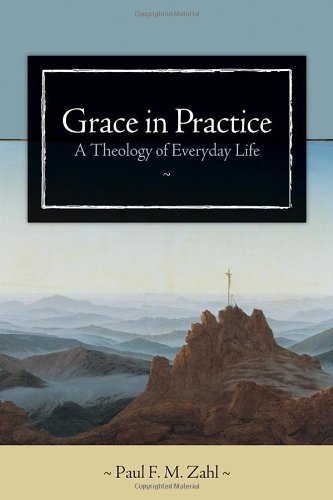 Grace in Practice: A Theology of Everyday Life Paul F. M. Zahl (Eerdmans) $18.00 This is an older book that we really appreciate, and sometimes we bring to events where folks need a thoughtful, grace-filled theological vision for their ordinary lives. He looks at grace in every zone of life, from family life to international affairs, from one’s deepest faith convictions to public and social concerns. The great Peter Gomes, chaplain at Harvard, had a blurb on the back — who called the book itself an “act of grace” — as did Ligon Duncan III, who called Rev. Zahl “a formidable scholar, an admired colleague, and a courageous churchman.” This is a passionate, witty, important work, and we are glad to have a few copies left. Does the word theology maybe scare people away? It shouldn’t — this is just wonderful reading! By the way, we have this at a lesser expensive price to begin with (it now sells for $23.00, I believe) so with our 30% OFF deal, it’s quite affordable.
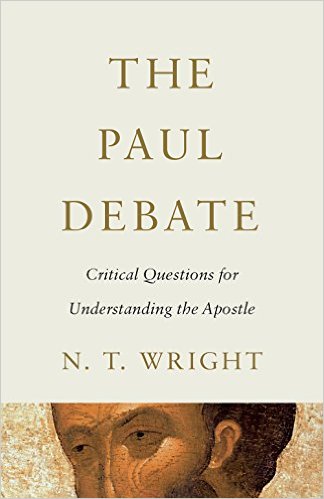 The Paul Debate: Critical Questions for Understanding the Apostle N.T. Wright (Baylor University Press) $34.95 I’ll admit I didn’t succeed in convincing folks to take this (perhaps because of it’s salty price – I still think it is brilliant and very useful. We’re willing to sell them at this good discount to get a few into reader’s hand — it is the best deal for new copies you will find anywhere. I don’t like putting it like this, but some say that Tom is too conservative for most liberals and too liberal for most conservatives, which means all camps should read him. At any rate, this clearly organized book summarizes 5 key issues in Pauline studies and clarifies where he stands, in response to the questions of critics and recent reviewers. Yes, it’s Wright’s clear response to these chief questions, but it is equally a wonderful overview of the current discussion about the New Testament. You could read a chapter a day for a week and quickly accomplish nearly a semester’s worth of a fine course on Paul. Fantastic.
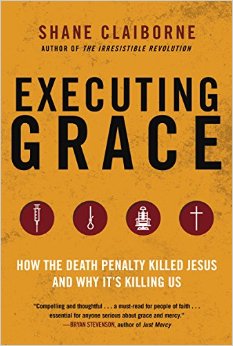 Executing Grace: How the Death Penalty Killed Jesus and Why It’s Killing Us Shane Claiborne (HarperOne) $17.99 This is hot off the press and I so wish I could have promoted it more at these events. Books sometimes take some time to become known and few even knew this was coming. We were taking pre-orders a month ago, and we thank those who bought it early. For the next few days we will again offer this at a deep 30% discount – what a tender, careful, important book. Shane told me how hard he worked on this, how much research and conversation and heartbreak went into it, and I think it is a very readable, valuable resource. Please order it today!
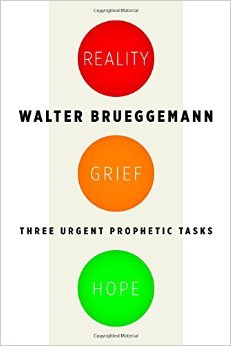 Reality, Grief, Hope: Three Urgent Prophetic Tasks Walter Brueggemann (Westminster John Knox) $15.00 Walt Brueggemann sells a bit at these sorts of events, and we take his stuff anywhere we take Biblical studies. This is one of Brueggy’s books published last year and we feature it often. His newer one is the short and helpful Chosen? Reading the Bible Amid the Israeli-Palestinian Conflict (WJK; $14.00) but as the Reality Grief Hope one is a sequel to his 1980s classic The Prophetic Imagination we really think it is important. I think his call to lament and grieve as a prelude to subversive hope is nothing short of a necessity in our time. If your pastor hasn’t read this yet, buy it for him or her immediately. And get one for yourself, too. By the way, folks love his Sabbath as Resistance: Saying No the Culture of Now (WJK; $14.00) and it very readable. Yay.
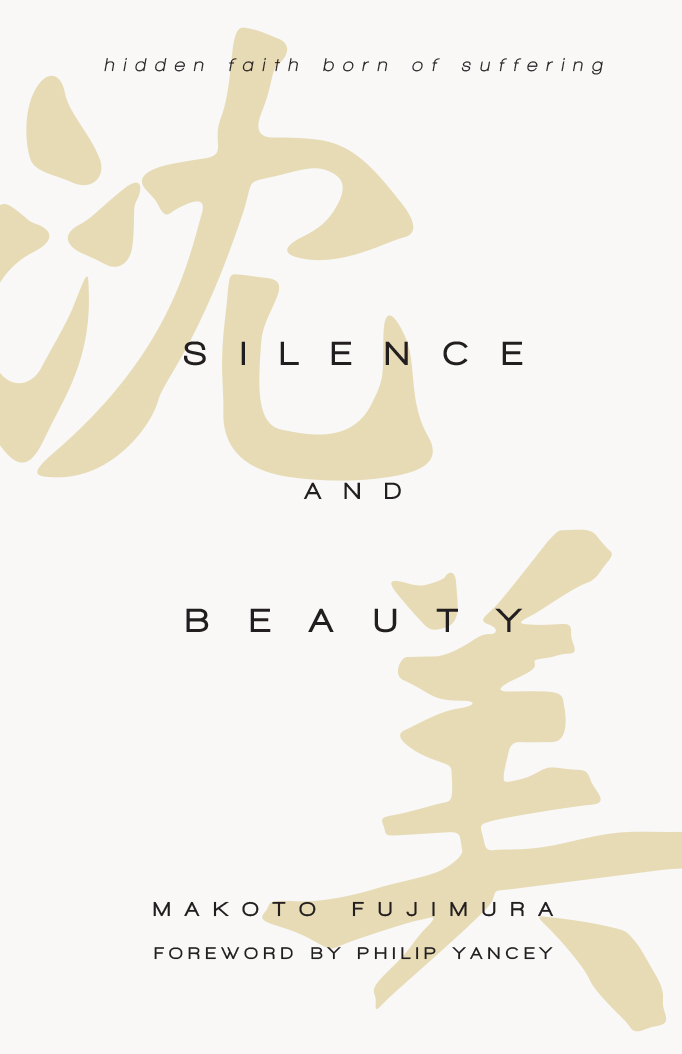 Silence and Beauty: Hidden Faith Born of Suffering Makoto Fujimura (IVP) $26.00 I have reviewed this at great length here at BookNotes before and hoped it would catch the attention of those seeing the big stack at our three different book displays. Yes, we took it to each, and proudly explained that we know Mako and have heard him talk about this book, his friendship with Martin Scorsese who is making a film — has been wanting to for over 30 years — of the Japanese novel Silence about which this book is an extended meditation. As it says on the beautiful back cover, in koan-like cadence,
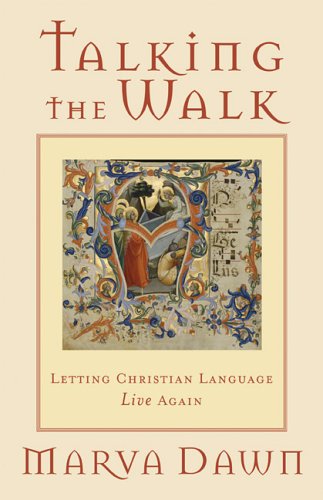 Talking the Walk: Let the Language of Theology Live Again Marva Dawn (Marva Dawn) $26.99 The local Lutherans brought Marva in to speak to them early this past Spring and we were delighted to connect with her again, if only briefly. (She is one of the great, great Christian writers of our time, and we are so honored that she once went out of our way to visit our bookstore in Dallastown!) This is a nearly unknown book of hers, originally published by Brazos, in a handsome hardback. It offers short mentions on various theological terms and why they are important for our faith and practice, in our lives and in our congregations. What a great book! Marva is one of the short list of authors that I will read anything she writes. This is one I bet you didn’t know about, eh? Get it from us, on sale, while supplies last.
 The Songs of Jesus: A Year of Daily Devotions in the Psalms Timothy Keller & Kathy Keller (Viking) $19.95 I would hope that most BookNotes fans know that we esteemed the exceptionally intelligent Presbyterian church leader from NYC, and appreciate his no-nonsense, thoughtful, but always applicable Bible teaching. In this often tender year-long devotional, he and his wife ruminate on the Psalms, known as the Bible’s songbook (and a prayerbook Jesus surely would have known and used.) Two decades ago Keller began reading the entire Book of Psalms every month and these insights are drawn from his accumulated years of study (and, with important input from his wife who herself uses the Psalms, including during times battling a chronic illness.) Mainline parishioners often don’t buy as many serious books as do those in more evangelical churches its seems, but folks always like to hear about a good devotional. It was nice to be able to share these with those seeking a way into the practice of daily quiet time and Bible reading.
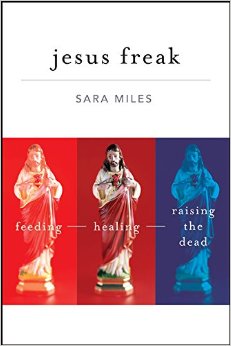 Jesus Freak: Feeding, Healing, Raising the Dead Sara Miles (Jossey-Bass) $21.95 As you might guess, the edgy and beautiful writer Sara Miles – she is coming to the Welcome Table, an O and A congregation near Lancaster Seminary in late July – is popular among mainline folks these days. Her remarkable story, stunningly told in Take This Bread, of her conversion to Christ after receiving communion for the first time and her subsequent desire to start a food pantry in the sacred space of her San Fran Episcopal church, is well worth reading whether you agree with her opinions or not. This sequel to that book is oddly named, has a less than appealing cover, and is hardback, so it doesn’t sell as well, but I’ll tell you it is every bit as powerful and moving and inspiring as her first one. It is, doubtlessly, one of the most stimulating books I’ve read in years, and we were eager to promote it at our recent gigs. Alas, it languishes. Why o why? Folks, read this book! Again, agree or not with all of her radically inclusive theology and lefty politics, it is a very moving memoir and a delirious call to action in the world of hurt and need. If you like Anne Lamott or Nadia Bolz-Weber, you should read Sarah Miles.
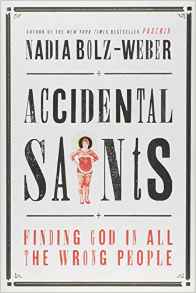 Accidental Saints: Finding God in All the Wrong People Nadia Bolz-Weber (Convergent Books)$23.00 Oh my, what a book. Again, like Sara Mile’s three books, Nadia is a popular voice that is edgy and radical and all about God’s grace, being inclusive and caring and creative in reaching out to and within a carnivalesque, postmodern world. I suppose you’ve heard of her tatted up sleeves and chest, shown well on the cover of her memoir Pastrix, and her colorful cussing, which makes for a really interesting read. (Hey, she’s in the tribe of Martin Luther, so don’t start on the cussing bit.) This second book is better than her first, sharing much about her church (House of All Sinners and Saints), her passion for the lost and marginalized, and how her goofy congregation navigated all manner of surprising changes in their church plant. They were okay, naturally, with the trannys and addicts and underground hipsters who they hoped to reach, folks similar to their own style from their own scene. When fairly white-bread, middle age guys in slacks from the suburbs began to show up, it challenged them profoundly. How ironic — they had to stretch themselves around God’s grace to be welcoming to those people, so not like themselves. Can we do the same, show grace to those we would rather avoid? Ha – what a book! Thank you, Nadia, for your honesty and color. Why not buy this for your next book club – and hold on! You will be surprised by its sheer beauty and admittedly provocative stories.
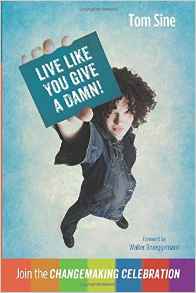 Live Like You Give a Damn: Join the Changemaking Celebration Tom Sine (Cascade Books) $24.00 I have mentioned this before and I can hardly express how many heros and leaders I admit have endorsed it — pages and pages of celebrations for this feisty book collecting great stories of young social entrepreneurs who are making a difference. In some ways this is a long-time sequel to his famous Mustard Seed Conspiracy or the great The New Conspirators, but this time showing how even those outside the churches can teach us much. This lifts up a new generation (and in some ways new kinds) of activists and invites us to join God in Christ as He is “bringing heaven to Earth.” Can we allow the Spirit to ignite our imaginations? Can we be innovative in solving today’s pressing problems? This is good stuff. We are glad to offer it now at this discounted price, just this week. It’s a winner, written by a friend and conversation partner, so do check it out, please!
 The Spirituality of Wine Gisela H. Kreglinger (Eerdmans) $24.00 This is another book I was so happy to tell about, a book to promote among foodies and wine connoisseurs, but also to theologians, sustainable agriculture workers, Bible teachers and more. This is a thorough, lovely book which carefully explores the connection between Sunday worship and Monday work, between field and faith, that studies wine in the Bible and in the vineyard. The author works in a family vineyard which goes back hundreds of years (in Germany) and has given us here a book unlike any now in print.



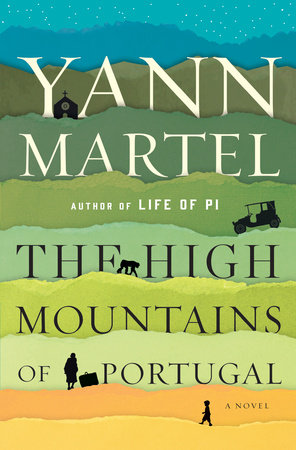 The High Mountains of Portugal Yann Martel (Spiegel & Grau) $27.00 At first I couldn’t put this down, then it rather perplexed me, and then I was utterly captivated, and even a month later I can’t stop thinking about it. This is by the famous author of Life of Pi and it is essentially three inter-related stories, pitched (on the back) as A Quest, A Ghost Story, and A Mesmerizing Tale of Love and Loss. The three sections are captioned in the book as Homeless, Homeward, Home — itself intriguing, eh? The middle part is way weird, but not what I’d call ghostly; just magical realism, if you will. A guy walks backwards, there’s a search for an ancient crucifix from a disgraced missionary, learned about from a previously ignored diary found in a museum, there is a sad death, there is a simian, and the end offers a remarkable, homecoming resolution. Amazing.
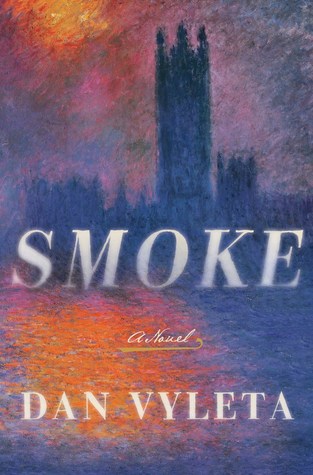 Smoke Dan Vyleta (Doubleday) $27.95 I was glad our library had this as soon as it released this last week as it sounds to me like one of the most inventive novels in recent memory. The author is an esteemed historian and novelist and the advance word on this has been fabulous. (One reviewer says it is “one of the most original and enthralling books I have read in a long, long time.”) The plot seems complex — I just started it last night — but the premise is fantastical and intriguing: smoke arises from the bodies of people when they think bad thoughts; their inner lives of greed and lust and envy become known by all. (The idea from this, by the way, came from one specific sentence in a lesser known Charles Dickens novel who pondered what such a world would be like.)
 The Secret Chord: A Novel Geraldine Brooks (Viking) $27.95 What a solid book to hold in your hands, in the back yard or at your outdoor coffee-shop or, in my wife’s scenario, before bed. She loved this artful and provocative re-telling of the David story, beautifully wrought and insightful — “unvarnished” the publisher says — from the admittedly imagined view of Nathan. You should know the Pulitzer Prize-winning Brooks at least from her People of the Book, which we also loved.
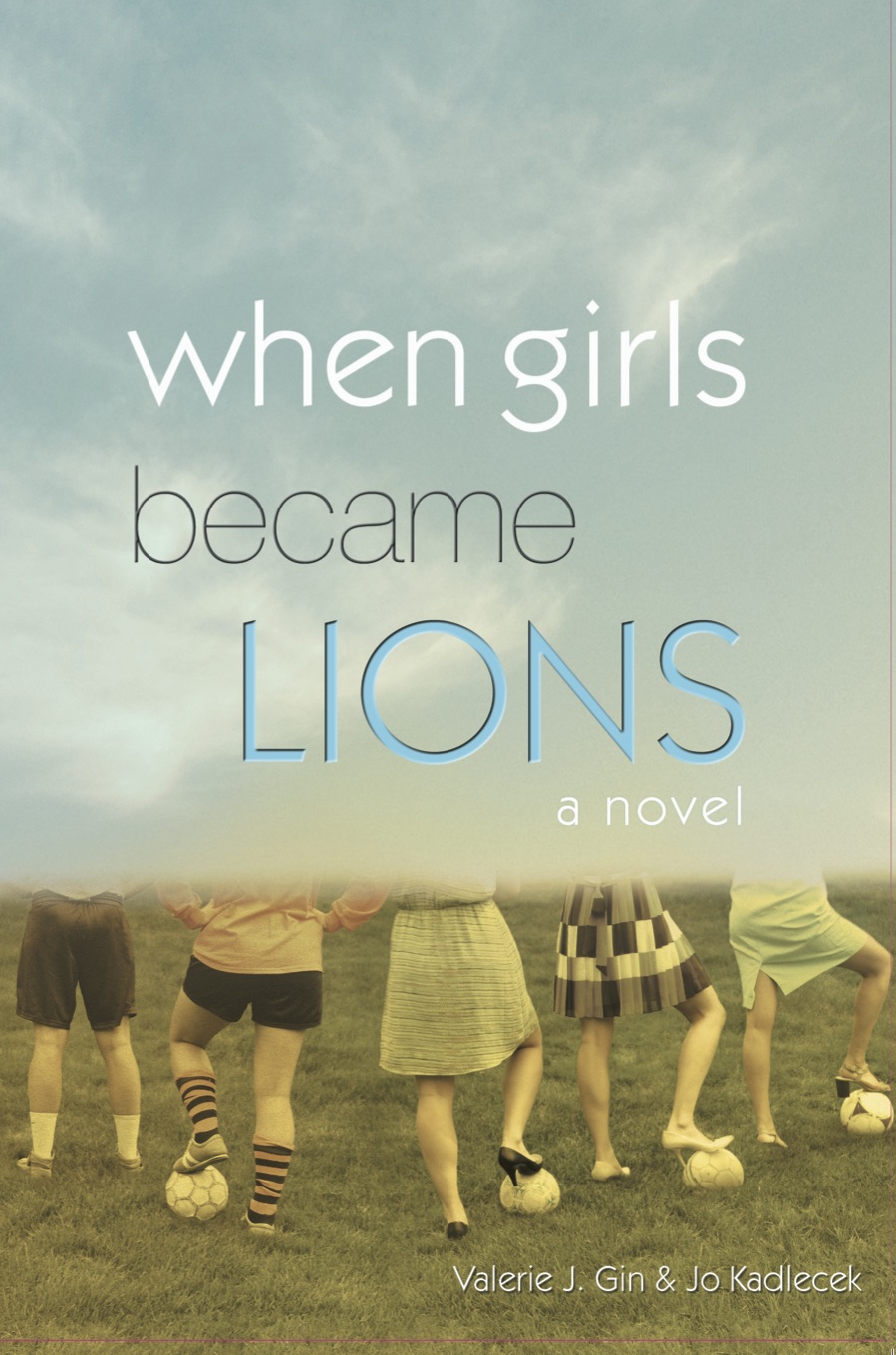 When Girls Became Lions: A Novel Valerie J. Gin & Jo Kadlecek (Gin/Kadlecek) $14.99 “The memory of a strong woman is a sanctuary…” This is how the story, set circa 1983, begins, in this self-published novel by a legendary and beloved soccer coach and a renowned writer of nonfiction and memoir. This is a story about soccer, about women’s sports, specifically about the impact of Title IX legislation had on one mid-western town.
 The Chimera Sequence Elliott Garber (Osprey Press) $15.99 I have been wanting to read this since I first heard about it from the proud papa of Elliott Garber, none other than Steve Garber, author of Hearts & Minds favs, Fabric of Faithfulness and Visions of Vocation. As you know from reading Steve, he is passionate about equipping folks to think about faith relating to all of life (including work, career, and our duties in the world) and that he, himself, uses novels to help open up conversations with consequence about life and times. I cannot think of a time I’ve heard Steve lecture or preach where he hasn’t cited stories, books, music, or films, and he and his librarian wife, Meg, raised their children around the very best books and films. I say all this to give you background and confidence that Elliott’s book emerges from a mature and thoughtful place.
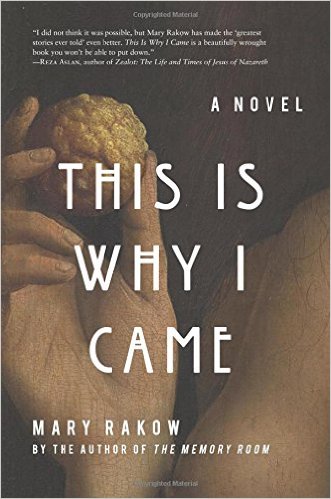 This Is Why I Came Mary Rakow (Counterpoint) $24.00 I am, as I often am, taken with a book just by reading a review of it. Such was the case, I suppose, here. I hope to spend some slow hours with this later this summer, but we ordered it forthwith as soon as I read a remarkable book review of it in The Christian Century
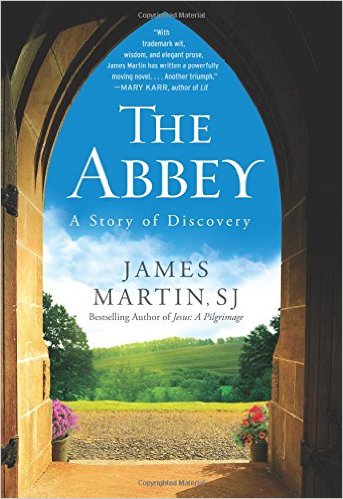 The Abbey: A Story of Discovery James Martin SJ (HarperOne) $24.99 It is great to see this popular nonfiction author — who has written about Jesus, about humor (Between Heaven and Mirth), about the Jesuits, and more — trying his hand at fiction, and, wow, has it been successful. This is a major book this season, lots of buzz — one person likened it to Screwtape Letters (although another suggested The Shack.) It is notable for how it handles religious searching, grief, spirituality. (And it is, by the way, set in Pennsylvania.) The Abbey is getting lovely reviews. Imagine having these authors blurb your book on the back — Ron Hansen, Kathleen Norris, Richard Rohr, Joyce Rupp. It has gotten many endorsements like this, from memoirist and poet Mary Karr:
 The Nightingale: A Novel Kristin Hannah (St. Marin’s Press) $27.99 The other day one of our staff paired this in a display with my favorite novel of recent years, All The Light You Cannot See. Not sure why, really, but the lovely, gold-embossed cover, is a rich and luscious one, and it calls out to be held. This is a serious, thick, and weighty novel, and it has been exclaimed about since it came out. Of course, it was displayed next to All the Light… because, it, too, is set in World War II — France in 1939 to be exact. As the description of it begins, “In love we find out who we want to be. In war we find out who we are.” This is an epic tale (Kristin Hannah is known for big and moving works of historical fiction) set in wartime France but about the divergent paths of two sisters. It is the sort of book that reviews claim to read in one sitting (although, at over 400 pages, I can hardly imagine.) I am sure at times it is harrowing, and it is said to be historically illuminating.
 Thirteen Reasons Why Jay Asher (Razor Bill) $10.99 This is a powerful YA novel that an adult friend recently recommended. We knew of its immense popularity, hear the author on NPR, maybe, and knew of its significance.
 Two Steps Forward: A Story of Persevering in Hope Sharon Garlough Brown (IVP) $18.00 I have mentioned this before and it seemed right to name it again. Although it stands alone, it is a sequel to the popular Sensible Shoes, a novel which explores the emerging friendships of a group of women who meet at a spiritual retreat and agree to check back in with each other after their experiences with a spiritual director. Partly a story of women’s friendship, partly a set of stories of how faith helps us navigate live’s pains and challenges, and partially an observant report of what it is like having a wise spiritual director, this is a book that seems to be part novel and part spiritual guidebook. It is a story about what it means to be made in God’s image, discern wisdom, find grace, and what it looks like to grow into greater Christlikeness.
 Sister Eve and the Blue Nun: A Divine Private Detective Agency Mystery Lynne Hinton (Nelson) $15.99 I don’t read mysteries, so don’t know which are better than others. There is this whole thing of clerical sleuths — think of Father Brown, at least. Hinton is a long-respected author in the world of inspirational fiction and is a New York Times best-selling author. This is just out, the third in a popular series — the first two were Sister Eve Private Eye and The Case of the Sin City Sister. In each, I gather, the good sister’s gifts for detective work might be seen as a calling, or a temptation. Eh? In this new one, it is set up like this: “After a murder at the monastery, Sister Eve may need a miracle if she is to prove a dear friend isn’t a cold-blooded killer.”
 Lord of the World Robert Hugh Benson (Christian Classics) $15.95 I am embarrassed to say I have never heard of this novel, although I’ve learned a bit about the famous author and the significance of the tale.

 Raising Kids for True Greatness: Redefining Success for You and Your Child Tim Kimmel (Nelson) $15.99 There are not too many books that explore how to parent with a view to nurturing a sense of agency and passion and world-changing vocations in kids, but, for now, this is certainly a useful read. It doesn’t cite Guinness or Garber, but it is moving in that direction, helping parents give their kids a vision of their own lives that can be (in Christian terms) truly great. We liked Kimmel’s Grace Based Parenting, too, by the way. Very nice.
 It’s Not Too Late: The Essential Part You Play in Shaping Your Teen’s Faith Dan Dupee (Baker) $15.99 Admittedly, this isn’t for parents of little kids, but, you know, it wouldn’t hurt for any parent to read it. Dan Dupee’s INTL is the best book that I know of for parents of teens (and, especially young adults) that not only affirms the parent’s necessary role, but links the skill sets needed to be good at parenting to these very themes of being transformed by the gospel in ways that propel us to ask the questions of vocation and calling. As you most likely read in my several BookNotes reviews of it, it cites most of our favorite books, and mentions Hearts & Minds as a resource for parents who want to help college student think about their callings in the world, even picking a major and a career. It’s not too late to read this book, and, I’d say, it is hardly too early, either. Highly recommended.
 Growing Compassionate Kids: Helping Kids See Beyond Their Backyard Jan Johnson (Upper Room) $14.99 This great title is sadly out of print, but we have some left – a marvelous resource, a lovely book, by a writer who is profound and skilled in writing about both spiritual formation stuff (she has worked with the late Dallas Willard and published many books on the inner life) and social justice concerns she has been involved in Evangelicals for Social Action, for instance.) There are few really insightful, reliably faithful books about helping us do this kind of parenting work, and we commend Jan’s book to you. Get it while you can.
 Kingdom Family: Re-envisioning God’s Plan for Marriage and Family Trevecca Okholm (Cascade) $22.00 Okholm has been a professional Christian educator for more than 25 years and is currently serving as Minister to Children and Families at St. Andrew’s Presbyterian Church in Newport Beach, CA. (Yay for certified Christian educators and members of APCE!) She received her master’s in educational ministries from Wheaton Graduate School. Fabulous blurbs from folks across the wider church have affirmed this. As S. Steve Kang (of Gordon Conwell Theological Seminary and co-author of Teaching the Faith, Forming the Faithful) writes, she has “cultivated the practice of practical theology leading to a genuine transformation of the family and the church.” Ms Okholm reminds us that the local church helps form families for life in the world, and that our spiritual formation must have as it’s frame a missional vision of the Kingdom of God. This recalls us to this broader, bigger picture of our lives together and yet offers practical, good, Kingdom practices for real life.
 The Missional Mom: Living with Purpose at Home & in the World Helen Lee (Moody Press) $13.99
 Superheroes Are for Real Ethan Bryan, illustrated by Travis Hanson (Goldminds Publishing) $12.99 “Her dad says superheroes are for real. She isn’t sure. Game on.” That’s the tease on the back cover. This book is for young ones and is based rather simple – but ingenious – idea, told through a simply plot. Ethan and his daughter – uh, scratch that, a fictional dad and his fictional daughter, are discussing whether superheroes are for real. What parent hasn’t had that kind of conversation? And what parent doesn’t sometimes joke around with kids, playfully making stuff up, exaggerating the truth of things, daring the child to figure out the real truth of the matter. Well, this starts with that kind of giddy exchange.


 Make a Stand: When Life Gives You Lemons, Change the World! Vivienne Harr (Chocolate Sauce Books) $18.99 This is a very colorful, very well made book we discovered not long ago, based on a true story. It is, again, a rather simple story, but there’s a bit more going on and the book unfolds with lots of content, interesting side-stories, and a big, big ending. The short version is simply that the Vivienne Harr, age 9, learned something about modern day child slavery and determines to try to stop this awful plight. With the faith and optimism (okay, call it naiveté if you must) of a child, she wonders with her sibling and parents what she can do.

 distributed (organic) Make A Stand Lemon Aid lemonade. Whimsical and nearly implausible as this upbeat (true) book is, I was oddly moved by this success in her family’s efforts. (And I smile when they called her The Little Lemonpreneur.)
 What Do You Do with an Idea? Kobi Yamada, illustrated by Mae Besom (Compendium Inc) $16.95 I read parts of this out loud to a group of church educators and you could feel it in the room and then we could hear the almost communal gasp, as we got to the end, the invitation to “change the world” with an idea that follows you around. Their own ideas were spinning as they wondered how they could use this in a Christian ed setting, what kind of conversations it might start, what Bible texts it might be used with. This is playful, nearly minimalist, as we see the “idea” thing grow as the child grows in confidence. And then, as they say, something amazing happens.
 Harold Finds a Voice Courtney Dicmas (Child’s Play Inc) $7.99 This is a very colorful, just slightly oversized children’s picture book about a bird that could mimic any sound. You can imagine the fun children will have following the antics of Harold as he makes so many funny sounds, just like a car horn or a ships blast or a dog barking, loud ones, quiet ones, funny ones, scary ones. Everybody and everything seems to have a voice, and then, finally, Harold lets at a squawk that goes one for two big pages – what fun, as he finds his own voice. You get the point, I’m sure, and so will your little ones: we can come to realize if we don’t have our own authentic voice and we may have to work to find and give voice to our own unique sound. Harold the bird grew tired of repeating other sounds, and wanted to make some of his own. Called “vibrant and inventive”, this hilarious tale might lead to some noise in your home. And a lesson learned better sooner than later.
 The Plans I Have for You Amy Parker, illustrated by Vanessa Brantly-Newton (Zonderkidz) $16.99 This is not out yet, but we hope to get it in by late June… you can pre-order it now, If you’d like. We will send it as soon as it arrives.
 Me and Momma and Big John Mara Rockliff, William Low (Candlewick Press) $16.99 Candlewick is known for beautiful, beautiful children’s picture books and this is one we’ve promoted before. It works on a number of levels, is artfully done, and tells the story of a mom who is a stonecutter at the cathedral the workers call Big John – the Cathedral of Saint John the Divine in New York City that was begun in 1892 and is still under construction. Momma’s son John and his sisters can’t wait to see her special stone in this luminous true-life story.
 Patrons and Protectors: Occupations and Patrons and Saints: More Occupations Michael O’Neill McGrath (Liturgical Training Publications) $18.95 We only have a few of these left, but I just have to list them. These are explicitly Roman Catholic and talk about patron saints for various occupations. There is a drawing of the patron saint doing his or her work in her ancient setting paired with a man or woman doing that very work in today’s setting. (And, oh, look for the dove tucked in on every page, showing God’s very presence in each job site!) Also, there is a short essay from a contemporary person describing how they serve God and the public in their work – most you haven’t heard of but a few (like broadcaster and TV show producer Fred Rogers) are heroes to us all.
 Brother Bartholomew and the Apple Grove Jan Cheripko, illustrated by Kestutis Kasparavicius (Boyds Mills Press) $15.95 We so like this legendary children’s publisher and so love this wonderful book. I’m sure I’ve recommended it before. The art is beautiful, soft, realistic watercolors, and the text is longer and more complex than some picture books. (I think it is good for middle elementary grads.) The story centers on an old monk whose job it was to care for an apple grove (the monastery made apple sauce to help make ends meet.) A newer, younger monk had his eye on taking over for the older one, and, well, there’s a lesson learned about ambition and greed and impatience.
 One theme of the story, I’d say, is about patience and sustainability, even caring for animals – and then, this big point: “God will provide.” It is said, often, and it is what the older Brother Bartholomew says to Brother Stephen at the end, when Stephen realizes his barbed wire “improvements” to keep the deer away was not so good. Called “haunting” and “moving” this warm tale of land and work and doing the right thing in God’s own way, nearly could have been written by Wendell Berry. A lovely, wise book — we only have a few left.
 Americans Who Tell the Truth Robert Shetterly (Puffin) $7.99 This is a stunning picture book, with remarkable pen and ink and watercolor paintings of 50 great Americans with a quote from each on the facing page. This is for older kids or politically interested teends and definitely for those whose values tilt toward the lefty and progressive; the activist background about the person is briefly told, so you’ll learn about folks from Wendell Berry to Harriet Tubman, from Rachel Carson to Howard Zinn, from Sojourner Truth to Dorothea Lange, on through folks as varied as John Muir, Cesar Chavez, Susan B. Anthony, Dorothy Day, Dwight Eisenhower, Henry David Thoreau, Ralph Nader, and Rosa Parks.
 Mostly these are portraits of noble rabble-rousers and social activists, although there are Presidents and authors and poets, civic leaders and courageous citizens. This book of 50 pictures could generate all kinds of interesting conversation and further study about standing up for one’s convictions, organizing for social change, and using one’s talents to probe against injustice. Okay, it has a bias and it leaves out all kinds of good people, but it still deserves your attention.

 The Marvelous Pigness of Pigs: Respecting and Caring for all God’s Creation Joel Salatin (FaithWords) $25.00 Salatin runs his all natural family farm in Virginia’s Shenandoah Valley and is an outspoken Christian who became known in Michael Pollen’s book and documentary The Omnivore’s Dilemma. His family has been at this a long time (his grandfather was a charter subscriber to Rodale magazine, and his parents were talking about the dangers of chemicals at the time Rachel Carson’s Silent Spring took off.) We loved Salatin’s last book exposing the weird wrongness of our corporate food system and agribusiness practices — Folks, This Ain’t Normal (and we stock his others, such as Everything I Want to Do Is Illegal.) Here, he expressing a compelling Christian case for holy stewardship and how that effects the ways in which we think about (and participate in systems of) agriculture, food production, and eating. He is known for warmth and humor, and although he offers serious critique of the way we grow, market, and consume food in our land, this book is a great read. I love the title — it sounds like a line I once heard from Richard Mouw — which gets at the way God made stuff, and how to honor and be in sync with creational intentions and beauty. Yes, in Salatin’s eyes, pigness is marvelous. So is healthy eating. This looks like a great new book, and we can’t wait to talk more about it.
 Martin Luther and the Called Life Mark D. Tranvik (Fortress Press) $24.00 I hope you know that one of the great dynamics of the Protestant reformation that was unleashed by Martin Luther’s remarkable role in those remarkably generative decades of the 1500 was a discovering of the Biblical teaching about vocation, calling and work as it applied not just to religious orders, monks, nuns, and parish priests, but to “butcher, bakers, and candlestick makers.” Yes, all people were called by God to offices, to positions of service for the common good. As more and more (especially younger Calvinists folks, it seems) are using this language and working on projects about work, many of us have been wishing for a better historical study of Luther’s own teaching on this that so revolutionized Protestant (and eventually, Roman Catholic) thought. Not everyone knows how extraordinary this teaching of the role of the so-called laity to work as unto God was and how it unleashed what was later called “the Protestant work ethic” and, perhaps, early modern versions of capitalism. At the very least, it started the conversation about how to serve God in our work-lives and what it means to see ourselves as called to vocations. This “rediscovering of Luther’s thought on vocation for life today” is going to be very useful for leaders and others who teach on this topic.
 Heal Us, Emmanuel: A Call for Reconciliation, Representation, and Unity in the Church Doug Serven, editor (White Blackbird Books) $16.99 I will have to write about this in greater detail after spending more time with it, but this new resource is — if I may be so bold — one of the more significant books to be published within the conservative, Reformed faith community. Most of these authors are pastors, elders, or professors among the Presbyterian Church of America (PCA) and represent the good, good work being done within that denomination that has a bit of a racially storied legacy, stuff that has been talked about more and more of late. (One PCA church in Mississippi just recently issued a public proclamation of repentance and apology for a pro-segregation motion they passed in the 60s.) This book offers what PCA folk are known for — serious theology, good scholarship (the contributors have read widely and the footnotes are diverse and fascinating) and yet gospel centered with warmth and passion. (The irony that a book of multi-ethnic authors on being more inclusive and diverse includes no women is a matter of some weirdness, it seems to me.)
 All Things New: Rediscovering the Four Chapter Gospel Hugh Whelchel (Institute for Faith, Work & Economics) $6.99 Hold on to your hats, folks — this is quite an announcement. Here is a little book many of us have been looking for. It is a book that explores the creation-fall-redemption-restoration story. (Did you see how I used that phrase as I lead into the description of Lisa Sharon Harper’s forthcoming book The Very Good Gospel by noting how she offers a similar overview of the big Bible story as one of shalom/shalom wrecked/shalom restored?) This move to see the unfolding drama of Scripture by way of four acts in a play, or four chapters in a story — God’s intentions, sin’s wreckage, Christ’s redemption and the scope of hope as creation is regained — (again, that’s creation/fall/redemption/restoration) is generative and useful, and many folks have asked us for a small group resource to do this in home Bible studies or Sunday school classes or discussion groups.
 How I Changed My Mind About Evolution: Evangelicals Reflect on Faith and Science edited by Kathryn Applegate & J.B Stump (IVP Academic) $16.00 This project was part of the work of BioLogos, a faith/science think tank and advocacy group headed up by our esteemed friend, Harvard trained, evangelical and Christian Reformed scientist Deborah Haarsma. It is a great example of what a small book can do; it is a fine, fine, paperback — an extraordinary volume collecting first hand testimonials by a real variety of scholars. As is obvious from the title, these stories tell of the ways in which these thinkers changed their minds. That in itself is helpful — thank goodness for those willing to admit they’ve switched positions and grown and (dare I say it, with a smile) evolved. This topic — what one thinks of science, generally, and evolution, particularly — is laden with theological concerns (some quite legitimate, some mere baggage) and it is notable to have serious thinkers admit they’ve grown in nuance and insight as they’ve navigated to their own position in this field.
 Finding Authentic Faith in a Forgotten Age with C.S. Lewis Chris R. Armstrong (Brazos Press) $19.99 Another book that should have you clicking send asap — this is a “must read” book that will be loved by anyone who savors great learning, good insights about our past, or C.S. Lewis, for that matter. Armstrong is a wiz of a guy and a good friend; he is the director of Opus: The Art of Work, an institute on faith and vocation and Wheaton College. Previously, he has been a writer at Christian History magazine — and, oh, how I loved his previous Patron Saints for Postmoderns, an only mildly edgy guide to why we, today, need to know something about those Christian leaders who have gone before us. This new one is just what it promises: a wonderful introduction to a neglected era of our Christian tradition.
 Divine Merger: What Happens When Jesus Collides with Your Community Mark E. Strong (IVP) $16.00 Again, this is a book I’m eager to tell you about, a great little sleeper of a book that you may have missed. The author is senior pastor of LifeChange Christian Church, a diverse congregation located in inner city Portland. Okay, get that: Portland is known as a pretty hip but secularized city, and the inner city — well, any church that is thriving and doing good community development stuff could be a model and inspiration for us all. I took notice of this church leader years ago, and am glad to see he has this new book. It is a bit about urban ministry (think of John Perkins and the CCDA) and mostly about how to think well about missional congregational life — wherever you find yourself. Strong has pioneered innovative and energetic community ministry and has truly earned the right to tell his story (and inspire us all.) I am not alone as he is esteemed in his community and among evangelical leaders throughout the Pacific Northwest.
 The Bible Cause: A History of the American Bible Society John Fea (Oxford University Press) $29.95 I don’t know how many working historians you know, or even how many serious history professors, but Fea is a gem, a local treasure, a fun and whimsical guy who does remarkably serious scholarship. Amidst his other award winning writing, teaching, and philosophizing — not to mention being a cool local fellow and husband and dad — John was recruited by the American Bible Society to document their 200 anniversary. The Bible Society, it is interesting to note, is the nation’s oldest philanthropy, and it is, to put it politely, storied.
 The Spiritual Life: Eight Essential Titles Henri Nouwen (HarperOne) $27.99 Wow. I don’t know exactly what an omnibus is, but I bet it is something like this. Man, what a great, great volume.


 prisoners, about restorative justice, and, eventually, to confront the inequalities and injustices of what is called capitol punishment. I have chatted recently with Shane about his learning curve as he researched this book, and how painful it has been in recent years as he has gotten to know crime victims, prisoners, people on death row, prison workers, lawyers, police, and political activists on both sides of the issue. He has talked to lots and lots of people, read extensively, listened to a variety of viewpoints. It has been an intense season of study and learning and we should respect the work he’s put into this.

 We are sometimes a little perplexed about what to suggest when folks in the shop ask us for graduation gifts for high school kids, especially if they are buying on behalf of their church. I have to admit that sometimes, over the years, we’ve seen some desperate folks needing to get a certain number of items, all the same, at a cheapo price. They really didn’t care what it was, they just needed to get the darn thing taken care of. I could have sold left-handed, bright red Saint Patrick’s Day beer steins if they had the word “graduate” on ’em and were under $1.99.
 Of course, most shoppers looking for gifts are a bit more intentional, seeking a good, if not wonderful, gift to honor and commemorate this huge time of transition. But it’s still weird – why do knick-knack companies promote tie tacks, knowing high school kids rarely wear ties? Car keys are a great gift for a 16-year old (speaking of life transitions the church should bless) but what does it say to a college student heading off to campus, usually without a car? And I don’t know about little inspirational plaques. We have our share of cute gift books with collections of happy thoughts that have 2016 in bold fonts on the front, but: really?
 You follow BookNotes, maybe subscribing so you get it in your inbox. We assume you are a reader, and know how a well-placed book in the right hands at the right time can change a life. Why not enter this conversation in your own church, or just think of a young adult you care about and order a book or two. We can even gift wrap and send it on your behalf. Just tell us if you want us to write a little note to include.
 Make College Count: A Faithful Guide to Life + Learning Derek Melleby (Baker Books) $12.99 I have raved about this before, written long reviews, and have said that there is – I am sure of it – nothing in print that is like it. It is short, handsome, interesting, clever. It mentions Hearts & Minds (come on, that’s a selling point among friends, no?) It is a great choice for students heading off to college. Youth ministry guru Chap Clark writes,
 Learning for the Love of God: A Student Guide to Academic Faithfulness Donald Opitz and Derek Melleby (Brazos Press) $14.99 If you are confident your young person knows God well and is mature enough to have thought through the foundational questions Melleby invites them to think about, this one would be the next best book. In Make College Count, Melleby offers guidance on questions such as why am I going to college? What do I want my life to be an influence? What do I really believe? Learning for the Love of God, though, fun as it is, goes deeper. It is, without a doubt, the most important book a young college student will read in the next few years. I have written at great length about why a winsome call to “academic faithfulness” and connecting faith and scholarship – that is, serving God in the classroom by how one studies and the perspectives one adopts in one’s course work . This lovely version of what some consider an “outrageous” idea – namely, God cares about our studies and future careers – will make the difference between a student that invites God into all areas of his or her life and one that does not. I can’t tell you how important I think this is, and it would make a great gift to a college student who likes to think and be challenged and hear stories of other students who started learning for the love of God. Optiz, by the way, is ordained in the PCUSA and is the Director of the chapel at Messiah College, so knows student life well. Melleby directs OneLife, an intensive one year “gap year” program for those transitioning out of high school.
 All the Places To Go How Will You Know? John Ortberg (Tyndale) $15.99 I recommend unreservedly all of Ortberg’s many books. He is a lively communicator, a good thinker, and a funny guy. He preaches at a large church and is a great storyteller. Maybe you know his powerful book about Jesus called Who Is This Man? or his two wonderful paperback books on spirituality The Life You Always Wanted and God Is Closer Than You Think and the more recent handsome hardback called Soul Keeping. We recommend each of them, truly we do. He has one called Know Doubt and another called Love Beyond Reason. There is a great one on self-reflection and personal assessment called The Me I Want to Be that would make an apropos gift. A lot of people like his If You Want To Walk On Water You’ve Got to Get Out of the Boat. The one about community is called Everybody’s Normal and there is one about things that really count (not materialism and worldly success) called When the Game is Over It All Goes Back in the Box.
 Every Little Things: Making a World of Difference Right Where You Are Deidra Riggs (Baker) $13.99 I so enjoyed this lovely and well written book by a thoughtful writer; Jennie Allen is right when she says “Deidra tenderly but swiftly leads people to Jesus and to a better understanding of themselves.” Does God use ordinary people like us — like the youth leaving your church, like the soon-to-be young adults you love — to make a difference? Does “everything thing” really matter? I suppose this is written more for women… Nicely done.
 What Is Vocation? Stephen J. Nichols (P&R) $4.99 I suspect you might need something inexpensive, short and sweet, but solid and truly helpful. This handsome booklet is worth much more than this low price and it is our conviction that this too often neglected Christian doctrine is a foundational truth for anyone entering the work-world, a season of discernment about one’s future, and certainly for anyone heading on to college and future professions. I love this short book (it is only about 30 pages) about the goodness of work and how to nurture a sense of calling into one’s vocation.
 Every Waking Hour: An Introduction to Work and Vocation for Christians Benjamin Quinn & Walter Strickland (Lexham Press) $12.95 We have dozens of books on a Christian view of work, and there are any number of favorites that we commend. But for a high school student heading out into the work-world, I would guess a major treatise isn’t the kind of gift that feels right. This one is just about perfect: it is thoughtful and sober, but brief. It is a compact sized, hardback without a dust jacket, making it feel rather youthful and cool. This offers solid Christian cultural analysis, Biblical insight about our calling to work, and ideas about what it looks like to be faithful in the ways we work. Nicely done. By the way, maybe you recall us promoting Lexham’s matching Every Square Inch: An Introduction to Cultural Engagement for Christians Look soon for Every Good Thing: An Introduction to the Material World and the Common Good for Christians by David W. Jones. And handsome little trilogy.
 Garden City: Work, Rest, and the Art of Being Human John Mark Comer (Zondervan) $19.99 I think this has been our biggest selling book within what might be considered the young adult market. We sold a bunch at Jubilee last February and para-church campus ministry groups like CCO and IVCF love it. Comer is witty and fun, upbeat and energetic, and without sounding heady or arcane, invites us into a Christian worldview that is based on the dignity of being human, the call to work, the goodness of cultural engagement, and the reminder to rest. Work, sabbath, meaning, life as we enter God’s story. What a book, good for anyone, but cool looking and quite attractive to young adults.
 Be You Do Good: Having the Guts to Pursue What Makes You Come Alive Jonathan David Golden (Baker Books) $14.99 This book is great for young adults that are trying to figure out who they are and what they want to be about. It offers a great story – the idealistic, up-hill, deeply moving tale of the guys who founded Land of A Thousand Hills ethical coffee company. What a read! What is so good about this inspiring narrative is not only how they succeeded against great odds, and models how to move forward doing good stuff, but it is rooted in a healthy Christian view of determining the will of God, listening to one’s passions and seeking out the ways of God’s Kingdom. This is energetic and exciting but in the telling one comes away with much wisdom and vision. For one’s own life. Cool.
 Callings: The Purpose and Passion of Work – A StoryCorps Book Dave Isay (Penguin Books) $26.00 I’ll admit, I’m not sure this is ideal for most young people, but it is a remarkable collection of testimonials, stories of those who have thought about and are able to articulate something about the purpose and passion of work. You may know some of the other great StoryCorp projects, oral history collections that are sweet and sad and thoughtful and amazing. Oh, how ordinary folks are not so ordinary after all when they are invited to reflect on the deeper meaning of their daily lives. In this new one, Callings, the stories are arranged by theme. The chapter headings are “Dreamers” “Generations” “Healers” “Philosophers” and “Groundbreakers.” The jobs described include everything from astronomers to chefs, building contractors to preachers, farmers to actors. There is a first responder and a nurse, a dentist and am ink removal specialist. How the people came to these callings is half the fun (especially, I thought, the ones who are doing what they were mentored into by their parents in the unit called “Generations.”)
 Room to Grow: Meditations on Trying to Live as a Christian Martin Copenhaver (Eerdmans) $15.00 We have many customers who (perhaps because they serve more mainline denominational churches) are wary of any sort of evangelical lingo and don’t want to promote books on publishing houses that seem to aligned with conservative and non-denominational movements. Perhaps such readers will know Martin Copenhaver, president of Andover Newton Theological School and a United Church of Christ minister. I like Copenhaver for his being such a down-to-Earth thinker with a pastoral heart. (In fact, Walt Brueggemann, in a glowing foreword, notes that Martin “has put his bucket down in the local congregation.” This handsome paperback offers about 25 short reflections, not quite sermons, not quite essays, about what it means to grow into our Christian faith. Endorsements on the back come from Thomas Long (as respected and eloquent preacher and writer and scholar from Candler School of Theology) and the somewhat edgy, colorful Debbie Blue. There is much wisdom in the lovely little collection and it would make a fine gift.
 Love Does: Discover a Secretly Incredible Life in an Ordinary World Bob Goff (Thomas Nelson ) $16.99 If you have been paying attention for even a little bit, you will know that many of us view Bob as a hero of sorts – fun, funny (or, better– crazy, hilarious) and a real “doer” of the faith. His story is one of whimsy and adventure as he invites readers to follow him, literally, all over the world. The section where he takes Donald Miller to Africa to help plant trees at the orphanage he started is worth the price of the book. Although, one could say that about any number of chapters – his stunt taking over the room of a young couple on their honeymoon, his days and days and days of pestering a dean of a law school to let him enroll, his taking his kids on a world tour to eat ice cream with heads of state – all are truly memorable. My, my, what a wild ride, what a fun set of adventures, what a way to get readers on board daring to share the love of God with everyone, any way they can. Love does Goff reminds us. And what a blast it is reading about the way he does it. This book has sold millions and it is perfect to get kids hooked on this idea of enjoying Christian books. And may just inspire them to be secretly incredible, too.
 Surprise the World! The Five Habits of Highly Missional People Michael Frost (NavPress) $4.99 What a great price for this pocket-sized paperback that will help young followers of Christ live out the Kingdom in all they do, becoming more intentional about sharing faith and grace in surprisingly simple ways. Frost is a high-powered and very thoughtful Aussie cultural genius, a maverick who wrote seminal books on the missional church, Kingdom discipleship, and the intersection of faith and ordinary life. Here, young readers will learn to bless others, see God in shared meals, listen well for guidance, stay close to Christ as we learn from Him as our leader and live into the great truth that we are sent by God — wherever life takes us. What a great little gift this would be.
 Following Jesus: Biblical Reflections on Discipleship N.T. Wright (Eerdmans) $14.00 This is a wonderful little book! What a blessing to listen in to Tom Wright talk about the Kingdom of God and the nature of Jesus — fully God, fully human, the one who died and rose — as he is described or understood in several key passages in the New Testament. We who follow Jesus can deepen our discipleship by dipping in to these messages from Hebrews, Colossians, Matthew, John, Mark, Revelation (and that is just part one.) Part two invites us to ponder six key New Testament themes that help us in our living faith. One reviewer called it “a beautiful meditative work.”
 Unashamed Lecrae (B+H Books) $24.99 If you are involved with youth in your church then you probably don’t have to be told who Lecrae is; the Atlanta-based Grammy award winning hip-hop artist is hugely popular, exceptionally thoughtful, and this book has been greatly anticipated with notable excitement. It’s neat to see a book with endorsements from such diverse observers — from Nancy Pearcey and Metaxas to Josh DuBois of the Obama White House, from Andy Crouch and Gabe Lyons to urban Philly pastor Eric Mason. This is pretty cool, offering (among other things) a reminder that “if you live for people’s acceptance, you’ll die from their rejection.” There has to be a better way.
 Quiet Moments N.T. Wright (Kregel) $9.99
