PART TWO: Hearts & Minds Bookstore’s BEST BOOKS OF 2015

Sorry this was a bit delayed: I spent some time in the ER and eventually accompanied my elderly mom as she was admitted to the hospital yesterday.  Anguishing as that was for Beth and I, during the endless waiting I kept thinking about these books, some which have become friends, nearly, important and valuable.  When hard times hit us we are who we are, and I am glad that I’ve read the books I have that have helped shape me, a little anyway, to be a person who has at least some capacity to endure. Read now, friends, while you can!  It matters.

WELCOME BACK TO PART TWO

Welcome back to Part Two of our annual recap of beloved and exciting titles that most caught my attention, honoring my favorite books this year past.  I love seeing such lists, but I’m not very good at “Best of” lists, so don’t ask about my all-time  favorite albums or movies. Books? I’ve got hundreds which I count as dear friends; each year there are many that I think deserve special accolades. So here we go, celebrating exceptional titles from 2015.  The big first part of my list was posted a day or so ago, so don’t miss that.  

I suppose you have plenty of books on your stack, but I hope you will consider ordering a few of these from us; part of our work here is to get the titles known, talked about, evaluated.  We are, each of us, I trust, in some community of discourse, and we discern the good, the true, the beautiful, and more, in conversation with others.  How about inviting these authors and their books into your conversations? Send us an order (we offer a good discount, too, for our BookNotes fans) and keep the conversations going!

BEST BOOKS OF BIBLICAL STUDIES
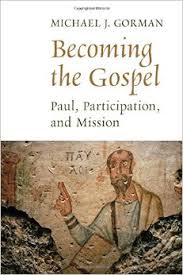
becoming the gospel.jpgBecoming the Gospel: Paul, Participation, and Mission Michael Gorman (Eerdmans) $28.00  I do not need to say much about this recent release in the “Gospel and our Culture” series, as I’ve written about it a time or two before. I am delighted to note that Mike is a friend and customer, a supporter of our messy little shop here in Dallastown, and that he is as kind and personal and interesting in talking with us as he is when he is engaging in heady conversations with pals of his like Tom Wright or Richard Hays. Mike’s response to Fleming Rutledge’s serious presentation about her (Hearts & Minds Book of the Year award winner) The Crucifixion of Christ in December (at Saint Mary’s Ecumenical Institute where he teaches) drew pleasantly and insightfully on his own body of work, including a trilogy of academic works on Paul cap-stoned by this recent 2015 release. One doesn’t have to read Professor Gorman’s Cruciformity or Inhabiting the Cruciform God to appreciate Becoming the Gospel as it stands alone quite nicely. But there is a movement and trajectory to his work, and it moves us, to use the words he so diligently unpacks, to a formation that is participatory and missional. Whole life discipleship? Servant leadership? Kingdom living? Missional church? Walking the Jesus Way?  All of these contemporary buzz words and phrases bring together the death of Christ, executed for our sake by the powers and the victory of the in-breaking reign of God. This kind of Biblical scholarship can surely fund a certain sort of thick, relevant, costly discipleship. Such a way of living out our faith can most fully be embraced as we deepen our understanding of what Paul proclaimed and taught about Jesus the Christ. This book, carefully argued and detailed as it, is as scholarly books are, will help us, I am sure of it. One of the best books of Biblical scholarship this year!
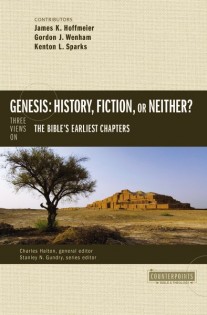
genesis-history__fiction__or_neither_207_315_90.JPGGenesis: History, Fiction, or Neither? Three Views of the Bible’s Earliest Chapters edited by Charles Halton, with James K. Hoffmeier, Gordon J. Wenham, and Kenton L. Sparks (Zondervan) $16.99  I love these point/counterpoint books, of which there are many,and some are amazingly complex (a brand new one in 2016 is about faith and politics, with five differing views!) This one only has three, and each of the three authors respond to the others, making this a bit more manageable and useful. In a nutshell, the three authors contend that (a) the earliest stories of Genesis are actually history, (b) some sort of proto-history, or (c) actually just storytelling of an ancient sort that was not what we today think of as actually history. The project was assigned quite succinctly: each author was asked to explain what sort of writing they think early Genesis represents, and why they hold to that understanding. Secondly, there were asked to ruminate on how that interpretive approach effects how they read the Scriptures and how that effects other portions of the Bible, if it does.  And thirdly, they were given three distinct texts and were asked to explain them, the story of the Nephilim (Genesis 6: 1-4), Noah and the Ark (Genesis 6:9 – 29) and the Tower of Babel (Genesis 11: 1-9.) This exercise allows each author to show forth how their particular view informs how they handle specific passages and stories. As you can see, this is not a rehash of debates about the poetic structure of Genesis 1 or whether or not the fall described in Genesis 3 is allegory, what with the talking snake and all.  This particular book and this debate is not so much about origins or evolution.

Genesis: History, Fiction, or Neither? is a wonderful overview of three ways to approach many key portions of Scripture, and a study of ancient truth, ancient historiography, and modern application of Holy Scripture. This conversation has implications for our view of the unity of Scripture itself, some say.  The authors are all earnest evangelical Biblical scholars and while the conversations are heated, at times, it is a healthy and good discussion. We admire these kinds of educational panels and the interplay of different voices, and think they are edifying. Even though these authors are evangelicals, by the way, this would be great to use in more mainline circles.  Kudos to Stanley Gundry who is the general Counterpoint series editor, and kudos to the particular editor of this one, and to the authors for pulling off such a robust and important conversation.
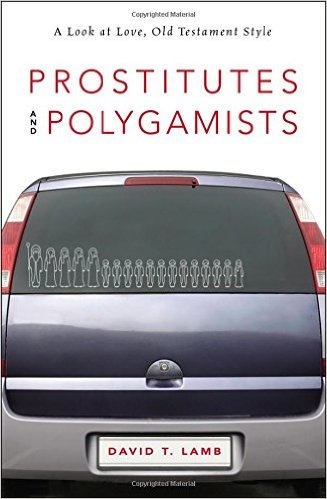
Prostitutes and Polygamists- A Look at Love Old Testament Style.jpgProstitutes and Polygamists: A Look at Love Old Testament Style David T. Lamb (Zondervan) $16.99 From the moment I saw the hilarious cover, I knew I’d like this book by the popular author of God Beha
ving Badly: Is the God of the Old Testament Angry, Sexist and Racist. 
To say he is light-hearted is an understatement – the book is loaded with puns and quips and great footnotes with sometimes snarky references to TV shows from Love American Style to Arrested Development.  He’s no slouch (he has a book on Oxford University Press, and is working on a major commentary on 1 & 2 Kings) but in P&P he picks up the style of his previous one – upbeat, clever, conversational, practical. He tries to answer tough questions that ordinary folks tend of have with fairly conventional answers. He’s no wooden literalist but he’s not a deconstructing higher critic, either. Endorsements on the back come from reliable mainstream scholars such as John Goldingay, Christopher J.H. Wright, Tremper Longman (who says, “Once you start reading this book you won’t be able to put it down.”)  One scholar says he is “sensible and down-to-earth.” Frank Viola says, “The only books I read these days are those which throw fresh light on Scripture or challenge traditional presuppositions. Top-rated Old Testament scholar Richard Lamb has done both.”  Well, for those who read radical feminist critics or explore anti-imperialist readings, these ruminations by Lamb, actually, may not do enough of either, but for those who want respectable, interesting, plausible answers to fair questions for ordinary people, this is truly a great step in the right direction.

Here are two reasons I want to honor this book.  Firstly, it is a great example of the kind of accessible Biblical scholarship that is appealing, fun, funny, applicable, humble, and useful.  That Lamb makes the Bible come alive, and gives us fascinating information about background, context, cultural stuff that illuminates our understand of the text, is just the sort of Bible teaching needed these days.  Lamb would be the first to admit, I’d bet, that he isn’t doing high-level scholarly discourse for the academic guild of Biblical studies. But if you are involved in a home Bible study or teaching junior high Sunday school, or leading family devotions, or chatting with your young adult friends over brews, you don’t need arcane didactic word studies from a dogmatic fundamentalist and you don’t need a hiply ironic, overly academic journal article from SBL. Lamb does real-world evangelism and on-campus apologetics, answering tough questions the best he can, and he gives us here tools to understand and explain weird sexual practices seemingly condoned in the Bible while showing why it matters to our own formation of sexual ethics today. Three cheers for lively, contemporary, smart but down-to-earth Bible teachers who help us not only understand certain Bible quandaries, but gives us a healthy, reasonable style of study, a balanced hermeneutic, if you will that increases our own capacity to trust the goodness of the Scriptures.

And, secondly, not only is he sharp and whimsical and able to laugh even at the weirdo stuff in the Bible, Lamb is obviously eager to help us know God’s grace, to live well, to have the big Bible story be our own narrative; he wants to bless us with a sturdy confidence that God’s redemptive work unfolding in the storyline of the Bible points us to Christ and His saving grace. In his own remarkable admission that he, like all of us, is a sinner, sexually and otherwise, we are set free from false pretenses, liberated to ask hard questions of ourselves and our culture (and even of the Biblical text) which allows fresh, reasonably satisfying answers to spring forth among us.  

Look: I don’t know if Lamb is always right about every jot and tittle – there’s a lot of jots and tittles in this complex, big book we call the Holy Bible – and I don’t know if his fairly traditional evangelical application is spot on in every case.  But he’s a good man, a good teacher, a lover of God’s Word and a lover of people, and he wants to help us all grapple with the Scriptures, discover more deeply God’s grace, and learn to be shaped by Biblical truth, despite the confusing and odd and colorful ways in which it comes to us.  And for that, we can all be grateful.

A SAVORY AWARD: BEST BOOK ABOUT LIVING ABUNDANTLY
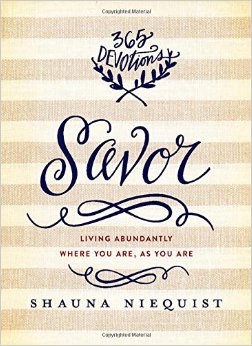
Savor- Living Abundantly Where You Are, As You Are.jpgSavor: Living Abundantly Where You Are, As You Are Shauna Niequist (Zondervan) $16.99  I didn’t want to name this under the category about daily devotionals or spiritual formation in Part One of our “Best of 2015” lists. Although Savor is a lovely collection of 365 short daily readings, with a Bible verse starting each reading, by an inspirationally Christian writer, it seemed somehow something other than that. This is a way to dip in to previous writings of Shauna Niequist and add in some new reflections and suggestions for gracious living. The format is like a daily devo, but the approach is broad. We are invited to trust God, to trust the goodness of the world God made: reality is hard, tragic, even, and Niequist knows this, but through it all we can rally to see the grace God offers, a shot at redemption in the mundane ordinary stuff of life. Savor really is a call to pay attention to daily life, to savor the details, to enjoy and feel (and lament) what is really around us. Wonder, joy, goodness, betrayal, sadness, failure. One of Niequist’s book is called Bittersweet, after all, and there are excerpts of it here.

I love the feel and heft of this earthy volume, the solid pages, the textured, earth tone cover and the hints of blue on the pages. It is beautifully made, conversational but wise, and a very, very useful resource as you attempt to live in new ways, breaking into Kingdom thinking rather then being stuck in old views and old habits.  

“Sink deep into the everyday goodness of God and savor every moment!” she exclaims. In the hands of some other writers this would seem to easy, or too sublime, or too shallow. Niequist gets it just right, and although I am not quite as energetic in my zeal for abundant moments, I’m with her in her hope that we can read and pray and live and behold.  She even includes some recipes (some already in Bread and Wine and some new) to make this book come alive as a useful tool for your own lifestyle.  Love it.  Kudos!

BEST BOOK ABOUT URBAN CRIME,  POLICE WORK, CRIMINAL INVESTIGATION PROSECUTION
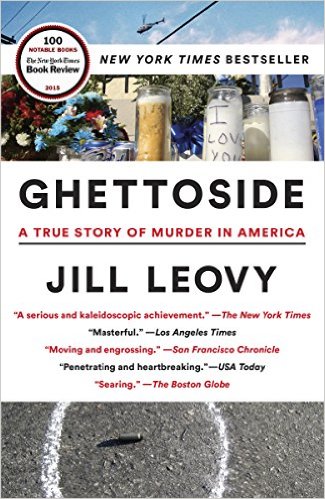
Ghettoside- A True Story of Murder in America.jpgGhettoside: A True Story of Murder in America Jill Leovy (Spiegel & Grau) $16.00  To explain: I have been brought to tears, weeping many times this year listening to a powerful song called “The New Jim Crow” on the latest Indigo Girls album One Lost Day.  The heady book of that name by Michelle Alexander to which the song alludes is a serious study of the racism undeniably evident in the crisis of what is now called mass incarceration. One of our selections for Best Books of last year – now out in paperback – was a passionate, story-filled, illuminating similar work called Just Mercy: A Story of Justice and Redemption by African American legal activist Bryan Stevenson (who we first heard at the Jubilee conference in Pittsburgh years ago, introduced to us as he was by Tony Campolo, Bryan’s college mentor.) With the much-discussed scholarship of Alexander’s New Jim Crow and the best-selling passionate testimony about Bryan Stephenson’s legal aid work told so well in Just Mercy – not to mention the horrors of police violence and dramatic debate about law enforcement tactics and judicial outcomes in places like Ferguson, MO – American is on high alert about the issues of urban crime, about police work, about race and class and economics and politics in the complex work for the common good in our urban centers.  Add in the popularity of so many Law and Order type crime shows, and the award winning power of The Wire, and you realize that this recent book by award winning journalist Jill Leovy was poised to be a best-seller. Released last January in hard-cover, now out in paperback, it was doubtlessly one of the best books I read all year – I sat on the couch and would hardly budge, reading, reading, reading, exclaiming on every page how very interesting and eye-opening it was.  I’m not much of a true crime buff, but this was simply spectacular, how it was written, the pacing and story arc, and the actual story and topic. I wrote about it (here) and cannot say enough about it.

I do not know if the urban policing has changed much since the horrible years documented in this book (think Straight Outta Compton or Boyz in the Hood-era south LA.) We know that Ta-Nehisi Coates National Book Award winning Between the World and Me (speaking of breathtakingly spectacular writing) has brought great eloquence and passion to the experience of black life in these United States, even as his earlier memoir set in Baltimore, The Beautiful Struggle, so colorfully captured the dangers of life in the inner city.  I suppose I don’t need to ramble on about how pertinent all this is; you know.

Ghettoside is about what some call “black on black” shootings, and how local police in LA do or don’t investigate or prosecute these admittedly tragic and violent and culturally complicated crimes. Race and class and cultural differences make police investigations exceptionally difficult, and the gangs and thugs and urban social networks seem aligned to inhibit justice being served.  The complexities and injustices and violence and weirdness of all this makes for important (even riveting) reading, and I think anyone who thinks about, speaks, or writes about, contemporary policing should be aware of these hard circumstances and vexing scenarios. What an informative, gritty read this was, and how entertaining, even.  Like the ubiquitous cop and lawyer shows or legal thriller novels, Ghettoside puts you on the edge of your seat, grabs you tight and doesn’t let go till you turn the last page.

Here’s another reason I want to name and honor this book: it shows a fascinating, inspiring example of a person living out their calling with zeal and courage and dogged determination to make a difference. The hero of the story is a driven, honest cop, named Detective John Skaggs, and his diligence and insight – discovering and embodying best practices in his craft – is fabulous to behold and a good case study of the heady philosophical/theological stuff that those of us in the faith-work conversations often talk about.  It also seems to illustrate the body knowledge sense of deep knowing that Jamie Smith or Matthew Crawford writes about, a lived awareness of one’s surroundings and the habits needed to thrive in one’s vocation.  Many of the officers and detectives doing the investigation (year after long year) of the murder documented in Ghettoside are good guys, a few are exemplary, and the main hero – a white cop! — is nothing short of that, an American hero. 

Do Black Lives Matter, with or without a hashtag?  As little as a decade ago a vast, vast number of murders of people of color were routinely left unprosecuted. In some way, this stunning fact seems to be one root or our current unrest, a deep, institutional legacy of disregard of mostly black, mostly urban, mostly young men. This can now longer be ignored, not only because of the relentless work of a few serious law enforcement workers to change their departments habits, but because of journalist Jill Leovy, who has written so compellingly about it.  I salute John Skaggs, and thank Ms Leovy for telling his story.

BEST BOOK TO UNDERSTAND THE CHANGES WITHIN THE CHRISTIAN RIGHT
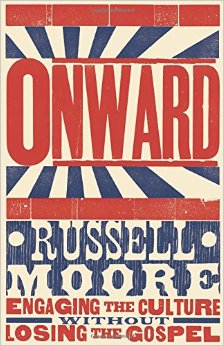
Onward- Engaging the Culture without Losing the Gospel.jpgOnward: Engaging the Culture without Losing the Gospel Russell D. Moore (Broadman Holman) $24.99  Anyone who has heard or met Rev. Moore will know him to be a kind and gracious man, thoughtful and serious-minded about how to live out the full-orbed implications of the true gospel in a culture that he believes to be fading quickly from health and wholeness.  Yet, he is a man alive, on a mission, and is full of generous hope.  He has written widely (for instance, a good exegetical book about the temptations of Jesus, and a rousing book about the need for reform and charity in the field of orphan care and adoption.) This recent book captures his sense of urgency, but tempered with grace and hope. It is exceptionally significant; a bellwether book indicating huge changes afoot in what has often been called the Christian right.

Moore is a public policy guy, a leader of the Ethics and Religious Liberty Commission for the Southern Baptists, and he is bringing a somewhat different vision and tone to his work there. His predecessor was pretty much a partisan Republican, rather strident at times, with not much energy for issues of poverty, creation-care, race and the like, focusing rather on electing fiscal conservatives and anti-abortion legislators.  Moore made it clear when he took Mr. Land’s position a few years ago that he intended to do at least two things as an public advocate for the country’s largest Protestant denomination: he was going to keep first things first and preach the gospel of Christ, and, secondly, he was going to be more Biblically-nuanced, less single-isuey and more diverse in terms of what issues addressed and how he addressed them.  It is wonderful, in my view, to see a conservative so very interested in compassion, in social justice, in Biblical mandates for caring about the environment, and global human rights.  Moore is a vibrant evangelical Christian, and he has a fairly traditional view of many of these things – if one realizes that the “traditional family values” of the Moral Majority and the like were, in fact, not very traditional in terms of historic Christian social ethics.  Kudos to Russell Moore for his passionate, gospel-based vision of the relationship of evangelical faith and social concern, for his loyalties to Christ even as he offers insight and leadership on how to be good citizens and good neighbors.  

Onward does just what it offers, and reflects wisely, and clearly, about the Kingdom of God, the nature of the gospel, about our mission, our culture, how need for “convictional kindness.” He tells great stories the way a Southern preacher can, and while I might not always say things quite the way he does, and might tweak his positions here and there, I am glad for such an intelligent and eloquent advocate of the gospel itself, and how he brings energy and courageous moderation to his guidance on various social issues and tension points in the struggle for cultural renewal.  The discourse about evangelical faith the common good just got a whole lot better, and we should all be grateful for this fresh voice.  Kudos!

BEST BOOK WRITTEN FOR CHRISTIAN WOMEN
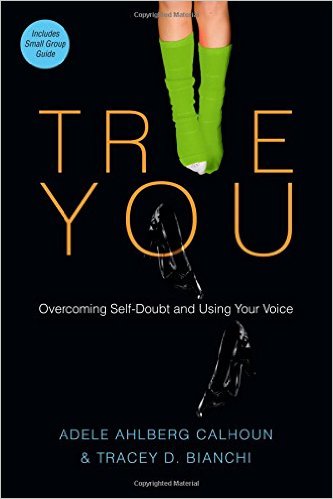
true you.jpgTrue You: Overcoming Self-Doubt and Using Your Voice Adele Ahlberg Calhoun & Tracey D. Bianchi (IVP) $16.00  I think the IVP Crescendo line of books is doing some of the most consistently good titles in the religious publishing world today.  I’ve read most of them and think they are a blast — always interesting, caring and warm,  but not smarmy or condescending, the way some evangelical books for women tend to be.  This wonderful book, which is exceedingly relevant and very, very important, is a perfect example of the thoughtfulness and wisdom that goes into these sorts of books. It is savvy and smart, but not academic or arcane. It is full of deep Christian insight, nicely explained. It is honest and real and helpful.

 The authors themselves are classic — and what a pair they are! Calhoun is known for having written some very thorough guides to deeper contemplative living, such as the amazing resource, The Spiritual Disciplines Handbook (which was recently expanded and reissued in a lovely new edition, by the way.) She has an MA from the studious Gordon Conwell Theological Seminary and  has been trained as a spiritual director. Tracey Bianchi, though, strikes me as a bit more, well, energetic. Her previous books — one about why young moms need to connect with other moms and form vibrant relationships and a fun one called Green Mama: The Guilt-Free Guide to Saving the Planet — are upbeat and lively.  Both seem to be pretty hip gals, and uniting a middle aged contemplative spiritual director and a  younger,  quite relational, funny mom activist, is fantastic. They said in an interview that they known each other for two decades and that they “want to peel away the layers of doubt and drama that often weigh down our hearts and disguise our voices. Who am I? What does God want me to say and do in this world? And what is getting in the way of my doing just that?” 

As Adele has put it,  women need to be able to say, “I have a voice that is worth hearing, a story that is worth telling, and a purpose worth realizing.”  Something, though, is preventing that, and it is troubling. There is self-doubt and anxiety. The world, and the church, and especially the evangelical wing of the church which they represent, needs the voice of women. 

By the way, I don’t like the cover at all.  The glass shoes with heels? The goofball socks? Don’t let the confusion of that design turn you away, as I fear it could: this is a great book, one of the best of 2015.

BEST BOOK ON EVANGELISM
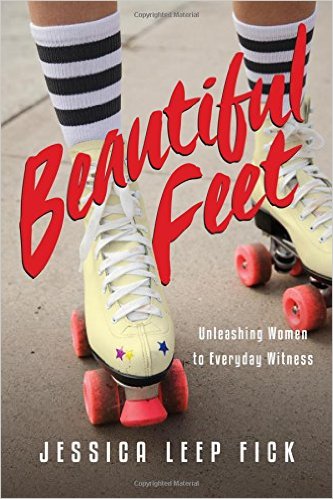
Beautiful Feet- Unleashing Women to Everyday Witness .jpgBeautiful Feet: Unleashing Women to Everyday Witness Jessica Leep Fick (IVP) $16.00  We have dozens and dozens of books on evangelism, and I get tell you my favorite few, our top ten, or suggest some that would be good for you given your own religious orientation or denominational ethos. From the most progressive mainline church to the most rigid Reformed ones and anything in between, there are resources that can help us all grapple with what it means to bear witness to God’s saving grace in Christ and to find ways to help unchurched folks find a relationship with God, reconciled with their Maker by receiving God’s forgiveness. I think most of us don’t do this very well, and everybody is anxious about not offending anyone (and those that aren’t, well, they probably should be.) In this pluralistic, post-Christian world, there are great, fresh opportunities to advance the Kingdom of God by inviting people and families, organizations and institutions, into an awareness of the mercy that surrounds us and into a submission to the Lordship of King Jesus.  It’s exciting, complicated, and not a little bit perplexing.

Enter Jessica Leep Fick, and the famous Old Testament declaration re-cited in Romans 10:15 that the feet of those who bring good news are “beautiful.”  I’m not a fan of the goofy roller skates and retro socks on the cover — although now that my daughter has taken up  Roller Derby, and I read some luminous chapters about a blue-collar roller rink in another 2015 Book of the Year, Midnight Jesus — maybe I’ll warm to it.  But I’m telling you, energetic as this book is (Elisa Morgan calls it “snappy”), it certainly isn’t goofy. It is astute and smart, well written, full of great stories, great insights, great inspiration for anyone wanting to get real about sharing the gospel with others, what that means and what it might look like.

Yes, this is another great addition to the Crescendo line of books designed by IVP for missional women. Notice the subtitle of Beautiful Feet: Unleashing Women to Everyday Witness. Obviously younger women will resonate most with the female orientation offered by this  dance party queen who wrote it, but I’m going to go out on a limb here and say it is the best book on evangelism this year. I think men and women should read it.  It speaks directly to women, and reflects on the unique issues and concerns and situations and opportunities faced by busy younger women, but, again, the overall theme of the glory of being involved in being agents of gospel good news is universal. We all might have beautiful feet.

And, not only is it snappy, and wise and helpful, there is stuff in here I haven’t seen in other books. There’s a chapter on the author’s experiences at the Burning Man festival!  She has a healthy concern for the poor and the marginalized — see her delightful and compelling telling of the story of Tabitha (in Greek her name is Dorcas) who was a “fashionista for Jesus” in Joppa (see Acts 9.) She has tons of experience, having worked with wise and wholistic InterVarsity Christian Fellowship specialists like Rick RIchardson and York Moore.  And there is a fantastic study guide sure to be enjoyed and engaging by book clubs or Bible study groups.  

Edgy missional scholar, storyteller and activist Debra Hirsch (do you know her frank and funky Redeeming Sex?) says,

Jessica’s verve and sensibility combine to make Beautiful Feet as practical as it is inspiring. For all of us navigating the call to witness, this book is good news.

BEST BOOK THAT COMBINES WILDERNESS ADVENTURE, OUTDOOR EDUCATION, SPIRITUAL FORMATION
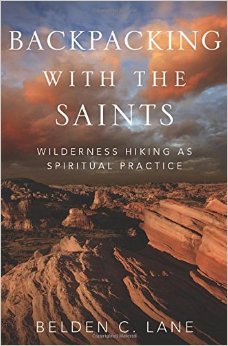
backpacking with the saints.jpgBackpacking with the Saints: Wilderness Hiking as a Spiritual Practice Beldon C. Lane (Oxford University Press) $24.95  I have written about this often, and there is no doubt that it is an outstanding, outstanding book, helping us all –  campers, hikers, paddlers, wilderness adventurers or not – to appreciate how Biblical heroes and spiritual saints can be more deeply appreciated when read and pondered in the great outdoors.   I haven’t done any hiking in years, I am sad to say, so I especially love the opportunity to do some vicarious adventuring along with my spiritual development.  This is a really nice resource and a lovely book.

Beldon Lane written other remarkable books about the spirituality of geography, so to speak, about finding God amidst, as one book put it, “the solace of fierce landscapes.” But this one makes it even more obvious, linking, as it does, one particular saint’s writings with one particular outdoor adventure.  Lane reads St. Columba of Iona while hiking in the Irish Wilderness, instance, and prays with Thomas Merton while in the Aravaipa Canyon and read Martin Luther while failing a climb of Mt. Whitney. There are more than a dozen chapters like this chapters like this, and each is like a short story, fascinating and thrilling and informative, about the landscape, the trip (sometimes, like the texts which accompanied him, which were risky) and the lessons learned while reading and reflecting on the teachings of spiritual writers, mystics, theologians and saints of all sorts. 

 Another bit of genius is how the book is arranged and the themes developed.   The first section of readings in Backpacking with the Saints introduces us to spiritual writers who can help us start our journey, so he reads them at base camp, so to speak. He has a handful of chapters under each section, starting  with the rubric of “Departure (Leaving the Trailhead)” and then some on the second leg, “Discipline (The Practice of the Wild)” followed by some on “Descent (When the Trail Gets Rough)” ending with some on the fourth leg of the journey, coming home, even –  “Delight (Returning Home With Gifts.)”

What a fascinating way to develop our spiritual journey, and how intentionally he uses these profound religious writers as Sherpas, if you will, to accompany us on our own pilgrimages through life.  For what it is worth, not all of the spiritual masters on this journey are Christian ones; he includes Gandhi, Rumi next to John of the Cross and Therese of Lisieux and Kierkegaard and Thomas Traherne and the like.  Even though not all of the spiritual writers are Christ-centered, this is fascinating, helpful and surely one of the great books released this year!

BEST BOOK THAT COMBINES WILDERNESS ADVENTURE, OUTDOOR EDUCATION, SPIRITUAL FORMATION — RUNNER UP
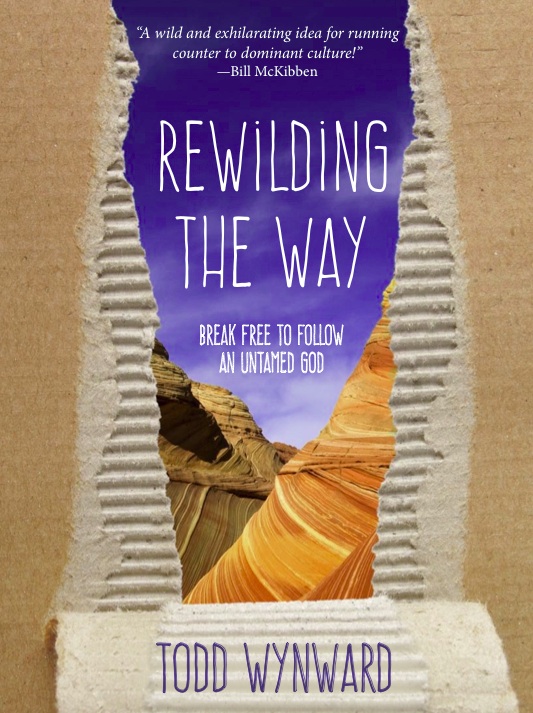
Rewilding the Way.jpgRewilding the Way: Break Free to Follow an Untamed God Todd
Wynward (Herald Press) $15.99

Okay, this is also a book about wilderness education, but its tone and direction are a bit different then the Beldon Lane one, above. I really loved it, too.  I think to honor it now I have to explain a bit about it. Here’s what I wrote about it in BookNotes last September:

I have been eager to tell you about this
book, but had to read more of it, to be sure it was all I had hoped. 
And it is!  This is the story of a Mennonite couple – he, a wilderness
guide who has spent more than a thousand nights outdoors – who started a
very innovative wilderness-based public charter school in around Taos,
New Mexico, smack in the middle of the beauty of the Sangra De Christo
Mountains.  Wynward’s call to “rewild” our understanding of the
Christian faith is provocative, challenging, and – for many of us, I’m
sure – will be a fresh reminder of the wild call to a joyful and
prophetic lifestyle.

He does some great Bible study in Rewilding the Way,
although it is upbeat and playful, even, as he pushes us to see that
Christian faith is less about certitude and dogma and more about
entering into God’s grace and living as loving agents of the restoration
of all things promised in the Biblical story. He knows some of the
original languages, and he offers some refreshing insights. His wanting
to be “wild” certainly pushes us to be creative and fun and energetic
(he’s an outdoors educator, after all, and has worked at camps and in
wilderness mission, so you get the picture!) I don’t fully trust, and
certainly don’t resonate with, many of the hipster post-evangelicals
these days telling us to be wild and raw and free and crazy, written,
too often, I suspect, from the safety of their coffee shop and little
house church full of their best friends.
Some talk about being “wild” but have little serious insight about what that entails.

But
Wynward rescues dying refugees in the dangerous desert, aligns himself
with Christians doing civil disobedience in the face of what they
believe is a repressive Empire, and gives away stuff he doesn’t need, in
joyful response to the Biblical vision of abundance and agape and
radical mercy.  He makes a wondrous adventure out of experiential
education and studies stuff like watersheds and bio-regions and the
local repercussions of climate change.  You want to be wild at heart?
This rejection of the culture’s assumptions of the “good life” and what
is plausible as new creation opportunities as we follow the Jesus Way
into the wildernesses, is a great, great resource to stimulate your
imagination.  I dare ya.

For
some of us, we can recall the first time we read Dorothy Day or heard
the stories of Oscar Romero or really took seriously the words of John
Perkins. Maybe it came from early articles in 1970’s era Sojourners or maybe it came recently from the Irresistible Revolution or the Common Prayer prayer
book by Shane Claiborne and his joyful crew of urban activists. I
haven’t felt the upbeat energy of that wholistic and joyful vision of
radical social change in quite a while (even though I read the new
monastics and other such books routinely.) This book just offered some
truly exciting stuff and it helped these tired bones to enjoy these
pages.  Todd Wynward has brought together some remarkable characters,
friends and mentors of his, has read and engaged some fabulous authors,
and helps us all learn from those who are “recovering from affluenza and
restoring a humble place in the community of creation.”

Endorsements for Rewilding the Way
include Chad Meyers, Mark Scandrette, Nancy Sleeth, Bill McKibben and
(former Dallastownian) Rick Ufford-Chase. New Mexican Franciscan Richard
Rohr — whose center in Albuquerque brings together contemplation and
activism — shows up, as you might guess. The back cover says Wynward
seeks “the feral foundations of Scripture.” You gotta love a phrase like
that. Especially written by guy who lives in a yurt.

Brian McLaren says “I read a lot of good books. But seldom have I read a book that inspired me as much as Rewilding the Way. It is important, meaningful – and so beautifully written.” 

I’m
not as much of an outdoors guy as I sort of wish, and whether you
really are or not, I think Todd Wynward’s new book, with its great
images and metaphors (and beautiful, provocative cover design) is a
joy.  I recommend this, and offer kudos to Herald Press for doing such
daring work. The middle portion of the book, by the way, offers succinct
ideas, “Seven Paths to Wilding Your Way” which makes it practical (if
challenging) and do-able.

I’m
not gonna lie: Beth and I are not going to very fully take up the
watershed discipleship that he describes here, but I was energized by
the stories, inspired by his honest struggles, and cheered by the
reminder of what it really looks like to affirm our proper place in
God’s good creation as we fight to protect the great outdoors.  Three
cheers for this feral book!

And three cheers for that great cover, too!  Way to go Mennonite Publishing!

BEST EXAMPLE OF THEOLOGY IN CONVERSATION WITH URGENT CONTEMPORARY CONCERNS
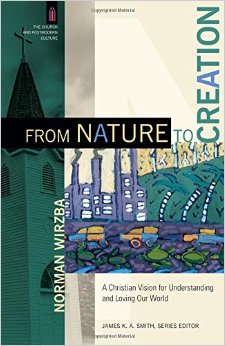
From Nature to Creation- A Christian Vision for Understanding and Loving Our World.jpgFrom Nature to Creation: A Christian Vision for Understanding Our World Norman Wirzba (Baker Academic) $19.99  This book deserves accolades for a number of reasons, and is significant on a number of fronts.  First, I should remind you that it is the most recent (and maybe the last) in the long series of books edited by James K.A. Smith called “The Church and Postmodern Culture.” Launched by Smith’s own wonderful first one, Whose Afraid of Postmodernism. These are fascinating examples of serious Christian scholars interacting with European philosophers like Derrida and the like. The whole series attempts to use our theological resources to help us grapple with the critique made by these deconstructionists, rather then merely disagree with them, or avoid their hard-hitting social criticisms.  So kudos to Smith and the authors he’s worked with to create this set of books.

Secondly, I might note that perhaps of all the books, the Wirzba one shows us why it all matters. He is less a philosopher interested in pomo scholarship, it seems, and a bit more down-to-Earth, a phrase I use intentionally. Wirzba’s other books, some pretty academic, are about agriculture, about sustainability, about bio-regions and watersheds. He has written about and with his friend Wendell Berry and currently teaches theology and ecology at Duke Divinity School.  His lovely, lovey book Making Peace with the Land is co-written with a small farmer; they both make us hungry by writing about a Christian view of food, and they make us want to join them in coming to church with gardening dirt under our fingernails.  That’s the kind of scholar/practitioner her is.

Yet, Professor Wirzba is quite capable of taking his place in this series about postmodern culture and does some heavy lifting for us here analyzing how Western culture’s understanding of our home as God’s creation shifted to “nature” with the rise of modernity.  He documents the philosophers, gives us a little bit of genealogy of ideas to get at this propitious shift in rhetoric and imagination.  Of course he brings the postmodern guys to bear on this with a few footnotes from Heidegger and Foucault and the like.  He helps us with insightful analysis: as Union Theological Seminary prof Larry Rasmussen writes,

As commercialized nature and utilitarian thinking poison the planet and change the climate, what could be more important than ‘creation’ as the gracious way we live. No one is better than Wirzba in describing modernity’s idolatrous and disastrous course and offering a Christian understanding of creation as the antidote.

So, this is another book in this important series. And it really does help us understand how these shifts underneath the roots of Western culture have had disastrous consequences. (Ahh, I kept thinking as I read some of this: whoever thinks history and philosophy are only for “ivory tower” idealists or nerdy intellectuals with their head in the clouds or the books should be shown this, noting, again, how ideas have consequences and how social imaginations, often grounded in rhetorical and intellectual shifts, push us to practices and habits and ways of arranging our lives and our societies.  If we want to — literally, as Wirzba shows — eat better, knowing how we have rejected our very creatureliness is part of the answer.

Lastly, we award this book in a season when there is heighten interest in faith-based understandings of food and farming, spending time intentionally buying and preparing food and eating well. And there is an increased desire to see how our deepest spiritual experiences can be enhanced by our awareness of God’s presence in the ordinary things of daily life.  With Norman Wirzba’s contribution here about the creation being the world in which God delights — less plausible when we’ve reduced creation to mere nature — we ourselves can be open to delight, and to encountering the God of the Bible who invites us to delight. 

One of the  grandfathers of contemporary Christian environmental activism (now called creation-care) is Loren Wilkinson who teaches at Regent College in Vancouver.  His own endorsing blurb on the back of From Nature to Creation is a good reminder, especially when he ends by saying, “Drawing with magisterial and eloquent scholarship on a vast range of sources across both Christian and secular thought, Wirzba calls us to attentiveness, to rootedness — and above all, to gratitude.”  Such a book surely has to be commended, and we are happy to name it one of the most important of the year!   Perhaps, as Steven Bouma-Prediger (For the Beauty of the Earth) says, reading it will not only help us better love God and embrace our own creaturelines, but that doing so will be “life-giving for all of God’s creatures.”  We can hope.

BEST EXAMPLE OF A CHURCH STATEMENT IN CONVERSATION WITH CONTEMPORARY CONCERNS
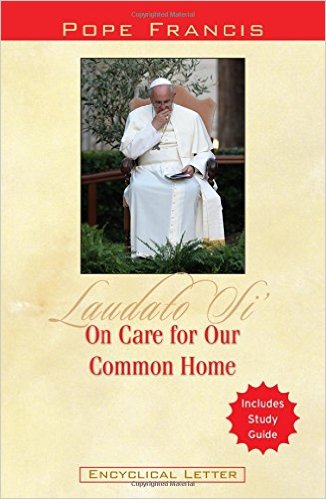
Laudato Si.jpgOn Care of Our Common Home (Laudato Si) Pope Francis (Word Among Us Press) $12.95   I suppose you know about Encyclical Letters, the rare and formal times a Pope offers to his Roman Catholic flock and the listening world a declaration of what he takes to be God’s will, Christian truth for the church and for the cultures of the world. Much has been made of Pope Francis’ radical ways — that he took the namesake of the old Saint Francis of Assisi is important — and his own former ministry among the poor in his native South America influenced him significantly. 

Not everyone knew, at least until this document, that besides being a priest among the poor he also has an advanced degree in the sciences, and is a thoughtful, if not professional, political philosopher as well. Nearly anyone who reads this remarkably important Papal Encyclical will quickly realize both.  He is a great preacher and gentle spiritual writer and many of his devotional books have come out in the last year or so (including a major new one that just came out this week!)  This important formal piece, though, that was released this past summer, is exceedingly important, and exceptionally astute.

Two quick comments: Laudato Si: On Care for Our Common Home places the Christian concern about climate change in the theological context of our human duty to care for God’s creation; it keeps God in the discussion at all points. (Indeed, the Latin phrase in the title means “Praise Be to You!”) I suppose Francsis hasn’t read the Norman Wirzba bo
ok mentioned above although both that book and the Pope’s own intellectual influences would agree: secularizing modernity effected both how we view God and thereby how we view the cosmos and therefore the way we fall into idolatry, such as reducing progress to mere economic growth. Once we realize God’s great delight in God’s own world that He so loves, we ourselves can see our own vocation of creation care as a divinely charged obligation and privilege. So Laudato Si is good creational theology rooted in a history of ideas, and analysis of the complexity of human cultures and a good example of thoughtful Catholic scholarship regarding economics and markets, politics and governments, various institutions and civic life, global cooperation. and the need to work hard at naming and working towards an ethic of the common good.

For an exceptional bit of Protestant appreciation of and evaluation of the Pope’s Letter, see the wonderful two part piece by Jonathan Chaplin in Comment magazine, here and here. After reading this detailed review you will want to get the Encyclical itself.  How great that in 2015, a Catholic Pope can write a detailed analysis of God’s role in the world, the dangers of climate change, and the inadequacies of science and markets alone to solve our cultural malaise, in such a way that it ends up being discussed, even with its Latin title, in the secular Western media as well as among Christian folks of all sorts. This really is a little miracle, and we are grateful to play a part, selling copies here, and commending it to you as a very important, mature bit of Christian writing.  I say Gratias Deo.

THE ANNUAL LEONARD SWEET AWARD?
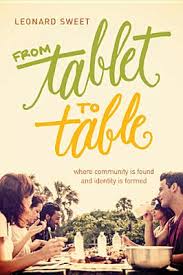
From Tablet to Table- Where Community Is Found and Identity is Formed.jpgFrom Tablet to Table: Where Community is Formed and Identity is Formed Leonard Sweet (NavPress) $14.99  I offer this award somewhat tongue in cheek – Sweet really has the capacity to read volumes and volumes (ancient spiritual saints, contemporary postmodern theorist, the latest cultural critics and preachers) and draw on their most pithy lines and insights as he weaves his own books, some big and significant, some more moderate in size and ambition.  He has released nearly a book a year for a decade now, or so it seems -it’s hard to keep up – and most have been delightful, curious, interesting, informative, inspiring.  Last year he did a nearly magisterial book on preaching (cleverly entitled Giving Blood) and, I’m glad to report, this year’s book is a short, slim one.  I’d be resentful if he did two huge, demanding volumes back to back.

I loved this new one, and thank him for a dozen things it invited me to ponder, to consider, to learn. (Including introducing me to the TV show Blue Bloods which, he noted, is one of the few shows these days where a family meal is a routine part of the show!)  I suppose that this reminder of the joy of eating, the importance of relationships formed around the table, and the richness of the sacramental tradition which discerns God’s presence in the ordinary things of life in the good creation and the reminder that we form our identity within safe communities, will not be utterly new to most readers, but it is a splendid reminder, a beautiful and energetic call to this sense of the good life.  New for you or not, you will be thrilled to see how Sweet weaves together the stories, the quotes, the images and metaphors, the Bible teaching and the reading of social trends and demographics and offers them in a delightful, work.  From Tablet to Table is quintessentially Sweet, sweet and wise and feisty and good and endlessly thought-provoking. It is short and the colorful cover inviting, but do not be fooled: this is a very important book.

You might want to know that I was going to playfully call this Hearts & Minds honor the “I Told You So” Award because I have, surely somewhere in the last 20 years, noted that I thought Len’s emphasis on computers and screens and whiz-bang technology was a tad overstated. I am no Luddite, but our own cultivated ineptitude here on line is in part a matter of principle: we have tried to stay, as he once put it, “high touch” without his equally important second part: “high tech.”  Faceless carts and technological bureaucracy takes the humanity out of our shopping transactions, and I don’t think that is normative for life in God’s world. Years ago we took to heart the concerns of the likes of Jacques Ellul and, say, Technopoly by Neil Postman, hoping to resist the habits that come with an over-reliance on fast, faceless technologies.  I recall more than one conversation with Dr. Sweet about this very thing, pressing him to show some distance between us and the gizmos and I continue to fret about how we might be careful regarding what Quentin Schultze has called “the habits of the high tech heart.” I want to maintain a regular refocus, as Sweet so nicely puts it, from the tablet to the table.

For Sweet, an early adopter of every high tech gadget known to postmodern man and zealous advocate for faith communities to embrace them, it may seem nearly ironic to have him warn us now about the unexpected consequences of too much tablet time, too much screen life.

Alas, it only seems ironic, because, at his heart, Len is a Victorian. He collects antiques for God’s sake. He uses screens but he loves books. He appreciates the relational life, dines well, I suspect, relishes conversations about aesthetics, wrote about being green before it was fashionable.  In a way, this isn’t ironic, it is Sweet coming full circle, as he does, for those with the eyes to see, in nearly all his many books.  We don’t need to get rid of our tablets and iphones to appreciate good meals, or to find God at the table.  But we may need to look up from time to time, get our hands dirty in a backyard garden and enjoy not just poking around on our devices, but doing the dishes, joyfully cleaning up the mess of a life lived well in the real world. From Tablets to Tables will remind us, inspire us, help us and if we do as he suggests, it will form us, shaping us in healthy ways.  Get it today -and not an ebook, either!  This little gem you’ll want to hold and savor, share and discuss, hopefully around a real table full of good food.

BEST BOOK OF POETRY
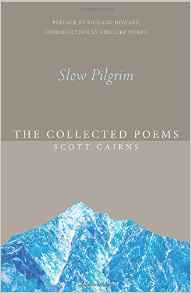
Slow Pilgrim- The Collected Poems Scott Cairns.jpgSlow Pilgrim: Collected Poems Scott Cairns (Paraclete Press) $39.00  I will admit to this right up front. I don’t know much about poetry, and, frankly, go through phases, long phases, where I don’t pay much attention to these glorious gifts of word play and verse. (I do pay attention to well-written song lyrics, but that is, admittedly, a different art.) Every now and then, though, I relish a certain poetic work, discover a certain poet, and I pay more attention.  Are you maybe like that?  Few Americans buy much poetry, and although we have a unique selection here, we don’t sell much poetry at all.

Which is why, I suppose, I really want to honor this extraordinary writer, a good man, an excellent essayist, memoirist, scholar, and spiritual companion for those exploring the mysteries of the Orthodox tradition.  Cairnes is beloved in classy circles such as those who follow Image Journal and has often appeared at good venues like the Calvin College Festival of Faith and Writing or the Buechner Institute at King University in Bristol, Tennessee.  This new book is a major release, a gathered collection of his poems, and it is a handsomely produced paperback (as we have come to expect from the rich heritage of printing from the religious community that runs Paraclete Press.) There is a nice forward by Gregory Wolfe.

If you buy a lot of poetry and serious literature, I do not have to convince you of why Cairns is a treasure in the American world of letters. If you follow the conversations about spirituality and the arts, you know his work and value his presence in the landscape. But if you  don’t buy a lot of poetry, I hope you might consider joining us in honoring the poet, buying this book, pondering and then sharing some of its beautiful, allusive, graceful, vital lines. Of all the poetry releases this year, of all the artful books we received, Slow Pilgrim is not just a notable book to own, but one of the best books of 2015.

BEST CHRISTIAN BOOK ABOUT POETRY
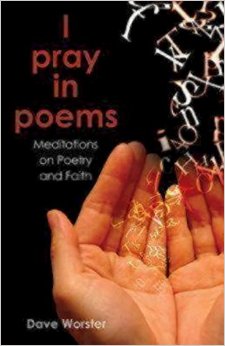
I Pray in Poems- Meditations on Poetry and Faith.jpgI Pray in Poems: Meditations on Poetry and Faith Dave Worster (Morehosue Publishing) $16.00 Did you resonate with what I wrote about, that some of us just don’t pay enough attention to poetry?  This book may be for you. (Of course, if you are already a poetry lover, then this book will thrill you to no end.)

The format is simple.  After an introductory chapter or two, there are about 10 entries, each on a different poem, for the church seasons of Advent, Christmas and Epiphany.  Then there are 10 more suitable for Ash Wednesday, Lent, Holy Week and through Easter. In this sense, I Pray in Poems is almost like a devotional, or a resource for faith formation or preaching during these parts of the church calendar.  But there is more here then simple inspirational devotionals inspired by nice lines from 20 different poems. It really is a careful, detailed study, opening up the poetry, and in so doing, opening up our hearts.

Listen to what Stanley Hauerwas writes, 

Prayer requires close attention to details. Poetry, at least the poetry that Dave Worster helps us read, trans us to attend to details not the least being words. So Worster’s contention that there is an essential connection between poetry and prayer is sustained throughout this marvelous book. Drawing on the wisdom gained from years of teaching poetry, Worster enlivens our lives as Christians by helping us see what we otherwise might miss in our hurry to get on with life. By slowing us down we are able to see with his expositions of these poems that God is in the details.

BEST ART BOOK
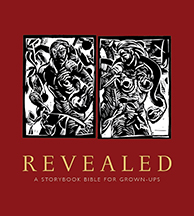
revealed.jpgRevealed: A Picture Bible for Grown Ups edited and compiled by Ned Bustard (Square Halo Books) $37.99  You may want to know that this was one of our biggest sellers this last quarter; it was released a week and half before Christmas, an artful Bible-lover reviewed it briefly in the serious journal First Things, and the next thing you know we were shipping this handsome, provocative, coffee table picture Bible all over the country.  And overseas!  What fun.

I could write more about Bustard’s interesting and usually helpful commentary on the Bible passages and his very interesting and always helpful commentary on the art. I could tell you which pieces I think were brilliant, which were most striking, which were appropriately repulsive.  We could talk about sex and violence in the Bible and the graphic nature of the visual arts in God’s world.  We could talk about the large backstory of Bustard’s determination to bring ancient and modern woodcuts and lithographs and other black and white artwork side by side to illuminate and provoke us to see the Biblical texts more clearly.  We could talk about which artists do this best, which are too allusive or too bold.  We could talk about the fascinating relationship of word and image, and how good art that is tied to narrative is perhaps different than other kinds of art.  We could even talk about Ned’s good friend -Square Halo was the first to publish him — Makoto Fujimura’s luminous, lavish illustrated Four Gospels and how his abstract art in a different way opens up our vision of the text and the gospel behind it.  Revealed is a very different sort of art piece, truly a “picture Bible.”

Revealed: A Picture Bible for Grown Ups is surely one of the most interesting books of this yearn of our Lord, an amazing contribution to not only Biblical studies but to the world of Christian art. I think to honor it here I will invite you to check out the review I did last month, here.

MISSION STORIES
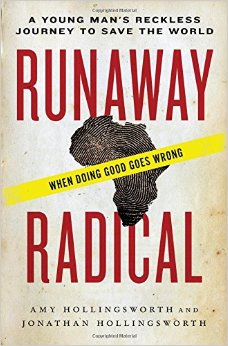
Runaway Radical- A Young Man's Reckless Journey to Save the World.jpgRunaway Radical: A Young Man’s Reckless Journey to Save the World Amy & Jonathan Hollingsworth (Nelson) $15.99 I was going to list this as one of my favorite memoirs of the year, a back and forth tale told by a young adult committed to radical faith and serious visions of making a difference the world and his conventionally Christian mother, watching as the son’s deep faith becomes extreme, driven, weird, even, and as he ends up in Africa serving in a mission compound and is shamed and abused as toxic religionists there add to his bondage and confusion.  What a fascinating, relevant, and heartbreaking story, a story of young adult faith development, of the dangers of religious zeal, of the confusions about what Steve Garber calls “proximate justice” – that is, that we in a fallen world need to learn to live with something other than the very best and full, proper realization of God’s will.  You can’t always get what you want, the old rock song reminds us, but some young radicals miss this, and filled with idealism and a thin view of the tragic, end up bruised and broken. This was the hard experience of Jonathan Hollingsworth and in Runaway Radical his story is told mostly through the eyes of his mother.

As I explained in a long review of this captivating book last winter, I could hardly put it down and I zipped through it relentlessly. It made me laugh, made me scratch my head, made me nod in recognition, made me ponder anew things I hold dear, and made me glad that the season of trouble foisted on this good young man didn’t drive him from faith altogether.  By the end of the book – spoiler alert – dear Jonathan is less sure of many things, but seems quite sure of one thing: God is a God of grace, of goodness, of mercy, so it is okay to not have life all figured out. It is okay to doubt, to question. God is with us and for us, no matter how screwy the church may be.  And that is a very important thing to know.

Runaway Radical works on many levels, the story of the boy, the struggles and concerns and viewpoints of the mother and father at home, the expose of weird faith in a local charismatic mega-church and even weirder and  more corrupt faith as practiced in central Africa where his plan to change the world got derailed. It is a window into contemporary evangelical faith and a window into how, finally, God’s grace can give new hope and renewal after very hurtful experiences. I love the voice of the mother and of the son, and glad for their willingness to be so vulnerable in telling their story. Call it a great memoir, an important missionary story, a cautionary tale.  Call it one of the best of 2015.  
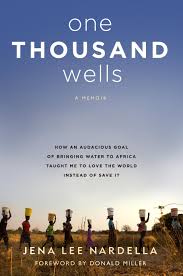
one thousand wells cover.jpgOne Thousand Wells: How An Audacious Goal Taught me to Love the World Instead of Save It Jena Lee Nardella (Howard) $24.00  Again, I want to celebrate this fabulous book, one that I exclaimed about as I was reading it, and wrote about the day I was finished with it. Jena Lee Nardella is a brave soul, a social entrepreneur who has worked with the very cool band Jars of Clay as they endeavored with her help to start an innovative wholistic mission project providing clean water and educating about clean blood, to help alleviate disease in Africa. It is important stuff, but enjoyable: IJM President Gary Haugen says it is “a delightful read.”

Significant thinkers about global development and third world justice such as Dr. Paul Farmer inspired the young idealist in her college years. As she met author Steve Garber (who in those years had written a life-changing book about “weaving together belief and behavior in the young adult years” called Fabric of Faithfulness) she came to know the guys in Jars.  Garber helped them connect, inspired them all to keep on keeping on, and this book tells the fascinating, inspiring, complicated, heart-rending history of the rise of the extraordinary project known as Blood: Water Mission.  Leverage the fame of a hip Christian rock band to raise money to dig a thousand wells, in utter cooperation with local African leaders? Build trusting partnerships between artists and fans and politicos and development specialists and local African villagers, women’s groups, medical clinics, indigenous churches?  How does a girl in college do all this? 

As I said in my BookNotes rave review, there are many books about idealistic social entrepreneurs, about wholistic mission, stories of success and failure in honoring God by loving our global neighbors well. Some are mostly uplifting stories, a few are tedious accounts of the economic data and possibilities of solving issues related to global poverty. One Thousand Wells seems to do it all, telling a great story -set both in the states, traveling on tour with the band, raising money on college campuses and such – and offering true insights about her times in Africa, learning about the nature of global poverty, the significance of fighting HIV AIDS and the role of clean water in the effort to nurture public health. From hanging out with evangelical leaders like Garber to meeting rock stars and world leaders, Jena has experienced much. But true to her good heart and solid perspective, the book shines most when she tells of her friendships – some healthy and enduring, some tragically broken – with leaders, mostly women, in Africa. (I’m not usually a fan of color photographs in books, but in One Thousand Wells they were fantastic to see!)  A good part of Jena’s heart resides in that glorious, large land, and the physical and cultural landscapes are introduced with wonder and beauty.  This is a truly lovely book, a great story, by a serious young writer and activist.  We are delighted to name it as one of Hearts & Minds Best Books of 2015.

BEST ACADEMIC BOOK OF 2015
Christian Historiography better.jpgChristian Historiography: Five Rival Views Jay Green (Baylor University Press) $34.95  We are not an academic bookstore, really, and although we carry some scholarly and university press titles, we are a little picky – some say not nearly enough – about the sort of scholarly books we promote in various academic fields.  It is a looming question, even in a world where “all truth is God’s truth” and in common grace there is so much to be appreciated and learned: what philosophical underpinnings shape the popular notions of various scholarly fields, or various camps within those fields, and of the particular scholars within those disciplines?  How do we bring God’s health and wisdom and Biblically-informed insight to academic discourse, genre by genre, department by department of the modern university? From the details of neurological science or trauma studies to the insights of literary criticism or film studies, from the data found in sociology to the latest studies about climate change, from the debates about theories of jurisprudence to the complexities of aesthetics or architecture, it should be evident that no academic sphere is philosophically neutral, that no scholarship is religiously disinterested, that every scholar believes in something that informs her work.  All theories are grounded in the longings and ultimate concerns of the human heart and therefore, seeking to discern the contours of the influences in each field is a major concern for Christian scholars in the academy. It should be obvious, but it usually isn’t, that this is the very calling of Christian academics, and their students, but for thinking Christians in the world at large, it is no less of a necessity; how do we discern the wisdom and truthfulness of the ideas coming at us from presidential candidates, popular science magazines, or between the lines in popular entertainment and advertising? We are always looking for books that thoughtfully engage the foundational theories in any given field, that discern the assumptions and religious-like values that shape the development of those fields, and help us all figure how to, as some put it, develop a uniquely Christian viewpoint as we “integrate faith and learning.”

Sorry to go on about the background of what I mean by this award, and why we value a book like Dr. Jay Greens. It is a fine work, a perfect example of this very sort of research, and a wonderful book to hold up as exemplary in the field of Christian scholarship.  

Except, he has gone a step deeper into the conversation: these five rival views discussed in his new book are all alleged Christian views of the topic. These authors have been aware of the various schools of thought within their discipline, and have been more or less been intentional about carving out a certain school of thought – a camp or school of historiography – that they believe comports with their Christian convictions.  Can they all be right?


As you can tell, the particular field here is history, and the questions Green asks are about these rival theories of the philosophy of history as they are appropriated by Christian colleagues within the discipline.  Nobody interprets anything in a vacuum, and it is certainly obvious that presuppositions and a priori concerns and values and attitudes and convictions shape what sort of history we study, and what we make of it all. The study of these theories behind and underneath the doing of the work of writing history – historiography – is on display here, each view or school of thought fairly described and explored, and evaluated in light of the author’s own biases about his own understanding of a faithful, coherent view of Christian historiography. 

Again: no academic discipline is philosophically neutral, so there are different schools of thoughts within each and every academic field. Christians are called to “take every thought captive” and allow their faith and assumptions about realty to color the work they do in the academy.  These authors discussed in this Five Rival Views book are all attempting to do this. It is Green’s project to describe and compare and contrast and evaluate the coherence and Christian coherence of these different authors. Are they actually doing consistently Christian historiography in their methods and visions and values?

I trust this solid, exemplary thinker – he teaches at Covenant College in Tennessee and is working in the grand Augustinian/Reformed tradition  – and appreciated his role in a splendid reader compiled a few years ago about these very things. (Published by University of Notre Dame Press, it was called Confessing History: Explorations in Christian Faith and the Historian’s Vocation and was co-authored by other thoughtful Christian historians and friends John Fea of Messiah College and Eric Miller of Geneva College.)

This new volume from Baylor University Press is a major project, truly one of the finest works of this sort ever done. Would that there would be a book like this in every field of scholarship!  I know it isn’t much from our corner of the world here in small town Dallastown, but we want to celebrate this kind of work, thank Dr. Green for his conscientiousness as a Christian scholar, and honor this book as one of the most significant of 2015.

A SHAMEFUL AWARD: BEST BET FOR BEST BOOK OF 2015 THAT I’VE NOT (YET) READ
Art of Memoir.jpgThe Art of Memoir Mary Karr (Harper) $24.99 Yes, I’m ashamed I haven’t read more than a page or two of this, but I’m honoring it here anyway. 

There are some books that promise to be so enticing, so good, so fun, that I have to be in a suitable mood that is up for such joy. Or a book seems to be so important and serious and momentous that I have to be ready to dedicate the time and energy for that kind of reading.  I am itching to pick it up, but know the time just isn’t right.  Ms Karr’s recent book may be a little of the later, but is mostly the former, and I can’t believe I just haven’t found the space to take it up yet.  I read the preface and the first few pages and laughed right out loud. I saw her list of great memoirs in the back and was floored.  But I really, really want to be in the right frame of mind to enjoy it best.  I thought how I might just go through her own story again, picking up The Liars Club, Cherry, and Lit all over again.  And I wondered what the gritty and eccentric Ms Karr thinks of some of my favorite memoir writers, such as Catherine Gildiner (we so loved her three volumes about her quirky life) or my favorite memoirs such as Reading the Mountains of Home by John Elder, The Tender Land by Kathleen Finneran, The Cliff Walk: A Memoir of a Job Lost and a Life Found by Don Snyder and the devastating  An American Requiem: God, My Father, and the War That Came Between Us by James Carroll.  Anyway, I am sure The Art of Memoir will be fabulous for anyone who likes Carr, or who likes books about books.  I can’t wait. I’m naming it one of the best books of 2015.  Even though I haven’t read it yet.

BEST NEW PUBLISHER 

fcp.pngFalls City Press, founded 2015.

I will admit that I don’t know any new publishers this year, and so I can’t exactly promose the final veracity of this award. But my good freind Keith Martel — one of the sharpest guys I know, in so many ways — started what he is calling a micro-press.  I guess like a micro-brew.  He’s developing a plan to release other books, but has done two good ones before his first year anniversary is even upon him. First he did his own co-authored book, one which I have raved about more than once, Storied Leadership: Foundations of Leadership from a Christian Perspective written with his pal and colleague at Geneva College, the always enthusiastic Brian Jensen (Falls City Press; $18.00.) These two storied leadership.jpggood are rock solid in faith and perspective, philosophical without being arcane, and serious without being dry. So they’ve gotten this whole-life discipleship thing just right: God cares about all of life and we are invited to take up our role as ambassadors of CHrist’s Kingdom, exploring normatively in all aspects of life.  So when they write about leadership, they are inviting us to take up vocations within history, inspired by the whole Biblical story, and discover and embody practices that are consistent with that story. It’s a truly wonderful little book, nicely done, and, as I say, published by this groovy new Western PA publishing venture.
The second book produced and published by Falls City Press is another I’ve reviewed at length, published in collaboration with the non-partisan, principled, Christian political think-tank The Center for Unleashing Opportunity- Why Escaping Poverty Requires.jpgPublic Justice.  In Unfolding Opportunity: Why Escaping Poverty Requires a Shared Vision of Justice (Falls City Press; $11.99.) Falls City and CPJ give us a handful of topics that are obstacles for those trying to get out of poverty, and areas in need of attention and reforming efforts on the part of those who want to be serious about actually doing something to fight poverty. It’s brief chapters and practical tone make it ideal for young justice activists, it seems, almost a handbook for faithful Christian engagement.  In each topic, there are three sections, each penned by either Michael Gerson (famous pundit and former White House speech writer), Stephanie Summers (Director of CPJ) and  Katie Thompson (young justice advocate, editor of the CPJ Shared Justice blog.) They look at the facts about the issue, frame it in light of important Biblical themes and Christian insights, and then tell of case studies and good examples of work local groups are doing as an example of actual projects to be considered.  Richard Mouw has a very helpful foreword.  Three cheers for this great little resource, and three cheers for CPJ choosing this fresh new voice in the publishing world: Falls City Press.
BEST OPPORTUNITY TO RECOMMEND BOOKS

The Washington Times special Insert: “The Power of Prayer: Enhance Your Life” November 30, 2015 

We are truly privileged to get to sell books at all kinds of really nice venues, serving really fascinating organizations and ministries, and we’ve been assisted by some of our favorite people on the planet at these off cite events. From the low-key PC(USA) Wee Kirk Conference to the the pretty high-powered Redeemer Center for Faith and Work event, from the national Christian Legal Society annual gathering to any number of smaller clergy or Christian educational events, we are hosted well by good friends who value our book displays and sometimes give us an opportunity to speak, to teach, to do workshops on books, and to write for their own publications.

Well, what a surprise it was when the globally-known The Washington Times newspaper called, and invited me to do a column, a small side bar in a very large and attractive special edition insert they were doing right after Thanksgiving weekend.  Their topic — with columns by dozens of prominent, mostly evangelical, leaders — was prayer, and you can see my list of a handful of the best books on prayer and spirituality in that colorful, professionally-done insert, and on their webpage. Better, I filled it out a little, added a few, and did my own expanded edition of that list at our own BookNotes, which you can see here. 20 great books on prayer briefly described!

Special thanks to the esteemed Thomas P. McDevitt, Chairman of The Washington Times and project editor Larry Moffitt who added my small voice to their big project.  Afterwards, by the way, I got a lovely note from Philip Yancey, which — okay, I’ll admit it — just made my day.  What a way to make a living, talking about good books with interesting folks!

BIGGEST BUILD-UP TO A NEW BOOK RELEASE (AND THE CONVERSATION AFTERWARDS)

Go Set a Watchman.jpgGo Set a Watchman Harper Lee (Harper) $27.99

I hope you haven’t quickly forgotten the fascinating conversations about Atticus Finch, about rediscovering, as many readers did, the Harper Lee classic, To Kill a Mockingbird. We were happy that there were books coming out, or being re-marketed, about that great story. We had a nice in-store display including the very nice The Mockingbird Parables: Transforming People’s Lives Through the Power of Story by Matt Litton (Tyndale; $14.99) and a new four-session DVD curriculum called The Faith of a Mockingbird (Abingdon Press; $39.99.) New supplemental books and Lee biographies have come out, and they are all quite interesting.

But we want to recall not just the very good Go Set a Watchman book but the lively conversations it seems everyone was having on facebook and twitter and in barbershops and here in the store. There were articles pro and con, discussions about the ethics of the corporation and literary executives, and there were articles, pro and con, about the aesthetic quality of the writing, and there were articles, pro and con, about the theme and insight and moral of the story itself.  This is all good, and we weighed in a bit. It was an honor to take pre-orders, sensing it was one of the significant moments in our career as book sellers.

Thanks to you who bought it from us, and thanks to you who wouldn’t out of principle. And thanks to everybody who expressed an opinion after having read it.  Looking back, it was a great month in book land, eh?  

BEST IDEA OF A BOOK RE-DO
story of god's love for you.jpgThe Story of God’s Love for You Sally Lloyd-Jones (Zondervan) $14.99

I sure, sure hope you know how much we appreciate the wonderful children’s picture Bible The Jesus Storybook Bible: Every Chapter Whispers His Name with the fabulously creative, energetic pictures by Jaego.  It isn’t faultless, of course, but it is brilliant and so very useful. It comes in the regular, lovely square hardback, it comes in a larger size big hardback — which is fabulous and well worth the few extra bucks, by the way — and a deluxe gift edition that includes CDs of the stories being read out loud.

It is not surprising to me that sometimes customers feel like they are in a pinch. They really want to give The Jesus Storybook Bible to a fifth grader, or read it out loud to a junior high Sunday school class.  Heck, I know adults that have read it out loud in their own sophisticated Old Testament courses. (Okay, maybe I’m not  that sophisticated, really, but you get the point.) Sadly, with the childish pictures and kid’s book font on the cover, it just doesn’t work as a gift to a 13 year old.  Nope.

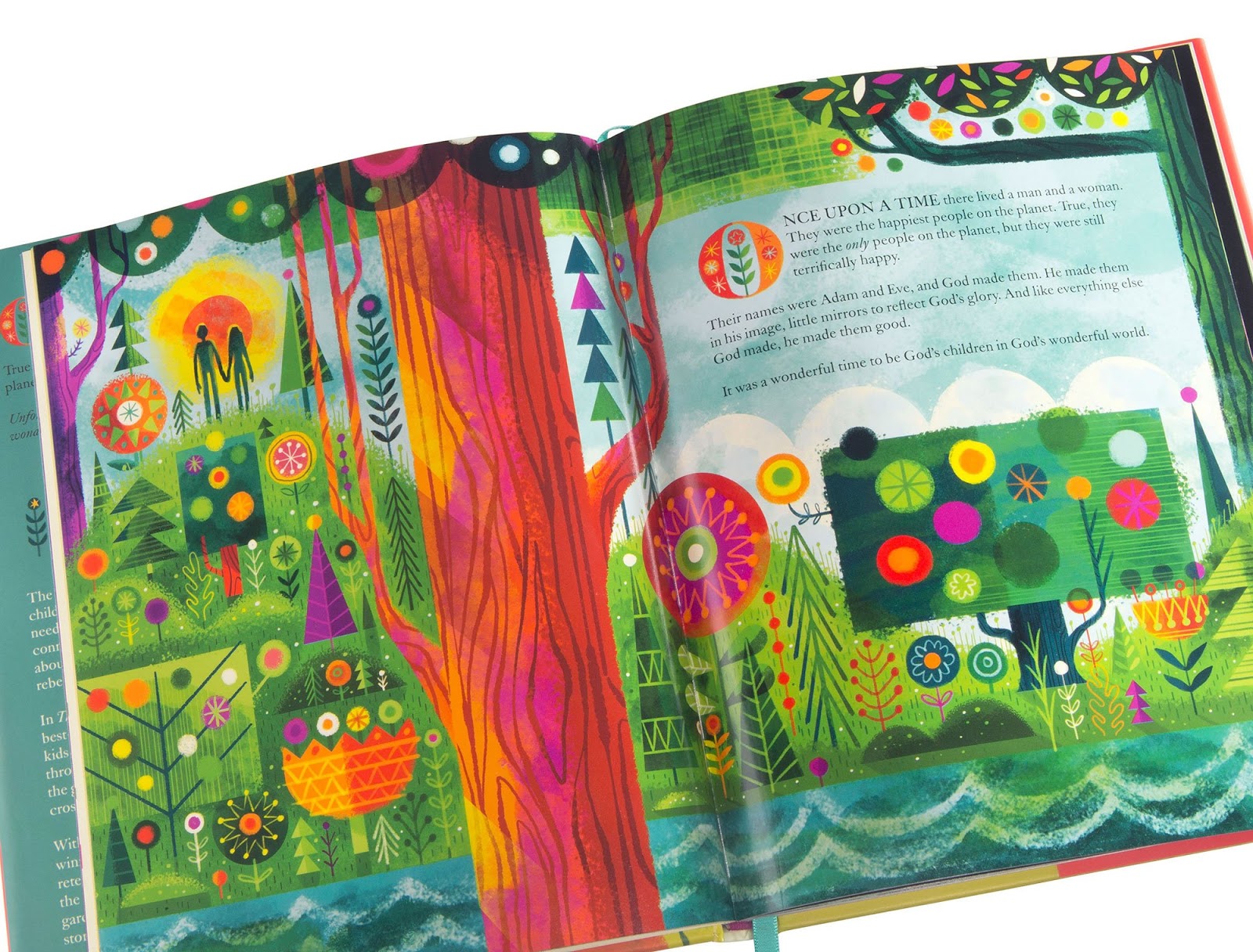
So, some marketing geniuses somewhere came up with the idea of taking the same lush and insightful and well-worded text and put it out in a handsome, compact hardback with discreet icon symbols instead of the pictures, making the same text now available to older readers who now need not be embarrassed by reading a pre-school picture Bible. Same text, cooler book design but no pictures. What an idea. And we’ve sold a lot of them this past month, with many exclaiming that this is just what they needed.  It’s the same Sally Lloyd-Jones text but with a new design, and a new title. The words are all the same.  You can read a bit more that I wrote about it last month, here.

Hands in the air for marketing that doesn’t feel like a greedy add on, a cottage industry of spin- off stuff, as too often it is, but a really smart idea, filling a really important need, re-launching a classic in a fresh new way. 

BookNotes

SPECIAL
DISCOUNT
ANY ITEM MENTIONED

20% off
order here
takes you to the secure Hearts & Minds order form page
just tell us what you want

inquire here
if you have questions or need more information
just ask us what you want to know

                                      Hearts & Minds 234 East Main Street  Dallastown, PA  17313     717-246-3333
Hearts & Minds Bookstore’s BEST BOOKS OF 2015 – PART ONE

As I usually say as I introduce our Best of the Year awards, these might better be called Byron’s Personal Favorite Books of the Year. That doesn’t quite get it right, either, though, as I’m trying to get at some allusive worth, not just my favorite reads, but my favs that I think deserve acclaim as somehow important, particularly beautiful, or helpfully provocative.  I want to get some mojo going that excites you to read these books that, while not precisely the very best (necessarily) and not merely ones I got a kick out of, but those that deserve celebration, honor, and a zealous final shout-out before the year fades and the new books crowd out the memories of these fabulous books, great books of 2015. 

I may have read more this year than ever, but this year’s list of Best of/Byron’s Favorites is going to be just a little bit shorter – I wore myself out, and you, too, dear reader, I heard – in my epic awards lists the last few years. (Snoop around old BookNotes and you’ll find my previous multi-installment re-caps of the year that went into overtime. Those books deserve their accolades and are still worth reading!)

So, pull up a chair, get that hot drink – or a stiff one as the case may be – and offer up a prayer of thanks that even in this crazy-making, fast-paced, too often superficial, theologically complicated (and strident) world of ours, authors and publishers offer up these gifts of truly wonderful books, affording us opportunities to enjoy ideas, sit in silence with the thoughts and creativity of another, and take in the wonder of the printed page.   Say a prayer of thanks for the publishing industry, and commit yourself to support those of us who make our living getting the word out.  And join me as I name this list, the Hearts & Minds Best Books of 2015.

BEST BOOKS OF APPLIED THEOLOGY, BASIC CHRISTIAN LIVING, WHOLE LIFE DISCIPLESHIP

staying is the new going.jpgStaying is the New Going: Choosing to Love Where God Places You  Alan Briggs (NavPress) $14.99  I loved this easy-to-read, brief book, and was very impressed with the author’s ability to bring together astute social analysis about our mobile culture and the disinterest in a living local that came with late modern capitalism, with the best of recent missional thinking (for churches but mostly for ordinary folks in their daily lives.)  It has just enough solid cultural criticism to be meaty, and tons of fantastic, fascinating footnotes, and it has just enough stories and examples to make it come alive with actionable practicality. As you might guess, this spends some time not only pondering how to imagine a deeper sense of place but inviting us to practices that enhance our care for the local, from supporting farmers markets to indie cafes to local civic organizations.  This book is well-informed, helpful, inspirational, and exactly the sort of new missional vision that needs explained and underscored.  There’s a tiny bit of hipster new urbanism stuff here, but Staying is the New Going is equally great for those deepening their care for rural life, small towns, and more conventional middle class suburbs. It is sure to touch your heart and help you see your place with different eyes.
By the way, the Foreword by Michael Frost on two strains within American literature – those that go and those that stay, those influenced by being on the road, and those who are definitively shaped by their sense of place — is nothing short of brilliant and is itself worth the price of the book.  Can I give an extra award for best Foreword? Three big neighborhood cheers.

Garden City- Work, Rest, and the Art of Being Human.jpgGarden City: Work, Rest, and the Art of Being Human John Mark Comer (Zondervan) $20.99  When I reviewed this I said it was a delight, breezy and fun, arranged to appeal to younger readers (it looks like a Rob Bell book with white spaces and some minimalist page design.) It gets at the truths that are so much discussed in so many churches these days, that our faith makes us more fully human, our work matters to God, we are called to vocations for the common good, and throughout all our culture making we are invite by God to relationships, to rest, to wonder.
We regularly promote a bunch of serious books that explore these themes and Garden City may be the best introductory one for those that don’t want one that is heady or too demanding. This is a fabulous book to use with others, in mentoring friendships, adult ed classes, book clubs, and the like. It can introduce vital concepts with remarkably clarity and wit.  Skye Jethani says that it invites us to “a ravishing vision of the beautiful future we are building with God today. Everyone who reads this book will see their world with new eyes.”  Yes!

The Road to Character.jpgThe Road to Character David Brooks (Random House) $28.00 This has been one of the most discussed books this year in some circles, at least, and it deserves any accolades it garners. We are eager to highlight its significance, its rich storytelling, its serious-minded and thoughtful approach to how we come to be the people we are.  Brooks – who seems to be on a journey towards Christian faith – has released a handful of important books that blend 20th and 21st century social analysis and concern with the fabric of society, each written with verve (and, in his earlier books like Bobos in Paradise and On Paradise Drive) great wit and outright humor. More even than the others, The Road to Character is not only a sociological study and interesting analysis of what makes us tick, where virtue comes from and how people come to desire the good, it is an apologetic for it. Some of his study is profound and provocative, but he brings it home with fairly obvious examples – why is it, he asks in the beginning of the book, that guys that defeated the Nazi’s or survived D-Day didn’t do happy dances or pound their chests the way millionaire athletes do nowadays even if they make a fairly unremarkable play on the football field? Interestingly, he doesn’t necessarily blame, as some do, the liberal shifts from the 1960s, but teases out the consequences of the ease of the post-WWII years after the Greatest Generation returned home.  Agree or not with his assessment of the flow of the decades and the spirit of the ages, The Road to Character is captivating and compelling. (Again, it is very erudite, confident, but it isn’t preachy; Michael Gerson in The Washington Post notes that “The voice of the book is calm, fair and humane.” The stories Brooks tells are worth every penny to buy this book. He tells in great detail the life stories of great people, of some that are not so great, and of some that are – imagine! – a blend of profound virtue and feet of broken clay. In this, it is a very wise and sophisticated book.

I know that some listeners don’t like his weekly punditry on NPR or his moderately conservative presence in the New York Times and The Washington Post.  Still, I think even left-leaning readers will be pleasantly surprised at the people Brooks honors here – from Bayard Rustin, who so influenced Martin King to Dorothy Day of the Catholic left.  Where do such courageous activists come from? How does such counter-cultural character formation happen?  How does religious faith nurture moral development? It isn’t a secret that Brooks has spent time in recent years with thoughtful evangelical leaders – from scholars at Christian colleges to Timothy Keller to fellow journalist and writer, Michael Gerson, or that his major research assistant thanked in the acknowledgments is herself an evangelical follower of Jesus. This broad vision of the meaning of life under the sun and this fascination with the social and political and ethical implications of the interior life is rich with religious overtones and Brooks is capable of exposing some of the layers of meaning in the search for a coherent, good life.  I think this is one of the most important books of the year, and certain – for educated readers – certainly one of the best. 

The reviews have been great – USA Today says he is like Malcolm Gladwell; Maria Popova, of the Brain Pickings newsletter writes that it is,

Elegant and lucid . . . a pitch-perfect clarion call, issued not with preachy hubris but from a deep place of humility, for awakening to the greatest rewards of living . . . The Road to Character is an essential read in its entirety–Anne Lamott with a harder edge of moral philosophy, Seneca with a softer edge of spiritual sensitivity, E. F. Schumacher for perplexed moderns.

soul of shame.jpgThe Soul of Shame: Retelling the Stories We Tell Believe About Ourselves
Curt Thompson  (IVP) $22.00  I have written about this often,
highlighted it at nearly every off-cite event we’ve gone this year, and
am delighted that we can confidently celebrate it as one of the very
best books of 2015.  As you may recall, Dr. Curt Thompson is a working
psychiatrist with a serious vocation of studying neuroscience; his
earlier book (Anatomy of a Soul) explored how knowing a bit about
brain studies and how God has wired us – brain and body! – will help us
in our relationships and spiritual growth. This new book brings his
psychiatric expertise and his teacherly ability to explain neurobiology
to his overall project of studying in Biblical perspective the toxic
impact of shame. In this single volume Thompson models an exemplary
methodology of integrating Biblical studies, theology and spiritual
formation with his own calling in the career of medicine and counseling.
What an integrated, wholistic, multi-faceted perspective he has on his
field!  And what a knack he has to help us!

In The Soul of Shame: Retelling the Stories…
Thompson shares lots of stories of his own clients, how he has brought
insight and served his patients by inviting them to a life of faith and
discipleship by taking up the story of the redemptive work of God;
although he tells this big drama of Scripture well, he then helps
readers cope with shame and learn to be more whole and healthy and
vulnerable by applying some basic habits and life skills based on brain
science that can be truly transformative.  Kudos to Curt and to IVP for
offering to us all such a great example of a thoughtful, useful,
Christian book, one of the best of 2015!

Accidental Saints- Finding God in All the Wrong People.jpgAccidental Saints: Finding God in all the Wrong People  Nadia Bolz-Weber (Converge) $23.00  I know that many, if not most, of our BookNotes readers will be suspicious of some of Bolz-Weber’s mainline Lutheran theological tendencies, and will disapprove of her ready acceptance and advocacy for persons within the GLTB community.  Some will be put off by her cussing – before her come-back-to-Jesus journey that led to ordination in the ELCA she found herself addicted and working in the late night, very blue, comedy circuit.  Some will object to her lefty and progressive worldview which verges on self-righteously indignant.  I doubt many will mind the artful images from the liturgical calendar famously tattooed across her arms and chest, but it is hard to miss.  Still, Bolz-Weber writes like a dream, the book was among the most interested and touching I read all year, and her memoir-like journalism about her edgy emerging faith community (The House of All Sinners and Saints in Denver) contained unforgettable characters and unforgettable theological insights. I loved this book.  Disagree with her understanding of doctrine or her embrace of the bohemian sub-culture, but Accidental Saints is about finding God’s grace in bizarre situations, the ups and downs of postmodern church planting, and about God’s own glory seen in the works of mercy, justice, advocacy and art of God’s people in this unusual cultural setting.
Nadia admits to being a bit cranky, and, like most in her feeble, funny congregation, is on a journey towards greater Christ-likeness, being transformed by worshipping well and doing life with others in service to their community. Accidental Saints is an unforgettable book, doubtlessly an example of a new kind of religious memoir, and one Beth and I enjoyed and appreciated.

It's Not What You Think- Why Christianity Is About So Much More .jpgIt’s Not What You Think: Why Christianity Is About So Much More Than Going To Heaven  Jefferson Bethke (Nelson) $17.99  If Nadia’s book, above, is a high-octane, colorful telling of post-modern, emerging mainline liturgical faith in the setting of cultural bohemians, this book, at first blush, is the polar opposite. Bethke is culturally conventional and theologically conservative as a Reformed young adult in what seems like a spiffy megachurch.  He is in many ways nearly as much of an icon of a certain sort of faith expression as Nadia is for another.  You may know how he was catapulted to fame after a lively video called “Jesus is Greater Than Religion” went viral a few years back.  Next came a book by the same name exploring more of this wild and passionate Christ-centered vision and it was surprisingly good.  This Jefferson Bethke fellow obviously had more than a five minute YouTube sensation in him and as a young evangelical pastor has a keen ability to take serious Biblical truths and show us out to apply them to our lives in orthodox, faithful ways.
This new book reads well and its organizing structure is showing the surprising grace of God in many ways, explaining how things are never quite as they seem.  It really covers a lot of material, and is informed by solid thinkers who are known for relating good theology to contemporary culture — think, say, Dallas Willard or N.T. Wright. (Chapters include telling about how we are not what we think, the Bible is not what we think, the gospel itself is not what we think, etc. It works!)  I thought this surprising contrast, turning common assumptions on their heads, was a very helpful approach to living out whole-life discipleship, mature and interesting and solid.

This is one of the best books in this huge category of “basic Christian growth” or what some religious bookstores call “Christian living.” It is lively and aimed at a younger readership, or so it seems, and yet I loved it, reading it at the end of my 60th year.  Kudos to this young author and his vlogs and cool millennial vibe.  And thanks be to God that rising evangelical leaders like Jefferson Bethke are so robust and thoughtful and serious about living out practical discipleship in the contemporary culture, finding their own place within the broader story of God’s redemptive plans. And thanks be that they help us find our own place there, too, in a Kingdom coming that is already but not yet. 

Grounded.pngGrounded: Finding God in the World – A Spiritual Revolution Diana Butler Bass (HarperOne) $26.99  For a variety of reasons I read and re-read this, dipping in again and again, throughout the fall and early winter.  It has stimulated my own thinking, brought great joy – at times tears to my eyes, and a much-needed renewal to my soul – and at times, not an insignificant amount of frustration.  This is not the time or place to detail my frustrations with certain lines and certain authors she cites approvingly other than to say there are moments that she seems, to me, to nearly set up a caricature of those she finds wanting, a “straw man” ploy. For instance, Bass talks about an “elevator” view of God and faith, as if the faith of most church folks is merely about going to heaven, zipping out of this world, to be with an otherwise distant deity. Perhaps it is because I rail about such gnostic otherworldliness myself that I am sensitive, now, to being fair about such critiques.  Ahh, but yet: even if most who hold to fairly conventional faith and evangelical doctrines don’t quite match her cartoon of them, she is right – so right! – that faith is too often personalized and made internal or disconnected to life in God’s good world. There is a sense that God cares more about the so-called spiritual than the so-called ordinary, secular life, and this book is yet another resource to disabuse us of this wrong-headed and unbiblical view.

Grounded, in its beautiful prose about earth, water, sky, reminds us of the wonder of creation, the grounded location we all share – we are Earthlings, after all, not made for heaven, but designed to bear God’s image in the world – and helps us find God not only in our prayer life but in our gardening, not only in church but at the PTO, not only on spiritual retreat, but on family vacations.  It invites us not to leave taking but to presence, a sort of homecoming.

I have thoroughly enjoyed sitting under Diana’s tutelage on occasion, and have read all her books, and I think Shauna Niequist is right to say this is her most beautiful writing, and perhaps her most significant work to date.  Her study of how Christian discipleship is embodied in homes, in neighborhoods, and in the public commons is wonderfully realized and very, very helpful.  Her writing is a delightful blend of theologizing and storytelling; she offers (accessible, if provocative) scholarship infused with memoir and testimony, relating her story, describing her emerging understandings of the Christian faith’s vision of the sacramental nature of reality and God’s presence around all things. She often shows that some of these insights and consequential practices are similar to those of other strains of other world religions and this could be distracting to those who are suspicious of such inter-faith dialogue.  (I hope no BookNotes reader opposes such tendencies in principle.) Bass’s project of showing how Biblical, Christian faith invites us all to find God outside the walls of the congregation and in experiences other than liturgy and Scripture study is a fine, solid one, so there is a natural trajectory towards wondering how this plays out in our postmodern, post-Christian, pluralizing world and how to talk about this with our multi-faith neighbors.

Butler Bass wants to show connections between older spiritual revivals and contemporary interest in spirituality and the soul; as in her last book, Christianity After Religion she insists that we are not in an era of secularization. In one section that I continue to ponder she draws connections between the 18th century Great Awakening (she tells of her experience preaching in the old church of Jonathan Edwards in Northampton) and the renewed interest in small organic farms and sustainable agriculture and farmer’s markets that region of old Puritan New England. In another she writes movingly about her own deepening sense of place in her neighborhood and locale and how this compares to spiritual renewals experienced at camps and retreats. Indeed, our own sense of home is an important aspect of her understanding of our spiritual formation, and her descriptions of places she has lived and the faith communities which have shaped her, are very important (and delightfully so) to the heart of the book.

Agree or not with her rejection of “elevator” faith and her emphasis on what theologians call immanence (the intimate nearness of God) and panentheism (God truly around all things, disclosed in all things, but not pantheism) you should grapple with the arguments offered in Grounded: Finding God in the World.  Perhaps, like me, you will wish she hadn’t put some things quite so starkly, or you may wish she had affirmed a few other things that are left unexplored.  But I truly hope that, also like me, you will read this extraordinary book with an open heart, seeing how stories of natural history and personal heritage combine with how we formulate our theology and how we experience God’s presence and grace in our ordinary lives.

We are happy to announce that this is one of the most interesting books I’ve read in quite a while, and one that is both substantive and pleasurable, tough and tender, serious and yet a bit playful and certainly has pages of sheer poignancy and wonderful delight. It invites us to environmental stewardship, to living more attentive to God in the ordinary, and to embody practices that are sustainable and healthy, engaged with local stuff, with being present to God’s ways in the neighborhood and the common space of our life together.  Handsome, well written, and thought provoking – such are the makings of a good book, and this is one of the best of 2015.

Finding Livelihood.jpgFinding Livelihood: A Progress of Work and Leisure Nancy J. Nordenson (Kalos Press) $14.95 This handsome paperback is certainly one of the finest literary works I’ve read all year.
Here is just some of what I wrote in my  Labor Day weekend post this past fall:

I have extolled this book in several previous posts and have described it before at here at BookNotes. I am very enthusiastic about it, and of its publisher, Kalos, and want to be a champion of it because it is a truly, truly extraordinary book. The raves have been from important writers (Image editor, Gregory Wolfe, poet and writer Luci Shaw, Brett Lott, Leslie Leyland Fields, Marcus Goodyear of The High Calling blog.) Finding Livelihood is not at all common, it is beyond uncommon. It is not just good. It is nothing short of extraordinary and I doubt if you have ever read a book quite like it. It is wise, thoughtful, literary, poetic, full of stories – stories that are often exceptionally mundane but made exceptionally meaningful by Nancy Nordenson’s extraordinary prose.

In that BookNotes posts last fall, I said “my own writing abilities, I am afraid, cannot rise to the quality that this luminous book deserves. I will tell you just a few things to pique your interest.”

But I tried, and wrote a lot about it; now we want to honor it as one of our Best Books of the Year selections.

…as I have suggested, Nordenson is a great writer. She can weave sentences and paragraphs in creative ways that are pure joy to read if you enjoy the beauty of words well chosen and stories well told.  She tells us – warns us? – early on that the book has a lyric style, a nonlinear structure.  It includes “white space, metaphor, and slant-angle perspective.”

“It is a way of exploring, not a way of explaining,” she states. “Lyric structure bypasses the default problem-solving logic of self-help books and the chronologic reportage of memoir to more closely mimic the nature of a complex issue that can’t be resolved in ten easy steps but can be seen and understood in new ways when explored from multiple directions. Lyric style finds clues and layers them or braids them together.

My review offered a lot of quotes and examples of her great, lyrical prose. I continued, though, noting that there are other books that are direct about this matter of finding God in the work-world, books that offer clues to spiritual formation for and in the marketplace, thinking Christianly about vocation and call, developing a Christian viewpoint, even, but this is less obvious than that. She does want life to be more seamless, not just to find paid work but to sense a call, to discover meaning in our days. Livelihood.  She does ruminate quite a bit on Josef Pieper’s classic Leisure: The Basis of Culture (and in a simple reminder of its post-World War II context helped me understand it more than I had.) Her point in all of this is profound, but not evangelistic on the face of it; Why is Pieper’s message so urgent?  She answers her own question in italics: To be human.

We have a lot of books on faith and work, vocation and calling, and a few are new, and really good. But this stands out, almost as a memoir, and a thoughtful, ecumenical rumimnation, on good livelihood. Congratulations to Nancy Nordenson and to Kalos Press for this,  truly one of the notable books of 2015.

happiness alcorn.jpgHappiness  Randy Alcorn (Tyndale) $24.95  When I saw this one word title, and saw the rather sentimental (boring?) cover, I was less interested than I might have been; many of us tend to push away from anything that seems shallow or tepid or which suggests that faith is wedded to the materialism of the American Dream. We might even roll our eyes in this broken, needy, world with the notion that God wants us to be happy.  Of course, you should know, as I should have, that Randy Alcorn does none of that, is a fine, fine scholar, drawing on Puritans and hefty theologians that have struggled deeply with Biblical promises and human suffering and the deep glories of knowing God.  I have to list this as one of the significant books of the year, in part because of the meticulous research Alcorn as put into this, the informative footnotes, the hefty theological under-girding of this complex, lengthy, and helpful study.  I get the sweet cover, I think — it wants to shout to the casual browser that this isn’t a dry tome, laden with arcane quotes from old-school heavyweights that is only for scholars or theologians. Yes, it is heavy, and yes, it quotes significant pastors of an earlier era, but it is written for ordinary folks, those wanting a Biblically-infused vision of one of the most common questions of human existence: can we be happy, and what does that mean? Kudos.
Spiritual Friendship- Finding Love in the Church as a Celibate Gay Christian.jpgSpiritual Friendship: Finding Love in the Church as a Celibate Gay Christian Wesley
Hill (Brazos) $14.99  Some know Dr. Hill as many have read his important and beautiful little book Washed and Waiting: Reflections on Christian Faithfulness and Homosexuality. In that important book he tells of his own journey as a gay man — an evangelical working on a PhD in Trinitarian theology who believes that a Biblical view of sexual ethics requires of him to be celibate.  (His scholarly  one called Paul and the Trinity was just released this year.) I
hope you read my lengthy review of Spiritual Friendship at
BookNotes a while back as it is truly moving book, insisting that a
Christian view of things must include a deeper awareness of and
commitment to the art of friendship.  This is more important than any
other book I can imagine on the topic, including (dare I say it?) The Four Loves by
C.S. Lewis.  It is vital for all of us — thinking about friendship, as it is not a book about his sexual attractions —  but certainly urgent for young
adults who are still forging their life-long friends.  Thanks, Wes, for
this generous and profound study. It is thoughtful, beautiful, and, as I’ve said, important. Oddly, there isn’t much serious writing being done on friendship, and we can be glad for the exceptionally high quality of this lovely work. Cheers.

Serious Dreams Facebook Timeline banner.jpgSerious Dreams: Bold Ideas for the Rest of Your Life edited by Byron Borger (Square Halo Books) $12.99
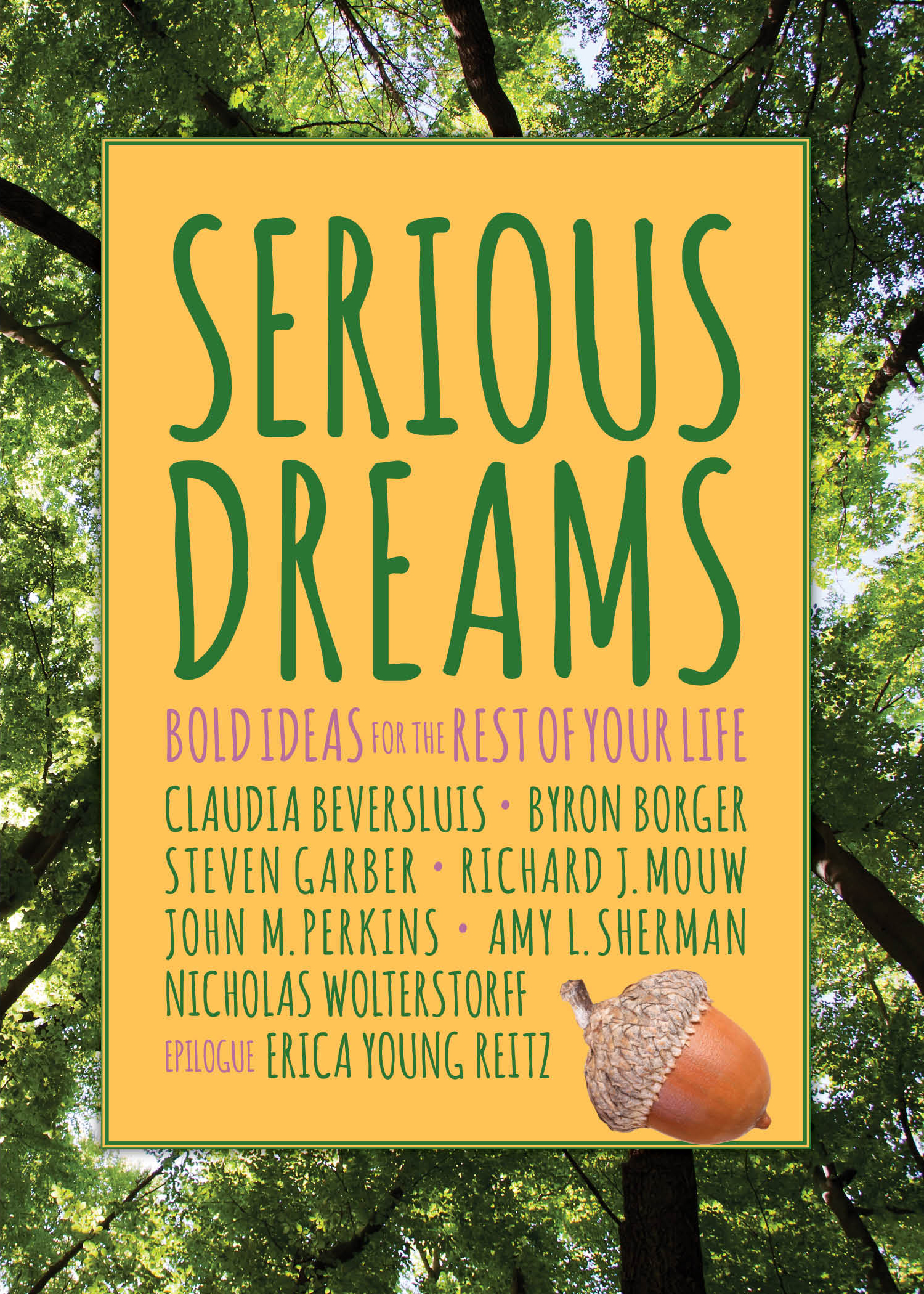
I know, I know, this is awkward.  I’ve gotten great feedback from my own feisty chapter, a Serious Dreams cover.jpgpassionate message about changing the world by taking up radical visions of vocation preached to graduates from a Master’s program at Geneva College in Western Pennsylvania, and also a gentle introductory chapter inviting young adults to dig in to their hometowns, attending to their hearts, nurturing a sense of place as they are transitioning out of college and into a life of quiet faithfulness.  Both the big picture call to social transformation and the Berry-esque invitation to stay put and live local are found here, although most of the chapters — they were graduation speeches offered with great hope at Christian colleges, after all — tend towards the former, with energy and vision and helpful guidance from very wise women and men. But I award this not because of my role, but because of the caliber of the authors compiled and the consistency and often beauty of their messages, inviting young adults to think well about the next stages of their lives, seeking God’s ways as they find themselves in new jobs and new places working out their hopes and dreams in a very needy world. What an honor it was to edit the writings of Richard Mouw, Nicholas Wolterstorff, Claudia Beversluis, Amy Sherman, Steve Garber, John Perkins. These are each stellar individuals, most of them famous writers themselves, and all significant spokespersons for a certain way of inviting us to weave together belief and behavior and live out culture-shaping, whole-life discipleship. There is a fantastic short epilogue by Erica Young Reitz (who has a book coming out next year with IVP called After College.)
I don’t say this because I edited the thing, I say this because it really is true: there is no other book like this and these pieces, along with reflection questions after each one, are just fantastic.  Thanks to Square Halo’s Ned Bustard for great design work and, of course, to the authors who gave these dramatic talks and who permitted me to compile them into this handsome little book.  It was one of the great things for Beth and me in 2015, and we were humbled by the outpouring of interest among friends; we pray that its impact lasts.  Serious dreams, indeed.

BEST BOOKS OF SPIRITUALITY AND THE DEVOTIONAL LIFE

songs of jesus.jpgSongs of Jesus: A Year of Daily Devotions in the Psalms Timothy and Kathy Keller (Dutton) $19.95 We were thrilled to have a brief conversation with Tim about this when we were staffing our book display at the Redeemer Presbyterian Center for Faith & Work conference; the book was just about to come out and he explained how much it means to him, and how he and Kathy have learned to practice (even amidst her own struggle with chronic pain and sustained illness) to read the book of Psalms through each month.  This daily devotional is grounded in his solid exegesis of the passages but also in their intimacy with God, their appreciation of how the Psalms point us towards the gospel, and how followers of Christ can, like Jesus himself, draw great insight and sustenance from the devotional reading of these poems, songs, Psalms. The book itself is beautiful, compact sized with two color ink and a ribbon marker.  It is one you will want to use, over and over.
cultivated life.jpgThe Cultivated Life: From Ceaseless Striving to Receiving Joy Susan S. Phillips (IVP) $17.00  The richness of this beautiful book is exceptional, and I want to award it as one of the very best books of the year.  I’ve written about it recently, but thought I’d quote our first comments about it at BookNotes when it released last summer:
This is one of the lead titles from InterVarsity Press this season, and, as such, it deserves to be read. They offer consistently good books and their formation line includes some of the premier writers about formation these days – and this is one of the very best of their summer list.  Susan Phillips has a PhD from U.C. Berkeley in sociology, is a director of the wonderful New College of Berkeley (New College is an affiliate of the Graduate Theological Union) and is involved in First Presbyterian there. She has taught courses on spiritual formation at Regent College in Vancouver, at Fuller Theological Seminary and at San Francisco Theological Seminary, so she has much experience in helping others move deeper into a life of spiritual sanity. Philips has written a previous book on spiritual direction, published by Morehouse, called Candlelight: Illuminating the Art of Spiritual Direction which is excellent and often recommended. I am confident that this new one will be considered one of the best books of the year, certainly within the genre of books about spirituality. The Cultivated Life is excellent, mature, inspiring and very helpful.  It really deserves to be well known and widely read.

Eugene Peterson has a glowing, glowing foreword which itself is quite substantial.  Peterson, as you may know, does not care for the frivolous or trendy, and relies on older sources, literary and spiritual classics, and affirms those who are profound thinkers, good writers, with down-to-Earth sensibilities as they invite people into Kingdom living. Peterson writes, “This is a book written specifically for those of us who are… developing an imagination for living the Christian faith with insight and skill in and for a society that is disconnected from the biblical revelation and the Jesus incarnation.”  He is setting up an introduction to her book by noting that she writes about the “circus” of our cultural landscape, and how our own lives must be cultivate in ways different then, counter to these crazy times.  Her introduction, drawing on T.S. Eliot, stories of the Dalit/untouchable class in India, and a study of what she calls circus culture is called “Leaving the Circus” and it is really, really good.  She contrasts the circus, by the way, with a “garden” which connotes lush abundance, joy, and rest; a very evocative metaphor, for sure. 

Her first chapter, then, is called The Way of Cultivation and she offers “holy mixed metaphors” as we learn “the way” of the spiritual life.  Although it is not academic or complex, she has a short Bible study to illuminate the way narratives inform us.  This is good stuff!  There are some nice reflection questions, too, making this a very useful resource.  Very highly recommended. 

wearing god.jpgWearing God; Clothing, Laughter, Fire, and Other Overlooked Ways of Meeting God Lauren Winner (HarperOne) $24.99 Again, you may know that we’ve mentioned this often and have been glad to tell about it, over and over.  We have been boosters of Ms. Winner’s books since her first extraordinary memoir, Girl Meets God.  We are thrilled that there was released, just a few months ago, a new, expanded edition of her great second book, Mudhouse Sabbath.  We have often recommended her Real Sex and I was deeply touched by her sad memoir, Still: Mid-Faith Crisis. In this new book about unusual images and metaphors for God used in the Bible she steps away just a bit from memoir (although it is still written in her signature style and offers glimpses into her own journey in appropriating these images.)
Wearing God is at once memoir and glimpses from church history, a resource for spiritual formation and a call to generous, radical discipleship. It explores unusual visions and understandings of God (from the Scriptures) showing how they were understood or used by older mystics and saints, and ways in which thinking beyond our customary go-to names and images of God can help us in our relationship with the Holy One.  Yes, the God of the Bible is revealed as clothing, as fire, as laughter, as mother, and more.  This is a lovely, well-researched book, thoughtful and wise and deep and good.  There are stories of Winner’s own journey, grappling with Scripture and church fathers and mothers, and telling of how these fresh images can deepen our own spirituality.  She is now an Episcopal priest and she remains a thoughtful, curious, even eccentric writer, one I enjoy and one whose books I am happy to commend.  Wearing God!  What a great idea, one of the best of 2015.

BEST BOOKS OF THEOLOGY

The Crucifixion Rutledge.jpgThe Crucifixion: Understanding the Death of Jesus Christ Fleming Rutledge (Eerdmans) $45.00  This major work has gotten more advanced rave reviews and remarkable blurbs than any such book I’ve seen in years; major theologians, Bible scholars, denominational leaders and seminary profs all agree that this is a book that is stunning in scope, beautiful in its lucid, careful, prose,  and passionate in its formulation of a view of the atonement and the work of the cross that seems to be both ancient and contemporary.  Rutledge is perhaps on the more conservative end of the spectrum within her more liberal Episcopalian denomination (she was one of the first women officially ordained by the Episcopalians back in the 70s and has been a stalwart thinker, pastor and preacher within the Anglican communion until her recent retirement from parish ministry.) Even if new and edgy thinkers might find her a bit traditionalist, older school evangelical scholars might find her too progressive or ecumenical.  We, of course, think this is a good place to be – too conservative for the liberals, too liberal from the conservatives – and brings a fresh, exciting, new vision to bear that helps us get beyond these stereotypes and binaries.  More significantly, though is how she is significantly committed to breaking open the Bible itself, and offers significant, insightful, fascinating rumination on not just theology, but on Scripture.  It is one of the major books of our time, a tour de force, magisterial, and one that should read widely.
The Gospel and Pluralism Today- Reassessing Lesslie Newbigin.jpgThe Gospel and Pluralism Today: Reassessing Lesslie Newbigin in the 21st Century edited by Scott W. Sunquist and Amos Yong (IVP Academic) $28.00  I hope you know how important Newbigin has been — of his many, many books, his 1986 Foolishness to the Greeks is my favorite, but his most important and respected and discussed is his Gospel in a Pluralistic Society (published by Eerdmans in the late 1980s.) He has written about epistemology, about mission, about culture, about the Bible, about the shifts in the West from modernity to post-modernity. Indeed the important Gospel in Our Culture Network emerged from a Newbigin study group.  He was an exceptional missionary, churchman, scholar, and Christian leader and his nuanced reading of secularizing pluralism — and how to bear witness in fruitful ways in such a culture — were groundbreaking. This book explores not only the impact of his thinking, it continues his work by analyzing the nature of 21st century Western pluralism, and it asks how we might continue to do misisons at home and abroad inspired by these generative insights.
This brand new book is, without a doubt, the best thing I have yet seen assessing the significance of Newbigin, excellent for anyone who has read his work, or for those wanting to get caught up to speed, as they say.  Just listen to these wonderful endorsements from the back cover.

After a quarter century, Lesslie Newbigin’s testimony to ‘the gospel in
a pluralist society’ still feels strikingly relevant, penetrating in
its analysis and winsome in its pastoral encouragement of Christian
discipleship and witness. Such is the testimony of the authors of this
volume, who rehearse, interpret, receive and build upon Newbigin’s
missional wisdom. They have done us the great service of calling us to
do likewise! George R. Hunsberger, professor emeritus of missiology,
Western Theological Seminary

As I write this, I’m sitting in a coffee shop in
Winson Green, Birmingham, where Lesslie Newbigin pastored after
returning from India. Newbigin loved this community, with all its
cultural and religious diversity. He was always a pastor. But he was
also a scholar who studied cultures theologically and philosophically.
In The Gospel and Pluralism Today, Scott W. Sunquist and Amos
Yong bring together a remarkable collection of papers that reveal the
ongoing value and contribution of Newbigin’s work. But Sunquist and
Yong’s book doesn’t stop at Newbigin’s contribution. It builds on
Newbigin’s thought, and it explores critical cultural and missionary
issues that have emerged in the twenty-first century. In brief, this
book is an invaluable addition to missiology and to the study of
Newbigin’s pastoral-missionary paradigm.” Graham Hill, Morling College,
author of GlobalChurch

Kudos to those who put this together. Scott Sunquist, by the way, had been a professor at Pittsburgh Theological Seminary here in Pennsylvania and we have crossed paths with him at events as varied as Wee Kirk and CCO staff training. There is another Western Pennsylvania scholar represented here, Dr. Esther Meeks, who teaches at Geneva College and is a scholar of Michael Polyani — important for Newbigin studies, too.  This exceptional book developed out of a conference at Fuller, where the editors teach, and deserves to be awarded and deserves to be widely read.

BEST BOOKS ABOUT LEWIS & TOLKIEN 

The Fellowship- The Literary Lives of JRR Tolkien.jpgThe Fellowship: The Literary Lives of the Inklings:  JRR Tolkien, C.S. Lewis, Owen Barfield, Charles Williams Philip and Carol Zaleski (Farrar Straus Giroux) $35.00 I am sure this deserves a very special shout out, an honorable mention and more. Not a few very smart folks I respect insist it is one of the best books they’ve ever read, and a few have found it very helpful in their own appreciation for how Lewis & Company did their work.  This is not the first book on the Inklings, nor will it be the last.  Others have similarly explored the essential art of collaboration nurture at their legendary gatherings and the Child.  In a year when there have been several significant books about Lewis and Tolkien et al, this is said to be a tour de force, a spectacular and major work.

I admit that I have not read it yet, but am eager to work through it – all 650+ pages! You?

a hobbit a wardrobe.jpgA Hobbit, A Wardrobe, and a Great War: How J.R.R. Tolkien and C.S. Lewis Rediscovered Faith, Friendship, and Heroism in the Cataclysms of 1914 – 1918 Joseph Loconte (Thomas Nelson) $24.99  This was one of the best of the several Lewis-related books I read this year and I was pleased to have written about it when it first came out. Many critics have extolled it’s historical and sociological insight, specifically about the spirit of the age as it impacted Western Europe, philosophically, religiously, psychologically, and how this Earth-shattering epochal change in outlook – caused by the horrors of World War I – effected these writers.  Lewis and Tolkien both saw awful action in the Great War and it affected them in ways that no one has explored so diligently before. This is a great book for understanding the cultural shifts that came to greater flower in the late 20th century, and it is a great book for understanding two of the century’s most beloved writers. The book was riveting, to say the least, and, I think, very important.  

Women and C.S. jpgWomen and C.S. Lewis: What His Life and Literature Reveal for Today’s Culture edited by Carolyn Curtis and Mary Pomroy Key (Lion Hudson) $17.95  There has been way too little written on this topic, and aside from a few major works (I think of the under-appreciated A Sword Between the Sexes? C.S. Lewis and the Gender Debates by Mary Stewart Van Leeuwen) there hasn’t been a sustained attention to this in decades. Sexism in Narnia? Or in Screwtape? On among the Inklings?  And what should those who appreciate Lewis make of the attacks by the likes of Pullman, who declared Jack a misogynist?  Well, what a provocative and important set of questions, and what a fine and fair collection of essays on the topic. It is thoughtful, informed, and altogether fascinating.
Authors who contribute here include many Lewis scholars and very impressive names: Kathy Keller, Alister McGrath, Monkia Hider, Don W. King, Colin Duriez, David Downing, Malcolm Guite, Holly Ordway and more. The ringing endorsements range from Walter Hooper to Eric Metaxas to the excellent Diana Pavlac Glyer (we have her new Kent State University Press book about the collaboration among the Inklings, Bandersnatch, by the way.) Just when I thought I had read enough about Lewis this year, this book captured my attention, and many of the reviews I’ve read have affirmed that this is fresh writing, in many cases innovative and insightful new contributions.  There are interviews, here, essays and articles, some long and some less so.  C.S. Lewis and Women is a very fine addition to your Lewis-related library, and an excellent way to re-introduce Lewis to our contemporary conversations.   Spot on, Curtis and Key! Cheerio.

BEST MEMOIRS

Midnight Jesus- The Late Night Psychiatric Crisis Guy Jamie Blaine .jpgMidnight Jesus: Where Struggle, Faith, and Grace Collide Jamie Blaine (Nelson) $15.99  Oh my, what a fun, interesting book that I simply could not put down.  Few books this year struck me so, as I enjoyed the antics of this late night intake counselor at a psychiatric clinic, an intervention specialist, and drug and alcohol social worker.  From getting beat up by crazed clients to hanging out with the sad and suicidal to telling of his beautiful relationships with the down and out, the lost and lonely, Jamie Blaine is a saint, a strange one, perhaps, a blue-collar, pin-ball playing man of the streets with a generous streak a mile wide and a knack for immediately bonding with the strange ones, those with ripped and worn heavy metal tee shirts, with abused strippers, with con men and stilted lovers and autistic kids.  And did I mention that some of the most glorious, glorious writing in the book is describing the glories of his side hustle, working as a DJ at the local roller rink?  I’m not kidding; this book is about reaching out with few answers but an abiding conviction that God Is There and, in the person of Jesus, invites us to trust in goodness.
Man, I hope this dude is working on a sequel – I’d read whatever he wrote, now, but am already itching for more stories of his colorful, Pentecostal, rock-and-roll psychiatric, roller-skating, pin-ball-playing life.  If we gave him an award, he’d just give it away to somebody at the Quickie Mart or use it to help somebody at the psych ward.  Here’s to that.

how dante can save.jpgHow Dante Can Save Your Life: The Life-Changing Wisdom of History’s Greatest Poem Rod Dreher (Regan Arts) $29.95  I have written about this at length, and shared my appreciation for this often in these last months.  Before I actually read it, I admired how handsomely it was designed, and shelved it under literary criticism; it is, after all, a study of  Divine Comedy.

Well, one of the great experiences this fall was meeting Dreher (at a Christian Legal Society conference where we were selling his book.) And I soon realized this marvelous book is actually written as a memoir: it is the story of Rod reading Dante.  It actually is a sequel to The Little Way of Ruthie Leming his tear-jerking and altogether lovely memoir of leaving the fast-paced, high-powered life of a culture reporter, political pundit, and film critic to move to rural Louisiana to be with his extended family after the death of his beloved sister. Alas, he gets settled in to this family-oriented, slower paced Southern town only to realize not all is well in the family system. He gets depressed, develops an auto-immune illness from the stress, gets into counseling, helps plant an Orthodox church, and — low and behold — finds the thing that helps him out of his serious funk and the serious dysfunctions of his not so warm and friendly way of life is reading The Divine Comedy.  This is a southern, nearly Gothic tale, a study of Dante, and the thinking person’s self help book.  I loved it.

Eric Metaxas gets it right when he says,

Sometimes a book comes along that you want to press into the hands of everyone you know. A brilliant, searingly honest account of one man’s path to real healing, and an invitation to the rest of us to join him.

Ronald Herzman, the SUNY professor who teaches the audio Great Courses lectures on The DIvine Comedy says “Dreher has assimilated what is most urgent in Dante and makes The Divine Comedy passionately real.  And I say Dreher deserves a Hearts & Minds Book of the Year award. It won’t help him as much as reading Dante, I suppose, but nonetheless: how do you say congratulations in Latin? 


Ordinary Light- A Memoir.jpgOrdinary Light: A Memoir Tracy K. Smith (Alfred Knopf) $25.95 I love memoirs and have not long ago written a brief explanation of why it is helpful to see how other narrate their lives.  When a book is both beautifully written and tells the tales of a fascinating life, such a story grabs me and entertains me, and I come away enriched.  Tracy Smith won the Pulitzer Prize a few years back for her Life on Mars and has proven herself a remarkable, stellar author, a delightful writer with flowing prose that is artful without being obscure. She has remarkable recall of her mature observations and great wit as she grew up in a large African American family in the 1980s and on.  Her mother was a devout Christian – together they read Little Visits With God every night and Smith embraced a fascinating fastidiousness about being a good child. As she came to meet extended family members, talked with her scientist father, and eventually learned the stories of her parents involvement in the earlier days of the civil rights movement she increasingly comes into her own. Reading Ordinary Light is nearly effortless, yet a literary delight. The opening scene, telling of the death of her mother, was gripping, perfectly realized.  What a great, great book.
Going Into the City- Portrait of a Critic as a Young Man Robert Christgau.jpgGoing Into the City: Portrait of a Critic as a Young Man Robert Christgau (Dey Street Books) $27.99  Okay, this may not be for everyone, but I think it is one of the most enjoyable and exciting books I’ve read all year.  I wrote a very long review of it, which I’ve not posted (email me if you want to see it.) This is the vulgar and at times brilliant memoir of one of the top two or three rock critics of the last 50 years, and an author who helped, literally, shape the craft of rock journalism. His album reviews and rock star interviews are legendary (and brilliant) and this book tells the fascinating (at times exasperating, at times hilarious, at times nearly breathtaking) back story of his work in the rising field of rock music from the 60s on.  More, besides the cool reports of this backstage scene, that party and that interview with this or that mega-star – yes, you know the biggest stars of our lifetime! – Christgau spends a lot of time telling about how small magazines got started, how bigger, mainstream journals began to accept album reviews, and what it was like to write both major pieces and smaller reviews for some of the most immediately recognizable media outlets of our time. In this sense, it is about the vocation of being a writer, a critic, a working magazine journalist. Mr. Christgau’s professional passion (the art of journalism, the craft of writing, the making of a living with words, doing intellectual criticism) is a theme of the book (and of my longer review) as he takes up networking other rock writers, pursuing serious on-going conversations about the nature of this work, what it is trying to accomplish and how to do it well, doing workshops, even teaching, eventually, essentially inventing a new craft, a new vocation, creating the calling of rock critic. (There are, as I try to explain in my reflection on the book, parallels here for thoughtful Christian journalists who themselves have networked and confab-ed and sweat blood and tears to make a difference in their salons and zines and alternative publications.)
If there are a handful of significant and popularly respected film critics – think Roger Ebert, for instance – Bob Christgau is a similarly significant pioneer of pop music criticism. Given what rock music was and where he was situated, there are copious amounts of sex and drugs and Marxist revolution in the air.  What a glimpse Going into the City offers into the popular arts, the 60s counter-culture, the commercialization of rock, and the calling into a career in radical journalism; what a story about a young artist moving into the Big Apple.  Christgau is obviously a colorful, dense, intelligent writer, and his telling of this tale was stimulating and made me want to explore many of the significant pieces he described writing, publishing, promoting or despising. I became interested in his friends and lovers, even as much more famous stars were in the background of this memoir.  I loved this book and, although it isn’t for everyone, I couldn’t put it down.

The Year Without A Purchase- One Family's Quest to Stop Shopping and Start Connecting .jpgThe Year Without A Purchase: One Family’s Quest to Stop Shopping and Start Connecting Scott Dannemiller (WJK) $16.00   I have written about this a few times, and I think, come to think of it, that I laughed out loud more reading this book last summer than any book I read all year.  And, it was inspiring, up-lifting, well, in a way.  It made me realize I’m not alone in this dumb struggle to figure out a sane lifestyle.  Anyway, I have to give this some honorable mention, and will do so by reprinting what I’ve said before.
This unassuming little volume is certainly one of my favorite books of the year — it made me laugh right out loud, made me cry and made me wonder what in the world they’d do next.  And what in the world I might do next. It’s fun and really funny, as Dannemiller offers an insiders look into this family’s zany plan not to buy anything for a year (except food and essentials. And the stuff they might cheat on. Ha.) 

Margot Starbuck says it is “playful, thoughtful, substantial” and she is right.  This family really did try to connect with others, living well on less, and it is told with a wink and a sly grin, even as it is nicely inviting and even compelling. Of course you don’t have to do what the Dannemiller’s — Scott, Gabby and two loud, smart kids — did, but it will inspire you to wonder about how you do your kids birthday parties, how you give gifts at holidays, how you do family vacations, and how you do or don’t fix or reuse stuff, what purchases you deem essential.  Most of us are troubled by our own materialism, it seems, and most of us are aware of how the majority world lives in poverty. (The Dannemiller’s were Presbyterian missionaries for a year, doing social service in Central America, and lived in a poor, rural village.) This is a nice way to grapple more with being “rich Christians in an age of hunger” without being grumpy or anxious or overly political or guilt-induced. It’s a funny book, did I say that?

I love these kinds of reports from the front lines of a year-long experiment, memoirs of a slice of life as a family tries to accomplish something good.  This one does just that, and I couldn’t put it down — I like reading about other families, about other dads, about other ordinary Christians trying to be more just, sustainable, joy-filled, and faithful.  It would make a great book with which to kick off the year, even if you have no intention of doing anything like what Scott Dannemiller and his wife and kids did. Enjoy!

joy in the journey hayner.jpgJoy in the Journey: Finding Abundance in the Shadow of Death Steve & Sharol Hayner (IVP) $16.00 There are a number of customers who have purchased this book from us this fall, and are suggesting it be named the book of the year.  It really has had that impact, and, although brief, it is a very powerful story, by an important figure.  Hayner worked with InterVarsity Christian Fellowship and in those years I had the privilege of crossing paths with him a few times. Steve ended up — as an evangelical in the mainline church — teaching at, and eventually installed as the President of, Columbia Theological Seminary, an important institution within my own Presbyterian Church (USA); again, we had opportunity to chat a time or two. I admired him greatly and was saddened by his untimely death.  To honor this extraordinary book, I’d like to reprint what I wrote about it after I first read it.  It’s a little longer, but it deserves no less.
Where to begin to explain the significance of this handsome, small hardback, and why it matters?  How does the memoir of a dying saint, one known for signing his emails “joyfully” help us all?  I admit I’ve met the late Steve Hayner a time or two and care deeply about some of the organizations he has served (including InterVarsity Christian Fellowship and, in the last years of his life, Columbia Theological Seminary in Decatur, Georgia, where he served as President.) But whether you had the great privilege of knowing this extraordinary, joyful Christian leader or not, and whether you are particularly interested in a memoir of death and dying or not, let me tell you: this is a book about faith formation, about daily discipleship, about learning to live well as a Christ-follower in families, organizations, among friends scattered; it is about faith and hope and trust and goodness. and, yes, joy in the journey.

As a nationally known evangelical para-church leader who later served as an administrator at a Christian university, became an ordained pastor (serving for a while a mostly black church) who surprisingly became a professor at a mainline denominational seminary, where he eventually became President, the story of Hayner’s life and ministry is itself a noteworthy one.  (I wish I knew more about his move to Columbia, where he became colleagues with the likes of Elizabeth Johnson, Marcia Riggs, or Walt Brueggemann.) As Mark Labberton writes in his must-read, exceptionally moving introduction, Hayner mentored many individuals over the years, staying in close touch, involved in life-giving friendships with many, even as he served in demanding positions on the Boards of Fuller Theological Seminary, World Vision, and the anti-trafficking organization, the International Justice Mission.  His wholistic view of faith – embracing growth in theology, spirituality, multi-ethnic ministry, social concerns and public justice work, was exemplary, and he helped other live into that vision.  “He wanted,” in just one of the beautiful phrases in Labberton’s piece, drawn from The Message paraphrase of Psalm 31:8, “others…to have the room to breathe fully human lives, made in the image of God.”

To be clear, Joy in the Journey is made up mostly of personal reports and spiritual journaling from a public diary Steve and his wife Sharol kept on the CaringBridge website, chronicling their faith journey as Steve was diagnosed with pancreatic cancer over Easter weekend of 2014 until his death, in his mid-60s, on January 31, 2015.  There is included of a bit of contextual medical background, offered before most entries, and a handful of sidebars by other folks, letters they wrote to Steve or Sharol, or observations offers along the way.  The entries unfold like a fast-moving tragedy, but yet — and this is why this is such a very good book to read — Steve and Sharol both have an ability to ruminate on their lives in ways that reveal their spiritual disciplines and dispositions, framing their hardships by the very things they believed most deeply; they share their own reflections upon Bible verses or passage or Psalms that helped them, and they are honest about their prayers and hopes and struggles. 

These entries are excruciatingly intimate at times, and exceptionally admirable. They are not idealized or over-spiritualized, but they are grounded so well in a well-lived faith. I know — and the diary entries reveal — that they are ordinary people, in many ways like any of us. (Steve himself wrote how grumpy and petty he was with his grandchildren during what he knew would be their last Christmas together, a mundane admission that nearly brought me to tears with the disappointing ordinariness of it.)  Still, I have never read anything so wonderful about approaching death with joy and trust.  As Steve signs off near the very end, noting that he is under hospice care, then, he still looks forward to living into joy.  

After Steve’s death there was, of course, a large outpouring of support, and the memorial service was a tribute to the resurrection power only Christ can bring. The entries in this epilogue are from his family, mostly, and remind us all of the beauty of a life well lived, of the quiet habits of a man committed to God’s reign, who served the church and the world, and who had mature and lovely relationships with family and friends.  Joy in the Journey: Finding Abundance in the Shadow of Death is a tear-jerker, to be sure, but I cannot commend it to you enough.

As good as these diary-type entries are, listening in to the real-time reflections of a couple struggling with tragic illness, the evils of cancer, the quandaries of medical care, their professional obligations and their extended family, their marriage, their prayer lives, and eventually Steve’s death, I want to also note that the two introductions that open the volume are themselves worth the price of the book. 

Mark Labberton was influenced profoundly by Hayner as an undergrad as Steve was his campus minister.  Their lives unfolded similarly, and Steve continue to be a mentor and friend to Labberton (even as Mark, arguably, became more famous as an author and the President of Fuller, one of the worlds largest and most diverse seminaries.) They remained life-long friends, so much so that Mark could report about Steve’s deepest desires – and how he understood that joy was deeply connected to “that wide place of God’s grace.”  Labberton honors Steve well in this reflection and it is nothing short of stunning. Oh, how I wish for all of us to have friends, friends like Labberton was to Steve, able to tell about his strengths, his gifts, his faithfulness.  From Mark’s tribute you can see how well he knew Steve and Sharol, and his testimony is inspiring. But – ahh, here it is – Labberton could only report all this stuff about Steve because Steve was that kind of friend to him.  To realize the power and blessing of life-long friendship seen in that preface is a gentle but clear reminder to us all: who do have in this life that shares our faith journey and knows us so well?

Another person that was one of Steve’s best friends was the African American leader Alex Gee.  It was Gee who invited Steve to become his associate pastor, in part, because he wanted Steve to understand the emotional toll of being a minority leader, not only so he could more experientially understand cross cultural ministry, but so that Steve could more deeply understand what his friend Alex – a black man who often spoke and ministered in largely white settings – goes through in such complicated situations. Steve said yes to this surprising arrangement, which illustrates much about Steve’s adventuresome faithfulness, but also how loyal he was to his friends and co-workers in gospel ministry. This and a few other anecdotes from Gee really are helpful in helping us care about Hayner and his wife, before we even start the first page of their diaries.

Again, this short foreword by Gee, about Steve, is exceptionally inspiring, and I think it makes this book an even greater resource for your own spiritual formation.  Don’t you want to be the kind of person about which these things could be said of you? Don’t we often make fresh commitments to new sorts of spiritual practices or goals or hopes for ourselves as we look at others whom we admire? (“Follow my example as I follow Christ,” the apostle Paul said more than once!) So, in this book, Hayner’s own diary tells the story, but these two introductory pieces serving as brief tributes, the testimonials offered by Labberton and Gee, will inspire you to want serve well, living with authenticity and joy. 

As Gee writes, wisely – putting into words exactly why I am listing this as one of the best books to read this for faith formation,

After walking with Steve in his final months, I am considering where his life challenges mine. Where is God calling me to invest my time and energy? I’m asking what and who I need in life in order to face death with hope, joy, and confidence.  What changes do I need to make today in order to finish well? As you journey with Steve and Sharol in the following pages, how will you answer these questions?

FOR CHURCH LEADERS

The Pastor as Public Theologian- Reclaiming A Lost Vision.jpgThe Pastor as Public Theologian: Reclaiming a Lost Vision Kevin Vanhoozer & Owen Strachan (Baker Academic) $19.99  Again, this is one I have written about before and, I trust, is one that you will agree is a “no brainer” as one of the most important books of the year.  This wise and passionate call for churches to see their pastors as resident theologians, and for clergy to see as part of their own calling the on-going task of being a theologian with and for the congregation, is one we who care about reading and books would naturally sound out: what pastor worth his or her salt isn’t reading seriously, citing authors, teaching about what they are learning, helping congregants deepen their discipleship by engaging in the task of doing theology?
Of course there are huge questions here, some of which Vanhoozer and Strachan take up, some which they don’t – why is it that the clergyperson who is mostly called to this task? What even is theology, and how does the discipline, typically understood, fuel and equip ordinary congregants to think faithfully not just about academic theological topics, but about their application in their worlds of career and home-life, of civic engagement and their entertainment life?  Yes, yes, we need to be theologically aware and theologically astute; and, yes, there are intellectual resources for congregants that they bring to the table, their own lived experience of life in the neighborhood or marketplace, that can loop back and inform the pastor’s own study and teaching. I think this is a remarkably important and very interesting book, but I also think (as I suggested in my first BookNotes review) that there are other sorts of Christian intellectual pursuits beyond theology proper that need to happen within the church, faith-based scholarship of the scientist, the lawyer, the businesswoman, the film critic, the psycho-therapist. Yes,  the pastor must do theology, but how does this serve the Biblically-informed thinking of people beyond the field of theology proper? This book can help unlock lots of great conversations and we are thrilled to honor it here.

the pastor as theologian - resurrecting an ancient vision.jpgInterestingly, another great book was released on this exact same topic this year, one that, unfortunately, didn’t get as much attention, so we’ll list it, here, too, also with great gusto: The Pastor as Theologian: Resurrecting An Ancient Vision by Gerald Hiestand & Todd Wilson (Zondervan; $18.99.) It, too, is very, very good, and certainly deserving to be commended as one of the great books this year. Peter Leithart (of the Theopolis Institute) commends it, saying it will help us recover a sense of pastors being the intellectual shepherd of the church. He writes, “The renewal of what Hiestand & Wilson call ecclesial theology will provide a needed transfusion into theologically anemic pastoral ministry and pastorally anemic theology.” Both of these books deserve our accolades and, more importantly, deserve to be bought, read, discussed, and taken seriously.  Kudos.


The Vulnerable Pastor- How Human Limitations Empower Our Ministry Many Smith.jpgThe Vulnerable Pastor: How Human Limitations Empower Our Ministry Mandy Smith (IVP) $16.00  I believe this beautifully written book — even though it seems to be mostly for pastors — would be an excellent read for anyone involved in church leadership or engaged in congregational ministry and certainly for those doing para-church ministry.  Mandy is a vibrant young-ish woman serving as the lead pastor in an interesting urban church near the university section of Cincinnati, and has grown weary of the expectations, metrics and high-pressured methods that often accompany church work. Through hardships, tears, and much profoundly spiritual reflection she has learned to articulate how weakness and vulnerability can (as the apostle Paul himself insists) lead us to rely on God, be empowered in fresh ways by the Holy Spirit, and find greater union with the very human, suffering Christ.  Pastors and leaders are, after all, human.
Although she is not the first to discover this, or even the first to say it (think of Eugene Peterson or Marva Dawn or even Dietrich Bonhoeffer in his lovely Life Together) her book seems truly original, and is written with great transparency and remarkable grace.  It is similar, really to another book that came out this year – one I myself am itching to read (but a guy has his limitations) called The Imperfect Pastor: Discovering Joy in Our Limitations through a Daily Apprenticeship with Jesus by Zack Eswine (Crossway; $16.99) which in some ways is a follow-up to his extraordinary 2012 release called Sensing Jesus: Life and Ministry as a Human Being (Crossway; $19.99.) Zack Eswine is more conservatively Reformed than Smith, I gather — he quotes Spurgeon’s depression, she cites Brenning Manning and Ed Friedman — but they are exploring similar human and institutional geography.

Perhaps you have followed the popular books (or TED talks) of Brene Brown on vulnerability, or maybe you just know that high-energy, large-scaled, programmatic glitz isn’t adequate for authentic, congregational life.  Smith is tapping into an important trend, seen in books we’ve promoted like Slow Church or Shrink which reject pushy growth strategies and cookie-cutter formulas in order to embrace authenticity, relationships, uniqueness, and deeper faith formation.  Can broken, messy, limited (and who of us aren’t trying to live as if we have few limitations) people find new ways to embrace their weaknesses so that they might bless their faith communities, modeling true Christian leadership? Ms. Smith shows how, with chapters on how vulnerable pastors handle emotions, use their time and energy, lead differently, teach differently, pray and read the Bible differently. It is stuff every clergyperson or elder or volunteer leader needs, offering much to ponder.

In many ways, The Vulnerable Pastor is a book about “being true to ourselves” by showing forth candid vulnerability among our people. Such a posture allows for honesty, community — even if inviting what some might find threatening. One great chapter is called “Learning to Like the Mess.” Carolyn Custis James notes that “Mandy Smith has packed a lot of freedom into her book — freedom from unrealistic expectations of others and those (leaders) impose on themselves.” The Vulnerable Pastor is an invitation to gospel-drenched freedom, an upside-down reversal of much that we think we know about being a ministry leader. We think it is truly one of the great books out this year.

Servants and Fools- A Biblical Theology of Leadership.jpgServants and Fools: A Biblical Theology of Leadership Arthur Boers (Abingdon Press) $19.99  Wow, I was excited to read this as soon as I heard about it – Boers, a Canadian Anglican who spent most of his life as a Mennonite, is a favorite author, and I’ve read most of his many books, on discipleship, spirituality, conflict resolution, The Lord’s Prayer, and that great book where he draws on Albert Borgman’s philosophy of focal practices, called Living Into Focus: Choosing What Matters in an Age of Distraction.  I knew this would be hard-hitting, a prophetic critique of how we’ve too often presumed and bought into the reigning assumptions about leadership, strength, power, organization and the rest. Less personal and tender and funny as Many Smith, they would both certain appreciate each other. Thanks be to God that there are courageous authors who are thoughtful and intentional about being Biblically-shaped leaders, and helping us all see what that might entail.
Arthur Boers does what is promised in Peterson’s passionate forward. He draws on a close reading of the Bible and the best of serious thinkers past and present.  Who cites authors as interesting (and dangerous!) as Bible-based activists like Dan Berrigan and William Stringfellow, blending them with the likes of Clarence Jordon and Chad Meyers, Walter Brueggeman and Martin Buber, and drawing on other scholars of leadership theory, from Ronald Heifetz to Wes Granberg-Michaelson to Parker Palmer? The footnotes in this are gloriously rich and fascinating, and the Scripture scholars he mentions are particularly interesting.  But there are very few modern leadership types cited here. Rather, Fr. Boers does in-depth – dare I say, radical – Bible study, and develops a counter-cultural understanding and set of practices for servant leadership.  Foolish, I know. This is one of the best books of the year. As David Gill (himself an Ellul scholar) of Gordon Conwell Seminary’s Center for Workplace, Theology and Business Ethics says, “Servants and Fools is a brilliant and essential contribution to any serious study of leadership: robust, faithful, insightful biblical teaching. I cannot imagine ever teaching another class on leadership without assigning and discussing this book.”  Or, listen to Marva Dawn, who writes, “Arthur Boers punctures all pretensions, unveils delightful discoveries, and exhibits perceptive insights. Servants and Fools is the most potent book on Christian leadership.”  I dare you to read it – but hold on tight. It will rock your world.

Radical Sending- Go To Love and Serve the Lord.jpgRadical Sending: Go To Love and Serve the Lord Demi Prentiss & Fletcher Love (Morehouse) $18.00 We have hundreds of books about congregational health, about church revitalization, about both the theology of church and the spirituality of local faith communities.  Many are excellent, and we enjoy letting church leaders in on the benefits of reading widely in this genre of books about church life.  Many, however, seem overlapping, and, although still useful, it is rare to find one that is really offering new insights, new stories, fresh and vital guidance.  Radical Sending is such a book, and I’d say there is hardly a book on the market like it.
The short version (and a longer review would be needed to do it justice, of course) is that this book, written by two mainline Episcopalians, wants to help create congregational cultures that equips congregants to serve God in their ordinary lives, especially in their own work and within their professional careers. Prentiss and Lowe delightfully tell stories of congregations attempting to bridge the “Sunday-Monday” gap, and they draw on diverse insights from Lutherans and Mennonites, from The High Calling blog to the older faith-work movement developed at the Laity Lodge, citing important voices such as Bethlehem Steel executive William Diehl, who was active in these conversations in the 70s and 80s. (Indeed, Bill Diehl spoke at the CCO’s Jubilee conference in the late 70s.)

They seem a bit unaware of how this very topic — congregations orienting themselves around equipping the congregants for workaday mission in the marketplace — is quite in vogue now, especially among younger evangelical church plants and the rising movement around culture making, the popular For the Life of the World DVDs and the like. There are conferences, blogs, books, and networks galore about which these authors seem unfamiliar. (Just think of the telling of the tale by Tom Nelson in his wonderful Work Matters: Connecting Sunday Worship to Monday Work published 5 years ago by Crossway, or the stunningly robust DVD curriculum published by Regent College in Vancouver called ReFrame, or the Patheos Faith and Work channel curated by the director of the college think-tank named Opus: The Art of Work, not to mention the Redeemer Center for Faith and Work in downtown Manhattan where yours truly has held forth on occasion.) Nonetheless, these good authors do know that something is happening within mainline circles in this, too, and they have given us a very useful book about how ordinary congregations can tap into it.

There is a bit of a backstory to the writing of this that is interesting as well. Episcopalians have been doing workshops on serious hospitality — inspired by a book by Stephan Spellers called Radical Welcome — which is all about reaching out, being inclusive, forming a supportive church home for all seekers. It dawned on these authors that as good as this is (Prentiss tells of having Spellers at his own parish), the Book of Common Prayer (and many other liturgical traditions) ends the worship liturgy with the words “Go in peace to love and serve the Lord.”  That is, they were struck by the missional vision of being sent, of scattering after gathering.  They thought, in a way, their own book about faith lived out in service to the common good in the public areas of modern life, could be a good bookend to Radical Welcome; hence the title Radical Sending.  Once transformed by Christ in the community of welcome and spiritual transformation offered by the local congregation, then what? Go to love and serve the Lord, indeed!

Radical Sending is simply written, with lots of the citations and stories one finds in mainline denominational books; in is upbeat but mostly no-nonsense and straight away. John Lewis (Director of St. Benedicts’ Workshop in San Antonio) says it is “a provocative challenge to Christians to re-imagine and re-invigorate the church’s vocation to shape and equip faithful disciples to join God’s mission in their daily lives in the wider world.”

Brian McLaren says,

Pastors, priests, and parishioners: if there’s one book you read this year to strengthen your church, please let this be the book. Radical Sending will remind you why church matters so much in the first place, and it will inspire you to seize the potential that almost everybody is missing. Highly recommended.

SOCIAL CRITICISM AND CULTURAL ENGAGEMENT

foolsTalk.jpgFools Talk: Recovering the Art of Christian Persuasion (IVP) $22.00 In mid-June, when this book released, I did a very lengthy rumination on it, explaining who Dr. Guinness is, highlighting a few of his many books, and noting why I thought he was the perfect author for this necessary topic. I was thrilled with Fools Talk and was stimulated, provoked, challenged and encouraged by working through it. It was intellectually stimulating because (for among many reasons) Guinness is weaving together the potent insights of three great thinkers who have influenced him: C.S. Lewis, Francis Schaeffer, and Peter Berger. I knew without a doubt that I would name it as one of the very best books of the year.
Although my BookNotes review was long and flowing, I thought I’d just share a few paragraphs from it, here.


…in the first few chapters, Guinness is again in his critical mode, exposing the significant failures of apologetics in our day.  Even in the introduction he offers an incisive exploration of the impact of digital technologies – many of us, almost subliminally, are about self marketing in this age of tweets and selfies – and the doubled-edges of the sword that this is: people are increasingly open and in communication but yet are therefore increasingly wary, weary, even.  Who can deny the growing suspicions and cynicism many carry in part due to relentless 24/7 advertising and ubiquitous propaganda?  And who can deny that there is much cultural anger against the public face of Christianity, much self-inflicted by the harsher corners of the Christian community? We all know that there are those who specialize in argument and so-called apologetics but whose loud polemics are simply an embarrassment in contrast to the beauty and grace and richness of the gospel itself.

…to underscore the point of this book which is a guide to learning how to persuade, not just scold or proclaim or badger or win arguments about religion, Guinness in this chapter explores some of the parables of Jesus and how they were so remarkably able to unsettle and expose and invite the hearers to repentance and a realization of grace. He worries that in all our efforts to win debates (at least those of us who enter into religious conversations, having perhaps read books on how to argue well) we sometimes make a winning argument, taking the battle, so to speak, but losing the war, as it were. The goal of our conversations, he repeats, is not to win debates or look good in our sophisticated arguments, but to touch lives, inviting people to faith through grace. We want people to care about truth so they might come to trust the God who loves them so.  He writes,

The false art of always being right is a deadly trap for Christian advocates. Conversely, it is a high privilege to use the art of persuasion to bring people to where they know in their heart of hearts that they are wrong, that God’s offer of grace is free. Little wonder that such a privilege and such an art can only be pursued with humility and with an overwhelming sense of God’s grace to us, too. Again, the art of truth leads back to the incarnation, the cross and the Holy Spirit, and the life of faith continues as it began.

This reminder is the theme of the beautiful Epilogue, called “The Way of the Open Hand.”  He explains that this symbol points us to

the positive side of apologetics that uses the highest strengths of human creativity in defense of truth. Expressing the love and compassion of Jesus, and using eloquence, creativity, imagination, humor and irony, open-hand apologetics has the task of helping pry open hearts and minds that, for a thousand reasons, have long grown resistant to God’s great grace…

You will notice, in this good quote from the last page, that Os mentions the imagination, humor and irony.  These are actually explored in great detail – rather humorlessly, I might note – as Guinness teaches us from Peter Berger, who wrote (in the 1960s) profound work on what we might call the sociology and spirituality of humor.  The chapter called “spring loaded dynamics” is perhaps the most challenging in the book and yet may be the most important.  Here, Guinness’s debt to Berger and Schaeffer and Lewis are evident, and it is nothing short of brilliant.  Yet, dense and brilliant as it is, it must be read in light of a previous chapter – one that has Berger’s fingerprints all over it – called “Triggering the Signals.”  

You may have heard the phrase (coined by Berger, I gather) “signals of transcendence.” Lewis himself explained how this reality was key in his own conversion (“surprised by joy”) and Os develops it clearly. 

Shifting from Lewis to Peter Berger, he writes, 

Berger’s rich discussion of other signals of transcendence are a goldmine for the Christian advocate. It covers such typical human experiences as hope, play, humor, order, and judgment. His discussion is fresh and invigorating, but we should see it as a brilliant rediscovery rather than as radically new, for this was a powerful theme in the early church.  In the third century, for example, Gregory of Nyssa built on the Greek notion of desire and developed it in a biblical direction.

Guinness is fantastic here, swiftly reminding us of Gregory’s profound teaching, shifting to Augustine, noting that “the same understanding of desire blazes in St Augustine, fanned by his own experience of passionately searching for God” and then on to, for instance, the telling of the story of Le Chambon (the famous town in France that hid Jews from Nazism’s reach) and how author Philip Hallie (Lest Innocent Blood Be Shed) was drawn to “how goodness happened there.” 

Who Rules the Earth- How Social .jpgWho Rules the Earth: How Social Rules Shape Our Planet & Our Lives Paul Steinberg (Oxford University Press) $25.99  As I hope you know, we stock a large number of books about the interface of faith and environmental studies, what we’ve come to call creation-care.  Evangelicals, especially, have written excellent books about eco-theology, about our call to steward well the goodness of the creation, and how lively faith can propel us not just to more simple, sustainable lifestyles, but to bigger matters of how we live with the “groaning creation” (Romans 8.) We carry books that are not overtly Christian, too, studies of the debates about climate change, handbooks for green living, and more.  This remarkable book, though, isn’t exactly about the science or policy of global warming, but it does offer exceedingly important insights for anyone interested in the big questions about what has to happen for a more sustainable global economy in our 21st century. It is about the “hidden architecture of rules” and how the best social science research can show us how institutions can and should change if we want health for the common good.

Steinberg, a Professor of Sustainability and Society and also of Political Science, directs the Social Rules Project, and he writes in a pleasant and interesting way (a happy surprise for an academic book) and walks us through example after example of how things tend to work; that is, how assumptions about how things work are encoded in cultures, and how “rules” that preceded laws shape and inform how we imagine what is plausible.  Trying to change policy? Trying to impact the culture?  Between the grand religious conversations and visionary efforts to shift social imaginaries (on one hand) and concrete legislative debates about specific policy (on the other) are these “social rules” which are informed by what I might call worldviews.  Who rules the Earth? Not the philosophers or the politicians, not the artists or the businessmen – standard answers, always – but those sociological/religious-like stories that have given rise to customs, habits, patterns of power, and social realities, social architecture.  Who Rules the Earth is enlightening, helpful, and an important step towards actually making headway on more stewardly reforms for the sake of caring well for the world God loves. It is important, and, thankfully, very well written.

Prophetic Lament- Call for Justice in Troubled Times.jpgProphetic Lament: A Call for Justice in a Troubled World Soong-Chah
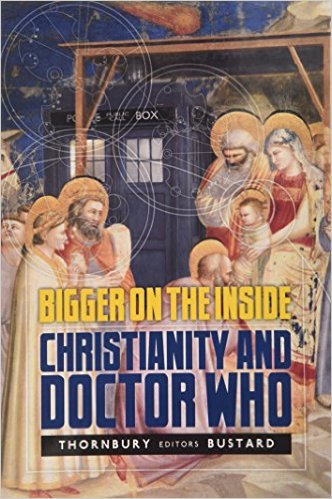
Rah (IVP) $17.00  I wrote about this passionate, important book before
and in revisiting it again I am struck again by how vital it is, and how
interesting, and how, finally, empowering.  (And do I have to say, so needed in these hard days?)

There have been several
books in the last decade discovering and exploring lament, and it isn’t uncommon to
hear, now, that to offer up lament to God is a firm part of the
Jewish-Christian liturgical practice. We are authorized by the Bible to
complain to God, to cry out, to give voice to our pains, doubts, and
frustrations with the ways of the world. One of the under-developed
Biblical resources for helping us understand and practice this
under-developed Christian virtue is the book of Lamentations. (And for
understandable reasons; it is not easy or inspiring.)

Rah unpacks the book of
Lamentations in a way that is not quite a commentary, but plumbs its
narrative depth and overt teaching to help us learn to lament injustice
and sorrow in our own day.  More than an exploration of theodicy and
more than a screed about social injustice, Prophetic Lament is a
Biblically-grounded study and a spiritually-wise guide to how to express
and deal with the sad stuff of our lives and of our broken culture and
dysfunctional society.  Thanks be to God for this brave and useful
book.  May its hard truths be widely read and discussed, increasingly
finding their way into our common vocabulary and our regular worship and
spiritual practices.


bigger.jpgBigger on the Inside: Christianity and Doctor Who edited
by Ned Bustard & Greg Thornbury (Square Halo Books) $17.99  Well,
why not? I think that nearly any time Square Halo Books releases a new
volume it is up for consideration for a Best Book of the Year award;
they do a fantastic job designing and creating books that are unique,
interesting, and offering mature theological insight about the world of
the arts.  I wrote a bit about this (even though I’m not much of a
Whovian) and have come to realize more and more that this book is loved
within a niche market, and is esteemed: the essays are very good. (And
Dr. Greg Alan Thornbury? My, my, one of the more important young
theologians writing these days, in between his work as President of
Kings College in New York City.)  There are geeky sci-fi fans
everywhere, but these smart essays
are exceptionally well suited to feisty young adults, those who like the
famous show, or just those who want to see solid theological
reflections growing out of an iconic piece of popular culture. CCO’s own
Ivan Strong Moore has a blurb on the inside of this great paperback.
 When we are out selling this at events, people do little happy dances
when they see it, exclaiming all manner of stuff, some of which I don’t
even understand. One person once said she wished I had a “My Other
Vehicle is a Tardus” bumper
sticker to go with the book.  So, yeah, there’s that. It deserves to be
on this year’s end list of highlights.

culture care cover.jpgCulture Care Makoto Fujimura (Fujimura Institute) $25.00  I trust you know our friend Mako Fujimura, one of the leading abstract painters working in the serious American art world. A Japanese-American (who graduated from Bucknell University here in central Pennsylvania) he has kept alive and developed a painstakingly caring, Japanese form of painting (using expensive, glimmering crushed minerals.)  He has become an tireless public intellectual, writing, lecturing, hosting exhibits, forming organizations such as the renowned International Arts Movement. (And his recent appointment as Director of the excellent Brehm Center at Fuller Theological Seminary in Pasadena, California.)  As a thoughtful evangelical Christian, Mako has articulated well a deeply Biblical vision of the arts, and a faith-based perspective on art criticism and the practices of the faithful aesthetic life.  We carry most of his many books, and was honored to be one of the very first bookstore to stock this handsome, handcrafted paperback (with a very creative onion-skin paper dust jacket)  produced recently by Fujimura’s own organization in New Jersey.
Any time Mr. Fujimura publishes, his books are worth having. His written words are always, always thoughtful, exceptional, even, drawing deep connections and developing intellectual themes as only a quiet and learned thinker can do; his lovely early work of reflections (many done during and right after the horror of 9-11 exploring the role of the arts in such a time) called Refractions is still a personal favorite!  This new book, Culture Care, continues to showcase his calling to stimulate conversation — poetic, beautiful, wise, collaborative conversations, about how to sustain and bring renewal to a culture in crisis. How to care for the social architecture, so to speak, that can sustain artists and culture-makers, so that they can, in term, enhance the sustainability and health of society.  A key word he uses in the book is generative, and he invites here us to be responsible, productive in fruitful ways that bring flourishing and healing — what his friend Calvin Seerveld calls “rainbows for the fallen world.”

Here is what Mako has explained about this small, poignant manifesto, generative itself as it is:

“This is a book for artists, but artists come in many forms. Anyone with a
calling to create–from visual artists, musicians, writers, and actors,
to entrepreneurs, pastors, and business professionals–will resonate with
its message. This book is for anyone who feels the cultural divide,
especially those with a desire or an artistic gift to reach across
boundaries with understanding, reconciliation, and healing. It is a book
for anyone with a passion for the arts, for supporters of the arts, and
for “creative catalysts” who understand how much the culture we all
share affects human thriving today and shapes the generations to come.”

We are glad to be a small partner in distributing his work, happy to not only celebrate his generative efforts, in paint and in words, but to honor them the best we can. We invite you to buy his book, to read and discuss and embody it’s mature, hopeful vision.  Yes!

Day Alt Music Died.jpgThe Day Alternative Music Died: Dylan, Zeppelin, Punk, Glam, Alt, Majors, Indies, and the Struggle Between Art and Money for the Soul of Rock Adam Caress (New Troy Books) $16.99 Speaking of rock criticism, and the history of writing about the popular arts in intelligent ways, this book was truly one of the most thrilling I’ve read all year, and one I so enjoyed writing about at great length. You should read my reflections on it, but you should at least know this much: the subtitle says much: it is about the swing back and forth between art and commerce.  Indie music, decade by decade, has meant different things to different rock music lovers, but has typically been created by the co-opting of aesthetic concerns, big labels mimicking edgy, fresh artists, and allowing commercialization to rule.  Alas, another sort of indie scene develops, until it, in time, is tamed and popularized and finally cop-opted by business concerns of record labels and sales and “the industry” (from Rolling Stone to the Grammy’s to MTV.) Nobody escapes the astute observations and critical evaluations of Caress, a fine Christian scholar and passionate (and incredibly knowledgably) rock music fan. A stellar blurb on the back by the exquisite writer and media critic Sven Birkerts further illustrates that this is an important book, one that should be read and understood by anyone interested in the popular arts and the world of contemporary music.
75 Masterpieces Every Christian Should Know- The Fascinating Stories Behind Great Works of Art.jpg75 Masterpieces Every Christian Should Know: The Fascinating Stories Behind Great Works of Art, Literature, Music and Film Terry Glaspey (Baker Books) $29.99 What a great, lovely, interesting, and inspiring book this is — it is almost like a coffee table book, but the content is so inspiring and educational and important, it deserves to be taken more seriously than an attractive gift book for art lovers, although it is that. We surely must honor it with a very honorable mention.
Here’s what I said in my review last fall:

If you have any curiosity at all about art, literature, film, or music and the true stories behind the great masterpieces of the world, this informative and beautiful book will provide hours and hours of wonderful reading. It is going to be a fabulous gift for gift-giving this holiday season, but you should buy it now so you can read it before gifting it this December. I’m not exaggerating – it is a marvelous idea, and wonderfully written. It is not tedious or overly complex, but it offers enough serious background and interpretation of the art and the artist to appeal to a very wide variety of reader. Hooray!

Some of the greatest artists of all time have taken their inspiration from their Christian faith and exploring how so many great masterworks emerged from artists of deep faith and Christian conviction is the starting point for these delightfully informative explorations.

Mr. Glaspey has written several books on faith formation, reading the Bible, a short biography of C.S. Lewis (Not at Tame Lion) and a book on reading great classics, and he works in the publishing industry. In our own work we have crossed paths a time or two, and I’ve read his other books; I respect him a lot as I say in my own blurb that appears in the book:

Terry Glaspey seems to know a bit about everything and a lot about the things that matter most. I would read anything he wrote, but this unique volume surpassed my great expectations. If you enjoy pondering the connections between faith, art, culture, and daily discipleship, you will adore this. 75 Masterpieces Every Christian Should Know is itself a masterpiece. Who else can tell you about a painting by Caravaggio, a novel by Jane Austen, and live album by Johnny Cash all in the same book? Thanks be to God for Glaspey’s clear faith, informed knowledge, and winsome writing that can help us glean spiritual insight in cultural projects from Dante to Dylan, from Rembrandt to the Tree of Life.

I was hooked on this idea from the minute I heard of it, knowing it was a great idea, and that Glaspey could pull it off.  But I was really hooked when I realized he was including contemporary rock albums such as a trilogy by Larry Norman, Bruce Cockburn’s Dancing in the Dragon Jaws, and The Joshua Tree by U2. And – yay! — contemporary novels such as Frederick Buechner’s Godric and the short stories of Flannery O’Connor. The most recent pieces described are from 2011. I hope you know the painter and the filmmaker described in those final pages!

 75 Masterpieces Every Christian Should Know starts with early Christian art in the Roman catacombs and then tells us of the amazing story of The Book of Kells and moves on through the Middle Ages (including some stunning cathedrals that are beautifully described) and the obvious selections of that productive era as it lead towards the Renaissance (The Divine Comedy, Rublev’s Holy Trinity icon, van Eyck, Durer, Bosch, Michelangelo’s famous work on the ceiling of the Sistine Chapel and so many more.)  Interestingly, he includes a little song from the early 1500’s “A Mighty Fortress Is our God.”

Several of these are pieces I didn’t know at all, or well, and a few are not my favorites. (He gives some advice about this in a good introduction, by the way, and invites us to work a bit at this since the artists themselves, of course, worked very hard. His good guidance and curation are helpful for those of us not well schooled in art history.) Even if you don’t know them well, these pictures and descriptions are mostly all very moving and, of course, are truly important works.

Glaspey’s descriptions are very, very helpful and you will be glad to be inspired by it all.

The listing is arranged chronologically, so one gets to read about Donne, Herbert, the famous St Teresa in Ecstasy sculpture by Bernini next to Rembrandt’s famous Return of the Prodigal Son. Or, much later, a review of Death Comes for the Archbishop (Willa Cather), a 1928 film about Joan of Arc by Theodore Dreyer, and Head of Christ by George Rouault in order. Fascinating.

There is found here exquisite but teacherly descriptions of stained glass, classical music, poetry, a few plays, films and jazz albums. To read 70’s-era pieces such as a European symphony Henryk Gorecki, a folkie album by Canadian Bruce Cockburn, a novel by U.S. Southerner Walker Percy next to a Japanese painting of The Last Supper by Sadao Watanabe (1981) was remarkably moving for me.  75 Masterpieces Every Christian Should Know really is a very great book. Kudos.

BEST NOVEL OF 2015

all the light we cannot see.jpgAll the Light We Cannot See Anthony Doerr (Scribner) $27.00 

Well, I’ve read and enjoyed quite a number of great novels this year – some previously published and famous, some self-published and not well known.  In the former category I was engulfed in the fiction worlds and people of three by Wally Lamb, such as The Hour I First Believed. And I finally read Marilyn Robinson’s unforgettable, complex first novel, Homemaking – whew. 

In the later category, I enjoyed  the philosophical adventure story Bridging the Abyss by my good friend Dick Cleary. (I reviewed it last fall at BookNotes.)  I was very deeply involved for days and days with the Civil War era story about race and families and romance and truth, A Soldier’s Heart by a York area writer, Michele McKnight Baker. And I have to say I loved essayist and memoirist Michael Perry’s comic first novel, released by HarperOne, The Jesus Cow.  Yes, you read that right.

All the Light We Cannot See by the esteemed Anthony Doerr is, doubtlessly, the book that most stuck with me this year, the most beautiful, striking, interesting, moving, and literate bit of fiction I’ve read in quite a while. Many have called it ambitious, and it certainly is that. All the Light We Cannot See certainly deserves the Pulitzer Prize that it won, and I trust you have read reviews of it, or have discussed it with friends, and the beauty and horror that inevitably overtakes the two young protagonists, in Germany and in France.  We are pleased to sell it, despite some graphic scenes (it is set during the time of Nazi Germany) and some harsh language. I suppose it maybe isn’t for everyone, but it is a truly great book, enduring and luminous and very significant. It surely deserves all the wide acclaim it has gotten, and we want to ad our little voice to the choir. It surely is a Best Book of 2015.

I am sorry this went on a bit longer than I had expected. True fans like overtime games, I suppose, but after a while, well, one needs a break. Take your notes of what you want to order, and stretch those legs. Get some fresh air. Talk to your loved ones.  But get ready to come back soon.  Hearts & Minds Best Books of 2015 will be back, hopefully tomorrow, with our second and final installment.

Thanks for caring about good books, about our selections, and about supporting independent bookselling.  We are so very grateful.

BookNotes

SPECIAL
DISCOUNT
ANY ITEM MENTIONED

20% off
order here
takes you to the secure Hearts & Minds order form page
just tell us what you want

inquire here
if you have questions or need more information
just ask us what you want to know

                   Hearts & Minds 234 East Main Street  Dallastown, PA  17313     717-246-3333


A BALANCED READING PACKAGE: 3 books for 30% off; 2 books at 20%; 1 book earns 10% off.

Okay, book fans, here’s a little deal to help you start the year off right.

You can pick one from each of these three categories, and if you do, you will own a nice package of good reading — I recommend reading several at a time — and we’ll give you an extra deep discount.

Buy one from each of these three categories and we’ll offer a 30% discount.

The 30% off is good for four days only.  This special Hearts & Minds New Year Package expires Tuesday night, January 5, 2016, at the stroke of midnight.  The shoe will drop and that will be that.

Well, not really: you can buy any two of these, any time, at our special 20% off discount offered to our BookNotes subscribers, and on-line customers. Or buy just one for 10% off.  How’s that for a fun sliding scale?  Those offers usually don’t expire.  But why not go for the package deal, and earn the better savings — 30% OFF! — and have a more balanced reading diet ready to go in the New Year?

Here I’ll list five good books in three important categories.  Take your pick.

MEMOIRS


Everyone, I think, should read a memoir every so often.  Engaging the same part of the brain that fiction does, a well-written story of an author’s life, or a narration of a part of his or her life, can be as engaging and enjoyable as a novel.  I’ve read memoirs I so enjoyed that I’d slap my thigh and say I can hardly believe it, saying, once again, that you can’t make this stuff up!  I think it is really useful to see how others narrate their lives, how people make sense of stuff, and it gives us greater abilities to be empathetic and understanding. Read memoirs!

Here are five that I loved this year, five great memoirs from 2015 that you should consider.

Midnight Jesus- The Late Night Psychiatric Crisis Guy Jamie Blaine .jpgMidnight Jesus: The Late Night Psychiatric Crisis Guy Jamie Blaine (Nelson Books) $15.99  This was one of my favorite books of the year, with captivating writing so fresh and vibrant and exciting and funny and real.  Blaine is a low-rent, ruffled, redneck Pentecostal with a ton of doubts and remarkable solidarity with other losers, crazies, drug-addicted, strippers, and religion-haunted characters. He’s most at home with the down-and-outers and the misfits. With extraordinary dignity and exceptional kindness he tells the stories of people he meets while working at a rehab and psych ward, befriending one and all. Midnight Jesus describes his journey as a psychology major in grad school, working at the clinic, helping out in his Pentecostal church’s blue-collar counseling ministry, all the while working as a DJ at the local roller rink. And keeping a running dialogue with Jesus who is, apparently, with him under the disco balls at the rink and in his rusted out pick up, driving late, late, at night.  At least sometimes.

Blaine is Anne Lamott if she were Pentecostal, Southern, blue-collar, male, and, well, there’s that roller rink thing. Forget what I said about his similarities to lovely Anne: Jamie’s an original voice, with the occasional reference to Barth and Camus, but the more interesting ones from country and rock music or quotes Hunter S. Thompson; when he plays “The Old Rugged Cross” in a dive bar, or blasts heavy metal between his counseling sessions, it’s the real deal, raw and authentic and full of sheer wonder and grace. The chapter about how he connected with one schizoid client because he understood a punk song reference tattooed on a clients shoulder made me grin and grin. Yep, Blaine is right. God sure does show up in weird and mysterious ways.

And this memoir will remind you of that, in amazing prose and in, shall we say, unusual situations.  It isn’t every Christian book where the author gets tossed in jail for making a public disturbance, and gets to play Clue in jail with a former client, himself a former church guy. 

It also isn’t every Christian book — I’d say it isn’t any Christian book — that gets a rave endorsement by the likes of Augusten Burroughs, memoirist par excellence and author of Running With Scissors.  Burroughs writes of Blaine’s Midnight Jesus that it is,

Gorgeous, brilliantly written, deeply moving, life-affirming, and just 

plain stunning.

joy in the journey hayner.jpgJoy in the Journey: Finding Abundance in the Shadow of Death Steve & Sharol Hayner (IVP) $16.00  I wrote about this at great length and have been told by more than one customer that it was the book that most moved them this past year. IOt is the story of the former IVCF leader who became the president of Columbia Seminary and found out he had pancreatic cancer. He and his wife, Sharol, entered into his last season of life — the physical pain, the cancer treatments, but more, the spiritual journey, the emotional connections with so many through the blog Steve wrote at the CaringBridge website — and tell about it, here.  This book is mostly drawn from his moving diary kept during that last year as he chose how he would face death.  

Steve was known for signing his letters “Joyfully” and this book illustrates the profound meaning of that practice and how it formed him into one with the the character and faith that could die well.  It is a very, very moving book, and a great tribute to a thoughtful, joyful, Christian leader.

As Gary Haugen of IJM writes:

This is a rare gift, to be invited into a journal so utterly full and overflowing with both the depth of pain and loss and yet the anchor of hope.

This wonderful little book will be unforgettable, and was one of the best books of last year.  It reads almost like a memoir since it is (mostly) a well-written set of diary entries designed to allow others to look into the story of his life, as well as that of his family and friends.  Powerful.

The Year Without A Purchase- One Family's Quest to Stop Shopping and Start Connecting .jpgThe Year WIthout A Purchase: One Family’s Quest to Stop Shopping and Start Connecting Scott Dannemiller (WJK) $16.00  I wrote this a few weeks ago, and I hope you saw it: This unassuming little volume is certainly one of my favorite books of the year — it made me laugh right out loud, made me cry and made me wonder what in the world they’d do next.  And what in the world I might do next. It’s fun and really funny, as Dannemiller offers an insiders look into this family’s zany plan not to buy anything for a year (except food and essentials. And the stuff they might cheat on. Ha.)


Margot Starbuck says it is “playful, thoughtful, substantial” and she is right.  This family really did try to connect with others, living well on less, and it is told with a wink and a sly grin, even as it is nicely inviting and even compelling. Of course you don’t have to do what the Dannemiller’s — Scott, Gabby and two loud, smart kids — did, but it will inspire you to wonder about how you do your kids birthday parties, how you give gifts at holidays, how you do family vacations, and how you do or don’t fix or reuse stuff, what purchases you deem essential.  Most of us are troubled by our own materialism, it seems, and most of us are aware of how the majority world lives in poverty. (The Dannemiller’s were Presbyterian missionaries for a year, doing social service in Central America, and lived in a poor, rural village.) This is a nice way to grapple more with being “rich Christians in an age of hunger” without being grumpy or anxious or overly political or guilt-induced. It’s a funny book, did I say that?

I love these kinds of reports from the front lines of a year-long experiment, memoirs of a slice of life as a family tries to accomplish something good.  This one does just that, and I couldn’t put it down — I like reading about other families, about other dads, about other ordinary Christians trying to be more just, sustainable, joy-filled, and faithful.  It would make a great book with which to kick off the year, even if you have no intention of doing anything like what Scott Dannemiller and his wife and kids did. Enjoy!

Accidental Saints- Finding God in All the Wrong People.jpgAccidental Saints: Finding God in All the Wrong People Nadia Bolz-Wevber (Convergent Books) $23.00  Nadia is one of a handful of poster children for the new face of emerging congregations, full of snarky cynicism, radical understandings of living in the way of Jesus, tattooed and cussing like the hip, stand-up comic she once was.  This book is so well crafted it is a joy to read, the remarkable sentences, the powerful ways the essays weave together, the stories told about this or that person in her edgy Lutheran missional congregation, House of All Sinners and Saints.  It is a memoir, yes, and a well written one, but, more, it is a window into deep faith and serious practices within a certain sort of liturgical, missional, post-Christiandom church and the story of a deep renewal of faith life amidst the un and de-churches.

Sarah Miles, herself a stunning wordsmith and memoirist of great grace, says:

Nadia Bolz-Weber’s new book is even tougher, sharper, and sweeter than Pastrix. In painfully honest stories, she pulls back the curtains of religious life to show how church — the actual, living, Body of Christ — is created among us. This is a book for everyone who years to be made new.

Nadia has been called everything from a post-modern Augustine to a mash-up of “Louis C.K., Joey Ramone, and Saint Paul.”  Think what you will at the end of her evangelical spirit and left-wing politics and unusual theology, this is a fabulous read, a fascinating bit of great writing, and a very moving story.

SwimRideRunBreathe_1024x1024.jpgSwim, Ride, Run, Breathe: How I Lost a Triathlon and Caught My Breath Jennifer Garrison Brownell (Pilgrim Press) $18.00  What a fascinating, well written memoir, the nicely and honestly told story of a very un-athletic woman training for the tri. I was hooked on her clever writing from the very first page (I kid you not) and was drawn in to story of her bookish, mainline-Protestant expression of faith (she is a UCC pastor) and her nearly perplexing drive to do this big thing.  In part, she wanted to learn to be more comfortable in her own body.  A large part of the story — which is not the expected story of feeble person winning against all odds, hip, hip, hooray — is her honest telling of her good marriage with her husband, Jason, who is in a wheelchair. He has a form of muscular dystrophy so his own body issues loom large in her consciousness as well.  As a  mid-life, liberal Protestant pastor in Portlandia, as the wife of a sharp guy who is in a wheelchair, as a “dedicated non-athlete” she discovers quite a bit along the way.
I was drawn to this because it was said it was written “with humor and without sentimentality.”  Great wordsmith, writer, and preacher Debbie Blue (who wrote Consider the Birds) says of it,

This is no an inspiration tale about cheerfully conquering adversity. It is a funny, heartbreaking and wise story about telling the truth in all its messy beauty and learning to love it. It’s about finding grace and gratitude in the ordinary and extraordinary details of life and memory. It’s wonderful and hopeful. I loved it.

CHRISTIAN FORMATION/APPLIED THEOLOGY

Everyone should read, from time to time, books about basic Christian discipleship, living well, learning about faith and applying good theology to the rigors and routine of our daily lives.  Here are five of my favorites this past year, good for nearly anyone who wants a thoughtful, helpful guide to deepening faith, maturing in characters, living more robustly for God’s Kingdom.  These are each very well done and exceptionally valuable, useful to build us up and keep us going. Chose one of these and dig in, forming the habit of reading about daily discipleship and spiritual growth.

soul of shame.jpgThe Soul of Shame: Retelling the Stories We Believe About Our Selves Curt Thompson, MD (IVP) $22.00  This book by the energetic and thoughtful psychiatrist, Dr. Curt Thompson, is one of the best books of 2015, for sure. I reviewed it at great length, and Curt has gotten a lot of press and rave reviews from this, his second book.  As I explained it is both a Biblically-based study of the toxic impact of shame, and a neuroscientists take of how it effects us, and what we can do about it.  “We are all infected with the same spiritual disease” the back cover declares.  “It’s name is shame.”

This book is a great example of evangelical faith related to science and brain studies, and it is a great example of a book informed by pretty serious theology and science can be so very useful, practical for those who are hurting and a good guide for nearly anyone wanting to live more fully, understand sin and grace, dysfunction and being set free, our brokenness and the hope of restoration.  The book reminds us of embracing the big picture of the Scriptures and how developing a deeply Christian worldview and living out of that story is a aid for developing a coherent, sustainable life. 

The lively and good writer Dan Allender says it is “a magisterial work — thoughtful, compelling, and transformative.”

Allure of Gentleness- Defending the Gospel in the Manner of Jesus.jpgThe Allure of Gentleness: Defending the Faith in the Manner of Jesus Dallas Willard (HarperOne) $26.99  I hope you know the late, great, Dallas Willard, and his rich, thoughtful books that are deep and penetrating, without being obscure or scholarly.  He was a philosophy professor and a spiritual director schooled in the deepest classics. He was brilliant and yet humble, a writer about the ways the Kingdom of Christ break into our lives, often from the inside out.  He was an excellent thinker with a practical bent, the best sort of guide and coach.  His wrote a good handful of books about spiritual transformation.
This book was about how we can talk about the faith, present it to others, do what is usually called apologetics and evangelism, without the arguing, the brow-beating, the logical gymnastics.

Presbyterian pastor and Bible scholar Eugene Peterson writes:

I grew up in a Christian culture in which ‘defending the faith’ was carried out by using the Bible as a weapon. Anyone who challenged my faith was treated as an enemy. As an adult I discovered Dallas Willard. Unfailingly gentle and respectful, he transformed the apologetics of my generation as many of us ‘laid down our swords and shields.’

I am sure you got that reference in the Peterson quote to “Down by the Riverside.” Yes, we will “lay down our swords and shields” but that doesn’t mean we are not in a battle, even a battle for hearts and minds.  But we fight in a very different way, so different that fighting hardly even seems the apt word. Defending the faith is hardly the right way to say it.  What is a better image, and what are better practices, for bearing witness in ways that are kind and fruitful? Full of grace and truth?  Willard can help.

As J.P. Moreland says, “I have never seen a book remotely like this.”  He continues,

Because Willard places apologetics against the backdrop of pastoral care, it makes it a practice everyone who loves people should master. This is essential reading.

J. Stanley Mattson, founder and director of the C.S. Lewis Foundation says Willard is like Lewis.  “Willard advocates for truth, born on the wings of grace, and does so in the manner of a fellow pilgrim, keen to listen and to share.”

Chris Hall, director of academic spiritual formation at Eastern University, says of it, 


Classic Willard: the gifted Christian philosopher answering hard questions — the questions so many people have about God, hell, the problem of evil, the nature of freedom, the wonder of Jesus — in an accessible style and with a gentle spirit.

simply good news .jpgSimply Good News: Why the Gospel is News and What Makes it Good N.T. Wright (HarperOne) $24.99  You most likely know that we are huge fans of Tom Wright, and admire his intellectual rigor, his broad involvement with various schools of thought and his cordial friendships with scholars from all over the map, so to speak.  We believe he is, when properly understood, a wonderful example of being forward-thinking and relevant, certainly, but faithful and solid to historic Biblical insights and theological verities.  Why not start off the hear either dipping in to Wright in an introductory way, or recalling many of his oft-spoken views.
This book is nearly a “greatest hits” album, a wonderful way to be brought up to speed with a variety of his most important themes.  There is a strong teaching here about the reliability of the gospel accounts, the importance of Jesus in the flow of the whole Scriptures, and how Christ is the King of all of life, inaugurating the start of God’s redemptive project of new creation.  Wright is prolific and energetic and has some relatively easy to read books (wonderful collections of sermons and essays) and super-detailed scholarly work.  This one is what we might call “mid-level” — an example of his informed vision and serious scholarship, but happily written, very, very accessible.  Nice.


Here’s an offer: we can substitute this one for almost any other N.T. Wright volume, big or small. We’ve got ’em all.  Read some Wright in the New Year!

foolsTalk.jpgFools Talk: Recovering the Art of Christian Persuasion Os Guinness (IVP) $22.00  Again, this is doubtlessly one of the best books of 2015 and will certainly be on any list I do to celebrate the year’s best releases.  I hope you saw my own long BookNotes review to it and my appreciation for the many volumes of the astute Dr. Guinness.  I’m a fan of his exceptionally thoughtful work, and, as with most great authors, he is sure to stimulate your thinking, stir your heart, and make you wonder if you agree with his thesis or not.

This is, in some ways, an outpouring of a lifetime of hard thinking on the part of Guinness, informed, too, by a lifetime of serious conversations with seekers, cynics, atheists and various sorts of believers.  He has gleaned what he has learned from the likes of C.S. Lewis, Francis Schaeffer, and sociologist Peter Berger about how to make a plausible case for those who are disposed to disbelief the truths of the gospel.

There are a good number of reviewers and people to whom we’ve sold this book this year who believe this is one of the best books they’ve ever read, and it surely should be considered an exceptionally valuable work, instructing us about how to talk well with those in the modern world.  Os shows us why simple formulaic testimonies or tit-for-tat rebuttals of questions offered by those who question the faith are often not adequate if we want others to seriously consider the claims of Christ.  We have to get beyond typical evangelism or typical apologetics.

Ravi Zacharias says it is a “must read” and Tim Keller says “I highly recommend it.”  Dr. Guinness discusses the dynamics of how conversation, real communication, and persuasion works, including the use of satire (and story) to help people see deeper truths.  Do we want the gospel to seem plausible and attractive to post-Christian modernists? Do we want to actually make good headway in persuading others, no merely having fruitless arguments?  Holy Fools is a very stimulating, serious, profound book and it is well worth working through.   Highly recommended.

Joy and Human Flourishing- Essays on Theology, Culture, and the Good Life.jpgJoy and Human Flourishing: Essays on Theology, Culture and the Good Life edited by Miroslav Volf and Justin E. Crisp (Fortress) $39.00  What a book, a serious-minded, thoughtfully-prepared, applicable study of joy and its repercussions in the church and the world!  Joy is a primary call, these authors tell us, and a central reality of life lived in God. Surely we need more serious Biblical and theological study of this pleasant, but perplexing, topic.  Such a study dare not be glib or disinterested in the complex hardships of our fallen world. It would have to explore joy in our own lives, show how our own spiritual formation practices might help, and how that might allow us to live better in the world, in the culture, such as it is, with more care and compassion.  Joy and Human Flourishing is just such a book.  It includes pieces from Jurgen Moltmann, N.T. Wright, Marianne Meye Thompson, Mary Clark Mochella, Charles Mathewes, and, of course, Volf.  These are agents of shalom and this offers what John Ortberg calls “a grand project on a vast and vibrant scale.”
Indeed, Nicholas Wolterstorff says:

If ever a book filled a gap, this is it. Joy is a central component  in the New Testament description of life as it is meant to be lived… This volume is an excellent beginning at filling that gap. It is ground breaking.

SOCIAL CONCERN, PUBLIC LIFE, MISSIONAL SERVICE IN THE WORLD

This has been a rich year for good books about public justice, the relationship of personal spirituality to cultural renewal, about how the gospel transforms lives, and also calls us to work for systemic change and social renewal as agents of God’s shalom.  I write a lot about such themes — Christian ministry in the arts, about racial justice, about political theology, work, and the like. Why not balance your faith with this kind of inspiring call to outward service?  Here are five recent ones, among the best of this past year that will expand your horizons a bit.

Roadmap to Reconciliation- Moving Communities into Unity, Wholeness, and Justice Brenda Salter McNeil.jpgRoadmap to Reconciliation: Moving Communities into Unity, Wholeness, and Justice Brenda Salter McNeil (IVP) $16.00  This new hardback is a great, great little book and gives a fabulous overview of the Biblical basis for racial reconciliation and pushes us towards true and lasting answers.  We can see the inequality, we understand the problems, but are we ready to rise up in faithful action?  What steps should we take to offer gospel-centered, wholistic, spiritual answers for racial justice?
This new book claims to be nothing short of a roadmap to show us the way.  I’ve appreciated Brenda’s several other books and love her powerful, faithful public speaking.   Shane Claiborne says she is “a legend… one of the church’s greatest thinkers on one of the world’s greatest challenges.”

Here are what some others say about this:

Soong-Chan Rah says it “offers helpful categories to sharpen our discussions and useful exercises that are both practical and applicable.”  Christena Cleveland says it is “a practical handbook for small groups.”  Patricia Raybon says it “shows believers how to stop talking about reconciliation and start being it together. Gripping to read and exciting to receive, passionate, equipping, and downright brilliant.”   Brenda walks the walk as they say, and this brand new book is getting lots of attention. Add it to your list.

Great Commission Great Compassion- Following Jesus and Loving the World.jpgGreat Commission Great Compassion: Following Jesus and Loving the World Paul Borthwick (IVP) $16.00 I love the slogan that is on the back cover of this new book: “We follow Jesus into all the world, and we follow his example in all we do.”  Right — we do His work in His way, called to whole-life discipleship, serving others in faithful ways.
Borthwick is one of the best writers to do exciting and compelling introductions to why we should care about world missions.  He has deepened and perhaps widened his vision in recent years, writing more generally about our missional call to follow Christ in ways that allow us to make a difference, wherever we are.  His great strength is helping us not only know what we should about this complex topic but finding on-ramps and next steps for further involvement.  

As Greg Jao has explained, “Great Commission, Great Compassion, distills a week-long missions conference into a form that you can read, savor, and apply anywhere, anytime.”  Do you want the Great Commission to be more deeply understood in your circles? Do you want to be more committed to wholistic service, linking evangelism and compassion?  Do you want to hear God’s own heartbeat, becoming more in tune with Christ’s own biggest hopes?  This book will help, I promise.

One of the great Bible scholars of our day, Chris Wright, wrote a lovely and inspiring foreword, noting that we need “the whole Bible story for our understanding and practice of mission.”  What should we do?  Christopher Wright says to give them Borthwick’s new book which helps us take steps towards “holistic, integrated mission that includes word and deed, evangelism, creation care and all the rest…”   The 100 suggestions that are in a closing appendix are themselves well worth considering.  Yes!

Jesus Without Borders- What Planes, Trains, & Rickshaws Taught Me About Jesus .jpgJesus Without Borders: What Plains, Trains and Rickshaws Taught Me About Jesus Chad Gibbs (Zondervan) $15.99  I could list this as a memoir as it is nearly a straight travelogue, a delightful journey nicely told, exuberant and funny at times, about a guy traveling around the world.  But I list it here: Gibbs doesn’t just want to offer a literary memoir of his journey, but he wants us to understand a clearer picture of how other Christians all over the world worship, and what we can learn from their practices and lifestyles. It isn’t exactly about world missions and it isn’t exactly about global justice and it isn’t directly about multi-culturalism. He has more than a dozen chapters, writing about what he learned in places as diverse as Russia and Brazil, Japan and India, The Netherlands and Uganda and, well, it really can help us all be more globally aware as world citizens, and more, as a multi-ethnic and multi-national Body of Christ.
Can other people’s cultures teach us? Well, of course. Can we be formed in new ways and deepen the fidelity of our own discipleship by paying attention to our brothers and sisters elsewhere? Indeed. Can it be a fun learning experience, an enjoyable ride, even if a bit out of our comfort zone?  Oh yes it can!  Ghad Gibbs is living proof and Jesus Without Borders is a great example of how we can be drawn to God though a good story. Delightful.

Nonviolent action.jpgNonviolent Action: What Christian Ethics Demands But Most Christians Have Never Really Tried Ronald J. Sider (Brazos Press) $19.99  I wrote about this when it first came out last winter, and now, at years end, wish to tell you again about how very inspiring this is, and how very sensible it seems to me — if risky, courageous, demanding. I would be so very happy if some of our faithful customers took it up in their reading plan this new year.  It would make a great study or book club title to talk about.
I suppose you know that Sider is a Brethren Christian, a conservative evangelical that takes the BIble rather literally on the question of nonviolence.  That is, he thinks that war is a sin and, like other sins — drunkenness, sexual immorality, racism, what have you — Christians are called to refrain from involvement. It is so very odd to hear Christians who hold to a conservative political agenda complain about how the progressives and liberals (as they call them) just want to be like the world or are PC like the culture when, in this case, at least, nothing could be further from the truth: Sider is counter-cultural, not caring what “the world” thinks and his Biblical literalism on questions of nonviolence is disregarded by both the culture and the church. As a rural farm boy growing up a gospel-cased, Bible-believing, evangelical, being worldly or seeking approval of those in the culture was certainly not important to him, and this book certainly illustrates that.  Taking the Bible and Christian ethics seriously on this issue certainly doesn’t sound like anybody in the culture!  Consequently, Dr. Sider regularly calls us to follow Jesus, to reject the worldliness of fighting, and invites us to the upside down values of Jesus, like putting away the sword and turning the other check and overcoming evil with good.  So, he’s a consistently pro-life Christian pacifist.

But here is the thing: Sider is also aware that most Christians disagree with him on this, and that most Christians believe in the sad necessity of the use of some violence in some situations.  But in a world where preachers extol violence and we routinely fail to obey Christ’s simple teaching about praying for our enemies, and where guns and flags are displayed even in Christian sanctuaries, he knows that the call to nonviolence isn’t common and certainly not seriously considered by many.  He has written about that in other books, but doesn’t much in this one.  In this book, however, he is offering a bit of a compromise, a fair and honest suggestion to those who don’t embrace Biblical nonviolence.

You see, most Christian people believe in what is called the “just war theory.” That means, to put it simply, that some wars are sometimes necessary and it is ethically legitimate for Christians to fight in such wars.  The tradition has many permutations and varying theologians emphasize different aspects of this school of thought, buy almost all agree that any Christian involvement in warfare has to be limited — we can’t fight in immoral wars and we can’t intend to kill civilians, for instance. One of the principles of the just war theory is that for a war to be just and acceptable, it must be a last ditch effort. It is a sad last resort when every other reasonable option to be a peacemaker has failed.

Therefore, says Ron Sider in this fabulously interesting and stimulating recent book, we must, at least, try non-lethal ways of stopping war before we agree to be complicit in worldly violence.  Every major scholar and spokesperson of the just war theory down through church history has more or less said this; it is one of the principles embraced by Catholics, Orthodox, and mainline Protestants: we can’t be overly zealous in going to war, and it must only be endorsed if it is the last ditch effort.  So, in this book Sider shows how nonviolent options might be first considered as an alternative to war, and offeres strategies we could propose before agreeing to wage violence. There are great examples where this has happened and some of them are really dramatic!

From all throughout history there have been breath-taking examples of warriors turned back and oppressors resisted by ways other than by killing them. Nonviolent Action: What Christian Ethics Demands… proposes that it isn’t sensible or ethically legitimate to endorse wars and bless the bombs unless we’ve tried some of these other plausible strategies first.  I think he is correct.   

Nonviolent action and non-lethal resistance has been practiced in history and in other social-political situations to promote peace and oppose injustice although many of us haven’t heard most of these remarkable episodes of creative peacemaking.  This is actually an incredibly hopeful book, helping us see that even in this dangerous, awful world of ISIS and the like, God can use God’s own upside methods to shame the powerful and liberate the oppressed and restore the order of common good.  Sider has done a great service in compiling these stories, and putting them together for us in one inspiring volume.

The foreword to this stimulating, provocative book is by Presbyterian Richard Mouw. Mouw, you should know, is not a pacifist, so he disagrees with Sider about whether Bible-informed Christians should kill.  Sider says no, of course, but Mouw would reluctantly allow such tragic necessity.  But Mouw, in his very compelling introduction, mostly agrees with Ron’s thesis here: those that hold to the just war theory should admit that we dare not head off into war without trying other methods of conflict resolution and nonviolent resistance first.  This will take energy, creativity, research, prayerful discernment, and the willingness to suffer, perhaps, in order to be faithful to the limits and constraints of the just war theory.  If we haven’t tried some of this stuff, Sider and Mouw maintain, we can’t in good conscious say war and killing is a last resort.

This collection of amazing stories will blow you away. They will inspire you, stimulate your imagination to suppose new ideas and think differently about what it possible. It might change your view of modern warfare or the call to peacemaking. Regardless of how plausible and effective some of these examples of the past might be today, we must at least be aware and try them or something like them, if we are going to be true to the standard ethical viewpoints down through church history: war and bombing and killing must be a last resort. We can’t just do “whatever it takes” as we must be faithful to ethical guidelines and Biblical principles.  Other options must be considered and tried.  This book shows us how.  

Restoring All Things- God's Audacious Plan to Change the World .jpgRestoring All Things: God’s Audacious Plan to Change the World Through Everyday People Warren Cole Smith & John Stonestreet (Baker Books) $16.99 This is another good book I’ve previously announced, a notable one in 2015.  I loved much of this, and it has some great strengths: it combines a Biblically big vision of what God is doing in our world — bringing Christ’s Kingdom to bear in all of life, followers of Jesus becoming salt and light in the world but not of it.  Yes, it sees that God is bringing grace and hope to all, in various ways, in all manner of spheres and places.  So I likes it’s wholistic vision, and it is a good way into this evangelical truth that God is at work in the world and we are invited to join in.

Secondly, this book is strong and will be very appealing to many because it is mostly stories, examples to inspire us of remarkable things going on in educational ministries, in medical reform, in political life, among the poor, victims of trafficking, in the media, in science. Smith & Stonestreet’s Restoring All Things is a veritable case study of the shifts in evangelical thinking and mission in the last generation, showing that solid, faithful Christian folks are getting involved in social reform and cultural renewal, without forfeiting the the first things of the gospel or the imperatives of a Biblically-based form of faith.  Many have embraced “God’s audacious plan!”

As Jay Richards says this is “not just encouragement but a good swift kick in the pants.”  If you are discouraged or taken with “doom and gloom” these real life examples of mercy and love, justice and peace, love and forgiveness on display by ordinary folks caught up with this vision of God’s restoring work in all of life will help you resist despair and take up a sober hope.  Maybe you’ll be inspired to do some of these sorts of initiatives.  A great resource and a great way to kick off your new reading year!

Here is a reminder of our offer, the plans for a balanced book reading package. 

Buying one from each category is recommended but not required.

BUY 3 BOOKS — get 30% OFF
BUY 2 BOOKS — get 20% OFF
BUY 1 BOOK   — get 10% OFF

BookNotes

SPECIAL
DISCOUNT
ANY ITEM MENTIONED

(30% off promotion expires January 5, 2016)

order here
takes you to the secure Hearts & Minds order form page
just tell us what you want

inquire here
if you have questions or need more information
just ask us what you want to know

                                      Hearts & Minds 234 East Main Street  Dallastown, PA  17313     717-246-3333

YOU WILL THANK US LATER: 12 anticipated books to PRE-ORDER NOW at 20% off from Hearts & Minds BookNotes

I hope you saw the last BookNotes post (we heard that some who subscribe didn’t see it in their inbox the day before Christmas.) We invited you to download a book cover and give a last minute gift of a PRE-ORDERED book.  While we can easily take pre-orders for almost any legitimate book, we picked three that are going to be just wonderful, and, we think, important.  I predicted already that they will be in the running for Best Books of next year!

I know this was appealing to some, and our 20% discount was appreciated, too.

Strong and Weak- Embracing a Life of Love, Risk, and True Flourishing.jpgIt's not too late.jpgYou Are What You Love- The Spiritual Power of Habit.jpgWe suggested for you the January release of the new Andy Crouch book, his fantastic follow-up to Playing God called Strong and Weak: Embracing a Life of Love, Risk & True Flourishing (IVP; $20.00.)


Also, we suggested the mid-February release of It’s Not Too Late: The Essential Part You Play in Shaping Your Teen’s Faith (Baker; $15.99) by our good friend Dan Dupee, President of the CCO, about parenting older teens and college-age young adults. It is really a fine book, fresh and helpful.  Skip back to that previous BookNotes post if you didn’t see our description of it.


Lastly, we were pleased to recommend the eagerly-awaited early-March 2016 book by James K.A. Smith We Are What We Love: The Spiritual Power of Habit (Brazos Press; $19.99) which in many ways is going to be a lucid and action-able summary of his much-discussed “Cultural Liturgies” project. (That is, he will, we’ve heard, summarize in readable style his major works Desiring the Kingdom and Imaging the Kingdom and what will be, someday, Embodying the Kingdom.) 

No sooner did I hit post, and put that BookNotes newsletter up on Facebook, that I wished I had named a few more equally interesting, important, forthcoming works.  The first few months of 2016 are going to be exciting for book lovers, at least the sort of readers that follow BookNotes, so I felt badly not naming a few other equally anticipated titles.

Perhaps you might want to PRE-ORDER them here, now,

at our BookNotes 20% off promo. Just use the links to our secure order form, below.


We think you will enjoy reading about 12 more soon-to-be released titles.  We are happy to announce these that are sure to please many of our customers and Hearts & Minds friends.  We will have them as soon as anyone, and suspect that you might be delighted to be among the first to receive some of these. We’ll be shipping them as soon as they arrive. We’ll deduct the discount from the regular retail price shown but won’t bill you or use your credit card until we actually send them on their way to you.  Okay?

Know anybody else you could forward this to?  Happy New Year, ya know… Thanks for helping us spread the word.

We suspect most will actually be here a bit sooner then the announced date; in some cases, considerably earlier.  Hooray.  Ain’t it good to be a book lover?

to the table mcminn.jpgTo the Table: A Spirituality of Food, Farming, and Community Lisa Graham McMinn (Brazos Press) $19.99  due early January 2016  The minute I heard of this it catapulted to the top of my most-eagerly awaited list; McMinn is an expert writer, a woman I’ve read for years, whose books are good and true and lovely. When I saw the final copy of this, recently, I was just dazzled — nice illustrations bring to mind a Mollie Katzen cookbook, too, or some of our own old books like Lappe’s Diet for a Small Planet. This is an interesting, graceful call and practical guide to a slower (if sometimes demanding) local lifestyle, almost as if it is a follow-up to her very practical Walking Lightly on the Earth.   To the Table includes stories from McMinn’s community near George Fox University, near Newberg, Oregon, including inspiring advice from the work she and her husband do with their CSA (including mouth-watering recipes!) Author/Mad Farmer Joel Salatin says it is about “dining devotionally” and Rachel Marie Stone (who wrote Eat with Joy) says it is a “warm and wise invitation to practice eating as a spiritual discipline.”  Do you want more intention, compassion, gratitude? Are you interested in gardening, health, neighborly conviviality?  To the Table is a gem, a gift, a sweet yet astute volume. Order it today!

Out of the House of Bread- Satisfying Your Hunger for God with the Spiritual Disciplines .jpgOut of the House of Bread: Satisfying Your Hunger for God with the Spiritual Disciplines Preston Yancey (Zondervan) $18.99 due January 2016 This will be a lovely hardback and should become a treasured volume, but it remains to be seen if P. Yancey — Preston, not Philip — becomes well-known among us.  We’re offering this as a pre-order for just this reason — it deserves to get some buzz right away. His wonderful spiritual memoir about being a Southern Baptist Texan who fell in love with “reading saints, crossing himself, and high church spirituality” called Tables in the Wilderness: A Memoir of God Found, Lost, and Found Again, was an unsung treasure of 2014. Yancey is an alumnus of Baylor University, is in the process of being ordained a priest in the Anglian Church of North America, after having complete an Master in Theology from St. Andrews in Scotland. He is currently serving as a Canon Theologian, so he’s a smart cookie, but he is also — as you will discover in this wonderful new book — a baker.  This is, in many ways, a spirituality of baking, even if it is mostly structured around meditations upon and guidance in the classic spiritual disciplines.  I’ve already marked up by advanced review copy!  Brother Yancey may be a modern day Brother Lawrence, himself a baker who “practiced the presence of God” in his kitchen. An appendix includes information about gluten free breads, as well as suggested readings and artwork for contemplation — from suggested icons to paintings from artists as diverse as Rembrandt, He Qi, Marc Chagall and Mako Fujimura. This is a great book.

My Name Is Lucy Barto.jpgMy Name Is Lucy Barton: A Novel  Elizabeth Strout (Random House) $26.00 due early January 2016  I haven’t laid eyes on this yet, but it is a 208-page, wonderful-looking hardback with deckled edge paper due out soon by the esteemed author of Olive Kitteridge.  Olive Kitteridge, a connecting set of stories that came out in 2007, and subsequently won the Pulitzer Prize, was one of the most popular novels around a few years back. Wonderful!  This new one, My Name is Lucy Barton, will surely be one of the most discussed novels of 2016.  It is said to be a profound exploration of the mother-daughter bond which begins when a woman in the hospital is visited by her estranged mother. SIgnificant things from the past come up, tender things are poignantly drawn, and her great gift of portraying redemption within the ordinary will surely make this an acclaimed novel, one of the most eagerly awaited of the year.  Pre-order it today and, as with the others, get 20% off.


 The Justice Calling- Where Passion Meets Perseverance.jpgThe Justice Calling: Where Passion Meets Perseverance Bethany Hanke Hoang & Kristen Deede Johnson (Brazos Press) $19.99 due January 2016  Just when I thought we didn’t need any more books on the topic of social justice, I learned of this forthcoming work by two seasoned activists and educators, and — wow! — am I ever excited.  Bethany Hoang, by the way, is a person we’ve crossed paths with often; she has an MDiv from Princeton and is the director of the Institute for Biblical Justice at IJM (International Justice Mission) giving her the right to be heard, as much as anyone I can think of.  This is going to be an amazing book by a really important writer! Kristen Johnson (with a PhD from St. Andrews) is a professor of theology and Christian formation at Western Theological Seminary in Holland, Michigan. She is known as a wise guide, passionate about the interface of theological formation, spiritual growth, cultural engagement and social action, and vocational discernment.  Putting theses two scholars/leaders together is a stroke of genius!
Here is what Nicholas Wolterstorff says of The Justice Calling:

Many books on justice have appeared in recent years. Three things make this one stand out from the crowd. First, instead of quoting only a few golden nuggets from Scripture, the authors trace the theme of justice throughout Scripture. Second, they give concreteness to their discussion with harrowing true-life stories of present day sex trafficking and slavery. And third, they explicitly address the need of those who struggle for justice, patience, lament and hope. An important contribution.

I like that Bethany’s mentor, Gary Haugen, has an endorsement as well, saying,

There is much joy to be found as we follow God into his work of justice, so much strength to be gained in the Scripture’s that he’s given to us. The Justice Calling takes us deep into all these gifts. As we face down the giants of injustice in the season ahead, this is a book I’d urge every follower of Jesus to dig into and carry close at hand.

America's Original Sin.jpgAmerican’s Original Sin: Racism, White Privilege, and the Bridge to a New America  Jim Wallis (Brazos Press) $21.99 due mid January 2016  One may not agree with everything Sojourners magazine and ministry does, but I am more than eager to promote this particular resource and encourage you to pre-order it right away.  We’ve known and watched Wallis since before they moved to DC (hands up if you recall The Post American, published out of their radical community in Deerfield in the early 70s) and we hosted him here at our bookstore ages ago. “America’s original sin” of racism is surely one of Jim’s strong passions and a topic about which he has been consistently outspoken for decades and decades, starting when, as a high school student, he wandered from his own local evangelical congregation into Detroit’s blazing inner city.


Wallis has over the years come to know many black leaders and has submitted himself to some of the best former leaders and students of the old civil rights movement, as well as many of the rising young activists in the post-Ferguson years.  American’s Original Sin: Racism, White Privilege, and the Bridge to a New America will be a major work, and we hope you and your circle of friends consider it carefully. There will be a forward by Bryan Stevenson, author (as if I have to tell you, of Just Mercy.) Kudos.  Coming soon!

Trouble I've Seen- Changing the Way the Church Views Racism.jpgTrouble I’ve Seen: Changing the Way the Church Views Racism Drew G.I. Hart (Herald Press) due mid January 2016 $16.99  Well, one might say that it is unfortunate for a first-time author on an indie press (Herald Press is a long-standing, but smallish Mennonite publishing house) to release a book about racism the same day as one by progressive rock star and best selling author Jim Wallis. I’d guess this is not lost on Drew himself.  But there are many reasons why you should pre-order this right away, and get ready to read it when it comes out.
Yes, I will admit, we have a personal connection to this author and some of his story, so we sincerely want to get a buzz going on this; a few good book clubs and adult classes using it would generate word-of-mouth interest. Please don’t hesitate to order extras from us — we’d appreciate it because we really do want to support this book. You see, Drew Hart is an old friend, a young African American leader formerly of Harrisburg, PA.  He worked at near-by Messiah College, in fact, and was on staff with the CCO. (I might have even sold him some of the books cited in this new book.) He is currently a respected speaker, leader, blogger (his blog Taking Jesus Seriously is hosted by the Christian Century) and  is a PhD theology candidate working on social ethics at the Lutheran  Theological Seminary in Philadelphia.  His experience of being a young black man within a largely white and rural evangelical denominational culture (the Brethren in Christ) and as a student in a largely white, mainline Protestant seminary, has given him an array of insights and a unique angle of vision. HIs Anabaptist influences are evident as well, making this a strong, interesting, important paperback.  Drew Hart is a rising voice you need to know. Trouble I’ve Seen is a book you should get.

Hart asks, “What if racial reconciliation doesn’t look like what you expect?” Given the high-profile killings of young black men and the recent uprisings and culture-wide conversations on race and white privilege, the time is ripe for fresh and young voices alongside older ones like Wallis.  D.G.I. Hart challenges white and black Christians about their assumptions and practices, in ways that are compelling and interesting. He tells much of his own story, here, and it is a book I highly, highly recommend. There’s a very good foreword by Christena Cleveland.  Kudos to Herald Press, props to Drew.

As Shane Claiborne writes, of Trouble I’ve Seen,

This book is a gift from the heart of one of the sharpest young theologians in the United States. Hold it carefully, and allow it to transform you — and our blood-stained streets.

Life's Too Short to Pretend You're Not Religious  .jpgLife’s Too Short to Pretend You’re Not Religious  David Dark (IVP Books)  $20.00 due February 2016 I do hope you know the brilliant and provocative writing of David Dark (such as his insightful and fun study of pop culture, Everyday Apocalypse; his pained love letter to these United States, The Gospel According to America; or the one I have a little endorsing blurb in, right next to a rave by Eugene Peterson, The Sacredness of Questions Everything.) Dark writes like a manic prophet at times, creative in thought and word, living righteously in word and deed. Charles Marsh in a rave review mentions his “luminous reckonings with the real” —  how’s that for a book endorsement!  This passionate book is, I gather, a hip and thoughtful guide to faith for smart seekers and skeptics. 
These “strange negotiations” are sure to help us all craft a more sustainable sense of meaning, but will be particularly good for the “spiritual but not religious” fans of the likes of the high brow New Yorker or the edgy Pitchfork.  He wrote it for just such thoughtful seekers. As Sara Zarr — herself nominated for the National Book Award — writes of it, “A bracing manifesto for modern people and an optimism-infused love song to humanity.” Charles Marsh calls it a “irresistible triumph.”  David’s an amazing guy, and this book is going to be life-giving and intellectually important for some.  Maybe you know somebody you can give it to?  You really ought to pre-order it, so you have is promptly!

Medieval Wisdom for Modern Christians- Finding Authentic Faith in a Forgotten Age .jpgMedieval Wisdom for Modern Christians: Finding Authentic Faith in a Forgotten Age with C.S. Lewis Chris R. Armstrong (Brazos Press) $19.99 due February 2016 My, my, what can I say about this? I’ve not seen it yet, but it is very high on my own personal waiting list, and I’m confident it will be one of the more fascinating and useful books of the season. (I think the last major work I read on the Middle Ages was a lovely one by Thomas Cahill.) This one is going to be fantastic!


Firstly, I might note that Chris Armstrong wrote an earlier book that I just loved which in some ways is similar in approach and effect, with the great title Patron Saints for Postmoderns: Ten from the Past Who Speak to Our Future which showed off his knack for taking older writings and making their worth apparent and even urgent. (Dr. Armstrong is, by the way, editor of Christian History magazine, so knows what he’s writing about!) Here, he will be offering a similar project, helping us see the important  middle ages stuff that C.S. Lewis himself read, realizing the significance of the previous centuries which in which Lewis famously immersed himself.  This is a curious, cool idea of a  book that will certainly be enjoyed by not only those interested in church history, but by Lewis fans as well.  

“Too many evangelical views of church history,” the publicity about the book tells us,  “leave out the medieval period.”  Tapping into current interest in ancient studies, though, Armstrong explores in Medieval Wisdom for Modern Christians the Middle Ages —  in conversation with Lewis. How cool is that? If all you know about the medieval world is what you’ve seen in Monty Python’s Search for the Holy Grail, you know you need this book.  If all you know about Lewis is that he was super smart and a bit dusty, well, this will help you get the fuller picture of his own loves and influences. If you are a church leader wondering how the contemporary issues of the modern world might ever be explored with depth and deep wisdom, this will help too.  Armstrong himself is a leader in the faith/work conversations, currently directing a special collegiate program called Opus: The Art of Work. He also serves as a senior editor of the on-line Patheos faith and work channel. He holds a PhD from Duke University and is a friend of Hearts & Minds. Kudos!

The Future of Our Faith- An Intergenerational Conversation on Critical Issues Facing the .jpgThe Future of Our Faith: An Intergenerational Conversation on Critical Issues Facing the Church Ronald J. Sider and Ben Lowe (Brazos Press) $18.99  due February 2016 Ron Sider is a friend and mentor and hero. I’ve read all of his many books, and encourage you to dig into his old ones and recent ones. You will find a passionate believe who is courteous and careful, impeccable in his evangelical faith and eager to be Christ-like and Biblical in his social ethics and political advocacy. Ben Lowe is a younger friend, a young adult leader in the faith-based effort to be better at creation care and environmental stewardship, especially around issues related to  climate change. Ben even ran for office a few years ago, and wrote a fine, fine book about enduring in faith and patience even while attempting to make a difference in the world. I love him!

In this forthcoming book, the two leaders — one now in retirement, one truly rising in prominence — chat about what changes await their beloved evangelical tradition, and how gospel-centered ministry is changing in the new era we find ourselves in.  From marriage, homosexuality, creation-care, politics and more, these gentlemen not only highlight difference between them, but develop insight that is useful for any church or para-church ministry, eager to be the church always reforming, but equally committed to fidelity to the ancient truths handed down.  What a edifying and worthwhile time you will have listening in on this wide-ranging conversation!  More, what an important model we see here as they cultivate an intentional, charitable, and much-needed intergenerational dialogue.  Pre-order this today, but please: consider ordering more than one. The Future of Our Faith is a book that is really going to be useful!

Good Faith- Being a Christian When Society Thinks You're Irrelevant and Extreme.jpgGood Faith: Being a Christian When Society Thinks You’re Irrelevant and Extreme David Kinnaman & Gabe Lyons (Baker Books) $19.99 due early March 2016 This is truly one of the most anticipated titles of 2016.  I’m very excited as both authors — guys I count as friends and supporters — will be at the CCOs 2016 Pittsburgh Jubilee Conference.  This forthcoming book will officially be launched nation-wide at the 2016 Q Commons events in March.  You can pre-order it now, and I hope you do.  The last book they did together is still commonly cited as it explored the research done by the Barna Group on how young outsiders to the church think about the faith. (That was, of course, called Unchristian and remains a best seller.) After that amazing and provocative study, they each wrote their own books, both of which we’ve sold well over the years: Lyons did the excellent The Next Christians and Kinnaman did You Lost Me.  Both are really, really good.

It is fabulous that they are teaming up again, writing new stuff out of their years of experience helping others imagine and take next steps to live out faith in relevant and winsome and effective ways. If you’ve seen any of the extraordinary Q events curated and led by Gabe Lyons, or heard David Kinnaman in his many good presentations around the research his organization does, you know that these are talented communicators and thoughtful, energetic teachers. Agree or not with every detail, you simply must be aware of their work, and you will delight in reading any of their impressive books. I whole-heartedly endorse their efforts, and I’m sure Good Faith will be a great blessing. (I expect an early manuscript of it to arrive shortly, and I’ll be hard pressed not to take the day off work the minute it arrives to dive in, with pen in hand.)  I’ll be writing more about it, I’m sure.

Their forthcoming volume Good Faith: Being a Christian When Society Thinks You’re Irrelevant and Extreme will ask us how Christians can be culturally engaged and faithful to the gospel, proposing fresh insights based on extensive new research equipping us to be firm about our deepest convictions without being defensive or judgmental. Can we both challenge the direction of culture and still be clear we are committed to serving the common good?  Can we learn to understand the heart behind opposing view and learn how to stay friends with others, despite differences? Can we hold with confidence our religious convictions without being toxic or alienating to others?  This is going to help us love others, care for the culture, deepen our desires to help renew and restore the brokenness around us and honor God in gracious and effective ways.  May it be widely read, and widely discussed. Pre-order it today!

c vs c.jpgCreate vs. Copy: Embracing Change, Ignite Creativity, Break Through with Imagination Ken Wytsma  (Moody Press) $14.99  due March 2016 This small hardback is one I am sure to read as soon as I can. Books about creativity are everywhere these days — tapping into a mostly wholesome cultural ethos of wanting to be entrepreneurial, inventive, generative, or at least a bit clever in finding one’s own signature style as we pass through our days. There’s a reason that these kinds of guides to increasing our own capacities to be creative are enjoyed by so many.

But, yet, good as many are, I suspect something less then substantive about some of them. Not so with this: Wytsma is President of the Kiln’s College, and his last book, 2015’s The Grand Paradox: The Messiness of Life, the Mystery of God, and the necessity of Faith  was said to be, by the brilliant Nicholas Wolterstorff, one of the best treatments of faith that he ever read!  (Okay, here is exactly what Nick said:  The Grand Paradox is “Thoroughly honest, never evasive, free of clichés, deeply Christian, encouraging rather than scolding in its tone, it is the most perceptive and helpful discussion of faith that I know of.”  Wytsma’s Pursuing Justice: The Call to Live and Die for Bigger Things emerged from his own innovative efforts starting the groundbreaking Justice Conference, and is fantastic. What I mean to say is that he is a extraordinary thinker, an important leader, a fine writer, and he has earned the right to be listened to, to be heard; you should consider reading anything he does!

If this forthcoming one offers some background insight about how he does his thing — wow!  if he shares with us how to be a big more creative, not merely copying what is in vogue, then bring it on!  I trust him, and we should be rejoicing for any assistance he can give us, especially about how to enhance our imagination.

Here’s what the Moody Press catalog says about Create vs. Copy:

This short, punchy book blends theology, history, and cultural observation to lead you toward a healthy, confident, more innovative life mindset. It celebrates the good news of your God-given capacity to create and help you harness it to take charge of your life, navigating changing times, and, ultimately, flourish and succeed. 


This will be a book of beauty, grace, and energy,and sounds like it will be very useful to many, from ordinary readers to professional artists and designers, and especially to leaders of organizations, ministries, and nonprofits. 

Thumbprint in the Clay- Divine Marks of Beauty, Order and Grace Luci Shaw.jpgThumbprint in the Clay: Divine Marks of Beauty, Order and Grace Luci Shaw (IVP Books) $17.00  due April 2016  I hope you know the wonderful writer, Luci Shaw, who has spent a lifetime working publishing, offering many volumes of poems and good books of thoughtful prose. Her most recent nonfiction works have included books about aging and the spirituality of her own “ascent.” She is an author and person we esteem and enjoy, and we hope you do to. She is one of the best.

This new one is a rumination on God’s own thumbprint found in all things.  It is, she says, “for me a singular clue to human identity.” God is, of course, the creative and ever-creating One.  The publicity about the book reminds us that “We reflect God’s imprint most clearly, perhaps, in our own creating and appreciation for beauty. A longing for beauty is inherent to being human.” Is there some sense in which beauty is redemptive?

Novelist Brett Lott writes,

Luci Shaw is a treasure, and Thumbprints in the Clay shows us again precisely why: this book is wise beyond measure, the writing beautiful beyond compare, and its heart a reflection of the one true God… This is a beautiful, ruminative and necessary book.

BookNotes

SPECIAL
DISCOUNT
ANY ITEM MENTIONED

20% off
order here
takes you to the secure Hearts & Minds order form page
just tell us what you want

inquire here
if you have questions or need more information
just ask us what you want to know

                                      Hearts & Minds 234 East Main Street  Dallastown, PA  17313     717-246-3333

ALMOST INSTANT, FABULOUS, CHRISTMAS PRESENT – DOWNLOAD A COVER OF A BOOK YOU CAN PRE-ORDER FROM US. ON SALE. DO IT NOW.

I know we’ve sent a lot to you lately — from some reviews of heavy theology books to a few Advent devotional lists to a BookNotes feature of interesting kids books, to two long posts offering book ideas for certain sorts of hard-to-buy-for readers.  We love telling you the kinds of things we stock, and of course these reviews are all archived for you to order later, if you’d like.  20% off any thing ever mentioned.

And, we’re eager now to quickly tell you that you can PRE-ORDER nearly any forthcoming book you want from us. Really, we can get almost anything!

Here’s a quick gift idea: you could download the cover of a forthcoming book (use a google image search or go to a publisher’s website) and wrap that up as a little card, or as a promissory note.

We’ll then send that book to the address you give us, once it comes out.  Easy, huh?

That would be a great last minute gift; easy for you and very impressive!

Almost any book that is coming out in the next few months would work; we can promise to send it to your recipient (or directly to you, if you prefer) whenever it does release.  We can enclose a note saying it is from you, and even gift wrap for free, too, if you want.

And we won’t even use the credit card number you give us until we ship the book, once it really comes out.  Nice, eh?

May we suggest that you pre-order now at least one of these three forthcoming titles? They are excellent choices for any serious reader of non-fiction.

These three are among the most anticipated books of the next season, and although we could name a dozen other good ones, we’re happy to promote at least these three that we think will be just the sort many of our readers would want.  We’re here to help you out, now.  Download these covers, send us an order, and we’re good to go. Merry Christmas and ho, ho, ho.

You Are What You Love- The Spiritual Power of Habit.jpgYou Are What You Love: The Spiritual Power of Habit James K.A. Smith (Baker) $19.99  not yet released:  DUE MARCH 2016 You may know that Jamie Smith has been one of the most talked about Christian authors of the last several years.  His remarkably interesting and very important books Desiring the Kingdom: Worship, Worldview, and Cultural Formation and Imagining the Kingdom: How Worship Works have been considered to be truly ground-breaking, and widely read across the denominational spectrum. These books talk about how we are not merely thinkers — “brains on a stick” as they say — but God created us to be lovers. Minds and Hearts!  We desire and love and care and serve. So Christian formation that only teaches data — Bible truths or worldviewish principles or theological doctrine, no matter how right or profound or astute —  but doesn’t really shape our deepest desires, loves, priorities and such isn’t going to be truly transformative. And in fact, our Christian worship practices may be “thin” and less influential, while our secular cultural liturgies may be “thicker” and truly impact how we see and feel about the world.  Those books explore deep and wise visions of spiritual imagination and how worship, among other things, effects our human flourishing and the tone of our discipleship.

These two fabulously rich books will be, a year or so from now, supplemented with a crowning third volume, tentatively called Embodying the Kingdom.

Here’s the thing: both of these first two were a bit academic and although they were really exciting in many ways, there were ponderous and demanded a bit from serious readers. I suspect the third will be a little scholarly, too, once it is done.

However, this spring (maybe mid-March) Smith has a volume coming that will be, simply put, a more accessible summary of volume one (Desiring…) and a summary of volume two (Imagining…) and a summary of what will become volume three (Embodying the Kingdom.) You are What You Love will be an overview of Smith’s whole, big “Cultural Liturgies” project and will be a perfect way to help those who haven’t yet waded through the first two to get up to speed. 

Or, for those who have read the first two, and are eager for the third, this forthcoming one will tide them over early this Spring, offering a fresh re-articulation of Smith’s thesis, explained anew, and offered as a basic tool for those of us wanting to keep this conversation alive, embodying it in church and culture.

This is going to be a “Book of the Year” for 2016, no doubt, so you could give it away, now. I’m sure your friend will thank you.  Yes!

Here is what the publisher says about it:

In this book, award-winning author James K. A. Smith shows that who and
what we worship fundamentally shape our hearts. And while we desire to
shape culture, we are not often aware of how culture shapes us. We might
not realize the ways our hearts are being taught to love rival gods
instead of the One for whom we were made. Smith helps readers recognize
the formative power of culture and the transformative possibilities of
Christian practices. He explains that worship is the “imagination
station” that incubates our loves and longings so that our cultural
endeavors are indexed toward God and his kingdom. This is why the church
and worshiping in a local community of believers should be the hub and
heart of Christian formation and discipleship.

Strong and Weak- Embracing a Life of Love, Risk, and True Flourishing.jpgStrong and Weak: Embracing a Life of Love, Risk, and True Flourishing Andy Crouch (IVP) $20.00  not yet released, DUE JANUARY 2016 Like James K.A. Smith’s named above, this is one of the most anticipated books among thoughtful and widely aware Christian readers.  Mr. Crouch — who has been here to Hearts & Minds, and supports us in very nice ways — has been percolating the ideas in this book for quite a while and we trust him a lot.  (We sold a book to him that pushed him further along in writing this new one) and we heard an early version of what would become this book more than a year ago at a conference in Boston.  It is, Beth and I both agree, one of the books we are most eager to see, and one of the books that we are most eager to sell.  I’m not kidding: Beth still has notes she took about his lecture a year ago in her purse, now, and can tell you about his chart with four options spelled out about power, opportunity, vulnerability and oppression.

It certainly will (I’m just telling you now) be one of the Best Books of 2016. 

Not unlike the James Smith book above, although perhaps not so obviously,  Strong and Weak is the third in what seems to be, if not a set, a series of books that nicely flow from one to the next.  First, was Crouch’s remarkable — and a personal favorite  — very generative book Culture Making: Recovering our Creative Calling. Since it’s publication in 2013 it has been a Hearts & Minds standard; we take it everywhere and recommend it often.

Then came Playing God: Redeeming the Gift of Power, an excellent book, and a rare one, it seems, studying thoughtfully a Christian view of power, even power expressed within institutions. and how we can have a better view and engagement with authority and power.  It made sense when that one came out: if we are to be culture makers, reflecting God’s image by making something of the world, using our gifts and talents to serve the common good, stewarding well all that God has put into the creation for us to explore and manage and develop, as his first one said, then — sooner or later — we are going to have to deal with institutions, organizations, leaders, and cope with the question of power. How do we get things done, and reform the world in ways that are healthy?

Playing God was not really a book on leadership, although some seemed to think that. It was about the goodness of power (and the horror of it when it is abused.) Yes, to really make a difference in the world, we are going to have to be salt and light and influential leaven within systems and structures and bureaucracies; exploring the sociology of power becomes important to nearly any Christian wanting to be serious about making a God-glorifying, neighbor-loving dent in the fallen world around us. We must, as the sub-title puts it, “redeem power” and Andy tells stories from all over the world of people doing just that.  I think Playing God is, to this day, one of the best books I’ve ever read and one of the ones that is woefully under-appreciated among us.

This forthcoming one — due, we’ve heard by the end of January — seems to be a follow up to Playing God, although one does not need to read Playing God to appreciate Strong and Weak.  We’ve got an advanced copy of it, and it stands alone quite nicely. It will be a somewhat hand-sized, chunky hard-back a perfect little gift.  It is not too intimidating or heavy, although the question of how we use power — and what happens to folks who are vulnerable and unable to exercise self-determination — is endlessly fascinating.  A point of this book is that some of us choose not to take any rises, play it safe, don’t rise to the fullness of our potential, and that is a form of powerlessness, too.  We are not made for utter safely, or utter powerlessness.  How can we flourish and enjoy real life by expressing our deepest talents and values.  “Regardless of your stage or role in life,” he says, “here is a way of love and risk so that we all, even the most vulnerable, can flourish.”

You may want to give this book to someone, or get it for yourself, asap. Especially after you read John Ortberg’s nice endorsement, who writes,

This book is going to have a profound impact on our world. It’s built on a clear, deep, life-changing insight that opens up vast possibilities for human flourishing. Classic, elegant, and utterly illuminating.

It's not too late.jpgIt’s Not Too Late: The Essential Part You Play in Shaping Your Teen’s Faith Dan Dupee (Baker) $15.99 not yet release DUE FEBRUARY 2016 I will be writing more about this later, but for now, you should know that this is, again, what we believe to be a groundbreaking, exceptional book.  There is nothing quite like it in print, and we can’t wait to sell it once it becomes widely available this winter. I have read an advanced version of the manuscript — have an endorsing blurb on it, in fact — and am really excited to tell you about it.

Here’s the short version (and why you should pre-order it now.) This is an exceptional book that is bucking the trends and assumptions we tend to have, expressed in the media, in popular culture, and even in some Christian books (I heard a person say it in the bookstore just this afternoon!) that parents of college age students don’t really have much influence anymore, that once kids reach that stage in their lives, their parents work is mostly done, and they have to hope for the best.  Even in matters of faith, young adults will tend to drift from their spiritual roots, it is assumed; after high school kids will leave the church, and, at best, will come back to their faith communities, at least at Christmas and Easter. We hope that once they sow their oats, settle down, they might come back to faith in mid-life.

No, no, no.  Dupee knows better, and can tell you why the data suggests something very different: his research shows that parents and the local church of college age students do still have a huge role to play, and that wise parenting of teenagers, even older teens, can pay off in vibrant faith and healthy transitioning after high school into Christian discipleship in the young adult years. It’s Not Too Late explains all this in fun and sparkling prose, drawing specific principles and practices that he has learned along the way. Dupee is a down to earth guy, a dad himself (of two sets of twins, I might add) and knows well the struggles of parenting adolescents who are growing into young adulthood. He tells some great stories, too, making this a top-notch and really fascinating parenting books, more interesting and more important than most.

Dupee is a good friend and a person I admire greatly. I’ll happily admit that I’m biased: Beth and I know Dan and his wife, Carol, and some of his kids, too, themselves now college graduates. You see, Dan has been the President of our beloved campus ministry organization, the CCO (Coalition for CHristian Outreach.) If anybody knows young adults, college students, and those who love and serve them well, it is Dan Dupee. If anybody should hav
e written a book like this, it is Dan.

In his prep for this book, Dan convened numerous focus groups. (As the CEO and director of a para-church ministry that partners with local congregations near colleges, he knows churches that have good outreach to students, and knows many, many collegiates. He had ready access to lots of folks who were very willing to participant in his gathering of data.) Some of what parents and young adults said in these many face-to-face research groups is reported in It’s Not Too Late and you will be excited to learn what works (and what doesn’t) in wise and effective parenting of teens and young adults transitioning out of the house and into college or adult life. You can be confident that this is a book that is at once fun to read, upbeat and practical, and yet actually based on research, gathering of data, and lots and lots of first hand stories with students Dan has met through the CCO and their parents.  It’s a treasure of a book, and we couldn’t be more happy to commend it to you. 

Why not order a few now. Give one as a gift, and donate one to your church library?  We’ll be among the first to get them (mid-February, we’re told.)  Order now at our 20% off.  Spread the word: it is not to late to do what God invites us — expects us — to do: care for our young adults as they move away from home, take up their own vocations in the world, and deeper their discipleship, for the rest of their lives.  This book will help.

PRE-ORDER THESE NOW AT OUR DISCOUNTED PRICES.

WE’LL NOTIFY YOU WHEN THEY ARRIVE, AND SHIP THEM, WITH A NOTE ENCLOSED (IF YOU WANT)
TO WHATEVER ADDRESS YOU REQUEST. 

CLICK ON THE SECURE ORDER FORM LINK BELOW, OR CALL US. 

BookNotes

SPECIAL
DISCOUNT
ANY ITEM MENTIONED

20% off
order here
takes you to the secure Hearts & Minds order form page
just tell us what you want

inquire here
if you have questions or need more information
just ask us what you want to know

                                      Hearts & Minds 234 East Main Street  Dallastown, PA  17313     717-246-3333

MORE SPECIFIC SUGGESTIONS FOR CERTAIN KINDS OF READERS (part two) 20% OFF

After yesterday’s epic list suggesting nice recommendations for various sorts of people, I just had to do some more.  Maybe these will be of interest to you or yours, or it might jog your thoughts about other people you could give books to, or other books you wanted to share.  Call this biblio-ministry, perhaps, but now’s a nice time of year to share the benefits of helpful resources.

Most of these are somewhat lesser known, good stuff that we’re excited about that, books with which you could really surprise a person.  If you wanted the latest best seller, I bet you’ve already taken care of that, no?  This is a list for, shall we say, more discriminating readers, or for that person that you just don’t know what to buy. A gift card to the restaurant chain at the mall just isn’t right for everybody, after all.

Depending on where you live, we can still get many shipments to you by Christmas, usually for about $5.  Order now and we’ll check everything out for you and reply promptly to confirm. Give it a shot — better late then never for these special last minute gifts. You think Santa is going to be carrying this stuff? I think not.
FOR A PET LOVER
Faithfully Yours- The Amazing Bond Between Us and the Animals We Love.jpgFaithfully Yours: The Amazing Bond Between Us and the Animals We Love Peggy Frezon (Paraclete) $17.99  This nice hardback is a fine book, and makes a nearly perfect gift.  It is inspirational, full of fun and often amazing stories about our animal companions, and offers a bit of a Christian perspective without being heavy handed or overly theological.  Maybe you’ve seen Dr. Marty Becker (“America’s Veterinarian” on “Good Morning America”) who, of course, could endorse any number of the many books about critters these days. He called this one “Blissfully engaging and full of love… a heart-warming must-read for anyone who has experienced the power of the bone between animals and people.”  This is a book about animals and about kinship.  Very nicely done.
Two Dogs and a Parrot- What Our Animal Friends Can Teach Us About Life.jpgTwo Dogs and a Parrot: What Our Animal Friends Can Teach Us About Life Joan Chittister (BlueBridge) $18.95  Do you know this very popular, very thoughtful woman religious? Sister Joan is an Erie-based Benedictine nun who has dozens of books —  a major biography was just released about her, too — mostly about the inner journey of contemplative spirituality, but also about peace, justice, service to the poor and such. She is, along with Richard Rohr, one of the most popular voices among more progressive Christians and beloved among many who hunger for ancient Benedictine wisdom applied among the daily stress of modern life. Anyway, she just released a month ago a new hardback offering three long pieces on three different pets she’s befriended over the years.  If you know Sister Joan, you know this will be well written and engaging, touching and reflective, and firmly in the tradition of contemporary spirituality. What joy to know this behind the scenes aspect of her life and her loving animal friends!
FOR SOMEONE INTERESTED IN FAITH AND FOOD
Bread & Wine- A Love Letter to Life Around the Table, with Recipes Shauna Niequist .jpgBread & Wine: A Love Letter to Life Around the Table, with Recipes Shauna Niequist (Zondervan) $19.99  I was drawn to this lovely 2013 hardback for a particular reason today, and re-reading a very, very moving few pages is what inspired me to do this “part two” of my already massive book list.  How did I not mention this beautifully written book yesterday? There are many people — youngish or not  — who would love this tender, memoirist rumination on eating, cooking, sharing food, doing hospitality and being a person who delights in the goodness of God’s creation.  There’s recipes too.  What a great gift this would make… maybe with a hand written note promising to join them in preparing one of the recipes and exploring the joys of good food together.

Eat with Joy- Redeeming God's Gift of Food Rachel Stone .jpgEat with Joy: Redeeming God’s Gift of Food
Rachel Stone (IVP) $16.00  This is my go-to book for one wanting a nicely written, very thoughtful, but balanced study of faith, food, and the joys of eating well. I really, really like this book and while it isn’t as lush and richly eccentric as, say, the classic Supper of the Lamb by Capon or as radical as the remarkable reader Food and Faith: Justice, Joy and Daily Bread edited by Michael Schut, Ms Stone’s nice paperback is a joyful gem.  A nice forward by Norman Wirzba, too.  

FOR SOMEONE JUST STARTING OUT READING THE BIBLE

Why the BIble Matters- Rediscovering Its Significance in an Age of Suspicion  Mike Erre .jpgWhy the Bible Matters: Rediscovering Its Significance in an Age of Suspicion  Mike Erre (Harvest House) $14.99  You know, we’ve got dozens of books like this, and I want to suggest this because it does two things: it makes a reasonable case why the Bible matters, and gives some tools to those who may wonder how to defend the classic, historic view that the Bible is an inspired book, reliable and authoritative.   Secondly, it does give the big picture narrative a nice pitch, showing that the Scriptures are a coherent narrative moving readers into a big story, a story of redemption and hope and goodness.  He does all this without sounding too strict and yet without pushing too many envelopes. And he’s funny. This is a nice, balanced, thoughtful intro good for anyone wondering how to start, or deepen, their journey into the Bible as God’s Word for us.By the way I enjoyed his older Jesus of Suburbia and loved his Astonished: REcapturing the Wonder, Awe, and Mystery of Life with God.

The Whole Story of the Bible in 16 Verses  Chris Bruno.jpgThe Big Story- How the Bible Make
s Sense Out of Life Justin Buzzard.jpgThe Whole Story of the Bible in 16 Verses  Chris Bruno (Crossway) $10.99  Yep. This is solid, good stuff, with a bit of an evangelistic intent, making it clear that the overarching story is one that is Christ centered, affirming his death and resurrection as the fulfillment of the whole great messy plot.  I love the way God’s grace and Christ’s glory are drawn out in key turning points, explained in 16 short chapters.
The Big Story: How the Bible Makes Sense Out of Life Justin Buzzard (Moody Press) $13.99  This is one of the coolest little Bible overviews that I know, and it really does explain the big plot of the whole Bible as one coherent narrative that explains the realities of our life in a broken world.  From the essential goodness of God and the creation to the account of sin and dysfunction and the hope of redemption, this telling of the Bible story always helps the reader make sense of life.  Nowadays people don’t even ask the old question, “what do you do?” but they say “What’s your story?”  This book allows us to have our own story be grafted into that Big Story.  I can’t tell you how useful I think this is, especially for younger adults who want a clever, shorter read that is user-friendly and compelling.  A great gift.
FOR THE BIBLE SCHOLAR ON YOUR LIST
Paul Debate (Baylor U).jpgThe Paul Debate: Critical Questions for Understanding the Apostle  N.T. Wright (Baylor University Press) $34.95  I have told you before about how useful this astute work is — it is, in a sense, Wright’s view of five key areas where there currently is academic debate regarding Paul.  Much of this was distilled from a year’s worth of study of the critics of his magisterial, two volume Paul and the Faithfulness of God that came out in November 2013. (That highly anticipated two book fourth volume in his “Christian Origins and the Question of God” series would be an awesome gift if they can take it. It’s $89.00, before our discount.)

paul and the trinity hill.jpgPaul and the Trinity: Persons, Relations, and the Pauline Letters Wesley Hill (Eerdmans) $26.00  You may know Hill’s fabulous, rich book about deep, intentional friendship called Spiritual Friendship: Finding Love in the Church as a Celibate Gay Christian) but you may not know this recent, rigorous academic book bringing together two very hot topics in scholarly circles these days: Trinitarian theology and Pauline studies.

Dr. Hill breaks new ground here (truly) and it will be a very valuable book for serious students of the New Testament. 

Sacred Sense- Discovering the Wonder of God's Word and World William Brown .jpgSacred Sense: Discovering the Wonder of God’s Word and World William Brown (Eerdmans) $22.00  This handsome paperback isn’t exactly a scholarly work (although Brown is renowned for his work on Wisdom Literature and other Old Testament genres, and he has contributed well to the conversations around faith and creation care.)  Look at these good reviews: 
“In
a book that is eye-opening and occasionally jaw-dropping, Brown draws
the vital connection between genuine wonder and hope for the created
world. Wide-ranging and thoroughly engaging, this volume shows both
mature and novice readers how to see more deeply into the Bible. What is
much more, it gives us the best reason to slow down and look. Ideally
suited for discussion groups in congregational settings.” Ellen F. Davis — Duke Divinity School

“Erudite and down-to-earth, serious and funny, full of deep insights written in sparkling prose, William Brown’s Sacred Sense
is a timely exploration of wonder in the Bible and in the world.
Indeed, these insightful meditations on seventeen biblical texts — from
Genesis 1 to Revelation 22 — cultivate an appetite for wonder. May
this excellent book find a multitude of readers.”  Steven Bouma-Prediger — author of For the Beauty of the Earth: A Christian Vision for Creation Care

“Scripture,
for Bill Brown, is a living word and source of transforming wonder. In
this breathtaking volume he guides readers through an expansive biblical
landscape ranging from creation to new creation and evoking a sense of
wonder about God, the world, and our humanity. This is one of those rare
books that gladden the heart, mind, and imagination.”
Frances Taylor Gench — Union Presbyterian Seminary

new heavens and new earth.jpgA New Heaven and a New Earth: Reclaiming Biblical Eschatology J. RIchard Middleton (Baker Academic) $26.99  Okay, I know I’ve pushed this on you before, even naming it as one of the very top books of 2014. I wish I could just name it again as it is getting traction and good reviews all over.  It really is a defining book, important, serious, but not tedious. Richard is a good thinker, an evangelical with both a broad and deep Biblical understanding, having written in major scholarly journals, in conversation with responsible scholars all over the map. Blurbs on the back here range from Walt Brueggemann to James Smith to Cornelius Plantinga, from Al Wolters to Sylvia Keesmaat. If your Bible loving friend doesn’t have it yet, why not gift it today!

MORE FOR THOSE INTERESTED IN THEOLOGY
Counterfeit Christianity  The Persistence .jpgCounterfeit Christianity: The Persistence of Errors in the Church Roger E. Olson (Abingdon) $19.99  Don’t let the funny cover fool you; this is a serious book by a very, very reputable scholar who teaches at George Truett Theological Seminary and has published major works from various good presses.  This really does give an overview of distorted Christian teachings and a lively evaluation of how these discredited views are cropping up again in our age.  This isn’t trying to pick a fight or, to use Jesus’ own warning, straining gnats. This is important theological discourse about the nature of fidelity to a standard sort of Christian worldview.  Throughout church history we’ve seen stupid stuff hurt the church and some of that stupidity has been immoral actions, ugly crusades, heartrendingly evil inquisitions and such. But some has been dumb thinking and fool hearty promotion of unbiblical notions.  We really should guard against nastiness and fighting, but still, this kind of resource can be immeasurably useful.

J.I. jpgJ.I. Packer: An Evangelical Life Leland Ryken (Crossway) $30.00  We have a number of very good, seriously done biographies or autobiographies of famous contemporary theologians in our store; we’ve got a thick hardback about Jorgen Moltmann, a two-volume biography of John Stott, the reflections of Dorothy Soelle,  a small paperback memoir of Douglas John Hall that I really enjoyed, and we’ve been pleasantly surprised that we’ve actually sold a few of the very interesting memoir that came out last year by Thomas Oden, A Change of Heart: A Personal and Theological Memoir. This new book about the man his friends call Jim, and many of us call J.I. stands in this grand tradition of telling the life story of a serious modern Christian leader. Packer is doubtlessly one of the primary shapers of modern day evangelicalism (not to mention a student of the Puritans, applied Reformed theology, and theological spirituality. I trust you know of his book Knowing God.)  One reviewer called it a “good book about a great man” and another said it is “fascinating, insightful, and, to my mind, precisely accurate…” Alister McGrath wrote a very good bio of Packer in the late 70s, and Sam Storms did a recent paperback that is said to be very nice, but this one is now definitive.

FOR A SKEPTIC OR CRITIC OF CHRISTIAN FAITH
True Paradox- How Christianity Makes Sense of Our Complex World.jpgTrue Paradox: How Christianity Makes Sense of Our Complex World David Skeel (IVP) $15.00  This brilliant work wasn’t released as a major scholarly tome from a university press, but it might have been; it is serious, thoughtful, rigorous. I’m glad it is also quite readable and truly fascinating. Skeel is a well regarded attorney and public intellectual (Professor of Corporate Law at the University of Pennsylvania Law School) who has been on NPR and The News Hour, Nightline, Hardball and written for the New York Times, The Weekly Standard and the like.  He’s very, very smart and this book makes a simple case: no simple worldview can give an adequate account for the complexity of the world and the weirdness of our human experience.  The tragic/redemptive story of the gospel may be the very stalwart explanation that can sustain investigation into the complexity of reality as we know it. One Times reviewer complimented Skeel for his knowledge and for writing with such gracefulness. He “makes sense of essential questions and you can feel the power of his intellect and faith on every page.”
Letters to an Atheist- Wrestling with Faith Peter Kreeft.jpgLetters to an Atheist: Wrestling with Faith Peter Kreeft (Rowman & Littlefield) $19.95  This is a nice sized hardback, not too thick not too intimidating or demanding, and that illustrates much about this book: it is really designed to enter into good conversations with the reader, not just marshal fact after fact after fact, stacking up weighty arguments, cases, evidences. It is, rather, a lovely set of letters, “profound yet chatty, brilliant yet warm and humorous” says Ronda Chervin, herself a former atheist, now at Holy Apostles College and Seminary. I hope you know Kreeft as the writer of many imaginative works, pretend dialogues and conversations created to help sort through important matters. The significant Jesuit thinker James V. Schall, emeritus at Georgetown University writes, “For anyone honestly looking to see what arguments for atheism are and how they might be resolved, no better book can be found.” 
FOR ONE WHO WANTS TO BE A LEADER  – OR WHO IS A LEADER
storied leadership.jpgStoried Leadership: Foundations of Leadership from a Christian Perspective Brian Jensen & Keith Martel (Falls City Press) $18.00  I have written about this before and we were the first bookstore to promote it; I was the first reviewer to weigh in, I think, in our affirming BookNotes post description. I give it two big thumbs up, and a hat tip to the guys who did it, allowing their writing to reflect their good experience as leaders, and as those who develop leaders at Geneva College in Western Pennsylvania.  Storied Leadership is deeply Biblical, offering a reminder of the narrative of the Scripture and the redemptive story it tells; it is intentional about allowing that worldviewish plot-line to inform what we think about life, discipleship, the work and reign of God and
, consequently, the nature and task of leadership.  The second half, after the thrilling Christian perspective developed in the first, is really practical, offering wise practices for sturdy leadership. Published by a classy micro-press started by a dear friend, this is a book that isn’t well known, but ought to be.  Buy a couple, quick!
Servants and Fools- A Biblical Theology of Leadership.jpgServants and Fools: A Biblical Theology of Leadership Arthur Boers (Abingdon Press) $19.99  My description of this at BookNotes earlier this fall was one of the most popular blog posts I did this year. It seems that many leaders — some who work in the world, or who are pastors or church leaders — wanted to take in this hard-hitting critique of the unhelpful ways church folk have adopted worldly leadership assumptions and have perhaps unthinkingly understood leadership guided by values rooted in unbiblical philosophies. In a feisty forward, Eugene Peterson explains what is at stake — our faithfulness to the Bible and the Jesus Way not to mention the health of parishes and Christian organizations and leaders who do not serve them in spiritually healthy ways.  In this book, Boers does a close reading of many Bible texts, seeing in them a counter-cultural ethos and radical vision which undercuts modern American corporate structures and institutional practices. To say the Bible subverts our modern understandings isn’t that uncommon, but to show how and why and what to do about it makes this book a very, very necessary resource.  I dare you to give it to a leader you know.
FOR A SPORTS FAN
100 Things Orioles Fans Should Know and Do Before They Die.jpg100 Things Orioles Fans Should Know and Do Before They Die Dan Connolly (Triumph) $14.95  I know this isn’t of interest to everyone, but if you care about the Birds, Dan is a friend and one of the most knowledgeable guys on the planet about our team. We helped launch this book when it first came out last spring with a very fun book signing one day before he had to report to his place in the journalistic seats at Camden Yards. It really is the ultimate resource for O’s fans.

Wisdom Walks - Sports- 40 Game Changing Principles for Athletes, Coaches & Teams .jpgWisdom Walks – Sports: 40 Game Changing Principles for Athletes, Coaches & Teams Dan Britton & Jimmy Page (Summerside) $14.99 This is a very cool looking book, a smallish hardback in a sturdy slipcase sleeve with a die cut circle on the front that shows off the cover. This is a playbook for sports and life, nothing too outlandish, just a reliable, fine guide to faithful living and God-glorifying sporting. Created by some FCA staff, with a forward by the remarkable Tony Dungy.  There’s a few stars with endorsing blurbs such as Tamika Catchings, seven-time WNBA All Star and two time Olympic Gold Medalist.

FOR ONE INTERESTED IN MULTI-ETHNIC, GLOBAL FAITH

Jesus Without Borders- What Planes, Trains, & Rickshaws Taught Me About Jesus .jpgJesus Without Borders: What Planes, Trains, & Rickshaws Taught Me About Jesus Chad Gibbs (Zondervan) $15.99  This is a heck of a fun book, interesting, well written, open-minded but still eager to be about God’s work in the world, growing in Christ. The author lived his whole life in what he claims is “the buckle of the Bible belt” (you may think you live there, but he’s from Alabama!) Christianity seemed to be the default setting for everyone he knew.
Over the course of many months, Chad had his world and worldview rocked as he spent time with believers from Beijing to Rio de Janeiro, worshiping with them and observing not only how their faith influenced their daily lives but also how their daily lives influenced their faith. 
So, here ya go: this will a delight for anyone that likes light travel writing, for those interested in the global church or world missions, or just anyone who likes a memoir about a faith journey that is forever altered by learning about brothers and sisters in other parts of the world. If one values an open minded generosity, they will like this book. If they aren’t quite there yet, maybe this will push them to be a little more aware and open-minded. It’s very nice.
Global Gospel- An Introduction to Christianity on Five Continents Douglas Jacobsen (.jpgGlobal Gospel: An Introduction to Christianity on Five Continents Douglas Jacobsen (Baker Academic) $21.99 Anybody that has met “Jake” Jacobson – a professor of church history and theology at Messiah College near us here in central Pennsylvania – respects and enjoys him.  He is a curious guy who writes about faith and scholarship (published on Oxford University Press) and got a PhD under Martin Marty at University of Chicago. He’s a member of the UCC and, now, he’s going to have to be considered an expert in emerging global faith, too.  This book, just out, is getting rave reviews and surely going to be considered one of the most important books of the year. Rave reviews on the back are from Mark Noll, Amos Young, Michael Kinnemon, and Todd Johnson, all important players in the work of acknowledging and building bridges with the majority world Body of Christ in the global South and far East.  I suppose this is designed as a textbook but it is still a rare volume, energetic, astute, full of important stuff from both Pentecostal sources and mainline denominational settings.  Global Gospel makes the case for a global gospel indeed!
Introduction to World Religions edited by Christopher Partridge (Fortress).jpgIntroduction to World Religions edited by Christopher Partridge (Fortress) $45.00  We have dozens of books about world faiths, about global spirituality, about interfaith dialogue and what used to be called comparative religions. Some are feisty and evangelical, some attempting to be more disinterested and fair-minded. Some are too complex, others simplistic.  This big one is a highly regarded major textbook type volume, almost 500
pages on lovely glossy paper to enable bright full color photographs and good graphics. It will be a cherished volume for anyone interested in such a resource There’s even a CD that comes with it! This is a very balanced, exceptionally fair-minded overview of major religions.  This was original researched and produced in cooperation with Lion Press in the UK.  Top notch, for sure!

FOR ONE INTERESTED IN GOOD READING ABOUT SERVING GOD IN THE MARKETPLACE

Kingdom Calling- Vocational Stewardship for the Common Good Amy L. jpgKingdom Calling: Vocational Stewardship for the Common Good Amy L. Sherman (IVP) $17.00  Of the many, many good books out these days recovering the doctrine of vocation, and thinking about our callings into workaday careers and jobs and what it means to “think Christianly” and be distinctive in our service as salt and light in those professions or job sites, few can rival Ms Sherman’s for original insight, creative approaches, and strategic, thoughtful guidance.  I know some told me they thought her little chapter was one of the highlights in the book I edited, Serious Dreams, and I could agree. Her extrapolation of Proverbs 11:10 — about prospering for the sake of the common good — in my book was splendid.  But here, she spells it out with great detail, and offers various “levels” (so to speak) or models of faith/work integration. What does it mean to steward our vocational gifts and callings? What are ways to actually make a difference within our own workplaces and spheres of influence? Can we help our employers shift focus in ways that will be innovative and helpful?  If you want to see transformation in your own town or city, and wonder what is missing from our missional efforts, I think this book could provide huge benefits and fresh insights.  Give it to somebody who cares about these things!  Steve Garber, of Visions of Vocation fame, wrote a great afterward; the forward is by the always energetic Reggie McNeal.  What a book!

By the way, although it isn’t a large part, Amy lights up the screen more than once in the splendid For the Life of the World DVD.  What’s the gospel for, she asks.  This book is a good part of the answer!  You can share it with great confidence to anyone eager to learn, to grow, and to take more steps about this whole “faith in the work-world” project.

At the Altar of Wall Street- The Rituals, Myths, Theologies, Sacraments, and Mission of the Religion Known as the Modern Global Economy.jpgAt the Altar of Wall Street: The Rituals, Myths, Theologies, Sacraments, and Mission of the Religion Known as the Modern Global Economy Scott W. Gustafson (Eerdmans) $22.00  Okay, this may not be the warmest or coziest little gift you’re going to give this year, but if you need something for an economist, or a serious business person contemplating his or her role in the global economy, if you know a Christian social ethics scholar or somebody just interested in reading about how religion works out in the public square, and the role of myths and rituals, this close reading of the habits and ideologies of the financial world will be eye-popping and surely appreciated. Agree or not with this seemingly outlandish thesis, it will be hard to put down for those atuned to thinking about the symbolic power of stuff going on Wall Street.  Gustafson is a stock-market investor himself (and, previously, a Lutheran seminary prof) so he knows what he’s talking about.  It is provocative, of course, but he argues that economics functions in our current global cultural just as religions have functions in other cultures.  If you know a person who would like a book that is described as a “trenchant analysis” this could be your surprise gift of the year! 

FOR ONE INTERESTED IN GROWING IN SPIRITUAL PRACTICES

Spiritual Disciplines Handbook- Practices That Transform Us- Revised and Expanded .jpgSpiritual Disciplines Handbook: Practices That Transform Us: Revised and Expanded Adele Ahlberg Calhoun (IVP) $22.00  So-created by the wonderful spirituality ministry at The Transforming Center, this big handbook has recently been revised, expanded, and re-issued with a lovely new cover.  My, my, this may be the single best one-volume resource of which we know to guide folks into the classic spiritual habits that help yield a deeper, more Christ-like life. Calhoun is ecumenical, catholic, draws on all kinds of good sources, and remains evangelically-minded and intentionally Biblical.  This is a treasure-trove, and so very lovely that you can give it to anyone that is interested in growing in their faith life. If they are a spiritual director or have keen interest in reading contemplative writings, this will be truly appreciated.  Highly recommended.

Pray Like a Gourmet- Creative Ways to Feed Your Soul David Brazzeal.jpgPray Like a Gourmet: Creative Ways to Feed Your Soul David Brazzeal (Paraclete Press) $18.99  What a fun and curious book, pleasantly written and attractively designed to show how this French chef learned to pray more deeply by taking practices learned in his gourmet cafe and applying them to his spiritual life.  This is fun, unique, and not too odd, come to think of it: the interface of prayer and food prep.  Phyllis TIckle said it was “the gentlest, most readable, kindest guide to prayer one could ever hope to explore.” Maybe you could give it to someone who wouldn’t accept a more conventional book about how to pray.  It sure is a fun book, on very nice paper, with lots of color throughout.

FOR A POETRY READER — OR ONE WHO MIGHT LIKE TO BE INTRODUCED
Slow Pilgrim- The Collected Poems Scott Cairns.jpgSlow Pilgrim: The Collected Poems Scott Cairns (Paraclete Press) $39.00 This big paperback is created very well, the cover done on textured stock with French folds and paper that has deckled edges. The layout is easy to use, and the work, well, the work is legendary.  Cairns is a religiously aware poet, his imagination shaped by his journey to Eastern Orthodoxy and time spent at a legendary monastery near the Mediterranean. The preface is by Richard Howard and there is a good word from Image Journal editor Gregory Wolfe.  Slow Pilgrim includes the complete works from seven volumes of Cairns mature work.  “An enormous gift,” Howard writes, “not only to the literary community but also to all who feel themselves embarked on a pilgrimage through life.”  
hungry-spring-ordinary-song-collected-poems-an-autobiography-of-sorts-5.jpgHungry Spring & Ordinary Song: Collected Poems (an autobiography of sorts) Phyllis Tickle (Paraclete) $18.00  I was writing about this at BookNotes a week or so ago, so glad that it came out, admiring its handsome design, commending the fabulous forward, noting that the poems are from nearly the whole of her long publishing life.  Those of us who knew Phyllis as a leader in the church, within interdenominational discussions, and within the publishing world, all are glad to see anything by her and I might have neglected to underscore just how very good and accessible these poems really are. I think it would make a great, handsome gift to anyone who likes poetry of a modern sort… lovely, thoughtful, evocative. I know your supposed to like Mary Oliver and Wendell Berry, and we do, but add the late Phyllis Tickle to the list of those who celebrate the spirituality of the ordinary through her allusive, suggestion-rich words, phrases, and literary pictures.  
FOR A HIP YOUNG MISSIONAL CHRISTIAN
staying is the new going.jpgStaying Is the New Going: Choosing to Love Where God Places You Alan Briggs (NavPress) $14.99  I love this book, this call to stay local to care for our places, to develop a geography of spirituality, if you will.  I have written about it before, and I am sure I will again as I write up my Best Books of 2015 list before too long. Yes, we are called to neighborliness and concern about our neighborhoods and towns, but this goes further explaining why and how and the results of such a down-home, small-scale, missional discipleship.  There is a rather literary forward by the great Michael Frost and I have read some of out loud in several workshops and sermons.  
I think this is a great, great book, easy to read, interesting, and hopeful.  Hooray.

Surprise the World- The Five Habits of Highly Missional People.jpgSurprise the World: The Five Habits of Highly Missional People Michael Frost (Navpress) $4.99  Just when I thought the inestimable Aussie couldn’t say anything more about missional evaluations of faith and culture, about the Jesus way and communities of the King, about postmodernism and love for people, about being in exile and taking risks and God and sex and community and…. well, is there anything he hasn’t written about? I so respect and enjoy this lively, important thinker, teacher, prophetic leader and church activist, but he sure is prolific. Now, he’s just done it again, released a book that I think is going to be a “must-read.”  It came yesterday and I was delighted — it is cool to hold, small, and really inexpensive. And, yep, it covers just five missional practices. This little book will help you journey down the “road to missional” and will not only help you see opportunities to learn and serve but will help you embrace habits that keep you going, attentive, eager to be an avenue of God’s redemptive work in the world.  At our discounted price, this is a tremendous bargain and it is so new I doubt anybody you know has it yet. Buy a bunch so you can — wait for it…. “Surprise the World!” Uh-huh.
FOR ONE WHO LIKES SOLID HISTORICAL BIOGRAPHIES
Fierce Convictions- The Extraordinary Life of Hannah More -- Poet, Reformer, Abolitionist Karen Swallow Prior.jpgFierce Convictions: The Extraordinary Life of Hannah More — Poet, Reformer, Abolitionist Karen Swallow Prior (Thomas Nelson) $24.99  Have I listed this lately? I surely must have as I think it is one of the best books of the year, and it is the first major work on this amazing Victorian era woman.  You may know her from Eric Metaxas’s great book on Wilberforce, Amazing Grace (or the film by that name) or, if you are older, you may even recall hearing of her once-popular novels, plays, poems.  She was, quite simply, a major literary figure and Christian abolitionist leader who feel out of favor and was, until Metaxas, and now, thankfully, the extraordinary Karen Swallow Prior, not well known at all.  This book will change all that — it’s a great biography and great read.  Give it to somebody who likes biographies, or who might appreciate the story of this literate woman from an earlier era. Blurbs on the back couldn’t be more vibrant — raves from Richard Mouw, Thomas Kidd, Ann Voskamp, Leonard Sweet, Mark Noll, Russell Moore, Natasha Aleksiuk Duquette, Kevin Belmont.
Yet One More Spring: A Critical Study of Joy DavidmanYet One More Spring- A Critical Study of Joy Davidman.jpgYet One More Spring: A Critical Study of Joy Davidman Don W. King (Eerdmans) $32.00  There is no doubt, this is a must-read book for anyone seriously interested in the life and work of C.S. Lewis. If you have a friend who is cuckoo for the Oxford Don, this book will thrill him or her no end; Joy Davidman was, of course, Lewis’s wife, whom he married as she was dying of cancer. An American, of Jewish descent, perhaps once a socialist! How unlikely a pair they were. Her son Douglas Gresham has offered a great endorsement (“an amazing portrait” he says) which is, of course, essential for such a book. Dr. King, editor of the Christian Scholars Review and lit prof at Montreat College is the Davidman scholar (having edited also this year a big volume of her poetry, A Naked Tree, and previously having edited her collected letters, gathered in Out of My Bone.)  Over 250 serious pages.
FOR SOMEONE THAT LIKES MOTIVATIONAL SELF-HELP READS BUT NOT THOSE THAT ARE TOO RELIGIOUS
Rising Strong- The Reckoning, The Rumble, The Revolution Brene Brown.jpgRising Strong: The Reckoning, The Rumble, The Revolution Brene Brown (Spiegel & Grau) $27.00  Perhaps you know this popular hardback, an upbeat call to be more vulnerable, to take risks, to be willing to fail. We’ve written about it before and am glad that this hip bestseller is written by a woman who herself is a follower of Jesus. (She is also a research professor at the University of Houston Graduate School and the CEO of The Daring Way.) It is, you may know, the sequel to the bestseller
Daring Greatly (you probably know somebody who has told you about her much-discussed 2010 TED talk.)  Well, if you think your friend already has Daring Greatly and Rising Strong how about her earlier ones: The Gift of Imperfections or I Thought It Was Just Me (but it isn’t.) We’ve got ’em all.

Small Victories- Spotting the Improbable Moments of Grace Anne Lamott.jpgSmall Victories: Spotting the Improbable Moments of Grace Anne Lamott (Riverhead) $22.95 Well, this may work, as long as the person you are giving it to loves great, honest sentences, clever word play, and a bit of a sarcastic, snarky tone. Okay, a lot of snark.  Ms Lamott, you should know, is a recovering addict with a killer wit, a bohemian Presbyterian with dreadlocks, a novelist and writer and loud mouth gal who will tell you just what she thinks about almost anything, from religion to politics.  What a storyteller! And what a carrier of grace: if anything, she teaches us to not sweat the small stuff and to love everybody.  Many of these pieces were previously published in part of other anthologies and collections and she selected them to hang together in a very classy hardback.  This is very, very moving stuff, fun, touching, edgy, and will make a good gift to those who don’t mind a little spice and a piety that is colorful and disarming. 

FOR YOUR PASTOR
The Pastor as Public Theologian- Reclaiming A Lost Vision.jpgThe Pastor as Public Theologian: Reclaiming A Lost Vision Kevin Vanderhoozen and Owen Strachean (Baker Academic) $19.99  This nice hardback would be a great affirmation of one of the most important, but often under-appreciated tasks of the local pastor — being a resident theologian. I think your pastor would appreciate this (even if he or she may not agree with all of the proposals these authors make) and to have such a calling underscored would be a lovely gift.  In fact, maybe your gift to him or her should be that you’re going to read it first, and be an advocate for the vocation of being a public theological voice, honoring your pastor by deepening your awareness of what this central part of the pastor’s job really is. This is a very good and very needed book.
The Vulnerable Pastor- How Human Limitations Empower Our Ministry Many Smith.jpgThe Vulnerable Pastor: How Human Limitations Empower Our Ministry Mandy Smith (IVP) $16.00  The latest in the respected “IVP Praxis” line which are exceptionally thoughtful books which intend to equip those in contemporary ministry. It is quit new, so would make a surprising gift, I suspect.  Pastors are Human Too, it says on the back — and yet, and yet. So many pastors are not invited to be real, to be human, to be vulnerable.  This new work will be discussed much, I trust, and is presented as a serious book, with a great preface by David Hansen, and blurbs on the back from Marshall Shelley, who has been an editor at Leadership Journal  for many years, and Carolyn Custis James.  Paul Sparks, one of the three amigos who wrote The New Parish says of it, “Beautifully written. Irresistibly truthful. The Vulnerable Pastor is a profound reversal of nearly everything you know about being a ministry leader.”
MORE FOR THOSE INTERESTED IN SCIENCE
Where the Conflict Really Lies- Science, Religion and Naturalism  Alvin Plantinga (.jpgWhere the Conflict Really Lies: Science, Religion and Naturalism  Alvin Plantinga (Oxford University Press) $27.95  Okay, this isn’t for everyone, not even for ordinary practicing scientists, as it is actually about the philosophy of science, written by one of the premier academic philosophers in the world today. This is a weighty work making the case that the conflict that the media (and all kinds of people, from atheists to fundamentalists) talk about — faith vs science — isn’t really what the battle is about. What is contested, or ought to be, is the underlying philosophy of science that shapes our understanding of data, facts, truth, the role of science and the role of faith.  That is, science, as science doesn’t even exist: it is always science informed by some underlying perspective, some deeper a priori assumptions, held in faith-like ways, and that’s where the issues get interesting.  This is a lucid, reasonable, important book to clarify what is going on in recent debates about faith and science, and a way that at once gets us out of the false dilemmas, and yet clarifies where deep differences do exist.  What a book!
The Cosmic Common Good Daniel P. jpgThe Cosmic Common Good: The Religious Grounds for Ecological Ethics Daniel P. Scheid (Oxford University Press) $29.95  Wow, talk about a bit of a controversy — global warming/climate change and progressive Catholic social ethics! This important volume is just out, brand spanking new, by one of the leading theological voices in this debate about science, creation care, the role of religion in the modern world, and the nature of contemporary stewardship for the sake of the common good. This author got his PhD from Boston College and now teaches at Duquesne University in Pittsburgh. Just listen to these rave endorsements:

This volume could not be more timely. Just when Pope Francis issues
the momentous encyclical, Laudato Si: On the Care of our Common Home,
Scheid gives us the most complete account of its norm, the common good,
that exists. His is also one of the most creative, expanding a
traditionally human-centered norm so as to make the case for Earth
rights and a ‘cosmic’ common good. For religion, ethics, and ecology,
Scheid’s is a major contribution. –Larry Rasmussen, author of
Earth-honoring Faith: Religious Ethics in a New Key 

The
Cosmic Common Good
is one of the finest books to emerge in ecological
ethics in recent years. Well-written and carefully argued, it opens up
important new grounds for Catholic social teaching and comparative
religious ethics. By highlighting a cosmocentric perspective it expands
the fields of religion and ecology and ecological ethics for years to
come. –Mary Evelyn Tucker and John Grim, Directors, Forum on Religion
and Ecology at Yale University 

This visionary and
carefully crafted work takes the theological grounds of ecological
responsibility to a new level. Though most scholars recognize that inter-religious cooperation is essential if humans are to resolve urgent
global challenges, few are equipped to offer specific and
tradition-spanning theoretical grounds to anchor activism and hope. It
is no exaggeration to say that this book is essential reading at the
cutting edge of Christian ecological ethics. –Lisa Sowle Cahill,
author of Global Justice, Christology and Christian Ethics 

FOR AN OLDER CHILD OR YOUNG TEEN READER WHO IS SMART AND EAGER TO EXPLORE A MIND-BLOWING YA NOVEL

Straw House, Wood House, Brick House, Blow.jpgStraw House, Wood House, Brick House, Blow  Daniel Nayeri (Candlewick Press) $19.99  I raved and raved about this two years ago, I think, and the publishing world has similarly lathered it with praise. Nayeri is a friend, an amazing guy in the publishing world and a very creative author. (We’ve promoted his box of dice-like cubes and storytelling guide that Workman released not long ago, How to Tell a Story which is pitched with the tag 1 Book + 20 Story Blocks = Millions of Adventures.) We also have his three paperbacks that re-tell, but mess with, classic tales for modern YA readers (Another Faust, Another Pan, and Another Jekyll, Another Hyde (Candlewick Press; $8.99 each.) What fun.

This Straw House, Wood House… book deserves lengthy evaluation and fine prose to describe its nuance and brilliance. But the very short version is simply this: each of these four novellas linked to the three little pigs story is written in a different genre.  Each story “riffs on a classic style, using contemporary tropes to explore timeless themes.”

“Straw House” is a “sizzling Western” and “Wood House” is a sci-fi tale; “Brick House” is a hard-boiled detective drama. “Blow” is described as “grimly humorous” and “delivers a Shakespearean love story that brings together two feuding artisan families. Four stories, four very different styles!

Is this whimsy, brilliance, or madness?  You can read it yourself and find out!

Two time Newbery honoree Gary D. Schmidt says Nayeri is a “modern Lewis Caroll” and we must think of this book as sheer virtuosity.  Linda Sue Park (also a Newbery medalist) says it is “sheer genius… I can’t remember the last time I read such a clever and successful plot-line.”

Fancy reviewers have noted it is “a metaliterary triumph” and a few have thought it cool that he composed it all on an IPhone, the first book done that way. That Daniel is a Christian leader and offers good theological insight here, too, for those who have the eyes to see it, is all the better.  Straw House, Wood House, Brick House, Blow is a fabulously entertaining, smart kids book unlike any you’ve seen.  It will delight some kids, I am sure of it.  Maybe parents, aunts or uncles, too.  We’ve got ’em!

BookNotes

SPECIAL
DISCOUNT
ANY ITEM MENTIONED

20% off
order here
takes you to the secure Hearts & Minds order form page
just tell us what you want

inquire here
if you have questions or need more information
just ask us what you want to know

                                      Hearts & Minds 234 East Main Street  Dallastown, PA  17313     717-246-3333

BOOK IDEAS FOR THAT PARTICULAR KIND OF PERSON: WHAT A LIST! — 20% OFF

wrapped-books.jpgOkay, we’ve paired a number of good books — mostly new, although a few chestnuts, too — with a particular sort of reader, someone maybe on your gift list to whom you might want  to give a book.  Of course we simply couldn’t be exhaustive, but if you have a certain person and are stymied as to what sort of book to give, send us a quick inquiry or call.  We’ll see if we can help find for you a good book to give to that hard to buy for person.

It’s a perfect time of year to give almost anyone a little gift and sharing a book now may be done without awkwardness, so why not take this opportunity? Been wanting to help inspire or inform someone dear?  Maybe this will help, or at least get you thinking.

HERE’S OUR “JUST THE RIGHT BOOK IDEAS FOR … ” list. Ideas for those interested in science, art, history, spirituality, work, family, seekers, cynics, and more.  Books for parents, books for college students, books for video gamers, books for memoir-lovers, theologians, politicos, and more.

Sorry we didn’t show all the covers… call us if we can help explain anything at all.

ALL ON SALE, while supplies last.  We’ll deduct 20% off the regular retail prices that are shown.  Order below.


For what it is worth, we can send small packages (a book or two or three) to most places in the country via US Priority Mail cheaper than UPS and often quicker. We cannot guarantee it, of course (unless you pay extra for expedited service, which we can easily do), but it is our sense that orders that go out on Monday would be received most places by Thursday.  How’s that? 

FOR THOSE INTERESTED IN HISTORY

Why Study History: Reflecting on the Importance of the Past John Fea (Baker Academic) $19.99  We have raved about Professor Fea’s award winning, detailed and impeccably balanced Was American Founded as a Christian County; this little volume backs up and makes the case for why Christians (and anyone, for that matter) should care about the enterprise of reflecting on our past. This is a lovely little book, highly recommended.

Christian Historiography- Five Rival Versions.jpgChristian Historiography: Five Rival Versions Jay Green (Baylor University Press) $34.95 For those who are interested in the Christian pursuit of serious academic scholarship, this will be an edifying and important example of the integration of faith and learning. It will be thrilling for those interested in the philosophy of history, and how people of faith should think about the foundational questions in this field.  Fair, wide-ranging, theologically rigorous, this is a magisterial contribution to thinking about how we write, research, interpret and read history.

In the Beginning Was the Word: The BIble in American Public Life, 1492 – 1783 Mark A. Noll (Oxford University Press) $29.95  What a handsome big book this is, studying in impeccable detail the rise of the use of the Bible in the earliest days preceding and during the founding of these United States. Noll is an esteemed historian and this simply a must-read for anyone interested in the colonial era.


religion in the oval office.jpgReligion in the Oval Office: The Religious Lives of American Presidents Gary Scott Smith (Oxford University Press) $34.95 A few weeks ago I put this 665 page magnum opus on a list I did for the Center for Public Justice, for those interested in  the history of US political life. Smith had won remarkable awards for a previous book a decade ago on the faith of some of our Presidents and in this brand new one, he bests himself, wonderfully exploring the unique religious convictions of eleven others. This has garnered fabulous reviews from those who study the history of Presidents, those curious about the inner working of the White House, and how faith has or hasn’t impacted US policy, in the distant past and in recent decades. A fascinating, great read!

FOR THOSE INTERESTED IN CHURCH HISTORY

Why Church History Matters: An Invitation to Love and Learn from Our Past Robert Rea (IVP Academic) $20.00  For many contemporary Christians, questions about the role and value of church history can be difficult to appreciate. Professor Ray is a clear teacher, passionate and helpful, showing over and over why knowing how the church unfolded, for better or worse, is vital to know today. This is nearly a one-volume overview of church history, but it’s main concern is to explain why it matters. especially for those who are clear that their life and ministry are to be Bible-based. Yes!

theologians.jpgTheologians on the Christian Life  (Crossway) $18.99 or $19.99 each We have dozens and dozens of books on church history, from the earliest first century founders of the Way to the church fathers and on into the modern era, and American and global faith expressions.  And some people really geek out on this stuff, so give us a call if you think we can help.

This series of handsome paperbacks is not exactly church history, at such, but draws on the spiritual wisdom of important figures, asking how their own theological insights in their day might be useful for our own faith development today.  Call it applied theology from the past, these are almost all really, really interesting and very, very helpful.  Read the Bonhoeffer one by Steve Nichols if you don’t believe me, to see how they not only teach about the person, his writings, but also how it can aid us in our own spiritual journey.  The Luther one is important, John Newton’s fascinating, Wesley inspiring. If you know about Francis Schaeffer (the only really modern person studied) the one by Bill Edgard is very good.  A nice set with uniform covers, why not buy a few and wrap them up together?

FOR THOSE INTERESTED IN THE ARTS

rainbows for fallen world.jpgRainbows for the Fallen World Calvin Seerveld (Toronto Tuppence Press) $30.00  I list this old classic as it is one of the most esteemed books in the contemporary conversation about faith and the arts, aesthetics, and the role of these matters in our daily life as the people of God.  Seerveld has written much, often quite dense, about aesthetic theory, and there is some of that in here, but many think this is his most useful book, energetically written, truly profound, and somewhat hard to find.  We’ve stocked it since the day we’ve opened and folks are still delighted to discover it. Whew.

IWG Art and IWG Music both.jpgIt Was Good: Making Art to the Glory of God edited by Ned Bustard (Square Halo Books) $24.99  I routinely say this is my favorite collection of good essays about faith and the arts, about aesthetics, about beauty and about how serious people of faith can create important, mature, contemporary art.  There are some that are more basic, some that are more complex, but this is simply a must-read for anyone interested in the arts. Some lovely design touches and full color illustration make it a particularly nice volume.

 It Was Good: Making Music to the Glory of God edited by Ned Bustard (Square Halo Books( $24.99  Did you see what I wrote above? It goes double for this one, 33 fabulous chapters that are not simplistic or too obvious, but not heady or overly deep, either.  There’s fascinating, faith-fueled pieces here on various genres (jazz, blues, hip-hop) to various practices for and by musicians (rehearsal, song-writing, collaboration, performance) and some for all of us, on using music in worship, singing the Psalms, music as solace during grief, how to host and listen well to live music.)  A must for musicians, classical or contemporary, and a delight for anyone passionate about songs.

Kicking at the Darkness: Bruce Cockburn and the Christian Imagination Brian J. Walsh (Brazos Press) $22.00 All right, this isn’t for everyone, but I love to show it off — I even helped offer some input along the way, so it means a lot to me!  Cockburn is an esteemed, progressive Christian who has won just about every award one can get in the contemporary folk rock and global music stuff.  Last year his big auto-biography appeared called Rumours of Glory: A Memoir (HarperOne; $28.99) and I reviewed it at great length.  But this one is a serious, challenging, and finally inspiring interplay between Cockburn lyrics and Biblical texts.  Walsh is deeply (deeply) immersed in Cockburn’s social imaginary and knows all his albums well, and he is one of the best Bible guys I know. Fabulously entertaining and seriously exploring a Christian view of art, music, and how rock artists like Cockburn can help us along the way.

FOR THOSE INTERESTED IN PHOTOGRAPHY, ETHNOGRAPHY OR URBAN MINISTRY 

Witness: Cleveland’s Storefront Churches Mark B. Greenlee (Greenlee )$39.95  This is a truly fascinating, beautiful coffee-table book of wonderfully reproduced photographs taken by a good friend of ours, a thoughtful Christian lawyer who in his free time got involved in photographing buildings around his beloved city of Cleveland, Ohio.  Eventually, as he matured in his skills of seeing and getting good shots, he focused on store-front churches, mostly ethnic, many Pentecostal or other spiritual flavors very unlike his own mainline denominational loyalties. As Greenlee got to know the pastors or lay-leaders of these quirky, small ministries, he grew increasingly eager to tell their stories, to show their houses of worship and their often eccentric-looking worship spaces. There are over 500 buildings in that one city alone that have been re-purposed for urban worship!  I wish I had a picture of it to show you — we have a nice stack of them here and I promise you won’t be disappointed!


This special book offers at once an inclusive vision of the church — there are so many kinds of folks following Christ — and a study of urban ministry, often giving great and colorful dignity to the poor and oppressed and marginalized. This would be a great gift for anyone interested in urban affairs, in the story of under-the-radar street missions, and of racial and ethnic diversity.  Also, I must say, it would be a cherished gift for anyone interested in architecture or urban buildings, as these photographs capture such wonderfully curious spaces. It is very well produced, originally prepared in cooperation with Kent State University Press, on glossy paper, and very nicely reproduced photos. Witness is a rare find, which I promise will be an intriguing a blessing to that special person — even if you’ve never been to Ohio!

FOR ANYONE WHO LOVES WELL-WRITTEN, INTRIGUING MEMOIR

Swim, Ride, Run, Breathe: How I Lost a Triathlon And Caught My Breath Jennifer Garrison Brownell (Pilgrim Press) $18.00  From the first paragraph I was hooked — what a powerhouse of a punchy, good writer!  Brownell is an almost mid-life UCC pastor but this book is rather surprising: it is a moving, enjoyable, captivating memoir, telling of her interior life and thoughts — snarky at times, fearful, raw, a bit inspiring — as she concludes she wants to do a triathlon.  She is not — I repeat, she is not — an athletic type at all.  This ends up being somewhat of a reflection on the role of our bodies, especially since her husband is himself pretty seriously disabled and wheel-chair bound.   (Some of this is, then, about her marriage.) As the feisty, excellent writer and preacher Debbie Blue writes, “This is not an inspirational tale about cheerfully conquering adversity. It is a funny, heartbreaking and wise story about telling the truth in all its messy beauty and learning to love it. It’s about finding grace and gratitude in the ordinary and extraordinary details of life and memory. It is wonderful and hopeful. I loved it.”  So there.

TThe Year Without A Purchase- One Family's Quest to Stop Shopping and Start Connecting .jpghe Year WIthout A Purchase: One Family’s Quest to Stop Shopping and Start Connecting Scott Dannemiller (WJK) $16.00  This unassuming little volume is certainly one of my favorite books of the year — it made me laugh right out loud, made me cry and made me wonder what in the world they’d do next.  And what in the world I might do next. It’s fun and funny, as Dannemiller offers an insiders look into this family’s zany plan not to buy anything for a year (except food and essentials. And the stuff they might cheat on.) Margot Starbuck says it is “playful, thoughtful, substantial” and she is right;!  This family really did try to connect with others, living well on less, and it is told with a wink and a sly grin, even as it is nicely inviting and even compelling. Of course you don’t have to do what the Dannemiller’s — Scott, Gabby and two loud, smart kids — did. But you can give this book to anybody who likes a family drama, with a view to being more just, sustainable, joy-filled, and faithful.  Yeah.


Ordinary Light: A Memoir Tracy Smith (Knopf) $25.95  This has been on my list to read myself, and if you know somebody who is interested in complex, literate, important memoir, this is getting named on a e Pagels, Abraham Verghese, Julia Alvarez? It is lyrical, evocative, poignant without sentiment.  Jamaica Kincaid says it is “at once common and ordinary, while also being singular and unique.”  There is much love in this harsh story written by the “dazzlingly original Pulitzer Prize winning poet hailed for her ‘extraordinary range and ambition.'” 

Tracy Smith was the youngest of five children born into an affectionate, God-fearing African American home. Her parents were part of the struggles for human rights in the contentious Civil Rights era in Alabama;  Tracy ends up at Harvard in a new century, but her mother gets cancer right before she goes off to college.

It is said that “Ordinary Light is the story of a young woman struggling to fashion the own understanding of belief, loss, history, and what it means to be black in America.” .  It is “shot through with exquisite lyricism, wry humor, and an acute awareness of the beauty of everyday life.  I like what it say on the cover: “Here is a universal story of being and becoming, a classic portrait of the ways we find and lose ourselves amid the places we call home.” Smith teaches creative writing at Princeton University.

Wild in the Hollows.jpgWild in the Hollow: On Chasing Desire and Finding the Broken Way Home Amber C. Haines (Revell) $16.99  I wonder if anyone recalls the review I did from this late last summer?  I explained how very creatively written this is, a certain sort of moving voice, emerging from a poetic, young Christian woman, being honest about her life and faith journey.  God makes himself known in broken places, she learns, and from her conservative, Southern ethos she moves to a wider understanding of God’s grace.  This reflects on her deepest desires, about her wanting a certain sort of husband and certain sort of family and how it wasn’t quit meant to be.  I think any young woman who lies creative non-fiction would appreciate this, and if the woman is a wife and mother and doing ministry and having a hard time fitting it, it would be even better.  The remarkable writer Sarah Bessy says “this book made me feel homesick and at home all at he same time.”  Nish Weiseth, who wrote the very helpful Speak: How Your Story Can Change the World calls Amber Haines a “once-in-a-generation voice.”  And I love how Emily Freeman (author of the recent Simply Tuesday and last year’s A Million Little Ways) puts it: “How can a woman with a story so different from my own be telling my story too? Amber Haines has found a way, and I am deeply grateful for her artistry, her honesty, and her courage. This captivation book has stunned me speechless.”

god in sink.jpgGod in the SInk: Essays from Toad Hall Margie Haack (Kalos Press) $11.95  Okay, this isn’t a full-on autobiographical memoir, it is a collection of essays and ruminations, stories about her own life, her faith, her struggles, her family and the remarkable ordinariness she finds, day by day.  I say that the ordinariness is remarkable because Margie and Denis are remarkable folks, with an incredible ministry — hospitality, mentoring, cultural criticism and appreciation, writing, teaching, embodying the gospel in their own place, among those whom God brings to their door — so you’d think as evangelical rock stars they’d have some spiffy, notable life. And you would be wrong. You may know their stellar magazine, Critique and may appreciate their engaging honesty and spiritual depth. These are essays that have appeared in Margie’s own newsletter, formerly called Notes from Toad Hall, and are about finding God in the mundane moments of life, about feeling deep things, worry and annoyance and sadness and joy, even as she realizes God’s grace blesses us smack in the middle of our stumbling ways.


I love this book, it’s honesty about ordinary things, and commend it to men or women, young or old, who are up for an honest look at real life through the lens of woman who is sincere, devout, but a bit snarky, complaining, just shy of cynical.  And joyful, did I say joyful? Glad for knowledge of God, merciful because she knows mercy. This is a grand and great book, lively, wise, funny, and a perfect resource for those who want to read more than a predictable devotional, but not a major theological tome.  Get two, one for you and one for your friend or relative.  You won’t regret it. Soon, you, too, will find God in the kitchen sink.


The Art of Memoir Mary Karr (Harper)$24.99  Mary’s stunning memoir The Liar’s Club was followed by the equally breathtaking Cherry and helped set off the last 20th century fascinating with memoir. Her excellent third volume — again, it is so interestingly written and such a story! —  Lit, includes her story, such as it is, of her conversion to Christ.  These are exceptionally well regarded works by the literary world, and her recent book on how to write memoir will be interesting to anyone who follows the genre, or who cares about Ms Karr.  It is one my own bed stand and I cannot wait to read it for my own pleasure, soon.  Cheryl Strayed (Wild) says, 


Mary Karr has written another astonishingly perceptive, wildly
entertaining, and profoundly honest book-funny, fascinating, necessary. The Art of Memoir will be the definitive book on reading and writing memoir for years to come. 

FOR ONE WANTING TO KNOW WHAT — OR WHO — TO READ NEXT

Writers to Read- Nine Names That Belong on Your Bookshelf .jpgWriters to Read: Nine Names That Belong on Your Bookshelf Douglas Wilson (Crossway) $16.99  The spectacular writer Doug Wilson — who drives me crazy sometimes, I might point out — self published a great, great little book on writing on his odd little publishing house, Canon Press, called Wordsmithy.  I’ve read it twice, and if you are a young writer you should, too.  Out of that, perhaps, came this, too: good writers, good thinkers, good Christians in the contemporary Western world, should be readers, and thoughtful ones at that.  This book explains why, and gives you nine names whose works you should read.  As it says on the back, “If books are among our friends, we ought to choose them wisely.”   


Why are some authors truly important, considered great? Why should we go out of our way to read these, at least?  Can we become better readers as we take up the books of the finest writers?  Wilson curates a list here, guiding us through some books that he thinks we should read, and tells us why.  From Chesterton, Eliot, Mencken, and others, to P.G. Wodehouse, Robert Capon, Marilynn Robinson, many will love his discussion of these authors and their work.  You may be annoyed when you realize he included his colorful son, N.D. WIlson, with such august company, but I think it’s a fine choice for what he is doing here and I’d not expect anything other from D.W.  This is a fine, fine list and great advice for any eager reader. You should heed him, or at least mostly heed him.  This book is a fun, good start.

FOR THOSE INTERESTED IN POLITICS

The Political Disciple: A Theology of Public Life Vincent Bacote (Zondervan) $11.99  Call this a little stocking stuffer with a big bang. You may know we hosted Dr. Bacote to lecture out in PIttsburgh last summer and we were thrilled to hear him make this basic, important, nuanced claim that Christians must be involved in public life, without ideological loyalties to the right or left, but to offer uniquely Christian witness as citizens committed firstly to God’s reign.  Neither agitated or cynical, this is the most clear-headed, basic, and nicely short book on Christian engagement in civic life of which we know.  Part of four-book series of “Ordinary Theology” which includes fantastic small books on urban planning (CIties and the City to Come), on surgery (The Scalpel and the Cross), and one on sexuality (Faithful: A Theology of Sex.)  Get all four!

The Good of Politics: A Biblical, Historical and Contemporary Introduction James Skillen (Baker Academic) $24.00  Skillen is one of the premier thinkers about the reasonable relationship between faith and politics and a exceedingly needed voice these days. He has written careful, important books for four decades or more. (In fact, he founded the Center for Public Justice decades ago, written widely on Kuyper, social justice, and political pluralism and, by the way, has been one of the inspirations and intellectual mentors to the above-mentioned Vincent Bacote.  And me, too.) I have raved about this, naming it last year as one of the most important books of the year as it offers a solid, detailed exploration of how government has been understood throughout church history and how various denominations and traditions have often failed to grapple with all that the Scriptures teach about the nature of God’s creation, the common good, and the task of the state. A must-read for anyone wanting to develop a faithful understanding of civil society, the role of law, and the nature of public justice,statecraft and citizenship.

Five Views on the Church and Politics- Five Views.jpgFive Views on the Church and Politics: Five Views edited by Amy Black (Zondervan) $19.99  This is brand, brand new —  we got it a bit early into the store just this week!  It is one of these useful, if almost tedious, studies that offers six views, and then, after each chapter, the other authors offer their own response and critique. By the end of the book  you not only hear great examples of these varying viewpoints, but the responses back and forth of the other positions. What a great way to learn!  The perspectives and orientations of this amazing collection include a “seperationist” view written by a Mennonite/ Anabaptist, a “two kingdoms” approach written by Robert Benne, a Lutheran, a classic Roman Catholic view, a prophetic black church perspective and an integrationist/Reformed view by Kuyperian James K.A. Smith.  I must admit I read Jamie’s chapter first and it is brilliant, concise, insightful. I’m eager to join this conversation, and trust you know somebody who will be grateful to get this as a gift.

FOR THOSE WHO ARE TEACHERS

Teaching and the Christian Imagination .jpgTeaching and the Christian Imagination edited by David Smith & Susan Felch (Eerdmans) $22.00  This literally just arrived today and I’ve been eager to see it for weeks and weeks now, having heard about it from the publisher and one of the authors. Talk about brand new! This is a wonderfully conceived and wonderfully written anthology of great pieces about three central metaphors for teaching — pilgrimage, gardening, and building.   A rave review on the back by Dorothy Bass of Valparaiso University notes that readers will “encounter BIblical texts, poems and works of art that will help you see what you do every day with new eyes.”  Perry Glanzer of Baylor says “I have never read anything quite like this delightful book.”  This will be soul-nourishing and encourage educators — from elementary to high school to college instructors — to greater faithfulness and excellence in their craft.  It includes some important folks who have written about faithful views of education such as Barbara Carvill, Kurt Schaefer, Timothy Steele and John Witvliet.  Smart, thoughtful, and I am confident it will be fabulous for those serious about teaching. Smith, by the way, is the director of the Kuyers institute for Christian Teaching and Learning and director graduate studies in education at Calvin College while Susan Felch is director of the Calvin Center for Christian Scholarship and a professor of English there. 

Making a Difference: Christian Educators in Public Schools Donovan Graham (Purposeful Design) $16.95  This is a book I regularly suggest, perhaps the best in this small genre of thoughtful, faith-informed view of serving as a public school teacher.  We have books that are more detailed, studying theories of education from a Christian worldview, and we have some that are lighter, encouragement and prayers and devotionals, but this is just right, a helpful survey of how to be “salt and light” and make a difference in the lives of the children one teaches in public schools.  Nice.

FOR THOSE INTERESTED IN SCIENCE

The Language of Science and Faith: Straight Answers to Genuine Questions Karl Giberson & Francis Collins (InterVarsity Press) $22.00  We often recommend this nice hardback as a very solid overview — in a useful question and answer sort of format — helping people in the science community realize faith is not a detriment and helping people in the church world realize that science can be approached rigorously without compromising appropriate, BIblical theology.  This is not only about the questions of evolution and origins, and it is not from the view of “creation science” so it should have very wide appeal.  Highly recommended as one way into this vital conversation. 

Delight in Creation- Scientists Share Their Work with the Church.jpgDelight in Creation: Scientists Share Their Work with the Church Edited by Deborah Haarsma & Scott Hoezee (Center for Excellence in Preaching) $16.99  You most likely won’t find this book anywhere else, but we couldn’t be more thrilled to promote it.  Created by a scientist and a preacher, this is a collection of stories of various scientists, people of deep faith, describing what they do.  The goal of this fine book was to alert preachers what many of their parishioners actually do, and how these Christians in the science professions relate their sense of vocation and calling to their research. There are testimonials here from earth scientists, environmentalists, an astronomer, a psychological researcher, a chemist, an engineers, a mathematician, a scholar of bio-ethics and more. What’s also great as it was nicely designed with breath-taking pictures, some handsome color graphics, and a very nice, classy touch here at there. (Kudos to our friends Rob and Kirsten Vander Giessen-Reitsma for their good work.) What a great paperback book to enhance anyone’s vision of the delight we can have in God’s wondrous world and the good work done by those with the vocation of service through science.

The Story of Science: From the Writings of Aristotle to the Big Bang Theory Susan Wise Bauer (Norton) $26.95  I hope you know — and stand in awe of — the vast learning and good writing of Ms Bauer.  She is known for a several remarkable, big volumes such as The Story of the World andThe Well-Educated Mind (called a “landmark” achievement, reviewed well in the New York Times and America, for instance) and is esteemed in both classical and home schooling circles,. She has been published in exceptional journals and many news outlets. This recent one is, as you might guess, her  well-organized and nicely-written overview of the history of science.  Or, more precisely, it is a guided tour through the best science writing.  Called “a riveting road map to the development of modern scientific thought” it will surely appeal to those who appreciate a bigger picture, or for those who want to read groundbreaking science writing for themselves, rather then having it be interpreted in public debates by journalists and politicos. There are twenty-eight succinct chapters illuminating the entire history of science by examining the writings that have been offered by the scientists and scholars. 

Mathematics Through the Eyes of Faith James Bradley & Russell Howell (HarperOne) $19.99 This is a remarkable book, interesting to anyone in the STEM fields, asking about the relationship of chance and divine providence, what concepts like infinity might offer to theological reflection, and wondering whether math is, in fact, discovered or invented, and why it is so effective and important in the sciences. Most of the earliest Western mathematicians believed in God and some were lively Christians. The rich intersection of faith and math has never been more exciting and vital to explore.

FOR SOMEONE INTERESTED IN TRANSFORMATIVE DISCIPLESHIP, SPIRITUALITY FOR DAILY LIVING

Good-and-Beautiful- all three 300x160.pngThe Good and Beautiful God: Falling in Love with the God Jesus Knows
The Good and Beautiful Life: Putting on the Character of Christ

The Good and Beautiful Community: Following the Spirit, Extending Grace, Demonstrating Love 

James Bryan Smith (formatio/IVP) $24.00 each

Any one of these three from the “Apprentice Series” could be life-changing, and each have garnered some of the strongest reviews we’ve seen in decades of selling books about the interior life, spiritual renewal, and contemplative discipleship. The late, great Dallas Willard has said that these offer “the best practices I have seen in Christian spiritual formation.”

They are handsome together as a set, but they do stand alone, and we are sure that they would be helpful to someone you know and love.  For what it is worth, these are our favorite sorts of books: thoughtful and wise and profound, without being overly mystical or deeply eccentric. Just what most folks really need, plainspoken guidance on transformation from the inside out, based on our understanding of God, our commitments to Christ, and how the Spirit works in community!

visions of vocation.jpgVisions of Vocation: Common Grace for the Common Good Steven Garber (IVP) $16.00  I suppose you know we’d suggest that you give this to a special someone; VoV is one of my all time favorite books, and it speaks so very eloquently and deeply about the things that matter most — how we construe our lives, the meaning of history, the nature of God’s promises in Christ — that is should be read by all thoughtful people, religious or not. It’s largest themes, though, keep circling back to questions of how to care about the world without giving up, how to love well, finding passion particularly in one’s own discernment about calling and career. Can we take on God’s messy world, serving well, offering our best selves to make a difference right where we are? We will sustain faithful Kingdom living for the common good if we are clear about our own visions of vocation and trust God to work through us, in but not of this crazy world. I love this book, and you should give it to someone who hungers for integrity, who will not abide cheap answers, who wants a good writer and serious thinker.  Such a nice cover, too.  Highly recommended.
Renaissance -  Os Guinness.jpgRenaissance: The Power of the Gospel However Dark the Times Os Guinness (IVP) $16.00  This is a truly handsome paperback and, truly, one of the most important spiritual books I’ve read in years. I cannot easily summarize Dr. Guinness’s profound insights, but it does at least say this: we must trust God for social renewal, public justice, and cultural transformation, and we cannot expect to manipulate it with power, media buys, church growth or other man-made strategies to change the world. We should, indeed, use our gifts and callings to serve God robustly in all of life, but we should also realize that a spiritual renaissance comes from the gospel itself, not our own efforts.  It is at once a stinging rebuke to the idols of our culture and a critique of churches (liberal or conservative) that fail to live distinctively. If  you know someone who needs a reminder of robust, orthodox seriousness and a pleasant and inspiring call to hope, this might be the perfect small gift. It’s not a large book, but it carries a large, large message: trust and obey, live in hope.  What a fine, eloquent book.

cultivated life.jpgThe Cultivated Life: From Ceaseless Striving To Receiving Joy Susan Phillips (formatio/IVP) $17.00  We have highlighted this book throughout the fall at various events, and folks have appreciated this lovely tone, the gracious, ecumenical perspective, and how this woman, who is a professor of sociology and a spiritual director, weaves together fresh visions for living well.  A great forward by Eugene Peterson reminds us that this book helps us wisely walk through the disconnected “circus” of our fast-paced modern culture.  As Phillips puts it, “Cultivation requires a kind of attentiveness that is counter-cultural to our age of distraction.”  Know anybody ready to leave the circus?

Prayer: Experiencing Awe and Intimacy with God Timothy Keller (Dutton) $26.95  This is surely one of the great Christian books of the year, a major work with solid theology and wise counsel and helpful application. Keller is famous for being both astute and serious-minded, popular among his parish of mostly young, sophisticates in Manhattan.  This is rich, grounded in the best thinking of the ages, applied smartly to modern believers. Very good.  This is a sturdy hardback that just came out in early November.  See, also, his brand new devotional, The Songs of Jesus, described below.

FOR SOMEONE WANTING A UNIQUE DAILY DEVOTIONAL

songs of jesus.jpgThe Songs of Jesus: A Year of Daily Devotions in the Psalms  Timothy and Kathy Keller (VIking) $19.95  Yep, this is a daily devotional, a short reading from the pens of Tim and Kathy, inspired by their own practice of reading the Psalms day by day throughout the year.  There is solid exegesis, some helpful spiritual insights, and a bit of their own life shared together in a very handsome compact sized hardback with a ribbon marker.  This is a wonderfully reliable, thoughtful, handsome. Highly recommended.

One Year Home and Garden Devotions Sandra Byrd (Tyndale) $15.99  This attractive paperback devotional covers one whole year and offers an encouraging, applicable, sometimes humorous, and always personal message each day for contemporary women of all ages who delight in being busy at home.  This is earnest and often quite personal.  The publisher offers this sentence as one example of the insights which emerge from caring for one’s home life.

There is something poignant and meaningful about up-cycling an abandoned planter with its well-earned patina while considering how the lines of life has etched on us actually makes us more appealing.

Disciplines: A Book of Daily Devotions 2016 The Upper Room (Abingdon) $15.00  This perennial best seller is a favorite among many.  It is a handsome, somewhat trim sized, handy paperback written mostly by working United Methodist pastors, seminary profs and preachers. Each d;ay has a selected Bible reading, of course, a meditation on the scripture passage and a prayer or suggestion for reflection.  The authors are from a variety of backgrounds and each one does a week’s worth, offering 53 different voices. Very nicely done.

FOR SOMEONE INTERESTED IN PROGRESSIVE FAITH, A DOWN-TO-EARTH SPIRITUALLY, AND DISCIPLESHIP ORIENTED TO OUR COMMON SPACES

Grounded.pngGrounded: Finding God in the World — A Spiritual Revolution  Diana Butler Bass (HarperOne) $26.99  I have reviewed this just a bit on line, and hope to write more about it someday, but keep coming back to it’s basic structure and main points.  It is arranged in a fascinating, generative way, the first third being luminous, important, and excellent descriptions of how Christian faith must be informed by our “natural habitats” of dry, water, and sky.  For those that recall Diana’s beautiful memoir Strength for the Journey: A Pilgrimage in Community you know that she can write wonderfully, weaving seamlessly social and cultural analysis (she is trained as a church historian) and vulnerable testimony of her own personal story, doubts and warts and all.  Here, she writes more beautifully than ever, drawing on science writers and naturalists (Bill McKibben, Wendell Berry, Annie Dillard) to help us understand our place on Earth. And where God is being discovered even among those who are most attentive to concerns about the state of the environment.

The second, perhaps even more interesting portion of the book, explores “Human Geography” by writing of how spirituality evolves and is embodied within structures of roots, home, neighborhood and the commons.  Any one of these chapters is well worth pondering, and I am grateful for her passionate storytelling and her broad theological reading as she points us to a faith that is grounded, for the life of the world, in service to the common good of the whole cosmos. A few of these chapters moved me deeply (despite asides and sentences that I found troubling, even off putting, at times.)  This manifesto for real world faith, grounded in places — yes, she cites Wendell Berry and Wes Jackson, too — will resonant with many who are seeking belonging and fidelity amidst a culture of displacement.

I think this very handsome hardback will make a nice gift for many, but I am a little reluctant to promote it widely. Conservative evangelicals will find some of her theological sources suspect — she draws on Paul Tillich and Sally McFague and Marcus Borg and mystics such as John O’Donohue and John Philip Newell. It might be fair to say she stands in the tradition of deep immanence, favoring panentheism — citing authors like Brian Greene and Matthew Fox. In a way it is the next logical step after her much-discussed 2012 watershed release, Christianity After Religion.  It is, however, more beautifully written and more personal, as she shares of her own deeply anguished journey about “Christianity for the rest of us” and how to sustain church involvement and spiritual practices while moving increasingly towards involvement in the post-Christian but deeply spiritual ethos of our ecological age, to what really is.   

I would recommend Bass’s Grounded to be read with discernment and with healthy conversation partners — there’s so much to ponder and discuss! — by nearly anyone, but it will be an especially cherished gift for those who have these intuitions about faith that is expressed in less dogmatic and more experiential ways, attuned to what God is doing in this new era of awareness of both the threats to and the blessings of God’s good creation. Shauna Niequist says “Grounded made me love this beautiful world more deeply, and made God’s presence more visible everywhere I looked.”

If one needs a Biblically-oriented, historically orthodox, theology book that places the search for awe and wonder and faithful practices of environmental sustainability within a more conventionally evangelical worldview, this may not be the one… 

FOR NORMAN WIRZBA LOVERS, CREATION-CARE ADVOCATES, OR THOSE FOLLOWING THIS SERIES, EDITED BY JAMES K.A. SMITH

From Nature to Creation- A Christian Vision for Understanding and Loving Our World.jpgFrom Nature to Creation: A Christian Vision for Understanding and Loving Our World Norman Wirzba (Baker Academic) $19.99  I can tell you of at least three sorts of folks who would love having this book gifted to them, during this time of year or anytime. It is going to be a beloved gift, I’m sure…

Firstly, and most obviously, it will be appreciated by those who love Wirzba’s writings. He’s pals with Wendell Berry and has served to edit some of Berry’s populist, agrarian work. He has written a major book on the spiritual roots of the modern environmentalist movement, and a major book on the theology of food (Food and Faith: A Theology of Eating.)  We adore his very accessible co-authored paperback Making Peace with the Land: God’s Call to Reconcile with Creation — written with farmer Fred Bahnson.  Professor Wirzba’s Living the Sabbath is a delightful read, challenging and wide-ranging as we learn the rhythms of rest and delight in God’s good world. Many friends and customers of Hearts & Minds are fans of Wirzba.


Secondly, of course, there are those who simply care about these issues, that really are interested in the outdoors, environmental protection, creation-care, living lightly in their own place, but maybe don’t know his serious body of work. This would be a great choice, deep and foundational, important and clear.

Thirdly, one of the most talked about and often-cited contemporary Christian thinkers and writers these days is James K.A. Smith.  We have hosted lectures with him and count him as a friend — even though his serious output (even as editor of Comment magazine) is hard to keep up with.  This volume, From Nature to Creation, is the most recent in a big series Jamie Smith has edited, a series of weighty paperbacks called “The Church and Postmodern Culture.”  In each, European (and often French, deconstructive) post-modern philosophy is brought into conversation with historic Christian theology and church life.  Although this one seems perhaps a bit less obviously postmodern — others in the Smith series include books with titles like Whose Afraid of Postmodernism?, Whose Afraid of Relativism? What Would Jesus Deconstruct and Globo-christ, just for instance — this Wirzba one will take its place on the shelf next to others in the series, especially The Economy of Desire (Daniel Bell) and The Politics of Discipleship (Graham Ward.) Anyway, there are those who have been collecting this whole set.  Earlier in the year we reviewed the previous one in the Smith-edited series, the excellent Fieldwork in Theology: Exploring the Social Context of God’s Work in the World by Christian Scharen.  Norman Wirzba’s, I’ve heard, is the final one in this 10 book series.  We’ve got em all.

FOR THE SPIRITUAL OUTDOORS ADVENTURER

Backpacking with the Saints: WIlderness Hiking as a Spiritual Practice Belden Lane (Oxford University Press) $24.95  We only have a very few of these left, but it is remarkable. You may know our love for his deep and stunning similar book The Solace of Fierce Landscapes (also Oxford University Press; $) As I’ve described before, this serious book studies great religious mystics, each read and explored in a particular outdoor mountain climb, river expedition or wilderness sojourn  This offers mature reflections on classic spiritual writings — from Therese of Lisieux to St. John of the Cross toLuther to Merton and more — and some nifty outdoor hiking tales in some pretty fabulous locations.

Rewilding the Way.jpgRewilding the Way: Break Free to Follow an Untamed God Todd Wynward (Herald Press) $15.99  Be warned!  This outdoorsy book — set in the stark, striking American Southwest — will rock your world.  Wynward is a wilderness guide who has spent more than one thousand nights in the great outdoors. He founded a wilderness-based public charter school.  He is passionate about how we need to be in touch with the power and rhythms and wonder of God’s creation, but this is not just a book about outdoor adventure. It is a serious and uncompromising call to reject the ease of modern life, to faithfully follow Christ, to be “wild” in our understanding of faith and whole-life discipleship. I quipped to one friend that he reminds me of Shane Claiborne, but in the desert wilds rather then the urban slums.

Wynward is a fine writer, an exceptional visionary, a creative educator, forming communities able to help us reject soul-deadening affluenenza and culturally-accommodated church; importantly, he’s alive to the ways of Jesus.

Best Day on Earth.jpgBest Day on Earth: The World’s Most Extraordinary Experiences From Dawn till After Dark  Rough Guides (Penguin) $19.95  Okay, this is a large sized, full color, brightly arranged paperback that is so much fun to behold, I can hardly contain myself. Imagine — okay, it takes quite a leap — to plan the ultimate 24 hours on Earth. Witness nature’s greatest spectacles, be inspired by off-road adventures, try a new adrenaline sport in a far-flung destination, and see famous sights in a different light.  Search the internet all you want, you will be hard pressed to find such lush photographs, so coherently arranged, taking you on this mission impossible.  Rough Guides are legendary for their accuracy and back-roads insight, and have done similar fun books, such as their popular Make the Most of Your Time on Earth and First Time Around the World.  (Yeah, the rough-riding guide to the first time you travel around the globe.)

This Best Day starts at daybreak as you “marvel at otherworldly Cappadocia” in Turkey and watch the famous stilt fisherman at work in Sri Lanka, and then on to see dawn break over Bagan in Myanmar.  And on it goes, short entry by entry, with amazing full color pictures.  You can “haggle at Cai Rang Floating Market” in Viet Nam  or wake up in the Mojave Desert in the USA.  There’s a great map, and lots of options — maybe you’d want to experience rush hour in Mumbai, India, or try the life aquatic in the Red Sea.  You’ve got to see the picture of the active volcano Irazu in Costa Rica.

You’ll be back in Myanmar to see the Golden Rock at dusk. and will enjoy the brightly colored lanterns at Hoi An’s Full Moon Festival — if it’s the fourteenth day of the lunar calendar, at least. Later, you can see an all-night parade in Rio and after trying your late night luck in Vegas, admire the Northern Lights in Swedish Lapland.   What a fun picture journey all over the world.

FOR SOMEONE WHO IS SERIOUS ABOUT STUDYING MISSIOLOGY

The Gospel and Pluralism Today- Reassessing Lesslie Newbigin.jpgThe Gospel and Pluralism Today: Reassessing Lesslie Newbigin in the 21st Century edited by Scott W. Sunquist and Amos Yong (IVP Academic) $28.00 This is an amazing work, compiled by two leading evangelical thought leaders, with several major contributors (including our friend Dr. Esther Meek.) It just came out so I have not studied it, but I am confident it will be considered one of the most significant books of the year.

Here’s what it says on the back cover: toward the end of the twentieth century, Lesslie Newbigin offered a penetrating analysis of the challenges of pluralism that confronted a Western culture and society reeling from the dissolution of Christendom. His enormous influence has been felt ever since. Newbigin (1909-1998) was a longtime Church of Scotland missionary to India and later General Secretary of the International Missionary Council and Associate General Secretary of the World Council of Churches.

They continue, the essays in this volume explore three aspects of Newbigin’s legacy. First, they assess the impact of his 1989 book, Gospel in a Pluralist Society, on Christian mission and evangelism in the West. Second, they critically analyze the nature of Western pluralism in its many dimensions to discern how Christianity can proclaim good news for today. Finally, the contributors discuss the influence of Newbigin’s work on the field of missiology. By looking backward, this volume recommends and advances a vision for Christian witness in the pluralistic world of the twenty-first century.

FOR INKLING FANS WHO THOUGHT THEY HAD IT ALL

Bandersnatch- C.S. Lewis, J.R.R. Tolkien, and the Creative Collaboration of the jpgBandersnatch: C.S. Lewis, J.R.R. Tolkien, and the Creative Collaboration of the Inklings Diana Pavlac Glyer (Kent State University Press) $18.95  There may be no other book like this, a serious and mature study of the creative process used by this legendary group of Christian writers.   It has been eagerly anticipated; Glyer’s older book The Company They Keep  broke new ground in understanding the friendship of Lewis and Tolkien.  This one is a joy to read and is a fabulous invitation to think about collaboration in work and in cultural creativity. 

Michael Ward of Planet Narnia fame writes,

 No one knows more than Diana Pavlac Glyner about the internal workings of the Inklings. In Bandersnatch, she shows us how they inspired, encouraged, refined, and opposed one another in the course of producing some of the greatest literature of the last on hundred years.


Charles Williams- The Third Inkling.jpgCharles Williams: The Third Inkling Grevel Lindop (Oxford University Press) $34.95  I joked that this could have been called “the weird Inkling” as William’s fascination with the occult and spiritually mystical traditions was an important contribution to his work with Lewis, Tolkien and the others. Eerdmans still has some of his mysterious fantasy novels in print; one is said to have influenced some of Dancin’ in the Dragon’s Jaws by Bruce Cockburn. His church history, The Descent of the Dove, remains a true classic.  Colin Duriez says, “A ground-breaking and compelling biography establishing, after years of neglect, Charles Williams as a poet, writer, and critic of unusual importance.” Almost 500 pages, it was just released a few weeks ago.

FOR SOMEONE INTERESTED IN SERIOUS THEOLOGY

The Crucifixion Rutledge.jpgThe Crucifixion: Understanding the Death of Jesus Christ Fleming Rutledge (Eerdmans) $45.00  I hope you saw our major announcement about this at BookNotes a few weeks ago as we had the opportunity to be one of the very first bookstores to promote this and to be with this renowned Episcopalian preacher and scholar as she lectured during a recent book launch event. This very new 668 page book is a stunning, serious, tour de force, acclaimed by folks all over the theological spectrum for being a classic, historic study of the meaning of the cross, the nature of Christ’s death and how our justification is received through God’s grace. What a major work, surely to be much discussed in years to come. 

Joy and Human Flourishing- Essays on Theology, Culture, and the Good Life.jpgJoy and Human Flourishing: Essays on Theology, Culture, and the Good Life edited by Miroslav Volf and Justine E. Crisp (Fortress Press) $39.00  Fortress almost always overprices their books, but this, this, is worth every dollar, an excellent collection of important essays by some of the finest working theologians writing today.  It is a book about joy, about life lived in God, about human and cultural flourishing; you can read chapters by  Jurgen Moltmann, N.T. Wright, Marianne Meye Thompson, Mary Clark Moschella, Charles Mathewes, Miroslav Volf.  The very introduction will bless you and stimulate your thinking: it is called “Bright Sorrow” which is a phrase from Russian Orthodox scholar Alexander Schmemann’s For the Life of the World. Endorsements are from Willie James Jennings, the African American scholar now at Yale, and John Ortberg, the popular pastor at Menlo Park EPC Church in California.  

Listen to what Nicholas Wolterstorff says of Joy and Human Flourishing:

If ever a book filled a gap, this is it. Joy is a central component in the New Testament description of life as it is meant to be lived. Yet theologians have given little attention. Philosophers have done no better. This volume is an excellent beginning at filling that gap. It’s ground-breaking.

Our Program- A Christian Political Manifesto Abraham Kuyper.jpgOur Program: A Christian Political Manifesto (Collected Works in Public Theology) Abraham Kuyper (Lexham Press) $49.99  This is the first of an comprehensive, years-in-the-making publishing program translating (sometimes for the first time) into English the legendary theology of common grace created by the prolific Dutch scholar and civic leader.  Kuyper lived in the end of the 19th century into the early 20th century, and the recent interest in his work is nothing short of phenomenal. As I cited in my review a few weeks ago, Greg Forster writes, “It is a scandal and a disgrace that we have all read Burke’s response to the French Revolution, but few in the English-speaking world have read the equally profound and equally consequential response of Abraham Kuyper — a response that has at least as much to say to twenty-first century readers as Burkes.”

Gordon Graham (Henry Luce Professor of Philosophy and the Arts at Princeton Theological Seminary) says “Kuyper’s ‘anti-revolutionary’ vision, worked out here at length, provides an illuminating historical lens through which to see contemporary debates between Christianity and secularism.”  Fascinating.  This is a large sized hardback with lots of annotations and helpful aids to work through this seminal work of public theology.

FOR A SAINT FRANCIS FAN, OR ANYONE WHO LOVES ART FROM THE MIDDLE AGES

The Story of St. Francis of Assisi In Twenty Eight jpgThe Story of St. Francis of Assisi In Twenty Eight Scenes Timothy Verdon (Mount Tabor Books) $24.99  Do you recall last years absolutely lush, classy and quite hefty book by Verdon called The Art of Prayer? What a great gift that makes for anyone interested in older Christian art, full color reproductions designed to show how beholding ancient beauty can enhance one’s spiritual life.  Here, the esteemed Christian art historian (trained at Yale and now the Academic Director of the Mount Tabor Centre in Barga, Italy) offers a lovely short biography of the life and mission of Francis, by reflecting on twenty eight art pieces.

These aren’t just any art pieces, but are the legendary thirteenth-century frescos by Giotta that cover the walls of the famous Basilica in Assisi named for the saint.  Here is what it says on the back of this handsome book:  They are reproduced in full color, together with a schematic drawing showing their placement in the church.  Through detailed descriptions and illuminating commentary on each of the famous frescoes, Verdon tells the story of Francis’s extraordinary life, allowing today’s reader the opportunity to “read” the art on those walls in the same way that a medieval Christian might have done.

Wow.  Frankly, even if one isn’t all that interested in the poor monk himself, this idea of exploring the experience of viewing these intentionally placed frescoes — as perhaps millions of people have over the centuries! — is itself a remarkable experience of the Body of Christ, seeing what others have seen, and learning what others have done, from the 13th century onward.  Produced well on heavy stock paper, this is a fine, fine book and will be a treasured gift for someone special.  Be sure to take a peek yourself before you wrap it and share its glory.

A MODERN DAY MEMOIR ABOUT READING AN ANCIENT BOOK  (FOR SOMEBODY WHO NEEDS A SELF HELP BOOK BUT WON’T READ A TYPICAL ONE.)

how dante can save.jpgHow Dante Can Save Your Life: The Life-Changing Wisdom of History’s Greatest Poem Rod Dreher (Regan Arts) $29.95  I have written about this at length, and shared my appreciation for this often in these last months.  It is technically a sequel to The Littel Way of Ruthie Leming his tear-jerking and altogether lovely memoir of leaving the fast-paced, high-powered life of a culture reporter, political pundit, and film critic to move to rural Louisiana to be with his extended family after the death of his beloved sister. Alas, he gets settled in to this family-oriented, slower paced Southern town only to realize not all is well in the family system. He gets depressed, develops an auto-immune illness from the stress, gets into counseling, helps plant an Orthodox church, and — low and behold — finds the thing that helps him out of his serious funk and the serious dysfunctions of his not so warm and friendly way of life is reading The Divine Comedy.  This is a southern, nearly Gothic tale, a study of Dante, and the thinking person’s self help book.  I loved it.

Eric Metaxas gets it right when he says,

Sometimes a book comes along that you want to press into the hands of everyone you know. A brilliant, searingly honest account of one man’s path to real healing, and an invitation to the rest of us to join him.

Ronald Herzman, the SUNY professor who teaches the audio Great Courses lectures on The DIvine Comedy says “Dreher has assimilated what is most urgent in Dante and makes The Divine Comedy passionately real.

A KILLER MEMOIR FOR THE HIP AND RELIGIOUSLY CYNICAL, WHO LIKES A RAW, HONEST TELLING OF A MESSED UP EMERGENT CHURCH

Accidental Saints- Finding God in All the Wrong People.jpgAccidental Saints: Finding God in All the Wrong People Nadia Bolz-Weber Convergent Books) $23.00  Okay, this is not for everyone. Trust me on this. Give this to your up-tight, Victorian fundamentalist aunt and her grey hair will turn purple!  Give it to your young, truly reformed crusader and he’ll put up his dukes to smack  you down for pushing heresy, GLTB dignity, and women preachers, tattooed up, no less.  She is edgy and a little odd and a little jaded and ornery and part of a community that is assured of the righteousness of being progressive.  This isn’t the soft edge of evangelicalism and it isn’t mere dressed up liberalism.  This is far out Bible-reading, serious stuff about law and grace.

So, if you know somebody who is comfortable within the youth-ish culture that uses the F-word casually, who writes with irony and postmodern edge, and who still loves Christ and His holy church, well, this author of Pastrix might keep them in the church, and might make them thank you profusely for years to come.  This book is as weird and funny and sacrilegious and inconsistent and sinful and creative as anything I’ve read all year.  And you know what: it sings grace, it lives out evangelical hospitality, offers good news of acceptance and dignity to all listening in to her story about her peculiarly named church with right-on theological meaning: The House of All Sinners and Saints. It isn’t my subculture and it isn’t my style of speaking and it isn’t my theological tendency, but it was won of the most amazing reading experiences I’ve had in years!  It moved both Beth and I deeply, and we are grateful to have experienced it.

One reviewer said it is “a triumph of faithful storytelling,” Another write of it that “this book made me so happy to be a Christian. Honest and funny, deep and insightful Accidental Saints disarmed me and then, right when I was vulnerable, Nadia’s words snuck right in to mess with me.”  Another says “Nadia understands more than most that we are messed up people living in a messed up world with other messed up people. She gets the human condition. She refuses to sugar coat the depths of her own desperation and need.  And that’s why she get’s grace — our dire need for grace… I couldn’t put this book down.”

I couldn’t either, and I appreciate much about her counter-cultural vibe, her emergent Lutheran faith community that invites all manner of oddballs to show up.  I like A.J. Jacobs famous quip that Nadia is what you get if you’d mix the DNA of Louis C.K., Joey Ramone, and Saint Paul.”  She is a recovering addict, a former late night stand up comic, and an ex-fundamentalist now serving as a liberal Lutheran in punkish attire — and often wearing that liturgical dog collar.  She’s a darned good writer, stunningly so. 

Sara Miles, herself quite an amazing wordsmith, says, “Nadia Bolz-Weber’s new book is even tougher, sharper, and sweeter than Pastrix.” She continues, beautifully,

In painfully honest stories, she pulls back the curtains of religious life to show how church — the actual, living, body of God — is created among us. This is a book for everyone who years to be made new.

So, if you think somebody would like this — even down to the silk-screened cover with odd embossed typefaces and that late 1800s poster-like figure. which is just so campy — this might be worth giving.  Warn them it has R-rated lingo and edgy theological assumption, and that, through it all, they might realize more of what it means to need God’s grace and to show love to everyone, no matter what.  What a story.

FOR A HURTING YOUNG ADULT, A REBEL, AN OUTSIDER, A LONER, OR ANYONE EAGER TO EMBRACE HOW CARING FOR OTHERS CAN CHANGE THE WORLD

f You Feel Too Much- Thoughts on Things Found and Lost and Hoped For Jamie Tworkowski .jpgIf You Feel Too Much: Thoughts on Things Found and Lost and Hoped For Jamie Tworkowski (Tarcher) $16.95  This is a pretty hip book and the cool author himself has come out of a scene working in the rock and roll, backstage at shows, in conversation with bands and their fans.  Along the way he’s met some hurting kids, messed up folks, anguished souls, even the suicidal, who are, actually, great people who he truly admires.  Outside the box? That’s putting in mildly.  You may know the story (I explained it a bit when I reviewed this the week it came out early last spring) of how Tworkowski “wrote love on her arm” and how that slogan became a lifeline for kids that were cutters, addicted, unsure that anybody really, truly loved them.  Jamie offers words of empathy, words of solidarity, words of pathos and support and of love.  Things lost, things hoped for? And things found, too.  This is a very cool project, inspiring for all of us who care about those who walk on the wild side, and a beacon of hope for those who are in pain. If you know anybody who is desperate, or seems cynical and disillusioned, this would make a fantastic, honest gift.

FOR A SEEKER UNSURE OF FAITH, MAYBE DRIFTING FROM EVANGELICAL CERTAINTIES

out of sorts.jpgOut of Sorts: Making Peace with an Evolving Faith Sarah Bessey (Howard) $15.99  Let me be clear: Bessey is a great writer, and her first book was called Jesus Feminist. I really appreciate her, but you should realize that about her.  Yes, Jesus was a feminist, and his followers should be to.  And, yes, she is a bit out of sorts with her conservative, conventional dogmas and toxic church experiences.  Being out of sorts with a long-held religion can be painful — some might even call it a crisis of worldview — and yet, she writes with (as Micha Boyett puts it) “the fire of a preacher and the soul of a mother” and she offers “critical thought without cynicism.”

There’s the thing: this is a faith journey (I couldn’t help but think of Rachel Held Evan’s own memoir called Searching for Sunday) that is honest and realistic but doesn’t devolve into ugliness or jadedness.  Shauna Niequist says “This is the truth: Sarah is one of my very favorite writers. He complicated dance with church and all its tentacles is on that is familiar to so many of us. I love this book!”  Pete Enns, himself a very thoughtful Reformed thinker who has moved away from some of his associations in recent years says it is “thoughtful, compelling, moving and real. Bessey models a faith many are seeking but afraid to voice, a faith released of the obligation to be certain.”

Here’s what the lovely Jen Hatmaker writes

Sarah Bessey manages to be poetic but accessible, prophetic but gentle crazy  smart but approachable, strong but gracious. I have no idea how she does it, but as I read Out of Sorts I wanted to curl up into every single paragraph and stay there forever.

I don’t know if the person you want to give a gift to will be comfortable with very conventional spiritual books, new or old. Some just don’t want to read the same old affirmation of the very stuff they are struggling with.  But we don’t want to lead them away from real faith, we want a lifeline, an author they can relate to and say “Yes, if she can handle complexities of faith and the messiness of the church, I can too.”    Maybe this book will be a help.

FOR A CHRISTIAN SAINT WHO IS AGING

Finishing Our Course With Joy.jpgFinishing Our Course With Joy J.I. Packer (Crossway) $9.99  There are many, many books about aging, both for caregivers, congregations, and for those who are elderly. Some are quite nice, some are upbeat, some simple. This short piece is by one of the grate evangelical leaders of the last 60 years or so, the soft-spoken, deep thinking scholar and pastor, J.I. Packer.  I love Marva Dawn’s blurb when she says “I.I. Packer is his usual wise self as he gives his counsel herein for older people to pursue their aging with ‘zeal.” This is devout and inspiring motivation. Sam Storms notes that “I can’t think of anyone who can provide more helpful and encouraging insight that Packer.  Don’t wait until you’re sixty or seventy to read this book.  Start now and finish well!”  The print is not toooo small, either. NIce.

FOR A PERSON IN LOVE WITH VIDEO GAMES

We have a number of good books on video games, including some that investigate the religious significance and a Christian perspective on gaming.  Of Games and God: A Christian Exploration of Video Games by Kevin Schut (Brazos; $22.00) is the one to start with, without a doubt.  Not overtly Christian, but still quite thoughtful is The State of Play: Creators and Critics on Video Game Culture  edited by Daniel Goldberg & Linus Larsson (Seven Stories Press; $20.00.) This one will be esteemed by gamers as some fabulous authors are included and the Swedish editors are known for a book they did on Minecraft. It comes highly recommended, especially for those who want to be attentive to the bigger issues.

 I have never touched a video game in my life, but I started the brand new How to Talk About Video Games by Ian Bogost (University of Minnesota Press; $19.95) and the first few pages won me over and made me cheer.  It’s very thoughtful and looks to be quite fun. 

FOR PARENTS WHO DON’T WANT JUST ANOTHER TYPICAL RELIGIOUS PARENTING BOOK 

Home Grown.jpgHome Grown: Handbook for Christian Parenting Karen DeBoer (Faith Alive) $12.00  I like this because it is short, a lovely collection of ideas and thoughtful suggestions, a practical handbook that would make a nice stocking stuffer or small gift. It actually offers 11 real-life questions and answers.  Karen DeBoer is a mother of four, an early childhood educator, and a curriculum editor who has been involved in children’s ministry for more than 25 years.   A cute cover, with very solid insights.
Ordinary Miracles: Awakening to the Holy Work of Parenting Rachel Gerber (Herald Press) $12.99  We adore this book, written by a funny and very thoughtful Mennonite educator that beautifully reminds us here that “God walks beside us. We are not alone on this journey.”  There are few parenting books that are as lively, fun, realistic and yet profoundly theological, serious and good.  A gem of a small book, very nicely done.

Never Say No: Raising Big Picture Kids Mark & Jan Foreman (Cook) $15.99  We have long heard about Mark and Jan, pastors of a thriving, serious church in San Diego, and perhaps more famous for raising the brothers who formed the rock band Switchfoot.  And since Switchfoot is truly one of my all time favs — I’ve got every single album and have been deeply moved by some of them, so much I wanted to write an essay about some of their songs! — I was curious about how their parents raised them. This really is a study of what happens when you mostly say “yes” to your child. There is an expected blurb by the band’s pal Donald Miller (he interviews Mark and Jan in his own recent memoir Scary Close) but listen to what Andi Ashworth of Art House (and author of Real Love for Real Life) says: “A wise, holistic, and wonderfully inspiring book about the great work of opening up the world to children and cheering them on to the life God has for them.”  For those who follow this stuff, you might find it interesting that they are speaking at the upcoming Jubilee 2016 conference this February in Pittsburgh.  We can’t wait to meet them.  Help us get to tell them that we sold a few of their book!!  

FOR A YOUNG ADULT WHO HAS RECENTLY GRADUATED FROM COLLEGE — OR IS ABOUT TO 

Serious Dreams cover.jpgSerious Dreams: Bold Ideas for the Rest of Your Life edited by Byron Borger (Square Halo Books) $16.99  Yep, this is my book; I’ve edited a handful of excellent commencement addresses for Christian college students, helping to launch them out into the world, assisting them in their transition into their careers and callings, encouraging them in their hopes and dreams. My opening chapter, however, is about taking small steps, living local, being content in less then dazzling settings, and has been really well received. It has been a real joy this year (after selling books for almost 35 years) to actually have one with my name on the front.)

The other essays in Serious Dreams are just so great, and are written by some of the finest and most esteemed Christian leaders today — Richard Mouw, Nicholas Wolterstorff, Amy Sherman, Claudia Beversluis, John Perkins, Steve Garber and, well, yeah, me too.  It’s a great little book, we think, with some nice touches, and would make a great gift for anyone wanting to live out their faith in the real world, making a difference for God’s sake right where they are.

I’ll even autograph it, too, if you’d like! 

Forgive me if it appears unseemly for me to promote this myself, but if you’d like to know more about it, you can see my initial announcement and review, here.  Or read my first chapter for free, here.


FOR A COLLEGE STUDENT


Make-College-Count-Hardcover-218x300.jpgMake College Count: A Faithful Guide to Life + Learning Derek Melleby (Baker Books) $12.99  This handsome little hardback is worth it’s weight in gold, a fine, fine help to any young college student.  Derek is a good friend and I can’t say enough about how wise and interesting and useful this little guide is.  In fact, it could nicely be given as a gift for a high school senior, exploring key questions they should consider as they make their way into the modern university.


learning for the love of god.jpgLearning for the Love of God: A Student’s Guide to Academic Faithfulness Donald Optiz & Derek Melleby (Brazos Press) $14.99  If there is any one book that I think every college student should read, that guide Christian students towards thinking well, nurturing a wide-as-life sort of Christian worldview, reflect on their discipleship even in their choice of a major and their work in the classroom, it is doubtlessly this. There is nothing like it in print and it is exceptional, simply exceptional!  Give this way to any student you know As James K.A. Smith says it is “a marvelous book” and assures us “it is one of a kind…”  


FOR SOMEONE INTERESTED IN LIVING FAITH IN THE MARKETPLACE AND WORK-WORLD


If they have the classics — Os Guinness on The Call or Timothy Keller’s Every Good Endeavor or Tom Nelson’s lovely Work Matters  — they might enjoy these lesser known and really great options.


Gospel Goes to Work.jpgThe Gospel Goes To Work: God’s Big Canvas of Calling and Renewal Dr Stephen Graves (KJK Publishing) $10.00  This little book is a gem, packed with insight, solid real-world faithfulness, and arranged in a very, very handsome small paperback. Work is core to our lives; for years, Graves has been an tireless advocate for a Christian viewpoint to frame our thinking and practices in the world-world. I love this little, hard-to-find, very handsome book.


The Gospel Goes to Work: How Working for King Jesus Gives Purpose and Meaning to Our Jobs Sebastian Traeger & Greg Gilbert (Zondervan) $16.99  This topic has garnered much attention lately, with conferences and blogs and video curriculum and all sorts of good efforts to resource folks to think faithfully about their sense of calling into their work and careers.  This one offers a good reminder and an immense help: the gospel of God’s grace seen in the Lordship of Jesus must be at the center of our lives. We seek and serve Him, and that must effect everything.  This is a fine gospel-centered contribution, useful especially for those who want to ponder their interior lives, motivations and how God’s grace can properly order our involvements in our jobs.


FOR A SUPER KUYPERIAN 


Yes,
there are some that are true fans of the early 20th century theologian,
and who give away their copies of RIchard Mouw’s little and wonderful Abraham Kuyper: A Personal and Short Introduction (Eerdmans; $16.00), who regularly read his daily devotional Near Unto God () and who have already ordered the above listed Our Program recently published by the Acton Institute and Lexham Press.


Want
a lesser known book for serious aficionados of the great Dutch Reformed
theologian, activist and Prime Minister?  Here are four that are, shall
we say, not for just everyone. 


Abraham Kuyper, Conservatism, and Church and State Mark Larson (Wipf & Stock) $15.00  A brand new study of what modern conservatism has in common with Kuyper.


Abraham Kuyper: A Pictorial  Biography Jan de Bruijn (Eerdmans) $40.00  Wow.


Kuyper in America (Dordt
College Press) edited by George Harinck  $11.99 I loved this collection
taken from Kuyper’s diary kept while visiting the US, from small towns
to Princeton Seminary to the White House. Lovely letters back to his
wife, explaining why he missed a very important event with the Queen.


Our Worship Abraham
Kuyper edited by Harry Boomstra (Calvin Institute on Christian Worship
Liturgical Studies/Eerdmans) $14.99 This is a new English translation of
Onze Eredienst, offering Kuyper’s clearest thinking on worship and liturgy.


FOR SOMEONE WHO IS A SERIOUS CHRISTIAN READER AND WANTS ONE (OR MORE) OF THE VERY BEST BOOKS OF THE YEAR


Okay, I’m offering here four great books that are new this year, nice hardbacks, that should appeal to a wide variety of readers.  Allow us to suggest these tremendous books from the cream of the crop of 2015.


roadmap to reconciliation.jpgRoadmap to Reconciliation: Moving Communities into Unity, Wholeness and Justice Brenda Salter McNeil (IVP) $16.00  We would read any new book by McNeil and we’re glad for this brand, brand new release that surely will be considered a major contribution to questions of racial reconciliation and Christian unity. We love her upbeat style, even as she looks at some hard stuff. This would be a great book for anyone seriously interested in racial justice and mutli-ethnic ministry, whether they are a seasoned pro or just beginning. It’s very accessible and very wise, I’m sure.  There are tons of rave reviews, from Christena Cleveland, Efrem Smith, Patricia Raybon, Shane Claiborne, Soong-Chan Rah, Mark Labberton, Eugene Cho (who wrote the foreword.)


soul of shame.jpgThe Soul of Shame: Retelling the Stories We Believe About Ourselves Curt Thompson (IVP) $22.00  Oh my, I do hope you recall the long review I did on this when it first came out. It was one of the more popular BookNotes columns I’ve done and I am glad to know that it resonates with many folks. Curt is a deeply Christian psychiatrist who has a great knowledge of neurology.  This study of the toxic shame that plagues so many is exceedingly well written, profoundly Biblical, and full of interesting scientific insights about the brain and the body, informed by an acute awareness of how important it is to learn to be real, to be vulnerable, to be in healthy, generative relationships.  God will use this fabulous work to influence many, inviting us all to be healed of this disease with which we are all infected: shame. Dan Allender agrees, calling it “transformative.” If you want to be particular generous, give ’em also his first one (a more general overview of faith formation in light of what we know about brain studies, and how our relationships and faith can be better if we are aware of how God wired us to work.) It is called Anatomy of the Soul: Surprising
Connections Between Neuroscience and Spiritual Practices That Can
Transform Your Life and Relationships
(SaltRiver; $15.99)


wearing god.jpgWearing God: Clothing, Laughter, Fire, and Other Overlooked Ways of Meeting God Lauren Winner (HarperOne) $24.99  I am enamored with Winner’s great writing style, her exquisite prose, her lovely gift of being able to weave together memoir and instruction, confession and a call to take seriously important concerns.  Here, she revisits the age old question: how do we know God, and what names, images, and metaphors does God choose when God reveals to us how we should think about the DIvine One?  The BIble is loaded with what some might think to be unusual and eccentric images of God and Winner deftly explores the meaning and use of these odd images.  James Martin says it is a “gorgeously written and compelling investigation into what it means to strike up a friendship with the Living God.” Barbara Brown Taylor offers a truly lovely review and Wake Forest prof (and farmer) Fred Bahnson says Winner “convenes a salon of saints and biblical writers to join her” in this project to bring great depth and orthodox creativity to our spiritual formation.  This is a fascinating, stimulating, entertaining book.


foolsTalk.jpgFools Talk: Recovering the Art of Christian Persuasion Os Guinness (IVP) $22.00  I have raved about this before, and many who I trust the most have agreed that this is one of the most important books they’ve read in years, certainly one of Guinness’s most important, among a big stack of important ones he has done over the last several decades. This is, in a sense, his magnum opus, drawing on three large influences in his thinking, C.S. Lewis, Francis Schaeffer, and Peter Berger.  It invites us to think seriously about the nature of the modern mind, why people do or don’t reject Christian faith, and offers ways for us to learn the art of fruitful conversation, deep dialogue, and respectful efforts to effectively persuade skeptic and seekers that Christ is indeed the only sustainable answer to the world’s deepest questions.  This is a thoughtful, serious, extraordinary work and I invite you to give it to someone who is a thinker, who wants to understand deep things, and be fruitful in persuading others about the truth claims of the gospel. 


AND FOR SOMEONE WHO DOES’T WANT TO READ, BUT IS EAGER TO LEARN ABOUT A RELEVANT CHRISTIAN FAITH IF IT IS PRESENTED AS LIVELY, CREATIVE, ENTERTAINING, EXCELLENT


flow package.jpgDVD For the Life of the World: Letters to the Exiles Gorilla Productions (Acton Institute) $25.00 This six part video is spectacular, and I’ve touted it often here, wishing I could just get folks to see it and its creative excellence, its fascinating vision, its delightful cleverness and true, Biblical profundity. In our 34 years of doing this we’ve never seen anything close to it in its hip dramatic effect, its good humor, and the attractive, lived-out way it presents a broad Christian worldview.  For the Life of the World looks at the very point of faith, and how the economy of God includes all of life, and we are invited into this grace-filled world of wonder to serve, to serve the common good, even as we learn about work, family life, politics, creativity, education, church and more.  This is a fabulous gift, especially for culturally savvy young adults.  For an extra $9.99 you can get the also fabulous, colorful Field Guide, which is a very useful study or discussion guide. You can find my larger reviews of by searching our website, or shoot us a note if you want more info.


BookNotes

SPECIAL
DISCOUNT
ANY ITEM MENTIONED

20% off
order here
takes you to the secure Hearts & Minds order form page
just tell us what you want

inquire here
if you have questions or need more information
just ask us what you want to know

                                      Hearts & Minds 234 East Main Street  Dallastown, PA  17313     717-246-3333


GREAT BOOKS for children, older kids, teens — ON SALE NOW

Kids books.  Oh my, where do we begin? I don’t write enough about them, but we have a sizable room here in the shop with all manner of children’s resources.  We have non-book items, too, like CDs, including the new Roots for Rain Waiting Songs, and our latest cool thing, an interactive book/game with 20 blocks like dice that invite storytelling, nicely put together by our friend Daniel Nayeri, called How to Tell a Story (Workman; $19.99.)

I’m going to describe some fun and very creatively produced picture books, but first want to give a shout out to a few more serious books for middle-school readers or teens. 

We have these in stock and at least until we sell out, we can ship promptly. The US Postal Service’s Priority Mail is cheaper than UPS and just as quick and sometimes quicker.  Contact us today and you’d still have these before Christmas.  ALL ARE 20% OFF THE REGULAR PRICE SHOWN.  We’ll deduct the discount when you order at our secure on line page or call.

FOR OLDER KIDS, MIDDLE-SCHOOL READERS OR TEENS

orbiting-jupiter-by-gary-schmidt-0544462645.jpgOrbiting Jupiter Gary Schmidt (Clarion) $17.99  

I hope you know the important Newberry Award winner Gary Schmidt, who not only is famous and respected in the youth, YA, and teen book world, but teaches writing at Calvin College in Grand Rapids and is a significant Christian leader in the writing arts. (Oh how I loved his children’s novel, The Wednesday Wars which is out in paperback, now.) We are fans of his work, and this very new one, Orbiting Jupiter, is about a 12-year old boy who gains a new 15 year-old foster brother who just got out of juvenile detention and himself has fathered a child, a child he hasn’t met, named Jupiter. It’s not a long story, and is sure to hold the attention of youth, but it is heavy. One critic said this is Schmidt at his very best. 183 pages, hardback.


Get Your Story Straight- A Teen's Guide to.jpgGet Your Story Straight: A Teen’s Guide to Learning and Living the Gospel Kristen Hatton (New Growth Press) $17.99

We stock most everything of this publisher, best known, perhaps, for their substantive “Gospel Centered Life” small group curriculum (that had been created by World Harvest Mission, now known as Serge.) This is a remarkable, Bible-based devotional with workbooky sorts of questions to ponder and some places for journaling. Its solid, rather Reformed, vision centers on grace and how Christ is King of all of life. We are called into His Kingdom story of renewal and restoration and teens, too, are invited to take faith seriously, to understand heavy stuff, and to take up their own resistance to the idols of the selfie culture. This is nice, but serious, joyful, but demanding, storied and full of stories, Scripture stories of truth and goodness.  It’s 325 pages in 52 chapters — one a week for a year!

A Wolf at the Gate Mark Van Steenwyk,.jpgA Wolf at the Gate Mark Van Steenwyk, art by Joel Jedstrom (Mennonite Worker Press) $12.99 

When I’ve described this before I’ve talked about the cool art — done in full color, conjuring an old silkscreen press — and how handsomely this small book has been designed and crafted. I have explained that this is actually a retelling of an old tale which is part of the legends that have grown up around the life of Saint Francis of Assisi.  I’ve even explained that some of the proceeds have gone to the urban care ministry of the author and their radical mission among the poor in Minneapolis.  But enough of the background; here is what is says on the back:

Francis-rework1-200x300.jpgAt night, the Blood Wolf prowls near the village of Stonebriar. She devours chickens and goats and cows and cats. Some say children are missing. But this murderous wolf isn’t the villain of our story; she’s the hero!  Settle in and read a tale of tooth and sword, of beggars and lords, of outlaws and wild beasts. It is a story of second chances and the power of love. This is the story of the Wolf at the Gate.

Concerned about the xenophobia and violent response to fear in our culture? This is a beautiful story, made in a very street-level, hipster styling, that any cool kid would love to have, I think, and will will over a counter-narrative to all that.    It’s well told, just 75 pages, on nice creamy paper,  a little oversized, making it a very nice paperback edition that makes a great gift.

A Chameleon, A Boy, and a Quest J.A. jpgA Chameleon, A Boy, and a Quest J.A. Myhre, illustrated by Acacia Masso (New Growth Press/Serge) $15.99

It seems that the well-traveled religious tradition of giving kids missionary stories has somewhat declined, and I was simply delighted to see this fairly recent publisher releasing an entertaining, spiritually-alive, adventuresome tale of life on the foreign mission front.  At first I thought it was a standard missionary bio, but realized quickly that it is fiction, fiction tinged with what more highbrow scholars might call “magical realism.” One scholar and mystery writer says, “It is like a Narnia tale set in the African bush.”

The main character in this novella is 10-year old Mu, and readers of all ages can journey through Africa with Mu, discovering how one simple encounter can change everything. 

The gospel themes are fairly subtle, the adventure vivid, the storytelling and writing quite fascinating.  The author, J.A. Myhre, serves as a doctor with Serge in East Africa where she has worked for over two decades.  (She is passionate about health care for the poor, training local doctors and nurses, promoting childhood nutrition and such, but we are getting ahead of ourselves.) This fantastical tale allows East Africa to come alive in the mind’s eye of the reader, and the story of the chameleon (and a dog, too) is sure to appeal to older children and young teens. One reviewer says A Chameleon, A Boy, and a Quest “is rich in African texture.” Mindy Belz writes that “It’s a journey rich in the beauty and wonder of Africa, but it’s also – importantly – a lesson on redemption and sacrifice.”  Nice. 160 pages

secrets-of-the-ancient-manual-revealed-every-dragon-slayer-s-guide-to-the-bible-26.jpgSecrets of the Ancient Manual Revealed! Every Dragon Slayer’s Guide to the Bible Sir Wyvern Pugilist (Paraclete Press) $15.99 

Perhaps you recall a few years our rave review of Sir Wyvern Pugilist’s debut story, a matte black book designed to look like a mysterious, ancient manual, called Dragon Slayers: The Essential Training Guide for Young Dragon Fighters, Based Wholly on the Practices of the Great Dragon Slayers of Old and the Wisdom of the Ancient Manuel.  Yep, that’s the title, and the secrets of said Ancient Manuel are offered as kids learn the serious art of spiritual warfare.  I’m not Dragon Slayers .jpgkidding, this is a hoot and a half and serious, maybe deadly serious.  Yes, it names all kinds of species of dragons and writes about their “absolutely putrid, exceedingly loathsome and revolting breath” but it also gives good guidance on prayer and putting off the temptations of evil.

This one has look that is almost as cool and the page design is filled with graphics and fonts and pictures that will capture the imagination of anybody reading fantasy, Harry Potter type tales, or medieval battle stuff. Secrets of the Ancient Manual Revealed! Is an overview of the Bible, mostly, and while the first was truly about spiritual warfare and the armor of God, this is about the Word, fun, but informative.  

One reviewer, a coordinator of children’s ministry at an Episcopalian parish, says it “draws from a rich and fabulous literary tradition… and in so doing invites us to become more familiar with the Christian story of creation, fall and redemption.”

This is just a slightly oversized paperback, 205 pages. 

STRIKING, CLEVER, PICTURE BOOKS FOR YOUNGER CHILDREN – OR KIDS OF ALL AGES

Edgar Wants to Be Alone .jpgEdgar Wants to Be Alone Written and illustrated by Jean-Francois Dumont (Eerdmans) $16.00 

Edgar the rat was furious. He had been out walking, when suddenly he noticed that an earthworm was following him.  Edgar didn’t want company, he wanted to be alone. He is determined to get rid of this menacing shadow, and recruits other animals to help him get this worm away from him. In a hilarious set of episodes Edgar eventually realizes that he might have been part of the problem all along. It’s a zany story, wonderfully illustrated, with some kind of moral, maybe about humility or keeping an open mind or trusting others for help, or maybe it’s just a crazy, fun parable about the unexpected obvious that can make us laugh.  I love this French author’s hilariously anti-xenophobic parable, The Chicken Built a Wall, too.  Yay.

Never Ever Jo Empson.jpgNever Ever Written and illustrated by Jo Empson (Child’s Play) $7.99

This is one of the more wild and eccentric picture books this year, both subtle and at times nearly crazed… you may recall her weirdly wonderful book about grief called Rabbityness that we promoted a few years back. This one is about a child that complains that “nothing ever, ever, ever happens to me.”  Of course all kinds of stuff is happening (you can imagine the response of little ones who see the purple pig flying by) and the stuff that happens gets wilder and more interesting as the pages unfold. It is said that Never Ever displays Empson’s “inimitable sense of fun, her love of storytelling and surprise, and her delight in the magical world of the imagination.”  Short, sweet, with a real lesson about realizing the amazing nature of the ordinary. It’s not Brother Lawrence, I’ll admit, but it might be a start.  Yes, kiddos, stuff happens. Wake up.

Just for Today.jpgJust for Today Written by Saint John XXIII,  illustrated by Bimba Landmann(Eerdmans) $16.00

This classy hardback with somewhat of a medieval look is not about the current Pope, who even children have heard of, but an older one from the mid-20th century.  This is John’s little intention, his declaration of how he was going to live for God, moment by moment, day by day.  He actually said some of this when he was 7 years-old, it is said, and developed it into a written rule years later. John served as pope from 1958 until his death in 1963. During his lifetime he helped save the lives of thousands of Jews fleeing the Holocaust, made a significant effort to resolve the Cuban Missile Crisis, and founded the Second Vatican Council. He was canonized in April of 2014.   This nice reproduction of his “Decalogue” shows how we can live each day in a helpful spirit.  Nice, with just a little edge to the bright art.

little-big.jpgLittle Big Written and illustrated by Jonathan Bentley (Eerdmans) $16.00

Who doesn’t like a book with a giraffe on the cover? This story starts with a child saying, “Being little is no good. That’s because being big is better.”

Well, of course these fantastic watercolors portray all kinds of funny stuff and get the child into situations where being big may be a hindrance. Soon — at least after some adventures — he comes to see that “being little is best of all.”

I offered this as a bit of a parable at a gathering of leaders from small congregations this past fall, helping us see that small things sometimes can do things that larger institutions cannot.  But, let’s be honest: I was stretching; it’s not E.F. Schumacher’s Small Is Beautiful book about localist economics:  it’s just a goofy kid’s book about being a small child.  What fun, and what a nice lesson to remind them that they are okay, “just the way they are.”

Beautiful Hands Bret Baumgarten.jpgBeautiful Hands Bret Baumgarten, illustrated by Kathryn Otoshi (Blue Dot Press) $17.99

This may be the most delightful, eye-catching, tenderly exciting children’s picture book in years!  It is made entirely (or so it seems) with kid’s handprints, fingers and thumb-prints, palms and multiple hands, making remarkable gestures in bright, bright paint. This is so simple yet so incredibly creative, you will be delighted and the more you study it the more amazed you’ll be.  Some customers literally gasp as we turn the pages.

The text is, again, simple, but surprising;  both sweet and profound.  

Otoshi working.jpg“What will do you with your hands today?” it is asked.  

Will you lift? What will you lift?  Spirits? 
Will you touch? What will you touch?  Hearts? 

Will you plant?  What will you plant?  Ideas?

There’s a backstory, too, for this book; Otoshi is a very renowned and creative picture book designer, and Baumgarten  is a dad fighting cancer, and the two came together to collaborate with this life-giving project, something for Bret to leave his own children, really.  In an interview in the School Library Journal, Otoshi said,

I work with symbolism in my stories. For Beautiful Hands, I saw
there could be wordplay between the tangible and the intangible–TOUCH
hearts; LIFT spirits; REACH for love. Since this was a legacy book for
his family, I thought it would be nice to have Noah, Sofie, and his
wife, Deborah, to be physically engaged in the book’s process as it all
came together. So all their handprints, including Bret’s and my own, are
in the story.

And 100s more, actually. I wish we could show you how much fun and how inspiring and how beautiful this colorful book is. It’s very nice. I’m not sure why I say this, exactly, but it might appeal to those who loved 2013’s break-out. The Day the Crayons Quit and this year’s The Day the Crayons Came Home.   Sweet stuff, about connections and home and making a difference.

Fur, Fins, and Feathers.jpgFur, Fins, and Feathers: Abraham Dee Bartlett and the Invention of the Modern Zoo Written and illustrated by Cassandre Maxwell (Eerdmans) $17.00

The cut paper collage and mixed-media art in this great book is tremendous – not overdone or artfully designed for adults or to merely wow the viewer (as some seem to be.) Iit is perfect —  an aesthetically pleasing, creative, useful style, making this a delight to behold, but with the focus on the story. Importantly, the story is really, really good and something I think kids will be interested in. Fur, Fins, and Feathers is about the person who essentially created the first modern zoo (in the mid-1800s in London.) A person of deep faith, Abraham Dee Bartlett loved animals from the time of his childhood, and this picture book explains his passion and his principles about caring well for God’s creatures. His vision was to keep animals in their habitats, treating them well, educating others about their glory and needs, helping moderns respect and co-exist with wilderness and the creatures of the wild.  He worked tirelessly at the London Zoo to ensure that the animals were happy and healthy.  This is a great book, inspiring and informative with lots of facts and lots of fun.

The Amazing Age of John Roy Lynch .jpgThe Amazing Age of John Roy Lynch Chris Barton, illustrated by Don Tate (Eerdmans) $17.00

Eerdmans continues to be respected among the best scholars and practitioners of children’s literature, and their picture books win awards world wide. This is a great example of a book that tells a story that even adults should know. It is wonderfully illustrated – whimsically, I’ll admit – and told with passion and grit. It is a fun story, but a serious one, too, about heroism success, and, yes, about the scourge of racism.

John Roy Lynch had an Irish father and an enslaved mother. By the law of the South before the Civil War, that made John Roy and his brother half Irish and all slave.  John Roy thrived after Emancipation and was appointed to serve as a justice of the peace and was eventually elected into the U.S. Congress where he worked to ensure that freedman like himself were truly free.  This is a lively look at Reconstruction through the life of one of the first African American congressmen and is truly interesting.  

There is a long and interesting historical note in the back that says, among other things:

Between 1870 and 1877 there were sixteen African Americans who served in the U.S. Congress from former Confederate states.

But there were only six more who served between 1878 and 1901.

And between 1902 and 1972 there were zero.  What happened?

Roger Is Reading a Book Written and illustrated by Koen Van Biesen .jpgRoger Is Reading a Book Written and illustrated by Koen Van Biesen (Eerdmans) $16.00

This is an example of a European children’s picture book picked up and redone for US readers. It is slick and cool in its jazzy drawings, funnier the second time through as more and more things seem to appear.  The story is simple: Roger is reading and is disturbed by a rambunctious little girl named Emily through the apartment wall – she is shown on the left hand page of the spread and Roger and his chair and his book on the right.  He goes over to her place, knocks on the door, and says, “Shhh.  Roger is reading.” Emily tries a different game, but this time it’s even louder, and so it goes, Roger traipsing over to get her to pipe down, insisting that he needs to read his book, and the little girl doing more and more and more outrageous things to cause noise.  The battle of wits continues and then ends – spoiler alert, here – when she is given a book, and she now wants to be quiet and read!  Ahh, the power of the book, the goodness of solitude.  There’s a surprise funny ending, then, too.  

Brother Giovanni's Little Reward.jpgBrother Giovanni’s Little Reward: How the Pretzel Was Born Anna Egan Smucker, illustrated by Amanda Hall (Eerdmans) $17.00

What a jovial and sweet little book this is, full of colorful medieval monastic images and good-hearted monks at the monastery bakery.  But the baker has to teach the children their prayers, and that is not going so well. With an important visit from the Bishop rapidly approaching, Brother Giovanni must figure out how to use his gift to motivate the children to learn. There are some colorful shades of Tomie DePaolo here, some think, and some good insight about using one’s gifts and talents — and even a recipe for home-made pretzels. Nice!

Just Like I Wanted Elinoar Keller.jpgJust Like I Wanted Elinoar Keller & Naama Peleg Segal, illustrated by Aya Gordon-Noy (Eerdmans) $17.00

Originally published in Israel, this is one of my favorite kids books of the year! What great art – again, paper-cut collage and mixed medium, giving it a lively, interesting, curious look — it tells a story about a child making an art project.

The story is mostly simple: what happens when one simply can’t color inside the lines?  “No matter how determined you are to draw the perfect picture, it’s not always easy to stay inside the lines! Sometimes, though, mistakes can make a perfect picture even better.” Creative types (or those who like to make excuses, perhaps) or those who like to experiment, listen up: the little star of this book is your new patron saint.

The Red Bicycle- The Extraordinary Story of One Ordinary Bicycle .jpgThe Red Bicycle: The Extraordinary Story of One Ordinary Bicycle Jude Isabella, illustrated by Simone Shin (Kids Can Press) $18.95

Every year there is a new book in the informative non-fiction series called Citizen Kid. (Learn more about them here. ) We’ve featured many over the years, such as Mimi’s Village (about basic health care in a poor village), Planet Ark (about preserving the Earth’s biodiversity), One Well (about the story of water on Earth) and more. Many loved One Hen which is sort of a Heifer Project type story, and last year we promoted Razia’s Ray of Hope an inspiring book about a young girl and her dream of education.

This new one, The Red Bicycle is tremendous, really, really interesting, and I am sure it will be fascinating to some kids who tend to not want to read other sorts of storybooks. These informative books do come to us as a story, though, and in this one, a girl named Alisetta sees a bike without ever knowing that it had traveled across the ocean from North American where it once belonged to Leo. The author used to be the editor of YES magazine and is a science writer who has turned her considerable talents to this fabulous, complex, educational and very inspiring story.

We have a stack of these sitting here and have been eager to have somebody buy them – I’m sure you’ll enjoy learning about the many places “Big Red” goes, from the bike repair shop and donation project center in Leo’s town to the container ship leaving from the US docks, across the ocean to Koudougou in Burkina Faso. And there the story really takes off. Oh the difference that bike makes!

Kudos to Kids Can Press and CitizenKid that inform children around the world and inspire them to better global citizens.    Watch a one minute trailer for the book here.

B Is for Bethlehem- A Christmas Alphabet.jpgB Is for Bethlehem: A Christmas Alphabet Isabel Wilner, illustrated by Elisa Kleven (Worthy Publishing Group) $16.99

When I was listing some children’s Advent and Christmas books a week or so ago I really wanted to show you this one, but the list was growing long. Now, I really want to list it, and exclaim about its colorful, curious, busy-ness and the wonderful, celebratory art it offers in this rhyming telling of various parts of the Christmas story.  Here’s what I like about this: the artwork reminds me of Eastern European culture, maybe even some sort of refugee or gypsy culture, bringing to mind the work of, say, Patricia Pollocca (I hope you know The g is for glory.jpgKeeping Quilt, or her others with this look.) Indeed, B Is for Bethlehem won a number of mainstream book awards 25 years ago when it was first published, including being a coveted “Pick of the List” from the American Bookseller in 1990. It has been re-issued this year and we are glad to celebrate its eye-catching and fabulously evocative mixed-media art.  I mentioned Eastern European culture; does this seem Jewish, somehow? Does it even evoke the religious art of famous painter Marc Chagall?  Or do I misunderstand, and is it somehow Americana folk art? F-is-for-Flocks.jpgOr Hispanic?  I am intrigued by this nice book, its heart-felt design with oh-so-much going on in each big spread.  The rhyming lines are fine, the teachings about the Christmas adequate; I enjoy alphabet books and it’s not always easy to do them right, but I think they have a lot of appeal, to many ages, actually. But the best part of this one is the endlessly curious paintings.  I’m glad to see it back in print after being unavailable for so long. We stocked this book in our children’s section decades ago, and it is good to recall it.
Ms Wilner, by the way, is the daughter of missionaries, lived her early years in China and the Philippines.   The artist is renowned for a number of books, perhaps most significantly Abuela, which we have also stocked here at the shop.  Kudos!

The Biggest Story- How the Snake Crusher.gifThe Biggest Story: How the Snake Crusher Brings Us Back to the Garden
Kevin DeYoung, illustrated by Don Clark (Crossway) $17.99 Last but not least — so “not least”, I am sure it will be on our “Best of 2015” lists — is this spectacularly colorful and exceptionally profound children’s Bible. We announced this when it came out this fall and the response has been great among those who have seen it. The art work is hip and very modern, the flow of the story coherent and faithful to the Biblical narrative.

The allusion in the subtitle is to the promise in Genesis 3 of God’s victory over evil — the snake will be crushed by a future king from the linage of Eve.  biggest story another page spread.jpgbiggest story page spread.jpgThis is the biggest story that frames our Christmas celebrations, isn’t it? The Biggest Story and DeYoung’s telling, in this sense, is similar to the Sally Lloyd-Jones’ Jesus Storybook Bible I mentioned in the last post, a storybook Bible that isn’t comprised of random, disconnect moralistic episodes, but a gritty unfolding drama of God’s faithful rescue of the cosmos. Back to the garden, and more!

Of course, as with any such Bible storybook, there will be lines you wished were written differently, or this or that small feature you may not love. But we should be glad for such a passionate, creative, visually unusual telling of the biggest, most important story of all.

Why not donate one to your church library or nursery, and get young parents excited about reading the Bible to their little ones.

BookNotes

SPECIAL
DISCOUNT
ANY ITEM MENTIONED

20% off
order here
takes you to the secure Hearts & Minds order form page
just tell us what you want

inquire here
if you have questions or need more information
just ask us what you want to know

                                      Hearts & Minds 234 East Main Street  Dallastown, PA  17313     717-246-3333


Revealed: A Storybook Bible for Grown-Ups (Ned Bustard / Square Halo Books) AND The Story of God’s Love for You (Sally Lloyd-Jones) ON SALE

Yep, two new books, one certainly for grown-ups (but with pictures) and one for kids (without pictures.) This is gonna make your head spin —  telling about books that are sooo good, Revealed and The Story of God’s Love for You.  Available now, on sale.

We love selling books about the Bible, and, of course, real Bibles.  There are so many good resources to help us understand that complex book, and the story of God’s redemptive work.  We have introductory books for beginners, clear-eyed books struggling with the some of the harder portions, Old Testament overviews, New Testament introductions.  There are Bibles with notes, Bibles with good graphics and charts, “reader’s editions” without verses, conservative elegant translations and easier-to-read renditions. We have large print and compact ones, inexpensive and pretty high end.  If you have questions about these sorts of things, do give us a call as we delight in helping folks find more and better Scripture study aids.

Today, I will tell you about two very, very different resources, both of which thrill us to no end.  They are so different in audience and style but, interestingly, the authors are in agreement about much that matters most: the God-breathed inspiration of the Bible, the narrative nature of its storied structure, how the hero of the drama is God (not the morals of this or that person in the plot, many of whom are flawed and stupid.) Both authors believe in what some call a Christo-centric reading, which simply means that Jesus is the heart of the plot-line of the Bible and is the incarnation of the God whose redemptive work is the driving force of the sweep of the story, a story of promise and deliverance. As one of the two authors has famously said “every chapter whispers His name.”

If we can’t say that during Advent we will miss much of the promissory nature of the season and Christmas will devolve into the sentiments of a baby bathed in lovely Christmas tree light, but not the grit of a covenant God rescuing the cosmos.

So the two books I’m about to describe – wildly different as they are – are in agreement about the importance and nature of the Holy Scriptures and how to best tell and teach it in order to find ourselves within that story as redeemed actors in the unfolding drama. They would both agree with the Hindu leader that Leslie Newbigin tells about in his fabulous, short, Bible overview, Walk Through the Bible, who said that the Bible must be “the true story of the whole world.”

The first of the two books is easy to describe and although I will be brief, I hope you understand our great enthusiasm for it.  If you are a reader of BookNotes – occasional or faithful – and you care at all about the Bible being proclaimed well in our time, I think you should get this and pass it on to a kid you know.  The second, well, that’s going to take some explaining…

story of god's love for you.jpg

The Story of God’s Love For You Sally Lloyd-Jones (Zonderkidz) $14.99, sale price = $11.99  I have raved about Ms. Lloyd-Jones’ popular The Jesus Storybook Bible before, celebrating the colorful, artful illustrations, the moving cadence, the whimsy and humor and yet deadly-serious conviction that Christ is the heart of the unfolding drama of Scripture, the coherent plot that makes up the 66 Bible books.  Indeed, the subtitle on the cover says, “Every Chapter Whispers His Name” and the inter-textual reading offered for preschoolers is at times nothing short of remarkable.  We do hope you know it.

Jesus Storybook Bible.jpgYep, the Jesus Storybook Bible is one of our favorite children’s Bibles, not because it covers as much as some do, or is “the” best children’s Bible, but because of the way it tells the story, the themes it whispers, the lovely language it uses to convey a Christ-exalting, creation-healing, all-of-life-redeemed vision of where the plot of the Bible is going. Its compact shape and bright colors make it ideal for little ones. The most popular edition is a smallish hardback, although there is a fantastic larger sized gift edition that we recommend.

two books.jpgBecause so many people have grown to appreciate the lively storytelling and delightful blend of sweet and serious language used to tell this singular story of the unfolding drama of God’s redemptive plan, and value the class and charm and robust theological vision of the text, they’ve sometimes given this Bible designed for young children to older kids.  I know youth pastors who have used it in high school ministry and – okay, I’ll admit it, happily – I’ve read it out loud on occasion in my own adult Sunday school classes.

And so, the publishers acted on the wishes of so many and created a Jesus Storybook Bible for older kids and middle schoolers.  The text is unchanged but the title has changed to The Story of God’s Love For You and the children’s art has been removed.  It is now a very handsome hardback, with blue ink, and cool info-graphic type symbols in front of each book of the Bible.

every sentence whispers.jpgIt looks great for all ages, just a touch of cool graphic appeal, and a small, handy size with heavy-stock paper.  It is a fabulous looking little book.  There is a regular hardback (the price shown above is $14.99 before the discount) and there is also a very nice leather-like gift edition that comes in a paper slipcase ($19.99 before discount.)

We’ve already sold it to pastors using it with elementary aged children who have outgrown the picture-book style and for a middle school Sunday school class; a teacher of a small confirmation class thought it would work with young teens who would appreciate its tender, personal cadence and its big picture vision.  Kudos to Ms. Lloyd-Jones and Zondervan for working to put this project together. Order a few today!


revealed.jpgRevealed: A Bible Storybook for Grown Ups edited and compiled by Ned Bustard (Square Halo Books) $36.99  sale price = $33.29 This, gentle readers, is a treasure of a book that came from a brilliant idea — an adult Bible overview using mature, suggestion-rich, high-quality visual art.  Much of the art is original, commissioned or created for this volume, which was years in the making. It may be a bit controversial — some of the art is (shall we say) vivid — and it may not be immediately evident why such a creative resource is so useful, but I think this is nearly a historic publication, and you should seriously consider owning it.

Ned - cfrc.jpg

There are some notable distinctives of this picture Bible for grown-ups, which I will explain anon.  After the holidays I hope to do a more thorough, detailed review of this as I am smitten with it, and have spent a lot of time lost in its artwork, even having seen close up some of the remarkable originals. There are back stories to tell (Ned has been working on this for years!) and there are interpretation of texts to debate, art choices to evaluate, and so much to discuss that I simply cannot do it now. Perhaps other publications will review it seriously — Christianity Today? Books & Culture? The Christian Century? Image Journal? Comment? — as I assume Christian arts organizations like CIVA, IAM, and Fuller’s Brehm Center surely will.

revealed in store.jpgFor now, join us in celebrating its limited release; we are the only place to currently stock it!

As you can imagine, it would make a very surprising gift under somebody’s tree.  Bible lover? Art fan? Book person? I can assure you they will be intrigued and delighted and won’t have expected it.  Revealed is rare and brand, brand new. 

Here are three things you should know as we launch this extraordinary volume into the publishing world. 

STUNNING BLACK AND WHITE PRINTMAKER’S DESIGN

Firstly, the art is all black and white, using styles that seem to hang together well. The editor – manager of the arts-oriented publisher, Square Halo Books – told me that the early vision and initial work for the book compiled too much, and the diversity of art styles ended up appearing as a distraction.  That Mr. Bustard limited this revealed art.jpgbig project to woodcuts and lithographs, etchings, and contemporary modern photography and graphic art allowed for the book to be visually coherent. From classic lithographs by Durer to sketches by Rembrandt to old school woodcuts (including two by the historically significant Eric Gill) to quite powerful (and, occasionally nearly whimsical) modern ones to a few very contemporary photographs and mixed-medium art pieces, this book holds together visually.  It is designed well — one of Bustard’s great gifts for which he has won awards is creating sharp page layouts.

A COHERENT, HONEST, OVERVIEW OF THE WHOLE BIBLE

Secondly, besides the coherent look and feel, and perhaps more importantly, the hermeneutic itself is coherent: Revealed believes the Bible is God’s Word, revelatory, speaking still.  Bustard has read some of the best books (like The Drama of Scripture: Finding Our Place in the Biblical Story by Michael Goheen & Craig Bartholomew) and wonderful little essays like Calvin Seerveld’s “How To Read the Bible Like a Grown-Up Child” so understands that Scripture is to be entered into as a story, trusted, lived out.

Therefore, these are not random pictures based on random episodes or eccentric texts, compiled with some quirky agenda, but a knowing, faithful unfolding of the canonical plot-line, with an unflinching look.  More than anything, this is a Bible story book, enhancing our understanding of the whole of Scripture.  Bustard’s own annotations to the texts and his exceptionally astute comments about the art help us “get the point” (even if I might argue he occasionally over-reaches just a bit in his homilies on the Scriptural passages, perhaps oddly worried that the graphic art wasn’t enough to carry the story along.)  Still, mostly, his text is good, the art insights very helpful, making this a solid and stimulating introduction to or enhancement of the Bible for those who believe the Bible is somehow deeply, truly, true.

The short reflections he offers, next to the Scriptural text itself (each on one page, facing the full-page art piece on the right hand part of the spread), includes short quotes and citations, too, from the likes of N.T. Wright, Luci Shaw, C.S. Lewis, Bono, Timothy Keller, Denis Haack, and more. 

I suppose you realize that this classy work could serve well as an introduction to the real-world, complex plot of the Book for those who may not yet believe.  Come to think of it, this would make an ideal gift for skeptics, or those a bit cynical about how evangelicals portray the Bible these days, or those who have drifted from church or faith. Bustard himself, like many of us, frets that some in the watching world, when invited to consider the authority of Scripture, think firstly of images of Westboro Baptists or the kitschy angles mass produce by Precious Moments. He hopes to offer, in Revealed: A Storybook Bible for Grown-ups “the Bible as it really is – in all its raw, violent, and sexy glory.”  It will nearly force us to take a fresh look.

After all, as Bustard writes in an excellent introductory essay, “Christ came to save the lost…not the misplaced. A book that does not address the deep depravities and gut-wrenching sorrows of the human condition is no good to any of us, believer of unbeliever alike.”

YES: FOR GROWN-UPS

Rahab.jpgThirdly, by design, this handsome work attempts to tell the story of God’s holy faithfulness amidst human sin and stupidity, care and cruelty, faith and frustration, by highlighting what some Bible curricula leaves out, namely, some of the sex and a lot of the violence.  I suspect Ned, who is by nature culturally conservative, must have been inspired by some pressing muse, getting this subversive idea of doing an R-rated adult Bible project; he wanted to offer a gift book that might be arresting, really noticed, showing it slant, helping people engage the reality of the messy truth of God working in mucky history. (The Bible is not so sacred as to somehow avoid the human, the offensive, the tragic, indeed it at times seems to make a point that God shows up among the broken and bad and badly broken.)

The piece shown here above is a linocut of Rahab; Bustard quotes Denis Haack of Critique magazine who writes of it,

“Rahab is usually depicted as the scandalously promiscuous woman who was saved by grace, always with the impression given that since someone much more low class and tasteless than I can be saved, there is hope for the likes of me, who is a sinner, but not really all that bad compared to her…”

But the composition of this print forces the viewer to look up to Rahab, begging the question: are you going to humble yourself and take salvation offered by this holy hooker?  Bustard cites Hebrews 11:31, and then notes that she “ended up marrying one of the spies and her son was Boaz, the husband of Ruth — placing her in the genealogical line of Jesus Christ.”

steve prince.jpgBustard studied solid books that explored the “texts of terror” and the good and bad of sexuality in the Scriptures. He debated the meaning of difficult passages with wise Bible scholars.  He considered the ways in which these contested texts were handled in earlier eras (in commentaries, sermons, and, of course, by older artists, who, we’ve come to discover, didn’t share the Victorian queasiness that has shaped many in the modern Western church.) He had no intent of being salacious, nor does he want to trivialize the important questions of how to help form readers in true godliness. Clearly, Revealed is not a silly book or a novelty item (there are some of those out there, scintillating for effect or even mocking in tone about the rough stuff in the Bible.)

You will have to read for yourself the careful analysis of the wholesome eroticism in Slow Dance by Steve Prince, shown here (illuminating 1 Corinthians 6:15 – 7:6) but it is gritty and good.

Graphic as it may be at times (I wanted to turn away from the awful power of the portrayal of one individual death shown as a rendering of the genocide of Joshua 10, and the rape of Tamar in 2 Samuel is portrayed very strongly by Erin Cross) it is on the whole aesthetically nuanced and not always blunt, sometimes merely suggestive, a fine example of the balancing act between artful integrity and clarity of illustration. These prints are, after all, curated, mixed and matched, collated and combined with their aesthetic power harnessed for the sake of breaking open The Book. Vivid, disturbing, striking, moving, at times breath-taking, these are mostly stellar works and together they create what must be called a tour de force. I know of nothing even close to it on the market.

I will most likely review this in greater detail here at BookNotes, but you may want to know that it is soft-back 9 x 10 inches, solid, over 260 sturdy pages. Of the 130-plus images about a third were newly commission for this project.  Besides great ancient art, the woodcuts and etchings and lithographs of contemporary artists are shown, work by renowned artists such as Tanja Butler, Wayne Forte,  the exceptional Edward Knippers, Chris Stoffel Overvoorde, and the spectacular African American craftsman Steve Prince. Some of the finest pieces are from a Lancaster collaborator with Bustard, Matthew L. Clark, and one exceptional piece was done by Margaret Bustard. 

I wish there was a way I could show more of this, as the pieces are very compelling, and arranged so well.  Even the opening inside cover and the closing inside cover pieces are offered with an intentional touch: Durer on creation, and Durer on new creation.  The insight and care put into this is simply phenomenal. 

new earth linocut.jpg

Consider these delightfully written, compelling endorsements:

Revealed sets out to crush any notion that the Bible is a safe, inspirational read. Instead the artwork here, historic and contemporary, takes a warts-and-all approach to even the most troubling passages, trading well-meaning elision for unvarnished truth. If you gaze deeper, Revealed springs another surprise, too: it debunks the equally prevalent misconception that a sacred anthology ages in the making can offer no single, unifying message. To see that message, however, might just require a second look at verses that make the pious avert their eyes.”

J. Mark Bertrand–novelist, speaker, and founder of the Bible Design Blog


“Of all the stories the biblical authors could have written down for posterity, Revealed homes in on this deleterious collection. These provocative, often-shocking, and relentlessly pervasive stories were not only included in Scripture, but are integral to understanding its message. Revealed not only forces us to look again at those stories, but artfully asks us to meditate on them, engaging both our moral and literary imagination.”

Andrew Johnson–author of Biblical Knowing: A Scriptural Epistemology of Error


“Revealed reminds us that verbal metaphor does not always translate smoothly into visual form. Awkward or not however, visual form does grab our attention and generates a more graphic sense of what words may be saying. So an illustrated text may come alive for us in fresh ways. What comes to life in Revealed is that the Bible is a collection of stories about human foibles and

failure rather than triumph. The surprising images in this illustrated Bible remind us once again that we are saved by Grace.”

Joel Sheesley–professor of art at Wheaton College


“If your Bible reading threatens to become a matter of simply “going through the motions,” this is the book for you! Eye-opening woodcuts, lithographs and etchings accompany short Scripture readings, along with evocative blurbs which, for all their brevity, bear much theological and aesthetic wisdom. This one really is for grown-ups.”

Joseph W. Smith III–author of Sex and Violence in the Bible


“Revealed collects a smart range of beautiful printmaking approaches both old and new to illustrate some of the Bible’s more unique and uncomfortable moments–opening up a fascinating new way to read a familiar text.”

Brenton Good–professor of art at Messiah College


“Revealed is a poignant reminder that worldly pessimism isn’t dark enough, nor is worldly optimism bright enough. The works of art herein are worthy of thorough, meditative study. You will emerge with a deeper sense of God’s willingness to engage the malignancy of the fall.”

William Edgar–professor of apologetics at Westminster Theological Seminary


“In Revealed: A Storybook Bible for Grownups difficult passages from scripture–especially the stories “nice” people find offensive–are paired with the art of printmakers and an explanation of what is conveyed by each image. Our imaginations are enlivened as we are led from the shocking murder in the First Family to the terrifying holiness of God. Revealed reminds us that God does not blink or evade the true story of human violence and injustice, but neither does he turn from our intimate acts of love.”

Margie Haack–author of The Exact Place and God in the Sink


BookNotes

SPECIAL
DISCOUNT

The Story of God’s Love For You
and/or
Revealed: A Storybook Bible for Grown-Ups


10% off

order here
takes you to the secure Hearts & Minds order form page
just tell us what you want

inquire here
if you have questions or need more information
just ask us what you want to know

                                      Hearts & Minds 234 East Main Street  Dallastown, PA  17313     717-246-3333

SPECIAL 3-DAY ONLY SALE: “The Crucifixion” and more by Fleming Rutledge and Michael Gorman 35% OFF. (Sale ends Wednesday, December 16, 2015.)

We have most of the books by Fleming Rutledge & Michael Gorman (see list below) on sale at a big savings. These deep discounts will only be offered through Wednesday, December 16, 2015.

After that they will revert to our customary BookNotes 20% OFF. 

To receive the 35% off please type in the order form page the CODE 35% OFF. 

The Crucifixion Rutledge.jpgThe Crucifixion: Understanding the Death of Jesus Christ  Fleming Rutledge (Eerdmans) $45.00

     Sin is the colossal X-factor in human life. It is not something we do so much as it is our mortal foe. The Cross rears up over all human life because it is the scene of the God’s climactic battle against the Power of a malignant and implacable Enemy. 

A few days ago Beth, our daughter Stephanie and I had the great privilege of hearing the respected and eloquent Episcopalian scholar, pastor and preacher, Fleming Rutledge, hosted by the Ecumenical Institute at St. Mary’s Seminary in Baltimore MD.  One of the first women ordained into the Episcopal Church, she has served churches in New England and, for more than a decade, in New York City.  She is known as an excellent preacher and as a particularly thoughtful, theologically moderate voice, calling us to live out sturdy faith, based on a serious awareness of the great tradition of historic Christian faith and generous orthodoxy.  Which is to say, among other things, she is no fundamentalist, but resists the ways in which modernity has eroded conventional doctrines and core Christian convictions. 

Here is an interview conducted by PBS from a few years back, even hinting that she is working on this finally released book (although you will notice she had, apparently, a different working title.)

As I’ve said, Dr. Rutledge is known around the world as a scholar and pastor, and she has several collections of sermons that have been published — including one on Romans that is excellent. She has twice been a resident Fellow at the Center of Theological
Inquiry in Princeton.  In 2010 she was a Visiting Scholar at the
American Academy in Rome.

Her new book The Crucifixion: Understanding the Death of Jesus Christ, is getting considerable acclaim, and it was fabulous that the EI invited her. We are grateful to them for the opportunity to serve the gathering by displaying her books.  Weighing in at 607 pages (including the footnotes and indexes) it is certainly a work to take seriously.

Here’s what Dr. Craig Higgins (a PCA pastor and board member of the World Reformed Fellowship) wrote in his recent review of the new book:

My friends who get their exercise by running often speak of experiencing
a “runner’s high”; I wouldn’t know. But I do know that, having just
finished Fleming Rutledge’s The Crucifixion, I am experiencing a
“reader’s high.” This book is simultaneously challenging &
captivating, demanding & exhilarating. Having finished it, I can’t
imagine not having read it.

“Reader’s high.” Nice, huh?

With exceptional Southern charm and self-confidence — I couldn’t help but think of Barbara Brown Taylor and her gracious forthrightness in sermons that are at once delightful and arresting — Fleming did not back peddle in her frustration with liberal theological trends that fail to grapple with the full teaching of Scripture or the horrors of our age of terror and genocide.  The holiness of God? Wrath? Judgement? The “Assize” of God?   The relationship of Christ’s death and Older Testament themes of Passover and Exodus?  These are some of the themes we must work with when trying to understand Christ’s atoning death and vindicating resurrection, even if we dare not talk about them simplistically. “God has a case against us and the good news is that Christ is the advocate for the defense” she preached, and it was a thrilling moment! In a way, she sounded like a modern day Karl Barth, standing in that broadly described Reformed tradition.

This kind of theological work is complex, particularly since theological discussions are so polarized, these days; some in the church have overstated (and some understate or rule out altogether) such topics.  One short book that generously brings many varied models and voices to the table is one in the “Living Theology” series edited by Tony Jones,  A Community Called Atonement by Scott McKnight (Abingdon; $18.99.) I highly recommend that for an entry-level introduction. Much more complex, but an excellent overview of 10 different theories and approaches, is Saving Power: Theories of the Atonement and Forms of the Church by Dr. Peter Schmiechen (Eerdmans; $39.50) who is the former President of Lancaster Theological Seminary here in Central PA.

Further, provocatively, she suggests, few make a point of accounting for the gruesome, degrading, public manner of Christ’s death by crucifixion, “a mode of execution so loathsome that the ancient Romans never spoke of it in polite society.”  How does this realization impact our faith, our discipleship, our ethics?  As many have observed, this is academic, but not too much so; it is aimed at clergy and educated congregants, not mostly the academic or scholarly world.

Rev. Dr. Rutledge attempted, and largely succeeded, her daunting task, presenting a brief overview of the new 670 page tour de force, The Crucifixion: Understanding the Death of Jesus Christ  It is a book that she has been working on, on and off, well, she said, “for really, a lifetime.” It is a comprehensive study, analyzing both what the Bible teaches about the public execution of Jesus and the various schools of thought which attempt to explain it, and the rectification — what a word! –that it brings. There has been a flurry of books in the last decade about this topic and numerous texts examining and proposing a new emphasis or framework.  I’ve read a number, but often come back to the very helpful, broad-ranging and readable book by John Stott, my favorite major book on the subject, The Cross of Christ (InterVarsity Press; $27.00.) Dr. Rutledge names that one in her book, as well.

Her’s is truly one of the most magisterial works on the subject in our lifetime.

Love in Flesh and Bone- Exploring the Christmas Mystery.jpgThere were two respondents to Dr. Rutledge’s lecture; first, Dr. Amy Richter, who wrote an exceptional book on the role of bodies in Christian theology, an Advent study, really, about the implications of the incarnation called Love in Flesh and Bone: Exploring the Christmas Mystery (Wipf & Stock; $17.00.)  Rev. Richter not only teaches New Testament at the Ecumenical Institute but is also a parish priest, so her very gracious evaluation of Rutledge’s lecture and book include appreciation for how pastoral helpful it was. I appreciated this.

The heady and thick discussion about various schools of thought regarding the atonement yield fruitful insights that pay off in lived practices, and pastors and church leaders can more profoundly respond to the ethical demands of our faith in the modern world if we are well schooled in classic theology.  Richter observed – and Fleming was passionate about this in her response – that her insistence on a robust view of justification reverberates into habits and practices of just living in a fallen world. (It is a shorter book by a more conservative author, but I suspect Rutledge and Richter would appreciate Tim Keller’s Generous Justice: How God’s Grace Makes Us Just on how the doctrine of justification should compel us to be people of justice.)

undoing of death.jpgRutledge reminded us that we must be outraged, dealing with the register of radical evil.  “The story of Jesus,” she says, “has cosmic implications” and surely one of these is that it gives us ways to understand the gravity of sin and the victory Christ wins over the ways of Death. (My favorite book of hers is a collection of Holy Week messages, responding to great Christian art, called The Undoing of Death, and she well understands the cosmic reverberations of that.  It makes me think of the line by Sam in Lord of the Rings who wonders if “everything sad will become untrue.”  Indeed, in light of holocausts and terrorism and gross racism and mass starvation and modern slavery and on and on, we need the undoing of Death!)  Richter is right — Rutledge is not just a stern Bible scholar, but a caring pastor who hopes this sturdy stuff will help us navigate these hard times, not falling for “cheap” reconciliation or shallow hopes.   She gave a nod to Miroslov Volf, in fact, as one scholar who has worked on this matter. (Just think of his important Exclusion and Embrace: A Theological Exploration of Identity, Otherness, and Reconciliation.)

Rutledge-Gorman-624x391.jpgEcumenical Institute Professor and Bible scholar Michael Gorman gave a splendid response to Rutledge, too, and shared several areas in which her views works well alongside his own, the highly acclaimed and very important Pauline books such as Cruciformity: Paul’s Narrative Spirituality of the Cross and the recent Becoming the Gospel: Paul, Participation, and Mission.  (In fact, one of the last becoming the gospel.jpgchapters in her book is called “Recapitulation, Incorporation, Participation” which I believe helps the conversation about substitution move towards a broader, Kingdom framework, as Gorman and his friend Tom Wright, for instance, have done in their scholarly treatises.  Gorman liked that her book starts with the credo from 1 Corinthians 2:2 “I decided to know nothing among you except Jesus Christ and him crucified.”  Rutledge seemed to suggest that if she were to do a follow up – her editors advised her to cut a third of the book out, moving the content to another, subsequent work – that it would be something along the lines of Cruciformity with an emphasis of how all this works out in daily discipleship for the life of the world.

Rutledge disagrees with Wright in his criticisms of what some call the “Apocalyptic School” of Pauline interpretation — in part formed by the scholar Ernest Kasaemann. (Rutledge studied at Union in New York under St. Mary’s most famous former professor, the late Raymond Brown who was influential as well.) This “apocalyptic” interpretive grid influences her New Testament work, bringing her into conversation with, although somewhat different from, N.T. Wright’s now famous views of justification informed by his interpretation of “righteousness” in Paul seen as “covenant faithfulness.”  Yet, she is fair and mostly quite thorough in her evaluations and debates with others. (Her footnotes are exceptional, and she discusses everyone from Ridderbos to Girard, from William Placher to Douglas John Hall; she said, jokingly, “doing the names and subject indexes almost killed me.”) The book demanded a tremendous balancing act, holding up the big themes of Christus Victor and themes of justification, sacrifice, substitution (although not “penal”) and recapitulation. 

Beyond a detailed overview, more than only a balancing act, this book — or so it seems to me – is offering a new sort of “blending” and reformulation of classic, important stuff, in important, contemporary ways.  She works with the classic writings of the church Fathers, the medieval scholastics, and the Reformers as well as much 20th century scholarship, from Bonhoeffer and Barth to Desond Tutu. The Christus Victor motif and the concept of substitution merges with Ieanaeus’ recapitulation model.  And through it all, she draws in insights from literature such as Flannery O’Connor and Walker Percy and her beloved Shakespeare. This is, quite simple, one of the most amazing books on this topic I’ve ever seen.

The Crucifixion Rutledge.jpgAnd I am not alone in raving. 

Here is a very thoughtful, thorough review. I am announcing it, inviting you to buy it, but I realize I haven’t really evaluated it.  Here is a very fine review for your consideration.

The many, many endorsements in the front pages are stellar, commending the book – on and on they go, from many quarters, affirming its value and importance.

Here are a few that I invite you to read carefully.  This is truly one of the most acclaimed works of its kind in years.

Stanley Hauerwas
— Duke Divinity School
“This is a work of a lifetime that could only be written by someone who has lived a life determined by the cross.” 

Scot McKnight
— author of The Jesus Creed
“In this amazingly complex but clear book Fleming Rutledge goes deftly where few seem willing to go — to the variety of imaginations shaping early Christian explorations of the significance of Jesus’ death. She is one of the few theologians who not only preach inclusivism but practice it by inviting all points of view into the discussion.”

Marilyn McCord Adams
— Rutgers University
“To those who think they want a maximally mellow God who overlooks our faults and accepts us just as we are, Rutledge’s challenge is to ‘get real.’ Twentieth-century atrocities bear witness: there is something drastically wrong with the human condition, which only God can fix. Setting things right calls for crucifixion, not only Christ’s but also ours. Rutledge has given us a very Pauline book, full of information and observations to provoke clergy to preach the cross to their congregations.”

Leanne Van Dyk
— Columbia Theological Seminary
“Before we can get to the glorious resurrection, we must take full account of the tragic necessity of the cross. . . . Penetrating and unflinching in its insistence on Jesus Christ, condemned, crucified, dead, and buried, this book powerfully demonstrates that the crucifixion of the Son of God is good news of cosmic and comprehensive scope.”

Richard J. Mouw
— Fuller Theological Seminary
“Though I have been thinking much about the cross of Christ for a half-century now, Fleming Rutledge has taught me many new things in this wonderful book. And where she addresses matters that I have long cherished, she has inspired me anew. This book is a gift to all of us who pray for a genuine revival of crucicentric preaching and cruciform discipleship!”

George Hunsinger
— Princeton Theological Seminary
“After publishing numerous books of powerful sermons, remarkable for their biblical depth and their contemporary relevance, Fleming Rutledge has now produced this profound volume on the saving significance of Christ’s death. She makes the welcome argument that Christus Victor themes need to be counterbalanced by priestly elements like substitution and expiation. . . . Here is the kind of strong theology that will undergird strong preaching. Preachers who take this book to heart could well revitalize the church.”

Katherine Sonderegger
— Virginia Theological Seminary
“Fleming Rutledge here lays out the horror of the cross with unflinching honesty and with a patient, full exposition of the rich themes of Christ’s redeeming death. She does not shy away from the demands of her theological vision, taking up motifs of satisfaction, substitution, rectification, and divine wrath in turn. Throughout, Rutledge draws on the rich storehouse of a preacher. The whole world stands under her gaze — literary examples, political folly and cruelty, horrendous evils of war and torment and torture, religious timidity and self-deception, human faithlessness and sin. But always the gospel rings out. Christ’s cross has won the victory, and it is all from God. This book is a moving testimony to the courage, intelligence, and faithfulness of one of the church’s premier preachers. Every student of the Scriptures needs this book.”

John D. Witvliet
— Calvin Institute of Christian Worship
“A deeply probing and richly evocative exploration of the central mystery of the Christian faith. This is a book to contemplate, to savor, to reread. It promises to nourish renewed Christian preaching, a new generation of Christian poets and hymnwriters, and ministries of witness, evangelism, pastoral care, worship, and Christian education that brim with doxological testimonies about the counter-intuitive, counter-cultural reality of Jesus’ life-giving death. It is easy to glibly repeat Paul’s claim that Jesus’ death is a scandal and stumbling block. It is quite something else to let that claim transform how you perceive the world and the triune God who created it. This book confronts all that is glib and evokes that life-giving transformation.”

Mark Galli
— editor of Christianity Today
“I can hardly think of a book more necessary for our time. Many well-meaning attempts to summarize the good news today barely allude to the cross, and we’re left with an anemic if not a false gospel. Read, mark, and inwardly digest this book if you want to learn about the cross that truly rectifies the ungodly, even the likes of you and me.”

Paul Scott Wilson
— University of Toronto
“In beautiful flowing words, Fleming Rutledge encourages the church to get over its often embarrassed silence on the crucifixion. Her immediate accomplishment is brilliant. She recovers a rich array of biblical images relating to Christ’s death and places them within the final stages of a drama in which God is the principal actor and humanity has a vital role. Persistent readers will find their hearts transformed. Preachers will be emboldened to speak more frequently of the cross, contributing to the gospel renewal of the church.”

Nicholas Wolterstorff
— Yale University
“The word that came to my mind as I read Fleming Rutledge’s book The Crucifixion was ‘bracing’: the book is bracing in its vigorous affirmation of the centrality of Christ’s crucifixion in the Christian proclamation, bracing in its description of the unspeakable horror and shame of the crucifixion, bracing in its affirmation that we are one and all sinners, bracing in its identification and rejection of the many forms of theological silliness now inhabiting the church. Though meant for pastors and laypeople, this book will also benefit scholars. It carries its deep learning with eloquence and grace. I will be returning to it.”

J. Louis Martyn †
— Union Theological Seminary
“In the crucifixion we sense anew the intersection at which Christian drama and Christian dogma meet one another with announcements that are emphatically universal and nothing less than cosmic. At that intersection we are truly fortunate to have the voice of Fleming Rutledge, one of the most gifted theological preachers of our time. In her writing we encounter the confluence of high drama and arresting dogma, as they work together to strengthen the preacher and provide a high-protein diet that will nourish the congregation to vigorous health.”

Stephen Westerholm
— McMaster University
“If churches of the twenty-first century are to bear any relation to those of the first, then the cross of Christ must return to the center of their proclamation and life: that, in essence, is the message of Fleming Rutledge’s Crucifixion, a book that should serve to mediate much contemporary biblical scholarship on the subject to ministers and other interested readers. Unlike a good deal of that scholarship, however, Rutledge treats a variety of New Testament motifs that speak to the salvific effects of Christ’s death, refusing to allow any one motif to so dominate the discussion as to exclude the others. Richly illustrated with examples from literature and current events, this book should prove a gold mine for preachers at the same time as it invites the careful reflection of every reader on the mystery of salvation.”

Douglas Harink
— The King’s University, Edmonton, Canada
“In this bold, uncompromising, nuanced, and expansive work Rutledge takes us through — and beyond — theories of atonement, avoiding all merely individualistic, spiritualized, religious, moralistic, and therapeutic reductions of the meaning of the crucifixion. Rutledge resolutely proclaims the truth of Christ crucified. To all priests, preachers, and professors: if you care about the church and its mission in history, read this book!”

Joseph Mangina
— University of Toronto
” ‘Who put the roses on the cross?’ asked Goethe, who in fact preferred that the brutal cross be covered in roses. Fleming Rutledge brushes the roses aside and asks us to look at the cross and, even more so, at Him who hung upon it for our sake. This is a book marked by outstanding exegesis, theology, and pastoral sensitivity — a book for thinking Christians and even thinking unbelievers.”

Martinus C. de Boer
— VU University Amsterdam
“In this thoroughly readable book, preacher-theologian Fleming Rutledge demonstrates that she is also a fine exegete. She brings recent scholarship on Paul’s apocalyptic theology (in particular the work of J. Louis Martyn) fruitfully to bear in her profound and far-ranging theological reflections on the crucifixion. Through careful exegetical study of the Bible in dialogue with a range of interpreters, she has produced a book that merits a wide readership among theologians, biblical scholars, and preachers.”

Dirk Smit
— University of Stellenbosch, South Africa
“Fleming Rutledge’s reputation as a preacher is widely known, her rhetorical skills — of logos, ethos, and pathos; of content, engagement, and passion — widely respected. This treatment of the crucifixion — the fruit of almost two decades, and indeed of a lifelong journey — could in fact also be read as one long sermon. . . . What does it mean to say that Jesus Christ died for us? Honestly facing her own resistance to many traditional and contemporary framings of this question, she consults widely and delves deeply into biblical, historical, and interpretive material in search of her own answers. . . . Informing, reminding, critiquing, illustrating, unmasking, challenging, reassuring, encouraging, and inspiring, she writes for both preachers and listeners. The question Will it preach? is in fact her major concern. The answer can only be a resounding and grateful Yes!”

HERE ARE THE BOOKS WE HAVE ON SALE AT THE LIMITED TIME OFFER – 35% OFF (After Wednesday 12/16/15 they remain at 20% off for BookNotes readers.)

BY FLEMING RUTLEDGE

The Crucifixion Rutledge.jpgNo Ashamed of the Gospel .jpgundoing of death.jpgAnd God Spoke to Abraham- Preaching from the Old Testament.jpg


The Crucifixion: Understanding the Death of Jesus Christ (Eerdmans) $45.00 — $29.25

Not Ashamed of the Gospel: Sermons from Paul’s Letter to the Romans (Eerdmans) $22.00 – $14.30

The Undoing of Death (Eerdmans) $22.00 – $14.30

And God Spoke to Abraham: Preaching from the Old Testament (Eerdmans) $30.00 – $19.50

BY MICHAEL GORMAN

becoming the gospel.jpgCruciformity- Paul's Narrative Spirituality of the Cross.jpgInhaviting the Cruciform God.jpg

Apostle of the Crucified Lord- A Theological Introduction to Paul and His Letters .jpg


Becoming the Gospel: Paul, Participation, and Mission (Eerdmans) $28.00 – $18.20

Cruciformity: Paul’s Narrative Spirituality of the Cross (Eerdmans) $38.00 –  $24.70

Inhabiting the Cruciform God: Kenosis, Justification, and Theosis in Paul’s Narrative Soteriology  (Eerdmans) $25.00 – $16.25

Apostle of the Crucified Lord: A Theological Introduction to Paul and His Letters  (Eerdmans) $44.00 – $28.60     


BookNotes

SPECIAL
35% OFF
DISCOUNT
three days only
thru
12-16-2015

(After 12-16-15 we offer them at a 20% off.)


order here
takes you to the secure Hearts & Minds order form page
just tell us what you want

inquire here
if you have questions or need more information
just ask us what you want to know

                                      Hearts & Minds 234 East Main Street  Dallastown, PA  17313     717-246-3333