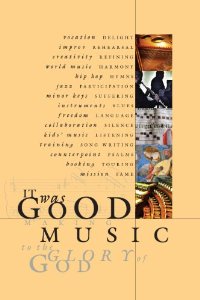
REVIEW: EXTENDED VERSION It Was Good: Making Music to the Glory of God compiled by Ned Bustard (Square Halo Books) ON SALE NOW

It Was Good: Making Music to the Glory of God  ON SALE: 10% OFF.


THIS IS THE LONGER VERSION OF THE REVIEW.  THANKS FOR READING.

Ssquare Halo Books logo.jpgQUARE HALO BOOKS

My friend Ned Bustard manages Square Halo Books, a boutique publishers in Lancaster,
PA, that specializes in books about Christian faith and the arts.  The
books he produces are always nicely designed – his day job is running
his own graphic design firm – and are always a labor of love.  In 2007
they released what has become their most popular work, a fabulously
diverse and rich anthology of essays about different aspects of art, and
making art, It Was Good: Making Art to the Glory of God (Square
Halo Books; $24.99 — on sale for $22.50.) Besides lots of full-color
art, it includes mature and insightful essays by visual artists,
Christian art historians and critics, a
It-was-Good-cover.jpg
few musicians (pop music producer Charlie Peacock, jazzman and theology
professor Bill Edgar), various and sundry other cultural creatives as
well as a few who work in ministry with artists (Tim Keller, pastor of
the thriving Redeemer Presbyterian Church in the heart of the arts
district in Manhattan, written before he became as famous as he now is.)
For what it is worth, it showcased the first chapter in a book by the
esteemed founder of IAM, Makoto Fujimura, (his good chapter there is
called “That Final Dance”) and his art wonderfully graced the cover. We
here at Hearts & Minds raved about it.  It remains one of the
handful of must-read titles we include in any list or display of books
about the arts
.


I think Ned knew all along that there would be a sequel, one specifically exploring the role of music in God’s world, IWG2,
so to speak. Ned is a huge music fan with wide and passionate tastes —
it may be that I first met him at a concert or festival. Years and
years in the making (an artful story in itself) we 
could not be more proud to announce that we now have It Was Good: Making Music to the Glory odouble good.jpgf God compiled
and created by Ned Bustard (Square Halo Books; $24.99.) With nearly 30
stellar chapters and 336 pages, it is a beautiful, beautiful resource, a
worthy book to add to your shelf. If you work in the field of music –
music teacher, choir director, aspiring rock star, high school band
director, worship leader, concert promoter, record producer – you should
buy several; you just should.  It is unquestionably now the best book
in the field and you will want to share it with others, often. I predict
there will be study groups and book clubs reading it together in
rehearsal halls and choir lofts and recording studios and coffee shops
and Christian education classrooms, wherever musicians gather to dream
about their work. 

EXPERIENCE AMPLIFIED (OR: WHY THIS BOOK IS SO IMPORTANT)

Allow
me to begin my review with a rumination on one of the last chapters in
the book, one on booking and promoting concerts called “Experience
Amplified” by Kirstin Vander Giessen-Reitsma.  Kirstin VG-R writes
wonderfully – read her regularly by subscribing to catapult — and in this chapter she tells of the remarkable work of Calvin College’s Student Activities Office
as it brings in thoughtful musicians, songwriters and bands to enhance
the appreciation of (and discernment about) the popular arts among
Calvin College students (and the wider Grand Rapids community who have
enthusiastically affirmed their innovative work.) Like the other
chapters in It Was Good: Making Music
concert hall.jpg to the Glory of God,
Ms VG-R was given a one-word title; in her case, “promotion”, and she
walks us through the vision, theology, and storied details of booking
acts, promoting shows, finding appropriate venues, the complexities of
ticket sales and hospitality and education and live concert production.
In her vividly portrayed piece she draws us in telling about all the
concert posters on the cinder block walls of their grotto-like offices
— I’ve seen those posters in that cluttered office noting
advertisements for Dave Matthews, Andrew Bird, Lupe Fiasco, Emmylou
Harris, Gungor, Iron and Wine, Mavis Staples, Sigur Ros, the Blind Boys
of Alabama, Over the Rhine, Bruce Cockburn, fun., Jars of Clay, Aradhna,
Kishi Bashi, Regina Spektor, and many, many more — country to rap to
soul to indie pop and more.  She notes that the decor is, actually,
theological:

It’s
a messy witness, tacked to the walls with duct tape and poster putty,
on  display for all to see and to discuss and to question. The motto of
the Student Activities Office (SAO) is “changing the conversation about
popular culture” and
calvin sao.jpg
even the posters serve this purpose. But anyone can stick pieces of
paper on the wall.  Beyond physical space is where the conversation
really heats up, as live concerts draw people into the circle with all
five senses.  Lights and speakers, instruments and microphones,
musicians and fans converge in a big room for just a moment in time and
each moment is precious enough to frame.

But
it all begs bigger questions: Why should Christians spend time and
money on such activities –and not just as observers, but as promoters?
What, if anything, would make a concert venue run by Christians
different from other venues? This chapter will use the Calvin College
concert series as a case study for reflecting more deeply on the
potential for concert venues informed and shaped by holistic Christian
values.

Msoil and sun.jpguch
of this amazing chapter is inspired by the leadership of SAO Director
Ken Heffner, and Kirstin tells of his vision — inspired largely by the
wide-as-creation redemptive theology of Dutch Reformed public
intellectual Abraham Kuyper. I know a bit of how this has worked for
Heffner and his staff and student team, and know that for them there
have been huge struggles — not everyone in the religious community
understands  the risks and blessings of the best popular art or the
theological insights of common grace, and not everyone in the artistic
community trusts or appreciates the conversations going on in places
like Calvin College; some mainstream artists and managers and
journalists, in fact, are unsure about their efforts to nurture
Christian discourse, confusing their views with the censors of the
religious right, perhaps. 

So,
for instance, he ended up on the phone last year with one of the
members of a world-famous band, literally while they were rehearsing at
the famed NBC studios before their SNL gig talking through painful
misunderstandings; his intentional and artist-savvy conversations about
Calvin’s distinctive worldview with top-tier artists and their
management have sometimes gone late, late into the night and continued
long after the artists have left the campus.  

They
have worked hard to generate trust and wisdom about how to host
artists, which to avoid and who to work with, who to nurture and what
boundaries to be clear about. It has been difficult, yes — with very
few models at any other colleges being so intentional and discerning in
this way.  

But
there have also been great, great joys, some of them sowing seeds of
gospel hope among musicians who are amazed that this small religious
campus cares so very much about the arts, about popular culture, and
about hosting and producing an excellent show in a quality venue. 

World
famous, Grammy Award winning indie band Death Cab for Cutie last year
made it a point to note that they could have played at other more
lucrative halls, but knew that Heffner’s team treats them well and —
fascinatingly — their students pay attention, appreciating the
artfulness of the show, engaging the music as if it is, well, a gift
made possible by a good God; by some accounts, SAO audiences are the
best of any crowds on a performer’s entire tour. A rare culture of
engagement in popular music has developed over time there, and even
secular artists are caught up in moments of grace as audiences
participate appropriately.

I SAY ALL THIS BECAUSE…

It seems to me that there are hundreds of faith-based and church-related colleges andIt was Good Making Music.jpg
thousands of churches that host concerts, and yet very few have risen
to this sort of conversation about the role of popular entertainment,
seeking a coherent and faithful understanding of contemporary music, nor
have many really been intentional about considering a set of uniquely
Christian practices about appreciating music in all its many-splendored
textures and tones and styles.  

The
singular witness of Calvin’s SAO series — told so helpfully in Vander
Giessen-Reitsma’s chapter — is vivid indication of just why It Was Good Making Music to the Glory of God is so very important. 

This book is a delight to read, a joy, thrilling even, if you are a music lover.  But, also, it is important.

ONE MORE TIME:  RESISTING SACRED/SECULAR DUALISMS TOWARDS A MORE FAITHFUL VIEW OF THE ARTS

And
so, from this wonderfully-written chapter about this esteemed program
near the end of the book we are reminded of a theme that most serious
Christian artists intuit and need to learn to better articulate, a theme
that arises quickly in both It Was Good books — there is
no necessary division between the so-called sacred and secular; church
music is not necessarily more “spiritual” than a love song or hoedown,
God is honored and gladdened by faithful music of any sort, not just
congregational or sacred music. 

Good
art, guided by the spirit and values and vision of the artist, pays
homage, more or less allusively, to a way of seeing life, a way of
believing about life and in that sense all art is fundamentally
religious (of one religion or another.)  Art or music that is
intentionally Christian can nonetheless be bad art, and goodness and
truth and wondrous artfulness can be found in the most profane of work. 
In God’s good grace, we live in a world of color, texture, sound and
rhythm, and we can, indeed, make all manner of music to God’s greater
glory.  

Such humane and God-glorifying song, again, can be a child’s song about belly-buttonsmusic painting.jpg
(as one of the great chapters here tells us) or a politically-charged
bit of social criticism or it can be a liturgical chant or a passionate
praise chorus.  All such songs (the kid’s song or the liturgical piece)
can be well-made, insightful, healthy and good, or can be poor, shallow,
harmful, and bad. 

That
kind of extraordinary reminder of a glorious whole-life Kingdom vision
which affirms the presence of God in common grace throughout all of life
and culture is only one of the great reasons to enjoy this marvelous,
and marvelously thought-through collection.

GLIMPSES

Reading It Was Good: Making Music to the Glory of God
you will catch glimpses of that “every square inch” /
all-of-life-being-redeemed vision lived out, explained and explored as
many solid folks bear witness to the role of the good gift of music in
their lives. You will enjoy hearing a bit about producing The Civil Wars
and a lot about counterpoint in Bach; you get a grand workshop on the
history of jazz, another on the spirituality of the blues; and you’ll
learn about the hymn-writer who penned the beloved “In Christ Alone.” 


You
will enjoy hearing about music in the life of parents and children and
you will consider the rigors of those who perform as a vocation.  There
are chapters about what the Bible says about song and there are chapters
about how to be more artfully engaged in appreciating music — in
church and in the rest of our lives, outside of the sanctuary doors. 
Square Halo Books has done us a great service in enriching our lives by
offering us this vivid conversation into which we are invited.  It is,
in my humble view, one of the best books we’ve read in years — in part
because it helps us think about faith in such a down-to-Earth,
practical way.  

As Bustard says in his excellent foreword,

We
were made to sing to the glory of God. He deserves glory from us due to
his majesty as well as his kindness to us. Some see an obligation to
glorify God as a burden or limitation. But this is simply not the case.
Living lives to the glory of God makes us more of who we are. It is the
difference between merely existing in black and white and taking in all
of life in full technicolor.

SO MANY STYLES

Iiwg-m_cd_cover.jpgn It Was Good: Making Music to the Glory of God,
thoughtful Christian singer/song-writers in the Americana/pop vein talk
about learning their craft, about how to write, about collaboration and
touring, even as classically-trained church leaders ruminate on their
work (see the brilliant chapter on rehearsal by the Music Director at
Redeemer Presbyterian Church in New York.)


Some
chapters tend towards anecdotal entries that are interesting and
entertaining such as Charlie Peacock’s reflection on his amazing career,
a truly remarkable interview with hip hop artist and producer Shai
Linne, Diana Bauer’s powerful telling of how music helped her in times
of great sorrow — one of the best in the book! —  and a wonderful
interview with Keith Getty (composer of beloved contemporary hymns, most
notably “In Christ Alone.”) 

There
are many more specialized chapters, focusing on Biblical study or a
particular topic (collaboration, minor keys, participation, fame all of
which are tremendous.) There are no tidy lines between genres, and there
are pieces about music created for worship purposes — like a learned
chapter on singing the Psalms  —  and many on the musical work done for
popular entertainment and performance.  Some seem to be written for
musicians, although as a non-musician, some of these were among my very
favorites.

For
instance, I absolutely loved Vito Aiuto’s chapter on songwriting and
Sandra McCracken’s splendid and homey piece on creativity and Drew
Holcomb’s reflections on touring.


Actually,
there is a whole lot for non-musicians, for those of us who listen to
recordings, take in live shows, or just sing at church or in the
shower.  For instance, Katy Bowser’s piece on children’s music is
absolutely excellent (the best I’ve even seen on this topic — I hope
you know we stock her Coal Train Railroad CDs and the lovely Rain for Roots: Big Stories for Little Ones CD.)  What a thoughtful, inspiring chapter, a so fun to read.


The
brilliant, profound work on the aesthetics of delight written by
Bethany Brooks is fantastic. She is an accomplished classical pianist
(who plays all over the world) who also is active in the roots music
scene in Philly.  Oh yes, she also is a music director at City Church
there.  Anyway, it is a very, very impressive chapter and musicians and
music lovers should reflect upon.  It is one of the most important
pieces centering the whole IWG project. 


Stephen
Nichols’ wonderful telling of the life of Johnny Cash becomes a bit of a
morality tale about fame, and is a treat to read.

Jeremy
Begbie is spot on when he says on the back-cover that “this book shows
that it is still possible to write about music in a way that enriches
our experience of it.  Above all, it will renew your gratitude to God
for making such art possible.”  

A REMEDY

It
is interesting, isn’t it, that music is around us so very much, but we
often fail to attend to it with much focus, and we rarely discuss it
together, reflecting on faithful expressions and fruitful
understandings.  We get upset when pop stars do hare-brained stuff and
we renounce this or that trend, or complain about music we didn’t like
in church. We turn the car radio up or down as the case may be. But, too
rarely do we pursue the kinds of good conversations as given to us in
this book.  Yes, this book is indeed a gift. The editor, the publisher,
and the authors are to be commended for this labor of love.

It
is notable when a book garners eloquent and passionate endorsements and
this volume already is gathering just such glowing recommendations.
Listen to rock and roller Dave Perkins, now Associate Director of the
Religion in the Arts and Contemporary Culture program at the Divinity
School of Vanderbilt:

Is
it possible to fully elucidate the spiritual, emotional, intellectual,
even physical experience of music making? Perhaps the best way to go
about it is to gather a choir of voices. It Was Good: Making Music to the Glory of God offers
a rich resource of perspectives, each working to share some aspect or
moment in the experience of that mercurial characteristic of human being
we call music and its place in the life of faith.

The book covers so much good ground that it is hard to describe — I just want to offer this plea that you buy It Was Good: Making Music right away! (It will, of course, make a fabulous Christmas gift, as does the first IWG volume.) I hope that our readers will trust us on this one.

FREE MUSIC

As an added bonus, there is a complimentary link where for free you can go toiwg-m_cd_cover.jpg Noisetrade and download an 18 track album of songs by many of the artists in the book.  Yep, you get to hear Drew Holcomb and Joy Ike, Charlie Peacock and Sandra McCraken, The Welcome Wagon and Coal Train Railroad.  There are worship songs from strong church composers, a modern classical piece, acoustic singer-songwriter solo songs and a fabulous jazz piece with Bill Edgar playing piano, John Patitucci on bass and the incredibly  Ruth Naomi Floyd on vocals.  18 songs in all — what a great bonus for those who buy the book. 

Well, I
don’t want to miss out on the joy of explaining some of what is to be
found between these cool covers.  There truly are some amazingly
interesting topics and some pretty stellar authors.

So,
please bear with me as I give the shout outs.  I imagine them all
lining up as after a show, hands clasped, bowing in unison before the
encore.  I wanna be the emcee and call out with gusto “Ladies and
gentleman, give it up one more time for….”


We were imagining all the grand authors lined up at the edge of the stage for a communal bow. (I don’t know who these folks are below, but you get the picture.)  They’ve got their arms around each other’s waists, some are sweating under the stage lights.  A few are holding back a little, a few are grinning ear to ear.  They are all very glad your here.  They do indeed what God to get the glory.


So, here they are, folks, in mostly alphabetical order…

group bow.jpg

Let’s hear it for:


Vito Aiuto.  He’s friends with Sufjan, who makes a brief appearance in this chapter, is a gentle hipster pastor in Brooklyn, and front man for the quirky neo-folk / quasi-worship band cleverly called Welcome Wagon.  He gives us here a truly great chapter on songwriting and it would be excellent for any writer.  It is, without a doubt, one of the top essays in the entire book.  The first bit about sitting down and doing the work is tremendous — funny, informed, and challenging. And he mentions Robbie Robertson and Paul Simon.  His quotes from Annie Dillard are so good. He tells people to read books. His candor about his own discovery of poetry, his guitar playing, his preaching and Sunday evening habits makes it real.  I love this chapter!

Diana Bauer.  This brought me to tears.  She tells of great sorrows in her life, reminds us — as if she has to — that most of us living East of Eden share similar sorrows, and she tells how music has helped her through stress and trouble, grief and sadness. She names mostly hymns which touched me deeply, but I’d add other musicians — from Bill Mallonee to Jackson Browne to Switchfoot to the Indigo Girls  — who have led me to process and cope with my deepest losses and regrets. This is one of the great chapters in the book and I sincerely commend it to you.

Bethany Brooks. Ladies and gentleman, give it up for the gal with the most footnotes!  And, man, is she sharp.  This is a true centerpiece of the book, coming in early, on the theology (and discipline) of delight, the essential aesthetic moment that is art and music.  There are various books and resources to explore this essential stuff, and I think her work here is excellent, a fine, needed, relatively short contribution and should become very often discussed. 

Paul Buckley.  The aforementioned must-read piece on the need to sing the Psalms. Some very helpful suggestions, and a guide to recently published Psalters. Very impressive; by the way, he used to be a reporter and has won writing awards. And he’s studied Psalms with the best.

Mark Chambers.  Don’t let this scare you off, with the transcriptions of lines of score. Yes,  he’s a classical buff, and he explains some odd-ball avante garde stuff.  Hey, you want to be a life-long learner don’t you?  In this exceptionally rich chapter, he teaches us how to listen. Very helpful.

William Edgar. He was in the first It Was Good, is a published theologian and scholar of culture and the arts, and a friend to this whole project.  His chapter is on jazz, perhaps from a book we pray he will someday publish.  This is very, very good stuff, for novices or aficionados.  He’s a cat, so you gotta read this!

Julius Fischer. Apparently he serves in a small urban church, is a Beatles fan, and tells of playing a hymn with accordion and banjo, and I’m telling ya, this short chapter is everything I love about this cool book.  His advise to local church worship leaders —  leave the casserole for the pot luck — is priceless.  His church is fortunate to have such a diverse, creative, musician but who also understands what worship is about.

Ruth Naomi Floyd.  Wow. Ruth is renowned as a very cool jazz singer in Philly, and she graces this book with her deep African-American insights about the blues.  I am pretty sure I recommended her to Ned as he was searching for excellent authors, and I’m glad she is here.  I admire her faith, her character, and her amazing concerts and records.  Let the people say Amen!

Jan & Mark Foreman. I’m not kidding you — this is worth the price of the book if you are a parent, a grandparent, or know any parents.  You may know Mark Foreman’s excellent book Wholly Jesus (I hope you do) but you most likely know of their famous sons, the rock and roll stars of the band Switchfoot.  This is a chapter about how to parent kids to be creative, telling how they raised their now-famous sons to be lovers of culture, discerning about the world, and aspiring to excellence.  That Jan is a children’s art teacher and Mark a pastor who loves to sing doesn’t hurt.  Still, this is inspiring for anyone and a truly wonderful, rich chapter.

David Fuentes. This guy does a close reading of a couple of popular songs, wondering about lyric and music, and his insight is as good as it gets.  It was so good I had to turn to the back to ask who is this guy? Man, he’s good!   He teaches at Calvin College,  which, well, explains a lot.  Perhaps he hangs around with the aforementioned Ken Heffner. This is a very useful chapter, especially if you work with youth or lead discernment groups or like to talk about evaluating pop songs that you enjoy. Nice!

Keith Getty.  What a gift this man has given to us, writing so many wonderful contemporary hymns.  This chapter comes to us in a fabulous interview format and it is very, very interesting.  What a privilege to get to listen in on this as he describes his calling and career in this fine piece. If you don’t know the hymnody of the Getty’s, do check out their work.

Steve Guthrie. Certainly this is one of the most significant scholars represented in It Was Good — Dr. Guthrie is a theology prof who earned his PhD from University of St. Andrews and served as a postdoctoral Research Fellow at the Institute for Theology and Imagination and the Arts there.  He has written an amazing book on the Holy Spirit (Creator Spirit) and co-edited with Jeremy Begbie the very scholarly collection Resonant Witness: Conversations Between Theology and Music published by Eerdmans.)  The maestro could have phoned this in, or written his piece in his sleep, but he obviously didn’t. A brilliant contribution on harmony entitled “The Ratio of Redemption.” I thought maybe it was a typo, but it’s Latin.  Excellent.

Drew Holcomb.  Holcomb loves music, loves live shows, and comes from a family that graciously encouraged his desire to be a troubadour. Now he plays with guys like the Avett Brothers and his pals in NeedtoBreath. If you want to know what it is like being a traveling musician, this is a great inside look; he’s a fine writer and this is a lovely chapter.  If you are a road warrior yourself, as a musician or maybe even in another career that has you away from home a lot, you should read this as there is much wisdom about maintaining relationships and a faithful spiritual life from this young man.  One person said this was one of the best chapters in the book!  By the way, one of his songs was used in an Emmy-Award winning TV commercial for the  NBA and Sports Illustrated said it was the best sports commercial ever made.  So there ya go.  Give him some extra applause and buy some of his merch.  He’s the real deal.

Joy Ike.  Joy Ike!  I just love this young lady whose name has been shortened from her family’s traditional African name; she is as professional and serious as they come, her commitment leavened, through, by her joyful and Christ-like demeanor. She knows she is called to this work of being a pop music maker and performer and she does it well.  Hailing from Pittsburgh, nurtured through the Jubilee conference where she serves in the worship band, getting radio airplay, critical acclaim and mainstream invitations to play at places like Lillith Fare, she is a woman of great grace and maturity and we respect her a lot.  But what would she write about, I asked Ned, when he invited her to write.  Vocation. Yes!  This is perfect for her. It is great to have a working artist ruminating on this foundational Christian truth and what it means to know you are called to this particular work.

Tom Jennings.  As Music Director of the prestigious and important Redeemer Presbyterian in New York City, I admit to wondering if this would be all that interesting or relevant for those in less influential life locations.  He’s a highly regarded classical and jazz musician, and prominent in many ways. Ends up, this was one of my very favorite chapters, which I read twice.  It is about rehearsal — and so much more.  Wonderful stories, good use of Scripture, theologically mature, and a great lover of his calling as musician — in the recital hall and the sanctuary.  Of course, we all have to head to the woodshed, as they say, if we are going to get good at what we do (although he doesn’t use that down-home phrase.) This chapter will make you appreciate rehearsal and practice and collaboration and experimentation and trust and… well, you have to read it!

Shai Linne.  If you haven’t heard of this guy, you need to know of his important work.  He is a hip hop artist, working in the streets and recording studios, guiding, producing, teaching — all to help proclaim the doctrines of God’s amazing grace to a broken world. This is done in a fast-paced interview format, and it really works — as a rapper, he is obviously good with words and quick on his feet.  Fascinating.  Again, I was surprised at how insightful this conversation was, and how good it was to listen in. Very highly recommended (even if you aren’t a fan of the genre.) 

Sandra McCracken.  This was one of the first chapters I turned to when I first saw the manuscript, mostly because I so esteem Sandra’s work, from her role in Indelible Grace to her spectacular solo projects.  Oh yeah, I thought maybe she’d drop some bit about her hubby Derek Webb.  And, again, what perhaps started as cheap voyeurism or fandom on my part ended up being a great reading experience — I will turn to this chapter again, I am sure. Her topic is creativity and it is a wonderful rumination, good for musicians and artists of all kinds, but it is an excellent chapter about being human, finding a life, staying sane, honoring God in the rhythms and seasons of our days.  Her title is “Fingerprints and Plumbers” and it is well worth reading.

Brian Moss.  What a good call to have this wise and important worship leader in here, although it is curious.  It is a short piece, inviting us — at the start of the book — to appreciate silence. Moss does some good teaching about our longings for silence, reminding us of the Biblical mandates to keep silence, and invites readers to close the book and experience the lack of creative music-making.  Very impressive.  I’d invite you to give him a round of applause but, uh, maybe that wouldn’t be right.

Stephen Nichols.  Now this was a surprising chapter.  It was to be on fame and I figure that anyone in the performing arts — or in business or in ministry, even —  may struggle with this.  And it is exactly that.  By way of the true story of one Johnny Cash.  Nichols is a great biographer (his latest is on Bonhoeffer, by the way) but he loves popular culture and has a good book himself on the history of blues music. This was a fabulous way to end this fine book.  Yeah!

Brad O’Donnell.  As an impromptu writer and public speaker I sometimes worry about not having time to re-write my work.  After reading this wonderful chapter, I want to think more, and do more, in refining, which is O’Donnell’s good theme.  He uses the Bible well, makes great points, and then tells lots of great little stories — he studied jazz at the University of Miami Music School where he met Pat Metheny, he cites John Updike and includes a small bit of an interview with Hemingway  (yes “that” Hemingway.) He draws on insights by Jon Foreman and evaluates other award-winning musicians (including several Dove Award-winners such as Chris Tomlinson.) What a great chapter, interesting and wise and important for all of us. 

John Patitucci.  Again, what an amazing thing, to have a Grammy-Award winning jazz bassist, a serious man of faith, offering solid insights here.  Way to go Ned Bustard, way to go Square Halo.  And many thanks to the famous Mr. Patitucci for agreeing to do this good work, writing, teaching, explaining, sharing insight about improvisation.  How cool that he opens with Proverbs 27:17–  and calls us all to lives of interrelationship and trust and risk and playfulness.  John Patitucci is certainly one of the most renowned musicians in the book, and yet it is also one of the most carefully explicating the Biblical text.  So cool.

Charlie Peacock.  Charlie is an old friend of Ned & Leslie Bustard — a mentor and supporter in many ways — and it is no surprise he agreed to revisit his story as young rebel rock star, early pioneer of innovative Christian rock and pop, his being signed to Island Records (at the same time as his label-mates U-too-know-who released Joshua Tree, causing him to get lost by the label) and his journey towards a more public sort of work, guiding and producing some of the most significant rock acts of our time and founding The Art House.  He does not draw undue attention to his help with the likes of Switchfoot or The Civil Wars or the Lone Bellow but his story of working out his calling is well told and fabulously interesting for those who have followed his long and impressive career.  I like this kind of stuff, and found it to be tremendously enjoyable to listen in to the tale that, by the way, is surely not yet over.  

Doug Plank.  I said everybody was standing on the stage together, taking a big communal bow.  Each author and artist in this book make a unique contribution, yet they hold together in some broad Square Halo vision, taking in both world and church.  This is one of those — citing Irish rockers U2 and Reformed Scotsman Carl Trueman — writing about our world’s deep brokenness and the need to honor and attend to that, even in our worship.  Plank oversees the worship ministry of a church here in central Pennsylvania and says he loves Tolkien. It makes sense that he is such a reader of JRR’s powerful vision; he is a good thinker, and yet simply calls us to sing from time to time in the minor key.  I wish more pastors and church musicians pondered this.

Hiram Ring.  I hope you know this young singer-songwriter, and I am glad he is in this collection (and on the Noisetrade piece.)  It is a chapter I trust you will enjoy and I know you will benefit from reading it.  He was born of missionary parents in Africa, so is what they now call “third culture kids.” His music isn’t “world beat” but his themes and topics, coming from his experience and passions, are clearly global.  His chapter is called “language” and his love for words, and his passion for translation and his missionary heart is evident.  An educational and challenging chapter!

Michael Roe.  Formerly of the pioneer rock and roll band the inestimable 77s, and then of Lost Dogs fame, Roe is one of the best guitar players I’ve ever come across, and his solo work — recordings and live shows — are breathtakingly good.  He’s gritty and raw and a bit grizzled from years on the road.  His faith and passion shine through in these two interviews well-conducted by fanboy Bustard.  I have to admit, this was the second or third chapter I read, as I just had to see where the conversation would lead.  It was not exactly explosive, but it was fabulous — his bit about his jangled rock ‘n roll  “nerves” and his love for Mozart and Segovia spoke right to me!  What he got at, though, was collaboration, and it was wonderful.  Kudos, Ned and Mike.  Good collaboration.

Michelle Stearns.  Give it up, folks, for Chelle Stearns!  Or, better, don’t clap for her — clap for yourselves.  She writes about participation, about being amateurs, about the joy of doing music, one and all.  I was almost scared to read this — don’t ask me why, but I don’t like to dance and I don’t want to have to sing along — but, wowie, I loved it. A very strong chapter which was a joy to read, a treat to think about, and a righteous reminder.  Rock on.

Gregg Strawbridge.  Strawbridge is a heavy-weight thinker, Reformed as the day is long, and appropriately — as the best of the Reformed vision would have it — down to Earth.  His church grows their own grapes so they can make their own communion wine.  His study here is on church music and why the Bible insists on us using a variety of instruments.   Before he gets there, he can’t help but tells us a bit about his own background of loving music  —  what fun! — and then he does the in-depth, high-quality Bible study that a book like this calls for.  A Christian philosophy of aesthetics that can shape a view of music, that can lead us to certain musical practices is the under-girding project of some of these chapters, and no Christian philosophy or worldview worth its salt can avoid the exegetical work.  Kudos for this strong chapter about Scripture.

Greg Wilbur.  Dig this.  Wilbur, in his chapter “Throw Back the Clock” teaches us wisely in theological frame, about counterpoint.  He writes of those who misunderstand this musical feature in older music, “(these attitudes) fail to recognize the intent, purpose, and structure behind sixteenth and seventeenth century counterpoint or why it fell out of favor in the Age of the Enlightenment. In fact, the demise of counterpoint in the history of music is more an indication of shifting theological worldviews than musical tastes.”  This ends up being a bit about Bach, and you simply have to read it — I had no idea.  Got my money’s worth right here in these 8 dense pages.

Kirstin Vander Giessen-Reitsma.  For sheer wordsmithyness, I think this is one of the very strongest chapters, and because she is my friend, and I’ve followed the project she writes about — the Calvin College SAO concert series and their mission of cultural discernment — I have to say it was my favorite chapter in the book.  There is such a robust view of culture, such an (underlying, undeveloped, but palpable) aesthetic theory, such a vision of God’s Kingdom coming, even in the popular arts as we learn to think redemptively about entertainment and contemporary live performances. Buy the book, read this chapter, and praise the Lord that some Christians who are booking bands would rather have thoughtful, Biblically-literate excellent, soul-provoking music by the unchurched likes of Lupe Fiasco or the Indigo Girls or The Head and the Heart or Andrew Bird rather than a warmed over, overly pious, derivative prima donna Christian rock star any day.  It was a stroke of genius to include the Calvin College story here — it needs to be understood and appreciated as few Christian colleges dare to be as intentional and thoughtful about this —  and it fills out the book with broad Christian vision and with solid, practical detail, about hosting shows and learning the Christ-like art of genuine hospitality (for artists and audiences.)  Three big cheers.  And, I’d shout, “Encore!”  More, KVGR, more!


And, certainly, we can cry “encore” for Square Halo Books, too.  May their generative output — classy, fun, righteous, and seriously meeting a need in the publishing marketplace for evangelical reflection on and exhibits of the arts — continue.  God bless them!  And God bless you if you buy books like this, keeping artful, indie publishing alive and well.


BookNotes
SPECIAL
DISCOUNT
10% OFF

It Was Good: Making Music to the Glory of God 
It Was Good: Making Art to the Glory of God
sale price just $22.50 each


order here
takes you to the secure Hearts & Minds order form page
just tell us what you want

inquire here
if you have questions or need more information
just ask us what you want to know

                   Hearts & Minds 234 East Main Street  Dallastown, PA  17313     717-246-3333

read@heartsandmindsbooks.com


It Was Good: Making Music to the Glory of God edited by Ned Bustard (Square Halo Books) ON SALE NOW

It Was Good: Making Music to the Glory of God  ON SALE: 10% OFF.

Ssquare Halo Books logo.jpgQUARE HALO BOOKS

My friend Ned Bustard manages Square Halo Books, a boutique publishers in Lancaster, PA, that specializes in books about Christian faith and the arts.  The books he produces are always nicely designed – his day job is running his own graphic design firm – and are always a labor of love.  In 2007 they released what has become their most popular work, a fabulously diverse and rich anthology of essays about different aspects of art, and making art, It Was Good: Making Art to the Glory of God (Square Halo Books; $24.99 — on sale for $22.50.) Besides lots of full-color art, it includes mature and insightful essays by visual artists, Christian art historians and critics, aIt-was-Good-cover.jpg few musicians (pop music producer Charlie Peacock, jazzman and theology professor Bill Edgar), various and sundry other cultural creatives as well as a few who work in ministry with artists (Tim Keller, pastor of the thriving Redeemer Presbyterian Church in the heart of the arts district in Manhattan, written before he became as famous as he now is.) For what it is worth, it showcased the first chapter in a book by the esteemed founder of IAM, Makoto Fujimura, (his good chapter there is called “That Final Dance”) and his art wonderfully graced the cover. We here at Hearts & Minds raved about it.  It remains one of the handful of must-read titles we include in any list or display of books about the arts.


I think Ned knew all along that there would be a sequel, one specifically exploring the role of music in God’s world, IWG2, so to speak. Ned is a huge music fan with wide and passionate tastes — it may be that I first met him at a concert or festival. Years and years in the making (an artful story in itself) we could not be more proud to announce that we now have It Was Good: Making Music to the Glory odouble good.jpgf God compiled and created by Ned Bustard (Square Halo Books; $24.99.) With nearly 30 stellar chapters and 336 pages, it is a beautiful, beautiful resource, a worthy book to add to your shelf. If you work in the field of music – music teacher, choir director, aspiring rock star, high school band director, worship leader, concert promoter, record producer – you should buy several; you just should.  It is unquestionably now the best book in the field and you will want to share it with others, often. I predict there will be study groups and book clubs reading it together in rehearsal halls and choir lofts and recording studios and coffee shops and Christian education classrooms, wherever musicians gather to dream about their work. 

EXPERIENCE AMPLIFIED (OR: WHY THIS BOOK IS SO IMPORTANT)

Allow me to begin my review with a rumination on one of the last chapters in the book, one on booking and promoting concerts called “Experience Amplified” by Kirstin Vander Giessen-Reitsma.  Kirstin VG-R writes wonderfully – read her regularly by subscribing to catapult — and in this chapter she tells of the remarkable work of Calvin College’s Student Activities Office as it brings in thoughtful musicians, songwriters and bands to enhance the appreciation of (and discernment about) the popular arts among Calvin College students (and the wider Grand Rapids community who have enthusiastically affirmed their innovative work.) Like the other chapters in It Was Good: Making Musicconcert hall.jpg to the Glory of God, Ms VG-R was given a one-word title; in her case, “promotion”, and she walks us through the vision, theology, and storied details of booking acts, promoting shows, finding appropriate venues, the complexities of ticket sales and hospitality and education and live concert production. In her vividly portrayed piece she draws us in telling about all the concert posters on the cinder block walls of their grotto-like offices — I’ve seen those posters in that cluttered office noting advertisements for Dave Matthews, Andrew Bird, Lupe Fiasco, Emmylou Harris, Gungor, Iron and Wine, Mavis Staples, Sigur Ros, the Blind Boys of Alabama, Over the Rhine, Bruce Cockburn, fun., Jars of Clay, Aradhna, Kishi Bashi, Regina Spektor, and many, many more — country to rap to soul to indie pop and more.  She notes that the decor is, actually, theological:

It’s a messy witness, tacked to the walls with duct tape and poster putty, on  display for all to see and to discuss and to question. The motto of the Student Activities Office (SAO) is “changing the conversation about popular culture” andcalvin sao.jpg even the posters serve this purpose. But anyone can stick pieces of paper on the wall.  Beyond physical space is where the conversation really heats up, as live concerts draw people into the circle with all five senses.  Lights and speakers, instruments and microphones, musicians and fans converge in a big room for just a moment in time and each moment is precious enough to frame.

But it all begs bigger questions: Why should Christians spend time and money on such activities –and not just as observers, but as promoters? What, if anything, would make a concert venue run by Christians different from other venues? This chapter will use the Calvin College concert series as a case study for reflecting more deeply on the potential for concert venues informed and shaped by holistic Christian values.

Msoil and sun.jpguch of this amazing chapter is inspired by the leadership of SAO Director Ken Heffner, and Kirstin tells of his vision — inspired largely by the wide-as-creation redemptive theology of Dutch Reformed public intellectual Abraham Kuyper. I know a bit of how this has worked for Heffner and his staff and student team, and know that for them there have been huge struggles — not everyone in the religious community understands  the risks and blessings of the best popular art or the theological insights of common grace, and not everyone in the artistic community trusts or appreciates the conversations going on in places like Calvin College; some mainstream artists and managers and journalists, in fact, are unsure about their efforts to nurture Christian discourse, confusing their views with the censors of the religious right, perhaps. 

So, for instance, he ended up on the phone last year with one of the members of a world-famous band, literally while they were rehearsing at the famed NBC studios before their SNL gig talking through painful misunderstandings; his intentional and artist-savvy conversations about Calvin’s distinctive worldview with top-tier artists and their management have sometimes gone late, late into the night and continued long after the artists have left the campus.  

They have worked hard to generate trust and wisdom about how to host artists, which to avoid and who to work with, who to nurture and what boundaries to be clear about. It has been difficult, yes — with very few models at any other colleges being so intentional and discerning in this way.  

But there have also been great, great joys, some of them sowing seeds of gospel hope among musicians who are amazed that this small religious campus cares so very much about the arts, about popular culture, and about hosting and producing an excellent show in a quality venue. 

World famous, Grammy Award winning indie band Death Cab for Cutie last year made it a point to note that they could have played at other more lucrative halls, but knew that Heffner’s team treats them well and — fascinatingly — their students pay attention, appreciating the artfulness of the show, engaging the music as if it is, well, a gift made possible by a good God; by some accounts, SAO audiences are the best of any crowds on a performer’s entire tour. A rare culture of engagement in popular music has developed over time there, and even secular artists are caught up in moments of grace as audiences participate appropriately.

I SAY ALL THIS BECAUSE…

It seems to me that there are hundreds of faith-based and church-related colleges andIt was Good Making Music.jpg thousands of churches that host concerts, and yet very few have risen to this sort of conversation about the role of popular entertainment, seeking a coherent and faithful understanding of contemporary music, nor have many really been intentional about considering a set of uniquely Christian practices about appreciating music in all its many-splendored textures and tones and styles.  

The singular witness of Calvin’s SAO series — told so helpfully in Vander Giessen-Reitsma’s chapter — is vivid indication of just why It Was Good Making Music to the Glory of God is so very important. 

This book is a delight to read, a joy, thrilling even, if you are a music lover.  But, also, it is important.

ONE MORE TIME:  RESISTING SACRED/SECULAR DUALISMS TOWARDS A MORE FAITHFUL VIEW OF THE ARTS

And so, from this wonderfully-written chapter about this esteemed program near the end of the book we are reminded of a theme that most serious Christian artists intuit and need to learn to better articulate, a theme that arises quickly in both It Was Good books — there is no necessary division between the so-called sacred and secular; church music is not necessarily more “spiritual” than a love song or hoedown, God is honored and gladdened by faithful music of any sort, not just congregational or sacred music. 

Good art, guided by the spirit and values and vision of the artist, pays homage, more or less allusively, to a way of seeing life, a way of believing about life and in that sense all art is fundamentally religious (of one religion or another.)  Art or music that is intentionally Christian can nonetheless be bad art, and goodness and truth and wondrous artfulness can be found in the most profane of work.  In God’s good grace, we live in a world of color, texture, sound and rhythm, and we can, indeed, make all manner of music to God’s greater glory.  

Such humane and God-glorifying song, again, can be a child’s song about belly-buttonsmusic painting.jpg (as one of the great chapters here tells us) or a politically-charged bit of social criticism or it can be a liturgical chant or a passionate praise chorus.  All such songs (the kid’s song or the liturgical piece) can be well-made, insightful, healthy and good, or can be poor, shallow, harmful, and bad. 

That kind of extraordinary reminder of a glorious whole-life Kingdom vision which affirms the presence of God in common grace throughout all of life and culture is only one of the great reasons to enjoy this marvelous, and marvelously thought-through collection.

GLIMPSES

Reading It Was Good: Making Music to the Glory of God you will catch glimpses of that “every square inch” / all-of-life-being-redeemed vision lived out, explained and explored as many solid folks bear witness to the role of the good gift of music in their lives. You will enjoy hearing a bit about producing The Civil Wars and a lot about counterpoint in Bach; you get a grand workshop on the history of jazz, another on the spirituality of the blues; and you’ll learn about the hymn-writer who penned the beloved “In Christ Alone.” 


You will enjoy hearing about music in the life of parents and children and you will consider the rigors of those who perform as a vocation.  There are chapters about what the Bible says about song and there are chapters about how to be more artfully engaged in appreciating music — in church and in the rest of our lives, outside of the sanctuary doors.  Square Halo Books has done us a great service in enriching our lives by offering us this vivid conversation into which we are invited.  It is, in my humble view, one of the best books we’ve read in years — in part because it helps us think about faith in such a down-to-Earth, practical way.  

As Bustard says in his excellent foreword,

We were made to sing to the glory of God. He deserves glory from us due to his majesty as well as his kindness to us. Some see an obligation to glorify God as a burden or limitation. But this is simply not the case. Living lives to the glory of God makes us more of who we are. It is the difference between merely existing in black and white and taking in all of life in full technicolor.

SO MANY STYLES

Iiwg-m_cd_cover.jpgn It Was Good: Making Music to the Glory of God, thoughtful Christian singer/song-writers in the Americana/pop vein talk about learning their craft, about how to write, about collaboration and touring, even as classically-trained church leaders ruminate on their work (see the brilliant chapter on rehearsal by the Music Director at Redeemer Presbyterian Church in New York.)


Some chapters tend towards anecdotal entries that are interesting and entertaining such as Charlie Peacock’s reflection on his amazing career, a truly remarkable interview with hip hop artist and producer Shai Linne, Diana Bauer’s powerful telling of how music helped her in times of great sorrow — one of the best in the book! —  and a wonderful interview with Keith Getty (composer of beloved contemporary hymns, most notably “In Christ Alone.”) 

There are many more specialized chapters, focusing on Biblical study or a particular topic (collaboration, minor keys, participation, fame all of which are tremendous.) There are no tidy lines between genres, and there are pieces about music created for worship purposes — like a learned chapter on singing the Psalms  —  and many on the musical work done for popular entertainment and performance.  Some seem to be written for musicians, although as a non-musician, some of these were among my very favorites.

For instance, I absolutely loved Vito Aiuto’s chapter on songwriting and Sandra McCracken’s splendid and homey piece on creativity and Drew Holcomb’s reflections on touring.


Actually, there is a whole lot for non-musicians, for those of us who listen to recordings, take in live shows, or just sing at church or in the shower.  For instance, Katy Bowser’s piece on children’s music is absolutely excellent (the best I’ve even seen on this topic — I hope you know we stock her Coal Train Railroad CDs and the lovely Rain for Roots: Big Stories for Little Ones CD.)  What a thoughtful, inspiring chapter, a so fun to read.


The brilliant, profound work on the aesthetics of delight written by Bethany Brooks is fantastic. She is an accomplished classical pianist (who plays all over the world) who also is active in the roots music scene in Philly.  Oh yes, she also is a music director at City Church there.  Anyway, it is a very, very impressive chapter and musicians and music lovers should reflect upon.  It is one of the most important pieces centering the whole IWG project. 


Stephen Nichols’ wonderful telling of the life of Johnny Cash becomes a bit of a morality tale about fame, and is a treat to read.

Jeremy Begbie is spot on when he says on the back-cover that “this book shows that it is still possible to write about music in a way that enriches our experience of it.  Above all, it will renew your gratitude to God for making such art possible.”  

A REMEDY

It is interesting, isn’t it, that music is around us so very much, but we often fail to attend to it with much focus, and we rarely discuss it together, reflecting on faithful expressions and fruitful understandings.  We get upset when pop stars do hare-brained stuff and we renounce this or that trend, or complain about music we didn’t like in church. We turn the car radio up or down as the case may be. But, too rarely do we pursue the kinds of good conversations as given to us in this book.  Yes, this book is indeed a gift. The editor, the publisher, and the authors are to be commended for this labor of love.

It is notable when a book garners eloquent and passionate endorsements and this volume already is gathering just such glowing recommendations. Listen to rock and roller Dave Perkins, now Associate Director of the Religion in the Arts and Contemporary Culture program at the Divinity School of Vanderbilt:

Is it possible to fully elucidate the spiritual, emotional, intellectual, even physical experience of music making? Perhaps the best way to go about it is to gather a choir of voices. It Was Good: Making Music to the Glory of God offers a rich resource of perspectives, each working to share some aspect or moment in the experience of that mercurial characteristic of human being we call music and its place in the life of faith.

The book covers so much good ground that it is hard to describe — I just want to offer this plea that you buy It Was Good: Making Music right away! (It will, of course, make a fabulous Christmas gift, as does the first IWG volume.) I hope that our readers will trust us on this one.

SEE MY LONGER REVIEW EXPLAINING EVERY CHAPTER 

I don’t want to miss out on the joy of explaining some of what is to be found between these cool covers.  There truly are some amazingly interesting topics and some pretty stellar authors.

So, please bear with me as I give the shout outs.  I imagine them all lining up as after a show, hands clasped, bowing in unison before the encore.  I wanna be the emcee and call out with gusto “Ladies and gentleman, give it up one more time for….”

You can read the rest over at the Hearts & Minds website monthly column.


I give a short paragraph about each and every chapter, by whom it is written, what it is about, and why I liked it so. There isn’t a bad one in the bunch, so we’re going to clap long and hard for these folks, and by the end you’ll be holding up little lighters shouting “Encore!”


BookNotes
SPECIAL
DISCOUNT
10% OFF

It Was Good: Making Music to the Glory of God 
It Was Good: Making Art to the Glory of God
sale price just $22.50 each


order here
takes you to the secure Hearts & Minds order form page
just tell us what you want

inquire here
if you have questions or need more information
just ask us what you want to know

                   Hearts & Minds 234 East Main Street  Dallastown, PA  17313     717-246-3333
read@heartsandmindsbooks.com


HALF PRICE SALE + A FREE (HARDBACK) BOOK OFFER — Earth: The Operators’ Manual by Richard B. Alley AND Green Revolution: Coming Together to Care for Creation by Ben Lowe

HALF PRICE SALE + A FREE BOOK  

THIS SALE IS GOOD FOR FIVE DAYS ONLY.

EXPIRES on SATURDAY OCTOBER 5th 2013.

BUY EITHER (OR BOTH) AT HALF PRICE

Earth: A User’s Manuel  Richard B. Alley (Norton) $27.95 // sale price $13.99

Green Revolution: Coming Together to Care for Creation  Ben Lowe (IVP) $15.00// sale price $7.50

AND GET A FREE HARDBACK BOOclimate for change.jpgK

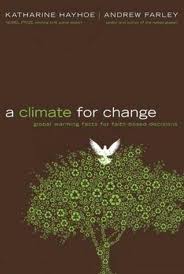
A Climate for Change: Global Warming Facts and Faith-Based Decisions Katharine Hayhoe (FaithWords)  Usually $19.99 in hardback — absolutely free. Excellent!

While supplies last.

All other books mentioned are offered at the BookNotes discount of 20% off.

THE GREEN BOAT

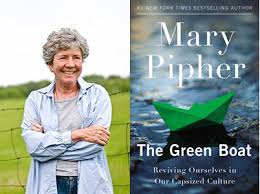
Near the beginning of the exceptional, and very moving, gentle book The Green Boat: Revivinggreen boat.jpg Ourselves in Our Capsized Culture by Kansas psychologist Mary Pipher (Riverhead; $16.00) she tells of attending a lecture on global warming.  It was during a season of great anxiety and exhaustion and fear and stress for her — and most of us in this changing world were we are increasingly isolated and dislocated from traditions and ways of life that might enhance social cohesion and build hope as we face climate change and other seemingly intractable problems.  The informative lecture, though, was so gloomy and the world famous presenter so dour and hopeless that she and her husband felt even more immobilized and distressed.  

This experience of feeling helpless motivated her to ponder the denial and confusion we experience about our huge global problems. She beautifully and humanely writes about what many of us feel. “We experience our own grief,” she writes, “but also the pain of the earth and of people suffering all over the world.”  

She explores her observation of a process we go through, a cycle from trauma (her friend says many of us have “mid-traumatic stress syndrome”) to denial to awareness and action which can lead to what she calls resilient coping.  In an earlier book she wrote about not being a very good Buddhist (she was raised Methodist) but she does end the book with some wise pointers towards a deepening sense of transcendence as we work together with friends and neighbors to resist the pressures of the modern age, working to made a difference. Even as she works for environmental justice, she tells of “savoring the world we’ve got” and her own beautiful writing attests to her love of her own beautiful back yard.

We have greatly appreciated Mary Pipher’s work (and loved selling books for her once years ago at our local hospital where she impressed us thoroughly.) She has written eloquently about the changing emotional terrain of the aging (Another Country), about resettling refugees (The Middle of Everywhere), about writing (Writing to Change the World), on how to be a good counselor (Letters to a Young Therapist), not to mention her world-famous book about teen girls (Reviving Ophelia) and the wonderful Shelter of Each Other about rebuilding our families and our social fabric. Her new Green Boat book is no different — she is a clear and caring writer, humane and decent, reflecting well on her small-town, mid-Western populism, even as she offers profound insight about some of the most important matters of our time.   Nature writer turned anti-global warming activist Bill McKibben — himself an old-school Methodist — writes that Piper “knows why we avoid and deny the truth and she knows how we can heal ourselves and our communities even as we try to heal the earth.  This book is a deep and true gift.”  

It has been a gift to me. The Green Boat served me as did a book by Joanna Macy decades ago as Iworld is not ours to save.jpg struggled with finding balance and hope and emotional stability amidst a campaign to alert the nation about the dangers of nuclear weapons. How can one study and speak and work and live with such apocalyptic horror without being drained by psychic numbing or the drift into jaded cynicism?  She reminds us that “action is an antidote to despair” and hints at spiritual resources to sustain us.  Although written differently, and to a different audience, it arises from the same need as the excellent and immensely gratifying The World Is Not Ours To Save: Finding the Freedom to Do Good by evangelically-minded anti-nuclear activist Tyler Wigg-Stevenson (IVP; $16.00.)

(In the second strong half of The Green Boat, by the way, Ms Pipher — a clinical psychologist but also wife and caring grandmother —  tells of joining with her neighbors and friends throughout Kansas to resist the planned XL Pipeline, forming a coalition to prevent its dangerous intrusion in their state and protesting our culture’s over-dependency on fossil fuels.) It is always inspiring to read stories of exemplary citizen action and agree or not with her campaign, the telling of this tale of the renewal of grass roots democratic action is a blessed tonic.  I really, really recommend this lovely, wise book which helps us reflect on our inner lives as we care about the world around us.)

DR. RICHARD B. ALLEY

Wearth.jpgell, for the record, the climate change expert mentioned in the new Mary Pipher book was clearly not Richard B. Alley, climatologist and Professor of Geoscience at Penn State University.  I heard Dr. Allen at the Faith for Thought conference yesterday, an almost annual conference organized by faculty and the campus ministry team of Calvary Baptist church, this year hosted at Grace Lutheran (ELCA) in State College. And, man, was he a hoot.  His most recent book, Earth: The Operators’ Manual (Norton; $27.95) is the companion volume to the PBS documentary and it is wide-ranging, upbeat, and fantastic.


Space does not permit a full explanation of Richard Alley’s prestige and credentials — the dude has a glacier named after him and he helped the United Nations Intergovernmental Panel on Climate Change (IPCC) win the Nobel Peace Prize, for crying out loud.  He has worked for oil companies, self-identifies as one whose political inclinations tilt right, has hiked and camped recreationally all over the world (with his beloved family of wife and two daughters), is a huge fan of Abraham Lincoln (who helped start the US Academy of Science, wanting the government to be informed by good science, and who held several patents for his own inventions. Lincoln was the only US President to have patents and Allen, who is a cheerleader for engineers and inventors, digs that.) Dr. Alley is a truly fascinating fellow and very cool guy.  And way smarter than your average guy.

Dr. Alley was trained in geology and is in the top tier of researchers in the world in the science ofrichard alley + flowers.jpg climate change.  His passionate talk at Grace Lutheran was peppered with slides of his research facilities in Greenland and in Antarctica (my goodness, those penguins are cute!) His philosophy of science which comes through in the book is reasonable, down-to-earth,  pragmatic, and humble.  He is not an ideologue.  His Christian faith is also humble and succinct: his church still teaches the Golden Rule, he said, which was an evident motivation for much of his work. (The book ends with significant proposals for solving our energy crisis, mostly for the sake of the poor and starving and the growing populations, a theme which also came out in his talk at Faith for Thought.)

The lecture giving the scientific data about the dangers of global warming which Mary Pipher described in The Green Boat left her feeling guilty, dis-empowered and unmotivated.  By contrast, Allen’s enthusiastic and entertaining presentation at Faith for Thought was motivating, stimulating, and drove me to revisit his hefty book.  I had mentioned it here at BookNotes when it first came out and what I said then I now affirm, even more so: Earth: The Operators’ Manual is a great blend of heavy science and upbeat anecdote. His travels around the globe, his narration of how they do experiments, his fabulously interesting bits of history and relevant episodes keep the book moving, keep even the untrained reader interested. I don’t know anything about CO2 levels or how they measure ancient ice or what the charts about changes in ocean temperature mean.  Or at last I didn’t until I read this  wildly informative masterpiece.

Alley is reluctant to give grandiose policy proposals.  He is a scientist and excellent teacher, not an activist or politico. (He none the less gets hate mail, seriously ugly emails that are ignorant and tragic.) Yet, he ends Earth with some general suggestions.

In the last chapter he writes,

If I were to stop right there, I would be happier, but my high school writing teachers would probably not be happy.  This is the point where, in a proper narrative, I would reveal the grand conclusion, point the path to the future, and lead the grand and glorious charge to a brighter tomorrow.

Fat chance.

My impression is that when we scientists try to recommend policy, we have no more insight than anyone else.  Asking me what to do runs the risk that someone might believe me because I have expertise in limited, somewhat-related areas. I am a geologist-turned-glaciologist-and-climatologist who took a lot of classes about Earth and enough physics and chemistry and biology and metallurgical engineering to support my interest in the planet, who has roamed the planet reading the history of climate written in ice and trying to understand the ice well enough to learn what it does to landscapes and sea levels.  Having me choose between cap-and-trade or taxes or business as usual, or nuclear or wind or sun or sequestration or geo-engineering, is akin to having a U.S. Senator use a universal stage to measure the c-axis fabric of a polar ice core — you are better off getting a real expert than you are pretending that someone else can do the job.

Yet, I do have some insights that may be valuable, and I am sensitive enough to the instructions of my high school teachers that I feel I owe you a little more insight on a few of the issues. If someone put a gun to my head and forced me to make recommendations, they would grow out of the following points.

Ya gotta love a world class scientist and clever guy like that.  There may be a teensy bit of false reluctance there, but he is humble and generous and down-to-Earth.  He does know his stuff, so he is right: we should listen to his practical points.  Anybody who wants to contribute to the conversations about climate change in the urgent upcoming years, should read this book. With experts and leaders like this, we may not respond with despair and sorrow as Mary Pipher did as she entered this conversation.  Alley is no Pollyanna, but he does seem to be a man of good humor and of good hope.  

Earth: The Operators’ Manual is not an overtly religious book; as a PBS-related title it is rich in social history and good science and is inspiring in a humanistic way.  But think about it: the very idea that there is an “operators’ manual” — that there is truth to be learned and that there is a prudent way to go — this is stuff that leads not to despair but to wisdom and hope.  Good scientists who are also upbeat, passionate teachers and reliable, entertaining writers like Alley can help us.  

LISA SHARON HARPER

Two other plenary speakers at Faith for Thought — besides the other great breakout sessions — were Lisa Sharon Harper and Ben Lowe. Lisa, who used to work for InterVarsity Christian Fellowship and helped found NY Faith & Justice, and now works at Sojourners, is a good friend and a great speaker.  She talked about the shalom God created as described in Genesis, and moved us through a

evangelical does not equal.jpg realization of the way our sin and rebellion has caused brokenness — that things are now “not the way it is supposed to be.”  Lisa’s first amazing book is called Evangelical Does Not Equal Republican… or Democrat (New Press; $24.95) and the accolades she has gotten (especially in a spectacular forward by John Perkins) indicated that she was a writer who deserved our full attention. Ms Harper’s second was co-authored with World magazine writer, the conservative D.C. Innes, Left, Right and Christ: Evangelical Faith in Politics (Russell Media; $24.95.)  This back-and-forth dialogue book is a splendid way to think through various issues of social policy, and a great study resource for groups who may not all agree on whether it is most faithful to tilt to the right or the left.  Her call to embody God’s story, to be people of hope, was a great way to start the conference.

(In many ways, these two books are foundational to the more general project of Christian perspectives on social action for the common good which then informs faith-based environmental concern.  They are both very, very good, but not exclusively about creation-care.)

BEN LOWE

Tben lowe's green r.jpghe closing talk was by another good, good guy, a friend (who has been to Jubilee more than once) Wheaton College grad and recent founder of the Young Evangelicals Climate Action, Mr. Ben Lowe. I have recently re-read most of his fabulous book Green Revolution: Coming Together to Care for Creation (IVP; $15.00) and again am convinced that it is one of the finest books on the topic.  It is handsomely designed, relatively inexpensive, and loaded with great content, solid theology, helpful Bible references, very insightful advise about deepening one’s resolve and action, and tons of great, great stories. 


Many of the sidebars and interludes are written by staff or students at various colleges, showing how evangelical students and institutions are taking the lead in working for environmental stewardship.  From Calvin College’s Plaster Creek restoration project to Messiah College’s Earthkeepers to descriptions of Peter Harris and the founding of A Rocha to a glimpse into “Christians for the Mountains” who are righting mountaintop removal, these testimonials offer great, great glimpses of what can be done, of what this “revolution” looks like, inspiring readers to be more involved.  I love this book and can’t say enough about it — why don’t you get one for your church library, or to pass on to somebody who might care.

If you work in college ministry or have young adult groups in your church (as some of the BookNotes readers do) please know that this book is a fabulous one to use with young adults.   Very highly recommended. Buy ’em during the half price sale, this week only!

Kudos to Pennsylvania Interfaith Power and Light, GreenFaith, Evangelical Environmental Network, and other good groups who helped out, sharing information on everything from sustainable agricultural, divestment discussion, theological matters, and other important aspects of this movement.  As you may guess, we had tables and tables worth of many books on the calling to be thoughtful, developing a Christian mind to various sub topics —  science, food and eating, farming and land us, to more general things on Christian discipleship, reading Scripture, and of course resources for spiritual formation.  As always, we love selling books at events like this and invite you all to stay in touch.  Thanks to those who read books, who buy books.  Without you, we’d have no ministry here.

BookNotes
SPECIAL
OFFER
50% OFF

Earth: The Operator’s Manuel (Allen)
Green Revolution
(Lowe)
while supplies last
+
FREE BOOK
A Climate for Change
while supplies last

– Offer good through Saturday October 5, 2013 –
(after that, 20% discount on all items mentioned)
order here
takes you to the secure Hearts & Minds order form page
just tell us what you want

inquire here
if you have questions or need more information
just ask us what you want to know

                   Hearts & Minds 234 East Main Street  Dallastown, PA  17313     717-246-3333
read@heartsandmindsbooks.com

Helpful new books for ministry leaders, church revitalization, congregational life ON SALE

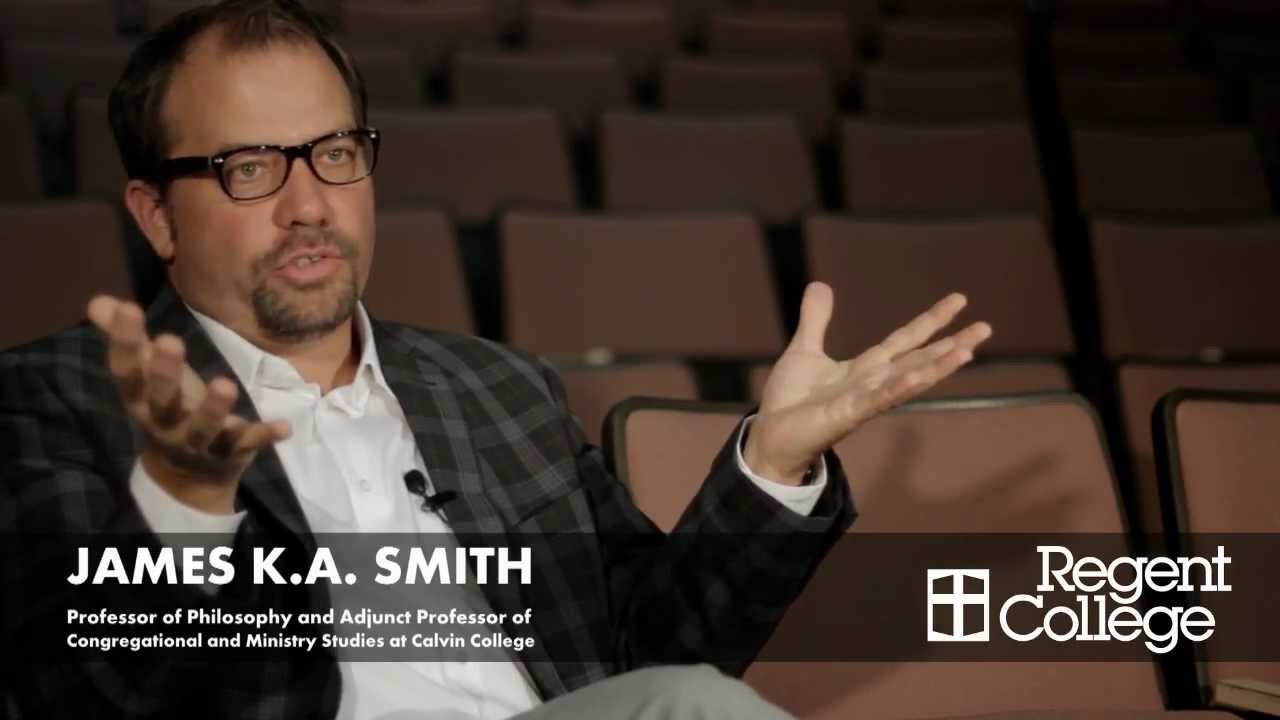
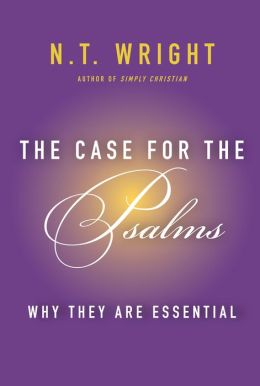
Churches, like schools, are back in swing and even though our last several passionate posts were about eloquent and profound culture-making books by the likes of James K.A. Smith, Andy Crouch, Os Guinness, and a new worldview shaping book by N.T. Wright — not to mention that huge bibliography on calling, work and vocation — we do love telling about more prosaic and practical tools for the church leaders toolkit. If you want a book on church revitalization, spiritual renewal, church conflict, small groups, Christian education, youth ministry, or preaching, sacraments and worship, we most likely have it (or can order it easily.)  Here is a quick, random sampling of some new books for enhancing congregational life that we recommend. Many, are, actually, very interesting and truly quite inspiring.

Trelational pastor.jpghe Relational Pastor: Sharing in Christ By Sharing Ourselves  Andrew Root (IVP) $18.00  Another excellent resource in the Praxis line, this is a book that (sorry, friends) I think many a minister needs. It certainly should be obvious that relationship skills are an essential aspect of effective ministry (and some, well… you know.) But this is more than “relational intelligence” but a mature and interesting rumination on the motivations and textures of various relationships, and what we mean by “relational” ministry. Rev. Landon Whitsitt (hip youngish author of The Open Source Church) said to me that he thought it was one of the best books for pastors he’s ever read. More than one reviewer comments on the “robust theology of pastoral ministry” that Root offers, and how he helps us realize how relationships can reveal the present Christ.  Very thoughtful, provocative, insightful.

Rresilient ministry.jpgesilient Ministry: What Pastors Told Us About Surviving and Thriving  Bob Burns, Tasha Chapman and Donald Guthrie (IVP) $17.00  It isn’t brand new and I have reviewed it before, but simply must list this again — this documents, from extensive research, what it takes to have fruitful ministry over the long haul. Pastors can and should thrive and effective ministry must be resilient (cuz it ain’t easy out there, folks.) There are moving stories about strength and success in ministry, about overcoming hardships, about keeping wise and healthy boundaries (and maintaining strong family lives with recreation and rest.) I have often noted how it documents that multi-cultural intelligence is a factor shown to ensure ministry resilience. The best thing I’ve read of this sort, by far —  if your pastor doesn’t have it, why not give it as a gift?

CCalled-to-Stay-Breakey.jpgalled to Stay: An Uncompromising Mission to Save Your Church  Caleb Breakey (Harvest House) $11.99  I have heard already this fall some folks say they are giving up on their local church, moving on, dropping out; this book may help folks like that gain new resolve to be gracious and helpful instead of giving up on their local congregation.  Called to Stay, however helpful it would be for anyone who is disillusioned or “church-hopping” is more specifically about younger adults — millennials — leaving the church and what brave and good work could happen if they committed to stay.  Breakey is himself young (but has the good sense to cite Life Together alongside the contemporary research by Stetzer, Rainer, et al.)  Most folks, even the older and the contented, need an occasional reminder of the role of Christ’s church and the importance of the local congregation. And if you know jaded younger Christians, this could be a life-saver.  Check it out, please!


Ssee, know & serve.jpgee, Know & Serve The People Within Your Reach Thomas Bandy (Abingdon) $19.99  Bandy made quite a splash a decade or so ago with a bunch of books shaking up his United Methodist associates (and others) insisting we get busy with vibrant, relevant and transformational ministry in local congregations.  This is the most important work he has done in years, and it is a motivating and practical guide for moving the local church outside itself. As Paul Borden says “Highly effective congregations know their communities well.  But most congregations are abysmally ignorant of their communities and are therefore ineffective…”  This will help,I am sure — with ideas about demographic research to hospitality opportunities to various models, options, and strategies.  If those who need it will only pick up and read.  Maybe you could share it within your congregation. A great cover, too.


Tmissional quest.jpghe Missional Quest: Becoming a Church of the Long Run  Lance Ford & Brad Brisco (IVP) $17.00 This bears the imprint of both Praxis and Forge and that should almost be “enough said” to show it’s theological quality and practical usability. That it bears rave, rave reviews from Alan Hirsch, Reggie McNeal, Dave Ferguson, and Ed Stetzer  should clearly put it on the map as a helpful contribution to missional outreach.  A real guide to getting every member on board, for “everyday Christians to be on everyday mission.” A strong Kingdom vision, based in the local church, for the life of the world.  Each chapter ends with exercises and discussion assignments called “Steps on the Quest.”


77 creative models.jpg Creative Models for Community Ministry  Joy F. Skjegstad (Judson) $16.99  Wow. Every church should have this around to spark new imagination, realize options, consider how best to take up new ministries.  Joy is a seasoned church-based community organizer and understands “mercy ministry” and other classic sorts of social services. She has written some very helpful and specialized  books on this stuff for the Alban Institute and here she takes the best models she’s seen and describes ways to do service, volunteerism and advocacy in the community (and how to fund them.)  There is nothing like this in print — very, very useful.

SSTIR.jpgTIR: Spiritual Transformation in Relationships  Mindy Caliguire (Zondervan) $16.99  If you are like me and eschew books whose titles are drawn from acronyms, please (please) give this cleverly-titled work a chance.  I love this new book by a very fine author of spiritual formation titles.  In clear and upbeat prose it offers a fresh approach to inner formation — an approach that I’d say is a “must read” for ministry leaders.  It seems that the backstory of this vision includes the serious self-reflection that Willow Creek went through as they examined their “one size fits all” small group discipleship programs.  Caliguire helped them uncover the notion of faith unfolding, developing along three distinct and sequential stages — and the need for different sorts of relationships to support growth through those different seasons. STIR describes  those stages (learning, journeying and following together) and hows how relationships form the essential context for maturity of the soul.  John Ortberg has a very compelling foreword, saying that the author ha;s “discovered how real people learn deep wisdom and bring healing to their minds and hearts and wills.” Wow, this is very impressive and very nicely done.


Ddiscovering the other.jpgiscovering the Other: Asset-Based Approaches for Building Community Together Cameron Harder (Alban Institute) $18.00  Just last week a local Lutheran pastor exclaimed to me how much he liked this book, finding it very, very useful.  It is thoughtful and refreshing but is simple to explain: it “integrates two soul mates: Appreciative Inquiry and Asset Mapping.”  As Rob Voyle (director of the Clergy Leadership Institute) writes, this includes “a foundation of theological reflection which provides a life-giving gospel way for congregation to be agents of transformation in their communities.”  Harder not only offers a robust Trinitarian theology, but he applies this (and the detailed practices of AI and Asset Mapping) within rural and small town settings.  (Hence, the rave review from Shannon Jung, renowned professor of town and country ministries at Saint Paul School of Theology in KC.) It’s ecumenically cool, too, I think, that the back has a great blurb from a Christian & Missionary Alliance denominational exec, too.


Iimaging the small church willis.jpgmagining the Small Church: Celebrating a Simpler Path  Steve Willis (Alban Institute) $17.00  We are glad for the on-going publishing program of the Alban Institute and value their important contribution to research-based, theologically centrist, helpful books that are usually wonderfully written and exceptionally practical. This is written by a great storyteller, inviting us into an alternative world not guided by the “bigger, faster, snazzier” ethos of the modern world but to a slower, less auspicious culture.  This book does not intend to “fix” the small church or mourn its limitations, but affirms that there is much good about the quirky, human-scale small church.  Willis has pastored both Presbyterian(USA) and UCC congregations.  He now pastors in the Appalachian Mountains of Virginia.

Ooverflow.jpgverflow: Increase Worship Attendance & Bear More Fruit  Lovett H. Weems Jr. & Tom Berlin (Abingdon) $13.99  I assume you know from our regular posts and the sorts of things we recommend that we do not necessarily think that “church growth” is a faithful measure of Biblical fidelity in the world.  We think churches need help nurturing the vocation of folks in the world, and, of course, think most parishes need deeper conversations about the whole missional thing.  However, when an esteemed and moderate mainline theologian (Weems is Distinguished Professor of Church Leadership and Director of the Lewis Center for Church Leadership at Wesley Theological Seminary) offers a practical book on increasing worship attendance, helping us learn to improve it so that our congregations bear more fruit, then I think it is worth reading.  Of course our congregations exist in order to glorify God and to serve God’s purposes in the world. This book is thoughtful and has a bit of a “workbook” feel so could be very useful to study together for those congregations seeking revitalization.  Highly recommended.

Ddevote yourself.jpgevote Yourself to the Public Reading of Scripture: The Transforming Power of the Well-Spoken Word with DVD  Jeffrey Arthurs (Kregal Academic) $19.99  I heard an esteemed professor of homiletics not long ago and by far the most moving part of the message was the astoundingly clear, dramatic (but not over-done) reading of the Bible text.  You most likely have been there — after such a powerful, well-rehearsed and appropriate reading one could just say “The Word of the Lord: thanks be to God” and go home. As one reviewer says of this handy resource “God created the universes with the power of his spoken word and continues to refashion lives where his Word is heard today. Jeffrey Arthurs serves the church well by showing us why and how to read God’s powerful words.” It is excellently done, eminently helpful.  It includes a DVD with tutorials.  I am glad for this important help and am sure that if you use it with others in your congregation, your worship life will deepen and mature with beauty and power.

FFeasting Worship Companion Year A 1.jpgeasting on the Word Worship Companion: Liturgies for Year A Volume 1 with Companion CD-ROM edited by Kimberly Bracken Long (WJK) $35.00  You should know the spectacularly rich, varied, and extensive multi-volumed Feasting on the Word preaching commentaries that follow the Revised Standard Lectionary. (There are four large, hardback volumes for preaching the lections of each church year.) Last year (Year C) saw the release of the first pair of these new, related, liturgical aids, drawing on the same insights and authors as the commentaries, offering calls to worship, confessions, prayers and collects and the like. The Worship Companion uses a rich and eloquent rhetoric but is yet creatively contemporary.  It is ideal for most mainline congregations, lovely and mature.  Year A, Volume 1 offers worship resources from Advent Through Pentecost.  Volume 2 from Pentecost on will be released in 2014.

Tworship sourcebook 2nd ed.jpghe Worship Sourcebook Second Edition with Companion CD-ROM  compiled by the Calvin Institute for Christian Worship (Baker Books) $44.99  I hope you know the extraordinary interdenominational work of the Calvin Institute.  I have not heard of anyone who uses this who does not love it, finding it exceptionally helpful. This sturdy and handsome, thick hardback contains — as it says on the back cover, “over 2,500 prayers, litanies and spoken texts for every element of worship service held throughout the seasons of the church year.  It has teaching notes (to offer guidance in planning each element of the service) and thought-provoking perspectives on the meaning and purpose of worship to help  stimulate discussion and reflection among worship planners.  The CD-ROM contains the entire text of the book for easy cutting and pasting into bulletins, PowerPoint slides, etc.  This new edition includes revised liturgies and additional prayers for challenging situations facing today’s church.”  I know one person who had the first edition and had to have this new updated one.  If you don’t have it, it could be very useful for anyone that uses any sorts of litanies or written prayers, etc.  (And if you don’t, well, may I suggest learning about the somewhat more liturgical tradition of the historic church by getting this volume as an occasional resource, at least.)

Aceltic liturgy for every season.jpg Celtic Liturgy for Every Season  Elizabeth Lovett Grover (Infinity) $11.45  We are very grateful that this multi-talented author (who earned a degree in Russian from Duke!) befriended us, allowing us to learn of her lovely little book of new celtic liturgies for many different occasions.  She became interested in Celtic spirituality while traveling with Philip Newell to the holy island of Iona. Some of these are thematic (sound, wind, light, peace) and some are specific, innovative services for different seasons of the church year.  Elizabeth explains that she is a cradle Episcopalian who started writing prayers while on staff at Church of the Redeemer. 115 pages.


AAbingdon Theological Companion To Preaching A.jpgbingdon Theological Companion to the Lectionary Year: Preaching Year A  edited by Paul Scott Wilson (Abingdon) $28.99  I sometimes jokingly call this the “poor pastor’s Feasting on the Word” which, I know, isn’t quite fair.  It is very comprehensive and arranged similarly, but in just one paperback volume (making it an excellent value.)  Each week provides several different angles of vision on each lectionary text.  One can read a good scholar or  working pastor offering textual comment for the lessons of the week offering a theme sentence, a key theological question, a pastoral need, ethical implications and gospel implications. Wilson is Professor of Homiletics at Emmanuel College of the University of Toronto and surely one of the most respect teachers of preaching in North America.  I like him a lot.

This edition, of course, starts with the first Sunday of Advent 2013 and goes into next year.  We have the current one (Year C) as well.

Tgood funeral.jpghe Good Funeral: Death, Grief, and the Community of Care Thomas Long and Thomas Lynch (WJK) $25.00  We already sold a few of these from announcing it at the Hearts & Minds facebook group; one good friend linked an article from Christian Century. This is surely one of the best books of the year, eagerly anticipated and, well, simply stunning.  As you should know, Mr. Lynch is a poet and undertaker (his award-winning The Undertaking: Life Studies from the Dismal Trade and Bodies in Motion and at Rest: On Metaphor and Mortality are among my all time favorite books; his memoir about traveling to Ireland and his poems and short stories are pretty amazing too!) And then there is the prolific Dr. Long, a great communicator and spokesperson for thoughtful, mainline denominational congregational life.  His acclaimed Accompany Them with Singing: The Christian Funeral is one of the best books on doing funerals ever done and a best seller for us!)  Well, here, the dynamic duo joins their insight and energy and wit and it is spectacular — a book as much for the grieving (or soon to be grieving, which is, yes, all of us) as the professional clergy, caregivers and funeral planners.  As Lillian Daniel writes, “In the rough terrain of death and loss, I can think of no more trusted advisors than Thomas Long and Thomas Lynch. This book can be read as wise preparation for the losses we all will inevitably experience. It is a gift to those who grieve and to those who care for those who grieve.”  You have been to some dumb and awkward funerals and you have hopefully been to some that are wondrous, beautiful, weighty, and real. This good book helps answer the controversial question” What makes a funeral good?”

Ddwell.jpgwelling: Helping Kids Find a Place in God’s Story  Jessie Schut (Faith Alive) $5.99 We named this as one of the “Best Books of 2012” last year, explaining that it is simple, brief, comprehensive, wise, winsome and useful.  It was designed to help volunteer teachers use the Christian Reformed Church (CRC) Dwell curriculum, but I assured readers that it only mentions this in passing a time or two. I think every Sunday School of any sort should have a few of these around as it offers guidance and sane help for nearly any problem, question, or spiritual need that arises in the church’s ministry with children. From multiple intelligences to special needs, from praying with children to involving parents, this offers wonderful insight, helping explained, with care and great love for God’s children. Very nice, meeting a need I bet your church has.  We have tons of kids books, children’s Bibles and can advise on all kinds of curriculum questions.  Drop us a line if we can be of service.

Yyouth min- what's gone wrong.jpgouth Ministry: What’s Gone Wrong and How To Get It Right David Olshine (Abingdon) $18.99  This book was, as they say, “30 years in the making” as the author is a long-term youth worker, a leader beloved by almost everyone in the field. He is the Director of Youth Ministry, Family and Culture at Columbia Internaitonal University in Columbia SC and the author of oodles of books and even more oodles of articles. He is the co-founder of Youth Ministry Coaches and in this book it seems that he is sharing all the basics, updating and refreshing anyone who cares about youth culture, teen ministry, congregational life and healthy mission among and with our youth. Chap Clark notes that “this book brings together the best of what David as taught and led for years.” Duffy Robbins writes in a very moving forward that even though we will continue to make mistakes — as they obviously did in their earliest days, before their really was much of an art or science to this emerging field of youth ministry — “this book will help cultivate cool heads, steady hands, and strong hearts so that the next generation of youth workers is prepared for a lifetime of fruitful ministry.”  If you have kids in your church, if you are a parent, teacher, or friend of teeangers, get this book.   We have tons of othres, but this is a great starter, a good overview with just the right balance of theory, theology, inspiration, fun and great strategics and objectives.  Highly recommended.

BookNotes
SPECIAL
DISCOUNT
ANY ITEM MENTIONED

20% off
order here
takes you to the secure Hearts & Minds order form page
just tell us what you want

inquire here
if you have questions or need more information
just ask us what you want to know

                   Hearts & Minds 234 East Main Street  Dallastown, PA  17313     717-246-3333
read@heartsandmindsbooks.com

Playing God: Redeeming the Gift of Power by Andy Crouch (InterVarsity Press) ON SALE

Hplaying god.jpgow do I describe one of the very best books of the year? How do I tell about a book (in a way that invites you to buy it from us) that is so very rich, journeys into so many fields of study, is oh so wonderfully, wonderfully written?  Words nearly fail me.  The brand new book by Andy Crouch, Playing God: Redeeming the Gift of Power (IVP; $25.00 – on sale for 20% off; $20.00) is very, very good, and – a credit to its remarkable breadth and glorious detail –  is a bit hard to adequately explain.

Mr. Crouch is a good thinker and has thought about this topic  — the nature of power — long and well, so his insight is profound and well-developed. He has thought of almost everything, and looks at his topic from many facets.  Like a shining jewel (if I may use an metaphor that is often used undeservedly) the book shimmers, reflecting this insight and that, from this angle and that, with beauty and texture and solidity.  It is a study of power and, significantly, as the subtitle insists, how God can use His image-bearers to bring redemption to the dangers and sadnesses of power abused.  I hope you will believe me when I say (and if you ponder it a moment you will see) that it is not just for CEOs or politicians or influential leaders.  It is for all of us.

POWER AS PART OF A GOOD CREATION GONE WRONG

First, a main point: power is a gift.  Crouch can say this because (as he explains in an excellent few chapters) it is part of the created order.  A robust and sturdy theology of creation and the cultural mandate to “make something of the world” that teems and swarms with potential is necessary for a full understanding of our call to culture-making, in which the use of power finds its home.  Although the gift  and vocation to take up our offices in cultural authority by exhibiting our human instincts for creativity and influence is the burden of his previous book, Culture Making: Recovering Our Creative Calling, just now out in paperback (IVP; $20.00 ) he revisits this Biblical theme with as much clarity and good sense as I’ve ever seen. 

There are no breathy shout-outs to Abraham Kuyper or Al Wolters and his generative book Creation Regained; surprisingly, he doesn’t footnote James K.A. Smith even once; nor does he cite the new and excellent God’s Good World: Reclaiming the Doctrine of Creation by Jonathan R. Wilson.  I’m a cheerleader and networker and get passionate about all this, so would have noted that his friend Gabe Lyon (in The Next Christians) has expressed wonderfully how the “next generation” of young adult Christians increasingly understand that the Bible presents a four-chapter story that starts with creation, moving through the cosmic and serious fall, graciously receiving Christ’s death-and-resurrection that brings redemption, to the final hope of a restored creation.  He doesn’t even cite N.T. Wright’s books (although he does cite an article) who taught us to be “surprised by hope.”

TO CHANGE THE WORLD

He does, in a serious footnote, mention an important few chapters in the Oxford University Press book, To Change the World by James Davison Hunter.  The body of Crouch’s text, though, is not laden with pull quotes from the usual suspects.  It is his own mature reflections, carefully developed, wondrously shown, informative and interesting.

Playing God does emerge from these sorts of authors and conversations, and his audacious claim that power is a good gift grounded in the possibilities built into the blessed creation itself and to be gladly taken up by people for the sake of human flourishing is clearly supported by the best of popular-level conversation these days amongst evangelicals, especially.  Who doesn’t want to change the world?  What religious author these days doesn’t at some point talk about transformation?  We are way past the “this world is not my home, I’m just a-passing through” nonsense of the pietistic “Christ against culture” which bred apathy about social concerns among many fundamentalists. Fundamentalists themselves, of course, have loudly moved away from such disinterest in social reform, seen clearly in the divisive rise and demise of the Moral Majority. 

But yet there is little consensus among church folk about the proper way to engage culture, work for social transformation;  it seems to me that some of the negative reactions to the religious right, even among their own disillusioned leaders, have taken us back to this basic question: can power be exercised well?  Can Christ-followers use power faithfully?  Are there avenues of culture-making, and using power well that are not particularly political?  That is part of the focus of Hunter’s work and his call to mere “faithful presence” (unlike the populist agitating organized by both the religious right and the religious left.) All of these kinds of questions (and more) simply must wrestle with the question of the nature and just use of power. 

And so, Playing God: Redeeming the Gift of Power has much, much to commend it that is so very needed in cultural conversations among those wanting to transform the world as well as those who are in retreat, given the noxious results of the culture warring of previous decades.  

For those who have read the aforementioned Al Wolters (for instance) it will come as no real surprise to hear that power is (like all things, according to the Biblical story) created good, terribly fallen, and being restored to normative use, redirected by Christ to serve human flourishing and the common good by people who are avenues of God’s grace and mercy.  

However sensible it sounds to some of us — made good, messed up, now being renewed in Christ — Andy is not sure that most people have this basic set of worldview assumptions.  Again, without using the language of worldview, he reminds us that creation and its structures and potentials is good,  things in it (such as power) are distorted by fallen ideologies and is in principle being redeemed – and he goes to pains to make his case.  

POWER AS GIFT

The first unit of the book is entitled “The Gift of Power.”  These are beautiful chapters and, in aAndy-Crouch.jpg style and pattern which he manifests throughout the book, he mixes fairly serious sociology, feet-on-the-ground storytelling, and very insightful Biblical reflections, not to mention examples from his own personal experiences. Crouch is, I suppose, a journalist by trade (not to mention an accomplished pianist which explains some excellent music-related illustrations and ruminations, from Bach to Shostakovich, to contemporary worship bands) so there is much good reportage of interesting and poignant episodes illustrating good uses of power from around the world.  Like the delightful stories and impressive examples that appeared in Culture Making, he tells of famous artists and social innovators (he draws on the biography of Steve Jobs a lot), of CEOs and politicians, but also home-makers and local businesses like his favorite mechanic. This makes the book, even the more abstract portions, very accessible, always showing the practicality of his insights about power.

His theory of power as creational good but always distorted by idolatry and misuse, opens up layers and layers of meaning, new angles of consideration, and will disavow us of many wrong notions and unhelpful postures.  He combats our cynicism as well as our fear of power. He connects this in a brilliant chapter to Jesus being made in God’s own image and how, in Him — we are icons!  It will invite us to realize that as God’s own agents in the world, bearing the image of the triune God of power, we have great potential to accomplish much.  And it is right that others bear authority and use power as well.  The whole thing is enlightening and so very fascinating.  The rave reviews from many impressive reviews are sound the same tone: it is a one-of-kind-book that is thoughtful and a delight to read. This is, simply, the best treatment of the subject I have ever seen. 

IDOLS AND INJUSTICE

And yet.  We know, and he knows better than most of us, that this is not simple.  Saying that power is a gift (even as we pay homage to how it is abused) just isn’t enough. In a fallen world, power is abused and abusive; it is hurtful and tragic.  Andy has spent hundreds of hours volunteering around the world in places where power is abused, where privilege and status and wealth align to form systems and institutions and structure of great injustice.  With potent, focused Biblical study (get Rich Christians in an Age of Hunger by Ronald Sider for a more sweeping study of all the Bible says about structural evil and systemic injustice or Just Courage or the other books by Andy’s friend from International Justice Mission, Gary Haugen) Crouch shows how idolatry and injustice are often related, nearly two sides of the same bad coin. He commends the recent little Tim Keller book, Counterfeit Gods, on idolatry, which is very good, but Andy brings unusual insight.  His chapters which study this, ruminating and exploring and pondering, holding each nuance and facet up to the light, are increasingly rewarding, with each chapter bringing greater clarity to the conundrum of the nature of brokenness in a modern world. We come to feel the horror of the title, the consequence of the ploy named in the title: playing god. As one reviewer wrote, reading it left “idol shards everywhere in its path…”

IJM

Some of this is painful to read.  Mr. Crouch is not only a huge fan and trustee of the justly famous IJM, he has been with them and with development organizations such as World Vision, in places like India, working with them to expose modern day slavery, child sex trafficking, the cultures of dysfunction where police are bribed and human rights conventions are flaunted.  These descriptions are not meant to be sensational and, again, he is not breathy or brash.  The writing is calm and clear and the prose, while crafted with consideration and care, cannot help but be poignant and moving — powerful.  Crouch’s insistence that power is a good gift and that image bearers can make something of the world that is good for all and which increases human flourishing, never, ever wavers.  In most chapters — including the excellent chapters in the first unit — he fearlessly takes us to the horrors of injustice and the awful implications of idolatry, but the book is not depressing.  There is joy amidst the hard stuff, as we are given glimpses of power being used well, unfair advantage examined, reconciliation and restoration actually happening.  If you are a sensitive soul who bears the weight of the world already on your shoulders, and don’t like books that are too heavy, do not fear.  Despite the ever-present concern of our prideful “playing god” with our power grabs and games, the book really is hopeful.  The good, the bad, the ugly are tempered by testimony of the ways of God, the good gifts of the Lord seen in the many creative initiatives humans take to do good in the world.  And for every bad and ugly thing he has seen, there are good and glorious things to which he introduces us as well.  From the cultural power to make good wine to ways to deconstruct gender privilege on to powerful stories of multi-ethnic prayer services, he makes us smile and be glad in every chapter.  What a journey!

FORCE? VIOLENCE?

Space does not permit a detailed evaluation of his many side-trips. One urgent topic should be noted: he explores well the terrain of conversation well-known among those who are called to peacemaking and to the work of conflict resolution. (And who of us isn’t, after all?)  He describes the nuances of difference between force, coercion, and violence, and examines the benefits and sorrows of each, in different situations.  His brief ruminations on Iraq and Afghanistan are truly insightful, offered mostly in passing, but wise and illuminating.  My, my, how I hope many will study this book line by line, carefully studying this part, especially, taking in his theologically sound perspective and notable balance. (Ideological hawks and Biblical pacifists alike may find fault, although – let it be so! – both may nod their heads in agreement at times, glad for his good words on their behalf.  He offers something better than the indecision of waffling — on the one hand, but on the other hand — but blends good insights from rich conversations between Augustinians and Anabaptists which have gone on for centuries.  Even now, as the world again ponders questions of war, this is very, very important material. It isn’t a large section, but it is good to get us thinking.

INSTITUTIONS

A very, very helpful part of Playing God is Crouch’s remarkable emphasis on institutions.  I have in previous posts noted the wonderful column by James K.A. Smith in a recent Comment, “We Believe in Institutions” and while Smith is more colorful than Crouch, his piece would be good to read alongside the vital third part of this book. (I am sure that Smith will review it soon in Comment, so watch for that, as I am sure it will be excellent.) Using power redemptively and fruitfully, Crouch insists, will entail “thinking institutionally” (he applauds the stylishly written book by that name by Hugh Heclo.) He makes much of the “generation to generation” rhetoric of Scripture and suggests that it takes three generations to accomplish lasting cultural contributions embodied in sturdy institutional forms.

Sorry to sound like a broken record but, again: this is notable stuff; really, really good, and rather rare.  I don’t know of any other book that ruminates on this so carefully, sanely, and helpfully.  He gives a nod in a good footnote to the good work of Victor Lee Austin’s Up With Authority but for my money, Playing God is so much better!

PROTEST? REFORM? 

I do admit to wanting a bit more, here, though.  Crouch usefully draws on “Letter From a Birmingham Jail” but doesn’t explore the role of prophets and whistle blowers very much.  Is outside-the-system protest most often a squandering of social capital, as he seems to suggest? How much patience ought we to have as we press for reforms and prudent changes as we serve as salt and leaven?  Citing King seemed to even work against his argument, as the famous letter pressed against moderation and patience and complicity — the letter was not written to nasty racists but integrationist-oriented pastors who argued for slow reform.  I know Andy does not minimize social sin (and he has particular passions about the sins of race and the lure of privilege.) But as good as this section was – and I’ve never read anything this interesting and wise and helpful – I hope those discussing it will press further along and deeper in.  Nothing would please him more, I’m sure, if culture-makers use their human power in good ways to undo the bonds of oppression, even if it rocks the boat.  He seems to think, although doesn’t dwell on it, that some who rise to denounce injustice or who opt out of the systems of brokenness, are not so much resisting the principalities and powers, but are merely opting out. Calls for radical change most often should account for the fact that our world is sustained by institutions, and social change, therefore, must be long-lasting, structural, cultural, and institutional.  He makes the point (interestingly) by talking a lot about football.  

So we shouldn’t opt out or mouth off in knee-jerks of cheap protest against The Man. Still, I know, and he does, too, I’m sure, those who have adopted a “Christ-against-culture” stance as a strategy to change the world.  They exercise the power of weakness, the moral force that emerges from those in solidarity with those in the margins. They are Franciscan “fools for Christ” and they are Catholic Workers serving with the homeless and dying. They are in jail for acts of civil disobedience and for acting up in ways that Old Testament prophets often did – not to influence legislation, really, or make minor reforms, but to dramatize the call to public repentance and shake up our captive social imaginations. Crouch is not tone deaf to this more anarchistic movement within the church and he surely respects the likes of Dorothy Day or Shane Claiborne. But it seems that he is inviting us to a different sort of lifestyle than resistance, but using power as culture makers, neither opting out or railing against… 

It is a vision we all need to more deeply understand and rehearse and embody and it should make for very important conversations about things that really matter.

In doing so, Playing God: Redeeming the Gift of Power seems to hint at a more faithful way that is “in but not of” the world of institutions, bureaucracies, and agencies of power. Some may be called to form new monastic communities away from the centers of Empire, but more of us exercise our insight, authority, and power in the midst of more traditional jobs, with vocations to professions and guilds and associations.  We may live in small towns, work in middle class careers, attend fairly ordinary churches. We discover ways to make a difference, using gifts and power, tempered by love, graced by God’s own desires for restoration and wholeness, here and there, as we can.  Radical, missional, reformational, or common-place, mundane, mainline disciple, this is a book for you!   

FORGIVE YOUR INSTITUTION

One of the ways he offers this vision of ordinary dispatches of redeemed power within fairly common social establishments and modern institutions – which reminds me of the famous phrase by Dorothy Soelle, about “revolutionary patience” – is in a simple line he shares from a friend of his who is a CEO of a large nonprofit.  This acquaintance suggested that those who are the best trustees of institutions are those who have forgiven them.  One early reader told me how this phrase struck him, and I looked for it as I read.  Indeed, when I got to that line, it caught me dead in my tracks.  What does that mean? How does one do that? Why would one do that? What organizations and institutions have I forgiven? Which institutional systems and cultures have I help create that need forgiving?  How is naming sin and dysfunction liberating and redeeming? (And whenis it mere discontent and narcissistic?) How can we be agents of change, with love in our hearts, resisting the inertia of harsh bureaucracies without revolting (or being revolting?) Can we be stewards of our institutional influence, by being profoundly aware of their brokenness and, in forgiveness, serve them nonetheless? 

Can, as one section puts it, power be tamed?

SPIRITUAL DISCIPLINES

Interestingly, the book ends with a rumination on spiritual disciplines.  I saw this in the table of contents and (sorry) nearly shrugged it off.  A bit trendy, I thought, perhaps a way to end the book in a way that preaches well, with an oh-so-popular nod to contemplative practices and such.  Oh my, how jaded of me.  These short chapters were brilliant, very insightful, helpfully challenging.  His teaching about the Older Testament legislation about gleaning and Jubilee and Sabbath point us to institutional structures that create space for God.  Leaders who exercise power (not to mention those of us with more common house-hold ways of exercising power) simply must pay attention to their interior lives and the cultures their spirits create.  As with other sections, I have pages noted to quote for you – alas, there are too many good lines, too many fine paragraphs, too many instructive analogies and illustrations.  You really are going to have to get this yourself.  You, too, will think it ends well.

DOING DISHES

Even in those final chapters, Andy follows his custom of offering solid Biblical teaching, helpful ociological insight, good storytelling, and some candid personal testimony.  His own story of doing dishes (often at the last minute before he departs for a trip) in service to his household rang so true, I laughed and sighed right out loud.  You too, Andy?  We are a funny bunch, aren’t we, those of us with middle class values and some degree of privilege and opportunities to travel and speak and make culture in public ways.  We may think it all through, preach and speak and join task forces and committees to accomplish much, but at the end of the day (sometimes, the end of a very long day) we have to do the dishes.  Such chores can be perceived as a dumb add on, a begrudging duty, even, maybe obliged out of odd and cranky motives. Or, it can be an authentic expression of culture-making service, power used by gifting others for the sake of long-lasting flourishing, within institutions (in this case, a family in a neighborhood and a network of friends and guests who have shared meals in a home.) His description of the warm suds and the need to do dishes before heading out the door to speak was a gift for me, and will be for many of you, I’m sure.  Yes, Playing God is informed by serious scholarship, and covers all manner of global concerns, social and culture analysis, theological depth, and hopeful stories from the front-lines of the world’s harsh injustices. It makes a radical case that the Biblical story gives us an account of the good and the bad and the glory of power, and this is essential to understand.  But it ends up, often, in places like this – homely, small, local. It is a book for us all.

POWER ABUSED IS HURTFUL (AND YOU’VE FELT, I’M SURE)

You have most likely experienced frustration, perhaps agony or worse, at the hands of power gone awry.  If you’ve been in the court system, if you’ve been in hospitals or schools, chances are you’ve been hurt by stupid bureaucracies and have seen hard-hearted power mongers, “lording it over others” as Jesus put it in Mark 10.  I know we have in our family and not a day goes by that I do not lament sorrowful things I have seen with my own eyes.  It is no wonder many of us are jaded or cynical or to damaged to care much more.  We have seen what this damned world has to offer.  We hunger for God, we cry out for redemption, we long for meaning, but sometimes – especially those of us on the grayer side – lose our zeal for social reformation, for cultural engagement, for public justice. This book is for you.

I know this book will help the rising generation, the entrepreneurs and movers and shakers that are taking up their callings with youthful idealism and righteous zeal. It will offer the intellectual tools to get the job done right.  I pray that many younger culture-formers buy this book.  I pray that you learn from Andy’s deep well of thoughtful consideration, that your worked is framed by his vision, your attitudes informed by his wise work.  If you have young friends who see themselves as responsible global citizens or Christian activists or interested in the common good, I hope you get them this book.  It is a must. 

But it is also for those of us who grow tired of doing good, who ponder if things can ever change, who are less “surprised by hope” than we ought to be. For those of us who chip away at this and that, reacting to what we see on the news, too tired to care or too unschooled to know much what to do.  We, too, are culture-makers, and whether we are called to be whistle blowers and prophetic agents of bold change or whether we are embodying slow, careful, relationships within tired institutions, we all can be servant leaders, gifting the world with wise exercise of the kind of power God has given us to use.  Playing God warns us of what not to do, but more, its subtitle rings out: it shows us how the risen Christ is Redeeming the Gift of Power.

What does that look like, redeemed power, exercised carefully within culture? What kind of exercise of power can we offer?  What habits of heart and spiritual practices will equip us to be faithful in our use of power (and in our reaction to the power of others?) Can we, as Crouch puts it, live into a way of life that shares “disciplined power”?

THE DISCIPLINE OF STUDY: READING TO HELP GET IT RIGHT

One such spiritual practice is the discipline of study.  We have to understand well the way power is seen in the Bible and how it is arranged in our culture.  We have to know and appreciate better  what we’re gifted with, what we’re up against, what directions we should point the institutions in which we live and move and have our being. We have to unlearn some stuff, battle some instincts and postures that do not serve us well.

 It would do the gracefulness of the writing and the subtly of the ideas of this fine book to say it is about “understanding power from within a distinctively Christian framework” but for some of us, this is how to say what it offers.  We will not be able to grapple with privilege and idols and learn to serve, repent and celebrate, share and use power well without this foundational approach.  Playing God is an essential book for thoughtful Christians, a true gift, a must-read.  I am thankful that God has graced Andy Crouch with the power of words, with the gift of gab, with the ability to report and to ruminate. Perhaps it is enough to say this: this book will help you understand our world and be God’s image bearers with Christ-like fruitfulness.  We commend it to you as it is surely one of the most important books we’ve seen in years.

Kudos to InterVarsity Press for the sturdy hardback, the colorful flyleaves, handsome typesetting and the nice production of this important work. It is a very handsomely produced book.

playing god.jpg.

BookNotes
SPECIAL
DISCOUNT
ANY ITEM MENTIONED

20% off
order here
takes you to the secure Hearts & Minds order form page
just tell us what you want

inquire here
if you have questions or need more information
just ask us what you want to know

                   Hearts & Minds 234 East Main Street  Dallastown, PA  17313     717-246-3333
                                                            read@heartsandmindsbooks.com 

Discipleship in the Present Tense: Reflections on Faith and Culture by James K.A. Smith (Calvin College Press) ON SALE


In what some might call “an embarrassment of riches” I have
been enjoying three books in the last few weeks by three of my favorite non-fiction
authors. I will soon tell you about the new Os Guinness (The Global Public Square) and in our most recent BookNotes post I raved about the splendid and important The Case for the Psalms by N.T. Wright. (He recently wrote to us, saying that he very much liked the tag-line that was in a HarperOne ad: “What Would Jesus Sing?”  Indeed.)  And  — hooray! — the much-anticipated follow-up to Andy Crouch’s excellent Culture Making, entitled Playing God: Redeeming the Gift of Power arrived just today from IVP!  So, we’ve got Guinness, Wright, Crouch and the new Jamie Smith book about which I will tell you now.  Forgive me if I am a bit exuberant this month – you can call me
pushy if you want: it’s my job to convince you to buy these extraordinary volumes
from us (at the BookNotes 20% off, of course.) And, like last week’s
review of The Case for the Psalms, this week I can assure you without hesitation that
this brand new book by James K.A. Smith is fantastic and one you will want. It is both informative and fun to read; you will
enjoy turning the well-written pages which are full of great turns of phrases and fine vocabulary and you will — I guarantee it — be
challenged with good, new content that will help you live your life more thoughtfully in a way that I suspect you truly want.

Ddiscipleship in the present tense.jpgiscipleship in the Present Tense: Reflections on Faith and
Culture
by James K.A. Smith (regularly  $14.00 but on sale here at 20% off; $11.20) is published by a small academic publishing venture, The
Calvin College Press.  We have all the
other books in their small backlist catalog, but this new James Smith collection is without a doubt the
most important book they’ve yet done.  The author is one that Hearts & Minds fans should know. He is considered to be one of the premier Christian public intellectuals
of our time.  His stunning, and
very widely discussed Imagining the Kingdom and Desiring the Kingdom are
perhaps his “break out” books that catapulted him to a wider audience, but he
has been writing about culture, philosophy, science, faith, hermeneutics, Pentecostalism, the common good, and other topics at the interface of faith, scholarship, and culture, for more two
decades and has a slew of books to show for it. 

Indeed, his first major
book – The Fall of Interpretation: The Philosophical Foundationsfall of I.jpg for a Creational Hermeneutic – was a major contribution in the hey-dey of
evangelical conversations a decade or so ago around postmodernism (and it was happily expanded and reissued last year by Baker Academic.) 
That Smith studied Dooyeweerd and Vollenhoven with scholars at Toronto’s
Institute for Christian Studies (ICS) and had his cultural discernment honed there by the
likes of Brian Walsh, James Olthius, and Calvin Seerveld and Al Wolters comes through
in that early book, making the case (in Augustinian terms) that human limitation and
perspective (what common folk might call bias) is not bad, a part of the fall,
but a natural, good part of God’s intended creational make-up of how humans see and make meaning. There is no raw data but always interpretation.  This is hugely significant when we talk
about interpreting of the Bible, about relativism, about truth and tradition and so
forth. 

Anyway, he’s a post-moderndevil reads d.jpg philosopher
who reads culture and theology, continues to call himself a Pentecostal (and
likes NASCAR and Canadian hockey alongside his high-brow literature and fine wine.)  His first collection of short pieces
was published by Eerdmans in 2009 and is a tremendous anthology with essays on what Calvinists
can learn from Pentecostals, on why he doesn’t particularly like the Christian
left, on why colleges should not refer to students as customers, and other fascinating
ruminations on church, politics, education, and the arts. That one is called The
Devil Reads Derrida and Other Essays…
and we highly
recommend it.  Although all of it
is smart, most of it is not about French philosophy. 

This new Calvin College Press anthology, Discipleship in the Present Tense is not unlike that first collection
but it is, I believe, even more interesting, a bit more varied, and arranged in a
more coherent, helpful fashion.  Jamie (as his friends call him) writes fabulous introductions to each of four sections, and those one-pagers are
themselves wonderfully interesting and inspirational, a great window into how
Smith thinks, and how the book can help us.  Really, his explanations before each section show that the book’s delightfully diverse pieces (from essays to book reviews, sermons, letters, interviews) carry out his agenda
of embodying radical discipleship in all of life, shaped, as we always are, by
the habits of the heart, including the formative rituals and litanies that honor the things we most desire
and love.  For most of us, the most
durable litanies that have shaped us are those of the (secularized, idolatrous) American Way of Life and our earnest Christian faith is
too often added on to or held within forms and ways of living that have already been decisively shaped by
the idols of the age.  How to break
with these distorted ways of living, embedded as we are in particular cultures, trained in certain habits, driven by certain desires? How can our faith be
lived out with integrity and distinction, bearing fruit, even? As this year’s heavy Imagining the Kingdom argues, building on the thesis of Desiring the Kingdom, it has something to do, not least, with worship.

NOT SO MUCH WORLDVIEW…,

It was his intellectual mentors at ICS who first introduced
me to the language of worldview in the mid-1970s and helped many of us examine the “roots of Western
culture” (Dooyeweerd) and “capitalism and progress” (Goudzewaard) and took us a bit beyond the good work Francis Schaeffer was doing in those years, inspired by some of this same Dutch tradition.  Not a day goes by that I don’t think of The Transfoming Vision by Walsh & Middleton or Creation Regained by Al Wolters, who were at ICS in those years.

It is now common to
bring critical theological evaluations to late Western capitalism or the ideologies of 18th century Enlightenment views of progress or the habits of 20th century consumerism and the Empire that enforces such dysfunctions. We have good Christian writers engaging-culture-christianity-today-international-paperback-cover-art.jpghelping
us evaluate the day to day practices of how we use technology, video games and, say, suburban shopping malls or the ways in which we farm and shop and eat, or ways in which we think about the arts and entertainment.  To
talk about a “transforming vision” of subverting the empire by seeking Spirit-led newness in our ways of
thinking and doing (guided by reordered loves and prophetic imagination) is not unfamiliar these days. Yep, though all these developments and conversations and new evangelical postures, Smith has been
a major voice – and an ecumenical one, too, as he emphasizes the global and
catholic trajectory of all this reformational energy for robust cultural engagement.

But, as much as he stands in a Dutch neo-Calvinist tradition
that has taught us all about the integration of faith and learning in light of
the presuppositions of our worldviews (he teaches at Calvin College,
in the department where names like Wolterstorff and Mouw and Runner and
Plantinga still echo) he does not use the w-word (worldview, or even weltanschauung) all that much. 

The grand
Kingdom project of Professor Smith’s recent books moves us away from idea of worldviews asdesiring-the-kingdom.jpg
static and intellectual, towards the language of story and something like the “sociology of knowledge.” Such an approach emphasizes social forces,
daily practices, knowing that the plausibility of any sorts of reforming efforts are themselves somewhat determined by the culture and the
institutions we inhabit. (Read his fabulous piece “We Believe in Institutions“ in the recent
Comment for a beautiful example of some of what he means.)  Do you know the series published by Jossey Bass by mainline denominational authors on uniquely Christian ways of doing various things in life, launched by the anthology Practicing Our Faith: A Way of Life for a Searching People edited by Dorothy Bass?  Mr. Smith thinks along those lines, with a neo-Calvinist / Kuyperian accent, with a large concern about culture, on
steroids.  Anyway, embodiment within institutions matter, as we move from worldview to way of life by way of worship. Got it? Yeah, I know: who thinks like this?  Smith and company do, and you need his books! 

Which is a very long way of saying that this book of short
essays are all of a sort: moving us to think more clearly and talk more helpfully
about what it means to live out a radical sort of discipleship in the here and
now, embodied, daily, mundane, even, always worshipful, joyfully sober, in the world but not of it.  

I can name on the fingers of two hands the number of
people I know well who care to – and has the intellectual chops to – really
consider what it means to be faithful in every single area of life. Who view it a joy to ruminate on what grateful obedience looks like in the very texture of our daily lifestyles — in everything! Who are knowingly working out their salvation in ways that could be called Christianly idiosyncratic. And he is one of them, one of the best, or so it seems to me.

So many of us — most Hearts & Minds readers, I’m sure — who reject dualism and
embrace an embodied faith in the midst of a good but fallen creation, wanting
to press the claims of the Kingship of Christ in all spheres and aspect of life
and society intuit (often well) what redemption looks like.  Smith does more than intuit and speculate, he thinks hard
and well in jamie smith at desk.jpginformed and interdisciplinary ways – with feet on the ground, it seems – day by day, about what Kingdom discipleship in this day and age and in this North American society
actually should be like.

And Smith does this in his writing and speaking with wit and whimsy, without much pride, without overstating his
principles (well, maybe a little) and usually with admirable civility. 
He’s no saint – those that follow him on twitter know he can scrapple in the fast-paced world of cyberspace.  He’s a scholar with scholar’s
passions and a reformer with Pentecostal zeal.  Which makes him a really fascinating (and dare I say entertaining) scholar to follow. 

Which brings us to the book.

Discipleship in the Present Tense has an artsy photograph on
the cover which Smith discusses in the opening piece.  (True confession: I didn’t care for the cover that much until I read his description of it.)  It works very well – as he notes – to illuminate his whole
project, and certainly the theme of the first few essays.  The cover photo shows a modern rooftop of what we learn is a famous recent addition to the classy Royal Ontario Museum in Toronto. There is the older, more classically designed wing of the original building in the immediate
background.  In an informative and
interesting explanation he tells about the architectural details of both the older and newer designs. (He also shares that he first wanted to major in
architecture, which is why, I guess, he has such a good command of the
specialized languagediscipleship in the present tense.jpg of buildings and cityscapes and is often eloquent on new urbanism and the like.)  Although he tells it with a remarkable poignancy, you get the point: one can keep the old building in a stuffy traditionalism and make the new part just like it, or we can
tear it down in a revolutionary project of replacement — away with the old, in with the new!– or, as the photo and
his exegesis of it explains, we can do both, building on the old, in fresh new
ways.  Yes, yes, this is it!  Smith calls us to be faithful to the
great tradition of apostolic faith as passed down (Jude 3) but insists that we
embody it faithfully in innovative, contemporary patterns.  You have heard this before, I hope, but
to explore it in this first chapter is immensely rewarding, and he gets it just right.   If you are an old-school
traditionalist or a partisan of the emerging, you may especially need this
radical reminder and I’d invite you to pray and ponder this good introduction.  After all, we
all know so well what Marx said about “everything solid melting into air.”  Old or new? Both are co-opted and lead to trouble.  How about old and new? 
Smith says it elegantly and more precisely than I, so we commend it to you.  The rest of the book can be read as an
extended conversation on this first chapter, illustrated by the cover art
itself.

STORYLINES

As I said, Discipleship in the Present Tense is arranged in four sections.  The first is called “Storylines” and
includes pieces about his own faith tradition, his broad and ecumenical
thinking, always done “in Reformed accents.” (He tells his own Reformed people that some of their
best insights are like “buried treasures” which must be re-discovered. A few of
these pieces may, he admits, seem a bit in-house, written as they were for the
CRC denominational magazine The Banner, for the think-tank Cardus in the amazing magazine he edits, Comment, The Reformed Journal and
Perspectives or for Reformed Worship. (Ahh, he is so good in this part, with shades of Richard Mouw, it seems to me, insisting that to be most catholic, we must be clear about where we are from.
Particularity is always a good thing for Smith, as well it should be.)  Whether you, dear reader, are Reformed or
Presbyterian-ish or not, these are thrilling pieces.  The first essay which includes a litany of stirring examples of creational
renewal, Christ’s redemption of all things glimpsed in moments of human
flourishing through culture actions that go “along the grain of creation” is
enough to bring tears to one’s eyes. 
Who knew God’s great salvation was so very down to earth? Wow, I love this stuff.   

Other pieces in this chapter are not just wonderful
reminders of a wholistic, Kingdom vision, they offer exceptionally important
points to consider.  Is it really
correct to say “all of life is worship”? How do we talk about worship more
typically understood when one has an all-of-life-is-worship worldview?  What does the Bible verse about being a
“peculiar people” really mean? In what ways do rituals shape us?  One chapter was a speech given
to commemorate an anniversary of a Christian day school “Learning (by) Stories” and it is thrilling to read — one of the best in the book!  Smith is a
good public speaker and this keynote address had insight and energy and kind
words and righteous zeal – all while teaching about education, learning,
knowing, and the role of stories. You’ve got to read it!  As with several of these chapters I raised my
hands in praise as I read this, and thought to myself that it was well worth
the price of the book just for this. 

BOOKS AND CULTURE

The next section, simple called “Books and Culture” (perhaps a
nod the the splendid literary journal edited by John Wilson, whose blurb graces
the back cover) includes three long book
reviews.  Again, these are so
teacherly and wise – they explain the lay of the land of the basic arguments of
the book under examination and its context, the broader conversations going on about the book in
question.  As a really good book
review can do, you come away understanding a lot about the book being reviewed
and about other stuff, too. It may make you want to read the book itself, but even if not, you are now equipped to discuss it a bit.   Smith
offers his important critical evaluations of To Change the World by James
Davison Hunter, in a piece that first appeared in The Other Journal called “How
(Not) to Change the World.  He is
blistering in his critique of D.A. Carson’s Christ and Culture Revisited –
you’ve got to read this, especially if you are a conservative evangelical who
is a fan of DA — and he is (properly) harsh about large misunderstandings and unfair judgements in
the fascinating bit of cultural exploration in Hipster Christianity by Brett McCracken.

BRUSHSTROKES AND LINEBREAKS

The third section is called “Brushstrokes and Linebreaks”
and these are essays and reviews of painters and poets. I had read a few of
these in Comment, I believe, and wasn’t sure I’d enjoy giving them another reading, and two
of these, especially, were very, very nice. 
Even if you don’t typically buy poetry volumes, having an astute reader
tell you about what can be appreciated therein is truly quite nice.  Also in this section is another “worth
the price of the book” essay, a good (if a bit critical) of William A. Dyrness’
Poetic Theology.  That is a
serious, vital book, and Smith does him justice, ruminating on his good arguments
and concerns.  Dyrness is
important, and it is amazing to watch Smith in dialogue with him.  Anyone working out a Christian
aesthetic theory or artful practice would be wise to pay attention.

LINES OF SIGHT

Fourthly, the last 80 or so pages are gathered under the heading called “Lines
of Sight.” After a fascinating description of a “site lab” at a Grand Rapids art school, Smith writes, “You might think of this section as site-specific. They are occasioned by
specific issues and challenges, and often by specific invitations and
questions, but call for analysis and reflection that transcends their
situation. Sometimes these include from-the-hip responses to current events or
above-the-fold urgencies – which is also why sometimes such writing is brief,
compressed, dashed off to interject in the moment.”

These last pieces are mostly fun and often feisty, sometimes argumentative (as when he takes exception to a Lauren Winner piece) and always offering
value beyond the original location. 
These include a lovely, lovely letter to young parents (your children
will break your heart, and you will be overjoyed, still, in gratitude for the
experience of such love), a kindly bit of concern written as an open letter to contemporary “worship leaders” (worth the price of the book if you’ve got a loud rock band preforming worship songs at your church or fellowship) and
a forward which he had written for an academic book on faith and sports.  His perspective about what we hope for – on the occasion of
responding on-line to reviews of Rob Bell on hell – surprised me a bit, but was fully
sensible.  Yes, if all of life is
to be shaped by Scripture, even what we hope for should be tempered by divine
revelation.  In each of these “site specific” pieces,
Smith is a bit curious, offering a gatfly’s bit of provocation or empathy.  It’s part of what he does, and it is
good to see these short pieces alongside the more carefully developed ones.

INTERVIEWS

Lastly, there are two good interviews with him.  John Wilson suggests that readers start
there, and then dip in at will. 
Not bad advice; Wilson writes that the two interviews are “real
conversations, not perfunctory Q&As.”

Because the book has been published by a small, indie press,
it may not find readers asjames k a smith at Regent.jpg quickly as his other popular books have.  Friends, this is where we come in: do
share this review, or tell others about it.  Read Discipleship in the Present Tense with others, buy some for gifts, start a study group, suggest it
at your book club. Even though Smith has a large following, this book is under the radar, and it would be cool (and of Kingdom service) if we helped spread the word.

There is no doubt that Desiring the
Kingdom
and Imagining the Kingdom are a bit intimidating to some. Who’s Afraid of
Postmodernism? Taking Derrida, Lyotard and Foucoult to Church
, while timely, is
a bit much for some. Thinking in Tongues has a small market, those who care about his claim to being a Pentecostal philosopher (may their tribe increase!)  His
forthcoming introduction, due in May 2014, to reading Charles Taylor, How (Not) To Be Secular, will
be fabulous, and so helpful, but, again, a bit much for most of us. 
I am a huge, huge fan of Letters to a Young Calvinist and
often say it is wise and helpful even if one is neither young nor a Calvinist, but it is pastoral and basic about faith development and under-appreciated.

So, Discipleship in the Present Tense just may be the book to introduce people to
this important public intellectual. The endorsements on the back of it are by upbeat scholars like Crystal Downing
of Messiah College and hip young culture makers like Jonathan Merritt and Gabe
Lyons. There is a sweet and elegant endorsement from Calvin College English
prof Debra Reinstra; Dale Brown of the Frederick Buechner Institute says “The pungent stories told here… provide
an invaluable resource for those interested in finding a way forward that sparkle
with integrity and hard-won faith.”  
There is a fabulous rave from a former National Director of the Vineyard
USA. That’s a wide range of recommendations!

 My favorite philosopher, David Naugle, says, 

I have learned much over the years
from James K.A. Smith.  I have
learned much from these fine essays of his. Every one of
them contained many helpful insights. 
Smith is a pundit, prophet, provocateur, and public intellectual. All
these attributes are rolled up together in these fine essays. 

Allow me to make one final pitch, a homely, practical one.  Many of us find it hard to find much time for heavy, sustained reading of long nonfiction works.  Short essays and stand-alone chapters are perfect to dip into when you have a few minutes, waiting for an appointment, between laundry loads, to read out-loud over dinner, on the subway, in the bathroom.  (There, I said it.) Maybe you aren’t able in this season of life to work through bigger volumes.  This is one you can handle, and you will be glad you did.  It’s very vocabulary and its wonderful line of vision will remind you of God’s goodness, and how we can be salt and light in a good but hurting world. Won’t you help us get this book known? Order some today, please.  We will join you in being grateful for public intellectuals, deep thinkers who serve God’s people, even we who need these sorts of short primers.  

Short chapters on big themes by a Reformed Pentecostal philosopher who likes hockey and fine architecture. and blue-collar poetry.  What’s not to like?

BookNotes
SPECIAL
DISCOUNT
ANY ITEM MENTIONED

20% off
order here
takes you to the secure Hearts & Minds order form page
just tell us what you want

inquire here
if you have questions or need more information
just ask us what you want to know

                   Hearts & Minds 234 East Main Street  Dallastown, PA  17313     717-246-3333

                                                            read@heartsandmindsbooks.com 

The Case for the Psalms: Why They Are Essential by N.T. Wright – ON SALE at Hearts & Minds BookNotes

What makes a great book?  Book-lovers, teachers and critics offer many aphorisms about classics but most agree: a book, to be truly great, has to at least be exceptionally enjoyable to read, even as it offers something wise or good or new  — inspiration, information, a new way to see. Great content well delivered.

I case for the psalms.jpgkept thinking this as I was reading the brand new book by N.T. Wright, The Case for the Psalms: Why They Are Essential (HarperOne; $22.99 – our 20% off SALE PRICE = $18.40) because I concluded early on that it was a truly great book. It is the best book I’ve read on the Psalms and it is the best book of Biblical studies I’ve read all year. I was immediately taken by the strong balance of personal reflection and scholarly insight, Wright’s own candid concerns and his remarkably learned explanations.  He noted that he is not an Old Testament scholar, but his insight was nonetheless world-class.

And, again, it was written in a way that was such a joy to read.  I even liked the rather small, compact-size and the squat hardback feel in the hand.  

So, yes, it is a great book.

As soon as I was finished, I started reading it again (something I rarely do.) I am part-way through my second read and cannot contain my enthusiasm.  I think it is a great book, and believe that it should be widely read.  I hope you agree and buy one or more today.

The Case for Psalms does teach new things (at least for me, and I suspect nearly any reader, even those who are fluent in Biblical studies.) Wright explains contexts and settings, a bit here and there about the development of the use of the Psalms, and certainly many New Testament connections — wow, does he connect the dots!  His Biblical knowledge is prodigious, and his insight about how the canonical  story of redemption fits together is impressive.  But to say it “teaches” doesn’t quite capture the experience of reading this — it draws the reader in, allowing us to not just intellectually grasp some new ideas about how the Psalms work, but it invites us into them, and challenges us to inhabit them.  We come away with new knowledge, yes, but also with a glad joy of having been with these amazing texts, almost shuddering as if on holy ground, in ways that deepen our faith and discipleship.

And this is exactly what Wright says the Psalms do to (for?) us.  They are, after all (he never fails to remind us) poems and songs, and they were first (and still) recited, chanted, sung. He tells us of how our brain’s right hemisphere works, and the powerful, life-altering capacity of poetry and of singing.  Although he is a historian and Biblical scholar, he knows that these texts are not just to be exegeted and properly understood.  They form litanies and are to color our imagination (indeed, with shades of James K.A. Smith, they can shape our desires!)  My own reading of this book allowed me to experience this very worldview-shaping, imagination-enhancing, faith-deepening, almost tactile encounter with the texts; they made me long for things, fresh and good things for me and my family, my community and God’s aching world. This is Biblical study, par excellance.

It is Rev. Wright’s worry that many Christians (especially evangelical Protestants and thosetom.jpg.display.jpg whose churches are most growing) don’t read the Psalms much, let alone use the Psalter in worship and prayer, either in liturgical, corporate worship or in private devotions.  As a cradle Anglican, it has been his practice to uses the Psalms in Morning and Evening Prayer and in weekly corporate worship.  Further, he has been drawn to chanting and song (he is a musician himself after all — did you know he majored in trombone in college, and met his lovely wife in a singing group?)  So this comes up from time to time, not as scolding, but as a bit of sage advice.  We would do well, in our personal lives and in our congregations, to avail ourselves of these means of grace that come at us in poem, image, dramatic lines, and songs.

By the way, I wrote a very long BookNotes piece last spring explaining why we so appreciate Tom Wright and highlighting most of his books (and some others, too.) You can see that here.

The only other person who I have found to be so compelling in extolling the value of the Psalms for shaping our memory and vision is Calvin Seerveld, who first taught me to love Psalm 19.  Oh, and Walter Brueggemann, especially in a set of three talks he gave on Psalms and the City at Pine Street Presbyterian in Harrisburg, tapes of which I nearly wore out.

Wright is not heavy handed in his “case for the Psalms.” But do listen to his concern about contemporary praise songs and the worshipers who mostly use them:

The enormously popular “worship songs,” some of which use phrases from the Psalms here and there but most of which do not, have largely displaced, for thousands of regular and enthusiastic worshipers, the steady rhythm and deep soul-searching of the Psalms themselves. This, I believe, is a great impoverishment.

By all means, write new songs. Each generation must do that. But to neglect the church’s original hymnbook is, to put it bluntly, crazy. There are many ways of singing and praying the Psalms; there are styles to suit all tastes. That, indeed, is part of their enduring charm. I hope that one of the effects of this little book will be to stimulate and encourage those who lead worship in many different settings to think and pray about how to reintegrate the church’s ancient prayer book into the regular and ordinary life of their fellowships.

And also this, which is a tad off subject, but vital and well-put:

As with all thoughtful Christian worship, there is a humility about this approach. Good liturgy, whether formal or informal, ought never be simply a corporate emoting session, however “Christian,” but a fresh and awed attempt to inhabit the great unceasing liturgy that is going on all the time in the heavenly realms. (That’s what those great chapters, Revelation 4 and 5 are about.) The Psalms offer us a way of joining in a chorus of praise and prayer that has been going on for millennia and across all cultures.

TRANSFORMING

Apsalms.jpggain, it is important to realize that this isn’t just an Anglican fetish, wanting us all to –cheerio, chaps — start a boys choir doing highly stylized cathedral services.  No, Wright the Biblical scholar knows how these pieces of Scripture are designed, and how they have been used, and how they are situated within the broader history of redemption, and how the Newer Testament uses them, so he knows that they are to be transformative.  This is, in fact, the very heart of his message: regular praying and singing of the Psalms changes “the way we understand some of the deepest elements of who we are, or rather, who, where, when, and what we are… (The Psalms) do this in order that we may be changed, transformed, so that we look at the world, one another, and ourselves in a radically different way, which we believe to be God’s way.” 

He doesn’t say as much as he might have, but it is clear he is working with what some might call a wholistic or non-Enlightenment epistemology — that is, we don’t just “know” data in our heads, as individual selves.  As he writes at one point of what the Psalms will reveal to us, he notes that we will come to understand. But then, he suggests, “it will be an understanding that grows out of a deeper and richer kind of knowing — something that brings together imagination, insight and love.” 

WORLDVIEW

Yes, Wright talks about worldview, as he does in almost all his books, in fresh and generative and vital ways. (I often point out the hefty and important first portion of the first big book of the five-volume Christian Origins series which is all about worldviews, and that it draws upon, and is dedicated to, Brian Walsh. Yet another reason why you should buy Walsh & Middleton’s Transforming Vision: Developing a Christian Worldview; it influenced much of Wright, and you can see it again, in this new volume.)

PRAY AND LIVE

The introduction to The Case for the Psalms says all this, and it assured me that this was tocase for the psalms.jpg be a very good book, stimulating, learned, and yet focused on arousing and shaping one’s faith-life. It starts saying it is “a personal plea” but also gets right down to business, explaining some cool scholarly details.  (Did you know that the Psalms are among the oldest poems in the world? Did you know that for a while, during the second Temple, the Levites were paid to do the singing? Did you know that Roman Catholic Bibles which draw on the Vulgate, have a slightly different numbering system for the Psalms, because they combine a few Psalms, and separate others, so the beloved shepherd Psalm is not the 23rd?) The lovely introduction struck a great balance of personal rumination and solid teaching, devotional tenderness and serious challenge, making for a very admirable start.

The second big chapter — “Pray and Live” —  serves, in some ways, as an overview of the whole book, and points us towards what is to come.  That chapter alone is well worth the price of the book. Besides noting Bruce Cockburn (and Schubert)  in passing, he explains how important the Psalms are in the New Testament, not least (as he says) in the life of Jesus. Wright’s moving us beyond a rather simple proof-texting of Christological connections towards a broader, deeper way in which the Psalms are Christ-centered is, again, well worth the admission price.  This is very important hermeneutical concern, and found it extremely instructive.

To whet your appetite, read this small excerpt:

The Psalms are enormously important in the New Testament, as a glance at any list of biblical  quotations and allusion in the New Testament will reveal. Jesus himself quoted and referred to the Psalms in the manner of someone who had been accustomed to praying and pondering them from his earliest days. Paul referred to several psalms and wove them in quite a sophisticated way into his remarkable theology. But behind those explicit references there stands, I believe, an entire world in which Jewish people were singing and praying the Psalms day by day and month by month, allowing them to mold their character, to shape their worldviews, to frame their reading of the rest of scripture, (not least) to fuel and resource the active lives there were leading and the burning hopes that kept them trusting their God, the world’s creator, even when everything seemed bleak and barren. 

For which whichever bit of the Old Testament we take, in fact, it is always worth asking, “How would devout Jews in the late first century BC have heard, read, sung, and prayed this?” This is particularly true of the Psalms. We cannot be sure which Jews studied which scriptures in what way, but we are on safe ground in saying that they used the Psalms as their basic prayer book. That was the world in which Jesus grew up. 

As in all of Wright’s books, he is good at summarizing a complex and important thesis: that Jesus, as a first century Jew, understood his own Kingdom mission in light of the covenantal promises of Yahweh given to the Jewish people. There were succinct  paragraphs I want to underline, post-it notes stuck here and there. 

JESUS SHAPED BY THE PSALMS

Wright makes it abundantly clear that Jesus’ own identity and mission were shaped, then, by the Psalms, and if we are Christ’s followers, and hope to embody any sort of faithful Kingdom lifestyle in the Way of Jesus, we should allow ourselves and our communities to also be shaped by the intentional reading and praying of these same Hebrew poems.  They will — as Eugene Peterson so helpfully put it (by quoting Nietzsche) in his fabulous book on the Psalms of Ascent — forge us towards “a long obedience in the same direction” and help us with our “discipleship in an instant society.”  Peterson, who has been an advocate for ritual use of the Psalms for a long, long time, would surely appreciate Wright’s emphasis here on the formational influence of these texts.

The next three chapters are the heart of the book, and they are amazingly astute, drawing specifically on all kinds of Psalms, on various texts, and explaining for us how to best understand them.  But this is not an orderly march through them, one by one.  No, Wright suggests and has on offer three major themes, themes that will give us broader and more robust faith, shaping us, again, at the deepest levels of our imaginations and worldviews.

TIME, SPACE, MATTER

The Psalms, he says, “invites their singers, as they alway have, to live at the crossroads of time, space, and matter. ”  (There is a chapter of his fantastic Simply Jesus, by the way, that puts these three in relation to Jesus himself that is quite good.)

By that, he means that we learn to inhabit time — thinking of our past and certainly our future — as God’s time, in His hands. This requires Biblically-shaped memory and Biblically-shaped imagination.  This book helps you think about that, and it is enriching, good, more important than you may realize.  What time is it, after all?

Similarly, we embrace space in new ways when we realize who God is and how God is reigning over all creation.  There are complicated matters here —  about Temple and bodies, about Zion and ideology, about prayer and politics, and land and justice, about God’s claims and history’s wreckage of those who abused these claims.  It can get sticky, and this explanation if as helpful as any I read.  The way the geography and the city is seen in the Psalms, and especially how there is a trajectory from Zion onward, is vital to appropriate in clear-headed, Christ-like ways, and Wright’s insight here is, again, partially intellectual, but more than that.  It is an invitation to live into this space of holy concern. Wow.

And, lastly, the Psalms effect even our understanding of matter.  There are so many beautiful nature Psalms, as they say — we should not say nature, but “creation,” I believe, as it connotes its lively relationship with the Creator.  And what a lively relationship it is! 


I have read a lot of devotional literature on creation, finding God in the outdoors and such, not to mention books about the stewardly duties of creation-care.  You know we have a huge environmental studies section in the shop. Wright’s The Case for the Psalms inspired me as much as any; it was not heavy-handed about climate change or the ethics of energy use or other controversies of the day. It just called us to worship a God who delights in animals and trees, to use in our liturgy the green poetry found in the Psalms where even the trees clap their hands in praise. (Have you read Psalm 104 lately and all the creatures God so loves?) 


Over and over, Wright allows the Psalms to speak and get at the biggest truths:


So, as with time and space, we are invited to stand at the intersection of the original created matter and the matter of new creation, the original matter that reveals God’s power and glory and the new creation that will be flooded,  saturated, with God’s presence and glory. 

And then he says this: 

And we do not stand there as mere observers. We, being ourselves part of that extraordinary picture, fine our own stories within the larger narrative of creation — our own small but significant stories of wine and bread, of work and rest, of death and new life, and through it all, of praise.

Nice, eh?

Dr. Wright reminds us, again and again:


Matter matters; it matters so much that God becomes human and in the resurrection launches that transformed matter, that immortal physicality, to which (I have been suggesting) the Psalms already point forward.

CELEBRATION AND…

There is much celebration in this part of the book, and much to get excited about.  For instance, few authors help us appreciate the goodness of judgement — where God vindicates the poor and his trampled creation (think of Romans 8) giving us much to hope for.


There are emotions in the Psalms and this is an emotional books. There is the goodness of God, yet, the fear of the Lord; there is the wonder of a complex creation, and the cries of lament; and there is the happy gladness that is ours when we are trained in seeing God’s faithful promises as good gift, hinted at in the very orderly structure of the creation itself, but there is death and decay and weirdness.  My, my, this is rich, good, relevant stuff.  

The final two shorter chapters are “At Home in the Psalms” (which offers some guidance and encouragement to start the discipline of using the Psalter in its entirety) and autobiographical, “My Life With the Psalms.”  Both pick up, quite directly, this theme that the daily use of the Psalms is a rich and helpful spiritual practice. 


In the final afterward he merely narrates his own journey through his favorite Psalms, how hebonhoeffer quote.png has used some, how he has prayed others, how he has found others to be pointers to God’s will in his own life. His story about his own father’s death just a few years ago — something we talked a little bit about when he visited with us here at the shop last year — brought tears to my eyes, and I finally just let is wash, as I cried tears of joy for a scholar/pastor/brother of this sort.  There are few heady scholars in the academy who would be so vulnerable and simple as to share these nearly common-place insights.  This lovely and tender closing offered a very nice and instructive ending to a life-changing, great book. Thanks be to God.


A few other resources on the Psalms, also on sale:

TMessage-of-the-Psalms-Brueggemann-Walter-9780806621203.jpghe Message of the Psalms: A Theological Commentary  Walter Brueggemann (Augsburg) $18.00 A modern class where the passionate, dense scholar explains the Psalms as those of orientation, disorientation and re-orientation.  Remarkable.

By the way, we have a pretty edgy three session DVD curriculum, too, which interviews Walt on the Psalms of Lament. It is called The Psalmist’s Cry: Scripts for Embracing Lament DVD with Walter Brueggemann (House Studio) $39.99


TPS-190x285.jpghe Psalms as Christian Worship: A Historical Commentary  Bruce Waltke and James Houston (Eerdmans) $28.00  A magisterial volume (almost 650 pages) blends a verse-by-verse exposition of select psalms with a history of their interpretation in the church from  the time of the apostles to the present.  Learned, thoughtful, mature by two esteemed evangelical scholars.


Hhurting with god.jpgurting with God: Learning to Lament with the Psalms Glenn Pemberton (ACU Press) $19.99 When this book (which Brueggemann calls “a masterful study of the Lament Psalms”) came out we named it one of the books of the year!  It offers solid Biblical and historical scholarship, passionate pastoral concerns, and honest, raw, insight.  Also includes some concrete proposals on how to use these psalms in the church’s worship.


1150images1.jpg50: Finding Your Story in the Psalms  Kevin Adams (Square Inch / Faith Alive) $14.99 There are many lovely devotionals based on the Psalms and this is a wonderful, provocative, moving, work.  Lavish blurbs on the back from Haddon Robinson, James K.A. Smith, and Cornelius Plantinga, which speaks to the books elegant and insightful vision.  Remarkable.


Ppsalms for all seasons.jpgsalms for All Seasons: A Complete Psalter for Worship  Martin Tel, Joyce Borger, John D. Witvliet  (Calvin Institute of Christian Worship / Brazos) $30.00  There are other hymnal-like hardback song books that put the entire Psalter to common tunes, and this is doubtlessly the best.  This is an amazing, comprehensive resource, offering an stunning array of indexes so they are easily used in planning worship. It includes musical settings useful for morning or evening devotions as well as responsorial settings for all the psalms in the Revised Common Lectionary and other good features. This is a true treasure trove, a must-have resource, which we are proud to promote.


BookNotes
SPECIAL
DISCOUNT
ANY ITEM MENTIONED

20% off
order here
takes you to the secure Hearts & Minds order form page
just tell us what you want

inquire here
if you have questions or need more information
just ask us what you want to know

                   Hearts & Minds 234 East Main Street  Dallastown, PA  17313     717-246-3333

                                                            read@heartsandmindsbooks.com

FREE BOOK OFFER for LABOR DAY — TWO DAYS ONLY (offer expires end of day September 3, 2013)

A year ago, to celebrate Labor Day, as I sometimes do here at BookNotes,
I tried to make anhonor labor.gif appeal for you to read books about work.  I think it was a good column, and I’ll give you the link to it below, in a moment.

And a free book offer, a small book, but a good one.

In that Labor Day column posted last September, archived at our H&M website, I explained that
this has always been a central aspect of our bookstore’s vision, and we’ve long been keen
on the idea that the ordinary people of God serve their neighbors and
consequently advance God’s Kingdom best while at their particular post
in the work-world.  Of course, not everyone has paid employment, and the
theological vision of calling and vocation surely includes all kinds of
“offices” where we take up our tasks for God’s glory. But the point is the same; we are missionally minded, thinking about how to practice our jobs and callings in ways that are inspired by the Biblical narrative, imagined in light of the God the Creator, Worker, Restorer.

(I was glad, by the way, that during the “March on Washington/I Have a Dream Speech”oldbroom.jpg anniversary
commemoration some folks cited that famous Martin Luther King Jr. bit about
sweeping streets to the best of your ability, if you are a street
sweeper.  We do our menial tasks, however seemingly humble, as
Michelangelo did his art, King preached.  What a good reminder for all of us this very
weekend.)

We serve a lot of clergy and church folks, who have their own hard jobs to do, but, of course, much of this vision — proclaimed blewis-at-his-desk.jpgy the best sermons, by the best preachers, applying the gospel to life — is for those who go to work in ordinary jobs, not church work.  And it is their duty to think it through.  As C.S. Lewis famously put it, “The application of Christian principles, say, to trade unionism and
education, must come from Christian trade unionists and Christian
schoolmasters; just as Christian literature comes from Christian
novelists and dramatists–not from the bench of bishops getting together
and trying to write plays and novels in their spare time.”
Our fear is that the unionists and educators, novelists and dramatists who Lewis mentions, are not very often inspired to think through these principles by their pastors. So pastors need to read this stuff, learning how to inspire the folks in their congregations to be thinking about the Godly principles that might help be restorative in the world world and society at large.  As I have sometimes lamented, not many people buy these books, and I wonder if it is because they just have never heard of the need to do so.
work matters smaller.gif
Perhaps that best book I’ve seen about a pastor who caught this vision, and starting talking and teaching it in his church, and all that subsequently happened is the delightful and inspiring Work Matters: Connecting Sunday Worship and Monday Work by Tom Nelson (Crossway; $15.99)  It is, of course, on the big list and you can read about it there.  It’s a good one.

As I’ve suggested, in that column a year ago I created a very extensive annotated list of books about
callingworkandvocation.jpg and vocation, and work and jobs and it is for both ordinary folks  and pastors. I am glad that this list has
gotten some attention, and hope that this Labor Day you might forward it
on to your own friends and pastoral staff (if you are a church-going
person.)  There are more extensive lists out there, perhaps, but this is the best
of the best, and still pretty diverse, for nearly any sort of reader. 
It is one of the more important lists I’ve created in the years of our
work here, and we pray it somehow helps. 

You see, we can’t
really fully do our work here without others spreading the news and buying the
books.  So, thanks for being a part, our co-workers, part of our team, helping us get some of these books off our shelves and into the mail. 

And say a prayer of thanks for the writers and publishing industry folks,  our UPS and FedEx drivers, and the hard-working USPS staff.  Not to mention our own staff here at the Dallastown shop, Amy, Patti, Kimberly, Diana, and Robin, who serve so diligently alongside Beth and I.

Give thanks for good work, even in a fallen world.  Pay for those in the work-world, and read up.  Start by studying that list of books, and sharing it.

HERE IS THE LINK TO THAT COLUMN

Not long after that Labor Day one, I did another BookNotes piece, highlighting Rev. Timothy Keller’severy good e.jpg very good book on this topic Every Good Endeavor: Connecting Your Work to God’s Work telling of our role in the book launch of it in New York, last November. It was written by Keller with an associate of his who has spent much time in the corporate world, Katherine Leary Alsdorf, who has thought about this as much as anybody I know, so it is excellent. (EGE was published by Dutton in hardback, regularly selling for $26.95. Our sale price for that one is $19.95.)

In that November 2012 BookNotes post, I offered some links
to other organizations that do good work in this arena of helping people
of faith relate faith and work (such as Redeemer Center for Faith and Work, The High Calling blog, the Washington Institute for Faith, Vocation & Culture, and our good friends in Pittsburgh at Serving Leaders. (By the way, check out their upcoming September event, Faith&Work2.0 here. Wow!)  I embedded a James Taylor song called Millworker that really moves me.  I told a story or two about my own
checkered job history, such as it is. That BookNotes piece was fun to write and I hope fun for you to read.

I INVITE YOU TO READ AGAIN
This Labor Day holiday, I invite you to read those Hearts & Minds columns afresh, ponder
those books, consider who to talk to about them. If you are a pastor or para-church worker, you have people who need to know about this liberating, game-changing message.

If you are a new hire or a seasoned manager, it will pay you to think about this stuff.  If you are a student, please, check it out.  Professional or blue-collar worker, self-employed or serving in a complex bureaucracy, retired or unemployed, happy at work or mad as hell, God bless you.

This is your day, and we want to be at least one bookstore that helps you in this most central calling of your life, learning to be faithful in the job site, office, shop floor or studio.  Allow us to help you figure it out, deeper in and further along, by suggesting these kinds of books.

AND WATCH
Maybe watching this tremendous video will inspire you to click over to that column and read that list.  I’ve used this with students and adults in several settings, and it is a great little video, created by RightNow Ministries.

HERE IS THE FREE BOOK BONUS:
What is V.gif
If
you buy any book from those lists — at the BookNotes 20% off discount
—  before Tuesday (September  3rd) we will also send you a free copy of
a great little book about a Christian view of work, an excellent primer
on the topic written by Stephen J. Nichols.

The free one is called What Is Vocation (published
by P&R) and although brief, we think it will really help you, or
someone you give it to, get clearer about this whole complicated matter
— serving God in the work-world by living into a sense of vocation.

Again, the offer expires at the end of day Tuesday, September 3rd, 2013. The book is free with any purchase from the list to which we linked.  Use the links to the secure website, offered below.

BookNotes

SPECIAL
DISCOUNT
ANY ITEM MENTIONED

20% off
AND
What Is Vocation?
FREE
order here
takes you to the secure Hearts & Minds order form page
just tell us what you want

inquire here
if you have questions or need more information
just ask us what you want to know

                   Hearts & Minds 234 East Main Street  Dallastown, PA  17313     717-246-3333
                                                            read@heartsandmindsbooks.com

A Few More Books to Add to Yesterday’s List about Civil Rights. BOOKNOTES SALE – 20% OFF

I hope you found it helpful to read in my last BookNotes post to be reminded of the importance of reading about racial diversity, multi-ethnic ministry, and the need to recall andking years.jpg renew the valiant work of the civil rights movement of the 1950s and ’60s.  Those books that I listed about Dr. King, the March on Washington, and the civil rights struggles that went on before and immediately after that March, will inform you, move you, make you weep, and perhaps give you some glad joy that Christ’s own church stood with others of other faiths and no faith, to speak about justice, social transformation, racial reconciliation and economic justice. 

That the historic black church and its preaching, piety, prayers, hymns, practices of community, and Biblical literacy was the seedbed for this massive, nonviolent struggle (which lasted decades, against such vicious principalities and powers) remains one of the great testimonies in church history.  I hope you read that list, and know a few of the books I cited.  If not, we have “operators standing by” as they say.  We’re at your service.  Perhaps you might start with the Taylor Branch collection.  Or Harding’s take on the significance of King.  The one about the March on Washington, itself, The Dream, is fantastic, and you won’t put it down!

Here are a few more that I might have listed, not the core texts, perhaps, but excellent, provocative, and good.  Consider this a small part two to yesterdays essentials.

Rread for a brand new beat.jpgeady for a Brand New Beat: How “Dancing in the Street” Became the Anthem for a Changing America  Mark Kurlansky (Riverhead) $27.95  This was one of my most eagerly awaiting books that I was going to enjoy this summer, and was thrilled when it released a few weeks ago.  Haven’t read it yet (sigh) but here is what the astute and respected historian David McCullough says of Kurlanks (who wrote the exceptionally interesting books Salt and Cod.) “Every once in a while a writer of a particular skill takes a fresh, seemingly improbably ideas and turns out a book of pure delight.”

Kurlansky has written a previous book on 1968, but here his study starts in 1964, looking at the history of Motown, the story of racial integration during this tumultuous period in American culture.  And yep, he does all this through the lens of “Dancing in the Streets.”  The summer of 64 swept into the year the Beatles landed, and for some of that summer “A Hard Day’s Night” was number one on the Billboard Charts. And then a song by the Supremes; soon there would be a hit by The Animals. But the Martha and the Vandella’s hit was the song of the that fateful summer, the Warren Report, racial issues in major league baseball and serious conversations between King’s civil rights movement the rising Malcolm X (also in Detroit!) This is a fascinating and fabulous study and a fun way into these serious themes. Are you Ready for a Brand New Beat? This could be a great end-of-the-summer read for you.

“Iin a single garment.jpgn a Single Garment of Destiny” A Global Vision of Justice Martin Luther King, Jr edited and introduced by Lewis V. Baldwin (Beacon Press) $26.95 I mentioned in yesterdays post that Beacon Press has been issuing some of MLK’s books in what they call “The King Legacy.” They have one compiling his speeches and writings on work and worker’s rights, but this one is surely unprecedented.  Here, Baldwin compiled all of King’s various speeches and sermons and writings on what we now know as the globalized economy.  For years, I used to use a famous King speech noting the various lands and countries and farmers and workers who ship our various foods to us, noting that we have touched folk all over the world with our morning breakfast.  Indeed, there is something good – and very troubling when it turns unjust — about the inter-connections in God’s world.  (It was King’s namesake, Martin Luther, who brought a theological description of that — the masks and persona’s we reveal, as God’s hand and feet in the world as we connect with and serve our neighbors.) So, yes, indeed, we are in “a single garment” together, and our destinies are clearly inter-twined. 

The first great chapter here is from “The Vision of a World Made New” a speech given by Rev. King at the Annual Meeting of the Women’s Convention Auxiliary of the National Baptists in 1954.  The Joint Statement against South African Apartheid done in 1957 with Elanor Roosevelt, as well as several others, are included.  His address in Amsterdam, Holland given in August of ’64 is reprinted as is his famous piece “World House” from Where Do We Go From Here (1967.) 

There are eight chapters in the second portion “Breaking the Chains of Colonialism: The Rise  of Peple of Color in the Third World” where King weighs in on global affairs, including observations about Africa, Ghana and India. 

The third portion of  “In a Single Garment of Destiny”…  compiles pieces about global poverty (including “The Octopus of Poverty” that appeared in The Mennonite in 1965.)  Again, these are important for their historic value, but also because in many ways he was prescient, and in some ways, his insights are as important today as then.  Times have changed, but the faith-based call to prophetic social change endures…

Several concluding pieces make up the last portion  — as useful today as then — and look at global injustices, revolution, and the Biblical call to principles but strategic nonviolence.  This powerful portion includes his important speech before the War Resisters League in 1959 as well as an article in the popular Redbook magazine in November of ’64 (Who know?)  Of course the famous and firey, must-read speech before CALC at Riverside Church April 4, 1967 is here, as are his hopeful words on “The Middle East Question” from 1967.

This is a fine collection, bringing together some good material about global concerns in one good volume.  Highly recommended.

Astone of hope.jpg Stone of Hope: Prophetic Religion and the Death of Jim Crow
David L. Chappell (University of North Carolina Press) $23.5  This
massive work has been on my own reading list for a while, and although I
have not gotten to it yet, I know enough to list it here.  The Atlantic Monthly
says that it is “one of the three or four most important books on the
civil rights movement.”   They continue, “Chappell argues persuasively
that revivalism engendered the civil rights movement’s solidarity,
leadership, worldview, and rhetoric.”  Many reviewers have noted
surprise, suggesting it is “innovative” or “refreshingly unconventional”
and “a new interpretation.”  The Wall Street Journal says it is “delightfully opinionated” and “a first-rate work of history.”  I can’t help but love the New York Times Book Review
quote, “Intricate, dazzling in its reach into so many corners of black
and white Southern life and fascinating at every turn…In its mix of
rigor, daring, and perceptiveness, A Stone of Hope is a spectacular work.”

Makes
you want to put it on your, list, too?  I know that Fannie Lou Hamer
and James Lawson and Modjeska Simkins and other black leaders drew on
the prophetic tradition of the Old Testament and, although sometimes
translated into public, more secular language, found their intellectual
roots in their Biblical worldview.  Segregationists outvoted and
outgunned black intellectuals, but, Chappell argues, their cause lost,
“because they did have have a religious commitment to their cause.” Wow.
You should know this book. Professor Chappell teaches history at the
University of Arkansas.

Ffight.jpgight: A Christian Case for Nonviolence  Preston Sprinkle (David C. Cook) $14.99  Of course, most know that King encouraged those involved in sits ins and pray ins and civil disobedience to be fully committed to faith-based nonviolence.  Stride Toward Freedom, the riveting tale of the Montgomery bus boycott is one of the texts that both explain this, and tells how they prepared people to “turn the other cheek” even when physically assaulted. I myself used portions of the Montgomery pledges in training folks for nonviolence direct action against dangerous nuclear power plants in the 70s, and found others, in jail and out, who were equally inspired by King’s impressive journey to the power of Christ to disrupt injustice by embodying love for enemy.  Of course his liberal mainline Protestant’s almost talked him out of that (thank God for Ghandi and his influence on King, who returned his vision to Jesus!)  It is baffling to me how so many people can say they admire King, but disagree with the heart of his vision: Christian love lived out in a social gospel that was committed to the power of grace and mercy shown to all.  The verse from the Apostle John’s “we love because He first loved us” was important to King, as was the cosmic call to be agents of reconciliation (2 Corinthians 5: 16ff.)  Yes, he took Jesus literally on this whole business of praying for those who persecute us.

This new book, Fight,  by Preston Sprinkle is a masterpiece of a work, and surprising in many ways (not least of which that it was bravely published by a mainstream, conservative evangelical publisher.)  I think he is a new young voice that will help us understand Dr. King, and to grapple with his call to Biblical values when it comes to questions of the legitimate use of violence.  Interestingly, Sprinkle is known in some young Reformed circles, and among most book-buying evangelicals these days, as he has co-written books with the mega-seller Francis Chan, who, significantly, “highly recommends” this book.  Sprinkle is not an Anabaptist.  As he puts it, “I am not Amish, Quaker or Mennonite. I own several guns and still believe that the smell of a recently fired shotgun on a crisp fall morning comes darn near close to paradise.”  So he did not grow up learning about Biblical pacifism.  Neither was he a part of the 60s student activists, the secular or religious left (like, say, Jim Wallis  of Sojourners.) Sprinkle comes at this topic as a New Testament scholar. His PhD is from Aberdeen and he easily quotes top notch scholars such as Tremper Longman, Richard Bauckham, Tom Wright (and Chris Wright), Peter Leithart, Darell Bock, Gordon Fee, Ben Witherington, Richard Hays, and so many more, including, of course, John Howard Yoder.

This is a good, careful study of the Bible, especially the New Testament, by a conservative and careful exegetic. He explains, “the more I studied, the more I discussed, the more I’ve become  convinced: Christians shouldn’t kill or use violence — not even in war.”

I could say more, but at least know this: again, Sprinkle is not an idealist hippy, he is not anti-American, and he is not aligned with a historic peace church. The endorsements on this book are stellar, from significant Biblical scholars and theologians such as Jesus scholar (and follower) Scot McKnight and Michael Gorman (of Saint Mary’s Ecumenical Institute in Baltimore, who is particularly esteemed in Pauline studies.)  One moving blurb is from a retired Master Sergeant in  the US Marine Corp who served in WW II, Korea and Viet Nam (and a Purple Heart medal recipient.)  Robert Armstrong writes, “Fight will steer your gaze away from a nationalistic worldview and force  you to look upon Jesus, the One who conquered the enemy by suffering.”  Another rave review comes from a Lieutenant Commander inthe Chaplain Corps of the Navy SEALS.  I note this just so you know this is serious business,  and can be studied with an open mind.  If you are interested in King’s view, or, better, if you are interested in grappling with what some of us think the Bible teaches, you should read this book.

We stock many, many other books about this matter (from many different perspectives and views.) Please feel free to inquiry if you want other suggestions. 

Also, there are several good anthologies of primary source writings by those who have been important in this arena. The aforementioned Preston Sprinkle, while a top-flight Biblical scholar, does not draw upon the more general peace movement and social change movements, the passionate thinkers and activists who have called to us from the past.  One ofpeace is (wink).jpg my favorite collections, for those wanting to dip in to this grand tradition, include Peace Is The Way: Writings on Nonviolence from the Fellowship of Reconcilation edited by Walter Wink (Orbis; $25.00)  Martin Luther King, Jr. was a part of FOR —  which, by the way, was founded by two Christians in the devastating wake of WWII, but now is broadly interfaith in its orientation. In this almost 300 page anthology, you’ll be able to read famous pieces from their historic magazine, authored by King, Howard Thurman, Barbara Deming, Mahatma Gandhi, A.J. Muste, Vincent Harding, Cesar Chevez, Dorothy Day, Henri Nouwen, Jim Forest, Jim and Shelley Douglas, John Dear, and so many others. These are the sorts of writers and activists that influenced King, in many cases, and, agree with all if it or not, it is a volume worth having.

 An even more impressive anthology  — a reader that covers three millenia of writers, some famous, many less so — is the remarkable Christian Peace and Nonviolence: A Documentary History edited and compiled by Elizabethtown College professor, Michael Longchristian peace and nonviolence.jpg (Orbis; $40.00.)  This volume is so comprehensive, I’ll just quote the nice overview written by Orthodox theologian, Jim Forest, who describes it helpfully like this:
 

The book’s structure is historical, beginning with
a selection of scriptures of peace from the Old and New Testaments.
Authors from the early Church include Justin Martyr, Athenagorus,
Tertullian, Origen, Cyprian, Arnobius, Lactantius, Basil the Great,
Pelagicus, Paulinus of Nola, Benedict of Nursia and Francis of Assisi.
There are also extracts from the biography of Martin of Tours and
ancient accounts of the martyrdoms of Maximilian, Marcellus, and the
brothers Boris and Gleb.


Erasmus of Rotterdam is included in a
section of writings from the Reformation period. Among those represented
in the 1600-1900 section that follows are George Fox, William Penn,
John Woolman, William Lloyd Garrison, Frederick Douglass, Sojourner
Truth, Lucretia Mott, Jane Addams and Leo Tolstoy.

The book’s
twentieth-century authors include Martin Luther King, Thomas Merton,
Pope John XXIII, Oscar Romero, Stanley Hauerwas, John Howard Yoder,
Dorothy Day, A.J. Muste and André Trocmé. The anthology concludes with
twelve entries written in the past eleven years
…

Ssome of my best friends.jpgome of My Best Friends Are Black: The Strange Story of Integration in America Tanner Colby (Penguin) $16.00  This is not about the Jim Crow years, the civil rights struggle or the brave movement of those who followed King’s activism.  Rather, it is what race relations were like in more recent years — with institutionalized racism prevalent and de facto segregation common in many place, but all the kids learning about the “I Have a Dream” speech in school.  We a just love the diversity vision, but how many are actually experiencing it?  It promised in the promo literature to be written with “boundless curiousity and a biting sense of humor.”  Since the author had written books on both John Belusi and Chris Farley, I expected it to be interesting and a bit funny.  It wasn’t really funny, but, still — what a book!

This just came out in paperback and it tells an amazing story of a white guy who realized that he had no black friends.  Raised in the white flight world of Alabama in the 70s, he realized he wanted to do something about his insular background. This book not only tells the general story of Colby learning about racial matters in the US, but describes in detail the situation of suburban Birmingham schools, his move to Kansas City and learning of the racist housing policies in that troubled town, the impact of “affirmative action” type protocols in the advertising world of Madison Avenue professionals, and the dramatic story of the efforts of a Catholic Church in a parish in Louisiana. This memoir really explores some unexpected aspects of our culture — both black and white. Many serious reviewers have commended this for being thoughtful and insightful. 

Timothy Nafuali says,

In weaving together the personal narratives (including his own) of the Children of White Flight and the Children of the Dream, Tanner Colby has crafted a powerful piece of social commentary and contemporary history. Hugely readable, quirky, and incredibly smart, Some of My Best Friends Are Black present four unforgettable smaller stories to tell the big story of race in today’s America.


BookNotes

SPECIAL
DISCOUNT
ANY ITEM MENTIONED

20% off
order here
takes you to the secure Hearts & Minds order form page
just tell us what you want

inquire here
if you have questions or need more information
just ask us what you want to know

                   Hearts & Minds 234 East Main Street  Dallastown, PA  17313     717-246-3333
                                                            read@heartsandmindsbooks.com

Great Books about Martin Luther King, the Civil Rights Movement and the March on Washington, 1963. ON SALE FROM HEARTS & MINDS BOOKS, HERE AT BOOKNOTES

1963. The March on Washington.  I Have a Dream.  There has been so, so much written overking-arm raised.jpg the last decades, and these last days, about this iconic moment in American history that I am reluctant to add more. 

I hope you know that our Hearts & Minds bookstore has a large selection of books about Dr. King, a larger section of books about the civil rights movement, and an even larger section of books about contemporary race relations, multi-cultural concerns, and the ways in which the gospel can help heal the wounds and foibles of 21st century ethnic tensions.  We have a sub-section just on churches and how congregations can be more sensitive to multi-cultural concerns, which I would think church leaders would occasionally buy.  

Given the great needs and great opportunities in this area, I believe it is professionalmany colors.jpg malpractice for clergy to not have read at least one book on this subject, deepening one’s awareness of “cultural intelligence.” At the risk of seeming to open my column about the historic speech with a digression, please note this: a massive research project, co-led by an old and trusted friend, gave rise to a new book on what the research shows helps create clergy resilience.  That is, what do the most long-lasting, fruitful, happy, well-balanced pastors do; what factors help nurture resilience? How can you, if you are a pastor, or your pastor, if you’ve got one, grow and thrive?  And one of the practices is, curiously, developing a cross-cultural sensitivity.  Even those in mostly white congregations, this data suggests, will thrive in their ministries if they’ve taken initiative to learn and grow in this very arena. See Resilient Ministry: What Pastors Told Us About Surviving and Thriving by Bob Burns, Tasha Chapman and Donald Guthrie (IVP;  $17.00) for more.

So, we have a lot of these books, are glad to offer them, and feel a certain urgency to continue to promote titles about racial justice and multi-ethnic ministry.  Pastors and church leaders should take note, but this — I am sure — will be interesting and helpful for all of us. There are tons of books on this topic, and here are some of our selections.

Tmarch-on-washington-19631.jpghis week we will all surely ponder that great event of August 1963, and notice the powerful pictures, the inter-faith leadership, the historic music, the coats and ties and Sunday best as Negro folks, especially, poured in to the city. I trust that many BookNotes readers will be glad to learn of good resources to help them learn more about this extraordinary, historic – and this time, the word is well-used! Historic! – event from 50 years ago. Here are some that we heartily recommend.  As always, we have them on sale here at BookNotes, and it would be our great pleasure to serve you by sending them out.  Use the order form page at the website, or send us an email.   Thanks!

Tking years.jpghe King Years: Historic Moments in the Civil Rights Movement  Taylor Branch (Simon & Schuster) $26.00  This spectacular book includes selections from the hefty “American in the King Years” trilogy, the Pulitzer Prize winning magisterial volumes that are the gold standard for the history of this era. Branch sets up each excerpt with new introductions, making this an exceptionally interesting and splendidly useful brief resource.  I can’t say enough about it (although you can read my brief review in my “Politics & Prose” column at CPJ’s Capitol Commentary where I wrote about it.) 

Reading this sort of book will make abundantly clear that the March on Washington was part of a larger, broader project, which includes very important episodes such as the Montgomery Bus Boycott (and King’s first public address in 1955!), the student sit-ins of 1960, the Freedom Rides (and the Nashville Initiative of 1961), and of course Birmingham 1963 — in many ways it was the horrors and small victory of Birmingham that Spring the compelled the national civil rights organizations to unite around the idea of a national march. 

I am sure that some of the best coverage we’ll see this weekend will educate us about this essential American story, but I do sometimes fret that some of the coverage will romanticize the speech itself (or, as is often the case, excerpt just the lovely “dream” part about the children playing together, failing to even grapple with the full content of the speech, let alone the March, let alone the broader civil rights struggle of which it was a part.)  So, read up, brothers and sisters.  This is vital stuff, inspiring, important.

Ggod's long summer.jpgod’s Long Summer: Stories of Faith and Civil Rights  Charles Marsh (Princeton University Press) $18.95  There are so many great books about the civil rights movement, but few are as well written, as captivating, as raw, and as insightful as this.  It is compelling in an odd, even curious way; it shows how many on both sides of the movement were guided by faith, and in some cases, the exact same Bible verses!  What a poignant, weird, illuminating story, opening us up to the human drama behind these famous episodes.  This is as profound as it gets, and a truly fascinating reading experience. In Christianity Today, Randy Frame wrote that it is “haunting” and that “Marsh’s work speaks directly to the development of our own moral lives.” Jonathan Yardley in the Washington Post declared that it is “original and uncommonly thoughtful.”

This fine work looks at the summer of 1964, in the alarmingly violent Mississippi, where you meat lively people you will never forget, such as Fannie Lou Hamer.

Wweary feet .jpgeary Feet, Rested Souls: A Guided History of the Civil Rights Movement Townsend Davis (Norton) $16.95  This is, literally, a guide to how to take a civil rights tour in any number of key cities throughout the South.  There are little maps and, like any travel guide, suggestions of what to see and what to look for.  But it is more, much more. In its over 425 pages it has sidebars and long narratives, brimming with anecdotes and local histories, including first-person accounts of the amazing courage shown in these dramas of resistance to state-sponsored terrorism.  Some of the stories are gut-wrenching and the eye for historical detail is amazing.  What a way to learn!  There are so many un-sung local heroes, so many awful stories, so many noble efforts, often faith-based and deeply inspiring.  As Marian Wright Edelman wrote, it is “splendid. Weary Feet, Rested Souls is a valuable and beautiful road map to a landscape we must not forget.”  Pulitzer Prize winner David J. Garrow says, “No other book on the movement offers a better “sense of place” and Weary Feet will allow you to follow in the footsteps of movement marchers all the way from Arkansas to North Carolina. Weary Feet is a moving, accurate guide, and an invaluable contribution to civil rights history.”

Tthe dream.jpghe Dream: Martin Luther King, Jr. and the Speech That Inspired a Nation Drew D. Hansen (Harper) $13.99  Glad this is now out in paperback (although we could sell you a good hardback or two at the paperback price, if you’d like that.) I have already noted that I sometimes fret that we don’t grapple adequately with the big, radical, goals of the civil rights movement, and the “I Have a Dream” speech can so easily be tamed and co-opted.  King was a civil and eloquent Baptist pastor, but he, like Aslan before him, was not safe. We must recall — as the stunning first chapter of this book helps us do — that just months earlier the fire hoses were viciously set upon children;  Bobby Kennedy directly made sure the Washington DC police dogs would not be out on August 28th as they would remind people of their awful, vile use in Birmingham. The White House called a meeting early in the summer to try to stop this march. It was tense and the time were dangerous.  

King and his colleagues in the movement can be domesticated, and have been; the whole “I Have a Dream” sequence has been, too — often.  This is to say that Drew Hansen’s very good book will have none of that.  It deftly explores the fascinating build up to the great day, the behind the scenes stuff, the celebrities and the push-back and the feedback – “Damn, he’s good” Kennedy said from the White House window.  It is, in the words of David Garrow (a Pulitzer Prize winning author of Bearing the Cross, one of the definitive books in the King studies field) “superbly perceptive.” Clayborne Carson, who is the director of the King papers project at Stanford, who was at the March on Washington and knows King’s work well, says of Hansen’s The Dream, “It accomplishes the remarkable feat of illuminating the deep historical, biographical, and intellectual roots of King’s “I Have a Dream” speech, while also illuminating the reasons for its lasting impact.”   The always wise Dr. Robert Coles says it is “a book that students of literature and history will want to read carefully: a great person’s words become a crucial turning point in a nation’s history.”  Very, very nicely done.

BBecoming-King-199x300.jpgecoming King: Martin Luther King Jr. and the Making of a National Leader  Troy Jackson (Kentucky University Press ) $35.00  Troy is an amazing youngish pastor in Cincinnati,  he has a PhD in history (and a seminary degree from Princeton) and had the remarkable privilege of being an editor of one of the esteemed Papers of Martin Luther King volumes. So he is an active pastor and a good scholar.  Becoming King studies the Montgomery bus boycott, and how King was catapulted there into leadership in a way that decisively shaped King’s identity as a civil rights leader. It has a great foreword by the important King scholar, Clayborne Carson. Consider this quote by Chana Kai Lee (who wrote the definitive work on Fannie Lou Hamer, by the way, called For Freedom’s Sake) “A sharply conceived and effectively rendered study that reminds us once again that the notional of a “historical accident” is woefully inadequate – indeed, too simplistic – in understanding the scope of arguably the greatest civil rights movement campaign and one of the most compelling twentieth century figures.”


Thgospel of freedom.jpge Gospel of Freedom: Martin Luther King Jr.’s Letter from a Birmingham Jail and the Struggle That Changed the Nation  Jonathan Rieder (Bloomsbury) $25.00  What a thrilling, important and wonderful book this is.  I’ve said before about it that it is a tremendous read – and so helpful to show the essential background and context to the letter, and the immediate struggle in that awful era in the south, and in Birmingham, particularly.  You probably know that the famous “Letter from a Birmingham Jail” has been put into dozens (if not hundreds) of anthologies and readers, and is considered one of the great pieces of literature and social ethics ever penned. Reading this wonderful book would be a great honor to the great Dr. King, and will help you realize some of what was “in the air” in the years right before the famous March on Washington. In fact, one can hardly understand the “I Have a Dream” speech without knowing about Birmingham.


Bblessed-are-peacemakers-martin-luther-king-jr-eight-s-jonathan-bass-paperback-cover-art.jpglessed are the Peacemakers: Martin Luther King, Jr., Eight White Religious Leaders, and the “Letter from Birmingham Jail”  S. Jonathan Bass (Louisana State University Press) $39.99 HALF PRICE $19.99 (while supplies last)  This is sadly out of print, and we have just one left, on sale, even, but it should be listed.  How many books have an endorsing blurb from the great Will Campbell? I learned a lot from this, I recall – it was the first full accounting of the letter and showed what scholars might call “its mediated context.”  That is, we are told about the complex elements of the Letter’s production and offered a “substantive challenge to the lore that surrounds its creation.”  But here is the thing to realize: the eight moderate clergyman (who criticized George Wallace, by the way as well as Dr. King) are given their due and readers may come away with a greater appreciation for their role in working for careful social change in the South.  Serious and illuminating.


Wwhile the world watched.jpghile the World Watched: A Birmingham Bombing Survivor Comes of Age During the Civil Rights Movement Carolyn Maull McKinstry with Denise George (Tyndale) $17.99  It has also been a half a century since the KKK bombed the Sixteenth Street Baptist Church, shortly after 10 am on a Sunday morning (September 15, 1963 — less than a month after the famous March on Washington and the speech in front of the Lincoln Memorial.)  The four young girls that died in that blast were good friends of Carolyn Maull McKinstry.  Here is what she writes in the introduction to this moving, personal story by a fairly ordinary young person growing up in those traumatic years: 

 For nearly five decades now I have tried to forget the deaths, the inhumane injustices, the vicious German shepherds, the fierce blast of the water hoses, and the brutal assassinations of those who spoke out for change. But now, as I see new generations coming and old generations passing, I feel compelled to write down in permanent ink my eyewitness account of exactly what happened… while the world watched. 

Ms Maull McKinstry is an often-cited spokesperson, has appeared in magazines, shows, and studies as diverse as Oprah, 20/20, and Spike Lee’s documentary Four Little Girls.  She remains active in her home church and is a wise voice for gospel-driven racial reconciliation. She recently earned an MDiv from Beeson Divinity School in Birmingham.

Frfree ellis.jpgee at Last? The Gospel in the African American Experience  Carl F. Ellis, Jr. (IVP) $21.95  Looking  back, I think I’d say this is one of the best books I’ve ever read on this topic, and certainly one of the most formative in my own journey. (Its earliest version was called Beyond Liberation and this is a considerably expanded version.)  Rev. Ellis has long been a friend of the CCO and has spoken at our Jubilee conference often; his commitments to Reformed theology and thoughtful cultural engagement are well-respected.  As it says on the back cover, “Ellis traces the maturing of Black consciousness from slavery days to the present, noting especially the contributions of Martin Luther King, Jr. and Malcolm X. Running through African-American history are traces of a theological soul dynamic, an authentic manifestation of Christianity in black culture. In this dynamic faith, says Ellis, African Americans will find true freedom in God’s grace.”  I think this is important  for one and all  —  a classic book for us here at Hearts & Minds and therefore one we heartily recommend.

Mmartin luther king the inconvenient hero.jpgartin Luther King: The Inconvenient Hero Vincent Harding (Orbis) $16.00  Go to any library and you can find a dozen or more books on King.  Here in the shop, we have them for little children, for older youth, and bunches for adults, of every size and shape and level. Some are about his life, some about his convictions.  This is one of the very, very best, in part because Harding calls us to the most radical visions and deepest hopes of King, including his concerns and action on behalf of the poor in the northern ghettos, his critique of the Viet Nam war, his work with the Poor People’s Campaign, and, of course, his principled, strategic nonviolence. Harding himself is an eloquent, passionate writer, and being with him once — with Parker Palmer at his side — was a great, great moment which I cherish to this day. Harding is an amazing writer, his insights about King are profound, and whether you finally agree with him – or his interpretation of King – or not, you should read this little volume. It is powerful and will stretch you, I promise.

Reading Harding would truly be a very good way to commemorate the 50th anniversary of the “I Have a Dream” speech and the March on Washington for Jobs and Freedom at which it was delivered. Can we have the speech without the March? Can we have the March without King’s radical Christian social gospel? Without his commitment to nonviolence and global justice?  Can we honor him well without Harding’s insight?  Read this book and you will know.  It is an amazing reading experience.

By the way, for a speculation of how King might have turned more conservative in his social policies in the new century, very much unlike the little classic by Harding, read this controversial, but very interesting study, What Would Martin Say by Clarence Jones (Harper; $14.99.) Jones knew King well and was a confidant for many years, and he obviously knows ML’s writings, so when he weighs in on very modern issues, he has good reasons for why he thinks Dr. King would have shifted in his policy analysis and proposals.  But many thought his effort presumptuous at best and not as likely as Jones speculates…

Mmartin l king for Armchair.jpgartin Luther King Jr. for Armchair Theologians Rufus Burrows Jr with illustrations by Ron Hill (WJK) $16.95  We often recommend these small, easy-to-read, but substantive paperbacks. (The series includes a bunch of different ones, all “for armchair theologians” including Augustine, Aquinas, Luther, Calvin, Wesley, Edwards, Barth, Bonhoeffer, Heretics.) This is an exceptional little book that tells about King’s life and culture. It features good discussion about King’s primary philosophical influences, his theological methods, and where he stood on a variety of issues. It has a good chapter on Birmingham, and a very good chapter about King’s concern for youth – we shouldn’t forget the way school integration, court rulings and such influenced the shape of the Jim Crow era, and, then, conversely, how the heroic service of children in the campaigns in Selma, galvanized a nation as they saw children abused by white police and their dogs and fire hoses.  There is oddly nothing in this book about the March on Washington, although it is otherwise very thorough, and a quick way to get up to speed on this influential, often-misunderstood Christian leader.

Mmarchbookone_Main.jpgarch: Book One  John Lewis, Andrew Aydin & Nate Powell (Top Shelf Productions) $14.95  I assume you know the important name John Lewis, a black leader, now a Congressman representing his district in George, who met King as a young man, helped organize the famous Nashville Student Movement, the lunch-counter sit ins and, of course,the March on Washington and more.  Lewis’s well-received auto-biography (telling of his journey from a share-croppers farm in a very poor part of Alabama, through Jim Crow and into the highest levels of the national civil rights movement, and finally into the US Congress) is called Walking with the Wind: A Memoir of the Civil Rights Movement, and he has more recently published Across That Bridge: Life Lessons and a Vision for Change.  March Book One is the first of a trilogy to be released in graphic novel form.  The illustrator, Nate Powell, has won numerous awards and has done other socially-conscious graphic books.  By the way, the story of Montgomery Bus Boycott — which Rosa Parks famously helped start and which King helped lead — was told in comic book form, and that comic book was used to inspire many in the late 50s (including one John Lewis!) So having this high-quality contemporary comic book style used again is nothing short of brilliant.  Excellent, and a great gift for anyone who enjoys this genre.

Sstride.pngtwhere do we go.jpgride Toward Freedom: The Montgomery Story and Where Do We Go From Here: Chaos or Community (Beacon Press) $14.00 each  Here, in recently released, newly type-set and finely edited versions are two essential King books — his very first, and his very last.  I have long told people that Stride… remains one of the most moving and influential reading experiences of my life.  I can count on one hand the books that were so important to me. And if you are concerned about the warning given above, about the common “co-opting” of King, watering down his radical message to sweet sentiments, you simple must read Where Do We Go… (1967) which was his prophetic call for economic justice, quality education, cast with eloquent zeal and Biblical hope for social healing.  If you admire King, if you are curious about King, if you want great books to own and share, these two should be in your personal library.  Kudos to Beacon for bringing these out in these handsome paperback editions and for their others books in “The King Legacy” series.

I i-have-dream-writings-speeches-that-changed-world-martin-luther-king-jr-paperback-cover-art.jpgHave a Dream: Writings and Speeches That Changed the World  Martin Luther King, Jr. edited by James M. Washington with a foreword by Coretta Scott king (HarperOne) $14.95 There are several compilations of King’s speeches out there and we recommend this because it covers all the major speeches, some good examples of lesser known ones, and is a fine size and a good price. From the famed keynote address at the March on Washington and “Letter From a Birmingham Jail” and the “Eulogy for the Martyred Children (1963) to the essay “Pilgrimage to Nonviolence”, the Nobel Prize acceptance speech, his piece about “Black Power” and sermons such as “The Drum Major Instinct”and Our God Is Marching On!” to his last sermon, “I See the Promised Land” preached the day before his murder, his collection is a thrilling, passionate, eloquent and timely anthology of speeches that we should continue to hear, continue to take to heart.  A thicker, bigger volume, which includes chapters from his books, interviews, writings and sermons and is much more comprehensive is Testament of Hope: The Essential Writes and Speeches of Martin Luther King, Jr (HarperOne; $24.99.) It is also expertly edited by James Washington; considering it is over 725 pages, is a great value and a very useful resource.

Llet me people go king.jpget My People Go with Martin Luther King, Jr. Charles Ringma (NavPress)$9.99  Heads up, people: read anything Charles Ringma writes.  He is a Dutch-born Australian citizen, trained at the Reformed Theological College in British Columbia (and has long and lovely connections with Regent College in Vancouver, BC.)  Ringma is a known for a whole-life sort of discipleship, culturally-engaged and thoughtful, but knows to equip us for our daily discipleship by helping us experience God’s presence by practicing spiritual disciplines. We might say that he is a contemplative activist; he is known for writing devotionals that bring together a deep, mystical encounter with God and a wide, mature ministry in the world. Here, as with others in this little series of pocket-sized devotionals (there is one drawing on the writings of Bonhoeffer, one on Ellul, one on Nouwen, and one on Mother Teresa.) Ringma
provides a great quote or short paragraph from King, a little meditation on it, and an invitation to prayerfully reflect upon it.  In 120 daily reflections we can ponder King’s words and dare to live the dream. Ringma is a lovely, wise guide, solid and helpful. 

I I have a Dream (Kadir Nelson).jpgHave a Dream Martin Luther King, illustrations by Kadir Nelson (Harper) $18.99  It is hard to express just how very moving this wonderful all-ages children’s book is, but the evocative illustration, and the way they capture the lines of the speech, is just wonderful.  It has won any number of prestigious awards last year, and we are happy to remind you of it here.  By the way, a high quality CD is enclosed of the entire speech, and it is written out in the back of this fine, large-sized book.  Wonderful.  Why not get one and donate it to your church or public library?  We are fans of his other good and beautifully illustrated books as well — including a wonderful one on US history and African Americans, a very cool one on the Negro Baseball Leagues, a stunning one (Moses) on Hariett Tubman, and another on Dr. King.

Mmartin's big words.jpgartin’s Big Words  Doreen Rappaport, illustrations by Bryan Collier (Hyperion; $17.99 hardback, $7.99 paperback) I hope you know this popular, over-sized big book, now out in paperback.  It has just excellent, somewhat modern artwork, and classy, modern typography,  and very well deserving of its Caldecott Honor Award.  It reminds children that they, too, can embrace these big ideas.  There is a nice resource page, too, offering other great books and websites. 

This is an artful and wonderful all-ages children’s book, with big type, big pictures, and very big ideas.

BookNotes
SPECIAL
DISCOUNT
ANY ITEM MENTIONED

20% off
order here
takes you to the secure Hearts & Minds order form page
just tell us what you want

inquire here
if you have questions or need more information
just ask us what you want to know

                   Hearts & Minds 234 East Main Street  Dallastown, PA  17313     717-246-3333
                                                            read@heartsandmindsbooks.com