CMYK: The Process of Life Together by Justin McRoberts ON SALE

As I was doing my top ten memoirs for the summer in my last post —  a good list, I thought —  there was one title I really wanted to mention, but didn’t.  Besides it blowing my “top ten” limit, it isn’t exactly a memoir.  And, anyway,  it deserved its own very special review.

So, call this a happy ad-on to the top ten if you wish. 


We are one of the very few bookstores in the country carrying CMYK,  a very classy self-published book, and although we have previously given it a shout-out (in my 50 books for summer webinar), I wanted to tell you a bit more about it.  It is a tiny bit complicated to explain, but just marvelous to read.  it is even marvelous to behold. It is just mah-va-lus.


justin color line.jpg 

Justin McRoberts, sometimes known as McBob, is himself pretty mah-va-lus.  He’s a co-pastor of an edgy,justin standing.jpg good church full of sinners and saints, outside of San Fran.  He’s a road warrior who plays a great acoustic guitar, and has a belting voice that moves me deeply — and he performs all over the country.  I have to admit that although I like his work a lot, love him as a brother, and appreciate his good support for all things bookish (not to mention his support for Hearts & Minds —  he actually orders from us, rather than “liking” us on facebook, which, come to think of it, he never does — what’s with that?) I actually don’t know his backstory all that well.  So I’ll wing it, here; the short version, which should make you want to read his book.

It seems that more than a decade or so ago Justin starting putting out a few really cool, very smart, singer-songwriter albums, with songs that, I think by design, were not what most might call contemporary Christian music.  He has done some work with Young Life, has a heart for the unchurched and the hurting, and, well, he’s an artist.  Seriously.  So, his albums were deep with faith and rich with images and stories, and I think if you had the ears to hear, you’d get a bit of the grace that so shapes his life.  But they weren’t preachy and they weren’t mostly worship and they were not formulaic. 

And then CCM got a hold of him. He became a bit of a contemporary Christian music rock star, and he has confided that he doesn’t think those were good years for him.  I surmise that he had other people at the helm of his work, producing the sorts of projects than perhaps were not really “him” and, well, you can imagine.  As you might guess, Justin isn’t a slick and easily promoted gospel guy, and it didn’t quite work out.


Happily, he had the guts and grit and ingenuity to figure out how to reclaim his life. He continued to
Justine McRoberts.jpg write music and play and sing and speak, did the church plant thing,  and made more CDs, all independent of the industry. He became a spokesperson for Compassion International, and he continued to do his art. He actually did a bunch of indie albums, and they are really good. (He even did one of very cool acoustic covers of 80s songs, which was splendid.) I respect his song-writing (who else, I often say, writes a song inspired by urban education reformer Jonathan Kozol?) I respect his life.  And I’m glad to report he’s a fun and funny guy.  He is, as they say, the real deal.

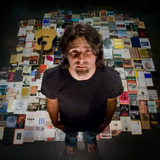
And that is just the beginning, but it’s what I want you to know, that he is a man of character and integrity and joy, with a passion to do good work, creating indie pop type songs that tell stories that mean something.  Hejustin and books.jpg is a very well-read Christian (see the picture of him posing by a whole spread of his books — not a few of which he bought from us, I might add) which already makes him a curiosity right? He is honest and real, and his music reveals his depth, and his passion for life lived authentically, messy as it often is. 


A PROPHETIC IMAGINATION AS SONGWRITER

McRoberts’ songs are not at all religious propaganda, obviously, but they are not cryptic, either.  That is, if I might be the music critic for a moment, he does not tend to write lyrics that are so minimalist or impressionistic or obscure — art for arts sake — that they hardly seem to mean anything.  He may not want somebody to ask merely just what a song is about, but if you do, I suspect he wouldn’t just shrug and say “whatever.”  He is a good poet, but he is a preacher, too, after all — he reads Walter Brueggemann.  He nurtures his imagination, but he strives for it to be a bit prophetic.  Which means it has to connect, to evoke, to allude to stuff that matters in the real world of ache and mystery.

TCMYK book.jpgo wit, we want to tell you about this crazy-good, truly lovely, rather recent book that he also self-produced.  Yes, he’s a go-getter, and he not only self-produces music and social media stuff (see him on youtube, talking about his new project, here or here, playing one of his songs solo) but now he’s in the freakin’ book business.

And what tremendous books he has done.  Yes, that is plural. 


TWO VERSIONS

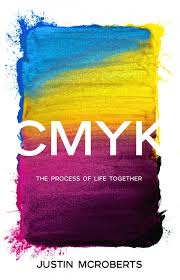
There are two editions of CMYK.  (Did I mention something about him being an over-achiever?) There is one edition that is rather plain (and fails to include the stellar blurb that I gave him.) It sells normally for $9.99, although we have it here for BookNotes friends at 20% off of that, $7.99.


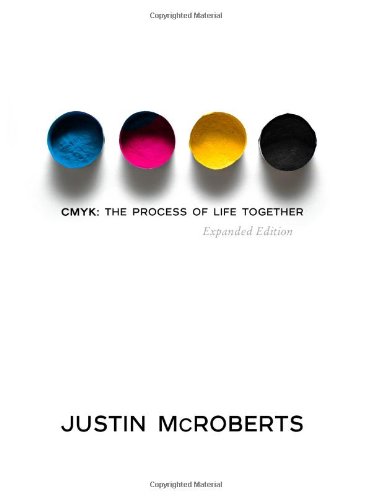
And there is another version that includes a remarkable, full-color, graphic design, art that works well to illuminate and enhance the stories and lessons, page by wonderful page. That expanded edition sells usually for $24.99, but we have it at the BookNotes 20% off, making it just $19.99.


So, yeah: one trim and plain and a bit cheaper, one full-color, with hyper-designed, spectacular artful illustration and a slightly larger shape and heft — and well worth a few extra bucks.


Here are three video pieces with each of the artists who did art inspired by the songs, art that ended up in the expanded version of the book. Click on the “watch” link, there under the yellow paint. Don’t miss them.


BOOKS & MUSIC

And — it gets better! — he did four CDs to go along with each of the portions of this book.  Yes, it isCMYK-522x294.jpg a book (in two versions) and there is music to accompany it.  Or, more precisely, the book, actually accompanies the songs; in most cases, the book’s chapters reveal something of the backstory of the songs.  It really is a great idea, no?  Who does this kind of stuff?  Justin McRoberts, that’s who.

HERE is the CMYK site where you can sample some songs, etc.  Come back here to buy the book, but do check how his really spiffy website.

CMYK:  The Process of Life Together (in either edition, and with or without the music) is a great, great book.  The art does enhance it, so I’m fond of the slightly larger, full-color edition. (The interviews with the artists in the expanded one are actually very interesting, as well, noting how hard they worked to find design styles that somehow connected with the printed prose.)  But the plain one is a great read.  And reading this stuff is going to bless you, I am sure.

Here’s the explanation.  C-M-Y and K are the letters used in the color printing process (you knew that, right?) And we need all the colors, and they indeed overlap.  And McBob has these four recordings, a series, called, respectively, C, M, Y, and K. So, presto, the book he wrote expanding on the songs is entitled CMYK.  Colorful, eh?


And here is the fabulous book trailer, his overview of the book, in a really moving short clip.  Wow; don’t miss this!


And the writing is colorful.  McRoberts offers a full palette of human colors, the colors and tones and textures of grief and joy and lament and celebration and wonderment and struggle.  


THE BOOK IS ABOUT PEOPLE, ABOUT REAL COMMUNITY

Like any pastor, and like most good traveling songsters, he cares about people, connects with them, reaches out and enters into relationships. These songs, and the essays in the book, are the poetically-rendered stories inspired by some of the people he has met. In this good but fallen world, full of what Bruce Cockburn famously called “rumours of glory”, there are colorful people. Mincing few words, sparing us not much, telling it like it is, McRoberts reports back from the front lines of his role as friend and listener, one who has pursued deep involvement in the human condition. He cares for folks, he gets to know people, and, often with their permission, artfully tells their stories.  This book is that chronicle, the cataloging of the ups and downs, the fears and the foibles of folks far and wide.  As such, it is illuminating and valuable.  And really, really interesting. 

Do you care about people?  You will love this book.  You will love listening in as Justin writes letters tocmyk plain cover.jpg people — chapters are entitled “Letters to a Young Pastor”, “Letters to a Young Brother” or “Letters to an Affected Sister.”  You will get energy from his telling of their tales, and will appreciate the counsel and care he gives each.  His letters are in some cases almost like very short stories, mini-biographies where a life is revealed.

Do you find yourself a bit apathetic, frustrated by those who interrupt you or who make emotional demands? Are you sometimes just not a people person?  Well, you, too, should read this book.  You will, I think, circuitously, learn how to care a bit more, learn to take up the calling of being present to others.  In one, he offers a bit called “In Sickness and in Health” and in another he writes “It Must Be Hell on You” which is a letter to a lost friend, one who is uncertain about faith and their relationship is in jeopardy.  Remember Me Jesus is “A Letter to a Queer Sister” and it is a good example of good care for another.  He has a letter to an atheist, inspired by a person about whom he wrote the song The Fear of God.  His reflection, then, following that letter, is “Some People Just Want To Watch the World Burn” which, as you may know, is that line from the brilliant Batman movie, The Dark Knight.  I do think that we can learn much from somebody who has these pastoral gifts, who has learned somehow how to put his heart into words, and taken the risk of trying to forge community with others.

The Batman bit?  By the way, that isn’t uncommon in this book.  A line from another musician’s work (Arcade Fire, Regina Spektor, David Bazan) or good citations from premier writers (an epigram from The Abolition of Man or a quote from James K.A. Smith or a line from Flannery O’Connor) mashes up next to his own lyrics and reflections, with stories about everything from playing Nintendo to climbing Mt. Diablo, from the “doing life together” dreams of his Oikos faith community to the short solid letter he wrote to his own infant son. It makes for an engaging, provocative read, with lots and lots of dots to connect.  You will get your money’s worth, I assure you.

I don’t think I should reveal too much about any of the chapters, though, as part of the experience of this book is learning to care for these people, taking in their stories, pondering the insight Justin shares in his letters to and reflections about them.  I will say that the song 33 is about Justin’s deceased father, Justin himself turning 33, and is a powerful, powerful center of the book. I will also say, just for the fun of it, that one of our most regular customers, Dave Bekowies — who is known to sign off his emails with lyrics from Jethro Tull or U2 — is the subject of one of the very good chapters here.  And the epigram before that chapter comes from For the Life of the World by the late Orthodox theologian, Alexander Schmemann.  I think sold him that book, by the way.  So it’s a cool little couple of degrees of separation thing going on right there, with Dave and Schmemann and Justin’s song “Courage to Believe” which was a personal favorite, and is more so, now, realizing it is about something Dave taught him, that God is already involved in our lives, right where we are.

For all of us, it will —  as good art can — whisper and hint, alluding to matters of the heart, helping us hear the rumors, to affirm that, indeed, there is glory. People are strange, The Doors used to sing, and, yes, these are Strange Days.  But Justin reminds us through these songs, and the revealing stories about the people in the songs, and then the letters he writes to them, how to discern the hand of God amidst the strangeness.  These are real lives, with real pains, struggling with real stuff.  It seems to me that in this embrace of the very human condition, every chapter becomes a beautiful reminder of the central Christian doctrine of the incarnation.  He’s not that heavy-handed about it all, but there it is: this is an allusive, story-telling, beautiful example of incarnational spirituality.  In fact, the last page remarks that although he travels, he is committed to a particular place, with particular people.  The last words are “the soil beneath my feet.”  It doesn’t get much more incarnational than that.

MARK LABBERTON ON CMYK

CMYK: The Process of Life Together comes with a great forward by author, preacher, and now President of Fuller Theological Seminary, McBob’s friend, Rev. Mark Labberton.  He gives an extended meditation on how the church too often separates faith and life, especially “raw life.”  We in the churches are a bit sanitized, I guess he means to say, and we sometimes don’t affirm the messy rawness of real life in this broken world.  We like to keep it clean, keep it safe. “When Christian people,” he writes, “choose the cleaner option of keeping God and raw life apart, the incarnation, death, and resurrection of Jesus Christ becomes a religious cartoon.”

And then, of Justin and his book, he writes, 

The gift of this CMYK Project is that it brings this rare combination together. Any who have known Justin McRoberts would be surprised if it did not do so, of course. The blend is Justin’s life and vocation. It has been evident in his music and leadership for years. But here it is exposed vividly.

And then, this wonderful line, a line any author would be proud to have written about his or her book:


“What we are given is an invitation to join Justin in an unfinished, honest, empathic, hurting story of hope.”

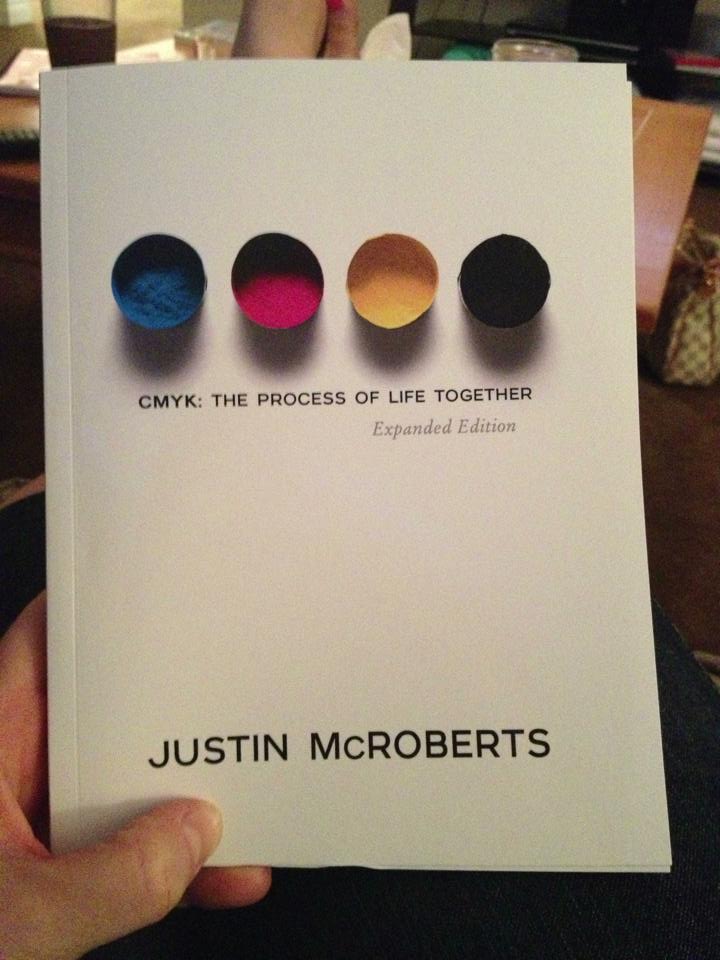
I think Labberton is on to something here, saying the book is an invitation to hope.  It is why (Labberton also says) the story must be told in many dimensions: the letters, the lyrics, and music, theCMYK in hand.jpg visual art, the interviews.  “This is not an invitation into a cartoon encounter with God, nor with each other. It is a multi-dimensional, littered, vivid, living story of being human, seeking God and neighbor.”

And that is why I had to do a review of this, just this one — it is fairly rare, remarkably interesting, and, finally, about being human, in community.

So, get the CDs if you’d like, or download them at Justin’s site.

BUY THE BOOK

But surely buy the book, either the plain one, or the enhanced, full-color one, from us here.  Maybe you could read it together with others — after all, CMYK is, as the subtitle says “the process of life together.” It would be a great book to foster community.  Either way, be prepared for a joyful learning experience, an interesting set of stories, letters, and lyrics — littered and vivid — and join Justin and his friends in this lovely invitation to hope.  Incarnational hope.

BookNotes

SPECIAL
DISCOUN

20% off

CMYK (plain edition) regularly $9.99 now $7.99
CMYK (full-color edition) regularly $24.95 now $19.99
order here
takes you to the secure Hearts & Minds order form page
just tell us what you want

inquire here
if you have questions or need more information
just ask us what you want to know

                   Hearts & Minds 234 East Main Street  Dallastown, PA  17313     717-246-3333
                                                            read@heartsandmindsbooks.com


Great Late Summer Reading: Top 10 Recent Memoirs (BookNotes Special – 20% OFF)

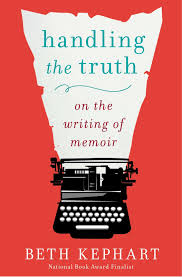
You know we often promote memoirs.  I think they can make for wonderful reading — think of thehandling the truth.jpg glorious writing of Mary Karr, Rhoda Janzen, Kathleen Norris or Anne Lamott. Or the wildly popular Wild.  Or the take-your-breath-away writing of Kim Barnes and her amazing life stories. Or the fabulous rural life, small town stuff of Michael Perry. Think of Sarah Miles — wow, that woman can write! (And she has a new one coming in the fall!) What pleasurable hours I have had getting to know fine writers who tell us of their exploits or introspections.


(Beth Kephart, by the way, is a fine, fine writer whose books we’ve stocked, and has done several very good and highly regarded ones.  She has a brand new book out reflecting on the genre, Handling the Truth (Gotham Books; $16.00) speaking about the meaning of the work, and a bit about how to write memoir well, reflecting on its particular delicacies.  Some have likened it to the fantastic Bird by Bird. It looks very good!)

It is an important genre, I think, and such self-aware works are especially useful for people of faith who care about the world, and especially for pastors who care for people, as memoirs are essentially auto-biography.  They reveal how people narrate their own lives; how they make sense of life and times.  Worldviews become ways of life, and ways of life can be healthy or less so, dysfunctional or life-giving.  Either way, in the telling of the tale, insight about how people think and how people live is offered, in a style that many times can be as absorbing and artful as any novel. It is good to get to know how others think — suspending immediate judgements, and walking a mile in their shoes.  Further, the best memoirs are somehow universal.  You come away, as with a good novel, knowing the story, and knowing something more about yourself.

And, so, here are a few late summer stories, true ones, mostly.  Some are memoir, or memoir-like.  Some are more like essays that tell of episodes or journeys in a particular season of a life.  They are about people; testimonials, we might say.  I highly recommend them, and are happy to sell them.  I hope you enjoy our comments, and hope you consider picking up one or two.  Read ’em in these late days of summer, over an upcoming holiday, or give them to a book-group leader whose considering her reading lists for the fall.  She will thank you later, I am sure.

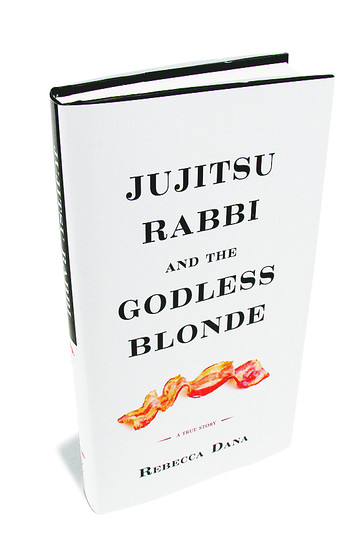
JJR and the GL B.jpgujitsu Rabbi and the Godless Blond: A True Story Rebecca Dana (Putnam) $25.95

I must say this was the most enjoyable memoir of the summer for me, maybe the most enjoyable since the early spring when I read Does This Church Make Me Look Fat which both Beth and I adored — and yet I cannot commend it to everyone.  The author is young, restless, urbane, and has a very sassy mouth.  She is as modernly secular as can be — living like the stars of Sex in the City was her dream, which she mostly accomplished, by the way, with the glamor, and VIP big-wig connections and perks of a snazzy job uptown in NYC. (You may have read some her work in nationally-known newspapers and magazines.)  And, man, is she funny.

But, yowza, her Big Apple fairy tale becomes unglued when a guy seriously, seriously breaks her heart, and she ends up — its an odd story, I know — living with a former Lubavitcher, Hasidic Rabbi from Russia, sharing an apartment in Crowns Heights.  He’s questioning his faith, and takes up martial arts. She is a pop culture maven, hip and cool, but comes to be enamored by the family life and faith of these serious Jews in her new Brooklyn neighborhood, and together they give new meaning to the phrase “the odd couple.”  She is smart, snarky, funny, heartbreakingly honest about her pain and disorientation, her lack of faith, her longings.  Ms Dana grew up somewhat Jewish in Pittsburgh (her parents were both scientists, so she learned to believe mostly in molecules. One parent specialized in plastics, the other in rust.) 


There is no happy ending here, and certainly no evangelical conversion.  But she is construing her life in new ways, the yearning for faith matters to her and she tells her New York story with a bit of raunch and a lot of charm and tons of Brooklyn gusto. My, my, this is an amazing book– had me full throttle by the crazy fight scene in the first pages — it’s well written, funny and not a little bit sad. I wish them both well.  You will too.

Brbw.jpgead & Wine: A Love Letter to Life Around the Table With Recipes Shauna Niequist (Zondervan) $18.99  When I did that pod-casted webinar with CPYU I raved about this (in the moments allotted — I did over 50 books in an hour!)  I don’t have time, sadly, to describe it well, here, either, which is ironic.  One should savor this as one would a good slow meal with dear friends.  Yes, this is memoiristic with episodes and reflections on thing in her life.  Like her others (Cold Tangerines and Bittersweet) is it thematic, of course, so not an autobiography as such.  Some of this is so tender, so frank, so beautifully rendered that I literally got choked up and had to fight back tears.  Her grace of learning to appreciate God’s good gifts of food and table fellowship is just so very beautiful and, I think, so very important.


As one reviewer of this handsome hardback, Bread & Wine is “a poetic reminder to appreciate the rituals, people, and sensory experiences of our everyday life.”


This is, I am convinced, exactly the sort of book that many of our favorite customers will love. It is very thoughtful, exceptionally well-written, deeply Christian, quite enjoyable, even practical — you want more? There are recipes!  One of the best books of 2013, for sure!  I bet if you read it, you’ll think of people to give it to — it’s that kind of a special book. 

Here is what Shauna Niequist herself says of what she hopes you’ll get out of it:


My prayer is that you’ll read these pages first curled up on your couch on in bed or in the bathtub , and then after than you’ll bring it to the kitchen with you, turning corners of pages, breaking the spine, spilling red wine on it and splashing vinegar across the pages, that it will become battered and stained as you cook and chop and play music loud and kitchen messy.

And more than anything, I hope that when you put this book down, you’ll gather the people you love around your table to eat and drink, to tell stories, to be heard and fed and nourished on every level.

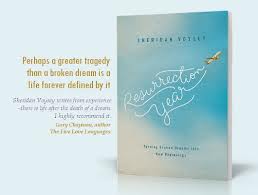
Rresurrectin year.jpgesurrection Year: Turning Broken Dreams into New Beginnings Sheridan Voysey (Nelson) $15.99  The subtitle of this is audacious, and although many books (especially those from evangelical publishers) over-promise and make grandiose claims  of what the book will do for you, this is, in fact, a story of just this sort of journey.

The author and his wife had spent tens years of tear-soaked prayers, repeatedly dashed hopes, and multiple failed rounds of IVF, and finally came to the heartbreaking conclusion that their dream of having their own child was over.  Unlike most folks, there were able, then, to head out on a year-long journey of restoration, traveling to Rome, Paris, the Swiss Alps (yep, they end up at L’Abri), and ending up at their new home in Oxford. I like that the back cover says it is “one part spiritual memoir, one part love story.” It is also a great travelogue. 


And, it is, finally, a rumination about those broken dreams, something not a few of us know something about (right?)  As it says in large type on the back cover, “Perhaps a greater tragedy than a broken dream is a life forever defined by it.” This is a beautifully written story, moving and powerful and interesting as they discover the “healing qualities of beauty, play, friendship, and love.” 

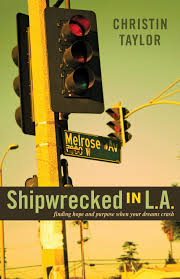
Sshipwrecked in LA.jpghipwrecked in L.A.– Finding Hope and Purpose When Your Dreams Crash Christian Taylor (Wesleyan Publishing House) $14.99  There are a good number of great reasons why we are exciting to tell people about this, but let me mention just three.  Firstly,  it is memoir of a young woman learning to embrace the idea of serving God by taking up a holy calling in a career, rooting it in the doctrine of vocation. This “serve God in the work-world and make a difference in influential culture-shaping venues and spheres is popular in some of our best Christian colleges and parachurch ministries (like our beloved Jubilee conference) and any time a person tells of how this works for them, this growing sense of an integrated life, learning to care, to live faithfully in their careers and callings, it is always worth reading.  

Secondly, her chosen career was to serve God in Hollywood.  So there’s that: who isn’t interested in the small-town girl heading off to the bright lights of the big city and finding her place among the stars? Her college internship in Burbank and her later job in Beverly Hills is truly interesting, and it is fascinating to hear how she navigates working in the film industry as a missionary of sorts. 

And, thirdly?  Well, it doesn’t work out so well for her, there are significant “shipwrecks.” I think that learning about the complexities and struggles and ambiguities of the discernment of vocation can be immensely sobering for idealistic young adults heading out to make their mark on the world, with and for the Lord. The subtitle here is the heart of the book — what does one do when one’s Big Dreams come crashing down? How does it effect your sense of self and your future hope of finding purpose when one’s initial passions and significant opportunities erode? This is vital, helpful stuff, in the guise of a wonderful, clear, memoir.

 A final two quick reasons to buy this book: Ms Taylor now works at Gettysburg College, a fine church-related college where my wife, Beth, is an alum.  So, yay for G-burg.  And,  not insignificantly, it is well written.  The author teaches writing, now, and has clearly found a reliable calling.  This is a good first book, and it is quite a story.  Enjoy and learn!

Ddoes J really.jpgoes Jesus Really Love Me? A Gay Christian’s Pilgrimage in Search of God in America Jeff Chu (HarperOne) $26.99  I read some of this twice, so taken was I by the author’s candid approach, his honest travels to various sorts of folks who do or don’t accept his same-sex orientation and his questioning, Christian convictions.  Of course, this ends up being a not too subtle call for greater sensitivity to the issues faced by gay and lesbian brothers and sisters.  But It isn’t a rant. You may or may not agree with his views, but that isn’t the point, here.  It is a report from an honest reporter, giving us windows of insight into all sorts of folks and all kinds of beliefs about the ethics of sexuality. Mr. Chu is a journalist by trade, a good storyteller, and this reads like any other first-person travelogue.  I think it is valuable firstly as a great read — you will care about the characters, feel like you are on the road with him, sitting there as he listens to all manner of folks across these United States.  The backstories, and side-trips, the emails and family drama are well crafted and pull you in to the narrative. 


Further — as I said in the beginning — I think memoirs serve to help us understand how people see themselves, make meaning of their lives, construe their worldviews and make sense of the world and their relationships.  Again, agree or not, reading Does Jesus Really Love Me? is a very valuable exercise, allowing you to “walk a mile” in somebody else’s shoes.  These are shoes that have seen some strange streets, and you will be wiser to have walked along with him.

Ggrace in the maybe.jpgrace in the Maybe: Instructions On Not Knowing Everything About God  Katie Savage (Howard) $15.99  When this first came out  (under the curious title Whirlybirds and Ordinary Times) I raved about it, but it didn’t quite catch on. Now it is out in paperback with a new title and I’m still hoping it will catch on.  Savage is a good young writer — some of this shines and glimmers, capturing the texture of her day, in beautiful prose. Mostly, it is a formerly strict evangelical learning to embrace a more faithful and humane uncertainty, and attentiveness to the glories of the everyday. Some of these pieces are almost essays, and in them, she tells of her own journey, but often with a light touch.  They are a delight to read.  They are about “the maybe” times, and, well, finding grace.  What a topic — honest and real!  Oh yes, they are arranged nicely around the themes of the liturgical calendar, the keeping of which being a Christian practice previously unknown by her. Pretty frisky, pretty insightful, a pleasant meander through the church year.  Good insight and great writing. I like the new paperback cover, too — hooray!


Oon  looking.jpgn Looking: Eleven Walks with Expert Eyes Alexandra Horowitz (Scribner) $27.00  Okay, this isn’t memoir, really.  It is a very creative sort of serious non-fiction, written by the same popular, smart author who gave us the exceptional, intelligent, fascinating look at life from a dogs-eye view, Inside a Dog.  Loved that one? Or maybe you had heard about it, was intrigued, but didn’t want to read a whole book, just on that.  This will be perfect for you — it’s the same sort of approach, written large. You get to see all sorts of things, from new perspectives, new angles.  Wait till you see what other insights this amazing woman brings to us as she guides us on eleven different walks, and teaches us how to see.  Susan Orlean explains the author’s great gift like this:  “Horowitz writes like a poet, thinks like a scientist, and ventures like an explorer. Her book will have you looking in a new way at the world around you, and make you glad you did.”

Yes, it is fair to say that Horowitz’s On Looking teaches us to pay attention  — one reviewer said it helps us get “the scent behind the smell” — by describing these almost dozen small adventures. Jonathan Weiner says “On Looking teaches us that the world is just as rich, strange, and charmed when seen through the eyes of our local artists, doctors, architects, and toddlers.” Mostly set in her neighborhood in Manhattan, it could be anywhere, if you have “the eyes to see.” Great.

The Strange Death of Captain John Buckman and Other Obscure Stories Harry L. Borger (Sheridan Press) $14.99  Well, I’m not sure what to say about this since the author is my own very beloved older brother. I guess I’m biased, but I am sure some BookNotes fans will get a real kick out of this.  This is as indie as it gets.

Hharry camping.jpgarry L. was big in Boy Scouts in the 60s, and from an early age learned about telling camp fire stories.  Later, he learned to be a guide at the National Park in Gettysburg, worked in the ghost walking scene for a bit, and he’s matured into not just a fire-side story teller, but a vibrant oral historian, a keeper of many secrets, a guy who knows a bit about everything and loves for you to know the details. 

This is his self-published manuscript, and it includes some family stories, some stuff from his own life, and a whole lot of odd-ball history from central Pennsylvania (and beyond.  Way beyond, like a piece on Norway, which you really should read, and a bit on the central PA town of Karthaus, whose founder may have been working for the King of France and had some connections to silver belonging to Blackbeard at the Baltimore harbor, and some other clear connections with a ex-baron from Poland who was building the first interstate highway through Pennsylvania in the early 1800s.) 

So, I admit, it isn’t exactly a memoir.  But I’m putting it here, well, because it really does say much about his own life, his passions, and his hopes that people recall the past, their localities, the stories of their places, even if some of those stories are yarns.  If I were doing a history list, I’d put it there, too.  It is a book that defies easy categorization.

Do you know about the drawing of Lincoln’s feet?  Did you know there is a mini-nuclear reactor in the woods outside of State College, PA?  Did you know that early aviators made their way by looking at giant concrete arrows (almost the size of small roadways) and you can still find some of these slabs out in the wilderness, pointing this way or that?


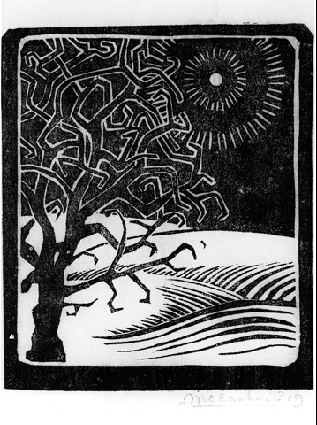
I suppose it may not thrill you, but did you know that the famous artist M.C. Escher did a print in 1919 callthe-borger-oak.jpged “The Borger Oak”? Did you know about the murder of young Clara Price and the memorial about her along the Susquehanna River?  Do you know about the collier industry in many 19th century woodlands? Harry used to be an attentive adventurer and canoe paddler, so he knows these things.  He’s hiked here and there, snooped around, talked to the old-timers, and scavenged small-town historical societies and libraries. He’s unraveled a few murder mysteries in this book, and regales us with some funny tales, too. I suspect he made a few up on his many canoe trips on the West Branch. 

Harry knows about the Pine Grove Furnace Prisoner of War Camp (and the restoration project there.)  He knows about the largest shipwrecked fleet in the Western Hemisphere, and a local connection. You can learn this stuff, too  — like what he shares in an essay about the town of Pandemonium, PA.  Or how lumbering was done in the mid-Atlantic woods in the early 1900s. Harry is an outdoorsman, so there is some nice nature writing here. He’s into geo-caching, so there are unique stories about places and placements that are educational and inspiring. He’s got some old photos included, of historical buildings, of old equipment (steam engine era, for instance) and of maps and old newspaper stories.  My, my, it is hard to explain.  There’s a bit about our family, and our late, great father, Harry D. Borger. A few of his friends have contributed a couple of pieces, and he’s highlighted a few news excerpts of pertinent pieces, or stuff he happened to find amusing.  I have to admit I’m not sure if this will win any Pulitzer Prizes, but we all know that oral history and local storytelling is of great, great value. Especially when it is written by somebody with as much curiosity and flair as my big bro.  I was thinking of sending one to Wendell Berry, actually.  I think some Hearts & Minds readers will appreciate it.  I can even get it autographed, if you’d like.  Let us know.

MMMP.jpgoving Miss Peggy Robert Benson (Abingdon) $15.99 I have often said how much I love this gentle, clear, economical author.  I’d follow him anywhere — and have — as he has written a number of great books,  one by one offering ruminations on baseball and backyard gardening and vacations and vocations life, all including portions of his own story. He is known for his guidebooks on prayer and Benedictine views of community and neighborliness.  Here, he turns his attention to something so very, very tender (and, not incidentally, something very, very close to my own experiences these days.)  This is about his beloved mother’s growing dementia.  And, of course, moving her to a better living situation.

This is doubtlessly one of the best books I’ve read this year, and if you, or anyone you know, is facing this common situation of dealing with an increasingly frail or forgetful loved on, this is a will be a true companion for you.  He talks about his colorful mother, and his colorful extended family who all pitched in to figure out the finances and future of Miss Peggy.  He gives some advice along the way, but never at the expense of the unfolding narrative.  As all of his inspiring books, the lessons are mostly between the lines, coming quietly, connected to the quiet story as he so candidly tells it. 

Again, if you know anyone with aging parents, this book will be a godsend.  Even if you don’t now relate to this topic, it is a gem of a memoir, a wonderful telling of a touching tale, and I’d still heartily recommend it for book lovers of any sort.  Read Robert Benson.  Read Moving Miss Peggy.  Before you are even part way through you will care more about your family, the plot-line of your life and the plot-lines of your loved ones lives, and you will be grateful for the presence of God through it all.  Reading this is lovely experience (even though a few times it hit so close to home had to wipe tears from my eyes, reminding me of Dorothy Day’s famous line about love being a harsh and dreadful thing.)  Read this book and you will be better for it, I promise.

I wish the publisher could have provided a clearer jpg of the cover that could be imported for you to see — you’d better notice not only the very moving photograph, but a lovely, rare blurb by the esteemed theologian, Frederick Buechner.

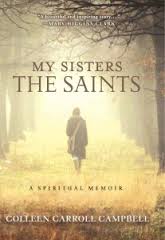
Mmy sisters the saints.jpgy Sisters The Saints: A Spiritual Memoir Colleen Carroll Campbell (Image) $22.99  If you care about college students, young adults, and especially young women and their faith development, you will be hooked on this beautifully written memoir within the first few paragraphs.  It starts almost brutally, the attractive and worldly-wise young collegiate in the aftermath of a brazenly drunken party the night before, wondering how her life had brought here there, and what in the world it all meant. Well written with the sad ring of truth  — it could have been a scene from novels like Tom Wolfe’s  I Am Charlotte Simmons or Jeffrey Eugenides’ The Marriage Plot  — the author decides to make some other choices in her life. 


She writes,


“Returning my gaze  to the bleak scene beneath the window, I realized how much things had changed — how much I had changed — since I first arrived at my freshman dorm that muggy August move-in day. I had lost something. I didn’t know what it was or how to get it back. I only knew that this aching emptiness in the pit of my stomach had grown unbearable.”


The heart of the book tells of her own journey around the world, to some amazing places and some notable jobs (including a stint as a speech writer in the White House), driven by her angst and ambivalence about the sexual chaos and gender expectations of her generation’s culture, to discover and embrace the Catholic vision of five women saints. She writes,

Dissatisfied by the pat answers offered both by secular feminists and their antifeminist critics, I found grace and inspiration from  an unexpected source: spiritual friendships with six women saints. In the lives and writings of Teresa of Avila, Therese of Lisieux, Faustina of Poland, Edith Stein of Germany, Mother Teresa of Calcutta, and Mary of Nazareth, I discovered kindred spirits. These women spoke to my deepest longings, guided me through my most wrenching decisions, and transformed my understanding of love and liberation.

About Campbell’s work writing about these women, art historian Elizabeth Lev says Campbell has “liberated these great historical heroines from dusty altarpieces and stone effigies and has brought them into the new millennium.”

The memoir itself, which tells the broader story of her travels, her quest for faith, trying times with an ill father, her own marriage and new motherhood, it is deeply meaningful, but also a lot of fun.

Here she tells of, well, you’ll see:

I had not been expecting to work with him that day. I knew that Bush was an early riser, but no one had told me that he expected his speechwriters to arrive before sunrise on the morning after they had turned in remarks for his review. I felt faint when I strolled into my office at 8 A.M. and found “POTUS” listed on my caller ID. I had missed the President’s call — twice — and he still was waiting to see me so we could discuss the speech I had written for him on education reform.

I arrived in the Oval Office minutes later, breathless and sporting my cheapest blazer, a lumpy, pea-green number I had picked up at T.J.Maxx for $13. My drab brown slacks drooped at the waist, and my still-damp hair hung limply around my puffy eyes. I had spent most of the night before lying awake, wondering if this move had been a mistake. Now sleep-deprived and still panting from my sprint through the West Wing, I tried to remind myself that it’s an honor to work for a president even if he fires you the second week.

It is a fine and enjoyable read for anyone; Agnes Conovan says “You won’t put this book down until you have finished the last page.  And, as you read, you will hold your breath in hopefulness.” But it is quite particularly Roman Catholic.  Charles Chaput OFM (the Capuchin Archbishop of Philadelphia) writes that “Colleen Carrroll Campbell is one of the finest writers on the American Catholic scene, and My Sister the Saints shows her heart, her skill, and her keen intelligence at their best. This is a wonderful, engaging, personal memoir and a great witness of faith.”  Cardinal Timothy Dolan of New York says “Completely contemporary and totally timeless, this engaging spiritual memoir is the perfect guidebook for anyone who is looking for a companion to help her navigate life’s sometimes difficult and confusing journey.”


BookNotes
SPECIAL
DISCOUNT
ANY ITEM MENTIONED

20% off
order here
takes you to the secure Hearts & Minds order form page
just tell us what you want

inquire here
if you have questions or need more information
just ask us what you want to know

                   Hearts & Minds 234 East Main Street  Dallastown, PA  17313     717-246-3333
                                                            read@heartsandmindsbooks.com 


You should know, I did a longer column, posted as an August review at the website

Sometimes, I know, these BookNotes blogs get a little long.  I resist — it is almost a matter of principle — the popular wisdom that people just want sound bytes.  I am grateful for our true fans, and appreciate those that follow the books I talk about. I think most folks want some substance and some pleasure in reading, so I do my best.  We’re glad for your business, and appreciate the permission you give me to come into your inbox, iphone, or where-ever you read our Hearts & Minds BookNotes blog.

Sometimes, if I have a longer list, and it may not even be mostly new stuff, I feel like it should be placed at the website archives called “columns” for longer form reading.

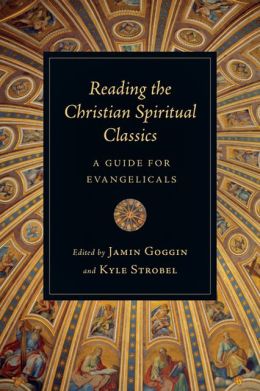
I just wrote a bit of an essay ruminating on the last BookNotes blog, the one about the literature of spiritual formation, our joys and concerns, in which I mentioned a new book called Reading the Spiritual Classics, a Guide for Evangelicals recently published by IVP. In the previous post, and again in the new column, I explained that it was wisely and interestingly edited by Kyle Strobel & Jamin Goggin, and that I really think it is important — a wise resource for those who do spiritual formation, direction, or reflective reading of devotional classics.

Anyway, I did this longer reflection about it all, added a bunch of other books, and then got warmed up to do a nice, long list about spirituality.  I listed some beginner’s level books for those wanting to start their spiritual journey and then a few that are maybe intermediate level, some prayer books, and then a few that are pretty demanding, but vital. Nothing on this list is goofy or odd, and nothing should be controversial or confusing. One is pretty darn creative and one or two are pretty academic.  All are fantastic.

To help set up that list, I told a quick story of somebody we talked with in the shop recently.  It was almost emblematic of a trend — folks are yearning not just for truth and reliable knowledge about the faith, but are searching for an encounter with the Divine.  They want purpose and meaning and they want to know that God is real in their lives.  As Margaret Fienberg’s fine book puts it, some want to be Wonderstruck.

To invite you to that column over at the website, here is a teaser.  These are some comments about a book I mentioned that serves as a bit of a bridge book, it was a transition in my list  — perhaps reminding those who of us who are interested in apologetics and offering answers, that for many folks that isn’t their most urgent desire. They aren’t so much skeptics but they are seekers. They lean towards insight and meaning and relationship. I think this book, Yearning for More is really, really good in that it is on one hand a book of apologetics, making a case that there is something true out there, so to speak, and our daily questions and experiences even seem to tell us that.  I listed oodles more in the column, mostly about spiritual formation, but here’s some of what I said about this one:

….earnest conversations with such inquirers often reveal that they aren’t really skeptics, although they
might be glad to know there are intellectually sound reasons to hold
to conventional, historic orthodoxy, but, really they are seekers. 
They aren’t needing answers, but insights, not apologetics but
spirituality. They are like our new friend from the other day, hungering
to deepen their grasp of spiritual things. Such folks often are keenly
aware that we all have this looming hole in our hearts. To use Buber’s
language they want an I-Thou relationship.

yearning for more.jpg

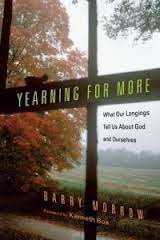
One book that helps us understand this, and is perfect for somebody pondering their heart’s  deepest longings, is Yearning for More: What Our Longings Tell us About God and Ourselves
by Barry Morrow (IVP; $15.00.) There is hardly a book out that is just
like this, and I adore it — very highly recommended because it shows
how our daily sense of things, our yearnings, are themselves avenues
through which we can come to deeper spiritual insights.  Morrow, as
Kenneth Boa writes in the foreword, “has a penchant for leveraging
culture to illuminate timeless spiritual issues.”  He does more, though:
he helps us turn our longings for God into ways to enter His very
presence.

Listen to what John Wilkinson (author of the cleverly titled No Argument for God) says:

Yearning for More
uncovers the reality of God in the most unexpected places. Barry Morrow
cleverly identifies ‘signals of the transcendent’ in our hatred of
death, our desire for heaven and even the humdrum of daily living. So
often we are told to ‘go with your gut.’ Morrow takes this to a whole
new level.

Read the whole column (and learn of some fantastic, brand new books, as well as some of my favorite picks) here.  You might enjoy learning about one that I even wrote the foreword to — a real joy and privilege for me. Do click on over to the archived columns.

 All that are listed there show the regular retail price, but you know we have the BookNotes special going on with them — 20% off any mentioned.  Check ’em out. 

BookNotes
SPECIAL
DISCOUNT
ANY ITEM MENTIONED

20% off
order here
takes you to the secure Hearts & Minds order form page
just tell us what you want

inquire here
if you have questions or need more information
just ask us what you want to know

                   Hearts & Minds 234 East Main Street  Dallastown, PA  17313     717-246-3333
                                                            read@heartsandmindsbooks.com


A LONGER LIST AND RELECTION: Resources on Spiritual Formation — For Seekers, Beginners and more Mature Disciples… ALL BOOKS 20% OFF

REVIEW: READING THE SPIRITUAL CLASSICS

Thanks to those who sent emails or made comments on facebook about my BookNotes review of Reading the Spiritual Classics: A Guide for Evangelicals, a splendid and mature new book published by IVP Academic (regularly $24.00 but 20% off for our BookNotes readers.) The two editors, Jamin Goggin and his colleague Kyle Strobel (www.metamorpha.com) curated and compiled a wise and theologically sane guide to how to best approach the depths, benefits, and foibles of various sorts of devotional and spiritual classics. It is a book about reading well, and it is a guide to different kinds of Christian spiritual formation.

reading the christian classics a guide for e.jpg

I started with an appreciative shout-out to authors who have become popular in the last 25 years, especially in more mainline denominational circles, authors who we are proud to stock, such as Henri Nouwen, Tilden Edwards, Joyce Rupp, Richard Rohr, Basil Pennington, (and so many more) who have much to offer those who care about their interior lives. These authors are among our biggest sellers when we set up book displays for UCC clergy, for Episcopal priests, for Lutheran folks.  

I did say, though – and I hope you give it a fair read if you didn’t – that I worry about the lack of robust, Trinitarian theology and Christ-centered substance in some contemplative literature. Some tend towards a vague sort of pantheism and others are mostly about one’s true self and less about God and Christ’s Kingdom. I am no rationalist and don’t fear creation-based theology (a term Matthew Fox coined back in his less eccentric days) but, still, I believe that those of us who read widely and ecumenically should stand firmly in a firm orthodox center.  On Christ the solid rock we stand, I was taught to sing.  All other ground is sinking sand.  

The new book, Reading the Spiritual Classics: A Guide… is a bit deep and demanding, and it covers a very broad range of writings from throughout church history and from throughout the wide Body of Christ.  It is a very, very important reminder to read discerningly, and apply insights faithfully.  Although it offers a uniquely evangelical vocabulary and offers a few warnings, it is not the least bit mean, and it does not foster fear or a critical spirit (it is not even what I would call parochial) but is inviting and informative.  It is an example of ecumenical discourse at its finest, useful for evangelicals and others, who want to have a balanced view of this important body of literature. 

DAVID WELLS AND RENEWING THE EVANGELICAL MISSION

In that column I tossed off a phrase stolen from the old Oldsmobile ads — hinting  at a bit of

renewing - lints.jpg

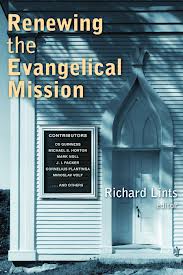
 a concern – that some contemporary evangelicals are “not your father’s evangelicals.”  In that big list of 50 books that I did on the webinar last month I mentioned a book called Renewing the Evangelical Mission, edited by Richard Lints (Eerdmans; $34.00, but on sale at 20% off for BookNotes readers.) It is a collection of firm essays about the erosion of central truths and practices, that is, the distinctives of evangelicalism, and is important to mention here.  Renewing… is a collection of pieces which interact with and bear witness to the critical work of David Wells, professor at Gordon Conwell, by authors such as Mark Noll, Os Guinness, Miroslov Volf, Michael Horton and other big picture, confessional thinkers.  Wells is a dear, good man, a very rigorous scholar, and even when I do not agree with him or fully share his numerous anxieties about the shape of evangelicalism in our time, his work is extraordinarily important. If you only read a couple of serious theological books this year, this overview of Well’s work by a wide range of scholars, pastors, theologians and cultural critics, is worthy of your consideration. (This is certainly true regardless of your own theological orientation and regardless of whether you know Well’s quartet of books about these themes.)  

The concerns raised in the anthology edited by Lints about cultural accommodation, mushy theology, the idolatry of the self, the pragmatic marketing ethos of the mega-churches, the disconnect nearly everywhere with historic, classical Christian thinking, will remind you why the Reading the Spiritual Classics is so very important. We need, as Lewis reminded us years ago, old books. But we also need help in reading them afresh. Reading… and Renewing… are very different sorts of books, but both share a concern for the edification of God’s people by standing within a robust, historic orthodoxy.

SPIRITUAL HUNGER

Two stories from yesterday:

After my review of Reading the Spiritual Classics the other day a mainline denominational pastor friend wrote an noted a benediction he recently heard at a gathering somewhere. It invoked a trinity of self, others, and Mystery.  Well, that is just fine – who doesn’t know that these three mysteriously go together, that all selves, alone and together, swim in what singer Bruce Cockburn once called “the ocean of love.”  But to replace traditional One-God-in-Three-Persons language in our liturgy for this clever truism?  Puh – lease.  And mainline folk wonder why their numbers are dwindling…

And then, while I’m thinking about this, recommending these good books to our astute readers on line – and our tribe here at BookNotes is mostly pretty sophisticated, I’d say – a smart young customer came in to the shop.  He was forthright with us: his intellectual life is rich and full; his relational and social life is good.  Then he held up his forefinger and thumb, making a circle the size of a pea and said “my spiritual life is like this – virtually nothing.”  Or maybe he was making that universal sign of a zero.

We have these conversations from time to time.  Often, such folks — often baby boomers, but sometimes sharp young adults — are not interested in religion, per se, and in a few quick comments back and forth (as those of us trained to hand sell books do) we learn whether they are interested firstly in proofs for the faith and apologetics.  Sometimes skeptics and seekers warm up to The Case for Christ by Lee Strobel, Mere Christianity by C.S. Lewis, The Reason for God by Tim Keller, or any number of books by the eloquent Ravi Zacharias, or the grand and practical survey of world religious options, The Long Journey Home by Os Guinness.  I have several lists of books I can share with you if you want about apologetics and books for smart skeptics.

These folks are often eager to know that there are intellectually plausible reasons for Christian faith and they ask about faith and science; we start off suggesting stuff like The Language of God: A Scientist Presents Evidence for Belief by Francis Collins (Free Press; $15.99) or the fantastic reader he put together as an anthology of important essays and chapters from books that he could easily offer to his scholarly friends. That is called Belief: Readings on the Reasons for Faith (HarperOne; $19.99.)   

Or they want to know if the Bible’s central teaching about Christ and his resurrection are reliably true. Or are authors like Reza Aslan, citing those same tired sources and outmoded conjectures correct after all, insisting that we can’t really trust the New Testament documents?

But earnest conversations with such inquirers often reveal that they aren’t really skeptics, they might be glad to know there are intellectually sounds reasons to hold to conventional, historic orthodoxy, but, really they are seekers.  They aren’t needing answers, but insights, not apologetics but spirituality. They are like our new friend from the other day, hungering to deepen their grasp of spiritual things. Such folks often are keenly aware that we all have this looming hole in our hearts. To use Buber’s language they want an I-Thou relationship.

yearning for more.jpg

One book that helps us understand this, and is perfect for somebody pondering their heart’s  deepest longings is Yearning for More: What Our Longings Tell us About God and Ourselves by Barry Morrow (IVP; $15.00.) There is hardly a book out that is just like this, and I adore it — very highly recommended because it shows how our daily sense of things, our yearnings, are themselves avenues through which we can come to deeper spiritual insights.  Morrow, as Kenneth Boa writes in the foreword, “has a penchant for leveraging culture to illuminate timeless spiritual issues.”  He does more, though: he helps us turn our longings for God into ways to enter His very presence.

Listen to what John Wilkinson (author of the cleverly titles No Argument for God) says:

Yearning for More uncovers the reality of God in the most unexpected places. Barry Morrow cleverly identifies ‘signals of the transcendent’ in our hatred of death, our desire for heaven and even the humdrum of daily living. So often we are told to ‘go with your gut.’ Morrow takes this to a whole new level.

Many people who visit our store and people that I suspect who talk to you are looking for Something, something akin to what Tozer called (in his book by this name) The Pursuit of God: The Human Thirst for the Divine (Wing Spread Publishers; $12.99.)  We have more books on the intellectual plausibility of the gospels and stuff on apologetics than any store we know of.  Yet, it is not common to come across open minded skeptics who need such resources.  Rather, folks hunger for and experience of God. They are yearning.

USE BOOKS OF ALL SORTS TO HELP OTHERS 

And so, as if you didn’t know it, I say again that this stuff about spirituality and knowing the classic devotional literature is so, so important.  There is goofy mystical literature out there and some that are less than Biblical and there are books solid as steel, theologically speaking. But some of that is off putting, dry or harsh. But, of course, we can have both. Lots of books are mysterious and mature, creative and classic, interesting and orthodox, beautiful and Biblical. (Come on, somebody stop me.  You get the point — haha.)

Those of us who care about these kinds of conversations about our yearnings, and helping others with theirs, and who want to use books wisely will realize that there are a whole lot of varying styles and tones and approaches that work well for this person or that, depending on her or his interests, temperament, needs at the moment.  All kinds of books can be tools to help folk take one step at a time, closer to the Light.  I’m really not that fastidious, but I do hope that we ground ourselves in the deep gospel, that we take on the ways of Christ, the Kingdom-bringer promised in the Hebrew Scriptures, the incarnate human one who is the second person of the Holy Trinity, that we are guided by the Holy Spirit in Biblically-shaped ways.  

And I want to share some books that will help you on that very thing.

As we deepen our own worship of the Triune God of the Universe, we can effectively helptiny book.jpgwanna read a canadian.jpg others, sharing  our favorite authors in fruitful and gracious, life-giving ways. Used with discernment, any number of kinds of books can work. We love helping people discover different kinds of resources that are “just right” so give us a call if we can help you start conversations with good books.

If that means using Joyce Rupp’s liberal Catholic, poetic, image-rich, tender-hearted, evocative (feminist) spirituality or if it means slowing wading through amazing and often remarkably relevant Puritans like John Owen, Richard Baxter or Jonathan Edwards, or if it means studying together a contemporary, contemplative evangelical like Ruth Haley Barton or David Benner or Richard Foster  — tolle legge.  Start big or small, but start reading about spirituality!   Share books, read them prayerfully, start a lectio reading group, pray and talk and care and love. Worship daily by using prayer books and journals and be a part of a real church.  There are so many resources on starting a lifestyle of spiritual practices and while there are some weird things it may be wise for some to avoid, I think reading widely in this every-expanding field of spirituality is not just healthy, but essential.

FOR BEGINNERS

Fordering your private w.jpgor instance, for real beginners, we often suggest a lovely book on setting priorities by Gordon MacDonald Ordering Your Private World (Nelson; $15.99) There is a great chapter in there called “The Sadness of a Book Never Read” which reminds us that to grow in life, one does need to read and study and learn to be reflective.  The book isn’t exactly about prayer or spirituality, but on attending to one’s “under the waterline” stuff. I guess one could say it is about discipline and priorities and being self-aware.  Any of his fantastic books would be good to start with, by the way.

For those who think of spiritual disciplines as being mostly about prayer, there is much more to learn. But learning to pray is certainly basic, and we often tell people to start their prayer life with Too Busy Not to Pray by Bill Hybels (IVP; $16.00) which is truly a fabulous starter book, enjoyable and inspiring, or Prayer by O. Hallesby (Augsburg; $11.99) which is also a magnificent and very thorough overview of clear instruction.  It might be a bit more heady, but the excellent Catholic priest, Ronald Rolheiser, has a very short (65 pages) new one coming the end of August (2013) simply called Prayer: Our Deepest Longing (Franciscan Media; $8.99) and I am looking forward to it.  Write to us if you want a longer list of books about prayer. I mentioned his classic The Holy Longing in my previous post, and it is a masterpiece. 

Tpraying life miller.jpghkneeling with.jpge two most popular books we’ve sold in the last few years about prayer are a bit deeper, but still quite accessible.  First, we must commend the very popular A Praying Life: Connecting With God in a Distracted World by Paul Miller (NavPress; $14.99.) It is gospel-centered, full of anecdotes and Biblical exposition and is very, very popular these days. Another amazingly rich, insightful, and impeccable book is Kneeling with Giants: Learning to Pray with History’s Best Teachers by Gary Neal Hansen (IVP; $15.00) which draws deeply on the very best of a wide posse of oldsters, from Calvin to Luther to St. Teresa of Avila.  You can learn from how to write prayers (by drawing on the Puritans) and how to pray for healing (drawing on Agnes Sanford) and how to use the Jesus Prayer by drawing upon the anonymous Pilgrim. I have to say I am very, very fond of it, and intend to spend more quiet time learning from its historic riches. Gary is obviously ecumenically minded, but studied at Princeton and now teaches at a Presbyterian (USA) seminary in Dubuque, Iowa.

Flife you always w.jpgor those wanting to start a more focused and multi-dimensional spiritual life, after getting some of the above under one’s belt we often recommend starting with The Life You Always Wanted: Spiritual Disciplines for Ordinary People by John Ortberg (Zondervan; $18.99) or the sequel, God Is Closer Than You Think (Zondervan; $18.99.)  Ortberg is conversational and upbeat, uses clear illustrations and is a fabulous guide and friend for entering this new world of deeper spirituality. (There are DVD curricula for each of these to and I can’t say enough good about them.  Very well done!  Shoot us an email or call if you want more info.)

We always suggest Ruth Haley Barton’s fabulous titles. You may know how much we esteem her, and how proud we were to have her here in our community. Her books are among my favorites, and you should at least have Invitation to Solitude and Silence: Experiencing God’s Transforming Presence and Sacred Rhythms: Arranging Our Lives for Spiritual Transformation (both IVP; $18.00 and $17.00) although her others (one specifically for women, one on the spirituality of leadership and one on communal discernment practices for church ministry leadership teams.) By the way, there is a very nice DVD study version of Sacred Rhythms, too that we love to suggest.  Call us!


S
soul feast.jpgoul Feast: An Invitation to the Christian Spiritual Life Marjorie Thompson (WJK) $15.00 This is also quite nice, mature and thoughtful but still approachable for beginners. Many, many have found it very useful. She is a Presbyterian (USA) specialist in this field, and we take her book everywhere we go! 

Spiritual Disciplines for the Christian Life Donald Whitney (NavPress) $15.99 We really like this as it is theologically clear, mature, with a heavy emphasis on Biblical truth as shaped by this wise Reformed leader.  It may be a tad tedious for some, but I think it is pretty accessible, and helpful for those who don’t trust medieval Catholic writers.  And important for those that do.  There is a fine forward by J.I. Packer where he suggests reading the book three times over!  He thinks it is that good, and that transforming.


Ssacred pathways.jpgacred Pathways: Discover Your Soul’s Path to God Gary Thomas (Zondervan) $14.99  I am a huge, huge fan of anything Gary Thomas writes, and he is on my short list of those who I’d read anything he does.  His guide to the ancient classics will be listed below, but this one is so foundational, so helpful in a very basic way, that we often suggest it to those who feel a bit unsure of the next steps they should take as they deepen their “heart and mind.” In a nutshell, Thomas wisely shows how we are all “wired” differently, and that we tend to resonate with different sorts or style of spiritual communion.  Love the out of doors? Like to sing? Are you rather intellectual and like to plumb the harder Scriptures or are you emotive, drawn to the Psalms? Does the very idea sitting still make you break out in sweat? Are you an introvert?  You get the idea — and it is helpful to be self-aware and then apply that to the ways in which you are most likely to nurture your inner journey.  There is a self-inventory inside as well.  I love the playful quote on the back “Thou shalt not covet they neighbors spiritual walk.”


Wwriting in the margins.jpgriting in the Margins: Connecting with God on the Pages of Your Bible Lisa Nichols Hickman (Abingdon) $16.99  I will tell you much more about this brand new book later (to which I wrote the foreword, the first time I ever had the privilege of doing that.) This is a splendidly interesting book, wonderfully designed, about knowing God by way of marking up one’s own Bible.  It is not quite about the quiet process of lectio divino where one meditates over and over on a text.  And it is more than inductive study.  She shows how to draw on the spiritual discipline of using our imaginations to pay attention to the Bible and its connection with our lives.  As Minister of Education at Nassau Presbyterian Church in Princeton NJ Joyce Mackichan Walker puts it, her “instructions lead to reflection and wonderment, encouragements that draw out our true and truer selves. Lisa Nichols Hickman shows us that in discovering ourselves, we discover God.”  One theologian noted that he thought the book was going to be about how to read the Bible, but learned it was really about how to pray, concluding that “those things go hand in hand.” Exactly.

Wwonderstuck.jpgonderstruck: Awaken to the Nearness of God  Margaret Feinberg (Worthy) $14.99  I exclaimed about this when it came out late last December.  In the post-Christmas sales and New Year lull, it may have gotten lost.  You may know Margaret’s other good books –The Organic God is now out in paperback! – and her upbeat presence at conferences and young adult gatherings makes her a bit of a rock star. She seems exceptionally comfortable talking about the role of the Holy Spirit in her life, and clearly believes in the power of God.  This may be her best book yet, a wonderfully candid story of her awakening to the goodness of God and God’s creation, explaining in colorful prose how to stand in awe.  It is certainly not “deep” or heady but it is passionate. She reminds us to be attentive, and gives wise advice about practices of rest and friendship and nurturing attitudes about gratitude and grace and mercy.  There is a chapter on prayer, a chapter on forgiveness, a chapter called “the wonder of restoration.” 

Never wanting to only inspire with beautiful writing or good stories, Ms Feinberg has a 30-day study guide in the back of Wonderstuck which she calls “Thirty Days of Wonder: A Challenge to Experience God More.”  She thanks me in it, too, but I’m just braggin’ now.  It is a delight to have acquaintances like her, to offer feedback on manuscripts as they are coming to their fullest fruition.  Buy her book – give it to somebody who wants deeper awareness of the Holy Presence, but who isn’t going to wade through the Puritans or Richard Foster.  I love Ann Voskamp’s lovely endorsement: “With eyes on the heavens and His Word in hand, Margaret Feinberg tells the wonders of God’s love in ways you’ve never known. Who in the world doesn’t need joy like this?”

MORE MATURE RESOURCES FOR A DEEPER LIFE

Here are some other mostly deeper resources that are not inconsistent with my earlier remarks about the need for discernment about orthodoxy and maintain a theologically sane center.  Some are new, some not, indication that there are very reliable books that combine meaty, mature, evangelical theology and experiential, wondrous, contemplative practices.  These are all good to use in one’s own formation practices, and they are good to share with others who need deeper, thoughtful texts.  Taste and see.

By the way, for another Hearts & Minds list, see this BookNotes post from a few years ago that offers good stuff on spirituality.  

The Mystery of God: Theology for Knowing the Unknowable  Steve Boyer & Chris Hall (Baker Academic) $19.99  Some of our customers found this quite useful, especially on this vexing question of how we can talk reasonably and with theological rigor about some that is essentially ineffable. I think it would be really worth having if one wants a profound rumination on the theology of mystery.  Hall has written a lot on the church fathers and the liturgical year (he is an evangelical Episcopalian) and is the Chancellor of Eastern University.  Boyer teaches theology at Eastern. 

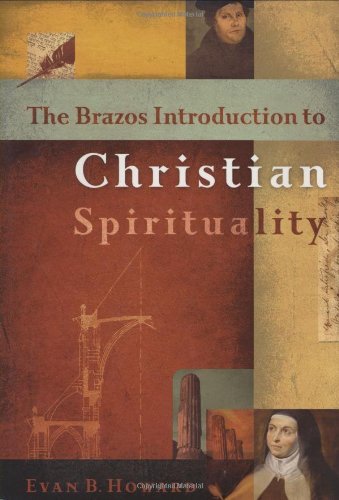
The Brazos Introduction to Christian Spirituality Evan Howard (Brazos) $40.00  This handsombrazos-introduction-to-christian-spirituality-21492462.jpge, over-sized hardback is truly amazing — very, very interesting.  It is remarkably fluent in a wide range of authors and traditions and so is happily very ecumenical while rooted in a broad, evangelical tradition. Brazos is very strong in this kind of serious work in the Great Tradition, and this author is perfect to compile such a fine work. It is excellent, useful and the kind of book you’ll refer to for a lifetime.

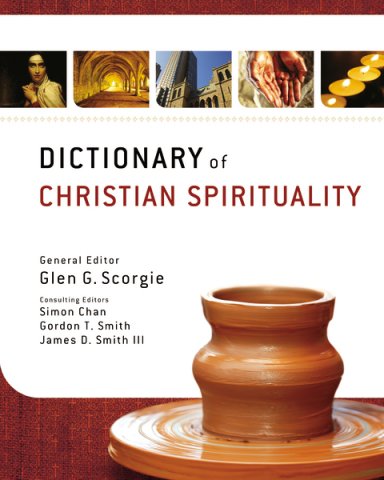
Ddictionary of christian sp.jpgictionary of Christian Spirituality general editor Glen G. Scorgie  (consulting editors Simon Chan, Gordon Smith, James D Smith (Zondervan) $39.99 I think this is a must-have for anyone serious about studying deeply, teaching, or working in this field. It is large (pushing 900 large pages), very well researched and reliable handbook/dictionary.  The contributing authors are like a “who’s who” of evangelical scholars who work in this arena. Remarkable in its breadth and scope.

Four Views on Christian Spirituality general editor Bruce Demarest (Zondervan) $18.99  This is such a helpful background for come to realize the differences of language, theology and perspectives which undergird the best spiritual practices.  A fabulous back and forth from a Catholic, Orthodox, evangelical and progressive Protestant.   Wow.

Ssatisfy your soul.jpgatisfy Your Soul: Restoring the Heart of Christian Spirituality Bruce Demarest (NavPress) $16.99  I remember how enthused we were – that is putting it mildly -when the straight-arrow evangelical publisher at NavPress announced over 20 years ago a line of books curated by Dallas Willard, inspired by Galatians 4:19.  They had a little floor display with their lovely oak tree logo, and we showed it off proudly.  Conservative Protestants were waking up to the wise beauty of Henri Nouwen, reading Richard Foster, learning about Merton, going gaga over Brennen Manning, eventually reading Kathleen Norris and Parker Palmer.  But to see a clear-headed, Bible-based, Christ-centered guide to help us attend to the presence of God, to sense God directing us, to move us towards greater intimacy with God without goofy sentimentalism or weird mysticisms, was a great grace.  This was one of the books in that series that has endured and we think it is, as Presbyterian pastor (and former President of Eastern University) Roberta Hestenes put it, “especially helpful in its sensitivity to evangelical issues and concerns, along with practical suggestions for implementation.”  What a great guide to spiritual growth! Let’s face it: Biblically-shaped spiritual formation will be Christ-centered and Christ-like.  This is well-rooted, flourishing discipleship.  Very highly recommended.  See also his very useful one about the stages of spiritual development called Seasons of the Soul (IVP; $16.00.)

Ccatching fire.jpgatching Fire Becoming Flame: A Guide for Spiritual Transformation Albert Haase, OFM (Paraclete Press) $16.99  I have read several other good books by Al Haase, and he is a fine man, a great writer, a very good teacher.  He has written on small Catholic publishers (he is a Franciscan, after all) and also on InterVarsity Press.  This new one is pretty explicitly Catholic, but so conversational, so interesting, with so many good stories of folks growing in deeper faith, that I am confident that it is fine for nearly anyone.  Dr. James Wilhoit, of Wheaton College, agrees, saying, “This is a thoroughly ecumenical book in the best sense. One never loses sight of Fr. Albert’s Catholic perspective, but readers from all Christian traditions will find help to grow in their love of God.”  Visit his website at www.AlbertOFM and see what you think.  We are eager to sell this, to invite folks to use it, to see revival fire discussed, studied, and experienced, in reasonable, down-to-Earth ways.   Very nicely done.

Hhow to pray the dominican way.jpgow To Pray the Dominican Way: Ten Postures, Prayers & Practices That Lead Us To God  Angelo Stagnaro (Paraclete Press) $16.99  Well, this may not be for everyone.  It is a very, very handsome book – even a lovely embossed stamp on the cover – but there is no disguising the fact that this is not just Roman, but Dominican. Their founder was all about the bodily postures of prayers.  This ain’t yoga, boys and girls, but it involves the beautiful tradition explained in the historic Nine Ways to Pray by St. Dominic which includes body positions such as being prostrate. A dear family friend just became a novice Dominican, so I can say I know one person who does this.  He liked that we had this lovely book. Check it out.


Pprayer foster.jpgrayer: Finding the Hearts True Home  Richard Foster (HarperOne) $24.95  It should almost go without saying that we are all greatly indebted to Richard Foster and his classic —  and I don’t use the term loosely, it is surely in the top ten most important religious books of the 20th century, in part for the huge shift that it caused towards contemplative spirituality, sparking a renaissance of such literature — Celebration of Discipline (HarperOne; $25.99) I trust you know that we are fans of Richard and that we carry all the books he has written.  His Renovare ministry is certainly worth following, and if you are drawn to that sort of thing, know we have whatever resources you may need. I list Prayer, though, as I believe it is vastly under-appreciated. There are more than 15 different sorts of praying he so eloquently describes, and some include thing you don’t often find in traditional books about prayer.  He talks about lament, about sorrow, about protest.  Of course praise and adoration, confession and intercession, and he is wise in all of these kinds.  I highly recommend this, perhaps to read before wading into the depths of Celebration of Discipline. It isn’t simple or quick, but it is one of the most helpful, illuminating and important books I’ve ever read.

Yours is the Day, Lord, Yours is the Nighyours is the day lord.jpgt Jeanie  & David Gushee (Nelson) $15.99  I wanted to list at least one or two traditional prayer books, for obvious reasons. This new one — a nicely bound hardback —  draws from the broad, ecumenical church, including some prayers by current authors and writers (but mostly older ones.) It has a beautifully crafted prayer for morning and evening each day.  You may know Dave Gushee, as we’ve sold his several books on Biblical studies and social ethics. It was good to be with him a few weeks ago at the ESA 40th Anniversary gathering, where he was a presenter.  Phyllis Tickle, who herself has written a famous Book of Hours and knows a bit about prayer books writes, “If there is such a thing as a ‘perfect’ prayer book, then Yours is the Day, Lord… is that book.”  Wow.  And Brian McLaren says, “This is the prayer book I have wished for since I began praying.”  

Common Prayer: A Liturgy for Ordinary Radicals Shane Claiborne, Jonathan Wilson-Hartgrove, Enuma Okoro (Zondervan) $24.99 This very cool, textured hardback with ribbon markers came out a few years ago, now, and we are proud to have been among the first to seriously review it, commending it to anyone who would listen. People continue to discover it, many still use it, to find its prayers, Bible verses, suggested readings and songs to be remarkably, uncannily appropriate. There are great helps to assist in using it and deepening ones formation through its regular use; you should know that there is a strong emphasis on peace and justice in the prayers, woodcuts and sidebars. 

Acommon prayer pocket.jpgs you might guess, there are “saints days” for the likes of Dorothy Day and Martin Luther King and Oscar Romero. You know that the authors, while helping us get used to using a daily prayer book, are confident that such disciplines will form us into the ways of Christ, which is actually pretty radical business.  But I firmly believe that it should not be seen as a specialty devotional for activists but could be used helpfully by anyone, of any background or theological persuasion.  The prayers and Biblical readings are clear and very meaningful (and frankly not as zealous about causes or issues as you might think.  It is primarily a prayer book for the scattered church, not a guide to activism.)  If you don’t use a complex daily prayer book like this, Common Prayer is a great one to use.  There is a small, pocket-sized, considerably abridged paperback, too, which is a simpler way into the habit. (Zondervan; $12.99)

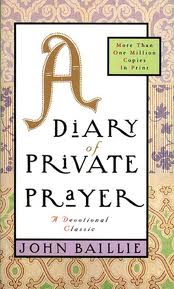
Diary of Private Prayer John Ballie (MacMillan) $9.99  This is a small prayer bookdiary of private prayer.jpg, pocket-sized and, although paperback, still quite nice to hold.  More importantly, the prayers offered by this beloved Scottish pastor are wise and good, classic, eloquent, and bold about Christ’s Kingship and grace in the world. I have used it with others on retreats more than once and the day’s morning or evening prayer was precisely on the theme of the retreat!  God has used this in beautiful ways over the years (it first came out in the States in 1949) and it is a joy to remind you of it here.


Lletters by a modern mystic.jpgetters by a Modern Mystic Frank C. Laubach (Purposeful Design) $10.95  If you know literacy work, you know Laubach’s name.  If you’ve read Richard Foster, you know his enthusiasm for this little volume, originally published in 1937. As in the original, this newer paraphrased version includes his famous A Game with Minutes, which was Laubach’s attempt to live out the principles of Practicing the Presence of God by Brother Andrew. 

The internationally-known Laubach wrote these letters to his father, trying to explain Christ-centered spirituality . This pocket-sized hardback is the best version you will find of the letters and the “game.” There is a very nice forward by Dallas Willard, commending the constant faith of Laubach and his wise methods of routinely filling one’s mind with the vision of God’s Kingdom.  This ought to be more popular than it is as it is renowned.

Ggod in my everything.jpgod in My Everything: How An Ancient Rhythm Helps Busy People Enjoy God Ken Shigematsu (Zondervan) $16.99  I would take much longer than I have here to explain the wonders of this amazing new book, but I am convinced it is a very important work, wonderfully written, offering good, rich, insight, practical but grounded in excellent insight. Drawing from the spiritual practices of the far East and more conventional evangelical faith, this author offers a large picture of the spiritual life, showing how God’s presence can be more notably felt in our day to day lives as we learn rhythms of rest and celebration. 

Here is part of his story, which is fascinating: he was an overworked business executive for Sony in Tokyo, studied theology in Canada where he became an overworked pastor, and then made a pilgrimage to Ireland where he learned of Celtic and monastic spirituality.  Of course some of that ancient wisdom resonated with the traditional wisdom of his native land. Shigematsu shows here how to develop your own “Rule of Life” that is (as John Ortberg puts it on the back) a way beyond “mechanical formulas on the one hand and vague abstractions on the other.”  Lovely, practical, with lots of resources for journaling and reflecting and stories of those who have been shifting their rhythms and more intentional about experiencing grace and the goodness of God’s presence.

The Rest of Life: Rest, Play, Eating, Studying, Sex from a Kingdom Perspective  Ben Wrest of life.jpgitherington III (Eerdmans) $18.00  I hope you know that this great United Methodist New Testament scholar has done a set of small book on how the central Biblical theme of the Kingdom of God shapes and colors how we think about stuff.  He has one on worship, one on work, one on money. He gets endorsements by the likes of Regent College’s brilliant work-world theologian R. Paul Stevens.  Work: A Kingdom Perspective has been used by the likes of the Washington Institute on Faith, Vocation, and Culture.  Here, he brings together short reflections on the “other stuff” of daily life.  Less public, more personal, here we learn to practice the presence of God by thinking well about the uniqueness of living well, for God and others, as we shop and buy and eat and play and rest.  This is not sentimental or light-weight, but it isn’t obtuse academic work, either.  Friends, this is more important than you may know, more urgent than many realize, and such a good, good gift, rare and good and true.  I realize it isn’t about the typical spiritual disciplines, but its vision is so close to the heart of seeing God in all things, I wanted to list it here. Send us a note, by the way, if you want a list of our favorite books on sabbath-keeping.  There are a lot!


Aancient paths.jpgncient Paths: Discover Christian Formation the Benedictine Way David Robenson (Paraclete) $16.95 There is a huge interest these days in monastic customs and the spirituality that emerges from those settings.  Most popular, it seems, are books by and about Benedict. Benedictine spirituality affirms the daily and celebrates human work of all sorts — in the world, quite generally, but also, literally, in the Earth.  High-tech culture-makers and backyard gardeners are all finding new ways to deepen their faith and spiritual experiences by hearing well the insights from this historic tradition.  I myself have a bit of a love/hate relationship with the monastic way, and, for me, Benedictine faith makes most sense.  Which is a long way of saying that I think this is the best book on the subject, a fine and wonderful introduction to this stream of monastic spirituality.  I learned so much about the history of the order, and its good applications in the world of ordinary living. It is written by a Presbyterian pastor, too.  Ha.  Perfect!

Formed for the Glory of God: Learning from the Spiritual Practices of Jonathanformed for the glory of G.jpg Edwards Kyle Strobel (Crossway) $16.00  This is an amazing book in many ways and while it will surely appeal to conservative Reformed folks — it is about Edwards, after all, and about our reason for being coram deo — I want to suggest that it is one others should read as well. I am very aware that many are turned off to Edwards (that is a conversation for another day, but certainly all agree he is one of the most brilliant scholarly minds in American history and an eloquent and elegant theologian.) So, realizing that it may be a harder sell, as they say, at least to some, I want to offer that this is a great way to open up a new avenue or sort of learniong for some of our readers. I think you should become more familiar with Edwards and his intimate, Godly piety! Many Protestants are now quite happy to read Catholics (thanks be!) But yet, some who are not Reformed or not drawn to Puritan thinking simply will not give this tradition its due.  Strobel himself is young and profoundly aware of the hungers of the postmodern generation, and he is well-grounded in a scholarly study of church history and various sorts of thinkers who taught contemplation and meditation. In fact, he explores exactly some of this sort of mystery in this very volume.  There are other books that are more general about the great Puritan but this may be the best thing out on his spirituality, and how and why we should care about formation. 

Listen to Gerald Sittser, author of the moving book on grief, A Grace Disguised,

His attention to Edwards’s theology of glory and beauty and love informs and shapes his exploration of Edwards’s spiritual practices, which in both cases orient us toward God. This book did more than teach me; it awakened longing for God. It introduces Jonathan Edwards as the luminous, pastoral, passionate and deeply Christian man that he was. I heartily commend it to you.

LLiving-Into-the-Life-of-Jesus.jpgiving into the Life of Jesus: The Formation of Christian Character Klaus Issler (IVP) $16.00  With rave endorsements from the likes of Dallas Willard, you’ll realize this is thoughtful, mature, but aimed at practical Christian growth.  J.P. Moreland says, “Its uniqueness likes in two directions: its central focus on Jesus and the Gospels, and its seminal chapter on finances and the spiritual life.” The late Calvin Miller endorsed it, the counselor John Townsend writes of Issler’s “scholarship and warmth.” If you want to deepen your discipline so that you put yourself in spaces to be open to being formed into the ways of Jesus, if you long for greater Christ-likeness, this could be a God-send.  Literally.  The chapter on five formation gaps and what to do about them is worth the price of the book, too.  Perhaps you know his profound work, Wasting Time with God: A Christian Spirituality of Friendship with God (IVP; $20.00.) That also was well reviewed by serious readers in this field.


Mmeditation and communion with G.jpgeditation and Communion with God: Contemplating Scripture in an Age of Distraction John Jefferson Davis (IVP Academic) $20.00 Davis is quite Reformed and has widely in the past written about conservative social ethics.  Not your typical profile of a touchy-feely inner life guy.  Yet, I saw this coming.  His last book was Worship and the Reality of God: An Evangelical Theology of Real Presence (IVP; $22.00) which was heady and hefty, but whispered over and over the need to worship the real God who is really there. This hunger for truth and experience, facts and feelings, worshiping “in spirit and truth” just seemed to me as if he was becoming more contemplative. And, wow, is this book ever.

Meditation and Communion… is a serious critique of our lack of attention, and our lack of attention to the Bible in our spiritual formation. It shares the sorts of concerns that I voiced above. After mind-stretching studies of epistemology, symbolic hermeneutics, and the malaise of the state of the modern church, Davis ends up offering wonderful guidance for serious practices of the disciplines.  He offers some exercises, further tools to deeper our meditation, all using the Bible in profound ways.

Sung Wook Chung of Denver Seminary says “Davis is one of the best and most important evangelical theologians alive in North America.”  Asbury Theological Seminary prof Timothy Tennent says “if his challenges are taken seriously, we will never again read Scripture without an increasing sense of the risen Christ in our midst.” This is a very important resource.

Tgod of intimacy and action.jpghe God of Intimacy and Action: Reconnecting Ancient Spiritual Practices, Evangelism and Justice Tony Campolo and Mary Albert Darling (Jossey-Bass) $14.95  This book is not heady or difficult, but it is on a challenging subject, and it does a very thorough job.  It is about the curious and complex relationship between contemplation and action, about, well, prayerful piety and public mission.

Others have written profoundly about this — it was a major concern of Thomas Merton and is the theme of the outstanding and provocative exploration The Active Life: A Spirituality of Work, Creativity and Caring by Parker Palmer (Jossey-Bass; $16.95.) But this one by Tony and Ms Darling is a real favorite, and I can’t recommend it enough. Campolo, as you surely know, is an outspoken advocate of social justice, is a world-wide gat fly not only around causes of creation-care and business ethics and peace-making, but he has started numerous schools and orphanages in his beloved Haiti. So he’s a doer, a mover and shaker, an evangelist and tireless public speaker.  But he also preaches about “quietude.”  About listening to Jesus, about mystical communion. His co-author teaches contemplative spirituality at Spring Arbor College, as a master of the spiritual disciplines, and is known as a spiritual director.  Together, they’ve done this incredible book showing how our inner lives and outward callings are profoundly related, and how the two general callings, prayer and action, can be combined. (And, further, it shows that social action and justice work must also include appropriate evangelism and proclamation.)  As Ruth Haley Barton writes of it, “This very important work brings integration to the false dichotomy that promotes an artificial disconnection between Christian mysticism and Christian outreach.”  I love this upbeat, inspiring book and the wholistic gospel it invites us to experience and share. I highly recommend it.   

MMissional-Spirituality.jpgissional Spirituality: Embodying God’s Love from the Inside Out Roger Helland & Leonard Hjalmarson (IVP) $16.00 This is a major contribution, an amazing and substantive study of the relationship of spiritual formation and missional ministry. Whether one is interested in the missional church conversation or convicted about whole-life discipleship that sees all of life as a daily opportunity for Kingdom witness, this study of spiritual formation is one of the few that knowingly seeks to equip readers to be more missional. Listen to what Michael Frost,  author with Alan Hirsch, of The Shaping of Things to Come and Re:Jesus and so many other seminal missional books says:

I found myself saying, ‘Yes, yes, yes,’ as I read Missional Spirituality. So many books on spirituality are focused on self-improvement and private pietistic devotion, and they often leave me cold and uninspired. Roger Helland and Len Hjalmarson helpfully reconnect spirituality and mission, believing all truly Christian spiritual formation to be for the sake of the world. They take Jesus as their supreme example, the one who claimed that he was nourished by doing his Father’s will and work. This book is a triumph.

DDynamics-Spiritual-Life.jpgynamics of Spiritual Life: An Evangelical Theology of Renewal  Richard Lovelace (IVP Academic) $30.00 All right.  Here’s to a classic, an under-appreciated and amazingly rich book that is one of the more important works of my own lifetime.  This came out in the late 70s on the tail of the counter culture and the Jesus movement and the rise of both the evangelical left and the charismatic renewal, seeking to provide a much-needed, solid theological foundation for church and para-church in the throes of change and transformation. How many books do you know that have endured a generation and in a new cover design, includes blurbs from a Catholic (Mark Link) a mainline leader (Martin Marty) and a radical Wesleyan (Howard Snyder.) Lovelace was passionate and eccentric and a vital interpreter of the great awakenings of American history.  Do you wish for live orthodoxy, realizing the need for a more comprehensive vision of renewal in our time?  I am not alone to insist that Dynamics… is an essential book to add to your collection of must-read religious books of the last 50 years. 

BookNotes
SPECIAL
DISCOUNT
ANY ITEM MENTIONED

20% off
order here
takes you to the secure Hearts & Minds order form page
just tell us what you want

inquire here
if you have questions or need more information
just ask us what you want to know

                   Hearts & Minds 234 East Main Street  Dallastown, PA  17313     717-246-3333
                                                            read@heartsandmindsbooks.com

Reading the Christian Spiritual Classics: A Guide for Evangelicals – 20% OFF

I’m going to try to keep this a bit brief. 

I know, I know, some of you won’t believe me.  Some are already buckled down laughing.  Well, just watch.  Not too brief, though.  That wouldn’t be prudent, as George Bush the First used to say.

I don’t know if it is prudent to open a can of worms and try to be brief.  I hope I don’t step on anyone’s toes.  But here goes.

way of the heart.jpgYou know we sell books at a lot of mainline denominational events. I have noted before with great gladness that I’ve noticed in my lifetime a more vibrant faith and robust spirituality within our mainline churches than ever before.  I think maybe 25 years ago or so reading about and experiencing contemplative spirituality became a major feature of nearly every mainline denominational clergy gathering of which I know.  Liberal or conservative, authors such as Richard Foster and — most obviously, Henri Nouwen — paved the way for new layers of talking about faith.  As one who has dabbled in this contemplative literature, starting (perhaps foolishly) with Thomas Merton, you surely know we think this is a good, good thing.

I am truly glad for authors that are most known and quite popular in many mainline denominational circles, and I am glad that many evangelical readers are now reading some of these same writers.  You know that we carry, appreciate (and have been blessed to have met) some of the likes of Joyce Rupp, Richard Rohr, John Philip Newell, Marcina Wiederkehr, Parker Palmer, Gerald May, Tilden Edwards.  I love the moving, gentle memoirs of Kathleen Norris and the fine writing of Paula D’Arcy and Sue Monk Kidd.  I like the Celtic stuff of David Adams, the ecumenical work of Taize, led by authors like Brother Roger.  I wish the community-minded, justice-seeking spirituality of Gordon Crosby and Elizabeth O’Connor were better known.  I am challenged and impressed by the deep work of Cynthia Bourgeault, drawing on the serious centering prayer tradition of Thomas Keating.  

Two dear writer friends who lived near us here for a season or two have been helpful in my journey on these very matters, one a very eclectic Presbyterian, Kent Ira Groff (founder of Oasis Ministries and a very prolific writer) and the other a United Methodist pastor schooled in iconography and the ancient mystics, Russell Hart (and his Center for Spiritual Formation; he has also authored several good books.) 

Another set of good friends — women who mostly are coming out of the evangelical tradition — have recently founded local retreat space and training center for those wanting to deepen their interior lives, Kavannah House, here in York, PA.

We are grateful, too, that some of their own students and mentors and
directors and seekers come to us to find the sorts of books they need, bread for their journeys, books by authors that can help us grow in deepened, focused spirituality.  Hooray!

Okay, you know much of this.  You know our shelves on these topics are bulging.

But here is my quick opening of a small can of worms. 

I fear that sometimes, some of this is getting, well, kinda goofy. Not most writers, and not necessarily the ones I named above, but some, are drifting from historic, classic, Christian orthodoxy.  I hate to sound like Eugene Peterson or Marva Dawn (well, actually, I’d be honored to sound like them) but we maybe have to be a bit gruff and remind ourselves to keep Christ the King at the center of our centering.

This is not the time or place to critique odd-ball theology or touchy-feely pscho-babble thatbeing human cover.jpg sometimes passes for spirituality.  It isn’t even the time or place (although I am tempted) to examine the inherent dualisms that undergird much medieval and monastic spirituality, and those modern writers standing in that legacy.  See the book Being Human: The Nature of Spiritual Experience by Ronald Macaulay & Jarram Barrs (IVP; $20.00) for a good start to that conversation.  Why, even Bill Edgar’s book on Francis Schaeffer‘s “counter-cultural spirituality” that we reviewed a few weeks ago would be useful. 

And I do not even mean to dismiss all touchy feely stuff.  I quite like the new Joyce Rupp collection of poems, which are almost prayers, My Soul Feels Lean (Sorin Books; $15.95.)  And not all contemporary popular-level mysticism is goofy, not at all.  Father Ronald Rolheiser’s very popular work comes to mind as some of the more substantive stuff on spirituality done in recent years.

 Most of his books are fantastic, but everyone agrees that The Holy Longing: The Search for a Christian Spirituality (Doubleday; $23.00) is amazing. I’d start with that one of his.

And I think most of the Franciscan RichardThe-Holy-Longing-Rolheiser-Ronald-9780385494182.jpg Rohr’s work is very, very helpful.  And Parker Palmer — oh my.  Excellent, in his gentle Quaker kind of way.

But. 

There is, these days, I think, a confusion that is popular, a conflating of spirituality and knowing one’s own self.  Now as a Calvinist, I know that the great Frenchman himself said that the two are profoundly inter-related, knowing self and knowing God.  Yes, yes. 

But still.

And, to confuse matters, there are books that don’t fall into this casually, as in error, but are about that topic (namely, what sort of human developmental growth we can have as we open ourselves to God.) And that is a good thing, too.

For instance, see a recent book called Spirituality and the Awakening Self: The Sacred Journey of Transformation by David Benner (Brazos; $19.99.) If I viewed this as a devotional study about how to experience God more deeply, I’d be annoyed.  I want to give Dr. Benner the benefit of the doubt, especially since (a) his other books on spirituality are so, so, good and (b) he is a psychologist by trade, and this is a book more to explore the human self rather than spirituality, per se; it isn’t about the spiritual disciplines, really, but on becoming; it is about growth.  It suggests meditation and dreamwork and prayer and all the other historic disciplines but turns them less towards communion with God but on self awareness and personal growth. 

You see, this is a bit vexing.  It may be a fine project.  Yet, he’s quoting nutty stuff like Eckhart Tolle, non-Christian theorists like Ken Wilber, and heterodox scholars like Matthew Fox. His citations from historic folks range from St. Bonaventure to Hildegard of Bingen to St. John of the Cross. Again, this is not necessarily wrong, but there it is: evangelicals are, well, I was going to say “getting kinda weird on us.”  Allow me to be more gracious.  Some evangelicals don’t sound like your father’s evangelicals.

And whether this is good or bad, well, there’s that can of worms that can’t be unpacked here, briefly. 

But let’s face it.

There is a very common style of devotional book these days that is more about one’s own self-hood than about God.  There are books that are about finding some vague spiritual center rather than union with Christ.  Basic Christian stuff like the Trinitarian nature of God and the cruciform nature of salvation, received through faith, by grace, is glossed over in terms that are sometimes so allusive as to be hardly meaningful, or so vague as to be hardly helpful. And some folks love them.

And so, I worry just a bit about this.

I long for books that are wild and mystical and poetic but that are also Bible-based, Christ-centered, and theologically sane.  I’m really not trying to deepen the sad gulf between mainline Protestants, the Orthodox, Roman Catholics and various sorts of evangelicals, and, as always, I think we can learn much from one another.  And not every book has to be perfect, either.  I give authors lots of wiggle room.  If you follow our reviews here, or look at the stuff on our shelves, you know that.  I love that phrase that invites us to a “generous orthodoxy.”

I think we need books that are whimsical, certainly we need those (a specialty of ours, here, actually) about the spirituality of the ordinary, finding God in the day to day, in a being-redeemed creation. Practicing the presence, being wholly holy, fully alive and mindful,  etcetera, etcetera.

But, we also need from time to time a heavy dose of the glory and holiness of God, revealedst ephrem hymns.gif also in a creation weighted with glory. 

Just today a customer picked up St. Ephrem the Syrian’s famous Hymns on Paradise (St. Vladamir’s Seminary Press; $18.00.) Wow, now that’s what I’m talikin’ about!

One need not read only the Russian or Syrian mystics, but some modern books on the inner journey seem to lack a certain gravitas.  This is serious business, you know, being made more human by knowing God through Christ.  Annie Dillard is right.  We should be strapping on crash helmets when we go to church.

There are a few recent evangelical books that I think counter some of the less than solid theology seen in some recent spirituality books.  I think these are mature and serious and solid and joyful — perhaps I can make a bigger list later.

For now, I must tell you about a major release, a book that some of us have been waiting for for decades.  It is magisterial; nothing short of brilliant.  As I’ve suggested, I think it is a book sorely needed, and I’m very, very eager to recommend it.

Rreading the christian classics a guide for e.jpgeading the Christian Spiritual Classics: A Guide for Evangelicals  Edited  by Jamin Goggin & Kyle Strobel (IVP Academic) $24.00

Here is what this amazingly diverse and very learned book does.  It offers clear-headed, centrist evangelical theologians offering their take on various sorts of great spiritual classics, giving ways to appreciate and benefit from this genre, even as some of the liabilities are named and exposed.  This is generous, ecumenical work at its finest, affirming the best of other traditions, and yet reading them as evangelicals.

And whether you see yourself as an evangelical or not, this book will help you.

For instance, here you have weighty, good chapters by the likes of James Houston, Bruce Demarest, Gerald Sittser and Tom Schwanda, weighing in on their specialty areas.  For Houston that is on the genre and use of classical literature;  Demarest writes on Catholic Spirituality, Sittser on the Desert Fathers, Schwanda draws on the heavy (but often overlooked) mystical elements of the Puritans. (He has an entire book on that and it is amazing!) These essays provide so much meat that it is a virtual feast.  It is delicious and very, very wise. Enjoy!

There are excellent chapters in this collection on how evangelical Protestants should appropriate the church Fathers and Mothers, good teaching on the Orthodox tradition, fine chapters on the monastics and why we should read them today (and with what sort of approach or bias.)  Is there a uniquely evangelical way to read the spiritual classics?  Must we be discerning as we read?  This book offers not only the life-changing renewal that can come from engaging these old masters and their ancient writings, but helps overcome fears, offers insight into some of the foreign theological traditions from which they come, making them that much more approachable and beneficial.

Here is what J.I. Packer writes of it:

Here you have an absolutely unrivaled mapping by experts of the whole church’s rich, smorgasbord heritage of Chrsit-centered, sanctification-focused devotional writing, most of which will be unknown to most of us.  What to do with it? Take it as your tour guide and start reading its recommended texts. You will be glad you did, I promise you. Wealth awaits.

And here is what Simon Chan writes,

This collection of essays is in every sense of the word an introduction to the Christian classics for evangelicals. It gives all the right reasons for reading the classics, pointers on how to do it and a handy map to navigate through various genres and traditions. The beginner will not be disappointed, while the more advanced may still pick up some useful tips from these seasoned guides.

My only quibble about that quote: Chan says “the more advanced may still pick up some useful tips.”  I say the more advanced certainly will be blown away!  If you have even a little familiarity with these historic devotional classics, you will eat this up.

I promised to try to be brief.  I won’t list any more titles,  although we continue to get good and useful resources for your spiritual life.  Lighter or heavier, there are lots, and we love to offer them.

But this.  This is one you really should buy and really should study.  There is nothing quite like  Reading the Christian Spiritual Classics: A Guide for Evangelicals and it may help turn the tide away from the light-weight and odd and sentimental, helping us choose the very best, and guiding us towards reading them well and faithfully.  For this, we can be very, very grateful.

BookNotes
SPECIAL
DISCOUNT
ANY ITEM MENTIONED

20% off
order here
takes you to the secure Hearts & Minds order form page
just tell us what you want

inquire here
if you have questions or need more information
just ask us what you want to know

                   Hearts & Minds 234 East Main Street  Dallastown, PA  17313     717-246-3333
                                                            read@heartsandmindsbooks.com

My time at the OCBP — Book-selling with College Students, Teaching Whole-Life Discipleship, and more! ALL BOOKS MENTIONED 20% OFF

OCBP 2013
The CCO, the campus ministry organization we often serve, runs a yearly summer residential discipleship house in Ocean City, NJ, known as the Ocean City Beach Project.  Students get summer jobs, experience intentional spiritual community in a large household, do some volunteer projects, learn to love their neighbors and co-workers, and get involved in the local Presbyterian (USA) Church which partners with the CCO to help mentor these young campus leaders. Every week they have a speaker who not only hangs out with the staff and students,OCBP gang 2013.jpg enjoying oodles of informal conversations with these eager learners, but who teaches quite a few hours of intense classes (in the air conditioned basement of First Presbyterian.)

You may recall me reporting other years when I have been a teacher or speaker there — we’ve had the privilege of being there for many years and our whole family has been blessed to be a part of the OCBP ministry.

books on OCBP shelves 2.jpgbooks on OCBP shelves 1.jpgNaturally, when we go, we take a lot of books, transforming some of their living space into a pretty slick book display. (Well, slick for being a pop-up display in the middle of their house, that is.  We use every available space to build shelves, stacking books on coffee tables and pool tables and air hockey tables.  The strong men and women there help lug the boxes up to the second floor on Wesley Avenue and then give me about 6 hours to work our magic, creating the display.  It’s a little crazy taking all these books for a few dozen folks, but it’s fun. And they are learning to be real readers, so it is well worth it.

We are so glad that CCO values mentoring Christian students in the practices of thinking deeply and learning much.  Faithful Christian living really is complicated, and although saving faith is to be child-like, we are called to grow up and mature in our knowing and doing –especially as one takes up one’s vocation in the world, thinking creatively about how the gospel should inform and shape our work (or, in the case of students, their major and studies and fidelity in their context of higher education.) They like that I promote books on the developing of the Christian mind and use their good phrase — first learned from Tim Sine, I think — “whole life discipleship.”
 
This year I was only there for a few days (there was another woman present doing the main teaching that week) and my main task was to make the case for the significance of life-long learning, for using books as tools in spiritual formation and on-going discipleship. The church and the world needs young adults rising into their vocations and professions with gusto and thoughtful engagement with the issues of the day, I explained.  Of course, I mentioned the “sons and daughters of Issachar” alluding to I Chronicles 12:32, and preached a bit about Romans 12:1-2, wondering what it means to serve God (worshipping even!) in our bodies, day by day, incarnating God’s ways in a world gone wrong.  Can we “know the times” without being absorbed by them and know how to respond with grace and proper Kingdom vision, as “living sacrifices”? 

Reading books old and new, Christian and otherwise, can help.  So I did my thing, telling some stories of folks to whom we’ve sold books before where it helped make a difference in their journey.  It was good to have these students so very interested about books and reading. 

I figured you’d be rooting for us, and wanted to share how well it went.

The students of OCBP 2013, as always, represented many different kinds of colleges and universities — community colleges and larger institutions, some Christian (Calvin, Eastern, Grove City, Geneva, Waynesburg, Malone) and some whose ethos is decidedly secular. Some students reported having professors who were respectful of faith (or that were Christians themselves) and some reported having hostile, anti-Christian teachers who made it clear that the students’ convictions about ultimate things were unwelcome in the classroom.
 
It’s a good thing these students were reading (among other things) Derek Melleby and DonOutrageous blurb and cover.jpg Optitz on The Outrageous Idea of Academic Faithfulness (Brazos; $13.99.) It is a book I refer to often whenever I’m with students and it really ought to be better known.  I even showed them Derek’s more basic book Make College Count: A Faithful Guide to Life andmake-college-count-a-faithful-guide-to-life-and-learning.jpg Learning (Baker; $12.99) which I thought would be helpful for those new to being intentional about thinking religiously about  why one goes to college. (Or, it would be a handy book to have that they might share with younger students they befriend when they get back to campus in the fall.)

I said it to them, and I might as well say it again here: if you know any young adults who are connected to a church and are heading off to college, these are two  essential books!  We think they are the very best of this kind of book, and nothing else in print approaches so well the context of college life and the call to be faithful to God even in the classroom as one thinks and considers, reads and learns, takes tests and reads paper, like The Outrageous Idea of Academic Faithfulness does.  And no other books raises as nicely the most profound questions about identity and the reasons for going to college as Make College Count does.  Both are great resources —  fun and yet stimulating books.
 
engaging god's world.jpgA few of the students wanted more along these lines, and picked up titles like Engaging God’s World: A Christian Vision of Faith, Learning, and Living the eloquent classic by Cornelius Plantinga (Eerdmans; $16.00) or the fun little book by Greg Jao, Your Mind’s Mission (IVP; $4.00) one, on the back of which, I have a ringing endorsing blurb.  I read my little rave on the back cover and gloated just a bit.  I was glad someone noticed The Mind of the Maker by Dorothy Sayers (HarperOne; $13.99) and of course we talked about James Sire and his two on the discipleship of the mind.

Of course we have a dozen other good books on the Christian mind.  Consider books like Think: The Life of the Mind and the Love of God by John Piper (Crossway; $15.99) or the wonderful and very provocative Virtuous Minds: Intellectual Character Development by Philip E. Dow (IVP; $16.00) or the small, wonderful A Mind for God by James Emery White (IVP; $13.00) or the meaty one by internationally esteemed scholar Alister Mc
Grath, The Passionate Intellect: Christian Faith and the Discipleship of the Mind (IVP; $22.00.) 

Each are fabulous, rich books for those who like to think about thinking, and read about reading. It is a curious fact that some students, well-guided in their reading by the likes of IVCF or RUF or CCO, have done more intentional consideration of the relationship of faith and learning than some church-going college professors, who have never once read a single book on this sort of thing.  Some days I grow cynical about the faith journey’s of some established professionals who are stuck in their ways.  I’m glad for the fresh energy of these students who God is using to promote a 21st century renaissance.  I hope you are encouraging your collegiate friends in this sort of renaissance.  The discourse is exciting, and students are learning to relate faith and learning, “taking every thought captive” to Christ, as the Scriptures say.  The books and these sorts of ruminations offer fun, interesting, and game-changing consequences for being a student.

If you know my style in this kind of ministry you won’t be surprised to know I pulled a copy offabric of f.jpgThe-Transforming-Vision-9780877849735.jpg The Transforming Vision: Shaping a Christian Worldview (by Brian Walsh & Richard Middleton (IVP; $17.00)  and showed a student the chapter near the end on being a young Christian scholar in community with other students.  It is an important portion of an important book and I almost read some of it out loud to her.

A previous OCBP speaker had worked a bit with Steve Garber’s book The Fabric of Faithfulness: Weaving Together Belief and Behavior (IVP; $17.00) which, as you surely know, is one of my all-time favorite books.  It isn’t simple or simplistic and is a bit demanding for some readers, but reading through its elegant prose and profound wisdom about the nature of “knowing and doing” and sustainable faith development is a life-changing experience for many.  I was glad that some of these younger students took up the challenge, realizing that this is a very important book for those of us in CCO circles. It has made a profound impact on many earlier OCBP students, some of whom are now old enough to be sending their own children to OCBP.
 
RECENT STANDARDS
Students grabbed some of the standard books that are popular among evangelical young adults these days: Blue Like Jazz and others by Donald Miller (Nelson; $16.99), Crazy Love by Francis Chan (Cook; $14.99), Not a Fan by Kyle Idleman (Zondervan; $14.99),  Radical by David Platt (Multnomah; $14.99), Irresistible Revolution by Shane Claiborne (Zondervan; $14.99.) We always take and sell Life Together by Bonhoeffer (HarperOne; $13.99) and we sold a few others on themes of community.  We sold the beautiful books by Shauna Niquist, a few of Margaret Feinberg and a few by John Ortburg and always Margot Starbuck. Students know Henri Nouwen (one young woman told me that his Inner Voice of Love was the book that most changed her life.) They were using his In the Name of Jesus (Crossroad; $14.95) for one of their week’s classes on leadership. Many appreciated Abba’s Child by Brennan Manning (NavPress; $15.99.)  We always take Richard Foster to such events, but sometimes Celebration of Discipline is a bit much for beginners.  Ruth Haley Barton is a mature and profound writer, but a bit more accessible on solitude and silence and the classic spiritual disciplines.  We sold at least one each of all four of her hardback books.  We sold books on prayer, daily devotionals, a few workbooks about how to journal and such.

EATING WELL, BEING STEWARDS OF LIFE
We sold books about food and eating, Wendell Berry and such. Eat with Joy: Redeeming God’s Gift of Food by Rachel Marie Stone published by IVP ($16.00) was a hit — hooray, it is such a good book! And books about resisting consumerism. We always take Julie Clawson’s important Everyday Justice: The Global Impact of Our Daily Choices (IVP; $16.00) which is still the best book about lifestyle choices7-by-jen-hatmaker.jpg, buying, eating, shopping, banking, energy use and the like. 7: An Experimental Mutiny Against Excess by Jen Hatmaker (B&H Books; $14.99) is a memoir of the journey away from excess that some women loved.  Don’t you love the sub-title? (Not to mention the author’s nifty name.) I think we sold a lovely book on the role of the body in spiritual formation, too — Life in the Body: Spiritual Formation and Physical Well-being by Valerie Hess and Lane Arnold (IVP; $15.00.)
 
This idea of that faith can relate to everything and that all areas of life are to be opened up and enjoyed in light of God’s Word – the path before our feet – makes a lot of sense, and Christian books can help us learn to walk in those ways, in those spheres, engaging in mutiny against conventional notions…

FAITH AND LEARNING, FAITH AND WORK, FAITH AND LIFE
Part of what we do more intentionally than most stores, and what the CCO and the OCBP desire of us, is to show resources that help people think about the relationship of faith and various spheres of life, from economics to psychology to popular culture but then also specifically for their thinking about how faith impacts their majors and future careers. If faith is not compartmentalized, and God cares about it all, and shows up in each and every nook and cranny of God’s world, then we must learn to think about ideas and ideologies and presuppositions in each career area.  For students, it means learning to approach each area of study and their future jobs with Biblical fidelity.  We call it “the integration of faith and learning” or “academic discipleship.”  We sell books with titles like Mathematics Through the Eyes of Faith by James Bradley and Russell Howell (HarperOne; $19.99.)  I know math teachers who are also Sunday school teachers — that is, they serve in this field and they love the Lord, but would never buy this book from us here in the story.  At OCBP the students were nearly giddy seeing stuff like this.

Curiously: nobody bought Derek Schuurman’s excellent and astute Shaping a Digital World:shaping a digital world.jpgviral.jpg Faith, Culture and Computer Technology (IVP; $18.00) about which I raved a month or so ago.  Or, the upbeat and different angle on computer culture, Len Sweet’s fascinating and hard to put down Viral: How Social Networking is Poised to Ignite Revival (Waterbrook; $14.99.) I wish I’d had sold a few of each!

We had books about nearly every major of all 30 participants, with faith-based books on engineering, math, art history, literature, music, education, neuros
cience, special education, and more. 

We sold a Phil Yancey & Paul Brand book on the human body to a sports medicine major and an Eat with Joy to a hospitality/restaurateur major; we had books on social work, urban development, agriculture (go Penn State!) and communication theory for media studies majors. We sold a few books on being Christian as teachers in the public schools including some educational philosophy and some just about how to share God’s love by being attentive and present to young children.  How exciting to see students thinking seriously about history, about politics, about counseling, about the arts and sciences, all from a Christian perspective, learning to learn about the world that is aflame with the glory of God. 

The Jesuit poet Gerard Manley Hopkins was right in his “Pied Beauty” about the glory of dappled things and Frederick Buechner was right to warn us about our dumb tendency to want to be more spiritual than God is (who delights in the creation He made!) We must care about this world, the stuff and creatures and cultures of it, and we are hoping to model for students how walking intimately with God shapes everything we do, and how being a follower of Jesus necessarily impacts our consideration of our ideas and practices in our academic careers.  And the very least, we praise God for the stuff we see and learn.
  
OF COURSE…
real sex lauren winner.jpgI suppose I don’t have to tell you that we also sold some books on sex and dating.  We have our favorites, including Lauren Winner’s well done, mature Real Sex: The Naked Truth About Chastity (Baker; $14.99) and there are plenty of others.  Self-help sorts of books about coping with personal struggles, gender roles, personal relationships, growing in self-knowledge, coping with family issues, sexual abuse, eating disorders, cutting and the like are always much-discussed. We have a lot of these sorts of books and pray they are helpful as people learn new principles and to live well, as they apply solid ideas to their daily habits, and find God’s grace in the midst of hard, daily stuff. 

The one that sold the most, of these sorts, by the way, was the excellent, thorough Stronger Than You Think: stonger than you think eckert.jpgBecoming Whole Without Having to Become Perfect — A Woman’s Guide by Kim Gaines Eckert (IVP; $16.00.) It is highly recommended, for younger or older women!

And, it is always charming and encouraging to see students buy books for their relatives, their kid sister, their mom, their co-worker, seeking specific books on this need or that, this topic or hurt or quandary.  It is an honor to help people us bibliotherapy and find healing and hope.
 
We sold some on how to address the claims of the new atheists, some about evangelism, some about helping understand other religions.  These students are less interested in apologetics, it seems to me, mostly because they are so relational and earnest (and don’t seem to want to be very strategic about debating others.) I gather that few of their friends marshal serious intellectual arguments against the faith.  We took A Case for Christ and A Case for Faith, and a dozen more similar titles, but none sold.  Interesting, huh?  Still, I think college people should read my friend Dick Cleary’s book In the Absence of God (Xulon; $24.99) which is a novel set on a modern campus as student and faculty stay up late, often discussing the biggest questions that really matter about the nature of truth and ethics and meaning.  It’s a murder mystery, sort of, but a lot of talking.  Kinda like at the OCBP (although nobody was murdered there!)

THE STORY OF THE SCRIPTURE
This year there was some interest in Biblical studies — OCBP does stuff on the unfolding bigthe big story.jpg drama of Scripture as it unfolds cover to cover and they do focused inductive study, learning to read and lead studies of a particular book of the Bible.  We sold a couple overview books suchcas for the psalms.jpg as Misreading Scripture with Western Eyes: Removing Cultural Blinders to Better Understand the Bible (IVP; $16.00) and the new The Big Story: How the Bible Makes Sense Out of Life by Justin Buzzard (Moody; $13.99.) We sold a few nice paperbacks by Kenneth Bailey and Tim Keller (and even some hardbacks of How God Became King by N.T. Wright!  I told a few students they should pre-order his soon-to-be-released book on the Psalms, The Case for the Psalms: Why They Are Essential (HarperOne; $24.99).  It’s releasing the end of August… pre-order it at our order form page if you’d like.  We’ll send it out as soon as it comes, at the 20% off discounted price.

STUDY BIBLES
And there was a grand interest in study Bibles.  We sold a few of the serious (and seriouslynlt life app study bible.jpgesv-study-bible.jpg Reformed) ESV Study Bibles, the fabulously friendly Life Application Study Bible in the upbeat (and very well done) NLT and, of course, the updated and expanded (with full color) NIV Study Bible.   Each come in hardback or leather, in regular size or in a personal size. These three are head and shoulders, in my view, above any other study editions, in terms of the sheer quantity of the notes, the introductions and outlines, the aesthetic presentation, the clarityNIV Study Bible.jpg and usefulness of the information.  All study Bibles have biases and blindspots, of course, but these three are our favorites. Call us if you want to talk more! 

I like the NRSV Harper Collins Study Bible (done by the Society of Biblical Literature) by the way, but these particular students were less warm to the NRSV.  The recently translated Common English Bible (funded by several mainline Protestant denominations, but published exclusively by Abingdon) will have a new study Bible edition released this fall, but they hadn’t heard of that translation, and at any rate didn’t want to wait.  It is a translation worth knowing about and it does some thing very nicely. 

These students were eager to make Bible reading a more helpful discipline and with the guidance of the CCO staff there, they had high hopes about growing in Bible study.  Many of them will be leading small group Bible studies in their dorms and apartments back on campus in the fall.  What a treat to r
esource them with these good books and study Bibles!

LOVE DOES
So, how about you my friend? Are you as glad to have Christian resources available to you as these eager students? Are you delighted to read, saving money week by week in order to purchase a few new books? (Are you so thrilled that you take pictures of your new books and post them on facebook?)  Are you going to start a book club or study group around some new topic this fall?  What reading goals have you set for yourself for this next season?  I was humbled and in awe at the happy seriousness of these fun kids.  Of course they have their sorrows and they carry much of the weight of this fallen world on their young shoulders.  But, as one of their heroes Bob Goff says, “love does.”  We get busy.  We do stuff. God shows up among us and good things happen.

Goff has spoken at Jubilee a few times, and many of these students have read his hilarious,Love_Does_240_360_Book.625.cover_-196x300.jpg entertaining book; his gracious whimsy might be rubbing off.  A few were sharing Love Does: Discover a Secretly Incredible Life in an Ordinary World (Nelson; $15.99) with each other, buying them to give to co-workers before they leave their beach jobs at the end of the summer.  It is the kind of book that one could give even to a person who isn’t that interested in religious literature, and who doesn’t want to read some crazy-funny stories of adventures of making the world a better place.
 
They will soon move on beyond Goff and his goofy anecdotes, as he himself would want.  One is thinking about starting a fair trade chocolate business, building partnerships in Africa.  Another is considering working in an orphanage Goff started in Uganda.  Another is hoping to carry faith into the study of clean water.  There were athletes, a dancer, a future high school teacher, a special education services major.  It is inspiring to be with those dreaming big about their lives, taking John Piper’s adage to heart from his powerful, passionate book “Don’t Waste Your Life.”  And knowing they need books to help them along the way. 

WHAT ABOUT YOU AND ME?
What about you?  What about me?  As I said to my new friends of OCBP 2013, we must “read for the Kingdom.”  I hope you’re finding time to think and pray, ponder and learn this summer.

As these crazy kids reminded me, it’s not only Biblically faithful; it is the most fun way to life.
reading in a hammock.jpg

BookNotes
SPECIAL
DISCOUNT
ANY ITEM MENTIONED

20% off
order here
takes you to the secure Hearts & Minds order form page
just tell us what you want

inquire here
if you have questions or need more information
just ask us what you want to know

                   Hearts & Minds 234 East Main Street  Dallastown, PA  17313     717-246-3333
                                                            read@heartsandmindsbooks.com

In-store author reading and mini-concert Saturday, July 27th: God on the Rocks: Distilling Religion, Savoring Faith by Phil Madeira (Jericho Books) 20% off, too

Last week was thrilling for us — we were with authors we esteem, selling books that are extraordinarily important.  I’ve told you about the ESA 40th anniversary conference and announced the excellent Following Jesus: Journeys of Radical Discipleship (Regnum; sale price $25.00), the book done in honor of our friend Ron Sider, a scholar, theologian, activist and popularizer of a wholistic gospel who has galvanized tens of thousands towards living lives of generous justice, mercy, creation-care, and peace-making. Ron is an impeccable evangelical, a fine and humble Christian, and you should read my review if you haven’t.  You really should have a few of books!

A few days later we lugged a truck-load of books to hot, hot Pittsburgh, doing an all-day set-up as part of the staff training sessions of the CCO campus ministry.  There, we hosted our friend Dr. William Edgar (and his lovely wife Barbara) of Westminster Theological Seminary, for the second annual Hearts & Minds Pittsburgh Summer Lecture.  Edgar spoke of his conversion to Christ while in conversation with Francis Schaeffer, then bringing Schaeffer to Harvard, and on-going decades of involvement with the L’Abri movement.  I hope you saw my review of Edgar’s fantastic book Schaeffer on the Spiritual Life: A Counter-cultural Spirituality (Crossway; sale price $14.40).  We highly recommend it. 

And, by the way, recent friends may not have seen the review I did several years ago of Edgar’s live jazz album, Heaven in a Nightclub, produced by the Chesterton House in Ithaca NY. Man, that cat can play — and he has some amazing players sitting in.  He talks a bit between the songs; it is just wonderful for such a studious, Reformed theologian to have such passion not only for the arts, but for the history of African American culture, black gospel music, blues and jazz. You can order that double CD from us, too.

ARTIST & AUTHOR PHIL MADEIRA IN OUR STORE
 SATURDAY – JULY 27, 2013
@ 7:00 PM
god on the rocks.jpgWe want to invite you to come by our store this Saturday night, July 27th at 7:00 pm or so, as we are hosting another sort of event: a book reading, conversation and mini-concert by a new author and long-time, highly-respected, stellar musician, Mr. Phil Madeira. If the aforementioned Ron Sider and Bill Edgar are stalwarts for evangelical faith and robustly strategic Christian cultural engagement, and prolific authors, our new friend Phil Madeira is… well, maybe not so much.  As his new book God on the Rocks: Distilling Religion, Savoring Faith (Jericho; $24.00) describes, he was raised fundamentalist, and has dabbled in all manner of Christian experiences and churches. (He was even a PCA elder for a while, so he knows his stuff.)  He’s a liberal Episcopalian, now, I guess, and a man admittedly still on a journey.  Maybe it’s a meandering one – he’s given up being driven and dutiful and seems pretty comfortable with ambiguity – as would befit a Southern storyteller and late-night blues man. (How many religious books do you know that have a play list in the back which includes stuff like Muddy Waters and Sister Rosetta Tharp, Taj Mahal and Blind Willie Johnson?)  God on the Rocks is a fantastic book with fabulous stories, tons of clever lines, upbeat tellings of his roundabout life, and some honest telling of some downbeat stuff.  As Ian Morgan Cron notes, “Madeira’s voice is gritty and tender, broody and vulnerable, unwaveringly honest, yet compassionate.”
 
Phil Madeira is nearly a legend in the music scene of Nashville. Inpm blue shirt.jpg recent years he has been in Emmylou Harris’ band. (Emmylou is truly a legendary folk/country singer who traveled with The Band – that’s Dylan’s early band, you know, and knew Graham Parsons and CSNY and the like, making her one of the pioneers of alt-country/roots Americana – and is an icon in country and alt/country.) Madeira has played with everybody from Elvis Costello to the Civil Wars, from Bill Mallonee to Sixpence None the Richer, from Mavis Staples to Julie and Buddy Miller. He’s written songs with Garth Brooks and Amy Grant, and nearly everybody in the singer-songwriter/new-folk, acoustic music biz knows him. Did I say he was in Emmylou Harris’ band?  He’s in Emmyloupm with emmylou.jpg Harris’ band!  I will mention below the album he produced last year called Mercyland: Hymns for the Rest of Us, which includes artists like The Civil Wars and Matt Kearney and Buddy Miller and Shawn Mullins and the North Mississippi Allstars and Emmylou, which has gotten very good reviews.

God on the Rocks: Distilling Religion, Savoring Faith brings together at least three main plot-lines, it seems, reoccurring themes that surround the episodes that are well told and delightfully specific, as any memoir must be. Yet, these are (as good novels and memoirs are) somehow universal, enabling readers to resonate with this story, even if their own experiences are dissimilar.  My life is not at all like his, but I somehow related well to it. The mark of a good book, no?

In a set of enjoyable, almost stand-alone chapters, Madeira offers snapshots of his life, while the themes of family, faith, and music are intertwined, over and over again.
 
A COMING OF AGE STORY: SNAPSHOTS OF A LIFE
First, God on the Rocks is a coming of age tale (and he comes of age a few times, it seems, as this memoir chronicles his various stages and phases of a fascinating life journey that is restless and evolving.) Firstly, though, it is of a boy raised in a conservative fundamentalist family.  Not unlike the crazy memoir Crazy for God by Franky Schaeffer (who endorses this book, by the way) Madeira tells how he loves his family, and respects them in many ways, colorful as they may be, and disagreeing with them as he does. His mother and father were different in notable ways, and, naturally, his relationship with both were distinct. His disagreements with both, but especially his mother, were at times weighty; his love for them enduring.  As he came to question some of what they believed, and the way they believed and lived it, conflict arises which causes tension, anxiety, and irresolution.  Can you relate?

But yet, it was a mostly happy, if quirky, childhood. Get a glimpse of his boyhood from the chapter “Happy Feet.”

As teenage boys, my brother David and I had a Yuletide strategy. Our shoulders shrugged with the knowledge that many our presents would be mundane – socks, a tie, a tie clip, a devotional book from Mom, and Old Spice from Dad: the usual stuff.  Thus, every Advent, we whispered what we each wanted from his brother. It would always be a rock ‘n’ roll recording, the one thing our parents were not going to spend money on.

Come Christmas, tearing into the wrapped vinyl record, I would feign surprise, exclaiming, “This is j
ust what I wanted,” as if he didn’t know.

Our tradition was to open our gifts on Christmas Eve, as my mother’s Swedish family did. Santa never squeezed his jolly behind and beer gut down our chimney; Mom guarded our Christmas fiercely from commercialism by keeping our fireplace stoked and burning, lest Santa believe he was welcome at 22 Salisbury Road.

Occasionally, Dad would sign a gift “from Santa” but that was all the fantasy we were allowed on this holy night. He didn’t seem to have a problem with the fantasy and the reality coming to terms with each other, but our mother’s scruples ruled the holiday. I didn’t care if Santa was real, but it would have been fun to pretend that someone beyond ourselves knew our secret wishes, and I never understood the harm of writing a letter addressed to the North Pole, which would have wound up in a drawer in the east bedroom instead. She may have been guarding her children from the World, but I’m more inclined to believe she was protecting the Infant Jesus.

Later in that touching chapter, he ruminates on a Buddy Miles record he received from his brother as a Christmas present.  Buddy Miles, you probably know, is a renowned jazz drummer.
Phil writes,

For all I know, Emmanuel, “God with us”, was indeed tapping along to Buddy Miles’ music that Christmas morning in our living room. Isn’t that what Christmas is all about? The divine intersection with our profane, fallen, lives, Jesus coming down from Heaven and dipping his bare foot in the muddy water of the deluge, swimming with us, pulling us by the scruff of the necks over the crest of a wave, his strong body ferrying weary souls to an eternal shore?

I wish there had been a bit more about his boyhood, the “childhood shenanigans” to which he alludes. (“Those who love me have sometimes felt the need to explain or excuse me.”)  When he writes about his youthful years, it is endearing and interesting. 

For instance, in a chapter called “Southern by the Grace of God” he starts off like this:

My mother always noted that I was born in New Hampshire, and that for the first two years of my life, my home was in a hamlet dreadfully named Gonic, where my father was the sparsely rewarded minister of the Baptist church. It always annoyed me to know that I was born in their worst years, as if I had tumbled out of the womb with an IOU slip pinned to my big toe. A boy likes to know that he brought bounty with him, good luck or prosperity, but I just brought rhythm. Born drumming, she still says.

Those were the meager years of their lives, even worse than when Dad was a circuit rider in Maine, dividing his sermons between three churches in the rocky farmland far from any semblance of coastal romance. Before God Almighty moved our family to Rhode Island, Dad preached to callous-handed farmers and laborers who tithed with bushels of corn or apples or with their skills, perhaps fixing the parsonage’s eternally running toilet, or unloading a cord of firewood.

My mother relishes those days of depending on God’s provision, likening their time in the Granite State to the prophet Elijah’s stint in the wilderness, as if we were eating raven flesh and locusts instead of Cream of Wheat.

Much of the book moves beyond his childhood, telling of his years at the midwesternly Christian Taylorpm hat.jpg University (and drinking Boones Farm), leaving to work with the young Phil Keaggy, just after his Glass Harp years, getting known in the broader music world, the demise of his first marriage, the relationship he has with his beloved daughters.  He tells stories like playing on Prairie Home Companion, or attending the funerals of fellow musicians and old friends. He’s past mid-life, now, and he’s simply not the man he once was.  Besides his music work, he has become a painter, and while there isn’t much about that, it comes up a bit. He is in a relationship with one whom he calls his Southern Born Woman, who has herself a book of dramatic readings of women in the Bible (Jezebel’s Got the Blues…and other Works of the Imagination) for which Madeira has composed and performs a live blues score. (We carry that, too, by the way.) Many of the chapters mutate from biography to essay as Madeira offers his ruminations; wasn’t it Buechner who said all theology was biography, anyway.

I like memoir, and love these sorts of glimpses into how people understand their life and times, and like that he offers these short essay-like reflections as well.
 
A SHIFT AWAY FROM CONSERVATIVE FAITH
Secondly, God on the Rocks is, as the title implies, is not just a story of his mischievous boyhood, his coming of age, drifting from his family, his dysfunctional grandmother,  the break-up of a marriage, his relational ups and downs, but it is, more importantly, a narrative of his journey away from his vibrant evangelical faith, a descriptor he no longer uses about himself. Madeira was a contemporary Christian music star for decades, traveling with the PhiPhil-Keaggy-Emerging-front.jpgl Keaggy Band, severely discipled in the ’70s at Love Inn by those involved in C.J. Mahaney’s weird shepherding movement and doing rock music ministry with hundreds of thousands of fans, at large venues like the Creation Festival, college campuses. as well as church basements.  As a studio musician within contemporary gospel music, he has played on hundreds of albums and penned songs for dozens of artists. This is raw reporting, although I wished for just a bit more. Was his leaving the world of conservative evangelicalism problematic for a guy who made his living in that world?  What was it like harboring doubts and concerns even as one is doing ministry, traveling to festivals and churches?crowd stage.jpg He gives us glimpses and it makes for a fabulous read, especially for those of us who lived through the “Jesus Movement” of the early 70s and knew well these kinds of artists, but it leaves us with episodes and impressions, not quite a linear biography of the developments of his interior life.

It is interesting to me that many of the best artists of the early CCM industry – Keaggy himself, Amy Grant, obviously Mark Heard (RIP), Sam Phillips, Pam Mark Hall, Cindy Morgan, Jennifer Knapp, all the guys who make up The Lost Dogs, John Michael Talbot, Glen Kaiser, even – have mellowed and matured out of a zealous evangelicalism to a more sobered, quieter faith.

Of course, a few have walked away altogether.
 
Some, coming out of an American pietism that keenly — and unfaithfully — separates the so-called sacred and secular, simply never had a robust view of creation and work and culture, so while they intuited that their art was important and valuable, they did not have a theology to frame it; their super-spiritual worldview was sadly on a collision course with their art and cultural mission. Pop musicians are often not very well-read in theology of culture, too, I’ve found, and they may have even resisted studying the very work that might have resourced them to do sustainable, evangelical art and cultural engagement. (That is, by the way, one of the great tasks of Charlie Peacock’s important Art House ministry: to offer space and resources for considering deeply the relationship of faith and art and culture-making.) Some of thos
e unable or unwilling to grapple with those sorts of conversations, it seems, just drifted from their childhood faith and about all they can say is that they are no longer fundamentalists; they drink and smoke and aren’t legalists.

Madeira’s approach is better than that, and his book shows that he has certainly considered this stuff (he even includes the famous G.K. Chesterton quote about saying grace before everything we do and at least once explains that God does not intend for us to think of life as a dualism between sacred and secular, since all of life matters to God.)  His story here is familiar to me, though, as I’ve heard it a dozen times before, especially from friends in the Christian music and publishing world. They say they are no longer fundamentalists, but in a way, they still are: it defines them supremely as about all they can do is to say what they aren’t and the new texture of their faith develops mostly as a reaction to their earlier rigidity.) 

I also also suspect (and Madeira hints at it a time or two) that another reason for a shift away from evangelicalism among these sorts of performing artists is that they have seen the worst of showy religious glitz and the underbelly of the interface of faith and commerce; that side of the CCM world is in some places worse than most people know and could be enough to drive any sensitive soul away from earnest faith if one encounters it from the inside.
 
Or, perhaps an artistic temperament just leads one to naturally question cliches and seek a nuanced faith rather than rigid sorts of dogma.  There is little doubt that poets, song-writers and cultural creatives are often on the margins of conservative churches, and their own sense of mystery and wonder and pain puts them at odds with the simple truths and easy answers in which some churches traffic.

So it is no wonder Mr. Madiera drifted from his earnestly held conservative faith.  It never provided him with an adequate foundation for being an artist, and couldn’t provide sustaining insight for the complex, broken lives he and his comrades were experiencing.  In saying this, I’m reading into the book more than I should, perhaps.  It will be good to talk with him about it all, since he is not the first to leave standard evangelicalism behind.
 
The subtitle of God on the Rocks — “Distilling Religion, Savoring Faith” makes it clear that the book includes a rumination on the role of truth and dogma and church and spirituality and God. It is on Jericho Books, a new progressive publishing house which excels in this genreJerichoFall2013Winter2014 1.jpg and this perspective. Other Jericho authors include Brian McLaren, Jay Bakker, Shane Hipps, Justin Lee, Becca Stevens, Lillian Daniel (whose books we love and have commended before), Heather Kopp — her recent memoir Sober Mercies is one of the best I read all year!  We carry all their books. Memoirist and novelist (and Episcopal priest) Ian Morgan Cron is correct to call God on the Rocks a “heartfelt travelogue of faith.”  Cron continues, “If you’re a cage-pacing, God-haunted pilgrim like me, then this deftly penned collection of stories will deeply move you.”  (Anybody that includes a Bruce Cockburn phrase and a Flannery O’Connor nod in one endorsement proves that he knows what he’s talking about.)

“Spiritual but not religious” is a phrase I do not like. Gladly, as an Episcopalian, Mr. Madeira doesn’t exactly describe himself that way.  But he almost does; he admits to not being terribly involved in congregational life. “Over the years,” he says, “the search for God’s presence led me in and out of a variety of traditions, from incense burners to barn burners, liturgies to improvisers. In contrast to conventional church wisdom, the more active I became in one group or another, the less connected to Christ I felt.”  

So, the book will resonate with many who have been, or feel they have been, disenfranchised from traditional church life.  Whether he is wise and right about all this is nearly beside the point – it is a memoir where he shares how he makes sense of his own story, and he invites us to listen in.  He’s a bluesman, not a theologian; a painter and poet, not a preacher. It may not be the only book to give to a seeker, skeptic or broken backslider, but it is certainly a good one.  I think many H&M friends will enjoy it.  Why not get one to pass on to somebody who might not appreciate a more directly religious title?

I chuckled when he reports, “Trying to be a good parent to the end, my nonagenarian mother still sends me books by prominent evangelical authors. I’m in good company, mind you; she sends devotional books to the president of the United States! Once, after reading something Barack Obama had said about his spiritual life Mom told me that she was quite certain he had read the book she’d sent him. If that’s the case, he’s one up on me.”

Brian McLaren says nicely of God on the Rocks: Distilling Religion, Savoring Faith that it is a “gritty, gutsy, funny, moving, insightful spiritual memoir.”  He is quite right to say that “it exemplifies a growing phenomenon on the American religious landscape, an emerging spiritual ethos that defies standard labels and has the feel of our best roots music.” For this reason alone —  besides the fact that it is just a really fun book to read and enjoy — it is worth having and considering its illumination of the larger religious landscape.  (Church leaders, evangelists? Listen up!)

wild goose.jpgWild Goose Festival is an example of one place where this eclectic sort of faith expression is celebrated.  It would be a digression to talk about it much here, but McLaren is correct that PMs book seems part of a growing disenchantment with typical religious labels.  God on the Rocks has a chapter on that, in fact.  And, he is playing at Wild Goose this year.

Madeira, by the way, isn’t a heavy-weight intellectual reading cutting-edge theology or post-modern philosophers.  Maybe he is, and does, but this book doesn’t suggest that.  Rather, it is more home-spun, making it funny and interesting and enjoyable, provocative, but in a light-hearted way. 

And he’s no strident ideologue, either.  He has a chapter on God being feminine (“God Almighty, the Chick Upstairs”) but continues,

In truth, I call Her “Him” because my picture of God is decidedly paternal. Growing up with a reasonable and loving dad never made the masculine image of God anything but good to my eyes.”  He continues, pondering a motherly she-God, “Oh, Lord, She’d be bugging me about washing my hands, and reading my Bible, and changing my underwear just in case I wind up in the emergency room.  I wouldn’t be able to question Her without being accused of blasphemy.

I imagine God the Father quietly nodding as I ramble on, giving me a grin like my old man would have when I played some boogie-woogie version of a hymn, and kissing me on the lips when I showed unannounced at his back door.

And then he observes, surely with a bit of a pluck,

Nonetheless, I’m not sure what’s so riling when some Christians encounter inclusive language regarding the Person of God. I still cross myself and the brows of
my woman and my children, intoning the words, “Father, Son, and Holy Spirit,” and am quite comfortable doing so. At Christ Church Cathedral, the traditional language of the Trinity is sometimes altered to “Creator, Savior” and Sanctifier.” I recently read a proposal in the Presbyterian Church to use this alteration: “Mother, Child, Womb.” What can I say? Point well taken, but… womb? I’ll take the comfort, but not the claustrophobia.

And there ya go.  In one short paragraph he offends traditionalists, feminists, liberal Presbyterians and probably the conservative ones, too, just for bringing the whole matter up.  Yowza — I love it!

A BACKSTAGE LOOK AT A MUSICIAN’S LIFE
pm electric.jpgThirdly, God on the Rocks is about being a musician, about Nashville, and a bit about his years in the CCM world and beyond. Man, this guy gets around. He plays a lot of instruments, works with all kinds of folks, knows everybody, and drinks with a lot of them.  He’s got a number of drinking stories, a few performance stories, and nice words for a lot of his comrades. His description of the flood that ravaged Nashville and destroyed so many recording studios and concert halls (and the community and rebuilding that followed) was riveting. I wished he would have told a bit more about his song-writing efforts, but when he does, it is very special.

I suspect that many readers will be attracted to this book because they know Phil Madeira as a player in the CCM world, and due to his collaboration and long-time friendship with guitar maestro and Christian rock star Phil Keaggy. Madeira has long-lasting friends in that sub-culture: Steve Hindalong of The Choir raves about the book in a lovely blurb; the late Tom Howard was a best friend; he still hangs out with Dave Perkins, Wayne Kirkpatrick, Jimmy Abegg (with whom he paints regularly.) I loved reading the acknowledgements and was thrilled to see a few people I know, and cool cats like Colin Linden, Bruce Cockburn’s  producer, whose own solo album Through the Storm, Through the Night, is one of my all time favs.  These chapters will be enjoyable for anybody who likes entertainment news and wonders about the behind-the- scenes of the music business.  I might have wished for more dishing, but plenty of names are dropped. It’s pretty darn fun.

pm with accordian.jpgAnd there is no doubt that Madeira is an amazingly talented musician. The first line of the book is “I am the baby who tumbled from the womb drumming.” 

Later, though, he writes of his mother, “My mother’s love of Mahalia Jackson’s music is probably the raison d’etre for my obsession with American roots music. I can still see mom dancing with her young children in our living room as Mahalia belted out “Didn’t It Rain?” while the needle of our old RCA Victor scraped and skipped across the ribbed furrows of an oft-used record.”
 
It seems like Madeira has spent a lot of his life on the road; he writes about this in his songs and in the book, a bit. His is the life of a performing musician.  But, his mother had not approved; she couldn’t believe he’d write a song for “The Nitty Gritty Dirt Band” (just for instance) and wanted him to just do gospel material.  In a passage that moved me to tears, he tells of his 90 year-old mother watching him from the wings as he played with Emmylou Harris at the famous Newport Folk Festival.  She appreciated his work on the guitar, accordion, keyboards and more as well as Emmylou’s graceful, feisty folk rock, which she complimented.
 
His mother had routinely chastised him for singing “secular” music and not using his talents to evangelize the lost.  She had been stern about her wayward son (“counting my losses even as I try to move onward from them.”) For her to enjoy meeting Emmylou and hear Elvis Costello and watch her son play on the huge stage with his Wayfarer shades, was more than a breakthrough, it was a blessing for Phil. She seemed to get the beauty and worth of what he did for a living.  He later described this afternoon of fellowship with his mother as “basking in glory.”
 
“The next day,” he tells us,

I received an email the contents of which seemed to have forgotten the light that had shined on the two of us momentarily in Newport.  She seemed back to worrying about the course of my life, but I didn’t care… My lungs had salt air billowing in them, as I savored the delight on my mother’s face after we’d sung our final encore. It was a morsel, but it was delicious, that taste of approval that I seem to have been yearning for these many years.

Sometimes Madeira is almost disappointingly prosaic and less than elegant (didn’t his editor teach him that a “proposition is a bad thing to end a sentence with”?) A few of the sentences are real clunkers.  But he often crafts stunning lines of beauty and elegance — nearly poetry. For instance, following the glorious episode with his mother and the rebuking email, he writes, “For a moment she beheld something holistic and beautiful, something artistic that encapsulates all of life; Mississippi mud and higher ground, the life blood of history and the holy spirit that ties it all together into a God Almighty love song.”

As you can see, the three themes of his relationship with his aging parents, the shifting shape of his Christian faith and his vocation as an artist are deeply inter-twined.  The portions that are most about his spiritual journey are also set in the context of his art – painter, poet, songwriter, sideman, producer.

For instance,

I don’t often remember my dreams, although when accompanied by a few glasses of red wine, they seem more insistent on being recognized.  Shamans, prophets, seers, and soothsayers all place stock in the nocturnal playground of the subconscious.  With all the noise that accompanies consciousness, perhaps there’s something to the idea of the Spirit finding a wider berth in the vessel of our dreams.

Dehydrated, I woke at 3:00 am.  My thirst had interrupted a dream that was fresh and vivid. My mind had taken me on a boat ride with the ghost of Johnny Cash sitting in the stern and dispensing homespun wisdom to me as I rowed across a choppy sea.

Knowing there was something in the phrase “the ghost of Johnny Cash” I immediately rose, found my laptop, and began writing a lyric. Eventually the verses I wrote would become a song, but in the wee hours they mirrored the image of my small craft getting obscured by the giant waves of my difficult choices.

I was a man who was cut in half, broken but believing, and somehow newly set free, although being set adrift was the true feeling of what looked to some like freedom.  In my marriage I felt no embrace clinging to me in love, and now I felt none either, but I hoped that the arms of God Almighty were wrapping around me as I descended into the abyss.

I needed Johnny on that old January night.

I haven’t heard it yet, but Madeira has a new album out any day and he says the strongest song (perhaps it is a lament) was co-written with Amy Grant, who I have always thought to be smarter and a better songwriter than her CCM super-star status allowed.

Here is Ms Grant writing about God on the Rocks

god on the rocks.jpg

Thank God for a storyteller like Phil Madeira, who delivers a feast for the ears, and for the mind, as he ponders the traditions of his family and the mysteries of the faith that have shaped his life. Like every good thing in life, it was over too soon.

 
JOIN US SATURDAY NIGHT, JULY 27TH.
She means, of course, the book.  Madeira ain’t dead yet.  You can see for yourself here at the shop at 7:00 PM on the 27th at our in-store gig here in Dallastown, which I bet will be lively. If you aren’t somewhat local, why not buy his book from us now?  Want an autographed one?  Let us know before Saturday — just tell us to whom you want it inscribed.

The evening here will be great time. Madeira is a seasoned entertainer, an amazingly multi-talented musician. And he will be fun to listen to. He is witty and sharp-tongued, but never mean; the book includes some witty ruminations, which he deftly uses as a segue for larger points (he’s learned from his years of listening to preachers, eh?)         

 For instance, I chuckled reading this:

Sometimes I wonder if the people who come up with names for neighborhoods, apartment complexes, streets and parks should be required to take a course in literary aesthetics. I think zoning boards should prohibit stupid names.

For example, my old neighborhood is called Raintree Forest, which sounds to me like a feminine hygiene product. To my knowledge, there’s no such thing as a “raintree.” I’m sure of it because the spell-check on my computer keeps highlighting the word in red.

Here in Tennessee, and perhaps in America in general, there is a fixation on naming suburban developments after English towns and villages.  Having traveled the U.K. many times, I know something about the real places that suburban planners steal names from, and often they are not as quaint in reality as one might think.  Have you ever been to Sheffield, England? If you had, you might not name your neighborhood after it. That being said, I had the best Indian meal of my life in the city of Sheffield.

MERCYLAND CD
mercyland.jpgA final thing you should know.  About a year ago, Madeira released a project he coordinated and produced, a recording called Mercyland: Hymns for the Rest of Us.  We reviewed it briefly when it first came out. It is a great album, songs that were put together by people of faith who perhaps are not comfortable with the “Jesus is My Boyfriend” kind of love songs to God, the happy-clappy praise songs, the highly-stylized, mass-marketed arena rock that now passes for passionate worship, at least among white, middle-class young adults.  What would it look like, he wondered – what would it sound like? – to get Americana artists who offer doubts and laments and stories and songs that might serve as hymns for those who can’t quite abide the over-confidence of most modern religious music? That focus not on rah-rah “we’re in on this” and you aren’t, but that are sensitive to the human condition and project a sense of inclusion and, well, mercy.  The Mercyland CD brings together under Phil’s moody, groovy production vibe, the Caroline Chocolate Drops, The Civil Wars, Matt Kearney, Shawn Mullins, Cindy Morgan, Emmylou Harris and many others.

Read a short review from Christianity Today, here, and a longer, more descriptive, important one here, and a little shout out from Paste, here.  He will be playing some of these songs in the store, when he does the reading and book signing event.
mercyland picture at_americana_music_fest_09_13_12-770x0.jpg
   
Madeira has won numerous awards, for songwriting, for his Hammond organ playing, for his philanthropy. I adore his out of print CD 3 Horseshoes, a set of songs about an inn at which he was staying in Ireland.  His new indie recording PM will be out soon. We are thrilled he is willing to visit our humble little shop, we’re looking forward to hearing him play some unplugged stuff, share from his new book and tell us about the Mercyland project.  I hear there is a video in the making, and they are performing the album live at the upcoming Wild Goose Festival in North Carolina.

HELP US SPREAD THE WORD TO ANYBODY NEAR SOUTH CENTRAL PENNSYLVANIA — WASHINGTON, BALTIMORE, PHILLY AND BEYOND
 Join us, won’t you here on July 27th, this Saturday, at 7:00?  We’ll have some fun, some light refreshments — we’re working on an excellent iced coffee bar — and somehow, we’ll all come away thinking about God on the Rocks, which just might help us “distill religion and savor faith.”

BookNotes
SPECIAL
DISCOUNT
ANY ITEM MENTIONED

20% off
order here
takes you to the secure Hearts & Minds order form page
just tell us what you want

inquire here
if you have questions or need more information
just ask us what you want to know

                   Hearts & Minds 234 East Main Street  Dallastown, PA  17313     717-246-3333
                                                            read@heartsandmindsbooks.com



The Second Annual Hearts & Minds Pittsburgh Summer Lecture features William Edgar on Francis Schaeffer – Thursday July 18th. Books on sale, too.

Well, I’d love to go on and on about the recent Evangelicals for Social Action conference in Philly — what a joy to be with radical, activist, delightful Christians working for peace, justice, human rights and creation-care, and to honor our mentor and friend, Ron Sider.  I guess you saw my review of the new book done in his honor, Following Jesus: Journeys in Radical Discipleship, as the last two BookNotes posts have been about it. We may be the only bookstore stocking it at this point, and we have it at the deeply discounted price of just $25.00.  Seeing old friends and meeting new ones at the ESA 40th was a true joy.  Selling good books to folks who are making a difference is a privilege.  What an honor to resource and equip those working for a better world, loving neighbor with acts of mercy, doing justice for the common good, walking humbly with God.

But, we are unpacking the van today — Beth is one strong woman! — and repacking with even more books to head to our next gig, the staff training time of the Coalition for Christian Outreach (CCO) and then the Second Annual Hearts & Minds Pittsburgh Summer Lecture, hosted by the CCO.  We are presenting our friend Dr. William Edgar of Westminster Seminary who will lecture on his new book about Francis Schaeffer, Schaeffer on the Christian Life: Countercultural Spirituality. (Crossway Books; $17.99 –on sale for $14.40.)

Here’s how we rather formally put it on the press release:

schaeffer on.pngHearts & Minds, an independent bookstore in Dallastown PA, will partner with the Coalition for Christian Outreach (CCO), a Pittsburgh-based campus ministry organization, to host a public lecture of scholar and author Dr. William Edgar, July 18th at 7:00 pm.  The second annual Hearts & Minds Summer Lecture, will be held at the Sewall Center at Robert Morris University and is free and open to the public.  The title of the lecture is “The Prophetic Voice: Insights from Francis Schaffer for Today.” It will be drawn from his recently released, highly-acclaimed study of Francis Schaeffer, Schaeffer on the Christian Life: Countercultural Spirituality. (Crossway Books; $17.99.)

THIS MATTERS TO US…
I have written in past BookNotes columns describing (okay, pushing!) my interest in a whole-life sort of discipleship that embodies a vision of the Kingdom of God that is best defined as “creation regained.”  That is, all of life is being redeemed by Christ and being His disciples means we must be “non-conformed to the spirit of the age” but “think Christianly” about everything.  Life is worship, as Romans 12:1-2 puts it. And that means all of life, since God is redeeming the whole world.

Some of our favorite books teach this, and themes of this good news for the creation God so loves are picked up nicely in N.T. Wright’s Surprised by Hope: Rethinking Heaven, the Resurrection, and the Mission of the Church and quite explicitly in important books such as Salvation is Creation Healed: The Ecology of Sin and Grace: Overcoming the Divorce Between Earth and Heaven by Howard Snyder and Joel Sandrette, Heaven Is a Place on Earth: Why Everything You Do Matters to God by Michael Wittmer, Creation Regained: The Biblical Basis for a Reformational Worldview by Al Wolters, The Transforming Vision by Brian Walsh & Richard Middleton, or the short but potent Biblical reflection by Richard Mouw, When the Kings Come Marching In: Isaiah and the New Jerusalem.   I hope you’ve read at least some of these, and realize how this stuff — much of it most robustly articulated by followers of Abraham Kuyper — has been game-changing for us. 

Because God created and cares about everything, Christ is redeeming everything; hence, a Christian bookstore should stock books on everything — from urban planning to neuroscience, from play to work to rest, sexuality to agriculture, racial reconciliation to cookbooks. 

People wonder why we are so passionate about books about the arts and books about work and books about civic life and politics.  Duh.  All art and every workplace and every government belongs to God and we humans are called to reflect God’s image as creators, workers, Earth-keepers, salt and light and leaven, seeking the peace of the city, servants of all, building signposts of the more excellent way.  We have to think and read and learn about everything because it all matters and is all part of God’s redeeming work in the world.  How weird that most Christian bookstores don’t carry much that is very thoughtful about science or current affairs or history or film or gender or sports or criminology. 

And — get this! — realizing this broad scope of Christ’s mission makes Christian living so much more fun, and so much more interesting, calling us to be so much more adventurous, than most people ever imagine.  And, yes, we suffer more, too, as we care about the brokenness of the world.  This is the point of John 10:10 — abundant life!

I like the theologian/statesman Abraham Kuyper (as if you didn’t know) and those in his line have written seriously about the integration of faith and the life of the mind, inspiring me to often say we should “read for the Kingdom.” Books about life matter, because life matters. I know you agree, even if you haven’t read Kuyper.

HEARD IT FROM SIDER AND SCHAEFFER
I heard this first from Ron Sider and Francis Schaffer, long before I had heard of Kuyper.  Sider reminded us in the early 70s that one of the most talked about topics in the entire Bible is economics and that our shopping and voting can be done in ways that affirm God’s justice and thereby witness to His grace.  Politics and economics and shopping and how and where we live are all religious questions.  At the roast of Ron Sider the other night, a number of folks — from the always energetic Tom Sine to the clever David Gushee to the long-standing friend and occasional co-author Heidi Unruh, poked fun of Ron’s commitments to simple, natural living. When his lovely wife Arbutus did a little spin and curtsey in a dress she bought at a thrift shop with Peggy Campolo, the crowd happily laughed. But we admired it, too, the gracious way Arbutus and Ron could “live simply so others can simply live” even with art and charm and joy.  So I learned the grand Christian vision of “all of life being redeemed” from Sider.  And I wrote about him the last two or three posts.

But Francis Schaeffer, whose 1970s books about philosophy and theology I was less interested in at first, won me over with two books that I found even more immediately relevant.  Yes, I appreciated Escape from Reason and The God Who Is There and find them still quite useful, but the lights really came on when I read Pollution and the Death of Man (firstPollution-and-the-Death-of-Man.png published in 1970 — yes you read that right! — now published by Crossway; $17.99.) It was more than a breath of fresh air, it gave vocabulary and Biblical basis for what I intuited and deeply believed. (I was involved in our small town in the very first Earth Day, after all, with one of the great, green ecology flags as our youth group picked up litter.)  Although I’ve read better stuff since, Schaeffer was a p
ioneer in evangelical creation theology, green living, inviting us to realize our solidarity with animals and all creation since we all have the same Creator.  Yes, this conservative Calvinist said, the Catholic Saint Francis was correct: “brother son, sister moon” indeed.

And the other pivotal book — I will watch myself so as to not write pages and pages — was the small but potent Art and the Bible (IVP; $8.00.) It was published in 1972 and I think I read it in ’73.  It included two sections, “Art in the Bible” and “Art and the Bible” and it made a simple, clear case thatArt and the Bible classic.jpg Christians should be aware of the influences of the art world, and be both critical and appreciative. We should have imaginations that fly beyond the stars — God desires what Cal Seerveld later called “rainbows for the fallen world.”  He showed that ‘religious art’ does not have to be so overtly like propaganda, but should be creative, nuanced, allusive — and that the style should fit the theme, opening up great and yet coherent possibilities. The latest edition has a lovely forward by Michael Card.  This book, again, gave us a framework and foundation for thinking about culture, literature, fiction, the arts — yes, yes, yes!

So, again, this is an important part of our story, part of why we do what we do, and — I guess this is fair to say —  part of your story, now, too, if you buy books from us.  We wouldn’t be here, I suspect, if it weren’t for God’s formational work in us through the writings of Francis Schaeffer.  The mainline Protestantism of my youth didn’t quite get us there.  The charismatic renewal and Jesus movement of the mid-70’s didn’t quite get us there. The religious right nor the religious left didn’t quite get us there.  Schaeffer explicating that a Reformed worldview based on the Bible means “substantial healing” in all areas of life, and that the gospel’s call cuts across all zones of life, that is what provided a basis that allowed us to do this odd thing of trying to sell the kinds of books we do.

And believing there were others who wanted books relating faith and life in this sort of way.

Whether you realize it or not, then, Schaeffer matters to all of us in the H&M tribe. 

FRANCIS SCHAEFFER

Francis Schaeffer was a Pennsylvania-born, fundamentalist Presbyterian minister who in the mfran schaffer.jpgiddle of the fundamentalist-modernist controversies of the mid-20th Century left the US to start a drop-in center for spiritual seekers in Switzerland.  His Swiss commune and study center was known as L’Abri, and by the late 1960s it had attracted scores of young adults who were critical of religion in the Western world, counter-cultural activists, and several famous seekers and celebrities, including a few well-known rock stars.  Schaeffer grew in popularity, publishing dozens of books and working on two award-winning film series, documenting how historic, Biblical faith could be relevant for contemporary issues. Bill Edgar was one of those disenchanted young adults who made their way to the robust theological center in the Swiss Alps.  As he explains in this great new book, it was Mr. Schaeffer himself who had the conversation with Edgar than led him to faith.  Schaeffer on the Christian Life starts with a great chapter of Bill’s own reminiscences which frames the more detailed center part of the book.  It ends, too, by the way, with another wonderfully personal chapter. I like that Bill is conversational throughout the book, but especially in the first and last chapters.  It is very inspiring to learn about this through a first-hand take on the L’Abi ministry.

Here is a very nice review of the book and here is another brief summary — we are not alone in commending this as a great resource, important and interesting and relevant to your life. 

The heart of the book explores Schaeffer’s unique, clear, gospel-centered approach to spiritual growth.  As John Frame puts it, “Bill’s book focuses on the process we now calldeath in the city.png spiritual formation. The church can learn much from it.  I commend this excellent book to all who see to draw nearer to God.” Yet, it is equally clear about Schaeffer’s whole-life vision and multi-faceted, culturally engaged ministry.  It helps us put into context various aspects of, or topics within, Schaeffer’s body of writing.  For instance, Edgar weighs in on what he thinks is the best place to start reading Schaeffer (it’s Death in the City, the study of Jeremiah) and names his personal favorite (Pollution and the Death of Man, in part because it emphasizes natural beauty; Edgar is a musician and very interested in art history, culture and aesthetics, so that makes sense.) There are, though, several core chapters which are a rather systematic exploration of Schaeffer’s classic True Spirituality (Tyndale; $13.99.)  It is a key book for Schaeffer and Edgar notes that not much is made of it in the wide body of Schaeffer studies and biographies.

However, because there is so much of Bill’s own testimony, and his own overview of thetrue spirituality.jpg history and development of Schaeffer’s life and thought (not to mention the role of Schaeffer’s wife, Edith, who had her own large role to play at L’Abri and in Christian publishing) the book is not just a guide to True Spirituality.  It does certainly include that, and it is helpful.  It reminded me how good that book was, how it invited us to “moment by moment” faith reminiscent of Practicing the Presence of God but it also is so clear about the role of the cross in justification and sanctification that it seemed to me a precursor to the gospel-centered life material so popular in some Reformed circles.  True Spirituality really is a book for our times, and in Edgar’s fine hands, its insights and guidance come alive, clear and well-organized and explicated for practical application. 

EDGAR, SCHAEFFER, AND WORLDVIEWISH APOLOGETICS OF THE HEART
Dr. William Edgar is, you should know, a well-respected, nationally-known Christian leader who has written several other books on apologetics and what we might call reflections on “reasons of the heart.” (That is, his philosophy of defending the faith and presenting the gospel to seekers and skeptics is not unlike Schaeffer’s, using evidences and natural logic, of course, but much more aimed at the presuppositions of one’s deepest worldview.  For those who follow such things (forgive me if this is too arcane) Edgar stands in the grand tradition of Cornelius Van Til.

In fact, Edgar has recently re-edited and re-issued some of Van Til’s important work.  It may be surprising,
but he also draws on the heady Dutch philosopher, Herman Dooyeweerd.  He is not the first to note that Francis Schaeffer himself learned a lot about Dooyeweerd from one of his closest confidantes, the Dutch art critic and historian, Hans Rookmaaker.  I am anxious to learn more about this connection, which is also explored in the magisterial, definitive biography of Schaeffer, Colin Duriez’s Francis Schaeffer: An Authentic Life (Crossway; $24.99.)  Schaeffer was a lay philospher, and never formally studied art history, but he had a great love for art and art books (and film and classical music, and pop music, too.) Edgar tells some nice stories about these passions that were so very rare among conservative evangelicals in those days, especially.  And some of his framework for understanding things came from Van Til and Dooyeweerd.

Again, that means his apologetic is more about persuasion than arguing, more about the history and implications of living rather than just piling up “proofs for the existence of God” and more about the heart than sheer logic. When Edgar isn’t writing books and playing jazz or gospel piano, he is a full time Professor of Apologetics, holding the prestigious Chair of Christian Apologetics at Westminster Theological Seminary.   Here is the bio I gleaned and used in some PR for the upcoming lecture.  I hope it shows you that he is a reliable scholar and well worth reading:

Edgar graduated from Harvard University, completing his doctorate at Universite deheaven in a nightclup.jpg Geneve in Switzerland.  He has written several books for contemporary, thoughtful readers, inviting them to consider the reliability of the claims of classical Christianity and their relevance for contemporary life, art, and culture.  Besides being a professor and author, Edgar is himself a musicologist and accomplished jazz pianist, whose album “Heaven in a Night Club” tells the story of the history of African American music in America, and suggests how blues, black gospel and jazz music can illustrate the history, injustices, and strengths of the US African American struggle for meaning.

By drawing on a close reading of Schaeffers most important books, and his own personalschaeffer on.png experience with the Schaeffer’s ministry at L’Abri, Schaeffer on the Christian Life: Countercultural Spirituality is both informative and insightful and, I suppose, in this age of often goofy spiritiuality, counter-cultural. He really does offer a third alternative to overly inward, mystical experiences, and overly heady, abstract notions. This is warm, human, Christ-centered, ordinary faith, lived out, from the inside out.

Schaeffer’s cultural insights are particularly urgent today as well when Christian churches and organizations are re-evaluating their social, cultural, and political influence.  Schaeffer’s commitments to civil public theology and creative work for cultural renewal and the common good emerged from his profound inner life.  This “countercultural spirituality” is a faith which Edgar explores — teaching us, through Schaeffer, how we too can return to a sane and yet powerful awareness of grace and the impact walking with the Lord can really have, day by day, in all we do (including our public and social lives.)  It isn’t a manual or formula, though, which, again, illustrates its profundity; as wise contemporary writers such as Eugene Peterson would remind us, this is not about technique!

AWKWARD
I have written a bit about this before, and others have as well, but it is clear that Schaeffer was involved in the rise of the religious right in the mid 1980s, in part, encouraged in this by his son Frank (then known as Franky) in ways that struck many of us as unhelpful and inconsistent with his generous, nonpartisan earlier approaches.  Many who knew L’Abri well have insisted that Frank Schaeffer’s retelling is not fair or accurate, but there is no denying that Schaeffer garnered a reputation for being involved in partisan politics and heavy anti-abortion activism with Jerry Falwell and the like.  One ought not dismiss the fullest and best work of Francis and Schaeffer  — their personal interest in real people, offering honest answers for honest questions, often through tears — just because one heard weird things about his politics or was frustrated by Schaeffer’s strident tone near the end.  Edgar addresses this a bit and while it seems that Edgar shares some of Frank’s concerns about Francis’ involvement in the more extreme elements of the religious right, he is confident that Schaeffer’s body of work is enduring, and his spiritual insight profound.  I think Schaeffer on the Christian Life: Countercultural Spirituality could be a good introduction, or a good refresher course, on the things that mattered most to Fran.

WANT AN AUTOGRAPHED COPY?
bill edgar.jpgSo, you may not be able to join us in Pittsburgh on Thursday, but you can order the book from us at a 20% discount.  If you send us an email, we most likely can get an autographed copy for you, in fact — just let us know to whom you want it made out or if you just want an autograph.  That would make it a very special gift, if you want to share it with someone.

We will, of course, have all of Bill’s other books as well, including the great little Reasons of the  Heart: Recovering Christian Persuasion (Presbyterian & Reformed; $12.99) and a new book of apologetics for teens, Your Questions, God’s Answers (Christian Focus; $15.99.)

Beth and I are eager to join our friends in the CCO for the event.  You may recall that we lived in the Pittsburgh area in the 1970s and early 1980’s when we worked with them CCO; in those days it was known that the organization was influenced in decisive ways by the early writings of Francis Schaeffer. 

Here is what was said in a press release: “We established the annual Hearts & Minds Summer Lectureship to honor the influence CCO has had in the academic community in Pittsburgh, by bringing in authors whose books address the confluence of faith, culture, and college life,” Borger said. “Last year, we launched an Oxford University Press release, a book exploring the history of Protestant engagement in film, Reforming Hollywood: How American Protestants Fought for Freedom at the Movies (Oxford University Press; $29.95) written by former CCO staff member William D. Romanowski, and this year’s event with Bill Edgar will be just as interesting and enjoyable.  We think a wide audience will be eager to hear this 21st century reflection on the importance of Schaeffer’s significant work.”

g quote.jpg

BookNotes
SPECIAL
DISCOUNT
ANY ITEM MENTIONED

20% off
order here
takes you to the secure Hearts & Minds order form page
just tell us what you want

inquire here
if you have questions or need more information
just ask us what you want to know

                   Hearts & Minds 234 East Main Street  Dallastown, PA  17313     717-246-3333
                                                            read@heartsandmindsbooks.com

A bit more on Following Jesus (Essays in Honor of Ronald J. Sider) ON SALE

I do hope you saw my long ramble of a review in the last BookNotes post, a book written in honor of Ron Sider, Following Jesus: Journeys in Radical Discipleship: Essays in Honor of Ronald J. Sider edited by Paul Alexander and Al Tizon (published by Regnum and on sale from us for just $25.00.) I wrote that review with great joy, and a bit of trepidation.  This stuff means the world to me and Beth and I nearly sense that this new book in honor of our friend Ron Sider is, in some odd way, a bit of our story, too.  I know not all of our friends agree, or care quite so much.  But this is important to us and hits close to home, as they say.  Not that we’ve ever traveled to developing nations or are committed to new monastic practices; our earliest relationship with Ron was as an author (although I helped our Presbyterian geography professor bring him to my college in the mid-70s which may be the first time we met.) 

(Interesting, hot-off-the-presses aside: our dear, dear friend and former Pittsburgh house-mate Jennie Korn Geisler, is interviewed in a fascinating new scholarly exploration of what some call “the evangelical left” — which includes quite a lot about Ron Sider, the writing of the Chicago Declaration, the founding of Sojourners, the rise of the popularity of racial justice themes among evangelicals, sounded by the likes of John Perkins, the renewed interested in Anabaptist perspectives, the influence of Francis Schaeffer among some, the rise of alternative simple living, Radix magazine, and so forth.  It is cleverly called Moral Minority: The Evangelicalmoral minority.jpg Left in an Age of Conservatism and is meticulously written by prestigious Asbury College historian David R. Swartz (University of Pennsylvania Press; $47.50.)  Jennie talks with the author about how Dutch neo-Calvinism (that is, Kuyper’s worldviewish approach to all-of-life redeemed and societal reformation) influenced Pittsburgh’s campus ministry organization, the CCO; their flagship Jubilee conference got started in those years, for instance — we were studying the Mennonite John Howard Yoder’s Politics of Jesus with a reformational philosopher, and took the name Jubilee for the conference from that.  That chapter in Moral Minority on the likes of progressive Reformed leaders like Lewis Smedes, Richard Mouw, Nic Woltersdorff and Wesley Granberg-Michaelson — all who are friends of Sider’s and whose influence is notable in his work — is pretty amazing and made me run in to the kitchen to read it out load to Beth! Following that stream of world-transformative faith was a good addition to Swartz’s study of the evangelical social concern of the 70s and 80s, and it was so wonderful to see my pal Jennie in it.) 

So, reading Following Jesus: Journeys in Radical Discipleship: Essays in Honor of Ronald J. Sider felt, in some ways, like it was my own story, certainly giving voice to many of my deepest concerns, even though I wasn’t nationally involved in much and don’t know most of the authors in the collection.  Sure, we had friends at places like The Other Side magazine, and the very first book review I ever got published (and paid for!) was of Sider’s Christ and Violence, which I raved about in Sojourners quite a few decades back.  I was about to lose the job I then had over my peacemaking ministry and we were up to our ears in teaching stuff such as the Biblical material in Sider’s Rich Christians in an Age of Hunger. I promoted his Completely Pro-Life with friends at the Consistent Life network. I’ve followed each new book Sider did and rejoiced, and took courage to do what little we could. 

ESA continues to be one of our favorite organizations and just this week had opportunity to tell people about Prism magazine. While it doesn’t say everything that we think needs said about God’s redemptive work in the world (what specialized organization does?) we are truly thrilled to be joining them at the Follow.Jesus.2013 conference celebrating their 40th anniversary. If you are in Philly on the 13th or 14th of July, swing by Eastern College.  We’ll have a large book display with tons of good books.

Following Jesus: Journeys in RadicalFollowing Jesus.jpg Discipleship: Essays in Honor of Ronald J. Sider edited by Paul Alexander and Al Tizon (published by Regnum and on sale from us for $25.00) is a righteously splendid book, and I predict it will profoundly impact those who work through it.  As I said in the previous BookNotes review, it is quite enjoyable, very well written, and covers a wide range of content.  It is especially strong on Biblical studies and always clear on Christ-centered, gospel-based, wholistic views of the Kingdom.  There are some tender stories, good testimonials by folks whose lives were touched by Ron, and there are good portions of interesting social analysis which provide insightful perspectives on how to faithfully carry on the work of the gospel in our broken world. It is well worth reading. 

Again:  promoting this book is important to us, and, if you follow our work here at the shop, you know it is so.  I hope that for some of you dear readers it will be one of those times you’ll just trust us, or humor me, and order the thing.  Sider is retiring, for crying out loud.  Buy the book!  The editors, Paul Alexander and Al Tizon, have put themselves into this project — compiling the book as a gift for Ron, and soon taking over his leadership at the helm of ESA —  and we need to support them.  I really believe that.  Get a few of these, and give ’em away.  Start a book club.  Pick it for your next small group study.  Invite them in to talk about it. (Invite me in to talk about it!)  Well, you get the idea…

Here is what I didn’t share in the last rumination about the books strengths and wonders.  The actual list of those who contribute.  Just check this out.  I hope it inspires you as it should.

FOREWORDS AND INTRODUCTIONS
The first three chapters of Following Jesus are really great, with two forewords by Sider’s long-time friends, Jim Wallis and Tony Campolo, which is followed by an excellent and very moving introduction by the editors who compiled this labor of love, Paul Alexander and Al Tizon.  Just reading these opening pages will make you want to dive in to the deep waters of the text.  And, as they suggest, you may be a bit shocked, but you will be refreshed.     

PART I:  EVANGELICAL COMMITMENTS
1.  Jesus Is Lord 
     Vinay Samuel and Chris Sugden
2.  ESA and the Church
     Jo Anne Lyon
3.  Biblical Fidelity
     Craig Keener
4.  The Whole Gospel: Avoiding Biblical  Malpractice
     Manfred Brauch

PART  II:  HOLISTIC  MINISTRY AND POPULARIZATION
5.  The Pilgrimage Toward Holistic Ministry
     Samuel Escobar
6.  Edge and Wedge: Leadership, Evangelicalism and Social Action
     H. Dean Trulear
7.  Reconciliation and Development
     John Perkins
8.&nbs
p; Simplicity and the Poor
     Shane Claiborne
9.  Word, Work, and Wonder as Holistic Ministry
     Douglas Peterson
10.  Popularizing a Call to Sexual Justice
       Kristyn Komarnicki
11.  People Power Revisited
       Melba P. Maggay

PART III: FAITH, DIALOGUE AND PUBLIC POLICY
12.   Political Methodology Beyond Left and Right
        Glen Stassen
13.   Completely Pro-Life
        David Gushee
14.   Economics as If Jesus Mattered
        Bruce Wydick
15.   Overcoming Global Warming
        Jim Ball
16.   Bridging the Evangelical-Ecumenical Divide
        Wesley Granberg-Michaelson
17.   Evangelicals and Catholics
        John Borelli
18.   Civil Discourse
        Heidi  Unruh

AFTERWORDS
There is a wonderful, wonderful afterword that I cited in the previous review, written by John Dilulio. Dilulio is an active Catholic, serious scholar of domestic poverty and public policy.  And he worked in the White House. His testimony of how Ron ministered to him is a great and beautiful thing to read.  It is an example of what makes this book so good — a happy blend of personal and political, of academic insight tempered with evangelistic stories, of policy proposals and clear Christian discipleship.  It makes it a very rich book, indeed.

ARon S .jpgnd, further, the complete text of the historic The Chicago Declaration is included as an appendix.  If you don’t know that document, or haven’t read it in a  while, it is important they included it.  Check it out.

Following Jesus, Journeys in Radical Discipleship: Essays in Honor of Ronald J. Sider is a book that will give you clearer glimpses into the nature of the Kingdom
of God and it will draw you close in your relationship with Jesus
Christ.

That would be Ron’s greatest hope, and it is evident in the way this book was crafted. Kudos to Al and Paul and the others who worked behind the scenes getting this book released. It is, indeed, a gift for Ron.  But it is a gift for us all. Thanks be to God.

BookNotes
SPECIAL
DISCOUNT
Following Jesus: Journeys in Radical Discipleship
Essays in Honor of Ronald J. Sider

(edited by Paul Alexander & Al Tizon)

on sale
$25.00
– all other books mentioned 20% off –
order here
takes you to the secure Hearts & Minds order form page
just tell us what you want

inquire here
if you have questions or need more information
just ask us what you want to know

                   Hearts & Minds 234 East Main Street  Dallastown, PA  17313     717-246-3333
                                                               read@heartsandmindsbooks.com



Following Jesus: Journeys in Radical Discipleship: Essays in Honor of Ronald J. Sider edited by Paul Alexander & Al Tizon (Regnum) $39.99 – SALE PRICE $25.00

FFollowing Jesus.jpgollowing Jesus: Journeys in Radical Discipleship: Essays in Honor of Ronald J. Sider  edited  by Paul Alexander & Al Tizon (Regnum) $39.99 SALE PRICE $25.00

Many of us enjoy watching award shows such as the Academy Awards or the Grammys.  Honoring the very best among us is more than interesting, it can be inspiring.  To know that visionary artists and producers did excellent work, often under grueling circumstances, sometimes against all odds, reminds us of what it looks like to see extraordinary dedication, the wonder of getting big things done, the joy of artful accomplishment. As purple cow marketeer Seth Godin remind us, after all our passion and art and soul, the point is to ship. To get it done. Who doesn’t admire somebody who can really get the job done, with grace and integrity?

Some of these shows may be cheap opportunities for self-congratulations but at their best they are full of great speeches offered by people who obviously care deeply about their craft; we get to learn about the diligence and insight of previously unknown stars, and they expose us to the best work done in that given year.

Well, dear readers, a brand new book brought that to mind as it is a collection of some of the very best people in their fields, offering great speeches (well, chapters) to pay tribute to the tenacious, artistic, world-changing accomplishments of one of the most important Christian leaders of the 20th century, who knows how (to God’s glory) get important stuff done.  Like a good awards show, it is long, and you’re going to want to break into applause from time to time.  You will come away inspired, I guarantee it.

(FREE) FOLLOW.JESUS.2013 CONFERENCE
EASTERN UNIVERSITY JULY 13-14
, 2013
We are the very first bookstore in North American to have this grand book, a collection compiled by friends, students, colleagues and associates of Dr. Ron Sider.  It is called Following Jesus: Journeys in Radical Discipleship: Essays in Honor of Ronald J. Sider  and was created as a surprise to honor him during his upcoming gala retirement gathering – which will include a roast, hosted by Tony Campolo, Jim Wallis, Tom Sine, Shane Claiborne and others,. We will then promote it at a (free) weekend conference – held at Eastern University, July 13 – 14th.  Besides Ron’s retirement bash and book launch, it is the 40th anniversary celebration of Sider’s flagship organization, Evangelicals for Social Action.
ESA40Post1.jpg

Go to ESA40.com to learn about the free Follow.Jesus.2013 conference to see who is speaking — you will be amazed at the roster of leaders, speakers, theologians, activists, musicians.  You should definitely come if you are anywhere in the mid-Atlantic!  It it “the” event of the summer for us and we look forward to selling books there!  In Philly?  Swing by!

The  brand new book Following Jesus: Journeys in Radical Discipleship was printed inFollowing Jesus.jpg England by Regnum and the Oxford Centre for Mission Studies, and stands in a bigger series of scholarly books published by the Centre.  We’ve been holding off telling you about it as we didn’t want to let the cat out of the bag, but I’ve heard that Ron now knows about it.  We are thrilled to have cartons of these important books hidden/stockpiled here and now you will be the first to officially hear about them.  And we have ’em marked down to a simple price of $25.00.

NOT GOOD, GREAT!
I knew this collection of essays was going to be a good since I am huge fan of Ron’s work – he is a friend and a bit of a mentor – but I was unprepared for just how great it is.

I read a lot in this field of public theology and social ethics and cultural reformation, but I was deeply, deeply moved at some points, very excited at others, grateful and glad, often.  I have not even finished every chapter yet but I can assure you that this is a truly excellent book. Turning each page was a joy, each new chapter a privilege to see and to enjoy.  Each and every chapter is chock-full of new insights or astute summaries of various aspects of the wholistic, evangelical gospel for which Sider and his wife Arbutus have given their lives.
  
This is, quite simply, one of the best books of the year; it is one of the best books in many a year.
 
Following Jesus, compiled so well by Sider’s successors Alexander and Tizon, is a great treat for those that appreciate Sider and his many ministries, organizations, and initiatives. For many Booknotes readers it will obviously come as a delight (maybe even a trip down memory lane) so you just have to get it; it is obviously a must for fans and followers of
ESA and other such projects.  Especially younger activists who are engaged with the oodles of hip social initiatives and (re)new(ing) projects with obscure names and spiffy websites, this will give you history and background and foundational insights. 

But I believe it is also great for newbies to the wholistic vision of gospel-driven social
reformation. For those only mildly aware of and only somewhat interested in Mr. Sider’s Christ-centered witness for peace, justice, creation-care, and a consistent ethic of life, it will be an excellent introduction, illuminating just how impressive –and rare — his voice was and is.
 
A RARE BIRD
And Sider is a rare bird, at times flying against the popular religious wind-currents. In the veryRonSider.jpg early 70s as the Indo-China war drug on and on, he called Jim Wallis to recruit him for a new political effort called “Evangelicals for McGovern” (a United Methodist, seminary-trained, anti-war candidate who was running for the Democratic Presidential nomination.)  Wallis quips that when he asked Ron how many were involved, Ron said that if Jim joined, there would be three of them.  He is against the death penalty but serious about crime. He is a feminist, but outspoken for strong families and the sins of sexual immorality — does that make him a conservative or a liberal?  He is solidly pro-life, but also pro-peace; Beth and I were supportive of Sider’s short-lived effort to form a political PAC called JustLife which raised political funds for anti-war, pro-life candidates — do you know how many of them there are? Not many. (And how neither party wants them? Neither party wants them.) He can rail against the injustices of the capitalist global economy, but understands the dead-end bankruptcy of  Marxism; he loves talking about leading people to a saving relationship with with Christ and yet he insists that following ChristSider b_w.jpg puts us into church, which leads us to concrete deeds of service, racial reconciliation, and serious reconsideration of our political views and policies.  He talks about and models simply living, but isn’t afraid to celebrate, to travel, and to spend time in his beloved outdoors of Northern Canada, fishing.  He is unashamedly evangelical, but has been in regular conversations with leaders of the National Council of Churches; he speaks at mainline seminaries and at evangelical colleges.  He is a historic Anabaptist who for a while shared an office with a strident Calvinist.  And he talks about some of the saddest things on the planet, and yet regularly smiles and laughs and exudes a tangible hopefulness.
sider, wallis, perkins protest.jpg

SIDER HAS BEEN A BLESSING IN MANY WAYS
Several of his essays (originally published in Prism) are among my all time favorites — he wrote about his fears while going on a Witness for Peace trip into the war zones of Nicaragua and how he read Andrew Murray on prayer to grow in faith; he wrote eloquently and profoundly, about the sad but deeply Christian death of his elderly father. (He was kind to Beth and as we grieved similar losses.) 

I love the picture of him in a corny winter hat as he is being arrested, singing hymns, during a nonviolent protest of budget cuts that hurt the poor, held inside the US Capitol; I still regret that I hadn’t been able to join them there. 

And, then, again, he recently has published a book about the need for “generational justice” on issues of debt, Fixing the Moral Deficit: A Balanced Way to Balance the Budget (IVP.)  He helped convene with the Center for Public Justice the “Circle of Protection” to stand with essential social services to protect them from budget slashing.  And, over a decade ago — as a few chapters in Following Jesus describes — he worked diligently with those of diverse and contested socio-political views to draft and have passed a balanced, thoughtful, evangelical social document for the National Association of Evangelicals.  The document and the book otowards an evangelical pub policy.jpgf essays about it is stunningly good, co-authored with his friend the late Diane Knippers, Toward an Evangelical Public Policy: Political Strategies for the Health of the Nations (Baker.) Ron Sider is a bridge-builder in many ways, but, evidently, he is often too liberal-sounding for the conservatives and too conservative-sounding for the liberals; too nuanced and considered for the activists and too activistic for the armchair scholars.  It is often a hard and painful place to be –let’s not be glib about how cool it is to be radical and edgy and alternative and third way — but Sider has through God’s grace been tenacious and consistent and more effective than nearly anybody in this line of work.  Following Jesus makes that clear and it is a model for many, how to influence a generation, making a difference over a lifetime, by building bridges, nurturing fellowships, working within networks and institutions, starting and influencing publications and more.

If you are unfamiliar with the background of Sider and his work (which has been so influential for Beth and I) here is an essay by Ron describing the history of ESA, his main vehicle for propagating the Biblical vision of wholistic social change. The story starts in the early 70s and it is thrilling.  Thanks be to God.
 
So, in this new book to honor Sider there are chapters on these topics and themes — the Biblical basis for wholistic ministry, studies about world missions, good presentations by women and men about complex issues (racism, peace-building, global climate change, sexual justice, etc.) and some very inspiring reminders of the need to live out our faith in concrete actions and fresh thinking.   

PRACTICAL, TOO
For instance, his friend and colleague Heidi Unrue has a remarkable piece near the end on civil discourse that should be required reading these days.  I am fond of Glen Stassen’s piece on Ron’s basic methodology, sort of a primer on Sider’s important Just Politics, that I have often recommended at BookNotes and elsewhere. And Prism magazine editor,  an very gifted writer, Kristyn Komarnicki, has given us a piece worth reading for several reasons; “Popularizing the Call to Sexual Justice” is a nuanced look at gender inequities, sexual violence, trafficking and the like, and it is also an affirmation of Ron’s own role as a scholar/popularizer.  A year or two ago he had a piece in the Christian Scholars Review inviting some to just  this vocation: scholars who have done good research and study but are not exclusively committed to the academy, but can explain scholarly analysis to ordinary church folks, and help mobilize us to faithful, thoughtful action.  Kristyn’s piece which is on a hard, very painful topic reminds us of Ron’s own legacy as a scholar/popularizer.  Right on!
 
AN AUDACIOUS CLAIM
Many of the chapters claim that Ronald J. Sider, the Canadian farm-boy born in 1939, who grew up wanting to do apologetics in a secular university, helped change the face of contemporary evangelical faith at the end of last century and consequently the religious landscape of the 21st.  It is an audacious claim,
but it is true.  I can count on one hand, I think, the religious leaders that have had as much actual impact, whose work has transformed, altered, enhanced, re-shaped the way faith communities think and live.

Just for instance, the phenomenon I document in this column of mine celebrating recent commitments from evangelical publishers to do these kinds of books simply wouldn’t have happened without Sider’s influence on the ethos of early 21st  century Christian publishing.
It was not Sider alone, but he’s fingerprints are all over this trend.

Ron’s work started before his rise to fame and controversy and world-wide renown in therich christians.jpg mid-1970s but it was with the publication of the extraordinary, seminal (and much-debated) work, Rich Christians in an Age of Hunger: Moving from Affluence to Generosity that put his name on the map (and his face on the cover of national magazines.) It has sold over 100,000 copies, is now still in print, in a 5th edition, published by Thomas Nelson.  (The first edition was published bravely by InterVarsity Press; who knows why they let it go out of print?) Christianity Today was just one review source who eventually named it as one of the most significant  books of our time.  Indeed, CT had it listed in the top few of the “Top 100 Books of the 20th Century.”  I have often said it is one of the most important books I ever read, and still maintain that everyone should have a copy. (Word to the wise: if you are a leader who does Bible teaching or public speaking about any of these themes, Rich Christians is a very useful resource, with Bible verses indexed, theological themes, and splendid quotes and pithy research conclusions. I still use it often in preparation for talks, classes or workshops.  Some sections are beautiful to read out loud, even.)

I was predisposed to agree with Rich Christians in an Age of Hunger when I first read the first edition, in our little urban apartment in McKeesport PA and had already done considerable Bible study on themes of justice, resisting materialism, and resisting global economic arrangements that favored the richer nations. Beth and I were almost charter members of the Christian political lobbying group Bread for the World and as a child learned about things like UNICEF; in college we studied Martin Luther King and Clarence Jordon and William Stringfellow and donated to World Vision and the like. I found it hard to believe that some thought it controversial.

Caring about world hunger somehow seeped into our hearts before reading Sider, but his book gave the most systematic teaching about it which I had ever seen and took the need for structural adjustment/systemic change to new levels of insight, pushing us towards authors as diverse as Bob Goudzewaard and Francis Moore Lappe and Wendell Berry. From the vast, vast array of Bible verses (who knew there were so many!) to the treatment of structural injustice, to the significant teachings about the nature of the church and the economic implications of Body life in the New Testament, Rich Christians covered so much ground with such urgency (and hope) that with nearly every page I knew it would be a classic.  I rarely use the phrase “instant classic” but for Rich Christians in an Age of Hunger, it is more than proper.

GOOD PERSONAL STORIES
One of the great features of this new Following Jesus: Journeys in Radical Discipleship tribute book is that almost every chapter has tremendous stories about Ron and his work.  Perhaps you have noticed that some books done in honor of a famous author or scholar are just chapters donated by friends or former students, creating a book that is scattered and not cohesive.  This, however, is not only cohesive – every chapter is one which adds to our awareness of the concerns of Evangelicals for Social Action and other like-minded organizations – but it has what can only be called testimony.  People testify of God’s work in their lives by encountering Sider and his wife and their ministries.  This is really, really sweet!

IFollowing Jesus.jpgt is more than endearing, though: it is a Biblically prescribed task, one generation telling the next of the mighty deeds of God.  John Perkins taking early courage from conversations with Ron; Jim Wallis recounting the writing of the famous 1973 Chicago Declaration; Wesleyan Church leader Joanne Lyon telling how she bought so many of that famous document and passed them out to her church leaders (and, soon enough, ended up on the board of ESA); Shane Claiborne recounting his early days of radical discipleship and being guided by Sider; John Dilulio, Roman Catholic public policy scholar, White House staffer, and prestigious U of Penn professor  telling of how Ron would counsel him, pray for him, nurture his sense of hearing God’s voice – when DiLulio says Ron has been the consummate Jesuit for him, it was an exceedingly wonderful moment.   I wonder how many great writers, especially about public theology and social justice, are remembered for their pastoral care, their evangelism, their kindly behind the scenes encouragement of others.  (I know for some of us the name Vernon Grounds comes to mind, as does Fuller’s Bill Pannell; there are others, but this sort of balanced ministry of the prophetic and pastoral is rarer than it should be.)
 
This theme of Ron really coming alongside emerging leaders and offering supportive guidance comes up often in this book.  For instance, Dr.  David Gushee opens his chapter on being consistently pro-life with this: “There are only a handful of people in a person’s life of whom it can be said that they clearly changed the trajectory of one’s entire journey. Ron Sider is one of those people in my life.  That is where my essay must begin.” (Gushee is a thoughtful, good ethicist and activist, by the way, who started out Roman Catholic, was converted into the Southern Baptist denomination, and studied, then, at the far left, nearly loopy Union Seminary in NYC.  Sider, he says, “taught me how to be an evangelical” and helped him navigate the strengths and weaknesses of various streams and traditions within the broader church.  Again, typical Ron.)

Many of us sometimes wonder how public figures and influential authors do life; how they treat people, how long they work, what they do on vacation, are they hard to work with.  This book is not a biography, but there are enough fascinating anecdotes to give us a good glimpse.  Did you know that there are two pictures of Ron in his office, one of him holding up a big steeleye he caught on his regular, serious fishing trips in Canada and another of him speaking firmly, advising with a group of other Christian leaders, a U.S. President.
 
Those of us that know Ron know this: besides being an outdoorsman, a devoted husband and father, a multi-issue political activist, a serious follower of Christ in the Brethren tradition, he is a serious, ecumenical organizer. In fact, Harold Dean Trulear (in a must-read, important chapter) quipped “If I had a nickel for every time I heard Ron say ‘We have to mobilize Christian leaders…’ I could retire.”  And Reformed leader Wesley Granberg-Michaelson has a whole chapter (also noting Ron’s role) on the state of the art of ecumenical affairs these days, with a special look at the relationships of evangelical
and mainline Protestants. He was there, Wes notes, when Christian Churches Together had its first planning retreat at St. Mary’s Ecumenical Institute in Baltimore.  Ron really does get involved, tirelessly, it seems, wherever the Spirit blows him.

So, just like in a great awards show, you get to see some of the behind the scenes curiosities about the person being honored. And you get to hear other people explain why it is important – both the little, personality bits and the larger, philosophical motivations. It all becomes very compelling.  You come away inspired and more clear about what matters most.  And you want to learn more, see more, do more.  This book is like that, and you should buy it.

The LOVE statue on the cover, by the way, will be recognizable to those who have visited Philadelphia, and is not only a shout out to Ron’s city, the home of ESA and Palmer Seminary and their Sider Center for Ministry and Public Policy but is a visual allusion to “concrete love.”  Get it?

TWO THIRDS WORLD FRIENDS AND COLLEAGUES
One of the key things you must know about Sider, that Following Jesus: Journeys inFollowing Jesus.jpg Radical Discipleship: Essays in Honor of Ronald J. Sider makes clear, is that he understood early on –  maybe from his early days running the urban branch campus of otherwise rural Messiah College in a rough neighborhood of his beloved Philadelphia or his tenacious experience of intentional Christian living in a blighted block of Germantown, or his role in the heated debates at the now famous 1973 Thanksgiving Workshop on Evangelical Social Concern convened by Sider, Carl Henry and others that gave rise to the Chicago Declaration — but Ron knows that to build a just world, we must have just practices of movement-building.  That is, every voice must be heard, especially those from the margins.  This has caused Ron to reach out to the ultra-conservative critics and to those of other faith traditions. As a white male, he has attempted to share leadership with women and those of other racial and ethnic backgrounds.  It has especially motivated him to bring third world – eventually called two-thirds world – scholars into the leadership of ESA and other such wholistic missional ministries.  How wonderful that for so many years he helped edit the extraordinary journal Transformation, published overseas with developing world, wholistic missional scholars.

So it is grandly appropriate that world Christian leaders – names you ought to know such as Vinay Samuel and Samuel Escobar and Melba Maggay — each have chapters here. (And other good, global friends are often cited, in the narrative and the footnotes, leaders like Rene Padilla and Vinoth Ramachandra and Wonsuc Ma.) These voices are here because these are some of Ron’s closest friends and colleagues — he has pals and comrades, mentors and mentees, all over the world!  They have fought the good fight together for decades, and to once again get to hear solid, robust, Biblical teaching from several different continents makes this book so very unique and particularly helpful.  Between the stories and jokes and color, there is such good substance here — Bible, theology, culture, missiology, economics, politics, and more Bible — and it is, frankly, the sort of substance we tend not to see as much as we might in mainstream Christian publishing.  Following Jesus: Journeys in Radical Discipleship is a very good book. Consider this penance for any shallow, cheesy books you’ve shelled out for in the last year.  This one is solid and very well written.

HE IMPACTED MANY IN DECISIVE WAYS
Sider did get around.  His books have impacted people considerably – the editors, and now co-directors of ESA, tell their own stories, that themselves are nearly worth the price of the book.
 
AAl Tizon.jpgl Tizon was a fairly typical evangelical with great passion for evangelism and getting people to heaven but little concern for the plight of the poor; reading Sider finally led him to work in the slums of his Filipino homeland and was, obviously, life changing.  Paul Alexander was a fiery Pentecostal and gun-toting, materialistic, entrepreneur who idolized Rush Limbaugh; rPaul A.jpgeading Ron led him to research and uncover the teaching of pacifism which was part of the earliest days of the Assembly of God, which lead him to international peacemaking trips, most notably in the hotbed zones of conflicts in Palestine.
 
These two sharp gentlemen, now of global repute themselves, understand the impact of good books like Sider’s and themselves have written several each, so it was natural that they knew to honor Ron not just with a retirement dinner or gold watch – ha! – but with a collection of essays that can do what Sider’s own work has done – call people to conversion, help others trust Jesus and embrace genuine Christianity, equipping them to effectively serve others as the counter-cultural people of a Holy God.
 

By the way, one of the nice books which gathers together talks, sermons, speeches and
I am Not a Social Activist.jpg essays that Ron has done over the years is called I am Not a Social Activist: Making Jesus the  Agenda (Herald Press.) We love it for it’s wholistic approach, its multi-faceted concerns, and its central claim that all social reforms should be grounded in our personal faith. We are firstly, followers of our Lord.  Yes, Ron has a reputation for being a progressive activist on issues of poverty, climate change, world hunger; he is a tireless advocate for public justice.  Yes, this is published by the anti-war, Mennonite publishing house; Ron’s pacifist book Christ and Violence remains one of the great, under appreciated studies of our time. But this is his heart of hearts, lifting Jesus up and doing gospel-based Biblically-informed mission. 

The new book which honors him, Following Jesus: Journeys in Radical Discipleship, truly honors him by helping explain this evangelical piety and Christ-centered agenda that so shapes and informs him.

THIS BOOK, TOO, CAN CHANGE THE WORLD
These essays can do for us what other 20-some books of Ron’s have done. They could (please, God!) ignite a new generation of those deeply committed to the authority of Scripture, to the Lordship of Christ, and to the upside down ways of of the Kingdom of God.  Across denominational traditions and the divides of race, class, gender, ethnicity, and political ideology, we can come together, learn from each other, read and learn and grow, so that we might serve, in all aspects of life, for the common good. It is no accident that this book is entitled Following Jesus.  This is what Ron wants.  It is the clearest legacy of his many organizations, networks, ministries and publications: they want to help equip us to follow Jesus, to be radical disciples. To
that end, with this book, a great man has been honored, and, if you read it, you will be challenged, stimulated, and inspired to care about the world God so loves and to draw closer to Christ the Savior, and to proclaim that goodness with greater passion and clarity.  Indeed, it can help us deepen our understanding and commitment to, as one of Ron’s best books put it, reach out with “good news and good works.”

Following Jesus.jpg

Following Jesus: Journeys in Radical Discipleship: Essays in Honor of Ronald J. Sider edited by Paul Alexander and Al Tizon (Regnum) is a book which cost us a lot to import from England, where it was published.  We factored in the exchange rate, and international fees.  It is a big book, loaded with great writing, by interesting and important authors. It is a very special resource, a good thing to have. It is a treasure of great worth, a book of enjoyable and stimulating content, much-needed for our contentious times.  I should sell for about $40.00.  It isn’t cheap, but we have it on sale, marked down considerably to just $25.00.  It really is the bargain of the year.  Spread the word.

BookNotes
SPECIAL
DISCOUNT
Following Jesus: Journeys in Radical Discipleship
Essays in Honor of Ronald J. Sider

(edited by Paul Alexander & Al Tizon)

on sale
$25.00
– all other books mentioned 20% off –
order here
takes you to the secure Hearts & Minds order form page
just tell us what you want

inquire here
if you have questions or need more information
just ask us what you want to know

                   Hearts & Minds 234 East Main Street  Dallastown, PA  17313     717-246-3333
read@heartsandmindsbooks.com