Beauty Given By Grace: The Biblical Prints of Sadao Watanabe

Beauty Given By Grace:
The Biblical Prints of Sadao Watanabe
 
Square Halo Books  $29.99  On Sale for $26.99.


I don’t know if it is wise to be so candid in my first line: I don’t know much about art.   Ibeauty given by grace.jpg have not traveled to the great
museums and we don’t have much good art in our own home.  We have been privileged to come to know
a few artists and have sold books at conferences and gatherings of groups such as
CIVA and IAM, so we feel close to their righteous efforts. I read a lot about the interface of Christianity and
the arts and have dabbled in studying theological aesthetics; we have more books on these topics in our
small town shop than most bookstores, I guess, and we have several big lists about Christianity and the arts at our website.  (See, here, for instance, or here or here.) 
But I am not schooled in the arts and not very experienced.


I don’t need to write much to convince the well-schooled art experts about the value of this stunning
new book featuring the brilliant work of the late Japanese print maker, Sadao Watanabe, as they already know of him and how impressive a new book about him must be.  The soon to launch
traveling exhibit which inspired this book, curated by Sandra Bowden and
sponsored by CIVA, is getting some good publicity, and the Mr. Watanabe
is, perhaps curiously, known all
over the world.  (His Bible scenes,
portrayed in traditional Japanese folk art prints, are displayed in the
Vatican, and have been in the White House; a large collection is housed at
Valiparaso University* and the World Council of Churches commissioned pieces
for their headquarters.  Many of the world’s finest museums show is work.  His art
has graced book covers and his calendars are in homes wherever Japanese people
have immigrated.)

*For those in the mid-West, the Brauer Museum of Art at Valiparaso University is also hosting this Fall an exhibit of their own large collection of Watanabe works.)


I am more interested,
however, in promoting this good book among those who may be unsure if it is a necessary purchase for them (given the long wish-lists and short budgets so many of us have.)  I’m eager to help persuade people who are…well, people like me, who are not terribly
well-schooled in the arts, to see the immeasurable value of this wonderful book,
and to invite you to celebrate (and assist) the publisher Square Halo Books in getting
this work to a broader audience.


It is, I want to announce, one of the great (if under the best-seller radar) publishing events of the year. 
That I sat outdoors at a nearby cafe and, embarrassed, quickly wiped
tears from my cheeks as I read, is some indication of my profound gratitude that a book
like this exists, and that we are privileged to sell it.  I hope you can share my joy in honoring this faithful
Christian culture-maker, the story and work of a man who came to Christian faith amidst the ugliness of
World War II and the grim post-war years.  He was baptized at age 17 after considerable investigation and internal struggle, and, once committed to Christ, offered his
talents and gifts to God for the next 60+ years.  


The book title itself is rich with meaning, beyond the obvious. Beauty Given By Grace is a line from one of Wantanabe’s early teachers, an intellectual mentor to a movement of Japanese print makers who founded an influential arts journal, uniting Buddhist principles of art, but often citing the West’s best spiritual traditions, the likes of Thomas Aquinas or even William Blake.   It was this “people’s philosopher,” Soetsu Yanagi, who wanted to recover “beauty in common things” and who called Wantanabe to a deep
humility and spiritual sensitivity, away from fame or the industrial/production
workshop methods.

This 111-page,  9″ x 12″ book is mostly a collection of brightly colored, intriguing,
allusive

Sadao-Watanabe-Flight-to-Egypt-300.jpg curious, (even funny, at
times) Bible pictures.  As a
coffee-table type art book, it excels—great printing, glossy paper, expertly
designed and arranged with color on every page! It will be a lovely addition to your end-table stack (and as I suggested last year with the fabulous Art That Tells a Story compiled by Chris Brewer) it will surely be a fruitful conversation starter for guests in your home or office.  Yet, it is more than an intriguing, handsome, art book, as there are four
well-written, informative, inspiring essays scattered throughout the book. 


The artwork, as we’ve
said, mostly portrays Bible episodes, and the designers helpfully chose to arrange
the prints not chronologically (not showcasing the artist’s oeuvre as it grew over the more than
half a century he worked) but rather corresponding to the Biblical chronology, showing artworks illuminating passages from
Genesis to Revelation.  A few
pieces were purchased specifically to fill in a few vacancies in their
collection, assuring attendees at the show and readers of the book a truly helpful visual
Bible, with over 50 artworks, and their corresponding Bible texts, capturing the unfolding drama of promise and deliverance, from creation to new creation.

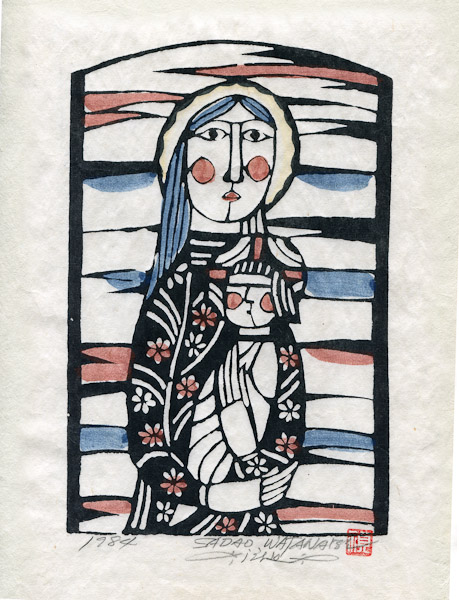
21_Madonna_and_Child.jpgFamilies could use this, I’d think, in creative family devotions.  Some
readers might find it helpful in their prayerful lectio divina practices;  resourceful church
educators will find it invaluable. 
If it included only these colorful, playful, moving, depictions of Bible
stories, it would be well worth the reasonable cost–we need good and creative
art to help us see things anew, and who among us doesn’t need some
right-brained help in hearing God as we see His Word?  But there is more here, much more.  There is plenty for devout art lovers, certainly, but I think especially for us who
don’t know much about the details of the international art world.  This book will expand your horizon and, as C.S. Lewis put it, “baptize your imagination.”


The four essays in Beauty
Given By Grace
are excellent, informative and inspiring. What joy to get an
inside glimpse into the life of a quiet Christian artist and those who collect
and promote his work.   Included
first is a fabulous introduction to the traveling CIVA Exhibition project told with insight and
enthusiasm by Sandra Bowden (who has one of the finest collections of
Biblically-informed art in North America. 
She has been a leader in CIVA, a trustee of the MOBiA, the Museum of
Biblical Art, and a generous supporter of many of the best recent initiatives for
faith-based creatives.) Bowden tells fascinating stories of Watanabe’s work,
compares him with the French Catholic painter George Rouault, and tells us
about Wantanabe’s only private student. She mentions his large Last Supper piece,
found in a church in Schenectady, and, later, takes us to the massive (and
only) stained glass installation done by Watanabe, a part of the sanctuary of
Westminster Presbyterian Church in Grand Rapids, Michigan. The 1987 stained
glass work, more than 12 feet long, is called The Covenant Window and was
fabricated by Willet Hauser Architectural Glass, Inc. of Philadelphia.


This opening chapter is so very
interesting and informative, one cannot be feel graced, knowing that there are
people like Ms Bowden who offers pieces from her own collection, and gets things like this done.  She initiates and networks, promotes and shares, teaches and tells
of the many good things that art and artists can do and that back-story itself should energize us.  I have read this chapter more than once and am moved, made
glad, and feel a bit better for knowing about her curating and promoting of this
humble Japanese Bible artist. 

Why? 


Maybe it is this: we hear about so much bad stuff done in the name of Christ — religious
work that is manipulative, Christian art that is bad, political efforts that are contentious, preachers that are creepy,  authors that are crude.  And in my own life I discern shallowness and boredom and
despair (it is easy to point the finger at religious knuckleheads, but my own heart and lifestyle, well….you know.)  So I rejoice in the decent hope
that this book represents, the legacy left to us by the likes of Sadao, the efforts of Ms
Bowden, the organizational witness of CIVA, the publishing projects of Square
Halo, all witnesses of beauty truly given by God’s great grace.  May it please Him that this book be
bought and used, shared and discussed, that we all might resist the worst of
our religion, and enhance the best of it. 
Yes, that is it: this book and all it stands for gives me hope!  I believe it is hope you may need, too. Am I
right?


Well, these four chapters are
good, even if they aren’t trying to be spectacular — they examine and point to the artist and his work, after all.  But they are good.


stories_right_Fujimura.jpgThere is a deeply
poignant piece by the contemporary Japanese-American artist (whose work is, in
fact, grounded in another traditional Japanese style of painting) Makoto
Fujimura.  How touching to hear
Mako tell of his own boyhood studies in Japan, his return there as a graduate
student to study art and begin his career,  his involvement in a campus para-church fellowship group, and
his own struggle to find his own artistic voice, wanting to honor his ethnic and cultural background and his own new-found evangelical faith.  His chapter is entitled “My Journey With an Artist I Never
Met” and is a tender, honest piece for artists or fans.  Or any of us, really: we all must walk
that road, don’t we, journeying alongside heroes and mentors—some whom we’ve never actually met—grounded in our
place and ethnicity, and yet wanting the gospel to seep through in beauty and
truth as we take up our vocations in the world. Fujimura’s chapter is an example
of the kind of thoughtful and faithful memoir that sounds a bit like testimony. 


The longest and most
substantial essay is written by John A. Kohan.  Kohan is perhaps the world’s leading scholar on Sadao
Watanabe and his chapter serves to tell us more about Watanabe’s background,
conversion, his interesting and circuitous route in finding tools and mediums that
allowed him to bring Biblical insight and narratives naturally to his countryman. 

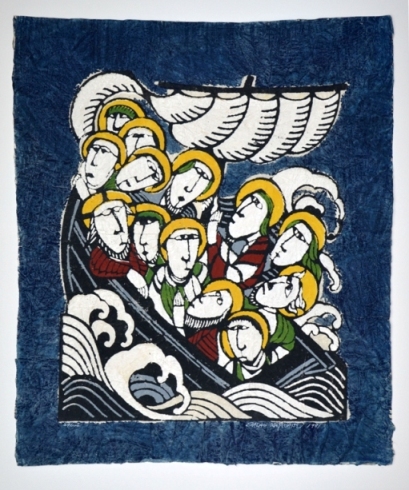
Watanabe, Boat in the Storm 1981 Blue 2.JPGInterestingly, and importantly, in a
story that speaks volumes, it is told that Watanabe went into a Christian
bookstore in Japan shortly after his conversion.  The book-covers, he noted, were often poorly designed, or
had exclusively Western art.  He
had a passion to find ways to show forth the gospel and capture the energy,
emotion, and sensibilities of Asian culture.  Without having the serious missiological vocabulary, the young Japanese artist understood incarnation and
contextualization.  (A 1980 print,
one of the few that are not Bible scenes, is called The Padres Are Coming and
shows the ambiguities of Western religious colonization.)


Kohan obviously cares for
Watanabe and explains his body of work well, by telling us about his
marriage, his studies, his artistic teacher and mentors, a bit about how he
created these stunning prints. The process, which you will enjoy learning about,
is related to katazome, the ancient ways Okinawan artisans created print blocks
for cloth, especially for kimonos. Watanabe was, in this sense, a folk artist,
developing skills in an age-old trade, developing his craft, and allowing fresh
winds of creative grace to blow through his innovations in the use of paint and
color on the kappazuri prints.  All
natural methods were used, of course, including using paper made from the fibrous bark of the paper mulberry tree grown by farmers in northern Japan.  Read this amazing description.  Persimmon tannin??


 His shibugami (stencil paper) consisted
of three-ply sheets of kozo paper, hardened with persimmon tannin, then dried
and cured in a smokehouse, which gave it a brown coloring. The small-format
prints were made on plain mulberry paper known simply as washi.  Watanabe preferred the textured look of
momigami (wrinkled paper) for his folio-sized stencil art.  Momigami is a type of paper once used
for lining clothes, coated on both sides in konyaku (devil’s tongue root), a
gelatinous ingredient in Japanese cooking, which gives the paper strength and
flexibility.  The treated sheets
are kneaded, crumpled, rolled, and stretched to create a creased, textured
surface.  Wantanabe hand-painted
his momigami sheets before applying the stencil patterns, using solid colors
with occasional variegated lines.


Sadao2.jpgKohan tells us a lot
about the artistic vision and meaning of Watanabe’s work, (and explains why
James Michener’s explanation of the meaning of a 1960 piece, Listening, is
surely wrong) but these details about the doing of the craft are equally fabulous to read.  I found his telling utterly
absorbing, creating a real appreciation for the dedication of artists who do
these kinds of things–curing paper in a smokehouse!—with such patience and integrity, slowly getting the
whole process right, working hard with hidden treasures buried within God’s creation.  One story
tells how Watanabe had to learn how the natural color pigments were (or were
not) absorbed by the handmade paper. 
We learn about the protein in the milky binder his wife Harue prepared
from soybean dripping and how it helped fix the color to the paper.  And the ingredients!


 Black was made from pure carbon and
white from crushed seashells.  Red
came from the pulverized bodies of the female cochineal, a cactus-feeding
insect, and blue came from the leaves of the indigo plant.  Wantanabe’s favorite color was king’s
yellow, made from the mineral orpiment, containing arsenic trisulfide.  This beautiful but poisonous pigment
has proved the least stable of Watanabe’s natural colors; older momigami prints
with yellow backgrounds often show signs of fading.


Perhaps most interesting
to some theologically-minded readers will be the chapter written by I. John
Hesselink, emeritus professor of Systematic Theology at Western Theological
Seminary in Holland, Michigan (where he served as President from 1973 to
1985.)  Hesselink studied under
Karl Barth in Basel, and discerned a call to teach Reformed theology in Japan.  He and his wife moved there as missionaries for the Reformed Church of America (RCA)
in 1953 where they studied the language, until they returned to Switzerland to complete his PhD studies.  They then moved back to Japan in
1961.  Providentially, while
getting a Japanese wood block print framed near his home in Tokyo, Hesselink overheard the non-English
speaking framer/gallery owner struggling to serve a US customer;
after offering his informal translation help, the frame shop/gallery owner
“hired” Hesselink to translate for showings and lectures at his shop, paying
him in art pieces.  So began Hesselink’s immersion in the
Japanese art world and, soon, a life-long friendship with the up-and-coming
young Christian artist whose Bible scenes were so very striking. 


(Included in the book, by
the way, is a rare piece that Watanabe was commissioned to do in his unique
style—a portrait of John Calvin! 
Hesselink was part of a commission doing translation work, painstakingly
translating Calvin’s writings into Japanese, and Watanabe’s portrait graced their
offices.)


Hesselink tells wonderful
stories about the workspace in Watanabe’s home, and his partnership with his
wife and children.  “It is
amazing,” he writes, “that he could be so effective and productive, given the
crowded conditions in which he and his wife worked. I don’t think they ever took
a vacation.  Except for Sunday
when they went to church, they spent all their time fulfilling their calling:
making prints that could serve as a witness to the gospel.”

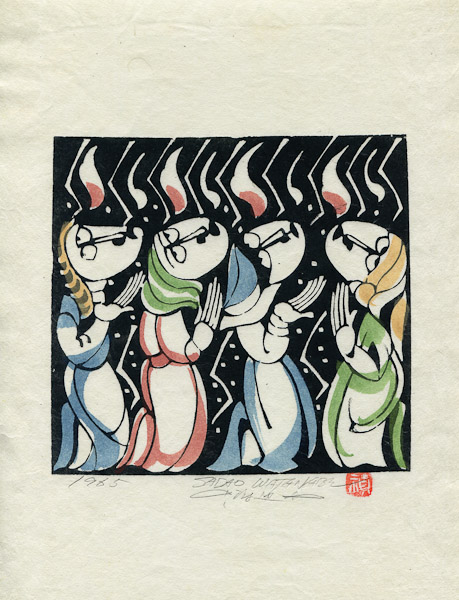
 45_Pentecost.jpg

As I
got to know Watanabe better, I would occasionally suggest biblical subjects to
him that he had not yet covered.  He
respected me as a theological professor, but I don’t think he ever followed my
suggestions in his artwork.  He
knew the Bible very well and was not about to let anyone tell him what biblical
scenes his art should portray. 
His quiet self-confidence in what he was doing, however, was not a sign
of arrogance – he was one of the most humble men I have ever known – but was
born of the conviction that he was an instrument of God and that whatever he
was able to accomplish was through the grace of God.


All four authors note
that although Mr. Watanabe’s work is esteemed — known world-wide, collected and
studied in the prestigious art world, Sadao and his wife (and, eventually, his
son, Tatsuo) were committed to these works being widely seen by common people; he was a
folk arts/craftsman and an evangelist or sorts, wanting Bible stories to be known in ways
that Japanese folk could appreciate. 
This lead him to make his work available as popular pieces, calendars,
even Christmas cards.   As the great artist himself put it, “I don’t want my works simply
decorating churches.  I would most
like to see them hanging where ordinary people gather, because Jesus brought
the gospel for the people.” 

The gospel for the people.  May
this book, lovingly produced by Ned Bustard of Square Halo, be used for this
very purpose.  The gospel for the
people, indeed. Thanks be to God.

beauty given by grace.jpg


SPECIAL

DISCOUNT

Beauty Given By Grace:
The Biblical Prints of Sadao Watanabe

(Square Halo Books)
regular price $29.99
sale price $26.99

order here
takes you to the secure Hearts & Minds order form page
just tell us what you want us to send

inquire here
if you have questions or need more information
just ask us what you want to know


Hearts & Minds 234 East Main Street  Dallastown, PA  17313

Wisdom Meets Passion by Dan Miller & Jared Angaza 20% off

It dawns on me that some who browse this BookNotes blog may not realize that we recently posted a huge bibliography over at the monthly column part of our website.  There was a Labor Day reflection, sharing (again) why we sell books about calling and vocation, work and careers, and why these resources are urgent and valuable, for church groups and for individuals.  The list is pretty ecumenical, something for everyone. 

They are mostly listed in four categories:

-books about the Biblical and theological vision of calling

-books about the theology and structures of work

-books that are more practical about daily issues at work

-books about discerning God’s call into a particular vocation or career

Here is some of what I wrote there as an intro to that big list.

Having a few of these suggested titles in your church library (on on
your own shelf if you mentor college students or professionals) is a
good witness; essential tools for your own toolkit.  Helping people
learn about these life changing books will bless them and bless you as
you encourage them.  Maybe you can step up to be a bit of an informal
mentor, inviting a couple of thoughtful folks to read about vocation and
calling, careers and work, and see how it goes. You’ll love doing that,
I bet.  And God’s Kingdom will be advanced.

If you are a pastor
or work with collegiates, dare I say that not having some of these kinds
of books around is nearly ministry malpractice?  Yes, I dare, because I
believe it.  Unless you are in children’s ministry or are a chaplain at
an retirement home, if you are a pastor and you haven’t read these
kinds of books and haven’t shared a few with anybody in your circles of
influence, I believe you are not doing your job.  There isn’t much shame
in that, mind you; most clergy aren’t taught this in their seminary
training.  But you are invited here and now to remedy this.  Get on this
train, as it’s on the move.  Not a few analysts predict that this will
continue to be a vital aspect of ministry in the next decades.
 
Younger
Christians, especially, long to see their faith integrated into their
deepest passions, using their gifts in meaningful employment and to have
their local church help them with this.  It may be a deal-breaker or a
game-changer for some. In fact, the important research on why
20-somethings are leaving your church presented in You Lost Me
by David Kinnaman (Baker; $17.99) indicates that this is exactly one of
the reasons.  Additionally, consider the good chapter “Called, Not
Employed” in The Next Christians by Gabe Lyons (Multnomah;
$14.99) if you don’t believe me that this is a passion of some of the
folks who now feel excluded from your congregation.  Or come to Jubilee
2013 this February in Pittsburgh and see for yourself as 2000+ college
students show their enthusiasm for taking up their vocations and
callings corem deo, Soli Deo Gloria. Yep, they talk like that there.  At least if I have anything to do with it.  Ha!

So.
Pray for us as we try to sell these sorts of books, please.  We long to
have conversations about these very things. We have inventory here,
waiting to be utilized, dispatched to places where, we believe, there
are leaders who need an easy way to start some conversations and cast
some vision.  We know that you resonate with this aspect of our
bookstore work, and trust you see yourself as part of this story.

SEE THE ANNOTATED BIBLIOGRAPHY ON VOCATION, CALLING & WORK, HERE.

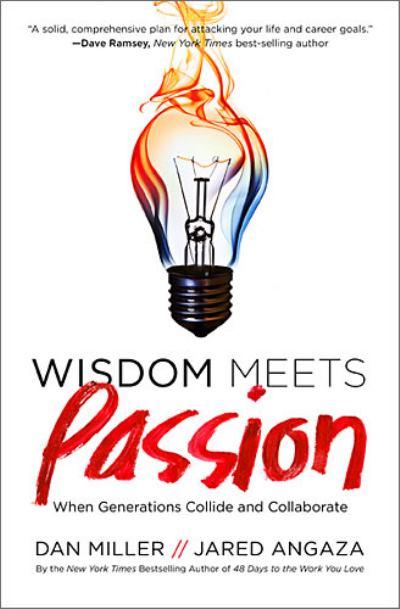
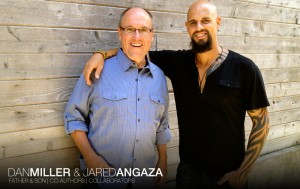
By the way, just to show you that new stuff keeps coming out on this, we just yesterday got in a newwisdom-meets-passion-when-generations-collide-and-collaborate.jpg book that carries a bunch of vibrant endorsements and looks useful and fun.  Dave Ramsey says of Wisdom Meets Passion “A solid, comprehensive plan for attacking your life and career goals.”  It looks great.

Wisdom Meets Passion: When Generations Collide and Collaborate by Dan Miller & Jared Angaza (Nelson; $16.99) is refreshing, upbeat, and offers a good approach to discerning a call, seeking new life and career objectives.  I wish it had been on my desk when I was compiling the September Labor Day column–I would have listed it.

Dan Miller is known to some for his 48 Days project, helping folks increase their job satisfaction and find greater success and his down-to-business books like 48 Days to the Work You Love and No More Dreaded Mondays. We’ve stocked them for years. 

Jared is his edgy young son, a branding consultant, philanthropist, and blogger. He founded KEZA, an ethical fashion company and works on contemporary issues (in Africa, on gender equality…)  They’ve brought their different generational styles and social visions together here in a perfect combo.  Bob Goff has a blurb on the back and notes that after reading it and taking in its help in releasing our own unique wisdom a passion, “you might be surprised by what you end up doing.”  If Goff might be surprised, well, hold on…

WMP-Dan-Jared-300x189.jpgI don’t think you, or the people you influence, want to live in mediocrity.  Even in this tricky economy, God may be inspiring some of us to new entrepreneurial projects or ways to find more meaningful work. There are ways to draw on solid thinking and great vision, living inspired by both our wisdom and passion. 

As creative novelist and motivational speaker Andy Andrews puts it, Wisdom Meets Passion “is the book you’ve been waiting for!  Dan and Jared have created a treasure map just for you.  Read and be amazed as they peel back the mystery of tapping into the wisdom and passion that you and I have overlooked for so long.” 

Is this just motivational hoopla?  Just a whole lotta pizzazz?  Yeah, I worry about that, too.  But as I skim the cool design and layout, I want to give it a try.  And when I look at the pull quotes and the footnotes, I realize they’ve done good work creating an upbeat guide that isn’t about formulas, but not just “follow your bliss” either. They help us set life goals and discern a call in ways that integrates thoughtfulness and emotional intelligence, that brings together principles and passion, conventional motivational styles and more postmodern, youthful energies.  They draw on solid sources like Os Guinness and Dan Allander, use interesting citations from everybody from Eleanor Roosevelt to Richard Rohr to Frederick Buechner, remind us of scenes from popular films (from the requisite Braveheart to Dumb and Dumber.)  They tell stories of Proust and they talk about Bono and give links to great TED talks.  My, my, this is going to be interesting.

Like the others on the big bibliography over at the September monthly column, we are offering this at the BookNotes 20% discount.  Order it at our website or give us a call.  Thanks!

BookNotes

SPECIAL
DISCOUNT
any book mentioned

2O% off
order here
takes you to the secure Hearts & Minds order form page
just tell us what you want

inquire here
if you have questions or need more information
just ask us what you want to know


Hearts & Minds 234 East Main Street  Dallastown, PA  17313

Books on Vocation & Calling, Books on Work and Jobs

As we were leading up to Labor Day weekend, I was thrilled to know that the High Calling blogLewis_Hine_Power_house_mechanic_working_on_steam_pump-350x490.jpg offered resources for use during this season since it is a natural time for church folk to teach, honor, and celebrate ordinary Christians and their calling into jobs.  We are sent into all manner of work places, and we can serve God and neighbor there.  Our bookstore is known for trying to affirm that.

You know we often recommend books about “thinking Christianly” about our callings and careers, and we often link to articles, sermons, essays and other resources that help us bridge the all-too-common gap between church life and work life, between Sunday and Monday, as we sometimes put it.  Besides The High Calling, we often tell folks about the Washington Institute on Faith, Vocation, and Culture, Redeemer Presbyterian’s Center for Faith and Work, the Cardus’ think-tank page on work and economics, Pittsburgh’s Serving Leaders, and other such good organizations.

I would be eager to hear if your church did anything special for Labor Day—we have tweeted and commented on facebook about the resource The High Calling was offering—and I know some of you were considering using their worship aids.  Of course, this sort of worship project doesn’t have to be done on Labor Day Sunday—in fact, that may be to easy, seeming perfunctory. Let us know what your church does to equip the saints for their work in the world, especially this idea of relating Biblical principles and practices to the job site.

stack o books.jpgWe have often reviewed books on vocation and calling, as well as books about work and career (not to mention offering for free at our website the extensive bibliographical tool “books by vocation” for Christian perspectives on everything from science to law, art, medicine, education, business, counseling, engineering,and more.) We have not lately gathered together a large bibliography on vocation and work all in one big list. It has taken some time, but what a joy to pull together this list for you.

The following list isn’t comprehensive—visit our shop and you’ll see even more on the shelves!  But it is an intentionally curated set of selections and the descriptions should be a bit entertaining to read.  As you know, we stock things from diverse publishers—from liberal Episcopalians to books from conservative Calvinist sources; there are books here by United Methodists and Roman Catholics, Pentecostals and non-Christians.  And we find that many of the best books are themselves drawing on rather wide circles, offering surprises and depth.  So it is quite a list with a handful of unique perspectives, all useful in their own way, we think.

We are happy to share it as our Labor Day gift to you.  Print it out, pass it on.
 
Having a few of these suggested titles in your church library (on on your own shelf if you mentor college students or professionals) is a good witness; essential tools for your own toolkit.  Helping people learn about these life changing books will bless them and bless you as you encourage them.  Maybe you can step up to be a bit of an informal mentor, inviting a couple of thoughtful folks to read about vocation and calling, careers and work, and see how it goes. You’ll love doing that, I bet.  And God’s Kingdom will be advanced.

If you are a pastor or work with collegiates, dare I say that not having some of these kinds of books around is nearly ministry malpractice?  Yes, I dare, because I believe it.  Unless you are in children’s ministry or are a chaplain at an retirement home, if you are a pastor and you haven’t read these kinds of books and haven’t shared a few with anybody in your circles of influence, I believe you are not doing your job.  There isn’t much shame in that, mind you; most clergy aren’t taught this in their seminary training.  But you are invited here and now to remedy this.  Get on this train, as it’s on the move.  Not a few analysts predict that this will continue to be a vital aspect of ministry in the next decades.
 
Younger Christians, especially, long to see their faith integrated into their deepest passions, using their gifts in meaningful employment and to have their local church help them with this.  It may be a deal-breaker or a game-changer for some. In fact, the important research on why 20-somethings are leaving your church presented in You Lost Me by David Kinnaman (Baker; $17.99) indicates that this is exactly one of the reasons.  Additionally, consider the good chapter “Called, Not Employed” in The Next Christians by Gabe Lyons (Multnomah; $14.99) if you don’t believe me that this is a passion of some of the folks who now feel excluded from your congregation.  Or come to Jubilee 2013 this February in Pittsburgh and see for yourself as 2000+ college students show their enthusiasm for taking up their vocations and callings corem deo, soli deo gloria. Yep, they talk like that there.  At least if I have anything to do with it.  Ha!

So. Pray for us as we try to sell these sorts of books, please.  We long to have conversations about these very things. We have inventory here, waiting to be utilized, dispatched to places where, we believe, there are leaders who need an easy way to start some conversations and cast some vision.  We know that you resonate with this aspect of our bookstore work, and trust you see yourself as part of this story.

Maybe you can think of ways to integrate this vision into your own circles at your church, fellowship, small group or Bible study class. Maybe you can find liturgies and prayers to help your own worship services relate well to your parishioners, the butchers, bakers, and candlestick makers who sit in your sanctuary.  (Not to mentioned the unemployed and under-employed.)  Let’s us know what your doing, and if we can help in any way.
 
***
I recall a great time I had speaking at a special chapel service at a Christian college a year or sothe call.jpg ago.  The Career Development office put together the service, and they included a responsive reading from the book The Call: Finding and Fulfilling the Central Purpose of Your Life bu Os Guinness (Nelson; $17.99.)  Did they know it is one of my all-time favorite books?  Did they expect that I would cite it?  It was such a fitting way into a liturgical celebration of God’s call into His kingdom, and the subsequent duties to serve the great King in every zone of life.  Of course we shouldn’t reduce our many callings to only our paid jobs, and, in fact, the director of the Career Development office explained to me that they (ironically) try not to use the word “career” for a variety of reasons, noting the baggage and ass
umptions such a phrase carries.  So, yes, we are called to a variety of places, various “offices” or tasks, with all sorts of God-given opportunities and obligations.  We are called and sent.  Dr. Guinness is still my favorite author on this and The Call is a book I revisit over and over.  If you don’t have it, please, please, consider it. The discussion guide in the back is very strong, too, making it an exceptional resource.   And, hey, you can make a responsive reading out of it for your next liturgy that worships around this theme.

BOOKS ON VOCATION & CALLING
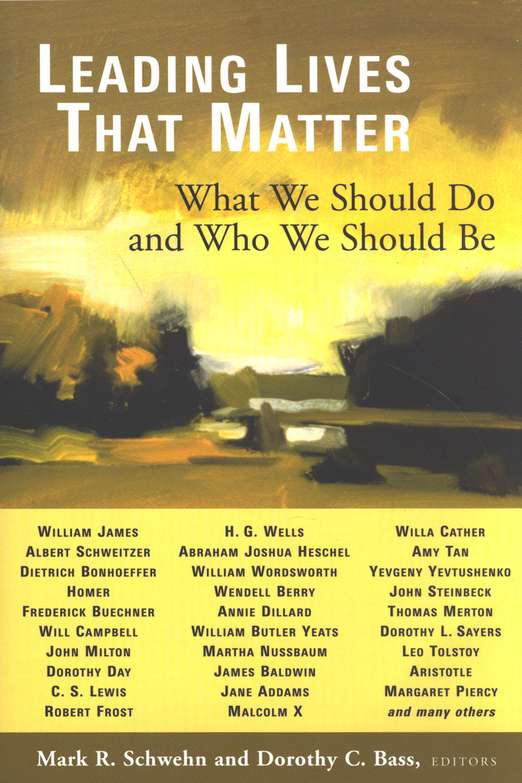
Bass-Leading-Lives-that-Matter.jpgLeading Lives That Matter: What We Should Do and Who We Should Be  edited by Mark Schwehn & Dorothy Bass (Eerdmans) $26.00  With their huge involvement in the Lily grants programs to encourage vocational thinking at Christian colleges and seminaries, it was natural that they compiled this great, great (and great big) resource about living lives with purpose and influence.  I’ve raved about this at BookNotes from time to time as it includes great literary figures (many not necessarily Christian) and is just such a rich and wonderful resource—at least for those who love great writers, etc.  Poets, mystics, reformers, philosophers, writers and leaders of all sorts are excerpted nicely, from Homer and Milton to Dietrich Bonhoeffer and Dorothy Day, Wendell Berry to Robert Frost.  Highly recommended.


Everyday Missions: How Ordinary People Can Change the World
  Leroy Barber (IVP) $15.00  Believe me, I could list a dozen good books on vision, purpose, making a difference, but this one is a favorite and is the sort of resource that helps us approach the topic of vocation.  Barber has excellent Bible studies here of people who have been called, relates these Scripture case studies to ordinary folks today, reminds us of the vision of cultural renewal as we deepen our discipleship, taking up the call to love and serve others in all that we do.  The centerpiece chapter, by the way, is exactly on vocation.  Barber is the president of Mission Year so the book naturally carries endorsements from Tony Campolo, Shane Claiborne and urban activist Bob Lupton.  Yes, there are burning bushes and ladders to heaven in the Bible, but when it comes to what we do with our lives, Barber helps us realize that that isn’t usually how it works. God calls us to respond to Christ’s love and the world’s needs, seeking the Kingdom in our sphere of influence.  Good, good stuff!

Calling: A Song for the Baptized Caroline A. Westerhoff (Seabury) $15.00  This more recent edition of a book published by Cowley in the 90s is considered a classic by some.  Westerhoff is a great, Southern storyteller and a mature Episcopalian priest and consultant.  These stories weave together a profound book, noting that we must listen to the narratives that shape who we are, attend to baptismal themes, and, in community, discern notions of calling.  This is less about vocation and work, but is still a moving and rich reflection, especially for those who are called to ministry. A few chapters are very, very rich.

The Preaching Life Barbara Brown Taylor (Cowley) $17.95  The first half of this is a beautifully rendered memoir of her conversion to faith, her sense of calling into ministry, and her eventual vocation as an Episcopal preacher.  There are a few extended passages from which I often read out-loud in workshops and talks—God speaking to her through creation, the role of sacraments, the significance of the ordinary (themes she unpacks wondrously years later in her beloved An Altar in This World.) Her well-told reminder on how everyone’s workplace can be a place for sacramental experience of God’s goodness and grace is worth the price of the book.  A few of these pages mean the world to me, and I had to list it.   

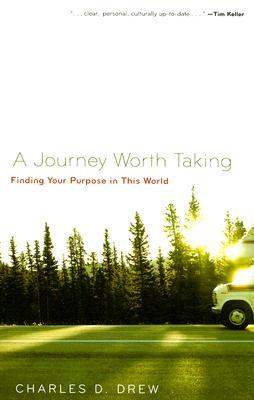
A Journey Worth Taking: Finding Your Purpose in This World  Charles D. Drew (P&R)journey w taking.jpg $12.99  Some have told me this was the best combination of the Biblical overview of creation-fall-redemption-restoration story of Scripture and the language of purpose (exploring, then, the themes of vocation and call) that they’ve ever read.  Rev. Drew is certainly a solid writer, well crafting mature sentences in wise and wonderful ways.  We suggest it often and heartily commend it for any readers.  Endorsements from the likes of Tim Keller remind us that it is highly regarded, well considered, helpful and theologically rich, without being arcane or abstract.  Excellent.
Don’t Waste Your Life
John Piper (Crossway) $13.99 This doesn’t fully develop the theme of vocation and calling, but it is a compelling sermon, inviting us to take up our duty to find joy in Christ alone, make a difference for His Kingdom, to glorify God in all our days, and to think about what God might demand of us as we risk all for Christ’s reign and glory. From young adults to retirees, Piper doesn’t let anyone off the hook. Life is short, don’t give up the call to exalt Christ!  Some may find it carries a bit too much belligerence and brimstone, but many have appreciated his Godly passion and tone of no compromise. 

Besides the general challenge to live for God, there is a very thoughtful chapter called “Glorifying God in the 9 to 5” that I think is nearly brilliant, listing four ways human work is different than the work of animals.  He explains what it means to do our daily jobs (a) intentionally to God’s glory, (b) for our neighbors good, (c) using the gifts and passions God has given to us uniquely, and (d) doing so in ways that are consistent with the way the creation is structured; that is, we think about the very way we do our jobs, making sure we do them in a normative way, fittingly.  (He doesn’t cite, but could, William Tyndale’s old admonition for tinkers to “look at their shoes” to learn what God wants them to do, or how Isaiah that tells how farmers learn from God by paying attention to the planting of seeds, the creation itself.  Sounds a bit like Dorothy Sayer’s famous essay “Why Work” doesn’t it?  

What’s Your Call: What Are You Doing Here? Gary Barkalow (Cook) $14.99   Kudos to the “new” David C. Cook for bringing out upbeat and relevant books, each loaded with faith and gusto and youthful verve. There are cool graphics and good pictures, here, even.  I like this book, a broad examination of all sorts of senses of calling.  It is pretty inspiring, energetic, inviting us to “discover God’s destiny and design” and live alerted to the “choreography of God.”  It talks about story, about the assaults against our sense of calling, and ponders if call is a “job or a role.”  The author works with men and women through The Noble Heart,  and this carries an enthusiastic endorsement from Len Sweet, who says that “Gary believes your calling makes you an artist.  Read this book to discover the beauty of your art.”  See what I mean?   Fun!

This is Our Calling  edited by Charles Richardson, foreword by Rowan Williams (SPCK) $18.00  We import books from England not only because we enjoy serving readers interested in global authors, but because, in this
case, the Church of England has done some remarkable work in some areas. SPCK is renowned as a thoughtful, liberal, mainline denominational press.  Here, they’ve convened a handful of authors to do reflection pieces, Biblical and theological, on various aspects of knowing one’s calling. The authors are women and men, but most are Ango-Catholic priests.  It is not just for those involved in ministry, and there are remarkably practical and evocative study questions, sidebars, conversation starters.   The study that produced this book was done jointly by Affirming Catholicism and the Society of Catholic Priests.
What is V.gifWhat Is Vocation? Steven J. Nichols (P&R; $3.99) This is a wonderful, small booklet,  similar to the companion booklet What is A Christian Worldview by Philip Ryken (P&R; $5.00) that we often promote.  It could be used in small groups, a quick adult ed class, or given to high school seniors.  Steve gets it just right; he’s a nearly local guy, by the way, a Lancaster friend, writer of popular level books on church history and several biographies of folks like Luther and Edwards.  This brief staple-bound booklet is as handsome as it is readable and could be life-changing.  Steve is evangelical and Reformed but I am confident that this little book could be used in any sort of congregation. Maybe you should order a dozen or so and pass ’em out—at least to youth who are thinking about going off to college, or young students needing to be encouraged to think about calling as they consider their majors, or for adults who may be longing to be affirmed in their line of work but aren’t up for reading a big study. (Oh, if only pastors did this more for their flocks, affirming the work-life of the laity! What a difference it could make!) The best small (and least expensive) resource of which we know.
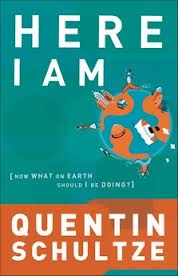
here I am Q.jpgHere I Am: Now What on Earth Should I Be Doing? Quentin Schultze (Baker) $14.00  What a great little book, wise and helpful, about being stewards of the various gifts God gives us, in the various spheres he calls us to!  Easy-to-read, this is one of the best, with reasonable theological foundations and lots of great illustrative stories and anecdotes  Quent is a great storyteller—he is the head of the communications department at Calvin College in Michigan (and has a remarkable book on virtues needed for our electronic age and another which is the definitive book on communication and mass media from a Christian perspective)  What a story this guy has, and how wonderfully he’s used his own scholarly vocation to help others with these basics.  Highly recommended.


God at Work: Your Christian Vocation in all of Life
 Gene Vieth Jr (Crossway) $14.99  I like this a lot–and he brings a bit of a Lutheran flavor.  You may know Vieth (he writes for World magazine) as a writer that teaches how Christ’s Lordship affects all of life.  I like his insistence that we are not called to just one thing, but have various callings and offices — “masks” as Luther called them.   Very clear, comprehensive.

Liberating Tradition: Women’s Identity and Vocation in Christian Perspective  Kristina LaCelle-Peterson (Baker) $24.00  You will notice that a number of these books–on calling and vocation, and on work and careers—are by women authors.  But few are precisely for and about the unique ways in which woman are called, and how the doctrines of vocation are experienced by contemporary women.  This book is like none other, important, serious-minded but very clear,  irenic, and helpful.  As CEO of World Hope International Jo Anne Lyon writes “If one wants to read a single book to understand gender issues, this is it!” LaCelle-Peterson has a PhD from Drew University and teaches at Houghton College in NY.  She is an elder in the Free Methodist Church.  

Vocation: Discerning Our Callings in Life  Douglas Schuurman  (Eerdmans) $22.00  We don’t sell this too often as some aren’t interested in its slightly arcane theologically struggles—but for geeks like me (and thee?) who love this stuff, it is wonderfully interesting.  He explores the differences between the Reformed framework of Lee Hardy who draws on creation order, grounding our human callings in creation, and an earlier work by Miroslov Volf (Work in the Spirit) who grounded his sense of vocation in the giftedness that comes from the Spirit. Young theological types wondering how to get at this whole topic? Check it out.

Callings: Twenty Centuries of Christian Wisdom on Vocation  edited by William Placher (Eerdmans) $30.00  I might say this is one for those really wanting to dig deep: this is a remarkable, thorough, big collection of what great Christian thinkers have written down through the centuries, so it should be known by seminarians, leaders, pastors.   It was edited by the late Bill Placher, a beloved professor and theologian from Wabash College. There is simply nothing like it in print, and we are in debt to Dr. Placher for showing, era by era, what the church has said about vocation.  This is a good and important reader, but I wish there was a bit more comment or a critical apparatus with it to allow undiscerning readers to evaluate the insights of the various church history authors. Not everything said in every era was wise or helpful.  Still, this is an amazing anthology, and, at nearly 470 pages, a great bargain.

The Way of Life Gary Badcock (Eerdmans) $16.00   This is a short study, calm and reasoned, about what we mean by calling and how God’s call is to us all, firstly to follow Christ–which necessarily moves us into a certain sort of way of life.  No, we aren’t called just to a job, and, now, not everyone in the church agrees with the best way to get all this said.  The author is a fine Barthian scholar, and this is a provocative, rich read.

Forgetting Ourselves on Purpose: Vocation and the Ethics of Ambition  Brian J. Mahan (Jossey Bass) $15.95  Wow, what an evocative, beautifully-written, mature book.  It isn’t overtly evangelical, but it is wise and good.  Do you know it?  The author is a college teacher and he tells moving stories about students and their sense of vocation, their desire to make a difference and have integrity, but also this pressure to be successful.  I love the title, which captures the wise and eloquent style of the author and his vision.

A Sacred Voice is Calling: Personal Vocation and Social Conscience John Neafseysacred voice is calling.jpg (Orbis) $22.00  All right, forgive me for pushing your envelope a bit here.  This is liberation theology (at best) and is a bit odd theologically (we’re one with the universe, you know.)  Still, there is something really right about this, about how our callings and vocations are discerned somewhat in light of the great needs of the world.  How can we be transformed to care deeply about the injustices of our day, and how can we “hear” God’s call to work in ways and places that are touched by the griefs of this broken world? You may not appreciate all of the author’s theological baggage (or maybe you will) but, regardless, the heart of this book and its h
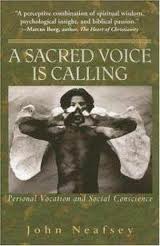
elpful invitation is vital.  A moving Marcus Borg quote on the front.

A CHRISTIAN VIEW OF WORK

For All God’s Worth: True Worship and the Calling of the Church N.T. Wright (Eerdmans) $13.00 We recommend this often because of how it brings together two big themes—worship of God in liturgy and worship of God in work.  That is, serving in worship in the sanctuary and serving in the world.  The first half is about what one might consider traditional worship, and the second half is about worshiping in the world, daily living out the claims we make in our liturgy. So this is basic, inspiring, an ideal starting book.
what do I do with.jpgWhat Do I Do With My Life: Serving God Through Work  Kenneth Baker (Faith Alive) $9.99  This is a small group resource that is excellent for small Bible study groups or adult Sunday school classes.  There is a bit to read —five short readings for each day of the week (so each member will need one) but it is mostly designed for good conversations. It has helpful discussion questions, some activities, lots of Bible verses to consider exploring what the Scriptures say about the 9 to 5 and our other callings to work in various aspects of our lives.  This is a very fine and solid overview of missional thinking and how our various labors matters to God—I don’t know of any resource like this for small groups.  Thanks to the CRC publishing arm for doing such quality work. in this case for small groups.
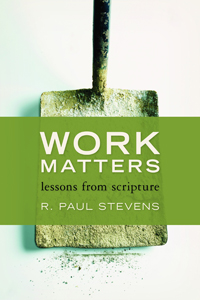
work matters stevens.jpgWork Matters: Lessons from Scripture R. Paul Stevens (Eerdmans) $16.00  Paul Stevens, long-standing professor at Regent College in B.C., has been one of the best voices and most steadfast allies in the effort to educate about the meaning and dignity of labor. He has encouraged this conversation for decades, and we’ve included several other books of his on this list.

Stevens’ newest book is gleaned from hundreds of workshops, lectures, sermons, and classes where he has offered Biblical case studies of those who viewed their jobs as related to the unfolding work of God. In another person’s hands, studies about “jobs in the Bible” would seem superficial at best (and betray an unhelpful view of the Bible itself). By contrast, Stevens avoids forced or cheesy interpretations, but has the eyes to see remarkable insights in stories as familiar as Joseph in Pharaoh’s empire and Daniel exiled in Babylon, and as freshly interesting as Bezalel and Ezekiel and the “enigmatic” professor in the wisdom literature. He visits Ruth to teach about “survival work,” David to ponder “royal work,” and Martha to esteem “contemplative work.” I can hardly think of a better small group study or adult Christian education resource that combines insightful Scripture reflections and helpful application as we think about our work as integral to God’s mission in the modern world. Discussion questions are included. Highly recommended.

Work Matters: Connecting Sunday Worship to Monday Work Tom Nelson (Crossway)work matters.jpg $15.99  A few friends of mine have had some opportunity to teach and consult with the folks at Tom Nelson’s church and it seems to be nearly one of the nation’s best centers of culturally-engaged, thoughtful nurture of the gifts and insights of laypeople and professionals for marketplace service.  After years of reflecting on the Word as it is broken open in their midst and equally paying attention to the contexts of the various workers at the church, this brave pastor has learned to equip the people for relating faith and work, Sunday and Monday, prayer and public life.  Reverend Nelson and his staff and congregants are really doing it, and their vision for why it all matters is nicely spelled out in a way you’ll surely appreciate.  There are numerous two-page sidebars, too, documenting the stories of some of the folks in the church—a brilliant, Christ-honoring architect, an ethical businessperson, a good teacher, a Christian lawyer, and the like.

This is the best book I’ve seen in years on this topic. If this topic is somewhat new to you, please consider buying this (and, even better, buy one for your pastor.)  If you are a fan and connoisseur of this topic and have read well in the field of relating faith and work, I can assure you that you will be pleased to own this, will be encouraged by it, and will find new insights and stories that will bolster your own journey and allow you to more clearly explain to others your passion for developing a Christian perspective on the work-world.  Three cheers for a great, accessible, inspiring book!  Here is a brief review I did of it  in Comment magazine.

Your Work Matters to God Doug Sherman & William Hendricks (NavPress) $15.00.  I have recommended this over and over for many years, and while it is a bit longer than it needs to be (there are a few extra chapters for younger folks about finding a job, finding a church, managing your money) it is very, very clear, and remarkably thorough. It is very strong in noting that work is not primarily for evangelism, that the work itself matters to God.  It nicely contrasts a pagan, Greek worldview that disdained bodily work and the robust, gritty Hebrew views.  It asks some questions about being agents of structural change, work-world reform.  It is rare to see such vibrant, evangelical authors writing with such a broad view and such clear-headed counsel.

Mastering Monday: A Guide to Integrating Faith and Work John Beckett (IVP) $18.00  The story behind this book is fantastic; apparently a national news show (20/20 perhaps) did a feature on business ethics, and Mr. Beckett was featured, sharing about his faith-based work in the heating oil industry.  No fancy corporate exec, not a college professor, this is a rough and ready small business owner from Ohio.  The viewer feedback was overwhelming, convincing the producers to come back and do a show just on him.  The book came out of that experience, with Beckett—who ends ups being an excellent teacher and good writer—offering solid Biblical and practical introductory advice.  Very nice.

Work & Leisure in The Life of a Christian (Burlington Reformed Study Centre) $7.95 This slim little volume includes fabulous but brief essays by the extraordinary Gideon Strauss (at the time,of the Christian Labour Association of Canada and the brilliant and innovative Work Research Foundation) and his good colleague, the amazingly thoughtful Ray Penning. Then these guys are treated to a robust feedback/response panel—these are talks from some conference or retreat and bear that tone. The transcribed dialogue portions, too, are very interesting—don’t skip them! These conversations are useful as they offer wise, foundational thinking about the meaning of work, the curse, the implications of a redemptively Christian worldview, and not just for work, but also for rest and leisure.

I would suggest that no one in North America has done as solid and sustained thinking on these things over recent decades as the CLAC and it is a delight to announce this rare little book. Packed with work-world insight from the revival of Dutch neo-Calvinism that has always affirmed the layperson’s calling into the sphere of labor.

Good W
ork: Christian Ethics in the Workplace
  Esther D. Reed (Baylor University Press) $24.95  This is a meaty little book, “needed and most welcome” according to Gilbert Meilaender.  It is engaging, interesting, and solid, but it moves in important fresh directions, touching down on matters of vocation and liturgy, social justice, human rights, the integrity of creation and our role as stewards.  Reed is a theological prof in the UK at the University of Exeter, has been a part of the Center for Theological Inquiry at Princeton, is published by a serious Baptist house, and, interestingly, as David Gushee writes in his good review, “includes a striking focus on Eastern Orthodoxy’s traditions and insights.”  A very helpful contribution.

How Then Shall We Work? Rediscovering the Biblical Doctrine of Work Hugh Whelchel (Westbow) $13.95  Just when you thought there wasn’t much more to be said about the general overview of a Biblical view, Whelchel adds some new ideas, really good Scriptural material, lots of clarity and solid passion about the role of jobs in God’s redemptive work as His history unfolds from a garden to a city.  A great endorsement by Steve Brown of Key Life Ministries raves about it.  The author is a former businessman, now a leader of a conservative think-tank in Washington DC.

Christians at Work: Not Business as Usual  Jan Wood (Herald Press) $10.99  As we scan our bookshelves here at the shop, and this big list, I realize that some may seem a bit redundant.  Not this one!  The author is a fine writer, clear and interesting.  She is a Friend (Quaker) and her vision is informed by this deeply spiritual and socially prophetic tradition.  That the Mennonites published this makes obvious sense, and we are grateful for Wood’s overtly Christ-centered approach, her deeply Biblical orientation, and her practical, down-to-earth concerns. Can, as Wally Kroeker, editor of The Marketplace journal, asks, “the love of God transform the life in the office, board room, factory floor?”  She she’s our daily work as sacred and she knows that we must be salt and leaven. Very nicely done.
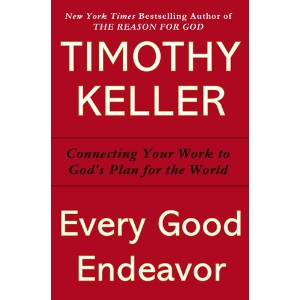
every good endeavor (keller).jpgEvery Good Endeavor: Connecting Your Work to God’s Plan for the World  Timothy Keller (Dutton) $26.95 NOT YET RELEASED, DUE NOVEMBER 2012.  I hope you know about the Redeemer Presbyterian Center for Faith and Work, one of the premier ministries offering encouragement to professionals in several spheres of service. This book emerges from Kellers good concern for the laypeople in his Manhattan church and his strong realizations that we are all called to serve in various institutions across all of culture as agents of God’s Kingdom.   You can pre-order it now by just typing it into our order form page.  We will have it on sale for at least 20% off. I am confident it will be excellent.
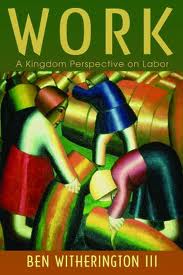
work a kingdom p.jpgWork: A Kingdom Perspective on Labor Ben Witherington (Eerdmans) $18.00  This is pretty short but don’t be deceived by its simple size and shape.  Ben Witherington is one of the finest New Testament scholars on the planet (he teaches at the United Methodist seminary, Asbury) and has a profound awareness of the teachings about the Kingdom of God deep in his bones.  As he writes about work one can sense his great vision, his good concerns, his practical, Biblical insight, especially as he unpacks some of the parables of Jesus to help us get a Kingdom vision of our jobs and labor.  This helpfully breaks down the pagan sacred-secular divide and calls us all to a robust way of life where discipleship colors all we do, even our daily 9-to-5 labor.  Very, very good and its Biblical teaching makes it ideal for adult Sunday school classes or to inspire a sermon series on work. 

The Heavenly Good of Earthly Work  Darrell Cosden (Hendrickson) $18.00  First published in England by Paternoster, this stellar study explores whether a person’s day to day work has any ultimate, lasting value from the perspective of Eternity.  This really does ask the basic questions, and has garnered excellent recommendations from important folks, such as J. Richard Middleton (who is working on a book about the relationship between this age and the next) and  David Smith, who teaches missiology, who says it is “cutting-edge theology of the highest order.”
kingdom calling.gifKingdom Calling: Vocational Stewardship for the Common Good by Amy Sherman (IVP) $16.00 We have celebrated this excellent book on several occasions, thinking it to be one of the very best books in years on this topic.   Truly, this is masterful and adds excellent new insight, new layers of meaning, and teaches in great and helpful detail about four ways of relating faith and work. See our comments here and here.  Kingdom Calling is a serious, thorough, study of how our jobs can become avenues of social change honoring God and loving neighbor as we steward our vocations for the sake of the common good.  Not for beginners, but if you’ve read a book or two on calling and on work, this is simply a must-have, must-read.
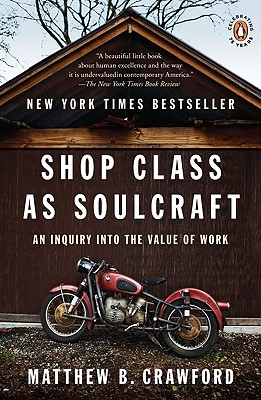
shopclass.jpgShop Class as Soulcraft: An Inquiry into the Value of Work  Matthew Crawford (Penguin) $15.00  I hope you recall how we touted this when it first came out, and the buzz it gathered (including a “notable book” of the year award from the New York Time Book Review.)  This is beautiful, thoughtful, rousing—Crawford was a white-collar scholar at a think-tank who hated his job, and felt the disconnect between what he was doing and who he was becoming untenable.  He quit, opened a motorcycle repair shop, and offers here this extended meditation on shop classes, liberal arts, unhelpful education, working with one’s hands, and finding fulfillment in blue collar jobs. How many philosopher/mechanic’s do you know?  This is entertaining and profound, hoping to restore greater honor to the manual trades.


The Pleasures and Sorrows of Work
  Alain de Botton (Vintage) $15.95  De Botton is beloved by those who like his high-brow reporting, journalism-meets-philosophy-meets cultural criticism.  His book about place, The Architecture of Happiness, is an all time great.  You may know his book on Proust. These essays are similar, inviting us to deeply ponder the “delight and despair” in our daily working lives.

Working: Its Meaning and Its Limits  Gilbert Meilaender (University of Notre Dame Press) $18.00  This is another really, really great anthology with excerpts of great literature, poetry, Bible passages, parts of novels and essays. each offering engaging insights about the nature of work..  Very thoughtful stuff.  Meilaender has written much on ethics and other themes, and has his own extended mediation and collection of essays, some of which are on vocation and calling, in The Freedom of a Christian: The Grace, Vocation, and Meaning of Our Humanity (Brazos.)

The Other Six Days: Vocation
, Work and Ministry
R. Paul Stevens (Eerdmans) $27.00  Anyone who has followed this conversation about work-world ministry, about nurturing a Christian view of labor, of finding a sense of calling in one’s daily grind, knows the name of Stevens.  He teaches Marketplace Theology at Regent College in Vancouver and knows more than just about anybody on the spirituality of the ordinary and the mission of the laity in the world.  Here he offers a serious anthology of some of his best essays, solid teaching, good thinking, profound and important writing.  Excellent.

Working  Darby Kathleen Ray (Fortress) $15.00  This is in a series of books called Compass: Christian Exploration of Daily Living which is a very interesting set of short but meaty books, all with fairly creative theological reflection, offering mainline Christians ways to think about the experience of faithfulness in daily life.  From clothing to shopping, eating to playing, this is a very interesting series.  Glad they did one on working.  Ms Ray brings her liberationist voice and offers, in concise and provocative ways, excellent contributions to ponder.

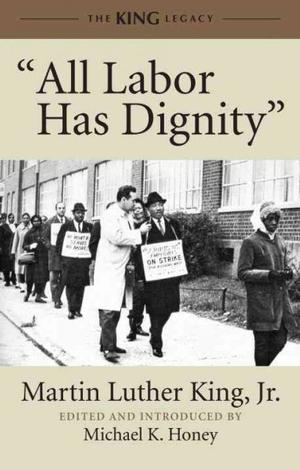
All Labor Has Dignity Martin Luther King, Jr, edited by Michael K. Honey (Beacon Press)all labor has.jpg $26.95  It is worth recalling that King lost his life while organizing garbage collectors.  He often spoke of the dignity of all work, the need to serve God with the work of one’s hand, to strive for excellence and integrity in any job.  And, of course, he spoke out against injustices in our economic system, advocated for worker’s rights.  This is an amazing collection of his writings and speeches–most never published before!—on this topic.

Blue Collar Jesus: How Christianity Supports Worker’s Rights Darren Cushman Wood (Seven Locks Press) $14.95 You’re not going to find this just anywhere, either, and it is an important and moving call for workplace justice and concern for the underpaid and underemployed. The author is an esteemed United Methodist pastor and theologian and professor of labor studies.

Business as a Calling: Work and the Examined Life Michael Novak (Free Press) $25.95 For the thoughtful executive, or deeper reader of business literature, this may be the best of its kind. It is eloquent, serious, profound.  Magnificently thoughtful by an astute, conservative Catholic.

MOVING A BIT MORE PRACTICALLY

God at Work: The History and the Promise of the Faith at Work Movement  David W. Miller (Oxford University Press) $29.99  This is the definitive study of the faith-at-work-movement, a fascinating and fabulous overview of who is doing what, and why, how many Christians have been organizing around this topic and working to get it more known.  Excellent survey of various models, how different groups define terms, and the key theological themes guiding those who have been pioneers in the field.  Very useful, although much has happened in the last few years since it was released.

How the Church Fails Businesspeople (And What Can Be Done About It) John C. Knapp (Eerdmans) $15.00. I mention this as practical mostly because it could be very practical for pastors or church leaders.  This is a very important recent book, and I think may be more important in the long run than a dozen of the big name popular books calling us to high-energy, mega-church, big-time visions of making a difference. It is written by a person who has worked in the business world, and is also a theologian, helping the church bridge the divide, so to speak, between worship and work, between church and world. It isn’t bitter or strident, but it does show how serious corporate types often say they don’t get much help for their important work for the teaching at their church.   Here is a nice youtube clip of the author explaining about the book and the authors findings of how the ethos of many congregations seems indifferent to the public lives of most members. 

The 9 to 5 Window: How Faith Can Transform the Workplace Os Hillman (Regal) $19.99 This book may not be as sharp or as sophisticated as some, but it is energetic and passionate for what God can do as people serve Christ at the job site. The cover art is nearly worth the price of the book—what a treat to see a stethoscope, wooden spoon, fountain pen, adjustable wrench and paintbrush all lined up, clean as a whistle. This book has a strong and specifically charismatic bent, with some stuff on spiritual warfare, miracles and Godly impact on entire cities through spiritual transformation of institutions of commerce.

Joy at Work: A Revolutionary Approach to Fun on the Job Dennis Bakke (PVG) $24.95 It isn’t every book that bears an endorsing blurb by Jack Kemp, Peter Block, and Bill Clinton.  Bakke presented some of this unique material at the Pittsburgh Jubilee conference a few years back and folks loved it; he is renowned as an innovative Christian leader in international energy work and hugely important in philanthropy. His brother, Ray, you may know for his considerable work and writing in urban ministry. This is an innovative and exciting book which, while profoundly meaningful, doesn’t come across like a Biblically-oriented “Christian” book. Use it in your workplace!  Have fun. We have the big study guide, too.
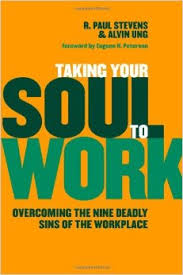
taking your soul to work.jpgTaking Your Soul to Work: Overcoming the Nine Deadly Sins of the Workplace  R. Paul Stevens & Alvin Ung with a foreword by Eugene Peterson (Eerdmans) $14.99  If there was a “lifetime achievement award” in the field of Christian marketplace ministry, daily discipleship for ordinary folks, for “seven days a week faith” (as one of his many books puts it) Paul Stevens would be just such an honoree.  He has given his life to thinking hard and writing well about the interface of faith and the work-world, and, especially, Christians in the business environment.  He is professor emeritus of marketplace theology and spirituality at Regent College in Vancouver, perhaps the finest place to study this topic. (You can see a bit about his books here.)  As we’ve suggested above, anything he writes is commendable, serious, important.  

This is a recent one, and his writing partner, Alvin Ung, is himself a breakthrough leader who has lived in the high- powered business world of Southern Asia (he is a Fellow at Ghazanah Nasional, the national investment agency of Malaysia.)

As  you can see from the sub-title, these conversational chapters—each rounded out with an action plan or case study—explore in simple, but important ways, the ways to avoid the “soul-sapping struggles of the work world.  They look at the “nine deadly sins” of the workplace, the nine-fold fruit of the Spirit that can meet our workplace needs, and nine positive outcomes of integrating spirituality and work.  Friends, this is good news, indeed.  Serious, uplifting, honest, and very, very insightful.  Few books in this field are as deeply spiritual, theologically informed, and yet nicely practical.

In, But Not Of: A Guide to Christian Ambition and the Desire to Influence the World  Hugh Hewitt (Nelson) $15.99  I like this handsome new paperback edition of a classic that has helped many young people, especially, navigate the concerns about ambition, where to
seek employment, how to make a difference.  A good study guide in the back for ambitious young professionals, especially.

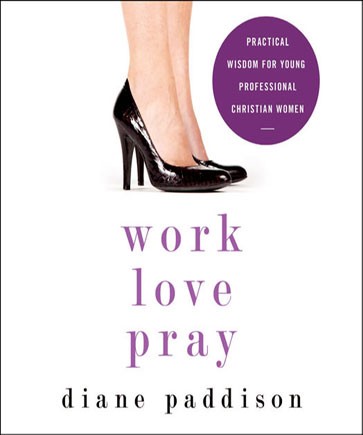
Work, Love, Pray: Practical Wisdom for Young Professional Christian Women  Dianework_love_pray_zondervan_zv_large.jpg Paddison (Zondervan) $14.99   People who we trust say that this is truly helpful; several sharp young women who care about their own unique struggles studied it over and concluded it was worth purchasing.  Everybody wonders if the shoes on the cover work.  The allusion to Eat Pray Love in the title, isn’t developed at all in the book; it would have been a hoot if she had.  The author is a top-shelf executive, does important work in the corporate world and brings both Biblical vision and practical advise for women in the work-world.  It is pretty interesting to see how she was able to raise her children and hold down a demanding job, and how she maintained a solid and inspiring faith through it all.  It may be a cliche to say she understands how to juggle career and family and how she and her husband navigated their otherwise conservative, two-career marriage.  Early reviews have been passionately favorable—“buy this book for your granddaughters” one grandma writes.  Another said it was the first book she ever read that understood the tensions of her own life.  And ya know what?  Not surprisingly, several folks at a recent conference said that it would be very helpful for husbands of career women, too.
Workplace Grace: Becoming a Spiritual Influence at Work  Bill Peel & Walt Larimore (Zondervan) $16.99  I think it should be clear that God cares about work, that we must attend to imagining what we do through God’s eyes, as ways to serve our neighbors, as a legitimate calling in and of itself.  However, surely we would like to, when appropriate, share the good news of God’s grace with others as we can.  We needn’t be as weird and stubborn as the dedicated young man in the must-see The Big Kahuna (Danny DiVito, Kevin ) but we should, at some point, consider ways to appropriately and effectively do gentle evangelism with our colleagues at work.  This book is a helpful step, written by an evangelistic trainer and a medical doctor, who brings some real-world insights from his own job site.  There is a well-made, six-session DVD curriculum too that might be useful for you or your group (Zondervan; $19.99)  The book was previously titled Going Public With Your Faith.  
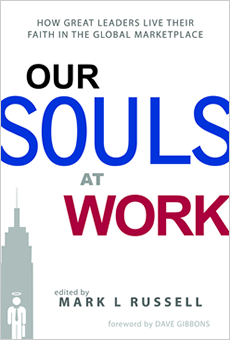
our souls at work.pngOur Souls at Work: How Great Leaders Live Their Faith in the Global Marketplace  edited by Mark Russell  (Russell Media) $19.95  This is a vibrant, colorful, book, handsomely designed with some contemporary, graphic pizazz and exciting testimonials and clear-headed insight to match.  One of the best new books in this whole “marketplace ministry” field, it is essentially a gathering of short pieces by a variety of business leaders, arranged by topic, most quite practical.  So you’ll hear a handful of businessmen or women talking about balance, or integrity, or leadership, or character.  There is a section on calling, a section on handling money, a section of stories on relationships.  There is one called “pluralism” which is very strong (and still a vexing matter to some, how to respect and honor the diversity of views in the modern workplace.)  There is a section on sharing one’s faith, and a section of important lessons about ethics.  The section on giving could inspire young philanthropists and remind us about giving back, as they say.

There are a few business leaders here you may have heard of, but most contributors, though, are not particularly famous in the religious book world.  This should be seen as an asset; these are folks who are the real deal, businesspeople who spend their days in the trenches of global capitalism.  It gives it a very practical, feel, showing that transformed Christian living in the business world is not only interesting, but do-able.  

Sequencing: Deciphering Your Company’s DNA  Mike Metzger (Game Changer Books)  $17.95  I’ve written about this interesting “game changer” book before and almost every week or so find myself re-tweeting Mike’s fascinating and learned Doggie Head Tilt web column.  This is a complicated book to explain, but I can say two simple things: it is cool and it is crafty.  Firstly, it is stunning to read and enjoy, with large graphics and interesting black and white photos offered in a arresting, eye-catching design.  Secondly, besides the look and pithy quotes, this is a book that will help you explain profoundly Biblical principles without any religious jargon.  Almost none.  Mike doesn’t want to compromise his evangelical faith but he also knows that long-term cultural renewal of the sort we so desperately need will have to bubble up from institutions and organizations—like businesses—who rethink their purpose and retool their internal DNA. 

This book helps explain what is often called the four-chapter gospel story (creation-fall-redemption-restoration),  or what N.T. Wright calls the five act model of the Biblical drama,  in ways that are creative and based in our shared experiences, using common language of the workplace, not theological lingo.  Jesus said to be harmless as doves but crafty as snakes.  Metzger is one of the best I’ve ever seen at this important virtue.  Consequently, this is a Christian business book that might actually be read by a non-Christian executive or nonprofit leader.  It can help you unlock the culture of your organization, and how to determine if your company will be able to be innovative, or renewing, over the long haul, interestingly, by using phrases he proposes that are rooted in the Biblical story. Mike also makes an appearance as one of the session leaders in the Q Ideas curriculum DVDs, the one called The Kingdom Way of Life.

Faith Dilemmas for Marketplace Christian
s  Ben Sprunger, Carol Suter, & Wally Kroeker (Herald Press) $7.99  A small book of case studies, inviting conversation, or for your own pondering. You are not alone in having vexing matters, day by day.  Helpful.  A good forward from the Director of the Mennonite Economic Development Association.

DISCERNING VOCATION AND CALL

Courage and Calling: Embracing Your God Given Potential (revised and expanded) Gordon T. Smith (IVP) $17.00  This is a tad dense at times, but nonetheless truly remarkable — it is really, really good and this author is a deep and generative thinker. (His other books bring an evangelical eye to medieval spirituality and invites mature thinking about contemplative spiritual formation.) Here he combines two important themes: a profound and helpful understanding of vocation/calling and mature guidance about discerning God’s will for one’s life.  I like his bit about decision-making and discernment, the way he on occasion indicates that he has vast insight into Ignatian spirituality (not bad for a CM&A pastor.)  Highly recommended for those wanting a solid foundational study which at least begins to point towards practical assistance in figuring out how to discern one’s calling.
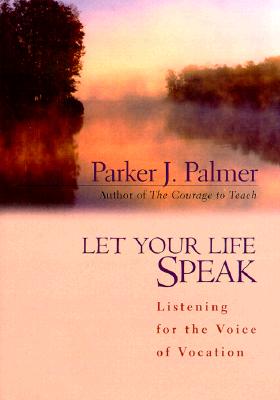
let-your-life-speak.jpgLet Your Life Speak: Listening for the Voice of Vocation Parker Palmer (Jossey Bass) $18.95 This is short and contemplative, written by a passionate, sweet Quaker with huge concerns about inner integrity and public justice.  He’s all about finding that place where you can best serve by being reflective and intentional about one’s own heart’s truths.  Yeah, he’s a bit touchy feely for some, but it is honestly written, elegant in a subdued manner, caring, and full of gentle passion.  Very impressive for such a short rumination.  A lot of people love this, making it one of the biggest sellers in this topic.  Is it wrong to say “to thy own self be true?”  Or, as Beuchner has, “listen to your life?”  Lovely.

The Echo Within: Finding Your True Calling Robert Benson (Waterbrook) $13.99 I just love this book, elegant and thoughtful, wherein this fine guy (who is now an Episcopalian spiritual writer) tells of his work in his father’s famous gospel music biz in Nashville. He just couldn’t live with himself following his dad’s and grandfather’s shadow into this great position, and had to follow “the echo within” to hear what God was telling him to do.  Which meant taking some risks, being honest about his desires, and finding ways to be a writer.)  He has some very good theological insights, but it is still a short memoiristic reflection on his journey to decide how to follow his own sense of calling into a vocation unlike what his family had expected. Especially good for anyone sensing a desire to be a writer or artist.  Very, very nice.

The Messy Quest for Meaning: Five Catholic Practices for Finding Your Vocation messy quest for.jpg  Stephen Martin (Sorin Books)  $14.95   The first section of this wonderfully written, recent book is nearly a memoir as Martin tells of his growing dis-ease at his journalistic job, his struggle to understand his ill-health and anxiety, his religious confusion, and his mental state–worrying about death, almost unable to finish even a simple task.
Interwoven within this narrative, though, is another story, and it becomes the heart of the book. Martin was raised in a serious Catholic family, and has an uncle who is a priest. A conversation about calling, vocation, purpose, “the distribution of talents,” and such soon put him on a quest: how do monks come to learn that they are called to their particular vocation? Might insight from that process–monastic insights about desires and vocations, the will of God and the grace to pursue our callings–help him in his own struggle to make sense of life and to find his purpose and place and career?

Well, indeed it did, and he lived to tell about it. The Messy Question is not a career-guidance handbook, but something more profound, more foundational. Early on, in high school and college, Martin dabbles with existentialism and other faddish philosophies, but through a particularly scholarly mentor at Duke University, he returns to his childhood faith; the book therefore draws overtly on Catholic teaching. Yet, non-Catholics (perhaps especially non-Catholics) might find that this moving story and the process he chronicles resonates with them. Drawing on hefty chunks of his own life, as well as inspirational anecdotes from his own acquaintances–from basketball star Danny Hurley to literary star Reynolds Price to movie star Martin Sheen–he highlights the stages of discerning and living into a clear sense of calling.

Merely listing those stages does not do justice to his storied and nuanced telling of them, but here they are, with the aim explored in each phase: Desires (Digging for What You Really Want), Focus (Channeling Your Passions), Humility (Embracing What You Don’t Know), Community (Getting Outside Yourself), and The Margins (Probing Your Potential), followed by the concluding chapter–“Holy Ambition: Sustaining What You Start.” In each chapter, he tells of his life and his discovering of various Catholic mystics and activists, and shows how seekers can integrate the wisdom of the saints into their own journeys of faith. Wonderful!

By the way, Steve grew up in Dallastown, and more than one public school teachers get a shout out.  He’s a good guy.  Catholic or Protestant (or neither) you should buy this book, not just to support a local boy, but because it is a tremendous read, interesting and helpful.
 
What Am I Supposed to Do With My Life: Asking the Right Questions  Douglas Brouwer (Eerdmans) $14.00  This Presbyterian pastor has guided many into these deeper questions, stuff about identity and values, achieving vocational integrity, determining vocation and/or career goals. Very nicely written, nuanced and wise.  More about meaning and purpose and calling than details about the job market, but it is nonetheless the sort of profound rumination that ends up offering very helpful guidance. Calm, thoughtful, and I think quite reliable.

Getting a Life: How to Find Your True Vocation  Renee M. LaReau (Orbis) $15.00  This young Catholic woman is a wonderful writer, clear and creative, interesting and challenging.  She offers important insights about steps and stages.  She is a facilitator for the renowned Notre Dame Vocation Initiative, a program that offers weekend retreats for young adults in exploring their vocation.  U.S. Catholic magazine raves, saying it is for seekers of any age, needing help in figuring out “life’s big questions about career, relationships, and self.” Nice.
the-fabric-of-this-world.jpgThe Fabric of This World: Inquiries into Calling, Career Choice, and the Design of Human Work  Lee Hardy (Eerdmans) $20.00  If the previous few are a strong because they are anecdotal, testifying to God’s own tender leading in the lives of their authors, useful for those wanting gentle guidance, this is strong because it is painstakingly clear about his solid, Reformed worldview and the distinctives of a Biblical view of work.  This, actually, was one of the early, really good books, written in the late 70s that we promoted then; a recent look through reminded me how good it is, how thoughtful, how nicely rooted in what some call a Kuyperian or reformational vision.  It does have a bit about the corporate world, so is especially good for those entering that milieu.  His insights on management (and his critique of classic management philosophies that are not congenial to Christian convictions about calling) are foundational and very important.  Dr. Hardy teaches philosophy at Calvin College in Grand Rapids.

SHAPE: Finding & Fulfilling Your Unique Purpose for Life  Erik Rees (Zondervan) $14.99  The foreword from Rick Warren gives a hint: this is the very interesting and useful resource developed at Saddleback, helping each person discover their spiritual gifts, heart, abilities, personality, and experiences.  Filled with Scripture, real-life stories, and a strong workbooky inventory for your own self assessment. Thrilling!

Made to Count: Discovering What to do with Your Life  Bob Reccord & Randy Singer (Nelson) $13.99  I love Randy Singer—lawyer, novelist, mentor— and with his upbeat pal they have here developed a very useful guide to evaluating your strengths, discerning your passions, and realizing that God wants you to make a difference in ways consiste
nt with how you are meant to be.  There is a great, free, online personality profile and spiritual gifts analysis included with every purchase of the book.  Interestingly, a strength of this book is in naming our greatest fears and working with that in pretty interesting ways.  Inspiring.

Live Your Calling: A Practical Guide to Finding and Fulfilling Your Mission in Life  Kevin & Kay Marie Brennfleck (Josssey-Bass) $16.95 There are many books like this.  Practical, workbook, offering step-by-step guidance for self reflection, goal-setting, living into one’s sense of call.  This one is truly one of the bests, with endorsements from all kinds of faith-based groups, colleges, churches, career centers.

The tools and principles in this book can help young adults get their bearings and conquer obstacles.
Rebecca Horst, director, CALL Project, Goshen College.  

This book offers help for the reader to form a Life Calling Map that can guide them into a greater sense of significance for their lives. I commend it for its practicality, strong theological rootedness, and its psychological soundness.
Dr. Archibald D. Hart, senior professor of psychology and dean  Graduate School of Psychology, Fuller Theological Seminary

This remarkable book will enable every follower of Christ to recognize and respond to God’s calling on his or her life. I commend it heartily and unreservedly.

Dr. Ted W. Engstrom, president emeritus, World Vision
Hearing-God1.jpgHearing God: Developing a Conversational Relationship with God  expanded and revised Dallas Willard (IVP)  $16.00  I suppose I should end on a note like the one above, directly about calling and career, vocational choices and practical tools for assessing one’s life.  But I’d like to end here, a basic, solid, mature, and thoughtful guide for any and all of us.  Do we all not want to learn how to hear God’s voice? Can we align ourselves with the promptings of the Spirit? Do these wise and practical spiritual disciplines form us in ways that allow us to take up our discipleship callings into all of life?  Of the many books exploring what we mean by “God’s will” and the practices of determining our life direction, this is simply the best..  A must-read, in my view.

When the expanded edition came out in 2012 InterVarsity Press also released a useful six week DVD video curriculum which we recommend.  It, too, is called Hearing God ($30.00.)  Maybe study of this spiritual practice might be helpful for your group to precede more detailed study of vocation and call.  Or perhaps it could follow a study of calling. Excellently produced.

BookNotes
SPECIAL
DISCOUNT
any book mentioned

2O% off
order here
takes you to the secure Hearts & Minds order form page
just tell us what you want

inquire here
if you have questions or need more information
just ask us what you want to know

Hearts & Minds 234 East Main Street  Dallastown, PA  17313

More Books About Church & Congregational Life: 20% OFF

Last week I did a
BookNotes post describing books for church leaders, new resources that help
pastors and others think about different aspects of the congregational
ministry.  There were some written
from the context of liturgical and mainline church life and others perhaps more
inspired by an evangelical spirit. Something for everybody, really. (And, by the way, a quick update:  We just got into the store Center Church by Timothy Keller, a bit earlier than announced.  Those who pre-ordered it will get their order soon. What a book!) 


And, as they say,
“there’s more where that came from.” 
So, here’s another list of new churchy books — part two.  Spread the word if you can: the local church matters and there is good
reason to believe that study and wide reading and professional development of
clergy and church leaders is essential for parish health.  Not the only thing that is necessary, but
essential.  Read for the health of your church!


a in c.jpgAdventures in Churchland:
Finding Jesus in the Mess of Organized Religion
   Dan Kimball (Zondervan) $16.99 A few years ago Kimball
made a name for himself for his book and DVD curriculum They Like Jesus But Not the Church. He had been in a rockabilly band (hence the, uh, unhip haircut)
and somehow grew passionate about Jesus. 
The church, not so much.  In
that book, and in another on creative, contemporary worship, Kimball gave us tons of
ideas about how outsiders view our churchy activities, customs, and often off-putting
rituals.  Well, he’s back, with a
cool book with graphics that look like rock concert poster silk-screen type. Same concerns, same punky hair.  His description of his journey, his
fingering the mess that is the church, and his invitation to what he calls Graceland is
compelling and important.  And cool. How many
books carry blurbs from rock starts like Zack Lind of Jimmy Eats World, or
rockabilly legend Wanda Jackson (who has toured with Elvis, Jerry Lee Lewis,
and, more recently Adele?)  There is message here, I think—there are culturally important folks out there who frankly don’t “get” church.  There are lots of their fans and followers, ordinary kids who are comfortable in all kinds of clubs and shows and venues, but the whole church thing just doesn’t make any sense to them.  It just doesn’t. Especially when they notice us squabbling.


Importantly, this book admits and jokes about and suggests solutions to the
divide between the richness of the Biblical account of the life of Jesus and
the tacky and exclusive nature of most churches, independent or
denominational.  Most churches want to be welcoming, I’m sure, and most want to help people love God.  Kimball’s a great
storyteller and he really shines when he lovingly mocks his own conservative evangelical sub-cultural
world (like how he had to be in a cheesy musical)—sophisticated mainline folks will cringe at some of this—even as he invites us all to
realize the huge dissatisfaction with organized religion that is commonplace.  And he helps us do something honest and effective about it. 
Check out his www.dankimball.com
for study helps for Adventures in Churchland including discussion questions, teaching resources, and more.  Fun, funny, and kinda weird.  Not bad for a guy who reads comic books and loves vintage
Ford Mustangs. Not bad for any of us who want a quick glimpse of how many unchurched young adults think about us.


ancient f, fm.jpgAncient Faith, Future
Mission: Fresh Expressions in the Sacramental Tradition
  edited by Steven Croft, Ian Mobsby
& Stephanie Spellers (Seabury Books) $22.00  Okay, you get the critique offered in the poignant stories
of Dan Kimball.  You realize that
skeptics, seekers, and nearly anybody under 50, statistically speaking, has no
clue about mainline religion, liturgy, sacramental theology.  Most people can’t find their way from a nave to a sanctuary and don’t know a pyx from a pixel.  (I know a few of you are thinking: “Not bad, Borger. So you know what a pyx is.”  Ha.)  Enter the Fresh Expressions movement from England and this
brilliant book situated within the liberal, Anglican tradition, a tradition
that means business when it talks about being ancient/future. 

You know that this “the way ahead goes
through the past” mantra of McLaren and Tickle and others is common these
days—brilliantly promoted decades ago by the ecumenical evangelical Robert
Webber—is sometimes co-opted by evangelicals that tinker with some candles,
maybe, or dare to read a book about the desert fathers, tacked on to an
essentially modern or postmodern congregational ethos and rather thin sense of ritual.  Most Anglicans and, in the US,
Episcopalians, have tools of reaching out in very edgy, new ways, but without
sacrificing liturgical sensibilities, spiritual practices, and sacramental
worship.  This book is a collection
of essays about a blending of liturgical church life and emergent movements,
“the latest iteration in an ancient and essential tradition.”  There are contributions by Rowan
Williams, Karen Ward, Richard Giles, Phyllis Tickle, Ian Mosby and more. 


that we may.jpgThat We May Perfectly
Love Thee: Preparing Our Hearts for Holy Communion
  Robert Benson (Upper Room) $14.00  Benson is not a rockabilly critic of peculiar evangelical
practices and he’s not an emergent hipster doing U2charists, either. Both of the above
books are big picture important, but, I’m sure, for most of us, we are carrying
on doing church pretty much the same as always.  Even if we are extraordinarily creative, creating
para-church outreaches or fresh expressions, we, sooner or later offer
communion rituals.  Whether you approach it as an austere
Lord’s Supper or a formal Eucharistic liturgy, a mournful recollection or a
celebration feast, we have to figure out what we believe and what we do, and how and why
we do it.  There are good books all
about that, and we have plenty. 
This one, though, is more basic, and it is elegant and wonderful.  It is a book I wish every Christian person would read, a deeply
meaningful and lovely rumination offering a deeper understanding of Holy
Communion.  These days, Frederick
Buechner doesn’t blurb many books (not that he ever did) but his rare imprimatur
speaks volumes. “This is an unpretentious book, simply written, truly felt…It
reminds us of things we have half forgotten.  It opens our eyes to things we have only half seen.”


I love this quote about That We May Perfectly
Love Thee
from
Daniel Benedict, Abbot of the Order of Saint Luke, himself author of Patterned by Grace: How Liturgy Shapes Us,
which says it more nicely than I could:

This treasury of insight is a book
small enough to read in an evening and big enough to be a short course in what
it means to worship the triune God in the church’s diverse practice.  Ever the artist and teacher, Robert
Benson helps us reimagine our participation in God’s radiance.”  There is, by the way, a fine little
study guide in the back, great for small groups, adult classes, or personal
reflection.


The Welcoming Congregation- Roots and Fruits of Christian Hospitality.jpgThe Welcoming
Congregation: Roots and Fruits of Christian Hospitality
  Henry G. Brinton (Westminster/John
Knox) $17.00  As I skimmed this the
other day, I knew I’d want to study it carefully, draw on it for classes I
teach at our own Presbyterian church, and offer it to thoughtful readers as a
key resource for congregational life. 
Brinton is a pastor of a serious, growing
Presbyterian (USA) church outside of Washington DC and it carries endorsements by renowned mainline scholars
such as Serene Jones (President of Union Theological Seminary) and Amy G. Oden
(Dean and professor of church history at Wesley Theological Seminary, herself an author of a study called God’s Welcome.)  Will Willimon has a glowing forward,
reminding us of the great gift that a reconciled people in a local church can
be to such a fractured world as ours.


Firstly, I can assure you
this book has theological substance and is rooted in mature Biblical
analysis.  Neither overly pious or
overly critical,  it strikes the right tone, I think, and is stimulating but not arcane, faithful
but not fastidious.  He cites a
variety of sources, a strength that offers a richness and diversity that BookNotes
readers will appreciate.  (Brinton,
in fact, had a large Lilly Grant and traveled widely, researching for their
National Clergy Renewal Program, which took him from the Iona community in Scotland to Saddleback in California, if you
get my drift.)  Not only is this
book open-minded and diverse, it is solid, with great Biblical material, great
study notes, good pull quotes and sidebars and suggested exercises.  It is ideal for congregational study, especially in mainline denominational churches.


In the “roots” section,
there are chapters on sites, meals, small groups. In the “fruits” sections
there are extraordinary hopeful signposts pointing towards what might come from
a truly hospitable congregation, reconciliation, outreach, and new perceptions.  I suspect this will challenge some
congregations as it becomes clear that being welcoming and Biblically
hospitable means more than just greeting new members, but is about forming a
inclusive, caring, authentic community that is honest about our differences and
allowing the Spirit to transform our identities and loyalties, in Christ.  This is Kingdom stuff, radical,
provocative, good. 


gcc_us_7576ab471469769a7af9d72350b03161.jpgGospel Centered Church:
Becoming the Community God Wants You To Be
  Steve Timmis & Tim Chester (The Good Book Company)
$9.99  You may know these authors,
from the European Acts 29 church-planting network and author of the very good (and quite wholistic)
Total Church.  This small resource is a very
impressive 18-session study, arranged with six sessions each around three major
themes: the Priority of Mission, the Priority of People, the Priority of
Community. The “gospel-centered” phrase should make it clear that this sees our
outreach, ministry, hospitality, formation of caring community and all we do as
rooted in the grace-filled, saving work of God in Christ.  I love the way this calls us to trust
in God’s redemptive work, motivating us not by tradition or worthy causes or
our own needs or hopes, but, quite simply, in the gospel.  Gospel. Centered.  Not bad, eh?  Nice graphic icons and symbols make this user friendly, easy
on the eye, and, in just under 100 pages, a fabulous small group resource.


being church.jpgBeing Church: Reflections
on How to Live as the People of God
 
John F. Alexander (Cascade) $29.00 
When I saw this last month in the Wipf & Stock catalog I could
barely believe my eyes.  John was a
bit of a friend in the 70s, a hero of mine, back from his days helping what were then
called “young evangelicals” start up stuff like Sojourners and The Other Side
magazine, Discipleship Workshop, ESA, and Jubilee Housing initiatives and inner city health clincs. With friends
like Rene Padilla and John Perkins and Susan Gallagher and Richard Mouw and Ron
Sider, a movement of socially engaged, community-minded, spiritually-formed
edgy evangelicals literally changed the face of religion in America.  That evangelicals are now in the forefront
of social justice, fighting sexual trafficking and starting micro-financing
organizations, that the most multi-ethnic congregations in American tend to be
evangelical, that groups like the New Monastics and their call to from “community at
the edges of Empire” are published by publishers like Zondervan, that the
biggest-selling serious book in religious publishing these days is one on Bonhoeffer,
all of this can be directly traced back to author/activists like John
Alexander. He was a profound thinker, a tireless activist, a great writer.  He died in 2001.


I will report more later
on another aspect of John’s story—-from white-bread Wheaton’sjohn alexander icon.jpg conservative
evangelicalism to a post-evangelical, rancorous liberation theology and back to a more
rigorously orthodox doctrinal view, a painful rediscovery of roots that caused
him to leave The Other Side magazine and community, a journey he brilliantly chronicles
in one of my all-time favorite books (now reissued) called The Secular Squeeze: Finding Christian Depth in a Shallow World (Wipf & Stock.) That quick summary, though, is a hint that will help you understand the passion and the brave willingness of Alexander to seek the truth
and live it out, wherever it may lead, and anguish dripping between the lines
of Being Church, this brand new posthumously published collection of writings.  Alexander earned a degree in both philosophy and psychology
from Oxford and his heady style and scholarly influences are evident, here. (Gotta say, I love the footnotes!)   But more, John is writing with his bleeding heart on his sleeve, a
bleeding heart, indeed, as he longs for people to take Jesus seriously, to
reject the narrative of the American dream, to be in community in ways that
calls us all to accountability and obedience and forms us towards radical discipleship. Can a normal church do that?


This exceptional book is about philosophy and theology (think
Stanley Hauerwas, perhaps) and social ethics (Volf? Yoder? Hays?) but it is mostly about
community.  John Alexander draws on the
Biblical sources, citing the New Testament often, and profoundly.  He draws on the classic sources, from
Life Together to Body Life to the weighty, but stunningly important Gerhard
Lofhink and Robert Bank’s famous
book about Paul’s view of community and Jean Vanier. (I think it was John who once told a group of us to read Community and Growth, a thick classic for anyone interested in intentional community.) 
I don’t want to discourage ordinary church people from getting this, but
he’s a house church guy, Anabaptist, mostly. Some of his stories are drawn from his role in intentional house-holding and community living.

Here is a good introduction to the book, a touching portrait written recently in patheos by Jonathan Wilson-Hartgrove.  Especially with his new DVD and book The Awakening of Hope: Why We Practice a Common Faith (Zondervan; DVD $26.99;  book $14.99)—I’ll dedicate a BookNotes review to it soon—it is increasingly clear that Wilson-Hartgrove, Shane Claiborne, and the other “New Monastics” are standing on the shoulders of John Alexander and his tribe.  What an honor for Jonathan to be asked to write the foreword to Being Church.  Do check out his patheos piece, and come on back here.  

Still, philosopher though he was, in light of his serious critique of individualism
(Malcolm X and Thomas Jefferson are lumped together for their anti-Biblical
view of the autonomy of the self), he ends up mostly being quite practical
about what it means to not be autonomous, to serve one another. 
This is a book with much to say about the relational arts that keep us together, how a
commitment to unity needs practices and wisdom for a joyful life together.   I love this book, and am glad to recall having met John a time or two; I may disagree with
him on occasion, and am scared by some of it.  I could underline stuff on every page, cite his clever lines
and celebrate his big vision of a local place that gathers people together to
follow in the ways of Jesus the servant King.   I know I recommend a lot of books, but this one is in that company of books that are the best of the best.  Just listen to these ringing endorsements. They might assure you that I’m not making this up: this slightly over-sized book is one of the most important books to come out in a very long time.

“John Alexander has been one of the unsung heroes in the modern Christian
world. His understanding of Christianity as a counter-cultural movement
is profound, and he has been able to communicate it with effectiveness
in his writings. Everything he has written has been marked by fresh
insights into what it means to be a Christian in a society in which
cultural Christianity has become the norm.”
–Tony Campolo, author of Red Letter Christians

“Superb. Disturbing. Challenging. Radical because it is biblical. Being Church
is an extremely well-written, theologically profound but easily
understood presentation of a hugely important truth: almost everything
depends on recovering the revolutionary reality of genuine Christian
community. A must-read.”
–Ronald J. Sider, author of Rich Christians in an Age of Hunger

“Being Church
is a comprehensive and winsome invitation to embrace a more radical and
holistic vision for the church. It is also a testament to the
remarkable story of Church of the Sojourners. John’s voice has the
weight of wisdom that comes only from deep reflection and hard-earned
experience–it is a voice that we should pay attention to.”
–Mark Scandrette, author of Practicing the Way of Jesus

“It
took a sixty-year journey before John Alexander could write this book.
Eventually he learned that trying harder and doing more is not the way
God changes us. Nor is it the good news of the gospel for the world.
This book shares the alternative: the culture of grace. It was worth the
wait.”
–Chris Rice, author of Reconciling All Things


living into community.jpgLiving Into Community: Cultivating Practices That Sustain Us  Christine D. Pohl (Eerdmans) $20.00  Serious readers of Christian books surely know Pohl’s classic 1999 book, Making Room: Recovering Hospitality as a Christian Tradition (Eerdmans; $20.00.)  It happily put the phrase “hospitality” on the theological map.

Years in the making, this substantial sequel is a “truly beautiful book” and one that Marva Dawn insists “every Christian should read!”  When a book this thoughtful and this good get this kind of attention, you know it should be on your list.  Now is a good time to ponder how our congregations can embody four core practices that sustain healthy community life.  If you hunger for a church that is more intentional about relationships and an ethos of caring community, you need to know this material. 

I know I have spoken of this book before, but I have this sense that in this new church season, some churches are pondering how they can foster better body life, how they can be a community.  Maybe they aren’t ready for the intentional living arrangements of the “new monastics” or the radical koinonia described in John Alexander’s book.  Okay.  This book will get you further towards being a sustainable community, and her study and experience–from L’Abri to Asbury–is remarkable.  This should be in every church library, a few around so anybody longing for great community might be able to have access to it.  It is very well done, complete with discussion questions.  Here is another list of books I did a few years ago on community with some very interesting titles.

hurting with god.jpgHurting with God: Learning to Lament with the Psalms Glenn Pemberton (Abilene University Press) $19.99  I worshiped in a church this summer where a young man had just died after a long and painful struggle with cancer.  It was awful, I gather.  There wasn’t a word of prayer or mention of it that morning, let alone any liturgical attention to it, even though many in the congregation were grieving, having attended the funeral the day before.  I was sad about this for weeks, and continue to ponder why our congregations are so often unwilling to name our pains, to be honest about our brokenness, and to avoid any liturgical affirmation of the hurt so many of us carry.

Interestingly, there have been several books released lately on using the Psalms devotionally and in worship, and a few on using the lament Psalms.  This one is masterful, a good study and “a rich resource for the practice of faith” as Walter Brueggemann says of it.  Pemberton (an Old Testament scholar) offers a persuasive case for restoring the biblical language of lament in the church and in the lives of believers.  I like that Brueggemann also notes that it is “well informed about scholarship but brings to it the heart and humor of a pastor.”  And it is honest.  It will engender honest prayer.  I bet you could use some of that in your congregation, too.  Highly recommended. 

Pursuing-Gods-Will.jpgPursuing God’s Will Together: A Discernment Practice for Leadership Groups  Ruth Haley Barton (IVP) $20.00  I know I did a longer review of this when it first came out this spring and I all but begged folks to consider giving it to their elders, council, vestry or other leadership board.  You can read my positive review, here, but please know that it is a helpful call to contemplative, lived spirituality, a helpful overview of spiritual formation nurtured through classic disciplines, and then–get this–a very practical guide to doing this together.

Ms Barton is not the first to invite us to language of discernment rather than vote-counting and decision-making, but no one has guided us towards congregational habits with as much gusto and good writing, practical and yet inspiring, as Ruth Barton.  As Richard Foster writes, it “drills down deep into rock-bed practicalities for any community.”  Amen.strengthening-soul-your-leadership-seeking-god-in-crucible-ruth-haley-barton-hardcover-cover-art.jpg

I am sure you know this in your heart: no church will get far without profound commitments to spiritual formation and no plan will be lasting and fruitful unless it is truly God’s will.  It is, as the title suggests, for leaders, and offers help for leadership groups.  In this regard it is a natural follow-up to her book for spiritual leaders (on avoiding burnout and such) called Strengthening the Soul of Your Leadership (IVP; $18.00.)  Use these books—over time, I am confident, you will be glad you did.  And so will your fellow church folks.

Watch even the first two questions she answers in this video podcast and you’ll realize she is a gem — honest, caring, helpfully aware of the stresses of life in ministry (these days, especially.)  It is both sobering and I think exciting.  Are you exhausted? Do you want to be well? 

discerning god's will together.jpgBy the way, any day now we will get a brand new book on this topic published by the ecumenical folks at the Alban Institute. (We carry all their books.)  It will be called Discerning God’s Will Together: A Spiritual Practice for the Church written
by Danny E. Morris & Charles M. Olsen (Alban Institute; $17.00) and it is a considerably re-written and expanded version of an older work of the same title.  I don’t know how updated it is, but it has a great new cover and is apparently considerably different.  I loved the first version, published maybe in 1999 or so.  Both of these authors are experienced counselors and leaders. Morris developed the famous Upper Room Academy for Spiritual Formation and Olsen, who has 22 years experience as a Presbyterian (USA) pastor, was written widely, including Transforming Church Boards into Communities of Spiritual Leaders, an early invitation to consider these very things. 

And guess who will have an endorsing blurb on the back, calling it “classic and seminal…a blessing to any group committed to seeking God’s will together”?  That’s right—Ruth Haley Barton.  Nice.

BookNotes
SPECIAL
DISCOUNT
any book mentioned

2O% off
order here
takes you to the secure Hearts & Minds order form page
just tell us what you want

inquire here
if you have questions or need more information
just ask us what you want to know

Hearts & Minds 234 East Main Street  Dallastown, PA  17313
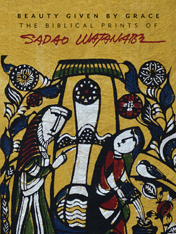


10 New Books for Church Leaders on Congregational Life, Pastoring, Ministry

schedule.gifIf you are a church leader, I’m sure you’ve been planning the fall schedule.  It isn’t a new season in the liturgical calendar but it feels that way, doesn’t it?  Not “ordinary time” at all.  Sunday school teachers are gearing up for the new kiddos, and adult educators are writing up descriptions for their exciting classes for the church bulletin.  Pastors, especially, have been thoughtful about sermons, projects, goals, meetings.  I know this is true for most of us, and especially church leaders.
We here at Hearts & Minds like to talk about how Christian conviction informs and shapes all sorts of things, from politics to the arts, from parenting to our work lives. I hope you saw the post from a few days ago about well-written memoirs.  We write a lot about cultural renewal, social justice, hoping that our books help you long for and work for reformation of society at many levels. 

Yes, yes, that is the “gospel of the Kingdom” and our missional mind-set allows us to claim, with old Abraham Kuyper, that Jesus Christ claims “every square inch” of life in his world.  Kuyper insisted that no aspect of life can be sequestered off, unconnected from our spirituality and Biblical principles. That is why I especially like the subtitle of Tom Nelson’s book Work Matters: Connecting Sunday Worship to Monday Work (Crossway; $14.99.)   All of life is religion.

But, we also believe that church renewal—call it revival if you want, or congregational re-vitalization—is needed for much of any of the above to happen.  Christian laypeople won’t be all that interested about faith and public life, living robustly in ways that witness to the realities of the Kingdom in all of life, eager to think Christianly about their various vocations and offices if they aren’t immersed in the Biblical story, which, some think, comes best to us as we follow the rhythmsliving the christian year.jpg and notions of the liturgical calendar.  Lauren Winner writes powerfully (in the preface of Living the Christian Year: Time to Inhabit the Story of God, Bobby Gross’s wonderful year-long devotional on the church calendar [IVP; $17.00]) how we have been too shaped by the educational year of secular schooling, feeling more rejuvenated by “back to school” motifs in September than the new year of Advent, starting in late November. You should dig out your copy and read that passage as it is well written and true. Be that as it may, the leisure of the summer months allow some of us to be a bit low-key in our congregational lives in July and August.  So now, we ramp it back up.  I’m sure I’m not the only one praying more and more each day about the new stuff happening after Labor Day.
TEN BOOKS
And so, a handful of books I’ve been accumulating the last month or so, waiting to share them.  Buy one to help you focus, one to keep you thinking, get another for later.  Maybe you can give one to your pastor, or start a study group, reflecting on what church can be.  All are 20% off—as always, just click on the links below.  We appreciate it.

called to lead.jpgCalled to Lead: Paul’s Letters to Timothy for a New Day  Anthony B Robinson and Robert Wall (Eerdmans) $25.00  I really liked their earlier book Called to Be Church: The Book of Acts for a New Day which did fine exegesis and storytelling of that Biblical book with an eye to application for contemporary mainline churches.  In this sequel, the pastoral leader (Tony Robinson, who writes for The Christian Century and is a church consultant with the UCC, and a very fine writer) and the evangelical Bible scholar (Wall teaches at Seattle Pacific) expound Paul’s two pastoral letters, which obviously are important for congregational life. I really liked what I read of this and hope to use it more. 
Michael Gorman of St. Mary’s Seminary and University (in Baltimore, MD—good folks, by the way) writes  “For a very long time the pastor-to-pastor Pauline letters to Timothy have been marginalized by some and grossly  misinterpreted by others.  It is now time for us to rediscover these letters and put them into imaginative conversation with the contemporary realities of church and culture. That is precisely what this fine study accomplishes with exegetical care, theological acumen, and pastoral insights.”  He continues, calling church leaders to study it together, considering its “transformative implications for the church.”  Walter Brueggemann wrote the forward.

creating a mc.jpgCreating A Missional Culture: Equipping the Church for the Sake of the World  JR Woodward (IVP/Praxis) $16.00  This book, I’ll say at the start, would be quite a bargain at twice the price!  In 250 pages, JR shares decades of serious study, information and insight gathered through hard work inchurch planting and consulting, and paying very close attention to all manner of details in the emergent, missional, fresh expressions conversations.  There is a lot here, a lot you should study. Darrell Guder (Princeton Theological Seminary) writes of it
JR Woodward’s remarkable book defies categorization. To ‘create missional culture’ requires disciplined biblical and theological formation, discerning engagement with contemporary cultures, appreciative interaction with diverse resources, and the courage to experiment and to innovate.  Woodward does all that and more.

It really is (as Michael Frost, author of The Shaping of Things to Come and so many other excellent missional church books puts it) “a gift to the missional conversation.”  But it is more. Creating a Missional Culture is a serious study of congregational life, of how to form leaders, of the role of men and women in leadership, and how decisions are made, of various roles of various kinds of leaders.  (Teachers, for instance, he calls “light-givers.”)   His suggestions about “polycentric” leadership is concise and very, very important.  His critique of consumerism, and how local churches can equip people for service is suggestive of the shifts we simply must see if churches are going to fuel cultural reformation. 

As Alan Hersh writes in a very interesting introduction

You are holding a hard-won treasure. This is not some fluffy, shallow, exploration of the topic—those caricatures abound already. This book is well written, theologically well-considered, and peppered with the kind of missiological insights that only an apostolically inclined leader can bring.  As a longtime practitioner of these idea, JR brings a distinctive practical edge to the equation, and to the reader is given real, live possibilities to implement locally.

There are dormant energies in our churches.  Ephesians 4 and other passages invite us to, and show us how to, unleash this energies.  I know JR a bit and commend his good work to you.  This may be the best book of congregational life I’ve read all year, and you will surely find much to ponder, to learn, and to live in to.   From sect
ions like “Cultivating a Life-Giving Spirituality within Community” to his astute observations on “The Cultural Web and the Neighborhood Church” he draws on authors from Frederich Buechner to Lesslie Newbigin, from Roland Allen to James Smith, drawing us into fabulous conversations, clear teaching, and visionary hopes.  Highly recommended.

emergence c.jpgEmergence Christianity: What Is Is, Where It is Going, and Why It Matters  Phyllis Tickle (Baker) $19.99  Many folks loved, and nearly everyone who read it, appreciated the simple brilliance of The Great Emergence: How Christianity Is Changing and Why (Baker, now in paperback; $14.99.)  I whipped through some of this, then went back and read some more slowly, pondering and considering her big picture (and often humorous, sometimes maddening) claims. Many folks from all quarters insist that she is the person to write about this, with her encyclopedic awareness of movements, historical trends, era-shifting episodes, not to mention her vast knowledge of books and authors.  She gets much of the story right, it seems to me (although sometimes it seems a bit curious, as if the wonderful Catholic Worker houses started by Dorothy Day had some influence on early emergent communities, which I highly doubt.  Was Taize that important in North America?)  She is an amazingly energetic social critic, and it is always fun being stimulated like this.  Even if you don’t agree fully, why not go along for the ride–it is fun, interesting, and very informative.You’ll learn some things, hear about some books and authors and movements you may not know of, and see some dots connect in very clever ways.  There are some great stories, even great full-color pictures.  “Christianity is emerging with or without Phyllis Tickle,” says Richard Rohr, “but she is sure helping the rest of us to emerge along with it.”  The wider historical context is essential to consider and she tells that story with gusto. There are various sorts of new faith expressions evolving and emerging.   Highly recommended.  I bet this will be one of the biggest selling books of this kind this fall.  By the way, we have two different video curriculum resources of her, so let us know if you want more info.
center c.jpgCenter Church: Doing Balanced, Gospel-Centered Ministry in Your City  Timothy Keller (Zondervan) $29.99 This has not released yet but we hope to have it early.  Okay, it’s a text book.  So there.  No dust jacket, lots of sidebars, some color in the oversized pages, great summary points and good discussion questions for further learning.  I think it is cool to hold, and I’ve admired it lots these last few days, even though it is hefty.  And it is serious; this isn’t a simple sermon on “seeking the peace of the city” or seeking justice without reneging on core gospel truths.  No, this is a wonderful set of essential chapters that lay out the basics of why we care about our places, why our churches must preach a wholistic gospel, and why our basic commitment to the authority of Scriptures demands that we do both evangelism and culture action, affirm vocations in the work-world and social social for the poor.  He analyzes Niehbur and Kuyper on culture and the common good and gives lists of the best books on church growth and ministry.   Yes, this covers a lot of ground, systematically and methodically.  It is a masterpiece.
Keller has been recognized for reaching secular urban professionals, of course, and his Redeemer Presbyterian has been a model for other outreaches and church planting networks in New York and beyond.  Theologically he is a fairly conservative Reformed preacher, and a passionate apologist for what Lewis called “mere Christianity.”  Yet, so many implications flow from there, so he is known for being supportive of the arts and in conversation with scientists, known for being helpful to hedge fund managers and inner city social workers alike.  As you might guess, I am confident that whether you have sympathies with his PCA denomination or not, Keller’s work is very important and this is his magnum opus.  I don’t know of any other book that comes close, doing what this does.

The book is arranged around three main topics, which become central commitments: Gospel-centered, City-centered, Movement-centered.   There are about 10 chapters under each and just a cursory reading of the intriguing and thoughtful titles of each chapter makes me want to stand and shout!  This is truly a fantastic handbook, covering so much good stuff, in solid, clear prose. I sincerely hope many buy it.

Keller notes that he has been working on this for a long time — it is the culmination of his years of ministry in Manhattan and the basic content he teaches as he mentors other young church planters and pastors. (Indeed, I am sure this will be used in their Redeemer City to City mentoring program.)  While set in and for the city, Center Church is fully useful for those in suburbs and towns; it carefully helps us attend to local culture and contextualized social engagement within networks of influence which, while perhaps more tense and pressing in dense urban areas, are utterly essential to effective ministry in any geography.   Also, this book is written for pastors, but I commend it to anyone, especially anyone involved in typical congregations; you will be a great blessing to your pastor and a more astute aid to your church if you study this material (especially if you share it with winsome enthusiasm and gracefulness.)  The superlatives among the endorsements are striking, more striking than any book like this I have seen in ages.  Again, this releases September 4, 2012. We expect to have it early.

Community-is-Messy.pngCommunity is Messy: The Perils and Promise of Small Group Ministry  Heather Zempel (IVP/Praxis) $15.00  I am excited to share that the fabulous publisher InterVarsity Press has started this new imprint, called Praxis, which promises to offer quality resources for congregational leaders and church life.  They hope to offer books of vision and expertise.  “Visionary practitioners” is what they are looking for, and they insist in their blurb about the imprint that being is as important as doing “Praxis books are more than “how to” they are “why to.” “Praxis attends to the inner life of the leader as well as the outer work of ministry.”  Feed your soul, feed your ministry!
The first book they’ve released in this series is fantastic, a book I will report on later, on mentoring leaders.  It is called great, called Protege: Developing Your Next Generation of Church Leaders by Steve Saccone; the extraordinary book described above by JR Woodward is on Praxis as well.  It’s going to be a great line.

This new one in this exciting new imprint seems to capture what it that line is about, quite wonderfully.  Ms Zempel has been at this work a while, and is now the discipleship pastor at National Community Church in Washington DC.  Well, she used to be an environmental engineer and she uses her good, logistical mind to look at the dynamics of congregational relationships, community, groups and cliques. We all know that building community is surely one of the
most urgent issues in church life, and a topic everybody talks about. Whether you are a large church or small, very traditional or young and fresh, it’s important. In Community Is Messy, Zempel tells good stories, teaches much about running a small group ministry (sure) but it is more than a book about facilitating small groups, or even getting a church oriented to growth groups.  It is about the foibles and struggles of our churches, how community takes time and–yes–is often quite messy. But, she insists, in every mess there is possibility.  She’s upbeat and sharp, experienced and helpful. I think too many churches think that relationship, community, and small care groups just happen, and then don’t study this area much.  Try this one. It is a must-read, fresh, hopeful, useful.

leading gp.jpgLeading God’s People: Wisdom from the Early Church for Today  Christopher A. Beeley (Eerdmans) $20.00  We’ve heard the phrase “ancient-future” and there has been—in Biblical studies, in Christina social ethics, in liturgical studies—a real interest in the church fathers.  Well, here you go: the wisdom of the past addressing the challenges of the present.  Beeley is Professor of Anglican Studies and Patristics at Yale Divinity School.  He obviously loves the great fathers of the church (East and West) and garners here raves from the Dean of St. Vladimir’s Orthodox Seminary and Rowan Williams, the Archbishop of Canterbury.  Leadership should not be mostly drawn from management texts, and while some of the hip entrepreneurs are exciting, reading Gregory of Nazianzus, Ambrose, Chrysostom, and Gregory the Great, offers profound insight.  Very nicely done.
YourChurchTooSafe.jpgYour Church is Too Safe: Why Following Christ Turns the World Upside Down  Mark Buchanan (Zondervan) $18.99  I have raved about other books by Buchanan, who is smart and astute, a fine writer and a wonderful storyteller.  I think he is one of our better evangelical writers these days, more substantive than Lucado, more colorful than Yancey, a bit more energetic than Peterson, not quite as elegant as Barbara Brown Taylor.  Still, he’s in that league, turning good phrases and offering solid insight.  I loved his book about experiencing Jesus in the seasons of life and thought his book The Rest of God was one of the more inspiring things I’ve read on sabbath, resting and working in God.  Here, he ponders that great verses in Acts 17 where  it was said of the followers of Jesus  that they “have turned the world upside down.”  I laughed when I read Mark Gallie admitting “I don’t think I want to go to the church that Mark Buchanan writes about  It would be too unnerving…But Buchanan writers with such verve and is so steeped in biblical truth, I think he’s convinced me to join that church, because in the end it’s a place where the unsettling and merciful God is found.”  This book will bring you great pleasure and great stimulation, pondering his call to be that kind of a church, ordinary people, sharing a simple message of love and grace.  Why is that so hard?

The-Journey-of-Ministry.pngThe Journey of Ministry: Insights from a Life of Practice  Eddie Gibbs (IVP) $15.00  I like Eddie Gibbs and have appreciated his ChurchNext and his LeadershipNext.  He is a senior professor in the School of Intercultural Studies at Fuller.  Alan Hirsch calls him “one of the few elder statesmen in missional church circles.”  He’s loved all over the world, I’m told.  But here, he doesn’t didactly teach and admonish and dream, as much as he gently tells his story, sharing the texture of pastoring, the need to care about others in the family of God.  He tells of challenges he’s faced and offers insights for sustaining effective ministry.  His sage advise and his interesting style seems somewhat close to Eugene Peterson, but a bit more feisty; a bit like Hirsch and the missionals, but not quite that edgy.  In a truly lovely forward, his colleague and friend Richard Mouw speaks of Eddie’s respected reputation, his youthful energy, and how much he liked the book.  Mouw uses words like “delightful” and “intriguing.”  It is a fine book.
power of all.jpgThe Power of All: Building a Multivoiced Church  Sian & Stuart Murray Williams (Herald Press) $15.99  You may know the most talked about Mennonite book in years, The Naked Anabaptist; Stuart Murray wrote that, inviting folks to consider the anabaptist tradition as a gift to the post-Christendom era. One needed by an Anabaptist to appreciate it, and be glad.  Here, in a rare sort of book, they wonder how renewal can happen as everyone is drawn into involvement in the churches mission.  They offer a New Testament model, showing how to value the voices of all, expecting the Holy Spirit to speak through all the members of the community. Nobody gets disenfranchised and everyone is encouraged to find their gift, their voice.  One early reviewer said this approach to congregational life is “an antidote to the boredom many experience in church and to the growing irregularity of attendance.”  It is full of stories, stories of churches in conflict and churches experiencing renewal.  Fascinating.
clergy table talk.jpgClergy Table Talk: Eavesdropping on Ministry Issues in the 21st Century Kent Ira Groff (Energion Publications) $9.99  I don’t know if you know my gentle friend, spiritual director, poet, and writer Kent Groff, but he is so very well loved within certain mainline denominational circles—he founded Oasis Ministries (headquartered near Lancaster, a network equipping and training folks in the art of spiritual direction) and he taught adjunct at Lancaster Seminary and Princeton Theological Seminary.  He has written numerous books (including a guide to spiritual exercises, Active Spirituality, published by the Alban Institute, a good one on being a writer called Writing Tides) and a recent book of devotional poems, interestingly inspired by the exercises of Saint Ignatius.)

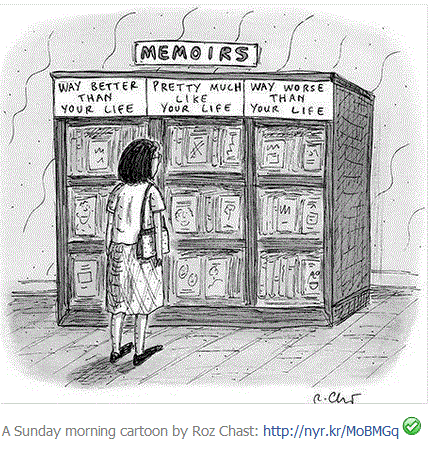
In this handy resource Kent draws from his years of congregational consulting, doing workshops, and leading retreats and comes up with 15 provocative devotions, short essays, each, then, with a corresponding spiritual exercise. There are then questions for meditation and reflective consideration, or to be discussed if being used in a group or with a partner.  This wonderful tool is a gift for harried clergy folk, or any leader wanting a guided process of thinking about some key issues, and guidance on practicing spiritual disciplines to encounter God and open up the heart to the good stuff.  There are really interesting quotes–a line of Kierkegaard, a verse from Mary Oliver, a quote from Howard Thurman—and these lines are themselves a gift.  We should be grateful for the Academy of Parish Clergy who commissioned this work. Rave reviews on the back are from Carol Howard Merr
itt, Bruce Epperly, Eugene Peterson, and Jason Byassee.  I like Peterson’s words: Pastors need pastors.  Not to tell us what to do. We have too many people already doing that.  We need pastors who will listen to us gently and unobtrusively.  Kent Ira Groff is a skillfully quiet listener, giving us space to discern what we are doing and why.”  By the way, look for a new one on prayer called Honest to God Prayer coming from Kent being published by the interfaith SkyLight Paths, due in November.)

BookNotes
SPECIAL
DISCOUNT
any book mentioned

2O% off
order here
takes you to the secure Hearts & Minds order form page
just tell us what you want

inquire here
if you have questions or need more information
just ask us what you want to know

Hearts & Minds 234 East Main Street  Dallastown, PA  17313


The 10 Best Memoirs I’ve (mostly) Read This Summer. And a chance to Pre-order The Exact Place: A Memoir by Margie Haack. On Sale.

You’ve surely heard me say
before how much Beth and I enjoy memoir and we’vememoirs.gif recommended many over the years—ahh, just think of Buechner and L’Engle and Merton, of course.  All three by Mary Karr, of course. Think of A Severe Mercy, Angela’s Ashes, My First White Friend, and A Girl Called Zippy.  And Lauren Winner. And Kathleen Norris. Yes, it is a genre which can be lyrical and moving, informative
and edifying, hilarious and fun. 
The best are often harrowing, showing how the author made meaning out of her experiences, out of what is so often called the human condition.  The tale of
the story we find ourselves in can be terrible or terrifying, mundane or joyous, but often can point
us to the deepest truths of the way the world works.  A well-written memoir can be as powerful as the best
fiction, and as hard to put down.


So, here are a few that
we have read (or have appeared on our “new book table” here at the shop this summer and we have at least started.) We hope
you order one or two before the dog days of summer wane.  As September looms, it seems like a good
time to ruminate a bit on our lives, our stories, what we’ve gotten ourselves into, each of us. 
These interesting books can help, and will bring you a few great hours
of reading pleasure, too. It may be just what you need to read next.


have-mother-will-travel-nook-book.jpgHave Mother Will Travel:
A Mother and Daughter Discover Themselves, Each Other, And the World
  Claire and Mia Fontaine (Morrow)
$24.99  Those who follow the
literature of memoir know Come Back, the stunning, painful, and finally hopeful
story of screen-writer Claire Fonaine’s efforts to reach her drug-addled,
addicted, young daughter, Mia.  On
the heels of that moving book, they went on the road, telling their story,
over and over, and both became a bit burned-out on their life of motivational
speaking, recovery work, and life coaching.  They drifted apart as mom entered a bit of a mid-life crisis
and Mia tried to figure out what she wanted to do as a young working gal in New York
City.  Nearly out of no-where this
idea arose and the pair travel the world, getting to know each other as adult
friends.  The journey is fun, and revealing, the
adventures make great reading, and their relationship issues illumine a fairly
universal concern about parents and adult kids.  It’s complicated, moms and daughters, and often poignant.  The writing is fine, the story unforgettable.


january-first.jpgJanuary First: A Child’s
Descent into Madness and Her Father’s Struggle to Save Her 
Michael Schofield $25.00  Half-way through this page-turner I choked up, went
in to the kitchen, announced to Beth that this book was the saddest
I had ever read, sighed, and returned to keep reading; I just had to say it out loud, perhaps to fortify me for the rest of the story.  I’m not sure that is
true (about it being the saddest book I ever read, that is) and in a few ways, it was one of the most maddening.  (How could the earnest and smart dad be
so dumb about parenting a special needs child?  And why does he so blithely rule out the supernatural? And, and, well, really?)  So, I talked back to, and certainly talked about this book, for days.  It is truly extraordinary.


Early on-set childhood
schizophrenia wasn’t considered common when Janni was born and their horror tale of a violent,
genius-level preschooler is told in ways that are plain-spoken and realistic. Their anguish is not over-analyzed (they don’t have time for that) nor sensationalized. It is well written, clear and concise.  They tried to get help and received less then helpful diagnoses and some dead-end
treatments. The incompetence and even cruelty of medical professionals and
educators was stunning, and brought up painful memories for me—good stories can do
that, and it is good, even if hard. 
Still, this story of the Schofield’s mentally-ill child, the family stress, of raising an new baby with a special
needs sibling, of holding a marriage together when husband and wife disagree
about how to raising their children, of coping with the depression that
sometimes accompanies such trying times, all of this is good to read, really good.  It is told in
clear prose, both tender and raging and remarkably honest. I won’t recount
episodes as I don’t want to spoil a single page.  One reviewer said “this modern parable may be the most
compelling book you will ever read.” 
It certainly is one of the most compelling memoirs I’ve read in a while, one of the books of the year.  Riveting and highly recommended.


some assembly required.jpgSome Assembly Required: A
Journal of My Son’s First Son
  Anne
Lamott (Riverhead) $26.95  Lamott
holds a rare place in the literary world. She is a Christian (progressive,
eccentric, yet, as she and her friend Annie Dillard put it, Jesusy) and she is
an acclaimed, mainstream novelist.  She has
made her fame, also, though, for essays about Christian faith such as the
classic Traveling Mercies,  Grace
(Eventually)
and Plan B, and for some excellent books about writing (the
essential Bird by Bird ) and parenting (Operating Instructions.)  Sam, the baby whose upbringing is so
wonderfully told in Operating Instructions is now grown up and in art school.  His beloved is, like him, young and
poor.  And she is pregnant.  Anne brings her wit and faith and
touching honesty to bear as she—and Sam, who helps write a bit of this—tells this next chapter of their
lives.  Anne the Grandma.  If you are a fan you are surely going to want to read this!


reborn-on-the-fourth-of-july-the-challenge-of-faith-patriotism-and-conscience.jpgReborn on the Fourth of
July: The Challenge of Faith, Patriotism & Conscience
  Logan Mehl-Laituri  (IVP) $15.00  I’ve got to be honest, I have
wanted to write about this all summer, but kept fearing that some of our
customers would take offense.  I
fully realize that the doctrine of Biblical nonviolence/pacifism is contested — in fact, I understand
that many Christians hardly know that some believe that being involved in
the military is not consistent with the way of Jesus.  Still, regardless of how much you’ve thought about
peace-making, or where you come down on the ethics of war, this story of a brave U.S. soldier who comes to question his
role in the Iraqi war is an excellent book, spectacular at times, helpful,
honorable and very good.  I really do hope many people buy it and consider it.  It’s quite a story.


Mr. Mehl-Laituri, involved in youth fellowship programing in his high school years,
struggles with his faith as a young man (itself nicely told), joins the Army, and this book explains much of what happens throughout his tour of duty. He clearly recalls his feelings and invites us into his interior life, his attitudes and values his confusion and concern.   As a forward observer/fire support specialist he sees
heavy stuff before he applies to change his status to noncombatant as a
conscientious objector.  Much of this is very powerfully written and proved very touching to me. You have to admire a young man who has such integrity, to think all this through, even as he struggles to be true to his comrades, honorable to his conscience, faithful to his Lord. After his
discharge, by the way, he want to another battle zone in Palestine with
Christian Peacemaker Teams and later returned to Iraq (with Shane Claiborne) to
help make the documentary film The Gospel of Rutba.  We have the book by that name, as well.  Logan mentions it, and even critiques it just a bit in one of his very thorough footnotes. 

Reborn… is a high-octane story, clearly told, brave and
thoughtful, about some of the toughest questions any Christian, or any human,
can ever ask.  I am impressed with
Logan, and only wish I had such evangelically-minded models of this caliber as
I applied for my own C.O. status in the early ’70s.  It is rare (and great!) that an orthodox evangelical publisher, who also
publishes the likes of J.I. Packer and John Stott and Francis Schaeffer, committed to releasing a book like this; it strikes me as one of the most interesting and
significant publishing events in our time.   I am sure that not everyone (if anyone) at IVP agrees fully
with Logan or embraces fully his Biblical pacifism as, say, Mennonites do.  That they are willing to publish this memoir
is extraordinary, and I applaud them. A book like this doesn’t come around very often and we heartily commend it. (And there are those great footnotes—you’ll get a great education just by reading them!  By the way,
Logan has started a ministry to and with soldiers and vets called The
Centurion’s Guild
.  He will have another book coming documenting Christians who
have been soldiers and offering a glimpse into the hearts and minds of some who
have grappled with a Christian view of soldiering.  Again, agree or not, this is a page-turner, a heart-felt
book, and quite a story.  Very
highly recommended.  Here is a short video clip that may inspire you to order the book. 


radical reinvention.jpgRadical Reinvention: An
Unlikely Return to the Catholic Church
 
Kaya Oakes (Counterpoint) $15.95 Okay, let’s get this out of the way:
not every book we recommend here is good for every reader.  I’m not sure most of our friends and fans will appreciate
this heavy-metal story of a vulgar-mouthed, counter-cultural, pro-choice
activist’s journey to a somewhat convoluted version of liberal Catholicism, but it is a
stunning memoir and its electric prose captured me quickly.

I want to suggest it for at least two reasons.   First, I am surely not alone for
wanting to read about subcultures different than my own and this bald portrait
of the life of a rugged gal who regularly visits the mosh pit and celebrates
all manner of bohemian liberations takes you there.  One could just as easily enjoy a book about headhunters or gangsta
thugs or rugby players; it’s a helluva story about some amazing folks. 
Secondly, I can only stand in awe that one such as this finds her way
back to her Catholic faith, struggling the whole way. I am moved by story and glad for her faith, such as it is.   This is not exactly Dorothy Day (who left behind a serious life of lefty intellectual culture to embrace the virtues of devout
Catholicism and wrote so beautifully about it in The Long Loneliness) or Anne
Lamott (who was an esteemed writer and middle-aged alcoholic when she embraced Jesus, so bluntly, in Traveling Mercies.) 
Maybe it is rowdy Gen Y blend of Dorothy and Anne, with a bit of Rage
Against the Machine and Pussy Riot thrown in for good measure.  She is a good writer who wears her
heart on her sleeve (as she did in her previous book, the curious Slanted and
Enchanted
, a study of indie culture.) 
For what it is worth, troubling as it will be to most of us, the back cover
is right:  “This is a story of
transformation, not only of one woman’s from ex-Catholic to amateur theologian,
but ultimately of the cultural and ethical pushes for change that are rocking
the world’s largest religion to its core.”  When conservative Catholic Russ Douthart (Bad Religion) and liberal Protestant Diana Butler Bass (Christianity After Religion) debate the future
of the church, in some ways, voices like Kaya Oakes are part of the deal, for better or worse.  Read her artfully told, anguishing,
fascinating first-hand account of her longing for God, for faith, for church; who knows, you may share the book with punk
rock grrrls you know. Or maybe you will be moved to pray for her in pity.  It’s that kind of book, you will not be indifferent.


heroes and monsters.jpgHeroes and Monsters: An
Honest Look at the Struggle Within All of Us
  Josh James Riebock (Baker) $16.99 I want to applaud
evangelical publishers who give room to young creative writers to experiment
with the form; this is a memoir, with illustrations, and maybe a bit too
creative. Ha!  A few times you’ll rub
your eyes and wonder what the heck Riebock is talking about.  (I don’t know why Jack the Scarecrow reminded me of a Dylan song, but there you go.) You might even wonder why the
managing editor of as sober an enterprise as Leadership Journal says it is “a
beautiful book.”  Here’s why: simply, because it is. What a story, and what a writer.  Leadership Journal editor Drew Dyck (himself author of the astute
Generation Ex-Christian) continues, “it is beautiful because it’s so honest, and ugly for precisely the same
reason.  Josh tells his life story
with lively prose that explores the paradoxes of human splendor and
wretchedness while dangling hints of redemption.  As you read, don’t be surprised to find your story in his
story, and the divine companion who interrupts his life…”  This is an unconventional book, especially for younger adult readers, maybe those who liked Blue Like Jazz, looking
at dreams and family conflicts and grief and great, nearly allusive
beauty.   Very interesting, surreal at times.  Kudos.


view from lp.jpgThe View from Lazy Point:
A Natural Year in an Unnatural World
 
Carl Safina (Picador) $18.00 
Safina is a splendid writer and a world-renowned marine biologist (founder of the Blue Ocean Institute.)  I may be stretching the category here
to call this memoir as it is in the grand tradition of natural history, told in
first-person, as the we follow along with the scientist on a set of journeys
along the water’s edge (or under the water, in some cases, as in the wonderful chapter telling of a set of dives studying the erosion of coral off the coast of
Central America.)  Safina lives at
the very northern tip of Long Island and he loves the ocean’s edge.  He knows birds and there is delight
a-plenty here for any birder or any beach lover.  But his agenda is serious as he heads to four quarters of
the world over four seasons, to document the impacts of climate change.  As the New York Times Book Review put
it, “Safina’s book soars…I had to–wanted to—read it very slowly, allowing
myself to digest its wealth of information, to revel in the beauty of Safina’s
writing, to absorb fully the implications of his musings.  What a pleasure it is to find such an
enlightening, provocative companion for walking and talking.  We can ask no more from those who warn
about the dark days ahead than that they awaken us to the miracle of everyday
life.”   You have to love a
book that The Economist calls “A call to arms in the cause of hope.”  Here is a short review done by the lovely Orion magazine;  here is a good interview with him about the book.


in the w.jpgIn The Wilderness: Coming
of Age in Unknown Country
  Kim
Barnes (Anchor Books) $15.00 
Barnes’ beautiful, lyrical prose has made her one of my most admired
memoirists (and I am not alone; she was a finalist for the 1997 Pulitzer Prize.) I have rarely
been so absorbed in story, and what a story it is: she was raised in a loving
rural community of lumberjacks, timber workers in the very rural parts of the
forests of Idaho.  As a
gypsy-like existence took her parents and relatives deeper into the woods for work, they grow increasingly aware of the beauty of this land and their small homesteads are nearly self-reliant. Soon, they
enter a serious sort of blue-collar, mysterious, Pentecostalism.  Barnes description of their services seem spot on (bringing to mind not only my own brief experiences, but of amazing writing like, say, Dennis Covington’s Salvation on Sound Mountain.) Things are both good and, eventually, in ways I cannot easily recount, troubling.  The work gives out and they move to
town.  It is the late ’60s and in
junior high Kim starts to rebel. 
She is embarrassed by her modest outfits and religious ways, and has been given a pretty negative view of women’s sexual desires, which doesn’t help. Man, does
she rebel. It gets pretty ugly and she recalls it with remarkable memory and remarkable insight.  How do some people do this, recall things so eloquently?  She has a vivid gift and she is very talented, and she is fearless.


Words fail me to do
justice to this remarkable story in a brief annotation, but you should know it
was a fully engrossing read, artfully told, reflective and profoundly moving; it is surely one
of the best memoirs I have ever read. 
One reviewer called it “revealing, spiritual, cleansing, transcendent –
and awash in the elements that make life’s flow so unpredictable, wonderful,
and often haunting.”  Barnes is an
artist of the printed page, has led a truly interesting life, and has been
through some horrible stuff, stuff that begins to surface as her journey turns
dark and her family relations unravel. 
I ought not explain much, but this rivals any novel I have read, and is
as reflective about a life as any memoir I’ve read.  Highly recommended, for those who can take such an intense
and beautifully-written tale of loss and regret and of the formation of the life of a writer.


hungry for the world.jpgHungry for the World: A
Memoir
  Kim Barnes (Anchor)
$13.00  Please, please, I must say
this clearly.  I sometimes remind our
readers that not every book we suggest is recommended for every reader.  This is one of those, and parts
of this rank among the most disturbing stuff I have read, even though she is elegant and most often discreet.  Ms Barnes is a spectacularly gifted
writer, and a very honorable woman who boldly lays her bad decisions bare and evaluates deeply
what has been really going on as her troubled life unfolds.  Remember the part of Cheryl Strayed’s Wild (I raved about it here) where she tells of her foolish
sexual involvements and inexplicable drug abuse? 
Her inability to grapple with the grief of the loss of her beloved
mother?  Well, this is like that, sort of, but
times ten.  So, there’s that.

The first third of Hungry for the World revisits
the same ground covered in the wonderful In the Wilderness, but it did not at all feel redundant. It was fully
enjoyable and, again, deeply moving, as she gently pondered extra layers of meaning, named other details, retold
more and more of those years of joy and faith and loss and trouble.  As I was reading this a few weeks ago I was telling everyone about the beauty
and haunting lyricism of her splendid prose and her remarkable self-reflection, and how good it was, carrying us toward this next part of her story.  It was a bit dark, naturally,
and then about the middle, the next chapter of her life hit, and I was
stunned. I’m not naive, but I was stunned.  If anybody is taken by
any of the dangerous nonsense of the 50 Shades fad, well, the middle portion of
Barne’s auto-biography, telling of anguishing obsessions and the menacing dominance of her truck-driver lover,
will disabuse us of any romance to such indignities.  One reviewer put it mildly that Barnes was “overwhelmed by a
restless curiosity that propelled her into a turbulent journey of
self-discovery.”  Another says, “it
is refreshing to read such a moving story of human regeneration.”  I’m not so sure I’d say it is refreshing,
but I must admit that this glimpse into the darker corners inhabited by some of
our neighbors is helpful and poignant. 
You know those movies that are raw and dark and messy and yet it is good
to spend a few hours taking it all in. 
With discernment and courage, this story may be a very good read for
some of us.  Others should avoid
it.  It is one of the most haunting
books I’ve ever read and I’d be amiss not to tell you. I like Ms Barnes a lot, and look forward to reading her new novel.  This memoir is dire and gorgeous, hard
and healing.


exact place.jpgThe Exact Place: A Memoir Margie Haack
(Kalos Press) $12.99 (introductory price)  I will be telling you more about this great new book when it is actually
released next month, but I’m thrilled to at least announce it here, now. In a
list of my favorite reading experiences this summer I have to name this.  Beth and I were quite privileged to get
an early manuscript (Margie is a friend) and I literally raced through
it, eager to read chapter by chapter, story by story, the pieces of her life remembered and retold.  It is a very good book.  And she is a woman who, no matter what she wrote, I’d want to read it.


Allow me to at least introduce you to her,
for now: Margie and her husband, Denis Haack, run one of the most wonderful
ministries of which we know (with one of the fabulously interesting websites, too.)  They
call themselves Ransom Fellowship and they publish (for free, although a donation would be proper) the very wise and useful and sometimes a bit provocative Critique magazine,
inviting people of faith into better conversations, cultural discernment,
seeking (as their mentors Francis and Edith Schaeffer used to say) “honest
answers for honest questions.” They often write (beautifully) about music and film and the questions of ordinary Christian life.  Their
home—delightfully called Toad Hall—is almost like an Upper Midwestern L’Abri and
their ministry of hospitality and speaking and writing and hosting concerts and
reviewing movies have made them low-key rock stars among some younger evangelicals
who still can’t seem to find a safe place to be mentored into wise and fruitful
cultural engagement.  Margie is a sassier
writer than Denis and her candid look into the hectic craziness of their lives is told
colorfully in another newsletter, which she does, nicely called Notes from Toad Hall. You can browse stuff Margie writes, also at the Ransom webpage, here.  You can even listen to her read a few essays (click on the “audio” icon and spend a few minutes enjoying her fine writing and wonderful insights.)

Those who read her know that Margie has the gift—a way with words, such an honestmargie haack.jpg voice—and we are glad for both Margie and Denis’ good writing.  Together they’ve served and
cared and guided many of us for decades and we are glad to call them friends (my, how they have been supportive of our bookish work.). 
Anybody who has heard a bit of her story has told her that she has to
write a book. 

Haack was raised in
very (very) Northern, and very (very) rural Minnesota, growing up in the harsh and lovely terrain of
animals, subsistence farming, outhouses, hard weather, poverty, and country neighbors, the kind that, I gather, good fences should make better.  Although I adore the rural earnestness of Michael Perry (more on him, soon–his Visiting Tom is just out) and the Lake Wobegone
stories of humorist Garrison Keillor, nobody has looked at the rougher underside
of a “little house in the big woods” like Haack.  Read her few paragraphs introducing herself, here, and tell me you don’t want to read her book! 


PRE-ORDERS

We are taking pre-orders for The Exact Place, as we are eager to sell this rural memoir (and we are quite glad it is being published by folks we respect, a classy, indie press Kalos.) Maybe you should buy several, take it to book groups, talk it up, and wonder how,
as Ms Haack so honestly does, God works to bring us to “the exact place” we
need to be.  You know that Quaker
hymn, Tis a Gift to Be Simple that assures us in turning, turning, we come
round right?  This quiet, simple
set of interesting farm-girl stories testifies that it is true. In many ways, this is one
of the most urgent lessons to be learned in life, and it is a story of
Providence and Grace.  Margie
speaks honestly about our foibles, fears, and brokenness.  And yet she realizes that it comes
round right.  Just click on the “order” link and type in your info.  We’ll ship the book the day it comes, at our BookNotes discounted price.

BookNotes
SPECIAL
DISCOUNT
any book mentioned

2O% off
order here
takes you to the secure Hearts & Minds order form page
just tell us what you want

inquire here
if you have questions or need more information
just ask us what you want to know

Hearts & Minds 234 East Main Street  Dallastown, PA  17313


The Blaze, Welfare, the Ryan Budget and a “Circle of Protection”: 5 books on poverty, including “Fixing the Moral Deficit: A Balanced Way to Balance the Budget” ON SALE, and a FREE BOOK offer.

THE “RUIN YOUR DAY” CHART
The other day a friend forwarded to me a chart from the conservative website affiliated withwelfare chart.jpg Glen Beck, The Blaze.  There was a startling chart showing how the number of people getting government aid—welfare in the form of SNAP (food stamps), TANF, WIC and the like—has skyrocketed, growing year by year.  The young Blaze writer was snarky as hell, mocking government handouts, disturbed that so many people….well, you can imagine.  Other conservative pundits have commented on this, almost all alarmed at the increase in government bureaucracy. More than one had the headline that these figures will Ruin Your Day.
Well, the increase in poverty that is behind these statistics is tragic.  It is fair to say that the recent rise in poverty has been in part caused by dastardly deeds on Wall Street, allowed by the bi-partisan failure to enact solid financial reforms a decade ago (sometimes the Democrats resisted reforms, other times the Republicans were complicit.)  Due to the great recession, the “new poor” are everywhere, all ages, races, regions, red and blue alike. Demand at food pantries has increased and there are more hungry kids now than in recent memory.  Between 2007 and 2010 over 6.3 million Americans fell below the poverty line.  The bar graphs going up each year on The Blaze chart—a chart actually released by a Congressman working on a Department of Agriculture study—represent real suffering.  It should ruin your day.

Yet, I replied to my friend, noting two things that I needn’t explore in detail here, but are worth mentioning.  One graph alone doesn’t tell us the whole picture.  It is rather reductionistic and I believe every place I saw reprinting it, all drawing from the “It will ruin your day” complaint of The Blaze, used it as propaganda.  That is, they were not trying to seriously inform us of the intricacies of American poverty or the complexities of welfare reform. It was used mostly as a shot in the culture wars.  They weren’t offering good information. It was a slam against the “welfare state” and not much else.  As the Blaze writer put it, after gripping about immigrants getting aid, “That’s all.”

But what might another similar chart show us? What more should we know?  Well, for instance, one might show not just those enrolling in government programs, but could also show us this bit of data: half of all SNAP participants remained in the program for less than eight months. When their immediate crisis passed, they left the program.  Calling this (as The Blaze did) a chart about “dependency” is inaccurate. Concerns about welfare dependency and generational poverty are not to be dismissed, but one simple chart doesn’t tell us enough to make informed judgements about the quality of welfare expenditures let alone the pros and cons of welfare reform or how to make informed evaluations of SNAP.

SHAMEFUL
As the graph made the internet rounds, a popular conservative talk radio guy wrote that we should be embarrassed by this graph.  Too many people want a hand-out he said, and their “entitlement” attitude to expect “endless free money” is shameful.

I’ll tell you what is shameful: being a popular pundit and not knowing the facts about what your talking about.  Condemning people in poverty, across the board, as if getting the small assistance that food stamps provides is necessarily an indication of their laziness, their guilt, their fault, is reprehensible. The man obviously doesn’t know the texture or details (or data about) the lives of poor people in America, let alone what the Bible says about the varied causes of poverty (from personal irresponsibility to illness and misfortune to, most commonly—add up the texts if you don’t believe me—oppression or injustice. In a fallen world sometimes people are poor because of their own sins but often it is because of the sins of others, or something sometimes called structural or systemic sin; see, just for instance, Amos 8:6 or Nehemiah 5:11 or James 5:4.) To call a bit of assistance like WIC or SNAP going to a needy family “endless money” is just nonsense.

Being snarky about welfare programs and their recipients is a cheap shot and approaches violating the wisdom of Biblical truths such as Proverbs 19:17 that says that if you help the poor you are actually making a loan to God!  (Conversely, by the way, Proverbs 17:5 warns, “he who mocks the poor, mocks his maker.” I does not say that everyone who criticizes a welfare policy is mocking the poor or their maker, but whenever one is working to cut or create public suspicion of helpful, perhaps life-saving, services, it would seem prudent to be sure one’s heart is right and that one doesn’t promote demeaning attitudes towards those recipients of those benefits.)

COMPLIMENT OR COMPLAIN?
Perhaps the chart isn’t a sign of shame. Maybe we shouldn’t be embarrassed that some of us, guided by groups such as Bread for the World and our denominational offices, lobbied hard over the years to get good, cost-effective and effective assistance programs like TANF and SNAP expanded.  We should be glad for those programs, indications of our country’s commitment to the common good.  The Bible tells us to rejoice when there is justice in the land. Rulers are called upon by God to “plead the cause of the widow and the orphan” (which, according to Jeremiah 22, is, in fact, “what it means to know me, says the Lord.”) The Bible demands more than charity, but good and fair laws.  No, the increase in government social service spending is not necessarily a sign of shame and it may be a sign of political goodness.

And so, what to make of the chart?  Should it ruin your day or make you glad?  Both.  It documents the human horror of the growing poverty rate and the good news that there are helpful (if often temporary, as in TANF) assistance programs to help.  Some of us have fought for those programs, and they are part of what we think a just state must do, strengthening the civic order, in unusual times, for those in exceptional circumstances.  Even the ultra-conservative Wayne Grudem says as much in his book on the Bible and politics.  So even as the chart shows the poverty, it also documents something about which to rejoice: robust government, spending a relatively small amount of our taxes on something we can be glad about, that has been shown to help our hurting fellow-citizens and neighbors.  Insofar as the programs are truly helpful, for the truly needy, the chart showing an increase in government spending in welfare outlays is something we should compliment, not complain about.

THE RYAN BUDGET
As I was writing this, the news broke that Paul Ryan, famous for his hard-hitting Ryan budget, became the nominee for the Republican ticket for VP, the running mate for Presidential candidate Governor Mitt Romney.  Ryan is renowned for insisting that we significantly cut the budget in order to reduce the debt—a gravely urgent concern, for sure!—but his plan is austere, at least for the social services and programs that help the poor.  He has proposed cutting SNAP, WIC, TANF and other such programs that have been documented to truly help the poor.

It is more urgent now than ever that we as Biblical Christians figure out what we think about this in a way that is consistent with a Christian viewpoint.  We have to “think Christian
ly” about politics (about which I wrote an essay, and listed some great books, here.)

In this post I offer five books to help us think about domestic poverty and welfare reform, even as we commit to reducing the growing national debt. I think this is a major consideration for any Christian social vision, so we have to know this stuff well.  Policy applications are complicated and good people can disagree.  But we must not miss the voices and stories of those who are in poverty.  These books can help.

 â€¨â€¨FIVE RECOMMENDED BOOKS  —  AND A FREE ONE. 

fixing the moral deficit.jpgFixing the Moral Deficit: A Balanced Way to Balance the Budget  Ronald J. Sider (IVP) $15.00  I cannot tell you quickly how important this book is, but it surely is!  It is fairly short but loaded with the information you need — statistics, graphs, charts, and facts.  It explains the various perspectives on the budget, describes what different social service portions do, insists that the debt crisis is real and a sin against future generations who will be encumbered (perhaps unbearably) with our unpaid bills.  Yet, as Sider insists, we dare not balance the budget on the backs of the poor.  There has to be a better way.  A few sections of this are down right inspiring as Sider dreams big, asks us to re-commit ourselves to making a difference, and shows how people of faith can help shape the agenda in a way that transcends the typical values of the fiscal conservatives and the social liberals.  He makes a convincing case that the current proposals simply aren’t good enough. In a way, with God’s help, we can, and must, come up with a more imaginative alternative.  He documents how in this wonderful book.
As the kids say, “I’m not gonna lie.”  Some of this is slow going.  Some of it is tedious.  If you want to know the facts, though, to be an informed voter, to understand the Ryan budget, to learn the significance about poverty in America and what SNAP and WIC and the Earned Income Tax Credits and such really are (and how much they cost), this is the best overview of which I know.

I loved the chapter on the Biblical and theological basis for government action; it is short but has tons of points and a lot of Scripture.  The chapter looking at the proposals that have been floated—including the 2011 Ryan Budget that is so much in the news this week—is informative and very helpful.  He examines these in light of seven foundational principles that he thinks Christian citizens should be informed by. (He looks a bit at Ayn Rand and her influence among libertarians and Tea Party policies by the way.  He quotes strong conservative thinkers like Charles Colson condemning that philosophy.)

Sider really shines as he offers an overview of six areas that must be included in a “third way” budget.  Again, he insists that we must balance the budget and he insists that the Bible says we cannot abandon the public interest and the common good, which surely includes some safety net features for the poor.  He looks a bit at social security, health care reform, Medicare and Medicaid. Some things are no-brainers (SNAP) and others he suggests may need serious reform if they are to be viable (like, say Head Start, which  has a pretty mixed record of achievement.) He covers a lot of information in a short amount of space.   I know this ain’t the uplifting stuff you may want to read, but if you are as confused as I am about much of this you really should read this book. 

Naturally, Sider is not objective; no-one ever is.  He brings his faith and his assumptions about public justice and God’s concern for the poor to bear on his proposals. But he uses facts and data that are widely accepted, from a variety of mainstream, respectable sources. He is impeccably fair-minded.  He is in dialogue with various political perspectives, engaging the papers and proposals from groups like the Heritage Foundation or the The Center for Budget and Policy Proposals.  He draws on research produced by Bread for the World as well as the Committee for a Responsible Federal Budget.  He cites the Simpson Bowles Report.  And he thanks careful scholars such as George Monsma at Calvin College and Gideon Strauss & Stephanie Summers at the Center for Public Justice.    I am delighted and impressed at how thoughtful, fair, and important this small book is.   It is a key resource for developing the Christian mind on one of the chief topics of debate in the next few months. 

TWO PUBLIC DECLARATIONS — HAVE YOU SIGNED THEM?
By the way, two public declarations came out of this research, both co-sponsored by Ron Sider’s Evangelicals for Social Action (ESA) and our friends at the Center for Public Justice (CPJ.)

One is called the Circle of Protection, a public statement from a wide variety of Christian leaders (and others who work for just policies that benefit the poor) saying that a “circle of protection” must be drawn around certain government programs that have been shown to truly help the poor.  I signed that early on, and it is partially why I feel compelled to promote Sider’s book again.  These necessary programs are under attack (and Obama’s commitment to reform them, inviting the states to have more imput, is being used in unfortunate disinformation ads that have been widely criticized for their mendacity.)  We owe it to our fellow citizens to protect these needed programs.  Get more information at that link!

Secondly, see the The Call to Generational Justice: A Christian Proposal for the American Debt Crisis  This important statement affirms that we are aware that our huge national debt will be an manageable crisis for our children and grandchildren and that we must steward our resources, now, more wisely.  We have foisted a generational injustice upon them, and we must find ways to stop doing it, to stop adding to the debt, spending money we do not have.  Knowing that the Bible often speaks about the sins of the fathers being visited on their children’s children, this seems an apropos image for a movement to take the debt crisis seriously and to respond faithfully.  As Biblical Christians who are savvy about the call to public justice, it is alert to the complexities of this and doesn’t disregard the important tasks that the State does have.  It is a great statement, I think, balancing an important number of concerns.  It is supported by some of the best folks around. 

You can listen to the national press conference announcing it, hosted by Ron Sider from ESA.  Listen here.  There are short talks by fabulous speakers, Shane Claiborne, Stephanie Summers, Michael Gerson, Jonathan Merritt, and Gideon Strauss. Spectacular, including the press questions. Don’t miss it!

rich and the rest.pngThe Rich and the Rest of Us: A Poverty Manifesto  Tavis Smiley & Cornel West (Smiley Books) $12.00  I like brother Tavis and brother West.  One is usually calm and articulate and the other passionate and poetically eloquent.  I don’t hear Cornel West’s voice in here quite enough, but it is a very important discussion of the latest facts about the “new poor” and the plight of so many of our fellow citizens.  It has tons of stories, drawn from their information gathering tour across the country last year, and it has tons of data, facts, statistics and historical explanations.  I’d highly recommend it even if it on occasion grows a bit wearisome with the lefty rhetoric.  They have heard the stories of so many people–and they are not happy, as you may have heard—about Mr. Obama’s less than stellar leadership on this issue (does he ever actually use the word poverty, they ask?)  You may find this stepping on your toes, but the topic is so important it is important to read the latest reports.  This will bring you up to speed on the plight and the  problems—and a whole lot of answers.
 

days of destruction days of.jpgDays of Destruction Days of Revolt  Chris Hedges & Joe Sacco  (The Nation Books) $28.00  This is a slightly oversized hardback complete with pen and ink illustrations, making it a very handsome and sturdy book.  There is a bit of a back-story to this oral history survey (which reminds me a bit of Studs Turkel, perhaps, or Howard Zinn.)  These two award-winning reporters (Hedges won the Pulitzer, and Sacco has been awarded for cartoons) became friends during their high-octane work under fire amidst the horrors of the war in Kosovo and they have been comrades in truth-telling ever since.  They concluded they wanted to give reportorial coverage (and for them, this means gripping prose, profound stories, excellent expose) to some of the most poverty-stricken places in America. 
They have four riveting chapters, four main stories, documenting four different places, with four different sorts of problems, based on their own sordid histories of injustice and disenfranchisement. They look at the devastation of the infamous Pine Ridge Indian reservation in South Dakota, urban hot-spot Camden NJ, a town in southern West Virginia and a migrant community picking tomatoes in the produce fields of Florida.  The suffering of Native Americans, African Americans in an inner city, the unemployed white Appalachian coal miners and the Hispanic produce pickersfeature-camden-lg.jpg become personal, and yet examples writ large, as these are our brothers and sisters and our fellow Americans. They added a fifth chapter, from which the second phrase of the title comes, where they interview Occupy protesters, other fellow citizens who give voice to (in their view) a revolt that is perhaps our only hope. Startling, blunt prose with so many illustrations it seems nearly like a graphic novel, this is a hard and bitter book.  It makes no bones about what they believe is a virus of corporate abuse, causing huge profits at the expense of indigenous peoples.  You don’t have to agree with all they preach, but the stories are essential if we want to know what, and who, is involved in our policy decisions.   The frontispiece is from Hosea 8:7.
american dream.jpgAmerican Dream 2.0: A Christian Way Out of the Great Recession  Frank Thomas (Abingdon) $15.99  This new book was just released by Abingdon, the publishing house of the United Methodists.  Since Wesley was involved in preaching and social reform—his last letter, the day before he died, was to William Wilberforce—it makes sense whenever they apply their profound and historic social principles to contemporary current affairs.  Rev. Frank Thomas is an upbeat Disciples of Christ pastor from Memphis who hosts a weekly talk radio ministry that speaks of the well-being of body, mind, and soul so he’s not a policy wonk and he isn’t a politico.  Yet, as a preacher, he realizes we need “a new American dream” and he invites us to reflect on this vexing question for our country—why do we define social health so much in terms of economics?  His call is for us to reject certain views of the American dream of material progress and align our vision more with Jesus’ teaching of the Kingdom of God, understood in light of Martin Luther King Jr.’s vision of the “Beloved Community.”  We must reframe our social ethics and vision in ways that are sustainable and helpful. That he asks this very fundamental religious question—what worldview or values or social vision with guide us—I think this is a useful book. It may rattle some church groups, but we commend it for book clubs or small groups who like to discuss tough stuff in a safe setting.  It isn’t as detailed about policy as the Sider one, say, and it isn’t as singularly about poverty as the other two which, important as they are, might rightly be seen as partisan.
Thomas’s book is hard-hitting and candid, though, as it looks at prophetic religion, concerns of minorities and the disenfranchised, and the injustices and false hopes of a consumer driven economy. He ponders the very notion of the American dream and how it has been understood, for better and for worse.  He provocatively uses as case studies the views of early Martin Luther King, later Martin Luther King, Jeremiah Wright, and the early speeches of Barack Obama. Fascinating!  A discussion guide is included.

think and act anew.jpgThink and Act Anew: How Poverty in America Affects Us All and What We Can Do About It  Larry Snyder (Orbis Press) $16.00  This slim book came out just a year or so ago and is exceptionally relevant today.  Snyder is the President of Catholic Charities USA, one of the most significant charitable organizations in America.  He is a member of the President’s Council of Faith-based and Neighborhood Partnerships and has been recognized within the philanthropy community as a respected and influential leader.

In this moving work Snyder not only documents poverty in American but he invites us to rethink what we think of as “the poor” and helps us restore dignity to those who have fallen below the poverty line.  He knows many, many ordinary folks, people among the millions who rely on Catholic Charities agencies for their basic needs like housing, food, healthcare and such.

Not only does this book give us helpful glimpses of the human side of the poverty statistics, it holds up creative organizations, alternative ways of doing work, including government/private sector partnerships. 

Throughout, though (and I trust many of our readers will find this helpful) he draws on the long and vibrant tradition of Catholic social teaching, particularly Pope Benedict XVI’s Caritas in Veritate, that declares the inherent dignity of all human beings and maintains that charity and justice are the core principles on which economic decisions must be made.  Not only do you learn a bit about catholic social teaching’s principles
, but this call to action, then, prudently challenges government, business, and individuals to play their appropriate roles.   The traditions emphasis on local action where needed, and national action, when needed, reminds me of the multi-faceted perspective of some Dutch neo-Calvinists (I am not the first to note that Catholic subsidiarity and Kuyper’s sphere sovereignty have much in common.)

Anyway, this is a thoughtful little book, offering a human touch, good insight, and a fairly sophisticated view of uniquely Catholic approaches to these many social problems.  As pundit and Georgetown professor E. J. Dionne writes in a very moving foreword, Think and Act Anew “cuts through the rigid categories to which our contemporary debate is enslaved and is stubbornly practical in offering remedies that have promise for the here and now.  For many, it will be their first introduction to the power of Poe Benedict’s recent encyclical, which challenges fixed view of just about everyone.”  Sounds good, eh?

FREE BOOKfree.jpg

We have an excellent book co-written by our friend Stanley Carlson-Thies, whorevolution of compassion.jpg has worked in the White House years ago in the office of faith-based initiatives.  It is called A Revolution of Compassion (published by Baker) and is a great collection of stories of faith-based organizations who are doing admirable work for the common good in full partnership with the government.  There is some quite reasonable policy discussion here—this third way between those that say the government must do everything to serve the poor and those that say the private sector must do everything—but mostly it is inspiring stories of social services ministries and the good work they are doing, tackling our most intractable social ills.  There is great stuff here and we will send a free one to you with any order.  While supplies last.


BookNotes
SPECIAL
DISCOUNT
any book mentioned

2O% off
plus a free copy of
Revolution of Compassion
while supplies last
order here
takes you to the secure Hearts & Minds order form page
just tell us what you want

inquire here
if you have questions or need more information
just ask us what you want to know

Hearts & Minds 234 East Main Street  Dallastown, PA  17313  


Four recent books on the American founders that are much better than Barton

By now I suppose you heard about the fiasco with the book The Jefferson Lies by one Davidjefferson_lies_oa_large1.jpg Barton, just re-called by evangelical publisher Thomas Nelson.  Barton is a hero among many on the Christian right, thinking he offers a corrective, perhaps, to some of the secularizing and politically-correct sanitizing done by historians and educators of a previous generation.  As a recent NPR story showed, his books about how America really was founded as a Christian country, claiming that most of the founders really were Bible-believing Christians, are popular among folks like Newt Gingerich, Michele Bachman, even among genial guys like Mike Huckabee. He often appears with  talk show host Glen Beck.  As you might guess, he is very involved in Republican politics.  Beck wrote a glowing forward to this new book, a book which minimizes Jefferson’s racism and slave-holding, and suggests that Mr. Jefferson was an orthodox Christian believer.  This, despite his famous snip, snip, snip to the Biblical texts that teach Jesus’ divinity, popularly known as The Jefferson Bible (which, yes, you can still buy today, although we don’t recommend it.)
We have been aware of Barton’s “Christian America” WallBuilders movement and his shoddy, nearly bizarre teachings about American history, but his books were self-published and easy to ignore.  But this new one ended up on the New York Times best-seller list. (Thanks, Glenn!)  We wondered to our Nelson sales representative why a legitimate publisher like Thomas Nelson would publish such a thing? They do some odd-ball stuff, granted, like the over-the-top Patriots Bible, but lots of great books, too–really great ones!  I hoped other bookstores would just skip it, allowing it to slip into obscurity.  Amazon sold it, and it became a best seller.

We have not been alone in our concern.  A pair of serious evangelical scholars from Grove City College (no hot-bed of political correctness or liberal thinking), Warren Throckmorton & Michael Coulter, have done good work showing Barton’s many errors, and have published  their debunking, fact-by-fact, as an e-book, Getting Jefferson Right. (Barton mocked their self publishing, oddly, since his own books were self-produced as well, and he accused them of being elitists (has he ever been to Western Pennsylvania?) and said they were publishing this just because of academic pressure to “publish or perish” —  which is just a pitiful reply.) 

They have pleaded, personally and in public, for publisher Thomas Nelson to do the right thing and pull the book, laden as it is with egregious inaccuracies.  Conservative news weekly World magazine did an expose. The intellectually inclined First Things ran an on-line study of Barton’s sloppiness by dissecting an embarrassing piece he wrote on John Locke.  These are sources that are firmly situated on the right of the political and cultural spectrum, and they have insisted that Barton’s work is inaccurate and dangerous.

It wasn’t until the impeccable NPR correspondent  Barbara Brown Haggerty covered the story of a group of African American pastors in Cincinnati, who are fired up, to say the least, and calling for a boycott, that Nelson decided, yesterday, to pull the plug on the thing and recall the scurrilous book.  Here’s the Publisher’s Weekly story on that.

BETTER BOOKS
So.  How about a better perspective?  How about some solid resources on this stuff?  So glad you asked. 

I could list many, but here are just a few key ones:

 We stock Pulitzer Prize winning authors such as Joseph Ellis (see his Founding Brothers: The Revolutionary Generation or his book on Jefferson, American Sphinx: The Character of Thomas Jefferson both published by Vintage; $15.00) and books by another prestigious Pulitzer Prize winner, Gordon S. Wood.  Wood’s recent The Idea of America: Reflections on the Birth of the United States (The Penguin Press; $29.95) is wonderful, as is his massive (almost 800 page) volume called Empire of Liberty: A History of the Early Republic 1789-1815 (Oxford University Press; $19.95 in paperback, $35.00 in hardcover.) The usually staid Publisher’s Weekly proclaimed it “A triumph of the historian’s art.”   

Or, I could tell you of the famous Lutheran storyteller’s brother, Steve J. Keiller, who has two books on the relationship of faith and the historian’s task, one (interestingly) examining the anti-Christian themes in the doing of American history called This Rebellious House: American History & the Truth of Christianity (IVP; $32.00) which ends up being a fascinating, if curioushistories and fallacies.jpg combination of historiography and apologetics.  Feisty Westminster Theological Seminary professor Carl Trueman did a good collection of chapters about ideology and the myth of objectivity in history called Histories and Fallacies: Problems Faced in the Writing of History (Crossway; $17.99.)  You may recall the semi-scholarly “Through the Eyes of Faith” series I talked about a few posts ago. Yep, there’s one in that series, History Through the Eyes of Faith (HarperOne; $19.99) by Ron Wells.
Nobody is neutral or merely factual in the doing of any science or scholarship, so we shouldn’t blame Barton just for getting so many details wrong.  We shouldn’t expect him to be “objective”, as if that is possible.  We do want the details right, the facts reported accurately and the over-riding theories to be plausible. But a big question is one of worldview, and, then, of how beliefs, assumptions, research, and scholarship entwine.  The discussions raging on-line about Barton should raise tons of good questions which are important for those of us who care about what the New York Times once mockingly called (of the work of eminent historian George Marsden) “the outrageous idea of Christian scholarship.”
 

The absolute gold standard for the big question about Christian faith in the founding ofsearch for christian america.jpg America, by the way, an older alternative to Peter Marshall and David Barton and their ilk, has long been the must-read  The Search for Christian America by Mark Noll, Nathan Hatch and George Marsden (Helmers & Howard; $17.95.) We have stocked that for years, but it sadly doesn’t get the attention that the dubious work of Mr. Barton does. 
Well, we enjoy talking about our history section, and these are all remarkable books, important, some rightly famous.


FOUR RECENT ONES
Here, though, is my pick for four recent books on the colonial period and the founding o
f America from a Christian perspective. These are new, fresh, important, highly recommended.

was america founded as.jpgWas America Founded as a Christian Nation: A Historical Introduction  John Fea (Westminster/John Knox) $30.00  What a thrill it was to have Dr. John’s input in the NPR story about Barton and his book, and how glad we are that he is fairly near us here in South-Central PA, a professor of history at Messiah College.  We have commended this outstanding work before, but it is fun to remind you that John was nominated for the prestigious George Washington Prize, an award given each year for the best book about the founders.  He was one of three finalists, so he put on a tux, went to Mt. Vernon, hobnobbed with a Supremefea in tux.jpg Court judge who was on the prominent panel and munched on hors d’oeuvres awaiting the news.
Was America Founded as a Christian Nation did not win (here’s the story of what did) but to have a Presbyterian Publishing House book by an author we know, so touted is pretty cool. And it shows that this book on a Christian publishing house was good enough to be taken seriously by the very top scholars in this field.  Kudos! 

Yes, friends, this is the book to read on this topic. 

It is a good read, very informative, helpful, truthful, insightful about the worldviews prominent in those years, obviously interested in the role of religion, which is to say it will not fit neatly into the “yes” or “no” camps and will not settle for politically correct answers of from any side. He is a solid Christian scholar and wants to get it right, no matter what.   Obviously, he is not a Barton fan, he does excellent work, and he honors and explains to us all the ambiguities and variety of angles on this thorny matter.

By the way, John will be leading two adult education classes at my own First Presbyterian Church in York later this fall in a class I will facilitate on Christians and citizenship.

free peeps.jpgA Free People’s Suicide: Sustainable Freedom and the American Future  Os Guinness (InterVarsity Press) $16.00  I have reviewed this here (please do check it out) and hope to talk about it more this fall. It is, as I note in my review, a readable, thorough, compendium of much that the founders and framers thought, offered up in a coherent and balanced way, applied to our cultural crisis in these times.  Written by a citizen of the UK who loves America and her ideas and ideals—bringing to mind Alex de Tocqueville, perhaps, his outsider status allows him a certain vantage point to extoll American freedom without jingoism or hubris.  His “golden triangle” about religion, liberty from coercion, and virtue, is explored with such gusto, I’d suggest this be required reading for anyone wanting to talk about the renewal of our culture and the future of our Empire. It is a perfect primer for any adult civics class.  Guinness is an interesting public intellectual, deeply Christian, extraordinarily well-read, and he is able to draw on the strengths of fairly mainstream American scholarship and yet express wisely many concerns that are often voiced by those on the political right.  He shows why this material is so very urgent today.  I wish Barton would read Guinness, not just because Guinness is radically different, but because of his nuance, honesty and willingness to appreciate the tensions and even ambiguities of the American experiment. And he knows how to teach us the implications of this all without sounding like a wacko, if I can put it so simply. He knows this stuff well, and brings it to us with urgency and passion.  Read my review, hear that last line from Eric Metaxas, and order a few from us right away!
Crossed Purposes, Crossed Lives Why Thomas Jefferson Failed and Williamclcp blunt (bigger).jpg Wilberforce Persisted in Leading an End to Slavery  Ray Blunt (Resource Publications) $37.99  our sale price $10.00 off  $27.99   I have reviewed this briefly before, for other publications, and told about it here at BookNotes. Although I have read a few other books on both both Wilberforce and Thomas Jefferson, by reading this I learned much that was new, and was delighted by Ray’s good style.  Here is how I put it for Capitol Commentary: 
This extraordinary new book is a fabulous read for anyone interested in history, biography or the questions of political science that informed the 18th century.  Blunt is a master storyteller, especially exploring the spiritual and intellectual convictions that shaped the two principle characters, Thomas Jefferson and William Wilberforce.  What caused them, Blunt asks, to start out so similarly (with public pledges to fight the evils of the slave trade) and end up so very differently?  Wilberforce, as Blunt shows, wonderfully kept up the good fight, month by month, year by year.  Jefferson, sadly, compromised and reneged, slipping increasingly into the mire he once loudly protested.  This is a book about how moral lives are shaped, how wise leadership develops, and how we can learn to be leaders that are winsome, effective and steadfast.  Some of the answers Blunt uncovered from his years of research may surprise you a bit.  This book is simply a must read for anyone interested in standing for public justice and exercising leadership in complex arenas of civic life.

Given that one of the big questions about the Barton book revolved around Jefferson’s views of abolition, his understanding of human rights, his owning of slaves and so forth, I think this is truly an excellent, timely, insightful resource.  This is the one that should be on the New York Times, and I wish Ray would have been interviewed in the press, since he knows much about this exact matter.  You’ll appreciate his views and be convicted to think through much about your own life, I’d bet, by reading Cross Lives, Crossed Purposes.

founder's key.jpgThe Founder’s Key: The Divine and Natural Connection Between the Declaration and the Constitution and What We Risk by Losing It  Larry P. Arnn (Thomas Nelson) $19.99 My older brother just finished a remarkable (free) on-line course with Dr. Arnn, and found it to be really informative and quite inspiring.  Arnn, as you may know, is the outspoken President of the astute and conservative Hillsdale College. (Following the old colonial ways, as college President, he teaches a capstone course each year to undergrads!)  He’s a very smart guy, passionate, opinionated, scholarly, and, happily, an engaging communicator. (For those who follow these things, he studied under and draws upon the prominent scholar Harry Jaffa at Claremont.)

Arnn is concerned that we don’t know what we should about either of these historic documents, and in The Founder’s Key sets out to teach us about them. (Did you know that some scholars think that these two documents should be contrasted, set opposed to one another? Dr. Arnn does not.) That this  shows the integrity and unity of the Declaration of Independence and the Constitutions makes this an important, insightful volume, highly recommended for anyone who wants a basic, traditionalist approach.

BookNotes
SPECIAL
DISCOUNT
any book mentioned

2O% off
order here
takes you to the secure Hearts & Minds order form page
just tell us what you want

inquire here
if you have questions or need more information
just ask us what you want to know

Hearts & Minds 234 East Main Street  Dallastown, PA  17313  

Reclaiming the Christian Intellectual Tradition and Compass: Christian Explorations of Daily Living

YourMindMatters-01.jpgOkay, I wrote a piece or two about developing the Christian mind and showing that we stock books more than theology, church life, or spirituality.  And that we stock a diverse array of things because we trust that you, our friends and customers, don’t mind using the old noggin’.

It wasn’t an accident that 30 years ago, the day we opened, we gave out copies of Your Minds Matters, a fine little book by John Stott (IVP Classics; $8.00, now with a nice forward by Mark Noll.)  As Stott shows, the Biblical call to think is not just for the professors among us; it
has large implications for us ordinary folk who have jobs and other tasks, day by day.  We have to do more than think, more than even thinking well.  We have to think like Christians!   Being intentional about “thinking Christianly” enables us to keep
Biblical principles and theological truths and spiritual insights and ethical mandates before
us as we engage in, well, anything and everything.

 What do you think
about shopping at Amazon or Chick-Fil-A?  What do you think about the
increased death of Pakistani civilians caused by drone attacks, paid for with your
tax dollars? What is your understanding of fun? Of grief? Of finances? Of art?  Where do you stand on the HHS mandates that
disrespect the religious freedoms of Catholic hospitals, say—that is, what do you think of human rights and the different institutions within society and how to measure the public good?  More foundationally, what do you think of the idea of the government itself, the nature and meaning of business, the idea of vacations, the blessings and dangers of technology?  Novels?  Sports and space exploration?  (Does God have an opinion?)  From your
view of work to your view of leisure, there is no
issue or no side of life or sphere in God’s world that dare be compartmentalized off away from
faith and cannot be understood in some manner that is honoring to God. (The whole creation is declaring to us things about God, after all!  And the whole creation groans under curse!)  We live our very lives as worship to God—embodied as image bearers of God—but our daily discipleship must be informed by faithful thinking. 
 
When we say we want to sell books to help people relate Sunday
to Monday, this is what wearticle-new_ehow_images_a02_6b_ed_start-christian-book-club-800x800.jpg mean.  It is mostly something many of us intuit —
that spirituality and Christ-like discipleship includes thinking about
life differently — but it seems that too few churches help us grapple
with real-world decision-making and gritty discipleship.  The language of vocation and calling,
worldview and wisdom, of the common good and public
justice, of “taking every thought captive” and being stewards (all core aspects of a Biblical worldview) are too far from the conversations in many churches, or
so it seems. And so we read together, learning, studying, pondering.    

We hope that as you read these BookNotes blog posts you are inspired to read widely, to think differently, and to allow God’s work in your own heart to shape your daily practices, that is, the habits and texture of your daily life.  The spiritual disciplines we hear so much about, and the books we so warmly sell about spiritual formation, can lead us away from this world, too deeply into our own interior lives, obsessed even, or they can be life-giving, helping to shape us into people who understand the “abundant life” Christ has come to bring and His reign that He came to announce and inaugurate.  We can be harbingers of that new creation, agents of God’s reconciliation, in the world God so loves.  I hope our bookish ruminations help us tell that story, and we are confident that there are enough oddballs like you and like me that know that books can help us along this odd way.  Tolle tegge — pick up and read, as the voice spoke to Augustine the morning of his conversion.

Well enough sermonizing.  I mentioned the Christian mind just last week, and, in the post celebrating our time at Ocean City Beach Project I shared that we are particularly passionate about helping college students relate faith and learning.  I raved about the simple and yet insightful introduction to college life, The Outrageous Idea of Academic Faithfulness by Donald Optiz and Derek Melleby (Brazos; $13.99) and the truly lovely, eloquent, rich, Engaging God’s World: A Christian Vision for Faith, Learning, and Living by Cornelius Plantinga (Eerdmans; $16.00.) We still have them both on sale for 20% off.  There are other “must read” books for the serious college student who wants to be faithful at State U, but I suggest these for starters.

RECLAIMING THE CHRISTIAN INTELLECTUAL TRADITION (Crossway Books)

Here is a new series of small books, ideal for being brief and poignant, written by learned Christian leaders that are quite useful for thoughtful students.  They have a bit of an intellectual edge, classical, almost.  We respect each of the authors and are grateful for their   clarity and rigor.  You may have a nit to pick, perhaps, about this one or that, but we are eager to show and sell these, wanting to offer these books that further illustrate not only the kinds of books we sell, here, but the way publishers are stepping up to offer resources of this nature.

I won’t describe them as they are fairly self explanatory.  They are published by Crossway Books and sell for $11.99 each.  They are small, meaty, introductions.  I do wish their was a bit more Bible in these–the political one, for instance, spends a bit too much time on Aristotle and Locke and Hobbes and Mill, but not on Moses or Isaiah, Peter or Paul.  Jesus?  Um.  Well, these are the only books a Christian thinker should read about the topic,but they are remarkable as brief introductions to these historic subjects, helping us see a fabulous distillation of main schools of thought and the most important thinkers.

liberal arst.jpggreat tradition of christina thinking.jpg

literature a students guide.jpg

political thought.jpg

The one on philosophy isn’t coming out until the end of September (2012) but I can assurephilosophy a student's guide.jpg you that it will make an excellent little gift for any student you know.  It is written by one of my favorite people in the world, Professor David Naugle, of Dallas Baptist University, who is Godly and creative, ecumenically minded, very widely read, a delightful writer, and, I think, a bit of a prophet as he calls all people, but especially thinkers and scholars, student and teachers alike, to work intentionally and consistently out of a coherent, Biblical worldview.  I agree with his insistence that we, in our mind’s work as well, honor God by being resistance to ideas and ideologies that are in any way counter to the truths we know in Scripture and in Christ.  That is, his Christian worldview makes him what some call “reformational” and his nod to the likes of Kuyper and Dooyeweerd, even, are notable. His passion for understanding the history of philosophy and his desire to do that in light of a Christian perspective, to use his “Christian lense” to appreciate and critique each major current in this all important field, is a true gift.  We are taking pre-orders now, and will sent it out as soon as it arrive, in about a month from now. 
Just go to the order form link at the bottom of the page.  It will take you to our secure order form where you type in what you want.

I don’t know if the places you tend to shop for books promote these kinds of things, and, to be honest, I sometimes wonder if (as a business person) I’m frittering away your attention by trying to sell books about philosophy or literature and Christian thinking.  We hope you find this helpful, and thank you for reading along and spreading the word, maybe even forwarding this one to those who might need the intellectual stimulation or the reminder that Christian and intellectual don’t have to be two opposing notions.  If any of this perplexes you, send us an email, or note that free book we’re offering, below.  It’s very nicely done.

COMPASS: CHRISTIAN EXPLORATIONS OF DAILY LIVING (Fortress Press)

Since I’ve shown this little series for students, about different academic concerns, I thought I would show you another series, deeply theological, a bit heady, but also brief, poignant, gutsy and, well, exactly on these themes of finding some uniquely Christian approach to the complexities of daily living. 

If the above series was edited by strong evangelicals, published by the conservative Crossway Books, this ongoing series is situated more in a ecumenical, liberal context and is published by the mainline Lutheran publisher, Fortress Press.   It invites some serious evaluations of the way we tend to do life, and offers grace-shaped ideas of perhaps considering our daily habits and practices in renewed ways.  Pretty cool, huh?  You’re not going to find this stuff at your typical Christian bookstore chain, let me tell you.  I think many of you will get a kick out of this–agree or not, these are fabulous conversations to be having about the shaping of our practices, living with God in the complicated here and now.  The series is called Compass and we commend them for your refle
ction.  $15.00 each.

compass 1.jpgcompass A.jpgcompass 3.jpgcompass 2.jpg

compass 4.jpg

compass B.jpg

compass C.jpg
compass D.jpg


So there you have it —  first, a little series of compact books that introduce collegiates and others wanting a deeper education to some of the chief streams of intellectual history.  And, then, another series of small books that invites us to ponder the meaning of daily habits and the social structures we find ourselves in as those who play, work, travel, shop, eat and drink.
I love selling books about a Christian worldview, but this is where it must lead.  How we think about the world of ideas and how we embody our live in the marketplace and home-place and beyond.  I hope you are as glad as we are that these kinds of books are available. 

And we still have some of that free book that we are offering God at Work: Your Christian Vocation in All of Life
by Gene Edward Veith, Jr.
It is our gift to you, a $16.99 value, free with any purchase.

If you are part of the Hearts & Minds tribe,
you’ll appreciate this book, for sure.
While supplies last.


BookNotes

SPECIAL
DISCOUNT
any book mentioned

2O% off
and free book
God at Work
while supplies last
order here
takes you to the secure Hearts & Minds order form page
just tell us what you want

inquire here
if you have questions or need more information
just ask us what you want to know

Hearts & Minds 234 East Main Street  Dallastown, PA  17313  

Health, Healing and the Church’s Mission—and other books about our bodies, illness, and thinking about health care. ON SALE, too.

AND A FREE BOOK OFFER, TOO.
The other day a fast-talking fund-raiser called from a right-wing activist group, a group thatdoctor.jpg does some work defending religious liberty that I appreciate.  When he started going on in the most cocky, cliched, way against “Obamacare” I suggested that good people can disagree about the just-ness of this particular health-care reform package and as one whose family has considerable pre-existing medical conditions that have made health insurance untenable, we have considerable interest in the nuances of this conversation.  He redoubled his simplistic sloganeering, drew out the heavy ideological guns—don’t I care about my freedom?—and made it hard for me to disentangle myself politely from what was obviously a doomed, non-conversation. 
Later that day I saw an AP wire story about the gluten-free fad which gave some inaccurate insinuations downplaying the prevalence and severity of the auto-immune disorder, Celiac Disease.  Again, I was frustrated, thinking I might write a letter to the editor to our local paper about its unhelpful headline, reminding readers how serious this can be (and how prevalent it is) and wondered why conversations about something so essential as our health, and as near to us all (what a way to describe our bodies!) are so full of public disinformation and debate.

I cannot even begin to untangle all that here in this short space, but it does bring me back to my sermonizing and book listing of the last post when I wondered why ordinary, established adults in most churches tend not to read serious Christian books all that much, let alone books specifically about their major areas of vocational calling.  From home-making to engineering, business to the sciences, counseling to teaching, we have loads of books that help people follow the Bible’s insistence to have the “mind of Christ” and to “think Christianly” about how to relate faith and the work-world, discipleship and the details of daily living. 

We are glad and encouraged when folks order books like those I listed the other day. (And we’re thrilled that some are taking us up on our offer to pre-order the forthcoming book by Tim Keller, Every Good Endeavor, on faith in the work-world.)  We earnestly hope that our encouragement here to read these sorts of topics—considering a Christian view of art, working on a Biblical view of politics, navigating the faith and science discussions, learning about a theology of the body—invites more conversation about this.  Our “books by vocation” lists which suggest basic books by career area and academic discipline are good starters (even though I need to update them considerably.)

Health care?  Illness?  Healing? 
Oh yes, we have a lot.  Here are just a few of the many we carry. 

For starters, we should be clear about the human body.

Fearfully and Wonderfully Made and In His Image and The Gift of Pain  Philip Yancey &fearfully and.jpg Dr. Paul Brand (Zondervan)  $14.99 each  All three of these handsome paperbacks share wonderful ruminations on the human body by thoughtful writer Philip Yancey and the late, great surgeon, Paul Brand.  One chapter might ruminate on skin, another on the eyeball, another on blood.  The first two include illustrations, even, and are a great way in to a Godly view of the intricacies of our bodies and their glory—how very interesting!  The third is a bit deeper, exploring how and why pain works, and a must for anyone with serious pain and for any health care provider.  Each are truly lovely, inspiring and quite nice.
 
Marvelously Made: Gratefulness and the Body  Mary C. Earle (Morehouse) $14.00  Rev. marvelously made.jpgEarle is an Episcopal priest and a lovely, evocative writer, offering here a profound meditation in a brief, reflective book.  Margaret Guenther says it is “to be read slowly and savored.”  If we take incarnation seriously, and see our bodies as “sacred space” it might help us learn not only to be grateful for God’s good creation, it may deepen the profundity of our prayer life.  Very thoughtfully done.
Healthy Human Life: A Biblical Witness James K. Bruckner (Cascade Books) $28.00  This recent publisher is an important division of Wipf & Stock and they do very excellent stuff—often a bit deep, always theologically interesting, not your typical “Christian fluff.”  This is a big study of a topic that seems basic enough (that is, common to us all, rather foundatonal) yet it is not often considered faithfully.  Here, health and vitality is explore and the results are stellar and profound.  Dr. Buckner is a Professor of Old Testament at North Park Theological Seminary in Chicago.  He has done serious Bible commentaries, but here he brings his expertise to this basic question of humanness, wholeness, health, abundance.  Joel Green says it is “a rare book…a deeply integrative contribution to faith and health.”

Earthen Vessels: Why Our Bodies Matter to our Faith  Matthew Lee Anderson (Bethany House) $14.99  I have raved about this before—it is a solid, deep, interesting theology of the human body, written by a top-shelf, younger evangelical scholar.  Way to go.  We’ve all got these things–we are these things—called bodies, so I’m astonished we don’t want to think theologically about them.  This will help, a wonderful example of the sort of work being done, and the sort of reading we are happy to promote.
reclaiming the body.jpg
Reclaiming the Body: Christians and the Faithful Use of Modern Medicine 
Brian Volck & Joel Schuman (Brazos Press) $22.00.  This is a profound, provocative read and it
also is co-written, a great team-effort by a family doc who writes well (Brian Volck)
and a theological professor and writer (Joel Shuman.)  We highly
recommend it, glad for such insight about these sorts of explorations of Christian practices within
everyday life, like experiencing our bodies and doing health care and
doctoring in faithful ways.

Being Well When We’re Ill: Wholeness and Hope In Spite of Infirmity  Marva Dawn (Fortress) $14.99  We have several books just like this and they are all good.  We have a number of cancer. This general one is the most profound, the most theologically substantive, but always based on her own deep faith, her own experiences of disease and illness and pain.  I have made a promise to read anything Marva writes but needed to read this due to the chronic health issues in our own family. Spending time with Marva through her writing is always a blessing beyond belief and this was no exception.  Highly recommended.

Called to Care: A Christian Worldview for Nursing by Judith Allen Shelley and Arlene MillerCalled-to-Care-9780830827657.jpg (IVP) $25.00  No matter what health care field one is in, we think this is excellent; a veritable “must-read resource.”  It is maybe the best starter book for anyone wanting to read about developing a Christian frame for thinking about health care careers.  Since most of us interact with nurses, physician’s assistants, chiropractors, surgeons, family docs, dentists and all sorts of health care providers, maybe you should read this, to share with them ideas about the integration of faith and the healers calling.  
Catholicism and Health Care Justice: Problems, Potential and Solutions  by Philip Keane, S.S. (Paulist Press) $19.95 This serious text offers fundamental insights about Catholic social thinking, public policy for the common good, and health care ethics.  Very timely and informative.

Health-Care Ethics: A Comprehensive Christian Resource
James Thobaben (IVPhealth-care ethics.jpg Academic) $35.00  I know the price is a bit salty and it isn’t for everyone, but I can hardly imagine a church in America who doesn’t have some health care provider or someone passionate about the study of ethics or a student of public policy, making this a perfect resource to have in a church lending library. Or, certainly, in the local hospital library.  (Why not donate it to your local hospital for their library for their medial staff?)  This thoughtful work is over 400 pages, written by an evangelically-minded professor of church in society from Asbury Theological Seminary. He also has an MDiv from Yale Divinity School and a M.P.H. from Yale Medical School (and a PhD from Emory for good measure.)
This book offers keen insight in crisp prose, developing Biblically-informed ethical thinking across a very wide range of health-care related topics.  It explores matters as wide ranging as theodicy, bioethics, disabilities, the role of the local church in caring, stuff about families and illness.  There is a good chapter on organ donation—fascinating!  One stimulating chapter is on professionals and truthfulness; another is called “Managing Care and Serving Needs: Humans as Organizers.”

 Every chapter has a subtitle like that, in fact, indicating that our view of the human person is nearly at the heart of everything.  For instance, there are subtitles of chapters “Humans as Disordered” and “Humans as Vulnerable” and “Humans as Distinctly Human” (that is one which develops a moral anthropology for bioethics.)  Gladly, four of the chapters are about public health, citizenship and human rights, societal health, and one with the subtitle “humans are public.”  From sexuality to end of life questions to handling death, this is a stunning ethical handbook, a beautifully wrought piece of work. Let us hope it is known by those who have need for such a thing.   

health, healing and the church's mission.jpgHealth, Healing and the Church’s Mission: Biblical Perspectives and Moral Priorities  Willard Swartley (IVP) $24.00  This is brand new and is the book I am most eager to mention today.  Swartley is a Mennonite (who has taught at Fuller) who has done considerable work on all sorts of social ethics and contemporary issues.  His book Slavery, Sabbath, Women and War (Herald Press) was helpful for me years ago as he rigorously developed a hermeneutical principle, studying various topics in Scripture and how our views of them might be informed by a wide-ranging, honest reading of the various sorts of texts on the topic. That is, the Bible sometimes seems to contradict itself, but in SSWW he explored the patterns, the evolution of the Bible’s views on these four topics.  Actually, Swartley notes that it was during this demanding study, when he was cataloging the multi-vocal views of specific topics in the Bible,  that he started thinking about healing and how it is portrayed in various ways in the Scriptures—sometimes the Bible implies that healing will always come, other times it does not.  Sometimes illness is a plague, sometimes it is a gift.  Hmm. 

The drama of the unfolding story of the Bible teaches us of a good, unstained creation, a serious fall, and the formation of a Holy-Spirited people who, due to their being saved by their Risen Savior, Jesus, are able to point towards the renewal of creation, witnessing to Christ’s Kingdom, amidst our broken world and its unjust systems.  So, yeah; he does the close exegetical work, is honest before the texts, and he gets the bigger picture.  He started studying the mixed messages on healing, wholeness, illness, faith, and our mission to be agents of shalom and hope.  And he studied them within this larger framework of the Bibles unfolding healing narrative.  And he extrapolated towards our current befuddled health care systems and our ambiguous views of healing. 

This fabulous, long-awaited book, then, is the fruit of the serious research of this good Doctor. (Swartley has a PhD from Princeton Theological Seminary.)  He has tested this stuff out over years of doing workshops in churches and speaking a denominational consultations. It is a vital contribution to Biblical studies, to our understanding of healing and wholeness, and to the healing professions.  It offers insights about the local church and a bit about public policy.  Because of this— that he gracefully looks at healing as well as health care systems—it is exceptionally valuable as we think about these things.  It is as up to date as any Christian book on the quandaries of the debates regarding our contemporary health care reforms. 

As an Anabaptist, you can be sure that Swartley has a strong view of the local church, by the way, and has a wonderful appendix about mutual aid found in groups like the Brethren in Christ and the Mennonites from which we all can learn much. I like David Gushee’s blurb on the back that says that Health, Healing, and the Church’s Mission is

a sober, mature and constructive treatment of a critical issues that has been obscurred by being caught up in the partisan vortex.  Highly recommended as a work at the intersection of Scripture, mission, and Christian ethics.

WE ARE EXTENDING THE OFFER FOR THE FREE BOOK FROM EARLIER IN THE WEEK.  WHILE SUPPLIES LAST WE WILL INCLUDE A COMPLIMENTARY COPY OF GOD AT WORK BY GENE VIETH JR. WITH ANY ORDER
FROM THIS LIST. 

BookNotes
SPECIAL
DISCOUNT
any book mentioned

2O% off
and free book
God at Work
while supplies last
order here
takes you to the secure Hearts & Minds order form page
just tell us what you want

inquire here
if you have questions or need more information
just ask us what you want to know

Hearts & Minds 234 East Main Street  Dallastown, PA  17313     717-246-3333