 Here is a large list of some of our favorite titles that may be of interest to those who love the great outdoors, do ministry in the wilderness, are trying to be more attentive to the beauty of God’s creation, or who are interested in outdoor adventure trips.
Some of these are explicitly Christian; in fact, some are recommended by groups such as the Christian Adventure Association, an organization we are pleased to serve as a book provider. (Some. but not all, of these books may be listed at their inventory list at their own bookstore.) As you most likely know, here at the shop we read widely and enjoy books from many perspectives. Some of the views of some of these writers are less than orthodox as they describe faith and some of the memoirs, for instance, may have some colorful language. We selected them, though, for their overall worth, quality of writing, insight or general importance. We hope you like how we have curated this list.
Some titles that we list are not religiously oriented at all, and others, while not exactly Christian, are faith-based, Jewish or mystical, perhaps. These are suggested because they offer good insights or exercises that even traditional evangelicals can use with some adaptation and discernment. Not every book on this list is suitable for every outdoor educator or church camp, and we try to hint at the author’s tone or perspective (and academic level) in these annotations. We hope you enjoy browsing through these descriptions and invite you to contact us if you have any questions, concerns or suggestions. We here at Hearts & Minds believe in reading widely and believe much wisdom can be gathered from various sources, and are therefore delighted to share this unique list of titles that, we trust, will help you and your team in your appreciation for God’s creation and your enjoyment of your outdoor adventures.
At the end of this list there are two links to other pages of the Hearts & Minds website.
One, marked INQUIRE, takes you to an inquiry page near our order form page, and you should click there if you have questions. Don’t forget to tell us what you want to know.
The other, marked ORDER, takes you to our webpage’s order form. It is certified secure, and you only have to fill in the obvious information, and tell us what books you want to order. If you have shipping preferences, there is a place to note that, too. We take any standard credit cards and, if you’d rather, are happy to just send a bill along with the book shipment, and you can pay by check, in a return envelope which we will provide.
WE OFFER MOST OF THESE TITLES AT A 10% OFF. A few exceptions are noted.
The regular retail price is shown, and we will deduct the discount when you order.
OUTDOOR EDUCATION RESOURCES
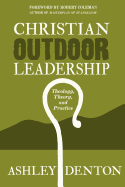 Christian Outdoor Leadership:
Theology, Theory, and Practice
Ashley Denton (Smooth Stone Publishing) $24.95 There is literally no other resource like this, a great study
of leadership and disciple-making, outdoor education theory, and an inspiring look
at how evangelical faith can be enhanced as we mentor people in
experiential-based wilderness trips.
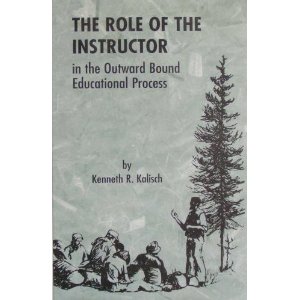 The Role of the Instructor in the Outward Bound Educational Process
Kenneth Kalisch (Morris Publishing) $21.95 A classic in the field, written by the legendary Christian leader at
Honey Rock Camp, now a professor of outdoor education at Montreat College in
NC. A must for serious educators.
 Playing: Christian Explorations of Daily Living
James Evans (Fortress) $15.00 This is a short, dense book, opening up
fabulous insights into why it is important that we play, and how
playfulness and leisure is part of the (revolutionary!) freedom of an
authentic spirituality of daily living.
 The Christian at Play Robert Johnson (Wipf & Stock) $20.00 Long considered a classic, this is a serious text exploring why we are called to playfulness, what it means to “recreate” and a theology of leisure. Important for outdoor educators and those pondering experiential education.
 Guide for Recreation Leaders Glenn Bannerman & Robert Fakkema (Bridge
Resources) $12.95 An easy-to-use
resource for both experienced and inexperienced recreation leaders, a bit of
theory and and look at why we play and use recreational experiences. It’s loaded with simple, fun
activities for all ages and various groups. Not designed for wilderness settings.
 How to Use Camping
Experiences in Religious Education
Stephen Venable & Donald Marvin Joy (Religious Education Press)
$15.95 Long considered a standard
in the field, using development educational insights and outdoors experiential education
theories. Although it gives a “nuts and bolts” overview, its hope is clear,
sounded out in their slogan “transformation through Christian camping.”
 Adventure and the Way of
Jesus: An Experiential Approach to Spiritual Formation Greg Robinson (Wood N Barnes
Publications) $19.95 This is a
fabulous book, highly recommended, created by a leader in faith-based
experiential education. Robinson
offers solid and useful insight on group dynamics, leadership, and
organizational development.
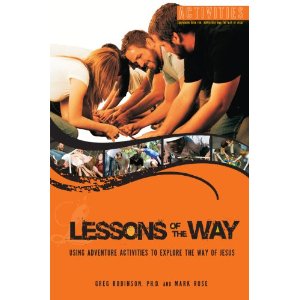 Lessons on the Way: Using
Adventure Activities to Explore the Way of Jesus Greg Robinson & Mark Rose (Wood N Barnes Publications)
$24.95 Currently the President of Challenge Quest, Greg is an expert in team
development and collective learning, a seasoned facilitator. He and Rose offer here a new collection
of some of the best, time-tested and fun activities for spiritual formation,
discipleship, and faith development in the outdoors settings. An essential resource.
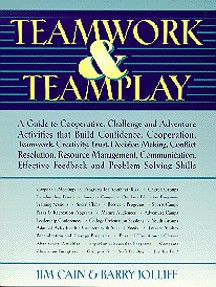 Teamwork & Teamplay:
A Guide to Cooperative, Challenge and Adventure Activities that Build
Confidence, Cooperation, Teamwork, Creativity, Trust, Decision Making, Conflict
Resolution, Resource Management, Communication, Effective Feedback and Problem
Solving Jim Cain & Barry
Jolliff (Kendall Hunt) $ From the
lengthy, fun, sub-title you get that this is a huge resource (over 425 pages!)
offering the best of what we know experiential education can accomplish. This is a very useful reference tool,
packed with lots of great ideas for both “teamwork” and “teamplay.”
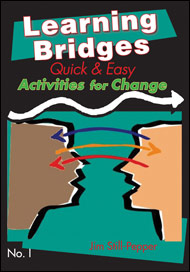 Learning Bridges: Quick & Easy Activities for Change Jim Still-Pepper (Chalice Press) $16.99 Although not designed for outdoor eduation, this sort of activities “bridge the gap” between people and can break down distrust, resistance and help young adults (or others) engage in experiential learning. Interactive, teachable.
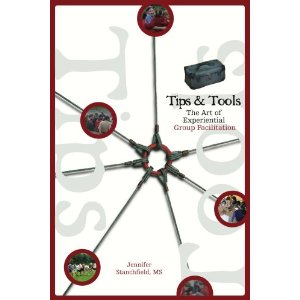 Tips and Tools: The Art of Experiential Group Facilitation Jennifer Stanchfield (Wood N Barnes) $27.95 Here is what it says on the back cover: Facilitation is an art, by its very nature an experiential practice. It
is an ever dynamic process of give and take, learning and development. Tips & Tools explores
the facilitator’s role in groups of all kinds and offers creative
tools and activities to enhance group experience, as well as sequencing
and reflection strategies to increase individual involvement and
growth.
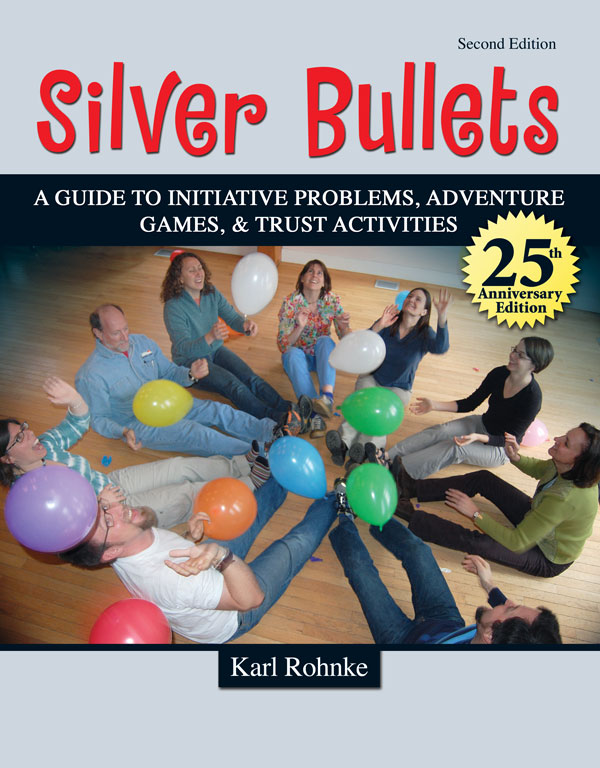 Silver Bullets: A Guide to Initiative Problems, Adventure Games, and Trust Activities Karl Rohnke (Project Adventure) $37.95 Truly a classic in the field, it is a treasure chest of games, initiatives, experiences, and activities to create group cohesion, cooperation and trust.
 Open To Outcome: A Practical Guide For Facilitating & Teaching Experiential Reflection Mari Rudy & Micah Jacobson (Wood N Barnes) $14.95 These two authors are renowned as trainers in their “five questions” process for debriefing experiential learning activities. Excellent for mentors, coaches, trip leaders who embrace this sort of community-based, educational philosophy.
Gold Nuggets: Readings in Experiential Education Jim Schoel & Mike Stratton (Project Adventure) $20.95 This is a little spiral bound, underground classic, prepared by Project Adventure outdoor educators, reflecting on experiences they’ve had…
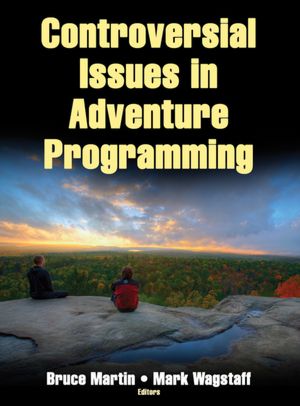 Controversial Issues in Adventure Programming Bruce Martin & Mark Wagstaff (Human Kinetics Press) $49.00 What an amazing resource for serious leaders. These respected authors have assembled a team
of more than 50 contributors from around the globe to reassess some of
the underlying assumptions on which adventure programming is based. They use a debate format and the conversation is important and lively.
Ethical Issues in Experiential
Education Jaspers Hunt (The
Association for Experiential Education) $29.95 A serious, professional monograph exploring the
complex ethical issues (secrecy, sexuality, risk, environmental care, etc.)
that come up in experiential education.
 Beyond Learning By Doing: Theoretical Currents in Experiential Education Jay W. Roberts (Routledge) $41.95 The author is Professor of Education and Environmental Studies at Earlham College, and is long been both a scholar and practitioner of outdoors-based, experiential education. This is one of the more scholarly, foundational texts in the field, recommended for anyone serious about understanding the latest pedagogical theories applied to wilderness experiences. Roberts is widely respected in the field, and writes from a Quaker perspective.
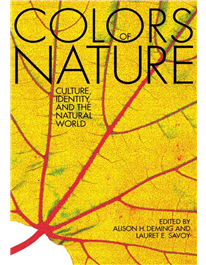 Colors of Nature: Cultural
Identity and the Natural World
edited by Alison H. Deming and Lauret E. Savoy (Milkweed Editions) $22.00 There is simply no other book in print like this;
it is unprecedented. This is an
important collection illuminating how people of color and various ethnic backgrounds and culture
“see” and experience nature. This
is essential reading for those leading multi-cultural trips or for anyone who
cares about bringing the broadest range of insights to environmental journalism. Very moving, in many ways.
OUTDOOR TRIPS
 Allen & Mike’s Really
Cool Backpackin’ Book: Traveling & Camping Skills for a Wilderness
Environment Allen O’Bannon & Mike
Clelland (FalconGuide) $14.95 Practical insight and fun illustrations on back country hiking.
Allen & Mike’s Really
Cool Backcountry Ski Book: Traveling and Camping Skills for a Winter
Environment Allen O’Bannon & Mike Clelland (FalconGuide) $14.95 Practical
insight and fun illustrations on wilderness camping and skiing.
Allen & Mike’s Really
Cool Telemark Tips: 123 Amazing Tips to Improves Your Tele-Skiing (revised
& expanded) Allen O’Bannon
& Mike Clelland (FalconGuide) $14.95 Practical insight and fun illustrations on wilderness skiing.
Allen & Mike’s
Avalanche Book: A Guide to Staying Save in Avalanche Terrain Allen O’Bannon
& Mike Clelland (FalconGuide) $14.95 Practical insight and fun
illustrations about a matter of utmost seriousness.
 Cave Exploring: The Definitive Guide to Caving Technique, Safety, Gear, and Trip Leadership Paul Burger (Falcon Guides) $15.99 There are many good books that serve as an introduction to caving; we suggest this one because it does have some helpful material on leading trips.
 Rock Climbing: Mastering Basic Skills Craig Luebben (Mountaineering Books) $22.95 One of the standard books, written by a master teacher (and leader in the American Mountain Guide Association) including not only skills and exercises, but comments on safety, understanding hazards, risk management, group trips, and other helpful material for outdoor leaders.
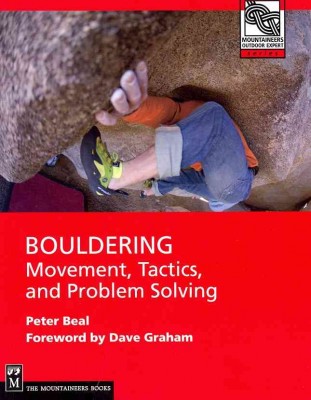 Bouldering: Movement, Tactics, and Problem Solving Peter Beal (Mountaineering Books) $18.95 Laden with pictures, this is an ideal book for anyone interested in the art and skills of solving boldering problems. There aren’t many books of this sort and we are happy to recommend this one, which includes photos, illustrations and 10 useful strategy charts.
 Mountaineering: The Freedom of the Hills (8th edition) The Mountaineers (Mountaineers Books) $29.95 This is considered a, if not the classic for all climbing enthusiasts. A must-have for any aspiring mountaineers library. Almost 600 pages, 7 x 9 with over 425 pictures.
 The Backpacker’s Field
Manual (Revised and Updated) Rick Curtis (Three Rivers Press) $16.00 This hefty, important book would be a
bargain at twice the price as it is jam-packed with everything you may need to
know (including much that you may not have thought of) before embarking on a
serious backcountry journey.
Comprehensive, classic, helpful for anyone learning about how to pack for a trip.
 AMC Guide to Outdoor Leadership Alex Kosseff (Appalachian Mountain Club Books) $19.95 Many customers have found this to be an exceptional introduction to all sorts of important matters for trip leaders: trip planning, group Dynamics, decision-making, risk management. Includes a section on leading youth.
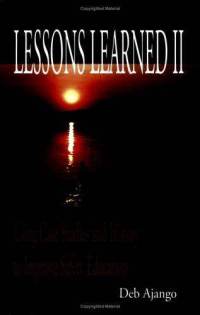 Lessons Learned II Deb Ajango (Watchmaker Press)
$22.00 Every outdoor educator or
group facilitator must know about risk management. The publisher says this about this useful volume: “through
careful examination of accident accounts, followed by analysis of what went
wrong and what went right, author/editor Deb Ajango helps readers better
understand how and why even seemingly best-laid plans sometimes fail. Starting
with two in-depth case studies, the book explores how accidents happen, how the
resulting devastation affects participants and their families, and how the
ramifications of such incidents affect programs and employees…”
 Wilderness Ethics:
Preserving the Spirit of Wildness
Laura & Guy Waterman
(The Countryman Press)
$15.95 A compelling book
making a strong claim that even wilderness protection programs in the United States
are failing that which we call wilderness—in part because of so many who want
to enjoy it, and therefore it needs managed. This asks big questions of what we mean by the wilderness
experience and what we are hoping to preserve. The authors have lived for more than 25 years on a self-sufficient
homestead in Vermont.
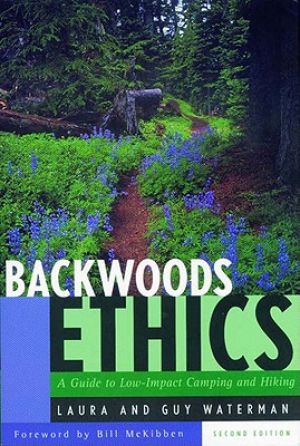 Backwoods Ethics: A Guide
to Low-Impact Camping and Hiking Laura & Guy Waterman (second edition) (The
Countryman Press) $15.95 With a foreword
by backpacker and environmental activist Bill McKibben, this is a lovely and
useful guide, at once visionary and practical. A classic.
 Soft Paths Rich Brame & David
Cole (Stackpole Books) $19.95 A
definitive book from NOLS (The National Outdoor Leadership School) now in an
updated fourth edition. A
must-read about “leaving no trace” and low-impact camping and hiking. We can ship any of the NOLS books, by
the way; their whole wilderness education series is excellent, including titles such as Wilderness Ethics, Backcountry Cooking, Wilderness Medicine, Wilderness Navigation, or River Rescue.
See their entire list here: http://www.nols.edu/books/. We got ’em.
THE PHILOSOPHY AND
THEOLOGY OF PLACE & LANDSCAPE
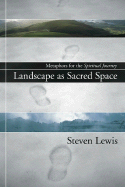 Landscape as Sacred
Space: Metaphors for the Spiritual Journey Steven Lewis (Wipf & Stock) $16.00 An essential, core book exploring how
to appreciate landscape, how to rethink spiritual formation in light of both
outdoor educational insights and postmodern theory. This brief work is a significant contribution to spirituality and theology that is exceptional and important. Nearly brilliant, reflective, insightful , this study draws on the serious work of Beldan Lane and articulates how land and place can help in spiritual formation. Physical spaces are named in the Bible–mountaintops, valleys, deserts, rivers–and these clearly serve as symbols on our journey, apt metaphors for moments in everyone’s life. Anyone interested in the outdoors and who enters into wilderness experiences will surely find this a helpful companion for thinking about what can be learned in creation, not so much about creation itself, but about our inner landscapes. From mountaintop experiences to spiritual deserts, this
helps us integrate God into daily experience, by exploring life’s landscapes.
Provocative and profound; very highly recommended for leaders.
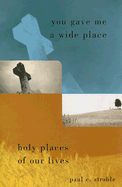 You Gave Me a Wide Place:
Holy Places in Our Lives Paul
Stroble (Upper Room) $15.00 This includes personal stories, exercises for
individual or small-group use, framed by an extended rumination on place, God’s
great gift of space, and how our identity is shaped by location. The titles comes from Psalm 18:36.
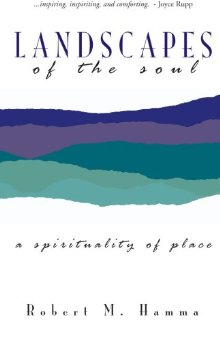 Landscapes of the Soul: A
Spirituality of Place Robert Hamma
(Ave Maria Press) $9.95 By drawing
on the Bible, psychology, and cultural studies, this prayerful Catholic
explores not only our inner lives, but our sense of place, home, geography and
locale. Is God present in certain
places? All places? Are some doorways to His presence? For anyone going to specific
places–even if for a visit–having a clear sense of God’s faithfulness to
locations is helpful.
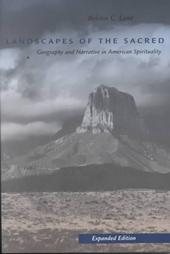 Landscapes of the Sacred:
Geography and Narrative in American Spirituality Belden Lane (Oxford University Press) $30.00 A highly-respected scholar offers three
new interpretive models for understanding American sacred space. Dense, serious, and yet at time
luminous. A must for mature
thinkers about the role of land, place, wilderness and American religious
traditions.
 The Solace of Fierce
Landscapes: Exploring Desert and Mountain Spirituality Belden C. Lane (Oxford University
Press) $17.95 One of the most
esteemed books among those who do serious reading on the geography of faith;
literary and smart and important.
The author tells of Biblical stories and of ancient monks and their
spiritual experiences of both deserts and mountains, even as he writes
exquisitely about his own hikes and wilderness experiences. Lane is a
historian, philosopher, outdoorsman and born storyteller. Classic.
 Where Mortals Dwell: A
Christian View of Place for Today
Craig G. Bartholomew (Baker Academic) $29.99 Richly informed by the history of theology and philosophy,
this is the premier study of this vital topic from a solidly Christian
perspective. No one has attended
to this topic as Bartholomew has, making this a one of a kind study. There are endorsements from the likes
of Bill McKibben and Norman Wirzba, who rave about the book’s singular vision
and exceptional importance.
Outdoor educators and wilderness enthusiasts care about the land, so
this is good for us; those who specialize in trips and being on journeys, too,
will benefit from this study of home and placemaking. How many theological books incorporate a study of maps and
topography? Wow.
 Earth Works: Selected
Essays Scott Russell Sanders (Indiana
University Press) $25.00 One of
the most esteemed essayists in America, a beloved writer and thoughtful author,
his voice is both prophetic and tender, caring about place, aware of the
nuances of story and landscape.
Known as a Mid-Western nature writer and environmentalist, Saunders’
wondrous prose is well worth knowing and this anthology is a beautiful way into his
powerful, reflective work.
 Ancient Practices: The Sacred Journey Charles Foster (Nelson) $12.99 Going on pilgrimage is an ancient religious practice, and this fine Christian thinker explores what it is about us that makes us want to “go” and be on journey. He pays little mind to the need for “a sense of place” and thinks the geography of faith is ever-moving as we hike, travel, explore and, yes, take intentional journeys of sacred pilgrimages. What a fun, provocative, and energetic book by a guy who has hiked all over the world.
EXPERIENCING GOD IN THE OUTDOORS
& THE SPIRITUALITY OF CREATION
 All Creation Sings: The Voice of
God in Nature J. Ellsworth Kalas
(Abingdon) $14.00 A wonderfully
clear, solid, upbeat reflective meditation on the wonder of creation, what we
can learn by attending to God’s speaking through it, as many Biblical texts teach. Most of us appreciate the beauty of God’s wonderful creation, but it takes more attentiveness and Biblical faith to belief that God reveals things to us by way of his natural world.
Very highly recommended.
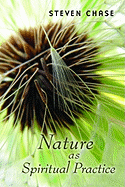 Nature as Spiritual Practice Steven Chase (Eerdmans) $18.00 One of the deepest and most insightful
studies of its kind, an innovative study on how we can seek God in nature,
being transformed by attentiveness to the movements and seasons and wonders of
creation. Chase weaves together
historic contemplative practices and contemporary nature writers…a bit heavy,
broad-ranging, profound.
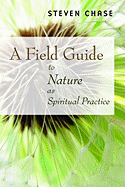 A Field Guide to Nature as
Spiritual Practice Steven Chase
(Eerdmans) $8.00 A companion book
to the above title, this practical resource gathers together additional
contemplative exercises and “nature practices” to echo the theory and vision
outlined in the primary text. Very
nicely done, helpful for those looking for advanced, mature guidance.
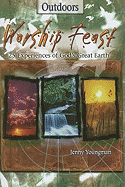 Worship Feast Outdoors: 25
Experiences of God’s Great Earth
Jenny Youngman (Abingdon) $17.00
If you are going on an outdoors trip, especially if you are going with
youth, don’t leave without this exciting and innovative guide to four different
sorts of outdoors worship experiences. These services include worship with water, worship with
wonder, worship with awareness, and worship with the seasons. Very creative and quite useful.
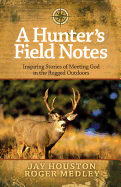 A Hunter’s Field Notes: Inspiring
Stories of Meeting God in the Rugged Outdoors Jay Houston & Roger Medley (Harvest House) $10.99 Obviously, this is for hunters, who
realize that there is more to hunting than just the harvest. This has some very helpful suggestions
for learning how to tell your own stories, explaining your own adventures, your
faith, and how unexpected incidents in the mountains have strengthened your own
faith. Set mostly amidst the Rocky
Mountains, hunting elk.
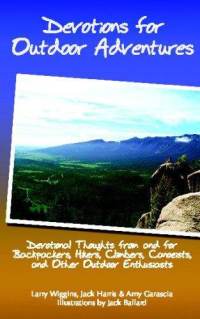 Devotions for Outdoor Adventures Larry Wiggins, Jack Harris & Amy Garascia (CreateSpace) $12.95 Created by friends who work in outdoor education, we are happy to promote this neat little paperback full of devotional thoughts from and for (as the subtitle puts it) “Backpackers, Hikers, Climbers, Canoeists, and Other Outdoor Enthusiasts.” These are solid evangelical reflections on the Word and the world, inspiring, insightful and perfect for the outdoors. Handsome pen and ink drawings of cliffs, crags, birds, and such are themselves worth meditation upon.
 God in the Yard: Spiritual Practice for the Rest of Us L.L. Barkat (T.S. Poetry Press) $15.00 This is a 12-week course described as “discovery and playing towards God.” Barkat is a fine memoirist and poet and here offers delightful, hopeful, very thoughtful meditations, mostly about paying attention to the amazing world around us. One reviewer suggested it is a blend between spirituality writer Richard Foster and naturalist Annie Dillard—quite a compliment! Ann Voskamp notes she is a writer “with a poet’s eye, arresting language and keen mind.” Not about the wilderness or adventure expeditions, but she does invites us to”see” and experience God in creation (as in one excellent section, about “sky.”)
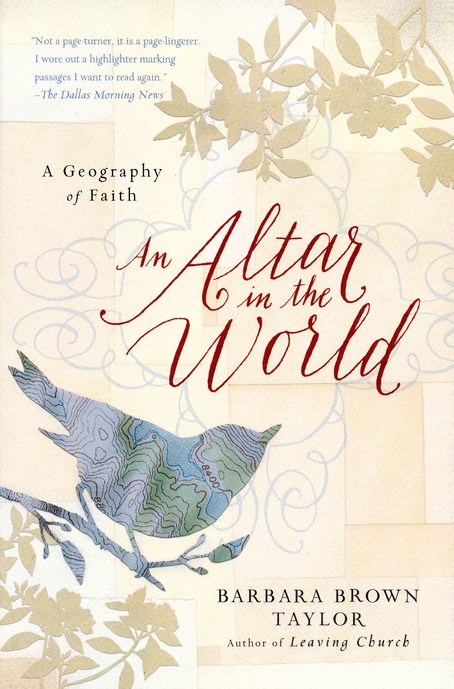 An Altar in the World: A Geography of Faith Barbara Brown Taylor (HarperOne) $14.99 This elegant and eloquent writer is honest, vivid, profound, about how faith is enhanced as we embodied practices of faithfulness which allow us to be attentive to God in daily living. Not all of this is about the out of doors, but some of it is; see especially her chapter about walking, another about physical labor (“The Practice of Carrying Water”) and a splendid chapter called “Getting Lost.” Wow.
 Water, Wind, Earth, &
Fire: The Christian Practice of Praying with the Elements Christine Valters Paintner (Sorin
Books) $14.95 Organized around
“The Canticle of the Creatures” by St. Francis of Assisi, this explores ways in
which praying with the natural elements can enliven our Christian spiritual
lives. The author is a Benedictine
Oblate sister, a beautiful writer, and a mature thinker about faith and
creation. Very useful as a guide
to growing closer to God in nature, and, specifically, praying about our
natural surroundings. Lovely.
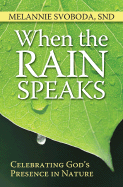 When the Rain Speaks: Celebrating
God’s Presence in Nature Melannie
Svoboda (Twenty-Third Publications) $12.95 Through this lovely collection of short devotions, Sister
Melanie helps us experience God through His good creation, beholding the
details of the glories there. As
we notice and attend to that which is before our eyes, we can increasingly
learn the habit of thankfulness and worship, deepening our contemplative walk
in God’s world. Very nice.
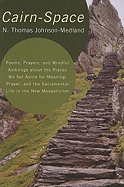 Cairn-Space N. Thomas Johnson-Medland (Resource
Publications) $17.0 0 Tom has been
involved in Christian camping and leading outdoor retreats for years, as a
pastor and poet he knows well how to evoke our heart’s desires and
concerns. He calls these poems and
essays “landmarks” which help us focus and remember God’s faithfulness. The cover says this includes “poems,
prayers, mindful amblings, about the places we wet aside for meaning, prayer,
and the sacramental life…” Nice.
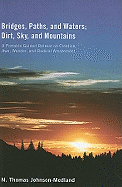 Bridges, Paths and Waters; Dirt,
Sky, and Mountains N. Thomas Johnson-Medland (Resource Publications)
$20.00 More reflections and poems
by an expert Christian leader in camping and outdoors ministry. He calls this a “portable guided
retreat on creation, awe, wonder, and radical amazement.” Who doesn’t long for greater gratitude
and wonder? Who wouldn’t benefit
from ruminations on beauty and meaning in our lives?
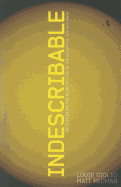 Indescribable: Encountering the
Glory of God in the Beauty of the Universe Louie Giglio & Matt Redman (Cook) $14.99 Neither author is a scientist or
wilderness expert, but they have avocations in astronomy and use their
instincts as worship leaders—preacher and musician, respectively— to see
God’s great grace and glory in the wonder of things. There is some good natural science here, some basic
astronomy that any outdoors-lover will appreciate, but it is mostly developed
for the sake of devotion and praise.
Wonderful.
 Earth’s Echo: Sacred
Encounters with Nature Robert
Hamma (Sorin) $15.95 The author is a very fine, meditative writer and a serious observer of all
sorts of aspects of God’s good creation, and invites us in this small, quiet
book to attend to the holy ground around us. Called “awe-inspiring” by Annie Dillard. It is a beauty to hold, a square-sized paperback.
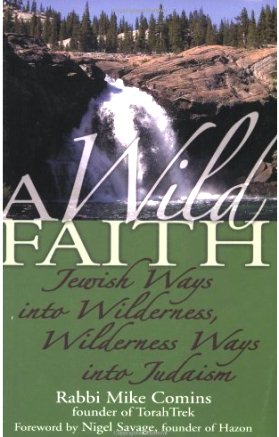 A Wild Faith: Jewish Ways into
Wilderness, Wilderness Ways into Judaism
Rabbi Mike Comins (Jewish Lights) $16.99 Although explicitly Jewish,
even those who are not Jewish will find this to be quite interesting, insightful, and packed
with ideas about meditative walking, wilderness blessings, solo solitude
practices and other wilderness-savoring means of faith development. One reviewer said it is “part holy book, part
handbook.”
 God in the Wilderness:
Rediscovering the Spirituality of the Great Outdoors with the Adventure Rabbi Jamie Korngold (Three Rivers Press)
$12.99 What a lovely book. We can rejoice that almost anyone, from evangelical
Christians to those who don’t see themselves as religious at all can learn much from Rabbi Korngold’s creative thinking and
engagement with the Hebrew Bible—and her great skills as outdoor educator and
adventure trip facilitator. Very nice. And notice, “The Adventure Rabbi” is, in fact, a woman (in the Reform Judaism tradition.)
 Renewal
in the Wilderness: A Spiritual Guide to Connecting with God in the
Natural World John Lionberger (Skylight Paths) $16.99 The opening
story of this mid-life guy coming to experience God for the first time on a
wilderness trek with Outward Bound is itself worth the
price of the book. Lionberger, who had been thoroughly unchurched, found
himself drawn to Christ and eventually became ordained, commissioned to
help others experience God’s presence in the outdoors. He brings an
interfaith approach, from a mainline church setting, leading trips of
various sorts. Lots of stories make this easy to read and nicely inspiring.
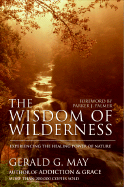 The Wisdom of Wilderness: Experiencing the Healing Power of Nature Gerald May (HarperOne) $13.99 May is a renowned spiritual director, a counselor and genteel, literary scholar. (He was often associated with his friends Parker Palmer and Henri Nouwan.) Who know he was an avid outdoorsman, and he writes here beautifully about how doing solo tenting trips–canoeing, encountering a bear, paying attention to creation’s awe–helped him through a very difficult time in his life. Well written, profound, and enjoyable.
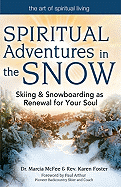 Spiritual Adventures in the Snow: Skiing and Snowboardering
as a Renewal for Your Soul Dr.
Marcia McFee & Rev. Karen Foster (Skylight Paths) $16.99 What a fascinating, fun book, making a
case that fun in the outdoors is compatible with a growing faith. Each of the authors are serious
outdoorswomen, and in each chapter they not only talk about their spiritual
lives enhance by winter sports, but interview others. From edgy Christian writer Anne Lamott to Olympic
medalists, this is packed with ideas, insights, faith-building exercises to be
done on the slopes.
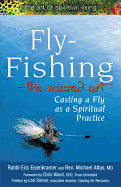 Fly-Fishing The Sacred Art:
Casting a Fly as a Spiritual Practice
Rabbi Eric Eisenkramer & Rev. Michael Attas (Skylight Paths) $16.99 Forget the jokes about a Rabbi and minister going into a
bar; here they go out to streams, explaining the allure and spiritual
potential, in fly fishing.
Beautiful, interesting, informative, with describing things from tie
flying to enjoying the flowing streams to working on river conservation.
Lovely.
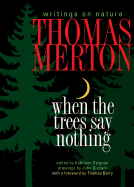 When the Trees Say
Nothing: Writings on Nature by Thomas Merton edited and compiled by Kathleen Deignan,
with sketches by John Giuliani (Sorin Books) $16.95 Thomas Merton is one of the most-respected Christian mystics
of the 20th century, a prolific, humorous, intense Trappist monk who
died in the late 60s and the environmental movement was taking off. These are writings of his, many from
early in his career, when he wrote about the beauty of nature, God’s presence
in creation, and how to stand in silence and awe before the world.
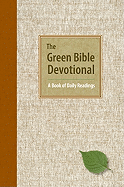 The Green Bible Devotional: A Book of Daily Readings taken from The NRSV Green Bible (HarperOne) $14.99 Taken from the “Green Letter” New Revised Standard edition, this includes short meditations from a wide array of fine Christian thinkers, leaders, activists. Easy to carry –and very uplifting.
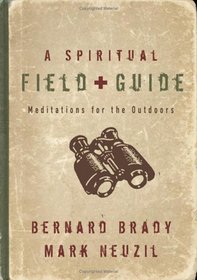 A Spiritual Field Guide:
Meditations for the Outdoors
Bernard Brady & Mark Neuzil (Brazos Press) $12.99 This may be our favorite daily
devotional, outlined specifically for either day hikes or longer treks. This is Biblical, inspiration, offering
Scripture and readings from classic Christian writers. Nicely done.
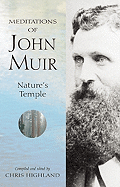 Meditations of John Muir:
Nature’s Temple complied by Chris
Highland (Wilderness Press) $11.95
Most evangelicals may wish that Muir was a bit clearer about some
things, but there is no doubt that he is a seminal figure in the great
tradition of American wilderness writing, and his most spiritual musings about God, nature, and his
reflections on many of the world’s most sacred Scriptures are brief, nicely
produced, and easy to carry into the woods.
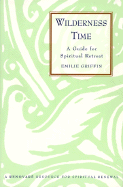 Wilderness Time: A Guide for
Spiritual Retreat Emilie Griffin
(HarperOne) $14.00 Produced by
Renovare, this is not about wilderness settings, but uses the metaphor of wilderness for any
intentional spiritual retreat.
Very useful.
OUTDOOR MEMOIRS AND NATURE WRITING
 Permanent Vacation: Twenty
Writers on Work and Life on Our National Parks edited by Kim Wyatt & Erin Bechtol (Bona Fide Books)
$15.00 Beautiful and informative
essays by park rangers, describing their work stewarding out parks, describing
the natural beauty, from permafrost to petrified forests. This volume focuses on parks from the
West.
 Wisdom Chaser: Finding My Father at
14,000 Feet Nathan Foster (IVP) $16.00 The son
of the famous spirituality writer (Richard Foster) has messed up his life,
realizes he needs to reconsider his own lifestyle and faith commitments, and,
mostly, must get to know his mysterious father. In a riveting mountain climbing memoir, father and son are
reconciled and new beginnings are envisions. This is great reading for anyone who enjoys a good adventure
tale; better for those wanting to see how God can use the stress of adventure
experiences to rebuild relationships, trust, and hope. Highly recommended.
 Surprises Around the Bend: 50 Adventurous Walkers edited by Richard Hasler (Augsburg) $14.99 Hasler is both a pastor and a hiker, and he has offered us this delightful gift: a compilation of various excerpts of the journals of many famous walkers (from Francis of Assisi to John Bunyan to Dietrich Bonhoeffer), their observations and insights, pleasures, adventures and, in many cases, spiritual insights. Arranged almost like a daily devotional: very nicely done.
 The Way is Made By Walking: A Pilgrimage Along the Camino Santiago Arthur Boers (IVP) $16.00 Although this pilgrimage along the El Camino trail is more of a spiritual practice than an adventure trip, the insights gathered as the merry band of folk travel this ancient trail are fascinating. Not a few backpacking trips into the wilderness have used this as a study book. Includes a nice foreword by avid day hiker and Bible scholar Eugene Peterson.
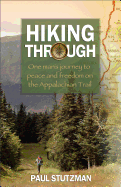 Hiking Through: One Man’s Journey
to Peace and Freedom on the Appalachian Trail Paul Stutzman (Revell) $13.99 When this was self-published it became an underground
classic, and we are happy to now have available this new edition. After Stutzman lost his wife from cancer, he heads out on the AT, realizing that a life-changing journey begins with a
single step… God’s grace and guidance become evident as the author tells of
this 2,176 mile trip through 14 states.
Good outdoor writing, fun adventure tales, but it is also about love, family, friendship,
courage, discovery, healing, and finding God beyond the trailhead. A page-turner, offering solid faith and
great insight.
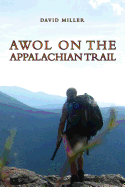 AWOL on the Appalachian Trail David Miller (Mariner Books) $14.50 This author is known among AT hikers as he writes and
updates the annual trail guide.
This is his own memoir of his through-hike, recently re-issued, complete with all sorts of stories, insights, observations
and suggestions for other backpackers.
Considered one of the best.
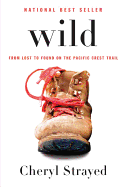 Wild: From Lost to Found on the
Pacific Crest Trail Cheryl Strayed
(Knopf) $25.95 One of the most
talked about hiking memoirs in years, this is both spectacularly written and
brilliantly conceived, as a woman who has truly made a mess of her life
(heroin! promiscuity!) does an extended through-hike for which she is notably
ill-prepared. She grieves the death from cancer of her hippy mother, her
violent father, her own descent into remarkably bad choices, and how her life’s
journey took her to the rugged PCT.
The writing is vivid, including some vulgarities a sex scene, so it
may not be for everyone. Still, for those who appreciate such a hard and finally
triumphant outdoor journey, it will thrill you (and perhaps remind you how long
backpacking trips can be brutal, glorious, and profoundly transformative.)
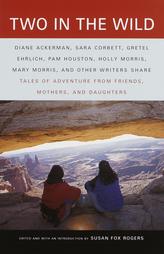 Two in the Wild edited by Susan Fox Rogers (Vintage)
$13.00 Women’s outdoors adventure writing is nearly its own genre, and
this is representative of some of the great stories, writing and
insights offered by gutsy women who lace up their boots and head out to
climb, hike, bike or travel all over the globe—together. Some of
these are pretty fun, a few quite tender, all are very well written.
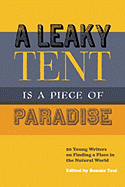 A Leaky Tent is a Piece of Paradise: 20 Young Writers on Finding a Place in the Natural World edited by Bonnie Tsui (Sierra Club Books) $19.99 This is not your father’s nature writing or sportsman’s guide. Here are edgy young writers doing essays about integrating nature into their lives, and how they struggle to balance travel and home, branching out and having roots, going far and eating local. Some are pretty outrageous, some inspiring, a couple pretty amazing. These short pieces are all by serious, under 30 writers, kicking back and telling it straight. Actually, it is pretty remarkable, although most are not at all religious.
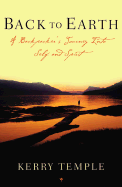 Back to Earth: A
Backpacker’s Journey into Self and Soul
Kerry Temple (Rowman &
Littlefield) $16.95 This is a great memoir, a story of a mid-life life lost,
and found. This eloquent book is
the story of the author’s return home.
As brilliant essayist Scott Russell Sanders says, it is “a braiding
together of remembered journeys and the new ones: from the Arctic to the desert
Southwest, from the Big Horns of Wyoming to the woods of Indiana, always in
search of the unnameable power that flows through every breath.” Temple has been the editor of Notre
Dame magazine, and has been published in Backpacker magazine.
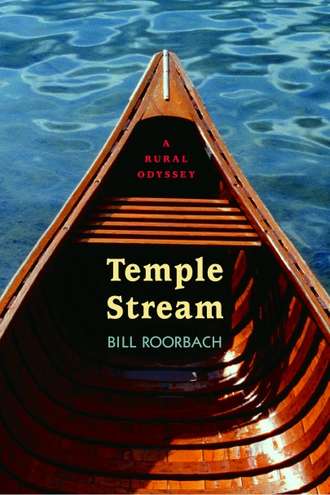 Temple Stream: A Rural Odyssey Bill Roorbach (Dial Press) $14.00 Some of this is a wonderfully written memoir of the author trying to learn to appreciate his own small town in rural Maine. There are great blue herons and yellow birches, but there are equally colorful characters at the local diner and a whole bunch of run down properties and the stories behind them. He writes lovingly—National Geographic Explorer says it is “a marvel in a genre that’s tough to master”—and his sense of place will make you homesick for Farmington, or a place like it. But here is why I list it now: Professor Roorbach is determined to explore a local stream from its mouth to its elusive source. He is a paddler, a nature writer, a curious explorer, and anyone who enjoys canoeing will surely love this grand, quiet book.
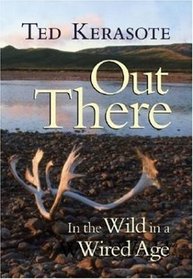 Out There: In The Wild in
a Wired Age Ted Kerasote (Voyageur
Press) $16.95 When this book came
out, cell phones and facebook were not as ubiquitous as they are now, and the
book was considered an excellent rumination on matters of remoteness and
solitude (in an age “strangling from its cyberwires.”) This is a sly look at
important matters as he tells of a wilderness paddling trip (from the Canadian
Northwest Territories to the Arctic Ocean) with a partner who wanted to stay in
touch with those back home.
Fascinating, and all the more urgent, today.
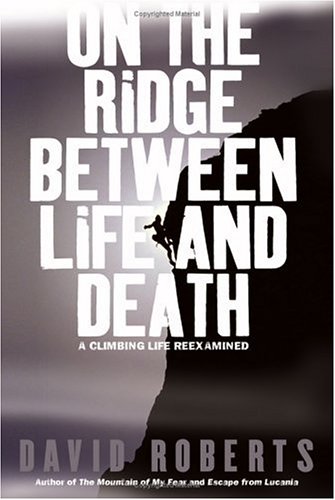 On The Ridge Between Life
and Death: A Climbing Life Reexamined
David Roberts (Simon & Schuster) $15.00 Jon Krakauer has exclaimed, “nobody alive writes better
about mountaineering and its peculiar adherents than David Roberts, my mentor
and friend…” And this is his best
book, candid and unflinching, and offering a seasoned, sober account of the
risks of the adventuresome life.
Stunning and provocative.
 Into the Wild Jon Krakauer (Anchor) $14.95 A serious and gripping reportage of a
passionate adventurer, a mountaineer and outdoorsman who grew unhinged from
society and died attempting to live off the grid. A sad warning of worldviews that are not viable and how passionate
concerns can sometimes turn harmful.
 Into Thin Air: A Personal
Account of the Mt. Everest Disaster Jon Krakauer (Anchor) $15.00 It would be unthinkable to not list
something of Krakauer on this list.
He is a breathtaking storyteller, a bit of a philosopher, and a profound
writer who has contributed much to this growing field.
 Soul Survivor: A
Spiritual Quest Through 40 Days and 40 Nights of Mountain Solitude Paul Hawker (Northstone) $15.95 A passionately honest account of a
man–he described himself as “restless and rudderless”—trying honestly to hear
the voice of God by going on a remarkable soul quest. Set in the treacherous Tararua Mountain range in New
Zealand.
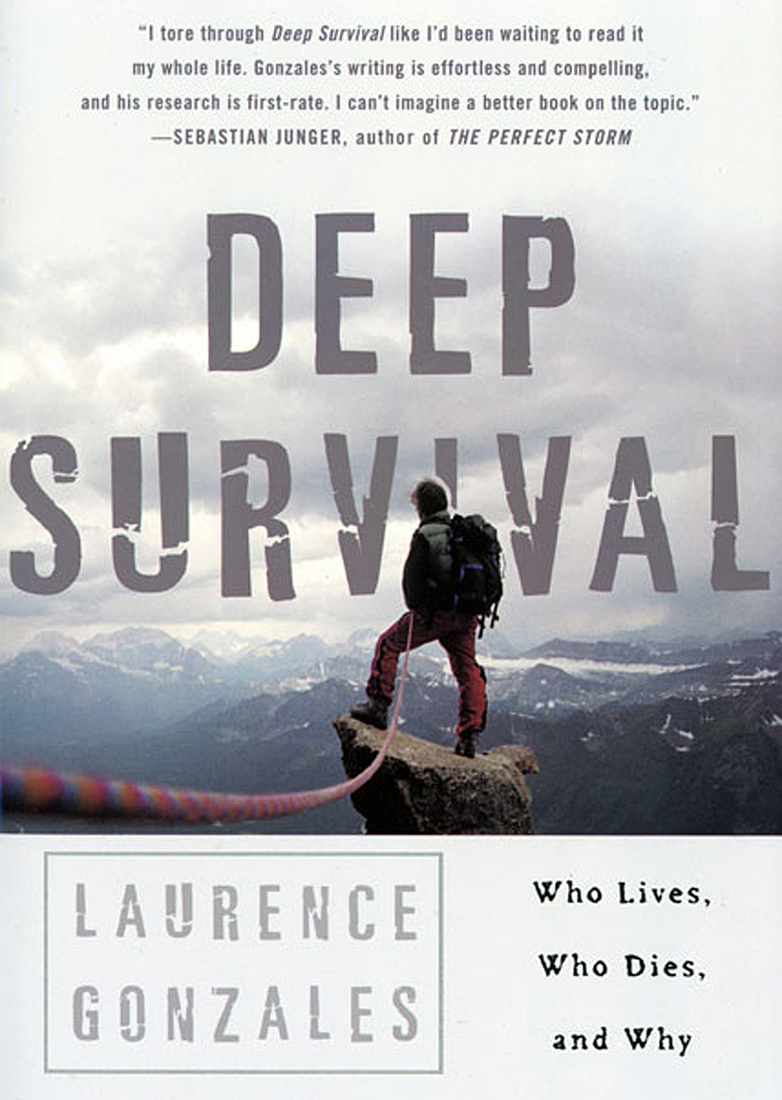 Deep Survival: Who Lives,
Who Dies, and Why Laurence
Gonzales (Norton) $15.95 Gonzales has perhaps studied this topic, and
interviewed more survivors of tragic accidents–from plane crashes in Peruvian
wilderness to mountain climbing trips gone wrong—and was perplexed why some
people (and some groups) found stamina and courage to endure, and who did
not. This is by all accounts
compelling reading, at times intense and even chilling. And, it is very
important for anyone undertaking potentially life-threatening adventure trips. Recommended.
 The Wilderness World of
John Muir John Muir, edited by Edwin Teale (Mariner) $15.95 Teale has given us a marvelous way into
the many writings of Muir, collecting some of the finer portions of several of
his classics. Newly issues, with a
very handsome cover, this is will be a beloved addition to any library of
historic wilderness writing or adventure memoir.
 Living on Wilderness Time: 200 Days Alone in America’s Wild Places Melissa Walker (University of Virginia Press) $17.95 This heavy paperback is made well, rugged, I suppose, like the content. Here the author is one the road, on the loose, in the wilderness (as one reviewer noted.) She thinks and lives outside the boundaries, and has been likened to the glorious and influential writer Rick Bass. What an odyssey, this mid-life woman, setting out to discover adventure in order to discover life. Risky, solid, rare.
 Nature and Walking Ralph Waldo Emerson & Henry David
Thoreau (Beacon Press) $13.99
These two important essays in one lovely volume, illustrate this distinctively
American, romantic view of the world and our observations of it. Nice to have these two together…
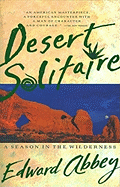 Desert Solitaire: A
Season in the Wilderness Edward
Abbey (Touchstone) $14.95 One of the great books of wilderness
memoir in all of American literature, Abbey tells of his years as a park ranger
in Utah. Mystical, candid,
outspoken, he was an old time curmudgeon and radical naturalist, struck by his
solitary life and the raw beauty of the red rock landscape.
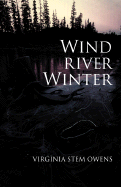 Wind River Winter
Virginia Stem Owens (Regent College Press) $19.95 This memoir is achingly
beautiful as Stem Owens, one of our finest contemporary Christian writers (who
is a keen observer of nature, and has written a previous book on quantum
physics) takes us into the beauty and mystery of watching the world of the
desolate Wind River mountains of Wyoming.
Beautiful language, profoundly Christian, excellent insights or reality
and grace in a fallen world.
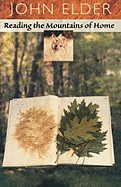 Reading the Mountains of Home John Elder (Harvard University Press) $24.95 This is a splendid book, important and enjoyable on many levels. Firstly, it is a memoir of a set of day hikes near the author’s beloved Vermont county. Elder is a professor of enviromental literature at Middlebury College, and he is actually doing a series of outdoor experiences following the general plot of a rare Robert Frost poem (which has him getting lost, building a canoe, etc.) As he hikes and observes both poem and landscape he concludes that it is important to know your own locale. This is, as he explains, a huge controversy within American nature writers, conservationists and modern moutaineers: must we always go “out West” for the dangerous, rugged terrain, or might there be (as Thoreau chided Muir) wilderness in less dramatic locations? This is an argument for finding joy in the local, taking up outdoor adventure wherever we are, and not necessarily presuming that the best experiences are the most dramatic or far-away. For anyone who loves well-written stories, a bit of poetry, some New England geological lessons, and a wonderful insight about “reading the mountains of home.”
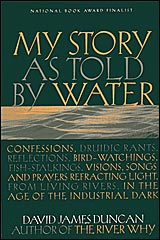 My Story as Told By Water David James Duncan (Sierra Club Books) $16.99 I hope you know his intriguing, spiritually-based, hilarious novel The River Why (about, among other things, fishing.) Here, in a series of chapters–some long and serious, some short and creatively crafted–the passionate writer tells of his love affair with creation, rivers, lakes, and other bodies of water. The subtitle reads: “Confessions, Druidic Rants, Reflections, Bird-watchings, Fish-stalkings, Visions, Songs and Prayers Refracting from Light, From Living Rivers, In the Age of the Industrial Dark.” Oh yeah.
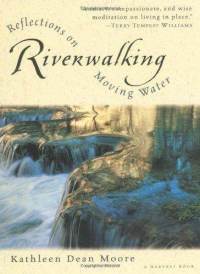 Riverwalking: Reflections on
Moving Water Kathleen Dean
Moore (Harcourt) $13.5 Moore is one of the great nature
writers of our time. As Bill McKibben
writes of its importance he says it is a “new kind of nature writing, one where
the outdoors is in dialogue not only with our innermost souls but without
families, our relationships, our lives.
Something powerful is at work here.” Moore is a professor of philosophy
at Oregon State University and tells of her canoing, ocean kayaking, night paddling. She is luminous, moving, smart, and quite a rugged outdoors person.
 Pine Island Paradox: Making Connections in a Disconnected World Kathleen Dean Moore (Milkweed Editions) $16.00 This is, quite simply, one of my all time favorite books, inspiring and moving, eloquent and profoundly insightful, even as she tells fabulous tales of her beloved hikes and camping trips and writing projects, conjuring up the beauty of nature, the meaning of the cosmos (she’s a philsopher, after all) and her daily work as a college prof, mother, and wife, who lives in an ordinary neighborhood. Captivating and provocative and truly lovely, full of deep insight and wonder-full lines.
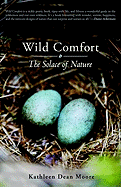 Wild Comfort: The Solace of Nature
Kathleen Dean Moore (Trumpteter) $15.95
Dense, rich, ruminations on the power of nature to console and comfort
us in times of grief and disruption.
It is both a naturalist’s handbook and a memoir about her own hikes and
insights, full of wisdom and heavy truth, maturely written.
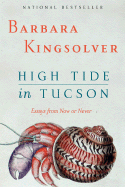 High Tide in Tucson: Essays from
Now or Never Barbara Kingsolver (Harper) $13.00 Many readers enjoy the wonderful novels of Ms Kingsolver, but she is
a gifted, passionate essayist, as well. These
are delightful and challenging, informing us about details of nature, science,
community and place. Theses are
pieces to be savored and pondered and acted upon. Fabulous!
 Lessons of the Wild: Learning
from the Wisdom of Nature Edwin L.
Anderson (Wipf & Stock) $19.00
This is a profound study of how we can find ourselves, especially during
times of transition (as we age) as we take up our place in nature. The author is an expert wilderness
coach, having spent years in the great parks of the American West. Drawing on classic nature writers and
contemporary authors (like Gerald May and Parker Palmer) and some Christian
spirituality (Merton and the like) he weaves his stories of growth and insight,
found in the wisdom both strong and gentle from the wilderness.
 Jesus, History, and Mt. Darwin:
An Academic Excursion Rick Kennedy
(Wipf & Stock) $14.00 Kennedy
is a professor of history at Point Loma Nazarene University and here he gives us an extended essay
in the genre of Thoreau’s travel-thinking essays. It is the story of his three-day climb into the Evolution
Range of the High Sierra mountains, nearly fourteen thousand feet. (Yes, the
range is named after the famous evolutionary thinkers, and he is indeed
climbing Mt. Darwin.) In this
wide-ranging study, he ponders the meaning of education, the nature of his work
as a Christian in higher education, the reliability of the claims of Jesus in
the gospels, and, of course, natural history. A stunning reminder of humility, the importance of science,
all told amidst a narrative of mountain climbing.
 Sea Fire: Tales of Jesus and
Fishing Irene Martin (Crossroad) $19.95 This is really surprising, part detective
story, part Bible study, part cultural history of the fishing communities of
the Sea of Galilee. Martin is an
Episcopal priest, New Testament scholar and a life-long fisher in the Pacific
Northwest. A bit academic, but could be fun to read for those who love fishing.
 Early Spring: An Ecologist and
Her Children Wake to a Warming World Amy Seidl (Beacon Press) $15.00 Beautifully written by a biologist mother (“with the mind of a
scientist and the heart of a mom.”) This explores the intricacies of nature and its assault in her own
region, which and her family notice in their walks in the woods, their work in their garden and in conversations with their neighborhood. Eloquent, touching,
inspiring. It is beautiful how a person can notice so very much, and care so deeply.
 Teaching a Stone to Talk:
Expeditions and Encounters Annie
Dillard (HarperCollins) $13.00 Not
every nature writer has won a Pultizer Prize, and fewer have gotten back cover
blurbs from the great Edward Abby, who likened her to Thoreau and Emily
Dickinson. What a wide-ranging
collection of thoughtful essays, mature, mysterious, interesting.
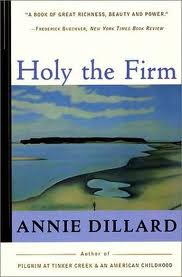 Holy the Firm Annie Dillard (HarperCollins) $13.00
Living on an island in the Puget Sound, this Pulitzer Prize winning author—raised
a Presbyterian in Pittsburgh—ruminates on life, beauty, violence, creatures
safe and wild. Called “a rare and
precious book” by theologian Frederick Buechner in the New York Times.
 For the Time Being Annie Dillard (Vintage) $13.95 Further essays by the exceptionally
talented and profound philosopher, cultural critique and nature writer. Can we discover wonder in even the
darkest and most remote of life’s corners? One reviewer called her “a verbal
street fighter in the back alley of the greatest human mystery.” Well, maybe so, but she is an elegant
one, at that.
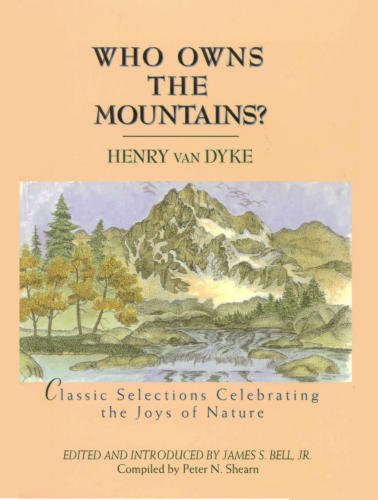 Who Owns the Mountains? Classic Selections Celebrating the Joys
of Nature Henry van Dyke (Northfield/Moody Press) $14.00 At the turn of the century that took us
into the twentieth, Van Dyke was a literary star, especially known for his beautiful The
Story of the Other Wise Man. A
dedicated Christian and renowned outdoorsman, this collection offers his stories,
poems, and essays of fishing for salmon in Quebec, experiencing the folk lands
of Scotland, hiking the Franconia notch in the White Mountains of New Hampshire and more. Beautifully realized, pleasant and uplifting.
 The View From Lazy Point: A Natural Year in an Unnatural World Carl Sanfino (Picador) $18.00 This award-winning work is considered one of the great books of natural history in the 21st century, upbeat, interesting, hopeful, even as he describes birds and water creatures all over the globe, fish and fowl whose habitats are threatened by global climate change. Sanfino waxes philsophical, a deeply caring, moral, and enjoyable scholar and outdoorsman, although he makes it clear that he does not believe God. Still, there is much inspiring here, and much enjoyable reading, especially for those who love birding or who enjoy lovely descriptions of beach and wetland ecology.
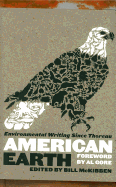 American Earth: Environmental Writings Since Thoreau Edited by Bill McKibben (Library of America) $40.00 I cannot tell you how solid this sturdy hardback is, with ribbon marker and solid pages full of the best nature writing of our recent centuries. Essential writings from Walt Whitman to John Muir, Frederick Law Olmsted to Teddy Roosevelt and Gifford Pinchot; Aldo Leopold, John McPhee and Paul Hawkens and Buckminister Fuller. There are those who we ought to have on our shelves: E.B. White, John Steinbeck, Rachel Carson, Edward Abbey, Annie Dillard, and a few surprises (P.T. Barnum, Woody Guthrie, Lyndon Johnson, Philip K. Dick) and some contemporary classics such as Wendell Berry, Mary Oliver and Barbara Kingsolver. Happily, a few important theologians are included such as Cal DeWitt, a fine evangelical voice. The introduction to each writer’s excerpt is exceptionally useful and are themselves an education in literature, science, ecology, and beauty. We cannot recommend this enough.
CHRISTIAN PERSPECTIVES ON CREATION CARE
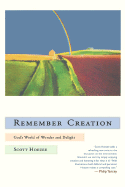 Remember Creation: God’s World of Wonder and Delight Scott
Hoezee (Eerdmans) $15.00 This is basically a set of sermons, but, oh,
what delightful and well-crafted sermons they are! Without being overly
political, Rev. Hoezee reminds us that the ecological crisis is at first
theological: God loves the creation He made and things like species
extinction take away some of the glory and delight that God desires. A
moving, basic, book of solid Biblical reflections on why we should enjoy
and care about the integrity of creation.
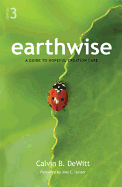 EarthWise: A Guide to Hopeful Creation Care Cal DeWitt (Faith Alive) $14.99 This is a fabulous, insightful, very useful Bible study guide with short chapters, incisive, rich ideas, and good study questions. The best little paperback study of it’s kind, written by a legendary evangelical, scientists and outdoorsman. Recently updated. Great for studies on the trail or camp.
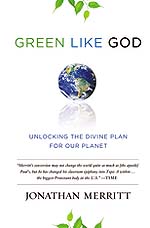 Green Like God: Unlocking the Divine Plan for Our Planet Jonathan Merrit (FaithWords) $16.99 Merrit is a popular young voice of
engaging evangelical faith, an emerging leader in Southern Baptist circles, and
a great voice for Biblical orthodoxy applied creatively to the environmental
crisis. There are many books
reflecting on environmental issues from a Christian perspective, and this is
one of the best, most basic, and yet insightful ones. A great read! Highly recommended.
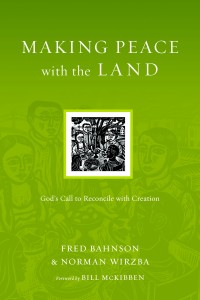 Making Peace with the Land: God’s Call to Reconcile with Creation Fred Bahnson & Norman Wirzba (IVP) $15.00 This is part of the remarkable series of books about reconciliation published by IVP and Duke Divinity School’s Center for Reconciliation. And it is truly one of the very best, a moving and nicely written study of God’s reconciling work bringing together all things on heaven and Earth. From serious study of unsustainable agricultural practices to daily living in alternative communities, this splendid study helps us appreciate creation and embody stewardly lifestyles, aware of God’s great care to bring healing to the land itself. Highly, highly recommended. Forward by Bill McKibben.
 For the Beauty of the Earth: A Christian Vision for Creation Care Stephen Bouma-Predigar (BakerAcademic)
$25.00 This is, in our opinion, the
most important book yet done on a uniquely Christian perspective on the environmental crisis and the Biblical call to creation
care. Very thoughtful, serious,
and essential. A must-read for
anyone who cares for the earth and appreciates her beauty and wants a profound understanding of our times. Some of this is nearly poetic, but much is solid environmental science, informed by great Biblical insight. Bouma-Predigar is a popular teacher at Hope College.
 Tending to Eden: Environmental Stewardship for God’s People Scott Sabin (Judson Press) $18.00 Again, there are many great books on
creation care, and we are listing just a few essential ones here. This
is indeed one of the very best,
bringing together various streams of thought from several disciplines,
written
with candor and great care. The author is an energetic leader, not the
director of Plant with a Purpose, a Christian relief and development
organization. Very highly recommended.
 Green Revolution: Coming Together to Care for God’s Creation Ben Lowe (IVP) $15.00 We suggest this for several reasons, one of which is that it
shows the fabulous work being done in this field throughout the consortium of
Christian Colleges and Universities schools.
That is, there are fantastic examples of faith-based, evangelical activism from
places like Wheaton, Messiah, Gordon, Calvin, Seattle Pacific and the
like. Well written, informative,
inspiring. A must!
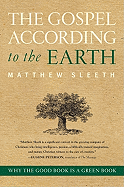 The Gospel According to the Earth: Why the Good Book is a Green Book Matthew Sleeth (HarperOne) $22.99 Dr. Sleeth, of Asbury KY, is known for his great, little Serve God, Save the Planet (Zondervan; $14.99) and this is his more mature, ecumenical manifesto on why Christians simply must actively attend to and care for the beauties of the creation. There is some very insightful Biblical study here, and tons of great information.
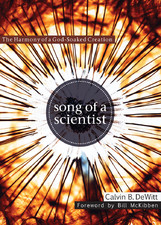 Song of a Scientist: The Harmony of a God-Soaked Universe Cal DeWitt (Square Inch Books) $14.99 DeWitt has been an evangelical, Reformed voice in the movement for Christian creation-care for decades and in this recent book he shares his own faith, his love of Scripture, creation, enviromental science, and offers keen insights about how it is all integrated together. Very nice, insightful but not difficult reading at all. Highly recommended.
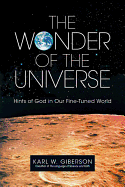 The Wonder of the Universe: Hints
of God in Our Fine-Tuned World Karl
Giberson (IVP) $16.00 One of the
great scientists working in the Christian tradition (and co-founder of the BioLogos)
is renowned for his Science & Religion Writing Workshops at Gordon College
(and his much-debated book, Saving Darwin.) Here, like a detective sleuthing out the greatest mysteries
of all, he shows how great scientists are exploring the wonders of nature. From modern cosmology to the history of
science, from the beauty of the stars to the details of physics, this is a
delightful, if serious, overview of how to see creation as the theater of
God.
SPECIALDISCOUNTany book mentioned
1O% off
order heretakes you to the secure Hearts & Minds order form pagejust tell us what you want
inquire here
if you have questions or need more information
just ask us what you want to know
Hearts & Minds 234 East Main Street Dallastown, PA 17313 717-246-3333


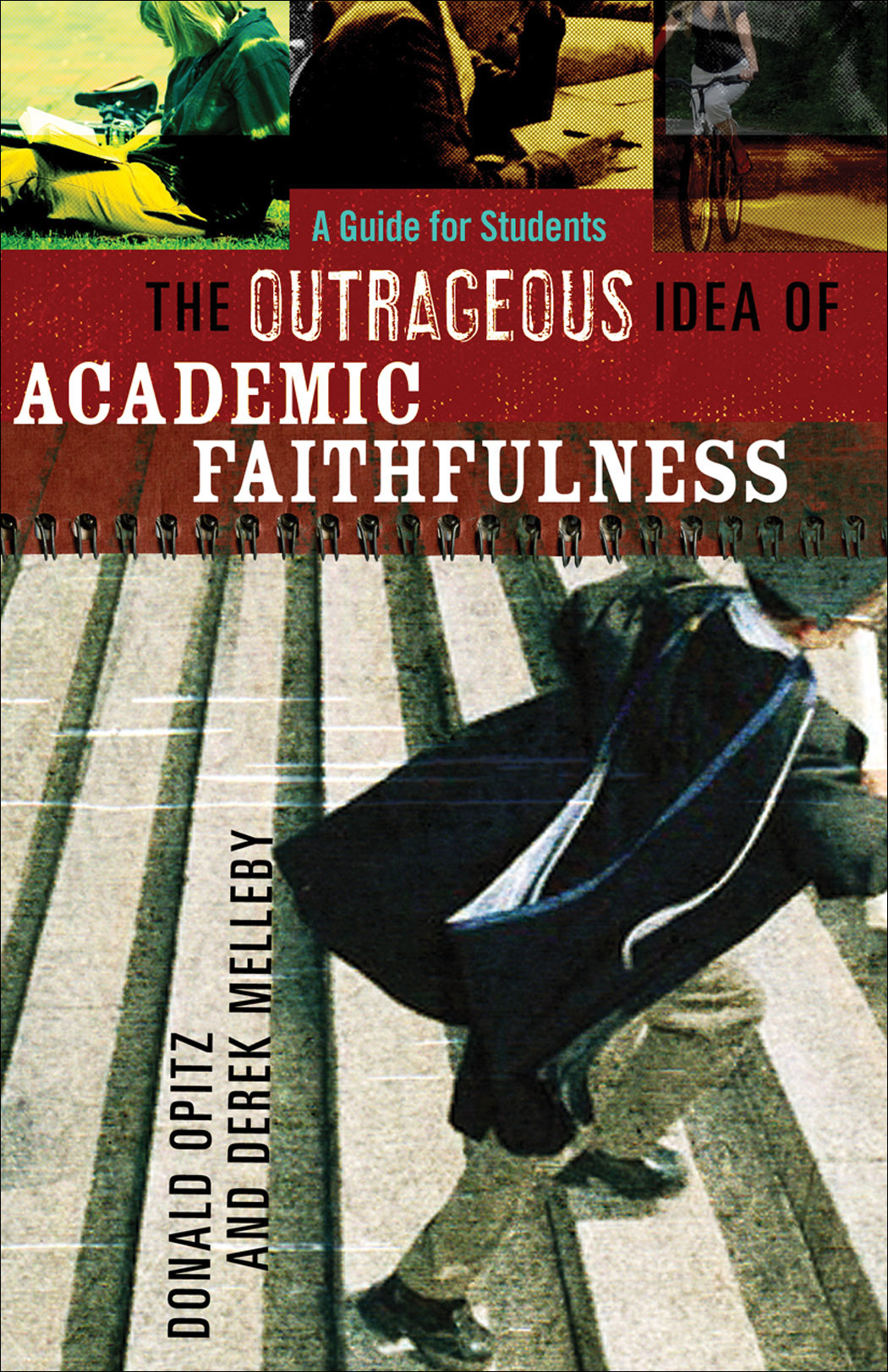 (Brazos; $13.99) should be in a care-package sent to every Christian college student you know! It is so good and not at all difficult to read. After they read that, they should read the truly lovely, elegant and very insightful Engaging God’s World: A Christian Vision of Faith, Learning and Living by Cornelius Plantinga (Eerdmans; $16.00.) If you want to order either, you could give us their addresses and we will send ’em for you with a nice note tucked in…
 by the American Dream. For them, he said, faith is sincere, but private, and that’s about as far as it goes. It is heart-felt, but doesn’t connect with their intellects much, unless, perhaps, they care about doctrine and will argue about that. God can convert even old-timers to a wholistic vision of a Christian perspective, he assured me, but it doesn’t happen very often. I thought, and still think, that he was jaded and needlessly cynical, but it does interest me that even in fields where professionals are used to doing continuing education—health care providers, public school teachers, business executives, mental health professionals, real estate sales people, college teachers, engineers, for starters—few ever ask us for Christian material that might influence their thinking about their field. I know there are sharp Christian friends who read widely and study up in their respective fields, but we hardly ever sell books helping to nurture the Christian mind across the various occupational areas. We just don’t. Was my friend right, most middle age folks are too set in their ways to think like Christians in their respective careers? Or maybe they’ve mostly figured it out and don’t need books about it? Or maybe they’ve just not thought about it much.
 To remedy this, we invite people—over and over and over—to see their daily lives as worship (“a living sacrifice” is how Romans 12:1 colorfully puts it.) To figure out what it looks like to worship with your body day-by-day, we must be “non-conformed” to the ways of the world (Romans 12:2). Further, we need fresh ideas and “renewed minds” — we must think about what we do in light of God’s views. To “take every theory captive” (2 Corinthians 10:5) means we must do at least some rudimentary thinking about the notion of vocation and calling and what it might mean to do our work unto the glory of God (Colossians 3:23, I Corinthians 10:31) and for the sake of the common good. We must see our work as worship, resist the typical assumptions prevalent in our field (insofar as they are distorted or wrong) and with God’s help develop new ways of thinking and new ways of approaching the craft of our tasks. How does that work itself out in your career or sphere of influence? Why don’t I hear much talk like this, except among young students?
 Connecting Sunday Worship to Monday Work by Tom Nelson (Crossway; $15.99.) Nelson is a brave pastor who started asking these very questions in his church, inviting more intentional thinking about the integration of faith and work. Kingdom Calling: Vocational Stewardship for the Common Good by Amy Sherman (IVP; $16.00) is a serious, thorough study of how our jobs can become avenues of social change honoring God and loving neighbor as we steward our vocations for the sake of the common good. And, of course, there is the excellent, eloquent classic, The Call: Finding and Fulfilling the Central Purpose of Your Life by Os Guinness (Nelson; $17.99.) A smaller Bible study guide that we often suggest is What Do I Do with My Life? Serving God Through Work by Kenneth Baker (Faith Alive; 10.99.) Smaller still is a great booklet about work, inexpensive and excellent, written by a Lancaster friend, Stephen Nichols. It is just called What Is Vocation? (Presbyterian & Reformed; $3.99.)
 , Timothy Keller from New York City, has a book coming out on work later this fall. It will be called Every Good Endeavor: Connecting Your Work to God’s Plan for the World and I am sure it will be excellent. It is due in November 2012 (Dutton; $26.95.) You can pre-order it now, if you’d like, by just typing it into our order form page. We will have it on sale for at least 20% off, for sure.
 philosophy. Bob Goff’s upbeat Love Does: Discover a Secretly Incredible Life in an Ordinary World (Nelson; $15.99) was a big seller. (And one gal called him up, but that’s another story.) We sold books about sex and dating, gender roles and relationships, basic books about coping with sadness, with sharing faith, books about how to pray. We sold some C.S. Lewis, which is nice. And of course about understanding the Bible better. Sure.
 marketplace. We sold books on the Christian mind, such as Think: The Life of the Mind and the Love of God by John Piper (Crossway; $15.99.) We sold books about making a difference in the world of poverty and oppression, about race and diversity, and general, but powerfully challenging books on discipleship like Radical: Taking Back Your Faith from the American Dream by David Platt (Waterbrook; $14.99.)
 Science and Christianity: Four Views edited by Richard Carlson (IVP) $20.00 This great book offers for serious Christians who have firm ideas of how their faith and Biblical orthodoxy relates to their work as scientists. None rehash the tired “faith vs science” debate since they all agree that faith and scie
 Psychology and Christianity: Five Views edited by Eric Johnson (IVP) $22.00 What a remarkable book, very useful to hear the stories and learn the methodologies of five different Christians who each–again, like above–agree that there is a uniquely Christian perspective and faith and psychology must be related. But how? Each presents their take and then each reply, so you really learn a lot of views, each making their case for how best to understand the way Christian faith influences their work. How does one think theologically and Biblically about counseling? For those in this field who are followers of Jesus and thereby mandated to develop the Christian mind and serve God faithfully (“nonconformed”) to not grapple with these sorts of questions is professional malpractice. This book isn’t the final answer but it well get you part way down the road.
 Church, State, and Public Justice: Five Views edited by P. C. Kemeny ((VP) $19.00 Thanks to the political science major who, despite his own rather developed opinions, was willing to pick up this book and hear five different schools of thought from five different Christian faith traditions, on what, exactly, constitutes good government and public justice and what good citizenship looks like. I love this book and, as I’ve suggested before, anybody with strong political opinions should at least know about the best thinking represented by Catholic, Baptist, Reformed, Anabaptist and mainline denominational social thinking. There are more basic views for ordinary citizens, but this is excellent for those wanting to compare and contrast the foundational thinking assumed by various folks in the public square. I hope you saw my politics-oriented post a few weeks ago where I highlighted a few other foundational resources of this nature. I can’t figure out how to explain the significance of this kind of thinking, but am confident that these kinds of books will be appreciate by those wanting to repent of fraudulent ideas and deepen their resolve to theological integrity—wherever they find themselves on the spectrum of legitimate options.
 Technopoly: The Surrender of Culture to Technology Neil Postman (Vintage) $15.00 We have more sophisticated and updated critiques of our hot-wired world, and I suppose critics like Jacque Ellul may be more theologically profound. We stock a number of thoughtful books on technology and engineering, many a bit critical of our technological milieu. And of course we have positive books, like the excellent volume edited by Stephen Monsma, Responsible Engineering: A Christian Perspective (Eerdmans; $26.00)
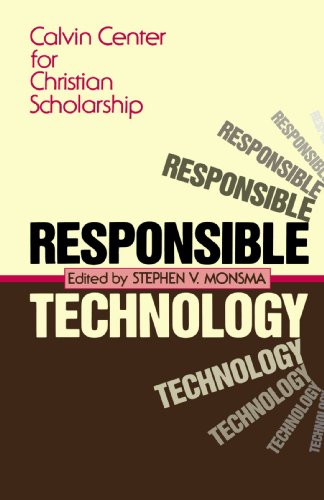 which is an interdisciplinary treatise on Christian views of technical design (kudos to the Calvin Center on Christian Scholarship for publishing this years ago!) Still, the passionate, clear-headed overview by the late Professor Postman is a great conversation starter and his call for us to be “loving resistance fighters” draws on our best desires to make a real difference to change things. Love it. It is increasingly hard to sell, since younger folks don’t see much wrong with reducing life to technique and find it hard to see the ideologies and idolatries in this sort of worldview. They appreciate Postman’s Amusing Ourselves to Death (about “public discourse in an age of entertainment”) but less so this one. I try.
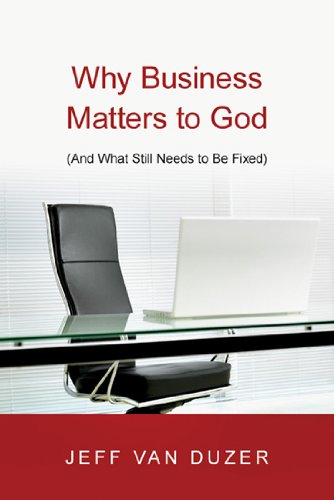 Why Business Matters to God (And What Still Needs to Be Fixed) Jeffrey Van Duzer (IVP) $20.00 How many business people have thought deeply about their work lives, about the role of profits and such? This author grew up presuming that greedy corporations were the major cause of damage in the world and now he leads a Christian business school. What a transformation, but he is still passionate about ethical principles and the call for business to serve the common good.
 The Crisis and the Kingdom: Economics, Scripture, and the Global Financial Crisis
 Christian Teachers in Public Schools: 13 Essentials for the Classroom Darlene Vickery Parker (Beacon Hill) $12.99 I was so happy to sell this to a few elementary ed majors who want to honor God in the classroom, being good teachers and thinking Christianly about everything from models of learning to the nature of the student to how curriculum develops to daily things like discipline, honesty, empathy and prayer. Nice.
 Metaphors We Teach By: How Metaphors Shape What We Do in Classrooms edited by Ken Badley & Harro Van Brummelen (Wipf & Stock) $19.00 This was a bit more academic, but for serious educators, thinking through how worldviewish metaphors color and shape how we think about teaching (and, particularly assessment) is remarkably insightful. If you are a thoughtful Christian teacher and have read some basic stuff about integration of faith and learning and developing a Christian perspective on teaching, this will provoke you to deeper consideration. What a great example of profound Christian scholarship, tools to resource faithful professionals serving God in the classroom.
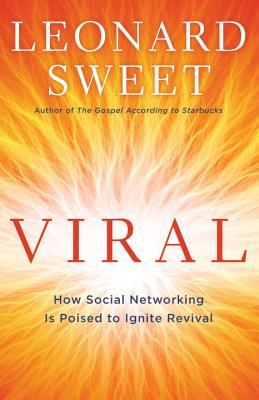 Viral: How Social Networking is Poised to Ignite Revival Leonard Sweet (Waterbrook) $14.99 Of course most young adults are pretty wired and I was a little sad to see many listening to music privately on their ipads—-OCBP used to be loud with music, shared communally. Having said that, these guys do realize they must be self-aware of their technological choices and we had a few great conversations about facebook and the like. Naturally, I mentioned Len Sweets insightful book about TGIF culture (Twitter, Google, ipad, Facebook.) This interactive book is not the last word on our post-Gutenberg/Google world, but it is a great start for the social-media generation.
 The Space Between: A Christian Engagement with the Built Environment Eric O. Jacobsen (Baker Academic) $22.99 Okay, I’ll admit, I didn’t sell this one, but I almost did. I don’t think there were any architecture majors or city planners at OCBP but one day guest heard about our “Christian worldview leading us to thinking faithfully in every academic discipline and every career area” and our unusual book selection he quipped that he bet I didn’t have anything on architecture. When I showed him this he couldn’t believe his eyes! I told him about Til We Have Built Jerusalem by Philip Bess, a thoughtful Catholic whose book is worth reading, the very heavy A Theology of the Built Environment (in the Radical Orthodoxy series) by Timothy Gorringe, and the caustic, but fun and very engaging (if rather irreligious) books by James Howard Kunstler, which I adore (The Geography of Nowhere, Home from Nowhere, City in Mind, and more.) I suggested, though, he start with Pastor Jacobsen’s primer (with the lovely forward by Eugene Peterson) called Sidewalks of the Kingdom: New Urbanism and the Christian Faith (Brazos; $22.00) I will be writing more about Jacobsen’s brand new Space Between, soon. If you know anybody working in this field, it is, I insist, a “must read.” If you know anyone who lives in a town or a village, a city or a….well, you get my point. Important for us all.
 Game Day for the Glory of God: A Guide for Athletes, Fans, and Wannabes Stephen Altrogge (Crossway) $9.99 I somehow mislaid a whole box of sports books, and was embarrassed not to have this on display at OCBP—this is certainly an area many enjoy and we have spiritual books for this arena, too. Found the box at the end—under that pool table–so really want to give this a shout out, now. It’s brief, passionate, and a great starter. For a more serious study, see Good Game: Christianity and the Culture of Sports by Shirl James Hoffman (Baylor University Press; $29.99) or Kneeling in the End Zone: Spiritual Lessons from the World of Sports by Josh Tinley (Pilgrim Press; $15.00.) I hope you know the riveting read InSideOut Coaching: How Sports Can Transform Lives by former Baltimore Colt and urban kids coach, Joe Ehrmann (Simon & Schuster; $24.00.) He has been dubbed the “most important coach in America, and this tells you why. Great!


 Ashworth (Rabbit Room Press; $12.00) and A Christian View of Hospitality: Expecting Surprises Michele Hershberger (Herald Press; $12.99) and The Spirit of Food: 34 Writers on Feasting and Fasting Towards God edited by Leslie Leyland Fields (Wipf & Stock; $30.00) Although OCBP students were college-bound, many are setting up apartments, perhaps for the first time. There were conversations about cooking, about shopping, about home economics, and a lot on hospitality. (They had had a teaching on that earlier in the summer, with a special attention to being hospitable to international students and others in need of a home away from home.) When I told them Andi Ashworth’s book is a favorite of Beth’s and mine (and that her husband, Charlie Peacock, produced the Civil Wars fine album) they perked up. I suggested these two books, among others (like The More With Less Cookbook) for basic home-making skills. I also noted that my favorite chapter in The Spirit of Food mentions, in passing, something strangely like OCBP. Denise Frame Harlan (“And She Took Flour”) deepened her cooking chops in that very CCO community in its early years. (She tells how she first heard tell of Robert Farrar Capon’s Supper of the Lamb during CCO new staff training, too, a book that continues to haunt her sacramental imagination!) That anthology may be a bit too literary and a bit too expensive for young st
 Lutheran scholar and writer Gene Veith, a great book simply called God at Work: Your Christian Vocation in All Of Life (Crossway; $15.99.) Interestingly (as Luther taught) our paid work is not our only vocation, and God is at work in and through us in many spheres. We wear many hats in our many offices—family member, citizen, employer or employee, church member, neighborhood dweller, and more. Anyway, Veith explores wonderfully this full-orbed view of our many callings, and how God commissions us to serve Christ’s Kingdom in these various spheres. It is not a hard book and I think it will be a helpful supplement to any you order from this list.


 in Pittsburgh next week, and we are grateful to the campus ministry organization, the Coalition for Christian Outreach (CCO) for their co-sponsoring and hosting the program at their training event, being held at Robert Morris University in Moon Township. You can see here the lovely poster that Ned Bustard of World’s End Images (Lancaster) created for us, that invites one and all to this book launch party, public lecture and reception with Dr. William D. Romanowski. Since most of our readers will not be able to join us in Pittsburgh, I wanted to go to some lengths to tell you about the author and the book, and our deepest reasons for caring so much about it. Skip to the end to order the book if you don’t want my backstory.
 lectures, and tried to get decent grades for God’s greater glory. Bill wrote a major senior paper, as I recall, on Christian perspectives on music theory. Unlike some of us–ahem, I’m not mentioning any names or confessing anything—he got an A+.
 movements, such as IVCF. Our interest in helping students relate faith and learning is seen in our regular promotion of books like The Outrageous Idea of Academic Faithfulness by Donald Opitz & Derek Melleby (Brazos Press; $14.99) or Cornelius Plantinga’s elegant and wise Engaging God’s World: A Christian Vision of Faith, Learning, and Living (Eerdmans; $16.00.) Romanowski and our crew would have given our right arms for resources like that when we were students. Of course, he went on to write a few books, too.
 He eventually wrote a book published by InterVarsity Press (still available, now with a new cover, issued by Wipf & Stock for $43.00) called Pop Culture Wars: Religion and the Role of Entertainment in American Life. When this came out the phrase “culture wars” was just starting to be used and he carefully showed how our very assumptions about popular culture are both influenced by our cultural situation and end up influencing how we think and talk about movies and rock music and such. The art of popular artifacts were being (mis)used by those with agendas in the so-called culture wars and he opened us up to a deeper understanding.
 e, perhaps embarrassed) may be helpful, especially as we think about young adults drifting from church, as explained so helpfully in the hugely popular You Lost Me by David Kinnaman (Baker; $17.99.) Kinnaman, you may recall, insists that research shows that young adults drift from church and faith often because (among other reasons) they sense the church is not interested in popular culture or very affirming of creativity and the arts. And, further, many interviewees—those who have left the church in their 20s—reported that they found the church disinterested in the notion of calling, vocation, work. Bill committed his ways to the Lord, worked hard to come up with a way to integrate his faith with his life passions and skills, and ended up making a difference in his field of influence (and was helped along the way by many who had a vision of the faith as a worldview and not just a religion, a way of life, not just a set of doctrinal assertions.) Not all of us will be as successful as Romanowski, and obviously most of us will not write books or become professors at a Christian college. But, still, his story is instructive–his taking up this vocation of doing scholarly work on pop culture and, now, film history. We can be thankful for his many years of serving young adults by helping them process the entertainment culture in which they are raised, the way he has spoken at scholarly conferences and church camps alike, offering a solid, refreshing understanding about being “in but not of” the world around us. In an age of ipods, streaming videos, ubiquitous celebrity news and a grassroots renewal of indie film and music, it seems that Bill’s insights about the very nature of culture and the role of the arts are needed now more than ever.
 Enter Eyes Wide Open: Looking for God in Popular Culture (Brazos Press; $22.99) which I believe is the very best book on the subject. Bill wrote this shortly after Pop Culture Wars and it was written for a more popular audience — even high schools kids have enjoyed it. In that book, informed by his more academic research, he offers insights for us all to figure out how to be both appreciative and discerning of the popular entertainments we enjoy. From Hollywood blockbusters to MTV, from HBO to classic rock radio, from video games to the latest advertisement talked about at the office water cooler, his principles help us enjoy and be discerning about the world of popular culture. Few books are as accessible and insightful, as serious and as playful, as balanced and wise, as Eyes Wide Open. And few books are as foundational, essential. Since the release of its first edition, and through the expanded second edition, there has been a virtual cottage industry of books around these themes. Some are quite good (I’m a fan of the witty and prophetic Everyday Apocalypse (Brazos Press; $18.00) by the very creative writer David Dark and the brand new, serious, Popologetics: Popular Culture in Christian Perspective by Ted Turnau (Presbyterian & Reformed; $19.99) Some are a bit reactionary—don’t watch this, don’t fall for that—and a few are a bit speculative, stretching hard to find some redemptive meaning in weird movies and odd-ball trends. Bill’s book is solid, helpful, interesting, and important.
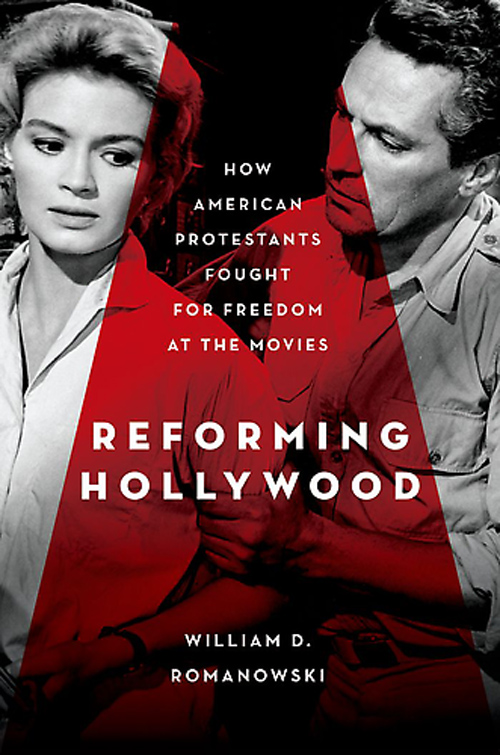 The new book, Reforming Hollywood: How American Protestants Fought for Freedom at the Movies (published by the prestigious Oxford University Press; $29.95) tells the story that he has been working on for more than a decade, a story that no one else has told heretofore. I am not just saying this, but it is truly seminal — anyone interested in the history of American cinema, anyone interested in the relationship of religion and film, will simply have to know this book. And some major scholars in the film history field say so, too.
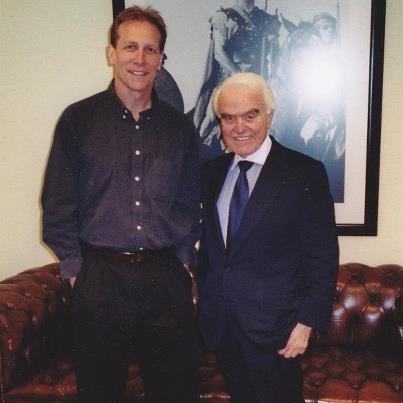 important head of the Motion Picture Academy, the influential and impeccable, late Jack Valenti, and he has long been friends with Reverend James Wall (who edited The Christian Century for a while, and was deeply involved in the ratings discussions in the 1960s and beyond for the National Council of Churches and who is a veritable treasure trove of information on the subject.) With these vital contacts, Romanowski gained access to even more quantities of previously unavailable letters and minutes of meetings and first-hand reports of behind-the-scene conversations. Maltby observes that “Romanowski reveals how Hollywood’s relationship to the Protestant establishment was crucial to debates around film regulation, and charts the erosion of its influence in the post-war years.”

 I put a bit of time in each month reviewing books for at least two monthly on-line journals, and I am grateful that they allow me to offer input to their already great work. Occasionally, I get to do a column in other places, too. Unless you subscribe to BookNotes (getting a rough version of it via email) or follow me carefully on twitter, you may not even always know when we do a new BookNotes post. Because these build up over time, telling a bit of the story of our work at Hearts & Minds (and because we really do believe that the books I mentioned are resources worth knowing about, maybe even buying from us) we thought we’d do a bit of a quick-link round up. Not to be confused with the nasty toxic stuff they put on crops, or the genetically modified “round-up ready” crops that are designed to take the poison. Ugh No, this is a good kind of round up. Get ready to read.
 In the June 29th issue of Comment, published by the gloriously heady but down-to-Earth think-tank

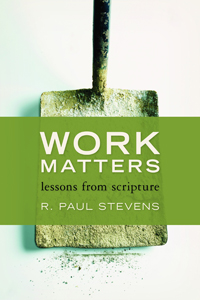 collection of letters by Abraham Kuyper from his early 20th century visit to America (published by Dordt College Press), a fabulous book comparing the worldviews and relationships of William Wilberforce and Thomas Jefferson by my very smart friend, Ray Blunt, called Crossed Lives, Crossed Purposes and a serious anthology called Hearing the Old Testament edited by really astute Bible guy Craig Bartholomew. Please
 including an elegant collection of essays by the wonderful writer Scott Russell Saunders, the brilliant study The Story-Making Animal: How Stories Make Us Human, and an easy-to-read, very wise, contemporary devotional on the Psalms. Then I tell of two titles by friends of mine, one fabulously inspiring one on global justice issues by attorney and activist Jay Milbrandt (Go + Do) and the popular A Faith of Our Own by Jonathan Merritt. Jonathan is an important author representing a new sort of young evangelical—mentioned in Gabe Lyon’s Next Christians, and you should at least look at my brief review commending his story.
 I also get to write each month for the thoughtful Christian think tank which explores faith-based citizenship, The Center for Public Justice (
 Prose.” That column of mine appears about once a month in their weekly Capitol Commentary, which is a very fine, faith-based, nonpartisan political newsletter. In late June, I briefly reviewed three really interesting books: a fabulous, introductory guide to thinking faithfully about politics, Honoring God in Red and Blue (Amy Black), a serious Biblical study that breaks new ground called Shalom and the Community of Creation (Randy Woodley) and the Oxford University Press current affairs title, The Price of the Ticket: Barack Obama and the Rise and Decline of Black Politics (Frederick Harris.)
 Wilberforce, Ray Blunt’s excellent Crossed Purposes, Crossed Lives, Rachael Maddow’s powerful, important (and really interesting) book on the expanse of American militarism, Drift: The Unmooring of American Military Power, and a quirky, theologically-informed collection of essays by Carl Trueman.
 hardly put down, realizing how important they are. I tell about scathing The New Jim Crow: Mass Incarceration in the Age of Colorblindness, then mention the critique of bad theology and cultural accomodation (in Catholic, mainline Protestant and evangelical movements) Bad Religion: How We Became a Nation of Heretics by Russ Douthat, and lastly announce the latest N.T. Wright book, How God Became King, which certainly offers solid Biblical study on the theme of the Kingship of Christ in the gospels (and how we’ve tended to miss that.) I heard CPJs founder Jim Skillen preach like that in the early 70s and it changed my life.
 At the Hearts & Minds website, as you obviously know, we publish the BookNotes blog at least once a week, most often offering discounts on new books, important announcements, reviews, lists. Some are long-winded, I’ve been told (moi?) but when I get a big head of steam up, and want to share a large list or a big idea or a ton of books, I usually post those at the longer-form monthly column, found by clicking the tab at the top of the website. For instance, in
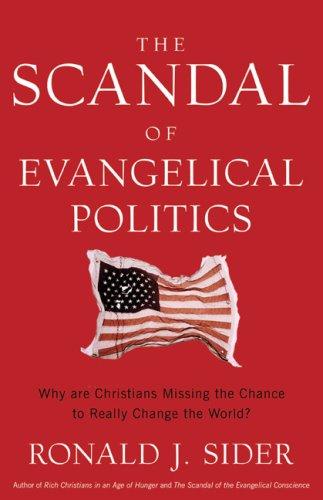 passion for nurturing the Christian mind and tried to suggest books that offer a very distinctively Christian approach to basic questions about government, the task of the state, the role of political ideologies, and why party loyalty is less important than honoring the Lordship of Christ over our political views and thinking through a coherent Christian political perspective. This is not a general list about public justice nor an exhaustive compilation of books on religion and politics. It is sort of my “best of” suggestions, essential to know about, vital to learn from, key resources that anybody who cares about faithful citizenship should consider. Come on, buy at least one and start a study group for this fall! It’ll serve our nation well, and God will be pleased. At least read the column and look through the list and see if any I tell about seem helpful. The one by Ron Sider, shown here, is an excellent book about the process of developing something that might look like a Christian view on an issue—the methodology of reading the Bible, developing a political philosophy, discerning the times, survey relevant texts, and doing contemporary social research with an open mind. If only the far Christian left and the religious right would take such careful steps, and then be humble about their tentative proposals. Well that’s the sort of stuff I talk about. Check it out.
 hosting a month or so ago the world-class, Church of England Bishop and Bible scholar, N.T. Wright. You can see me listening to him finish up, getting ready to highlight a few more of his books for our gathered crowd. This is right behind the shop, in the yard behind the rear entrance.
 I’ve occasionally suggested
 just the right person. We know some on-line followers are also in-store friends.

 HHS mandate forcing Catholics who work in partnership with federal programs to pay for contraception against their consciences, to the legality of colleges forcing campus ministry organizations to have people who do not share their convictions to be in leadership, there has been plenty of legal theories and legal rulings to consider. Not to mention Attorney General Holder being held in contempt for lying to congress, which, oddly, some think is justifiable and has caused a lot of heat on both sides. Some of us have ignored most of this, others are staying quiet, but reading, learning, keeping abreast, and others of us have been engaged in advocacy and debate. I’ve spent a few too many hours typing too furiously last week, so I know.
 We are glad for your permission to speak into your already noisy world, and hope this essay is helpful. One of our core convictions—part of the story that animates why we review and sell the books we do—is utterly germane: the Bible, we believe, teaches quite specifically that we ought not to align ourselves too closely with any worldly ideology.
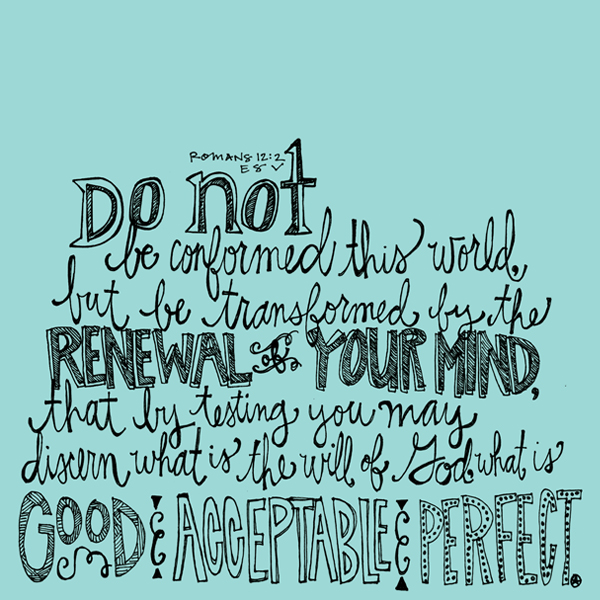 central to the possibility of being “transformed.” We dare not be “conformed”–squeezed in to the mold of, as Phillips puts it— to the typical ideas that are commonplace on the political left or the political right without a conscientious and intentional move to think things through in light of a B
 reason. Twain was once asked if he believed in infant baptism. “Believe in it?” he retorted. “Hell, I’ve seen it!” Well, hell, I’ve seen Christian Marxists and Christian Libertarians. I think they are wrong, in violation of the spirit of these two texts about the Christian mind. They should redoubled their reflections on Romans 12:1-2 and pray for a renewed mind so they can show off what God’s will really is, which isn’t Marxism or Libertarianism, at least not according to how the church has traditionally understood the Bible’s view of these things. But, having said that, Twain was right. There are folks who identify themselves that way and as incoherent as I find their views, some of them are my friends, and I honor them as such.)
 From Augustine to Luther, Calvin to Menno Simons, Wesley to Wilberforce to Witherspoon, from the new England Puritans (and Roger Williams, God bless his freedom loving soul!) to Catholic human rights leaders like Bartolome de Las Casas, from the famous Catholic encyclical Rerum Novarum to Populorum Progressio, from Abraham Kuyper in Holland to Martin King in Alabama, from the pronouncements of the National Council of Churches and our mainline denominations and the NAE’s “
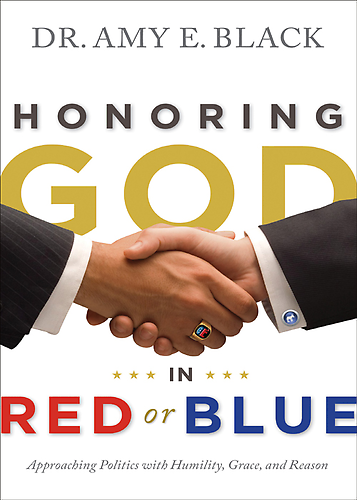 Honoring God in Red or Blue: Approaching Politics with Humility, Grace, and Reason Amy Black (Moody Publishers) $14.99 Okay, let’s start simply. I just had a review that I did of this short book published in the column I write in Capitol Commentary of
 Body Broken: Can Republicans and Democrats Sit in the Same Pew? Charles Drew (New Growth Press) $15.99 This was out years ago as A Public Faith and we appreciated it. I thought it was just so very sensible, wise, even. Now it is updated and expanded, making it a strong, good book to read for anyone wanting a genial and solid study of Christian citizenship. He does a couple of things here in mature and pastoral language, firm, and clear: our unity in Christ precedes and transcends our political differences, so regardless of how strongly we feel about certain issues, those who are in Christ are one. I think the ideas presented in this book will be very, very important for some of us this fall. Yet, we are citizens and whole people, so we certainly shouldn’t avoid in church the implications of our faith for public life–we just have to learn to be thoughtful, theological, fair-minded, balanced and civil. The church, as church, shouldn’t become politicized but should proclaim the gospel in grace for all and create space of us to talk about the implications of God’s Kingdom for all areas of life. Drew (who pastors a church in New York City) is very big on the sorts of things I care about—developing a uniquely Christian view of things, holding up first principles and the most basic ideas, first, and he is candid that good people can disagree. He affirms a diversity of views that, within reason, can be held by faith-based folks, and he shows how to navigate the most urgent issues in thoughtful, faithful ways, without allowing our stances to get in the way of the unity of our faith communities. Drew is a sophisticated thinker and a strong, clear writer and would be good for anyone, including those in churches where there is some conversation going on about politics. Fabulous!
 [Addition: a few years ago this book with the red cover was somewhat revised and re-issued with the title Just Politics: A Christian Guide for Engagement published by Brazos Press; $22.00. It is excellent, offering a methodology for discern something akin to a “Christian perpsective” on basic matters, out of which wise policies and positions can be developed. It’s one of the most useful tools I know for nurturing skills at “thinking Christianly” about politics and policy.]
 Political Visions and Illusions: A Survey & Christian Critique of Contemporary Ideologies David T. Koyzis (IVP) $20.00 Okay, I trot this out nearly every year when there are elections or political debates or if there are matters on the news that seem to exhibit the “culture wars” debates. And now is that time, for sure. This is a very serious work, exposing the background ideas and philosophical foundations of both right and left wing writers, pundits, movements. It grapples with the “every thought captive” idea as I suggested above, digging around the ground from which both conservative and liberal political thinking has come. In this complex and important book Koyzis adeptly explains where ideas come from, what principled liberals and conservatives really believe (or assume) and whether those guiding ideals do or do not comport with a consistently Christian worldview. How do legitimate ideas end up becoming idols and get hardened into ideologies? What are the dynamics of ideological conflict in our new century? Why does the typical “liberal vs conservative” story not really do justice to the more complex realities behind political movements? This is beyond astute, it is genius, the best and most comprehensive overview of political thinking that I know of. It uses words appropriately, explaining how political philosophers have used phrases and ideas in the past, and helps us all get a handle on what is going on in our heated civic debates. Highly recommended, although it takes some deliberate study. If you are passionate about the political stuff goi
 Left, Right & Christ: Evangelical Faith in Politics Lisa Sharon Harper & D.C. Innes (Russell Media) $22.99 All right — I’ve been idealistic and invited you to think outside the box of “left vs right” and to study a “third way” option that draws on the best of radical Christian thinkers that have robust imaginations which generate trans-partisan political ideas. I don’t think we should wallow in the simple two-sided debate. I’ve suggested books that I think are very important. But, let’s face it, most of our fellow citizens (and, unfortunately, the best known candidates) are aligned with one of the two major parties, representing one of two major ideologies. So, as the election season proceeds I am sure I will revisit this good book, drawing on each author’s important points as I write, teach, and talk about a Christian perspectives on politics. Perhaps it will serve you in such a way as well.
 The Case for Civility: And Why Our Future Depends on It Os Guinness (HarperOne) $23.95 I reviewed this when it came out, declaring my huge appreciation for it, and have mentioned it time and again. One needn’t agree with all the proposals but it is a must-read for anyone interested in conversations about church and state, faith in public life, and the like. This is not just about public manners or civil etiquette—which itself would be helpful, but not quite the point of this volume— as Guinness here explores how the first amendment offers a framework for freedom for and from religion. We must not move towards any God-based theonomy or any kind of state church, of course. But a “naked public square” that privileges secularism is equally faulty and unfair. This “case” challenges the religious right and the secular left calling us all to take steps to solve the impasse of of our times through what he wonderfully explains in vigorous and inspiring prose as a “cosmopolitan public square.” I do hope you consider reading this and living out his important vision and urgent call to decency, civility, and, urgently, a robust commitment to the principles of our First Amendment. If you tend to be liberal and are annoyed by Christians wanting their values enacted, this will help you appreciate the legitimacy of their desires (if not the substance of any particular policy they propose.) If you tend to be conservative and are annoyed by liberals who think you should just keep your faith out of things, this might help you learn to be more civil and to counter their resistance in ways that are democratic and reasonable and compelling. Here is a
 is wonderfully written, based on his wide reading, but aimed at helping ordinary citizens help our culture heal, working for a framework that honors the first ammendment and a civil public square. Read it soon, as he will have a new blockbuster paperback on these issues coming late this summer. The forthcoming one will be called A Free People’s Suicide: Sustainable Freedom and the American Future (IVP; $16.00) and I have already read an early manuscript. It is a very important, eloquent manifesto, indeed. I’ll dedicate a full review of it when it comes out. You can pre-order it now from us, if you’d like.)
 Uncommon Decency: Christian Civility in an Uncivil World (Revised and Expanded) Richard Mouw (IVP) $16.00 Here is what I wrote a year ago when this book was re-issued in an expanded version, explaining that it is one of my all time favorite books. It, too, would make a great, fun, study this fall and it isn’t difficult reading at all.
 Raised Right: How I Untangled My Faith from Politics Alisa Harris (Waterbook) $14.99 This isn’t exactly a study of balanced and fully Biblical political views, but her sad journey might not have been so weird and dramatic if her family wouldn’t have been so firmly and deeply involved in very, very far-right politics. I’m mostly astonished at this young woman’s story, her being raised in a very active Christian right-wing family—she picketed abortion clinics as a child, holding signs that she surely couldn’t have known what they meant—and becoming active (oooh, how she was active!) in Republican politics as a teenager. This memoir narrates how she has came to a different understanding of her faith through no small amount of serious anguish. Ms Harris is a fantastic writer, making this one of those great memoirs that is easy to read, fun and well-told, and yet very memorable–what a story! Has she just shifted, as many of her twenty-something young evangelical peers have, from a right wing faith to a left wing one? Is her organizing demonstrations at the Bank of America and her advocacy for the poor, at the end of the book just the flip side of her still politicized faith? As she untangles and rethinks things, she lets us look over her shoulder, watch as her rather exciting New York life unfolds, and we get to be a part of the religious coming of age of a very sharp young woman, who is a reporter and fine writer. I suggest that the story isn’t over and I predict she will write more. I hope so. I do hope she reads some of the sorts of books I list above. Harris’ conservative family and their passionate political life left its marks, in ways that are good and not so good, and we can all learn from that. One story, one family, one very thoughtful twenty-something. I could hardly put this book down and trust you find pleasure, empathy and insight, regardless of your thoughts about faith, politics, or social justice.
 On Social Justice St. Basil the Great (St. Vladimir’s Seminary Press) $15.00 It is important to realize that, these sermons were proclaimed long before representative democracy, even before the rise of the modern nation state. (See, by the way, Calvin in the Public Square: Liberal Democracies, Rights, and Civil Liberties by David W. Hall [Presbyterian & Reformed; $19.99] for a very important study that shows how the Calvinist Reformation influenced these rising notions and institutions.) But, still, the power of these passionate words by the famous church leader, written 1600 years ago, about wealth, the demands of the poor upon us, the evils of usary, including stern words for lenders who abuse their power, might offer us an important reminder about the needs of the poor, the dangers of debt, and how Christians must care for their neighbors and the institutions that may do them great harm.
 From Irenaeus to Grotius: A Sourcebook in Christian Political Thought edited by Oliver O’Donovan and Joan Lockwood O’Donovan (Eerdmans) $64.00 Okay, this isn’t for everybody, but it sure would be good if every church had one in their church library. If you are doing any academic work in political theory, or if you are active in speaking out as a Christian citizen or pundit, this is the masterpiece collection of some of the earliest sources from the first century fathers up to Grotius, who, it could be argued, influenced the West with gr
 Jeffrey Bailey, and Craig Hovey (Eerdmans) $50.00 When we got this book in the shop a month or so ago, I couldn’t believe my eyes. It includes truly some of the most significant and influential political theology of the 20th and 21st century, writings from all over the globe. This includes radical stuff indeed, post-colonial, prophetic critiques of power, some pretty arcane. But some of the pieces are truly representative, making this a great primary-source reader of 49 major essays. From Barth, Bauckham, Bonhoeffer to Cone, Gutierrez and Hauerwas; from Jean Bethke Elshtain to John Courtney Murray. Where else do you see Ched Myers and Delores Williams alongside both the Niebuhrs and conservative Catholic, George Weigel? I love that they have classic writers like Johann Baptist Metz and Alexander Schmemann and John Howard Yoder alongside third world women activists and global theologians like Desmond Tutu and Emmanuel Kotongole. One drawback is that many are very academic, and most are, as the title suggests, examples of political theology or social ethics, not political theory, as such. Still this is an important new sourcebook for those who really want to dig in.

 A Month of Summer Lisa Wingate (NAL) $14.00 Wingate has published on evangelical publishing houses but here she writes for a more general mainstream market. One reviewer says she is a “glorious storyteller” and many have affirmed how heartfelt and moving her emotionally-fulfilling stories can be. There is a nice conversation guide included making this good for book clubs. This “ordinary summer” brings an extraordinary change of heart regarding Rebecca Macklin’s plans when she realizes her aging father needs to be put in a nursing home. She is a busy, high-energy LA lawyer who must go back to her Texas home. Not exactly chick lit, this is a story of separation and reconciliation, of the yearning of the heart and of the true meaning of family. One of our staff loved this, and we heartily recommend it for a fun summer read.
 Nothing to Hide J. Mark Bertrand (Bethany House) $14.99 You know we love Bertrand’s book on the development of a Christian perspective and way of life, (Re)Thinking Worldview, and we have often recommended his previous hard-boiled crime stories (Back on Murder and Pattern of Wounds) to those who want some realistic grit to their suspense diet. As the exceptionally thoughtful Books & Culture notes, “This is one of those series that is worthy getting attached to.” It is gritty, chilling, there is a grisly homicide, an international threat. Brand new, but those who have read the previous two Roland March books have offered serious praise for those and have been eagerly awaiting this one from this smart, serious author. Put on your seat belt.

 The Whipping Club: A Novel Deborah Henry (T.S. Poetry Press) $14.95 Get this backstory: L.L. Barkatt is a friend and a very esteemed writer, herself. She started a little indie press with literally a handful of great, Christian poets who deserved to have their serious work published. Hats off, way to go, three cheers, etcetera. And, alas, Ms Barkatt somehow found this extraordinary novel, has blogged and talked and celebrated it, so–naturally–we wanted to stock it. No sooner did it come in the other day when we get this unbelievable news: O Magazine this month (get it quick at your newsstand or grocery store) did a nice story of the top 50 summer fiction reads, Beach Books, so to speak. Guess what? 49 were from fairly traditional presses, the big boys who get on these kinds of good, but rather predictable lists. But wait, one (just one!) was from a small press, a very small press called, you guessed it, T.S. Poetry Press. Congratulations to T.S. Poetry Press for doing their first novel, and for getting discovered in one of the most popular magazines in the world. The prestigious Kirkus Review calls this new, serious novel “A powerful saga of love and survival.” One New York Times bestselling novelist called it “so breathtakingly good it seems to burn into your heart.” Set in the 1960’s Irish orphanages, it will leave you sobered and moved and glad for what a good novel can do. *Please note, we are unable to offer a discount on this title.
 Harvest of Rubies Tessa Afshar River North) $14.99 The story of the author herself is pretty remarkable—she was raised in Iran, converted to Christianity and ended up at Yale Divinity School. This is her second novel set in Old Testament times — the first was Pearl in the Sand (a story of the Bible character Rahab, set amidst the fall of Jericho) which was praised for its particular attention to detail about the customs, clothing and culture of this time period in the ancient near East. Harvest of Rubies begins in 457 BC and is about the prophet Nehemiah’s cousin who has been catapulted into the center of the Persian court—becoming the Queen’s favorite scribe through her own literary abilities. When she meets Darius Pasargadae, whom she scorns, there is an arranged marriage; harem life, and the start of an amazing story you won’t be able to put down.
 important graphic novel or two a few years ago and haw quite a following, world-wide, and this
 Hope Springs Kim Cash Tate (Nelson) $15.99 I don’t know how much you follow evangelical Christian fiction, but this is a fine example of the complex stories and fine writing that is increasingly available from Christian publishing houses, publishers that increasingly tackle pressing social issues. While this may not be Pulitzer Prize caliber literature, it works. The author is smart (with a law degree, no less.) This is perfect beach book, the dialogue is breezy and the story moves along. Here are two really interesting things about it: firstly, it is about small town life (South Carolina) and what it might be like when adults born there return. Three women become friends in this small town, and the troubles they encounter are earnest and interesting. And, also, there are some very interesting things going on: one woman is herself engaged in serious women’s ministry, but her husband, a pastor, feels called to become the minister at his late father’s church in the town of Hope Springs. How many books are about ministerial couples and their differing visions of ministry? Very moving is the sub-plot of the racial divisions in the church and town, and what God might have in store as the three women fine new ways to be in this old place. Nice story, interesting characters, good setting, nice message.
 In the Kingdom of Men Kim Barnes (Knopf) $24.95 With deckled edges and a handsome cover this beautiful hardback is getting impressive reviews, seriously considered, named as very important. Barnes is a new favorite author of mine and I will soon review her stunning coming of age memoir, which I could not put down and can’t stop thinking about In the Wilderness and its powerful sequel, Hungry for the World. This new novel is set in the American heartland and in Saudi Arabia. As Elizabeth Berg has written about this mesmerizing novel, these two locations “couldn’t be more different. But from the point of view of a woman not allowed to be herself, the two places have startling similarities.” Set in the 1960’s oil rush it is historical and romantic and very much about changing mores around gender and race. Anthony Doerr calls it “Mad Men meets The Sheltering Sky, a Revolutionary Road for the oil-addicted.” And, he continues, “It’s an utter pleasure to read.” Now that is a winning combo. You heard it here first.
 hand at duplicating the charm and great insight and clever plot of the C.S. Lewis classic Screwtape Letters. I believe it is the first to get an amazing endorsement from the understandably reluctant-to-endorse Walter Hooper, who says “It reads as if C.S. Lewis himself had written it.” Wow. A fiendish correspondence!
 The Director’s Cut: A Novel Janice Thompson (Revell) $14.99 I haven’t read this but just wanted to show some of the nifty sorts of fun reads we have on our shelves here. This is from the third in the light “Backstage Pass” series, which, as you might guess, is set in the fabulously interesting and most-usually entertaining sub-culture of Hollywood film-making and TV production. Okay, so the blurb on the back starts out with the over-the-top cheesy line “the one thing she can’t direct is her heart.” If that doesn’t make you want to laugh your way through this zany story, well, go back to the demonic correspondence listed above or the more highbrow fiction selections. For a light-hearted love story written by a real-life TV screenwriter, with a strong faith, you’ll get a kick out of this.
 The Meryl Streep Movie Club Mia March (Gallery Books) $15.00 You’ve heard of The Friday Night Knitting Club and The Jane Austen Book Club and the appeal is obvious. Here, in what looks likes a fantastic, enjoyable story, three women find happiness in their friendship with one another and, well, the movies of Meryl Streep. What an idea for chick-lit! The front says “A Novel of Love, Family, and Movie Night.” Ha! I don’t have to tell you the plot, but it involves them watching ten movies together; can you guess which 10 they are? There is an interview with the author in the back and a fun discussion group—go on, call up some friends and do it! Set on the coast of Maine, making it all the more fun for an entertaining summer read.
 written, captivating, philosophical study of memory, A Sense of an Ending by the esteemed British novelist, Julian Barnes. Beth and another staff person here are reading Suzanne Joinson’s A Lady’s Cyclist’s Guide to Kashgar which is thoughtfully rich and perhaps more complicated (and darker) than it sounds. But I certainly have to include something in the genre of short stories — great for those short mini-vacations we grab on a day off or a slow Sunday afternoon. There are plenty, but here is a classic, with some precious, charming stories with radically profound, and we believe, deeply Christian meaning.

 Drop Dead Healthy: One Man’s Humble Quest for Bodily Perfection A.J. Jacobs (Simon & Schuster) $26.00 SALE PRICE $20.80 He starts off in the intro making me laugh right out loud by the end of the first page, but I was primed, because the full-color inside endpapers themselves made me laugh right out loud; twice, seeing the front and the back. He explains that this is the third leg of a journey. He improved his mind, or at least tried to, in The Know it All (a tremendous book about reading Encyclopedia Britannica) and then worked on his spirit in the justly famous Year of Living Biblically (an all time favorite–you have to read it!) and now he is going to work on his body. Yep, it is one of those kind, like his others, and you will learn so much along the way about the human body, your health and well-being, and be completely entertained. In what one review called a “riotous, madcap book” you will explore the absurd stuff some people try, discover which health fads really do make sense (chew your food!) and the sublime of science of well-being, including various complimentary medicine type practices. You’ll enjoy the story and glean a whole lot of practical health practices–maybe even some inspiration. Dr. Oz even endorses it! By the way, he’s fearless in what he shares and you will cringe. And laugh. Maybe cry.
 Wild: From Lost to Found on the Pacific Crest Trail Cheryl Strayed (Knopf) $25.95 SALE PRICE $20.75 I was telling everybody who would listen about this new book when I was only a quarter ways through; as you most likely know, dear Oprah W. started up her book club again, just because (as she tells it) she needed to talk to people about this story! I swear I was big on this before Oprah’s Book Club 2.0 (thank you very much.) Wild is an epic story of grief and (really) bad choices, adventure and drama, sex and longing, wilderness within and without as the author tries in great solitude found in the stunning great Western outdoors, to find herself as she hikes the more rugged and lesser-known hiking trail that was created the same time as the East Coast Appalachian Trail. She treks with a huge pack and some great books through the Mojave Desert and over some snow-packed mountains and some stunning landscapes. She meets people along the way, presses her own physical abilities, copes with the inner landscape, and survives to tell us in thrilling, smart prose. A breathtaking adventure story, to be sure, and a moving memoir of a woman trying to come to terms with her loss and confusion and the grand search for life’s meaning. There is a lot on the internet with Ms Strayed;
 Fly-Fishing, The Sacred Art: Casting a Fly as a Spiritual Practice Rabbi Eric Eisenkramer and Rev. Michael Attas (Skylight Paths) $16.99 SALE PRICE $13.55 Forget the jokes about a Rabbi and minister going into a bar; here they go out to streams, explaining the allure and spiritual potential, in fly fishing. Beautiful, interesting, informative, with describing things from tie flying to enjoying the flowing streams to working on river conservation. I have only fished with flies a few times, but I enjoyed dipping in to this book and found myself recalling my grandfathers who were both stellar fishermen. Nice!
 he Fragrance of God Vigen Guroian (Eerdmans) $13.00 SALE PRICE $10.40 Rich, elegant, economical prose that is beautiful to read. The topic: God’s faithfulness to save his cosmos, the beauty of the Earth, sensuousness redeemed by way of gardening. This lovely little hand-sized book is about digging in the dirt (literally) but also about the dirt of our lives, the ups and downs, and how to thoughtfully navigate this wondrous journey towards Paradise. Just lovely, and truly beautiful! As an Orthodox Christian, by the way, he plants his lavish (renowned) garden in ways that flowers bloom in the colors of the liturgical calendar.
 Digging In: Tending to Life in Your Own Backyard Robert Benson (Waterbrook) $12.99 SALE PRICE $10.40 I’ve celebrated this book before — maybe each summer, come to think of it— and am happy to suggest it again. Although most all of Robert’s gorgeously concise books are perfect summer reads, this is a favorite. Digging In is about his backyard work, his joy in landscaping, and how he and his wife fell in love with their neighborhood. Highly recommended! But so are his others. I’ll skip the heavier ones about prayer and contemplation, but remind you of these upbeat ones: The Game (Tarcher; $12.95) is a very elegant must-read if you are a baseball fan, maybe more-so if you’re not; A Good Neighbor: Benedict’s Guide to Community (Paraclete; $14.99) is about loving well those God gives to us. A Good Life: Benedict’s Guide to Everyday Joy (Paraclete; $13.95) is a short, sweet and quite practical introduction to Benedictine spirituality and lifestyle. Home by Another Way: Notes from the Caribbean (Waterbrook; $13.99) offers great vacationy insight about our pace of life, about beauty and a sense of place, about family rituals and, yep, the beautiful Caribbean people and beaches. Great, meaningful fun for armchair travelers. Sheer delight and abundant wisdom in all of these. Help us spread the word about this wonderful author. Enjoy!
 Second Nature:
 Dallas and the Spitfire: An Old Car, and Ex-Con, and an Unlikely Friendship Ted Kluck & Dallas Jahncke (Bethany Publishing House) $14.99 SALE PRICE $11.99 Here is what I wrote about this when I suggested it at our very cool Father’s Day post: This is an fine book in a great genre—like a “buddy movie” sort of, and fun for any guy. This tells of a solid Christian fellow discipling a messed up, druggie, ex-con. But, wait, this relationship isn’t all that simple—the ex-con teaches the Christian guy a bunch: it is not a “how to mentor” guidebook or a one-sided inspiration tale. It is the narrative of a friendship, a messy and funny biography of this crazy dream of fixing up an old car and learning of God’s great grace through it all. This is story which is ore profound perhaps even than it wants to be. (“At the risk of embarrassing these nitty-gritty guys, this is ultimately a story about love,” writes Justin Taylor.) Kluck is a good writer (whose stuff has been seen in the ESPN magazine.) Dallas and the Spitfire really is a wild tale, profoundly informed by good theology, and a true love for that old Triumph Spitfire.
 When Women Were Birds: Fifty-Four Variations on Voice Terry Tempest Williams (FSG) $23.00 SALE PRICE $18.40 You may recall how we have raved about Refuge, the memoir Ms Williams wrote after leaving her large, Utah, Mormon clan, and taking up her calling to speak truth to power, particularly around environmental concerns. We were deeply moved by her unusual book about mosaics, the protection of threatened prairie-dogs and the genocide in Rwanda, Finding Beauty in a Broken World. Here in this new one she ruminates profoundly on how an author–how anyone, really–finds a voice, in 54 short chapters exploring the mystery of her mother’s saved journals intentionally left to her—journals which were all blank. This very creatively-written book may not be for everyone as it is demanding, thoughtful literature, but it will be one of the talked about books of the year. Anne Lamott says of the writing of Williams that it is “brilliant, meditative, and full of surprises, wisdom, and wonder. She’s one of those writers who changes people’s lives by encouraging attention and a slow, patient, awakening.” You will be blown away by this if you enjoy very artfully crafted, passionately charged reflections with environmental and feminist themes. By the way, I featured the close-up picture, above, to show the lovely, white, embossed cover. Very handsomely done.
 Mondays with My Old Pastor Jose Luis Navajo (Nelson) $15.99 SALE PRICE $12.79 A pastor verging on serious burn-out decides to get together each Monday with his old friend and mentor to reflect on his life and faith, wondering why he is so emotionally drained and spiritually dry—think of format and the power of the story Tuesdays With Morrie. This Spanish pastor tells the story of their meetings quite beautifully, with such Biblical wisdom, that although it is a true memoir, and mostly a book designed to help your basic Christian living, finding faith in hard times (and in the process of aging) it so well written and translated and so very enjoyable, I wanted to list it here. Just look at the cover! One good customer of ours, a quite literate pastor, himself, reported that as soon as he finished it, he immediately started it all over again. Very nicely done—a great way to refresh your faith during the dog days of summer.

 hopefully, why you care. We are a bit of a niche type store, I know (here I go again) and feel like we can use our bookselling as an opportunity not just to sell stuff (especially stuff that is already widely available at WalMart) but to educate thoughtful Christian readers, and others who might be interested, in how a winsome Christian worldview might engage the culture in which we find ourselves with creativity and fidelity. We write about, and try to sell, exceptional books, books which are often about the issues of the day or mature theology applied, living out faith in every aspect of life.
 The Message// Remix edition (NavPress) paperback $19.99 NOW ONLY $15.00 This is the first time there has been a paperback of the best-selling “Remix” edition. The Remix is, frankly, pretty much the same as the big standard editions of The Message but has a hip graphic format of the verses (01Kings, for instance, with modern-design large font numbers notable on each page) and an only slightly abbreviated version of each of Peterson’s excellent introductions to each book of the Bible. It is in a chunky, handy size. Usually, when a customer wants to try The Message—as you all should, as it is so, so interesting, upbeat, plainspoken and fresh—he or she wants to start with the least expensive edition, which are the two Remix editions. There are beautiful leather ones of the regular version, full size and compact, and we stock each and every edition that is published (including one that is a real bargain, a parallel edition that has the NIV and The Message side by side.) But the only Remix editions that have previously been available have been the hardbacks—one with a tan, wooden look, and one with a gray, cement look. These were the least expensive versions of The Message you could get making them our most popular ones. Until now.
 The Message//Remix edition compact sized, imitation-leather (NavPress) regularly $29.99 NOW ONLY $10.00 While supplies last.
 The Way New Living Translation (Tyndale) paperback regular $24.95
 excellent, contemporary translation (The fairly recent New Living Translation, or NLT, not to be confused with the old LB paraphrase) and has an all new sleek design, pretty darn hip. The audience and appeal is the same: youth and young adults who appreciate good quotes, honest ruminations, great gallery-quality photos, well-cropped in b/w awesomeness, all in a design that is artful, but not aloof or overly formal. This is a Bible to give away to
 Some well known writers for youth ministry curriculum worked on the sidebars, but since it is good for any 20-something, many other good folks contributed–writers like Scot McKnight, Phyllis Tickle, music producer Charlie Peacock, human rights activist from IJM, Gary Haugen, Orthodox theologian Frederica Mathewes-Green, Presbyterian John Franke, Emma Sleeth, Richard Stearns, Soong-Chan Rah, just to name a few. There are over 400 different features, including devotionals, meditations and personal stories offered as resources within The Way to help readers follow in the way of Jesus.


 do about it, in ways that are consistent with the apostolic tradition and the historic tenants of the faith. (That is, we don’t need to jettison the core convictions, as some say, or deconstruct historic orthodoxy.) Diagnosing the foundational problem, the root problem, is important. I think The Transforming Vision: Developing a Christian Worldview by Brian Walsh & Richard Middleton (IVP; $16.00) is still one of the very best books to help us with this very thing. I wish more of us, Hearts & Minds friends, fans, and BookNotes readers, had this telling of this tale under our communal belts. It would help, I think, to share (or at least to be well aware of) the interpretive moves Walsh & Middleton make to understand why privatizing faith isn’t faithful, and why western culture’s service of idols and ideologies of the Enlightenment, deformed and demoralized not only the culture, but the church as well. To see how they pick
 up the story in an even more complex way, taking it into the 21st century, see their magnificent Truth Is Stranger Than It Used to Be: Biblical Faith in a Postmodern Age (IVP; $22.00.) This is one of the best books for serious thinkers trying to make sense of the cultural drifts in our times, and how faithful followers of Jesus can live into His ways even in a hyper-modern hot-wired technological culture.
 More inspirationally I’d say, but equally profound, is an all-time favorite, Os Guinness’ The Call: Finding and Fulfilling Your Life’s Purpose (Nelson; $17.99) which, again, is a book we come back to again and again, when we want to help customers realize how faith is a big, exciting, drama, and discerning our role in it all is part of our life’s task. Guinness shows, in lovely and elegant meditations, with remarkable illustrations and examples from the worlds of science and literary, poetry and art, politics and commerce, how living fully for Christ in all areas of life—and then finding one’s own “secondary calling” which is our own particular sense of vocation—is what is taught in the Bible, even if we don’t hear it enough in most churches. “My utmost for His highest” indeed!
 Good by Amy Sherman (IVP; $16.00.) This is not the place to restate in detail the many strengths of this valuable book, but I note it just to remind you that there is a renaissance these days of rich and thoughtful books about calling and career, and about social change and the common good. This is a book that every church leader should have in his or her lending library as it lays out not only a robust theology of the common good, and a serious study of notions of vocation and calling, but also because it–unlike quite any book I know–calls for lay folks to really make a difference in their workplace, as servants, leaders, whistle-blowers, reformers, or creative social innovators. It affirms a “bloom where you’re planted” approach, but offers other pathways toward making a Kingdom difference in the local economy. How exciting to have these several models explained and explored, offering dreams and visions of how we can make a difference, how we can steward the ideas of vocation and calling, into actual service for human flourishing. I’m thankful for Ms Sherman’s astute approach and her very inspiring case studies. What a good resource this is!
 discerning vocation, living out the calling of God into all of life is James K.A. Smith’s Desiring the Kingdom: Worship, Worldview, and Cultural Formation (BakerAcademic; $21.99.) Every few years (heck maybe only once a decade or so) a book comes along that is a real must-read for thoughtful Christians, that is shaping the conversation in significant ways, in deed, that alters the conversation in significant ways. I have argued before that Smith’s book (the first of a three part series) is one of those kind of very significant and generative books. It is a serious read, demanding (he is a professor of philosophy, after all) but important. To be informed about the nature of faith and discipleship and cultural engagement these days one simply must be aware of DtK.
 scholar — and H&M pal — N. T. Wright is exactly related to these themes: he explains that the gospel accounts tell us of a Jesus who was the long-awaited Messiah and liberator of ancient Israel, who came to announce and inaugurate a Kingdom come “on Earth as it is in Heaven.” I can’t say enough about the last two important Wright books, Simply Jesus (HarperOne; $24.95) and How God Became King (HarperOne; $25.95) which both open up this theme consistently in light of careful study of the gospels. We find our meaning not in just ramping up our enthusiasm for God, but by wisely finding our place in His coming Kingdom, by discerning our calling, knowing that it is something other than the conformed imaginations of the North American ideologies, value-systems, and ways of thinking. (Cue in
 now out in paperback with a new chapter on civility (Multnomah; $14.99.) As you might guess, the very good, and very helpful, You Lost Me: Why Young Christians Are Leaving the Church and Rethinking Faith by David Kinnaman (Baker; $17.99) came up, and I highly recommended it for anyone who works with younger adults. A bit more specialized, I showed them what I take to be the best book for understanding young adults, Shaping the Journey of Emerging Adults: Life-Giving Rhythms for Spiritual Formation, Richard Dunn & Jana L. Sundene (IVP; $18.00.) What a wonderfully written, lovely, provocative book.
 Living by Derek Melleby (Baker; $12.99) since it offers guidance about these very things for those transitioning from high school to college. You know we think it is ideal for anyone just out of high-school, making their way to college, although it’s a good read for any first year collegiate, for that matter. Derek, you see, has himself been somewhat informed by the sorts of things I’ve noted above, perhaps even by the likes of Brian Walsh & Richard Middleton, Walter Brueggemann, Jamie Smith, Os Guinness, N.T. Wright. You don’t have to have read any of those authors (let alone agree with them all) to appreciate Make College Count, but it is interesting that Melleby took these big ideas and teased out some of the implications for adolescents making their way to young adulthood. I think it is remarkably good, and glad that I got to give it a shout out while at this HED program.
 indicates this shift better than (again) one that is a personal favorite, written by a friend and hero of mine, a journalist and author named Andy Crouch. I know you know about our appreciation for Culture Making: Recovering Our Creative Calling (IVP; $23.00) as we have promoted it often. We have shown this book at church conference, amongst college groups, to artists and social reform groups and ordinary churches. We do so again, here, as part of this reflection about why we need foundational, solid, readable books that can help us find coherence and Biblical guidance for all of life; we think it is one of books on the short list of titles that will help the recent interest in purpose and passion get grounded, be effective, going beyond fluff to substance. I can’t say how very important I think this one is, and how foundational this book is to the story we are trying to tell here at Hearts & Minds. If you haven’t read it, we suggest it heartily. Besides it being a helpful book about being engaged in doing meaningful work and contributing to the common good, it also illustrates the caliber of the conversation we’ve come to appreciate in recent years. It is nicely written (Crouch is an excellent journalist and very, very smart) but has a light touch. It isn’t overly academic. Three cheers!
 this conversation about learning to see Christian faith as somehow more than a Sunday morning religion, but a living relationship with Christ that compels us to be creative, to social concern, learning to be “salt and light” in the secularized, pluralistic culture. Yes, this worldviewish way of life I’m ruminating upon is well captured by IAM founder, painter and cultural organizer, Mako. We here at H&M have all of Mako’s books; his most famous is Refractions: A Journey of Faith, Art and Culture (NavPress; $24.99) and it is truly one of the most precious books we’ve sold in our 29 years here in Dallastown. His “refractions” journal entries are wise and interesting and beautiful and good. If we are going to get all fired up about cultural engagement, as so many books and websites and movements now insist, we sure better be passing out books like this, so folks know what it looks like to take faith into the artistic marketplace.
 and apply those models to daily discipleship. This is a notable trend in the last year or so, and there are numerous studies of this.
 should know Untamed: Reactivating a Missional Form of Discipleship by Alan and Debra Hirsch (Shapevine / Baker;$14.99) and Right Here, Right Now: Everyday Mission for Everyday People by Alan Hirsch & Lance Ford (Shapevine / Baker; $14.99) or The Faith of Leap: Embracing a Theology of Risk, Adventure and Courage by Michael Frost & Alan Hirsch (Shapevine / Baker; $16.99.)
 of what sort of practices allow us to be effective in bearing witness to the work God is doing among us.

 your missional vision for daily discipleship, here is what I am most excited to tell you about. Here are two fantastic books about this whole “missional living” – whole life discipleship, active, engaged, servanthood lifestyle. They are both fairly new, and I fully love them both. I applaud the Likewise imprint of InterVarsity Press for bringing to us these sorts of upbeat, exciting, and challenging resources. (We carry all the Likewise books in their whole line, by the way.) I hope many folks order these two, share them with others, helping us cast a vision for people learning to live missionally, radically, in and for Christ, in acts of daily discipleship. Read these, order them, share them. They are fun and worthwhile. And better than a lot of the “same old, same old” stuff. They are visionary and practical and astute, more than just cheerleading or offering cheap formulas.
 Everyday Missions: How Ordinary People Can Change the World Leroy Barber (IVP) $15.00 First, the cool news: this has a retro cover with a goofy car heading over a map, the type font screaming as if a vintage movie poster for a 1940s horror show. What fun. Okay, there’s that. Now to the great news.
 b/w photographs with moving meditations about the journey from alienation to reconciliation, set in the inner city. That rare small volume was called The New Neighbor (Mission Year; $14.99) and showcased his poetic lines, his heart, his vision, as he helps people move towards the beloved community. Very artsy.
 Go and Do: Becoming a Missional Christian Don Everts (IVP) $15.00 Okay, the retro rocket ship on the cover is cool in some Jetson’s kind of way.&nb
 Missouri, where he especially helps folks discover a passion for local evangelism and global justice. 

This great book has two clear parts. Each chapter is full of stories and builds step by step. The vision is broad and colorful and multi-faceted, but the book is clear, sober, instructional. There is impeccable logic and wonderful stories, some very poignant.
