Speaking about vocation with eager collegiates: Transforming Vocations

What an honor to be a speaker at a Christian college chapel service. Nerve-wracking, too, I must admit.  Yesterday, I had the privilege to share with the student body at Western Pennsylvania’s Geneva College, at a special service sponsored by the Career Development office.  Perhaps better than many colleges, their office helps students frame their academic work and choice of majors by the Biblical doctrine of calling.  For the collect opening theTheCall-thumb-80x124.jpg service, we read responsively from Os Guinness’ famous book The Call: Finding and Fulfilling the Central Purpose of Your Life (Nelson; $17.99.)  Did they know it is one of my all-time favorite books?  Did they expect that I would cite it?  It was such a fitting way into a liturgical celebration of God’s call into His kingdom, and the subsequent duties to serve the great King in every zone of life.  Of course we shouldn’t reduce our many callings to only our paid jobs, and, in fact, the director of the Career Development office explained to me that they (ironically) try not to use the word “career” for a variety of reasons, noting the baggage and assumptions such a phrase carries.  So, yes, we are called to a variety of places, various “offices” or tasks, with all sorts of God-given opportunities and obligations.  We are called and sent.  Guinness is still my favorite author on this and it is a book I revist over and over.  If you don’t have it, please, please, consider it. The discussion guide in the back is very strong, too, making it an exceptional resource.
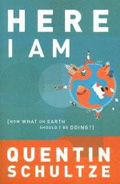
RC_Resources_HereIAm.jpgAnother book that we often suggest for those pondering this idea of vocation and calling is the exceptional, easy-to-read exploration of the notion of vocation in Here I Am: Now What on Earth Should I Be Doing? by Quentin Schultze (Baker; $14.00.)  What a great little book, wise and helpful, about being stewards of the various gifts God gives us, in the various spheres he calls us to!  One of the best, with reasonable theological foundations and lots of great illustrative stories and anecdotes  Q is a great storyteller—he is the head of the communications department at Calvin College in Michigan and has a remarkable book on virtues needed for our electronic age and another which is the definitive book on communication and mass media from a Christian perspective (and yet another small one on public speaking.)  What a story this guy has, and how wonderfully he’s used his own scholarly vocation to help others with these basics.  Highly recommended.  Check out his amazing blog of comment and reviews, here.
418BgLo7LWL._SL500_AA300_.jpg
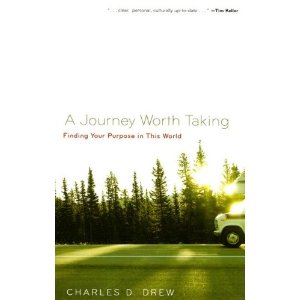
Or, consider the more thoroughly Biblical overview A Journey Worth Taking: Finding Your Purpose in This World by Charles D. Drew (P&R; $12.99.) Some have told me this was the best combination of the Biblical overview of creation-fall-redemption-restoration story of Scripture and the language of purpose (exploring, then, the themes of vocation and call) that they’ve ever read.  Rev. Drew is certainly a solid writer, well crafting mature sentences in wise and wonderful ways.  Endorsements from the likes of Tim Keller remind us that it is highly regarded,  well considered, helpful and theologically rich, without being arcane or abstract.  Yeah.
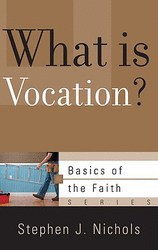
1596381779_l.gif What Is Vocation Steven J. Nichols (P&R; $3.99) This is a wonderful, small booklet,  similar to the What is A Christian Worldview by Philip Ryken (P&R; $5.00) that we often promote.  It could be used in small groups, a quick adult ed class, or given to high school seniors.  Steve gets it just right; he’s a nearly local guy, by the way, a Lancaster friend, writer of popular level books on church history and several biographies of folks like Luther and Edwards. (Not to mention the spiffy Church History ABC book we’ve touted.) This brief staple-bound booklet is as handsome as it is readable and could be life-changing.  I hope you have something like this )at the bare minimum) on your bookshelf.  Maybe you should order a dozen or so and pass ’em out—at least to youth who are thinking about going off to college, or young students needing to be encouraged to think about calling as they consider their majors, or for adults who may be longing to be affirmed in their line of work. (Oh, if only pastors did this more for their flocks, affirming the life of the laity!)

I told the students at Geneva that one of the good books to read along these lines as they think about calling is simply entitled Your Work Matters to God by Doug Sherman & William Hendricks (NavPress; $15.00.) I recommend it over and over. There are great other titles like Mastering Monday: A Guide to Integrating Faith and Work by John Beckett (IVP; $18.00) and meaty ones like The Other Six Days: Vocation, Work and Ministry by R. Paul Stevens (Eerdmans; $27.00.) Why not google Dorothy Sayers and read her important essay “Why Work” with some friends, for that matter?  Of course, when we come to embrace this whole vision—that vocation is central, not incidental, to the missio dei as my friend Steve Garber puts it—it has vast implications.  Some exciting, some scary.  Yup.  Before digging into the books on the details of work, though, be sure to get this vocation material deep in your bones.  These I’ve mentioned are all great starters.

By the way, for a briefly annotated introductory list of various books arranged by “vocational” area–from engineering to medicine, law to pop culture studies, from psychology to the arts, and more—click on the “Books By Vocation” tab at our home page.  You’ll be surprised to see the handful of recommendations in so many professional occupations and callings.  I need to update this, but it is still well worth seeing or passing on to others.

Although I was preaching at Geneva on a favorite post-exile text (Haggai 2 where God promises peace to a rebuilt city, after a shaking of the nations, and invites us strongly to “take courage and work”) I did observe that the idea of ordinary people finding great purpose in their jobs and mundane work has great historical precedent from throughout church history. Some in the past, of course, have been more helpful than others.  (Is that putting it tactfully, or what?)  Martin Luther famously talked about how those who made the beer barrels and the women milking the cows, were as important to the Kingdom of God as were the priests and nuns.  We all know about Brother Lawrence “practicing the presence of God” as he did the dishes (a la Zechariah 14:21, perhaps?) Read Guinness for other such
inspiring stories and transformational episodes.  These visions of the dignity of labor, the call to work, and the spirituality of the ordinary broke open the medieval ways and helped create a dynamism that shaped the modern world.
9780802829276.jpgCallings: Twenty Centuries of Christian Wisdom on Vocation edited by William Placher (Eerdmans; $25.00) This fat volume is an anthology that traces primary source readings from throughout church history, showing an amazing depth of serious work on this topic. There is simply nothing like it in print, and we are in debt to the late Dr. Placher.  Not for everyone perhaps, but for those wanting a solid overview of the best writing opn this topic through the ages, this is a must.  Given the vast array of important writings here, the price is a real bargain!  We’ve promoted this before, and trust that theological educators, pastors and others involved in leadership, at least, would find it helpful.
0802832563.jpgAnother anthology that I dip in to from time to time—it is great when one needs inspiration, or a thoughtful reminder during hard times, or for sermon or class illustration—is the huge and diverse collection called Leading Lives That Matter: What We Should Do And Who We Should Be  smartly edited by Mark Schwhehn & Dorothy Bass (Eerdmans; $26.00.)  I’ve written about this before, marveling at the literary breadth of these fine pieces—excerpts from Homer and Milton to Dietrich Bonhoeffer and Dorothy Day, Wendell Berry to Robert Frost.  The book offers historic essays arranged around seven key aspects of one’s identity, crucial stuff to be sure about in the search for significance.  Wonderful, wonderful.

Two small hardbacks are both so very handsome to hold that they invite slow reading andParker_Palmer_Let_Your_Life_Speak_sm_ezr.jpg
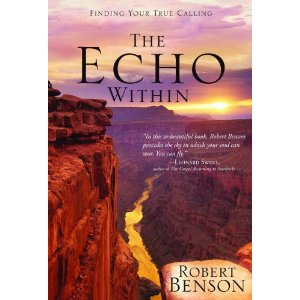
careful reflection.   I told students to be attentive to their lives and the world around us—rousing stories of God’s faithfulness to us as we take up our callings to make a difference preach well, but eventually, we must be reminded to sit in silence a bit, thinking, praying, reflecting, listening. If I’d had opportunity, I would have shown these two: Let Your Life Speak: Listening for the Voice of Vocation by Parker Palmer (Jossey Bass; $18.95) and The Echo Within: Finding Your True Calling by Robert Benson (Waterbrook; $14.99 )  These are truly lovely books, inspiring and tenderly written. I have reviewed them in the past, and assume you may know of our fondness for these contemplative authors.  Highly recommended for those discerning vocation, wanting to nurture the habits of being a bit more attentive about one’s life, or for those who guide others.  Nice.
51zcQeGC9VL._SL500_AA300_.jpg 


Here, by the way, is a great little blog that has excerpts of a few great books on vocation.  The author has quotes from Luther, Calvin, C.S. Lewis, Fred Buechner, John Piper and others. Thanks to with the Trinity in Daily Life blog.

http://trinitypartners.org/page/2/

OIAF - Medium.jpgIn case you are wondering, yes, I did highlight a book or
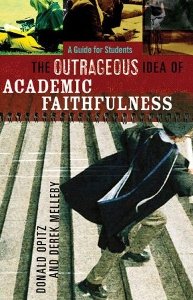
EngagingGodsWorld300.jpg two about the calling and vocation of being a Christian student. Even as young adults who want to prepare for a lifetime of vocation ponder these deep perspectives, they need to enter into the practices of vocational living, even in the way they approach their calling into college. You may know that my all time favorite book for college students is co-written by a wonderful, gracious and very (very) smart Donald Opitz, who is, in fact, a professor at Geneva. (His co-author is my central PA pal and regular customer here, Derek Melleby.) Derek & Don’s fine book is called The Outrageous Idea of Academic Faithfulness (Brazos; $13.99) and I have made my case for it here before.  Again, if you are a pastor or youth worker, I think it is nearly professional malpractice not to get this into the hands of your college-bound friends.

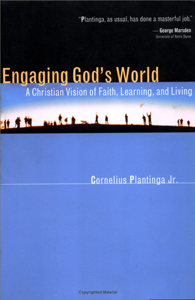
The “next step” book for those interested in the integration of faith and learning is the beautifully rendered and exceptionally insightful Engaging God’s World: A Christian Vision of Faith, Learning and Living by the elegant Cornelius Plantinga (Eerdmans; $16.00.)  So much of this is quotable, so good to cite, that I have whole pages underlined in my dog-earred copy.  If you don’t own it, again, I think it would be a wonderful addition to your own library, and one you will certainly share with anyone wondering about education, the relationship of Christ’s Lordship to our vocations in the world, and how our deepest yearnings can be met as we take up this journey towards thoughtfully faithful living.  Our highest five star rating on this one (whether one is in college or not.)  I wish I had mentioned it more at the Geneva chapel talk, so if anybody from our time there is reading now, consider this a plug.  Check out our blog special price below and consider placing an order.

Or, check out this list on the “Christian mind” and see if any of these would be helpful to students you know.  These sorts of titles are not the kind they will find most places, so you may be the only person to share such a life-line and challenge.  Let us know if we can help.

BLOG SPECIAL
20% off

any book mentioned

order here
takes you to the secure order form page
inquire here
if you have questions or need more information


Hearts & Minds 2345 East Main Street  Dallastown, PA  17313     717-246-3333


Best selling books at CLS: Richard Mouw, Michael Gerson, Wayne Grudem, Marilyn Chandler McEntyre and so many more…

I have written before about the remarkable, diverse, interesting and important professional association for Christian lawyers, law students, legal scholars, judges, and human rights activists called Christian Legal Society (CLS.)  They are kind to us and make it possible for us to be their bookseller at most of their annual conferences, and we are exhausted from the last days of being full of bookish conversation.  Thank goodness for our hefty van, which hauled our books to and from Florida.

Thanks also to Mr. Michael Schutt, author of Redeeming Law: Christian Calling and the Legal Profession (IVP; $24.00) who sets the standard for
9780830825998.jpg doing a readable, insightful, interesting, important, meaty book relating the philosophical and theological foundations of the legal profession to the daily practices of the vocation of being a lawyer. We often say that every career should have a “definitive” volume for serious thinkers in their profession as good as this is for those interested in law. 

Mike encourages Beth and I so much, and he does the same with just about everyone.  He and his pals in CLS leadership do a great job offering speakers and workshops on things that are pretty arcane for their own professional certification process, as well as more general workshops on business ethics, free speech debates, pro-life issues, religious liberty, starting legal aid clinics for the poor and other such topics.  And, I get to do a talk on thoughtful books for the serious Christian reader–send me an email if you want my list of top twelve categories for a year of good reading.  At CLS we sold numerous other books about the theological basis for law
(natural law, say) and the history of the development of the Western legal tradition (such as the heavy work by Harold Berman or John Witte) and stuff about current church/state issues, religious liberty and such.  If you
are interested, do let us know and we can chat more.

The best-selling books at this impressive gathering are the sorts of things anyone who cares about public life and faithful citizenship should find helpful.  I’ve been wanting to highlight a few of these anyway, so here, in no particular order, are some that we had fun promoting at CLS, Orlando, 2010.

69613345.JPGUncommon Decency: Christian Civility in an Uncivil World (Revised and Expanded)  Richard Mouw (IVP) $16.00  I have loved—loved!—this book in the past and am giddy that it is now available in an updated, expanded edition.  A graceful new cover reminds us of the not-so-common grace that is called for as people debate public issues.  From sexuality to religion in public, from Biblical disagreements (about sexuality, or hell, say) to political discourse, this book reminds us of the need for public etiquette, for the need for persuasion and respect.  Mouw is very wise, he’s a clear writer, and his instincts about complex things like “toleration” are so very helpful (and needed perhaps now more than in recent memory!)  I’ve said in print before that I know of no other writer who is as clear about his own deep convictions and yet is so willing to listen well to others, to name the places of commonality, the stuff he appreciates in other traditions (even those with whom he shares very important disagreements.) He is candid about those with whom be respectfully disagrees and such humble candor is noteworthy.  One gets the sense that not only is Rich a broad-minded thinker, it is clear that he thinks from deep within his own tradition, the Dutch neo-Calvinist worldview of Abraham Kuyper that has made him who he is.  Yet, the call to gentleness and willingness to learn is clear, even in a favorite chapter “Abraham Kuyper, Meet Mother Theresa.”  And, then, the chapter “When There Is No Other Hand.”  Lawyers, I suppose, could be a contentious bunch, and I was glad that a number took our recommendation and picked up this new edition of this tremendous little volume.  Spread the word—this would make a great book club selection, an adult ed class, or a gift for anyone involved in public life.

41ay4sz+HFL._SL500_AA300_.jpgCity of Man: Religion and Politics in a New Era  Michael Gerson & Peter Wehner  (Moody Publishers) $19.99  Mr. Gerson, you may know, was a speech-writer for President Bush (no small thing) and famously left part-way through the President’s term.  He wrote a book published by HarperOne entitled Heroic Conservatism, which, among other things, called for an increasing concern among social conservatives for the poor and oppressed, and expressed frustration at the disinterest amongst many so-called conservatives on this huge ethical matter.  He is a Wheaton College alumni, a syndicated op-ed writer, and now works for the One Campaign.  (Yep, you read that right!)

 This brand new brief book is a much-anticipated first volume in a series (“Cultural Renewal”) edited by New York Redeemer Presbyterian’s pastor, Timothy Keller. (His forward is very thoughtful and a vital little essay itself!)  Here–with an obvious allusion to Augustine–Gerson and Wehner (who also spent time in the Bush White House) reflect on the deepest meanings of public life, how religion does or doesn’t play a role in modern civic institutions, and how the famed “Christian right” perhaps did not get this all very right.  Of course the authors are themselves affiliated with the thoughtful end of the conservative movement (Wehner now works for the Center for Ethics and Public Policy) but they have little interest in whipping up the right-wing culture warriors. While they see serious weaknesses in a shallow lefty approach, as well, they struggle to forge a way into the political fray that somehow transcends the partisan ideologies of our era.  In this very sense, it may be conservative in the very best sense of the word.  I’m very excited about this—Gerson gave a significant lecture for the Center for Public Justice last summer giving us a peak into the themes of this book, and we are glad it is now out.  Kudos to Keller, to Moody, and to CLS for caring about such a fine and thoughtful overview of things that are deeply moral, thoughtful, and civil as it explores ways around this perplexing topic.  Highly recommended.

51yqDHfgnmL._SL500_AA300_.jpgPolitics According to the Bible: A Comprehensive Resource for Understanding Modern Political Issues in Light of Scripture Wayne Grudem (Zondervan) $39.95  Dr. Grudem was a hit among most of those who took his classes at the CLS conference, and while many will disagree with his insistence on a conservativistic view of the task of the state and the subsequent view of various political issues, there is no doubt that the energetic Bible teacher has done us a great service by documenting so very much of what the Biblical text actually does and doesn’t say.  I have not waded into this vast volume yet (it is quite new) and I suspect I will take exception to a few things, but I am sure reading it will be an education.  So far, I see that the footnotes lack much citation of people I trust most, or those who have pioneered a Christian view of statecraft and public justice.

It seems to me that Grudem has entered a field that demands a coherent philosophy to under-gird and relate the various Bible verses he marshals, but has done so without due attention to those who have helped develop just such a foundation. (Paul Marshall–a guy Grudem should have cited–exposed this same weakness in Jim Wallis in an older review suggesting that Wallis was doing inadequate proof-texting to bolster his progressive agenda, reading the Bible in a moralistic manner, without a developed view of politics, as such.  As much as I often agree with Wallis, Marshall was very helpful in his critique of Wallis’ inadequate view of statecraft, per se.  Find the review at Dr. Marshall’s Hudson Institute pages.)

The impeccable Ronald J. Sider has explored this himself with much nuance and care in his Scandal of Evangelical Politics where he shows that to come up with a Biblically-guided view of policy one must go through various steps and stages, beyond just lining up verses willy nilly.  That is, Sider properly argues, we need a political philosophy (guided by the Biblical narrative itself) and a way to responsible exegete the relevant Scriptural texts.  And, of course, one needs data, too: for instance, do the most responsible economists show that minimum wage laws do or do not help the people such laws are intended to help?  Does increased environmental regulation of polluting factories actually cut down on toxic air problems or are there unexpected consequences?  Does increased spending on new missiles make us more safe or not?  These pragmatic questions of facts and data must themselves be discerned through the lens of a Biblical worldview, so nothing is simple, and we must be diligent to think hard about it all. < br />
Despite Dr. Grudem’s 600 plus pages (looking at over 50 different issues) my hunch is he fails to do adequate justice to those, like Dr. Sider, and so many more, who have thought long and hard about this complicated field and have offered us a way of thinking that is necessary and helpful, even as we study the texts afresh.  The National Association of Evangelicals, for instance, published a ground-breaking book edited to include a variety of major scholars (Toward An Evangelical Public Policy: Political Strategies for the Health of the Nation) and it is more than unfortunate that Grudem doesn’t cite it.  I don’t suppose he intended to be disrespectful, and I cannot say if it crossed his mind that he would appear prideful to dare to enter this field without duly noting at least of few of those whose shoulder’s he should have been standing on. (To his credit, he does list a handful in an early paragraph, but doesn’t seem to illustrate how their work shaped his own.)  Perhaps there is more discussion of the state of the art of the conversation about “Christian politics” in the book, but the footnotes are very disappointing, to see who he cites and who he fails to draw upon.  (For an example of what I mean by the “state of the art of the conversation” see Church, State, and Public Justice: Five Views edited by P.C. Kemeny, published last year by IVP, which is an excellent dialogue about the task and limits of the state, the obligations of citizenship and the meaning of justice. Read about it here.)

I am grateful that Southern Baptist leader Paige Paterson says it is irenic.  Yet, Marvin OlaskyGrudem 2-785546.jpg says it “overwhelms the nostrums of the evangelical left” (which is fair enough, but a bit snarky to use the word “nostrums” and perhaps an indication of who they are marketing this to—just those on the right who are predisposed to agree with the good professor.)  The always reliable J.I. Packer calls it “strong” and “hard-hitting” (and “an outstanding achievement.”)  Well.  Wayne is known for being a very likable guy in person, and a no-nonsense straight-shooter in his very forcefully argued books (as in his critiques of the sloppy exegesis of some evangelical feminists.)  We will see about the tone of this; I hope it is irenic; I hope it is a useful contribution to the on-going dialogue.

Perhaps this is the benefit of the book: Grudem is not a political philosopher, not a political activist.  He is a theologian, and a Bible scholar and a beloved seminary professor.  His work has a significant place for those of us who claim to want our political theory to be guided by excellent exegesis.  I’m grateful CLS participants got to hear him, and Beth and I were thrilled to spend just a bit of time in small-talk and mutual encouragement.  His Systematic Theology (Zondervan; $49.99) is a masterpiece of traditional evangelical work, immense, but readable, with helpful resources in the back for allowing this big volume to be used well by God’s hungry people.  There are discussion questions, Bible memory aids, listings of hymns, citations of creeds, and so much more that one wouldn’t often find in such a textbook.  If Wayne is a master of conservative, orthodox, scholarship in his field of theology and Bible study, it is less clear that he has earned the right to produce such a hefty volume on this perplexing specialized topic.  I will be eager to read it carefully, happy to hear what others may think, and pray that it allows us to break away from simplistic proof-texting or ideological readings of the left or (in this case) the right.  It is obvious that it is a massive project on which he spent considerable research time and that he is passionate and clear in his good teaching.  Despite my concerns, I am happy to suggest Politics According to the Bible for those who want to hear what this important evangelical scholar is saying about contemporary policy issues, from a Biblical worldview, drawn in what seems to be fairly typical, conservative tones.

WE HAVE A FEW AUTOGRAPHED COPIES OF POLITICS ACCORDING TO THE BIBLE, SIGNED BY WAYNE GRUDEM.  LET US KNOW IF YOU WANT ONE. WHILE SUPPLIES LAST.

caring_for_words.jpgCaring for Words in a Culture of Lies  Marilyn Chandler McEntyre (Eerdmans) $18.00  Since lawyers use words as much as any of us, and they are typically known for their precision, it was a joy to suggest this to a few good customers at CLS.  McEntyre is a poet (her books of poetry inspired by paintings of Vermeer, Rembrandt, and Van Gogh are truly lovely) and this call to take language seriously is a very rich read itself.  Of course language can be “depleted, polluted, contaminated, eroded, and filled with artificial stimulants” she writes, as she compares language to other life-sustaining resources over which we must exercise careful stewardship.  The stewardship of our speech, considered in thoughtful analysis and beautiful writing, is of great concern for all of us.  Those who read widely, or speak publicly, or write for others surely must pay attention to the case she so lyrically builds here.  May truth trump truthiness in this crazy world…perhaps this book will help.  Thanks to the ones who bought it.

We had other good conversations and sold various sorts of things.  We featured a few books especially for women in the workworld, the always useful book on resolving conflicts in Biblical ways (The Peacemaker by Kenneth Sande) and of course a big array of books on spirituality, discipleship, leadership, apologetics, global concerns–especially the heroic work against sexual trafficking by International Justice Mission and IJM’s Gary Haugen’s stunning books such as Just Courage, The Good News About Injustice, and Terrify No More.  We are always glad when we get to recommend those important books, and even better when IJM is in the house.  If you don’t know of these great books, you should.  
 

BLOG SPECIAL
20% off

any book mentioned

order here
takes you to the secure order form page
inquire here
if you have questions or need more information


Hearts & Minds 2345 East Main Street  Dallastown, PA  17313     717-246-3333

The Next Christians: The Good News About the End of Christian America

We’ve been on the road a lot these past few weeks, and even now am needing to rush—the over-packed book van is motoring through the night to Florida (thanks to our son’s willingness to drive at odd hours and sleep in said book van) as it makes its way to a national Christian Legal Society (CLS) conference.  Yes, we are flying down to meet the books, and set up a huge display for this prestigious group of attorneys, judges, law school professors and over a hundred law students. CLS allows us to serve them and their participants–daunting as it is for us, talking about how our books might help them deepen their vocations.  Main speakers this year include some legal philosophers, an urban activist, and the popular brainy theological writer, Wayne Grudem. 

We love helping folks find books to help them with their discipleship and we’ve been a number of places lately—helping a UCC prayer retreat, working our regular gig at the Wee Kirk (Scottish for “small church”) conference, and today some of our staff are with homiletics prof Tom Long.  Etc.

Yet, one of our most fulfilling events was last weekend, where I got to stand up in front of a hundred college students, professors, grad students and colleagues in campus ministry and talk about books that fit their topic, Faith 4 Thought.  We sold apologetics, C.S.Lewis, books on vocation and calling, resources to help in the practices of on-going, faithful living.  These folks were excited, and the workshop I did (drawing on some of the recent books on cultural engagement) reminded me of how important it is to help equip folks to be “in but not of” the world, as transformed followers of the true King.  There are serious hurdles to be a Christian in the modern university and having evangelical faculty and Christian books there for them was more helpful then you can imagine.
bookNext.jpg
One of the most popular books there was the brand spanking new The Next Christians: How a New Generation if Restoring Christianity by Gabe Lyons (Doubleday) $19.99 (see sale price below.)  Gabe is the popular author and speaker who you may know from the groundbreaking book UnChristian.  In that book, he and his co-author and researcher David Kinnaman, documented the disinterest and frustration and sometimes hostility among young adults to the Christian faith.  The book was a thrill to read, though, as they replied to the criticisms of the young adults with testimonies and stories of innovative, faithful folks who are—through God’s grace—trying to “get it right.”  That is, the standard assumptions “outsiders” have are largely wrong.

The Next Christians carries the “answers” and hope of that book and, as they say, “runs with it.”  And is Gabe the right man for this job!  He has stories and more stories, used effectively as a clear and passionate and honest writer.  Through-out this inspiring and persuasive book, we hear about younger adults who are engaged in their world in creative ways, bringing helpful faith-based insights to bear on huge social problems (from racism, urban poverty, and the nuclear arms race) to ways in which young professionals can witness for Christ in low-key, effective, and natural ways, especially within their own spheres of influences.

It should come as no surprise that Mr. Lyons explains that the way to invite folks into a life of  discipleship is to make sure we live and tell the whole Biblical story in a coherent way.  That is, the most precise theological description of the gospel is not that we are sinners in need of salvation.  While it is surely true that we are rebels against God and for His own sake He loves us anyway, the whole drama makes sense when we see the narrative shape of the Bible itself: there are four chapters (at least!) to the history of redemption.  Say it with me, BookNotes readers: creation, fall, redemption, consummation.  Praise be to God, Christ is, as promised, “making all things new” healing his good but fallen world.  Lyon’s helps us understand, live, and tell the story in ways that more than just “getting a ticket to heaven” and are old and yet fresh, faithful and interesting, wholistic and relevant.  He is convinced that this full-on, robust view of faith is what young adults long for, and he is right.  And, it is what the Bible demands.

Well.  Seeing the reign of God breaking into history–this good world gone bad being healed by a restoring King—allows us to make sense of things, and draw natural connections between ordinary faith, cultural renewal, social action, and a daily passion for work, career, and our non-work callings as well.   This new generation of followers of Christ get all this and are considerably less interested in “going to heaven” as they are being truthful and good in life, knowing they are made in God’s image, deeply flawed, but being healed and transformed.

Knowing that I would agree with so much of The Next Christians made me eager to read it,lyonsg.jpg and I was confident I would enjoy it, learn a bit, and mostly be excited about trying to promote it.  That is how a bookseller like me, anyway, thinks about books: who needs it, how will it advance God’s cause, can we with integrity get behind it, will it be useful?  Yeah, I’ll like it, but I have so many books to sell, so many good ones these days about these very themes.  I like Gabe a lot, respect his amazing work with the Q conferences (we promoted his Q Society Room DVDs the day they came out a half year ago) and have many young adult friends who I want to tell about this book.

I was happily surprised just how much I learned, just how much I enjoyed, just how much I truly am impressed with this fine, important work.  It isn’t just a good book, it is a great book.  He has important ideas, good documentation, tons of illustrative stories, and it moves logically from one section to the next. 

The first half of Lyon’s Next Christians is how the world is changing, especially explaining how younger Christian related to the secularization process, whether the loss of a “Christian America” is a tragedy or opportunity.  The first chapter is “The New Normal” and he moves to how this new social context presents us with a way to see ourselves not as hand-wringers, but as those yearning for restoration—not of some nostalgic past (that may or may not have been a reality, in any case) but for the ways God intended our planet to work.  This is a large thesis  (and it is something to argue a bit about if you are so inclined) of the book, that the younger generations are emerging into their adulthood with a hope for being agents of transformation.  They want to build a new culture, contribute and serve.  I hope he is right.

The second large portion of the book explains who these “restorers” are.  He breaks his chapters down into a fascinating and hopeful way to relate to our distorted and idolatrous culture.  The new sorts of young adults can be described in these ways, and he offers great illustrations and examples.  They are:

Provoked, not offended.
Creators, not critics.
Called, not employed.
Grounded, not distracted.
In Community, not alone.
Countercultural, not “relevant.”

I was going to lift inspiring quotes to share, and unpack a bit more about this next great shift he is seei
ng, announcing and helping to create.  But you know that plane I have to catch?  I’ve got to go.  And I’m a middle-fifty-something, off to fan the flames of enthusiasm for those in the legal profession to read widely, think deeply, in ways that are consistent with the description Gabe Lyons gives of the emerging generation.  And perhaps that one small beef I have with the book: I am not so sure his stats are right about the ways in which this “new generation” is restoring the faith.  Some are.  But I also know old guys and mature women who have been laboring in this grand way for years.  And I know some who are repenting of their silliness, dropping out of the culture wars, and getting busy loving locally, being involved, discovering new avenues of service and hope.  Yep, this full gospel of being God’s “salt and light” in a decaying world, happy to be human, eager to be transforming, rejecting the old “liberal vs conservative” debates, is capturing the heart of many church folks.  Age is no limit.  And it certainly is the case that all ages can appreciate, enjoy, learn from, and take courage from the work of the young turks Gabe so nicely describes in The Next Christians.  Young or old, pick it up.  Read it, have good conversations, and get busy.  This is one of the books of the year.

The Next Christians
regularly $19.99
blog special
$14.99
$5.00 OFF

order here
takes you to the secure order form page
inquire here
if you have questions or need more information

Hearts & Minds 2345 East Main Street  Dallastown, PA  17313     717-246-3333


An artful conversation with Scripture through Image and Word: Dwelling with Philippians

I hope you saw our last review, a discussion about how author and cultural critic Nancy Pearcey traces significant ideas from philosophers and the ivory towers down to street level, often carried most effectively through the arts. From the romantic reaction to the literalist philosphy of Enlightenment rationalism, through a hugely influential dichotomy that separates facts and values, we can see—in the story of modern and contemporary art—how our cultural leaders are shaping a society that increasingly toys with meaninglessness.  As the hard-headed rationalists are unable to measure and quantify goodness or beauty and the passionate romantics can’t say much of anything that is true,  except to cry out in heart-felt protest, the swing and sway of the pendulum carries on.  The culture wars which are raging, the emergent conversation in our post-evangelical churches, and the ways in which hip, pop culture has influenced just about everything these days, are all aspects of this grand story that she narrates, the rise and fall of humane things, told in living color.  Saving Leonardo: A Call to Resist the Secular Assault on Mind, Morals and Meaning (B+H Publishing) is related in many ways to her much-discussed previous best-seller,

8807379.jpg

Total Truth and her call to help Christians think faithfully about our world is sensible and informative.  Her passion to locate the loss of goodness (in all of life, but seen clearly in the arts) may be a bit strident at times and her critique may seem reductionistic to those who know the complex details of intellectual history.  Still, as I noted, she is amazingly well-read, has cared about and thought hard about this stuff for a life-time (she spent time with art historian Hans Rookmaaker, one of Francis Schaeffer’s good mentors, in her young adulthood.)  Reading this book is a glorious learning experience, a gift of thoughtful exploration of tons of cultural artifacts, from plays to novels, architecture to recent films.  Saving Leonardo is a book to enjoy, well-made with great color reproduction, showing hundreds of paintings, photographs, book covers, movie posters and the like.  We are glad to feature a book of uniquely Christian art criticism, and trust you will understand how special a work like this is.  Perhaps you know someone to whom you could forward our review?

As the outset of that BookNotes review I explained that two books arrived last week that were breath-taking in their use of and discussion of the arts. Pearcey, of course, is a study of the arts, especially from the Romantic period on into contemporary abstraction and pop art.  It is beautiful to behold as it should be because it is discussing the painting and pictures and the worldviews and assumptions they carry and promote.  It is artfully done but it is about the arts.

dwelling_cover_large.jpg

Another new book isn’t about the arts, but is itself a “use of” the arts.  I use the phrase with some reluctance since paintings are not created, usually, to be “used” and they are not firstly mere illustration. (Unless, of course, they are illustration, and that is another whole art form itself, illustration.) Still, we all know—from good PowerPoint to home decor to book or CD covers to the best websites—that paintings and pictures can be used, appropriated, from the gallery or studio and put into the service of the aesthetic dimension of everyday life.  A character in Chip Kidd’s novel The Cheese Monkeys: A Novel in Two Semesters who is in an art class carelessly discards the wrapper of a stick of gum and the incredulous design prof sends him on a mission to learn who and under what circumstances the graphic design was created; soon, the student becomes enthralled with design, seeing useful art everywhere. (And this novel came out, I might add, before Mad Men! In the wild sequel, The Learners, by the way, the young student, his life transformed by graphics, sets out to land a job at the very agency where the said gum package and logo were designed.)

Indeed, attention to the artfulness of everyday life is something Calvin Seerveld commends in one of my all time top favorite books, Rainbows for the Fallen World. This help in seeing a Biblical charter for opening up the “suggestion-rich” allusive side of life, the aesthetic, makes this such a very rich book, especially for those of us not given the vocation of being actual artists.  There is, in his Biblically-saturated worldview, an aesthetic aspect or dimension to all of life.  Sometimes it is more hidden—the nuance of a joke, the shade of a scarf, the design in an ad—and sometimes it is more primary (as in a painting or sculpture.)

But what happens when one takes a painting or other intentionally designed piece of artwork and juxtapositions it alongside a Biblical text?  What happens when we use images to exegete words?  Well, hold your horses if you sense this to be a troubling line of thought.  The old monks did this centuries ago, and we today cherish their illuminated manuscripts.  You may have even heard that to celebrate the 400th anniversary of the KJV Bible, abstract painter Makoto Fujimura is releasing next season a ground-breaking bit of modern art illumination of the gospels in the ESV. (Here is Mako’s press release.) Congratulations to Crossway for releasing it early next year.  We will have it and will of course be discussing it here.  Also, for several years now, some world-class calligraphers have been slowly doing a vivid, hand-written, illuminated version of the entire Bible, known now as the St. John’s Bible.  Again, we have the over-sized, coffee-table sized books that have been released. Visit their fantastic website, here. So using the arts to magnify the Biblical text is nothing new or unusual.

But taking (known and not so well known) paintings, graphics and photographs and setting them alongside poems, praise choruses from the ages, ancient and modern Scripture commentary, well, this is more than a pastiche or hodgepodge or inspiration gift book.  This is a coherent, thoughtful, multi-sensory experience of the Bible.  Welcome to the one-of-a-kind brilliant and beautiful Dwelling with Philippians: A Conversation with Scripture through Image and Word (Eerdmans; $21.00.)  This is a Bible commentary project co-funded, in part, by Calvin College and Hope College (liberal arts schools in the Reformed tradition, sponsored by the Christian Reformed Church and the Reformed Church in America, respectively.)  It is edited by a great team of folks, Elizabeth Steele Halstead, Paul Detterman, Joyce Borger (no relation), and John D. Witvliet.  That is sells for just $21—and we are able to mark it down a bit (as you can see below)—makes it a generous gift to the book-buying world, a gift we are eager to share with many.  This, my friends, is one of the most exceptional books we’ve seen in our tenure as booksellers.  Praise the Lord and thanks to everybody involved.

The commentary (the written part, that is, since the visual art is it
self a participant in the exegetical and interpretive conversation) is fairly standard stuff.  Moderate, ecumenical, insightful, practical.  How can it not be—the joy of Philippians and the call to faith and obedience is pretty straightforward, and beloved. There are excerpts of old sermons, pull quotes from famous authors (from Polycarp to Richard Stibbes to Jane Parker Huber to Eugene Peterson and more), and some very solid inspiration to be found as they disclose the meaning of the passages, paragraph by paragraph by paragraph.  And sometimes line by line, word by word.  But the way this comes to use–enhanced by the artwork, paired with poems, linked to worship-related ideas—allows for, indeed, almost demands, a slower, meditative, attentive encounter.  This notion of slower “dwelling” with the text comes up in all back cover reviews. Consider carefully what these fine folks say about the idea for this, and the excellent way it has been done.

Dorothy C. Bass
“In
this beautiful book, a vast communion of artists, theologians,
historians, poets, and worshipers surrounds one letter from the Apostle
Paul. Rich selections from the work of these witnesses provide varied
opportunities for both newcomers and lifelong Bible readers to envision
and encounter God’s Word in fresh ways. When received with attention and
pondered in prayer, the resources gathered here can expand imagination,
deepen discernment, and encourage faithful living.”

Eugene H. Peterson
“American
Christians are in too much of a hurry. We miss out on most of what is
right in front of us. When this ‘most’ is in the Bible, our faith and
obedience and prayer are impoverished. This ‘conversation’ with
Philippians slows us down to a stroll so we can take it all in — God’s
word not as instruction but as companion. All of us need this.”

Richard Mouw
“This
wonderful commentary makes Philippians come alive in new ways. The
combination of rich visual experience with creative written commentary
has made me a more engaged biblical ‘dweller’!”

Jeremy Begbie
“This
beautifully produced book, through its skillful interweaving of images
and texts, allows the Apostle Paul to speak in fresh and unexpected
ways. A striking and original initiative.”

William Dyrness
“Not
much in our frazzled life encourages us to slow down and savor God’s
presence in Scripture. The images, prayers, and reflections in this
beautiful book work this miracle. Dwelling with Philippians is
slow food for the spirit! Keep it beside you, pray with it, give it to
your friends, your family — and especially to your pastor!”


From a Taize prayer to a Caravaggio painting, from John Wesley hymn lyrics to Van Gogh and Vermeer, from a full page reproduction of a Watanabe Sado (his popular Last Supper) to the text of Michael Kelly Blanchard’s folksong Be Ye Glad, this is an amazing, enriching, stupendous, collection of artistry, employed to deepen our dwelling in the Holy Word of God.   Some of this is classically Christian (Jan van Eyck’s The Adoration of the Lamb, a detail from his Ghent Altarpiece from 1432) while some is nearly pagan (Matisse’s 1909 Dance 1 was unusually striking next to one of the Olney Hymns of John Newton, and a great quote from Lesslie Newbigin.)  Not only is it ancient and contemporary, it is delightfully multi-ethnic.  There is work by He Qi (whose work you may have seen on book covers, actually) and quotes from Cyril of Jerusalem and reproductions of Russian iconography. The breadth of the contributors is just dazzling.

A few of these pieces, like the nude Matisse dancers, are very well known and easily recognized, but related to the Bible text so clearly—again, these aren’t just ornamentation, but truly part of, an integral part of, the commentary— they were stunning.  For instance, several famous pictures of the crucifixion help us meditate on Philippians 2:6-8 and I “saw” them more truly perhaps than I ever did before: Marc Chagall, Pablo Picasso, Mathias Gruenwald, contemporary artists such as Sandra Bowden and Makoto Fujimuro, and Anneke Kaai.

I could go on, naming pairings of poems and paintings and Philippians passages.  There is some heavy stuff here, lots of other Bible texts,  a bit of artistic whimsy (a very playful Norman Rockwell “speaks a thousand words”) and a good blend of realistic and abstract styles.  There is an index of artwork, an index of themes, lists of quotations and useful reflection questions.  The questions could be used quite quietly in your own lectio divino or they could form the basis for wonderful conversation in a small group Bible study or formational Sunday school class.

Much of the impetus for this project came from the increasingly essential one-stop on-line

dwelling_cover_large.jpg

resource, the Calvin Institute of Christian Worship.  (Two of the editors are afflliated with the Institute; Ms Halstead–herself an artist whose work in included—and John Witvliet, their director.) Joyce Borger also is in Grand Rapids, the worship and music editor for Faith Alive, a curriculum resource of the CRC.  She also edited Reformed Worship.  Paul Detterman is executive director of Presbyterians for Renewal, a church musician, and an ordained PC(USA) clergyman. (Here is a list of books that also are published under the auspices of the Institue on the relationship of the arts, theology and worship. We stock them all.) I wonder if those that came up with this idea for a book were inspired by the old 3-volume Pilgrim Press Imaging The Word series, which collected visual art to coincide with the Revised Common Lectionary. Those that appreciated that set will love this!   

So, slow down, open your heart and mind to the peace of Christ (as our store’s namesake in Philippians 4:7 has it) and hear his Word afresh.  Understand it better, and allow it to shape you in deep, vital ways.  What a joy.  What an opportunity.  This would make a great resource for any faith community, for your personal Bible study or your congregation.  Join on on-going conversation about this at www.calvin.edu/worship/philippians.   

It may seem a bit anti-climatic since I am so very stirred to tell you about Dwelling with Philippians but there is yet another art related Biblical resource we should mention. I mentioned a week or so ago that evangelical publishers are doing some fresh new things, and it is a good time for religious publishing.  Well read on—this is certainly an example!

Standard Publishing has released three small group Bible studies that are reflections on artwork under the series title Through Artists’ Eyes.  Inspired perhaps by Henri Nouwen’s important Return of the Prodigal Son, a book-length study of the famous Rembrant painting and the Biblical parable, these three new studies look at six art works, invite conversations about them, and then refer the reader to appropriate Biblical passages that relate to the art productions. 

021535010-130.jpg

Each of the three studies focuses on a particular medium. One  reproduces exquisite stained glass and is called God’s Word Through Glass while another studies Bible-inspired sculptures, called God’s Word in Stone.  A third looks at six famous religious paintings and is called, of course, God’s Word on Canvas.

It is just fabulous the way these inductive studies invite observation and interaction with the art, allowing for good conversations— do you notice a certain tilt of the head, a particular slant of light, this tone or color or shape? What does it mean? Can it shed light on the Bible passage?  Why these enduring artworks were made, how they were giving expression to a Biblical character or text, and how we can use them in our own Bible study is something to discover as you use these Through Artists’ Eyes studies.  I don’t know if other stores are promoting these, but I have a hunch the publisher took a bit of a risk to produce these.  Let’s “vote” in the marketplace and get these resources known and used!  Thanks to Standard Publishing for doing art-enhanced Bible study—three cheers, for sure!

The art is reproduced on glossy paper in full color, by the way, and they are very reasonably priced at only $7.99 each, making them even less expensive than some other small group Bible study guides.  We think they are very nicely done.  And they just might accomplish something so very, very important: helping us see and hear God’s Word.  And, secondarily, it might help give us an opportunity to invite artists into Bible study that honors their interest in classic artistic work.  Highly recommended.  Do let us know if you have any interesting stories of their use, or what you think.  Thanks.

021534910-130.jpg

021535110-130.jpg
BLOG SPECIAL

20% off

any book mentioned

order here
takes you to the secure order form page
inquire here
if you have questions or need more information


Hearts & Minds 2345 East Main Street  Dallastown, PA  17313     717-246-3333

A fantastic new survey of art history (and more) by Nancy Pearcey: Saving Leonardo

Every now and then my hands just shake when I open a new book. I’ve been waiting for it and am like a kid at Christmas.  Sometimes, the ga-ga-ga is worth it.  This was one of those times.  I was beside myself with two great new books, with strong content, with vivid, generous full-color artwork though-out.  These two new art-themed books are not the kind that are in one of my favorite categories—the interface of faith and the arts, nurturing a Christian aesthetic, thinking about the creative process for people of faith, for artists and their fans.  No, both of these are something else, although both are informed by the sort of wholistic Christian worldview that affirms a Godly perspective on all things aesthetic.  Both quote Calvin Seerveld, Mako Fujimura and the like.  But, again, they aren’t just for artists or their patrons.  I’m tellin’ ya: these books are for you. And both are amazing, and will be important in your life.

And they are very, very different, in style, content, and intent.  I will tell you about one today, and celebrate the other in a day or so.   First, the new Nancy Pearcey.  

Saving Leonardo amazon1.jpg

Saving Leonardo by Nancy Pearcey (B&H Books; $26.99) is stunning on several levels.  First, she is just so darn smart; she really knows a lot and has the ability to offer tons of important information, collating books and stories and theological ideas and historical movements all so very casually.   I recall driving Nancy to her room at a nearby college after a long day of speaking engagements a few years ago and brainstorming with her about this very project.  Could she, she wondered, develop the history of ideas, especially the “freedom” ideologies, that trickled down in reaction to the rationalism of the Enlightenment, through romanticism and into contemporary music and pop culture?  Could she do this through a study of contemporary art?  Could there be a fresh take on cultural criticism, worldview formation, intellectual history and popular discernment about “the spirits of the age” by way of what is sometimes called “art history”? Could she argue that the lack of morals prevalent in our fragmented culture can be traced to ideas that come to us through the arts?  Why of course she could—we had been talking about these things that very day and night!   She’s very sharp, diligent, discerning.  I’ve been waiting for this ever since.

Nancy is a wide, wide reader, a studious and thorough thinker, and an energetic virtuoso at connecting the proverbial dots.  And she is a glad popularizer.  I so value those who can be both erudite and plainspoken, who can talk about medieval string quartets, 20th century Marxism, and popular, silly cartoon strips.  I love this kind of a book, thoughtful and yet very enjoyable.

Having been influenced at a young age by the multi-talented Dutch theologian, philosopher, art

Nancy Pearcey Saving Leonardo Google for Blog 1.jpg

critic and jazz enthusiast Hans Rookmaaker—by way of a visit to L’Abri in Switzerland, the learning community for 60s bohemians and seekers led by Francis and Edith Schaeffer—Nancy understood clearly that ideas have consequences, that they “grow legs” and that cultural attitudes and artifacts are illustrations of the prevailing ideologies and ideas.  Some ideas get traction within a culture and that these “ivory tower” ideas (that have trickled down to the person in the street through universities and mass media) have to be discussed in ways that ordinary people can understand and discern.  She is a scholar and philosopher, but she is, like Schaeffer, a good listener and a lover of conversation.  In a way, she is at heart an evangelist.  She wants folks to grapple with ideas and their consequences, to see God amidst the struggles of movements and trends, books and artworks.  She wants folks to be faithful in the real world.  She wants people to be aware of the reasons for our ways of being, the nature of our social habits and values, and wants Christians (and others) to be able to hold these cultural customs up to the Light, and resist, if necessary. 

To do this—to be the sons and daughter of Issachar from I Chronicles 12:23 who “understood the times and new what God’s people should do”—people simply have to know a bit about where ideas come from. How we got were we are. What some call the geneology of ideas.  And a bit about how and why some ideas caught on and became common-place.

And, of course, sets of assumptions, presuppositions and ideas don’t just come directly to us from dusty philosophy texts or a tidy collection of abstract propositions about which we can calmly just agree or not.  No, often ideas come along like baggage, and, in baggage,  hidden in a film character or presumed in a news broadcast, or touted in the quick story of a TV ad.  Culture of all sorts—from Fox News to the latest show at the MoMA, from art house movies to the latest video game— embodies, carries, reflects and helps shape the worldview and lifestylings of the culture. 

In the very first chapter, Pearcey has an epigram, a famous line from the writer, Proust.  “Through

9780141303772.jpg

art we can know another’s view of the universe.”  And, then, the chapter title: “Are You An Easy Mark?”  Hmmm. And the first sentences:  “Hank the Cowdog is a humorous, homespun yarn for kids.  Or it was, until the forces of political correctness got a hold of it.”  She then tells the story of stealth secularism at the hands of the CBS “Storybreak” program and their treatment of the beloved John Erickson characters.  She makes her point early on that ideas are shaping the arts and it isn’t always good.

The new shift in the ethos and nature of these simple Hank stories demanded by the CBS producers is just one of hundreds of examples that Pearcey offers, and her desire to communicate well with ordinary folks is well accomplished.  Some of her stories are about just such very popular art—TV, cartoons, movies, fashion, rock music.  But the bulk of the book is, in fact, a large and powerful and exciting history lesson in the shifts away from meaning, dipping in to matters as diverse as bio-ethics and modern art.  (I’d say she almost covers too much!) But it is mostly about modern art.

The subtitle is important to understand her project and intent (and why she started with how CBS changed the old Cowdog stories: A Call to Resist the Secular Assault on Mind, Morals, and Meaning.  Whew.  Yep, she is mad about some stuff, greatly concerned, and channeling the often-misunderstood thesis of Hans Rookmaaker, from his controversial Modern Art and the Death of a Culture, a vivid study he wrote in the 70s (which is still in print; see the cover, a bit below.) Saving Leonardo: A Call to Resist… is more sprawling, interesting, practical, and in some ways indicting, than that seminal work.  From Reformed philosopher Herman Dooyeweerd, who influenced Schaeffer and Rookmaaker, to her own ample study in the history and philosophy of science and culture, Ms. Pearcey, sees two main streams of thought coming out of the idolatrous French Revolution and its Enlightenment.  This is a common story for many, and it could be nuanced endlessly, but as she reminds us, some have made an idol out of Reason and thinking, while others in reaction made an idol out of Emotion and feeling.  Some might say that the one tradition yielded a fetish for control, mechanisms, systems, science and, well, the military industrial complex.  The other tradition led to the counterculture with its fetish for freedom, emoting, disruption, anarchy,  modern art, and well, the whole messed up free-sex/revolution that yielded drugs, promiscuity, and Manson.  If one is the imperialism of modernity and the religion of technology, the other is the washout of post-modernity and the spirit of the inner vibe.

the-enlightenment-1.jpg

Sure, these are caricatures—and, to be clear, these are my descriptions, not Pearcey’s, who has over 300 pages and hundreds of illustrative pictures to make her reasoned points with more academic precision and historical documentation.  Still, these two bad sides of the coin are the fruits of the secular Enlightenment and what some call “the modern project”—a separation of mind and heart, a disintegration in our knowing, rooted in the hard rationalism of that period.  It seems to me that Pearcey’s former books—The Soul of Science: Christian Faith and Natural Philosophy, a co-authored book with Charles Colson called How Now Shall We Live and her remarkable and much-discussed Total Truth: Liberating Christianity from Its Cultural Captivity seemed to interact with and deconstruct the Enlightenment stream that lead to scientism, a philosophy of science under-girded by the secular philosophy of naturalism.  She was taking on rationalism, and how it eroded meaning, truth, and morals.  She called for a whole life faith–total truth, in every zone of life–and was thereby resisting the same sorts of things that Lewis fought in, say, The Abolition of Man.

leonardo2.jpg

Here she comes back, with the same passions and the same analysis: we are in trouble when we buy into–as the church largely has, from the pagan Greeks on, right through the Enlightenment and into postmodernism—a split level view of life, a dualism, reducing life to either “all head” or “all heart.”  When we separate facts and values in a neat dichotomy (and she offers amazing quotes where folks say this, that we find scientific truth in one certain realm and values in a less sure realm) we are—regardless of what side of the dichotomy we favor—dividing up life in ways that are not Biblical and not sustainable.  We lose our very humanity when we do this.  This colorful romp through modern art history, paintings, sculpture, architecture, furniture-making, dance, novels, film, theater, and music is not only colorful and fun, my friends, it is deadly serious. This is, Pearcey insists, life and death stuff.  Again, catch the full title as it is her cri du coeur in a nutshell: Saving Leonardo: A Call to Resist the Secular Assault on Mind, Morals, and Meaning.  Note the cover illustrations: from DaVinci’s most famous Lisa to an abstract bit of cubism, to Pulp Fiction.  Wow.  Wow.

A reviewer more knowledgeable and careful than I could offer some critical feedback on her

giacometti-and-rothko-at-sfmoma.jpg

evaluation of this artist or that movement, that philosophical assumption or this ethical position and whether it really is found in, say, Gauguin or Mark Rothko or the stunning outdoor art of Christo.  Some of the claims she makes and interpretations may be a stretch, but–as a lay person who has pondered much of this for most of my adult life—I think she is usually quite insightful and informed and shows much understanding.  Maybe she could be a bit more generous in her critique, maybe she overstates a bit.  Still, I suspect that some folks will criticize her analysis just because they don’t like the direction of her critique. Or some just find it tacky to say “the emperor has no clothes” as if there is some virtue in covering up the dangerous ideas some of these esteemed artists and writers have had.

Frankly, though, some of what she says about many painters and artists is well-known: we have the quotes of the artists, the descriptions of their worldviews, the vivid prose they wrote. Why pretend it isn’t so?  We don’t have to guess what Jack London thought about God and nature and meaning, or Stephen Crane, say; we can enjoy Woody Allen’s films and still express dismay about his sad lack of convictions.  It isn’t helpful to dodge the implications of bad ideas even if the artworks that carry them are breath-taking.  Non-linear novels (from Faulkner to Ulysses to Kafa, say) are created that way, and intend something (right?) and the views of life that are embedded in those narratives simply cannot be ignored.  Walter Gropius and his Bauhaus movement created buildings and forged a built environment that was barbaric, and there are reasons for that.  It is, it seems to me, nearly the old “elephant in the living room” to not talk about the religion, irreligion, faith or misplaced ideologies, the ideas and views, the virtue or perversity of artists.  Nancy would say, I am sure, that it is usually actually honoring to the artist to take his or her work and worldviews seriously.  Her goal is not to condemn art, let alone say that modern art is somehow bad, by naming the ideological stories that surround the work.  (In fact, she notes, through God’s common grace, many of artists with the worst worldviews are the very best at their craft and skill.  “Most artists vision is better than their worldviews” she notes, explaining that “they are sensitive to dimensions of reality that go beyond what is strictly permitted within the cramped categories of their secular worldviews.”  Yes, these artists were often quite good, and as persons made in the image of God, they can be appreciated; they are to be cared for, never disrespected.  So, again, “the call to resist” isn’t to say we cannot appreciate these significant pieces—just looking at the many art pieces she reproduces on the glossy pages of this handsome volume is a treat, more, a feast!—but it is to say that we are on dangerous ground if we do not learn to discern the ways these artifacts shape us. And be attentive.  In an increasingly visual world, it is my view that this discipline of thinking critically about culture and the arts in particular, is more important than ever.  Saving Leonardo, therefore, is very, very valuable, an ally of your fidelity to God as you walk through this world.

So, she follows Schaeffer’s and Rookmaaker’s (Dooyeweerdian-inspired) evaluation of the way in which cultures are shaped by loyalty to either Enlightenment rationalism or romanticism, head or heart, control or freedom, facts or values.  These philosophers who name and explain these false dichotomies only come up a time or two, in her very good footnotes, though, and her incisive prose helps us cut to the chase.  If one isn’t schooled in the history of ideas, this book will surely help, and I think would be a very important resource for you—a crash course, if you will, rooted in a solid Christian perspective.  It is a great example of “taking every thought captive” as the Bible commands, learning to evaluate ideas (whether spoken directly by a philosopher, or indirectly in an artwork created by an artist influenced by that philosopher.)  You will know more about your world after having spend a few weeks with this lavish book, and you will be better for it.

 Even if one does have a bit of a liberal arts education, and knows a bit about the roots of Western culture, I am confident that her way of “seeing” various works will be illuminating, enjoyable, even exciting as the dots are connected and you have the joy of an aha insight. She handles lots of work in short order, keeping the book moving along, dipping in here and there, with pithy insights and helpful illustrations, always placing things in her basic narrative of how Western culture has developed along the lines of the dualisms between facts and values (and hence, the consequential drift towards secularization, meaninglessness, and human harm.)  She covers all sorts of things, such as, say, the differences between the icons of the Byzantine world and the religious art of the Middle Ages and how the reformation allowed a new vision of God’s world: portraits, landscapes, warm paintings of daily life, such as the luminous work by Vermeer and the nearly sacred view of home life and ordinary work.  She explains why the lovely work of French impressionism was so important (who knew?) and how a Christian view

ctr_image_2023.jpg

of life was eroded by certain shifts in that period. She uses lively captions for her quick teachings about this kind of thing.  For instance, there is “DaVinci versus Degas.”  Or, she shows, for instance, the rise of the 19th century bohemian movement (“Artists go slumming” with reproductions of the transgressive Toulouse-Lautrec,)   She explains the view of brute facts portrayed in A Farewell to Arms or the way “Duchamp throws it in our face” with his anti-art urinal installations, or how modern films like I (Heart) Huckabees are contemporary lessons in postmodern existentialism.  Her quick run-down of films is illustrative (if way too brief, and perhaps overly eager to prove her point) and her survey of 20th century novels is fantastic (again, if a bit too succinct.)  Her resistance to what she calls “Christian sentimentalism” is powerful as she invites us to a robust effort to “re-moralize” our culture.

She ends with the following paragraphs, citing a favorite quote of Francis Schaeffer, “as surprising today as it was back in 1974.”

One of the greatest injustices we do to our young people is to ask them to be conservative.

FS.jpg

Christianity is not conservative, but revolutionary.”  The technical meaning of conservative is to conserve the status quo.  But “we must teach the young to be revolutionaries, revolutionaries against the status quo.”  We are called to revolt against the false idols and the power they exert over our minds and hearts. Christian should be on the front lines fighting to liberate society from its captivity to secular worldviews.

And who is better equipped than artists to communicate that liberating message—to jar the church out of its complacency, tear away the veil of religious euphemism, expose hypocrisy and self-righteousness, and create works that reveal the breath-taking beauty of salvation?

Like Bach, today’s artists could well inspire a spiritual revival, and in turn spark a global cultural revolution.

I am not alone in hoping this book is widely read.  Leland Ryken calls her “unsurpassed” and says “the magic continues with this book.”  J.P. Moreland calls it “a tour de force.” 

Makoto Fujimura, the New York wonder-kid doing abstract art in Manhattan, founder of the International Arts Movement (IAM) and art critic himself writes of it,

A feast for the mind and for the eye.  Nancy Pearcey not only is a trustworthy guide for a nuanced discussion on the relationship between culture and the gospel, but she is a gifted teacher as well…Saving Leonardo is a rare precious gift to the churches and universities alike.

Or, get this, from worldview guru and thoughtful writer, James Sire:

Nancy Pearcey has done it again and better than ever.  She has taken the complex sophistication of the best cultural analysis and laid it out for any person to grasp, enjoy and use to live out their daily lives honoring Christ.  An astounding accomplishment.

It is my sense that there will be much discussion about this, it will be criticized in some quarters and there should be important dialogues about it. Kudos to the publisher for the good design, serious paper and generous art reproductions (I can’t imagine the elves working behind the scene to get this produced.)  It is a truly gorgeous book.   Its main concerns are urgent, and the brilliant ways in which she uses the flow of ideas from the secularizing forces of the Enlightenment through the romantics–so important nowadays among artsy youth culture—and into the postmodern era, is just so very helpful.  Agree or not with her full approach or any particular detail, this is a must-read.  Don’t delay. Start a book group, a study club or class.  We have it a $5.00 off, but could offer a greater discount for classes.  Thanks!

Saving Leonardo: A Call To Resist the Secular Assault on Mind, Morals, & Meaning
Nancy Pearcey (B&H Books) regularly $26.99  Now on sale for $21.99.  Call or order on line.

8807379.jpg
BLOG SPECIAL
regularly $26.99
special price $21.99
order here
takes you to the secure order form page
inquire here
if
you have questions or need more information


Hearts & Minds 2345 East Main Street  Dallastown, PA  17313     717-246-3333


The Spirit of Food: 34 Writers on Feasting and Fasting Toward God

Yesterday was the funeral of the last remaining sibling of my father.  Aunt Grace was a character in more ways than should be recounted here, and we loved her.  At the memorial service, I learned of others that loved her and loved her well.  For a chunk of her life she was a cook for a large fraternity at Penn State University, and other “frat house” cooks were there too.  It didn’t surprise me that the preacher spoke dearly of Grace (and of saving grace!) and used eating images.  “If there is a kitchen in heaven, she is there now….” and “Grammy and she are probably whipping up something even now.”  It was a God-glorifying and happy testimony, and I was struck by how touched we were all by that.

jamjelly3_1.jpg

Aunt Gracie did jams and jellies, too, even picking the blueberries and grapes to use.  At the end of the service, everyone got to take a glass jar of (lovingly) home-make jelly. 

The sentimental story-telling about her cooking wasn’t deep, but upon reflection, it is very, very profound.  Nobody explained much about the way the Bible teaches that feasting is a primary image for the new creation, or how food so often plays a role in so many Biblical stories; it is all true, though.  Nobody needed to be preached to about the theology of creation, the goodness of God in giving us such rich gifts to delight in (such as good food) since we all knew it.  We knew it from Aunt Grace, and we knew it from the stories about Aunt Grace.  And we knew it from the down-home “funeral food” that volunteers served in the small basement at Snow Shoe United Methodist Church.

Yes, we knew.  But many do not.  There is an evil movement around that wants us to be religious in a way that is disconnected to this world—it was a heresy raging in the first century, which is why Paul wrote of the goodness of creation and God’s love for “things” in the first chapter of Colossians, and why the letter of 1 Timothy 4 seriously warns against those who dare to warn us about food and sex and such (saying that such deceptive prudery is “taught by demons.”)   “This is our Father’s world” the old hymn wisely says, and anybody who doesn’t like it much, is preaching a false gospel.  God made the world, Jesus died for it, and at His glorious return, He will renew the “things” of this creation, as the line in the old carols puts it, “far as the curse is found.”  I think what the simple folk at the funeral parlor knew is something that we could deepen and delight in all the more.  A theology of cooking, eating, food.  Yes!

41uFK0KUpFL._SL500_AA300_.jpg

The Spirit of Food: 34 Writers on Feasting and Fasting Toward God edited by Leslie Leyland Fields (Wipf & Stock; $30.00) is only the latest in a batch of recent books integrating faith and food, eating and prayer, spiritual hunger and physical hunger.  Food and Faith: Justice, Joy and Daily Bread edited by Michael Schut has been our favorite anthology and I’ve written glowingly about it before; with a useful study guide in the back, it is great for groups.  I contributed a bibliographic chapter in the slim, but wonderful, Eat Well, published by the remarkable folks at *cino in their Road Map Series.  Lutheran anti-hunger activist L. Shannon Jung has done some very good books, most recently, Hunger and Happiness: Feeding the Hungry, Nurturing Our Souls.  Several years ago Brazos Press inaugurated a series on daily faithfulness in everyday practices with a fine one called Good Eating, by animal theology author, Stephen Webb. What beautiful and important books these are.  I hope you consider buying ’em:  if we can’t come up (of all things) with a theology and spirituality of food, eating, hunger, and agriculture, then something is really wrong.   The One known as the “Bread of Life” is the creator/sustainer/redeemer of “all things” so physicality, material, stuff, matters. Food matters.  Amen?

Leslie Leyland Fields is the author of several other books (including a very provocative and well-written one on parenting that we love.)  She teaches in the Master of Fine Arts Program at Seattle Pacific University and anyone who follows writing, literature and the arts within intentionally Christian circles knows their excellent reputation.  Which is to say Ms Fields is really wise about good writing and is well connected. (Think, for starters, of the great writers who publish in Image.)  I won’t make a joke about her “good taste” but—wow!—did she ever pull together some of the best faith-based writers around.  This book is nothing short of spectacular.

I had already read a few of the chapters—beloved excerpts from Wendell Berry, Robert Farrar Capon, Lauren Winner, Andre Dubus—and knew from the caliber of those chapters that this was going to be an instant classic in the genre.  Throw in the remarkable writing of well-known poet Luci Shaw, the eloquent medical writer Brian Volck,  Southern novelist Vinita Hampton Wright, and the very, very important creation-affirming Orthodox theologian Alexander Schmemmann (from his essential book For the Life of the World) and one immediately knows that this may be one of the finest collections of essays I’ve ever seen.  What authors.  What rich topics.  What important and helpful ideas.

And to think this top-shelf anthology of good writers includes recipes!  Tanya Berry’s Green Beans?   A recipe from Luci Shaw’s mother?  A jambalaya recipe from Mercy Chefs, who worked feeding victims of Hurricane Katrina?  A soul-food recipe for cornbread?  Tuscan Pizza?  A spicy tomato soup recipe after a chapter called “Late October Tomatoes”? How to make Cilantro Citrus Hollandaise by one of the most renowned chefs in the world? A sweet raisin challah from the famed magnolia bakery in NYC?  I’m using the question marks to ask: isn’t this just too much?  How cool is all this, really!

The day The Spirit of Food shipment arrived, Beth and I sat on our couch while I read what may be the best chapter in the whole marvelous book.  I admit it is by a good friend, whose writing abilities leave me with my big mouth draping open.  Denise Frame Harlan has given us a piece (I admit to having seen some of it previously) that narrates her own story of learning to cook.  But oh, what an interesting story it is—from a grandmother who made great pies for the likes of 1930s-era bad guy John Dillinger, to her own living at a college-student discipleship house and needing to cook for others, to a euphoric epiphany as a teacher got choked up reading about the goodness of God who gave us such a beautiful world which includes onions, from the classic Supper of the Lamb by Robert Farrar Capon.  Denise tells of rushing out after class to buy and devour this profound theological cookbook, and how her own view of creation’s joys and God’s goodness expanded.

 I cannot tell you how beautifully she tells of it.  I can tell you I was fighting back tears to get

11.14.08-DFrameHarlan.jpg

through the pages as Beth and I were, again, stunned by the insight, word-smithing, beauty, and goodness of Denise’s spectacular chapter.  I rarely say stuff like this with such confidence:  it is worth the expensive price of this book just for that one chapter, which will be read and re-read, copied and shared, for years.  That she tells the story of her growing cooking skills and the simultaneous growth in a mature, sacramental theology, and her rich (though simple) aesthetic life, makes this truly one of the best examples of “embodied spirituality” I’ve ever read.  And the recipes she offers?  Well, you tell me.  Read her chapter and you’ll trust her so, you’ll just have to try the them.

Astonished at how good the writers are, here, and how much we were moved by Ms Harlan’s great piece, we just stared at each other for a bit.  And then, I knew we’d both want to read another good friend’s contribution, an original piece by the editor of the aforementioned *cino book, Eat Well, Kirstin Vander Giessen-Rietsma.

 Again, I was stuck by the clear-headed thoughts, the good prose, the profound honesty and wise insight.  Vander Giessen-Rietsma writes regularly for the on-line ‘zine, catapult, and I always read whatever she does, and it is often very, very good. (If you are a friend, you may have had me forward stuff of hers into your in-box.  And you meant to thank me, didn’t you?)

“Choice Cuisine” is a meditation based on her own frugal background, her deep sense of the call to redemptive practices in the world, and the struggle to be just and good, generous and gracious, even in food choices.  She re-counts having a great meal, and great conversation, with Dr. Vincent Harding, renowned and energetic Afro-American scholar and civil rights historian, who talked with she and her husband Rob, late into the night, offering good advice about love and community and grace.  She writes tenderly of making a meal of pork–fully aware of the troubles with factory farms—that was given to her by her father.  This isn’t a lecture on the troubles with agribusiness or the brokenness of the global food systems, even though it is informed by a profound awareness of the hard and sometimes painful choices with which we are faced.    Of cooking with her dad, with whom she has heated conversations about politics and current affairs she writes,

…faced with the task of collaborating on a menu, our taste buds fall into lockstep over portabella fries and creme brulee, grilled zucchini and phyllo pastries. To share and prepare recipes, to stand around the grill in the summer, to witness his delight when I try his newest creation—I know my love for my father finds its best home in these things, in spite of our differences in other areas of life, like politics and pork loins. And as imperfect as my practice may be, love is the thing, the only thing.

Some poets published in prestigious journals have essays here; there are excellent pieces

6a00d8341c858253ef00e54f69f7a08833-640wi.jpg

about hunger and poverty and feasting and fasting.  There is a touching reflection on receiving (or needing to abstain) from communion due to Celiac disease called “A Blessing for the Rice Cracker.”  There is a very interesting chapter, “My (Self-Righteous) Food Stamp Fast” by respected Christian journalist LaVonne Neff, and a very moving piece on anorexia by Suzanne Wolfe which goes from her grandfather’s garden and George Herbert’s poem ‘Love III.’  I note all this to try to assure you that the writing is suburb, the writers are vital, the topics diverse enough to make this a useful resource and a delightful anthology to dip in to nearly anytime.  Any time you aren’t cooking or eating, that is.

A year or so ago we tried to promote a memoir by a Christian author who wrote mostly about food.  Patti Kirk went on to pen the blue-ribbon Confessions of an Amateur Believer, but her first, Starting From Scratch: Memoirs of a Wandering Cook is excerpted here.  The chapter is called “Wild Fruit” and she writes beautifully about picking berries and making jam.  It is more eloquent and intellectually satisfying then the short testimonials we hard at the funeral for Aunt Grace.  Still, I read this and her words remind me of the goodness reported by those friends of my aunt and the testimony of her jelly.  This helps me praise God, and gives me great delight, even if she overstates a bit.  

Gathering and preserving wild fruit, for me, is to share, in the most elemental way, in what it means to be human, made in the image of God, guardians of earth and sea and sky, male an female, alive.  God’s creation—the berries themselves, the creatures that I share them with, the shade, the minute breeze I wouldn’t have noticed if I were not picking berries—humbles me in comparison to my own, however heavenly the smell that wafts through the house as my elderberry jelly cooks down in its pan.  To participate in the created world in this way, and to give the little jars of sweetness to people I love, seems to me the greatest blessing I can expect in this world or the next.

Of the many rave reviews, by authors more astute than I, I’ll share this one, by novelist Brett Lott.  He is right to write,

The most important act of community we can observe is the breaking of
bread–the communion of the saints–and I can think of no more moving book
that illustrates this integral element of the believer’s life than The Spirit of Food.
Leslie Leyland Fields has put together a gift as warm and fragrant as
the fresh-baked loaves of bread she herself writes of, and I have been
nourished by it.

BLOG SPECIAL
The Spirit of Food
edited by Leslie Leyland Fields
regularly $30.00
sale price $26.00
AND

20% off

any other book mentioned

order here
takes you to the secure order form page
inquire here
if you have questions or need more information


Hearts & Minds 2345 East Main Street  Dallastown, PA  17313     717-246-3333
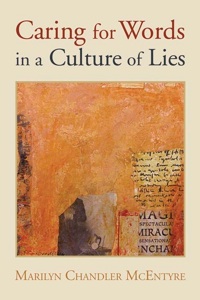

Mobilizing Hope: Faith Inspired Activism for a Post-Civil Rights Generation

In the last few posts I’ve named a few good books about the recent rise in social justice advocacy among evangelicals.  I have not even scratched the surface of the many passionate, Christ-centered testimonials that illustrate this trend.  Theologically conservative, Spirit-led and Christ-centered folk who are not schooled in liberation theology or social gospel stuff are coming to a revived interest in making a difference in the world, loving our hurting neighbors, being truly “doers of the Word” in areas of creation care, racial justice, wholistic missionary work, fighting poverty, sexual trafficking and such. They are insightful, creative, and clear, sharing stories from the trenches of social service.  Several of the books I told you about are good in their own right (I wouldn’t have commended them if I didn’t believe that) but I listed them also to show the breadth of the CBA publishers that have been willing to go out of the evangelical comfort zone and publish these striking voices for justice.  Praise God.

InterVarsity Press (IVP) has always been just about our favorite publisher, and for the almost 30 years that we’ve been at this, they have released books on creation care, global economics, being involved in racial reconciliation and such. (Not to mention the arts, science, sexuality, business, psychology, film, medicine, philosophy, but I digress.)  Few publishers have been as consistently sound theologically, wonderfully releasing beautiful books about spiritual formation and evangelism and Bible study, and also showing forth the implications of a Christian worldview for daily life in the world. The influence of  late 20th century giants in the evangelical tradition, like John Stott and Francis Schaeffer, largely remainds, and that gladdens me. From stuff about simple lifestyle to resources for global ministries to some very good books on urban ministry, IVP has earned the right to be considered the best publisher for reliable evangelical resources on these themes.  Some of their books that help us imagine socio-economic faithfulness in these days are deeply thoughtful and provocative (think of Colossians Remixed: Subverting the Empire by Walsh & Keesmat, one of the most significant contributions to Biblical studies in our lifetime) or have offered decisive information around a particular cause (Gary Haugen’s IJM, and his books The Good News About Injustice and Just Courage, put fighting sexual trafficking on the map.)  Their newly published book by Lisa Graham McMinn & Megan Neff, Walking Gently on the Earth, may be the most eloquent and insightful reflection on sustainable lifestyles yet done.  Yep, IVP is simply the best.

4996107571_b35a973706_m.jpg

Perhaps the book that best captures the new generation’s interest in social activism comes from IVP and was just released this month.  Mobilizing Hope: Faith-Inspired Activism for a Post-Civil Rights Generation by Adam Taylor tells the story of this young activist, his community organizing, his politicking, his work overseas (fighting AIDS in Zambia) and his journey to a fellowship at the White House.

Taylor has this widespread experience, including a teaching assistant at the Kennedy School at Harvard, and a stint as the political director of Sojourners.  Whether you would agree with all the details of their policy convictions, there is no doubt that this riveting book is interesting, striking and very important. 

It is important because, as I’ve said, it illustrates and is a symbol of a major trend within recent evangelicalism.  The edgy

likewise-logo.gif

  Likewise imprint of IVP (and this is a Likewise title) promotes authors who are young, aggressive in their God-centered love for the hurting, and their willingness to live radical lives of missional fidelity; the very existence of this cool line of books is itself a bell-weather, showing the grit and guts and great writing chops of this younger generation. Every new Likewise book is worth knowing about, and this is a great example of what they are about. 

6493.jpg

Mobilizing Hope is important also, as I’ve already suggested, not just because Adam is a guy whose given his life to some important causes, and has understood his discipleship in ways that led him to acts of service and outreach and protest.  Other Likewise authors document this move towards service and action, but this is somehow a different caliber of work, even for the excellent Likewise posse.  Young Mr Taylor has earned the right to write because he not only has given his life to social change ministry, but because he truly knows what he’s talking about.  Jim Wallis of Sojourners first connected with him when he was a student at Harvard and, as Wallis reports in the preface, saw that this was an exceptional young man.  (“More than any young leader I’ve met, Adam Taylor exemplifies the best of the next generation of Christian activists.”)  Not only has he worked in urban housing in NYC and in Africa and on the Jubilee debt relief campaign, he has done important projects for the Carr Center on Human Rights Policy.  He founded his own mission, Global Justice.  As I said, he was received into a Fellows Program in the White House.  Oh, and did I say he is an associate pastor of a Baptist church? This guy is smart and savvy and effective.  Adam Taylor rocks.

Lastly, this new book is important because it is a younger voice.  Some of us have been at this for a while, planning meetings, organizing prayer services, going to protests, writing letters to our congressman, pushing our friends who are most interested in disembodied spirituality or a-political Bible study to connect words and deeds in new ways.  We’ve planned big events, we’ve done petitions, we’ve boycotted and educated, prayed and fasted, argued and learned. We’ve promoted the Wilberforce movie, we’ve paid our dues to Bread for the World, we’ve passed out Sider’s Rich Christians and John Perkins books and tried to generate interest among our friends and families.  Yes, some of us have done these things, and continue to get our churches more aware and involved.

Yet, Taylor knows that we are in a “post civil rights” era.  Marching with King is not an option anymore, and the justice movement for which he was a “drum major” is gone, at best a convoluted shadow of its former glory.  I think this is a wonderful review of some of that ethos and perspective and how King can be appropriated in a new day.  The particular line of Dr. King that Taylor uses as a bit of a theme is this:

This hour in history needs a dedicated circle of transformed nonconformists…the creative maladjustment of a nonconforming minority.

Could the church be that “nonconforming minority”?  Could your circle be that “dedicated circle”?  This inspiring book show how justice can expand as a new movem
ent of activists evolves, as younger leaders offer their unique insight and gifts and styles. 

Older or younger, activist or not, Mobilizing Hope is a good book on part of what it means to

4996107571_b35a973706_m.jpg

live out Romans 12:1-2, and how our public square can be enhanced as we learn from social change activists who offer new vision, serious hope, gospel values, and strategies that are, perhaps, innovative and surprising.  He has a chapter on “civic discipleship” and that is a very, very fresh notion.  There is more packed into this–a “strategy manual” Wallis calls it—than you can imagine.  Want greater steps for involvement?  Want to learn some new steps towards civic faithfulness?  Want to be a faith-based activist? Want a contemporary theology and spirituality—where hope is the oxygen—to under-gird your thoughts of the common good?  This is the book to read.

Here is a brief story at the One website with Adam talking about this book.
Here are some great endorsements if your not convinced.

Mobilizing Hope Adam Taylor (IVP) regularly $18.00 sale price $15.00

BLOG SPECIAL
regularly $18.00
special price $15.00
order here
takes you to the secure order form page
inquire here
if you have questions or need more information


Hearts & Minds 2345 East Main Street  Dallastown, PA  17313     717-246-3333
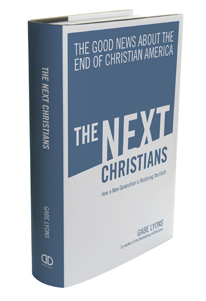
Renewed social concern amongst evangelical publishers

The other day I did a post highlighting a few great new books released by publishers that used to be known for, well, being a bit staid, overly conservative, maybe even boring.  Or, in my view, scandalously weird for those who name the name of Christ.  Do you remember when Zondervan released the stupid book about the failed millionaire who did that high-end car, The Delorean?  Or when Ollie North lied to Congress about his role in murdering innocent children in Nicaragua and they did a book of his?  A dear relative of mine saw the bloody clothes of one of the Contra massacres and yet the CBA touted Mr. North as a hero.  All I could do in those years was pray for grace and cherish a handmade cross given to me by a friend who witnessed first hand another U.S.-backed massacre, the infamous murders at the funeral of Archbishop Oscar Romero of El Salvador.  That evangelical publishers were complicit in this sort of social sin still saddens me.

Yet, times have changed, and the Spirit of God has drawn many evangelicals to repent of crass militarism and to live out love of neighbor with huge numbers of mission trips, service projects, and new cross-cultural friendship with folks of other races and classes. Good conversations about creation-care, micro-financing, fair-trade practices and the like are increasingly common-place.  Evangelical publishing houses and magazines are doing the best work about this—accessible, warm-hearted, Christ-centered, and life-changing. I noted the new Max Lucado book in my last post, about leaving a legacy in our concern for the needy. It is very nice. It took him 25 years of writing to say this with such gusto, but there it is.  The time’s they are a-changin…

And so, here are a few great books on these themes published by evangelical presses who may not have released books like this even a decade or so ago.  Some did, a bit, but there is a new movement that is clear and passionate about justice, for God’s glory, because the Bible says so. These books are inspiring and challenging, and helpful (unlike the many deep and arcane post-colonial theologians publishing scholarly stuff in the academic houses. Liberal theologians pride themselves in their progressive political views, but I’m not so sure they motivate many people to action with their lack of clear Biblical foundations or piety.) Maybe you are part of a group that appreciates these kinds of resources.  Maybe you should order some and pass ’em around.  Not only will they give you a new appreciation for this very wholistic, evangelical spirit, but will push you to take steps beyond your comfort zone, learning more, and doing something.  Hope you like this list.  There’s more, too.  Call us if you’d like.

Humanitarian Jesus: Social Justice and the Cross Christian Buckley & Ryan Dobson

lg-9780802452634-Humanitarian-Jesus.jpg

(Moody) $14.99  This is a great, great book for those evangelicals who are wanting to link public action to Christ-honoring faith and who are eager to explore the relationship and boundaries of evangelism and social concern.  About half the book is comprised of chatty, helpful interviews with seasoned activists like Ron Sider, David Batstone, Tony Campolo and Gary Haugen and many more.  As you might guess, the opening essays are based upon solid, conservative theology (while the interviews are much more diverse and surprising and fun.)  I applaud their desire to insist that Jesus-centered ministry must include humanitarian social concern, but I think that their occasional use of the phrase “the social gospel” is a bit misguided, since most people know that that was a specific, theologically inadequate, tradition of the early 1900s.  These guys want to affirm the social dimensions of the gospel, but they are anything but “the social gospel.”  Right on. Very valuable.

Many Colors: Cultural Intelligence for a Changing

51iOguzNRwL._SL500_AA300_.jpg

Church Soong-Chan Rah (Moody) $14.99  Kudos to Moody Press for this very important book by one of the most important younger leaders/sholars within the evangelical church.  You may know Soong-Chan’s previous, exceptional IVP book The Next Evangelicalism which put him on the map as an author to know.  As one reviewer put it, Rah writes out of “experiential knowledge and with anthropological precision.”   This fine and mature work allows us to seek ways to honor the presence of God in different cultures.  Excellent and very highly recommended.

Jump Into a Life of Further and Higher  Efrem Smith (Cook) $14.99  I don’t know how David C. Cook got the rights to publish this hot young writer, but this is even more exciting than his

9781434764577.jpg

previous book about raising up young urban leaders, or his very cool Hip Hop Church.  He is himself a young, African American leader and a brother to know about. This brand new one is a basic book of daily discipleship, I suppose, inviting us to faith and obedience, taking “leaps of faith” and such.  It works the “jumping” theme nicely, inviting us to jump into the topic he explores in each chapter.  And they are fascinating, inspiring, story-filled chapters.  Jump into them, indeed— he draws on Martin Luther King, Jr (for instance) and invites us to a life of liberation. This is socially engaged spirituality, faith lived out in the pain of a needy world, eager to know God and jump into the fray to be used by God.  Efrem is an amazing, fun, creative writer, a superintendent in the Evangelical Covenant Church, who accepted Christ as a young man in a United Methodist Church. He’s a graduate of St. John’s University,  Luther Seminary, and lives in the Bay area of California, so the man gets around.  Check him out!

Zealous Love: A Practical Guide to Social Justice Mike and Danae Yankoski (Zondervan)

Zealous Love.jpg

$16.95  I’ve recommended this before, exclaiming how very nice it is, the full color graphics on glossy paper, the hip design, the user-friendly information, the guide to next steps in standing for justice in so many areas.  From fighting trafficking to supporting refugees, from dealing with hunger to being faithful in creation-care, this is the best guide we know.  There are some that are more brief.  There are some that are more complex. This strikes a great balance, offering insight, inspiration and facts for action, options for involvement.  Zondervan is perhaps the leading publisher on social justice stuff—sorry Orbis-, but it is true–and we can praise God that they remain theologically sound, evangelical, and solidly Biblical.  This is just one example of the kinds of resourc
es we need if we are going to be found faithful by the Christ who calls us to serve.  And that is the point, not “pc” treatises but an action manual for those willing to learn and do something.

Contributors in Zealous Love include the always upbeat international lawyer dude, Bob Goff, punchy preacher Francis Chan, eco-theologian Matthew Sleeth, small farmer, but uber-writer, Wendell Berry, Ed & Susan Brown (who visited our shop last month), the truly admirable Marva Dawn, even the merry anarchist himself, the Shanster C. (By the way, Mike Yankoski is an author who wrote his memoir of living as a homeless person, Under the Overpass, published by Multnomah Press, another conservative evangelical house that has done some very good stuff.)

why_jesus_crossed_the_world-2.jpg

Why Jesus Crossed the Road Bruce Main (Tyndale) $13.99  Tyndale is a pretty typical popular-level, religious publisher, doing Focus on the Family self-help books, Left Behind novels, lots of nice devotionals, testimonial books, and some of the early books by serious Reformed thinker, R.C. Sproul.  And they do my beloved Life Application Study Bible in the NLT.  So, what a mixed bag they are—representing mainstream evangelical concerns quite nicely, some more to my liking than others, but nothing too odd and nothing terribly exciting (with a few notable exceptions.)  And, yet, they have recently done some truly amazing books that press us to action and care and bold new ways to imagine our faith.  Bruce Main is one of the most savvy urban activists in America—living on the hard streets of inner city Camden—and he is a fabulous writer.  Here, he asks a nitty-gritty question—what is with “the other side” to which Jesus often traveled?  The long sub-title puts it like this: Learning To Follow the Unconventional Travel Itinerary of a First-Century Carpenter and His Ragtag Group of Friends as They Hop Fences, Cross Borders, and Generally Go Where Most People Don’t.  Want to grapple with the truths about oppression?  Want to see what Jesus might have us do? Want solid gospel study that will show you something new, without having to wade through the deconstructive controversy of Crossan et al?  This is one heckuva book, serious, interesting and compelling, drawing on his stunning life experiences, his splendid storytelling abilities, his insights gleaned from the likes of Volf and Woltersdorff and Elie Wiesel.  You won’t be disappointed, and may want to join the journey.

Love Mercy: A Mother & Daughter’s Journey from the American Dream to the Kingdom of God Lisa Samson & Ty Samson (Zondervan) $14.99  We are glad when gifted writers do

love-mercy-300x432.png

good projects (like go to Africa to minister to those devastated by the AIDS crisis) and are able to tell their story well.  This is even better than you could imagine because not only because Lisa is a wordsmith and novelist, but because (as the subtitle says) this is a mother-daughter story.  This trip, they figured, would be them ministering to others, missional, merciful, giving.  As you might guess, they were devastated, touched, and ministered to.  Offering two unique perspectives, they tell their story, recount many episodes, describe the people they met along the way.  As they put it on the back

Smiles in a place of aching sadness.  Marcy in a place of heart-wrenching poverty. Two people transformed by God in ways and places they never expected, discovering that even in a land riddled with heartache, Christ’s love and redemption are ablaze.

51nW6c3PDEL._SL500_AA300_.jpg

Twenty-Piece Shuffle: Why the Poor and Rich Need Each Other Greg Paul (Cook) $13.99  Here is David C. Cook again, from their evangelical headquarters in Colorado Springs, offering us one of the most gripping books I’ve read in years.  This is urban ministry, urban tales, a no-nonsense and yet very poetic report from the harsh streets of Toronto.  Rave reviews from  Publishers Weekly (“honest and well-written from page one”) to Shane Claiborne to Brian Walsh, this is a serious and valuable study of how we all long for home, and have “addictions to numb a troubled spirit.”  Paul really believes we can all learn from each other, the rich and the impoverished, and everyone in between.  His early book God in the Alley is excellent as well—firstly published by Waterbrook/Shaw.  How ’bout that?

Plunge 2 Poverty: An Intensive Poverty Simulation Experience  Jimmy & Janet Dorrell (New Hope) $14.99  I fist came across these folks when I realized Jimmy wrote the book Trolls & Truth which emerged from his mission doing a church plant under a bridge for homeless folks.  He is the director of Mission Waco and the publisher is affiliated with a women’s missionary movement of the Southern Baptist Convention.  The Dorrell’s have trained more than 6,000 students over the last 20 years, helping them learn about poverty, racism, ethnocentrism, and all the other heavy stuff that comes up when we move from a culture of affluence towards the poor.  Very, very useful. How ’bout them radical Southern Baptists?  Yay.

0310590965.jpg

DVD Justice for the Poor: Love God. Serve People. Change the World. Jim Wallis (Zondervan) $24.95  Okay, if this “don’t beat all” as we used to say.  Jim Wallis, head of Sojourners, a leader for a lifetime of evangelically-oriented ecumenical social action and peace and justice advocacy, doing justice curriculum published by Zondervan!  Holy smoke, I can hardly believe it, and we are grateful.  It doesn’t matter if you think Wallis gets it fully right on every iota of policy, or if his shift to ecumenical generalities disqualifies him as a bone fide evangelical, as some have suggested.  Regardless, this is solid, interesting, helpful teaching, and any congregation or small group that uses it will be driven to reconsider their values and practices, making room for faith-based activism in what might be called “God’s Politics.”  Neither left nor right, he says, we are invited to move the conversation to higher ground, rooting it in the classic views of the church, as taught in the Scriptures.  Check it out.  And be glad that this is being distributed by a major, conservative publishing house.  Many stores didn’t order it, I’m told (you know what Glen Beck said about Wallis, after all) so the mom-and-pop bookstores may not have joined in the revival for justice happening slowly in Grand Rapids and other centers of evangelical publishing.  But we have ’em.  I hope you order it from us. A Participants Guide is also available ($9.
95.)  Buy the shrink-wrapped pack of one DVD and one Participant’s Guide book for just $31.95.

BLOG SPECIAL
20% off

any book mentioned

order here
takes you to the secure order form page
inquire here
if you have questions or need more information


Hearts & Minds 2345 East Main Street  Dallastown, PA  17313     717-246-3333


Thoughtful, interesting, important, serious work from evangelical publishers

Thanks to those who wished us well regarding our in-store author appearance of the New York Times mega-seller lovely lady, Beverly Lewis.  She’s a constant on the Christian best seller lists and her most recent books have been about a topic close to her own life and heart: the Amish. I hope you read my last post as I danced around this matter of overtly religious evangelical fiction, from the bad rap it has gotten from more sophisticated literary types and how the cheesy covers have sometimes turned people off.  I celebrated Ms Lewis’ good stories and tried to honor her for being a writer that folks have come to love.  I liked writing it, and looked forward to hosting her.  We were not disappointed.

We found her to be smart and very nice, and clearly with us in order to serve her fans, to meet and greet and listen and pose with people for pictures.  We had a wonderful time–the largest in-store gig we’ve ever done–and heard some truly extraordinary stories of people whose lives were touched by these popular stories of faith and integrity and doubt and romance, all set within the fascinating sub-cultural of the radical plain people.  Thanks to Beverly and her gang from Bethany House who helped us make this happen.  (We have a few that are autographed left over, by the way.  Let us know if your interested.)

I made a comment–I don’t think I was being snide— that some this recent phenomenon of “Christian fiction” was a marketing creation of conservative evangelical publishers and I think that is largely true (although, obviously, they couldn’t have created such a genre if there were weren’t talented writers and interested readers—again, something we are quick to celebrate.)  I also said that “Christian fiction” has improved in aesthetic quality and literary merit in recent years.  Even the book jacket design is better than the awful days of the mid-70s when this genre was just taking off.

We have often maintained that the substance and quality of non-fiction religious publishing has gotten better in the past decade or so, too.  Of course there has been weird stuff, old heresies in new garb, and yet, the silver lining there is that there is great openness to discuss important questions.  Mainline denominational presses have released conservative evangelical authors and publishers known for being pretty narrow in years gone by are doing fabulously interesting, winsome and faithful work.  We are glad about this hint or ecumenical discourse, as it vindicates our mantra about reading widely, with discernment. 

And so, in this post we will name–yea, celebrate–a few new books that are released by mainstream evangelical presses that are just a bit surprising, perhaps, faithful and interesting, provocative and thoughtful, faithful and good.  My sense is these sorts of titles may not have been released in another era of Christian publishing, at least not by these publishers, dominated as it was by the simple, inspirational, vapid or right-wing.  Three cheers for the CBA!  At least insofar as they release stuff like this.  What do you think?

0849920698.jpg

Out Live Your Life: You Were Meant to Make a Difference  Max Lucado (Nelson) $24.99  Max has always been an author we’ve promoted.  He is sentimental and yet has good substance, is a delightfully easy read, without being shallow or dumb.  A few are more meaty than others (and I railed about one of his that irked me a few years back, here.)  Still, Max has a touching style, a writerly approach that makes one feel and engage and be inspired.  Some are saying this is one of his best yet, and it is simply about this complicated matter of leaving a legacy, of the shift from success to significance, of doing something that will last.  Specifically, he is writing about fighting poverty, and undoing the injustice of the terrible hunger in our world.  Ladies and gentle, this is nothing short of a publishing event (complete with a teen edition, a youth version, and a DVD set.)  One hundred per cent of the author’s royalties will go to benefit children and families through World Vision. (Follow how much the book generates by going to www.MaxLucado.com.)

Here is what Lucado says on the back cover: 

Dear Friend,

May I share a story that is very dear to my heart?

It’s a story of hillbillies and simple folk, net casters and tax collectors.  A story of a movement that explored like a just-opened fire hydrant out of Jerusalem and spilled into the ends of the earth: into the streets of Paris, the districts of Rome, the ports of Athens, Istanbul, Shanghai, and Buenos Aires. A story so mighty, controversial, head spinning, and life changing that two millennia later we wonder: Might it happen again?

He continues,

Heaven knows we hope so.  These are devastating times: 175 billion people are desperately poor, one billion are hungry.  Lonely hearts indwell our neighborhoods and attend our schools. In the midst of it all, here we stand, you, me, and our one-of-a-kind lives.  We are given a choice…an opportunity to make a big difference during difficult time. What if we did? What if we rocked the world with hope?

Worth a try, don’t you think?

Look, I bet you know that Ron Sider (famous for founding Evangelicals for Social Action and writing Rich Christians in an Age of Hunger) is a friend of ours and nearly a mentor; we have brought in Jim Wallis and push the radical stuff of Shane Claiborn.  The Whole in the Gospel by Richard Sterns was one of our biggest sellers this year and the start: Becoming a Good Samaritan was our biggest selling DVD curriculum piece.  We stock the classic memoirs of the likes of Dorothy Day and Francis of Assisi and have shelves of serious policy stuff about Christian political options.  Our world missions section includes detailed studies of ministry being done in Christ’s name all over the globe.  But you know and I know that many folks don’t want to wade through heavy stuff, dreary statistics, strategic studies of social change.  Some of the categories of books here where we are most well stocked are, sadly, pretty dusty; nobody buys such stuff. Sure, a few do (you know who you are) but many just don’t have the capacity to read that deeply or seriously. 

I believe this new book could be a gateway to a more robust and mature missiology, and

mimi.jpg

linking the readers of the usually sentimental and pastoral Max to the life-and-death call to bold social action.  If anybody can “prod the slumbering giant” of evangelicalism to care more about the poor, it may not be Tony Campolo or even Rick Warren, both who nicely wave that banner high (in the name of Jesus!)  It just might be Max Lucado

Here is a link to a little video where Max is in Africa talking about the number of child sponsorships that he hopes to achieve.  You won’t believe their goal!

There are some funny stories in here, and some powerful testimony, and some good Bible reflections.  He has his purple pen going and he can write very moving paragraphs, beautiful and poignant and touching.  There is a good study guide in the back, so it is ideal fo
r book clubs or Bible study groups.  It isn’t hard, it is a fun read, and it is book that you will not regret sharing with others.  Who doesn’t want their impact to count for the things God would want?
Why don’t you buy a few and pass em around?  Nobody is beyond hope, Max reminds us, and we think he is right. 

Image.asp.jpg

Good News for Anxious Christians: 10 Practical Things You Don’t Have to Do  Phillip Carey (Brazos) $14.99  Let me explain why I’ve listed this tremendously rich and thoughtful and wonderfully written book on this little list.  The title, and especially the sub-title, and, I think, even the cover, seem to shout that this book is a useful little self-help guide, a “here’s how to get your life together” practical guide to easy answers, the sort that offers formulas and false promises. These sorts make up a good chunk of religious publishing these days. You’d wouldn’t be unfair or unkind to think this, especially if you are a tad cynical about the rosy view of the happy Christian life that these ubiquitous guides say.  You wouldn’t be unfair, but you’d be wrong.  Very wrong.

This book is written by a gentleman that is, well, a genius.  There, that is out of the way.  Dr. Philip Cary is the seriously-respected, poised and polished scholar-in-residence of the Templeton Honors College at Eastern University, a philosophy prof and Christian leader whose own theological roots are planted deeply in the old soil of the ancient faith.  It is funny that this book seems to be pitched as a simple book of formulas or “practical” steps, but take careful notice.  The irony of the whole deal is seen in the sub-title: these are “10 practical things you don’t have to do.”  This is an anti-self-help book that takes historic and solid theology and uses that to counter the silliness–silliness that may become toxic—that is often found in popular level evangelicalism.  This is solid pastoral theology, inviting deeper and more mature thinking about the slogans and cliches we too often hear.  The publisher, Brazos, is renown for a stable of wise and radical authors, having released some of the best ecumenical religious books published in the last decade.  Yet, for those who may not know the rich liturgical heritage of Brazos, this just looks like a dozen other ordinary books of 10 steps to this or that.

Chris Hall, himself a colleague of Dr. Carey, now Chancellor of Eastern, and known professionally for his work in the patristics, raves about Good News for Anxious Christians.  He says,

Evangelicals worry about lots of things, including the state of our spiritual health.  Phil Cary is worried, too: worried that evangelicals are suffering needlessly because they have imbibed a consumerist spirituality that offers much but provides little. Phil’s prescription for spiritual indigestion? A turning away from the self to the one who continually speaks a healing, saving word to us, Christ himself. This is, quite frankly, one of the best books I’ve read on the spiritual life over the past twenty-five years.

After Andy Crouch notes that he didn’t necessarily agree with all the zingers in this book (“Yes! No! Whoa!”) he says it is “graceful and liberating, it is a word of wisdom and hope that just might convince anxious Christians that the gospel really is better news than we’ve yet imagined.” 

There is a lot of goofy teaching out there, and a lot of books that pass for “Christian psychology” or spiritual direction are well intended.  Cary shows that we don’t have to jump through these hoops to be closer to God, and that spiritual techniques or new theology can just make us more anxious, more frustrated, over-whelmed and narcissistic.  With chapters titles like “You Don’t Have to Hear God’s Voice in Your Heart” to Why You Don’t Have to “Let God Take Control” this is going subvert some shibboleths and invite some honest, sane, talk.  Want to know why “applying it to your life” is boring?    Check this out.

philcary-banner.jpg

Cary admits it is a stealth attempt at doing solid theology by subverting some of the current evangelical trendiness.  Like Andy Crouch, I’m not confident he’s always right.  But as he skillfully unpacks the riches of traditional Christian spirituality, he teaches us much, not the least of which is how there are great books (like this one) that offer a different voice than what many think is the evangelical party line.  Very, very wise and very, very important.  Click here for a little one-minute message by Dr. Cary talking about a liberal arts education and the need for Christians to think well.  What an articulate piece—you’ll see why we promote the book, just from getting that little last of his insight.

41o967Lm0gL._SL500_AA300_.jpg

The Gospel According to Jesus: A Faith that Restores All Things  Chris Seay (Nelson) $19.99  The last time we named Chris here was as we were touting his fun bit of reflection on the TV show Lost, which we thought was quite nicely done.  Well, the visual artist (who had icons of Hurley and Jack and Kate and others) shows up here, too, with some very imaginative full color illustrations of insights from Seay’s creative reflections on the meaning of the message of Jesus.  When I first got this, I figured it might be like Brian McLaren’s Secret Message of Jesus or Kingdom Come by Allen Mitsuo Wakabayahi, just two popular-level books that show how Jesus’ own self-definition of his message (“the gospel”) is the fact of the in-breaking of the reign of God into human history.  The gospel, according to Jesus, is always more than the message of forgiveness through his sacrificial and atoning death.  It is also that His victorious reign, to “defeat the works of the devil” in the provocative phrase from John, has been unleashed “on Earth as it is in Heaven.”  Rebels should lay down their arms, for the rightful King has come back, and is starting His project in covenant faithfulness to bring salvation to His damaged world.  Indeed, his battle cry is “the Kingdom of God is at Hand!”  His first sermon (in Luke 4) announced His claims to bring the “Year of Jubilee.”  One simply can’t understand Jesus properly without a study of His Kingship and Kingdom.

So,  I ordered a lot of The Gospel According to Jesus because I think the theme of the

SeayChris.jpg

Kingdom of God is misunderstood and underestimated, and I figured any bit of reflection on that could be helpful, especially given the great sub-title.  I liked Seay’s Gospel According to The Matrix, The Gospel According to Tony Soprano, a
nd the aforementioned Gospel According to Lost.  Now, the ultimate one: the real gospel according to the real Kingdom-bringer.  A decade or so ago within the evangelical publishing culture we just would not have found a book pitched like this—about the full gospel message of restoring brokenness through Divine grace seen in the theme of the Kingdom, illustrated with contemporary modern art, pitched alongside books on pop culture.

And here is what else makes this provocative pondering invitation to care about the reign and commonwealth and reconciliation wrought by Jesus a very important work.  The Barna Research Group was commissioned to conduct a survey to determine just what Christians did or didn’t know about their faith, a survey which they unveil a bit of here.  As it says on the back cover, “84% according to this new Barna report, described within, are unfamiliar with the essential tenets of their faith, with a crippling misunderstanding of the word righteousness, and, in turn, the gospel of Jesus.”

Yet another feature of this fascinating new study is the way it incorporates some sidebar interviews with others (Shane Claiborne, Alan Hirsch, Mark Batterson, and others.)  Younger authors tend to be more collaborative, and these printed interviews flow naturally within the body of the text, illuminating (or nuancing or refining) the points Seay is making.  Just what does it mean to be righteous?  What is justification according to Jesus?  How do we form community, bear fruit of shalom, become more generous, learn to fast and feast?  The answers to how to life faithfully and well is tied up, he suggests, with our answer to the call of Matthew 6:33—namely, to seek Christ’s Kingdom and righteousness. 

There are deep and serious explorations about the nature of Christ’s message, but many are so arcane or academic that they just aren’t that useful.  There are little books about Jesus, but many have no mettle.  They are nearly books without a spine.

This is one you may or may not like.  It is a bit punchy, lots of stories, this unusual art stuff inside, and a radical invitation to grace, restoration, hope.

550 Ponsonby bk cover 3 D hi res.jpg

The Pursuit of the Holy: A Divine Invitation  Simon Ponsonby (Cook) $14.99  I do not intend to suggest that David C. Cook used to be boring, but it is fair to say that they used to be mostly known for kiddie Sunday school stuff.  From little plastic swords to cheery curriculum, they didn’t have the reputation, say, of an Eerdmans or a Fortress.  Well, Cook is still quite evangelical in their theological orientation but they have been releasing some truly remarkable books in the last year or so; we stock almost everything they do and are pleased to take them out to book shows and conferences.  Like other conservative Protestant publishers they are doing more sophisticated books, solid, faithful, still evangelical in tone and substance, but more interesting and willing to relate to a postmodern culture than we saw a few decades ago.
This book is just one example of the good stuff coming out of their Colorado Springs headquarters.  The author is pastor of theology at St. Aldates Church in Oxford, England, and ordained priest in the Church of England.  He is a passionate evangelist, so that informs his writing—wanting to communicate well to folks, being interesting (fiery we might even have said years ago) and quite clear.  He has a couple of serious degrees in theology, but isn’t writing for the academic guild.  He is writing for folks like you and me.

Ponsonby starts the book noting that the Lord’s famous command “Be holy as I am holy” is “the most extravagant–and audacious–invitation ever sent.”  But can we do it?  That is the question of this book—is a holy life achievable for sinful Christians?

This serious book draws on diverse theological sources–again, it makes my point that there are creative and fresh winds blowing through evangelical publishing.  He quotes R.C. Sproul (how could you not cite The Holiness of God?) and then Jurgen Moltmann and Wolfgang Pannenberg.  He draws on old school Puritans (Owens, Edwards) and modern ones (Ferguson, Bridges.)  His bibliography includes Dutchies like Berkhof and Berkhouwer.  Of course, he quotes C.S. Lewis, and he naturally quotes Ryle, another must for this topic. He quotes P.T. Forsyth (a favorite of Eugene Peterson’s by the way) and Thomas Cranmer’s articles from the Book of Common Prayer.  I love citing all this (even though the wingspan of the authors isn’t all that wide, really) to show that this is a broad thinker, a mature leader, writing helpful stuff that takes us a bit deeper into a serious aspect of our discipleship. And he’s interesting!  Other than InterVarsity Press, I don’t know who would have published such a substantive (but non-academic) book from the evangelical camp a few years back.  Kudos to Cook for doing it now.  Kudos too all kinds of publishers who can’t be pigeon-holed and authors for offering their gifts for us all.  The world is a bit better because of it, and it makes us glad booksellers.

BLOG SPECIAL
20% off

any book mentioned

order here
takes you to the secure order form page
inquire here
if you have questions or need more information


Hearts & Minds 2345 East Main Street  Dallastown, PA  17313     717-246-3333


In store author appearance this Saturday: Beverly Lewis, author of Amish novels

Most people like it, I think, when a novel has been well-researched to get the local landmarks right.  One of my best friends lived for a while in Arizona, and assured me he could take me to an exact tree so well described in one of Tony Hillerman’s Jim Chee Navajo mystery novels.  Although Wendell Berry made up the town of Port Williams, the map in Hannah Coulter sure makes you think it is real.  Better, his solid descriptions of the topography and road names and farm buildings allow the reader to inhabit this place, knowing it is so very real.

Beverly Lewis is a beloved leader in what has come to be termed “Christian fiction” which, of

lewis, beverly_Resized_148x175.jpg

course, is a product category of the evangelical sub-culture which our store serves.  Yes, yes, the novels of Victor Hugo and Flannery O’Connor–heck, even the Canterbury Tales–are Christian fiction but nowadays, this has come to mean inspirational stories published by evangelical publishers, written for religious readers, where the faith and devotion of the characters comes to particular focus.  Some of this religiously-overt storytelling has been of poor quality (artistically and theologically) and has justly gotten a bad rap from sophisticated critics.  However, we ought not be too quick to dismiss it all as sentimental silliness; some is quite fine.  And, it has always been our joy to celebrate good stories being read.  (These days, I’m usually glad if people are reading anything at all, and glad that there are those who are hooked on books, even if it ain’t the Pulitzer stuff. Ms Lewis has sold literally millions of books, won awards and is truly a best-selling author.)  So-called Christian fiction these days is, it seems, a mixed bag, but, in fact, some of the releases coming out of publishers like Zondervan, Waterbrook, Cook, Nelson and (recently) Abingdon, are really very nicely done.  So we’re happy.

Bethany House has always been one of the leaders of this sort of historical inspirational fiction and while we cringe, still, at some of the cheesy romance-type covers, they have always done some very good work.  Do you recall how in the ’80s they were releasing abridged editions of the remarkable novels of George MacDonald?  Those stories of faith and doubt inspired even C.S. Lewis, so we are glad for the editors at Bethany who have brought to the mainstream talented evangelical writers who can tell a good yarn, teach us a few things, and help us feel the stuff we feel when we are engaged by a well told tale. 

The Thorn by Beverly Lewis.jpg

As you can see from the headline above, we are hosting an author book signing reception with Beverly Lewis, one of the mega-selling giants in this field of Christian fiction.  Although she has all kinds of stories, from kids books to cookbooks, her specialty lately has been Amish stories, in part, because it runs deep in her own family’s story.  Her own grandmother and her story was the inspiration for Lewis’ popular series that began with The Shunning.  And, she has endeavored to get the details right, including the landmarks in Lancaster County.  In a recent interview about her brand new “Rose Trilogy” (the first book, The Thorn, released last week) she said how eager she was to show some of her publicists and tour managers the very spots she describes. A few years ago she was privileged to move in with an Amish family for several months to learn about the Plain life; few writers are able to get those details right as she can.  I think the authenticity of the terrain and culture of the Amish that she captures is one of the features of her books that has allowed them to become best-sellers.  Mrs. Lewis knows what she’s talking about, even though the details are just the setting and context for the human dramas of faith and integrity and romance that are the heart of her books.  We are tickled to get a chance to meet her and glad she will be chatting with folks in our community here.

In the last few years, every publisher, it seems, has done something Amish-related.  (Put a “bonnet on it” and it will sell, some cynically say.) There are reasons for this, I suppose, and I should like to note two:  As our culture becomes increasingly harsh, electronic, fast-past, materialistic, and dislocated from a sense of place, the radical Anabaptist traditional of the Amish offers an alternative vision. Literary fascination with “the simple life” has been a staple of the American search for meaning (think of Thoreau) and stories about those who are befriended by the Amish have been popular for years. (Do you recall Sue Bender’s wonderful rumination Plain and Simple that came out in 1989?  It is still in print! Rosanna of the Amish–set in Mifflin County just north of us here in Pennsylvania— a favorite of my mother, and still considered a classic, was published in 1940.  Or, think of the movie The Witness with the oh-so-young Harrison Ford and Kelly McGillis. The very first cook-book we ever sold when we opened nearly 30 years ago, I think,  was a popular Amish one.)  The more modern our culture becomes, and the more we feel the fall-out of our high-strung suburban ways, it seems the more some of us, at least, long for even hints of new ways to live.  Even if we reject their rejection of electricity and zippers, say, our imaginations can be stretched as we consider how to find a more sustainable, peaceful, and sane way of arranging our lives.   

Secondly, the tragic murder of some Amish schoolgirls near here a few years ago catapulted their quiet community into international fame when the bereaved parents offered forgiveness to the killer.  There has been a moving Hallmark movie (that was not particularly accurate, and offensive to some) made of the incident, drawn rather loosely from what is by far the best book

amish-grace-how-forgiveness-transcended-a-tragedy.jpg

on the subject, Amish Grace: How Forgiveness Transcended Tragedy, written by our friend Donald Kraybill, and his co-authors Stephen Nolt and David L. Zercher-Weaver.  How these folk who try to follow Jesus in loving even their enemies could extend grace to this disturbed murderer is truly amazing, and ever since the Nickle Mines tragedy, there has been a renewed interest in Amish fiction.  I don’t think anyone is knowingly exploiting the tragedy nor the plain ways of the Amish, but there has been a plethora of titles released, fiction and non. And we have a lot of them, and are eager to serve those who are interested in this painful, but illuminating story.

(An interesting aside: a buddy of mine is a minister and an EMT.  He lives very near the scene of the murder and had some connections to the family of the shooter.  He was on the scene in moments, and as the days unfolded, he learned quite a lot. Some was quite ugly—the numerous press helicopters wouldn’t move out of the way for the emergency hospital helicopters–but some things were just weirdly am
using.  Of course the grieving Amish did not want to talk to the press; as you surely know, they don’t care about such things.  Yet, Oprah‘s pushy people kept insisting to speak with them, cameras and mic at the ready.  My friend shooed them away.  They insisted.  Finally, they begged him to tell the Amish parents that it was Oprah’s producers, Oprah, you know!  When he confidently told them that they didn’t know who that was, they were dumbfounded.  Is there anybody in the land who doesn’t know about Oprah?  Apparently there are.) 

Beverly Lewis’ The Shunning was the first Amish novel that Bethany (or any other evangelical press)

9780764227172.gif

released, and Wanda Brunstetter, Cindy Woodsmall, Beth Wiseman, and the others are all in her debt.  Her new novel, The Thorn, continues to explore questions of Amish culture and faith, and the poignant questions of how sub-cultures and immigrants and outsiders relate.  Anybody remember the wonderful Chaim Potok novel about Hasidic Jews, The Chosen (or nearly any of his others, for that matter.)  Or a little play called Romeo & Juliette?  This is classic, heavy, tender, serious, relevant stuff.  Sure most of these novels tend to be light romances or soap opera suspense. Thank goodness that Beverly Lewis can introduce us to these large themes, raise questions about faith and romance and identity and choice and loyalty, all set within an easy-to-read, enjoyable, popular-level fiction.

I mentioned the very important work Amish Grace by Kraybill, Nolt, and Zercher-Weaver.  The three have teamed up for a second book, very much a follow-up to and continuation of their first one.  It just came, and we are so excited.

0470520698.jpg

It is called The Amish Way: Patient Faith in a Perilous World (Jossey Bass; $24.95.)  Kraybill may be the premier scholar of the Amish–he is a sociologist by trade, and Anabaptist himself, and his academic studies of the Amish, Hutterites, Old Order Mennonites, and other such groups are mostly published by Johns Hopkins University Press.  Here, the three amigos of Amish Grace offer their wise insights and writing gifts to offer what I think will soon be considered the definitive and classic book for ordinary readers on Amish faith and life.  There are personal stories, here, solid history, remarkable testimony, solid anthropological expertise and—as Dorothy Bass puts it in one review—it is “beautifully written…the authors’ appreciative and nuanced portrait helps us understand the Amish way of life—and challenges us to reflect on our own.”  We couldn’t agree more, and celebrate this brand new, helpful, accurate, and provocative study.  Kudos to the authors, for bringing this witness to us all.  Kudos to the publisher, daring to share this book which isn’t so much about the high drama of the shooting, and therefore less spicy.  We trust it will be very well received.

By the way, guess whose blurb graces the back cover, first in a list of many? Ja--as we say here in Pennsylvania Dutch-land—Beverly Lewis!  She gets the final word:  “The Amish Way is enlightening, practical, and well-researched.  A wonderful read!”

Know anybody that would like an autographed copy of any of the many Beverly Lewis novels?  Just send us an order by Saturday morning and we can get it autographed for you. Want to think even more deeply about the call of the radical Anabaptists, the virtues of “patient faith in a perilous world?”  The Amish Way is a gem, a great, good read.  Highly recommended.

Hearts & Minds 234 East Main Street  Dallastown, PA 17313     717-246-3333