Journey into America: The Challenge of Islam by Akbar Ahmed

I am sure that most of our readers share my anguish over the cultural anger and inter-faith hostilities these days.  From wacky Quran burnings to the ugly protests near Ground Zero to the jabs at those concerned about extremist forms of Islam, as if outrage about terrorism inspired by off-the-chart evil forms of religion is somehow in bad taste, the cultural wars are blazing.  I’ve not commented much, although you know we have all sorts of books on Islam, on justly speaking in public, and on civility (I’ll do a post on that when the updated edition of Rich Mouw’s wonderful Uncommon Decency arrives, soon.)

journey-into-america-cover2.jpg

For now, though, I am nearly done a truly remarkable book, a long sprawling story that is as complex as the topic: can modern day Islam be American, and can America be hospitable to its Islamic citizens?  Journey Into America: The Challenge of Islam (Brookings Insitution Press; $29.95) by Muslim anthropologist and well-loved American University professor, Dr. Akbar Ahmed is a journey across the United States, somewhat like a 21st century de Tocqueville, with a particular emphasis on the variety of Muslim communities and their values and civic attitudes.  However, before he can get to this big question–one, finally, about cultural and civic pluralism—Ahmed must lay out his methodology, which has a lot to do with telling the story of America, her founding vision(s), the way in which immigrant cultures have or haven’t accommodated themselves to the American ways.  How, then, given the variety of narratives about what it means to be an American, and these different social experiences of other minorities to live in America, do recent Islamic immigrants relate to those narratives? 

In other words, he does a lot of storytelling, from the high percentage of Muslim slaves that were brought here in the early centuries, the brutal and gross treatment of the native populations, the high-minded, but complicated visions of the pilgrims and, later, the Puritans.  Naturally, he pays attention to what I call the W’s.  Witherspoon, Winslow, Winthrop, and, of course, Roger Williams.  Williams is Ahmed’s kind of American, one who made peace with the locals, made room for all, and sought freedom and full separation of church and state.

In fact, part of the research methodology of Dr. A and his A-team (he seems like a fun enough guy that I can joke) is that they would ask Muslims their reaction to a documentary they had made about Plymouth Rock.  Oh, how civil religion, patriotism, multiply narrations of our history (can anybody say Howard Zinn?) and what Jefferson termed “America’s original sin” (slavery and racism) are “seen” and interpreted differently by different groupings of people.  Worldviews matter, I’ve been saying here since the day we opened our bookstore, and this notion of an interpretive lenses that shapes our understandings come seriously in to play in any anthropology, but surely, it is not even below the proverbial surface when black Muslims, or recent Arab immigrants are asked about the founding spirit of America.  Whew.  Even the wise and widely-traveled Ahmed and his crack team of helpers were shocked at some of what they heard and saw and experienced, especially as the ancient stories are told in ways that are exclusive and ideological.

There are whole chapters on the different permiatations of Islam within the African American community—an important bit of information that goes deeper and wider than the peculiar Mr. Farrakhan or the drama of Malcom X.  There is stuff about how immigrant Muslims view the more lenient African American Muslims (even those who have rejected as unorthodox the Nation of Islam.)  There are chapters about the relationship of Muslims and Jews in America.  (Mr. Ahmed has traveled a bit doing inter-faith dialogues with the grieving parents of Daniel Perl, the Jewish journalist who was brutally be-headed by radicals in the very town Ahmed grew up in.) The questions about how more moderate Muslims relate to the power-hungry radicals that are around were powerful—the episode in Omaha was chilling, as pro-jihadist extremists who had driven out of their mosque a moderate imam, bully the others and sidetrack the meetings.  Yes, this is on-the-ground sociology, research on the fly, with these guys following their anthropologist-instincts and finding their way into the most amazing conversations.  Did you know there are conversations between Muslim and Mormons in Utah?  Have you ever imagined what converts to Islam go through?  Do you know Dave Egger’s story of Mr. Zeitoun, jailed and abused unjustly during the Katrina tragedy?  Did you know there are mosques in Las Vegas?  Did you know there are over 60,000 Bosnian Muslims in St. Louis?  And, of course, Dearborn, Michigan, is the largest Islamic center in the US.  The team visited over 75 cities over nearly a year, so there is plenty to tell.

Ahmed is not taking us on a circus road-trip, though, seeking out the oddballs.  He meets with prestigious leaders, tells the inspiring stories of tons of interesting people and many are well

Journey Into America_300x200.jpg

spoken and insightful. Well, not all, though, since some (if I do say so) interviewees make fools of themselves. (Some of the claims of the more radical African American Muslims are particularly eccentric, and it reminds me of how deeply alienated some fellow-citizens are.)  His fieldwork includes visiting and spending time with the most amazing people, of various faiths, from the elegant Joanne Herring, the woman who funded “Mr. Wilson’s War” against the Russians in Afghanistan to Joel Olsteen’s church to the two Muslim members of the U.S. Congress to white supremacists and their predatory vision of what we must do to keep American pure

It will come as no surprise that this prominent author (he is also the first Distinguished Chair of Middle East and Islamic Studies at the U.S. Naval Academy and was a high commissioner to the United Kingdom from Pakistan) has drawn the accolades of many.  The book has endorsements from scholars as different as Tony Blankley from the Heritage Foundation and Eboo Patel, the founder of Interfaith Your Core.  Such a book, even one that is over 500 pages, cannot possible ask all the right questions and although he and his team logged countless months in this fieldwork, there are voices and perspectives they missed.  Still, I have thoroughly enjoyed it, it has made me think, it has made me wish to be in greater contact with folks outside of my own religious and cultural community, and it has reminded me that it is a very, very good question, namely, what does it mean to be an American?  And can the story of American be told and construed in such a way that it upholds a dream not of a melting pot, but a beautiful mosaic or crazy quilt.  Principled pluralism is what the old Dutch religious leader and politico Abraham Kuyper called it.  Journey into America takes us back in history and offers a glimpse into the future.  It is worth twice to the price to learn this stuff, and well worth the hours invested in reading through this lively, provocative work.

Journey into America is asking profound questions for us
all, but it is mostly a study of Muslims.  (Indeed, it is the most
comprehensive study to date of the American Muslim community.)  He takes
long and leisurely side-tracks and tries to understand not only the
American Islamic traditions and faith communities, but how other
Americans (especially whites, of course) are reacting to their new
Muslim neighbors.  This is an unprecedented exploration, in many ways, a
follow up on his highly acclaimed 2007 release of a similar “listening
trip” and research project in the Middle East.  (That one was called Journey Into Islam: The Crisis of Globalization, also published by Brookings.)  A documentary film has been made of their journey, exploring the nature of the Muslim communities in America and, more so, the very nature of the American identity.  Watch for it later this fall.

***

9780802863805_m.jpg

Although I intended to just tell you about this one book, I have to add a coda.  A Common Word: Muslims and Christians on Loving God and Neighbor is a remarkable collection edited by Miroslav Volf, Ghazi bin Muhammand and Melissa Yarrington (Eerdmans; $14.00.)  It isn’t every theological symposium whose published edition gets a foreward by Tony Blair. This is cutting-edge global dialogue.

Here is what is written on the back cover:

You may have heard the background to this: in late 2007 Muslim leaders from around the world together issued in the pages of the New York Times an open letter to Christians inviting cooperation as a step towards peace.  That letter, “A Common Word between Us and You,” acknowledged real differences between the two faiths but nonetheless contended that “righteousness and good works” should be the only areas in which they compete.  The 138 signatories included over a dozen grand muftis, an ayatollah, and a Jordanian prince, and the document was widely considered a groundbreaking step…

That original letter and a collaborative Christian response—“Loving God and Neighbor Together”—both appear in this remarkable volume. Building on those original momentous documents, A Common Word further includes subsequent commentary and dialogue between Muslims and Christian scholars addressing critical and frequently asked questions.  All in all, this eventful book encapsulates a brave and encouraging move toward harmony and accord between two world religions so often seen to be at odds.

BLOG SPECIAL

Here is a special deal: buy Journey into America at a special discounted price ($25.00) and we will sell A Common Word at HALF-PRCE— $7.00  While supplies last!  (Even if you don’t want to order the half price paperback you can still get the sale price of Journey.)   Order here. 

Hearts & Minds 234 East Main Street  Dallastown, PA  17313     717.246.3333

A few more books on prayer and spirituality

I suppose I felt I was being too long-winded, but there really were a few other titles I wanted to put on that big list over at the September review column.  These are truly wonderful books, and it isn’t that I forgot them, or didn’t want to share them.  In many ways, I quite sincerely believe these deserve there own good shout-out here, and hope you like reading about them.

The Praying Life: Connecting with God in a Distracting World  Paul Miller (NavPress) $14.99

4171JRde26L._SL500_AA300_.jpg

I hope you know Miller’s previous book, Love Walked Among Us, which is a wonderful study of the life and ways of Jesus, passionate and practical.  Many have been moved by books written by his father and mother and anyone who has heard Paul Miller speak (he does a popular workshop on Jesus, and a PrayerLife Seminar) knows he is a man of joy and seriousness, who desires to help folks understand God and live in grace.  I could say so much about his vision, his work, his books, but just know that this is refreshing, clear, helpful and a personal favorite.  A few who have bought it report that it is life-changing.  At his website he says it was written for “badly praying Christians.”  Yup.

Reformed scholar J. I. Packer says it is “warmly recommended” for being “honest, realistic, mature, wise, deep.”  Don’t give up on your prayer practices, says Steve Brown, “at least not until you read this book!”  I agree.  One of the best.

9780802865106.jpg

The Yoke of Jesus: A School for the Soul in Solitude Addison Hodges Hart (Eerdmans) $14.00  This is one of those books that drew me in because of the serene cover (the electronic reproduction to the left doesn’t do it justice) and the nice feel of the small shape and good design.  And, I’ll admit, I found his previous work, Knowing Darkness: On Skepticism, Melancholy, Friendship and God a moving, intellectually enriching, warm and thoughtful meditation.  The author is a Catholic priest and college chaplain, writes sometimes for Touchstone,  and knows how to write clearly, without sentiment or pushiness, without a trace of condescension. This new book is simply about knowing God, carving out time for solitude, how monastic practices can help us, and how to become fluent in the deeper vocabulary of the spiritual life even as we spend our days in ordinary, contemporary lifestyles.   As the wise John Armstrong (ACT 3) writes, “We live in an age when dogma and loving God are too easily separated.  Hart believes the Christian’s goal is the knowledge and love of God, but dogma is necessary to provide the signposts along the road.”  Clear-headed, no?  Yes, we need stillness of soul, and yes, we need gentle but solid reminders to continue the journey.  This is a lovely, wise, little book.  Highly recommended.

With Grateful Hearts: Spiritual Reflections for Everyday Living  (Twenty-Third Publications) $12.95  Some who are drawn to contemporary Catholic formation writers,  perhaps with a progressive tilt and gentle, poetic style, may enjoy this devotional drawn from some of the best of this stream of spirituality.  I may not agree with every line, but these are mostly rich and enjoyable and caring and kind and often moving meditations.   Here, you can dip into best-selling authors such as Joyce Rupp, Basil Pennington, Macrina Wiederkehr, Melanie Svoboda, Mitch Finley, Amy Welborn, and more.  There are prayers and devotions for Advent, Lent, Ordinary Time and some “special days” that are of particular interest to Roman Catholics.  Most of these are drawn from a bigger work entitled Living Faith.

Opening to God: Lectio Devina and Life as Prayer David Benner (IVP) $17.00  This missed
3542.jpg

the aforementioned list because I wasn’t sure if it would arrive in time.  Hip, hip, hooray,  because we got it early—it just arrived yesterday so is brand spanking new.  I recommend it without hesitation (I’ve studied all three of his recent and very worthwhile trilogy, Surrender to Love, The Gift of Being Yourself and Desiring the Will of God, which signals a beautiful, ecumenical wisdom shaping evangelicalism these days.)  As a psychologist and spiritual director and theological scholar, Benner knows his stuff.  Further, the advanced rave reviews from all quarters—from Margaret Guenther to Tony Jones, from Trevor Hudson to Peter Scazzero—has made this an anticipated work, promising deep and good advice about prayer of all sorts, but particularly, this notion of finding God as we ruminate and ponder the Biblical text as a key for living all of life as a prayer.  Can we do sacred reading of other texts, as well?  Of course.  Read on…

40-Day Journey With… Henry French, editor (Augsburg Books) $12.99  These useful devotionals include a quote from the author, a Bible text and prayer, and serve as a fabulous intro to or study with the chosen author.  I’ve dipped in to several, and commend them.  There are more than a dozen, and you can select to read from Parker Palmer, Martin Luther, Joan Chittister, Maya Angelou, Kathleen Norris, Howard Thurman, Julian of Norwich, Dietrich Bonhoeffer, Madeleine L’Engle,  and more.

9780806680460.jpg

0806657626.jpg
0806680482.jpg


We will extend the special savings offered at the previous posts as well…hope this helps. We are glad for your interest.

BLOG SPECIAL
20% off

any book mentioned

order here
< i>takes you to the secure order form page
inquire here
if you have questions or need more information


Hearts & Minds 2345 East Main Street  Dallastown, PA  17313     717-246-3333

Check out the list over at the monthly “review” column: diverse books on spiritual formation

Many months—I can’t say every month—I do a longer list, a bigger essay, or some more substantive reviews than the blog posts permit.  Check out the September bibliography where I review and annotate a handful of new books on spirituality.  It’s a good, diverse, list, something for everyone.  May you experience God’s presence and know Christ’s peace in these warm days of waning summer. 

Here are a just a few covers of a few of the ones I tell about.  See the whole list here.  Check out the good discount too.

9780830835300.jpg_240_360_Book_205_cover.jpg9780809146475.jpgPhyllis Tickle said Mystically Wired was “hands down” the best book on prayer she ever read!  And she prays more than most mortals, and reads more, too, 

Pilgrimage of a soul.jpgProduct5283_Photo1.jpg
image_thumb.png
You can see our description of these, and others, over at the monthly review column.  Let us know what  you think by offering a comment…

Life in the Spirit is an anthology of a batch of wise and thoughtful papers delivered at an important conference at Wheaton on the interface of theology and spirituality.  Over at my review, I rave.  Very important!

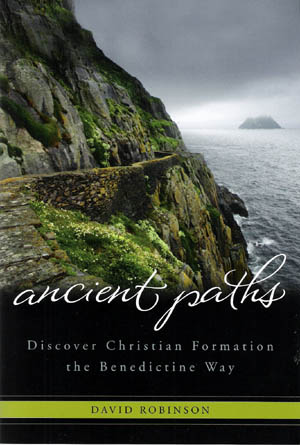
This book shown on the right is one of the most lovely, informed, and helpful books about Benedictine spirituality I’ve ever read.  Written by a sensible Presbyterian pastor, too.  Very, very nice.

Hearts & Minds
234 East Main Street  Dallastown, PA 17313     717.246.3333

A few recent books on spirituality

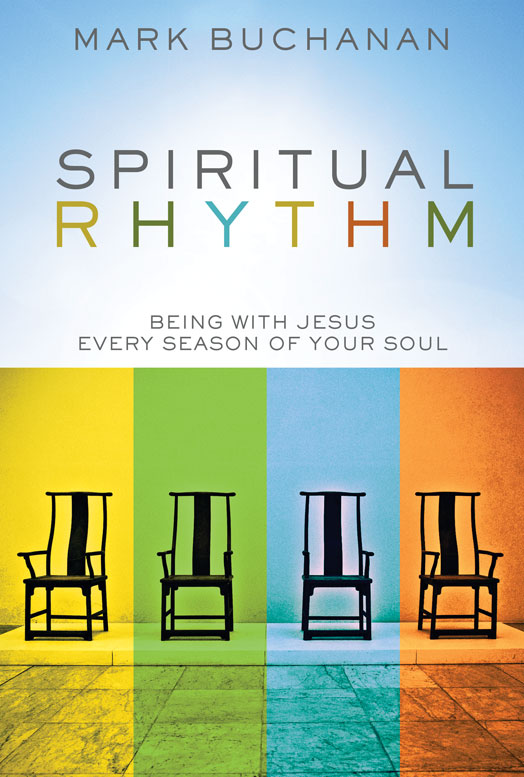
In the blog post from the end of the summer I lamented the passage of summer, how times seems to speed past, and how I get a bit frustrated with my life during this season.  I don’t know about you, but I hunger for more time apart to focus on my relationship with God, I long for great union with Christ.  Like the new Bill Hybels book I reviewed, The Whisper of God, I want to be open to discerning what the Spirit is saying, “and have the guts to respond” as he puts it.  I noted that great new book by Mark Buchanan–a great writer if you haven’t read any of his stuff–called Spiritual Rhythm: Being with Jesus Every Season of Your Soul.  It is very nice how he highlights different “seasons” (figuratively speaking) although nearer the end, he offers some standard insights, nicely communicated, about spiritual disciplines that can sustain one through any and all seasons.  So please see that early September blog if you didn’t.

I promised, then, a list of other new books on contemplative practices, recent resources that might serve as companions for your journey.  Here, then, are a few; not exhaustive, not all we stock.  Please free free to call or use the “inquire” page at the website if you have any question about these, or other similar titles.  We really do value conversations with our friends and fans and look forward to serving you further—perhaps with some other resources for the journey.  We hope you might even find these lists worthy of passing along, sharing with others.  So often we hear that customers appreciate reading short reviews and learning what books are interesting and worthy these days.  Thanks.

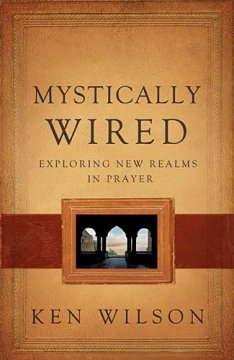
_240_360_Book_205_cover.jpgMystically Wired: Exploring New Realms in Prayer  Ken Wilson (Nelson) $17.99  I list this one first because I’ve been wanting to say more about it other than my brief announcement when we first got it in a few months back.  Wilson is an amazing guy, a deep and thoughtful writer, rooted in broad evangelicalism of a charismatic sort; he is a pastor of the Vineyard Church in Ann Arbor.  Yet, he is no stereotypical Pentecostal; he has written bracingly about the need to resist the Christian right, has powerfully critiqued establishment religion as we know it (see his splendid, provocative, and very well done Jesus Brand Spirituality: He Wants His Religion Back)  In this handsome new hardback, Wilson spends some considerable time using his considerable interests in the sciences to describe what happens to the brain when people pray.  Neurological research during religious practices, worship, meditation and the like has long been done by mainstream and secular clinicians.  I don’t know, though, of any books so robustly Christian and so energetic about understanding the details of how to enter a state of prayerfulness by understanding the human “wiring” of the brain.  This is such a fascinating work that we have to commend it.  But it isn’t just me—Phyllis Tickle says (get this) “Hands down, this is the best book on prayer that I have ever read.”  Folks, even if dear Phyllis is wrong by a long-shot, you may know she is one of the most widely Christian leaders alive.  My friend York Moore—a passionate speaker and leader on evangelism—says “I was routinely blown away by the intuitive genius of Ken’s view and application of prayer.  Page after page, thinking I knew what was next, I was surprised with fresh insight and unique perspectives on connecting with God.”  Others have raved—folks as different as Todd Hunter, Scot McKnight, Brian McLaren.  Please do check it out.  I’m going to read it again, more slowly this time.

You may recall that we gave a good review to a stellar book more generally about neurology and Christian living, a fine book written by a psychiatrist (and trusted friend) Dr. Curt Thompson called Anatomy of a Soul, which deserves another shout-out in this context.  A bit more broad, written with more attention to the details of brain science, with applications beyond prayer, the two books make nice companions. These are great, great books if you like the phrase “hearts and minds.”  Wilson helps us understand that that is just what God intended all along.

Product5283_Photo1.jpgAncient Paths: Discover Christian Formation the Benedictine Way  David Robinson (Paraclete) $16.99  Yes, I know there are a hundred recent books drawing on Benedict. And I know I’ve promoted the beautifully simple recent work (The Good Life and The Good Neighbor both also published by Paraclete) by Robert Benson, by saying they were the best, clear, lovely, simple way into Benedictine spirituality.  Well, this is level two—not exactly for true beginners, but it is the best serious introduction I’ve yet read.  Man, this Presbyterian guy knows his stuff.  The chapter on the ways in which the young monk from 5th century Nursia changed the world is worth the whole price of the volume, and it is exciting stuff.  Faith well lived, deeply and in community, really does transform ideas and behaviors and can impact culture and history.

 For anyone interested in this classic path for growing a Christian community–and this is central, for spiritual formation is not done alone!—Ancient Paths is a tremendous guide.  It is well written, practical, interesting, and not the least sentimental or breathy or “touchy feely.”  This is sensible, solid stuff, life-changing insights that are down-to-Earth (quite literally; you know Benedict’s dictum about working and praying!)  Robinson has spent over 20 years visiting a Benedictine monastery, and, as a Protestant pastor, has some special gifts to be able to share his experiences with those not particularly fluent in the monastic traditions.  The is a fabulous 12-week study guide, too, making it ideal for small groups, spiritual friendship meetings, or to study with others.  There are application points along the way, too, designed to help ordinary folks take small steps towards incorporating these sturdy practices into their daily discipleship. It is ideal for congregational use, too, or for anyone interested not only about Benedictine approaches, but for anyone wanting to grow in faith and Christian living.  Dennis Okholm, of Azusa Pacific University, who wrote the also-fantastic (and cleverly titled) Monk Habits for Everyday People says, “Eminently practical applications for any person interested in being re-molded into the image of God.” Very nicely done.

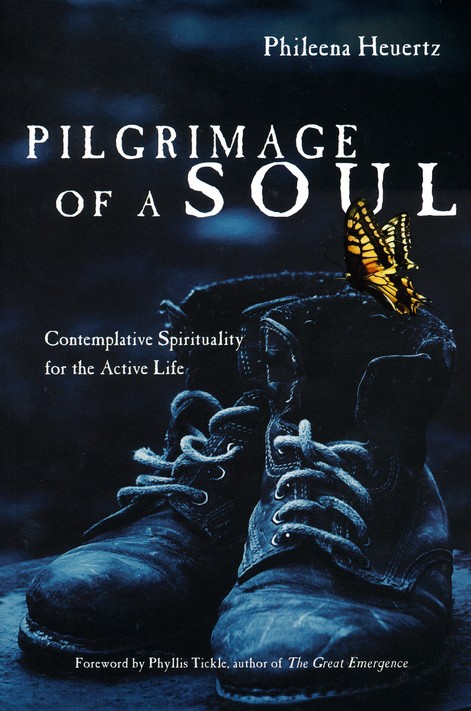
Pilgrimage of a Soul: Contemplative Spirituality for the Active Life  Phileena HeuertzPilgrimage of a soul.jpg (Likewise/IVP) $15.00  Earlier this summer I got to do a small workshop on the Biblical basis for and the spirituality that helps fund, a life-long commitment to social justice.  Some of the books that relate faith formation and justice work are near classics (like, say, The Active Life by Parker Palmer, drawing on the deeper < i>Contemplation in a World of Action, by Thomas Merton.)  One of my favorites, for its fun and practical style, is the gem by Tony Campolo and Mary Darling called The God of Intimacy & Action.  This new one by Phileena Heuertz stands in the tradition of those books that struggle to bring together the “journey inward and journey outward” and it, too, may someday be considered a watershed and seminal offering.

 Some of this raw and poignant meditation is a memoir, telling of her spiritual journey, her call to serve the poor, and a great section on her 33-day pilgrimage down the El Camino de Santiago. (There are a lot of books on this ancient Christian practice these days, by the way—we have probably 8 or so here in the shop, including the very useful The Way is Made By Walking by Canadian Mennonite pastor Arthur Boers, and the very recent volume in the “Ancient Practices” series, one called The Sacred Journey by Charles Foster )  Besides Heuertz’ work with the amazing Word Made Flesh (her husband’s book about that extraordinary global work is called Simple Spirituality: Learning to See God in a Broken World) she has dug deeply into the important authors and directors in the contemplative tradition. Her work in global missions and “downward mobility” to serve is guided by her inner life of deep spirituality.  As one with ecumenical interests who has learned much from Catholic mystics, I am just floored (and so happy) that a solid evangelical publisher like IVP has an author so fluent in the writings of not only Henri Nouwen, but John Mains, Thomas Keating, Macrina Wiederkehr, Cynthia Bourgeault, Tilden Edwards, and obviously the important work of Ronald Rolheiser.  From the important feminist theology of Carol Lakey Hess to the liberation themes of Jon Sobrino, to the self-awareness gleaned by books from the likes of David Benner,  Heuertz has worked the literary field and picked the best fruits to bring to the table of this fine book.  There is also poetry, moving charcoal sketches drawn by an artist friend, and great and honest reflections on how to keep God’s sustaining presence alive in your life.   With endorsements from Franciscan Richard Rohr to Baptist Jonathan Wilson-Hartgrove, you should know that this book is being seen as a true gift, an amazing story, a reliable guidebook for the contemplative activist.

Whole Life Transformation: Becoming the Change Your Church Needs  Keith Meyer (IVP) $20.00  This is the kind of book that many, many should find helpful.  It is anecdotal as he shares his story of near burn-out, and as he shows how he slowly found himself needing to9780830835300.jpg enter counseling, embrace the 12-step sort of recovery movement, and weave all of this into his daily work as an evangelical pastor.  While the back cover says “transforming the church by transforming the pastor” I believe this book has wider application for anyone hungering for a saner pace of life, a deeper awareness of how our driven and competitive spirits can be dysfunctional (even when it is done as “church work”) and is eager to learn how to rearrange one’s habits.  This is a book of honesty and straight-talk, and will appeal to those who know they are hurting, know the church is often broken, and want to truly become transformed by Christ to be like Christ.  His friend and mentor Dallas Willard has written a good forward, and in many ways, this is a case study of what can do to heal an exhausted pastor, renew an earnest leader, and transform a community—bit by bit—as spiritual transformation became the heart of the ethos of the congregation.  Do you long for God to redeem and reform your character?  Your family?  Your daily habits?  Do you think that your own local church could benefit if some folks truly learned to name our sins and allow Christ to heal us?  This is an easy-to-read book that will stimulate some good thinking and may be an avenue for the very transformation you or your church is seeking.  More programs and bigger budgets are not the answer.  Meyer came to learn that, nearly the hard way.  Read his story and rejoice.

Embracing the Call to Spiritual Depth: Gifts for Contemplative Living  Tilden Edwards (Paulist Press) $16.95  Most folks who read deeply in the contemplative literature of the later part of the 20th century know of this pioneer in the reawakening of spirituality.  Edwards founded the ecumenical Shalem Institute for Spiritual Formation and his early books, written as a young, African-American Episcopal priest,  are considered nearly classic.  It has been a while, I think, since he has graced us with new insights, and this pondering reflection is standard meditative stuff.  Some might think it less Christ-centered than it could be, and some may not appreciate the ways in which he integrates psychology, depth awareness, and Eastern insights, with gospel foundations to offer up a gentle and mature catholic spirituality.  Still, for those serious in studying this vast field, this new book is surely important.

The Naked Now: Learning to See as the Mystics See  Richard Rohr (Crossroad) $19.95  I mentioned earlier the desire to relate inner spirituality and outward activism, that we need to (to put it differently) mesh politics and prayer.  From Practicing the Presence of God to finding God in the ordinary (oh how I love those splendid chapters in my favorite book on prayer, Richard Foster’s fine Prayer: Finding the Heart’s True Home) we can move to social activismrichard_rohr.jpg that is enhanced and underscored and part and parcel of a truly spiritual life. Of course it is not pantheism to suggest that God shows up everywhere, that the creation is alive in pointing us to the Divine, and that Christ is truly in and around us. Anyone setting out to “change the world” that does not do so for God’s glory and in Christ’s ways will be doomed to burnout and trouble.  I noted, in my comments above about the great new book by Phileena Heuertz, that it seems that Richard Rohr has influenced her a bit.  You may know his very popular and important book on just these things, Everything Belongs: The Gift of Contemplative Prayer which, true to Rohr’s love of St. Francis, shows how prayer and service and action relate.  I liked that book a lot and while not brand new, is a fairly recent contribution to the field of experiential spirituality being lived out with “radical grace” in the contemporary world.  Fr. Rohr helps direct a Center about these very things, The Center for Action & Contemplation, which is one interesting place; it might stretch some conservative evangelicals, I’d guess, but it is worth visiting.

I say all this to get to a mention of Rohr’s newest, a (nearly interfaith) invitation to reflect on how mystics experience life and see God in all things.  I hesitate, though, and I hesitate about hesitating.  Some friends who I respect absolutely love this book.  A few others that I trust remind me that it is, at the end of the day, an approach that seems to disregard essential truths of Christian theology; it is romantic, nearly goofy in its exegesis at times, a bit too tied to psychological lingo (resisting the ego and such) and fails
to offer a robust spirituality based on Christ’s redemptive power over sin.  Well, if one has a rather meager or vague or overly-psychological view of sin, then one’s view of redemption is going to get gushy and less than substantial.  Where authors like Eugene Peterson or Dallas Willard come to mind as those who insist on a Biblically-informed sort of meaty spirituality, The Naked Now seems to bring other insights to the table, and has the subsequent strengths and weaknesses of a liberal Catholic, nearly non-orthodox orientation. I am not saying dear Father Rohr is un-Biblical (that will be for you to decide, fair reader.)  There is nothing wrong, on the face of it, to cite non-Christian sources for wisdom.  I do suggest that this book is not evidently rooted in standard Christian understandings of conversion or sanctification or particularly consistent with an historic view of the work of Christ.  Of course, Rohr–as the vibrant Bible teacher he is–cites the Bible a lot and includes tons of Scripture reflection.  Does that make it fruitful for those seeking a responsible, authentic, mystical experience of the true God?  I’m less sure of this than some of his other books, but it is nothing new, really.  For one who wants a good example of this exact mystical tradition–with its strengths and weaknesses—give this a try.  Let us know what you think.

9780809146475.jpgExplorations in Spirituality: History, Theology, and Social Practice  Philip F. Sheldrake (Paulist Press) $22.95  Well, I’ve raised the hackles of some friends, I suppose, by offering a small bit of critique to brother Rohr, an author I generally like, and a leader I respect.  Others surely think I’ve not hit him hard enough, and there will be websites glowing that Hearts & Minds has embraced paganism.  So be it.  Most of our customers and friends appreciate our attempt to be balanced, to share concerns in friendly ways, and to point you towards important books (where we, or you, agree with all of them or not.)  But this does open a can of worms, doesn’t it?  What do we mean by spirituality?  How has that over-used phrase entered into our vocabulary so, when the grand traditions are so unknown.  We stock books of medieval mystics and Greek and Russian spiritual masters, and yet they don’t sell much.  So we need to know a bit more about this whole field. 

Mr. Sheldrake,educated at Oxford, and professor at University of Durham, is renowned for his historical overviews of spiritual formation.  (Indeed, he has been the president of the International Society for the Study of Christian Spirituality, and has served as editor for the New Westminster Dictionary of Christian Spirituality.) His small volume in the Blackwell “Brief History” series (A Brief History of Spirituality) is excellent.  While someone like Richard Foster (with his compilations of primary source stuff like Devotional Classics and Spiritual Classics) is an evangelist for the inner life, a cheerleader and teacher and pastor, helping others gain appreciation and access to a lived life with Christ, it seems that Sheldrake is the preeminent historian of the field.  He may be one of the best to walk us through the ages, explaining the currents and movements and figures and traditions. 

So, his Explorations in Spirituality really is a grand and magnificent overview of recent thinking, gathering together various essays and articles and surveys of what has been going on in this field for the last few decades.  While not an overview of all of church history**, it is an exploration of what is being published, how spirituality courses interact with theology and history, and ways the contemporary understandings of place (cities and buildings, even) have come to influence how we think about God’s presence in ordinary life.  This is not for everyone, but to hear a serious scholar weigh in with a meaty collection, this could be very useful for some.  Interesting!

**for two very good overviews, both written within the last few years and relatively recent, see the spectacular, gorgeous, and well-written Brazos Introduction to Christian Spirituality edited by Evan Howard (Brazos; $34.95) or the great, ecumenical, collection of primary source writings, God Seekers: Twenty Centuries of Christian Spiritualities edited by Richard Schmidt (Eerdmans; $22.00)

image_thumb.pngLife in the Spirit: Spiritual Formation in Theological Perspective  Jeffrey Greenman & George Kalantzis (IVP) $25.00  For a semi-scholarly treatment of the field of spirituality, and how theological themes do or don’t interact with recent concerns in spiritual direction, this is the best resource we’ve yet seen.  I cannot say enough about how thrilling it is to see a mature and open-minded and yet firmly evangelical theology interacting with things that are so common within those retreat centers and renewal ministries that are talking about spiritual disciplines and the inner journey. (There are chapters, for instance, like Bruce Hindmarsh comparing Catholic and evangelical devotional practices,  Kelly Kapic on holiness in John Owen that is very interesting and apropos, a good piece by Dallas Willard, and chapters on centering prayer, hymns, and Chris Hall on “lectio devina”—what is really going on, there, and how might serious theological voices help?)

My, my, this collection of essays is rich, and I wish every pastor and formation leader would have it on his or her desk.  And I wish every theologian (or those interested in reading the systematic doctrine stuff) would read these pieces, showing how historic doctrinal concerns can shape and mold those who are seeking for deeper relationship with God and living life out of deeply formative spiritual encounters.  Kudos to those at Wheaton College who put together the gathering that provided these stimulating essays, and kudos to IVP for daring to publish them.  Will theologians truly care about spirituality?  Will practitioners and directors of the contemplative life truly care about theology?  Will ordinary Christian readers care about either?  Well, except for our brave and eccentric readers here at BookNotes and a few other oddball places, the answer may not be rousingly affirmative.  Still, we celebrate this book, seriously recommend it, hope that some of the chapters (at least) are copied and studied and cited and used. Three cheers for Life in the Spirit.  No, make that six cheers—three from buyers of theology books, three from buyers of devotional works.  Six cheers for Greenman and Kalantzis, ecumenical thinkers helping us make sure our prayer stations and pilgrimages and labyrinths and meditation centers and journaling exercises and liturgical experiments and our readings of the likes of the books we’ve mentioned above, are all well grounded, well rooted, and Biblically faithful.

Here is a link to show you the table of contents, and some recommendations of the book, from folks more serious than I.  If you are struck, as we are, of it’s significance, do come back and order it below.  We have a discount, and hope you find it helpful.  Thanks. 

BLOG SPECIAL
20% off

any book mentioned

order here
takes you to the secure order form page
inquire here
if you have questions or need more information


Hearts & Minds 2345 East Main Street  Dallastown, PA  17313     717-246-3333


The end of summer blues and two great books about spiritual formation: The Power of a Whisper and Spiritual Rhythm

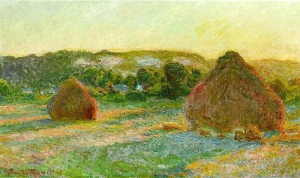
monet-wheatstacks-end-of-summer.jpg

                                                                                                   Claude Monet:  End of Summer
I suppose I am not the only one who is sad that summer is done; everybody I know is a bit manic about how the time has flown by.  For me this happens at every August’s end, and I am sure it is related to piles of regret, legitimate wishes for more time away, time wasted, as well as some deeper melancholy that I can’t quite name.  It is clear to me, though, that I long for two somewhat related things, and that these things always come to my awareness this time of year: greater connection to God and greater connection to creation. 

This time of year many of us want to squeeze in a bit more outdoor time—one more hike, one more visit to a local park, a bit of yard work, or harvesting produce; we go to the shore or the lake or the garden, and wish for just a bit more time. The beauty of the days makes me think about not only being outdoors, but reading about creation; maybe not going into the wilderness on a canoe, but reading about those that have.  I wonder if others are like that.

So, soon enough, I’ll tell you about a remarkable book or two that are sure to thrill those who like the genre of nature writing.

But first, and most urgent, some titles that have helped me—or at least reminded me—of this deep need for a more lively experience of God. 

I’ll highlight a handful of new or important ones over at the monthly column, soon, but first, two that I most thoroughly enjoyed, and that we want to commend to you.

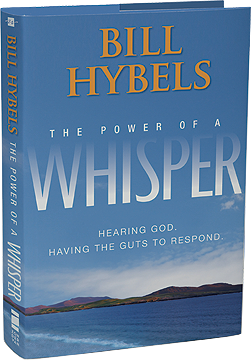
whisper_360.pngThe Whisper of God: Hearing God. Having the Guts to Respond.  Bill Hybels (Zondervan) $22.99  I know, I know, some of us read Thomas Merton or work at the deep tradition of centering prayer, and may suppose this chatty collection of stories by a mega-church big shot is a bit light-weight.  Or, we understand the need for very solid doctrine and clear explanations of foundational truths, and we fret that the Willow Creek leader may be a bit too CEO-ish for our orthodox tastes, failing at being adequately clear about the whole truth.

Well, let me say this: I don’t care where you are on the theological spectrum or what sort of reading habits you have, or what your concerns are about mega-churches, these stories will inspire you, impact you, maybe change your attitude about Willow and Mr. Hybels, and may—just may—remind you that God is alive and well, and wants to be in communication with you.  What you think of Willow Creek is less important that what you think of God and God’s activity in your life.  Does God whisper to you?  Do you dare say so?  Are you experienced at hearing?  How do you respond? 

Some have said that this is Hybels’ best book yet, and he himself says in the preface that some of this stuff he has been waiting for decades to write.  He didn’t want to seem flakey or immature or unwise, so he let this idea–that God whispers stuff to us through holy hunches and quiet leadings–percolate for half a life-time until he felt he had something true to say about it all.

I challenge anyone to read this and not be moved.  He shares enjoyable and often riveting  story after story of those who felt God’s gentle guidance to do things, to say things, to stop saying things, to change course, to pick up a task or calling or career.  His own life is replete with these, and it is my sense that he does not overstate the way in which the Spirit guides us.  His own raw honesty about this—often set in times of great conflict or pain or loss or stress—is very helpful for any of us that are feeling the end of summer blues, anxieties about up-coming schedules, going through complicated times, or who need to know of God’s presence in the ordinary days of life.  It was a very good book for me to read this season and it may be for you.

 I was encouraged by a few the stunning stories that shout “holy smokes, can you believe that?” but I am even more encouraged that most of the stories Hybels tells are made of fairly ordinary stuff and show God’s promptings into pretty standard actions.  Like being nicer to your wife.  Be helpful to that person being insulted in an airport.  Give a bit more money to that charity.  Let your daughter stay out later than your fatherly instincts permit. Tell a friend that you are concerned about his attitude.  Read that book. Take a day off and go have fun.  

There are several sections describing various ways God speaks which Hybels outlines (through the Bible, naturally, through friends, internal promptings, etc.)   He is helpful about he processes of discernment and is not glib about “hearing” The Voice.  (He gives some practical advise, too, on how to discern if it is not God’s whisper; “filters” he uses.)  Great storyteller that he is, he shows how this way of listening (and faithful listening, of course, means doing what one is told) played out for him in various sides of life.  His section about parenting is truly touching, and his admissions about his struggles at parenting two different sorts of children—and learning to hear God’s guidance about showing grace and trust—was reassuring and helpful.  Since I am also reading his daughter Shauna Niequist’s wonderfully written Bittersweet: Thoughts on Change, Grace, and Learning the Hard Way (Zondervan; $16.99, but on sale for $12.97) it is fun hearing about her as a child. Yes, this parenting section was a bit challenging, but also quite helpful.

The extraordinary ending chapters are about hearing “Whispers That Change the World” and revisit themes that are important at Willow Creek—themes of social change, service of the poor, standing for justice, racial reconciliation, global friendships.   I challenge any church who has interests in these callings of social concern to read his story of deepening care (and action) and not admire the solid work and prophetic witness of this gang of folks.  Some mainline denominational folk, in fact, who pride themselves of their concern for this arena, could learn a bit about social innovation, I’d think.  I loved the whole book, but I kept wanting to tell others about this section, in part because so many don’t understand the significant social outreach, anti-poverty work, advocacy for immigrants and ethnic diversity that Willow Creek has engaged in.  Yes, it is influenced by Hybel’s experiences in Africa (even as a teen, when he wondered through the slums of Cairo) and other places, but it mostly rooted in his holy engagement with the Bible and the Spirit.  Again, The Power of a Whisper shows the way ministry and leadership and daily discipleship–even in ways t
hat lead to controversial social positions—can be influenced by the promptings of the Spirit, informed and shaped and moved along by our attentiveness to God’s voice in our lives.  This is great, great stuff, and I hope many read it, and “have the guts to respond.”

Is this rocket science?  Is it deep medieval mysticism?  Is it complicated or weird or risky?  Well, this book does not make it sound that way at all. It did not strike me as breathy or over-stated or dramatic at all.  Still, I wonder, sometimes, if those of us who are rather ordinary Christians—Protestant, Catholic, evangelical, Anglican, whatever—live as if God is silent, and the world is more or less “secular” except for the doctrines and dogma we hold and the ethics and worship rituals we practice.  This easy-to-read and very inspiring book will show us a better way.  With stories and examples and clear-headed conversational teaching, this delightful guide will remind you that God does want to speak to you.  And that we can live not only with the idea of God as creator and savior, but as the One who is in relationship with us, and speaks and allows us to experience holy guidance, step by step, whisper by whisper.

Of course, there are other books on this topic, some deeper, some more complex, somebill_hybels.jpg perhaps more theologically mature.  I will soon publish a list over at the monthly column, highlighting more.  Hybels himself is not new to this inner life stuff—his popular book Too Busy Not To Pray: Slowing Down to Be With God (IVP; $15.00) is excellent and you may know that he had hired Ruth Haley Barton (whose books we often cite here) for a season at Willow to train folks in spiritual direction.  The Power of a Whisper, though, is the one that drew me in, reminded me of very basic stuff, helped me recall great truths, and touched me noticeably.  It is engaging, interesting, inspiring and very helpful, if you are open.  Are you?

Here is a short youtube clip about the book.  Check it out and them come on back…I’ve got to tell you about another perfect book to read now, as summer moves to fall.

spiritual-rhythm.jpgSpiritual Rhythm: Being With Jesus Every Season of Your Soul  Mark Buchanan (Zondervan) $17.99  I have raved before about this author, and Beth and I have both suggested that he is the exact sort of author we enjoy telling folks about.  Why?  Well, there is something good about his style, it is writerly, creative, full of nuance and care and the fruit of the hard work of good craft.  And yet, it is in no way cryptic or weird or overly-complex.  Some excellent writers are so poetic, you know, that it is tiring to read their allusive prose.  Buchanan is a fine wordsmith, a good writer, and makes the reading experience a delight.  And yet, he is a preacher at heart, so he is leading us into applicable truths and into our own teachable moments. 

Buchanan struck me in his earliest books, Your God Is Too Safe  and The Holy Wild.  But he really got me in his very well designed and nicely written book on the sabbath, The Rest of God: Restoring Your Soul by Restoring Sabbath.  Starting with a Christian view of work, he then shifted to a view of rest and from there, to entering the very rest of God.  You know that as an author he has done his research–he cites the likes of Abraham Heschel—but yet it isn’t ponderous or needlessly deep.  It is one of my favorite books on this matter of sabbath and rest and renewal.

And yet, I remain too often weary and too rarely overjoyed by the “rest of God.”  I know I am not alone.  I think that Mr. Buchanan understands, and is committed to helping his readers enter that rest, appreciate that Presence, live into the abundance of a sane friendship with Christ, day by day.  The book after The Rest of God was about citing God in the ordinary, a beloved theme around here (we have an entire section of the “spirituality of the ordinary” in our contemplative living section.)  That book was nicely entitled Hidden in Plain Sight.

But now, here is his new one, and perhaps his best yet.  Spiritual Rhythm is not necessarily about the literal seasons, but he uses the time-honored metaphor of “seasons of the soul.”  For each season, he shows differing ways we experience God, live into our discipleship, encounter God’s presence, and ways to enhance our spirituality in those unique times.

I like this for–oh, let me count the ways!  There are oodles of reasons for appreciating this approach, but one should be obvious: a life of discipleship is always and everywhere rooted in the realities of our life in time.  That is, there are ups and downs, seasons and eras, phases and stages.  Whether these are times that are shaped by certain emotions—grief, obviously, or the joy of approaching an upcoming wedding or the anxieties  of a new job—or a phase in life (being a twenty-something or hitting the upper end of mid-life, say) there simply are social and physical realities that necessarily impact how we live out our faith.  I don’t know about other world religions, but Christian faith is always embodied, down-to-Earth, real.  So we’ve got these “seasons” both literally and figuratively.

Buchanan shows us how each stage of life, each season, can be an opportunity for experiencing God in some new way.  To say that the book invites you to deepen your relationship with God in all times is to miss the edge and insight of this particular book.  The author literally helps us attend to our feelings and experiences in these different times of life and helps us see how they can uniquely move us to encounter God in fresh ways.    It includes tons of Bible reflection, side-bars which are experiences to ponder, some good guide-lines for nurturing the art of discernment during your particular season of life.

I suppose this is nothing new to those who are well read in the spiritual classics.  Jesus Himself said to “abide” in Him, so this move to resist busyness, to arrange our lives for spiritual transformation, this embrace of what Ruth Haley Barton has called Sacred Rhythms, is sage counsel.  What I like most besides the pleasant and at times arresting prose, is the way Buchanan helps us “respond to the weather of the heart” (as it says on the dust jacket) “whether we are flourishing and fruitful, stark and dismal, or cool and windy.” In comparing spiritual changes to the seasons of the year, Mark shows us what to expect from each season and how embracing those rhythms allows our spiritual lives to prosper.

We hear a lot about sustainability these days; this is good.  We’ve had books on sustainable agriculture and energy use and stewardly economics since the day we opened nearly 30 years ago.  But what about sustainable spirituality? And is Buchanan right that a key is seasonality?  Can our faith go the distance, through thick and thin, winter’s blast and summer’s heat and the good delights of any season?  I’ve admitted my own melancholy these days.  I suspect that nearly everyone—if they are alive to the world and pay attention to these terrible days in our culture—ma
y share some anguish at times.  And, some joy and goodness.  How does God show up in each of these emotional states?  How can the various times of our lives be avenues of connecting to the Holy?  How can we find greater guidance and grace no matter the season of your soul?  Spiritual Rhythm: Being With Jesus Every Season of Your Soul will help.  It will be enlightening as you learn new ways to have your faith practices and spirituality in sync with the era of your life, and it will be helpful to press you to experience more of what God’s Kingdom can be as you abide in Christ.  He explains what is good, or what the dangers, joys or pitfalls of each season might be. 

There is a bountiful harvest of insights here, more content than you can use in a week or so.markbuchanan.jpg  Savor this for a season, maybe for a year.  I think if you buy it now, you will not regret it.  He reminds us that you  “may want to zigzag through it, going first to the season that most intrigues you, because you are in it, or because you wish you were.”

 Mark writes, in the introduction, after wryly calling Jesus the “Man for All Seasons”

Eternity hides beneath the guise of each season’s beauty. That beauty is eternity’s slight of hand, the trick it uses to bedazzle and bewilder us, to take our hearts’ longing appear and disappear right before our very eyes.  You think you crave the summer of ’69, or whatever summer you were young and in love. But that summer was only a dress rehearsal for what your heart really wants: heaven.

Heaven whispers in the burden God lays on us.  The everlasting flits beneath earth’s swiftly fading beauty.  God sets eternity in our hearts, and it tells us not to despair of the burden.  It warns us not to be overcaptivated by the beauty. For though we want the burden lifted and the beauty prolonged, God has an infinitely better idea: that the Man for All Seasons would walk with us in season and out….

BLOG SPECIAL
20% off

any book mentioned

order here
takes you to the secure order form page
inquire here
if you have questions or need more information


Hearts & Minds 2345 East Main Street  Dallastown, PA  17313     717-246-3333

Books on caring for aging parents

As you know, sometimes I share lists with you that are first developed for a customer who inquires about what sort of books are best in a given field.  Actually, we don’t pretend to know the “best” but we do try to offer suggestions that are good for the person or group—best as we can tell—who has asked us. So, here are some recommendations for a book club, study team, or anybody wanting to think about caring for elderly parents, the role of mid-life adults taking care of their own dear folks.  By the way, we have a number of resources on aging, on older adult ministry, and a lot of good reading for elders who may want devotionals or reflections about growing older.  Just call us if you’d like or if you know anybody who might want something like that, written for an older readership.

These, though, as you can see, are mostly about caring for aging parents.  Hope it is helpful.

Caring for Your Aging Parent: When Love Is Not Enough Barbara Deane (NavPress) $15.99  This is well written and touching and insightful, if a bit basic.  A good number of years old, now, but it stays in print.  Balanced, thoughtful, interesting and helpful, from a clearly Christian perspective.  Some have said it has nearly revolutionized how they see their aging folks, and given them fabulous ideas on how to cope.

Changing Places: A Christian’s Guide for Caring for Aging Parents  Betty Benson
2354899.jpg Robertson (Beacon Hill) $14.99  Betty is a pleasant author, funny, known for her sensible Bible studies and evangelical faith.  This one also has a nice tone and while it is very practical, tells stories, shares the anguish of these times, and is based mostly on her own experience bringing an ailing parent into their home.  It gives lots of common sense ideas and is quite reassuring.
 

51odnNwC1IL._SL500_AA300_.jpg

Family Squeezed: Tales of Hope and Hilarity for a Sandwiched Generation Phil Callaway (Multnomah) $13.99  You know the “squeezed” phrase, or the “sandwich” generation—between raising kids and caring for elders.  This reads almost like a novel, as he shares touching–but usually hilarious–stories of his own crazy family.  As he puts it, being middle aged today is between “the greatest generation and the gimmee generation.”  No wonder it is tricky, ” Money is tight and so are your favorite jeans. ”  Some call Callaway “Dave Berry with a message.”  Nice.

Taking Care of Parents Who Didn’t Take Care of You: Making Peace with Aging Parents Eleanor Cade (Hazelden) $16.00  This is not overtly Christian, but thought I should mention it as it could be important for someone out there.  Hazeldon is the AA publisher, and they are renown for doing things for folks in recovery.  Well, what if you were raised in an abusive or alcoholic or neglectful or controlling family?  How does one “make amends” on top of the obligations to care for aging parents.  This is a powerful story, a long-overdue look at a sad situation that is laden with possibilities of redemption for those who are willing…She offers a compassionate and realistic guide with lots of poignant stories.

My Mother, Your Mother: Embracing Slow Medicine, The Compassionate Approach to Caring for Your Aging Loved Ones Dennis McCullough (Harper) $14.99  This is not a religious perspective, and some even think it is controversial, so some sharp folks might caringly reflect on it.  It is mostly about medical issues.  The author invites us to be proactive and intentional about health care and not await for acute or crisis situations that demand major medical interventions.  I’m not sure how one can always anticipate the complications, but this is a kind guide to thinking about the medical needs of our elders without going overboard and entering a health care system that may end up making matters more complicated and expensive and inhumane.  One reviewer called it “comforting in its compassion and detail.”

Caringformother.jpgCaring for Mother: A Daughter’s Long Goodbye  Virginia Stem Owens (WJK) $16.95  Oh, boy, get the tissues out for this one.  Beth and I were just awestruck by this when we read it as it so chronicled the exact frustrations and pain we experienced as my mother-in-law was in her last weeks in and out of hospitals, talking to too many doctors, medical confusions and institutional errors and less-than-attentive caregivers and the consequences of feeling marginal and helpless in this dear time at the end of life.  I devoured her prose, with tears and sighing too deep for words. Ms Owens is a great Christian writer (friend of Eugene Peterson and poet Luci Shaw) and these essays are powerful, essential reading—although may be too specific about end of life care of a dying parent that it may not be right for your group if you are seeking something about all sorts of aging issues.  Still, this account of caring for the dying and navigating the medical worlds is tender and passionate and beautiful;  this is truly a sacred story, set on holy ground, by one of our finest memoirists.  Very, very highly recommended.

181542.jpgA Place Called Canterbury: Tales of the New Old Age in America Dudley Clendinen (Penguin) $16.00  Once again, this isn’t a faith-based book, so it wouldn’t be right for a Sunday school class, but it is one we couldn’t put down.  The author’s parents ended up in a retirement village—everything paid—in swanky Florida and as he visited often, he decided to do some investigative journalism and write a book about the inside scoop on this little enclave of the very old.  It is both hilariously funny, quite touching, truly interesting, pretty enlightening (who knew half of this stuff?) It unfolds like a novel, or a great bit of magazine reporting, and we were hooked on wanting to know what happens as these folks age, and as this author grew to care for this home full of characters.  This particular place (literally called Canterbury) may not be exactly the sort of place most of our parents end up, but the stories are remarkable, and we learned a lot.  Some colorful language, by the way, and a chapter on the sex lives at Canterbury.  Oh my…would make a great book club read, or a “end of the summer” beach book.

book_home.jpgA Place of Healing: Wrestling with the Mysteries of Suffering, Pain, and God’s Sovereignty Joni Eareckson Tada (Zondervan) $21.99  special sale price, $5.00 off– $16.99
 As we struggle with the pressures of care-giving, we get exhausted and weary and, understandably, begin to doubt the deepest things of our faith.  Here, a woman who has suffered much (and even know, in her pain-wracked days, has just announced her breast cancer diagnosis) has so much to teach us.  Joni is a very, very smart woman and has earned the right to speak about mature theology, harsh stuff, and the joy of serving God, even in times of great pain and hardship. This is brand new, very thoughtful, and we are please to be able to share it with you.  See the sale price, noted above.

Aging and Ministry in the 21st Century: An Inquiry Approach  Richard Gentzler
9780881775402.gif (Discipleship Resources) $13.00  While this is a handbook for thinking about ministry and I suppose is aimed at an audience of church leaders, any strong Christian might find it interesting to think strategically about reaching and serving and nurturing the faith of our elderly.  This is a truly marvelous resource; one Presbyterian consultant on the topic wrote “I have waited almost 30 years for this book to be written.”  For churches or individuals wanting to do ministry—and, really, that might be all of us if we care about the faith of our parents—this gives sociological insights, health-related stuff, chapters on spiritual formation, a bit on development issues.  It covers everything from the theology needed to understand dementia to worksheets for caregivers.  There is a chapter on how boomers view death and dying, and there is plenty to reflect upon for anyone curious, even if not planning an official launch of a new church-based ministry per se.  I like the balance of perspective and of practicality.  Very nicely done.

Lost in the Middle: Midlife and the Grace of God  Paul David Tripp (Shepherd Press)
Lost in the middle_small.png $15.95  Tripp has written a great, Biblically-based book on parenting teens (Age of Opportunity) and is a Reformed scholar and counselor who emphasizes a strong role of the Bible as we care for one another in helping ministries.  (His Instruments in the Redeemer’s Hands has the subtitle “people in need of change helping people in need of change.”) This is not really about caring for elderly adults, but it seems that, even though the Bible never exactly mentions “mid-life” it does offer great resources for those of us going through this time of transition. He believes that there is much regret and pain and unspoken conflict in this time of life (these days, especially) and offers the hope of the gospel which allows us to reflect on how we can renew our faith, find our way anew, and see more clearly how God can help us carry on.  He’s certainly attuned to family dynamics and such, so this is a very appropriate book for anyone in this season of life.

scan0005.jpgHannah Coulter  Wendell Berry (Counterpoint) $14.95  Memory of Old Jack was the very first Wendell Berry novel I read,  thanks to my friend the fiddler, Bob Buckingham, back in the early 80s and I’ve been a fan of Berry’s fiction and poems ever since. I have long intended to re-read it, now that I know even more about Mr. Berry and (through other novels) the friends and kin old Jack Beechum describes in that long-ago story.  Mr. Berry is known, perhaps best, for his incisive essays about place, land, the economies of scale, sustainable agriculture, creation-care, farm life, and such.  His love of rural life and a sense of place pervades his prophetic critique of bigness, modernity, progress and the false gods of growth and efficiency, but, almost as central, is this sense of “the membership” of a community, a network of family and friends and place, related, somehow, in unspoken troth.

 This “membership” thesis is described as beautifully and as tenderly and as realistically as ever in his novels, all set in the fictional town of Port Williams, KY.  Hannah Coulter has been through a lot–her first husband killed in World War II—and in her old age at the end of the 20th century she looks back over her life.  This telling of her life story rings true for many older women I know, raised on farms, children of the depression, watching their land and families divided by highways and college, and,  now, computers, and jet travel. This tender, insightful, wonderful story simply called Hannah Coulter is perhaps my favorite Wendell Berry novel, perhaps only surpassed by his well-loved novel of 2000, Jayber Crow.

I think the story of Hannah, and her clear voice, will help anyone of any age understand much of our elderly population as they recall their lives and prepare for their deaths.  Give it to your aging parents, and ask them, especially your mothers or grandmothers.  This is a gem of a book, and we simply could not give it a higher recommendation.

Hearts & Minds 234 East Main Street  Dallastown, PA  17313     717.246.3333 

Award Winning Bible Atlas and other great books of maps

Although I don’t write about them here, much, we have a nice selection of Bible reference books, one-volume commentaries, research tools on everything from what the church fathers and patristics said about Bible texts to how the Scriptures came together; we have a good number of things on the Dead Sea Scrolls and a few Greek and Hebrew aids.  Most often, though, we sell Bible dictionaries and concordances.  Yet, since the Scriptures are a Story about God’s redemptive history in time, that is, in real history, that is, in true places, which we call geography, we’d like to suggest that folks get in the habit of using Bible atlases and maps.  To wit, here are a few we like.  I tried to list a few different sorts, depending on your needs and budget.  Let us know in the comment section below if there is one you’ve found particularly helpful.

And, we would like to ask for a drum roll for these first two.  The first won a prestigious award from a gang o cartographers (I wonder where cartophraphers get together, and if they use GPS to get there?  Sorry; I digress.)  The second is, well, just about the best and biggest one we’ve seen, ever.  Both deserve a applause.  Does your church have a library where they stock this stuff, at least for Bible study leaders and Sunday school teachers?  Might you pass this on to whoever stocks such a resource room?  Thanks.

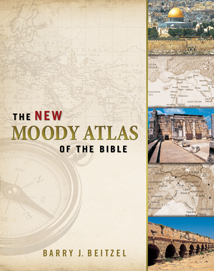
9780802404411LG.jpgThe New Moody Atlas of the Bible  Barry Beitzel (Moody Press) $49.99  We proudly list this one not only because it is recent, and won a “Gold Medallion” from the Christian Booksellers Association, but it also won, just recently, the “best book of maps [of any sort] published this year” by a professional association of cartographers.  Beitzel has done numerous Bible maps (for the NIV Study Bible, for instance) and is quite the man. He has studied Semitics at Fuller Theological Seminary and general linguistics at the University of Pennsylvania. The association honors map-makers by giving awards to maps, guidebooks, wall maps, and various sorts of examples of their work and this New Moody Atlas won in the category of maps in a printed book.  It is a comprehensive survey of important Bible locations and events and offers great looks at Bible history and geography.  It is really informative, up-to-date, and very clear in tone and content.  It has several good indexes (so you can find the same place as it may be shown on different maps) and lots of Bible citations.  It is getting rave reviews from some of our best Bible scholars (Tremper Longman, Doug Moo, etc.)  It has good articles, lots of color illustrations, and nearly 120 different clearly-done maps. Kudos.

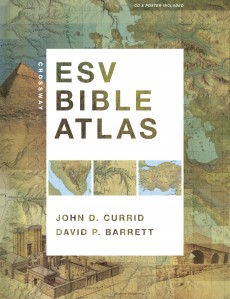
esv-bible-atlas.jpgThe ESV Bible Atlas  John Currid & David Barrett (Crossway) introductory price, $49.99; soon, $55.00  This is the largest and heaviest map book we have in the store (and it further includes a big poster, and a CD-rom) and includes over 175 full-color maps!  Written by a Bible scholar and an experienced cartographer, it is perhaps the best ever done.  It shows in brilliantly designed pages the geographic, geological and historical information in a way that is easy to use and won’t overwhelm with technical information (as some tend to do.) Its size isn’t an indication that it is filled up with too much detail, but rather that it is truly comprehensive and very, very helpful.  This is made by folks with great integrity who wanted to create a resource to go with the recent, conservative and highly regarded English Standard Version translation (some of the maps in this are from the acclaimed ESV Study Bible.) It is getting very truly great reviews.  And, like the study Bible, it is very well made, so the pages lay flat and it is assured for durability.  A truly wonderful book at an excellent value if you want a significant reference tool like this.

9781426707575.jpgThe Essential Bible Guide: Bible Background with Maps, Charts, and Lists  Menashe Har-El, Paul Wright, and Baruch Sarel (Abingdon) $24.95  This is a great, brand-new volume that was created in the Israel by Holy Land scholars there.  It is much less weighty or thick than the previously mentioned one, but is loaded information, descriptions of Iron Age-era confederations and battles and tribes and mountain ranges and seas and cities and cultural customs. As you would expect there are plenty of colorful illustrations and scenic photopgraphy and such.  It has 115 pages and over 60 maps.  Very handsome.

The Historical Atlas of the Bible Lands  Caroline Hull & Andrew Jotischky (Penguin) $20.00  This is a light-weight medium-sized paperback, nicely done on glossy paper, and a mainstream classic used in college classes and the like. It has lists of kings and historical figures, great photos and artwork reconstructions, and over 50 full color maps.  There may be more text here than maps, and so much reads more like a Bible encyclopedia.

Oxford Bible Atlas fourth edition Adrian Curtis (Oxford University Press) $24.95  This latest edition of this small classic is very nicely done, drawing on contemporary, modern, critical scholarship.  There are only 27 maps, though, but some are the latest “three-dimensional” computer generated ones, so it looks great and is quite helpful.  There is a lot on ancient history, archeology, geography and such and a few pages that I found less useful, too.

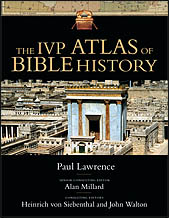
IVP Atlas of Bible History Paul Lawrence  (IVP) $45.00 
This, too, is an award-winning
2452.jpg volume, having been award just a few years ago the best book of its kind by the CBA, earning the “Gold Medallion.”  We certainly  commend it as one of the very best ever done.  There were a host of thoughtful scholars, Bible guys, archeologists, historians and writers who consulted to put this remarkable book together.  We enjoy how it is written, how reliable it is, and the good design.  It does take a narrative approach, so the writing is helpful, captivating, and draws readers in to the big picture of the Holy drama.  One reviewer said it was a “visually rich work, brimming with high-quality photographs.”  It has nearly 100 relief maps.

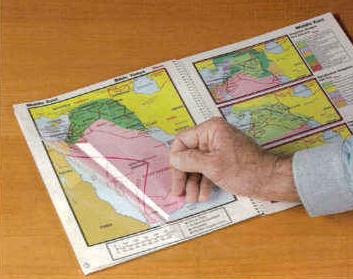
map.jpgThen and Now Bible Maps (Rose) $19.97  This is a fascinating, spiral bound volume that has dozens of maps of Bible times and places, and clear plastic overlays that allow you to compare modern-day cities and countries.  It includes some time lines co
mparing the Bible chronology and world history, too.  The maps are basic and clear (not the award-winning and stunning cartography in the first few) but are very, very useful, since few people know the ancient-to-modern comparison of Bible lands.

Nelson’s Complete Book of Bible Maps and Charts (third edition) (Nelson) $19.99  This is less an atlas and more a big paperback collection of useful resources, lists,  outlines of each section of the Bible and interesting stuff of all sorts.  The maps are exceptionally clear (but quite basic; no 3D or handsome ones like in the true atlas style reference books) and there are charts galore.  These are reproducible, too, so can be used for handouts or reference.  There are almost 500 pages of information, and it is may be useful for putting things in their proper order, along with tables and diagrams and good introductions to each book.
 

BLOG SPECIAL
20% off
order here
takes you to the secure order form page
inquire here
if you have questions or need more information


Hearts & Minds 2345 East Main Street  Dallastown, PA  17313     717-246-3333  

Innovative books on the Bible for youthworkers, teens and children

I’ve been writing the last few weeks about reading the whole Bible narrative as one unfolding drama, and describing, in short-hand, this narrative as the journey through good creation, radical fall, wholistic redemption and future consummation in a new creation.  I’ve noted books that in one way or another help us get that Story in our bones, and that help us read and study and live into God’s redemptive work—His Kingdom “on Earth as it is in heaven”—by seeing the Bible through these lenses, and our lives as unfolding stories which can be shaped by the Bible.  Many of the books I cited are rooted in the work of authors like Al Wolters (and his popular, important Creation Regained) or N.T. Wright’s stuff on the “acts” in the Bible, or the creative and feisty “anti-commentary” on Colossians by Brian Walsh & Sylvia Keesmaat, which illustrates this sense of God restoring creation, bringing us home to shalom, even as we are in a world of great sorrow and injustice.  As Bob Wauzzinski, author of the Ruth book I’ve highlighted, says, “the ‘history of redemption’ must lead to the redemption of history.  And that starts with creation!” And then I threw some other important new resources in the mix—the serious and important collection of articles on the Bible by D.A. Carson or the unusual but informative Girardian study of the Jesus Driven Life by radical Mennonite-ish friend Michael Hardin.  All of these odd and interesting titles that I described might help re-energize your interest in Biblical studies.  Or, if you are new to the Bible, it will help you get going in the right direction.

Work with youth?  Children?  There are tons and tons of resources here at the shop, but if you want a few to chew on, enjoy this little list.  Do pass it on to anybody in your church or fellowship who might find it interesting.  Talking about books like this–even if you don’t intend to buy them now—is an important and strategic ministry.  Blessings on your conversations!

Story Signs and Sacred Rhythms: A Narrative Approach to Youth Ministry Chris 0310291992.jpg  Folmsbee (Zondervan) $14.99  I’ve liked this guys earlier books on youth ministry, and a friend out his way (Kansas City) knows him and speaks highly of him.  Here, though, he’s done a stunning piece of work, evocative and insightful and playful and interesting.  Tony Jones says it “proposes no less than a re-invention of youth ministry based on a robust narrative theology—in other words, a theology of youth ministry that follows the contours of the biblical story.”   I like this line from a great blurb by Mark Riddle, who says “this book represents a beautiful combination of research, know-how, curiosity, intuition, and the expansive experience that is uniquely Christ Folmsbee.”  Or, as he puts it, “in a world of deconstructionists, Chris reconstructs a youth ministry that has depth and vitality.”  And, again, it is an approach informed by this narrative theology, the very stuff I’ve been writing about,  informed by the very flow and shape of the big Biblical picture. Forward by Scot McKnight—-which surely ought to indicate how good this is.  Know any youth workers you could gift it to?

9780310273660_th.jpgShaped by the Story: Helping Students Encounter God in a New Way  Michael Novelli (Youth Specialties) includes a DVD $29.99  I’ve been wanting to tell you about this cool paperback for more than a year, and keep wishing I knew more groups that use it.  I wanted to report that it really works, which I think I can, given that I now know a few who have told us about their finding it helpful.  It is, as the title implies, a guide to helping students (and I’d include even college students or younger adults here, if you want) learn this basic overview of the plot of the Bible.  Call it a postmodern “Bethel Bible” class, or a hip, youthful “Disciple” course, maybe, but know this: it is energizing, draws students in, engages them, by using an approach (I don’t want to call it a technique, but a “way”) that was introduced to Mike by a missionary.  He calls it “Storying” and is a sequential telling of Bible stories followed by a time of creative retelling and in-depth dialogue.  Early church-era rabbis did something like this and they were called targums.  This ancient/new approach builds a lasting theological foundation (or so they hope) while challenging students to discover their unique identity and calling within God’s Story.  Sounds great, doesn’t it? 

There is a training DVD that comes with it, and it shows not only how to tell the Bible story, but how to do the discussions that will allow your group to experience God in a Biblically-based, and, perhaps, life-changing way.   You can get some of this dialogical approach to Bible learning for free at www.echothestory.com and after visiting there, you will know if you want to invest in the book.  Please check it out.

t_0310669278.jpgEnter the Story: 7 Experiences to Unlock the Bible for Your Student  Michael Novelli (Youth Specialties) includes a CD-Rom $18.99   Do you think too many people are suggesting dumbing down the Bible for students?  This is a better way, offering more exercises based on his Shaped by the Story project.  Here, you invite participants to step into God’s story (sometimes quite literally.)  With this experiential learning approach, you’ll find detailed instructions to effectively prepare hands-on and engaging lessons on what he calls creation, disruption, Israel’s Journey, The Tabernacle, The Kingdom, Journey to the Cross, and Restoration.  You can “drop these in” from time to time as special pieces to your youth classes or fellowships, or use them in succession, weekly or at a retreat.  This is a great handbook to have around if you want to explore not only dialogical storying, but storying about God’s unfolding Story.  The Bible isn’t a compilation of random episodes, but a coherent outworking of promise and deliverance, fulfillment and hope.  The old song says “we love to tell the story.” This will help you tell it right, in learning ways that are transformative.

0687000823.jpgThinking Theologically About…Body Image, Money, Pop Culture, and Haves & Have-Nots  (Abingdon) $5.95 each.  Leaders guides $9.95 each  We have suggested that the trajectory of the Bible narrative is that, in Christ, the reign of God breaks into history and intends to bring shalom—pushing back the curse of the fall—to every area of life.  It is the task of God’s people to hear and do the gospel, being “living letters” to the world, agents of reconciliation, ambassadors of this future hope.&nbsp
; And so, to discern the times and be faithful to our calling, we must help students read “the Word and the world” to be formed by the Bible in such as way that their “minds are transformed” and they live as “aliens” in this corrupt culture.  This is a project and perspective that is neither fundamentalist or liberal, as I see it.  And I long for creatively done youth curriculum resources that help students see the Biblical story as shaping their worldview and practice and that “hit0687006775.jpg the ground” with practical ways to think about real life.  This wonderful series does just this.  In each book, (there are four different ones) the authors ask, in the final, 6th unit, this questions: “what was God’s original intent?” and “how did ‘the fall’ distort it?” and “how does the Cross transform it?” and then “how are we then to live?”

So, say, for money, or the body, we ask about the creational goodness, the sinful distortions, and the redemptive impact.  What remarkable ways to see each and everything thing in life and culture—made good, truly messed up, and being redeemed by Christ.  Because these were created by United Methodists, they use the Wesleyan Quadrilateral, which studies a topic firstly in light of Scripture, then our Experience, using obvious Reason, and asking about the best Christian Traditions and what they have to say.  (This makes a lot of sense, doesn’t it?)  Throughout there are journalling options, plenty of discussion questions, a few little rituals to explore. So, each of these four “issue” oriented, hot-topic studies do thoughtful, Biblical study, informed by common sense and church history, which all leads to the big questions in the last session, shaping practice informed by creation-fall-redemption.  How great is that?  Buy ’em quick, before they go out of print!

0310708257.jpgThe Jesus Storybook Bible Sally Lloyd-Jones & Jago (Zonderkidz) $16.99  You know we’ve raved about this before, enjoy the story, the well-crafted telling, the artwork, perfect for young pre-schoolers or early readers.  The most important thing, though, is the way in which it captures the lovely subtitle, “each story whispers His name.”  Each book of the Bible may not “shout” Christ’s name, but it does, if one has the ears to hear, whisper the promise and fulfillment.  I know some can overdo the Christo-centric readings, but this wonderful resource gets it really right; again, it shows that the Holy Book is not a random collection of individual stories nor primarily a book of doctrinal instruction or morals.  We have sold this to adults sometimes by just reading out loud the first part, the bit about the nature of a story, and truth of the Scriptural story, and the way the creation of all things is the start of that drama. By the way, if you noted our recommendation last week of the famous British preacher, Martin Lloyd-Jones and a new book of sermons on Genesis, yes, you are right to see the family name here.  By the way, there is a nice audio CD of some of the Jesus Storybook Bible that comes in a deluxe edition.
0310708257_01.jpgHere is a website that has some audio and video, and a great interview with Sally that explains what is unique and vital about this work.

what-god-has-always-wanted-bibles-big-idea-charles-boyd-hardcover-cover-art.jpgWhat God Has Always Wanted: The Bible’s Big Idea from Genesis through Revelation Charles F. Boyd & Dennas Davis (FamilyLife Publishing) $14.99  This looks like a fairly standard fare children’s story book with upbeat whimsical drawings and a nice, inexpensive feel. (I mean no disrespect to say it feels like a book from Ideals or even a golden book.)  But, wow, what a Story.  It shows the consistent plot-line of the Bible–God bringing the children of earth back to Himself–and it delightfully reminds us that this rescue plan is multi-ethnic and ends up on a newly restored planet.  It is well told, reads well out loud, helps children understand the simple gospel message.  Jesus doesn’t just live “in your heart/chest” but is alive in the world, finishing the good work described in the slow unfolding story of the Bible.  Serious Bible scholars like John Walton and brilliant storytellers like Haddon Robinson endorse it.  God wants friends to dwell with Him and is working out a way for that to happen.  What a big-picture idea.

61-Ew7gne3L._SL500_AA300_.jpgChildren of God Storybook Bible  Archbishop Desmond Tutu (Zondervan) $18.99  On sale for $14.97.  Yes, the famous Nobel Peace Prize Winner has crafted a beautifully illustrated storybook Bible, and it is a winner.  How can we describe the generous tone, the uplifting way in which the stories are rendered, the appropriate, visionary (but never overly didactic) multi-cultural illustrations.  In fact, this is one of the great joys of the book—it is illustrated by dozens of authors from around the world, and each was invited to offer an artful impression of the story using their own culture.  What a fun and creative way to see global art, to recall the global nature of the body of Christ, and to remember that this grand Story3127829222_99538e0ba9_t.jpg is, truly, about “red and yellow, black and white” as the Sunday school rhyme puts it.  It’s a radical song, you know, and having a Christian hero like Tutu and these artists drawn from the nations are a great way to remind us.
 
                                                                 The Archbishop signing books at an event in South Africa                                                                

The
re are free audio downloads at www.ChildrenofGodBible.com if you want to hear some of it for yourself—you’ll delight in Tutu’s sense of humor, the joy he brings to the project.  This is a very, very nice website.  Do visit, but be sure to come back here!

978-1-4143-3630-5-212x300.jpgWhat’s in the Bible with Buck Denver (Jellyfish Labs) $14.99 each  on sale for $12.97 each
  
1 In the Beginning
2 Let My People Go

3 Wanderin’ in the Desert

Okay. I hope you trust me on this. These are spectacular!  You may or may not still appreciate the Veggie Tales, although, even if you think the brand became a bit over-done, you have to admit they were clever, witty, and most often very insightful, essentially true to the Bible story.  Well, the honcho behind this whirlwind of brilliance was, of course, Phil Vischer (who, by the way, has a very interesting memoir out, about the rise and fall of the Veggie Empire) and he has decided to focus his energies on a Veggie-like/Muppet-ish, wild and crazy survey of the Bible.  Yep, this is amazing—how does he think of this stuff?—very funny,  engagingly interesting, and very solid stuff about the Bible.  There are three DVDs out at this point, and we cannot say enough about them.  The first one includes a bit about how the Bible got written, compiled and such.  (Ahh, I love the wacky, fast-paced first few minutes, where an old Sunday School lady says “they are only three minutes in and it’s off the tracks already!”) This is tremendous for elementary-aged kids, with some very helpful information, a bit of sarcasm, a lot of inside jokes, and enough wit to keep adults glued.  I suspect not everybody will be as thrilled as I am, but True Fan or not, these are valuable, fun, and highly recommended.  Get your Christian educators on this, pronto.
WebBanner_728x90_WITB.jpgI dare you to listen to the first minute of Phil Vischer’s little video clip here that tells about why he’s doing this project, and not be excited.   Watch the next few minutes and get a rapid fire bunch of excerpts and clips, but that doesn’t do it justice.  Check out the other trailers. Read reviews. Ask around.  I’m beggin’ ya.  Don’t miss this.  What’s in the Bible.  With Buck Denver.  (And Friends.)  

BLOG SPECIAL
20% off
we will deduct the discount even off the sale priced items, getting you an even greater deal
order here
takes you to the secure order form page
inquire here
if you have questions or need more information

Hearts & Minds 2345 East Main Street  Dallastown, PA  17313     717-246-3333 

More Bible study resources: thoughtful, diverse, provocative.

I hope you read through the two lists we’ve recently published over at the “review columns” biblestudy.jpgpages of the website as they told about a few particular books about reading the Bible which we think would be helpful.  You know we write a lot about, and suggest books to help us, engage culture, work for justice, reflect on the “signs of the times” and nurture the calling to use hearts and minds to pursue our holy vocations (whatever they may be.)  Yet, this “wholistic” vision of missional discipleship, of Kingdom living, of living out of a distinctively Christian worldview perspective, will never fully catch on unless we hear the Word proclaimed in our congregations and in our small group studies and prayer groups.  That is, the Word as it relates to and shapes our live in the world, the Word proclaimed as a coherent narrative that can upend the false stories of this world.  So I am not trying to sound pious or doctrinally correct here—to “balance out” our suggestions about peacemaking or the arts or Christian views of science or work or economics.  No, we believe that robust discipleship depends upon our deep, profound commitments to be Bible-shaped people.  Sons and daughters of Issachar (1 Chronicles 12:32) “knew the times and knew what God’s people should do.” Their insight about the times and their confidence about a faithful response happened, surely, because they knew Torah. They were wise covenant children.  Let it be so with us.

And so, with my sermon ended (for now–heee, heee) here are a few random selections of mostly recent books you may not know about but that seem somehow germane to the larger lists of books about the overview of the Biblical narrative and such that we posted last month.

gospelgen.jpgThe Gospel in Genesis: From Fig Leaves to Faith Martyn Lloyd-Jones (Crossway) $15.99  This handsome small volume is a fabulous collection of sermons preached—and never-before published–by the famous minister of Westminster Chapel in London in the middle of the 20th century.  Here is excellent Bible exposition and eloquent proclamation and good examples of how this preacher understood how to see the gospel in any portion of the Bible. Lloyd-Jones is edifying and strengthening, a contemporary Puritan in the best sense of the word, with backbone and kindness and love for the Supreme glory of Christ. 

Telling God’s Story: Narrative Preaching for Christian Formation John W. Wright (IVP) $19.00  No matter if you are a preacher, teacher, or just serious Bible student, learning how to communicate the nuances of a given text within the broader theme of salvation history is tricky, at best.  The blurbs on this are too numerous to quote, but Wright (of Point Loma Nazarene University with a PhD from Notre Dame) gets raves from Ray Anderson, Stan Hauerwas, Marva Dawn, Brent Laytham, James K. A. Smith (who says it “should be required reading.”)  Winsome and prophetic.  Good for learning the story, and better for learning to tell the story. Highly recommended.

9780664235161.gifJourney to the Common Good  Walter Brueggemann (WJK) $16.95  Speaking of prophets, I am sometimes stunned, left nearly breathless, by the passionate and insightful and most often faithful sermons of dear Walter.  He is on my short list of those who I esteem as mentors and heroes.  Here we have three mighty lectures—aww, go ahead an call ’em sermons—which were delivered at Regent College in British Columbia. (We sell the audios and they are excellent.) There is remarkable Bible exposition here (some nothing short of brilliant, some a bit overstated, some quite comical) and the trajectory is towards a full-orbed neighborliness that helps people of faith contribute to the common good for the glory of God.  As he has in other places, he offers thought-provoking comparisons between the destruction of Jerusalem in 587 BC and our own griefs and losses (such as the horror of 9-11) in the post-modern West.  This will make you think, help you see things in the Bible you may have missed, and illustrates a master teacher at work.  What a book.

bk-mannamercy.jpgManna & Mercy  Daniel Erlander (Dan Erlander Publications) $8.00 How can I even begin to explain this?  This is the whole Bible story told in an 81/2 x 11 workbook-looking thing that is hand-written, with little cartoony characters throughout. It’s actually pretty cool, with a few almost looking like woodcuts.  Yet, the Biblical scholarship is serious, and the footnotes include the aforementioned Dr. Brueggemann, radical activists who understand the theme of justice and who see the flow of the Biblical narrative as a subversive movement against Empire.  The theme comes from the wilderness wanderings, of course, where the God of abundance offers enough, but the spirit of fear leads to hoarding, idolatry, and finally, systems of oppression and barbarism.  This is a vision of the Scriptures that takes seriously Torah and prophets, and wisely sees Jesus as the One who brings a regime of grace and love, enabling us to live in ways that are just and good. It might remind one a bit of Jesus for President, another fully visual telling of the Bible story, with an Anabaptist/resistance slant.  The author is a Lutheran activist with a large social consciousness who is clearly rooted in the grand Story of liberation and shalom.  This isn’t for children, really, but the cartoon approach may have appeal to some younger readers.  Serious stuff, if playful.  Wow.6feeding5000.jpgSee the (religiously powerful) guys complaining in the upper right corner—saying some don’t deserve free food? And the “a place for you” inscribed near the table?  This is pretty typical of his style, adding these little commentaries from time to time within the meticulous drawings.

three_views_of_the_nt_use_ot.jpgThree Views on the New Testament Use of the Old Testament  (Counterpoints series) Walter Kaiser, Darrell Bock, Peter Enns  (Zondervan) $16.99  This is one of the most interesting topics for those seeking a renewed understanding of the “one true story” of the whole of Scripture, so this is critical, urgent, stuff.  The authors, each with prestigious PhDs (from places like Aberdeen and Ha
rvard) and years of scholarly writing, thankfully, do an excellent job bringing three different “takes” on the basic question, and I learned much from every one.  As with the others in this on-going series, each author offers feedback and critique of their conversation partners, which offers even a deeper bit of learning as the discussion goes back and forth.  Really good.

0310276551.jpgFour Views on Moving beyond the Bible to Theology (Counterpoints series) Walter Kaiser, Daniel Doriani, Kevin Vanhoozer, William Webb, Mark Strauss, Christopher Wright, and Al Wolters (Zondervan) $19.99 This is another great release in this fascinating series, and the high calibre of discourse is invigorating, informative, and, I’d wager to say, pretty accessible for nearly anyone reading this blog.   What a fabulous bit of debate about the role of the Bible in forging theology, and how theology might inform life itself.  Unlike others in this good series, a few extra voices are invited in at the end, Strauss & Wright and Creation Regained author and worldview scholar Al Wolters who do good summaries of the conversation and remind us what all is at stake.  Highly recommended.

Perspectives on Our Father Abraham: Essay in Honor of Marvin R. Wilson edited byWilsonbookcover.jpg Steven Hunt (Eerdmans) $26.00  Random collections of essays offered in honor of the retirement of a scholar or professor are often hard to describe, let alone sell.  This, though, is a perfect anthology for anyone interested in Wilson’s renowned work on Jewish-Christian dialogue, the Older Testament influence on the Christian Scriptures, and, particularly, on the role of Abraham.  Wilson’s own classic (called seminal by some reviewers) Our Father Abraham became the source for an PBS documentary and is here further explored by a range of scholars.  Find here interesting, thoughtful, pieces by his Gordon College colleagues, writers such as Lauren Winner, and authors from both mainline Christian and Jewish perspectives.  Nearly 400 pages, in 17 serious chapters, this is a gem of a resource, and a book we are proud to celebrate.  

Here is part of the review from Old Testament scholar Tremper Longman:  “…a remarkable volume…insightful and provocative views that are sure to challenge and inform…I highly recommend it.”

But listen to this, from Sonia Schreiber Weitz of the Boston Holocaust Center

Continuing to fill our lives with his great wisdom and envisioning beautiful possibilities along the way, Marvin Wilson builds bridges of love between Christian and Jewish communities.  As for me, a survivor of the Shoah, Marv restored my faith in humanity, and for that I am eternally grateful. 

It isn’t every bit of scholarly Biblical study (by a teacher at an evangelical college, no less) that garners this sort of touching tribute.  It makes us want to honor that kind of scholarship, that bears that kind of fruit eh?  These essays may not interest everyone, but it should be in church libraries and owned by those interested in details of Jewish-Christian Scripture discussions.

Jesus Matters: Good News for the 21st Century edited by James R. Krabill and David
9448.jpg Shenk (Herald Press) $16.99  I would be remiss to compile several lists of books about the Bible and not focus a bit on recent books about Jesus.  There are many–of various sorts and perspectives–but I wanted to hold up this one as a vital and interesting collection on why Jesus matters, and how His reign might led us to personal and society healing and hope. It has some very sharp authors, and the writing is mature, but clear.  This is a welcome resource for adult classes, small groups, book clubs and such.  The various authors are not all Mennonite, but the editors and publishers have this particular radical tradition.  It seems to me that this is a gift from the good folks at Herald Press that all of us can appreciate.   This is handsomely designed, too, with some nice pull quotes, good discussion questions, a bit of helpful scholarship appropriated by those wanting to serve the church and helps us better understand the person of Jesus and what it means to be a disciple in our day.  A moving forward by Shane Claiborne.  We highly recommend it and hope it is often used.

51m+1CpyvEL._SL500_AA300_.jpgThe Jesus Driven Life: Reconnecting Humanity with Jesus  Michael Hardin (JDL Press) $17.95  I mentioned that I wanted to suggest some titles you might not otherwise know about.  This is written by one of the smartest guys on the planet, a Lancaster, PA,  fellow who, after leaving the narrow and intellectually unsustainable views of Jesus from his fundamentalist past, undertook years and years of study to see how the pieces of the Bible might fit together, linking Rabbinic thinking about Hebrew Scripture, Jesus’ own re-working of Torah, and how early church letters thought about the saving work of the peace-bringing Savior.  The book is exciting and big in its vision. It has some oddities about it (the many fascinating and important footnotes are inexplicably in Roman numerals making it maddening to use; the author is prone to condescend and the tone shifts from irenic to bombastic, from chatty to arcane, too quickly for my tastes; he is remarkably familiar with the latest controversial speculations of the Jesus Seminar and the oldest views of the church fathers but seems to not care much about the best evangelical thinkers of our day (although, to his credit, he cites Ben Worthington and N.T. Wright and Luke Timothy Johnson on occasion); he sees the cryptic work of Rene Girard–memetic realism and psychological insights about scapegoating– as the key to understanding the nonviolent atonement; he leans a bit on the work of Walter Wink without a nod or a wink to Marva Dawn’s important critique of Wink’s view of the powers; he tends to lack nuance in his dismissal of “American” Christianity, without really saying which branch or sort of American faith he despises.)  So the book is weird and, for me, finally less than convincing.

 Yet, yet, yet, it is so very interesting, learned, challenging and provocative that I happily recommend it to anyone serious about studying our Lord and Savior Jesus and learning more about the gospels in their first century setting. It is not for those who haven’t read much Biblical scholarship or who don’t enjoy serious digging.   Brian McLaren has a dear forward and, as Brian will do, he tells you five themes to watch for.  One, of course, is Michael’s absolute love for the person of Jesus and his serious commitment to follow Him.  He may say goofy things without explaining (like that certain gospel texts aren’t historically accurate) but his love
for those texts is palpable. And sometimes, what he says about them is very, very good. 

This hefty volume, despite the annoying title, is important for anyone wanting to be brought up to speed on the latest sorts of conversations happening in the neo-liberal/modernist wing of the church.  Well, that isn’t exactly fair, since Michael hangs around with the guild of super-academic scholars, progressive Christan peace activists, and old-order Mennonites and he clearly rejects some of the liberal dismissal of the salvific work of Christ offered by old-school liberal theologians and higher critics.  Like N.T. Wright (but more so, or so it seems) he is fluent in–and often appreciative of— the world and assumptions of the Bible critics, yet wants us to love Jesus and embrace His commonwealth. Still, he cites the latest stuff from James Alison, Dale Allison, Marcus Borg, Walter Wink, Rita Nakashima Brock, Dietrich Ritschl, and a host of scholars from Europe and the states; this is not your mama’s Sunday school class, that’s for sure. Is he right? Does his novel take on things bear Godly fruit? Does his knowledge of ancient insight and his insistence on importing the work of Girard into the Story make sense?  You must decide, but it is a book worth struggling with.

Conservative evangelical friends will wonder why I promote a controversial and provocative book with a rather rare thesis.  I don’t know, to be honest.  I like much of what he says here about how to handle the Bible (even while I vigorously disagree with some of it), and those of us with more traditional understandings need to be pushed and probed by others who know the Hebrew and early church stuff well and have much to teach us.  Michael seems as quick to cite the Loeb Classic Library edition of Josephus or the 3-volume Mekilta de-Rabbi Ishmael or the Old Testament Pseudepigrapha as he is the church fathers or 20th century phenomenological philosophers.  (He reminds us often that Enlightenment logic is simply not adequate as an epistemology for knowing this stuff and, of course, he is right!)  And, as you must know, I agree with his basic assertion that Christ taught non-violence and that we are called to the holy work of peacemaking.  And, I don’t know of any other Christian book that cites the prog-rock band Yes. 

A friend of Michael’s is Tony Bartlett, another rising star in the peace-able, Girardian, Biblical criticism movement, whose robust Biblical nonviolence allows him to move in ways that those wedded to more traditional presuppositions may not.  Bartlett has a new book coming early next year, Virtually Christian, which Hardin cites approvingly. As I said, Michael draws on a plethora of sources and he knows oodles of good folks. Hardin’s other work can be seen in the notable volume on the atonement of Christ which he co-edited, Stricken by God? and his work in the Colloquium on Violence and Religion.  You can find more of his Biblical comments at www.PreachingPeace.org.  You may not find his deconstruction and reconstruction of the Christian faith fully compelling, but I think you will be glad for the experience. It is an amazing piece of work.  Read The Jesus Driven Life and see what you think.

Imaginary Jesus  Matt Mikalatos (Barna) $14.99  While I’m on a roll suggesting stuff you maybook_cover.jpg not want to hear about, but, upon consideration, might be just the thing you need, let me tell you briefly about this crazy, fun, wild ride of a novel. It may be just what you need to think through the need for paying closer attention to Jesus.  Short version: the main character knows Jesus.  I mean really knows him.  The first line goes like this, “Jesus and I sometimes grab lunch at the Red and Black Cafe on Twelfth and Oak.  It’s decorated in revolutionary black and red with posters and pictures of uprisings on the walls.”  But yet, soon enough, a wild chase ensues with a furious, blue-collar dude who (named, in a fishy way, Pete) says that he knows the real Jesus and this guy isn’t the real Jesus.  Spoiler alert: Pete’s right.  Our hero Matt is following the wrong Jesus.  So he has to, uh, destroy the imposters.

Listen to one of our most reliable guides to the life of spiritual formation, Gary Thomas, saying what he thinks of this hoot of a story:
 

Take the theological forcefulness of Bonhoeffer, combine it with the imaginative whimsy of C.S. Lewis and the wit of Charles Spurgeon, and you get Matt Mikalatos.  Imaginary Jesus marks the debut of one of today’s most prominent young Christian writers.

I am not so sure about the prominent part.  That depends on you.  Wanna make this a good seller? Order a few today and get some crazy friends and check it out.  You won’t regret it.

crosstalk.pngCrossTalk: Where Life & Scripture Meet  Michael Emlet (New Growth Press) $15.99  Well, perhaps these creative and programmatic re-thinkings of Scripture and discipleship aren’t up your alley right now.  Maybe you most need something less akin to “a new kind of Christianity” but just a new way to live it with reliable fidelity.  You want to know the Word and the world, but you don’t want anything fishy.  I can tell you with great confidence, this is the book for you.

Emlet is a man we respect, a scholar who reads widely, and does energetic work with the Christian Counseling and Education Foundation, a ministry with the audacious task of “restoring Christ to Counseling and Counseling to the Church.”  Think about that.  They believe that the gospel of God, seen in the life and work of the Christ, is the power we need for not just salvation, but sanctification.  That is, a gospel-centered life can bring healing and hope, even for brokenness and painful struggles.  Emlet is a Biblical scholar and a counselor.  He’s written on topics such as Asperger’s Syndrome, dealing with angry children, OCD.  He stands squarely in a particular tradition of Christian counseling, yet this book is so full of Biblical insight I’m tempted to put it under the Biblical studies section, rather than Christian growth or psychology.  Actually, the book does include a lot about Biblical interpretation, including exercises—using various kinds of passages, in different practical ways. It is no surprise that the book emerged from a class he was teaching on how to interpret and apply the Scripture.

I so respect the culturally-savvy, professor of apologetics at Westminster Theological Seminary, our friend, Dr William Edgar.  He knows Emlet well and says this:

Many authors can tell you what the Bible is and how to read it.  Many others can offer wisdom to face life’s problems.  Few can do both.  Mike Emlet wonderfully bridges the two worlds.  CrossTalk not only gives us numerous examples of applying the Scriptures to daily life, but also models how to go about it on our won.  This book is a marvelous resource for anyone who wants to know how to navigate the often-troubled waters of personal experience.

Paul Miller, whose NavPress book on Jesus called Loved Walked Among Us is fabulously helpful, and whose recent book on prayer, A Praying Life, i
s one of the best I’ve read in ages, has this to say about Crosstalk, one of the best endorsements one could find.

In Crosstalk, Mike Emlet is serious about applying all of Scripture to all of life. Mike teaches us how to weave together the story line of Scripture with our own stories.  And Mike gets the story right.  It is a gospel story.  Mike’s passion for the immediacy and centrality of the gospel story comes through on every page.

Ruth: The Story of God’s Unending Redemption Robert Wauzzinski (Dordt College Press)Bobsm.jpg $14.00  I reviewed this with great gusto a few weeks back, here, having first mentioned it when it came out in February.  I mention it now, here, for two reasons.  Firstly, if you are thinking about starting up a Bible study group in the fall, and in the next weeks will be wanting to do a certain book of the Bible, you know we have tons of inductive studies, small group discussion guides, and Bible study booklets.  This small study of Ruth is a step better—not a full commentary, of course, but offering insight one won’t find in a fill-in-the-blank job.  And, Rev. Wauzzinski brings together a few urgent themes in this one study that we’ve noted these last weeks.  It places Ruth in the broader history of redemption, seeing how Christ’s own Kingdom is pre-figured in this ancient Hebrew text, and it has this all-too-rare explication about justice, charity, and public righteousness that, for those with eyes to see, is really there in the text.  So many Bible studies focus on our own personal faith and the inner journey that they fail to see the whole-life implications of God’s story as it is translated into our own time.  This is a Kingdom book, for sure!

And, secondly, I mention it to make this quick offer.
 The author, handsomely shown above, will be visiting our bookstore from the mid-West on Tuesday of this week, sans Geneva gown, I hope.

 If you want an autographed copy, now is the time to ask.

 We will honor the 20% discount we offered before, but if you order before Tuesday, we can get it autographed for you. 

 Just tell us to whom to make the inscription.  He can sign ’em any way you’d like.

BLOG SPECIAL
20 % OFF

any book mentioned
ORDER HERE
this takes you to our secure on-line order form page
INQUIRE HERE
this takes you to an on-line page where you can ask us anything

Hearts & Minds 234 East Main Street Dallastown, PA 17313     717.246.3333

  

New book list posted at July monthly column: recent Biblical Studies (part 2)

The days of summer have not been slower for me, and I guess not for you.  Still, we hope that you can squeeze some extra time in some shaded spot to enjoy books you’ve bought from us.  And, perhaps, to think about resources you might need to help deepen your desire to study the Scriptures; maybe you even intend to lead a Bible study or book group this fall.  I presume that most readers agree that the Bible is the book above all books, and we can’t ignore either serious study, prolonged reading, or devotional reflection on God’s Word.

And so, we made another long list, describing books on the large Biblical narrative, on understanding difficult texts, on hermeneutics.  Here are just a few of the book covers of titles we described.  Please visit the “reviews” column tab–or click here–which is were I generally post longer bibliographies or more thorough reviews that what I can post here at the BookNotes blog.  You can see Part 1 listed under “June” and Part 2 listed under “July.” It isn’t a comprehensive list, mind you, but we think it is diverse and interesting and fun.

Thanks for caring, about books, about reading, about words, and about the Word.  Enjoy.

free-for-all.jpgBible Babel.jpg51VbNnw8k6L._SS500_.jpg4874_91804269002_22629804002_1954752_1412235_n.jpg6a010536b8214c970c0134828fd2f5970c-120wi.jpg

51iJjGRgagL._SL110_.jpg
 BLOG
 SPECIAL

       Digging Deeper Discount Deal

25% off
 any book mentioned

One Week Only
Discount offer until August 7

ORDER
HERE

our secure order form page
You will get a prompt and personal confirmation.

You may inquire about other titles, ask questions about shipping or seek further recommendations by visiting the inquiry page. We usually reply quite promptly.

717.246.3333

practice resurrection.jpg

Hearts & Minds 234 East Main Street Dallastown, PA  17313     717.246.3333