Hide me in the darkness – all that’s lost and found Hide me in the darkness – there’s sure plenty to go around
Bill Mallonee “Hide Me in the Darkness” from Lands & Peoples
 In his most recent Americana folk-rock album, Bill Mallonee (formerly of the acclaimed Vigilantes of Love) pours his heart on magnetic tape again, giving us yet another “audible sigh.” There are some glorious songs — arguably some of his best, and certainly one of the most lovely (“Sangre De Christos” is a tenderly happy song about the Mexican-American peoples shaped by this famous mountain chain that Paul Simon so beautifully reminded us, in “Hearts & Bones,” are also called the “Blood of Christ Mountains.”)
I’ve been listening and listening to Lands & Peoples (Bill Mallonee & The Big Sky Ramblers; $17.00) and do not tire of it. Those who know Bill Mallonee’s work will not be surprised to know it is dark, a poetic outcry against duplicity and brokenness, a bit disillusioned, if not jaded. I may not want to concede to the singer’s dour take on small towns, but “I Just Hope the Kids Make It Out” (“it all dried up here years ago; they moved it all over-seas, let us go. No back up plan, baby, it’s all gone south) is one of the most catchy and biting bits of rock I’ve heard in years and I’ve hit “repeat” on that one song more often then I should admit. Also for what it is worth, this new record includes one of my all-time favorite Mallonee songs — he has over 50 albums with hundreds of songs. “Steering Wheel is a Prayer Wheel” brings just enough faith and hope amidst the wandering and wondering. In another song he may be “falling through the cracks” and – in a perfect Neil Young vocalization – dares us to “look at all of the diamonds, look at all of the rust; look at all of the boom, look at all of the bust,” but there is still grace and goodness to be found.
I’ve been listening to this CD put out with “The Big Sky Ramblers” (which includes his wife, Muriah) because it is musically solid, wonderfully recorded (the acoustic guitar sounds perfectly  crisp) and lyrically brilliant; I have found that it repays repeated listening and it gives me courage. I value Bill’s artistic take because it doesn’t sound like political preaching, even as he offers sober assessment of the “flags and rhetoric” which under-girds late-model capitalism, mostly through allusive lines and curious storytelling; one of the more obvious narratives is a song about farm foreclosure in dust-bowl era Kansas that could be listened to alongside The Grapes of Wrath. The banker man looking at his gold watch just slays me…
As always, Bill is clever and literate, with striking lyrical moves, from post-industrial halogen glow to a deeply religious song about “Northern Lights and Southern Cross.” “This guitar is stumblin’ drunk and full of stories,” he says. He moves from the personal to the social, from his own soul to the state of the nation sometimes in one quick couplet. And I love the hints at God’s glossolalia that shows up in these songs, a nearly sacramental view of creation that seems to assure us that the “stuff of Earth” somehow reveals a divine presence, if not a divine order. Living under the big sky out West has seemed to deepen his appreciation of the rugged rawness of creation.
In the passionate liner notes, Bill notes that his vantage point is “like that of a concerned traveler, one with an ear to the ground and an eye to the skyline.”
I listen to this Lands & Peoples album, also, however, because I can’t shake its setting mostly in the American Southwest, which is also the setting of a part of a novel I want to tell you about, a novel written by a dear friend, a serious thinker, a pundit and philosophy prof who himself loves the great outdoors, and sets some of his story in Northern Mexico and some of the desert  lands of the Southwest. Mr. Richard L. Cleary, whose newest novel, Bridging the Abyss (Xulon; $15.99) may not resonate with the stream-of-consciousness/Jack Kerouac influenced Mr. Mallonee, but with themes in his songs of loneliness and tragedy and why there is such evil in our world, and lyrics set in the deserted highways near the Sangre de Christos of New Mexico – okay, I admit I’m also thinking of the stunningly Shakespearean tragedy of our times also set near there, Breaking Bad – it has seemed that for me, at least, Lands & Peoples has been a good soundtrack for this moving new novel. I will admit that both gentlemen are friends of mine, so I am partial. I trust that you, too, will enjoy and be troubled by, and finally be edified by these works of art.
***
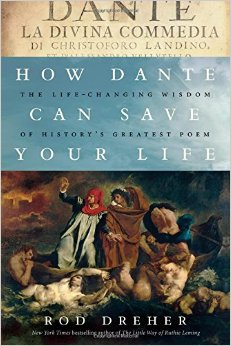
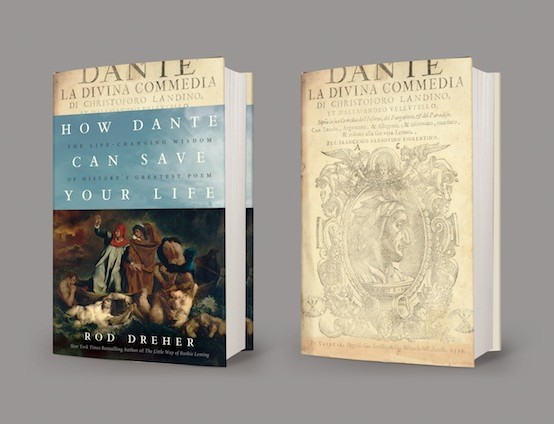
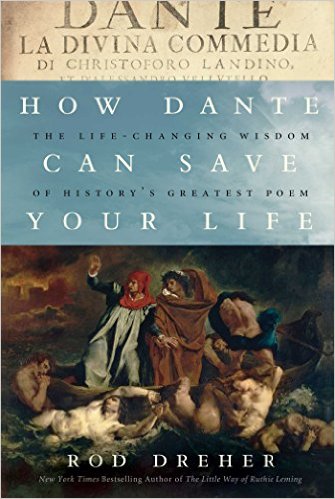 I have told you in recent weeks about How Dante Can Save Your Life: The Life-Changing Wisdom of History’s Greatest Poem (Regan Arts; $29.95) Rod Dreher’s spectacularly interesting, intimately confessional memoir about reading Dante to get out of a serious, stressful depression due to a lack of reconciliation among his small town Louisiana family. (See my comments, HERE.) It is the sequel to his beloved The Little Way of Ruthie Liming which I hope you have read. In this follow-up story after his move to his old hometown he tells of his illness, family issues, conversion to Orthodoxy and Christian growth by way of reading Dante’s Commodia. He writes,
These emotionally gripping scenes rendered with supernatural artistry reveal the power of great art to transform us. The poet Dante is showing us how stories and images prepare our imaginations for moral instruction by engaging our emotions.
Research psychologists Keith Oatley and Maja Dijikic have shown that people are more likely to be open to new ideas when those ideas are present to them in the form a of a story. But they also found that a work of nonfiction is more effective than fiction if the reader perceives it to have high artistic quality.
Dreher, in a chapter on pride, reveals being especially convicted by the vividly rendered scenes in this canto of the classic poem. He explains,
The words and the images in Dante’s great poem worked a conversion within me. Their beauty and truth cracked the stone in my chest and made me confront the nature of my condition.
Listen, as he continues,
There is no lesson in the Commedia that I had not read of heard before, but Dante incarnated that wisdom in verse that pierced the rocky soil of my heart and planted seeds of truth there, seeds that neither my anxiety, nor my insecurity, nor my anger, nor my weakness, could dislodge.
I know I don’t have to convince you of this, or the value of reading novels, but as I am about to tell you about a novel I enjoyed, it seems good to quote Dreher again, as he ruminates on how this story effected him, and how good art can touch us all.
Once you have seen yourself in Farinata, in Pier della Vigne, in Brunetto, and in Ulysses, once you have stood with Dante and Virgil on the beach listening to Casella’s song, wanting to abandon the hard road ahead and rest for a while, they become part of you. In their fates you observe – no, you feel – the logic of your own trajectory through life revealing itself to you. And if you take these words and images into your heart, you gather within yourself the will to change the direction of your own story.
I suppose this line from Dreher on Dante is as good as any description of the power of stories, of movies and novels and memoirs. And it is as good as any description of the power of Bill Mallonee’s music for me, too, for that matter. Perhaps his songs (and I could add other artists who I similarly esteem and moved by) and their characters or images don’t usually call me to “change the direction” of my story, but they do give me peoples and pictures who can accompany me on the journey. Lands and peoples, indeed.
***
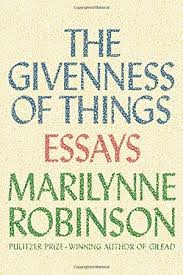 One of the most significant books to come out this year is the new collection of thoughtful essays by Marilynne Robinson, the acclaimed novelist. Her Gilead, of course, won the Pulitzer Prize and its sequel, Home, earned the Orange Prize. The third in the series, Lila, is now out in paperback and is a must-read for those who have followed these stories. The Givenness of Things: Essays (Farrar Straus Giroux; $26.00) is the title of this new anthology of her non-fiction pieces (the fourth such collection) and its suggestive title implies surely that things, things on Earth, as Colossians 1 might put it, are a gift; this is a serious theological claim that has huge implications, not dissimilar to Wendell Berry’s prominent essay and book title Life Is a Miracle. Of course, if things are given, then there is a giver, and, one could surmise, an order to life in this world. It is not just Mallonee’s beloved Sangre De Christos or the Northern Lights or the Southern Cross that reveals God, but, somehow, all things can. And more than God is revealed: the creation reveals the ordinances of God, the laws of how the world really is. God sustains the world, ordering it in certain ways, the Bible maintains, and we can surmise that this is something intended in Robinson’s evocative title.
The dust jacket copy of Givenness…, declares “…cultural pessimism is always fashionable, there is still much to give us hope. In The Givenness of Things the incomparable Marilynne Robinson delivers an impassioned critique of contemporary society while arguing that reverence must be given to who we are and what we are: creatures of singular interest and value, despite our errors and depredations.”
Ahhh, but how do we get there? From the beauty of the Earth to the value owed us? From the insight about reality as a gift to a sense of orderedness; from experience to meaning, from a sense of the appropriateness of reverence to a belief that God is there, and even God speaks? Is it so that we can determine, in Francis Schaeffer’s memorably book title, that “He is There and He Is Not Silent”? Is there some kind of natural law (to use standard Catholic language) and if so, how do we know it?
 Marilynne Robinson offers seventeen essays that examine the ideas that have inspired and informed her: Calvin, Locke, Bonhoeffer and Shakespeare, for instance. As one writer put it, “her peerless prose and boundless humanity are on display… exquisite and bold.” And then this: “The Givenness of Things is a necessary call for us to find wisdom and guidance in our cultural heritage and to offer grace to one another.”
Well, this is huge: a renowned and respected Calvinist novelist who is known in the highest literary circles (published and respected in The New York Review of Books, The Atlantic, and the like) whose prestigious publishers say that it is “necessary” to find “wisdom and guidance” in order to “offer grace.” What sort of cultural moment generates lines like that from New York publishers?
Her first essay starts with the glory of the humanism that emerged from the Renaissance, but ends up critiquing the neo-Darwinism that resists claims about meaning and transcendence. This is not the first time Robinson has reflected on the implications of neuroscience and evolution and scientism. She is incisive in her critique of certain notions, found on the right and the left, or so it seems to me, among fundamentalists of science and religion, insisting that behind this “infinitesimal nuancing” there is mystery. Do I hear an Amen?
But she does not stop there. There are chapters about grace, servanthood, proofs, value, metaphysics. What is “realism” in this world, how ought we to think about “experience”? What does the Biblical phrase “Son of Adam, Son of Man” mean? This is a multi-faceted, diverse set of significant, intellectual essays, and they push us to ask the biggest questions we can ask, although she is no evangelical preacher. She is careful and dense, and not so prosaic, but I am not ashamed to be simple: a question floating around all this is, simply, if there is a God, does God speak and make it clear “how then shall we live?” And if not, how do we determine what is right and what is wrong? In a culture that has rejected a sense of a God who speaks and the authority of God’s revealed Word – heck, in a church where in many quarters such things are routinely denied or qualified to death – how can we know what is right and wrong? Can we?
“I’m hoping to turn in one good day,” (but “Losing streaks take no pity on the meek”) Mallonee wistfully sings in one of the moving songs on Lands & Peoples. But what is one good day? How in the world do we know?
You may think I’m drifting towards the stupid question of “how many angels can dance on the head of a pin?” I hope you know I tend towards the practical and have little time for abstract intellectualism or vain philosophical ramblings.
But this question — without a God who has given us some standards of what is right and good, how do we know that war or rape or whatever is truly wrong? — is not silly. Dostoevsky insisted that “if there is no God all is permitted.” It is a grand question of modernity, it is the existential quandary of our times, and it is at the heart of the postmodern turn (who’s view of truth, who’s view of good and right, who gets to say?)
This is the exact question that haunts Richard Cleary’s new novel, Bridging the Abyss, a gripping crime/adventure tale set in the underworld of sexual trafficking and inner city ministry.
This big question – what is really right and wrong in a secularized society? — was a theme of his somewhat more heavy-handed previous fictional effort, the 2012 In the Absence of God. In that big  novel, there is a violent criminal on the loose on a college campus, and the professors in the story must come to grips with their own assumptions (not to mention the reading assignments they give) about the nature of right and wrong, ethics and truth and what is truly true. Can a prof claim to agree with Nietzsche and Sartre saying that there is no meaning and therefore no ultimate truth and yet say that the rapist on the loose is truly wrong to exercise his power? Can one say there is no universally binding right or wrong, but participate in the campus anti-war movement, condemning war as immoral? Can one believe in intelligent design – the observation that even at the molecular level there appears to be an orderly design so complex that it could not have happened by “chance” as Darwinists insist – and yet be a serious scientist, and what might the implications of this view of science be for social ethics and cultural studies and this discussion among colleagues about right and wrong on campus? The various characters – collegiate athletes and their coaches, young students and their teachers, an inter-racial dating couple – engage in this campus drama with plenty of coffee shop conversations about what we can truly say about right or wrong. They each grapple with the question of what a world looks like if God is considered mostly irrelevant. You can read my BookNotes review of this stimulating, philosophically-oriented thriller, HERE. (And, of course, there is a link there to order it at our on-line discounted price.)
One does not have to read In the Absence of God to enjoy Bridging the Abyss, although one of the characters that makes a small appearance in Absence is a major character in Bridging. If you read Cleary’s Absence of God you will recall that he is, after all, a former science teacher and college philosophy professor, and he wrote that book to open up conversations about this fundamental philosophical question. Can ordinary people who haven’t read Plato or Kant, Camus or Kierkegaard, Derrida or McIntyre or Charles Taylor, enter into the large quandaries of ethics and secularization? Cleary’s novel hoped to entertain even while it taught and I maintained that it did both.
Bridging the Abyss offers a better developed plot, with much more action, and the characters are more interesting than those in In the Absence. This is, it seems, the product of at least a few matters. Firstly, I suspect that Cleary has just practiced his craft as a fiction writer more, and this third novel is better than his first two; as a former high school science teacher and current college philosophy teacher (not to mention political pundit at his on-line Viewpoints blog) he is not primarily an artist or fiction-writer (although as his bookseller, I happen to know that he has read widely in the great classics and knows great literature better than most.) So he is honing his storytelling and is learning to be a little less didactic and teacherly and bit more allusive and artful as a novelist. I think you will enjoy this story, captivated by the fast moving plot and the truly interesting people.
It does seem obvious that in this new novel, Cleary wants people to be entertained. For those of us who enjoy late night theological arguments in the dorm room or local pub, his previous book was certainly interesting – listening in on these characters as they parried and debated was a hoot, and intellectually stimulating, as well. But it was perhaps a little short on plot and character development and bit heavy on the long conversations. (Dick and I have had these long conversations, in person and via email, so he gets it honestly!)
Bridging the Abyss, however, is really full of action and pathos and page-turning thrills which makes for a better read. Of course it keeps coming back to this central insistence — if modern people dispense with God and believe life can go on as before, valuing goodness and beauty and meaning and human dignity – they are living a conceit. There is no sturdy reason or basis for acting as if this or that is truer or better. Dostoevsky was right. We are staring at a huge abyss if we are only honest enough to admit it. The title comes from a realization that one of the characters in the story voices in his own struggles with this very question. The cover photo aptly shows an abyss.
Unless, unless. Unless there is an older truth – deeper magic, in Lewis terms – that tells us that there is indeed more to life than meets the eye. There is more. There is a God and God has spoken and we can deduce right and wrong, or at least notions of the good, the true, the beautiful. There is an order to the givenness. The abyss is real, but it can be bridged, and the gospel of Christ is the most reliable answer to our existential quandary.
The dialogues between the main characters in this new story are realistic enough, but they do circle back to these tough religious questions. In Bridging the Abyss, though, these are not college teachers in the faculty lounge. These lively characters in Bridging include frantic, grief-stricken Baltimore parents whose daughter has suddenly disappeared – we learn that she has been abducted by a deadly serious cell of sexual traffickers and she is most likely bound for a perverse Saudi sheikh. Their questions are more urgent then most of us can imagine.
Unknown to the parents, or their caring inner city pastor, whose own story is wonderfully told, there is an under-the-radar group of former Navy SEALs doing a vigilante-style rescue of the captured and trafficked children. (Does the FBI know about these guys? Are they complicit, at odds, in some sort of “look the other way” cooperation? Who are the good guys and who is to be trusted? Why are they doing this undercover work?) The former soldiers and law enforcement men in this group are believable – especially if you watch light TV shows like Burn Notice or read the more serious spy stuff like the Jason Bourne novels and the like. Who knows if there are real units doing such investigation, search and rescue ops like this, but Cleary makes it ring true and it is fascinating. He is a profoundly moral man, and refused gratuitous language or violence, even if a bit rougher language might have made it seem more realistic. But, still, be warned: the episodes of the plot itself, kidnapping, sexual trafficking, shootouts and (maybe?) torture and connections to drug cartels are vivid. (Reading Bridging the Abyss will be a bit heavy and disturbing if one has only read Amish fiction or Christian romances, of course, but it is nothing compared to the grueling scenes of the standard crime or CSI shows on TV these days. If you watch Law & Order: SVU or Criminal Minds you know what I mean.
And, I might add, the book’s plot, interesting as it is, and surprising as some twists are, is not deep or literarily sophisticated. It’s a good story and a fairly quick read, not ponderous or obtuse.
Some of the plot of Bridging the Abyss is about the missing girl and the vigilante rescue unit. Much of the plot is more domestic, about the anxiety and prayers of the people in the Baltimore neighborhood and the church. Baltimore cops and local thugs and the neighborhood pastors all show up as the day-to-day ups and downs of raising a family in a transitional neighborhood in a big city are described, and as the realities of the crisis become known. Caleb and Patty Hoffmeyer are the parents of the missing Alicia; Caleb’s brother and sister-in-law (Willis and Marie) are the classic religious skeptics who are walking through this family tragedy with them. They are grateful for the outpouring of concern from Caleb and Patty’s church friends, but find the faith behind their actions to be a bit naïve.
Reverend Loren Holt is the pastor that a character in In the Absence of God had visited and he is known (briefly) in that book as a reasonable, good man. In Bridging the Abyss he is one of the main stars, and his well-informed but humble faith and his hard but meaningful inner city ministry is beautiful to behold. Loren and his wife Olivia have had quite a journey themselves, and their own story informs their own pastoral care for the Hoffmeyer’s and others in this tragic drama.
There are a few surprise plot twists that I should not mention, and some characters about whom more is revealed later in the book. It is hard to describe this in detail because there is so little I can say without spoiling the fun of the ride. You must read this for yourself to learn about the vile Carlos and Luis, about John and his team of renegade activists (working their ops under the name CSR.) You will be delighted to realize something about a small side story with a kid named Keyvon and a huge plot twist involving, well… nope, I’m not going to say. If you are used to mysteries and thrillers, I suspect you might see it coming, but it’s a blast either way. I’m not going to spoil it. They don’t call ’em “page turners” for nothing.
 Kudos to my friend and nearby neighbor Dick Cleary for working so hard to bring some of the most important questions of our age – voiced in readings he has done from the likes of Charles Taylor and Albert Camus and Nietzsche and Dostoevsky, not to mention recent atheists like Dawkins – in an easy-to-read, hard-to-put down, adventure yarn.
I do not mean any criticism to say this is not as profound or lyrical as this year’s award-winning All the Light We Cannot See by Anthony Doerr – one of the best novels I’ve ever read — and will not be on the best seller lists as will recent novels we carry such as Jonathan Franzen’s Purity or the new take on the life of David by Geraldine Brooks (The Secret Chord.) It is not Gilead, Home, or Lila, not by a long shot. But if you want a captivating story, vivid, interesting characters who are living through horrible tragedy and finding hope and purpose through it all, the lives of the Hoffmeyer’s and the Holts and the Baltimore police officers and informants and the brave CSR squad may inspire you. The conversations they have — what is true, how do we know, could the gospel be the answer to this existential human quandary of knowing what is right and how to live well, and if we can figure it all out — will be an enjoyable read, will stimulate your own thought, and even will serve you in your own interest in apologetics.
Cleary enjoys making up these tales, recounting these fictional philosophical and theological debates, and although I’m sure he would firstly want you to enjoy getting to know his characters and taking this fictional journey, he’d be most happy if through listening in on the dialogue in In the Absence of God and Bridging the Abyss you would feel more sure about what you believe and why you believe it. Learning how to press this honest question about the moral consequences of a culture which has cast God away and how to present a durable answer that can be offered to contemporary seekers is surely one of the benefits of reading these dramatic stories. In a world of sexual trafficking and urban racism and religiously-hostile intellectuals and all sorts of inner anguish, these kinds of personal stories can help.
And, if the songs on Lands & Peoples are any clue, there is much anguish even for Christ-followers in this world that often seems forsaken. But as Bill Mallonee sings, in one of two desperate songs with baseball allusions, there can be new resolve in finding purpose, discerning meaning. Maybe it is so for many of us: “ever since my eyes beheld your beauty and your grace, I’m going to swing with everything I’ve got.” Yes, even in this “sad, slow crawl” we can swing with all we’ve got. It matters. It matters because there is meaning and purpose and some kind of order in this fallen world, if only we have eyes to see and the moral resolve to act on it.
Just as Dante clarified this for Rod Dreher, Bill Mallonee knows and reminds me. It is why none of his sad songs on his rootsy albums with raw acoustics and fuzzy feedback and Dylan-esque harmonica are finally depressing. Mallonee ends his latest set of allusive story songs with a bit less overtly redemptive hope than is found in Cleary’s Christian novel but both the Lands & Peoples CD and the Bridging the Abyss story are clear: there is hope in this hard world, and we can know something about the goodness of God’s creation order which impinges upon us because it is real and true and good.
As Marilynne Robinson puts it, in a characteristically Calvin-esque phrasing, there is a givenness to things.
CD Lands & Peoples Bill Mallonee regular H&M price $17.00 — our sale price: $13.60
The Givenness of Things: Essays Marilynne Robinson regularly $26.00 — our sale price: $20.80
Bridging the Abyss Richard L. Cleary regularly $15.99 — our sale price: $12.79
BookNotes
DISCOUNT
ANY ITEM MENTIONED
20% off
order here
takes you to the secure Hearts & Minds order form page
just tell us what you want
inquire here
if you have questions or need more information
just ask us what you want to know
Hearts & Minds 234 East Main Street Dallastown, PA 17313 717-246-333
 Rhythms of Grace: How the Church’s Worship Tells the Story of the Gospel Mike Cosper (Crossway) $15.99 I shared this right away with CCO folks after our moving worship moments and those vocationally-oriented prayers. Actually, I’ve been telling folks about this a lot lately, as it not only reminds us of the importance of worship and what congregational worship is all about, but it explores how the narrative of the Biblical story should inform our worship, and how gospel-centered worship recounts the truest truths, week by week. A great little book.
 Shaping the Journey of Emerging Adults: Life-Giving Rhythms for Spiritual Transformation Richard Dunn & Jana Sundene (IVP) $18.00 At the Wee Kirk small church conference at which we worked a week before the CCO seminar (which we told you about in a recent post) we were delighted to hear this book recommended to local church folk who want to understand young adult ministry. Naturally folks know the analysis offering in the very popular You Lost Me: Why Young Adults Are Leaving the Faith… and Rethinking Faith by our friend David Kinnaman (available in book and/or DVD curriculum.) But this one is really rich, beautifully written, about how to do work with this particular population. I take Shaping the Journey of Emerging Adults to CCO always, as it is one of a handful of must-reads in this field. CCO staff also often get Spiritual Formation in Emerging Adulthood: A Practical Theology for College and Young Adult Ministry by David Setran & Chris Kiesling (Baker Academic; $24.99) which is also a major contribution to young adult ministry.
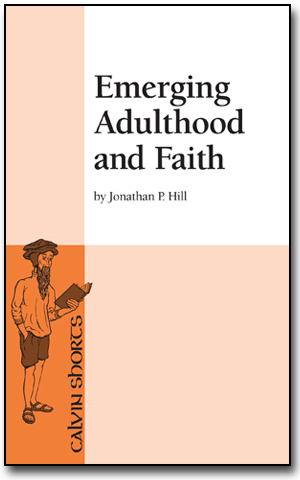 Calvin Shorts: Emerging Adulthood and Faith Jonathan P. Hill (Calvin College Press) $6.99 Okay, besides the fact that the cover sports a little drawing of John Calvin wearing shorts and Birkenstocks, this new series of small, provocative, and well-researched monographs is excellent. This offers a careful summary and re-assessment of the latest research on the faith development of young adults, and offering critique to some of the popular writers lamenting how young adults are drifting away from church and conventional Christian faith. This is a very important little document, and anyone interested in the topic should have it. (A heads up: it thinks that some of our popular authors in this developing field get the data wrong.)
 King of the Campus Stephen Lutz (House Studio) $14.99 This book by Steve Lutz is one any student interested in growing in her or his faith could start with, a book full of good Christian thinking about all of life, basic discipleship, church involvement, how to be involved in campus activities with a missional mindset, discernment tools for thinking about calling and vocation, and more. I have a blurb on the back saying how good it is, and I stand by that: no other book for college students covers so much good stuff, including good citations from Melleby and Opitz. Steve works for a church with a rich campus ministry in State College, (yes home of the blue and white Nittany Lions.) You should give this book to somebody you know who is off at college.
 Midnight Jesus: Where Struggle, Faith and Grace Collide Jamie Blaine (Thomas Nelson) $15.99 I love sharing memoirs with groups – almost anywhere we go to sell books we note that reading memoirs is not only fun, but a good way to understand others, to realize how people narrate their lives and how we, too, can make sense of things by telling the story of our days. Anyway, one I featured this time is spectacularly well written, vibrant and wild and fascinating and moving. This author is a late night counselor, has served to help those on the fringes of culture, the hurting, their weird, the broken, and he tells their stories with dignity and grace. It is one of those books about which you can energetically shout “You will laugh. You will cry.” And you will never forget it.
 A Praying Life: Connecting with God in a Distracting World Paul Miller (NavPress) $14.99 We love having a book that routinely sells, and that we always hear great comments about. People walk by our book display and, noting A Praying Life say “Oh, that is one of the best books I’ve ever read,” or “my friend told me I had to read that” or “Our church studied that one and it was fantastic.” This book has a remarkable buzz, and it is well deserved. One of the best books on prayer I’ve ever read. By the way, check out his one on Jesus called Love Walked Among Us, too. Or a newer one on the Biblical book of Ruth called A Loving Life — In a World of Broken Relationships. Thanks to NavPress for doing this great title!
 A Beautiful Disaster: Finding Hope in the Midst of Brokenness Marlena Graves(Brazos) $15.99 I have promoted this fabulous book among CCO staff before, and it is ideal for those who want to investigate the life-giving ways of classic spiritual disciplines, written with a bit of candid memoir (the author is a good storyteller, who shares about growing up rural and poor with an evolving childhood faith) and how coming to know and experience God’s presence in the wilderness of her painful life gave her courage to keep on and thrive. This well written book (with a great foreword by John Ortberg & Laura Ortberg Turner) includes lovely, insightful Bible study, a good narrative structure, and helpful teaching about spiritual formation. It’s a good read, and a great resource. The title alone is worth pondering, eh?
 Miracles: What They Are, Why They Happen, and How They Can Change Your Life Eric Metaxas (Dutton) $16.00 I raved about this (as did many whose writings we respect) when it first came out in hardback, and those who have read it have used superlatives in trying to express the grandness of this report. As always, Mr. Metaxas brings a brainy but winsome style to his well-crafted prose; the important Kirkus Reviews said it was “erudite and intimate.” Miracles is truly fascinating, including excellent storytelling, wise rumination, honest evaluation, deep mystery, and a sense of wonder about the way God seems to work in the world. Excellent for anyone, but really good for those who are skeptical of the notion of the supernatural or whose progressive faith doesn’t want to seem anti-intellectual or overly charismatic. This is a great book, now in paperback.
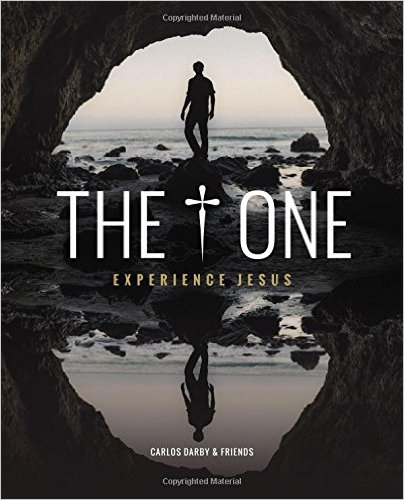 The One: Experience Jesus Carlos Darby, Judah Smith, and others (Thomas Nelson) $14.99 This is one I held up and tried to promote, although one actually has to hold it and study it a bit to really appreciate it. This is designed for a visual generation, a slightly over-sized paperback – almost like a very thick magazine – with moody and cool photographs illustrating the stories told about people finding new life in Jesus. It walks through stages of faith, I suppose, and each testimony is enhanced with these excellent, beautiful, striking photography pieces. The pictures shown are not real shots of the writers, actually, and if there is any fault in this creative project it is that the models in the pictures are a bit tooo hip. But for the audience (artful and design-savvy young adults, the instagram generation) it really works. It would be a good book to share with somebody who doesn’t read conventional religious texts and who you’d like to invite into an live encounter with Jesus.
 Gospel-Centered Life Participants Guide and Leader’s Guide (New Growth Press) $11.99 and $14.99 We always have a big stack of these for CCO staff, many of whom buy a bundle each season to use with small groups on campus or at church. These are serious, intense, grace-based reminders of Christ’s finished work, how the atonement transforms us, and how the gospel is such very good news for sinners like us. It helps small groups really grapple with the transforming “inside out” impact of the core truths of the gospel — God’s holiness, our need for rescue, the sufficiency of the cross, free grace, true liberation for idols and fears. The sequel, Gospel Centered Community is popular, too.
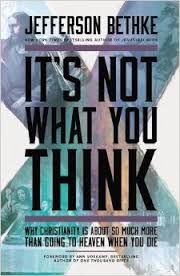 It’s Not What You Think: Why Christianity Is About So Much More Than Going to Heaven Jefferson Bethke (Thomas Nelson) $17.99 I wonder if you know the video that went viral a few years ago Jesus > Religion by Jefferson Bethke. The book that followed that, with the same title, is really good (better then I surmised it would be) and young adults all over know it. If something is going to be so popular, I’m glad it is rich and thoughtful and solid. This brand new one was one of the best sellers at this two day CCO gathering, and we’re glad for the buzz on it.
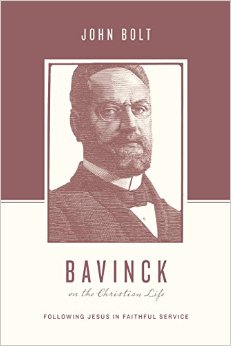 Bavinck on the Christian Life: Following Jesus in Faithful Service John Bolt (Crossway) $19.99 We displayed faced out this whole set of books, the “Theologians on the Christian Life” series, all of which are said to be very, very good. The Bonhoeffer one by Steve Nichols is just spectacular, I think, exceptionally useful, and illustrates nicely what is so good about this whole series – taking the life and central teachings of these historic church leaders/theologians and showing how they can
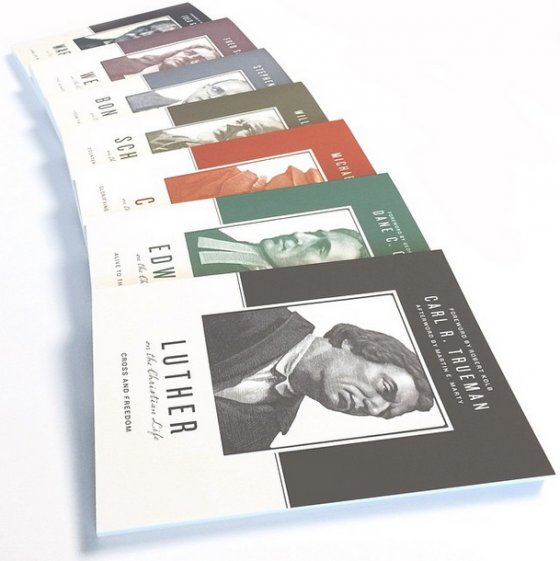 enhance our own spiritual lives today.
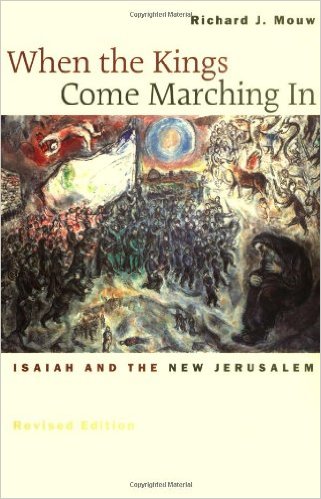 When the Kings Come Marching In: Isaiah and the New Jerusalem Richard Mouw (Eerdmans) $15.00 I take this most places we go, whenever appropriate, as it is a splendid little study on how the read the Bible well, using as a case study the way in which an eschatological passage in Isaiah can be understood by a careful reading of Revelation 21 and 22. Does God really intend to redeem all of life and culture? Does ordinary stuff matter -sports, music, justice, family? How can we live into this vision of God bringing redemption and hope to the whole groaning creation? A great little book, jam packed with implications for daily life, by an author we so respect and appreciate!
 New Heaven New Earth N.T. Wright (Grove) $10.99 Speaking of great little books about the restoration of creation, the full picture of Biblical hope, the promise of redemption defined as a (re)new (ed) earth, this booklet is imported from England, and we think it is a great tool to enhance Bible knowledge and Christian living. There is nothing in print like it that is simple and clear and inexpensive. I pressed it upon the CCO folks who know that most undergrads aren’t going to wade through J. Richard Middleton’s New Heaven and New Earth or Tom Wright’s Surprised by Hope. You should order a bundle from us.
 Subversive Christianity: Imaging God in a Dangerous Time 2nd edition Brian Walsh (Wipf & Stock) $15.00 I mentioned Walsh’s Colossians Remixed above in my intro, but at CCO I also showed off this recently reprinted small collection of powerful talks given by Brian in the years after his groundbreaking, now classic Transforming Vision (co-written with Richard Middleton.) Transforming Vision was a seminal and generative book within CCO decades ago, and we still commend it, wishing more people could get caught up in its social analysis and expose of dualism and idolatry within our deformed society. I’m glad for Subversive, though, and it is a poignant, thought-producing little collection, with Biblical exposition and cultural criticism and poetic preaching. One of the challenging chapters in Subversive Christianity was first delivered at a old CCO Jubilee conference and is still as timely as ever. A good endorsing foreword by N.T. Wright, too. Woot.
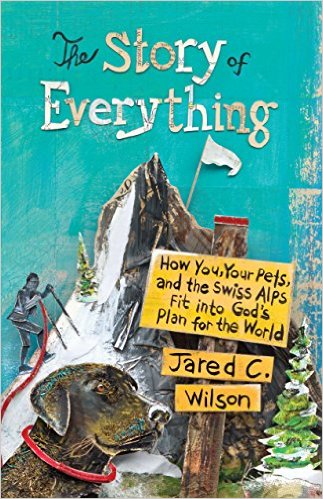 The Story of Everything: How You, Your Pets, and the Swiss Alps Fit into God’s Plan for the World Jared C. Wilson (Crossway) $15.99 When the writers for the Gospel Coalition and Crossway books — known for conventional Calvinism and a lot of theology books — get this vision of a broad, big, winsome picture of all of life redeemed, it is time to notice, and rejoice. I like Justin Holcomb’s note on the back: “If you need to hear some incredible news, read this book. It will change you.” CCO’s big Jubilee conference has as it’s theme this year “transforming everything.” This is why. God is telling this big story of creation being rescued and how everything matters. Are you listening? Nice!
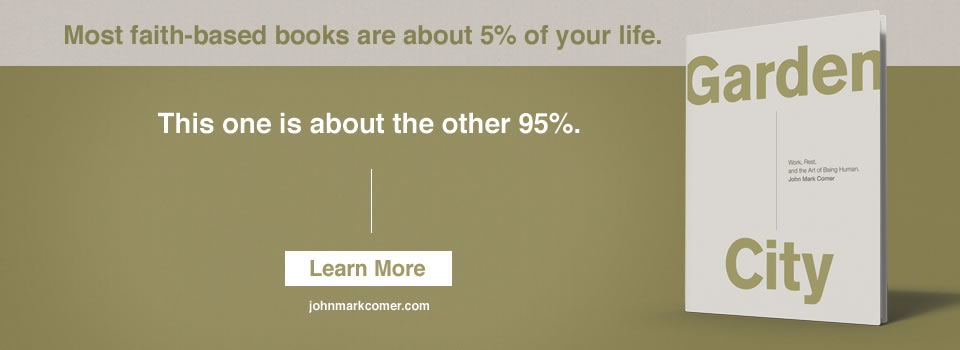
 Garden City: Work, Rest, and the Art of Being Human John Mark Comer (Zondervan) $20.99 I raved about this cool-looking, very easy to read hardback last week, and did so again with our friends at the CCO event. It is perfect for today’s young Christians, those eager to relate faith and life, but who don’t have the vocabulary or theology or Biblical knowledge to see how being fully human, caring about work, culture, is explained in the Scriptures, and therefore can’t get a good handle on the claim that all of life is spiritual, let alone how it really plays out. As I’ve mentioned this new book is hip and fun and even a bit funny and solid and good, refreshing and exciting. Maybe it should be considered the best introduction — that younger readers will actually gladly read and finish — about vocation, calling, work, rest, and God’s big Kingdom. He knows well the academic literature (J. Richard Middleton or N.T. Wright, just for instance.) Garden City is fantastic. Spread the word!
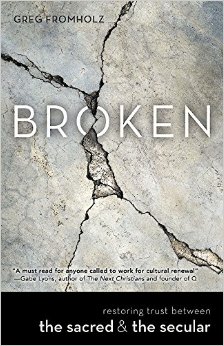 Broken: Restoring Trust Between the Sacred and the Secular Greg Fromholz (Abingdon) $16.99 I was glad to announce this when it first came out and thought CCO folks would appreciate it now. It is creatively written, reflective and energetic, eager to help followers of Jesus get how to more wisely navigate the culture in which we live, thinking faithfully about why God cares about it all, and how to be appreciative of God’s work in the world, even the worlds of culture, film, art, social institutions and media. We’ve created this ungodly disconnect, and this shows us how to reconnect faith and practice in the real world. CCO folks get this already, but are always looking for fresh ways to explain our vision, and get others enthused about an all-of-life redeemed sort of vision. Plus, anything with a vivid endorsement from Gabe Lyon’s is sure to catch their attention. I think it should be widely known, and you just might enjoy it a lot.
 Every Good Endeavor: Connecting Your Work to God’s Work Tim Keller & Katherine Leary Alsdorf (Dutton) $16.00 I’ve already noted how CCO is unique among campus ministries in part because of their passion for whole life-discipleship that includes helping collegiate think about faith and vocation, Christian perspectives in the classroom, and learning to desire practices that help us relate faith and work, careers and callings. We always take to CCO staff training events a large batch of different books on calling and vocation, and then a bunch on work and labor, hoping these campus workers will have this stuff so much in their bones that it will spill over into the lives of the students with whom they are in contact.
 like What Is Vocation? Steve Nichols (P&R; $4.99) can be life-changing: everything matters to God, including our sense of calling to a career or occupation. I am always glad to hold up Os Guinness’ The Call: Finding and Fulfilling the Central Purpose of Your Life which is still one of my all-time most-recommended books ever. And there’s Parker Palmer’s beautiful Let Your Life Speak, Robert Benson’s The Echo Within and a splendid, brand new guide to help students think about what they want to do someday called Your
 Vocational Credo by Deborah Koehn Loyd which is a bit more practical and upbeat then the serious, wonderful, wise Courage and Calling: Embracing Your God Given Potential by Gordon Smith. To frame all of this well I always like to recommend A Journey Worth Taking: Finding Your Purpose in This World by Charles Drew. Excellent writing, wise, good, thoughtful.
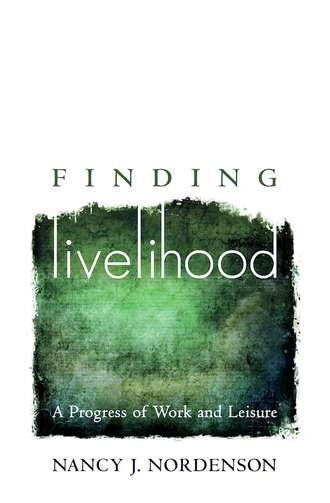
 Work by Hugh Whelchel is great and clear — no-nonsense, very concise, quotes Kuyper, and offers a fabulous, Biblical foundation. Finding Livelihood by the exquisite writer Nancy Nordenson (published by the always interesting Kalos Press) — as I’ve said in a long
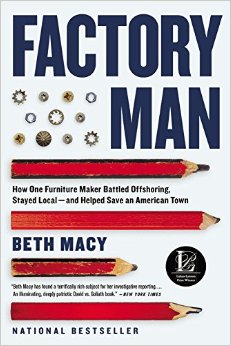
 The World Beyond Your Head: On Becoming an Individual in an Age of Distraction Matthew Crawford (Random House) $26.00 Speaking of books we sold about work: some in the CCO circles were significantly influenced by hearing Jamie Smith two summers ago, and his Desiring the Kingdom and Imagining the Kingdom remain very important books for our conversations about the nature of effective ministry and how to relate worship, spiritual formation, and all-of-life redeemed work in the world. Interestingly, some of the staff that work at vocational and trade schools were talking about how this recent book by Matthew Crawford is consistent with Smith’s own views, and how his first book – Shop Class as Soul Craft: An Inquiry Into the Value of Work is so very important for our thinking about not only work, but learning, discipleship, habit-formation, character and more. Both books are meaty, provocative, wise, and important. We have reviewed them both. I hope you know them.
 Serious Dreams: Bold Ideas for the Rest of Your Life edited by Byron Borger (Square Halo Books) $12.99 Okay, I didn’t really announce this to CCO since they know all about it (it is dedicated to them, after all.) But this collection of graduation speeches by serious Christian leaders who have given such attention to this integration of faith and vocation, thinking faithfully about discipleship and culture, work and the common good, well, it is good for CCO staff to share with their students, even though it was designed as a gift for young adults transitioning out of school. Could it also be good for you, or somebody you know, reflecting together with some of our best thinkers about the impact you can make on the world around you? Sorry to promote my own little book, but the authors are fantastic and their sermons are so good; even the packaging and page design and discussion questions have gotten some nice comments. Read chapters by Richard Mouw, Nicholas Wolterstorff, Amy Sherman, Claudia Beversluis, Steve Garber, John Perkins, me, and an epilogue by CCO staffer Erica Young Reitz. You can
 The Good of Politics: A Biblical, Historical and Contemporary Introduction James W. Skillen (Baker Academic) $24.00 Just like any pastor or spiritual director, we who are leaders, and CCO campus ministers, naturally, will be asked in the coming months about our views of the political campaigns, and what we think about regarding our citizenship, the elections, and who to vote for. Getting a solid, historically-informed, Biblically-shaped view of the task of the state and the role of government is essential. I have written about this before (
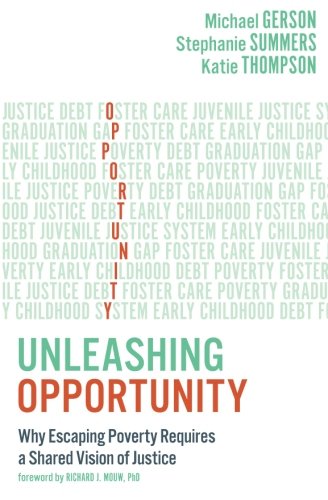 Unleashing Possibility: Why Escaping Poverty Requires a Shared Vision of Justice Michael Gerson, Stephanie Summers, Katie Thompson (Falls City Press) $11.99 What a joy to promote this up front at the CCO staff training time — Steph Summers, now CEO of the Center for Public Justice, worked for CCO for 12 years, and remains loved and very highly respected by all who know her. The publisher — Falls City Press — is founded by a former CCO staffer, too, Keith Martel, who works now in higher education as a professor, while his wife, Kristie, continues to be associated with CCO. (She is the interim director of multi-ethnic ministry at Geneva College, by the way.) So, this book – which I reviewed last week (
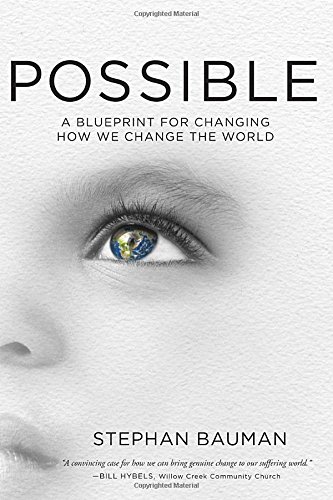 Possible: A Blueprint on How We Think About Changing the World Steven Bauman (Waterbrook) $22.00 We took this very inspiring book to New Orleans to the Christian Legal Society conference a few weeks ago since Steven was speaking there and we wanted others there to appreciate his good writing. We took it to the Wee Kirk conference, thinking that small church leaders needed this kind of winsome oomph and big hope. We took it just the other day to the conference on mass incarceration, and it was one of the first books we sold there in that gathering about fighting racism, advocating for restorative justice, ending the injustice of solitary confinement and other prison reforms. Bauman is the CEO of World Relief and has lived in Africa, so he knows something about how change happens, and the wholistic call of Christ into the world of hurt and need. A very inspiring book. CCO friends, you should know this guy! And so should everybody else.
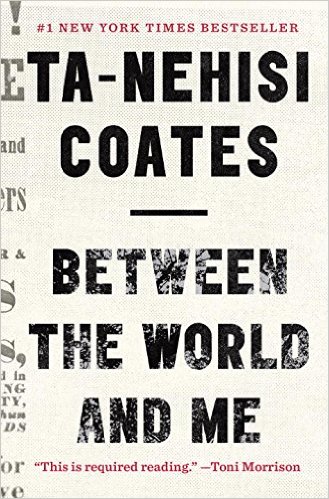 Between the World and Me Ta-Nehisi Coates (Spiegel & Grau) $24.00 CCO has a long-standing commitment to be engaged in conversations about racial justice and to not only be a more multi-racial organization, but to be used by God to reach the diversity of students we find on most college campuses. We bring dozens of books on this topic to their events including evangelical standards — More Than Equals (Spencer Perkins/Chris Rice), Many Colors (Soong-Chan Rah), Living in Color (Randy Woodley), The Heart of Racial Justice (Brenda Salter-McNeil), Welcoming Justice (John Perkins/Charles Marsh), Divided by Faith (Michael O. Emerson/Christian Smith) and so many more. We were very glad that we sold a few of the new Rescuing the Gospel from the Cowboys: A Native American Expression of the Jesus Way, a serious work by the late Richard Twiss, who spoke at CCO’s Jubilee years ago! (Kudos to IVP for releasing this final work by Richard after his death; IVP has long been the leader of multi-ethnic books within evangelical publishing, and this one is exceptional.)
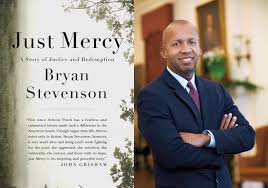
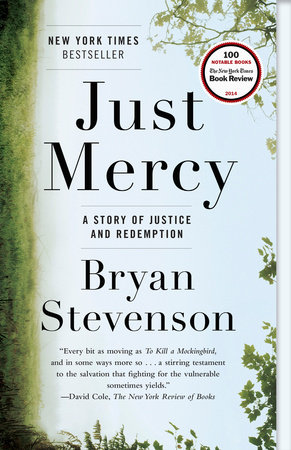 Just Mercy: A Story of Justice and Redemption Bryan Stevenson (Spiegel & Grau)$16.00 Now that this is out in paperback, even more folks are buying it! Although CCO had hosted Bryan at their Jubilee conference years ago, and we sold a number to them a half a year ago when it came out in hardcover, we are glad it is now a nice sized paperback with an affordable price. I hope you know it and own it.
 The Allure of Gentleness: Defending the Gospel in the Manner of Jesus Dallas Willard (HarperOne) $26.99 Thoughtful evangelicals as well as many mainline Protestants are increasingly aware of the profound work of the late Dr. Willard. This is thoughtful, lively, and very, very good, as all of his books truly are. Few can bring such deep commitments to spiritual transformation and such intellectual dexterity and write books so helpful to so many. We showed all of his books there, as well as books by his friends John Ortberg, Richard Foster, Eugene Peterson, Ruth Haley Barton and the like, but think this new one if very special, especially for those doing any kind of evangelism or outreach work as does the CCO.
 Fools Talk: Recovering the Art of Christian Persuasion Os Guinness (IVP) $22.00 I suppose you can imagine that this would sell well in CCO circles, with their deeper emphasis on worldview formation and their work within very diverse and pluralistic campus cultures. Most twenty-somethings thought are not fully aware of the legacy for which Guinness is known, even though we displayed maybe six of his different books, and this kind of heady book is actually a hard-sell among those new to this kind of mature exploration. I really, really recommend it to anyone interested in evangelism, apologetics, or political action, especially those wishing for a more civil public square. If you care about personal respect or public discourse, start with Richard Mouw’s lovely little Uncommon Decency: Christian Civility in an Uncivil World and then move to this remarkable, serious volume. One of the CCO “areas” is going to read it together as a staff. Hooray!
 Rainbows for the Fallen World Calvin Seerveld (Toronto Tuppence Press) $30.00 It isn’t every group that has a pair of young adults reading out loud one of the more challenging chapters of this book on aesthetics over lunch. And it isn’t every group where offering his devotionals – the serious set of Bible-based sermons in Take Hold of God and Pull and the powerful short ruminations on art pieces in On Being Human Imaging God in the Modern World–is appreciated. (Thanks to the CCO guy who waved On Being Human around in front of my face to assure me he was buying one! You made my day!) Rainbows for a Fallen World is a true personal favorite by an extraordinary scholar and powerful, passionate writer.
 Bigger on the Inside: Christianity and Doctor Who edited by Ned Bustard & Greg Thornbury (Square Halo Books) $17.99 Well, why not? There are geeky sci-fi fans everywhere, but these smart essays are exceptionally well suited to feisty young adults, those who like the famous show, or just those who want to see solid theological reflections growing out of an iconic piece of popular culture. CCO’s own Ivan Strong Moore has a blurb on the inside of this great paperback. One person said she wished I had a “My Other Vehicle is a Tardus” bumper sticker. So, yeah, there’s that.
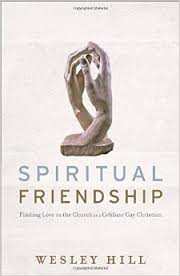 Spiritual Friendship: Finding Love in the Church as a Celibate Gay Christian Wesley Hill (Brazos) $14.99 Some in CCO circles know Hill as he has occasionally spoken to campus fellowship groups out near and around Pittsburgh, and many have read his important and beautiful little book Washed and Waiting: Reflections on Christian Faithfulness and Homosexuality. I took all three of his books to the CCO staff gig, as I always do. (His other one is on Paul and the Trinity, and we sold one of those, too!) I hope you read my lengthy review of Spiritual Friendship at BookNotes a while back as it is truly moving book, insisting that a Christian view of things must include a deeper awareness of and commitment to the art of friendship. This is more important than any other book I can imagine on the topic, including (dare I say it?) The Four Loves by C.S. Lewis. It is vital for all of us, but certainly urgent for young adults who are still forging their life-long friends. Thanks, Wes, for this generous and profound study.
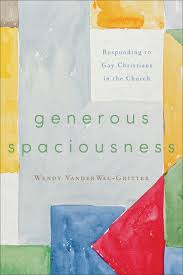 Generous Spaciousness: Responding to Gay Christians in the Church Wendy VanderWal-Gritter (Brazos) $16.99 I have reviewed this big book elsewhere, and in the serious desire to help organizations develop a mature theology of dialogue and respectful discussion on this (and other) topics, I bring this along, careful to encourage people to consider it carefully, inviting, as it does, gracious, open-minded discourse around how best to pastorally discuss our differences about sexual ethics. VanderWal-Gritter used to work for the now-defunct Exodus. Their founder, by the way, just released his own biography, including some never-before-told aspects of his life and ministry called My Exodus: From Fear to Grace; and it looks very moving (it includes a few chapters by his wife) but I have not yet read any of it.
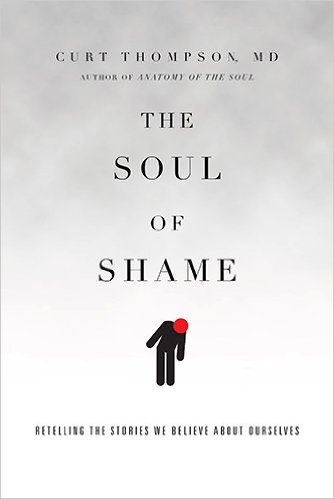 The Soul of Shame: Retelling the Stories We Believe About Ourselves Curt Thompson, MD (IVP) $22.00 You may recall that I wrote
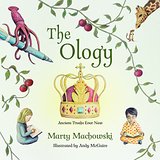 The Ology: Ancient Truths, Ever New Marty Machowski / illustrated by Andy McGuire (New Growth Press) $29.99 We usually take a few children’s illustrated books to the CCO, since many of their staff have young children, and we were eager to show of this brand new release. This is a really hefty volume, over-sized and full color on glossy paper and a ribbon marker, and it, too, was popular among CCO staff. The art here is soft (perhaps designed with chalk or wooden pencils) and yet still very, very creatively crafted — a few of the pictures are breathtaking in their loveliness, and a few are properly bizarre and striking. I do not know of any more comprehensive book about Christian truths for children, nor one with such a grace-based, gospel-centered faith perspective. Wow, this is going to be used for years to come, I am sure, and was delighted to unveil it at the CCO staff seminar. I thought you’d like to know of it, too.
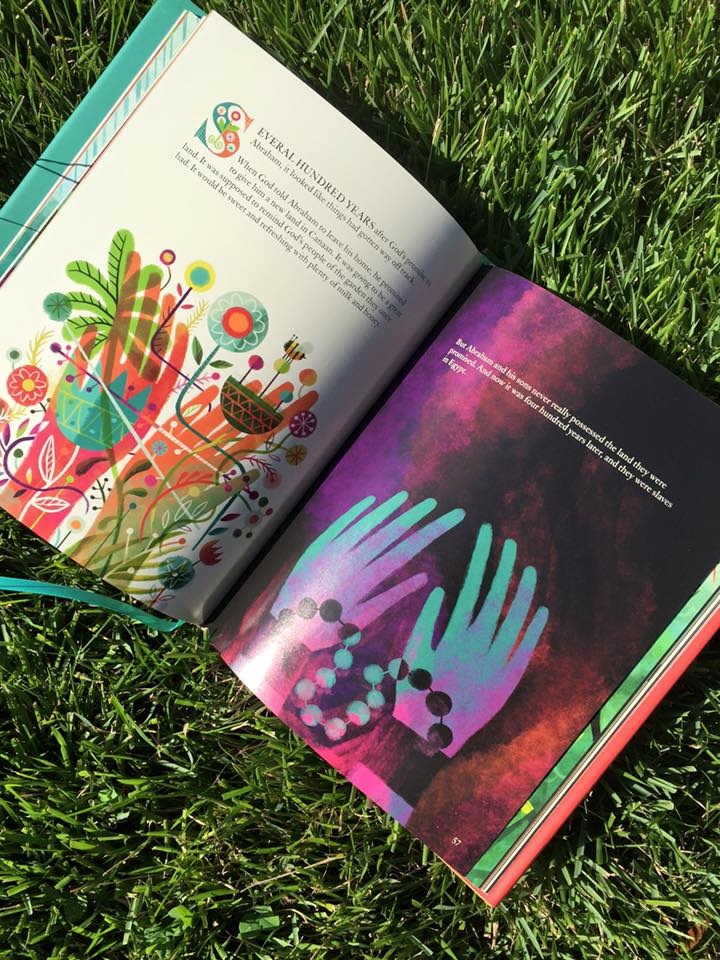
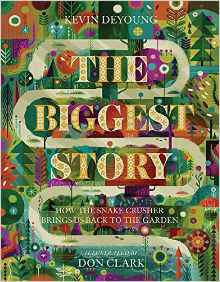 The Biggest Story: How the Snake Crusher Brings Us Back to the Garden Kevin DeYoung (Crossway) $17.99 Wow, this colorful, artful, creatively-produced children’s book was the talk of the event. The almost eccentric combo of retro design and upbeat, new art styles, and the great, enticing re-telling of the whole Bible story — think of the Sally Lloyd-Jones must-have The Jesus Storybook Bible on steroids, visually high-energy and more wordy — makes this a stunning kid’s Bible storybook Bible unlike any you’ve ever seen. It is sometime eloquent and sometimes very colloquial, making it majestic at moments and then very down to Earth.
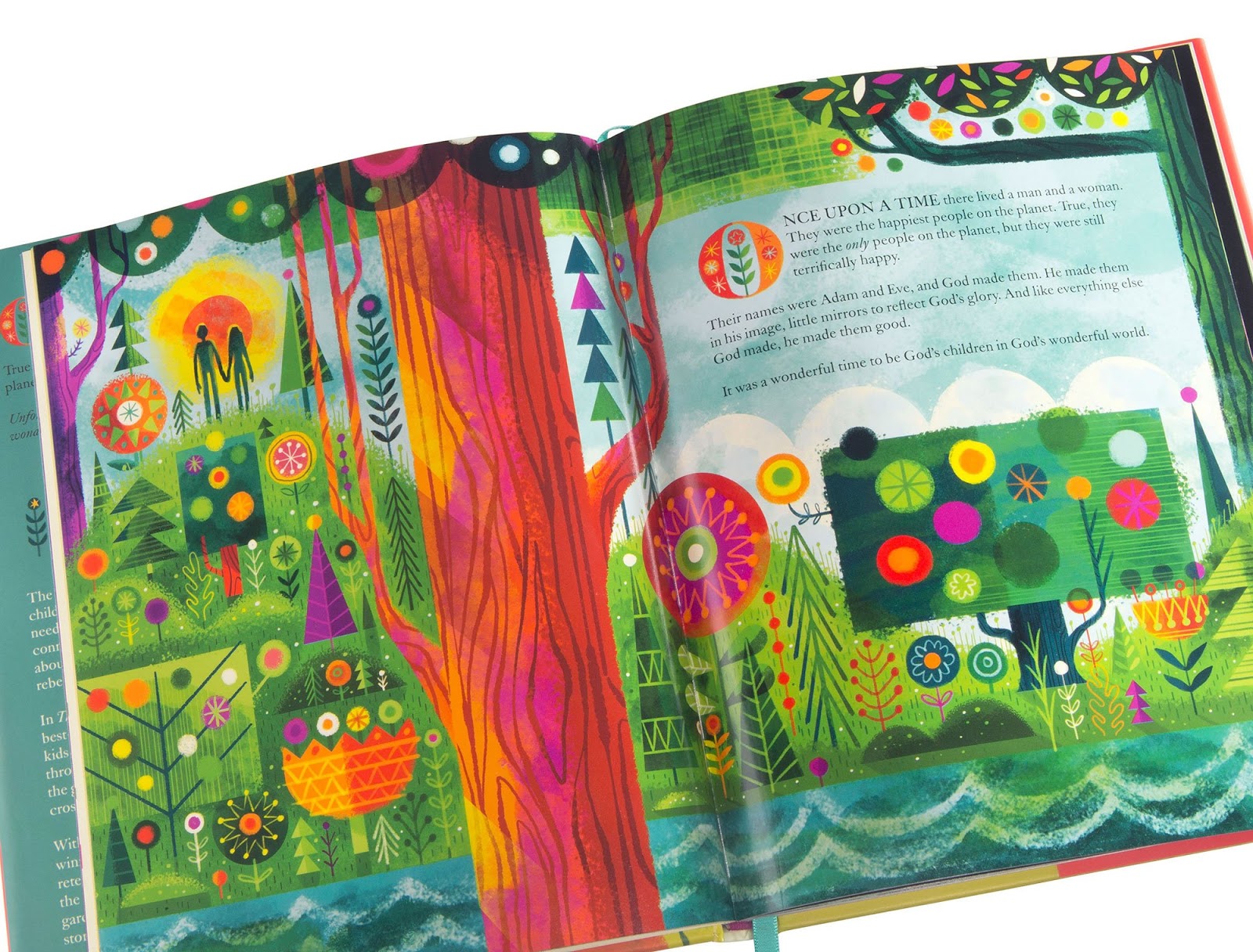 big fans of The Jesus Storybook Bible and the equally fabulous Thoughts to Make Your Heart Sing as well as other children’s resources that bring to the fore the covenantal reading of a Christ-centered vision of creation-regained sort of faith. That this was our biggest seller this past week is pretty cool. We wanted to be sure you knew our enthusiasm for it, and that you, too, could order it from us at the BookNotes 20% off.

 Awakening the Evangelical Mind: An Intellectual History of the Neo-Evangelical Movement by Owen Strachan. In between thinking of how I want to review all of these, I’ve dipped in to the new collection of love poems by Mary Oliver, Felicity.
 University Press, In the Beginning Was the Word: The Bible in American Public Life 1492 – 1783. And, the latest in the “Church and Postmodern Culture” series edited by James K.A. Smith, From Nature to Creation: A Christian Vision for Understanding and Loving Our World by Norman Wirzba, which is extraordinary. I’ve been pondering the latest work by Eastern University philosophy professor, R.J. Snell, whose rare volume is called Acedia and Its Discontents: Metaphysical Boredom in an Empire of Desire.


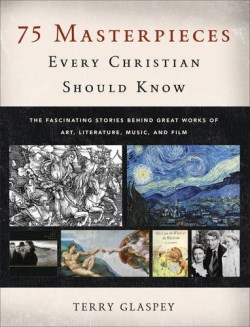 75 Masterpieces Every Christian Should Know: The Fascinating Stories Behind Great Works of Art, Literature, Music and Film Terry Glaspey (Baker Books) $29.99 What a great, lovely, interesting, and inspiring book this is. We are thrilled to tell you about it.

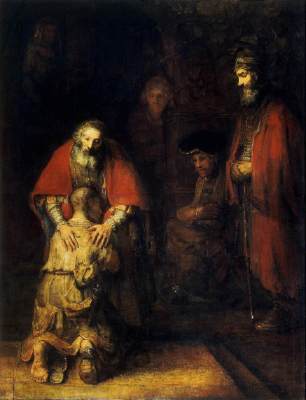 Glaspey’s descriptions are very, very helpful and you will be glad to be inspired by it all.

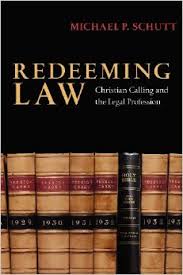
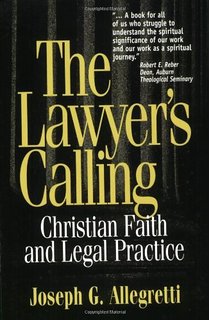 Faith and Legal Practice by Joseph G. Alligretti (Paulist Press; $12.95) and
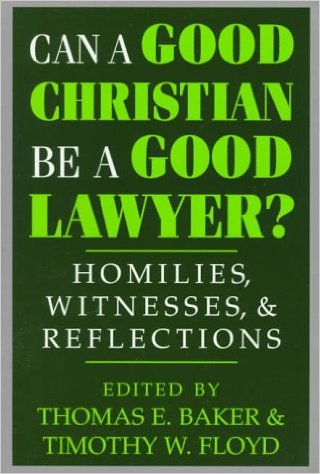 Can a Good Lawyer Be a Good Christian: Homilies, Witnesses & Reflections edited by Thomas Baker & Timothy Floyd (University of Notre Dame Press; $25.00.) I wish other fields — public school teachers, engineers, doctors, for instance — had such thoughtful Christian resources that are interesting, helpful and faithful.
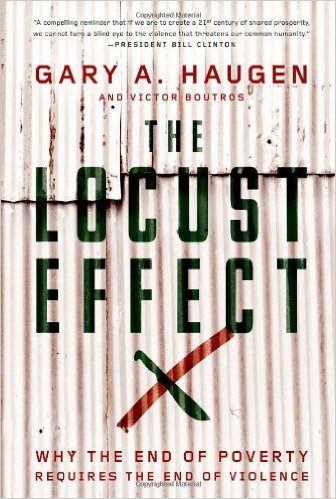 usually a few international folks around, too, some who may work for groups like IJM or Not for Sale. Of course we had a good handful of these sorts of books, and are happy that we sold a few of the must-read Locust Effect: Why the End of Poverty Requires the End of Violence by Gary Haugen and Victor Boutros (Oxford University Press; $18.95.)
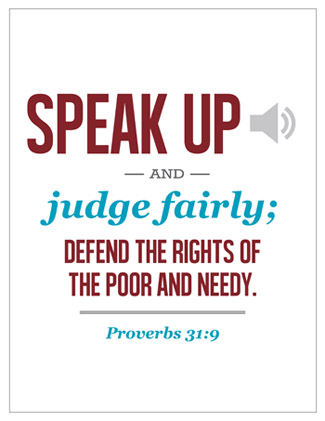 Overcoming Poverty in America) you know that addressing root causes and reforming structural matters are often more effective and just then mere hand-outs and soup kitchens. Hearing about lawyers serving the legal needs of the poor is a great example of the kinds of social support and development that can truly make a lasting difference. Three big cheers for CLS for this being a part of their Godly agenda of setting up free or reduced cost legal aid clinics in places of need.
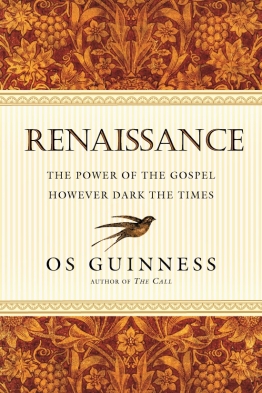 Renaissance: The Power of the Gospel However Dark the Times by Os Guinness (IVP; $16.00) was also one we prominently display; we continue to think this is a helpful antidote to culture wars and social division and religious frustration, and a reminder to trust God and put first things first. I do hope you’d consider reading it and sharing it. It’s a book that should be well known among us.
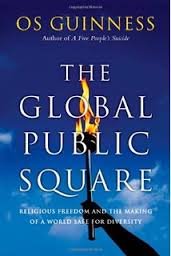
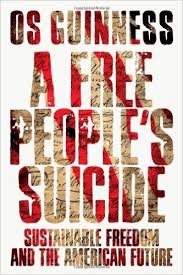
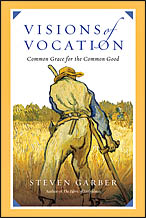 all of us, and certainly for those working in law, since I suppose they quite often have to deal with set-backs, compromises, and great, great human brokenness. If you haven’t picked this up yet, don’t hesitate. It is beautifully done, exceptionally thoughtful, and very, very wise. It is not a simple or quick read, but one to savor and ponder.
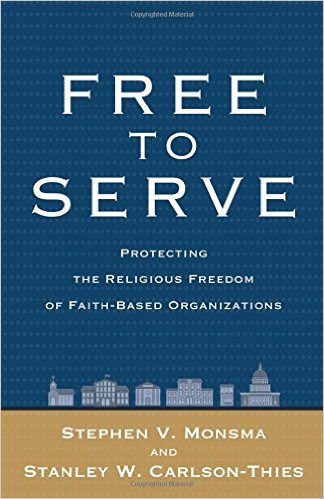
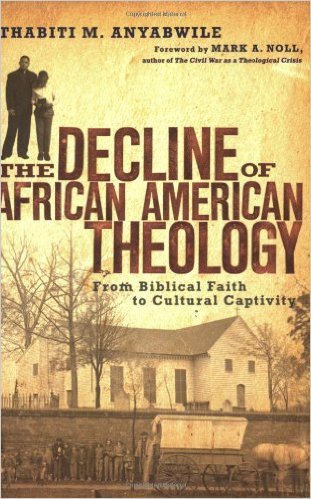
 $12.99.) He was a fantastic presenter, a great gospel preacher who walked the gathering through the Good Samaritan passage with fresh power and insight, and then even allowed us to recommend books to him, which he will devour, I’m sure.
 announcement about his candidacy.) We had just gotten his brand spanking new one on the constitution, A More Perfect Union: What We the People Can Do to Reclaim Our Constitutional Liberties (Sentinel; $26.95) although Gifted Hands: The Ben Carson Story — his own story — is still his most inspiring volume and Think Big: Unleashing Your Potential for Excellence is one we often recommend (especially for that chapter on reading!)

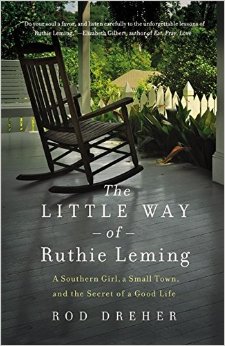
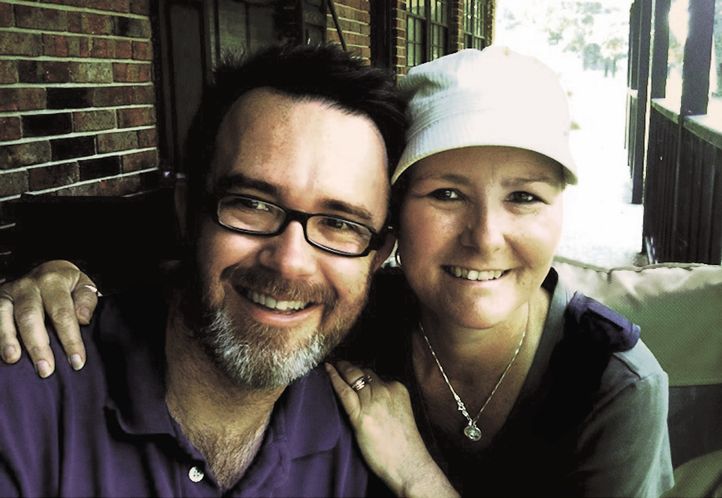 I was struck by a few things in reading The Little Way of Ruthie Leming. First, just how enjoyable a read this was, as good as any great memoir or novel. The subtitle, after all, features a Southern girl and a small town, not to mention “the Secret of a Good Life.” (Okay, it isn’t Sweet Home Alabama with Reese Witherspoon, but the movie rights have been optioned!) We happily commended it often when it first came out, but now I really know how good it is and want to redouble our efforts to spread the word. It isn’t ponderous or difficult, even though there are huge cultural and spiritual questions floating around and behind the narrative. I’ve gone so far as to say that if you’ve enjoyed Wendell Berry’s novels (such as Jayber Crow or Hannah Coulter) you’ll like this.

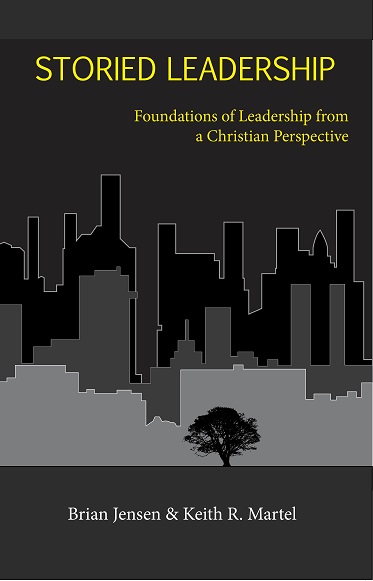 Storied Leadership: Foundations of Leadership from a Christian Perspective Keith Martel & Brian Jensen (Falls City Press) $18.00 Okay, this one isn’t brand new, and we promoted it when it first released early last spring. But I wanted to start off with it as it is a very good, truly delightful, brief survey of what some call “the Biblical meta-narrative” and how that big picture of the unfolding plot lines of the Bible can and should shape our views of reality. Without using the word “worldview” this offers a foundational Christian view of life, out of which can come a Christian view of society and subsequent social imaginaries. And yes, out of all that can bubble up a coherently Christian view of what leadership is and what it looks like. The chapters are short, the writing crisp, the insights profound. I think it is a really good entree into thinking faithfully and learning new ways to practice faith and leadership in the real world. We recommend it for students, for those new to this topic, and I am sure that experienced leaders will be glad to review it, being struck by notions such as “Kingdom Collaboration” and (with a nod to Steve Garber) “Proximate Leadership.”
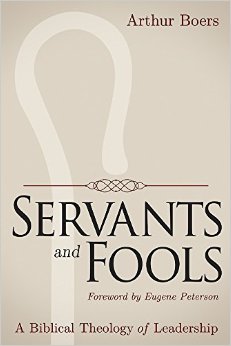 Servants and Fools: A Biblical Theology of Leadership Arthur Boers (Abingdon) $19.99 There aren’t many, but maybe a small handful of good books that deconstruct the standard-fare, worldly ways of thinking about leadership, books that move away from power and maneuvering, or technique and control, or benign use of communication skills. In contrast, there are many books offering to Christians standard fare management stuff with a gloss of religiosity on top, books full of promises about success and influence. Some are for Christians serving in the work-world, and some are for pastors or church leaders. Some have even adopted the once-revolutionary phrase “servant leadership” and have tweaked that to be about crass power or manipulation and the metrics of efficiency. For pastors trying to see more clearly the pretenses and dangers of this, and to discern a more pastoral view of their work, Eugene Peterson has of course been the most significant voice. His quartet of books on “vocational holiness” (at least Under the Unpredictable Plant and Working the Angles) are essential. As in most of his books, he gently but directly exposes how the ways and means of following Christ and leading a God-centered life is quite counter to the ways and means of typical North American life.

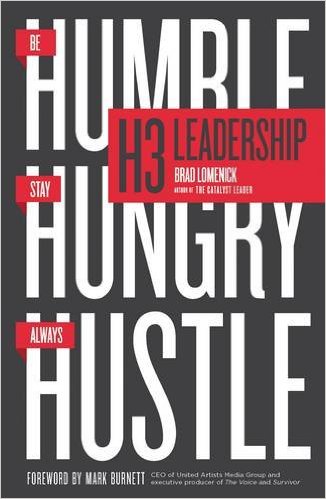 H3 Leadership: Be Humble, Stay Hungry, Always Hustle Brad Lomenick (Thomas Nelson) $24.99 Well, this could be, at first glance, an example of some of what Art Boers finds so troubling, a rather glitzy and upbeat view of leadership, with language of going on a noble quest, pushing boundaries, being passionate and such, but not related to the Bible much, let alone the subversive and counter-cultural ways of Jesus. It is marketed, as is his legendary Catalyst conferences, with whiz and bang — I love the cool, striking hardback design sans cover.
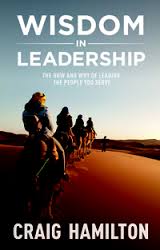 Wisdom In Leadership: The How and Why of Leading the People You Serve Craig Hamilton (Matthias Media) $24.99 In our effort to curate a selection here that brings fresh and sometimes harder-to-find books to the shelves, we discovered this new work from an evangelical Australian publisher. We have appreciated their clarity about outreach and creating fun resources that are contemporary and doctrinally solid. As a publishing venture they are all about the first things of the gospel, and, if I might, could call them a “gospel-centered” ministry. Their practical books are intense with a robust blend of usable guidance while pointing readers to the cross of Calvary and the finished work Christ accomplished in his death and resurrection. So I was eager to see what kind of a book they’d create.
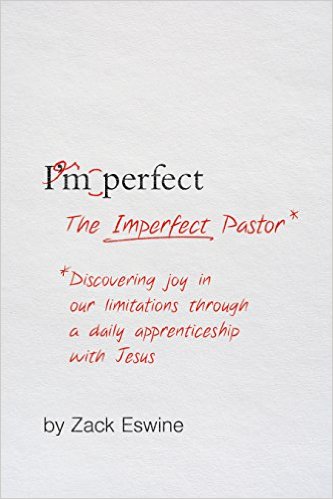 The Imperfect Pastor: Discovering Joy in Our Limitations Through a Daily Apprenticeship with Jesus Zack Eswine (Crossway) $16.99 This brand book on being a pastor just came yesterday and while it is not about leadership, generally, it certainly seems to fit this little list now, so I have to announce it. Heck, I don’t think it would matter what this list was, I’d want to name this now: he is a really, really good writer, and we should read whatever he has to say.
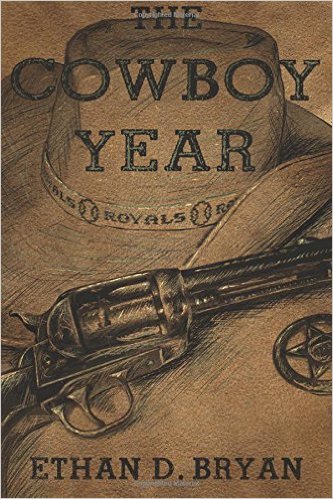 The Cowboy Year Ethan D. Bryan (Electio Publishing) $16.99 I mentioned something about curating an interesting selection here at our bookstore? Well, I wanted to offer a bit of a curve-ball here in this list, a surprising one. This father-and-son memoir is not, at first blush, about leadership. Or is it?

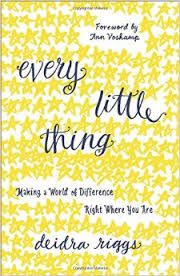 Every Little Thing: Making a World of Difference Right Where You Are Deidra Riggs (Baker) $13.99 Deidra is a woman I respect immensely, for her pleasant demeanor and her professional advocacy for bloggers writing about faith and the work-world at TheHighCalling.org where she serves as managing editor. It’s a big and impressive job, and one of the great things is that she invites her team to encourage younger writers, guiding them into finding their voice, saying their piece, making a difference in ways big and small. Usually small. Which is the theme of this eager-anticipated and very inspiring book — with Deidra’s guidance and encouragement, you can realize that you are a world-changer. Do you ever think that you should get involved in something, or you should take a stand, or follow a sense of God’s leading to stretch you capacities to serve? Do you ever wonder how to know what to do to be faithful to these promptings? Do you ever give up before you even try?
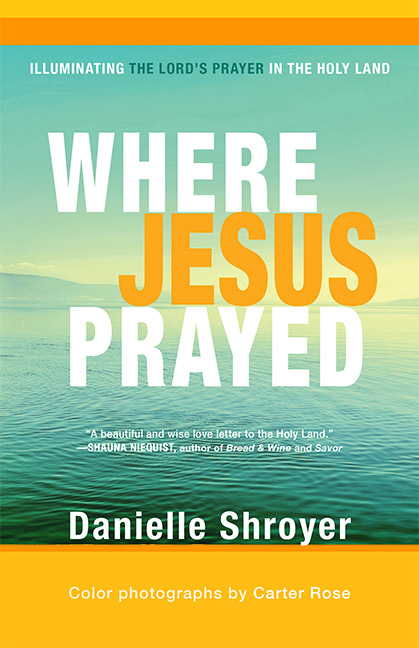 Where Jesus Prayed: Illuminating the Lord’s Prayer in the Holy Land Danielle Shroyer; color photographs by Carter Rose (Paraclete Press) $16.99 The monastic sisters in the religious community who run Paraclete Press are very excited about this, and assured me I’d love it. I think they are right — just glancing through it I notice that it does indeed have some good insights about praying the Lord’s prayer. Maybe you, like me, have read a number of solid books on this, but, like me, never tire of being drawn into this pivotal and important aspect of our Lord’s teaching. But not only is this beautifully written and obviously insightful, it is juxtaposed with photos and stories of being in the Holy Land. The author had gone on a pilgrimage to the Holy Land and she had one goal: “to enjoy God, fully present to the presence of the Holy.” The back cover explains that she was “tired of her own wordy prayers and theological thoughts as a pastor, she wanted her prayers to be quiet listening rather then incessant speaking. When the Lord’s Prayer came to mind in the midst of her silence, she welcomed the words of Jesus as the only words she needed.” This book is the fruition of her discipline of only praying this prayer as she traveled. Immersed in a sense of place, she felt the prayer coming to life in new and unexpected ways.
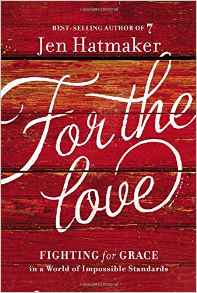 For the Love: Fighting for Grace in a World of Impossible Standards Jen Hatmaker (Thomas Nelson) $22.99 I spent an evening with this a week ago and laughed right out loud. I loved Hatmaker’s book 7: An Experimental Mutiny Against Excess — an honest, upbeat, but serious story of living on less — but wasn’t sure a major hardback release about life being “lovely and fun and courageous and kind” was going to work. And I loved it. I guess it is written for women (yes, come to think of it, given that there’s a chapter including a wife’s view of sex –“have fun and stuff” — and in one chapter she quotes Gwyneth Paltrow from Elle magazine, I guess it is written for women.)
 call to let go of judgements and be freed up to live in grace. Any book that reminds me of Smedes, and that makes me laugh, is well worth it. Kudos, Jen.
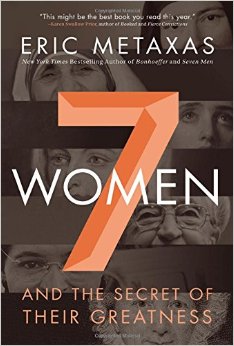 Seven Women And The Secret of Their Greatness Eric Metaxas (Thomas Nelson) $24.99 I hope you know Metaxas’s Seven Men and the Secret of Their Greatness which was a tremendously written, very informative, and truly inspiring study of seven very different men. (How many books put Jackie Robinson, Nelson Mandela, and George Washington in the same league? The Bonhoeffer chapter is nearly worth the price of that one, and of course he does Wilberforce.)
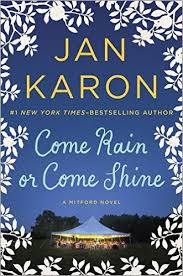 Come Rain or Come Shine: A Mitford Novel Jan Karon (Putnam) $27.95 This may have one of the nicest covers of the year, and I’m drawn to it even though I’ll admit I haven’t read any of the others. There, I said it. But great thinkers that I admire have appreciated them — Lauren Winner’s Girl Meets God memoir tells of her own conversion to Christian faith in part by reading about Mitford! — and, more importantly, customers and staff and friends really enjoy them. I suppose you know all about Father Tim — last heard of in Somewhere Safe with Somebody Good.
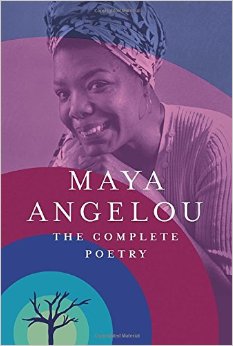 Maya Angelou: The Complete Poetry Maya Angelou (Random House) $30.00 This is one of the more handsome one-volume complete poetry editions we’ve seen — just a little bit bigger than some, but with lots of white space on the page. The titles are in deep blue ink on cream colored paper — complete with deckled edges on the pages. The woman who wrote that she is “phenomenal” is just that. This is a very handsome volume, with over 300 pages. Just holding it brings me joy, and reminds me of her distinguished career in letters. There are some famous ones, too — if you are old enough you will recall her “On the Pulse of Morning” a tribute at the inauguration of President Clinton and the never published before poem “Amazement Waits” that she did for the 2008 Olympic Games. She died in 2014.
 And, speaking of significant women authors, we are still eager to sell Go Set a Watchman, by the extraordinary storyteller Harper Lee. Beth zipped through it the week it released and really, truly loved it. Just a day ago we got a long email from a customer who was exceedingly skeptical, but bought it from us on Beth’s recommendation. His note said that he experienced something he hadn’t in quite a while — the compulsion to keep reading, that made him stay up most of the night, simply unable to put the story down. I don’t know if it counts as a refreshingly inspiring book of the sort I’ve listed here, but, ya know, you could do worse on a hard day. And Paul’s note meant the world to us, reminding us of the great value of good books. That helps keep the discouragement at bay, too. Thanks, ya’all.

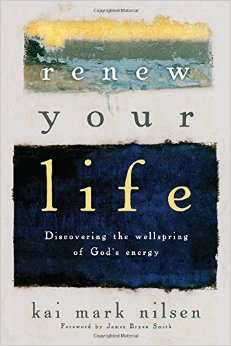 Renew Your Life: Discovering the Wellspring of God’s Energy Kai Mark Nilsen (IVP/formatio) $16.00 Maybe discovering this book last week was what gave me the idea for this post: it is written precisely for those who are exhausted or longing to find a source of refreshment. The subtitle talks about God’s energy! This is just what I needed! Rev. Nilsen is on the board of Renovare (hence, the rather contemplative tone of this gentle guide to renewed spirituality.) He has been a pastor at Peace Lutheran Church in Gahanna, Ohio, and is a certified pastoral coach for the ELCA. Chris Hall says he is a “wise, insightful, empathetic guide for weary wanderers.” Nathan Foster’s quote most invited me into this here in the start of autumn, when he suggested that “many will find this work gives way to a new beginning – a genesis of sorts.” Yes, isn’t this what some of us need now, guidance in turning over a new leaf, recalling how things work in God’s Kingdom? Some assistance towards a fresh start?
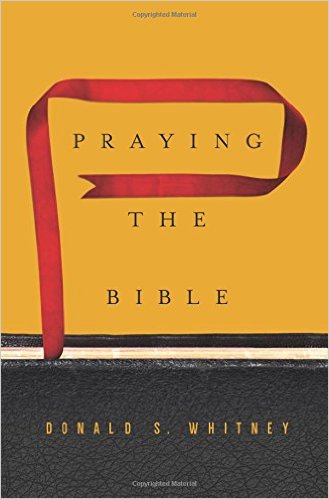 Praying the Bible Donald Whitney (Crossway) $13.99 Obviously, it should be well known that one standard tool to combat listlessness or weariness or anxiety is reading the Bible. And I not only commend reading the Bible, but reading books about reading the Bible. Really: what joy to learn more about the Bible! This new book, despite having the word Bible in the title, is actually a book about prayer. It is simple, and written in wise, plainspoken prose. Dr. Whitney invites us to admit that often we are bored by our praying, mostly because we pray about the same old things in the same old way. This isn’t unusual or wrong, so Whitney reminds us not to blame ourselves. The Holy Spirit residing within us is drawing us to desire God, to want to talk to God more, to trust that God is seeking us out and that we may pray our heart’s desires to HIm. However, when it is “same old/same old” it isn’t our fault, but the problem is in our method.
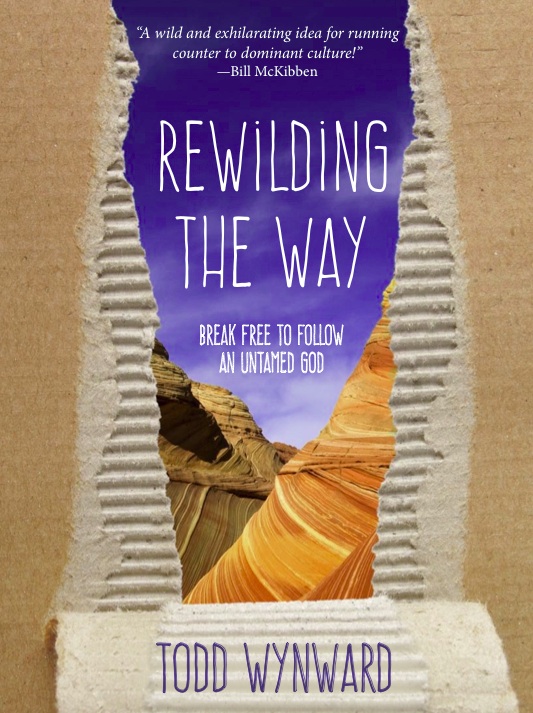 Rewilding the Way: Break Free to Follow an Untamed God Todd Wynward (Herald Press) $15.99 I have been eager to tell you about this book, but had to read more of it, to be sure it was all I had hoped. And it is! This is the story of a Mennonite couple – he, a wilderness guide who has spent more than a thousand nights outdoors – who started a very innovative wilderness-based public charter school in around Taos, New Mexico, smack in the middle of the beauty of the Sangra De Christo Mountains. Wynward’s call to “rewild” our understanding of the Christian faith is provocative, challenging, and – for many of us, I’m sure – will be a fresh reminder of the wild call to a joyful and prophetic lifestyle.
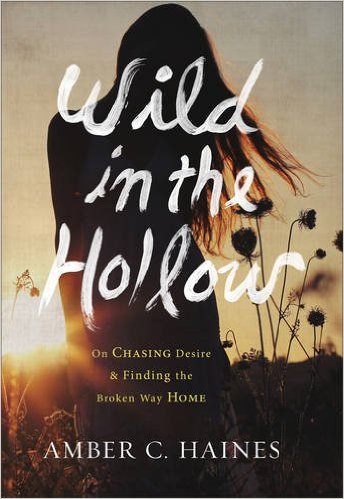 Wild in the Hollows: On Chasing Desire & Finding the Broken Way Home Amber C. Haines (Revell) $16.99 I could write pages about this luminous, creative writing project, this memoir of a woman who, we are told, is “haunted by God.” I believe her. She has here narrated her young life, and some pretty exceptional ups and downs, and some that are more common than we are usually willing to admit. As Emily Freeman asks, “How can a woman with a story so different from my own be telling my story, too? Amber Haines has found a way…this captivating book stunned me speechless.”
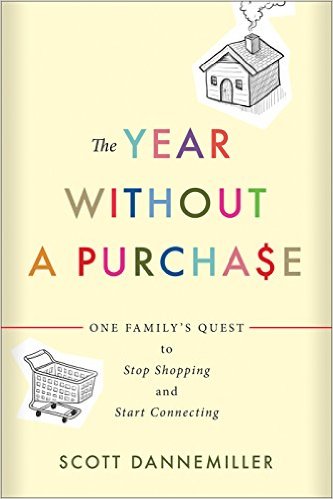 The Year Without A Purchase: One Family’s Quest to Stop Shopping and Start Connecting Scott Dannemiller (Westminster/John Knox) $16.00 Sometimes it doesn’t hurt to let go of some of your anxieties and stress by laughing a lot. I’ve really, really enjoyed in recent years a few of the memoirs about people wanting to eat local, or simplifying their life, stories of a year of gardening or raising chickens or eating better. I love memoirs and was eager to read this new one, but I had no idea how blasted funny it is. It was one of my favorite reads this summer.
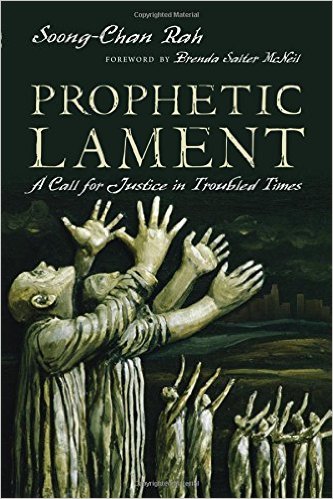 Prophetic Lament: Call for Justice in Troubled Times Soong-Chan Rah (IVP) $17.00 Sometimes, when one is a bit discouraged, tired of carrying the weight of the world, and wanting to read something inspiring and motivational, what might be really doing on is something described in a fine book by Bill Hybells called “holy discontent.” That is, God is stirring up something in your heart beyond the tiredness that comes from stress and lack of sleep, but is actually a burden which could lead to deeper cares and concerns. That is, rather than avoid or cover up our dissatisfactions, we might hear in them a holy calling. And so, I invite you to this powerful, challenging, passionate book. There are other books on lament that have come out in recent years — some, fairly detailed works of eye-opening Biblical scholarship, others poetic and poignant. This, though, is not just about how the American church tends to avoid lament and how it is an essential component of Biblical faith — it is a guide into what it means to lament well and why it matters. I think it will be on our short list of the very best books of 2015.
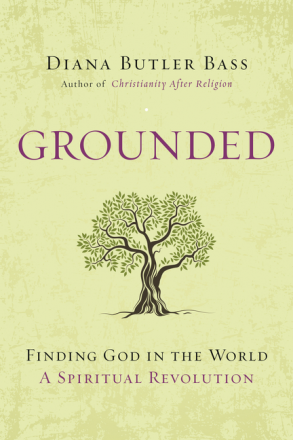 Grounded: Finding God in the World – A Spiritual Revolution Diana Butler Bass (HarperOne) $26.99 NOT YET RELEASED available October 6, 2015 Perhaps this is the sort of book you most need right now – a delightful combination of social research, progressive theology, beautiful science writing, personal storytelling, and practical guidance to finding God’s presence in the ordinary stuff of Earth. We are taking pre-orders for this as it isn’t released yet, although we will be able to ship it early in October. In my own weariness and in my own search for a book that isn’t too heavy but not too light, that is serious but not ponderous, this looks like almost a perfect fit. It will be discussed a lot, I am sure, in the months to come, and I hope you read it so you can join in the conversations, but mostly I hope it will touch you now, deeply, where you need to sense God’s presence, despite all.



 Invisibles: Celebrating the Unsung Heroes of the Workplace by David Zweig (Portfolio) $16.00 our sale price = $12.80
 Finding Livelihood: A Progress of Work and Leisure Nancy J. Nordenson (Kalos Press) $14.95 our sale price = $11.96
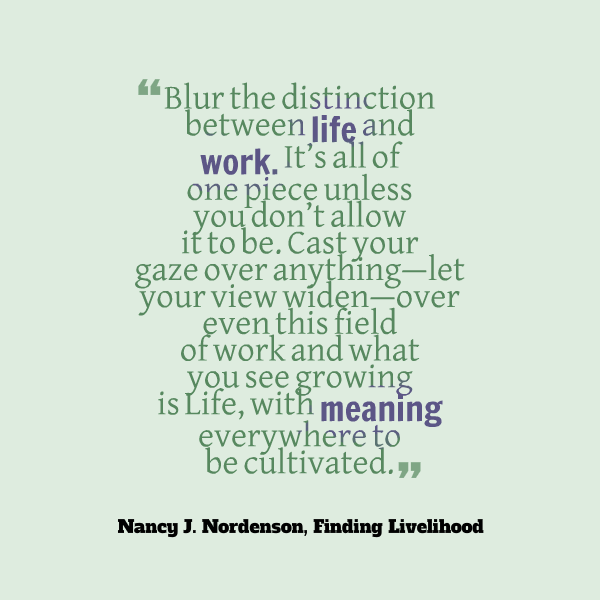 books that are direct about this matter of finding God in the work-world, books that offer clues to spiritual formation for and in the marketplace, thinking Christianly about vocation and call, developing a Christian viewpoint, even, but this is less obvious than that. She does want life to be more seamless, not just to find paid work but to sense a call, to discover meaning in our days. Livelihood. She does ruminate quite a bit on Josef Pieper’s classic Leisure: The Basis of Culture (and in a simple reminder of its post-World War II context helped me understand it more than I had.) Her point in all of this is profound, but not evangelistic on the face of it; Why is Pieper’s message so urgent? She answers her own question in italics: To be human.
 Stevens and his majestic The Other Six Days: Vocation, Work, and Ministry in Biblical Perspective (both published by Eerdmans) or The Gospel at Work: How Working for King Jesus Gives Purpose and Meaning to Our Jobs by Sebastian Traeger & Greg Gilbert (Zondervan.) Ms. Nordenson cites Miroslav Volf’s important book about a theology of work based on charisms, Work in the Spirit: Toward a Theology of Work (Wipf & Stock.)