Even folks who come in our shop every week or so are sometimes surprised to see so many new titles. We don’t have tons of room, and we’re nothing at all like a mega-store or big box place and we don’t usually order giant stacks of the same item. But if you look closely there are new books on the shelves nearly every single day. The new sales associate position we’ve advertised (we’re seeking an all around bookseller and retail worker who feels called to this mission) will be putting these kinds of books on the shelf, and will have the joy of showing them off to customers and friends.
For those who can’t get here – that’s most of the readers of BookNotes, obviously – it’s my delight to tell you about interesting titles we have gotten in this week. You can order them all at 20% off (we show the regular retail price, but will deduct the bargain for you, of course.) Just click on the links shown at the bottom of this column. Our order form page is certfied secure so you can leave credit digits safely, or, as we explain, you can just ask for an invoice and we’ll send a bill along with the package.
Some regular BookNotes reviews are longer; I love telling about important works that I’m convinced are worthy of your consideration. Today, I’m trying to be at least a little bit more brief, just alerting you to the features of these new titles. These books all deserve more attention than a shout out like this. Kudos to the publishers and, of course, the authors.
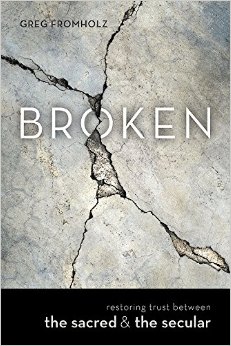 Broken: Restoring Trust Between the Sacred and the Secular Greg Fromholz (Abingdon) $16.99 There are layers and layers of things going on in this feisty, creative book although the umbrella rubric is trust. Trust between overly strict Christian folks and their disapproval of pop culture, and, yes, of overly secularized unchurched folks who are convinced the church is out to get them. But more than a passionate, artful, interesting call to overcome the growing disconnect – if not fully caused, at least made more intense – between religious folks that seem to want to play it safe, avoid risk, and keep the faith compartmentalized and out of deep engagement with the complexities of the modern world. Fromholz is an Irish video director and an interactive iPad book app (Liberate Eden.) He was friends with the late chaplain for U2 (Jack Heaslip) who gave the book a happy endorsement before he passed and other smart folks in the contemporary Christian music world (Martin Smith of delirious, Chris Llewellyn of the Rend Collective.) Blurbs here are vibrant and very positive – from the Anglican Archbishop of Dublin to Shane Claiborne, who says he has a gift for uniting people in “subversive friendships.” Fromholz is obviously a colorful character citing edgy films and The White album and Richard Mouw on Abraham Kuyper and Tom Waits and Ray Bradbury and Eugene Peterson and Keith Green.
Q founder Gabe Lyon declares that Broken: Restoring the Trust Between the Sacred and the Secular is “A must read for anyone called to work for cultural renewal.” Which is to say, maybe most of our BookNotes subscribers.
 Counterfeit Christianity: The Persistence of Errors in the Church Roger Olson (Abingdon) $19.99 Those that follow our BookNotes blog know that I believe the false division of life into “sacred and secular” (with roots in pagan Greek philosophers like Plato, not the Bible, and seen most grossly in the weirdness of Gnosticism) is one of the enduring heresies in 2000 years of church history. There has been much conversation about this in recent decades and the above book by Greg Fromholz is one such call to a restoration of the full-orbed, creation-based faith – “for the life of the world” as the popular DVD puts it. Nonetheless, for what it is worth, I also think that if we are going to pioneer and sustain a fully relevant 21st century faith that rejects sacred/secular dualism and regains a fully Biblical vision of creation regained, we will also have to be on guard about other slippery slopes that draw us into off-based theologies, oddball thinking and goofy formulations of faith that, even if advanced by well intended, serious seminarians or cynically adopted by hurting ex-evangelicals, are not going to sustain healthy, lasting, mere Christianity.
And so, from time to time, we should revisit the great theological debates of the past and ask if the distorted teachings that were once vigorously rejected by the broad, historic, community of faith are not threatening to plague us again. Obviously, we dare not be ungracious or closed-minded, and we certainly, surely, ought not to make matters that are not essential into divisive core teachings, as if we have to rigorously fight every little thing we disagree about. Still, we must understand “the persistence of errors” and work for “recognizable ecumenical orthodoxy.” Counterfeit Christianity is, as any book on this topic, informed by the author’s own understanding of theological orthodoxy and not everyone will fully agree with his take on these ancient debates and theological clarification, or his assessments of this or that contemporary writer, movement, or religious trend in today’s church. There are 10 chapters here, the first two foundational (“Why Study Heresy” and “What Is Orthodoxy?”) and then 8 on some specific wrong views of God and faith as they first arose and were evaluated, and how they may still be around today.
Two quick reminders: not all dumb thinking is ruinous, and not all theological error is heretical. True heresy about fundamental things, though, is dangerous and can undermine our faith and our churches and our work in the world. Each chapter of Counterfeit… has questions for individual or group study. Some of the early councils of the Church lasted years; you could certainly take a few weeks to bone up on similar matters. Dr. Olsen teaches theology and ethics at George W. Truett Theological Seminary of Baylor University.
There is also a DVD curriculum for this. It is five episodes. DVD + Participants Guide $39.99
 Chosen? Reading the Bible Amid the Israeli-Palestinian Conflict Walter Brueggemann (WJK) $14.00 My life was significantly impacted when Dr. Peter J. Steen, a Dutch neo-Calvinist philosophy professor (who I mention in my chapter in Serious Dreams: Bold Ideas for the Rest of Your Life) gave to me in the mid-1970s Walter Brueggemann’s excellent book of Biblical scholarship, The Land. It was years later that I came to appreciate his Prophetic Imagination and came to know him and his passionate, insightful, broad teaching of the Hebrew Scriptures. Perhaps like you, you’d read Walt on almost anything, even if you may not completely agree (or even understand) all of his eloquent, nuanced, generative prose. And, perhaps like me, you, too, have been waiting for this book for a long, long time. In some ways, it is a brief follow-up to The Land, written for small group use, offered in light of the very tragic current events in the Middle East.
I suppose I don’t have to tell you that Brueggemann tilts left in his politics (recall his life-long immersion in the prophetic ethics of the post-exilic prophets and that shouldn’t be a surprise) and he is, naturally, very aware of the horrors inflicted upon the Palestinian people by a militarized and hard-right Israeli policy. He says repeatedly that Israel is under great duress and although some readers will want him to say this more often so while the book isn’t glib about the legitimate security concerns of the Jewish homeland, some will see the book as too pro-Palestinian.
Rabbi Michael Lerner (editor of Tikkun and author of Embracing Israel/Palestine: A Strategy for Middle East Peace writes, ” Brueggemann has done a great service to the Jewish people and to all who rely on the Hebrew Bible as a guide to life by demonstrating in this book that there is no straight line between these ancient hoy texts and the oppression of the Palestinian people by an expansionist Zionist government in modern Israel.” Rabbi Lerner isn’t the only Jewish leader who has endorsed this thoughtful study.
That Israel is “God’s chosen people” is both a promise and a problem, he says, and the book offers ways to think through the way in which the Biblical texts and the theological traditions have understood this, and what implication it has for the land and politics of the Holy Land today.
There are four chapters, addressing the main questions people have regarding what the Bible says about this ongoing debate. A question-and-answer section in conversation with Brueggemann at the end supplements the main chapters (and could be itself a fifth week in an adult class or Bible study group. It is richly spoken and very interesting.) I Chosen? Reading the Bible… in one sitting – the print is large and includes only 59 pages of real text. The remaining 20 pages offer a glossary, a helpful class study guide, and a guideline document that had been created by the PC(USA) for respectful dialogue that may be helpful if your group is heated.
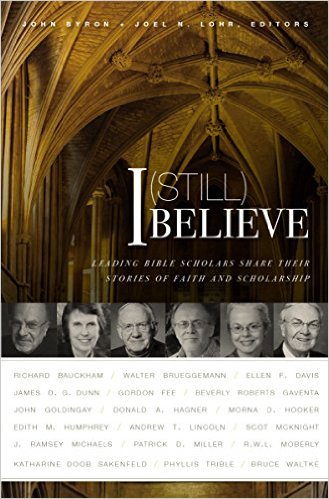 I (Still) Believe: Leading Bible Scholars Share Their Stories and Scholarship edited by John Byron & Joel Lohr (Zondervan) $24.99 Wow, does this ever look fascinating. I suppose most BookNotes readers are aware that in the 20th century the story: there grew a huge divide between highly critical scholarship of the Bible which was developed in increasingly specialized academic circles, often subverting traditional faith of ordinary Christians who went off to mainline denominational seminaries or studied religion or Bible at liberal arts schools or state universities. In reaction, more traditionally minded, evangelical scholars increased their own robust scholarship, digging deep in the academic guilds, doing PhDs often in scholarly programs that were sometimes hostile to their own traditional positions. (Just think of something fairly simple – were there two or three writers of Isaiah, or just one? Are the opening chapters of Genesis to be read literally or literarily? Did the miracles really happen, or where they gussied up a bit by subsequent (re)writers of the scrolls and oral traditions that became the Bible as we now have it? And, significantly, are the accounts of Jesus’s bodily resurrection really reliable and therefore true?)
Fortunately, in my view, in the last few decades a younger generation of scholars in both camps have learned from one another. Some liberal divinity schools have thoughtful and well-trained evangelicals on staff, and some evangelical scholars share much with their critical, and sometimes ideologically unusually colleagues in the Society for Biblical Literature. Some evangelicals do remarkable scholarly work to bolster conventional views (think of D.A. Carson) and some have embraced more critical methods themselves (think of Peter Enns.) And many who find themselves in more mainline seminaries give often beautifully accounts of their innovative projects. Anyway, times now seem different then they did when there was this pretty strict modernist vs conservative battle for the Bible going on.
I suppose one doesn’t need to know much more about this century-old dilemma to appreciate why this book is so very, very exciting to see. This amazing paperback collects the testimonials of 18 different Bible scholars, each masterfully and poignantly telling their stories, explaining their work, and sharing their own faith journey. Is serious academic study of the Bible a threat to real faith? How do scholars in liberal or mainline institutions relate their own personal piety to their academic work?
Most of the contributors here are standout significant scholars in their fields, and for some, this is the first time they’ve publicly shared their own Christian testimony in this way. Here is what the description of I (Still) Believe promises:
Reflecting on their own experiences at the intersection of faith and serious academic study of the Bible, the essays are uncontrived. The stories are real. And the complexities and struggles they hold are laid bare.
Included are Richard Bauckham, Walter Brueggemann, Ellen Davis, James Dunn, Gordon Fee, Beverly Roberts Gaventa, John Goldingay, Donald Hagner, Morna Hooker, Edith Humphrey, Andrew Lincoln, Scot McKnight, J. Ramsey Michaels, Patrick Miller, Walter Moberly, Katharine Doob Sakenfield, Phyllis Trible, and Bruce Waltke.
As David deSilva of Ashland Theological Seminary says of I (Still) Believe,
A very important and salutary book for all who struggle holding the critical study of Scripture and a commitment to the apostolic faith together. These ‘heavy hitters’ in biblical studies, share how faith has been a driving force in their scholarship and how their scholarship has been formative for their faith and practice.
 Longing for Paris: One Woman’s Search for Joy, Beauty, and Adventure – Right Where She Is Sarah Mae (Tyndale/Momentum) $15.99 Sarah Mae co-authored a good book on mothering that came out about a year ago called Desperate and we recently realized she was nearly a neighbor (she lives over in Lancaster County.) We were so impressed with an early reading copy of this new book that we hope to have her do an author event here someday soon! For now, you should know about how delightful a book Longing for Paris is. On the back cover it says it is “for anyone who has ever daydreamed of another life…” Although it is written mostly for women, I enjoyed it a lot. I’m hoping people pick it up.
Longing for Paris: One Woman’s Search… is an antidote to the old (and quite common) “grass-is-greener” syndrome which can be truly debilitating – how many people can’t find contentment because of their idealized wishes about being someplace else, or somebody else. Mae adds some helpful, light cultural criticism here, examining the way we are often encouraged to be “romantic” and dream about places like Paris. We ache for something more than our mundane day-to-day lives and we dream of adventure and escape. (How about that Woody Allen book, Midnight in Paris? eh? She talks about it.) The glorious city of Lights is known for breath-taking beauty, inspiring art, exquisite food, philosophy, social change, charm, romance. Who doesn’t long for such rich, good, meaningful things?
I think this book is a light-hearted and artfully accessible exploration of the same sorts of things explored by philosophers like James K.A. Smith (Desiring the Kingdom) and David Naugle (Reordered Loves, Reordered Lives) and the memoir Teach Us to Want: Longing Ambition and the Life of Faith by Jen Pollock Michel. Longing for Paris by Sarah Mae is a lovely book that examines our desires, the longing of our hearts, and wonders how we can not only be content in our daily and often pedestrian lives, but also how to imbued them with art and beauty in ways that, well, don’t entail an expensive once in a lifetime trip to Europe. (At the end of each chapter she gives some charming suggestions of things to do, making this a real guidebook to a more artful, local, contented, involved life.) Of course there is nothing wrong with going to Paris. But for most of us, we can’t afford that, and most likely never will. More importantly, we all need deep joy “right where you are.” Sarah Mae–who has experienced significant heartbreak and personal struggle (you’ll have to read the book yourself for this poignant drama and story of redemption) – shows us how. And she adds some great quotes along the way, including from Leif Enger’s novel Peace Like a River. I enjoyed this book. Maybe it will help you, too.
 Anne of Green Gables, My Daughter, and Me: What My Favorite Book Taught Me Ab out Grace, Belonging, and the Orphan in Us All Lorilee Craker (Tyndale/ Momentum) $15.99 This is a beautiful memoir that unfolds a bit of the author’s story — yes, dealing with being an “orphan” and stuff around adoption – interspersed with lovely exploration of the insights and meaning of the beloved L.M. Montgomery Anne of Green Gables novel published in the very early 1900s. Craker is a really good writer. Shauna Niequist says she “writes with both lightness and depth, and I found myself taken by all three stories -her’s, Phoebe’s, Anne’s. The beauty of her storytelling and the tenderness of the events she describes makes this a thoroughly rich reading experience.”
Our pal and great writer Margot Starbuck wrote one of the best adoption-related memoirs ever (The Girl in the Orange Dress) and I was glad to see that she endorsed it. Margot says “In this artful tapestry, Lorilee Cracker – consummate wordsmith – gifts readers with a beautifully woven journey into the human heart. For her tender vulnerability, creative insight, and beautiful sentences, I highly recommend Cracker’s moving memoir.”
I appreciate that Elisa Morgan, whose memoir was pretty amazing, given her own hare story, says
We are all enamored by the plight of orphans and gobble up their tales in the wide world of literature. Perhaps we see ourselves – our fears of abandonment and creases of inadequacy – in their stories. Gently and with honest vulnerability, Lorilee Craker weaves the universal discoveries of orphan Anne into her own very personal story of being an orphan of adopting one. Open the cover. Turn the pages. You’ll come out the other end glad for the read and deepened by the journey.
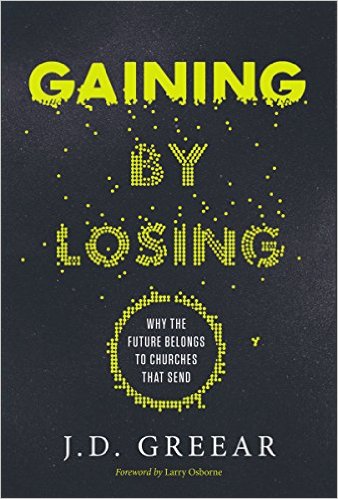 Gaining By Losing: Why the Future Belongs to Churches That Send J.D. Greear (Zondervan) $19.99 This looks similar to any number of recent books on being a missional church, “outwardly focused” congregational health, and how a vision of Kingdom service is the key to vibrant, revitalized church. It is about being a “disciple-making church” and reminds us that being “gospel centered” is the ground from which our proclamation of grace and service must grow. Unlike most missional books (that explore “staying” and witnessing amidst secularized North American culture) this new hardback book invites us to re-capture (or develop, if it not in your congregation’s DNA) a mission of global church planting and deepening our missionary agenda as a sending church. This is a major point and it is clear that Greear’s church (Summit Church Raleigh-Durham, NC) has learned the art of “sending” and therefore many of the chief leaders, workers, (and givers!) of his congregation leave – on purpose, of course! Gaining By Losing will surely deepen our trust in God if we dismiss our best folks, and it could reignite a deeper desire to be faithful, risky, even in counter-intuitive ways. It is on my “read soon” list, and for those of you who are in congregational leadership positions, it maybe should be on yours, too.
Thom Rainer is a writer who has done good work himself on congregational health, and he has researched and consulted with hundreds of churches, so his endorsement means a lot.
Thom Rainer says,
Wow! I just finished reading Gaining By Losing. I rarely finish a book and feel like it took my breath away. This book by J.D. Greer is nothing short of incredible. It’s just that powerful.
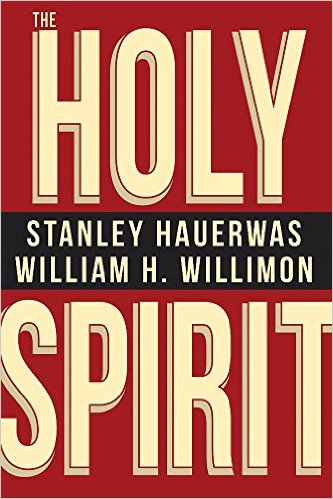 The Holy Spirit Stanley Hauerwas & William Willimon (Abingdon) $13.99 Holy smokes, it has been a while since Hauerwas & Willimon have collaborated like this. Just this year a 20th anniversary edition of Resident Aliens was released which reminded many of how important this duo have been, not only in their more academic works, but in these small guides to lively Christian living. I was really thrilled to learn this was coming, and glad we just got it in.
There are only four chapters here and I’m sure it would make a profitable study for groups or classes. (Oddly, there is no study guide or reflection questions.) The first chapter is called “The Trinity” (and includes, happily, a picture of the famous Andrei Rublev icon.) The next chapters are “Pentecost: The Birth of the Church”, “Holiness: Life in the Spirit” and “Last Things.” Just under 100 pages, with fairly large type and some handsome pull quotes, this is a fine little paperback.
As Luke Powery (Dean of the Chapel at Duke Divinity School) colorfully notes,
When these two longtime theologian-friends and disciples of Jesus gather in a room to write, you can be sure that you will hear a sound of a rushing mighty wind, feel the heat of holy fire, and be ignited by dynamite on the page as you read. This is literary bread from heaven fed to you by anointed servants of the Holy Spirit. Take, eat, and be filled with the Spirit of Christ.
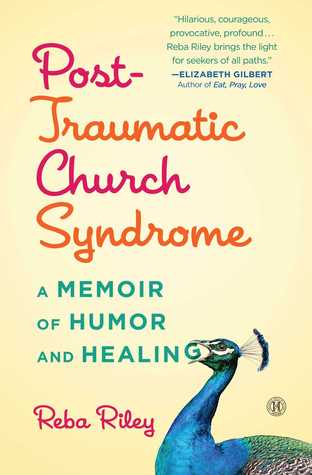 Post Traumatic Church Syndrome: A Memoir of Humor and Healing Reba Riley (Howard) $24.99 There aren’t too many Christian books that hold a bright endorsement from Elizabeth Gilbert, who writes that it is “hilarious, courageous, provocative, profound.” She continues, “If the Pray in Eat, Pray, Love had a gutsy, wise, funny little sister who’d never been to India, it would be Post-Traumatic Church Syndrome.”
Here’s the deal: Reba Riley was some kind of evangelical poster child, apparently, and, I suppose for understandable reasons given her branch of fundy faith and a devastating chronic illness, she concludes she should explore other faiths and their particular practices. There is some planning, some tongue in cheek exploration as she prepares for a project of immersion journalism – always a good time, if you ask me — and some genuine searching for answers, at least a la A.J. Jacobs, say. On her 29th birthday Riley decides to try out “30 religions before 30.)
Devout practitioners will be horrified, naturally, by any sense that one can “try out” a religion in such a perfunctory, quick way, but as a fun story that at least approximates a spiritual search, and a playful way to recover from some post traumatic church stress, this adventure could be a great read. You may recall that I loved the (admittedly flawed, for similar reasons) Man Seeks God book by the amazing Eric Weiner (who also wrote The Geography of Bliss, and has another coming late this fall, The Geography of Genius, but I digress.) If Post Traumatic Church Syndrome’s adventure is even close to that, I’m going to enjoy it a lot. That Riley was once an evangelical, and that this is being co- published simultaneously by two religious presses (Howard and Chalice) may make it more significant for some of us then Weiner or Jacobs.
Here is some of what is promised in bullet points on the dust jacket: Ms. Riley was interrogated by Amish grandmothers about her sex life, she danced the disco in a Buddhist temple, went to church in virtual reality, a move theater, a drive-in bar and a basement, fasted for 30 days, washed her lady parts in a mosque bathroom, was audited by Scientologists, learned to meditate with an urban monk, sucked mud in a sweat lodge and snuck into Yom Kippur with a fake grandpa in tow.
As A.J. Jacobs writes “whatever your beliefs or lack thereof… you should read this moving, funny, thoughtful book.” Another gentle writer says it is “an audacious rampage through religious sensibility” and yet another says it is “beautifully written, exceedingly funny and refreshingly honest.” You know you are curious, eh?
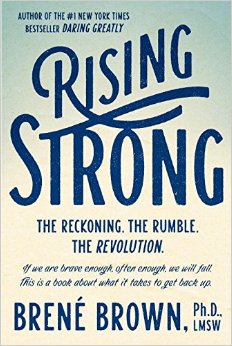 Rising Strong: The Reckoning, the Ruble, the Revolution Brene Brown (Spiegel & Grau) $27.00 One of the biggest best-sellers of the last few years was the astounding Dare Greatly: How the Courage to Be Vulnerable Transforms the Way We Live, Parent and Lead by the social psychologist, research professor and TED talk guru. (Brown’s 2010 Tedx Houston talk “The Power of Vulnerability” is one of the top five most-watched Ted talks worldwide!) As with many TED talkers, Brene Brown has a remarkable ability to combine science and storyteller, her scholarship offered in truly interesting, motivational presentations. She is also the CEO of The Daring Way, an organization that brings her work on vulnerability, courage, shame, and worthiness to organizations, schools, business, communities, families. Her study of this topic helped lead her back to Christian faith, which makes her even more interesting as a renowned public intellectual. Rising Strong is the eagerly-anticipated follow up to Daring Greatly which, in turn, developed from her work such as The Gifts of Imperfection and I Thought It Was Just Me.
I love the R words in the subtitle — The Recovery, The Rumble, The Revolution — but this line explains better just what she means: “If we are brave enough, often enough, we will fall. This is a book about what it takes to get back up.”
Brown continues, in large, lovely type on the back cover,
The irony is that we attempt to disown our difficult stories to appear more whole or more acceptable, but our wholeness – even our wholeheartedness – actually depends on the integration of all of our experiences including the falls.
BookNotes
DISCOUNT
ANY ITEM MENTIONED
20% off
order here
takes you to the secure Hearts & Minds order form page
just tell us what you want
inquire here
if you have questions or need more information
just ask us what you want to know
Hearts & Minds 234 East Main Street Dallastown, PA 17313 717-246-333
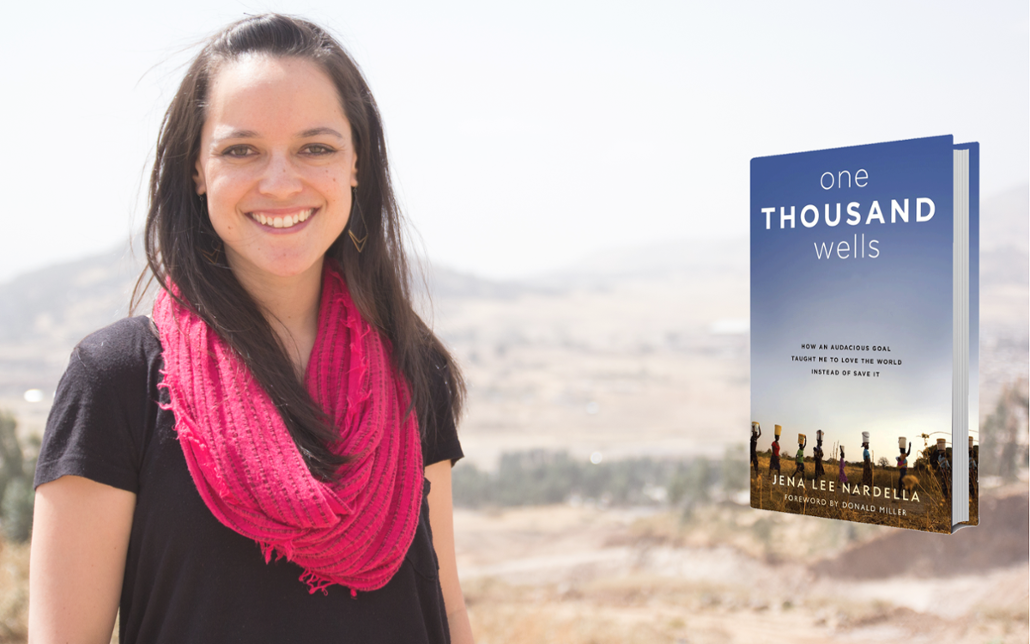
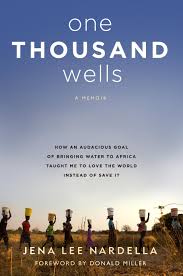 One Thousand Wells: How An Audacious Goal Taught Me to Love the World Instead of Save It by Jena Lee Nardella (Howard) $24.00 Our sale price $19.00
 Alongside other recent books like Stephan Bauman’s fabulously energetic and visionary call to enter this fray with creativity and hope, Possible: A Blueprint for Changing How We Change the World (Waterbrook; $22.99) or the free-market-based solutions proposed in For the Least of These: A Biblical Answer to Poverty edited by Anne Bradley and Art Lindsley (Zondervan; $21.99) and last year’s exceptionally important and much-discussed Locust Effect: Why Ending Poverty Requires the End of Violence by IJM founder Gary Haugen & Victor Boutros (Oxford University Press; $18.95) or the fabulous new 12-session Bible study curriculum from the IJM Institute, God of Justice by Abraham George & Nikki A. Toyama-Szeto (InterVarsity Press; $16.00)
 and their must-have, multi-issue resource edited by Mae Cannon, Social Justice Handbook: Small Steps for a Better World (InterVarsity Press; $22.00) you can readily take up a crash course on faith-based social concerns, or create a shelf in your library or resource room. We have long hoped that we could help those wanting to learn how to think Biblically and live more faithfully as they embrace these aspects of discipleship. Certainly these books will remind you, and give you great awareness and zeal to support those who are called to work full time on these kinds of global concerns. I don’t know about you, but I need these kinds of voices in my life, and am inspired to deeper prayer and care and lifestyle adjustments by learning always trying to learn a bit more about world missions and global concerns.
 quite a while. Her voice, her writing, her story, her organization – Blood: Water Mission, co-founded by the rock band Jars of Clay, are all so very interesting, and bring to the fore aspects of this work that are captivating to read about, deeply moving at times, informative and good and helpful. I really hope you consider buying it, that your church library might offer it, that book clubs might take it up.
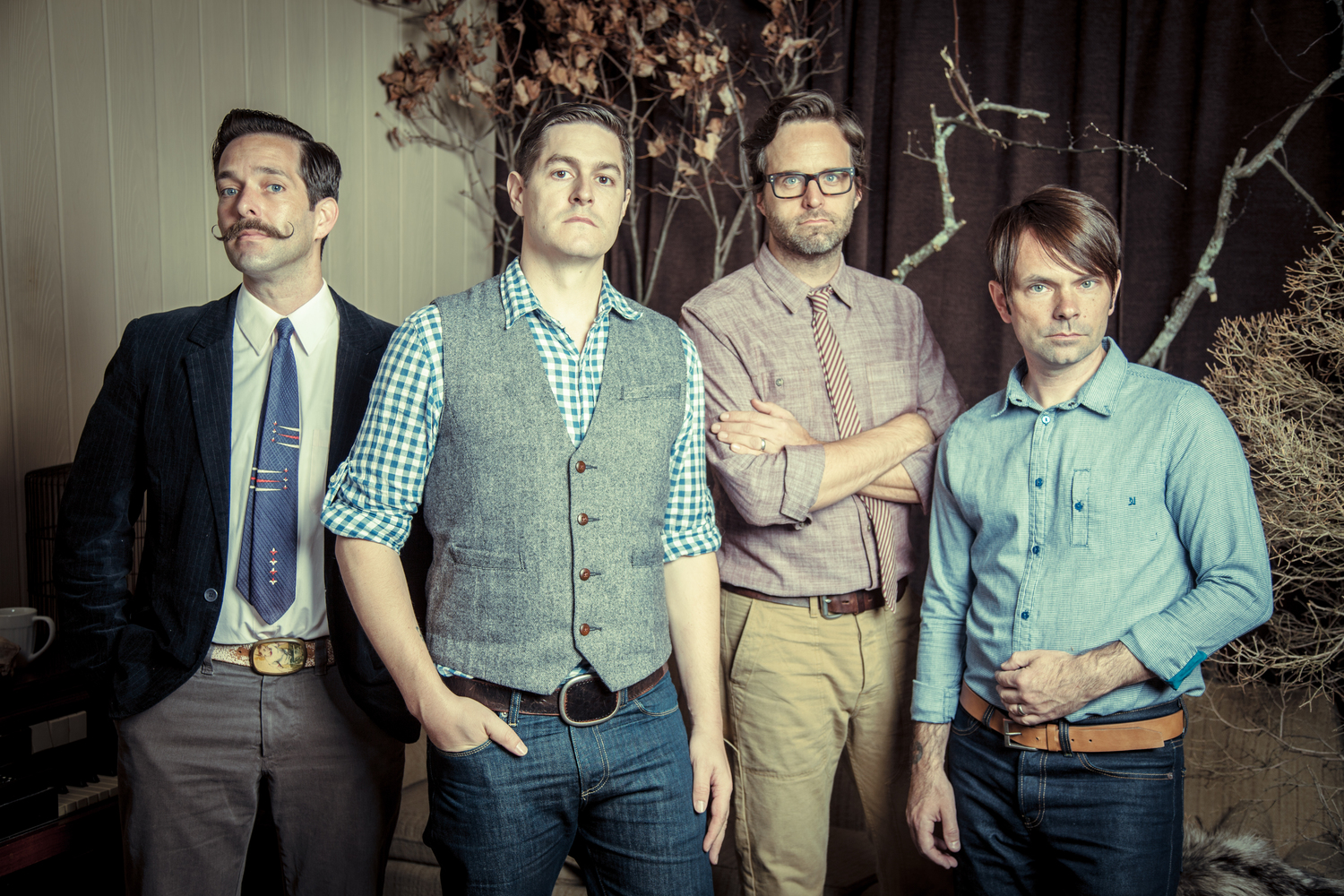
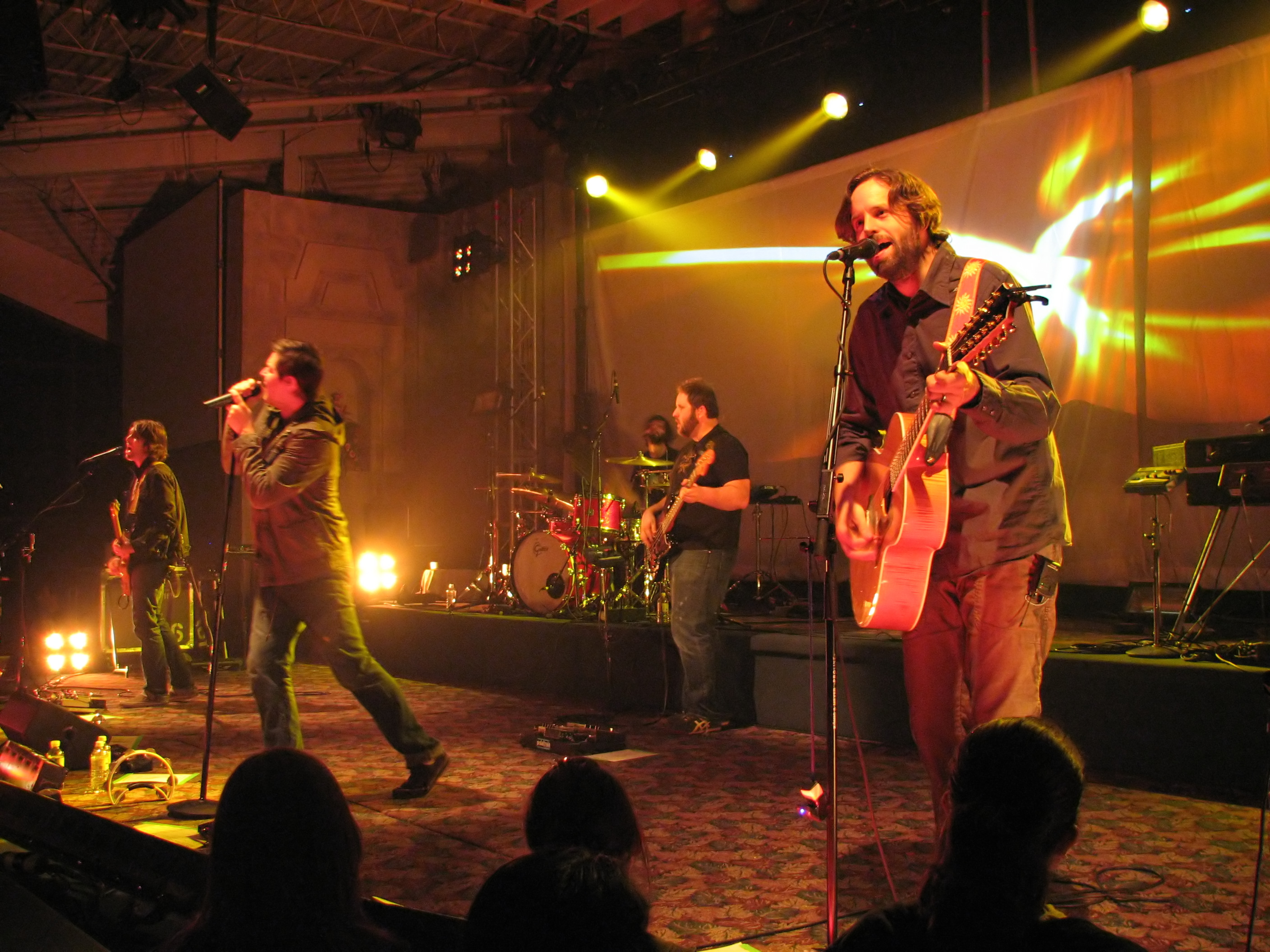 Jars of Clay, a CD which meant very much to her as a young teen. That they show up as the key partners in this story is a blessed bit of providence, and a joy to read about, especially for those of us who have been fans and fanatics about performing artists. Imagine if out of nowhere you ended up being invited to work with the musicians of your favorite band, or, say, the stars of your favorite TV show.
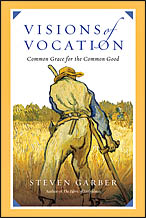
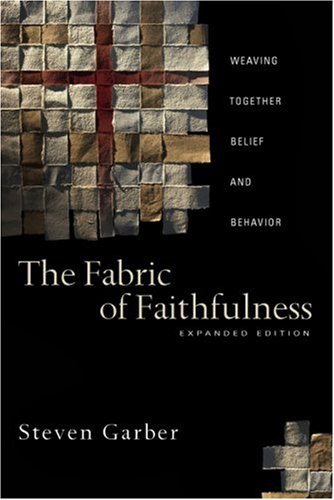 straight from her mentor Steve Garber, who gets at the question of sustaining care over a lifetime in his first book about young adult faith development (Fabric of Faithfulness: Weaving Together Belief and Behavior) and explicitly teaches us about it in his more recent Visions of Vocation: Common Grace for the Common Good.(Both nicely published by IVP; $17.00/$16.00 respectively.) That is, can we know the world in all its brokenness and still love it? Can we avoid utopianism and idealism, on the one hand, and paralyzing cynicism on the other? As we enter in to the pain of others can we still be people who truly love and show God’s grace? There are many who set out to “save” the world (or “solve” a
 problem for a friend or loved one, for that matter) but it is a harder, deeper, and more lasting goal to learn to love it. (Ahh, she even cites Thomas Merton on this, bringing his eloquent touch.) Nardella’s subtitle indicates that she and her team (the Jars guys have also been influenced by Garber) have created an organization that is particularly thoughtful, rare, honest. She shows how she is getting at things (bit by bit, as their learning deepened, as Garber and the important Board and books she surrounded herself with shaped her) with what I found to be a uniquely profound perspective. The opening epigram in the front is a good quote

 were drawn to Africa, and felt called to speak up about the AIDS crisis there. They didn’t want to be a typical Christian rock band, but were serious artists attempting to offer their aesthetically rich songs into the mainstream world (even though their fan base remained mostly those engaged in the contemporary Christian music science, where they mostly played, from church camps to Christian colleges to huge outdoor festivals. They were clearly in another league than many CCM pop stars, but there they were, hoping not only to share their music with a wider world, but to press their evangelical fans to better perspectives and postures regarding social concern and a broader worldview.
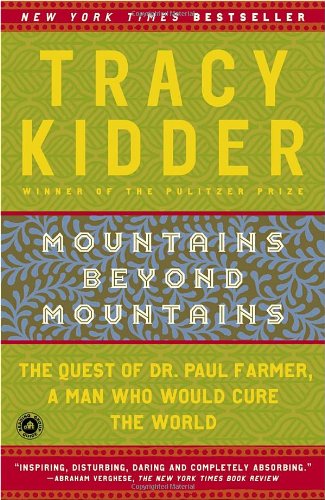 wonderful, award-winning book about him written by Tracer Kidder called Mountains Beyond Mountains: The Quest of Dr. Paul Farmer, A Man Who Would Cure the World.) Dwight Gibson, one of the principles in the much-celebrated For the Life of the World DVD, recently told me about one lively board session in those early years where he was serving with Jars and Jena and the conversations were so rich and moving that he missed an important international plane flight to continue talking late into the night! Every upstart ministry should have such thoughtful, wise, “conversations of consequence” going on around them, asking important questions, pushing beyond easy answers or pragmatic moves or dramatic gestures to discern best practices informed by serious considerations of the deepest matters.




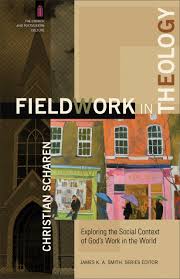
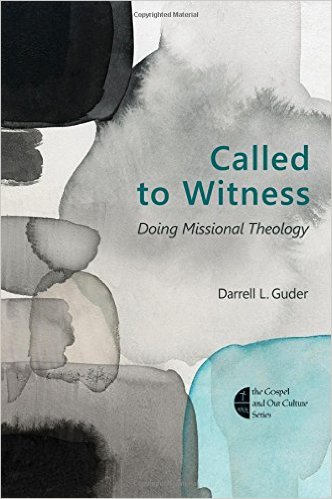
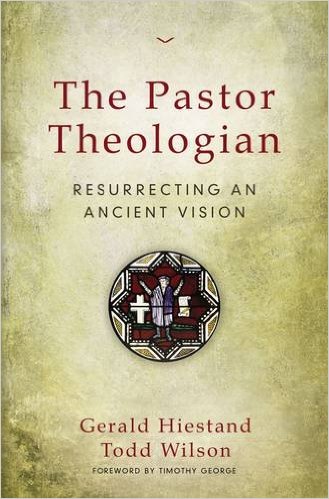
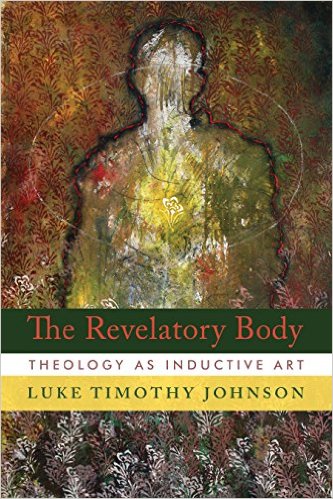 announce Darryl Guder’s new work in the “Gospel and our Culture Network” series, Called to Witness: Doing Missional Theology which moves from a Theology of Mission to Missional Theology. All three of these reviewed books presume that something about our setting, our context, our very creatureliness matters, even for the methodology of doing theology. That’s a heady notion, but these writers tease it out in their work, and we wanted to be sure you knew we had these sorts of resources. These are examples of creative, applied theology for serious thinkers who want to learn, but we trust will yield fruit in deeper faith and wiser Christian living.
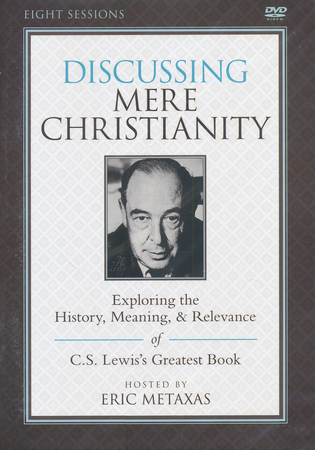 Discussing Mere Christianity DVD curriculum. I can hardly think of a church that wouldn’t benefit from using a study like that, affirming what we most merely believe and why.
 Exploring Christology & Atonement: Conversations with John McLeod Campbell, H.R. Mackintosh, and T.F. Torrance Andrew Purves (IVP Academic) $30.00 Purvis is a hero of many mainline and evangelical Presbyterians who have studied under him at Pittsburgh Theological Seminary, or who have read his wonderful, pastoral works such as The Crucifixion of Ministry and The Resurrection of Ministry. His specialty, as somewhat of a Scottish Barthian, I suppose, is historical theology, and in this book – which has been called “groundbreaking” and a “fine feast” — Andrew explores how some very heavy-weight, incredibly important Scottish theologians of an earlier (but still modern) era wrote about these essential topics, Christ and his cross. I think if one is fairly conservative on these matters, you will be stretched and blessed to walk into these profound topics (the Trinity, the nature of atonement, justification and such) in conversation with these older theologians from the British Isles, with Purves as your guide. And if you are not inclined to appreciate classic formulations, I dare you to not enjoy this fascinating guide into these old thinkers.
 The Work of Theology Stanley Hauerwas (Eerdmans) $28.00 I suppose I don’t have to explain how extraordinarily important Hauerwas is; he has written academic monographs, scholarly works and popular screeds, his colorful seminars and sermons have inspired many (and turned off some, too.) His wide reading and fluency in philosophy and exceedingly fertile mind makes him truly an exceptional scholar. Library Journal wrote that “it is hard to imagine any living theologian more celebrated than Hauerwas” and The Christian Century says that the church needs him, because “His theology is courageous, challenging, and a source of hope when many ecclesial leaders seem to be despairing.” Commonweal writes, “Hauerwas has achieved singular preeminence among theologians in the United States and as a public intellectual…any new book bearing his name is noteworthy.” I should remind you that he has written a fascinating memoir Hannah’s Child: A Theologians Memoir. In this new book he revisits and restates many of his earliest concerns. He thinks he and his work have been mischaracterized and misunderstood and here he wants to use “practical reason” to offer theological reflection and a bit of clarification.
 Theology: A Very Short Introduction David F. Ford (Oxford University Press) $11.95 I hope you know the gigantic series by Oxford University that asks esteemed experts in given fields to write pocket-sized, serious-minded guides to their topic. There are hundreds of them on nearly any imaginable topic, it seems. (The one on spirituality, by the way, is very thoughtful and worth owning.) Ford is a fine, serious writer and has done major theological works, and a few rich, mature guides for ordinary Christians wanting to learn how to reflect upon their faith and lives. He’s a great choice for this ecumenical study, and it is just a fabulous guide into the field, what theology is, why it matters, and the contours of its terrain, the character of those with theological expertise. Of course, one of the matters at stake in theological debates is what “counts” for theological knowledge, the role of experience and what we consider to be the most reliable authority. This is fair and thoughtful, and good little volume.
 A Little Book for New Theologians: Why and How to Study Theology Kelly M. Kapic (IVP Academic) $8.00 If the above-mentioned Ford is a high church, British Anglican, Kapic – whose PhD is from the King’s College at the University of London) is a conservative, Reformed scholar. He is one of the great thinkers within evangelical scholarship and a much-respected teacher and mentor. This is a wonderful primer to the task, about the “why and how” of doing this kind of reading. As Sinclair Ferguson writes, “To study with Kelly Kapic must be serious fun… an ideal start kit for beginning theology student and an affection-refresher for those who have been longer on the way.” Hmmm – this little meditation on how to do theological thinking can “refresh” one’s “affection.” Don’t you want to try it and see if it is true?
 The Divine Magician: The Disappearance of Religion and the Discovery of Faith Peter Rollins (Howard/Simon & Schuster) $14.99 I am not immediately drawn to books which claim to be “a bold and subversive vision of faith on the front line of theological innovation” but I know that many people, including some friends that I respect and like, find sustenance from the writings of Rollins. (His first is called How (Not) To Speak of God, a recent one is called The Idolatry of God.) He is a widely sought-after storyteller and public speaker that integrates live song and liturgy, poetry and preaching, performance art and sonic landscapes into his programs as he deconstructs standard notions of abstract dogma and reasonable faith, pushing participants to, as one book title puts it, Insurrection, where “to believe is human, to doubt, divine.) I want to like his iconoclastic protest and prophecy but I admit to not even understanding many of his obtuse books. I suppose it just isn’t my cup of disco. Here is what it says on the back: “By approaching Christianity as a type of magic trick, firebrand Peter Rollins presents an understanding of faith that is both unorthodox and challenging.” I appreciate that he argues for a deeply material faith which finds meaning not simply in a set of beliefs but in a passionate commitment to the world. Is it “incendiary” as he suggests? Does it “offer hope for those seeking a depth and density in life?” Try it and see. Join with others to read, pray and talk, study and search. Maybe he’s on to something. This much is true: we need deep consideration of these important matters, and if thoughtful folks together work through these kinds of edgy resources it can help clarify what they do and don’t believe, and how to proceed. It ain’t magic, but the process can be wondrous.
 Journeys of Faith: Evangelicalism, Eastern Orthodoxy, Catholicism, and Anglicanism General Editor Robert L. Plummer (Zondervan) $18.99 I am a big fan of those “five views” or “four perspectives” books where different sorts of Christian thinkers offer a chapter in contrast with three or four others. By the end of the book, you get a handful of perspectives, and each of the others critiques of each other. It can make your head spin, and we’ve got ’em on everything from whether we should take Adam literally in the Genesis narrative to what we think about the Providence of God to varying views of the authority of the Bible. From Eucharist to Baptism to the end times to the nature of spiritual maturity, these lively debate-oriented volumes are informative and make fine resources for anyone wanting to cover a handful of views of any given topic. This one is fabulous – not enough, but a great start! – and explores people and their switching to new theological positions. We have the testimonials of those moving from evangelical to Catholic, from Catholic to Reformed; one contributor has become Anglican, another entered the Eastern Orthodox Church. Each chapter has their logic of each writer, followed by respective respondent.
 In a Quest of a Vital Protestant Center: An Ecumenical Evangelical Perspective George Demetrion (Wipf & Stock) $36.00 I have to admit I am really struck by books that draw on diverse theological views and with almost every book I always start with a study of the footnotes, and sometime unfairly, judge the author by her citations, who she or he draws upon or is in discussion with. When, as here, I see insightful use of Puritan scholar and Reformed Anglican pastor J.I. Packer and UCC Bible scholar Walter Brueggemann, I am excited and sing praise to God. It is so sad that in non-evangelical, non-Calvinist circles so few know the wise work of Packer; similarly, it is sad many evangelicals do not read the Brueggemann. I love the ecumenism and the healthy model of how to be in respectful, hopeful conversation with writers such as Douglas Hall, Richard Lints, Stanley Grenz, Os Guinness, Nancy Murphy. I loved a long review written by a UCC pastor pal of mine, Chris Anderson, in The New Mercersburg Review, noting that
 Knowing Christ Today: Why We Can Trust Spiritual Knowledge Dallas Willard (HarperOne) $15.99 I hope you have read some of the late Dallas Willard – his two newest, published after his death, include The Divine Conspiracy Continued (now out in paperback) and the amiable, very valuable book on apologetics called The Allure of Gentleness.) His work about inner transformation is mature and, if taken seriously, life-changing and transformational. (I like, by the way, what is almost an “intro to Willard” written by his good friend, John Ortberg called Soul Keeping: Caring for the Most Important Part, which is also available in a DVD curriculum.)
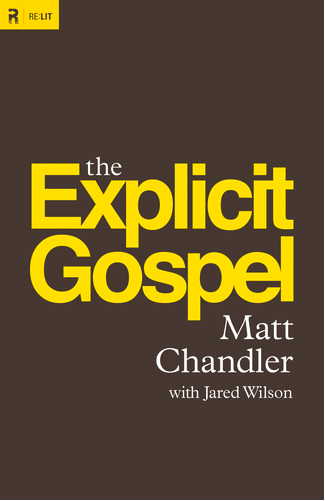 The Explicit Gospel Matt Chandler with Jared Wilson (Crossway) $14.99 Oh my, I wish I had time and energy to explain the many fine features of this wise and inspiring book. It speaks to matters that are I think are among the most urgent of our time, and even if Chandler and Wilson don’t get everything exactly as I might wish, they come pretty close. There is more (much more) to talk about than in this book, but this book gets at something that will useful for many Hearts & Minds readers, I think.


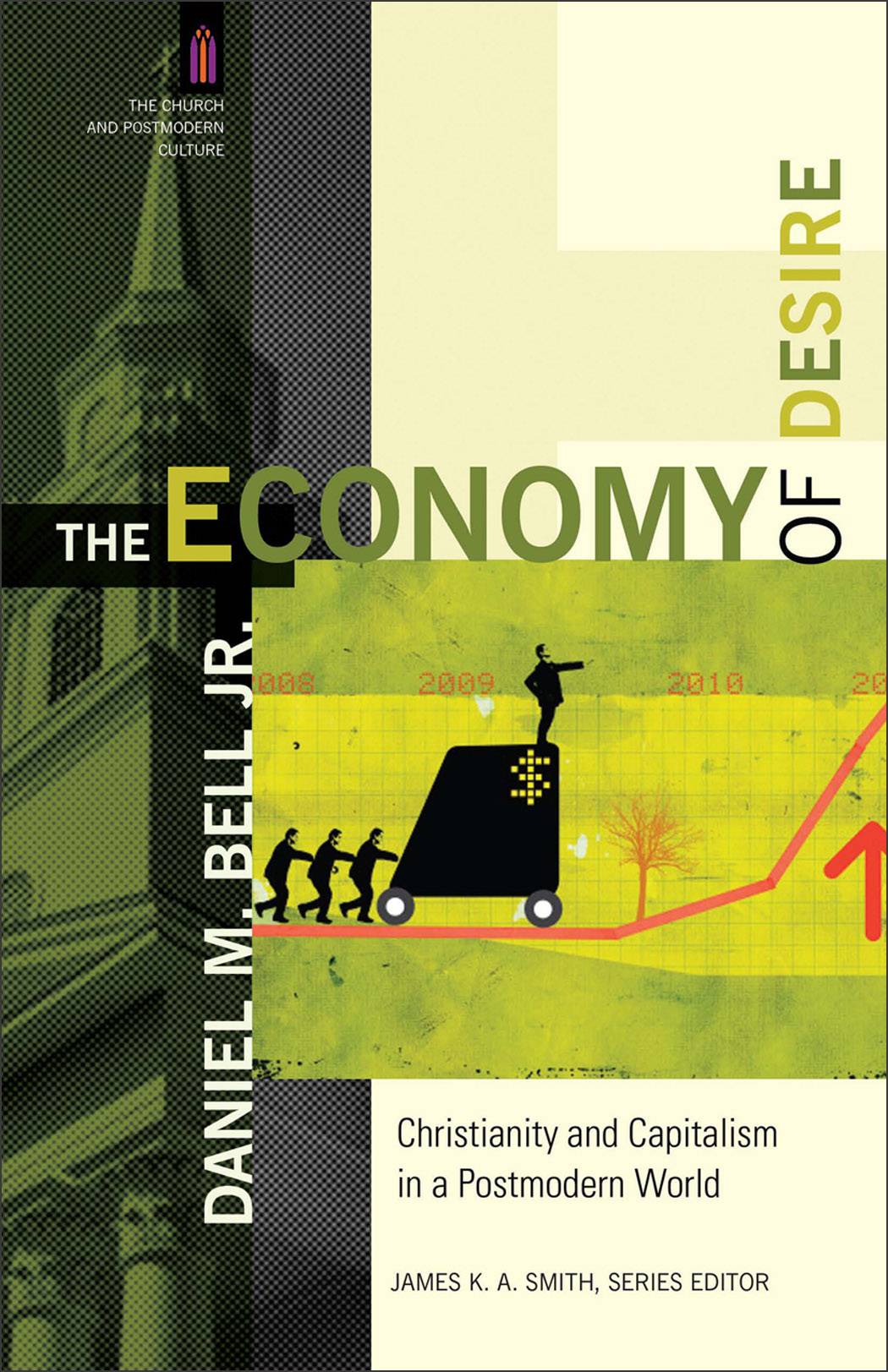
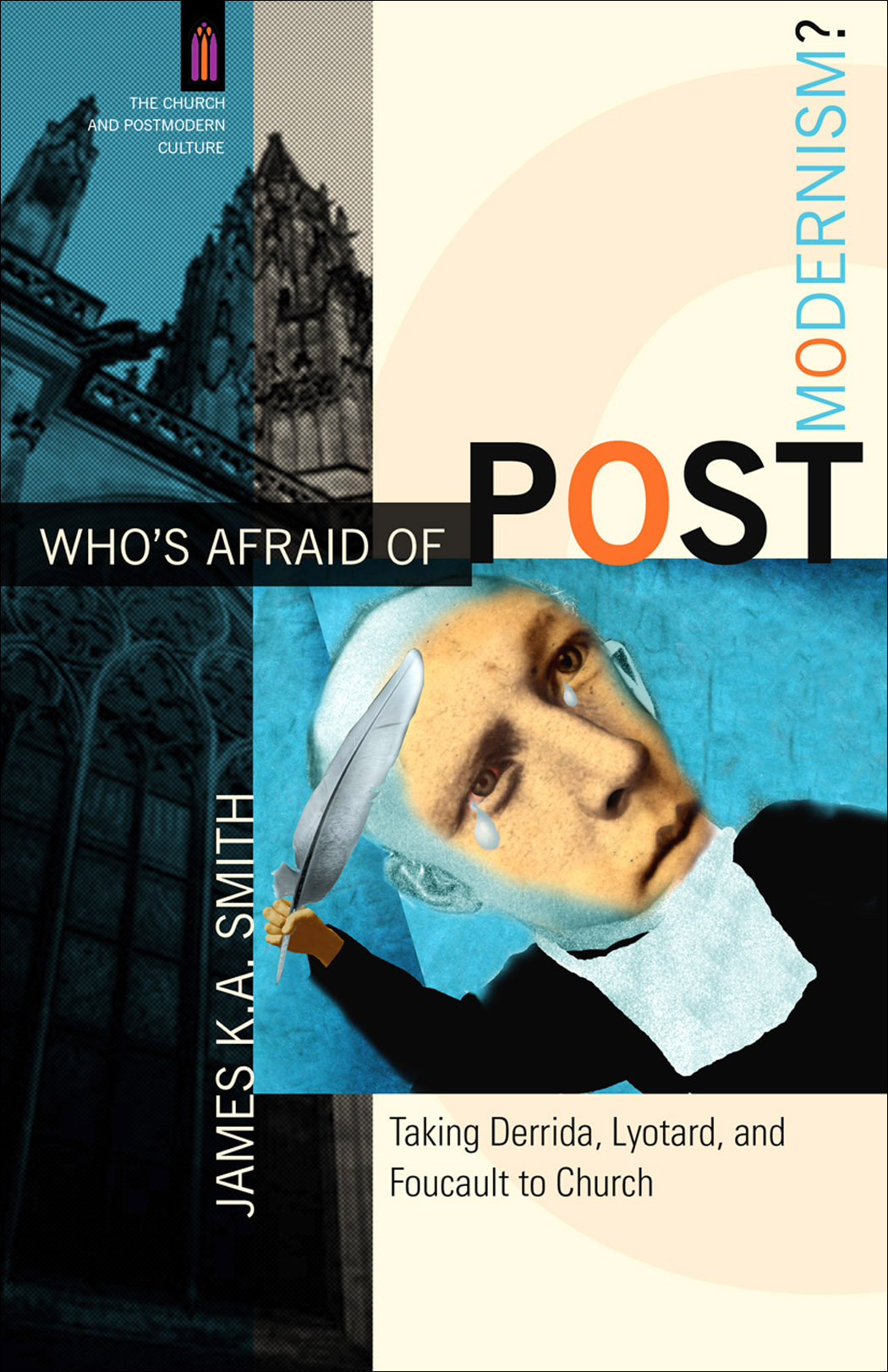
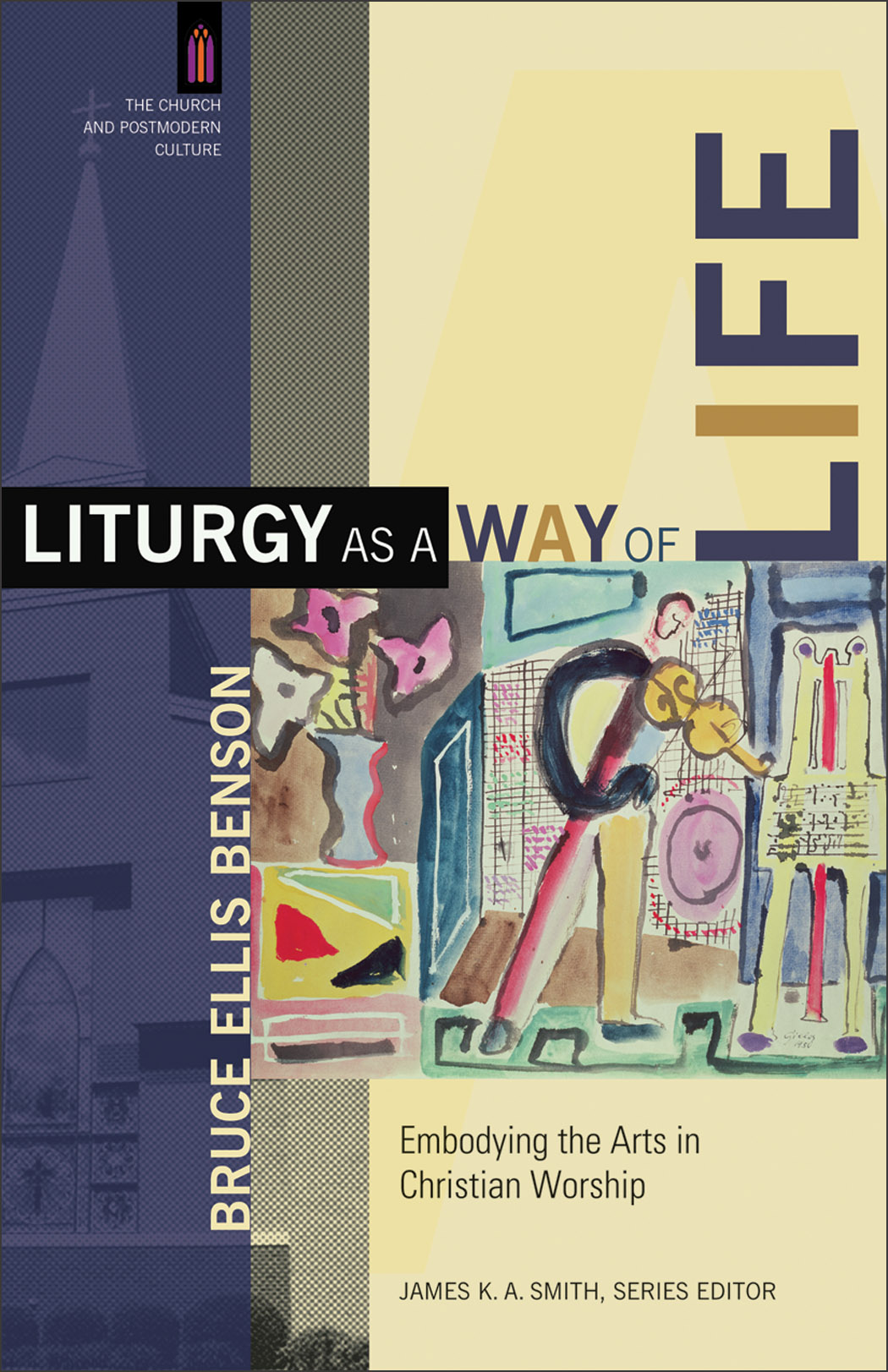 Fieldwork in Theology: Exploring the Social Context of God’s Work in the World Christian Scharen (Baker Academic) $19.99
 about heroin addiction) helps us appreciate notions of empathy in the non-Cartesian philosophy of science of Gaston Bachelard whose work profoundly effected Bourdieu (not to mention other French luminaries such as Michel Foucault, Jacques Derrida, and the American historian of science, Thomas Kuhn!) Scharen, who has written a whole book about U2 is nice to bring this pop song and its passion to the notion of “epistemological breaks” which is a key focus for that chapter. And, man, when he gets to Merleau-Ponty (and his significant work on the phenomenology of embodied perception) who is explored in light of Esperanza Spalding and his “Freedom Jazz Dance” it all gets really, really interesting! Being awake to the world comes to the fore again, by the way, in the next chapter – a study called “Practical Logic: Bourdieu and the Social Art of Improvisation” — when Scharen opens with a study of Arcade Fire. Since I’m on a roll here, I’ll steal the final surprise, and tell that Lauryn Hill comes alive in the final chapter, with her “Black Rage (Sketch)” piece which kicks off the sociological insights of Loic Wacquant, who was, we learn, “Bourdieu’s most famous and most productive student.”
 Lutheran or St. Somebody Episcopalian or Such and Such Community Church. He tells us about some in this book. (One recent one, by the way, which we’ve raved about, compares and contrasts and draws together much insight about worship by studying (through involvement with) the liturgical practices of a Central Pennsylvania Evangelical Free Church and a more conventionally-styled, high-church Episcopalian one. See Liturgical and Evangelical Versus Liturgical? Defying a Dichotomy by Messiah College grad and Harvard Divinity School prof, Melanie Ross, published earlier this year by Eerdmans; $17.00.)
 social arenas (taking up their callings as artists, citizens, home-makers, workers, and consumers of leisure time activities) and what he learned as he carefully listened to these folks as they narrated how their local church did or didn’t equip them to think about their fidelity to the gospel in these sides of life. So he has some history and expertise as a researcher and practitioner.
 very topic, called Explorations in Eccelsiology and Ethnography (Eerdmans; $40.00.)

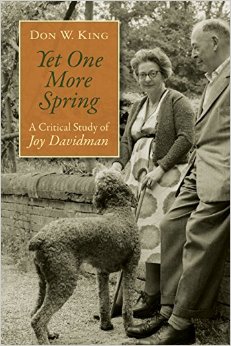 Yet One More Spring: A Critical Study of Joy Davidman Don W. King (Eerdmans) $32.00 our discounted price $25.60
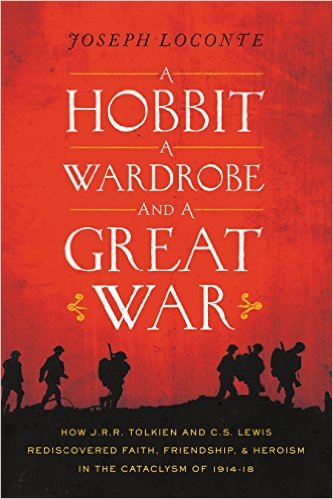 A Hobbit A Wardrobe and a Great War: How J.R.R. Tolkien and C.S. Lewis Rediscovered Faith, Friendship, and Heroism in the Cataclysm of 1914 – 1918 Joseph Loconte (Thomas Nelson) $24.99 our sale price $19.99

 Wearing God: Clothing, Laughter, Fire, and Other Overlooked Ways of Meeting God by Lauren Winner (HarperOne; $24.99//our BookNotes sale price, $19.99) deserves to be on that list, even if it came out earlier in the year. I had mentioned it briefly here when it first released, but have been waiting to revisit it. In fact, I am so very fond of this erudite, delightful, learned, and edifying book that I wanted to tell you about it now in a review dedicated to nothing else. It is more than an afterthought or addendum to the last post, but surely is one of the best books of this genre all year! I am confident Wearing God will be on our “Best of 2015” list five or so months from now, in part because it drew me into Scripture and made me think and, yes, entertained me as it did so.
 loved the Bible, but had not been deeply engaged in Bible study the way she was, say, in her fascination with church history texts or ancient diaries, or her use of prayer books and hymnals. I am sure I am not the only one who can relate to finding great solace and spiritual encouragement in spiritual authors, theologians, cultural critics, novelists and poets, and understand when she admitted that she found the Bible a bit boring. Happily, she starts the book with an admission to a new obsession, a true eagerness to study and attend to the Bible in all its unique and strange glory. Unlike any other literature, she assures us, it “overflows endlessly.”



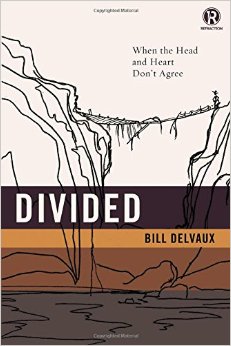 Divided: When the Head and Heart Don’t Agree Bill Delvaux (Refraction/Nelson) $14.99 I don’t always know what to do with books like this. It is part of a series with whimsical covers that don’t capture their intensity or substantive wisdom. Like many contemporary religious books these days they are casual, upbeat, but honest to the point of being raw. These kind of new religious books include lots of intense storytelling and honest advice for growing Christians. Many are written by people in congregations or parachurch organizations that are pressing hard after God, earnest and passionate, eager to see what it looks like to actually be formed in the ways of Christ, and follow Him into the struggles of the daily. Some in more conventional congregations may be put off by the intense language about Christian growth, and those with a more flowery spirituality may not appreciate the messiness and vulnerability. Anyway, there are a lot of these kinds of invitations to deeper Christian living that I like. The ones in this series of books are all about discipleship, starting with a very solid guide to being a follower of Jesus (by Richard Parrot) called The Reluctant Journey and another by Ginny Owens (the blind Christian pop singer whose beautiful music you may know) entitled Transcending Mysteries: Who Is God and What Does He Want From Us? A new one in this “Refraction” series just came out with the intriguing title Spent Matches: Igniting the Signal Fire for the Spiritually Dissatisfied by Roy Moran – it looks very dynamic and motivational, but realistic about those who are spiritually hurting. (The next in the series will be called Slow to Judge: Sometimes It’s Okay to Listen.)
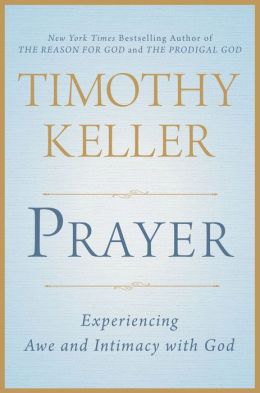 Prayer: Experiencing Awe and Intimacy with God Timothy
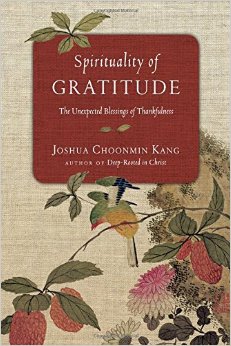 Spirituality of Gratitude: The Unexpected Blessings of Thankfulness Joshua Choonmin Kang (formation/IVP) $16.00 Besides having such a very lovely cover, and the author having written popular books extolled by Richard Foster (Deep-Rooted in Christ and Scripture by Heart) I wanted to read this book because I know I needed it. I have skimmed a few books on this topic and know two or three things, at least: I am not as grateful as I ought to be, and the happy “stop and smell the roses” reminders don’t cut it. I feel desperate sometimes, about my own life and our business and the world in which we live, and can even stupidly resent those whose lives seem to be rosier then my own. No superficial reminder to count one’s blessings will do. In a fallen and broken world, with our own hurt and demands, how do we nurture the spiritual graces to be people of gratitude? If it “springs up from within” as Kang says, how does that happen? I need a book that is less a self-help manual or an upbeat call to positivity and more like classic spiritual formation. Rev. Kang brings it, in a nice blend of Bible reflection, searingly honest ruminations from his own life, and, yes, a bit of upbeat reminders to stop and enjoy the little things.
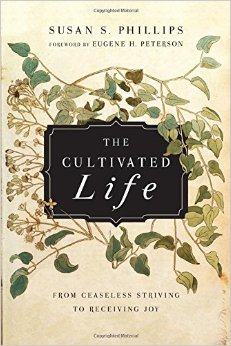 The Cultivated Life: From Ceaseless Striving to Receiving Joy Susan S. Phillips (formation/IVP) $17.00 This is one of the lead titles from InterVarsity Press this season, and, as such, it deserves to be read. They offer consistently good books and their formation line includes some of the premier writers about formation these days – and this is one of the very best of their summer list. Susan Phillips has a PhD from U.C. Berkeley in sociology, is a director of the wonderful New College of Berkeley (New College is an affiliate of the Graduate Theological Union)
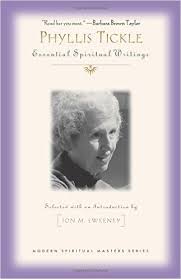 Phyllis Tickle: Essential Spiritual Writings Selected with an Introduction by Jon M. Sweeny (Orbis) $22.00 Orbis Books, the storied publishing arm of the Maryknoll Fathers and Mothers, have a quite large series of books, bearing uniform covers, called their “Modern Spiritual Masters Series.” We are glad to stock them all as they each offer excellent introductions to the author being celebrated and they curate some of the best writings of this person, arranging them with helpful comments along the way. In most of them, and certainly in this brand new one inducting Phyllis Tickle into their series, they offer some of the quintessential pieces by the spiritual writers, but also some which are lesser known. These readers offer excellent introductions to very important figures, excerpting primary source material, framing the essays or excerpts in teacherly ways. Any that I’ve dipped in to have been very well arranged, informative, and rewarding. Although they tip towards the liberal/activist Catholic stream of faith, the series is surprisingly varied. From the essential writings of Oscar Romero to Gustavo Gutierrez, from Daniel Berrigan to Joan Chittister, the liberationist concerns of the Maryknolls are evident. But many of these anthologies are of writers who are less public in their social ethics and stand in the more contemplative tradition (from the solid Orthodox leader Metropolitan Anthony to Anthony de Mello to Evelyn Underhill, just for instance.) This large series includes older, classic spiritual writers (St. Therese of Lisieux, Thomas Merton, Bede Griffiths) and others who not known as monastics, but wrote lively mystical materials (Rufus Jones, Edith Stein, Howard Thurman.) I could go on and on about the lovely volumes of spiritual writers such as Henri Nouwen, Clarence Jordon, Flannery O’Connor, Jean Vanier) and giants such as Chesterton and Tolstoy, and others such as Thoreau, Muir, Gandhi.
 Sacred Sense: Discovering the Wonder of God’s Word and World William Brown (Eerdmans) $22.00 I wasn’t sure if I should list this on a book about Christian formation, since many customers seem to want books about prayer, quiet time, solitude, spiritual disciplines and the like, at least on a list about inner spiritual growth. Surely, this is a list mostly about resources for our interior lives, so I appreciate the emphasis. Yet, it is true that Christian spirituality is always at its best rooted in the Bible, and our formation in the ways of Christ are shaped by our knowledge of God’s ways revealed to us in the Scriptures. This book, then, is a fabulous guide for just such a project, although, again, it may not seem so at first. It is not about lectio divina or exercises about “praying the Scriptures.” It is, rather, a handful of long and at times demanding Bible studies about the topic of awe. About wonder. Dr. Brown is a renowned Old Testament scholar who has written several very important books on the wisdom literature, and, even the relationship of the wisdom literature in the Bible and modern science. (See his impressive Oxford University Press hardback, Seven Pillars of Creation: The Bible, Science, and the Ecology of Wonder.)
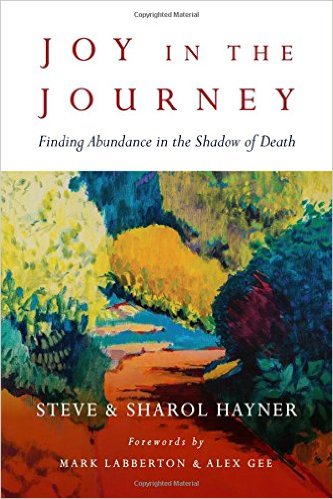 Joy in the Journey: Finding Abundance in the Shadow of Death Steve & Sharol Hayner (IVP) $16.00 Where to begin to explain the significance of this handsome, small hardback, and why it matters? How does the memoir of a dying saint, one known for signing his emails “joyfully” help us all? I admit I’ve met the late Steve Hayner a time or two and care deeply about some of the organizations he has served (including InterVarsity Christian Fellowship and, in the last years of his life, Columbia Theological Seminary in Decatur, Georgia, where he served as President.) But whether you had the great privilege of knowing this extraordinary, joyful Christian leader or not, and whether you are particularly interested in a memoir of death and dying or not, let me tell you: this is a book about faith formation, about daily discipleship, about learning to live well as a Christ-follower in families, organizations, among friends scattered; it is about faith and hope and trust and goodness. and, yes, joy in the journey.

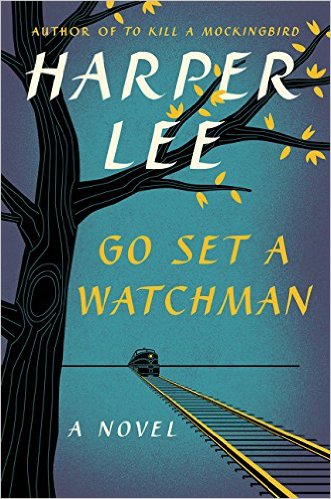 ethics of the release of Go Set a Watchman. We hope you know we sell it at 25% off. I weighed in a bit about the controversy at Facebook, and linked to a

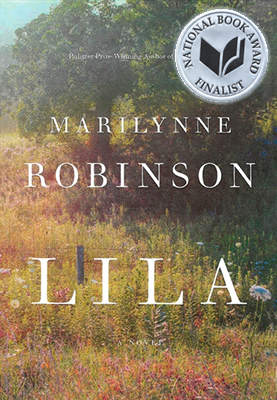 Lila Marilynne Robinson (FSG) $26.00 Ms Robinson is certainly one of the most honored and prestigious writers of our time. Her Gilead is a must read – a Pulitzer Prize winning story of an older Protestant clergyman telling his story. (“So serenely beautiful, and written in a prose so gravely measured and thoughtful, that one feels touched with grace just to read it,” said the Washington Post reviewer.) Home is the sequel, telling the story of another pastor, the friend of John Ames in Gilead. (“An anguished pastoral, a tableau of decency and compassion that is also an angry and devastating indictment of moral cowardice and unrepentant, unacknowledged sin… Beautiful.” (You can see why I list it now, in this conversation of Harper Lee and Atticus Finch and the like.) Lila is the most recent, still only in hardcover, and we’ve promoted it here in the shop, on line, and at church gatherings. (Critic Pat MacEnulty of The Charlotte Observer notes that “When Marilynne Robinson writes a new book, it’s an event.”) In this poignant, quiet, moving tale we learn about Lila, who appears in Gilead as the rather mysterious wife of Pastor John Ames. She is from a hard background (that much we know) and her difficult, brave, curious life comes to us in full color in this third book set in Gilead, Iowa. It was promised to be “a moving expression of the mysteries of existence” and “destined to become an American classic.” We invite you to order it from us, and we trust you will be blessed with hours of important, enjoyable reading.
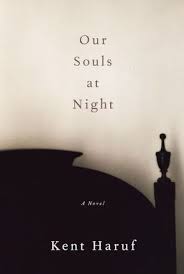 Our Souls at Night Kent Haruf (Knopf) $24.00 Not too many books these days come with a major endorsement on the back from Ursula K. Le Guin, but her rave review is sumptuous. (She calls him “stunningly original” and suggests that “He talks quietly, intimately, yet with reserve, as one adult to another. He’s careful to get the story right. And it is right, it’s just right; it rings true.” Not bad, given that he talks about all manner of moral questions, perhaps even (in Le Guin’s assessment) “an unspoken mysticism.” When a writer of her caliber says some of his writing and topics are “unsurpassed by anything I know in contemporary fiction” you have to notice.
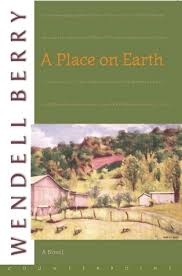 A Place on Earth Wendell Berry (Counterpoint) $16.95 I assume most of our BookNotes readers know of our affection for Wendell Berry (his important essays as well as his fiction and poetry.) Jayber Crow and Hannah Coulter are by far his most popular novels, although I often exclaim about The Memory of Old Jack, which I adored and introduced me to the wonders of the Port Williams membership. I name this one, now, since one of the things that attract us to works like To Kill a Mockingbird is the developed sense of place — especially that of a small town set in a rural region. What sets A Place on Earth apart as a must-read for Berry fans is that “the central character is not a person but a place: Port Williams, Kentucky, the farm lands and forests that surround it and the Kentucky River that runs nearby. This is a region that Wendell Berry knows intimately, with both heart and mind, a region whose faults and virtues he has spent a lifetime learning.” Berry’s first novel, by the way, came out in 1960, I believe, the same year as Mockingbird.
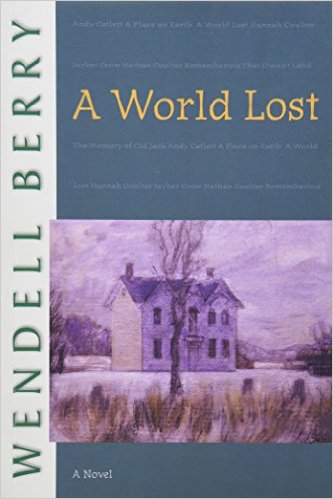 A World Lost Wendell Berry (Counterpoint) $13.95 This is a short novel, opening in 1944 with nine-year-old Andy Catlett enjoying a blissful summer on his grandparents farm near Port William. A brawl ensues, and Andy’s uncle is murdered, a tragedy that Andy looks back upon years later wonders if he could have prevented. I name this because many feel this is an overlooked classic of Mr. Berry’s (I have not read it yet) but also because of how this theme may resonate with those pondering the adult character Jean Louise (Scout) in Go Set a Watchman and her own looking back upon her complex father, Atticus Finch. Publisher’s Weekly says of A World Lost “Berry shows us the psychic costs of misplaced family pride and social rigidity, and yet he also celebrates the benevolent blessing of familial love. This is simple, soul-satisfying storytelling, augmented by understated humor and quiet insight.” It was his fifth novel, was later expanded and re-issued, and is (as it says on the back) “a moving tale about the power of memory and lost time.” Yes, this would be perfect to read right about now.
 Peace Like a River Leif Enger (Grove Press) $16.00 Last summer I wrote a long list of books out postmodern apologetics, gentle evangelism, and storytelling as a key to understanding (and reaching with the gospel) the contemporary generations. We had sponsored James K.A. Smith to lecture on his book explaining the philosophy of Charles Taylor —How (Not) To Be Secular: Reading Charles Taylor – and noted how Jamie underscored Taylor’s call to use fiction in our conversations about cultural engagement. I am not the first to note that much contemporary fiction is far from “secular” and that some of the best New York Times bestsellers are, in fact, profoundly spiritual. Lief Enger’s beloved story is nearly a case study in such very contemporary religiously-shaped contemporary fiction. It received tons of great reviews –Newsday’s reviewer, Dan Cryer, says, “What allows Peace Like a River to transcend any limitations of belief and genre is its broad, sagacious humanity… There is magic here, none more potent than Enger’s prose.” The Denver Post review said “Once in a great while, a book comes along that has such wonderful characters and marvelous prose, that you read it as much for the pure joy it offers on every pages as to find out how it ends.” This is a book about ordinary life, but since it may lapse into “magical realism” — the boy who is the main character has reason to believe in miracles – it isn’t really like Harper Lee or Wendell Berry. But it is set in the mid-West, there is the huge question of whether love can overcome tragedy, and there is a (trumped up?) murder charge haunting an outlaw brother. And there is this question of miracles… Peace Like a River is a fine, fine book, sure to please, one you will never forget. Early reviews when it came out in 2001 started with superlatives – stunning, big-hearted, beautiful, dazzling, dangerous, compelling, “exceptionally heart-felt.” We would be delighted to have you order it from us. Or maybe just get two, since you are surely going to want to share it.
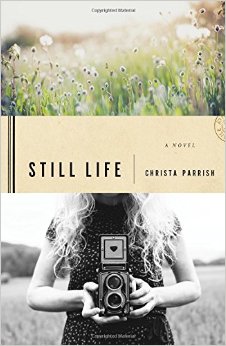 Still Life: A Novel Christa Parrish (Nelson) $15.99 Decades ago there developed this sub-genre of “Christian fiction” by which most folks mean evangelical Christian writers penning somewhat inspirational stories, published by publishers aligned with the “Christian Booksellers Association.” These have been very popular, and roundly mocked, often for bad writing, bad covers, and shallow theology. Many are historical fiction, most are romances, and, of course, we know that many are now Amish-themed. (We have hosted one of the better writers of Amish stories, Beverly Lewis, here at the shop more than once.) Well, think what you may about the reputation of “Christian fiction” the old stereotypes are less warranted these days, and there are some very nice novels by very gift writers, whose faith colors their stories in subtle and interesting ways. Christina Parrish seems to be one of these kinds of writers (her Stones for Bread struck me first for the nice cover and some good reviews by sources I respect.) In this new one, the main character, Ada, we learn, we born into a fringe religious sect led by her father. Her lifelong habit of absolute obedience “was shattered when she fled the family compound to elope with photographer Julian Goetz.” There is another character – Katherine Walker, whose marriage is loveless. Tragic loss conspires to bring them together and they then come into relationship with an artistic young boy. Still Life is a fairly complex work that explores toxic faith, merciful escape, and supernatural love. There is a included a reading group guide as the publishers hope that book clubs, small Bible study groups, especially women’s fellowship groups might enjoy talking about it together.
 Blue Hole Back Home Joy Jordan-Lake (Cook) $13.99 This is another wonderful example of a profoundly Christian writer, doing an excellent novel on a CBA/evangelical publishing house. Joy Jordan-Lake is an accomplished non-fiction writer, and we’ve commended her fine stuff before. Besides her Masters degree from a seminary, she has a PhD in nineteenth-century American literature – which has obviously prepared her for thinking well about the nature of serious fiction. But who knew she could pen such an interesting story? Listen to this: Brett Lott, himself an acclaimed mainstream novelist says Jordon-Lake “has written a fine tale of racial conflict and healing, and done so with a fresh and engaging voice.” Or, better — and spot on for our purposes here – listen to the amazing publishing guru herself, The Ms. Phyllis Tickle: “Reminiscent of To Kill a Mockingbird, Blue Hole Back Home is a haunting story, lyrically told, about the death of innocence under a Southern sun.”
 Down in the River Ryan Blacketter (Slant) $22.00 We have talked before, and continue to proudly stock each of the books in this important literary imprint curated by Image Journal editor Gregory Wolfe. (l loved their story involving — among other spectacular things — liberation theologians in Central America, A Land Without Sin by Paula Huston.) I have not looked at this recent one much, but it seems to be right to list it here. This is a dark, serious tale, set in the contemporary Pacific Northwest (the author is from Idaho) and resonant with important themes for those who want a moral center to their edgy fiction. It is about grief and loss, religion and resistance, a brave story claiming to be about the deepest matters of the human heart. Listen to these rave reviews, first from Marilynne Robinson (yes, Marilynne Robinson!): “Blacketter has a marvelous eye for the emotional textures of the most commonplace experience, the kind that familiarity makes almost subliminal.”
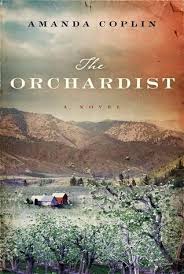 The Orchardist Amanda Coplin (Harper Perennial) $15.99 Here is another book set in the Pacific Northwest, one which is known for “exquisitely described landscapes.” (A review at O called it “a wise and great American novel” and Entertainment Weekly review said “There are echoes of John Steinbeck in this beautiful and haunting debut.”) Set in the early 20
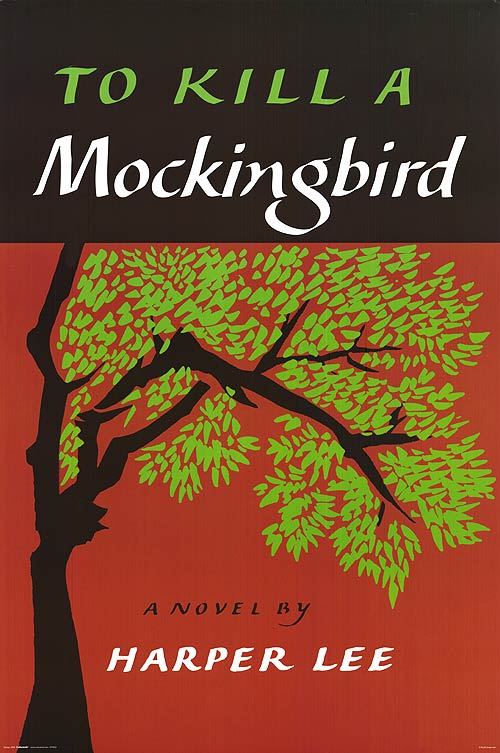 To Kill a Mockingbird Harper Lee (Harper Perennial) $14.95 That’s only nine titles I’ve listed, you say? Well, how about revisiting To Kill a Mockingbird? We’ve got a lovely paperback edition, and, really, if you haven’t read it, or haven’t read it as an adult, well… There’s no need to say much. It is a truly great American classic, and once you get in to the cadence and language of the kids — Scout and her older brother, Jem — you’ll have a blast and not want to leave their intriguing, playful, wonder-filled and at times scary Southern world. And, just so you know, we have a few of the very interesting books about this classic, such as The Mockingbird Parables: Transforming Lives Through the Power of Story by Matt Litten (Nelson; $14.99.) To commemorate the 50th anniversary of the release of the book a few years ago


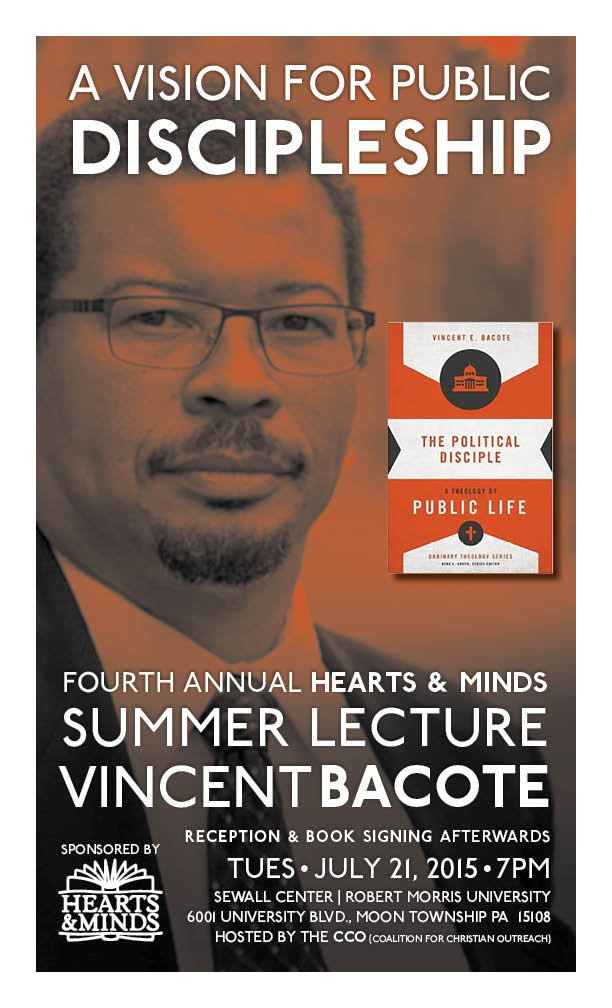
 Your Mind’s Mission Greg Jao (InterVarsity Press) $5.00 In my formal introduction of Dr. Bacote, I read out loud a portion from a recently published short collection of essays by Richard Mouw called Called to the Life of the Mind: Some Advice for Evangelical Scholars, published by Eerdmans. It was a good quote and set the stage for the importance of what Bacote was doing: going public with overtly Christian thinking about political life, showing how the work of a Christian scholar can help us all. I like that new Mouw book, especially for young scholars, but if I were recommending just one small book as an introduction to the whole project of reading well, thinking faithfully, using your mind for the mission of God, it would be this. There is good, good stuff about God’s call, about a whole-life response to the gospel (including a sensitivity to issues of injustice and cultural diversity) and how thinking well can deepen our Christian discipleship. It is a must for those in college, although it is ideal for anyone, since we are all commanded to “love God with all your mind.”
 Every Square Inch: An Introduction to Cultural Engagement for Christians Bruce Riley Ashford (Lexham Press) $14.99 If Abraham Kuyper is known for anything it is the one glorious line about Christ claiming “every square inch” of creation. No area of life is separate from his kingly reign or gracious rule. No aspect of creation is secular, religiously neutral, or of little regard since Christ is creator and redeemer of all things. That “every square inch” line is found in a complex paragraph from Kuyper’s inaugural address at the university he bravely founded, the Free University of Amsterdam (you can read that whole speech, and another, in Scholarship: Two Convocation Addresses on University Life.) It’s a little bit funny, but Bacote gave two lectures about or inspired by Kuyper and didn’t use the ESI phrase once. So, I thought, just for the record, I should list this book, with its title obvious swiped from Father Abraham.
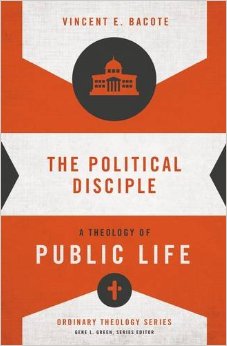
 Restoring All Things: God’s Audacious Plan to Change the World Through Everyday People Warren Cole Smith & John Stonestreet (Baker) $16.99 A healthy part of the background of Vince Bacote, as he describes in his small Political Disciple is that discovering the all-of-life-redeemed vision of Abraham Kuyper was like an oxygen mask for him, helping him realize the legitimacy of his love of everything from rock music to social action to his interest in biology and science. Yes, Kuyper and the others of the Dutch revival( Herman Bavinck was perhaps the most substantive theologian of that era) taught so many of us, God is indeed at work bringing His redemption in Christ to “all things” (as it says in Colossians 1.) This Biblically orthodox emphasis on the cosmic scope of redemption is heard in many quarters these days, (for instance in the previously mentioned book) and this brand new book strikes me as a perfect example of a contemporary version of Kuyper and his agenda for bringing restoration and public justice to every aspect of life. And, like Kuyper’s revival, the agents of transformation were most often his “little people” – not the well off, not the famous or powerful. Ordinary common folks can make a difference, and can be animated by mature, thoughtful theology to respond to the call of God to embody faith in every corner of culture. And this is good news, isn’t it?
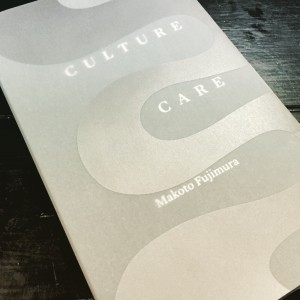 Culture Care Makoto Fujimura (Fujimura Institute) $25.00 We have been supportive of the famous abstract painter’s written work since his first published essay in the Square Halo classic It Was Good: Making Art to the Glory of God. In the books by and about Mako there is this extraordinary insight that art is important, of course, and that the visual arts are naturally to be valued alongside other art forms (including film, poetry, music, literature the like) but, further, that artists must also find themselves alongside others stewarding their various talents for the sake of the common good. Such multi-faceted work by a variety of scholars, activists, volunteers, patrons, publishers and citizens for cultural renewal allows for multi-dimensional societal flourishing. Bacote did not speak directly about how non-political gifts exercised in non-governmental spheres of influence and other avenues of culture-making effect our political lives, as such, but he would surely agree: we all must do our best to care for the streams that feed cultural renewal. (Which is to say, we need more than healthy churches and strong families and good government!) A healthy, just polis will be sustained by a robust civil society which is enhanced by a healthy cultural ecology. We all have roles to play. Agreed?
 Mako in this handsomely produced paperback (with onion-skin dust jacket) brings his artist’s eye to the broader duty to care for culture, to strengthen the common wealth and nurture our capacity for order and beauty, goodness and truth. He is a good, good writer, and draws on fabulously interesting sources (from T.S. Eliot to Dallas Willard, from Roger Scruton to Dana Gioia, from Noam Chomsky to Wendell Berry, from J.R.R. Tolkien to Harper Lee.) This recent book published by the Fujimura Institute is a rare, wonderful treasure, a gift for us all and we encourage you to order it from us. More than once in Bacote’s lecture I wanted to say, “Wait, let’s back up and think about what it means to be a caring steward of culture before we talk about civic life.” This book can help us frame our conversation about renewing our societal institutions and advancing our political discipleship.
 The Kuyper Center Review Volume One: Politics, Religion & Sphere Sovereignty Gordon Graham$24.00 Explorations by world-class scholars on Kuyper’s views of the role and limits of the state, how religion impacts public life and the like. There is a truly excellent piece by Anglican ethicist Oliver O’Donovan, an excellent chapter by Kuyper biographer James Bratt, another very insightful contribution by former ICS political science professor, Jonathan Chaplin. And there are many more studies, from Kuyper on Islam to Kuyperian considerations of the welfare state. A great collection.
 The Kuyper Center Review Volume Two: Revelation and Common Grace John Bowlin $36.00 Does the creation itself speak? What is the relationship of the Bible to general revelation? How did the Dutch reformational movement adjudicate common grace and the antithesis?
 The Kuyper Center Review Volume Three: Calvinism and Culture Gordon Graham $26.00 A fabulous, serious look at various Calvinist and neo-Calvinist views of art, literature, culture and more.
 The Kuyper Center Review Volume Four: Calvinism and Democracy John Bowlin $30.00 It is remarkable to realize how the Reformed tradition has considerably effected how we think about modern democracy. There are pieces here on Kuyper, on Bavinck,on constitutionalism, a remarkable piece by Jeffrey Stout on Kuyper’s famous “class struggle” speech, and another offering comparisons with Bonhoeffer. Great for anyone interested in political history.
 The Kuyper Center Review Volume Five: Church and Academy edited by Gordon Graham $24.00 Obviously, important research for churches near the university, and a must for Christians who work in higher education.
 Black Scholars in White Space: New Vistas in African American Studies from the Christian Academy edited by Anthony Bradley (Pickwick Publications) $26.00 Dr. Bacote has a number of chapters in a number of books – and in my introduction of him I should have mentioned a few. This is one that is particularly significant, a moving chapter where he struggles with various understandings of race and the commonly used phrase “racial reconciliation.” His chapter in this fascinating volume is called “Erasing Race: Racial Identity and Theological Anthropology.” Bacote works with exceptionally thoughtful evangelical scholars, drawing on J. Cameron Carter’s significant book, Race: A Theological Account, the sociological insights of George Yancy, and other race theorists, bringing them into conversation with theologians who have written on the imago dei such as Richard Middleton, Anthony Hoekema, and, yes, Kuyper and Bavinck. As Bacote lectured with great humility and moderation about being responsible Christians in the public square, he naturally had to talk about race (how can we not?) and as an African American scholar he brought some helpful insights and sounded some good notes. This chapter by him is further example of his thoughtful attention to these matters.
 The New Jim Crow: Mass Incarceration in the Age of Colorblindness Michelle Alexander (The New City Press) $19.95 Bacote did not mention criminal justice issues or the recent moves by our President to attempt to address crime and punishment. But he could have, and probably should have. I think it is this simple: I don’t think one can meaningful engage in much serious debate about race and justice in our society in these times without knowing this book. Unless you’ve read a lot of reviews and summaries, have watched her on-line, and have been informed well by those who know her work, I think you simply must work through this award-winning, much-discussed, ground-breaking book. It has been called “an instant classic” and “stunning” and “profoundly necessary” and even “devastating” (by Forbes Magazine.)
 Just Mercy Bryan Stevenson (Spiegal & Grau)$28.00 I’ve mentioned this often, here, insisting it is one of the most powerful books I’ve read in years. (I also like that he has been likened to [the Mockingbird era] Atticus Finch.) Again, as Dr. Bacote carefully brought up matters of public controversy -the SCOTUS ruling about marriage equality, religious liberty, the latest state of race relations, from Ferguson to Baltimore and more, he reminded us that responsible citizenship is more than just voting or taking “stands” but must include being well informed and getting involved. This page-turner of an unforgettable book simply is a must-read to get the bigger picture of law and race and injustice, and how poverty, class, and other sad realities of our culture impact the very soul of our nation.
 A Wilderness of Mirrors: Trusting Again in a Cynical World Mark Meynell (Zondervan) $18.99 Through-out much of Bacote’s lecture (and in good conversations afterwards) I kept thinking about how public action for the common good – from volunteerism to public policy advocacy to the act of voting – presumes a willingness to engage with fellow citizens for the good of the commonweal, but that those practices are less and less attractive for many because (among other things) we don’t trust one another. We don’t trust institutions, we don’t trust our leaders, we hardly trust our neighbors. We live in a cynical and jaded world, and even those not inclined to think about the big picture of human flourishing, public life, the common good (etc.) still have a general sort of proclivity to be cynical or suspicious. This is a marvelous new book of cultural analysis, and, in a way, a fresh sort of apologetic, offering hope for a mistrusting world. It says on the back that this is “the radical antidote to the poison of broken trust.”
 Inventing a Christian America: The Myth of the Religious Founding Steven K. Green (Oxford University Press) $29.95 One of the astute contributions to the discussion following Bacote’s lecture raised the question of civil religion; the questioner was himself an serious Reformed theologian who understands much about the nature of the Biblical covenant and the call of God’s true covenant people, among (but never to be confused with) the nations. Alas, we all know the way in which our own U.S. A. has a peculiar heritage of religious exceptionalism, which has too often led to an odd Christian nationalism. (Don’t even get me started about the spiritually dangerous practice of flags in our worship spaces, but I digress.)
 Uncommon Decency: Christian Civility in an Uncivil World Richard Mouw (VP) $16.00 I have written about this often before, but I still think of it at times like these. Not a day goes by that I don’t wish to suggest it to others, or feel like I should re-read it, prayerfully allowing it to convict me of ways in which my own public etiquette may need to be refined with grace. Anyway, Bacote’s nice reflection on being truly Christian in the public square, offering a passionate reminder that we dare not sit on the sidelines of the struggle for public justice and social renewal, as good as it was, didn’t sound this theme directly. I wanted to stand up and remind folks that Vince surely doesn’t want us to get involved in ugly discourse or adopt models that want to “take over” the public realm. (He did poke a bit of fun about how some internet debates can challenge our sanctification, gently advising us to be careful about our on line demeanor. ) Had I given a shout out to Christian civility in our public discourse, I’d have recommended this book, as politely as I can.
 On Care for Our Common Home (Laudato Si) Pope Francis (U.S Conference of Catholic Bishops) $13.95 I was delighted that an old, old friend of mine, who himself now serves our commonwealth as a behind the scenes public servant , ended our Summer Lecture evening with a reminder of the deep thinking and profound public witness of the current Pope Francis. I added a reminder of how what is known as Catholic Social Teaching has for centuries worked out a social theory with significant public policy implications; Pope Francis in this sense is continuing to advance a long-standing framework of public theology and exercising his prophetic task. I think both liberal mainline Protestants and contemporary evangelicals have a great ally in this ancient, well-developed social and ethical tradition, including this new encyclical which speaks much on the ethics of climate change and the call to more intentional stewardship of God’s creation.


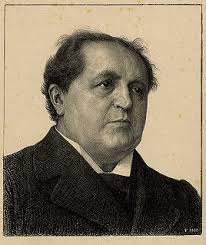 stands in a line of often remarkable encyclicals, sometimes moving Catholic Social Teaching forward in very interesting ways.) Although it is usually only in the background, CPJ draws somewhat on the Dutch theologian, journalist, and statesman, Abraham Kuyper – founder of a unique political party in the early 1900s which catapulted him to Prime Minister of Holland. His passion for social democracy, the poor and ignored, and a vibrant understanding of various kinds of institutions and honoring them through principled pluralism – religious liberty for all, protecting public space for a variety of views, so there could be feisty debate — lead to a social architecture and form of Parliament (called proportional representation) that some thing very relevant in our era when we talk so much about election reform. And religious liberty.
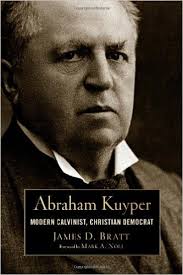 a series being Wisdom and Wonder: Common Grace for the Arts and Sciences.) The recently retired President of the world’s largest and most ethnically diverse seminary — Richard Mouw, of Fuller Theological Seminary in Pasadena, himself a PC(USA) Presbyterian — a year ago wrote a small introduction to why Kuyper matters (Abraham Kuyper: A Personal and Short Introduction) and Calvin College history professor James Bratt last year published the definitive book of the important man (Abraham Kuyper:Modern Calvinist, Christian Democrat.) Dordt College Press released a major collection of mostly academic essays in a reader called On Kuyper. And, of course, we have them.
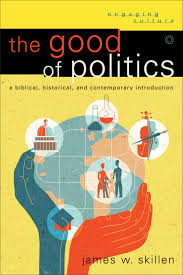 intellectual contributions, lessons learned by the Christian democratic traditions in Europe (and its misappropriation and failure in South Africa.) Some of the neo-Calvinist insights about pluralism in civil society, the legal needs of voluntary associations, the significance of religious liberty, even as the State insures justice for all, are, in my view, important. CPJ’s retired founder, James Skillen, explored much of this in his hefty 2014 book The Good of Politics: A Biblical, Historical, and Contemporary introduction. I still get fired up by the street-level activism of Sojo or my friends at Evangelicals for Social Action, and I still read the heady and very thoughtful work coming from classic conservative sources such as First Things or the IRD. But CPJ brings a voice and emphasis that is valuable.