
You know that one of our specialties here at Hearts & Minds is books about spirituality, what some may call the contemplative lifestyle. From the monks to the mystics, Catholic and Orthodox ancients thru the Reformers, Puritans, revivalists, charismatics or the latest hip evangelicals, many authors have so much to teach us about our relationship to God. We opened our store carrying lots of Thomas Merton and early Henri Nouwen and the first few Richard Foster books (and some people, then, as now, accused us of all manner of nuttiness, pantheism and paganism and such.) In the 1980s we met new friends (and authors) who were Central Pennsylvania leaders in this field—I think of Kent Groff, who founded Oasis Ministries, and Russell Hart who still runs the Center for Spiritual Formation, known mostly among United Methodists, near here. And even this season, local friends continue to explore ways to help people with a more intimate relationship with God—our friend Deb Turnow and some other women we know are launching Kavannahouse in the York area.
Happily, mature and reliable books helping us attend to our interior lives and learn to practice spiritual disciplines and know God more deeply, are increasingly common and there are such books for nearly any reader, in nearly any style, theological tradition, or level of spiritual awareness.
We have often said that in our last decade, two books have really stood out for us as reliable,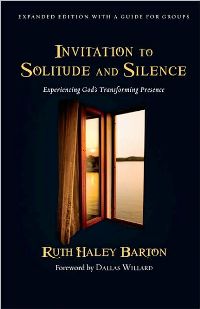 excellent, faithful guides into this tradition, and we are happy to say that the author of them both is also a friend — Ruth Haley Barton (of The Transforming Center in Wheaton, IL.) She has authored books for women (Longing for More), books about men and women in leadership together (Equal to the Task) and a few Bible studies.
Her more recent and major works, though are Invitation to Solitude and Silence: Experiencing God’s Transforming Presence (IVP; $18.00) and Sacred Rhythms: Arranging Our Lives for Spiritual Transformation (IVP; $17.00) (which has now been made into a teaching DVD series that we raved about last fall.) These two titles are ones about which I often speak, thinking they are truly must-reads. They are very nicely done, quite balanced (that is, she strikes a reasonable and moderate tone, nothing too arcane or mystical and yet not too pedestrian) and nicely written.
Next, Haley Barton offered yet another layer of insight—giving us a book that, unlike these previous ones, is almost one of a kind. Strengthening the Soul of Your Leadership: Seeking God in the Crucible of Ministry (IVP; $18.00) invites pastors, church and para-church leaders, and, really any busy person of influence, to relate the spiritual disciplines to their pace of life in leadership. By studying Moses, Ms Barton gently teaches us how (and why!) to integrate spiritual practices into the grueling tasks of leadership. One section in that important book is about how leaders must practice the spiritual habit of seeking God’s will, discerning what is life-giving and true, and resisting any other choices and decisions that, driven by ego or false values, derail us from living and leading with Spirit-lead authenticity. I don’t know for sure, but I bet a number of readers read that and hungered for more. I know I did.
A MUCH-NEEDED MASTERPIECE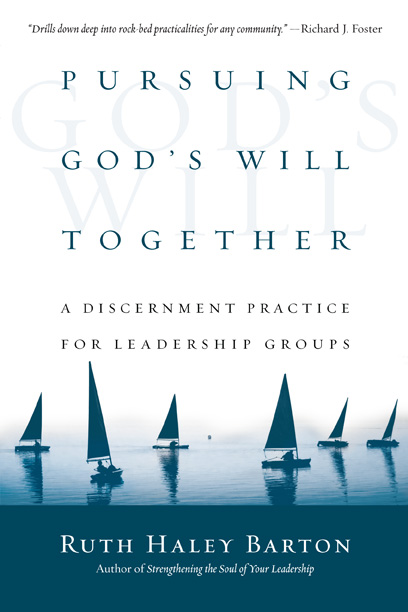 I suppose I can’t say that the brand new release Pursuing God’s Will Together: A Discernment Practice for Leadership Groups (IVP; $20.00) is “the book Ruth was born to write.” That sounds grandiose (and her humble nature wouldn’t want that) and it may suggest the other books aren’t fully excellent, which, as I have said, I think they are. And who knows what she may write next? 

But for now, this is her masterpiece, an amazing work that, while a bit more limited in scope than her previous ones (it is for leaders and about doing this work of formation together) is nonetheless a must-read for anyone who is serious about important contributions by contemporary contemplative writers. If you like Richard Rohr or Dallas Willard, David Benner or Joan Chittister, Gary Thomas or Parker Palmer, Thomas Keating or Richard Foster, Ronald Rohlheiser or Phyllis Tickle, I’m insisting that Ruth Haley Barton should be considered in this wise and august contemporary company. And this book is a must.
Ideally, this is a book written for those in congregational or para-church leadership, and it is designed to be read together as a group with other leaders. If you have a leadership team, a church council, elder board, consistory, session, Board of Directors; if you work with deacons, volunteer staff, or an accountability group, this book is for you and for them.
However, if you don’t have a willing crew, read it yourself anyway. I can’t tell you how much you will gain from it, how much you will learn, and how you will be invited into a style of life, decision making, habits and instincts that will be formed by the ways of God’s good grace. Reading this has been very helpful for me, although (I will say, in case Ruth or others who know me best are reading over our shoulder) it remains to be seen how I will apply it all. Step by step we live into our deepest ways of knowing, and learn to trust God to make ways for us and work ways in us to mature in life-giving and Spirit-lead habits. I have a long way to go on this journey, and this book is going to be a guide along this leg of it. And I’m not even on any leadership team.
DISCERNMENT NOT DECISION-MAKING
Here is the thesis of the book in a nutshell: we are not at our faithful best when we make decisions like the world does: Romans 12: 2 directly tells us to reject certain things in order to discern what is good. We must be formed in the ways of Christ in order to resist false values, weird instincts, dysfunctions and drives that come from ego, sin, hurt, or any number of less than healthy motivations.
We can learn to say “no” to typical decision making approaches (both in our own personal styles and habits and in our corporate cultures and practices) and replace such wooden and often (finally) ineffective ways with what is called discernment. We enter into a process of hearing the Spirit’s voice, of determining in our hearts what is good, of seeking God’s will, of framing our choices in light of Biblical truth and of Christ’s own redemptive love for the world.
She is kind but blunt; we tend to hire and promote and raise up volunteers to run churches and ministries and faith-based organizations who are, well, schooled in the first model of decision-making and less than apt to know anything about holy discernment. This is the purpose of her book, helping us realize that our decision making styles and our corporately arranged boards and our Roberts Rules of Order-shaped ethos isn’t consistent with a Biblical vision and isn’t congenial towards those who really want to discern God’s will and seek God’s desires. Those who have learned a lot from the latest New York Times business section bestseller about getting things done or
who have been formed in the culture of efficiency and success in the corporate world may be devout and fine Christians. They may have strong skills that are useful, even in church. But they will need to do some serious heart work if they are going to be members of a discerning community that leads a ministry in fruitful and Godly ways.
Can folks who are schooled and skilled in wielding worldly leadership shift their paradigm, as they say, to adopt this spiritual discernment model? Can power brokers learn to pray? Can committees, or even teams, becomes communities?
I might have been too quick to say yes to this before reading Ruth’s manuscript. When I first started thinking about these things I was influenced by the great work of Elizabeth O’Connor and Gordon Cosby, who founded Church of the Savior in Washington, DC. Sure, I figured, we can do this! Now, I think I have a bit more sanguine, as it really is difficult. We need help. Geesh, I hate to sound like a salesman, but with Ruth’s guidebook, I think it can be done. But we are fooling ourselves if we think that we can nurture authentic community based on the habits of prayerful discernment without this sort of of instruction and guidance. I would almost say without doubt that your church or organization, like mine, needs this book.
(There are other good books on this topic, too. I list a few below.)
THREE HELPFUL FEATURES
Ruth explains her thesis much better than I have above, but I trust you get the point. To make this a very usable resource, the book has three great features that help groups process this material.
Firstly, scattered throughout there are just a few well-placed pull out boxes that contain good questions for individual reflection. She offers a few thoughtful questions that surely illustrate that she has worked on this stuff with others; these are not mundane or toss-off questions that some assistant filled in to make the book seem more usable. These are key aspects of the journey and I can vouch that pondering them will take some time and some candor. As spiritual leaders (from Julian of Norwich to John Calvin to Gerald May) have long said, a good part of spirituality is self-awareness. As we come to know who we are in Christ, as we are attuned to our true selves as made in God’s image and beloved of God, we are able, then, to resist what the New Testament bluntly calls our “sin nature.” Yep, a bit of interior work about our self-knowledge is a foundational spiritual practice and engaging these kinds of honest, reflective questions is fruitful for anyone on a spiritual journey.
Secondly, there are exercises for groups, really helpful stuff to allow boards or councils or teams to actually learn to become communities. As these group exercises are pursued, I can only imagine, friendships will deepen, conversations will take on a more intentionally spiritual and missional focus, and the hard work of doing life together will begin (or deepen.) This isn’t a workbook, but these brief meditations and group discussion pieces allow the book to be used with your own leadership folks. There is a good closing prayer for each session. It could be used over several months, on a retreat, or in other intentional spaces carved out to work on this. Believe me, I read a lot of books about congregational renewal, church revitalization, revival and the like. This is superb. It is radical, but doesn’t feel extreme. It is orthodox, but could be used by all sorts of churches, liberal or conservative. It is deep, but doesn’t feel mystical or too touchy-feely. This is, it seems, what a spiritually alive and discerning community growing in authentic Christian leadership looks like.
Thirdly — and this is both fun and instructive — there is a fictional narrative running through the book, chapter by chapter. A stressed out team at a growing, good congregation, starts to hunger for deeper, Godly formation, they go on a retreat and hear some of this stuff, they take up their own commitments to spiritual disciplines, and enter into intentional efforts to be the leadership community their church needs them to be. This little device is captivating and (how do I say this delicately?) I think she knows what she’s talking about. These are composites, stories she has experiences or heard in her own career, among her own team, and seen in her own church consulting and spiritual direction. This is good stuff, interesting, candid, and I think very, very helpful.
IT STARTS WITH YOU The first part of the book makes an obvious claim, and she shares it unequivocally. For any faith group to become a spiritual community practicing discernment each member of said community must themselves be well rehearsed in this spiritual practice. She alludes to the “bus” metaphor–that is, getting the right people on–from the famous leadership work of Jim Collins. She seems to suggest that practicing spiritual formation disciplines as a community, though, will prevent leaders from distrusting one another no one will be trying to throw anyone else under the bus. But of course, as noted above, even one leader who “doesn’t get it” or is resistant to entering this new (old) way of Christian leadership, may spoil the whole project. Getting each person on board, and securing commitments to this contemplative way of life from the leaders themselves is essential.
She says this plainly; gently, but firmly. I think it could have been said even more strongly, as in many churches we elect the smartest, the richest, the keenest, or the most efficient (or, maybe, just the most willing) without adequate discernment of their spiritual capacity for offering distinctively Christian thinking or radically faithful discipleship. We should seek spiritual leaders who are, well, walking the walk, running the race, being led by the Spirit. Who know well the One they pray to. Ruth’s book warns against selecting the wrong sorts of leaders, but she is also upbeat: God can transform any who are even somewhat willing. New ways can be learned, deeper paths
can be trod, pushy and cantankerous meetings can be softened and Godly leaders can relearn communal ways that are honoring to God and attentive to the voice of the Spirit.
She writes,
Such individuals do have valuable gifts to bring to the
leadership setting, and our churches and organizations would be
impoverished without them. The problem, however, is when individuals
bring only the training, experience, and influences of the
secular mindset without preparation in the areas of spiritual
discernment… The next step to becoming a leadership group that
discerns God’s will together is to cultivate a shared, working knowledge
of the basics and to begin (or make sure people are) practicing
discernment in their own lives. When even one person in the group is not
habitually practicing discernment, it can derail the best attempts of
the whole group.
And so, the first three or four chapters of this book again invite us to live the spiritual life, to embrace new habits and disciplines, to carve out time for solitude and silence. She insists that God’s Spirit helps move us from blindness to sight; that is, we are being healed and changed and transformed. Do your own spiritual practices, you quiet time with God, your practicing the presence, cause transformation in you and your world? Shouldn’t it? Can we be a bit more intentional so we can make space for God to do God’s thing in and with and through us?
In a way, these first chapters are refresher courses–and don’t we need them?—from her previous three books. (The third chapter is called “The Discerning Leader.”) But they do not feel perfunctory or rehashing. This is new material, strong and helpful and very moving.
So she has moved from the basics of spiritual formation to the way in which leaders, especially, are called to practice spiritual disciplines. We have to bring our own lived experience of God and our intimate walk with Christ to the leadership table. Excellent.
Next, Barton tackles the shift from teams to community, making the case that our leaders should be about forming communities of discernment. Yes, yes, this is the big theme, the point of the book. But first, at least, we must become more than committees or boards. We must become relational communities. Chapter Five, “Values That Undergird Community” — starting with a quote from Dietrich Bonhoeffer’s Life Together—has in about 25 pages more solid content and usable reminders than any book like this I’ve read in a while. Again, while I pray that many congregations read it and take it to heart, I think this is good stuff for anyone—with insights to enhance your family, your workplace, your small group, your circle of best friends. This is solid, helpful stuff.
The book offers exceptional insight and practical advise in the next three chapters, chapters that help us move towards the goal of being communities of safe discourse and Godly discernment. These chapters are “Practices for Opening to God Together,” “Practices for Listening to Each Other,” and “A Covenant That Protects Community.” These three core chapters themselves deserve more comment, but you can see they are practical and necessary.
PRACTICING DISCERNMENT TOGETHER
The final four chapters — not quite 100 pages — make up the second portion of the book, Part Two. Ruth’s experience in teaching this is evident here as she cuts to the chase and teaches us so very much. The chapter titles:


Get Ready: Preparing for the Discernment Process
Get Set: From Decision Making to Discernment
Go! Discerning and Doing God’s Will Together
But Does It Work?
Lastly, there is a small leaders guide (more insight about using the community sessions scattered throughout the book) and a bit of a Bible study on spiritual transformation. Lastly there is an appendix on Lectio Divina. (She has a whole chapter on this creative practice of meditation on the Scriptures and allowing the Spirit to guide you to contemporary application in her book Sacred Rhythms, by the way.)
down-to-earth writing, good humor and abiding commitment to a solid Biblical framework. We do not need deep mystical innovations, odd-ball psychological stuff or navel-gazing being passed off as the latest gimmick or formula. Gnostism and other esoteric heresies creep into well-intentioned talk of inner truths. Barton is grounded in the ancient catholic traditions, writes in a refreshingly ecumenical tone, but is solidly evangelical, and has fabulous Bible study in most sections. She is a good teacher, and her experience with her own Transforming Center ministry and as consultant to many congregations and with many, many pastors and ministry leaders, has positioned her to be a voice we should heed.I am encouraged by this this wonderful resource and hope my explanations–which don’t capture the faith and passion and excitement and common sense of all this—somehow help folks realize how useful this book can be. I hope you consider ordering it, maybe even sharing it with leaders in your own congregation or fellowship group. We commend it to you with great joy and with great expectation. This, friends, can rock your church or organization. We can, in discerning God’s ways, be more fruitful and faithful. And that can change the world.
Here are a few other books I notice on our shelves about this subject of discernment. There are more, but these are good. The first few are for personal practice, the next about congregational or group discernment. The last two are about church renewal, but learning communal discernment is central to their proposals. Very nice.
The Way of Discernment: Spiritual Practices for Decision Making Elizabeth Liebert (Westminster/John Knox) $17.00
Decision Making and Spiritual Discernment: The Sacred Art of Finding Your Way Nancy Bieber (Skylight Paths) $16.99
The Discernment of Spirits: An Ignatian Guide for Everyday Living Timothy M. Gallagher (Crossroad Publishing Company) $24.95
Discerning the Will of God: An Ignatian Guide to Christian Decision Making Timothy M. Gallagher (Crossroad Publishing Company) $16.95
Transforming Church Boards into Communities of Spiritual Leaders Charles Olsen (Alban Institute) $17.00
Discerning God’s Will Together: A Spiritual Practice for the Church Charles Olsen & Danny Morris (Upper Room) $15.00
Selecting Church Leaders: A Practice in Spiritual Discernment Charles Olsen & Ellen Morseth (Alban Institute) $14.00
Practicing Discernment Together: Finding God’s Way Forward in Decision Making Lon Fendall, Jan Wood, Bruce Bishop (Barclay Press) $16.00
Listening Hearts: Discerning Call in Community Suzanne Farnham, Joseph Gill, Taylor R. McLean, Susan Ward (Morehouse Publishing) $14.00
Grounded in God: Listening Hearts Discernment for Group Deliberations (revised) Suzanne Farnham, R. Taylor McLean, Stephanie Hull (Morehouse Publishing) $14.00
Springs of Living Water: Christ Centered Church Renewal Miller David S. Young, forward by Richard Foster (Herald Press) $16.99
Becoming a Blessed Church: Forming a Church of Spiritual Purpose, Presence, and Power Graham Standish (Alban Institute) $18.00
 Hearing God: Developing a Conversational Relationship with God (updated & expanded) Dallas Willard (IVP) $17.00 Ruth Barton of course is not the only evangelical writer who has written wisely about deep spiritual matters and is not the only one advising that we listen to God. I hope some of the diverse books listed above strike your interest.
Seeking and following God’s will has long been a preoccupation amongst evangelicals, especially, and hearing God’s voice is a longing felt all across time and around the world. Sadly, there are terrible books about this, both about the very notions of God’s will and about the ways in which we can and cannot “hear God’s voice.” It is, surely, a sticky topic.
For many of us, such notions about finding and following God’s perfect will conjures up pretty scary stereotypes and pretty weird religiosity. Old Testament scholar Bruce Waltke has shown [Finding God’s Will? A Pagan Notion? (Eerdmans; $17.00)] that some ideas about this are outright pagan. So we need help, and we need reliable, vibrant insight.


I simply know of no better serious book on this matter than this wonderful, best selling resource by the profound and thoughtful scholar, Dallas Willard. Willard certainly calls us to be transformed into the ways of Christ, and, although a philosopher (he teaches at University of Southern California) he has a gentle and insightful manner to guide us into these vexing matters. But he is a philosopher, so be prepared to cover a lot of bases.(You can explore all manner of things at his webpage, here. )
Many of you know this book. Richard Foster has written that it is “the best book on divine guidance I have ever read. I recommend it highly.” I am happy to report that we stock this very handsome new edition—again, kudos to the formatio publishing imprint of InterVarsity Press for doing the most readable and sound books of this kind. (We carry every book in the formatio line, by the way.)
This updated version includes new material from the author’s teaching at the Renovare Institute. There is a new Q & A section and a fabulous index showing where to find answers to key questions in the text itself. There are six lectio divina exercises placed throughout the book, too, to help you train your ear to experience hearing God in appropriate ways.
There is also a brand new six session companion Hearing God DVD (IVP; $30.00) which would make a great adult ed class or small group study for anyone seriously interested in the deeper life, our struggle to discern God’s ways, and how we can, by hearing God’s voice, partner with Christ in the work of His Kingdom. As you can on the DVD case, it also featured his friends Richard Foster and John Ortberg.
Excellent, well produced, very inspiring, for anyone.


DISCOUNT
any book mentioned
2O% off
order here
takes you to the secure Hearts & Minds order form page
just tell us what you want
inquire here
if you have questions or need more information
just ask us what you want to know
 Now we are giving you yet another option to have a Bible sent, by buying a truly marvelous children’s book, a favorite of this season, entitled Under the Baobab Tree, by Julie Stiegemeyer and illustrated by E.B. Lewis (Zonderkidz; $16.99.) It’s easy. You buy the book, and we’ll ship it to you promptly. Enclosed with that will be a small, colorful, African prayer card, reminding you to pray for Ghana, and confirming that a NLT Ghanian edition Bible was sent on your behalf. Of course sending the Bible is a nice thing, but this book is excellent, too. Julie Stiegemeyer is an experienced children’s writer, a good storyteller (and the wife of a Lutheran pastor.)


 peace, poverty, disease, responding to the HIV/AIDS endemic, reconciliation, and developing sound human capitol for national development.”


 Awake: Doing a World of Good One Person at a Time Noel Brewer Yeatts (Baker) $12.99 What an inspiring set of stories, from an inspiring young woman. (We met Noel at the QDC event a few weeks ago, by the way, and enjoyed chatting a bit with her.) Can you see the world map in the coffee cup? Can this cuppa joe wake you up a bit? I am sure it can.
 Global Soccer Mom: Changing the World is Easier Than You Think Shayne Moore (Zondervan) $14.99 I love this book, even if the subtitle is a bit glib. Ms Moore does know how hard and overwhelming this work is, but she allows her mother’s heart to be touched, and shows how to get involved making a difference on global concerns, even as a busy, upbeat mother of three in a mini-van. I’ve written about this before as her work has been in view for a while now: Moore was one of the original members of the ONE campaign, works with Grower’s First and World Vision. She has an MA in theology, is a member of the Redbud Writer’s Guild, and she is well positioned to make a difference and to help ordinary folks do likewise. These stories are truly inspiring and the theme is that a full-time mid-West home-maker, involved in ordinary stuff in a real town and a regular church, can make a difference. I love the Bono quote about her: “Politicians watch out: Shayne Moore is an unstoppable force.” How did she journey from the rather insular suburban world into the arena of global advocacy? (And how did she get to become friends with Bono?) Read this and learn. You can visit
 Go+Do: Daring to Change the World One Story at a Time Jay Milbrandt (Tyndale) $14.99 I briefly reviewed this book the week it came out in my
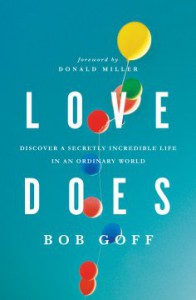 Love Does: Discover an Incredible Life in an Ordinary World Bob Goff (Nelson) $15.99 I hope you read
 The Lord and His Prayer N.T. Wright (Eerdmans) $10.00 Of course you know how we celebrated our time with Bishop Wright last week and as you may suppose, we are still energized by his gracious visit and powerful presentation at our Dallastown store. (There are some pictures at my facebook page, too, if you want to see our backyard, or year Wright sing Bob Dylan!) Although his focus in his last two serious HarperOne books have been on Jesus, the gospels, and the Biblical teaching of the Kingdom of God, it is clear that Wright the scholar and Bible guy is also Wright the pastor and shepherd. He cares about spirituality and prayer and the classic Anglican disciplines for spiritual formation. This is a book he wrote years ago, and it is a favorite on the topic.
 Holy Bible New Living Bible Translation (Tyndale) $5.99 This is an exact example of the edition that we are sending to the kids in Ghana. It’s a handy size, hardback and a fantastic price.

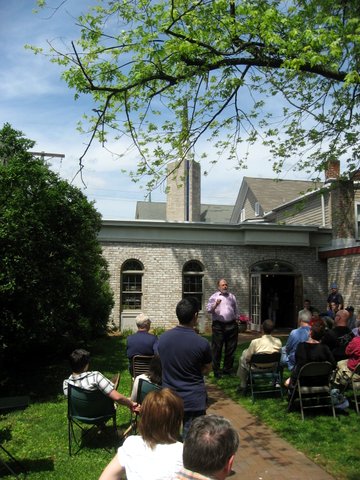
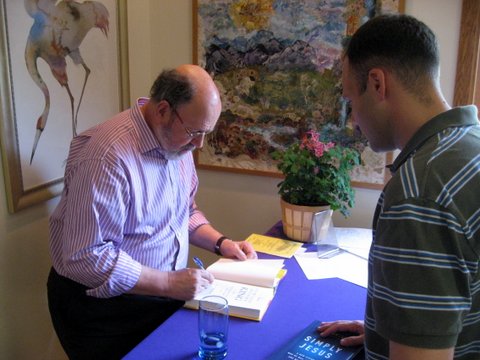
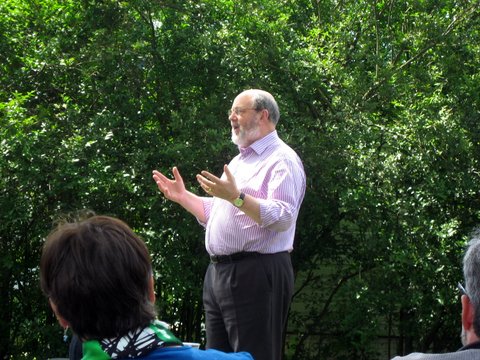 here, too: thanks to our great staff, several generous volunteers, our good friends who catered the espresso bar, The
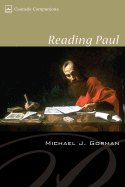 Cross (Eerdmans; $36.00), Apostle of the Crucified Lord: A Theological Introduction to Paul and His Letters (Eerdmans; $42.00) Inhabiting the Cruciform God: Kenosis, Justification, and Theosis in Paul’s Narrative Soteriology (Eerdmans; $24.00), Reading Paul (Cascade; $22.00), and Reading Revelation Responsibly: Uncivil Worship and Witness: Following the Lamb Into the New Creation (Wipf & Stock; $25.00.) The last two are quiet accessible—don’t you love the subtitle of the Revelation one?—while the first few are a bit more demanding. They are highly esteemed, especially drawing out the social and ethical implications of the Christ-centered sort of discipleship the Pauline letters demand and we are grateful to know the author as a friend and customer.
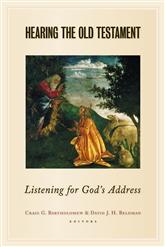 Hearing the Old Testament: Listening for God’s Address edited by Craig Bartholomew and Davide J. H. Beldman (Eerdmans) $32.00 Well, I could say any number of things about this very handsome new paperback, but let is suffice to highlight two. Firstly (and this is huge), the book is dedicated to newly retired Redeemer College professor Al Wolters, whose book Creation Regained (Eerdmans; $14.00) I mention often, most recently, in passing in my long
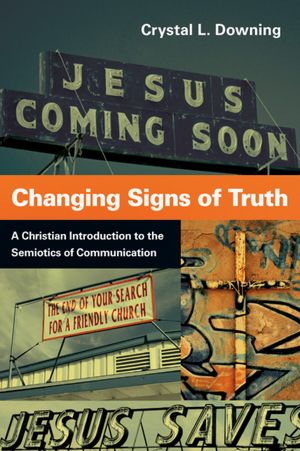 Changing Signs of Truth: A Christian Introduction to the Semiotics of Communication Crystal L. Downing (IVP) $24.00 Perhaps it is a stretch, but as I pondered N.T. Wright’s visit, his impromptu speech in our backyard, his jokes about Italian taxi-drivers and his spot-on recollection of what Dylan said on a bootleg album before a certain song, as I realized his extraordinary knowledge of first century Greco-Roman culture and ancient Jewish history, and yet his ability to relate to this York County lawn-chaired audience, I had to marvel at the kind of communication skills the man has. And his skills in knowing ways to connect symbols and signs, ideas and shared memories, common experiences, and even how he could subvert or play with these common-place sayings or cultural icons, weaving together a learned talk in very creative ways. That, in a way, is what Ms Downing’s new book is about, a study of the heavy-duty postmodern theorists of communication theory that offer ways Christians, too, can be savvy about “reading the signs of the times” and making sense of our odd mash-up of images, symbols, and signs. Downing wrote a previous book called How Postmodernism Served My Faith which I highly recommend as a primer on how evangelicals can—should?—appropriate postmodern theories of deconstruction. This may be the next step into the vortex: she looks at linguists and semiotians Roman Jakobson, Charles Sanders Pierce, Antonio Gramsci, Mikhail Bakhtin and others. Rave reviews on the back are from solid evangelical thinkers such as Quentin Schultze, Mark Noll, Terry Lindvall.
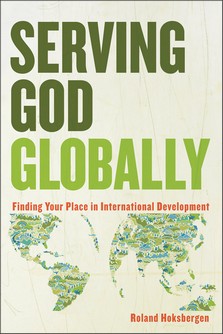 Serving God Globally: Finding Your Place in International Development Roland Hoksbergen (BakerAcademic) $21.99 I was tickled when N.T. Wright started preaching a bit–with some up to date data and some illustrations—about the campaign to cancel third world debt. He suggested that all sorts of churches in England held the public policy people’s feet to the fire and got the British government to pressure international banks and such (it is complicated!) to relieve some debt. Oh if there was such cooperation between evangelical, mainline, catholic and liturgical churches here. Anyway, Tom has long been outspoken about the debt crisis and has been active in the Jubilee Campaign to cancel unsustainable debt. That is a long way of noting that it makes perfect sense, with Tom’s talk ringing in our ears, to highly recommend what looks like one of the best resources about learning about international development, global justice, and what needs doing in all manner of development work. This new book emerged out of a great series of conferences on global justice and international development held at Calvin College in Grand Rapids, (you thought they were just famous for their renowned bi-annual writing festival, or their very cool faith & music festival, or the respected Worship Institute events.) Co-sponsored by their denomination’s excellent
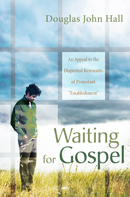 Waiting for the Gospel: An Appeal to the Dispirited Remnants of Protestant “Establishment” Douglas John Hall (Wipf & Stock) $25.00 This book arrived today, and oh how I wish I could sit at lunch, again, with Bishop Wright, and continue the conversation we started about Douglas John Hall, who he knows. Hall is a thoughtful United Church of Canada theologian, now in Quebec, and he offers here a collection of essays, talks, articles and papers he has gathered together to point us towards his project of lived theology. He is an old school 20th century liberal Protestant, having studied with Tillich and Barth. He has written widely about suffering and the cross, and the methods of doing theology in a North American contextualized way and is known also for his work on our task to be stewards of the creation. Last summer I read (and reviewed) a short memoir he wrote, telling about an eccentric and brilliant bookseller who was influential over a generation of Canadian mainline Christian leaders and scholars, and I came to appreciate Hall that much more. This collection looks fascinating, albeit if it does presume a more liberal Protestant reader. At his heart, Hall is a witness to the cross, a profoundly evangelically-minded scholar, very educated, and although getting along in years, still contributing papers, sermons, and clever jeremiads like his last chapter, “A Latter -Day Kierkegaardian Attends a Megachurch.”

 leaders of our time. I can’t name another world-class, scholarly leader who also writes books for ordinary lay people, who has bridged the gap between the academic guilds and local congregations. I wrote about Old Testament scholar Walter Brueggemann in our

 and the sorrows of a hungry world, I got a few great suggestions from customers, asking me to list a few titles about agriculture. With Wendell Berry gaining in national prominence—I want to be prideful a moment and say that we stocked him since the day we opened 29 years ago, a few then-recent books like The Unsettling of America and The Memory of Old Jack—that certainly is a theme many care about. (If you haven’t, see the
 Sometimes we do it quickly, some of us admire the “slow food” movement. Most of us want to be more careful about toxic stuff, realize the importance of the organic movement, and at least want to be good stewards of God’s gifts of food and nutrients. We want to learn to cook more wisely, and eat more responsibly, even if we aren’t going to go, as the appropriate animal metaphor has it, hog-wild.
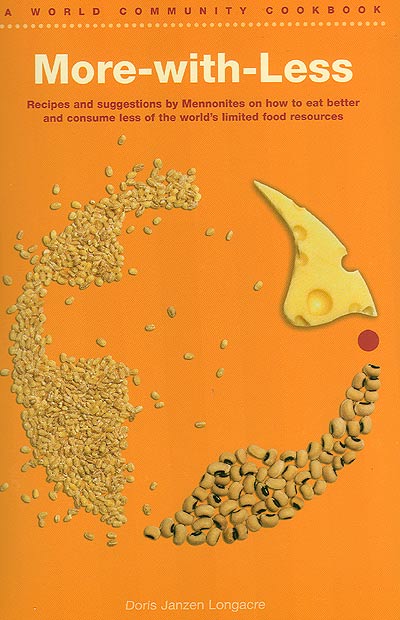 More-With-Less Cookbook (updated edition) Doris Janzen Longacre (Herald Press) $24.99 This is not only a fabulous cookbook that has helped thousands of families establish a climate of joy and concern for others at mealtime, it can help you improve your nutrition and save money, too. It outlines three ways to eat more-with-less and invites us to consider the global implications of our dietary choices. There are sidebars with stories, pictures, prayers and verses, making this truly a distinctively Christian cookbook, solid with great recipes, and wholesome, faithful ideas scattered through-out. We have some friends that have literally worn out several of these, as they are truly that useful—with simple, helpful stuff about complimentary proteins and ways to create meals that respect what is now called “sustainable agriculture.” As it says on the back, these recipes are “kind to your wallet, your waistline, and the larger world.” Three cheers for the Mennonite Central Committee and their good work bringing global concerns to the table in such a refreshing, pleasant way. 500 recipes!
 Extending the Table: Recipes and Stories from Argentina to Zambia Joetta Handrich Schlabach (Herald Press) $24.99 After the success of More-With-Less, a cry was heard demanding a sequel. Folks so loved the enjoyable first simple-living type cookbook, and the little stories and factoids that nicely decorated it, that another soon followed. The uniqueness of this one is that the recipes were sent in from development workers and missionaries and local folks from all over the world. The title of this says it all—as human family, we can “extend the table” to offer hospitality to all, and to learn from other parts of the globe. God bless the Mennonite Central Committee, again, for bringing these fabulous, easy to cook, and nicely accessible recipes from all over God’s good world. One of the nice things about this, by the way, is they avoided recipes that include hard to find ingredients, expensive, luxury items, or things that ordinary folk in ordinary towns would find impossible to locate. That is, this is a nice, usable, day-to-day cookbook that offers inexpensive, joyful dishes, and a happy reminder of the needs of those in other parts of the planet, a guide to international cuisine that isn’t too demanding or extravagant.
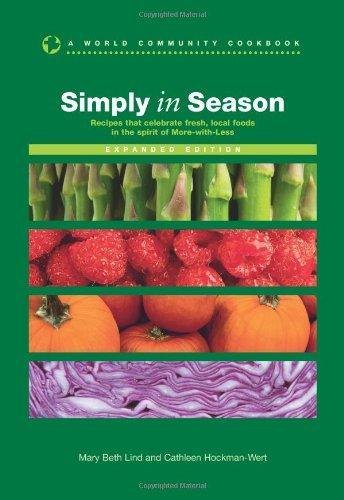 Simply in Season (expanded edition) Mary Beth Lind and Cathleen Hockman-Wert (Herald Press) $24.99 Oh my, what a fine resource this is, a cookbook that came out a bit before everyone started lamenting the crazy environmental impact of importing tasteless strawberries or cardboard-like veggies (etc. etc.) and calling for cooking with some sense of the limits built into God’s creation by buying more locally. These are recipes, they say, “that celebrate fresh, local foods in the spirit of More-With-Less.” Again, this “world community cookbook” is a beauty to behold, colorful and interesting, but not one of those fussy ones that are mostly pictures of food that are created to win design awards; this is one that is really made to be used in the kitchen. It is sturdy, handsome and inspiring, but, mostly, filled with great ideas and good recipes arranged for good eating season-by-season. Whether you are support a CSA or do backyard gardening, whether you want to be a “locovore” or not, this, as one reviewer put it, “will allow you to drift along with the current of a different stream.” Wonderfully done.
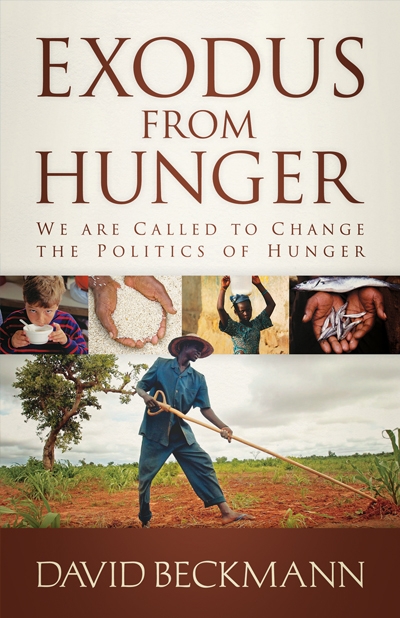 Exodus From Hunger: We Are Called to Change the Politics of Hunger David Beckman (Westminster/John Knox) $15.00 Speaking of good looking covers that have an upbeat and helpful reminder about some pretty ugly stuff, this recent book by one of our heroes—Beckmann is a former World Bank guy, Lutheran clergyman, and Director of

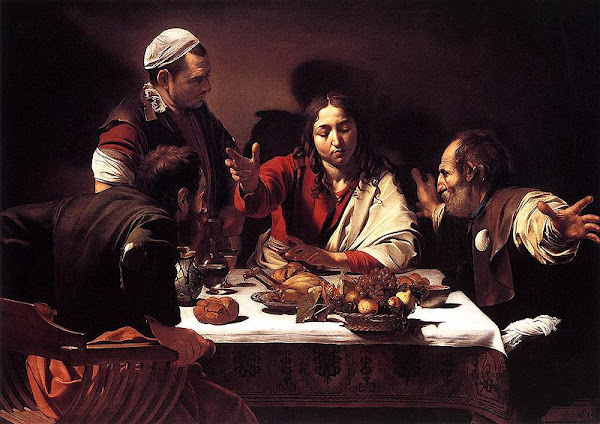 biographers wrote about several meals. The famous epiphany during the breaking of bread, of course [shown
 post-resurrection Bible narratives in a way that reminds us of the down-to-Earth bodily nature of the resurrection life, but it may say something about the importance of food and meals, too. Jesus surely did a lot of other things, but meals are notably mentioned. And they seem revelatory. Eugene Peterson explores this for us magnificently in a wonderful little book which I often commend this time of year called Living the Resurrection: The Risen Christ in Everyday Life (NavPress; $16.99.)
 This Sunday school class is just one example of a larger trend in our culture, a good and healthy interest in sustainable agriculture, organic food, how animals are treated, how land is farmed, buying local, and caring about nutrition and fresh food, creatively and aesthetically prepared. I will review it in great detail later, but I just finished a truly spectacular paperback,
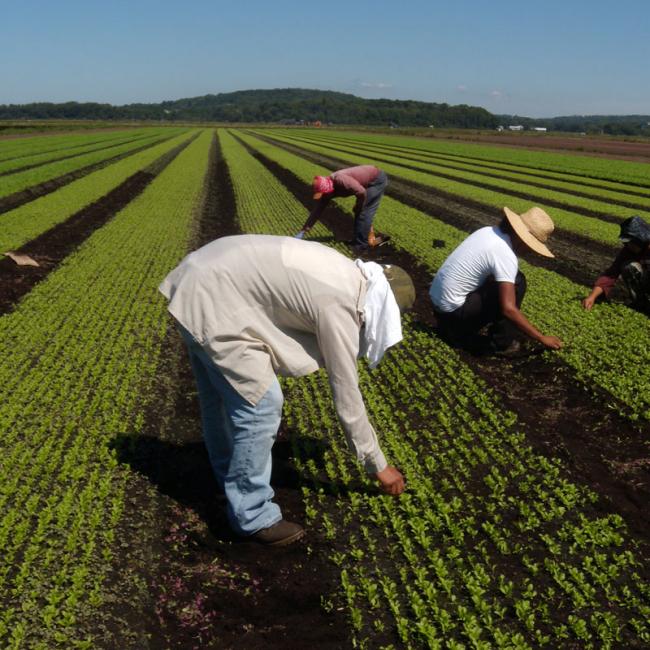 there are those who have little food, and that even those who help us get our food themselves cannot afford much of it— here is
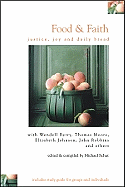 Food & Faith: Justice, Joy and Daily Bread edited by Michael Schut (Living the Good News) $14.95 If one were to buy one book on this essential topic, this may be our first recommendation. A lovely companion to Schut’s ecumenically-minded, Simpler Living, Compassionate Life, this collection includes essays or excerpts by Wendell Berrry, Thomas Moore, John Robbins, Marion Nestle, Eric Schlosser and so many more. It includes readings on the celebration of food, health and diet, politics and economics. It has some lovely reflections on the spirituality of food, essays on agriculture and land use, family farms and sustainable, local economies. It looks a bit at world hunger, and ends with stories of hope, suggestive of ways to renew our eating attitudes and habits. There is a fabulous study guide in the back, making this a fabulous resource for book clubs or small group reflection.
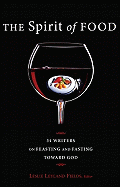 The Spirit of Food: 34 Writers on Feasting and Fasting Towards God edited by Leslie Leyland Fields (Wipf & Stock) $30.00 What a stunning and great book.
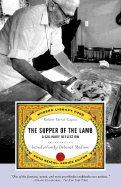 The Supper of the Lamb: A Culinary Reflection Robert Farrar Capon (Modern Library) $14.95 This book is so insightful and beloved, it has been cited in a Reformed theology class, and in gourmet foods cooking classes, and is regularly anthologized in great writing about food. Capon is feisty Episcopal priest and an excellent wordsmith (a prolific author) and a great cook, too, making this book a true classic. This recently re-issued paperback edition is very nice. As The New York Times Book Review said, it is “as awesomely funny, wise, beautiful, moving, preposterous a book as this reviewer has come across in years…It is a love letter to a world that “will always be more delicious than it is useful.” Capon uses this narrative of cooking a leg of lamb meal for a group of friends as a platform to wax eloquently on everything from the kind of knives one must have in the kitchen to the sheer, God-given wonder of an onion. Glorious.
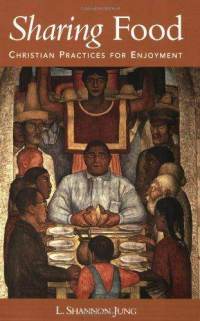 Sharing Food: Christian Practices for Enjoyment L. Shannon
 Food and Faith: A Theology of Eating Norman Wirzba (Cambridge University Press) $24.99 What an amazing book! This is a recently released, major theology of eating–a long overdue masterpiece, but it is pretty dense. You’ve heard of “slow food?” This is slow reading! And that is a compliment, of course, but it is demanding theology, most likely the best substantial work on this topic yet done. I think his Living the Sabbath Life: Discovering the Rhythms of Rest and Delight (Brazos; $20.00) might also be really useful to approach this topi;, although it is morally serious, it is not quite as dense as the new one. Unlike most books on sabbath, it explores the lifestyle of non-consumeristic, normative, sustainable living, rejecting the go-go-go of consumerism and the American way, taking sabbath principles into how we think and live, how we think about education, about agriculture, the ways we shop and eat and play. So while he does teach about sabbath, it is about jubilee and freedom and alternative living more than just spirituality and rest. Obviously, it is an important foundation for his new Cambridge volume which is more precisely on food.
 Eating and Drinking Elizabeth Groppe (Fortress) $15.00 This little book is a serious study, despite it’s slender size and chatty style, exploring the ways in which profoundly construed Christian theology might shape our daily experience of meals. This “compass” book takes its place next to others in the series, serious books, briefly written, on work, play, shopping and parenting. Groppe is an Associate Professor of Theology at Xavier University (although the whole series is edited by David Jensen at Austin Presbyterian Theological Seminary.) There is an alarmingly bad sentence about her experience of coffee, but once I got over that, and realized she had some sort of sacramental view of creation, I realized that this more contemplative consideration was well worth reading. All five of these rigorous, small books are provocative and timely, written by authors deeply aware of the need for serious social criticism. Impressive.
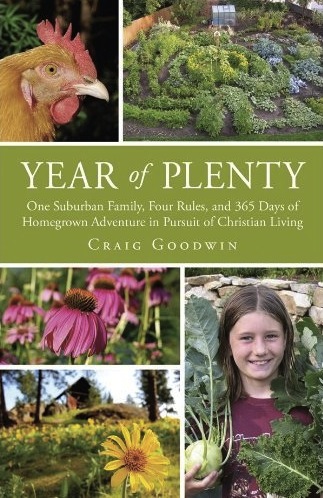 The Year of Plenty: One Suburban Family, Four Rules, and 365 Days of Homegrown Adventure in Pursuit of Christian Living by Craig Goodwin (SparkHouse) $12.95 For a fun and very readable memoir, I’d really, really recommend this, which I have happily promoted before,
 A Meal With Jesus: Discovering Grace, Community and Mission Around the Table Tim Chester (Crossway) $14.99 This is a fantastic book, a six-chapter study which takes a serious, happy look at Jesus and his meals, bringing his table fellowship into the conversation about hospitality, dining, feasting and such. This is obviously more a small group Bible study sort of book (it would make a great class or sermon series) than a reflection on localism, free range beef, or the health benefits of eating well, but it will appeal to anyone who understand that “food connects” (as he puts it.) This is getting rave reviews from those, like in the Gospel Coalition, who have used it. Chester himself is an urban church planter and knows how eating together can be foundation for very significant ministry. We are thrilled to see such a sound, evangelical work on this fun and fruitful topic. Highly recommended.
 The Other Journal: The Food and Flourishing Issue (Wipf & Stock) $18.95 The Other Journal is a remarkable, curious, fascinating, theological journal that focuses on all sorts of issues—and they occasionally republish their special editions in bookish form. This one has poems and theology, essays and stories, from authors such as Comment magazine editor Alissa Wilkinson, Stephen Webb, Norman Wirzba, poet John Leax, Elizabeth Antus I(who does a very interesting study of the important work on eating disorders by Geneen Roth.) What an amazing collection.
 Bringing It To The Table: On Food and Faming Wendell Berry (Counterpoint) $14.95 I’ve reviewed this one before as well, but it simply has to be noted again. I’m sure most Hearts & Minds fans know of our affection for Mr. Berry and his astute social criticism of modernity, consumerism, and ideologies of mechanized progress. He is an agrarian essayist and a Christian farmer whose largest legacy may be his body of wonderful fiction where his heart’s themes are given storied character. What a great way to read him by enjoying this collection of various pieces he has done on farming, the joys of eating, and
 (Rodale) $24.99 You may know this author for his splendid book The Town That Food Saved. Like that one, this is full of characters, strong on story-telling, and a stunning achievement in doing muck-racking expose journalism without making us overly depressed or cynical. He is, as one reviewer in The Atlantic wrote, “an amiable skeptic and a storyteller of rare skill who seems incapable of crafting a dull sentence.” We understand that it is stressful to think about factory farms and pesticides and a bit disappointing to learn even more about the dangers of the pseudo-foods we often enjoy. Still, if this is a wake-up call, it isn’t that hard to swallow. It offers a better way. I moves from a critique of the mega-corporations and broken food system to a more wholesome and sustainable and joyful way to buy and eat our daily bread. As farmer Joel Salatin says, “read this before your next bite!” (Speaking of Joel Salatin, who you may recall from being featured in Pollen’s Omnivore’s Dilemma and in the documentary “Food, Inc.” his long-awaited book came out in October 2011. I mention it below.
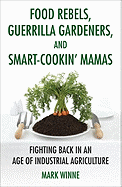 Food Rebels, Guerrilla Gardeners, and Smart-Cookin’ Mamas Mark Winne (Beacon Press) We are glad this just came out in paperback as it, too, is a must-read if one is to grow in more profound awareness of this new trend, how to resist the deformation that agribusiness has caused, and ways people are forming genuine alternatives. Here is a
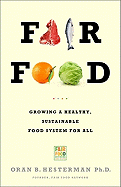 Fair Food: Growing a Healthy, Sustainable, Food System by Oran Hesterman (Public Affairs.) I briefly reviewed this in
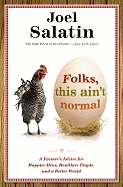 Better World Joel Salatin (Center Street) $25.99 I just raved about this last year, and named it as one of the Best Books of 2011. What a fun and funny author, a religious man who has done organic and natural farming for years. A truly interesting man by a hero of contemporary farming—offering up righteous ecological concern and better flavor, too.
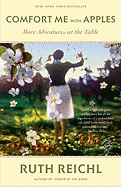 $14.95 I cannot tell you how I enjoyed this spicy memoir of a famous food critics early years, leaving a hippie whole-foods commune for a job doing restaurant reviews for Gourmet magazine. She travels all over he world, her marriage comes undone, she meets everyone from M.F.K. Fischer to Alice Waters and Wolfgang Puck, and tells it with tender eloquence and splendid detail.
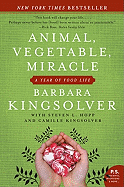 What a wondeful book, excellently told, a full-length memoir by the respected novelist and essayist, about her family’s experiment in eating only food that they grow themselves on their Appalachian farm. One of the most popular books of recent years, a bell-weather in many ways!
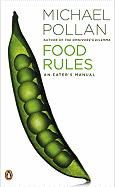 takes on the commercial food industry and what he calls the nutritionism establishment as well. Next, he did the very small but helpful Food Rules: An Eater’s Manuel which is available as a paperback or a colorful, illustrated hardback (Penguin; $11.00 or $23.95.) Mr. Pollan is a philosopher at heart, who has written thoughtfully about the relationship of nature and culture (see, for instance, his Second Nature about gardening or the popular Botany of Desire.)
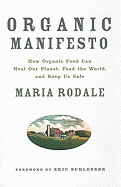 Organic Manifesto: How Organic Food Can Heal our Planet, Feed the World, and Keep Us Safe Maria Rodale (Rodale Press) $14.99 Even if the subtitle is a bit overstated, this is a masterpiece breakthrough book, drawing on updated health data and riveting reporting about the dangers of pesticides and herbicides. With Monsanto continuing to push “roundup ready” crops, it is more urgent then ever to understand which are the most deadly chemicals and which in which foods they are most commonly found. Very important.

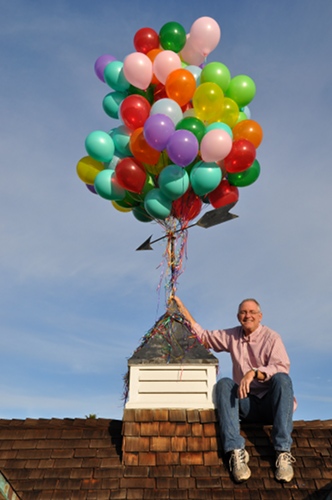 his jeep, watching it burst into flames (how cool is that? he exclaimed) and how he cared for her afterwards. His academic past was less than stellar and his legal calling was sketchy, since he hardly passed his entrance exams. The story about how he badgered the Dean of the law school to let him in anyway (told hilariously in the chapter “Get Your Books”) had me in stitches, and eager to be more audacious in my endeavors. Hearing him explain how he has his law office on some faux island at Disneyland that you have to get to by a little boat—he is not making this up: he showed slides of his meeting with an important African diplomat on Tom Sawyer Island—had us texting friends asking if they had heard of this guy. Could he be for real? That zany, and that successful, and that adept at advancing God’s reign and glory through his uniquely Christian way of thinking about vocation and calling, profession and professionalism? Can an old Young Life nut who just loves everybody really pull off these whimsical spiritual stunts (which he calls capers) and make a serious difference in a broken world of serious evil and injustice? If he’s just a postmodern clown, okay, that’s attractive and entertaining, but he seems also to be truly interested in changing the world, reforming legal institutions, working in the third world, literally saving lives. Can funny stories change things?
 Bob Goff is equally energetic, and his stories are as funny as any Tony ever told. Perhaps some are more goofy; some are just sheer nuttiness (jumping into the bay dressed in a tux in order to greet some kayakers) and you can’t help but enjoy reading about them. Love Does is a fun read, you could give it to teens, easily. But, as with Tony and some of his fantastic stories, you can just know that a sovereign God is behind them (or at least some of them.) I’m talking miracles of the first order, crazy stuff you just can hardly believe. Coincidences, as they say. God is alive and well and his winsome followers like Goff are leaking his love all over the place, and the Spirit is blessing it in mighty ways. When love does, good things happen.
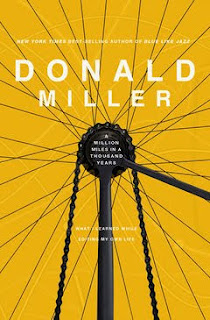 another great book, A Million Miles in a Thousand Years: How I Learned to Live a Better Story by Donald Miller (Nelson; $15.99.) In that book (I hope you know, since we love it so) indie film-maker Steve Taylor shows up to make a movie inspired by Miller’s meandering thoughts about religion-less faith, Blue Like Jazz (Nelson; $15.99.) Alas, to make a movie about a memoir supposes that the memoirist has some sort of life story, something good going on, a trajectory, a tale to tell. Miller realized (by studying how to make a film script, as he explains in Million Miles) that he needed to get his life aligned with the larger story of God, a purpose-driven life with something big and meaty unfolding in some Biblically-shaped, coherent plot. He needed to find himself a mentor, the kind of life-changing, one-of-a-kind, Jesus-leaking character that a character like Miller could take. Goff is his man. If you’ve read Million Miles in a Thousand Years then you know that Miller talks about Goff—-his annual New Year’s Day parade that one cannot watch, but must be in, his orphanage in Uganda, where he gets Miller to pick up a shovel and plant a commemorative tree. Goff not only tells a better story than Donald Miller’s bohemian ruminations, but he invites him into that story. Through Miller’s memoir, we learn that a good mentor does that. In more traditional terms, although neither Miller nor Goff use these exact words, a faith leader does evangelism and disciple-making, helps get folks converted to Jesus and equips them to live into the new way of His kingdom.

 For the next few days we’ll be selling books at one of the coolest events we’ve ever done, at one of the classiest venues in country. The website I’ve sometimes mentioned (and written for)
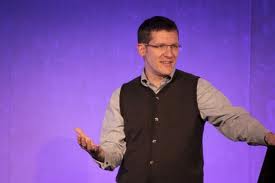 about “Ideas for the Common Good” and Andy Crouch, ruminating on the good and bad uses of power. Andy’s Culture-Making: Recovering Our Creative Calling (IVP; $25.00) remains one of my all time favorite books and is a must-read as foundational to appreciate Qsters. I can’t tell you how important he is to follow (his latest project involved research into practices that enhance urban life called “This is Your City.”)
 It will be really entertaining, and edifying, I’m sure, to hear New York Times columnist and PBS pundit David Brooks comment on his important 2011 book, now out in paperback, The Social Animal: The Hidden Sources of Love, Character, and Achievement (Random House; $16.00) and, mostly, offer some glimpses of his next project, a book on humility. We adored his Bobos in Paradise and On Paradise Drive and hope you know them. We even stock a hardback edition called The Paradise Suite (Simon & Schuster; $28.00) that has both in one volume. These include incisive observations about America’s upper middle class and fabulously interesting social history. Bobo’s is the phrase he coined describing bourgeoisie bohemians, and his study of these liberal, wealthy communities that seem to hold to old hippie values but live in quaint upscale communities is genius. And funny as anything.
 Calling: Vocational Stewardship for the Common Good (IVP; $16.00) offers one of the best-developed cases for taking faith seriously as it informs our view of callings and careers, vocations and jobs, using our talents not just to “bring home the bacon” but as a central way most of us serve our neighbors and enhance the common good. We named it as one of the best books of the year in 2011, even though it had just released. Not all of us, in fact most of us, can’t be full time social reformers, cultural creatives, starting organizations and interesting initiatives. Bu
 Wallis of Sojourners to Gideon Strauss of the Center for Public Justice, Mitch Hescox of EEN to Chai Ling, a hero of the Tiananmen Square uprising and author of the page-turner A Heart for Freedom: The Remarkable Journey of a Young Dissident, Her Daring Escape and Her Quest to Free China’s Daughters (Tyndale; $22.99.) From the high-end fashion industry to inner-city education, practitioners making a difference will give brief testimony. Vibrant Christian authors on various topics are there, like artist like Daniel. A. Siedell whose rigorous book God in the Gallery: A Christian Embrace of Modern Art (Baker; $25.00) we love to promote. Top shelf theologians like Miroslav Volf, James K.A. Smith, and Anthony Bradley will present, as will cultural critics like Sherry Turkle of MIT (whose recent book Alone Together: Why We Expect More From Technology and Less From Each Other [Basic Books; $28.95] is urgent and fascinating!) It
 will be great to see the ever-eloquent Os Guinness (and, once again, promote his Case for Civility [HarperOne; $23.95]) and hear about his forthcoming IVP book on American freedom, and to hear NPR journalist Barbara Bradley Hagerty (who has a fabulously smart book on faith and science, through the lens of neurology, The Fingerprints of God (Riverhead; $17.00.) We will hear from, and promote the books of environmentalist Nancy Sleeth (her practical and clever new book is called Almost Amish: One Woman’s Quest for a Slower, Simpler More Sustainable Life (Tyndale; $14.95) and Bread for the World Executive David Beckman (Exodus from Hunger (WJK; $15.00) and immigration advocate Jenny Hwang-Yang of World Relief (Welcoming the Stranger; IVP; $15.00). Those who curated this amazing array of speakers—and I haven’t mentioned them all—are genius and so very helpful to us all. I’m serious, we’ll will have a display of books written by some of the finest thinkers and social reformers in the land.
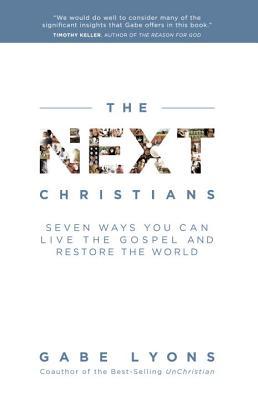 The Next Christians: Seven Ways You Can Live the Gospel and Restore the World Gabe Lyons (Multnomah) $14.99 This is the brand new paperback edition, with a new chapter added (on civility, lessons learned from last years Q event where they hosted the controversial “Ground Zero Imam” Feisal Abdul Rauf, who Gabe has befriended. This struggle to build bridges and offer a faith that is more generous and less divisive is hard for those of us who have deep convictions (it is easy to be civil if one doesn’t hold firm believes.) It is a great chapter, added to the other six characteristics of “next Christians” and those who want to be counted among God’s agents of restoration.
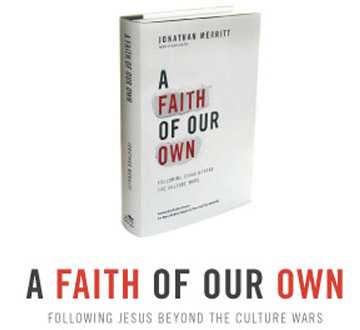 A Faith of Our Own: Following Jesus Beyond the Culture Wars Jonathan Merritt (FaithWords) $19.99 I mentioned this above, noting that it is at once a fabulous story of one man’s journey to a more wholistic, culturally engaged, and less partisan faith, but it is also a call to conservatives and liberals to distance themselves from their ideologies and to be more truly Biblical, following the reign of Jesus wherever that may lead. He’s pretty sure it won’t lead to the political extremes, unless being courageously moderate and imaginatively counter-cultural is itself, these days, an extreme position. It is radical, but graciously so. It is wild, but joyful. It is prophetic, but heart-broken, not mean. And wise. And hopeful. And really interesting. As Sammy Rodriguez (President of the National Hispanic Christian Leadership Conference) puts it Merritt wants to “reconcile sanctification with service without embracing the extremes.”
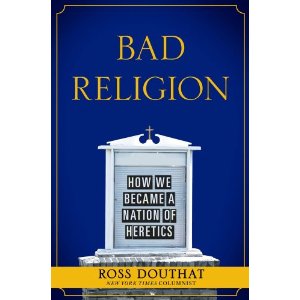 Bad Religion: How We Became a Nation of Heretics Ross Douthat (Free Press) $26.00 I trust you know that the Free Press is one of the nation’s most respected public affairs publishers, indicating that this is a serious book that will be discussed in somber tones on the important talk shows. Formerly a senior editor at The Atlantic, the author is the youngest columnist for The New York Times op-ed page, and author of several important books. Blurbs are from excellent, nuanced, careful writers and critics, such as Timothy Keller, Alan Jacobs, the upbeat, popular Jesuit James Martin, and “crunchy con” author Rod Dreher. We got the book in yesterday—the first place in the country, I believe—so I can do no better than to share these stellar blurbs. Wow, if they are even partially right, this is going to be a book that you should consider.
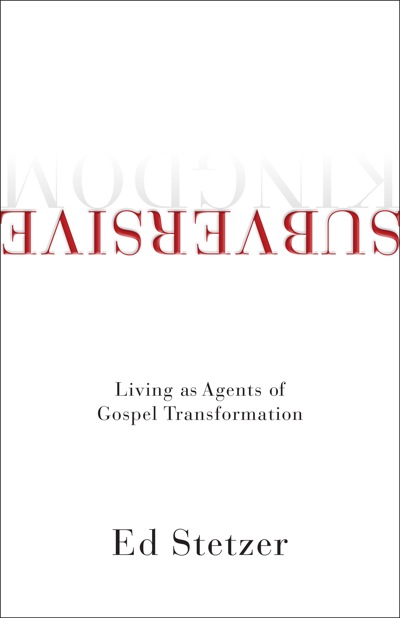 Subversive Kingdom: Living as Agents of Gospel Transformation Ed Stetzer (Broadman Holman) $14.99 A few weeks ago I did a list of books about the missional church, about energetic new, culturally-savvy, future-facing church plants and “fresh expressions” of congregational life. I don’t think I listed any of Stetzer’s many book on congregational life and Kingdom-driven church planting, but I could have. He is energetic, upbeat, inspiration, and very wise, solid about how do to do this important stuff. He has been a fan of Q since it’s inception, and it is great that he will be there again this year. His brand spanking new book—it releases next week, and a few stores have just received them—is about this whole Kingdom vision, missional, risk-taking sort of radical discipleship. It revisits and updates teaching he gave in his very first book, a small paperback we have sold for years, Compelled by Love: The Most Excellent Way to Missional Living (New Hope; $14.99) It looks great, and we are happy to offer it now. If you need some help getting your juices flowing and rekindling your fire for faith in action, this could be just the ticket.
 Here is another way to get into the Q spirit, even if you cannot be at the gathering. We have, in the past, promoted the great DVDs and study books (which include articles to read and discuss). These are grouped around themes, are presentations drawn from previous Q events, and are exactly the sort of culturally-engaged, big-picture, thoughtful faith-based stuff that we simply must be doing in our fellowships and churches if we are going to form people who are conversant and propelled to be involved in the world in distinctively Christian ways.

 Leaving Egypt: Finding God in the Wilderness Places Chuck DeGroat (Square Inch/Faith Alive) $14.99 This book is special for a variety of reasons. The “alligator-skin” suitcase feels neat, with a bit of texture, and the black and white picture of the suitcase before each chapter is a visual reminder as one moves through the pages that we really are on a journey, a journey away, a journey home. It is handsome and a nicely made paperback.
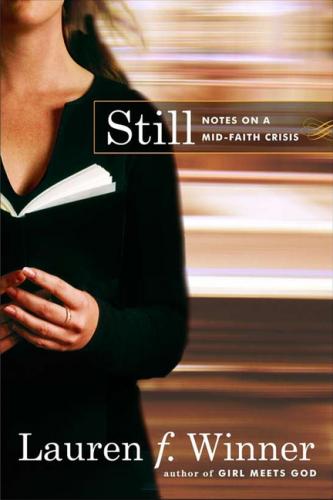 Still: A Mid-Faith Crisis Lauren F. Winner (HarperOne) $24.99 I gave this a brief, positive review when it first came out—my wife had zoomed through our advanced copy and was deeply touched by it, taken with its artful literary style, and the realistic story of loss and confusion and loneliness. I had read parts, found it very moving, wondrously written, and a bit sad. In that review I noted that Harper even had a Lenten reading guide available for download for those that wanted to read it’s melancholy chapters bit by bit during Lent.
 New Collected Poems Wendell Berry (Counterpoint) $30.00 Any collection of Berry’s work is a cause for celebration, and this “new” collection of previous work is the most comprehensive volume done yet. It is a big, handsome hardback with, as you can see, a great brownish design and a beautiful hawk on the cover–and, the photo on the back is new, for what it is worth. There is one new poem, (“The Country of Deja Vu”), a short little piece about reprinting his old work, which seems kind of funny.
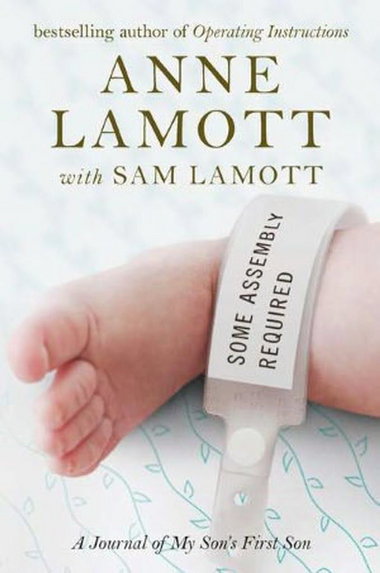 Some Assembly Required: A Journal of My Son’s First Son Anne Lamott (Riverhead) $26.95 Well, not sure what this has to do with Lent, or Easter-time, exactly, but it is a new book that ought to be in some book lover’s Easter basket. If you want to give a gift that will be a good read, a fun and funny and troubling and inspiring book, the new one from this beloved zany writer—colorful is putting it mildly—could be just the ticket. I know this isn’t for everyone. She uses some language. Her theology is, uh, eccentric. A few hardened secularists might find her too daffy in her love for Jesus. Some conservative sisters and brothers will find her open-minded liberality just a bit much. And the whole premise is about an unplanned pregnancy and a young couple that isn’t married. Yet, she talks about her church, she talks about her fears and hopes, she talks about her foibles, she talks about her incredible love for her son, Sam, his girlfriend who he got pregnant, and the wonderful little boy that came to be. And the whole shebang, the extended family, the new relatives, the ups and downs, etc. etc.
