As you may have heard, we had the great opportunity last night to sell books for the world-famous theologian from Yale Divinity School, Dr. Miroslov Volf. We have read much of his work, and carry all his titles, so we were thrilled and honored when the Ecumenical Institute of Theology at St. Mary’s Seminary in Baltimore asked us to serve them by setting up books. We were with Volf at an important working seminar in the afternoon, exploring questions about the common good from his latest book A Public Faith and heard him do a prestigious lecture series in the evening. I must say that all that we have heard about how personable he is was true. And the bit about him being a so smart, sharp and clear, it’s true, too. What an engaging lecture he gave, and what grace he showed to hang out with us a bit. We loved his Croatian accent, the stories he told, and his generous attitude about world religions and public justice. Mostly, though, we were glad that in this very ecumenical setting–kudos to the E.I for this amazing ability to draw such a diverse crowd for such good work—he gave testimony to Jesus Christ, expressed in utterly classic, historic clarity, without equivocation. It was a good, good, day for us; hard work, but rewarding.
We now have some EXTRA BOOKS left over and, to be perfectly honest, it is better for us to sell ’em really cheaply than to pay to send back. Why not make it a win/win situation and buy some of these are great, deep discounts? The following titles are all 35% OFF discounted while supplies last, THIS WEEK ONLY. THIS OFFER EXPIRES NOVEMBER 18TH. Prices shown, as always, are the regular retail prices, and we will deduct the discount for you.
Just use the link to our webpage order form offered below. Tell us what you want and we’ll send ’em off with a smile. A Public Faith: How Followers of Christ Should Serve the Common Good
(Brazos Press) $21.99 I have written about this elsewhere and suggest
it is one of the best and most important books of the year. (Publisher’s Weekly has agreed, by the way.) It gives excellent insights about how we can work for human flourishing, navigate pluralism, and offer uniquely Christian insights about the common good. This is the sorts of stuff that BookNotes fans love, I’m sure, and a helpful bit of bread for our journey towards this Kingdom vision. Rave
reviews from the likes of Nicholas Wolterstorff and Richard Mouw give a
hint of how insightful it is. This really is a must-read! Why not start a book group around this, or buy some to give to people who need to be reminded of the relationship between personal faith and public discourse?
Allah: A Christian Response (HarperOne) $25.99 A masterful and methodological argument on how we can know if anyone worships the same God, what various faith communities claim about right worship, and why seeing common concerns with Muslims and Christians might help us live in our globalized, shrinking world. Very, very interesting, looking at not just interfaith conversations, but fascinating concerns of Muslims about (what end up being wrongheaded) views of the Trinity. Agree or not with all of his conclusions (and I am not sure I do) this is very important and a good example of rigorous theological thinking. Fascinating.
Free of Charge: Giving and Forgiving in a Culture Stripped of Grace (Zondervan) $12.99 If you haven’t read Volf, you could easily start here: a personal favorite, readable, clear, inspiring and very helpful. How can we be gracious in a world were people are “voted off the island” and we all talk about “rights” and we are told we must all “pay our own way.” This truly is gospel stuff, liberating and radical, written in a reflective, quiet tone. Very highly recommended—one of his best. Forward by Rowan Williams, and an endorsing blurb on the cover by the popular John Ortberg.
Exclusion & Embrace: A Theological Exploration of Identity, Otherness and Reconciliation (Abingdon Press) $28.00 This is the one that catapulted Dr. Volf to fame, a book that is a serious, heavy study of “otherness” and pushes us towards God’s vision of ethnic reconciliation. That it has in its shadow the background of genocide in his former homeland of Yugoslavia gives it credibility and considerable anguish. For anyone concerned about justice, global witness, and the hard work of peace-building, this is a seminal book, one-of-a-kind, and very, very significant, which many of taken as a great sign of faithfulness and hope. Award-winning and still his most well known.
Captive to the Word of God: Engaging the Scriptures for Contemporary Theological Reflection (Eerdmans) $18.00 The subtitle says it all. This includes incisive Biblical study, but is mostly about how we approach the Bible, how to use it, how to apply it for our contemporary formation. Many folks wonder how theologians use the Bible, and many wonder if there are reasonable insights about how to wisely plumb the Biblical narrative for our daily living in ways that aren’t simplistic or cheesy or forced. This is a noteworthy model of how a working thinker engages the Scriptures and a helpful pointer to us on our submission to the Biblical text.Nice to know this high regard for Scripture is known at places like Yale!
After Our Likeness: The Church as the Image of the Trinity (Eerdmans) $27.00 One might think this hefty doctrinal study in a big paperback volume is his hardest — and you would be wrong, I think. This is meaty, thorough, serious, but quite accessible, on a topic which every Christian should read about from time to time. The doctrine of the trinity is itself a mind-blowing subject, and this not only explores it well, but shows its relevance for our life together. This is a very good example of how theology can serve the church, serious thinking for the people of God. Kudos!
The End of Memory: Remembering Rightly in a Violent World (Eerdmans) $22.00 Beth and I found the first part of this great fodder for good conversation, and it stands at once as both a book about forgiveness, and also a profound meditation on memory, naming, justice, and so much more. As many truly great books are, it is a bit difficult to describe simply but it is rich, multi-faceted and generously reflective about faith and reconciliation and God’s call for us to be realistic, honest, real, and taken by the forgiveness of God in Christ Jesus. A very handsome hardback, highly recommended.
Against the Tide: Love in a Time of Petty Dreams and Persisting Enmities (Eerdmans) $18.00 Besides the splendid title, I told a few people last night that they should get this if they were unfamiliar with him. These are all very short pieces—most just two or three pages–and allows him to colorfully ruminate on all manner of topics. Sort of a “greatest hits” it is almost like a Volf devotional. Lovely, inspiring, useful, wide-ranging on a vast array of topics and areas of life, from work to church, exploring how love makes a difference. This would make a lovely bedside book, a fine one to discuss together, section by section, or a nice gift that isn’t too demanding of time. Is there a name for this kind of book that you can dip in to so easily? Nice.
Work in the Spirit: Toward a Theology of Work (Wipf & Stock) $27.00 This is a major, scholarly contribution to the conversations about a Christian view of work, one in which he takes exception to more typically Reformed views of our human callings to particular vocations, based on our mandate to be “culture makers” in various spheres of creation. Rather, Volf here brings to the conversation a serious, sustained study of the role of the Holy Spirit in gifting us to serve the common good. That his father was a Pentecostal pastor maybe influenced him a bit, and this “pneumonology” of work is years later still a book that serious thinkers often cite on this topic.
BookNotes
SPECIAL DISCOUNT any book mentioned above this week only 35% off order here takes you to the secure Hearts & Minds order form page just tell us what you want
inquire here if you have questions or need more information just ask us what you need to know
Hearts & Minds 234 East Main Street Dallastown, PA 17313 717-246-3333
I know BookNotes reviews and lists sometimes get a bit wordy, but that is some of the fun, isn’t it?
My desultory theory goes that the BookNotes are usually somewhat shorter and the big whoppers are for the monthly columns. Well, this month, this is true: I shared memories of the Redeemer Presbyterian Church’s Gospel & Culture conference, sponsored by the Center for Faith and Work and listed lots of great books. There are even other titles I could have mentioned, others that should have been noted, and stories I could have told, like the poignant testimony of a woman whose fashion line business failed, but who has now been positioned by God to teach at Parsons, or the good conversation I had about asylum law with a doctor who has worked with women fleeing personal mutilation, or the inspiring stories of entrepeneurs stepping out, trusting God, doing something good for the world, or the gladness I felt when a professor of architecture complimented us on a particular book we had selected. I was jazzed to describe books about Bible-based creation-care to a guy working on wind turbines. And how cool it was that I got to show off L.L. Barkat’s book Rumors of Water: Thoughts on Creativity and Writing to aspiring writers, or that we sold Jeremy Begbie’s fantastic Resounding Truth: Christian Wisdom in the World of Music to several professional musicians. Redeemer’s folks really were an amazing lot and we were thrilled to be there.
A guy can only go on for so long, though. I hope you understand when we say that this long list was given as a gift to God’s reading people, for those who have “ears to hear” or who are themselves already interested in spreading the news of the full gospel, Christ’s reign related to work and culture. I suppose not everyone wants books on Christ’s Lordship over professional spheres, rethinking economics or wondering about how to subvert the status quo in fields that are dysfunctional, or ways we can work for the common good in typical workplaces. I realize that not everyone is passionate about helping nurture conversations about ordinary folk serving God in ordinary jobs, careers and callings. But we think it is life-giving, world-changing stuff, and are glad you care. Thanks for following our reviews, for buying books, for spreading the word.
Please do visit the November Hearts & Minds monthly columnif you have not, read through the many titles and my asides about them. I am sure there will be something there you need to know, something new or interesting that will help you, even today. Don’t delay. The discount for the time being on those titles listed is 30% off. We need to “move some product” as we say in our industry and hope offering the deeper than usual discount will be a way to help you, our friends and fans, and help us get some much needed shelf space (and some much needed cash.) It’s a good, big list on a whole lot of topics, offered at a great bargain. As I literally heard one New Yorker say, “What’s not to like?”
You might even want to forward that column on to others — church librarians or fellowship group leaders or your pastor. Put it on facebook and tweet away, friends; let’s keep this party going on. Kudos, again, to everyone at Redeemer, new friends and old, that made our time there so very, very rewarding. And thanks for reminding us that there is a hunger for the printed page, a desire for solid theology applied winsomely across the whole of culture. Thanks be to God.
HERE ARE JUST A FEW OF THE COVERS OF BOOKS I MENTIONED.
AND CHECK THIS OUT — JUST WONDERFUL. How about this wonderful video clip? It very nicely expresses in just a few minutes much of what we think about why this topic is so important. Do you see work as an opportunity to worship? Does your congregation even talk about these things much? If you agree with most of this, what next? What might you read, who might you partner with, how can you learn to think and live more faithfully in this large, strategic side of life? Maybe a book group? Let us know if we might help. Remember our Books By Vocation bibliography.
In the last post I mentioned 12 books that were waiting here for us after a week away from the shop. Actually there were more. Here’s 10 of ’em. They deserve more discussion, they really do. But here ya go, short and sweet. Readers of BookNotes get a 20% discount—the handy link at the bottom takes you to our order form where you can type in whatever you want. We’ll take off the discount and ship it right away.
More Lost Than Found: Finding a Way Back to Faith Jared Herd (Nelson) $15.99 After reading and hearing David Kinnaman talk about his research of the epidemic of twenty-somethings drifting or dropping out of church, presented in the must-read You Lost Me, I now more than ever can’t wait to share this. Herd has a history of losing faith, now works with young adults, and is about as pop culture savvy as they come (drawing on Barry Taylor and Neil Postman and David Dark and David Bazan, and a fascinating crew of outside-the-box thinkers, writers, social critics and theologians.) Agree fully or not, this is a wild ride and a generous invitation to realize how God is calling us back to faith. Pretty darn cool, provocative, and finally quite helpful. The back cover suggests that “Herd comes alongside anyone who has ever struggled with faith to reengage them in the truth they long to hear. If you have ever felt you didn’t fit at church or had questions about God, may it’s time to give your faith another chance.” Herd’s messy family life–baptized in religion before he was every baptized in church–gives him a certain vantage point to understand the hurting and de-churched.
Be Not Afraid: Facing Fear with Faith Samuel Wells (Brazos Press) $17.99 Wells is the brainy British scholar-pastor who took Will Willimon’s place as the Dean of the Chapel at Duke. He is known for sparkling, powerful preaching, remarkable use of language, and solid, freshly construed, orthodox theology. Blurbs on the back are from Scott Bader-Saye, Lillian Daniel, Tom Long and Jonathan Wilson-Hartgrove, all who rave about his “deep thought and wordsmith’s craft.” Long says “each essay is a gem…directly addressed to the reader’s heart and mind…” Wilson-Hartgrove avers that “Sam Wells is a great gift to the church today. Listen to him.” Lillian Daniel notes that the book is “witty, vulnerable, challenging delight, a perfect bedtime companion in the dark night of the soul and a worthy friend when the lights come back on.” A much-needed voice on a variety of deep questions and mature, vital matters. Go to the Brazos website to see the list of chapters and their topics.
Grace for the Journey: Practices and Possibilities for the In-Between Times Beverly A. Thompson & George B. Thompson (Alban Institute) $17.00 You may know that we stock nearly all of the Alban Institute’s many books and often affirm the way they bring serious research-based findings into view for mainline congregations. If you need practical stuff on vision statements, large or small churches, pastoring with fruitfulness, coping with clergy burnout issues, thinking about worship or preaching, or any number of such things about congregational management, they are a very valuable asset. And yet, they also do these occasional books that are just luminous, beautifully conceived, full of great stories and sweet passion for the call to ministry in our time. This book is grounded in Scripture, spiritual disciplines, and an astute understanding of congregational life, and yet is more than a practical resource, it is a warm and uplifting read that will fire your imagination about how to be a congregational leader. George also wrote Church on the Edge of Somewhere which was about how we place ourselves in our social terrain, one of the most stimulating and curious books I read last year. The couple co-pastors a Presbyterian congregation in Atlanta and work with the Interdenominational Theological Center (ITC) there.
Close Enough to Hear God Breath: The Great Story of Divine Intimacy Greg Paul (Nelson) $15.99 I have said before that I believe Greg Paul is one of the finest writers doing Christian books these days, easy to read (despite their raw honesty about the pain of this fallen world and broken culture) and hopeful. His first two books (God in the Alley and The Twenty-Piece Shuffle) were about urban mission, about the relationship between the well off and the poor, about how we all need each other to reflect God’s good desires for the planet. They are hardly known in some circles, and that is a shame. He is a creative writer (but not overly eccentric) and a passionate prophet. Leonard Sweet notes, in a spectacular rave endorsement, “This book has a heart that beats louder than most any book you’ll ever read.”
Here is what is says, loudly, on the back cover: “There are a thousand voices telling me who I am or who I should be. I want to hear what God has to say. I want to know that he’s really there. I want to know that in the whole grand, tangled sweep of the human story, my little story matters. I need to hear his voice, speaking to me, in my own ears…” Yes, there are dozens of fine books on God’s relationship with us and how our stories and lives matter to Him. Reading the Bible, they assure us, should help us understand that. This one really does. I’ll admit this has been here a few weeks, but it is still pretty new and I just had to give it another shout out. Won’t somebody give it a try?
Happiness Joan Chittister (Eerdmans) $20.00 The last few books by Sister Joan have been little prayer books, devotional pieces, delightful works of spirituality. This is brand new release is a bit more hefty, if you will, drawing on a variety of sources to explore the nature of human happiness. Of course she brings her sort of liberal Benedictine spirituality to it all–Rabbi Michael Lerner of Tikkun calls her a spiritual elder who is a “wise woman.” As Phyllis Tickle puts it, “Sr. Joan Chittister never disappoints, but here she has had exceeded even her own high standards. Happiness is a penetrating, insightful, wide-ranging study…it is pastoral. A thoughtful reader will be wiser for having read it, certainly, but also more complete and, I would wager, more at peace.” A quick skim of the table of contents assures readers that this is thorough, thoughtful, and covers a wide range o
f concerns, rooted in traditional insight of the Judeo-Christian heritage. Not preachy or directly theological, this could be a real gift for somebody you know.
The Christian College Phenomenon: Inside America’s Fastest Growing Institutions of Higher Learning Samuel Joeckel & Thomas Chesnes, editors (Abilene University Press) $24.99 I was sold on this book’s importance before I even ordered it and can’t wait to work through it’s copious amount of statistics and findings. Yes, evangelical Christian colleges are the fasting growing sort of colleges (by far; there are 110 college, by the way, in the Council for Christian Colleges and Universities) and they are growing, and often changing, dramatically, while working hard to be more integrated as wholistic institutions. Most are clear about wanting to honor God and serve their students well in everything from residential life to academic affairs, from multi-cultural concerns to service learning opportunities. Further, the language of relating faith and learning is common-place and most at least attempt to guide their students towards seeing their majors as holy vocations, not a passport to privilege but a door to serve. (This is a great passion of ours, by the way, cheering and resourcing uniquely Christian colleges in their thinking faithfully about these very things.)
Here, now, we have the inside scoop, with amazing research done on how faculty are doing, what the problems of race and gender might be, how scholarship is done, what research and teaching look like, and how the faith development of students is pursued. In my quick skim I am already hooked, wanting to know more about how these teachers and administrators really feel and what they reveal about their work. As Richard Hughes—himself a wise scholar and astute observer of these very matters—puts it, “This richly nuanced portrait of Christian higher education in the evangelical genre is a tour de force.” Know anybody who works in higher education? Anybody who cares about Christian colleges and universities? Anybody who is wondering about the next generation of evangelical leaders arising now in these places? Good reviews of this great book have been done by Mark Noll, and Lauren Winner (both who have PhDs in history, of course, and are sharp social observers.) Joeckel is an associate professor of English and honors professor at Palm Beach Atlantic (and has written on everything from C.S. Lewis to humor theory) and Chesnes is an associate professor of biology at the same institution. He is a rising voice in the conversations about faith and science and makes a perfect fellow researcher with Joeckel. Renowned scholars George Marsden and Martin Marty provide incisive concluding essays. A must-have work for anyone interested in this field. AUP is doing great work these days. Remember, you heard it here, first.
The Essential Commandment: A Discipleship Guide to Loving God and Others Greg Ogden (IVP) $16.00 I hope you know Ogden’s other popular workbooks like this (The Discipleship Essentials and Leadership Essentials.) They are very useful, including 24 different Bible studies or lessons good for individuals, small groups, mentoring, or classes. These are in-depth and well tested, evangelically clear, Biblical, solid as can be. I know churches that use them, campus ministers, folks who mentor others. Well, this is a brand new collection of 12 similarly thorough studies, complete with questions for discussion, that obviously come out of Ogden’s renown mentoring/disciple-making ministry at his Presbyterian Church. As the subtitle notes, these lessons are on just two big topics, two essential commandments: loving God and loving others. This stuff could deepen your own discipleship, transform your fellowship, rock your class, shape your congregation. Once again, IVP offers a clear, solid, useful tool, filling a need for just this kind of curriculum piece. Kudos to all involved.
What Shall We Say? Evil, Suffering, and The Crisis of Faith Thomas G. Long (Eerdmans) $25.00 Long is one of those eloquent and elegant erudite gentleman whose books some of us read regardless of their topic. One of our finest and best-read customers, a United Methodist pastor, just today emailed me saying he has started this and it is a great read. I’ve not read it at all yet, but was with him almost a year ago and he reminded me just was a great communicator he is; I’ve been waiting for this. Richard Lischer–who wrote one of my favorite preaching books, ever—from Duke notes that Long “knows where the action is—in the gulch between humanity’s perennial questions and God’s eternal revelation.” Yes, there are oodles of other theodicy book out there, but this looks to be very nicely done, warm and incisive, too. This project began, by the way, as the 2009 Thomas White Currie Lectures at Austin Theological Seminary, a distinguished series which includes in its linage Richard Niebuhr’s Christ and Culture. Long is a preaching prof at Candler, which is part of Emory University.
I Didn’t Ask to be Born (But I’m Glad I Was) Bill Cosby (Center Street) $21.99 Did I say above that one of these astute authors of a fairly serious book at studied the nature of humor. Well, Cosby has studied this his whole life and here he gives us a plain old book of humor pieces, the first one since his classic Cosbyology. I don’t have to say much about this, except maybe to note that I have been laughing right out loud a lot reading Flunking At Sainthood that I mentioned in the last post. She disses many of the spiritual classics and fails at most of her well-intended efforts to live out the practices (a different one each month) that she is reading about. It is splendid, insightful, and really, really funny. Cosby isn’t like that. He is just flat-out funny. He makes up some characters that may someday stand with Fat Albert and the Cosby kids. This looks great.
Barefoot Church: Serving the Least in a Consumer Culture Brandon Hatmaker (Zondervan) $18.99 The Leadership Network has created a series of books called Exponential, which is mostly about church planting, innovative outreach, missional initiatives to expand God’s Kingdom. This book deserves a longer review and I certainly hope to write more about it once I’ve read more of it—it brings together the Biblical insistence that we serve the poor and oppressed with the desire to reach the un-churched in authentic and caring ministry. This is loaded with ideas, powerful stories, extreme challenges. Two friends of mine in the last few weeks have mentioned this guy to me and I’ve wanted to know more about his Austin New Church and t
he strategic missional effort called Restore Austin. I presumed the book title emerged from the “barefoot doctors” movement in China but, in fact, the story is told about a Texan gentleman giving up his expensive cowboy books. Hatmaker brings serious missional thinking, good cultural criticism, tons of cool citations and footnotes and moves from their own inspiring work to offering ways to help you and yours get busy doing this wholistic ministry of word and deed, evangelism and justice. This book deserves to be considered, discussed, tried and tested. Join me in spreading the word. Good work, Austin folks. Good work, Zondervan.
BookNotes
SPECIAL DISCOUNT any book mentioned above 2O% off order here takes you to the secure Hearts & Minds order form page just tell us what you want
inquire here if you have questions or need more information just ask us what you need to know
Hearts & Minds 234 East Main Street Dallastown, PA 17313 717-246-3333
One of the fun things for us about being away–besides meeting so many faithful and friendly customers on the road—is returning to a batch of books that have just been released. Being with CLS and CCO took us off site for a while. Coming home to a week’s worth of new titles is like Christmas in October. The crazy snow makes it feel that way, too, but that is another story.
Here are 12 brand new ones, briefly highlighted. Notice the 20% off BookNotes special and our handy order form link at the end.
Simply Jesus: A New Vision of Who He Was, What He Did, and Why He Matters N.T. Wright (HarperOne) $24.99 I listened to some old N.T. Wright audio CDs this week and seeing this new book promising to “unleash the full story of Jesus” made me so eager to read more. I suspect he has said much of this before and it is written in a way to follow up Simply Christian. He has a way of distilling erudite scholarship, making it understandable and helpful. As Rowan Williams puts it, it is “yet another of his great gifts to the worldwide church.” If you haven’t read Wright on Jesus (Following Jesus is a wonderful collection of sermons; Challenging Jesus is a masterful summary of the first three volumes of his magisterial “Christian Origins and the Question of God” series) this would be a great introduction. By the way, as he says in the forward, there is new material here, too—“twists and turns” that he was unaware of when working on his previous books on Jesus. This is not a simple adaptation, but fresh, good kerygma.
The Meaning of Marriage: Facing the Complexities of Commitment with the Wisdom of God Tim Keller (Dutton) $25.95 I have not read much of this yet but it is a winner, no doubt. The footnotes are intriguing, the text nearly beautiful at times, the feel of the attractive hardback very fine. This originates in a sermon series the Reverend Keller preached in his solid New York congregation although some portions have been co-authored by his wife Kathy. It is more intellectually substantive than most religious books on marriage and it is surely a deeper look than some might be used to. But, as always, Keller is a master of speaking wisely into an urbane and sophisticated culture of younger professionals and he is more than willing to speak truth to power. This is an honest, intellectually-engaging, clear-headed book on how serious Biblical insight could have vast implications for our day-to-day marriage and family relations. Not in a relationship? No matter, this is important gospel-centered stuff, well thought through. A must read.
Jesus + Nothing = Everything Tullian Tchividjian (Crossway) $18.99 While we were in the Chicago suburbs at the Christian Legal Society conference last week I drove to Crossway’s offices to snag a few of these, having heard they were just shipping. The nice stack here on our “new book” release table makes me happy—Billy Graham’s grandson is smart and very cool and an excellent writer. His books strike me as gutsy and real and loaded with grace. If you picked up his outstanding Unfashionable or the one on Jonah (Surprised by Grace) you’ll know his finely tuned ability to relate faith to vibrant, culturally engaged living, but always out of a gospel-centered life. The title says it (almost) all, and his ruminations here look very, very helpful. Steve Brown suggests (well, really, he probably booms) “If you give a book to anybody this year, give this book. If you yearn for awakening in the church, underline this book and share what you’ve learned.” Very good advice.
Flunking Sainthood: A Year of Breaking the Sabbath, Forgetting to Pray, and Still Loving My Neighbor Jana Riess (Paraclete) $16.99 Riess has edited a bunch of books, reviewed oodles others (and penned the very odd What Would Buffy Do? which was one of the very first vampire-related books I ever read part of.) This new memoir is fabulous–really, really good on a number of levels. The back cover calls it wry, but I’ve been reading through my advanced copy and it is more than wry, it is hilarious! And very wise. It has endorsements by A. J. Jacob (and if you haven’t read The Year of Living Biblically yet, drop everything and send us an order asap.) Lauren Winner writes of this that is is “the best book on the practices of the spiritual life that I’ve read in a long, long time.” A vulnerably shared, real story—see the fine print of her mishaps and failed efforts on the top of the cover to get a sense of what it’s like. Note, too that “sainthood” is misspelled on the cover art. Ha. Unless you’ve already arrived (and I suppose some of you have) this book will be like an encouraging companion to keep on keeping on. It is a blessed joy, helpful and fun. David Dark calls it “freaking wonderful” and the opening line by Orwell is enough to ponder for a month. I love it!
Indescribable: Encountering the Glory of God in the Beauty of the Universe Louie Giglio & Matt Redman (Cook) $14.99 (paperback) and $24.99 (full color coffee table gift edition) Many know Giglio’s passionate young adult worship conferences and even more know, now, the often viewed talk (we sell the DVD) where he invited people to an awesome awareness of God’s immense glory by showing slides of deep space (from Hubble telescopes.) Contemporary worship leader Matt Redman had written about worship, is interested in the awesome hugeness of God, and has a curious interest in science. The two were great as they collaborated in a moving presentation blending science, stunningly artful super-graphics, and of course the powerful songs. The much-anticipated book has released based on those presentations. The gift book is hefty and handsome and the paperback (which still has some b/w outer-space photography) is extraordinary. Get this on your Christmas wish list, or think about who you can share it with. A lot of people are fascinated by science, and many need to be reminded of the great goodness of our awesome Creator. Highly recommended.
Missional Spirituality: Embodying God’s Love from the Inside Out Roger Helland and Leonard Hjalmarson (IVP) $16.00 Wow, all I can say is wow. I’ve studied the copious footnotes and am delighted at the vast array of fascinating sources, the important books, the astute authors, the edgy social theorists, and solid Bible guys they draw upon. The book is both stimulating and–I trul
y believe–helpful as an important corrective to an overly pious, inward sort of spirituality. (And, conversely, an popular rhetoric of being missional that seems too often unhinged from profound spiritual formation and significant church life.) The authors are a Canadian Baptist and an evangelical Mennonite. Alan Hirsch wrote a great forward. Michael Frost declares “This book is a triumph!” Other rave reviews come from Gordon Smith (whose word I always trust), David Fitch, of Northern Seminary, whose End of Evangelicalism puts its printed finger on a ton of important insights about the shifts within evangelicalism) and the popular missional cheerleader, Reggie McNeal. This is certainly one of the most important missional books to date. Kudos to IVP for well written, important and timely insight.
Creating a Spiritual Legacy: How to Share Your Stories, Values, and Wisdom Daniel Taylor (Brazos Press) $14.99 Leave it to Brazos to turn a typical (and sometimes overly sentimental) practice of scrap-booking into a major opportunity for serious theological reflection. Well, the book isn’t really about scrapbooks, per se, but it is about how to discover your own spiritual legacy and story. It helps you learn how to foster a storytelling ethos in your family, church, or organization. Taylor has previously written a marvelous book on how we over-value certainty and another on the role of stories. He has a lovely book called Letters to My Children and here he has combined the insights of them all, lovingly creating a philosophy of storytelling which offers insight into how to discern and communicate the central narratives of our own lives. Endorsements include a fine recommendation by John Wilson (of Books & Culture), the remarkable literature professor, Dale Brown, of the Buechner Institute at King College, campus pastor Ben Patterson (Westmont College) and the always eloquent Calvin Miller. This is a book like no other and should appeal to many BookNotes friends. It deserves to be celebrated for its beauty and unique topic and it deserves to be honored for seriously tackling a very, very important side of life to which we rarely give sustained attention.
In Visible Fellowship: A Contemporary View of Bonhoeffer’s Classic Work Life Together Jon Walker (Leafwood Publishers) $13.99 You may know that Costly Grace (also by Jon Walker) is one of the finest studies of Bonhoeffer’s Cost of Discipleship we’ve yet seen. It walks us through it and explores in very readable prose just how it might apply to our daily discipleship today. Thank goodness that Walker has done this new one. This is one of the only studies (the only one of which I am aware, at least) about Bonny’s great book, Life Together. With the loud and urgent cry for community so ubiquitous these days, and a hunger in our churches to be more relationally supportive, this helpful guide should be a mega-seller. If only. If only we get the word out that Walker is a reliable guide to a true Christian classic. Please help us spread the word.
Grace Effect: How the Power of One Life Can Reverse the Corruption of Unbelief Larry Alex Taunton (Nelson) $16.99 There has been a bit of a cottage industry from Christians debating the so-called “new atheists.” Several are quite good and we stock them all. This seems to be a different tack, a thoughtful engagement with the debate, but focused on the documented evidences of the implications of the Christian worldview. “Simply defined, ” he writes, “the ‘grace effect’ is an observable phenomenon–that life is demonstrably better where authentic Christianity flourishes.” The Grace Effect describes the authors debates with Christopher Hitchens, Sam Harris and Richard Dawkins but is anchored in the compelling narrative of a girl named Sasha, a Ukrainian orphan whose life had been shaped by atheistic theorists, and the story of her life’s redemption through the transforming power of God’s grace. Dr. Olivera Petrovich, a research psychologist at the University of Oxford, says of it, “This highly readable book is a collection of powerful insights into the long-term consequences of spiritual indifference and, above all, a remarkable example of how to conquer it.” This is a smart book (laced with wonderful quotes from classic literature from Milton to Dostoesvsky to Huxley to Elliott) but the emotional power of the story of Sasah reminds us that this is a very down to Earth, human story, and story that can change lives and the lives of nations. Here is a short video with the very engaging author telling of a late night dinner with Christopher Hitchens, their trip to the Ukraine to adopt Sasha, and the way the gospel reverberates through lives and cultures. Do check it out and if you want the book, do come back and buy it from us.
The Triumph of Christianity: How the Jesus Movement Became the World’s
Largest Religion Rodney Stark (HarperOne) $27.99 Several different
scholarly titles showed up while we were away and they are all so
interesting. This, though, deserves special mention, as it is in many
ways a top-shelve, major contribution that will be taken very, very
seriously in the scholarly guilds of religious studies, history and
sociology. Stark has written other major works such as The Rise of
Christianity. He is given rave reviews from popular journals such as The Christian Century and Christianity Today (who awarded Discovering God, a 2008 book, an Award of Merit.) Stark is the
Distinguished Professor of the Social Science and co-director of the
Institute for Studies of Religion at Baylor University. Just over 500
pages, some of our customers will know this is a must-read.
Left, Right & Christ: Evangelical Faith in Politics Lisa Sharon Harper & D.C. Innes (Russell Media) $22.99 As the election season proceeds I am sure I will revisit this often, drawing on each author’s important points as I write, teach, and talk about a Christian perspectives on politics. Perhaps it will serve you in such a way as well. As you might guess, this is a co-authored debate-style book, with a Christian who is a committed Democrat and a Christian who is a committed Republican each explaining how their faith and Biblical insights compel them to align themselves (even if always provisionally, as they both insist) towards more-or-less liberal or conservative public policies. D.C. Innes is a popular professor of political science at The Kings College in New York (and an Orthodox Presbyterian minister) while Ms Harper is an activist for Sojourners in DC who has worked with InterVarsity Christian Fellowship.
Marvin Olasky writes one forward to the LR&C; he is known for his insistence on a stauchly conservative Christian worldview (he writes often for World magazine) and he writes here “If this isn’t a conversation starter for Christians, than nothing else will be.” Jim Wallis of Sojourners has another forward, again noting that this book will certainly stimulate good discussion and deep thinking. I hope to write more carefully about this book in the future but don’t wait for my input. You get the point: this is ideal for book clubs, conversation-starters, to tweak our ideas by reading more than just one viewpoint, to give to that person who just doesn’t get your viewpoint. There are six or seven endorsements on the inside, each by folks I really respect (who hold to pretty diverse socio-political viewpoints, in fact, from Carl Trueman and John Anderson to Jonathan Merritt and Nicole Baker Fulgham. David Gushee says “One might have thought there was nothing new to say in or about this burnt-over disctrict, but in their sharp, yet civil, dialogue Innes and Harper offer provocative and creative new reflections.” Thanks to Mark Russell for his good work in shepherding this project and for designing such an attractive, clear, fair-minded, interesting, contemporary book. Here’s a fun video piece they did to capture the usefulness of this vibrant conversation. Enjoy. Notice how the advertisement at the end says something like “wherever fine books are sold.” We would be one of those places. As I hope you know we care about these very fine books and stock them because we think they will helpful to you and yours. Let us know what you think, and use the handy link to the order for page if you’d want.
BookNotes
SPECIAL DISCOUNT any book mentioned above 2O% off order here takes you to the secure Hearts & Minds order form page just tell us what you want
inquire here if you have questions or need more information just ask us what you need to know
Hearts & Minds 234 East Main Street Dallastown, PA 17313 717-246-3333
It has been a whirlwind of a week, delivering books to the Christian Adventure Association (where we offer books about rock-climbing, backwoods safety, creation-care, and devotionals inspired by the awe of creation, and some important things on experiential education), a UCC retreat on spirituality (using icons, so we sold some of our wonderful books on iconography), a book display with the prestigious scholar Philip Jenkins (Derry Presbyterian in Hershey brings in the best speakers! We were the first place in the country to get his brand new Why We Can’t Ignore the Bible’s Violent Verses [HarperOne; $26.99]), and our beloved yearly trek to Wee Kirk, an event for leaders of small, often rural, congregations. And we got boxes of books up to First Presbyterian Church of the Covenant in Erie, PA, where Eric Metaxas will be speaking, lecturing on his book on Wilberforce, his book on Bonhoeffer (now out in paperback) and his brand new spectacular collection of lectures by famous Christian thinkers (which I advertised on facebook, Socrates in the City:Conversations on “Life, God, and Other Small Topics.”) I might even be able to swing an autographed copy of any of his stuf if you email us in the next few days.
If you follow me on twitter you may have seen, too, that I spoke three times on Saturday at Shippensburg University to a gathering of students wanting to relate faith and life, thinking Christianly about their callings and college careers, and how to see God’s Kingdom as a key to shaping their vision for passionate, meaningful, culturally-relevant faith. The CCO staff over there put it together so of course we celebrated the launching of the new Jubilee 2012 website; the new slogan reminds us of God’s care for all of life: “Everything Matters.” I loved meeting these young collegiates and thank them for allowing me into their lives. I meant it when I read an excerpt of Gabe Lyon’s great book The Next Christians (Doubleday; $19.99) and said it was a book about them!
Today we are busy ordering books on family life for a resource center at a great mainline church in Townsend, MD and researching titles we’ll take to a palliative care conference for nurses and hospice workers (sponsored by our local hospital) and I’m trying to work on book reviews that I do regularly for Q: Ideas, Comment magazine, and CPJ’sCapitol Commentary. And–oh yeah–Beth is packing a rented truck which we will drive to one of the coolest things we do all year: the Christian Legal Society’s annual conference for lawyers and others working in the field of law. What an inspiring, important organization!
All of this reminds me not only of how many friends we have all over and how grateful we are to partner with folks who need books provided for events, conference, book tables and such.
DO OTHERS REALIZE HOW GREAT THIS ALL IS? And it makes me wonder if most Christians get to see what we see—a vibrant and robust living out of faith in such varying venues and areas. From conversations about making a living in farming in small towns (at Wee Kirk) to struggling with questions of global peacemaking and responsible interfaith dialogue (Jenkins) to how church and society can be transformed by learning about the radical social witness of evangelical leaders like Wilberforce or Bonhoeffer (or Metaxas himself, as his innovative work in NYC through Socrates in the City shows.) The books we have and the way we are invited to get them to various sorts of faith communities and the good folk we meet along the way illustrates to us that God is alive and well, that the reign of Christ is bringing hope and renewal and new social initiatives to the fore, as a modern-day reformation is quietly bubbling here and there.
My friends David Kinnaman and Gabe Lyon wrote in UnChristian: What a New Generation Really Thinks About Christianity…and Why It Matters (Baker; $17.99) several years ago about how, despite all these good ministries, an abundance of quality folks, and grace-filled, innovative Christian witness going on, many younger adults remained convinced that the church is stuffy (at best), irrelevant, even mean. Of course there is enough truth in the accusation that we must sadly shake our heads and agree and say we are sorry. Unchristian documented both the negative stereotypes and reputations which Christians and churches have these days and also offered stories and examples of folks who are working hard–out of faithfulness to Christ for the glory of God–to change the public reputation of the Christian community.
DAVID KINNAMAN RELEASES NEW RESEARCH: YOU LOST ME
As I said in my review of it in last month’s monthly review column, David Kinnaman has a brand new book out, in some ways a follow up to the best-selling Unchristian. It is called You Lost Me: Why Young Christians Are Leaving Church…And Rethinking Faith (Baker; $17.99) which is specifically a study of young adults who were once part of a faith community and who now reject their faith or have at least significant reconsider its role in their lives. That is, it is about 20-somethings who have drifted or dropped out of their previous church involvement.
This is a tragedy, and it is an epidemic. Kinnaman’s book gives us good tools to understand these youth and their reasons for leaving the church of their youth. In my review I offered a link to a video of David describing one part of the book (the part where he groups many who have left the church into one of three categories which he calls, Nomads, Prodigals, and Exiles.) I also had embedded a cool promo video of him describing You Lost Me inviting us to start a conversation about, and hopefully with, those who have doubts or dissents about church, and want us to talk with them “without freaking out,” as one guy puts it. It is worth watching, and worth sharing. I am very, very excited about this book and think it deserves to be read in every church who has any youth still coming. Parents? Teachers? Campus ministers? Twenty-somethings who worry about their own friends? This book can help.
Will you do us a favor? We would be very, very grateful if you passed that page of my review on to others so they can see that we are promoting this new, important book.
We are sponsoring “An Evening with David Kinnamon” hosted by the Liquid Tuesdays young adult group over at Living Word Community Church. LWCC is on Rt 24 outside of Red Lion, PA, just a few miles from our shop here in Dallastown. Other groups or churches might have hosted this for us, but LWCC has long been supportive of our work, has this great young adult group, and, frankly, serves the best coffee of any church around. I’m not kidding, about the coffee or about that being part of my reason for wanting them to partner with us to host it. As is the case in so many things, LWCC does a great job. The event is free, open to the public, and there is ample parking. There will be some worship music, a talk by David, some conversation replying to his presentation and then time to purchase his books and get them autographed.
***
Beth and I opened Hearts & Minds as an indie business in South-Central PA 30 years ago next month. In October ’82 we were renovating the building with friends from Pittsburgh who moved here for a bit to help us. It is amazing to think of God’s faithfulness, our fantastic staff, and the many great customers we have had over the years. This public event with Kinnaman sort of feels like an anniversary celebration of sorts, even though it is addressing a topic that is for some of use, profoundly heartbreaking.
God is so good, the Kingdom way of living so exciting, and Christ’s gospel so precious that I cannot imagine folks not wanting in on it. But, still, so many teens and young adults, including ones we all know and love, have said “you lost me.” In the last 30 years of bookselling, including a lot of time spent with young adults through the CCO and other campus ministry organizations, we’ve seen post-high school age folks whose lives have been transformed by the gospel, who are active in good congregations, who through God’s grace have found their way to serious faith. Some of our best customers are youngish. We know there are ways to keep students from drifting, ways to keep young people involved, ways to attract twenty-somethings to congregational life and real faith.
Won’t you come and join us as we listen to David Kinnaman, the owner of The Barna Group, author of You Lost Me, as he speaks on Tuesday, October 25th, at Living Word Community Church, at 7:00 pm. If you aren’t in the area, could you help us spread the word? Thanks.
It’s a speedy blog post today, folks. Put on your seat belts, get ready to skim. Gimme five minutes, I’ll give ya a dozen. In no particular order.
Last Call: The Rise and Fall of Prohibition Daniel Okrent (Scribner) $17.00 It was a bestseller in hardcover, the author has been awarded a Pulitzer, and this book is somewhat of a companion volume to the spectacularly interesting Ken Burn’s PBS documentary, Prohibition. You will notice that Okrent was in the film a bit–they are good friends. Glad this very readable social history is out in paper! Can’t tell you how interesting this is, how important, how informative and fascinating. Cheers!
Prisoner of Conscience: One Man’s Crusade for Global Human and Religious Rights Congressman Frank R. Wolf (Zondervan) $22.99 If you were even somewhat moved by my serious review a few days ago of the scholarly research in Silenced (about blasphemy codes and Islamic apostasy laws) by Paul Marshall, which ruminates on the dangers of this crisis caused by the repressive Islamists willing to execute people for merely wanting to hold to their own faith or convictions, this exciting memoir will be sure to encourage. That is a masterpiece of analysis while this is a non-partisan story of a brave man and his remarkable adventures around the globe “where bullets fly and babies starve.” It reads quickly and puts you on the ground, documenting injustices and showing diplomatic and helpful contributions. Representative Wolf grew up poor in a tough neighborhood of Philly, with a severe stutter, bad grades, and mom who took him to Sunday School. He eventually got a degree from Penn State, got elected to Congress from the 10th district in Virginia, and is now one of the most effective voices in the world for human rights and freedom.
Rumors of Water: Thoughts on Creativity and Writing L.L. Barkat (T.S. Poetry Press) $15.00 This is one of the finest books on being a writer I’ve yet seen and a sharply observed bit of nearly devotional writing by a good friend, a tireless advocate for other writers, a brave, new publisher (though this indie press she started) and a Managing Editor at the popular The High Calling blog. It is not a cliche or marketing hype when a great writer such as Leslie Leyland Fields (The Spirit of Food) says that “this is not just a book about writing well, it’s a book about living well.” I intend to tell you more about this later, but why wait? If you know anybody who picks up a pen, pounds away at a keyboard, scribbles in a journal, any sort of writer or creative type, gift them with this wondrous resource. They will thank you, and they will do better work! This is a truly lovely and fine, fine collection of insights and assistance, inspiring any of us to be more attentive to our lives and to communicate colorfully and well.
Folks, This Ain’t Normal: A Farmer’s Advice for Happier Hens, Healthier People, and a Better World Joel Salatin (Center Street) $25.99 Maybe you recall him from The Omnivore’s Dilemma or maybe you saw him in the documentary Food Inc. TheNew York Times called him “the high priest of the pasture.” Joe Salatin is a deeply religious, very jovial, and remarkably astute agronomist—that’s a fancy word for smart farmer, I think–who is convinced that we can all make a difference by working for reforms in our industrialized food systems–or at least in the way we buy and eat our own food. Remember Wendell Berry’s Mad Farmer poems? Maybe Salatin read them. Maybe they are about him, for all I know. Bill McKibben calls it “wonderfully cranky.” It is provocative and yet practical, by a guy who lives it. If you want to see the big picture and are willing to take some baby steps towards greater health, this is for you, whether you like chickens or not.
The Girlfriend’s Clergy Companion: Surviving and Thriving in Ministry Melissa Lynn DeRosia, Marianne J. Grano, Amy Morgan, and Amanda Adams Riley (Alban Institute) $17.00 I suppose you know that there has been in recent decades a large rise in the number of women clergy persons, mostly in mainline churches. Some of the very best pastors and preachers I know are women. Yet, there are not too many books about being a 21st century woman of the cloth. Most of these pastors/authors are youngish and they are wise and fun and helpful. They are Presbyterians. The book is very practical. If you are a woman in church work, you know you need this. If you have a woman on staff as a pastor at your church, you may want to get it for her. But read it first, yourself–it is helpful for us lay folks to realize what our clergy friends are going through. And don’t be surprised when these girlfriends start to dish a bit—short skirts? Pregnancy? Children and families? The Superwoman syndrome? How to command pastoral authority, deal with gender bias in otherwise healthy congregations? Discerning callings? It’s all here, and more. A wonderfully written forward by Carol Howard Merritt, too.
The Early Christian Letters for Everyone: James, Peter, John, and Jude N.T. Wright (Westminister/John Knox) $ 15.00 The “for everyone” series is a personal favorite, smallish and accessible but chock-full of Scriptural insight and teacherly assistance. Wright is a master of first century Judaism and the early Christian movement, so he knows the New Testament literature well. He has a wholistic Kingdom vision that just doesn’t quite, so we are especially eager to have folks read these. He’s almost done with the whole N.T. (with Revelation For Everyone coming soon.) These brief commentaries on epistles not claimed as Pauline make up some of the most important pieces of the formation of the early church. We need to know this stuff, through Wright’s good lens. Handy, easy, and really, really useful. Thanks be to God. By the way, Wright has companion small group Bible study guides to go with most of these, in the N. T. Wright for Everyone Bible Studies series from IVP ($8.00.)
Hip-Hop Redemption: Finding God in the Rhythm and the Rhyme Ralph Basui Watkins (Baker) $17.99 There are two or three must-read bo
oks on this topic and now we have another world-class bit of scholarship that grooves. From Gil-Scott Heron (yeah) to Funkadelic, to rapper Ice-T on through Mos Def and Lauryn Hill, this brother gets it really right. Daniel White Hodge (author of the must read Soul of Hip Hop:Rims, TImbs, and a Cultural Theology) says “This read is for anyone wanting to gain a deeper understanding of not only theology and culture but also how hip-hop’s redemptive value is shown in its style, prose, syntax, and spirituality.” Anthony Bradley notes that “American Christians easily find redemptive themes in the music of Bob Dylan and U2. What Watkins provides are the resources for Christians to understand that if all truth is God’s truth, then God can also be found in the world of hip-hop.” Indeed, as Bradley continues, “I hope Hip Hop Redemption will ignite needed conversations about the ways in which this music and movement can be used to understand the complex urban narratives in American so that the gospel can reach all the communities for Christ.” Watkins, by the way, has a PhD from Pittsburgh and now teaches at Columbia Theological Seminary. Did I say he is a DJ? Oh yeah he is.
Going Deep: Becoming a Person of Influence Gordon MacDonald (Nelson) $15.99 I read everything this guy writes. He is a natural teacher and pastor inviting us to Godly lives, lived richly, drawing on who we are “below the surface.” Here he picks up the creative fiction style of the book he did about an imaginary church fighting over contemporary music and whatnot. (That was called Who Stole My Church and it was not hard to imagine at all, really.) He realizes that the people on both sides of that frustrating deadlock were, frankly, not deep. There were plenty of good people, plenty of sincere people, but not enough deep people. This just came but I cannot wait to read it.
Close Enough to Hear God Breath: The Great Story of Divine Intimacy Greg Paul (Nelson) $15.99 I was blown away by this author’s earlier books about his raw ministry among the urban poor. (God in the Alley and The Twenty Piece Shuffle) so I was thrilled when I heard there was a new, creatively written study of God’s deep desire to be near us. Paul uses intense writing, moving prose and amazing stories—really!—and helps us, as he says, resist the “thousand voices telling me who I am. Or who I should be.” Only God gets to define who we are and this book will help, I’m sure of it. He uses stories from his own family background (to which many will be able to relate) and also from his own work with street people in Toronto. And, he uses the “creation-fall-redemption-restoration” vision of he unfolding drama of Scripture that many of us find so helpful. This guy has guts and clarity and yet has an enjoyably, creative prose style that is more than merely clever. This is a notable book by an important writer. Len Sweet says of it “This book has a heart that beats louder than most any book you’ll ever read.” How’s that for an endorsement?


25 Books Every Christian Should Read: A Guide to Essential Spiritual Classics selected by Renovare (HarperOne) $18.99 This is the sort of book I just love and I’ll try to review it in greater detail soon. It is a very thorough review of each of the 25 books listed, explained and described, along with study aids, discussion resources and an excerpt of the book in question. Renovare, of course, is the contemplative spirituality ministry organized by Richard Foster so these are what is considered devotional classics. The subtitle is true. These choices and the apparatus developed to become familiar was led by a team of Richard Foster, Dallas Willard, Phyllis Tickle, and Richard Rohr. Several who helped were Gayle Beebe, Emilie Griffin, Frederica Mathewes-Green, John Wilson amongst others. Besides these top 25 books—-from On the Incarnation by St Athanasius to The Return of the Prodigal Son by Henri Nouwen—there are sidebars with many other authors listing their favorite 5 books. And an appendix listing some of the best authors writing today. Wow, this is a book-lovers delight, a must for anyone wanting to build a good library or who has a vocation of shaping or guiding others in their spiritual journeys. Highly recommended for our fans and friends.
Tutu Authorized Allister Sparks & Mpho Tutu (HarperOne) $29.99 It isn’t every year we get to announce a “publishing event” but this is surely one, the mcuh-anticipated, eagerly- awaited authorized biography of the famous, South African Anglican leader. To appreciate the global and prominent nature the book, get this: the blurbs on the back are from Nelson Mandela, Bill Clinton, Kofi Annan, The Dalai Lama and the President of the United States. The forward is by Bono. This is very exciting and will tell his life story and rise to fame in a manner that is legitimate and well informed (one of the authors is his own daughter, Mpho.) It just came and a quick skim of the footnotes shows that the authors mention some things of great interest to me (Kuyper!) and some names I suspect would be important (like Stephen Biko and Alan Boesak and Alan Paton) so I’m impressed. Look at that cover, just look at that. This is a book many of our friends will want, and it is a book some of our friends might benefit from reading, even if they are not full fans of the Archbishop.
The Price of Civilization: Reawakening American Virtue and Prosperity Jeffrey D. Sachs (Random House) $27.00 I’m not gonna lie. This came today and I’ve barely cracked the cover. I read the acknowledgements and, yup, he’s really, really famous. And hangs with the world class leaders you have come to expect from his important work. (I hope you know his much-discussed The End of Poverty and the one called Common Wealth.) As you know, Sachs has spent his years as an economist working on global issues. Now he is alarmed about the “moral crisis” and “decline of civic virtue among America’s political and economic elites.”
BookNotes
SPECIAL DISCOUNT any book mentioned above 2O% off order here takes you to the secure Hearts & Minds order form page just tell us what you want
inquire here if you have questions or need more information just ask us what you need to know
Hearts & Minds 234 East Main Street Dallastown, PA 17313 717-246-3333
A good number of years ago I met Richard Wurmbrand, the faithful Romanian Christian who had been so brutally tortured in a communist jail. He had a body worn from age and abuse but glowing eyes and bit of surprising whimsy. He was getting handshakes from admiring North Americans (most evangelicals know his book Tortured for Christ and his work with Voice of the Martyrs) and when I approached him he grumbled that there must be something wrong with Americans. ” Don’t you know your Bibles?”, he wondered. For some odd reason, I knew what he meant, and skipped the secular handshake and went in for a holy kiss (Romans 16:16, 2 Corinthians 13:12.) Ahh, that was more like it. A fun story, but what most touched me was that I was in the presence of a man who had faced years of imprisonment and torture.
Around that time I was lobbying to cut off U.S. military aid to brutal regimes in Central America. Ollie North was lying up a storm and Pat Robertson was helping buy helicopters that shot down at villagers from the sky. I hosted an evening with a missionary who had known the martyred Archbishop Oscar Romero; my friend had witnessed the massacre of those who had come to vigil at Romero’s funeral and gave me a handmade cross with the name of a tortured Salvadoran peasant which he had carried at that blood-soaked protest.
Two men who had suffered, who knew first hand those who had been killed for their faith. Wurmbrand, of course despised communists. Romero was (wrongly) called a communist and gunned down by US-trained Salvadoran paramilitary police for his advocacy for social democracy. Both bring into clarity the horror of governments gone cruel.
Nowadays, it seems, the harshest threat to human freedom and the most common ideology carrying out vigilant violence, torture, beheadings, executions, public whippings, arrests despite dubious charges, and such is found in nations influenced by radical Islam. Of course most Muslims are not torturers, just like most common Christians in the Middle Ages were not crusaders, but there is no doubt that the influence of Islamic fundamentalism has caused not only terrorism of the sort we experienced on 9-11 but increasing political repression in countries around the globe. (I heard just the other day of a woman in Saudi Arabia sentenced to lashings for breaking the prohibition against women driving cars!) A month ago I reviewed the remarkable book by Lee Camp, Who Is My Enemy: Questions American Christians Must Face About Islam—And Themselves (Brazos; $17.99) which examined faith-driven violence in both the Christian and Muslim past (and present.) Lee Camp astutely took up the questions about how faith has influenced state sanctioned violence and how the hard passages of the Bible and the Quran might be respected but kept from causing greater religious mayhem. That book was a Christ-centered radical call to a sort of discipleship that would bear fruits of peace-making and justice-seeking. I again recommend it heartily. Yet, even as we refuse to demonize our neighbors who are Islamic, we still have to admit that there are exceptionally dangerous things happening throughout the world in the name of Muhammad. For anyone who cares about human rights, it is urgent that we learn about the draconian forces of Islamic radicals and their effort to make leaving the Muslim faith (apostasy) or insulting Islam (blasphemy) illegal. It is so prevalent in so many places I believe we simply must admit that it is a humanitarian crisis and policy quandary of the highest order.
Just this week there has been (most on the internet) news about Youcef Nadarkhani, a convert to Christianity from Islam who had been arrested in Rasht, Iran. He was given in court the traditional three opportunities to deny his Christian faith and he refused, knowing that this is a crime punishable by death.
Many international leaders have renounced this awful violation of human conscience—executing someone merely because of what they believe!—-and yet it wasn’t until just a few days ago that the White House issued a protest. (Why Ms Clinton’s yelping about somebody throwing rotten tomatoes at a diplomatic limo seemed a more urgent story for the media this week is beyond me.) We should pray for our brother in Christ, and all those of any faith, or no faith, who are being persecuted for the sheer fact that they hold to a particular religious or philosophical conviction. Religious freedom should be a bed-rock, non-negotiable right. The greatest threat to religious freedom in nearly every continent today is radical Islam.
Two of the activist/scholars who have been faithful in reporting about this heavy issue generally, and Mr. Nadarkhani’s plight, specifically, have been Nina Shea and Paul Marshall of the Hudson Institute’s Center for Religious Freedom. Along with their multi-faithed staff of Senior Fellows they have been documenting global religious discrimination and persecution for decades, now. They have done on-the-ground research, bravely traveling to places like the Sudan, researching religious persecution in Malaysia, or observing local elections or battles in Nigeria. From Iran to Yemen to Pakistan, they have been observant, eager learners, nurturing where they can the principles of liberty, dignity, and, when appropriate, have encouraged the the the local voices who are passionate critics of injustice. To say that they are reputable and know what they are doing is an understatement.
Their long-awaited book, Silenced: How Apostasy & Blasphemy Codes Are Choking Freedom Worldwide (Oxford University Press; $35.00) was just released by the leading global scholarly press and it is extraordinary for several reasons. Knowing what they are writing about and knowing how they have tirelessly researched this gruesome stuff, I feel honored to even be holding the fruit of their efforts. I am not qualified to do the book justice but I can say that it is very, very important, will be taken seriously by global thinkers, writers, activists and politicians, and—or so it seems to me—will be noticed even by Al Qaeda and their supporters.
I once asked Paul, as we discussed the research he was doing for the book if he was worried about a fatwa against him or if he had any fears for his safety. He shrugged it off, but we were having drinks and a good time. I cannot imagine that he and his colleagues are not thinking that they may find themselves in the vulnerable situation that they document when they write about the fate of the Danish cartoonists or Theo Van Gogh and others who have been attacked by Muslim extremists. He joked that he was more concerned about the cheap charges of being Islamo-phobic that he will get from the left. That concerns him, naturally, as the left has historically been strong on human rights and freedom of conscious, but seems mostly absent in this struggle (see Paul Berman’s The Flight of t
he Intellectuals: The Controversy Over Islamism and the Press [Melville House; $16.95.]) Besides, Marshall has many colleagues and friends who are devout Muslims, so the charge is ridiculous. The forward to Silenced is written by the late former President of Indonesia (the world’s largest Muslim country), Kyai Haji Abdurrahman Wahid, who was, before his death, the President of the world’s largest Islamic organization. He was a good man, an advocate for minorities in his homeland (even having housed Christian students in his palace when their university was burned) and he was a personal friend of Marshall’s, who visited with him from time to time. Islamo-phobic? Nonsense!
And so, Silenced may be attacked by conservative Muslims or it may be snooted at by liberals who seem to think any criticism against Islam’s dark side is of the same caliber as those of the nuts who burn Qurans. But it is a fully respectable and respectful work, competent, well-informed, even if a bit complex at times. It is morally and politically serious. It is not for the faint of heart. It will be read widely, I am confident. I cannot overstate how important it is.
As the subtitle shows, Silenced is a study of the apostasy laws and blasphemy codes within certain interpretations of Islam that would enact strict and often violent penalties (sometimes execution) for Muslims who leave the faith or for anyone who has insulted the faith. There is a bit of history of the development of these notions but the book is mostly a study of where these laws are being introduced, who is suffering because of them, and whether there are reasonable hopes for more just views of freedom of conscience to be enacted given the factions of radical Islam at play in those regions. In that sense, the book is more than just a warning about sharia law or a catalog of those being repressed by radical Islamic rules, but it is a study of the role of religion in geo-politics—explaining where Al Quida and other such groups, like the infamous Boko Haram (which roughly means “Western civilization is forbidden”), Al Shabab, The Muslim Brotherhood, and the like are operative. There is much to understand about Sunnis and Shiites and Wahhabi sects and who the grand muftis are and what United Nations Hate Speech resolutions are (etc. etc.) and our authors know their material well. They explain where clan or tribe loyalties come into play, explain who the moderate influences are, nation by nation, and offer insight about how the United Nations and other international groups may have mediating influences. The understand the complications of varying religious sects and they appreciate how these movements do or do not involve themselves in political actions. (May of the most persecuted, like the Baha’i, say, are utterly peaceful.)
Some of the stories they tell are horrific. The ones in the third world, the Middle East and Africa are the worst. But they also explain how the attacks against those would would “defame” Islam occurs in the West—a trend most obviously seen in incidences such as the fatwa against Salman Rushdie (and the self-censorship of Barnes & Noble who refused to stock his book), the brutal stabbing of Theo Van Gogh in Holland, the case of the Dutch MP, Geert Wilders, and the death threats against the now-famous memoirist, Somali-born, ex-Muslim, Ayaan Hirsi Ali.
They write,
The West still remains a relative haven for free debate, for voices of Islamic reform, and for those with unorthodox views of Islam. But Western states and international organizations stand at a crossroads between robust defense of free speech and a flaccid response to the persistent encroachment of anti-blasphemy restriction outside the reach of law by radical vigilantes.
Are punishments for non-conformity to radical Islamic views essential for an Orthodox devotion to Islam? This book draws on the writings of key Islamic scholars and sheiks and princes and the conclusion is ambiguous. They argue for toleration and pluralism and try to show ways the West can support pro-democratic, modernizing and moderate Islamic movements. Still, this intellectual battle will not be simple and understandings about freedom, religion and justice within even the moderate Muslim community are often conflicted. For instance, they note that a popular Islamic chaplain for students at Harvard University (of all places!) has written that we ought not too quickly critique the imposition of sharia law. They cite Sheikh Qaradawi, who they say is “perhaps the most widely consulted Islamic authority for the West” noting how he equivocates on the issue.
Silenced makes a major contribution, also, by inviting three highly respected Islamic scholars to address this issue, which they did in three original essays included in the book. Of their guest contributors they write, “As committed Muslims, they are known for respect for Islam and they certainly deplore and oppose insults to God and to their religion. But, they argue carefully and strenuously that Islam does not require temporal punishment for blasphemy or apostasy.” One would hope serious Islamic scholars would read these essays carefully and promote them throughout the world.
I suppose you realize the significance of all this. Not only are Christians, and others (including moderate or pro-democratic Muslims) being persecuted in record numbers—why the press misses this is itself another story—but the West’s lax response seems only to strengthen the resolve of those who would make freedom of thought a crime. This problem is surely going to get worse in the next decade. As complex as international law and global resolutions and human rights campaigns are, they are significant and our voices are needed. This books teaches us much and helps explain the globalization of radical Islam, the internationalization of blasphemy codes, and the repressive reach of those who want to persecute others based on religious faith, even in the West. (They discuss the infamous case of Mark Steyn, charged along with the Macleans magazine in Canada for hate speech and an evangelical ministry in Australia who has been charged with the crime of vilification for preaching fairly common Christian views of the errors of Islam.)
Some of this, they show, seems nearly unbelievable. You may have heard of the case when a foreign aid worker, running a helpful school for children in Sudan, brought to class a stuffed toy teddy bear and allowed a vote for the children to name the bear. 20 out of 23 children voted to name the bear Muhammad, a popular name in that region, and, as it turns out, the name of a popular boy in the class.
The British teacher (Gillian Gibbons), they tell us,
was arrested for insulting Islam’s prophet, and, on November 28, she was formally charged under section 125 of the criminal law for insulting religion and inciting hatred. On November 29, she was found guilty of insulting religion and sentenced to fifteen days in prison followed by deportation. The following day, tens of thousands of protestors flooded the streets of Khartoum demanding her death for blasphemy. During the march, the protestors chanted “Shame, shame on the U.K.,” “No tolerance—execution” and “Kill her, kill her by firing squad.” Many protestors wielded machetes and swords, and government employees were involved in inciting the protests.
But that is small potatoes for the Sudan. One of the uses of blasphemy and apostasy by Sudan radicals is more brutal; you certainly have heard of the crisis in Darfur. You know ab
out the terrible civil war there, most likely have heard of the Sudan People’s Liberation Army, and militia that became the infamous Popular Defense Force. In 1992 “the Kordofan government declared jihad on the Nuba (people), and, in 1993, six government-sponsored Muslim clerics declared the Muslim insurgents apostates, who should be killed along with the nonbelievers who stood in the way of Islam. Hence, half a million people were sentenced to death.”
Almost any page of this revealing book has fascinating stories, important geo-political background, and helpful information for those of us who frankly haven’t kept up with this aspect of contemporary global reality. Some of it is tragic, some of it is graphic, much is truly outrageous. They are nuanced and careful in their reporting and their analysis. Again, there are gruesome stories, heart-breaking drama, and reports of complicated inter-Islamic debates, factions and feuds. From Pakistan and Iran to Somalia and Sudan, to Indonesia and Malaysia, there is much strife, much to know about, and this book is a learned resource that will be the definitive guide for years to come. As we show interest in the Arab Spring uprisings, this book will provide helpful background information on participating organizations, individuals, and document the track record of various countries on questions of freedom of conscious.
In case you were wondering, this is not a sensationalistic diatribe against Islam nor is it a partisan volley of support for Western imperialism. It is not shrill and it is not simplistic. But it does not whitewash matters, either. It strikes me as impeccably fair. The authors have many, many Islamic friends and colleagues, several who helped with the research and analysis; unlike some TV preachers railing against the terrorists, the book has a scholarly tone. It is quite thorough with over one hundred pages of documenting footnotes.
The people they thank reads like a United Nations roster, with names that sound like they are from every tribe and people group under heaven. Several are Western thought leaders, religious scholars, or diplomats, from the late Samuel Huntingdon and Bernard Lewis to Philip Jenkins and Lamin Sanneh, to the honorable Thomas Farr and R. James Woolsey, the former United States Director of the CIA. (Woolsey, by the way, writes that Silenced is “eloquent and definitive.”) The ethnic and religious diversity of those who have contributed to their project is amazingly rich, which, of course, indicates not only something about the cosmopolitan nature of the authors but the credibility of the text.
It is doubtless that Silenced: How Apostasy & Blasphemy Codes Are Choking Freedom Worldwide will be properly considered a magisterial work (and I happen to know they cut hundreds of pages out to make it passable as one volume.) It is painstakingly documented and carries both passion and wisdom. I know I’m a bit of geek to say this, but it seems like many of the over 100 pages of footnotes themselves carry remarkable side-stories, the further notes fleshing out in detail things claimed in the text. Studying their wild array of sources and international citations is a book in itself! To put it bluntly, when you shell out for this big book you are getting your money’s worth with tons of information, inspired stories, and important facts placed in a valuable context.
Marshall has previously written in more theoretical fields, reflecting on the nature of law, the meaning of justice and jurisprudence, and how various worldviews and narratives shape different ways in which human rights are understood. (He wrote one of my all-time favorite books, which we still promote, called Heaven Is Not My Home: Living in the Now of God’s Creation; Nelson; $17.95.) His book God and the Constitution: Christianity and American Politics
(Rowman & Littlefield; $30.95) is a thoughtful and accessible
introduction to a uniquely Christian perspective on statecraft, drawing
on the strengths of the Dutch neo-Calvinist views of principled
pluralism. He edited an academic volume called Radical Islam Rules and had a small introduction to Islam entitled Islam at the Crossroads. He has published monographs on detailed topics such as “The Talibanization of Nigeria.” His first popular-level book (now out of print) was Their Blood Cries Out which played a significant role in putting anti-Christian persecution on the radar of secular human rights activists who seemed to misunderstand the way in which repressive religions cause much injustice in the global south, especially. In subsequent years he has traveled the world, reporting on unjust treatment of the Coptic Christians in Egypt and other troubled spots. He has testified before Congress and lectured at the State Department. These previous books and essays—the scholarly work on a Christian philosophy of justice and rights and worldview, the work on Christian views of the government, and the human-rights reporting about religious persecution—all prepared him to undertake this massive, stressful work. Nina Shea is the Director of the Center for Religious Freedom and deserves equal credit as researcher, writer, and reporter. Her work is nearly unparalleled in this field. Here popular-level book, In the Lions Den (now out of print) was a gruesome but needed collection of first hand accounts of persecution and repression. In this new book Silenced, Marshall and Shea have given us a truly remarkable resource. Lives may be saved because of it. More just policies may be created. Greater tolerance and pluralistic civil societies may be supported. Let us hope this book and the struggle it documents, makes the world a better place.
Whether you buy the book from us or not, whisper a prayer for the safety of the authors and their families. Exposing the brutal tyranny of some radical Islamists who have penchant for revenge and who can incite violence for things as seemingly inconsequential as showing school children posters of “The Three Little Pigs” or naming a teddy bear Muhammad, must be unnerving. Thank God for their courage, dedication to justice and their profound insight about human rights and religious freedom. Why not send information about Silenced to your congresspersons? It is the sort of thing we need to know about. Thanks for caring.
BookNotes SPECIAL DISCOUNT any book mentioned above 2O% off order here takes you to the secure Hearts & Minds order form page
inquire here if you have questions or need more information
Hearts & Minds 234 East Main Street Dallastown, PA 17313 717-246-3333
Bloodlines: Race, Cross and the Christian (Crossway) $22.95 on sale – $16.95. Order below.
We had a good email exchange recently with a sharp mail-order customer, a friend working at an impressive church who was ordering a book display from us to have on consignment as they tried to sell some books to their people. She noted that they hoped the books would be “gospel-centered.”
Well, of course. But does that mean, I wondered, that they wanted a general Christian perspective on the topic (it happened to be sexuality in all its human glory and sorrow) or was that phrase suggesting a bit more, perhaps serving as a bit of a code-phrase (as it is in some conservative Calvinistic churches these days.) Was any basic Christian book acceptable, or did they mean something specific, something more?
We have found that for some the phrase “Gospel-centered” does imply more than just a general, Biblical perspective, but one that particularly holds up the facts of the atonement, the way exalting the cross of Christ is the key not only to our salvation, but how we are to mature and grow and find some measure of sanity amidst the “idol-making factory” that is the human heart. Any issue of spiritual growth can be answered by affirming our being freely adopted and given Christ’s pledges of promise. Beyond God’s acceptance of us through the atonement made by Christ, our growth happens as we appropriate the same gospel truths. God saves us, God sanctifies us. The gospel is the answer. That take on gospel transformation is heard in books like Transforming Grace by Jerry Bridges (NavPress) or In Christ Alone: Living the Gospel Centered Life by Sinclair Ferguson (Reformation Trust) or the several good books coming from New Growth Press. There is, in fact, a popular 9 session small group curriculum created by World Harvest Mission called Gospel-Centered Life and we stock the Leaders Guide and the Participants Guides to help mentor disciples into these amazingly useful foundational concepts. We also stock the study book by Tim Chester & Steve Timmis (from Good Books in England) that interestingly carries the same title (Gospel-Centered Life: Becoming the Person God Wants You To Be) and works out the same grace-based theme, a resource we recommend. These books insist that the very good news of Christ’s atoning mercy is the power to grant us saving faith and also is the power to form us into effective agents of God’s Kingdom. This is more than just a basic Christian perspective on a topic, but a vision to apply God’s own righteousness as seen in the atonement to the details of our lives. God’s grace is always the answer; God at work in us to shape us into the image of Christ. Mercy. Grace. It is an angle on discipleship that resonates with Luther’s famous dictum that we must “preach the gospel” to ourselves, at least.
It is this Christ-exalting, gospel-centered, God-glorifying vision that undergirds the preaching and writing of John Piper, perhaps the most important and popular Reformed evangelical leader today. Piper’s books are many but his theme relentlessly focused. Influenced by C.S. Lewis and a particular sermon of Jonathan Edwards (“The End to Which God Made the World”) Piper over and over (and over) calls us to find God and Christ’s gospel as the great treasure upon which we stake our lives and in which we find our highest joy. He made a name for himself by his thick book Desiring God: Meditations of a Christian Hedonist (Multnomah) making a case for “Christian hedonism” by which he means that we find our greatest joy by making much of God. (“God is most glorified in us when we are most satisfied in Him” he says, a phrase I think which is well worth pondering.) The basic message of that complex book was released in a pocket sized hardback entitled The Dangerous Duty of Delight: The Glorification of God and the Satisfied Soul (Multnomah.) Jesus said we are to find ourselves by losing ourselves for His sake, after all, and Piper makes a lot of sense telling sinners such as we that we are in worse shape than we admit and God’s grace offers so much more than we could expect. This singular passion to exalt Christ can propel us to do great things. “Let goods and kindred go” the famous hymn says. Piper’s call is a dangerous and passionate one, suggesting great risk and sacrifice (he renounces greed and the American dream more than any other conservative evangelical leader.) His inner city church in Minneapolis continues to thrive as a church that stands for this one thing: we are never happier than when God is glorified in us. He is the most insistent voice for a “gospel-centered” worldview than any writer today.
The brand new hardbackBloodlines: Race, Cross and the Christian is, to explain it simply, a quintessentially Piper-esque, gospel-centered view of racial injustice and how the gospel itself can bring about ethnic and racial reconciliation. On several levels and for several reasons I think it is one of the most important books of the year. It may be one of the most significant books Piper has written. It is a book that I hope our more liberally-minded progressive customers who care about social change and racial justice will read and I hope it is a book that our more theologically and socially conservative customers who love inspiring Bible study will also read. It is not the last word on this subject, but his passion and clarity and balance and wisdom make it a very, very useful resource for churches of all sorts. Nearly anyone will find something in it to inform or inspire or shape them. Nearly everyone will find something off-putting or stretching. Nearly everyone will be touched and impressed and some will roll their eyes at a few things. Hey, this is what makes for a great read. You’ll want to underline and mark it up and interact with it too.
There are a few of us who think that Piper is sometimes more repetitive than he has to be. Yet, the preacherly gospel-centered lines he repeats bring me great joy, so I don’t really mind: to be reminded that we do whatever we do (in this case, working for racial healing and justice) motivated by grace and in order to exalt Christ, to honor Him, to help establish His glory in the world, that we can do little on our own but that in His Holy Spirited power we have much to hope for, well, that keeps this old luke-warm heart glowing a bit more than it might if the writing were less preachy or more subdued. Or if he took for granted that, well, this is an evangelical Christian book and we can just presume all that Pauline truth about atonement and justification and such.
Look: I know that there are other tones and vocabularies and ways of getting this all said, but I do appreciate Piper’s mantras; few authors underscore the things he does in the way he does, and it does us good. These texts and themes preach well. I need to be reminded and I suspect you maybe do too. I
f it isn’t your style of religious discourse, I dare you to try it out anyway. If you wish for some other Biblical soundings and theological tones, fine. At the very least, it will remind you of a ton of Bible verses since he cites so darn many. I commend it especially to my mainline friends, even if we don’t always name all this stuff in our typical Sunday sermons or push to the front these particular texts and teachings or describe their influence in quite the way he does. On one hand that is what makes this such a very interesting, passionate book. Get ready to scribble in it a bit. But know this: it is serious business.
Interestingly, Piper seems particularly remorseful about his complicity in racial segregation in the 60’s in his hometown of Greenville South Carolina, growing up just a few miles from Jesse Jackson. He will soon release an on-line 20 minutes video documenting this and you can see a short trailer for it here. His mother, a Yankee Baptist from Pennsylvania, was the only vote to oppose a resolution passed in his boyhood church forbidding blacks from attending (his father was out of town during the vote.) At the wedding of her daughter, John’s sister, she personally walked the family of their black cleaning lady, Lucy, down the isle of the church (when the ushers were perplexed what to do.) He writes that his Godly mother washed his mouth out with soap once for telling a sibling to ‘shut up.’ “She would have washed by mouth out with gasoline if she knew how foul my mouth was racially when she was not around,” he writes. The passage almost moved me to tears.
I have lived in an rough urban neighborhood, worked in numerous racial reconciliation projects, attended rallies against the Klan and done other such work with mostly mainline denominational church folk (or progressive secular activists working on housing or human relations laws and such) and have conversed with people who knew Dr. King. Yet, I have never heard anybody name their own racial shame as Piper does. His understanding of the supreme holiness of God causes him to take his sins, such as they were, seriously. (I have for years read other pietistic authors who write about sin and holiness and never has anyone shared anything like Piper does here.) His glorying in the full gospel, including the liberating reality of the imputation of Christ’s righteousness to us, gives him the basis for a profound antidote to this sickness of soul. I think of another racist whose perverse chains fell free, John Newton; “amazing grace” indeed!
Piper has other reasons to care about this perplexing issue. He and his wife adopted an African American child when he was 50 years old so these concerns are very intimate to him. I have heard him speak of her before and I can’t imagine how seeing what he has surely seen as she grows up has broken his heart and strengthened his resolve. As I said, his Bethlehem Baptist church is in a poor and racially diverse neighborhood. He has homeless and mentally ill people in his church and he and his wife and sons are racial minorities in the primarily African American neighborhood in which they has lived for well over 30 years. Considering his experience with global missionary work, he has friends from every continent, I am sure, and has had more cross-cultural experiences than most pastors I know.
Yes, he is cross-culturally experienced and has a profound heart for ethnic diversity. But, mostly, he is a blood-bought Baptist preacher who teaches the five points of Calvinism routinely from his pulpit, convinced that serious historic Protestant theology is the foundation for personal growth and wholeness among his flock. Some think that—as I wonder myself–he obsesses too much with the fine points of justification theory and is limiting the vision of his people by an overstatement of these good things. Although he has written on vocation, on marriage, on suffering, on fasting, on missions, he regularly brings a Pauline tone. Everything else is rubbish except knowing Christ and Him crucified. Over and over. With long sentences with lots of hyphens—“Christ-exalting, God-glorifying, Bible-saturated, justice-pursuing…” is just one hopped-up example. I love those truths, (and the hypens, for that matter) but is it healthy to sound like a dogmatic, broken record? To some it just feels like bombast, I suppose, but I don’t mind it so much.
And then he does a book like this, with moments of personal tenderness and remorse and this huge concern for social justice and once again I’m reassured that Rev. Piper’s longing is to honor God not just by proclaiming these truths so forcefully over and over but by showing them, by doing it, by loving the world well. If he can lead a church that has set goals about racial diversity and reached some of them by teaching the details of Calvinism and doing detailed Bible exposition, well, the proof is in the pudding, is it not? We should rejoice in Piper’s desire to honor God and nurture glad, obedient disciples, and affirm that it seems to be bearing fruit of sacrifice and service, mission, care for the poor, and sustained attention to this major, complex matter of ethnic diversity. There is a whole chapter about what his church is trying to do and it is candid, instructive and inspiring. Piper is correct that liberal concern about rights or over-reacting white guilt or well-intended sentimental desires to be diverse are not adequate to uproot the evils of personal and institutional racism. What is needed is a gospel-centered approach and in Bloodlines, we have it, clear as a bell. Racism is rooted in sinful hearts and embedded in our culture and society as idolatry and institutional injustice so only a Risen Lord who “disarmed the powers” is able to solve the vastness of the problem.
This doctrinal, Reformed, gospel-driven emphasis is Piper’s great contribution to this large field of faith-based books about being anti-racist congregations.
Who else gives us a chapter entitled “Dying With Christ for the Sake of Christ-exalting Diversity” or “The Creation of One New Humanity By the Blood of Christ”? Or sentences like this: “The doctrine of unconditional election severs the deepest root of all racism and ethnocentrism.”
Or this, rumination on Paul’s rebuke of Peter when Peter backed offered eating meals with those who were considered suspect (Galatians 2:11-13):
What is clear is that Paul’s response to Peter’s unwillingness to eat with those who were ethnically different took him straight to the gospel. There was no sentimental talk about how hurtful it is when you snub someone. That’s true. It is hurtful. But Paul didn’t go there. He had something much deeper and more serious to do. The remedy for Peter’s fear and his hypocrisy was to see more clearly and love more dearly and follow more nearly the gospel.
As is often the case, the pastoral answer, as Piper sees it, and apparently as Paul saw it here, is to “fall in love again with the gospel.” In part because, Piper warns,
The implication of this for our day, among other things, is that any kind of racially or ethnically based exclusion will send the wrong message about the basis of our acceptance with God. It will subtly suggest that something about our race or our ethnicity or our works or our natural distinctives is the means of our justification. But if faith in Christ alone is that means, then Ch
rist becomes the sole foundation of our justification, and everyone who trusts him is on the same footing of acceptance with God.
From another place and time (South Africa a decade or more ago) written from a somewhat different theological tradition, came the Belhar Declaration, that said something similar. Racism is wrong because it is idolatry.
Yes, Piper cares deeply about race and racism and he offers hints throughout the book that indicate that this is a topic very, very close to this heart. As I’ve said, he is soon releasing an on-line video documentary about his journey to his boyhood home, so maybe that is part of it. He tells of a few other decisive moments in the book. But he cares about theological integrity and his preaching of the gospel even more. He goes to great lengths to show why this is so, and why it must be (and why it is finally the most pragmatic, effective strategy, after all.) I think he is right about that. Others, smarter than I, have agreed. (Tim Keller, for instance, wrote a very glowing introduction, encouraging folks to learn from Piper.)
So,Bloodlines by John Piper is different than, but stands alongside, great resources which we’ve stocked for years. It supplements excellent, urgent books like More Than Equals by Chris Rice and Spencer Perkins (IVP), Free at Last by Carl Ellis (IVP), Many Colors: Cultural Intelligence for a Changing Church by Soong-Chan Rah (Moody), Divided by Faith by Michael Emerson, Christian Smith et al (Oxford University Press.) I love Native American Randy Woodley who wrote the very useful, deeply gracious, Living in Color: God’s Passion for Ethnic Diversity (IVP.) How about the splendid book by Tony Campolo & Michael Battle, The Church Enslaved: A Spirituality of Racial Reconciliation (Judson)? And of course there are the many books of John Perkins—if you haven’t read at least one of his, you are missing out. His first one was reissued a few years ago, his own story called Let Justice Roll Down (Regal) although the one he wrote recently with Charles Marsh called Welcoming Justice: God’s Movement Toward Beloved Community (IVP) is so rich I would put it near the top of any reading list.
Do you know the very insightful sociological study Why Are All the Black Kids Sitting Together in the Cafeteria by Beverly Daniel Tatum? Or the heavy anti-racism classic recently updated and reissued by Joseph Barndt, Becoming the Anti-Racist Church: Journey Toward Wholeness (Fortress)? I really appreciate the neo-Calvinist worldviewish perspective of foreign language scholar David Smith who wrote Learning from the Stranger: Christian Faith and Cultural Diversity (Eerdmans) as it brings a somewhat scholarly, hospitable bit of research to the conversation. Even more scholarly is the extraordinary and highly reviewed (if dense) work The Christian Imagination: Theology and the Origins of Race by Willie James Jennings that came out last year on Yale University Press. More practically, I hope every church leader or youth worker, especially, has practical educational resources like Cultural Intelligence: Improving Your CQ To Engage Our Multicultural World by David Livermore (Baker), or the practical books on increasing and navigating congregational diversity by Manuel Ortiz (IVP.) Do you know the progressive theologian and Episcopalian church diversity trainer, Eric Law? Or the books by Curtis DeYoung? Or Brenda Salter McNeil? Howard Thurman? Cornel West? None of these standards, though, do quite what Piper does with quite the guts and theological gusto.
Here are 10 things that are strong about Bloodlines: Race, Cross and the Christian and reasons why it is distinctive and important. 

1. It is very clear in helpfully defining terms. Piper has obviously thought carefully and read widely and offers some helpful information about what we mean by race, what ethnicity means, and how sociologists and anthropologists have pondered these things. (And did I mention he brings a gospel-based, Biblically-intense approach to this, with Bible stories and Greek exegesis on every other page?) This is basic, but good.
2. Piper describes two main schools of thought regarding how to move forward on racial issues in the “post civil rights” era in which we now find ourselves. He explains each view, affirming aspects of those who think that individual blacks must take responsibility for their own choices to overcome attitudes of dependency and entitlement even as he also affirms some of those who think that institutional, structural policy and cultural changes must be pressed as the first order of business. He reviews representative voices, drawing on Bill Cosby, Shelby Steele and Juan Williams for the former and Michael Dyson, especially, for the latter. It is very important to follow this conversation and I think that Piper gets it pretty right, reminding us all that the best approach is “both/and” and that the gospel can transform personal hearts and lives as well as social structures and institutional dysfunctions. I would have appreciated some Piper-esque insight about the work of Cornel West, and a bit more about the whole business of white privilege (which he does address in one very moving section, and again in a powerful excerpt from Shelby Steele.) Still, Piper covers this basic debate with clarity and kindness (which is, frankly, more than we get in most books on this topic, that seem ideologically driven from the right or the left.)
3. He does what he does–as I’ve explained above–by literally linking the solas of the 16th century Reformation and the five points of Calvinism (TULIP) to the demolishing of racism. He confesses the ways in which those who most often talked about these glorious Reformed views of the sovereignty of God and the majesty of Christ failed to apply these theological concepts to this topic. Then he shows how we might advance that project: unleashing these basic doctrines would be explosive, even over Satan and his deforming influences, precisely regarding this area of racial pride. Whether you are a Calvinist or not, this is good, good, stuff, and is a fine example of how a preacher, hanging out on basic Bible texts and standard doctrinal truths, can connect dots with the needs of the world. Connect Word and world, we often say. Piper shows us how he does it and it is instructive.
(I name this as one of the great strengths of Bloodlines and it is. BookNotes readers who are well read and engaged on social issues should take it up and see if this approach is helpful. However, I am truly hopeful that those who are most punctilious about their doctrinal purity–who mostly respect Piper I’d think—would take him up. When he talks about the end of Luke 4 and Jesus’ surprising, controversial invitation for non-Jews to get in on His Kingdom grace, it is radical stuff. May the truly Reformed take notice that one of their own most reliable preachers is relating doctrine to life in this inclusive, subversive way.)
4. Piper reminds us over and over why it is easy to get fi
red up about this issue for a while but, with little headway and maybe with too-thin skins, we get discouraged and back off. We move on to other causes. He reminds us why that isn’t an option. He pushes us onward, calls us to gospel fidelity, encourages us to keep at it over the long haul. With great gospel hope he inspires us to dream big dreams and yet also seems rather ordinary about it all. He never overstates the problem and never uses guilt to motivate anyone. God bless him. He wants ordinary folks to be moving forward, faithfully, in God’s gracious mercy, step by step. You can do this. And you should.
5. In a handful of pages he wonderfully re-tells the story of William Wilberforce. He has written about Wilberforce before (in The Roots of Endurance: Invincible Perseverance in the Lives of John Newton, Charles Simeon and William Wilberforce and the Wilby chapter of that book was published as a small paperback as Amazing Grace in the Life of William Wilberforce, both published by Crossway.) It is obvious how much Piper admires him and his tenacious anti-slavery campaign. He points out that Wilberforce published just one book in his illustrious career and it was a book about how culture might be changed, and how nominal church members could become alive, if they were to trust in Christ’s saving work. Although pitched as a book of basic Christian discipleship, it was also a book about the need for good doctrine. Linking justification and social justice is the theme of Tim Keller’s recent Generous Justice, of course, but Wilby beat him to it in the 1797 book, still in print today, now known as A Practical View of Christianity (Hendrickson.)
6. There is a chapter on interracial marriage, which Piper sees as a blessing. It may be a hardship, but, as in other things, Christians can trust that God will use hardship in their lives to bring greater glory to Himself and advance His Kingdom. It is interesting, especially given Piper’s socially conservative social setting that he is as bold about this as he is. He wrote a paper about this under Lewis Smedes when he was a student at Fuller in the early 70s and he’s been promoting the topic ever since. It is a rare chapter, deeply pastoral, and very interesting. He makes a passing reference to trans-cultural adoptions, and this chapter might be of interest for those involved in that experience as well.
7. There is a short exegetical appendix about the often (mis)used passage about Noah’s “curse of Ham” in Genesis 9:25. Of course, the text itself may not be a prophetic judgement from God, but just a weary curse of old Noah. Even if it does carry the weight of a Divine judgement, the curse went to Ham’s son Canaan (as in the Canaanites, not dark-skinned people) not to his other offspring whose names are, in fact, connected to Africa. (Cush, as most of us know, is most likely modern-day Ethiopia; Put’s descendants are Northern African Libyans.) It is a brief study, but one worth having at your disposal if you ever hear anyone spouting this nonsense that God judged blacks via Noah’s curse upon Ham.
8. Chapter 3 of Bloodlines is called “Global Shifting and the Future Face of the Church.” If you haven’t read the important work on this by Philip Jenkins or Soong-Chan Rah, he cites them both and it is a good introduction to the global church, useful, too, to frame our peculiar racial burdens in the US by these larger shifts toward non-Western, multi-cultural churches in our lifetime.
9. He tells of the influence of brother Carl Ellis’ very influential work Free At Last: The Gospel in the African American Experience (IVP) cites it several times, and explains why he is noticeably moved by it. Those of us that have met Ellis and read his book understand just how important it is. It is fantastic to hear Piper speak of it with such appreciation, even the bit about how historic black preachers bring a “jazz” style in contrast to the more “classical” approach of most white preachers. And Piper eagerly concedes this to him. Right on.
10. John Piper offers a great service in highlighting many Scriptural verses that prove that God delights in drawing diverse ethnicities together, that Christ’s gospel bridges the dividing walls, that folk from “every tribe and nation” will gather together in the end to praise the God of all creation. Many of us know these things. It does us well to notice them again. We need not always prooftext our deepest convictions but we do need to know what the Bible says about God’s desire for racial diversity and how Christ unites all manner of folk at His cross. Piper has a good eye for this. He believes it deeply. Bloodlines is a helpful resource you will want to draw on in ongoing conversations. These issues are not going to go away. I hope you have tools for the fight ahead. This is not the only one you need, but it is a good one in naming so many simple phrases from the Bible that point us to the fact that God loves racial diversity.
BookNotes SPECIAL DISCOUNT John Piper’s Bloodlines usually $22.95 – sale price – $16.95* *for limited time only and any other books mentioned above 2O% off order here takes you to the secure Hearts & Minds order form page
inquire here if you have questions or need more information
Hearts & Minds 234 East Main Street Dallastown, PA 17313 717-246-3333
Sometimes I feel nearly
overwhelmed, wanting to tell you about all the new books that have arrived here
at the back door of our Dallastown shop. I have high hopes of being all erudite and clever and persuasive.These are the books you need!We have an eye for great authors! These titles are very important! You won’t discover these just anywhere!
Well, it may be true,
but maybe I should just tell you about them instead of staring at the blank
screen wondering how to be more interesting as I share the glory of great new books.
There are other new
titles, of course, but these are the ones I thought you’d most want to know
about.And maybe buy.From us.
So let’s get on with
then, shall we?
A Good and Perfect Gift: Faith,
Expectations and a Little Girl Named Penny Amy Julia Becker (Bethany House) $14.99We started hearing about the quality
writing and insightful narrative of this first-time author earlier in the year
when she had a piece in the Wall Street Journal, I believe.My friend Andy Crouch gave a heads up
that she is somebody to watch, an excellent thinker, an honest Christian
mother, telling of her raising her handicapped child. Becker has a degree from
Princeton Theological Seminary, has written for The Christian Century and Books & Culture, and appears often at the Christianity Today her.meneutics blog.The back cover
says, “sometimes joy shows up when you least expect it” and the cynic might
wave her hand and assume this is saccharine.Not a chance. This will bowl you over, take your breath away and give you new courage
to live.As Andy writes, she has “the
courage and grace to tell the truth.”
Bloodlines: Race, Cross and the
ChristianJohn Piper (Crossway) $22.99This book deserves a larger review and since it just came, I
can’t do that yet.But I have read
pieces of it, have followed Piper’s admirable gospel-centered passion for
racial reconciliation that he has preached about and exhibited for years, and
know this is going to be firm, foundational, Biblical. Bloodlines should be one
of the most talked about books of the year (we can hope!) as it is an antidote
to any sentimental view that thinks that social justice or multi-cultural
diversity can get far without the Cross. This is serious business and I can’t wait to work with it. I think it should appeal to many who want to be clear about theology and who are driven to work out the social and cultural implications of the gospel.Tim Keller wrote the forward.
Thinking. Loving. Doing. A Call to
Glorify God with Heart and Mind John
Piper & David Mathis, editors (Crossway) $15.99Our staff almost fell over when we saw an endorsement on the
back from radically hip, St. Francis type social activist Shane Claiborne, and the buttoned-down,
right-wing Wayne Grudem both celebrating the thoughtfulness of this Biblical
call to holistic faith.There are
good chapters here by R.C. Sproul and Francis Chan, Albert Mohler and Rick
Warren.These were messages from
Piper’s conference on this and his final chapter (“Thinking for the Sake of
Joy: The Life of the Mind and the Love of God” summarizes his own book called Think and is nearly worth the price of
the book.) Check out this very cool video clip that invited people to the
conference.Since you most likely
missed the event, you can take it in for a fraction of the price — all in this handy
book.
By the way, I know that some fundamentalists think that Rick Warren is a heretic (and criticized Piper for having him as his event) and I know my mainline
friends think he is a hopeless fundie (and have fits about his non-liturgical Hawaiian shirts in which he preaches.)I
invite one and all to read his chapter in this book and take seriously his call to learn and serve.Right on!
Simply Sacred: Daily Readings Gary Thomas (Zondervan) $22.99 We have often touted Thomas as a superb writer, upbeat and full of
stories and real life stuff.Yet,
he is deeply rooted in historical theology and ecumenical spirituality.(How many conservative evangelicals
know Orthodox writers, say, or the desert fathers and mothers?)Thomas has written very interesting and
inspiring books on spiritual formation, on character virtue, on parenting, on marriage, on pleasure, on sanctification, even a new one on
caring for your body.Using this big book is a
way to dip in to his large body of work a page each day.When you buy it now (say, for a
Christmas gift to help someone start off their 2012 with a daily devotional) you’ll start
reading, and you’ll want another to give as that gift, because you’ll keep the
one you bought yourself. I betcha.
Ir-Rev-Rend:
Christianity Without the Pretense. Faith Without the Façade.Greg Surratt (FaithWords) $19.99 I
know that this is a theme that has been voiced often in the last decade but
holy smokes, don’t we need to keep hearing it?Surratt gives us a memoir of a journey towards authentic
experience, an adventure of seeking God, sharing his faults (to a fault) and
doing it with bold comedy.Many
have said we should lose the pretension and lighten up but few really do so.It’s good to laugh and refreshing to be invited on a journey of faith
that’s a bit irreverent.This isn’t
all that edgy or all that raw but it is a fine step in the right
direction.And how ’bout that
cover?Love it!
The
King Jesus Gospel: The Original Good News RevisitedScot
McKnight (Zondervan) $19.99Join
the club of those who say they will read and consider anything McKnight
writes.Here he studies the big
gospel theme of the whole Scripture, from the story of Israel to the way in which Jesus described the
gospel. Then, he hangs out mostly in New Testament studies, explaining well how Paul
understood the gospel. His citations are rich, rooted in antiquity and the
church fathers even as he gives hat tips to recent shifts in thinking. His
books just deep getting better and better, informed by good scholarship and yet for the layperson. If you don’t read Biblical scholarship, this is a great place to start. If you do, you will appreciate this fine “revisiting” of the gospel of the Kingdom. The lengthy endorsing blurbs on the back are from N.T. Wright
and Dallas Willard.‘Nuff said.
Reading
Scripture with the ReformersTimothy George (IVP Academic)
$16.00To kick off their new
audacious publishing project of the multi-volume Reformation Commentaries on Scripture (that will be styled after
the big series of commentaries they published by the church fathers) George here gives a fine
overview of how 16th century Reformers (and counter Reformers)
understood the Bible.Ad fontes,
indeed.Who wouldn’t benefit from
learning about Luther or Calvin (or Erasmus, for that matter) and how they
handled the Word of God?The
reformation was, it is often said, a revolution of a book. This tells you why that was and how their study of the Book happened.Very highly recommended.George, by the way, has his PhD from Harvard
University and is a renowned Reformation-era historian and author of Theology
of the Reformers.He is the
founding dean of Beeson Divinity School (at Samford University) and on the
advisory council for First Things.Not too shabby.
Here Comes Trouble: Stories From My
LifeMichael Moore (Grand Central
Publishing) $26.99Well, the title
of this may be true for us since some of our readers may be perplexed why we’d
suggest this bawdy blue color memoir. Well, I find Moore to be a very interesting person and often more right
than his detractors admit. Sometimes he’s way off base and sometimes crazy-making.But he is one of the most public faces
of the activist left in our country and much more
interesting than the learned likes of Chomsky or other dry cultural critics.This guy means business.He gets death threats and still laughs
it off.How does an (almost) Motor City Catholic guy
turn out like this?I dipped in
and wanted to keep reading.I will
admit that I’m also dipping into the big fat book of Dick Cheney and it is making my
blood boil.(When conservatives such as Condoleezza Rice and Colin Powell are dissed, dishonestly, they claim, you
know the author is nearing incredulity.) Will Moore get me riled up as well?We’ll see.With episodes ranging from his very youthful (and controversial) work as an elected public school board director, behind the scenes at the Academy Awards, to his protest of President Reagan laying a wreath at the grave of Nazis in Bitburg, this is
going to be a fascinating read, capturing much of the counter-cultural zeitgeist with plenty of bluster and gusto.
The Road to Missional: Journey to
the Center of the ChurchMichael Frost (Baker) $14.99I loved the very first Frost book I read—well, Robert, of course, but I mean the missional one, Michael. We still stock it, a great little import from Down Under, called Seeing
God in the Ordinary. This is my kind of guy, I thought.Then he went on to make his mark (along
with co-author Alan Hirsch) as one of the most important missional writers
working today.The Shaping of Things to Come was truly
seminal.His later book Jesus the Fool was fantastic and
provocative study and Exiles was a radical
critique of cultural accommodation—pow! Yep, it hit us hard. This brand new one is a basic introduction to what is and isn’t meant by missional, how it is
not an add-on to church business as usual. With a light touch, Frost invites us to
live, as Hugh Halter puts it, “a vigorous life after the King.”Prophetic and undiluted, yes, but it is
accessible and full of great stories which I am sure you will love. Read it for your own edification and share it with leaders at your local church. Really fine.
Forever: Why You Can’t Live Without
ItPaul David Tripp (Zondervan) $14.99Tripp is a serious gospel-centered
counselor who has written no-holds-barred books about a Christ-centered view of
helping, caring, counseling.He’s
done work on marriage, parenting teens and is very passionate about pastoral
care done faithfully.In this, his
first major book on a major publisher, he writes about heaven. But, of course, it is on so much more—how to get beyond the “faux joy” of our secularized culture. He talks about how a “forever” perspective will helpfully effect our view of relationships, our work, our parenting and so forth. He has a really, really moving section about his daughter’s deadly accident and their hard recovery. (He has written wisely about suffering before, for instance, in What Did You Expect?) One chapter title is “Why Is Faith So Miserable?” and another is “Hope Can’t Live Without Forever.” This is Biblical faith, apologetics and practical Christian living woven together with stories and helpful, realistic illustrations. The back cover teases us, suggesting, “You
may be suffering from Eternity Amnesia.” Don’t know if that is in the DSM-II. Randy Alcorn says Forever is “superbly
written and breathtakingly on target. I found myself exclaiming yes over and over.” Isn’t that the kind of book you love to read?”
Lit! A Christian Guide to Reading
BooksTony Reinke (Crossway) $15.99I’ve been waiting for this for months
now and just shiver at the thought of a reliably Christian study of the topic
so dear to my heart and calling: reading. As one friend of his puts it, Reinke “doesn’t just read, he reads
well.” Oh if that could be said of more of us! Isn’t that what you want for yourself?This paperback delightfully covers all
manner of reading–why, how, when, where–and most importantly, what.He gives spectacular quotes and sage
advice.He roots his invitation to
read widely in serious historic theology (when the very first footnote is from Kuyper’s compatriot, Herman Bavinck,
I’m a happy man!) Brainy literature prof Leland Ryken says “It is hard to
imagine a reader of this book who would not catch the spark for reading…”
Singer-songwriter Andrew Peterson says it is “the perfect book for someone who
does or doesn’t like to read. A wise, theological, and edifying case for why
words matter.”J.I. Packer
promises that this book will help us read books “as both a discipline and
delight.”Maybe you think
you don’t have time to read or maybe you only read “Christian books.”This is for you.He approaches his subject from a
serious, conservative, Reformed, view and yet engages the concerns of up-to-the-minute authors like
Nicholas Carr.He quotes Piper and
he quotes C.S. Lewis and he quotes Alan Jacobs (how could he not?) And he cites P.D.
James and the brilliant novelist and essayist, Marilyn Robinson.It is truly meaningful journey into the wondrous beauty of the
printed page.
Two small concerns:
there are very few women writers mentioned and no writers of color from what I could notice.I’m fine hearing about Bonar and Bacon
and Bloom (oh my) but where’s Madeline L’Engle or Susan Howatch or Nikki
Giovanni?And what’s with the
title?Don’t they know that Mary
Karr’s stunning memoir has the same title? Reinke’s, though, clearly does not bear Karr’s juicy double entendre and, frankly, her’s deserves the exclamation point.
Exclamation point or not, this looks to be a tremendously fabulous book, almost the sort I’ve been wishing for for decades, interesting for readers and helpful for those who need encouragement in this rewarding Christian discipline. I will surely have to tell
you more about it later (including Reinke’s admission about owing library
fines—ha! I can relate.)But you shouldn’t
wait for that: order this today and get one for a friend.Reading matters. This books is a Godsend.
My Dyslexia Philip Schultz (Norton) $21.95 Norton continues to prove itself as a publishing house of exquisite quality and cultural importance and here they offer the memoir of a boy who, although very (very) smart, could not read.
His dyslexia was severe; in some cases he couldn’t even decipher spoken words. The study of language and language disorders is fascinating and this Pulitzer Prize winning poet has told his tale in truly beautiful prose and thought-provoking stories. There was little known in the middle of the 20th century (and there is still so much more to understand) about these sorts of odd language dysfunctions, so there is great sadness here—you can imagine how he was mistreated and how school often failed him. But yet it is triumphant, although not easily so. Schultz describes his alienation and inner life in very moving ways as his pain, finally, shapes him in ways that he is able to become an artist. A few weeks ago Mr. Schultz had a wonderful, wonderful essay in the TheNew York Times (“Words Failed, Then Saved Me”) to which I had linked on facebook, so badly did I want to share it. Read it here and you will see why we are eager to promote this marvelous book. It is a thin, high-quality hardback, a bit pricey, to be sure. But it is a true love story, a story of great love.
All Is Grace: A Ragamuffin
MemoirBrennan Manning (Cook) $22.99Born in 1934, Manning grew up to become a Catholic priest, got married and became Episcopalian, and has been described as a “vagabond evangelist” fiercely daring us to believe a line too good to be
true: God loves you as you are, not as you should be.His books The Ragamuffin Gospel, The Signature of Jesus,
Ruthless Truth, Abba’s Child and so many more are beloved and praised around
the world. (He has a brand new children’s book, too, about which we will tell you more, soon.) Brennan Manning has lived a
life very few of us could hardly even imagine: he once put himself in a dank Spanish jail (with
a promise from the jailer that he wouldn’t tell that Manning was a priest wanting to minister to the outcasts on their own terms.) He
is a recovering alcoholic, a messy story of recovery that is itself a riveting
testimonial; let’s just say that he has been through a lot.Max Lucado is surely
right when he says that the book shows that Brennan has lived “a life marked by foibles and
blessings, gifts and pain, joy and regret. But always, in every paragraph,
grace.”
This is going to be a
great, great book and we hope it sells well, is discussed and shared.I have been a
fan since his earliest books, cheaply published by a very indie little
charismatic Catholic outfit.I
met him once and I was left with an experience I’ll never forget–what a
wonderful and kind man he was!I got choked-up at the grace-filled forward by Philip Yancey and his use of the famed Leonard
Cohen lines,
Ring the bells that
still can ring,
Forget your perfect
offering.
There is a crack in
everything.
That’s how the light
gets in.
BookNotes SPECIAL DISCOUNT any book mentioned above 2O% off order here takes you to the secure Hearts & Minds order form page
inquire here if you have questions or need more information
Hearts & Minds 234 East Main Street Dallastown, PA 17313 717-246-3333
This weekend our local Borders closed for good. A few weeks ago I had this essay published in a shorter form in our local York Sunday News. It is always nice to get to write for the home town paper and I tried to both lament the loss of the local Borders and celebrate the other locally-owned bookstores that remain in York County. So that it wasn’t a piece just about Hearts & Minds I sincerely gave a shout out to a few other stores in the region.
When a few local media stories included ill-informed comments like “now there are no bookstores in York” I was understandably irritated, but I toned down my righteous indignation. Ha. I thought you might like to see my effort to talk about ourselves in public.
The last line or two are important to me, too: weaning a generation of shoppers away from the glitz and glory (and uniformity) of the big box stores and their unreasonably huge, if predictable, inventories will take some doing. Many smaller indie stores are fantastic but funky. We can’t be everything to everybody. The indie experience may take some getting used to, not unlike experiencing the difference between a casual, eccentric, health food store and the florescently lit big box pharmacy chains, or the difference between a farmer’s market and the giant grocer. Long live the little guys in their odd little glory as an alternative to the mass markets. Except for the most pragmatic of buyers, shopping with us will certainly be more interesting and, we hope, finally, more enriching.
What a loaded question! As a local bookstore owner I have been asked many times this past month what I think about the closing of Borders, the national chain, and the local East York store, by folks who may think I am somehow glad; they were one of our chief competitors, after all. But I am a bookstore owner because I am a bookstore lover, and each member of our family has good memories of browsing Borders’ many shelves and we are truly sad to see them go. I recall sometimes feeling a bit sheepish as I studied their selections or as a friendly clerk would ask how our Dallastown business was faring or when a regular customer of ours would greet us with a hearty “What are you doing here?” And so we all were there, happy for the bookish conversation, the new covers, the hiss of the espresso machine. Of course we are sad.
Now they are gone and there are thousands of booksellers throughout the country who are unemployed. Acres of empty parking lots, hundreds of missing venues for authors to get their books into the marketplace, publishers themselves cutting back due to the loss of bookstore space to sell their new releases. In these hard times of civic contention and a hunger for serious answers to our cultural malaise, the loss of even one decent bookstore is a shame. The loss of hundreds is a tragedy. Books and bookstores are unspeakably valuable assets for a free society and the demise of so many is worse than just the inconvenience and loss of an entertaining venue that so many of us feel. We are now more impoverished.
And so, along with many others, we offer our lament, pained that a land such as ours cannot support those very businesses that invite thought, the investigation of ideas, learning, and that exquisite pleasure of being lost in a story. No, we who are called to the vocation of book-selling are not glad for the demise of Borders. We wish our local colleagues in the book business the very best. Some were true book lovers, themselves poets and writers and I hope they might somehow find a way to stay in the important world of books. Certainly, we need more cheerleaders these days for those lovely rectangles of paper and print.
Yet, for those who care to drive just a bit, there are bookstores to be found in our region. Our own shop has served customers from throughout the Mid-Atlantic for 30 years in our small town setting; we often apologize for our sketchy signage, cluttered feel, and mish-mashed fixtures, but those whose eyes are wide with the thrill of the discovery of new titles, a unique blend of topics, and vital, good authors, seem to not mind much. Book lovers are like that—indeed, one recent. popular on-line column opened with the AA like mantra: “Hello. My Name is Wendy and I am a Bookstore Addict.” I can’t tell you how many serious book buyers have told us that we are a threat to their budget (or their relationship with their spouse.) Interesting bookstores offer a setting and service that, in some ways, is significantly different than the rather cookie-cutter ethos and selection of the major chains.
Just this week a customer from out of town started to cry when she noticed a particular book and our selection of Bruce Cockburn CDs. (And, oh, was I proud tell her that I was working that very day on a manuscript I was doing a blurb for, a Biblical reflection on the work of the Canadian folk-rocker.) This sort of synchronicity is more common than you might suppose as we have curated our selection with care and a bit of eccentric passion, offering a curious blend of books on current events, cultural criticism, spirituality and memoir. When a person alive to the truest things of life sees titles that resonate, when she connects the dots between her deepest convictions and her daily life, well, it is often a very exiting moment. For instance, we currently have a display of seasonal cookbooks, titles about buying local produce and the relationship of religious faith and food, and it is fascinating how people respond. Books about real life matter!
It isn’t easy in this era of faceless, on-line ordering, but we believe that locally-owned and passionately bookish independent bookstores can still thrive. So do shed a tear about the loss of the big-box Borders. But don’t give up on bookstores, especially indie places that each have their owner’s mark, selected by lights different than bestseller lists or market fads. For a real find, be prepared to linger, to browse, to dig. You will find treasures on the shelves of locally-owned indies and you will find staff who sincerely want to help you in your reading life. Indie booksellers took up this strange literary life for a reason: we love books and we love people and we are convinced that reading matters. We hope that York Countians agree.
We are as committed to the printed page as anyone around, and read widely. Our store is stronger on nonfiction than on popular novels and poetry and we long ago realized that we needn’t fill our limited shelf space with standards that are widely available elsewhere. (Still, the very first book we sold, the day we opened in November 1982, was the extraordinarily rich novel by Victor Hugo, a complex story called Les Miserables. This was years before the Broadway musical made Les Mis a household word, and we saw this as a good sign, taking comfort that such readers would find themselves driving down Route 74 to our homey spot.) Still, we are mostly a theological bookstore, probably the most ecumenical one on the East Coast. We define “theology” in fairly expansive terms, choosing to carry books of all sorts, from kid’s books to resources on grief, books on film and books on finance, from the work of the new poet Laureate to current events studies about the role of religion in globalization; we have books which creatively evaluate the Twilight books and books that engage the work of farmer-writer Wendell Berry. We recommend books on prayer and books on peace, confident that there is a connection.
If one is not too imaginative or has an allergy to faith-based books, I suppose our shop might seem weird. But if you love books, thoughtfully selected, creatively juxtaposed, even, displaying titles of all sorts, including those that may be a bit off the beaten path, serious and fun and beautiful, your visit to an indie bookstore will be worth your journey. For a generation reared on the glossy shelves and high end snacks at the oh-so-uniform big-box chains, it might even see like a step back in time, not unlike the jarring experience of reading a truly great book.
Hearts & Minds 234 East Main Street Dallastown, PA 17313

 -famous theologian from Yale Divinity School, Dr. Miroslov Volf. We have read much of his work, and carry all his titles, so we were thrilled and honored when the Ecumenical Institute of Theology at St. Mary’s Seminary in Baltimore asked us to serve them by setting up books. We were with Volf at an important working seminar in the afternoon, exploring questions about the common good from his latest book A Public Faith and heard him do a prestigious lecture series in the evening. I must say that all that we have heard about how personable he is was true. And the bit about him being a so smart, sharp and clear, it’s true, too. What an engaging lecture he gave, and what grace he showed to hang out with us a bit. We loved his Croatian accent, the stories he told, and his generous attitude about world religions and public justice. Mostly, though, we were glad that in this very ecumenical setting–kudos to the E.I for this amazing ability to draw such a diverse crowd for such good work—he gave testimony to Jesus Christ, expressed in utterly classic, historic clarity, without equivocation. It was a good, good, day for us; hard work, but rewarding.
 We now have some EXTRA BOOKS left over and, to be perfectly honest, it is better for us to sell ’em really cheaply than to pay to send back. Why not make it a win/win situation and buy some of these are great, deep discounts? The following titles are all 35% OFF discounted while supplies last, THIS WEEK ONLY. THIS OFFER EXPIRES NOVEMBER 18TH. Prices shown, as always, are the regular retail prices, and we will deduct the discount for you.
 A Public Faith: How Followers of Christ Should Serve the Common Good
 Allah: A Christian Response (HarperOne) $25.99 A masterful and methodological argument on how we can know if anyone worships the same God, what various faith communities claim about right worship, and why seeing common concerns with Muslims and Christians might help us live in our globalized, shrinking world. Very, very interesting, looking at not just interfaith conversations, but fascinating concerns of Muslims about (what end up being wrongheaded) views of the Trinity. Agree or not with all of his conclusions (and I am not sure I do) this is very important and a good example of rigorous theological thinking. Fascinating.
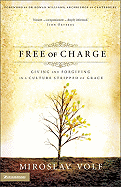 Free of Charge: Giving and Forgiving in a Culture Stripped of Grace (Zondervan) $12.99 If you haven’t read Volf, you could easily start here: a personal favorite, readable, clear, inspiring and very helpful. How can we be gracious in a world were people are “voted off the island” and we all talk about “rights” and we are told we must all “pay our own way.” This truly is gospel stuff, liberating and radical, written in a reflective, quiet tone. Very highly recommended—one of his best. Forward by Rowan Williams, and an endorsing blurb on the cover by the popular John Ortberg.
 Exclusion & Embrace: A Theological Exploration of Identity, Otherness and Reconciliation (Abingdon Press) $28.00 This is the one that catapulted Dr. Volf to fame, a book that is a serious, heavy study of “otherness” and pushes us towards God’s vision of ethnic reconciliation. That it has in its shadow the background of genocide in his former homeland of Yugoslavia gives it credibility and considerable anguish. For anyone concerned about justice, global witness, and the hard work of peace-building, this is a seminal book, one-of-a-kind, and very, very significant, which many of taken as a great sign of faithfulness and hope. Award-winning and still his most well known.
 Captive to the Word of God: Engaging the Scriptures for Contemporary Theological Reflection (Eerdmans) $18.00 The subtitle says it all. This includes incisive Biblical study, but is mostly about how we approach the Bible, how to use it, how to apply it for our contemporary formation. Many folks wonder how theologians use the Bible, and many wonder if there are reasonable insights about how to wisely plumb the Biblical narrative for our daily living in ways that aren’t simplistic or cheesy or forced. This is a noteworthy model of how a working thinker engages the Scriptures and a helpful pointer to us on our submission to the Biblical text. Nice to know this high regard for Scripture is known at places like Yale!
 After Our Likeness: The Church as the Image of the Trinity (Eerdmans) $27.00 One might think this hefty doctrinal study in a big paperback volume is his hardest — and you would be wrong, I think. This is meaty, thorough, serious, but quite accessible, on a topic which every Christian should read about from time to time. The doctrine of the trinity is itself a mind-blowing subject, and this not only explores it well, but shows its relevance for our life together. This is a very good example of how theology can serve the church, serious thinking for the people of God. Kudos!
 The End of Memory: Remembering Rightly in a Violent World (Eerdmans) $22.00 Beth and I found the first part of this great fodder for good conversation, and it stands at once as both a book about forgiveness, and also a profound meditation on memory, naming, justice, and so much more. As many truly great books are, it is a bit difficult to describe simply but it is rich, multi-faceted and generously reflective about faith and reconciliation and God’s call for us to be realistic, honest, real, and taken by the forgiveness of God in Christ Jesus. A very handsome hardback, highly recommended.
 Against the Tide: Love in a Time of Petty Dreams and Persisting Enmities (Eerdmans) $18.00 Besides the splendid title, I told a few people last night that they should get this if they were unfamiliar with him. These are all very short pieces—most just two or three pages–and allows him to colorfully ruminate on all manner of topics. Sort of a “greatest hits” it is almost like a Volf devotional. Lovely, inspiring, useful, wide-ranging on a vast array of topics and areas of life, from work to church, exploring how love makes a difference. This would make a lovely bedside book, a fine one to discuss together, section by section, or a nice gift that isn’t too demanding of time. Is there a name for this kind of book that you can dip in to so easily? Nice.
 Work in the Spirit: Toward a Theology of Work (Wipf & Stock) $27.00 This is a major, scholarly contribution to the conversations about a Christian view of work, one in which he takes exception to more typically Reformed views of our human callings to particular vocations, based on our mandate to be “culture makers” in various spheres of creation. Rather, Volf here brings to the conversation a serious, sustained study of the role of the Holy Spirit in gifting us to serve the common good. That his father was a Pentecostal pastor maybe influenced him a bit, and this “pneumonology” of work is years later still a book that serious thinkers often cite on this topic.
 mentioned, others that should have been noted, and stories I could have told, like the poignant testimony of a woman whose fashion line business failed, but who has now been positioned by God to teach at Parsons, or the good conversation I had about asylum law with a doctor who has worked with women fleeing personal mutilation, or the inspiring stories of entrepeneurs stepping out, trusting God, doing something good for the world, or the gladness I felt when a professor of architecture complimented us on a particular book we had selected. I was jazzed to describe books about Bible-based creation-care to a guy working on wind turbines. And how cool it was that I got to show off L.L. Barkat’s book Rumors of Water: Thoughts on Creativity and Writing to aspiring writers, or that we sold Jeremy Begbie’s fantastic Resounding Truth: Christian Wisdom in the World of Music to several professional musicians. Redeemer’s folks really were an amazing lot and we were thrilled to be there.

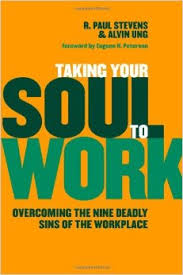
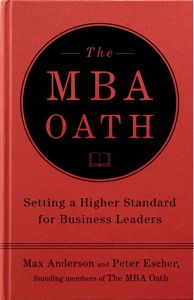



 AND CHECK THIS OUT — JUST WONDERFUL.
 More Lost Than Found: Finding a Way Back to Faith Jared Herd (Nelson) $15.99 After reading and hearing David Kinnaman talk about his research of the epidemic of twenty-somethings drifting or dropping out of church, presented in the must-read You Lost Me, I now more than ever can’t wait to share this. Herd has a history of losing faith, now works with young adults, and is about as pop culture savvy as they come (drawing on Barry Taylor and Neil Postman and David Dark and David Bazan, and a fascinating crew of outside-the-box thinkers, writers, social critics and theologians.) Agree fully or not, this is a wild ride and a generous invitation to realize how God is calling us back to faith. Pretty darn cool, provocative, and finally quite helpful. The back cover suggests that “Herd comes alongside anyone who has ever struggled with faith to reengage them in the truth they long to hear. If you have ever felt you didn’t fit at church or had questions about God, may it’s time to give your faith another chance.” Herd’s messy family life–baptized in religion before he was every baptized in church–gives him a certain vantage point to understand the hurting and de-churched.
 Be Not Afraid: Facing Fear with Faith Samuel Wells (Brazos Press) $17.99 Wells is the brainy British scholar-pastor who took Will Willimon’s place as the Dean of the Chapel at Duke. He is known for sparkling, powerful preaching, remarkable use of language, and solid, freshly construed, orthodox theology. Blurbs on the back are from Scott Bader-Saye, Lillian Daniel, Tom Long and Jonathan Wilson-Hartgrove, all who rave about his “deep thought and wordsmith’s craft.” Long says “each essay is a gem…directly addressed to the reader’s heart and mind…” Wilson-Hartgrove avers that “Sam Wells is a great gift to the church today. Listen to him.” Lillian Daniel notes that the book is “witty, vulnerable, challenging delight, a perfect bedtime companion in the dark night of the soul and a worthy friend when the lights come back on.” A much-needed voice on a variety of deep questions and mature, vital matters. Go to the
 Grace for the Journey: Practices and Possibilities for the In-Between Times Beverly A. Thompson & George B. Thompson (Alban Institute) $17.00 You may know that we stock nearly all of the Alban Institute’s many books and often affirm the way they bring serious research-based findings into view for mainline congregations. If you need practical stuff on vision statements, large or small churches, pastoring with fruitfulness, coping with clergy burnout issues, thinking about worship or preaching, or any number of such things about congregational management, they are a very valuable asset. And yet, they also do these occasional books that are just luminous, beautifully conceived, full of great stories and sweet passion for the call to ministry in our time. This book is grounded in Scripture, spiritual disciplines, and an astute understanding of congregational life, and yet is more than a practical resource, it is a warm and uplifting read that will fire your imagination about how to be a congregational leader. George also wrote Church on the Edge of Somewhere which was about how we place ourselves in our social terrain, one of the most stimulating and curious books I read last year. The couple co-pastors a Presbyterian congregation in Atlanta and work with the Interdenominational Theological Center (ITC) there.
 Close Enough to Hear God Breath: The Great Story of Divine Intimacy Greg Paul (Nelson) $15.99 I have said before that I believe Greg Paul is one of the finest writers doing Christian books these days, easy to read (despite their raw honesty about the pain of this fallen world and broken culture) and hopeful. His first two books (God in the Alley and The Twenty-Piece Shuffle) were about urban mission, about the relationship between the well off and the poor, about how we all need each other to reflect God’s good desires for the planet. They are hardly known in some circles, and that is a shame. He is a creative writer (but not overly eccentric) and a passionate prophet. Leonard Sweet notes, in a spectacular rave endorsement, “This book has a heart that beats louder than most any book you’ll ever read.”
 Happiness Joan Chittister (Eerdmans) $20.00 The last few books by Sister Joan have been little prayer books, devotional pieces, delightful works of spirituality. This is brand new release is a bit more hefty, if you will, drawing on a variety of sources to explore the nature of human happiness. Of course she brings her sort of liberal Benedictine spirituality to it all–Rabbi Michael Lerner of Tikkun calls her a spiritual elder who is a “wise woman.” As Phyllis Tickle puts it, “Sr. Joan Chittister never disappoints, but here she has had exceeded even her own high standards. Happiness is a penetrating, insightful, wide-ranging study…it is pastoral. A thoughtful reader will be wiser for having read it, certainly, but also more complete and, I would wager, more at peace.” A quick skim of the table of contents assures readers that this is thorough, thoughtful, and covers a wide range o
 The Christian College Phenomenon: Inside America’s Fastest Growing Institutions of Higher Learning Samuel Joeckel & Thomas Chesnes, editors (Abilene University Press) $24.99 I was sold on this book’s importance before I even ordered it and can’t wait to work through it’s copious amount of statistics and findings. Yes, evangelical Christian colleges are the fasting growing sort of colleges (by far; there are 110 college, by the way, in the Council for Christian Colleges and Universities) and they are growing, and often changing, dramatically, while working hard to be more integrated as wholistic institutions. Most are clear about wanting to honor God and serve their students well in everything from residential life to academic affairs, from multi-cultural concerns to service learning opportunities. Further, the language of relating faith and learning is common-place and most at least attempt to guide their students towards seeing their majors as holy vocations, not a passport to privilege but a door to serve. (This is a great passion of ours, by the way, cheering and resourcing uniquely Christian colleges in their thinking faithfully about these very things.)
 The Essential Commandment: A Discipleship Guide to Loving God and Others Greg Ogden (IVP) $16.00 I hope you know Ogden’s other popular workbooks like this (The Discipleship Essentials and Leadership Essentials.) They are very useful, including 24 different Bible studies or lessons good for individuals, small groups, mentoring, or classes. These are in-depth and well tested, evangelically clear, Biblical, solid as can be. I know churches that use them, campus ministers, folks who mentor others. Well, this is a brand new collection of 12 similarly thorough studies, complete with questions for discussion, that obviously come out of Ogden’s renown mentoring/disciple-making ministry at his Presbyterian Church. As the subtitle notes, these lessons are on just two big topics, two essential commandments: loving God and loving others. This stuff could deepen your own discipleship, transform your fellowship, rock your class, shape your congregation. Once again, IVP offers a clear, solid, useful tool, filling a need for just this kind of curriculum piece. Kudos to all involved.
 What Shall We Say? Evil, Suffering, and The Crisis of Faith Thomas G. Long (Eerdmans) $25.00 Long is one of those eloquent and elegant erudite gentleman whose books some of us read regardless of their topic. One of our finest and best-read customers, a United Methodist pastor, just today emailed me saying he has started this and it is a great read. I’ve not read it at all yet, but was with him almost a year ago and he reminded me just was a great communicator he is; I’ve been waiting for this. Richard Lischer–who wrote one of my favorite preaching books, ever—from Duke notes that Long “knows where the action is—in the gulch between humanity’s perennial questions and God’s eternal revelation.” Yes, there are oodles of other theodicy book out there, but this looks to be very nicely done, warm and incisive, too. This project began, by the way, as the 2009 Thomas White Currie Lectures at Austin Theological Seminary, a distinguished series which includes in its linage Richard Niebuhr’s Christ and Culture. Long is a preaching prof at Candler, which is part of Emory University.
 I Didn’t Ask to be Born (But I’m Glad I Was) Bill Cosby (Center Street) $21.99 Did I say above that one of these astute authors of a fairly serious book at studied the nature of humor. Well, Cosby has studied this his whole life and here he gives us a plain old book of humor pieces, the first one since his classic Cosbyology. I don’t have to say much about this, except maybe to note that I have been laughing right out loud a lot reading Flunking At Sainthood that I mentioned in the last post. She disses many of the spiritual classics and fails at most of her well-intended efforts to live out the practices (a different one each month) that she is reading about. It is splendid, insightful, and really, really funny. Cosby isn’t like that. He is just flat-out funny. He makes up some characters that may someday stand with Fat Albert and the Cosby kids. This looks great.
 Barefoot Church: Serving the Least in a Consumer Culture Brandon Hatmaker (Zondervan) $18.99 The Leadership Network has created a series of books called Exponential, which is mostly about church planting, innovative outreach, missional initiatives to expand God’s Kingdom. This book deserves a longer review and I certainly hope to write more about it once I’ve read more of it—it brings together the Biblical insistence that we serve the poor and oppressed with the desire to reach the un-churched in authentic and caring ministry. This is loaded with ideas, powerful stories, extreme challenges. Two friends of mine in the last few weeks have mentioned this guy to me and I’ve wanted to know more about his Austin New Church and t
 Simply Jesus: A New Vision of Who He Was, What He Did, and Why He Matters N.T. Wright (HarperOne) $24.99 I listened to some old N.T. Wright audio CDs this week and seeing this new book promising to “unleash the full story of Jesus” made me so eager to read more. I suspect he has said much of this before and it is written in a way to follow up Simply Christian. He has a way of distilling erudite scholarship, making it understandable and helpful. As Rowan Williams puts it, it is “yet another of his great gifts to the worldwide church.” If you haven’t read Wright on Jesus (Following Jesus is a wonderful collection of sermons; Challenging Jesus is a masterful summary of the first three volumes of his magisterial “Christian Origins and the Question of God” series) this would be a great introduction. By the way, as he says in the forward, there is new material here, too—“twists and turns” that he was unaware of when working on his previous books on Jesus. This is not a simple adaptation, but fresh, good kerygma.
 The Meaning of Marriage: Facing the Complexities of Commitment with the Wisdom of God Tim Keller (Dutton) $25.95 I have not read much of this yet but it is a winner, no doubt. The footnotes are intriguing, the text nearly beautiful at times, the feel of the attractive hardback very fine. This originates in a sermon series the Reverend Keller preached in his solid New York congregation although some portions have been co-authored by his wife Kathy. It is more intellectually substantive than most religious books on marriage and it is surely a deeper look than some might be used to. But, as always, Keller is a master of speaking wisely into an urbane and sophisticated culture of younger professionals and he is more than willing to speak truth to power. This is an honest, intellectually-engaging, clear-headed book on how serious Biblical insight could have vast implications for our day-to-day marriage and family relations. Not in a relationship? No matter, this is important gospel-centered stuff, well thought through. A must read.
 Jesus + Nothing = Everything Tullian Tchividjian (Crossway) $18.99 While we were in the Chicago suburbs at the Christian Legal Society conference last week I drove to Crossway’s offices to snag a few of these, having heard they were just shipping. The nice stack here on our “new book” release table makes me happy—Billy Graham’s grandson is smart and very cool and an excellent writer. His books strike me as gutsy and real and loaded with grace. If you picked up his outstanding Unfashionable or the one on Jonah (Surprised by Grace) you’ll know his finely tuned ability to relate faith to vibrant, culturally engaged living, but always out of a gospel-centered life. The title says it (almost) all, and his ruminations here look very, very helpful. Steve Brown suggests (well, really, he probably booms) “If you give a book to anybody this year, give this book. If you yearn for awakening in the church, underline this book and share what you’ve learned.” Very good advice.
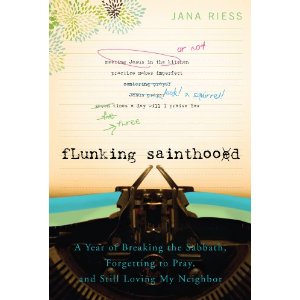 Flunking Sainthood: A Year of Breaking the Sabbath, Forgetting to Pray, and Still Loving My Neighbor Jana Riess (Paraclete) $16.99 Riess has edited a bunch of books, reviewed oodles others (and penned the very odd What Would Buffy Do? which was one of the very first vampire-related books I ever read part of.) This new memoir is fabulous–really, really good on a number of levels. The back cover calls it wry, but I’ve been reading through my advanced copy and it is more than wry, it is hilarious! And very wise. It has endorsements by A. J. Jacob (and if you haven’t read The Year of Living Biblically yet, drop everything and send us an order asap.) Lauren Winner writes of this that is is “the best book on the practices of the spiritual life that I’ve read in a long, long time.” A vulnerably shared, real story—see the fine print of her mishaps and failed efforts on the top of the cover to get a sense of what it’s like. Note, too that “sainthood” is misspelled on the cover art. Ha. Unless you’ve already arrived (and I suppose some of you have) this book will be like an encouraging companion to keep on keeping on. It is a blessed joy, helpful and fun. David Dark calls it “freaking wonderful” and the opening line by Orwell is enough to ponder for a month. I love it!
 Indescribable: Encountering the Glory of God in the Beauty of the Universe Louie Giglio & Matt Redman (Cook) $14.99 (paperback) and $24.99 (full color coffee table gift edition) Many know Giglio’s passionate young adult worship conferences and even more know, now, the often viewed talk (we sell the DVD) where he invited people to an awesome awareness of God’s immense glory by showing slides of deep space (from Hubble telescopes.) Contemporary worship leader Matt Redman had written about worship, is interested in the awesome hugeness of God, and has a curious interest in science. The two were great as they collaborated in a moving presentation blending science, stunningly artful super-graphics, and of course the powerful songs. The much-anticipated book has released based on those presentations. The gift book is hefty and handsome and the paperback (which still has some b/w outer-space photography) is extraordinary. Get this on your Christmas wish list, or think about who you can share it with. A lot of people are fascinated by science, and many need to be reminded of the great goodness of our awesome Creator. Highly recommended.
 Missional Spirituality: Embodying God’s Love from the Inside Out Roger Helland and Leonard Hjalmarson (IVP) $16.00 Wow, all I can say is wow. I’ve studied the copious footnotes and am delighted at the vast array of fascinating sources, the important books, the astute authors, the edgy social theorists, and solid Bible guys they draw upon. The book is both stimulating and–I trul
 Creating a Spiritual Legacy: How to Share Your Stories, Values, and Wisdom Daniel Taylor (Brazos Press) $14.99 Leave it to Brazos to turn a typical (and sometimes overly sentimental) practice of scrap-booking into a major opportunity for serious theological reflection. Well, the book isn’t really about scrapbooks, per se, but it is about how to discover your own spiritual legacy and story. It helps you learn how to foster a storytelling ethos in your family, church, or organization. Taylor has previously written a marvelous book on how we over-value certainty and another on the role of stories. He has a lovely book called Letters to My Children and here he has combined the insights of them all, lovingly creating a philosophy of storytelling which offers insight into how to discern and communicate the central narratives of our own lives. Endorsements include a fine recommendation by John Wilson (of Books & Culture), the remarkable literature professor, Dale Brown, of the Buechner Institute at King College, campus pastor Ben Patterson (Westmont College) and the always eloquent Calvin Miller. This is a book like no other and should appeal to many BookNotes friends. It deserves to be celebrated for its beauty and unique topic and it deserves to be honored for seriously tackling a very, very important side of life to which we rarely give sustained attention.
 In Visible Fellowship: A Contemporary View of Bonhoeffer’s Classic Work Life Together Jon Walker (Leafwood Publishers) $13.99 You may know that Costly Grace (also by Jon Walker) is one of the finest studies of Bonhoeffer’s Cost of Discipleship we’ve yet seen. It walks us through it and explores in very readable prose just how it might apply to our daily discipleship today. Thank goodness that Walker has done this new one. This is one of the only studies (the only one of which I am aware, at least) about Bonny’s great book, Life Together. With the loud and urgent cry for community so ubiquitous these days, and a hunger in our churches to be more relationally supportive, this helpful guide should be a mega-seller. If only. If only we get the word out that Walker is a reliable guide to a true Christian classic. Please help us spread the word.
 Grace Effect: How the Power of One Life Can Reverse the Corruption of Unbelief Larry Alex Taunton (Nelson) $16.99 There has been a bit of a cottage industry from Christians debating the so-called “new atheists.” Several are quite good and we stock them all. This seems to be a different tack, a thoughtful engagement with the debate, but focused on the documented evidences of the implications of the Christian worldview. “Simply defined, ” he writes, “the ‘grace effect’ is an observable phenomenon–that life is demonstrably better where authentic Christianity flourishes.” The Grace Effect describes the authors debates with Christopher Hitchens, Sam Harris and Richard Dawkins but is anchored in the compelling narrative of a girl named Sasha, a Ukrainian orphan whose life had been shaped by atheistic theorists, and the story of her life’s redemption through the transforming power of God’s grace. Dr. Olivera Petrovich, a research psychologist at the University of Oxford, says of it, “This highly readable book is a collection of powerful insights into the long-term consequences of spiritual indifference and, above all, a remarkable example of how to conquer it.” This is a smart book (laced with wonderful quotes from classic literature from Milton to Dostoesvsky to Huxley to Elliott) but the emotional power of the story of Sasah reminds us that this is a very down to Earth, human story, and story that can change lives and the lives of nations. Here is a short video with the very engaging author telling of a late night dinner with Christopher Hitchens, their trip to the Ukraine to adopt Sasha, and the way the gospel reverberates through lives and cultures. Do check it out and if you want the book, do come back and buy it from us.
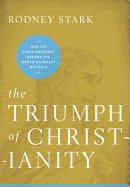 The Triumph of Christianity: How the Jesus Movement Became the World’s
 Left, Right & Christ: Evangelical Faith in Politics Lisa Sharon Harper & D.C. Innes (Russell Media) $22.99 As the election season proceeds I am sure I will revisit this often, drawing on each author’s important points as I write, teach, and talk about a Christian perspectives on politics. Perhaps it will serve you in such a way as well. As you might guess, this is a co-authored debate-style book, with a Christian who is a committed Democrat and a Christian who is a committed Republican each explaining how their faith and Biblical insights compel them to align themselves (even if always provisionally, as they both insist) towards more-or-less liberal or conservative public policies. D.C. Innes is a popular professor of political science at The Kings College in New York (and an Orthodox Presbyterian minister) while Ms Harper is an activist for Sojourners in DC who has worked with InterVarsity Christian Fellowship.
 church in Townsend, MD and researching titles we’ll take to a palliative care conference for nurses and hospice workers (sponsored by our local hospital) and I’m trying to work on book reviews that I do regularly for
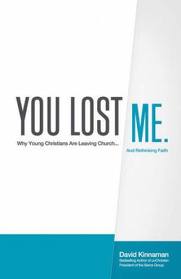 brand new book out, in some ways a follow up to the best-selling Unchristian. It is called You Lost Me: Why Young Christians Are Leaving Church…And Rethinking Faith (Baker; $17.99) which is specifically a study of young adults who were once part of a faith community and who now reject their faith or have at least significant reconsider its role in their lives. That is, it is about 20-somethings who have drifted or dropped out of their previous church involvement.
 We are sponsoring “An Evening with David Kinnamon” hosted by the
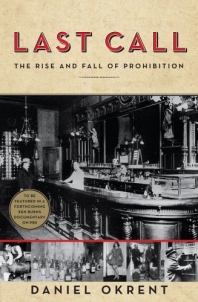 Last Call: The Rise and Fall of Prohibition Daniel Okrent (Scribner) $17.00 It was a bestseller in hardcover, the author has been awarded a Pulitzer, and this book is somewhat of a companion volume to the spectacularly interesting Ken Burn’s PBS documentary, Prohibition. You will notice that Okrent was in the film a bit–they are good friends. Glad this very readable social history is out in paper! Can’t tell you how interesting this is, how important, how informative and fascinating. Cheers!
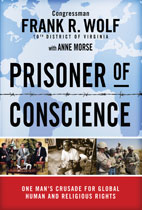 Prisoner of Conscience: One Man’s Crusade for Global Human and Religious Rights Congressman Frank R. Wolf (Zondervan) $22.99 If you were even somewhat moved by my serious review a few days ago of the scholarly research in Silenced (about blasphemy codes and Islamic apostasy laws) by Paul Marshall, which ruminates on the dangers of this crisis caused by the repressive Islamists willing to execute people for merely wanting to hold to their own faith or convictions, this exciting memoir will be sure to encourage. That is a masterpiece of analysis while this is a non-partisan story of a brave man and his remarkable adventures around the globe “where bullets fly and babies starve.” It reads quickly and puts you on the ground, documenting injustices and showing diplomatic and helpful contributions. Representative Wolf grew up poor in a tough neighborhood of Philly, with a severe stutter, bad grades, and mom who took him to Sunday School. He eventually got a degree from Penn State, got elected to Congress from the 10th district in Virginia, and is now one of the most effective voices in the world for human rights and freedom.
 Rumors of Water: Thoughts on Creativity and Writing L.L. Barkat (T.S. Poetry Press) $15.00 This is one of the finest books on being a writer I’ve yet seen and a sharply observed bit of nearly devotional writing by a good friend, a tireless advocate for other writers, a brave, new publisher (though this indie press she started) and a Managing Editor at the popular
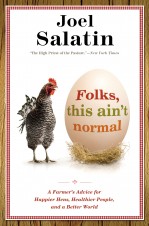 Folks, This Ain’t Normal: A Farmer’s Advice for Happier Hens, Healthier People, and a Better World Joel Salatin (Center Street) $25.99 Maybe you recall him from The Omnivore’s Dilemma or maybe you saw him in the documentary Food Inc. The New York Times called him “the high priest of the pasture.” Joe Salatin is a deeply religious, very jovial, and remarkably astute agronomist—that’s a fancy word for smart farmer, I think–who is convinced that we can all make a difference by working for reforms in our industrialized food systems–or at least in the way we buy and eat our own food. Remember Wendell Berry’s Mad Farmer poems? Maybe Salatin read them. Maybe they are about him, for all I know. Bill McKibben calls it “wonderfully cranky.” It is provocative and yet practical, by a guy who lives it. If you want to see the big picture and are willing to take some baby steps towards greater health, this is for you, whether you like chickens or not.
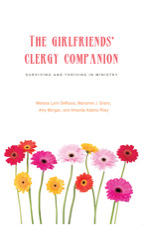 The Girlfriend’s Clergy Companion: Surviving and Thriving in Ministry Melissa Lynn DeRosia, Marianne J. Grano, Amy Morgan, and Amanda Adams Riley (Alban Institute) $17.00 I suppose you know that there has been in recent decades a large rise in the number of women clergy persons, mostly in mainline churches. Some of the very best pastors and preachers I know are women. Yet, there are not too many books about being a 21st century woman of the cloth. Most of these pastors/authors are youngish and they are wise and fun and helpful. They are Presbyterians. The book is very practical. If you are a woman in church work, you know you need this. If you have a woman on staff as a pastor at your church, you may want to get it for her. But read it first, yourself–it is helpful for us lay folks to realize what our clergy friends are going through. And don’t be surprised when these girlfriends start to dish a bit—short skirts? Pregnancy? Children and families? The Superwoman syndrome? How to command pastoral authority, deal with gender bias in otherwise healthy congregations? Discerning callings? It’s all here, and more. A wonderfully written forward by Carol Howard Merritt, too.
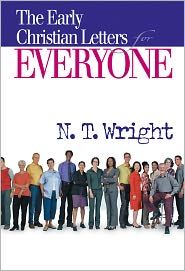 The Early Christian Letters for Everyone: James, Peter, John, and Jude N.T. Wright (Westminister/John Knox) $ 15.00 The “for everyone” series is a personal favorite, smallish and accessible but chock-full of Scriptural insight and teacherly assistance. Wright is a master of first century Judaism and the early Christian movement, so he knows the New Testament literature well. He has a wholistic Kingdom vision that just doesn’t quite, so we are especially eager to have folks read these. He’s almost done with the whole N.T. (with Revelation For Everyone coming soon.) These brief commentaries on epistles not claimed as Pauline make up some of the most important pieces of the formation of the early church. We need to know this stuff, through Wright’s good lens. Handy, easy, and really, really useful. Thanks be to God. By the way, Wright has companion small group Bible study guides to go with most of these, in the N. T. Wright for Everyone Bible Studies series from IVP ($8.00.)
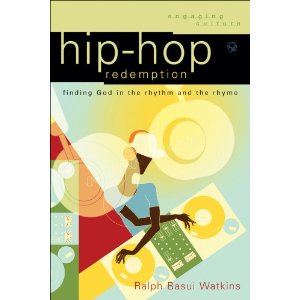 Hip-Hop Redemption: Finding God in the Rhythm and the Rhyme Ralph Basui Watkins (Baker) $17.99 There are two or three must-read bo
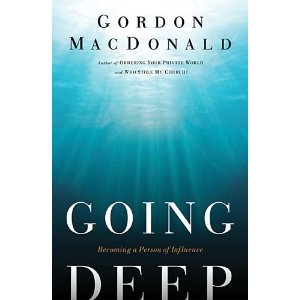 Going Deep: Becoming a Person of Influence Gordon MacDonald (Nelson) $15.99 I read everything this guy writes. He is a natural teacher and pastor inviting us to Godly lives, lived richly, drawing on who we are “below the surface.” Here he picks up the creative fiction style of the book he did about an imaginary church fighting over contemporary music and whatnot. (That was called Who Stole My Church and it was not hard to imagine at all, really.) He realizes that the people on both sides of that frustrating deadlock were, frankly, not deep. There were plenty of good people, plenty of sincere people, but not enough deep people. This just came but I cannot wait to read it.
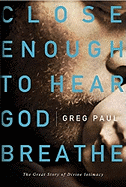 Close Enough to Hear God Breath: The Great Story of Divine Intimacy Greg Paul (Nelson) $15.99 I was blown away by this author’s earlier books about his raw ministry among the urban poor. (God in the Alley and The Twenty Piece Shuffle) so I was thrilled when I heard there was a new, creatively written study of God’s deep desire to be near us. Paul uses intense writing, moving prose and amazing stories—really!—and helps us, as he says, resist the “thousand voices telling me who I am. Or who I should be.” Only God gets to define who we are and this book will help, I’m sure of it. He uses stories from his own family background (to which many will be able to relate) and also from his own work with street people in Toronto. And, he uses the “creation-fall-redemption-restoration” vision of he unfolding drama of Scripture that many of us find so helpful. This guy has guts and clarity and yet has an enjoyably, creative prose style that is more than merely clever. This is a notable book by an important writer. Len Sweet says of it “This book has a heart that beats louder than most any book you’ll ever read.” How’s that for an endorsement?


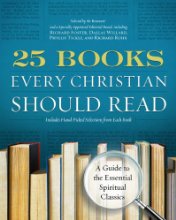 25 Books Every Christian Should Read: A Guide to Essential Spiritual Classics selected by Renovare (HarperOne) $18.99 This is the sort of book I just love and I’ll try to review it in greater detail soon. It is a very thorough review of each of the 25 books listed, explained and described, along with study aids, discussion resources and an excerpt of the book in question. Renovare, of course, is the contemplative spirituality ministry organized by Richard Foster so these are what is considered devotional classics. The subtitle is true. These choices and the apparatus developed to become familiar was led by a team of Richard Foster, Dallas Willard, Phyllis Tickle, and Richard Rohr. Several who helped were Gayle Beebe, Emilie Griffin, Frederica Mathewes-Green, John Wilson amongst others. Besides these top 25 books—-from On the Incarnation by St Athanasius to The Return of the Prodigal Son by Henri Nouwen—there are sidebars with many other authors listing their favorite 5 books. And an appendix listing some of the best authors writing today. Wow, this is a book-lovers delight, a must for anyone wanting to build a good library or who has a vocation of shaping or guiding others in their spiritual journeys. Highly recommended for our fans and friends.
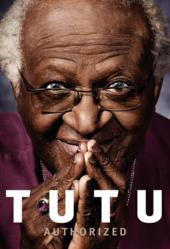 Tutu Authorized Allister Sparks & Mpho Tutu (HarperOne) $29.99 It isn’t every year we get to announce a “publishing event” but this is surely one, the mcuh-anticipated, eagerly- awaited authorized biography of the famous, South African Anglican leader. To appreciate the global and prominent nature the book, get this: the blurbs on the back are from Nelson Mandela, Bill Clinton, Kofi Annan, The Dalai Lama and the President of the United States. The forward is by Bono. This is very exciting and will tell his life story and rise to fame in a manner that is legitimate and well informed (one of the authors is his own daughter, Mpho.) It just came and a quick skim of the footnotes shows that the authors mention some things of great interest to me (Kuyper!) and some names I suspect would be important (like Stephen Biko and Alan Boesak and Alan Paton) so I’m impressed. Look at that cover, just look at that. This is a book many of our friends will want, and it is a book some of our friends might benefit from reading, even if they are not full fans of the Archbishop.
 The Price of Civilization: Reawakening American Virtue and Prosperity Jeffrey D. Sachs (Random House) $27.00 I’m not gonna lie. This came today and I’ve barely cracked the cover. I read the acknowledgements and, yup, he’s really, really famous. And hangs with the world class leaders you have come to expect from his important work. (I hope you know his much-discussed The End of Poverty and the one called Common Wealth.) As you know, Sachs has spent his years as an economist working on global issues. Now he is alarmed about the “moral crisis” and “decline of civic virtue among America’s political and economic elites.”
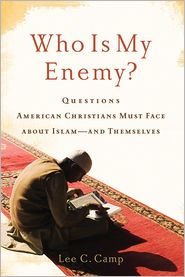 Islam—And Themselves (Brazos; $17.99) which examined faith-driven violence in both the Christian and Muslim past (and present.) Lee Camp astutely took up the questions about how faith has influenced state sanctioned violence and how the hard passages of the Bible and the Quran might be respected but kept from causing greater religious mayhem. That book was a Christ-centered radical call to a sort of discipleship that would bear fruits of peace-making and justice-seeking. I again recommend it heartily. Yet, even as we refuse to demonize our neighbors who are Islamic, we still have to admit that there are exceptionally dangerous things happening throughout the world in the name of Muhammad. For anyone who cares about human rights, it is urgent that we learn about the draconian forces of Islamic radicals and their effort to make leaving the Muslim faith (apostasy) or insulting Islam (blasphemy) illegal. It is so prevalent in so many places I believe we simply must admit that it is a humanitarian crisis and policy quandary of the highest order.
 Many international leaders have renounced this awful violation of human conscience—executing someone merely because of what they believe!—-and yet it wasn’t until just a few days ago that the White House issued a protest. (Why Ms Clinton’s yelping about somebody throwing rotten tomatoes at a diplomatic limo seemed a more urgent story for the media this week is beyond me.) We should pray for our brother in Christ, and all those of any faith, or no faith, who are being persecuted for the sheer fact that they hold to a particular religious or philosophical conviction. Religious freedom should be a bed-rock, non-negotiable right. The greatest threat to religious freedom in nearly every continent today is radical Islam.
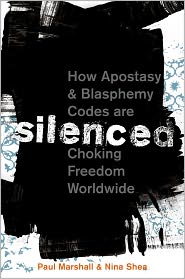 Their long-awaited book, Silenced: How Apostasy & Blasphemy Codes Are Choking Freedom Worldwide (Oxford University Press; $35.00) was just released by the leading global scholarly press and it is extraordinary for several reasons. Knowing what they are writing about and knowing how they have tirelessly researched this gruesome stuff, I feel honored to even be holding the fruit of their efforts. I am not qualified to do the book justice but I can say that it is very, very important, will be taken seriously by global thinkers, writers, activists and politicians, and—or so it seems to me—will be noticed even by Al Qaeda and their supporters.
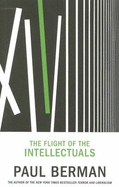 of conscious, but seems mostly absent in this struggle (see Paul Berman’s The Flight of t
 meaning of justice and jurisprudence, and how various worldviews and narratives shape different ways in which human rights are understood. (He wrote one of my all-time favorite books, which we still promote, called Heaven Is Not My Home: Living in the Now of God’s Creation; Nelson; $17.95.) His book God and the Constitution: Christianity and American Politics
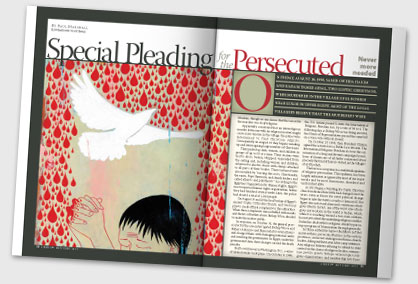 Christians in Egypt and other troubled spots. He has testified before Congress and lectured at the State Department. These previous books and essays—the scholarly work on a Christian philosophy of justice and rights and worldview, the work on Christian views of the government, and the human-rights reporting about religious persecution—all prepared him to undertake this massive, stressful work. Nina Shea is the Director of the Center for Religious Freedom and deserves equal credit as researcher, writer, and reporter. Her work is nearly unparalleled in this field. Here popular-level book, In the Lions Den (now out of print) was a gruesome but needed collection of first hand accounts of persecution and repression. In this new book Silenced, Marshall and Shea have given us a truly remarkable resource. Lives may be saved because of it. More just policies may be created. Greater tolerance and pluralistic civil societies may be supported. Let us hope this book and the struggle it documents, makes the world a better place.
 Christ Alone: Living the Gospel Centered Life by Sinclair Ferguson (Reformation Trust) or the several good books coming from
 Lewis and a particular sermon of Jonathan Edwards (“The End to Which God Made the World”) Piper over and over (and over) calls us to find God and Christ’s gospel as the great treasure upon which we stake our lives and in which we find our highest joy. He made a name for himself by his thick book Desiring God: Meditations of a Christian Hedonist (Multnomah) making a case for “Christian hedonism” by which he means that we find our greatest joy by making much of God. (“God is most glorified in us when we are most satisfied in Him” he says, a phrase I think which is well worth pondering.) The basic message of that complex book was released in a pocket sized hardback entitled The Dangerous Duty of Delight: The Glorification of God and the Satisfied Soul (Multnomah.) Jesus said we are to find ourselves by losing ourselves for His sake, after all, and Piper makes a lot of sense telling sinners such as we that we are in worse shape than we admit and God’s grace offers so much more than we could expect. This singular passion to exalt Christ can propel us to do great things. “Let goods and kindred go” the famous hymn says. Piper’s call is a dangerous and passionate one, suggesting great risk and sacrifice (he renounces greed and the American dream more than any other conservative evangelical leader.) His inner city church in Minneapolis continues to thrive as a church that stands for this one thing: we are never happier than when God is glorified in us. He is the most insistent voice for a “gospel-centered” worldview than any writer today.
 The brand new hardback Bloodlines: Race, Cross and the Christian is, to explain it simply, a quintessentially Piper-esque, gospel-centered view of racial injustice and how the gospel itself can bring about ethnic and racial reconciliation. On several levels and for several reasons I think it is one of the most important books of the year. It may be one of the most significant books Piper has written. It is a book that I hope our more liberally-minded progressive customers who care about social change and racial justice will read and I hope it is a book that our more theologically and socially conservative customers who love inspiring Bible study will also read. It is not the last word on this subject, but his passion and clarity and balance and wisdom make it a very, very useful resource for churches of all sorts. Nearly anyone will find something in it to inform or inspire or shape them. Nearly everyone will find something off-putting or stretching. Nearly everyone will be touched and impressed and some will roll their eyes at a few things. Hey, this is what makes for a great read. You’ll want to underline and mark it up and interact with it too.
 So, Bloodlines by John Piper is different than, but stands alongside, great resources which we’ve stocked for years. It supplements excellent, urgent books like More Than Equals by Chris Rice and Spencer Perkins (IVP), Free at Last by Carl Ellis (IVP), Many Colors: Cultural Intelligence for a Changing Church by Soong-Chan Rah (Moody), Divided by Faith by Michael Emerson, Christian Smith et al (Oxford University Press.) I love Native American Randy Woodley who wrote the very useful, deeply gracious, Living in Color: God’s Passion for Ethnic Diversity (IVP.) How about the splendid book by Tony Campolo & Michael Battle, The Church Enslaved: A Spirituality of Racial Reconciliation (Judson)? And of course there are the many books of John Perkins—if you haven’t read at least one of his, you are missing out. His first one was reissued a few years ago, his own story called Let Justice Roll Down (Regal) although the one he wrote recently with Charles Marsh called Welcoming Justice: God’s Movement Toward Beloved Community (IVP) is so
 rich I would put it near the top of any reading list.
 in the Cafeteria by Beverly Daniel Tatum? Or the heavy anti-racism classic recently updated and reissued by Joseph Barndt, Becoming the Anti-Racist Church: Journey Toward Wholeness (Fortress)? I really appreciate the neo-Calvinist worldviewish perspective of foreign language scholar David Smith who wrote Learning from the Stranger: Christian Faith and Cultural Diversity (Eerdmans) as it brings a somewhat scholarly, hospitable bit of research to the conversation. Even more scholarly is the extraordinary and highly reviewed (if dense) work The Christian Imagination: Theology and the Origins of Race by Willie James Jennings that came out last year on Yale University Press. More practically, I hope every church leader or youth worker, especially, has practical educational resources like Cultural Intelligence: Improving Your CQ To Engage Our Multicultural World by David Livermore (Baker), or the practical books on increasing and navigating congregational diversity by Manuel Ortiz (IVP.) Do you know the progressive theologian and Episcopalian church diversity trainer, Eric Law? Or the books by Curtis DeYoung? Or Brenda Salter McNeil? Howard Thurman? Cornel West? None of these standards, though, do quite what Piper does with quite the guts and theological gusto.
 you haven’t read the important work on this by Philip Jenkins or Soong-Chan Rah, he cites them both and it is a good introduction to the global church, useful, too, to frame our peculiar racial burdens in the US by these larger shifts toward non-Western, multi-cultural churches in our lifetime.
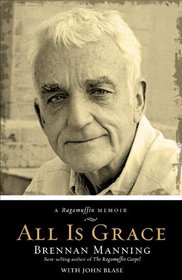

 support those very businesses that invite thought, the investigation of ideas, learning, and that exquisite pleasure of being lost in a story. No, we who are called to the vocation of book-selling are not glad for the demise of Borders. We wish our local colleagues in the book business the very best. Some were true book lovers, themselves poets and writers and I hope they might somehow find a way to stay in the important world of books. Certainly, we need more cheerleaders these days for those lovely rectangles of paper and print.