Academy Awards, Hollywood worldviews, and Finding God in Popular Culture

oscar.jpgDid you watch the Academy Awards last night?  We sure did.  Even though we don’t go out to the theatrer much (well, at all, really) we enjoy these award shows and think it is important to keep up with the movies our friends, neighbors, culture-leaders and critics are affirming.  I think Beth and I both agreed that The Visitor, a DVD we rented on a whim when it first came out, is our favorite film of the year (and Richard Jenkins was nominated for Best Actor; just sayin’.)  I think I’ll blog about why we so appreciated it another time.

For now, though, here are a few books from our large film studies department here at the shop.  Although we have more than just overtly Christian books, there has been, in the decades since we opened, a wonderful outpouring of thoughtful resources relating faith and film, and we love ’em.  For the serious film-maker, the thoughtful critic, or just anyone who enjoys a good movie and wants to think about entertainment in a way shaped by Christian convictions, there are interesting and helpful books out there. 

Eyes Wide Open.gifIf this notion of watching movies in a uniquely Christian fashion is new to you, my old friend Bill Romanowksi’s book Eyes Wide Open: Looking for God in Popular Culture  (Brazos; $19.99) remains the best introduction.  (We still have his great lecture series—highlighted with oodles of film clips—-for sale or rent on video, too.)  Every church library should have this book on hand; youth leaders, young adult ministries, college fellowship leaders, and anyone interested in the popular arts should own it.  Here are some quick reviews that might assure you this is an excellent study.  For another voice saying as much, click here for Denis Haack’s of Ransom Fellowship’s astute recommendation.  By the way, their film reviews and discussion guides are as interesting and significant as any I’ve seen.  They offer all this to the reading public for free, but you sure might want to consider offering them some finanicial support if you use their great web resources.  If you are interested in cultural discernment, interesting small group conversations, grappling with the deepest things in winsome ways, you should check them out. 

Faith & Film: A Guidebook for Leaders by Edward N. McNulty (WJK; $24.95) offers short synopsis of hundreds of films, some insightful discussions of key moments in each film, a set of Scriptural texts that make for parallel reflection, even where to cue up key scenes which are able to be used for discussion purposes.  Ed has spoken on the topic of film and religion for decades and has edited a monthly newsletter Visual Parables.  He is quite sharp, and this is a fabulous resource for those wanting to start faith-based film groups, use movie clips in educational settings, or learn the process of dialoguing with contemporary films.

cartoon.jpg

Hollywood Worldviews: Watching Films With Wisdom and Discernment  Brian Godawa  (IVP; $16.00)  This has been a staple in our film category for years, now, and it is still very, very useful for the way the author is able to help us discern worldviews, ideologies and philosophical assumptions in modern movies.  There are great links to on-line conversations about these perspectives and, even if you think he is “fishing” a bit, overstating the role of existentialism, scientism, postmodern relativism or whatever, it makes your viewing that much more discerning to be thinking about it all.  I may not agree with every assessment he offers (although I quite often do) but he is absolutely right on in helping us learn how to be wise about what is really coming at us in the flickering celluloid and between the lines of the screenplay. 

gospel according to hollywood.jpgThe Gospel According to Hollywood Greg Garrett (WJK; $16.95)  Garrett is a fabulous young writer, a memoirist and novelist, a Southern Baptism boy turned Episcopalian and a guy whose books you should know.  He’s a heck of a good writer, knows the popular arts well, and has an honest and authentic voice.  This is a great overview of the topic, touching down on certain key films, and sharing his own personal story of being (surprised to be) significantly moved to spiritual insight by watching movies such as Pulp Fiction.  Mark Pinksy (author of the classic The Gospel According to the Simpsons) says Garrett is “brilliant, probing, pioneering….”  Notable stuff.  Read his Holy Superheroes, by the way, if you like that genre!  Pow!

Useless Beauty: Ecclesiastes through the Lens of Contemporary FilmUseless Beauty.jpg Robert K. Johnston (Baker Academic; $17.99)  I’ve written about this before, naming it as one of the most important such books of our generation.  With endorsements from Biblical scholars like Brueggemann, Patrick Miller and Regent’s amazing Rikk E. Watts, it stands as a creative and vital illumination of the Biblical text.  And yet, it is essentially a collection of exceptionally thoughtful film reviews, focusing on the darker (prophetic?) stories which offer critique to the American Dream and the weightlessness of late modern culture.    From films such as Magnolia,  America Beauty, and About Schmidt to important directors like Akira Kurosawa, Woody Allen or M. Night Shyamalan,  the wide-eyed Dr. Johnston knows contemporary film and filmmakers and brings his interesting insights into dialogue with Ecclesiastes.  He teaches at Fuller, by the way, and really is one of the best guys writing on these themes these days…those who follow this field know his (now updated) classic, Reel Spirituality, an earlier contribution in the on-going Baker “Engaging C
ulture” series.

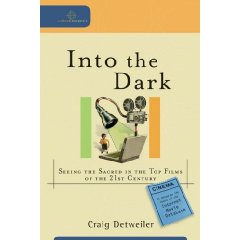
into the dark.jpgInto the Dark: Seeing the Sacred in the Top Films of the 21st Century  Craig Detweiler (Baker; $18.99)  I wrote about this when it first came out this summer, again, exclaiming how great it was.  Detweiler has done work on pop culture before, and is well equipped to offer Christian insights into the most regarded films of our times.  He used the prominent Internet Movie Database to determine which films are considered the most important and worked with those.  Fascinating and highly recommended.

Listen to this clever endorsement by Dick Staub (certainly a guy who is to be trusted on these matters): “Soak a brain in billions of digital bytes of filmic splendor and an equal amount of dynamic theology, awaken it to the ‘sudden and miraculous grace’ available at the intersection of faith and film, and you’ve got Craig Detweiler’s tour de force. A brilliant, timely, and useful piece of work from the only brain that could have produced it!

Reframing Theology and Film: New Focus for an Emerging Discipline  edited by Robert Johnston (Baker Academic; $24.99)  This is, without a doubt, the definitive collection for those on the cutting edge of this several decades old discipline of relating theology and film, exploring the landscape of the discipline, thinking through recent insights, and charting a possible future for this evolving subject.  S. Brent Plate, editor of The Religion and Film Reader writes, “In this single volume, the field of theology an film has matured from infancy to adulthood…No future writing on the topic can ignore the categories reframed by the contributors here.”  Way to go Baker, for this latest volume in their “Cultural Exegesis” series.

BLOG SPECIAL
25% off
any book listed
Order Here
Hearts & Minds 234 East Main Street Dallastown, PA 17313  717.246.3333

Selling books, once again, at the spectacular Jubilee

Mid-day Friday we still had box upon heavy box stacked all over the beautiful, cavernous pre-function lobby of the spectacular Pittsburgh convention center, with books spilling out on every available surface.  The helpful Teamsters had gotten us more tables, CCO friends had lugged in lamps and Beth was trying hard to get our credit card machines to work.  The stress was stinking bad.  Around us the booths coming to display their work to the thousands of college students who would be attending Jubilee were setting up.  Most—from Blood:Water Mission to TeachAmerica, from Bread for the World to Cardus/ Comment, from area church camps to nationally known seminaries—had spiffy and attractive display booths, and most whipped ’em up in under 15 minutes, nicely showing off a few glossy brochures and free pens, maybe a slide show under a bank of small lights.  boxes.jpgWe had pulled and boxed books for days and days, my fingers were bleeding, and now, with only hours to go before the flood of students poured into our portable bookstore, it felt like we had maybe six more hours of work to go.  We would never get the thousands of books that were unceremoniously sprawled everywhere into some kind of order for our arriving customers.  This was chaos in the primordial Genesis sense.  I wanted to crawl up under the boxes and cry.
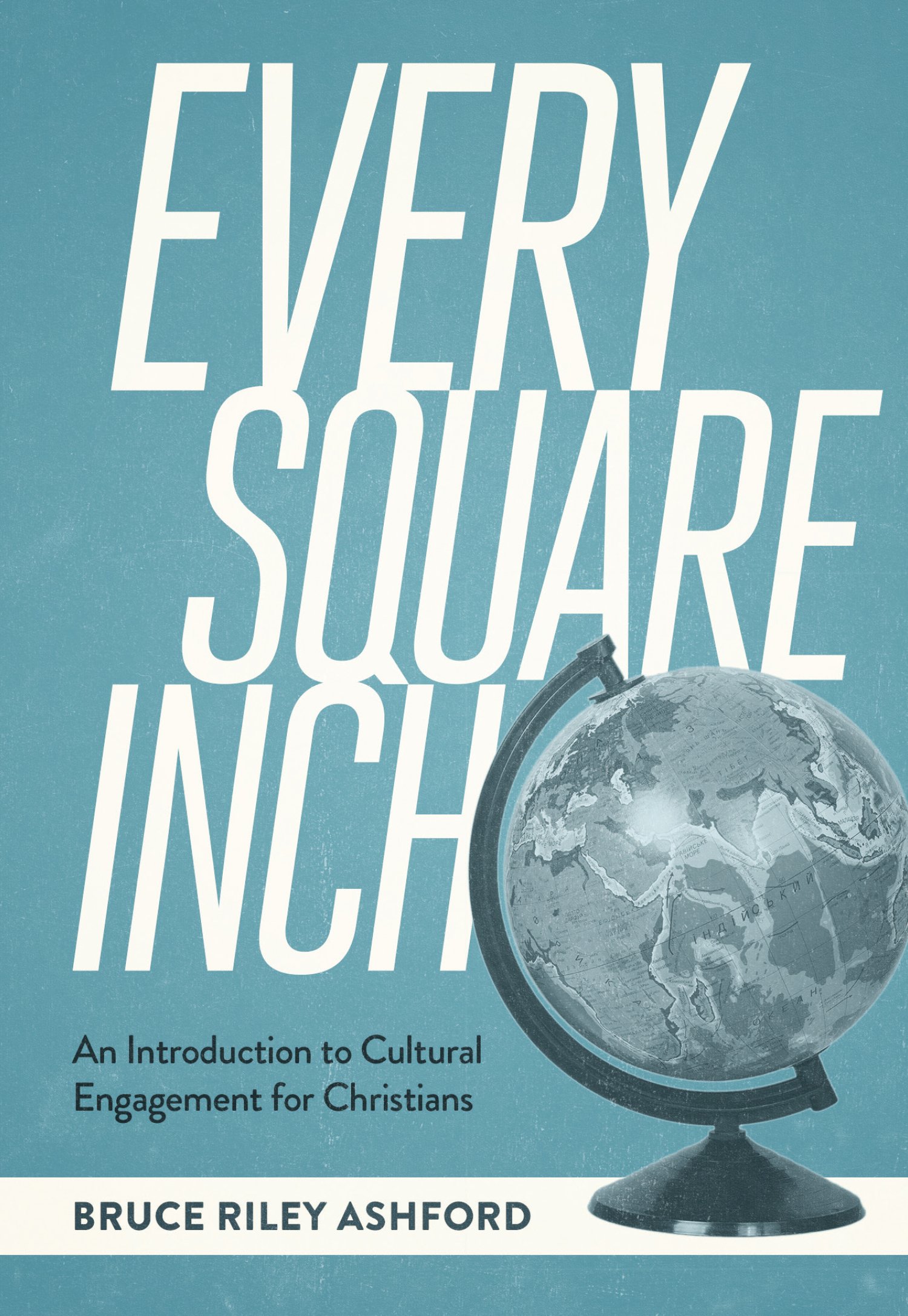
every square inch.jpgThe miracle happened, we pulled it off, God gave our desperate spirits renewed energy and soon we had a great looking, full-service bookstore set up complete with a few good volunteers (Jason, Justin & Debi) working the registers.  Nearly 3000 folks were singing their hearts out in worship being lead by the fabulous Josh Moyer band, and next thing I know I’m under the spotlight glancing over my shoulder at the Jumbo-tron as I told Jubilee participants what they should be reading, plugging a few key books.  Three times through-out the event I was given ample time to explain the significance of Christian reading, and about the stuff we had there—including hard to find books of Christian perspectives, resources to help in the integration of faith and learning, books by authors who are world-changers in their own fields of politics or film or science or business or health care.

CCO (the campus ministry that sponsors Jubilee each year) has deep in its history the desire to spread the good news of Christ’s Lordship over life, helping college students enter into Christian faith in robust and faithful ways.  That is, they are solidly evangelical, yet considerably influenced by those faith traditions that call us to seek, as Francis Schaeffer used to say, “substantial healing” across the “whole of life.”  We call the conference Jubilee because of the profound image of multi-faceted healing–a restoration of shalom—found in the land redistribution and debt cancellation policies at the shofar blow of Leviticus 25, a passage that is poetically picked up by the prophet Isaiah, famous, largely, because it served as the text for Jesus’ first sermon (Luke 4.)  The Kingdom of God is at hand, Jesus taught us to say, because, in Him, it is.  What good news, what extraordinary, remarkable, exciting, challenging, life-transforming news!  God’s reign is breaking into human history and those who are in Christ shall reign with him.

If Christian faith, then, is about more than awaiting death, or only experiencing God’s personal solace, but involves us in a rescue plan for the planet, good news for all creation, then college students, especially, must be helped to see that the lives of leadership they are studying for, the careers and callings they will soon enough take up in their professional lives, are avenues of Kingdom service.  They can be more than doctors, lawyers, city planners, journalists, teachers, artists or engineers who also happen to go to church, or who hold a personal spirituality.  Rather, they, with the help of mentors like those found in the CCO, and with inspiration from events like Jubilee, can develop a tranformational Christian perspective in their fields, think and live in ways consistent with a Biblical worldview, and learn to be salt and light and leaven in the spheres of influence in which they find themselves.  We can help them understand, as one book puts it that Your Work Matters to God as they do the requisite thinking and praying to figure out what that looks like on Monday in the marketplace.  It is also why I held up, in a workshop I did on these things, the handsome little book A Mind for God by James Emory White.

 This Biblical flow from Leviticus law to prophet Isaiah to Lucan Messianic proclamation is central to the CCO’s historic-redemptive view of the Scriptures, and it makes perfect sense that Michael Goheen, author of The Drama of Scripture: Finding Your Place in the
drama of scripture.jpg Unfolding Story of God, did Bible teaching at Jubilee.  He gave four small devotional talks before each main plenary session and, as you might guess, they were about the key moments in the Biblical narrative, the high water marks of the story that shape our view of all things: the goodness of creation, the radicality of the fall, the centrality of Christ’s death and resurrection for redemption, and the concrete hope of a final restoration of all things.  This is the basis of Jubilee living—Surprised by Hope as N.T. Wright puts it— and learning to live out the implications of this storied Biblical narrative is not only central to the ministry of CCO but is, I presume, the heart of Christian ministry everywhere.  I know it is why we stock so darn many Biblical resources and why we are sad that we don’t sell more books about the Bible.  We were thrilled, though, when students purchased books like the very brief, but truly helpful A Walk Through the Bible by Leslie Newbigin, The Bible Makes Sense by Walter Brueggemann, The Blue Parakeet by Scot McKnight or Eugene Peterson’s delightful into to each book of the Bible, The Invitation.  And what a thrill to sell Heschel’s classic The Prophets or any number of good books on the life of Jesus (do you know the recent book by Dan Russell,  Flesh-and-Blood-Jesus: Learning to Be Human From the Son of Man?  Very, very nicely done.)  And, you bet we displayed Colossians Remixed: Subverting the Empire by our friends Brian Walsh & Sylvia Keesmaat, a book which provocatively honors the postmodern setting of these dangerous times and opens up with great insight this revolutionary letter from the first century. 

Jubilee this year was stunning in its creativity, an interesting blend of performance and teaching, improvisation and drama, jazz and testimony.  I was not the only one weeping as renowned Philadelphia jazz singer Ruth Naomi Floyd sang her heart out, illustrating the powernaomi.jpg of the story of suffering and hope, longing and homecoming, guilt and redemption in black music, especially in spirituals, blues and jazz.  There are a number of YouTube videos of her (and worth every minute so check ’em out. Here is a brief portion of a documentary about her to introduce you if you don’t know her work.) You can buy her CDs from us, although heaven in a nightclub.jpgyou should start with the amazing CD Heaven in a Nightclub, the live recording of the show Bill Edgar, Naomi and the rest of Renewal did in New York, which is an extended version of the show they offered us at Jubilee.  The instrumentalists are smoking, Professor Edgar’s comments understated and clear and inspiring, and Ruth’s mighty vocals are powerful.  This artistic presentation from main stage at Jubilee carried as much truth as a typical keynote lecture and it was a fabulous part of the program.

Another artistic highlight of Jubilee was hearing (andjustin.jpg selling books to) our pal Justin McRoberts.  In his workshop on songwriting and justice he recommended books like Brueggemann’s The Prophetic Imagination and Mark Labberton’s The Dangerous Act of Worship (I hope some of the many worship leaders from campus fellowship groups were paying attention: we really need liturgy and song and prayers that give voice to these Kingdom dreams and Biblical mandates for justice and cultural renewal.)  I know McRobert’s singer-songwriter acoustic vibe caught the attention of a lot of students and his plea for Compassion International was excellent. Later, when the young singer Joy Ike (and her very talented sister Peace) joined him on stage, and New York poet John Walton did his beatbox thing, it was a moment of zany syncopation.

strickland.jpgMr. Bill Strickland‘s amazing story of the success of his classy art school for urban youth, The Manchester Craftsman Guild, just left everyone with their jaws dropped; it was one of the most inspiring moments in Jubilee history, I’d say.  The standing ovation was for his guts and care and vision and boldness, insisting that poor people deserve dignity, that the arts should flourish in all schools, and that with a bit of pluck, you can raise money to accomplish extraordinary social betterment.  I’ve linked to his website before, and I again recommend checking out his video clips about this great center in a very rough part of the ‘burgh.  And then order his book from us, Making the Impossible, Possible.  You won’t regret it. Visit his sites, browse around, and thank God for such blessings of uncommon grace.

Much of the conference, time and again, came back to the themes Andy Crouch presented in his sessions on Culture Making: Recovering Our Creative Calling, the book which we have pushing since the day it came out!  His masterful presentations, his vital insight and gentle hopefulness, his call to serve well and to think through the ways our cultural power could open up new possibilities, are well worth pondering.  I’m tickled we sold a lot of his books to the Jubilee crowd, but I pray that this book gets even wider distribution.  If you haven’t visited his fascinating website lately, I hope you do.  He has a link at his site, Culture-Making, back to Hearts & Minds if you want to buy one.  (Thanks, Andy!)  One need not be an artist or entrepreneur to want to make a creative difference in the world; indeed, all of us, made in the image of a Divine Creator and Worker, can do little else.  As humans, it is what we do.  (Our friends at *cino, which stands for “culture is not optional” which is a line from Calvin Seerveld’s Rainbows for the Fallen World, have established a virtual community around this very theme—“culture is not optional” and we love the way they facilitate conversations about all manner of things.)  The question, then, is whether we do it faithfully and well.  Many of us are quite busy with our culture, family, church, and money-making; I hope we are not too busy to reflect on the meaning of it all, and we commend his book to you.  I don’t think you’ve read anything quite like it, and you will ponder it long after you are done.

I was not the only one eager to see Fermi Project main-man Gabe Lyons.  Gabe is thegabe.jpg co-author of UnChristian, the book that presents Barna’s research on how younger folks in the US think about evangelical Christians.  (It is one of the most talked about books of the last year or so and churches who wonder about the lack of involvement of young adults simply must study it. Check out the book’s informative website, but come on back…)  He opened the conference with a clear and inspiring call to show forth a meaningful and gracious faith that attracts, not repels, seekers and skeptics.  Many are convinced that Christian faith is narrow and nasty, and not particular relevant to real living.c-f-r-r- chart.jpg 

Telling the full “four story” gospel—remember the four talks of Mike Goheen of creation, fall, redemption, restoration?—is one way to counter the misperceptions non-churched folks have of believers.  Salvation is more than a ticket out of hell after death, but is a gift of grace for abundant life, for meaning, purpose, joy.  Living out the Christ-like ways in practical acts of service is another, and Gabe ended his presentation with some inspiring stories to show that it can be done, in ways that are both relational and public, that touch individual lives and can bear fruit of cultural transformation.

Gabe’s own creative work with others in Atlanta educating doctors how to more graciously speak of Down’s Syndrome was a great example, nicely illustrated with some pictures of his own special needs child, a pretty hip looking 7 year old.  (He’s got a haircut just like his not so old man.)  There was hardly a dry eye in the house when he invited us to social initiatives to live out the faith showing love, creativity and care as we invite others into the adventure of living Jubilee day by day.

There were dozens of au
thors at Jubilee, and we had a hey-day selling books, getting authors to autograph the pages of their works, of recommending this or that title to go with the move of the Spirit in this or that workshop.  Cheers for Matt Bonzo and Michael Stevens work on Wendell Berry!  Hey to Lauren—I was charmed when I heard somebody call you “Professor heaven is not.jpgWinner.”  I’m glad I promoted Paul Marshall’s excellent handbook for Christian living, Heaven Is Not My Home: Living in the Now of God’s Creation, which captures the reformational worldview perspective across all of life.  His new Oxford University Press book on religious blindspots among journalists (Blind Spots: When Journalists Don’t Get Religion)  is very, very important, too—what a classy scholar and impressive speaker.  And Vincent Bacote—ya gotta love an African American theologian that loves Abraham Kuyper!  (It was Abraham Kuyper, you should know, who first coined the expression that was the theme of this year’s Jubilee: Christ’s claims “every square inch” of His creation!)  How can we sell more copies of Bacote’s fabulous The Spirit in Public Theology, that’s what I want to know.  What a book, bringing together (among other things) Kuyper’s great passion for the Holy Spirit and His broad, public claims about Christ in civic life.

It is always energizing to be around Tom Sine…the title of his recent The New Conspirators could be about the Jubilee gang, I’d say. “Creating the Future One Mustard Seed at a Time” indeed!  I think that our biggest seller of a book not by a keynote plenary speaker, by the way, sepaking of mustard seeds, was Kirstin Vander Giessen-Reitsma’s small “road map” collections of brief pieces,  Eating Well.  Both Doing Justice and Eating Well are compiled *cino titles which we are proud to stock (and, hey, I’ve got a small chapter in each!  I didn’t even remember to say that to anybody at Jubilee, not that it would have enhanced sales much.  Ha!)  Let’s hope there will be more “road map” collections released soon, as they are beautiful little books, perfect for bedside reading or small group discussions. 

Many Christian college students inspire us, as they really want to study and learn, honor God, live right.   It is a privelege to hang out with them at Jubilee and we give a big shout out to those who asked questions, allowed us to serve them, who picked our brains and bought out books. There is a sense that they are on the bleeding edge of growth, and I very much admire that.  Thank goodness that they had the willingness to buy some books; we truly pray that they will read well, learn much, and embrace this “whole life discipleship” that the Jubilee conference promotes.  I guess we won’t know the impact of these moments of learning for years to come…our prayer, though, is that these days in Pittsburgh–and their reading of books bought in weeks to come— will help shape the character of tomorrow’s leaders, impact the nature of cultural institutions, and sustain authentic and normative reformation of society.  Soli Deo Gloria. 

Thanks to those who worked hard at Jubilee, those who spoke, sang, performed, recycled, cleaned up, followed through, and brought us lattes, and served the assembly of students.  Thanks especially to the authors that visited with us at the book display…what joy to meet folks whose books we love, authors whose names we’ve spoken but who we’ve never met.  Hats off especially to Danny Carroll R, for his great work on immigration (Christians at the Border, which is a must-read for these times, if you ask me), to Mission Year’s Leroy Barber (New Neighbors), to Daniel Siedell (God in the Gallery) and L.L. Barkett (Stone Crossings) for their browsing around.  Extra thanks to Jack Swearengen who not only bought books from us several years back as he wrote his book on a Christian look at technology (Beyond Paradise: Technology and the Kingdom of God) but helped lug books around for us as we set up the show.  Friends like this, those who write books and those who promote them—-some award should go to Jory Fisher, professional coach and guidance counselor and book pusher extraordinaire—deserve our heartfelt appreciation.

 And, to those of you who read about our role in Jubilee, just because you care about what we do, we thank you.  May it give you a lift as well, that you, too, will be ever more captured by God’s Jubilee vision, living for Christ’s sake, learning to love the world enough to help make it more of what it ought to be.  Call it culture making or social action, revival or reformation, Kingdom living or being Jubilee people, we hope we can somehow assist you in the journey towards faithfulness and hope.  As we sometimes said at the conference, “Read for the Kingdom!”books.jpg 

JUBILEE: Every Square Inch

Usually, about this time of year, I get really, really jittery.  It’s the pre-game Pittsburgh nerves, stress from all the hoopla and build-up.  And I’m not talking about the Super Bowl, although the Borger household is uniformly pro-Steelers, so had our share of jitters last weekend. I’m talking about the run-up to Jubilee.

Jubilee large group.jpgIf you’ve read our blog for more than a year or lingered in the Dallastown shop, you’ve heard tell of our bookselling role in the annual Jubilee conference, this event, this amazing, beautiful mess, with over 2000 folks, mostly college students, gathered annually in Pittsburgh to reflect seriously—with raucous joy and all manner of tomfoolery—on what it means to say that our Triune God runs the world for His pleasure, and that we, His servants, are called to join Christ in establishing a Kingdom on Earth.  This vision, of course, is not like some theocratic sharia state, not even like Calvin’s Geneva (although that generally was not as bad as some historians suggest.)  Jubilee, “the favorably year of the Lord” as Jesus called it in Luke 4, is lived out, as Jesus Himself put it, like leaven in a loaf, salt, light (or, in a particularly vexing analogy) an alternative city on (another?) hill.  In/not of is how close readers of the end of John put it.  We are a counter-culture, but one for the good of the host culture.  We are called–all of us—to explore how our vocation and calling has something to do with this cultural mandate to be busy with good stuff on the Earth.  As Andy Crouch puts it in his fabulous Culture Making: Recoving Our Creative Calling, we “make something” of the world around us, which means we must attend to “the power of cultural goods.”

Serve the Lord.  Serve the people.  That’s how the old Sojourners magazine used to put it, butCultureMaking.jpg that is just a start.  To adequately glorify God by loving our neighbors, we must attend to institutions, cultural customs, principalities and powers–creational givens and idolatrous distortions.  We can’t fully or adequately love sick people without an effort towards a reform of health care.  We can’t helpfully love third world poor people without thinking through the implications of canceling international debt or the complexities of global trade.  To truly love our children, surely, we have to think about what is broken in public education or youth culture entertainment, say.  Our neighbors whom we are called to love are embedded in and influenced by culture.  The God we are to honor has made it so.  All areas of life, and the cultural forms we’ve created in them, need to be restored to something of what God intends, and in figuring that out “(thy light is a lamp” the psalmist wrote, so we are guided by the Bible) we see the good, the bad, and the possible.  (One Jubilee speaker this year, Bill Stickland, who works in the inner city with urban kids teaching practical arts, serious crafts and music, has a renowned book called Making the Impossible Possible.  Nice, eh?)  Jubilee exists to recruit students into a life-long adventure into the possibilities of authentic and world-changing Kingdom living and to give them the intellectual categories, life stories/examples and mentors and spiritual resources to do so.

 For collegiates, especially, this includes “thinking Christianly” and learning to relate faith and studies, piety and politics, worship and scholarship.  Just what does it mean to be a distinctively Christian witness in film studies or special education or bioengineering?  (You outragous idea of academic.jpgknow how we promote Derek Melleby & Don Opitz’s great little book for students, The Outrageous Idea of Academic Faithfulness.  We will promote that there, natch.)   How, really, does a Christian person conceive of, reflect upon, and then practice her chops as journalist, business person or traffic cop?  If we are to serve the people do we not have to work for the common good, and does that not mean doing some Biblical and theological reflection on our entire worldview, which could give rise to some sort of intentionally faithful philosophy, which could then fund uniquely Christian concepts about things?  What is a state, after all, and what should the government do?  What is the task of the business enterprise?  Is advertising good or bad?  Is technology innately idolatrous?  Does a family have to be defined in heterosexual terms?  Can we really expect to change the corporate culture where we work?  With all of these questions, and more, we must help Christian laypeople to think faithfully and then live well in their various spheres of influence.  This is the audacious claim of the Coalition for Christian Outreach (CCO), the campus ministry group who sponsors Jubilee.  We are associated with them, and have been involved in one way or another with Jubilee for over 30 years.  I do not jest when I say it is part of our liturgical calendar. 

I have good friends who have crossed the line of faith at Jubilee and they are able to name that time when they understood that they were born anew.  For most, though, it is a vision engendered, a direction refined, a journey begun, books bought, friendships enhanced—the slow boil of influences that can shape a life for a lifetime.  I know others who had nearly given up the faith, thinking that God didn’t really have much to say about art or justice, creation-care or poetry; if the church doesn’t seem interested in the passions of my heart, they’d say, why bother?  When this worldviewish way of life broke upon them at the conference, this radically costly and yet joyful adventure to change the world for Christ’s sake, starting by thinking Christianly in each side of life, they found new lights coming on and embraced the faith anew.  The old, old gospel was explored in stunning new ways.  I’ve sadly seen some who got excited about living fully for God’s reign at an event like this, only to drift, or despair.  It is easy (and some churches, and our secularizing public lives make it easier) to segregate our faith into a “religious” box, to maintain a private faith experience, go to church, as they say, and yet neglect what Jesus called “the weightier matters of the law” (Matthew 23:23.)  Still, most students come back from Jubilee never to be quite the same again.  Just the other day, while doing a radio interview about books we will be selling at Jubilee the radio host noted that many years ago as an undergrad she bought a book when she attended the conference—about how all of life is redeemed, including career aspirations—which shaped her in profound ways. 

The Episcopal prayer book and my Free Methodist grandma, the Anabaptists struggling with alternative Christ-centered lifestyles amidst a consumer culture and the neo-Calvinists asking about the reformation of ideas, the radical voices of liberation theology and the liturgical worldview
of the Russian Orthodox all in their own way point us in the same direction: “thyfabric of faithfulness.jpg Kingdom come, On Earth…” Faith must be embodied in the ways we think, in the formation of our character, and in the lives we live, even in our work and play.  Jubilee gathers students to explore, in winsome and culturally-savvy ways, how to live out the meaning of the gospel for the rest of their lives.  As Steve Garber puts in, in the subtitle to his remarkable Fabric of Faithfulness, some of which grew out his own involvement as Jubilee conference organizer, we are to “weave together belief and behavior.” 

And so, with over 50 speakers, artists, performers and teachers, oodles of booths and mission agencies, and literally more books displayed—we’re renting a truck!— than are in some small bookstores, this is a life changing time.  We are exhausted already as we plan for it, and not a little bit nervous.  There are over 20 different speakers who themselves have written books (from poetry to books about neighborliness, from research on radical Islam to delightful memoir, from books about vocation to books about technology, books about immigration to books about modern art.  You get the picture.)  You might guess why we are nervous, getting the right quantities of the right books.  And then selling the right books to the right customers.  And honoring the authors in our midst, friends like Lauren Winner, Andy Crouch, and Kelly Monroe Kullberg.

Please pray for us.  Check out the Jubilee website, and study the credentials of the speakers (scroll on the headshots…and keep on scrolling!  It is amazing how much good stuff is going on, and how these speakers represent the best of socially engaged evangelical wholistic ministry.)  Pray with us that our bookish work pays off, that the young seekers who attend this exuberant event are not merely manipulated by the moment, but, in the quiet of their own dorm rooms or coffee shops, later, they read what they bought, recall the speakers and workshop, and think deeply in concert with new friends and networks, how to build a new world in the shell of the old.  May you, too, think about your life with this grand vision, to see Christ glorified “in every square inch” of His creation  (as the old statesmen and public theologian Abraham Kuyper*** put it in the Dutch revival of the late 1800s.)  Funny that that slogan has captured the generation of Jubilee leaders, every square inch.  May your reading equip you to be that kind of Christian, serving God by loving neighbor, in every square inch of life and culture.  Thanks.

***A final quick observation:  Father Abraham, as some of us who are pleased to reflect on theOur Worship.jpg rich theological heritage of Dutch Calvinists like theologian  journalist-Prime Minister Abraham Kuyper who taught and worked for cultural reformation at the turn of the last century, call him,  wrote more than his famous works about “every square inch” and Calvinism as a world and life view.  For instance, just this month Eerdmans has released the first English translation of his detailed pieces on worship called, simply, Our Worship  (edited by Harry Boonstra; $30.00.)  With endorsements from the likes of historian Mark Noll, and a great afterward by Nicholas Woltersdorff, this comprehensive volume has a section on worship in daily life.  Leave it to Kuyper to regularly note how mature and solid worship in a Biblically-shaped local church equips us—compels us–to walk out into holy ground.  In fact, another fine afterward by John Bolt asks, “Is All of Life Worship?”  Father Abe would surely say yes.  So would the folks at Jubilee.

New books for pastors, church leaders, or anyone who cares about congregations and ministry…

Earlier this week I had a chance to spend some time with a small group of local pastors, friends from a particular denomination that, like many of our old-line denominations, are struggling with membership decline and controversy due to theological shifts.  Yet, these wonderful clergy serve well, gather for reflection and encouragement, and, in many cases, are doing fine jobs of caring for  their local congregations and our community.  Their good humor and steadfastness always impresses me and that they allowed me to ramble on about new books, stuff I like, things I think they ought to read, is an encouragement.   Now if they could just find the time to read the resources I reported on, or get their parishioners reading more.  I know they are trying, and I’ll bet you are too…spread the word about BookNotes blog, please, if you think it might be helpful to other readers, or those who ought to be reading.  Thanks.

One of the many books I told this groups of pastors about deserves a mention here:  Changing the Conversation: Achanging.jpg Third Way for Congregations by Anthony B. Robinson (Eerdmans; $18.00.) I’ve mentioned it here before, but I think some of our readers will appreciate knowing that there are books which help with this process—helping mainline (and other) congregations learn to change by learning to frame our conversations a bit differently, by being more theologically grounded and creative.  In the  20th century, many of us church folk, if we got out much, realized that there were mostly two kinds of churches, liberal and conservative.  (I know, I know, many actually didn’t fit into that simple dichotomy, and rather, were somewhere along a continuum, or not on the continuum at all: pacifist Mennonites?  High-church, pro-life Lutherans?  Russian Orthodox?  The historic black churches?  None fit the simple mold of liberal or conservative do they?)  Well, now most or our churches don’t fit the simple mold, if they ever did, but yet, we so often talk as if we do.  Our imaginative construct is stilted, I’d say, and we either are ideologically driven or we are theologically lazy.  Robinson offers a handful of urgent conversations that transforming congregations need to have, and—importantly—shows how to have these conversations in ways that get beyond old, tired dichotomies.  Surely God’s invigorating Spirit can push us to faithful ways to be church that are current and contemporary, but rooted in the ancient traditions, that are relevant and faithful, that are some alternative combo of the best of what some call liberal and conservative. As Bishop Willimon writes, “For some time now Tony Robinson has been changing what we mainline Protestants talk about.  In this book Tony furthers the conversation with clear, wise insights into how we can be a changed church.”  I told these pastors yesterday that they should be about leading these kinds of gentle paradigm shifts, so that our churches can be vibrant and faithful places, which inform lay folks to live out their callings in the world.  I think this book is quite a resource for those on the journey…

Of course, as is often the case, by the time I returned to the store, great new stuff had be delivered by our stalwart UPS and FedEx guys, so when I got back from the gig, book bags and boxes under arm, I found even more stuff I could have told them about.

Here are a few I didn’t mention, but should have.

pastor as minor poet.jpgThe Pastor as Minor Poet: Texts and Subtexts in the Ministerial Life  M Craig Barnes (Eerdmans; $18.00.)   I loved many of Dr. Barnes’ books, and his last was especially good, on developing a spirituality of homecoming (Searching for Home.) He has been a friend to many Presbyterians (and others) in DC and in his recent position in Pittsburgh. Dr. Barnes is a poet himself, writing with considerable grace and something beyond charm, although charming he is.  It is wise and deep, luminous and provocative.  Anyone who has paid attention to serious theological literature in our time knows of the seminal role of Walter Brueggemann’s Prophetic Imagination or his homiletics works such as Finally Comes the Poet.  Well, finally, the poet has come, and Barnes calls pastor to a poetic ministry, to see themselves as “minor poets” and to help them interpret the text of Scripture and the lives of the congregations, thereby helping them understand their lives as poets of their souls.  Can faithful words pull this off (I mentioned to the UCC pastors how I like the Lutheran writer Richard Lischer’s remarkable book about preaching called The End of Words which makes this audacious claim.)  One good friend, himself a poetry lover, said this was one of the finest books he’s ever read.  Highly recommended. 

mad church disease.jpgMad Church Disease: Overcoming the Burnout Epidemic  Anne Jackson (Zondervan; $16.99)  When organizational guru and best selling hip marketeer Seth Godin blurbs a book about the church, you know it has to be interesting. And this one really is!

  This play on words is itself pretty funny, but the book is remarkable.  Bloggers may know the author’s collaborative  FlowerDust.net blog about Christian leadership issues, so she has thought long and hard about this stuff.  She is a fine writer, too, clever and punchy and smart.  Here’s the starting point of the book: she asks–and tells of her own asking of it—“Does working at this church interfere with your community with Christ?” Whew.   That question saved her life and she believes it could save yours too.

Christianity Beyond Belief: Following Jesus for the
christianity beyond belief.jpg Sake of Others  Todd D. Hunter (IVP; $22.00)  Many of us have been waiting for this thoughtful and systematic study of how the local church can promote deep living, real life, and thereby stand a chance at enfolding into our communities the disenfranchised and cynical.  Hunter, who was for a while the director of Alpha in the US,  is known as a vibrant speaker and his “Society for Kingdom Living” is all about life outside the institutional church, yet he lives to invite others into God’s Kingdom.  I love a book that is endorsed by George Hunsberger and Dallas Willard, and delightfully, Brian McLaren, who cares about the unchurched (and the postmodern culture in which they live) as much as anybody I know.  Can we really “get” the good news of the Kingdom of God?   Can we truly be transformed into Kingdom people, not viewing faith as merely some security for after death?   Can we b
ecome churches where we help people understand the whole scope of the story of God, and see our lives as a part of that redemptive drama?  There is a very, very great introduction by Eugene Peterson and it builds expectation for this wise, passionate and very practical book.  Here is his website, with changes to hear him, see other work he does, and learn more. Better, here’s a video clip of Todd talking about the book.

Creative
 BLOG SPECIAL
Buy one,
 get another half price.

least expensive one half price
ORDER HERE
Please mention you want the second one half price blog special

Hearts & Minds 234 East Main Street Dallastown, PA  17313  717.246.3333 

Seven Great New Releases

I’m feeling a little bad about the blog—it seems the feed that tells you that we’ve posted a new review isn’t working real well.  I know some of you have had issues with our subscription service.  Hang in there, and keep checking back, even if nothing shows in your inbox as it should if you’ve subscribed….please know of our appreciation.  Further, I’m feeling badly since I’m swamped these days (more on that later) and don’t have enough time to tell you about the amazing stuff that keeps coming out.  Maybe God put me in this work so I can be encouraged nearly every day, as new books, DVDs and music come out.  We really are excited about the very good new things we show off in the shop.

So, here, too quickly, are seven (eight if you count the study guide) new items we’d love to wax on about.  I’ll try to keep it brief.

open table.jpgThe Open Table: An Invitation to Know God DVD and Participants Guide  Donald Miller  (Nelson;  DVD, $39.99 and guidebook $9.99) Yes, the Blue Like Jazz man is back, doing a discussion guide which is a tool to invite ordinary folks, seekers, the unchurched or anybody else who agrees to sit through some very moving testimonials on this DVD curriculum.  Honest, forthright, gut-wrenching, these interviews are with people (some of whom had appeared in Miller’s books) who tell about their journey to faith.  The workbook has readings for each day, and this is more than enough for good conversations, maybe over a meal, an open table, inviting good questions and honest talk.  God can show up and lives can be touched deeply as we think through these important things and I think the workbook itself is useful.  The narratives of these folks are very helpful, though.  There are five units:  Is there God?  Is the world as it should be?  Can God show up?  Is Jesus the way to God?  Can we follow Christ?  Fabulous.

taize.jpgA Community Called Taize: A Story of Prayer, Worship and Reconciliation  Jason Brian Santos (IVP; $15.00)  We’ve raved about nearly everything in the “formatio” line of this evangelical publisher, and this memoir of a journey to Taize is stunning.  (The author, now a PhD. candidate at Princeton Theological Seminary, arrived the day Brother Roger was murdered.)  This is as close to getting there as most of us will ever experience, and it is well, well worth the read.  Forward by Desmond Tutu.  Brother John of Taize has a brief endorsement included, indicating the community’s support for this report.  Very nice.

Missional Renaissance: Changing tghe Scorecard for the Churchmissional renaissance.jpg  Reggie McNeal (Jossey-Bass; $24.95.)  With blurbs from Alan Hirsch, Victor Pentz,  Neil Cole, Leonard Sweet and other gurus of contemporary thinking of the missional parish, this looks like it could be his best, yet.  I don’t want to make it sound boring, but it offers a metric by which we can asses the vitality of this whole matter of being missional.  The Leadership Network Publications books are all interesting, full of stories, unique challenges, and perhaps a bit overly optimistic.  This isn’t dry scholarship, or heavy theology, but a cry out from the deck…

sabbath.jpgSabbath  Dan Allender  (Nelson; $17.99)  I  heartily recommend that  you read anything that Dr. Allender writes.  It is as simply as that—he is a fascinating, caring, innovative and solid guy.  This new one, the third in the Ancient Practices series, though, is remarkable; just when I thought everything that could be said about sabbath keeping has been said, this precious writer daringly offers new vistas, new meanings, new angles on these ancient ecumenical practices….He explores, particularly,  sensual glory and beauty, ritual, communal feasting and playfulness.  I know I have to read this.  This is the series that began with Brian McLaren’s delightful and important Finding Our Way Again and the beautiful and compelling In Constant Prayer by Robert Benson.  (I mentioned them here.)

fasting.jpgFasting  Scot McKnight (Nelson; $17.99)  The other new one in this great Ancient Practices series, any new book by Biblical scholar and blogger and teacher S McK is worth celebrating.  How does such a scholar find the ability to write so clearly and with such inspiration?   I’ve only read the first brief section “A montage of Christian voices on fasting” introduces us to a point made by King David, Isaiah, the early Christian church fathers,  John Calvin, Andrew Murray and a Benedictine monk named Adalbert De Vogue, each with a certain insight.  He cites contemporary writer Dallas Willard and Baptist preacher John Piper and then summarizes how this practice taps into God’s grace, and I’m hooked.  Amy Frykholm says “Fasting is about three things: attentiveness, compassion and freedom.”

The NRSV  Wesley Study Bible
  senior editors Joel Green & William Willimon (Abingdon; $49.95.) It is a great gift that so many scholars, writers and pastors from across the Weslyan world have come together on this remarkable project.  (Where else have Nazarenes and Unitedwesley study bible.gif Methodists, Free Methodists and Salvation Army guys, Pentecostals and liberation theologians all worked to bring their gifts to enhance Christian discipleship?)  I have skimmed through some of the notes—and they truly are done by some of the best Biblical scholars around such as Joel Green, Ben Witherington, Bruce Birch and Maxie Dunnam, Amy Oden and Howard Snyder.  There are an array of multicultural, international voices, and some working pastors.  There are, true to Wesley’s vision, practical application teachings, and they are often rooted in the best of classical Christian thinking.  This is a wonderful study Bible, thoughtful, a nice typeface, in a very handsome green and brown duo-tone.  On the box it says “Love God with a warmed heart.  Serve God with active hands.”  Glad to see it in the New Rev
ised Standard Version!

love like that.jpgLove Like That Pierce Pettis (Compass Records; $17.98.) How many years has it been since a new Pettis release? A lot of us have been waiting eagerly…  This singer songwriter is among our favorites, gentle, funny, clever, and sometimes incredibly powerful, with his rich and booming voice thrashing on his acoustic.  Yes, he starts the album, as is his custom, with a cover of an old Mark Heard tune. We got the new Springsteen in the store the same day, and I opened this one first.  Perhaps I will review it in earnest later;  there are amazingly good songs here, from a true poet, often with a Southern voice, writing about life and times, faith and pain, joys and goodbyes.

BLOG SPECIAL
10% off
any purchase of any of these items.

ORDER
HERE

Hearts & Minds 234 East Main Street Dallastown, PA  17313     717.246.3333  

A great column, a great interview

I suppose that you have subscribed to, bookmarked, or drop by BookNotes mostly to see what is new at Hearts & Minds, or what I am most recently reading.  You perhaps appreciate our particular mix of titles, and the way we promote reading widely as an act of Christian faithfulness.  If you want long, serious, critical reviews from other authors, I suppose you know where to look.

Still, every now and then, an author we admire does an interview or essay that summarizes their work in a way that I badly want to share with others.  In this past year we have given rave reviews to Os Guinness’ The Case for Civility And Why Our Future Depends on It and to David Naugle’s elegant and deeply moving Reordered Loves, Reordered Lives.  The good doctors are both heroes of mine, and I trust they wouldn’t mind me calling them friends.  If you follow Hearts & Minds, you will want to know them specifically, and, these sorts of books.

During inauguration week, Guinness had a very thoughtful piece in the widely-read USA
Os pic.jpg Today, a piece suggesting that President Obama is uniquely situated to offer a major speech or public initiative to frame the ways in which we attempt to resolve the “holy war front of the wider culture wars.”  That is, Os explains how a way could emerge that is faithful to the framers and founders of this nation that could truly advance the ways in which religion is seen in the public square.  Rooted in the best thinking of our founding years—James Madison called the American settlement “the true remedy”—and insightfully aware of the various ideologies that drive of the contemporary contentiousness, Guinness is wise and winsome and always worth reading.   The op ed piece is a clear summary of much of his eloquent work The Case for Civility.  I hope you agree that the article is very suggestive and that this is, indeed, an exceptionally urgent matter.  You can read it here.  If it strikes you as helpful, send it on to someone (perhaps an elected
USA Today.jpg official) and order the book, soon.

Naugle photo.jpgDave Naugle has a heck of an interview in Comment, the on-line e-zine that comes from the Canadian think-tank Cardus  This interview is really fabulous—from talking about his dog “Kuyper” to the things he loves to the best definition of happiness—and we commend it to you.  If you’ve read Reordered Loves you will want to read this interview.  If you haven’t, check it out here, and then order the book from us.  It truly is one of the books of the year! 

Thank God with us today that there are thoughtful writers, like Os and David, good books like these (and so many others), and that, occasionally, their good voices are heard beyond the covers of the texts, outside the bookstore, beyond those who have bought their books, and in such broad public venues as USA Today and Comment.  Spread the word. 

It Still Moves

Everybody’s blogging about the inauguration, and I intended to do a book list of Presidentially-related themes, or a list of books I wish the new President would read.  Wisely, I gave up that project.

The great communicator, as most recent Presidents have, talks about the common people of middle America.  About ordinary folks.  From sharecroppers to coal miners, single moms to emergency room workers (or, as Obama put it, firefighters) these salt of the Earth folk help make this land great.  He suggests he’s interested in the little guy, even the forgotten on the fringes.

Want a book to remind you of the rattle and hum of the heartland?  Of the grand and
it still moves bigger.jpg messy and fabulous story, at least a part of the story, of the U S of A?  And want to learn a whole lot about the roots of pop culture while your at it?  I recommend one of the most learned and funny and interesting collections of reportage I’ve read in a while, It Still Moves: Lost Songs, Lost Highways, and the Search for the Next American Music by Amanda Petrusich (Faber & Faber; $25.00.)

Petrusich, who writes for the much-debated indie rock review site Pitchfork, and, importantly, is a contributor to Paste magazine, knows her rock and roll.  And old-timey bluegrass, blues, old folk, new folk, country, old and new.  Heck, she seems to know a lot about ragtime and vaudeville, early jazz, heavy metal and punk.  She knows gospel, black and Southern, and just loves the twangy history of American music.  And she loves to travel.  And she loves to eat.  Her descriptions of meals and juke joints and greasy spoons (and an endearing short chapter on Cracker Barrel) makes me hungry, like those PBS shows about the best road-trip diners or regional sandwich places. Man, I want to get me one of those Corn Nuggets from Banks Dairy Bar near Vicco Kentucky, which seem to be a ball of battered and friend cream corn.

It Still Moves is both rollicking travelogue and  a vital history of 20th century Americana music.  One chapter, for instance, is on the crossroads where Robert Johnson alleged sold his soul to learn the blues (a legendary story told about other bluesmen before Johnson;  if he didn’t make this Faustian bargain with the devil, somebody sure seems to.  It’s spooky, despite the cheesy signs out there at the fork in those roads.)
robert johnson.jpg
With her good ears and eyes, we learn about the culture that gave rise to the blues;  about the huge plantations and their shacks, cotton sharecropping, the Mississippi Delta, and the nuances between several different kinds of blues, even beyond the classic schools of Delta and Chicago.  She is quotable, interesting, and has the storytelling chops to know when to shift from detailed citations of her research to describing the sloppy BBQ she spilled on her white tank top.

She goes to Memphis, of course.  The story about Sam Phillips and Sun Records in fabulous and important.  She goes to Nashville, and is gracious, if critical.  The way country music developed a big pop sound in the 60s—she names the producers, the studio players, the hits—is much lamented by country purists, and it gave rise to the Outlaw sound, itself rather co-opted by commercial interests.  She eats and drinks and travels and talks, telling the story of her drive, her hotel stays, people she meets, records she buys.  Like any good road trip, there are detours, literal and figurative, as she sees, and tells us, the oddest mix of stuff.   And then she is back to the history, the pop culture studies, the stories of these great American heroes, from the Carter Family to Lead Belly, from Alan Lomax and his field recordings for Folkway (now owned by the Smithsonian) to, yes, Elvis Presley. To say she’s “going to Graceland” is an understatement.  She knows this stuff, cares about it and, it seems to me (or is it wishful thinking?) see a solid stream of redemption through it all.

carter family.jpgSome of our readers will be fascinated by her chapter on what is sometimes called alt-country, No Depression music.  (The name, picked up by the rag of that same name that reviewed this neo-country tradition, comes from a line from Carter Family song covered by folkster rockers Uncle Tupelo—the predecessor of Son Volt and Wilco, staples in the No Depression scene.)  In fabulous overview, she connects dots as diverse as John Prine and Gram Parson and the Byrds and Neil Young, and the guys from Uncle T to the oddly appealing Bobby Bare, Jr to grunge rockers like Pearl Jam. (Later, she continues this trajectory in a chapter on hyphenated indie-rock, discussing guys like Sam Beam from Iron and Wine.)  She names the clubs where she sees ’em, describes albums, tells who plays with who, and who thinks the whole alt-country thing can’t be defined.  And, the roads she travels to get to these interviews.  She’s a good writer, as I’ve said, but there was one line that didn’t fit.  She mentions her Diet Coke.  Sigh.

The chapter on the rise of country, which necessarily goes South, and into the rise of radio, was fabulous, and may have been reverbing around my brain as I decided to tell you about this book on inauguration day.  Petrusich is a music lover, she is a good journalist, she writes beautifully about the environments through which she journeys.  (Yes, for those who know it, her work reminds me at times of Blue Highways. by William Least Moon.)  Importantly, it is evident, too, that she has a deep concern about justice—why wouldn’t she, since she listens to Woodie and Seeger and such?  She seems insightfully sensitive to race relations and although the book isn’t about the exploitation of black musicians, it comes up often. It almost makes me cry, thinking of just this one example of institutional racism that exists to this day, and the mixed bag of good and evil that runs through this land of ours.  (You know that rockabilly, which became rock and roll, was mostly white guys like Elvis trying to sing like blacks….it was called “race music” at first, and helped cause the middle class controversy about rock.**  She doesn’t get lost in diatribes (and notes, as some realists have, that in some cases, the white owners of recording studios and record labels in the earlier parts of the last century, did serve a good role in getting these songs out there.  The chapters on Folkways capture this ambiguity especially well.)

**My dear friend William David Romanowski has explored much of this in his extraordinary book Pop Culture Wars (IVP; $24 while supplies last;  the new reprinted edition cost $43!) placing the artistic conflict between so-called high and low culture in the sociological context of immigration, racism, class and such.  He offers an implicitly Christian framework for rethinking rock history from an aesthetic theory informed by a Reformed worldview, which yields great insight about the popular and entertaining arts.  He surely isn’t the first to note the racism and classism in these areas, but he may b
e the first to think it through theologically.

It Still Moves is a wonderful read, a fun and clever book, a road trip down, and beyond, Highway 61, complete with soundtrack. (Even the cover is printed in a way, with thick ink, suggesting a silk-screened music poster.) Yet it is more that a memoiristic travelogue.  It is a caring look into the American Southland, with its friendly populace, its poverty, its odd history of blacks and whites making music together, and the legacy of slavery and the Klan.  It is a tale which twists like the Mississippi and is as heavy, and beautiful, of the glorious Appalachian mountains of Eastern Kentucky.  From the  NC hollers to the MS delta, she traces how this geography and culture shaped music which has become–and continues to become-something very uniquely American.

Presidents, especially this good one now, like to talk like populists.  My hunch is they mean well, but aren’t, really. Granted, in the years of campaigning, they really do get out to the hinterlands and meet thousands of people, rich and poor.  (Still, how ’bout that story of VP Biden talking about his beloved diner where he chows down with the locals, which,  it came to be known, had closed a decade earlier.  Guess he wasn’t a regular there after all.)  Amanda Petrusich could take you to some diners.  She’d get talkin’ about local music.  She’d catch an unknown playing in some coffee shop or back room.  She’d buy a locally-made CD with poorly photo-copied artwork.  And she’d make you very, very glad to be a part of a country with such enterprising music makers, such good highways, and so many backroads.  Maybe It Still Moves…The Search for the Next American Music should be on the Presidential reading list after all.

Here is an interview with her from Salon, discussing the book.  Enjoy.

BLOG SPECIAL
buy
It Still Moves: Lost Songs, Lost Highways,
 and the Search for the Next American Music

$25
get
a free CD
our choice
something fitting


Faith as a Way of Life: A Vision for Pastoral Leadership

If you didn’t gather from my last few posts, I can say it bluntly: our founding vision here at Hearts & Minds included selling books about, and trying to generate conversations about, the most basic ways in which the Christian faith shapes and informs daily life, ways of being in the world, and how a Christian worldview can help us see as God sees. (Ahhh, that Bono line from that U2 song haunts, doesn’t it?  …to see as you see…)  And, in seeing aright, to live
living at the crossroads.jpg throughout our days in a way that is consistent with the truths we say and sing in worship.  That is, we hope that our books can help you honor God by connecting the worship of Sunday liturgy and the worship of Monday work.  I hope you don’t think we are eccentric for believing that books like Living at the Crossroads can make significant impacts in how we understand and live out faith.  We think it can make a difference.  We are very proud, and think it says something of our intent 25-some years ago that among our first “in-store” author appearances was Brian Walsh, who wrote one of the very first books on a Christian world-and-life view (The Transforming Vision.)  If you appreciate our reviews and our efforts to be a different sort of religious bookstore, this will help you understand why.

I hope you give such worldview books to your pastor, as it is something that, I am confident, he or she did not study in seminary.  If they were fortunate, they perhaps had some talk about the role of their laity in the marketplace, how to affirm folks in their callings and careers, and some reminder that the Kingdom of God includes more than the renewal of the institutional church.  Maybe they gave a nod to social action, works of mercy, a reminder that homelife is the setting for most ordinary Christian living.  Mostly, although they studied Greek and doctrine, counseling and worship, they haven’t been well trained in honoring the engineers, film-makers, cubicle workers or physical therapists in their churches.

copy_of_CITY_EMPLOYEES.jpgThat is (obviously) not to say they don’t care.  It is only to say that they, too, need to be nurtured in the wide-as-life gospel and the worldview books we sell might help get at that.  It could remind them what it means to be agents of the Kingdom, not the church, and how to equip folks not just for service within the congregation, but within the worlds of work, education, media, neighborhood and civic life. Many are using the language of “missional” these days, but they still sometimes forget how that includes ordinary folks in their real world jobs and callings. Thank God for pastors that do that, even though their intuitions about this were squeezed out of them in seminary.

Faith as a way of life.jpgAnd so, in speaking at two pastor’s conferences this fall, I highlighted a recent book published by the Faith as a Way of Life Project at the Yale Center for Faith & Culture . Called Faith as a Way of Life: A Vision for Pastoral Leadership by Christian Scharen (Eerdmans; $15.00) it is the only book I know of that is based on research done among working pastors asking how they, indeed, equip and nurture and inspire their congregants to see faith not as an “add on” to life, but as a very way of life.  I have the privilege of knowing a few guys who were consultants this project and who served on a scholarly team to help ask the right questions of pastors.  Just how do they invite parishioners to think about faith as the lifeblood of daily living, not just an optional activity or one more thing they do, religious services they “buy” as busy, consumeristic Americans?

As I’ve mentioned before here at the blog, this good book is useful for pastors to help remind them that they are not alone in this daunting task of making disciples who can serve God, non-conformed to the pressures of the current culture, but who “think Christianly” as business men or women, medical caregivers, sports fans, writers, parents, teachers, cops or cardiologists. 

To make it easier, it focuses on four main spheres of culture, four arenas or contexts for discipleship.  How can pastors think faithfully, and help their people think and live faithfully, in work and business, civic life and politics, family life and relationships, recreational life and entertainment/leisure/the arts?

Does pastoral excellence center on the ability to foster and shape communities who embrace God’s give of grace in such a way that it compels them to life out faith 24/7, as they say, forming, together, a way of life that is informed by Biblical values and Christian insights?  Does pastoral excellence help people make meaning, integrate faith and life, see Christianly and life faithfully?  Few would doubt it.  Few, though, have learned the practices of that kind of pastoral care.  We are happy to suggest this book as a resource towards worldviewish churches, and pastoring to foster faith as a way of life.

WHILE I’M AT IT:

 Lasting Investments: A Pastor’s Guide for Equipping Workplace Leaders to Leave a Spiritual Legacy by Kent Humphreys (NavPress; $11.99) is a mostly unknown little gem that, as Steve Hayner has said, is “Explosive!”  For pastors with a keen desire to serve their business leaders, equipping them for marketplace ministry, this is a must.

The Sense of the Call:  A Sabbath Way of Life for Those Who Serve God, The Church and the World  by Mava Dawn (Eerdmans; $16) seems appropriate to mention tonight.  Marva wrote the spectacular and seminal book Keeping the Sabbath Wholly where she invites us to think through four aspects of refreshing sabbath keeping, and here, a decade later, she revisits them for the rest of the week.  For pastors, for those who want to live out a restful and healing way of life, for those who are thinking about both sabbath and calling, spirituality and society, the relationship of prayer and politics, the inner journey and the outward mission, this is clear-eyed and visionary.  Mark Buchanan calls it “prophetic and pragmatic” and it seems a wise and weighty ally in this project of nurturing faith as a way of life.  This is worldview rich, although I doubt she uses the word more than once. Great for pastors.

Hearts & Minds 234 East Main Street  Dallastown, PA  17313     717.246.3333 

Review up at the November 2008 Review Column: Living at the Crossroads: An Introdution to Christian Worldview

Maybe it is a tad postmodern, or at least disorienting, to post-date this new review article written in January 2009 and publish it back on the November 2008 Monthly Column spot.  Call me compulsive—it won’t be the first time—but I just wanted to have a space for a larger reflection, and finish off the (not so regular) columns.  So to find today’s blog posting, check out that review.

Please jump over to the website monthly column and see my ruminations on why we are so eager to promote the book I announced in the last post, Living at the Crossroads: An Introduction to Christian Worldview by Michael Goheen & Craig Bartholomew (Baker; $19.99.)  I reflect a bit on what we mean by “a Christian worldview” and why it is so important.  More importantly, I tell why Mr. Goheen and Mr. Bartholomew are so able and helpful guides into this topic, and how they explain it all within the social context of modernity and postmodernity.  We live in intersting, some say, epoch-changing times.  Christians of serious faith must live out their discipleship in all areas of life, in the times in which we find ourselves.  This book will help churches make disciples, helping us all live well, with coherence, integration and relevant fidelity.  Enjoy the review.

HERE ARE A COUPLE OF GREAT QUOTES ABOUT THE BOOK:

“This book means to put genuine life back into worldview studies.
Bartholomew and Goheen present a Reformational world-and-life view with
missional dynamic. Biblical theology and an evangelizing church enter
fully into their reflection on following Jesus in every sphere of human
society in today’s mixed-up, deteriorating world culture. The authors
bring redemptive insight to bear upon Western history, business,
politics, art, and spirituality as well as the resurgence of Islam, and
they do it in clear, passionate, down-to-earth language. Living at the Crossroads is basic, an invigorating challenge to anyone who would become a mature disciple of Jesus Christ.”
-Calvin Seerveld, Institute for Christian Studies, emeritus, Toronto author, Rainbows for the Fallen World

“Knowing where you have come from is nearly as important as knowing
where you want to go. Goheen and Bartholomew trace the deep roots of
our contemporary Western worldview in that kind of easy, broad-brush
comprehensiveness that makes one exclaim, ‘Yes of course, that’s
exactly the way things are-and why!’ But alongside that, they do an
equally good job in presenting the biblical worldview as the story that
tells it like it really is, for life, the universe, and everything.
That’s the way things are-but as God sees them. The combination
powerfully forces us to see the dissonance between the two, and the
stark choice that Christians need to make. Which story do we live by?
Which road do we travel from the crossroads? But the book is far from
all theory. It grounds the challenge of living out the Christian story
in a variety of very practical, very up-to-date, areas of life in the
world around us. This is a book filled with eye-opening insight,
biblical nourishment, practical challenge, and robust hope. It turns
the mission of God into our mission in the world and compels us to make
some radical choices.”
-Christopher J. H. Wright, international director, Langham Partnership International; author of The Mission of God

living at the crossroads.jpg
BLOG SPECIAL
25% off
regularly priced $19.99
$14.99


Hearts & Minds 234 East Main Street Dallastown, PA  17313  717.246.3333

Living at the Crossroads in the New Year of our Lord

I thought that the first post of the new year of our Lord should be something notable, perhaps momentous, even.  At least something that is indicative of what we are about here, the sorts of books we most want to tell you about, the kind of stuff we are itching to sell.  I’ve been holding out on you, actually, waiting for this symbolic moment to announce a very, very important book, perfect for the start of a new season.  Let me explain.  I’ll try not to work up a head of Borger steam, and will share briefly the background for why this particular title is one you should help us promote.

You know that we have, as you most likely have, long lamented the weak-kneed nature of many churches, too often feeble and silly, hardly able to muster much concern for anything other than the color of their carpet.  Of course many good church folks are doing good hard work in many ways, and all sorts of congregations are providing wonderful care for their people, but it seems that too often, church folk don’t learn–at least not clearly and helpfully–how to live out the truth of the Lordship of Christ in every area of life.  They may be dedicated Christians, but rarely can they articulate the difference their convictions about faith make in, say, their jobs, let alone their shopping or voting.  And so, we offer our Faith & Vocation bibliography (granted, a bit dated) naming and describing numerous books that will help Christians be disciples of the Master in their callings and careers.  We stock books on art and science, work and business, ecology and poverty, childbirth and legal theory, education and philosophy.  We like to invite our customers to not only read these kinds of integrated perspective books themselves, but to help get books into the hands of their Bible study leaders and pastors, their Sunday school teachers and campus ministers, their youth group leaders and denominational leaders that will inspire them to help lay-people live out faith across the whole of life, “in/not of” the worlds of commerce, politics, art, neighborhood development, media and such.  People need to hear this kind of whole-life discipleship, need to be aided in their journey towards nurturing the Christian mind and lifestyle.

Happily, evangelical churches, especially, are increasingly active in the urgent matters of creation care and racial justice and global poverty.  Many are working towards wholistic missional mindsets and are helping folks work against sexual trafficking, say, or are embracing ministries and conversations around contemporary films or novels.  We are–thank goodness–moving beyond what the apostle Paul calls “milk” and we are learning to relate our Sunday faith to our Monday work, picking up the cross and carrying it into public life.  We are allowing our most inner spirituality to spill out into our most public action. especially in acts of advocacy for the “least of these.”

For me—and I know this is true for some of our readers and local customers—all kinds of specialized talk and reading and cheer-leading on certain topics never really took off or gained the snowballing effect I’d hoped for.  We can do lectures on human rights, Bible studies on the poverty.  We can host film series and start artist-friendly Gen X coffeehouses.  We can pray for folks in the work-world and we can invite families to see their homes as the a central location for living out discipleship.  We can start prayer vigils for peace and we can ask people to wear their work-cloths to church (to illustrate that God cares about their careers and jobs.) We can go green and recycle at church or sponsor debates about intelligent design. We can teach about world missions and we can study historic theology.  We can talk about community and start small groups.  We can invite folks to Sabbath time and we can invite folks to rest from it all.  Any number of such actions can help enhance the connection between faith and life, getting folks involved in something, anything.  And it can be exhausting; a dis-connected, piecemeal approach, the fad of the year, 40 days of this or that.  Such fragmented start-ups of projects and plans can even backfire as we play one concern over and against another, pitting church reform against cultural reform, or Bible study against social activism, artists against prayers. What should the adult class church teach us, how to vote faithfully or the roots of Pauline theology?  What should our short term Spring break be, building houses in Haiti or doing hospice care in our own town?  Should we start a group to think about buying local and eating faithfully or try to get folks involved in congregational life?

The fruitful way to integrate and live out a robust, multi-faceted, culture-making, spiritually-alive and Biblically faithful way of life in the world is to be intentional about studying how we seeglasses (colored).jpg.  Yes, our view of things, our imaginative constructs, our assumptions and attitudes, our underlying values, all shape how we think about all of life. The glasses we wear colors our interpretation of everything, and our subsequent views of discipleship–what to do and what not to do, and how to do the most ordinary things, how to make sense out of life, and how to live—-are informed by our vision, the glasses we wear.  The most effective, lasting and radical way to get church folks equipped for a life of service before God in the real world is to focus a bit from time to time on seeing life Christianly, from God’s viewpoint.  That is, we must study the topic of worldview.

There are still only a small handful of good, thoughtful, generative and vital worldview books.  We—Hearts & Minds fans, BookNote readers, especially, I’d like to think–should be aware of these and become cheerleaders and evangelists for the best of ’em.  These are the books that are designed to help people “get it all together” and to live into an integrated life.  I suspect you know that we have been significantly impacted in earlier years by friends and mentors such as Brian Walsh & Richard Middleton who wrote The Transforming Vision and  Al Wolters, whose neo-Calvinist take on worldview is seminal (Creation Regained.)  These should be known in your circles, I would think.  Nancy Pearcey’s Total Truth is big and very important for those who want a deeper study.  James Sire struggles with the very nature of what a worldview is in Naming the Elephant; it is a very lovely little book.  Last years (Re)Thinking Worldview by Mark Bertrand is fabulous; a must-read, especially if you think you’ve heard it all in this field. Wow.   David Naugle wrote the definitive big work on all of this simply called Worldview: The History of a Concept.  I’m telling ya, these are our core curriculum for nurturing faithful hearts and minds, raising up folks to live out faith in coherent and integrated ways.  Getting people whipped up about important ministries or causes–marketplace ministry, cultural engagement, social action, family renewal, liturgical reform—will not matter nearly as much unless they see the Big Picture of their callings and passions within the story of God’s work in the world, and see things integrated within a uniquely Christian world and life viewpoint.  I am hoping that you, obviously a reader, will be a leader in your own setting, helping frame the good work that is most l
ikely happening in your faith community by this bigger, liberating, foundational concept.  It will be like passing out new glasses to a blurry and dizzy people.  It will help them understand, perhaps for the first time, the power and cost and grace of Romans 12:1-2, laying down our very bodies as God’s worship, non-conformed to the world, but pointing towards God’s renewing will.


living at the crossroads big.jpg

Enter then, this first new great book of the new year, this book I’ve been wanting to announce in some significant way.  It is a major new work on worldview, thoughtful, deeper than some, important.  It is called Living At the Crossroads: An Introduction to Christian Worldview by Michael W. Goheen and Craig Bartholomew (Baker; $19.99.)  It is somewhat of a follow-up to their widely acclaimed introduction to the Bible called The Drama of Scripture: Finding Our Place in the Biblical Story (Baker; $19.99.)  That is truly my favorite one-volume overview of the unfolding drama of the Bible, and it is partially that because these authors present the Biblical overview with this worldviewish backdrop.  They know, even in their fairly standard telling of the grand themes of promise and deliverance, of creation and covenant, of Israel and church, of the Trinitarian God who shows up in Christ, of Jubilee and Kingdom, of Resurrection and Pentecost, that all of this working of God is the story that makes sense of our stories.  That is isn’t a quaint faith for personal inspiration, nor minimized as “religious truth.” God’s Kingdom is the frame for our lives. The Bible shapes us into a worldview, a narrative.  As such, it puts us at odds with other narratives.  And so, naturally, their sensible and insightful and in many ways thrilling overview of the Bible is followed up with this part two volume: At the Crossroads.

Living at the Crossroads is an accessible but serious introduction to the various aspects of worldview studies, of what all that means and how a Biblically-informed vision of life does indeed put us at odds with the other stories/values/worldviews/ideologies that are vying for attention in our postmodern world.  It is a must-read for our times, certainly a useful resource for any who, like us here in this year of our Lord, desire for integrated lives, who want meaning and purpose and joy and Biblical faith. 

As economist Bob Goudzwaard says on the back “In this book, the authors show students how to recognize and gradually understand more fully the relevance of the living Word of God for their living, working, and studying in these complex and often bewildering times.”  Yes, students. That is one audience, college age young adults.  But who of us are not called to be students?  Perhaps, in deed, one of the reasons our times are so bewildering, is that churches have not proclaimed the full gospel, and we church folk haven’t been serious about thinking through and living out of the many implications of invoking God’s name over our life and times.  Our broken, secularizing times are, to some extent, the fruit of unfaithfulness of God’s people in the last century.  Perhaps getting a study group going on a foundational and feisty book like this will help.  Polishing up our lenses, getting a better viewpoint, seeing life as Christ does, surely is an urgent exercise, a worthy project.  Tune in next time as I tell you more why I so appreciate these authors, how this book could help you, and why we hope to have many take up this book early in this new year.

Check out their descriptions of the books, read endorsements and some sample stuff here.

And look for the Blog Special deal, offered in our next post.


Hearts & Minds 234 East Main Street  Dallastown PA  17313     717.246.3333