
Reading/Living Theology in Fresh Ways — Fieldwork in Theology (Scharen), The Revelatory Body (Johnson), and Called to Witness: Doing Missional Theology (Guder) ON SALE

adult reading.jpgMany books about books, guides to being a better reader offering the joys of being a life-long learner, advise you to sometimes read something a bit heavy for your typical style, stretching a bit, or taking up a topic or subject about which you don’t usually read.  I’ve really enjoyed books about oddball stuff I wouldn’t usually think I’d have much interest in and I’ve found great value in reading about topics that aren’t (as the phrase goes these days) in my wheelhouse. 

Have you?

Theology is one of those genres that many simply avoid. A few of us geeks like to speculate and a few realize that healthy knowledge of doctrine is an asset to lively Christian living. But most of us avoid the T-word as we suspect there will be arcane and overly systematized textbooks about deep topics that maybe don’t seem to matter much.  (And if one has been through seminary there may be good reason for a bit of cynical resistance to being a life-long reader of theology, not unlike the way some lit majors, after years of being immersed in researching competing literary theories end up not reading novels much anymore.) I get it. But, still, maybe you should take up a good book of theology from time to time, a serious one, even, just to regain a love for learning.

THREE VERY INTERESTING THEOLOGY EXPERIMENTS

In this post I’d like to highlight two rather unusual titles that do theology is some interesting ways, but that I think are very, very important and readable for those willing to work a bit, and a third that is innovative, but not unusual.  If you perhaps are tired of conventional theology tomes, maybe one of these reviews will convince you to give it another try.

(If you’ve never, ever read an introduction to basic Christian theology, send me an email and we can suggestion some solid primers.)

If you sometimes read these kinds of books, though, and care about the theological formation of Christian pastors, teachers, leaders (not to mention the hoi polloi of the people of God) you will be excited to hear about these three.

I’ll tell you all about one, a little bit about the second, and make a quick announcement about the third. I’m still a bit banged up from my back injury, so bear with me…

BUT BEFORE ALL THAT: TWO OTHERS

Before all that, a quick shout out to two really important new books with almost identical titles and very similar concerns.  I am suggesting in this post that any and all of us should read some theology, and that the books I’m going to tell you about have some interest and relevance for those of us who are not pastors or preachers. But I also want to note that a reminder to read theology is especially germane for pastors, who surprisingly do not tend to read much theology, if surveys about such things are to be trusted, and that there are two new releases which say why. I have not studied either, and can only mention them in a cursory fashion, but mention them I must.  Oddly, these make the case that pastors should function as working theologians in their congregations, and, so these books, describing well this vision, might be useful to congregants as well as pastors.  So for pastors and those who care about the role of pastors, consider these two:
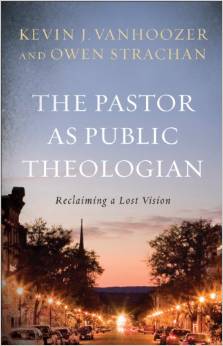
The Pastor as Public Theologian.jpgThe Pastor as Public Theologian: Recovering a Lost Vision  Kevin Vanhoozer & Owen Strachan (Baker Academic) $19.99  Baker continues to be known as an important academic publisher, and this handsome hardback should get very wide distribution. Vanhoozer has written many books of thoughtful, evangelical theology, including extraordinary stuff on hermeneutics, reading the Bible, and the nature of knowing what we know as we enter into the drama of Scripture unfolding. His co-writer, Owen Strachan, has recently done a thoughtful book on the legacy of Chuck Colson, a fine example of an evangelical who worked in prison ministry, thought deeply about culture, and worked to bring God’s reform to theories of criminology, even, and the ways in which incarceration happens. These two are a great pair to write about the need to regain this lost vision, making it, as Timothy Keller writes, “an important book” and as Eugene Peterson puts it, “an urgent book.”  We sold a few of these the day it came out in part because I did a simple Facebook post, noting it carried endorsements from Peterson and Keller.  I also think it is notable that a very fine writer, and small-church pastor, Jason Byassee (who also writes for the Christian Century) has a good and clever blurb on the back, as does, not surprisingly, Will Willimon.

You can tell from the title that this book explores and invites us to reclaim the significant matter of having a pastor as a “resident theologian” and why the intellectual chops of the pastor and preacher matters so much to the life of the typical congregation. Byassee says the book helps bring together “the vital parish and the learned pastor.” The phrase “public theologian” in the title conjures up notions of a “public intellectual” (one whose scholarship  is philosophically rigorous but aimed at matters of the common good and made accessible to thoughtful folk in the public square.) I am not sure, but I suspect that Vanhoozer & Strachan in this book do not mostly mean that the pastor should be an Christian intellectual or theologian for the community at large – writing public-minded op-eds for the paper, speechifying an the local university, or doing particularly heady sermons (although those may not be far from the calling of some Christian leaders) but uses the term “public” to suggest that the pastor’s theological chops are exercised not merely in his or her study or behind the scenes, but brings theological categories and ideas overtly into the mix of daily life in the parish. In this sense the pastoral and prophetic task of the church pastor-theologian is public, although I might wish for a less broad title if the thrust of Vanhoozer’s book is for the pastor to be a theologian in the public spaces of the local church, not the really public public. One of the ways this book does approach the “public square” is that it maintains that pastors should help their congregants reflect theologically on their own life in the world – from medical ethics to political concerns to the texture and values of their work-worlds and other social responsibilities. In this sense, the people of God are scattered as Kingdom agents in all corners of society, and if pastors are doing intellectually rich theology that is pregnant with public possibilities, they are serving their flock, who then, in turn, influence the public.  I think this is going to be a great book, hopefully enduring, and am glad it is being touted.
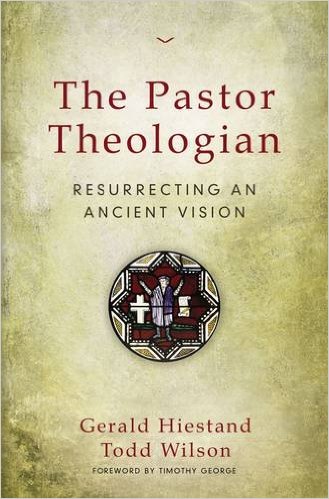
The Pastor as Theo GH & TW.jpgThe Pastor as Theologian: Resurrecting an Ancient Vision  Gerald Hiestand & Todd Wilson (Zondervan) $18.99 This is new book that sounds these same themes, and is a smaller paperback.  I am pretty sure that it, too, is worth its weight in gold, and I am glad to suggest it as well as the one by the more famous Vanhoozer. (Mr. Vanhoozer, by the way, offers a lengthy and lovely endorsement on the back of this one saying it could “move institutional mountains and raise, if not the dead, then at least defunct concepts – like the pastor-theologian.”) Other significant thinkers endorse it, such as Richard Mouw, Peter Leithart (who notes that it is “ambitious “) and the esteemed church historian, Timothy George, who wrote a very good foreword.

Again, whether you are a pastor or not, understanding this older vision of the role of pastors as theological voices amongst the people, is good reading for all of us. If you are not a clergy-person, maybe you should give it to your own pastor, who I bet would actually love to be able to talk to somebody about these visions of vocational holiness.  

 I adore this colorful endorsing blurb from Jamie Smith, who writes of it,

If you’re looking for canaries in the church’s coal mines, consider our seminaries and divinity schools. In some cases, the seminary has simply become one more outpost of the academy, hijacked by the ideals of the research university, almost allergic to pastoral formation. In other cases, the seminary is reduced to a management seminar where the pastorate is confused with technique. The Pastor-Theologian is an antidote to both, a vision for ecclesial theology and a theological ecclesia. We need this book because we need pastor-theologians.

THREE EXAMPLES OF EXCITING THEOLOGICAL EXPERIMENTS
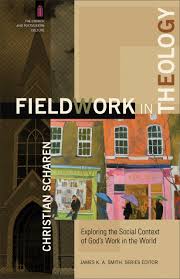
Fieldwork in Theology- Exploring the Social Context of God's Work.jpgeconomy of desire.jpgwho's afraid smith.jpgliturgy as a way of life.jpgFieldwork in Theology: Exploring the Social Context of God’s Work in the World Christian Scharen (Baker Academic) $19.99

This brand new book is the 9th in “The Church and Postmodern Culture” series edited by James K.A. Smith. We stock them all, and I’ve read most of them carefully, from Smith’s most recent study of relativism to Benson’s serious book on liturgics and the arts, to a very important one on economics and desire. Some are directly about postmodern theorists (Smith, John D. Caputo, and Merold Westphal did the honors) while others are more about the condition of post-modernity. I think Carl Raschke’s one called GloboChrist is stuck with a rather goofy title, but its exploration of the Great Commission in a globalized world is impressive. We look forward to the one coming by Norman Wirzba later this fall.)

Jamie Smith raves about this brand new one in his enthusiastic introduction, explaining that it nicely fulfills his original hope for the series, which brings very high-brow French and Continental philosophers into helpful conversation with North American church life.  The subtitle of Smith’s lead-off first volume (Taking Derrida, Lyotard, and Foucault to Church) gets at this quite nicely.  And this is exactly what Christian Scharen does, making it great for church leaders of all sorts, but also, in so doing becomes a perfect example of the sort of book I mentioned in my led; you can enter a world you may not know much about and in a handful of hours, come to learn quite a lot about a lot.

I suspect most of you, like me, don’t know much about Pierre Bourdieu, one of the great fathers of the field of contemporary sociology (let alone his influences, interlocutors, and critics.) But what an opportunity to practice using your critical thinking skills, what a fresh way to bone up on some profound stuff.  Dr. Scharen is a fine guide through some thick intellectual forests, and he helps us – if I can abruptly switch metaphors – and does much of the heaviest lifting for us.  Fieldwork in Theology is an exceptionally stimulating book and even though it argues for a new way of doing theology (and, consequently, although he doesn’t say enough about it, seminary education) it introduces us not only to tons of sociologists and European scholars and urgent, contemporary intellectual history,  it offers us helpful reminders of what it means to think creatively and fruitfully on God’s work in the world. 

As Miroslav Volf says “If you are interested in learning to read ‘the world’ and discern how God is at work in it, this simple book by one of today’s finest practical-theologians is an excellent place to start.”  (Aside: I love Miroslav, but, uh, his use of the word “simple” sure does illustrate the notion of contingency. One man’s simple is pretty darn complex for most others. Just saying.)

Allow me to explain something about Scharen and a great feature or two of his fabulous new book. And four different sorts of Hearts & Minds friends who should consider it.
broken hallelujahs.jpgFirst, I know that Scharen loves rock and roll.  He’s written two previous books on music (One Step Closer: Why U2 Matters to Those Seeking God and Broken Hallelujahs: Why Popular Music Matters to Those Seeking God.) Even though this book guides us into the work of scholars as complex and prosaic as Bourdieu, Gaston Bachelard, Maurice Merleau-Ponty, and a dude named Loic Wacquant (and his notion of “carnal sociology”) Scharen starts each chapter with an album review or description of a song or live performance. I wasn’t anticipating this, so it was a great delight.

For instance, in a prelude to the meaty of the first chapter (“Fieldwork in Theology: Waking Up to the World God Loves”) Scharen shows how John Legend, Common, and the Roots and their re-appropriate of the soul song “Wake Up, Everybody” helps us appreciate the theories and project of Pierre Bourdieu. In a really powerful page or two Scharen invites us to think about how Bad by U2 (a song one step closer why u2 matters.jpgabout heroin addiction) helps us appreciate notions of empathy in the non-Cartesian philosophy of science of Gaston Bachelard whose work profoundly effected Bourdieu (not to mention other French luminaries such as Michel Foucault, Jacques Derrida, and the American historian of science, Thomas Kuhn!)  Scharen, who has written a whole book about U2 is nice to bring this pop song and its passion to the notion of “epistemological breaks” which is a key focus for that chapter.  And, man, when he gets to Merleau-Ponty (and his significant work on the phenomenology of embodied perception) who is explored in light of Esperanza Spalding and his “Freedom Jazz Dance” it all gets really, really interesting! Being awake to the world comes to the fore again, by the way, in the next chapter – a study called “Practical Logic: Bourdieu and the Social Art of Improvisation”  — when Scharen opens with a study of Arcade Fire.  Since I’m on a roll here, I’ll steal the final surprise, and tell that Lauryn Hill comes alive in the final chapter, with her “Black Rage (Sketch)” piece which kicks off  the sociological insights of Loic Wacquant, who was, we learn, “Bourdieu’s most famous and most productive student.”
The only other Christian scholar who is so good at using these kinds of evocative songs and artists for pretty important theological ends is my pal Brian Walsh, and there are shades of his insights in some of this, it seems. (I say this to assure you that Scharen is credible and astute about his readings of these artists and he truly sees the pretty deep connections; it is not a ploy to make the tough philosophical sledding a bit lighter, although I’d take a soundtrack like that even if it wasn’t that integrally connected. These songs make for a rich and exciting learning experience, and helped me connect the heavy theory of these mostly Continental philosophers and their abstract ideas with the down-to-Earth stuff these songs are about.

But here is what I suppose you should know most of all: Scharen is not only a music buff with good impulses about engaging postmodern thought, he’s a sociologist, a practitioner who has learned to be good at his craft. Scharen’s title about “field work” is to be taken pretty literally. He takes great pains to talk about the ways in which theology is situated, contextualized, and embodied, and should not be merely abstract. Some seminaries are allowing “field work” and the sociological practice of empathetic ethnography is increasingly seen as a way to learn how to discern God’s work among a people;  social science skills (such as good listening, asking good questions, being attentive to the patterns of embodied practices, understanding indigenous customs and habits of a locale) can serve the localist theologian and pastor.  Indeed, Scharen, inspired by historic Biblical doctrines such as creation, common grace, people being made in the image of God, the incarnation of Christ and more — he’s a Lutheran so I guess we should gesture towards the gospel of grace — we should care about these skills of the social sciences, a care about their discoveries.

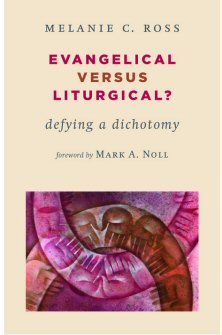
We’ve seen several good ethnographies lately of religious groups, research projects pursued by scholars trained as cultural anthropologists who “go native” —  but not in wild foreign jungles, but at places in typical American towns with names like First Presbyterian or Second Baptist or Christ evangelical vs - Melanie Ross.jpgLutheran or St. Somebody Episcopalian or Such and Such Community Church. He tells us about some in this book. (One recent one, by the way, which we’ve raved about, compares and contrasts and draws together much insight about worship by studying (through involvement with) the liturgical practices of a Central Pennsylvania Evangelical Free Church and a more conventionally-styled, high-church Episcopalian one. See Liturgical and Evangelical Versus Liturgical? Defying a Dichotomy by Messiah College grad and Harvard Divinity School prof, Melanie Ross, published earlier this year by Eerdmans; $17.00.)
Dr. Scharen has done this kind of work himself. Faith as a Way of Life: A Vision for Pastoral Leadership is his published account of his (Yale funded) conversations over a period of time with Christian persons in a variety of faith as a way of life.jpgsocial arenas (taking up their callings as artists, citizens, home-makers, workers, and consumers of leisure time activities) and what he learned as he carefully listened to these folks as they narrated how their local church did or didn’t equip them to think about their fidelity to the gospel in these sides of life. So he has some history and expertise as a researcher and practitioner.
Further, he has brought together others who study this field. It may not be a huge seller here in an ordinary bookstore, but we can hope: we love stocking resources like this.  He edited a large volume of academic papers about this explorations in ecc and ethno.jpgvery topic, called Explorations in Eccelsiology and Ethnography (Eerdmans; $40.00.)
He currently serves as Vice President of Applied Research at Auburn Theological Seminary in New York.  His own introduction to the field of sociology came from one of the great public intellectuals and social theorist of our time, Robert Bellah, to whom the book is dedicated.

So here are four kinds of readers who should order this book from us:

  1. If you are a curious thinker, wanting a good book to stretch your mind, engage some important scholarship, eager to learn a bit about something new, in this case, a considered and deeply theological framework for thinking about field work as a way to do theology. As do the other books in this “Church and Postmodern Culture” series, Fieldwork in Theology offers a rigorous but relatively brief introductory “French lessons for the church” and we’d all be better off if some of us knew this stuff. Life-long learner with a big curiosity, fan of Smith’s series, or just wanting to stimulate the old grey matter, this book will be rewarding for you, I’m almost sure of it.
  2. If you are a seminary executive or professor or involved in developing theological education, this book is simply a must-read. A. Must. Read. That’s obvious.  But even if you are a not a seminary-related person not that interested in the future of theological education, or even that interested in theology at all, this may be useful for you. Especially if you are looking for ways out of the impasse between traditional theological methods and truths of a conservative sort and the way in which many modernist/liberal theological schools of thought and edgy thinkers get way out on a limb that doesn’t bear much fruit — this really does offer a third way, based on alternative understandings of what it means to know, to learn, to formulate theological insight.  Theology as lived practice, informed by the best postmodern and continental thinkers, and studied in embodied, empathetic ways among the very people God loves, well, this “fieldwork” approach might be a game-changer for some, evangelical or progressive.   Dr. Pete Ward is a Durham University professor (a “Fellow of Ecclesiology and Ethnography” – itself quite a thing, those crazy Brits!) and he claims that “Christian Scharen marks a turning point in practical theology.” So, there’s that going for it.
  3. If you are a sociology professor or serious college major, and want a theologically-informed Christian engagement with some of the key thinkers of the field, and you’ve mastered the classic Sociology Through the Eyes of Faith (Tony Campolo & David Fraser) and maybe Vern Poythress’ Redeeming Sociology, and of course a Peter Berger book or two, then this will be a significant read for you. Of course, Scharen brings in classic thinkers in the field such as Marx, Weber, Durkheim, Bellah and others. It is a book about theology and philosophy, but the sociologists he cites most are passionate about the socially construed context and lived contexts – habitus you guys call it – of socialized people in our contemporary global village. In other words, if you are hoping to honor God by thinking well about the religious uses of the social sciences, this book will stretch you into fruitful intellectual work. In fact, if you care about the integration of faith and learning among any of the liberal arts, this book should be on your list.
  4. If you happen to be doing any field work of your own, this book which offers a philosophy of methodology is a must. In most fields, we proceed at our own cost if we fail to spend time looking at the a priori methodology that necessarily informs and colors our research. (Kuhn and Polanyi, at least, taught us that much!) That is, we have to look at our looking, study our tools; a proper philosophy/theology of method is critical, in the natural sciences, the social sciences, and in the doing of theology.  FIeldwork in Theology: Explore the Social Context of God’s Work in the World shows you how it’s done. After a ton of critical theory and exploration of the impact of these significant scholarly influences, Scharen tells the tales. From descriptions of the ethnography Scharen’s man Pierre Bourdieu did among Algerian peasants to stories of Wacquant’s work among boxers in the gyms of the Chicago ghetto of Woodlawn (and “the diffusion of hyper-incarceration” he discovered) to Natalie Wigg-Stevenson’s professional work deeply engaging a Christian education program in a Nashville Baptist church (and “the particular bodily dimensions of belonging” which enabled her to deeper, more wholistic ethnography) these are nearly case studies, signposts, bearing witness to new ways to do science, with care and compassion and hopes of truly learning more about the human condition

Fieldwork in Theology- Exploring the Social Context of God's Work.jpgThe Epilogue of Fieldwork in Theology teaches us about “Understanding as a Spiritual Exercise” and it is nearly worth the price of the book. The entire book is well organized and offers clear introductions to what is going to be explored in every chapter, and so this ending piece, too, starts with some useful review and some helpful take-aways.   Just like ethnographers and social scientists have to learn the art of their craft (observing, interviewing, and the like) we all can deepen our skills of faithful understanding. It will entail, Scharen reminds us with gravity worthy of the topic, “forgetfulness of self and conversion to others.” These sorts of spiritual gifts and fruits will be sorely needed, it seems to me, if we are to embrace, empowered by the grace of the gospel itself, the concern of Bourdieu’s most famous book: The Weight of the World.

Scharen reminds us of what he’s been doing in Fieldwork and why:

The church needs to look outward and ask challenging questions of how God is at work loving the world and how we can get involve. To do so, I’ve argued, leaders need the capacity to understand what is going on and how to think about how God is involved in the world.  This book offers an introduction to a major social scientist under whose mentoring I learned to look with discipline and understanding. That discipline and understanding surely could be gained in a variety of ways.  Here I have offered it through the mode of fieldwork drawn from Pierre Bourdieu. We’ve been able to understand his approach more deeply by attending to formative influences on his development… 

He ends with a bit about Bourdieu counseling interviewers in field work to be comfortable with silence, to take time to really listen, as people eventually testify about their deepest concerns. 

“Here,” Scharen writes, 

in the holy moments of deep silence, listening to another find words for the experiences of his or her life – lovely or horrible or more likely some mixture of both – the whole practice of research is subsumed by our participating in listening as God does, the God who bends near to hear our cries.

TThe Revelatory Body- Theology as Inductive Art.jpghe Revelatory Body: Theology as Inductive Art Luke Timothy Johnson (Eerdmans) $25.00  I started this very sturdy hardback the other day and was nearly stunned by how dense and yet rewarding a careful parsing of each section was. Slowing I’ve been pondering it, a heavy theology text interlaced with personal story and at times passionate argument. (His study of Pope John Paul II’s Theology of the Body is fascinating!) The blurbs on the back – from esteemed thinkers such as feminist Elizabeth Johnson of Fordham, Amy Plantinga Pauw of Louisville Presbyterian Theological Seminary, and the always eloquent Walter Brueggemann – caught me up in great expectation.  The major point by this rigorous Catholic thinker is that theology is more an inductive art then a process of mere deduction. Hmmm, think about that.  Interestingly, Johnson — a relatively conservative New Testament scholar by training — insists that all theology (and all Biblical study and all determination of what is true and good) must start in our lived bodies. In a way, this is pretty self-evident: we cannot see or hear or know or feel without eyes or ears or brains or nerve endings.  And, as the aforementioned James K.A. Smith often says, in mocking Descartes, we are not just “brains on a stick.” We are full-bodied, multi-dimensional creatures, in a good but fallen creation, and to know God and God’s revelation, we must somehow engage such truth with our selves. What else can we do? This is theologically thick and rich, and the consequences are more vast than you may realize.  He will tell you about some of them.
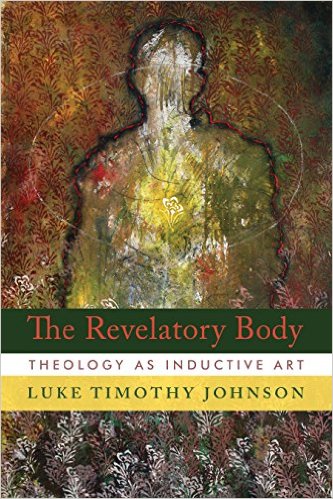
Ms Pauw – who has written about Jonathan Edwards, by the way – says it is a winsome book which “invites readers to ponder the work of the living God in common experiences of bodily life. Here is biblical and theological reflection that discovers the revelatory in the ordinary.”  This is true, as Johnson ruminates on all sorts of stuff – pain, pleasure, play, being exceptional at things, going to work, sex. But this is not a “practicing the presence of God” guide to seeing God in the beauty of daily life: rather, it is a theology text, at turns philosophical, Biblical, academic, and scholarly.

Yet, I like that Walt Brueggemann notes that The Revelatory Body: Theology as Inductive Art

exhibits Johnson’s deep learning, the largeness of his spirit, and the generosity of this theological sensibility… To write such a book requires a lifetime of awareness, to great benefit of readers.

Professor Luke Timothy Johnson says that “Scripture points to the human body and lived experience as the preeminent arena of God’s continuing revelation in the world.” Theologians must be willing to “risk engaging actual human situations – as opposed to abstract conceptualizations of those situations.  He is not the first to lament “disembodied theology of the body” (although the phrase is worth remembering) and certainly not the first to ponder what we really mean when we talk about the spirit and the body.   He draws on scholars and philosophers as academics do, most of them not those I’d know well. Marcel, Rahner, Mircea Eliade, even Marshall McLuhan.

Dr. Johnson teaches at Candler Theological Seminary (at Emory University in Atlanta) and notes that a simple premise underlies his convictions in this work:

Authentic faith is more than a matter of right belief; it is the response of human beings in trust and obedience to the one whom Scripture designates as the Living God, in contrast to dead idols that are constructed by humans as projections of their own desires. The Living God of whom Scripture speaks both creates the world at every moment and challenges the ways in which human freedom tends toward the distortion of creation – and indeed of the Creator. Among the idols that authentic faith must resist are the idols of human thought concerning God. Living faith remains aware that the most subtle and sophisticated of all idolatries might actually be the one constructed by theologians who claim to know and understand God.
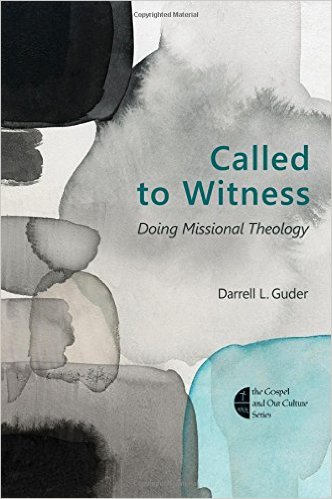
Called to Witness- Doing Missional Theology.jpgCalled to Witness: Doing Missional Theology Darrell L. Guder (Eerdmans) $25.00  I suppose you can see that this very significant work — the latest in the Newbigin inspired “Gospel and Our Culture Network” series — has some considerable sympathies for the sorts of things discussed in both the Christian Scharen Fieldwork book and the Timothy Luke Johnson Body one.  But neither of those spend much time directly explaining the details of God’s mission in the world.  (Scharen more than Johnson, I’d say.) Those two are about methodology — how we can discern the redemptive work of God among the people, or in one’s own body.  And both admit that this is done in the church, together, for the life of the world, so they both could be characterized as gently missional.

But here, here we have what some have been waiting for: Guder himself (seminal in perhaps coining the must-discussed, and over-used word) explaining how to do theology as part of the missional project.  The blurbs on the back, here, are indicative of the early-Newbigin Network influence: George Hunsberger, Wilbert Shenk, Dana Roberts, even Craig Barnes, the President of Princeton chimes in affirming that this is a must read for anyone who is using missional lingo and strategies and techniques for church outreach. If Bosch were alive, his name would be on there, I’m sure.

Many of those colorful books that fill up to overflowing our “missional church” shelf here at the shop are very impressive. A few are a bit simplistic but most are meaty, big, relevant, long on cultural analysis and Biblical teaching.  But few do theology as such

Here we have, by the author Hunsberger calls “the grand master of missional theology” the theological thinking that undergirds the movement.  Or should, at least. In just 200 pages!  

The first chapter is “From Mission and Theology to Missional Theology” and he takes off from there.  We get to join him in studies of the missio dei, the nature of mission after Christendom (of course), the Christological formation of missional living, the church as a missional community, and more.  There is discussion about the “Nicene Marks” of a “Post-Christendom Church” and insights and proposals about the authority and interpretation of Scripture. He writes about leadership, about “integrating theological formation for apostolic vocation” and ends with a bit on ecumenism. 

Dr. John R.Franke, senior editor of the “Gospel and Our Culture” series of which this is a part — designed to “foster the missional encounter with the gospel with North American culture” — says many good things about Professor Guder and that “this volume will stand as one of his greatest contributions.”  I think it looks excellent, and so glad it has arrived.

Fieldwork in Theology- Exploring the Social Context of God's Work.jpg

The Revelatory Body- Theology as Inductive Art.jpg

Called to Witness- Doing Missional Theology.jpg


BookNotes

SPECIAL
DISCOUNT
ANY ITEM MENTIONED

20% off
order here
takes you to the secure Hearts & Minds order form page
just tell us what you want

inquire here
if you have questions or need more information
just ask us what you want to know

                                      Hearts & Minds 234 East Main Street  Dallastown, PA  17313     717-246-333
Three tremendous new items (two books and a DVD) about C.S. Lewis, Tolkien, Joy Davidman: ON SALE

Thanks to those who have prayed for us during my recovery from a stupid back injury; your nice wishes and prayers mean a lot.  Although befuddled by some strong pain meds, I have, in my bed rest, been able to scrunch myself into a position to read, and although I’ll try to be brief – you’re welcome – I am eager to announce a few important new resources for those who are fans of C.S. Lewis & Co.  Even if you are not fans, you should know about these three new and very significant items.  We need some summer biz on this end, too, so order ’em now, even if you don’t have time to read or watch until the Autumn.  For our BookNotes readers, everything is 20% off, too.  Cheerio.

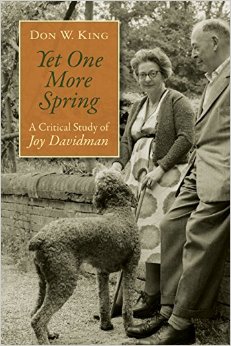
Yet One More Spring: A Critical Study of Joy Davidman Don W. King (Eerdmans) $32.00//$25.60

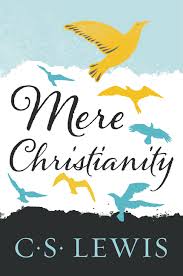
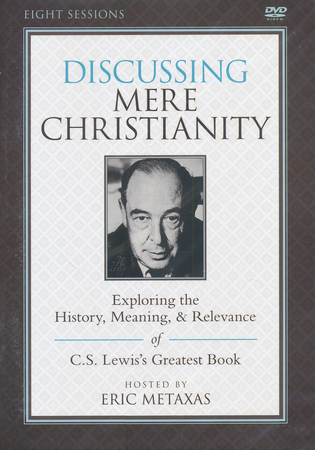
DVD  Discussing Mere Christianity: Exploring the History, Meaning & Relevance of C.S. Lewis’s Greatest Book  Devin Brown, hosted by Eric Metaxas (Zondervan) $49.99//$39.99

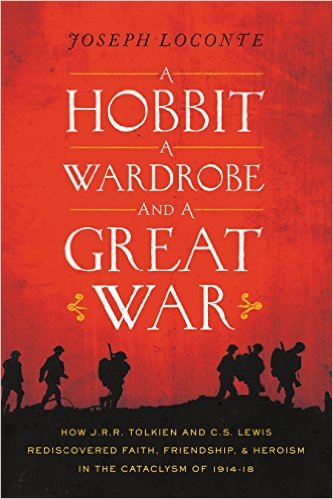
A Hobbit A Wardrobe and a
Great War: How J.R.R. Tolkien and C.S. Lewis Rediscovered Faith,
Friendship, and Heroism in the Cataclysm of 1914 – 1918
Joseph Loconte (Nelson) $24.99
//$19.99

Yet One More Spring- A Critical Study of Joy Davidman .jpgYet One More Spring: A Critical Study of Joy Davidman Don W. King (Eerdmans) $32.00 our discounted price $25.60
This long-awaited book just arrived yesterday, just in time to make this little list, but I have not studied it yet.  I do know three things for sure: Montreat College professor Don King is a wonderful, learned, generous thinker and author and is very well respected in Lewis studies.  He has the critical edition of Lewis’s complete poems and he edited the remarkable collection of letters by Lewis’s wife, Joy Davidman, Out of My Bone: The Letters of Joy Davidman. I don’t know of anyone more suited to a thoughtful study of Lewis’s colorful, American formerly Jewish wife whose death stung Lewis so he wrote a book on grief under a pen name.

Secondly, we are told that this is the first comprehensive study of this gifted, but largely overlooked American writer.  Even Douglas Gresham, Joy’s son, agrees:  “Don King has long been fascinated and intrigued by my mother’s writing… an amazing portrait of a complex, extremely intelligent, deeply emotional, strong and courageous, yet emotionally fragile woman creeps out of the pages of this book.”

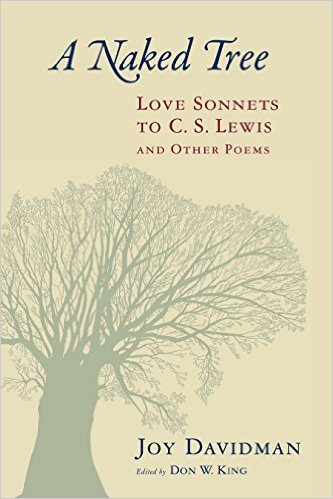
a naked tree.jpgThirdly, there was not long ago a recently unearthed set of love sonnets written by Davidman to C.S. Lewis, and this is a “pioneering discussion” which (according to Michael Ward, of Planet Narnia and The Narnia Code fame) “is causing a major reassessment of her literary – and possibly her personal reputation.”

This looks to be a great read, described by one reviewer as “Part anthology, part biography, part literary analysis.”  Yet One More Spring caused Diana Pavlac Glyer (author of the wonderful book The Company They Keep about the friendship between Lewis and Tolkien) to say “I was intrigued, enlightened, and at times frankly astonished by what I discovered in these pages…. Challenging. Satisfying. And long, long, overdue.”


Discussing Mere DVD.jpgDVD  Discussing Mere Christianity: Exploring the History, Meaning & Relevance of C.S. Lewis’s Greatest Book  Devin Brown, hosted by Eric Metaxas (Zondervan) $49.99 our discounted price $39.99

The impressive Devin Brown (Professor of English at Asbury University, and friend of H&M, I might add) is a great thinker, and, more importantly for this project, a great communicator and teacher.  Not only is he a Lewis (and Tolkien) expert, but he knows how ordinary folks, churched or not, need to grapple with big ideas made accessible.

We have for decades wished for a useful video curriculum serving as an upbeat introduction to this beloved, but sometimes, dense British masterpiece, and having a good guide, who knows the material well, and is skilled at writing about it makes a huge difference. Brown is a former Scholar-in-Residence at the Kilns (Lewis’s Oxford home) and he has written a number of excellent books on Lewis, and he is also a teacher himself, making this a perfect resource.  That it is interestingly hosted by the jovial Lewis buff, Eric Metaxas, gives these video studies a professional, congenial tone.  Fabulous invited guests share solid insights and fun anecdotes, helping us appreciate and enjoy the relevance of this best-selling book from a century ago. Featured are N.T. Wright, Tim Keller, Lauren Winner, Devin Brown, Paul McCusker, Douglas Gresham, all who “help us understand the timeless message of C.S. Lewis in fresh ways for a new generation.”  Kudos to all involved.

There are eight sessions here, following the main arguments of Mere Christianity.  Here are the titles of the sessions. 

  1. Our Sense of Right and Wrong
  2. What’s Behind Our Sense of Right and Wrong
  3. The Rival Conceptions of God
  4. Free Will and the Shocking Alternative
  5. Christian Behavior and the Great Sin of Pride
  6. The Christian Virtue of Hope
  7. God in Three Persons
  8. Counting the Cost   

mere hardback.jpgmere new paperback cover.jpgThis follows Lewis’s exquisite logic and draws on his elegant prose. It offers solid, smart argument and holds up some of his very best analogies and illustrations, of which there are many.  

One copy of the must-have study book, created by Dr. Brown, is included in the package shown above (more are available for each participant if your using it in a class or small group) and it includes further video notes, discussion questions, individual activities and personal study suggestions for each session.  It is very, very good and highly recommended.                                                       Two new covers, paperback,hardback.

A quick closing remark about this book, and one thought about why using it in your church or group is important: at our blog here we review a  diversity of books, mostly Christian, although we define that pretty broadly.  It’s a fact that we have brothers and sisters who are theologically progressive, liberal, Evangelical or conservative,  some customers who are spiritually mature and inquisitive, others who are churchy but not very interested in deeper things. Some folks like to learn and others need a little help – and this can offer that help! We know Greek Orthodox believers, Catholics of all sorts, Anabaptists, free church fundamentalists and the truly, truly Reformed. There are — as Tom Sine once put it — emergents and missionals, multi-ethnics and monastics.   From United Methodists to United Church of Christ, from Church of God  members of both sorts to Lutherans of various Synods, Presbys to Pentecostals, Congregationalists to Episcopalians, there is a very wide array of folks within Christ’s big church.

I would hope that a basic sort of Creed from the earliest of days would unite us, although not everybody these days even believes the ancient formulations.  Perhaps this – mere Christianity – is a help.  Does your church hold to this much, at least?  Can we be, in whatever tone or accent we each bring, mere Christians? I think this is a good start to help us know what we believe (at least) and why we believe it (or at least some of the reasons why) and how to offer this good news to a skeptical, confused, but hungry world.  It will do the Church good to become re-familiarized with Clive Staples Lewis and his now-classic BBC radio talks which became the book Mere Christianity.  We’ve been waiting for this resource. Let us pray that many use it, and many are equipped to know and live in the deep, profound truths of mere Christian faith.  

Here is a four minute “trailer” introducing you to this thoughtful, charming study. 


A Hobbit A Wardrobe and a Great War- .jpgA Hobbit A Wardrobe and a Great War: How J.R.R. Tolkien and C.S. Lewis Rediscovered Faith, Friendship, and Heroism in the Cataclysm of 1914 – 1918 Joseph Loconte (Thomas Nelson) $24.99 our sale price $19.99 
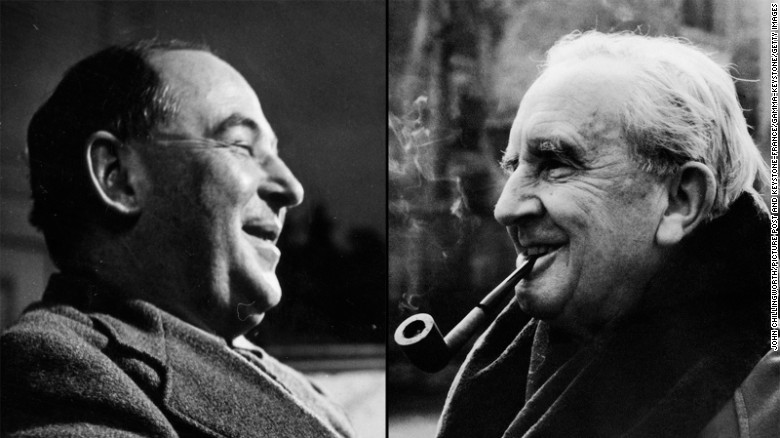
We have a large selection in the shop of Lewisy/Tolkien/Inklings related books —I’m glad we’ve promoted, and glad some customers of ours even have hosted an on-line reading group of Philip & Carol Zaleski’s The Fellowship: The Literary Lives of the Inklings: J.R.R. Tolkien, C. S. Lewis, Owen Barfield, Charles Williams, one of the most important books in this field in many a year. But, sometimes I wonder what else can possibly be said.  I did a small review of a few recent Lewis-related books this past spring, and was very happy about that list, but this recent one was not released then.  And oh my, it should have been on that list, and it definitely offers some new considerations of what fueled the extraordinary work of these two scholars, and frames the themes of their writing in some interesting, helpful ways. A Hobbit A Wardrobe and a Great War is a very good read, and a major contribution to the field.

Professor Loconte (who teaches History at the Kings College in New York) is an excellent writer, intelligent, serious, mature, and his command of the history and philosophy of the ethos of the era in which Lewis and Tolkien came of age is prodigious. His writing, while sober, is insightful and at times exceptionally powerful. (His 2012 book about those who are religious seekers in this age of doubt — The Searchers – was eloquent and at times profound.)

His fan and friend Eric Metaxas raves about this new one saying,

Loconte’s book is rendered with typical passion, erudition, and élan; and his explanation of how the tragedy of the Great War warped the moral landscape of the past century is an utterly vital contribution to our understand of where we are today.

The opening introduction and first major chapter of this learned book, whether you care about Hobbits or Narnians, Mordor or Perelandra, or not, is worth every nickel of the price of the book. This study of how the secularized myth of progress, ever-growing technological and economic achievement, supposedly spurring even the natural upward improvement of human nature (and the formative role of Herbert Spenser, Darwinism, eugenics, the social gospel, and other ideological and social trends, and new inventions to fund that myth) shaped the early part of the 20th century is succinct, compelling, and important. (Is he really describing the visions and values and habits of heart from over a century ago, or is he ruminating on stuff I read from thought leaders, uh, last week?)

This early salvo is rich and important, and if one doesn’t have an awareness of and discernment about this (idolatrous and disastrous) meta-narrative of our times, it is must reading. That Mr. Laconte shows the horror of World War I – reading a few stats and stories on the first pages made the hair rise on my arm, and nearly brought tears to my eyes, so brutal was that devastation – and how it influenced Lewis and Tolkien who both fought in the trenches and saw grotesque things no human should have to face, is a very helpful way into the story.  But even leaving the men who eventually became friends and legendary storytellers out of it, these first chapters are essential for those who care about our own times, and how we got here.  Metaxas’s endorsement is spot on.

Laconte reminds us that “All this self-generated progress, this mastery of nature, was occurring without the help of religion.”  

Indeed,

For many Europeans and Americans, Christianity seemed irrelevant to the insights ad blessings of the new technologies… Thus, it was not only technological innovations that were emboldening the believers in progress. Scientists and social thinkers were also transforming the way Europeans and Americans viewed even human nature and the cosmos.

Reformers of this era – even the eugenicists – were committed to improving human nature and thought what they were doing was virtuous. (Sounds familiar, from last weeks news, huh?)  Laconte distills a consensus among many scholars when he writes, “The conceit of the intellectual elites of the day was that science, and the technology it underwrites, could solve the most intractable of human problems.”

As I said, this study of the cultural backdrop of the Great War, and how it then influenced our favorite fantasy writers, could nearly be writing about the mood of many today.  Am I wrong to recall a headline I saw in my inbox today about bio-engineering, or a review I read last week about the hit BBC Orphan Black or a letter I got back from my Congressman yesterday about his resistance to labeling GMO foods? GivenPlanned Parenthood and Monsanto and drones over Pakistan, Locante’s dour analysis of the pre-War ethos and tendencies and visions might be helpful in assessing our own times.

Again, as Locante reminds us, the thought leaders and many theologians and preachers believed not just in the blessings of better technology, but a whole scientistic worldview that promised the improvement of society, the ending of truly bad wars, even a maturity of the human condition, of human nature itself!

Tolkien and Lewis encounter the horrific progeny of this thinking – in the trenches and barbed wire and mortars of the Great War – and it gave them great pause about human potentiality. On the one hand the characters in their novels possess a great nobility: creatures endowed with a unique capacity for virtue, courage, and love. Indeed, a vital theme throughout is the sacred worth of the individual soul: in Middle earth and in Narnia, every life is of immense consequence. On the other hand, their characters are deeply flawed individuals, capable of great evil, and in desperate need of divine grace to overcome their predicament. Both authors thus reflect the historic Christian tradition: human nature is a tragic mix of nobility and wretchedness.

Although with a different tone and making a few different connections, Loconte  does what Brian Walsh and J. Richard Middleton did in the middle portions of their classic book on worldview, The Transforming Vision and especially in the opening of their book on postmodernity, Truth Is Stranger Than It Used to Be by heading to the World’s Fair exalted in London in 1851 with the “promise of the Crystal Palace.”  This remarkable tribute to the hopes of progress rooted in Enlightenment rationalism driven by the technological innovation of the Industrial Revolution was even then perspicuous for offering a religious-like worship of the gods of progress.  Loconte tell us that the Crystal Palace was an

enormous glass and cast-iron monument built to house the Great Exhibition…it was the largest glass structure in the world and a symbol of Victorian England’s cultural triumphs, spread across ten miles of floor space, and grouped into four main categories: raw materials, machinery, manufacturers, and fine arts. Of the fifteen thousand contributors, Britain claimed half the display space. Queen Victoria declared the opening day of the fair “the greatest day in our history.”

Locante, by the way, shows how both Tolkien and Lewis were uncomfortable with this technological take-over of their pastoral British countryside and these glitzy promises of more, more, more.  The ecological overtones of their fantasy (and their letters) makes clear they disapproved of the encroachment of technological life into rural England, and their concerns about a culture’s loss of traditions and faith and sense of reality due to the over-reliance of technology.  Others such as Matthew Dickerson have written at length about this (see his semi-scholarly but fascinating Narnia and the Fields of Abol and Ants, Elves, and Eriador) but Laconte succinctly underscores how our Inklings “lampoon the growth of technologies and bureaucracies at the expense of human freedom.”

(It is refreshing, by the way, to see an esteemed social and political conservative like Joe Laconte note approvingly of this insight – less thoughtful conservatives have mocked “hippies and tree-huggers” for seeing these concerns in Tolkien and Lewis, as if it is silly to suggest ecological sensibilities were important to these authors or as if these sensibilities themselves are somehow unimportant or only of interest to the far left. “Lewis viewed nature as an intrinsic part of human life,” Loconte writes. “This is why the Narnia novels give such a prominent role to its animals.” Good for him for saying so.)

More to the point of the argument that Laconte is making, with the help of a wonderfully close reading of the vast work of these two writers, however, is that the Great War and its demonic devastation changed everything for the West. Its horror was ghastly and almost beyond belief, and its impact huge, on life and limb, on property and land, on political systems and governance, and, importantly, on ideas and beliefs and attitudes and faiths.  The way the war left the optimism of the myth of progress in its dark wake is essential to understand.

Like no other force in history, the First World War permanently altered the political and cultural landscape of Europe, America, and the West. In the judgement of more than one historian, the war became “the axis on which the modern world turned.” Literary critic Roger Sale has called the conflict “the single event most responsible for shaping the modern idea that heroism is dead.” For a generation of men and women, it brought the end of innocence – and the end of faith. 

Loconte looks at “the merciless machinery of war” and helps us realize – without any didactic extrapolation to current wars or faith in military lasers, drones and other vile gizmos – “this was the most terrifying result of The Myth of Progress: it inspired great advances in military technology, but failed to advance any new theories of warfare to address the consequences of this technology to the battlefield.

What an illusion it all was, exposed as hollow by the savagery of total, technological war shook the ground, literally and metaphorically, under the feet of much of the world.

“The early apostles of The Myth of Progress believed they had overcome the problems of the industrial society. More than that, they imagined that they had solved the riddle of human existence.”  Right. And even after subsequent Gulags and Holocausts, Genocides and ghastly modern moments like Hiroshima and Nagasaki, some continue to say this.

These are my ruminations, of course, inspired by the first few chapters of this remarkable and very interesting book. This is important stuff, and Laconte shows how Lewis and Tolkien understood much about the prevailing cultural zeitgeist, as we say nowadays.

lewis and tolk.jpgBut Locante’s main task in A Hobbit, A Wardrobe and a Great War is to prove his case by drawing on the men themselves (their friendship, their mutual aid, their influence over each other, spiritually and literarily and professionally) and the stories themselves, on Bilbo and Caspian and N.I.C.E.   Moving deftly from relevant European military and political history to mid-twentieth-century philosophy and theology to the children’s stories and fantasy novels, this is a bio of Tolkien and Lewis unlike any other.

Although the chapters are not exclusively dedicated to any one work, the chapter titles are familiar: “The Last Battle”, “In a Hole in the Ground There Lived a Hobbit” “The Lion, the Witch, and the War” and on he goes. Chapter Five is called “The Land of Shadow” while Chapter Six is “That Hideous Strength.”  I loved his conclusion, aptly entitled “The Return of the King.”

Laconte, like his writerly heroes, and the fictional characters they’ve created, is not a pacifist.  He teaches a bit in American Foreign Policy and I suppose he is a realist in these things, as they say. As one trying to follow the way of Jesus and other Biblical mandates about peacemaking and nonviolence, I will admit I did not agree with some of the conclusions of this otherwise fine work, particularly around the question of violence and the nature of the tragic, and the ethics of war-fighting. I do agree, however, with Laconte’s read on how these authors realize in their imagined worlds, that we must live “in the world as we find it” as one chapter section calls it.

That is, 

Central to the experience [in the war] was an encounter with the presence of evil: the deep corruption of the human heart that makes it capable of hunting down and destroying millions of lives in a remorseless war of attrition.

Is this struggle with evil – even in the way we resist evil – at the heart of the lessons of Gandalf and Frodo.  Gandolf explains

One Ring to rule them all, One Ring to find them,

One Ring to bring them all, and in the darkness

 bind them,

In the land of Mordor where the shadows lie.

I am not sure if Mr. Laconte, and most other Lewis and Tolkien devotees, have taken this grand drama and its profound warning adequately to heart.  Have any of us?  We need grace and resurrection power to resist evil, I am sure, and although there are battles galore in Middle Earth and Narnia (and there will be “wars and rumors of wars” here East of Eden) I still wonder about those who valorize bravery inspired by pagan Greeks and warriors and killers. I am confident that this great study of the ethics and social visions of these enduring post-WWI fantasies will bring us much closer to the way of the Cross, but without even deeper, deeper magic, and a willingness to critique the unholy injustices of war, I am afraid we will fall short of the way of the Lamb.

I do agree, though, that Loconte’s writing is inspiring and good. I value his social criticism and I enjoyed his obviously very astute fluency in Tolkien and all things through the Wardrobe.  I love how he inspires us,

In the end, the creators of Narnia and Middle-earth offer a vision of human life that is at once terrifying and sublime. They insist that every soul is caught up in an epic story of sacrifice and courage and clashing armies: the Return of the King…. This King, who brings strength and healing in his hands, will make everything sad come untrue.

Here is a one minute advert for the book — very nicely done!  Check it out.

BookNotes

SPECIAL
DISCOUNT
ANY ITEM MENTIONED

20% off
order here
takes you to the secure Hearts & Minds order form page
just tell us what you want

inquire here
if you have questions or need more information
just ask us what you want to know

                                      Hearts & Minds 234 East Main Street  Dallastown, PA  17313     717-246-333


Wearing God: Clothing, Laughter, Fire, and Other Overlooked Ways of Meeting God by Lauren Winner ON SALE 20% OFF

I hope you enjoyed reading my last BookNotes post offering my picks for the best books on faith formation that have been recently published.  Just reading about those seven titles, I hope, was somehow inspiring.  We should be glad for these kinds of books that help us get to the heart of basic Christian discipleship and being transformed into the sorts of image bearers of God that honors Christ as Lord and is generative for our own growth in holy humanness.  Such personal renewal certainly spills over into our daily lives, our churches and families and workplaces, inviting new possibilities for cultural flourishing and social healing. I think each of those books offered something indispensable and hope you consider them for a book club, study group or Sunday school class, although they are each ideal for your own personal reading.  Tolle legge, ya’all.

Wearing God.jpgWearing God: Clothing, Laughter, Fire, and Other Overlooked Ways of Meeting God by Lauren Winner (HarperOne; $24.99//our BookNotes sale price, $19.99) deserves to be on that list, even if it came out earlier in the year. I had mentioned it briefly here when it first released, but have been waiting to revisit it. In fact, I am so very fond of this erudite, delightful, learned, and edifying book that I wanted to tell you about it now in a review dedicated to nothing else. It is more than an afterthought or addendum to the last post, but surely is one of the best books of this genre all year! I am confident Wearing God will be on our “Best of 2015” list five or so months from now, in part because it drew me into Scripture and made me think and, yes, entertained me as it did so.
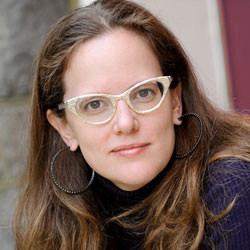
I’m sure you are not surprised to know that I think highly of the writing of Lauren Winner. 

We have been champions of her books, from her amazingly interesting and very moving coming to faith memoir Girl Meets God to her brief but exceptionally useful discussion of Jewish practices Christian people should consider, Mudhouse Sabbath (there is a brand new study edition coming out any day from Paraclete, by the way) to her must-read book on the meaning of chastity, Real Sex: The Naked Truth About Chastity, and her haunting, candid memoir of grief, divorce, searching but not finding God, and a quiet renewal of modest faith after a season of feeling away from God called Still: Notes on a Mid-Faith Crisis.  Beth and I and our staff have been glad to host her at the shop more than once. Her good, intelligent writing, a charming style of essay rooted in memoir, allows her to reveal much about herself (warts and all, as they say in that unflattering phrase) while bringing much insight about Christian theology, congregational life, social history, and a spirituality rooted in the broad, ecumenical, liturgical tradition into which she was baptized as a convert from Judaism. 

As a bright and quirky young scholar (she knows so much about so many things and is a voracious reader of fiction and nonfiction, now a prof at Duke Divinity School) she brings an informed, historical eye to many of her ruminations, making her a wonderful author to enjoy. (She calls herself a “bookworm who can happily get lost for a few days on a research trail.”) She knows much, has struggled with much, and yet writes so very, very well, without condescension or sentimentality or overwrought zeal. 

I ought not try to compare her work to other popular writers that are also appreciated by some of her fans, but I’ll suggest that she is not as zesty or funny as Anne Lamott, nor as intellectually feisty as Phyllis Tickle, and she does not curse like Nadia Bolz-Webber (and her tattoos are less spacious, shall we say), and although she can be elegant, lyrical and even luminous in her prose vocabulary, she’s not quite as restrained as Kathleen Norris, although some have likened her style to Nora Gallagher. Her own faith journey towards Jesus came from devout Judaism, through a particularly thoughtful community of evangelicals, not from lefty atheism into liberal Episcopalianism like Sarah Miles, say, but one can appreciate their similarities in discovering a robust liturgical worldview.  Nobody should bear the burden of being compared to Barbara Brown Taylor, but Lauren is good enough as a writer for me to at least suggest it. By naming this handful of contemporary Christian women writers who serve in mainline churches, and placing Ms Winner within their constellation, I think you get the picture.  She is a very accomplished writer and both helpful and entertaining.  She has written for Books & Culture, Christianity Today, and The Christian Century so you can imagine that we like her ecumenical appeal.

LaurenWinner.jpgAll of the previously mentioned books (which I’ve reviewed at BookNotes) share her memoirist styling — all tell much about her life and her spiritual discoveries emerge from her story.  Is this maybe called “creative nonfiction”? There is more to her life that could be told, I am sure, but the point is that those books are very impressionistic, her reflections revealed as she narrates portions of her life and faith journey. I value that a lot, and enjoy those books because of that engaging, slice-of-life style.  Anyone that can show us how to find God in our ordinary days by bearing witness to what they have discovered along the way can be helpful, sometimes as much as didactic theological or Biblical teaching or straightforward spiritual guidance.

Although Wearing God: Clothing, Laughter, Fire, and Other Overlooked Ways of Meeting God carries some of this trademark style, it seems to me it is a bit less memoir and a bit more explanatory of Biblical and theological teachings then any of her other books.  It is still a real blast to read – I so enjoyed it and couldn’t put it down! – and I commend it for its very lovely style and delightful turns of phrase and images and word choices. It is well-written and enjoyable for the tales she tells, but there is more direct substance here than ever before.

The back story to this book is, though, rooted in her own narrative, and the book begins that way. She tells us about a fresh discovery (like being shot by “Cupid’s Arrow” she even says) made on the heels of the spiritual dryness documented in Still… of wanting to know God more deeply by discovering God’s revelation in the Bible.  She has always valued the Biblical text, participated in faith communities that scripture reading.jpgloved the Bible, but had not been deeply engaged in Bible study the way she was, say, in her fascination with church history texts or ancient diaries, or her use of prayer books and hymnals.  I am sure I am not the only one who can relate to finding great solace and spiritual encouragement in spiritual authors, theologians, cultural critics, novelists and poets, and understand when she admitted that she found the Bible a bit boring.  Happily, she starts the book with an admission to a new obsession, a true eagerness to study and attend to the Bible in all its unique and strange glory.  Unlike any other literature, she assures us, it “overflows endlessly.”  

Winner tells us that her “newfound wakefulness” to the Scriptures coincided with a discovery that her images of God were rather old and perhaps a mixed bag of usefulness and error. 

…and it led me on a search: what pictures, what images and metaphors, does the Bible give us for who God is, and what ways of being with God might those pictures invite? 

Well, I suppose you can see where that is going.  

Ms Winner is correct to warn us that,

repetition of familiar images can have [a negative, dulling] effect. The words become placeholders, and I can speak them so inattentively that I let them obscure the reality whose place they hold. I repeat them, I restrict my prayer to that small cupful of images, and I wind up insensible to them.

“A small cupful of images.”  Wow!

She obviously holds no brief against familiar images. She precedes this warning of certain images growing stale from over-use with a lovely reminder of how common images can come alive in a particular community of faith, exactly because they are regularly used and practiced.

Through repetition and association, these few images can become even richer: there was once a time when I didn’t have many thoughts or feelings about God as great physician, but now I have prayed to that God with Carolanne, whose husband is pinned down by Parkinson’s, and Belle, who so much wants to keep this pregnancy, and Albert, who is dogged by depression, and because those prayers, and the fears and hopes and miracles and disappointments they carry, God-as-physician seems a richer image than I first understood.

But get this:

Unlike my church, with its four favored metaphors, the Bible offers hundreds of images of God – images the church has paid a great deal of attention to in earlier centuries, although many are largely overlooked now. Drunkard. Beekeeper. Homeless man. Tree. “Shepherd” and “light” are perfectly wonderful images, but in fixing on them – in fixing on any three or four primary metaphors for God – we have truncated our relationship with the divine, and we have cut ourselves off from the more voluble and variable witness of scriptures, which depict God as clothing. As fire. As comedian. Sleeper. Water. Dog.

There are, as I suppose you know, a good number of books like this, exploring the odd and rarer images of God in the Bible, and while it is obviously good to explore these often overlooked self-disclosures of God – using the unconventional images, fresh metaphors, Biblical idioms that may startle and annoy, even – some of the other books that do this are either way too scholarly and dry or they seem to be driven by a spirit of mistrust about the main teachings of the Bible, an attitude of deconstruction, wanting to undo conventional truths, replacing orthodox insights with oddball and eccentric notions.

I do not think Lauren is doing this – going out on a shaky limb creating a new kind of faith that is disconnected from classic, historic convictions of the ages.  Yes, she draws on some very unusual images from the Bible and she explores how some rather mystical sisters and brothers of earlier centuries drew on these images, but she isn’t making this up as she goes along, nor is she undercutting traditionally beloved images (although I think it is proper to say that given the multitude of images, some might refine or color how we understand the others as we hold in tension competing metaphors or similes.) That is, one can still call God Father even after one discovers God as Laboring Woman.  God can reveal God’s own self by way of Bread and by way of Laughter and by way of King. Wearing God invites us to experience God anew by offering Winner’s own creative reflection on the way God meets us, seen through the lens of a bit of her own story and how she came to discover and appreciate these lesser-known or appreciated images.  This process is primarily an imaginative, attentive, spiritually alert reading of the Holy Scriptures.  

I learned much from every chapter, I really did. I was a bit surprised that Winner didn’t realize some of these metaphors or similes are in the Book, and will be eager to know if this is new material for you, dear reader.  New for you or not, however, I am sure you will experience at least some of what I did.

Firstly, I enjoyed a new appreciation for the details of the Biblical texts she proclaimed  (Ahh, her Jewish background gives her fluency in Hebrew and the Midrash of the old rabbis, too, so she brings a learned and historically informed view to her playfully close reading of the passages under consideration.) 

Secondly, I suspect that you, like I, will be surprised to discover that many in church history have appropriated these less then common Biblical images and idioms for God.  She weaves from the Biblical text to a medieval prayer book to a story of a contemporary church she visited or prayer meeting or class in the local women’s prison where these images are known and used and back to a line from Augustine or Julian or Spurgeon.  

julian of n.jpgjohn calvin.jpgHer knowledge of saints and mystics and theologians is extraordinary: from the exegesis of John Calvin to the hymns of Ephrem the Syrian, from Ambrose of Milan to Catherine of Sienna, from Aelred of Rievaulx to Julian of Norwich, she cites them all. Of course Hildegarde of Bingen shows up, but so does John Flavel. In fact, there are little sidebars and boxed quotes from many ancient and contemporary writers – from John Donne to Birgitta of Sweden, Emily Dickinson to Gordon Fee, the Book of Common Prayer to Norman Wirzba – and these are themselves extra ruminations on the points she is making.

And there are stories galore, many from her own life; her aforementioned work in a women’s prison is shared more than once, as is a narrative about going to a prayer/protest at an immigration detention center; her passion for racial and social justice in this era of mass incarceration is nearly fiery – God bless her, as I suspect this isn’t her natural love language, as they say. I was deeply touched by a few of the anecdotes that pertained to each new image, as touched by the stories as by the creative Bible interpretation, and found her social/political concerns very compelling.

I was choked up more than once, in fact.  She writes about women’s vocalizations during childbirth in a beautiful, sensuous, graphic chapter about labor (she even quotes famous hippy midwife Ina Mae Gaskin!) and links that to God’s own groans in Isaiah 42 – a powerful study as evocative as anything Brueggemann has written.  God being vulnerable is not a new idea – she reminds us of Placher’s book The Vulnerable God and quotes a passionate paragraph from Ellen Davis and moves from the passion of Christ’s death to an earthy reminder of his very human birth, but it is very moving in her telling. Her section about nursing, too, is excellent, and surprised me with some sensitive reminders of how some women feel who are unable to nurse their little ones at their breasts.  (And yes, she brings up Numbers 11.) So God is a birthing mother, maybe a labor coach/midwife, and a nursing mom, too.  I can’t imagine any woman who wouldn’t find this interesting, and I think most men should, too.

In the chapter from which the title of the book is drawn, Winner writes some wonderful stuff about clothing. We comport ourselves differently when we wear different outfits and it is really fun hearing her talk about her different “styles” and go-to garments. She does some Bible study on “clothing” oneself in Christ (Galatians 3) while sitting in the women’s clothing section of a Raleigh department store – what an idea, what a great few pages that was! – and she offers, of course, some history and sociology of fashion.  (Again, she reads very widely, and has an eye for the fascinating historical factoid or the significance of social trends and shifts through the ages.) But the piece in this chapter that got to me was a story of Stephanie Paulsell (from a beautiful Christian Century essay) where she told a friend that she was too depressed, from a miscarriage, to pray. Her friend sent her a dress that she herself had worn while praying intentionally for a year, writing to her that the outfit had so many prayers in it, Paulsen could just wear it as an act of prayerfulness. I don’t quite know why, but I cried and cried when I read that.  God revealed as clothing is a tremendously rich notion, well backed up with Bible stories, and a must-read for anyone interested in creative prayer, maturing in Christ, or, of course, clothing and fashion.

The chapter on smell – yes, aroma in the Bible – is also truly fascinating. I can’t even begin…  Of course Lauren knows something about the history of smell, and how other senses are privileged in the West and cites writers who think about that. This was fabulous stuff, with some obvious, and some not so obvious applications.

And then there is a chapter called “Bread and Vine” which should appeal to anyone with an interest in the recent flurry of books about the intersection of faith and food, the spirituality of eating. (And, man, was I glad for the quote from Lutheran liturgical theologian Gail Ramshaw, in Winner’s section about Eucharistic bread, about being done with the dumb little manufactured communion wafers that don’t look or taste like anything!)  This luscious rumination on bread, mostly, and wine, moves widely from vineyards to Winner’s own kitchen to Southern cookbooks, racial diversity, the thirteenth-century Saxon mystic Mechthild and her visions, and the Biblical call to be intoxicated with love for Christ.  It’s a great chapter.

Her chapter on laughter is quite good, although not funny. There are some very good insights about the harsher Psalms, where God appears to laugh not pleasantly with others but at them. (Aside: it made me think of two Bruce Cockburn songs, “Laughter” from an early album Further Adventures of… and the wonderful “Listen for the Laugh” on Dart to the Heart.)

The chapter called “Flame” is wonderfully written and moves from the predictable use of fire as ardor for God to the more dangerous vision of God as fire, a bit on Pentecost, and the question about whether the fire predicted for the end is destructive or restorative.  She moves in some very interesting directions while pondering flame and fire during Holy Week, and finally gets to talking about the role of prayer and spiritual disciplines.  She declares that,

I do not want to instrumentalize prayer. Prayer, finally, is not productive, and it is not a means to an end. And yet, I know from my own halting two decades of prayer – of on-again, off-again prayer, of prayer that I consistent and prayer that is sporadic – that it is precisely contemplation that is turning me into a person with the capacity to attend to God and to God’s world.  

She continues, in a question that is most likely your own, as it is mine,

How can I become a person who pays enough attention that I might notice something and then act in response? Prayer, lectio divina, reading the same passage of the Bible again and again and trying to notice what God has for me to notice; siting in silence; walking in silence; repeating the psalms over and over – these habits might teach me how to pay attention. 

Wearing God ends with two short chapters, one a bit heady about the “poverty of expression” which reminds us of the limits of language. (With shades of her previous work, Still, Lauren reminds us of the Deus absconditus of Isaiah 45, “the God who hides.”)  I was riveted by this, but didn’t find it adequate, despite it being pretty meaty stuff.  (She draws on the thoughtful book The Wound of Knowledge by Rowan Williams, Denys Turner and Beldon Lane, if that is useful to know, and ends with the prayer of Paul in Romans  –“how unsearchable are his judgements!”)


The other short chapter, though, was gut-wrenching and passionate. It is called “A Short Note from the Women’s Prison” which starts “There is a chapter missing from this book.” I do not want to give away too much, but it is a candid, even raw, reminder of one of the less happy and useful images of God in the Bible, and a reminder of how many women who are incarcerated have been sexually abused.  This chapter is important, a bit disturbing, and I am grateful for Lauren’s struggle with these texts of terror, as they are sometimes called. 

Although there is much Bible study in this book, and even more church history, drawing on monks and mystics, and teaching us about how others have construed these various images of God and God’s divine presence in the ordinary stuff of life – smell, laughter, nursing mother, clothing and more – this is, still, a Lauren Winner reflection. She tells us about her own life a bit, and starts with a fascinating admission of being a little uncomfortable with the notion of God as friend. May we call ourselves friends with God?  In what way does that image frame our day to day – what “shows up” when we see life through that lens?  That first introductory chapter “The God Who Runs After Your Friendship” is lovely and important.  

Lauren notes,

Because I hope the book will help you sit down with God in a place the two of you have never visited before, each chapter concludes with a prayer. The final aim of this book is not to persuade you to stop thinking about God as your shepherd and start thinking about God as a cardigan sweater or One who weeps.  The aim, rather, is to provoke your curiosity, and to inspire your imagination, and to invite you farther into your friendship with God.

Wearing God.jpg

BookNotes

SPECIAL
DISCOUNT
ANY ITEM MENTIONED

20% off
order here
takes you to the secure Hearts & Minds order form page
just tell us what you want

inquire here
if you have questions or need more information
just ask us what you want to know

                                      Hearts & Minds 234 East Main Street  Dallastown, PA  17313     717-246-333


ON SALE: The 7 Best New Books for Faith Formation for the Summer of 2015

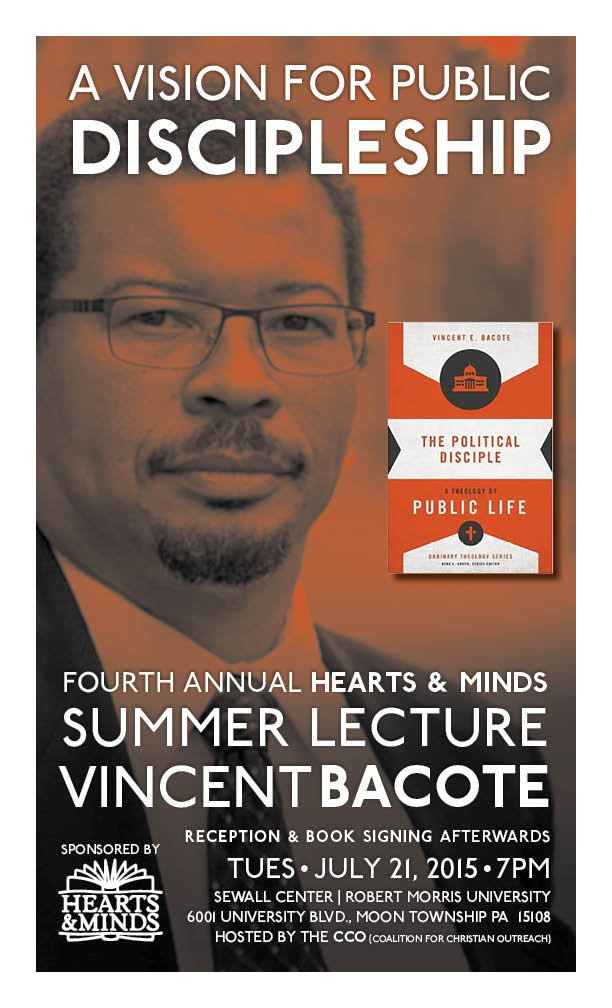
We’ve so enjoyed recent conversations with customers and doing our mail order shipments these last weeks, with so many good books to talk about, books about the arts, the history of alternative music, even on about living more authentically in a mass marketed culture by learning about bread, coffee, chocolate, and beer. We’ve promoted books about the renewal of culture and the reformation of society, titles to help as we forge a faithful presence in the world, for our neighbor’s good and for God’s glory, books about theologians like Abraham Kuyper and by activists like Bryan Stevenson, books on civic life by our Pittsburgh Summer Lecture speaker, Vincent Bacote, and – in a flurry of delicious book discussion last week – the debut of Harper Lee’s first novel, Go Set a Watchman, which led to another list I made of interesting novels of similar tone and insight.  What joy to know that people still get excited about books, and what a privilege to be able to suggest resources for today’s readers.  We’re grateful for those who send orders our way or who forward our reviews around to their friends, church-members or family.

For this post I would like to list what I have concluded are the top 7 books on spiritual formation that have been released this season.  I’m stretching the phrase “this summer” just a bit, since a few of these released in the Spring, but they are each reaching their audience mostly here in the summer of 2015.  I review a lot of these kinds of books and there are some great ones that are about growing as a Christian that are easy and upbeat and motivational, but these – for those who are serious about allowing God’s grace to transform their souls – are the very best I’ve seen this season.

Divided- When the Head and Heart Don't Agree.jpgDivided: When the Head and Heart Don’t Agree Bill Delvaux (Refraction/Nelson) $14.99  I don’t always know what to do with books like this.  It is part of a series with whimsical covers that don’t capture their intensity or substantive wisdom.  Like many contemporary religious books these days they are casual, upbeat, but honest to the point of being raw. These kind of new religious books include lots of intense storytelling and honest advice for growing Christians. Many are written by people in congregations or parachurch organizations that are pressing hard after God, earnest and passionate, eager to see what it looks like to actually be formed in the ways of Christ, and follow Him into the struggles of the daily.  Some in more conventional congregations may be put off by the intense language about Christian growth, and those with a more flowery spirituality may not appreciate the messiness and vulnerability.  Anyway, there are a lot of these kinds of invitations to deeper Christian living that I like.  The ones in this series of books are all about discipleship, starting with a very solid guide to being a follower of Jesus (by Richard Parrot) called The Reluctant Journey and another by Ginny Owens (the blind Christian pop singer whose beautiful music you may know) entitled Transcending Mysteries: Who Is God and What Does He Want From Us?  A new one in this “Refraction” series just came out with the intriguing title Spent Matches: Igniting the Signal Fire for the Spiritually Dissatisfied by Roy Moran – it looks very dynamic and motivational, but realistic about those who are spiritually hurting.  (The next in the series will be called Slow to Judge: Sometimes It’s Okay to Listen.) 
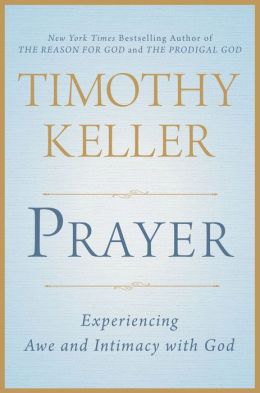
The one I’m listing here, as a key book for being formed in deeper Christian discipleship this summer, is a captivating, honest look at what happens when we pretend, when we act like we’re more spiritual then we are.  Or, as the subtitle puts it, when our head and our heart don’t agree.  We have all heard the line about what a great distance there is between the head and the heart, reminding us of the near universal problem of saying we understand something, even as we fail to do it.  I know this is a huge problem for me, although I suspect most of us struggle, in small and big ways, with this whole application bit, doing what we know.   Failing to live in to and embody the wisdom we claim to know is a particular problem for those of us who read a lot, who teach or preach, who seem to be articulate about theology or casting vision for mission and service.  So this book will help us bridge the gap between what we say we know and what we really do.

Perhaps more profound than a call to just live what we believe, do what we claim to be right, this is a story about overcoming the split between our statements about God and our experience of God and is a book which reminds us to be honest about the complexities and anguish of all that.  Delvaux (who graduated from Duke, by the way, and Trinity Evangelical Divinity School) writes that “I saw clearly for the first time the deep divide in me. But what made it even more disturbing was this: I had no idea what to do about it.”  

In this sense, Divided is a call to resist hypocrisy and to bravely be real about our foibles and fears, sans masks, and it reminds me of books like Abbas Child by Brennan Manning or some of the remarkable work on shame authored by Dan Allender.  Maybe it is a bit like the recent reflections on the search for the true self (think of Richard Rohr) or even some of what is so appreciated in the writing by John Eldridge.  Delvaux knows that God’s grace can set us free to be who were are, and to become who we are meant to be. Like Brennan Manning and the others, he’s a great storyteller, too, and seems to hold back little, being transparent about his own divided life.

The book is arranged in three parts. We start “Viewing the Divide” (where he fearlessly invites us to “survey the wreckage”) and then we start “Tackling the Divide” – the subtitle of that section includes “Three Terrains to Navigate.” (This part includes chapters on Surfacing, Listening, and Telling.) Thirdly comes “Closing the Divide: What the Journey Feels Like” in which he reports and warns us about The Descent and The Ascent.  

There are thought-provoking questions for spiritual conversation and reflection making this a good book to work through with a soul friend.  There are prayers offered for each stage of your spiritual journey (although be prepared, they are not eloquent stained glassed ones, but gritty and candid.)  He quotes lots of interesting sources, from Augustine, Dostoevsky, Tolkien and the like to Christian psychiatrist Curt Thompson (author of a book about neurobiology called Anatomy of the Soul) and any number of fascinating movie quotes. Divided: When the Head and Heart Don’t Agree is not an entryway to contemplative monasticism nor does it speak in grandiose terms about the experience of spiritual bliss as one sits in solitude before God.  Rather, it is a candid bit of evangelical teaching, helping us see that God’s acceptance of us in Christ can be transforming, and that we can, in the words of Scotty Smith, “see and voice our own stories of disintegration and respond to the Father who pursues and welcomes, heals and liberates broken people just like me.” Smith continues about Delvaux and his book by saying “I am so grateful for my friend’s life and his insight into the ways of the heart and the riches of God’s grace.”  And that is where spiritual formation must begin: our own heart and God’s good grace.

Prayer- Experiencing Awe and Intimacy with God.jpgPrayer: Experiencing Awe and Intimacy with God Timothy
Keller (Dutton) $26.95  We announced this when it first came out last winter — admittedly, tt is not really a Summer release, but it seems it is just now hitting its stride, and not a few folks are just now asking about it. We
have been glad for such a serious-minded, clear-headed, Biblically-sound
study written by such a reliable and thoughtful Presbyterian voice. 
Keller is certainly one of the very few who could be compared to C.S.
Lewis today, with a prodigious output of well written books, books that
are informed by older classics and contemporary literature.  Keller, a
Manhattan pastor, is a bit of a social critic and an artful
communicator, using imagination and reason to persuade many that a
gospel-centered life is the only viable alternative to the secularist
quandaries.  So, it is good to see him writing about something as
intimate and awe-some as prayer.   The first two chapters are offered
under a section called “Desiring Prayer” (its necessity and greatness)
and the next several are on “Understanding Prayer” (what it is and what
it is not – encountering and conversing with God!) while the third
section is called “Learning Prayer.”   Part Four offers guidance on
“Deepening Prayer” and is very, very good, rich, almost mystical
spirituality.  Part Five includes four practical chapters: “Awe:
Praising His Glory”, “Intimacy: Finding His Grace”, “Struggle: Asking
for Help” and “Practice: Daily Prayer.”  There is a useful appendix and
an annotated reading list, heavy on the Puritans and other meaty
writers, and anyone building a library of books on prayer will find that
alone very, very valuable. 

Keller’s Prayer is a well-organized, intellectually
stimulating but ultimately practical book, full of very important
wisdom.  Agree or not with all of it, he is a master at presenting
solid, orthodox counsel about the most urgent matters, from reordering
our loves to knowing God’s character to opening ourselves to the
“unimaginable things God has for us.”   Prayer is, Keller reminds us
“the way we finally treat God as God.”  Wow.
  You should find some quiet time here in your summer schedule and work through this very valuable book.

Spirituality of Gratitude- The Unexpected Blessings of Thankfulness.jpgSpirituality of Gratitude: The Unexpected Blessings of Thankfulness Joshua Choonmin Kang (formation/IVP) $16.00  Besides having such a very lovely cover, and the author having written popular books extolled by Richard Foster (Deep-Rooted in Christ and Scripture by Heart) I wanted to read this book because I know I needed it.  I have skimmed a few books on this topic and know two or three things, at least: I am not as grateful as I ought to be, and the happy “stop and smell the roses” reminders don’t cut it. I feel desperate sometimes, about my own life and our business and the world in which we live, and can even stupidly resent those whose lives seem to be rosier then my own.  No superficial reminder to count one’s blessings will do.  In a fallen and broken world, with our own hurt and demands, how do we nurture the spiritual graces to be people of gratitude?  If it “springs up from within” as Kang says, how does that happen?   I need a book that is less a self-help manual or an upbeat call to positivity and more like classic spiritual formation.  Rev. Kang brings it, in a nice blend of Bible reflection, searingly honest ruminations from his own life, and, yes, a bit of upbeat reminders to stop and enjoy the little things.  Because he has written candidly about his own desperate times, and his own struggles, when he gets to the simple reminders about the simple stuff, he has earned the right to say such things, because he made it clear this isn’t simple or cliched or formulaic.
So, there it is, a feature that sets this book a part.  He wrote it during a very dark time in his life, and he starts with some very moving ruminations on some surprising sources of grace.  Part One, in fact, includes short reflections on the grace of endurance, descending, isolation, humility and even brokenness.  As a Korean pastor, he draws from time to time on ancient wisdom from Asian culture, and there is this very profound wisdom tradition going on in his illustrations: he talks about old trees and dying seeds and a Korean novel that shows that true beauty comes from an ache of the heart.  In each short chapter he draws on fascinating sources, including Asian folk takes or spiritual writers, but most are still Western — his Bible exegesis flows into discussions of Karl Menninger or Rollo May, underscored with a poem by Emily Dickinson or a reflection from Henri Nouwen or a scene from Pilgrim’s Progress. The chapters in Spirituality of Gratitude are essentially short readings or homilies helping us nurture the art of thankfulness.  “Gratitude heals us and holds us, tethering us to one another,” he writes.  Gratitude “offers us joy and strength.” 

This book includes 52 chapters which can be read in a weekly Sabbath or as a daily devotional. It really does emerge from the author’s own hard times, and his own realization that learning gratitude was something he needed to keep himself from sliding downward into bitterness.  

What is so very interesting (and helpful to me personally, as I said) is how some of the chapters are quite intense, and lay a profound foundation of what a life-with-God is like, especially in a world marred by pain and struggle.  He looks at how to be thankful even for hardships and although he is not glib, some of it is challenging, exhorting us to find the grace of gratitude.  I’ve meditated on some of his good lines, and I trust his wisdom.  But yet, some of this is just lovely, pleasant stuff — how to appreciate good books, to appreciate God’s glory seen in creation, thoughtful admonitions to slow down, to pay attention, to be glad for simple pleasures. He has a slight sense of humor.  I like  both his grit and the grace and appreciate his frank and at times common sense clarity about small things. Emilie Griffin says it is “a powerful invitation to wonder, beauty, and the mysterious grace of God.” 

The Cultivated Life- From Ceaseless Striving to Receiving Joy.jpgThe Cultivated Life: From Ceaseless Striving to Receiving Joy Susan S. Phillips (formation/IVP) $17.00  This is one of the lead titles from InterVarsity Press this season, and, as such, it deserves to be read. They offer consistently good books and their formation line includes some of the premier writers about formation these days – and this is one of the very best of their summer list.  Susan Phillips has a PhD from U.C. Berkeley in sociology, is a director of the wonderful New College of Berkeley (New College is an affiliate of the Graduate Theological Union) and is involved in First Presbyterian there. She has taught courses on spiritual formation at Regent College in Vancouver, at Fuller Theological Seminary and at San Francisco Theological Seminary, so she has much experience in helping others move deeper into a life of spiritual sanity. Philips has written a previous book on spiritual direction, published by Morehouse, called Candlelight: Illuminating the Art of Spiritual Direction which is excellent and often recommended. I am confident that this new one will be considered one of the best books of the year, certainly within the genre of books about spirituality. The Cultivated Life is excellent, mature, inspiring and very helpful.  It really deserves to be well known and widely read.
Eugene Peterson has a glowing, glowing foreword which itself is quite substantial.  Peterson, as you may know, does not care for the frivolous or trendy, and relies on older sources, literary and spiritual classics, and affirms those who are profound thinkers, good writers, with down-to-Earth sensibilities as they invite people into Kingdom living. Peterson writes, “This is a book written specifically for those of us who are… developing an imagination for living the Christian faith with insight and skill in and for a society that is disconnected from the biblical revelation and the Jesus incarnation.”  He is setting up an introduction to her book by noting that she writes about the “circus” of our cultural landscape, and how our own lives must be cultivate in ways different then, counter to these crazy times.  Her introduction, drawing on T.S. Eliot, stories of the Dalit/untouchable class in India, and a study of what she calls circus culture is called “Leaving the Circus” and it is really, really good.  She contrasts the circus, by the way, with a “garden” which connotes lush abundance, joy, and rest; a very evocative metaphor, for sure. 

Her first chapter, then, is called The Way of Cultivation and she offers “holy mixed metaphors” as we learn “the way” of the spiritual life.  Although it is not academic or complex, she has a short Bible study to illuminate the way narratives inform us.  This is good stuff!  There are some nice reflection questions, too, making this a very useful resource.  

Here are the titles of the provocative, insightful, and well-written chapters:

Finding and Receiving Refreshments

Listening as a Way of Receiving Cultivation

Stopping

Sabbath Keeping

Cultivating Attention

Praying with Scripture

Cultivating Attachment

Spiritual Direction

Rooted and Grounded by Friendship

Practicing Friendship

Bearing Fruit and Enriching the Soil

Living Toward Completion

Space and time does not allow me to explain the richness of all of this guidance found in this 250 page paperback  – I myself am reading it slowly, savoring and reflecting on it, so I’m not finished with it myself.  There is a good Appendix, too, by the way, offer “Guidelines” for many of the core practices (Contemplative Listening, Lectio Divina, Sabbath Living, finding a spiritual director, etc.) which is very helpful. The Cultivated Life: From Ceaseless Striving to Receiving Joy really is a rich, thoughtful resource.

Mark Labberton writes,

Susan Phillips can write this book because she lives it. For three decades and more, I have observed the choices she makes to cultivate life and this has been the hallmark of her story. This book is a deep and magnanimous invitation to live in such a way that the flourishing for which we are made can become our experience.

Phyllis Tickle- Essential Spiritual Writings.jpgPhyllis Tickle: Essential Spiritual Writings Selected with an Introduction by Jon M. Sweeny (Orbis) $22.00   Orbis Books, the storied publishing arm of the Maryknoll Fathers and Mothers, have a quite large series of books, bearing uniform covers, called their “Modern Spiritual Masters Series.”  We are glad to stock them all as they each offer excellent introductions to the author being celebrated and they curate some of the best writings of this person, arranging them with helpful comments along the way.  In most of them, and certainly in this brand new one inducting Phyllis Tickle into their series, they offer some of the quintessential pieces by the spiritual writers, but also some which are lesser known.  These readers offer excellent introductions to very important figures, excerpting primary source material, framing the essays or excerpts in teacherly ways.  Any that I’ve dipped in to have been very well arranged, informative, and rewarding. Although they tip towards the liberal/activist Catholic stream of faith, the series is surprisingly varied.  From the essential writings of Oscar Romero to Gustavo Gutierrez, from Daniel Berrigan to Joan Chittister, the liberationist concerns of the Maryknolls are evident.  But many of these anthologies are of writers who are less public in their social ethics and stand in the more contemplative tradition (from the solid Orthodox leader Metropolitan Anthony to Anthony de Mello to Evelyn Underhill, just for instance.)  This large series includes older, classic spiritual writers (St. Therese of Lisieux, Thomas Merton, Bede Griffiths) and others who not known as monastics, but wrote lively mystical materials (Rufus Jones, Edith Stein, Howard Thurman.)  I could go on and on about the lovely volumes of spiritual writers such as Henri Nouwen, Clarence Jordon, Flannery O’Connor, Jean Vanier) and giants such as Chesterton and Tolstoy, and others such as Thoreau, Muir, Gandhi.
I note all this to show that this collection of works by Phyllis Tickle is one that is not a minor tribute or a one-off volume, but a well-deserved and major addition to an esteemed series.  Sweeney did an extraordinary job editing all this, collecting it, introducing the pieces; his astute insights about her life, her faith journey, and her body of work, is just what is needed to help us understand the significance of this splendid, feisty, enjoyable, and thought-provoking contemporary writer.  He knows her stuff so well that he can even weigh in on the meaning of this poem or that, or introduce a long out-of-print essay by explaining its original poignancy.  He highlights a number of Phyllis’s older pieces (making this simply a must-have volume for her recent fans) and lifts good excerpts from both her lesser-known volumes and her most popular books, including her books on prayer and her recent studies of the emergent movement.  I really like Phyllis as a person, and I enjoy and value her as a writer.  Anyone who appreciates the diversity of religious publishing houses and curious writing projects that developed in the last decades of the last century and into the new millennium owes much to her for her efforts (most notably within Publisher’s Weekly as the first religious editor/reviewer in that important organ of the industry.) She has been kind to us, and we have been stimulated by her work. We have promoted the book released a year or so ago in her honor, Phyllis Tickle: Evangelist of the Future published by Paraclete Press.  She’s a fine wordsmith, an provocative thinker, and a deeply spiritual woman.

This new paperback anthology, Phyllis Tickle: Essential Spiritual Writings will help keep you thinking, bring joy to your heart as you see how she has ruminated on her own life, from a farm in Tennessee to the world’s most prestigious locations, from broad-minded interfaith discussions to her current involvement in an evangelical “Acts 29” congregation, and you will learn about essential practices such as silence, prayer, ecumenicity, generosity, curiosity, and more.

I enjoy Barbara Brown Taylor’s tribute to her found on the back of the books.  And I agree.  

Phyllis Tickle brings so many gifts to the table that it is sometimes hard to believe there is only one heartbeat behind them all. She is a seer, a scholar, a spiritual guide, a literary and cultural savant, a walking encyclopedia, and a mentor to more people than there are seconds in the day. Above all, she is a faithful lover of God and all to whom that love relates her. Reading her is second best to knowing her, but read her you must.

Sacred Sense- Discovering the Wonder of God's Word and World.jpgSacred Sense: Discovering the Wonder of God’s Word and World William Brown (Eerdmans) $22.00  I wasn’t sure if I should list this on a book about Christian formation, since many customers seem to want books about prayer, quiet time, solitude, spiritual disciplines and the like, at least on a list about inner spiritual growth.  Surely, this is a list mostly about resources for our interior lives, so I appreciate the emphasis.  Yet, it is true that Christian spirituality is always at its best rooted in the Bible, and our formation in the ways of Christ are shaped by our knowledge of God’s ways revealed to us in the Scriptures.  This book, then, is a fabulous guide for just such a project, although, again, it may not seem so at first. It is not about lectio divina or exercises about “praying the Scriptures.”  It is, rather, a handful of long and at times demanding Bible studies about the topic of awe. About wonder. Dr. Brown is a renowned Old Testament scholar who has written several very important books on the wisdom literature, and, even the relationship of the wisdom literature in the Bible and modern science. (See his impressive Oxford University Press hardback, Seven Pillars of Creation: The Bible, Science, and the Ecology of Wonder.)    
Here, though, he is not doing super-scholarly exegesis, but more playful and wide-ranging meditations, essays on wonder in various Biblical texts.  Sacred Sense: Discovering the Wonder of God’s Word and World is a collection of Bible reflections, by a seminary prof and Old Testament scholar, coupled with meditations on the glory of being alive, and how God is present in it all.

Frances Taylor Gench of Union Presbyterian Seminary in Virginia says,

Scripture, for Bill Brown, is a living word and source of transforming wonder. In this breathtaking volume he guides readers through an expansive biblical landscape ranging from creation to new creation and evoking a sense of wonder about God, the world, and our humanity. This is one of those rare books that gladden the heart, mind, and imagination.

Other rave reviews come from Ellen Davis of Duke Divinity School (“eye-opening and occasionally jaw-dropping”) and Walter Brueggemann, and even the memoirist and nature writer, Terry Tempest Williams. 

But listen to what Steven Bouma-Prediger of Hope College says,

Erudite and down-to-earth, serious and funny, full of deep insights written in sparkling prose, William Brown’s Sacred Sense is a timely exploration of wonder in the Bible and in the world. Indeed, these insightful meditations on seventeen biblical texts – from Genesis 1 to Revelation 22 – cultivate an appetite for wonder. May this excellent book find a multitude of readers.

You see why I list this as a great resource for transformational Christian formation, even for developing one’s personal spirituality? As Bouma-Prediger puts it, this book can “cultivate an appetite for wonder.”  If this book can help you be more mature in Biblical interpretation, helping you develop an eye for God’s great work and how that can lead us to wonder, and if that Biblical worldview helps you see wonder all around, well… yes!

Joy in the Journey- Finding Abundance in the Shadow of Death.jpgJoy in the Journey: Finding Abundance in the Shadow of Death Steve & Sharol Hayner (IVP) $16.00  Where to begin to explain the significance of this handsome, small hardback, and why it matters?  How does the memoir of a dying saint, one known for signing his emails “joyfully” help us all?  I admit I’ve met the late Steve Hayner a time or two and care deeply about some of the organizations he has served (including InterVarsity Christian Fellowship and, in the last years of his life, Columbia Theological Seminary in Decatur, Georgia, where he served as President.) But whether you had the great privilege of knowing this extraordinary, joyful Christian leader or not, and whether you are particularly interested in a memoir of death and dying or not, let me tell you: this is a book about faith formation, about daily discipleship, about learning to live well as a Christ-follower in families, organizations, among friends scattered; it is about faith and hope and trust and goodness. and, yes, joy in the journey.

As a nationally known evangelical para-church leader who later served as an administrator at a Christian university, became an ordained pastor (serving for a while a mostly black church) who surprisingly became a professor at a mainline denominational seminary, where he eventually became President, the story of Hayner’s life and ministry is itself a noteworthy one.  (I wish I knew more about his move to Columbia, where he became colleagues with the likes of Elizabeth Johnson, Marcia Riggs, or Walt Brueggemann.) As Mark Labberton writes in his must-read, exceptionally moving introduction, Hayner mentored many individuals over the years, staying in close touch, involved in life-giving friendships with many, even as he served in demanding positions on the Boards of Fuller Theological Seminary, World Vision, and the anti-trafficking organization, the International Justice Mission.  His wholistic view of faith – embracing growth in theology, spirituality, multi-ethnic ministry, social concerns and public justice work, was exemplary, and he helped other live into that vision.  “He wanted,” in just one of the beautiful phrases in Labberton’s piece, drawn from The Message paraphrase of Psalm 31:8, “others…to have the room to breathe fully human lives, made in the image of God.”

To be clear, this book is made up mostly of personal reports and spiritual journaling from a public diary Steve and his wife Sharol kept on the CaringBridge website, chronicling their faith journey as Steve was diagnosed with pancreatic cancer over Easter weekend of 2014 until his death, in his mid-60s, on January 31, 2015.  There is included of a bit of contextual medical background, offered before most entries, and a handful of sidebars by other folks, letters they wrote to Steve or Sharol, or observations offers along the way.  The entries unfold like a fast-moving tragedy, but yet — and this is why this is such a very good book to read — Steve and Sharol both have an ability to ruminate on their lives in ways that reveal their spiritual disciplines and dispositions, framing their hardships by the very things they believed most deeply; they share their own reflections upon Bible verses or passage or Psalms that helped them, and they are honest about their prayers and hopes and struggles.

These entries are excruciatingly intimate at times, and exceptionally admirable. They are not idealized or over-spiritualized, but they are grounded so well in a well-lived faith. I know — and the diary entries reveal — that they are ordinary people, in many ways like any of us. (Steve himself wrote how grumpy and petty he was with his grandchildren during what he knew would be their last Christmas together, a mundane admission that nearly brought me to tears with the disappointing ordinariness of it.)  Still, I have never read anything so wonderful about approaching death with joy and trust.  As Steve signs off near the very end, noting that he is under hospice care, then, he still looks forward to living into joy.  

After Steve’s death there was, of course, a large outpouring of support, and the memorial service was a tribute to the resurrection power only Christ can bring. The entries in this epilogue are from his family, mostly, and remind us all of the beauty of a life well lived, of the quiet habits of a man committed to God’s reign, who served the church and the world, and who had mature and lovely relationships with family and friends.  Joy in the Journey: Finding Abundance in the Shadow of Death is a tear-jerker, to be sure, but I cannot commend it to you enough.

As good as these diary-type entries are, listening in to the real-time reflections of a couple struggling with tragic illness, the evils of cancer, the quandaries of medical care, their professional obligations and their extended family, their marriage, their prayer lives, and eventually Steve’s death, I want to also note that the two introductions that open the volume are themselves worth the price of the book. 

Mark Labberton was influenced profoundly by Hayner as an undergrad as Steve was his campus minister.  Their lives unfolded similarly, and Steve continue to be a mentor and friend to Labberton (even as Mark, arguably, became more famous as an author and the President of Fuller, one of the worlds largest and most diverse seminaries.) They remained life-long friends, so much so that Mark could report about Steve’s deepest desires – and how he understood that joy was deeply connected to “that wide place of God’s grace.”  Labberton honors Steve well in this reflection and it is nothing short of stunning. Oh, how I wish for all of us to have friends, friends like Labberton was to Steve, able to tell about his strengths, his gifts, his faithfulness.  From Mark’s tribute you can see how well he knew Steve and Sharol, and his testimony is inspiring. But – ahh, here it is – Labberton could only report all this stuff about Steve because Steve was that kind of friend to him.  To realize the power and blessing of life-long friendship seen in that preface is a gentle but clear reminder to us all: who do have in this life that shares our faith journey and knows us so well?

Another person that was one of Steve’s best friends was the African American leader Alex Gee.  It was Gee who invited Steve to become his associate pastor, in part, because he wanted Steve to understand the emotional toll of being a minority leader, not only so he could more experientially understand cross cultural ministry, but so that Steve could more deeply understand what his friend Alex – a black man who often spoke and ministered in largely white settings – goes through in such complicated situations. Steve said yes to this surprising arrangement, which illustrates much about Steve’s adventuresome faithfulness, but also how loyal he was to his friends and co-workers in gospel ministry. This and a few other anecdotes from Gee really are helpful in helping us care about Hayner and his wife, before we even start the first page of their diaries.

Again, this short foreword by Gee, about Steve, is exceptionally inspiring, and I think it makes this book an even greater resource for your own spiritual formation.  Don’t you want to be the kind of person about which these things could be said of you? Don’t we often make fresh commitments to new sorts of spiritual practices or goals or hopes for ourselves as we look at others whom we admire? (“Follow my example as I follow Christ,” the apostle Paul said more than once!) So, in this book, Hayner’s own diary tells the story, but these two introductory pieces serving as brief tributes, the testimonials offered by Labberton and Gee, will inspire you to want serve well, living with authenticity and joy. 

As Gee writes, wisely – putting into words exactly why I am listing this as one of the best books to read this for faith formation,

After walking with Steve in his final months, I am considering where his life challenges mine. Where is God calling me to invest my time and energy? I’m asking what and who I need in life in order to face death with hope, joy, and confidence.  What changes do I need to make today in order to finish well? As you journey with Steve and Sharol in the following pages, how will you answer these questions?

BookNotes

SPECIAL
DISCOUNT
ANY ITEM MENTIONED

20% off
order here
takes you to the secure Hearts & Minds order form page
just tell us what you want

inquire here
if you have questions or need more information
just ask us what you want to know

                                      Hearts & Minds 234 East Main Street  Dallastown, PA  17313     717-246-333

10 MOVING NOVELS TO READ (instead of or after) GO SET A WATCHMAN

I suppose you have been following at least some of the debates about the merits of the story and thego set a watchman.jpg ethics of the release of Go Set a Watchman. We hope you know we sell it at 25% off.  I weighed in a bit about the controversy at Facebook, and linked to a spectacular essay by Mako Fujimuro, which shows both his deeply Christian aesthetic thoughtfulness, and his wide literary fluency. (He links the two Harper Lee novels to two Blake poems!) 

If it is true that Ms Lee did not give full, knowing consent to the publication of this early work of hers, that is a gross injustice, although the publisher (HarperCollins) maintains that agreements and contracts were made with fully proper procedure.  Are they lying? I don’t know.

Whether you want to read this earlier story – Scout is much older, and sees the racial attitudes of her beloved father Atticus Finch through more adult, and perhaps more jaded eyes – is, obviously, up to you; obviously. But I have found it a bit odd how vociferous some have been about it.  One Christian leader called it “trash” and hundreds have sworn that no revision of Saint Atticus could ever, ever be considered.  Some are terribly fearful that Lee’s earlier story, if they read it, would ruin their love of To Kill a Mockingbird. Well, then.

couple-reading-books.jpgHere are some other novels you might want to enjoy, books that somehow might share somewhat of a tone or style or setting. I have heard such good things about Go Set a Watchman that it is on my stack to be read soon. (Beth and I both read To Kill a Mockingbird – for the first time! – just a week ago, and I’m still stunned by its beauty and goodness and the joy of being immersed in this funny, tragic, curious community in the deep South. I want to read more about these characters, even if it is somewhat lesser literature or a perplexing story.) But I can appreciate that some just aren’t interested.

I am not suggesting that these on this list resemble either of Harper Lee’s memorably works. I am really not suggesting they be read instead of hers, or alongside them, even.  They just sort of sprung to mind as I browsed our own fiction section wondering what else we might offer to those who aren’t sold on Go Set...  So, just for fun, here are some titles that at least capture the slow cadence, the good writing, the sense of place, and the ethical vision of the best of mid-twentieth-century Southern fiction. And this doesn’t even include any classics by those who were more or less contemporaries of Ms Lee, such as Walker Percy, Zora Neale Hurston, Robert Penn Warren, Steinbeck, Faulkner.

AND THESE TOO… By the way, I really enjoy very contemporary stuff, with that ironic tone, the screwy (post?) modern style, the anguished, religiously haunted world.  Jonathan Franzen, naturally. Jeffery Eugenides has provided hours of delight (both the amazing, epic Middlesex and The Marriage Plot, about recently graduated college students, their romance and writing projects.) I truly loved The Art of Fielding (also about college life, as well as baseball and Melville) and the much-discussed To Rise Again at a Decent Hour by Joshua Ferris (a crazy book about a sullen dentist and an oddball religious cult chasing him down with made up Bible verses.) I whizzed through the last two David Eggers because I could, and was moved by the writing and plots of Oprah recommended Wally Lamb (The Hour I First Believed and We Are Water both really pleased my middlebrow tastes, and have much to say, although they are a bit too vulgar.) Lots of people are talking about the quirky National Book Award finalist Station 11 by Emily St. John, which is now out in paperback, and I guess I should read that, although the plot doesn’t appeal to me.  I haven’t read Donna Tartt’s The Goldfinch yet, but it won the Pulitzer and I have been waiting to find time for it, once I snag a hardback from the library.  And I’ve got to get to The Girl on the Train, which lots of people have recommended.  And I swear I’m going to read Life of Pi again one of these days.

And, although it is not zippy or contemporary, the best novel I have read all year is doubtlessly the exquisite All the Light We Cannot See by Anthony Doerr (Scribner; $27.00.) It is big and glorious and profound, set during World War II in Paris and Germany. Truly unforgettable and very highly recommended.

These books that follow are decidedly not like those. 

Again, I am not saying they are like Harper Lee (who is?) but I thought of them while reading comments by those who said they didn’t want to read Go Set a Watchman or by those who did, and are now in a mood for more slow, kind, thoughtful Americana or other beautifully rendered important stories.  Maybe you could take these on an upcoming vacation or weekend camping trip. Or take a chair out back, after supper. I think any of these would be well worth your investment; I am familiar with each, but have myself not read them all. (Don’t I wish!)  We would love to fill your order, if you are so inclined.  You can let us know what you think.

TEN BOOKS. TWENTY PERCENT OFF.

lila_robinson_f.jpgLila Marilynne Robinson (FSG) $26.00 Ms Robinson is certainly one of the most honored and prestigious writers of our time. Her Gilead is a must read – a Pulitzer Prize winning story of an older Protestant clergyman telling his story.  (“So serenely beautiful, and written in a prose so gravely measured and thoughtful, that one feels touched with grace just to read it,” said the Washington Post reviewer.) Home is the sequel, telling the story of another pastor, the friend of John Ames in Gilead. (“An anguished pastoral, a tableau of decency and compassion that is also an angry and devastating indictment of moral cowardice and unrepentant, unacknowledged sin… Beautiful.”  (You can see why I list it now, in this conversation of Harper Lee and Atticus Finch and the like.) Lila is the most recent, still only in hardcover, and we’ve promoted it here in the shop, on line, and at church gatherings.  (Critic Pat MacEnulty of The Charlotte Observer notes that “When Marilynne Robinson writes a new book, it’s an event.”) In this poignant, quiet, moving tale we learn about Lila, who appears in Gilead as the rather mysterious wife of Pastor John Ames. She is from a hard background (that much we know) and her difficult, brave, curious life comes to us in full color in this third book set in Gilead, Iowa.  It was promised to be “a moving expression of the mysteries of existence” and “destined to become an American classic.”  We invite you to order it from us, and we trust you will be blessed with hours of important, enjoyable reading. If you haven’t read Giliad, or even Home, you don’t have to read those first, but I suppose you should.
our souls at night.jpgOur Souls at Night Kent Haruf (Knopf) $24.00 Not too many books these days come with a major endorsement on the back from Ursula K. Le Guin, but her rave review is sumptuous. (She calls him “stunningly original” and suggests that “He talks quietly, intimately, yet with reserve, as one adult to another. He’s careful to get the story right. And it is right, it’s just right; it rings true.”  Not bad, given that he talks about all manner of moral questions, perhaps even (in Le Guin’s assessment) “an unspoken mysticism.” When a writer of her caliber says some of his writing and topics are “unsurpassed by anything I know in contemporary fiction” you have to notice.
We discovered his first book set in Colorado, Plainsong, probably from Eugene Peterson who commended it years ago. (And the sequels, Eventide and Benediction whose very titles might rightly draw our attention to something important going on.)  A dear local pastor who reads widely suggested these others, too, and we’ve been pleased to stock them ever since. We are glad to have this new, small one, published posthumously. (Haruf died at age 71 in 2014.) Our Souls at Night is said to be “a spare yet eloquent, bittersweet yet inspiring story of a man and a woman who, in advanced age, come together to wrestle with the events of their lives and their hopes for the imminent future.”  Set in Holt, Colorado (home to all of Haruf’s inimitable fiction” it involves one Addie Moore and Louis Waters, widow and widower, and the pleasures and adventures of their old age set in this rugged landscape. 

A Place on Earth (WB).jpgA Place on Earth Wendell Berry (Counterpoint) $16.95  I assume most of our BookNotes readers know of our affection for Wendell Berry (his important essays as well as his fiction and poetry.) Jayber Crow and Hannah Coulter are by far his most popular novels, although I often exclaim about The Memory of Old Jack, which I adored and introduced me to the wonders of the Port Williams membership.  I name this one, now, since one of the things that attract us to works like To Kill a Mockingbird is the developed sense of place — especially that of a small town set in a rural region.  What sets A Place on Earth apart as a must-read for Berry fans is that “the central character is not a person but a place: Port Williams, Kentucky, the farm lands and forests that surround it and the Kentucky River that runs nearby. This is a region that Wendell Berry knows intimately, with both heart and mind, a region whose faults and virtues he has spent a lifetime learning.”  Berry’s first novel, by the way, came out in 1960, I believe, the same year as Mockingbird.

a world lost (WB).jpgA World Lost Wendell Berry (Counterpoint) $13.95  This is a short novel, opening in 1944 with nine-year-old Andy Catlett enjoying a blissful summer on his grandparents farm near Port William.   A brawl ensues, and Andy’s uncle is murdered, a tragedy that Andy looks back upon years later wonders if he could have prevented. I name this because many feel this is an overlooked classic of Mr. Berry’s (I have not read it yet) but also because of how this theme may resonate with those pondering the adult character Jean Louise (Scout) in Go Set a Watchman and her own looking back upon her complex father, Atticus Finch. Publisher’s Weekly says of A World Lost “Berry shows us the psychic costs of misplaced family pride and social rigidity, and yet he also celebrates the benevolent blessing of familial love. This is simple, soul-satisfying storytelling, augmented by understated humor and quiet insight.”  It was his fifth novel, was later expanded and re-issued, and is (as it says on the back) “a moving tale about the power of memory and lost time.” Yes, this would be perfect to read right about now.
peace like a river (better).jpgPeace Like a River Leif Enger (Grove Press) $16.00 Last summer I wrote a long list of books out postmodern apologetics, gentle evangelism, and storytelling as a key to understanding (and reaching with the gospel) the contemporary generations. We had sponsored James K.A. Smith to lecture on his book explaining the philosophy of Charles Taylor —How (Not) To Be Secular: Reading Charles Taylor – and noted how Jamie underscored Taylor’s call to use fiction in our conversations about cultural engagement.  I am not the first to note that much contemporary fiction is far from “secular” and that some of the best New York Times bestsellers are, in fact, profoundly spiritual.  Lief Enger’s beloved story is nearly a case study in such very contemporary religiously-shaped contemporary fiction. It received tons of great reviews –Newsday’s reviewer, Dan Cryer, says, “What allows Peace Like a River to transcend any limitations of belief and genre is its broad, sagacious humanity… There is magic here, none more potent than Enger’s prose.”  The Denver Post review said “Once in a great while, a book comes along that has such wonderful characters and marvelous prose, that you read it as much for the pure joy it offers on every pages as to find out how it ends.”  This is a book about ordinary life, but since it may lapse into “magical realism” — the boy who is the main character has reason to believe in miracles – it isn’t really like Harper Lee or Wendell Berry. But it is set in the mid-West, there is the huge question of whether love can overcome tragedy, and there is a (trumped up?) murder charge haunting an outlaw brother. And there is this question of miracles…  Peace Like a River is a fine, fine book, sure to please, one you will never forget.   Early reviews when it came out in 2001 started with superlatives – stunning, big-hearted, beautiful, dazzling, dangerous, compelling, “exceptionally heart-felt.”  We would be delighted to have you order it from us.  Or maybe just get two, since you are surely going to want to share it.
still life (christa parrish).jpgStill Life: A Novel Christa Parrish (Nelson) $15.99  Decades ago there developed this sub-genre of “Christian fiction” by which most folks mean evangelical Christian writers penning somewhat inspirational stories, published by publishers aligned with the “Christian Booksellers Association.”  These have been very popular, and roundly mocked, often for bad writing, bad covers, and shallow theology.  Many are historical fiction, most are romances, and, of course, we know that many are now Amish-themed.  (We have hosted one of the better writers of Amish stories, Beverly Lewis, here at the shop more than once.)  Well, think what you may about the reputation of “Christian fiction” the old stereotypes are less warranted these days, and there are some very nice novels by very gift writers, whose faith colors their stories in subtle and interesting ways.  Christina Parrish seems to be one of these kinds of writers (her Stones for Bread struck me first for the nice cover and some good reviews by sources I respect.) In this new one, the main character, Ada, we learn, we born into a fringe religious sect led by her father. Her lifelong habit of absolute obedience “was shattered when she fled the family compound to elope with photographer Julian Goetz.”  There is another character – Katherine Walker, whose marriage is loveless. Tragic loss conspires to bring them together and they then come into relationship with an artistic young boy.  Still Life is a fairly complex work that explores toxic faith, merciful escape, and supernatural love.  There is a included a reading group guide as the publishers hope that book clubs, small Bible study groups, especially women’s fellowship groups might enjoy talking about it together.

blue hole back home.jpgBlue Hole Back Home Joy Jordan-Lake (Cook) $13.99  This is another wonderful example of a profoundly Christian writer, doing an excellent novel on a CBA/evangelical publishing house.  Joy Jordan-Lake is an accomplished non-fiction writer, and we’ve commended her fine stuff before.  Besides her Masters degree from a seminary, she has a PhD in nineteenth-century American literature – which has obviously prepared her for thinking well about the nature of serious fiction.  But who knew she could pen such an interesting story?  Listen to this: Brett Lott, himself an acclaimed mainstream novelist says Jordon-Lake “has written a fine tale of racial conflict and healing, and done so with a fresh and engaging voice.”  Or, better  — and spot on for our purposes here – listen to the amazing publishing guru herself, The Ms. Phyllis Tickle: “Reminiscent of To Kill a Mockingbird, Blue Hole Back Home is a haunting story, lyrically told, about the death of innocence under a Southern sun.”   

Set among a mangy pack of kids in 1979, the summer was “heavy not only with the humid Appalachian air, but also with the raw emotion brought on by a stranger in their midst. The new girl. The new girl with the deeply colored skin and the straight shiny hair and the father who prayed on a rug facing east each morning.”

Down in the River Blacketter.jpgDown in the River Ryan Blacketter (Slant) $22.00 We have talked before, and continue to proudly stock each of the books in this important literary imprint curated by Image Journal editor Gregory Wolfe. (l loved their story involving — among other spectacular things — liberation theologians in Central America,  A Land Without Sin by Paula Huston.) I have not looked at this recent one much, but it seems to be right to list it here.  This is a dark, serious tale, set in the contemporary Pacific Northwest (the author is from Idaho) and resonant with important themes for those who want a moral center to their edgy fiction.  It is about grief and loss, religion and resistance, a brave story claiming to be about the deepest matters of the human heart.  Listen to these rave reviews, first from Marilynne Robinson (yes, Marilynne Robinson!):  “Blacketter has a marvelous eye for the emotional textures of the most commonplace experience, the kind that familiarity makes almost subliminal.”  
Shann Ray (author of American Masculine) says,

Blacketter’s prose is paired with the torque of a plot that lives and moves like an indomitable engine. This difficult and necessary story is inbreathed with a ferocity that leaves the reader shaken. In the end, through Blacketter’s sure hand, we encounter a surprisingly intimate brush with our own desire for peace of soul, and in so doing, are drawn toward the ineffable mystery of how our contact with others inevitably carries with it a sense of infinity gravity.  

Or, as another reviewer, Pinckney Benedit  (Miracle Boy and Other Stories) tell us,

I can’t remember when I’ve liked a character as much as I like young Lyle Rettew, or when I’ve cheered one on so hard despite the fact that he’s clearly crazy and his quest is doomed. A thunderous debut, and the beginning of what will surely be a breathtaking career.

The Orchardist.jpgThe Orchardist Amanda Coplin (Harper Perennial) $15.99 Here is another book set in the Pacific Northwest, one which is known for “exquisitely described landscapes.” (A review at O called it “a wise and great American novel” and Entertainment Weekly review said “There are echoes of John Steinbeck in this beautiful and haunting debut.”) Set in the early 20th century, it is said to be both somber and majestic, and written with “dazzling craftsmanship.”  The story’s main character carefully stewards his fruit orchards, shows compassion to some young runaway (and very pregnant) women, and is led to the depth of soul-searching as he struggles to reconcile with his own past, and protect these teens.  I read in an interview how it took the author eight years to finish the manuscript, but despite all the permutations it went through, her vision remained true, and the characters strong.  I don’t know why, but I wanted to share this one, here, now, for those still pondering the Harper Lee matter.  NPR said it was “A stunning accomplishment, hypnotic in its storytelling power, by turns lyrical and gritty, and filled with marvels.” It has a nice paperback cover with deckled edges, surely a lovely book to have. 

to kill a mockingbird cover.jpgTo Kill a Mockingbird Harper Lee (Harper Perennial) $14.95 That’s only nine titles I’ve listed, you say?  Well, how about revisiting To Kill a Mockingbird? We’ve got a lovely paperback edition, and, really, if you haven’t read it, or haven’t read it as an adult, well… There’s no need to say much. It is a truly great American classic, and once you get in to the cadence and language of the kids — Scout and her older brother, Jem — you’ll have a blast and not want to leave their intriguing, playful, wonder-filled and at times scary Southern world.  And, just so you know, we have a few of the very interesting books about this classic, such as The Mockingbird Parables: Transforming Lives Through the Power of Story by Matt Litten (Nelson; $14.99.) To commemorate the 50th anniversary of the release of the book a few years ago 
filmmaker Mary Murphy has interviewed dozens of prominent figures on how the book has impacted their
lives. It’s a great reminder of the power of this story. These interviews are compiled in Scout, Atticus, and Boo (Harper Perennial; $14.99) with a foreword from acclaimed writer Wally Lamb. Nice. And of course, there is the much-acclaimed I Am Scout: The Biography of Harper Lee by Charles Shields.  Lots of great titles to keep us in that liminal Alabama space.

BookNotes

SPECIAL
DISCOUNT
ANY ITEM MENTIONED

20% off
order here
takes you to the secure Hearts & Minds order form page
just tell us what you want

inquire here
if you have questions or need more information
just ask us what you want to know

                                      Hearts & Minds 234 East Main Street  Dallastown, PA  17313     717-246-333


FOLLOW UP WITH A GOOD SALE — A HANDFUL OF HELPFUL BOOKS WHICH CAME TO MIND WHILE LISTENING TO THE LECTURE BY DR. VINCENT BACOTE

A life long love of learning poster.jpgI suppose it is due to my disposition as educator,  evangelist, and  salesman, but I can hardly listen to a lecture without thinking of books that the audience would appreciate, stuff that dovetails and supplements and enhances points that the speaker is making. 

Maybe I’m easily distractable, but often, when reading a book, or listening to a talk or sermon, little bells goes off in my brain – ooh, what about this book? People should know about that.  And how about that other one?  If the speaker wanted, she could have cited such and such, right there, and, maybe during the Q & A I will suggest another book or two, at least this chapter, that author. The little bells keeping going off, driving my impulse to excitedly call out that if you liked what the speaker said about that, you could follow it up with further study by reading this.  And don’t forget about this other one, and…                                                                                                                           

                                                                                                                                                                                                                                                            A poster from a previous event, about life-long learning.

Bacote poster.jpgAnd so it was with the fine presentation delivered at the Fourth Annual Hearts & Minds Pittsburgh Summer Lecture( co-sponsored by the CCO) by Wheaton College prof, Dr. Vincent Bacote.  His talk was based on his new book, The Political Disciple: A Theology of Public Life (Zondervan; $11.99) and we were thrilled to see old friends and new customers there in Pittsburgh. We thank Dr. Bacote for his willingness to come to Pittsburgh and we certainly thank the CCO for their willingness to co-sponsor this author event with Hearts & Minds. Beth and I are always inspired by and grateful for their campus ministry staff who care so deeply about young adults and God’s Kingdom and are so much fun as they live out gospel-centered, grace-filled faith, offered in service to others.

Here are a handful of books that crossed my mind as Vince Bacote lectured.  He raised so many points on public theology and civic engagement and offered so much to think about, you can’t blame me for wanting to carry the conversation further.  During his talk I didn’t blurt anything out, but I hope you enjoy these good book suggestions.

As always, you can order any of these by clicking on the ORDER link shown below that will take you to our secure website order form page.  Any book mentioned here we will offer to you for 20% off the regular retail price that we list.  We’ll gladly deduct the discount and send the books right out.

your minds mission.jpgYour Mind’s Mission  Greg Jao (InterVarsity Press) $5.00  In my formal introduction of Dr. Bacote, I read out loud a portion from a recently published short collection of essays by Richard Mouw called Called to the Life of the Mind: Some Advice for Evangelical  Scholars, published by Eerdmans. It was a good quote and set the stage for the importance of what Bacote was doing: going public with overtly Christian thinking about political life, showing how the work of a Christian scholar can help us all. I like that new Mouw book, especially for young scholars, but if I were recommending just one small book as an introduction to the whole project of reading well, thinking faithfully, using your mind for the mission of God, it would be this.  There is good,  good stuff about God’s call, about a whole-life response to the gospel (including a sensitivity to issues of injustice and cultural diversity) and how thinking well can deepen our Christian discipleship. It is a must for those in college, although it is ideal for anyone, since we are all commanded to “love God with all your mind.” 

 I have a very heart-felt  endorsement blurb on the back of Your Mind’s Mission saying, among other things, that Greg Jao is a wonderful writer and that this quick read really does offer a guide to “honoring Christ as king in every career and calling, across every zone of life.” I kept thinking that our Hearts & Minds Summer Lecture, and Dr. Bacote’s talk about public discipleship and political responsibilities makes most sense if we first understand the call to “think Christianly” and to be critical thinkers about worldviews, ideologies, and ideas.  To live faithfully we must desire God’s glory to be seen, and we must understand that that does not happen easily in a culture if we are not thinking well.  You really should read this little booklet.

Every Square Inch- An Introduction to Cultural Engagement for Christians Bruce Riley Ashford .jpgEvery Square Inch: An Introduction to Cultural Engagement for Christians Bruce Riley Ashford (Lexham Press) $14.99 If Abraham Kuyper is known for anything it is the one glorious line about Christ claiming “every square inch” of creation. No area of life is separate from his kingly reign or gracious rule. No aspect of creation is secular, religiously neutral, or of little regard since Christ is creator and redeemer of all things.  That “every square inch” line is found in a complex paragraph from Kuyper’s inaugural address at the university he bravely founded, the Free University of Amsterdam (you can read that whole speech, and another, in Scholarship: Two Convocation Addresses on University Life.)  It’s a little bit funny, but Bacote gave two lectures about or inspired by Kuyper and didn’t use the ESI phrase once.  So, I thought, just for the record, I should list this book, with its title obvious swiped from Father Abraham. 

 The first chapter in Ashford’s Every Square Inch is called “Competing Views of Theology and Culture” while the second fleshes out a general theology of culture, a view shaped by Kuyper that Bacote could have easily expounded. The third short chapter is on calling – such a still overlooked doctrine and yet so generative! — and the fourth offers six case studies to help us see how this plays out in real life.  From there the book has chapters on various aspects of culture life (art, science, economics and the like) starting with a quick summary of how each sphere is created  by God (and declared “good”) but is now distorted by sin and idols, and yet is being redeemed by Christ.  Chapter by chapter, the book looks at the arts (yes, even recommending Calvin Seerveld), the science, politics and the public square; there is a chapter called “Economics and Wealth” (with which I somewhat disagree), a good one on scholarship and education.  All have a few bullet point “action steps” with ideas for further pondering or application.  This is very nicely done compact sized hardback and would make a nice discussion resource or a good read for somebody that wants to dip in to a Christian perspective on a variety of topics and spheres.    

Restoring All Things- God's Audacious Plan to Change the World.jpgRestoring All Things: God’s Audacious Plan to Change the World Through Everyday People Warren Cole Smith & John Stonestreet (Baker) $16.99  A healthy part of the background of Vince Bacote, as he describes in his small Political Disciple is that discovering the all-of-life-redeemed vision of Abraham Kuyper was like an oxygen mask for him, helping him realize the legitimacy of his love of everything from rock music to social action to his interest in biology and science.  Yes, Kuyper and the others of the Dutch revival( Herman Bavinck was perhaps the most substantive theologian of that era) taught so many of us, God is indeed at work bringing His redemption in Christ to “all things” (as it says in Colossians 1.) This Biblically orthodox emphasis on the cosmic scope of redemption is heard in many quarters these days, (for instance in the previously mentioned book) and this brand new book strikes me as a perfect example of a contemporary version of Kuyper and his agenda for bringing restoration and public justice to every aspect of life.  And, like Kuyper’s revival, the agents of transformation were most often his “little people” – not the well off, not the famous or powerful. Ordinary common folks can make a difference, and can be animated by mature, thoughtful theology to respond to the call of God to embody faith in every corner of culture. And this is good news, isn’t it?
In Restoring All Things, in the words of pundit and writer Eric Metaxas, “Stonestreet and Smith aim to restore some balance to the doom and gloom narrative by pointing to the stories that prove God is still at work today through people who are addressing the brokenness and taking the opportunities right in front of their noses.”  This not only illustrates a broad, winsome, conservative worldview that imagines gracious social action in the 21st century, but tells us the stories of people actually living it.  Restoring All Things is positive, exciting, and even if one doesn’t agree with all their specific policy proposals, no reader can be left uninspired to more intentionally engage the world around them, with deeds of mercy that bring hope.  Bacote would certainly appreciate their chapters on serving the poor, on a good economy, on the dignity of women, on educational reform, racial reconciliation, criminal justice, sexual sanity, caring for orphans, nurturing the arts, and more.  If anyone in the Lecture thought it was too abstract or wonders how to get on with it, this tells the stories, offers practical guidance, invites us to get busy. Nice.

Culture-Care-Makoto-Fujimura-300x300.jpgCulture Care Makoto Fujimura (Fujimura Institute) $25.00  We have been supportive of the famous abstract painter’s written work since his first published essay in the Square Halo classic It Was Good: Making Art to the Glory of God. In the books by and about Mako there is this extraordinary insight that art is important, of course, and that the visual arts are naturally to be valued alongside other art forms (including film, poetry, music, literature the like) but, further, that artists must also find themselves alongside others stewarding their various talents for the sake of the common good. Such multi-faceted work by a variety of scholars, activists, volunteers, patrons, publishers and citizens for cultural renewal allows for multi-dimensional societal flourishing.  Bacote did not speak directly about how non-political gifts exercised in non-governmental spheres of influence and other avenues of culture-making effect our political lives, as such, but he would surely agree: we all must do our best to care for the streams that feed cultural renewal. (Which is to say, we need more than healthy churches and strong families and good government!) A healthy, just polis will be sustained by a robust civil society which is enhanced by a healthy cultural ecology.  We all have roles to play. Agreed?

Mako.pngMako in this handsomely produced paperback (with onion-skin dust jacket) brings his artist’s eye to the broader duty to care for culture, to strengthen the common wealth and nurture our capacity for order and beauty, goodness and truth.  He is a good, good writer, and draws on fabulously interesting sources (from T.S. Eliot to Dallas Willard, from Roger Scruton to Dana Gioia, from Noam Chomsky to Wendell Berry, from J.R.R. Tolkien to Harper Lee.) This recent book published by the Fujimura Institute is a rare, wonderful treasure, a gift for us all and we encourage you to order it from us.  More than once in Bacote’s lecture I wanted to say, “Wait, let’s back up and think about what it means to be a caring steward of culture before we talk about civic life.” This book can help us frame our conversation about renewing our societal institutions and advancing our political discipleship.

The Kuyper Center Review: New Essays in Reformed Theology and Public Life Volume 1 -5 (Eerdmans) 

Now we are talking Bacote’s wheelhouse: these books are produced by the important Kuyper Center at Princeton Theological Seminary, until recently directed by John Bowlin. (Bowlin was also the Rimmer and Ruth de Vries Professor of Reformed Theology and Public Life at PTS.)  In these collections of academic papers, Kuyper scholars and others reflect on his robust and curious theological distinctions,  exploring the work of others who were allies in the renewal of public life in the Netherlands in the early 1900s, and how that applies to different aspects of contemporary life.  Bacote didn’t dwell on these sorts of academic perspectives about what has come to be known as 20th century neo-Calvinism (not the “new” Calvinism/Puritanism of the Gospel Coalition and Southern Baptists, by the way)  but he could have.  For anyone wanting to read widely in the growing field of Kuyper studies, or who wants to understand the implications of Bavinck et al,  these volumes from Princeton Seminary are must-haves for your library. We had them all out at the Pittsburgh Summer Lecture, but they are a bit demanding.  Maybe you will find something intriguing.

kuyper center vol 1 .jpgThe Kuyper Center Review Volume One: Politics, Religion & Sphere Sovereignty Gordon Graham$24.00 Explorations by world-class scholars on Kuyper’s views of the role and limits of the state, how religion impacts public life and the like. There is a truly excellent piece by Anglican ethicist Oliver O’Donovan, an excellent chapter by Kuyper biographer James Bratt, another very insightful contribution by former ICS political science professor, Jonathan Chaplin. And there are many more studies, from Kuyper on Islam to Kuyperian considerations of the welfare state. A great collection.

Kuyper Center Review vol 2.jpgThe Kuyper Center Review Volume Two: Revelation and Common Grace John Bowlin $36.00 Does the creation itself speak? What is the relationship of the Bible to general revelation? How did the Dutch reformational movement adjudicate common grace and the antithesis?  Can the Kuyperian emphasis on common grace lead to a sustainable vision of pluralism and toleration?  There is quite a lot on Herman Bavinck, too — a must for anyone serious about further neo-Calvinist scholarship.

kuyper center review vol 3.jpgThe Kuyper Center Review Volume Three: Calvinism and Culture Gordon Graham $26.00 A fabulous, serious look at various Calvinist and neo-Calvinist views of art, literature, culture and more. It is an especially valuable volume for those of us interested in this on-going movement — for instance, there is a back-and-forth discussion between Neal deRoo and Al Wolters (“Culture Regained?”) and there is a fascinating piece by Jim Bratt about Kuyper and artist Piet Mondrian, and don’t miss the excellent introduction to reformational approaches to architecture and urban planning.  You’ve got to read Jennifer Wang’s piece on the “Eucharistic Poetics of Emily Dickinson” and the Dooyeweerdian take on American avante-garde music by Janet Danielson.

Kuyper Center Review Vol 4.jpgThe Kuyper Center Review Volume Four: Calvinism and Democracy John Bowlin $30.00  It is remarkable to realize how the Reformed tradition has considerably effected how we think about modern democracy. There are pieces here on Kuyper, on Bavinck,on constitutionalism, a remarkable piece by Jeffrey Stout on Kuyper’s famous “class struggle” speech, and another offering comparisons with Bonhoeffer. Great for anyone interested in political history. Very thoughtful.


Kuhyper Center Review Vol 5.jpgThe Kuyper Center Review Volume Five: Church and Academy edited by Gordon Graham $24.00 Obviously, important research for churches near the university, and a must for Christians who work in higher education.  Many of these pieces are by scholars from Holland — which is now a very secularized nation — making this particularly relevant to anyone thinking about the meaning of distinctively Christian higher education.

black scholars in white.jpgBlack Scholars in White Space: New Vistas in African American Studies from the Christian Academy edited by Anthony Bradley (Pickwick Publications) $26.00  Dr. Bacote has a number of chapters in a number of books – and in my introduction of him I should have mentioned a few. This is one that is particularly significant, a moving chapter where he struggles with various understandings of race and the commonly used phrase “racial reconciliation.” His chapter in this fascinating volume is called “Erasing Race: Racial Identity and Theological Anthropology.” Bacote works with exceptionally thoughtful evangelical scholars, drawing on J. Cameron Carter’s significant book, Race: A Theological Account, the sociological insights of George Yancy, and other race theorists, bringing them into conversation with theologians who have written on the imago dei such as Richard Middleton, Anthony Hoekema, and, yes, Kuyper and Bavinck.  As Bacote lectured with great humility and moderation about being responsible Christians in the public square, he naturally had to talk about race (how can we not?) and as an African American scholar he brought some helpful insights and sounded some good notes. This chapter by him is further example of his thoughtful  attention to these matters.  

new jim crow.jpgThe New Jim Crow: Mass Incarceration in the Age of Colorblindness Michelle Alexander (The New City Press) $19.95 Bacote did not mention criminal justice issues or the recent moves by our President to attempt to address crime and punishment.  But he could have, and probably should have.  I think it is this simple: I don’t think one can meaningful engage in much serious debate about race and justice in our society in these times without knowing this book.  Unless you’ve read a lot of reviews and summaries, have watched her on-line, and have been informed well by those who know her work, I think you simply must work through this award-winning, much-discussed, ground-breaking book.  It has been called “an instant classic” and “stunning” and “profoundly necessary” and even “devastating” (by Forbes Magazine.) 
Not every sociological work of this sort becomes “the bible of a social movement” as one review put it, nor do most books get mentioned in a rock song.  Listen to the blazing, powerful song “The Rise of the Black Messiah” by the Indigo Girls on their new release One Lost Day and tell me you shouldn’t read this book to see some of what their singing about. (Here is a fascinating video of their work recording and producing the song, with a bit of the back story explained by Amy Ray. The song title, by the way, comes from a memo by the FBI.) Here is a powerful live version. 

By the way, kudos to the Lower Susquehanna Synod of the Evangelical Lutheran Church of America who have invited every single parish to hold book discussion groups on this important text. 

just mercy_bryan.jpgJust Mercy Bryan Stevenson (Spiegal & Grau)$28.00 I’ve mentioned this often, here, insisting it is one of the most powerful books I’ve read in years.  (I also like that he has been likened to [the Mockingbird era] Atticus Finch.) Again, as Dr. Bacote carefully brought up matters of public controversy -the SCOTUS ruling about marriage equality, religious liberty, the latest state of race relations, from Ferguson to Baltimore and more, he reminded us that responsible citizenship is more than just voting or taking “stands” but must include being well informed and getting involved. This page-turner of an unforgettable book simply is a must-read to get the bigger picture of law and race and injustice, and how poverty, class, and other sad realities of our culture impact the very soul of our nation.

Wilderness of Mirrors.jpgA Wilderness of Mirrors: Trusting Again in a Cynical World Mark Meynell (Zondervan) $18.99  Through-out much of Bacote’s lecture (and in good conversations afterwards) I kept thinking about how public action for the common good – from volunteerism to public policy advocacy to the act of voting – presumes a willingness to engage with fellow citizens for the good of the commonweal, but that those practices are less and less attractive for many because (among other things) we don’t trust one another. We don’t trust institutions, we don’t trust our leaders, we hardly trust our neighbors.  We live in a cynical and jaded world, and even those not inclined to think about the big picture of human flourishing, public life, the common good (etc.) still have a general sort of proclivity to be cynical or suspicious.  This is a marvelous new book of cultural analysis, and, in a way, a fresh sort of apologetic, offering hope for a mistrusting world.  It says on the back that this is “the radical antidote to the poison of broken trust.”  

The back cover continues,

In A Wilderness of Mirrors author Mark Meynell explores the roots of the discord and alienation that mark our society and outlines a gospel-based reason for hope. An astute social observer with a pastor’s spiritual sensitivity, Meynel grounds his antidote on four foundational aspects of Christian faith: human nature, Jesus, the church, and the story of God’s action in the world.

I think you’ll have to read this through to see how he develops this plan to restore and strengthen the frayed fabric of our society, but I trust that you can see why it seems so apropos after Bacote’s plea for great civic engagement.

A previous presenter for the Annual Hearts & Minds Pittsburgh Summer Lecture and admired friend Dr. William Edgar, has a wonderfully brilliant review on the inside saying Meynell’s fresh apologetic confronts us with both miserable desolation and great joy.  And Steve Garber (author of Visions of Vocation: Common Grace for the Common Good) says, 

With his richly wrought theological vision and uncanny honesty, he offers a way forward for all who wrestle with how to form a good life in this disorienting time in history, where the more we know, the more cynical we must become. Here we are offered a hard-won, deeply thoughtful reason to believe otherwise.

inventing a christian america.jpgInventing a Christian America: The Myth of the Religious Founding Steven K. Green (Oxford University Press) $29.95  One of the astute contributions to the discussion following Bacote’s lecture raised the question of civil religion; the questioner was himself an serious Reformed theologian who understands much about the nature of the Biblical covenant and the call of God’s true covenant people, among (but never to be confused with) the nations.  Alas, we all know the way in which our own U.S. A. has a peculiar heritage of religious exceptionalism, which has too often led to an odd Christian nationalism. (Don’t even get me started about the spiritually dangerous practice of flags in our worship spaces, but I digress.) 
Dr.  Bacote’s  good friend Dr. John Fea (of Messiah College) has the must-read book about the religious roots of America’s founding, entitled  Was American Founded as a Christian Nation?  which we have regularly promoted;  throughout the lecture, but especially after the comment about America’s sense of covenant,  I  kept thinking of this very new work by one of the premier legal historians writing today. As Jon Butler (Professor Emeritus of American Studies at Yale University) writes, 

Steven Green’s Inventing A Christian America is that rare book where scholarship and sensitivity can calm one of America’s most volatile issues. Its breadth and fairness allow understanding and perspective to run ahead of simply inaccurate notions about America’s ‘Christian foundations.’ The result is a marvelously readable account of the fascinating ways religious freedom actually emerged in America and uplifted nation and religion together.

Or, as John Fea himself writes on the back of this important book, “Inventing a Christian America is the most thorough critique of Christian nationalism available today….anyone interested in the subject must read this book.”  I should have stood up and mentioned it!

uncommon decency.jpgUncommon Decency: Christian Civility in an Uncivil World Richard Mouw (VP) $16.00  I have written about this often before, but I still think of it at times like these. Not a day goes by that I don’t wish to suggest it to others, or feel like I should re-read it, prayerfully allowing it to convict me of ways in which my own public etiquette may need to be refined with grace.  Anyway, Bacote’s nice reflection on being truly Christian in the public square, offering a passionate reminder that we dare not sit on the sidelines of the struggle for public justice and social renewal,  as good as it was, didn’t sound this theme directly. I wanted to stand up and remind folks that Vince surely doesn’t want us to get involved in ugly discourse or adopt models that want to “take over” the public realm. (He did poke a bit of fun about how some internet debates can challenge our sanctification, gently advising us to be careful about our on line demeanor. ) Had I given a shout out to Christian civility in our public discourse, I’d have recommended this book, as politely as I can. 

On Campus.jpgOn Care for Our Common Home (Laudato Si) Pope Francis (U.S Conference of Catholic Bishops) $13.95  I was delighted that an old, old friend of mine, who himself now serves our commonwealth as a behind the scenes public servant , ended our Summer Lecture evening with a reminder of the deep thinking and profound public witness of the current Pope Francis.  I added a reminder of how what is known as Catholic Social Teaching has for centuries worked out a social theory with significant public policy implications; Pope Francis in this sense is continuing to advance a long-standing framework of public theology and exercising his prophetic task.  I think both liberal mainline Protestants and contemporary evangelicals have a great ally in this ancient, well-developed social and ethical tradition, including this new encyclical which speaks much on the ethics of climate change and the call to more intentional stewardship of God’s creation.
By the way, as much publicity as this document has gotten regarding is embrace of the consensus about anthropogenic climate change – His Holiness has a degree in Chemistry, by the way, perhaps the first Pope trained in the sciences —  Laudato Si  includes much more then teaching about environmental issues. We were proud to have it on display at the Summer Lecture and wished I would have called the audience’s attention to it.  So I’ll tell ya now: you should buy and study this document.


And, lastly, dear readers, a reminder that Dr. Bacote’s lecture was celebrating the release of his most recent paperback,  The Political Disciple: A Theology of Public Life, which is part of a new four volume “Ordinary Theology” series published by Zondervan, edited by New Testament scholar Gene E. Green.  Three cheers for this kind of simple, good stuff.
  Get ’em now, on sale, by clicking below.  Thanks.

scalpel and the cross.jpg

cities of tomorrow and the city to come.jpg

faithful 2.jpg

political disciple- theology of public life.jpg


BookNotes

SPECIAL
DISCOUNT
ANY ITEM MENTIONED

20% off
order here
takes you to the secure Hearts & Minds order form page
just tell us what you want

inquire here
if you have questions or need more information
just ask us what you want to know

                                      Hearts & Minds 234 East Main Street  Dallastown, PA  17313     717-246-333

The Political Disciple: A Theology of Public Life by Vincent Bacote — the guest speaker for the Hearts & Minds Fourth Annual Pittsburgh Summer Lecture

cpj logo.jpgIt was a great privilege to publish a special summer book list for the Center for Public Justice, the nonpartisan, always thoughtful, Washington DC-based, Christian political think-tank.  It was a diverse list and included something for almost anyone interested in considering the nature of our public life; it was written with the CPJ audience in mind, but I think most BookNotes readers would like browsing through it. (Click here, to see my 10 short reviews, but don’t forget to come back!)

I like CPJ. Passionate about the unavoidable Biblical call to do justice, but working out of a somewhat different cultural and social approach than many other faith-based advocates in DC, CPJ’s Capitol Commentary offers essays that are attempting to transcend the predictable ping-pong back and forth between liberals and conservatives, trying to frame things in fresh and new ways. The book list I compiled and annotated for that column tows no party line, and I hope it was interesting and helpful. 

I said they offer some new insights. Well, maybe not so new.  

A robust social theory has been articulated by many in church history, preceding the current fascination with donkeys and elephants.  From Augustine to Aquinas, Luther to Wesley, there have been robust, Biblically-shaped, and (sometimes) truly helpful theories about the implications of a Christian political vision.  (The recent Catholic document about, among other things, climate change, kuyper portrait.jpgstands in a line of often remarkable encyclicals, sometimes moving Catholic Social Teaching forward in very interesting ways.)  Although it is usually only in the background, CPJ draws somewhat on the Dutch theologian, journalist, and  statesman, Abraham Kuyper – founder of a unique political party in the early 1900s which catapulted him to Prime Minister of Holland.  His passion for social democracy, the poor and ignored, and a vibrant understanding of various kinds of institutions and honoring them through principled pluralism – religious liberty for all, protecting public space for a variety of views, so there could be feisty debate — lead to a social architecture and form of Parliament (called proportional representation) that some thing very relevant in our era when we talk so much about election reform. And religious liberty. 
Kuyper is nearly a household world in some Presbyterian and Reformed traditions, and his theology and devotional books are still widely read. (His Lectures on Calvinism, first delivered at Princeton in 1898, remains a big seller!) His writings on common grace are being translated into English (the first in abraham kuyper bratt.jpga series being Wisdom and Wonder: Common Grace for the Arts and Sciences.) The recently retired President of the world’s largest and most ethnically diverse seminary — Richard Mouw, of Fuller Theological Seminary in Pasadena, himself a PC(USA) Presbyterian — a year ago wrote a small introduction to why Kuyper matters (Abraham Kuyper: A Personal and Short Introduction) and Calvin College history professor James Bratt last year published the definitive book of the important man (Abraham Kuyper:Modern Calvinist, Christian Democrat.)  Dordt College Press released a major collection of mostly academic essays in a reader called On Kuyper. And, of course, we have them.
The legacy of Abraham Kuyper has been helpful for people like CPJ who have for decades been thinking and writing and organizing for public justice in light of some of Kuyper’s good of politics.jpgintellectual contributions, lessons learned by the Christian democratic traditions in Europe (and its misappropriation and failure in South Africa.)  Some of the neo-Calvinist insights about pluralism in civil society, the legal needs of voluntary associations, the significance of religious liberty, even as the State insures justice for all, are, in my view, important. CPJ’s retired founder, James Skillen, explored much of this in his hefty 2014 book The Good of Politics: A Biblical, Historical, and Contemporary introduction. I still get fired up by the street-level activism of Sojo or my friends at Evangelicals for Social Action, and I still read the heady and very thoughtful work coming from classic conservative sources such as First Things or the IRD.  But CPJ brings a voice and emphasis that is valuable.
DR. VINCENT BACOTE – Speaker at the Fourth Annual Hearts & Minds Pittsburgh Summer Lecture

Bacote poster.jpgI think one of the great voices that have helped us think about all this stuff is Dr. Vincent E. Bacote, associate professor of Theology and the Director of the Center for Applied Christian Ethics at Wheaton College in Wheaton Illinois. I listed his new little book, The Political Disciple: A Theology of Public Life (Zondervan; $11.99) in that CPJ list which I mentioned above, and I want to tell you more about it now.  

And, not only do I want to commend this book to you, I want to invite you to purchase an autographed copy which we can get for you when we host Dr. Bacote at the Fourth Annual Hearts & Minds Pittsburgh Summer Lecture this coming Tuesday, July 21, 2015.

Each summer we sponsor a public event with our friends in the CCO in Pittsburgh that brings a renowned author who has written about public life, developing a gracious Christian vision of cultural renewal, an author who represents potent but accessible Christian scholarship. CCO in its early days came under the influence of a Dutch Kuyperian philosophy professor and evangelist which has shaped some of the vision and uniqueness of CCO as a campus ministry, seen, for instance, in the amazing Jubilee conference for collegiates. Partnering with them for a Summer gathering helps underscores their vision of wide-as-life redemption and an intentionally Christian contribution to social and cultural reformation.

And this year, Bacote’s our man. 

political disciple- theology of public life.jpgIf you are anywhere near Eastern Ohio or Western Pennsylvania on Tuesday, July 21, 2015, we invite you to this free lecture, conversation, and reception for our guest author.  It is free and open to the public, held on the campus of Robert Morris University (out by the airport, if you know Allegheny County. We’ll have a very large book display there, too.)

If you can’t make it, but would like a signed copy of his book, just let us know to whom it should be inscribed, if you want it signed to a particular person.

Dr. Bacote is a great presenter, a fun and friendly guy with quite a story.  His new book is a lovely little paperback, and it would be a fine resource to use in an adult education class, a book club, small group, or, if you could start one, a Christian citizen’s group that meets to explore political theology. Just under 100 pages, it is designed to be thoughtful but brief, interesting, and a guide to living out Christian faith in ordinary ways. 

The Political Disciple is, in fact, part of a new series of short books that I have mentioned before, called the “Ordinary Theology Series.” So far, the series includes a book on a Christian view of medicine and scalpel and the cross.jpgThe Cities of Tomorrow and the City to Come- A Theology of Urban Life.jpgfaithful 2.jpgthe experience of surgery (The Scalpel and the Cross), one on new urbanism and a theology of urban life (The Cities of Tomorrow and the City of the Future), and an excellent one on sexuality called Faithful. And Vince’s on citizenship, politics, and public life.  Taken together, these illustrate something very important to us here at the bookstore: we value resources like this, books that are not sentimental or merely inspirational, but not arcane and technical, either. They are about vital issues, illustrating how the gospel is relevant for al of life. They are stimulating but brief. I’m so glad for such guides to thinking about the real world and what it looks like to live before God  in God’s world, in ways that are coherent, meaningful, and theologically-informed and which can bear fruit in cultural flourishing. 

spirit in public.jpgDr. Bacote has edited several other theological works and contributed chapters to many published volumes.  He made a tremendous contribution to Kuyper studies when he published his first book, The Spirit in Public Theology: Appropriating the Legacy of Abraham Kuyper (Wipf & Stock; $20.00.)  He is obviously a serious scholar and a formidable thinker. With this nice, new volume in the “Ordinary Theology Series” Bacote has shown how he can guide beginners into thinking faithfully about our civic lives, serving in the public square, and what it means to be a citizen of a particular place and State, even as we inhabit the Kingdom of God and are disciples of the King Jesus.

Is there a tension between the Kingship of Christ and our political duties? Can we find joy in the world (even though James says that “friendship with the world” is evil?)  What does it mean to be “in the world but not of it” and what implications are there for our political lives?  

Vincent-Bacote.pngBacote not only tells some fun stories about his own journey towards a nonpartisan, balanced (dare I say Kuyperian) political philosophy and about growing up in a typically Democrat African American home and how he felt realizing that many conventional White evangelicals saw things differently then his family did.  Realizing that followers of Jesus shouldn’t just adopt whatever political persuasion they inherit from their family, He explains how chief Biblical themes and standard theological insights can shape and inform our public involvements.  

For instance, what political guidance can we glean from the notion that we are image bearers of God, created in the image of God? What might it mean that we are “children of Abraham” or “people of the covenant?”  Many of us  like to say that we are “followers of Jesus” but how does that identity inform our commitments to political parties or our governments? 

political disciple- theology of public life.jpgThis second chapter of The Political Disciple: A Theology of Public Life  – called “Identity and Allegiance” – is very nicely done, brief and not overly breathy.  The implications are radical and far-reaching, but, unlike some authors, he lays it out calmly and helps us make up our own minds about some of the ways this might be worked out.

The next chapter offers a fresh take on political responsibilities – he invites to a posture of “holiness” and he invites us to ponder how the role of the Holy Spirit and the formation of virtue might influence our civic lives.  Even more speaking about the Spirit, Bacote reminds us of our fundamental commitment to know God as a Trinity.  That is, he is exploring the Trinitarian implications for our discipleship, and, therefore, the Trinitarian implications of living with our neighbors, in society. This way to lean in to our public roles and involvement in various spheres of society is a true delight and very insightful. Simply put, Biblically and theologically solid, it will make you think, and hopefully improve your own tendencies and styles of speaking and working in the public square.  Bacote is a theologian and not trained as a political theorist, which, frankly, is good for a book like this. He is not only a teacher, but a public intellectual, offering deeply Christian insights for our life in the world, without getting needlessly drawn into technical debates about political science.

Many of who have been thinking about public discipleship and Christian views of politics will be glad for this introductory overview and Bacote’s ruminations on a theology of civic life. In his last chapter – “Perseverance: Staying in the Game” he shines, with hopeful, eloquent, and important guidance on handling the complexities, frustrations, and set-backs in our efforts to bear witness to God’s desire for human flourishing and public justice.  We must, he says, “face our distress” and he offers some basic reminders about the role of lament, even as we endure political calamities and social injustices.  True to form, Bacote is, again, reasonable and moderate in tone – he is not trying to manipulate readers to care more by shaming us or being “prophetic” by denouncing our pet idols.  He offers clear-headed, sober, and wise counsel, moving us into deeper commitments, despite political rancor, to enduring Christian citizenship.

In his chapter on the posture of holiness, after exploring a great point that spirituality makes us more human and caring about the world than less,  he reminds us,

Holiness is not supposed to be cloaked in the chambers of pious hearts but displayed in the public domains of home, school, culture, and politics. Because we continue to wait for the day that Christ sets all things in their proper order, we find the path of sanctification to be a challenge. Yet the Spirit bids us to listen to his voice and surrender to his power. If we heed this call and continue down the path of transformation, our private and public practice will produce more amazement than exasperation, and even our enemies will see that we act like those who are becoming human.

And, in a few very moving closing pages about the sacrifices and endure some of us may need as we bear witness to God’s shalom in political life, he writes,

The great temptation many of us face today is to leave the mess of the public square and find another way to be faithful, a way that may be less costly though maybe less spiritually valuable. To yield to such a temptation is to develop amnesia about our first commandment and commission. Lament, humility, and a cruciform perspective help us stay with our task in the face of frustration. 

Buy The Political Disciple: A Theology of Public Life  (or any of the “Ordinary Theology” series) at our sale price.  If you want an autographed copy, let us know before Tuesday (7-21-2015) and to whom the book should be inscribed.  We will try to get Vince to sign some for us to send out when we get back to D-town.  Thanks!

BookNotes

SPECIAL
DISCOUNT
ANY ITEM MENTIONED

20% off
order here
takes you to the secure Hearts & Minds order form page
just tell us what you want

inquire here
if you have questions or need more information
just ask us what you want to know

                                      Hearts & Minds 234 East Main Street  Dallastown, PA  17313     717-246-3333


Celebrating indie and small press titles: 20+ Hard-to-Find but Great-to-Own Books (Or: another reason independent booksellers deserve your support.)


YOU CAN ORDER GO SET A WATCHMAN

go set a watchman.jpgWhat a fascinating week in the publishing world, with the
surprising release of a recently discovered, very old manuscript of Harper Lee,
a follow up to To Kill a Mockingbird
– which, we are just now hearing, includes a flash back of sorts, portraying the noble Atticus
Finch as a racist.  We are grateful
for those who pre-ordered Go Set a
Watchman
from us; we are still selling it at a 25% discount (please visit our secure order form page or call.) I read To Kill a Mockingbird over the last weekend and cannot put into
words my admiration for Lee’s exceptionally artful telling of a story that
matters.

If some of this shows up in odd sizes or in bold, I apologize. The blog platform is acting up again tonight and I’m stymied. We have no IT guys, so, well, sorry. Thanks for your patience.

FIERCELY INDEPENDENT

There were moments, naturally, that made me think of Wendell
Berry (and his Port Williams membership stories) and other new agrarian writers. Also, something about it reminded me a bit of authors these days who are, as they say, “fiercely independent.” Do you know Bill Kauffman, who calls
himself a “front porch patriot” or Rod Dreher (and his suburb new book on Dante) who
calls himself a “crunchy conservative”? There are books by liberal evangelicals and conservative radicals, pacifist pro-lifers, Pentecostal environmentalists, Calvinist poets, and joyous memoirs about death, and so much more that many publishers don’t quite know what to do with.  There are plenty of truly good mansucripts about which publishers realize they can’t make much profit, so they have to send their regrets to the hopeful author. There are so many fascinating authors who don’t fit into conventional
ideological boxes, who color outside the lines, so to speak, surprising us with
stories or teachings that we hadn’t considered previously.  Anyway, Atticus Finch in Mockingbird is such a decent a man that he defies political categorization. And that Scout: she’s got indie stuck
on her like white on rice.

Which brings me back to that book I reviewed last week, Jesus, Bread, and Chocolate: Crafting a Handmade Faith in a
Mass-Marketed World
by John J. Thompson. I loved telling about that book, extolling the virtues of a
less commercialized, aesthetically-aware, relational way of thinking about the things we buy, the experiences we take in, the stores we support.  Not everything must be artisanal, and not everything can be ethically sourced, but surely Thompson makes a good case in Jesus, Bread, Chocolate that buying the cheapest or mass marketed isn’t always best. We should support the outliers sometimes, and appreciate the value of that which is a bit harder to find. Even the book I reviewed in the
BookNotes post before that
,The Day
Alternative Music Died
by Adam Caress explores this general topic, the
tensions between art and commerce, between finding and speaking true truth in artful ways
within the dominant culture that often reduces things to ease and popularity and profit .

GRANTED…

I don’t want to suggest that all big businesses are
necessarily shallow and profiteering, that small is always beautiful, that chains or franchises
are inherently bad, or that hand-made, maker culture is always best. I know some big chains that deserve our support and I bet you know some family-owned local businesses which are frankly not very good and not very helpful.

WE LOVE PUBLISHERS OF ALL SIZES; DIY IS NOT ALWAYS BEST

Which leads me to this: we actually love most big publishers
and their ability to support their authors, publishing and marketing them widely so their books are known and available, bought and read. And we really like most mid-level ones that have resources
and professionalism, but are still small enough to care about their authors and their partnerships with bookstores – we wouldn’t be here without them.  I think, especially, of friends at InterVarsity Press, Baker Publishing Group and Eerdmans, who were very early supporters of our odd little bookstore here
in Central PA and remain indispensable for our ministry. (IVP is one of the few publishers that I think I can say that we order nearly every single new book that they release.) 

I’m not sure the DIY approach — self publishing, vanity presses, pay-to-publish schemes
— works best for serious authors, even in the changing world of book publishing and the new habits of book buying.  Further, I’m pessimistic about the take-over of the book marketplace by a few gigantic
billion-dollar on-line outfits which is neither healthy nor sustainable for authors,
readers, bookstores, literary culture, or the economy.  I know it sounds self-aggrandizing, but bookstores continue
to matter, and the quirky, family-owned shops can offer an idiosyncratic
selection (and tell you about them.)

We carry tons of best sellers and lots of books from the well–known, standard publishers, both general market ones and those that are Christian; Catholic and Protestant and otherwise.

But we also (unlike many stores these days, it seems) handle a lot of odd-ball presses, smaller publishers, academic presses, indie, micro-publishers and other harder-to-find releases. We are not a used bookstore, but we do like to hunt for specialized resources and have our share of indie presses represented.

FOR INSTANCE:

THE FALLS CITY PRESS and SQUARE HALO BOOKS and KALOS PRESS

storied leadership.jpgOne of my best friends (who I not only like, but trust immensely) is Keith Martel.  He works at Geneva College in Beaver Falls, PA, and with Brian Jensen, another pal from
Geneva started their own micro-pub, The Falls City Press. Their first
book, Storied Leadership: Foundations of Leadership from a Christian Perspective was co-authored by Martel & Jensen and came out a
few months back, and, of course, we stock it. (I reviewed it here, and I do hope you read and consider it.) Keith wrote about the charm and value of small publishers in
a great essay, here.  

Or, consider (as I’m sure you have) the wonderful niche publishing venture Square Halo Books, which, as you may know, specializes in releasing very classy and thoughtful books about the relationship of Christian faith and the art world. Founded by a lovely theologically trained couple, and managed out of a Lancaster row home by graphic designer Ned Bustard, they have maybe not made much money, but they’ve square Halo Books logo.jpgcontributed to the publishing world in significant ways. They step out of their artsy wheelhouse a bit, and have a Biblical studies volume or two (one by Alan Bauer called The Beginning, which includes woodcuts) and one called The End.) And, let’s not forget — hear ye, hear ye —  they released Serious Dreams: Bold Ideas for the Rest of Your Life, a collection of college graduation speeches, edited by yours truly.  If you are a Hearts & Minds fan and don’t have my book yet, well… you can learn a bit more about it below.  I think Square Halo Books is a great example of a very impressive publishing house that has a limited number of books with a pretty clear focus, which they design and publish very well, as a labor of love.  I wish every bookstore in the land carried their titles.

One of the great recent publishing projects in recent years that we think you should know is one with our friend Ed Eubanks at the helm, Kalos Press. Although it has some connections to another indie project (Doulous Resources) it is a fabulous example of how a small, new Kalos logo - small website.pngpublisher can produce lovely, well written and highly regarded books. I have been exceptionally pleased with the first few books they’ve mid-wived, including the wonderful rural memoir The Exact Place by Margie Haack, and her follow-up collection of meditations and ruminations, God in the Kitchen Sink, as well as other well-written, very nice titles. Their latest release, which I have named a time or two, but still want to spend more time reviewing carefully is so good, so exquisitely written, so moving, wise and interesting that it simply must be explained well. I refer to Finding Livelihood: A Progress of Work and Leisure by Nancy J. Nordenson (Kalos Press; $14.99.) Please do come back and send orders our way, but you should visit their nice website just to read about their own hopes and dreams as a literary, thoughtfully Christian publisher. We want to stock all their books!

They are not alone. Small and independent publishing houses
stand in a venerable tradition. Did you know that the small UCC publishing
house called The Pilgrim Press was named because of their congregational heritage:
on the Mayflower the pilgrims brought to the New World a printing press! 

Family owned businesses like ours can pretty much carry
whatever books we want (as long as the publisher will work with us; some will
not. Especially some of the new self-publishing outfits where authors sign contracts giving amazon exclusive wholesale dibs.) We really enjoy curating our selection, some of it rather customary, some of it very intentionally chosen and featured because, well, because we can. It’s what we do.

We try to cater to our own best customers, of course, offering what they want,
but we also carry whatever we most appreciate, including under-the-radar authors we respect,
titles that we want to Byron & Beth.jpgpromote, even if the big chains refuse them.  Because we’re small, we don’t sell as
many copies of anything as we would wish (sorry, indie-authors and struggling publishers) but we try. Like in a favorite old Bill Mallonee song, we “give it all we got, it’s the way we play the game.”  Beth and I may have a little less energy
than we once did, but we can still be pretty nimble, curating and reviewing a diverse
selection of titles we believe in or that we think deserves a hearing, drawing
on large mainstream commercial publishing houses, mid-sized missional presses (driven by their principles, ideologies or values) and boutique publishers and solo authors in all their funky glory.

Here is a list of just a sampling of books that we stock that are
all from micro-publishers, independent and/or small press houses.  There are mostly not self-published, but
are vetted by smart, creative, acquisitions editors and worked on by serious, craft publishers.

Everlasting Is the Past- A Memoir  .jpgEverlasting Is the Past: A Memoir  Walter Wangerin, Jr. (Rabbit Room Press) $14.95  My, my, we are so glad to be able to tell about this small Nashville-based publishing venture (and their own little retail shop) which does, among other things, the fantasy novels of Christian musician and storyteller Andrew Peterson.  We were so glad when years ago they picked up the lovely little book about homemaking by Andi Ashworth, a staple here, called Real Love for Real Life: The Art and Work of Caring.) Now they’ve outdone themselves with the brand new release of this fabulous looking memoir by the great Lutheran writer, Walt Wangerin. Rev. Wangerin has won award after award and is known for fantasy, kids picture books, contemporary Biblical narrative, Bible studies, books on prayer and marriage and suffering. His serious bout with cancer made many pray hard for him and I wondered if he had another book in him.  This paperback with neat french folds is handsome and is a great example of what a small press can do when it works with commitments to excellence and beauty and substance.  Kudos. 

From Evolution to Eden- Making Sense of Early Genesis.jpgFrom Evolution to Eden: Making Sense of Early Genesis  Gregory Laughery & George Diepstra (destinee) $14.99 What a classy and very indie publisher, mostly designed to offer a platform for the extraordinary writing of Greg Laughery, who works at the Swiss L’Abri, and others in his orbit. Here he has been joined by George Diepstra, a scientist, to “rethink common assumptions about the nature of Genesis 1-3.”  “What kind of text is this?”, they ask. In a provocative and creative manner, Laughery and Diepstra take the Bible, theology and science seriously, arguing for the necessity of a dialogue between them and the worlds they represent. They insist that they are innovative, not reactionary.  Also from Destinee, see Ellis Potter’s thoughtful 3 Theories of Everything and a few great books by Dick Keyes, and more.

The Joy of Missing Out- Finding Balance in a Wired World .jpgThe Joy of Missing Out: Finding Balance in a Wired World Christian Crook (New Society Publishers) $17.95  I was so excited to stock this for a couple of reasons: when we we first opened in the very early 1980s we stocked nearly everything from this 70-ish, counter-cultural publishing collective, an eco-oriented, lefty, press that did good stuff about justice, sustainability, homesteading, nonviolence, even alternative schooling.  What a blast to recently see a new author on NSP that we recognized from the Kuyperian Comment magazine, with endorsements from the likes of heady Wheaton College communications scholar Read Mercer Schuchardt or the popular evangelical blogger Hands Free Mama (who says this book is “a life-changer for anyone experiencing the pressure and disconnection of a fast-paced media-saturated culture.”) I swear we thought we were the only evangelicals they knew this publishing venture. We respect these folks, like this author,  and think this is a great example of a mature, thoughtful, profoundly Christian book that most likely isn’t sold in most religious bookstores. We’ve got it!  And as much time as most of us spend on line, it provides wise, thoughtful, and maybe life-saving insight.  She’s no Luddite, but it is an eloquent, hard-hitting call to resist.

There's a Woman in the Pulpit- Christian Clergywomen Share .jpgThere’s a Woman in the Pulpit: Christian Clergywomen Share Their Hard Days, Holy Moments & The Healing Power of Humor edited by Rev. Martha Spong (Skylights Paths Publishing) $18.99 Skylight Paths is a great example of a trend of the last decades — religious publishers that have developed that are neither subsidiaries of the big corporations nor explicitly sectarian.  That is, there have always been religious titles published within the larger, mainstream publishing world and there have always been evangelical or Catholic or denominationally-specific publishing houses. But a decade or so ago we started to see idiosyncratic presses, not owned by big publishers or denominations.  Skylight Paths is actually an ecumenical and inter-faith division of Jewish Lights, a major publisher of culturally relevant, upbeat and usually somewhat liberal or Reform Judaism. Skylight features tons of curious books — children’s picture books (for instance, those by Rabbi Sandi Sasso), books on the spirituality of knitting, say, or the virtues of civility, or books on contemplative spirituality or interfaith marriage. We stock most of them.  This recent one — edited by a UCC pastor in Central Pennsylvania (who also directs the RevGalBLogPals blog) invited stories from female clergy, and the testimonials are poignant, sometimes very funny, occasionally tragic, and often just give a well-written window into the life of women in ministry.  Carol Howard Merritt wrote the fabulous, generous foreword.  Rev. Dr. Amy Butler (senior minister of Riverside Church in NYC) describes the chapters as “lyrical, grace-filled, brutally honest…”  I know of several of the contributors to this diverse volume, and have featured it at several book displays this Spring.  For now, we list it as a great illustration of the sorts of work offered by Skylight Paths, of Woodstock, Vermont.  

Slow Pilgrim- The Collected Poems.jpgSlow Pilgrim: The Collected Poems Scott Cairns (Paraclete Press) $39.00  Is Paraclete Press an “indie” publisher? They developed decades ago out of a spiritual renewal that emerged among an Episcopalian community out on Cape Cod, Massachusetts and now are a rather large, ecumenical, monastic community rooted in the Benedictine tradition — our sales reps (all great readers) go by “Sister.” As a publisher they are hugely significant, do exquisite work, and it is my sense that the role they play within religious publishing far exceeds their relatively small number of titles and employees.  We stock all of their books, including this recent one, a very handsome volume (with a beautiful cover) collecting the important work of this respected Orthodox poet.  The introduction is by Image journal editor Gregory Wolfe who writes that it is “An enormous gift not only to the literary community but also to all who feel themselves embarked on a pilgrimage through life.” Kudos to the Sisters, and others, who bring work like this to us.  We stock nearly all of their books.

Burning Down the Fireproof Hotel.jpgBurning Down the Fireproof Hotel: An Invitation to the Beautiful Life
Cary Campbell Umhau (Spacious) $12.95  Umhau is the founder and
Creative Director of SPACIOUS, a movement that conspires to “turn
strangers into neighbors” this this book emerges from her small
ministry, not quite self published., and it is just wonderful.  Her
energetic work and colorful writing has been featured in the Washington Post and The Huffington Post; this
small press release chronicles her movement into this creative space,
inviting others to takes rises, celebrating life and beauty.  Dan
Allender says this well written book helps him “to see in the
disruptive, the real, and the odd, the allure of what my heart wants
most: elegant, wild grace. Take a ride with Cary and taste the goodness
of how her words take you to Jesus.”  Or, listen to this rowdy rock and
roll singer, the Ashley Cleveland: “Thank God that he wooed Cary out of
her safe house and sent her road tripping into a big, messy, meaningful
life, setting open tables in concrete parks, letting in the world’s
sorrows and strangers, and finding her place among them.”  

Every Square Inch- An Introduction to Cultural Engagement for Christians Bruce Riley Ashford .jpgEvery Square Inch: An Introduction to Cultural Engagement for Christians Bruce Riley Ashford (Lexham Press) $14.99  I sure thought this was a fully independent, small press, but I see on the back that it they have a partnership for some books published in concert with Southeastern Baptist Theological Seminary; they are actully owned by Logos Bible Software.   Be that as it may, not too many stores carry Lexham, but with the title drawing from the famous speech by one of our heros, Dutch theologian and statesman Abraham Kuyper, we had to get this.  How does our faith impact our everyday lives? To what extend and how can we be involved in the reformation of society? Ashford is a Professor of Theology and Culture and a Provost at the seminary, and the editor of a book compiling the stories of Baptist missionaries and missiologists. A smallish hardback which is very handsomely designed, Every Square Inch will appeal to fans of Kuyper, Schaeffer,  C.S. Lewis, and Dorothy Sayers (about whom he has a small section.) We are proud to commend it, and congratulate Lexham/Logos for this entry to the world of non-digital, hard-cover, hold in the hand books.

wisdom & wonder_front.jpgindex.jpgScholarship: Two Convocation Addresses On University Life Abraham Kuyper (Christian’s Library Press) $4.95  Oh, what a labor of love this project has been — a team of scholars meticulously translating various works from the great Dutch reformer, dating back from the late 1800s or early 1900s. Although this has been somewhat funded by Kuyper College in Grand Rapids, the CLP offices are affiliated with the mostly Roman Catholic Acton Institute (who themselves translate early theological thinking from the late Medieval and Early Modern period, stuff on usury, banking, political rights, religious freedom, and such.) Don’t you just love these creative publishing partnerships?  Not quite an academic press, but investing in the meaty work by an older, European theologian and cultural critic, CLP isn’t going to get them easily into the chain stores or top-selling kiosks at the Christian Booksellers Association; it is nonetheless exceedingly important.  This little volume includes the famous “every square inch” line, first proclaimed in Kuyper’s famous inauguration speech of the founding of the Free University of Amsterdam in 1889.  Christian’s Library Press is currently working on the translation and release of a three volume series of Kuyper’s on common grace.  The first intro to that is Wisdom and Wonder: Common Grace in the Arts and Sciences ($14.99) which remains our best selling title of this small publisher. Our friend Dr. Vincent Bacote wrote the introduction to this while Gabe Lyon & Jon Tyson penned the forward.

The Psalms of Israel Jones Ed Davis .jpgThe Psalms of Israel Jones Ed Davis (Vandalia Press) $16.99  This very imaginative, well-written novel won a Hackney Literary Award, and in a blurb by novelist Lee Abbott, it is affirmed “no least for the zillion writers and religious thinkers I find in it, among them Dickens, Melville, Jonathan Edwards, Increase Mather, Jimmy Swaggert, and Walker Percy. The plot is straight out of On the Road with the same moral risk and ambiguities and the prose is rich.” What sane publisher does a novel that shouts on the back that it is about “secrets and snakes, rock and gospel, guilt and grace.” And which is also a father/son story,  includes a weird cult, and a bit of rock and roll hell.  Vandalia Press is an imprint of West Virginia University Press and may not be purely independent, it is small and renowned.  Some great stories are being told by independent publishers that specialize in literature, and this is just one fun example.  And while university presses are another ball game altogether, some offer amazing books that are not adequately known or widely available.

cowboy year from a.jpgThe Cowboy Year: A Story of Dads and Guns Ethan D. Bryan (eLectio) $16.99  I hope you know that we love the several books of Ethan Bryan, and we’ve reviewed them all — includes these by this very interesting small publisher, eLectio with the tag line “First Century Prcinples. A Twenty-first Century Approach.”  I’m glad they released his Tales of the Taylor: Songs that Changed the World (a fantastic bit of reportage bout Ethan’s social-justice oriented Christian music ministry, the places his beloved Taylor acoustic guitar has been, and the people who signed it), Catch and Release: Faith, Freedom and Knuckleballs (a great story about his wonderful, quixotic campaign to break records playing catch, raising money to fight modern day slavery), and Striking Out ALS: A Hero’s Tale, a lovely Missouri story about a little league coach and legend of local baseball who was afflicted with Lou Gehrig’s Disease. This new one deserves a better review, but it is about something akin to a dude ranch, and the author’s trip with his dad — J-Bar — as they mosey on over to learn more about how he became a multi-state cowboy action shooting champion.  He weaves in everybody from Samwise Gamgee to Ray Kinsella to, yup, Roy Rogers. God bless eLectio for taking a chance on this artful, thoughtful writer who certainly entertains, even as he gently prod us into seeing with the heart, new possibilities, all with earnestness and joy. I don’t know if a normal publisher would do a quiet book like this but I am glad for eLectio, and honored to stock Ethan’s story of The Cowboy Year with his dad.

A+letter+to+my+congregation.jpgA Letter to My Congregation: An Evangelical Pastor’s Path to Embracing People Who Are Gay, Lesbian and Transgender into the Company of Jesus Ken Wilson (Read the Spirit) $18.95 It would take an indie publisher to do a book like this, from an evangelical pastor of a church which is part of a charismatic association, writing, as he does, a pastoral epistle to his flock explaining why he has changed his mind about full inclusion of GLTB folks into their Vineyard Fellowship. (Not only does he works with the standard texts, but offers some reflections on what “both sides” agree upon, and brings up the “disputable matters” approach from the apostle Paul at the end of Romans.) Phyllis Tickles says it is “one of the most exquisite, painful, candid, brilliant pieces of contemporary Christian midrash that I have ever seen.” But who would publish this — it’s just too evangelical for most mainline religious publishers, too risky for evangelical presses, a bit too local and unique for a national house. So, Read the Spirit stepped up. I wonder how many stores actually carry this?  We do.

St. John Before jpgSt. John Before Breakfast Brian Walsh and the Wine Before Breakfast Community (Books Before Breakfast) $18.00  I have reviewed this at length at BookNotes, celebrating that the early morning homilies and litanies of my friend Brian Walsh — a CRC campus minister at the University of Toronto — are available for a wider audience. Can walking through the gospel of John, in a free-verse, poetic style that is at once academically sound, pastorally wise, and culturally subversive really shape the imagination of a motley crew of folks gathered for prayer at a world class university? As the copy on the back of the very handsome volume asks “What happens when you allow the evocative narratives, symbols, and imagery of this gospel to direct your prayers, shape your liturgy and transform your life?” Hold on as you go along for the ride, reading over the shoulders of these folks wanting to see how the Word becomes flesh among them. I wonder if this community will publisher more books out of the U of T location?  We are delighted to be a US vendor for this one of a kind resource.

The World is On Fire- Scrap, Treasure, and Songs of Apocalypse.jpgThe World is On Fire: Scrap, Treasure, and Songs of Apocalypse Joni Tevis (Milkweed Editions) $16.00 Milkweek is a wonderfully brilliant and respected literary house whose books are mostly in the genre of what we sometimes call “nature writing.” Luminous, reflective essays about our life in the world, from natural history to the spirituality of the mundane, Milkweed offers extraordinary titles that are not as known as they should be. In this case, Tevis does memoir and creative nonfiction, conjuring memories and insights about the meaning of stuff and the nature of our fears about the end of time. I like Amy Leach’s exclamation that it is “A whale of a book, bringing us the most wonderful things from the ends of the earth.”  The prestigious Kirkus Reviews suggested her essays brought to mind the likes of poets Gerard Manley Hopkins and Mary Oliver.


First Church of the Higher Elevations- Mountains, Prayer, and Presence.jpgFirst Church of the Higher Elevations: Mountains, Prayer, and Presence Peter Anderson (Conundrum Press) $14.99  Designer and book lover Caleb Seeling (whose work you may know from his design of the  first book by Makoto Fujimura, Refractions: A Journey of Faith, Art and Culture) got out of Christian publishing a few years back, bought up an almost defunct small press that published Colorado poets, and started attracting his own quirky, classy manuscripts.  He released a fantastic novel about Bar-B Q, baseball, and race-relations (Thin Blue Smoke), my friend Ethan Bryant’s first book, Run Home and Take a Bow: Stories of Life, Faith, and a Season with the Kansas City Royals, and a fabulously interesting collection of 50 movie reviews (written by a Brit) of films which are set in each of the 50 states of the union (Cinematic States: Stories We Tell, the American Dreamlife, and How to Understand Everything.) This is indie publishing for real, and as a bookstore we are thrilled to be able to stock some of his unique array of books. Who wouldn’t want to browse through titles like this? Conundrum Press, by the way, is an imprint of Caleb’s Samizdat Publishing Group.  What a blast!  This book is extraordinary, literary and spiritual, written by a Quaker (who studied at Earlham, of course) crafting contemplative essays set in his outdoor excursions.  On the back it suggests that Anderson “explores the scripture of place, the topography of memory, and the landscape of imagination.”  Gregory Wolfe of the Image journal says it is “eclectically and profoundly American.”  If you love mature reflections on outdoor adventure, Quaker spirituality with references to The Dharma Bums and Tom Merton’s Waters of Silo and a few Bible texts, or the great American West —  Utah, Colorado and more — this will be a book you will cherish. It is good to get to tell you about it.

How Then Should We Work- Discovering the Biblical Doctrine of Work .jpgHow Then Should We Work: Discovering the Biblical Doctrine of Work Hugh Whelchel (Westbow Press) $13.95  I wasn’t sure if I should list this as Westbow has become a bit of a self publishing house, but it is more vetted than most, and with ties to a larger publisher can, in some ways, offer the best of both worlds to authors wanting to do their own thing.  Most of their books are probably not picked up by the chains or big stores. I was thrilled to review this excellent book when it first came out, honoring its solid theological and Biblical views, its pleasant and inspiring prose, and its helpful, foundational framework for thinking faithfully about the cultural mandate, the call to work, the meaning of vocation and call and the like.  If you want to “reweave shalom” in your workplace and desire a clear-headed Christian view, this author with a experience in the business world, the nonprofit sector and a former seminary President can help. It is, sadly, a bit rare, and we are glad to recommend it often.

when the lights go down.jpgI Just Need Time to Think.jpgWhen the Lights Go Down: Movie Review as Christian Practice Mark Eckel (Westbow Press) $19.95  Another selection we stock from Westbow, this one also deserves wider attention, and because of its rather indie status, it just may not be as known as other titles in this field of faith based film studies.  Yet, this is a really marvelous resource, written by a lively evangelical with solid theological chops and a positive, wise way about helping us all appreciate movies and thinking about them faithfully.  It includes interviews with film makers and other critics and he tells stories of his own use of film in his Ohio church. We also loved his I Just Need Time to Think: Reflective Study as a Christian Practice which is also published by Westbow Press ($13.99.) Highly recommended for college students, especially, but as he explains, all of us need a bit of time to just think about things; study is, in fact, a classic spiritual discipline.  I wish every Christian bookstore in the country carried this book!  We wish we took orders for it more often — it is a helpful resource.
Deepening the Colors- Life Inside the Story of God .jpgDeepening the Colors: Life Inside the Story of God Syd Hilema (Dordt College Press) $14.00  I wasn’t going to list academic press publishing houses, since they are not exactly indie — most are owned by colleges or universities (or at least think tanks) even though some may really feel like small press outfits. When thinking of scholarly presses one must include the two oldest and most prestigious publishers in the world — Oxford University Press and Cambridge University Press — which are anything but small. We stock many of their releases (a visit from our Oxford rep is a highlight of our season) but that’s another list, I’m afraid. But then there are very small publishing houses run by very small colleges, and we are very eager to list such a publisher here.  Dordt College is a thoughtful liberal arts Christian college in Sioux Center, Iowa, and this fine book represents a nice example of the quality writing and neo-Calvinist/Kuyperian reformational worldview that they promote.  If any college takes seriously the call to “integrate faith and scholarship” I am sure Dordt is one which has worked thoughtfully to that.  This very nicely written book is ideal for young adults wanting to envision their own lives as part of the unfolding drama of God’s work in the world, and Hilema helps us all learn to imagine our life in uniquely Christian categories, being informed by realities such as being made in the image of God, being called, and offers guidance on how we can learn to embrace and embody wisdom in God’s world.  I love this book, and am glad for our small partnership with Dordt College Press. (You may recall their name from earlier BookNotes as I was very vigorous in telling about how significant it was that a year or so ago Dordt College Press released a six-volume set of the writings of Calvin Seerveld, which I called a “bona-fide publishing event.” This is a great read, and we are glad we are liberty to stock it, to tell folks about it, and to help get the word out.  

Poetry Night at the Ballpark and Other Scenes from an Alternative America .jpgPoetry Night at the Ballpark and Other Scenes from an Alternative America (Writings: 1986 – 2014) Bill Kauffman (Front Porch Republic Books) $49.00  Well, if an icon of feisty American writing such as Edward Abbey says a writer is “inspiring and restorative” or someone as known as Gore Vidal raves, one would think his or her books would be picked up by the best houses and widely reviewed and easily found.  Alas, while I don’t know the whole story, it seems that Bill Kauffman is just too odd. He is, as classic liberal Democrat George McGovern puts it “a conservative of the highest order” which is to say he isn’t quite like the ones currently well known. Vidal calls him a “romantic reactionary.”  You see, it’s that whole bit about not coloring within the lines, offering a truly fresh voice, moving beyond tired ideological categories.  This is independent publishing at its finest, and it doesn’t surprise me that Kauffman needs a special imprint just to find his audience. This is the first title of FPR books —  their logo is a rocking chair, inviting real conversation among neighbors — and we are honored to stock it.  Tom Bissell says “Bill Kauffman is one of America’s funniest and wisest writers. Not only can he make anarchism seem lovable, he forces you to reassess everything you believe about American politics and culture. He might even make you change your life.”  Over 400 pages of short columns, book reviews, essays and previously published pieces, Poetry Night at the Ballpark is extraordinary, literally, and I will write more about it soon. For now, we are happy to see the formation of yet another fine book imprint, one that is a bit off the beaten path; we hope thoughtful book buyers can find it — hopefully at a real store, maybe one with a porch, and an independent streak that may seem perplexing to those only used to the standard, predicable opinions of MSNBC or Fox News. 

life as worship.jpgLife as Worship John Kitchen (CLC Publications) $13.99  Again, what constitutes a truly indie press? What used to be known as the Christian Literature Crusade, headquartered here in Pennsylvania, is not really small — they are an old-school, storied nonprofit publisher, doing evangelical global ministry and inner city work and publishing books on the “deeper life” for over 50 years. They emerged from the Keswick movement which began in England in 1875. CLC is still is not terribly well known outside a certain sort of reader, even though they have served us well by bringing authors such as Andrew Murray and Corrie Ten Boom and Watchman Nee to English publication. (Or, perhaps, releasing their lesser known works after larger houses published their most famous books.) They even have a chain of not-for-profit bookstores. We applaud their tenacity, continuing to release books to help ordinary folks grow in Christ.  This new one by a CM&A pastor with a Dmin from Trinity Evangelical Divinity School is one example – a study of the Psalms, but with a view of how these Psalms help us find ways to worship God in all we do, day by day. (“At the speed of life,” he colorfully says.) The very title is useful (even if the cover art is a bit, uh, well…) We are happy to celebrate their good work, invite you to consider their many titles, and want to thank them not only for their energetic commitment to evangelical publishing, but for releasing a book like this. It is very highly recommended.
Serious Dreams cover.jpgSerious Dreams: Bold Ideas for the Rest of Your Life edited by Byron Borger (Square Halo Books) $12.99 Square Halo Books is a quintessential indie small press, uniquely their own and created with verve and excellence.  Family-owned by a delightful, theologically trained couple, with one hired employee — Ned Bustard who has a day job as a graphic designer — and just a handful of titles, Square Halo offers books mostly within the niche market topic of the interface of Christian faith and the arts.  We stock all of their books, and talk about them often — their recent Bigger on the Inside: Christianity and Dr. Who (edited by Greg Thornbury and Bustard) has gotten great acclaim and we’ve shipped them to England, in fact.  I often suggest a few of their key backlist books (It Was Good: Making Art to the Glory of God and It Was Good: Making Music to the Glory of God) as true favorites, and must-have titles.  I was very grateful that Ned and his backers agreed to allow me to compile and edit this collection of graduation speeches, designed to send young adults into the world with a sense of purposed, grounded in visions of vocation, a sense of place and a sense of call.  We’re glad that we’ve sold a nice amount of these, even if, having been published by a small indie press with one employee, nobody much outside of our circle of friends knows about it.  Ahh, the ups and downs of indie publishing.  We’re glad it worked out this way; I was allowed to be very involved, it is so very handsomely produced, and we are delighted to celebrate it, honored to have it in their catalog of other wonderful titles.  You can read my enthusiastic description of the authors and chapters that I brought together in this — and, if your inclined, send us an order.  You’ll be supporting an eccentric bookstore and a top notch very small publisher and get yourself a book that many of your reading buddies mostly don’t know about.  Happy reading!

BookNotes

SPECIAL
DISCOUNT
ANY ITEM MENTIONED

20% off
order here
takes you to the secure Hearts & Minds order form page
just tell us what you want

inquire here
if you have questions or need more information
just ask us what you want to know

                                      Hearts & Minds 234 East Main Street  Dallastown, PA  17313     717-246-3333

PRE-ORDER “Go Set a Watchman: A Novel” by Harper Lee — ON SALE 25% OFF

go set a watchman.jpgWE INVITE YOU TO PRE-ORDER THE BRAND NEW HARPER LEE NOVEL TO SET A WATCHMAN.  OUR DISCOUNTED PRICE, 25% OFF — $21.00.

I’m glad so many folks “liked” our facebook page announcements of the previous BookNotes post, my review of Jesus, Bread, and Chocolate: Crafting a Handmade Faith in a Mass-Market World (Zondervan) by John J. Thompson. Maybe it was the mention of craft beer or the affirmation of farmer’s markets or the picture I had of fresh, roasted coffee, but this book about living more faithfully with an “earthy spirituality” by supporting the best sorts of artisanal products really touched a nerve. Many, many of us want more connection with the items we experience.  We want more relational, authentic, indigenous, tasty faith and more meaningful, colorful lives.

Part of Thompson’s book is a reminder that we who follow Christ should be about values such as goodness and beauty and truth and justice, aspects of stewardship that are other then financial. The Bible says we cannot live by “bread alone” by which Jesus surely means that there is more to a rich and righteous life then mere sustenance, material, money. There are rich multi-faceted dimensions of life in God’s world — aesthetics, just for instance — and we should be (in Barbara Brown Taylor’s wonderful phrase from her book The Preaching Life) “detectives of divinity” searching the world for God’s hieroglyphics in all of life. I like that Cal Seerveld in his Rainbows for the Fallen World writes about God speaking through his creation (in his exploration of Psalm 19) and he uses the phrase “God’s glossolalia.”  God shows up in all things, which is a theme of Thompson’s book, even as he shows God’s call to a life which attends to craft, substance, mature taste and appreciation for the quality that can arise from the hand-made over the industrially manufactured and mass-marketed. 

So, yes, we are to seek out God’s wisdom, embedded in God’s world.  And we can do this, of course, by not just gazing into the lovely night sky or noticing green, green trees. We can find great beauty and goodness in culture.

Here is how Thompson puts it:

I search obsessively for the good, the true, the beautiful in the grooves of an LP, the pages of a book, the frames of a film, and the conversations and prayers I share with a small group of pilgrims in our home. In these pages I’m going to do my best to ruin you for the cheap stuff. Ultimately it doesn’t matter what kind of coffee you drink; it is the kind of faith you live, or the kind of faith you abandon, that can make all the difference in the world. 

One place to search for the good and the true and the beautiful, as Thompson reminds us, is within the pages of a book.

There are many books we have in the shop about books, about why people of faith should be fluent in contemporary literature, how stories can help us in our own life journey. We’d love to suggest these to you, if you want — books about writing, or books about the spiritual benefits of reading great literature, but here, now, I want to get to the point.

go set a watchman.jpgWe invite you to order from us the most talked about, highly-anticipated novel in many years, releasing this Tuesday, July 14, 2015. 


To Set a Watchman by Harper Lee (Harper) 288 pages; $27.99 — our discounted, sale price = $21.00.

Surely To Kill a Mockingbird is one of the great books of our time. It is the riveting novel set in the deep south, published in 1960 by a woman we all know as Harper Lee. It is about a little girl known as Scout and Atticus Finch, the novel’s lawyer who took up the legal defense of a black man unjustly accused. It won the Pulitzer Prize that year and was made into a brave movie a few years later. 


to kill a mockingbird cover.jpgI won’t recount the full story here, but I suppose you have heard that after a near lifetime of self-chosen obscurity — despite her first book being considered a true classic of world literature, and certainly one of the most beloved novels of the 20th century — Ms Lee remains a recluse.  She apparently had no other book in the works. Hope as so many did for so many decades, there were no new novels coming from her home in Monroeville, Alabama. 

Early this year it was announced, however, that this summer would see a huge surprise, a publishing event unrivaled in our lifetime, the release of a heretofore unknown novel called To Set a Watchman. (Ahh, doesn’t that stir your Biblical imagination with that allusion to Ezekiel 33?) It is, as you probably have heard, a sequel to the story of Scout, although it was actually written before Mockingbird. This long lost manuscript is now coming out, this Tuesday (July 14, 2015.) We will have it a day before the legally binding street date, and can send it out to mail order friends on Monday.


It would be our great pleasure to help you join this wide-spread cultural conversation — about Scout and civil rights, about law and justice, about race relations, and, yes, about Harper Lee, art, and the joy and power of great stories.  You can be a “detective of divinity” and easily and pleasurably seek the good and the beautiful in this soon to be released novel. We would be grateful if you ordered it from us.

go set CD.jpgThe audio book by the way, is read/performed by Reese Witherspoon. It regularly sells for $34.99.  Our special 25% discount = $26.25. Offers 7 hours of listening pleasure!

There will be a very special and quite handsome slip-cased edition of both hardbacks available in late October, by the way. The two hardcover editions togeter in this Harper Lee Collection (To Kill a Mockingbird and Go Set a Watchman) will regularly sell for $55.00 (at 25% off our price will be $41.25.) You could pre-order that now, too, if you’d like.  Would make a nice Christmas present, eh?

Below is a fantastic 5-minute Today Show video feature about Harper Lee, the impact of To Kill a Mockingbird and the latest update on the forthcoming Go Set a Watchman release. Or click here.) It is very nicely done as Matt Lauer interviews Katie Couric and shows her own great video feature made about this publishing legend.  Enjoy.

BookNotes

SPECIAL
DISCOUNT
Go Set a Watchman
(Harper Lee)

25% off
order here
takes you to the secure Hearts & Minds order form page
just tell us what you want
You can pay by credit card or ask us to send you an invoice.

inquire here
if you have questions or need more information
just ask us what you want to know

                                      Hearts & Minds 234 East Main Street  Dallastown, PA  17313     717-246-3333


Jesus, Bread, and Chocolate: Crafting a Handmade Faith in a Mass-Market World by John J. Thompson (ON SALE 20% off)

jbc.jpgI’m on a roll here, friends, and this recent book that I want to tell you about is simply a delight, more than a delight, it is important, in a fresh, fun way, offering healthy, life-giving ways to be in God’s world, developing good taste for real stuff, without being overly heavy or tedious.  It’s rare that really important books can be so easy to read and entertaining, but I think this is exactly such a book. And it is even designed and produced with some extra nice features like deckled edge pages, French folded cover, and an embossed front, so we’re happy to tell you about it.

I can’t say enough about significant cultural critics like, say, Matthew Crawford (whose very handsome, hardback book The World Beyond Your Head: On Becoming An Individual In Age of Distraction I briefly reviewed the week after Easter, here) who tell us about about craft and quality and working with one’s hands. But The World Beyond Your Head is too philosophical for most ordinary readers, I’m afraid.  It offers coffee beans.jpgstanding stone coffee.jpgprofound social criticism, eloquent and artful discussions about mosaic coffee.jpgthe need for thinking about real skills for jobs that require exquisite experience and skill, and it is well worth reading through. It is the sort of excellent book that we love to recommend, but I’m aware that for many adult Sunday school classes, book groups, or people looking for a book to take on vacation, it may be a bit much.
Jesus, Bread, and Chocolate: Crafting a Handmade Faith in a Mass-Market World (Zondervan; $15.99 — our BookNotes sale price = $12.79) by John J. Thompson, however, is a quicker, pleasant read, enjoyable, full of great stories, even inspiring ones that brought tears to my eyes more than once. It, too, is an important voice calling us to some humane values and life-giving habits that are vital in our  hyper-modern, digital age.  Thompson tells of his own story which itself is pretty interesting.

The subtitle of Jesus, Bread, and Chocolate says it well: it is about “crafting a handmade faith in a mass-market world.” Thompson extols the rise of farmer’s markets, teaches us how to make home-made bread (and support high quality bakeries), explores appreciating fine wine, celebrates excellent, ethically-sourced chocolate, ruminates on the fascination with micro-brews, good local coffee roasters (not Starbucks, since they routinely burn the beans, obscuring the real flavor), the goodness of well-produced music, and always authentic, deep relationships, even inviting us to consider slower, less formulaic ways of being church.  God cares about it all, he reminds us — “There Is No Secular” shouts one chapter heading, and throughout every chapter you pick up Thompson’s appreciation for the joy of living, a sense of the wonder of the ordinary, and a call to abundance even in a very messed up world and a less than ideal life.

Reading this reminded me of a lot of the friends I most admire including passionate coffee shop owner Greg at Standing Stone Coffee Company in Huntingdon, PA and Matt, an expert roaster at Mosaic Coffee Company in Shippensburg, PA and a most amazing Episcopalian friend (and occasional bookseller) Larry Bourgeois, considered by some to be a “Patron Saint of Espresso.” (If you care about coffee shops and serious espresso, you’ve got to read that little story about him.) Places like The Saxifrage School in Pittsburgh are actually teaching all manner of DIY stuff, creating a community of like-minded co-teachers and co-learners. Steve and Mel Montgomery have stewarded well a small agricultural ministry in Ohio called Lamppost Farms. Even local friends at Wyndridge Farm here in Dallastown are doing excellent work “living crafty” as they develop unique apple ciders, hard cider, and now craft beers. You should visit them, or the legendary Dallastown Roburritos on Main Street for that matter, the next time you visit Hearts & Minds.

So, yes,  Jesus, Bread, Chocolate… is a perfect book to tell you about now.

You see, a week or so ago I did a reflection on books about the arts. Then, the most recent long BookNotes review was of a book that told the story of the rise of punk, grunge, alternative rock, and eventually the latest indie music scene, in order to highlight the tensions between music and money, art and commerce.  The Day Alternative Music Died by Adam Caress is great rock journalism that exposes how magazines like Rolling Stone fed the myth of what hard rock was becoming — rowdy rock star celebrity lifestyles and how that eroded an earlier sense that contemporary music was, in fact, a serious art form, and that pop music journalism could also be serious art. I thought it was a fascinating – even prophetic – book that told the story of the history of rock through this interesting lens, rooted in an obvious moral center.

The Day Alternative Music Died- Dylan, Zeppelin, Punk, Glam, .jpgAs I was raving about that good book, it dawned on me, of course, that some people just aren’t interested in the rise of rock and roll.  A book about Dylan and Zeppelin, Curt Cobain or U2, or the rise of indie labels like Asthmatic Kitty or artists like The Head and the Heart or Arcade Fire will bring reading pleasure to those who follow this stuff, but even though many BookNotes readers don’t have time to invest in a book like this, I’d hope that many of us are interested in how big corporations and often unsavory performers have wielded an unhelpful influence over our popular culture.

The impact of late modern capitalism which shapes our wants and desires, and has caused us to see ourselves less as citizens but more as consumers, is powerful.  Caress’s book and John J. Thompson’s have this as a backstory, it seems to me, this big bit of the zeitgeist.  Any lasting discernment about the spirit of the age and how we should then live must include — in the immortal phrase of the hot 1973 song by the O’Jays, “Money, money, money, monnn-eeeey.” 

counterf gods 2.jpgeconomy-of-desire-christianity-and-capitalism-in-a-postmodern-world.jpg(I think Tim Keller’s study of personal idolatry — Counterfeit Gods: The Empty Promises of Money, Sex and Power and the Only Hope That Matters — is an excellent way to begin to think about this. Or consider Being Consumed: Economics and Christian Desire by William Cavanaugh, published by Eerdmans. The Economy of Desire: Christianity and Capitalism in a Postmodern World by Daniel M. Bell [part of a Baker Academic  series edited by James K.A. Smith] is a more sophisticated cultural study… )

I think most of us know that Jesus was pretty spot on when he said one cannot serve two masters: which will it be, God or money?

Not to overstate it, but this business – a background thesis of The Day Alternative Music Died — also comes up in Jesus, Bread, and Chocolate, although gladly in ways that are convicting without being harsh, insightful without being pedantic.  Thompson is a natural storyteller, a trail guide showing us how he found more abundant life and deeper friendships and a more authentic way of living in the material world and he gently offers it it to us.  His writing is upbeat and generous and inviting, even though he can rant, and he sometimes does. And when he’s on his soapbox, believe me, it’s fun and he’s right.

In one of the fabulous chapters about coffee, for instance, he says,

Coffee is my daily reminder that there is a major difference between cost and value. The industrial creed reinforces the idea that cheap is better and profit is king. While frugality is a positive habit to foster and it’s good to save money when you can, when industrialism helps you save cash by making things cheaper, it’s usually so you can and will buy more junk. The spiritual implications are profound. Cheap is often just cheap.

Recalling a simply beautiful story about the best cup of coffee he ever had — freshly roasted and brewed while sitting in a remote hut with a Guatemalan peasant farmer while on a trip with Compassion International – he know that “the experience was priceless.” 

Of course, we should care about where our products come from, what poorly paid workers or slaves have been abused along the way.

When economic principles shape the way we value human beings and form relationships, we rob ourselves, and our neighbors, of the sacredness of our humanity.  How often do we contribute to the exploitation of others by pursuing only our own personal gain? We turn community into a marketplace.

measuring more than money.jpgI suppose most of us understand the principles of ethically-sourced products, and why it could be argued that paying a bit more for lasting quality is better stewardship then merely buying cheap or mass produced stuff.  He explains this multi-faceted bottom line, resisting the reductionism of using merely financial metrics in determining what is best, even in our use of money. I don’t know about you, but I need reminded of this almost every day when I am tempted to pay a little less for additive laden, industrial food as opposed to more healthy organics, say, or a cheap bit of fast food instead of something more nutritious that may take longer to prepare or cost more. 

He reminds us,

You can run anything through a formula to calculate what it really is worth. Start with the cost, and make sure to factor in as many costs as you can as opposed to just the obvious ones. What does it cost you in dollars? In time? In attention? Why does it cost the environment? Your community? Your neighbor? Then consider the value. What does the thing accomplish? How does it make life better for your neighbor? How does it affect your connection to others, to creation, to God? A fast-food cheeseburger might not cost me much money – but it does cost me something in terms of health. It does cost the environment something.

And, I might add – again, I assume you know this – that it is financially so much better to buy from a locally-owned, family business, when you can, since more of your dollar spent locally stays in the local community than if you give your dough to Walmart, Target or Applebee’s with their out of state CEOs, tax loopholes, off shore accounts and such.  Even if the big corporation is relatively benign (and some do great work on instituting green policies and philanthropy, etc.) it is usually a more fruitful economic choice to keep money circulating within your own region, or within family-owned, smaller businesses with whom you have connections. (Uh huh!)

The Small-Mart Revolution.jpgAn aside: for more on this see, The Small-Mart Revolution: How Local Businesses Are Beating the Global Competition by Michael Shuman (Berrett-Koehler; $16.95) or his book on small town financing, a guide to “community resilience” called Local Dollars, Local Sense: How to Shift Your Money from Wall Street to Main Street and Achieve Real Prosperity (published by Chelsea Green Publishing; $17.95.) I’m eager to read the new paperback edition of the national bestseller, set in Bassett, Virginia,  Factory Man: How One Furniture Maker Battled Offshoring, Stayed Local,  And Helped Save an American Town by Beth Macy (Back Bay Books; $17.00.)  Thompson doesn’t talk about localism as such — there is nary a Wendell Berry quote in the 250+ pages — but you really can see how this fits in.

I love the way John Thompson helps us explore this sort of question about economics and justice and common sense in an upbeat way with lots of obvious stewardly logic and spiritual sensibilities.  Listen in:

It’s like everything else, really.  Good furniture cost more but lasts longer and looks better. Carefully grown, harvested, roasted, ground, and brewed coffee costs more than the factory stuff, but boy, does it taste better. A painting costs more than a print or the same image that’s available online for free. It takes more time to find good music to listen to than it does to just go with the cultural flow and listen to whatever is on the radio or watch whatever is showing at the local cinema. Vinyl LPs cost more than DCs. It takes time to cultivate a few close, intimate relationships with people as opposed to just shaking hands with a few dozen acquaintances on a Sunday morning. But sometimes – actually most of the time – the carefully crafted is worth far more to us than what it costs. It adds real value to our lives, not just a quick fix. It stays with us. It satisfies. It inspires us.

Something as simple as coffee can reveal much about how we assign value, but the implications run deeper than what is in our cups. The industrial temptation to go for the cheapest option, to ignore the ethical implications of our consumption, or to choose not to refine our palates in order to recognize excellence and purity when we taste it is an unfortunate missed opportunity at best. We risk drowning out the still small voice of God when we succumb to the noise of the marketplace and let is carry us away.

Wow, did you get that?

Do you think this is true?

Do you agree that we may have a spiritual obligation to refine our palates in order to recognize excellence?  

Did you even consider that you can “choose not to refine (your) palates…”?  And that such choices — of inertia and lack of inspiration and attentiveness, mostly, I’d suppose — can “risk drowning out the still small voice of God”?  Wouldn’t this make for some good conversation in your church or small group or college fellowship?

Here is how he explains some of this in a section called “Civilization, Reformation, Discernment, and Beer” (which reveals some very nice history, by the way, about the brewing prowess of one Katy Luther, whose brews helped fund the Lutheran reformation.)

Individual tastes are fascinating, exciting, and frustrating things. My exploration of artisanal things has heightened my awareness of the power of taste – for good or ill – in many different aspects of human experience. Tastes can bring people together, or they can become splinters that keep people apart. Until we cultivate a taste for a thing, we will not seek it out, value it, or take it into ourselves. Once we cultivate a taste for “finer” things, however, we run the risk of becoming arrogant, self-important, and dismissive of people who haven’t yet cultivated those same tastes. There are some tastes that matter – that are either inherently good or bad for the individual and the people surrounding him or her; other tastes don’t’ matter at all. Sometimes it’s difficult to known which is which, and the necessary discernment can be impossible to master outside of the context of community. 

This is good, good stuff.  Ponder this paragraph from a section called “The Sacrament of Savoring” and tell me you don’t agree.  And that you don’t know of folks who need to be reading this book together:

created not made.jpgSome tastes are easy to acquire, while others require careful cultivation. Few children need much help to cultivate a taste for white break, sweets, pop music or cartoons. A love for whole grain bread, spinach, classical music, or good movies, however, require an intentional cultivation of taste. It is one of the saddest ironies of the fall of humankind, I believe, that the things we love most easily are often the worst things for our mental, spiritual, and physical health. The things that improve our health, sharpen our minds, enrich our faith, and embolden our service are often initially repulsive. Cultivating a taste for the good, the true, the beautiful is what mentors, pastors, teachers, gurus, and friends can encourage us to pursue, as we do the same for them.

Later, Mr. Thompson offers some clear-headed, basic reminders about how to cultivate better taste; he writes,

Cultivating good taste is a skill that tends to bleed from one area of life into other areas. As I spend time intentionally tasting new foods and talking with friends and experts about the flavors I might otherwise miss, my appreciation and desire for the good stuff only grow. Over the years I have noticed that as my discernment improves with regard to beer, coffee, and food, I also tend to become more aware of cheap teaching, weak ideas, poorly executed community, and shallow values. Then, on my better days, I actually find the strength to say no to those things.

It shouldn’t surprise us that Thompson reminds us that we need community – friends and advisers – to deepen our faithfulness in this intentionally artisanally crafted way of being faithful in the world.  I stuck a stickie-note on this passage and have pondered it for my own life:

There’s no silver bullet to subdue our taste for junk food, cheap beer, or plastic fellowship. If you want to have better taste, hang out with the people who have better taste. If you realize you need to be spiritually and emotionally nourished by fellow pilgrims, then find those pilgrims and spend time with them.  Lots of time.

Duh.

But here’s the thing: some of us don’t have many friends, let alone friends who can enliven our passion for taking God’s good world of color and taste and texture and economics seriously, let alone from the perspective of a mature, subtle, sane Christian worldview.

oscar wilde what you read quote.jpgWhich is – I’m not being glib, I believe this with all my heart – exactly why books of this nature are so important.  Books like this – those that push us toward maturity and thoughtfulness and being alive with God for the sake of the world, without being doctrinaire or weird – can, especially if read together with others, generate conversations and dreams and renewal about deepening our daily discipleship.  I’ve staked my life on this — that books like this matter. They can be our allies, our guides, bread for the journey.  Reading interesting books together can make a difference in our lives, in our churches, in our world. 

***

lord of all pots and pans.jpg

Here is something you should know about this fascinating book: at every point Thompson moves from what he seems to be talking about — the economics of coffee, say, or the joys of pure, dark chocolate, or his friend who gave up his commercial bakery because he felt he couldn’t sustain doing it right without compromise, or another friend who is learning to be a high level sommelier — and then does a nice and helpful spiritual analogy. He shifts from baking bread to Jesus being bread in the course of a few sentences. And don’t even get him started on Jesus’s first miracle with that wine-making thing.

I usually hate it when somebody does that: teaches us something about something in God’s world, but then tacks on a spiritualized message, as if the content about the thing itself wasn’t enough, but that a Christian reader needed a theological add-on, a homily to justify writing about whatever — in this case, chocolate or bread or beer or gardening.  At first I wondered why Thompson did this – he calls us to an organic faith and almost mocks the cheesy piety of the evangelical subculture in which he was mostly raised.  He, of all people, understands the integrated sense of goodness in God’s world, and invites us to enjoy craft beer because it is a good gift of God and invites us to enjoy buying organic food because it is better for us and our environment, and doesn’t really need to “justify” his normative wisdom with little Bible lessons along the way. One would think he would refuse to do these little Bible lessons in a book about these material matters.

jesus-bread-and-chocolate-nashville-launch-party.jpgBut – having said that – it works, it really does. In the hands of a less wholistic and such deeply integrated writer, there would be this feel of bouncing back and forth between seemingly secular content – how bread is made, the history of coffee beans, the rise of indie music – and then stuff about the Bread of Life or Jesus or community.  It would feel like just spiritual icing on a cake, added on to sweeten us up. 

But for Thompson these things are so interwoven anyway that I believe this is not merely a ploy from the evangelical publisher to make the book acceptable to a conventionally pious audience (I wondered that at first, I admit) but is really who this author is.  He really does see that a good meal with dear friends is a signal of transcendence pointing us to the Eucharistic meal and he makes his case for it, without much glitz, just a wing and a prayer and it just sounds right.  He really does see that if we “taste” and see that the Lord is good, it should effect how we think about taste. So he preaches the Bible a bit.

Jesus, Bread, and Chocolate: Crafting a Handmade Faith is a book loaded with great insights about being blessed by contemporary Christian music and how to do worship and nurturing one’s own spiritual life even as we are called to a missional lifestyle, especially for the needy.  But these vignettes of his own faith journey, leading him to work in an urban ministry or take up global missionary travel or stories of conflict resolution in his home church or his insights about this or that Bible story are not add-ons or perfunctory. They really do relate to what seems to be the major part of the book — why crafting a slower, more artisanal lifestyle of intentional choices favoring the authentic rather than the mass-marketed is ultimately not only more healthy and more wondrous; such an anti-consumerist posture and attention to the aesthetic dimension is actually more faithful to the story of the Bible and the redemptive plan of God to bring abundance and shalom and restoration to the creation Christ has and is redeeming. 

for the life- letters to the exiles.jpgIn many ways, this is a great book to follow up the popular For the Life of the World DVDs that we have promoted so heartily over the last year.

Or, if you read Jesus Bread and Chocolate: Crafting a Handmade Faith in a flow package.jpgMass-Market World, and are wondering about how to incarnate this kind of lifestyle resisting cheap theology, shallow relationships and consumeristic desires, why not gather some friends over some good food or drink and watch the artful and fun and profound For the Life of the World curriculum?  There is a bit about gardening in there, a nice episode which includes how wine is made and what a good gift it is if we are attentive to it. It’s a perfect follow-up.

***
I have long admired John J. Thompson, and although we’ve never met, I have enjoyed his band (The Wayside) and always wanted to attend the legendary Cornerstone Festival.  (Those going to Wild Goose may find jjt picture as a child small.jpghim there, maybe even speaking on a panel, as he has before.) We were jealous of his amazing True Tunes record store that specialized in mostly higher quality, indie Christian rock and became not only a concert venue and gathering place for Chicago-area Christian artists and music aficionados, but a record label and great music and culture magazine. He tells a bit in the book about the formation of this passion-driven, music-loving ministry/business venture and how it was decimated when bought out by a larger corporate concern (ahh, what a coda to true tunes logo.jpgAdam Caress’s book, a postscript that could be called “the day alternative Christian music died.”) I found it really interesting and very relevant.  I’m sure many will resonate with his struggles to forgive and reconfigure his life after his vocation was hindered and career was lost.

For anyone who has followed contemporary Christian music, especially its more artistic and serious manifestations, Jesus, Bread, and Chocolate is a must-read.  His good stories of a micro-brew in Nashville called The Black Abbey named after the reformation-era rise of brewing and his forays into the complicated history of bread-baking or chocolate-making, or his families struggles with the cost of buying organic and/or local fresh food (which isn’t as expensive as one presumes, we learn) are peppered with references music.  He mentions lots of CCM and other cornestone fest.jpgartists I respect, from Mark Heard or the 77s, Rez Band or Kerry Livgren, Daniel Amos or The Call. He has a chapter or two about music and, for instance, speaks well of the recent trend of “house concerts” and smaller live shows.  In fact, the very first paragraph starts with a discussion with Americana legend Buddy Miller about “twang” and many of the glowing endorsements are from significant voices with the alt-Christian music world – from Tom Willet to Jon Trott, Doug Van Pelt to Dave Perkins, even Nick Purdy, the co-founder of Paste magazine.

I love the way thoughtful singer-songwriter and Bible teacher Michael Card puts it:

John Thompson has listened to the parable of his life and retold it in terms of coffee, chocolate, bread and beer. What could be more deliciously compelling? It is only in community, gathered around a table laid with God’s flavorful fare, that we learn to listen to and appreciate our lives. Joh has taught us just how this can be done.

degarmo_key_straight_on_lpsized1.jpgIt is really touching how he tells how as an eccentric and troubled youth (while his family was on the run from a stalking, abusive father) somebody slipped him a DeGarmo & Key cassette, perhaps saving his life as he discovered a world of faith-based rock music) which he eventually got autographed during a meet and greet at a mall. He still has that signed cassette cover in his office where Eddie DeGarmo is now his boss at Capitol Music.

There are plenty of tender stories here, some about his own experiments with home brewing, home roasting, bread-baking.  But often they are about relationships, raising children, the graces of time spent together, making memories, with families and friends. I loved one sweet story where Thompson is given by his beloved grandfather a bottle of home-made wine to celebrate his birthday.

rhubarb wine.jpgGrandpa Holton came out to the deck with a bottle that had a faded handwritten label on it. “Happy twenty-first birthday to my first grandson!” he said. “I bottled this wine when you were a baby. I think it’s time we open it.” I remember the bottle well. Grandpa opened it and poured a small bit into the cups of all the adults, including mine and my new bride Michelle’s. I’m not sure what rhubarb wine is supposed to taste like, but the flavor in my mouth was something like a cross between turpentine, lemon juice, and soap. “Some wines don’t get better with age, I guess,” my grandpa laughed.

I think that may have been the best drink I ever had. 

Awww.  I’ll admit the story made tears run down my cheek.

Thompson explains that he has “run down many rabbit trails in my obsession with twang.”  He says that readers will “get a feel for that as you read these stories and listen in on my conversations with coffee gurus, bakers, chocolate makers, brewers, and others I’ve encountered along the way.”  And he does offers great interviews, sidebars, and an array of urban gardeners and foodies and artists and entrepreneurs who help us realize what this looks like in the day to day or ordinary living.

Along the way, Thompson warns us, “I’m losing my taste for the prepackaged, the mass-produced, and the canned. It’s no longer enough to add water, microwave, stir, and eat. I want to know where things come from. I want to know how they affect me. I want to know how they were supposed to taste before the factories took over.”  Maybe this will happen to you, to me, as we read.  Some of you are already adept at this, so you will appreciate it. For others, consider this an invitation with a warning, and nearly a promise. 

 I search obsessively for the good, the true, the beautiful in the grooves of an LP, the pages of a book, the frames of a film, and the conversations and prayers I share with a small group of pilgrims in our home. In these pages I’m going to do my best to ruin you for the cheap stuff. Ultimately it doesn’t matter what kind of coffee you drink; it is the kind of faith you live, or the kind of faith you abandon, that can make all the difference in the world. 

John J. Thompson is very aware that this business is tricky, and that there’s no perfect choice in these matters, no single PC agenda. This book isn’t a new sort of legalism, certainly not a hip rulebook for being uber cool. And it isn’t always black and white, good vs bad. He says, “I’ve noticed that most human endeavors fit somewhere on a continuum between the manufactured and the handmade, between plastic and flesh.”

slow church.jpgThompson uses the word “industrial” as short hand for food and manufacturing systems that create what he calls “the sacraments of industrialism” values which favor mass production, cheap consistency, customization, measurability, efficiency, and such.   It is a critique that is offered quickly and clearly and practically and is similar to the more substantive study of this McDonaldization found in another one of my favorite books, The Slow Church: Cultivating Community in the Patient Way of Jesus by C. Christopher Smith & John Pattison (IVP; $16.00.) You can see my review of it here.

In response to this rationalistic, consumeristic, industrial worldview, the ethos of our age captured in what French Reformed thinker Jacques Ellul  called years ago “The Technological Society” many of us are “seeking out handmade things and communal experiences in ways that buck… years of one-way commercial “progress.”  We “follow hints of this “crafted” approach to life and faith like they are breadcrumbs leading us deeper and deeper into an enchanted forest.”  

Thompson admits, “It chills me to think of the toxic effect industrial fumes are having on our relationships, art, and imagination, and even on how we understand and interact with the designer of all this stuff.  Too many people are giving up on Jesus because of the corporate accent of his people.”

Which is yet another reason some of us should read this book.

artisanal logo.jpgEven if it all sounds trendy and even elitist to you, there is a movement like this afoot, and one would nearly have to be culturally blind not to see it. What might Christian faith have to do with this growing sub-culture? What are the implications of it for faith and church life?  It may offer a window into something good or possibly redemptive in our society, and church folk, one would think, would at least want to understand it.

Thompson is savvy about this, too, and realizes  that this back to the local and handmade could be made into a fetish or co-opted, reduced to just a look or caricature. He reminds us that,

My artisanal spelunking, however, is showing me that we don’t need to hand out suspenders and moustache grooming tools to our worship teams or replace all the lights in our churches with Edison bulbs in order to correct the unfortunate pall of industrialism has cast of the church.

For a funny spoof of all this, I can’t help myself. You should check out this website, and the video advertising Artisanal Pencil Sharpening.

Do you recall a scene from Close Encounters of a Third Kind showing Richard Dreyfuss’s characterization of Roy Neary, who, when he contemplated a mound of mashed potatoes, exclaimed “This means something! This is important!”?

Well, John Thompson cites that scene as he is sharing a cup of coffee with a friend, a cup made from beans he got from a farmer friend that he roasted himself.  His wife might be serving tea from her collection of teacups from all over the world, or they might be talking about Jesus while attending the South by Southwest festival in Austin. Life should have meaning, stuff matters; the daily is the window to God’s goodness and grace, not to mention the wounded wonder of God’s creation.  Roy Neary is right!

In a world of hardships and suffering, we might think it is trivial or a distraction to focus on the privileges of enjoying God’s gifts of fresh coffee or spicy chocolate (or mashed potatoes, even.)  But Thompson makes a great case that, even knowing what we know about world hunger and the more pressing daily needs of many, this hand-crafted sensibility, learning DIY artisanal practices and ethical shopping and slower living and searching out deeper friendship with more earthy spirituality is all really important.  I think he is right. It is, after all, finally, a question of meaning. This stuff matters.

jesus bread.jpgI think Dostoevsky was wrong to say “beauty will save us” and Thompson would be wrong if he said micro-brews or indie publishing or local veggies or fine wine will save us.  But Jesus, Bread and Chocolate doesn’t overstate the case. It invites us to a deeper, more comprehensive lifestyle of multi-faceted flourishing before the Lord, one that honors the non-economic, but very real God-given dimensions of the world, such as the aspects of products or experiences that we might call aesthetic, environmental, justice-related, relational, even.) This wholistic way of life is full of meaning, appropriately living as God’s image-bearers in a world of wonder, one that at once celebrates the good, searches for the better, and honors the complexity of it all.  

Amy Hughes, a professor at Gordon College with a PhD in theology concurs. She says,

John Thompson melds memoir and experimentation, showing us how the basic stuff of life like food and music turn out to be not so basic after all, but instead are an avenue for renewed connection, joy, and faith. This books isn’t just about “hipster” values; it’s about grounding those of us who have felt disconnected from authenticity – and not just from where our coffee or tomatoes come from, but from the gospel. The good stuff takes more time, it costs us more. It’s also messy and full of what Thompson calls “twang.” Jesus, Bread, and Chocolate is about learning how to cultivate our tastes again for food and faith that connect us with flavor and mystery. 

She is absolutely right when she says that “this book is satisfying, but I must warn you: it will make you hungry… for the good stuff.”

Enjoy this rather hand made video about the book.  Really nice.  Thanks for caring.


jbc.jpgregularly $15.00

sale price $12.79

BookNotes

SPECIAL
DISCOUNT
ANY ITEM MENTIONED

20% off
order here
takes you to the secure Hearts & Minds order form page
just tell us what you want

inquire here
if you have questions or need more information
just ask us what you want to know

                                      Hearts & Minds 234 East Main Street  Dallastown, PA  17313     717-246-3333