
MY PREVIOUS POST ABOUT THE ARTS: IT’S GOOD FOR YOU
I hope you read our BookNotes post from earlier this week – there was a lot there. I gave several links to previous BookNotes lists of books about the arts, mentioned how Square Halo Books stood in for us at CIVA, selling our books at their Biennial arts conference in Grand Rapids, and I celebrated some of the authors who have been important in the conversation about faith, art, aesthetics, creativity and the like. From basic, introductory books like Art and the Bible by Francis Schaeffer, the very nice, if short, Art for God’s Sake: A Call to Recover the Arts by Philip Ryken or Michael Card’s call to creativity, Scribbling in the Sand: Christ and Creativity to larger, more demanding works by Calvin Seerveld, Nicholas Wolterstorff or Jeremy Begbie, we love promoting these remarkable books.
I am not an artist, obviously, and not very artful, except maybe in the way I am creative with the customs of grammar and normal speech, sometimes a master of malapropisms, but I really have been blessed to read these kinds of authors, to overhear these conversations about the relationship of faith and art. I often tell folks that Rainbows for the Fallen World by Calvin Seerveld (Toronto Tuppence Press; $30.00) is one of my favorite books of all time. There are many reasons why reading in this field is important, not the least of which is that we can all widen our understanding of the relationship of faith and life, worship and work, when we see others doing it in their own particular callings and vocations. To read about artists grappling with Christian theories of creativity or aesthetics or the history of their mediums inspires me to want to do that in my own vocation and career — think deeply and Biblically about the ideas and practices we embrace. Further, since we all are influenced by the arts – certainly by those in the popular arts, such as music, film, video games, TV – it is good for us to learn a bit about it. Being reminded of our being made in God’s image, and therefore natural-born storytellers, people who are creative, culture-makers (as the must-read Andy Crouch book Culture-Making puts it) in God’s good creation is valuable. Right? Such notions are life-transforming, for some.
Which is to say that even if you aren’t a cultural creative, can’t imagine yourself involved in arts ministry, and don’t care much about art history, these books, or at least some of them, are good for you.
Also, it is always our hope and prayer that these lists and bibliographies and the book reviews I do at BookNotes get, in God’s providence, into the hands of those who most need them. Maybe you can share yesterday’s column with others who might care, artists, patrons, art majors, art teachers, obviously, but also any church folks interested in these things.
A GREAT BOOK I COULDN’T PUT DOWN
On the heels of that ramble through past reviews, links to lists, and reviews of 10 recent books, I now want to tell you about just one book that I couldn’t put down. It is quite new, and I really, really enjoyed it, and I’m sure some BookNotes fans will get a kick out of it.
 The Day Alternative Music Died: Dylan, Zeppelin, Punk, Glam, Alt, Majors, Indies, and the Struggle Between Art and Money for the Soul of Rock is wonderfully written by Adam Caress, published by indie outfit, New Troy Books ($16.99.) It covers a lot of ground, dipping into a variety of sociological themes and artistic questions, but is, mostly (as you can gather from the subtitle) about the tension between art and commerce in rock music, and, particularly, how the descriptor “alternative music” developed, was co-opted, nearly ruined, reinvigorated, and co-opted again, and how out of the rubble of the vast take-over of hundreds of artist-friendly record labels by commercially-driven, mega-corporations, a new sort of indie scene has developed.
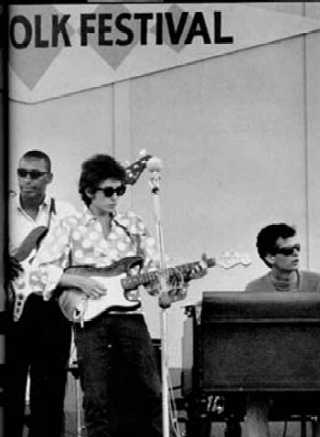
Much of this story starts when Dylan went electric. And he explains why in a brilliant set up in the first dozen or so pages.
NEW ROCK JOURNALISM: SERIOUS ART CRITICISM TO DUMB MYTHOLOGY
To make matters even more interesting, Caress shows how rock journalism rose in the late 1960s as a newly developing art form itself, as thoughtful and artistically informed writers like Lester Bangs, Robert Christgau, and Greil Marcus used classic critical methods – as one would in reviewing literature, theater, classical music, or jazz — believing that some rock musicians had something to say, and their medium was, indeed, a new art form. (The first issue of Crawdaddy! was ten pages long and included one long review of Simon & Garfunkle’s Sounds of Silence, written by a college student at Swarthmore; it was so impressive, Paul Simon called him in his dorm room to discuss it. Outlets like The Village Voice were doing serious evaluation of the profundity of rock music, creating a new community of a new kind of entertainment journalism and a new sophistication in popular music reviewing.)
Caress shows how, eventually, the premier outlet for such rock criticism, Rolling Stone, and later Spin, became tawdry and stupid, pushing a myth of “sex, drugs and rock and roll” to valorize materialism and fame. Caress is (rightfully) rough on these magazines and the eventual loss of serious rock criticism in their pages. For instance, he documents how early Rolling Stone reviewers savaged Houses of the Holy by Led Zeppelin (for its bad lyrics, routine song structures, unremarkable musicianship, curtailed passion, middling artfulness) but decades later, in their big-selling books of the best albums ever, gave them five-star, “must have” status.
He explains,
Throughout the 1990s Rolling Stone’s venerable influence helped legitimize a wholesale mythologizing of rock that was being actively cultivated by the Rock and Roll Hall of Fame, a new spat of sycophantic “History of Rock and Roll” documentaries, and new myth-affirming TV franchises like VH1s Legends and Behind the Music. The combined effect of this myth-making apparatus would profoundly re-shape popular perceptions of rock’s history. As the Legends series lumped The Clash and The Bee Gees into the same exalted category and Behind the Music presented John Lennon, R.E.M., Motley Crue, and Kiss as equally worthy subjects of serious documentary treatment, the tensions which had once existed between artistic and commercial assessments of rock music began to be blurred beyond recognition. Upstart publications like Spin magazine might have been expected to challenge the rock establishment’s compromised criteria, but instead they exaggerated it. When Spin revealed its first list of “The Greatest Albums of All Time” ultra-obscure but artistically respected albums like Tom Waits’ Swordfishtrombones and The Minutemen’s Double Nickels on the Dime were honored alongside commercially popular but artistically trivial albums like George Michael’s Faith, begging the question: Under what criteria could all these albums be judged as “great”?
And that’s a great question, isn’t it?
Caress cites portions of album reviews to illustrate his point; it was embarrassing to read an allegedly independent rock critic raving about Bon Jovi’s 1988 New Jersey, admitting without irony that what was best about it was its “sales potential.” Other reviews are quoted, from journals once known as bastions of anti-commercial zeal and counter-cultural artistic standards, making (serious) reference to pleasing the record label’s stockholders! Rolling Stone had previously been so committed to a counter-cultural worldview and resistance to commercial label hype that they would (literally) write columns against the very ads that appeared in their own magazine. They routinely bit the hands that fed them, Caress shows, and record labels put up with it. There was in the early heady days of the rise of rock a shared assumption that art matters, that the worldview and visions of serious rock musicians put them in a category somewhat different then mere entertainers or peppy pop groups. Those who wrote their own songs, created their own arrangements, recorded in their own manner, wrote liner notes and crafted performance styles by their own aesthetic and political values were considered artists in ways that singers who just performed other people’s songs as dictated by the record company’s lust for singles and hits were not. And they were, at least in some outlets and venues, treated not as celebrities but as artists.
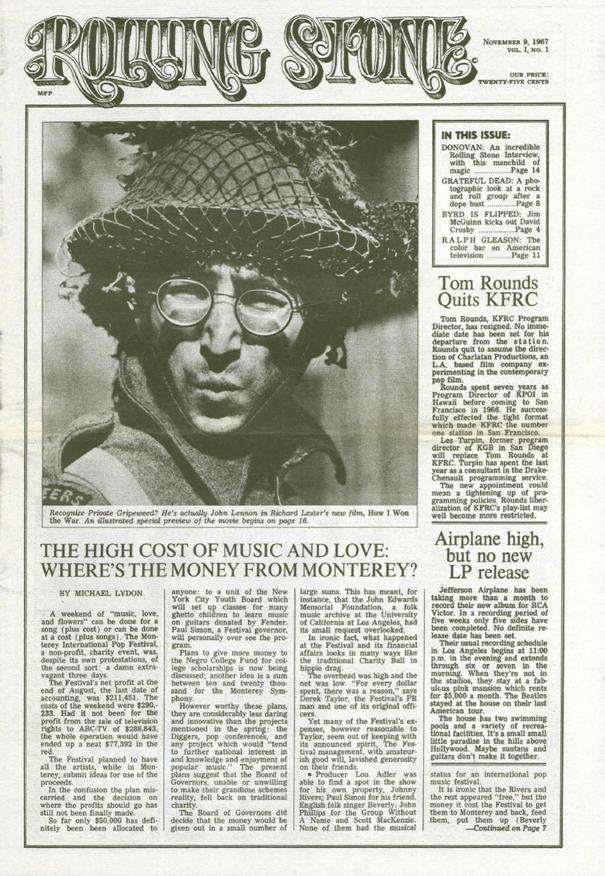 In the first issue of Rolling Stone – the one that had John Lennon in military garb, November 9, 1967 – Editor-in-Chief Jann Wenner (before he moved to New York and bought a Rolls Royce and hired a guy as Editor who was mostly known for doing swimsuit features) wrote,
We have begun a new publication reflecting what we see as the changes in rock and roll and the changes related to rock and roll. Because the trade papers have become so inaccurate and irrelevant, and because the fan magazines are an anachronism, fashioned in the mold of myth and nonsense, we hope we have something here for the artists and the industry, and every person who “believes in the magic that can set you free.”
As Dylan went electric and influenced others, rock began to be taken seriously – in a way that, say Frank Sinatra or Chuck Berry or Elvis would never be — and these new rock critics, and serious underground radio stations, spread this new way of thinking about the art of rock music, the inevitable eventually happened. Perhaps is was the myth of Icarus, or “dumbing deviancy down” as one statesman put it years later. Or maybe there was something to that Robert Johnson story about selling one’s soul down at the crossroads.
BLAMING ZEP, KISS, AND THE ROCK CELEBRITY CULTURE
Mr. Caress doesn’t suggest those mythic options; he blames Led Zeppelin (and other social factors of the 70s) for what became sadly obvious: hard rock music became increasingly vapid, misogynist, formulaic, even as it because exceedingly commercially successful, with the painfully ironic confluence of rock and money — lots of money. We know much of this story, and how it led to the necessary rise of punk rock in response, although I learned much from Caress’s careful telling of this era, in many ways the “second wave” of serious artists in the rock scene.
PUNK
Punkers were of different ideological stripes, and different musical styles, even, and Caress parses the different kinds of punk and the varied impact of the Ramones, The Clash, The Sex Pistols, the anarchist or Marxist bands and the ugly nihilistic ones. The rise of punk became important in many ways, perhaps most significantly for eventually influencing a new movement which became known as grunge, based in Seattle.
And here is where the book really drills down, offering fascinating explanations and stories and band histories, exploring the influences (social, economic, artistic and more) of that Seattle scene.
GRUNGE IN SEATTLE
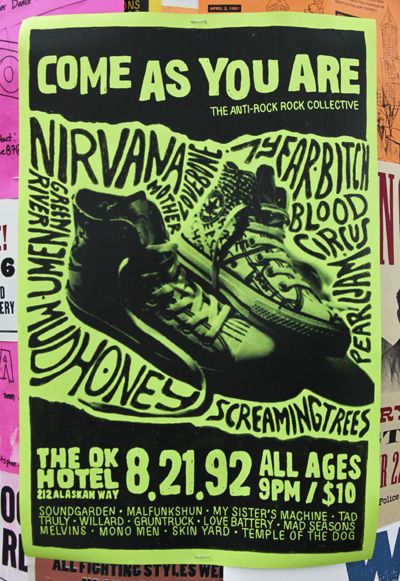 In a fabulously interesting description, Caress explains how rock tours in those years did not travel the many hours up from San Francisco to the Pacific Northwest so the isolated indie kids of Seattle didn’t know – they just hadn’t heard! – that there were tensions between punk artists and metal groups. Perhaps in every other major city in the world there were two big scenes, driven by competing, niche-oriented radio stations (outside of hit-driven pop, of course) and the social architecture of distinctive networks, nurtured by indie record stores, local rock newspapers, clubs and local artists doing regional touring — those who favored metal and hated punk and those who were punks and hated glam rock. In Seattle, apparently, kids listened to AC/DC and The Ramones; the indie record stores promoted Motley Crue and The Talking Heads.
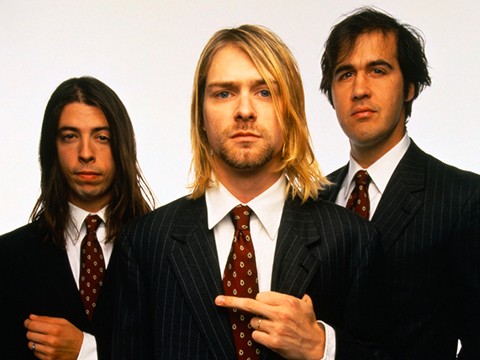 Out of that unusual mix emerged what became incredibly important for rock – a blended sound that was truly an alternative to the reigning radio paradigm and market trends and divergent sounds and fans. It wasn’t punk and it wasn’t metal, but anyone who has followed rock music in the last 25 years knows of Soundgarden and Mudhoney and Alice in Chains, the post-punk grunge of Kurt Cobain’s Nirvana and eventually Pearl Jam. (Not to mention a hundred copycats and wannabees as record label execs learned of the new commercial appeal of flannel and angst and set up oodles of new groups, posed as the next Nirvana or Pearl Jam. Caress names names and it is a trip down the 1990s memory lane.)
As kids, you see, some of these rising Seattle artists listened to groups like Kiss, say, and didn’t realize that the punkers thought that was stupid. Out of this uninformed openness came a new sound, a hybrid, that developed organically in the otherwise lame music scene in the Pacific Northwest, with a bunch of indie alt bands, Nirvana breaking out, leading the way, and Pearl Jam soon to follow. Legendary indie labels arose – Subpop comes to mind – and changed the face of rock music forever.
This was an era, you may recall, when there was terrible pop music on the air, boy bands galore, women singers known mostly as sexy dancers, groovy guys lip syncing fake British new wavers, mimicking what was a cool indie sound, dumbing it down, dumbing it down. The first wave of kids coming of age after an unprecedented family breakdown added sadness and disillusionment to the Gen X mix. Huge record labels and high impact mainstream radio were promoting all manner of upbeat superstars. (Things don’t change, it seems — in later chapters, Caress reports how big labels were pouring millions and millions into promoting one CD, a release by J-Lo, for example, but virtually nothing for her label-mates Wilco, who were dropped for not being blockbusters.) There were classic rock acts, still – Springsteen, of course, the ever present Rolling Stones, legacy tours of reunited oldsters. But the biggest selling album in history (up to that point) came from Seattle. Welcome to Alternative Nation.
But the biggest band in the world then was one that also emerged from a curious, soggy place, offering a blend of post-punk and alt-rock experimentation — the boys from Belfast, Ireland: U2.
U2
 I loved the part of The Day Alternative Music Died that developed the history of the rise of grunge and the use of “alternative” as a catch-all description for a certain ethos and genre. MTV started their important show 120 Minutes (1986 – 2000) and Alternative Nation hosted by VJ Kennedy. (Remember her?) Bands of many different sounds and styles and visions became known as alternative. The Cure, Peter Gabriel, The Smashing Pumpkins, Bad Religion, Husker Du, Morrissey, even the Cranberries. R.E.M. became a darling of the critics and huge, huge sellers. (Even contemporary Christian bands started to take up unique stylings and edgier sounds that we called in those days “alternative” – and we still have their often amazing CDs in our shop.) The battle between commerce and art raged (as did the hostilities between fans of Kurt Cobain and those of Eddie Vedder, debating who had sold out, who was authentic.) But it was – given my own tastes then and now – Caress’s study of U2 in those years that most captivated me.
ACHTUNG BABY AND ZOOTV
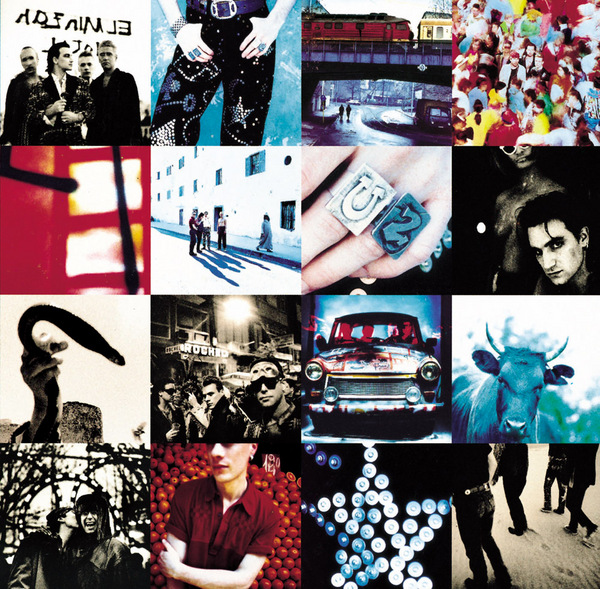 It isn’t a new story – their neo-punk beginnings, the rising popularity of Joshua Tree, the mixed critical acclaim of Rattle and Hum, the charges of losing their way, and their majestic re-invention into an artfully complex, indie-type alternative force with the release of the brilliant Achtung Baby and the hyper ironic, postmodern ZOOTV tour. Caress gets it right, and frames their end of the century metamorphosis in light of the other musical options on offer those early years of the 1990s.
Even as the U2 story is unfolding, Kurt Cobain and Eddie Vedder are major players in these middle chapters of The Day Alternative Music Died. Even if you are less interested in how Seattle became “the new epicenter of the alternative nation” or are not interested in the backstory of Lollapalooza, say, or Pearl Jam’s quixotic, principled campaign against Ticketmaster, this middle section of the book is still really interesting. There are good stories, brief album reviews that flow from chapter to chapter, even as Caress’s theme – the role of commerce and big business and how it affects artists – is never far from the details.
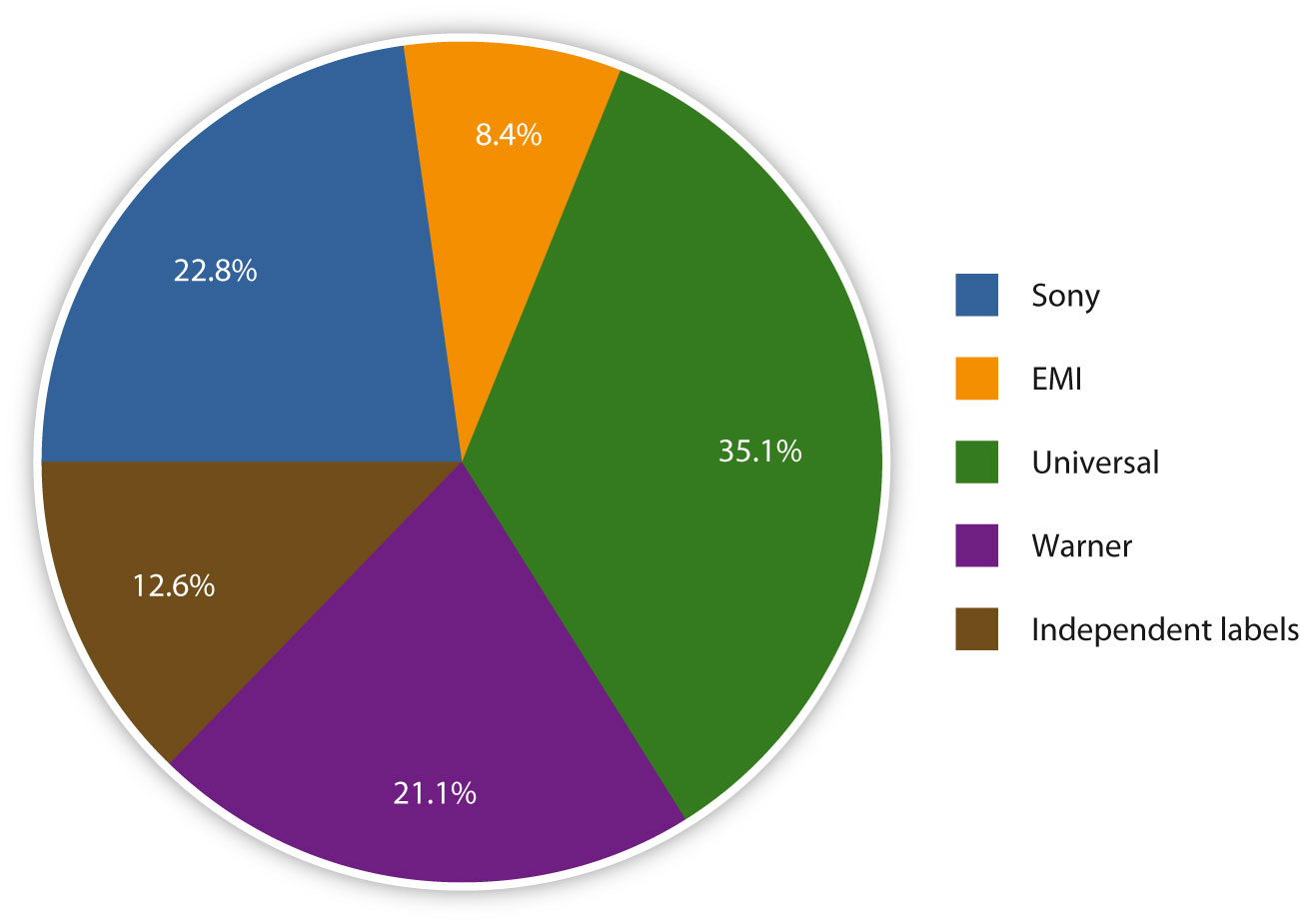 If you like learning about who hired whom to produce what, and how the funding and advertising and radio airplay and tour costs mattered, the rise and fall of record labels, and their executives, you will be more than intrigued. The conflicts between bands and their producers, their labels heads and the A&R guys — not to mention the corporate bean-counters are the stuff of legend. Apparently, these tensions really are ever-present in the performing arts, and this book exposes it within the alt music scene – people who were supposed to know better – in a powerful, compelling (and entertaining) way. More than a cautionary tale or a postmodern updating of Doctor Faustus, this amazing narrative helps us see the temptations of our times, the spirit of late modern capitalism which has the power to undo alternative forces and co-opt the most insistent artists and prophets among us.
And it’s a blast, because all the while he is also telling us about everybody from Sonic Youth to Superchunk, Radiohead to Neko Case, Dave Grohl to Debbie Harry.
Even if this detailed coverage of the alternative music scene doesn’t seem interesting to you — lists of radio stations and rock critics and where they all stood on rising artists such as Black Flag or the Violent Femmes or Jane’s Addiction or Elvis Costello or Metallica (and who were the most principled in their art, who was most willing to compromise for the sake of commercial appeal) — I think this book will still win you over. What these most often underground bands or songwriters meant, and what it all meant to our popular culture, is truly fascinating and, I think, important. How they seemed to be largely co-opted is important. This whole story of commerce and consumerism helps us see some of what we saw in the much-discussed documentary The Merchants of Cool. It’s important.
Just for instance, here is Caress taking severe exception to Chuck Klosterman and his rock music appreciation memoir Fargo Rock City:
The problem with rock narratives in under-researched personal memoirs like Fargo Rock City is that they present a wildly inaccurate view of history, in this case downplaying the significance of the sea change that occurred when alternative music ousted glam rock as rock’s popular torchbearer, thus obscuring the reasons that such a shift took place in the first place. There were real reasons that Nirvana refused to tour with Guns N’ Roses in the early 90s; not least of which being the fact that the testosterone-fueled misogyny that GNR embodied was one of Kurt Cobain’s least favorite qualities in anyone, let alone a rival rock band. There were real reasons that, in the wake of the early 90s alternative revolution, glam rock was largely relegated to seedier fringes of cultural respectability: professional wrestling, strip clubs, and other places where the misogyny inherent in the music fit the less enlightened, predominantly male atmosphere. And there were real reasons for alternative music’s unprecedented burst of commercial success in the early 90s, which helped spur album sales to record heights and echoed rock’s late 60s surge in popularity.
ZEITGEISTY
Adam Caress, by the way, is himself a follower of Christ and has good insights about the zeitgeist. His own appreciation of indie artists of integrity (those “with something to say”) is evident.
Yet, this isn’t a book about Christian faith and he does not attempt to offer faith-based perspective on the nature of art or the religious ground motives and cultural narratives that allow for this particular dilemma within Western art. That is, he sort of implies or assumes that it is just a given that there is a dualism between those who do art – subversive, important, upsetting, even, and those who do not. Such views of art, and of commerce, are themselves rooted in certain (bohemian?) worldview assumptions, I suppose, and he does not make any attempt to discern where that comes from, or critique it at all. It may not be germane to this particular project, but it might have been helpful to explore just a bit the genealogy of the ideas that pervade the book.
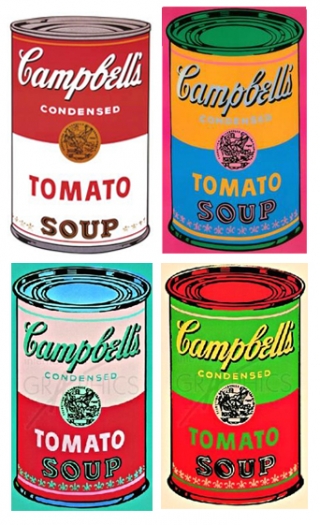 (I recall being blown away once, decades ago, when I asked Calvin Seerveld about pop art like Andy Warhol, what the mass commercialization meant, where that was coming from and its import for contemporary culture. His answer seemed so tender and prophetic and insightful that I left the room and cried, moved and glad that somebody had such a profound understanding of the dangerous ideologies that pervade the discussions of faith and commerce, trendy subversive art and truly redemptive art.)
Caress not only knows rock history (he “knows his scene cold, writing with an informed insider’s confidence” says literary critic Sven Birkerts, himself an amazing writer) he knows much about the contrasting philosophies of rock criticism. He takes us along wonderfully in a few key chapters in the second half of the book, starting with a study of mergers, acquisitions and the ultra-corporatization of music and how this lead to the “hyper-commercialization of rock” (think of the curious story of how Alanis Morissette was manufactured or the blip of Limp Bizkit.)
POPTIMIST AUTHENTIC INAUTHENTICITY? OR: IS IT ART?
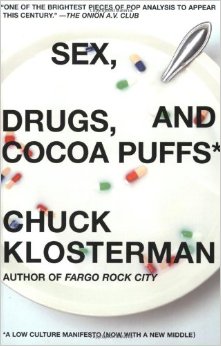 In a brilliant chapter that starts off with a close reading of Radiohead (from Okay Computer to Kid A) he shows how these significant artists were received and reviewed. Caress calls this chapter “The End of Rock Criticism” and he takes on both Chuck Klosterman (and his fascinating low-brow book Sex, Drugs, and Cocoa Puffs) and the heady postmodern critics such as sociologist Pierre Bourdieu and his book Distinction: A Social Critique of Judgement of Taste and how that influenced Carl Wilson’s popular book on Celine Dion (with the subtitle A Journey to the End of Taste.) Caress argues that these deconstructive critics overstate how class and gender and race influences us, thereby eroding any lasting principles or enduring values to art criticism. (“All art is fake” one says, while another writes of “authentic inauthenticity” and Wilson himself speaks of “a genuine fake.”) This thoughtful chapter is one of the more demanding ones of the book and is, I think, brave and valuable.
Caress helps us understand much with a blistering few paragraphs summarizing the rock music ethos of the early 2000s, where he exposes what some call “poptimists” and how
…any artist or critic who makes either explicit or implicit claims to the transcendent aesthetic possibilities of art can be reflexively dismissed as ‘pretentious’ or ‘elitist.’ And thus, by marginalizing any and all appeals to artistic standards, poptimists severely weakened the place of traditional criticism, which had long functioned as one of Western society’s few remaining bulwarks against the purely commercial domination of popular culture.
He continues,
In the end, the poptimists in the early 2000s resulted in a devaluation of the place of art and artists in society. And in their place, pop apologists were relentlessly endorsing commercially-driven, celebrity-centric pop culture as a valid substitute. In fact, during the first few years of the new millennium, poptimist revisionism was working in concert with both rock establishment mythology and corporate commercial marketing in order to marginalize the perceived importance of the unique creative visions of individual artists.
… influential cultural critics were busy spreading the “poptimist” belief in the value of commercial pop music and disparaging the “rockist” values of artistic substance and authenticity…
And, of course, the corporate music industry machine was spending hundreds of millions of dollars each year to convince the record-buying public that its commercial approximations of art had rendered individual creative visions obsolete. It was in this hostile environment that a fragile group of independent music labels and artists was coalescing into what would come to be known as the “indie” music scene.
GOLDEN AGE OF INDIE (AND THE EMPIRE STRIKES BACK)
 Which takes us to the final four chapters, a collection of several very important essays about the latest dilemmas in the digital age, the battle about Napster, the rise of yet another epoch of indie labels, the rise of self-publishing, Pitchfork reviews, live streaming, fan blogging, and so forth. He refers to this as “the business of indie’s golden era” and — still — must explore how “commerce strikes back” with the rise of shows like American Idol and the
 on-going “commercial marginalization of art.” Again, you may not agree with his assessment, but this is rich, very contemporary stuff, and I highly recommend it for those who ought to be thinking about the issues of the day.
For just a glimpse into how Caress discerns this, again, in more recent times and from influential voices, he cites a significant New York Times piece on the major label promotions of major performers (Carrie Underwood, Britney Spears) as “the cure for the evils of today’s music business.” As if this corporate-driven, top-down paradigm for music creation doesn’t erode the significance of artistically independent rock artists.
Caress then dissects an NPR piece about American Idol (which, NPR’s leading music critic Ann Powers says glowingly has “reshaped the American songbook.”)
Power’s choice of words — by which songs were “sold,” musical gifts were turned into “products,” and performers were rewarded for their “entrepreneurship” — was a telling indicator of the way mainstream music criticism was coming to use commercial terminology in order to assess artistic merit.
A GREAT SERVICE, CHILLINGLY PERSUASIVE
In The Day the Alternative Music Died… Mr. Caress has offered us a very great service, not only surveying the crazy years of the rise and demise of rock and roll, but framing it in terms of the ping and pong of different movements and styles, all of which, in one way or another, were reacting to this fundamental tension between art and commerce, a tension which may be a symptomatic issue betraying bigger struggles — perhaps a framework that contrasts ideologies of freedom vs control, contrasting visions between the lefty counter-culture and the established dominant culture, how movements working for cultural reformation and social change are often neutralized by the enticements of cultural accommodation. These assumed dualisms may be rooted in deeper perceptions about the nature of things. Ultimately, I think some of this comes because there are many who presume a large dichotomy between faith and reason — I think of generative works like Iain McGilchrist’s massive The Master and the Emissary: The Divided Brain and the Making of the Western World or an old favorite, that we still stock, The Secular Squeeze: Reclaiming Christian Depth in a Shallow World by John F. Alexander.
The Day Alternative Music Died is, as critic Sven Birkerts notes, “chillingly persuasive.” And, I think, it will drive you to deeper questions, bigger questions, which is always the sign of a good book.
It is good for those who want a handle on the zeitgeist, the history of how we got to indie and maybe what it means to resist captivity to the powers that be. And it will push you not only to enjoy new music, or revisit old albums, but it will help you think about all manner of matters.
 For anyone interested in rock music, you will love this book. You may not agree with his views of this band or that – and, man, does he name a lot! — but you will learn new stuff, I’m sure, and love the ride, or at least most of it. Mr. Caress takes his subject seriously, but isn’t dry, and is obviously an enthusiastic fan, even a delightfully diverse one. He does a fabulous job looking at the art itself (and the personal struggles with popularity, commercial success, relationships with labels
 and rock critics) of significant rock artists. He takes us from Dylan on through the David Geffen “Asylum Records” years (and the rise of the likes of Jackson Browne, Joni Mitchell, Tom Waits, Linda Ronstadt, CSN, The Band) to various schools of punk, the rise of the Seattle grunge sound and other offbeat, artsy movements within “alternative nation” and, near the end, finally exploring the future of the indie scene by documenting the rise of indie
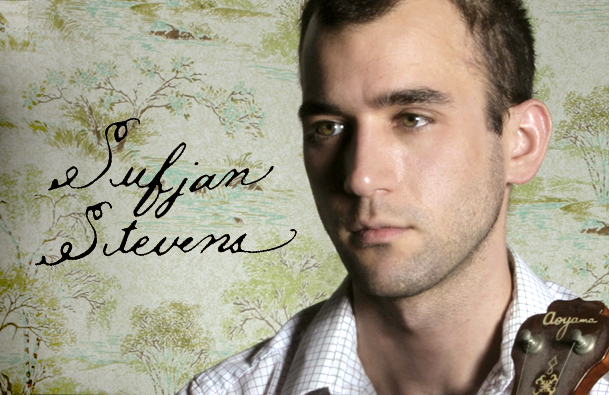
 labels, advancing artists like Sufjan Stevens, Death Cab for Cutie, The National, Grizzly Bear, Arcade Fire, and more.
SERIOUS FUN
I have read a lot of books about the history of rock music, some of which have been a delight, and some which have been culturally illuminating. This is one of the rare ones, bringing together a fan’s love for the music and rock culture, and a bit of serious artistic and ideological excavating, digging between the lines, not only of the lyrics, but of the contracts, not just the rock propaganda, but its best critics, not just of the artists lives, but the labels and their shareholders and what it all may mean.
The subtitle “Dylan, Zeppelin, Punk, Glam, Alt, Majors, Indies, and the Struggle Between Art and Money for the Soul of Rock“ gives you more than a hint of the story, but you have to read The Day the Alternative Music Died to see where he goes with it all, the story he tells, the insights learned along the way.
Interestingly, it is not a pessimistic book, not even a jeremiad against the men in suits and their co-opting of alternative music, although there is some of that. Better, Caress ends with a rumination on the vocation of an artist, using religiously-rich language of calling. He teaches music business at a Christian college (Montreat College, in North Carolina) so it is evident that he embraces this high view of the notion of vocation, and a rich appreciation for the role of the arts. I might note that he is a person of hope. He knows God’s concern for cultural renewal, desires Christ-like human flourishing, and he knows that signs of life – as Paste magazine sometimes puts it – can break out all over, despite all odds. We embrace common grace for the common good, Adam once heard Steve Garber say, in a powerful Garber sermon at Montreat. The story Caress tells here, painful and even disturbing as it sometimes is, is an example of that. Common grace, indeed.
***
A WARNING, A COMMENT, A PERSONAL NOTE ON WHY I CARE
Allow me a heads-up, a quick observation, and a very personal note.
Firstly, this is not a book pitched to a religious readership, despite the author’s employment at an institution with evangelical commitments. Citing as he does many interviews with rock stars and counter-cultural critics, sober and otherwise, The Day Alternative Music Died, shall we say, is in need of one of those Parental Warning stickers Tipper Gore got slapped on the cover of vulgar albums so many years ago.
More interesting, I hope, is this comment: Caress does not, unfortunately in my view, talk at all about contemporary Christian music, the artists, labels, festivals, journalism, or their own unique 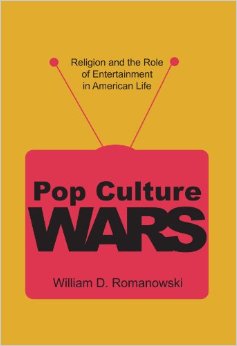 predicaments in this arena. Obviously, there was a group of artists whose art was supposed to mean something vital, who knowingly called themselves an alternative to the mainstream (and some were, in fact, fairly involved in the “alternative” scene, even in Seattle) and whose record labels were soon submerged in commercialization and crass materialism. That story – hinted at in William Romanowski’s highly respected Pop Culture Wars: Religion and the Role of Entertainment in American Life – is perhaps a book yet to be written, one which itself could be pretty sordid.
 (As Adam throws down literally hundreds of band names and record labels, some obscure, I kept waiting for a mention of Michael Roe and the 77s, or Bill
 Mallonee and VOL,
 David Bazen and Pedro the Lion, Chagall Guevara, Mark
 Heard, or at least Christian alt-indie labels like Tooth & Nail Records. Tooth & Nail, you may recall, did all sorts of creative stuff, from the shoegazers Starflyer 59 to hardcore bands like Project 86 and Norma Jean, offering a platform for the clever electronica of Joy Electric, not to mention some really weird, art-house indie folk — the breathtaking creativity of Danielson, with his early Sufjan Stevens connections.)
I note this because, well, we here at Hearts & Minds sell this stuff. Some aficionados have said that we had among the best Christian music selection in the East Coast. Music is, sadly, increasingly a sideline for us, but we are one of those bookstores that still carry CDs of all sorts, from classical to jazz (we recently got the latest Bill Carter & Presbybop CD, Jazz for the Earth. You should check it out!) We just put the fantastic new  Indigo Girls One Lost Day on the shelves this week; any day we’ll have the wonderful Phil Madeira project, Mercyland 2: More Hymns for the Rest of Us. Hopefully, I’ll soon review the latest Bill Mallonee masterpiece, Lands and Peoples (who actually writes about this complex business of music, faith, art and commerce.) We are happy that groups like Mumford and Sons, The Civil Wars, Need to Breathe and mewithoutyou and yes, all of Bruce Cockburn and U2 are still around, right there on our music display.
***
 My first real job was in a record store and my first serious creative writing project, turned in to Mr. Trimmer in high school English, was a piece about selling a country music 45 to a blue collar customer at the Platter Palace in Gettysburg, PA. My bosses there in 1971 taught me about retail and commerce and a bit about record labels and industry payola. And here I am today, trying to figure out how to sell CDs, music that matters, not unlike books, in an era when it looks like indie book and music stores are too soon a thing of the past. The day the alt music died? My own personal crisis is less about the music dying than the music store dying. And the bookstore fading. A vested commercial interest? Oh yes, yes indeed. Can passion and art and grand purpose survive hard economic realities? In my life, I am not optimistic, but I take some courage and hope from the stories of daring artists and indie labels and faithful fans described in Caress’s splendid, splendid book. And for that, for now, I am grateful.
The Day Alternative Music
Died
regularly $16.99
our sale price $13.60
BookNotes
DISCOUNT
ANY ITEM MENTIONED
20% off
order here
takes you to the secure Hearts & Minds order form page
just tell us what you want
inquire here
if you have questions or need more information
just ask us what you want to know
Hearts & Minds 234 East Main Street Dallastown, PA 17313 717-246-3333


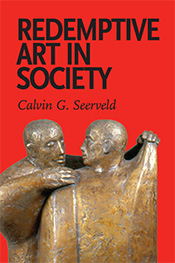
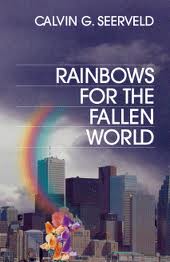 Rainbows for the Fallen World (Toronto Tuppence Press; $30.00), appears on nearly every list on the arts I do, so these newly compiled anthologies of essays, articles, scholarly pieces, sermons and sundry projects — like Normative Aesthetics or Redemptive Art in Society — are important. For what it’s worth, I had the great privilege of being asked to pre-read and then write a blurb for Redemptive Art. More important and knowledgeable critics have offered better endorsements, but since you are a Hearts & Minds fan, figure you might like to see part of this quote of mine, from the back of the book:


 Christian in the arts, Breath for the Bones: Art, Imagination and Spirit: Reflections on Creativity and Faith (Nelson; $13.99.) I recently skimmed it again, for the umpteenth time, alongside an old favorite, a classic by her best friend, the last Madeline L’Engle, Walking on Water: Reflections on Faith and Art (Waterbrook; $18.99.) I would tell those uninitiated to this genre – books about faith and the arts – to read Shaw before L’Engle, but anyone who keeps a library of a few books across the broad school curriculum — campus ministers, say, or “faith in the work-world” geeks or just those who like to read very widely — should have them both.


 Creative Church Handbook: Releasing the Power of the Arts in Your Congregation J. Scott McElroy (IVP) $20.00 This was one of our biggest sellers at the CIVA Bi-annual, and they honored Scott by arranging a book signing to celebrate it. This book has been years in the making; it includes a report of of various church groups that have robust arts ministries, and offers guidance drawn from them, stuff they’ve learned, insights they’ve gleaned along the way. In this regard, Creative Church Handbook is both interesting/ inspiring – to hear these stories, learn of these ministries and outreaches – and practical/useful — with the “take away” points so clear and actionable. Scott has been involved in conversations about faith and the arts for years, has written an earlier book (Finding Divine Inspiration) and this new, slightly over-sized work illustrates his keen ability to pay attention to what God is doing across the land. It shows how to mobilize and manage artists and other creatives within your congregation and how to establish structures and parameters for arts ministry. It includes good stuff on outreach and engagement with the local arts scene in your own community as well as how to wisely think about utilizing the arts in worship and sermons, even. I’m particularly glad that the arts work of a local church near us here is included; kudos to our neighbor DeAnne Roe for how McElroy described the work over at Living Word Community Church. This book is a must-have resource, highly recommended.
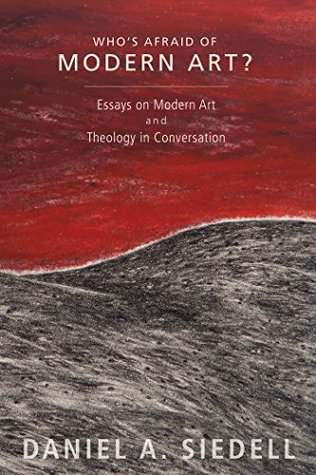 Who’s Afraid of Modern Art? Essays on Modern Art and Theology in Conversation Daniel A. Siedell (Cascade) $21.00 I’m not a fan of the bland cover, but this book is anything but bland, and the always interesting, often passionate Siedell has followed up his seminal God in the Gallery: A Christian Embrace of Modern Art with a great new volume, a must-have for anyone wanting to stay current with the “state of the art” of recent conversations in this field. This fabulous, richly informed new collection of over 30 essays, is grouped into six major themes. Blurbs on the back include one by David Raskin, the influential (atheist) professor of Art History, Theory and Criticism at the Art Institute of Chicago. (“He asks important questions about art and belief, and helps me better understand my own passions.”) and by Gregory Alan Thornbury, President of The King’s College in New York City, who, after avery thoughtful summary, says “This is a landmark work, a signal of achievement in the field.” As it says on the back cover, Who’s Afraid of Modern Art? celebrates the surprising beauty of art that emerges from and embraces pain and suffering, if only we take the time to listen. Indeed, as Siedell reveals, a painting is much more than meets the eye.”
 ReVisioning: Critical Methods of Seeing Christianity in the History of Art edited by James Romaine and Linda Stratford (Cascade) $41.00 Mr. Romaine has been known in evangelical art circles for years, in part because of his role in Square Halo Books such as It Was Good: Making Art to the Glory of God, Objects of Grace: Conversations on Creativity and Faith, and The Art of Guy Chase. He is now Associate Professor of Art History and Chair of the Department of Art History at Nyack College. Mr. Romaine is the President of the Association of the Scholars of Christianity in the History of Art (ASCHA – who knew?) He recently helped edit the excellent collection of art history essays done in honor of Dr. John Walford, Art as Spiritual Perception (published by Crossway — I named it as a Best Book of 2012, which you can find in this
 Sanctifying Art: Inviting Conversation Between Artists, Theologians and the Church Deborah Sokolove (Cascade) $22.00 Cascade has an uneven, even peculiar, series, “affs/Art for Faith’s Sake” that is worth knowing about, a series which includes books large and small, including some poetry volumes, a biblical theology of dance, a splendid, mature work by Bill Dyrness (Senses of the Soul: Art and the Visual in Christian Worship), a very nice devotional based on Emily Dickinson, the significant ReVisioning book on art history mentioned above, and, a bit oddly, a teaching preaching book by Will Willimon, among others. This is a solid, foundational one, and should be known widely. As Robin Jenson (herself Professor of the History of Christian Art and Worship at Vanderbilt) says “Deborah Sokolove has given us a rare gift. She has articulated her belief in the value and purpose of art in language that is fresh, convincing, and – perhaps most of all – accessible to and respectful of the lay reader. This is obviously a work of love, and it is a great joy to read.” Many of the reviews and endorsements have been excellent, nearly urgent: Denise Domblkowski Hopkins says that the author “brilliantly accomplished what she set out to do – change the conversation between artists and the church….” and suggests that much is at stake here.
 The Virtues and Vices in the Arts: A Sourcebook Shawn R. Tucker (Cascade) $33.00 I have not looked through this much, and wondered if it is mostly about the arts, or mostly about virtue, faith-formation and character. The seven deadly sins are known, perhaps the virtues less so, but this book brings all of them together and “for the first time, lays out their history in a collection of the most important philosophical, religious ,literary and art-historical works.” Is this mostly art history then? Literary criticism? Historical theology? Yes, yes, and yes. It is a massive anthology, putting, in the words of a professor from Bowdoin, “philosophical treatises into conversation with religious and literary compositions. Even more interesting, he draws on key artistic works, paintings, and sculpture, allowing the reader to imagine other ways to think about ethical problems.”
 Seeing the Unseen: Launching and Managing a Church Gallery Sandra Bowden & Marianne Lettieri (CIVA) $30.00 This is another splendid, book which was launched at the 2015 CIVA event, and we are thrilled to have a few here at the shop. Sandra Bowden is, we might note, one of the most informed and respected art collectors in North America, herself a devout Christian and driving force within CIVA for decades. (Some of her own splendid collection is shown in a truly exceptional Square Halo Books coffee table art book, The Art of Sandra Bowden, edited by James Romaine; $49.99.)
 The Art of Helping Others: How Artists Can Serve God and Love the World Douglas C. Mann (IVP) $15.00 Mann is a songwriter and former music and publishing executive (not to mention an accomplished visual artist) and has done extensive mission work. (He currently divides his times between Colorado and the Ukraine.) In this book Mann offers a memoir of his own “joy, pain, sacrifice and hope” which calls artists of all sorts, in fact, all followers of Jesus, actually, to lives of “creative incitement to the glory of God.” Although this will inspire you to invite and network artists for activism and service, it will, more deeply, inspire all of us to live more generously, seeing the world in nuanced, colorful ways, and sharing that passionate vision with others. All of us, artists or not, can be encouraged by this author who, Ben Arment says, “has the hands of an artist and the heart of a pastor.” Maybe we all need a little “creative incitement.”
 Life After Art: What You Forgot About Life and Faith Since You Left the Art Room Matt Appling (Moody) $13.99 We stock all the recent books in the recent imprint the “Moody Collective” which are written by younger adults, energetic volumes with an Millennial edge, deeply Christian but not pushy, well written and artful. So it makes perfect sense that the Collective would do a book about the creative passions that so many younger adults long for. (And others, too; recall that Doug Pagitt says we now live in “the inventive age.”) This nice volume is, interestingly, as cool as their others, but has an appeal to readers of any age. The topic is a commonly discussed theme – how school and grown- up life seems to squeeze the playful creativity of childhood out of us – but I know of no other book that reflects on this from a Christian viewpoint. I love the blurb on the back by Anne Jackson, who explains that “Matt takes readers on a journey to the art room to discover our purpose in life, which can be found in our God-given ability to create beauty for the world to see.” This is a book full of invitation, beauty, grace, and being set free to care about all this more. I should have listed it in my list of books last months about leisure and play. Very nice.
 Sense and Spirituality: The Arts and Spiritual Formation James McCullough (Cascade) $18.00 McCullough has his PhD from the Institute for Theology, Imagination, and the Arts at the University of St. Andrews so you know this is some serious, meaty stuff. He has published articles on the music of Anton Bruckner as well as the art of Graham Sutherland and Makoto Fujimura. This book attempts to explore some new grounds, not just deepening our faithful understanding of aesthetics, nor the general conversation about faith and the arts, or church ministry among artists. This work is hoping to advance our insights about “how the arts might actually advance spiritual formation in terms of the cumulative effect of religious experience and intentional practices.” It naturally offers more to the discussion between theological aesthetics and practical theology, but, more, it offers an analysis of artistic communication and how music, poetry, and painting can help us in our spiritual formation. Can our experience of the presence of God be animated by our appreciation of aesthetics and by our actual engagement with art? As Wheaton art professor Matthew Milliner says in his back cover review, “McCullough deftly calls attention to the elephant in the elephant in the aesthetic seminar room: the way that art catalyzes spiritual growth.”
 Van Gogh’s Ghost Paintings: Art and Spiritual in Gethsemane Cliff Edwards (Cascade Books) $16.00 Edwards is a fascinating author, having done books on Japanese haiku, and several previous books on the faith life of Van Gogh and his paintings. I wish this had come out in time for CIVA; it arrived just after the conference, so here it sits, lovely, beckoning. Elizabeth King, a sculptor who won a Guggenheim Fellowship and a recipient of the Academy Award of the American Academy of Arts and Letters says “This is a superb work. The author’s fearless journey into the life of Van Gogh and the interiority of the writing take the readers herself into solitude, loneliness, labor, triumph, and sorrow. It is a complex work… we treat with this book the very path Van Gogh himself hesitate3d on and wrestled with himself on: the seeming contradiction between the intellect and the spirit in art. Obviously, the Dutch painter remains one with whom we resonate. Even Henri Nouwen, who drew so tenderly from Van Gogh, has esteemed Mr. Edwards contributions to Van Gogh studies.

 a sociologist with a PhD earned under the eminent Peter Berger, media pundit (who did a stint with the BBC), founder of bi-partisan project designed to deepen American’s appreciation for first amendment freedoms, advocating for structural reforms that promote pluralism, religious diversity and which enhance civility. His hard-hitting book Case for Civility was about much more than public manners but offered positive plans for enhancing better public discourse and stability in the public square. His pair of meaty books A Free People’s Suicide and The Global Public Square reflected, respectively, on the threats to religious freedom in North America, and globally. Dr. Guinness has even addressed United Nations diplomats on this topic of religious freedom, inviting them to help “make the world safe for
 diversity.” A major book, Unspeakable: Facing Up to the Challenge of Evil, attempted to enter the conversation about theodicy, not so much to answer the big question of “why” but to offer a framework for thinking about large evils such as genocide or sexual trafficking. It is a hugely under-utilized book, and I cannot recommend it enough.
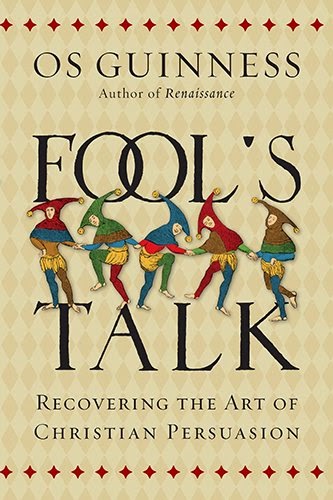
 books about evangelism have rarely actually led another to lasting faith and some who write about apologetics like to think about the logic of faith, but, again, may not have had much experience actually befriending skeptics and relating well to those who are hostile to Christian conviction. Although Guinness surely knows the benefit of scholars and thinkers and writers — he cites philosophers and scholarly authors on every page! — he is right that bookish guidance about doing this kind of work simply must be field tested and refined by real conversations, with real people, knowing real failures, sometimes through heartache and tears, even. The topic demands real pages written after years of experience and genuine concern. Guinness writes that he has waited 40 years to write this book.

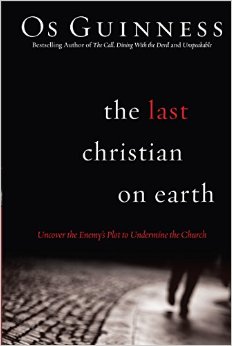 assumptions in the late modern West and the need of the church to be newly faithful. This was, if I might, the How (Not) To Be Secular: Reading Charles Taylor [by James K.A. Smith] of the 1980s, prescient and profound, clever as it was. Looking back, playfully, it could have almost been called “How (Not) To Be Secular: Reading Peter Berger.” It was edited, expanded and re-issued in 2010 under the title The Last Christian On Earth: Uncovering the Enemy’s Plot to Undermine the Church (Baker; $17.00.) We found it hard to describe and hard to sell, but it is – I’m not kidding! – a wonderfully thoughtful read, a bit of parable, a bit of cultural exegesis, a playful example of some of what Guinness explores in this new Fools Talk: the need to deeply understand the cultural forces that shape how people think and see and understand and live in this culture, and the need to use humor, satire, and “turning the tables” as a form of apologetics. In Gravedigger cum The Last Christian On Earth Guinness does just that.
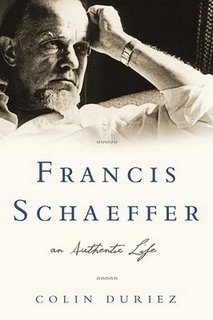
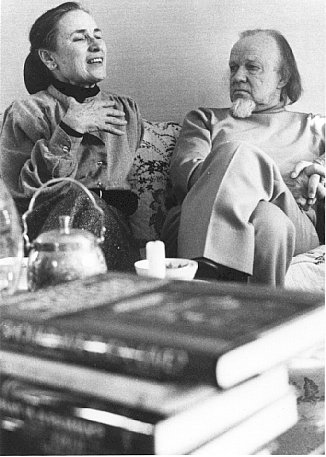 Francis and Edith Schaeffer who were renowned for the great care and individualized pastoral and apologetic counsel offered in the context of welcoming hospitality that they would give to each and every person they encountered. Guinness is adamant about this and while is seems so obvious that it hardly needs saying, it does need saying. And he says it strongly, even denouncing the “imperialism of technique” and “McTheories.”
 deconstructions (one complex chapter is called “turning the tables”) and with wit and kindness but sometimes also hard words spoken well, help skeptics doubt their doubts. (Timothy Keller writes about this clearly in his important and useful Reason for God: Belief in an Age of Skepticism.) Guinness uses examples from Lewis, Schaeffer and Berger about doing just this — it is thoughtful, provocative, and finally practical. I love, for instance, his guidance about moving our discernment about the journey of our conversation partners from a meeting point to a pressure point to a danger point, where they are inevitably forced to wrestle with deep things about their deepest convictions and concerns, and realize the consequences of their ideas and beliefs, or lack thereof.
 You may know how Steve Garber has ruminated on this, first in his significant Fabric of Faithfulness and again in the exceptional and profound Visions of Vocation; or how philosopher Esther Meeks has appropriated the work of Nobel Prize winning scientist Michael Polanyi in her Longing to Know: The Philosophy of Knowledge for Ordinary People or her Little Manuel of Knowing or her massive Loving to Know: Covenantal Epistemology. Guinness does not reference Garber or Meeks, but he might have.)
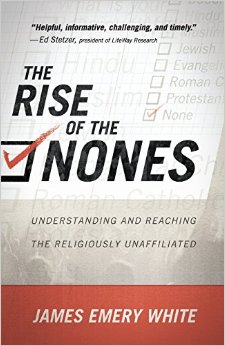
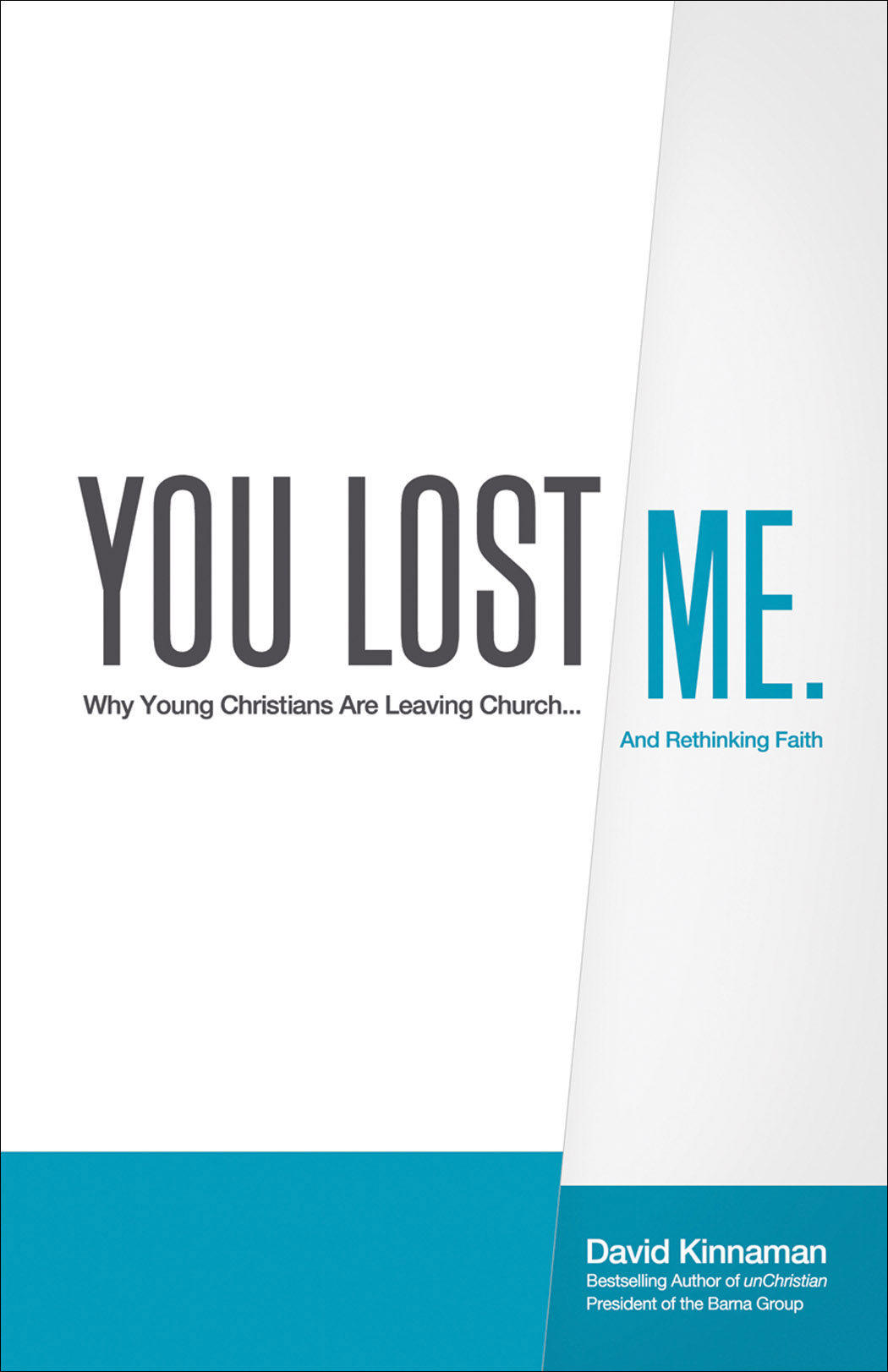
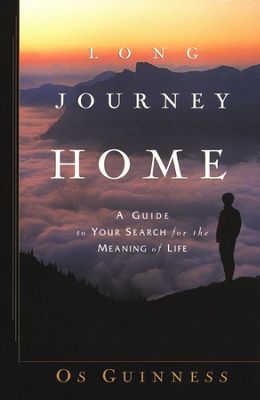 yet” to the invitation to understand that Meaning-giver as the God of the Bible, incarnate in Jesus the Christ. People may “fall on their knees or turn on their heels.” Like in his wonderfully rich book for seekers called The Long Journey Home: A Guide to Your Search for the Meaning of Life (WaterBrook; $18.99) Guinness helps us chart the journey of our conversation partners, helping them do some ruthlessly honest self appraisal, realizing that signals of transcendence may not immediately draw skeptics to faith. (That is why we need “spring loaded” dynamics, asking probing questions, and the tools of wit and irony and even the ploys of good drama to push and pull our friends to deeper questions and new plausibilities and finally new answers.)



 hotbeds of theological diversity, but more varied then most folks admit. To use Richard Foster’s helpful image, some of us have been refreshed by more than one “stream” or type of Christianity.
 Some tensions within our churches come from what one might say are worldview differences. Jack Haberer years ago studied Presbyterian churches and learned that some members in the same congregation most valued creedal faithfulness, others vibrant worship, others still are glad if their church gives them opportunity for meaningful mission, etc. If you are a relational type and you have dear sisters and brothers, you may not mind a bad sermon. If you are deeply involved in rewarding volunteer work with youth, say, and see vibrant youngsters maturing in faith, you may not care if you like the music in worship or not. That is, what people most want in a church, what they think most counts, emerges from deep assumptions. It may be helpful to explore what we most think of when we think of good faith or a good church to discover why what agitates one person isn’t a big deal to another. That book was called GodViews: The Convictions That Drive Us and Divide Us (WJK; $20.00) and I think there is something to that.
 friendships lost and lamented in The Big Chill or who came of age watching Thirty-Something or even Parenthood, we long for deep relationships, lasting loyalties, and meaningful friendships. (Do you recall
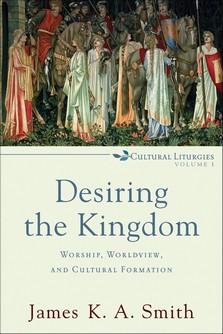 (For deeper explorations of this, by the way, how the rituals of Christian liturgy form us, please see James K.A. Smith’s Desiring the Kingdom: Worship, Worldview, and Cultural Formation and Imagining the Kingdom: How Worship Works (Baker; $22.99 each.) I can’t tell — although I’ve tried in these pages and elsewhere — how very important these serious works are.)
 Life Together Dietrich Bonhoeffer (HarperOne) $14.99 Bonhoeffer, you may know, wrote his PhD thesis on the nature of the church (perhaps inspired by an epiphany he had about the profound nature of ecclesiology while worshipping once on Palm Sunday in Rome.) His call to radical discipleship and loving service for the sake of the world is deeply interwoven with his views of the forming power of the local Christian church. This is, as the cover rightly proclaims, “The Classic Exploration of Christian Community.” Not many books have endorsing blurbs on the back by Richard Foster, Henri Nouwen, and The New York Times, so I hope you realize this is truly one of the great books of our time. Serious, brief, powerful. It’s a must-read that should be available in your church library and on your shelf.
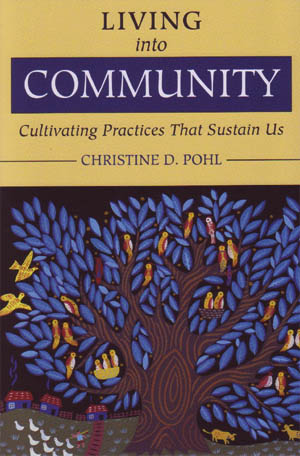 Living into Community: Cultivating Practices That Sustain Us Christian D. Pohl (Eerdmans) $20.00 A thoroughly captivating, fascinating, wise and important book for any educated reader. It is in many ways beautiful, naming and exploring four essential practices that sustain a sense of community, and the obstacles of living into them in these days. This is so good, there is really nothing quite like it in print, making it a must-have, must read book. In a way is a follow up to Pohl’s very important and equally wonderful work on hospitality, Making Room: Recovering Hospitality as a Christian Tradition (Eerdmans; $21.00) Yes!
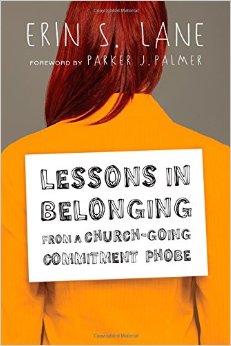 Lessons in Belonging: From a Church-Going Commitment Phobe Erin S. Lane (IVP) $16.00 I have raved about this book before, and think it should be high on the list of books you read about how the local church can be a place of deeper relationships and community. The author is a heck of a great writer — young, a bit snarky, not exactly as colorful as Anne Lamott, say, but equally as funny, she is energetic and wonderfully able to craft very creative, entertaining sentences. Her story — as a hip, young woman, married to a young pastor — follows her own ambivalence about commitment. She calls herself a “commitment phobe” and although that sounds like some generational stereotype, the concerns are real for many of us — introverts and skeptics and those who have been hurt or fear deeper friendships. This is a good, smart book about the ups and downs of belonging, even to a small, normal church, and I recommend it highly. There is a great foreword by her friend and mentor, Quaker writer Parker Palmer. Phyllis Tickle says “One of the clearest and certainly one of the most informing pictures I have seen to date of the generation of young adults who presently are shaping the twenty-first century church.”
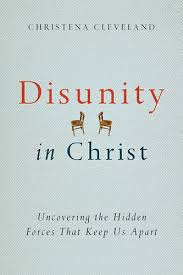 Disunity in Christ:Uncovering the Hidden Forces That Keep Us Apart Christena Cleveland (IVP) $16.00 I’ve given enthusiastic shout-outs about this before, in print, and at events, hoping that many will want to grapple with this great book. It is not the only book about the things that divide us such as race and class and gender, but it is perhaps the best. It is great because Ms Cleveland is Biblically-grounded, clear, and also because she is, interestingly, upbeat and even humorous. Heady, heavy, liberationist hermeneutics about class and gender may appeal to liberal academics, but most of us – whether we are in mainline churches or evangelical fellowships- need encouragement, challenge, inspiration, and useful guidance. Cleveland is an African American sociologist and teacher, and is well suited to help us navigate this provocative stuff, and she does it really well. She tells good stories, offers keen insight, pushes us a bit, and invites God to guide us into deeper unity and mature diversity. I love this author and her good book, and believe it will help us uncover hidden influences, allowing us to move in healthy directions, for God’s glory. Please, read this book! You’re sense of community can only be enhanced by exploring how even our conversational patterns can be off putting, and how learning some cross-cultural awareness can help. Cleveland is
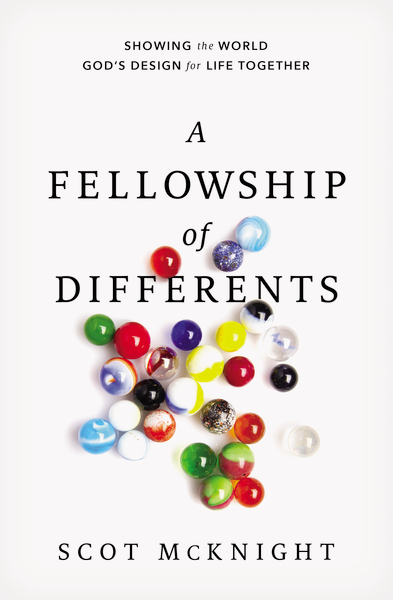 A Fellowship of Differents: Showing the World God’s Design for Life Together Scot McKnight (Zondervan) $19.99 Dr. McKnight is a major, evangelical, Bible scholar, one who has written detailed commentaries and academic work, as well has helpful books for on everything from fasting to praying the hours to the ethics of following Jesus to interpreting the Bible. We regularly promote his One.Life and (mostly positively) reviewed his important The Kingdom Conspiracy. Here he is doing what he sometimes does – offers mature and informed scholarship in chatty, upbeat, funny and sensible ways, making it informative and inspiring. I like McKnight a lot and really appreciate his insistence in this book that our local congregations should be more diverse, less homogeneous, more gracious, a place where we learn to live together, witnessing to the world about the peace that passes understanding. The title is a great one, eh? In a few chapters, McKnight gets at this as well as any other book, and speaks bold truth, even hard truth, in ways that seem natural and do-able. Thanks be to God for this good brother and his generous vision of a diverse church and his explaining how the glories of the reign of God must be known and shown in the local church, where people flourish and grace is experienced and diversity is event, even as a deeper unity is celebrated and broken relationships are healed. Yet, I must say, a few of these chapters – as good as they are – drift off into what I might call “basic Christian growth” offering (very) good insight for daily discipleship but seeming to be not terribly connected to the basic point of the book. I am not sure I agree with the blurb on the back by Derwin Gray (“This is the most important book you may ever read outside of the Bible”) but it does indicate that it is exceptionally useful. Christena Cleveland says “Anyone who desires unity with all of God’s people, not just the ones who are most like us, will be emboldened by this book.” Let’s hope!
 Building Up One Another Gene Getz (David C. Cook) $12.99 This little volume is a powerhouse of a paperback, a simple bit of Bible teaching by a fine evangelical leader (now consulting as the president of Center for Church Renewal.) This is a tremendous idea, each chapter a study of one of the many “one another” commands in the New Testament. He unpacks the meaning and offers simple suggestions for building up one another, serving one another, bearing with one another, even teaching on the seemingly mundane mandates like greeting one another. The study guide that is included is helpful, with some self-assessment questions, too. This will help us get beyond merely tolerating one another, but living into the truth of our being “members of one another.” Very practical, no-nonsense, practical.
 The Compelling Community: Where God’s Power Makes a Church Attractive Mark Dever & Jamie Dunlop (Crossway) $15.99 This new book is a very solid, conservatively evangelical study of how the gospel itself is what transforms a church. It contrasts the often frenzied efforts to “create” community and resists any pre-packaged plan or manipulation to develop deeper relationships with their sense that the preaching of the gospel, and a church being shaped by the historic marks of the church, will, with proper vision casting and gospel-centered teaching, become a body of those who truly love one another and reach out with hospitality and care to others. Dever and Dunlop are leaders at the thriving Capitol Hill Baptist and their church is nicely well known for their tight-knit community. They provide “an alternative to running your church on the building blocks of specialization and segmentation.” Designed mostly for church leaders — there are excellent pieces about structural matters in the congregations ethos or schedule that mitigate against the teaching of each chapter — this is a seriously Biblical call to authentic Christian community in the well-ordered, grace-based local congregation.
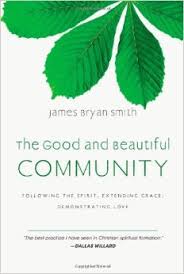 The Good and Beautiful Community: Following the Spirit, Extending Grace, Demonstrating Love James Bryan Smith (IVP) $23.00 Oh, how I hope you know this trilogy of books – the Apprentice Series. Dallas Willard says of them that they are “The best practice I have seen in Christian spiritual formation.” The first was The Good and Beautiful God followed by The Good and Beautiful Life. This third one, with good Bible study, helpful and inspiring insights, and practical “Soul Training” exercises, is all about the local church, the community in which we find ourselves, those to whom we belong and are bound together for spiritual formation and whole-life discipleship. Can we live out Galatians 5:6 – faith expressing itself through love? Can we create local faith communities that could honestly be called “good and beautiful”? One doesn’t have to read these books in order (although it may help.) Lovely, good, true.
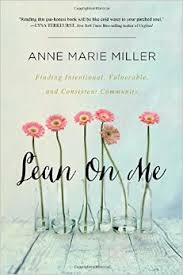 Lean on Me: Finding Intentional, Vulnerable, and Consistent Community Anne Marie Miller (Thomas Nelson) $15.99 I hope you know Miller, who wrote a the profoundly moving Permission to Speak Freely which is also about being vulnerable, real, gut-wrenchingly accepting within the local church. Here she tells her own story – itself worth reading – and draws helpful principles for renewal, committed, healing relationships. Upbeat, conversational, very interesting for those who appreciate such an honest, passionate voice. This is a great read and would make a nice choice for a book club.
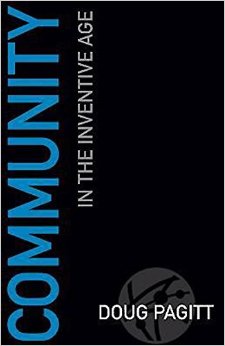 Community in the Inventive Age Doug Pagitt (Abingdon) $16.99 I love the way this book does some clear-headed, basic, cultural assessment – showing how things have shifted from the Agrarian Age, the Industrial Age, the Information Age and what kinds of churches tended to emerge in those social settings – helping us understand some of the contours of our own “inventive” era. He may or may not be fully right about this age of transition and how that means we must rethink leadership patterns and faith formation within the local congregation, but I assure you it is interesting and important material. Some serious sociologists might take exception to his quickly summarized categories and some serious theologians will think he’s a bit light-weight on stuff that matters most, but for a quick read to stir the pot, it is a very, very helpful manifesto. If you like Len Sweet’s early work, Phyllis Tickle’s cultural analysis, if you’ve followed the Emergent conversations, you will appreciate this insight gleaned from Pagitt’s own Solomon’s Porch, a wholistic missional community in Minneapolis. See also his Evangelism in the Inventive Age and Preaching in the Inventive Age. Very candid and creative about new ways to do church, based less on “bounded sets” but relationships.
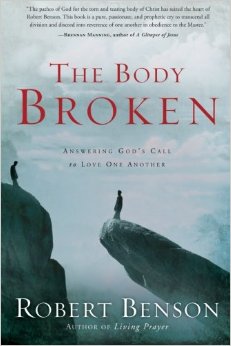
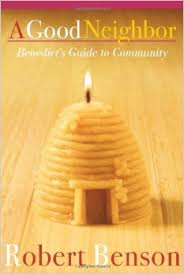 A Good Neighbor: Benedict’s Guide to Community Robert Benson (Paraclete) $14.99 I raved about Robert Benson as a writer and inspired, down-to-Earth spiritual guide in the last BookNotes post, telling about his poignant book lamenting our denominational disunity, The Body Broken. Here, he offers a too brief, splendidly written, truly lovely meditation on meaningful connections — in your small group, in your neighborhood, amongst your friends, and of course in your own local congregation, drawing on the ancient Rule of St Benedict of Nursia. Most of us, he explains, are involved with many people, mostly all day long, but still feel disconnected, even lonely. As it says on the back A Good Neighbor “takes an intimate look at how others are defining, discovering, nurturing, and sustaining life and love right where you are. Facing the confusing contradictions of modern life head on, Benson shows what it means to live in our neighborhoods, work at our jobs, be family, and be friends, in ways that builds places of relationships, love, and mutual support.” I adore this gentle guide to Benedictine views of promises and belonging and service to and with one another; what is interesting, and what sets this book apart somewhat from most others on this list, is that, in Benson’s hands, this monastic vision drawn from the Rule is applied to ordinary life for ordinary folk, less about forming “a” community (at church, in a small group, in an intentional community household) but more about being open to deep friendships and a sense of belonging to one another in various spheres of life and in various locations. He talks about how people are “given” to us — those who routinely cross our paths or are in some sort of relationship, gently giving a holy obligation to see each as a gift. What a lovely, lovely, book!
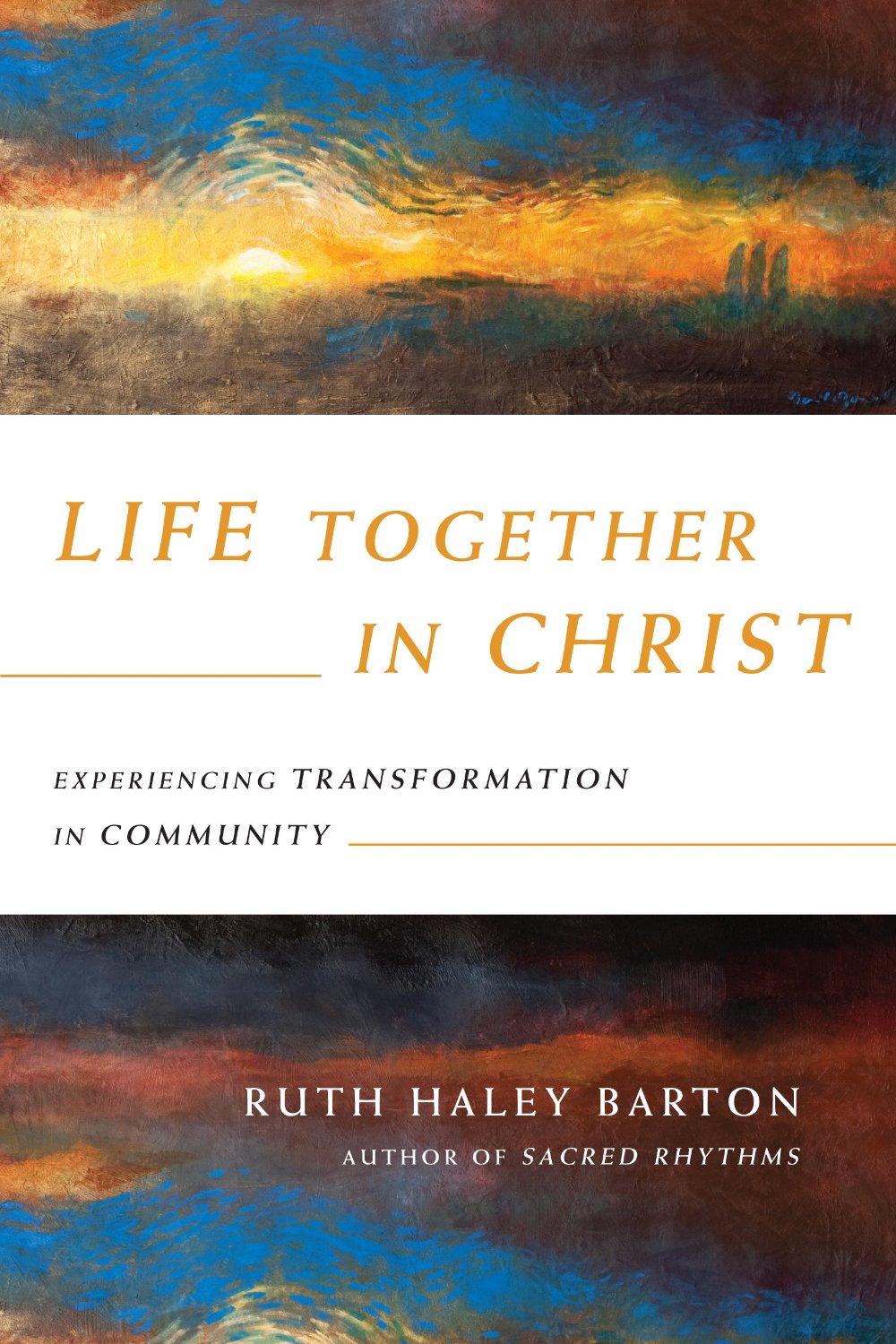 Life Together in Christ: Experiencing Transformation in Community Ruth Haley Barton (IVP) $18.00 While this book is initially, mostly, about spiritual formation – learning to practice the classic disciplines, creating “sacred rhythms” in order to experience God’s gentle transformation as we encounter the centering Spirit – it insists that this happens best when we are in community. In many ways, Ruth has been one of our best guides into the inner life, in her great books In Search of Silence and Solitude and Sacred Rhythms and Deepening the Soul of Your Leadership. However, here she brings these insights and invitations to a transformed life into the context of an intimate community, offering guidance for small groups who want to do this inner work together. My, my, this is sweet, challenging, vital material, fabulous for any small group wanting to experience God, opening themselves to spiritual transformation together.
 Community and Growth Jean Vanier (Paulist Press) $22.95 I do not know if most ordinary church folks will want to wade through this thick and important work, but you should know it, and realize it is perhaps the best thing written in our time about deepening serious, intentional community. You may know Jean Vanier as the gentle, French Canadian who started the L’Arche communities (that so attracted Henri Nouwen in the last years of his life) which forms community with persons with disabilities. Here, he draws on ancient monastic wisdom, psychological and spiritual insights, and invites us to give ourselves to one another in service and care. Anyone living in any sort of intentional community household must know this, and anyone longing for the deepest sort of communal experience will benefit. This is a masterpiece.
 The Intentional Christian Community Handbook: For Idealists, Hypocrites, and Wannabe Disciples of Jesus David Janzen (Paraclete) $19.99 This is another book that simply has to be on this list — it is really the only and very best book of its kind — event though it has, admittedly, a pretty small market. This is a wonderful guidebook for those who want to live together in intentional community, doing house-holding together, maybe drawing on new monastic insights, forming relationships shaped by common rules and practices. The foreword is by Shane Claiborne and Jonathan Wilson-Hartgrove, which will give you a hint of its vision. Janzen (who graduated from Bethel College and studied at Harvard Divinity School) has been part of significant intentional communities such as New Creation Fellowship and Reba Place Fellowship. Whether you are interested in “living together in a world falling apart” or have any sort of housing ministry — maybe a discipleship house, a Fellows community, a camping staff that live together, or a house or cell church — this is going to be really useful. There are tons of good stories, interviews, wise guidance and substantive input about being in intentional community and deeper levels of body life.


 suggest — on this very topic of discussions about differences in theologies of inclusiveness in the church of GLTB believers — the book I have mentioned before as the best I can recommend for deeper, more faithful, more generous conversations, called Generous Spaciousness: Responding to Gay Christians in the Church by Wendy Vander Wal-Gritter (Brazos Press; $16.99.) You can see

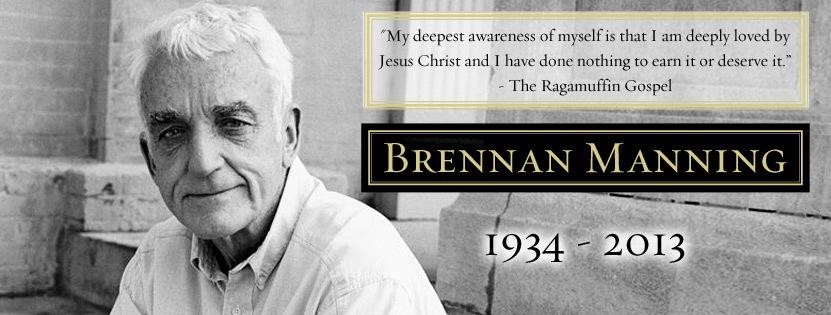
 realizing they were praying through the same book that same evening, watching as Henri hands Robert his plate of spaghetti, runs to his room to gather up the book in question, and read from it out loud. There is a story that is almost too amazing to believe – one about his friend Father Ed and a story of an old Irish priest – and there is a tender part with Robert telling about the suicide of his brother, and their relationship, strained and healed. The telling about an annual Nashville Christmas party is sublime, although some will be offended, I suppose. The evangelical guys who read the Mars Hill Review driving hours to Tennessee just to check in on him (and his initial misunderstanding the reason for their visit) is priceless.
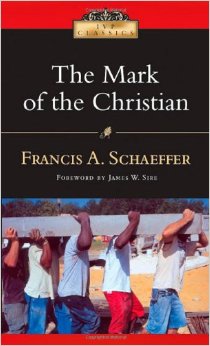 ecclesiastical moves continue to strain the worldwide communion of the Anglicans, and other denominations, his stance is a brave and principled one, and I am glad that Packer so inspired Armstrong to take up this current work. And I am glad they both frame the loving exhibition of friendships of church folks as Francis Schaeffer once did in his must-read little volume The Mark of the Christian (IVP: $6.00) in terms of the mission of the church. Our love for one another is, as Schaeffer reminds us, the “final apologetic.”


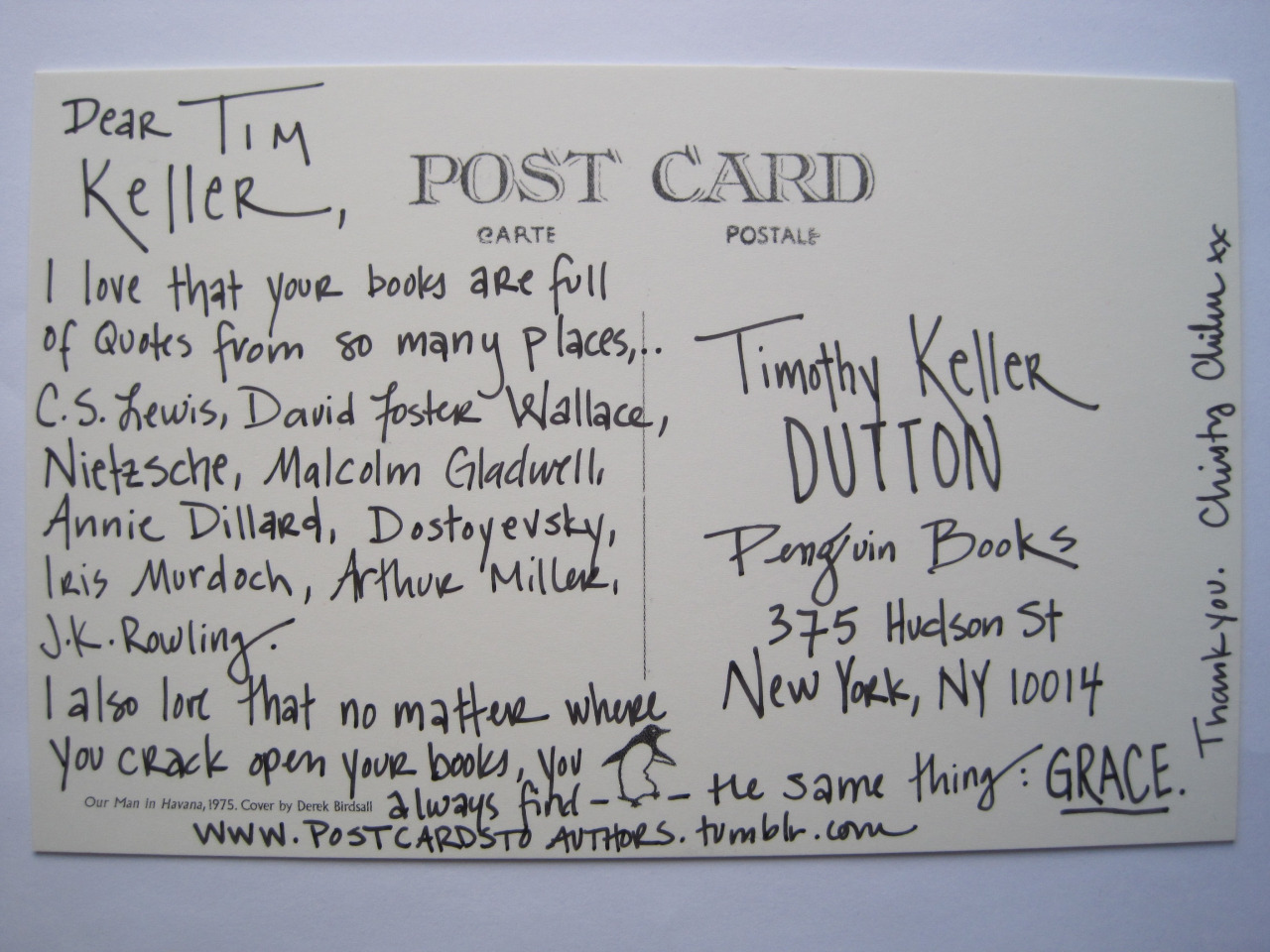 Road) and that he brings in to New York speakers such as N.T. Wright or co-authors books about the work world with business leaders such as Katherine Leary Alsdorf (Every Good Endeavor: Connecting Your Work to God’s Work) or has tackled the philosophical and pastoral questions about evil in Walking with God Through Pain and Suffering shows that he is a writer who is interested in real-world faith and whole-life discipleship. His big book about doing culturally-engaged church ministry is very good
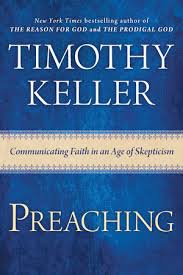 Timothy
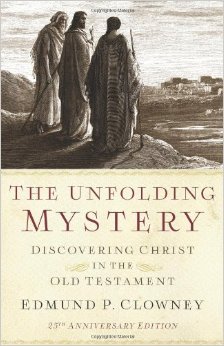 Clowney. (Dr. Clowney’s The Unfolding Mystery: Discovering Christ in the Old Testament (P&R; $12.99) is still a standard text in this movement.) Regardless of genre, Keller explains, one must see how each part of the Bible points toward Christ in particular ways. Also, through “every theme of the Bible” and in “every major image of the Bible.” On and on, this succinct chapter shows how this works and is itself worth the price of the book for anyone who reads the Bible, and certainly for anyone who teaches the Bible. There is some push back these days against this Christological hermeneutic, I realize, but, agree fully or not, this is sweet and fruitful stuff, I believe, and advice that most preachers, Sunday school teachers, youth leaders, camp counselors, campus ministers and Christian counselors of all sorts need to regularly recall. It is, after all, the method Jesus used to set on fire the hearts of those walking with him in the lovely passage about walking on the road to Emmaus.

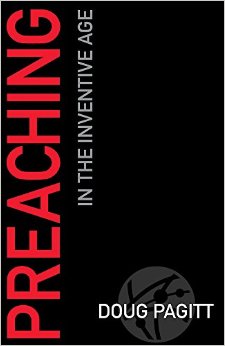 (I’ve just recently re-read Doug Pagitt’s creative book on dialogical “sermons” called Preaching in the Inventive Age which offers a very different take then Keller, but is quite stimulating, audacious as it is. Keller understandably is critical of it and its predecessors such as The Roundtable Pulpit and the work of Lucy Rose.)There are many different perspectives and angles and trends, curious things to ponder and clever new approaches to consider and I learn and am forced to think as I read from various viewpoints. I read old school stuff, lots of mainline/liberal textbooks, and try to dip in to dense tomes of communication theory, not to mention compilations of sermons, from Barbara Brown Taylor’s several collections, to, for instance, Brian Walsh’s powerful, must-read St. John Before Breakfast which are sermons (and liturgies) offered at the University of Toronto’s campus ministry morning Eucharistic service called “Wine Before Breakfast.”
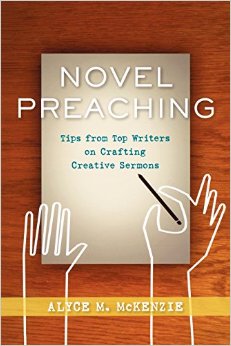
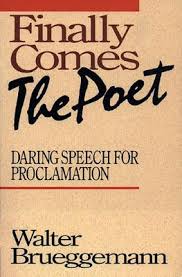 Of course, Walt Brueggemann has several collections of sermons, and several books about preaching — Finally Comes the Poet: Daring Speech for Proclamation may be his most popular — and they are well worth reading. We stock some interesting, practical ones such as Alyce McKenzie’s Novel Preaching: Tips from Top Writers on Crafting Creative Sermons. I really enjoy reading these kinds of resources — even though I most create talks and essays and the lessons for a small Sunday school class I sometimes teach.



 book on social change, Possible: A Blueprint for Changing How We Change the World (Multnomah; $22.99) was also a big part of the night.
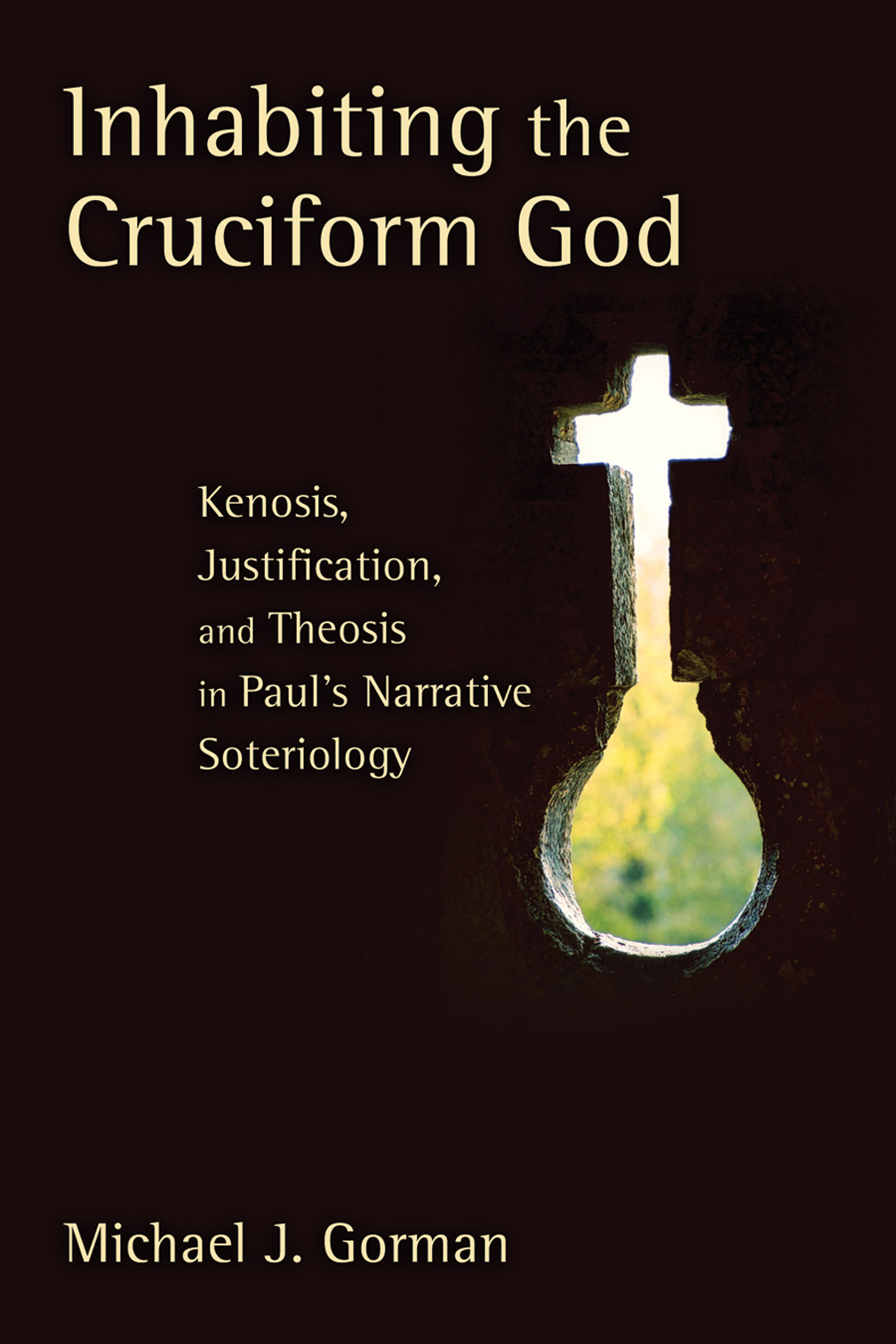 Inhabiting the Cruciform God is the second in the trilogy, and I am afraid that the allusive cove art and the theological lingo in the subtitle might turn some people off. But it shouldn’t! Again, Gorman is on to something big, here, and it makes sense. If, as he argued in the earlier book, the cross is the heart of the gospel and shaped Paul’s own sense of spirituality and mission, then – get this – it must not just be Paul’s understanding of the way of Jesus but it is the very heart of God. With a proper Trinitarian view of Christ (He is God, as the early creeds insist) then what we know from Jesus is a revelation of God’s own self. And so, if Jesus comes to give His life as a ransom for many, if he comes not to judge the world but to save it, if He is the grand lover, healer, restorer, crucified Lamb, redeeming King, then that must also be the attributes of God the Father and God the Spirit and constitutive of their holy way and work. The subtitle of Inhabiting the Cruciform God is dense, but even those of us not trained in theology can figure it out: Kenosis, Justification, and Theosis in Paul’s Narrative Soteriology. (Somebody joked at the EI forum that Tom Wright, known for long and thick books, “needs an editor.” Ahem. What were they thinking up at Eerdmans when they cooked up this subtitle?)
 Becoming the Gospel: Paul, Participation and Mission is not only a great book on Paul, not only a creative and fruitful approach to understanding Paul’s themes of spirituality, salvation, discipleship, living in the Kingdom, and a fine capstone to his logical progression about cruciformity and participation in God, but it is a major contribution to what we might call the missional conversation. This book, even more than the others, has Pauline zeal, a passion to reach the nations, a hope for social transformation via a renewed and Christ-like church. Not unlike Gorman’s friend Tom Wright, this is scholarship in service to the church, offered with a desire to see God’s people be shaped by the things of God, the very gospel.
 Reading well and understanding and applying (any book, including Holy Scriptures) always happens from within a certain set of presuppositions, with assumptions, values, attitudes; this implicitly draws out what is seen and what isn’t, what is considered important and what isn’t, what is underscored and what is minimized, how we understand and make sense of the
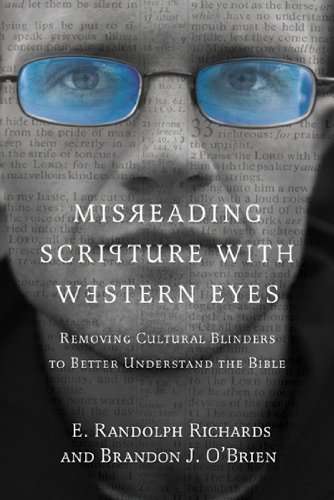 words and sentences on the page, and – if one has a sensible hermeneutic – the way things fit together, the context of the text. But these “rules of the game” are themselves contested. Everybody reads and interprets by some rules or working assumptions, and there are certain philosophical and theological presuppositions that are taken for granted, usually, that are operative and shape how we interpret. Nobody is objective, obviously, and everybody has a lens through which they make meaning of things, and they interpret, then, consciously or not, shaped by those habits of heart and believes and practices that color and shape us.



 Pastor
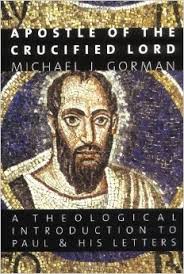 Paul: Apostle of the Crucified Lord: A Theological Introduction to Paul and His Letters (Eerdmans) $44.00 Massive, comprehensive, important, useful as a major study. It’s view is moderate, ecumenical, engaged with the current literature, but in a way, classic. Jeffrey Siker of Loyola Marymount says succinctly, “This is the best textbook on Paul I have found.” Professor Siker notes that Gorman’s ability to explain the backstory of each place to whom Paul was writing is very helpful, which is very important.
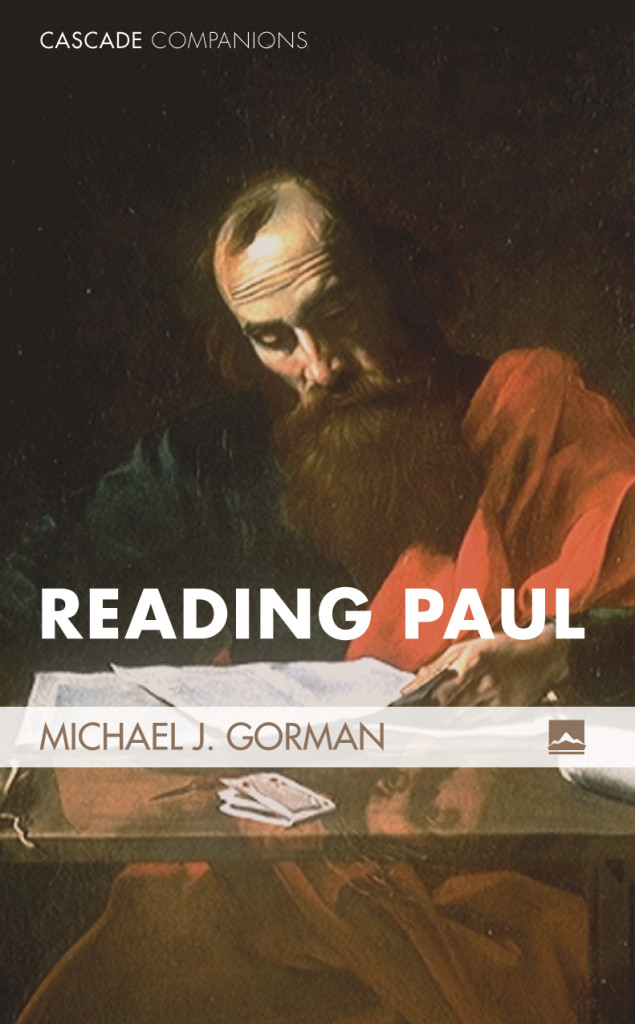 Reading Paul (Cascade Books) $22.00 This is a small handbook, a lovely, useful introduction. Professor Richard Hays says it is a “splendid introduction to the Apostle Paul is the best book of its kind: concise, wise, insightful, thoroughly conversant with the best recent scholarship, yet thoroughly clear and readable.”
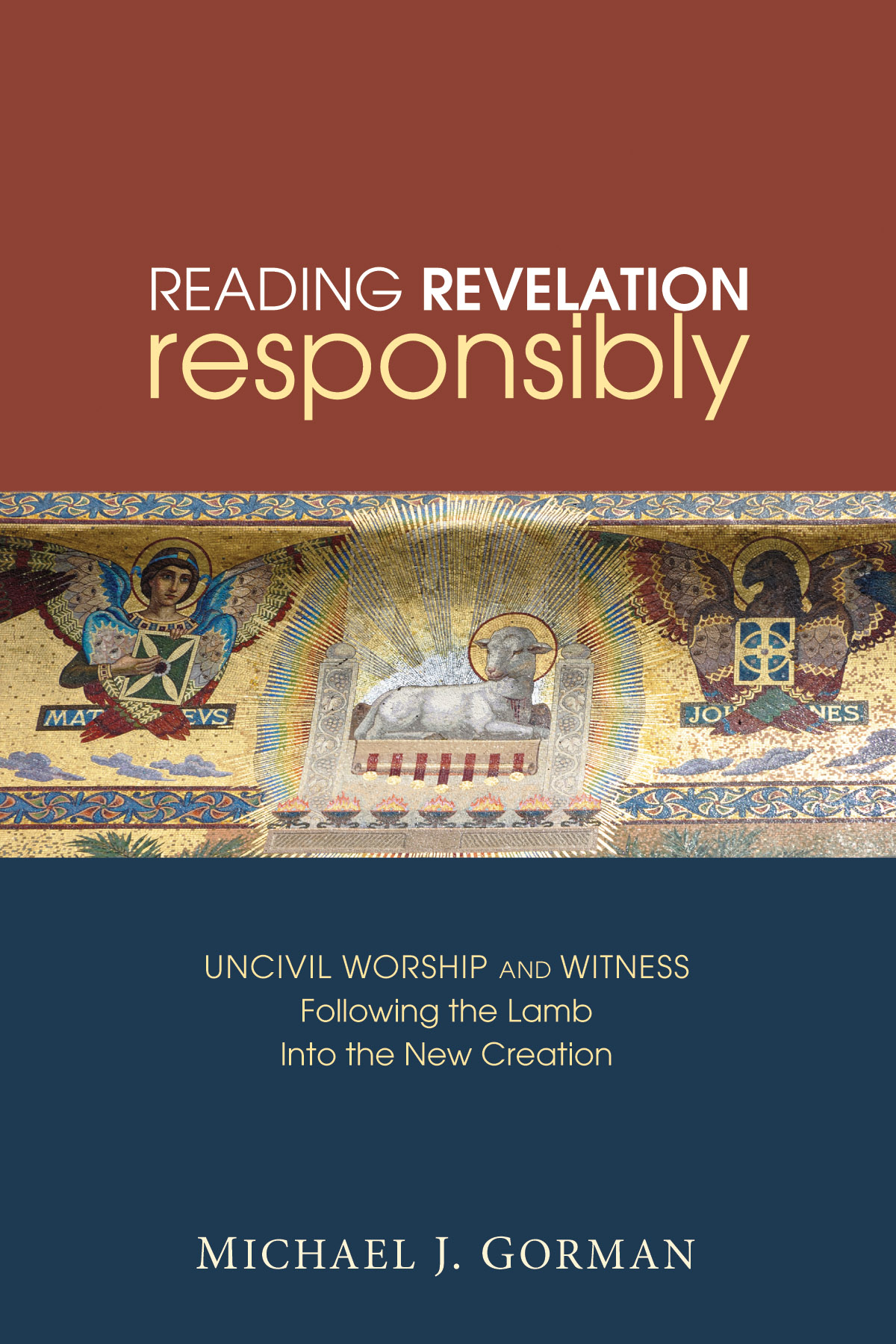 Reading Revelation Responsibly: Uncivil Worship and Witness: Following the Lamb into the New Creation (Cascade Books) $25.00 This is a major contribution, and you really should own it. On one hand it is very accessible, almost introductory (making it great for congregational use, for small group Bible studies and book clubs) but also bringing some hefty missional concerns to the fore, reminding us also of the politics of redemption and the hope that should infuse us now as we trust in the final reign of God. Get that subtitle, eh? Wow.
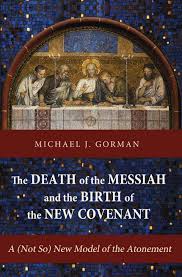 The Death of the Messiah and the Birth of the New Covenant: A (Not So) New Model of the Atonement (Cascade Books) $33.00 This is a serious work, emerging originally from his prestigious Dunning Lectures at Saint Mary’s Seminary. This brings Gorman’s keen understanding of the missional impulse in Paul to bear on his reflections on the meaning of the cross, the subsequent ways of expressing the mysteries of the atonement. It strikes some as a ground-breaking work, and Gorman asks why there is no theory or model of the atonement called the “new covenant” model, since this understanding of the atonement is likely the earliest in the Christian tradition, going back to Jesus Himself. In ways that point towards his work on Paul, he ends this book making a case that in this re-disovery of the ancient model of covenant atonement we are invited to a “life of communal and individual participating in Jesus’ faithful, loving, peacemaking death.” There are amazing blurbs on the back, from Scot McKnight to Willard Swartley to Joel Green. Cherith Fee Nordling says the book “sounds the clarion call of the New Testament.” I like the endorsement from John E. Wright, of Point Loma University, who notes “Thanks to Michael Gorman for taking us beyond endless discussion of the ‘how’ of Christ’s atonement to its visible end. Christ’s atonement as manifest in the life of the church, for the sake of the world.”
 Elements of Biblical Exegesis (Revised and Expanded Edition) (Baker Academic) $21.99 This is a substantial handbook, a serious guide to how to read, interpret, and apply the Bible, passage by passage. Very thoughtfully done. Exegesis is another one of those fancy words, but it is an essential one, and knowing about it is helpful. Beverly Gaventa (Professor of New Testament Exegesis at Princeton Theological Seminary) says, cleverly and properly that “No one ever became an exegete by reading a book on exegesis. The gift of Michael Gorman’s book is that he knows that exegetes are born through practice, practice, practice, and more practice. And he invites his readers into just the practice they need, providing them with a rich array of helps along the way. Beginners and improvers alike will benefit…” If you are a Bible student, this book is hard to beat. If you teach the art of reading the Bible well to others, again, this book is hard to beat. It is a hand-on guide that breaks the task down into seven distinct elements., and suggests exercises to enhance your abilities within each. For what it is worth, he has his reasons to think that the ESV (and the old RSV upon which it is based) is useful, but not as impeccable as the promoters suggest. Fascinating.


 Leisure and Spirituality: Biblical, Historical and Contemporary Perspectives Paul Heintzman (Baker Academic) $24.99 Thank goodness for the great “engaging culture” series from Baker Academic, and for this long-awaited, just released new volume. Heintzman has been on our radar screen for years having co-edited Christianity and Leisure: Issues in a Pluralistic Society (Dordt College Press) which includes papers done by Christians working in leisure studies, sports theory, recreational fields, sociologists and theologians exploring the integration of faith and this aspect of life and culture. He is a remarkable scholar, has been through Regent College in Vancouver, and has been teaching at the University of Ottawa. As we learn in the book, he is not only a professor of leisure studies, and has not only done a major PhD project doing research into the spiritual benefits of leisure, but he is an avid outdoorsman – backpacker, paddler, and a leader in wilderness treks and thinking about experiential education .
 The Rest of Our Life: Rest, Play, Eating, Studying, Sex from a Kingdom Perspective Ben Witherington III (Eerdmans) $18.00 I have mentioned this before, noting that this excellent United Methodist Biblical scholar has done (besides his major Biblical commentaries) a few small books on Kingdom living; that is, what the overall theme of living in the commonwealth of God, under the reign of Christ, means for daily living. He has a great one on the story of the Kingdom in the Bible and how we celebrate it within the church calendar, another on Kingdom worship, a great one on work, and now this. A bit more then 150 pages, this is good Bible stuff, interesting ruminations, and a reminder about God’s care for these everyday parts of life.
 Finding Livelihood: A Progress of Work and Leisure Nancy J. Nordenson (Kalos Press) $14.95 I have given this a shout out already, and am working on a more substantial review for later, but I want to note two quick things here. Notice the title: it is not just a book on work, but on livelihood, which includes, in Nodenson’s insightful vision, leisure.
 Receiving the Day: Christian Practices for Opening the Gift of Time Dorothy Bass (Jossey Bass) $14.95 I just might re-read this this summer, and see if it still holds up as one of my favorite books. I will never forget the profound impact it had on me, the luminous prose, the nearly mystical vision of time and reality it offers. More than a book about Sabbath — although it catapulted (along with Marva Dawn’s Keeping the Sabbath Holy) that conversation into the mainstream of Christian churches — this invites us to experience all of time as a gift from God. I suppose this is the point of the highly regarded and often cited Sabbath by Abraham Heschel, but this touched me even more deeply than that important book. If you are feeling frantic or stressed, these reflections will be helpful, I’m sure. At work or at home, getting paid or not, on the clock or off, we are all bound by time, which, Bass shows, can be opened and stewarded as the gift of God that it is. One can’t think about “leisure time” without first grappling with the notion of time. Very nicely done.
 The Rest of God: Restoring Your Soul by Restoring Sabbath Mark Buchanan (Nelson) $14.99 There are so many good books on the practice of keeping sabbath, but I mention this one for a few reasons. It is really fun to read; Buchanan is a very find wordsmith. (The book is endorsed on the back by Lauren Winner and Philip Yancey, for what it is worth!) And, he starts with a good chapter on work, framing the call to rest by the call to work, which is helpful. However, he not only does the conventional stuff about deepening our appreciation for God’s creation, for joy and renewal, and such, but has chapters like on on play which commends “stopping just to waste time.” Hooray!
 Sabbath Dan Allender (Nelson) $12.99 I have often recommended this whole series of “Ancient Practices” books compiled and curated by Phyllis Tickle, each one by great authors reflecting on various ancient spiritual practices. I mention this one, among oodles of books on sabbath and sabbath keeping, because Dan Allender brings a particular insight to his study of sabbath. He suggests here that the heart of Sabbath is not just to “stop” or rest, but to be re-created (a generative way to think about recreation, eh?) In other words, sabbath is designed for play. I’d heartily recommend anything by Allander, but this seemed so relevant, I had to list it here.
 Simplify: Ten Practices to Unclutter Your Soul Bill Hybels Tyndale/Momentum) $15.99 I know, I know, there are a dozen of these kinds of books inviting us to trim down our over-scheduled and overwhelmed lives. Perhaps you are exhausted, to frantic to do anything about your own out-of-control clutter and stress? Believe me, I relate. I like Hybels, trust him a lot, and have really enjoyed his other books. Although this seems to be more about one’s interior life, and simplifying one’s own spirituality, I am sure it advises practices — including play and rest — that will help. Shauna Niequist says of her famous father’s book “I don’t know who doesn’t need this kind of rich thinking about what it means to live with focus and sanity and peace. I love these ideas.”
 The Fringe Hours: Making Time for You Jessica N. Turner (Revell) $14.99 You may know Turner from here popular lifestyle blog “The Mom Creative” where she documents her pursuit of “cultivating a life well crafted.” Brigid Schultz, author of the New York Times bestseller Overwhelmed says that this book “is like one gigantic permission slip to carve out some space in your day for the things that give you joy and feed your soul.”
 Abundant Simplicity: Discovering the Unhurried Rhythms of Grace Jan Johnson (InterVarsity Press) $15.00 This wonderful, rich book is one to study carefully and enjoy reading devotionally — it has a large, rave review on the back from Dallas Willard (the last line of which is “Do what she says”) and another by Norvene Vest. I suppose any number of book on the inner life, slowing down, practicing the presence, receiving grace in the ordinary, would enhance your summer leisure time. But this is just such a lovely reflection on our relationship to time and energy and money, I had to list it. Anyway, you’ve got to read chapter 8 nicely called “Putting the ‘Free’ in Free Time.” Do I hear an “Amen”?
 Like a Child: Restoring the Awe, Wonder, Joy and Resiliency of the Human Spirit Rev. Timothy J. Mooney (Skylight Paths) $16.99 Mystic Richard Rohr says “This might be the most intelligent, inspiring and integrated book I have read on the subject. It will not give you cliches or glib answers, but genuine wisdom.” Sure, we all should “grow up” and mature into full adulthood. But what if Jesus’s own praise of spiritual childhood shapes our view of what maturity means, and what we tend to lose in our culture of modern speed and work and responsibility? Can we cultivate childlike ways of attention, self-awareness, joy and resilience? How might playfulness effect our daily discipleship and faith formation?
 Think Like a 5-Year Old: Reclaim Your Wonder and Create Great Things Len Wilson (Abingdon) $163.99 Wilson serves as the Creative Director of Peachtree, a large church in Atlanta, and has written several books on relating creativity and faith and how congregations can use “visual storytelling” more wisely. Energetic and fun, this book suggests we can be “creative geniuses” and unleash wondrous creativity to help us live life to the fullest.
 Free to Learn: Why Unleashing the Instinct to Play Will Make Our Children Happier, More Self-Reliant, and Better Students for Life Peter Gray (Basic Books) $16.99 What a stimulating book, by an author who is a research and professor in the Department of Psychology at Boston College. Gray is critical of compulsory schooling (think of the amazing work of John Taylor Gatto on that such as Dumbing us Down) but more importantly, it is about how children are wired to play, and how curiosity and joy and becoming emotionally resilient should be see as being part of the task of the child. This is “a brave, counterintuitive proposal for freeing our children…” and suggests that we must entrust children to steer their own learning and development. We may not agree with all of his policy proposals or views of the systems of education we’ve devised, but his insights about the role of free play as the primary way children solve problems and learn is remarkable. It is not a leisurely book but for some parents it will remind them, at least, of the need for play and freedom and joy, for their kids and, perhaps, even for themselves.
 Eyes Wide Open: Enjoying God in Everything Steve DeWitt (Credo House) $14.99 Do you really enjoy something? Have a hobby or passion? We all enjoy so many things in this world, and DeWitt helps us hold that up to the light, think about it faithfully, and enter into a journey of discovering how to allow God to speak to us in the things we enjoy. “The outdoors, art, food, sports, sunsets, coffee, mountains or anything else?” Eyes Wide Open enriches these experiences by turning them toward their created purpose. As it says on the back cover, “This is a book about our beautiful God who designed our craving for beauty to lead us back to Him.” This is a tremendous book with solid theology and plenty of winsome guidance. There are reflection questions for small groups, too. It would make a fun, fun book to do on summer evenings with some good friends — maybe over a good meal, dessert or wine and cheese. Enjoy — soli deo gloria.
 Of Games and God: A Christian Exploration of Video Games Kevin Schut (Brazos) $16.99 I know nothing about video games, I’ll admit it, but I am confident that, without a doubt, this is the best book for Christians to reflect on the meaning and joy and goodness and downsides of this vastly popular form of entertainment. It is engaging, looks at the problems and promises of interactive entertainment, and is a very valuable resource for this long over-due conversation.
 Inheriting Paradise: Meditations on Gardening and The Fragrance of God Vigen Guroian (Eerdmans) $14.00 each We promote these books routinely, and mention them from time to time here. What a fine time to suggest them again; they are lovely to read and great to own. Guroian is an Orthodox theologian and professor, but is also renowned for his spacious garden about which he is immensely knowledgeable and can truly wax eloquent — perhaps you will recall his great talk on NPR. Both of these books are exquisite, brief, profound; they are a delight to read, and you will be inspired. Bill McKibben says of The Fragrance of God “Vigen Guroian’s fine book is proof that Christians would do well to spend more time outdoors, in the one great megachurch that operates as a planet-scale museum of divine intent.” Frederica Mathewes-Green says it is “Earthy in all the best senses.” Yes, there are plants and dirt and flowers and bugs here, but also stories and spirituality. What a great pair of books.
 Backpacking with the Saints: WIlderness HIking as Spiritual Practice Beldon Lane (Oxford University Press) $24.95 I have written about this before, as well, but it seems prefect to mention it now. Lane has written extraordinary, important book on the spirituality of land (see The Solace of Fierce Landscapes) and here narrates a series of hikes (to some world renowned places) linked to a particular spiritual writer, from Luther to Gandhi to Theresa of Lisueux. I don’t get away much, and certainly will not attempt these strenuous journeys out of the trailhead and towards a summit and back again (he has a spiritual author for each leg of the journey, so the book is arranged in these stages.) Still it is a book I can enjoy, vicariously.
 On the Water: A Fishing Memoir Guy de la Valdene (Lyons Press) $25.95 When I saw this handsome hardback had an endorsement by Carl Hiaasen, I thought it might be funny. Then I saw a blurb by — get this! — the author of Forrest Gump, Winston Groom, who says it is “a splendid and beautifully written insight into the vicissitudes of man and nature.” I think we could all use some vicissitude, and this meditation on water and nature and fishing and growing older and (as it says on the back cover) “of the sporting life well lived” could be a lovely addition to your library. The novelist Philip Caputo says of it “At a time when just about everything in America seems to be monetized, On the Water reminds us of values that don’t carry dollar signs.” Another reviewer says it is a “mixture of memory and desire, of wit and wisdom, nothing less then a classic.”
 Downstream: Reflections on Brook Trout, Fly Fishing, and the Waters of Appalachia David L. O’Hara & Matthew Dickerson (Cascade Books) $18.00 This is another we are very proud to stock, and about which I have written before. Both of these authors are serious literary figures, professors and writers. (O’Hara has written in Books and Culture and Orion and Dickerson has published a number of books about fantasy literature, such as From Homer to Harry Potter on Brazos, and a pair of books on the environmental vision of both C.S. Lewis.) There is an afterward by Bill McKibben, blurbs on the back by Middlebury College author John Elder and a wonderful endorsement by Eugene Peterson. It is a memoir of their fishing the trout streams from New York down through Pennsylvania and into West Virginia and the Smokey Mountain headwaters of Tennessee. . They quote the likes of Kathleen Dean Moore and Wendell Berry and try to pay attention to the fish and mountains they visit. What an intelligent, beautiful read.
 No Ordinary Game: Miraculous Moments in Backyards and Sandlots Kirk Westphal (Down East Books) $16.95 I’m sure I’m not alone in loving books about small towns, and small town sports — the charms writing about Little League and local soccer and pick-up games are many. “Many of the sporting world’s most profound achievements,” the back cover of No Ordinary Game says, “are never recorded. They happen on sandlots, asphalt, and backyards. Stories of well-known athletes and teams abound in popular literature. What is missing is an exaltation of the moments that can happen to any of the rest of us — and do.”
 Run Home and Take a Bow: Stories of Life, Faith, and a Season with the Kansas City Royals Ethan Bryan (Samzidat Publishing) $14.99 I have mentioned this before, but want to name it again for several reasons. Ethan is a friend and customer, and we think a very fine writer. The book is nicely crafted and very enjoyable to read; what a great thing for many of us to read a baseball book or two each summer! So, yeah, on a list about leisure time reading this summer, this has to be included.


 Crafting Calm: Projects and Practices for Creativity and Contemplation Maggie Oman Shannon (Viva Editions) $16.95 This is a fabulously interesting DIY book, with spiritual quotes and lovely sketches and tons of ways to “craft your way to inner peace.” The author is a spiritual direction in the Unity Church, so there are some interfaith and new age touches, but it still is useful for more orthodox Christian believers, I’d say, who want to “knit love and hope into every stitch” and use handicrafts as a way to achieve serenity and good intentions. This really is a lovely book, and trust it could help increase the mindfulness of those doing these interesting craft projects as a fun and creative spiritual discipline.
 Bread & Wine: A Love Letter to Life Around the Table With Recipes Shauna Niequist (Zondervan) $19.99 I thought it would be a fine way to end this list with a book on food and fellowship — we have a large section in the bookstore on the theology and spirituality of food and eating and have made lists of just those sorts of books. But for this leisurely list of fun summer reads that help us frame our sense of joy away from employment, this handsome book is one of our favorites. I hope you have some picnics and parties this season and I hope you have some time to read. This is one you really will enjoy. Part memoir, part theology of eating, part celebration of hospitality and friendship (and even part recipe book) Bread and Wine is an excellent, pleasant and important read. Highly recommended.



 Jamie and his friends. They would be there for her, they promised — Renee was her name, and she struggled with addiction and depression and thoughts of suicide — and they wanted Renee to know, above all, that she is beloved of God, and has friends in this world who will walk through life with her. There was no literal writing “love” on her arms — that is apocryphal — but Renee moved in with this group of friends until they could get her into a treatment place. It was a moving time for all of them, and Jamie’s writing about it is poetic, passionate, raw.
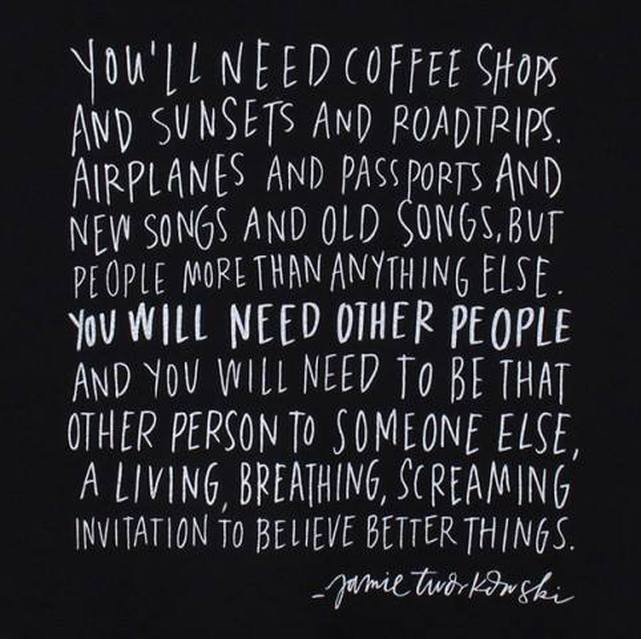


 CHURCH KIDS GROWING UP
 students about taking their faith perspective into the classroom, Learning for the Love of God (a must-have resource for students, presuming a somewhat more intentional reader.) This illustrates the broadly evangelical perspective he holds, and the exceptionally thoughtful approach he brings — all offered with an upbeat tone, alongside funny stories, great interviews, and the artful design of the small hardback. This is a book you can give to any college-bound student with great confidence that it will be appreciated.
