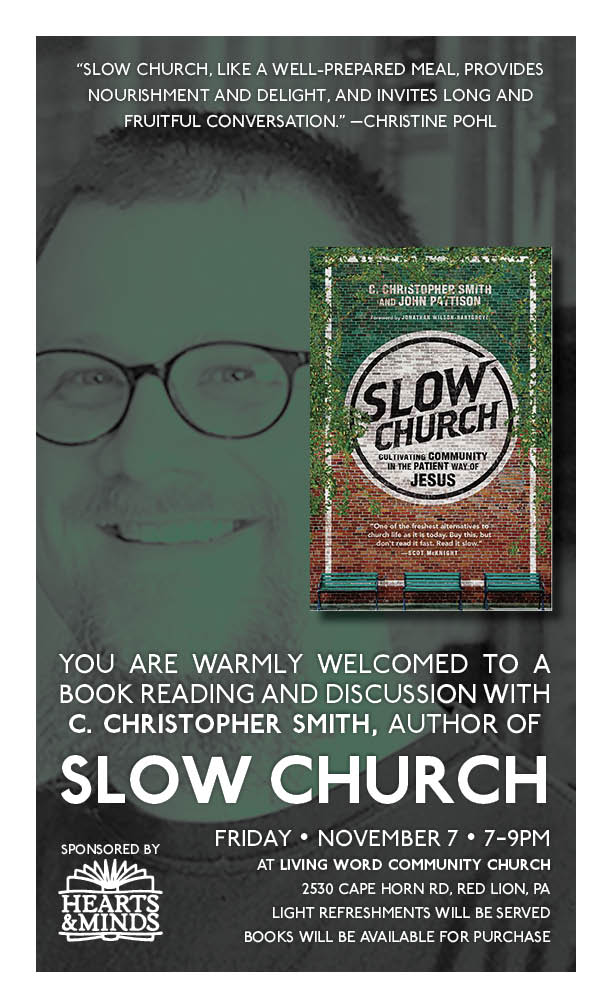
Slow Church event with C. Christopher Smith: Friday, November 7th, 2014.

Crazy.  That’s what we sometimes call our busy schedule, schlepping books here and there, serving others with a few boxes selected for a small event, or a truck load for a larger gig, often two or more events at the same time, and, all the while, keeping the shop open, six days a week. Of course Beth and I enjoy this “on the road” aspect of our work (and we couldn’t do it without our dedicated staff who work hard each and every day in Dallastown.) Sometimes, though, we grow weary. I’ve heard people say that they get tired just listening to our wacky schedules.  We sometimes wonder if it is healthy, being stretched and stressed, juggling a too few many balls in the air some months, so often in a hurry. 

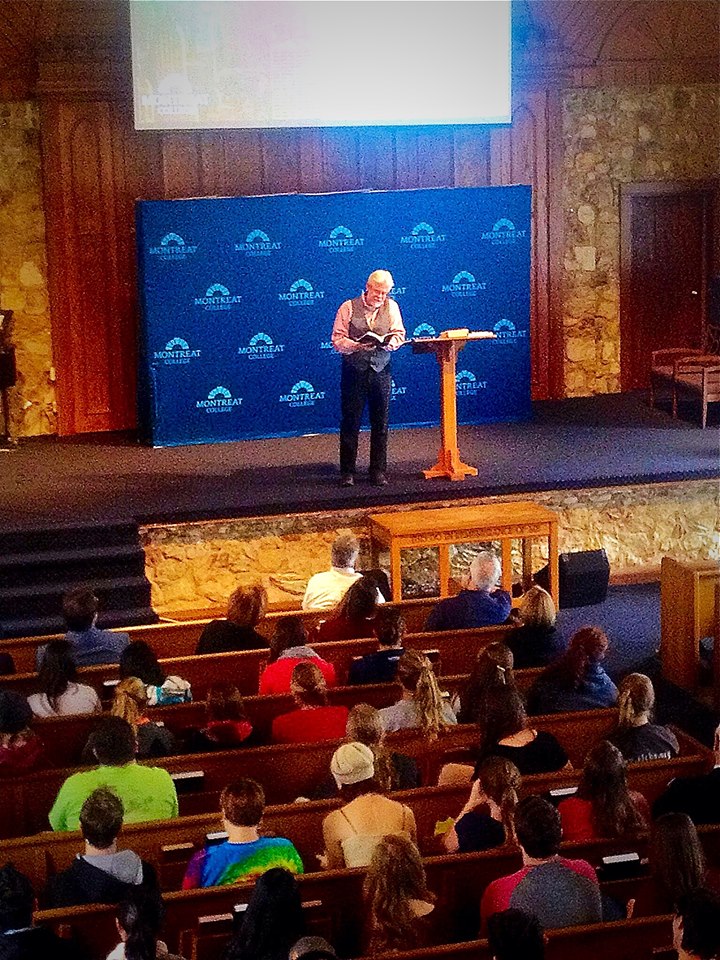
We loved our time at Montreat College this week, and respect the remarkably good work theymontreat books.jpg are doing there at that small, liberal arts college tucked into a mountainous cove in the Black Mountains of North Carolina.  Doing workshops and selling books and speaking there, serving their “Faith and Vocation Symposium,” was surely one of the most memorable and rewarding things we’ve done this year. Thanks to folks there for hospitality and receptivity (and for help with the book packing!)  It was a whirlwind event, but very meaningful for us.
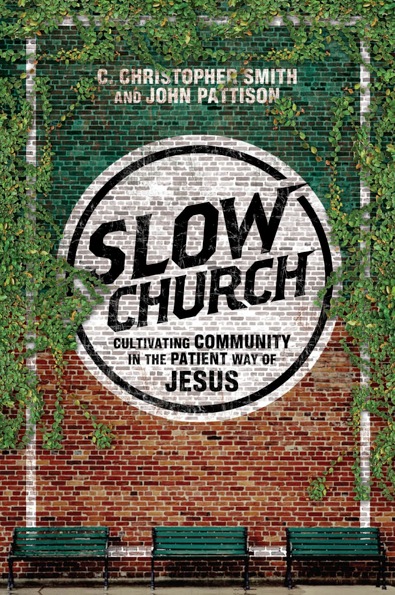
But we’re reminded again of our crazy schedule — we had to hurry back, not lingering there, or on the beautiful Route 81 drive north because Friday night (tonight, November 7th) we are hosting C. Christopher Smith, co-author of the very provocative, thoughtful, and important book, Slow Church: Cultivating Community in the Patient Way of Jesus. (You can read my earlier, longer review, here.)  
Yes, we are having an author appearance, book reading, and slow church conversation withSlow Church poster-2.jpg Chris, starting at 7:00 pm over at the nearby Living Word Community Church, 2530 Cape Horn Road, Red Lion, PA. (We’re very grateful for their support of our occasional projects, and their great coffee bar, free parking and warm space to host a book signing like this.)
Ironic, eh?  We are nearly burned out from a bunch of events, a lot of hustle, and too much speed, only to hurry back to this slow, patient conversation about, uh, yeah: slowing down, learning patience, resisting the tendencies of our culture that suggest We Can Have It All and We Can Do It All. 
In what Christopher Smith and his co-author call the “McDonaldization” of the church, modern congregations sometimes seem to adopt strategies out of the fast food industry — ending up with seemingly tasty offerings efficiently delivered with speed and uniformity, maybe even with zippy ad campaigns to complete the consumerist brand — and have thereby unknowingly subverted or compromised what should be at the heart of any church: relationships, community, authenticate care for people and places and the quality of our life together.

Faith, of course, is not a product to be marketed or consumed, and church is not a business.
Large or small church, evangelical or mainline, most of us know that.  But sometimes, we need to step back and ponder the pressures, to wonder a bit about it all.

Slow Church takes a cue from the “slow food” movement, and invites us to think about church being informed by terroir (the foodie term explaining how the local ground seeps into the very taste of wine or food), stability (“fidelity to people and place”), and patience. They invite us to take up deliberate slowness which allows a greater attention to relationships and context; such relationships, not incidentally, allows us enter more deeply into the suffering of others.
The book begins with a little study of the industrialization of the church, which has paralleled the industrialization of agriculture — not to mention the near demise of the family farm. They quote Joel Salatin (who’s book about farming we stock here, and showed at the farming workshop at Montreat, btw), Michael Pollan’s The Omnivore’s Dilemma and the documentary Food, Inc. The profound social criticism of Salatin, Pollan, Wendell Berry, and the like is wise and important.  Applying it to the church is a stroke of generative brilliance. In Slow Church Salatin is quoted noting that 
conventional agriculture experts view the soil as merely a convenient way to hold up the plant while it is fed from the top in the form of ever-increasing doses of chemical fertilizers.  He describes this process as superimposing a mechanistic mindset onto a biological world.  Nature, in contrast, feeds the plants from the bottom up, through the soil. Thus, for the conscientious farmer, the health of the soil is a top priority.
Ahh, you can see the connection to church, can’t you?  Caring for the foundational stuff, patiently bearing good fruit by attending to the soil.

Slow Church continues:  
Western Christianity has similarly adopted shortcuts that are the church equivalent of imposing a mechanistic mindset onto a biological world. When evaluated in terms of efficiency — defined as the easiest way to get someone from here to there, from unsaved to saved, from unchurched to churched — these top-down inputs seem to yield impressive short-term results: they can sometimes pack the pews. So, on the upside, the church has been busy.

But then, this: “on the downside, it’s not clear at what long-term costs these methods have been employed or how helpful and sustainable they will be going forward.”

That is just the beginning of the remarkably interesting, well-written, and deeply considered rumination offered in Slow Church and we are thrilled to have Chris with us to continue the conversation over at Living Word Friday night.  
As the authors put it, “Slow Food and other Slow movements hold important lessons for the American church. They compel us to ask ourselves tough questions about the ground our faith communities have ceded to the cult of speed.”
The cult of speed.
Ouch.
In a way, this is something I need to hear, now. My own workaholism, my own tendency to live as if God’s creation has no limits, my assumptions about scarcity (rather than the generous abundance of God’s economy in which we can rest) all need to be evaluated and refined. Of course, most churches — indeed most of us with super-hectic, busy lives, want “quality over quantity” and no church I know is only interested in metrics and numbers, growth for its own sake. Of course, I don’t know any bone fide mega-churches, but from what I gather, folks at places a lot like Willow Creek, for instance, resonant deeply with these very concerns. Willow Creek themselves have been very committed to nurturing a more contemplative spirituality and a radical social vision, including notable wor
k in peace and justice, charity and service.  Chris has spoken about the book, and it is being used, in a number of fairly large churches who are eager to apply the books principles within their own fast-paced, very professional context. 
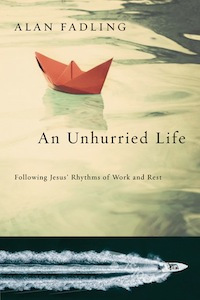
It is clear that even those of us with very good intentions, who have read books about slowingunhurriedlife_sm.jpg down, practicing spiritual disciplines, keeping Sabbath, focusing on quality, being deeply faithful rather then merely popular, we too often are undone by our own bad habits and co-opted imaginations. (Alan Fadling’s An Unhurried Life: Following Jesus’ Rhythms of Work and Rest is just one recent book that I found very, very helpful and wise in this area.)  As Jamie Smith has reminded us in his stunningly important Desiring the Kingdom, our passions and desires and habits and practices are most often informed more by the secular liturgies of the world than the often thin formation generated within the local church.
So, ironic as it may be, Beth and I are zooming ahead, creating this program, and are fretting that we get enough turn-out. Our guest author, Mr. Smith, may care less about this than I do,  but my eagerness for numbers — people showing up, books being sold — perhaps needs to be adjusted.  Is repentance too demanding a word?  This “slow church manifesto” does make me squirm a bit.
If you are in the region, come on by.  It will be a good conversation, you’ll get to meet a low-key, down-home, small-church leader who will help us talk about our culture and our lives, our churches and our ministries.  
If you want an edition autographed by Chris, let us know right away, and we’ll see if we can make that happen, too.  It would make a nice gift for a church leader or pastor you know.
***
Thanks to those who have extended very warm words about my fast and furious closingbyron speaking at montreat.jpg plenary talk at the Montreat Faith and Vocation Symposium. I hear they might post videos at the Montreat College website of all four talks, each which were quite good. The first was on creation/vocation, by Tom Nelson, author of Work Matters;  then the fall and sorrow was explore profoundly by Steve Garber, author of Fabric of Faithfulness and Visions of Vocation (starting with a Mumford & Sons song); next, a broad and decisive redemption was gloriously proclaimed, eloquently and powerfully spoken by Messiah College chaplain, Donald Opitz, co-author of Learning for the Love of God: A Guide to Academic Faithfulness; lastly, there was yours truly, preaching about the adventure of living out this hope of a restored creation, the implications of this kind of big gospel, a closing with a meditation on “Standing in the Breech” from the new album by that name by Jackson Browne.  This grand Biblical story that calls us to work in the world, for the life of the world, by realizing that God’s Kingdom is best known as the creation regained, is not only taught by the books I drew upon in my final talk —  When the Kings Come Marching In: Isaiah and the New Jerusalem by Richard J. Mouw and Surprised by Hope: Rethinking Heaven, Resurrection, and the Mission of the Church — but, interestingly enough, also in this wonderful Slow Church: Cultivating Community in the Patient Way of Jesus.  The vision of a wholistic worldview, if you will, shaped and informed by the epic rescue plan portrayed in the flow of the drama of Scripture, is what we talked about with the students and faculty at Montreat (especially applying it to college life, majors, callings, and careers.)  It is also what Smith and Patterson remind us of in the dynamic and evocative middle part of Slow Church and apply it to the nature of the local church.
Just listen to the conversation topics in the “second course” of this meal (in keeping with theirSlow Church-Cover1.jpg slow food theme, each unit of the book is envisioned as one of a three course meal.)
They call the second course “ecology” and they talk about wholeness (that is, the reconciliation of all things), work, by which they mean “cooperating with God’s reconciling mission, and, then, also, sabbath, which they invite us to consider as the “rhythm of reconciliation.”  This gracious good news of God reconciling all things, restoring all things, bringing healing and wholeness and hope to the creation that is so loved, appears to us here in the midst of our broken history and dysfunctional culture and often less than faithful churches.

Can our churches learn to be crucibles of the Kingdom, to be places where, in deep and real relationships, we replace fast-food-like cookie-cutter, quick and easy techniques with more mature, sustainable,  deeply spiritual ways of pursuing a missional lifestyle of wholistic discipleship? Can our formation in community allow us to become more missional, taking up vocations to care about the Story of God?  Can we?

Well, yes we can.  We saw glimpses at Montreat.  We know of glimpses at our host church, Living Word Community Church in Red Lion.  You have tasted deep spiritual quality in your own life and relationships, too, I’m sure. We just have to slow down enough to allow God’s abundance to take root.
If you can, please join us at 7 tonight for a casual evening with Chris Smith designed to ponder this slow process of spiritual formation in a local church that is radically Christian, maybe even considering how to be counter-cultural, willing to resist the pragmatic and glitzy, in search of a deeper, more communal expression of radical discipleship.  
If you can’t join us, you can order the book from us. It’s tasty, almost gourmet. But be prepared to chew a bit.  And be sure to read it with others.  Slow food together is much more fun.

BookNotes

SPECIAL
DISCOUNT
ANY ITEM MENTIONED

20% off
order here
takes you to the secure Hearts & Minds order form page
just tell us what you want

inquire he
re

if you have questions or need more information
just ask us what you want to know

                   Hearts & Minds 234 East Main Street  Dallastown, PA  17313     717-246-3333


10 brand new ones — don’t miss this list: 20% OFF too.

I hope you saw our last BookNotes post — they are all archived here at the website, of course.  Some have subscribed and get them coming into their inbox each week, others just click through to the website from twitter or facebook.  The formatting is always a little ragged when it goes out via email, but if you click on the top headline, it will take you to the somewhat nicer viewing on the real page.

Last time I told you about my affection for Brian Walsh, his books co-authored with Richard Middleton (Transforming Vision, Truth Is Stranger Than It Used to Be), Steve Bouma-Predigar (Beyond Homelessness) and Sylvia Keesmaat, (Colossians Remixed.) I think these are stunningly important, well-written, passionate and wise.

But, per usual, that was the set up, the background, helping you realize a bit of the backstory of the three new ones I told you about. 


I explained about an important, if lesser known book that had been out of print and has just been newly reprinted in an updated version, Subversive Christianity: Imaging God in Dangerous Times (Wipf & Stock) and a newly re-issued set of daily readings for Advent (co written with three others, including Richard and Sylvia) called Advent of Justice.  I closed with a summary of the brand new St. John Before Breakfast, homilies, reflections and some liturgies that have emerged from Brian’s work with a campus community at the University of Toronto.  It is provocative, powerful, and generative.  Again, it isn’t terribly well known (self-published as it is by their little Wine Before Breakfast worshiping community) which makes my short review so important.  We need to help get the word out about it, and these other rich resources. I sincerely hope you were pleased to hear about these remarkable books, although the pleasure was mine to get to write about them a bit.


You can read or re-read it here; perhaps you could pass it on or share the news…

Between chasing a chipmunk out of the store today — you should have seen the little rascal scurrying and literally jumping off of a big stack of Old Testament texts, doing a little flip — and packing our rented van to head to our next venture (speaking and selling books at a symposium on faith, vocation, and work for college students at Montreat College in North Carolina) and getting ready for our evening with Chris Smith (author of Slow Church) next Friday, November 7th, I realized a ton of great new books have arrived. 


They are the kind of books that I simply cannot not tell you about.  Beth and I will be on the road, and if I don’t post something now about them, I’ll be thinking about it non-stop for the next nine hours as we drive down the edge of the now snowy Appalachians.

So, then.  Here ya go:  we list the regular price.  We’ll deduct the BookNotes sale discount of 20% off if you order them from us. The order form page is secure — just type in what you want. Easy.

TWay of Tea and Justice.jpghe Way of Tea and Justice: Rescuing the World’s Favorite Beverage From It’s Violent History Becca Stevens (Jericho Books) $22.00   Maybe you know the deep, profound, tender, feisty writings of this strong woman, who has given us lovely, thoughtful, good books in the past.  Her own memoir, called Thistle was powerful and wonderfully written.  Here she tells the story of her cafe and soap-making business that employs former prostitutes and addicts, giving them a new lease on life.  Who knew this work with Thistle Farms and the Thistle Stop Cafe would end up not only being central to new stories and new lives for countless woman who have been abused, trafficked, silenced, but has become part of an astonishing movement to bring freedom and fair wages to women producers worldwide where tea and trafficking are linked by oppression and the opiate wars. As it says on the inside cover, “in this journey of triumph for impoverished tea laborers, hope for cafe workers, and insight into the history of tea, Becca sets out to defy the odds and prove that love is the most powerful force for transformation on Earth.”

PPrayer- Experiencing Awe and Intimacy with God.jpgrayer: Experiencing Awe and Intimacy with God Timothy Keller (Dutton) $26.95  I probably don’t need to tell you that Tim is a thoughtful and articulate spokesperson for historic, Reformed faith, and is situated in Manhattan doing successful ministry with some of the world’s leading artists, financiers, designers, movers and shakers, along with the ordinary, forgetaboutit New Yawkers. Skeptic, seeker, struggler — anyone wanting a mature, no-nonsense, theologically mature exploration on the meaning and practice of Christian prayer will find this exceptionally valuable.  Given that Tim’s own wife and he himself have suffered serious health issues (not to mention the stress of such a high-profile, demanding leadership calling) it should not come as a surprise that they have learned to practice daily prayer, and have considered its meaning, carefully, deeply.  What might be surprising is how it didn’t come naturally, and how he has had to ponder, think, study, and obey the commands (and take in the promises) of the God of the Bible.  Rev. Keller, as you might guess, is not fully comfortable with some of the more subjective mysticism floating around out there, and he does a good job distinguishing Christian spirituality that is wise and grounded from more trendy sorts of fascination with the inner life. More should be said, but this is an important book, a rare substantive contribution to a field that is loaded with titles, some good, some less so.  Agree with all his conclusions or not, take up all his suggestions or not, this is very higly recommended.

FFierce Convictions.jpgierce Convictions: The Extraordinary Life of Hannah More — Poet, Reformer, Abolitionist Karen Swallow Prior (Nelson) $24.99  Oh my, where to begin? I want to read this because I don’t know much about the remarkable woman who came alongside William Wilberforce in his on-going struggle against slavery (perhaps you recall her small role in the film Amazing Grace.) I am sure such a valiant woman’s story will be very, very valuable to many, and I for one need to know more about this era, and her role.   Secondly, Karen Swallow Prior is the smart and sassy author — her first book was a memoir about influential books in her life — and I think I’d line up to buy whatever book she had on offer after that brilliant debut. And, then there are these magnificent, ebullient blurbs: sometimes you pick up a book just because so many people you really respect rave about it.  From the foreword by Eric Metaxas (whose earlier book on Wilberforce was fantastic) to Richard Mouw to Mark Noll to Ann Voskamp to Leonard Sweet, many are insisting it is one of the best of the year.  Sweet (who knows a thing or two about the Brits in this era, by the way) writes, “Here is that rarity of a book: scholarship of impeccable rigor that’s also a compulsive page-turner. Reading Karen Swallow Prior feels like a privilege.” Yes!


The Drama of Living: Becoming Wise in the Spirit  David F. Ford (Brazos Press) $19.99 

Again,The Drama of Living- Becoming Wise in the Spirit.jpg with this release, Brazos shows themselves to be one of the most important presses in the North American religious publishing landscape. I’ve been waiting for this sequel to The Shape of Living for, oh, gee, maybe fifteen years.  I read that book about the time my father died in car wreck (not realizing there was a chapter on death) and it took my breath away.  Subtle, nuanced, deep, beautiful without being flamboyant, this wise, thoughtful theologian has given us practical theology and a spirituality of life itself. It isn’t simple, but it is eloquent.


Endorsements for the US edition are from the likes of Ellen Charry of Princeton, Geoffrey Wainwright of Duke, and the award-winning poet Micheal O’Siadhail (to whom the book is dedicated, by the way, and whose poems enhance the text.)  In the acknowledgements he thanks (among many, many others) Rowan Williams, Richard Hays, Jean Vanier, Randi Raskover, (formerly of York College here – hey, hey) and the Irish Presbyterian mystic and Wild Goose songwriter John Bell.  Kudos to Brazos editors Bob Hosack and Lisa Ann Cockrel for working on this project.  I cannot wait to spend some slow, quiet time with this.

Tzimzum.jpghe ZimZum of Love: A New Way of Understanding Marriage Rob and Kristen Bell (HarperOne) $24.99  I suppose you know Bell’s pushing the boundaries, very creative, delightfully interesting and poetic writing style. I think you know he speaks to and for many, many people of diverse faith.  I think he brings a lot of very helpful, Biblically-informed insight, and here he writes — perhaps almost like he did in that amazing little book on grief (Drops Like Stars) about a very personal, human situation: marriage. Tzimtzum is a Hebrew word, used at least in the Rabbinic traditions, as a way of getting at this energy of of creation. It’s about mutuality, and I suppose it is fair to say this new book includes a little sciency stuff, a little theology, a little self-help practical advise rooted in the deeper mysteries of grace, something built deep into the very fabric of the universe.  There are some funny dialogues between Rob and his wife, and one I read touched me right away. 

Do a google video search and you’ll find a number of promo video clips with Rob and Kristen talking about this “space between” a couple — big, wild, heart-breaking, sacred.  He’s going on tour with Oprah, too.

Miracles: What They Are, Why They Happen, And How They Can Change Your Life Eric Metaxas

Miracles.jpg (Dutton) $27.95  I am sure you know: this guy is a way too talented follow, an amazing writer, a great conversationalists, a fabulously entertaining storyteller, funny as all get out (yes, it is true, he used to write for Veggie Tales) and his early books were very clever, straight one questions-and-replies for seekers and skeptics.  This sort of brings all of this together in an amazingly energetic study and apologetic for that one-word title that has been appropriated by everybody from C.S. Lewis (always worth re-reading) to the smarmy tele-evangelist that is hardly worth watching for a moment.  Yes, this topic has been done and redone, explored well, and poorly.  This books has tons of fun and exemplary endorsements — from the hilarious Susan Isaacs and very smart actress to the artist Makoto Fujimura to the Daily Beast journalists Kirsten Powers. 

Novelist Brett Lott says it has “the cool rain of intelligent truth.”  This is storytelling, science, and a bit of journalistic magic: profound, curious, honest.  As one author put it, “As a secular reader, I come to such books with a certain resistance. Metaxas won me over instantly by meeting me where I live. His intellectual honesty, coupled with an openhearted wonder at the sheer breadth of human experience, is irresistible.”  You should buy two: one for yourself, and one to give to that person you are thinking of right now. You know who.

GGod's Wider Presence.jpgod’s Wider Presence: Reconsidering General Revelation Robert K. Johnston (Baker Academic) $25.99  Wow, I have got to get to this, and soon. Johnston is one of the premier faith and film scholars, having written widely about the common grace that comes to us through engagement with the arts, and specifically, the art of cinema. As Michael Frost says, “Johnston weaves a marvelously rich tapestry that opens up our understanding of how God’ whispers to us through nature, conscience, and culture. Who else could reference baroque art, Gerard Manley Hopkins, Ingmar Bergman, C.S. Lewis, and Star Wars in such a scholarly and yet readable fashion. I thoroughly enjoyed every page.”

Richard Peace (who himself has a lovely book in hearing God’s voice in natural surroundings, among others, in service, in solitude and the like) says it is “seminal., one that greatly enlarges our understanding of the multiple ways in which God is present in the world.” Amos Young says this “reconsideration of general revelation moves the discussion  light years beyond the sterile binaries” and says it is “a new starting point for twenty-first century theological reflection on important matters regarding the human experience of and encounter with God.”

I could cite other rave reviews and interesting observations about this brand new, fresh release. I think it is going to be much discussed, and you should know about it.

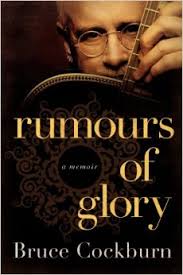
Rumours of Glory: A Memoir Bruce Cockburn (HarperOne) $28.99


I zipped through the more thanRumours of Glory.jpg 500 pages of this in a few days over a weekend — my friend Jeff blessed me generously by giving me an early manuscript that he somehow acquired, and I’ve hardly been happier all year. What a read! How fun to revisit old songs and earlier albums, learning about them all.


Although, truth be told, my musical hero comes across as I feared: Mr. Cockburn no longer calls himself a Christian (although he is very, very candid about the earnest and thoughtful faith he held for years) and he is a bit spicy in his language (nothing new there.) He’s an eccentric dude, we know, and I realized this more and more in this very revealing memoir. He is honest about a handful of romantic relationships that haven’t worked out. Like many artists, he’s got some issues; he is also a remarkably virtuous person in many ways.  His narrations of making music, writing songs, preforming with other great musicians, his production of his many albums — I know each one by heart! — is fantastic and a must for true fans. If you are interested in popular music, or care at all about this telling of his tale, this really is a great book.


Cockburn’s well known lefty activism, his philanthropy, his reporting from all over the globe, his travel-based research and bearing witness to repression, war, poverty, ecological crisis, and more makes the book not just entertaining and a good read, it is riveting, vital, important, deeply moving at times. We need to hear this stuff — from the awful ways in which the US funded torturers and death squads in Central America to the way the “radium rain” came down after Chernobyl to the land mind issues in Cambodia and Africa… one really learns a lot from this, and his explanations are often first hand and come from solid research. This is first hand story-telling, with politics and prayer, romance and sex, fear and bravado, song-writing and art, mixed together in a life story of one of the more important pop singers of our time.


Jackson Browne (who appears in it, of course) says


This is the story of the development of one of the most astute and compelling songwriters in the English language. Bruce Cockburn’s journey, both as a musician and as a thinker, draws us with him into spiritual and political realms and becomes a chronicle of his engagement in the major issues of the past thirty years. Rumours of Glory is highly personal account by one whose quest for expression engages the most important social questions of our time. 

Lewis Hyde, author of that amazing book on creativity and generosity, The Gift (which inspired Bruce’s great song of that same name) says “Cockburn gives us a finely-grained account of the ground from which he harvested some of the finest songs of his generation.” 


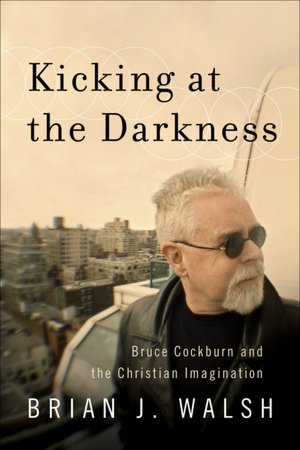
I have written elsewhere about my appreciation for Cockburn, and I’ve reviewed at BookNotes Brian Walsh’s book Kicking at the Darkness: Bruce Cockburn and the Christian Imagination, but I might add here, for those reading along — I first discovered Brennan Manning through the liner notes of Cockburn’s Big Circumstance album, and I once gave Cockburn a bi-lingual collection of some Nicaraguan poetry, while back stage chatting with him, Sam Phillips and Mark Heard. Unforgettable.  Not in the book, though. 

Let us know if you are interested in the huge, autographed, numbered box set of CDs that go alongCockburn boxed set.jpg with this (8 CDs, one an entire disc of previously unreleased or rare releases) and a video of concert footage, as well as a 90-some page booklet that is said to be beautiful. It retails for $149.99 but we will sell it on sale, for $20.00 less– $129.99, if you just have to have it.  It, too, is called Rumours of Glory: Limited Edition Boxed Set.


SSmall Talk.jpgmall Talk: Learning from My Children About What Matters Most Amy Julia Becker (Zondervan) $15.99  Becker writes about faith, family, and disability for parents.com, the  New Yorker Times, The Christian Century, Huffington Post, etc. Her first book (A Good and Perfect Gift about “a little girl named Penny” was excellent, and widely admired. (It was named one of the Top Ten Religious Books of 2011 by Publishers Weekly.)  This just came in today, so I haven’t yet read any of it, but we all know that sometimes God uses the smallest voices to teach us great truths.  The three main parts of these essays are “Holding On” “Letting Go” and “Growing Up” and I think it looks very, very good. excellent writers I admire give rave reviews — women like Margot Starbuck, Rachel Marie Stone, Ellen Painter Dollar, Rebekah Lyons. Looking for a smart, entertaining,reminder of the joys and issues of parenting, by a beautiful, thoughtful writer. This looks fabulous!


SSoul Feast- An Invitation to the Christian Spiritual Life.jpgoul Feast: An Invitation to the Christian Spiritual Life  Marjorie J. Thompson (Westminster/John Knox) $17.00  This newly revised, expanded, updated edition just came out, and I’m glad it did.  It carries a new foreword by the always eloquent Barbara Brown Taylor (as well as the classic one by Henri Nouwen.)  Whenever anyone asks about good primers on spiritual formation, or a handbook for deeper growth, this is always one of the first I think of.  From the contemplative practices of meditation to the corporate practice of worship, from Bible study to prayer, this offers nuanced, wise insights and helpful, good advice. She worked for over a decade as the Director of Congregational Ministry with Upper Room Ministries.  We recommend this as a tool for your work, or, as Taylor says, “a map to living water, along with a packing list of what you might need…”


BookNotes

SPECIAL
DISCOUNT
ANY ITEM MENTIONED

20% off
order here
takes you to the secure Hearts & Minds order form page
just tell us what you want

inquire here
if you have questions or need more information
just ask us what you want to know

                   Hearts & Minds 234 East Main Street  Dallastown, PA  17313     717-246-3333


THREE BY BRIAN J. WALSH: Subversive Christianity (Second Edition), The Advent of Justice (reprinted) and St. John Before Breakfast (brand new) ALL 20% OFF

Ssubversive 2nd.jpgubversive Christianity: Imaging God in a Dangerous Time  Second Edition  Brian J. Walsh (Wipf & Stock) $15.00  

A few weeks ago the prominent mainline denominational magazine Christian Century did an interview with me, an honor in which we are still delighting. In that interview I was asked to name some authors that would appeal to the Century readership that they may not know well. I named the spiritual formation author Ruth Haley Barton, the Biblical scholar and philosopher of aesthetics Calvin Seerveld, and a few others they needed to edit out due to space constraints.  I was quick to mention the astute and provocative writings of Brian Walsh.  His several works are among my favorite books, each for different reasons. 

I am not sure if Subversive Christianity, a small paperback published in 1992, was the first book on which I was invited provide feedback on the manuscript, or if it was the first book that mentioned me in the acknowledgements, but I think it was. So I feel pretty connected to this, and hope our friends and customers will take notice of this brand new edition. The first edition has been long out of print – until now, with this new reprinted, expanded version.  My old copy was certainly one of my most prized possessions.  That is, until I gave it away, or maybe sold it out from under myself.  I’ve been personally awaiting this reprint for more than a decade!

The first edition of the book was published by a faithful little indie press, but was never well known. It was just four meaty chapters, each given as speeches or keynote talks, all delivered in the harsh Cold War years following the seminal Transforming Vision: Shaping a Christian Worldview, co-authored by Walsh with Richard Middleton in 1984.  Brian was carefully reading Walter Brueggemann – your welcome, Brian, for turning you on to The Prophetic Imagination, which for some deluded reason I fancy having done, even though I suppose it isn’t even true, since you thank Richard Middleton for that lead. On some pages, Subversive Christianity could be called “Brueggemann-esque.” With a tone of lament and pathos and a profound belief in how the Biblical text can serve as a counter-narrative to imperial design, evoking a new imagination, it offers fresh energy to break out of the accommodated captivity of the people of God. 

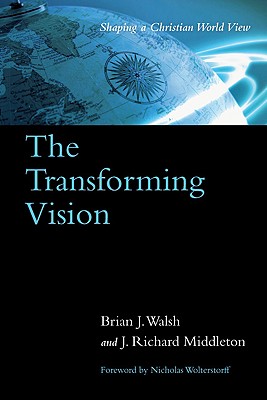
Transforming Vision, published by InterVarsity Press is still considered by many to be the best book on the development of aThe-Transforming-Vision-9780877849735.jpg Christian worldview, and the socio-religious / cultural critique is strong there. (The brief history of dualism and rise of secular idols is exceedingly helpful.)  But it becomes even more incisive and impassioned in Subversive…  In some ways Walsh was following the journey of his favorite Canadian rock star, whose Humans and Inner City Front albums documented his shift from a pleasant, folkie vibe informed by his evangelical conversion (“Wondering Where the Lions Are” you know) to a multi-ethnic, urban neighborhood and the music’s increasing awareness of the deep brokenness in our lives, personally and culturally.  Cockburn was singing more about “the falling dark,” about regret and toxic pollution, social injustice, his divorce, even as Walsh took up similar concerns. Brian was involved in the work of urban mission and public justice, trying to say no to the idols of the age (so clearly explained in The Transforming Vision) and immersing himself in the edgy discourse that eventually found voice in Truth Is Stranger Than it Used to Be (still the best book on postmodernism, and a must read for those interested in the pain of our timestruth is stranger.gif and an authentic gospel response.)

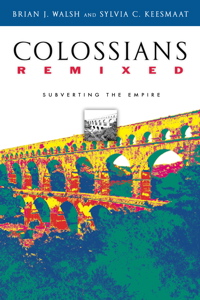
Eventually, this engaged pathos and socio-col rm.jpgcultural resistance was explored in Colossians Remixed: Subverting the Empire (still the best commentary on Colossians, perhaps the best commentary on any Biblical book I’ve ever experienced reading!) Although separated by two decades it isn’t that big of a jump from the punchy, succinct Subversive Christianity: Imaging God in Babylon (catch that important sub-title) and the dense, wide-ranging, spectacular bit of analysis of the dislocating pressures of our nomadic culture in Beyond Homelessness: Christian Faith in a Culture of Displacement coauthored with Hope College environmental science professor, Stephen Bouma-Predigar.

Subversive Christianity reveals a challenging style of faith that emerged from Walsh’s worldview studies at the Institute for Christian Studies, perhaps his frustrations with the more rigid dogmatism of some of the more strict Calvinists in his circles, his friendship with Dutch economist Bob Gouzdwaard and his brilliant work in reforming the fundamental assumption about economics and growth, his deep,Beyond Homelessness.jpg deep love for the Bible, and his Cockburn-inspired poetic honesty about both (to cite Cockburn songs) the “Lord of the Starfields” and the rim of the “Broken Wheel.” That is, Walsh understood in those years, as now, both glory and pain, creation and fall, goodness and grief. (I don’t think I know anyone who reminds us of this so candidly, especially in recent years on his Empire Remixed blog from his current faith community at the University of Toronto and their Wine Before Breakfast services.) 

As is clear in these four original chapters, Walsh thinks the true gospel of God’s Kingdom offers a radical deconstruction of the wrong ideologies and hurtful ideas and sinful structures that are the idols of our time and that have facilitated human folly and dysfunction and dis-ease. The reign of God – the journey out of exile and through the desert and towards a new Jerusalem – is the penultimate story (Christ, his Jubilee inauguration, his move towards the cross, his passion and resurrection being the ultimate story) which should shape the imaginations and lifestyles of the people of God, and such a drama is truly a subversive message.  One cannot build a glad new world, or, more precisely, testify to its promised coming, unless one firstly renounces the grim news of the false gods, deconstructing and resisting the dominant narrative of the American dream and its bankrupt ideals.  Which is to say this gospel story subverts the (ab)normal, frames our lives with new hopes and desires and dreams, which, of course, brings into greater clarity the cost of discipleship.  Being counter-intuitive, counter-cultural, subversive, revolutionary, even, is hard.  But such a discipleship, grounded in real life and real hope bears fruit in lasting, deep joy (even through shed tears.) 

The shift from grief to hope, from Good Friday to Easter, isn’t easy, but it is the arc of the Biblical story, even though too many churches and Christian TV preachers and Christian books don’t push us too deeply to consider these things. This book helps us with that, immensely so.

In the first pages of Subversive Christianity Walsh confesses to not dealing much with suffering insubversive 2nd.jpg Transforming Vision and this personal remark is important. Indeed, the third chapter, about grief and lament, was delivered the night of the death of a dear colleague, an IVCF staff worker at Brock University; again the pathos is palpable, as we lament the human condition, our own souls, and particularly the sadnesses of a culture bent on war and materialism, led by scholars and leaders who promote false hopes and harmful ideas. This critical demeanor, grounded in grief, is abundantly clear in Walsh’s feisty insistence that there is a malaise loose in the land, and that it is urgent to name it.  And name it he does.

From the false prophecy of uber-conservative intellectual Francis Fukuyama to the far left politics of Bruce Cockburn, Walsh draws on contemporary thinkers, artists, ideas and trends, to bring into focus the fundamentally subversive power of the Biblical texts that erode all false gods and upset all false hopes. These passionate, playful, creative, powerful sermons were worth their weight in gold, and became a life-line for some of us who rarely heard such evangelical faith proclaimed with such verve and guts.  This wasn’t merely Marxist liberation theology, it wasn’t inspirational humanism or the incipient social gospel, this was full on evangelical Bible study, Christ-honoring, orthodox stuff.  Walsh’s good friend Tom Wright wrote the foreword, saying it is a “powerful little book.” After extolling his study of contemporary culture and his patient academic work, Wright says of Brian, “he has also drunk deeply from biblical theology, and provides clear and creative exegesis of several passages in a way which breathes new life into them. Walsh brings together the Bible and the modern world in a way which is as original as it is compelling.”  

This is exactly right, and these chapters do indeed bring together very insightful cultural studies and socio-political analysis with tremendous, exciting Bible exposition.

The first of the four chapters is titled “Imaging God in Babylon” about which he summarizes, “Christianity is a subversive cultural movement; the Christian community and worldview conflict; we are called to image God.” He offers a contextual rehearing of Genesis 1:26 – 28 that is nothing short of brilliant.  I’m sure he thanks Richard Middleton for some of this (who later went on to write the magisterial Liberating Image: The Imago Dei in Genesis 1 which is now footnoted in the updated edition.) This chapter may be a seminal project for those that know the importance of Richard’s Liberating Image text and I’d guess they worked some of this out together.  Brian preaches it really well! (And had nicely dedicated the book to Richard.)

Chapter two is called “Beyond Worldview to Way of Life: A Diagnosis.” Here he explores the “worldview/way of life gap.” There is a profound diagnosis of Western culture (by way of Cockburn’s song “The Candy Man’s Gone” and Bob Goudzwaard. Here, he invites a truly prophetic response and pushes us to realize that merely getting a new “worldview” – incanting stuff against dualism, affirming a wholistic gospel, realizing the connection between creation/fall/redemption and the like – simply doesn’t seem to carry the capacity to change lives and lifestyles.  This frustrating gap between a multi-dimensional, Kingdom worldview and the way those who hold to such broad visions still live in the world – captive? — is named and explored. (Did Jamie Smith read this long before he cooked up his good stuff in Desiring the Kingdom and Imagining the Kingdom?  Surely, yes, since Smith was with Walsh at the Institute for Christian Studies in those years. Smith’s criticisms about how some quarters define and explore worldview may be related to Walsh’s own concerns, preached so well, here.)

By the way, I think this talk was first delivered at the Jubilee conference in Pittsburgh.  Besides dancing with Brian to “Brown Eyed Girl” that year, this talk was a true highlight in the history of great Jubilee talks.

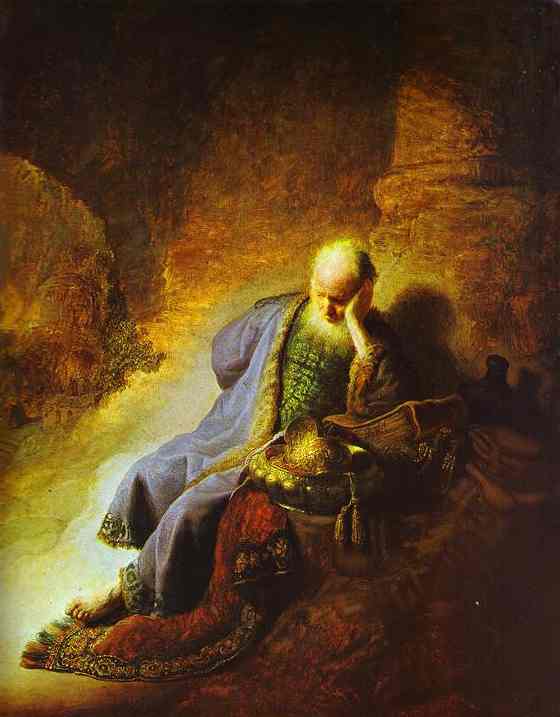
The third chapter of Subversive… is “Waiting for a Miracle: Christian Grief at the End of History” and, as you might guess if you followed much-discussed books from those years, he contrasts the then-popular scholar Francis Fukuyma who released The End of History that year (and who has another new much-discussed wonky book out this month, by the way) at first with Bruce Cockburn’s song inspired by Central American peasants, “Waiting for a Miracle,”  but then, surprisingly, in a brilliant section, with the true prophet, Jeremiah.  This is a fabulous example of an incisive critique of aJeremiah Mourning by Rembrandt .jpg modern scholar and his role in shaping North American political and economic policy, and then a shift to profound Biblical lament.  

It is hard to say which of the chapters in this book is my favorite, but each offer profound insight, and reward repeated readings. And this one is stunning.

The last chapter is “Waiting for a Miracle: Christian Hope at the End of History” (notice the one-word switch in the sub-title.) In this chapter he cites Cockburn’s “pilloried saints” and Jeremiah (again.) I love the “real estate at the end of history” piece, about the stunt where Jeremiah buys land behind enemy lines, and how Brian uses that as a parable for our times.  Wow! He insists we are all still “waiting for a miracle” but this time, with hope, hope that we can embody and live into.  

I have to admit when we got the new edition in a week ago, I turned to this chapter first. 

This brand new expanded edition offers a new chapter, oddly called a “post script” which offers much more than a post script, but which is a full on, serious piece.  This   new chapter brings us up-to-date and                                                                               Jeremiah Mourns Over Destruction of Jerusalem  Rembrandt

is called “Subversive Christianity 22 Years Later.” Here Brian asks “what time was it” and “what time is it?”                

These questions about our social location and the ethos of the age sets him up for amazingly rich, thoughtful, Bible-infused social criticism,. (And, yes, Bruce Cockburn’s recent work comes in to play once again.  Walsh has written a whole book on Cockburn, after all, so you can’t blame him using that rock poet as an inspiration.) I rarely say this about new editions, revised and updated books that have a meager new foreword or afterward, but I will now: even if you have the first edition, that thin black paperback, it is well worth it to get this new one, if only for this new last chapter.

My goodness, am I glad this new edition has been released! (The abstract oil painting on canvas on the cover isn’t given justice in the thumbnail above — it works well on the real cover and you should ponder it.) The new chapter is good – strident, passionate, honest, but yet full of Biblical hope. His work on Josiah (applied to the regime of President Obama, event) is fantastic, I think.  Walsh amazes me; his ability to name gross sins and profound cultural disorientation, and yet call us to a joyful and upbeat kind of new way of life is unique. 

Look, I read a lot of books (and many of you do too.) And most of us listen to a lot of speakers, take in weekly sermons. There is hardly anybody who writes or preaches like Walsh does, and I am more than happy to commend this — I am compelled to.  It might shock you, you might not agree, you may be driven to ponder your own faith community and its cultural accommodation and the maturity of its prophetic imagination. I know this is touchy stuff, and I don’t mean to sound negative or critical, but the diagnosis and re-envisioning going on here is so very useful. You will be better for it, I am sure of it.

Here is the last paragraph of the last page of the new post script, Jeremiah Revisited, so to speak:

Build houses in a culture of homelessness. Plant gardens in polluted and contested soil. Get married in a culture of sexual consumerism. Make commitments in a world where we want to always keep our options open. Multiply in a world of dept. Have children at the end of history. Seek shalom in a violent world of geo-political conflict and economic disparity. This is Jeremiah’s word to the exiles. This is Jeremiah’s subversive word to us. And in this vision we just might see, with Jeremiah, a future with hope. (Jer. 29:11.) This is what is means to work and wait for a miracle. This remains at the heart of a subversive Christianity.

This was an inspiring, important, under-recognized book when it came out more than 20 years ago.  It is a great grace that it is now available again, expanded just a bit, and I hope our friends and fans buy it, share it, study it, discuss it.

May its inspired, subversive resistance to the idols of the age motivate you to say no.  May its joyful, costly hope of a cultural restoration based on Christ’s Kingdom coming motivate you to say yes.  No and yes.  Lament and hope. Guilt and grace. This book is a gift. Thanks be to God.

Brian’s meager royalties from this book, by the way, all go to our friends Rob & Kirstin Vander Geissen-Reitsma and their creative community development work through *cino and their Huss Project in Three Rivers Michigan.

TWO MORE, BRAND NEW:

ANOTHER NEW REPRINT AND A SET OF REFLECTIONS ON JOHN

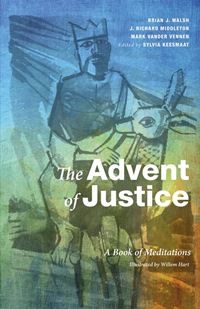
Advent of Justice Brian J. Walsh, J. Richard Middleton, Mark Vander Vennen, Sylvia Keesmaat (Wipf & Stock) $10.00 

Iadvent of justice CPJ.jpg have long said that there is no other Advent devotional like this, nothing in print that comes close.  It has been out of print for a few years, and we are glad it has been re-issued, with a nicer, full-color cover. (Otherwise, the inside, the handsome fonts and nicely designed pages with a few art pieces by Willem Hart remain.)  

This is a set of 4 week’s worth of daily readings, studies of lectionary texts (mostly from Isaiah coupled with seasonal NT texts) with a serious contextualized reading of these passages.  Some of the Isaiah passages are familiar to us while a few may be less so.  The hard-to-pronounce names of kings and prophets, nations and armies, are made more clear, brought into focus so we realize what was going on, geo-politically and religiously among the divided kingdoms and such.  That they invite us to ponder this and to apply the lessons to our own times, indeed our own lives, is a great holiday gift.  It is not sentimental and there is nothing about Christmas ornaments or hot cider or snowy winterscapes. This is Bible study with cultural analysis.  Dare I say it is an urgent antidote to some of the ways we’ve, well, you know… One friend who appreciated it a lot called it “Advent with a Vengeance.”  Well, sort of.

I have read through these short pieces many times, and get something new with each reading.  Walsh brings the big picture gospel to bear, as always, and Middleton especially explains the intricacies and drama of Old Testament politics.  Mark Vander Vennen – an old pal and peace activist from our days in Pittsburgh, now a wise and respected family therapist – brings his own well-trained Old Testament scholarship to the plot, with very nicely written daily meditations, journeying with us as we wait expectantly.  The last week New Testament scholar (and organic farmer) Sylvia Keesmaat eloquently brings it all together. Dr. Keesmaat, by the way, served as chief editor for this whole project, and brings the touch of a scholar and creative wordsmith. 

This thin book is not light-weight, and for those not used to Old Testament prophetic literature, or forCitizens for Public Justice.jpg Advent being a time to inhabit the broad Biblical drama, this may even be challenging. Not surprisingly, it has some themes of social criticism, a faithful emphasis on justice and the common good, even as the texts point us towards these concerns.  That Advent of Justice was firstly produced to commemorate the 40th anniversary of a Canadian social justice advocacy group – the Citizens for Public Justice (formerly the Committee for Justice & Liberty) – is fitting. Old heroes of mine, such as the late, great Gerald Vandezande, led that ministry for decades, and this little devotional reminds us of the rich Biblical heritage that served to shape CJL and CPJ.  These authors live this stuff, and their own rich Biblical reflections have emerged out of their own engagement with issues in the public square, service to the marginalized, and taking stands for public justice and the common good.

Still, even though this is dedicated to the justice activists and citizen advocates of CPJ and brings themes of justice to the fore, it is – let me be clear – an advent Bible devotional, short readings, day by day.  They invites us to read the Bible text first, spend time pondering their explication, and then to return to the Bible text again, reading and hearing it with new eyes and ears.  They do this to help us have a meaningful and joyous holiday season, to await well, to make time for God’s Word during Advent. They really do hope you have a good holiday season. May it help you wait well.

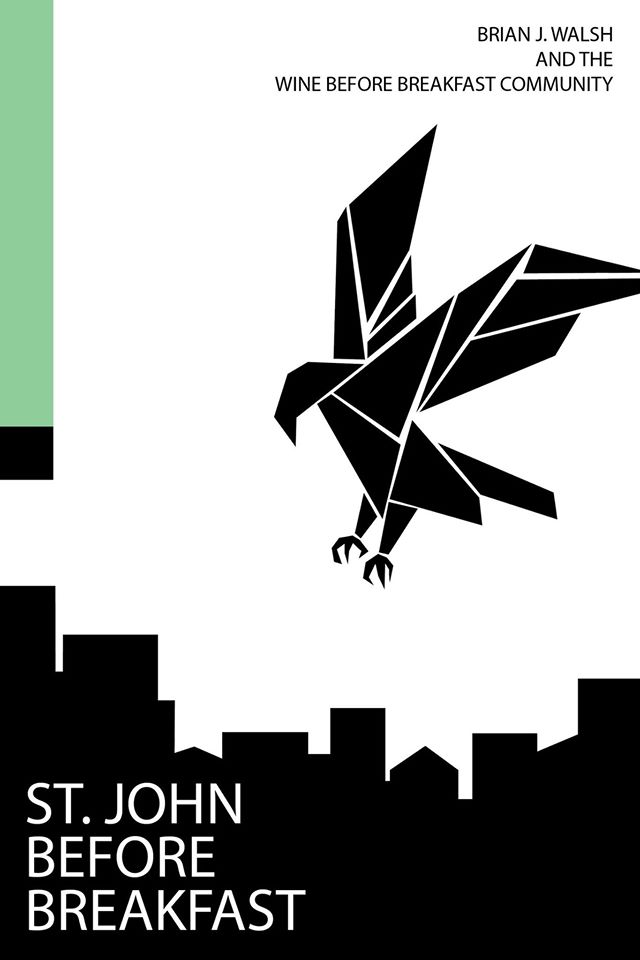
St. John Before Breakfast  Brian J. Walsh and the Wine Before Breakfast Community (Books Before Breakfast) $18.00 

WSt John Before big.jpgow — we are just jazzed to tell you about this.  We may be one of the very first bookstores to carry this, and it is an honor to be in on its distribution.

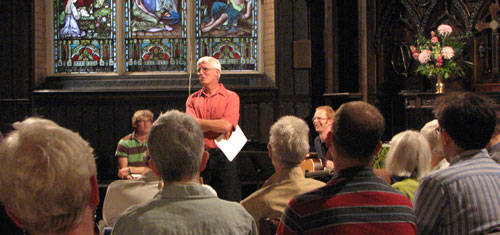
St. John Before Breakfast is a self-published set of studies/reflections done mostly by Brian Walsh for his “Wine Before Breakfast” early morning Eucharistic service among his rag-tag “Empire Remixed” community at the University of Toronto.  Walsh is a campus minister for the Christian Reformed Church and has developed a band and worshiping community that meets before classes once a week (and others times, too, of course.) I have followed (as you may have) their “Empire Remixed” blog, and some of Brian’s poetic ruminations on the Scriptures there have been simply stunning. (This past summer they did a weekly reflection on the book of James which was some of the best stuff I’ve ever read from that popular New Testament prophet.)  

Brian does a passionate and wise pastoral letter to his friends in the academic community at U of T right before Holy Week each year, inviting people to attend to spiritual practices that week – to read and re-read the gospel accounts, to attend church, to grief and wait and watch and pray as we move towards Resurrection Sunday and our joyful celebration of Christ’s Victory.  It is my own Holy Week custom to read and re-read Brian’s letters and these are doubtlessly the best stuff I read every year.

And they remind us of the pathos and power and truth of Scripture.

Which is to say I am sure these Biblical ruminations – some written in free verses, as poetically delivered, live — will be potent, powerful, maybe a bit controversial, perhaps. As is his custom, he offers creative, contemporary exegesis of the Biblical text — yes, the gospel according to John —  in engagement with pop culture.  One week it is a set of Joni Mitchell songs, maybe Leonard Cohen, maybe Springsteen or U2 or Mumford & Sons.  But mostly John, opened up and read and proclaimed with an edgy honesty.  Walsh loves the Scriptures, believes the book is subversive and, properly opened up, God’s Word to subvert and challenge, heal and offer hope.  

On the back cover it asks, “How does the Word made flesh take on new flesh in the urban heart of a city like Toronto? What happens when you allow the evocative narratives, symbols and imagery of this gospel to direct your prayers, shape your liturgy and transform your life?”

Walsh and students.jpg

I can’t wait to read this self-published, handsome volume of “Wine Before Breakfast” Johannine messages.  I hope you are curious, too.

Each chapter of St. John Before Breakfast includes an opening reflection, maybe a story, setting the stage, sometimes using the music or something from the news of the week) and then a homily on the passage.  Many weeks there is a litany, a responsive reading, some sort of liturgical/poetic response. (These are very useful, by the way, and could be used or adapted in your own group or church service.)  A few of the chapters are offered by other “Wine Before Breakfast” members and friends. It is truly amazing stuff and I am hard pressed to think of any other book quite like it.  

This self-produced book is a fund-raiser for Walsh’s campus outreach there, and we are glad to be able to help him sell it. It is a nicely done project, not widely available.  We hope that as you consider ordering Subversive Christianity or The Advent of Justice you will also consider picking up this, trusting that it will draw you into the extraordinary story John tells of this extraordinary Messiah, fully God, fully human, a suffering servant and healer of the cosmos.  John, who points us to Jesus.  A transforming vision, indeed.

subversive 2nd.jpg

Advent of Justice revised cover.jpg

St. John Before jpg


BookNotes

SPECIAL
DISCOUNT
ANY ITEM MENTIONED

20% off
order here
takes you to the secure Hearts & Minds order form page
just tell us what you want

inquire here
if you have questions or need more information
just ask us what you want to know

                   Hearts & Minds 234 East Main Street  Dallastown, PA  17313     717-246-3333

6 Remarkable Books That Arrived Today at Hearts & Minds — ON SALE 20% OFF

So I spent some of my extra time today working again on a review that I wanted to improve, to better express my enthusiasm for a book or two by an author I deeply respect and whose new work — a recently-revised reprint and a new self-published book — you might not be aware of. Man, I’m eager to release this impassioned review of these pair of powerhouse books.  But then, like Christmas morning, in comes some spectacular new books here at the shop, most which I ordered pre-publication maybe months ago.  When such a truck load of remarkable titles shows up somewhat unexpectedly, I feel almost jittery to tell somebody who cares.


So, I’m skipping my review for now, jumping in and winging this, quickly announcing six brand, spanking new books that we are thrilled to let you know are now available.  And that’s not even counting the good stuff that trickled in a few days ago — the new Mary Oliver poetry volume, the new Christian Wyman release, the eagerly-awaiting, prestigious novel Lila (a sequel to Giliad and Home by Marilynn Robinson) which we’ve been mentioning.

We have the BookNotes sale thing going on — 20% off the regular prices which are shown.

SIX NEW ONES THAT CAME TODAY 
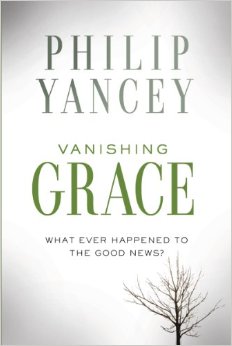
Vvanishing grace.jpganishing Grace: Whatever Happened to the Good News? Philip Yancey (Zondervan) $22.99  It isn’t every day that a Zondervan book gets a wondrous blurb on the back from rock star St. Bono and evangelical popularizer Max Lucado.  Mr. Yancey’s What’s So Amazing About Grace was nearly a landmark book and this could be seen as a long-awaited sequel to that contemporary classic. This new one showcases his trademark journalistic style, story-filled, thoughtful, accessible yet with no fluff. I am confident that it will be very, very compelling.  The back jacket says “Yancey explores how grace can bridge the gap between Christian faith and a world increasingly suspicious of it.” Oh my.

There will soon be a DVD curriculum, too, which will be well made and eloquent and which we will stock.

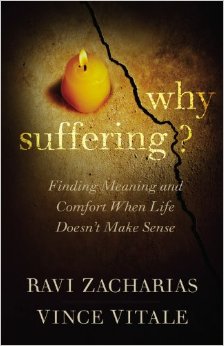
Wwhy suffering.jpghy Suffering? Finding Meaning and Comfort When Life Doesn’t Make Sense Ravi Zacharias & Vince Vitale (FaithWords) $22.00  Many people have wished for a book like this from Ravi, one of the most articulate, thoughtful and elegant apologists of our time. A convert (in his young adult years, after considering many, many world religions and philosophies) from Hinduism, he has been a caring, if rigorous, evangelist.  Not every evangelical leader grapples so honestly with Nietzsche, drawing on Alvin Plantinga and other stunning thought leaders. And (for any old Pittsburgh friends who may be reading) he cites Bill Rowe, who taught for a season at ICS in Toronto.  A great cover, too, for this moving hardback.

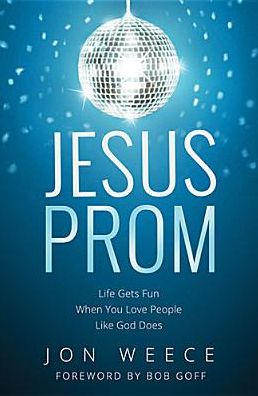
JJesus Prom book (good).jpgesus Prom: Life Gets Fun When You Love People Like God Does Jon Weece (Nelson) $16.99  My Nelson sale representative is a good man, and patient with me as I ply him with questions, sometimes needlessly snarky ones, suspicious as I am of some pop evangelical books these days.  “Jesus Prom”?  I almost cussed.  What in the heck does that even mean? And why does a book about Jesus need a disco ball on the cover? My ever-patient salesman pointed out the foreword by Bob Goff, a man I admire immensely. And then he explained that at the heart of this book is the story of a church that holds a full-on, big time prom for students with special needs. I almost cried hearing about it, glad for a church like this, doing stuff like this. Jesus loves people. Wouldn’t it make sense, Weece asks, “that those who claim to love Jesus would love the same people Jesus loves?” This central Kentucky church pulls off this extraordinary event, and if Goff says it’s the real deal, I believe him. I can’t wait to read this, and am eager to promote the new DVD curriculum, too. When Beth and I used to work for an Easter Seal Society Camp in the summers, by the way, dancing with wheelchair-bound kids and young adults at the “Final Banquet” was a highlight of each week and, if truth be told, remains a highlight of my life. This book, I’m telling ya, will touch your heart.
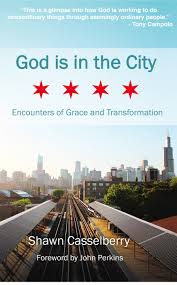
GGod is in the City good.jpgod is in the City: Encounters of Grace and Transformation Shawn Casselberry (Mission Year Life Resources) $17.00  Aww, I’ve been waiting for this. I hope you know Mission Year, an organization Tony Campolo started back in the day, that invites young adults to take a year to live in community in really rough ghetto neighborhoods, and share life with the poor, walk alongside those who are disenfranchised, and experience God in solidarity there, maybe bringing some fresh gospel light to often broken communities.  A hero/acquaintance of ours, Leroy Barber, was their Executive Director for years, and wrote a book or two that we have truly loved. (I hope you saw my review of Red, Brown, Yellow, Black, White…) How folks come to learn neighborliness, and find goodness in raw places has been a theme in Mission Year — it isn’t about suburban college kids coming in to save the lost, poor people.  Shawn Cassleberry is an advocate for God’s justice and the current head of Mission Year and this handsome volume (which is really attractively designed, and produced by them as a fund-raiser) looks splendid. 

Whether you live in an urban area or not, this book helps us understand many of our fellow citizens, dissuades us of dumb stereotypes, and will help you appreciate not only the hardships but joys of doing relational ministry in a fallen world. This is a fantastic glimpse into God’s work, sort of a “Chicken Soup for the Soul” with guts and grit and true grace. You will thrill to read these stories, be glad for the hard work of these folk, and be glad — inspired, even! — that there are such stories afoot in the world. Dr. John Perkins, who wrote the foreword, says “I urge you to read this book. You will be inspired and transformed by what you encounter.” Amen.

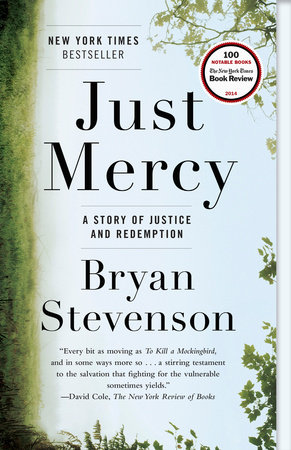
Jjust mercy.jpgust Mercy: A Story of Justice and Redemption Bryan Stevenson (Spiegel & Grau) $28.00 Speaking of Campolo: years ago we heard Tony tell the story of an African American boy who grew up poor and ended up through God’s grace at Harvard Law School.  He could land any prestigious job he wanted, a top-of-the-class black man with such a prestigious degree. The graduate eschewed worldly success and fame and wealth, though, discipled into the ways of Christ as he was, and went back to poor, rural Alabama, and served the oppressed there, working, then, with organizations like the Southern Poverty Law Center, and helping get those who claimed innocence a fair trail, often off of death row.  A friend of mine and I asked Campolo po
int blank if this was a real story — Tony’s stories are so flamboyantly told and so very moving the rumor is he makes some of them up (which isn’t at all true!) Of course this story was indeed true and the kid’s name was Bryan Stevenson. The CCO hosted him at their Jubilee Conference in Pittsburgh years ago and even then, some of us realized that Mr. Stevenson was more than the real deal, he was one of the truly great people of our era. (Will he be nominated for something like the Nobel Prize one wonders.)  He now runs the Equal Justice Initiative, and has a deep passion about children who are in jail, cravenly tried as adults.

Just Mercy is his brand new book, carrying extraordinary rave reviews from top literary lights the likes of Desmond Tutu, Tracy Kidder, Michelle Alexander and Isabel Wilkerson, and a stunning quote on the front cover by the best-selling Baptist lawyer, John Grisham. Beth and I were incredibly moved when she saw that this came, feeling the great joy and privilege of carrying such books.  We were glad to see him on the popular back page of Time magazine this week.  I assure you that this will be one of the much-discussed, highly regarded, public affairs books of the year, a man lead to Christian faith who related his convictions to his sense of calling, and now is doing vital, powerful work in the world.  You really should read this book.  See what he says when folks compare him to Atticus Finch, here.

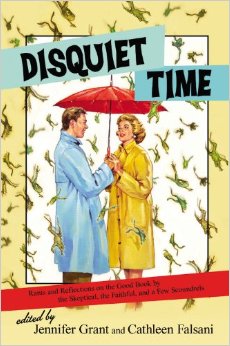
Ddisquet time.jpgisquiet Time: Rants and Reflections on the Good Book by the Skeptical, the Faithful, and a Few Scoundrels edited by Jennifer Grant and Cathleen Falsani (Jericho Books) $24.00  Well. This will absolutely need a longer review, but know this much: it is a wild and woolly anthology of all sorts of little pieces — some remarkably well written, some really funny (Susan Isaacs) some a bit snarky (okay, a lot snarky) — asking whether this or that weird part of the Bible is really so, or may somehow not, or something other, or whatever it all may mean. “The Bible is full of not-so-precious moments” they say (and if that doesn’t win you over, you may not get the allusion to those awful little cutesy figurines.) From murder to mayhem to sex and slavery, the Bible is perplexing. Instead of turning a blind eye to the difficult (“and entertaining,” they slyly note) passages, these authors take ’em head on.
Eugene Peterson writes the forward which gives this some appropriate gravitas. There are some important authors contributing here (from PCA scholar Stephen Brown to social activist Gareth Higgins to the spunky wordsmith Margot Starbuck.) Some of these folks are fairly conventional and quite thoughtful (Amy Julia Becker, Keith Tanner) and some are a bit edgy (Christian Piatt, Debbie Blue.) There is pathos, too, real honesty, humor, and some writing that you will want to ponder quietly.  And some parts you’ll want to read out loud. I’ve got my advanced reader’s copy dog-eared and can’t wait to start conversations about some of this. Falsani is an amazing writer herself (and familiar with all kinds of pop culture, the art and the artists), a Wheaton grad, I think, with a bit of an attitude. (And she is the only person that ever confused me with Bruce Cockburn, for which remain bemusedly grateful.) Ms Grant has previously written two good books, one about the process of adopting a daughter, another about raising a family. Despite the throw-back goof-ball cover (although you have to love that depiction of raining frogs) this new release is a great collection, a very interesting book.  And we’ve got it!

BookNotes

SPECIAL
DISCOUNT
ANY ITEM MENTIONED

20% off
order here
takes you to the secure Hearts & Minds order form page
just tell us what you want

inquire here
if you have questions or need more information
just ask us what you want to know

                   Hearts & Minds 234 East Main Street  Dallastown, PA  17313     717-246-3333


A Quick Listing: 10 Books that Sold Well at Wee Kirk, the Small Church Conference ALL 20% OFF

I hope you saw our Hearts & Minds Facebook page where I thanked the salt of the Earth folksbooks at wee kirk.jpg from small and struggling churches who we served again this year at Wee Kirk — Scottish Presbyterian-ese for small church. Every year we gather at the great Laurelville Mennonite camp in Mt. Pleasant, PA, and hear great speakers, take in important workshops, and eat lots of food, laughing and worshiping with mostly rural and small town Presbyterians friends.  They buy a lot of books from us, and we thought we’d share a few of the best sellers, or at least some that were nicely discussed.  I have to be quick — let us know if you have questions, or want other such resources.                                 

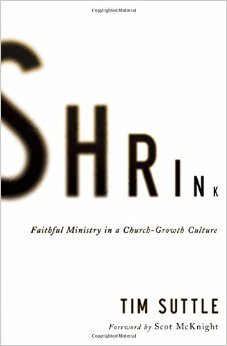
Sshrink.jpghrink: Faithful Ministry in a Church-Growth Culture Tim Suttle (Zondervan) $16.99  I raved about this from up front, indicating how very well written it was, about how great the foreword by Scot McKnight was, and for all the great pull quotes on nearly every page that are themselves great gems for those who aren’t serious readers. It is dedicated to pastors of small churches, and carries endorsements such as this by Chris Smith (author of Slow Church), “Shrink is one of the wisest and most significant evangelical books that I’ve read in the last decade; it is essential reading for every pastor and church leader!”  I agree. This book is extraordinary, offering critique to our fascination with bigness and growth, and calling us to fidelity and maturity.

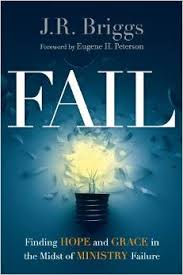
Ffail.jpgail: Finding Hope and Grace in the Midst of Ministry Failure J.R. Briggs (IVP) $16.00  I have written about this before, and couldn’t wait to share with these church leaders the great story behind this, Briggs own dis-ease with the “success” and big-time glitzy visions of so many other church conferences and books and websites.  His own “epic fail” lead to shame and discouragement, and not a few Wee Kirk friends share this sense of rejection and betrayal that comes with ministry failure.  The introduction by Eugene Peterson is wise and good, and if the story of J.R.’s coming to the transforming role of not measuring up to the heroism and big successes of the church-world enterprise can help folks recover from their pain and cope with their disillusionment, we are more than glad to promote this.  It was a big hit, for good reason. Highly recommended.

SSlow Church-Cover1.jpglow Church: Cultivating Community in the Patient Way of Jesus C. Christopher Smith & John Pattison (IVP) $16.00  Okay, maybe I was a little prideful, showing off when I announced this, since our BookNotes blog was one of the first places to review this amazing book, and we are hosting Chris Smith to speak  here on November 7th.  But my own gushing aside, Wee Kirk folks — who may or may not have heard of the “slow food movement” — intuit that church is about quality, not quantity, and that relationships and patience are the way of the Kingdom.  We celebrated this good book, assured the gathering that it was perfect for book clubs and classes in their own small congregations, and — yes — it will challenge them, since even small churches often try to row faster, work harder, fret more then they should, trying to give the appearance of success.  This counter-cultural book commends a radical critique of the modernist worldview and the typical American “fast food” franchise habits, re-framing the way we even think about our lives, and re-imagining the very nature of the faith community. Slow Church is one of the most radical church books I’ve read, utterly faithful, and brilliant.
Abeautiful d.jpg Beautiful Disaster: Finding Hope in the Midst of Brokenness  Marlene Graves (Brazos) $15.99  Two things we find everywhere we go: many people are hurting, or have been through serious anguish in their lives, and people of faith long for greater experiences of God, and are interested in practicing spiritual disciplines which make room for God to work in their lives.  That is, the two things this book is about — spirituality during hard times — is exactly what folks need. Marlena (who grew up in rural North-Western Pennsylvania, where many of our Wee Kirk friends are from) has been through a lot, tells her story well, and offers Biblical insight about God making a way in the wilderness.  Beth and I knew it would be a hit.

Llila.jpgila: A Novel Marilynne Robinson (FSG) $26.00 What a joy to let people know that this new book released this very week.  As you hopefully know, it is a new novel, the story about the wife of the pastor in Robinson’s beloved Pulitzer Prize-winning novel Gilead.  We sold Gilead, Home, and Lila. That Robinson herself is not only a brilliant storyteller but a Calvin scholar is pretty great. We had announced this as pre-order but Wee Kirk was the first place I got to announce it. Nice.

By the way, we’ve posted an interview with Ms Robinson at the Facebook page, and there are other good pieces about this important work on line. What a wonderful occasion to celebrate this writer and this new novel.

SSomewhere Safe with Somebody Good.jpgomewhere Safe with Somebody Good Jan Karon (Putnam) $27.95  Of course our small-town church folk loved hearing that there was a new Mitford book, and that we had autographed copies of this handsomely made hardback on hand made it that much better.  Fun. If you order any soon, we’ll send a true, autographed copy (no extra cost.) While our supplies last.

Iimagining the kingdom cover.jpgmagining the Kingdom: How Worship Works James K.A. Smith (Baker Academic) $22.99   Last year I regaled the Wee Kirk community with the urgency of reading anything by Jamie Smith, and challenged them to dig deep into the importan
t Desiring the Kingdom. You can imagine how glad I was when one of the workshop leaders (doing a class on preaching) mentioned this sequel to it each time in her presentations.  This is serious, meaty, and one of the most important books on worship in ages.

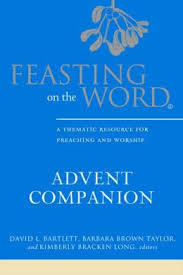
Ffeasting on the word Advent Companion.jpgeasting on the Word Advent Companion: A Thematic Resource for Preaching and Worship  edited by David L. Bartlett, Barbara Brown Taylor, and Kimberly Bracken Long (Westminster/John Knox) $25.00  Of course at any gathering where there are clergy, we take all four volumes of the Feasting on the World lectionary preaching series for whichever year we are in or approaching (we are approaching Year B, starting in Advent.)  We take the Feasting on the Word Worship Resources and Daily Feast, the compact, faux-leather, daily devotional based on these same lectionary-based resources.  This one is spectacular, with lectionary exegesis for preaching, worship aids, children’s sermon ideas, Advent and Christmas hymn ideas, suggestions for mid-week services, etc. We sold a lot of Advent resources, but was struck by how popular this new volume was. 


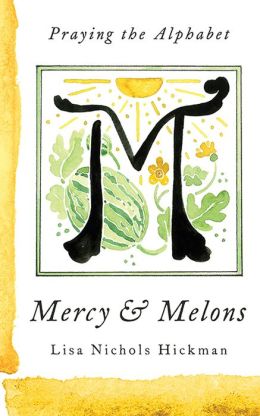
Mmercy & Melons.jpgercy & Melons: Praying the Alphabet: Thanking God for All Good Gifts, A to Z
Lisa Nichols Hickman (Abingdon) $15.99  Lisa is nearly a neighbor to some of the Wee Kirk gang, and even for those who do not know her they have recalled that we had promoted her creative proposal for creative Bible study, Writing in the Margins, last year (with a contest of people who could show us their own scribbled-in, marked up Bibles.) This year, I explained about just how very lovely and very eloquent and very moving this new set of meditations is. I’m glad we’ve told you about it here before, but thought you should know how popular it was at this gathering.  How ’bout that tag-line? “Thanking God for All Good Gifts, A to Z” which wonderfully links the so-called sacred and secular.

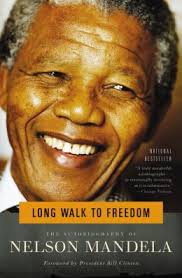
Llong walk to freedom.jpgong Walk to Freedom: The Autobiography of Nelson Mandela Nelson Mandela (Back Bay Books) $18.00  There was a wonderful workshop by a bold urban activist (and dean of student life at Pittsburgh Theological seminary, John Walsh) comparing and drawing on the social ethics of Martin Luther King and Nelson Mandela for our own contemporary social problems.  Despite the reality that most small churches in this region are primarily white, and not particularly political liberal, these good folks wanted to learn more about racism, poverty and resistance to injustice. Mandela’s huge memoir was a national best-seller and the basis of a powerful movie. The Los Angeles Times Book Review reviewer said, “Irresistible. One of the few political autobiographies that’s also a page-turner.”  The Financial Times raved, “One of the most extraordinary political tales of the twentieth century… for anyone interested in the genesis of greatness.”  Many have put it on their life-long, best-ever, must-read lists. Three cheers!

BookNotes

SPECIAL
DISCOUNT
ANY ITEM MENTIONED

20% off
order here
takes you to the secure Hearts & Minds order form page
just tell us what you want

inquire here
if you have questions or need more information
just ask us what you want to know

                   Hearts & Minds 234 East Main Street  Dallastown, PA  17313     717-246-3333

REVIEW: Kingdom Conspiracy: Returning to the Radical Mission of the Local Church by Scot McKnight ON SALE


If you’ve recently dropped in to the Hearts
& Minds Facebook page, you’ll know we were just in Boston selling books
with the Christian Legal Society, a fascinating organization of Christians who
are lawyers, judges, law profs and such. 
This is a large challenge and huge privilege for us.  When we work with these kinds faith-based
professional associations or hang out with activist folks, we are glad for their
ministries and service, scattered in the world. That God’s Kingdom is advanced in some way through their
witness and work – or at least signposts are created that point the way – seems
evident and reminds us that God cares about God’s whole world, not just the
institutional church where believers gather. God’s people are still church even
when they leave the worship space, where they’ve first processed to gather, and then been
commissioned to leave in service. It is obvious that the commonwealth of God
grows – like that parable of the tree flourishing so that even the birds find
refuge – and that the Kingdom of God is a unifying theme of the entire covenant
story of Scripture.


 But what is God’s
Kingdom?


Thanks for asking. It’s a million
dollar question, and we’ve got a new book that explores it well.  Unless one is willing to settle for an
undeveloped simple view, or work to wade through weighty theology tomes, this
may be one of the best ways into this important conversation.


We are very excited about the new
Brazos Press hardback release, Kingdomkingdom conspiracy.jpg Conspiracy: Returning to the Radical
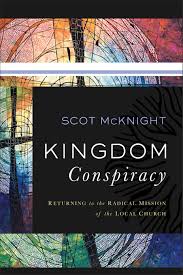
Mission of the Local Church
by Dr. Scot McKnight (regularly $21.95; our BookNotes sale
price is $17.60) and want to commend it to you.  But first, some of my own thoughts about it, such as they
are.


One the large assumptions behind the
nature of our store and the diverse array of topics we offer — books on
science, art, media, education, psychology, environmental science, war and
peace, politics, film, outdoor adventure, engineering, urban affairs,
parenting, nutrition, literature, and so much more — is that the redemptive
work of God in the world (Jesus called it the Kingdom of God) includes all
areas of life (not just church and “religion”) and He has inaugurated a trajectory
that promises the full and glorious restoration of all creation.  I think it is our wide selection of
books in so many categories, and our hope to suggest “Kingdom perspectives” in
all fields that appeals to those who invite us to serve their events, like the
aforementioned CLS.  If somebody
asks us why we carry books on faith and law or faith and art or faith and
science, we suspect they simply don’t have a very fully developed understanding
of the Kingdom of God.


There are many authors who in recent
years have underscored this vision of the reformation of all things (think of
N.T. Wright, just for instance, or our celebration of the For the Life of the World DVDs.) Many mainline denominational
churches have an implicit vision of the restoration of all things, but seem a
bit embarrassed by eschatology, not wanting to get mixed up in any goofy “left
behind” stuff. So their own best resources for an “all of life redeemed”
whole-life discipleship lie too often undeveloped or untapped.


One of our favorite authors along these
lines who does offer a wide and wholistic vision is the remarkably productive
New Testament scholar Scot McKnight. His excellent Kingking jesus.gif Jesus Gospel: The Original Good News Revisited (Zondervan; $19.99)
and the very useful, fun, One.Life: Jesus
Calls, We Follow
(Zondervan; $14.99) are both fine books. Both offer this broad Kingdom vision
and are very helpful as we explore how to bear witness to the coming Kingdom “on
Earth as it is in Heaven.”  His
book on how to read the Bible well, Blue
Parakeet: Rethinking How You Read the Bible
(Zondervan; $14.99) offers the
very story of God’s faithfulness to the creation, and Christ’s redemptive story
to heal and restore all things, as the key to read the plot line of the
Bible.  He really gets this big
picture story of God’s creation-restoring good news. (McKnight’s very popular Jesus Creed, by the way, was just re-released
in an updated and slightly edited edition; that guide helps us live out the way
of Jesus in daily life, learning to love God and others – wow, what a book!)


WHAT IS THE KINGDOM?

Many of us have been wishing for
McKnight to spell out more of what he means by the Kingdom, what the reign of
God is and isn’t, sort of a deeper follow-up to the very good King Jesus Gospel.  This brand new Brazos Press book, Kingdom
Conspiracy
, may be his best effort yet. Despite my own disagreement
with its biggest conclusion, it is going to be very, very helpful and we are
happy to help promote it.  It is a
book that loyal Hearts & Minds friends, especially, should consider owning.  It is very seriously informed by wide
reading of the best scholarship – how does McKnight do it, knowing so much
about so many sub-categories? — and offers learned, but clear and interesting explanations.  It is a fine, fine book.


SKINNY JEANS AND PLEATED PANTS

Without a doubt, Mr. McKnight is sounding
a bit of an alarm, and insofar as he is truly picking up concerns, I applaud
his calling us to better formulations. 
I don’t know how many people really say this, but McKnight seems to
think that some writers and leaders believe that any good effort in the world —
say, a social justice campaign or deeds of public righteousness, mercy, art,
kindness, seeking the peace of the city — necessarily builds God’s Kingdom.  He claims that many younger
post-evangelicals, especially (and he should know, he teaches them at Northern
Seminary and is exceptionally involved in on-line writing and discussion) are
not dissimilar to the older (mostly bankrupt) social gospel movement that
seemed to think any decent human action could be considered a mark of the reign
of God and in some way redemptive. God’s Kingdom a-coming was so combined with
the hopes of human progress that serious consideration of salvation, the role
of the cross, and the necessity of the church was pretty much left behind. In
that view, which McKnight cleverly calls the “skinny jeans” view of the Kingdom,
there is such an emphasis on cultural engagement and social witness that there
isn’t much concern about evangelism or personal piety.  He contrasts this, perhaps with a nod
to Willow Creek baby boomers, with the “pleated pants” gospel, which, as you
can guess, overemphasizes personal evangelism and conventional views of
constricted salvation aimed at getting people to heaven and perhaps a
moralistic view of one’s inner life.


(Of course there are also old school
fundamentalists with a conservative, narrow faith who wear skinny jeans, and
there are some pretty radical voices coming from guys in pleated pants. So,
yeah, his clever set-up is only somewhat helpful, as if age or aesthetics were
the determining factor as to whether one has a typically liberal view of a
social gospel or a more typical evangelical view of a privatized one. These
caricatures do help get the conversation started, at least, so don’t let that
trip you up. Skinny jeans or pleated pants.  Ha
.)


In contrast to both kinds of wardrobe
malfunctions (that’s my little contribution to the cleverness afoot) Scot wants
to say clearly that the Kingdom of God is more than personal salvation or the
promise of a heavenly afterlife, but he also insists it is more than working
for social justice, much more.  In The
Kingdom Conspiracy
, McKnight covers Biblical and theological ground
that others have explored, although he brings his own urgent angle. The must-read
book on this part of the story in my view is the impeccable Good News and Good Works: A Theology of the
Whole Gospel
by Ronald J. Sider (Baker; $20.00) which, interestingly, insists
that the theme of the Kingdom of God is the central Biblical motif that brings
together the personal and the public, word and deed, spiritual renewal and social
action.


Still, in every age we need reminded of
the epic tragedy of this terrible dilemma, this tendency for so many towards
imbalance. How sad that there are still those that are all about social concern but care little for winsome
evangelism, or those who ignore our cultural obligations and social witness due
to their overemphasis of church planting or evangelism or spiritual formation. It
seems easy to say it is “all of the above” and proclaim “the whole gospel.”  Ahh, but it isn’t so easy to convince
everyone who follows Christ that it is “both/and” and that the gospel is
multi-faceted, and the Kingdom is creation-wide.  Which brings us back to this question of what we mean by the
Kingdom, the reign of God, Christ’s Lordship, God’s will done “on Earth… ”
And — wait for it, there’s more… and there is the questions of the relationship
between the Kingdom and the church.  As you can tell from the subtitle of McKnight’s book, this is
his biggest burden.


IMcKnight - KC.pngn this very contemporary assessment,
our author is convinced that both the Biblical material and the needs of the
day demand that we reassert the primacy of the local church as being the
crucible of the Kingdom.  Yes, yes,
the Kingdom of God is the longed for creation restored, and Christ’s Lordship
is to be proclaimed (and lived out) in all of life, across all of culture. The
weight of the argument of The Kingdom Conspiracy, though, is
that this happens through the local church.


Even now, I can imagine eyes rolling as
some readers say – well, duh; of course. For others, I can hear the
possibilities of them buying this book slamming shut from States away. Those
pleated pants and skinny jeans are acting up again, resisting McKnight’s
challenges, even though both camps really need to consider this book.
We all do.


Again, to be clear, this isn’t a new
idea. It seems to me that it has resonance in one way or another with both the
Roman Catholic and Episcopal traditions and with the Anabaptist views of the
Brethren and Mennonites.) Consider, for instance, the exceptionally important
work of Catholic Scripture scholar Gerhard Lohfink and his massive, celebrated
work, Does God Need the Church? (Michael
Glazier Books; $39.99) a title that
McKnight surprisingly doesn’t cite. Think
of lovely recent books like Slow Church:
Cultivating Community in the Patient Way of Jesus
(IVP; $16.00) that surely have a culturally-engaged,
socially involved Kingdom vision, but put the locus of God’s redemptive work
within the community of faith living together in a world falling apart. (By the
way, co-author of Slow Church,
Christopher Smith will be here in Dallastown for a book talk on Friday night,
November 7, 2014.)


Another personal favorite, a wonderful
book that needs mentioned here is The
Community of the King
by Howard Snyder (IVP; $18.00.) It remains one of my all-time favorite
books, and certainly one of the best on the local church, and he argues that
the church, while not the entirety of the Kingdom coming, is at the heart of
it.  McKnight agrees, and his willingness
to assert this clearly is a large, important gift.  It is a good book about the Kingdom of God, but he laments
our recent Kingdom visions to be somehow unconnected to the work of the church.


***


McKNIGHT’S KINGDOM VS. NEO-CALVNISM & KUYPER


Some of us who have encouraged followers
of Christ to have a prophetic imagination and Christian mind about all manner
of things — all spheres of life are being redeemed and we must be “kingdom
people” in all we do, after all — have drawn on the reformational worldview of
what some call neo-Calvinism.


(Please note that neo-Calvinism is a
theological tradition and social movement these days stemming from the feisty and
wholistic cultural reforms of the Dutch theologian of the late 1800s and early 1900s, a
journalist, academic, statesman, and Prime Minister, Abraham Kuyper and is not the same as the popular, strict “new Calvinism” which is how some
journalists describe the recent gospel coalition of those new to older forms of
Calvinism and Puritanism. Neo-Calvinists are those who make much of the
wide-as-life, creation-regained vision of renewed thinking in the line of the Dutch
public theologian Kuyper; neo-Calvinism is the wholistic
creation-being-redeemed vision that informs important voices as diverse as
Francis Schaeffer and Brian Walsh, Neal Plantinga and Richard Mouw, Nicholas Woltersdorff
and Calvin Seerveld, Herman Dooyeweerd and James Skillen, Anthony Bradley and Al Wolters, Comment magazine and Jamie Smith. I name these authors to offer further hints, spots on the map, for
whom these names might ring a bell.)


It is a fascinating aspect of Kingdom
Conspiracy
that Scot McKnight interacts with this tradition, realizing that
his Anabaptist vision is at odds with this reformational heritage.  You see, if, as Kuyper explored and as
most neo-Calvinists proclaim, Christ’s Kingship includes all dimensions of life
and all zones of cultural affairs, then non-church spheres are every bit as
much as God’s Kingdom as is the churchly sphere.  Bankers and teachers and dancers and engineers are as much
priests as are, well, priests in the church.


McKnight seems to realize that some form of Kuyperianism is
capturing the imaginations of many these days (Andy Crouch’s wonderful CT review of For the Life of the World was titled “Kuyper Goes Pop”) and McKnight
seems to realize that a robust creation-regained worldviewish vision of the
Kingdom incarnated in all of life is one excellent way out of the dilemmas
posed by the inadequacies of the individualized traditional gospel of the
pleated pants crowd and the socially engaged emerging faith of the skinny jeans
tribes.  And so, he takes on this
ascending perspective.


He briefly examines Mouw’s delightful
little book on Kuyper (Abraham Kuyper: A
Shortabraham-kuyper-short-personal-introduction-richard-j-mouw-paperback-cover-art.jpg and Personal Introduction;
Eerdmans; $16.00) and ponders “Kuyperian
secularism.” In a footnote he applauds Steve Garber’s splendid book Visions of Vocation: Common Grace for the
Common Good
(IVP; $16.00) calling it “important” but suggests it doesn’t
talk enough about the church, a fault he attributes to Andy Crouch’s Culture Making: Recovering our Creative
Calling
(IVP; $20.00) as well.


I point this out because I know that
some of our BookNotes readers will be glad for this conversation, and will want
to follow the discussions prompted by McKnight’s re-assessment of Kingdom
theology.  It is great to see a
good thinker and writer of McKnight’s stature (and popularity) grappling with
these themes of neo-Calvinism that have so influenced some of our favorite
thinkers and writers and leaders.


Allow me a big aside, a story which might help you
unpack this a bit, if you don’t intuit where this is going.
Or at least it might clarify my concerns with the implications of this.


I mentioned my appreciation for the
great book The Community of the King
by thec of the k.gif radical Wesleyan Howard J. Snyder. 
I’m glad that book is still in print, and I still recommend it
regularly.


You may want to know that it was the
second book I ever reviewed in a real magazine, a brief review appearing in Sojourners back in the 70s.  I suggested, however, after glowing
remarks, that to insist that the Kingdom is mostly found in the supportive
relationships within the local fellowship, the church, is to not only to fail
to enunciate the wide-as-creation scope of Christ’s Kingdom, but to fail
church members by not adequately honoring the complexity of their callings to
work in the world, outside the proverbial walls of the sanctuary.  I took Snyder to task, as I recall, for
telling the story of his friend and parishioner Archie, a good man and fine grocer,
with nary a word of his Kingdom obligations as
a grocer.
From where does he buy his food, how does he work with vendors that
mistreat their migrant workers, what is his role in the global food industry of
cash cropping? How does Archie educate consumers about chemical additives and
such? What does it look like to be a Christian grocer, not just a grocer who
happens to be a good churchman? One person replied to me in a letter, those
decades ago, suggesting I was nuts.  Another thought I was needlessly hard on old Archie.


Well, perhaps God has caused the stones
to rise up, like Jesus predicted, since we now have a major culture movement
about these very things, concerns about GMOs and healthy food and fresher
produce and fair trade, most of which have been raised by folk not known for
their Christian religiosity.  If
the Kingdom is conflated with the church, you see, and the church therefore
minimizes member’s work in the world as holy vocations, we end up with a
disconnect between Sunday and Monday, and guys like Archie, good church members
that they may be, fail to create wholesome grocery stores, fail to fight for
innovations in the supply chain, for more sustainable policies, for fair
treatment of migrants, etc. etc. 
Whole Foods has done that, of course, and the Biblical God of the
renewed creation is pleased, I’m sure, although Christ should have gotten the
glory.  This critique of
over-emphasizing the communal/relational/liturgical aspects of the local
church, a (minor) frustration with Community
of the King
remains my concern with the present McKnight volume.  He may criticize Crouch, Garber, Mouw,
or Kuyper, but what does he say to
Archie the Grocer?  He is right to
poke the paucity of the skinny jeans kingdom and the old social gospel. But can
his favored sources — Yoder, say, or Hauerwas, even — provide an account of
Christian discipleship in the world that allows folks to make sense of their
workplaces, their citizenship, their engagement with the arts, with
entertainment and leisure, with the structures of media and technology that
surround them? Without a full-orbed Kingdom vision, will a churchy faith enable
us to make noble sacrifices promoting a prophetic imagination in these late
modern capitalist times? Or does a vision of the Kingdom tied so closely to the
church necessarily call us and our interests out of the institutions of life,
and unwittingly promote an escapist pseudo-gospel?  I know McKnight does not intend for his church-based Kingdom
approach to have this effect.  I
cannot see how it would not.

Scot McKnight-Image.pngOf course, McKnight mostly expounds the
Scriptures, and this is mostly rich, good stuff. I was thrilled reading much of this, and learned quite a lot by
looking at his sources, his good footnotes and the two fabulous appendices.
Along the way he reflects helpfully on the strengths and weaknesses of the old
evangelical left and the Christian right, he explores the work of Tom Wright,
Jurgen Moltmann, Rauschenbusch and the social gospel, James K.A. Smith, Brian
Blount, and many more who have offered hints at the nature of the Kingdom and
the relationship between the Kingdom and the local church. We always need
reminded of “the Constantinian temptation” and in this, McKnight’s project isn’t
unrelated to the much-discussed To Change
the World
by James Davison Hunter (Oxford University Press; $27.95.)  Again, I like that he tweaks both the “skinny
jeans gospel” of recent missional hipsters, and the “pleated pants gospel” of
the mega-church baby boomers – fully aware (I think, anyway) that these are
playful caricatures and goofy foils for his case. But with that, he leads us to
a more full-orbed and Biblically-solid explanation of the Kingdom and the
centrality of the church gathered.


So, his case, again, is two-fold: In
contrast to the inadequate formulations of the exclusively personalistic or
social gospels, he offers a robust, multi-dimensional, incarnational, wholistic
Kingdom that is Christ-centered and promissory about the renewal of the cosmos.
But he further insists, then, that this Kingdom of God a-coming is, in fact,
seen most clearly in the moral community called the local church. “Kingdom
mission creates communities of the redeemed” he insists.  So, if you aren’t a church planter,
well, I guess your work isn’t related to the Kingdom of God. You know that
lovely and provocative For the Life of
the World
we have been promoting? 
Forgetaboutit.


Okay, sorry — I’m being a little
facetious. You’ll have to read it yourself to see if I’m being fair. He deserves a fair reading, as he is a
good author and important writer and this is his most significant work in years.


I will admit that I love reading nearly
anything on the gospel and anything that helps us understand and love and
promote the gospel is good. And McKight has always been a very reliable guide for me. (He has a book on Mary, a book on fasting, a book on the Sermon on the Mount, and more.) 


McKnight  inspires
us with missional energy and visionary hopes and big dreams – note the word “radical”
in the subtitle – even if he constricts the scope of the Kingdom and seems
therefore to minimize the significance of so much of what ordinary lay people do
in their day to day (non-church) life. Yet, I trust McKnight on this because,
in his aforementioned books, he elevates the “one life” we live, in Christ,
relating faith to our work, politics, recreation, sexuality and more. I don’t
know if his view of the Kingdom which is so thoroughly offered here will erode
the importance of his books on whole-life discipleship like One.Life but it seems like it might. (If
the church is really where it’s at, the locus of the Kingdom, then, really, why
must we fuss so much about public theology and aesthetics and justice and
living faithfully across the many zones of life?)


This is a question I’ve hosted since
the late-1970s when I studied both Richard Mouw (a Dutch Kuyperian) and the
late John Howard Yoder (a Mennonite, who has influenced McKnight) as they
engaged in Reformed/Anabaptist discussions about the role of creation and
creation’s order in our views of redemption and the vocation of being “in but
not of” the world of the fallen powers. 
I’ve heard Mouw tell how the distinctions between he and Yoder were once
summarized when Yoder said, “Mouw, you always want to say reality is created, but fallen, but I want to say
it is fallen but created.” Ponder
that!


The relationship of faith and real life,
church and world, Kingdom and creation, Christ and culture, remains a burning
question for me, and I think they are a constellation of questions that are
some of the most burning for the church of our era, at
least in the West.
(McKnight certainly agrees that these matters are urgent,
and he has followed the debate and contributed to it, as well as most. In The
Kingdom Conspiracy
he mentions many public theologians who grapple with
these matters, influential thinkers as diverse as Miroslov Volf and Os
Guinness, Walter Wink and Nicholas Woltersdorff; he discusses books such as the
recently-re-issued Resident Aliens by
William Willimon & Stanley Hauerwas.) 
This is a living conversation that gets to the heart of what the Bible
teaches, what Jesus said and meant, and what we mean by being Christians “for
the life of the world” as the recent, popular DVD by that name asks.  McKnight’s view of the Kingdom, it may
seem, would resonate with the last episode of FLOW, which reminds us that the
weekly gathered community worshiping together is a rehearsal of the
wide-as-creation restoration that is promised. Church is, finally,
eschatological.  Or at least I
think that is what he’d say…


So, a few big thumbs up to the always-interesting
Doc McKnight. Kudos for this good work, the inspiring reminder that the local
church has a huge role to play in the “radical mission” of the Kingdom of God.


Still, as I’ve already suggested, I
think he gets it wrong, here, or at least he overstates his case, but geesh, in
these days, inviting people to church certainly isn’t that bad of a fault (as
long as it doesn’t devolve into a fetish about churchy stuff and fail to equip
the laity to serve in their homes, neighborhoods, workplaces and such.) Despite
Kingdom
Conspiracy
being so very important, so very insightful in so many ways,
so very interesting to read, I still want to insist that the local church need
not be over-emphasized and our view of the Kingdom should be as wide as the
Bible says it is – “the Earth is the Lord’s and the fullness thereof!”  McKnight is a careful and generous
scholar, and his serious, exciting book deserves to be studied carefully (and
reviewed seriously, more seriously than I am able to do here.)

The blurbs on
the back are notable and serious — Soong Chan Rah reminds us that

the
misappropriation of faddish terms can be an unfortunate reality for American
Christians. The casual manner in which we toss around phrases like “kingdom
theology” and “missional churches” can have an adverse effect on our efforts to
form a robust ecclesiology… With prescient analysis and pastoral insight,
Scot McKnight succeeds in providing a scriptural and theological text for those
who have heard the word so often but failed to think through its meaning.


Greg Boyd says,

McKnight brings much-needed
clarity to what ‘kingdom of God’ means -and doesn’t mean – and how it relates
to the church and its mission. This book needs
to be read by everyone – scholars and laypeople alike – who want to understand
and consistently live out what it means to be a follower of King Jesus.


I am glad for any author that calls us
to church: to deeper liturgy, to worship well, to intentional body life, to
parish commitments, to congregational revitalization. Yes, of course! We are confident
that this is an important book that is sure to deepen your understanding of the
Bible and contemporary theological trends, and make you think – hopefully with
others – about the purpose of our discipleship, what it means to be Kingdom
people, and the joy and implications of the Lordship of Christ, in the church
and, yes, in the world.


TWO MORE


Although they deserve much more time
and space to review fairly, here are two other great books that came to mind as
I wrote this, one quite new, one newly released in paperback:


Jjoy to the world greg forster.jpgoy for the World: How Christianity Lost Its
Cultural Influence & Can Begin Rebuilding It 
Greg Forster (Crossway)
$18.99  When reading McKnight and
his concerns about the hipster skinny jeans gospel that emphasizes social
reform to the exclusion of evangelism or sound doctrine (not to mention his
concern about the cheesy pleated pants gospel of merely personal salvation with
little concern about betterment of the world or social reform) This is an
amazing book and despite the fun retro cover, has little to do with any
romantic return to the 50s.  With a
stellar, foreword by rigorous Manhattan pastor Tim Keller, this offers ruminations
on the cultural mandate, the Kingdom coming in all of life, the promise of
restoration and hope, all inspired by lines from that marvelous hymn by Isaac
Watts. 


I love the Timothy George quote on the
back of Joy to the World: “This book is against sequestration – the
sequestration of Christian life into ‘spiritual’ enclaves and churchly ghettos.
But it also wants to the church to be the church – uncompromised, vibrant, and
filled with joy.” Our friend Amy Sherman notes that “Forster’s deft grasp of
history, philosophy, and theology enables him to offer up this rigorous yet
accessible book.”  Forster (PhD,
Yale University) is a program director at the Kern Family Foundation, a socially
engaged organization, even as he affirms the central role of the church. He
laments that the church has lost its culture-shaping voice and civilizational
influence.  He draws on the vivid
and very public language of Joy to the
World
, where the “Earth receives her King” and blessings flow “far as the
curse is found.”  What would
McKnight say about this?  How is
McKnight’s view of the Kingdom different than Forster’s?


Texplicit-gospel.pnghe Explicit Gospel  Tim Chandler (Crossway)
$14.99 I will admit that I love reading nearly anything on the gospel and anything
that helps us understand and love and promote the gospel is good.  Chandler is a passionate young pastor of
a successful Reformed church plant in Texas, and is a person who is
increasingly known and respected. (That he recovered from a dangerous brain
tumor is a great blessing. His latest book, btw, is a great study of Philippians,
To Live is Christ, to Die is Gain.) We
should always be immersing ourselves in these conversations – just what is the gospel,
why did Jesus so regularly describe the gospel as the gospel of the Kingdom and what does that mean and look like?  We should so value Christ and his beauty
and his saving work that we are explicit about our commitments. Ahh, but,
again: what is the gospel about which we are to be explicit.  


This wonderful book compares and
contrasts and holds in tension a mostly individual gospel understood mostly
through systematic theology which unpacks atonement/justification and the more
wholistic gospel of cultural restoration based on the Biblical narrative of
creation-fall-redemption-restoration. He wisely explains what happens when
faith communities (or individuals, I suppose) dig too deeply into a
personalized gospel of personal salvation without the Biblically-required
vision of the Kingdom.  And, similarly,
he shows how some of those who proclaim the full gospel of the Kingdom soon
neglect central theological truths (about salvation, about the cross) dreaming
big dreams of a renewed creation.  His point is clear: we need both vocabularies and both
approaches to b speak about the Kingdom and the gospel as the Bible does. This
isn’t exactly the “pleated pants gospel vs. the skinny jeans gospel” of
McKnight; as Chandler portrays these two ways in to the understanding of the
gospel, both are strong, faithful, solid approaches (at their best.) We need to
talk about Christ as simultaneously as savior and Lord; the good news includes
personal salvation and cosmic hope. The Explicit Gospel would be a good
book to frame why McKnight is so concerned about sloppy appropriation of
Kingdom language and missional projects that are unhinged from the local church
and confused about the nature of salvation, renewal, restoration and the like.
  

BookNotes

SPECIAL
DISCOUNT
ANY ITEM MENTIONED

20% off
order here
takes you to the secure Hearts & Minds order form page
just tell us what you want

inquire here
if you have questions or need more information
just ask us what you want to know

                   Hearts & Minds 234 East Main Street  Dallastown, PA  17313     717-246-3333

10 Great New Books Briefly Explained – ON SALE – 20% OFF

If you got this via email, please click on the title to view this more nicely at the website.


Thanks for caring about Hearts & Minds, a cluttered, book-loving, indie, brick-and-mortar retail store with a handful of friendly staff in Dallastown, PA. We are glad for your on-line business and hope you are happy that this BookNotes blog ends up in your inbox (if you have subscribed, that is. Please do if you haven’t.) 


We continually get new items in, and only a few get listed here.  We wish we could convey our enthusiasm for these wonderful resources that fill our shop. For now, here’s a quick look at a handful.


We do hope that if you find something of interest here that you will send the orders our way.  That’s only fair, eh? We’re at your service and remain very, very grateful.  Happy reading.

Mercy & Melons: Praying the Alphabet: Thanking God for All Good Gifts from A to Z  Lisamercy & Melons.jpg Nichols Hickman (Abingdon) $15.99  You may recall how we raved and promoted Lisa Hickman’s earlier book Writing in the Margins: Connecting with God on the Pages of Your Bible (Abingdon; $16.99)(for which I had the great privilege of penning the forward, by the way.) We knew she was a colorful writer and a good, if a bit unconventional, artisan of generative Bible study, but I was still unexpected for the wonderfully creative lines that flow from her pen, here.  Yes, the very “praying the alphabet” format, and the lovely design itself, are fantastic, a rare idea and beautiful execution that is almost certainly not duplicated elsewhere.  But the writing — what a joy to behold! Wow.

I haven’t been going through it A to Z, actually, but dipping in at my heart’s content, and the serendipity has been wonderful.  Hickman weaves together in each devotional essay a theological theme and a more mundane topic, although in her hands, the sacred and seemingly secular are not at odds, making it sometimes  hard to tell which topic is supposed to be the theological one.  She writes about “Down Comforters and Doubt” and “Grasshoppers and Glory” and “Imagination and Icicles” and “Justice and Jello.”  Z is a wonderful entry — “Zin and Zinnias” (do you know where Zin is in the Bible?) Her prose about the ordinary stuff of life is fantastic, and her linking these topics/items with theological themes or phrases is just brilliant.  I could tell you which I’ve most loved most so far, but you will have to discover these yourself. If you like things that come together, clever word-play, connecting the cosmic dots, you will love this.  “Soap and Sanctification” as a guide to prayer?  Indeed.  

Rev. Lisa Nichols Hickman is an adjunct teacher in the Religion Department at Westminster College and is a pastor at new Wilmington Presbyterian Church. She writes regularly for Faith and Leadership on line magazine, as well as its “Call and Response” blog. If you are drawn to this, you should buy two copies of Mercy & Melons, one for yourself, and another one which you will surely want to share almost as soon as you start reading it.  

Dwell: Life With God for the World  Barry D. Jones (IVP/Forge) $16.00  This certainly deserves adwell.jpg longer review than I want to give it here, and I am confident that it will be receiving a Hearts & Minds year’s end “Best Book of 2014” award — it is certainly that good.  And that important.  With a great foreword by Michael Frost, this wonder book makes the case that with all of our talk about being missional, we are often missing the need for being intentional about our inner formation (or, conversely, with those who are most interested about our interior lives and spirituality, often unhinge these from the missional project of God’s redemptive work in the world.) So we often get it wrong, imbalanced at best. This is age old stuff — I’ve written before about my own fascination with authors like Thomas Merton and Parker Palmer who have written profoundly about the relationship between what Betty O’Connor used to call “the journey inward and the journey outward.”  Yes, Psalm 24:1 reminds us that all of the Earth is the Lord’s and the “fullness thereof.” This implies that God shows up everywhere, and that our redemption is — as the popular Acton Institute DVD puts it For the Life of the World. This is a book that made me think about holy worldiness, about incarnational spirituality, about mystical earthiness, about what another author calls “missional spirituality.”  It is so, so good!

That FLOW DVD, by the way, has become our biggest selling item of the year!  This Dwell book is a fantastic follow up, inviting us to “dwell” as we incarnate the ways of God in God’s world. It is very well written, offers fresh insights and important wisdom about the nexus of living with God, in the world, with creative, valuable content.   Perhaps soon I will outline the ten great chapters, beautiful, good stuff, but for now, please know this is a wonderful book about spirituality, Christian living, Kingdom vision, and how we can incarnate in stories, practices and disciplines “an approach to Christian formation and discipleship that doesn’t neglect our individual person-hood but sets it in a missional context.” Not either/or but both/and, and that doesn’t even do this justice.  Hooray.  

Stories We Tell: How TV and Movies Long for and Echo the Truth Mike Cosper – foreword by TimStories We Tell.jpg Keller (Crossway) $15.99  I will be brief: I adored this book, so enjoyed it, thought it was one of the very best books exploring pop culture that I’ve read in a long while.  Some (like the must read Eyes Wide Open: Looking for God in Popular Culture by William D. Romanowski) are broad and lay the Biblical basis for thinking faithfully about the popular arts.  Others examine certain films or trends within pop culture — I hope you know David Dark’s extraordinary Everyday Apocalypse: The Sacred Revealed in Radiohead, the Simpsons, and Other Pop Culture Icons which is my favorite example of this.) This new one, though, Stories We Tell, has an exceptionally clear and well balanced framework, is both pious and open-minded, celebrating the imagination God has given us and our disposition to tell and enjoy stories.  Ponder the subtitle a bit — this so rich. But it also spends most of its time looking at TV shows, past and present, and is as up to date as any book like this, including some ruminations on current reality shows.  The cover — that retro look with an old TV and a cheesy Jesus statue — is maybe supposed to appeal to the hip or ironic, but please know that this is a truly earnest, insightful, joy-filled and very helpful book that is very current.  Given how much time people spend watching TV and movies, I think this is a very important resource to have around.


Mike Cosper has already given us a fantastic book on worship (Rhythms of Grace: How the Church’s Worship Tells the Story of the Gospel) which shows his familiarity with narrative theology — the short-hand of talking about creation/fall/redemption/restoration — which also reveals how he enjoys pop music and the arts. His love for TV and movies is truly evident here, which is part of the goodness of this book.  He not only gets the broad, worldview-ish critical engagement piece, but he enjoys the stories that come at us, the higher-powered more intellectual ones and lower-brow, silly stuff, too.  Author Karen Swallow Prior (whose own thoughtful memoir about reading called Booked is a personal fav) calls it charitable, wise, and generous. Yes it is! You should read this book!  You should give it to anybody you know who likes TV and film, or anybody who really has a bone to pick with the artists in pop culture.  His gospel-centered grid, his good, Biblical wisdom, and his passion for stories makes him a great author for this vital topic.

Sslowing-time-cover-bookmark.jpglowing Time: Seeing the Sacred Outside Your Kitchen Door Barbara Mahany (Abingdon) $15.99  The important industry journal Publishers Weekly said this was one of the top 10 books of the fall (in the “religion” category) and that made me eager to see it.  Abingdon has been doing some very lush, well-written, interesting books of late (think of Debbie Blue’s breathtaking Birds of the Bible or the two books, mentioned above, by Lisa Nichols Hickman, or the wonderfully little book on prayer called The Book of Not So Common Prayer by Linda McCullough Moore; I think editor Lil Copan and wordsmith Lauren Winner have something to do this glorious output.)


Anyway, this is truly an original work, offering litanies and prayers, poems and observations, essays and recipes, reflection ideas and action steps (and even some lines in italics running along the bottom edge of the back, a curious design feature) all nicely arranged by the season of the year. This really is a book one can live with through a year.  Barbara Mahany is a devout Catholic, a very good writer, with a large capacity, it seems, to see stuff; to attend. Rabbi Evan Moffic says, that she “writes with the eyes of a sculptor and the ear of a poet.” Mahany has been a writer for the Chicago Tribune  — often talking about her family and their making a way in the world that is sane and good — and this shows her journalistic chops quite nicely.  “Bracingly honest and heart-achingly daring, she explores the sacred mysteries with a voice that is recognizable and clear.”  Slow down, realize the beauty and wonder of the ordinary, take heart.  This is “balm for the hurried heart.” And it has seasonal recipes!

From Every Tribe and Nation: A Historian’s Discovery of the Global Christian Story Mark A. Noll From Every Tribe and Nation- A Historian's Discovery.jpg(Baker Academic) $19.99  I have raved about this unfolding series of books before; this new one is the third in the “Turning South” series, which tells the stories of “Christian scholars in an age of world Christianity.” First up was Journey Towards Justice, the fabulous memoir/argument by Nicholas Wolterstorff who told passionately of how he came to take up his work as a political philosopher, inspired by meeting suffering Christians in Palestine and South Africa. Next was Reading a Different Story: A Christian Scholar’s Journey from America to Africa a wonderful, slim book by literature professor Susan VanZanten who wrote wonderfully about her coming to appreciate the stories of the developing world. This new one shows how this leading historian, by offering his own personal account, has come to do his work, and particularly his recent work on the global Christian story.  Rave, rave, reviews grace the back, from Richard Mouw, George Marsden, Philip Jenkins and Robert Louis Wilken. Who knew that Noll was such a good storyteller — he tells of his own boyhood growing up Baptist in Cedar Rapids, Iowa, his early love of baseball, and, now, to his groundbreaking work on global faith. 

Philip Jenkins says of it, “Yes, I’m prejudiced. I know that any new book by Mark Noll is undoubtedly a cause for excitement, both for myself and anyone interesting in the history of Christianity. I am especially delighted in From Every Tribe and Nation, which takes the literature on world Christianity to a whole new level.”  

True Paradox: How Christianity Makes Sense of Our Complex World David Skeel (IVP/Veritas)True Paradox- How Christianity Makes Sense of Our Complex World .jpg $15.00  I admire this legal scholar, a Presbyterian professor of Corporate law at University of Pennsylvania Law School. (Not too shabby, eh?) who has often engaged in thoughtful forums on campuses, nicely representing Biblical notions of goodness, justice, tolerance, and truth.  He’s a very impressive guy.


I admit, though, that I was afraid this might be rather dense, too detailed, arcane, even.  Alas, what a delight — this is an exceptionally well written, clear-headed, yet almost anguished plea to not “dumb down” the questions of meaning and faith, appealing to all sorts of thoughtful readers.  Not only does Skeel relish paradoxes, he notes that the complexity of reality is something for which we simply must give an authentic account. And here’s the kicker: both traditional older-school apologetics — defending the truth, making cases that demand verdicts, proving the reliability of the Bible and such — and the outspoken new atheists, each have a view of truth and reality that is, well, finally unrealistic. That is, complexity and paradox are truly part of our experience. Could it be that this itself is a signal of transcendence, that the gospel itself points us towards a vision/story/worldview that helps us live into this curious aspect of our existence? 


We need not deny the complexities of life.  As it says on the back cover, “they can lead us to the possibility that the existence of God could make sense of it all.”  Rave reviews on the back are from evangelical historian Mark Noll, Catholic social and policy activist John J. Dilulio, and a former editorial board member of the New York Times. Winsome, smart, profound, this is a very fine, approach book about life’s biggest mysteries, and how best to respond to our complex world. And thank goodness for this small Veritas Forum imprint of thoughtful books coming from IVP.  Kudos!

Lean On Me: Finding Intentional, Vulnerable, and Consistent Community Anne Marie Millerlean-on-me-anne-jackson-marie-miller.jpg (Nelson) $15.99  Some of us know Anne Marie Miller as the former Anne Jackson, who wrote the funny, fabulous, helpful book on the epidemic of church leader’s burn-out called Mad Church Disease and the engaging, even horrific at times, yet wonderful collection of stories (and art pieces) of things people feel they couldn’t share in church, Permission to Speak Freely: Essays and Art on Fear, Confession, and Grace. This book seems to be the natural follow up to these two, and posits — in her beautiful, winsome, engaging style — that real community is the antidote to burnout and shame, exhaustion and loneliness. In other words, in religious institutions where “mad church disease” is so prevalent, and yet where we are discouraged from talking about our brokenness, fears, or foibles, we simply have to re-doubled our efforts to seek grace-filled, Christ-centered, life-giving friendships. It says on the back cover, “we live in a world and a generation where the world ‘community’ is often discussed. But how genuine and authentic are your relationships, really? Miller noticed an important tension all of us must recognize in order to have life-giving friendships. “We desperately want to belong yet as the same time, we yearn for independence.”  Yeah, there’s that.  I am very glad that Anne has attempted to tackle this.  She’s gonna tell it like it is, I’m sure.

There is little doubt in my mind that “community” is one of the most urgent topics of our day.  Living Into Community: Cultivating Practices That Sustain Us by Christine Pohl (Eerdmans; $20.00) is the serious gold standard in this category, but it may be a bit too heady for some to wade through. Life Together (HarperOne; $14.99) by Dietrich Bonhoeffer, written under the threat of Hitler’s Nazi repression, of course, has been a standard go-to book for decades, and remains a Hearts & Minds bestseller –a vital quote from it ends Miller’s good book. Lean on Me: Finding Intentional, Vulnerable, and Consistent Community is a nice starter book on this meaty topic, with a useful reader’s guide at the end making it ideal for book clubs, Sunday school classes, campus Bible study groups, church staff meeting reading, and the like. I believe it will help many deepen their relationships, form more intentional, supportive small groups, and to arrange our lives together in our churches and neighborhoods to be more open and honest about our deep need for others. 

Or-di-nar-y  Michael Horton (Zondervan) $15.99   This is a wonderful little book, thoughtful, gospel-ordinary horton.jpgcentered, mature. It’s a book decrying the hip new trend of being over-the-top passionate, extraordinary, world-changing, transformational, emerging, missional, big and bold, radical,  celebrating instead the rhythms of the ordinary life of discipleship, and the ordinary means of grace. Offering “ordinary and content” in part two  instead of “radical and restless” is a useful rubric, and it works well, bringing grace and truth to those of us a bit too hyped up on making a difference.  Mark Galli notes that “Horton’s Ordinary is, well, extraordinary.”  And indeed, it is. As a confessional Presbyterian, especially, I’m fond of this approach (even though it would be reasonable to worry if such a message might create luke-warm faith or cultural accommodation.  Horton does not think so, and I suspect he is right.)


But, okay, let me get this wee little thing off my chest: the orange cover seems meant to evoke Radical: Taking Back Your Faith from the American Dream by David Platt and yet he doesn’t mention it.  Gracious of him, perhaps, but the cover sort of seems to imply something and alluding like this seems a bit snarky.  And, the cool dictionary-definition-graphic on the cover, with the word spelled in a nifty eye-catching way (and which shows the definition as “1. Sustainable faith in a radical restless world”) seems a minor capitulation to the hipster marketing thing that drives so much of the “we can change the world” schtick pop evangelicalism. I suppose it doesn’t matter much, but wanted to share this minor observation that even in the packaging of this book, the good marketing team had to give it some minimalist zip.  Which is to say, I guess, that ordinary need not mean bland or boring or routine.

More importantly, this is a wonderful reminder of what it means to be faithful and mature, not gunning for unrealistic expectations and setting ourselves up for disillusionment. That he brings older faith traditions to bear is commendable and good (and, for what it is worth, for the few people who notice such things, he cites Mercersberg’s Nevin against revivalist Finney, draws on Jamie Smith, and seems to agree much with Kendra Creasy Dean who worries about congregations not teaching their youth.

I especially recommend Horton’s Or-di-nar-y to those whose faith seems to be a little faddish or those whose faith seems over-the-top emotionall without corresponding inner growth and time spent in the local church;  also, I think it would be very useful for more mainline pastors or leaders who have long called for less sensational faith expressions in favor of the low-key long haul, but maybe need to understand the (newer) radical evangelicalism of our day.  By the way, after Horton’s compelling treatment, recall how we’ve promoted the sleeper of a little book called The God of the Mundane: Reflections on Ordinary Life for Ordinary People by Matthew B. Redmond (Kalos Press; $10.95) which I liked very, very much.

The Romantic Rationalist: God, Life, and Imagination in the World of C.S. Lewis edited by JohnThe Romantic Rationalist- God, Life, and Imagination in the World of C.S. jpg Piper & David Mathis (Crossway) $17.99  This is a great collection of papers that were presented at one of the legendary “Desiring God” conferences run out of John Piper’s ministry.  Those who have followed Piper’s “Christian hedonism” know that much of his doctrine of joy comes from Lewis, who he has studied carefully for nearly a lifetime. It wasn’t surprising to know that Lewis and his writing was the theme of last years conference.  The first chapter tells us more about Piper’s appreciation for the Oxford don, and it is quite nice. The book is very useful, and the chapters are lively, passionate, concise.

Louis Markos says that this “paints a well-rounded, sharply observed portrait that balances criticism with a deep love and appreciation for the works and witness of Lewis.” Michael Ward calls it “altogether an interesting, lively and thought-provoking read.” With authors like Piper, Philip Ryken, Douglas Wilson, Kevin Vanhoozer, and Randy Alcorn. you can be assured this is thoughtful, evangelical, insightful. 


Alcorn, for instance, is trying to show how Lewis’ view of the new creation — this world renewed, like a paradise restored —  is similar to Al Wolter’s in Creation Regained and I suspect I will return to it often. (Piper has a similiar chapter, too, about the sanctification of the things of earth, drawing on CS and St Paul.) One chapter explores Lewis’ view of the Scriptures, another part explores his view of hell, another draws on his use of the imagination, suggesting its importance for ongoing theological work. Throughout there is this sense of he was both romanticist and rationalist (oh yes!)  I hope you read Lewis, and about Lewis, a bit each year.


I like the title, don’t you?  

C.S. Lewis and the Crisis of a Christian Gregory S. Cootsona (Westminster/John Knox) $16.00C.S. Lewis and the Crisis of a Christian Gregory S. jpg Allow me to sneak in another new Lewis title, too, that just arrived last week: this one is written by a pastor of Adult Discipleship and College Ministries at Bidwell Presbyterian (USA) Church in Chico, CA, although he had previously served at the prestigious Faith Avenue Presbyterian Church. In this new paperback he shows us how Lewis can be a good guide for us in our own “ups and downs” as we cope with the hardships of our own faith journey.  Lewis felt the absence of God in his life, he wrestled with grief, with doubt, and he knew temptation.  Why haven’t we unpacked this more?

Lewis biographer James Como exclaims that “Greg Cootsona’s book is as distinctive a contribution to writing on Lewis as any I know. With no claim toward breaking new ground, the author nevertheless brings a perspective so fresh that even a veteran reader of the master will be instructed…”  

Mark Labberton of Fuller Theological Seminary says “Greg Cootsona’s treatment of C.S. Lewis reflects the passion and thoroughness of a devotee who savors the insights of a long-term mentor. He relishes handing on morsels of Lewis’s imagination and insight, while he also analyzes and measures Lewis’s enduring value. Reading this book will enhance your experience of the feast that is C.S. Lewis but will also fortify the heard and imagination for the “crisis” that all true faith must engage.”


BookNotes

SPECIAL
DISCOUNT
ANY ITEM MENTIONED

20% off
order here
takes you to the secure Hearts & Minds order form page
just tell us what you want

inquire here
if you have questions or need more information
just ask us what you want to know

                   Hearts & Minds 234 East Main Street  Dallastown, PA  17313     717-246-3333
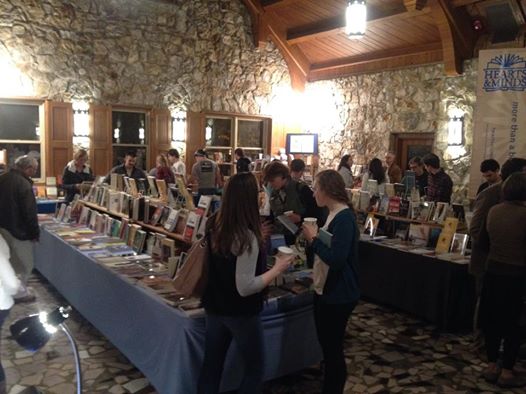
12 Brand New Books, Briefly described. ALL ON SALE for Hearts & Minds’ BookNotes readers

Here are some fairly short, if not quite pithy annotations of some great new books. Most are brandkeep-calm-and-smell-all-the-new-books.png new and I’ve only skimmed them, enough to say that they all deserve more then pith, even more than brevity. I’m too busy, though, for much more, now, but these are so good, I just had to tell you that we have them here in stock, on sale for BookNotes readers.  

We show the regular retail price, but will deduct the discount when you order.  As we say at our order form page, we can send you a bill so you can pay later by check, if you’d like, or you can use credit cards. Your digits are safe as our order from page is certified secure.

So here ya go.  We are awaiting your reply.

TThe Bible Tells Me So- Why Defending Scripture Has Made Us Unable to Read it .jpghe Bible Tells Me So: Why Defending Scripture Has Made Us Unable to Read it Peter Enns (HarperOne) $25.99  Not too many professional Bible scholars have such deep history in places like an evangelical Christian college and Westminster Theological Seminary, where Enns was edged out having taught there for 14 years, as well as the more mainstream Jewish and liberal Protestant scholars at Harvard Divinity School where he was profoundly tutored about what to do “when the Bible doesn’t behave.” And none are as witty and entertaining as Enns as he walks us through the Bible’s big problems (Canaanite genocide, just for instance) and how to best understand them all.  Rachel Held Evans says it is a “game-changer” and Brian McLaren says it is “super-enjoyable, highly informative, disarmingly honest, and downright liberating.” Tony Campolo writes, “I, as an old-fashioned evangelical have some problems with what he has written, I think that many other readers will find answers to some of the most perplexing questions that they have about the Bible.” 
I love that he starts with a useful excerpt from C.S. Lewis (from Reflections on the Psalms on how to read the Bible.) It’s a small thing, perhaps, but I also loved the cleverly written acknowledgments, and his own story, “My Life, In Brief, and Such as it Is.” If his Bible teaching thing doesn’t pan out, maybe he could moonlight as a stand up comic.  He’s told us he already failed at baseball.  Agree or not, he’s right that we simply have to come up with better ways to read the Scriptures, and to be read by them. This is an upbeat books about a life-or-death matter, and we recommend it.

Sshrink.jpghrink: Faithful Ministry in a Church-Growth Culture Tim Shuttle (Zondervan) $16.99 Listen to what Stanley Hauerwas of Duke says of this brand new book: “Church growth strategies are the death gurgle of a church that has lost its way. Suttle helps us see how God in our time is making us leaner and meaner. I hope this book will be widely read.”  Who writes a book blurb like that, wanting us to be “leaner and meaner”?  Ha!  Intriguing, eh?  

You may know we are bringing C. Christopher Smith (author of the fantastic Slow Church to D-town November 5th — more on that later) but here is what Smith says of this new book: “Shrink is one of the wisest and most significant evangelical books that I’ve read in the last decade; it is essential reading for every pastor and church leader!”  Wow, that’s quite an endorsement for a significant author and cultural critic. You may have heard the phrase “good to great.” Shuttle maintains that “great may not always be good.”  You may know that, or maybe this is a new idea.  Surely you know that there is often some kind of tension between quantity and quality, and that church shouldn’t be mostly about numbers.  I bet you need this book!


Tsacred year banner.jpghe Sacred Year Michael Yankoski (Nelson) $15.99  All right, I’ll admit it, I was drawn to this because of the cover.  Yankoski is an energetic speaker and his book about living with the homeless — Under the Overpass — is fantastic: clear, passionate and inspiring. He received his MA at Regent in British Columbia and is a novitiate Oblate of St. Benedict, which is pretty cool. Here is what it says on the lovely front cover: “Mapping the Soulscape of Spiritual Practice — How Contemplating Apples, Living in a Cave, and Befriending a Dying Woman Revived my Life.”
This memoir of a year’s experiment just may be the most fascinating, and insightful, book about spiritual practices I’ve ever seen.  Dear Phyllis Tickle says “This book is a joy to the soul and a delight to the heart. It is destined to become a classic within the genre of contemporary spiritual and religious writing.” 

TThe Making of An Ordinary Saint- My Journey.jpghe Making of An Ordinary Saint: My Journey From Frustration to Joy with the Spiritual Disciplines Nathan Foster (Baker) $14.99  We know Nathan is a storyteller — he wrote a captivating, raw book about the growing distance he felt from his famous father (Richard Foster) and the subsequent disillusionment about Christianity he faced as a troubled young adult, and how he wisely challenged his dad to hike a bunch of Colorado mountains with him, in a last-ditch effort to restore their relationship. (That was the very nice Wisdom Chaser: Finding My Father at 14,000 Feet.) I heard the two of them do a splendid, entertaining tag-team talk at the Calvin College Festival of Faith and Writing last spring, and have been waiting for this book ever since.  In a way, this is a second generation Celebration of Discipline as the hip, young son tells of his own frustrations (and restorative glories) of practicing the classic spiritual disciplines. Ruth Haley Barton says it is “Delightful…. simply delightful” and Eugene Peterson says “Read this book and find yourself a new companion as you follow Jesus.” Yeah, that’s it. He is a honest, ordinary, reliable companion.  Richard Forster, by the way, offers a nice foreword and good reflections throughout. 

PPresence and Encounter- The Sacramental Possibilities.jpgresence and Encounter: The Sacramental Possibilities of Everyday Life David G. Benner (Foreword by Richard Rohr)  (Brazos Press) $15.99  I am really drawn to these kinds of books, about the spirituality of the ordinary, the mystical embedded in the mundane, practicing the presence of God and so forth.  Some are truly luminous, beautifully done and so very helpful. I am sure that this book — inspired by the author’s early confrontation with the “I-Thou” worldview of Jewish philosopher Martin Buber — will help us realize that attentive presence is what allows for real encounters to occur. As it says in the advanced promo: “Drawing on over thirty-five years of experience integrating psychology and spirituality, Benner examines the transformational possibilities of spiritual presence and encounter in fresh, exciting, and practical ways.”  There are end-of-chapter reflection exercises for individuals or groups, and these are profound and experiential (that is, not just discussion-based study questions.) This is a bit deep, and may be important for those longing for greater discernment about God’s presence in their daily lives.



Yes or No: How Your Everyday Decisions Will Forever Shape Your Life Jeff Shinabarger (Cook)yes or no.jpg $15.99 I hope you recall how we raved about Shinabarger’s previous book about a more simple — and creatively generous — lifestyle (called More or Less: Choosing a Lifestyle of Excessive Generousity.) In a way this new one, Yes or No, travels similar territory, invites us to think our deepest motivations and how we can be more of who we really want to be. This is more than a simplistic self help book, but it is exceptionally practical. There are good chapters here, explaining how to assess our natural decision-making styles, gaining tools to define our own philosophy of choice, and even how to engage a team or group with targeted discussion questions.  This really is fascinating.


Check out www.yesornobook.com and come back and order this from us.  After you ponder the decision, of course.  It could shape your life forever, after all.  Ha-ha. But, I don’t think I’m kidding — Jeff makes a strong case about how decisions have huge implications, and how to make them well.  Do consider this; I trust this guy a lot, and admire his energy and insight, his storytelling and his clear teaching.  I am sure there are those who would benefit greatly from this visionary, but wise assistance.


RRed Brown Yellow Black White.jpged Brown Yellow Black White: Who’s More Precious in God’s Sight? A Call for Diversity in Christian Missions and Ministry Leroy Barber with Velma Maia Thomas (Jericho) $26.99  I have been with Leroy on several occasions and just love him — he’s real, funny, dynamic, caring, and a true leader, bringing together folks to care about racial justice, wholistic ministry, urban renewal and more. He told riveting short stories of urban youth and how Mission Year communities work for renewal in their lives and in their neighborhoods in the creative small book,New Neighbor, and then wrote a more general book which I adored called Every Day Missions. (If you haven’t used that in your small group or book club, it works really well.) 
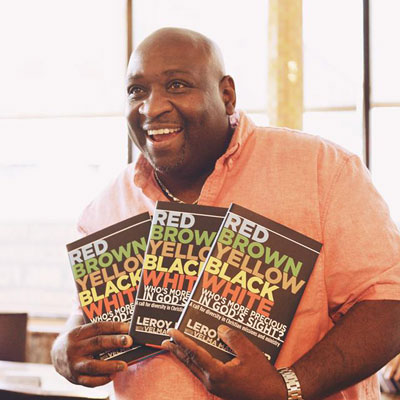
In this new RBYBW, Barber examines racial issues, especiallleroy-barber.jpgy within US ministries, and the implications of our racial dysfunctions upon who ends up taking up mission projects, domestically and globally. I think this may end up being a much-discussed, very significant book as it brings some things together about multi-cultural diversity and racism and missions that no other book has yet done. If you are in any para-church organization or mission agency, especially, it is simply a must-read — the sooner, the better, too.  As Jim Wallis says, “It is the start of a much-needed conversation on diversity in missions leadership from a man who has lived out these ideas in his own life in an exemplary way.”  Ground-breaking, yes, but with practical, action-oriented solutions. Let’s spread the word on this so the those who need to grapple with it learn about it.
LLoving Our Enemies Jim Forest.jpgoving Our Enemies: Reflections on the Hardest Commandment Jim Forest (Orbis) $20.00  Those of us who have been involved in peacemaking ministries or anti-war activism know well the name of this author; he was an international leader of Fellowship of Reconciliation, a long-standing, vivid activist and advocate for nonviolent resistance, and wrote what some still think are the best biographies of both Dorothy Day (All Is Grace: A Biography of Dorothy Day) and Thomas Merton (Living with Wisdom: A Life of Thomas Merton.) I met Forest years ago, and admire his courage and depth and ecumenicity. He is now an Orthodox Christian (and has written a few good books on icons, too), living in the Netherlands. I am sure this will be very, very moving, insightful, a mixture of deep spirituality, Biblical study, and a bit of savvy public theology.  Rowan Williams says it is “a statement of the gospel challenge and the gospel hope so clear that it is frightening; this is real, this is possible, this cannot be written off…”  Even if one isn’t drawn to the bigger social issues of the day, all of us must learn to forgive, after all, and this certainly is a very helpful guide. 


OOccupied Territories- The Revolution of Love From Bethlehem.jpgccupied Territories: The Revolution of Love From Bethlehem to the Ends of the Earth Garth Hewitt (IVP) $16.00  This surely deserves a more substantive review, but for now you may know that Hewitt was a British evangelical folk/rock singer, doing thoughtful, engaging Christian music with friends of his such as the late Mark Heard and other socially conscience faith-based troubadours. (Has he ever played with Bruce Cockburn? I wonder.) Hewitt has worked for the Micah Trust traveling all over the world as a storyteller and advocate for just solutions to some of the world’s most grueling problems, and has written widely, and beautifully, including liturgical resources for peace and justice.  I have a friend who knows him well, who worked on this manuscript a bit, and who assures me it is one of the best books in many a year! 

If you were inspired by our program last month with Jeremy Courtney and his book Preemptive Love, or have any interest in the tragedies unfolding in the Middle East, this would be a very useful, very poignant, very important follow-up.  Highly recommended. A beautiful cover design too — this is a very special book.

Ooverrated banner.jpgverrated: Are We More in Love With the Idea of Changing the World Than Actually Changing the World? Eugene Cho (Cook) $15.99  I could hardly put this down, and could hardly stop grinning, so glad to hear an evangelical leader say this mature, wise, honest stuff about the recent rhetoric about changing the world, transforming the culture, serving the poor, et cetera, et cetera. (And, might I add, honest about his own foibles and lifestyle, motivations and family life.) The subtitle — Are We More in Love With the Idea of Changing the World Than Actually Changing the World? — says it all, but you will want to be warned that the author (who not only is a pastor but the visionary founder of One Day’s Wages) does in fact, want to change the world. His organization works to alleviate extreme global poverty and Cho does want to recruit us to make choices in our own lives to be more giving and active, more Christ-centered and faithful in our service to others.  There’s a cool foreword by Donald Miller, too, but listen to these blurbs on the back, with which I heartily concur:
I read every word and pondered what I read. Overrated challenged and chastised me, inspired and energized me. I highly recommend it.    Lynne Hybels

Eugene Cho shatters all our hipster coffee-shop talk of justice and dares you to dive into the trenches and do something real with your life.    Shane Claiborne

I encourage all believers to read Overrated.      John Perkins

called.jpg

Called: The Crisis and Promise of Following Jesus Today Mark Labberton (IVP) $16.00  This compact hardback is a gem — a small book elegantly written and exceptionally thoughtful and deeply moving about “first things.” It is not a rehash of the doctrine of vocation and calling, nor is it particularly about the interface of faith and the work-world as are many books with the word “called” or “calling” in the title.  This really is about how to live as followers of Jesus, written by a hero of many, a long-standing Presbyterian pastor (at the storied and vital First Presbyterian Church (USA) in Berkley, CA), active ministry leader (having served with the John Stott Ministries and more recently as a Fellow of the International Justice Mission) and who is now the President of Fuller Theological Seminary in Pasadena. Blurbs on the back are from very respected writers, Andy Crouch, Soong-Chan Rah, Gary Haugen, Ruth Haley Barton, who all rave, recommending it to one and all.   

As Andy Crouch puts it, “Too often we settle for a ‘calling’ that is really just sanctified individualism, paddling in the shallows of the self. This book pursues the deeper questions of flourishing, sacrifice, community and transformation that are the heart of the Christian life.” 

TThe Pilgrim's Regress Wade Annotated Edition .jpghe Pilgrim’s Regress – Wade Annotated Edition C.S. Lewis; edited and introduced by David C. Downing (Eerdmans) $25.00 Wow! C.S. Lewis fans have been wishing for a volume like this for decades, and when word was out that this was in the making, it has been eagerly anticipated. It is a needed book, and will help enhance many a perplexed reader.

As Alan Jacobs (author of The Narnian: The Life and Imagination of C.S. Lewis) says, “Among all of C.S. Lewis’s books, the one most in need of annotation is The Pilgrim’s Regress, which fairly bristles with allusions to writers and ideas, some ancient, some recent, some famous, some obscure. It takes a learned and discerning scholar to tease out all these references. Fortunately, David Downing is just such a scholar, and this book is an outstanding contribution to Lewis studies.”

Lewis’s allegory, a nod to Pilgrim’s Progress, of course, is the first book Lewis wrote after becoming a Christian and some appreciate it as a personal window into his own journey “from cynical atheist to joyous believer” (as Devin Brown puts it.) Brown continues, “It is no exaggeration to say that David Downing’s superb annotations allow those of us who do not share Lewis’s vast philosophical, literary, and linguistic background to understand and enjoy this classic work in a way that was not possible before. A must for all Lewis fans.”


Lewis himself, it is interesting to note, wrote later in his life of the “needless obscurity” of this early fiction about important ideas.  Later, he added notes and a new preface; Dr. Downing happily uses these, and has done even more, explaining it all, making it accessible, clarifying and opening it up for us all.  

As the preface tells us,

This edition of The Pilgrim’s Regress, produced in collaboration with the Marion E. Wade Center of Wheaton College, contains nearly five hundred page notes, including definitions of unusual terms, translations from a half-dozen foreign languages, identifications of key characters, and cross-references to other works by C.S. Lewis…. Lewis’s own handwritten notes in an early edition of Pilgrim’s Regress are set in boldface in this edition…

In a fascinating introduction Downing invites us to revisit “Lewis’s inaugural work of prose fiction and to see it with new eyes.” 

He writes,

Apart from its intellectual acuity and spiritual perceptivity, Regress also reveals the imaginative vitality and sparkling prose that would eventually make Lewis an author of worldwide renown. Despite its limitations, which Lewis himself recognized, The Pilgrims Regress remains a seminal text for readers of Lewis — a rollicking satire on modern cultural fads, a vivid account of contemporary spiritual dangers, and an illuminating tale for a whole new generation of pilgrims.

Three cheerios for this large project, this good work, for David Downing’s dedication, and for Eerdmans’ lovely new slightly over-sized, hardback edition at such a reasonable price.  By the way, Eerdmans has also re-issued the excellent collection of Lewis essays (often over-looked) Christian Reflections in a paperback with new cover art, matching this new edition of Pilgrim’s Regress.  They look nice together…

BookNotes

SPECIAL
DISCOUNT
ANY ITEM MENTIONED

20% off
order here
takes you to the secure Hearts & Minds order form page
just tell us what you want

inquire here
if you have questions or need more information
just ask us what you want to know

                   Hearts & Minds 234 East Main Street  Dallastown, PA  17313     717-246-3333

CD REVIEW: Winnowing by Bill Mallonee ON SALE – $15.00


Our tears they speak a language that’s uniquely all their own… “Dover Beach (Out in the Cold)” on Winnowing Bill Mallonee & The Darkling Planes

In his splendid theological study of
literature, Frederick Buechner uses as the title a famous linespeak what we feel Buechner.jpg from Shakespeare’s
King Lear: Speak What We Feel, Not What We Ought to Say. In another book —
I mentioned it in my BookNotes list of books about evangelism last month — Buechner’s
title is golden: Tell It Like It Is: The Gospel as Tragedy, Comedy, Fairy Tale.  He explores the characteristics of
these genres and shows how the gospel story itself can be described in these
enduring forms.

Music can help us “speak what we feel”
perhaps more viscerally than novels. 
As I wrote a few days ago about Beverly Lewis’ lovely visit to our store
to speak of her new Amish novel The River (Bethany House; $15.99) — which has some dark currents
sweeping through it — I did some free association to link it to Bruce Springsteen’s
anguished song “The River.”  Talk
about speaking what we feel, about redemption somehow coming in the form of
tragedy. “Is a dream a lie if it doesn’t comes true, or is it something worse?”
 Most, but not all, evangelical “Christian
fiction” ties things up pretty nicely, almost unable to host Springsteen’s
question (even though the Bible offers these very sorts of questions!)  Now, I’m glad there is reconciliation
at the end of Lewis’ The River and – spoiler! – that a
modern bit of technology, a pacemaker, is involved.) This is helpful and
inspiring and has its place in one’s reading diet.

But some of our best artists know that
the life is hard, and they help us cope, not with easy answers about the human
condition.  I hardly need to say
it, but that life can be a trail of tears is also true for people of faith (perhaps
especially so for people who have tasted glory and trust God’s promises and
seek real joy.) Need I really say that it is good to be honest about our
doubts? Does your throat not quiver when you sing that line “I’m prone to
wander, Lord, I feel it”?  We don’t
need to valorize or romanticize our pain or foolishness, but it does help to
give voice to our disappointments and troubles, to read books and listen to
artists that walk the dark side of the street, who tell it like it is. They
help us speak not what we “ought” but allow us to berumours of glory memoir.jpgkicking at the darknes.jpg honest about our own fears
and foibles, living as we do in a very broken world.

Brian Walsh has written brilliantly
about this – see his meditation on Bruce Cockburn’s “If I Had a Rocket Launcher”
alongside Psalm 137 in his “Wine Before Breakfast” sermon
.  Perhaps you should read this, first, a short meditation on “Exile, Song, and Rage.” In fact, you could
read his whole book about the prophetic imagination of Cockburn in his
remarkably generative study Kicking at the Darkness: Bruce Cockburn and
the Christian Imagination
(Brazos; $19.00) which I describe in detail,
in a long review, here.
 

(Big aside: Cockburn’s hefty auto-biography
called Rumours of Glory: A Memoir is coming out from HarperOne
($28.99) the first week of November, and we are taking pre-orders for it, at
20% off. It is sure to be provocative.  There will also be a
commemorative boxed set selling for something like $150.00 which includes all
the songs Bruce mentions in the book, in order, making it a 9 disc soundtrack.  The admittedly pricy boxed set also
includes 16 previously unreleased or rare tracks, a 90 page booklet,
photographs, and a full live concert DVD film during his “Slice O Life” tour.
We’ll have it on sale, too. Send us a note for more info.)

Which brings me to my review of the
harrowing new Bill Mallonee album.  Almost.

Look. I am a huge, huge U2 fan. We carried
Boy and the others when we first
opened in ’82, U2 Songs of Innocence.jpgright, alongside Petra and Amy Grant (and, yes, all of Bruce
Cockburn’s catalog) and we took great joy in introducing many folks to the
boys from Dublin’s early work, and continued to stock all they’ve done. I am
still just blown away by nearly every album – yes, I love Rattle and Hum and yes, I am even moved by some of the hyper-irony
of the electro-weirdness of the Zoo TV
years.  I saw them in Philly during
the Joshua Tree tour when Springsteen
showed up.  And I can’t tell you
how many times I’ve just wept and wept listening to that sad list of names at
the end of “Walk On.”  Haven’t you?
How can you not?

Bwinnowing cover.jpgut I just can’t write about the new
iphone Songs of Innocence release because I am
absorbed in listening over and over to what has become my favorite album of the
year — the incredibly poignant release by the tell it like it is, speak what we
feel, gospel as tragedy Americana/rootsy graveling desert beauty of Bill
Mallonee and his new record Winnowing created with his musical partner and wife, Murriah Rose, singing together as the Darkling Planes.

To distract me from a new U2 album is
quite a feat. And Bill and Mariah do so, mister.
 

I find it hard to review music. I can explain books, but it is difficult
to capture the aural experience of music, those wailing Rickenbacker guitar
solos, those acoustic chords that bring to mind “All Along the Watchtower” but
aren’t that, that crisp moment when a syllable is hit in falsetto, that whispered
one-two-three-four that launches so quickly the next track, that time when the
loud harmonica merges with the wailing electric guitar, and we don’t quite know
which instrument is which.  

We shouldn’t separate the lyrics from
the music, the timbre of the vocals, the whine, and thebill Mallonee from Winnowing cover.jpg shout and the whispers,
the instruments, the arrangements, the production and engineering;  as we talk about records, we must
remember that the words are part of songs. But how to tell you about it, entice
you to listen? For those that don’t know Bill’s large body of work (50 + albums,
most now available as downloads, some as real CDs, this new one even available in vinyl) I think
the closest comparison to put you in the ball park of the sound is Neil Young,
with moments of Jackson Browne at his best, maybe Tom Petty. (And, oh, how
Bill’s voice ends each time in the chorus of “Got Some Explainin’ to Do” sounds
so much like Neil!) The fuzzy guitars, the distortion that is so gripping, the
high and lonesome beauty given a rock and roll edge. it is very, very moving
for those that appreciate that school of alt-rock.  You can hear tons of his songs for free at his Bandcamp site which I show below.

My own tastes include artists in this
very orbit: Robbie Robertson (and the entire catalog of The Band) and CSNY
and Mark Knopfler, Jackson, and Americana stuff, channeled nowadays by the
likes of The Civil Wars, Mumford & Sons, the Avett Brothers.  And did I mention Rattle and Hum? I appreciate smart, writerly indie bands from The
Head and the Heart to The National, The Airborne Toxic Event, and older school
passionate singer-songwriters like Peirce Pettis, Phil Maideria, country-ish
Buddy Miller. Bill is louder and rougher than Iron and Wine and Fleet Foxes,
but I had to mention them. Can you relate?

bill mallonee hand tattoo.png

If you like rowdy, electric finger-picking,
fuzzy, jangly, Byrds-like soaring guitars, and vocals that can at time nearly
be called Dylan-esque, you should pick up Bill Mallonee. Founder and front man
of the stunning Vigilantes of Love, they were hot in the glory days of the
Athens, Georgia music scene, preaching the gospel in harsh, acoustic songs with
punk energy, allusive, dark lyrics, deep in the club scene that gave us REM
and the Indigo Girls, drawing insight about faith and songwriting from the
likes of the late great Mark Heard.

REM’s Peter Buck co-produced a critically
acclaimed album, Buddy and Julie Miller joined in occasionally, the world-class
alt-country legend Emmy Lou Harris did background vocals. Paste Magazine declared him to be one of the top 50 songwriters of
all time. VOL days long behind him, his output continued for a decade or two of
being on the road, putting out downloadable, low-fi, self-produced mostly
acoustic WPA series all with artwork cuffed from the old Works Projects Administration
(renamed in 1939, Bill might tell ya, as the WPA) of FDR.

Bill has always had this sense of being
rooted in the past. From songs
about the dust bowl toaudible sigh cover.jpg songs inspired by Jack Kerouac, from allusions to miners

or farmers (one great album, just for instance, is called Victory Garden) or historical incidents (“Andersonville” about the
horrific southern civil war POW camp still sometimes shows up in his live
shows) or several utterly romantic songs about the WW II-era romance of his
parents, he, more than nearly any folk/rock performer I know, can be called
rooted (even if his roots too often have him on the road; in a line on Winnowing he says “once I mistook her
for my home.”) Just look at that album cover from Audible Sigh, that historic train wreck.  

This may not be the old-timey roots
music with a lot of banjos or Appalachian fiddles, but the sound and tone and
lyrical allusions are often from other very American decades, from hardscrabble
people and places from the heartland. (The way he often says, about somebody, “kid”
or “mister,” sounds like some wiser blue-collar elder talk, doesn’t it?) Again,
think of the Steinbeck vision of Woody Guthrie, more fiery then Springsteen’s Dakota, maybe more like his Seeger
Sessions.

WINNOWING

In this new record, set clearly in his
high desert home in New Mexico, Mallonee mentions horses, a pick-ax, pistols under waistcoats, a skeleton key, a boxer (who “grabs all the prize money – and a few other
things”) and somebody with “an ace of diamonds up the sleeve” which somehow
perfectly creates the feel and mood of this song cycle about being down and out,
tumbling down out West, smack in the middle of (as the second song puts it) “Those
Locust Years.”

“There’s nothing left in Oklahoma,” he
sings in “Tap Your Heart On Your Shoulder,” “on your right hand or your left/ we
took God’s good green earth and turned it into sand.” Yeah, so that’s it, a
whole lot of remorse, for the loner who has to move on, and, it seems, for the
whole cosmos which is scarred, somehow, and what approaches despair.  But yet, this song is a plea to “tap
your heart on its shoulder and see if she’s still awake.”  Listen to that line a coupla times if
you don’t have time for a spiritual retreat or money for a shrink! 

Bill’s not giving up, and in this
jaded, secular age, he is nearly an evangelist, worth more to un-churched ears
then a dozen slick worship bands with goatees and nicely torn jeans and big
amps.

The first song is sublime, and, like
nearly all of his tunes these days, insists on a lot of harsh reality, but with
glimmers of light. The song is subtitled “Out in the Cold” and that is the
theme.  It is his life, these days,
road-weary, world-weary, tired but sober, feeling under-rated, left out, yet
committed to finding hope where one can. (“No, I am not a scoffer withholding
my thanks,” he sings, believably, “My purse? It is empty but my heart overflows
its banks.”) The proper title of this wonderful opener is “Dover Beach” and is
inspired by the famous Matthew Arnold poem about the restlessness brought on as
the waves of meaning receded in the modern world.

I can show you where my heart was broke there on Dover
Beach

Truth receding like a wave/too farther out of reach

Love may bring the tide back in/hard to live, easy to
preach


Mr. Mallonee’s raw song-writing and
passionate performance isn’t exactly depressing although he does confess much,
a practice that many of us might be well be instructed to own up to, as
well.  He sings,

Every conviction that I lived by, every truth that I was taught,

Every sermon that I sat through; well, it was all for naught.

I was always pretty bad at carryin’ my cross


Abill mallonee and murriah in concert.jpgnother slow, sad song achingly, but
yet somehow beautifully sung, offers the chorus, like a litany of confession —
“Now You Know.”  Perhaps it is more
than you want to know.  Or perhaps
it can serve as your own confession, too. 
“I can feel it all disintegrate/like paper in the flame.”  This is a line, by the way, following
an allusion to the pride of warriors – Caesar on his steed, crossing his
rubicon.

After speaking of the “sadness of this
place” (“Deserts speak in whispers but she rarely shows her face/ They say that
you get used to it, ah, but I’ve not found that the case”) he sings, “No matter
where I sing these songs/the devil’s always at my sleeve.” Now you know.

Speaking, literally, of the devil, one
brilliant song – for those that know his work, it almost reminds me of “Bolt
Action” or some of the louder ones from the Blister Soul-era  – is called “Got
Some Explainin’ to Do (Gotta Give the Devil His Due.)” The stanzas (without too
much gruesomeness, thankfully) highlight examples of brokenness and sin in the
world: “No matter what the disguise is, well ya gotta give the devil his due.
But whoever he is, has got some explain’ to do.”  That’s for darn sure.

He gets as preachy as he does on this CD at the end of this song,
countering the works of the devil with this cry:

Time for banishing darkness

Time for doing what is right

Time for loving the planet

Time for stepping into the light.


Winnowing isn’t
all lament and remorse, though. There is a lovely song about what I’m sure is a real tavern, somewhere
out there, called the Dew-Drop Inn. “Store-front glass & red brick, non-descript with a few old ghosts
roamin’ round.”  But there, “every
one’s yer friend and everybody’s got a story unsung.”  There’s some sad stuff there, too (“Sam’s tending bar,
brother, he’s seen it all, seen the good die young” and their the community can
realize “Some dreams get born but, most get beaten’ out /And some folks forget
how to dream at all.”) But, yet, “Stories got told and drinks were poured and
for a moment? It was Heaven here…” 

As in many of his songs, there is this
narrative of the broken and ordinary redeemed byBill and Murriah.jpg community, even if of misfits,
and then also his own personal sense of being loved. The sub-title and refrain
here is “I love you just because.” Is it sung to his wife and band partner
Murriah Rose or to the loners and oddballs hanging out at the Dew Drop?  Maybe both.

Similarly, in a beautiful, passionate
song, “In the New Dark Age” he sings — lamenting the loss of a culture of love and hope and change — “the
only lamp burning bright/is you.” Murriah? Jesus? You and me? I don’t know.  He sings the words briskly, building
the case, singing, “the game was declared over, love was escorted out, there was hardly
a shout/I’ll take the crimson & clover.” (Don’t you love that reference to
the flower-power, Tommy James hit?) Dark as it may sound, this is a rowdy, fun
song, Beatle-esque, trippy with organ and what almost sounds like backwards electronic
stuff, like it would fit on his wonderful Locket Full of Moonlight album or
VOL’s Summershine, two of my own all time favorite CDs.

He says, wrongly, I think, “in the new
dark age, no one puts up a fight.” 
Ahh, but he does, doesn’t he? — even if he will go down swinging. Mallonee’s art
testifies, bears witness to his fight. This record makes you want to join him there, makes us want
to be that light burning bright. Is it a plea to his remaining fans? An altar call?  “All the dominoes fell/we sent under a spell/and all hell.
broke. lose.” It is a lament, but also an invitation to be the light, I swear it is.

“Hall Full of Mirrors/Room Full of Woe”
sounds ominous enough, but, I’m telling you, it is an encouraging song, great
melodies, great ringing guitar riffs, evocative lyrics.  It’s one of the more upbeat tunes,
despite the use of the word “woe” — and well-produced (Bill and Murriah as the Darkling Planes play
everything) and it is splendid. The acoustic guitar at the end trails out with
chords from “All Along the Watchtower” that just seals the thing, turning it into an
anthem.  Yeah, yeah, yeah.

desert.jpg

Several reviewers have highlighted the
gorgeous “Blame it on the Desert (Whisperin’)” which is surely one of the album’s
centerpieces.  In bouncy,
countrified boogey he sings,

What the mystic knows

What the Good Book does proclaim

You only ever own

What you give away

Blame it on the spirit

Blame it on the red wine

But then again,

Blame it on the desert whisperin’


Mr. Mallonee then sweetly sings a quick
line, “the mantra of the asphalt/road-side diner, communion table” and
reminds us of the Christ-like instruction “take only what you need/leave what
you are able.” We are naturally led
to think of the wine of Eucharist, of grace, of gospel.  Or, then again, maybe it is just the
desert whisperin’ — which the Bible itself says is God’s own Word, eh? 
(Calvin Seerveld, referring to the lines in Psalm 19 which tells us that
the creation speaks, calls it “God’s glossalia.”) Yes, Bill has heard, and
brings to us, The Word of the Lord. Thanks be to God, the God of the desert
whisperin’.

When Bill sings “what the Good Book
does proclaim” it makes me grin, brings me a joy each time.  Not only is “the Good Book” an old,
rural colloquialism, the “does” just nails it.  Who talks like this – Abraham Lincoln? Woody Guthrie? Your
great grandma?  Yet, it isn’t
affectation.  Bill is firmly
situated in the current century – there are lines about duo-jets and
the 1%.  But he’s also “betting the
farm, babe” on some kind of old wisdom, some deep truth gleaned from his
desert, dust-bowl (locust) years. 

The last song may be an allegory, or
may serve that way – I suppose he didn’t quite mean it as such, but, then again, who knows?
The first line is, with his keen ability to create the image of a place,
about a town in Oklahoma called Dalhart.
It sounds just like dull heart.

“If I ever make it out of Dalhart/to a place where I can stand tall/a
horse would do quite nicely/but if I have to…I’m gonna crawl.” 

This is one hell of a post-modern Pilgrims Progress, from Dover Beach to
making it out of the dull heart of Dalhart.

It is the journey of many of us, I
suspect. He sings, obtusely, of what may be the “hound of heaven” (the poet’s
phrase he has used on other albums) singing  “whatever keeps tugging at your sleeve/this old flesh and
blood has gotta find a reason to believe.”  Maybe this is your experience; Something tugging at your sleeve, Christ-haunted, restless,
yet not giving up on the search. Give Winnowing repeated listens, and something will break open.  Maybe, with a little luck, even what
the mystics know, what the Good Book does proclaim.

Thank you for reading my feeble effort
to explain this artist’s gifts to us, this music that means so much to me.  Because others have said it more
eloquently and with better insight, if you’re interested, see these two excellent
reviews from Wood Between the Worlds and from Lay It Down. Both are well worth reading.

Here is one of his many interviews, describing his history with VOL, his solo work, his concerns about the commodification of art, etc etc. Worth a read if you want his take on the not so recent past.


We stock his last two similarly great, jangly, alt-country rock CDs as well, The
Power and the Glory
(2011) and Amber Waves (2012.)  Order them all from us, on sale, for
$15.00 each.  As Bill would say, “thank
you, ladies and gents.”

And, if you order all three, we will throw in as a special bonus, an old Mark Heard CD that is sure to please. Bill would dig this promo, too, I’m sure.

If you want to see his many, many downloadable projects, visit his amazing bandcamp cite, here. But buy these three from us, please! $15.00 each.

power and the glory CD Bill M.jpgamber waves CD Bill M.jpgwinnowing cover.jpg

BookNotes

Bill Mallonee CDs

order here
takes you to the secure Hearts & Minds order form page
just tell us what you want

inquire here
if you have questions or need more information
just ask us what you want to know

Hearts & Minds 234 East Main Street  Dallastown, PA  17313     717-246-3333

In-Store Author Appearance: Beverly Lewis promotes her new book, The River (And, yes, I give a shout-out to Springsteen and more.)


The River author Beverly Lewis (Bethany Publishing House) $15.99 BookNotes sale price 20% off; $12.79.the river banner.jpg

Although we’ve shouted it out on Facebook and Twitter, we
thought we should share here for those that were wondering that our “Evening
with Author and Activist Jeremy Courtney” went very well. Jeremy and his wife
Jessica, who features prominently in Jeremy’s book Preemptive Love: Nurturing Peace One Heart at a Time, did a great
job sharing with us about their brave work as peacemakers in Iraq, forging
creative collaborations with Arabs, Kurds, Christians, Muslims, Jews and
others… all focused on the audacious goal of finding a structural remedy to the
backlog of tens of thousands of sick Iraqi kids who need heart surgery to save
their lives.  The conversation
moved from dramatic stories and pictures of medical staff working in pediatric
surgery theaters to broader themes of peacemaking in such a tense and violent
context. 

Through stories and slides, pictures and even a live song (Jeremy
hails from Texas so his love for folkie blues music is strong) they humanized
the people and cultures of what was once the land of Babylon. Yes there is awful stuff going on, but there is also goodness and beauty.  Their stories were so good, and I thought of them when I read this powerful, splendid short piece at the High Calling blog by our friend Denis Haack called “The Power of Storytelling: From Understanding Ideas to Indwelling Them.”  

Iraq was, of course, once known as Babylon to whom Jeremiah wrote a famous letter (Jeremiah 29:7) from which we have the famous Biblical command to “seek the peace of the city.” Perhaps storytelling is part of that.

We had some lovely refreshments that Beth called “a Pennsylvania Dutch interpretation of Iraqi snacks” — Hadgi Bada, pistachio cookies, cardamom tea and stuffed dates were all fun to share. 

Our local newspaper, the York Daily Record, did a front page story the next day, too.

We have some autographed Preemptive Love paperbacks left, and ourpreemptive love.jpg on-line price here at
BookNotes has been 20% off. They usually sell for $15.00; our sale price is just $12.00.  Let
us know if we can send one. Just use the order form which is secure for credit
card digits, or give us a call.

Jeremy left Central PA and headed in to mid-town Manhattan to
tape an episode of of the talk show with Mike Huckabee; I hope the Preemptive
Love Coalition
lets their followers know when it will air. Then he was off to London to offer a briefing with members
of Parliament.  Pretty great, eh?

And so, thanks for caring about the things we do here at
Hearts & Minds.  I know some of
you prayed for us, and others pre-ordered the paperback. And some of you helped
spread the word to others who might want to order from us, or who might even be
able to attend.  I know some of our
friends and followers have contacts in our area.

***

On the heels of that, I’m going to ask you to share some new
information today, too, if it seem right.  Is there somebody to whom you could forward this?

We are hosting an autographing reception to meet and greet
New YorkBL head shot.jpg Times best-selling author Beverly Lewis, this Thursday (September 11,
2014) here at the shop, starting at 7:00 pm
.  There is free parking available at several lots nearby, and on the street in front of the store.

Her new book is called The River.

We have
enjoyed sponsoring a Beverly Lewis event before, and were delighted with how many
different sorts of folks enjoy her Amish-themed fiction.

As I said at the
Jeremy Courtney gig as I was announcing it – and I’m sure a few of my super
intellectual and sophisticated friends maybe thought I was reaching a bit to
connect the events – it seems to me that the heart of most of Lewis’
easy-to-read, breezy books are, in fact, of enduring, classic stuff: identity
(who are we? to what community do we belong?), hospitality (how do we relate to
others? who’s in and who’s not?) and can we get along despite our differences?  And what does it mean to know God’s grace and do right?

From Romeo and Juliet to the profound
work of Chaim Potok to Preemptive Love
(and, just to show off, I’ll add Exclusion
and Embrace
the heady, award-winning theological work of Miroslav Volf
written in the context of the Serbian-Croation war and Bosnian genocide) this is familiar and fearful, yet vital territory.  If part of the gospel is about showing
hospitality to “the other” and serving “the stranger” and working towards
reconciliation, certainly learning about those who have had to cope with
forgiveness after being excluded, shunned or betrayed, can only
be an asset to our discipleship. 

Even if it comes to us in a fun, stirring story.

AThe River cover Lewis.jpgnd so, we can suggest that although Beverly Lewis is a genre
writer and some may find her work a bit obvious with
the Christian messages and sentimental lessons learned, we are very proud to host her,
glad for her support of our shop, and eager to have you tell those who might
enjoy it, inviting them to swing by Thursday evening to meet her. She has an obvious care for her fans, and a heart to share the gospel through her storytelling and writing. Of course you may not know anyone nearby, but you can buy an autographed copy, here on line of almost any of her work — we’ve got it all.  We have plenty of her adult and kid’s
books, and we can easily have her autograph some for you or yours. (If you want them inscribed to a
person, just be sure to tell us the name, hopefully before Thursday evening!)

Beverly Lewis was born in the heart of Pennsylvania Dutch
country, but now lives (where she occasionally writes with her husband David) in
Colorado.  Her own mother’s
dramatic story of leaving the Old Order Mennonite tradition is told in her most famous book The Shunning which has sold more than one
million copies and was made into a Hallmark Channel movie. (In 2007 her similarly
popular novel The Brethren was
honored with a Christy Award.)

Here is a wonderful, enchanting video of Beverly briefly talking about her young years and her early love for writing, keeping a journal, doing short stories, and some of the early inspirations of her creative fiction.  It is very nice.

row of Bev Lewis books.jpg

Beverly Lewis has written over 25 adult novels, 6 lovely picture books, over 50 youth books, a cookbook, and more…

the river banner.jpg

The River is her newest novel, just released
last week. Beverly is doing a 25-stop tour to promote the new book and to have
the opportunity to meet her fans and readers.

We are pleased to host Beverly in part because she is so
gracious, and because so many of our local customers appreciate her books.  (One local Presbyterian leader is
related to her, and vouches that some of the landmarks and descriptions of the
homestead in The Shunning are spot on accurate!)

But I myself am drawn to this new story for a couple of
reasons. Let me explain.

Interestingly, a friend who is herself a sophisticated author
of non-fiction religious books offered a question just the other day at her
facebook page: are there rivers in America that we might consider holy or
sacred? (What does that mean, I asked, as I speculated about the iconic and
mythic role of the Mississippi in Americana roots music, which gave rise to gospel,
blues, and rock and roll, not to mention the title track from Paul Simon’s Graceland.)

Two things worth sharing:
scores of people immediately shared stories of their favorite rivers and why they
are spiritually attracted to them, revealing their own sense of place. This all was quite lovely and reminded me not only of
SPRINGSTEEN_RIVER_5X5_site-500x500.jpgWendell Berry and his novels that include a vivid sense of (rural) place, but
it also, oddly, brought to mind that powerful short story of a song, “The River,” by brother Bruce Springsteen. I can hardly listen (especially to the more raw, acoustic
versions) of that song without being overcome with anguish. The river may have some deep, good attraction for many, and maybe even some
redemptive meaning in the Springsteen story, but it ain’t easy, that’s for
sure; at the end “the river is dry” he it continues to haunt him.

One of my
favorite nature writers, Kathleen Dean Moore has a book called Riverwalking: Reflections on Moving Water whichriverwalking-reflections-on-moving-water-kathleen-dean-moore-paperback-cover-art.jpg exquisitely explores
the deep beauty of bodies of water and those who appreciate them. I can hardly think of rivers without thinking of that wondrous book. But, again, this excellent writer and serious thinker is aware of the foreboding nature of moving water.

Around here, rivers are dangerous
(especially our own mighty Susquehanna with sink holes and weird currents and deadly low-head dams.) Some around here who enjoy boating and
swimming in rivers travel the tributaries of the Susquehanna, and love the many
streams around these parts, including the namesake river alluded to in this
tragic Beverly Lewis tale, the Conostoga. The Conostoga River winds its way through Lancaster County like a snake,
twisting and curving in geologically surprising ways. 

The deadliness of the river in The River novel is not due to exceptionallyc creek.jpg bad currents or particularly
bad water features, though.  No, it
came from human error. We learn in the first few pages that the protagonist,
Tilly, who has long ago left the Plain life for modern English ways, is haunted
by a catastrophic accident in which her younger sister drowned, years ago, while
playing in the river.

No need to explain it all, but the plot of this, not unlike
many others in this genre, explores the tensions of broken relationships and
complex ethical dilemmas as two sisters – both no longer in meaningful
relationships with their Lancaster county Amish parents and siblings – feel
compelled to return home to an anniversary celebration of their parent’s
marriage.  Their father is sick and
they surely cannot remain aloof much longer.  But there is this unresolved sadness and responsibility for
what happened at the river. As it asks even on the back cover, “Can they face
the future in the light of a past they can’t undo?”

Aamish buggy.jpgmish folks with their rejection of modern technologies and

Anabaptist commitments and old order ways are – it seems dumb to even say it –
quite human. They are not caricatures.  Any fiction that tells a story from within a subculture – Iraqi Muslims, Jewish New Yorkers, 
duck hunting rednecks down South, hipster atheists in Pamish-clothes-sm.jpgortland — can run the risk of
devolving into stereotype, and good storytelling will be careful.  Lewis
runs this risk, of course, in this sort of writing that isn’t attempting
extraordinary nuance. But there are rich
aspects of typical Amish life, and she plumbs them well.  From “letting it all loose” during the infamous rumspringa seasons to the difficulties of offering forgiveness (see Donald
Kraybill, Steven Nolt, and David Weaver-Zecher’s Amish Grace and the sequel, The Amish Way) there are fairly universal human emotions at play, and
to write stories about those who are, or are no longer, within this close-knit
subculture is certainly fascinating. 

The River is not only about the consequences of this tragic loss
of a littleThe River cover Lewis.jpg one, and the large matter of regret,  but is also about mended fences, reconciliation, learning to
love across differences. Is the river a symbol of danger? Is it a symbol of the
flow of healing that can wash over us? 
Or maybe it is not a metaphor for much, just a huge geographic fact in
the background of this story set in a particular geographic region.

Anyway, I suspect you know about, and have opinions about,
this mass marketed genre of Amish fiction.  If you are a brainy type and want to know more, we heartily
recommend Valerie Weaver-Zercher’s important semi-scholarly work, Thrill of the Chaste: The Allure of Amish Romance Novels (Johns Hopkins
University Press; $24.95.) It studies the
development of the genre and wonders about the appeal. Her thesis is fascinating and her study
– of everything from the book cover designs to the plots themselves, to the
small sisterhood of popular authors in this field – is well worth reading for anyone interested in
the interplay of religion in American commercial fiction.

All of which is to say I’m in the middle of this brand new
book by Mrs. Lewis don’t want to spoil anything, but am eagerly awaiting her visit with us here at Hearts & Minds. 
If you want us to ask her anything for you, or want any books — early
Christmas presents for mom or grandmother, perhaps? — just let us know.

By the way, I was struck by the importance of the river in The River (which may be why I get paid the big bucks — tee-hee) and wrote most of the above before I noticed, just a bit ago, an “author’s note” as an afterword on pages 315 – 316 of the book.  

She writes, 

The Conestoga River captured my attention one October afternoon two years ago — it seemed to call to my heart. I was preparing for the final shoot of the long day, the last segment of my documentary, “Glimpses of Lancaster County with Beverly Lewis” [which you can see at her website.] We were set up right near the historic Hunsecker’s Mill Bridge, and I had walked down the grassy slope to review what I’d planned to say, inching my way toward the wide river. There, as I stared at the rushing water, Tilly’s story presented itself to me, as did little Anna’s drowning. In that moment I knew I had to write The River, with all of its heartrending yet redemptive threads.

I will long remember the surge of emotions, the power of the story. And the way the river seemed to demand top billing in my lineup of Eden Valley characters. 

BookNotes

SPECIAL
DISCOUNT
ANY ITEM MENTIONED

20% off
order here
takes you to the secure Hearts & Minds order form page
just tell us what you want

inquire here
if you have questions or need more information
just ask us what you want to know

                   Hearts & Minds 234 East Main Street  Dallastown, PA  17313     717-246-3333