I did my clever little intro in the last post, admitting that I’m not quite able to come up with that One True Best Book Of The Year. Not even a top ten list. Yet, I explain, we do want to give honorable mentions—I’d like to think a mention from Hearts & Minds is honorable, but some may disagree about that. Here, then, is PART TWO of our declarations of distinction for non-fiction books in the year of our Lord 2011.
As you can see at the easy to use links at the end we have these all on sale at 20% off.
THE PUBLISHING EVENT OF THE YEAR
 Four Holy Gospels Makoto Fujimura (Crossway) $149.99 We promoted this several times this year, and had the great privilege of being with Mako at his premier IAM Encounter event early in 2011. The abstract art is evocative and the illuminations are both ancient and yet very contemporary. The publisher reports that this is the first time a single artist has been commissioned to do an illuminated Bible portion in centuries. This deserves awards for the clear and accurate translation of the ESV, the good binding and print job, but mostly for this extraordinarily creative, lavish, and reverent art done in serve of the Word.
THE ALL AGES AWARD FOR BEST BOOK FOR ANY GENERATION
 The Next Christians: The Good News About the End of Christian America Gabe Lyons (Doubleday) $19.99 I must say this is one of the best books of the year for the sorts of things we most care about and the kinds of books we care to promote. It is easy to read, but not lightweight; it is thoughtful and provocative, but not weird or unusual; it is Biblically-rooted, faithful, and orthodox, but not hidebound or stuffy. This is a book for all kinds of readers and it does two great things. The first part is a good bit of important “finger to the wind” assessment of our time. Jesus advises us to be able to read the signs of the times, and Lyons does this well: he notes how the culture wars are nearly over, the notions of a “Christian American” losing cache in even evangelical circles, and how such civil religious assumptions are certainly irrelevant to today’s rising generation of Christian younger adults. He tells stories galore, offers just enough astute scholarship and footnotes, and in a few good chapters brings us up to the minute on where we are culturally. This itself is laudable–and, on a second recent reading, more important than perhaps I first realized. Great stuff!
The second half of Next Christians, though, is even better as Lyons shares his sense of how younger Christians see their life and times, what discipleship means these days, how being involved in the real world–living out Christ-like service by making the world a better place–is seen as central. Lyons is being, I think, a tad proscriptive here, telling us what we ought to be thinking, how faith ought to be construed as we live under the Lordship of Christ in all areas of life and he is spot on. However, he also is convinced this is the tone and vision of younger Christian folks, it is the heartbeat of the rising generation, the sort of activist folks he mets in his symposiums, his speaking at Christian colleges, those who read his award-winning website Q Ideas, or who attend his classy networking conference, sort of a Christian TED event, called Q. These specific shifts about which he writes beautifully—embracing ideas of vocation, of lived practices, of spirituality, of being culture-makers (not critics), of living in community, of making a difference—could largely be summarized by the term “restoration.” Younger adult Christians are taking their cue from some older leaders and edgy new books and the conversations happening all over the country insisting that faith is shaped by the whole story of God–Christ is redeeming His planet—and that influences how we engage the world, as agents of transforming change. We are called to be signposts pointing towards the restoration God is doing in the world. This is sweet stuff, radical without seeming pushy, exciting without being overheated, hopeful without naivety.
Do you mind if I shout about this a bit? This is truly one of the best books of 2011, a Hearts & Minds favorite, and an invigorating wake up call to us all—if this is, indeed, the direction the Spirit is moving (and I attest that it is) we should get on board. Join us in celebrating this good title, honoring this good work. Buy three: one for yourself, one for your church library, and one for anybody you may think that faith is stuff, out of touch or socially irrelevant. As your proper mother might say, warmest congratulations. As a younger reader might shout, “boo-yah!” Or as the kids say, ridiculous. No matter your age, you need this book. Buy. It. Now.
SMALL AWARD WITH GREAT LOVE
 Small Things With Great Love: Adventures in Loving Your Neighbor Margot Starbuck (Likewise/IVP) 15.00 I wrote about this recently, offering a long review gushing about this book, the joy it brings (it is a fun, fun read) and how well Starbuck writes. Beyond the zany tone, though, this is a very serious book, challenging. It pushes us, calls us, invites us, teaches us, shows us, how to reach out to others, how to see the alienation and poverty and sadness around us and to take up the vocation of being Christ’s hands and feet in this world of need. There is literally something for everyone (young marrieds? She has your number! Senior citizens? You can’t get out of this. either. Singles, men, women, introverts. left-handed plumbers from Idaho? (Okay, I made that last part up.) She has written this to be helpful, offering real insights along with the wit, and it offers such a valuable new vision of taking steps to serve the poor that it simply must be listed in this Best Books of 2011 list. Ours is a small award, and in some ways, this is a small book. Written with such great love. Yes!
A NOT NORMAL AWARD
 Folks, This Ain’t Normal: A Farmer’s Advice for Happier Hens, Healthier People, and a Better World Joel Salatin (Center Street) $25.99 The New York Times called him “the High Priest of the Pasture” (he was featured in several recent foodie documentaries, and was cited in Pollen’s Omnivore’s Dilemma.) I think of him and this remarkable book as less of a priest but, rather, as a prophet, denouncing the unsustainable and unhealthy way we think about food and where it comes from and how we get it. He’s a hoot and a half, a vibrant writer that makes very serious stuff very enjoyable to learn about. One reviewer said it well, that it is “as practical as it is reflective.” Highly recommended for anybody who eats.
BEST COFFEE TABLE GIFT BOOK
 Indescribable: Encountering the Glory of God in the Beauty of the Universe Louie Giglio & Matt Redman (Cook) $24.99 This nice
sized hardback printed on heavy, glossy paper, offers some of the most amazing photographs of outer space that you will ever see. Using the latest telescopes of the Hubble spacecraft, this shows the grandeur of the universe, the awesome glory of our home planet–even as it seems like a tiny speck of dust. Giglio is a passionate preacher, Redman a fine and thoughtful contemporary worship leader. Together they have given us a book full of theology and science, wonder and delight, a classy gift and a truly God-honoring, Christ-exalting, Spirit-driven look at creation. God is amazing to create such amazing things, and Christ is to be praised for entering our tiny little world. This is moving stuff, but alongside the enriching homilies is fascinating data, good stuff about science, and these wonderful, indescribably good pictures. There is a brief forward by Joe Tanner, one of the most accomplished NASA astronauts (who has logged over 1000 hours in outer space and has done space walks) and Dr. Jennifer Wiseman, an astronomer who is currently the Senior Project Scientist for NASA’s Hubble Space Telescope. Nicely designed, this is an award winner if I ever saw one. Congratulations to all involved in bringing such a fine book to our coffee tables.
A FULLY HUMANE AWARD OF GREAT HONOR: BEST NEW BOOK ABOUT WENDELL BERRY
 The Humane Vision of Wendell Berry edited by Mark Mitchell & Nathan Schlueter (ISI Books) $29.95 Any time there is a new book about Wendell Berry, it is cause for celebration. We have several good ones about him, a few real favorites. This could be the very best yet done, it is that good! It came out just at the end of the year and while we do not hesitate to honor it was our feeble little award, I haven’t read all the chapters yet. Believe me, I surely will—this is a truly provocative and fascinating collection, including some folks who really understand the agrarian populism ideals of Mr. Berry, linking him to a more conservative, Jeffersonian vision and rejecting the notions that only liberals who are against big business, say, should embrace him. (It does seem that conservatives have not paid as much attention to Berry as they might.) As the thoughtful editors of this extraordinarily rich volume note, “Berry’s work defies easy categorization and provides an alternative to the hackneyed left-right divide that typifies our national debates. In fact, Berry’s clear-eyed and deeply humane view of human existence offers a vision of the good life that is desperately needed in these uncertain and unsettled times.” You won’t believe the array of interesting writers, social critics, farmers, poets and theologians who have pieces here–including a few friends of ours! It isn’t every day we see Allan Carlson, Matt Bonzo, Anne Husted Burleigh, D.G. Hart, Rod Dreher, Wallace Stegner and Caleb Stegall — and many more — all together. One person quipped this is about conservatism, conservationism, and community. Anybody who labors to create a book this handsome, with such a range of voices, exploring with such depth, the writings of one of our greatest writers, surely deserves a distinguished honor. Maybe some more important source will give them a prestigious prize. For now, we are among the first to holler out from our small town that that this is an amazing, great book.
A BIG OL’ DELUX WASHING MACHINE AWARD: (GOTTA HAVE AN AGITATOR TO GET THE CLOTHES CLEAN)
 Love Wins Rob Bell (HarperOne) $24.99 I don’t know if Rob is an agitator, per se. I don’t think that is his intent. But I hope he’d relishe this award–an agitator in a washing machine does the job of getting the job done, and in this sense, he deserves applause for getting an important conversation started, for stirring things up, for rocking and rolling us all a bit. It is my belief that some bloggers overstated their criticisms and too many were unkind. I am equally sure that some folks too readily agreed with his position without adequately thinking through all the issues. But (I hope, I hope) most readers are thoughtful, wanting to be faithful and true, and studied the book with an open heart and critical mind. Most readers took him seriously, but perhaps with the proverbial grain of salt. By the way, if anybody out there is giving awards for anything, I think I deserve at least to be a finalist for contributing too many words to the blogging Bellapalloza the week the book came out. I stand by what I wrote—the call for civility, for critical engagement, for wide reading, for placing Love Wins in the context of Bell’s other books and the strengths and deficiencies of his brand of hip neo-evangelicalism. You can read my many posts about the book if you want, but know this: I think this is a great book to read, even if one doesn’t agree with it all. We are happy to sell it, although invite you to prayerful and honest struggle with what the Bible does and doesn’t say about all this, reading other resources too.
We have four or five books that are written in contrast to Rob’s book, including Christ Alone: An Evangelical Response to Rob Bell’s Love Wins by an author I very much respect, Michael Witmer (Edenridge press; $14.00) Mark Galli’s God Wins: Heaven, Hell, and Why the Good News is Better than Love Wins is a good reply, too, and I’d highly recommend it. There is a discussion guide in the back of that, too.
AN EVEN BETTER BIG Ol’ DELUX WASHING MACHINE AWARD: LAUNDROMAT EDITION (WE GOTTA HAVE A BUNCH OF AGITATORS TO GET ALL OUR THE CLOTHES CLEAN TOGETHER)
 The Love Wins: A Study Guide for Those Who Want to Go Deeper (HarperOne) edited by David Vanderveen $13.99 I hope you don’t mind my goofy analogy: yeah, it is clever to say we need an agitator in a washing machine (and how Bell’s book served as that agitator.) Get a whole bunch of machines together and it is a communal place for lots o washing, a laundromat. This study guide is kind of like that. (Okay, maybe it isn’t, but I’m in my awards show mood here, so bear with me.) As we said when we first got it in this volume offers overviews of each chapter of Love Wins, study questions, Bible verses, things to ponder, and excerpts of articles or chapters of books by others, like having other folks walking with you through each chapter. There are pieces included by creative types like Anne Lamotte and Fred Buechner, excerpts from theological straight arrows like Pope Benedict and Oswald Chambers, solid, contemporary voices like Richard Mouw and N.T Wright. There are great creative writers like Cathleen Falsini and edgy thinkers like David Dark and Peter Rollins. This study guide is worth having just for this handy anthology of these short chapters and articles. Add an interview with Bell, follow-up exercises, group activities and an appendix of quotes from some church history greats and you have one fabulous resource. In many ways, this chapter by chapter supplement is a model for what a study guide can be, and curriculum writers and other authors or publishers of Christian growth books should take notice. Best study guide resource just isn’t as much fun as a laundromat award, though, is it?
TALKIN’ ‘BOUT “ANCIENT FUTURE” AWARD FOR THE BEST OLD
AUTHOR NEWLY RE-ISSUED IN A CONTEMPORARY NEW FORMATE
 Wisdom & Wonder: Common Grace in Science and Art Abraham Kuyper (Christian Library Press) $14.99 I suppose you know the current hip phrase, popular among emergents and missionals and all sorts of serious types wanting to go back to older ways in order to move faithfully into our own upcoming times — “ancient/future”, get it? Well this is just that, the fresh translations of newspaper columns–deep theology by our standards–written more than a century ago in Holland about common grace, about how the creation can sustain science and art, as we approach our involvement with wisdom and wonder. This is not the place to explain the significance of Kuyper’s serious, dense ideas, nor why both liberals and conservatives ought to familiarize themselves with the contours of his arguments. But this well designed book, with nice editing and some modernizing of the text, brings a sort of theological muscle that is going to be increasingly needed as Christians who may be unmoored to the deepest theological traditions (or coming out of dysfunctional or unhelpful ones) are yearning for a comprehensive, foundational worldview to sustain their efforts for cultural restoration. Dr. Kuyper’s old-fashioned voice is important these days, his neo-Calvinist legacy extraordinary, and this book is the first new Kuyper work to appear in English in decades. Kudos to the team that did this and the good folks at the Acton Institute who are enthusiastically promoting it.
SWORDS INTO PLOWSHARES PEACEMAKING BOOK OF THE YEAR
 Christian Peace and Nonviolence: A Documentary History edited by Michael Long (Orbis) $40.00 This is the most comprehensive and diverse survey of two thousand years of Christian voices for peace that we have ever seen and I was excited as I described in a day or so after Christmas in a BookNotes listing about peace resources. I suppose most people don’t think about this much but, given the visions of Scriptures, the commands of Jesus and the horrific needs of the world for peacemakers, we should. Who knew that the peace witness has been so deep and diverse? In this book you will learn that there is more to the story than the pacifism of the first centuries and the peaceable witness of the Anabaptist and a couple of cranky prophets of the Catholic left. As this book remarkably shows, there are sermons and letters and studies and stories in every century, and some are very persuasive. Some could have been written last week. A labor of love, documenting so very much from our past, this work is not the only resource for fully faithful overview, but it is a part of the story that has not been told as well as it may have been. I am personally glad and trust this will help those who want to deepen their discipleship to take up their places as ambassadors or reconciliation, agents of grace, peace-builders, citizens of shalom
SPEAKING IN THE SILENCE WHILE ON THE ROAD AWARD: THE BEST BOOK OF SPIRITUAL TRAVELOGUE

 Peace Be With You: Monastic Wisdom for a Terror Filled World David Carlson (Nelson) $15.99 This book works on several levels and I’ve read much of it twice or thrice. Carlson sets off to visit monasteries–some of them pretty out of the way and off the map (if you get what I’m saying) to see if those schooled in silence and the rhythms of prayer had insights about how to think about the tragic crimes of 9-11. Of course, those schooled in silence often don’t have much to say, so his anxieties about getting these monks and nuns to open up are in almost every chapter. (Can’t say I blame him.) This is a book about monastic wisdom for daily living, about how the soul gets shaped, about the authors own self-discovery as he visits these places that seem out of touch with the haste and violence of modern life. There is no simple spoiler, but he does find that those called to the monastic life are, like any other grouping of people, hold various sorts of political views and some knew people who died in the attack on the WTC. Many were quite aware of the pacifist notions of their brothers and sisters but not all shared the same sort of biases. One important thing is how most had desires to truly allow God to shape their hearts and how Christ-likeness and the Spirit’s work in their lives, even on these questions of politics and war and tensions with Muslims, was evident. There is much to learn in this story, much to enjoy, and, as Phyllis Tickle writes, this is “one of the richest, most insightful, and most instructive books I have ever read.” Gee, I almost ought to give that an award for best blurb of the year! Yay.
THE VERY BEST BOOK WITH A AWFULLY QUESTIONABLE TITLE
 Beauty Will Save the World: Recovering the Human in an Ideological Age Gregory Wolfe (ISI Books) $29.95 Okay, first this: forgive me for being inhumanely ideological here, but I’m convinced this line in the title is unhelpful, at best, and I don’t care if Dorothy Day loved it. Yet, I’m also convinced that one bad line (even if it is on cover) doesn’t preclude a great book from being award winning. And this is a great book! BWStW just shouts a Hearts & Minds Award: ahh, but what category, really? It is more than a study of the arts and isn’t exactly about aesthetics, or not only about aesthetics. It includes social analysis by one of our most astute advocates of Christian thinking about culture (Greg Wolfe edits the brilliant, serious Image journal) and in many ways this book is a broad, rich, conversation about what secularization means, what cultural renewal looks like, how a faith-based vision of the imagination might counter the reductionistic and inhuman consequences of modernity, why people of faith should encourage mature and nuanced thinking, seen, especially, in the work of artists. By way of serious exploration of particular contemporary Christians who are commendable in their use of imagination, Wolfe points us towards a Christian humanism, inviting a new renaissance. The first half include a lot of Greg’s own story away from culture wars and towards a deeper less polemical view of the imagination, and that alone is award-winning stuff; just wonderful, and so well written! The last half about six writers, three artists and four men of letters is a book itself, packed with insight and inspiration. This is a remarkable book, important, valuable, morally serious and a true blessing. It may not save the world, but it sure will help. Kudos!
BEST TRIP DOWN MEMORY LANE–WHETHER IT IS YOUR MEMORY OR NOT
 The Best of the Reformed Journal Edited by James Bratt & Ronald Wells (Eerdmans) $20.00 I love how this cover looks just like the old classic b/w covers in that font that Sojourners used to use that immediately caught my eye when my Reformed Journal used to come each month.&n
bsp; Two things you should know: first, this is not fire-breathing arguments about predestination or exclusively the sorts of Puritan stuff when one things of the recent interest in Calvinism among the young, passionate set. (No, sorry, but film critic Roy Anker and South African freedom fighter Allan Boesak and C.S. Lewis scholar Kathryn Lindskoog and poet/essayist Virginia Stem Owens most likely don’t read John Piper or have any hip “Jonathan Edwards is my Homeboy” tee shirts. I don’t mean to suggest this is a more intellectual sort of Reformed view (not at all, since you don’t get much brainier in American history than Jonathan Edwards.) No, this is more worldviewish, a broader, more nuanced, sometimes a less confident, Dutch sort of neo-Calvinism than the strict and more narrowly focused Piper, Sproul, or Grudem sort. Published by Eerdmans from 1951 through 1990, this has been a vehicle for the voices of the likes of Lewis Smedes and Nicholas Wolterstorff and Bert DeVries. Poet Lawrence Door and Roderick Jellema are here, so are literary types like John Timmerman and Henry Zylstra. I read anything by Cornelius Plantinga and Richard Mouw, and of course they are here in all their Kuyperian glory. There are pieces about politics and science, gender and prayer and worship and great books and film reviews. This is like spending a few hours rummaging through my old copies–what a great resource, a fine collection for inspiration and learning and worldview formation. What a great gift! Highly recommended for anyone who likes thoughtful, shorter pieces, quintessential essays, articles that speak in a robust, Reformed voice, about God’s rule and grace in a fallen world. A few non-Reformed contributions are here, too. Award winning, for sure!
THE EAGLE AND THE CHILD LEWISY AWARD FOR SOMETHING, WELL, QUITE LEWISY
 Surprised by Laughter: The Comic World of C.S. Lewis Terry Lindvall (Nelson) $16.99 I’ve reviewed this elsewhere so won’t go on and on which wouldn’t be becoming when awarding a book about a demure, dignified Brit, a scholar and a gentleman. Although, maybe he wasn’t always that demure—this book makes the wonderful claim that Lewis had a good sense of humor and that he often used a bit of “comic relief” as he himself put it. This is a studious book (pushing 480 pages), and altogether good, quite enjoyable, noting that, for C.S. Lewis, “merriment was serious business.” Lindvall has worked on this for years (and, I admit, this is an older book re-issued.) Hahaha, I’m awarding an old title as a new book. This isn’t funny or ironic, just true: this mirthful book unlocks insights about Lewis that we should appreciate, and that will warm the heart of any serious Lewis fan. Hip, hip!
A WEIRD AND WACKY AWARD FOR EXPERIMENTS IN TRUTH
 Practicing the Way of Jesus: Life Together in The Kingdom of Love Mark Scandrette (IVP) $15.00 I’ll admit it: I wasn’t sure about this. (Sorry Mark.) It is a little odd. He talks about his “experiments in truth” (and no credit to Gandhi?) such as the cool effort to use a martial arts center’s style of training (called a dojo) as a way to do disciple-making; he calls it the Jesus Dojo. I don’t get that, but I’ve never karate chopped anything in my life. There are nifty little bicycles on the cover, which I don’t get either, although I guess it comes from the good story on page 84. Debbie Blue is an amazingly creative writer and bohemian preacher so when she said it was “immensely practical” I figured I should take that with a grain of pink Himalayan salt. But you know, I just came to love this book, realizing it has some creative thinking, some hipster vibe, and, yet, at the end of it all, is offering much needed help in forming community, in loving like Jesus, in being disciples actually formed in the practices of Christian living. It covers so many topics and, without being pushy, it does offer very good guidance on how to initiate and move towards greater faithfulness in daily living in the ways of Christ. Grandpappy of the hip missional movement, Aussie Michael Frost, says this book “gave me goose bumps just thinking about the possibilities that could arise if a group of people really did find a space where they could work out the vision and teachings of Jesus in real life.” Scandrette is cofounder of ReIMAGINE, a center for spiritual formation, and his poetic, artsy and socially progressive approach make this a rare and important contribution. You know what? I think there are enough basic boring books on discipleship. I’m awarding this a Best Book distinction for how rowdy and compelling and inviting it is, calling us to stake our lives on this good, good news we call the gospel.
JOY TO THE WORLD: THREE—NO, FOUR—CHEERS FOR THE BOOKS THAT MADE ME HAPPIEST THIS WHOLE YEAR.
I have to explain this. There are books I am so glad to see I almost pee my pants when they arrive. I’m like a kid in candy store some days (and I am sad to say it doesn’t keep me from being cranky about too many bad books, or books that come wrongly, but that is another story.) Happy. Happy making. Great gladness. I hope you know that at my best, through God’s mighty grace, I live for Christ’s Kingdom, and will not be truly glad to see a book that I think is not good, that doesn’t advance the reputation of God and help bring healing to this broken world. I like a lot of books, but only a few fill me with great joy. Not every really good book makes me fully happy, giddy in my bones. It may be, as you will see, that I have a particular connection to the book or the author or topic. It may be a special alchemy of cover and title, of author and topic, of need and hope. If the world doesn’t need this book, I suppose I wouldn’t be so jazzed, no matter who wrote it. These, then, are beyond my personal favorites of the year, but they stand out as the ones that I truly was most excited about. Any one of them would remind me why I got into this business and why I still count it as an important ministry. These are books that made me happiest this year. Rejoice!
 Make College Count: A Faithful Guide to Life and Learning Derek Melleby (Baker) $12.99 You know how we celebrated this, how we pushed this, and if you didn’t give this to your college-bound graduating high school students this year, I trust you will consider doing so soon. It is without a doubt the best book for students heading off to college; many have found it helpful even once they get to school. This makes me happy mostly because of the glad collision of two important things, and a minor third: Derek is one of my best friends and Beth and I think he is one of the finest young Christian leaders we know. Secondly, he knows what he’s writing about and this fine, little book came from his well-respected, practical work of the CPYU’s College Transition Initiative–he has done excellent research and gleaned the best information, putting together a book unlike any other. The minor bit
? Hearts & Minds BookNotes is mentioned, and I’m thanked, which is nice, even though the book would have been fine without my opinionated input on everything from the cover to the books listed in the resource section. Derek is the man, this is a great book, it ended up being a work of graceful substance, small enough to be read, and serious enough to be truly helpful. So few students have a book that they will read that will help them grapple with the biggest questions of who they are and why they are in college. This is a book we’ve needed for decades, and once it came out, and saw how cool it was, and realized how it would help, I almost cried tears of joy. Hooray!
 Art That Tells a Story: The Gospel Through Shared Experience compiled by Chris Brewer (Gospel Through Shared Experience) $24.99 You may know of our involvement in this genius project, a collection of modern art that walks viewers through the unfolding meta-narrative of the Bible. That is, there are moving, modern art works here that explore the goodness of creation, the facts of the fall, the gift of salvation, and the promises of new creation. Each art piece is briefly highlighted or described with an accompanying note or verse or poem. Each of the major sections are introduced by Michael Witmer, who gets the full-orbed, creation-being-restored, Kingdom vision of the Bible as well as anyone. The hope is that the art will invite pondering, conversation, transformation. The coffee-table sized paperback gift book is artfully formated by an excellent art critic and graphic designer and achieves its goal of being a suggestion-rich, allusive invitation to think about the fullest implications of the core gospel message. To see our name affiliated it is certainly one of the great privileges we’ve ever had in our 29 years of working in the book world. Thanks be to God for art that makes me smile deep down.
 Kicking at the Darkness: Bruce Cockburn and the Christian Imagination Brian J. Walsh (Brazos) $18.99 I did a short review of this earlier, explaining that folk-rocker Bruce Cockburn is one of my all time favorite performing artists and that I own every one of his 30 some CDs; his songs and voice have meant more than me than I can say here. It should also be known that Brian Walsh is a friend of mine, a good friend. I appreciate his work, agree with almost everything he says–don’t ask me what I don’t agree with as that changes each time I read his stuff, which is regularly and often. One of the things about Brian’s several important books that means the world to me is how he uses lines from Bruce Cockburn to illustrate his points, how he ruminates on Cockburn’s allusive rock poetry and sees his songs as a part of his own passionate and prophetic writing. Years ago, Brian said he was going to write a book about Cockburn’s music, putting his lyrics and vision into conversation with the Bible. It was on-again and off-again, and when I was sent an almost finished manuscript to scribble on and offer feedback, and then was asked to do a blurb for the back cover, well, I was feeling as blessed as can be. What a gift to have even a tiny hand in something I was so interested in, something so important to me, a book I believed in. Of course, this may sound a bit obscure, and as a bookseller I had to wonder about the fiscal viability of this book. Would those who don’t follow the Canadian folk-rock star care about this book? Will those who found Brian’s books a bit heavy be willing to go with him on this journey through Cockburn’s work, discussed in the context of our anguish about a hurting, dislocated world? Well, call me naive or idealistic, but I think yes. Yes!
This is an amazingly rich and thoughtful book and to hold it in my hands for the first time, was a true blast. How fun it was to see good friends cited and important authors endorsing it (Richard Hays, New Testament scholar at Duke? Bible scholar, cultural critic, liturgical leader and church lady Marva Dawn? Who knew they were Cockburn fans?) This is certainly, without a doubt, one of my own personal favorite books. Ever.
 Abraham Kuyper: A Short and Personal Introduction Richard Mouw (Eerdmans) $16.00 I wrote about this at great length at the website, a heart-felt, two part explanation of why this means so much to me. Mouw has been influential in my life and part of why I adore him (which I explained in a bit greater depth) is because of his being so influenced by this late 19th century, early 20th century Dutch statesman, a pastor who became political activist and eventually Prime Minister, Abraham Kuyper. He had some very distinctive idea that I can only summarize like this: because Jesus is Lord of all creation and the unfolding of history, we should be grateful and involved in society, bringing faith to bear in every zone of culture. However, to do this wisely, we have to think through what each sphere of life is to be about: what is the task of the state, after all? What is the relationship of education, say, or sports. Should businesses be regulated by governments? You know, that sort of thing, the big questions about what we believe God intended for each thing in life. Mouw explains that so clearly, and so helpfully, it makes you want to have a third way political party, like Kuyper started in Holland, that is neither left wing or right wing, but is somehow uniquely normative. Anyway, I was so glad to finally have an upbeat and clear and brief overview of this still virtually unknown Dutch neo-Calvinist, the grandfather of the movement we now called Kuyperianism. Many of the places for which I write (Capitol Commentary, Comment) have Kuyperian roots and our bookstore simply wouldn’t be here today doing what we do if we hadn’t read Mouw, I’d say, or hadn’t heard of Kuyper. Wanna see what we’re all about? This book is a good indication, written by a man who makes us glad to be a Presbyterian, about a leader who makes me glad there is some Dutch heritage somewhere in my long-lost family tree.
RUMORS OF AN AWARD: YES, THE BEST BOOK OF THE YEAR FOR WRITERS
 Rumors of Water: Thoughts on Creativity and Writing L.L. Barkatt (T.S. Poetry Press) $15.00 I’ve mentioned this a time or two before and couldn’t wait to announce that we think it is truly one of the best little books of 2011. It is an indie press, so may not be as known as it deserves, but it is a hidden treasure! Barkatt is a devotional writer, a memoirist, a poet, and involved in a number of blogs and social networking sites that help on the art/faith interface. Here, she offers lovely little glimpses of insight about the creative process, about paying attention and writing well. I hope you believe me: this is a great read, a fine resource for creative living, whether you are an artist or not. Maybe especially if your not. I love Leslie Leyland Fields ringing endorsement: “The real beauty of this book is the truth it teaches slant: good and beautiful and honest writing comes from a life that pursues the same. This is not j
ust a book about writing well, it’s a book about living well.”
HAPPILY EVER AFTER (THROUGH COMMITMENT) AWARD FOR BEST BOOK ON MARRIAGE
 The Meaning of Marriage: Facing the Complexities of Commitment with the Wisdom of God Tim & Kathy Keller (Dutton) $25.95 There are wonderful books in this category although there is no doubt in my mind that this is the best one in years. It’s strength, and what catapults it to the award-winning category, is how it is so reasonable, teacherly, theologically-based, clear-headed about, well, the meaning of it all. I suppose there are some folks who need even more basic, simple steps to recovery from years of tragic dysfunction in a bad marriage. But for most of us, frankly, I think we would do well to explore the deeper essence of this mystery, pondering well how to get the most foundational things right. My wife and I do not share all of Tim and Kathy’s convictions (we are more egalitarian than they, although they qualify their views of headship so much it doesn’t seem to offer much particular daily difference in how they live their lives.) I loved this sober book–although a few of the stories about their own troubles were touching, and a few made me chuckle. If one of the great Christian writers of our time and most effective and balanced pastors can be such a goof, well, there is hope for all of us. Highly recommended. By the way, how about that sub-title–“the complexities of commitment.”
SON OF ISSACHAR AWARD FOR WORK ON THE GLOBAL FINANCIAL CRISIS
1 Chronicles 12:32 names the legacy of the sons of Issachar. They “knew the times and knew what God’s people should do.”


 The Crisis and the Kingdom Economics, Scripture and the Global Financial Crisis E. Philip Davis (Cascade) $18.00 I must admit that I am ill-equipped to vote for the best book about global economics and high finances. Still, there are simple very few books which have–out of an intentionally Christian, deeply theologically and wisely Biblical starting point–analyzed the great financial collapse of a few years ago. Donald Hays (who wrote about Christian views of economics years ago) says Davis is “careful and judicious” and affirms the insight of his Biblically based critique. (I was glad that somebody I trusted said that “it would be hard to find someone better qualified” to do this kind of a book. Rowan Williams, the Archbishop of Canterbury has a blurb on the back, again, affirming that the importance of this uniquely Christian voice about the global financial crisis. David is Senior Research Fellow at the UK National Institute of Economic and Social Research, a Professor of Economics and Finance at Brunel University, London, and a Pastor of Penge Baptist Church. He has two scholarly books on finances on Oxford University Press. Not too shabby. We say, he deserves an award, just for showing up with Bible in hand and these good notes. I am sure there is more to be said. Serious Christian thinkers, though, will have to at least start here.
AN AWARD OF GRATITUDE FOR AN AUTHOR WHO HAS SUFFERED FOR HIS WORK OF REPORTING ON THE CHURCH OF CHINA–THE BEST BOOK ON THE GLOBAL CHURCH
 God Is Red: The Secret Story of How Christianity Survived and Flourished in Communist China Liao Yiwu translated by Wenguang Huang (HarperOne) $25.99 I am not the first to name this as a significant work (the prestigious Books & Culture named it the Book of the Year!) Those who know China know that Yiwu is a known literate figure, a dissident, and a person who does not call himself a Christian. Yet, this is one of the best accounts of the extraordinary work of the Spirit (and the suffering of the people) in mainline China. This work is beautiful, and has been acclaimed by the likes of Liu Xiabo (2010 Nobel Prize Winner) and scholar of the global church, Philip Jenkins. The texture of daily life is shown, the stories of ordinary religious folk, the drama of the explosion of faith amidst the communist repression. Perry Link, professor of East Asian Studies at Princeton offers a tremendous endorsement when he notes that “Humanity oozes from every vignette, and every detail rings true.” Congratulations for an excellent book which is both a page-turner and heart mover. I invite our readers not only to support this important book but to pray for the courageous author.
THE HUTZPAH AWARD FOR THE BEST THEOLOGICAL BOOK OF THE YEAR ON A VERY COMPLICATED AND HEAVY SUBJECT
 Laying Down the Sword: Why We Can’t Ignore the Bible’s Violent Verses Philip Jenkins (HarperOne) $26.99 I do not think I would have written this book quite in this way. I’m still pondering it, long after having read an advanced copy a half a year ago. Nonetheless, when one gets rave reviews from liberal Episcopalian Diana Butler Bass and evangelical Methodist Bible scholar Ben Witherington and kindly, activist Muslim peacemaker Eboo Patel, you know you are on to something big. And this is big–tackling what is obviously one of the hardest aspects of Biblical hermeneutics: handling the violence and brutality in Holy Scripture. This is interesting–and gutsy, too–in part because of how Jenkins does some “compare and contrast” work with Islamic texts as well. Surely there is direct commandment in the Koran to murder infidels. The even more gruesome texts in the Bible are equally disturbing but one might say they are mitigated by the fact that they are usually historical narratives, not ongoing commands to be obeyed today, and they are mitigated by powerful counter-texts, most obviously the ones that call for justice and mercy, even nonviolence. So both sets of Holy Books are troubling on this score and it simply will not do to be simple-minded about the damage such violent texts can wreck. Jenkins is a world-renowned historian, scholar of religion, and here his looks “unflinchingly at biblical stories of mayhem, murder, genocide and war” (as Butler Bass puts it.) This is provocative, it is serious, and, oddly, pretty darn interesting. It offers a hopeful vision for how religions can grow from terror to mercy. We can’t help but be impressed with the tone and approach of this audacious project and want to give Dr. Jenkins a holy shout out.
GRAY HAIR AWARD: BEST BOOK ABOUT PASTORAL CARE FOR THE CHURCH TODAY
 A Vision for the Aging Church: Renewing Ministry for and by Seniors James Houston & Michael Parker (IVP Academic) $24.00 For starters, just know that gray heads are usually good things in the Bible–a sign of wisdom, worthy of respect. This book is full of wisdom, worthy of respect, big time, as the kids say. There simply isn’t any book that has even come close to the depth, insight, theological soundness, and usabili
ty as this great, great resource. Houston has a stunning breadth of knowledge about spiritual formation, drawing on his evangelical roots and his wide, wide, reading in the spiritual classics. Parker is a professor in the Division of Geriatric Medicine & Palliative Care and Center for Aging at the prestigious University Alabama. This is one of the most urgent and un-discussed topics in the church today and this theologian and gerontology prof remind us that seniors aren’t the problem, they are the solution. There are hard, even painful, matters, though. (This book not only includes serious thinking about all manner of things, but has about 40 pages worth of appendices, practical sheets, hand-outs, surveys and such. Very useful.) If you are a pastor or educator or church leader and don’t read this–or something like it–you will regret it soon.
AN OPEN-HEARTED/OPEN-HANDED AWARD FOR BEST BOOK ABOUT CONGREGATIONAL HOSPITALITY
 Amazing Gifts: Stories of Faith, Disability, and Inclusion Mark Pinksy (Alban Institute) $18.00 Released just under the wire at the end of 2011, lie those great movies being released for holiday enjoyment, this book ought to be a blockbuster. But let’s face it, it won’t be. But it ought to be. It is well written, the author is a hoot (you know him from, for instance, The Gospel According to the Simpsons and other thoughtful, zany works on the interface of faith and American culture.) But beyond how lovely it is to read, how many inspiring stories are so nicely told, this speaks powerfully to our fast-paced and idolatrous culture that values efficiency and strength and success; to make room for others, in this case, those with disabilities and difficulties, is a counter-cultural, nearly prophetic act. Those in this little book, though, may not see all the political implications of their choice to be welcoming to those who are different (although some surely do) as they are just being busy caring for those with lupus, or chronic pain, or traumatic brain injury or mental illness. Three big honorably cheers for this great reportage of churches and synagogues and mosques who create space for those with handicapping conditions, who show love in action. Bravo.
BEST OVERVIEW OF THE BIBLE: BOHEMIAN EDITION

 The Story of God, The Story of Us: Getting Lost and Found in the Bible Sean Gladding (Likewise/IVP) $17.00 Oh my, how I resonated with this, how I loved his creative retelling of the stories of Israel and church, how he offered this edgy, energetic vision of how getting lost in this story is the way to life. As missional hipster Alan Hirsch says, it is “as artful as it is significant.” Fresh is an overused word, so is creative. So is pointing out he has a uber-cool uber goatee or chin beard. And that the DVD curriculum to go with it is a hoot and a half, a very creative documentary of his realizing this story has coherence, from a garden to a city. This is cool, insightful, wise, and very helpful for those who don’t mind a bit of drama. Literally. Gladding should get an award for best screen play.
BEST OVERVIEW ABOUT THE BIBLE: SHORT AND SWEET EDITION


 Welcome to the Story: Reading, Loving and Living God’s Word Stephen J. Nichols (Crossway) $15.99 Nichols is a fine writer, prolific, and very knowledgeable, with seemingly endless imagination and energy. He has nice biographies of a handful of Christian leaders, he has a book on the earliest church creeds. He has written about the academic shifts in evangelical views of the authority of Scripture and he has a great kids book, one we often show as it is illustrated by Hearts & Minds pal Ned Bustard (Church History ABCs.) He has a big book on how Jesus has been seen in American popular history. He has a book about the blues. I make my point; he has the ability to craft good books about any number of things. The reason this one wins an award is simple: I think it may be the best single book about the Bible that is not too much over 100 pages, adding in a few chapters on how to read, how to apply, and how to live the Bible. (Ahh, the chapters “Loving the Story: What the Bible does To Us” and “Living the Story: What the Bible does Through Us” are great.) This is delightful, solid, a bit playful, uses some nice literary quotes, and deserves great accolades. Cheers!
LADY WISDOM-WISE GUYS AWARD: BEST BOOK OF OLD TESTAMENT STUDIES
 Old Testament Wisdom Literature: A Theological Introduction Craig Bartholomew & Ryan O’Dowd (IVP Academic) $30.00 I have told groups throughout this spring and summer that I read the first 30 pages of this and was so moved, I read ’em again. This is a splendid example of what a serious Biblical commentary can do, and how can be so good to have such a commentary at your side from time to time. You may not zip through this like a page-turning memoir, but I assure you it is award-winning caliber: we honor Bartholomew & O’Dowd for being so very Biblically-wise–the whole story of God just seems to be in their bones and their detailed study of any given piece of wisdom literature is shaped by their deep worldview (even as they contrast certain ideas with contemporary philosophy, another field in which they are particularly fluent.) Further, they have this fabulous way of showing that they have one foot solidly in the academy (oh my do they know their stuff!) and yet desire for ordinary church folks to be shaped by the truest truths of the God of the Holy Scriptures. Interestingly, God teaches (also in the wisdom literature) that God speaks through creation, so these master exegetes keep an eye to the night sky, too. I commend this book (that carries ringing endorsements by the likes of Bruce Waltke, John Goldingay, Jamie Grant and Tremper Longman.)
BEST BOOK OF OLD TESTAMENT STUDIES: THE ANNUAL BRUEGGY AWARD
 Disruptive Grace: Reflections on God, Scripture and the Church Walter Brueggemann edited and introduced by Carolyn J. Sharp (Fortress) $35.00 Yes, this is a book by Brueggemann, and yes we award something of his every year; he publishes a lot! Admittedly it is sort of a greatest hits album, an anthology of great and helpful, fairly academic pieces. But it is more, much more, and it deserves special commendation here. Carolyn Sharp (who teaches a course on Brueggemann at Yale Divinity School) has chosen to guide us through some illustrative pieces of Brueggemann, describing how they fit into his bigger project. That is, it is a guided tour—arranged in four main sections. She shows how he handles Biblical texts from the torah, from the prophets from the writings, and, lastly, about how he relates these questions of canon to churchly life. It is helpful to have a Brueggemann scholar explain a bit what to look for, nam
e the importance of these themes, and select key chapters, essays, magazine pieces, or scholarly journal articles, showing why they are emblematic of this world-famous, prolific scholar’s overall project.
BEST BOOK ABOUT JESUS
 Simply Jesus: A New VIsion of Who He Was, What He Did, And Why He Matters (HarperOne) $24.99 Not to many people agree with me, I’ve heard, but I think it is an excellent practice to commit to reading (at least) one new book about Jesus every year. For those who claim he is there best friend, their living Lord, their cosmic King, there graceful savior, their wise teacher, geesh, you’d think we’d want to know as much about him as we can. Okay, enough with the guilt-tripping—this is an awards show, right? We’ll let’s bring N.T. Wright up yet again; he’s on the top of our list most years, and I do not tire of saying it. Wright brings some of the most balanced and insightful work to bear on his task of calling church folk to take Jesus more seriously, to know Him as the restorer of creation, the long-awaiting Messiah and Risen One. Can we, as the back cover puts it, “unleash the full story of Jesus?” A few friends get hung up on some small thing they don’t like about Wright and give up on him (and on us since we endorse his work.) A few folks think he’s too conservative and fail to see the radical, transforming vision of His work. To one and all I say, enjoy this basic, introductory book about Jesus and see if it doesn’t ignite your faith, enhance your commitments, deepen your discipleship. I’m giving it the Best Book in this category for 2011. I’ll give ya your money back if you don’t agree.
THE SECOND BEST BOOK ABOUT JESUS
 The King Jesus Gospel: The Original Good News Revisited Scot McKnight (Zondervan) $19.99 Look at it this way: N.T. Wright is about the most important Bible scholar and pastoral leader on the planet. He writes a book about Jesus, he wins the award. So, having said that, Mr. McKnight’s fine book is just about the best book; maybe I should call this the best book on the gospel’s outside of N.T. Wright. Ha. I think McKnight’s good gift is to take his scholarly mind (he reads about as much as any scholar I know) and re-tells what he learns in ways that less academic folks can appreciate. I don’t mean he is a cheap hack who dumbs everything down; not at all. Dr. McKnight is an original thinker, too, and a fine writer in his own right. But this really is a summary of much of the best thinking about Jesus these days (the duel forwards by N.T. Wright and Dallas Willard seem to illustrate this.) I like what Wright writes: “Once, long ago, I heard John Stott say that some people had been talking about “the irreducible minimum gospel.” He dismissed such an idea. “Who wants an irreducible minimum gospel?” he asked. “I want the full, biblical gospel.” Well, hold onto your seats. That’s what Scot McKnight is giving you in this book. And for that, he deserves a very dignified Hearts & Minds honor of recognition. Thanks, Scot!
BEST BOOK OF NEW TESTAMENT STUDIES
 Jesus Has I Loved, but Paul? A Narrative Approach to the Problem of Pauline Christianity J.R. Daniel Kirk (BakerAcademic) $21.99 There is much knee-jerk blather about the so-called “New Perspective on Paul” and there is also some very astute critiques of various versions of this newer perspective. I hope nobody distrusts this book because of any assumptions that it is connected to a controversial school of thought (let alone because of the unique title.) This is a fine, fine, book, award-winning, if you ask me. You want a storied gospel, shaped by a view of Jesus’ coming Kingdom? Then you’ll want a narrative understanding of Paul, too. Some scholars perceive a tension between Jesus and Paul, and this book puts that to rest, but yet continues to press the need for seeing Paul in his place as architect of the storytelling of the meaning of Jesus for the early church. Listen to this blurb by New Testament scholar Michael Gorman of St. Mary’s Ecumenical Institute of Theology, “If a book about Jesus and Paul could ever be a page-turner, this is that book….if we listen to his wise counsel, we will become more faithful communities of the cross-shaped life-giving gospel.”
BEST BOOK OF BIBLICAL STUDIES
 Jesus, Paul and the People of God: A Theological Dialogue with N.T. Wright edited by Nicholas Perrin & Richard Hays (IVP Academic) $24.00 This rewarding book includes the transcripts from an extraordinary conference held at Wheaton College in 2010 which brought together amazing, important scholars to discuss (and offer friendly critique) to the famous Rev. Wright. The first day was dedicated to unpacking and doing some incisive evaluation of his work on Jesus; the next offered evaluations of some specific aspects of his work on Paul. After each days’ panel, Wright responds, and it is all here. What a great way to learn, what a model of gracious conversation and discussion, even when the conversation turned a bit blunt (Sylvia Keesmaat is a very close reader of Biblical texts, and she and her husband Brian Walsh–both good friends of Wright—not only tangled nicely with his interpretation of a text or two, but called him to follow his more recent work in making social justice an increasingly clear aspect of his ringing call to Biblical faithfulness.) Other good folk are here—Edith Humphrey, Richard Hays, Marianne Meye Thompson, Kevin Vanhoozer, Jeremy Begbie and more. This is a very important book for several reasons and I want to invite others into the conversation about Wright’s project by naming this as one of the best books of the year.
BEST BIBLE COMMENTARY


 Paul Through Mediterranean Eyes: Cultural Studies in 1 Corinthians Kenneth E. Bailey (IVP Academic) $30.00 There are many workable Bible commentaries, some that sing, some that are beautiful, some that are deserving of accolades. I don’t know much about the heavier ones, but I know when a deep Bible commentary has “genius” written all over it, when the author is an elder statesmen in the global Christian community, and when a work is so insightful that it can be easily called a “must read” resource. Yes, this fits Ken Bailey’s new book, the first he has written on Paul, somewhat of a companion to his fine collection of pieces, Jesus Through Middle Eastern Eyes. This, though, is a straight study of 1 Corinthians, bringing all of Bailey’s cultural insights to bear on the text. This is over 550 pages, and is simply in a class by itself. I don’t want to scare the casual reader away, but to underscore that I’m not just making this up because I know Dr. B, listen to Gary Burge, “Bailey’s work opens a new genre in the rhetorical analysis of this famous and difficult letter. Bailey uses tools unavaila
ble to the average NT scholar: ancient translations of 1 Corinthians in Arabic, Syriac, and Hebrew, as well as commentaries as far back as ninth-century Damascus. This book is a gold mine of astonishing new discoveries and will inevitably join the ranks of the great and important books on this epistles.” Told ya so.
THE TURN TURN TURN, THERE IS A SEASON BEST BOOK ABOUT YOUTH MINISTRY
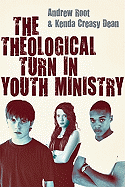 The Theological Turn in Youth Ministry Andrew Root & Kenda Creasy Dean (IVP) $18.00 Okay the classic Byrds song has the phrase turn turn turn, and the word turn is in this book. Clever award, eh? No, I’m not grasping at straws here: it is a song from Ecclesiastes and the reminder that there is a “time” for new things is vital: we simply can’t do outreach, youth ministry, even church life, necessarily the same old way, generation after generation. There is a turn afoot; we may be in a season of new views of faith and theology and the nature of our time. Is this a trendy book just hopping on some emergent bandwagon? No. Is it arcane and deep, something ordinary youth workers maybe needn’t take time to wade through? Again, no. Mike King, himself an important voice in youth min circles, says “I am euphoric over this book. It is a seminal work that will stir up the prophetic imagination of youth workers. Kara Powell, executive director of the Fuller Youth Institute (perhaps the West coast counterpart to the justly famous Ms Dean of Princeton) say that it is “a practical theology winner” and notes it’s “masterful synergy of breadth and depth.”
If the thesis of Christian Smith’s important work (Soul Searching, upon which Dean built her famous book Almost Christian) is true–namely that churches are not doing a very good job helping youth name their spiritual yearnings or giving them categories to think theologically about life and discipleship–then this is a rich and vital answer, to that strong critique of our thin approaches. Can youth be practical theologians? Can we shift in our approaches, turning towards a more “rigorous and meaningful” youth ministry, one that is theologically grounded and engaged in and with the work of the church? The time for this is overdue, my friends. It is the least we can do to give it a very honorable mention, awarding it the Best Book in this field in a long, long time. By the way, I hope to review this in greater detail soon, but you should know that as serious-minded as this it, it is fun to read, and hugely helpful–there is a chapter about outdoor trips. There is a chapter about mission trips. There is a chapter about adolescent hormones and sex. There is a chapter about summer camp, a theological piece about confirmation (and doubt!) I’m telling you, this is one of the best books of the year. If you are not in youth ministry, buy it for somebody who is.
THE SETH ROGEN AWARD FOR THE BEST SCHOLARLY BOOK ABOUT YOUNG ADULTHOOD
 Lost in Transition: The Dark Side of Emerging Adulthood Christian Smith (Oxford University Press) $27.95 Okay, I admit, Seth Rogen doesn’t come up in this book. Although I trust you get my drift. In Part One of our Best Books post we celebrated the great book You Lost Me based on research done by the Barna group on young adults who have drifted from the Christian faith. It is a must-read for anybody who cares about the church or has young adult friends in their lives. This more weighty, academic treatise is based on very rigorous research by one of the best social scientists writing these days, published by the world’s premier scholarly press, so we need to pay attention to it, too. Tim Clydesdale (whose First Year Out is the best book on following what happens to teens their first year out of high-school) says it is “public sociology at its best.” Jean Twenge, a very important cultural critic and author of Generation Me says it is “groundbreaking, compelling, and deeply necessary…courageous, nuanced, deep-dive look at today’s youth.” Think she likes it some? We do too. Not unlike last year’s must-read book by Kendra Creasy Dean (Almost Christian) this shows that there is widespread moral relativism, ethical confusion, and spiritual hunger that does not bode well when one considers the striking problems older youth are now facing. Based on well-researched surveys with 18 to 23 year olds, who almost uniformly like the raunchy vulgarity of Rogen, Apatow, et al. Could this book explain why? Granted, it isn’t very funny, but we are happy to award it a Best of anyway.
BEST BOOK ABOUT CONGREGATIONAL LIFE 2011
 Grace for the Journey: Practices and Possibility for In-Between Times Beverly Thompson & George Thompson (Alban Institute) $17.00 We remain grateful for all the good resources published by the Alban Institute, a primary source for books that are professional in nature, mostly for pastors and leaders in mainline denominational churches. Here, two esteemed pastors tell of their own journey towards joy as they trust God in the midst of congregational difficulties. Every community of faith journey’s through periods of transition, they tell us, and this wonderful little book invites congregations to open themselves to the possibility of knowing God more deeply in these periods “between the times.” It has good Biblical study, lots of contemporary stories and seems to me to be helpful for those who realize that many congregations are in times of transition. What does it mean to be the people of God in a place? How can we develop deeper spiritual disciplines, offering practices of attentiveness to God’s Spirit and what might need to be discerned within the congregation? I like how Joanna Adams notes that this is a “refreshing alternative to anxiety.” Endorsements from Alban leader and respected scholar of congregational change, Alice Mann, assures us that his is a gem.
AN “ENDLESSLY BEGUILING…” AWARD FOR BEST COLLECTION OF SERMONS


 The Collected Sermons of Walter Brueggemann (WJK) $30.00 WJK has a few other volumes in this uniform set of great sermons by leading preachers of the 20th century (William Sloan Coffin, Fred Craddock, Will Willimon, for instance.) Gathering messages from this prolific and active preacher was a blessed chore, I’m sure, as they had several volumes worth from which to chose. So, it could be said these are the cream of the crop, the most prophetic, the most imaginative. You get my point. Agree with him all the time or not, appreciate fully his cadences and rhetoric and vocabulary or not, he is a master of the language, a student of the text, a fearless teacher of gospel truth to today’s church. Anyone who cares about the breadth of their library of theological and religious books should consider this ample, first-rate collection. Oh, maybe we could consider living into this vision, too—say a prayer, read them aloud with your friends or small group and hold on for dear life. We offer our little award with hope, believin
g this stuff matters. Kudos.
BEST RESOURCE FOR LECTIONARY PREACHERS–OR ANY PREACHERS WITH GUTS
 Preaching God’s Transforming Justice: A Lectionary Commentary, Year B, Featuring 22 New Holy Days for Justice Ronald J. Allen, Dale Andrews, Dawn Ottoni-Wilhelm (WJK) $50.00 Okay I know some of our readers don’t preach; a few don’t care in the least for this sort of stuff. But I am convinced this is a bold and helpful move by this publisher, offering lectionary based Bible studies that show how to bring justice issues into sermons and preaching. Nobody suggests that preaching should always be about social justice or that economic injustice is always in the Biblical text or that we always have to be direct in talking about racism or sexism. But it is true that these things come up in the texts fairly regularly, and few commentaries emphasize them faithfully, or all that helpfully. This book not only offers socially-engaged ways of thinking about issues of race and class, poverty and power, justice and hospitality, and the like, it offers ways to celebrate justice and social righteousness within worship services and other congregational events. Key figures are held up (Cesar Chavez, Martin Luther King, etc) and reminds us of holidays that may be worth noting—Juneteenth, Earth Day, World AIDS Day and the like. Besides the essay for each lectionary entry there are contributions by homileticians, pastors, biblical scholars, theologians and social activists. Wow, this surely deserves some kind of award, and we are happy to honor it. As Walter Brueggemann says of it, “The book surely holds promise of transformative energy for preaching, teaching, interpreting work of the church. Welcome indeed!”
WOWIE ZOWIE HOLY MOLY BEST KID’S BOOKS OF THE YEAR 2011
 Straw House, Wood House, Brick House, Blow: Four Novellas Daniel Nayeri (Candlewick Press) $19.99 Okay, I got me some ‘splainin to do. This is over 400 pages (written entirely on his iPhone, but more on that later.) It is a quartet of four YA novels, so it isn’t for little kids. It is demanding, each story written in a particular style, a genre, if you will. Some of the PR pieces for this intriguing, ambitious work, says each chapter is a “riff on classic genres” and it introduces readers to a broad range of writing styles. Oh yeah, that’s putting it mildly. The first chapter is a sizzling suspense story, a cowboy story, really, complete with a showdown at high noon (and a sheriff) but it’s a bit odd since the setting is a farmer who grows living toys (and rather soulless humans, I think.) The second section (Wood House) is a science fiction tale, and if the first story was a bit eccentric, this one is even more complex–a roadtrip story with a teenage girl who must save the world from a technological revolution thing going down. (The big bad corporation is called ReCreation. Ha!) Brick House brings us a detective story, set in the author’s current home town, the big, bold New York City. (He is, interestingly, a Reformed evangelical, now on staff working with youth at Tim Keller’s Redeemer Presbyterian Church. He is also a fan of hard-boiled detective fiction.) Did I mention it is creative? Written on an iphone? A whole lot of genres? This third piece takes the cake with the “wish police” but I can’t say more; it is morally serious, important, even. Blow? Well, that one is funny, in an old Woody Allen sort of way, where the narrator of the tale is Death himself. It’s nearly Shakespearean. I like what it says on the jacket about the handsome and charismatic hero ” who may steal your heart in more ways than one.” Uh huh. There is a bit of spicy language here (although nothing that unusual) and there is a deep moral center to the whole affair. There are universal themes, as in any good children’s work, and Daniel reminds us that these stories include themes such as identity and belonging, betrayal and friendship, love and mortality. For those who have ears to hear, as another great storyteller once said, there is immense truth here. SH, WH, BH, B is a wild ride; I read a bit of it out loud, just for the fun of it. It is imaginative (obviously) and giddy as it plays with words, images, ideas, and perhaps some interlocking relation between the four stories. The characters are inventive and it surely deserves honors for sheer creativity and playful energy. It isn’t immediately clear how all four hold together (except maybe the epigram from the Three Little Pigs before each chapter.) It isn’t for the squeamish, those who want obvious religious symbols, or tidy stories that they think are safe against the big bad world. This takes you into the big bad world, in a clever and whimsical and sometimes even scary and disturbing way, and says, blow.
Daniel is a sweet, sweet guy, besides his church work, he works in publishing, and knows books extremely well. He’s a fascinating fellow with very wide interests. It is wonderful to know of such a thoughtful person so fluent in the world of contemporary literature who is also a thoughtful, happy Christian. He loves his iPhone and, as we said, used an early Notepad app to write this large work. He was the first to do this, it seems, inspired by how some critics were dismissing the now-famous teenage girls in Japan who were doing short serial stories on their cell phones. Serious critics were all alarmed that this medium would ruin the idea of the novel, so he wanted to work in this form that some saw as transgressive. I told you he’s a smart guy, and, no matter how gentle, a thoughtful artist, doing serious work.
For anyone who wants to learn more about this, by the way, here is a great interview with Daniel done by our friends at the International Arts Movement. Do give it a listen.
Don’t miss it when Christy Tennant of IAM asks Nayeri if there is theology in the book,which leads to a brief discussion of Tolkien and allegory, and a David James Duncan quote (and the possibility of misinterpretation.) She notes that there is no fear that his is a “shallow river.” Nice.
You can scroll down his blog a bit to find four trailers for the book. Very cool.
Here is a discussion guide that is very helpful in using the book in groups, in families, or for your own reflection. Check it out:
You may know how much we esteem and enjoy the Newbery Award winning children’s author Gary Schmidt, whose wonderful follow up to the fabulous Wednesday Wars, Okay for Now, is certainly one of the finest books of the year, has said this about Daniel Nayeri,
Whenever we invoke this title — Straw House, Wood House, Brick House, Blow — let us breathe this word soon after: virtuosity. In a remarkable collection of four novellas, Daniel Nayeri plays a modern Lewis Carroll, pulling us down rabbit holes where the world is cockeyed — disturbingly cockeyed — and anything at all can happe
n. In one, toys planted by an absent creator are left to fend for themselves when evil arrives; in another, the very air we breathe has been infected with a technology that allows us to create our own reality–or others to create it for us; in another, the narrator Death is moved to play the jerk by powerful love. With characters deft and real, with language quick and clever, with insight deep and full, these stories lead the reader to wonder, Is this possible? Whatever is going to happen next? And then, incredibly, it is possible, and it happens. Dare to read this
BookNotes

SPECIALDISCOUNTany book mentioned 2O% offorder heretakes you to the secure Hearts & Minds order form pagejust tell us what you want
inquire here
if you have questions or need more information
just ask us what you need to know
Hearts & Minds 234 East Main Street Dallastown, PA 17313 717-246-3333
.

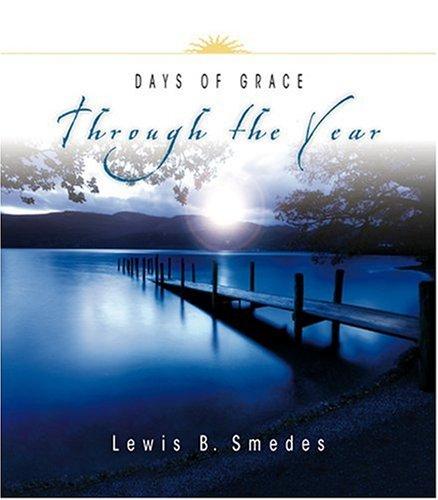 The free one we are sending is called Days of Grace Through the Year by Lewis B. Smedes (IVP) Our friend Jeff Crosby did a great job combing through Smedes’ extensive body of work and selecting excerpts of the very best pages, with the very best lines, to remind you of God’s great grace, and the beauty of fine writing, and the goodness of a theologian who could talk to ordinary folks with such extraordinary kindness. (Books & Culture editor John Wilson has a great foreword noting Smedes’ direct approach, his lack of unctuousness, and his various voices.) We have always loved Lew Smedes whether talking about forgiveness or finding hope in troublesome times or writing about sex or shame or social justice.

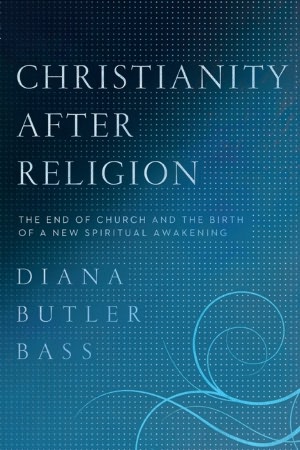 Christianity After Religion: The End of Church and the Birth of a New Spiritual Awakening Diana Butler Bass (HarperOne) $25.99 I was doing a “book show and tell talk” last week with a group of gathered mainline clergy and told them that this will both be the most talked about religious book of 2012 and perhaps the most deserving. I have a half a dozen reasons why I think this is important, even if agreeing with it all isn’t one of them. You know that we commend reading widely, learning from anyone who has something helpful to teach, enjoying the great gifts of good thinkers, writers, and cultural critiques. Diana is all of this and more. She knows mainline churches well, she understands and has some sympathies for some evangelical folks. She has been in rural churches, poor inner city parishes, charismatic congregations, churches big and small. She draws endorsements from high-jinxing radical activists like Shane Claiborne and from gentle Quakers like Parker Palmer. I am not alone in predicting the popularity of this important book as Phyllis Tickle herself, the god-mother of religious book reviewing, says “It is one blockbuster of an analysis that is also a delight to read.” Brian McLaren says “Of Bass’s many excellent books, this is the most substantive, provocative, and inspiring yet…It leads to a powerful finale of sage guidance for the future.”
 mature worship (Christianity for the Rest of Us: How the Neighborhood Church is Transforming the Faith [HarperOne; $14.99] is the best summary of all that, and I hope you have it. It is one of the defining religious books about congregational life of our time.) That book camped out on a big thesis: mega churches and conservative religion, while they get more press, are not the only sorts of Christian faith expression and not the only sorts of congregational life that is present in early 21st century North American culture. Let’s hear it for the little guys, the liberal churches that are vibrant, the mainline folks with their Henri Nouwen study groups and their dogged work in soup kitchens and their interesting willingness to be inclusive of gays and lesbians, their hospitality and social service. Somebody said that she was, in telling of innovative and robust UCC churches in New England and United Methodist churches down south and Presbyterian congregations in the heartland, nearly describing “emergent churches without the body piercings and tattoos.” That’s a good line, but it isn’t quite true. Christianity for the Rest of Us celebrated pretty normal, ordinary churches, those trying hard to live faithfully, despite declining numbers, often rigid denominational structures, and local communities that are in flux. Since most of us, as a matter of fact, aren’t in healthy, growing, large, conservative churches, she gave “the rest of us” a good pat on the back and a shot in the arm by telling us a bit about ourselves, our history and our future.
 institutional hierarchies are healthy, crises upon crisis has worn down many churches, no denomination or religious group’s numbers are even holding steady. When the Southern Baptists declare it a “decade of evangelism” she has said, “you know we’re in trouble.” Christianity After Religion is asking one of the biggest questions to be asked nowadays: what should Christian churches and disciples of Jesus do in this era when so many are “spiritual but not religious?”
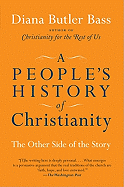 delightful, provocative study: how we think about God and God’s work in the world, that is, our worship and our discipleship, our attentiveness to God and relationship to neighbor, is decisively shaped by our metaphors about God. Do you recall how that book ended, the part she said is unfinished, being written, the stream that is flowing into the 21st century? Well, this is her provisional answer to what that might look like. Read any of her books, and find somebody with whom to talk about them. You are going to want to talk about them. You are going to want to underline stuff. And, I hope, you are going to put some big ‘ol question marks next to some parts. What does she mean by that? And what do we do with this? My, my, it is going to be a good year, pondering, debating, and struggling to take seriously what our sister has written in this important new book. Is it true that (as Bill McKibben puts it) “experience, connection, and service are replacing theology as keys to the next Great Awakening”? And if it is so, is that a good thing? Read Christianity After Religion, think and pray and talk.
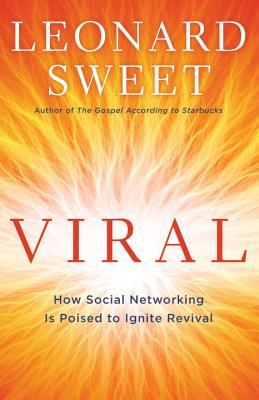 Viral: How Social Networking is Poised to Ignite Revival Leonard Sweet (Waterbook) $14.99 I enjoy telling the story how I interviewed Sweet years ago for an adult ed class I was doing on his work. His thick and world-shaking Soul Tsunami had just come out, and I both read it, and listened to the tremendous audio book. It was the most fascinating bit of cultural analysis I had read in years, and I was very intrigued. I was irked at his too-quick dismissal of linear thinking, and he was bemused by my Reformed and bookish ways. Let’s just say I quoted Postman’s Amusing Ourselves to Death to him maybe just a few too many times, kept asking how we can not just “ride the waves” of what history is disclosing but shape, or at least help direct those waves. We talked about
 characters that stand for certain types of people you should have in your life, and that you should be for someone, just came out in paperback.) He has several on leadership (the latest, I Am a Follower), on being a disciple of Jesus, one on the Holy Spirit, on the church, on evangelism, and a good one about what congregations can learn from Starbucks — although, before you get in a hissy fit about that, he doesn’t say we should simply emulate business models for parish life. Not at all. He has even co-written a novel, sort of am futuristic, theological Indiana Jones adventure romp. All energetically written, creative and commendable in one way or another.
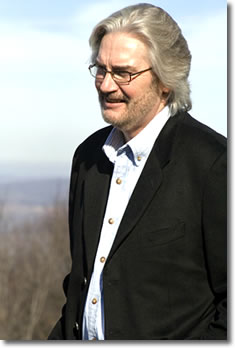 to the digital culture–and others of us are immigrants to the brave new world of screens and ubiquitous intra-nets. This is not our native tongue, and we are learning it as a second language. So he isn’t just geeking out with other hipster techies, nor is he just waxing positive on the cool possibilities of using media in church. No, he is ruminating pretty seriously on how those of us who aren’t native to the 21st century TGIF culture can learn to inhabit and do ministry in this new google world, where, as somebody put it, referring to our expertise by a finger stroke through google, “the smartest guy in the room is actually in the room.” Or, similarly, he is inviting those who are digital natives to use their skills and sensibilities for God’s glory.
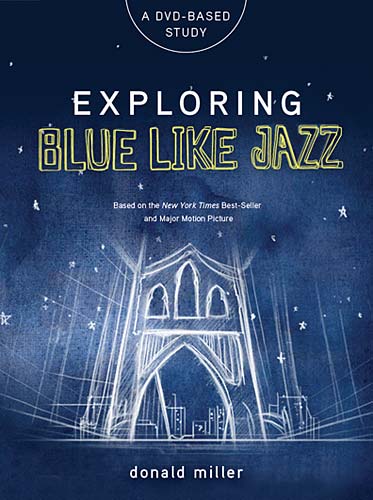 Exploring Blue Like Jazz: A DVD-Based Study and Resource Guide Dixon Inser with Donald Miller (Nelson) Book only $14.99 // Combo pack book + DVD $29.99 I guess anybody reading BookNotes will know of Blue Like Jazz, Miller’s fabulously written, bohemian story of his faith journey — abandoned by his father, enfolded into a fundamentalist faith, ending up wondering about it all as he hangs out at one of the smartest and most secular campuses in the Pacific NW. Blue Like Jazz has become nearly iconic for a new breed of post-evangelical kids—enjoyed by cynical Gen Xers and their parents, given out to millennials on campus by Cru, used in all manner of coffee shop book groups. To say it is a huge seller and well-loved is an understatement. And now–after a good number of years, a “little project that could” and a book written about it all–it has been turned into a cutting edge, movie, produced by the inestimable Steve Taylor. It premiered at South by SouthWest which, I think it is fair to say, is not too shabby and a good indication that the indie film might be taken seriously.
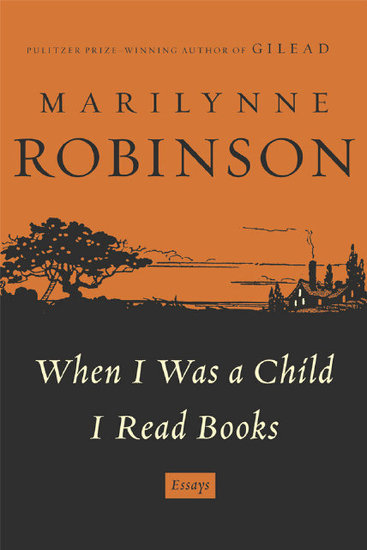 When I Was a Child I Read Books: Essays Marilynne Robinson (FSG) $24.00 One of the most prestigious publishers has given us a new collection of essays by one of our great woman of letters, the Pulitzer Prize winning novelist, essays, and Calvin scholar, Marilynne Robinson. You may have read Housekeeping, an early book happily reissued after Gilead made her famous, or you may have been taken with the slow, good story of Home (which, a reviewer in The Nation, opined, “rendered relationship with a new depth”) which picked up where Gilead left off. Robinson’s essays were released in the serious collections The Death of Adam and, just out in paperback, Absence of Mind. Now, she has a new collection of ten or so pieces, on topics as diverse as cosmology and Moses. She has one on the flamboyant evangelical abolitionist, Oberlin, and one entitled “Imagination and Community” which reminds me of a topic of Wendell Berry. The feisty scholar and novelist Doris Lessing says of her essays that they are “a useful antidote to the increasingly crude and slogan-loving culture we inhabit.” She is serious, dense at times, and a public intellectual well worth reading.
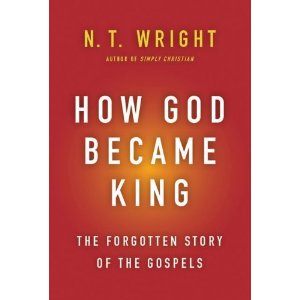 How God Became King: The Forgotten Story of the Gospels N.T. Wright (HarperOne) $24.95 Yes, you heard it here before: we’ll be calling N.T. “Tom” in no time after he visits here in Dallastown on May 12th when he comes to the bookstore for an autograph session and reception. We hope folks bring books for him to sign and I hope lots of people buy this one. One advance reviewer said this may be his best yet. It is a study of the Synoptic Gospels, and a study of exactly how the theme of the rule of God seen in the Lordship of Christ came to be expressed so convincingly. And how we missed it. This is vintage stuff, important for our project here, as we try to sell books relating faith and life through the lens of the Kingdom of God. Brand new today, this book is sure to be highly regarded, and will, some say, be soon known as a classic. Long live the King! And may the tribe of those who are passionate about the reign of Jesus, rediscovered by a careful reading of the Holy Scriptures, increase! Start here: buy this book, get some folks together and imagine what to do with it all. And come by and report it to the author if you are able, Saturday May 12th at 1:00 pm. Of course we’ll have all his books on sale then, but why wait? Order today.

 , faculty, and others seeking a more intellectual approach to faith here in Central PA (including, for instance, in his work with the
 The Ancient Practices Series: Fasting (Nelson) $12.99 This is the time of the church year to try out this practice if it isn’t a common part of your quiet experiences before the Lord. You hopefully recall how I’ve raved about the seven books in this great series (on practices such as keeping sabbath, generous tithing, the sacred meal, the liturgical calendar, fixed hour prayer, going on pilgrimage, and such.) With a great foreword by Phyllis Tickle (the general editor of the series) and blurbs from the likes of Ruth Haley Barton, this book is solid, helpful, interesting, Biblical, calm and profoundly in touch with that for which we most yearn.” Highly recommended.
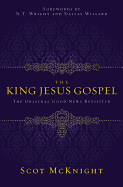 King Jesus Gospel: The Original Good News Revisited (Zondervan) $19.99 With a foreword by N.T. Wright and another by Dallas Willard you may get the idea that this hardback is about the fuller understanding of the Kingdom of God and how we can be formed in the ways of Jesus. This is the best simple clear overview of this central gospel theme that we know of. Wright notes “The revolution Scot is proposing is massive and we all urgently need to allow this deeply biblical vision of the gospel to challenge the less-than-completely biblical visions we have cherished for too long.” Right on! Pro Rege!
 The Jesus Creed: Loving God, Loving Others (Paraclete Press) $16.99 In over 300 pages, (although in a nice type font) McKnight explores and drives home this central re-telling of the shema, Jesus’ call to love God by loving others. Sounds simple, eh? Well, the power of religiosity hasn’t been dismantled yet, and this profoundly Jewish creed could transform our lives, if we saw it as a new rule of life. Fabulous. A foreword by John Ortberg reminds us how very usable this is, how our lives will be enhanced if you learn from Scot the ways of Jesus. (There is, by the way, but not on sale, a devotional guide, using this book for 40 days, and a teen version.)
 Praying with the Church: Following Jesus Daily, Hourly, Today Foreword by Phyllis Tickle (Paraclete Press) $15.95 A few years ago Phyllis Tickle helped launch a renewed interest in the monastic practice of “fixed hour” prayers, or “praying the hours” when she published her important three-volume prayer book. When a Baptist scholar like McKnight writes about this use of such prayers, and does so so eloquently and helpfully, you know somethings going on. Paraclete does very nice books, and although this may be lesser known than some of his others, it is surely one of his enduring classics. Funny, some of us who do not follow this practice of doing the hours, still are deeply blessed by reading about the custom, and how it enriches those who do.
 Embracing Grace: A Gospel for All of Us (Paraclete Press) $16.95 I love this endorsement by Ross Wagner, a New Testament prof at Princeton Theological Seminary: “With grace, humility, and wit, Scot McKnight offers a compelling vision of the breath-taking scope of the gospel — that in Jesus Christ, God is at work restoring broken people to full humanity in loving community with God, and with one another, for the salvation of all creation. This is a message to be pondered, savored, embraced, and embodied.” Grace is more than “punishment avoidance” and if we recipients of God’s grace, we should be people who live graciously; as he puts it, we aren’t just saved by grace, but we can “live transformed by
 The Blue Parakeet: Rethinking How You Read the Bible (Zondervan) $14.99 I promise you this: you will find something in this book that will ping you, something you’ll love, something you’ll want to reconsider, something that will make you chuckle, and most likely something that will annoy the daylights out of you. He is honest before the problems of weird texts, he is honest about how we sometimes get bored reading the same old passages, and he is honest that neither liberals nor conservatives do the interpretation thing very well. He shows us the big story and he uses upbeat and helpful illustrations. If I were teaching a class on Bible interpretation, this would be one of the many books I’d make mandatory reading.
 A Community Called Atonement (Abingdon) $18.00 Tony Jones is a writer, about spiritual disciplines and the history and ethos of the emergent movement. On behalf of Emergent Village he edited a book series called “Living Theology” and they are all excellent. This was the first, a survey—and I don’t mean a dry survey, but a truly vibrant overview—of the standard theories of the atonement, and how we need to honor the differing emphases and the diverse faith communities that seem most drawn to each. That is, we must be honest before the Biblical texts, respect the diversity of theological insights down through the ages, and learn to do “living theology” in our communities. An excellent book about theology, about the cross, and about the role of dogma within faith traditions and the church at large. Hans Boersma (J.I. Packer Professor at Regent College) says it is “gutsy, orthodox, creative…” Might I suggest it suitable as we draw near to Holy Week?
 One.Life Jesus Calls, We Follow (Zondervan) $14.99 You know, we’ve pitched this book to ya before—I celebrated the slick design of the cover, I named it a book of the year, and we showed it as a Jubilee special, this multi-faceted, rich recovery of the notions of discipleship, vocation, calling, Kingdom vision and missional service. Gabe Lyons of the Q Ideas wrote the forward, using the passionate rhetoric he and his generation are known for. This book doesn’t answer all your questions, he says, but he promises that you will see the Jesus life more clearer. This is a really useful book, a great resource, and masterful guide to living in the Kingdom that is now and not yet. As Margaret Feinberg writes on the back, Each of us is only given one life, and after reading this book, you’ll desire to live it with abandon to God.”


 Glimpses of a Greater Glory: A Devotional Through the Storyline of the Bible David H. Kim (Gotham Fellows) $13.99 A good portion of my February column about Jubilee was, in fact, about how the Bible is one coherent story, and how that shapes our own worldview, placing us in the plot of God’s work in the world. This is a rare, remarkable devotional guide, with short introductions, helpful Bible selections, and a closing prayer for each day from someone in church history, such as Johannes Kepler, St. Francis, William Temple and so many more. Also, there is a lovely b/w reproduction of an art piece to illustrate each lesson (great, great stuff there, Michelangelo and Caravaggio and anonymous Russian icons and medieval etchings.) Kim is the director of the Gotham Fellows program at Redeemer Presbyterian in NYC and a friend of the CCO and Jubilee. His “reformational worldview” is evident as he teases out the full-orbed redemption promised and fulfilled in the plot of the Scriptures. This draws you to God and His grace and invites you to consider how to apply the Scripture’s story wisely to your life. Nice blurbs on the back from Tim Keller and Richard Mouw.
 Breath for the Bones: Art, Imagination, and Spirit Luci Shaw (Nelson) $13.99 The lovely Ms Shaw has been a blessing to many of us who are interested in mature thinking about faith and creativity, and we always take her many poetry volumes to places like Jubilee. This is a very nice book, loaded with Biblical reflections personal stories, energizing insights and down-to-earth practical advice for aspiring writers or artists of any sort. There are discussion questions and there are writing exercises, too. We had a huge display of arts-related titles at Jubilee (all of Square Halo Books, for instance, and heavy books by Calvin Seerveld and Mako Fujimura and more.) This one is always popular and we are happy to offer it here on sale, now.
 Faith and Other Flat Tires: A Memoir Andrea Palpant Dilley foreword by Jerry Sittser (Zondervan) $14.99 You will be hearing more about this later, but you should know that this memoir is a moving, well-told story of the daughter of missionaries who goes off to a thoughtful, evangelical college and finds that despite great professors and some cool classmates, she drifts towards doubt and skepticism, asking big questions about the world’s suffering, conflicted about the painful culture shock of being a “third culture” kid. She reads great literature, encounters great poverty back in Africa for a season, becomes a fan of all sorts of bohemian cafes, alt films and indie rock music—the music is a good part of the story—and yet she finally gives up faith altogether. As you may guess, she recovers her beliefs and lives to tell about it. In another review perhaps I will say why I think everyone who mentors young people, and especially anyone who works at a Christian college, should ponder her journey of faith, as it is nicely writt
 Amazing Gifts: Stories of Faith, Disability, and Inclusion Mark Pinsky (Alban Institute) $18.00 Pinksy is a great journalist (and author of The Gospel According to the Simpsons, amongst others.) Pennsylvania’s own former First Lady, the honorable and remarkable advocate for those with disabilities, Ginny Thornburgh, wrote a good foreword. This collects all kinds of stories from churches and synagogues which have shown great goodness by working out ways to be more inclusive and just when thinking about special needs. This was displayed at Jubilee for special ed majors, of course, but any church leader would benefit from seeing these innovations for (as Joel Hunter says of it) “real love in action.”
 The Wonder of the Universe: Hints of God in Our Fine-Tuned World Karl Giberson (IVP) $16.00 There are a number of superb endorsements on the back of this brand new book, from Dorothy Boores, a biology prof from Gordon College to Randy Isaac of the prestigious American Scientific Affiliation to Ed Davis, the esteemed Professor of the History of Science at Messiah College (who notes that it is a “clear, accurate, interesting account of modern cosmology.”) Giberson is a theistic evolutionist and colleague with the famous N.I.H. director Francis Collins, but here he offers evidences for a designed universe, journeying on a cosmic expedition “of planets and protons, galaxies and gamma rays” to discover the wonder of it all. Serious, learned, and truly lovely, with lots of pull quotes, illustrations, photos, some even in glorious color.
 The Greater Goal: Connecting Purpose and Performance: How to Align Your Entire Organization for Shared Success Ken Jennings & Heather Hyde (Barrett-Koehler) $16.95 These are new Pittsburgh friends and am I ever glad I got to show this at the Jubilee book table. If you are a business manager or work on any sort of leadership team (even at a nonprofit or church) this imaginative fable will be hard to put down! I guarantee you that you will learn something new, be inspired to take helpful actions, and be equipped to get others “on board” with the dream you envision. Ken co-wrote 10,000 Horses and The Serving Leader with John Stahl-Wert, who I gave a shout out to in the previous post for his leading role in Jubilee Professional. If you want to achieve your goals together, this is how to get fully aligned for, as they put it, “shared success.”
 Everyday Missions: How Ordinary People Can Change the World Leroy Barber (IVP; likewise) $15.00 When I saw my stack of these brand new books here at the shop when we got back after Jubilee I was so bummed: Leroy has been at Jubilee bunches of times and his Mission Year is a staple when we think of opportunities for students to do serious service for the urban poor. We are one of the very few bookstores that stock Barber’s brilliant little collection of urban meditations and full-color photos, the New Neighbor. This brand new book shows that God keeps showing up and we are given plenty of opportunities to respond. Endorsements on the back are a who’s who of great missional leaders, from Shane Claiborne to Bob Lupton to Chris Heuertz. Margaret Feinberg notes that Barber “dreams big dreams for our generation—dreams that have the power and potential to change the world forever.” Kudos to Leroy. We’ll push this wherever we can…
 Body Broken: Can Republicans and Democrats Sit in the Same Pew? Charles Drew (New Growth Press) $15.99 At Jubilee we often promote Drew’s amazing book on purpose and passion and vision and vocation, A Journey Worth Taking. (It was in the “recommended readings” of the beautiful conference
 A Place at the Table: 40 Days of Solidarity with the Poor Chris Seay (IVP) $13.99 Published with the support of Compassion International and Living Water International, this call to fast each day for 40 days is truly extraordinary. Nothing quite like it in print as it richly combines deep and solid spiritual reflections, great stories of mission and empowerment, and a bit of prophetic cultural critique, naming consumerism as a false idol that can best be dethroned by a renewed commitment to Christ’s sufficiency. This is a great book. We sold a few of the cool DVD at Jubilee, as well. Very highly recommended, for Lent or any time.
 Common Prayer: A Liturgy for Ordinary Radicals (Pocket Edition) Shane Claiborne & Jonathan Wilson-Hartgrove (Zondervan) $12.99 You may know the bigger, wonderful hardback liturgical prayer book by this title that
 Think Christianly: Looking at the Intersection of Faith and Culture Jonathan Morrow (Zondervan) $16.99 Jubilee is so fast-paced and hectic that I just don’t have time to show many of even the most useful book to as many people as I wish I could. I love the title of this, for starters. Once you see this, I’m sure some will find it immensely useful. There are chapters on understanding this whole “intersection” and a major part on “preparing to engage.” Each solid chapter includes a good interview with somebody who is a specialist in a particular field–the more general early chapters include pieces by Kelly Monroe Kullberg of Veritas Forum, Reggie Joiner, and the amazingly thoughtful Kyle Strobel (on having integrated and Christ-shaped spiritual formation.) Part three includes chapters (and more interviews) on areas we simply must engage, thoughtfully and with great discernment—from matters of tolerance and relativism to media, God’s design for sex, injustice, faith in the public square, science, bioethics, environmental stewardship and such. I am grateful for this conservative, thoughtful, rigorous guide to basic Christian thinking even if I may find that it tilts a little too traditionalist in some areas for my taste. (I’m really appreciative of the intelligent design movement, but think their dismissal of other voices is a bit glib; I would have been more passionate about a few things, maybe less certain about others, such as the role of conventional views of apologetics in some others.) Still, looking at the diverse footnotes and the many great websites offered for further study after each chapter, I realize this is a heck of a useful resource for anyone just learning to emerge from an insular or fundamentalist wariness of culture to a more active ministry of cultural engagement. Worried that this Jubilee talk about transforming culture will lead to an old school liberal social gospel unhinged from historic orthodoxy or that we will create a watered-down piety? This will ease those fears, I’m sure.
 Abraham Kuyper: A Short and Personal Introduction Richard Mouw (Eerdmans) $16.00 You’ve heard about Kuyper plenty and I’ve touted this book a lot. I like what Jamie Smith says of it: “This marvelous little book pulls off an astounding feat: though it is both compact and accessible, it also gives us the whole Kuyper…. Mouw, with typical wit and warmth, introduces us to Kuyper in all his multifaceted richness. A gift for the next generation.” Come on, people. If you liked Mouw at Jubilee (or the great link I offered to his Houghton College talk) and you wonder “How does a guy come up with this good stuff?” this could be your answer. I’m telling you, there’d be no Jubilee as we know it if it weren’t for this early 20th century Dutch statesman and theological figure. I praise the Lord for Dr. Mouw’s delightful, important introduction.
 Free at Last?: The Gospel in African American Experience Carl Ellis (IVP) $21.00 Speaking of how Jubilee got to be Jubilee, old timers know that even before the conference was called Jubilee, a strong, evangelical, urban preacher named Tom Skinner was influential in CCO collegiate gatherings. John Perkins has been a long-time friend of the CCO (so much so that a bit about Pittsburgh appears in his thick biography, published a few years back.) One of the other long-standing, African-American leaders — sharp and passionate and faithful friend of the COO, has been one Carl Ellis, Jr. Carl spoke at Jubilee again this year. This great book has been used by CCO in its staff training over the years and while Jubilee delightfully bears witness to God’s concern for a wide array of ethnicities and happily talks about multi-cultural reconciliation, there is little doubt that the history of the black struggle in America remains a major part of US and church history that must be told. This is an evangelical classic, important, readable, helpful. We are pleased to commend it, confident that it will be good for you to have it.
 What is Vocation? Stephen J. Nichols (Presbyterian & Reformed) $3.99 This may have been one of the biggest sellers at Jubilee, in part because it is so inexpensive, and such a fine, fine overview of the basic call to serve God in our jobs and callings. It has a fantasic, glossy cover and is typeset well, but is only 32 pages and nicely staple-bound. (Kudos to P&R for this whole series of “Basics of the Faith” booklets. This is so nicely done, very, very relevant for anyone, written by a friend from Lancaster Bible College. This is very highly recommended. At the discounted price, you should buy a bunch and pass ’em out at your church or — if you dare –at your workplace.
 Go to Church Change the World: Christian Community as Calling Gerald J. Mast (Herald Press) $13.99 This is another one that I would have loved to have had slow, caring conversations about. I name it here just to show you that the Jubilee book table, while it emphasizes helping students live out their faith in their studies and careers, and holds up examples of wholistic ministries tackling the most urgent problems of the day, also offers a section on church to remind students that being a part of a local congregation is essential. I really like this book because of the spunky title and the way it offers a pretty wide view of God’s Kingdom coming (in all of culture and each area of life) but that we are most clearly reminded of that in the worshipping, local body. It is from an Anabaptist (Mennonite) author whom I trust, and it was a delight to see Serving Leaders/Jubilee Pro leader John Stahl-Wert offering an endorsing blurb on the back. Calvin College prof (and author of a fabulous little book on vocation and callings and another we featured on communication theory, Quentin Schultze, notes, “This book warmly, wisely, and humbly proclaims what every Christian needs to hear today –that we are called to celebrate the good news in community. Mast seamlessly integrates worship, community, and good works in the world.” Sounds like a great Jubilee book, eh? Or one for post-Jubilee follow-up. Go to church! Change the world! Hoorah!
 wonderful leader and this book offers a great dialogue with a few respondents to his excellent “Kuyper lecture” presented to the Center for Public Justice a few years back. You’ll surely benefit from this, and we’re happy to give it free with any purchase from this or the previous list.

 It has been my custom to share a rather long post this time each year, reflecting on our role at the annual
 have touched upwards towards a million students since their humble beginnings at a few Pittsburgh-based schools, so my own role isn’t large. But I have been given the opportunity to teach a lot of classes, speak at a lot of campuses, helped consult with Jubilee committees over the years and sold a boatload of books in the last decades, so we are (how to say this?) humbly glad to see the CCOs Jubilee vision continue to be articulated and lived with integrity so consistently over the years. CCO does excellent work partnering with churches and colleges and the Jubilee event bears witness to their slogan “transforming college students to transform the world.” Beth and I and our store staff are honored to get to play a small role in it. It is the coolest thing we do all year! Thanks be to God and thanks to the CCO.
 Reformational Worldview (Eerdmans; $14.00) explores the significance of the full-orbed realities of creation-fall-redemption-restoration for our worldview and has been a CCO fav for years. This book really does explain what is unique and helpful about what he calls a neo-Calvinist approach, noting that while nearly every Christian tradition holds to some similar formulation, his Dutch Calvinist tradition takes the implications of these doctrines perhaps more generously and broadly and draws more implications from them than most other denominational traditions. His famous chapter on “structure and direction” is essential reading, I think, to appreciate the best proposals of the Jubilee vision, and is a good tool to help us explore what is creationally good about something (money, sex, sports, politics, art, race) and what is misdirected and dysfunctional. Any social reformer needs to know what is good and what is bad, what should be changed and what should remain, in her arena of influence and no one books lays a foundation for helping us with that cultural discernment as does Creation Regained. A few other speakers at Jubilee agreed, since it was a book that was
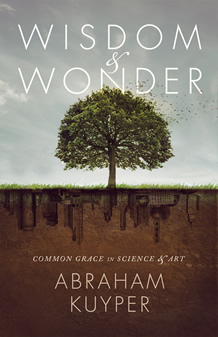 new translation of Kuyper on common grace, a book we featured called Wisdom and Wonder: Common Grace in Science and Art (Christian’s Library Press; $14.99) Francis Schaeffer, who some of you may know, was important to the CCO in its early years, and he gleaned some of this Kuyper narrative worldview stuff from a Dutch art historian named Hans Rookmaaker, who himself learned it from a philosopher named J. P. A. Mekkes, who had been a student of the Free University of Amsterdam’s heavyweight Herman Dooyeweerd. Mekkes and Rookmaaker met in a POW camp during the Nazi occupation of Holland, and CCO and Jubilee stand, if a bit indirectly, in this grand tradition of Christ’s clear call over all of life and culture, as Kuyper taught. We not only had a few Francis Schaeffer books at Jubilee, but a Rookmaaker book on the arts, and a thin but dense philosophical treatise by Mekkes published by Dordt College Press. The best book on Dooyeweerd is the highly-acclaimed one by Jonathan Chaplin, Herman Dooyeweerd: Christian Philosopher of State and Civil Society (University of Notre Dame Press; $68.00.) This is the precise intellectual movement that so influenced Al Wolters and which gives Creation Regained its vision and heft. Who knew that Jubilee existed as it does because God in His mercy had Mekkes tell Rookmaaker about Dooyeweerd. Years later, Shaeffer spoke at Grove City College and the next night at Geneva College, both in Western Pennsylvania. Young CCO workers were in those crowds and they learned to appreciate this worldview stuff from Pete Steen who was acquainted with the work of each of these scholar-activists.
 I am glad that so many these days invite us to think in terms of story and storied theology—think Donald Miller, for one example. I promoted A Million Miles in a Thousand Years: How I Learned to Live a Better Story (Nelson; $15.99) which I adore, not least because Jubilee speaker and friend Bob Goff plays a role in it.) I even like a little, inexpensive book by John Eldredge called Epic: The Story God is Telling (Nelson; $2.99) that reminds us that life unfolds like a drama, a play, and we get to take up our role in the epic adventure of it all. The second in the fascinating trio of novels by Brian McLaren is called The Story We Find Ourselves In (Jossey-Bass; $14.99) and brings together these themes that our life is a story and that the Bible is best understood as a story God has and is telling. The respected work of missiologist Leslie Newbigin has helped us think of the role of narrative in theology and thanks to the Nazarene Barefoot Ministries his little gem of radio talks, showing simply how the Bible is one continues story, is now reprinted. It is called A Walk Through the Bible ($12.99) and is wonderful. Do you know about the recent, big
 God and His People ($19.99; there are other pieces, too—youth versions, DVD curriculum, etc. which we happily promote. Do check out that link as it’s pretty spiffy.) We awarded last year as a best book of 2011 one of the more creative Bible overviews published these days The Story of God, the Story of Us: Getting Lost and Found in the Bible by Sean Gladding (IVP; $17.00; the fabulous DVD sells for $30.00.) Or, thinking of story and narrative, think of N. T. Wright, who insists that the even the didactic teaching of New Testament letters like Romans are to be understand best within their narrative context, the story that was going on in those places in first century Judaism. Think of political theologians like Stanley Hauerwas that talk about narrative theology. (I’m showing off, but you should know the important name of Thomist philosopher Alister MacIntyre who has written astutely about this topic.)
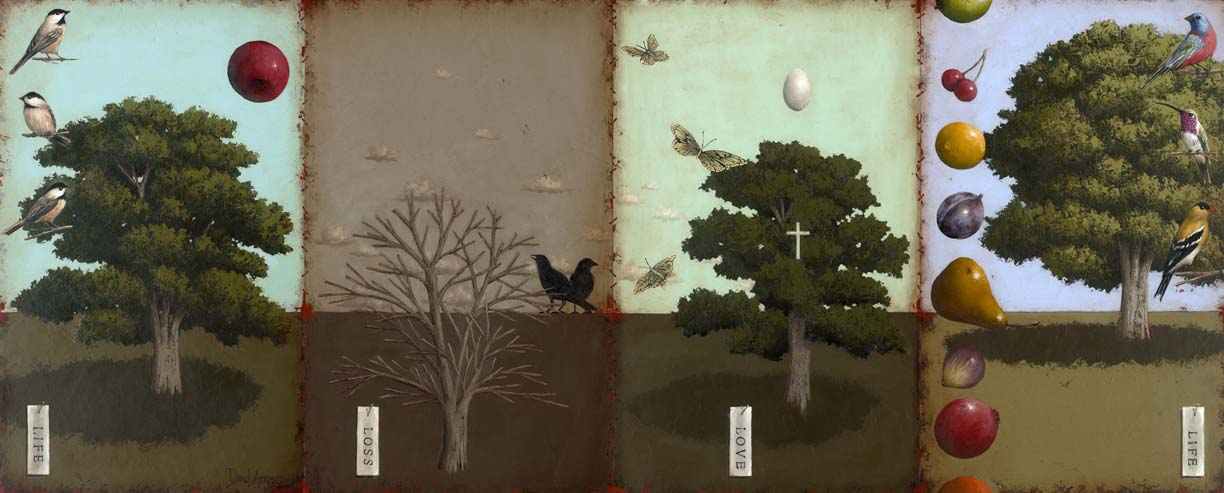
 was Michael Witmer’s book Heaven is a Place on Earth: Why All You Do Matters to God (Zondervan; $16.99.) Specifically exploring this broad, storied view for college students, Don Opitz’s book, co-written with Derek Melleby, was a hit: The Outrageous Idea of Academic Faithfulness: A Guide for Students (Brazos; $14.99.) Their short and playful chapter on worldviews—conflicting ones in the college textbooks and the coherent one from the Scriptures—and how these narratives/value systems/worldviews influence students is as succinct and clarifying and important as anything in any such book.
 Dr. Mouw’s Sunday morning talk was so reasonable and clear, but yet–there is no doubt about this–it rocked the world(views) of many who were there. Do we really believe that God’s good news is so broadly good that “all things” will be restored to original goodness? Yes, he did quip that Lady Gaga’s work will take a bit more purifying than some, but do we really believe that the work of our human hands, our cultural artifacts and inventions, our art and our games, will be with us–transformed by healing fire– through-out our urban life in eternity? That there is some continuity between this world and the next? That is the serious trajectory Mouw sees in his text from Isaiah and, as he often does, he ended with good preaching from Revelation 5 and then the new city stuff from Revelation 21 & 22. This book is not difficult nor extensive, but it is more than fanciful speculation. It offers a really eye-opening theology of culture, based on careful exegesis, showing why, well, why “everything matters.” For obviously understandable reasons, vans and buses from the hundreds of college represented at Jubilee had to get going after the event ended, so we sadly didn’t get to sell as many of Mouw’s books as we wished. This little study, though, is a must-read. We hope CCO staff will share it with their students if they have not yet, and that those want a bit of the happy Jubilee vibe might pick it up.
 Does your church or fellowship group grapple with the implications of this “four chapter story” as Gabe Lyon nicely puts it in The Next Christians: How a New Generation is Restoring the Faith (Doubleday; $19.99)? Gabe’s book was a hit not only because it captures the Jubilee vision in fresh language with tons of great stories, but we had them at a very special half off price (making it just $9.99.) The Next Christians–as much as any recent book, I’d say–shows the ways in which a vision of being restorers of broken culture inspires this rising generation of post-culture-wars young evangelicals. (We have some left at that 50% off price, too and we do recommend it highly! It will come out next month in paperback, but here you can get the hardback cheaper than the paperback will be.) We have a bunch, at least for now…
 is a good novelist who has a series of well-crafted, intense crime fiction (Back on Murder and Patterns of Wounds [Bethany House; $14.99 each] with the third coming later this year)–but his first book is a must-read in my view. It is called (Re)Thinking Worldview: Learning to Think, Live, and Speak in This World (Crossway; $16.99) and he takes the “worldview conversation” a step further down the path. Check out his
 folks who like our mix of titles and topics here at Hearts & Minds, those who are nearly shocked how we tend to hold together more liberal and more conservative views, how we patch together in some sort of coherent vision the wide array of authors and denominational traditions that we do. We heard it a hundred times at Jubilee –folks aren’t used to seeing these sorts of books in a religious bookstore. I’m really encouraged when customers write nice notes or ask questions as if they are piqued about where we are coming from. Some say that we have helped them re-think what a religious bookstore might be. Yet, most often, new friends don’t really seem to want to understand what most drives us, they don’t really seem to get the way our study of worldviews has helped us become who we are here at Hearts & Minds. Many thoughtful friends still don’t seem intrigued enough to want to ponder, as one writer puts it, the “metaphors we live by.” So, if I may be forthright, if you like Hearts & Minds, or, similarly, if you like Jubilee, you should read books like Al Wolter’s Creation Regained, the equally important The Transforming Vision: Shaping a Christian Worldview by Brian Walsh & Richard Middleton (IVP; $16.00) or Mark Bertrand’s more recent (Re)Thinking Worldview.
 You should know, too, that the person who has advanced a somewhat new understanding of worldviews and how they work (what some might call a more thick account) is philosopher James K.A. Smith who, as we’ve noted, rocked the house and fired us up Friday night at Jubilee this year. Desiring the Kingdom: Worship, Worldview, and Cultural Formation (BakerAcademic; $21.99) is doubtlessly the most important book on this topic in decades and one simply cannot be conversant in the latest sorts of socio-theological conversations without knowing it. There are two other massive volumes a-coming, making it eventually a trilogy, so you should man up (can women, “man up” — I think so!) and just get it. We’ve reviewed it here at BookNotes and many others (more important than me) have affirmed its significant merits. For instance,
 It seems to me, then, that one of the great things that Jubilee 2012 offered, somewhat in tandem with Jubilee Professional, was the opportunity to hear Amy Sherman talk about her stellar new book, Kingdom Callings: Vocational Stewardship for the Common Good (IVP; $16.00.) Amy spoke at Jubilee Pro and addressed nearly a quarter of the Jubby kids as well. As you may recall, we honored her with an award in our little “Best Books of 2011” list. We implied, however, that her book’s award was a tie, and it was: it was tied with another new book, Work Matters: Connecting Sunday
 Worship to Monday Work by pastor Tom Nelson (Crossway; $15.99), another new excellent resource that explores a truly transformational view of vocation and calling into the work-world. One of the small things I like about Work Matters (besides its really helpful insight, its great clarity and zest) are the one or two-page sidebars, examples about good folks in Nelson’s congregation who illustrate a good theology of work and who are doing notable “integration” work in their sphere of influence. David Greusel, Hearts & Minds pal and Jubilee speaker, is one of those featured. That he is an
 the sides of heads after midnight when our ears are ringing. Besides the big gatherings and the numerous break-out sessions (on engineering and education and race and art and politics and poverty and sex and so, so much more) there are oodles of late-night options, from swing dancing to attending a screening of the new Blue Like Jazz movie with director Steve Taylor, to prayer meetings and impromptu jam sessions. There were helpful booths from organizations like Compassion International and Toms Shoes,
 the Humane Society and Urbana. There were several graduate schools represented and mission agencies and summer opportunities for students, from working in Christian camping to serving in urban missions to options for leadership development in places like the Ocean City Beach Project. This is an event that works hard to network people, to dream big, to get kids thinking about their lives and their choices and their affiliations.
 are right to do this by using books. I’m tickled, of course, that as an Associate Staff of the CCO, I’m given such wonderful opportunities — making book spiels at Jubilee, for instance. But I’m not talking necessarily about about myself or my role, as glad as we are for it, but about their commitment to Christian learning. Our role at Jubilee is an indication of the CCOs vital insight that books have been used by God in the history of redemption (from the oldest of Bible times and throughout church history) to further God’s Kingdom and to equip God’s people for faithful service.
 and re-learning things, entertaining new ideas, and move forward with new hope of transforming discipleship in fresh and faithful ways. Semper reformans, semper reformanda and all that, you know.
 To not promote reading as a spiritual discipline, I’m afraid, short-circuits the sustainability and longevity of young disciples. Just read David Kinnaman’s You Lost Me: Why Young Christians Are Leaving the Church (Baker; $17.99) if you don’t believe that we are losing a generation of younger church kids because we don’t engage their minds, offering resources to think about civic life, science and the like. Students loved David at Jubilee, by the way, as he invited them to consider why so many of their peers walk away from church and faith and what they might do about it. It just blows me away to consider that one of the truths uncovered in the research that David did (and that is explained in this book) is how many high school students going off to college express interest in science-related majors and how many of them report that their church (or youth group) has never once in their memory offered any affirmation of the sciences. It’s no wonder they drift from faith, if they don’t realize that there are any number of ways to reconcile the alleged conflict between faith and science. Students like David’s books and more than a few stood amazed when they saw our large display of books on science, engineering, math and such.
 Just as the apostle Paul ordered books near the end of his life (see 2 Timothy 4:13) CCO staff buy books for their students. It was a joy watching some of them walk students around the book tables, asking us to help suggest a book for this or that major, this or that interest, this or that topic. How humbling to be invited into this face-to-face ministry! Again, this is a huge take-away for me: I want to be more intentional about doing relational ministry and, naturally, think that books are necessary tools to enhance that. Do you, dear reader, invest in those around you, giving away books, sharing enthusiasm for authors, inviting people to lectures, classes, book clubs and reading groups, coming alongside others as they seek to think and learn in faithful ways? Jubilee’s book table isn’t incidental to the CCOs work with students, and commitments to reading has long been central to the reformational worldview perspective that drives the conference. Is reading central to your vision of discipleship?
 God and Gadgets: Following Jesus in a Technological Age Brad J. Kallenberg (Cascade) $22.00 Friday night speaker James Smith recommended this; and we had a stack of ’em. He was talking about how although the possibilities for gadgets and gizmos is rooted in the good creation order, such things can come back to haunt us. This is theologically meaty, written by a former engineer who is fluent in serious philosophy and astute cultural discernment.
 InSideOut Coaching: How Sports Can Transform Lives Joe Ehrmann (Simon & Schuster) $24.00 This really may be one of the great sports books of our time, written by the very wise and honorable Christian star of the old Baltimore Colts (whose story is wonderfully told in Jeffrey Marx’s award winning Season of Life ($21.00). In this one, Ehrmann tells of how caring coaching can transform players into better people. Sounds like a Jubilee-type book! Highly recommended.
 The Bond: Our Kinship with Animals, Our Call to Defend Them Wayne Pacelle (William Morrow) $26.99 One of the Jubilee speakers was Christine Gutleben, a charming and passionate spokesperson for faith-based understandings of animal welfare. (She made an important documentary about factory farms.) This is written by her boss, and is a very moving, reasonable argument.
 Living into Community: Cultivating Practices That Sustain Us Christian Pohl (Eerdmans) $20.00 There is always an interest among younger adults about community. We sold Bonhoeffer’s Life Together and books by Jean Vanier. But this new work is as good as it gets, offering serious, mature reflections on four key practices that allow our congregations and fellowships to be more authentic communities.
 View from an Urban Loft: Developing a Theological Framework for Understanding the City Sean Benesh (Resource Publications) $23.00 We have a large section of books on urban ministry, social work and such. And we have some on urban design, new urbanism, stuff for architects and planners. This is foundational for any, ruminations on how to embody our discipleship amidst the cityscape. Very nicely done by a guy in Vancouver who directs the Epoch Center for Urban Renewal.
 Through a Screen Darkly Jeffrey Overstreet (Regal)
 The Existential Pleasures of Engineering Samuel Floreman
 An American Childhood Annie Dillard (Harper) $14.00 Not only is this lovely memoir written by a former Pittsburgh Presbyterian, the cover illustrates a classic scene overlooking the “Cathedral of Learning” at the University of Pittsburgh. Jubilee workshop leader Eric Miller (historian and lecturer on intellectual history) suggested that this was a wonderful way to gain a “historical consciousness.” You want that, you know you do. Here ya go.
 Socrates in the City: Conversations on “Life, God, and Other Small Stuff” edited by Eric Metaxas (Dutton) $27.95 Eric was one of the big hits at the previous year’s Jubilee (and we sold his Bonhoeffer bio quite well.) This is a collection of some of the talks given at a program Eric runs in New York, that hosts some of the best spokespeople for Christian thinking in the world today. A fantastic, helpful anthology of Os Guinness, John Polkinghorne, Jean Bethke Elshtain, Alister McGrath, Francis Collins and more. Highly recommended, especially at this discounted price!
 With: Reimagining the Way You Relate to God Skye Jethani (Nelson) $15.99 A a young Baptist pastor friend of mine just got a tattoo of “Immanuel” (in Hebrew.) This is a huge, huge theme with younger adults (as it should be with all of us) –God with us. Jethani is a good writer, a creative thinker, a helpful guide allowing us to reject less than fully faithful assumptions about our walk with God. Margaret Feinberg says “You can’t read this book and not see yourself and others differently.” I almost promoted this from up front at Jubilee, but ran out of time. I’m a fan.
 Barbies at Communion & Other Poems Marcus Goodyear (T.S. Poetry Press) $12.00 This won an award a year ago from our friends at the Englewood Review of Books and it is well deserving. You may know Marcus as a key leader in the helpful High Callings blog. He spoke at Jubilee, but not about poetry, so we have a stack of these. Worth every dime; they make lovely little gifts, and is worthy of repeated readings.
 Political Visions and Illusions: A Survey and Christian Critique of Contemporary Ideologies (IVP Academic) $24.00 Gideon Strauss recommended this heartily to those in his workshop on public justice, and Koyzis’s long, deep overview of the history of the development of political ideas shows us that both modern liberals and conservatives have their intellectual roots in stuff from the Enlightenment. The implications are heavy: Christians ought not to too easily identify with either American political party, and must work hard to be discerning about ideological assumptions that do not comport with a balanced, Biblical perspective.
 Awaken Your Senses: Exercises for Exploring the Wonder of God J. Brent Bill & Beth A. Booram (IVP) $15.00 There were a number of outdoor eduction leaders at Jubilee and lots of students enjoy wilderness trips and naturey stuff. With the emphasis on creation/new creation I’d think this would be quite popular. I think that some mountaineers and kayakers have their hands full, and don’t think they need a resource for experiential education about God’s presence. Sad, though, because this is a gem of a book, a treasure chest full of specific ideas, using all our senses. Parker Palmer calls it “superb.”
 Transforming Care: A Christian Vision of Nursing Practice Mary Molewyk Doornbas, Ruth Groenhout, & Kendra Hotz (Eerdmans) $20.00 I wish anyone who works in health care would consider reading this…very insightful, co-written by a nurse, a philosopher and a theologian/pastor, all from Calvin College. Very impressive, with great ideas about how to relate faith and health care.
 Savage Inequalities: Children in America’s Schools Jonathan Kozol (Harper) $14.99 Long a hero of mine, this passionate work rages against the obvious injustice of how poor school districts have so much less than wealthy one. The Jubilee speaker for education majors this year works in a underfunded city school, and knows first hand the challenges and rewards of this. I say read anything Kozol writes. Here is one of his most popular, searing as it is.
 Bloodlines: Race, Cross, and t
 The Language of Science and Faith: Straight Answers to Genuine Questions Karl Giberson & Francis Collins (IVP) $20.00 Remember the bit I wrote (above) from You Lost Me that laments how many young Christians think there is something anti-religious about science, that we need to equip them to think about science in faithful ways? This can help, a great go-to resource. Get a few now while they are on sale!
 Confessing History: Explorations in Christian Faith and The Historians Vocation edited by John Fea, Jay Green, and Eric Miller (University of Notre Dame Press) $35.00 All three of these good guys have spoken at Jubilee and they are truly rising stars in their field. This collection brings new pieces and important voices to this big question, one that is pressing for any discipline: how does faith color and shape and inform our task? Does the vocation of being a historian get worked out differently if one holds to basic Christian convictions about things? Rave reviews on the back from Mark Noll, from Grant Wacker, from Donald Yerza, director of The Historical Society. Making these kinds of scholarly books available to young students is a good witness, we believe, and we hope that those going on to advanced studies will recall having at least seen this sort of integrated Christian scholarship at the Jubilee book display. Kudos to these fine friends, gentlemen and scholars.

 We are so pleased that Margot is doing a reading from her great new book, Small Things with Great Love: Adventures in Loving Your Neighbor (published by the provocative Likewise imprint of InterVarsity Press) THIS FRIDAY NIGHT, February 24th, at an event sponsored by yours truly, Hearts & Minds of Dallastown. It will be held over at Living Word Community Church, a thriving congregation near us which allows us to use their cool Coffee Bar and Art Gallery from time to time. We really value their partnership with us. We are delighted to invite you to listen to Margot sometime shortly after 7:00 in their very nice space.
 by it and struck by its insight and how very well-written it was. It’s a poignant and entertaining memoir of Starbuck’s journey trying (among other things) to relate to the image of God as father given that the fathers in her life were less than fully faithful. (She was adopted and there is a bit of a sub-story about her trying to find her birth father that, uh, doesn’t go so well.) The Girl in the Orange Dress tells the tale of Starbuck’s college years, her short term mission trips and passion for God’s Kingdom, her call to Princeton Seminary, her coping with physical pain and depression as she seeks to serve God’s people as a Presbyterian pastor. (And a human-scale, wise-cracking one, at that.) It is a marvelous book and we can’t wait to hear how she summarizes it, and what it was like being so honest about the ups and downs, the foibles and graces of her own life.
 out, a book
 convicted in her own discipleship that followers of Jesus simply must be more intentional about reaching out to the needy, offering service and solidarity, care and kindness, to those who are hurting, oppressed, impoverished in one way or another. She is amazingly good about showing us how we can take baby steps to do this and she is thoughtful about not being haughty about our “helping” others. Her vision of mutuality is profound. Her joy in inviting us to this great “adventure” is palpable. This book is a treat, with a very creative writing device (which you’ll discover soon enough) and we can’t wait to have Margot tell us about it all.

 The Transforming Power of the Gospel Jerry Bridges (NavPress) $16.99 I read Bridges’ powerful collection of short studies on holiness years ago and became of fan of his no-nonsense, straight-up Christian teaching. Like some modern day Puritan with a heart for those who need clear explication, Bridges has given us solid book after book on the how the good news is good, even for our befuddled lives. That is, salvation isn’t just a free ticket to everlasting life, but it is a power–if we preach it to ourselves as Luther commended–to help us grow. This “gospel centered” approach is so very helpful and this new one explores the biblical meaning of grace, how Jesus’ work applies in justification and adoption, why basic spiritual disciplines are useful for growth, and how the Holy Spirit works in our lives for “progressive sanctification.” I will be the first to say that this particular way to teach Christian growth with this particular attention to the cross and the complete work of Christ, is only part of what the breadth of God’s Kingdom includes. But this is foundational, and way too few folks have this material deep in their bones. I commend it to you.
 Free of Charge: Giving and Forgiving in a Culture Stripped of Grace Miroslav Volf (Zondervan) $12.99 You may know that we got to sell books for Volf earlier this year, so we now not only appreciate his books and recognize his importance as a writer and theological leader, but we are enthused about him. We get it. This book is just wonderful. How do we understand grace in a culture where we vote people off the island, where there is “no such thing as a free lunch” where every person has to watch their back because, sooner or later, Trump is going to get in your face and say “Your fired!”? Well, the gospel undoes all that, it is revolutionary, and in this graceless culture, being forgiven, and learning to forgive, is laden with implications. Archbishop of Canterbury Rowan Williams says of it “I cannot remember having read a better account of what it means to say that Jesus suffered in our place.” Wow.
 Be Not Afraid: Facing Fear With Faith Samuel Wells (Brazos) $17.99 I have much anxiety these days, and was struck—in a chapter in the new Lauren Winner memoir Still–how she “gave up anxiety for Lent” one year. This book invites us to “look deep into the questions of your life and deep into the heart of God.” We will discover that there is no need to be afraid. Wells is a powerhouse of a preacher (he is the dean of the chapel and professor of ethics at Duke University.) Jonathan Wilson-Hartgrove says that this is “delivered with the thoughtfulness of C.S. Lewis and the authenticity of Billy Graham.” This is exceptionally timely, given our place in history, and it’s blend of storytelling, Biblical interpretation and theological reflection makes it a prefect book to mull over, to read and re-read, to perhaps journal about. Are you in a small group? It would be great to talk over each sermon, struggling together with the messages so beautifully given, here.
 Enemies with Smiling Faces: Defeating the Subtle Threats That Endanger Christians Donald Posterski (IVP) $12.00 I’ve never warmed up to this cover –the smiley faces, you know. But that is the point. I’ve read a few of these chapters a couple of times, and they are rewarding with every take. What an important discipline during this season, to explore how things we may take for granted by be subtly eroding our faith and faithfulness. Some of the dangers, this Canadian professor and Christian leader tells us, come in the form of popular Christian concepts that are not sound. Such as a “quick fix faith” a “feeling only” faith. We can get caught up in what he calls “spiritual superiority.” Of course there is shallow character development from self-reliance, affluenza, or a privatized faith. Not only does he name these enemies of our soul, he has in about the last third of the book remarkable strategies for dealing with these pressures; as a staff with World Vision, Posterski knows well stuff about the globalized economy, religious pluralism and such. His advise is not shallow and it is not cheap. He calls us to be more willing to be critical of our culture, to stand firm in our public lives, and to be attentive to self care, soul care, even what he calls “social care.” This is an excellent, thoughtful book, which is more needed now then when it came out a few years ago.
 Spiritual Rhythms in Community: Being Together in the Presence of God Keith Meyer (IVP-formatio) $15.00 More than a year or so ago I raved about Meyer’s book Whole Life Transformation: Becoming the Change Your Church Needs which told the story of Meyer’s burn out while pastoring a very large, quite successful congregation. As you may guess, he discovered historic spiritual disciplines, learned some new ways to pray, set boundaries and priorities and became more attentive to contemplative spirituality. It was a great book, but this looks to be even better, and it is one a topic no less urgent: how to life our life with God as a community. This seems to work well the rhythm idea, and invites us to life-giving patterns in our days and weeks. He draws on Jesus, in fact, and with pastoral storytelling, helps us see how to be formed by God’s transforming Spirit, but, more, how to see God work in our congregations and groups. There are spiritual practices here designed for groups to experience together, some movies to watch or things to do, excellent meditations on the Psalms and group discussion questions. Mindy Caliguire calls him a “visionary practitioner.” Nice.
 Being Good: Christian Virtues for Everyday Life edited by Michael Austin & Douglas Geivett (Eerdmans) $26.00 You may be hearing more about this this spring as it seems to be one of the big books from this prestigious publisher for this publishing season. Dallas Willard says it offers “outstanding contributions by frontline Christian thinkers and scholars” and is “a major contribution to the intellectual and spiritual needs of our time. There are eleven serous chapters, and each seem to be very nicely written, on different aspects of living a virtuous lifestyle. Specifically, they explore faith, open-mindedness, wisdom, zeal, hope, contentment, courage, love, compassion, forgiveness, and humility. There are discussion questions, too, to ponder or to use with a small group. Austin is a professor of philosophy and ethics at Eastern Kentucky University and Geivett is a philosophy prof at Biola. At 280+ pages, this is a very nice book.
 Winter Light: A Christians Search for Humility Bruce Ray Smith (Kalos Press) $12.95 I have mentioned this before, but it just seemed appropriate to highlight again. I’m so drawn to this, having spent wonderful time ruminating on the poetic entries, praying through this gentleman’s lines, reflecting on his good wintry effort to learn humility. Smith is a former literature prof, so he cites British poets and other fine authors, from Herbert to Milosz. He writes his journal entries with a fine cadence, never too heavy. He is a mature Christian, it seems, as he briefly tells of his own reading of authors as diverse as Fenelon and Edwards and Heschel it seems, as he knows the places in his own heart where he must allow God to chisel him away, to form and shape him. He wants more of God, he wants his heart to be right, his attitude to be reformed. Is it your own heart’s desire this season to allow God to mold you? Do you sometimes feel you may need some reminders about character, about humility, but not a whopping self help book? Would you like a finely-crafted set of short devotional-like entries, as you look over the shoulder of a good guide to the human condition? I’d recommend this short book, especially as a Lenten resource.
 Living into Focus: Choosing What Matters in an Age of Distraction Arthur Boers (Brazos) $17.99 I have not started this yet at all, but have been anticipating it since I was in an on-line focus group (no pun intended) about the cover. See how it starts blurry, and moves into focus? Well, here is what I do know: I have read three or four other books by this Mennonite author (his book on the Lord’s Prayer is excellent, as is a book he did on hiking the El Camino trail.) I can easily commend him to you, knowing he is meaty, helpful, and a good writer. I also know this: Eugene Peterson wrote the foreword, and it is vintage, good stuff. Gene ends with this comment,
 Brokenness / Surrender / Holiness Nancy Leigh DeMoss (Moody Press) $19.99 You may know Nancy DeMoss’s radio show “Revive Our Hearts.” Several years ago she released three small paperbacks, with the three titles shown above. This is a one-volume hardback which collects all three small books into one big one. Do you need a fresh encounter with God? Can you imagine deep repentance? Do you struggle with secret sin—surrender, she says, isn’t waving a white flag saying “I give up” but it means “victory at last.” I like that. Of course, Lent is a time to pursue holiness and her call here to purity and holiness will set your heart on fire. We have each of these in smaller paperbacks on this one hardback. She is a solid evangelical Bible teacher and touches the hearts of many. I wanted you to know we have her books, and invite you to consider them during this time of year.
 The Practice of Prophetic Imagination: Preaching an Emancipating Word Walter Brueggemann (Fortress) $25.00 If I could count on one hand my favorite people to list to, I’d have to say old Walt is up there. His books have been a consternation and a blessing to me, and his messages have perplexed and inspired me. I’ve read The Prophetic Imagination three entire times, and have dipped in to find quotes or useful pages on countless other occasions. Although it is not simple, many people mark a new understanding of the Scriptures, of their faith, of the calling of the church, by when they first read — or first began to get –The Prophetic Imagination. I devoured his Hopeful Imagination as well, another extraordinary book, on the post-exilic prophets, mostly. Now comes anothe
 The Sign of the Cross: The Gesture, the Mystery, the History Andreas Andreopoulos (Paraclete) $16.99 I have a retired friend who has been in ministry for a lifetime and he told me this was his favorite book of all the books he read last year. Did you know that the sign of the cross is perhaps the earliest recorded Christian symbol, the earliest ritual practiced within the Body of Christ? This is a fascinating book with lots of historical detail blended with a reverential invitation to think about what the crossing of oneself means. I found myself wanting to be united with other believers in other times and places and found myself enjoying the bodily habit of doing this. Yet, I felt like it was drawing attention to myself; I’m a Presbyterian, for crying out loud, and we don’t do that custom. Yet this goes back to the earliest decades of the first disciples of the apostles. What a lovely little book, both informative and inspiring.

 weaving anecdotes and ruminations about his own experiences, travels and struggles.) As he sets the stage for his writings about Ash Wednesday and how to “inhabit” the season of Lent, he notes that the idea of giving something up for Lent is deeply rooted in the Christian tradition. (“There is no Lent without fasting” Father Schememann reminds us.) Bobby, an Episcopalian who has been shaped rhythms of the Book of Common Prayer, says that the prayer book “extends a threefold invitation to observe Lent ‘by examination and repentance; by prayer, fasting, and self-denial; and by reading and meditating on God’s Word.’ All such Lenten disciplines,” Gross continues, “represent a kind of turning from a self-centered stance to a grace-filled humility.”
 Kingdom and the Cross James Bryan Smith (IVP) $8.00 This is co-published by Renovare (Richard Foster’s ministry around contemplative spirituality and church renewal) and what a little gem it is! There are six sets of two-part chapters. Each “week” has a three or four page essay, each short but very insightful. Then it has a “soul training” idea, usually just two or three pages to live into and out of the theme of that chapter. These offer an experience to enter into —gazing at an icon (which they reproduce in b/w), watching a movie, doing something for the good of others. Each week the exercise “trains the soul” to experience and be shaped by the ideas from that chapter. There is a several page leaders guide in the back for walking a group through the chapters and exercises, discussing them each week. This group guide, though, is helpful for individuals, as well if you want to ponder and pray about your experience of each section. You may know Smith’s other books (most recently the “apprentice trilogy” made up of three handsome hardbacks, The Good and Beautiful God, The Good and Beautiful Life, and The Good and Beautiful Community.) Kingdom and Cross offers ways to slow down, helps you experience these exercises for spiritual formation, but there really is thoughtful reflection about what the cross accomplishes, why Jesus died, how the cross shows us God’s great love.
 Shaped by the Cross: Meditations on the Suffering of Jesus Ken Gire (IVP) $15.00 This is very moving, eloquently written, thoughtful, and tender. This little book would be ideal for a either personal devotions or a small groups (especially, although not only, for those who are interested or sensitive to the visual arts.) Shaped… is arranged in seven chapters and each chapter is a meditation on one aspect of the famous Michelangelo Pieta. (I saw the impressive sculpture bathed in blue lights at the 1964 New York World’s Fair when I was a kid and it left an impression, even though I don’t think I realized then how important it was.) There is a discussion guide that is very nice, and a prayer at the end of each section. Gire is one of these writers we’ve followed for years — he doesn’t lay it on quite as thick as, say, Max Lucado, but he isn’t obtuse or overly dense. He’s a smart guy and a lovely writer. Kudos!
 The Jesus We Missed: The Surprising Truth About the Humanity of Christ Patrick Henry Reardon (Nelson) $15.99 Reardon, as you may know, is the editor of the profoundly interesting, quirky, theologically sophisticated, sometimes cranky and always stimulating conservative journal Touchstone. He is an Orthodox priest and pastor who converted from evangelicalism, so he knows much about “mere Christianity” and the ways in which conservative Protestants often hunger for a deeper sense of liturgy and beauty and a connection to ancient ways. This book is not a Lenten devotional but for some reason it feels that way to me. Perhaps it is the author’s liturgical sensibilities, his own habit of fasting and such. But, no; I suspect I am led to list it here because it is about the humanity of Jesus, and as we ponder the journey to Jerusalem, we are hit squarely with Jesus’ own anguish, pain, fear, disappointments, friendships, loss, and courage. Russell Moore writes that this is “the best treatment of the humanity of our Lord Jesus that I’ve ever encountered.” The eternal Word of God has become a real man, a Jewish man in a small village community, no less. How are we to understand this mystery, this essential truth of Jesus being fully God and also fully human? Jesus is not, as one popular seminary text puts it, a “symbol” of God. He is not an abstract idea, either. Jesus was a real person. This is the book to explore that. Edith Humphrey (of Pittsburgh Theological Seminary) after noting the author’s “inimitable style” writes that this book “joins together critical awareness, theological fidelity, refreshing wit, and manifest devotion.” I appreciate critical awareness, theological fiedlity and refreshing wit. And I need to get me some manifest devotion, don’t you? I’ve just started it and I’m hoping to be drawn more seriously to the person of Christ these next months as I ponder it slowly. Join me?
 On The Way to the Cross: 40 Days with the Church Fathers Tom Oden & Joel Elowsky with Cindy Crosby (IVP) $10.00 This books makes the claim that the early Christians knew all about our need for daily rhythms. They created a structured prayer and devotional life that would allow God to speak to them. As it says on the back cover, “This devotional offers help for those who want to find their spiritual rhythm on the way to
 Way Words: A Daily Itinerary for Lent John Indermark (Abingdon) $10.00 Do you perhaps know his good book on the prophets, or his eloquent one about fear? His most recent was The Greatest of These (oddly, Christian love is a topic about which there aren’t enough good books, so it is important!) Here, the popular UCC pastor offers us words for the way (“The Way” being the most ancient name for the church, appearing first in the book of Acts.) We are people on a journey, of course; these are signposts along the way, reflections on concise phrases and sentences in the Bible that illuminate what it means to journey by faith. Designed for Lent, this really is a set of studies on way words; words for the Way. (I know you may be thinking the cover looks cheesy, as if it were self published. Don’t let that prevent you from trying this; Indermark really is a fine writer with great style, fine cadences, fun stories. You will appreciate his voice, even if not so much the accompanying fonts and design.)
 Reaching Toward Easter: Devotions for Lent Derek Maul (Upper Room) $16.00 I always appreciate Upper Room books; they seem to have a gentle tone, lovely and artful covers, usually muted and soft, inviting readers to slow down and care about the pages in their hands. This one is, though, a rather upbeat book, inviting us to prepare ourselves to “enter God’s gates with thanksgiving, his courts with praise” (Psalm 100:4.) These daily readings are filled with hope, includes his own storytelling (the author is himself a journalist who sometimes writes columns for USA Today.) This moves us towards Easter and towards resurrection victory, slowly, carefully, but with engaging joy. Although it is ideal for daily use, there is a leaders guide in the back making it a book that groups can use together.
 A Place at the Table: 40 Days of Solidarity with the Poor Chris Seay (Baker) $13.99 While they don’t market this as a Lenten resource it sure seems like a specific follow up to the spectacular and very popular radical critique of consumerism during Advent and Christmastime, The Advent Conspiracy. That, as you may recall, was a DVD and study book that focused us on the ways of Jesus, the call to worship well, spend less, give more, and love all. Well, if you’ve done that the last few years in your church (or, for that matter, if you were one of the many who bought Small Things with Great Love by Margot Starbuck from us last month, a great book that invited us to show compassion by reaching out to others who may be in need) you may be primed and eager to take next steps in this conspiracy to be less self-focused and more giving, more caring. This is, after all, the Lenten rhythm described above—fasting, self-emptying, and then, in Christ, learning to love. A Place at the Table is a fabulous book (and there is an optional DVD, too, that is amazingly well done, filmed in the deserts of the holy land.)
 Lent for Everyone Mark Year B: A Daily Devotional N.T. Wright (Westminster/John Knox) $15.00. I know you know who Tom Wright is (although you may not know that he is visiting our store on Saturday, May 12th!) We will be very, very upbeat that fine day (pray for good weather for us as we will need to use nearby parking lots.) But here, we are joining with Wright in a fast-paced, passionate journey through Mark, following the lectionary readings, using his own translations from the Greek, and reading a bit each day through Lent. I think much of this is adapted from Mark for Everyone, but it is a very handy and useful Lenten devotional. In previous BookNotes Lent lists from other years, by the way, I’ve raved about other Wright resources for this season. See my earlier
 Lent 2012: Call Him Savior John Gooch (Abingdon Press) $9.00 This is the one offered this year in the annual “Scriptures for the Church Seasons.” (Abingdon does a popular lectionary-based Advent one each year as well.) This is designed for small groups or adult ed classes, perfect for a weekly Lenten study. There are seven lessons, all based on the Revised Common Lectionary texts for Lent, offer a good look at the Scriptures, plenty of cross references t
 Final Words From the Cross Adam Hamilton (Abingdon) $14.99 Do you know the 24 Hours That Changed the World by Adam Hamilton that was such a huge best-seller last year? (And, again, this year, in fact!) It has several age-appropriate workbooks (for children, for youth, for adults), a great book to read, a seven session DVD to watch together, week-by-week. There is a small pocket sized devotional, too. Some folks did this as a small group and a few congregations did the whole big thing–everybody in on it. People loved it!
 Still: Notes on a Mid-Faith Crisis Lauren Winner (HarperOne) $24.99 I list this here as a Lenten resource as I know that many of us don’t use simple day by day devotionals and may want a very special, quiet book to read through these winter months. The sub-title’s use of the word “mid” is significant here as Lauren throughout this stunning memoir reminds us that she is in the middle. No longer a new Christian (her faith journey was eloquently written and wildly received a decade ago) and no longer quite where she once was theologically, she is neither here nor there, perhaps. A week before the start of her doomed marriage, her mother died. She was on the circuit speaking and signing books, writing, writing, writing, traveling, increasingly ill at ease, depressed.

 Jesus Christ and the Life of the Mind Mark A. Noll (Eerdmans) $25.00 I raved about this when it first came out, explaining that although it is somewhat of a sequel to the justly famous and very important Scandal of the Evangelical Mind, bringing the conversation about Biblically-informed scholarship in the arts and sciences up to date a bit, it is much, much more. This surveys how our Christology—a high and orthodox regard for the person and work of Jesus Christ–effects our intellectual pursuits. As one of the great scholars of our time, David Lyle Jeffrey of Baylor University puts it, “”By drawing constructively on poets, theologians, philosophers—and especially on the great historic creeds and confessions of faith—he has crafted a challenging, inspiring, christological philosophy of Christian education for the twenty-first century. This is a major contribution.”
 What Shall We Say? Evil, Suffering, and the Crisis of Faith Thomas G. Long (Eerdmans) $25.00 I will be honest. I did not award this a Best Book of the Year award because I wasn’t sure. I hadn’t finished it, was in a terribly busy season (Christmastime in retail land–yikes!) and I needed to ponder this a bit. Books on theodicy are a dime a dozen and good ones are not uncommon. Great ones, though, are rare. I wasn’t sure this was great, although it certainly was good. Certainly one of the best of the year. I’ve thought about it more, studied it a bit. Not sure I agree with it all, but you know what? That doesn’t matter. It has made me think, inspired my own heart, brought joy and sadness and pity and insight to me as a reader. Here is one of the reasons it deserves special commendation: as Rev. John Buchanan writes, “Long pushes beyond the conventional notion of God’s presence in the midst of suffering to a startling concept of God as warrior, going to combat with evil and suffering. This helpful book should be read by every pastor who lives daily with the mystery of theodicy—and by anyone who ever has pondered and asked ‘Why?'” It is in conversation with serious philosophers (Charles Taylor, Alvin Plantinga) and deep theologians (John Douglas Hall, David Bentley Hart) so it isn’t simple sledding or a tender book of nice consolation. Nonetheless, this is a very helpful book and certainly an especially notable book. I should have awarded it sooner.
 Revolutionary Christianity: The 1966 South American Lectures John Howard Yoder (Cascade) $22.00 Part of my own journey that was formative, at least as I recall it, was sitting in a night class for weeks on end, maybe in 1974, with a Dutch Reformed Kuyperian named Steen studying a Mennonite named John Howard Yoder, whose book, The Politics of Jesus sounded Kuyperian to me, even though I eventually realized that Kuyper was a Calvinist Prime Minister (of Holland) and Yoder a pacifist who most likely wouldn’t have voted for my hero. I didn’t realize the differences were so sharp and, now, years later, I’m less sure of the profundity of their differences. Well, these newly printed lectures by the Christ-centered revolutionary J. H. Yoder were first given in the dramatic years of revolutionary violence (which he opposed) in South and Latin America. One doesn’t have to be a Yoderian to appreciate these vintage pieces, pieces that shaped a generation of peaceful protesting Protestants and socially engaged evangelicals. (The early days of Sojourners, for instance, then called The Post-American, included similar pieces by Yoder and his students.) I simple must award this collection of talks, expertly turned into a very coherent, readable book, since they are a major contribution to Cascade’s important project of issuing all of Yoder’s extant work. People who are to this day heroes of mine—evangelical leaders like Ron Sider and Samuel Escobar–have been influenced by these incisive lectures given during this period of terrible social turmoil. As Michael Cartwright puts it on the back cover, “Readers should marvel at John Howard Yoder’s capacity to speak a fresh word then and now.” Maybe we should award this for best reprint of the year, but it never was formally published and it all seems so fresh and relevant, of more than mere historical interest. The dashing cover gives it extra oomph. Maybe give it an “OWS” award or a book to be read in what Time dubbed “The Year of the Protestor.”
 Surprised by Oxford: A Memoir Carolyn Weber (Nelson) $16.99 I have to admit, again, I intended to award this, but felt like I was naming too many memoirs. The one’s I picked were especially enjoyable, often high-octane, full of passion and fury and hints of grace amidst colorfully detailed hurt. This is a book penned by a writer of a different sort; gentle and literary and very smart. The elegant look, the cover art and the french folded flaps, give it a classy feel, and the fine writing deserves such nice touches. The word from the publisher’s promo was that it was akin to the wonderful Girl Meets God. Well, yes, in a way—it is the conversion story of a fascinating young woman, who comes to faith amid the fancy buildings and deep ideas of the world’s most prestigious university. After earning her PhD from Oxford, Weber served as the first female Dean of St. Peter’s College there. She currently is Professor of Romantic Literature at Seattle University and a Visiting Professor at Westmont. (Does this suffice as a hint of the book’s literary merit?) This savvy, beautifully-written book follows the calendar of the academic year, as the author narrates her year, her large questions, her unique journey of faith, and her glorious resolution as she discovers (and explains to us) a very credible, Christ-centered conversion to orthodox, historic faith. There are wonderful memoirs of all sorts and I love stories of people’s lives. Authentic and thoughtful accounts of Christian conversion are harder to come by. This deserves a very honorable mention! I think many will enjoy it, by the way, and some will share it with intellectual types, skeptics or secular professors or free thinkers who need an example of the way God works, even in the academy.
 The Mind and the Machine: What It Means to Be Human and Why It Matters Matthew Dickerson (Brazos) $19.99 How could I forget this? Being human, perhaps. Guffaw, chortle and slap your thigh–I know. Yep, I just forgot how much I loved this when it came out early in 2011. It is quite memorable, and, in fact, the notions of memory even play into this remarkable study of neurology, brain chemistry, asking the question if we are more than biochemical machines. Dr. Dickerson (PhD from Cornell) is an interesting bird: he teaches computer science and environmental studies at Middlebury College (where he is also active in campus ministry work, I gather.) He is a great lover of mythic literature has written books on Harry Potter, Tolkien, and a brilliant book called Narnia and the Fields of Arbol about the environmental vision of C. S. Lewis. As with his mentors (people like Peter Kreeft, Tom Howard, and Dick Keyes to whom the book is dedicated) this illustrates his robust and deep thinking (it is a “model of interdisciplinary inquiry” says C. Stephen Evans) and his willingness to tackle a hugely important topic: “what does it mean to be human?” I like Quentin Schultze’s crisp endorsement “I highly recommend this engaging critique of how contemporary popular culture and techno-gurus reduce human beings to machine-like creatures supposedly in the name of progress.” I should have remembered how important and good it is. Whether you like psychology or technology, science or theology, this is a fabulous study. Congratulations, for a book we should all know and remember!
 Creator Spirit: The Holy Spirit and the Art of Becoming Human Steven Guthrie (BakerAcademic) $24.99 No excuses, friends: I should have named this but wasn’t confident of my own expertise in this deep field. Theological aesthetics and pneumatology—heavy philosophy and theology in conversation with the arts. A wonderfully glowing forward by the world-class scholar and musician Jeremy Begbie assures us that Gurthrie is a first-rate teacher and “a theologian who can bring clarity out of confusion without ever stifling a sense of openness and wonder.” This is true–the book is not as daunting as it may sound. Pentecostal scholar Amos Young says that the study of the Holy Spirit “takes a quantum leap with this book…and participates in the re-creative work of the Spirit.” Marva Dawn calls it “brilliant” and Pittsburgh Theological Seminary’s Edith Humphrey similarly raves. James K.A. Smith celebrates it with a long endorsement, summarizing that, because of this book “I have a new appreciation for the Spirit’s work and a new excitement about the arts.” The Calvin Center for Christian Worship’s Director John Witvliet says it “stands out as a leading voice in this field.” “One of the best” says William Dyrness. We agree. How can we not add our Hearts & Minds voices to this stellar chorus of affirmations? A hearty, spirited, artful award–congratulations!
 The Pleasures of Reading in an Age of Distraction Alan Jacobs (Oxford University Press) $19.95 I tried to wax a bit eloquent when I reviewed this, explaining why it was so very, very good, so wonderful to read, intellectually stimulating, enjoyable, virtuous. Jacobs is a wonderful, clear writer of elegant prose, and to read him on anything is a joy. (He has three or four collections of random essays, all excellent.) Here he makes a case that one of the great values of reading is pleasure, and it is a fine and vital contribution to the discussions about the role of the book, the demise of the bookstore, e-reading, the shallowing of our attention span, how reading on-line differs from long-form book reading. All of those much-discussed matters in our shifting cultural moment come alive here, but mostly he brings us an astute reminder of the joy of reading. Yep, an Oxford University Press serious book by a brilliant Wheaton College professor, waxing about books, telling you to have some fun with books you enjoy. This was a very important book for me, a work that altered some of my own thinking and the public speaking I do about this topic. I can’t believe I didn’t lead off my 2011 list with this as it is certainly one of of my favorite memories of the year, carefully reading every sentence with wonder and delight and great, great gladness.
 Symphony City/Music Is Everywhere illustrated and written by Amy Martin (McSweeney’s McMullen’s) $17.95 I honestly don’t know where to begin. All of us here are astonished by our discovery of this book, which has sparse text and very contemporary graphic design, showing how music blasts out across a city and the impact it so joyfully makes as a little girl follows the sounds. The publisher, as you may know, is terminally hip. The heavy stock dust jacket unfolds to be a large, two-sided poster, and the hardback book itself is engraved. Very cool. The color is muted yet bold, the silhouettes of random people playing various instruments utterly striking. I don’t know if this is really for children—the fonts and stylized design scream indie rock aesthetic, which is fine, of course, but seems oh so trendy. (Let it be known, to
 I Lay My Stitches Down: Poems of American Slavery Written by Cynthia Grady, illustrated by Michele Wood (Eerdmans) $17.00 Do you mind if I repeat some of what I wrote last December when this striking, wonderful book arrived?
