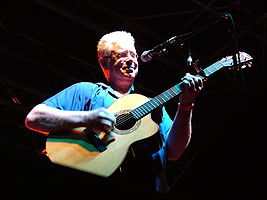
My friend Brian Walsh will be doing a presentation drawing on his recent book on the singer-songwriter, rock guitarist and road warrior Bruce Cockburn at the renowned Calvin College Festival of Faith and Writing this week. Later, Mr. Cockburn will be performing, preceded by an interview with Walsh. In honor of this remarkable bit of interaction and collaboration, and with a big hat tip to all involved at Calvin College, I offer this long rumination on the music of Bruce Cockburn, the writing of Brian Walsh, and this new book that explores how Cockburn’s work can inspire a more fruitful, faithful Christian imagination. It’s a great book and means a lot to me, as you will see.
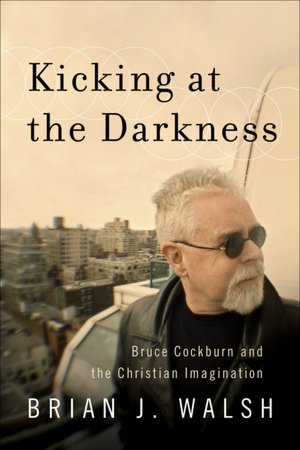 When Kicking at the Darkness: Bruce Cockburn and the Christian Imagination by Brian J. Walsh (Brazos; $18.99) hit the bookstore shelves in late fall I did a brief review, suggesting it was a book I adored, had read (in an early manuscript version) and that I would write about more thoroughly.
When we were doing our Hearts & Minds Best Books of 2011 announcements, we awarded it as one of the year’s best.
In fact, I said it was one of the year’s books that made me the happiest. I had hoped others might find that intriguing, and that BookNotes readers would order it. Some did, but others, I’m afraid, didn’t realize just how important this remarkable book really is. I’m not alone, though, in insisting that this is a book that is well worth your hard-earned coin. I smile in agreement when Brian McLaren says “I savored every page of this book.” And I agree with Marva Dawn’s enthusiastic assertion: “You need to read this book!”
Here is my heart-felt two part longer review of Kicking at the Darkness by Brian Walsh. The first essay is a rambling bit of my own story, why I found Cockburn so important decades ago, and how Walsh has been a writer whose Biblical insights about worldview and the prophetic imagination have influenced me greatly. Granted, my remarks are a bit impressionistic and, insofar as it is just a little bit of my little story, it may not be that interesting to you.
Still, I hope you give it a read—you may better understand why I write about many of the themes we pursue here, the sorts of books we commend, the authors we most appreciate. The confluence of evangelical faith, a reformational worldview, how Christian discipleship demands cultural engagement, our interest in the arts, and the really important influence of pop music form the backdrop as I tell about Bruce Cockburn. I’ve said for decades that Cockburn is in my top two or three all-time favorite recording artists, so I hope you’ll read my odd little overview.
Part Two is a bit more focused, describing the structure and themes of the book. In my first essay, actually, I end with three reasons why you should read Kicking at the Darkness. If this intrigues you, or you are willing to trust me, order it from us asap. If you want a bit more explanation of where Walsh goes with all this, read my summary in Part Two. I am (relatively) brief, there, and it is no substitute for taking in Walsh’s insight, good writing, powerful Bible lessons, and his seriously imaginative take on Cockburn’s seriously imaginative artistic vision. Enjoy.
CAUGHT TAKING A DIVE
Two songs taken together on the 1976 release In the Falling Dark, the title track and “Gavin’s Woodpile” nearly knocked me to my knees. Sure, In the Falling Dark had glorious praise songs (“Lord of the Starfields”, “Starfields”), sweet stuff about pregnancy (“Little Seahorse”) and a light little song with some prophetic edge insinuating that the cities of this world are somewhat like Babel (“Laughter”–ha, ha, ha) and the lovely view of heaven described as a “Festival of Friends.” But the slower “Woodpile” song is a hard, acoustic story about mercury poisoning and the “curse of these modern times.” I listened to it coupled with the vision of the whole creation groaning in “Falling Dark” which described the glory all around, and our ignorant lack of appropriate response. He sings that we are all caught “taking a dive.”
That was a dumb expression a friend of mine used for when we did nonviolent direct action protests of prophetic civil disobedience (against nuclear weapons builders) and Cockburn’s use of it as I faced possible jail time just made me weep. Is that phrase “taking a dive” heroic, a summons to get arrested in protest, as we used the term? No. It is full of remorse, joining in brokenness, the brokenness of Romans 8, where the whole fouled up world is longing for redemption, if only we humans would get right with God. We are “caught” taking a dive, missing it all, blowing it, giving in and giving up. It is owning up to the sorrow of our situation–even the beasts cry “such a waste!” Years later–way out on the rim of the galaxy, as Cockburn put it then in a song of lament, where “the gifts of the Lord lie torn” —we realized Bruce was, as Bono put it, a ‘postmodern psalmist.’ He brought joy and tears together, like the Psalms.
Nobody has done this in our time like Bruce Cockburn and his music has been an influential soundtrack for Beth and I since our marriage in 1976, the year we discovered Cockburn. Allow me to tell you a bit about it.
***
It was the mid-70s, and I was listening daily to Jackson Browne, Neil Young, Dylan, The Band, early Elton John, Paul Simon, Joni Mitchell, Dan Fogelberg, Roberta Flack, and the occasional prog rock or jazz record. And there was some of that new energy of punk. And a bit of soul and R&B. (Curtis Mayfield, Marvin Gaye, War.) Since the 60s I’d been moved by good tunes; pop music moved my feet just a bit but, more, it allowed my heart to be touched. My earlier girlfriends, my best guy friends, and my then new wife Beth all could attest that I’d talk about music til the wee hours if I could. From “Bridge Over Troubled Water” to the genius of the White album, from Harry Chapin to John Prine to Joan Baez to CSN to Gordon Lightfoot. My faith, my politics, and my whole worldview were shaped by John Lennon, James Taylor, and the wooly stuff from the Dead to the Allman Brothers. Bob Marley was young and interesting. I liked
 eccentric stuff like The Incredible String Band and It’s A Beautiful Day, the soul of Van Morrison, the lefty activism of Graham Nash. I heard Pete Seeger a time or two at anti-nuke protests and tried to listen to old Woody Guthrie. I would eventually be an early fan of a young band from Dublin, who fused passion and politics and prayer, but that would be years later, long before the brilliance of Arcade Fire or Radiohead.
Few of the contemporary Christian music pioneers
that that I listened to in the late 70s ever fully captured my heart. Larry Norman, Randy Stonehill and early Talbot brothers stood out, beside our friend James Ward, but if secular pop groups sang mostly about lost love and romance, why did CCM singers only sing about faith and worship? Why no Christian songs about justice, about ecology, about friendship, about travel, about sex, about loneliness, about race relations? I don’t know which was more frustrating, songs with no reference to God or songs about God with no reference to real life.
(This did begin to change, in part due to great songwriters like Mark Heard and Mike Roe and Glen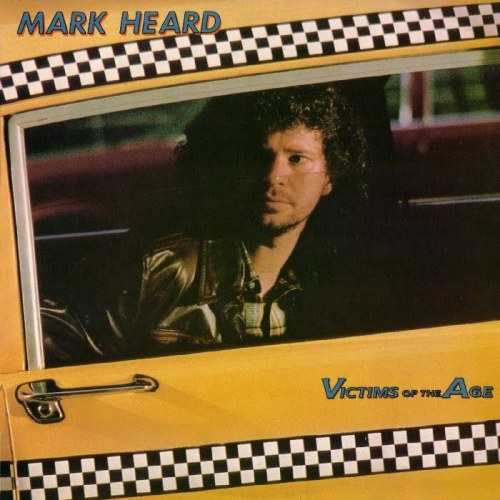 Kaiser, for instance. And, eventually, the spectacular work of Bill Mallonee and VOL, which is a whole other story.) It would take years before CCM stars wrote anything about the needs of the poor, and even then there was nary a song about injustice or the causes of poverty. Much has been written about the insular tone and limited vision of the evangelical awakening in the last quarter of the 20th century and our bookstore—carrying books on science and film and business and global injustice and such has attempted to witness against the sacred-secular dualism that was both the downfall of, and reinforced by, the evangelical CCM industry.)
This ground has been well covered (Charlie Peacock’s book At the Crossroads, now out of print, is very important and a great read) and I don’t recall it to bash the Jesus movement years or the talented recording artists that we enjoyed in those years, such as Keith Green, Phil Keaggy, or Amy Grant who, despite being an icon of the 80s and 90s CCM sub-culture was, in fact, a bit out of the box and a very fine lyricist. But it does frame some of the context for Cockburn’s early appeal for many of us. Fast forward several decades or so and other kids stuck in the CCM world found similar weaknesses, and their memoirs are wonderful to read for those of us who follow that sub-culture. See, for instance, Sects, Love, and Rock and Roll: My Life on Record by Joel Henge Hartse (Wipf & Stock; $23.00. Or, get the tremendously written report by Spin writer, Body Piercing Saved My Life: Inside the Phenomenon of Christian Rock by Andrew Beaujon (Da Capo; $16.95)
I remind you of the less than full-orbed (and often less than artistically mature) CCM music of those years–and my fierce devotion to more substantial artists like Jackson Browne—so that you might get just a hint of the absolute thrill, the deep joy, the jaw-dropping, too-good-to-believe discovery of one Bruce Cockburn, an exceptionally literate Canadian folkie (he  knew Neil Young from up in Alberta, somebody said) turned bluesy rocker. Even then, after only a few hippy-folk albums under his belt, he was considered one of the great guitarists around. It was being circulated at the time that evangelical rocker Phil Keaggy was considered—by Jimi Hendrix, at least—to be the world’s best electric guitar player. Keaggy was later quoted as saying that he couldn’t hold a candle to Cockburn. A drop-out of Berklee School of Music where he studied jazz, Cockburn could do extraordinary finger picking, could find new chords and tunings that made the guitar gods gently weep, and could barrel house with blues like nobodies business.
And then he started singing about Jesus.
Excuse me while I collect myself. The lump in my throat as I write that has led to tears in my eyes, as I consider the goodness of God to touch the lives of artists who can so touch our lives. For evangelical Christians like myself who believe there is simply nothing more important than a proper understanding of the Christ-exalting life of Kingdom discipleship, finding that Cockburn had become a Christian was only matched by the night my best friend Ken Heffner and I listened with grins and tears and high-fives and praises to God to the soul-stirring Slow Train Coming that testified to Mr. Dylan’s undeniable conversion to Yeshua. I will never forget that night, and I will never forget the first Cockburn album I ever heard, bought from a budget bin at a Pittsburgh record shop.
Which brings me to this: if you care about thoughtful pop music that is clearly the work of an artist on a spiritual journey, a great singer-songwriter, who has earned Juno after Juno (the Canadian music industry’s equivalent to a Grammy) who is esteemed by some of the finest contemporary musicians on the planet—U2, for instance, The Band, Jackson Browne, T-Bone Burnett, Barenaked Ladies, Buddy Miller, Joe Henry, Eric Clapton–you owe it to yourself to listen to Bruce Cockburn. His earliest stuff is impressive, mostly acoustic, although even his later louder records–the middle, political period, when he started doing artsy spoken word stuff, too—include gentle 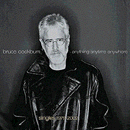 ballads. He has worked with jazz violinists, wild trumpeters, gospel singers like The Blind Boys of Alabama, politico folk-singer Ani DiFranco, and slide guitar master Bonnie Raitt. He has released hot live albums with raging bands and, a year or so ago, Slice of Life, which is a double live album of his solo performances. Anything, Anytime, Anywhere is a compilation of single hits he had out, from 1979-2002. Here is a complete discography, and it is fun to see his expansive career, the interesting titles and the often obscure artwork on the jackets. (Don’t forget to come back here, though!)
Cockburn’s producer of recent years, Colin Linden, himself stood-in with The Band, traveling with that legendary group for a while. His slide guitar and rootsy Hammond B3 can be raucous or soulful, and has served Cockburn wonderfully. Over the course of Cockburn’s career there have been some truly sweet songs, some avante garde extended jams, some blazing electric guitar solos (his prophetic, vulgar cry against the vulgarities of the injustices of the International Monetary Fund, “They Call It Democracy” comes to mind, especially from the live recording) and some exceptionally sweet slide guitar (“The Whole Night Sky” features some heart-wrenching playing by Bonnie Raitt as well and is one of my favorites, as he sings gorgeously about shedding tears.)
A few albums were nearly travelogues, offering poetic impressions drawn from his journeys in Nepal, publicizing land-mines in Mozambique, playing with local musicians as he researched desertification in Mali, liberation-theology anthems written in Central America, alongside journalistic songs about dusty roads and village chickens while staying with refugees in Guatemala. “Dust and diesel, rises like incense from the road” he sings in a truly wonderful travelogue as he rumbles through rural Nicaragua. An older song artfully describes watching an old lady sleeping on a Japanese train—“head bobbing almost imperceptively”—and a concert favorite powerfully describes riding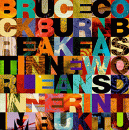 a bike through “the Tibetan side of town.” Indeed, a 2004 albu
m captured his global citizenship and world travels with the title Breakfast in New Orleans, Dinner in Timbuktu.
Yes, Bruce continued to sing about Jesus, with Biblical images and spiritual themes—often mixed with songs about erotic desire, or about political injustice. We first started carrying the author Brennan Manning before he was very popular because Cockburn cited his “Shipwrecked at the Stable Door” chapter from a Manning book which was then entitled Lamb & Lion (but is now out as The Relentless Tenderness of Jesus) in a song Cockburn wrote with that title. If Cockburn was reading this guy, we wanted in on it, and we soon became Brennan fans, too. But he was never preachy like most CCM rockers and was never embedded in a fundamentalist subculture. In fact, some of the most indicting words against the Christian right come from Cockburn, in songs like “Gospel of Bondage” from his 1988 album—a powerful favorite—called Big Circumstance.
An active humanitarian, it is ironic that one of Cockburn’s most well-known songs is “If I Had a Rocket Launcher” (from Stealing Fire) which channeled his rage against US-backed helicopters spraying bullets on refugee children in counter-insurgency warfare in the mid-80s. It is a passionate song, with the understandable line, after singing about the horror he had witnessed “If I had a rocket launcher, some son-of-a-bitch would die.” It is a song he used to apologize for, that he told me once he didn’t fully affirm—it is the artists job to report authentic feelings, he said, and, like it or not, this is how he felt as he witnessed for peace. Even pacifists, maybe especially pacifists, sometimes cry out in rage, and Cockburn gave voice to the feelings many of us felt as we worked in the 80s and 90s to stop US-backed injustice in places like Central America and South Africa. “Rocket Launcher” and “They Call It Democracy”, “Where the Death Squad Lives” and the drum-based chant about First Nation’s people’s land rights, “Stolen Land” are quite different than the C.S. Lewis-inspired images of “Wondering Where the Lions Are” which he sang on SNL in 1980, yet there was a serious social vision in his earliest albums, and there have been upbeat and pleasant tunes even in his most politically-charged releases.
I recall visiting new friends at the Institute for Christian Studies in Toronto in what must have been 1980. Cockburn had moved to the rough and tumble city–the following year he’d be seen on a gritty album cover smoking in an urban café, on a release called Inner City Front—and his brand new album was said to be influenced by reggae, by the sounds of his experiences in the city, by some hard times in his life. It was called Humans and hearing the needle drop in Toronto, near Younge Street, meant the world to me. To this day, this album—with “Rumors of Glory” and “What I Did on My Fall Vacation” and “Grim Travelers in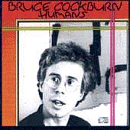 Dawn Skies” (“little boys and girls from the Red Army underground, they’d blow away Karl Marx if he had the nerve to come around”)—is still one of my favorite records of all time. With clever lines about “fascist architecture” and Bergman films and allusions to T.S. Elliott; there were harsh lines like “gray-suited businessmen pissing against the wall” and the slo-mo horror of watching a car crash in Tokyo, and I knew I was in deep. This is incarnational stuff, the Word turned flesh, some heavy mix of poetry and passion, gospel and culture, clarity and distortion that I simply had never encountered before.
Cockburn’s lament over a broken marriage (“What About the Bond?”) which cries out “What about the bond/ sealed in the loving presence of the Father?” was the first song I ever heard about Christian divorce, perhaps still the only one I know of that doesn’t bog down in cheap sentiment. As I wrote earlier, Cockburn was refreshing as a poet and singer because he was filled with faith, even hope, but was gritty and real, tragic, even. He blamed himself for many of his troubles, deeply and importantly, in a great tune called “Fascist Architecture.” Cockburn stands almost in a class by himself, writing smart songs like this, stuff even the Talking Heads couldn’t imagine in those years. His insight and lyrical style could hold up against the best singer-songwriters of the day. And yes, God was in all of this. Rumors of Glory, indeed.
One simple example: in the travelogue song “How I Spent My Fall Vacation”, the first line is “Sun went down, looking like the eye of God” and after all manner of adventure and ponderous thoughts—“will I end up like Bernie in his dream/displaced person in some foreign border town?”) and the last line is “while the eye of God blazes at us like the sun.” The slight reversal in imagery so struck me and I’m still taken by its cleverness, and how it frames our comings and goings. One of the leaders of the famous Greenbelt festival told me recently that Cockburn’s first line of his first song was that, and it won him over instantly. Amen!
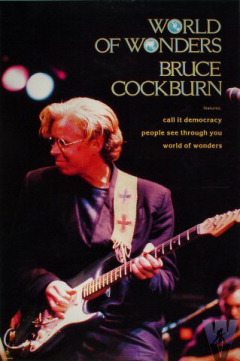 Over the next decades, Cockburn would continue to bless us with artful tellings of amazing grace amidst ambiguity and pain, doubt and searching, alienation and struggle, horror and good humor. He would testify about “grass growing up through cement” and invite us to find the risen Christ in “this prison camp world.” He would do an acoustic Christmas album that included some stunning songs, played provocatively in a minor key, before current hipsters learned to capture the angst of Advent. He would whistle, he would moan, he would protest, he would move back to the country (doing a few lovely country-tinged albums with producer T-Bone Burnett, Nothing But a Burning Light and Dart to the Heart), take up serious biking, tour endlessly, would do an album of delightful instrumentals. He would re-work crowd pleasers like “Wondering Where the Lions Are” with scat singing in falsetto, rework his earliest “Jesusy” songs even as he’d often sound like a mystic Unitarian. He would play a resonator guitar, raise up the plight of native peoples, and sing about sex and pleasure in ways that pointed us to the Divine moment in it all, all while reporting from various humanitarian projects he was involved with, sometimes through Canadian relief agencies. There are only a few artists whose life-time of work I continue to follow, and who continue to challenge and impress and delight. Cockburn is at the top of the list.
I wish I could describe the sonic complexity and diversity of his 30 some recordings, but words fail. His lyrics usually match his passionate playing, and his musicianship continues to be entertaining, if sometimes demanding. (From his earliest work he has shown serious jazz influences, sometimes world-beat tinges, and in Small Source of Comfort, his most recent, some neo-classical overtones, even using a string section for the first time ever.) I think this newest one may be my least favorite since his first few folkie ones, but even a mediocre Cockburn album, with a few misses, is better then most.
Cockburn’s broad Christian worldview remains evident, although it seems that his faith is less evangelical than it once was, not that it was ever very
traditionally pious. In the new century, he continued to push us to think about global affairs and the direction of our pubic life, about faithful responses to the beauty and the sorrow and the complexities of the human condition, perhaps unmatched in all of rock music. He railed against the destruction of the rain forest, laughed at death–he has a morbid sense of humor— named his fears, celebrated his hope, such as it was. One album, with a gruesome song or two, (and a few beautiful ones) is called, tellingly, You’ve Never Seen Everything.
Cockburn does relish the unusual, so it doesn’t surprise that he sings about seeing a pile of skulls in a memorial to the killing fields in Cambodia. But he is also a funny chap and for a while closed his concerts with the “Look on the Bright Side of Life” from the satirical crucifixion scene from the goofy Life of Brian. Or then, again, the one about his own death, an upbeat rocker “Tie Me At the Crossroads” which I always enjoyed. Morbid, maybe, but he never seems depressed, even though his lyrics reflect an honest appraisal, even if tongue is in cheek.
Cockburn helped me think about the cold war–we laughed with him as he describes a guy in his “commie fur hat” and took comfort when such a politically experienced thinker could still sing songs of hope and joy. (“Joy Will Find a Way” was an early song on an album by that name.) Indeed, the lovely “Wondering Where the Lions Are” is, in fact, a song about the horrific “lions” of nuclear weapons; “Sun’s up, looks okay, the world survives into another day” literally kept me from growing too cynical in my years working against nuclear weapons and our evil willingness to commit mass murder with them.
I do not think it is fair to say Cockburn was trendy, but he has helped
us enter into the issues of the day, often with prescience. He would
sing about the destruction of the rainforest (“inject a billion burgers
worth of beef”), Eastern bloc dreariness; create tunes that captured the
spookiness of places of great sorrow (like the killing fields of
Cambodia) and helped us see the beauty of nature. (“Lord of the
Starfields” was a song of praise on 1976 In The Falling Dark, a
song whose poetry still strikes me as deeply worshipful and yet
wonderfully suited to a pop song.) “Silver Wheels” from that same early
album narrated a road trip noticing and worrying about the advertising
that bombards our field of vision which is more relevant now than ever.
Years later, though, he’d remind us that we could see the mystery of
the divine, even in a junkyard. And did I mention he is still disgusted
with the Christian right? He was and he is. (Yet, when the situation
calls for it, he responds with decency and even patriotism, as in “Each
One Lost” a poignant song on the most recent album (Small Source of Comfort) about witnessing a flag ceremony in Afghanistan where the bodies of two dead soldiers were being brought across the tarmac.)
In the years after our own radioactive mess and political irresponsibility here in central Pennsylvania at the Three Mile Island reactor, Bruce helped us lament the horrible nuke disaster in Chernobyl. His bluesy cry about the Soviet style cover-up there, “Radium Rain” (from Big Circumstance) includes one of the longest guitar solos in the expansive Cockburn catalog. I have said before how moved I was hearing Brian Walsh read Colossians 1 with that searing musicianship in the background, at CCOs Jubilee conference one year, and how it remains for me to this day one of the most memorable liturgical experiences of my life.
BRIAN J. WALSH
Brian Walsh reading the Bible perfectly timed over Bruce Cockburn’s guitar solo, relating Old Testament prophecies to Cockburn’s assessment of 20th century energy policy and technological illusions? For those who know Walsh’s remarkable work this is no surprise. Walsh has himself given us a body of work, books about a Christian worldview such as The Transforming Vision: Shaping a Christian Worldview (IVP; $16.00) or how that worldview might fruitfully engage postmodern thought and culture in the excellent Truth Is Stranger 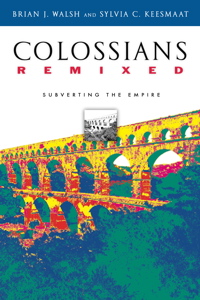 Than It Used to Be: Biblical Faith in a Postmodern Age, (IVP; $22.00) (both co-authored by J. Richard Middleton) or how a serious postmodern study of a Biblical book like Colossians might help us change the world (Colossians Remixed: Subverting the Empire, co-authored with his wife, Sylvia Keesmaat, a New Testament scholar of considerable renown, published by IVP; $23.00.) His work co-authored with Stephen Bouma-Prediger, a deep study of our “culture of displacement” (Beyond Homelessness Eerdmans; $27.00), is demanding but one of the more profound examples of Christian scholarly cultural criticism written in recent decades. What an audacious book, naming so much of the malaise and dysfunction of our time. I’ve reviewed each of these before and commend them all for your serious study and edification.
If you’ve read any of these books you already know that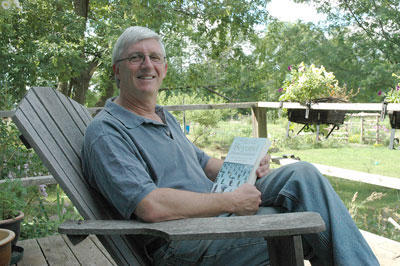 Walsh is a serious Cockburn fan. He has long been a student of Cockburn’s work, paying particular attention to his allusive lyrics, using his lyrics to help unlock insights from the Bible (and using the Bible to help us appreciate some of Cockburn’s not-so-hidden meanings.) Walsh hasn’t written a book where he hasn’t quoted Cockburn and he has even taught college courses on the “prophetic imagination” of the radical, Christian poet.
I have appreciated this about Walsh (I’m a devout Cockburn fan, after all) and, I must say, it has helped me enjoy Cockburn’s music that much more. Sure, when I was in high school and college I’d ramble on about all kinds of theories about all kinds of music. (Was Paul dead? Was Jackson Browne sending out coded messages about the gospel? What did Dylan mean by that? Why did the Doobie’s sing about Jesus? Why were there gospel singers in that song “The Weight” and why did Van quote all those romantic British poets? What’s with Paul Simon’s references to Jesus? Heck I even researched in sophomoric fashion the mystical incantations of Tales of Topographic Oceans by Yes. ) But Walsh doesn’t speculate like an immature, curious fan, he engages Cockburn’s lyrics with serious insight, offering helpful music criticism, rich, intellectually credible and fruitful. A good critic can help us understand and appreciate the imaginative vision of an artist, and Walsh has done so, helping us both understand and more greatly enjoy the artistry of Bruce Cockburn, postmodern psalmist.
THE BOOK
And, now, he has done so in a whole big book, Kicking at the Darkness: Bruce Cockburn and the Christian Imagination (Brazos Press; $18.99.) I had the great privilege of helping read through some of it and cannot believe that I have an endorsing blurb on the back (next to wonderful recommendations by Brian McLaren, who has quoted Cockburn a time or two himself) and New Testament scholar Richard Hays. I already noted that there is a great endorsement by Marva Dawn who I once teased about not really liking rock ‘n roll which I now publicly take back. As a bit of a blurb-meister, this is one of my proudest moments,
Here is what I most sincerely said:
I’ve been listening to Cockburn for more than three decades and reading Walsh for almost that long, and I can hardly imagine surviving these times, let alone believing that joy will find a way, without the artistry and insight of both. This is an extraordinarily ambitious project, years in the making, and there is profound insight on every page. I recommend it with great enthusiasm and immense gratitude.
One does not have to like every Cockburn song or album, let alone agree with every view he seems to express, to appreciate his exceptional gift as songwriter and musician and to be aided by his observations, rendered in song. And one need not agree with every line in every Brian Walsh book to appreciate his preacherly gospel call to be faithful to the Biblical narrative, and to reject worldly accommodation to the idols of modernity.
In other words, whether you love Cockburn and/or Brian Walsh or not, this book is profitable, interesting, important, and I commend it to you.
Kicking at the Darkness: Bruce Cockburn and the Christian Imagination is a very good book. You should read it. Here are three reasons why.
THREE REASONS TO READ THIS BOOK
1. Firstly, it is, indeed, a great introduction to the thought and insight of one of the great artists of our time. If you care at all about pop music or contemporary poetry, you should know Cockburn. You may not want to immerse yourself in his huge body of music, but reading this book (hopefully with some of his tunes playing in the background) is a good way to explore his world, to be touched by his lyrics, to be challenged by his take on life and times. I’m a fan of reading about authors and their work—I routinely recommend books about Wendell Berry or Abraham Kuyper or Martin Luther King (not just their primary sources, which, obviously should be read as well) and am happy to say that reading about them can help you understand and thereby more richly appreciate their real work. So reading Kicking at the Darkness is perhaps the best way to come to value Cockburn’s work, learning about it and plumbing its meaning and framing it as it ought to be framed. Cockburn himself, by the way, has met with Brian a time or two, and has maybe been bemused by Walsh’s theologically readings of his music. I’ve heard Cockburn talk about his song writing at the Calvin Festival of Faith and Writing several years ago where he seemed exceptionally humble about and, yes a bit bemused by, the serious attention some of us give to his work. Yet, in a personal email to Brian after reading the manuscript, Bruce exclaimed how very good it was to be so wonderfully unde
rstood. Cheers!
There is no resource like this that attends to the substance of Cockburn’s work, and it is a great way to learn about an esteemed contemporary artist.
2. Secondly, this is a good way to more deeply understand the Bible itself. Walsh is, if anything, a Bible reader, a Bible scholar, a Bible teacher— I happen to know how worn his own Bible is, how well used it is — you wouldn’t believe the scribbles and notes and fingerprints and pages falling out. If this interaction with a modern poet and the ancient prophetic text illumines the poet, that is great, but if it illuminates God’s own Word, that is even better. And I think it does: to hear the Biblical text through the ears of Walsh listening to the songs of Cockburn, pulls out insights, applies new wisdom, underscores certain verses, that we just might not get otherwise. I agree with an old song by Cockburn, “Maybe the Poet” (about Ginsberg somebody speculated, or maybe about Ernesto Cardenel?) which shouts “you need him and you know it.” Yep, listening in on the conversation—Cockburn’s lyrics lined up with Isaiah and Jeremiah and James and Jesus and Paul—well, the Bible comes alive! And it comes alive in contemporary power, not sentimentally, but with grit and guts. Kicking at the Darkness is not exactly a Bible study (like the Walsh/Keesmaat Colossians book, or the creative Biblical monologues in Beyond Homelessness) but it comes close. You simply don’t read Walsh, or talk to Walsh, without the Bible coming into things. Read this book about pop music and learn the Word. I dare you.
3. This may not at first seem important to many folks, maybe not even all BookNotes readers, but I cannot overstate just how important this truly is: reading Walsh’s examination of, engagement with, living into, the vision of Bruce Cockburn is a great (great!) example of wise and fruitful literary criticism. We all are bombarded daily with texts, with images, with sounds and sights. How do we see? How to make sense of it all? Take in and discern and apply? How do we interpret? Whether it is a video game or a literary novel or The Hunger Games blockbusters, Seinfeld re-runs or the latest indie rock show, a TV preacher or a BookNotes book review, what will you make of it? How have you learned to evaluate and discern wisely?
Walsh is curious, and a rare reviewer: he is generously critical, happy and heavy, open and discerning. That is, he doesn’t just dismiss insight and truth that comes from unlikely sources (he is famous for using pop culture, movies and music in his sermons and campus ministry at the University of Toronto) so he starts with a hermeneutic of generous hope. But he’s no fool and he does not suffer fools too gladly, either; that is, he discerns well the zeitgeist, the spirit of the age, the deeper idols that shape and deform even the best stories. So while he is open to truly hear and be touched by all manner of things, he holds up all things, as 1 John 4 instructs, to the discerning eye of the faithful Biblical test. I’d like to say he models and shows us how to be “in the world but not of it.” You could say he has a pretty active “crap detector” as Hemingway (according to Neil Postman, at least) once called it.
So, to say it again: first, you need to read this book because it will introduce you to an important musician and critical acclaimed lyricist who happens to be a Biblically-literate thinker. Secondly, Walsh uses Cockburn’s religious faith and imagery to do extraordinary Bible study, so you will not only learn about Cockburn, you will learn something new about the Bible, and the God who stands behind it. What a good gift this book is, helping the Word get cracked open before us.
And, thirdly, you will learn how to be engaged and thoughtful about the body of work of a serious artist, how to take even odd lines and perplexing metaphors and see how they might point us to redemptive insights about the meaning of our lives under the sun. We all need help learning to discern the voices and ideologies around us, and following the careful explorations of Walsh on Cockburn as they both try to understand the modern world is a good exercise in cultural exegesis. You will be wiser for it as the book models a helpful, important practice.
Walsh has given us in Kicking at the Darkness a supreme example of a thoughtful Christian reading of what for some will be controversial texts (songs about left wing revolutionaries, about sex, about rejection of churchy dogma, about greed and injustice, about death and fear and love.) Rather than avoiding these heavy topics, Walsh helps us be open, to have our own hearts opened in order to see the good in the art. He realizes that the offering of artists must be firstly considered as art. His creative appraisal and appropriation of the art of Bruce Cockburn is a great example of how to help us flourish–for the glory of God and the common good.
You see, I belabor this for you, our friends and customers, because I think we all need to know how to do this—this art of interpretation, this way of nurturing the gift of cultural discernment— so, even if rock music isn’t your thing, and the wild and wooly worlds of Cockburn and Walsh aren’t your own, even if these songs aren’t that appealing to you, I’d still invite you to consider it. Spending a few weeks pondering this uniquely reformational Christian take on an important and acclaimed recording and performing artist of our time can only help deepen and mature your own practices of cultural engagement. Perhaps you will disagree with Walsh’s interpretations and how he appropriates Cockburn’s take on life. (For the record, I agree with almost all of Brian’s insights; I think maybe there was one interpretation which I thought was over-reaching.) Perhaps you will disapprove of his use of the Bible in his project of “seeing” Cockburn Christianly. That’s okay. As Bruce says, and as Brian quotes approvingly in the introduction, we are all “stumblers.” We have reason to agree with Cockburn’s reminder that “love rules” so there is freedom and grace. Right?
Freedom and grace, politics and poetry, rock and roll. Bruce Cockburn means the world to me and if you’ve wondered—as I’m told some people do—how in the world we ended up creating a Christian bookstore like Hearts & Minds, such as it is, you should know that much of it got dreamed up to a Bruce Cockburn soundtrack. Indeed, there were a few key moments in my life, some risks I took, some faithful steps I tried to pursue, that ended up shaping the man I’ve become, that may not have occurred where it not for how Cockburn pointed me to “the glittering joker dancing in the dragon’s jaw.” There have been decisive moments for me with Bruce’s music (and even a bit of correspondence) that helped Beth and I and our closest friends as we took up the vocation of social change and cultural renewal and Christian hope in history—as Bruce put it, “waiting for a miracle.”
KICK AT THE DARKNESS TIL IT BLEEDS DAYLIGHT
It may be popularized because Bono cited it (in his song “God Part 2” on Rattle and Hum, where he literally sings a line saying he heard a singer on the radio, that singer being Bruce Cockburn) but that line from “Lovers in a Dangerous Time” is powerful: we’ve got to kick at the darkness ’til it bleeds daylight. That is, Beth and I would say if we had the energy, on a good day, part of our understanding of our calling, part of why we sell the books we do. What the books we sell to you might help you do.


I could wax eloquent about Brian’s friendship, too, and we are grateful for that. But the point is to point BookNotes reader
s to Cockburn, who points, in his artful, suggestive way, to something Bigger. A gull-shaped shaped ship, perhaps, from the gorgeous song “All the Diamonds of This World” that carries us to sea. Or a Big Circumstance that, to this listener, and to Walsh’s, too, sounds like a Biblical sense of providence. Such a vision invites us into a subversive “feast of fools”—Cockburn got the line from theologian Harvie Cox— even as we live “out on the rim of the galaxy (where) “the gifts of the Lord lie torn – way out on the rim of the broken wheel.” Even as we believe it still is, as Bruce tells us, “a world of wonders.” Walsh helps us see how Cockburn sees, and that is, I’m sure, mostly a very good thing.
PART TWO
Kicking at the Darkness: Bruce Cockburn and the Christian Imagination by Brian J. Walsh (Brazos Press) $18.99
I have shared my passion for the artistic musicianship and provocative lyrical content of Bruce Cockburn, one of the most respected and awarded folk-rock-pop singers working today. I have shared that his music has brought pleasure and joy and spiritual insight to us for years, literally helping us find the courage to start our bookstore 30 years ago. There are very few pop artists working intentionally within the Christian tradition (U2 obviously comes to mind) that are as sophisticated lyrically and musically consistently as creative as any of the best recording artists of the rock era, so Cockburn means a lot to us.
I listed three reasons why you should buy the recent book by Brian Walsh, a Canadian author whose five previous books have all cited Cockburn. Walsh’s incredible new book, and his worldviewish and socially-engaged interpretation of Cockburn’s (mostly) serious work, stands not only as a good way to appreciate Cockburn, but will surely help you understand your Bible better, and will serve as an example of how to be discerning, artful, prophetic, as we interpret contemporary cultural artifacts. Whether you know or like Cockburn or not, this is, in a postmodern nod to C.S. Lewis, a great “experiment in criticism.”
One of the chief contributions that Brian offers is a theme that should be clear from the title: this is a book about the imagination.
Back when Walsh helped put the discussion about weltanschauung –worldviews–on the map of evangelicals, he taught us that worldviews are visions of and for life. That is, unlike others from Francis Schaeffer to his friend James Sire (not to mention the plethora of right-wing fundamentalists who started using the term), Walsh and his early co-author Richard Middleton, did not see worldviews as primarily abstract sets of ideas, a collection of static dogmas, hardly even “presuppositions.” He has from the beginning (in The Transforming Vision; IVP; $18.00) described worldview formation as a lived vision of the meaning of the story (or stories) we inhabit and how they inform our way of life, our implicit answers to life’s biggest questions. Our practices cycle back and shape how we see, and how we live. Worldviews are most fundamentally matters of the heart, and matters of the imagination.
This was clear (and for those who want the heavy background, it comes in part from Dutch Kuyperian philosopher, Herman Dooyeweerd (or see here) who wrote in the middle of the 20th century powerful critiques of the autonomy of reason, the idolatrous ideologies of Enlightenment notions of truth, themes later picked up by postmodern critics and folk like Stanley Hauerwas, Lesslie Newbegin, and even Alasdair MacIntyre.) When Walsh and Middleton wrote Truth Is Stranger Than It Used to Be: Christian Faith in a Postmodern Age (IVP; $22.00) it was the first and most singularly helpful book amid a batch of evangelical critics who failed to appreciate the deep challenge of deconstruction to the idols of Western rationalism. While D.A. Carson and others gripped about relativism and such, Walsh & Middleton said “good riddance” to modernity’s rationalist faith–to cite a Cockburn song they often used in workshops and speaking–because “The Candy Man’s Gone.” (from The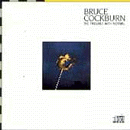 Trouble with Normal.) If faith in progress through science and secularized Reason and economic growth ever was a worthy savior, by the time we began to see what Os Guinness called “the striptease of humanism” and felt the dis-ease of cultural disintegration, early signs of the downsides of globalization, the ecological crisis and the like, it was time for Christians to offer a clear “no” to capitalism and progress. Informed by Christian thinkers like the Dutch economist Bob Goudzwaard and Canadian social justice activist Gerry Vandezande, careful reformed thinkers like Richard Mouw and even aesthetic theorist Calvin Seerveld, Walsh became increasingly clear about denouncing our accommodation with the story of, values of, and truncated ways of living as we do in the standard consumerist North American way of life.
By the time they started reading Bible scholar Walter Brueggemann, they were reminding us of the Biblical themes of exile, the role of lament in the Hebrew Scriptures, grappling with the “texts of terror” and wondering how the subversive ways of Jesus the servant King counter the violence supposed by many traditional Christians. Walsh and Middleton (and Brian’s wife Sylvia) are all scholars and teachers, but they were realizing that the best way to nurture a counter-cultural perspective among their students was to not just intone “no dualisms” and “creation-fall-redemption” to illustrate the wholistic redemptive plan of God to heal the entire cosmos, nor to do merely leftist or postmodern cultural criticism, but to find ways (a la Brueggemann) to enhance the 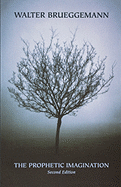 imagination. I don’t know if Brian would say this, but it seems that The Prophetic Imagination and The Hopeful Imagination, extraordinary, dense studies by Brueggemann, and his generative work on the Psalms (especially the Psalms of lament) funded a shift, a powerful, prophetic edge that has, I might note, gotten him into some trouble. Brian is a sweetheart of a guy, a good friend to many and a kind, gracious fellow, but he does speak his mind. And he despises the ways the church has failed to offer critique to the idols of the land, the way we can’t even imagine that things might be, as Bruggey taught us to say, otherwise. To awaken us from our slumber, we have to be aroused; apathy must be eroded by pathos. We need prophetic art to break us open.
And so, Walsh has increasingly used music and movies and poetry (he is even taken to
writing in free verse) to talk about a Christ-shaped imagination, helping us envision and embody a story that is shaped by the story of God. Yes we need
the poets to help us really “see” and dream a uniquely Christian worldview, lived in community in ways that says both “yes” and “no” to the practices and values of our age. And no poet/artist has influenced–or been used by–Walsh as much as Bruce Cockburn. When I said in my back-cover blurb that this book was years in the making, I know it is so. It comes from Walsh’s years of pondering and practicing, teaching and training, denouncing and dancing. (I will never forget how he dragged this lead-footed wall flower onto the dance floor when a cover band struck up “Brown Eyed Girl” but I digress.)
Kicking at the Darkness is a book about what some might call a Christian worldview, or what might better be described as the nurturing of a radically faith-filled imagination. It is about dreams and dancing and denunciation.
In fact, it seems to me that anyone who follows the conversations about worldview would love 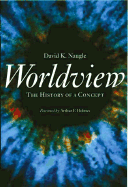 this book, whether you care much about Cockburn or not. I’m thinking of those who have read or knows about the excellent, if weighty, Worldview: A History of a Concept by David Naugle (Eerdmans; $30.00), the helpful, brief, Naming the Elephant by James Sire (IVP; $16.00), the fascinating Metaphors We Live By by George Lakoff (University of Chicago Press), the often-cited Creation Regained by Albert Wolters (Eerdmans; $14.00) or Nancy Pearcey and J. Mark Bertrand, who are equally important contributors to this area. I always appreciate Walsh’s fresh descriptions of how worldviews work, how stories shape us, and the relationship between the big worldview questions and the imagination and he says it well, again, freshly, in this new book. By the way, speaking of Brian’s renown on these very themes, I hope you know that the first portion
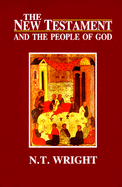 of N.T. Wright’s historic The New Testament and the People of God (Fortress; $38.00) comes largely from Walsh’s influence; it is not inconsequential that it is dedicated to him! Ends up the good former Bishop, by the way, besides a debt to Walsh, is quite the Cockburn fan himself.
***
I think the beautiful Preface and the first two chapters of Kicking at the Darkness are worth the price of the book. In the first introductory chapter, “God, Friendship and Art”, Brian tells of the power and passion of Cockburn’s music and how enjoying and studying it has been so fruitful for him and his friends and students. (Another narration of this experience of the importance of music that is more heart-rending and revealing can be found in the moving introduction to the study Religious Nuts, Political Fanatics: U2 in Theological Perspective by Robert Vegacs where Walsh tells of gathering around friends in their hospital room as a newborn was dying, and how a U2 concert proved such a life-giving blessing.) In this first good chapter of Kicking… he has a section “On Worldviews” and explains “The Aesthetics of Generosity.” Excellent!
The second chapter is called “Ecstatic Wonderings and Dangerous Kicking: Imagination and Method” which sounds both allusive and a bit academic. Yes, there is this concern for methodology, but it isn’t dry. He begins to explore Bruce’s music right from the start, even as he describes his process, what he’s doing, what he is hoping to accomplish, how he plumbs the interaction of Bible, Bruce, and his own reading of both. This is rich stuff, interesting not only to Cockburn fans, but instructive for anyone doing any sort of cultural exegesis. He explains his “interpretive assumptions” and while one needn’t know how to spell hermeneutics, it is a crash course, a quick crash course that is balanced and insightful, wise and fair. What a fun way to learn, to be exposed to the art of interpretation, and to ponder how to most appropriately engage the arts.
 His illuminating discussions in this chapter of songs like “Dancin’ in the Dragon’s Jaw” and “Creation Dream” and “Hills of Morning” are splendid, and it is good to start with perhaps Cockburn’s most popular album. (He played one of these songs on SNL in 1980—Bob Newhart was the host— and they remain standards.) Brian opens up their meanings, helps us realize the method of his madness, relating theology and art, Bible and culture, faith and social discourse.
From this strong beginning, Walsh digs a bit deeper, but the book does not proceed methodically through Cockburn’s canon, chronologically. Rather, each chapter chooses a theme, a metaphor or image that Brian discerns in Cockburn’s music, and draws from the breath of his catalog to play with the songs around the chapter’s theme. For instance, he has an amazingly interesting chapter on Cockburn’s “windows.” Who knew—even those of us who pay attention to Bruce’s lyrics, and discuss them at length–that there was so much about windows? And what a generative metaphor this is, for seeing, for vision, for light, for perspective. Walsh draws on more than a dozen songs (including Beth’s all-time favorite, “All the Diamonds”) and outlines several different sorts of window songs. This is very insightful about Cockburn’s journey, but, importantly, it offers ways to think about faith and formation and Christian engagement as we look at life.

Next, Walsh uses his exceptional insight about the Biblical teaching about creation, but not so much the ways in which creation is under threat by the unsustainable visions which lack any sense of faithful stewardship these days, the idol-driven assault which he explored with co-author Steve Bouma-Prediger in the important
Beyond Homelessness (Eerdmans; $27.00.) He explores Cockburn’s insights about the creation under threat in a later chapter, a chapter that I would call a “must read.” Space does not permit us to even list the songs he covers here in this early chapter about the joy of creation and the “world of wonder” which we are given as gift (or the creative way he uses excerpts of Lewis’
The Magicians Nephew.) But it is a lovely, lovely chapter, and Brian’s own poetic rumination at the end is itself a gift of playful rhetoric and artful retelling.
And so it goes, theme by theme, chapter by chapter. Here are a few that come next. (Do you know the song allusions? No matter–this is great stuff!)
At Home in the Darkness, but Hungry for Dawn
Into a World of Dancers
Humans (This is a study of one pivotal album, the 1980 release, Humans.)
Broken Wheel
Betrayal and Shame

What Do You Do With the Darkness? This is mostly a recapitulation, a poetic targum, a homily offered in the spirit of Cockburn’s own candor about brokenness and the reality of pain and dislocation in the fallen world. It is beautiful, and worth the price of the book.
Justice and Jesus
Waiting for a Miracle
In the glorious last few pages, Walsh summarizes—he’s an evangelist at heart, it seems, so there is some sermon
izing going on here—and throws in line after line from Bruce’s lyrics. Most have been discussed carefully in the book so readers will appreciate what they have evoked in Walsh and, if they know the songs, what they have evoked in their own listening. He leaves behind the quotation marks (assiduously used throughout) and allows the art to enter his own prose.
Despair is a doorway to hope. Hope transcends sentimental optimism because it refuses to avert its gaze from the darkness, refuses to repress that ache in the spirit we know as despair. Engaging the work of Bruce Cockburn, we have seen that this is a broken-wheeled world. We have seen the extremes of what humans can be. And we have heard a call to justice, to love, to fulfilling our calling as humans, creative, redemptive dancers in this dance of creation.
Where are we? In a world of wonders, called forth by love.
Who are we? We are angel beasts, rumors of glory, called to image the creator God of love.
What’s wrong? We live in the falling dark, a world of betrayal, idolatry, and ideology, hooked on avarice.
What’s the remedy? We’re given love and love must be returned. That love took on flesh in this glittery joker, dancing in the dragon’s jaws.
In a culture of captivated imaginations we need liberation. In a culture of dehydrated imaginations we need fresh water. In a culture that has lost its imagination we need new dreams. Bruce Cockburn’s art awakens such an imagination. And it is a Christian imagination.
Jesus, thank you, joyous Son.
BookNotes

SPECIALDISCOUNTany book mentioned
2O% off
order heretakes you to the secure Hearts & Minds order form pagejust tell us what you want
inquire here
if you have questions or need more information
just ask us what you want to know
Hearts & Minds 234 East Main Street Dallastown, PA 17313 717-246-3333

 and the sorrows of a hungry world, I got a few great suggestions from customers, asking me to list a few titles about agriculture. With Wendell Berry gaining in national prominence—I want to be prideful a moment and say that we stocked him since the day we opened 29 years ago, a few then-recent books like The Unsettling of America and The Memory of Old Jack—that certainly is a theme many care about. (If you haven’t, see the video of Mr. Berry’s prestigious Jefferson Award speech a few days ago here, or read it, here.) More on Berry, land use, and farming later.
 Sometimes we do it quickly, some of us admire the “slow food” movement. Most of us want to be more careful about toxic stuff, realize the importance of the organic movement, and at least want to be good stewards of God’s gifts of food and nutrients. We want to learn to cook more wisely, and eat more responsibly, even if we aren’t going to go, as the appropriate animal metaphor has it, hog-wild.
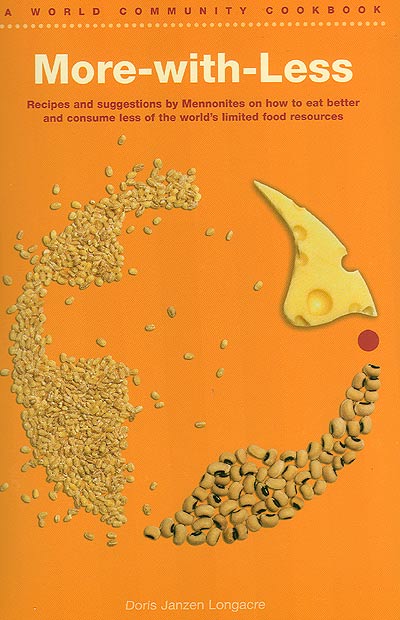 More-With-Less Cookbook (updated edition) Doris Janzen Longacre (Herald Press) $24.99 This is not only a fabulous cookbook that has helped thousands of families establish a climate of joy and concern for others at mealtime, it can help you improve your nutrition and save money, too. It outlines three ways to eat more-with-less and invites us to consider the global implications of our dietary choices. There are sidebars with stories, pictures, prayers and verses, making this truly a distinctively Christian cookbook, solid with great recipes, and wholesome, faithful ideas scattered through-out. We have some friends that have literally worn out several of these, as they are truly that useful—with simple, helpful stuff about complimentary proteins and ways to create meals that respect what is now called “sustainable agriculture.” As it says on the back, these recipes are “kind to your wallet, your waistline, and the larger world.” Three cheers for the Mennonite Central Committee and their good work bringing global concerns to the table in such a refreshing, pleasant way. 500 recipes!
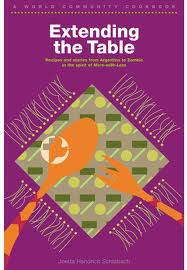 Extending the Table: Recipes and Stories from Argentina to Zambia Joetta Handrich Schlabach (Herald Press) $24.99 After the success of More-With-Less, a cry was heard demanding a sequel. Folks so loved the enjoyable first simple-living type cookbook, and the little stories and factoids that nicely decorated it, that another soon followed. The uniqueness of this one is that the recipes were sent in from development workers and missionaries and local folks from all over the world. The title of this says it all—as human family, we can “extend the table” to offer hospitality to all, and to learn from other parts of the globe. God bless the Mennonite Central Committee, again, for bringing these fabulous, easy to cook, and nicely accessible recipes from all over God’s good world. One of the nice things about this, by the way, is they avoided recipes that include hard to find ingredients, expensive, luxury items, or things that ordinary folk in ordinary towns would find impossible to locate. That is, this is a nice, usable, day-to-day cookbook that offers inexpensive, joyful dishes, and a happy reminder of the needs of those in other parts of the planet, a guide to international cuisine that isn’t too demanding or extravagant.
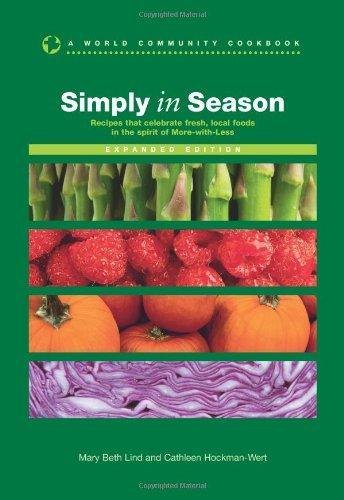 Simply in Season (expanded edition) Mary Beth Lind and Cathleen Hockman-Wert (Herald Press) $24.99 Oh my, what a fine resource this is, a cookbook that came out a bit before everyone started lamenting the crazy environmental impact of importing tasteless strawberries or cardboard-like veggies (etc. etc.) and calling for cooking with some sense of the limits built into God’s creation by buying more locally. These are recipes, they say, “that celebrate fresh, local foods in the spirit of More-With-Less.” Again, this “world community cookbook” is a beauty to behold, colorful and interesting, but not one of those fussy ones that are mostly pictures of food that are created to win design awards; this is one that is really made to be used in the kitchen. It is sturdy, handsome and inspiring, but, mostly, filled with great ideas and good recipes arranged for good eating season-by-season. Whether you are support a CSA or do backyard gardening, whether you want to be a “locovore” or not, this, as one reviewer put it, “will allow you to drift along with the current of a different stream.” Wonderfully done.
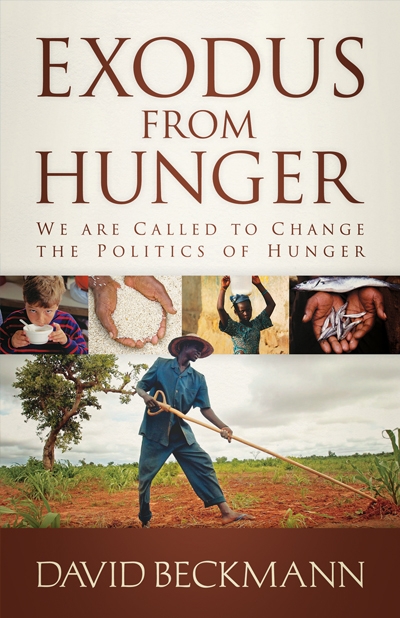 Exodus From Hunger: We Are Called to Change the Politics of Hunger David Beckman (Westminster/John Knox) $15.00 Speaking of good looking covers that have an upbeat and helpful reminder about some pretty ugly stuff, this recent book by one of our heroes—Beckmann is a former World Bank guy, Lutheran clergyman, and Director of Bread for the World—is a must-have resource for anyone who cares about global justice. We have met David on several occasions and have promoted the citizen organizing efforts of Bread for years. We recently heard him at the Q gathering in DC where he was upbeat about the possibilities of seeing huge successes in the anti-hunger movement in our lifetime.

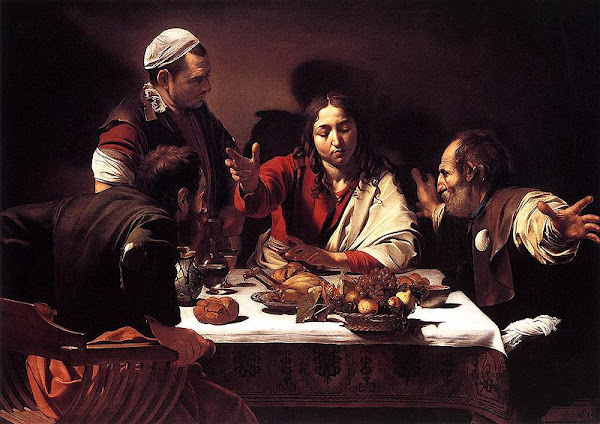 biographers wrote about several meals. The famous epiphany during the breaking of bread, of course [shown
 post-resurrection Bible narratives in a way that reminds us of the down-to-Earth bodily nature of the resurrection life, but it may say something about the importance of food and meals, too. Jesus surely did a lot of other things, but meals are notably mentioned. And they seem revelatory. Eugene Peterson explores this for us magnificently in a wonderful little book which I often commend this time of year called Living the Resurrection: The Risen Christ in Everyday Life (NavPress; $16.99.)
 This Sunday school class is just one example of a larger trend in our culture, a good and healthy interest in sustainable agriculture, organic food, how animals are treated, how land is farmed, buying local, and caring about nutrition and fresh food, creatively and aesthetically prepared. I will review it in great detail later, but I just finished a truly spectacular paperback,
 there are those who have little food, and that even those who help us get our food themselves cannot afford much of it— here is
 Food & Faith: Justice, Joy and Daily Bread edited by Michael Schut (Living the Good News) $14.95 If one were to buy one book on this essential topic, this may be our first recommendation. A lovely companion to Schut’s ecumenically-minded, Simpler Living, Compassionate Life, this collection includes essays or excerpts by Wendell Berrry, Thomas Moore, John Robbins, Marion Nestle, Eric Schlosser and so many more. It includes readings on the celebration of food, health and diet, politics and economics. It has some lovely reflections on the spirituality of food, essays on agriculture and land use, family farms and sustainable, local economies. It looks a bit at world hunger, and ends with stories of hope, suggestive of ways to renew our eating attitudes and habits. There is a fabulous study guide in the back, making this a fabulous resource for book clubs or small group reflection.
 The Spirit of Food: 34 Writers on Feasting and Fasting Towards God edited by Leslie Leyland Fields (Wipf & Stock) $30.00 What a stunning and great book.
 The Supper of the Lamb: A Culinary Reflection Robert Farrar Capon (Modern Library) $14.95 This book is so insightful and beloved, it has been cited in a Reformed theology class, and in gourmet foods cooking classes, and is regularly anthologized in great writing about food. Capon is feisty Episcopal priest and an excellent wordsmith (a prolific author) and a great cook, too, making this book a true classic. This recently re-issued paperback edition is very nice. As The New York Times Book Review said, it is “as awesomely funny, wise, beautiful, moving, preposterous a book as this reviewer has come across in years…It is a love letter to a world that “will always be more delicious than it is useful.” Capon uses this narrative of cooking a leg of lamb meal for a group of friends as a platform to wax eloquently on everything from the kind of knives one must have in the kitchen to the sheer, God-given wonder of an onion. Glorious.
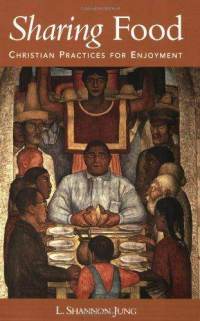 Sharing Food: Christian Practices for Enjoyment L. Shannon
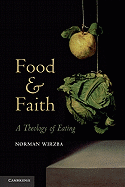 Food and Faith: A Theology of Eating Norman Wirzba (Cambridge University Press) $24.99 What an amazing book! This is a recently released, major theology of eating–a long overdue masterpiece, but it is pretty dense. You’ve heard of “slow food?” This is slow reading! And that is a compliment, of course, but it is demanding theology, most likely the best substantial work on this topic yet done. I think his Living the Sabbath Life: Discovering the Rhythms of Rest and Delight (Brazos; $20.00) might also be really useful to approach this topi;, although it is morally serious, it is not quite as dense as the new one. Unlike most books on sabbath, it explores the lifestyle of non-consumeristic, normative, sustainable living, rejecting the go-go-go of consumerism and the American way, taking sabbath principles into how we think and live, how we think about education, about agriculture, the ways we shop and eat and play. So while he does teach about sabbath, it is about jubilee and freedom and alternative living more than just spirituality and rest. Obviously, it is an important foundation for his new Cambridge volume which is more precisely on food.
 Eating and Drinking Elizabeth Groppe (Fortress) $15.00 This little book is a serious study, despite it’s slender size and chatty style, exploring the ways in which profoundly construed Christian theology might shape our daily experience of meals. This “compass” book takes its place next to others in the series, serious books, briefly written, on work, play, shopping and parenting. Groppe is an Associate Professor of Theology at Xavier University (although the whole series is edited by David Jensen at Austin Presbyterian Theological Seminary.) There is an alarmingly bad sentence about her experience of coffee, but once I got over that, and realized she had some sort of sacramental view of creation, I realized that this more contemplative consideration was well worth reading. All five of these rigorous, small books are provocative and timely, written by authors deeply aware of the need for serious social criticism. Impressive.
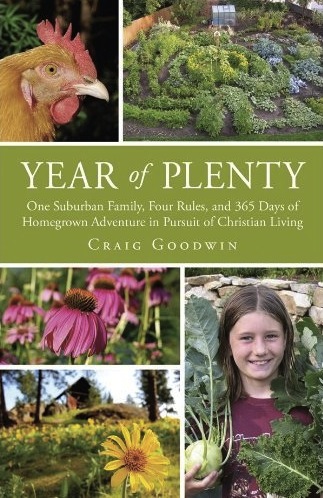 The Year of Plenty: One Suburban Family, Four Rules, and 365 Days of Homegrown Adventure in Pursuit of Christian Living by Craig Goodwin (SparkHouse) $12.95 For a fun and very readable memoir, I’d really, really recommend this, which I have happily promoted before,
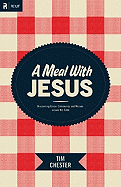 A Meal With Jesus: Discovering Grace, Community and Mission Around the Table Tim Chester (Crossway) $14.99 This is a fantastic book, a six-chapter study which takes a serious, happy look at Jesus and his meals, bringing his table fellowship into the conversation about hospitality, dining, feasting and such. This is obviously more a small group Bible study sort of book (it would make a great class or sermon series) than a reflection on localism, free range beef, or the health benefits of eating well, but it will appeal to anyone who understand that “food connects” (as he puts it.) This is getting rave reviews from those, like in the Gospel Coalition, who have used it. Chester himself is an urban church planter and knows how eating together can be foundation for very significant ministry. We are thrilled to see such a sound, evangelical work on this fun and fruitful topic. Highly recommended.
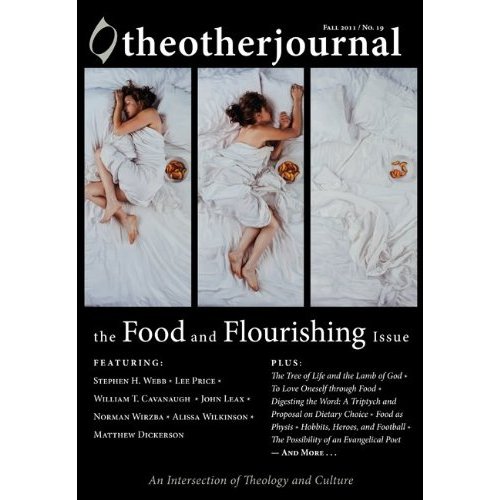 The Other Journal: The Food and Flourishing Issue (Wipf & Stock) $18.95 The Other Journal is a remarkable, curious, fascinating, theological journal that focuses on all sorts of issues—and they occasionally republish their special editions in bookish form. This one has poems and theology, essays and stories, from authors such as Comment magazine editor Alissa Wilkinson, Stephen Webb, Norman Wirzba, poet John Leax, Elizabeth Antus I(who does a very interesting study of the important work on eating disorders by Geneen Roth.) What an amazing collection.
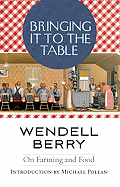 Bringing It To The Table: On Food and Faming Wendell Berry (Counterpoint) $14.95 I’ve reviewed this one before as well, but it simply has to be noted again. I’m sure most Hearts & Minds fans know of our affection for Mr. Berry and his astute social criticism of modernity, consumerism, and ideologies of mechanized progress. He is an agrarian essayist and a Christian farmer whose largest legacy may be his body of wonderful fiction where his heart’s themes are given storied character. What a great way to read him by enjoying this collection of various pieces he has done on farming, the joys of eating, and
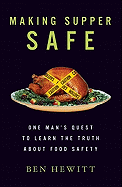 (Rodale) $24.99 You may know this author for his splendid book The Town That Food Saved. Like that one, this is full of characters, strong on story-telling, and a stunning achievement in doing muck-racking expose journalism without making us overly depressed or cynical. He is, as one reviewer in The Atlantic wrote, “an amiable skeptic and a storyteller of rare skill who seems incapable of crafting a dull sentence.” We understand that it is stressful to think about factory farms and pesticides and a bit disappointing to learn even more about the dangers of the pseudo-foods we often enjoy. Still, if this is a wake-up call, it isn’t that hard to swallow. It offers a better way. I moves from a critique of the mega-corporations and broken food system to a more wholesome and sustainable and joyful way to buy and eat our daily bread. As farmer Joel Salatin says, “read this before your next bite!” (Speaking of Joel Salatin, who you may recall from being featured in Pollen’s Omnivore’s Dilemma and in the documentary “Food, Inc.” his long-awaited book came out in October 2011. I mention it below.
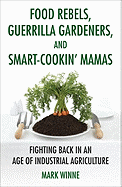 Food Rebels, Guerrilla Gardeners, and Smart-Cookin’ Mamas Mark Winne (Beacon Press) We are glad this just came out in paperback as it, too, is a must-read if one is to grow in more profound awareness of this new trend, how to resist the deformation that agribusiness has caused, and ways people are forming genuine alternatives. Here is a
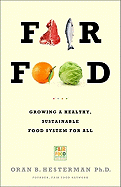 Fair Food: Growing a Healthy, Sustainable, Food System by Oran Hesterman (Public Affairs.) I briefly reviewed this in
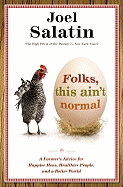 Better World Joel Salatin (Center Street) $25.99 I just raved about this last year, and named it as one of the Best Books of 2011. What a fun and funny author, a religious man who has done organic and natural farming for years. A truly interesting man by a hero of contemporary farming—offering up righteous ecological concern and better flavor, too.
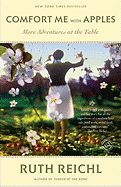 $14.95 I cannot tell you how I enjoyed this spicy memoir of a famous food critics early years, leaving a hippie whole-foods commune for a job doing restaurant reviews for Gourmet magazine. She travels all over he world, her marriage comes undone, she meets everyone from M.F.K. Fischer to Alice Waters and Wolfgang Puck, and tells it with tender eloquence and splendid detail.
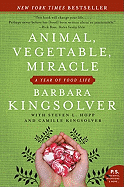 What a wondeful book, excellently told, a full-length memoir by the respected novelist and essayist, about her family’s experiment in eating only food that they grow themselves on their Appalachian farm. One of the most popular books of recent years, a bell-weather in many ways!
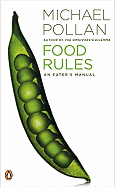 takes on the commercial food industry and what he calls the nutritionism establishment as well. Next, he did the very small but helpful Food Rules: An Eater’s Manuel which is available as a paperback or a colorful, illustrated hardback (Penguin; $11.00 or $23.95.) Mr. Pollan is a philosopher at heart, who has written thoughtfully about the relationship of nature and culture (see, for instance, his Second Nature about gardening or the popular Botany of Desire.)
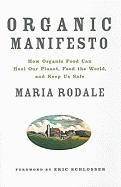 Organic Manifesto: How Organic Food Can Heal our Planet, Feed the World, and Keep Us Safe Maria Rodale (Rodale Press) $14.99 Even if the subtitle is a bit overstated, this is a masterpiece breakthrough book, drawing on updated health data and riveting reporting about the dangers of pesticides and herbicides. With Monsanto continuing to push “roundup ready” crops, it is more urgent then ever to understand which are the most deadly chemicals and which in which foods they are most commonly found. Very important.

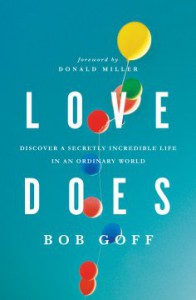 Almost anybody who has heard Bob Goff speak can skip this, and just order his new book, Love Does: Discover a Secretly Incredible Life in an Ordinary World (Nelson; $15.99) right away. We have the link to our order form down below–and a good discount, too. You know all about this Goff guy. The first place we showed it off—just yesterday—one customer bought five. It is that kind of a book, written by that kind of a guy. His great humor, extraordinary life of whimsy and grace, his nearly unbelievable stories of capers around the world—freeing slaves, helping young couples find true love, forgiving a sad lady who hit his jeep, helping his kids talk peace with world leaders—are great to listen to, fun to read about, and unbelievably inspiring. As Bill Hybels has put it, “If this book does not make your heart beat faster, book the next flight to the Mayo Clinic.” If you’ve heard Goff speak, you know. He’s a skin in the game, palms up, God-is-good kind of visionary. As Donald Miller writes in the introduction, Bob will “wreck your American Dream and help you find your actual dream. You simply cannot live the same once you know him.”
 his jeep, watching it burst into flames (how cool is that? he exclaimed) and how he cared for her afterwards. His academic past was less than stellar and his legal calling was sketchy, since he hardly passed his entrance exams. The story about how he badgered the Dean of the law school to let him in anyway (told hilariously in the chapter “Get Your Books”) had me in stitches, and eager to be more audacious in my endeavors. Hearing him explain how he has his law office on some faux island at Disneyland that you have to get to by a little boat—he is not making this up: he showed slides of his meeting with an important African diplomat on Tom Sawyer Island—had us texting friends asking if they had heard of this guy. Could he be for real? That zany, and that successful, and that adept at advancing God’s reign and glory through his uniquely Christian way of thinking about vocation and calling, profession and professionalism? Can an old Young Life nut who just loves everybody really pull off these whimsical spiritual stunts (which he calls capers) and make a serious difference in a broken world of serious evil and injustice? If he’s just a postmodern clown, okay, that’s attractive and entertaining, but he seems also to be truly interested in changing the world, reforming legal institutions, working in the third world, literally saving lives. Can funny stories change things?
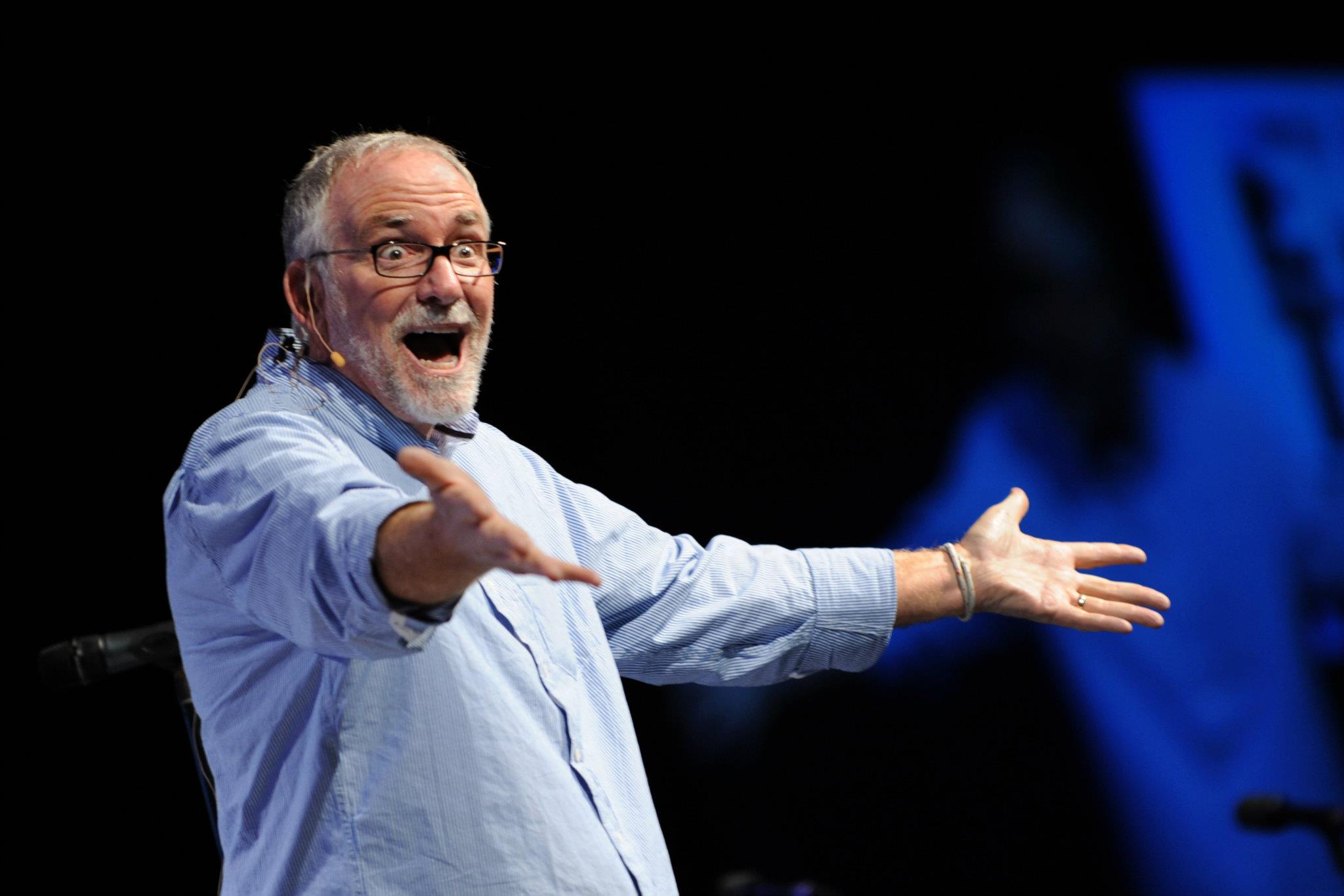 Bob Goff is equally energetic, and his stories are as funny as any Tony ever told. Perhaps some are more goofy; some are just sheer nuttiness (jumping into the bay dressed in a tux in order to greet some kayakers) and you can’t help but enjoy reading about them. Love Does is a fun read, you could give it to teens, easily. But, as with Tony and some of his fantastic stories, you can just know that a sovereign God is behind them (or at least some of them.) I’m talking miracles of the first order, crazy stuff you just can hardly believe. Coincidences, as they say. God is alive and well and his winsome followers like Goff are leaking his love all over the place, and the Spirit is blessing it in mighty ways. When love does, good things happen.
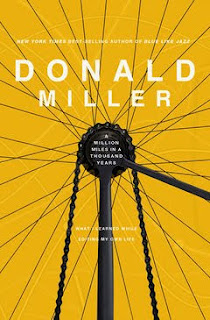 another great book, A Million Miles in a Thousand Years: How I Learned to Live a Better Story by Donald Miller (Nelson; $15.99.) In that book (I hope you know, since we love it so) indie film-maker Steve Taylor shows up to make a movie inspired by Miller’s meandering thoughts about religion-less faith, Blue Like Jazz (Nelson; $15.99.) Alas, to make a movie about a memoir supposes that the memoirist has some sort of life story, something good going on, a trajectory, a tale to tell. Miller realized (by studying how to make a film script, as he explains in Million Miles) that he needed to get his life aligned with the larger story of God, a purpose-driven life with something big and meaty unfolding in some Biblically-shaped, coherent plot. He needed to find himself a mentor, the kind of life-changing, one-of-a-kind, Jesus-leaking character that a character like Miller could take. Goff is his man. If you’ve read Million Miles in a Thousand Years then you know that Miller talks about Goff—-his annual New Year’s Day parade that one cannot watch, but must be in, his orphanage in Uganda, where he gets Miller to pick up a shovel and plant a commemorative tree. Goff not only tells a better story than Donald Miller’s bohemian ruminations, but he invites him into that story. Through Miller’s memoir, we learn that a good mentor does that. In more traditional terms, although neither Miller nor Goff use these exact words, a faith leader does evangelism and disciple-making, helps get folks converted to Jesus and equips them to live into the new way of His kingdom.

 For the next few days we’ll be selling books at one of the coolest events we’ve ever done, at one of the classiest venues in country. The website I’ve sometimes mentioned (and written for)
 about “Ideas for the Common Good” and Andy Crouch, ruminating on the good and bad uses of power. Andy’s Culture-Making: Recovering Our Creative Calling (IVP; $25.00) remains one of my all time favorite books and is a must-read as foundational to appreciate Qsters. I can’t tell you how important he is to follow (his latest project involved research into practices that enhance urban life called “This is Your City.”)
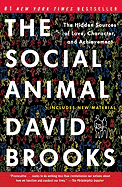 It will be really entertaining, and edifying, I’m sure, to hear New York Times columnist and PBS pundit David Brooks comment on his important 2011 book, now out in paperback, The Social Animal: The Hidden Sources of Love, Character, and Achievement (Random House; $16.00) and, mostly, offer some glimpses of his next project, a book on humility. We adored his Bobos in Paradise and On Paradise Drive and hope you know them. We even stock a hardback edition called The Paradise Suite (Simon & Schuster; $28.00) that has both in one volume. These include incisive observations about America’s upper middle class and fabulously interesting social history. Bobo’s is the phrase he coined describing bourgeoisie bohemians, and his study of these liberal, wealthy communities that seem to hold to old hippie values but live in quaint upscale communities is genius. And funny as anything.
 Calling: Vocational Stewardship for the Common Good (IVP; $16.00) offers one of the best-developed cases for taking faith seriously as it informs our view of callings and careers, vocations and jobs, using our talents not just to “bring home the bacon” but as a central way most of us serve our neighbors and enhance the common good. We named it as one of the best books of the year in 2011, even though it had just released. Not all of us, in fact most of us, can’t be full time social reformers, cultural creatives, starting organizations and interesting initiatives. Bu
 Wallis of Sojourners to Gideon Strauss of the Center for Public Justice, Mitch Hescox of EEN to Chai Ling, a hero of the Tiananmen Square uprising and author of the page-turner A Heart for Freedom: The Remarkable Journey of a Young Dissident, Her Daring Escape and Her Quest to Free China’s Daughters (Tyndale; $22.99.) From the high-end fashion industry to inner-city education, practitioners making a difference will give brief testimony. Vibrant Christian authors on various topics are there, like artist like Daniel. A. Siedell whose rigorous book God in the Gallery: A Christian Embrace of Modern Art (Baker; $25.00) we love to promote. Top shelf theologians like Miroslav Volf, James K.A. Smith, and Anthony Bradley will present, as will cultural critics like Sherry Turkle of MIT (whose recent book Alone Together: Why We Expect More From Technology and Less From Each Other [Basic Books; $28.95] is urgent and fascinating!) It
 will be great to see the ever-eloquent Os Guinness (and, once again, promote his Case for Civility [HarperOne; $23.95]) and hear about his forthcoming IVP book on American freedom, and to hear NPR journalist Barbara Bradley Hagerty (who has a fabulously smart book on faith and science, through the lens of neurology, The Fingerprints of God (Riverhead; $17.00.) We will hear from, and promote the books of environmentalist Nancy Sleeth (her practical and clever new book is called Almost Amish: One Woman’s Quest for a Slower, Simpler More Sustainable Life (Tyndale; $14.95) and Bread for the World Executive David Beckman (Exodus from Hunger (WJK; $15.00) and immigration advocate Jenny Hwang-Yang of World Relief (Welcoming the Stranger; IVP; $15.00). Those who curated this amazing array of speakers—and I haven’t mentioned them all—are genius and so very helpful to us all. I’m serious, we’ll will have a display of books written by some of the finest thinkers and social reformers in the land.
 The Next Christians: Seven Ways You Can Live the Gospel and Restore the World Gabe Lyons (Multnomah) $14.99 This is the brand new paperback edition, with a new chapter added (on civility, lessons learned from last years Q event where they hosted the controversial “Ground Zero Imam” Feisal Abdul Rauf, who Gabe has befriended. This struggle to build bridges and offer a faith that is more generous and less divisive is hard for those of us who have deep convictions (it is easy to be civil if one doesn’t hold firm believes.) It is a great chapter, added to the other six characteristics of “next Christians” and those who want to be counted among God’s agents of restoration.
 A Faith of Our Own: Following Jesus Beyond the Culture Wars Jonathan Merritt (FaithWords) $19.99 I mentioned this above, noting that it is at once a fabulous story of one man’s journey to a more wholistic, culturally engaged, and less partisan faith, but it is also a call to conservatives and liberals to distance themselves from their ideologies and to be more truly Biblical, following the reign of Jesus wherever that may lead. He’s pretty sure it won’t lead to the political extremes, unless being courageously moderate and imaginatively counter-cultural is itself, these days, an extreme position. It is radical, but graciously so. It is wild, but joyful. It is prophetic, but heart-broken, not mean. And wise. And hopeful. And really interesting. As Sammy Rodriguez (President of the National Hispanic Christian Leadership Conference) puts it Merritt wants to “reconcile sanctification with service without embracing the extremes.”
 Bad Religion: How We Became a Nation of Heretics Ross Douthat (Free Press) $26.00 I trust you know that the Free Press is one of the nation’s most respected public affairs publishers, indicating that this is a serious book that will be discussed in somber tones on the important talk shows. Formerly a senior editor at The Atlantic, the author is the youngest columnist for The New York Times op-ed page, and author of several important books. Blurbs are from excellent, nuanced, careful writers and critics, such as Timothy Keller, Alan Jacobs, the upbeat, popular Jesuit James Martin, and “crunchy con” author Rod Dreher. We got the book in yesterday—the first place in the country, I believe—so I can do no better than to share these stellar blurbs. Wow, if they are even partially right, this is going to be a book that you should consider.
 Subversive Kingdom: Living as Agents of Gospel Transformation Ed Stetzer (Broadman Holman) $14.99 A few weeks ago I did a list of books about the missional church, about energetic new, culturally-savvy, future-facing church plants and “fresh expressions” of congregational life. I don’t think I listed any of Stetzer’s many book on congregational life and Kingdom-driven church planting, but I could have. He is energetic, upbeat, inspiration, and very wise, solid about how do to do this important stuff. He has been a fan of Q since it’s inception, and it is great that he will be there again this year. His brand spanking new book—it releases next week, and a few stores have just received them—is about this whole Kingdom vision, missional, risk-taking sort of radical discipleship. It revisits and updates teaching he gave in his very first book, a small paperback we have sold for years, Compelled by Love: The Most Excellent Way to Missional Living (New Hope; $14.99) It looks great, and we are happy to offer it now. If you need some help getting your juices flowing and rekindling your fire for faith in action, this could be just the ticket.
 Here is another way to get into the Q spirit, even if you cannot be at the gathering. We have, in the past, promoted the great DVDs and study books (which include articles to read and discuss). These are grouped around themes, are presentations drawn from previous Q events, and are exactly the sort of culturally-engaged, big-picture, thoughtful faith-based stuff that we simply must be doing in our fellowships and churches if we are going to form people who are conversant and propelled to be involved in the world in distinctively Christian ways.

 Leaving Egypt: Finding God in the Wilderness Places Chuck DeGroat (Square Inch/Faith Alive) $14.99 This book is special for a variety of reasons. The “alligator-skin” suitcase feels neat, with a bit of texture, and the black and white picture of the suitcase before each chapter is a visual reminder as one moves through the pages that we really are on a journey, a journey away, a journey home. It is handsome and a nicely made paperback.
 Still: A Mid-Faith Crisis Lauren F. Winner (HarperOne) $24.99 I gave this a brief, positive review when it first came out—my wife had zoomed through our advanced copy and was deeply touched by it, taken with its artful literary style, and the realistic story of loss and confusion and loneliness. I had read parts, found it very moving, wondrously written, and a bit sad. In that review I noted that Harper even had a Lenten reading guide available for download for those that wanted to read it’s melancholy chapters bit by bit during Lent.
 New Collected Poems Wendell Berry (Counterpoint) $30.00 Any collection of Berry’s work is a cause for celebration, and this “new” collection of previous work is the most comprehensive volume done yet. It is a big, handsome hardback with, as you can see, a great brownish design and a beautiful hawk on the cover–and, the photo on the back is new, for what it is worth. There is one new poem, (“The Country of Deja Vu”), a short little piece about reprinting his old work, which seems kind of funny.
 Some Assembly Required: A Journal of My Son’s First Son Anne Lamott (Riverhead) $26.95 Well, not sure what this has to do with Lent, or Easter-time, exactly, but it is a new book that ought to be in some book lover’s Easter basket. If you want to give a gift that will be a good read, a fun and funny and troubling and inspiring book, the new one from this beloved zany writer—colorful is putting it mildly—could be just the ticket. I know this isn’t for everyone. She uses some language. Her theology is, uh, eccentric. A few hardened secularists might find her too daffy in her love for Jesus. Some conservative sisters and brothers will find her open-minded liberality just a bit much. And the whole premise is about an unplanned pregnancy and a young couple that isn’t married. Yet, she talks about her church, she talks about her fears and hopes, she talks about her foibles, she talks about her incredible love for her son, Sam, his girlfriend who he got pregnant, and the wonderful little boy that came to be. And the whole shebang, the extended family, the new relatives, the ups and downs, etc. etc.

 A good number of years ago, I made a prediction, and I’ve patted myself on the back a couple of times (hee-hee) when it came to pass. When The Godbearing Life: The Art of Soul Tending for Youth Ministry by Kenda Creasy Dean & Ron Foster was published by the Upper Room in 2005, I said it was a watershed moment in the history of youth ministry publishing. It was seminal, offering a new model, and a new emphasis, drawing on the new millennium revival of contemplative spirituality that had been sweeping the churches. From Henri Nouwen to Richard Foster, Joyce Rupp to Dallas Willard, Richard Rohr and Ruth Haley Barton, harkening back to desert fathers and mystics like Brother Lawrence and A. W. Tozer, folks were yearning for deeper encounters with God. It was only a matter of time until somebody seriously said that we should let the kids get in on it, too.
 Everyday Living ($9.99) Conservative evangelical Protestants inviting their Bible-quizzing kids to also light candles and pray using prayer beads or going the the Ignatian Examen? (Sacred Life, with a chapter by a good friend from here in York, was followed up by several more in their “Ancient Faith” series, small, cool volumes such as Sacred Time, Sacred Space, and Sacred Community.)
 Almost Christian: What the Faith of Our Teenagers is Telling the American Church Kenda Creasy Dean (Oxford University Press) $24.95 I suppose almost everyone who pays attention to youth ministry and church-related publishing will know this is a heavy, academic, research-based indictment about the feeble views of religion that are articulated by most American churched teens. We have championed it, and referred to it here. From conservative to mainline, Catholic to Jewish, Dean shows (drawing on Christian Smith’s research) that congregations are failing at giving their kids a theological framework and vocabulary to know what in God’s name we’re supposed to believe. Bleak. Essential.
 The Theological Turn in Youth Ministry Andrew Root & Kenda Creasy Dean (IVP) $18.00 This is the Andrew Root who teaches at Luther Seminary and who wrote the important Revisiting Relational Youth Ministry (IVP; $17.00) and the wonderful Promise of Despair: The Way of the Cross as the Way of the Church (Abingdon; $18.00. ) And, yes, this is the KCD who rocked us all with Godbearing Life. And, yep who wrote the must-read Almost Christian. This new one is spectacular, offering truly theological takes on various aspects of youth ministry culture. It is not silly and it is not light. It is amazingly astute, and of interest for anyone who (a) likes theology or (b) doesn’t like theology because it is so often abstracted away from life. There are chapters like “The Eschatological Significance of Church Camp” and one on “Hormonal Theology” and an amazing one on hermeneutics. I like the way the theology of the cross comes up time and again (Root is a Lutheran, you know) and it is good to have ruminations on important stuff like mission trips, confirmation mentors, and outdoor wilderness trips. (There isn’t much really good stuff on outdoor education from a profound theological frame so some—you know who you are!—should buy this just for this chapter.) I named this a book of the year after it was released late in 2011. There is nothing like it in print.
 Contemplative Youth Ministry: Practicing the Presence of Jesus Mark Yaconelli (YS/Zondervan) $19.99 I love the preface of this by Anne Lamott. Her son Sam, introduced to the world in the beautiful Operating Instructions, ends up being a kid with the good fortune of having Mark Y as a youth worker at his church in a formative year or so. A conversation with Sam ends up in the book, so Anne glowed and commended the book, and the integrity of Mr. Y. You can read more about Sam, by the way, in the brand new memoir he helped out with by his famous mom, Some Assembly Required which I’ll review here later. It is poignant and funny, Anne’s first bone fide memoir, about becoming a grandmother.
 Downtime: Teaching Kids to Pray (Zondervan) $19.99 The first few chapters offer fabulously written overviews of the contemplative life, why youth need adults to help them into this sacred space, and how to live into the model of ministry he so wonderfully described in his previous book. The second half is loaded with exercises, experiences, lessons, and tools for teaching historic practices that create transforming encounters with the Holy. In some ways, this is like the great little paperback (another book that illustrated this movement of spirituality books for teens) Soul Shaping by Tony Jones (Zondervan; $19.99.) I hardly can think of a more practical handbook to doing what so many of us talk about: actually doing the spiritual disciplines in a way that allows us to deepen our knowledge of God and be transformed into Christlikeness by God’s very present Spirit. Thanks to Jones, and certainly to Yaconelli, for guiding us in ways to not only embrace these spiritual disciplines (I don’t really like to call them tools, and even less to refer to them as techniques) with teenagers.
 Wonder, Fear,& Longing: A Book of Prayers Mark Yaconelli (Zondervan) $9.99 I have a very good friend who routinely uses this with middle school kids, and it certainly is accessible to high school youth. This is a paperback collection of short devotions, great stories, ruminations and parables on the divine presence, Biblical studies that point us to God in a way that names and honors and attends to our own longings, the need for wonder, our fears and hurts. All of us — including youth– have these mystical longings, these desires to appreciate God’s creation, an appreciation for quietude. This is really, real stuff, raw, sometimes, but good, and, I believe, beautiful. It is a prayer book, a book of prayers, Biblically-based and imaginative, grounded and poetic, wonder-full, and yet very usable. Love it.
 OMG: A Youth Ministry Handbook edited by Kenda Creasy Dean (Abingdon) $26.00 This may be a bit pricey for a paperback, but it has become the definitive resource for creatively ruminating on the meaning of youth ministry in mainline denominational churches. Others should learn from it, but the style and ethos of this multi-authored work is rooted in a realistic sort of faith perspective… I have a few friends who I really trust who work in or teach youth ministry and they all agree this is one of the best books they’ve seen on this topic. If you don’t do youth ministry yourself (and your still reading this) ask the youth pastor at your church if she or he knows this. They should.
 Sticky Faith Teen Curriculum with DVD: 10 Lessons to Nurture Faith Beyond High School Kara Powell & Brad Griffin (YS/Zondervan) $19.99 We have been promoting books like You Lost Me and Derek Melleby and
 a sticky faith. There is a youth worker’s edition, obviously for those in congregational leadership, volunteers youth workers or Sunday school teachers or others who want the church to be more influential in the lives of their youth. And then there is this one, the one that is the curriculum piece, designed to use with older youth. Fabulous stuff, coming out of the significant studies being done out at Fuller Theological Seminary. All three are tremendous. Thanks to those at Messiah who purchased one or more of the set. If you love using one of these, let us know if you want one of the others. All three are unique and truly valuable.
 A World Unbroken: Hope and Healing for a Shattered World (Barefoot Ministries) $14.99 I love the create way this book explains the coherent unfolding drama of basic plot of the Bible; each chapter colorfully describes episodes of creation, brokenness, promise, presence, satisfaction, mission and hoped for restoration. Authors include Scot McKnight, Ian Cron, Kara Powell, Chris Folmsbee, Mark Oestreicher and other creative women and men. What a great book, with a very contemporary design and hip feel.
 A World Unbroken Creative Devotional Experience (Barefoot Ministries) $10.99 This very creative, edgy youth journal goes along with the Bible overview, helping kids process this vision of a world being restored to goodness and beauty. There are spaces to doodle, pages for art, lots of good opportunities to dream big dreams, imagining how the big Biblical story of restoration could help inspire us to be agents of God’s mission.
 Building a Youth Ministry That Builds Disciples: A Small Book About a Big Idea Duffy Robbins (YS/Zondervan) $16.99 There is little doubt that Duffy, of Eastern University, has been one of the more influential and helpful youth ministry educators in our generation. This new book brings to mind (again) the “sticky faith” idea: will our youth programs and relationships instill in youth not just a flash in the pan of enthusiasm for God or church, but a steady, serious, life-long devotion “that lasts beyond their years in the youth room.”
 DVD What Did I Sign Up For? Things Every Youth Ministry Volunteer Should Know Chris Folmsbee (YS/Zondervan) $31.99 If I were in charge of a youth ministry program, I’d buy this thing and pass it around so that everyone who helps out watches it. (Or, have a party and view the stuff together–even better!) This training course includes four major sections of the classic stuff folks really do need to know, presented in a fairly no-nonsense sort of way. It is nicely done, nothing outrageous, just tons of good info and some nice enouragement. Here are the main units: Understanding Youth Work and Youth Ministry, Relationships and Partnerships, Developing Programs and Environments, and Administration and Logistics.
 The Adolescent Journey: An Interdisciplinary Approach to Practical Youth Ministry Amy Jacober (IVP) $18.00 Okay, I’m going to admit–this may be designed to be used as a text book at some Christian college that teaches youth ministry, or maybe for a youth min class at seminary, if seminary teaches such things. But I think we volunteers most need this stuff — we who aren’t specialists and need a good, one-volume course on adolescent psychology, faith development, and applied theology for their lives. This is meaty, I know. It’s why you should get it. Kudos to IVP for giving such solid resources for those of us who want to learn as much as we can, to do our jobs well. And for that great cover art.
 Sacred Space: A Hands-On Guide to Creating Multisensory Worship Experiences for Youth Ministry Dan Kimball (Zondervan) $29.99 This is just what it sounds like, a handbook to how to create–with tons of models, plans, ideas, and examples—of creative liturgies, fun services, multi-sensory experiences that draw youth into worship. This is a good resource to have on hand and to pull on on occasion, when planning a special event, to use during a retreat or lock in, or some other time when an extraordinary, experiential program is called for. This includes a cool CD (but you’ll have to buy some supplies to pull it all off.)
 99 Thoughts for Smaller Church Youth Workers: Doing More With Less Stephanie Caro (Group) $4.99 We stock most of these nifty, pocket-sized 99 books, and most are chock-full of ideas. Most churches, we are aware, are smallish. We have lots of books for small churches, and several specifically for those are volunteer in their small church youth ministry. Here’s some encouragement and fun ideas…

 The Province of Joy: Praying with Flannery O’Connor Angela Alaimo O’Donnell (Paraclete Press) $16.99 Well, what to say? The book feels nice, has lovely French flaps making it is a higher quality paperback. There is a peacock on the cover which, as you know if your an O’Connor fan, is significant.
 Song of a Scientist: The Harmony of a God-Soaked Creation Calvin B. DeWitt (Foreword by Bill McKibben) (Square Inch Books) $14.99 I love Cal DeWitt. I loved his great Bible study Earthwise, out now in a nice updated edition from Faith Alive. I loved that he was an early Christian leader in creation- care and co-founded the EEN (
 Hiking Through: One Man’s Journey to Peace and Freedom on the Appalachian Trail Paul Stutzman (Revell) $13.99 Nature writing, adventure story, life-changing journey, Christian testimonial, struggle to overcome obstacles both physical and internal, recovery from great grief…this is a book that may have something for nearly everyone. But it is custom-made for those who like the story of a challenge, the call to pursue a dream, a human interest story about growth and redemption. If you know anyone who has done the


 Equipping the Church for the Sake of the World will be by J.R. Woodward (IVP; $16.00) and we it will be great. This will be a serious book—although the author is as cool as can be, a surfer-type dude living in Southern California who reads widely and hangs out with tons of interesting, artsy types—and it may be almost one-of-a-kind (a claim I don’t make often.) It is about new models of shared leadership for the contemporary church, ways to organize our organic life as a worshiping community that will allow for shared energy, shared vision, and shared authority for getting the missional work done. I am not kidding when I suggest that this will be intellectually stimulating, much-debated, and, I think, very, very important. We’ll have it as soon as it releases in early September 2012. You can say you first heard about it here.
 Urbs to the Burbs (and everything in between) (Ekklesia Network; $14.95.) In a nutshell, the book is a collection of pieces that were published in local newspapers, op-ed columns that shared a particular churches dream for their community. The question is at once arresting and interesting, a playful way to rethink your mission statement: what do you imagine to be the contribution you bring to help human flourishing in your town? In other words, what is good about the good news, for this particular place? Almost all of these short essays are worthy of small group conversation, inspiring ways to think through whether this vision or that hope or this dream or that call might be your own. Is this way to articulate the great news that is the gospel really helpful? If not, why not? Do you resonate with this particular congregation’s vision for their outreach? How they explained the good news? Is their hope a faithful expression of God’s dream, and if so, might you, too, embrace that vision for your own town? It isn’t prescriptive though, which is what makes it so useful–it invites prophetic and hopeful imagination, invites you to name your own sense of vocation in the world, asking how the gospel and the culture of your place interact. What you would say, if asked to put something the public paper, what you offer, how you understand your Christian witness? And can you say it in ways that are coherent and interesting for the watching world? How do you describe the gospel, what good news your church brings? What ways do the gifts and passions and strengths of your own faith community bring some particularity to the evangelon? I love this little book, was glad that a number of the contributors in it were at Fresh Expressions, and happy to have a few left to sell to you. (Some of the authors, by the way, include J.R. Briggs, Jim Belcher, Christine Sine, Jon Tyson, Jamie Arpin-Ricci, Sonja Andrews, Winn Collier, and many more. The foreword is by Scot McKnight and the afterward is by a new friend, Chris Backert, of Fresh Expressions!) Order a bunch of Viral Hope for your small group or elders or leadership council at your church. I think it is pretty nifty.
 Missional Preaching: Engage, Embrace, Transform Al Tizon, and others (Judson Press) $16.99 Al Tizon is, quite simply, an amazing man, a fine Christian leader, an upbeat and solid leader. He did his PhD in this whole area of “wholistic” ministry and now is Associate Professor of Holistic Ministry at Palmer Theological Seminary (formerly Eastern Baptist Seminar.) He is the Director of the Word & Deed Network of one of our favorite organizations, Evangelicals for Social Action (ESA) founded by Ron Sider. Tizon is an ordained minister of the Evangelical Covenant Church. And, he is a great thinker, a great writer, and a great preacher. So he is perfectly suited to create this important book.
 The Practice of Prophetic Imagination: Preaching an Emancipating Word Walter Brueggemann (Fortress) $25.00 For years, Brueggemann has given us collections of sermons, and several books about homiletics. And, for years, he has been asked to do a sequel to his most famous book, the breath-taking The Prophetic Imagination. This new hardback is, in a manner of speaking, a sequel to The Prophetic Imagination, in the guise of how to proclaim and enhance and nurture and celebrate it. John Buchanan is a renowned mainline Presbyterian who notes that this shows “a wise sensitivity to the realities of the church and an effort to make common cause with those of us who presume to stand in pulpits on Sunday morning and say something faithful.” Well, yeah, it is and it does. And it does that by offering a view of preaching as “sustained, disciplined, emancipated, imagination.”
 Choosing the Kingdom: Missional Preaching for the Household of God John Addison Dally (Alban Institute) $17.00 This provocative work is part of the “Vital Worship, Healthy Congregations” series co-published by the Calvin Institute of Christian Worship. Here, Dally–a professor at Seabury-Western in Evanston–wonders what preaching looks like “as a post-Christian church reorients itself toward the mission of God.” The back cover puts it with punch: “Do we speak as bureaucrats in an imperial hierarchy or as servants of the reign of God? Is the announcement of the gospel a demand for submission or an invitation to wisdom?” It gets practical, though, too, even offering ideas about sermon preparation. As Lucy Lind Hogan of Wesley Seminary says, as she raves about it, “preachers are sent not to perform, but to proclaim; not to inform but to invite. Before we undertake our exegesis and investigations, preachers must understand what it means to be those who are sent to proclaim the reign of God.” Thought-provoking, offering both pretty serious theology and “how-to” guidance for rethinking not only the content but the form of preaching.
 Preaching for Church Transformation Bill Easum (Abingdon) $13.00 Easum has been a church consultant for decades now, it seems, and is serious about change, sometimes pushy, with books that are full of energy and hope and insistence that the typical church can raise the bar on outreach and growth. One may not need to apply all his ideas about congregational revitalization to appreciate that he has seen a lot of different kind of churches and is really experienced in this sort of work. I was struck by Reggie McNeal’s big endorsement on the back, indicating he has long wanted a simple book that will help pastors figure out how to fast-forward their missional engagement with the community. “Preaching for Church Transformation is for those of you who have something to say every seven days, and want that ‘something’ to help your congregation be the church God intended — partnering with Him in his redemptive mission in the world.”
 Excellence in Preaching: Studying the Craft of Leading Preachers Simon Vibert (IVP) $16.00 Let’s face it. Many pastors are frankly not that good at communication. They aren’t that inspiring as preachers. And many homiletics books—and we have dozens and dozens of them here at the shop—just aren’t able to teach how to be more interesting in the pulpit. There have been other books like this, and this one looks great. It is a survey of some of the best evangelical preachers (in the U.S. and England) holding up something they do really well, and ways in which more ordinary preachers can learn that attribute, skill or notion. I like that it uses the language of craft, which indicates that there is stuff that can be learned, but it isn’t merely a technique or simple skill. I like most of the preachers the author studies, and the things he draws from them are presently clearly. It does not say that you should copy them, of course, but only that you can learn from their techniques and passions and strengths. The author is vice principal and director of the School of Preaching at Wycliffe Hall, Oxford University. He has taught preaching (through John Stott’s global ministry) to preachers all over the world. Vibert’s study of twelve strengths from these twelve preachers just might help you improve in your communication style, which surely won’t hurt. The preachers VIbert studies includes Tim Keller, John Piper, John Ortberg, Nicky Gumble, Vaughn Roberts, J. John. All are men, all are evangelicals. Oh, and one chapter on Jesus. Marshall Shelly writes, “Vibert identifies elements that are transferable from these marquee pulpiteers to the rest of us. Excellence in Preaching gives us ‘ears to hear’ what we wouldn’t have heard otherwise.” Interesting.
 Preaching as Worship: An Integrative Approach to Formation in Your Church Michael J. Quicke (Baker) $17.99 Do you know his book 360 Degree Preaching? It’s good. This newer one is a fascinating, thorough study of how to move your church from “small-picture to big picture worship.” I love this “big picture” image… Part of this must include reconsidering and perhaps understanding afresh the role of the sermon within the broader work of the people’s worship of the Triune God. As Bryan Chapell of Covenant Theological Seminary puts it, “Quicke’s winsome and insightful exploration of preaching as an intregal component and reflection of Trinitarian worship is a welcome contribution to thoughtful literature on both preaching and worship. For too long, one has been viewed as simply a prelude or culmination of the other. Quicke helps us understand how worship and preaching function organically….” Very well put —how can we see preachomg as worship, and the sermon as an integrated aspect of the full worship service? Important stuff.

 Religion: The End of Church and the Birth of a New Spiritual Awakening (HarperOne; $24.95)
 For those interested of the working group on fresh expressions, a group chaired by our plenary speaker Bishop Graham Cray, you should know that he edited a book all about this (a book we sold out of at the conference) called Mission Shaped Church (Seabury; $20.00) It is part of a series, actually, but this first is the one that describes the Fresh Expressions movement within the Church of England and it is recommended especially for more mainline denominations. Cray is a wonderful man and, incidentally, ran the famous
 We are taking pre-orders, by the way, for a forthcoming book by Bishop Cray, enticingly called
 Francis Beckwith, Chris
 Breaking Through
 What a delight it was to
 own
 McNeal’s latest book,
 The Shaping of Things to
 Exiles: Living Missionally in a Post-Christian Culture
 The Forgotten Ways: Reactivating the Missional Church
 Missional: Joining God in the
 Missional Map-Making: Skills
 Church in the Present
 Remixing the Church:
 Howard Synder’s Community of the King (revised and expanded) (IVP; $18.00) and often say it is my favorite book on the nature of the church. Also a favorite is a more recent book by Tim Chester—I sometimes called it “gospel centered church”—titled Total Church: A Radical Reshaping Around Gospel and Community (Crossway; $15.99. ) I do think it is important to revisit this regularly and this new one by Gay is good.
 Worship, Worldview, and Christian Formation by James K.A. Smith (Baker Academic; $21.99), a book I wish I would have sold at Fresh Expressions since it is about how we need thick and rich liturgies and other “ecclesial practices” to counter the shaping influences of the secular litanies that so inform the habits of our hearts. If we are going to offer fresh expressions by doing edgy little church plants and forming house churches or communities of discipleship, what is it about those communities that will truly transform us? A great love for Jesus and desire to serve Him well a radically transformative body does not make, I’m afraid.
 Letters to a Future
