Calvin College, Abraham Kuyper, The Christian Scholar’s Review, *cino, and the great influence of John Stott

long-road-ahead-180x180.jpgDo you know that feeling after a long, long drive, returning home from a far-away but great event?  We are happy but exhausted from the white lines (and orange cones) on the Pennsylvania Turnpike, eyes bleary and body tense from navigating the late-night truck traffic.  On the Indiana interstate,  right before the Ohio line, a billboard offered a rest stop with chocolate  “for the pain that is Ohio.”  Yep, these long, tedious hours of flat Buckeye road offers time for thinking and talking.  

Beth and I had just gone through a two-day parent introduction at Calvin College in Grand Rapids, Michigan, while our youngest daughter experienced her Calvin freshman orientation.  This Passport program was spectacular, with fabulous fun and food and helpful information.  We learned about the history of the school, John Calvin’s French accent, saw brief video clips from scholars likes James K.A. Smith,and were reminded of the cosmic scope of Christ’s redeeming restoration project (and hence, the deeply integrated religious vision of teaching the arts and the sciences for God’s glory and our neighbor’s good.) I leaned over to Beth and said that I wanted to attend Calvin College!

On the long ride home I pondered my own faith development, my own college years decades ago, my frustration as a younger man wondering why those who seemed most fired up about the gospel seemed so disinterested in the world and its great hurts. In my mind I revisited our many years of meeting students, selling books, including books written by people we had met at the Calvin orientation, and how we still have—thank you, Jesus!—a glimmer of our old idealistic vision that we can in some ways change the world for the better as we nurture a Christian mind, grounded in a Biblical worldview, enabling us to make connections between our deepest convictions and the way we live.  

Over a great dinner with with old friends in Grand Rapids, our friend observed that my book reviews usually carry a sense that reading matters, that books can make a difference, that we read with a purpose which includes social change.   You who are our fans and friends share this commitment and I thought of all of you, our Hearts & Minds gang, as we took in all this energy that Calvin emitted.  I thought of the campus ministry that we love, the CCO, whose slogan is “transforming college students to transform the world.”  Right on!

Evangelical higher education has had a renaissance in recent years in scope and in spiritual978-0-89112-284-5.jpg vision and most such faith-based liberal arts schools—Messiah, Eastern, Gordon, Taylor, Wheaton, Seattle Pacific, Geneva, John Brown, Westmont, Whitworth, George Fox, Hope, Houghton, Bethel, Dordt, Trinity Christian, Union, and so many others—have used the important language of vocation to help students realize that learning matters to God and that serving God in the workaday world is itself a holy calling, whether one is an insurance agent or a scientist, an artist or a school teacher.  Learning about God’s world as a person with this luxury of being a student is itself a calling, and the college years are also preparatory for future service in Christ’s Kingdom, as young adults find their place in a career.  This is how we change the world, taking institutions and career areas seriously and learning to be faithful followers of Christ in (but not of) those culture-shaping spheres. 
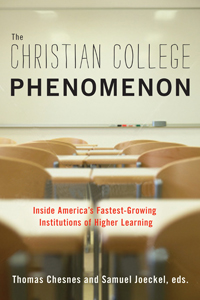
The Christian College Phenomenon: Insider America’s Fastest-Growing Institutions of Higher Learning edited by Thomas Chesnes & Samuel Joeckel (Abiline Christian University Press; $24.95) will be released early this fall and looks to be an extraordinary overview.  Did you know that in just a few years a decade ago, enrollment at CCCU colleges rose over 70% while private and state school enrollment in those years role 3%?  Wow.  Editors Thomas Chesnes and Samuel Joeckel have taken an empirical
approach, surveying over 1900 professors at ninety-five CCCU colleges
and universities and 2300 students at twenty different schools. The
editors compiled responses to quantitative and open-ended questions on
topics from pedagogy and politics to faith learning integration; they
then made that data available to nearly thirty scholars who have turned
their considered responses into chapters that are now organized into
seven book sections, covering topics in gender, evolution, faith,
learning, scholarship, and race/ethnicity. 

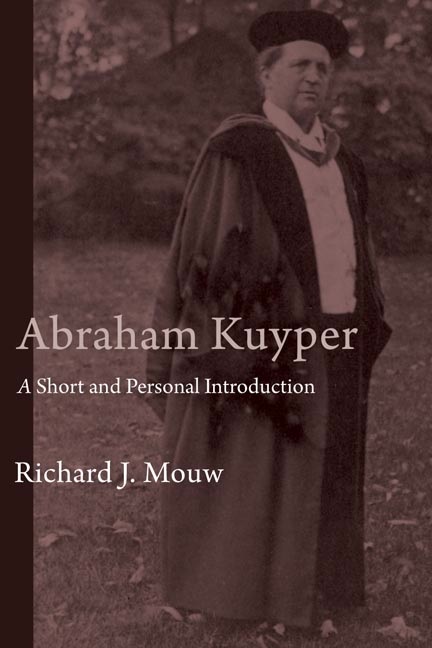
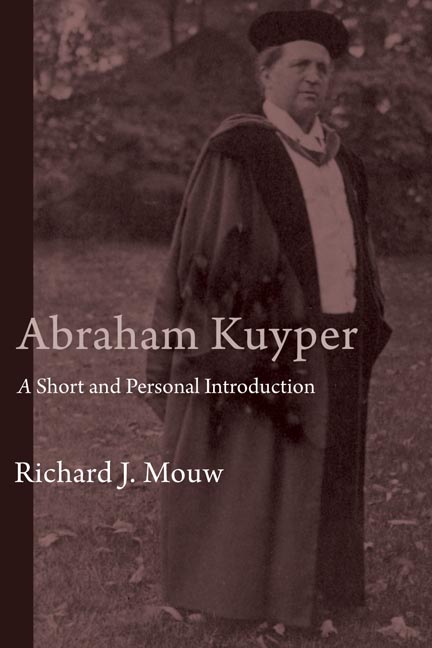
Do you hear shades of Abraham Kuyper in this interest in relating faith and cultural engagement, at least in how Calvin College expressed it to us this week? (I hope you recall the two- part BookNotes review of the new introduction to Kuyper by Richard Mouw, here and here.) That we are “called to holy worldliness” (in Mouw’s punchy phrase) as we think about how God has ordained the unfolding of various social spheres and commissions us to be agents of healing in those places?   Indeed, some historians would say that the most vibrant Protestant Christian colleges have learned or re-learned recently to “think Christianly” about their own tasks and work, inside and outside of the classroom, in part by reflecting upon the way in which Calvin College talked about these things throughout the last half a century.  That Calvin views itself (or so we gather) as neo-Calvinist and Kuyperian—that God in Christ is redeeming not just our souls but “every square inch” of the creation, and that our views of sociology and agriculture and aesthetics and politics are as important as our doctrine and theology—has been a model for integrating faith and scholarship from which other institutions have learned.  
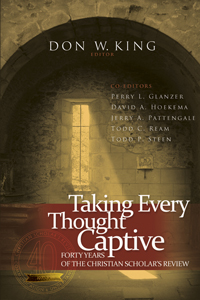
978-0-89112-547-1.jpgA brand new book—edited by an impressive team of scholars, including a former CCO staffer and Kuyperian from Hope College named Todd Steen (whose PhD in economics was taken at Harvard)—illustrates well the ways in which evangelicals have been wrestling with the questions of faith and learning, Christ and culture, piety and scholarship, for the last nearly half a century.  Taking Every Thought Captive: Forty Years for the Christian Scholars Review, edited by the current editor of CSR, the literature professor Don King of the PC(USA) affiliated Montreat College along with Perry Glanzer, David Hoekema, Jerry Pattengale, Todd Ream and Todd Steen (Abilene Christian University Press; $25.00.)  This thick book deserves a more thorough review later, but it is essentially a fantastic greatest hits collection of four decades of scholarly work done from within an intentionally Christian framework.  (You know, even if you don’t have all of a band’s many releases, if you care at all you pick up the greatest hits album.)  There are pieces here spanning the journal’s career and they are well selected.  Some of them are really good to be in a book since the academic journal, CSR isn’t widely circulated outside of Christian colleges and they deserve to be read.  What a wonderful opportunity to read through so many important articles!  There are substantial essays by a wide array of scholars, from thinkers such as Nicholas Woltersdorff, Jonathan Chaplin, Richard Mouw, Mary Stewart Van Leuuwen, Roger Lundin, Nancy Ammerman, Dallas Willard, Stanley Hauerwas, Jenell Paris and many more.  There are pieces on politics, on art, on the role of the Christian college, on student learning, on math and science and ethics and philosophy.

One piece that I have read and photocopied from the journal was a provocative and beautiful bit of writing by Brian Walsh and Steve Bouma-Prediger, using ecological insights based on a Scriptural vision of place and “homecoming” to suggest that students should know the places where they are studying.  It was published in the review (along with a strongly-worded critique the following quarter) as they were writing their Beyond Homelessness, applying its insights about cultural displacement and Biblical exile to the experience of learning within the context of modernity.  Brilliant!  Another piece that I think should be widely discussed was by Ronald Sider who called in the CSR for more academically rigorous research that popularizes for the church the work of the academy and helps social reformers and activists to translate Christian thinking into policy initiatives.  Again, this was a splendid piece that I highly recommend.  

The Christian Scholars Review has long been an important organ for good book reviews and serious academic research done by scholars mostly within the mostly evangelical Protestant faith community.  The special issues have been splendid (they did a C.S. Lewis issue a few years back, for instance) and it has regularly been a good testimony to the way our discipleship can effect our scholarship and cultural engagement.  I wish there was a way for more libraries to stock it, certainly university libraries should, since they typically have journals from every other perspective one could possibly think of. Certainly any college professors that you know should hear about it.  Maybe this book would be a way to introduce them to the important work of the journal.

Interestingly, after a few decades of pondering books like, say, Calvin College’s own Engaging God’s World: A Christian Vision for Faith, Living and Learning by Cornelius Plantinga (Eerdmans; $16.00) or the much-discussed Outrageous Idea of Christian Scholarship by George Marsden (Oxford University Press; $19.99) colleges from other theological traditions have had serious conversations about what their own unique theological heritages might offer to a perspective on being a Christian institution of higher learning.  What does it mean that Baylor is Baptist (and not just Texan)?  What is the unique contribution made by the constituency at Indiana Wesleyan?  What role does Methodism play in shaping the teaching at Asbury in Wilmore KY?  Besides having a peace studies program, is there anything uniquely Mennonite about the academic perspectives at Goshen?  These are fascinating questions, being discussed with greater urgency these days, or so it seems.

(Sadly, most mainline denominational church-funded colleges have opted out of this conversation years ago and have no vision of being distinctively Christian or, in many cases, even faintly Christian; I know colleges funded by the tithes of United Methodists, Church of the Brethren, Lutheran, UCC and Presbyterians where professors robustly talk students out of religious faith. See the massive set of case studies in The Dying of the Light: The Disengagement of Colleges and Universities From Their Christian Churches by James Tunstead Burtchaell (Eerdmans; $49.99) for the history of the unhinging of church-related colleges from any substantive connection to the faith of the denominations that fund them.)


So, some evangelical colleges wanted to consider ways other than the Calvin College/Kuyperian approach.  For instance, Douglas Jacobsen and Rhonda Hustedt Jacobsen and other Messiah College professors reflecting on their own Weslyan and Anabaptist heritage, published Scholarship and Christian Faith: Enlarging the Conversation (Oxford University Press; $45.00.) They suggest there, in fact, that the Kuyperian model, as exemplified by pioneers at Calvin or Dordt, shaped by wonderfully important scholars such as Nicholas Woltersdorff, George Marsden and Mark Noll, to name just three generative former Calvin College professors who are in the Christian Scholars Review anthology, had a bit of a hegemony in the conversations about what it looks like to relate faith and learning, to “think Christianly” to do a particular sort of Christian higher education. So they set out to tweak the conversation a bit, staking their ground.  Duke ico
noclast Stanley Hauerwas compiled a collection of essays about higher education entitled The State of the University: Academic Knowledge and the Knowledge of God (Blackwell; $34.95) with one chapter which playfully wonders what it would look like If Wendell Berry ran a university. 

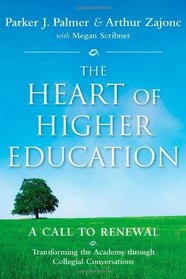
Just a few months ago we were happy to get a fine book called The Heart of Higher9780470487907.jpg Education: A Call to Renewal by Quaker mystic Parker Palmer (Jossy Bass; $24.95.)  You may know that he has long reflected on the meaning of knowing, the art of teaching, the nature of learning, the characteristics of authentic learning communities. (I just love his rumination To Know as We Are Known:  Education as a Spiritual Journey; HarperCollins; $13.99.)  It would be a large mistake to imply that Kuyperians have been the only ones who relate faith and learning or honor God’s commission to cultivate creation into sustainable cultural renewal.  Almost everyone at most Christian colleges believe there is some way to integrate faith and the calling of higher education, although I have had conversations with students who have told me that their professors mock the ideal, even at evangelical colleges who affirm that God’s perspective will color all aspects of the curriculum and every area of life. 
So, three cheers for widening the conversation. 

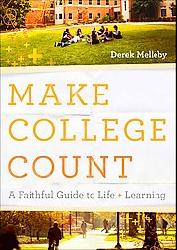
I guess I’m a bit of a geek to care about these matters so much but we are convinced that anyone who cares about young adults (as most churches do) must attend to the questions about the meaning of higher learning, campus ministry and the need for reform of colleges and universities.  These are the institutions that are forming many of our young adults and giving the direction for the rest of their lives.  It isP9780801013973.jpg why we have been so adamant, begging you over and over even to start this conversation early by gifting Make College Count: A Faithful Guide to Life and Learning by Derek Melleby (Baker; $12.99) which in simple, clear ways invites high school or first year students to grapple with the bigger questions of why they are going off for their freshman year and what they think God thinks about it all.  It is very, very good, and as we had our orientation extravaganza at Calvin College this week, I was glad Marissa had read it. Thanks, Derek, for caring about the so-called college transition in a way that has these larger themes in view.  Thanks to those churches who ordered it from us, who wanted to give such a resource to their young members who are heading off to this new phase of their life journey.
Even for those who don’t work in higher education, the “reformational worldview” embraced by Calvin and other Reformed colleges (see, at least,  Creation Regained: The Biblical Basis for a Reformational Worldview by Al Wolters; Eerdmans; $14.00) has influenced many who work with students and it has been fruitful.  I met a fellow father at the Calvin orientation, in fact, with a PhD from Wheaton College, who said it was one of the most important books he ever read!  Indeed, may who work with undergrads at secular colleges or minimally church-related colleges that are largely secular in ethos, use books like The Outrageous Idea of Academic Faithfulness by Donald Opitz and Derek Melleby (Brazos; $13.99) or the many books on the Christian mind by James Sire or resources such as Os Guinness’ The Call (Nelson; $17.99) or Culture Making by Andy Crouch (IVP; $24.00).  Each of these, in various ways, owes a debt to Kuyper and the movement of Christian scholarship exemplified at Calvin College that has rippled across North America and beyond. (What fun to see professor and pal William Romanowski’s Eyes Wide Open: Finding God in Popular Culture [Brazos; $21.00] on his office shelf in both Korean and Mandarin!)  My own BookNotes reviews of Richard Mouw’s recent introduction (just a few weeks ago) to the thinking of Abraham Kuyper illustrates how this worldview-shaping theology that sees God’s hand in all the social institutions of God’s creation, reminds us of the Dutch legacy among many evangelical intellectuals and activists.  Even older evangelical stalwarts of social reform such as Carl F. H. Henry (founder of Christianity Today in 1956) and Francis Schaeffer have noted that Kuyper and other Dutch theologians informed their intellectual texture and moderate endeavors for social reform.

That long drive home gave me time to think not only about our family’s new official relationship with this Dutch Reformed tradition, but with our own calling as booksellers, our vocation as cheerleaders of developing the Christian mind, and of how things have changed in the publishing world in recent decades.  I guess you can be glad the drive wasn’t even longer or I might have ruminated even more…thanks for reading along.

*CINO, catapult, WORLD The HUSS SCHOOL

bkgd_header.jpg


Before we started the journey home we made a stop in the small town of Three Rivers, Michigan, to visit the center of what I jokingly call the *cino empire.  You may know that *culture is not optional is a loose network of writers, friends, artists, and social entrepreneurs, mostly younger folks who have drunk deeply from the Kuyperian social vision and have been influenced by radical thinkers at places like Dordt, Trinity Christian (Palos Heights) Calvin, Redeemer (in Ontario), ICS (the graduate school in Toronto), and the CCO.  Besides running conferences and camp-outs, they publish catapult, a bi-weekly e-magazine which offers transformational memoir and poetry and excellent essays of faith-based cultural criticism. (They have an e-mailed daily asterisk quote that you can subscribe to as well, which is my daily shot of literature for subverting the Way Things Are.)

Rob and Kirstin Vander Giessen-Reitsma also run World Fare  (with a crew of volunteers and41782_49965968829_3002_n.jpg interns) a beautiful fair trade store (not as flashy as the famous Ten Thousand Villages stores,  but extraordinary for its personal touch and deep knowledge of the field of global fair trade economics and social vision entwined with a unique mission of intentionally embodying that vision into their local community ) If you are ever in South Eastern Michigan, World Fare is a marvelous, cozy place to visit.  

The *cino folk embarked on a breathtakingly brazen leap of faith last year and started a capital campaign (not the sort of phrase that drops easily from the lips of neo-hippy social visionaries that run fair trade shops)
to buy an old, empty elementary school, a facility for which they have big plans.  The Huss School is in need of major repairs and serious renovation but the community garden is already blooming, they have hosted concerts and art shows and for a year have been hosting an oral history project, collecting stories of those who once attended the school.  (The ward where the school is located may be considered one of the more depressed parts of town and some the people of color who live there hold resentments for its closure decades ago.  Kudos to Rob and Kirstin for doing “service learning” and hosting this opportunity for the neighborhood to name and renounce injustices of previous times so that they might move forward in grace and goodness.) Do visit their imagining space webpage and learn about their campaign to get folks to help them in their effort to renovate the Huss School.

So. This is important. The sort of worldviewish, deeply integrated, Christ-guided learning that goes on at places like Calvin College prompt some of their graduates to run for office or do medical research or get jobs as lawyers or filmmakers or speech pathologists.  Yay.  And some end up buying empty schools and dreaming of Isaiah 58:12 where it is promised that God’s people will be known for repairing the ruins of previous generations. Thank goodness that the past few decades have lead to such beautiful, serious, solid marks of discipleship.

JOHN STOTT
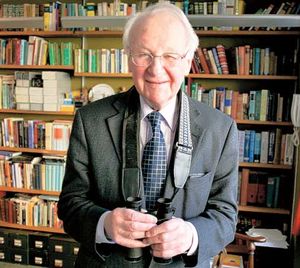
Pg-18-stott_629370t.jpgAnd then the sudden, bittersweet news of the death of John Stott.  He was one of our era’s great Christian leaders, himself deeply involved in all of the sorts of things that have captured our hearts even this very week in Grand Rapids—caring for students, nurturing the Christian mind, thinking about the reform of institutions, relating to the global South and honoring our international relationships, serving the poor and marginalized out of a non-compromising Christ-centeredness.  Stott was a British evangelical Anglican, Rector of All Souls in London, evangelist, author, a principle in the World Evangelical Fellowship, the Lausanne movement, and founder of the international social ministry, The Langham Partnership International.

As you most likely know, he wrote widely—mostly for our favorite publisher, InterVarsity Press, and left a mark on millions influenced by them.

As a British evangelical, Stott did, indeed, teach—in a way that was parallel to Kuyper and Mouw and Rookmaaker and Schaeffer and other neo-Calvinists whose names I’ve cited recently—the Lordship of Christ over all of life and the need to have orthodoxy (right belief) joined by orthopraxy (right living) including in our public lives and social concerns.  Stott’s healthy influence on evangelicalism since the 70s can hardly be overstated.

I have been suggesting in previous columns (and again, now that we’ve experienced the orientation that Calvin College offered) that Abraham Kuyper in the early twentieth century influenced (through the immigrant Dutch community at first) the tone of many of the thought leaders within evangelicalism in North America.  His worldviewish, wide-as-life sort of neo-Calvinism that emphasized our call to develop culture and exercise the Christian mind slowly challenged narrow pietism and, combined with other traditions (like the fiery call for justice from the black church and the vision of simple living from the anabaptists), helped a socially progressive sort of wholistic, culturally-engaged ethos to take hold within many evangelical organizations, Christian colleges, ministries. My own experience with the Pittsburgh-based CCO is a great example of that; their renowned Jubilee conference with workshops on engineering and medicine and race relations and politics and every other imaginable topic for college students wasn’t inspired by Rudolf Bultmann or Billy Sunday, you know; neither liberalism or fundamentalism has been able to sustain serious social reform or faithful cultural engagement.  It is the likes of Kuyper at the beginning of the 20th century and Stott at the end who have shaped the aspects of evangelicalism that I find most helpful. Such has certainly left marks on our work at Hearts & Minds! 

John Stott was there with a kindred voice alongside all this Kuyperian, socially-engaged worldviewish thinking, and the struggle to define the social vision of evangelicalism.  Indeed, Stott spoke at Jubilee in the late 1970s (and had an even larger network within InterVarsity Christian Fellowship.) Stott was seen by many of us as a leader, a guide, a partner, an utterly reliable author, an elder statesman (and to some who in recent decades have moved to significant leadership, a personal mentor, who routinely called him Uncle John.)  

Yes, Stott helped us all on this exact point of being faithful in our time, in our world.  He famously said we need to learn the art of double listening, listening well to the Word and the world.  Again, the pithy phrase is orthodox and radical.

THREE STORIES
I will offer a list of a few of my favorite John Stott books, but first, three quick vignettes.

6a00d83451cd8169e20147e040f226970b-800wi.jpgI was once selling books in 2004 at a lovely gathering of good pastors from a mainline denomination.  We were in a swanky venue and the New York Times was delivered.  It was the day when the now-famous editorial by David Brooks came out, scolding the too typical tendency of shows like Nightline or 20/20 for bringing out guys like Jerry Falwell or others from the far Christian right to represent conservative evangelicals.  Why, the Times pundit asked, don’t they interview a guy like the Right Reverend John Stott who is smart, gracious, articulate, and politically balanced and always the humble gentleman.  Brooks had said on the Op-Ed page what I had said (to no avail) to these liberal leaders at our retreat: when they think of “conservative” theology they should skip Pat Robertson or the strident politics of the AFA or the flamboyant TV preachers and should consider John Stott, a quintessential evangelical.  It was nice (and a bit humorous, or so I thought) that these pastors, with The Times in hand, came to the book table to ask if I had any books by this Stott, guy.  Of course, I did.  At last, I sold his valuable work to folks who had not heard of him, thanks to a column by a secularized Jew in The New York Times.  I could grouse about how un-ecumenical these parochial pastors were—how could you be a religionist in our day and not know who the famous and prolific John Stott was for heaven’s sake?—but I mostly just smiled.
97050477.JPGAnd years before that, the weekend we opened our Dallastown shop, Thanksgiving of 1982.  We wanted to share an inexpensive book with an
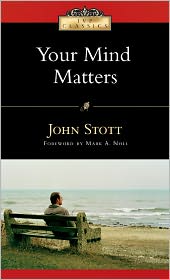
ybody who dared to walk into our bookstore during that grand opening, especially since we were new in town and our mix of general market books and ecumenical Christian books didn’t fit the mold of what some might have expected when they heard a Christian bookstore was coming to East Main Street.  We couldn’t afford much, so it had to be small, and it couldn’t be too academic for our ordinary folks here in town.   And any giveaway book needed to honor our desire to be fully Biblical and yet culturally engaged, to be willing to think and read and learn and yet not be haughty or dry.  What better way to share the way Christ could be honored by a down-home, serious-minded bookstore than share Your Mind Matters: The Place of the Mind in the Christian Life by John Stott (IVP; $7.00.)  I will explain a bit more, below, and how it warns against “spiritual superficiality.”  It remains a quiet gem, a small book of balance and wisdom and urgency and hope and we smile thinking we chose a John Stott book as a way to help explain our mission here.

And this.  Years ago a friend had organized a conference about faith in the marketplace, thinking about the implications of our Scriptural “first things” for every area of life and service in the world.  The brochure featured a lengthy quote from a John Stott book, a book that, at that point in my life, I had not yet read.  It was from Christian Mission in the Modern World, (IVP; $8.00) a book I have since re-read several times.  It emerged from the historic Lausanne conference, and detailed a wholistic, balanced, and culturally-sensitive vision of evangelical mission. It remains an essential book for these global times. The quote, though, was important as a reminder that we are all missionaries; this was before the phrase “missional” was in use, but it captured that (dare I say Kuyperian) approach so well that I tore it off the brochure and used it as a book-marker in my Bible where it has been for over probably 25 years, now.  I’ve quoted it often in talks and sermons and classes.  It starts by poking the impression that was (and may still be today) sometimes given that those who are most “keen” for Christ should be a missionary or pastor or church worker.  Stott opens up a more faithful, sensible (and, finally, radical) view of vocation and reminds us of this revolutionary dynamic which is too rarely explored.

It seems to me urgent to gain a truer perspective on this matter of vocation. Jesus Christ calls all his disciples to “ministry,” that is, to service.  He himself is the Servant par excellence, and he calls us to be servants, too.  This much then, is certain: if we are Christians we must spend our lives in the service of God and man.  The only difference between us lies in the nature of the service we are called to render.  Some are indeed called to be missionaries, evangelists or pastors, and others to the great professions of law, education, medicine and the social sciences.  But others are called to commerce, to industry and farming, to accountancy and banking, to local government or parliament, and to the mass media, while there are still many who find their vocation in homemaking and parenthood without pursuing an independent career as well.  In all these spheres, and in others besides, it is possible for Christians to interpret their lifework Christianly, and to see it as neither a necessary evil (necessary, that is, for survival), nor even as a useful place in which to evangelize or make money for evangelism,  but as their Christian vocation, as the way Christ has called them to spend their lives in his service.  Further, a part of their calling will be to seek to maintain Christ’s standards of justice, righteousness, honesty, human dignity and compassion in a society which no longer accepts them.

Stott continues in that same little book to call for conferences and meetings, inviting folks to join what he called “study-action” groups.  He envisioned local community book clubs, reading together to help sharpen one another in our careers and civic lives.  Oh how I wish more would take his wisdom to heart and start up such study-action groups.  I guess you can see that it is no wonder that we have admired his work and mourn our loss.

Several really, really fine reflections on Stott and his work have appeared over these last few days.  Some have really inspired me and I think they are a good testimony not only to God’s work through his humble servant John Stott, but also remind us of the need for a clear-headed, Christ-centered, Biblically-balanced, and socially-engaged Kingdom perspective.  We in no way want to exploit or capitalize on his death.  Yet, his books are very helpful and are still needed so very badly.  A few readers have asked for a list, so I”ll share a few.

But first, a few helpful sources to learn about his life, influence, and ministry.

Interestingly, The New York Times obituary is one of the best.
 
Political pundit Mike Gerson was a Stott intern for a while and offers a very wise testimony to his vision and integrity.  This is a fantastic example of how Stott’s view of a wholistic, balanced, thoughtful evangelicalism made a difference in a current leader.  This tribute was recently published in the Capitol Commentary of CPJ.  Very nicely done.

Here is a short, basic, overview from Beliefnet.

The most extensive overview that we most highly recommend.  A must read essay,  from Christianity Today.

I really enjoyed this wonderful rumination from an eloquent preacher and Episcopalian priest, Fleming Rutledge. 

From the left-leaning British paper, The Guardian.  They get it.  Very well put.

book.jpg

MY TOP 15 JOHN STOTT BOOKS.

Where to begin?  My, my.  Here are my top fifteen, in no particular order.

Your Mind Matters to God (IVP) $7.00  I mentioned this above, naming it as a favorite, brief book about the need to honor God with our thinking, to have a robust intellectual commitment to the Scriptures and all of life, and to take up the call to “think Christianly” about life and  culture.  Also a good warning to never allow faith to be only intellectual and to avoid the dryness of an exclusive brainy sort of discipleship. This new edition carries a brief forward on the books significance by Mark Noll.

Christian Mission in the Modern World  (IVP) $8.00  I cited this above; it was compiled from his legendary talks at the first Lausanne conference and is a model for balanced evangelic
al thinking about wholistic global missions.  Still a brief masterpiece and as timely as ever. 

The Radical Disciple: Some Neglected Aspects of Our Calling (IVP) $15.00  This compact sized hardback was announced as his last full book and he wanted it to be known as his “last lecture” or parting words.  I read it I think in maybe two sittings.  It is a reminder of the cost of discipleship, the need to relate faith to urgent issues of the day (such as climate change and issues of the two-thirds world.)  He advises wisely against materialism and remains, as always, a “basic Christian” wanting to be found faithful in living faithfully, with great love and deep passion for the things of God’s Kingdom.  Publishers Weekly gave it a fine review, noting it is “unadorned, threaded with Biblical reference…” It’s last word? Farewell!
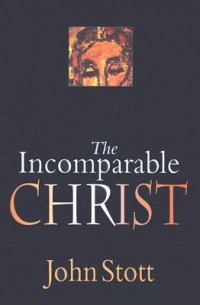
0832224.jpgThe Incomparable Christ (IVP) $18.00  We had the immense privilege of selling books in Washington DC as Stott delivered these lectures for the C.S. Lewis Institute a few years back and they remain in my mind as one of the great lectures series I have ever heard.  In this one volume, Dr. Stott offers four angles into the life of Jesus,  a New Testament overview (with a portrayal of Jesus from each section of the New Testament), an historical overview (with each chapter telling of a view of Jesus held by someone down through church history, including a few non-Christians, showing how Christ has been understood and presented), a third section called “The Influential Jesus” or how he has inspired people down throughout history–great, great stories and testimonies here— and a final section with chapters showing Jesus in various portions of the book of Revelation.  What an inspiring, wide-ranging, and under-rated volume this is!  I think if I was going to a desert island and could only take a few books, this would be my one choice about Jesus.  

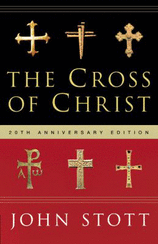
The Cross of Christ
(IVP) $26.00  I often complain when publishers keep books in hardcover,083083320x_l.gif wishing they would offer less expensive paperback versions.  For some reason, though, I enjoy holding this hefty hardback, realizing it may be Stott’s most important, somewhat scholarly, contribution to Christian theology.  It truly is a modern classic, a lucid, multi-faceted and faithful text and the hardback presentation reminds us of its gravity.  One can hardly be fluent in the various debates and discussions about the role of the Cross without this fine touchstone.  J. I. Packer says that it is “his masterpiece.”  It very well may be.   
The Contemporary Christian: Applying God’s Word to Today’s World (IVP) $25.00  Earlier, above, I wrote about the new book collecting various pieces from forty years of the Christian Scholars Review, saying it was like a “greatest hits” album from that journal.  Well, although these chapters are not a reprinting of previous work, this may be considered Stott’s greatest hits.  He covers nearly anything and everything a follower of Christ needs to know, offering solid theology and accessible, no-nonsense prose to guide you to deeper faith and fidelity.  He explores nearly all the themes that are most essential to his approach and it is all good. The sections under which he has several informative chapters each, are The Gospel, The Disciple, The Bible, The Church, The World.  It may be that this is his most quintessential, thorough study.  I cannot recommend it more highly.

Issues Facing Christians Today (Zondervan) $19.99  This book has a colorful history–it was once published as two volumes, then as one, they changed the titles a few times, in England and the States, and it ended up with as an expanded, one-volume edition with a new title and a new publisher.  The first half is essentially everything one might need to know to begin the journey towards faithful, evangelical engagement with social concern.  This part is worth the price of the whole book and is wiser than most books that are more splashy and more hip. (His care about offering a vibrant but humble witness, his remarks on pluralism and rejecting the lack of civility of the culture wars, are all true insights and very helpful.)  He invites us to patient, careful, consideration of the basic contours of the Christian mind, reminding us always that in the past there have been great social reforms inspired by great spiritual revival.  (Think of the Wesleyan renewal and Wilberforce, for instance.)

The second half of this large paperback offers a preliminary Biblical perspective on a range of issues, public matters from genetic engineering to nuclear weapons, from same sex marriage to labor relations.  He is a “conservative radical” as he liked to say, orthodox on faith and consistent in attempting to offer hints towards a faithful social vision.  Agree or not with his views on abortion or environmentalism or war and peace, it is a stunning effort, a fabulous resource, and a book that simply must be considered and discussed.  Those looking for a balanced approach to social ethics and contemporary issues that are not necessarily lock-step conservative or liberal will delight in this fabulous study.   
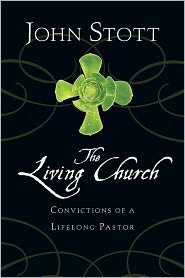
95497163.JPGThe Living Church: Convictions of a Lifelong Pastor  (IVP) $15.00  Somebody somewhere gave me some audio tapes of some of Stott’s teaching on the church and this book is delightfully close to that fabulous material.  This is vintage Stott, with plenty of Bible and plenty of social observation, a bit of dignified criticism of those of us who are missing the mark and a great amount of positive encouragement.  There is so many good books on church revitalization and the missional movement and helpful conversations about the emergent conversation that this simple dream for the body of Christ in today’s world might get missed.  It is calm, reasonable, Biblically astute and very, very wise.  Stott was at All Souls in London for over sixty years, after all…he has earned the right to be heard as a pastor.  Please understand, though, it is not for pastors but for anyone that cares about the local church and the Christian life.  Very nicely done.
 

The Bible Speaks Today: The Message of the Sermon on the Mount  (IVP) $18.00  Formerly entitled Christian Counter-Culture it is a fine, workmanlike commentary with a bit of practical application.  Although Stott was a pacifist and conscientious objector earlier in his career—and an anti-nuclear weapons advocate late in his career—this commentary doesn’t indicate much of those concerns, which always made wish Uncle John had been a bit more radical in this study.  Still, it is one of the better introductory commentaries and we regularly suggest it.

The Bible Speaks Today: The Message of Acts  (IVP) $20.00  Stott has served as Senior Editor for the New Testament for this whole Bible commentary set and his own previously titled Acts commentary from 1991 The Spirit, the Church & the W
orld
has been retitled and now serves as the Acts volume in this set.  Very impressive.  Again, Stott had this ability to do standard exegesis and Bible exposition in a way that took culture and mission seriously. 

The Bible Speaks Today: The Message of Ephesians (IVP) $19.00  Again, this volume in the set was penned by Stott himself.  I think this may have been the first Bible commentary I ever read; my father had the Barclay’s commentaries which I maybe dipped into, but this—a stand alone volume firstly called God’s New Society–capture my attention in the late 70s.  He opens it with a reminder that Karl Marx had a vision of a new person for a new society and writes, “Paul presents a greater vision still.” This is the sort of solid (and culturally alive) Bible study that kept me a Christian.   

The Bible Speaks Today: The Message of Romans (IVP) $20/00  Ooops, I don’t think I’ve ever read this.  I am inspiring myself to do so; maybe you too?  Look, there are tons of books on nearly every book of the Bible and some are more scholarly and some more devotional and some more edgy and some more this or that or the other.  Stott is reliable, evangelical, practical.  One can hardly go wrong, even if he wrote this before he talked it over with N.T. Wright.  Ha.  Give it a try.

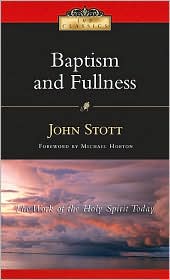
Baptism and Fullness: The Work of the Holy Spirit Today (IVP) $8.00  There was a time in15261993.JPG my life and in our ministry that feisty debate about the role of the Holy Spirit and the charismatic renewal were common.  I don’t know if charismatic over-zealousness has mellowed or they are now just so weird in some places that most just ignore them.  But I do know this: we really should regularly revisit our relationship with the Holy Spirit and we should be clear about how God the Spirit works in our midst.  I suspect that this book—partially a call to reject inept language that would suggest we need to “get” the Spirit or that some extraordinary secondary baptism after our commitment to Christ is a requirement—was used to restrain a few from going off the deep end.  Maybe now it could also be used to remind us that the special empowerment of the Spirit is needed and a sweet blessing for God’s people.  I think I’m going to re-read this as it has been a while.
Between Two Worlds: The Challenge of Preaching Today (Eerdmans) $24.00 I know, not everybody wants to read a book about how to preach.  (Although, no offense, but some of you preachers, uh, maybe should.)  If you want to brush up on your homiletics, this is a fine, classic resource.  And you know what?  It is really for anyone because his major point is that we need a double listening, listening to the Word and the world.  And that requires some translation,  some experience with the art of contextualization, making the ancient culture’s story come alive in our own.  As is often the case, good books about preaching are also good books about Biblical interpretation and good books about Christian living.  This is one of those, helpful for one and all.  It was called “exhilarating” by David Read, the minister of Madison Avenue Presbyterian Church.  Highly recommended.
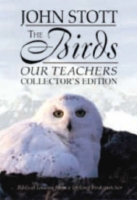
birds-our-teachers-stott-john-r-w-hardcover-cover-art.jpgThe Birds Our Teachers (Collector’s Edition): Biblical Lessons From a Lifelong Bird-Watcher John Stott (Hendrickson) $24.95  When we heard that this beloved gift book was coming out in with a CD loaded with Stott’s own pictures of his 70th birthday bird-watching trip to the Falkland Islands (insider hint: penguins live there!) and an audio recording as well, we were so, so tickled.  Many people just loved this book before it went out of print, a handsome, full-color gift book with Stott devotionals and all manner of things about his beloved feathered friends.  As I hope you saw in any number of the obits, he was a lay ornithologist.  The title comes from Luther’s exhortation “Let the little birds be your theologians” and Stott, indeed, does reveal lessons of faith from ravens, storks, larks and eagles.  So glad it is now available again in this enhanced edition.

AND A DVD
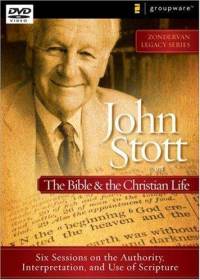
john-stott-on-bible-christian-life-six-sessions-hardcover-cover-art.jpgDVD John Stott on the Bible and the Christian Life  (Zondervan) $19.99  Here are six nearly hour-long sessions, with Dr. Stott in his orderly, clear, dispassionate teaching, lecturing live at All Souls.  In the six sessions he holds forth with impeccable insight on The Authority of the Bible, The Nature of the Bible’s Authority, The Interpretation of the Bible, The Problem of Culture, Developing a Christian Mind, and Making an Impact on Society.  I’ve used these myself to good effect and many serious folks have found them very, very helpful.  For what it is worth, the six sessions could easily be expanded to twelve as there is plenty to absorb and good discussion questions offered throughout.  By the way, if you are involved in leading programing, doing ministry or teaching, it doesn’t hurt to have this around—I’ve used just one lecture, or even on portion, to supplement a class or retreat. 

BookNotes
SPECIAL
DISCOUNT
 – any book mentioned –
The regular retail prices are shown above.  We will deduct the discount from those prices.   

20% off
order here
takes you to the secure Hearts & Minds order form page
inquire here
if you have questions or need more information
Hearts & Minds 234 East Main Street  Dallastown, PA  17313     717-246-3333

new Calvin Seerveld audio recording of Psalms, with the Pax Christi chorale

There have been oodles of books about worship in recent years, books ranging from the most creative and progressive to the most staunchly conservative.  I never tire wanting to understand this central aspect of our weekly gatherings and enjoy the diverse array of titles we have; I read some of them as I can, and we recommend them often.  Of the large selection of books about worship that we stock here, a few we often suggest—from must-reads by Marva Dawn to Gordon Lathrop, Russell Mitman, a small but weighty one by James Torrance,  to evangelical ones like Worship by the Book by R. Kent Hughes, D.A.Carson, Timothy Keller (Zondervan; $16.99.)  I even love the little pocket sized hardback by Matt Redman called Facedown (Regal; $12.99) which I highly recommend.  I’m not a worship leader, but I’ve read Worship Matters: Leading Others to Enounter the Greatness of God (Crossway; $17.99) maybe three times.
 
The Alban Institute not long ago did a very basic one that would serve as a good resource for an adult ed class in a mainline church, part of a series of their which we stock called “Vital Worship/Healthy Congregations” which is co-published by the fantastic Calvin Institute of Christian Worship.  The Work of the People: What We Do in Worship and Why by Marlea Gilbert and others (Alban Institute; $17.00) is written by two UCC pastors, a Presbyterian and a Congregationalist pastor.  John Witvliet, the Director of the Calvin Institute, notes that “Excellent education about the shape and purpose of worship is one of the most promising approaches for spurring worship renewal.  The Work of the People is designed precisely to contribute to this educational and formational process.”   

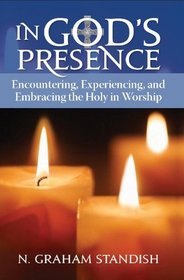
A year or so ago The Alban Institute also published one by my Western Pennsylvania mystic9781566994057.jpg friend Graham Standish; we’ve mentioned it before, but we should mention it again as it is a wonderful blend of thoughtful, deeply spiritual considerations and some practical advice for what he calls integrated worship. (Nobody likes that phrase “blended” worship and “ancient-future” isn’t very clear, either.)  In God’s Presence: Encountering, Experiencing, and Embracing the Holy in Worship (Alban; $18.00) is a very fine resource if you are reflecting on the nature of your worship experiences, and wanting to bring a few different styles and insights to the Table. (No pun intended.)  I like Graham’s book.

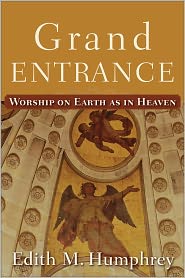
113205646.JPGWe just got into the shop a serious volume from a professor who has studied with N.T. Wright at McGill, teaches at Pittsburgh Theological Seminary,  is joined to the Orthodox church, and is known as a passionate and profound preacher herself. It is called Grand Entrance: Worship on Earth as in Heaven by Edith Humphrey (Brazos; $22.99.) Professor Humprhey’s new work carries rave endorsements by Michael Gorman, Ellen Davis, Scot McKnight, Scott Hahn, John Witvliet and other important scholars who serve the church well,  assuring readers that this will be a rigorous and ecumenically-sensitive study. Rooting us in an ancient story, Grand Entrance explores both the Bible and the best of the Christian traditions (East and West.) 


artofcuratingworshiplrg.jpgInterestingly, there have been two recent books that use the phrase worship curating.  An interesting phrase; you can deduce the image and the meaning, I’m sure.  One is by Jonny Baker, from England (although he studied for a while in Toronto), and it is simply entitled Curating Worship (Seabury; $20.00.)  The Anglican, house-church, emergent and missional gangs in the UK are very thoughtful and poetic about their work and this book is truly fascinating–he has a number of contributers and the whole second section includes interviews with leaders such as Kester Brewin, Steve Taylor,  Pete Rollins, Sue Wallace.  Perhaps a bit more accessible is The Art of Curating Worship: Reshaping the Role of the Worship Leader by Mark Pierson (SparkHouse; $16.95) which came from the authors work in the Baptist Church of New Zealand.  Again, this is very interesting, suggesting that worship is not “led” by one person who leads music.  Endorsements include raves from Tim Keel, Alan Hirsch, Brian McLaren and others.  Still quite creative, but perhaps a bit more traditional, and useful for more typical Protestant fellowships is The Worship Architect: A Blue Print for Designing Culturally Relevant and Biblically Faithful Services by Contance M. Cherry (BakerAcademic; $22.99.)

One of the most interesting things that I have noticed in the last few years as I’ve observed—curated?—these releases of books about worship renewal, is that many traditions, from mainline denominations to these emerging forms of creative worship, those from higher or lesser liturgical sensibilities all agree that we should pay more attention to our use of the Psalms.  Psalms study and folks pondering the role of psalms in worship are on the rise, and it is a good trend.  There are more psalters being published, and we stock some and can order others.  Are you aware of this trend?
 
For one good example of a fairly recent Psalm book that offers new insights, I was excited to see a few years ago Seeing the Psalms: A Theology of Metaphor by the very impressive William Brown (Eerdmans; $30.00.)  It isn’t an exegetical commentary (we have plenty of those, too) and goes beyond the study of functional analysis of parallelism and the like to a whole new sort of poetic sensitivity and research on how language works and how these songs/poems/prayers were created in the ancient Near East.   As Walter Brueggemann wrote in a longer review, “The book is fresh and accessible and is an important contribution to our common reading and the prayers our common readings permit.”  Indeed. (Brueggemann’s own books on the Psalms are essential, by the way.  His Message of the Psalms (Augsburg; $19.00) is excellent for a variety of reasons, and the little Praying the Psalms: Engaging Scripture and the Life of the Spirit was reissued by Cascade; $15.99) and is very useful.

Another extraordinary example of this recent interest in Psalms and worship, recall that I reviewed and celebrated The Psalms as Christian Worship: A Historical Commentary by Bruce Waltke and James Houston (Eerdmans; $28.00) which is both a stunning example of an overview of  Psalms exegesis and theology (and how they have been viewed throughout church history) and how they have been used in worship, again, over time.  This is over 600 pages, a treasure trove to work through over a life-time, perhaps.
 
One man who has been a voice of using the Psalms more routinely in worship—indeed327.300.jpg, singing them, as Waltke & Houston remind us that the church has often done–has been Calvin Seerveld, who has perhaps most known for his several book on aesthetics.  You may recognize his name from our regular mention of his books on the arts, Rainbows for the Fallen World (Toronto Tuppence; $29.95) or Bearing Fresh Olive Leaves (Toronto Tuppence; $35.00) or his early Christian Perspective on Art and Literature (Dordt College Press; $15.00.) Anytime we ever set up books anywhere, if we take devotionals, we display Take Hold of God and Pull (Dordt College Press; $20.00) or Being Human: Imaging God in the Modern World (Dordt College Press; $8.00) which does vibrant meditations inspired by a particular art piece, which is shown in b/w.  I hope you know his name and have seen us happily promoting his engaging work.

SEERVELD ON THE PSALMS
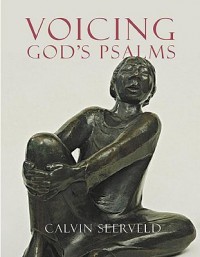
2828064.jpgTo help us understand the role of the Psalms (and some other clearly poetic Biblical texts) and how they might be used in worship, Seerveld gave us Voicing God’s Psalms (Eerdmans; $20.00.)  His “versifications” of the Psalms are masterful–it takes complex knowledge of Hebrew (and Hebrew poetry) as well as a tuneful ear to put them to verses so they can be sung in English.  This is a book that is fresh and striking and could be very useful, whether one is a “worship curator” or a more traditional pastor or preacher.  Seerveld has arranged the Psalm translations into thematic clusters under nine progressive headings (Torah, Enemies, Repentance & Forgiveness, Wrestling, Comfort, Promises, Hallalujah, etc.)  It includes a CD with over an hour of some readings and singing of Psalms in different styles and cadences; his passionate reading of his careful, if colorful, rendering of Psalm 19 is nearly alone worth the price of this resource!  The point of the CD mirrors the book: we can use the Psalms as creative, God-inspired hymnody and it can be as sorrowful as a lament and as joyous as a jig; there are wrestlings with God, here, and various moods and tones, matching the demands of the psalter itself.  As Eugene Peterson says of it, “A simply remarkable recovery, vigorous and engaging, of the original tone and range of the biblical prayers that give us the voice of ‘God talking live.'”  Jeremy Begbie writes, “For many years Calvin Seerveld has brought freshness, vitality, and rigor to the interplay between Christian faith and the arts.  These very qualities mark his compelling psalm translations.  I commend them warmly.”

Another useful feature to know about this good resource: there are one or two line introductions to each of the Psalms that he translates, and they are themselves rich, dense, intense.  Seerveld is one of the most skilled, and heartfelt, scholars I know.  His earnest, scholarly, phrasing is brilliant, so these introductions are themselves extraordinary.  

In Voicing God’s Psalms Seerveld has a few concluding remarks about the role of using the Psalms in worship.   It is wise and commendable. (The two pages about “difficulties to overcome in worshipping with Psalms are broad but prophetic and should be prayerfully considered.)  But there is an introduction to this book which I have read over and over.  Perhaps I’m a bit odd, but there are a few pages in the intro, explaining Seeerveld’s love for fresh translation, his peculiar realization of the gospel in the Psalms, his passion for using certain Genevan tunes or Welsh songs which seem, to him, to capture a mood or color—rough and tender, or, as he says sometimes, merriment—of these pieces for ordinary people.  In this intro Seerveld has a long, good sentence that I’ve often noted, explaining that the Gregorian chants were to be sung by trained voices but the reformation’s shift to the whole people of God allowed for a (then controversial) opening of the role of ordinary folks singing in church, singing in their vernacular.  He says it more eloquently with greater historical lucidity and aplumb, but you get the point.  Seerveld’s knowledge of the history of the rise of church singing, and particuarly Psalm singing, adds a nearly revolutionary edge to this stuff.  If you buy Voicing God’s Psalms, please don’t miss John Witvliet’s good forward (it too, is fabulous) or Seerveld’s must-read introduction. And underline this important insight about the historical development of this stuff.  Believe me, it is important.

AND A NEW CD RECORDING
Which then leads me to this.  If you are reading at home,  now give us a pound-your-hands-on-your-thighs, drum-roll pleeeezzze.  This is a very, very long-awaited announcement; some of us have been waiting for Seerveld’s brilliant work on the history of Psalm singing for quite some time.  He has done lectures on this at various conferences and workshops.  He has alluded to this in personal notes and in public appearances.  He has offered leadership at the legendary annual worship conferences at the Calvin Institute. 

And, now, we are so very pleased to announce that a CD has been produced, a high-quality recorded CD of Cal’s passionate, deeply moving lectures and an hour’s worth of wonderful, high-quality performances of the Psalms put to music, illustrating historical approach, musical fashion and theological insight. (Ahh, remember?  Are ordinary people allowed to sing God’s Word?  Is it for trained choirs?  What language and dialect do we use?)   

Allow me the honor of telling you just a bit about this marvelous new audio, by re-printing an edited version of a review I just had published over at the Cardus think-tank journal, Comment. I write for them sometimes and since Seerveld has been an inspiring presence for them in their reformational journalism, I wanted them to know about this first.  Now that that review has been posted there, I wanted to share it with our broader readership here at BookNotes.

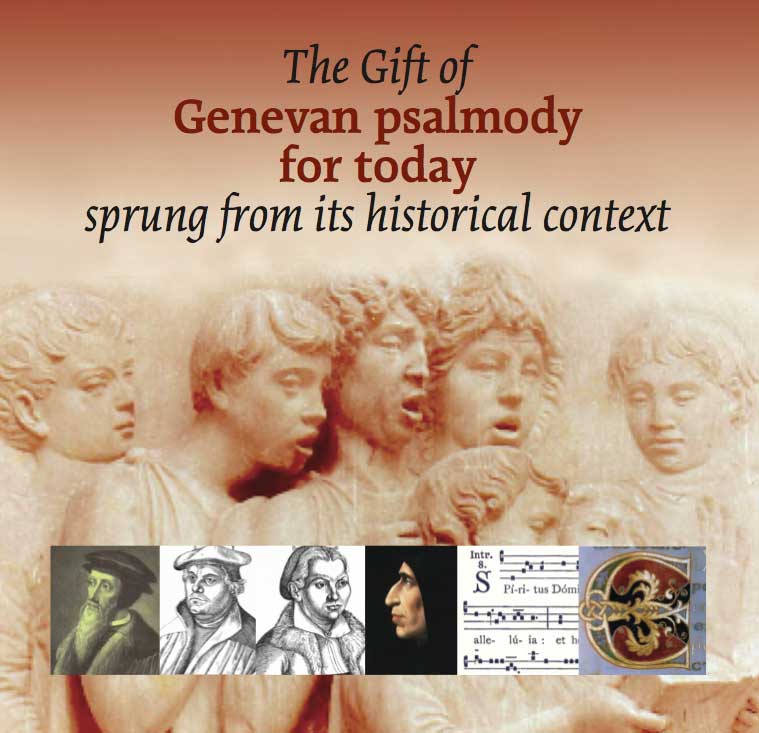
GenevanPsalmody_bookletcover.jpg(I’m sorry this CD jacket art is so large–it is the only way I could get it to appear.  Ooops.)

CD audio recording The Gift of Genevan Psalmody for Today Sprung From Its Historical Context by Calvin Seerveld (Toronto Tuppence Press, 2011) $17.95

As we’ve said, Dr. Seerveld is renowned the world over. His profound insight about the arts and the allusive aesthetic aspects of daily life are legendary. Seerveld also has had an equally long-standing interest in mature worship, in opened-up possibilities of richly sung congregational music, especially using the Psalms. He has often drawn on the 15th century Genevan Psalms in his talks and in the worship services he has curated. After studying the Song of Songs and offering his own translation, he put it to choral arrangements called The Greatest Song, that have been performed throughout the world. (And, yes, we stock that book, too.)

 Although retired from teaching philosophical aesthetics, Seerveld is being used by God to encourage a renewed interest in the Psalms in worship. In this brand new CD, Seerveld lectures–or is it preaching? or testifying? –between each recorded piece, helping us learn how music was sung in the late medieval world (from Gregorian chant to polyphonic song
s through simple laudes) and into the Protestant Reformation. Space does not allow me to explain the many stops along the way, but the commentary is vintage Seerveld: very detailed, colorfully worded, historically knowledgeable, and honorably ecumenical. He may be the world’s leading scholar on this, and he loves telling us the important details.

In each recorded mini-lecture, he tells us not only the historical (and theological) context of the piece that is about to be preformed, but also the style of the music–noting something to pay attention to, a chord or cadence or a high note–and guides us from Gregorian chant to German Lutheran hymns to Calvin’s own preferences for Psalms designed to be sung regularly by the common person in the vernacular.
 
They sing two versions of Psalm 42, for instance, one by Palestrina, a devout Catholic, another as written by Louis Bourgeois, of the Reformed movement; both are beautiful in their own way, but it is evident that one is wildly complex and professional, the other earnest and singable for the common person. The rise of vernacular singing is a blessing that some literally paid their life to advance, and Seerveld knows this deep in his bones.  Just hearing his brief telling of the tale is an emotional experience and a rare way to deepen your own experience of faith.
 
The excellent recordings of nine pieces by the Mennonite Pax Christi Chorale are truly stunning, comparable to the Tallis Scholars or Cambridge Singers, even. (Some Mennonite churches still sing accappella so this is a natural choice, but I was still delightful surprised to hear this brilliant vocal treat offered here, knowing it came from Mennonites.) This music/spoken word audio runs just under 80 minutes, and you will listen to it repeatedly, I’m sure, to hear again Seerveld’s passionate explanation of how these moving Psalms of God came to be put to song, how the theology of the tunesmiths and singers so colored their particular choices, and–Lord, please–how we might be buoyed up deep down by practices in our day of regularly singing Psalms like this.
 
Curators, arise!  Listen to this disc, read Seerveld on the Psalms, and get busy, allowing the Spirit to guide us not just to a (as Seerveld puts it) “a revival hour, but a reformation of our awareness of God’s presence, Christ’s Rule in God’s world, and the Holy Spirit’s dynamic for disciplined, givewaway lives of love.”

BookNotes
SPECIAL
DISCOUNT
20% off
 – any book mentioned –
with a purchase of the CD
The Gift of Genevan Psalmody for Today

order here
takes you to the secure Hearts & Minds order form page
inquire here
if you have questions or need more information
Hearts & Minds 234 East Main Street  Dallastown, PA  17313     717-246-3333

A handful of books about Harry Potter: finding the gospel in Harry Potter

Someone perhaps unaware of the ongoing conversation said tentatively to a friend recently that it seems like there are some Christian symbols and Biblical allusions in Harry Potter.  Could that be, she wondered.  It’s a good insight and she may be surprised to know that there is a virtual cottage industry of recent writing, reflecting on the deeper meaning of the wonderfully-crafted fantasy books.  As our own local newspaper’s religion writer observed, not too many years ago conservative Christians accused Rowling of witchcraft and Satanism, but that is changing.  (We lost more than one customer and even a friend a decade ago over our display of that first HP.)  Oh, how times have changed. And as an impressive Christianity Today piece argued, Harry Potter is here to stay.  It gives this old bookseller a bit of hope.

And so, I’ll skip the movie tonight and write about the books about the books instead.  That’s my thing, you know, telling you about books.  What fun!  Buy ’em here if you want, and if you even think about going you-know-where to buy instead, I’ll have Draco Malfoy stupefy you. And, of course, if you don’t have the actual HP books, and your library is out of them, we’ve got the whole set.

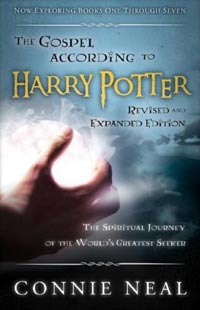
br_gospelhp.jpgThe Gospel According to Harry Potter: The Spiritual Journey of the World’s Greatest Seeker Revised and Expanded Connie Neal (WJK) $14.95  I mentioned this one first because Ms Neal was the first to suggest, after the first Potter book caught on, in a book published by a theologically conservative house, that maybe, just maybe, evangelical parents should read these books with some discernment so they could converse with their neighbors about it all.  Not a bad Acts 17/Mars Hill sort of strategy, but she paid for it.  Mrs. Neal even told the story of how some neighborhood kids who were all reading Potter then agreed to join her to read Narnia.  I guess the point in that early brave book was that this stuff isn’t that bad, but Lewis was better.  Later, on a different, more open-minded Christian publisher, she happily explored the Christian themes that are within the Potter series, and she wrote with great confidence, clarity and joy, giving us one of the best books about the Potter series.  This newer, expanded version of that second book includes an examination of all 7 of Harry’s exploits. It is a fabulous resource, a fun book to read, and highly recommended. Ms Neal has another book, by the way, called Wizards, Wardrobes, and Wookiees: Navigating Good and Evil in Harry Potter, Narnia, and Star Wars (IVP; $15.00) which, as the title suggests, looks at these ubiquitous themes in these three classic epic sagas.

9780312308698.gifGod the Devil, and Harry Potter: A Christian Minister’s Defense of the Beloved Novels John Killinger (St. Martin’s Griffin) $12.95  Dr. Killinger is a good writer, a thoughtful theologian and literary scholar, and has been on a kick recently to expose the dangers of fundamentalism.  He wrote a memoir called The Other Preacher From Lynchburg: My Life Across Town from Jerry Falwell we he contrasts his work at the liberal Congregational church with the more famous ministry in Lynchburg.  So this is not only a delightfully playful appreciation of the Potter cycle of tales, which it really is, but it is also a bit of a smack-down to those that think these books are wicked.  He makes a good case that these stories don’t corrupt children, but can influence them towards being followers of Jesus.  

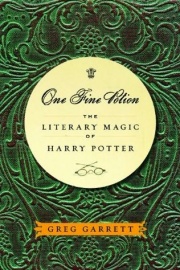
full_17494.jpgOne Fine Potion: The Literary Magic of Harry Potter Greg Garrett (Baylor University Press) $19.95  This is an astute study of the literary influences upon which Rowling draws, some good insight about the stories themselves, and a clear example of uniquely Christian literary criticism. He has a section showing, for instance, how the Three Unforgivable Curses are like Tolkien’s Machine.  Greg  Garret is a great writer, and has himself penned a novel, a memoir, a book of insightful film criticism called The Gospel According to Hollywood, and a really great one called Holy Superheroes that is a must-read for fans of that genre. He says (and he is not alone) that reading Harry Potter made him “want to be a better person.”  Garrett is from Austin so some of the book was written in the Hill Country, but he notes that much of it was written in England at the Canterbury Cathedral.  Pretty sharp!

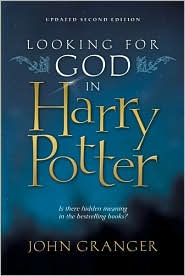
14660224.JPGLooking for God in Harry Potter (updated, second edition)  John Granger (Saltriver) $12.99 This came out in 2004 so it doesn’t explore the final parts of the saga.  But you should know that this author may be the most significant Potter expert on this side of the Hogwarts School.  He happens to have a beard down to his knees–or he used to, almost—and is active as a leader in the Orthodox faith.  So he’s kinda weird himself, if I do say so.  And he is–no doubt about it–a genius, a Biblically-literate genius, and a very  helpful writer.  He has a batch of books on this subject and this is the standard intro.  I recommend it.   Granger does, by the way, wisely address the questions about new age mysticism and the dangers of the occult.  Like most of the faith-based, pro-Potter authors, he agrees with the breath-taking statement of C.S. Lewis: “You and I have need of the strongest spells that can be found to wake us from the evil enchantment of worldliness”  Granger helps us see that Potter may just be that kind of a spell to awaken us from our naturalistic enchantment.

br_unlockinghp.jpgUnlocking Harry Potter: Five Keys for the Serious Reader  John Granger (Zossima Press) $19.99  If you are a fan of the books or even the movies, this will keep you absorbed, wanting to read it over and over. He uses his “considerable talents and reservoir of language and literary expertise” (as one reviewer wrote) to helps us understand and appreciate the layers of the stories.  Serious fans will love it as it delves pretty deeply, offering very important observations out of his coherent vision of what the stories are all about.

Harry Potter’s Bookshelf: The Great Books Behind the Hogwart’s Adventures  John Granger (Berkley) $15.00
  I told you this Orthodox psalte (ordained reader) was obsessed with all things Potter.  He is a great literary critic and researcher and a passionate teacher so it is only natural he wants to share his findings.  Why do these HP books so appeal to so many people, of all ages? Granger things there are universal themes that are presented, ideas portrayed in the greatest of Western literature.  Did J, K. Rowling knowingly weave pieces of Jane Austen’s Emma or Charles Dickens approach to class struggle or insights from the gothic romances like Dracula and Frankenstein?  Can you pick up the influence of Dorothy Sayers, Tolkien, and, yes, C. S Lewis?  This pop culture phenomenon just may have a very surprising and rich pedigree, grounded in more fine literature than you ever knew.  Even if Granger is reading into things a bit much (which I doubt) there is no doubt he makes a very, very good case, book by book by book.  Tolle legge!

Harry Potter and History  edited by Nancy Reagin (Wiley) $17.95  You probably have heard of the large series that combine pop culture studies with philosophy (and, yes, there is a Harry Potter and Philosophy.)  Here we have a similar volume, with world-class historians and history professors weighing in on questions like “How do the Malfoys compare to Muggle English Aristocrats?  Were Voldermort and the Death Eaters similar to the Nazis? (See the chapter: “Death Eater Ideology and National Socialism”)  Who was the real Nicholas Flamel? There are chapters like “Beastly Books and Quick-Quills: Harry Potter and the Making of Medieval Manuscripts” and “Why State Secrecy? Real Historical Oppression of Witches and Wizards.” There is one serious piece on the Spanish Inquisition, another on British boarding schools.   Know any eccentric history scholars who are real Potter fans?  This might be a surprising gift.

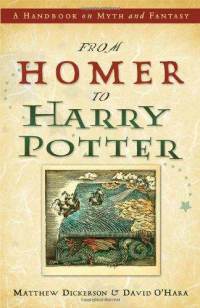
From Homer to Harry Potter: A Handbook on Myth and Fantasy 
Matthew Dickerson &from-homer-harry-potter-david-ohara-paperback-cover-art.jpg David O’Hara (Brazos) $24.00  I’ve long suggested this important and delightful book for lit majors or anyone seriously interested in fantasy.  From Arthurian legends to “Faerie” stories, from Greek mythology up to HP, this covers wisely a great amount of ground.  The fascinating Catholic philosoper Peter Kreeft says of it, “What adjectives describe this book?  Sound? Wise? Intelligent? Trust-worthy? Nuanced? Accurate? Enlightening? Genuinely Christian? All of the above.”

And, for those who want to complete their collection of weird Potter-esque texts, check out these two rare finds.

Who Killed Albus Dumbledore?  What Really Happened to Harry Potter and the Half-Blood Prince  edited by John Granger (Zossima Press) $14.99  This may by now be considered outdated, if you’ve read the final volume, but what a great, great bit of speculative literary sleuthing it was.  Six expert Harry Potter detectives examined the evidence.  Very close readings from the best fans in the world.

Harry Potter and the Bible: Harmless Fantasy or Dangerous Fascination?  Richard Abanes (Christian Publications) $11.99  This was the guy who taught about “the menace behind the magick” and has other books insisting that most fantasy literature is demonic.  As you might guess, we think this is pretty goofy, but yet,  two very well respected evangelical thinkers who professionally study the occult gave it an endorsement; that just baffled me, and I still think it’s pretty silly in its basic assumptions. It does make some nifty points about real wizard practices, which I guess we should know about.  We’ve got one here if you want to read it for yourself.

AND WHILE WE ARE AT IT
Here are just a few other random titles that caught my eye here in that section of the shop.

The-Narnia-Code.jpgThe Narnia Code: C.S. Lewis and the Secret of the Seven Heavens Michael Ward (Saltriver) $13.99  I noted this a half a year ago when one of our monthly reviews about C.S. Lewis resources.  This is a popularly-written, abridged version of the remarkable Oxford University Press volume by Ward, Planet Narnia.  The Times Literary Supplement says that Ward “has established himself not only as the foremost living Lewis scholar but also as a brilliant writer.”  How ’bout that?  This unlocks a secret about The Chronicles of Narnia that has mystified readers for over half a century… This is the sort of thing Granger might do with Harry Potter; what fun, what insight, how interesting!

Dark Matter: Shedding Light on Philip Pullman’s Trilogy His Dark Materials   Tony Watkins (IVP) $15.00  If Christian readers want to get in a snit about something, I’d suggest skipping the Potter pseudo-controversy and consider the wonderfully-written and extraordinary works of Philip Pullman, a child’s fantasy writer who has bluntly said “My books are about killing God.”  He “hates” Narnia, and hates the Christian God.  (And yet, son of Adam that he is, he bears the image of the God he hates, so he is able to produce great writing and compelling stories with beautiful lines.)  This is a balanced, thoughtful, and careful study of Pullman’s religious and scientific underpinnings.

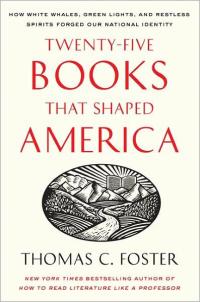
20110519__20110522_E08_BK22SHELVES~p1_200.JPGTwenty-Five Books That Shaped America: How White Whales, Green Lights, and Restless Spirits Forged Our National Identity Thomas Foster (Harper) $14.99  I’ve raved about this author before and so enjoyed his How To Read Novels Like a Professor.)  This book is, like his others, fun and insightful, nicely written and very stimulating.  One reviewer says it will make you “think again about what it means to be an American.”  And, it makes me think of the power of books, the influential formative power of the printed page.  Those who fear that children reading about young Harry and Hermione will be drawn to the occult seem a bit silly to me, but this does show us how books do leave their mark, on the ethos of a culture as much as upon the individual soul of a reader.  I wonder why conservative critics don’t worry much about the worldview of Moby Dick or the influence of The Last of the Mohicans or Gatsby, for that matter?  Well, here, the witty Dr. Foster walks us through not only 25 classic books, but ponders their influence on the shaping of our culture.  Very interesting and, I’d think, pretty important for any of us who want to be critically engaged with the spirit of the times.  (By the way, I’ll come clean—I don’t doubt the good professor’s word on this, but there are, uh, more than one of these 25 that I’ve never even heard of.  I’m embarrassed.)  His final chapter is a short one where he says, “I have insisted from the start that this is not a list of the twenty-five books that will tell you the whole story. Decency commands tha
t I offer a few of the overlooked items.  Feel free to add or substitute a thousand others.”  And then he has a few insights about the elusive quest for the Great American Novel.  Too bad Harry Potter was written in England.

BookNotes
SPECIAL
DISCOUNT
 – any book mentioned –
The regular retail prices are shown above.  We will deduct the discount from those prices.
Several of these are hard to find and are available only
 “while supplies last”  

20% off
order here
takes you to the secure Hearts & Minds order form page
inquire here
if you have questions or need more information

Hearts & Minds 234 East Main Street  Dallastown, PA  17313     717-246-3333

Summer Memoirs: 15 Fun, True Stories

In the last post, we listed a batch of summer fiction reads, novels you can take to along on vacation or carry to a getaway spot finding great pleasure and enjoyment (and, usually, something to learn along the way) in a good story.  Some were a bit more highbrow than others, some less demanding, all pretty interesting in their own way.  We think they illustrated, too, the diversity of our inventory and our curating each section of our shop with certain values and concerns.  Hope you enjoyed our list of 15 novels.

Here is an equally enchanting and quite diverse list of 15 more recommendations, mostly memoirs, autobiographies, or writerly reflections.  Any of these would provide a good number of enjoyable and edifying hours; a pretty good bargain for your entertainment dollar.  We hope you like memoirs as much as we do. 

Please note that, as with other genres of books, not every title on this list is good for every person.  We have always felt that as Christians we can (and often should) read books that are not necessarily written from our own religious perspective.  A few may have some language that some may not appreciate.  Some share convictions that are not what you believe.  We understand.  Still, if read with discernment, we are happy to stock this sort of wide diversity of important, quality writers who give us their take on life and times.  We really don’t mind writing this little disclaimer, but wonder if any other store has to do this.  Most secular bookstores have few scrupples about graphic language and most Christian bookstores just don’t carry many non-Christian books.  Puts us in an interest niche, and hope you fine our quirkiness useful for your journey.  Enjoy.

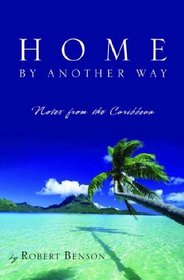
9781400071722.jpgHome By Another Way: Notes from the Caribbean  Robert Benson (Waterbrook) $13.99  I’ve told you before about this gracious, elegant writer who can tell a story with such clarity and kindness that it makes the heart sing.  He is a prayer man (and has several books about his attraction to monastic spirituality, including two about Benedictine formation practices.)  But he also writes profoundly meaningful books about other stuff: one that I really love is called Digging In: Tending to Life in Your Own Backyard (Waterbrook; $12.95) that gave me great pleasure.  It is on gardening and landscaping in his back yard (and, equally about relationships and place and community) making it a perfect summer book (better to read about lawn work than do it, in my view, but don’t tell Benson.) He has a splendidly thoughtful memoir about enjoying baseball called The Game: One Man, Nine Innings, A Love Affair with Baseball (Waterbrook; $12.95.)  Home... is about how he and his wife regularly travel to a tropical island and the sense of “home” they discover there.  Sure there are upbeat stories about island life but it is more profoundly about finding a special place in the world…all three of these seem like summer books to me.  Enjoy them—you will be glad you did.

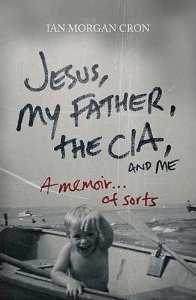
Jesus-My-Father-The-CIA-and-Me2.jpgJesus, My Father, the CIA, and Me…A Memoir of Sorts  Ian Cron (Nelson) $15.99  You may recall that I raved about this in a longer review earlier this summer.   A poignant, funny, and very moving memoir of a pretty darn dysfunctional family and how Cron came to know God’s grace.  I’m telling ya, this is a winner—everybody who reads it then foists it on anybody else they can, it is that good.  It is only one of two on the list that I’ve already reviewed, but just has to be on here again; we admire this author’s unique voice, his good attention to writing well, and the way he can balance pathos and joy, almost never with sentimentality or mawkish prose.  Give it a shot.  You won’t regret getting to know this wonderful little boy with a sad but fascinating family,  learning about his early faith, his drift into high school trouble and trouble-making and his eventual calling into the Episcopal ministry.  This look backward for him is healing for us all as he is embraced by Hope, and learns to be a dad himself– without quite as many mysteries as his own father.

Immortal Life of Henrietta Lacks.small.jpgThe Immortal Life of Henrietta Lacks  Rebecca Skloot (Broadway) $16.00  I hope you’ve heard of this New York Times bestseller.  It has gotten rave accolades from all sorts of places (including a view in Entertainment Weekly whose writer said simply “I couldn’t put this books down.”)  It is an odd and compelling story; in 1951 doctors took a sampling of cells from Henrietta (without asking or obtaining permission.)  Those cells never died.  They launched a medical revolution–including the development of the polio vaccine– and a multimillion-dollar industry.  More than twenty years later, it says on the cover, her children found out.  Their lives would never be the same.  It is a riveting story and, yes, as you most likely know, she was a poor black tobacco farmer, making this not only a remarkable story (her cells have been sold by the billions) but an expose of racism and an exploration of ethics and research and science and…The Washington Post says “Henrietta Lacks comes fully alive on the page” and the New York Times reviewer, after discussing how interesting the science of it all is said, “It made my hair stand on end.”  Everybody I know who has read this multi-layered story has loved it.

In the Sanctuary of Outcasts.jpgIn The Sanctuary of Outcasts  Neil White (Harper) $14.99  I don’t know where I first heard of this but it, too, is a high-octane, nearly unbelievable story of loss and redemption, written with surprising good humor, elegance and stunning detail.  The author committed some serious white collar crime–bank fraud, to be exact. He gets sent to a very unusual prison in Carville, Louisiana–the last remaining U.S. leper colony, a place for those disfigured by this odd disease, a community comprised of patients, nuns, and criminals.   You can imagine the prose–from the landscape to the people, the horrific and the beauty.  But more importantly, you can imagine his journey, this new life of service and solidarity and hard-won realizations.  Neil White’s strange new world is called, by John Berendt, author of Midnight in the Garden of Good and Evil, “Hilarious, astonishing, and deeply moving.” I don’t think I’ve ever seen anything like this.  I’m not sure we ever will again.  Truly amazing.


978-1-4143-3577-3.jpg
Craving Grace: A Story of Faith, Failure, and My Search for Sweetness  Lisa Velthouse (Saltriver) $16.99  The warm photo of an overflowing jar of honey on the cover speaks to the evocative way this story unfolds, ruminations about a faith journey that is full of longing, desire, hope.  Yet, this fine Christian young lady just couldn’t sustain a life of being good, earning God’s okay, trying to find that sweet spot in her relationship with God.  She decides to commence a significant fast; again, her sincere efforts to find some great connection with the Divine fall short.  Unless something world-rocking happens that allow her to break through stale religious practices, revealing a greater depth of God’s saving grace.  She’s a good writer, has had connections with various ministries (including a spell at Mars Hill in Grand Rapids.)  And she says she’s always had a sweet tooth.  A lovely, moving, meandering faith journey, nicely told.

Bossypants_Tina_Fey.jpgBossypants  Tina Fey (Little Brown) $26.99  Okay, this isn’t the memoir of a sweet faith journey.  Or maybe it is.  You know who she is, you know she can be more ribald than she should be, and you also surely know she is one of the most captivating and appreciated comedians working today.  Her earliest days, her work in discerning her calling, her entry into the serious world of hard comedy and her life-changing stint at SNL and into international fame as a TV star, it’s all here.  She is self deprecating and more humble than many we’ve come to tolerate in this schizoid comedy scene. Her telling of working with Sarah Palin is really interesting and quite honorable.  And fun. I’m not going to lie, my gentle eyes were offended by a few wisecracks and I laughed out loud at a lot. She really is an interesting person, and a funny, funny gal.  Even the blurbs on the back are funny.  Come on, you know you’ve been wishing to read it.  Why not?

62147668_b.jpgGlobal Soccer Mom: Changing the World is Easier Than You Think  Shayne Moore (Zondervan) $14.99  My hunch is that those most interested in a book like this might roll their eyes at the silly subtitle; we know it isn’t easy.  But hear her out: it can be done!  It isn’t “easy” and we can’t change the entire world, but we can take steps of faithfulness, reach out, get involved, do something!  As Shayne Moore shows in this fantastic reflection, ordinary “soccer moms” can learn to engage the wider world.  Okay, she isn’t really ordinary, even though she say’s she never knew anything about public policy issues and just throws on her ordinary jeans most days.  Still,  the President calls her on the phone.  Tell that to the other soccer moms at the booster club or PTO candy sales meeting.  But I do love that her assistant (okay, like I said, she isn’t entirely ordinary) is small town normal enough to not believe the caller was, in fact, inquiring of Ms Moore from the President’s office.  She thought it was a prank, and hung up!  Allll-righteeee then, that is a story! 

Mama Moore is an excellent writer, an enjoyable, breezy author, and she really is an inspiring human being.  She has earned the right to be heard, a voice of a suburban mom who makes a difference.   She has learned to do workshops, start study groups, serve on mission trips, encourage others to lobby on behalf of the poor, figure out which non-profits to learn about and support.  It has lead her to some fun moments (she helps put together a small TV spot on voting with actress Julia Roberts; they naturally talked about their children, and Julia noted she had spit-up on her shirt.  Been there.  Well, not the Julia Roberts part, but having baby spit-up on a shirt on my way to a speaking engagement or TV interview.) So she really is normal, active in a conservative church, and has a vibrant heart for the world’s poor. I love the line from Bono on the back of the book: “Politicians, watch out…Shayne Moore is an unstoppable force.” She was one of the original members of ONE and supports and works closely with Grower’s First.  She has an MA in theology, continues to write at her blog, (www.GlobalSoccerMom.com) and shows you step by step how you, too, can get involved in making the world a better place.  Importantly, yes, she still manages a home and spends most of her time doing laundry, cooking meals, helping with homework and “hollering at my kids to get in the van” on their way to sports events or music rehearsals. Maybe you can’t quite relate, but I bet you know somebody who can. Why not give this as a mid-summer encouragement?

9780316031912_154X233.jpgMarriage and Other Acts of Charity: A Memoir  Kate Braestrup (Little Brown) $24.99  A few years ago we discovered the very moving memoir Here If You Need Me about Braestrup’s work as a UU chaplain for the State Park rangers in Maine, and her grueling wilderness work after the unexpected death of her young husband. What a book!  (More recently I’ve enjoyed her introduction to prayer, Beginner’s Grace, which in a brief review I said was written in a manner that brings to mind Barbara Brown Taylor.)  This recent book is somewhat of a  meditation, partly a memoir, mostly a grand telling of her second marriage, what it is like to be in love again after the death of her first husband, and what the whole lovely second chance  is all about.  Very well written, gentle, honest, touching.  She’s still a chaplain to those in horrendous crisis in a very rugged place.  And she’s a deeply thoughtful, liberal theologian.  And a woman in love who just has to write about the mystery of it all.  Very, very nicely done.

photo6662.jpgUnexpected Destinations: An Evangelical Pilgrimage to World Christianity  Wesley Granberg-Michaelson (Eerdmans) $24.00  I think I first crossed paths with Granberg-Michaelson back when he worked as an aid on Capitol Hill, a hero of mine, Senator Mark Hatfield.  I was lobbying about the Viet Nam peace accords or something.  Soon, he ended up as a fine writer and editor at Sojourners and was for years Jim Wallis’ best friend and partner in crime.  When we opened our bookstore we were pleased within the next decade to sell several great Granberg-Michaelson books, ahead of their time, about earth-keeping and creation care.  As this marvelous new book tells, he eventually became a denominational leader (in the
Reformed Church in America) and rose to leadership in the World Council of Churches and several other global ecumenical ministries.  I know the story of being a judicatory head of an old-line denomination doesn’t sound that thrilling, but this is marvelous stuff.  As Ron Sider says, it is “delightful, moving, important…a wonderful story.”  Everybody that knows Wes knows him as a wonderful man, a wise leader (in fact, we stock a book of his on leadership that is quite good) and a bold prophet, always with a missional perspective.  This is part spiritual memoir–from his earliest days in a rural evangelical home, through Young Life, and so much more over a lifetime of service, but it is also a larger reflection about not only the complexities of contemporary discipleship but of the nature of ecumenism, the need for a graced imagination when working in and with large, flawed institutions, and how to find joy in the daily grind of serving God in large and small ways.  I am not done with this book yet, and I am sure I won’t be for a while.  It is a great read, but also a profound one.  I can hardly recommend it more, for those who care about mainline churches, or for those who do not.   

Large.9781610973175.jpgThe Messenger: Friendship, Faith, and Finding One’s Way  Douglas John Hall (Wipf & Stock) $22.00  This brief book deserves a different review by someone somewhat more acquainted with the main context of the story, but yet, I was so moved by it, I have to tell recommend it.  I cannot briefly say the ways this touched me, made me think, made me sad, made me rejoice, and even shed a tear over a man I never met.  In this straight-forward story, world famous United Church of Canada theologian Douglas Hall (Emeritus at McGill University) tells about a man who was a messenger of the gospel for him, a man he met at a church camp in his teens and who, through letters and friendship, served as a life-long mentor.  The man’s name was Bob Miller and those involved in the Student Christian Movement in the 1950s into the ’70s in North America (but especially Canada) knew him well.  The SCM had connections with the World Council of Churches and was a respected, important mainline denominational campus ministry in those years, perhaps parallel to the evangelically oriented InterVarsity Christian Fellowship.  Anyone with interest in the history of mainline congregation ministry among students will find this historically very illuminating.  Hall, himself a world-class scholar, was drawn to serious scholarship through this kind man that nurtured students, that stayed in touch, that introduced art and books and ideas about philosophy and theology and church and society into their formative minds.  This is, in many ways, a tribute to the role of a mentor.  Hall bears witness (as Walt Brueggemann puts it on the back cover) “to the incarnational way of faith that impinges itself upon real life in the world.   Hall is no saint-maker, but he knows one when he sees one!”

I think The Messenger is strong for several reasons, even though it is laden with names I’ve never heard of (and the names of the relatives of these people–and, my hand to heaven, sometimes the names of the babysitters of the relatives of the people I’ve never heard of.)  Yet, I was riveted.  I groaned at times when things went badly, I sighed at the misfortune of illness and academic difficulties.  I rejoiced when friends stayed in touch, visited each other in towns I’ve never heard of.  (I almost got out a Canadian map to help me through this almost too tedious reportage of SCM chapters—units as they were called—and colleges and camps that played a role in Hall’s formation.)  And yet, as I say, it kept me in its grip, turning page after page, caring about this faith journey in these perilous times.  It is a strong book because03-15b.jpg this whole story is, in fact, as Brueggemann notes, incarnational.  This is the story of a cohort of students, growing into their theologian studies, their PhDs, their work and families and careers and professions and aging.  Bob Miller stood by them all, often through letters and sometimes at conferences and gatherings, and occasionally in pastoral visits, all across the continent. 

This is no small thing about a few informal friendship.  These were, for what it’s worth, the leaders of a new generation of Protestant Christian leaders and Miller and his colleagues mentored them into the ways of rigorous faith and theological reflection.  Some studied under Karl Barth, they studied with people who knew Bonhoeffer (Miller himself distributed the first editions of Cost of Discipleship into Canada—imagine!)  Hall’s story unfolds at Union in New York City as he grappled with Calvin and Luther and Barth, and disapproved of Tillich (who he later comes to appreciate more and more.)  Some of the brightest theological minds of the 20th century are in conversation together as a new generation of younger scholars, like Hall, arise.  And Miller is dear to them all.  That this intimate remembrance has been published as it is almost feels sacred.  I am glad professor Hall took the time to interview so many old friends, to recall so many stories, and to report them in a way that documents so much of it.

Interestingly, Miller was what was called the “Study Secretary” of the SCM organization, tasked with making sure the various student chapters were well informed, invited to always be learning and growing in faith and social issues, engaging well their own setting in institutions of higher education.  He would travel from campus to campus, meeting with professors and churchmen, students and scholars alike. They thought that Christian theology has something to say to, and with, the work being done in modern universities.  Miller called himself a “book steward” for SCM, so much so that he started a bookstore in Toronto for and alongside the work of SCM.  As I’m reading this I’m realizing that it may not be too different than Hearts & Minds, with my former work in campus ministry, still hoping to service and equip, say, the CCO or IVCF and the like. 

I started this book because I admire Hall and thought it would be interesting to hear about how he was mentored; I had no idea a bookseller and a bookstore was involved!  I had no idea that The Messenger chronicles the work of a man committed to bringing books to students, of introducing important ideas to the Christian community, of stimulating the life of the mind.   I read some sections of this memoir two or three times, in fact, astonished at how relevant it seemed to me, although it all happened more than half a century ago.  Later, in the controversial 70s some radical activist students insisted that Bob should carry a different sort of literature (some were, in theologically liberal confusion, considering taking the “C” out of their name.) Miller, although theologically mainstream Protestant, couldn’t abide this immature attack on the faith or his craft; theological book-selling is not a hobby or a process to be determined by popular opinion, by committee or the market.  It was his calling and he and his well-read staff refused to give up the quality of bookstore that they had develope
d as a labour of love (which, by this time, had reached renown throughout Ontario, at least.)  Miller would not be intimidated; a change in the ethos of the times and within SCM created an organization that no longer valued their own book mentor.  It does not end well.

As Bob Miller ages and his relationship to SCM fades, yes, as even SCM itself fades, Hall continues to be blessed by his aging friend.  The story moves to its bittersweet conclusion and a powerful reflection by Hall on God’s grace seen in a life lived for others, through the arts and literature, through ministry and friendship.
 
9780547424859.jpgThe Heart and the Fist: The Education of a Humanitarian the Making of a Navy SEAL Eric Greitens (Houghton Mifflin Harcourt) $27.00  I wasn’t sure what I’d think of this, since I am a pacifist  and do not appreciate books which glorify war.  Yet, this fine young man–a former Rhodes Scholar–who gave many months and years of his life in voluntary service, in mission trips, in humanitarian projects, seemed to be a guy I wanted to read.  And wow, what a story!  He increasingly came to believe that the largest service to the betterment of the world and the needs of the hurting would be to learn to protect those who are most oppressed.  Here, he tells of his path from being a humanitarian volunteer to a professional Navy Seal.  The book opens with a roadside bombing in Iraq and a moving chapter of his paying his respects to the bereaved family of a deceased comrade.  It is well written but the prose is plainspoken, clear and informative.  From trips to China, Bosnia, Bolivia, he learns of the world’s needs and the world’s poor.  Like many young idealists, he wanted to make a difference; he served in refugee camps from Gaza to Croatia (and yes, he visits Mother Teresa’s home in Calcutta.)  The big question—and it is a question for all of us, perhaps especially those committed to non-violence—how do we prevent violence, save people from becoming refugees in the first place?  This is a boots on the ground memoir about that question, what the policy researchers call “humanitarian intervention” and the “responsibility to protect.

Here is the description from a preview copy that so interested me: “Eric offers something new in the history of military memoirs: a warrior who wanted to be strong to be good, only to discover that he had to be good to be strong.”  Throughout his SEAL training and his subsequent deployments (whew—from Kenya to Thailand, Afghanistan and Iraq) he carries his good heart and lessons learned from his years as a humanitarian.  This is not an intentionally Christian book and it does not wrestle with the questions of Biblical nonviolence, as followers of Jesus surely must.  But for those of us that do–or anyone that wants a powerful story about an obviously noble man–this is hard to put down and offers considerable food for thought.  Greitens is now a senior fellow at the University of Missouri and founder of The Mission Continues, a charity that helps wounded veterans find work back home.

I_Beat_the_Odds.pngI Beat the Odds: From Homelessness to the Blind Side and Beyond  Michael Oher (Gotham Books) $26.00  You know the first book, itself a very well-written and riveting story by Michael Lewis.  You may have seen the movie with Quinton Aaron and Sandra Bollock..  Just a look at the back cover here, with the very blond Leigh Anne Touhys, Michael’s adoptive mother, and the towering player in the jersey from Ole Miss, tells a lot of that incongruous story.  But here you learn Michael’s side of the story, the crushing poverty of his early life in a Memphis ghetto, his darkest memories and feelings, (including the fears of being taken from his broken family) his determination on and off the college field, his Christian faith, and how he came to become a leading NFL player for the Baltimore Ravens.  Co-written with an talented Sport’s Illustrated writer and sports biographer, this is a great book which is eye-opening and truly inspirational.

cover_year_plenty.jpgYear of Plenty  Craig L. Goodwin (SparkHouse) $12.95  All right, I have mentioned this one before, too, but it is such a fun book to have in the summer—just look at that cover!   Who doesn’t like bright plants, flowers, and, uh, chickens.  Well you’ll learn all about it in this delightful, important little book.  In the tradition of Plenty (which we loved and wrote about a year ago) and Animal, Vegetable, Miracle (of course) this is the upbeat story of a Presbyterian pastor learning about justice, reading about sustainability and how to pull off a more simple lifestyle, desiring to be a better steward, and writing a book about how he and his family sets out to eat locally, be more responsible for their energy use and diets and such.    It is timely and informative and really pleasurable reading. Here’s the fun subtitle, which doesn’t even tell the half of it: “One Suburban Family, Four Rules, and 365 Days of Homegrown Adventure in Pursuit of Christian Living.” Fantastic!


dressmaker.jpgThe Dressmaker of Khair Khana: Five Sisters, One Remarkable Family, and the Woman Who Risked Everything to Keep Them Safe  Gayle Tzemach Lemmon (Harper) 24.99  When one humanitarian development worker says “This is one of the most inspiring books I have ever read” one takes notice. Mohamed El Erian (When Markets Collide) says “The Dressmaker of Khair Khana reads like great fiction and yet it is all true; this book will grab you from the first sentence and take you on an amazing journey that crosses many borders: cultural, geographical, intellectual, and emotional. It is a must read.”  Lemmon spent years doing taxing work obtaining in-depth interviews and learning the texture and details of this Afghani town.  Talk about “unsung heroes” as Angelina Jolie writes of it, “Against all odds, these young women created hope and community; and they never gave up.  This book is guaranteed to move you–and to show you a side of Afghanistan few ever see.”
 

LAMcover-new-195x300.jpgThe Last American Man  Elizabeth Gilbert (Penguin) $15.00 I hope you know that I don’t agree with the sexual or spiritual worldview of the lovely Ms Gilbert who gave us the spectacularly interesting and spectacularly written Eat Pray Love.  With discernment, it is a fabulous travelogue (a
nd a travelogue of the heart) and disagree with those who mocked it just because it was so popular.  There is a reason it was beloved–it really was well done!  Beth and I both thoroughly enjoyed and learned much from the sequel to that, Committed: A Love Story,  the feisty and fun study on the history and sociology of marriage (written as a memoir to follow up EPL—should she marry her new man, or not?  How does one write a book about one’s love life when, in fact, it is known the world over?) It was really fun reading and almost entirely excellent;  despite a few foolish spots, was mostly very, very wise.  Because I was so enthralled with her writing style I ordered The Last American Man, her American Book Award finalist, a biography of Eustace Conway, “the last man” of the title. Not surprisingly, the writing was colorful (in more ways than one), the story almost unbelievable.  An abused child from North Carolina is taught by his mother to love the woods, to care for all manner of animals, to take books out of the library, learning about older ways of building things, all sorts of Native peoples and becoming skilled at Indian crafts, animal skinning, surviving and actually living in the wild.  He grows up to be one of the most self-sufficient men on the planet, a fascinating and decent fellow who excels at nearly everything he does, and who still lives in a tee pee in the middle of his beloved Appalachian mountains. And, man, does he do some amazing stuff, besides just living off the grid–I can’t begin to tell you.   In the stellar storytelling hands of Ms Gilbert, his life becomes not only a fabulously rich story, but a thought-provoking bit of cultural and social criticism. Outside magazine says  it is “the finest examination of American masculinity and wilderness since Jon Krakauer’s Into the Wild.”

BookNotes
SPECIAL
DISCOUNT
 – any book mentioned –
The regular retail prices are shown above.  We will deduct the discount from those prices. 

20% off
order here
takes you to the secure Hearts & Minds order form page
inquire here
if you have questions or need more information

Hearts & Minds 234 East Main Street  Dallastown, PA  17313     717-246-3333

15 Fun Summer Novels—a hodge-podge of choices

Do you remember two summers ago when everybody, everywhere you went, was reading the last Harry Potter, starting with the very night it came out?  We were out and about in several states that month and it was fabulous seeing so many people (adults and youth) absorbed in a hard-to-put-down story.  Except for the downside that my wife didn’t talk to me much for several days.

Don’t you want to feel that way again, or feel the way those people felt, lost in a fun read, immersed in a captivating book, mostly just for the fun of it?

I’ve been sneaking out to read a lot this past week or so—literally morning, noon, and night—which isn’t terribly easy when you own your own business (but gratefully, we’ve got very competent staff.)  Soon, I’ll tell you about a memoir or two that I adored, but here are some (mostly new or new in paperback) novels that we stock in the store that I thought might illustrate some of what you might buy or gift to someone.  We hear a lot about “beach books” this time of year, but, of course, most people don’t go to the beach, and many don’t read at the beach.  But where-ever you have your lawn chair, summer cabin, air-conditioned sitting room, or favorite spot at the coffee shop, we’ve got some ways to assist you take off to another world.  I’ve done it before so I won’t even try to explain why that is so right, so helpful, so good, so fun.  Just do it.  Here are some snappy novels we have on a Booknotes special.  Not all are for everyone, but there might be something here for you.

an-eye-for-glory-250-198x300.jpgAn Eye for Glory: The Civil War Chronicles of a Citizen Soldier  Karl Bacon (Zondervan) $16.99  This manuscript has a bit of a storied past and we are glad the big Zee published it as this is an artful and powerful piece of Civil War fiction by an author who has impeccable historical cred.  He used the firsthand accounts of the 14th Connecticut Infantry to make this realistic and informative.  Yet, it is more than a battle story.  As it says on the back, though, “For Union soldier Michael Palmer, surviving war is only half the battle.”  It is in the solemn aftermath of the battle at Gettysburg that Michael begins to understand the grave cost of the war upon his soul.  I suppose you don’t need reminded that this is the 150 anniversary of the Civil War and interest is high.  Maybe you could give this to somebody you know?   Highly recommended, by a promising first-time novelist.
 

14972522.JPGMission to America  Walter Kirn (Anchor) $13.95  His Thumbsucker became an indie film classic, and Up in the Air was one of my favorite novels a while back–even made it into the urgent Beyond Homelessness by Walsh & Bouma-Prediger.  Oh yeah, and there is that famous Hollywood guy director who did the movie with famous Hollywood star. This is Kirn’s lesser known work and it is beyond “drolly funny” as the back jacket copy says.  It is a heck of a hoot, a story about cult who realizes they are losing members and send out some “evangelists” to recruit new followers.  Thing is, these yahoos haven’t seen American up close, so they get a real (world) view. One happy reviewer says “Hilarious…Kirn doesn’t miss a chance to skewer consumerism, New Ageism, and ski-town magnates. The barbs are spot-on and the Apostles, with their naivete about everything from Cheetos to Wiccans to reality TV, are hopelessly endearing.”  The New York Times Book Review said it is Kirn’s most ambitious novel yet,  “a tour de force.”  Well, I don’t know about that, but it is great beach read, satirical and funny and wise.

9781595542106.jpgEmbrace Me: Believing Is Seeing  Lisa Samson  (Nelson) $14.99  The little stand that elephants stomp on at circuses is on the cover and just the very edge of an oh-so-seductive gal, makes one think of Like Water for Elephants, or the new artsy cover design of Searching for God Knows What.  This is weirder than either, and, after becoming so well known for sweet novels like Quaker Summer and The Passion of Mary-Margaret (set in the Chesapeake Bay area) or her most recent, last year’s very nice Resurrection in May, this is a riskier, more surreal story.  I have often said that Samson is one of the finest writers in this sub-genre known as evangelical fiction.  I hope she gets the huge following she deserves. So, this one?   When a “lizard woman, a self-mutilating preacher, a tattooed monk, and a sleazy lobbyist find themselves in the same North Carolina town one winter, their lives are edging precariously close to disaster.” (from the back cover.)  And improbably closer to grace.
 

978-1-4143-3773-9.jpgThe Constantine Codex  Paul L.  Maier (Tyndale) $13.99  If you liked The Davinci Code, this is a thriller that will not only raise provocative questions about the historicity of the faith, but will help encourage you in very basic truths.  You may recall his somewhat controversial bestseller, A Skeleton in God’s Closet; this would be somewhat similar.  In the novel, a few pieces of centuries old parchment tucked inside a tattered book lead famed archeologist Jonathan Weben and his wife Shannon to what could possibly be the greatest find in church history—a discarded biblical manuscript whose ancient pages reveal a secret that will change the way the world views Scripture.  Maier, when he isn’t spinning popular yarns that will keep readers up late, is professor of ancient history at Western Michigan University.  He has over 250 scholarly articles and reviews in professional journals.  But his fiction can also (as Hank Hanegraaff puts it) “excite and educate.”  

in-hovering-flight-joyce-hinnefeld-paperback-cover-art.jpgIn Hovering Flight  Joyce Hinnefeld (Unbridled Books) $15.95  Unbridled is a prestige publisher of contemporary fiction and when I heard a few years ago that this novel was set in Bucks County, PA about a birdwatcher fighting developers, well, I had to have it.  We reviewed it a greater length when it was a hardcover and it just seems to be such a fine summer novel.  It is sad, it is funny, it is politically radical.  There are four women friends, doing beach time at the Jersey shore, exploring the backstory of the one who married her college teacher, the beloved author of a famous birdsong book which she illustrated.  They were to write another; their daughter is a New
York poet, the suburban developers wracked late 20th century havoc–ruining the bird habitat and even her dying of cancer becomes an opportunity to resist the powers (with a dramatic gesture of civil disobedience.) I loved this wild, thoughtful, story and am happy to mention it again.  The author who has given us Scarlet Kavanagh, the daughter, and her mother, Addie, the bird artist, and their caring friends is herself from Moravian College in Bethlehem, PA.

a-young-mans-guide-late-capitalism-peter-mountford-paperback-cover-art.jpgA Young Mans’ Guide to Late Capitalism  Peter Mountford  (Mariner) $15.95  Warning, there is some sex and cussing in here.  And some obscene hedge fund spy work as they try to predict how to better extract profits from the poorest country in Latin America.   One reviewer (David Shields) writes, “Extraordinarily vivid, populated by characters whose fates I cared about desperately, beautifully written, timely beyond measure.”  One reviewer compared it to Graham Greene’s The Quiet American, although it is more fast-paced and clever than that, I’d say.  Mountford is skilled as a writer and knows how to explore the struggles of having a decent vocation or personal integrity when one is working for a capitalistic corporation with a global reach.   In the story, the main character’s mother is a leftist journalist, a refugee of Pinochet, who now writes for Mother Jones and The Nation. The young man can’t, for obvious reasons, be honest with his mother about what he does and for whom he works. I’m almost finished myself and can’t imagine what more might happen.  Whew.

978-1-4143-3569-8.jpgFalse Witness  Randy Singer  (Tyndale) sale price $9.97 (while supplies last)  Singer is a wonderful man, a great speaker, a friend from CLS (Christian Legal Society.)  One might say he is a John Grisham on an evangelical publishing house.  (Publisher’s Weekly, in fact,  says he is “every bit as enjoyable as Grisham.”)  Here, a convoluted plot (are there any other kind in this genre of legal thrillers?) leads to gritty scenes in the struggle for freedom for the Dalits, the untouchable class so oppressed in contemporary India.   If you are seeking an adrenaline-called thrill ride of a book (yes, with a bail bondsman whose ultimate bounty is oddly on his own wife’s life) this may be it.  If you want to understand the growing contemporary church deep inside India, and one of the great campaigns for justice in our time, this is a remarkable window into that world.  The royalties, by the way, will be donated to the Dalit Freedom Network.


76874221.JPGEngaging Voices: Tales of Morality and Meaning in an Age of Global Warming  Roger Gottlieb (Baylor University Press) $29.95  The aforementioned Tyndale or Zondervan publishers too seemingly safe for you?  (Snob! Snob!) Want something more socially conscious?  Well, how about this: a radical environmental activist and philosophy prof has given us a collection of short stories designed to make you think. Lively, funny, eminently discussable, these short dramas are urgently written, inviting us to rethink political activism, spirituality, and community in new ways. I’d say this is the most unique book on the list and a challenging, fun, escapade into the world of social reformers, visionaries and dreamers.  What is the meaning of life, after all?  Nothing simplistic about the agenda of this collection. Ha!  It would make a great book club choice, maybe over some back yard corn on the cob.   Kudos to Baylor for publishing a work like this. 

13-reasons-why-200x300.jpgThirteen Reasons Why Jay Asher  (Razor Bill) $10.99  Okay, I’ll admit it.  None of us here have read this yet.  I wanted to sound cool by letting you know we have this kind of cool underground stuff.  (And we do!)  But it isn’t underground anymore.  This book, which has been called “eerie, beautiful, and devastating” has been translated now into 31 languages and is an international sensation.  You can quickly gather that there is a teen suicide, 13 tapes left behind, for 13 people, explaining their 13 bits of complicity in her death.  The deceased girl (through the tapes) is the primary voice of the story, but so is another boy, who truly liked her.  He has to hear all the tapes so he can piece together the meaning of this sad affair.  Is it a mystery?  A eulogy?  Sherman Alexie says it is a “ceremony.”  Check out www.thirteenreasonswhy.com to see some of the ways teens have responded to this mesmerizing tale.  It is considered a young adult novel, and it has won numerous awards and  but is certainly a fine choice for adults.

african-trilogy-184x300.jpgThe African Trilogy: Things Fall Apart, No Longer At Ease, Arrow of God  Chineua Achebe (Everyman’s Library) $30.00  I love the feel of Everyman’s hardback editions with their nice size, but firm weight, and ribbon marker.  Here, Achebe’s three 20th century classics are in one volume.  Just carrying it around is elevating.  If you don’t know this author you really should. Things Fall Apart, at least, is one of the most important African, post-colonial novels of our time and a tremendously good read that will haunt you long after the short novel is over.  Most of us don’t know his other two so this is a lovely, handy volume.  Take this to the coffeshop or beach and I am sure you’ll strike up some conversation with other thoughtful readers.

You know, while I’m at it, we’d love to suggest any of the Everyman’s Library volumes so if you ever need to treat yourself to a lasting edition or want to give a classy gift–like, say, a Charles Dicken’s with an introduction by G.K. Chesterton, don’t hesitate to call us.

The Seraph Seal.jpgThe Seraph Seal  Leonard Sweet & Lori Wagner (Nelson) $15.99  Those of us who have read some of Leonard Sweet, or hear
d his multi-media, mind-boggling lectures or incredibly passionate, well-crafted sermons, know he has an extraordinary mind and a vivid–maybe too vivid–imagination.  It was only a matter of time until he teamed up with a novelist and cultural critic (a scholar in her own rite) to create a fantasy thriller.  Set in 2012 (oh my), the back cover says it is “when an ancient prophecy quietly unfolds as a fragmenting world accelerates its descent into massive chaos.”  There is “global intrigue, cascading natural catastrophes, and a complexity of characters, motives, and symbolic traditions intersect…”  It is certainly apocalyptic in genre–a Syrian manuscript has special powers and a University of Virginia historian gets involved. Eight people are born, each with a distinctive birthmark. And there is more.  But as in the best sci-fi there is finally a journey of love and discovery and deep truth.  There are some reproductions of stuff (like maps and emails) included that almost make it seem like non-fiction; like the X-Files, say, not quite Blair Witch, so that it may be unclear what is real and what isn’t.   And, guess what?  I love this (although a few might role there eyes—Sweet is at it again) but there is a brief forward explaining some of what might be going on.  The joy is in the story, but I’d shell out for an essay entitled “Engaging the Apocalypse: A Non-Fiction Essay on Scenarios and Semiotics for the 21st Century” which offers this bit of wisdom from the first female, a nun, to ever write a book about fishing, circa 1388:  Piscator non solum piscatur.  How does he come up with stuff?  Hold on.

9781598566673.jpgPhantastes: A Faerie Romance for Men and Women  George MacDonald (Hendrickson) $19.95  We love the Eerdmans paperbacks of this (and Lilith too, of course) and have stocked them since we opened.  You know C.S. Lewis loved ’em, so we had to promote them early on.  Here, now, is a handsome hardback with thirty-three original illustrations by the legendary Arthur Hughes, but newly colorized by Zach Fink.  It has the one page forward from 1905 by son Greville MacDonald.   You may know the Lewis quote, “My imagination was, in a certain sense, baptized…I had not the faintest notion what I let myself in for by buying Phantastes.”   How could you not want to own a book like that?

the-ambition-200x300.jpgThe Ambition  Lee Strobel  (Zondervan) $24.99  You know Strobel is a great communicator, a great speaker, and a fine apologist.  He used to be a blue-collar type newspaperman (and a hard boiled atheist) in Chicago.  Can he now write a thriller of a suspense novel, about gambling addictions and the Mafia?  Will it have, woven into its fabric, a message of redemptive hope and meaning?  Of course, but it isn’t heavy-handed or preachy.  Here, through odd plot twists and tons of drama he probes the power of ambition in the city he knows best.  There is “deceit, danger, death’ (“all in a days work” he says.)  A corrupt judge, the mob, a disillusioned pastor and a cynical reporter.  Several early buyers have spread the word that this is the best story they’ve read in a while, a thrilling and though-provoking sprawl of a taut thriller.   I like and respect Stoebel and suspect this is gutsy and fun and with a hint of deeper meaning.  What more do you want in a suspense story?


The-Muir-House-alt.jpgThe Muir House  Mary DeMuth  Zondervan) $14.99  Well, you might guess that I myself don’t read much overtly “Christian fiction” and not too many that may have romantic themes.  We love talking about, say The Help or the new Ann Patchet, State of Wonder. (Beth just finished Taft, which I’ve told her about for years—I loved it!) Or any of the important novels of Barbara Kingsolver.  And I swear I’m going to re-read James David Duncan soon.  But among “Christian fiction” fans, Mary DeMuth is considered a good writer, and I truly admired her exceptional, honest memoir of sexual abuse, Thin Places, so I thought I’d try this.  The dialogue drove me crazy at times, the twenty-something romance was a bit, well, like one thinks belongs in a romance novel, the overuse of simile the sign of cheesy editors, I’d guess.  But you know what?  I was hooked.  This young woman coming to grips with a missing bit of her memory, her need to return home to her Texas hometown, her struggle to know if she wanted to commit to a good, thoughtful, Christ-follower…well, I couldn’t put the thing down.  It isn’t going to get nominated for a Pulitzer Prize anytime soon but so what?  This was a compelling story, cliched as it seemed, and I loved it.  I wanted to know what DeMuth cooked up next, what was going to happen to this young woman who was an interior decorator (redoing a funeral parlor into a Bed and Breakfast) that wore Toms Shoes and had a boyfriend from Seattle who recycled envelopes and was off on a life-changing mission trip, himself.  I wondered about what it is like to go back to a place of pain and secrets and the struggles those who are fearful about the uncertainties in their lives must endure.  Can you ever “go home again?” Does the truth set us free?  It’s a gamble, even on a good day, even with God’s help.  This quick-paced read was not too demanding, in terms of the writing itself (although every page had enjoyable lines and phrases and images) but I can picture the characters in my mind’s eye. The story will stick with you.  Do take it to the beach.

88992245.JPGOver the Edge  Brandilyn Collins (B+H) $14.99 I should have predicted it would happen, but to be honest hadn’t even imagined it: a novel about Lyme Disease!  When one of our staff heard about this she couldn’t wait to tell us and when it came, Beth couldn’t put it down.  As you may know, our family has had a five year bout with chronic Lyme Disease and have learned of the uneducated state of most health care providers, the utterly outrageous corruption among those setting protocols for Lyme treatment, of compromised research, of big money calling certain shots, of people’s lives–patients and in some cases forward-thinking doctors–being literally devastated. Perhaps you cried, as I did, during the fabulous documentary Under Our Skin (or campaigned against those trying to get PBS to censor its airing.)  If you have any interest in this, if you know anyone with Lyme, or if you just like one heckuva medical thriller, this well-researched, political/scientific/medical conflict comes to life in high drama.  As Terri Blackstock says, it is “a page-turner.  Fascinating and eye-opening.”   I’m glad this was published, glad to turn real life horror into a fun summer read,
set in Stanford Universities prestigious Department of Medicine.   See the little deer tick on the cover–it is embossed just a bit making it kinda creepy. Thanks to Ms Collins for sharing, in fiction, some of her own personal story…highly recommended.

BookNotes
SPECIAL
DISCOUNT
or any book mentioned above
 
2O% off

order here
takes you to the secure Hearts & Minds order form page

inquire here
if you have questions or need more information

Hearts & Minds 234 East Main Street  Dallastown, PA  17313     717-246-3333


another brief look at Art That Tells the Story by Chris Brewer

pub3T.jpgIn the last post I shared our enthusiasm for a brand new book, Art That Tells the Story a book we admittedly have followed as it was being produced, printed, and shipped.  Chris Brewer is a young friend of Hearts & Minds and when he read a BookNotes blog a year ago about our short-hand telling of the Biblical narrative, using “creation-fall-redemption-consummation” as a catch-phrase to illustrate that coherent overview of the Bible’s main contours, and when he also saw some of our many posts about books about the arts, well, he knew we’d be interested in this visionary little project of his.  We are honored he called us and we’ve been a fan in waiting ever since.  We respect his work under the banner of “The Gospel Through Shared Experience.”  We are just bursting with gladness that this unique project has now launched and the book is finally available. (If you were at IAM last February, you heard us talking about it; if you were at CIVA last month, you surely talked with some you had contributed work to it.)

It sells for $24.95, is an oversized paperback printed well on glossy paper.  You can see our special offer (while supplies last) of two free copies of the small British edition of Al Wolter’s Creation Regained with every purchase of Art That Tells...

Art That Tells is Story edited and compiled by Chris Brewer has a forward by Makoto Fujimura and four extended essays by Michael Witmer and includes almost 50 full color, high-quality original art reproductions.  It is a book to really enjoy.

And, oy vey, are we enjoyin’ it.  Chris, himself a savvy art critic and insightful curator of small art shows at churches and third places throughout his hometown, pulled together some exceptional contemporary Christian artists, inviting them to show pieces that told one part of the grand Biblical Story.  Since we all have this shared experience of being captivated (or confused, or alienated) by art, it is, naturally, a very appropriate mechanism to create good conversation.  I don’t think it would be fair to Chris, nor to the nuanceful and creative artists who contributed their work, but in some way, this is a high-brow, artful, and serious-minded gospel tract. I know it is a mixed metaphor, maybe even an oxymoron.  Good art, as Mako explains in his forward, in many ways glories in its “uselessness.”  It never preaches—otherwise it is mere propaganda.  But here me out.

By using imaginative and suggestion-rich, real art, this “tract” in the guise of a coffee table art book shows and invites us to (deeply and imaginatively) beholdScan1.jpg the Bible drama, the relevance of key moments in the redemptive history proclaimed by Scripture.  By showing interesting new art works, it opens up new insights about the amazing truth that we live in a God-created-spoken-into-being-cosmos.  It opens up new insight about the amazing truth that we live in a world gone haywire, due to our own damned rebellion.  It opens up new insight about the amazing truth that the Triune God of the Bible has made promises to ancient Israel, promises that lead to faithful deliverance, brought to the creation in Christ and His cross; that is, there is redemption and renewal.  This book, Art That Tells a Story, helps us “see” through new eyes, by using these peculiar gifts of color and light and texture and tone, of symbol and abstraction, of nuance and suggestion; these artifacts he printed so lovingly in this orderly book, so that we might realize that, indeed, the God of the Bible tells us a very good story indeed, a story that starts in a good garden, devolves into tragedy that even these art pieces can’t explain, and emerges into hope, a Christ-centered hope for all things.  Yes, Jesus says in Revelation, “I am making all things new.”  Chris Brewer’s curated art show in a book, Art That Tells the Story, helps us get that, at least a bit of it.  You’ve heard it said that the Old Testament prophets used dramatic gestures of civil disturbance and public drama because, when people are deaf, we must sometimes speak in sign language.  Maybe this book does that.  It helps us finally hear some of the deepest and widest implications of the one great story unfolding from Genesis to Revelation.

Who among us doesn’t long for coherence and hope?  And who, who names
the name of Christ, doesn’t know that we are baptized into His service? 
That is, we have to tell the story!  This is a great and grace-filled
tool to help you fulfill at least your part of your part of the great
commission.  Show and tell.

Buy the book and you have a ticket of admission to this show, at your fingertips anytime you want.  And–here is the point–this show, this experience, can be shared.  You can, as I’ve suggested, use this book to create conversations of great, great consequence.

Just for instance, here is one blog about using art in catechesis, and it uses one of the artists in this book, Julie Quinn.  You can see some of her abstract calligraphy pieces and reflect on what this teacher got out of them.  I don’t know if he’s right about any of this, but it’s a nice example of interesting rumination on Biblical texts in light of her art.

And, as I mentioned yesterday, in the back of Art That Tells there is an index including the website addresses of all of the artists. As you can imagine, this will allow hours of browsing pleasure and perhaps inspire you to support living artists by buying some original work from them.

Man, it’s a good day when we get to sell books like this.  I hope you are as excited about the pregnant possibilities of sharing these art works as Chris must have been when he dreamt up this project, and as excited as I am now pondering how God might use this visual re-telling of the Big Picture.  Creation, fall, redemption; restoration, hope, eternity.  Whoa.

I wish I could show you more of the excellent art that is in here but it isn’t easily found on google images.  These are moving, if often abstract pieces, and (as I said yesterday) nicely explained, or at least ruminated upon, by Chris, page by page.  It isn’t overly didactic, mind you, but nobody is left wondering what the heck these bohemians are up to.  No, this is a very lovely and clear telling, in artful and classy ways, of the truths of the Bible.  I think you could hardly go wrong  showing it, using it, giving it.  You can go to the book’s facebook page and if scroll back a bit you can see many of the original pieces that are shown in the book as installed in several Grand Rapids settings.  You can see some of the artists, too.  Kudos to Chris for getting these pictures on facebook. 

Michael Witmer’s four essays about these four chapters of the whole unfolding Bible story are solid and yet very fresh. (You’ll want to read his Heaven Is a Place on Earth after you read his brief pieces here.) They give structure and greater specificity to the meaning of the artwork.  Mr. Brewer’s explanations of the various art pieces, his brief warning, noting this line or that image, this thing to see or that important echo of another great artwork, is nearly worth the price of the book itself (it doesn’t hurt to learn from a master interpreter, you know.)  His caring lines offer a helpful guide and a tone of reflection and rumination.  It is nearly devotional, and they are very, very nicely done.

But the art is the thing.  I’ll try to arrange a few pieces here, but they tend not to be the right size for my blog platform; I’m not sure how it will look for you.  Please know that the book is very handsomely designed, very well done, itself a good piece of graphic art.  Kudos all around.

Julie Quinn is an abstract artist who sometimes uses calligraphy. She has several lovely pieces in the book.
Julie-Quinn-D2-Embrace.jpg
Carving - Saturn Bowl - Manzanita Root by John Marquardt.jpg


6a00d8341bffb053ef00e54f67ca3b8834-500wi.jpg

John Marquardt has a set of lathe-turned mesquite bowls that are similiar to this…

Wayne Forte is a popular modern artist who often does overt Biblical images as in this piece inspired by Psalm 22.   Brewer notes another famous painting it echoes.

JQuist_Preparation_3.jpg

This remarkable piece needs to be studied carefully.  Is the “David and Goliath” battle shown here one about racial reconciliations?  Why a train track rather than the brook of 1 Samuel 17? Artist Jonathan Quist says this oil on canvas is of his pastor.
Cornelis Monsma - Fruitful.jpgCornelius Monsma has a spectacular, nuanced impressionistic painting of the transfiguration, but it was not legal to show it (understandably.)  This is an example of his work that I enjoyed, but the piece in Art That Tells is much more misty, wondrous, translucent.

So, with every purchase of Art That Tells The Story, we will give you two free paperbacks of Creation Regained by Albert Wolters,  a small, thoughtful book that has influenced us in understanding the Biblical basis for what some call a “reformational worldview” that explores the broadest scope and implications of each aspect of the Biblical story: creation, fall, and redemption. (As we explained in the last post, this is a special mass market version of the book that had been published in England.)

BookNotes
SPECIAL
OFFER
Art That Tells the Story  
— and —
2 free copies of Creation Regained (British edition) with every purchase

order here
takes you to the secure Hearts & Minds order form page

inquire here
if
you have questions or need more information

Hearts & Minds 234 East Main Street  Dallastown, PA  17313     717-246-3333


Art That Tells the Story Christopher R. Brewer (Gospel Through Shared Experience)

I took joy in writing, and hope you enjoyed reading, the past two posts, telling how a certain vision shaped our bookstore’s founding and still informs our work here at the bookstore.  In short, we believe that reading matters, because learning matters, because we are all called to serve God through vocations in the world—but somehow we must do this by living unlike the typical secularized way the world thinks and lives (Romans 12:1-2.) And that means we have to often think seriously about what we too often take for granted in our ordinary lives, about every sphere or institution we find ourselves in. What is good and what is not good? How should we think and live; what principles do we live by and what practices come from those principles? To be enfolded into a church community that invites us to whole life discipleship is no simple thing.

Hearts & Minds sells distinctive books across the whole spectrum of cultural life and we are sometimes surprised–still–when we are told that most Christian bookstores don’t have a film studies section, say, or a category dedicated to race and multi-ethnic concerns, or even a science or environmental studies section.  Of course we have tons of books of Biblical studies and a large and ecumenical spiritual formation section, and more resources for local congregations than anyone could use. We have a diverse collection of worship resources, liturgical training, and books about congregational music.  But we are also wanting to relate faith and daily life, faith and work, faith and public affairs, faith and politics.

As I explained, we were introduced to this wide-ranging, evangelical worldview by a generation of Christian thinkers and activists who stood in the tradition of the magisterial Dutch theologian and statesman, Abraham Kuyper.  I hinted that there is no more generous and able voice in the English speaking world to introduce us to the relevance of Kuyper’s culturally engaging vision to honor the Kingship of Jesus over all of life than Richard Mouw.  His introductory book on Kuyper, and Kuyperianism for the 21st century, Abraham Kuyper: A Short and Personal Introduction (Eerdmans; $16.00) was a pleasure to introduce to you.  We still have it on sale so do scroll back if you haven’t read those two posts.

One of the distinctives of the Kuyperian (or neo-Calvinist) movement is their insistence that the Bible, when properly read as an unfolding Story, shows us a coherent way to think about our life and times and that this is rooted in the very “chapters” of the Story itself.  As one lovely introductory book about the Bible puts it, swiping a line from Lesslie Newbigin, the Scriptural drama is “the true story of the whole world.”  (See The True Story of the Whole World by Craig Bartholomew and Michael Goheen, published by Faith Alive; $12.99.) The Bible tells us, if you catch it mostly between the lines of the whole story, where we are, who we are, what’s wrong and what solution there may be. Although it has become a short-hand phrase in some circles, the Biblical narrative can be most simply summarized as a story of a good (very good!) creation, a radically disruptive fall into sin which deforms everything (“Everything Is Broken” Bob Dylan sang), a gracious God who in covenant with the creation sends the Son to bring a multi-faceted redemption at His own great cost, and a final consummation or restoration of all things in the eschaton.  Not a few authors note that this is, significantly, the journey from a garden to a city.   Sometimes authors or speakers literally abbreviate this saying, c-f-r-r.

This four chapter story is, of course, a far cry from the approach that suggests that God is going to give up on the planet that is so loved and that Christ will take His followers to Some Other Place while those who are “left behind” get blown to smithereens.  Further, it is a more full telling of the story than the two chapter version (we are sinners and God loves us; in other words, only chapters 2 and 3, which, when torn from the whole plot, then float above history as abstract theological truths, unconnected to land and place and cities and society.) This fuller picture of the whole Bible–promise and deliverance in and for the real world—is not only true, but is laden with implications.  It is a narrative that many younger evangelicals are increasingly drawn to.  I hope you recall our promotion a few months ago of The Next Christians(Doubleday; $19.99), the splendid book about younger adults wanting to be agents of redemptive restoration, written by Gabe Lyon.   In it, he insists upon the full four chapter telling of the story, noting how the popular two chapter version—we are guilty but God forgives us—is increasingly seen as truncated and unable to do justice to the full flow of the Bible’s own narrative.  There is a keen connection, we believe, between Gabe’s call to multi-dimensional social and cultural reformation and this reformational reading of the four-chapter story.  

Well, one doesn’t have to be a next-gen Christian or a neo-Calvinist Kuyperian to understand all that and to know that the best Biblical scholarship and the best Biblical preaching and the best Christian books these days have been emphasizing the storied nature of Scripture, the wholistic scope of salvation and the implications of the hope that God is, indeed, bringing restoration and healing to all things.  No Bible teacher worth her salt these days would suggest that the Bible is only for your inner life or that one can dip in to it here or there without literary and theological context.  Few people preach “heaven” as only for the “sweet by and by” and almost everyone appreciates the recently popular way attending to the coherent flow of the Bible’s narrative by referring to it as a story.  (Thank goodness we don’t have to say “meta-narrative” over and over anymore.)   My neo-Calvinist friends were ‘early adopters’ of this “historical redemptive” way of seeing the “mighty deeds of God” in Scripture—and, again, Mouw gets it really right in his fabulous When the Kings Come Marching In: Isaiah and the New Jerusalem (Eerdmans; $14.00.)  This is one sweet example of the relationship between the Older and Newer testaments and how new creation hopes among Isralites come to fruition in the healed cosmos of Revelation 21-22.  Mouw’s neo-Calvinist roots show a bit in that lovely little study, but, again, this is not uncommon and it a good ecumenical trend.

pub3T.jpgWhat is uncommon is what is found in this spectacular new book edited by graphic designer and art patron Chris Brewer of Grand Rapids MI. His Art That Tells the Story (published by the gospel through shared experience; $24.95) is a truly new approach to exploring these Biblical themes by way of contemporary art.  In fact, I’ve got a blurb on the back, offered when the book was still in manuscript form, in which I glow that there is just nothing like it; it is a fairly simple idea, but I don’t know anyone who has done this in this contemporary manner.  Which makes it a double joy to promote here: not only does it help us explore this full-orbed, coherent, worldview-shaping story of creation-fall-redemption-restoration, but it does so in ways that are wondrous and rare and refreshing.  An art book that tells the overview of the broadest contours of the Bible story; an art book that shares the gospel, with quality, nuance, and storied context!  A Biblically-oriented gift book that is worth owning and is worth giving!  

To better appreciate this, allow me to highlight a few things.  I will be brief, although I could wax eloque
nt–or at least I could enthuse—all day long.  This is awesome.

  • The author believes that we all, as humans, have certain shared experiences.  One doesn’t necessarily need a Bible to know we live in a world that overflows with goodness and beauty and that we are somehow really messed up.  And, frankly, it could be argued (although Chris doesn’t go into polemics about it) that we have a natural longing for hope, for meaning, for answers.  Our very restlessness is a signal of transcendence; we are looking for home. This was beautifully expressed half a century ago in Mere Christianity by C.S. Lewis and powerfully explained in recent years in Simply Christian by N.T. Wright.  So we know this stuff, deep in our bones.                                                                              
  • The author also seems to know that  real artwork–that which suggests and doesn’t just say, using creative forms of nuance and allusion, perhaps symbol and metaphor–can speak in ways that plain words sometimes cannot.  Whether it is due to our “shared experiences” or some deeply human appreciation for the creative, artwork can touch us deeply, can allow us to ponder, can invite deeper reflection.  Art can help us see, or see again, but never by preaching at us.  And we can talk about these things together as we experience good art together. 
     
  • There are two wonderful, wonderful, forwards.  New York-based abstract artist Makoto Fujimura reminds us of the role of art—it is nonlinear, invites us to ask questions (and then more questions) and creates conversations.  The arts can help people be grasped by the truth of God.  Chris Brewer, the energetic patron and compiler of this work, himself, has a splendid introductory essay that, again, reminds us beautifully of the ways in which great literature, poetry and visual art can point us to new insight, to authentic transformation. He notes that Makoto himself came to Christian faith by studying art, a joy that he describes by way of a quote from Mako’s River Grace.  Both introductory pieces are very well done.  I suspect we will be hearing more from both of them as writers.                                              
  • Because Chris appreciates this “creation-fall-redemption-restoration” shorthand for telling the overview of the Biblical story, he has arranged dozens of paintings and plates (of sculptures, wood cuts, ceramic art, and more) in four respective sections.  That is, there are art works that illuminate the goodness of creation, the fact of human rebellion and cursed-ness, the Christ-centered climax of the story of redemption, and some very allusive works that suggests an “all things new” ending of healing, hope, final consummation.                                                                                                                                
  •  To help supplement the artwork, or perhaps to frame it–but not to explain it, though–there are four page-length meditations on creation, fall, redemption and restoration, written by author Michael Witmer.  I love Witmer’s book Heaven Is a Place On Earth: Why Everything You Do Matters to God (Zondervan; $16.99) on these very themes and often recommend it.  To have Witmer involved in this is a good, good move.  His essays are helpful, basic, and yet oddly visionary.  With the artwork next to it, with the contemporary graphics and the big picture of the book in mind, these essays take on a fuller meaning than if they were just blogged posts or homilies given at a retreat. (They would be good in those settings, for sure!) You get more out of the words knowing they are helping shape this overall project, to literally see what he means.  And, as Brewer surely hoped, the artwork itself is seen as even more meaningful alongside these influential short studies.  It is commonplace that in art gallery showings and thematic presentations “the whole is greater than the sum of its parts” and this is surely the case here.

spread-4-th.jpgThese are just quick bullet points, check-marks to help you understand the nature and point of this collection.  As the title suggests, this isn’t just a random collection of contemporary Christian art, although it stands as more than adequate as a lovely volume of some of the best artists working in this field today. (That would be, for instance, the likes of Mako Fujimura, Bruce Herman, Sandra Bowden, Chris Stoffel Overvoorde, Wayne Forte, Julia Quinn, Ed Knippers, Clay Enoch, and more. Some are leaders in CIVA or IAM and others are perhaps lesser known.  All are quite deserving to be included in a work of this quality.)  In an acknowledgments page each artist’s website is given, offering hours and hours more of browsing pleasure.  But Art That Tells… is more than just a great anthology or handsome coffee table book of religious art.

Everything about this large paperback was produced in order to accomplish the goal, to artfully tell the fuller Bible story, highlighting the four chapters. It makes a lot of sense and is a joy to consider.  What a great idea.

There are interesting Bible selections graphically reproduced on the left page of each broad spread.  On the facing page there is the full-color art piece.  On the left column there is sometimes a bit more helpful explanation, which are helpful and make the full spread very visually appealing, uniting text and image.  For instance, on the left you’ll see highlighted instructional quotes such as

“A portrait of Rick Beerhorst, and, in a very real sense, of you and I as well.  “My Way” is aMy Way 5 wide.jpg retelling of the narrative of Moses by the rock at Horeb”  which is superimposed over Deuteronomy 32:51 and Exodus 17:5-6.  You see it on the right—what a piece!

 “A reworking of Rubens’s “Cain Slaying Abel,” Forte’s “Cain and Abel IV” depicts what has been called the fallout from the fall.”  Next to that is a punchy line from John Steinbeck about the universality of this story.  This is a very moving page, believe me.

“Taking its title from the seco
nd stanza of Milton’s “On the Morning of Christ’s Nativity” this print is a reminder that Jesus was born to die, an uncomfortable truth, especially in this vulnerable context.”  I wish I could find a copy of this on line to show you; it is a stylized a vivid portrait of a baby (Jesus) in the womb, head down, ready to drop (to use the midwife lingo.)  Around the womb are thorns.  It is a powerful, evocative piece and this line from Milton elevates it greatly.


spread-7.jpgThese short pull quotes are clean and crisp, in writing and visual presentation.  There are longer paragraphs, to be sure, and Brewer is quite the art critic.  (How do people come to know so much about all this? And how can we write with such economy to explain so much in such short renderings?)  You will appreciate the left-side pages, their Biblical narration and aesthetic insight, as much as the artwork pieces themselves.  I’m unable to get it placed quite right on this dumb blog platform, but you can get the idea of the nice graphics of the left-side pages from the above example.

But the artwork pieces are the point, of course.  And they are nearly all masterly and fall.jpgfabulous.  Their styles are diverse, and the subject of most are fairly evident–at least upon pondering. (Well, a few I’m still pondering.)  I’ve gazed and beheld them often and they yield more with each intentional approach.  They are expertly arranged and wonderfully printed.

Bit by bit, then, the Story unfolds.  Creation.  Fall.  Redemption.  Restoration. What a wonderful collection of so many moving art pieces.

One might offer some minor criticisms; I don’t want to discourage anyone from getting and confidently sharing this, so I am reluctant.  I’ll admit that a few of the pictures left me wishing for something else.  The size is a tad larger than I’d wish, but it does set it apart.  There should have been a few more truly horrific pieces to capture our shared experience of a fallen, death-shaped world.  And, I’m not a huge fan of the remarkable oil and wax on linen pieces of Orthodox painter Alfonse Borysewicz (one of which colorfully graces the cover.)  His “afterward” reflection is a moving testimony of God’s grace in the life of a thoughtful, contemporary painter, but I’d have wished for a bigger visual ending.  Nothing in this section captured my own longings for full-orbed healing of the cosmos.  How might one colorfully extrapolate on Isaiah 65 or Romans 8 or Revelation 22 without being reduced to cliches?  Borysewicz’ energetic, zigzagging portraits get at something, and they are stunning in their own right.  He describes them briefly.  If art is to tell the story, this is one part of the story that needs told and retold, and the artistic gifts of pointing to the ineffable–and the creaturely, if we really believe the Story—are needed here more than ever.  Maybe this part is brief because it falls on us to imagine creation restored.  The book is perhaps intentionally incomplete so we can talk about it…

I love the description that Brewer himself gives of this important project:


ChrisPortrait032511007.jpgFollowing the contours of the biblical narrative Art That Tells the Story is an invitation to experience the Story through commonly observable, shared experience—in this case, art.

But this is more than a book on art.  It’s a conversation about the Story God is telling.

With multiple contributors and almost fifty works of art, Art That Tells the Story offers an ongoing conversation between image, text, scriptures, reflection and cultural artifact.

And then, this earnest plea, a cry from his heart:  “Join the conversation. Experience the Story.”

Join the conversation.  Experience the Story.  You can do this if you reflect on the words and images.  Like any serious art book, it is designed to be reflected upon.  Behold it.  Meditate on it.  Allow it to grab you, shake you, stir you.  And talk back to it.  And talk to others about it.  I do hope this is used, passed around, discussed. Chris is right–you can join the conversation.

Here is a special Hearts & Minds BookNotes deal:

 2 free books. 

One of the books that has most thoroughly explored the implications of seeing the Bible as a worldview shaping book, one that is structured around creation-fall-redemption/restoration is 0853647542.01._SX53_SCLZZZZZZZ_.jpgcalled Creation Regained: The Biblical Basics for a Reformational Worldview by Redeemer College Old Testament scholar, Albert Wolters.  Al has been a significant influence on Beth and I and his book is still one of our top few most often-suggested works.  Global leader John Stott, a few years back, began a project of getting a handful of key books published overseas for use in the developing countries.  They published them in smallish mass market paperbacks (unabridged) on fairly cheap paper.  We bought a ton of Creation Regained when it came out in its small-sized British edition.  It has since been expanded into a newer edition (by its US publisher, Eerdmans) and the Stott-produced overseas one is now out of print, but we have some.  And we’re going to give ’em away along with this art book.

We will give you two free paperbacks (one for you and one for a friend) for every Art That Tells a Story that you buy. 

So, 2 free copies of Creation Regained and Art That Tells a Story.  This is a0853647542.01._SX53_SCLZZZZZZZ_.jpg fabulous new book that will deepen your faith, enlarge your imaginative capacities, and maybe allow you to invite others to the shared experience of pondering a longing for hope.  The Bible story can provide the road-map for the journey toward that hope.  This artistic rumination on the key stages on the journey, the four main chapters of the story, are here presented in ways that are as fresh and interesting as anything we have seen.  It is highly, highly recommended.  And you get two of the influential Al Wolters book for free.

BookNotes
SPECIAL
OFFER
Art That Tells the Story
– and –
 two free Creation Regained (British edition) with every purchase
order here
takes you to the secure Hearts & Minds order form page

inquire here
if you have questions or need more information

Hearts & Minds 234 East Main Street  Dallastown, PA  17313     717-246-3333

Another long piece on a short and personal book: Abraham Kuyper: A Short and Personal Introduction by Richard J. Mouw (Eerdmans)

I know what some of you are thinking.  He’s on the kick about Abraham Kuyper, again, saying we should serve God in all of life and how the CCO does campus ministry out of that broad, evangelical vision, and that local churches should be more intentional about nurturing in congregants practices about public discipleship, relating faith and work and civic life.  If we want to change the world in appropriate ways we should read widely and think faithfully. He’s going to go on and on and on, like he did with the Rob Bell Love Wins reviews.  Is this review of this little book, Abraham Kuyper: A Short and Personal Introduction (Eerdmans; $16.00) going to take me a day or more to read?

Well, yes, this is a large part of the Hearts & Minds story, and discovering the way the 19th century revival in Holland led to cultural renewal and social restoration–the very architecture of society was transformed for greater human flourishing and justice for all–was not only eye-opening for me, but set us on a direction which has shaped the texture of our bookstore work.  We know this isn’t for everyone, but we have reason to think our readers care.  I hope we’re a little bit right.
Richard Mouw, a self-avowed Kuyperian (or neo-Calvinist as some put it, to capture the
kuyper cover.jpg reformational tone of the tradition and not only the teachings of the man) has done a short and personal overview of this great Dutch thinker, devotional writer, pastor, scholar, politician, and social reformer.  As we explained in the previous post, it seemed to be an opportunity for us to tell our story, or at least part of it, showing how Kuyperian themes have influenced our passion to sell books of the sort we do. We want to invite those who don’t know much about Prime Minister Kuyper to treat themselves to a few hours of quick learning about him by picking up Richard Mouw’s little book.  Come on along, it will be good for you.  You’ll learn a bit in this review, I hope, and I certainly hope that you find it interesting enough to order the book.  You can see our discounted sale price below.   

We all should know something about the great heroes of the faith, of course, and we have a wide batch of biographies and compilations from church history here at the shop. We should learn from Saint Francis and William Wilberforce, read from Bonaventure to Bonhoeffer, study Julia of Norwich, Jonathan Edwards, Karl Barth and more.  We should read Blaise Pascal to, well, to Abraham Kuyper.  And Kuyper (because of his remarkable achievements, his deep balance of both piety and political action, and his extensive body of writing) is well, well worth knowing about.  So, yep, in the last post I used the new Mouw book about him as an excuse to tell our story, why learning about him helped us broaden our vision and deepen our principles.  We want to invite folks to pay attention to old Abe.  I believe his work is more important than many realize.

After the overview in the last post it remains for me now to tell a bit of what Dr. Mouw covers in this delightful, accessible introduction.  I noted that the subtitle indicates that it is personal, and it is.  Mouw is excellent at the shorter form and these chapters could stand alone in some cases, they are that clear and concise, each with a lovely illustrative story or clarifying analogy.  He tells stories of his own life, inspired by his reflecting and teaching this material for most of a lifetime.  Mouw is a good speaker and teacher and this intro walks us through what are, in some cases, some serious thickets, marking a path for us to understand and ponder Kuyper’s philosophy, its strengths and weaknesses and its usefulness for us today.

DYKES AND DAMS IN THE DUTCH MIND
Mouw doesn’t overstate this fascinating bit of speculation, but he does have a few pages on what some have considered to be a unique and long-standing characteristic of the Dutch.  Scholars have noted that they love to make distinctions, to clarify and sort, to mark boundaries.  There are intellectual habits among this culture that “like to see things clearly.”   Dr. Mouw quotes one scholar who notes that this could come from the many “dykes and dams” in Holland—“both as to our land and our mental life” as that writer put it.   A Scottish pastor who worked in Holland wrote that perhaps this is “wrought into their nature by many centuries of un-relaxing toil in making and holding that distinction between land and sea, which to them is a matter of life and death.”

MANY-NESS IN CREATION
If there is a proclivity to make distinctions in the Netherlands, it may have rubbed off on  Kuyper, and it is seen in key portions of his work which are, in fact, about what he insists are God-given boundaries. It may be seen, too, in how so many of us neo-Calvinists continue to draw vast implications from the stories of God creating things “after their own kind” in Genesis.

It is essential if one is to understand Kuyper’s theology of culture to realize that it is about boundary-markers and honoring God’s intentions for various spheres to develop without undue influence from others. To put it bluntly, Kuyper has this sense that the created order works as it ought when no one big institution (most obviously, the government, but one might consider big business or the mass media, or in medieval Europe, the Catholic church) overly controls or influences us and our daily living.  Families, schools, art guilds, local businesses, sport teams, churches, social service clubs, and other voluntary associations should be encouraged to flourish unencumbered by other spheres.

Gordon Spykman was a Dutch-immigrant theologian and philosopher (the Kuyperian tradition values philosophy as well as theology, so there are a lot of vital philosophers who are distinctively neo-Calvinist—let Max Weber try to explain that!)  My friend (philosopher) Pete Steen introduced us to him back in the 70s and in one scholarly journal, Spykman wrote,

Each sphere has its own identity, its own unique task, its own God-given prerogatives.  On each God has conferred its own peculiar right of existence and reason for existence. 

The implications of this are vast, and in this book, Mouw explores some of them.  Obviously this means that the church or state ought not try to run anything other than, well, the church or the state.  (The state is a particular influential institution, though, as it does have a regulatory task, authorized by God to be somewhat involved in every sphere—think how the government must remove a child from an abusive home or should regulate the food industry or may do intrusive audits of businesses that are financially deceptive.  It isn’t a violation of the task of the state when they tell you what side of the road to drive on, after all, and your pastor or employer isn’t authorized to declare that.)  So Kuyper is for institutional diversity and this tends towards a localism, it seems to me,  inviting many social networks and institutions to develop freely. 

By the way, just as an indication of Kuyper’s desire to be clear that the authority of the church shouldn’t impose on the public square, when he ran for elected office he renounced his ordination.  His authority as magistrate shouldn’t be confused with that of a pastor.  Something, huh?

WORKERS and CALLINGS
Another implication (the focus of a few later chapters of the Mouw book, in fact) might be that if God has built into the creation the possibility of these various spheres to be developed—creativi
ty and the arts, journalism and mass media, family life, business, science, education, politics, entertainment, governments local and national—then those who are are called into them are themselves “prophets, priests and kings” in those fields.  That is, there is no sacred-secular dualism that values, say, church life or theological theory over, say, business life and economic theory.  If God has ordained various spheres then surely God has called various people to serve in those spheres.  All who follow the Christ, then, are of equal value to God’s reign and work in the world, not just missionaries or ministers.  (Speaking of which, why do some churches offer scholarships for some of their young people if they go to seminary, but not if they, say, go into engineering?  Kuyper might roll over in his grave, and he was himself a theologian and pastor!)

If Kuyper is right that all spheres have their own God-given limits and purposes, then it follows that each person in leadership in those fields are to obey and serve God in those fields, being a steward of the gifts and possibilities in that field.  This is the full blossoming of the “priesthood of all believers” for which the Protestant reformation was known.  With a Kuyperian emphasis on the spheres and their unique character and calling, there is a liberation of the laity to serve God in public life in normative ways, not only in the local congregation.  

(Can you see why a somewhat Kuyperian bookseller like myself thinks that Christian people need good books about their various careers and spheres?  Of course we “focus on the family” here but also the marketplace, the job site, the university, the doctors office, the boardroom, the bedroom.  We have books on everything because God created everything and sends us into every zone of life to glorify God by serving our neighbors there.  It is no wonder that Kuyper founded a university to work out the scholarship to equip people to serve like this.  It is the least we could do to start a bookstore!)

IDOLS
Another implication that Mouw studies early in Abraham Kuyper… is that this opened up, multi-faceted view of the God-created nature of social spheres gives us a large and useful tool to discern idolatry.  Idols are often corporate and cultural and lead to overblown spheres, squeezing out other sides of life.  For instance, statism is just one example, where, as in socialism, the state is given (or takes) too much authority to do too much.  Freudianism was an ideology that overstated the role of dysfunctional sexuality; Darwinism perhaps overstates the biological.  Technicism makes an idol out of the good gift of technology, and scientism reduces everything to that sphere.  Mouw’s helpful chapter “When Spheres Shrink” shows Kuyper’s prescient insight about the modern condition, and he says it better than I do here.

(By the way, C.S. Lewis had a similar take on this and I believe coined the phrase “nothing buttery” to mock those who say life is “nothing but…” this or that.  You know, love is nothing but hormones, a feeling for God is nothing but brain chemistry, ethics are nothing but social conventions. Each takes a legitimate insight about how a sphere of life works—hormones, neurons, social conventions) and says that is all there is.  Reductionism as idolatry.  Kuyper’s books maybe taught it to him, who knows? Lewis read quite widely, you know.)

The-Transforming-Vision-9780877849735.jpgI hope you understand how I’m using this rhetorical device, adding “ism” to a word in order to illustrate how we turn a legitimate thing in God’s good world that functions properly into an ideology that damages us and deforms our society.  Again, for instance, militarism is condemned repeated in the Bible as it turns military might into something to be trusted; an ideology of idolatry.  Economism is that tendency where in consumer capitalism, economic growth is seen as the engine by which everything runs and things that ought not be reduced to their financial side are seen that way.  I once heard Os Guinness talk about how he knew a person who literally told a friend how much she could have made if she were working while she was having a glass of wine with her friend, putting a “price” on the hour of fellowship.  The best treatment of this, succinct and powerful, can be found in chapter 9 of The Transforming Vision: Developing a Christian Worldview by Brian Walsh & RIchard Middleton (IVP; $16.00.)  I am pretty sure they get this worldviewish cultural criticism from the legacy of thinkers in the tradition of Kuyper and his social philosophy.  I think it is important for anyone who wants to be cultural wise and discerning in our confusing modern times.

Here is another example of how this helps us evaluate common practices and to discern if idolatry and muddled thinking are having consequences.  Neo-Calvinist philosopher (yep, another one) James K.A.  Smith in The Devil Reads Derrida and Other Essays (Eerdmans; $18.00) has a brilliant essay on why colleges ought not describe their students as customers or consumers and why education is not about consuming knowledge. (He wrote this piece, by the way, in the newspaper of the college where he is employed, since their admission department, like many throughout the country, had been using these terms in their literature.  A bit of a controversy ensued.  Just like in Kuyper’s day—ha!) 

Using lingo that is appropriate in a business setting to refer to something that is decidedly not a business setting betrays a spirit of reductionistic idolatry, he maintains, and leads to a confusion of spheres.  Smith’s Kuyperian roots enabled him to be prophetic in his critique of how we have too often adopted a consumerist model for education or, even, church life (as in church shopping or wanting to get something out of worship.)  To talk about customers and profits is fine in economic institutions (although, as we attempt to model, even business interactions with customers are more than mere financial transactions, and even the economic side of life must be approached as holy ground, with relational care.)  Schools or churches or non-profit organizations all have economic dimensions to be sure, but their essence is something else, and dare not be reduced to finances.  Read that chapter of Smith’s book and you will learn much about the reformational heritage of prophetic discernment. Or, if you like the postmodern turn of a phrase, call it Kuyperian deconstruction.  It is something neo-Calvinists are often quite good at.

SPHERE SOVEREIGNTY
As you can see, this concern about idols and the proper function of different spheres (should a family be run like a platoon as in The Sound of Music?  Should a Bible study be a therapy group?  Should a church be run like a business?) is one thorny area and professor  Mouw’s good descriptions of Kuyper and how his framework of soevereiniteit in eigen kring—loosely translated as “sphere sovereignty”—can help us know what to promote when seeking cultural reformation.

Saying a business or a government or a sports team or a church should be what it is called to be is a very, very valuable thing to say and if you have insight about this you will help break the impasses common in our tense times.  It amazes me how many political controversies seem stuck without adequate definition of who should do what, what things are supposed to be and what they are s
upposed to be doing. 

Again—just to make the point in a simple way—think of what a Little League or school footballlittle-league.jpg team is supposed to be about.  Playing, right?  Making money?  No.  Teaching values?  Well, it happens, but that isn’t the point.  Making statements about community pride, with team spirit and boosters?  Well, I suppose that’s fine, but, again, that doesn’t trump the calling of sport itself, the (God-given) point: to have fun through playful recreation.  Should enhancing a school’s reputation or the parents self-image but the point.  Duh. Should the business enterprise overly influence sporting events, as if sports is essentially a money-maker?  Or, to change the sphere, should economics guide the development of popular arts, making movies mostly to make money, funding recording acts only on the likelihood that they will sell?  Ahhh, where are the Dutch dams and dykes when we need em?

INTEGRATION AND PERSONAL WHOLENESS
There is a quite practical side to thinking about the architecture of God’s creation as a many-splendored diversity of institutions.  Besides helping us get a handle on what various institutions should be about, and helping us discern when there is idolatry and reductionism and dysfunction.  Such a robust social philosophy affirming the rights and limits of various institutions in the various spheres that make up society also gives us some way to gladly resist the fragmenting influences of our many callings and obligations.  How do we keep our head on straight when we wear so many hats?  How do we find an integrated wholeness when we affirm God’s role in so many diverse callings into so many sides of life?  How do the various sides of our lives relate?  

 Mouw puts it like this, insisting on “a crucial point about the many-ness of reality, namely, the teaching set forth so clearly in the Apostle’s affirmation of the supreme Lordship of Christ. The Son of God is the unifying and integrating One;  “in him all things hold together.” Colossians 1:17.)

He continues,

This does not mean that the integration comes easily.  Contemporary life is very complex.  I struggle with that complexity all the time.  How do I tie together all of the varied roles that are so much part of my everyday life.  I am, among other things, a husband, a father, a grandfather, a teacher, an administrator, a church member, and one who needs rest and recreation.  How do I set my priorities among these many fragments.?

It’s not easy.  But as a Christian I have to take these questions to the Lord.  I know that he holds it all together and that by seeing all of these things in the context of his integrating Lordship, I can continually sort things out.  I don’t simply have to give in to the many-ness that has no ultimate coherence.

A quick aside: as I was thinking of writing this I was going to go on a tangent, which I then deleted, noting that so many family books, for mothers and fathers, suggest that their home-life is more important than their work lives.  (Especially for women.)  Or, sometimes, there are books on vocation and work that don’t particularly honor our calling to home-making.  Few books get it right, helping us with our many-sided vocations.  I thought of parenting-is-your-highest-calling-eight-other-myths-leslie-leyland-fields-paperback-cover-art.jpgone brave Christian book that exposes this tension as unnecessary, a fine book mostly for mothers by Leslie Leyland Fields called Parenting is Your Highest Calling (And Eight Other Myths That Trap Us in Worry and Guilt) published by Waterbrook Press ($13.99.)  The book made sense (and was wonderfully written) and, as I said, it seemed to be an example that could fit in here, talking about balancing legitimate callings and offices and tasks, just like Mouw says. I was going to mention it, but then deleted it (trying to cut down the digressions, you know.)  And then I saw the comment posted on yesterday’s column by who else but Ms Fields herself who (who knew?) reads BookNotes!  Was she reading my mind?  She commented that she read Kuyper in college and that his views have significantly shaped her work.  Ahhh, I shoulda seen that coming!  You see, this stuff matters and  can really make a difference.  That one of the wiser books on parenting these days is by a woman who is a Kuyperian—well, there you have it.  Thanks, Leslie!
THE STATE AND CIVIL SOCIETY
Well, Mouw explores Kuyper’s view of the state within this “many-ness” view which honors the unique significance of various social spheres.  I’ve already implied what people should know from their Bibles, that the state is not unlimited, but it does have Godly authority to meddle, if you will (that phrase implies illegitimacy, though, so it isn’t adequate.)  It can obviously overstep its bounds—that is the concern of the U.S. Tea Party movement, specifically, and conservatism, generally, and they are right to be concerned. (One doesn’t need to be a tea-party2.jpgKuyperian to get that!) 

Yet—if you will allow me to improvise on a generally Kuyperian note—it is wrong for conservatives to suggest that the government is somehow illicit to levy taxes.  It isn’t “theft” as some conservative bloggers say.  “They” don’t “take” our money.  Such common ways of putting it betray large and I believe unbiblical assumptions about the role of the state and the nature of taxes.  We are commanded in the Bible to pay them gladly.  (Apparently Brian McLaren said that last week at the Wild Goose Festival and within days the conservative Institute on Religion and Democracy reported it as if it was looney.  Kuyper-Calvinists, I’d think, would agree with McLaren.)  Of course we must have vibrant and vigilante public conversations about prudent and just tax policies and expenditures, but, in principle, we should affirm a limited government with serious duties.  It is one of the clearer points of a Christian social philosophy that the idea of the state is given to us as a gift from a good God; whether it should be large or small is really not the point, at least not at first, since different cultural contexts may demand different forms of governance.  To be somehow against the government seems, to Kuyperian ears, as near blasphemy, like saying one is against the family, or against the church, or against businesses.  Mr. Mouw is more diplomatic here than I am and doesn’t step on toes…

Mouw is knowledgeable about this and he explains it better than I do.  I hope you care about your citizenship enough to want to think this through. Whether you currently hold conservative or progressive tendencies,  I believe this portion of Abraham Kuyper: A Short and Personal Introduction could help.

For those who want a more serious collection of essays about these complex theories, see thekuyperreview.jpg important first volume in the on-going series coming out of Princeton’s Kuyper Center, The Kuyper Center Review: Volume One: Politics, Religion, and Sphere Sovereignty edited by Gordon Graham (Eerdmans; $24.00)

CIVIL SOCIETY
One important part of this that Mouw points out is that this approach (or something somewhat like it) has been explored in recent decades by those who are interested in mediating structures. (That would be Peter Berger, for instance, who Pete Steen was very excited about in the early 80s.)  Or, more recently, by those writing about civil society.  I hope you’ve heard of the book Bowling Alone: The Collapse and Revival of American Community by Robert Putnam (Touchstone; $16.00.) which Mouw mentions. There you have an important view that assumes the legitimacy and social capitol gained by strong mediating structures, voluntary associations, civil institutions, and other groups that are somehow between the sole person in her family and the large institutions of government.  Putnam expresses wise concern about what happens to a society where these associations and mediating organizations aren’t strong. (The title of the book comes from his research that even thought the sport of bowling was on the rise in the 1990s, commitment to bowling leagues was down; people aren’t joining associations like they used to and our mediating structures are waning. Think of the decline of any number of organizations, from neighborhood groups, churches, the PTA to the local grange or service clubs or scouting organizations.  Hence, his title about the “collapse of community.”)

By the way, Jon Chaplin has an excellent, serious chapter in the aforementioned Kuyper Center Review Volume One on this very topic of Kuyper and civil society.  Great!

These civil society institutions, mediating structures, and third places, are important (and when they are strong we do not need as intrusive of a government.)  This is important in the views of conservatives (they help us get away from an overbearing state) and for liberals (who love local, populist, organic groupings.)  Some who emphasize this are calling themselves communitarians.  An off shoot of that is the “crunchy con” movement, a blend of small-is-beautiful localism and resistance to consumerism from a socially conservative motivation.  All of these—from Peter Berger to Robert Putnam to Wendell Berry–can be appreciated and deeply valued if one has something akin to a Kuyperian view of how the state is important but limited. 

Kuyper loved supporting associations and groups and networks. Such an affinity is something many should support and helps us begin to imagine ways of thinking about social change and public life that isn’t necessarily wedded to Republican or Democratic parties or programs.  Mouw isn’t being cheap when he says that Kuyper’s view really does open up a “third way” between the typical left and right, beyond liberals and conservatives.  I know I am hungry for such a perspective and ethos.  I long for somebody who knows how to develop a programmatic agenda for such a breath of fresh air in our culture wars.  It seems to me that the mostly neo-Calvinist Center for Public Justice (CPJ) is the finest civic organization that is working out of an Kuyperian view of social institutions and the high calling and limits of the State.  I don’t agree with them on some things, but they still are the most extraordinary group of its kind.

Here is Mouw, in a very short chapter entitled “Placing Kuyper Politically.”

It is difficult to read what Kuyper says about the proper functions of the state without trying to “place” him with reference to contemporary debates.  Given the kinds of things Kuyper said in his nineteenth-century context, where would he locate himself today on the “liberal” to “conservative” spectrum of views in the twenty-first century?

For many of us who take his views on political matters seriously, this is no question of idle speculation.  It is a question about us.  And the question–about Kuyper himself and about those of us who look to his views for contemporary guidance—is difficult to answer clearly.

The left-versus-right dilemma is not unique to Kuyperians.  It is a problem for many evangelicals these days.  We care about the poor.  We are often critical of the military actions taken by our governments.  We support environmentalist policies.  We oppose racism and gender discrimination.

But we often find ourselves aligning ourselves with concerns that get expressed on the right.  We worry about the sexual trends in our society.  We oppose abortion-on-demand.  We speak out against the naturalistic and secularist biases that often seem to rule the day in the media and the world of education.

Again, that is true for many evangelicals—Mennonites, Baptists, Pentecostals, Wesleyans—as well as friends in the Catholic community.  But for some of us, the Kuyperian view of the role of the state also figures into the way we se many of these topics.

CONCERN FOR THE POOR AND THE CALL TO JUSTICE
One of the places Kuyper seems pretty unique is in his passionate concern for the poor and oppressed and how that shapes his proposals.  As I’ve implied, it doesn’t seem that Kuyper advocated what today we would call a big government or the “welfare state” of the liberal Democrats. Yet, he realized that sometimes the government simply must do things that other spheres are failing to do; he realized that “let private charity take care of things” wasn’t adequate or normative, given the institutional-structural-systematic realities of the way human societies work.
 Mouw has some spectacular quotes from Kuyper here, and he tells us about an importan9780932914873.jpgt book written in the end of the 19th century called Christianity and the Class Struggle (a speech Kuyper gave to the Christian Social Congress in 1891.)  He is clearly opposed to Marxism. But he also believes that the state has Bibically-given mandates and things to do, especially if other spheres in others sides of life fail and folks are oppressed.  This short Kuyper book is still available, recently given new striking cover art, under the title The Problem of Poverty; translated by CPJ’s James Skillen (Dordt College Press; $10.00.) It is remarkable how such an old resource can be so very relevant.

There is enough in these pages of Mouw’s overview indicating that Kuyper is generative for contemporary thinking about a Christian perspective on citizenship and the call to public justice and prudent statecraft.  Mouw is a good voice in this, although those on the far right may think he reads and appropriates Kuyper wrongly. (The thoughtful folks at the generally Catholic, free market-oriented Acton Institute will be hosting a Kuyper conference in the fall, I’m told, to illustrate their own reading of Kuyperian social theory about liberty, morality and markets.)  Mouw has thought this through for years and his informal take in this personal book is great for beginners.  Or those who want to wrestle with the possibility of refreshing alternatives and third ways.  As you can tell, I think it is important and we commend it to you and yours.

THE ANTITHESIS AND COMMON GRACE
Another very important feature of Kuyper’s thought was his dual emphasis on two seemingly contradictory Biblical themes.  Mouw is clear about it, but I’ll try to highlight my sense of it.  Read Mouw on Kuyper, though, to get it right! 

Kuyper and his associates stressed the radical call to God’s people to be distinctive, holy, faithful, and non-aligned with any sinful group or idolatrous ideology.  Kuyper referred to this as “the antithesis” realizing that there are two large camps in the world, those who bow the knee to the Lordship of Christ and all others; there is a struggle for human history between the Kingdom of light and the kingdom of darkness.  This dire call to rigorous orthodoxy and social purity may rather naturally lead to a disengagement with the world and yields what some might call a “fighting fundamentalist” attitude.

However Kuyper equally talked about “common grace” which is to say that since all truth that is true is so because of God, and that God in mercy allows this dysfunctional old world to experience measures of goodness and hope, we can celebrate and affirm and cooperate with any signs of life that we come across.  This may rather naturally lead to an engagement with the world and yields what some might call an “accommodating liberal” attitude.

Dr. Mouw doesn’t explore this in great depth, but it does seem to me that the call to holiness and resistance to sin coupled with a glad acceptance of the idea that goodness abides even in a fallen world, can create the exact sort of “in but not of” the world approach that Jesus prays for at the end of the gospel of John. (Do you recall that out of print book published by Augsburg-Fortress in the 80s by Richard Mouw that I mentioned in the last post entitled Called to Holy Worldliness?  Guess this is where that title comes from.)

unfashionable-making-difference-in-world-by-being-different-tullian-tchividjian-hardcover-cover-art.jpgTullian Tchividjian’s excellent book Unfashionable: Making a Difference in the World by Being Different (Multnomah; $18.99) gets at this wonderfully, by the way, and it should come as know surprise that he cites Kuyper.  This is transformational stuff, not moderate balance or a mushy blend of liberal and conservative impulses.  This is a radical, robust, engaged way of thinking about our calling in the world (even if you never call it Kuyperian!)  Highly recommended!

Antithesis.  Common Grace.  In Mouw’s explaining pages these words arem’t arcane jargon but are tools of the trade, helpful shared vocabulary to help us navigate the good, the bad and the ugly.  I gather than many of our readers want to be more engaged in fruitful discernment and robust conversations about the things that matter most.  This will help, I’m sure.  If this really intrigues you, check this out: The Acton Institute has partnered with Kuyper College and they are embarking on a several year project of translating from the Dutch the three volume work of Kuyper on common grace, (De gemeene gratie.)  You can sign up for updates, even follow them on the Common Grace facebook page.

For a good bit of pondering on this matter of common grace (does God really like baseball, jazz music, a fine meal?) Rich Mouw’s own wonderful, wonderful He Shines in All That’s Fair: Culture and Common Grace (Eerdmans’ $14.00) is a must.  I mentioned in the previous post and recommend it again, now.  Then, you might want to study the serious collection of articles about Bavinck and Kuyper and the legacy of their neo-Calvnist views of common grace found in the diverse anthology from the Princeton conferences, The Kuyper Center Review: Volume Two: Revelation and Common Grace edited by John Bowlin (Eerdmans; $36.00.)  It is a pretty amazing bit of historic scholarship with great contemporary significance.

AGGIORNAMENTO
Even as Mouw is helpful in explaining Kuyper’s basic concepts and why they are useful as a way to talk about contemporary institutions, God’s call to wholistic discipleship and the structure and tone of public witness, he also is helpful in exposing weaknesses of Kuyper and, when appropriate, how to update Kuyper for our postmodern age.

He starts out this second section of the book describing what the Roman Catholic church during the years of Vatican II called a season of aggiornamento, or updating.

Mouw is candid about some of Kuyper’s faults and is eager in some cases to seriously reform his work.  This is nothing new within any tradition and even within Kuyper’s own day one of his young colleagues was the very important Herman Bavinck, who himself often spoke with a less strident tone and a wider graciousness than Kuyper sometimes did.  He was a partner in Kuyper’s large efforts but he refined and restated some of Kuyper’s views.  Was the updating beginning even then?  Of course.
9781596380806m.jpgAnd, by the way, the conversation and re-appropriation continues even now as more conservative Reformed folks are rediscovering Bavinck.  A long-awaited, masterful biography of him has recently been published and has gotten rave reviews. See Herman Bavinck: Pastor, Churchman, Statesman, and Theologian by Ron Gleason (P&R; $29.99.)  Bavinck’s hefty four-volume Reformed Dogmatics have been re-edited and re-issued by Baker Academic and a large one-volume abridgment edited by Kuyper scholar John Bolt is now available (Baker Academic; $59.99.)  It is “the supreme achievement of its kind” (J. I. Packer) and stands alongside Kuyper as essential Dutch Reformed scholarship. Some of our edgy emergent guys say that to go forward we need to go backwards; who hasn’t heard the phrase “ancient-future” faith?  Maybe this is part of that, eh?
RACE and APARTHEID
What are the key problems with Kuyper?  As I said in the previous post, he was ill informed about African peoples and Mouw names that sin for what it is.  Kuyper sometimes gets blamed for how some used the “sphere sovereignty” idea to create apartheid in the Dutch colonized South Africa.  Mouw, well known as an advocate of racial justice and human rights rightly condemns the failures of the Dutch Reformed for this.  However, he notes that Kuyper did not overtly support the formation of apartheid late in the 19th century and his speaking about South Africa was mostly limited to his support for the Boer liberation from the British.  (He despised British colonialism and yet admired the liberal Democratic Christian leader, Gladstone.)  Was Kuyper’s support for nationalism among the Transvaal (against British colonialism) co-opted by those with unenlightened racial attitudes?  Here is a long and scholarly work by a substantive historian from the Vrjie University on this for those that want a detailed study of those years.

Mouw offers as a way towards aggiornamento, the importance of knowing and hearing the voices of black Kuyperians.  Reformed South Africans like Alan Boesak and H. Russell B
otman are cited and we get to hear how they appropriated Kuyper in their own struggle for an indigenous, African, contextualized, Reformed theology.

One of the most interesting lectures I have heard on this was delivered by Wheaton Collegespirit_in_public_theology.jpg scholar Vincent Bacote, a North American black Kuyperian.  Bacote has written widely on Kuyper and it was no surprise to see Mouw cite him approvingly.  Bacote, by the way, also is keenly aware of Kuyper’s work on the Holy Spirit, another contribution that Mouw notes.  Mouw knows many Pentecostals and thinks that somehow a renewed interest in that might enhance neo-Calvinism. (He cites Al Wolters, in fact, who says that as well.)   Could Kuyper offer clues to how a renewed awareness of the Holy Spirit and a renewed call to racial justice might combine?  What would Kuyper say about the Belhar Declaration.  I wish Mouw might have weighed in on that…

WORLD-VIEWING
I will not belabor this, but Mouw is very, very good in the few pages where he invites us to think of new ways to talk about worldview.  Kuyper, as I mentioned in the last post, was a seminal author to have introduced North American’s to the notion that Calvinism was more than a system of theological thought but was a robust way of being in the world.  The very phrase and much of the understanding of the world worldview has become associated with certain very conservative social movements and with very dogmatic ways of thinking and Mouw has suggested that Kuyperian neo-Calvinists might use the phrase world-viewing (as in beholding) in order to capture a more imaginative and dynamic vision of how our vision of life shapes our ways of living.

I am grateful for the influence this worldview perspective has had for my own spiritual and intellectual journey.  But I have to admit that some of the talk about worldview makes me a little nervous these days.  When I hear folks insist on the need for all of us to “have” a Christian worldview, I worry about the static picture that evokes.  It suggests that a worldview is something we can possess, a thing we can “own” or just “get.”  That in turn gives the impression, I fear, that having a worldview means that we are equipped with a set of answers, or the capacity to generate those answers fairly easily, when we encounter important questions.  I don’t like the “packaged” feel of all that.

after-worldview-j-matthew-bonzo-paperback-cover-art.jpgMouw isn’t backing off the approach he learned from the Princeton Stone Lectures, Calvinism as a Life System, the earlier title of what is now known as Lectures on Calvinism (Eerdmans; $15.00.)  But it is delightful (and not surprising) that Mouw cites the Catholic thinker Joseph Pieper, who uses a Latin phrase from the ancient mystics: ubi amor, ibi oculus—roughly, “where there is love, there is seeing.”  That he wants a more dynamic and embodied view of hosting questions in light of a Christian way of seeing is not surprising, either.  Friends of Mouw—some of them clearly in the neo-Calvinist and Kuyperian tradition— called a conference about this, in fact, a few years ago and many of the chapters in the book that came from it explored these very things. I’ve noted it before and continue to think that much of it is fantastic.  If you want a good example of significant updating of insights cleaned from the reformational movement, see After Worldview edited by Matt Bonzo and Michael Stevens (Dordt College Press; $13.00.)  Mouw should have been at that event and, to be honest, if Pete Steen were alive, he would have been. It is a very thoughtful little book that would be a good follow-up to Mouw’s “World-viewing” chapter here.

CAN THE CHURCH SUPPORT THE LAITY IN DAILY WORK
I do not have time to explore in detail the final chapters of Abraham Kuyper: A Short and Personal Introduction.  I’m sorry I’ve not been concise—I should take a lesson from Rich Mouw.  Yet, these last chapters are among the most stimulating in the book; I will be brief.

If you have followed Mouw’s call to take Kuyper seriously about God’s ordaining structure to social life, that institutions and various spheres of society really matter, and that each of us are called to live faithfully within those God-given arenas, then you will naturally see that the local church—a central but not the only institution of importance to God’s work—has a job to worship, teach, offer sacraments and opportunities for deep community, so that God’s people can be scattered into the various fields and areas of service in which they find themselves. Remember “sphere sovereignty”?  The church musn’t (and, indeed, cannot) do everything.

Mouw takes up Kuyper’s passion for the ordinary person and asks how pastors and congregational leaders can equip journalists, scientists, artists, business people, farmers and the like.  What is the relationship between the local church and the professional callings of lay people?  Can we expect the local church to really teach their members how to serve God as insurance salesmen, medical providers, researchers or home-makers?  What does the pastor know about these things? 

Kuyper was big on professional associations and believed that it was the duty of Christian disciples to organize with other brothers and sisters in public life.

The post-WW II Dutch immigrants to Canada and the United States naturally were surprised (or so Steen used to tell us) to realize that most North Americans had sold out to the spirit of individualism.  There were no Christian farmers associations, no serious Christian newspapers, no organizations to witness to Christ in political life, no alternatives to the secular labor unions—in public, Christian acted like they were no longer the body of Christ and aligned themselves with whatever political or cultural agencies they liked. 

So, often uneducated workers and lay people started a generations-long effort to provide ways in which Christian persons could unite within various professional spheres and could live a whole-life way of life.  Some of us may be sanguine about such plausibilities (although it does happen: the CLAC, the Christian Labor Union of Canada does excellent, just, collective bargaining based on uniquely Christian principles about the dignity of work and being non-adversarial. They are, as the Bible predicted, hated by others for their gentle witness in the economic realm; do watch the video clip about them.  The Christian Farmers Federation (again, a largely  Kuyperian organization) has been asked by provincial governments to draw up proposals for renewed agricultural policies.)  It was (among others) Dutch Protestants who organized groups decades ago like CIVA (Christians in the Visual Arts) and the NACPA, the National Association of Christian Political Action, which eventually became CPJ.  Some of these same Dutch immigrants–Pete Steen among them, before he wandered into the orbit of the Pittsburgh campus ministry,
the CCO—already influenced by the profound thinking within the reformational movement inspired by the philosophy department at the Vrije U. started a seriously rigorous grad school that offers Masters and PhD degress, Toronto’s Institute for Christian Studies.  Anyway, Kuyper’s vision of lifting up the role of the ordinary workers and faith-based associations for professionals in their careers and Mouw’s reflections on how church leaders could help do that in our contemporary setting are very suggestive and very important.  He doesn’t mention any of this unique organizations, but I wanted you to hear of them since Abraham would have been pleased. 

Beyond helping workers, Mouw shows other innovative ways we might use Kuyper’s ideas in some innovative ways, ways that can bring justice and healing and hope.  For instance, he notes that an updated, reformed Kuyperianism would not presume a “Christendom” model.  It is not Constantinian.  He explains that well, and it is helpful.  A neo-Calvinist worldview would also invite (as Kuyper and Bavinck both did) interest in Islam and interfaith dialogue.  And it would affirm the arts, being strategic about ways to sponsor and assist those who are exercising their creative callings for the common good.  All of this would take great cultural patience, which is the title another short section of Mouw’s book.

UNDER THE CROSS
9780830833092.jpgI have often said that I love Dr. Mouw’s book Uncommon Decency: Christian Civility in an Uncivil World (IVP; $16.00.)  And I have often said that I love his chapter in that book “Abraham Kuyper, Meet Mother Teresa.”  I was thrilled, then, to see that in Mouw’s last chapter of this little Kuyper book he uses a quote and story from that chapter.  Yes, Mouw celebrates the impact that Kuyper’s dramatic reminder that Christ claims “every square inch of creation” by crying “Mine!”  But he worries about triumphalism, about arrogance, about the loss of the servanthood spirit embodied best by the saint from Calcutta.  Such arrogance, Mouw writes, “can blind us to the need to go out and suffer in those many broken regions of creation where the homeless set up their crude sleeping shelters, where people grieve, and where the abused and the abandoned cry out in despair.  Jesus calls us to join him there, for those square inches—and those who inhabit them—belong to him, too.”

Interestingly, Mouw cites in this last good chapter a piece by scholar Mark Noll who, in a Kuyper Lecture given to the Center for Public Justice, reminded the excited Kuyperians that Christ pointed “Mine” in a hand that was scarred. To follow Jesus, Dr. Noll  said, is to remember “the road to Calvary that the Lord Jesus took to win his place of command.”   This isn’t a “culture wars” mentality and it isn’t about “taking over” any square inches for Christ. CPJ and Noll and Mouw and Kuyper all cite the teaching of Jesus about the wheat and the tares: we live in a time which calls for patience.  It is not ours to rip up or root out.  We are called to servanthood, to gentleness, to sacrifice.  

A GOOD DEATH, IN CHRIST
Mouw’s final chapter is called “A Kuyperianism Under the Cross.”

The great scholar, statesman, thinker, social reformer, Dr Abraham Kuyper himself, Mouw tells9780802866035.jpg us, reminds of this call to Christ-like suffering and service over and over, but most poignantly in his own death.  In his last dying moment he raised his hand and pointed to a crucifix.  It is a good ending to a good life and it is a fine ending to a lovely little book.  Mouw, as I said in the last post, is sensitive to matters of ordinary piety, is an intellectual and Christian leader but is also a simple man of God.  He loves his Savior and he speaks often of the central things of faith.  That Kuyper, too–who wrote the beloved devotional Near Unto God, you will recall–was in his death confident of the atoning work of his Lord is a sweet truth.  Social reformer, journalist, sociological critic, public intellectual, international diplomat, yes, yes.  But at the end, he pointed to Jesus and his cross.  This was a great man, indeed.

BookNotes
SPECIAL
DISCOUNT
any book mentioned above 
2O% off
order here
takes you to the secure Hearts & Minds order form page

inquire here
if you have questions or need more information

Hearts & Minds 234 East Main Street  Dallastown, PA  17313     717-246-3333

A long, personal review of a short, personal book: Abraham Kuyper: A Short and Personal Introduction by Richard J. Mouw

41NIa29YruL._SL500_AA300_.jpgI’m sitting here at the keyboard, my heart beating faster than usual.  I’ve been jittery all day, excited to start this column, but lacking confidence.  This is a moment that I’ve been looking forward to—with excitement and a bit of anxiety—as I am about to tell you about a book that I believe is truly excellent, quite helpful, almost entirely interesting, and very, very important, especially for those who are involved in the sorts of efforts at faithful discipleship and public renewal that we write about here from time to time.   I believe it could be important for you and—if you care about these sorts of things—it is important to us, here, to Beth and I.  I want to tell you why.  This book shares some of who we are, what we are about, and how we’ve arrived at some of our deepest convictions, convictions that shape our inventory selection, what we write about, the story that is Hearts & Minds. This book is about an old hero of mine from another era, written by a hero of mine who is quite contemporary.  But I’m worried that some or our readers just won’t be that interested; some just want a good deal on a book and are less interested in its story, let alone the story of why we sell it.   I am both eager and yet unsure if I have the capacity to do justice to this brilliant little book, explaining why it is important to us and why you should buy it.

I could almost write a book—and over the years, nearly have—about the run up to this, why my own faith journey was enhanced when I discovered the work and witness of  Abraham Kuyper, the larger than life Dutch pastor, theologian, scholar, activist, and Prime Minister of Holland who lived from the end of the 1800s into the early 1900s.  It may have been Kuyperabraham-kuyper.jpg who introduced the phrase worldview to contemporary evangelicals (see the hefty one-of-kind-book on the history of the phrase Worldview: The History of a Concept by David Naugle for the real scoop on that.) Kuyper’s dense set of lectures given at Princeton in 1898 are still in print from Eerdmans, entitled Lectures on Calvinism, although it could easily be marketed as Serious Lectures on a Christian Worldview.  It was Kuyper who gave us that memorable line about the ascended Christ claiming “every square inch” of creation—“Mine!”— a colorful call to missional action on every front of social and cultural life.  Here is a nice article on Kuyper by the aforementioned David Naugle–check it out (after you read this long post, of course!) 

From Kuyper’s Dutch descendants I learned about a Christian association of radical farmers who thought about renewed ways of doing their agriculture and an alternative approach to labor organizing based on cooperation, not class struggle, and a uniquely Christian political witness–a political party Kuyper founded which in some ways influenced the important witness for good citizenship known as CPJ (The Center for Public Justice.)   A journal I sometimes write for called Comment, published by a Canadian think-tank, Cardus, has similar Kuyperian roots.  In some ways, the gang of young writers who put out the wonderfully fascinating e-zine catapult (published by *cino) stands in this same tradition.  I simply wouldn’t be without the CPJ Capitol Commentary, Comment and catapult coming into my inbox each week.

Some of my all time favorite books—I could say Calvin Seerveld’s book on creativity and daily aesthetics, Rainbows for the Fallen World,  Transforming Vision by Walsh & Middleton, Nicholas Wolterstorff’s Until Justice and Peace Embrace or Mary Stewart Van Leeuwen’s Gender and Grace—are written by folks who stand in the shadow of Father Abraham.  Those who study Reformed theology know that he wrote massive amounts of still-relevant theological work, and a beautify devotional (Near Unto God.)  He also was known as a lover of the common people and honored their daily lives of service and discipleship.  He rejected any philosophical movement that celebrated humankind’s achievements devoid of God, so maybe we shouldn’t call him a “renaissance man.” (Although one good biography, by James McGoldrick, nicely calls him Abraham Kuyper: God’s Renaissance Man.)  He certainly wasn’t an Enlightenment guy (he realized that Rationalism alone was a dead-end and despised the brutalities of the French Revolution and its guillotines.)  He was something more than a revolutionary (he didn’t need The Who to warn that the new boss is same as the old boss.) And although an ardent Calvinist, he wasn’t just Reformed, if one means by that a Calvinistic theologian who didn’t live out the culturally-shaping ethos of that theology. No, he was more. He was reformational.

Through the larger than life teaching of a brilliant boisterous philosophy professor I met inSteen.ICS.12-75.1 .jpg 1973 who for a while worked for the Pittsburgh-based campus ministry the CCO (Coalition for Christian Outreach), Dr. Peter J. Steen, a group of us involved on the fringes of the Jesus movement and the charismatic renewal sweeping mainline churches in the early 70s came to understand that God cared about all of life, that we are called to serve Christ’s reign in everything we do, that we were made to help God run the world with purpose and integrity.  He was the first person I ever heard use the word “reformational” and when he first said “Kuyperian”, I had no clue that it was a reference to this pious, intellectual, Dutch visionary—it wasn’t a school of thought I had heard of in my Sunday School.  Kuyper was so important in his day as founder of a major university, a daily newspaper, and more, that he lectured at Princeton and as the Dutch Prime Minister even visited the White House, but who heard that in history class?  

Professor Steen taught us that Kuyper and his tribe insisted that part of this calling to take up our vocations in the world for Christ included (for at least for those of us in universities) the demand to think Christianly, to see our academic work in light of the Word of God that sustains the creation, to work for change within each college department. (This was parallel to the stuff the Marxists in the SDS and the radical feminists were saying, then, too, of course—taking your foundational principles and allowing them to color every academic discipline, since no area of scholarship is value-free or ideologically neutral.) We must ponder the warning “do not be taken captive” by secular theories (Colossians 2:8) but rather we must learn how to “take every theory captive” (2 Corinthians 10:5.)  Or, to use the language of Romans 12:1-2, we are not to be conformed to the ideas and ways of the f
allen world order, but should have “renewed minds” so we can think as God would want, worshiping daily in the things we do in our bodies, illustrating for the watching world what God’s ways for living really are. 

Steen–channeling Kuyper–dramatically insisted that the non-conformed but renewed minds of Romans 12:2 would give us new theories of wise science, new schools of thought for normative architecture, stewardly alternatives to the deadlock between free market vs state-influenced economics, Godly ways to nuancefully review contemporary films, insightful ideas about education, family life, play and more.   Neither culturally liberal or politically conservative, this reformational worldview allowed us to engage the culture with both prophetic denunciations and glad appreciation—“saying no and saying yes” so to speak. This demanded of us to evaluate the books and authors that were influential in our particular classrooms and careers with faith-based critical thinking (which both dismayed and delighted some of our teachers, not to mention our parents) and changed our prayers a bit, allowing us to dream of offering transforming initiatives that could emerge out of communities of shared discourse about the Bible and life.

We studied the Bible with Steen as Kuyper might have, believing it “as a grown up child of
img-article---carter-bailout-for-publishers-book-pile_221732747638.jpg God” and always with a view to how it was to be lived out in the biggest issues of our contemporary culture.  Other authors we read in those years, from other denominational traditions—as diverse as Harry Blamires, Francis & Edith Schaeffer, Pope Leo XXIII, John Howard Yoder, Reinold Niebuhr, Lesslie Newbigin, Thomas Kuhn, Michael Polanyi, Os Guinness—began to make sense.  I became a reader of the sort I am today in part because this campus minister named Steen name-dropped Abraham Kuyper and told stories about the consequences of the revival of which he was a part in long-ago Netherlands. 

Steen’s role in the CCO in those years taught those of us who worked in that campus ministry organization to equip students to take their studies seriously—corum deo, before the face of God, as Kuyper would have put it—and, in significant ways, gave CCO and its evangelism and discipleship efforts a weight and vision and direction that was very different than other popular ministries on campus in those days.  The mainline church’s often feeble United Campus Ministries and the fundamentalist Campus Crusade for Christ couldn’t imagine the wide-as-life, wholistic vision of the Kingdom of God that Steen taught us, bringing orthodox Christian insights to bear on technology and science, arts and theater, politics and economics, education and psychology.  A special and overtly Christian perspective on work and sports and schooling and voting?  Biblically-based direction for principles and practices for renewing higher education, business, family life, and environmental care? Caring about what we now call ‘fair trade’, working to understand global poverty but seeking a “third way” between the answers provided by the secular left and the religious right, baptizing neither but offering inherently, consistently, deeply Christian insights?  No other groups of which I knew, in church or parachurch, was doing that.  Francis Schaeffer had books on art, environmentalism, and philosophy and we later learned that he was greatly influenced by a Dutch philosopher (Herman Dooyeweerd) who himself was a Kuyperian.

The CCO (to name just one organization of which I have been a part) has grown in its outreach to students and has come to be respected on many college campuses and churches in part because of its care for institutions—like colleges, churches and local businesses—in a way most para-church ministries do not.  This is, in part, a Kuyperian distinction, that CCO does student ministry but takes their context (the world of higher education and classes and careers) seriously. They partner with established organizations in the towns where there are colleges.  Learning from Steen about Kuyper’s call to love all of God’s creation, including organizations and institutions, and to take our callings into those places seriously influenced my life, and it was working with the CCO that influenced our dream to have a unique Christian bookstore that tried to resource folks for this kind of reformational living in every zone of culture.  We read to understand the Lordship of Christ over all of life, we sometimes say, intoning Kuyper’s “every square inch!” motto.

It was from this Kuyper-influenced vision of “whole life discipleship” and the deepening of the Christian intellectual life that the legendary Jubilee conference was shaped, a story that I’ve told elsewhere. (Plan to go to Pittsburgh for this year’s conference, February 17-19, 2012!  Richard Mouw will be there!)

This same Kuyperian worldview influenced books which were written by CCO staff (or former staff) over the years.  For instance, All of Life Redeemed and At Work and at Play were compiled by four CCO staff that J.I. Packer called “Pittsburgh’s fab four.” (Both are sadly now out of print.)  We still heartily recommend William Romanowski’s Eyes Wide Open: Finding God in Popular Culture, Steve Garber’s Fabric of Faithfulness: Weaving Together Belief and Behavior, Sam Van Eman’s On Earth As It Is In Advertising, Donald Opitz & Derek Melleby’s Outrageous Idea of Academic Faithfulness and the only academic book on collegiate student development from a Christian perspective, Student Affairs Reconsidered: A Christian View of the Profession and Its Contexts (edited by David Guthrie) were in one way or another influenced by the CCO’s “reformational” effort to think faithfully about being “in but not of” a various sphere of daily living.  And these are just books written by those who have direct CCO connections—the listing of contemporary neo-Kuyperians grows monthly, so, who “get” the vision without citing the sources.  Two of the very best two books of the last several years–-Culture Making by Andy Crouch (IVP) and The Next Chrisitans by Gabe Lyon (Doubleday)— sure seem to have been influenced by these conversations on a neo-Calvinist take on cultural reformation. 

If I may say so, it was this gang—influenced by Dutch North American immigrant neo-Calvinists who had grown up hearing from their grandparents about Abraham Kuyper’s influence in Holland generations before—that helped Hearts & Minds gain our vision of becoming a Christian bookstore that stocked books in nearly every area of life, books that are critical of the idols of the culture but also books that celebrate life and affirm common grace.  Our “books by vocation” bibliography developed (and will be updated soon, Lord willing) because of Steen and because of Kuyper.

So, we have the CCO to thank for teaching Beth and I this vision, Dr. Steen to thank for preaching to us about Kuyper, and now, once again, to Dr. Richard Mouw for, even this week as I read my early copy, helping me understand our journey.  I am thrilled to think again about the path we’ve been on, occasioned by reading this little gem of a book, a “short and personal” introduction to Kuyper.  If you care even a bit about our odd little business here–if you find yourself glad about these BookNotes reviews and our work (here in
the shop or out on the road where we’ve met so many appreciative readers), if you, too, ponder the connections between historic, orthodox Christian faith and lasting cultural renewal–you may want to pick up this little paperback.  It will mean a lot to us and, we think, help our tribe increase.

***

Pete Steen had a few accomplices in his 70s and 80s perspective workshops, philosophy classes, Bible studies and reformational conferences, and one was a bookseller named Wesley Seerveld.  Wes would somehow get to Steen, or Steen would get to him, and they’d promote books among the students, faculty, pastors and congregations with whom they’d have contact.  My love of pushing books, doing up-front announcements at events, (maybe even overstating the culturally-formative influence of certain books—moi?) came to me as much from Wes as it did from Pete.  For the first time in my life, I saw intellectually credible Christian books and heard somebody say they were important to read. C. S. Lewis and Francis Schaeffer and Lewis Smedes and James Skillen, Van Til and Goudzewaard and Rookmaaker.  That traveling bookseller, son of Dutch immigrants, showed us books on the relationship of faith and art, faith and history, faith and science, faith and film, faith and health care, faith and sports.  One of the books that Wes sold that truly impacted me in the mid-70s was a book with the intriguing title Political Evangelism, by a then-young evangelical/ neo-Calvinist I could relate to, one Richard Mouw.  I trusted Mouw because he obviously cared about inner city poverty, and racial injustice, about the Viet Nam war—concerns that I cared about; he desired Biblically-faithful thinking about civic life, seemed to posit a “third way” between the left and the right (or at least that is how I understood it.)  I had never read anything like it.  I’ve since read every book Mouw released, including an edited volume about hymns.  I love this guy.

Over the years, Dr. Mouw’s books have increased his stature in my eyes, books that are clear, well-reasoned, pious, generous, and usually with a sense that he was offering plain old Christian common sense, but yet–somehow–really distinctive, special, insightful.  This wasn’t warmed over liberal social gospel stuff, and it wasn’t far out Christian right stuff. It wasn’t like the anti-war writers like Stringfellow, Wallis, Hauerwas and Yoder or, later, the new monastics or emergents, although had been in discussions with them all.  Where was this guy coming from?

5038618903_74751c2a61.jpgDr. 

Mouw is now the President of the largest seminary in the world, and certainly the most multi-cultural one in North America, Fuller Theological Seminary, in Pasadena.  He was previously a professor of political philosophy at Calvin College.  He has written my favorite introductory book on Reformed theology (Calvinism at the Las Vegas Airport) and one of the most necessary books for public discourse these days, a fine book on civility called Uncommon Decency and one of the great little books relating the new creation images of Isaiah to the final days of the New Jerusalem in Revelation (When the Kings Come Marching In.)  You have to love a guy ponders the meaning of the line from “This Is My Father’s World” and names the book He Shines in All That’s Fair.  He has a book on what evangelicals can learn from fundamentalists (which I adored) and another about what Christian scholars can learn from popular culture and those outside of the academy. A small collection of very short pieces is called Praying at Burger King (and most of those brief chapters are well worth discussing–somebody should do a study guide for it!)  Although it is out of print, The Lutheran publishing outfit Augsburg Fortress did a book of his that was perhaps one of my favorite books of the 1980s, Called to Holy Worldliness, part of a series about the role of the laity, and the title alone speaks volumes. 

Mouw has dialogued richly with Roman Catholic folks and Mormon scholars;  he is interested (as was Kuyper a century ago) in Christian-Muslim dialogue.  He often indicates that he has good friends in the Jewish community and amongst mainline Protestants.  In most of his books he quotes medieval mystics or mentions little books some nun gave him about the inner life.  He writes sometimes for Christian Century and for Christianity Today and, in the old days, for Sojourners.  He attends a PC(USA) congregation.  In the late 1970s and into the 80s he instigated conversations between the Reformed and the Mennonites, working out similarities and differences in ways to relate to the modern world, including important questions of war and peace. (He was one of the original planners for the famous 1973 Chicago Declaration of Social Concern developed by Ron Sider.) On one thing or another he sometimes seems to be pushing the envelope just a bit, but always with calm and grace and impeccable balance.  His writing is clear about who he is, where he is coming from, and yet is generous and open to others.  He is Kuyperian to his core yet delightfully ecumenical. Did I say I want to be like him when I grow up?


And, so, the big question: how does somebody get to be like this? Why aren’t his books more popular?  Where in the world is Mouw coming from?


Well, anyone who has followed him—or knows anything about this Pete Steen mentor of mine that I mentioned—realizes at least part of the answer is simple: Abraham Kuyper.  This early 20th century Dutch theologian and statesman had a shaping influence on Mouw in the late 60s, as he explains in the opening pages of Abraham Kuyper: A Short and Personal Introduction (Eerdmans; $16.00.) 

In the late 60s I found myself immersed in the turmoil of secular university campus life.  It precipitated a crisis of faith for me, as I wrestled much with how I as a Christian should be dealing with some of the big issues being debated in American public life.  This was the time of the civil rights movement and the bitter debates about the legitimacy of the war in Viet Nam.

I felt ill prepared for these challenges as an evangelical Christian.  I had been raised in the kind of evangelical environment where the life of the mind was not held in high regard.  We were suspicious of “worldly learning.”  I had made my way out of that kind of anti-intellectualism, but I still was not sure where to look for help in finding an alternative to the “other worldly” mentality of my younger years.  I had been told often that getting involved in “social action” was not the kind of thing God wanted from us.  One of the favorite lines I heard from preachers as a kid was that trying to improve things here on earth is like trying to rearrange the deck chairs on the Titanic…

Eager to distance myself from that mentality—especially given the pressures of the activist sixties—I explored other theological alternatives.  But it was a frustrating time for me spiritually and theologically.  I was not attracted to a liberal “social gospel” approach.  And while the social teachings of the Catholic tradition made some sense to me, I was not ready to travel the road to Rome.


It was during this time that I came upon Abraham Kuyper’s Lectures on Calvinism, the Stone Lectures that he had delive
red at Princeton Seminary during this 1898 visit to the United States.  In Kuyper’s robust Calvinism I discovered what I had been looking for: a vision of active involvement in my public life that would allow me to steer my way between a privatized evangelicalism on the one hand and the liberal Protestant or Catholic approaches to public discipleship on the other.  I have attempted to walk this way ever since.

Well, this is somewhat my own story, if in less dramatic tones.  I, like Mouw, have easily gotten beyond the rejection of the “this world is not my home, I’m just a passing through” nonsense. (Again, learning of Kuypers insistence that Christ is returning to bring restoration and renewal to the creation has become a non-negotiable truth, deep in my bones, articulated well in the title of Kuyperian Al Wolter’s book Creation Regained: The Biblical Basis for a Reformational Worldview.)
  
Further, I am not ashamed to be counted among those who are eager for social action—I don’t find myself on the picket line as much as I used to, but try to remain active for several important causes and issues.  So, social action?  Sure. But what shape should our social action take?  And what is social action?  Isn’t our public discipleship more than working for peace, justice, or racial reconciliation, more than advocacy for a few key issues?  What about daily work, chemistry, gender roles, congregational life, shopping habits?  Isn’t almost all of life, social, after all?  What should our life in the world look like?  As the famous Francis Schaeffer–himself influenced by the Kuyperian vision—put it a popular book How Should We Then Live?  It is the same question Nancy Pearcy later helped Charles Colson ask in How Now Should We Live?  It is the question Jamie Smith has brilliantly explored in his major work Desiring the Kingdom: Worship, Worldview and Way of Life.


abraham_kuyper.jpgMouw is right.  Kuyper’s sacred principles, explained in his voluminous writings, speeches, devotionals, sermons, and lectures—and, significantly, in the legacy of his Kuyperian tradition as his devotees gave equal vigor to thinking through the implications of a Christian world and life view for all areas of life—opened up a framework for a coherent way to think about cultural engagement, multi-faceted Christian living.  It isn’t enough to say we must be missional, living for the Kingdom in the world.  What does that look like?  How do we know how to determine what cultural changes we should work for?  What, if any, are the principles for various societal institutions?  Of course we all want quality education and good government and strong families, but what does that really mean?  This goal of a life well lived that is whole and integrated—not fragmented or compartmentalized—and that moves towards cultural renewal, is significantly aided by the insights of Abraham Kuyper.  And in the hands of Mouw, Kuyper’s seminal insights, his key ideas, his major points, all come to life for today.

Mouw calls this book personal because it it his take on Kuyper, and much of it is tells of how Mouw has tried to appropriate the work of this giant in our own setting.  (It is a huge and very interesting project. Think how edifying it would be to read of someone who might pay similar tribute to and bring into contemporary relevance the overall teachings of, say, William Wilberforce or Dietrich Bonhoeffer or Martin Luther King.)  It doesn’t matter if you are Presbyterian or not, if you care about serious thinking about “changing the world” this will help.

And, it is short.  Mouw explains,

I decided to make it short because I want to introduce some basics about Kuyper’s thought for readers who may be curious enough about this nineteenth century Dutch leader to read a fairly concise introduction.  Kuyper has some enthusiastic devotees in the English-speaking world, and there are probably some how there who wonder what all the fuss is about, even though they may not be eager to know every detail.  This book is meant to satisfy that kind of curiosity….

He admits there is a scholarly renaissance about Kuyper these days (there is the Kuyper Center at Princeton, for instance) but this book is for those who may not want to study such scholarship.  Just getting familiar with a bit of Kuyper, through Mouw’s teacherly introduction, may nudge some of us in the right direction.

Heaven knows we need some nudging.  All kinds of publishers and all kinds of websites and gatherings are nowadays celebrating the need for Christians to transform the culture.  A generic sort of Kuyperianism has won the day—few really want to be fundamentalist anymore, and it is evident that the mainline churches do not have the influence they once did. Who doesn’t want to “engage the culture” or “make a difference?” We all know Jesus’ dictum, “in but not of” the world.  Yet there is this paradox—many are studying culture, missional living, social engagement, but there seem to be less and less clarity about what we should be doing, how to engage culture, what kinds of social initiatives are most prudent and faithful.  That is, we need less convincing to be responsible in the world, and more teaching about what that actually might look like.                                                   
leading-social-change-logo.gif
Kuyper’s principles are not to be applied woodenly as if our postmodern, globalized world is the same as his was at the end of the 19th century.  And, as Mouw makes clear in a few powerful chapters, Kuyper was woefully mistaken about some things.  (Even in the important Stone Lectures he indicates he was a man of his time with embarrassing comments regarding peoples of Africa.)  But does the Kuyperian philosophy about social spheres, authority structures, principled pluralism and such offer us tools for faithful living in these days?  I believe more than ever that the answer is a resounding yes.

I will tell you more about this fine little book in the next post.  Mouw has it broken up into two major sections: Kuyper on Theology and Culture: An Overview and Kuyper for the Twenty-first Century.  I don’t know which portion I enjoyed more, learning some basic facts about Kuyper’s life, times, theological insights and important teachings or Mouw’s telling of how some are renewing Kuyperian impulses and instincts for contemporary discipleship.  Both are very, very helpful.

For now, consider this one small portion, a brief example of why we think this book is so very helpful.  Kuyper is, Mouw says, doing some appropriate kind of imagining.  When asked if a particular Kuyperian theory of how social institutions should work together is taught in the Bible, Mouw admits that Kuyper, and his younger colleague Herman Bavinck, might have been more attentive to grounding their social theory in specific texts of the Bible.  But then Mouw says this, and it is both a good reason to appreciate Kuyper, and a fine reminder of what we re
ally need from our Christian theologians, thinkers, authors.  (Which is not to just to merely create a system of arranging the facts of Scripture, but to allow them to guide what C.S. Lewis called our “baptized imaginations.”)

Here’s Mouw, admitting that Kuyper’s keen call that the creation is ordered in a way that it demands a separation of social institutions, may be a bit over-reaching from what the Bible directly says.

Yes, there certainly are some leaps in all of that.  But at least two points have to be made in defense of what Kuyper and Bavinck are doing.  One is that they are engaged in the kind of intellectual activity that gives life to much good theological reflection.  This is the kind of thing that theologians—really good theologians–do.  They go beyond the explicit statements of Scripture to explore larger patterns of coherence that can shed light on the patterns and implications of what the Bible explicitly says.  That’s precisely the kind of thing that happens when theologians write treatises on the Trinity, or when the spell out what they see as a biblically faithful understanding of the church.

The second point in defense of the Kuyperian view is that there is a “fit” of sorts between the actual biblical passages Kuyper and Bavinck allude to and the more speculative claims they make.  The Bible does address in very specific ways how God shapes and governs the creation.  What Kuyper and Bavinck are doing is to try to catch the spirit of those specific references in order to talk in more general terms and categories about how God structures and orders created life.

Kuyper indeed catches the spirit of what some Biblical texts say and then he draws  generative insights on how to best build a social architecture that allows for human flourishing, social justice, public righteousness, the widening of the common good.  Don’t we all want that?   Are we not to be working for that?  Kuyper—as explained by Mouw—gives us some intellectual tools and some spiritual instincts on how to proceed in being true salt and light and leaven in a good but fallen world.

41NIa29YruL._SL500_AA300_.jpgIf Pete Steen, the flamboyant philosopher and visionary for a Kuyperian worldview within the CCO, were still alive, and if Wes Seerveld, were still hawking books like this, believe me, they’d be all over this.  I wonder if this book will change lives the way Mouw’s first book so impacted my own?  Will there be a new movement of world-changers who are eagerly reformational, glorifying God by working for the inner transformation of each social sphere and every area of influence?   Having Richard Mouw expound on Abraham Kuyper, inviting us to “catch the spirit” of what some Bible texts says, and then run with them, surely will help!

My goodness, this is the sort of stuff that changed my life, that propelled me in to book-selling, and that, I believe, can help continue the work of a wide-as-life redemptive vision, modified Kuyperianism for our own day.  Whether you are Reformed or not, Calvinist or not, edgy or traditional, mainline or evangelical or Catholic, whether you’ve heard of Kuyper or not, this is good reading that will lead to good learning.  And, I believe, good living.

Here is what Jamie Smith–himself now a philosopher in Grand Rapids where Mouw once was–says about it:


This marvelous little book pulls off an astounding feat: though it is both compact and accessible, it also gives us the whole Kuyper.  Too often we get Kuyper in slices: folks gravitate to a ‘side’ of Kuyper, adopting his theology of culture but neglecting his emphasis on the church, or picking up common grace but neglecting antithesis.  [These are words, by the way, that Mouw nicely explains.]  But Mouw, with typical wit and warmth, introduces us to Kuyper in all his multifaceted richness.  A gift for the next generation.

If you are still with me, you may understand why I was a bit nervous.  I couldn’t just tell you that Kuyper was a famous theologian that worked for a unique sort of social influence a century ago and that this book is a warm introduction to his views.  No, this is a central chapter in the Hearts & Mind story, and insofar as you read BookNotes, we wanted you to know why it matters to us.  More urgently—as we will explore in the next post—there is a distinct need today to get beyond the typical perspectives of both conservatives and progressives, and give some radical texture to a “third way” of thinking.  Kuyper has not only been influential in helping evangelicals get involved in “every square inch” serving Christ in the real world.  His views have helped forge a social perspective that is worth thinking about in the 21st century.  Mouw’s book is not only inspiring, it can be substantive in helping us take next steps towards faithful action.  More on that, soon.

BookNotes
SPECIAL
DISCOUNT
Abraham Kuyper: A Short and Personal Introduction
by
Richard Mouw (Eerdmans)
$5.00 off
regularly $16.00
for limited time
$11.00
order here
takes you to the secure Hearts & Minds order form page

inquire here
if you have questions or need more information

Hearts & Minds 234 East Main Street  Dallastown, PA  17313     717-246-3333    

2 more small sweet books: new writings of Henri Nouwen

I was going to mention these two new books in my June column, the new bibliographic list about spirituality which I posted yesterday, but they didn’t seem to fit the flow.  And I didn’t want these to get lost in that long catalog.

I’ll be brief.  Nouwen fans will be delighted, though, to know that the Henri Nouwen Society and his Legacy Trust in England have allowed the Upper Room publishers to release a piece, A Spirituality of Fundraising, which they used to promote (for free, as a monograph, back in the day.) It was hard to get and rumor of it was legendary.  That it is now widely available, handsomely designed and nicely produced is certainly great news.  More on that in a moment.

The Society and Trust have worked out a partnership with Upper Room to also release some other Nouwen writing, lifting things from his published and unpublished body of work.  A Spirituality of Caregiving is the first of this sort, not entirely new, but newly compiled and formatted — including some previously unreleased work from his manuscript archives.  This is so, so exciting, and we are just thrilled to announce this here at BookNotes.

A_Spirituality_of_caregiving.pngThe Spirituality of Caregiving  Henri J. M. Nouwen (Upper Room Books) $12.00  Many of us who are older recall the amazement we felt when we read Henri’s early work in the early 70s; With Open Hands, Out of Solitude, The Wounded Healer.  Oh, the wounded healer–did he actually coin that phrase?  I don’t know.  This new, small volume is an exquisite gathering together of a handful of his other writings along these lines, words he had written about giving our lives to others, about caring for those in personal need, about loving those who are hurting.  Of course this must flow from the love of God, so he writes, “The more we touch the intimate love of God which creates, sustains, and guides us, the more we recognize the multitude of fruits that come forth from that love.”

One of the fruits of this kind of love is learning to care, and taking up the vocation of caregiving. As it says on the back cover, “Nouwen delves deeply and honestly into the ambiguities of the caregiving experience—the gifts as well as the enormous physical, emotional, and spiritual challenges.”

I am sure you know about Father Nouwen’s move to be a member of the L’Arche Daybreak community, and the last ten years of his life lived with the mentally challanged.  He soon came to understand that faithful caring involved mutuality, a “mutual spiritual presence” and that as we grow to love others, we can experience inner healing, liberation, growth, transformation and the like.  Some of these insights, about the ups and downs of taking care of others (to put it more prosaically than he does) are found here, woven together nicely as a coherent, lovely little book. 

I can’t say enough about this great resource, and we wouldn’t be surprised if it is adopted for use in Stephen’s Ministry classes, for deacons, nursing home staff, hospice workers, counselors of at risk-youth, and anyone working with the sick.  Perhaps you must live the 36-hour day of those living with a loved one with dementia. Perhaps you are caring for someone with chronic pain. And, I bet you know somebody who would be blessed to receive this handsome little book. 

9780835810449.jpgA Spirituality of Fundraising Henri J.M. Nouwen (Upper Room Books) $12.00  Like the previously mentioned one, this is one of the most handsome little volumes I’ve seen, with lovely pull quotes, b/w art, nice type, a fully lovely version of what was once a fairly plain booklet.  Like its companion, it includes Nouwen writings that few have ever seen before.  This is wonderful news, and its genesis is itself a bit of a grace.  The booklet was written up from a (serendipitously tape- recorded)  lecture Nouwen gave to a mission group he believed in.  He was fired up for the Kingdom of God and invite them to be bold in asking for money.   He knew it was nothing to be ashamed of, but an invitation for people to join together in God’s work, a great opportunity, not a begrudging hassle.  And he knew it took not only convictions about the importance of the work, but vulnerability and trust.  This has been the key to any number of para-church ministries and a good reminder to those (like my friends at the CCO or IVCF) who have to raise their own salaries, or any number of non-profits who are always needing to raise additional funds.

Father Nouwen speaks great truth here, passionate words about God’s mission, about giving, about trust, about generosity.  You may think (if you are not a fundraiser) that this book isn’t for you, but since we all live in a world of economics and budgets, and we all give donations and steward our resources, it could be said that this little book is essential.  What an urgent topic and what a rare bit of deeply spiritual wisdom.

Church leaders especially need to know this, need to get these truths into their bones.  Money follows mission; donors are partners, not objects. Development is ministry, not only a tool of ministry.  Our esteem does not come from our success; we are to be people of gratitude, always.  I hope you help us spread the word about this great little treasure.  God’s reign calls us to be givers.  And sometimes fundraisers.  This helps us understand it well.

I love this opening story from the preface of these two handsome books. 

Henri Nouwen sought the center of things.  Never content to observe life from the sidelines, his approach to new experiences and relationship was full throttle.  He looked at the world with the enthusiastic anticipation of a child, convinced that right in the midst of life he would find the God who loves us without conditions.  Helping us recognize this God in the very fabric of our lives was the enduring passion of Henri’s life and ministry.

Thanks to Nouwen’s old teaching and editorial assistant (while at Yale), and founder of the Weavings journal, John Mogabgab, we have this great new series now available as books, with more to come.   We are pleased to name them now, as additions to the list of the summer’s best new books on spirituality.  Hooray!!

BookNotes
SPECIAL
DISCOUNT
either book
2O% off
order here
takes
you to the secure Hearts & Minds order form page

inquire here
if you have questions or need more information

Hearts & Minds 234 East Main Street  Dallastown, PA  17313     717-246-3333