New list about spiritual formation posted at the June Monthly Column

I sincerely hope you zip over to the monthly review column to browse the list that we just posted.  It starts off with some family announcements and expressions of gratitude for your care for our kids—Marissa is off to Calvin College and Steph is spending some time at a monastery this week.   Which led me quite naturally to naming some books about the recent interest in monastic life, the spiritual practices we can learn from those who have lived the contemplative life, and then other good books that have come out recently on spirituality.

There are some grand ones, and I described them in some detail. We think you will like reading about them.  I hope you might consider sending this on to others who might appreciate this sort of resource, those who are looking to find just the right book to ponder this summer.  It feels like a good time for some leisurely self-reflection and prayerfulness and I have this sense that some of these will be important for some of our tribe.  None of these are simplistic and all are quite new. 

I listed some DVD curriculum on spirituality as well.  These are not all new, but are suitable for small groups, summer Sunday school, or your own personal growth.  I offered links so you can see trailers or promos for each, which I think you’ll enjoy perusing.

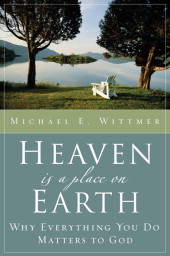
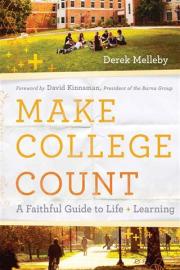
This list means a lot to us and I hope you find it helpful.  Here are just a few of the bookcovers of the titles we review.  Check out the full reviews here.   

We’ve got these all on sale over at the monthly column, too.  Use our certified secure website for credit card orders, or you may request that we just send you an invoice so you can pay later by check.  Hope we can get some of these splendid resources to you soon.  Thanks.
0425239640.01.LZZZZZZZ-e1301438148590.jpg9780830835539.jpg

0835478.jpg

6a010536b8214c970c014e892a0e5c970d-120wi.jpg

889590.gifpsalmist-product-bundle.jpg9780195378726.jpg001aef78_medium.jpeg62809684_b.jpg

ProductImages.ashx.jpg

A rich summer array of brand new books on spiritual formation.

My youngest daughter, Marissa, graduated from her charter cyber-school at a state-wide ceremony this weekend.  We had a lovely party in the backyard on Sunday and took her to the airport on Monday to arrive in time for her first early college class at Calvin College in Michigan.  From high school grad to college student in 48 hours.  I’m exhausted.

Our other daughter, a decade older, is for this week a retreatant at an ecumenical Benedictine monastery in Ann Arbor.  Her facebook announcement noted “a car, bus, train, plane. It feels like living in a Richard Scary book.”  And then, “Stephanie is getting herself to a nunnery.”  Shakespeare fans can laugh.

Thanks for your support of our family, your prayers for Marissa, and the lovely notes on facebook and twitter.  We’re glad that our “family business” sometimes really does seem like an extended family, and we are grateful.  Please pray not only for us, but for other customers and friends who themselves continue to struggle, who have great needs, whose lives and circumstances are not as happy as ours are this weekend.

That Stephanie has some (academic) interest in monastic ways should not surprise us.  One of the great trends we noticed about a decade into our book-selling biz is that evangelical customers stopped complaining that we carried Thomas Merton; even conservative pastors were citing Henri Nouwan in their sermons and nearly all the reputable religious publishing houses were releasing books of spiritual formation, re-discovering the devotional classics, talking about sabbath and liturgical customs and contemplative disciplines.  Eventually, even the hipster crowd emerged with a real distinctive concern for embodied practices of faith, including practices that will aid in our intimate knowledge of God.  Postmoderns talked about ancient-future approaches, moving forward by looking backward.  

Many folks—including younger folks— want to draw on the array of customs and disciplines that have enabled older saints to walk with God.  Not a few Protestants have published books with names like Cloister Talks: Learning From My Friends the Monks (by Jon Sweeney; Brazos Press; $14.99) or Monk Habits for Everyday People: Benedictine Spirituality for Protestants by Dennis Okholm (Baker; $15.99)  One of the best introductory books I know about Benedict is, in fact, written by a Presbyterian.  See Ancient Paths: Discover Christian Formation by David Robinson (Paraclete Press; $16.99) which I reviewed several months back.

Richard Foster, of course, is one of the writers who has brought that heritage to the contemporary religious publishing world.  (Celebration of Discipline [HarperOne; $24.99] is surely one of the most important books of the last 50 years!)  And he has a new book coming in September, which looks to be very good—Sanctuary of the Soul: Journey into Meditative Prayer (to be published by IVP; $16.00.  You can pre-order it from us now if you’d like and we’ll send it at a discounted price when it is released.)

And so, here are a few such books that have caught our attention here in recent weeks.  All of these are new this Spring and are titles that we most thoroughly recommend.  Perhaps you can commit to reading a few this summer.   Enjoy.
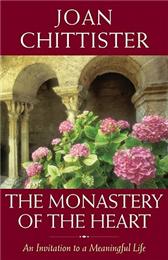
ProductImages.ashx.jpgThe Monastery of the Heart: An Invitation to a Meaningful Life Joan Chittister (BlueBridge) $19.95  Many of our readers will know this popular Benedictine author, one of the biggest selling spiritual writers in recent years.  Here, she offers an introduction to the Rule of Benedict as a lens for how to see all of life as an opportunity to reverence and joy. (She has written a very good book on this years ago called Wisdom Distilled from the Daily: Living the Rule of Saint Benedict [Harper; $13.99] by the way, but the style and tone of this new hardback is so much different!)  It is written as lyrical poetry, a soothing and moving book, called by Phyllis Tickle “beautiful and welcoming” where she has “outdone even her own past work.”  One reviewer says this is “like a holy distillation of all that Joan Chittister has written to date.”  Lovely.
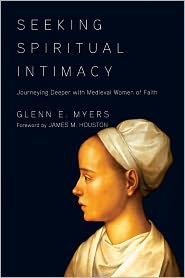
97229522.JPGSeeking Spiritual Intimacy: Journeying Deeper with Medieval Women of Faith  Glenn E. Myers, With a forward by James Houston (IVP) $15.00  I mentioned in my opening remarks that evangelical publishers are doing great work releasing high quality books about spiritual formation.  No one publisher releases more consistently good writing on the spiritual life than InterVarsity Press in their formatio line.  This richly detailed study is an example; an evangelical Protestant publisher has just given us the defining work of the Beguines, a network of Catholic faith communities in medieval Europe where women organized their world around one thing needed—simple life with Christ at the center.  A few of these women mystics have become well known among those learning about historic devotional writing (think of Mechthild of Magdeburg or Hildegard of Bingen.) The others discussed may not be known—how much do you know about 12th century Flemish women, after all?  Ha!   But before you think this is just too arcane, please know that this book not only presents fabulously interesting information but is created to be used devotionally.  There is a reflection exercise at the end of each chapter so you, too, can experience the great love of God that these valiant women knew.  These are odd times in our postmodern world, but perhaps is somewhat similar to the shifting ground under their feet as well.  Isn’t it interesting that such ancient insight might be the most applicable wisdom for our own age?  Remarkable. Three cheers for IVP in bringing such rare insight to us, and making it so very, very helpful.
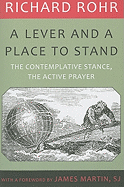
9781587680649.gifA Lever and a Place to Stand: The Contemplative Stance, The Active Prayer  Richard Rohr (HiddenSpring) $15.00  A few weeks ago I announced Fr. Rohr’s very significant new book, Falling Upward: A Spirituality for the Two Halves of Life (Jossy Bass; $19.95.)  About that time, this little sleeper of a paperback was released and in many ways it is also a “holy distillation” of much of what Rohr has been about over the years.  These were lectures given (and if you have heard him or his recorded talks, you know he is a great communicator and vibrant speaker) at a center in London dedicated to offering seminars in Christian meditation (in the mystical tradition of silence as taught by John Main) and how that might equip us to be spiritual leaders for world peacemaking.  And so, this little volume invites us to ponder the relationship of the journey inward and the journey outward, the ways in which contemplation can ground us for our work in the world.  A Lever and a Place… is classic Rohr, exploring the inner texture of our deepest selves and God’s call to commission us to be agents of peace and justice in the world.  
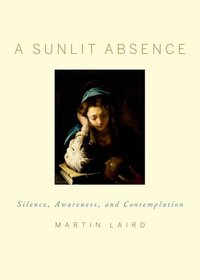
9780195378726.jpgA Sunlit Absence: Silence, Awareness, and Contemplation  Martin Laird (Oxford University Press) $18.95  You may know of Laird’s Into the Silent Land, the much talked about and often recommend book that came out just a few years ago from this Catholic priest and professor at Villanova University here in Pennsylvania.  Rave reviews came from sources as unique as Rowan Williams and Christianity Today.  This brand new one seems to be a sequel or companion volume (with the same smallish chunky size that so nicely fits the hand) and is an elegant and beautifully written reflection on the need for silence in our lives.   It gets a bit heavy at points—drawing on the best of the contemplative tradition he calls for a spaciousness that accepts sound and silence and that rejects foundational dualisms. Whew.  If  you’ve read any of the accounts of the desert fathers or appreciate Russian Orthodox spirituality this might appeal to you.

001aef78_medium.jpegRavished By Beauty: The Surprising Legacy of Reformed Spirituality  Belden C Lane (Oxford University Press) $29.95  I have been waiting for the strength, time, and emotional energy to read what I believe may become one of my favorite serious books of the year.  I haven’t touched it yet, but want to commend it to you on the strength of the author’s earlier books, the rave reviews of a few trusted friends who have it already, and this fine blurb on the back by William Dyrness (of Fuller Theological Seminary) who himself has several important books about the arts, beauty and aesthetics:

Belden Land has provided a contemporary spiritual theology perfectly suited to the restless longings of our consumer culture.  Rereading Calvin and Edwards, he finds neglected (and surprising) resources in the Reformed tradition for seeing creation as a rich and wild theatre of fulfilled desires.  In the process he teaches the reader to share creation’s passionate and conflicted yearning for God, and to join its praise of God’s     loveliness.


I appreciated this review by social ethicist Larry Rasmussen, too

Exemplary!  Christianity’s ecological phase requires Earth-honoring retrieval and recasting of its deep traditions.  Lane brings to the task a good historian’s unflinching honesty as well as the pilgrim’s personal passion.  The result is Reformed spirituality transformed by its own strong sense of God’s presence amid streams of earthly beauty across “landscapes of desire.” A timely, ecumenical gift.


Professor Lane does indeed have personal passion.  And great experience to write a book like this—a number of his fans (many who are wilderness hikers and rock climbers) have long awaited this highly anticipated work.  His previous two books were about the relationship of landscape and spirituality; The Solace of Fierce Landscapes (Oxford University Press; $17.99) is, in fact, part outdoors hiking memoir and part study of the role of geography in the Bible.  From the desert fathers to holy mountains, he studies, prays, hikes, prays, does the whole outdoor adventure thing and writes about it thoughtfully.  His embodied, Earthly spirituality is beautiful and righteous (and at times as demanding as the fierce landscapes of which he writes.) 

So, he has a deep and lived appreciation of natural beauty, which drew him to prolific Reformed thinkers like Jonathan Edwards (yes, that Jonathan Edwards) who was as much as a naturalist as preacher, with a constant theme of beauty underlying his understanding of God.  And, he seems to draw quite a lot on Calvin who insisted that the very creation itself is the essential theater on which our lives unfolds.  Like I said, I’m working up the courage to work with this this summer.  I am sure I’m not alone to affirm the credos that beauty matters, and that authentic spirituality does not lead us away from this world.  Lane will help sear this into our lives, I am sure.  Ravished By Beauty is a very important work.
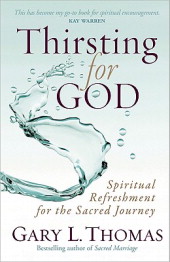
62809684_b.jpgThirsting for God: Spiritual Refreshment for the Sacred Journey  Gary Thomas (Harvest House) $13.99  Gary Thomas is one of those writers about whom I have pledged to read everything he writes.  And it isn’t a burden as he has a light touch, a great sense of humor and that knack for illustration and analogy that the best teaching preachers have.  Gary is one of the finest evangelical writers about spirituality, I’d say, and this is a major reworking of an early book of his (then called Seeking the Face of God.)  This one expands on that book’s introduction to the deeper spiritual classics, translating their insights and allowing ordinary contemporary folks to learn to appropriate their piety and wisdom.  It is hefty (over 300 pages) but wonderfully breezy, covers tons of good information, and never seems repetitive or tired.  It is more than a bargain for its immense value and we are positive it will be of great benefit to God’s people.

I suspect you agree that much that passes for faith development these days is like “fast food.”  There are fads, formulas and promises of experiencing God’s presence but few such authors–despite the great packaging of their books–really deliver.  In Thirsting for God, Thomas guides us through the best writers of church history, showing us how they learned to know God more intimately and live out their discipleship more faithfully.   This is the faith passed down, the best-practices that have endured, the writers you ought to draw upon.  It is ecumenical in the best sense and draws on a wide range of solid (and often beautiful) writing.


Even as we reject formulas and cheap grace and overly sentimental evangelical faith, we can say also that books like this really do have to “meet people where they’re at” and speak in ways that are helpful and understandable. (That John Ortberg has a rave endorsement on the back says something, eh?)  If you want to set meaningful goals for your spiritual life or overcome temptation or thrive in times that feel like the desert, there is help here.  I can’t say enough about this wonderful book, and hope you will give it a try—get a few friends together and read through it together.  It will speak to your heart, shape your world in positive ways, and guide you into the next steps of an intentionally faithful life that slacks its thirst with the Triune God.  Please take a look at this great little video where he talks about the importance of the book which might help you understand why we like him so.  He says that he has written this mostly for two different groups of people—maybe you are in one of these groups.  Enjoy!
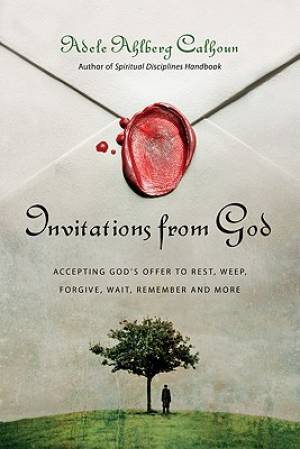
9780830835539.jpgInvitations from God: Accepting God’s Offer to Rest, Weep, Forgive, Wait, Remember and More  Adele Ahlberg Calhoun (IVP) $15.00  Recall what I said about InterVarsity Press’ imprint formatio?  This is another wonderful formatio release, a book that so beautifully illustrates the strengths of this great line of resources.  Ms Calhoun had written an earlier, large resource, The Spiritual Disciplines Handbook: Practices That Transform Us (IVP; $18.00) which is about as useful and practical a guide to the spiritual life as we could possible recommend.  She has been a colleague and co-worker with one of our favorite writer in this genre (Ruth Haley Barton, whose Invitation to Solitude and Silence and Sacred Rhythms (IVP; $17.00 and $18.00) we have often mentioned here and are not to be missed!)  Calhoun is a certified spiritual director and a graduate of Gordon Conwell Seminary (her husband is a pastor in New England.) This new book is a good example of some of the best writing within contemporary faith formation.

I love Invitations from God because it circles around a variety of topics that mean a lot to me, and that I suppose mean a lot to you: rest, ego, embodiment, grief.  It is a helpful and even joyful book—I so enjoyed starting it a few nights back sitting outdoors under a string of lights set up for our daughter’s graduation party.  So it isn’t too heavy and certainly isn’t a “downer” of a book; it is a pleasurable read.  As she says in the first page, there are a variety of invitations that come our way over our life and our response to them is what makes us who we are.  (There are invitations that do not come our way as well—from childhood on we are often excluded and sometimes neglected, disappointed and hurt.)  Ms Calhoun explores the invitations from God, invitations which call us to be more fully human, to own up to our brokenness, to be in touch with our deepest aches and longings and joys, to think through and act anew in ways that trust Christ’s redeeming power to transform us.  

Adele is an astute observer of the human condition and she is a person who lives a real and active life.  No, those who are attentive to the more contemplative spiritual disciplines are not necessarily monastic nor are they usually disengaged from the struggles of middle class daily life.  Like her colleague Ruth Barton, Adele knows of the ups and downs of parenting, of being a spouse, of dealing with the family budget (and the extended families extended issues), the pleasures and anxieties of ordinary modern living.  She is as normal as you or I and therein lies the great goodness of this book.  

Through her good writing she is a conduit for God’s own Spirit, which calls to us, invites us to rethink, to slow down, to attend to our hurts, to relax and reflect, to care, to give, to forgive.  Can we become people of mercy, people of joy, people of integrity?  If so, some of it will come because we’ve followed the sage advice as we see in this warm book.  Will we be able to shed tears, to lament, to protest?  Will we sense joy in the real world, reject our constant busyness?  Will we be able to identify and overcome the classic roadblocks that prevent us from moving forward?  (She is very helpful on this!)

The wonderful Invitations from God: Accepting God’s Offer to… is honest in helping us work through this crazy world of idols and false promises.  She puts us in touch with our feelings and cares and guides us to a richer, fuller life.  I love these invitations and I love how she walks us through some tender ground. Nice cover, too, eh?  Very highly recommended.
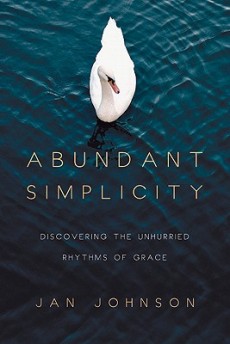
0835478.jpgAbundant Simplicity: Discovering the Unhurried Rhythms of Grace Jan Johnson (IVP) $15.00  Once again, the IVP imprint formatio knocks another ball out of the park with this home-run of a book.  Just the cover art is worth the investment—wouldn’t you and your house guests be blessed just to see this beautiful cover and the evocative subtitle?  Dallas Willard says “If live is what you want, you must free yourself from trivial entanglements.”  Well, that is a journey that lasts a lifetime, no?  Jan Johnson has written clear and helpful books on other evangelical publishing houses but this is certainly her best yet.  Drawing on truly ecumenical sources—I love these rich footnotes and wise citations and quotes—she helps us say no to materialism, to the zeitgeist of bigger and bigger and bigger, more, more, more.  Her cultural antennae helps her discern the idols of the age, and her practical guidance is so helpful, thoughtfully drawn from St. Francis, George Fox, John Woolman, Thomas Kelly, Richard Foster, Ronald Sider (not to mention contemporary researchers about happiness and reporters about the nature of the North American way of life.)  Spiritual directors like Norven Vest have affirmed its usefulness, noting it’s self-reflective style and piercing questions.  This is more than a call to a more simple lifestyle, but is an invitation to be grounded in ways that allow us to live good–truly good–lives.

Missionary educator Paul Borthwick nicely writes,

In a world where abundant has come to mean prosperity and simplicity is often equated with scarcity, Jan Johnson proposes an alternative. She introduces us to a biblical lifestyle of fullness–full in ways that only God can fill.  In our materialistic, over-scheduled, stress-filled world, we need to tame the monster called “more.”  Abundant Simplicity is a monster-tamer.
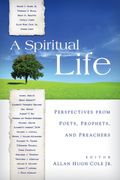
6a010536b8214c970c014e892a0e5c970d-120wi.jpgA Spiritual Life: Perspectives from Poets, Prophets and Preachers edited by Allan Hugh Cole, Jr. (WJK) $20.00  This is a splendid collection, itself another “monster-tamer” as the Johnson one was described.  This collection includes often vivid (if sometimes a bit academic) writing about the interface of culture and spirituality, prayer and daily life, the prophetic witness against the foibles of our age and good insight from the pastoral work about the formation of souls.  The question its many authors are all getting at is this: “what makes a good spiritual life?”  And that (as I hope would be obvious) entails a lot more than simplistic formulas for prayer and Bible study.  

I appreciate the diversity of authors (their styles, ethnicities, perspectives, and vocations) and suggest that this mix of views and voices is just the thing you may enjoy, too.  Here you will  find some famous authors—liberal pastoral counselor Donald Capps and pop culture aficionado, Greg Garrett.  There are famous literary voices like Gail Godwin and congregational voices of not-famous mainline pastors.  I love the books of two pastor-authors, Michael Jinkins and Michael Lindvall, and was delighted to see they have creative contributions here.  On the topic of spiritual disciplines we all owe a debt to spirituality guide Marjorie Thompson—Soul Feast (WJK; $15.00) remains one of the top books of this genre— and her chapter in this collection is very nicely done.  You will find the pastora
l wisdom of United Methodist leader Will Willimon (actually, a fairly controversial piece critiquing the fad of “practice” language, a version of which appeared in The Christian Century) and the powerful insights of memoirist Lauren Winner, with a fine, fine essay on the making of pies.  Yum. 

Many of these pieces are quite specific.  Stephanie Paulsell, author of Honoring the Body, has a chapter “Reading St. Therese” and Princeton Seminary prof Richard Osmer writes of “Fantasy Literature and the Spiritual Life.”  Not everyone may be drawn to the one by Kerry Egan on “Nursing, Eucharist, Psychosis, Metaphor” but I think it was brilliant.  There are nuns on reading poetry as a spiritual practice and a piece on chronic illness that is very important. This is the sort of book you can use for a long time, dipping in now and then as the topic strikes you…

I hope these sorts of essays will be useful for you.  I think Philip Yancey’s endorsement of The Spiritual Life rings true for all of the above good books:

Don’t look for a traditional approach to faith or a unified voice in this diverse collection.  You can, however, count on graceful prose and an honest, reflective search–and that, I found, was enough to make my own pilgrimage seem more authentic and less lonely.  

Alan Hugh Cole is Academic Dean and a professor of pastoral care at Austin Presbyterian Theological Seminary and is a popular speaker and WJK author.  Kudos.
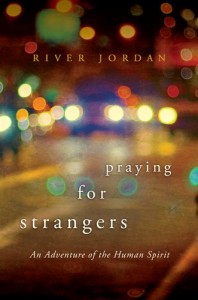
0425239640.01.LZZZZZZZ-e1301438148590.jpgPraying for Strangers: An Adventure of the Human Spirit  River Jordan (Berkley) $24.95  Okay, I’ll admit that a few of these books may seem a bit daunting.  I know most BookNotes readers don’t want silly formula books, and also are looking for books written well and that might actually enlarge the heart and stretch the mind.  But let’s face it: some summer evenings we may not want to wade through serious historical theology or be confronted with the deepest condition of our hurting souls. 

Perhaps there is a book that combines some reflective insight about our spiritual formation that might, uh, be suitable as a beach read?  Look no further.  I’m not kidding: this is a memoir that reads like a novel, one of these popular and oh-so entertaining stories of somebody doing something for a year.  This is, in fact, about a novelist (whose two sons were going off to Iraq and Afghanistan) who resolves to pray for a stranger every single day for a year.  And it is the beginning of something amazing, truly amazing. It is a bit theologically confused at times; but it is really nice read nonetheless.  As memoirist Neil White (a stunning writer himself, author of In the Sanctuary of Outcasts) says of it “Praying for Strangers reminds us (through the power of this tiny, seemingly insignificant act) that we can never assume we know the vast universe that exists inside the person next to us–or the one we are yet to discover inside ourselves.”   See this moving video clip of her telling about her resolution and the book.  You just may want to read it after seeing this!

Want to explore our weird, broken world?  Want some fascinating encouragement to pray?  Interested in human inter-connectedness, pathos and joy?  Want a bit of well-told inspiration that is a captivating read?  This, as one author puts it, “will bless you and alter the way you see those seemingly random people that God places daily in your path.”   Listen to this line where Jordon reflects on one of the lessons learned in her experiment of faith: “Instead of discovering how much the world needed me, I discovered how much I needed the world.”  Maybe reading this will help you with your next big resolution.  Pray, pray, pray. And love your neighbor.  Not a bad beach book, I’d say.  

A FEW VIDEO OPTIONS
sacred-rhythms-WP-small-now-available.jpgDVD  Sacred Rhythms: Spiritual Practices that Nourish Your Soul and Transform Your Life  Ruth Haley Barton (Zondervan) $31.99 (This includes a Participants Guide and the DVD.)  I’ve reviewed this before at the BookNotes blog, sharing how insightful and gracious her good teaching is.  This is simply the best media piece we know for teaching about spirituality.  We think it should be very highly recommended, made available in your church or group.  Here is a youtube trailer that nicely invites you to this project.  Hope you order it from us!
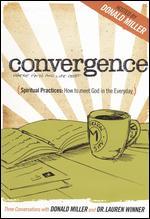
u91851vggcd.jpgDVD Convergence: Where Faith and Life Meet: Spiritual Practices: How to Meet God in the Everyday  Donald Miller hosts this very informal series of three conversations, person to person, each sitting on nice easy chairs.  Here, there is a charming dialogue with Lauren Winner author of  Mud-house Sabbath and fascinating storyteller and teacher about Jewish customs, Christian spiritual practices, and modern writings about spiritual formation.  Very nice.  (We stock about ten of these, by the way, although this is the one that is most obviously about spirituality as such.)  There are a few Scripture verses and discussion questions in the booklet that comes with the DVD so there are no additional books needed. Visit their website which offers more supplemental material as well.
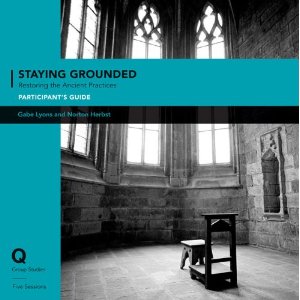
51ivaHJlzSL._SL500_AA300_.jpgDVD  Q Studies Staying Grounded: Restoring the Ancient Practices  Five Sessions hosted by Gabe Lyon (Zondervan) $36.99 (Includes one Participants Guide/study book and DVD; additional Participants guides are needed for each person; $9.99.)  I’ve raved about these resources that come out of the Q conferences, sort of TED talks for the faith community.  In this new one you’ll hear Phyllis TIckle on “Recovering the Ancient Practices”, Andy Crouch insightfully reflecting on “From Purchases to Practices”, Shane Hipps (who has a book on technology) pondering “The Spirituality of the Cell Phone” and environmentalist and medical doctor Matthew Sleeth powerfully reminding us of the significance of “Observing the Sabbath.”  A fifth session walks participants through a conversation about a culture-shaping project which is in the book and debriefs it all.   Here is a promo video about the series (most of which are more about cultural and societal reformation) which shows the style and tone of these very cool videos…Highly recommended for all, but especially younger adults. 
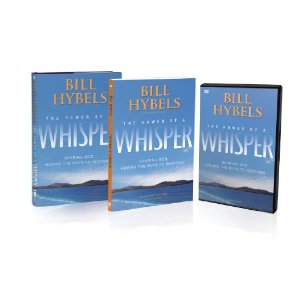
41IfQbl0-mL._SL500_AA300_.jpgDVD  The Power of a Whisper: Hearing God, Having the Guts to Respond  Bill Hybells (Zondervan) $24.99  Four sessions.  Late last summer I read the hardback book from which this is taken and reviewed it at BookNotes, naming ways it so moved me.  I think this is solid, good stuff, and a topic most of us wonder about:  can we really hear God’s voice?  How do we learn to discern how to be guided by God’s promptings?  Hybells is an excellent communicator and a real master at teaching applicable truths in honest, sensible ways.  Very professionally done, very compelling. The Participant’s Guide sells for $9.99   Here is a youtube clip promoting the DVD.  Check it out.
889590.gifDVD  The Divine Conspiracy: Jesus Master Class for Life  Dallas Willard with John Ortberg (Zondervan) $24.99  I can’t tell you how many people name this book as one of the all time most important in their lives.  Richard Foster’s fabulous forward is among the most exuberant raves in print!  Yet, not everyone—this writer included–quite get it.  I, and apparently many others, need some help. And while I respect and appreciate the jovial but no-nonsense philosophy prof Dr. Willard, having the up-beat and practical John Ortberg interview him, and work with him here is a stroke of genius.  Together their tag-team makes this DVD an exceptional resource, serious, meaningful, profound.  Six Sessions. Participant’s Guide sells for $9.99  Want to see what I mean about this?  Watch this brief youtube clip.
2456.pngDVD  The Life You Always Wanted John Ortberg (Zondervan) $24.99  Six Sessions   I believe that this may be one of the top rentals in our DVD department here at the shop and folks who use it sometimes want to use it again and buy it for themselves.  While Ortberg calls the wonderful book from which the DVD is drawn “Willard for Dummies”, it is essentially about the practice of the spiritual disciplines. And what a hands-on, zany show it is. Rev. Ortberg is a born teacher, using great stories and hands-on illustrations in his little class as the course unfolds.  You will learn about spiritual disciplines, helpful practices, and how God can transform us day by day—not by just “trying hard” but by wise training. Participant’s Guide sells for $9.99  Highly recommended.  Get a feel for this wonderful, fun series by watching this brief promo.
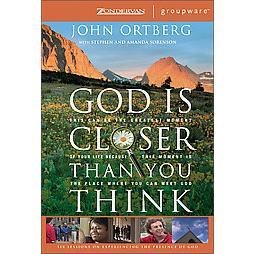
resize.jpgDVD  God Is Closer Than You Think  John Ortberg (Zondervan) $24.99  Six Sessions  If the previous DVD class walked participants through classic spiritual disciplines–in upbeat and contemporary ways—this is an equally pleasant and very engaging study of how to find God in the ordinary moments of ordinary days.  How do we actually experience the presence of God?  Again, Ortberg is an excellent communicator, a good teacher, and presents important material in interesting and helpful ways. Participant’s Guide sells for $9.99   A personal favorite!  Watch this trailer for this well done series. God is closer than you think!  Love it!   (By the way, I really liked the original cover art of the first edition of this book—google it and find the one that looks like an eye chart.  I guess our tastes were in the minority as they changed it shortly after the release.)

psalmist-product-bundle.jpgDVD The Psalmist’s Cry: Scripts for Embracing Lament  Walter Brueggemann (House Studio) $39.99  Wow, is this amazing! And some of the amazement is that an affiliated of the Church of the Nazarene’s are publishing UCC Bible scholar, brother Walt. This package includes a 5 session DVD and a very visually-exciting book—created, as other House Studio products (DVDs of Shane Claiborne (The Economy of Love) and Stanley Hauerwas (Sunday Asylum) for instance) with edgy, youthful verve.  In this footage, Brueggemann notes that we all live in a state of denial, covering up our pain and our cultural dislocation, and the Psalms that emerged out of the horror of exile truly offer us tools for naming our pain.  Failing to do so may literally result in losing the gospel itself, and these short, raw, dramatic pieces should generate deep thought and important conversation.  More books are available for $12.99. Is this about spiritual formation?  The last session is entitled “the juice of emancipation.”  You tell me.  Whew.
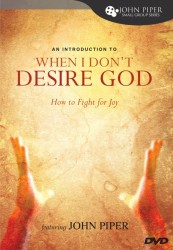
thumb_17573.jpgDVD  When I Don’t Desire God: How to Fight for Joy  John Piper  (Crossway) $29.99  I know that Piper may be a bit bombastic for some, but he is a pastor who cares deeply for his people’s joy.  Of course, he teaches that we are most satisfied and delighted when we make much of God and are conformed to Christ–leaving everything for that pearl of great price.  But, yet, what if we don’t really want to search for God?  What if we are stuck in apathy and don’t desire a spiritual awakening? These 2 DVDs include straight up Bible preaching, six sessions, about a half hour each, by the famous Baptist teacher.  Maybe you don’t think you’ll love him.  But this is such important material that I’d beg you to consider it.

 Here is a sample of it; passionate and serious and important! (By the way, in this clip he is talking about fighting sin and temptation, using helpful distinctions between justification and sanctification.  Some of the messages are more obviously about joy, about fighting for the pleasures of God, and what to do as we remind ourselves of God’s great glory in our dry times.  Don’t let the heady excerpt or blunt topic scare you away!)

BookNotes
SPECIAL
DISCOUNT
any book or DVD mentioned above 
2O% off
order here
takes you to the secure Hearts & Minds order form page

inquire here
if you have questions or need more information

Hearts & Minds 234 East Main Street  Dallastown, PA  17313     717-246-3333  

Four more books I absolutely loved: insight + beauty = a great reading experience

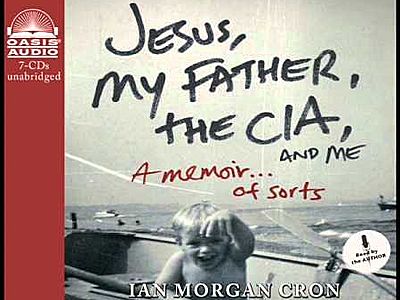
In the last post I explained all about one of my favorite books yet this year, Jesus, My Father, The CIA and Me: A Memoir…Of Sorts by Ian Morgan Cronan (Nelson; $15.99)  Skip back and see my rave review–I loved it! (And we have it on sale for BookNotes readers.)  I was eager to tell you about it anyway, but I’ve been writing just a bit about the pleasure books can bring—thanks Alan Jacobs!—and this one was a heckuva fun ride.

Here are a few more that I’ve read lately, books that I just didn’t want to end. Each illustrate the quality of insight and well crafted writing that draws readers in and that serious book lovers will certainly appreciate and perhaps, as I did, find irresistible.  I hope you’ll give ’em a try for your summer reading pleasures.

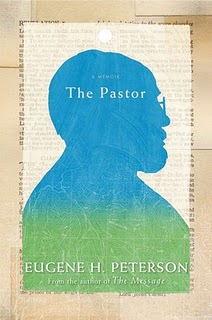
The Pastor Peterson.jpgThe Pastor: A Memoir Eugene Peterson (HarperOne) $25.95 in hardcover; $28.98 in unabridged audio CD.

 I’ve mentioned this much-discussed book before and it nearly goes without saying that we appreciate (adore?) Pastor Pete and his important contribution to spirituality, pastoral integrity, real-world grittiness, prophetic distance from the worst traits of what might be called the American Way of Life, and a solid Biblical-rootedness.

 One particularly cult-ish fundamentalist website that was telling their readers to avoid our recommendations once noted that I said that Peterson had an earthy spirituality.  Aghast! (As I read my Bible—from good creation to real fall to bodily incarnation to gritty discipleship until the real new Earth—that is the only kind that is faithful.)  But they thought I meant Earthly which they dumbly took to mean worldly, as if we intend to affirm a compromise with the sinful ways of this present order.  Which is why we need to read Eugene Peterson: he combats, in nearly every sentence and every story, any pious nonsense that is built more on sentimentality or neo-gnostic visions of flying away to heaven.  He is Reformed in the broadest sense, believes that God is with us here and now, and believes that the life of the Christ-follower will be a doxology to the Lord in all we do.  Which is to say, we glorify God best by being down-to-Earth and serving Christ in the daily grind.  For Peterson, though, as we find out in this long-awaiting memoir, he comes to this by way of his own callings, first in a Montana butcher shop and later as a frustrated academic, and finally in his most lasting vocation, that of being a small church pastor in a small town in the outskirts of Baltimore MD. 


The Pastor rings true to what we know of Peterson through his many books—A Long Obedience in the Same Direction, or one of my favorites, Where Your Treasure Is: Psalms That Move Us from Self to Community for instance, or his work on prayer (Answering God) and his five volume set for pastors on “vocational holiness.”  And then there is the magisterial five book series called “conversations on spiritual theology” which are meaty, mature, to be savored and pondered.  Oh yes, he did that paraphrase of the Bible, too.  Anybody ever hear of The Message?  Here he tells how it came about, starting off in his church basement over coffee cups and his ordinary folk finally coming alive to grasp the Scriptures (it was Galatians, by the way, that he did first), the year spent in Pittsburgh Theological Seminary as a writer in residence, and so much more.

As in any good story about a person’s reminiscences, he tells of his parents and his dearest relationships.  He write about meeting his wife, Jan, and their early marriage.  He notes the ups and downs of their first careers, her calling to be a pastor’s wife, and their partnership in trying to forge a community that worshiped well, prayed and read Scripture, and let the life of God saturate their ordinary days.

This is a book for anyone who has been involved in church, anybody frustrated with how  churches—liberal or evangelical, higher or lower liturgically speaking, large or small—have been run in recent decades.  Peterson is nearly gruff in his insistence that we not forfeit quality for quantity as we are wont to do; he is all about staying true to the story as found in the text.  Learning how he grew so impassioned, how he matured as a writer, how he followed the Spirit’s leading into such highly regarded work is good for anybody.  The writing is often glowing (in a plainspoken sort of way; he is never ostentatious, but it is well crafted and at times lyrical.)  There is little doubt that he is one of the most important Christian writers of the last 50 years, and his story was waiting to be told. 

Phil Yancey, in fact, said,

I’ve been nagging Eugene Peterson for years to write a memoir. In our clamorous, celebrity-driven, entertainment culture, his life and words convey a quiet whisper of sanity, authenticity, and, yes, holiness.


As I’ve said before, we are acquainted with Eugene and he is kind enough to say good things about us.  We are grateful for his business and grateful for his encouragement.  But even if you’ve hardly ever heard of him, haven’t read any of his many books, and aren’t drawn to reading about Christian leaders, we’d commend this whole-heartedly.  Loved it.  Didn’t want it to end.  Learned a lot, took comfort from some portions, laughed out loud more than once.  It is a slow, pleasurable, thoughtful biography, one that is going to be considered by many as one of their favorite books of 2011. Here is a brief interview with him from Neue Magazine  Here is a podcast interview with him conducted by Christie Tennent of IAM.

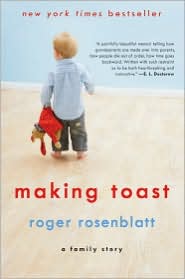
87098037.JPGMaking Toast: A Family Story (Ecco Books) $12.99 The wonderful mind and great writing of Roger Rosenblatt came powerfully to our attention a decade or more ago when someone gave us an audio recording of a spectacular talk he did at Chautauqua Institute that ended memorably with people calling out their most treasured books from their childhood.  In a final scene of participatory art, the audience shouted out the most moving words.  It was a stunning talk, inspiring to this young bookseller, and I continue to watch his work over the years.  You may know him from the New York Times columns or his Emmy Award winning work with Jim Lehrer on PBS.  Wikipedia nicely compiled some of the accolades about him.

William Safire of the New York Times wrote that Roger Rosenblatt’s work represents “some of the most profound and stylish writing in America today.” Vanity Fair said that he “set new standards of thought and compassion” in journalism. The Chicago Tribune said that he turned “magazine journalism into an art form.” The Philadelphia Inquirer cited his essays for “unparalleled elegance and wit.” In its issue on “The Best” (January 2004), Town and Country named him the “finest essayist in the country.” Kirkus Reviews noted, “He has excelled in nearly every literary form.” UPI called him “a national treasure.”

In 2007 his talented daughter, a doctor and mother of three
children, died at age 38.  Rosenblatt and his wife moved back to the DC area to move in with their bereaved son-on-law to help raise their grandchildren.  His own grief and grandfathering story is told in last year’s Making Toast: A Family Story.  Again, it is one of those books that I found myself longing to pick back up—couldn’t wait for the end of the day (which doesn’t come nearly early enough for me, here, often typing still at 2:00 am.)  Still, I grabbed it whenever I could, not wanting to bite off too much.  It was just so good, so touching, so intimate, so honest, and so very interesting.  He does have an interesting family.  And a great eye for details told well.  It was heartbreaking in quiet moments, but the writing was restrained.  It was, as I’ve suggested, a pleasurable reading experience, one I commend to you.  This YouTube interview doesn’t do the book justice, but you can watch him for a few minutes.
 
Mr. Rosenblatt has sworn off any notion of God–it comes up from time to time–yet he is a decent and funny man, and he was a good father, a fine husband.  The extended family stuck together through the hard year after Amy’s death, and the tales told of this upper middle class literary family rung true, even though it was not my world or my worldview. 

Did I say I could hardly put it down?  Did I say it was one of the best books I’ve read all year?  That I enjoyed it?   Kudos to Mr. R for his writerly ability–rooted surely in some deep and mature sense of the meaning of things, character and goodness and such—to mix great sadness and great joy, to share a story so universal, even in its particularity.  What a book.  If he asked me this year, about books that touched me deeply, that have meant something to my soul,  I would shout it out, as he invited listens to so many years ago.  Making Toast, I’d shout.  Make that toast!   

The Unwanted Sound of Everything We Want cover.jpgThe Unwanted Sound of Everything We Want: A Book About Noise Garret Keizer (PublicAffairs) $27.95  Some authors are so elegant, so thoughtfully creative, so seemingly wise that they are able to write about any number of things.  Garret Keizer is one such writer, whose first book was a literate and thoughtful memoir of being a small town pastor (Dresser of Sycamore Trees: The Finding of a Ministry.)  He wrote a highly acclaimed book on caring for others simply entitled Help. I really respected one he did called The Enigma of Anger.  I guess he is a true humanist, in the best sense of the world, some sort of writerly renaissance man.  He obviously has a good heart and a fine ability to ponder some of the deepest things of our human days. 

In this newest one I was hooked on the first page.  He talks about how unwanted sound–and boy, there is a lot to learn about that!—is considered a weak issue.  It isn’t as horrific as genocide or the plague of world hunger. 

Yet, if often hurts the weak, the oppressed and the poor, the infirm and the aged and the young.  Early one he tells some very frustrating stories—people who cannot sleep because of a neighbor’s loud swimming pool pump, dangerously high decibels in children’s toys, the hearing loss prevalent among returning soldiers.  These are hard to take, small injustices, yet are (if you will excuse the pun) quietly told.  Keizer builds a gentle a moving case, carefully.  

And, this book is instructional in a profound way.  Yes, we learn a lot about sound and decibel measurement and all manner of mayhem in our modern world, but we also come to realize that much of the noise is, in fact, a result of the other stuff we want.  Our industrialized, fast-paced, increasingly mechanized way of life necessarily steals our solitude.  The psychic toll is considerable.

And this splendid book helps us consider it.  (And consider aspects I swear I never would have thought of as long as I lived: did you know that some of the noise pollution effects the mating habits of certain species of birds?  And I don’t have to tell you–you can see where this is going–that a decline in certain birds has other ecological implications whose consequences are significant.  Who knew?  And who cares??)

Well, Bill McKibben (God bless him) for one.  He says

Garret Keizer has, not for the first time, helped us look hard at something we thought we understood and see that instead it’s rich, fascinating, full of political and moral and human implications.  I’d say that his argument goes off like an intellectual explosion, but perhaps better in this context to summon the image of a bell, struck once in the silence.  This is a book for our precise moment on Earth.

I love Naomi Klein’s powerful observation, too.  She says, “Very few writers combine thoughtfulness and rage as satisfyingly as Garret Keizer.”    Indeed.  It is, as Klein reminds us “a profound meditation on power—its painful absence and its flagrant abuse.”  As one reviewer, himself a biographer of the witty Mark Twain, put it, Keizer has “disputatious moral eloquence” which places him in the line of Sinclair and Steinbeck.  Well, I don’t know about that, but I agree that, as he continues, “noise if far from one more irritant of modern life.  It is a symptom of deeper threats to a healthy society: amoral power, a degraded political system, a collapse of spiritual consciousness.  This is a masterpiece of social reportage, and–wondrously, given all its burning indictments–of decency and affirmation.”  (Ron Power, co-author of Flags of Our Fathers.)

So, The Unwanted Sound of Everything We Want is a book that is quite satisfying.  I like a little fire, and “disputatious moral eloquence” from time to time.  And I like social history and  intriguing stories and well-placed episodes well told, illustrative examples of his point, alongside tons of interesting information.  Keizer is, as I said, a fine, fine author who has covered a lot of ground in his writing career.  This book is a masterpiece, the sort of thing to ponder, either in a noisy beach, or perhaps a secluded cabin.  Or carry it on the bus as you commute.  Wherever and in whatever condition you read it–probably not in true silence–you will be glad you did.  I’m not quite finished with it myself but I can tell, when it is over, I will be glad for his good gifts, hungry for more, and wondering out loud what in the world he will write about next.  For now, check out this Book TV talk about the book, then order it from us! 

41TkOylhziL._SL500_AA300_.jpgOld Testament Wisdom Literature: A Theological Introduction  Craig Bartholomew & Ryan O’Dowd (IVP Academic) $30.00  Okay, so my nerdiness is not on display for all to see.  Yes, yes, I sometimes can find a Biblical commentary, and in this case a fairly rigorous Biblical commentary, to be a pure delight.  I got choked up.  I used the first few pages in a talk I
gave.  I’ve read the first 30 pages three times (and not because it was so confusing, but because it was so very wonderful.)  Look, I know thirty bucks is a lot of cash for a mere 30 pages.  But I mean this: the 5 page introduction is itself worth the price of the book.  I want to photocopy them and turn them into a booklet.  What joy to find such interesting reflections that will pay off in opening up a good chunk of the Scriptures!   

This is priceless stuff, wonderful insight about the nature of nature—the creation, the Bible calls it!—and our alienation (or at least distance) from it.  

They start out with a splendid, splendid excerpt of a C.S. Lewis book on medieval literature.  I cannot print the long quote here, but basically Lewis says we modern day folks simple cannot appreciate the terror felt by people during a dark night before the invention of lights.  Go out and stand for several hours in the deep late night dark, and then try to read ancient literature, Lewis suggests.  Well Bartholomew and O’Dowd counsel the same thing for anyone wanting to read the Biblical wisdom literature.  How can we possibly get the creation-based theology of Proverbs, that magnificent portion about God’s sovereign rule of creatures at the end of Job, the exuberant praise of Psalm 104, say, if we don’t walk around as fellow creatures in a God-drenched world? (Very close readers will pick up some of Calvin Seerveld’s insights from Rainbows for the Fallen World here; yep, this is so, as Bartholomew studied under him.  O’Dowd studied with Cal’s colleague Al Wolter’s, author of Creation Regained.)   Walk around outside a bit, they say, and then come back and finish the book.  It’s a good point, and they mean it.  Close. The. Book.  Go. Outside. Experience creation.  This is going to be a very cool commentary.

Well, it is beyond cool, it is at times nearly genius.  This should come as no surprise as Bartholomew is a very impressive and widely-published Bible scholar, especially in this genre (he has done very academic work in this field, in fact.)  And, he’s quite the worldview guy, holding forth often in his career at Redeemer University in Ontario about Kuyper and the zeitgeist and postmodernity and all the rest (His co-authored book At the Crossroads is vastly under-appreciated.)  I love him!  Ryan O’Dowd is also a young genius (and I was delighted to hang out with him at bit at the Jubilee conference in Pittsburgh last February.)  He has a highly academic work on the Hebrew Wisdom literature published by the very prestigious Brill Publishing (in Europe) and he also has a degree in aerospace science.  (He now lectures in engineering at Cornell.  Dig that!)


So, these two gents are fine writers, attuned to how the whole unfolding Biblical drama can serve to place us in God’s world: the redemptive work happening in and through Christ, as narrated by the Scriptures, understood firstly in their Middle Eastern context, can be our own narrative.  We can find our place in the world, thinking Christianly, as it were as that story becomes our story.  But, alas, to do this we need more than just a quick read through of the printed page.  We don’t just want Bible information, we want Godly wisdom.  Job, Ecclesiastes, Psalms and Proverbs, properly understood, can make us wise; they can orient us in ways that allow us to take up our role in the story.  A good part of that–our living into the redemptive story of God– is how we interact with the creation, God’s ways of ordering it and how even our work in modern jobs and institutions can be a response to the wise ways structured into life as we know it.  Knowing about wisdom opens up whole vistas of understanding.

Jesus, as some are quick to say, is the very wisdom of God.  I’m grateful for the good chapter with that title in OTWL, and glad that Bartholomew & O’Dowd have a strong, Christo-centric reading; Old Testament Wisdom Literature does not traffic in moralism, in formulas, in cheap grace.  It is radical, multi-faceted, and, well, deeply wise.  It has received rave reviews from some of the finest Old Testament scholars of our day (like Bruce Waltke, Tremper Longman and John Goldingay.)  It is the best thing I’ve read on this topic.

If you are turned on by learning, if you want to know your Bible better, if you hunger for good writing, good thinking, faithful exegesis that always is applied in a storied way, helping equip you for faithful living in these days, this book could be a great companion for a few months or so.  Maybe, like me, you’ll read and re-read, underline whole paragraphs, quote and share and celebrate this with anybody who will listen.  Old Testament Wisdom Literature: A Theological Introduction is a great book, Biblical scholarship at its finest.  And you’ll appreciate it all the more if you do what it says: close the book and go outside for a spell.  The fear of God is the beginning of wisdom the text reminds us.  Consider God’s awesome, fearful, creation, and our small place within it.  And then ponder who God is.  And then come back to the book as Bartholomew & O’Dowd guide you on the journey through some familiar (and some not so familiar, for many of us) Bible passages, opened up with extraordinary insight and contemporary relevance.  I’ve not finished this yet but I am sure I will name it as one of the best books of 2011.  Yay.

BookNotes
SPECIAL
DISCOUNT
any book mentioned above 
2O% off
order here
takes you to the secure Hearts & Minds order form page

inquire here
if you have questions or need more information

Hearts & Minds 234 East Main Street  Dallastown, PA  17313     717-246-3333
 

Jesus, My Father, The CIA, and Me: A Memoir…of sorts by Ian Morgan Cron

As you know from the last post, Alan Jacobs splendid, thoughtful, profound book The Pleasures of Reading in an Age of Distraction got me thinking about my own calling to encourage reading.  I think it is fair to say that I promote books that are thoughtful and often inspiring and  I often make claims that a recommended book is well written and a delight to read.  We stock but don’t often review serious books that are dry, or that are overly specialized in ways that ordinary readers would be bored.  There is a case for wading through demanding works, of course but here I often recommend those I think our faithful fans “ought” to read.

And yet, I was struck in reading Jacobs book—itself a bit demanding (it’s not published by Oxford University Press for nothing!)—how I don’t always tell about my true favorites, titles that have brought me not just insight and perspective, but great pleasure.

And so, a few that were real page-turners (as they say.  Are there books where one doesn’t have to turn the pages?)  I’ve just recently read a few that I loved-loved-loved and are in the running for the best books I’ve read all year.  I’ll tell you about more in a few days. 

My far, the most moving book I’ve encountered in ages was Jesus, My Father, the CIA, andjesus-my-father-the-cia-and-me.jpg Me: A Memoir of Sorts by Ian Morgan Cron (Nelson; $15.99. in paperback or $27.99 in unabridged audio CD with Cron reading it himself.)  In the penultimate chapter I was almost sobbing, big tears streaming down my face as I sat on a chair in the backyard, late at night, under the store’s outdoor light.  Beth came out just then and I was strangely embarrassed (am I so jaded that I am ashamed to be moved by good writing and a tender tale?)  And yet I wanted it to be known: this is a book that got to me.  That second to last chapter—about the author’s good efforts to trust the heroic steps towards freedom and courage in his own children after having chronicled his own dysfunctional past—is worth the price of the book.  (Do I say this because my own youngest daughter, who has been so brave with her own challenges, has just graduated from high-school, and his description of his children doing an amazing stunt got to me?  I suppose, but I challenge anybody to read that compelling chapter and not be impressed.)


So, Ian Cron, The Man.  He wrote an earlier book which a lot of our friends and fans really dug, Chasing Francis: A Pilgrim’s Tale (NavPress; $14.99) which was a novel (of sorts) about an Episcopal priest who goes on retreat to learn about Saint Francis, and the new kind of church that emerges from his journey.  It is pretty amazing, got great, great reviews, was edgy and funny and pretty provocative.  Cron has spoken at the International Arts Movement events with Mako Fujimura and is known amongst those serious about cultural engagement, innovative ministry, incarnational work rooted in historic liturgy.  Did I say Cron is an Episcopal priest?  I’m usually quite quick to size up a book, but I swear the first weeks of displaying that book a few years back I thought it was a memoir; not fiction.  Maybe it is a bit autobiographical? 

Well, this new memoir (of sorts, he says) seems like a straight autobiography, and I suppose it is mostly true as far as he can recall.  That is what he says in the extraordinary opening. (What memoir is otherwise?)  And you know what?  This rings true to me because it is—like so many truly great memoirs such as Take This Bread (Sarah Miles) or Liar’s Club (Mary Karr) or Coop (Michael Perry) or Salvation on Sand Mountain (Dennis Covington) or Million Miles in a Thousand Days (Donald Miller)–you can’t make this stuff up.

I’m just telling you, you can hardly imagine a life like this.  It may read like a novel, and you care about the characters, who, in this case, is mostly Mr. Cron.

It isn’t that complicated.  Cron’s parents were wealthy Americans living in England in the early 60s, working in the film biz.  His dad discovered the first James Bond, they met classic stars, did glamorous stuff, lived the high life in the entertainment world before the cultural explosions of the 60s.  Years later—after severe alcoholism, abuse, family dysfunction driven by his fathers depression and unemployment and a significant level of  missing information—Cron realizes his father is also a CIA agent.  

Ian is raised, as he tells in some entertaining chapters that capture elementary and high school as well as anything I’ve read in a long while, in a very wealthy suburban town (Greenwich, Connecticut) but poorer than their neighbors.  His mother wears her old mink coats from their previous lives in London, Ian and his siblings seem like outcasts in the strict Catholic school.  He is a playful boy, eager, open to things of God (there is a scene which took my breath away and brought tears to my eyes of him doing a pretend Eucharist in the woods, with a fawn watching!)  But there is this  growing dark cloud rumbling in the family.  The pain is palpable, but this story is not depressing; Cron writes with vigor and a lot of humor.  I laughed out loud often—I’m telling you about a book that I truly enjoyed, after all. The writing is breezy and fun and funny.  

31859AD20E58E143C1540A_Large.jpgAnd so, the boy with the hunger for God gets swept into the heavy drinking scene with his high-school friends.  “There would soon be keg parties somewhere every night, late-night pool hopping at estates in the backcountry, blustery boasts about sexual conquests (most of which were lies), and the yearly ritual of being banned from country club golf courses for driving carts into water hazards  Most of us didn’t have summer jobs, at least not full-times ones, since our parents underwrote our expenses.  It’s a good thing Focus on the Family didn’t know about us: James Dobson would’ve had an aneurysm.”  I don’t know much about Gossip Girls or The O.C. TV shows, but I thought his adolescence must have been like that; out of control rich kids with huge talent and good looks and way to much access to drugs and alcohol.   

And then, already experiencing dangerous blackouts (like when he drove his buddies to a Steve Miller Band concert and wrecked his car) he joined Young Life. (“It was dumber than I’d thought it would be. Despite my efforts to not look amused, the ridiculous stuff going on up front made me smile from time to time.  Id’ forgotten the goodness of laughter when it wasn’t tethered to cynicism.”)   As you might guess, he finds a relationship with God, becomes a prodigal in college, and yet, again, ends up encountering the hound of heaven.  

He has as an epigram before one chapter a line from Alan Jones: “We cannot but tremble on the brink of surrender.”  From college to marriage to ordination, through the years of counseling and his longing for some reconciliation with his father, to his own triumphant (my word, not his) experiences as a father himself, Jesus, My Father, The CIA, and Me shares episodes and insights, month by month, year by year, through grief and loss and hope and recovery, spiritual renewal and almost unbelievable epiphanies
of God’s love breaking through, bringing grace and goodness and new opportunities.

Cron is an excellent writer for this genre; it is not highbrow or deep, but it is clever and well crafted.  He uses words that sometimes pop onto the page; vital metaphors and previous lines reappear adding subtle layers of meaning and delighting the attentive reader.  The narrative keeps moving, keeps us turning those pages and shaking our head, eager to see what in the world could possible happen next.  Rowan Williams (The Archbishop of Canterbury, who doesn’t show up on blurbs on too many books published by Nelson) notes that Cron “writes with astonishing energy and freshness; his metaphors stick fast in the imagination.  This is neither a simple memoir of hurt endured, nor a tidy story of reconciliation and resolution.  It is–rather like Augustine’s Confessions–a testimony to the unfinished business of grace.”  Exactly.

This memoir gets the thumbs up from a lot of good folk—from Richard Rohr to Craig Groeschel to Phyllis Tickle  (“Simply the best memoir I have read in years.”)  Jeremy Begbie says it is “compelling writing of the highest order.”  The learned Archbishop is right about that “unfinished grace” bit; nobodies memoir is ever quite done.  I was left gasping for more at the end.  I’m officially calling for a sequel.

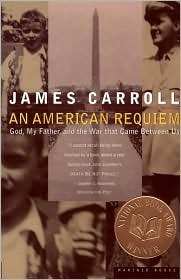
107700.jpgOne of my all time favorite books is an intense, serious, long, literary memoir by James Carroll which won the prestigious American Book Award in 1996 entitled An American Requiem: God, My Father, and the War That Came Between Us (Mariner; $15.95.)  Carroll came of age in the early 60s in the high-rolling world of inside-the-Washington Beltway, attending family events with the likes of Robert McNamara and dating President Johnson’s daughter.  His Irish Catholic mother expected him to become a priest.  His father, whom he adored, ended up being one of the top two or three people in the Pentagon, literally picking bombing targets in North Viet Nam.  In seminary, Carroll mets up with the likes of Thomas Merton, Dorothy Day, and the nonviolent Catholic peace activists led by the Berrigan brothers. You can imagine the family conflict in those stressful years.  It is a tragic and eloquent book and there are numerous reasons why it touched me so–I still often recommend it.  I immediately thought of it as I started Ian Cron’s book but I found Cron’s Jesus, My Father, The CIA, and Me to be less intense, much funnier, and finally more inspiring.  Carroll’s painful falling out with his father was over faith and politics and war;  Cron’s father was a depressed drunk and we don’t get to know him at all in the book.  His right wing politics were mostly kept to himself and his work for the Agency was well hidden.  (The scene of all these black-suited spooks showing up at his father’s funeral, with notes saying that he was the greatest man I ever knew, notes saying he was my mentor, notes saying that he saved my life, remains poignant and mystifying to Cron.  True to spy fashion, I guess, the men wouldn’t talk.  They even weirdly took back some of the flowers and wreaths they had brought to the viewing, as if even they were classified.)

Cron gets few answers about all this as his father ages and even less regarding the father’s negligence.  In fact, mostly just this:

“I was trained to drink milk and then swish whiskey around my mouth before we went out for the night” my father continued.  “They said the milk would make the smell of the Scotch stick to my breath.”


“What was the point?” I asked.

The Agency wanted people to think of me as the harmless, shallow American who drank too much. That way people wouldn’t be as careful about what they said around me.”  He  looked away.  “One day I became the person I was pretending to be.”

My heart was pounding.  There was something I’d waited my entire life to hear him say, words that I was convinced could change everything, past, present, and future.

I could tell he knew what I was hoping for when his face darkened.  He fixed me with a gelid glaze. “That’s what happened,” he said, folding his arms across his chest.

As the episode unfolds a bit more, and the conversation ends, Cron says to his wife, “That was an explanation.  I was hoping for an apology.”


Yet, as many resilient kids do, Cron figured out how to have some good times.  Before his high school drinking set in, he was a bit of a loner–odd, even. He tells about his experiences as an altar boy, his loyal British nanny, his eccentric boyhood.  I loved it, and related—these feelings are pretty universal, I’d guess.  When he swipes some road flares from his garage, taking them to a place in the woods where kids would hang out, he became a local hero.  I love the writing here; enjoy this excerpt:


Just when I thought the light from the phosphorus ziggurat couldn’t get any brighter or bigger, it quadrupled in luminescence and size.  It became a five-foot standing wave of colors, pulsing white to red, vermilion to orange.  It burned temporary blind spots into our retinas, but we couldn’t teak our eyes off the pillar of fire.  It was terrible and wondrous to behold.

Once we determined that the inferno wouldn’t kill us in the short term, the now sizable mob inched toward it, as though tiptoeing toward a burning bush.  By now, the tower was roaring so bright that the coming night was a bright as the day.  When it hissed and spit sulfurous sparks , we jumped backward and shielded our eyes and then approached it again.  Thick columns of smoke pushed into our faces by the light winds made our noses and throats burn.

But the glory of what we had unleashed was too much for eleven-year-old boys to take in all at once.  Think of the scene in Raiders of the Lost Ark when the crazy French archeologist takes the top off the ark of the covenant and looks inside, and his eyes bug out and he screams, It’s beautiful!”  That was us, only our faces didn’t melt off.  We were seized by ecstasy.  Johnny Gopnik was so enraptured that he kissed me full on the cheek.  He began dancing around the blinding fire, throwing his head back and screaming great whoops of joy.  Soon, Johnny’s frenzied delirium infected the rest of us.  Twenty boys danced around the fire like heathen savages on a South Pacific Island, lit up on moonshine, while their little sisters looked on wide-eyed, sucking their thumbs.  It was a scene from Lord of the Flies, only innocent and precious.  None of us would ever be so beautifully eleven years old again.

195585_696829504_4052782_n.jpgGopnik was the class star, an insider cool kid who had teased and bullied Ian, the boy with the frumpy nanny and bad car and glamorous mother and weird name.  The way he sets up this episode, and then the few sentences following it are deeply touching to me, and will be to anybody who has longed to be accepted, who has gone to great lengths to find approval in the eyes of others.  I loved this portion and the book, and suspect anyone with a bit of nostalgia or self-awareness will too.  In fact, I was hooked from the start as he uses the
device of decoding an old faded photograph (which is actually the cover of the book.) I know it may sound like a cliche, but it really works.  This is what memoir can do for us–it can put us in touch with our own longings and fears and joys, help us get a sense of our story.  Anyway, his youthful years are very well told.

As Cron gets older, as I’ve said, he drinks too much.  A kind Young Life friend, after the Steve Miller Band concert car-wreck fiasco, tries to speak truth to him, explaining how Ian becomes like his dad when he drinks.

I stopped breathing.  I stared at Tyler and he at me. A gust of January wind put its shoulder to the side of the barn and tried to push it down. Instead, it found a crack in a beam and settled for making it whistle. There was no other sound—until I bowed my head and cried.

There are acts of love so subtle and delicate that the sweep of their beauty goes unseen. I know of none more miraculous and brave than that of a seventeen-year-old boy coming to his friend’s side to take his tear-soaked face to his breast.

Don’t you just love reading words like that? Isn’t it a joy knowing that as goodness happens amidst great pain and brokenness, that an experienced writer can craft sentences that draw us in, sharing his or her story with us, and thereby allowing us, too, to take courage.  We all need “acts of love, subtle and delicate.”  We sometimes can get them from another’s well-told story.  This is one of those, a rip-roaring rides through London and Connecticut, high-school and college, young parenthood and discerning the call to Christian ministry. glory amidst pain, helping us along our own way.  

“How can you tell,”  Father Cron asks near the end, “when you’ve crossed the meridian that divides hatred and forgiveness? Is it when the dirt path beneath your feet, frozen hard by winter’s bitter wind, softens under the summer’s grace Or is it when words you’ve worked so long to free stroll out of the prison of your heart without your help and to your amazement speak themselves?”  

In this vivid memoir, he tells us some of these very words, words of amazement that finally can be spoken.  The very last page is as good as that second to last chapter.  I cried again.  I can’t wait for more.

BookNotes
SPECIAL
DISCOUNT
any book mentioned above 
2O% off
order here
takes you to the secure Hearts & Minds order form page

inquire here
if you have questions or need more information

Hearts & Minds 234 East Main Street  Dallastown, PA  17313     717-246-3333
 â€¨â€¨

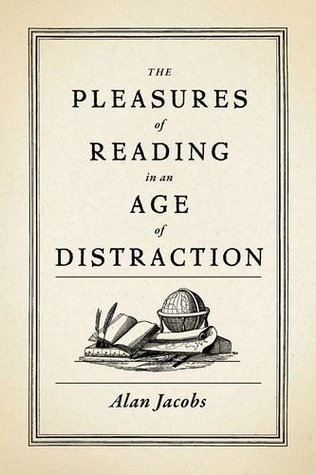
The Pleasures of Reading in an Age of Distraction by Alan Jacobs

Lost-in-a-Book-750-200x145.jpgAny who are readers know of the experience when you just don’t want a book to be over.  Either the characters are so interesting or the plot so compelling or the insight so helpful or the writing so utterly glorious that you just hate to turn that last page.  Closing the book is bittersweet in those cases, sometimes painfully so.  I know you know what I mean.

We here at the bookstore read books for a living although, like most people, we have to fight to make time for the books we really want to enjoy.  As many titles as I skim and peruse, preview or study, it is still rather rare to utterly, exquisitely enjoy a book.  It is a rare treat (even though there are many, many that I love and earnestly commend.)  I finished two such books the other day.  It was a bit sad on both counts, as I wanted more.  A lot more.  We are grateful for the authors, and I want to tell you about the two books that I am happy to say have been the best books of the year so far for me.  One was a serious study of reading, the other a memoir.  In this post I’ll describe the first one, The Pleasures of Reading in an Age of Distraction by Alan Jacobs and will return in a day or so to review the spectacular paperback, Jesus, My Father, the CIA: A Memoir, of Sorts…by Ian Cron.

For obvious reasons I am very interested in books about books and books about reading.  Memoirs of readers and the books they’ve loved are a delight to me.  Books about why reading is important—as foundational to our effort at imaging God as history-makers and culture-shapers—are helpful as I try to promote the development of the Christian mind. It is a good part of our story and what we are about here at the shop.

 A few months ago I had the great opportunity to deliver some lectures (that ended up perhaps closer to sermons!) at Dallas Baptist University.  My friend there, professor David Naugle, printed up buttons with the line of Augustine—tolle legge, “pick up and read” —as that was our theme for the weekend conference.  As I have done other places, I listed reasons for reading, noting that reading is a required spiritual discipline, and reminding students that the God of the Bible has been revealed to us in words.  Books matter.  Books make a difference.  They inform what we know and in some ways, how we know. Yada, yada, yada, literally.

But in all my exhortation–echoing the alarms about the erosion of habits of reading these days sounded by the excellent and very readable best-seller, The Shallows: What the Internet is Doing to Our Brain (out in paperback next week)–I perhaps underestimated one of the great reasons for reading: pleasure.  My heart-felt call to take up the vocation of reading as Christians ended up a bit too much like scolding.  I do not retract my conviction that we are nearly irresponsible in our day and age if we do not attempt to be well read but I might have tempered my tone if I had remembered delight.

Enter Alan Jacobs and his new book The Pleasures of Reading in an Age of Distraction9859899.jpg (Oxford University; $19.95) who eschews “must read” lists and the scolding approach of pharisees and elitists and the imperatives of the classic How to Read a Book (a book I often commend.)  He disapproves of How To Read a Book?  Why, the gentlemen Adler and Van Doren have been allies in our fight to get people to read more widely and carefully for decades— and Jacobs disapproves?


He does, he does.  And what fun it is to learn why.

I do not have time and certainly not competency, to seriously review this splendid work.  I hope you’ll trust me on this: this is a learned and interesting and informative book.  Jacobs—who teaches literature at Wheaton College, for crying out loud, and has been considered one of the finest essayists working today (Wayfaring: Essays Pleasant and Unpleasant is his latest collection published by Eerdmans)—knows that the biggest draw, the biggest motivation, the biggest reason we should read in God’s good world is because it brings us pleasure.  He wants to discover and re-learn the sorts of things that drew us to books in the first place.  Can you remember such things?

There is much more to his argument than “reading is fun” and he takes us along as he heads sideways and backwards, here and there, covering much in his meandering reflections. He tells stories of students who have lost their previous love of reading, having their passion for books nearly stamped out of them by teachers and papers and grades.  He tells of his own experience of the Kindle (a surprisingly wonderful thing for him) as he himself navigates the “shallows” and he ruminates on the time drawn away from books by blogging and his useful RSS feed.  So he does speculate a bit about this “distracted” age and commends the practices of solitude and silence that allow us to most deeply engage with the printed page.  But it is more than a jeremiad against “amusing ourselves to death” and I was delighted by it all.  He has good stories of his own childhood reading and cites a few poignant biographies of readers, touching something within me as I read, wishing to have more of those kind of experiences with books.

Jacobs appreciates Carr and The Shallows and he also quotes the other book I was pushing a few months ago at Dallas, Proust & The Squid: The Story and Science of the Reading Brain by Maryanne Wolf.  But he certainly is not opposed to on-line reading.  He confesses to using the internet a whole lot, even to find quotes and obscure sources for this book (which is to say he’s not only not a Luddite but an honest man as well.)  He studies medieval reports of reading (how “silent” reading developed) and he shares his opinions about how to generate greater enjoyment in that solitary world where we surround ourselves with a “cone of silence” and truly read, even in a buzzing coffee shop.

Do you want steps to take to be a better reader, a formula, a list, a how-to manual? You’re not going to find it here.  Dr. Jacobs tells of the way many famous thinkers came to love books (Machiavelli famously dressed up, usually in costumes that matched the era or writers he was reading) and he is knowledgeable about the accumulated wisdom of how to be a better reader.  He cites Auden, naturally, and Kipling, and writers as diverse as C.S. Lewis and the lead singer for LCD Soundsystem; he writes of Chesterton and Ivan Illich and Francis Spufford’s The Child That Books Built: A Life in Reading.  This is a book-lovers delight and it offers nothing short of wisdom.  But it doesn’t list steps or formulas.

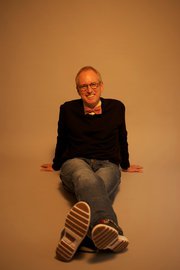
AlanJacobsPC.JPGAgain, here is why: Professor J’s main point is that we should read by Whim–we should read what we like. Reading is not akin to the insistence that we should “eat our broccoli.”  Books can be exquisite and pleasurable and we can be formed to be hungry for the experiences they bring us.  Somewhat similarly, his little
section on the root meaning of the word serendipity is wonderful.  Serendipity is a word we indie booksellers love because it plays into our approach to the craft of book display and sales: many people just happen upon books here at the shop that they just seem to think that they were meant to stumble upon; they, and we, believe that the right thing they most need at that time, by (providential) joyful serendipity, will find them.   You see when one is reading in order to check off a list, grabbing what they are supposed to (whether wading through certain works because they are “classics” listed on some professors Important List or because of the hegemony of the market and the big box bestsellers that shout “everybody is reading it”) one often doesn’t follow Whim.  Jacobs gets the phrase–reading by Whim–from a line by the poet Randall Jarrell who himself was astonished that some grand readers can re-read the same novel over and over.  They do so, of course, because they love it so.  Reading by whim–of course!

(And, yes, he needs to then ask questions about our desires, and what it is that we want to read.  Is this like giving a child permission to eat only candy?  Isn’t some broccoli good for you?  Well obviously.  But hear him out on that, too, which he explores quite nicely.  He is a college professor, after all, and surely no slouch which will be very obvious.  His other big book on this is called A Theology of Reading: The Hermeneutics of Love, published by the scholarly outfit Westview and sells for $34.00.  Not too shallow, that one! )

I cannot explain all the truly good sections of the pleasurable Pleasures of Reading; it seems to cover so much ground so seamlessly and I was hardly distracted at all in the hours spent with it.   It is one more wonderful example that nonfiction–and in some sections, quiet serious nonfiction—can be so enjoyable to read.  Social science and a bit about the history of literary criticism, ruminations about the good and the true and the beautiful, can, indeed, be joyfully written, insightful and wise, and themselves quite beautiful.  I think Jacobs is exemplary at this, drawing us in with almost sober, concise prose, telling light illustrations, offering a few dense footnotes and a bunch of funny ones (which you really mustn’t skip, if I can scold a bit—you’re gonna love ’em!) The heavy parts are supplemented with not a few witty lines— “Good Lord, No!” he cries, when he discovers the book How To Read Literature Like a Professor.  

Or, read this passage, sweet and with a punch.

And there is something even more beautiful, perhaps, when we achieve this “eye-on-the-object look” not because we have found our vocation but because we have found our avocation—when the reason for our raptness is sheer and unmotivated delight.  This is what makes “readers” as opposed to “people who read.”  To be lost in a book is genuinely addictive: someone who has had it a few times wants it again, and wants it enough, perhaps, to beg a friend to hide the damned BlackBerry for a couple of hours, please.

The Pleasures of Reading in an Age of Distraction is a book I truly found pleasure in and, true to form, I learned a lot, was inspired by much, changed my mind about some things, agreed with most, and just didn’t want the book to stop.   It was less than 175 pages, but it was substantial.  And did I say it was fun?

Yes, fun.  And important, too–a bonus.   As one novelist wrote of it, it is “a gem of a book, filled with insight and wisdom, and the power to transform lives.”  

Jay Parini, a renowned wordsmith himself, speaks of its appeal nicely,

As so many recent studies have suggested, the activity of reading itself is seriously threatened in this digital age. But Alan Jacobs — bless him — has an approach that will warm the hearts of serious readers and lead many prospective readers into the deeply satisfying swells of good prose. Reading should be a pleasure, and Jacobs shows us how to make sure we take delight in this work, which is not work at all. This is a witty and reader-friendly book, and it’s one I would happily give to any potential reader, young or old.

BookNotes
SPECIAL
DISCOUNT
any book mentioned above 
2O% off
order here
takes you to the secure Hearts & Minds order form page

inquire here
if you have questions or need more information

Hearts & Minds 234 East Main Street  Dallastown, PA  17313     717-246-3333
See the C.S. Lewis Institute Fellows List

There are a handful of great organizations that have allowed us to be
their book providers.  As6a00e554e8872388330134817ccaf0970c.jpg most of you know, we often go out on the road,
setting up displays, taking the titles to town, selling them to the
groups that are kind enough to allow us space.  We do this with
denominational groups and para-church ministries and we are grateful.

A few
organizations have us listed at their websites, encouraging their
patrons to order resources through us. Again, what a thrill for us–we are so grateful.  It is a joy when someone says
they saw our link at The Simple Way or Cardus, Square Halo Press or 
Burnside Writer’s Collective, The Washington Institute of Faith, Culture
and Vocation
or the best campus outreach gang we know, the CCO.  Just the other day a fellow wandered in who
had found us by reading Andy Crouch’s Culture Making: Recovering our Creative Calling (IVP;
$22.00) where we are kindly mentioned.  This week another guy ordered one of our favorite Brian Walsh books where he saw our name mentioned.  These organic connections are a
blessing to us, even if (if truth be told) they don’t generate tons of
business.  But we are honored to be connected to so many great groups and are glad for the ways they keep us afloat.

Every summer we get a batch of orders from our friends at the C.S. Lewis Institute
in Washington DC for their long-standing discipleship class called
their Fellows Program.  This rigorous training program for women and men is now being
duplicated in Atlanta (three cheers for Lewis fan and visionary Bill
Smith there), Annapolis, and, Lord willing, some other sites in years to
come.

The Fellows program takes Lewis as a jumping off point but
is not a Lewis study club.  It is a discipleship class which informs
both the heart and mind, using some of the best of today’s evangelical
authors and includes meeting with mentors, lots of handouts, readings,
downloaded sermons, even DVDs that have to be watched—including
dramatizations from Luther to Amazing Grace to Bonhoeffer. 
Being involved in this multi-faceted, year-long learning community
demands a large commitment (and, as you might imagine, most of the
participants around the DC Beltway are themselves already in demanding
careers, working in business and law and public service and research and
the like.)

book-of-hours-279x300.jpgCould you imagine creating a year of study and
learning in your community?  Do you know folks hungry to learn? Would
your program be worth their while?  What resources would you use? 

The
leaders of the C.S. Lewis Institute are theologically rigorous,
evangelical, and, like Lewis, not only quite orthodox, but delightfully
eager to read, talk, learn, and live out faith in the complexities of
calling and career in the modern world.   As you can see from their list, they read a
lot.

We are glad that they suggest our services to the Lewis Fellows
and we try to keep their required readings on hand so we can send them
out promptly as they order throughout the year.

We thought it
would be fun for our BookNotes readers to see this excellent list.  I
think I have read most of the books listed (in fact, have helped them
pick a few of them.) Their list changes a bit from year to year and some
years they have run a “year two” Fellows program with other titles.  We
thought you might be blessed just to know that these kinds of programs
exist and that these kinds of reading lists have been developed.  

Below is a link to my monthly longer Review column and the list of what the Lewis Fellows are now using. In some cases, they only have
to read certain key chapters.  The descriptions are mine and you should
recall that they work through these, using them wisely, discussing them
with mentors, supplementing their formation with other reading, classes,
videos and experiences.

We are grateful that they recommend us
as a source for their folks to purchase these books and DVDs, but we
should be clear that CSLI does not endorse Hearts & Minds in any
official way nor does CSLI have any official relationship with us.  We
have sold books at some of their large conferences (with N.T. Wright, 
Ravi Zacharias or Os Guinness, say), we love their meaty quarterly
journal (Knowing & Doing),
appreciate their work, recommend the free audio and video lectures
available at their website, and are glad for their friendship.

 And we are grateful for book lists like this. Maybe you might want to pick some up and read along.

SEE THE WHOLE LIST AT OUR MAY REVIEW COLUMN.  All books and DVDs listed are available at a discount, too.  Just let us know how we might help you further.  Happy reading!

C.S. Lewis Institute Fellows Reading List

There are a handful of great organizations that have allowed us to be their book providers.  As most of you know, we often go out on the road, setting up displays, taking the titles to town, selling them to the groups that are kind enough to allow us space.  We do this with denominational groups and para-church ministries.

A few organizations have us listed at their websites, encouraging their patrons to order resources through us.  It is a joy when someone says they saw our link at The Simple Way or Cardus, Square Halo Press or  Burnside Writer’s Collective, The Washington Institute of Faith, Culture and Vocation or the CCO.  Just the other day a fellow wandered in who had found us by reading Andy Crouch’s Culture Making: Recovering our Creative Calling (IVP; $22.00) where we are kindly mentioned. These organic connections are a blessing to us, even if (if truth be told) they don’t generate tons of business.  We are honored to be connected to so many great groups.

Every summer we get a deluge of orders from our good friends at the C.S. Lewis Institute in Washington DC for their long-standing discipleship class called their Fellows Program.  This rigorous training program is now being duplicated in Atlanta (three cheers for Lewis fan and visionary Bill Smith there) Annapolis, and, Lord willing, some other sites in years to come.

The Fellows program takes Lewis as a jumping off point but is not a Lewis study club.  It is a discipleship class which informs both the heart and mind, using some of the best of today’s evangelical authors and includes meeting with mentors, lots of handouts, readings, downloaded sermons, even DVDs that have to be watched—including dramatizations from Luther to Amazing Grace to Bonhoeffer.  Being involved in this multi-faceted, year-long learning community demands a large commitment (and, as you might imagine, most of the participants around the DC Beltway are themselves already in demanding careers, working in business and law and public service and research and the like.)

Could you imagine creating a year of study and learning in your community?  Do you know folks hungry to learn? Would your program be worth their while?  What resources would you use? 

The leaders of the C.S. Lewis Institute are theologically rigorous, evangelical, and, like Lewis, not only quite orthodox, but delightfully eager to read, talk, learn, and live out faith in the complexities of calling and career in the modern world.   As you can see, they read a lot.

We are glad that they suggest our services to the Fellows and we try to keep their required readings on hand so we can send them out promptly as they order throughout the year.

We thought it would be fun for our BookNotes readers to see this excellent list.  I think I have read most of the books listed (in fact, have helped them pick a few of them.) Their list changes a bit from year to year and some years they have run a “year two” Fellows program with other titles.  We thought you might be blessed just to know that these kinds of programs exist and that these kinds of reading lists have been developed.  

Here is the list of what they are now using. In some cases, they only have to read certain key chapters.  The descriptions are mine and you should recall that they work through these, using them wisely, discussing them with mentors, supplementing their formation with other reading, classes, videos and experiences.

We are grateful that they recommend us as a source for their folks to purchase these books and DVDs, but we should be clear that CSLI does not endorse Hearts & Minds in any official way nor does CSLI have any official relationship with us.  We have sold books at some of their large conferences (with N.T. Wright,  Ravi Zacharias or Os Guinness, say), we love their meaty quarterly journal (Knowing & Doing), appreciate their work, recommend the free audio and video lectures available at their website, and are glad for their friendship.

 And we are grateful for book lists like this.

C. S. Lewis Institute FELLOWS READING LIST  (summer 2011)

Margin: Restoring Emotional, Physical, Financial and Time Reserves to Overloaded Lives
Richard Swenson (NavPress) $15.99  Who doesn’t need some sensible
guidance about managing resources—time, emotions, money and such.  I
often tell people that this is the only book of this sort that I really
like.  We’ve often raved about the devotional that is also available (Minute of Margin) and the sequel (In Search of Balance.)  It makes a lot of sense to start with some attention to this very basic matter, our pace of life and wise sense of balance.

Ordering Your Private World Gordon MacDonald (Nelson) $15.99  A contemporary classic about priorities, character, and the inner life. Includes a study guide making it very useful as a foundational book.

Renewed Day by Day A.W. Tozer (Wingspan) $16.99  Some have compared this to My Utmost for His Highest, a year long devotional of extraordinarily insightful readings. This will surely touch you deeply, shaping your soul.  To have Tozer as a companion for a year is a brilliant idea.  I wonder if Lewis ever read him?  I know Tozer read Lewis!

Satisfy Your Soul: Restoring the Heart of Christian Spirituality   Bruce Demarest  (NavPress) $16.99  A studious, excellent, Christ-centered books about spiritual formation.  One of the best!

Knowledge of the Holy A. W. Tozer (HarperOne) $12.95  Still one of the most best-selling religious books of the 20th century, a passionate study of the attributes of God.

Quiet Time  IVCF Staff (IVP) $5.00  A small booklet inviting one to a daily quiet time.  Nice.

Spiritual Disciplines for the Christian Life  Donald Whitney (NavPress) $15.99  I sometimes say Whitney is a Reformed Richard Foster drawing more on Puritan sources than Foster’s monastic sources.

Spiritual Birthline: Understanding How We Experience New Birth  Stephen Smallman (Crossway) $12.99  Do you know how to tell your spiritual journey? Does understanding justification and regeneration matter?  Can you look back over your life and say when and how you crossed over the line to saving faith?  Very interesting!

The Legacy of Sovereign Joy: God’s Triumphant Grace in the Lives of Augustine, Luther and Calvin  John Piper (Crossway) $14.99  The passionate Piper has a series of books each studying a theme by way of three short biographies.  This one reflects on God’s saving grace as understood by these titans of faith.  Highly recommended.

The Pursuit of God: The Human Thirst for the Divine  A.W. Tozer (Wingspread) $12.99  Again, Tozer–a remarkably innovative and learned leader of the Christian & Missionary Alliance denomination–shows himself to be solid with traditional, orthodox rigor, and yet with a sweetly mystical strain.  Classic.

Concise Theology: A Guide to Historic Christian Beliefs J.I. Packer (Tyndale) $14.99 Our friends at CSLI are always on the look-out for how to teach basic theology with depth and warmth and brevity.  It doesn’t get more clear and solid than this by one of the most important Reformed thinkers of the last 50 years. 

Transforming Grace: Living Confidently in God’s Unfailing Love Jerry Bridges (NavPress) $14.99  Few books in recent years have explored the meaning of grace of justification and sanctification, for salvation and living, than this clear-headed, no-nonsense study.  This is stuff every Christian should know.  

DVD The Bible and the Christian Life: Six Sessions on the Authority, Interpretation,
 And Use of Scripture
John Stott (Zondervan) $19.99  You may recall that we’ve promoted this here before, and I’ve told of using it in an adult ed class at my own church.  Six excellent, dense, clear, thoughtful and inspiring lectures by the incomparable British evangelical. (If you are using this in an Sunday school setting, each of the six talks are divided into portions to stop the DVD and discuss the content.  Each lecture is just under an hour, so could be used in 6 weeks but can most fruitfully be used over 10 or 12 weeks.

DVD Luther Directed by Eric Til (MGM) $14.98 Staring Joseph Fiennes, this is entertaining, powerful stuff.  Kudos to those in Hollywood who brought this well made drama to the silver screen.

C. S. Lewis Institute FELLOWS READING LIST (fall, winter, spring, 2011-2012)

DVD Gospel of John (The Visual Bible) $14.99  The entire gospel, verbatim (in the Good News translation) dramatically acted with Henry Ian Cusick (Desmond from Lost) playing Jesus.  Directly by Philip Saville, it is tremendously done.

DVD Bonhoeffer: Agent of Grace (Gateway Films) $19.95  Staring Ulrich Tukur, this is still one of the best films on the famous martyr and his role in the German resistance.

DVD The Hiding Place (Worldwide Pictures) $19.95 Julie Harris was nominated for an Academy Award for this powerful adaptation of Corrie Ten Boom’s classic memoir about their time under Hitler.  Digitally restored and remastered in a wide screen edition.

Radical: Taking Back Your Faith from the American Dream  David Platt (Waterbrook) $14.99  Have we reduced the gospel to fit our own cultural preferences of individualism and upward mobility? Hear this simple exhortation to reject the values of materialism and ease; hear the call to give our lives in radical ways to the work of the Kingdom.

My Heart Christ’s Home Robert Boyd Munger (IVP) $1.50  This little booklet has changed lives, telling the parable of one who invites Christ into his home.  It has two great strengths: Jesus cleans up various rooms in the house (the bedroom, the library, etc) and He waits quietly for the resident to invite him to meet in daily quiet time.  Lovely, interesting, useful.

The Complete C.S. Lewis Signature Classics  C.S. Lewis (HarperOne) $29.99  This handsome, hefty paperback includes five great Lewis books in their entirety, making is a fine value.  Included are Mere Christianity, The Screwtape Letters, The Great Divorce, The Problem of Pain, Miracles, A Grief Observed, and The Abolition of Man.  Wit, wisdom, style, grace, scholarship, charm and truth.  There are other great Lewis books, of course (The Weight of Glory comes to mind, The Four Loves is popular and his Letters to Malcolm on prayer is sweet) but this one is a solid start for any good library.

The Good Who Loves You Peter Kreeft (Ignatius Press) $14.95  Kreeft, nearly a contemporary Lewis himself, teaches philosophy at the Jesuit Boston College, is beloved for his own wit and charm and clear-headed logic.  This is a deeply rewarding, rich text.  C.S. Lewis’ friend, author Sheldon Vanauken (author of A Severe Mercy) says of it “I know of no writer today who can deal with (the subject of God’s love) more justly and lovingly than Peter Kreeft has done.”

Studies in the Sermon on the Mount  Martyn Lloyd-Jones  (Eerdmans) $30.00  Well, anyone who follows Jesus must grapple with his major teaching, and the sermon is perhaps his most didactic session.  There are other books on this, of course, but Lloyd-Jones is truly one of the greatest preachers of the 20th century, who held forth in London for a generation. This big volume is a treasure chest, laden with sound insight and important commentary.

DVD  Malokai: The Story of Father Damien (Era Films) $19.99  What an inspiring drama, portraying the legendary Catholic missionary who moved to a leper colony in Hawaii in 1872 and his self-sacrificial ministry.  Produced in the Netherlands in 1999 it stars the likes of Peter O’Toole, Kris Kristofferson, Sam Neill and David Wenham.


The Reason for God: Belief in an Age of Skepticism
  Timothy Keller (Riverhead) $16.00  Well, what thoughtful class on Lewis-esque faith in the modern world would be complete without a book by the author The New York Times suggested could be our contemporary Lewis, the pastor of Redeemer Presbyterian in Manhattan?  This is a fine, well-written, accessible book about skepticism and the validity of Christian faith in our age.  Highly recommended. (And then read all his other books!)

Humility: The Journey Towards Holiness  Andrew Murray (Bethany) $7.99  A much-needed Christian virtue and one about which very little is written these days.  Brief, poignant, very Biblical, written in the older style of the famous  late 19th century South African evangelist.  

DVD Through the Shadowlands  (Vision Video)  $19.99  Staring Joss Ackland and Clarie Bloom, this is the older British movie, aired on the BBC, not the more popular one with Anthony Hopkins.  Lewis fans all commend it.

The Holy Spirit  Billy Graham (Nelson) $14.99  There are more sophisticated scholarly works on the Spirit, some more practical about the Spirit’s gifts or fruits, but few are as clear and helpful and full of great information and inspiration.  Graham was more of a great reader than most realize and this is a fine example of his lasting writing ministry.  Very nicely done.

Can I Trust the Bible: Defending the Bible’s Reliability Darrell L. Bock (RZIM) $4.95  Of course there are hundreds of books of various sorts and styles, but this slim booklet has great information preparing you to give a reasonable case for the trustworthiness of Scripture.  A very handy tool to have and to share with those who are perplexed.

Is the New Testament Reliable? (second edition) Paul Barnett (IVP) $16.00  With all the nonsense in the media about the gnostic gospels and the lack of historicity of the New Testament (not to mention the resurrection accounts) and any number of best-selling books about the errors of the earliest manuscripts, etcetera, etcetera, this is very interesting and a helpful case for authenticity and trustworthiness of the New Testament.  Very well done.

Meditating on the Word  Dietrich Bonhoeffer (Cowley) $17.95  In this remarkable volume you can read a letter Bonhoeffer wrote about the Bible, learn of his practical guidance about how to meditate on Scripture, and reflect on a handful of solid sermons on various Psalms.  Not to be missed. Compiled and edited by Episcopal priest,  David McI. Gracie.

DVD Did Jesus Really Rise from the Dead?  (Ignatius Press) $19.95  This is a fascinating and educational documentary featuring an array of conservative Catholic, mainline Protestant and evangelical scholars, from Fr. Mitch Pacwas, Johnnette Benkovic, Craig Blomberg, Craig Evans, Timothy Gray, Gary Habermas, Edward Sri, Roy Schoeman, Fr. Ronald Tacelli, Ben Witherington.  All have PhDs and each offer insight in this critical examination of the facts about the resurrection of Jesus.  Wow.

The Call: Finding and Fulfilling Your Life’s Central Purpose Os Guinness (Nelson) $17.99  Thoughtful evangelicals in the DC area who are striving to live out their faith and convictions in the marketplace, the academy, the think-tanks and corridors of power surely must have a strong understanding of the Biblical notion of vocation (as should we all.)  You may know I have viewed Os as a bit of a mentor and hero and often say this is one of my favorite books.  Kudos to CSLI for holding up this vision and reading this wonderfully rich and beautifully written work.

DVD  Amazing Grace (Bristol Bay/20th Century Fox) $19.99  Directed by Michael Apted.   Much has been written about this exceptionally popular drama about the profoundly Christian work of William Wilberforce, his sense of calling, and his effort to integrate his faith and his own political vocation.  The story of the long British campaign to abolish slavery has never been more wonderfully told.  A perfect movie to use in Washington, of course, but a vital one for us all.  Highly recommend to own and to loan.

CD “Understanding Postmodernism”  Mark Stibbes  (Father’s House Trust) $10.95  We have paid a copyright fee and have been given permission to duplicate this audio lecture by the creative British evangelist and are happy to make it available to friends of the CSLI.  There is so much more to learn about this topic, but this is an articulate starting point.

The Postmodern World: Discerning the Times and the Spirit of Our Age  Millard J. Erickson (Crossway) $14.99  Lewis fans will know that Lewis had great concern about the nature of truth, and also exposed the ways in which faith in scientistic rationalism reduced our insights, disregarding the role of the imagination, a human way of knowing that he valued deeply.  Was Lewis, then, an early postmodernist?  Hmmm. That isn’t the theme of this book—which attempts to give a fair and lucid explanation of the role of postmodern theories in popular culture, at the university.  One cannot avoid this question, and Erickson is a fine guide to the discussions, offering some wise, qualified appreciation and much critique of deconstruction.

BookNotes
SPECIAL
DISCOUNT
any book mentioned above 
1O% off
order here
takes you to the secure Hearts & Minds order form page
which offers billing and shipping options
inquire here
if you have any questions or need more information
just tell us what you want to know

Hearts & Minds 234 East Main Street  Dallastown, PA  17313     717-246-3333


What to read after the embarassing Camping Doomsday fiasco.

I swore I wasn’t going to dignify the foolishness about Harold Camping and his dumb promises about the end of the world, but I couldn’t resist posting a facebook video clip of Bruce Cockburn’s lovely song “The Last Night of the World.”  It seemed a good excuse to share my appreciation of Cockburn’s artistry (and, not a bad exercise: if it really was the last night of the world, what would you do differently?) 


But now, I can’t help myself. I keep thinking about this odd weekend. I won’t rant and rave but I will name some books that, well, come to mind.  And we’ll offer you some deals to hopefully get you to place an order or two.

Firstly: I don’t need to tell our readers that we believe deeply that the Bible presents us with great news that, in Christ, through His atoning death and bodily resurrection, God in God’s mercy is reconciling and restoring and redeeming all things; God is rescuing the cursed cosmos, not destroying it.  It is this world that God so loves, after all.   It isn’t fully helpful to say we “go to heaven” for eternity because Jesus is, in fact, coming back, (as, in the grand Biblical metaphor, a refiners fire) truly making “all things new.”  Matthew 19:28 and Ephesians 1:10 puts succinctly what is explained in Colossians 1 and Romans 8 and imagined in the new creation_regained_new_wolters[5].jpgcreation poetry prophecied in Isaiah, all finally pointing to a (re)new(ed) sky and Earth, promised in Revelation 21 and 22.  This “all things new” newness, as Al Wolters explains in the book that is one of our true all time favorites, Creation Regained: Biblical Basis for a Reformational Worldview (Eerdmans; $14.00) does not tell us that God is making a planet brand new but re-newed or restored; God is healing the planet, not bringing us a new one. (The Hebrew in Isaiah 65:17 is similarly about re-newing, for instance.)  This approach has been vital to our founding vision here at the shop and has been a topic of much conversation over the years.

 We can get a nice yet provocative little glimpse into the implications of this in Richard Mouw’s fantastic book When the Mouw-Kings-Marching-197x300.jpgKings Come Marching In: Isaiah and the New Jerusalem (Eerdmans; $14.00), a book which I cannot recommend more heartily.  If you haven’t read it, trust me—it is wonderfully interesting, clear, and helpful.  You will understand our bookstore and vision here so much better if you absorb its insightful Biblical vision.

Anybody care to chime in on a “comment” here at Booknotes?  Am I right that this is eye-opening and thoughtful Bible study?

For those really wanting to study this, we surely recommend N.T, Wright’s Surprised By Hope (HarperOne; $24.99 or the very excellent DVD series by the same name.)  For one you may not have heard of, we have a rare little book imported from overseas called The Future Great Planet Earth: Good News About the Future of the Earth According to the Bible by Dutch Bible scholar Wim Rietkerk (Good Books; $9.95.) [We only have a few of these left and may not be able to fill orders after we run out.]

I suspect you might think that my fascination with new creation and the Big Hope of Christ reigning over a really restored cosmos is quirky or less than central to ponder.  It is my experience, though, that once one gets this–all things new, or “every square inch” as Kuyper put it— all other aspects of Christian discipleship—work and calling, evangelism, worship, the Christian mind, the arts, social concern, work for civic renewal, interest in science, racial justice and the like (not to mention creation care itself!) and a healthy approach to spirituality all can more easily fall into place.

What if media outlets and religion reporters (and responsible Christian bloggers and preachers, in fact) pointed people to this kind of stuff as they scrambled to denounce Mr. Camping’s nuttiness?  These next days while people are still talking about this remain an open window to share what the Bible really says about the great hope we have! 

Another great way61031601_b.jpg to more fully grasp the promised restoration of all things—the continuity between this world and the next, so to speak—is in Michael Witmer’s very nice book, Heaven Is a Place on Earth: Why All That You Do Matters to God (Zondervan; $16.99.)  I love it and believe it would be eye opening to nearly anyone in ordinary churches of any sort;  his style is particularly warm and evangelically-minded, though, so there is nothing fishy. There are few demanding portions, but most is quite accessible and uplifting.  The study questions are excellent and give plenty of food for thought and next steps for this radically all-inclusive way of life.  

For those wanting a more mainline denominational study most specifically about eschatology, you might want to pick up Lutheran Biblical scholar Barbara Rossing’s popular critique of Left Behind rapture theology called The Rapture Exposed: The Message of Hope in the Book of Revelation (Basic Books; $15.95.)

Okay.  So I don’t buy that rapture stuff, and don’t think that the most reasonable, faithful, and historically-accepted way of reading the texts allow for that.  I wish the news reports wouldn’t have assumed, as many did, that the only thing wrong with Camping’s agenda was his date-setting and over-confidence.  I don’t think orthodox believers should concede that that was the only problem; he is just way, way off on a whole lot of stuff about a faithful way of seeing history, our place in the world, and God’s intent and promises…

A DISTRACTION
I think we have regrets about the weekend End fiasco because, as Gabe Lyons nicely put it on Good Morning America, this stuff distracts us from our real purpose and work, from being busy serving God and neighbor.  Some evangelicals (although actually fewer than you might think, I’d say) have allowed end-times speculations, bizarre interpretation of Daniel and Revelation, and weird methods of counting of numbers and names in the Bible to determine who the anti-Christ might be, to distract them from serious missional engagement.  I hate to sound snide about it–and I pray that I do not–but sometimes when well-meaning customers come in the story asking for books of “prophecy” (like is American in the ends times, a la John Haggee, say) I direct them to Haggai commentaries.  Spend some time with Amos or Habakkuk, I sometimes suggest, if you want prophecy. Eugene Peterson’s wonderful and slightly revised Run With the Horses (IVP; $15.00) is a fabulously rich and easy-to-read set of meditations on Jeremiah.   God’s prophets spoke into their times, calling for social reform and holiness and justice and cultural repentance, they didn’t just invite people to try to predict the future. How can we help folks get that?
< br />Oddball religion isn’t very attractive and, frankly, minimizes the legitimate Biblical teaching about judgement.  Camping is easily dismissed, but a God who, as the creed puts it, will return to judge the quick and the dead, is not.  In our effort to distance ourselves from Camping and his ilk, we laugh him off, and maybe lose an opportunity to create a meaningful reputation of people who do, indeed, have a high regard for the Kingship of Christ, know that “fear of the Lord is the beginning of wisdom” and wants to promote holiness–social and personal–because we desire to be true agents of authentic righteousness. We shudder to think that Camping confuses people about judgement, but he is right in some basic sense, as the creed affirms.

Still, the best way to even talk about judgement or wrath is to first earn the right to be heard by doing the good works that Jesus told us to do.  To need to be ready to explain our hope (as Peter instructed in 1 Peter 3) suggests that somebody might actually ask us: why do you seem so hopeful in light of the dreary evidence of our cultural malaise?  What would it mean to live as people who are asked that?  (Why else do we have to be ready to explain that hope, unless we are raising eyebrows and provoking folks to wonder what we have going on!  This presumes the opposite of a doomsday theology!)  The aforementioned Mr. Lyons has documented how younger evangelicals are themselves eager for such a principled and wholistic faith, who want to be known as hopeful restorers, contributors to cultural re-integration, not turning into the cranky critics (of their parents left wing or right wing or disengaged religion.)  Maybe his book The Next
nextchristians-198x300.jpg Christians: The Good News About the End of Christian America (Doublday; $19.99) would be the perfect antidote to the weirdness of Camping’s camp. (It was mostly the strength of this book, and his giving voice to a new generation of culturally-engaged younger evangelicals, that inspired ABC to call him and invite him on air over the weekend.)  Or, how about using those “Q Group Studies” DVDs I posted about a week or so ago that he produced?  Talk about responsible, moderate, thoughtful, socially-active and culturally-engaged discipleship.  Talk about real world spirituality.  If our churches were more known for this sort of stuff, that would be on the nightly news, not some sad old radio preacher who has little to say that is wise or good or beautiful or true.  If you feel like you need to do some “catch up” ball, showing your community of faith and neighbors (and especially younger adults) that you’ve got a better picture of faith than what was on the news over the weekend, get these going in your group.  You’ll be glad you did.

BAD NEWS
Of course, the flamboyantly bad witness of preacher Camping has not been the only black eye for conservative Christians these days.  There is a cottage industry of books against the Christian right the last few years, some of them more alarmist than called for, some more polemical than insightful, and several more bellicose and intolerant than the right-wingers they are debunking.  Yet, a bit of helpful critique of the dead-ends of socially-active fundamentalists and evangelicals is called for, especially if we tend to dismiss Camping’s crowd as a really fringe cult. 

broken_words.jpgSo, we admit that there have been others who have presented the watching world with some pretty sad stuff, and we should reflect on it from time to time. 

Broken Words: The Abuse of Science and Faith in American Politics by Jonathan Dudley (Crown; $21.99) is a fascinating new study that might help us right about now.  Dudley is a young author, a science graduate of Calvin College in Grand Rapids and a recent graduate of Yale Divinity School.   From abortion to gay marriages to evolution to the ethics of stem cell use, the last decade was full of hot-button culture warring.  How did the science, and the politics of this science, develop as it did, and why?  And how would a young man coming of age in the evangelical sub-culture that esteemed the politics of Jerry Falwell and James Dobson come to conclude that their views are fatally flawed? 

Religion observer and eloquent reader and writer Phyllis Tickle says

Hands down, Broken Worlds is the most insightful, clear-eyed, and popularly useful overview to date of why and how evangelicalism has come to be such a powerful and intractable political and doctrinal bloc in American affairs…Written in vivid, conversational style, Broken Words also carries within it the gentleness of affection and familial courtesy, for Dudley was himself reared evangelical.  There is no meanness of spirit here, no clanging of swords.  There is simply an urgent demand that we look now and accurately at how politics has led many among us to reversals of our historic faith and practice , and, ultimately, to divisive and destructive civil politics and prejudices.

Dale Martin is a professor of religious studies at Yale and he writes,

Jonathan Dudley has rendered a great service with this brilliant book.  By taking on the use by social conservatives of both science and scripture to push their agenda…Dudley exposes the inconsistencies and contradictions in their claims as well as their methods of interpretation and argument.  The remarkable aspect of Dudley’s book is its astonishing juxtaposition of scientific and religious knowledge and sensibilities.  Dudley is equally educated in theology, biblical studies, and biological sciences.  The combination is unusual and notable; the writing accessible and elegant.

I do not think this interesting book is the final word on these contentious issue, how the evangelical right has aided contentiousness by failing to be adequate in science, Bible or theology.  I haven’t finished it myself, so don’t even know if I agree with it all. But who cares?  It is making me think and offering some context and perspectives to consider.  I do agree that it is a valuable contribution and might be well worth reading with a friend or book group.

GOOD NEWS
Perhaps we might supplement our somber reflections on “what went wrong” with the good news that, in fact, Biblically-informed folks have done much, much (much!) good in Western civilization.  The the ordering of thought about the world derived from the Bible has allowed for the development of science and democracy and medicine.  Who better to remind us of that than a person of color, born in the sub-continent of India, of Hindu descent who has studied various worldviews—Eastern, secular, and Christian?

Vishal Mangalwadi has been a person of great interest to me for years; we have imported27535_132908093409557_5020_n.jpg books of his from Indian presses, in fact, as he has written with great passion and authority about the relationship of Biblical truth and
social reform.  Some think this gentleman activist is the “Francis Schaeffer of India” because he has brought together the uniquenesses of a Christian worldview, shaped by solid theology, into a wide-as-life cultural engagement, and a passion for both evangelism and social justice.  He has studied in ashrams and in his countries leading secular universities–and spent part of a year at Schaeffer’s Swiss L’Abri.  In fact, after his studies there, Mangalwadi returned to India to boldly serve the rural poor through several creative initiatives.  His frontline engagement fighting oppression and corruption has landed him in jail, helped prevent a mass revival of widow-burning, and led to politically organizing peasants and lower-caste “untouchables.”  Christianity Today has even called him “India’s foremost Christian intellectual.”   Which is to say, he has earned the right not only to be admired, but to be read.

content_the_book_that_made_your_world.jpegVishal Mangalwadi’s major new release, The Book That Made Your World: How the Bible Created The Soul of Western Civilization (Nelson; $22.99) is the kind of handsome, big hardback that you want to spend much time with.  It is broad in scope, lucid and insightful, learned and inspiring.  I tend to shy away from books which are too quick to connect Western culture with Biblical religion, in part because Western culture, despite all the very good and helpful developments, has done way too much harm to be celebrated without qualification.  And some who write books celebrating Western culture seem nearly tone-deaf to the cries of the poor, the deathly faith in progress that has ravaged the Earth, the way in which industrialization was successful on the backs of slaves and the destruction of native peoples.  If one can’t say that, and mourn it adequately, then I simply don’t have stomach for the singing of accolades.  In this fallen world, all historical development is a mixed bag, and it is nothing but hubris–or worse, ideological idolatry—to suggest otherwise.

Enter Dr. Mangalwadi.  His recounting of Western history, and how it has been supremely and decisively shaped by Biblical truths—or truths derived from Biblical revelation—rings right.  He realizes that not all that has happened in the West has been good.  He realizes that not all that has happened in the name of Christ has been Christ-like.  And he does not demonize other cultures or worldviews.

Yet, he has clear-headed insight about how ideas have consequences.  It is not unfair to note (as Gandhi did, in fact) that the Hindu religion does not offer much incentive to work for historical change or social justice.  The Biblical witness is one which teaches much about human dignity and freedom and justice; the consequences of these ideas have been wonderful.  Follow these historic ideas down from Moses at Sinai and Jesus on the Mount and Paul at the Acropolis, through Augustine and Aquinas and Calvin and Witherspoon, Wesley and Wilberforce and you end up understanding Martin King and (or so it seems to me) our author,  Vishal Mangalwadi.

Mangalwadi teaches us much about how the worldviewish assumptions about the nature ofvishal-mangalwadi.jpg nature, the impact of time, the role of history, the ways of humans and institutions and other deep notions have played out in very significant ways creating the plausibility of what developed in Western history.  It certainly isn’t just that people following Christ are nicer or more noble, but that their impulse to serve and to create meaning and to make a difference create a dynamic, a dynamic that yielded universities and hospitals and counter-voices to the narratives of colonialism and violence.  Even at its worst, there were reformers, offering truer visions for church and state, business and culture, education and family.  Notions of rights and responsibilities were decisive.  Ideas about innovation and creativity were important.  Art and science and new institutions blossomed.  Mangalwadi tells the up-side of Western history with an inspiring verve that reminds us of the difference the Judeo-Christian faith has made.  All of this because of the Holy Bible.

I value books like this and hope you do too.  They are wise and informative, serious enough to be taken seriously but not so weighty or dense that you have grimace as you attempt to dutifully plow through them.  I have noted before how much I respect this author and book and, in light of the bad press Christians have gotten because of this Camping nonsense, I thought it the perfect time to invite you to read it.  And share it with others.  Maybe send it to your local religion reporter if they did a less than helpful story on the end of the world stuff.  It has some truly thrilling stuff in it and tons of historical insight.  I’ll bet you will learn a lot, and be thankful.

Here are some of the endorsements that celebrate this volume.

“This is an extremely significant piece of work with huge global implications. Vishal brings a timely message.”
           Ravi Zacharias, author, Walking from East to West and Beyond Opinion

“In polite society, the mere mention of the Bible often introduces a certain measure of anxiety. A serious discussion on the Bible can bring outright contempt. Therefore, it is most refreshing to encounter this engaging and informed assessment of the Bible’s profound impact on the modern world. Where Bloom laments the closing of the American mind, Mangalwadi brings a refreshing optimism.”
           Stanley Mattson, founder and president, C. S. Lewis Foundation

“Vishal Mangalwadi recounts history in very broad strokes, always using his cross-cultural perspectives for highlighting the many benefits of biblical principles in shaping civilization.”  
           George Marsden, professor, University of Notre Dame; author, Fundamentalism and American Culture and The Outrageous Idea of Christian Scholarship

“The Indian perspective is a breath of fascinating fresh air for American readers. I wish and pray that it finds readers willing to have their minds shaken and their hearts, yes, their hearts, stirred as well.”
           James W. Sire, author, The Universe Next Door and Habits of the Mind

“This book is well overdue! If there is one book that has shaped Europe’s art, architecture, commerce, education, ethics, family life, freedom, government, healthcare, law, language, literature, music, politics, science, social reform, and much more, it is the Bible. Yet biblical illiteracy is almost universal in Europe today. We need Vishal’s clear, prophetic, Eastern voice to jolt us back to reality before our rich biblical heritage slips beyond our grasp.”
           Jeff Fountain, director, Schuman Centre for European Studies, the Netherlands

“Vishal’s book is one of a kind–vast in scope, penetrating in its depth, and prophetic in its message. If we fail to listen and recover the importance of the Bible in personal and public life, then the sun may set on the West.
This book is a tract for our times and a must-read for anyone concerned with impacting our culture.”
           Art Lindsley, author, C. S. Lewis’ Case for Christ

“With solid, detailed information, clarity of presentation, and logical force, Vishal Mangalwadi enables anyone willing to see how our ‘Western’ world depends entirely upon what the Bible, and it alone, teaches about reality and how to live.”
           Dallas Willard, author, The Divine Conspiracy and The Great Omission

41cTkrRdAZL._SL500_AA300_.jpg
Want a great resource to share with someone–or use to brush up your own awareness—of just how influential a Christian worldview has been to the formation of Western arts, science, medicine, literature, human rights, politics and culture?  For the last few years we’ve highly recommended a hardback called  A Faith and Culture Devotional edited by the very smart and very energetic Kelly Monroe Kullberg and her partner-in-promoting wonder and goodness,  college teacher and radio host, Lael Arrington.  Here is the review I wrote when it first released. (Read it if you want to know more, if you wonder if this would be a good gift for someone you know.)  Gladly, it is now available in paperback (bearing a slightly new titles and a very cool cover design.)  It is now called Faith & Culture: The Guide to a Culture Shaped by Faith (Zondervan; $14.99.)  At 300+ pages, it is more than a bargain!  We’d love for you to order some of them—-love it!

We think this daily reader is a great, great resource to have on hand, a remedial education on stuff that we may not know.  It would be great for a smart high-school student going off to college, or a lovely bed-side reader for anybody with a good curiosity.   Dozens of respected authors helped make this a reader-friendly anthology, useful and fun.  Highly recommended.

serious-times-making-your-life-matter-in-urgent-james-emery-white-paperback-cover-art.jpgWe need not only ponder the way the Bible has shaped the best of Western ideals and culture, but we can happily learn about great saints and reformers.  We can be inspired by great stories of the past.  This is what Serious Times by James Emery White does. 

But, also, can I put another plug in here for the fabulously well-done, New York Times best-selling (and Hearts & Minds award-winning) biography of Dietrich Bonhoeffer by Eric Metaxas?  I’m sure you know, but it is called Bonhoeffer: Pastor, Martyr, Prophet, Spy (Nelson; $29.99) and we are fully proud to commend it.  Or, we’re always eager to promote Metaxas’s equally acclaimed book on abolitionist and Christian social reformer, William Wilberforce, called Amazing Grace: William Wilberforce and the Heroic Campaign to End Slavery (Nelson; $13.99.) What great and truly influential books they are!  There are many books like this, and I have told you about this James Emery White one before.  It is a favorite, and having met the author at the CCOs Jubilee conference in Pittsburgh last winter, I love it all the more.   Serious Times: Making Your Life Matter in an Urgent Day by James Emery White (IVP; $15.00) offers chapter-length introductions to a handful of Christian leaders, offering insights that we can apply to our own lives in our own serious times.  What a great book, and what good insight about William Wilberforce, Dietrich Bonhoeffer, St Patrick St Benedict, C.S. Lewis, Mother Teresa and  “the wild boar in the vineyard” the church reformer, Martin Luther. 

MY HOPE–AM I NAIVE?
Would that the media might recall this sort of stuff every time a Harold Camping attempts to creates a media sensation or some less than admirable person of faith fouls up.  Perhaps the reason they do not is partially because our local faith communities aren’t known for being these kind of people.  Some churches just don’t help people be activists or reformers; they don’t promote character formation or create cultures of learning about our past or our present.  Is it shallow of me (or hopelessly naive) to believe that books like this can help change us, help us become the people that are known (to use Gabe Lyons good phrase from Isaiah 58) “restorers”?  How I long for a day, in the spirit of Matthew 5:16, when some discredited cult leader gets some national press, that local journalists and bloggers say, “Nope, we’re not going to cover that.  Because we know the sorts of people that most Bible-believers really are.  We know that those who hold to the fundamentals of the faith aren’t wacky.  They are restoring this messed up world, and their faith in Christ is hopeful and good and admirable.  These are the folks we’ll tell about instead.”  To the extent that our selling these sorts of resources helps fuel that kind of thoughtful and active maturity, we are very, very glad.

BookNotes
SPECIAL
DISCOUNT
any book mentioned above 
2O% off
BUY ANY TWO GET 25% OFF
order here
takes you to the secure Hearts & Minds order form page
as we say there, we can bill your church
inquire here
if you have questions or need more information

Hearts & Minds 234 East Main Street  Dallastown, PA  17313     717-246-3333
College grads. Be sure to honor them. Here are book suggestions.

HIGH-SCHOOL GRADUATES
In my last post I asked that you help us spread the word about what I insisted was the bestmake-college-count-a-faithful-guide-to-life-and-learning.jpg possible gift to honor high school graduates who are going off to college.  Make College Count: A Guide to Life + Learning by Derek Melleby (Baker; see our 25% discount)  is a book I care a lot about—I know the author, helped out a tad with the book itself, know the students he interviewed to tell of their “college transition.”  Besides these valued connections, the more important reason is that is really is the finest example of substantive, important content and cool packaging, a fabulous mix of message and medium, to give as a gift to a soon-to-go-away-to-school student.  I know some astute campus workers who are going to use it on campus in the fall with incoming freshman, so, again, it really is an excellent and thoughtful book.  Small, upbeat, breezy and, if they read it (which I think they most likely would given its attractive style and brevity), life-transforming.  To be invited to think about your life, to ponder some big questions, to ask about what comes next is a great, good gift.

COLLEGE GRADUATES
gs_pic1.pngHere are some suggestions for books to give to college graduates.  Some churches honor their college grads, and, sometimes, not unlike my mocking of cheesy and unhelpful gifts sometimes earnestly given to teens, some congregations tend to miss this good opportunity to truly honor their college grads.  College graduates (or those graduating from other institutions of higher learning, trade schools, culinary schools and such) have just completed a grueling number of years dedicated to learning about and mastering the skills of a vocation; they determined (with, or probably without help from their church) that they were called to a career.  Now is the perfect time to underscore that, to commission them, even if only symbolically, by honoring them with a book to help them understand that God cares about what they do next.

If the congregation is small or you only have a handful of recent graduates, you may want to consider browsing through our (somewhat dated, but still quite useful) link to our Books By Vocation.  Click on the career that comes closest to that of your graduate—education, communications or media studies, psychology, business, law, engineering, the arts, science—and choose a book custom-selected for their own field.  If your team or pastor or church educator doesn’t know the majors of your college grads, it is never to late to show interest.  I know some younger adults who stay connected to their church merely because their church has shown interest in what they do professionally.  The local church becomes the conduit to say that God cares about his or her career choices and God will enable each person to serve well in their chosen vocation.  Call us if you’d like to consult about that list or other “books by vocation.”

Athe call.jpgnother fantastic option–the one we most regularly suggest this time of year–is to gift the grad with the handsome paperback book The Call: Finding and Fulfilling the Central Purpose of Your Life by Os Guinness (Nelson; $17.99.)  It is literate, beautifully written, mature and yet not overly demanding—it can be read devotionally doing each of the short chapters every day.  In our years of book selling and recommending gifts, there is no other title that we so regularly suggest for such momentous occasions.  You may know that I reviewed it as my one pick of a most important book in the anthology of book reviews Besides the Bible: 100 Books…(Biblical; $14.99) So it is important, we think.

For those unsure of giving a rather large book, a few of the key chapters of The Call—that everyone serves God, in all areas of life, that any career if done before an “audience of One” can be a holy vocation–have been excerpted into an inexpensive and still quite handsome small sized paperback under the title Rising to the Call: Discover the Ultimate Purpose of Your Life (Nelson; $12.99.)  That, too, is a lovely little gift, and we are eager to promote it this time of year.

Nice Bibles make good gifts this time of year, as do handbooks for basic Christian living.  Guides to the deeper spiritual life may be appreciated and some churches give a prayer book or daily devotional. We might recommend the very popular Common Prayer: A Liturgy for Ordinary Radicals compiled by Shane Claiborne, Jonathan Wilson-Hartgrove and Enuma Okoro (Zondervan; $24.99) which has great appeal, especially among younger folks, it seems.  Or how about a book of poetry?  I know it is a long shot, but it might be a good idea—call us if you’d like to discuss some options.

Still, it seems to us that it is a particularly relevant time to honor the graduates sense of call.  Why not get them a book that equips them to follow God’s way in the work-world?  Or to discern “what comes next”?  Or to consider how to be faithful in a new phase of life?  We’ve often recommended general resources such as A Journey Worth Taking: Finding Your Purpose in This World  by Charles Drew (P&R; $12.99) or even Don’t Waste Your Life by John Piper (Crossway; $9.99.)  He has that great chapter on “serving God in the 8 to 5” that I have written about before.  If you like a passionate and uncompromising call to live for the glory of God, noting the cost of discipleship, this is a great, gutsy gift.

let your life speak.jpgLet Your Life Speak: Listening for the Voice of Vocation by Parker Palmer (Jossey Bass; $18.95) is a truly lovely gift, hand sized, a warmly peach color, written gently and slowly, inviting readers to a reflective experience of pondering their heart’s deepest desires. In many ways it is the opposite of the big Biblical vision of Drew and the passionate call to dedication in Piper.   It is quiet, not pushy, a touch mystical.  I know with the title it seems that this would be ideal for first year students, but its depth and contemplative tone seems more appropriate for those just a bit more mature.  It is a fine way to say “listen to God in your life as you seek for a job or move to new places after college.”  I know some who have truly valued receiving it, and I know some parishes that are always on the look-out for opportunities to bless their folks with this exact book.

Mastering Monday: A Guide to Integrating Faith and Work  John Beckett (IVP; $18.00.)  This is one of my picks for “best book” as an introduction to this important area—how to serve God in the workplace.  I choose it because it is fairly generic (not just for business people, say but g
ood for any career) and it is a handsome hardcover that makes a nice gift.  There are others—some smaller, some more sophisticated. This one is thoughtful, includes relevant Bible exposition, and offers very inspiring insights.  This one is a very fine choice.

TRADE SCHOOLS
Know somebody who graduated from a technical school or who is taking a job working withshop class.jpg their hands?  Shop Class as Soul Craft: An Inquiry into the Value of Work
by Matthew Crawford (Penguin; $15.00) was a huge seller last year this
time.  Now out in paperback it is still considered to be an
extraordinary story.  I have written about it before, so you may recall
its basic trajectory: Crawford was a brainy scholar, doing papers and
academic fact-checking at some prestigious think tank.  He was woefully
unhappy, even sensing himself at odds with some profound moral center. 
Did what he do matter?  Does it make a difference?  Alas, he started a
motorcycle repair shop and, well, the rest is history.  While this
serous book is a bit of a critique of the epistemologies of the
academy—teaching a lot of, uh, stuff that doesn’t matter or help
people discover meaning or truth—it is mostly (as the subtitle says)
an reflection on the meaning of labor.  Know any really smart blue
collar guys?  Women or men who have taken up a craft as their calling? 
Anybody who graduated with some technical degree (and who likes to
read?)  Shop Class as Soul Craft could be the ticket.  How many philosopher-mechanics have written wisely on the work of our hands?  Wonderful

SEMINARY GRADS
The-Pastor-A-Memoir-by-Eugene-H.-Peterson.jpgLastly, do you know anyone who has graduated from a seminary, someone seeking ordination to serve God in the ministry?  We have the perfect suggestion: Eugene Peterson’s wise and witty memoir, his story of being called into church work.  Simply called The Pastor: A Memoir (HarperOne; $25.99.)  Peterson has other books more directly about “vocation holiness” that might be more directly useful, but this new hardback would make a splendid gift.  

Don’t miss this opportunity to affirm the great achievement of earning an advanced degree.  Commission folks, in a manner of speaking (if not in a real ceremony), to go with God into their career and calling.  Help them “think vocationally” in this vital time in their lives.  It would be our great pleasure to help you help them.  Order or call us today.

BookNotes
SPECIAL
DISCOUNT
any book mentioned above
– special offer good until June 30th –
25% off
order here
takes you to the secure Hearts & Minds order form page
as we say there, we can bill your church
inquire here
if you have questions or need more information

Hearts & Minds 234 East Main Street  Dallastown, PA  17313     717-246-3333
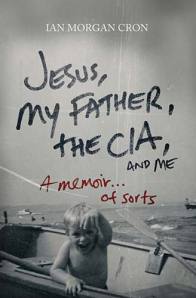
The absolute best gift for (college-bound) high school graduates: Make College Count

It is always a joy to be standing around the church hallway and see some teens sauntering up the stairs to their Sunday school class.  Many medium-sized mainline churches don’t have many youth, and it is a blessing that we have a good handful.  It was a joy this morning as I was sitting in the back of the sanctuary, noticing a few seniors, students that I have nearly watched grow up.  A few I played with in the nursery 15 years ago; my own youngest daughter’s cohort will soon be graduating from high school.  Last year this time—well, most every spring for the last dozen years or so, when my oldest was active in youth group and I knew some of those kids with senioritis—I was in a serious funk about what might become of these older teens, kids I knew and cared about., mostly all heading off to some kind of higher education.  Would they get involved in some campus fellowship group when they went off to college?  Would they find themselves being followers of Christ in their new homes?  Would a local church reach out to them?  Would they develop good new friends that would wisely assist them in discerning the big questions about their future, their major, their callings and careers?  Would they, like most young adults in what developmentalists now call “the critical years”, take up the values of the American way of life or would they choose God’s Kingdom’s ways—upside down values of service and justice and a deeper purpose than upward mobility?  Would they find a spouse that suits them well?  Oh, how we fret about these very young adults.

Of course, the fretting comes to a head for me when we pray over them (if we do at all) or recognize them in some churchly ceremony.  Does your church do something for students graduating from high school?  And does it sound something like God’s radical call to them and a profound blessing upon them, or just a religious veneer over the same kind of stuff they hear at their mawkish high school commencements?  Do we commission them to a new phase of Kingdom living, with fear and trembling, or do we just sprinkle a little civil religion over the hope they’ll be happy and successful?  I hope it is the former. 

And—again, of course—this concern of what message we send to our graduates really comes to a head for me when we give them some sort of graduation gift.  (We are asked this in the store each year, too.)  In our experience some well-intended folks get students a plaque or pen or gifty type knick-knack. (A tie tac?  How do you ask a customer if they are out of their cottonpickin’ minds?)  Most students find these remembrances pretty boring, reinforcing their hunch that church is about as relevant to their lives as, well, their great grandma’s gifts of a monogrammed hankey.  Or, usually better, we give them a book, like a faux leather compilation of Bible promises, as if some 18 year old is just dying to do a concordance type study of every listing of every Bible verse around a certain theme.  Anxious about leaving home?  Wondering what major might make sense or what classes to choose?  I am not so sure they will turn to that handsome little pocket guide, even if they do deep down want to know what God might say to them.  I recall one kid trying to sell such a book back to us; you had to admire not only his ingenuity but his honesty.  “I just wouldn’t use a book like that,” he said.

And so, I am here to announce, as urgently and as plainly as I can, that
we have found the best book to give to college-bound high-school seniors and graduates.  Those in the throes of that Image.asp.jpg“college transition” will enjoy this book which is substantive, interesting, important, and–and this is important—cool looking and fun.  It is called Make College Count: A Faithful Guide to Life + Learning by Derek Melleby (Baker; $12.99.)  As Steve Garber (one who has studied, and studied with, college students as intentionally as anyone I know, most college professors included) writes of it,  “Make College Count is just right!  What Derek Melleby has done is find a way to come alongside someone on the way to college and offer guidance about things that matter most.” 

THINGS THAT MATTER MOST 
There are several very nice books for college-bound students and they have useful stuff about getting along with room-mates, doing laundry, avoiding the college party scene.   A couple warn about the atheism of their secular professors.  They almost all admonish youngsters to not have sex, to stay in touch with mom, to study hard.  They are fine.  And they are almost all cleverly written and still mostly inane.  This 17 or 18 year old has just completed the first major phase of his or her educational life;  it feels (at that age, at that transition point) like one of the most important moments in their whole life, and they are off to one of the most challenging (and expensive) and life-changing, formative episodes of the rest of their life, and we give them a whimsical guide to doing laundry, and one last warning not to have sex?  This is the best God’s people can do??  This is all we have to say?

Mr. Melleby, in Make College Count, thinks more foundationally; without seeming at all high-minded or overly serious, he winsomely invites students to think about, as Garber says, the things that matter most of all.  There are seven questions that Melleby has discovered to be important for students to ask themselves, most usefully, before they get to State U, or at least early on in their college experience. Derek is increasingly known as a national leader on the psychology and spirituality of the college transition, and he affirms the research that has shown that college is a time where emerging adults will become the person they most likely will be for the rest of their life.  How can they make the most of that time?  What might we ask them to consider, to set them in the right direction?  What are the things they should wrestle with a bit before they jump into the pace of the collegiate experience this fall?

Melleby is a fine and at times funny writer, and after each chapter, where he takes up one of the primal questions, he does an illuminating interview with a young woman or man who has recently been out of college.  He invites them to look back over their shoulder and tell their story, how their identity and sense of calling was shaped by their university years.  These are not composites–they are real interviews. I know almost all of these students. Derek (I’m happy to disclose) is a very good friend and his campus ministry work where he met these students occurred at a campus near here.  I can say that nearly all of these students who are now young alum, have bought books from us, have shared some of their story with me, and I can vouch for their thoughtfulness and integrity.  The interviews are like little sidebars, and they are upbeat and very interesting.  And really helpful.

So, I am confident that this little book—offering a way to discover a path to true success at college and beyond (as it says on the back cover)—is the best thing we’ve seen like this in 30 years of book selling.  There is simply no other book that asks these very
basic sorts of fascinating questions and offers such solid counsel about such good stuff in such a brief, colorful, (and likely to be read) format. 

Here is a part of the table of contents:

What Kind of Person Do You Want to Become?  Following Jesus During the Critical Years
Why Are You Going to College?  Finding Your Place in the Story of God
What Do You Believe? Taking Ownership of Your Faith
Who Are You?  Securing your Identity in Christ
With Whom Shall You Surround Yourself?  Connecting with the Christian Community
How Will You Choose a Major? Putting Your Faith into Action
How Do You Want Your Life to Influence Others?  Leaving a Legacy

And, happily, he selected a few key books and websites that he suggests as “resources for the road ahead.”  He names that great college conference that we help with, the CCOs annual Jubilee Conference, and, yes, he mentions Hearts & Minds BookNotes.  How cool is that?

MakeCollegeCount_Web.gifDerek is employed by the CCO, in partnership with the Center for Parent and Youth Understanding directing their College Transition Initiative.  He co-wrote my favorite book for  college students about taking their faith perspective into the classroom, The Outrageous Idea of Academic Faithfulness (a must-have resource for students, presuming a somewhat more intentional reader.)  This illustrates the broadly evangelical perspective he holds, and the exceptionally thoughtful approach he brings, besides his upbeat tone, his funny stories, his great interviews, and the fantastic and artful design of the small hardback.  This is a book you can give to any college-bound student with great confidence that it will be appreciated.

You know the old story of Goldilocks’ bears?  Some books for graduates are too this, some are too that; some too long, some too short, some too heady, some not heady enough.  I can hardly name any that are truly “just right.”  Make College Count: A Faithful Guide to Life + Learning is the prime example, perfect in tone, fabulous in content, great in appearance and price.  We cannot recommend it any more highly; we think it will be used in the lives of emerging adults at this key transition point in their lives.

Here is a simple video clip of Derek talking about the book, noting some initial feedback he has gotten from young readers, explaining just what he was hoping he would accomplish by providing a resource like this.  It is low-key and a great illustration of Derek’s clear, kind, and insightful style.  I hope you enjoy it.  And then I hope you buy a boat-load of the book.  From us, of course.  We told the publisher we would get behind this, and we look forward to promoting it anywhere we can.  Won’t you help us?  It sure beats the tie tacs.

If this impresses you as it does us, if you are eager for the high school grads that you know who are heading to college or trade school to have an opportunity to reflect on this basic, good stuff, why not forward this to whoever it is at your church who buys the gifts for the graduating seniors?  If you have a relative or friend, buy the book yourself.  But could you help us get some congregations or youth ministries on board?  We are offering a better than usual discount as you can see, and if the order is quite large, we can be flexible, doing deeper deals with larger purchases.

Thanks for helping us spread the word.  Time is short so do this today.  We think it can make a difference.  We are glad for those that get the importance of this, honoring our grads in ways that are meaningful and have the possibility of really being helpful.  We are very glad for any orders you send our way.  And if you don’t know any senior high kids heading off to college, can you say a quick prayer for the next generation of the college-bound, their unique time in history, and the call for them to ponder deeply “the things that matter most.”

BookNotes
SPECIAL
DISCOUNT
 – special offer good until June 30th –
25% off
order here
takes you to the secure Hearts & Minds order form page
as we say there, we can bill your church
inquire here
if you have questions or need more information

Hearts & Minds 234 East Main Street  Dallastown, PA  17313     717-246-3333