Worship Words: Discipling Language for Faithful Ministry by Debra & Ron Rienstra. A great gift for your pastor or worship leader

I hope you saw my little meditation about snow, enjoying the beauty of creation, and the wonderful gift book (with excellent Biblical essays within) edited by Norman Wirzba, The GIft of Creation: Images from Scripture and Earth.  Scroll back a day if you missed it.  I enjoyed telling folks about it as it really is beautiful.  (And, yep, I was right—the snow was deep and if one took the time to look, it was breathtaking.  And, yep, my bad back (and Beth’s bad knees) took a beating as we shoveled Saturday and Sunday.)

And so, many churches were closed.  Our nearest city banned cars the day before, making it hard for staff to get in to shovel at the church or even clear the parking lots, such as they were. Our church canceled Sunday school and although I was stoked to show another week of our Ken Bailey DVD about the Christmas texts, it was, frankly, good not to have to get up early.  A sheepish hoo-ray.

Which made me think of pastors, their loyalty to get up and show up, week after week after week, usually preaching week in and week out, officiating at worship, up front, like it or not.  It isn’t easy work, and while there may be some jobs that are more demanding, I am positive that most folks really don’t understand the stress that their clergy friends endure.  And this time of year isn’t easy.

Why not give a thank you gift to your pastor here at year’s end?  It could be a Christmas gift, an end-of-the-year thank you or a true Christmas gift, given on Epiphany (the 12th Day.)

I’m sure BookNotes readers have their lists of good books they’d love to share, and I’d encourage you to do it.  We’d be pleased if you ordered from us, of course. Call or email me if you want more custom-made recommendations for your favorite preacher. (Just tell us a bit about him or her, of course, so we can suggest things that would work well for such an honoring occasion.)

worship words 2.jpgOr, consider giving this, our vote for one of the very best books for worship leaders to come out this year:  Worship Words: Discipling Language for Faithful Ministry by Debra Rienstra and Ron Rienstra (Baker Academic; $19.99; 285 pages.)  We’re sure you’d be pleased giving it and they’d be pleased getting it.

It is an eloquent and lovely book, very nicely written. (Debra is also an English prof and has written an excellent book on spirituality and a memoir on being pregnant which we loved.) Ron teaches preaching and worship at Western Theological Seminary.  It seems that the book has been inspired somewhat (and given a practical tone despite its erudition) from being involved as lay folk for years in a parish that is renown for its creative, interesting, Biblically faithful, thoughtful, artful, contemporary/classic Reformed-ish liturgical experiences. (Church of the Servant in Grand Rapids, if you want to know; I only say this because we have visited there with dear friends and know of the congregations intentions in this area.)

 The authors have also been involved in the fabulous workshops at the Calvin Center for Christian Worship where they have listened and learned and thought long and hard about worship and the sorts of words we need for engaging, reverent, spiritually-mature worship.  It is really insightful and quite interesting how they honor various sort of human experiences we need from worship, and various tones and styles that are appropriate in different settings.  And, of course, different cadences, rhetoric, verve and mood to accomplish the appropriate feel for each context.  It is wise like this or this stuff, and theologically informed.  A truly great book!   

Marva Dawn says it is “an extraordinarily rich treasure chest of new insights, the best of research, and time-tested wisdom” which offers “phenomenal contributions.” Sally Morgenthaler calls is “classic.”  Tom Long says that it moves us towards language that is “lively, crisp, inviting, profound, and full of wonder.” I cannot think of a pastor or worship director or church leader of any denomination who wouldn’t appreciate this balanced and thoughtful guide.

BLOG SPECIAL DEAL
$5.00 off
regularly
$19.99
now only
$14.99

Hearts & Minds 234 East Main Street Dallastown, PA  17313     717.246.3333

Gift of Creation: Images From Scripture and Earth by Norman Wirzba & Thomas Barnes

It is late Friday night here in South Central Pennsylvania and the weather people are predicting a serious storm with deep snowfall. It is coming down brisk but soft even now.  As a struggling businessman, I am frustrated that this will surely kill holiday shopping on what, for us, needed to be the busiest day of the year.  As a Christian, I stand in awe at God’s power and the power of creation, wanting to praise Him in all things, and trust His providence.  And as a human being, as a busy and stressed person this crazy time of year, I’m actually looking forward to the reprieve that a heavy snowfall brings.  Ahh, yes, my bad back will hurt as we shovel out, but the stillness and beauty will be spectacular.  As I grow older I dislike the cold and hassle, but I still relish the sheer beauty of God’s changing seasons.  Snow really is an amazing thing, isn’t it?  A servant of God, Psalm 119:91 assures us.

So, a quiet night, tense with anticipation of the coming storm, and a time for reflecting on the importance of (again) a robust and serious doctrine of creation.  Obviously, this is why I wrote about Copenhagen earlier in the week, and reminded BookNotes readers of the call to stewardship of creation, and the duty to do justice to all creatures (not the least of which are the people in developing countries that feel the anguish of environmental disregard.)  The whole creation (as Romans 8 puts it) is really groaning.  Can we “read the signs of the times” and see judgment and mercy, and the need for response in this groaning?  Let us pray, in Jesus name, for eyes to see and ears to hear.  Despite controversies of fudged climate data and debates about proper policy and carbon offsets and such, we know God wants us to care for His beloved planet. 

Besides the dozens of great, theologically-sound and quite compelling Christian studies of the environment, creation-care and proper response to the environmental crisis that we stock (and that we hope your church library or fellowship group or parish reading group has a few of), we can—and I believe, we must—read books to remind us to enjoy the beauty of the Earth. Of course some of us may be able to do this without reading about it, but I am sure that some of us need a little help (or, at least, can use books as resources in this habit of heart.)  Of course we must protect her from the ideologies, systems and practices that assault her.  (We would not sit and gaze at the beauty of our lovely spouse or sister or mother if she were being mugged or raped, would we?)  Yes, we need analysis and action, theology and politics, research and guidebooks.  Yet, I am confident that sustained care for these things (from daily acts of recycling or buying more organic food to lobbying for wise public policy options) will not just come from a stewardship theology or duty.  It will come, also, from delight. (Maybe you know the Bruce Cockburn song from the CD You’ve Never Seen Everything reminding us “don’t forget about delight.”  Lovely, lovely quiet rock, with cool, jazzy fiddle and soothing harmonica, from a profound poet and prophet on these very matters!)

Here’s are three books to help us regain our focus, see the sensuous real-ness of things, train our hearts and eyes to enjoy and care.

remember creation.jpgRemember Creation: God’s World of Wonder and Delight Scott Hozee (Eerdmans) $15.00  Thank goodness that this previously out of print collection of essays and sermons is now back in print! It is one of my personal favorites for insight and sheer beautiful writing.  It is less about the science or economics of protecting the Earth or fighting for ecological sustainability but worshiping God by appreciating creation.  It is truly about the spirituality of seeing, of understanding the complexities of the Earth, of being doxological in our walking around on the Earth.  A lovely collection, wonderfully written, enjoyable and entertaining and, very profound. It, I think, would be pretty convicting for most of us.  Very highly recommended.

gift of creation 2.jpgThe Gift of Creation: Images From Scripture and Earth  edited by Norman Wirzba, photography by Thomas Barnes (Acclaim Press) $39.95  There are many books of nature photography, collections of stunning calendars and coffee table collections.  Some are by serious photographers, some are a bit cheesy. You can probably get ’em cheap at the bargin bin at the local big box store.  A few are breath-taking, but have stupid new age quotes over the pages (or Bible verses in ugly fonts, which, aesthetically speaking, isn’t much better.)

  It is hard to find a book that has top-notch photography, caringly produced by local folk with real integrity, and that isn’t marred by goofy or sappy/inspirational text.  We trust Norman Wirzba, who has written widely on a Christian philosophy of creation, directs a remarkable program at Duke U. researching a sense of place, and (for what it indicates) has written about, and is friends with, the poet-farmer-essayist Saint Wendell Berry Wirzba’s book on sabbath is radical and wise and grand; he is one to listen to.  When I heard that Wirzba had helped pull together this Kentucky photographers pictures, I knew we had to have it.  It is from a small regional indie press: of course.  We had to order it.

Little did I know that this heavy, well-produced hardback–big, but not too big– has over ten essays alongside this amazing, amazing photography. The photographer is well respected and teaches forestry at the University of Kentucky.  He’s worked in extension services as a wildlife expert and his photography skills have been widely used all over the country.  And, little did I know (ha!) that a few of the contributors to the text of this book are acquaintances, writers I deeply respect and appreciate.  Within this handsome full-color gift book you will also find
flower.jpg really important and wonderfully serious essays by the likes of Calvin DeWitt, Matthew Sleeth, and an essential, creative and exceptional piece by Dr. Sylvia Keesmaat (a New Testament scholar best known as co-author of Colossians Remixed.)  If this book just had the essays, it would be worth shelling out for.  That it is also a coffee table gift book full of rare and wondrous shots, meditation pieces about the gift of God’s wonderful world, the value far exceeds the cost. This book is a treasure, a delight, and I intend to spend time looking carefully at it tomorrow during the snowstorm.

Here are some of the authors and their topics found in The Gift of Creation: Ellen Davis from Duke (who has a brilliant book on agrarianism and the Bible, by the way) on Genesis 1; Norman Wirzba reflecting on “being a creature” in light of the Noah story; John Rausch (who directs the very important Catholic Committee on Appalachia) explains the relationship between “sabbath creation” and “sabbath economics.”  There is a piece on the Psalms, one by a Jewish scholar and activist on “nat
ural
landscapes.jpg intelligence in the Song of Songs” and there is a very important one called “Nature’s Travail and Renewal in the Prophets” (written by Presbyterian Bible scholar and activist, William Brown.) I think the chapter on Jesus and the Earth (in Luke) looks very good and I have thoroughly enjoyed, and learned much, again, from the remarkable piece by Sylvia Keesmaat on Paul and the hope for creation.  It is so beautifully written (even as it is in formed by serious scholarship and profound Bible knowledge) that it nearly cries out to be read out loud.  Lastly, Barbara Rossing from the Lutheran School of Theology reflects passionately on themes of creation found in apocalyptic literature.  There is a helpful appendix offering various internet sites for creation care and a good and serious bibliography. Who knew a gift book could carry so much intellectual learnings and Biblical scholarship?

But, yet, again, it is the artwork here, the gloriously well-done photo shots that make the book.  It is a nicely made, handsomely arranged and nicely shown story of a man and his camera, the work that he does, and the fruit of his amazingly wise eye for the details of this world of wonder.  There are fairly standard pictures of winter churches and National Park vistas and delightful waterfalls and sunset lakes and grazing fawns–which could be cliched, I suppose, but are not in this arrangement.  And then there are the close up looks at the bright color of a spotted salamander or the dull grayness of a cliff or the brown, brown fur of a hare.  Yes, some of these look like Audubon calendars or Sierra Club appointment books (and, I hope you know, that is a great compliment, indicating the quality of the composition and the beauty of the work.) I admit that a few shots perhaps seem a tad plain, but perhaps this is good.  Not all of God’s good world is stunning.  There are rather ordinary looking animals, rather mundane fields, barns that are, well, just barns, and not striking in their cool paint-peeling hipness.  I sense that this Tom Barnes guy is (how do I say this nicely) not an elitist or at all pretentious.  He sees stuff that most of us see, and some of his shots are fairly ordinary–even the ones of moose or flowers.  They are accessible.  Yes, yes, there is stunning light and odd shadow and blasts of colors in autumn leaves and sheer mist over giant river.jpgwaterfalls.  Still, I think some of these shots are somehow more approachable than some in the calendars, showing us the subject–the ordinary life of the creation itself—and not drawing attention to the artfulness of the photographer.  That is, these are less about Barnes talent and more about the flora and fauna, the landscapes and locations. Even the graphics are under-whelming, nice little fonts that aren’t powerful; again, some designers these days are so absolutely fabulous that you end up looking at the sidebars and pull quotes and color and shades. This is not like that.  I think it works well.  It is, after all, produced by Norman Wirzba, a friend of Wendell Berry’s, and the photographer works in forestry.  This is a book for homes and outdoors-lovers and Sunday school classes, not the bohemian galleries.  

The subtitle is “images from Scripture and Earth” and indeed the Biblical study is serious, but often imagistic.  And they open up our minds to have hearts to see.  Conversely, these nice pictures open us up to hear the Word of God.  Excellent photography, wonderful creation, serious Bible study.  I don’t know of any book like it, I really don’t.  Thanks to Wirzba for pulling it off, and many, many thanks to Mr. Barnes for focusing our attention on the handiwork of a generous, involved Creator.  The Gift of Creation is a fine, fine book, a gift itself, in more ways than one.  Enjoy!

winter.jpgWinter: A Spiritual Geography Gary Schmidt and Susan Felch (Skylight Paths) $18.95  We have often promoted these four books (I’ve noted the Winter one, here, but there are three others, naturally entitled Spring, Summer and Autumn.)  These are a dream-come-true for literary-type nature lovers.  Edited by two fine writers from the English department of Calvin College in Grand Rapids, with a very broad spiritual eye, these include short pieces, poems, essays, excerpts of novels, and great literature from across the ages and faith perspectives.  From Annie Dillard to Henry David Thoreau, from Sanskrit to Hebrew Bible, from E.B. White to John Updike, these essayists and writers help us see the season as a metaphor, to enter into, to appreciate, to experience.  What a genius idea.  I know a few folks who have given all four as a handsome gift pack, wrapped together with rugged twine or seasonal yarn.

Snowy Day Blog Special Discount Deal
20% off
ORDER HERE
We can easily get these to you (in most locations) by the end of next week.  Order today.

Hearts & Minds 234 East Main Street Dallastown, PA  17313     717.246.333


.

Study Bibles, The Mosaic Bible, Oswald Chambers Devotional Bible, The Transformation Study Bible, The NIV Stewardship Bible, The NRSV Life With God (and, yes, the very cool Waterproof Bible)

You may have heard it said–and if you shop for Bibles here at the bookstore, you have heard it saidlife app.jpg here–that a good study edition of the Bible is an incredible asset, a fabulous tool, and a great gift (to get or give.)  We think that the Life Application Study Bible is really, really useful. We are glad that it comes in a variety of bindings and sizes and translations such as the New Revised Standard Version (NRSV), The New Living Translation (NLT), The New International Version (NIV), the New American Standard (NAS), the KJV and the NKJV.  Most days I say it is my favorite study edition.  The notes are helpful, the introductions to each book of the Bible excellent and truly interesting, the time-lines the clearest of any study Bible.  Character studies and explanations of the ordinary daily application of Biblical themes are user-friendly and inspiring, almost always keeping a fabulous balanced between factual information and inspiring suggestions on what it all means and what to do about it. It always reminds you why it matters–hence, the “life application” title.  (I jokingly call it the “So What?” study Bible. Great stuff, especially for those not used to digging in, looking things up, or who for those who may wonder what in the world that could possibly mean.

Somewhat more academic and even more thorough is the nearly classic NIV Study Bible
NIV Study.jpg published by Zondervan; evangelical, interesting, often showing arguments for several interpretations and explaining various options of meaning, it has often been called the best study Bible available and it seems to be the best selling of any serious study edition. I know some of our mainline friends are skeptical of its conservative bias, but we really do recommend it. You may not love the NIV, but the notes are very, very helpful, the concordance and maps superb, the various notes outstanding.  It comes in small, medium, large, and really large, and an array of colors, duo-tones, with all kinds of fashionable designs and clever features.  Gone are the days of white vinyl and silly little zippers.  The array of options is mind-boggling; I am so grateful that such a serious, thoughtful, solid bit of Bible scholarship has been made commercially viable and popularly interesting.  You can give one to nearly anybody and it feels right.

ESV.jpgFor those that like the very conservative rendering of the recent and quite elegant English Standard Version (which rather reminds me of the old RSV) their new study bible, done by Crossway, of course, is called The ESV Study Bible, is second to none.  As we described it when it first came out, t is loaded with tons of very excellent notes, solid information, and is the most finely-made, sturdy and enduring hand-crafted Bible for ordinary use on the market. Even those that don’t like the mildly Reformed bias will be impressed with the diligence, care, and insight with which it has been produced. Magisterial, thick, and truly an amazing study Bible.

In the NRSV there is the slightly left-of-center, but well done HarperCollins Study Bible published under some affiliation the Society of Biblical Literature. It may be the best for study from a critical perspective, scholarly and studious, although the maps aren’t the best, and the type is rather smallish. Still, it is important.

 For our United Methodist friends, at least, there is a really handsome duo tone study edition called The Wesley Study wesley study bible duo tone.jpgBible published naturally by Abingdon. Wonderful scholars who truly love the church served as senior editors—Joel Green (now of Fuller) and Bishop William Willimon, so it has a widely accepted, centrist,and very useful approach. You can imagine the sweet blend of rigorous scholarship and piety and the routine call to action and service.

 I am especially appreciative of The New Interpreter’s Study Bible that is done
New Interpreter's.jpg somewhat in relationship to the remarkable multi-volumed, hefty Interpreters Commentary set. (That is the one that has the entire NIV and NRSV text.  N.T. Wright, for instance, does Romans.)  I wish there were more editions and bindings and spiffy covers and better marketing (like the evangelical publishing houses like Zondervan and Crossway.)  It deserves to be better known.  Of course it is very scholarly and spends much time in what some might find to be a bit arcane detail.

Westminister/John Knox did the Discipleship Study Bible (with Apocrypha) which is also very, very well done for those in mainline or ecumenical settings, thoughtfully done with not too much emphasis on literary and historical background, from a moderately critical framework. Yet,. despite the rigor and detail, it hopes to be practical for daily discipleship and seems to appeal to serious Christians in mainline circles, wanting a mainline approach without the arcane, abstract critical detail. This is one of the most recent, critical study editions in the NRSV and the team who worked on it is impressive, mainline denominational folks.  Bruce Birch, Gail O’Day, Brian Blount, Thomas Long.  Thin paper makes this one not too heavy to carry…

Given these new, liberally-oriented, mainline NRSV study editions, why anyone would want to use the meager and eccentric New Oxford Annotated is beyond me.  For years it was the only study edition in the NRSV but it is now so surpassed by these others that it’s puny and biased scholastic notes can happily be ignored.  I hate to pick a fight with my ecumenical pals, but I’ve seen it erode Biblical authority in some who have used it and I am annoyed by how few serious notes it has on urgent questions or complicated passages.  And when it says “scholars agree” hold your nose because you know your about to get what should rather be said “some scholars believe…”  Oh yeah, don’t get me started.

Life With God Bible.jpgFor a more devotional approach in the NRSV what used to be called the Renovare Spiritual Formation Study Bible has been re-issued by HarperOne in a handsome typeface and good, solid cover, slightly more compact than it was previously, re-named The Life With God Bible. It comes also in a Catholic edition, in paperback or leather. Its
notes were done mostly by Richard Foster,  Eugene Peterson, Dallas Willard, and Walter Brueggemann.  I know there are websites out there that say that these fellows are unfaithful and weird.  Let me just say that is hogwash.  This is a very useful resource, a fine devotional guide, powerful and spiritually attentive.  If you don’t have a NRSV and don’t need a detailed study Bible, this is a very nice option.

Here are a few we wanted to highlight as great, but lesser known, new editions.  They’d make a great gift for the Bible lover who “has everything.”  Bet they don’t have the Water Proof Bible, now do they?  Read on!

mosaic-bible poster.jpgThe Mosaic Bible  New Living Translation  (Tyndale) $29.99 (hardcover) $49.99 (antique brown imitation leather)  I am drawn to the look and feel of a book, and holding this Bible with it’s rich orange hints over dark brown, I’m immediately drawn to it. Both the hardback and the smooth faux leather feel great. It has pages and pages of lovely celtic cross graphics, in fine ink, highlighted with red (like a prayer book would, but even nicer than most.) This is classy to see, and the first third is a daily devotional, with prayers, poems, short readings, quotes from folks as diverse as medieval mystics to Wendell Berry to Martin Luther.  Perhaps the best feature is the full color contemporary art that accompanies this–nicely produced on glossy paper.  The artists are from all over the world and while it is usually quite evident how the art piece illumines the devotional reading and Bible portion, they usually are fairly modern.  There are a few classics, and a couple of standard icons. 

Let me be honest: the New Living Translation is a great modern language, dynamic-equivalent
mosaic two covers.jpg rendering (a few very reliable scholars whom I know worked on it, like Al Wolters who worked on Job, just for instance) and it uses inclusive language where it should.  The modern art is hip, global, and allusive while the iconography and Celtic prayer book design is classic— perfect for more mainline parishes or liturgical churches.  Yet this odd admixture of evangelical publisher, NLT, and liturgical appeal makes The Mosaic Bible a hard sell. It really hasn’t gotten the acclaim it deserves.  I think there are BookNotes readers who are going to love it.  (Go to www.HolyBibleMosaic.com and click on “try mosaic online” and you will have a jaw-dropping experience of literally turning the pages and seeing the art, devotions and expert page design. Browse around and what others have said about it. If you want one, do let us know.)

The Oswald Chambers Devotional Bible
  English Standard Version (Crossway) $34.99 (hardcover) $54.99 (Navy/Tan imitation leather)  This ESV edition has 365 readings from the extraordinary young Christian writer whose books were all done posthumously by his beloved wife.  This is in double-column paragraph format, has a 12,000 entry concordance, and is (like all the Crossway ESV Bibles) is smyth-sewn and very durable.  Visit the ESV website at www.esn.org/freesoftware to check out the translation and some free o-linestuff.  This is a fabulous way to become familiar with this serious, very accurate, and highly literate rendering of sacred Scripture and a usable way to dip into the best of this great early 20th century preacher.

transformation study bible.jpgThe Transformation Study Bible  New Living Translation (Tyndale) $39.99 (hardcover) $69.99 (dark brown Milano) I generally dissuade customers from getting study editions done by one guy.  I don’t care who it is, nobody can tell you everything about everything, so we generally don’t promote Dakes or Scofield or any other Bible with a single person’s name on it.  Yet, we will make an exception (with the reminder that the notes are just one person’s interpretation, and an inter-denominational, team-based approach like the ones listed above are better for deeper study.)  I make an exception here because I have found many folks, especially those that are not really well-schooled, have come alive to reading commentaries by using the 50-volume, paperback Be series of evangelical Bible preacher and pastor, the solid and delightful Dr. Warren Wiersbe. Here, we have Dr. Ws reflections on every page of the Bible, drawn from his beloved, clear-headed commentaries.  He has here notes to motivate you to experience real-life transformation by highlighting key character issues in Scripture. There are overviews and introductions in conversational style.  Wiersbe’s study notes clarify key passages by explaining what they mean in down to earth plain-spoken language. He is a teacher’s teacher and I’m happy to commend this genius idea of putting his stuff alongside the Biblical text as a study edition of the Bible.  Nice, especially for beginners.

stewardship study bible.jpgThe Stewardship Study Bible  New International Version (Zondervan) $39.99 (hardback) $69.99 (black/caramel imitation leather)  I’ll tell a true little story.  My sales rep for this fine company was surprised when I turned up by nose at this as he presented to us for our consideration. (Well, he’s usually thrown a curve ball or two when he visits here, with us taking what nobody else approves of we complain about some of their cheesy big projects.) I told him I was tired of these niche marketed themed devotional Bibles, with Bibles for mothers and leaders and business people and environmentalists (okay, I liked that), ones about prayer and for seekers and maybe left-handed mechanics…boy, was I ever wrong.

This truly holds up the very Biblical notion of whole-life stewardship and has sidebars and extra notes and some lovely colored pages and explanatory features listing anything that might be helpful as readers discern their calling, struggle to think about economics, honor their duties to manage their time and resources.  There is a helpful customized stewardship concordance, helping readers study this vital theme. The Stewardship Study Bible has contributors that I admire greatly, and it is thrilling to think of pondering their advise alongside the Word of God—-writers such as Ron Sider, Dietrich Bonhoeffer,  Os Guinness, Marva Dawn,  Lee Camp, Calvin DeWitt, Denis Haack, John Douglas Hall, Gloria Kinsler, Abraham Kuyper, Karen Mains, Bill McKibben, Esther Meek,  Miroslav Volf, Jorgen Moltmann, Richard Middleton, John Paul II, Robert Fara Capon, Walter Brueggemann and so many more.  How many study editions have Hildegard of Bingen next to Larry Burkett, next to C.S. Lewis, next to Henri Nouwen?  What book to you ever find M
ichael Novak and Jim Wallis, John Calvin and William Penn?  Truly, this is an amazing resource, designed  together by the Stewardship Council and the Acton Institute.  (There is even a very classy, five part DVD [$19.95 book; $7.99 study guide] that has been made, teaching whole-life stewardship principles, produced by Acton, explaining our duties to manage well our resources and live into the great adventure of serving God by taking care of the creation, neighbor, and using our talents, time and treasures for others.)  In these hard economic times, folks not only need the solace and vision of God’s grace as found in Holy Scripture, but we need assistance and guides for living it out, working out the implications of doctrines like stewardship.  I think reading the Bible with these helpers offering tid-bits along the way could be life-changing.  Sorry, sales rep Mike, that I doubted you.  This is a great, great product.  (By the way, like many faithful publishers these days, this is manufactored  as “Certified Carbon Neutral” and printed on FSC Certified paper with 10% post consumer waste.  How’s that for trying to get it right.  Kudos and thanks!

waterproof blue.jpgwaterproof camo.jpgNIV Waterproof Bible  (Bardin & Marcee) $39.95 (blue, pink or sportsman’s camo)  Here is another backstory.  A few years ago we met up with some cool guys that did outdoorsy stuff, worked in Christian camping, did wilderness trips, were involved in experiential education kind of adventure trips.  They got the rights to a Bible translation that wasn’t particularly popular and printed up several individual books of the Bible on honest-to-goodness waterproof pink.jpgtopographic map paper. (They had the world’s leading topo map company do it, actually.)  The plan was to fold up these indestructible map-like gospels and head to the woods.  They really wouldn’t tear and they were thoroughly waterproof. We thought we were pretty cool to stock ’em. Thing is, who really wanted a rather pricey topo-map Mark in the NAS?

These enterprising wilderness dudes apparently learned something in the outback and with grit and teamwork, just wouldn’t give up.  I imagine them dangling in the rain from some rappel somewhere, or toasting around an ice-field campfire and getting the idea.  They got the rights to the whole NIV, put it out in a more traditional-looking thick paperback, and yet–yep–it is still indestructible, waterproof as all get out, and perfect for water sports, mission trips, camps, beach or pool, and–I’m not kidding, really, I’m not–reading in the bathtub.  (Gotta love that pink one!) Or hot-tub, if you’ve got one.  You can literally slip these into the water and let ’em soak. If you are a swimmer or boater or bubble-bather, these long-lasting, environmental, fully waterproof Bibles are just the ticket. Tired of the waves splashing up on your pages (if you do your devotions at the shore?) Do you pray “when the dew is still on the roses” as the old song goes?  As a reviewer in National Geographic wrote (after sliding the mud off and seeing that it dried out completely) “I give it a big hosanna!”

glo.jpgLastly–from one unusual extreme to another—I hope you recall how we raved about the new, high-powered electonic Bible, Glo. (Zondervan; $79.99)  It’s the full NIV Study Bible with thousands of photos, holy land video footage, top-of-the-line computer generated graphics, amazing Bible handbook stuff—pictures of ancient artifacts, lots of excellent maps, movable journal spaces, lots of historic art pieces, tons of commentary, literal lectures and such.  It’s truly amazing, but (as we said in our initial announcement) it takes some serious computer power, and it is only for PC (not Mac, yet.)  Digital cheers to Zondervan for producing this state-of-the-art computer software, softward more exciting than any Bible stuff you’ve seen before.

BIBLE BLOG SPECIAL
25% off
any
 Bible(s)
 some rare or imported or hard-to-get editions may be exempted

please call
 717-246-3333
 for prices, editions, or to inquiry about availability
or
visit our “inquiry” page and post a question

ORDER HERE

Hearts & Minds 234 East Main Street  Dallastown, PA 17313     717.246.3333

     

The Illustrated Screwtape Letters and the new Screwtape Letters audio

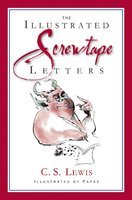
The Illustrated Screwtape Letters C.S. Lewis (HarperOne) $29.99

Written 60-some years ago (1943) and dedicated to Lewis’  good friend J.R.R. Tolkien, (who first heard these read out loud) The Screwtape Letters (asscrewtape.jpg most BookNotes readers will know) is a fictional set of diabolical letters from a demon, writing back to his elder devil, about his work with his charge.   Of course they strategize how to keep this gentleman from faith, and then from being effective in discipleship.  The book takes a bit to follow, at first, since “the enemy” is God and everything they recommend to each other is, naturally, the opposite of what true Christians would want.  Screwtape’s vantage point as a highly place assistant to “Our Father Below” has entertained and enlightened readers (as it says on the back) for “it’s sly and ironic portrayal.”  Sly and ironic?  That’s putting it discreetly.  This is one hell of a book.  Thanks be to God, as it has brought great joy and insight and courage to many over the years; besides Narnia, and perhaps Mere Christianity, it is surely Lewis’ most beloved book. (Interestingly, Lewis said it brought him no joy to write and was understandably a spiritual drain to invent this imaginative world.  Lewis said “it was all dust, grit, thirst and itch.”) I suspect that many modern Christians don’t pay adequate attention to the world of the demonic, and this really has proven to be helpful for anyone who want to grow in their faith.

A few years back, in honor of the 40th anniversary of this wise satire, an edition was commissioned which would have illustrations. Some have asked about these before, but a U.S. edition was never released.  I’ve never seen these before, so it is exciting stuff.  These are amazingly interesting, a little corny, not utterly gross, but yet a tad disturbing, in an understated British kind of manner.  There is at least one drawing—by the world-famous cartoonist William Papas—for each letter, and often other illuminations or graphics (little drops of blood, for instance.)  Text includes titles in red ink, again, making this a great edition to hold. Mr. Papas (who was a cartoonist for Punch and worked on an earlier edition of this book) has played it well, with enough gore to keep it interesting, but a bit of fiendish good humor, too.  The edges of this new hardback are gold gilded and there is a ribbon marker making it a fully excellent gift.  Anyone who loves Lewis will treasure this, and anyone who is unfamiliar with the story will be drawn in with the classy presentation.  I wish I could find more artwork to show you, but it is pretty interesting.

Screwtape audio drama.gifC.S. Lewis’ The Screwtape Letters Radio Theatre  (Tyndale) $39.99
Ahh, this is easy to explain.  Focus on the Family has produced some very, very top-notch radio dramas, excellently produced, wonderfully scripted, highly regarded.  Now, they’ve set their big budget audio efforts on Screwtape, and it is spectacular.  This package includes not only 4 CDs but a bonus DVD (showing behind the scenes vignettes of the making of the radio show and  including 10 original songs inspired by the book.)  The whole thing is done in 5.1 surround sound mix–that may not mean much to some of you, but it is an indication that this is a high quality production.

Andy Serkis plays the role of Screwtape; Mr. Serkis, you may know, was Gollum in the Lord of the Rings movies. Other world class actors are involved (such as Laura Michelle Kelley from Sweeney Todd.)  Again, this isn’t a shoddy or silly production and it sounds great.

The packaging reads like this:

You hold in your hand an evocative series of recordings that chronicle the cunning advice of a world-wise senior demon to his novice nephew, Wormwood—who’s been tasked with securing the eternal damnation and everyday demise of his human “patient.” Guard them with your life!

  
This is not a precise reading of the book (and sadly, the only edition of that–expertly rendered by John Cleese–is out of print) although none of the 31 letters are missed. It is like listening in on a TV soundtrack, or an old fashioned radio drama.  It’s great for car rides, I’d think.  Here, the actors dramatize the readings, take some liberties, and do stuff that, I suppose I should note, might infuriate any Lewisy purists out there.  Still, for most of us, this is a great, great contribution to the field, a wonderful re-telling of the Screwtape story, a respectful and pretty accurate and very lively drama that will bring great listening pleasure.  I think it could be billed as a “dramatic twist on a diabolical comedy.”  Ha

(By the way, I think the only commercially available audio books of Lewis that feature his actual voice is the CD version of The Four Loves.  These were originally radio talks, so they’ve been able to remaster and maintain old Clives real voice.  Pretty cool. We’ve got ’em!)

If you are giving the radio drama CDs as a gift, perhaps you’d want to add in the standard paperback edition. The Screwtape Letters (HarperOne; $13.99) have been re-issued with ascrewtape paperbac.jpg textured paper stock cover, deckled edges, those french flaps that turn a paperback into a classier book. Each of their “Signature Classics” have been given these spiffy new covers, each with a handsome woodcut on the front.  I have to admit that at first I wasn’t sure how they looked, but I’m quite charmed by them now.  Other re-jacketed designs include Mere Christianity, A Grief Observed, The Great Divorce, The Problem of Pain, The Abolition of Man, and Miracles.  Nice. For what it is worth, we do have some of the old editions of Screwtape Letters, the one with the photo of a gargoyle, rather dark.  Let us know if you’d prefer that cover.

Screwtape Letters gift package blog special discount deal

Buy any one listed above get 10% off.
Buy any two listed above get 20% off.
Buy any three of the Screwtape editions reviewed—30% off.

ORDER HERE

PS:  It has been a good year for Lewis fans.  We have had the release this summer of the spectacularly important, hefty collection of letters of Joy Davidman Out of My Bone, collected and edited by Don King (Eerdmans; $28.00)  And soon we will have the long-awaited new book by Mary Stewart Van Leuween on gender in Lewis, entitled, A Sword Between the Sexes: C.S. Lewis and the Gender Debates. (IV
P; $19.99.) You will be hearing more about that in the new year!

Hearts & Minds  234 East Main Street  Dallastown, PA  17313     717.246.3333

Samuelson, Copenhagen, George Clooney and a free copy of Everything Must Change by Brian McLaren

There are some really, really exciting gift giving suggestions I will mention in the next few days, so keep your eyes peeled.  I’m rather pleased with what we’ve come up with and will make some great suggestions, very nice books, thoughtful gifts, Bibles, children’s books, good stuff.  But, first…

Yes, first.  I just have to offer some bookish suggestions about this historic and complicated week. Dr. Paul Samuelson died, the man who wrote one of the best selling textbooks of all time, an iconic scholar, writer, teacher and public intellectual who shaped how most people and certainly most scholars think about economics.  He won the second Noble prize in economics in the early 70s and later trained a generation of important economists, including the now very influential Paul Krugman.  For better or for worse—some think for worse—the legendary Mr. Samuelson and his legacy reminds us that ideas matter, that the narratives out of which we live, the myths that are guiding us like (evil?) spirits, have great, great consequence.  When we opened our bookstore 28 years ago with a section called “worldview studies” and gave out copies of John Stott’s little paperback (still in print) Your Mind Matters, and brought in Brian Walsh to do a presentation on critiquing the idols and ideologies of our time, drawn from his A Transforming Vision: Developing a Christian Worldview, we were not kidding; morally serious people must grapple with ideas and imaginations and what Francis Schaeffer called “the flow of history.”  It seems that few religious bookstores do this much.  Whoever laughs about ivory tower intellectuals being obscure and irrelevant simply doesn’t have much spiritual discernment (and should ponder Mr. Samuelson’s knowing quote to the effect that he didn’t care who wrote the nations monetary policies or economic regulations as long as he wrote the textbooks; the one who writes the texts and teaches the rising generation of leaders obviously has the influence.)  President Obama’s meeting with bailed out Wall Street leaders who seem to still be fighting regulations with high powered lobbyists doing their bidding yesterday, and Krugman’s scathing piece about it remind us that ideas and worldviews and the stories we tell, how we construe what matters, matter.  Walsh’s most recent co-authored book, with Stephen Bouma-Predigar, last year’s heavy Beyond Homelessness: Christian Faith in a Culture of Displacement (Eerdmans; $24.00) may be the most important book of recent years, reminding us so passionately of how the gods of economism cause cultural displacement, real poverty and environmental devastation.
up in the air.jpg(Did you know they cite Up in the Air, the fabulous Walter Kirn novel from which the brand new movie was made?  It is about a jet-setting corporate guy who literal spends his days in what he calls Air World.  Whew; talk about not having a sense of place!) Is there really a connection between the new flick by Clooney and the foibles of Copenhagen? You betcha!

Beyond Homelessness shows just how post-modernity’s “home-less” “up in the air” culture leads to, or is a contributing factor of, economic and environmental devastation.  And these relationships couldn’t be more urgent to explore.  It is a truism that the gap between the rich and the poor continues to widen and if we ponder this vast truth, even for a moment, it can be seen as an ethical crisis to which our best theological and spiritual resources must be directed.  The issues raised by the African and poorer nations delegation at the Summit are symbolic for me, another reminder that to be a decent contemporary person, we have to care what our neighbors in other parts of the world go through, and how they see things, and what they ask of us.

 I am glad that people from my denomination are at Copenhagen, as are representatives of most Christian traditions and denominations, from Anglican to evangelical to Roman Catholic and Orthodox, Presbyterian and Methodist.  It is a stunning matter that so many of the third world nations walked out yesterday, and a sad, sad commentary on the hard complexities of these things.  That some of the research about climate change has been doctored and certain influential labs now discredited hasn’t made the task of being responsible stewards or informed global citizens any easier, either. Surely there is a crisis on our hands, a crisis of science, of economics, of confidence and worldview, perhaps of truth itself.  We live in complicated, serious times, and I hope BookNotes readers want to be wise and informed and well read on these things.  Surely it will come up in your church or family or even at holiday parties these next weeks. I hope we offer prayers about this this week in church and at our family tables. 

EMC.jpgAnd so, we would like to encourage you to read a bit in this whole matter of the relationship of environmental problems and global poverty and encourage others to do so, too. Brian McLaren has written a very important and readable book, Everything Must Change: When the World’s Biggest Problems and the Good News of Jesus Collide (Nelson; $14.95) that tries to show how reforming the engines driving the development of the most scary global concerns is our most pressing task. (By engines he means the values, the stories, the framing narratives, the faiths and assumptions, etc.) On one hand, his book is a call to public and personal evangelism, a call to announce a new way, the possibility of repentance, conversion, new values and new ways of living.  Yes, Brian insists, the upside-down Kingdom of King Jesus has come, and we can be agents of His hope as we show how Biblical wisdom can be applied to the stories that mis-shape our world, deforming and driving unsustainable behavior.  It is a book about turning from idols and raises questions that are all over the news this very week.  I thank God that he wrote it, grateful to get to sell it on occasion, and offer appreciation for the publisher doing this kind of work.

One need not agree with everything Mr. McLaren says in his many speeches, books and articles, nor here in this new paperback.  One need not be interested in the “emergent” conversation that he has helped generate, either.  Please (since I know not everyone admires McLaren’s leadership towards a “new kind of Christian”) give this fair consideration. This book, on how the Kingdom of God, brought into history in the life, death, resurrection and ascension of Jesus Christ, can help us re-frame our understandings of the world’s most pressing matters.  Supremely, these days, this includes global poverty, environmental problems, and the specter of  terrorism which seems to call forth violent solutions and excessive nationalism.  Given the news this week–the death of Mr. Sameuelson, the Wall Street confab, the recent surge in Afghanistan, the Nobel Peace Prize speech about the just war theory, and, now,  the crisis of Copenhagen (including the fudged documents and the prophetic denunciation of the Western approach by African leadership) this book couldn’t be more timely.  Brian has long been involved in local environmentalism—his
pleasant love for turtles, for instance, is legendary, although this is a watershed book, applying his global thinking (he has spent time in Africa in recent years) to this maze of inter-connected issues.  His past critique of the ideologies of modernist rationalism and his explication of the centrality of the Kingdom of God in the Bible all comes together in a splendid, provocative, educated way.

Here is our hope: that Everything Must Change become a conversation starter, a resource, a springboard to thinking and discussion, praying and organizing.  So, here is our deal: buy one, and we’ll send you another absolutely free.  We don’t make any money on this offer, but we have a lot of them in stock and are eager to get them into your hands.  Buy one, get one.  How’s that?  Call it our little “Copenhagen special.”  We hope many take us up on this (while supplies last.)  Please don’t hesitate.

I’d be remiss not to mention just a few others of the many we stock that might be relevant.

Hope in Troubled Times: A New Vision for Confronting Global Crises  Bob Goudzewaard
hope in troubled times.gif Mark Vander Vennen, David Van Heemst (Baker) $19.99  This is a very, very astute book, one that we believe is extraordinary and very important. I’ve mentioned it often, but it hasn’t blasted onto the best sellers list.  A tad complex at times, but a must, on the very themes that Brian McLaren’s Everything Must Change addresses: the interconnectedness of the issues, and the need for a new vision of culture and faithfulness. Dr. Goudzewaard is a Dutch economist, philosopher, and former member of Parliament, a solid Christian thinker and a man I easily call a prophet. (Please offer prayers for him, too as he recently lost his beloved wife.) The other two authors–A Reformed peace activist and an esteemed political scientist at a Christian college, offer a North American view, making it truly interdisciplinary and cross cultural. Wow.  A great forward by Desmond Tutu. (Did you hear him at Copenhagen, by the way?)

Inheriting the Earth: Poor Communities and Environmental Renewal  Don Brandt, editor (World Vision $14.99  This is an amazingly rich collection of piece by missionaries, NGOs, folks who work directly with the world’s poorest, Christian humanitarians who have direct insight about the relationship between these two huge issues. There are a few book likes this and this is one of the best.  A moving forward by Ron Sider says that it “dares us to see beyond the political and to align with God’s intentions for creation.”  Well done.

our fathers world.jpgOur Father’s World: Mobilizing the Church to Care for Creation  Edward R. Brown (IVP) $15.00  A clear, evangelical, persuasive overview, beautiful and inspiring, altogether readable.  Very highly recommended–one of the best batch of recent books that offer a clearly Biblical, church-oriented introduction. Yay.

For the Beauty of the Earth: A Christian Vision for Creation Care  Steve Bouma-Predigar (Baker Academic) $24.99  I have said numerous times that this is the very best book on a serious theology of creation care.  Spectacularly insightful, powerfully written, very thoughtful, urgent and doxological. Steve is the co-author of Beyond Homelessness and has edited a volume of Joseph Sittler, the renowned Lutheran theologian of creation. The best!

A Climate for Change: Global Warming Facts for Faith-Baseda climate 4 change.jpg Decisions  Katherine Hayhoe & Andrew Farley (FaithWords) 22.99  This easy to read book is ideal for skeptics or beginners, calm, balanced and solid.  One evangelical leader (himself in Copenhagen at the Summit even now) has said it is without a doubt his favorite book to recommend on this topic.  A Nobel prize-winning geosciences scholar and a Baptist pastor. Well written and convincing and helpful. There is good attention paid to those who doubt the mainstream consensus, and this is important, valuable stuff.  They are both obviously very well read making this a great resource.

A Moral Climate: The Ethics of Global Warming  Michael Northcott (Orbis) $20.00  As you may guess from the publisher, this is academic and demanding and radical.  Bill McKibben notes that it is a “thorough look at the ethical and moral issues raised by the biggest thing human beings have ever done: rearrange the workings of the earth’s climate system.”  The foreward is by Sir John Houghton.  The author is Professor of Ethics at the University of Edinburgh and a priest in the Scottish Episcopal Church.

Copenhagen Summit Special

Buy one
Everything Must Change
 Get one
Everything Must Change

 Free.
Order here

Hearts & Minds 234 East Main Street Dallastown, PA  17313     717.246.3333


Rouault Fujimura Soliloquies

Occasionally we get to announce to the world (or at least anybody following this feeble little blog) something truly historic.  And in this case, dear readers, it not only is historic—that is, of great historic significance–but it is uniquely an offering of Hearts & Minds.  We are currently the only bookstore stocking a brand new book, and this brand new book commemorates and participates in something rare and good and beautiful.  This really is big news, and something very, very special.

solilo 2.jpgCome on man, you’re thinking, get on with it.  What is worthy of this sort of acclaim and suspense? Just tell us about the thing. Well, surely your eye has already seen the headline announcement, and you can’t miss the book-cover, so you can see it is called Rouault Fujimura Soliloquies (Square Halo Press; $19.99.)  Let me try to explain its heady significance. 

Do you know the famous French painter Georges Rouault (1871-1958)?  Do you know the contemporary New York artist Makato Fujimura?  The prestigious Dillon Gallery in Manhattan has opened a thrilling–yes! historic!—exhibit of paintings by Georges Rouault and recent ones done in the neo-abstract style of Mr. Fujimura who has been influenced by the seventh century Japanese Rimpa tradition and the techniques of Nihonga (of which he is a current master.)  These brand new works by Fujimura (completed in the late fall of 2009 in time for the show) were largely, in ways conscious and subconscious (I gather) influenced by and in response to the body of Rouault’s work. It is homage and more.  Displaying them together in this innovative exhibition, one critic writes, “has added an important dimension to the current reappraisal of Rouault, precisely by the juxtaposition of Rouault’s work with that of a contemporary artist who claims him as an influence.”

mako exhibition.jpg
dillon logo.jpg

Not only is this a major showing of the world famous Frenchman (and an impressive body of very new work by Fujimura) it seems that some of the Rouault paintings are being shown publicly for the first time. Although the story may be more interesting than this short telling, Mr. Fujimura has become friends with the family of the Rouault estate.  He has visited the esteemed painter’s Gare de Lyon studio, has become familiar with the environment and family of the man who was a contemporary of, and influence upon, Picasso, Matisse, even Cezanne.  That this youngish, evangelical, Japanese-American New Yorker would gain trusted access from the grandchildren of this French intellectual Catholic–who often sought out the poor, the marginalized, the odd and sad—is remarkable, and a fabulous backstory to this emerging work.  In other words, Mako seems to have gotten them not only to allow him access, but to send paintings over to be displayed in New York, and the electronic files of the photos of them to the Square Halo office in Pennsylvania to be made into a new art book.  Hence, Rouault Fujimura.  

square halo.jpgKudos to Square Halo Press’s main man Ned Bustard for his speedy and ingenious design and arrangement of this small book, doing the lay-out with files sent from Paris, handling pictures of Rouault works that few have seen.  As he worked overtime to size up the color and tone and and allusive calibre of each work—early 20th century and early 21st century—Bustard prayerfully reflected on each painting, and how they could be featured alongside the two lengthy chapters of solid prose.  The small handbook, printed well on glossy paper, a trim size, with very vivid coloration, is itself a work of art.  Rouault Fujimura Soliloquies is a book worth owning even if one cannot get to New York to see this important contribution to contemporary art.  In fact, it is worth owning if you don’t know anything about any of this.  What a beautiful and moving way to get a small bit of art education.  What a great gift for any art lover or student.

Although one must affirm that the paintings themselves (as I have said, some rather rare fromrouault.jpg the Rouault family estate and some brand new from Mr. Fujimura) appear as the heart of Soliloquies, the accompanying text is sublime, informed, insightful, dense.  Thomas S. Hibbs has a long essay explaining who these two artists are, the nature of their projects, why it is so very interesting to juxtaposition them, and how the older Catholic, doing modern art rooted in the tradition of medieval stained glass work, so influenced the younger Presbyterian, doing modern art rooted in the tradition of ancient Japanese stylings.  Both, Hibbs explains, are working in contemporary ways with certain pre-modern manners, both intentionally spiritual; each, in their own way, deconstructing the very notions of “abstract” art.  Both are, he suggests, working “from the margins.” Both are concerned about materials–that is they are not ethereal or Gnostic.  Both have seen horrible things.  (Mr. Rouault lived through Nazism and Mr. Fujimaro witnessed the bombing of his beloved Manhattan in September 2001.) 

Hibbs quite appropriately draws into the conversations several European Catholic thinkers (such as Jacques Maritain, Etienne Gilson, Leon Bloy and Jean-Luc Marion.) He cites Augustine, Simon Weil and T.S. Eliot.  His essay is learned and a true joy to read.  (I am not well schooled in art history and only an amateur in social and cultural theory; I relished the chance to read this finely argued and mature study, learning much, without wading through a 500 page treatise.) Thomas Hibbs, who teaches at Baylor University, may be known to some of our readers as he has appeared on the popular Mars Hill Audio interviews with Ken Myers.  We stock his book called Shows About Nothing which is a trenchant analysis of pop culture and nihilism.  Hibbs is a serious man, it seems, and well suited to offer a dignified study of these two serious painters.

mako.jpgFinally, there is a very lovely piece at the end of the book by Mako himself, about his own journey, his work as a painter, and a bit about why Georges has so appealed to him. It is intriguin
gly entitled “Georges Rouault: the First Twenty-First Century Artist.”  He tells some tender stories about his work, his life, his own growth into what Rouault called a “terrible beauty.”  (There are a few very nice photos of Mako looking at a Rouault work, and a close up of both of their desks and tools giving the book an intimate feel. A little secret: even the type font for certain headings and chapter titles is a typography designed from Mako’s own handwriting.)
 
This lovely and thoughtful chapter is somewhat like his other essays called “Refractions” found in his wonderful collection Refractions: A Journey of Faith, Art and Culture (NavPress; $24.95.) Fujimura isrefactions.jpg an excellent writer, a great teacher, a moving memoirist. We loved the book Refractions for his wonderful essays about culture, life, his work as an artist and how all of us might engage the world more thoughtfully and faithfully. I wrote a lot about it last March, for instance, here.

In Soliloquies, it is wonderful to have the painter offering an eloquant glimpse of his inner life and how he sees the world, inspired so by this painter who (unlike other impressionists) was drawn to use the color black.

Indeed, after citing a secular art critic who notes Rouault’s use of heavy black (along with very bright vivids) Mako writes,

One should not be surprised, in following Rouault, to find a philosopher like Yanagi, who does not identify himself as a Christian, write so eloquently of biblical realities.  That, in essence, is the power of Rouault’s universe.  He is not merely a “religious” painter: he was the painter of a greater generative Reality, of multiple colors behind our dark, foreboding and destructive world.

Soliloquies are not, Hibbs points out, the same as monologues.  There is dialogue here, interaction.  Certainly Fujimura is doing a homage.  But, also, we see Rouault afresh in this setting.  Both Hibbs and Fujimura explain how this is so.  The reader of Rouault Fujimura Soliloquies has the privilege of being a conversation partner with text and art, reading and looking, studying and pondering, learning and enjoying.  These discussions are on-going.  We are very pleased to offer this Square Halo book in celebration of historic art from a previous generation, and historic art made this year. Congratulations to Mako, his IAM organization, the Dillon Gallery, and Square Halo Books.  We are thrilled to be making this book available to the wider public.  Spread the word.  This has been–truly–historic.  What a joy to be able to announce it here.

Rouault Fujimura
Soliloquies Special

10% off
regularly
 $19.99
now
$17.99

Order Here

Hearts & Minds  234 East Main Street  Dallastown, PA 17313     717.246.3333


Advent devotionals—no it’s not too late

On Sunday, one of our pastors noted that this was the second week of the new year;  yes, Christians should live in the rhythm of a Christian sense of time, meaning that the church calender is more formative than the one of our culture.   So we are only a few weeks into this, and it isn’t too late to be faithful and fruitful in explore the deeper meaning of this season.  (And, as my practical wife says, it is wise to have one ready for next year, since this season does sneak up on us rather quickly each year, eh?)  Good advice!  Here are a few we thought you’d like to read about.  Feel free to post other suggestions in the comments sections for other readers to consider. 

There are so many great resources on the internet, and I hesitate to single one out.  Our friend Christine Sine, whose book Godspace: Time for Peace in the Rhythms of Life [Barclay Books; $14.00] is a wonderfully useful ally in thinking about the rhythms of life, sabbath lifestyles, daily spirituality, missional living and rest (etc. etc.) has a collabartive blog that offers short meditations and is a lovely place for Advent reflection.  Visit the GodSpace blog here.  Make sure you search out her Advent videos that she does each year. 

Receiving The Day: Christian Practices for Opening the Gift of Time
Dorothy C. Bass0787956473.jpg (Jossey-Bass) This book was a great grace to me, a beautiful reading experience, coming as it did, years ago, now, around the time of the unexpected death of my father.  The solace it brings thinking about having read it, even now, is extraordinary. I am not alone in observing what a wonderfully-written and profound work this is.  It is about sabbath and rest, of course, but more, a deeply religious view of time, of the passing of the seasons, of indwelling God’s time.  Very, very nice.

The Liturgical Year: The Spiraling Adventure of the Spiritual Life  Joan Chittister (Nelson) images.jpg$17.99  I wrote about this in our last post, but thought it bore repeating.  Skip back a post if you didn’t read our little annotation there about Sister Chittister’s new one. Lovely and informative.

517IEd9vqdL._SL160_.jpgLiving the Christian Year: Time to Inhabit the Story of God  Bobby Gross (IVP) $17.00  I described this in the blog, and our small connection to it, when it came out in August.  You will be hearing me talk about it more this Spring as we are hosting the author for an autographing party in May.  It will be on Ascension Day (a very important day, theologically speaking)  so it won’t be just an author reception: we will worship and pray and learn and celebrate.  This solid book is an introduction to the church calender for those who are seasoned (nice pun, eh?) or those just considering this sort of way of thinking about time and discipleship.  It really is a devotional, so anyone looking for a year-long daily devotional would be wise to pick this up.  Endorsements range from Phyllis Tickle to Luci Shaw to Mark Labberton.  Lauren Winner wrote a fabulous forward.  Highly recommended.  Here is a nice interview with the author to get a flavor of story.

Signs & Seasons: A Guide for Your Christian Journey  Graham Kings (Canterbury Press) 22.99  this may seem a tad pricey—it is a British import—but as N.T. Wright says in the forward , it will “open the imagination to glimpses of glory.”  A very nice overview written by a vibrant Anglican pastor.  There is some full color art included, and some interesting graphics and illustrations.  Check out www.signandseasons.co.uk to join a conversation. The intriguing cover art, by the way, is an Indonesian batik by Aryo Kuswadji.

1322.jpgThe Advent of Justice: A Book of Meditations  Brian Walsh, Richard Middleton, Mark Vander Vennen, Sylvia Keesmaat (Dordt College Press) $6.95  I cannot tell you how many times I’ve read this and I do not tire of these rich, radical, insightful, politically-charged, Biblically faithful studies of the famous Advent texts, to be read one a day.  We have said this is the most important Advent book we’ve seen and I still think that is true. The authors are all amonst the best Bible scholars we know and—interestingly, this isnt always the case—we can vouch that they live what they write about, that their insights into the Scriptures, a Christian worldview, and the invitation to subversive loyality to the restoring reign of Christ, have come from years of working this stuff out.  Has some very evocative illustrations, a bit of art, making it a great little book for a great price.

Songs in Waiting: Spiritual Reflections on Christ’s Birth—A Celebration of Middleimages-4.jpg Eastern Canticles  Paul-Gordon Chandler (Morehouse) $20.00  This small hardback, with some allusive contemporary artwork, is doubtlessly my favorite Advent devotional released this year. I’ve read two other books by this young writer and minister who grew up in Senegal and has a great heart for global faith, and working with Muslims, especially. Here, he brings his Northern African eye to four famous Biblical songs—the Song of Mary, the Song of Zechariah, the Song of the Angels, and the Song of Simeon.  That is, the Annunciation, the Benedictus, the Gloria, and the Nunc Dimittis.  With the paintings by Daniel Bonnell, this is a splendid, rich, and helpful guide into the songs of the Story. 

The Christ of Christmas  James Montgomery Boice  (P&R) $11.99  This was published in the early ’80s and was a staple in our Advent displays of Christmas past.  And why not? Dr.  Boice was one of the all time great American preachers, an exegete and Reformed, expository teacher.  Here, he offers solid sermons that move beyond sentiment, stick to the standard proclaimation of the of the gospel of grace, offering deep and solid insights in ways that one recent reviewer says will “dazzle the reader.”  Thank God for such sermons—16 included here— to ponder and enjoy and share.

Watch for the Light: Readings for Advent and Christmas  (Orbis) $16.00  Many, many images-5.jpgbuyers tel
l us this is their favorite advent collection.  It was initially compiled by the innovative and ecumenical minds of the Pennsylvania Bruderhof community (then running a small publishing ministry called Plough Press.)  Here you have profound and at times luminous excerpts from the likes of John Donne and Annie Dillard, Martin Luther and Thomas Aquinas, Philip Yancey and Thomas Merton, C.S. Lewis and Dietrich Bonhoeffer, T.S. Eliot and Dorothy Day, and so many more….  I am confident there is no richer volume of this kind in print.  Later, you’ll want to purchase the Lenten companion volume, Bread and Wine.

god with us.jpgGod With Us: Rediscovering the Meaning of Christmas  edited by Greg Pennoyer & Gregory Wolfe  (Paraclete) $29.95  If the previous one had as a great strength the diversity of authors, theological and literary, enough to talk you to Epiphany in early January, this one has as its great strength two wonderful features: the stunning, wonderfully reproduced serious artwork through-out and the quality of the four authors who offer five great chapters. (Five, of course, because they wisely include the week between Christmas and Epiphany.)  This is printed on high-quality glossy paper making it a glorious gift, a fabulous book to behold.  Thanks to all involved as selling this is one of our staff’s great joys of the season.  The authors include Scott Cairns, Emilie Griffin, the late Richard John Neuhaus, Kathleen Norris, and Luci Shaw. There is a nice forward by Eugene Peterson and an interesting appendix about Epiphany dates.  My oh my, this is a great treasure.

The Advent Conspiracy: Can Christmas Change the World?  Rick McKinley, Chris Sea,images-7.jpg Greg Holder (Zondervan; $29.99 for book + DVD package.)  We eagerly promoted this loudly a month ago, celebrating this audacious claim that we can overcome some of the commercialization of Christmas by doing learning about and committing to these four practices: worship fully, spend less, give more, love all. The book is easy to read and full of great stories, the DVD very contemporary and well made.  You can buy them seperately if you want.  This is rowdy, serious, daring, and truly right on. Check out their fabulous website, here—please!    Come on, it isn’t too late…

BLOG
 ADVENT SPECIAL
25% off
any item mentioned
while supplies last
Order Here
Hearts & Minds 234 East Main Street  Dallastown, PA  17313     717.246.3333 

Resounding Truth: Music, liturgical renewal, parish life with the Episopalians

Beth and I continue to be glad for the opportunities to take our book displays on the road, serving in various quarters of God’s Kingdom.  We are treated well everywhere we go, and most recently spent a few days at a Franciscan retreat center selling books to good clergy friends in the Episcopal Church.  These priests—rectors, canons, associates, chaplains, pastors, from small parishes and large cathedrals—invite us back each year for their educational retreat.  This year the theme was music.  We sold books on all sorts of topics (contemplative spirituality, parish life, church conflict, worship planning, liturgical aids, lectionary preaching, Bible study) and some resources on mission, social justice, racial diversity and such.  We thought BookNotes readers (some who mostly pray for us and like to hear about our work, others who buy books) might like a brief report of what we were selling there.  Maybe some of these treasures might be of use in your work.  If not, maybe you know a church musician you could forward this to.

There were several excellent church musicians helping with the program, and it was a good reminder of how in traditional churches the organist and/or choir director plays a significant role in planning the worship and consequently, the spiritual and theological formation of the congregation.  Good relations between all involved are a must.   Kudos to the Episcopal gang for showing collegial approaches, making a case for pastors and musicians and staff to be working together.  And to JB for his remarkable keyboard work!

Marilyn Haskel was a presenter, a staff person for Church Publishing, an Episcopal publishing enterprise in New York city.  I was happy to meet her (and delighted for her passion and good teaching) as she has helped bring to publication some very interesting music products.  I don’t write much about this sort of stuff on our blog, but we have these items in stock and occasionally consult with traditional church musicians.  (Wanna order your next cantata music through us? Bulletins? Candles?  Call us!)

music of the heart.jpgMusic By Heart: Paperless Songs for Evening Worship (Church Publishing) $27.00 is a great spiral bound songbook that is loaded with the musical arrangements and lyrics for a great number of songs that can be sung in various places in a typical Protestant liturgy.  (Actually, these are appropriate for Roman worship as well.)  These are songs that are easily learned, chants, choruses, Psalms and spiritual refrains (some in rounds, some in call and response style, all that do not need paper or screens.)  Several of these are written for this songbook, but others have been around a while—stuff from Taize, Iona, Wild Goose and the like.  I’ve participated in Eucharistic services at conferences or retreats and these gentle refrains are used while walking up to receive the elements, and it is has been very moving.  Highly recommended for those that like easy-to-learn, contemplative, Taize-type tunes.

Marilyn also walked us through the use of several of the songs from a remarkable hymnal supplement, a small song-book called Voices Found: Women in the Church’s Song (Church Publishing; $16.00.)  This is a collection of mostly contemporary hymns written by women, often about the faith experience of women, highlighting themes of the nurture and care of God, or songs about women in the Bible. There is a useful index listing songs by different saints and mystics, and selections suitable for different occasions, including through-out the typical church year.  There is an accompaniment edition, too, ($45.00) which is spiral bound (so it will stay open for the keyboardist) and includes some teaching stuff for leaders about the hymns, the song-writers, the theology of the texts.  I think churches that care about lifting up the views and voices of all of the community of faith would find this helpful and would do well to have it around. 

We also got to meet the estimable Dr. James (Jimmy) Abbington who teaches music at Candler (the Divinity school at Emory.)  Abbington knows black gospel choir material as well as anybody, and has written resources about the role of music in the historic black churches.  I like both his newest, Let the Church Sing On! Reflections on Black Sacred Music let the church sing.jpg(GIA;$17.95) and an older classic, Let Mt. Zion Rejoice! Music in the African American Church (Judson; $15.00.)  For years we have also stocked the fabulous African American Heritage Hymnal (GIA; $16.00) and we’ve discovered that there are three sets of double CDs that go with them, which Abbington directed. This is a full sized, major hardback hymnal and is known for the great care (through notations, even) to show how these traditional sacred songs have actually been sung in the African American churches.  Jimmy Abbington was the senior editor of this labor of love and it was a privilege to hear him lecture and teach us about this amazing body of music. 

Abbington also worked us through some of his New Wine in Old Wineskins (GIA; $9.95), a collection of newer lyrics (from Brian Wren, Carl Daw, Sylvia Dunstan, Ruth Duck, Jane Parker Huber, John Bell and others known in the progressive wing of mainline churches) crafted to the “old wineskins” of standard tunes (Hyfrydol, Duke Street, Abbot’s Leigh, etc.)  This is a lot of fun to do, offers new visions of faith for these times, with lyrics that are often, in my view, exceptionally profound, Biblically-wise and theologically helpful.

Most readers of our blog know we love old hymns, and the recent folk-rock projects recordingiga-cover.jpg them in new alt-country tunes, like those of Red Mountain Church and of course Idelible Grace (whose new, very acoustic CD, By Thy Mercy, we now have.) These in this New Wine.. songbook are the opposite—traditional hymn meledies but all new lyrics.  Hats off to Jimmy A. for making this kind of resource available.

I had the opportunity to promote a lot of books at this retreat; I love standing up and doing little blurbs, announcements and plugs for authors I like and new books that I thought they’d like.  Thanks to all who listened.

Here are a few that we celebrated that fit the theme quite well:

begbie.jpgResounding Truth: Christian Wisdom in the World of Music Jeremy Begbie (Baker Academic) $22.99  This is, bar none, the best book on a serious theology of music.  It discusses music of various sorts, and isn’t about church music only, but it is a major contribution to our thinking about culture, the arts, music and faith.   John Witvliet of the Calvin Institute of Worship says
it is “charged with energy and insight” and “the best musical thinking about theology and the best theological thinking about music.”  Amazingly profound, highly recommended.

To Serve as Jesus Did: A Ministerial Model for Worship Teams and Leaders  Marty Haugen (GIA) $9.95  A thin book, thick with insight and practical pastoral theology.  Haugen is a liturgical composer  (think St. Louis Jesuits) who was raised Lutheran and now is working in the UCC.  He is a contemporary hymn writer who in this lovely book gives mature spiritual inspiration for how those leading the liturgy call the assembly to prayer and prayerfulness.  This is a good and creative bit of Biblical study based on the life of Jesus as servant and how to help the faithful community remember and re-member.  Regardless of our particular callings, Jesus is the ne plus ultra, the final model, for ministry.

images.jpgThe Liturgical Year Joan Chittister (Nelson) $17.95  One of the latest in the acclaimed “Ancient Practices” series, this not only explains the church calendar, it invites us to indwell it, to be shaped by it, to be a part of this way of seeing time.  A Benedictine sister with great passions for social justice, this is one of the best books of its kind.  We stock most of Sr Joan’s books and think this may be one of her best ever.  We are glad for this whole series, that we have written about before, with authors like Dan Allander, Robert Benson, Brian McLaren.  Lovely, important, rich prose for the people of God.

images-1.jpgThe Sacred Meal  Nora Gallagher (Nelson) $17.95  Another brand new one in this “Ancient Practices” series, and it is truly excellent. I read these two quotes from the back jacket, which struck me as so powerful, and which spoke volumes about the grace and calibre of these titles:

This is the book I have been waiting for—to give to seekers who are wary of pious language, to believer who have dozed off in their pews, to pastors who want to know how to speak in fresh ways of old truths, to anyone who asks why I am still a Christian.  This is the book I’ve been waiting to give, but it is also the book I’ve been waiting to read.  (Barbara Brown Taylor)

Nora Gallagher is a writer I would follow anywhere, but it is a particular thrill to follow her to the Lord’s Table; I know of no contemporary writer whose insights about the Eucharist match hers.  (Lauren Winner)

accomapny them.jpgAccompany Them With Singing: The Christian Funeral  Thomas Long (Westminster/John Knox) $24.95  Surprisingly, there are not that many good books on the theology of funerals, and I know from experience—don’t you?—that a good funeral, or a bad one, can make a world of difference in ones processing of grief.  I’ve been to some lately that have been, uh, less than well thought through and less than well served, and it made me sad.  Here is pastoral wisdom, good thinking, helpful theory, doxological care.

Listen to this, by a writerly hero, the renowned author of two breath-taking books on being an undertaker, Tom Lynch:
 

“To a culture accustomed to ‘obsequies-lite’ Dr. Long prescribes a full-bodied liturgical and community theater—funerals equipped for the heavy lifting of Christianity—acting out our faith and humanity, bearing our dead to the brink of real and eternal life.  Accompany Them With Singing is an indispensable and luminous guide for clergy, families, funeral directors—all home-going pilgrims—on how we ought to cope with death by dealing with our dead.  I think it will be the text of record for the next fifty years.”

I don’t know about you, but as a fellow home-going pilgrim, I want to read a book with a blurb like that on the back!  Read other Thomas Lynch books if you like–and you should!— but certainly, get this one by Long.  Give it to your pastor.  Give it to your funeral director.  It has interfaith application, even, to share it widely.  It is a book we’re happy to recommend from one of our best main-line preachers.

There was more, so much more.  Resources for church musicians, books for pastors, books about worship and congregational revitalization.  Stay in touch.  More to come.

ONE WEEK
BLOG SPECIAL
20% OFF
any books mentioned
offer expires December 11. 2009
Order Here
Hearts & Minds 234 East Main Street  Dallastown, PA  17313     717.246.3333


Books About Community

I’ve been reading a very creatively written and passionate new book called My Generation: Amy generation.jpg Real Journey of Change and Hope by Josh James Riebock (Baker; $14.99.)  This young writer, full of verve and interesting stories, and some very raw and honest language (it’s not for the faint of heart) is telling us about how God wants us to come alongside the hurting, to befriend the friendless, hang out with the outcasts, including those who, for whatever reason, feel distant from God and the church.  Mostly, it is a book about the edgy side of the 20-something Gen Y and although the stereotypes are in full bloom—goth kids, digital kids, neo-hippy fair-trade coffee sippers, party types—he does do some helpful explanations of the demographics of the millennial gang.  A few particular insights will stay with me, I’m sure.  I love this kid’s passion and his really clever style. He’d be a fun guy to hang out with.   And I appreciate his sure conviction that hope must come “with skin on” as he shows how to reach the gritty youth of today, and that that may take some new attitudes for all of us, older and younger. 

Not surprisingly, one reviewer called this “compelling authenticity” and, despite the humor, My Generation speaks with great seriousness of the healing power of community. It seems to me that, these days, certainly among the younger generations, nearly everyone knows that the quest for more authentic relationships and true community is one of the sure heart-cries of our time.

Ha. Just this evening as I was pondering this I got a note from a (20-something) friend lamenting that everybody in his social circle (I almost said “community”) talks about community, but few really define it. Yep.

When we speak of our community, we may mean our neighborhood, our friends, our congregation.  Some of us even “do life together” with a small group of most trusted friends; some even move near one another, becoming an intentional community, almost like monks or nuns do.

Within the last few months several customers asked about books on how to move towards this kind of intentional community.  Most of us aren’t involved in that kind of house-holding, but anyone who attends a church hears about their own “faith community” and should be working towards what some call “body life.”  That is, functioning as “the body” (to use New Testament language.)  That is, churches ought to be more like a community.

Here are a few titles I described for one of our customers. Do you think that your “faith community” might benefit from reading a few of these?  

intimacy and mission.jpgIntimacy and Mission: Intentional Community
as Crucible for Radical Discipleship
Luther Smith (Herald Press) $13.99 
This is a bit dated, but still really relevant for you and your project. In the ’80s the author visited
intentional Christian communities all over the country asking about their
relationships (life together) and outreach.  He wondered if those living in
these house-holds were in these community settings because they felt the faith
demanded it, that is, that intimacy and relationships were central to real
church?  Or were they more “pragmatic”,  living to pool resources and be
supportive as means to the ends of great mission, strengthening each other in
order to be more active in service?  Of course, for most, it was a bit of
both—intimacy and mission.  His narrative accounts of visiting these
classic radical Christian house-holding experiments, from Sojourners to Reba
Place to JPUSA, to Voice of Calvary, etc, is fascinating and the only book of
its kind.  The author is an African American leader in the
AME denomination.

 
Life Together.jpgLife Together
 Deitrich Bonhoeffer (Harper) $13.95 As you noted, this just cannot be
beat. It is a tad dated in the language (written, as it was, under Hitler, by a famous German, Lutheran
pastor.)  Still, skip the page or two that seems odd (one about singing
together, which, actually, is pretty fascinating) and go with whatever strikes
you; most of it, I assure you, is a goldmine of solid insight about the nature of the church.  This is one of the all time great books, and the best on the community of
Christ.  Bar none, I’d say.  A must-read.  For what it is worth, we have it in audio CD format, too, and we stock all of the newer Bonhoeffer editions that are re-translated from the original German.  They are larger volumes, critically acclaimed and important for scholars.  The Life Together volume has with it the small book Bonhoeffer did on the Psalms called The Prayerbook of the Bible.  (This bigger edition, published by Fortress, sells for $21.00 in paperback.)  
 
Community and Growth Jean
Vanier   ($21.95) Well, this is thick and maybe a bit slow going but, really, is the very best book on contemporary community. It is pretty amazing, in many ways,
not the least of which is how it shows that our own emotional growth is rooted
into the good of the community.  Intimacy and action, inward and outward,
individualism and the group, it’s all there–a must, must read, but you’d better read it slowly and work through it with others.  For anyone
serious about deepening community, forming intentional living spaces, or talking
about the deeper meaning of our gatherings.  Vanier (who started the L’Arche
intimacy.jpg
communities with the disabled) has another great but very little book From
Brokenness to Community
which is pretty sweet  ($5.95)  His latest
book, by the way, is about the witness of gentleness in a violent world,
co-authored with Stanley Hauerwas.  It took my breath way!  (I am not sure of
this, but I suspect that Henri Nouwan’s little book Intimacy [which
itself is a lovely little read] grew out of his experience with these
ideas.  Nice new cover, too.
 
The Search to Belong 
Joseph Myers ($16.99)   Man, what an interesting book.  On the face of it it is
about small groups, emergent conversations, new forms for church.  But it really
is about space, how even the shape and arrangements of rooms helps people feel
at home….it is literally about that (which is fascinating.) It is more than
that, though, as he is using that sort of as a metaphor for how the “space” or
shape of our community shapes the sorts of relationships that will or won’t
develop.  I think it is excellent for resident halls or those living together in
a house, anybody wanting to enhance richer relationships with a bit of
theology/sociology by looking at space(s). 
 
Organic Community: Creating a Place
Where People Naturally Connect
  Joseph Myers  ($13.99) Well, this
is the same guy, and this is more for churches, I’d say, but it still is his
interesting take on community.  He has a chapter called Patterns (spatial
observation) another called Participating (responsible anarchy) and other such
creative stuff.  I think you’d really like it.
 
good neighbor.gifA Good Neighbor: Benedict’s Guide to
Community 
Robert Benson (Paraclete) $14.99  Benson is on that
list of authors that I would read anything he writes.  (And he writes widely, on
vacations, baseball, gardening, prayer.) This book is simple but graceful,
nearly elegant, and, finally, pretty radical in he insists that we must be
present to those to whom God has given us, and who have been given to us by
God.  This includes direct relationships at church, of course, but also family,
associations, work, neighborhood. He explores different aspects of our
connections and community, using the wisdom of St Benedict’s rule for his monks,
applied to those who are not living in a monastic community.  Really wise, very
nice, brief.
 
Cultivating Christian Community 
Thomas Hawkins (Discipleship Resources) $15.98  This was published
for small groups, actually, asking how small home groups, Bible studies, 
support groups, or Sunday school classes could be more intentional and effective
at being small Christian communities.  He looks at six qualities of Christan
community and show how to incorporate them into small group experiences. Short
and helpful.
 
Truly the Community: Romans 12 and How
to Do Church 
Marva Dawn (Eerdmans) $18.00  One of my favorite
books, this studies the hilarity of Romans 12, inviting us to use our
imaginations, tease out the fuller meaning of the Biblical text, and thereby see the Scriptures as they call us to be
Christian community.  She instructs us seriously, but with winsome and clever
invitations to take our faith more seriously, including the call to agape and
harmony. A great Bible study on an obviously great portion of Scripture. Very valuable.

Paul’s Idea of Community: The Early House Churches in Their Cultural Settings  Robert Banks (Hendrickson) $16.95  Okay, this may be a bit academic for most, but it really is a classic. This is a revised and expanded version and helps us understand much of the cultural setting for the earliest Christian practices.

 
Community of the King
Howard Snyder (IVP) $18.00  This is one of my favorite books on the
community of the king.jpg
church, and it is all about how the church is the hub of the Kingdom. This was before the “missional” movement, but he see’s the Kingdom as the
“creation-restored” vision of all creation being healed, and we
are in worshiping, fellowshiping, equipping, communities that become the
crucible for shaping us into Kingdom servants. A must-read for those interested
in a Kingdom vision of the local congregation, and that congregation being more
focused on real “body life” and community.  A classic.

introverts.jpgIntroverts in the Church: Finding Our Place in an Extroverted Culture  Adam McHugh (IVP) $17.00  Just when I thought that there really couldn’t be much else written about the local congregation and doing church, along comes–rather quietly, and belatedly, since he’s an introvert—this spectacular new book by an ordained Presbyterian minister who is a spiritual director and introvert.  This isn’t a gag or a light-hearted spoof, but a very serious study of community, graciousness, hospitality, and how some among us find it very challanging to be active in a noisy, outgoing, active congregation.  Who knew?  Marva Dawn insists on the back that “this is a book that every church leader should read!”  McHugh explains how we overlook or misunderstand the contributions of many introverted church members.  This is a book for all congregational folks who want to be more hospitable to the Meyers Bringgs T-types, and for all introverts who find human interactions each Sunday to be tense and taxing.  A great resource for anyone interested in relationships, parish life, or Christian community.

 
Making Room: Recovering Hospitality as
Christian
Practice Christine Pohl
($20.00)   There is so much out on this these days, but this is the best, really
a great resource, an overview of the practices of reaching out and being
graciously hospitable.  I mention it for a number of reasons (she spent some
time at L’Abi with the Schaeffers, an intentional commune, almost) but one
reason is because talk of community, authentic relationships, and
inward-directed growth always needs to be balanced by a sense of being
inclusive, caring, offering outreach; otherwise community becomes a clique.  So
the practices of hospitality, she argues, are what keep communities vibrant.  It
is a bit counter-intuitive, that in reaching out we form closer community, but
without hospitality, all we have are ingrown cults.  Pretty rich stuff. serious
writing. Often cited, very important.
 
No Perfect People Allowed: Creating a
Come as You Are Culture in Your Church
  John Burke ($14.99) Okay,
this is about creating a culture in church were guests are valued, strangers
received, diversity accepted, grace rules.  I know you aren’t a church, but I
think this overall theme of creating an ethos where folks are accepted, where
even on stuff like homosexuality we can receive folks who are unlike us (he is
traditional on this chapter, but it is a good one, making a case study nearly
out of this…if we can’t handle those with whom we disagree, then how are we
different from the folks Jesus reprimanded for only loving those who love us
back in the same way.)  Anyway, it is a cool book, very practical, and come with
a great DVD which is good for teaching.  Pretty hip stuff. (We have the
hardback edition, with the DVD, being sold for the paperback
price.)
 
The Tangible Kingdom: Creating
Incarnational Community 
Hugh Halter & Matt Smay  (Jossey
Bass) $23.95  This is kind of an emergent church kind of approach, looking at
new forms of making disciples in creative church communities.  It is very much
about real stuff that works to be faithful in a missional congregation.  The
bottom line of much of this is about forming community, small faith-sharing
communities and bands that reach out.  Pretty exciting stuff, but, to be honest,
a bit more about church-planting than community as such..

 
Organic Church: Growing Faith Where
Life Happens
 
Neil Cole (Jossey Bass) $23.95  This, too, is a call to
offer leadership in fresh ways by forming real communities that care for one
another and model the Kingdom to others. I am not so sure that starting a
gathering at a coffee shop or another third place and deepening relationships
there is a community, let alone a church, but he is sure this is what we need,
faith communities  planted outside of typical churches; birthing teams who form
small groups sharing life together.  Pretty important book at least in church
planting circles….
 

True Faced: Trust God
and Others With Whom You Really Are
Bill Thrall (NavPress) I can’t
say enough about this, a solid study of relationships, honesty, acceptance,
masks, etc etc.  There is a fabulous DVD, too, and this is really rich, deep
stuff, presented in a lively, captivating manner by some pretty good guys.  Love
it.
 
Love One Another: Becoming the Church Jesus Longs
For
  Gerald Sittser ($15.00)  This is an older book reworked,
expanded and re-titled (it used to be called Loving Across Our
Differences
.)  Yep, it is about being a community that accepts conflict and
works for reconciliation.  It looks thoughtfully at the “one another” passages
in the New Testament and explores what they might mean for deepening community. 
Wow.  Very apropos, since community certainly includes “one anothering” and
conflict resolution and unity within our differences. Very solid and
sound.
 
Connecting: Healing Ourselves and Our
Relationships
Larry Crabb (Nelson) $15.99 
connecting.jpg Although not exactly about community, I really like the way he opens up relationships and such…he was
on a journey at this point and his next books were on authentic community in
church, and how churches should be more relational, places of healing and hope
based on community. See, for instance, Becoming a True Spiritual Community or his more recent, Real Church.  Connecting, I think, was a pivotal work for him, it seems…
 
The Call to Conversion Jim
Wallis (Harper)  Jim is the founder of Sojourners and an old hero of
mine. One of his first books, from the late 70s, is truly one of my all time
favs, in part because of it’s vision of the Kingdom, the Lordship of Christ, and
social engagement around issues of peace and justice… I think it is his best
ever.  Anyway, he has a chapter in there on community that is a succinct and
useful as anything for those seeking a radical house church, Christian community
living experience where we are the “community of the Kingdom.”  Pretty moving
and groundbreaking stuff for many of us. That chapter is very
useful.

School(s) for Conversion: 12 Marks of a New Monasticism  edited by The Rutba House (Wipf & Stock) $22.00  A number of folks from intentional communities gathered to discuss the development of counter-cultural “new monastic” experiments “at the edge of Empire.”  This, obviously, is something different than your typical First Church on Main Street.  They came up with these 12 marks, and each chapter is really worth reading.  A couple of the writer’s are well known and others have not bee published before.  They are all living out this vision, and have great depth of insights.  Several of the chapters are directly about shared life, living in intentional proximity, and others are about economics, handling family, marriage and singleness, stuff about submission, a common rule of life, etc.  It may be unusual for many church folks to hear this kind of talk, but it really, really is exciting stuff. 

 
The Church of Facebook: How the Hyperconnected Are Redefining
Community
Jesse Rice (Cook) $12.99  Wow, this is clear, practical,
and a bit perplexing: is this virtual world of facebook and wii and IM “really”
community?  Does this 24/7 connectedness increase our longings for “high-touch”
face-to-face relationships or inhibite and erode them?  There is little doubt
that your generation (especially) has had it’s views of identity, boundaries, and
relationships altered by social networking sites.  So, this is about that, with
the great implications for church, Christian community and authentic Christian
living. (We have Doug Estes’ Sim Church Being the Church in a Virtual
World
, too, which travels similar territory, but I think the Rice one is
more about community, with Sim Church more about using the internet to
expand outreach, do virtual church [even avatars!] which is less about real
community, so I don’t recommend it for your purposes as much. It is pretty
interesting, though!)
 
thy kingdom connected.jpgThy Kingdom Connected: What the Church Can Learn From Facebook,
the Internet, and Other Networks
 Dwight Friesen (Baker) $14.99  I
list this last because it is brand new and I haven’t read it yet (although much
of it has been on line and presented at emergent conferences and commented on in
blogs for years, now, it seems.) I’m confident to say how insightful this is,
profound and deep.  Friesen is simply a genius, an “outside the box” thinker who
has studied systems theory, quantum stuff, how networks work–clusters, nodes,
links— and the connectivity built into the creation (in cells and such) and
is lived out in social networking.  The subtitle is “What the Church Can Learn
from Facebook, the Internet, and Other Networks” only scratches the surface of
this postmodern, hot-wired, complex systems work.  The forward is by Len Sweet,
the afterword by Dan Allender, so I’m impressed by that, too.  One hip reviewer
said it is “the first contextual ecclesiology for a networked world.”  This is
pretty edgy theology, serious social analysis, leading to a wholistic view of
the Kingdom, and the need for faith communities to be, well, connected. 
Ultimately, a book about authentic, networked community.  This is one of the
most important books of the year, and we will be hearing about it a lot, I’m
sure.

Hearts & Minds 234 East Main Street Dallastown, PA  17313     717.246.3333
 

Three things about which I am thankful: tribal technology, skeptical friends, surprising books

I hope you don’t think it disrespectful to say that of course I am thankful for the usual (American) stuff.  Of course I am thankful beyond words for God’s grace shown in Christ, and for the relative safety and stability of our land, even in these hard times.  I am glad that some of our personal health issues are slowly improving and I’m very happy (as I wrote last week) for my dear wife and kids.  Who wouldn’t be grateful after all of this abundance!
 
Yet, I am surprised, even today, that I am also thankful for a few particular things that might be of interest to the BookNotes fans.  Let me tell you a story to explain.

Late yesterday I got an inquiry from a good friend and regular customer who is writing a paper for a seminary class having to do with the interface of worldviews, tribal cultures in Africa, international development.  We have a number of books on worldviews, including some classic stuff done by savvy missiologists.  I spent a good number of hours today drawing up a list for him of other titles that might be useful (email me if you want to see it) and then I sent off a note to just a few good friends, including Gideon Strauss, now Director of the Center for Public Justice, asking for their input.

Those that know Gideon know he is an impeccable scholar who came to faith amidst his work in the hard years of resisting apartheid in his native South Africa. And you know he is a remarkable net-worker, and knows people all over the world.  Anyway, not only did my friend Gideon come through with a few brilliant paragraphs, within hours my customer and I were hearing back from acquaintances from several continents!  There is an Ethiopian philosopher studying in Amsterdam, a new kind of Calvinist thinking about culture and colonialism and such; there are folks who read African novels (yes, Things Fall Apart, a book Beth read over 30 years ago, is still a must); we got a thrilling report from an African who has worked in agricultural development with a good Christian eye; a number of folks pointed us to some of the definitive African theologians. From Udo Middleman to Kwame Bediako to Michael Battle, to Lamin Sanneh;  from Jeffrey Sachs’ The End of Poverty to Paul Collier’s The Bottom Billion to Amartya Sen’s Development as Freedom;  there is so much to consider.

My point is simple: Seth Godin (whose Tribes I am re-reading this week) is mostly right: the new technologies are enabling us to form networks of friends who care about similar things and these organic tribes—if they have good leadership and the ability to talk back and forth—can change the world.  Godin hasn’t quoted that famous Margaret Mead quote yet, but it seems to be more true now than ever: a small group of dedicated people really can make history, and have fun doing it.  I don’t know if my friend’s scholarship will “change the world”networks.jpg but the way e-mail and Facebook and even Twitter helped some of the tribe that I am a part of mobilize with insight for me (the bookseller) and my customer (the student) was just thrilling.  And it unfolded in a matter of hours.  I am thankful not just for friends, but for untold numbers who are in this tribe, this gang that somehow has some connection to Hearts & Minds, good books, seriously Christian thinking, and a longing to make a difference in the world.  On good days it feels like a movement, and we seem to think that we, here,  play some role, resourcing people who care, and are supported by others who also care.  To say “we are all in this together” may be a bit of a Westernized simplification, but it feels like that South African theology that Desmond Tutu speaks of (and that Michael Battles writes about in his new book) Ubuntu.

And, also, I am very thankful that a couple of friends expressed surprise–or was it dismay?–that I am going to try out Twitter.  Okay, that I am on Twitter.  Like I said on Facebook, I was kinda half-embarrassed about the whole darn thing (and it is modest: it is just a way to get these BookNotes columns more widely available.)  But after today’s speedy mobilization about books on African worldviews and development, well, maybe I can be thankful even for this crazy new technology, even as I admit that there are no doubt large and dangerous unintended consequences.  And I’m glad I’ve got pals who won’t allow it to consume us.

And, lastly, we received two new books in the shop today from the Likewise imprint of InterVarsity Press.  Still our favorite publisher, with excellent titles coming out every month, they have taken a serious turn in recent years (with Likewise, for instance) doing books about social justice, for and from the new generation who are serving the poor, and resources for those who are taking up this struggle to seek God’s reign in ways that bring hope to the hurting and hungry.  Solid evangelicals doing amazingly rich writing on social change!

For instance, we just got Following Jesus Through the Eye of the Needle: Living Fullyfollowing jesus through eye.jpg, Loving Dangerously by Kent Annan (IVP; $16.00.)  Kent directs Haiti Partners and has worked in Haiti since 2003.  He is a very gifted writer, a passionate wholistic mission worker, and is deeply aware of both the issues of the world, and the issues of the soul.  With a rave endorsement by the famous Haitian writer Edwidge Danticat (Brother, I’m Dying), and another by urban activist Greg Paul (The Twenty-Piece Shuffle), this looks to be more, much more, than a report about poverty or a collection thrilling mission stories.  This is raw and real, a story about questioning and doubt and faith and pain and joy. It is about, as the title puts it, living fully and loving dangerously.

I can’t wait to read it more carefully and am thankful for evangelical publishers who break the mold of what religious publishing means. It is very exciting these days, isn’t it?   Kudos to IVP, kudos to Kent.

how to inherit earth.jpgAlso today we got the long-awaited second book by Scott A. Bessenecker (who not long ago wrote a really great survey of young bucks who are out serving the poor and oppressed, The New Friars.)  This new one is called How To Inherit the Earth: Submitting Ourselves to a Servant Savior (IVP; $15.00.)  Bessenecker’s friend and soulmate Shane Claiborne says it is “a simple and scandalous invitation into the upside-down kingdom of God.”  Christopher Heurtz (director of Word Made Flesh and author of Simple Spirituality) wisely puts his finger on part of this book’s insight: “In an age of narcissistic entitlement, Scott’s humble but straightforward reflections challenge a leadership-enamored church to discover the grace in service and submission.”  If our culture too often prizes leadership uncritically, how do we really hear the radical call to lay down our lives, submitting ourselves to something other than our own desires?  This seems like nearly subversive stuff.  Bart Campolo says that “this is t
he kind of book that can make someone dangerous to the status quo.”

I’m thankful for books about which such things can be said.  There are more books like that these days, and I am grateful. When I was much younger, I discovered radical authors like William Stringfellow and Phil Berrigan; I heard Dorothy Day and read Martin Luther King. I heard John Perkins and Bill Pannell and had Jim Wallis here to the store when we first opened.  I also read beefy theology, solid evangelical and Reformed stuff, mostly.  I longed for folks who brought together mature doctrinal perspectives, evangelical piety, ecumenical flavor, and who embraced and lived a serious desire to work for peace and justice, renouncing the nonsense of the tele-evangelists and the prosperity (false) gospel.  Although it isn’t happening quite like I imagined—everybody in this work should be citing Ron Sider, N.T. Wright, Nicholas Woltersdorff and Sylvia Keesmaat in my view—but it is happening.  There are more great books in religious publishing, especially the more evangelical presses, than any time in the last 30 years.  It is harder to survive as a bookseller these days (oh irony of ironies) but the renewal in publishing we’ve worked and prayed for is happening. 

So: I am thankful for the tribe of which we are a part, and how new technologies help us interact.  I am glad that some friends don’t want me to over-do that stuff, and try to keep me sane.  And I’m glad for this publishing world of which we are a part.  Thank God with us that we have been able to stay afloat another year, that our staff continues to be energetic and caring (working for far less than they deserve) and that folks are willing to shell out for good books, bread for the journey, resources for a world-changing faith, bought from a place like ours, such as it is. 

And, of course thank YOU (you know who you are.)  You who say nice things, write encouraging words, read and discuss and write books and book reviews.  And for those who buy.  Ubuntu.

Hearts & Minds 234 East Main Street Dallastown, PA 17313     717.246.3333