Book of the Decade announced in November ’09 Monthly Review Column

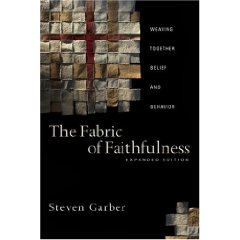
The Fabric of Faithfulness: Weaving Together Belief &
Behavior

Steven Garber
(IVP, 2007) $16.00


fabric larger.jpg

In the mid 1990s I had this long, wonderful, interesting conversation–late,
late into the night—with my friend Steve Garber. He was working on his Ph.D.
in education, trying to learn through research, vast reading, great
conversations with leading mentors and educators, and tons of first hand
interviews with not-so-young-adults—what caused Christian faith to take hold
in meaningful, long-lasting, and integrated ways. I was happy to regale him with
stories of my own college years, and into my journey with the Coalition for
Christian Outreach (CCO) doing campus ministry. Steve and I had many mutual
friends, some common interests, and shared an affinity for professor of
philosophical aesthetics, Calvin Seerveld, and all-of-life-redeemed philosopher
/preacher Dr. Peter J. Steen, and the agrarian essayist and poet, Wendell Berry.
Each gave feisty and academic legs to the vision of God’s Kingdom coming in
every area of life and invited us to live life with an earthy, Christian
lifestyle. Steve told me about his early days as a college student living in
community and running a thoughtful, Christian activist newspaper and his days
learning from Francis and Edith Schaeffer in their Swiss study center, L’Abri. I
told him about my feeble activism on behalf of the United Farm Workers,
advocating for nonviolent social justice in ways inspired by Martin Luther King
and Cesar Chavez. Mostly, we pondered how in God’s great grace He has drawn us
to good authors—I think I was re-reading J.I. Packer’s
Knowing God at
the time—and the good people in our lives who kept us going as we attempted to
live faithfully for Christ’s reign in our callings, careers, and vocations.

I didn’t know, or don’t recall thinking, that this interview would end up
being in a book, let alone a book that great leaders (from Stanley Hauerwas to
James Sire) would insist was one of the best books ever about the journey of young
adult faith into serious, integrated whole-life discipleship. After having
read Fabric of Faithfulness: Weaving Together Belief & Behavior in the
University Years
,(first released in late 1996) and enjoying the many, many
stories of fellow pilgrims who told their stories to Steve, I realize that my
little late night interview wasn’t all that vital. Some of the stories, however,
are truly amazing, and some of the folks he tells of in the book are stunning in
their insight and eloquence. Still, all of us who were interviewed, nearly every
one, had some testimony of the same three things, three things that Steve has
identified through research, reading, and his excellent knack of listening so
very well, to be the things that most characterize what Eugene Peterson’s book
on the Psalms calls “a long obedience in the same direction.” Three things that
help us keep on keeping on, long after the heady and idealistic years of campus
fellowship groups and young adult commitments.

Sure, Peterson swiped the line from Neitzsche. And Garber swipes lines from
everybody from abolitionist William Wilberforce to novelist Walker Percy, from
Bono to Beavis, from third century Augustine to twentieth century Newbigin, from
Calvin (and Hobbes) to Calvin (of Geneva.) It makes for a fun and engaging read,
a contemporary and urgent book, at once learned and urgent. I mention it often
in my own book reviewing and public speaking; it has become a touchstone of
sorts, a classic.

When pondering the best non-fiction Christian books of this decade, in fact,
a few continue to impress me, haunt me, challenge me, and reassure me. Among
others I could name, I think Brian Walsh & Sylvia Keesmaat’s remarkably
faithful, postmodern Bible study, Colossians Remixed: Subverting the
Empire
(IVP) and the delightful and insightful Culture-Making:
Recovering our Creative Calling
by Andy Crouch (IVP) or all three of the titles by Lauren Winner stand out for
me as perhaps the truly most significant of the 2000s.

Yet, in the later half of that first decade of the new century, Steve
Garber’s Fabric of Faithfulness: Weaving Together Belief & Behavior was re-issued by InterVarsity Press,
allowing me to declare here that it is “the book of the decade.” Of
course the great new cover really helps and the shortened subtitle (showing that
its audience is most often those who have graduated from college and, perhaps
approaching mid-life like many of those interviewed in the book, were longing to
more fully understand the relationship of the Biblical themes of vocation and
the Kingdom of God.) Yes, that subtitle makes it clear that this is a book about
integrity, about living with coherence and clarity about “connecting the dots”
between our deepest worship on Sunday and our deepest struggles on Monday. Such
integration is the foundation upon which long-term, hopeful discipleship
emerges.

But, most importantly, there is, quite significantly, a fabulously
interesting and very important new introduction and afterward.

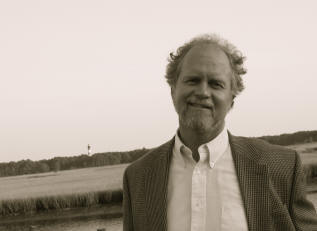
Steve Garber.JPG

These two new chapters, which include moving stuff about William Wilberforce,
about valiant Chinese dissidents, about Steve’s’ meetings with the likes of
seeking rock star Billy Corgan or Peter Gabriel, are among Garber’s most
eloquent writings, and they set the stage for the re-launch of Fabric as
a truly adult book. It is to some extent about learning, about young people in
their yearnings for a life of coherence, and it was written when Steve was
mostly working with collegiates. Deans and administrators and educators have
used it. He does talk about rock stars and youth trends and pop culture. So,
yes, yes— it is a book even for college students. But more, especially with
the significant new book-ends of powerful forward and afterward—you have to
read them for yourselves to see what I mean—this is now more than ever for
anyone who longs for the deepest joys of discovering a sense of vocation, of
relating faith to their tasks in this sorrowful, broken world, for those who
long to make a difference, in the arts, culture, business, civic life or other
areas where a Christian worldview might most profoundly shape our thinking and
practices, allowing us to engage the societal pressures and resist the cultural
forces so well described and analyzed within these pages.

So. BOOK OF THE DECADE it is, thanks to the expanded edition that appeared in
2005. I thought to celebrate it here at decade’s end I would reprint a review I
did when the book first appeared in the late ’90s. I’ve changed very little, and
trust this long review will convince you that this is a book worth having, a
book worth reading and re-reading, a book worth working on, discussing, and
sharing.

It’s a good, long review which I hope you’ll read over at the November ’09 monthly column.

Satan writes Pat Robertson a Letter

I know I usually do book reviews but this piece about Robertson’s latest gaffe is too good not to post.  It has some literary references, after all.  Plus both Luther and Lewis commend mockery to push back the Devil.  Sorry about the biting ending. What do you think?

Published in the Minneapolis Star Tribune:

Dear Pat Robertson,

I know that you know that all press is good press,
so I appreciate the shout-out. And you make God look like a big mean
bully who kicks people when they are down, so I’m all over that action.

But when you say that Haiti has made a pact with me, it is
totally humiliating. I may be evil incarnate, but I’m no welcher. The
way you put it, making a deal with me leaves folks desperate and
impoverished.

Sure, in the afterlife, but when I strike bargains with
people, they first get something here on earth — glamour, beauty,
talent, wealth, fame, glory, a golden fiddle. Those Haitians have
nothing, and I mean nothing. And that was before the earthquake.
Haven’t you seen “Crossroads”? Or “Damn Yankees”?

If I had a thing going with Haiti, there’d be lots of
banks, skyscrapers, SUVs, exclusive night clubs, Botox — that kind of
thing. An 80 percent poverty rate is so not my style. Nothing against
it — I’m just saying: Not how I roll.

You’re doing great work,
Pat, and I don’t want to clip your wings — just, come on, you’re
making me look bad. And not the good kind of bad. Keep blaming God.
That’s working. But leave me out of it, please. Or we may need to
renegotiate your own contract.

Best, Satan

Following Jesus Through the Eye of the Needle: Kent Annan on Haiti, a new hymn and a song by Arcade Fire

A few days ago I was displaying a large spread of books among a mission-minded, justice-seeking, group of energetic, evangelical folks.  Per usual, I was given the chance to highlight some books in the crazy-talkin’ book blitz announcements I do.  That week I had begun to read the very moving collection of stories about Haiti, Following Jesus Through the Eye of the Needle: Living Fully, Loving Dangerously by Kent Annan (IVP; $16.00.)  I chose not to push this book amidst my other book plugs because I did not want to appear as if I was trying to sell books at the expense of the horrific tragedy unfolding on the news that very day.  That one good friend, sitting near me, there, himself was from Haiti, and had a brother missing (pray for him, please), again, made me fall silent about this fabulous book.

I am wondering, however, if my sensitive conscience did not serve the community well that day. Maybe I should have highlighted Annan’s book.  Subsequently, I’ve been asked “what is the best book on Haiti” and “are there resources on knowing what to do to respond to such an international crisis?”

Well, there is plenty of stuff on line. (What did you think of the David Brooks piece in the New York Times about cultural change?)  We could recommend some fascinating historical studiesAnnon big.jpg of the colonialism, despotism and poverty of that troubled land, and there are memoirs that capture much, such as the award winning  Brother I’m Dying by Edwidge Danticat.  Perhaps it is important to study a bit, even now as we pray and fret and give.  Many of us know people in Haiti, and some BookNotes readers have gone there on short term mission projects.  In the months and years to come, we will be called upon to think through strategies and policies for church and state.  It doesn’t hurt to be thinking about that, now.

And so, here it is: Kent Annon’s brand new book is incredibly powerful, including challenging Biblical reflections and tons of stories gathered as codirector of Haiti Partners.  We mentioned it when it first came out last month, and we respect and trust his work.  As the title suggests, it isn’t just about Haiti, though, but a reflection to all of us about Godliness and service, about love and hope. You may recall that we’ve promoted the provocative and creatively-written books about urban ministry by Greg Paul (God in the Alley and Twenty-piece Shuffle.)  Of Following Jesus Through the Eye of the Needle he says, “Kent takes the reader on a ride through the hot spots of both this world and the individual’s soul.  By turns wrenching and funny, and always honest, his own story puts an unerring finger on that difficult place where a questioning mind and an open heart meet.”   There are no platitudes here, and he is a raw and honest writer, giving us a very good read.  Mostly, though, it is about his journey to the island culture and the poverty and joys of  work in Haiti. And what it all means about our own commitments to live with passion and risk and hope.  Highly recommended. 

Haiti Partners can be found, here.

I listened to two songs this morning, one which we sang in church, one which we listened to on my daughter’s ipod on the way home.  The first was a brand new hymn lyric written by my friend Carolyn Winfrey Gillette, who has two songbooks (Songs of Grace and Gifts of Love) that we sell which are full of such custom-made song-writing for special occasions, often with an eye to God’s call to do justice and serve others.  You can find read or listen to her song “In Haiti There is Anguish” (to be sung to the tune of “Beneath the Cross of Jesus” )here. (Others of her songs are at the Church World Service website, available for free.  Interestingly, Carolyn gained a great concern for the poor and global missions while going on a short term mission trip to Haiti years ago when she was a college student.)  If you are involved in helping craft litanies or liturgical experiences around disaster relief, here is a page that is jam-packed full of links, pages, and resources from across our denominational landscapes, prayers, artwork, songs and more. 

After worship, Marissa and I listened to the understated song Haiti, by the unusually thoughtful alt- rock group, Arcade Fire. (Their singer Regine Chassagne has a Haitian background, and sings of the atrocities others experienced under Duvalier.)  Watch this nicely done colorful YouTube video of the song, with lovely footage from Haiti.  It is an allusive piece, some of it sung in French. I recommend the passion of this live version, here, and the lyrics, here.

Carolyn’s hymn and a rock ballad. Different musical styles and themes, both helpful to encourage us on the journey of these trying days.  Listen, and pray, study and learn.

arcade fire.jpg  Hearts & Minds 234 East Main Street  Dallastown, PA  17313     717.246.3333

BEST BOOKS OF 2009 (part 1) NOW POSTED AT MONTHLY REVIEWS COLUMN

and the winner is.jpgtrophy.jpgbooks open and stacked.jpg

Part one?  Yep, this baby is big. 

We’ve listed some categories—trying to be just a tad clever, but nothing over the top—and named our choices for the best of the best.  Best Books, Most Important, Best Contribution to Theology, Best of Social Concerns, we’ve named awards for everything from memoir to worldview studies to church life to one that was mediocre but I still wanted to honor, so we made up that category.  Of course these are highly subjective, and merely the—ahem–odd opinions of this old bookseller (I hope the author doesn’t mind the back-handed compliment.)  I am sure you’ll find some titles that I am sure you’ve heard of and will agree deserve commendation, and I suspect you’ll be surprised to find a few new gems.  We know our little bookstore and blog doesn’t get any press and these poor authors sure don’t gain anything from our hoorays, such as they are.  But we want to name them.  We hope you enjoy seeing our choices. 

PART TWO is being lovingly proof-read by the lovely Beth, my partner-in-crime in this ceremonial listing.  Look for that next week, Lord willing.

Wish we had a Hollywood red carpet and some glitzy ballroom in which to do our announcing. These authors, editors, and publishers deserve all the honor we can offer.  These may be hard days for booksellers and we all wonder about the future of print, the habits of our heart and mind these days among our people, and how the discipline of reading may or may not fare in the days ahead, even in the church.  But these are tremendous days for religious publishing, and we are proud to give some attention to those we have most loved and most appreciated in the year of our Lord, 2009. 

SEE THE LIST OVER AT THE MONTHLY COLUMN AT THE HEARTS & MINDS WEBSITE CLICK HERE.

HEARTS & MIND AWARDS SHOW
BLOG SPECIAL

10% OFF
any book listed
Order Here
Hearts & Minds 234 East Main Street Dallastown, PA 17313      717-246-3333

BEST BOOKS OF 2009 (PART TWO)

BEST BOOKS OF 2009 PART TWO

Well, friends, welcome back from the awards show intermission. We hope you
had a good stretch. Thank your seat fillers, and settle in for the second part
of our 2009 ceremony. It will be an exciting time, without commercial breaks. We
think you will enjoy it. Thanks for joining us for the remainder of our
celebration. Let’s bring on the dignitaries, and break out the award medals.
Figuratively speaking, that is.

THE “WORDS, WORDS, WORDS” AWARD


Every year there are many good books on books on writing, on words, and on
the meaning of language. This year, there were three that stood out, one a
sure-fire award winner, and two honorable mentions.


Caring for Words in a Culture of Lies Marilyn Chandler McEntyre
(Eerdmans) $18.00 Talk about a wonderful, elegant book! This is beautifully
written, very inspiring, truly thought-provoking, deeply faithful to the
Christian tradition, and yet readable by nearly anyone with an eye for good
writing and decent values. Yes, she frets about things: “Like any
life-sustaining resource,” she writes, “language can be depleted, polluted,
contaminated, eroded, and filled with artificial stimulants.” And she is wise
and right to remind us of the dangers of the mis-use of words, speech, language.
This isn’t a jeremiad, but rather a lovely rumination, especially on the written
word. What else would you expect from a renowned Christian poet? One of the best
books of this or any year.


The Power of Words and the Wonder of God John Piper, Justin Taylor,
editors (Crossway) $15.99 Yes, there is a dramatic cover with an allusion to the
blood of Christ, and they do make the firmly evangelical connection between our
speech and the glory of an exalted God who is savior and redeemer. Yet, this is
more than a call to be clear about faith, to proclaim with grace and wonder the
good mercies of God. This book includes wise counsel about communication with
others (Ted Tripp) about the glory of stories (Daniel Taylor, in a truly
wonderful essay), words that we sing (reflections on hymnody by Bob Kauffman),
stuff on cutting words (Mark Driscoll), and an interesting panel discussion with
some give and take between the preachers, poets, and writers. Scottish
theologian Sinclair Ferguson’s solid exegesis of James 3:1-12 illustrates that
these folks mean business relating Biblical teaching to this matter of our
speech.


In The Beginning Was the Word: Language, A God-Centered Approach Vern
Poythress (Crossway) $25.00 Is it fair to give an honorable mention to a book I
neither finished nor fully understood? Oh yes it is and here’s why: I know
enough to know that this is absolutely brilliant. In my college years, as a
speech and language therapy major, I followed some of the debates arising over
the seminal work of the linguist, Noam Chomsky, now more known for his left-wing
politics, but still a professor of linguistics at Harvard. Asking how the human
brain works, where language comes from, how a theistic worldview affects our
presuppositions about deep and thorny topics in disciplines like
linguistics–these are the very kinds of research questions every academic
discipline needs. For a conservative Calvinist thinker to engage this topic with
such seriousness is a gift indeed. It seems to me that this is a fascinating
inter-disciplinary work, not just a study of linguistics, but a theological and
Biblical study as well. Some reviewers have suggested that understanding this
will enable us to more deeply understand the Triune God of the Bible. In a world
where even the possibility of meaningful communication is derided, this work is
a blessing.

THE GOLD MEDAL AWARD FOR THE MOST HISTORIC BOOK OF THE YEAR


Rouault, Fujimura: Soliloquies Thomas S. Hibbes, Makoto Fujimura
(Square Halo Books) $19.99

I admit that I am not well aware of the biggest things happening in our
world. Although I am a moderately interested observer, I will quickly admit I’m
pretty ill informed about the most important occurrences in the world of serious
high art. I’m sure there were modern art exhibits in London and treasures
uncovered in Vienna and extraordinary new installations in Santa Fe that I know
nothing about. Still, I want to celebrate that we were the first bookstore to
acquire a book that coincided with one of the truly great art exhibits of 2010.
I know enough to be confident of this event’s importance.

Our friends at the ever-resourceful Square Halo Books published a beautiful
little paperback with artwork of the famed French impressionist, George Rouault,
and the contemporary New York abstract painter, Makoto Fujimura. A troubled
Catholic and a serene Calvinist; early 20th century European and
early 21st century New Yorker; the differences between these two painters are
evident. But what is extraordinary is their similarities, their over-lapping
influences and common visions. As we described at BookNotes when
Soliloquies was released, the book includes a smart piece by
Fujimura, and an extended essay by art critic Thomas Hibbes. Most delightfully,
Soliloquies includes some previously unshown work of Rouault, and
some new work, inspired by Rouault, by Mr. Fujimura. This beautifully designed
book is the text that accompanied the historic showing at The Dillon Gallery in
New York last fall. We celebrated it then, reviewed in carefully (
https://www.heartsandmindsbooks.com/booknotes/rouault_fujimura_soliloquies/), and now remind you that our shop is one of the very few places to get
it, a service we are thrilled to provide, worldwide. This was, indeed, a
successful exhibition (can you imagine getting rare works from the Rouault
estate into New York on a small budget?) This classy project was a labor of
love, as the best labor always is. So was the design and publication of the
book. I wish we had a true gold medal to award this fine little work. I wish we
could have the project heralded far and wide. I wish Square Halo and Mako all
the best. Congratulations on our little award, this affirmation that
Soliloquies is truly a historic release, one of the most important
books of the past year. May critics and patrons more important than us take
notice.

THE NOT SO ARCANE HISTORY OF THEOLOGY AWARD

I’m being a bit sneaky, since I awarded a theology Book of the Year
previously (in Part One.) I’m calling this category “The History of Theology”
showing that it is less about theology, per se, and more about
intellectual history. Anyway, how could I not give a proper hat-tip to our man
Alister McGrath, one of the smartest guys, and most prolific theological
scholars, on the planet? He’s a fine gentleman, very British, and you should
read his books. Especially this one. It may seem a tad arcane, but it is not.
Forthwith:


Heresy: A History of Defending the Truth Alister McGrath (HarperOne)
$24.99 This was released late in the year, allowing it to be added to our
late-in-coming awards list. Of course, he doesn’t need our puny
publicity; he is, as we’ve noted, an esteemed and prolific writer. He does what
we think is just fabulous: a very solid thinker, who has written laudably for
the guild, translates his or her academic work into ordinary prose that any
interested reader can appreciate. And, further, when an evangelical thinker who
stands firmly within historic Christian orthodoxy is utterly fluent and friendly
to everyone across the theological spectrum, that, too, is a beauty to behold.
In this fascinating work, Dr. McGrath (he has degrees in both science and
theology) surveys the meaning of the notion of heresy, and gives a helpful and
interesting overview of the major controversies throughout church history. Some
have studied theology in this way, and it is a great way to both appreciate
church history and a way to learn what doctrines are essential and what
orthodoxy means.

Justo Gonzalez (the author of the excellent two volume The Story of
Christianity
and the briefer Essential Guide to Church History) says,
“Not only a riveting story of ancient controversies, but also a much-needed and
timely correction to the commonly-held notion that heretics were mostly free
thinkers who challenged a narrow and closed orthodoxy.” Another feature of this
fine work is the spiritual reflection on the very attraction we have to heresy,
to the nature of the human soul that too often craves invention and illusion,
over truth. Dallas Willard applauds it for just this: “…helps us understand what
heresy is and why it exercises a powerful attraction upon the human mind…full of
illuminating insights into the motivations that lead people to adopt heresy as a
style of life and a personal demeanor.” Three cheers!

BEST BOOK IN THE HISTORY OF SCIENCE: THE SETTING THE RECORD (AT LEAST
SOMEWHAT) STRAIGHT(ER) AWARD

We are happy to bestow an award for another book of history, a book I have so
enjoyed dipping in to, even when I have reason to think some chapters may,
themselves, not be the final word on a subject. Of course any contemporary
telling of any historical tale is biased, and the worldview and assumptions of
the authors color how they see things. And this is part of the fun of this
brilliant book. Great intellectual history, offering insights about the faith
and science conversation.


Galileo Goes to Jail: And Other Myths About Science and Religion
edited by Ronald Numbers (Harvard University Press) $27.95 My goodness
did I learn a lot by perusing these interesting chapters. Numbers is well known
as a historian of the faith and science controversies (having won several
prestigious awards, especially for his meticulous history, The
Creationists
.) I am not so sure that this book settles everything, and it
would be fascinating to hear rebuttals to these myth-breakers. Still, we are
happy to award a book that offers such balance, and so many authors, writing in
ways that are helpful and illuminating. Did the medieval church suppress the
growth of science? Did Rene Descartes originate the mind/body distinction? Is it
true, as is often reported, that Huxley defeated Wilberforce in their debate
over evolution and religion? Or that the church denounced anesthesia in
childbirth on Biblical grounds? How about Myth # 16: “That Evolution Destroyed
Darwin’s Faith in Christianity—Until He Reconverted on His Deathbed.” Or, the
one about Einstein believing in a personal God? One chapter explores why it is
wrong to say that “Modern Science Has Secularized Western Culture.” On and on
they go, doing their best to expose myths, explain the truth, bring clarity to
the conversations, counter dis-information. Interestingly, some of these
truth-tellers seem to be frustrated with how some in the conservative faith
community have spun things; others are exposing the falsehoods perpetrated as
part of a secular party line. In all cases, they are trying to bring insight and
clarity and do so with historical explanations and much good writing. Our friend
Ed Davis, who does extraordinary work fostering these kinds of healthy and fair
conversations here in Central Pennsylvania (and who teaches at Messiah College)
has a chapter, too, which is quite an honor for him. The myth he tries to
clarify? “That Isaac Newton’s Mechanistic Cosmology Eliminated the Need for
God.”

I’M NOT GOING TO LIE AWARD, BUT I WILL TELL YOU A STORY: THE BEST BUSINESS
BOOK OF THE YEAR


All Marketers Tell Stories Seth Godin (Portfolio) $23.95 I really
enjoy Seth Godin, even if some of the time I have little idea what he’s talking
about—purple cows, meatball Sundays, idea viruses. Well, actually, I get that
part–be extraordinary, do something memorable, change your world, form networks
of friends who believe in what you’re doing, go viral, shake it up. When he
starts talking about start-ups of high tech services, and prototypes-types and
whatzits, and how easy it is to connect with everybody anywhere on line, I roll
my eyes. I just don’t get out much, I admit. Okay, nonetheless, hipster, upscale
iPad-toting business geek or not, this guy is important to follow, and
inspiring. I think most H&M fans will appreciate him. And this one is the
one of his I’ve enjoyed the most. It’s winner.

There is a bit of a story, too. The short version is that the first edition
was called All Marketers Are Liars. That is, they tell stories, and the
listeners determine if it is true for them. Serious epistemology aside, we know
this is true. If some high-end wine glass manufacturer convinces high-end wine
drinkers that their custom-made glass makes the wine taste better, it really
will. Those tasters really do have a better experience, and they are passionate
about it, so skip the science, and let the folks enjoy their better-tasting wine
in the (storied) new glass. The change – a real change, Seth insists – in the
experience doesn’t come from the data about the glass, it comes from the
perception, which comes from a story. Framing details by a
meta-narrative is the way to do evangelism – whether for a business, a product,
or a movement. He’s right, and I’m in.

Well, when the lying line backfired (or was that part of the plan all along,
a part of his own story?) the publisher re-launched a new version of the book
with the phrase “Are Liars” scribbled out with a Sharpie and “Tell Stories”
scribbled overtop. The new preface (about the irony of Seth not telling his
story very well, with this unfortunate word choice for the title) is itself
really quite fabulous. The heart of the book explores in fun detail this notion
that the most successful businesses are those that know, dream, live, are
passionate about, and do a good job communicating their story – and this is a
lesson for nearly all of us. From small businesses to non-profits, from
idea-entrepreneurs to pastors and ministry leaders, duking it out over who is
most right (or the cheapest for the mass market) is the way of the
not-so-successful past. The way of today, the way of fruitfulness and lasting
impact, he insists, is to tell the better story. And to invite people into that
story.

Godin reminded me of things Beth and I used to say to each other (and anybody
that cared to listen) 30 years ago as we dreamed up this third place of books
and friendship, ideas and God, culture and social change, reading
Biblically-informed stuff together with friends of all sorts. Our story led us
to create this place, and our books are part of the story. Our good staff are
part of that story, as is our extended family and our very best friends. Our
readers and supporters and network of authors and book-buyers are the heart of
it, especially as they/we grow and learn about the reign of God in our lives,
and work for social renewal, inspired by the ideas generated by the books we’ve
read. The sales and profits are clearly not the point (what a bland story that
would be.) This is stuff we intuited when we chose not to put our inventory on
line, but instead invited people to chat with us – old school small-town
businessy relationships on line, resisting the false gods of efficiency, speed
and the reductionism of the faceless movement of units of product. That’s part
of our story, but we don’t tell it very well. And I spend more time complaining
about amazon (even in a note to Mr. Godin, who nicely wrote back a firm reply)
than I do saying and showing why we have a storied thing going on here.

So this book got me thinking, oddly, or maybe not so oddly, about another
“Book of the Year” selection, Donald Miller’s A Million Miles in a Thousand
Days.
In it, Miller describes a fabulous guy named Bob Goff who, in ways
that are hilarious and crazy and world-changing (uh, like becoming a judge in
Uganda in order to expedite justice in that forlorn land), teaches Miller that
the point is not just to tell a better story, but to invite people into a better
story. This marketing book with the odd title change reminded me of all that.

I think it deserves some little award from our corner of the Internet,
celebrating it as one of the year’s best books in this genre, in a year where
there were oodles of just such stuff. (New Community Rules: Marketing on the
Social Web
or Viral Loop: From Facebook to Twitter, How Today’s Smartest
Businesses Grow Themselves
, etcetera, etcetera.) All Marketers Tell
Stories
has this on the front cover: “The Underground Classic That
Explains How Marketing Really Works – And Why Authenticity is the Best Marketing
of All.” I’m not sure how authentic the “underground classic” line is, but I
trust this straight-shooting genius who is willing to take some risks, and may
be one of the most celebrated business speakers of our generation. He’s already
got an action figure of himself. Now he has an award from Hearts & Minds.
What a story!

BEST BOOK OF CURRENT AFFAIRS: BIASED A BIT, BUT A BOOK THAT CAN’T BE BEAT

This is a no-brainer for us, and I will be honest. Beth and I read this
massive volume in a pre-pub edition because we were interviewed by the author as
he was researching it. It is a major volume, named by lots of prestigious
sources (New York Times, Wall Street Journal and so forth) as one of the
best books of the Summer of ’09. We’ve followed the author’s research, played a
small hand in helping him around our town as he was writing a portion of the
book here, and the bookstore is mentioned in passing. Of course we were
intrigued, and it was fun to see friends’ names in print in a prestigious
serious hardback. Because of our interest in the topic, we were eager to learn
more, and we loved every page of it. However it could have been a flop. I would
not award it if it didn’t deserve the honor. It deserves much, much more than
our feeble applause. And it has gotten, it, too. This is certainly one of our
favorite books of the year!


The Snakehead: An Epic Tale of the China Underworld and the American Dream
Patrick Radden Keefe (Random House) $27.50 This was one of the
surprisingly much-discussed books in the policy world of think tanks and pundits
this year, and it gained a following among all sorts of folks. The
brilliant young author deserves all the acclaim he has received. This is a
riveting and magisterial work on the Chinese crime underground, the massive web
of human smuggling, and the grand human rights efforts offered here in York PA,
when a group of Chinese immigrants were detained in York County Prison for years
on end in the 1990s. The book chronicles the harrowing journey of Chinese
immigrants on the decrepit ship, the Golden Venture, which, after months
at sea, finally ran aground in New York. The passengers were arrested and were
dispatched to the prison here in York PA. I reviewed this book in the summer
when it came out, and we celebrated the book launch with our friends from the
Golden Vision support group, and some of the Chinese guys from the GV
ship. This is an amazing book, an amazing story and we are honored to know
first-hand much of a portion of it. Go back and read our full review, follow the
link to the author’s video clip, and you will want to pick up this complex and
well-written book. It is a page-turner of a read which combines the thrill of
true crime, the insight of social and cultural history, the inspiration of an
overcoming-the-odds adventure story, and the faith-based advocacy of creating a
world of care and justice for all. Wow.

YOU SAY THAT AS IF IT’S A BAD THING: THE ‘DOOMED TO REPEAT IT’ AWARD FOR BEST
BOOKS IN HISTORY

Ignore history and you’re doomed to repeat it. We’ve all heard the statement,
but it hasn’t compelled our customers to buy many history books, which is a
shame. History is important. Nearly all of the best intellects, leaders, and
preachers I know recommend dipping into the past and they regularly cite history
books. There are so many good ones (and, around here, near Gettysburg, there is
a solid cottage industry of books about that infamous battle and about Abraham
Lincoln, many of which earn prestigious awards. We should be proud. Avoiding
Lincoln, though, here are a few we feel deserve some accolades. I will name a
few that I have not read fully, but that I know deserve mention—there have
been some truly exceptional works published this year. Hang on ’til the bottom
of this section, and we’ll announce the most popular among our customers, in
that sense, truly the best of the year.


The Forge of Christendom: The End of Days and the Epic Rise of the
West
Tom Holland (Doubleday) $30.00 I think I discovered Holland late,
when I was preparing for a book display not long ago about Greco-Roman culture,
and learned about his altogether excellent, exciting, important, Rubicon.
I realized he is highly regarded as a very trustworthy scholar (with degrees
from Cambridge and Oxford) and yet writes with verve and panache. Here he
explores the meaning of the 11th century: yes, the year 1000. As the
British Evening Standard put it, Forge of Christendom is “a
superb, fascinating, and erudite medieval banquet of slaughter, sanctity, and
sex, filled with emperors, whores, and monks.” And people don’t want to read
this stuff? Upon being awarded a scholarly prize in England, the Daily
Mail
wrote “In the year 1000, Western Europe was no more than a primitive
and fearful region in the shadow of Byzsantium and Islam. Yet as Tom Holland
demonstrates in this fascinating history it was also the crucible of the
creation of the Europe we know today.” Another reviewer writes,


As if in defiance of all those humanists who condemn or, worse, patronize the
early Middle Ages, Tom Holland shows a humble and humbling insight into the
agonies and complexities of that time…As a stirring, vivid, and formidably
learned analysis of the events surrounding the millennium, this will hardly be
equaled. Extraordinary insights and lapidary phrases abound.

And I don’t even know what lapidary phrases are. Still, we want to honor
them.


Five Cities That Ruled the World: How Jerusalem, Athens, Rome, London, and
New York Shaped Global History
Douglas Wilson (Nelson)
$14.99 What a great idea this is, and how very useful! This offers for the lay
reader a long chapter overview of each of five main cities in the history of the
West, and what each contributed to the unfolding of our civilization. I am not
astute enough to know if I agreed with all of these grand claims, and the author
himself admits that such a project is an interpretative leap; no one city can be
so pigeon-holed, of course, so his method may be madness. Still, I loved it,
learned a bit, was thrilled with the way the author did make a good case
for each strength offered by each good city. As for his angle, it is wonderful
to see an obvious Christian doing thoughtful history, celebrating the good, the
bad, and the ugly, knowing God desires us to attend to the realities of the real
world. Nothing super-spiritual or sanctimonious about this at all.

Here
is a summary, from the back jacket:

You’ll discover the significance
of

  • Jerusalem’s complex history and its deep-rooted character as the city of
    freedom, where people found their spiritual liberty.

  • Athens’s intellectual influence as the city of reason and the birthplace of
    democracy.

  • Rome’s evolution as the city of law and justice and the freedoms and
    limitations that come with liberty.

  • London’s place in the world’s history as the city of literature where man’s
    literary imagination found its wings.

  • New York’s rise to global fame as the city of commerce and how it triggered
    unmatched wealth, industry, and trade throughout the world.


Empire of Liberty: A History of the Early Republic, 1789-1815 Gordon
Wood (Oxford University Press) $35.00 At 750+ pages, this magisterial text is
considered, by those in the know, to be one of the finest such works ever done.
The series of which it is a part, “The Oxford History of the United States,” is
unsurpassed. Publisher’s Weekly, in a starred review of Empire…
declared, it to be “A triumph of the historian’s art.” Another reviewer
noted that Wood’s “pitch perfect erudition is legendary.” There is little doubt
that Professor Wood is the preeminent scholar of the American founding for our
day and perhaps of all time. This is one of his luminous, crowing
achievements.


The American Future: A History Simon Schama (Ecco) $29.99 Schama has
earned many awards, not the least of which is the National Book Critics Circle
Award for Rough Crossings. I happened upon the PBS documentary he did on
art and immediately rushed to order the book for our shop—it is a large-sized
companion to the DVD, but a rich, insightful, fascinating study of art works and
what they tell us about history. I knew, then, that he is a master storyteller,
and promised I would become more familiar with his work. This new release is a
bit of popular analysis of the modern culture wars and, as the dust jacket says
rather glibly, “Schama looks back to see more clearly into the future.” By
“looking back” he offers visions and voices to help us with four multiple crises
besetting the United States, musing on “how these problems look in the mirror of
time.” He explores the matters of war, religion, race (and immigration) and the
relationship between natural resources and prosperity.

This blurb from The Financial Times may not endear all BookNotes
readers to Mr. Schama, but it is fun to quote:


Only now…has Kerouac found a worthy heir. Yet this road trip is also an
inspiring and illuminating work of history, a reflection on the essence of
America with a bedrock of deep knowledge behind the bebop prose…The author’s
genius lies in the way he uses micro-historical, human-scale narratives to make
his big analytical points. I hope Obama will have this book on his bedside
table. A more inspiring evocation of the spirit of liberal America—past,
present, and future—does not exist.


Forgotten Founder, Drunken Prophet: The Life of Luther Martin Bill
Kauffman (ISI Books) $25.00 Sometimes I say I will read anything by a given
author of whom I’m fond, and Bill Kauffman has been on that short list. He’s
something like a “crunchy con” and as an anti-war conservative and “front-porch
radical” he seems part Wendell Berry and part Dorothy Day, a bit of a
hell-raiser, with down-home values of care and earnest patriotism of the sort
that wants big government (and big anything) out of his beloved neighborhood.
Whether it is his book about coaching little league, or his anthology of
like-minded localist anarchists, I truly recommend his work. I so love this
guy’s wild prose with an attitude, and think he’s nearly right. So when a new
book came along – about one of the more colorful voices in the drafting of the
Articles of the Confederation, and the Constitutional debates, a guy I never
heard of (thank you very much – I was, shall we say, under-committed and less
than thrilled. Yet, I have said I will read all Bill’s books, so by golly, read
it I did. What a weird and interesting and somehow important little story, this
verbose, Maryland prophet against big government. If you’ve watched the
outstanding John Adams DVDs (or, better, read the big book) you may have
had a glimpse of the Jeffersonian angst against big money aligned with big
power. Brother Kauffman loves the Anti-Federalist tradition, and tells us all
about one of America’s biggest losers, Luther Martin, and his futile work
against the Philadelphia Constitution. Wow. I don’t know how to honor this, with
what sort of award. “Best book about an unknown drunk who had a peculiar name
and even more peculiar political philosophy, told by a modern-day character
himself who shows that the gracious curmudgeon was maybe almost right?” “Best
Book You Most Likely Never Heard Of Award?” How about “A Solid Thank You to
Clever Writer and Regular Guy Bill Kauffman for Once Again Bring Sanity to This
Power-Crazy World Through a Detailed Work of Mostly Untold History”?
Yeah.


It Happened in Italy Elizabeth Bettina (Nelson) $24.99 When a new
author with a degree from Smith shows up, telling moving stories of how untold
numbers of good folks in Italy defied the horrors of the holocaust, resisting
Hitler by saving Jews, one ought to pay attention. Kudos to Nelson for
publishing this admittedly obscure bit of 1940s research. Some of you no doubt
adore what is one of my all time favorite books, Lest Innocent Blood Be Shed:
Le Chabon and How Goodness Happened There
, and if so, this is a similar sort
of book. Granted, it would be a rare work that matched Lest Innocent
Blood
… for sheer beauty and narrative force; this book, though, has merit in
its simple clarity, in the tale Ms Bettina tells as she uncovers these untold
stories from her home town. One can dip in to this at nearly any point and be
immediately intrigued and surely moved. From sleuthing down the narrow
cobblestone streets of Campagna, Italy, to her Park Avenue private audience with
Pope Benedict, this story unfolds in breezy fashion, almost belying the horrific
background of her discoveries.

This surely deserves acclaim not only for her own dogged exploration, but for
bringing to light resistance to oppression in a part of the world that we often
do not associate with Nazi repression. May she be blessed.


1434: The Year a Magnificent Chinese Fleet Sailed to Italy and Ignited the
Renaissance
Gavin Menzies (William Morrow) $26.95 I don’t know if this
is award-winning caliber, but it deserves a Hearts & Minds honor because it
is surely one of the books we talked about most this past year. Beth read his
previous 1421 this summer and truly could not put it down. She
would exclaim something remarkable every few moments for days as she zoomed
through this story of Chinese navigation. Menzies makes it undeniably clear that
the Chinese visited both the East and West coasts of North America long before
any Europeans did–as early as 1423, when the great Chinese navigator Admiral
Zheng He circumnavigated the globe. (The Chinese had discovered longitude and
latitude, and had accurate clocks, enabling them to map most of the world;
their excessive flotillas sent to the seven seas recorded copious notes, and
their interaction with indigenous peoples in Africa, South and North America are
very well documented. They arrived in Florence and met with Pope Eugenius IV,
leaving behind a mass of knowledge, including maps, astronomy, mathematics, art,
architecture, and printing!) Because it was brand new to us, 1421
was, admittedly, more exciting, but 1434 has its payload
of surprises, too. (Did you know that in 1490 Leonardo da Vinci studied a series
of Florentine drawings of machines and engineering that may have been copied
from the “Nung Shu” which was a Chinese treatise printed in 1313? And that
Columbus himself had been given (in the 1480s) a map of the Americas by Paolo
Toscanelli, who admitted that it had been gleaned from the “great men of
learning” who had come to Florence from China in 1934? World maps appeared, says
Menzies, including geography that no European had ever seen (like the Strait of
Magellan), in the early 1500s. Yep, they got ’em from the Chinese back in 1434.
This good sequel to a fantastic previous book deserves mention. Award for most
provocative, most fun, most discussed history book in our household in years.
Thanks for reminding us of the joy of learning, the thrill of
discovery.


The Search for God and Guinness: A Biography of the Beer That Changed the
World
Stephen Mansfield (Nelson) $24.99 This started out on a whim, as
historian Stephen Mansfield was tired and frustrated after being hammered for
having done two consecutive biographies, one called The Faith of George W.
Bush
and another called The Faith of Barack Obama. As former pastor
and Bible teacher, this trained historian and journalist had been doing
political research for years, and wanted to refresh himself with a quirky, small
project. Little did he know just how amazing the legendary Arthur Guinness and
family is, and how remarkable the Guinness corporation. From impeccable
manufacturing of quality products to serious involvement in creative
philanthrophy, from generous commitments to workers to generous investment in
world missions, this rare brew of a book tells it all, very, very nicely. As one
reviewer noted, “Mansfield makes a quietly serious case for the essential role
that faith has played not only in the Guinnessses’ success but also in the
evolution of democratic capitalism.” Eric Metaxes (author of a definitive book
on Wilberforce, and a forthcoming book which will surely be definitive on
Bonhoeffer) writes that it is “frothy, delicious, intoxicating, and
nutritious!…an absolute inspiration.”

Yes, you guessed it—a clink of the steins and a “bottoms up” to you if you
did. This is our winner for most popular history book, in our store this year.
In deed, maybe in 20 years. God. Guinness. It’s a winner in any category.
Congratulations to Mr. Mansfield, and kudos to Thomas Nelson for braving the
criticism in religious publishing for daring to do a book on beer.

SPIRITUAL FORMATION: THE BEST OF THE BEST

My, my, what a complicated topic, what a rich field from which to choose, and
what a subject matter, finding books that deserve special accolades because they
are sure to deepen nearly any reader’s soul. We have many to celebrate, and we
review them here with some regularity. After much prayer and discernment (I’m
joking) I have concluded that we need to honor a few very special books this
year. Serious writers about Godly spirituality wouldn’t be proud, though, so
they really don’t care. The rest of us should.


Longing for God: Seven Paths of Christian Devotion Richard Foster
& Gayle Beebe (IVP) $25.00 This may not glow in warm prose the way the
writing of some writers of the inner life does, but it is solid, helpful,
important. There are few resources that bring together such a nicely wide
diverse group of mature Christian writers, and here, Foster and Beebe share the
stories of many guides and pilgrims who have come before us. Each of the seven
paths is illustrated by the brief bibliographies of key writers or thinkers who
have much to teach us about that path. So, for instance, we learn about
Augustine, Bernard of Clairvaux and Pascal in a conversation about the right
ordering of our love for God. On recovering true knowledge of God (in a fallen
world) we hear from Aquinas, Luther, Calvin. Some authors are less known
(Benedict of Nursia, Gregory the Great) and others most have heard of, but
perhaps never read (Julian of Norwhich, George Fox, Thomas a Kempis.) With
chapters on our experiences of God, the relationship of action and
contemplation, and intimacy with Jesus Christ, and more, there is enough good
stuff here to last a year. One can learn about great saints of the past, learn
about the rise and history of various ways of devotion and discipleship,
and–their ultimate reason for writing–can learn from these practices to come to
know God more deeply (and serve Christ more faithfully.) Take up and read.


Picturing the Face of Jesus: Encountering Christ Through Art Beth
Booram (Abingdon) $14.00 This is a quiet little book, brief, plain, released
without any big roll out or PR campaign. I was immediately drawn to the simple
idea – using classic reproductions of 8 artists who have painted their
imaginations of Jesus – and using this as a devotional guide. Many have loved
(and we are glad there is a paperback re-issue) Frederick Buechner’s
Faces of Jesus, although his is a theological, writerly
rumination. Booram’s book is truly a handbook for one’s devotions, a touching
book to draw you closer to the Master (complete with verses to look up, journal
questions, and such.) Of course there are full color plates of the paintings she
uses. Carol Kent notes that it is “unlike any book you have read on Christ.
Through the poignant use of imagery, biblical storytelling, and visionary
prayer, Beth Booram brings the character of the Savior into clear focus.” I
liked her earlier book, The Wide-Open Spaces of God which tells of using
various geographic settings for spiritual reflection. She actually sets up these
“places” in the workshops and retreats she does, inviting people into these
different holy grounds. Here, she uses art to point us to Jesus, and we want to
honor her with our little affirmation. Well done, good and faithful
servant.


The Sacred Meal Nora Gallagher (Nelson) $24.95 This was an autumn
release in the ongoing “Ancient Practices” series. We have read them all, and
speak highly of each, each in its own way. This, however, is the best yet, and
deserves to be considered one of the standard books in the field, a lovely and
touching and insightful work. Here is what the always-astute Lauren Winner says:
“Nora Gallagher is a writer I’d follow anywhere, but is a particular thrill to
follow her to the Lord’s table. I know of no contemporary writer whose insights
about the Eucharist match hers.” Rousingly endorsed by wordsmith and Episcopal
priest Barbara Brown Taylor, it is clear that this is a book about which you
should know, a book we should be enjoying, discussing, and from which we should
be learning. We are happy to honor it as one of the best religious books of the
year.


Holy Available and Pure Pleasure Gary Thomas
(Zondervan) $14.99 each The first is a reprint of an earlier book I adored,
The Beautiful Fight, which is all about becoming holy, allowing God’s
character to be formed in us. The other one Gary released this year is about
exactly what it sounds like–pleasure. It asks on the cover, as a sub-title,
“Why Do Christians Feel So Bad About Feeling Good?” Between these two books,
Thomas has used his joyful stories, his deep knowledge of the literature of
spiritual formation, and his evangelical passion to help ordinary people become
deeper, truer, more Christ-like and, finally, more human. A double-decker award
for him, an honor that, were he to ever hear about it, we hope would give him
some holy pleasure.


Great Prayers of the Old Testament Walter Brueggemann (WJK) $16.95 It
seems to me that any spirituality that claims to be Christian must, among other
things, attend to two important matters. Christian spirituality must be Biblical
(that is, grounded in the details of the text) and it must be earthy. That is,
it cannot be Gnostic, merely internal, private, super-spiritual, or overly
subjective. Other than the Biblical text, Christians have no inside knowledge of
the holy, but all can experience God as He is revealed in the pages of Holy
Scripture. Yes, the living Christ and the Holy Spirit abides, but our
understanding of this must be mediated by the Bible. And that Scripture is,
oddly, messy, complex, down-to-earth, and tells of pray-ers that were very, very
real. And so, we award a Hearts & Minds best book in the category of
spirituality to the esteemed Old Testament scholar Walt Brueggemann, who I once
heard preach up a storm from Isaiah on the holiness of God and end with a moving
excerpt from Grapes of Wrath. Bible and life, just like that. By studying
some of the prayers of particular chosen people, we can, today, come to grips
with a similar faithful encounter with God. Does it surprise you that he
includes laments, prayers that may seem untoward, and in the discussion
questions, invites us to similar authenticity as we reach towards what he calls
“Holy Mystery and Holy Ultimacy.”? Brueggemann on prayer. Thanks be to God.


THE BEST 2009 BOOK ON CHRISTIAN DISCIPLESHIP

Wow. Again, we are putting ourselves out there, trying to name one book that
stands out. Of course, there are many good ones and no one book alone can lead
anyone into pure and effective Christian living. Quite a few deserve special
commendation, but we are just listing one. Take a deep breath, offer a drum
roll, and get a little wild.


ReJesus: A Wild Messiah for a Missional Church Michael Frost &
Alan Hirsch (Hendrickson) $19.95 If you follow religious publishing at all, you
have heard of these two, known as leaders in the missional movement. Like Aussie
Blues Brothers, they are on A Mission From God, and it may cause some mayhem.
They’ve written a few books together, and they’ve each done a solo project. They
are back together again–imagine if Lennon and McCarthy did a joint project in
’74, at the top of their games. This is about the missional conversation, and
about Jesus, and about the Kingdom, and about social trends and big risks, and
serving the world in Christ-like ways. It is about how to (and, because it needs
to be said, why) “reinstate Jesus as the central focus of our spiritual lives –
both as individual disciples and as communities of His people.” They expose
distortion and misrepresentation, they offer a Christ-centered view of the
Biblical narrative, and they call us (theologically, and practically) to be
clear about the mission of God in Christ. One of the great pleasures of this
text is that it has some crazy-wild illustrations, it has a few side-bars
explaining folks they think we should know about (from Jean Vanier to William
Wilberforce to Dietrich Bonhoeffer) and there are even a few full-color pictures
to enjoy and ponder. (Spoiler alert: they criticize a few famous depictions of
Jesus, calling one a “bearded lady” Jesus.) There are just a few too many charts
for my taste, but some readers will love that they are citing poets and using
art and history, and then kick in to some teacherly outlines and very clear
summaries of their major points. This is a great book, and it could make a big
difference for anyone willing to rethink the nature of a whole-life
discipleship. It is worth having, worth being open to, worth talking about. I am
not sure how you say “hip hip hooray” in Australian, but these guys deserve more
than a goofy H&M Award. They deserve to be taken seriously, so Christ can be
exalted, not by pious talk, but by creating authentic communities that bear not
only His name and His image, but His very way of being.


A CIVIL SOCIETY AWARD FOR BEST CONTRIBUTION TO FAITH IN PUBLIC LIFE

Well, this is one of our bookstore’s strong suits, a category that is way too
broad, and with too many extraordinary winners. We have blogged long and hard
about social justice resources, about books that offer insight about the trends
of our time, about globalization and public theology. We hope that at the start
of a new year and a new decade, you might browse through our humble suggestions
of months past, and find resources that help you live lives of Christian service
“in, but not of” the world around us. Best book? Even the thought is a joke.
We’re glad that so many recent books are calling folks to action, to serve a
broken world. We rejoice in the great books, only wishing they’d supplant the
best-selling nonsense, the mean ones, the shallow ones. Please, stop complaining
about the diatribes (on Fox News or CNN or on Christian broadcasting) and get
some good books into local book groups. We can change the conversation, I think,
by sharing the better books, rather than complaining about the bad ones.

And so, an honorable mention or two, great titles to affirm with great
gusto.


Christian America and the Kingdom of God Richard Hughes (Illinois
University Press) $29.95 I wish this were on a more popular publishing house,
but this is a prestigious one within the small world of academia. And I wish it
were not so expensive. Still, this is one of the best books of the year, a
remarkable study of this vexing matter of church and state, of Christ and
culture, of the uniquely American ways we’ve too often confused God and country.
No lesser scholar than sociologist Robert Bellah writes of it, “A powerful call
for truth in the muddled world that confuses Christianity and American
nationalism.” As Brian McLaren says in the forward, after describing his love
for our land, and his choking up singing about it, sometimes, “It’s easy to
demonize, and easy to lionize. In between comes the hard work of sober
judgement, and Richard Hughes is one of the best people alive to help us in this
national task.” As Dr. Hughes – a dear man if ever there was one – patiently
develops, the Kingdom of God means very certain things in the Bible, and it has
been applied in history in very peculiar ways. As a historian, he carefully
explores all this—I kept thinking of a famous book called The City of
God
that asks similar questions – in ways that are trenchant and
informative. Martin Marty says that it “is to be located in the fist rank of the
many newer debates regarding the nexus between religion and
politics.”

And, while I’m celebrating this fine work, how about another
little award? I think this has about the best back jacket blurbs, certainly from
the widest array of scholars. He’s got raves from the late Howard Zinn, the
evangelical historian Mark Noll, mainline churchman Martin Marty, and the
recently acclaimed journalist and blogger, Diana Butler Bass.


Love Is an Orientation: Elevating the Conversation with the Gay Community
Andrew Marin (IVP) $15.00 While at a very well known, conservative and
respected evangelical institution of higher learning, Marin had several good
friends come out of the closet, sharing with him that they had concluded they
were irrevocably homosexual. This rocked his conservative culture and theology,
and, as you can imagine, caused no little discomfort. Alas, to make a very long
and tenderly told story short, Marin started to do some research on the gay,
lesbian, and transgendered community, eventually creating what may be the best
research to date on religion in that community. More importantly, perhaps, he
and his wife moved into a predominantly GLBT neighborhood, learning to become
friends with those many consider outcasts from the church. As one reviewer put
it (David Roberts, of Ex-Gay Watch) Love Is an Orientation “is a book
unlike any other on the debate about homosexuality in the church. Marin
establishes a new starting place for us all – a definite must read.” We applaud
how he has attempted to elevate the conversation from “genetics to gospel” and
builds a bridge between evangelicals and GLBT communities. There are those who
are convinced that Christian faith puts them squarely on one side or another of
this controversy. I know we risk alienating both gay and straight customers and
friends by celebrating this book. Its heart, though, is clear: we must love, we
must talk, we must accept one another, despite deep and abiding differences in
what we believe faith demands. Most urgently, we must talk about the good news
of Christ Jesus. As Shane Claiborne puts it, this is “a fresh, gracious,
innovative voice in the dialogue.”

Here is an excerpt from the forward, which illustrates why we want to honor
it on our “best of the year” list.


When you come to the last page, Andrew won’t ask you to agree with his
opinions about the gay orientation or lifestyle. In fact, he won’t indulge in a
lot of opinion polemics. Instead, he will try to help you understand what he has
learned by listening with an open and compassionate heart to gay women and men.
And he will try to help you respond to gay people in your world in a more mature
and compassionate way, too. And in the end, he’ll ask you to agree with him on
one main thing: that the orientation and lifestyle of love is the right and only
way for true followers of Jesus.

“RED AND YELLOW, BLACK AND WHITE…” MULTI-CULTURAL AWARD FOR BEST BOOK ON
ETHNIC DIVERSITY AND RACIAL RECONCILIATION

Once again, there are several really, really fine books on race relations, on
faith-based work towards reconciliation and ethnic tensions. We have a large
selection, and read in this field pretty regularly. There are others we could
celebrate, but we want to affirm one for its groundbreaking insights and solid,
Christian perspective.


The Next Evangelicalism: Freeing the Church from Western Cultural
Captivity
Soong-Chan Rah (IVP) $15.00 This stimulating and broad work
expands and builds upon the vital contributions about global Christianity coming
from the likes of Philip Jenkins, Lamin Sanneh, or the recent scholarly release
of Mark Noll. This author stands firmly among the evangelicals who have done
such good work on issues of racial reconciliation. IVP is to be applauded for
its long-standing efforts to publish such work. Still, unlike those who are
documenting the rise of faith in the global South and Far East, and the good
books about the multi-ethnic call of the gospel, this book seems aimed at those
of us in the white status quo of the American church, and it asks some rigorous
questions. Rah insists that the future is now. Just as global Christianity is
shifting away from the West to the South and East, so too is the North American
church diversifying in terms of race, ethnicity, and culture. How has
globalization’s shift to increased mobility and immigration affected local
churches in North America? How can we resist the cultural captivity that keeps
us from being able to change around issues of culture, class, and race? African
American leader John Perkins says it is “powerful, prophetic.” Harvey Cox of
Harvard Divinity School asserts that it is “the best and most balanced treatment
of the subject now available.”

I like Scot McKnight’s colorful endorsement: “The Next Evangelicalism
reminds me of July 4: there’s plenty to celebrate and there are fireworks going
off in all directions! Sit down, open this book, and get ready to duck.” For
this very reason – its celebration and it’s fireworks – we wish we could send up
some fireworks ourselves, celebrating God’s work in our midst, illustrated by
scholar-activists like this.


Stride Toward Freedom: The Montgomery Story and Where Do We Go
From Here? Chaos or Community
Martin Luther King (Beacon) $14.00 each
Sadly, and quite oddly, this first book of Rev. King, Stride Toward
Freedom,
has long been out of print. It is a riveting read about the
1956 Montgomery Bus Boycott, King’s rise to leadership in the church and the
movement, and remains one of my all time favorite books. His struggle with the
philosophy of non-violence, and the training of these early civil rights
protesters, makes for very instructive reading. It is a vital part of American
history, a grand moment in the history of the church, and a great example for
anyone wondering about how the church might involve itself in movements of
social change. The new introduction is by Clayborne Carson (who edited the
famous multi-volume collection of King’s papers). Happily, Beacon has also
reissued the last book written by King, again, one that is as urgent and vital
as when it was written in 1967. The brief forward that Coretta wrote – the book
was published shortly after his murder – remains, but this new edition has a
moving, poetic tribute by Vincent Harding, and has been released with a uniform
cover to match Stride… These may be marked “African American
Studies” in the category listing on the back, but they are much more than that.
If you have not read King, these two are excellent introductions to his work.


A PAIR OF HOT AWARDS FOR THE BEST BOOKS ON SEX

Seems to be a perennial topic, and there are many good ones from a variety of
authors, for all ages.

There are two that came out, from the same publisher, about the same time.
Both are deeply thoughtful, very much worth reading. Funny, these don’t sound
all that titillating, but for serious Christian ethics, they are very highly
recommended.


The Meaning of Sex: Christian Ethics and the Moral Life Dennis
Hollinger (Baker Academic) $19.99 I think this is an excellent book, carefully
considered, Biblical, wise, and rooted in conversations about a Christian
worldview, a way of being in the world that is faithful, and, as Richard Mouw
puts it, “a rare combination of theological-philosophical expertise, cultural
savvy, and pastoral sensitivity.” Our pal Walt Mueller of the Center for Parent
and Youth Understanding (CPYU) says, “I’ll be recommending it as a must-read for
all pastors, parents, youth worker, and young adults.” I might not expect
everyone to work through such a thoughtful study, but I do hope at least some
heed Walt’s call. We need to clarify “the meaning of sex” if we are going to go
beyond some of the debates and controversies. Highly recommended.


Sex and the iWorld: Rethinking Relationships Beyond an Age of Individualism
Dale Kuehne (Baker Academic) $19.99 When University of Chicago political
science Prof. (and historian, and film buff) Jean Bethke Elshtain does a forward
to a book, you know it will be wise, serious, and important. We are thrilled at
the interdisciplinary, ecumenical – and, finally, very, very useful – nature of
this wide-ranging book. James W. Skillen, retired from his lifetime as director
of the Center for Public Justice writes, “Kuehne has done a remarkable thing in
this book. His concern is with human love, marriage, family, the care of
children, the unfolding generations, the quality of society and political
community, and the character of the church. Considered in a broad historical
framework and with sensitive Christian understanding, homosexuality and other
hotly disputed issues of our day become clearly illuminated. Take the time you
need to read and reflect on this book. The payback will be tremendous.” Ron
Sider (of Evangelicals for Social Action) says that it is a “very important book
– clarifying complex issues, jolting us out of complacency, and demanding
action.” Stanton Jones of Wheaton College declares that it is “a superb
accomplishment.” I suppose finally this is a book about the very nature of the
human person – and the ways in which our individualistic culture (can anybody
say John Locke?) has deformed our understandings and our practices. We live,
sadly, in an iWorld of autonomy and contracts. Kuehne boldly and freshly asks us
to think more deeply and live more radically, into a rWorld (relationship
world) of mutuality and covenant. This is slow sledding at times, but hardly
anything could be more urgent.

AN OH SO CARING AWARD TO SHARE FOR BEST BOOKS ABOUT PSYCHOLOGY AND
SELF-HELP

Oh my, psychology majors, pay attention. Also, anybody who smirks at the
phrase “self help” as I usually do. We are happy to honor these authors for some
of the very best titles this year. These really are interesting, and we wish we
could award them in person, like a real award show would. I’d love to hear their
lovely acceptance speeches, caring folk that they surely must be to write this
kind of good stuff.


Under Construction: Reframing Men’s Spirituality Gareth Brandt
(Herald Press) $13.99 Don’t let the fact that this is a Mennonite theology prof.
and spiritual director, publishing on a Mennonite publishing house, dissuade
you. Menno-friendly or not, this is great, great, stuff, and we want to shout
out how glad we are to find a resource like this. Forget the Wild at Heart
macho stuff. This author is a poet, yet grew up with fairly ordinary men,
rural farmer guys who didn’t worry about what their masculinity meant. He argues
here that the warrior imagery is not useful as a Christian metaphor for men’s
spirituality – especially in a time of increased global and local violence. From
jihadists to religiously motivated domestic violence, it seems to me that we
have to get to new ways of thinking about masculinity and violence and power.
Without being weird or deep, this plainspoken guy lays it out for us. By using
the Joseph stories of Genesis, he roots his understanding of gender in the
Biblical narrative. There is some poetry, some good pop culture stuff, and he is
conversant many good writers, from Eldridge to the Promise Keepers gang, through
Richard Rohr, Eugene Peterson, Henri Nouwen, and Donald Miller’s book To Own
a Dragon.
I like that in the forward, Arthur Paul Boers cites Bruce
Cockburn, and Brandt himself quotes the Lost Dogs tune, “Real Men Don’t Cry.”
Yeee, ha! This book deserves an award, and I’d backslap him if I
could.


I Told Me So: Self-Deception and the Christian Life Gregg A. Ten
Elshof (Eerdmans) $15.00 Eerdmans as a publisher is increasingly known for
groundbreaking (and, sometimes, budget-breaking) tomes that make significant
contributions to the worlds of Biblical studies or theology. They don’t do
little self-help books often, but when they do, they are nearly always
outstanding – rich, thoughtful, beautifully written, mature. I was drawn to this
by the exceptionally impressive forward by Dallas Willard, but was happy to see,
when the book arrived, it has extraordinary quotes by my friends James K.A.
Smith and David Naugle, both who write wisely and deeply about the interface of
faith, worldview, character and culture. Smith says I Told Me So is “a
wonderful example of philosophy serving spiritual discipline.” Naugle exclaims
that it is wise and well crafted, and “To tell me the truth, I’m glad I
read this book. You will be too–I promise.” I think Willard is correct that
small groups and congregations should grapple with it, but I suspect that most
will read it quietly, carefully, allowing its erudite prose to search our own
deceptive hearts. This is good, meaty stuff, beautifully done, urgent, even.
After a quick skim, I intend to work with it very slowly.


A Peaceable Psychology: Christian Therapy in a World of Many Cultures
Alvin Dueck & Kevin Reimer (Brazos) $24.99 This is a big, serious
work and it deserves more accolades than I can bestow. This is a broad moral
critique of Western culture, a thoughtful engagement with the ideas that have
shaped us, and a truly innovative contribution to reframing things. It is
asking, to put it simply, what the implications might be for Isaiah’s vision of
a peaceable Kingdom for those who work in psychology, counseling, therapy, or
mental health work. Donald Capps from Princeton Theological Seminary notes that
these authors “challenge the empire mentality of Western psychology through
learned but accessible discussions of the inevitable conflicts between object
science and indigenous religious traditions.” This is iconoclastic, radically
Christian scholarship seeking a renewal of the very foundations of the
discipline. Dueck is a professor at Fuller, and Reimer is a professor at Azusa
Pacific, and their knowledge is remarkable. Their vision is audacious. This book
is extraordinary. Hauerwas calls it “landmark.” It is thick, in more ways than
one.

A FEW NOVELS: NOMINATED, SUGGESTED, CELEBRATED, ENJOYED

The best? Come on, we ain’t no Pulitzer Prize committee here. And we already
told you how much we loved Michael Perry’s Coop, his blue-collar rural
memoir about “pigs, poultry, and parenting” and that’s about the best story
we’ve read all year, even if it is mostly true. Still, we want to offer some
sort of incentive for publishers to send us a few free books, so we’ll name a
couple of my favs this year. Of course there is a new Barbara Kingsolver, which
I’m sad to say I haven’t opened yet. Everybody talked about Olive
Kitteridge
and The Elegance of the Hedgehog, and The Help. The
American Book Award winner was Let The Great World Spin, a fictional
account of that tightrope walker between the old WTC towers; we adored the
documentary made about him (Man on Wire). Our friend Daniel Nayeri
released an awesomely mind-blowing juvenile fiction story Another Faust.
Our “one community one book” choice this year was People of the Book
by Geraldine Brooks, a novel about the Sarajavo Haggadah–a book about a book!
Beth liked The Time Traveler’s Wife, read after a sweet customer returned
it due to the course language and nudity. Beth usually hates such stuff, but
found the book hard to put down. We both agree the best novel we’ve read in
years, was The Story of Edgar Sawtell, the mystical novel about a mute
boy and his well-trained dogs. A remarkable, powerful piece of serious fiction!
For a lovely story, our staff loved The Guernsey Literary and Potato Peel Pie
Society.

Here are a few you may not have considered.

June Bug
Chris Fabry (Tyndale) $13.99 Okay, I admit I haven’t read this yet. I
really want to. I loved his book Dogwood (and the fact that a Jackson
Browne concert figured into the plot just clinched it for me.) This is,
amazingly, a retelling of Les Miserables, and the hard-to-please
Publisher’s Weekly declared it “a stunning success.” June Bug and her
daddy travel around in a RV and often sleep in the parking lot of a Wal-Mart.
One day, as she walks past the greeter, her eyes are drawn to the pictures of
missing children…Charles Martin has won the coveted Christy Award (he wrote
Where the River Ends) and says it is “masterful.” You know, I wanted to
read an award-winning novel this week, so maybe I’ll start this one.

Clutching Dust and Stars: A Novel Laryn Kragt Bakker
(*cino) $16.00 Rob and Natalie are expertly drawn hipster young adults,
twenty-somethings who have been out of school for a few years and are “charting
various paths of downward mobility.” This is set in Bellingham, Washington, in
the early years of 2000s, where Natalie’s art studio behind the thrift shop is
her place of canvas and paint. I can tell you ten things I liked about this
well-written drama, and while not every reader will love every moment, this is a
first novel by a very thoughtful Christian writer, published by an indie company
that we are close to. I don’t award the book because of that, but thought you
may know their e-zine (catapult) and may have seen it serialized there. We’re
pretty excited to carry this book, with its allusive title drawn from The
Kabbalah, despite its raw tale and deep struggles about faith and
justice…no, it is because of this that we so affirm it. As the author
puts it, “the story follows the tensions between various poles: dust and stars,
apathy and idealism, love and sadness, disbelief and faith, graffiti and art,
Rob and Natalie.” Best first novel, 2009!


The Passion of Mary-Margaret Lisa Samson (Nelson) $14.99 I know, I
know, this is really chick-lit, but I found it very hard to put down. Perhaps it
is because I respect the talents of Ms Samson – and her commitments to live in
an missional community in a rough part of their city – or perhaps it is because
it is set on a fictional island in the Chesapeake Bay, not that far from us,
with references to Baltimore and other mid-Atlantic spots. Or maybe it is the
way an evangelical writer, on a largely Protestant publishing house, has drawn a
very believable novel set in a Catholic retreat house, with most of the
characters (who we meet in a series of flashbacks based on found letters) are
nuns. This is a very moving story about forgiveness, the relationship between
past and present, and the longing for reconciliation and love. I know theses are
the themes of many contemporary novels. This one weaves faith throughout in
poignant and reasonable ways, touching down in the art world, local sewing, the
seamy world of burlesque, mission work in Africa and, oh – Ocean City. That
deserves an honor itself, no? Yes!


Bo’s Café John Lynch, Bill Thrall, Bruce McNicol (Windblown) $13.99 I
want to give this book an award for being – for better or for worse – this
year’s The Shack. Minus the big sales and hoopla and controversy, that
is… It is not sophisticated fiction, and the authors don’t fancy themselves
called to do major literature. I’ve met them and like them a lot. (They wrote an
extraordinary book on leadership, and TrueFaced, a very, very good book
on honest and caring relationships. They are solid Bible teachers and passionate
about their efforts to help church folks experience genuine community.) Bo’s
Café
, like The Shack, seems to me to be a parable; it clearly
has a message and it’s written as a story in order to communicate that message.
The moral to the story? Grace. Community. Care. Authenicity. Real relationships.
Gerry Breshears (a Ph.D. and serious writer) says, “If you are blinded by
success or weighed down by life, the place to linger, learn, and live, is Bo’s
Café.” Dan Haseltine, the lead singer of Jars of Clay, calls it a “signpost
directing men and women to a place of freedom through community and honest
relationships. It is the story of what happens when we lay our defenses down and
embrace the fullness of grace in the face of our secrets and pain.” Many solid
counselors and writers about relationships (like Les and Lesley Parrot) have
moving tributes to this lovely little story. It is quite a ride, a lovely place,
caring, and safe, to work through some of the deepest issues in our lives. Kudos
to the guys for taking their non-fiction work, and telling a tender, colorful
story.

KUDOS TO THE BIG Z: A SPECIAL AWARD FOR NEW EVANGELICAL COMMITMENT TO SOCIAL
JUSTICE AND WHOLISTIC MINISTRY AND FOR TAKING GOOD RISKS IN FAITHFUL
PUBLISHING

It is no new news that the Zondervan Corporation has been a premier book and
Bible company, dating back to their travelling Bible sales around Grand Rapids
over 100 years ago. Theologically conservative, culturally middle class,
primarily white and evangelical and Republican, this publisher has done fine
work representing the fairly traditional end of evangelical publishing. They
have done their share of truly bad books in past decades, and their books
speculating about the end times soared in the 70s along with other loony stuff
from the Jesus people days. As the Christian Right heated up, they did their
share of weird stuff there, too, and yet there have been important books, great
writers (Phil Yancey comes to mind, as does Walter Wangerin) and very, very
moving stories. They never did much in racial justice issues (even the
conservative Moody Bible publisher has an African American imprint) although
they did a devastatingly important book by Bill Pannell in the 80’s. It didn’t
stay in print very long.

Their Biblical scholarship grew to be very interesting, and I’ve stood up for
their integrity and seriousness among more mainline folks who don’t yet trust
them, thinking that they somehow were akin to Tammy Faye or Pat Robertson types.
Still into the new century, as the Spirit shaped them and new editors became
involved and times changed, they began to show signs of willingness to publish
less safely traditional material. Voices like Miroslov Volf, Brian McLaren and
Shane Claiborne appeared, and I some days did cartwheels celebrating the
oddities of our times: authors with footnotes from radical pacifists and
Catholic Workers and scholars like Jacque Ellul end up in books with the
Zondervan logo. I didn’t even agree with all of Jesus for President, but
was overjoyed to see a book like this appear and be discussed within mostly
evangelical circles. This year they did a new book by the brilliant David Dark
(with a blurb on the inside by yours truly) called The Sacredness of
Questioning Everything.
It’s remarkable, fluid, careening off into
fascinating ruminations, deconstructing safe idols and risking asking the
biggest questions. The footnotes themselves are an education – and it seems to
me to be an example of the fresh winds blowing through evangelical publishing,
winds that are good and faithful, reliable and orthodox, but creative and
open-hearted. Greg Boyd recently wrote the provocative Myth of the Christian
Religion
, a follow-up to his critique of nationalism. Zondervan has also
released DVDs of Andy Crouch and thoughtful Reformed folks like Timothy Keller
who encourage us towards not only solid theology, but a care for our urban
areas. Of course they do the Nooma DVDs of Rob Bell, and his last great book,
Jesus Wants to Save Christians is a Biblically-rich call to resist
Empire, and allow Christ to shape us to see His redemptive hand in the world. A
book like that simply wouldn’t have been published by an evangelical press
twenty-five years ago (trust me, I know this.) It wouldn’t have been published
by Zondervan five years ago.

As a younger generation of readers and missionally-minded folks grew
interested in social justice, creation-care, and fair trade, perhaps because of
the work of Shane and Bell and others (especially IJMs Gary Haugen, whose work
against sexual trafficking put human rights concerns on the map for young
evangelicals), Zondervan ponied up and published some great resources. Three
this year stand out, and they deserve our respect, admiration and gratitude. I
am thankful to God for whoever is behind this stuff. Thanks to all the Z staff
who have the courage to do these fine publications. We honor them for a variety
of books – and there are quite a good handful – but celebrate these few from
2009. You have given me much hope and made my book selling job that much more
joyful. Thanks.


The Poor Will Be Glad: Joining the Revolution to Lift the World Out of
Poverty
Peter Greer & Phil Smith (Zondervan) $19.99 I did a nice
announcement of this when it arrived this fall, and celebrated not only the
excellent writing, but the moving photography. It seems to me that somebody in
headquarters chose to get behind this, giving it an extra bit of class,
investing in a risky publishing venture – a full color hard back about
micro-financing, with a blurb by Rob Bell. Good on them, as they say, as this is
righteous stuff, Biblically based and truly effective – it a book that deserves
to be honored. More, the vision and work of HOPE International should be known
and supported. Thanks to Zondervan for getting the word out in such a lovely,
powerful manner.


Zealous Love: A Practical Guide to Social Justice Mike and Danae
Yankoski (Zondervan) $16.99 At least two other evangelical publishers have
released very useful handbooks to social activism, and they each have a built-in
market, connections with kids who care. Zondervan, with its formerly stuffy
image and relatively conservative clientele, may not naturally know how to
market a book for young activists. Still, they forged ahead, creating a
top-notch guide book for anyone who wants to take next steps in the hard work of
ministering to the whole person, doing cultural reformation, social protest, and
political initiatives around causes such as creation-care, HIV/AIDS, clean water
or sexual trafficking. This is not only a useful guidebook, a wonderful and
up-to-date, relevant resource text, it is inspiring and – get this! – fun. It is
witty and sharp, and designed with a full color appeal, using little icons, and
sidebars, perfect for a generation raised on Facebook and edgy magazines. This
must have been a large undertaking, and, again, those behind it deserve our
prayers, support, and gratitude. Somebody’s life will be better because of this,
and evangelicals with a clear sense of the glory of God seen through the cross
of Christ need to be encouraged to live out their gospel lifestyle with these
kinds of next steps for justice and peacemaking. Spread the word!


Start: Becoming a Good Samaritan DVD hosted by John Ortberg
(Zondervan) $24.99 I have said in an earlier blog, and at several clergy and
campus ministry retreats this fall, that this is the very best video curriculum
I have ever seen. From the classy production, the pace, the caliber of the
interviews, and the aesthetic richness, this is easy to watch, interesting to
study, and inspires viewers to further action. I did not find it guilt
producing, but stimulating. With a cast of characters as diverse as Philip
Yancey, Joni Eareckson, Brenda Salter McNeil, Jim Cymbala, Shane Claiborne, and
Chuck Colson, this really does cover a lot of ground. Hear Jim Wallis or Eugene
Peterson or Kay Warren, all on deeply Christian ways to respond to this beloved
Bible teaching of Rabbi Jesus. Co-produced by World Vision, I cannot tell you
how appreciative we are to be able to stock such a fine resource. Look for the
book, too, coming later this year. Thanks, Zondervan.

AND, FINALLY: THE BLURB-AWARD, AN ACCOLADE FOR A GREAT ACCOLADE

I actually only have my tongue half in cheek for this. As one who does these
kinds of fairly brief, pithy, passionate, blurbs, I realize it is difficult to
be interesting, say something of worth, and be honest about things. How to say
that a book has fabulous content, but maybe drags a bit? How to push a title
that is gloriously written but has a chapter or two that are just off-base? Can
we encourage you to take interest in something that is important, without coming
on too strongly? More difficult, how to truly exclaim with enthusiasm and gusto
without just gushing? Ahh, it is a challenge, to do this well.

And, this year, there were a few truly thrilling back cover blurbs. Barbara
Brown Taylor said something very lovely about Nora Gallagher’s Sacred
Meal
book, but I loved Lauren Winner’s endorsement (that I cited above.)
Lauren also helped us sell a few copies of This Odd and Wondrous Calling
by Lillian Daniel & Marty Copenhaven, a book I earnestly honored in Part
One of this award list, when she said that “my dictionary does not have enough
adjectives to tell you how much I adore this book.” Now that is a killer
quote.

But for our winning exclamation, we choose the always eloquent and truly
insightful undertaker and poet, Thomas Lynch (whose new collection of short
stories and poems, by the way, should be out shortly.) About Accompany
Them With Singing: The Christian Funeral
by Thomas Long (WJK; $24.95)
the good man wrote:


To a culture accustomed to ‘obsequies-lite,’ Dr. Long prescribes a
full-bodied liturgical and community theatre – funerals equipped for the heavy
lifting of Christianity – acting out our faith and humanity, bearing our dead to
the brink of real and eternal life. Accompany Them With Singing: The
Christian Funeral
is an indispensable and luminous guide for clergy,
families, funeral directors – all home-going pilgrims – on how we ought to cope
with death by dealing with our dead. I think it will be the text of record on
this subject for the next fifty years.

And that is how it’s done. Quiet applause for this fine art, so well done
here by Lynch. And, importantly, I believe he is probably right. But suppose he
is wrong by half, making this the “text of record” for only the next twenty-five
years? I think if you have any reason to be involved in funeral planning or
leading in the next decade you may need this resource. Studying that rich blurb,
though, gets you part-way there.

Daily Devotionals; Yancey, Seerveld, Crabb, Foster, Chrysostom, unsung Puritans, contemporary cultural critics and peacemaking prayers

We’ve cleaned up the gift wrap from out Epiphany celebration (Three Kings Day some call it) on the 12th day of Christmastide.  Now, even though we can’t bear to take down our greenery and white lights, we must admit the season is passed and the New Year is really here.  Oh my.

If you are like me, with 350-some more days to go, you haven’t rushed to pick a daily devotional.  Many serious readers, I find, don’t take a liking to these little devotional guides, but I think that is a bit foolhardy.  Of course some are cheesy and some are shallow and maybe some don’t speak your love language.  But some devotional guides are extraordinary and can be used very profitably.  Some have meaty, serious text, some are creative and fascinating, many can deepen your resolve to live faithfully, even teaching a bit in short bits. So, for yourself, or to pass on to others, here is an eccentric little list of a few you might want to consider.  I’ll be brief, naming only a few.  Call us if these don’t seem quite right, but you’d like other advice.

grace notes.jpgGrace Notes: Daily Readings with a Fellow Pilgrim  Philip Yancey (Zondervan) $19.99  This is a sturdy, handsome hardback, with one-page readings selected for each day.  The readings are gleaned from decades of his work, including some hard to find essays and an out of print book or to.  If you have appreciated Yancey’s good reportage and ruminations over the years, if you value a literary, thinking, open-minded, very talented evangelical, if you’ve been glad–as we certainly have been!–that just such writers are published these days, then this is a perfect way to dip into his work, be reminded and refreshed.  If you don’t know Yancey’s writing, we truly commend this as a way into his large body of very wise and insightful work.   (I think) I like the blurb on the back that says “a year with Philip Yancey will make your heart think and your mind feel.”  Thoughtful, rich, interesting. Very highly recommended.

take hold of god and pull.gifTake Hold of God and Pull  Calvin Seerveld (Paternoster) $20.00  This paperback includes a few woodcuts, but the text is think and heavy.  I might say that Seerveld (Rainbows for the Fallen World, Bearing Fresh Olive Leaves, Reading the Bible To Hear God Speak, Voicing God’s Praise among others) is my all time favorite author. Well, even if that is more conclusive than I might aver (I’ve got so many favorites) there is no doubt that I esteem him as much as any man alive and appreciate his books among my all time top few.  His writing can be at times rather eccentric, so be warned.  I think he makes up words.  And it is seriously, seriously Biblical; he translates and exegetes texts, and not only explains and preaches and proclaims, he spins off towards contemporary application in ways that sounds like some Biblical prophet; he’s got the Word in his bones, racing from passage to passage, harsh and gentle and winsome, not selling anything, but often urgent.  These were firstly given as chapel talks at a small, mostly Reformed Christian college (Trinity Christian in Palo Heights, IL) in the hey-day of the late 60s and Seerveld, mostly known as a philosopher of aesthetics, spoke in ways that were (I’m told by those who were there) electrifying. He has cadences that are both ancient and contemporary, philosophical yet with a blue-collar plainness at times, in a way that few match.  I had a different edition of this in college, and I think I’d say it was one of those transforming experiences with the printed page that drew me to books and bookselling.  Beth and I are grateful that this British publisher has kept it in print in a compact sized paperback. 

on being human.gifOn Being Human: Imaging God in the Modern World  Calvin Seerveld (Welch) $7.00  At just over 100 pages, this thin book is deceptively brief.  Yet the chapters should be read carefully, and often, as there is thick wisdom here.  Each Biblical meditation in one way or another explores what it means to be fully human, and it does so in conversation with an art piece that he happily shows off in the start of each chapter. (Some are contemporary paintings while others are classic;  several are sculptures, and there is a photograph and a lithograph.)  There are songs, here (meant for singing he says), artworks for imaginative viewing and prayers offered which he hopes you will pray out loud.  Part art reflection, part Bible study, part gospel proclaimation, this short book brings yous enjoyably into the living presence of God, where we find ourselves as “listening, sinful saints” sharing truth with our neighbors.  “Humans should use a book humanly” he writes.  Get ready to sing and pray and think and perhaps breath a sigh of gratitude for writers like this.

66 love letters.jpg66 Love Letters: A Conversation With God That Invites You Into His Story  Larry Crabb (Nelson) $22.99  This has the feel of an older book, with a textured paper, with a brown cover, a photo of a rope that almost feels real.  I don’t know if they are conjuring up some mystery, but the idea is clever: this is an imaginary conversation where God is explaining God’s ways in each book of the Bible as Dr. Crabb replies.  This is a playful–yet, I’d say, exceptionally serious–process, where Crabb cries out and listens, celebrates and praises, scratches his head and wonders.  “Read on!” God says, as the story unfolds, as His grace and providence and goodness and faithfulness is increasingly seen.  These are (the front cover reminds) 66 love letters “From God to You.”  Here is a fresh, relational look at Scripture.

year with god.jpgA Year With God: Living Out the Spiritual Disciplines  edited by Richard Foster & Julia Roller (HarperOne) $22.99  You may know the reliable work of Renovare, a ministry rooted in the deepest mystic and thinkers of the church, a ministry that invites followers of Jesus to know God deeply, and to sense God’s presence as we serve Him in contemplative ways throughout our daily lives.  Here, Foster (the founder of Renovare) offers some of the best short selections from some of the best writers of spirituality, including much lifted from the Life With God Bible. For each day they present a Scripture passage, then a commentary on the passage, a spiritual practice followed by a quotation, prayer or reflection relating to the passage.  These are morsels—bits of sustenance for the journey.  There is a wonderful format here, a nearly rigorous plan covering
great amounts of spiritual practice.

love chapter.gifThe Love Chapter: The Meaning of First Corinthians 13  St. John Chrysostom*  (Paraclete) $12.99  Who hasn’t heard this glorious bit of ancient writing from Paul’s great letter to Christians living in Corinth? It may be the most well-known section of the entire Bible!  And yet, there are very few books that explore it.  (Ahh, do you know Jonathan Edwards’ serious Charity and Its Fruits?  Now there is some meat for ya!)  Here, in this new modernized text, we have 11 meditations—sermons from one of our earliest known preachers, the famous, beloved “golden-mouth” orator himself. John Chryostom lived in the late 300s as an archbishop in Constantinople.  Churches in the West and East honor him as a saint.  Spend a week on each one of these beautiful sermons, I’d say: they are too rich to read quickly, one after the next.  As in the best sermons, he brings together other portions of the Scripture, cross-references intriguing passages, and, inspired by God’s grace in Christ, calls us to mirror the Divine love in how we relate to others. 

*by the way, for those unfamiliar, I quote from the lovely forward by Frederica Matthews-Green:

As was true of St. Paul, St. John Chryostom was not impressive in appearance but his words were with power.  He had more than one conflict with the imperial court, as he chastised the wealthy and powerful for their self-indulgance and lack of care for the poor.  (Chrysostom himself lived a simple life, despite his high ecclesiastical rank; in his first year as bishop he saved enough money from his personal expenses to build a hospital for the poor.)

voices 2.jpgVoices From the Past: Puritan Devotional Readings  Edited by Richard Rushing (Banner of Truth) $28.00  Puritans–often wrongly confused with the Victorians–were a robust and lusty bunch, relishing God’s call to live good lives in a good creation.  They made a huge, huge difference for God—with some glaring problems and blind spots, to be sure.  But their energetic worldview was rooted in a serious and abiding understanding of their great need for a savior from their sins, and the great savior the Lord Jesus in fact really is.  The holiness of God, the lostness of mankind, the mercy of God and the Kingship of the Christ, the need to rely on God’s Spirit in times of struggle and pain—this is classic, rich, important stuff, not watered down, not made easy, but sweet to the soul nonetheless.  Their preachers and theologians were very well educated, deep men who were prolific.  Here you will meet the names that shaped generations of Protestants, mostly in Northern Europe and in North America—John Bunyan, Richard Baxter, Thomas Boston, Stephen Charnock, John Flavel, William Gurnell, Thomas Manton, Richard Sibbes, Thomas Watson (and many more.)  And yes, the towering Edwards and the extraordinary John Owen.  You are offered a Bible verse (or a phrase) and a one-page dense explication. I do not (by the way) fully agree with C.S. Lewis that we should read more old books than new.  But we certainly should read some old authors.  This is a history lesson, a reminder of good theology, and a great assurance of the sovereign grace of God.  What a gold-mine!   For those who like this sort of writing, I hope you know of The Valley of Vision:  Collection of Puritan Prayers and Devotions, also published by the Banner of Truth. (Regular-sized paperback, $16; pocket-sized leather-bound, $26.)

a faith and culture devotional.jpgFaith and Culture Devotional: Daily Readings in Art, Science and Life  Kelly Monroe Kullberg and Lael Arrington (Zondervan) $16.99  We promoted this last year about this time, and I am still stunned at how great it is, and how little it is known.  Our pal Kelly M K worked for Inter-Varsity Christian Fellowship at Harvard, is a gracious and thoughtful leader, who desires for us to think faithfully about the world, to God’s glory.  This is inspiring, educational, informative, and a great, fairly simple example, of what we mean when we talk about developing a Christian worldview.  Can we see God’s hand in scientific discovery?  God’s beauty in wonderful art? Biblical wisdom in popular culture? Can we come to understand the missional vision of the Kingdom as cultural engagement and responsible social concern as well as typical church involvement and evangelism?  Of course!  With thoughtful Christian leaders as diverse as Dallas Willard, Scott McKnight or Joy Jordan-Lake, Eric Metaxas, Bruce Herman or Hans Rookmaaker, this is a wonderful collection of short daily readings, inspiring and formative.

praying for peace around the globe.jpgPraying for Peace Around the Globe  James McGinnis (Liguori) $10.95  McGinnis (with his wife, Kathy) long ago impressed us with their organization Parenting for Peace & Justice, a network of educators, activists and ordinary family members wanting to live out the radical call to peacemaking and justice work in ways that kids could join in.  Here, he gives us a guidebook to praying for some country or some concern, several for each month.  They are somewhat arranged to coincide with national activist dates or historic days, marking our weeks with concerns and prayers, action suggestions and meditations so that we can pray and act for peace on a daily and weekly basis.  There is a shor “Pray of Petition” that provide faiths communities a ready aid to use in corporate worship, too.  A nice resource.

START THE YEAR WITH INTERESTING DEVOTIONAL READING
BLOG SPECIAL
20% OFF
any mentioned
Order Here
Hearts & Minds 234 East Main Street Dallastown, PA  17313     717.246.3333   

Seeing Everything Anew: A (bookseller’s) Meditation

I’m not sure why you have subscribed to BookNotes, or what drives you to support Hearts & Minds bookstore, but we are truly grateful.  It has been a good year for books, if a hard year for bookstores like ours, and I am creating our “best of” list to share soon.  We are glad you seem to be interested in thoughtful religious book-buying from a home-grown place like ours.  When we realize who all has ordered from us over the last years, and who sends us notes, clicks through from Facebook or Twitter, or stops by (sometimes from out of state) we are both blessed and humbled.  You are a fine lot, a community of readers who share some common concerns and a fondness for our quirky wares.  Thanks, thanks, thanks.

Just recently I’ve had some very unpleasant on-line discussions with a few folk who think we sell really bad books and are warning others against us.  They knock authors we appreciate on their web-page and blame us for the alleged heresies of some ministries we serve.  To read an author with whom one disagees (let alone applaud him or her for stuff they do well) is anathema to them, and they say so with dire drama.  They don’t believe in reading widely, and our best efforts to say that this is a wise and good practice have blown up in ugly debate.  There are an array of theological (and other) differences among us, but one large point is that they do not believe Christian disciples should care much about this world.  They believe it is bad and will be soon destroyed. Jesus can save your soul, but not much else.

And so, as a reminder to myself of a more faithful theological perspective and as an encouragement to others, I wrote a little meditation about an “a-ha” moment in a class with a favorite teacher.  It was posted today at Living Jubilee, the blog affiliated with the CCOs February Jubilee conference.  It was a hot summer day in the late 70s and the lesson included a line from a Christmas carol. It was a defining moment and reading about it might help you understand even more why we do what we do.  Although it was written for college students, mostly (Jubilee is designed for collegiates) I think you’ll like it. It tells a part of our story here, and, hopefully yours as well.  Happy New Year.  Thanks for caring.

SEEING EVERYTHING ANEW

It was just a week ago that most of us sang
Christmas carols.  One of the most enduring is Joy to the World.  I
sang it as a child and into my college years until I really heard one line. One
line–a line that has been as helpful to me as nearly anything I’ve heard about
the meaning and scope of Christ’s redemption. I will never forget the time the
“lights came on” and I had a glimmer of the far-ranging truth of that
one holiday verse.
 
Interestingly, it happened one hot summer afternoon
when some of us were in a class with Dr. Albert Wolters, author of
Creation Regained: The Biblical Basis for a Reformational Worldview, learning about a Christian
worldview, and how to help college students relate their deepest convictions
about Christ and His Lordship to the theories and subjects in the university
classroom.  That fascinating word, worldview, is used to explain that
Christian faith is not only a matter of inward piety, not only a system
of theological truths, not only a matter of being a dedicated follower of Jesus.
Although personal spirituality, proper doctrine and a serious commitment to obey
Christ are indeed vital aspects of Christian discipleship, these must also be
allowed to shape our very perception of who we are and how we see reality.  That
is, a worldview is like a pair of glasses, that color, tint, make clear (or
unclear if they aren’t proper) whatever it is we are looking at.
 
And we look at a lot, don’t we?  From textbooks to
text messages, art work to school work, from the beauty of nature to the
ugliness of war, the joy of loved ones and the horror of global climate change,
from beautiful buildings to beautiful ideas, from cool computer games to cool TV
shows, from broken relationships to broken bread, we look, look, and look, day
in and day out, making sense of things, learning how we fit in to all that we
see.  We engage.  We interpret.  We make meaning.  Things are construed, valued,
cherished or despised, understood as good or bad or something other.  We “lean
into life” based on the ultimate story we tell about our life, and this
narrative trajectory—the direction in which our life unfolds—is determined
by the meaning we construe, the stories we tell, the glasses we wear. 
 
It is possible to be a true Christian with glad
assurance of being pardoned from sin and of being part of the community of
believers that exalts in Jesus’ birth and life, death and resurrection, and not
have a Christian framework for understanding the issues of life.  We can believe
all the right stuff, experience God’s saving grace, and still not have truly
Christian perception. We can have other glasses on that distort our way of
seeing.  Or, to change the metaphor, we can live by the ethos and values of the
daily news, the political parties, the ideologies and ways of life that are told
(over and over) on CNBC or Fox News, the cop shows, the schoolbooks, the comics,
the movies, the latest buzz on MySpace or Twitter. 
 
It is imperative–and this is one of the chief
goals of the Jubilee conference–to tell a better story of what life is about
than the one we hear most often in our culture. We must allow Christ’s story to
shape our understand of everything, to live out of His worldview and into His
way of life, even in college.  We need Godly glasses, a backstory and framework
and set of presuppositions that are shaped by the gospel, so we can “see” life
as we should.
 
What does a Christian worldview and a new story
about seeing all of life from God’s perspective have to do with the beloved
Christmas carol?

As we struggled to think how to explain the Jubilee
conference to students, and invite collegiates to see the implications of
Christ’s salvation for all of life, our teacher Al Wolters quietly quoted Joy
to the World
as he does in his book.

 
He comes to make
His blessing flow
far as the curse is found
far as, far as, the curse is found
 
A cornerstone of a deeply Christian worldview is to
see Christ as the long-awaited Messiah
who comes to do something, something the
carol writer understood: to bring His redemptive grace wherever ” thorns
infest the ground.”  Where are there thorns and curse?  Everywhere, and in
everything!  Where, then, is Jesus at work, bringing healing and hope? 
Everywhere, and in everything!  Indeed, all of life is in spiritual struggle, as
sin and grace battle.  Nothing is as it should be, but everything can be better
than it is.  God is at work, just like the carol assures. Christ did not come
just to save our personal souls or to bring inner change to a few.  Anywhere
there is curse, He is turning it to blessing.
 
The far-reaching scope of this broad view of the
power of Christ’s death, resurrection, and ascension cannot be better said than
in that life-changing stanza of Joy to the World. And—to add
insightful icing on the cake—the carol lyric notes that this is to be known
among the nations.  Indeed, “He rules the world, with truth
and grace.”

The mid-February Jubilee conference is about hearing a new story, a deeply Biblical
worldview, a way for students to see their college experiences through the light
of Christian truth.  Because, after all, He comes to make/His blessings
flow—far as the curse is found.  In your life, in your family, in
your major, at your college, in your future career.  Wherever there is sin and
brokenness, Christ rules.  That gives us an exciting worldview that raises the horizons of possibility for faithful Christian insight.  Next time you
sing Joy to the World, I hope its glorious truths polish up your
lenses.  You’ll see everything anew.


BEST BOOKS OF 2009 PART ONE

BEST BOOKS OF THE YEAR 2009  PART ONE

THE GOLD MEDAL VERY BEST BOOKS OF THE YEAR AWARD


Justice Project Brian McLaren, Elisa Padilla, Ashley Bunting Seeber
(Baker) $21.99 We are grateful that, for reasons too complicated to go into now,
but largely (we presume) because of the graciousness of God who gives revival of
this sort, there is a widespread and vibrant move among younger evangelicals to
live out a gregarious involvement with the world, showing raw love for the
hurting and despised, expressing God’s own care for the hurting. Their
ministries and readings have evoked a realization that simple charity (“can’t we
all just get along?”) is Biblically naïve and an inadequate response to the deep
evils and sorrows of our time. A passion for justice has been brewing, from
Sojourners to International Justice Mission; within charismatic circles
(the Vineyard churches, for instance) to neo-Calvinists in the reformational
movement; from urban Young Life to the new monastics. This book is an example of
this new evangelical concern, and is an exceptionally thoughtful, varied, and
useful resource, the kind of thing that simply wouldn’t have been published a
few years ago. Although activist Shane Claiborne has a beautiful quote on the
back, what he points out is equally important: “These authors are not just the
“usual suspects” of the religious left, but signs of a movement that is coloring
outside the lines of partisan politics and stale debates…they insist that our
faith must be as daring and sassy, as gentle and fascinating, as our lover,
Jesus.”

When I reviewed this earlier in the year, I noted how thorough it was, and
how readable, how interesting. The Justice Project includes dozens
of chapters, showing how justice effects everything from environmental care to
urban poverty, from domestic violence to rural life issues. Importantly, there
are many great Biblical essays, showing how social justice concerns are found in
nearly every aspect of the Bible. A shout out to Sylvia Keesmaat for her piece
on Paul. There is still an old stereotype afoot that social justice, while maybe
found in the Hebrew Torah, or in the screeds of those rowdy prophets, is not
found in the Newer Testament – let alone in Paul. She (and others) deftly show
the truth of the what the Bible really says. Read this and rejoice. Read it and
put it to use. Share it, study it, dance with it. This is a book I’ve been
waiting for my whole life. Praise be to God.


Deep Church: A Third Way Between Emergent and Traditional Jim Belcher
(IVP) $17.00 My deepest roots come from mainline Protestantism, a small town, an
ordinary EUB church, the pietistic denomination that merged with the Methodists
in the mid-60s where I attended regularly from as far back as I have memory.
From my wife’s similarly regular Lutheran years, and our mutual admiration of
Anabaptist relatives, I think we can say we have a strong ecclesiology. That is,
we think church is important; not just the regal Biblical idea of church, but
the real, often rather boring, infuriating, slow-to-change, institution made up
of oddball folks, the real thing down your street and mine. It is a work, a work
of grace, but you can learn stuff there, and become a person shaped by the good
news. As much as we’ve majored in reviewing books about faith-based cultural
reform, social outreach, thinking faithfully about vocations outside the walls
of the institutional church, drawing on the gospel of the Kingdom (not just
personal salvation or parish life) we have always said–and I’ve highlighted
books here–that involvement in a real congregation is vital for earnest
Christian growth. Much of the action of God is outside the walls of the church,
but that is no excuse for apathy towards the health of the congregation. Still,
we know that there is much to talk about, especially as many younger disciples
of Jesus seem to be branching up and off into fellowships or gatherings not
connected to a real, local parish.

And so, I’ve been very interested in what many now call the “emergent
conversation” of the last decade – this tribe of often disillusioned evangelical
church folk who have entered the blogosphere, the conference and retreat world –
and developed a publishing program raising big questions about the nature of
faith, the meaning of church, the relationship of Christ, church, and
Christendom, and what it means to be followers of Jesus in this 21st
Century liquid, consumerist, culture. The emergent folk are good at questioning
the narrow piety of many of our most religious leaders, the oddly insular
practices of congregational life and the subsequent cultural irrelevancy, the
harsh legalism, the corporate sort of trendiness that ends up with big programs
and big screens and big commitments to the idols of efficiency and marketing and
growth. (Yes, some of the tatooed leaders of the emergent movement used to be
youth pastors at the evangelical mega-churches and just burned out on all that
cookie-cutter quasi success.) That quintessentially postmodern
conversation–controversial and wrong-headed as it may sometimes be–is a
conversation worth having. I explained our interests in it here, but it has
generated a cottage industry of loud writers writing off anyone visiting the
emergent village. Some critics have been wiser than others, and some have been
kinder than others, and some have merely caricatured the emergent positions,
such as they are. I can count on very few fingers the number of authors in the
“critical” camp who have gotten their concerns about the emergent movement
right. Jim Belcher, in Deep Church, has.


Deep Church is at once a
call to a serious ecclesiology – that is, it reflects wisely about the church
and her importance – and it is a very serious and altogether pleasant debate
with some of the leaders of the emergent camp (Brian McLaren, Tony Jones, Doug
Pagitt, etc.) I am not sure Belcher fully develops everything that needs to be
developed – as a working pastor he’d say he has not, as in many ways this is a
study in process which he’s been working on in the trenches of church planting
and ministry. But Jim here does something no less audacious than promoting a new
alternative way of thinking about and being church, a third way “beyond” the new
voices of the emergent village, and the critics of those voices. He’s a “third
way” between standard, conservative, and historically orthodox evangelical faith
and its usual forms, and the rather edgy, pomo wild guys at the margins of new
kinds of Christianity. For those who have followed this, he is neither D.A.
Carson and Mark Driscoll, nor Tony Jones and Phyllis Tickle. And he’s not a
happy medium, either.

I will review Belcher’s amazing book in a bit better detail soon because it
really deserves to be described in greater fullness, but I want to hold it up as
one of the most important books to be published in recent years. It is a must
for anyone interested in this emergent movement, and although he isn’t
particularly addressing mainline folks, it is excellent for anyone interested in
congregational life, evangelical or otherwise.

It is a book that models religious debate in healthy and kind and fair ways
(that alone makes it exemplary) and a book that talks about congregational
renewal (worship, preaching, community, education, outreach, and such) in ways
that strike many as fresh, yet solid, creative, yet enduring, risky and
adventurous, but not the least bit gimmicky. If anything, it may be said that
this isn’t all that new: he wants serious liturgy and historic orthodoxy,
caring outreach and real-life community, a rejection of standard dualisms,
nothing thin or easy or hip. I suppose I’ll put my cards on the table with this
one: a hero and favorite author of mine, Richard Mouw, President of Fuller
Theological Seminary, raves about Belcher’s unique approach in an appreciative
foreward and Jim himself has been a FaceBook friend and customer of ours for
quite some time. His vision is largely shaped by a mentor of his, Reverend Tim
Keller, whose fairly conservative theology, and fairly traditional worship,
construed and embodied in fairly creative ways in mid-town Manhattan, has become
one of the shining examples of evangelical cultural renewal in the hard Gotham
city. Thick? Missional? Engaged with the emergent, but critical of it? Deep?
Provacative? Yes, yes, yes and yes.

This is a must-read for those wanting to get up to speed on the state of the
art of down-to-earth but excellent theological discourse, or those who want to
dream new dreams about a faithful and relevant church, a mature worshipping
community that equips folks to nurture the Christian mind, a Godly care for
culture, and an involvement in the coming Kingdom of God. We are happy to name
it one of our “books of the year.”


Bearing the Mystery: Twenty Years of Image Greg Wolfe, editor
(Eerdmans) $30.00 This is a well made, heavy hardback, a book worth owning,
using often, dipping into for comfort and enjoyment, stimulation and (in the
best sense) inspiration. Wolfe has been at the helm of one of the most important
quiet voices of Christian renewal in recent decades, the ecumenical, exceedingly
classy, arts/literary journal, Image. Image has published some of
the finest writers, poets, essayists and wordsmiths of our time, from Annie
Dillard to Kathleen Norris to Denise Levertov to Wendell Berry. Further, they’ve
nurtured a friendly community of artists and patrons, publishing (and sometimes
gathering together) those in the matrix of this recent interest in faith, art,
literature and cultural renewal. Filmmakers and painters, poets and memoirists
and the occasional theologian or rock star have found their way into the
columns, interviews and articles of this fine, fine quarterly journal.


Bearing…is a published celebration – I only mean to quip cleverly
when I say it is like a greatest hits – and it is an honor to realize it was
God’s doing, this uprising of a faithful few, carried forward by sheer
determination, small donations, and the passions that have always propelled
artists to do their creative thing. I do not just rave about this book because
it honors the anniversary of Image; it really, really is a treasure trove
of great insight and deep enjoyment. Here you’ll find Patricia Hampl, Scott
Cairns, Clyde Edgerton, Mako Fujimura, Ron Hansen, Luci Shaw, Ann Patchett and
so many others. For a few of us, the Mark Heard journal entry is nearly worth
the price of the book. Others will cherish a piece by Larry Woiwode. A few, I’m
sure, will be touched by Julia Kasdorf’s piece, “Across from Jay’s Book Stall in
Pittsburgh.” And many of us should have at least one full color example of the
large art of Ed Knippers, a watercolor portrait by Catherine Prescott, a woodcut
by Barry Moser. We here at Hearts & Minds, I suppose I should confess, are
not terribly high-brow and we live and work in a pretty common-place small town
so we are not gushing about this because we live in some urbane culture of grand
literature. I do not say this lightly, but I do want to say it loudly: for
anybody who cares about good writing, this is one of the best books we’ve seen
in years, as it is laden with such deep joy and meaning, and it stands for so
much more. Congratulations to the stout crew that keeps this labor of love
alive.

GOTTA LOVE IT: OUR OWN FAVORITE BOOKS OF THE YEAR

These may or may not deserve to be in the very “best” category, but we sure
did love them. These are our favorites, those that brought us the most solid
pleasure. Maybe that really does make ’em the best. Thanks to these writers for
a job well done, for a labor that has blessed us personally.


Coop: A Year in Pigs, Poultry and Parenting Michael Perry (HarperOne)
It seems to me that these should just fly off the shelves. Maybe I don’t know
how to explain this guy, whom I’ve described as a “blue collar Garrison
Keillor.” I mean no disrespect to the rural Lutheran, but Perry has real dirt
under his fingernails (and who knows what else; he’s been working with pigs and
changing diapers if you get my drift.) Beth and I both will read anything Perry
writes, and have loved Population 485, Truck, Off Main Street
and now this: a crowning achievement of fun, foibles, small town,
hard-workin’ life, told with exquisite prose that just doesn’t quit. He is
clever and deep and wise and good. I’ve read a lot of good books these past
years, and this really is an all-time favorite. You will be touched, I’m sure,
and duly impressed by his truly amazing wordsmithing, his carpentry skills (or
at least his darn-good effort), his realization that he is often a dolt (ask his
wife) and his solid alt-country musical tastes. Put on some Steve Earle and
spread the word.


Million Miles in a Thousand Years Donald Miller (Nelson) $19.99 Okay,
I’m a tad nervous saying this, as Donald Miller has a huge following, mostly
among younger evangelicals who (sorry for the hunch here) haven’t read tons of
memoir, and wouldn’t know Patrica Hample from Mary Karr from Seven Story
Mountain
. Maybe that book with the cardboard box on the guy’s head and maybe
the on-line rants of Jon Stewart. Okay, enough of that. I’m sorry. I just
sometimes wonder when a 19 year old fundamentalist swears by a book that changed
her life–think Blue Like Jazz or Crazy Love–that they just may not
get out into the literary world much. Still, this is a good thing: that fun and
interesting writers capture the attention of those not used to serious prose.
I’m happy that folks really rave about writers they like.

I say all that to sound a little snarky and keep you high-brow folks with
me—yes, yes, we can mock the popular and hip quite easily, can’t we? But
listen here: Miller is a really good writer, he is a good thinker and it seems
to me that he’s worked really hard to find his voice (as they say) and although
he’s plenty pissed off at ordinary conservative evangelicalism, he is
theologically altogether reliable. This is just one heck of a fun and funny
book, well written, entertaining, interesting, and–yep–right. We do have
to make meaning of our lives and our lives do unfold very much like a movie
plot. This narrative about narrative – they were making a movie about his life,
which got him thinking he ought to improve his life a bit, which he does by
studying film-making, and trying to get the real Don as interesting as the movie
Don – is really clever. You have to grant me that. Maybe this is the best new
idea for a book in 25 years! (Name a better idea, can ya?) And he mostly pulls
it off. Yep, this long-awaited Donald Miller was one of our favorite books of
the year. And not just us, but it has a sweet ol blurb right on the front from
Anne Lamotte. Told ya. This is really good stuff. Maybe he’ll be nominated
someday for the best book inspired by a movie, or the movie by the book, or
whatever. In the meantime, he gets this little shout out from Hearts &
Minds. Best of ’09.


Plenty: Eating Locally on the 100 Mile Diet Alisa Smith & J. B.
Mackinnon (Three Rivers Press) $13.95 I know that it is rather trendy to be
writing about sustainable agriculture, being a foodie and localism and such. We
love Barbara Kingsolver (can’t wait to read her brand new novel) but (I hate to
admit) the popular zietgist-weathervane Animal Vegetable Miracle grew a
bit old on me. We’re glad everybody read The Omnivore’s Dilemma last
year, and we gloried in it as well, but it, too, didn’t make me laugh or cry.
This, though – the feisty story of two young lovers (with nothin’ better to do,
as Steve Miller put it) who decide to only eat food that was grown within a 100
mile radius of their British Columbia home – really was a hoot. What a memoir!
They shop, they grow stuff, they forage, they fight, they learn to cook. You
know the worst scenes in Julie and Julia? This is worse than that. And,
more important. This is a haunting study of an ecological footprint and a
pointer towards what it may mean to be more responsible stewards of God’s good
earth. Couldn’t put it down, a signal not only of how important it was, but how
much I truly enjoyed it, how well it was written, and how I grew to care about
this difficult journey and this difficult relationship. The hardback edition was
entitled Plenty: One Man, One Woman, and a Raucous Year of Eating Locally.


The Devil Reads Derrida: And Other Essays on the University,
the Church, Politics and the Arts
James K.A. Smith (Eerdmans) $18.00 I
love non-fiction books, and will name plenty, thinking up goofy awards just to
be able to honor so many I truly appreciated. This really was one of my
favorites, in part because of a few key essays (Teaching Calvinists to
Dance
, for instance, or the brilliant Architecture of Altruism: On Loving
Our Neighborhoods
.) These are short pieces by one of the most important–and
increasingly known–young scholars of recent years, a Calvin College philosophy
prof who is as fluent in Flaubert, Foucault, Little Miss Sunshine and
Harry Potter. He is as passionate about liturgical renewal as he is about
uniquely Christian political activism, and seriously informed about both. (His
piece on why Jim Wallis isn’t particularly helpful, is very much worth reading,
overstated as it may be.) This is a clever, smart, insightful, Biblically-laden,
collection of interesting essays, and is to be especially commended for being a
fine example of how serious scholarship can serve the church, how Christian
critical thinking can be done in such a manner as to help ordinary people.
Short, thoughtful, pieces, personal testimony, sermons, movie and book reviews:
philosopher as public intellectual, serving the rest of us. A great collection.
I only wish there were more. Maybe this award will inspire another such
collection.


A Good Neighbor: Benedict’s Guide to Community Robert Benson
(Paraclete) $14.99 This slim volume, like other Benson books, illustrates his
humble style, his somewhat wry humor, his economy of words. I don’t quite know
why I am so enamored by his spare style, his (almost) no-nonsense story telling,
but time in Benson’s pages always creates a truly sweet reading experience.
Here, he gives sound advice on forming community, on being present to those whom
God has given you, and those God gives you to. That is, neighbors, church
friends, associates, colleagues, friends and family, here and far. This is a
sane way to be aware of the deeper relational connections that are possible, and
their pains and sorrows, graces and responsibilities. This book provides a
lovely way to learn a bit about Saint Benedict’s advice for monks, too, –
applied to contemporary life in the not so fast lane. Lovely. His wonderful
handsized hardback book The Echo Within on vocation isn’t a 2009 book,
but I read it in 2009. It, too, is a lovely, delightful, wise and great read. I
cherished holding that little hardback, and it reminded me of how good a writer
he is, without being overly zealous for the fancy touch. Highly recommended. I
award him bounteous Benedictine blessing.

TELL THE STORY, TELL THE TRUTH: BEST MEMOIR

Well, I’ve awarded Coop (Perry) Million Miles in a
Thousand Years
(Miller) and Plenty (Smith & Macinnon)…
excellent choices, all, favorite books in this favorite genre. Three others get
special mention, though.


Lit Mary Karr (Harper) Some say that her 1990s hard-scrabble West
Texas dysfunctional girlhood memoirs, Liars Club and Cherry,
catapulted us into the era of memoir. Her wit and amazing craft of cadence and
word choice make her truly one of the most celebrated writers in decades. And
her weird, hard, white trash, alcoholic little shop of horrors of a family sure
gave her grist for the story. This third installment has been long, long
awaited, and nearly every page provides stunning examples of her excellent,
transparent writing. This self-effacing story is vulgar and tender, real and
amazing, beautiful and smart. Her marriage to an exceptionally wealthy New
England old money, Harvard gent, now a scrambling poet himself, sets up
contrasts that just had to be written about; her journey to (as she indelicately
calls it) “the looney bin” is power-house stuff, as is her poetry writing amidst
her recovery. Somewhat like Anne Lamott or Anne Rice – other boehmian and
celebrated authors who have come to be found by the Christian faith – Karr has
converted to Catholicism. This is not a major part of the book, but no matter.
This is a deeply religious cry of the heart, a wild and witty telling of tragedy
and redemption, poetry in fast forward motion. Wow.


Girl in an Orange Dress: Searching for a Father Who Does Not Fail
Margot Starbuck (IVP) $16.00 I so enjoyed this story of a college-age
evangelical off to change the world who comes slowly up against her longing to
meet her birth-father (even while her adopted family starts falling apart at the
seams.) Starbuck, who is one great character – a woman my wife and I would love
to meet someday, ends up at Princeton Seminary and becomes an ordained
Presbyterian minister with a serious case of depression, some painful physical
disabilities, a jones for stalking the dad who rejected her, and a hole in her
heart that would make Augustine’s restlessness seem tidy. We so, so appreciated
the good writing, and so respect the author for telling her story that it just
had to be listed as a year’s best. This is classic memoir, interesting, funny,
riveting, at times heart-breaking; a story that is particular (of course) and
yet in some ways, somehow, universal. Who isn’t trying to find a God who loves
us? Who doesn’t need to work through insecurities and foibles? Who doesn’t have,
or know someone who has, serious medical and psychological issues? Who doesn’t
like a good laugh in the face of severe setbacks? (Or, a punked out fashion
sense in the face of middle-class sobriety, another fun part of the book!) I
think this is not only an enjoyable read, not only a well-written story, but it
is a life-saver for some. Just the right touch: not too heavy, not too dark, but
truthful. Girl in an Orange Dress deserves special accolades. One
of the year’s best books, to be sure.

OUR MOST AUDACIOUS CLAIM: THE MOST IMPORTANT BOOK OF THE YEAR

I want to honor a book that is truly a major new contribution, breaking
ground that perhaps has yet to be explored, offering genuine insight in a new
manner, insight that is vital and important. Drum roll, please…and it is a tie.  Ohhh, the suspense.  This is huge.


Desiring the Kingdom: Worship, Worldview, and Cultural Formation
James K.A. Smith (BakerAcademic) $21.99 I will be the first to admit that this
book may not be for everyone. It is slow going at times, although for those who
wade through gruelingly written, exceptionally tedious, academic texts, this
will be a happy breath of fresh air. Who knew a scholarly work of serious
theology, philosophy, and cultural criticism could be so interesting and
well-polished? Who knew you could expound on Dooyeweerd, Derrida, U2 or the Coen
brothers all in one book on spiritual formation, worship and adult education?
Here, Professor Smith offers his first volume of a two volume magnum opus: he
asks how the liturgies we ritually embody – at the mall, say – shape us, shape
who we are, how we see life, indeed, what we become, and what we most love.
Deeply Augustinian, this is an exploration of our deepest loves and desires that
are created and nurtured more by cultural liturgies than by our regular church
worship. It explores how Christian affections and subsequent ways of life must
be shaped by radical (deep?) worship more powerfully formative than the secular
rituals of sports and nation state and commerce and entertainment. This is truly
a major, major contribution. Anyone interested in worship, shaping lives for the
reign of God, Christian education, or what we sometimes call “worldview studies”
would be wise to spend time pondering (and hopefully discussing) this vital
work. Part two will come next year, and will be extraordinary, I am sure. Read
this volume now, and join the conversation. It is very, very important. It is
one of the most important books of the year.


Shop Class as Soulcraft: An Inquiry Into the Value of Work Matthew
Crawford (The Penguin Press) $25.95 You may have heard of this,
seen my review of it earlier, or seen it on other astute lists, where it has
gotten some very nice accolades. It really has gotten very good reviews, in some
prestigious circles, but not nearly enough as it deserves. This is an amazingly
important work, nearly perfect (except for a few spots it bogs down just a bit,
and perhaps the concern that it is a bit too academic for the audience that
needs it most, despite the author’s quirky humor.) This is a memoir and study
that evaluates the ways in which our information revolution has seduced us into
thinking that we don’t need real work, real craft, blue-collar labor or those
who work with their hands. We’ve devalued shop class – in many cases, schools
have eliminated them – and the working trades, in favor of abstract and arcane
academia or computer skills for the alleged virtual world. Crawford tells the
story well of his own journey into PhD-dom, his work in a think tank, and the
sense of intellectual and vocational emptiness (and worse, a compromise of
ethics) garnered from his work pushing papers. A beautifully written and deeply
thoughtful story ensues, in which he tells of his new found energy and joy from
starting a motorcycle repair shop, a now renowned little business in Roanoke VA.

Around this memoir is a wonderfully realized, extended essay on the dignity
of work and the meaning of education, and why it is we privilege certain ways of
knowing (purely abstract, or rationalistic) at the expense of more humane,
multi-dimensional, or tacit ways of knowing. (If you think of Michael Polanyi
here, you get an award yourself!)

We love this Shop Class book, serious and profound as it is,
and think it is exceptionally important, raising matters that we simply must
attend to, soon. Without confessing the Christian faith, the author raises
significant, religious-like questions about what we know, how we know, the role
of our hearts and minds and hands, and how our embodied work – like fixing
things – has not only great social significance, but can be a source of glad joy
and lasting meaning. Literate, captivating, intelligent, and (yes) about
motorcycles. If this doesn’t deserve an award, nothing does! Way to go,
blue-collar soul-man.

BEST CONTRIBUTION TO THEOLOGY


Justification: God’s Plan and Paul’s Vision N.T. Wright (IVP) $25.00
I am sure there are more weighty volumes that have been released this year, and
some are truly noteworthy. We’ve got piles of ’em all over that room of the
store, heavy tomes like spiritual bricks, stacked. Some, I know, have taken
years to write, and deserve serious accolades. I am sure some in the academy or
theological guilds will honor those, even those that are a bit arcane. This,
though, is a book that we believe merits extra attention because it illustrates
great, creative, Biblically-shaped theological study, done for the educated
layperson. This is smart and informed, but not stuffy. It is deep, but not
arcane. It is passionately polemical, but not grating (although he expresses his
frustration with his critics in rare moments of ire.) This is theology meant to
be studied together, and it is a major contribution from a person (agree with
him fully or not) who is one of the most important Biblical scholars writing
today. This book deserves all the acclaim it has gotten, and it has gotten much.
Wright deserves very little of the criticism he has gotten for that matter, as
this book shows.

The first half of Justification is mostly a response to his
critics (most directly, the fascinating, infuriating, and important little book
by passionate pastor John Piper, that I applauded with great qualifications here
two years ago.) The second half illustrates Wright’s understanding of the
Biblical Kingdom vision and of what justification is, in light of the centrality
of Jesus’ victory. He builds his case carefully and thoroughly, explicating how
justification is to be understood in every major discussion of it in the New
Testament, mostly Romans and Galatians. I ought not over-promote this – I was
going to say it was nearly magisterial – as it is only 250 pages, and is very
readable for ordinary people wanting a solid study of a central question of our
faith. Thank goodness for books like this! We are happy to call it the most
important theological contribution of the year.

God in Dispute: “Conversations” Among Great Christian Thinkers Roger
Olson (Baker Academic) $24.99 Yes, this is a hoot of a book, creative and maybe
a bit crazy, offering imagined conversations between historic figures. And, yes,
it is exceptionally rigorous as an educational text. In other words, while he
constructed these complex and serious pretend conversations, he ain’t makin’
this stuff up! It is a creative overview of the history of Christian thought,
from the Early Church through the 21st Century. In each chapter he
pairs two or more conversation partners and offers scripts as they debate the
issues they were most known for.(Think, perhaps, of the work of Peter Kreeft, on
theological steroids.) Olson is a prolific church historian and theologian and
is well qualified to “get into the minds” of these thinkers, representing them
fairly. There are 29 long conversations, so there is plenty of detail and it
covers acres of ground. He does not playfully pair folks from widely different
eras (no, we don’t have Polycarp talking with Barth) but reasonably plausible
debates: Augustine and Pelagius; Bucer interviewing a host of Reformation era
leaders (nicely including Grebel and Servetus alongside the usual suspects of
Calvin, Luther, and the boys.) There is a bit of humor here on occasion such as
when he sets up one chapter as “Medieval Scholastic Philosopher-Theologian
Thomas Aquinas and Tree-Hugger Francis of Assisi Enthuse on How to Know God.”
Some are very pressing, such as the one called “Theologians Liberal
Rauschenbusch and Conservative Machen Argue About True Christianity, the Bible,
Evolution and Doctrine” or one on liberation theology joining Rosemary Ruethuer,
James Cone & Gustavo Gutiérrez. The last, on emergent/post-modern theology
is too brief, and no names are listed, presumably so as not to appear to be
putting words in the mouths of real, working scholars.

Okay, this is perfect for any geeky theology nerds, or, to be honest, anybody
willing to work through some of the greatest debates with the greatest minds of
Western history. Hold on, dig in, have fun. This is a theology text that
deserves some kind of award! I wonder who he’ll invite up to the stage to
receive it, and what words he’d put in their mouths? Accepting this award on
behalf of the author will be John Chrysostom, John Calvin, and Dietrich
Bonhoeffer. Whewie!

AWARDING BOOKS ABOUT THE CHURCH

Deep Church: A Third Way Beyond Emerging and
Traditional
Jim Belcher (IVP) $17.00 Already named this as one of the
best books of the year, so you can read my remarks, above…


This Odd and Wondrous Calling: The Public and Private Lives of Two Ministers
Eerdmans) $16.00 I almost put this in the “favorite books” category, but
hesitated as I wanted it listed here. I really did love this book; I found
myself wiping tears that were running down my cheek on more than one occasion.
This is by two fine UCC pastors, excellent church leaders in the mainline
Protestant world, and very gifted writers. (A few of the chapters were excerpted
in The Christian Century.) Here, they describe in intimate detail, the
ordinary lives of pastors. If you are a clergy person, you will love this. If
you know pastors well, you’ll get it. If you want to understand what ministers
go through–their inner lives, their joys and frustrations, the strains on their
marriages, their fears and foibles–this is a must-read. Lauren Winner, an
excellent storyteller, theologian and writer herself, declared this: “My
dictionary doesn’t have enough enthusiastic adjectives for this book, which I
adore…Everyone who loves the church or struggles with the church or is just
plain curious about the church will relish every page.” I read much of this book
before I got an edition that had Ms Winner’s blurb on the back. I knew I
“adored” it and I indeed was “relishing” nearly every page; Beth heard me read
some of it out loud, as we passed the Century articles to each other,
anxious to see the full book. I am glad Winner put into words my heart-felt
affirmation; I adore this book.


Why We Love the Church: In Praise of Institutions and Organized
Religion
Kevin DeYoung & Ted Kluck (Moody) $14.99 I wasn’t sure if I
should list this, as I disagreed with a few things, and found their critique of
a few friends to be a bit overstated. Maybe I will review this more carefully
later, showing how they didn’t fully get every nuance right; they maybe made a
few straw men to be too easily knocked down as they fret about those who use
missional language to avoid the ordinary details of congregational life. But,
still–still!–this was a book I couldn’t put down, that I wanted to keep reading,
that I wish I could sell more of, that I want others to consider. It is
important and fun and vital, and there is hardly anything like it. In a year
when a handful of books came out documenting why people – even deeply religious,
Christian disciples – are leaving church, and some publishers are not only
documenting, but affirming the departure, somebody had to say this trend is
wacky or worse. Why We Love the Church is a Biblically centered
discussion of why we really need to stay involved in churches, and how to keep
churches focussed on the right stuff. When dry old J.I. Packer writes “As I
read, I wanted to stand up and cheer” you know you’ve got a winner. (Okay, sorry
about that; Packer has become quite a lively writer himself since his early days
densely commenting on his beloved John Owens.) These two young men have written
other fun stuff (including Ted’s recent The Reason for Sports) but this
is by far their best. They love Christ and they love His church. Let’s hear it
for these guys! Whoot.


Worship Words: Discipling Language for Faithful Ministry Debra
Rienstra and Ron Rienstra (Baker Academic) $19.99 This may be considered an
academic book, as the “engaging worship” series co-sponsored by the Calvin
Center for Christian Worship is, but I think nearly anyone interested in richer,
more faithful, and more fruitful worship ought to study this remarkable text.
The authors carefully examine the role and use of language in our praying,
singing, preaching, and in the other worship practices in the church.
WW is very personal (with lots of stories) and practical, even
though it is rooted in very serious scholarship and research. When I reviewed it
a month or so ago, I noted that Marva Dawn raved about it, as does Sally
Morgenthaler and Thomas Long—important voices to whom we should listen when
they commend something so firmly. An “extraordinarily rich treasure,” Marva
insists. Dawn continues, “Because of the unusual combination of their brilliant
literary, musical, and theological gifts, the Rienstras offer phenomenal
contributions to all of us…” Wishing to explore, learn or re-learn the grammar
of worship? This is the most useful resource we’ve seen, truly an award winning
effort! Praise the Lord!


The Pastor as Minor Poet: Texts and Subtexts in the Ministerial Life
M. Craig Barnes (Eerdmans) $18.00 Barnes is a good pastor, he has been
through some hard times, he is a rich thinker and a practiced writer.
Importantly, he’s a working pastor. This is his best, a soaring and beautiful
study of pastoring, using the metaphor of being a poet. Walter Brueggemann has
explored this richly, and he writes, “Barnes knows all about being a pastor, how
to use authority, how to lead, how to listen, how to provoke. He knows,
moreover, that it finally all comes down to faithful words that can conjure
alternative scenarios of the future. In a society cold with technical reason,
this summons to poetic truth is of huge importance.” We couldn’t agree more.
Rave on.

A HEARTS & MINDS EXCLUSIVE AWARD: WORLDVIEW STUDIES

You may know that we do what we do here at Hearts & Minds mostly because
in the 70s we committed to studying this notion of worldview, and how the
Christian faith becomes a lens for all we see. Worldviews shape how we construe,
how we make meaning of life, and therefore how we relate our deepest convictions
to our perceptions and evaluations of daily life, how we “lean into life” as
James Sire famously put it. That is, the Christian faith becomes a vision, a
transforming vision, or, as some now say, a story in which we play a part. Every
so often, books that talk about this deserve special acclaim. I don’t know how
many other stores have a section of “worldview studies” or a special award for
them. We sure do, it,s how we see life: worldviewishly. So here’s a worldview
award for books on worldview.


After Worldview Edited by Matthew Bonzo and Michael Stevens (Dordt
College Press) $13.00 Several years ago, some of the most prolific and important
authors who have used this method of discourse, who have entered this particular
conversation, who have studied and taught, and written on worldview formation,
gathered to ask if in the postmodern 21st Century, we still need this
bit of rhetoric, or even this very idea. They struggled with many questions, but
one was this: If we are hoping by using this concept of worldview to make a
distinctively Christian mark on the world, by learning to discerningly “think”
Christianly, then we must ask if the very notion of worldview – which some argue
is more rooted in a Continental philosophy than a Hebrew way of thinking – is
the way to do that. Does a Christian worldview really have a need for this
notion of worldview? That is, is the very word and its idea freighted with too
much non-Christian ideology that trails along, deforming our Christian way of
life in the world? (The irony was not lost that it was largely the worldview
thinkers of the Dutch neo-Calvinist reformational movement that taught them to
ask this very question, to explore in this very way the deep philosophical
presuppositions of an idea. Dooyeweerd and, more popularly, Francis Schaeffer,
preceded the deconstructionists on this by a decade or so.) And, the question is
also one that happens to be thick these days: does worldview imply only getting
“ideas” correct, thereby missing the transforming way of life that the Bible
calls for? There are many chapters here, pieces from James Sire and David Naugle
and Al Wolters and Calvin Seerveld. Trinity Christian College philosophy
professor George Pierson, an old college friend from our early CCO days in
Western Pennsylvania, gives a lecture on evangelical confusion on these things,
stuff he was astute enough to be saying back in the day, stuff that was
formative for me, and still important for our work here. What a great bunch of
serious and critical studies about worldview. Does something come after
worldview?

I don’t know how much others appreciate this fine-tuned debate, or if they
will resonate with James Olthius, who playfully and poetically talks about the
wild ways of love as we seek to be faithful in our Kingdom service, riffing on
words and holding forth on various ways to both appreciate and deconstruct the
language of worldview. I know that anytime Cal Seerveld or Al Wolters or Davey
Naugle show up, it is worth reading.

I also know one of these chapters was dedicated to a late mentor of mine, Dr.
Peter J. Steen, who first taught me the word weltanschauung. That alone
would be enough reason to celebrate this fine book. I think this is
exceptionally important stuff. I invite you to join the discussion.


The Universe Next Door: A Basic Worldview Catalog (fifth
edition)
James W. Sire (IVP) $22.00 James Sire, as some readers surely
know, has been a significant voice in carrying on this conversation about not
just “world religions” but world-and-life-views, and how these ways of thinking
show up in philosophy books, literature, movies, and in daily conversations, not
just in comparative religion debates. He has been a cultural apologist,
defending Christian truth with grace and thoughtfulness for much of his life,
writing splendid books about the life of the mind, and why Christians should
think clearly about all of life under God’s reign. In his many books, Sire has
often reminded us of the deeper constellations of ideas and assumptions that
shape our visions of the meaning of life— and why we must be aware of these
faith-like, life-perspectives. This book has been updated several times in the
last twenty years, which has always been helpful, but never terribly urgent (in
my view.) He’s added a chapter or two in each new edition and the book remained
a chestnut in this field, a standard.

Since being a part of the on-going conversations around the deeper question
about refining the meaning of worldview (see the Bonzo/Stevens book, above) Sire
has concluded that he had not really thought through all the implications of his
rather rationalistic cataloguing of different worldviews. He had become known as
a worldview guru, but he later admitted he had not adequately considered the
very meaning of the word (and he found seminal for his own renewed thinking, the
heavy David Naugle book, Worldview: The History of an Idea.) Sire
bravely documented this journey, and presented his deeper, more profound, and
more happily allusive approach to what worldviews are, and why they matter, in
the great little 2004 book, Naming the Elephant: Worldview as a
Concept
. This past Fall a new edition of Universe Next Door
was released and it is the first time that it has not only been
expanded, but has been significantly reworked. Sire has introduced his new
understandings of worldview into each chapter, and while he continues to explore
theism, Marxism, rationalism, naturalism, pantheism, new age mysticism and such,
he has an excellent new chapter on Islam as a worldview. This is still subtitled
a “basic worldview catalog”, but this Fifth Edition is amazingly richer than
anything that has come before, not only with Sire’s new insights, but with
sidebars, helpful pull out quotes, and the ever-present great footnotes. My hat
is off, as always, to Dr. Sire, but he is surely to be awarded honors for the
hard work of rethinking things, and redoing things, making a classic so very
much better. Here’s the award I’ve been waiting to give, to the fully re-done
Fifth Edition!


Hidden Worldviews: Eight Cultural Stories That Shape Our Lives Steve
Wilkins & Mark Sanford (IVP) $22.00 I am sometimes suspect of those who jump
too quickly to name the various ideologies and worldviews that are behind this
or that cultural artifact. As Andy Crouch has described in last years fabulous
and justly famous Culture Making, we sometimes develop a posture, a habit
of cultural engagement, that is unduly negative and chintzy. We just sniff out
this or that idea, this or that false philosophy, and off we go, not really
understanding or maturely discerning profound matters, we just point and judge,
blasting away with this habit of cheaply naming and quickly criticizing. So I
was nervous about this, wondering if it just was another example of the
hyper-critical posture of judging anything we don’t think is religious enough
for our pious tastes. I can see why I thought that, and I am glad to say I as
wrong.

This is a wise and thoughtful book, engaging the deepest level assumptions
and values of the American way of life. Some of the critique sounds a bit as if
it might come from the left of center–from Sojourners or Bob Goudzedwaard
say; other critiques and analysis could have been found in First Things
or the deep end of the conservative think tanks. Which is to say,
Hidden Worldviews is not exactly predictable, it is not driven by
sharp ideology, and it isn’t just a screed trying to get Christians engaged in
more culture warring. These discerning authors accomplished what they set out to
do. Their project was to decipher the meaning of the story of the American way
of life, to uncover and evaluate the philosophical (religious?) assumptions of
that driving drama. It explores, for instance, how implicit beliefs shape what
we hear in the evening news or what is implied between the lines in college
textbooks. I may not say it just like they did on every page, and I had some
underlined portions I wanted to reconsider. Which is also to say this is a darn
good piece of work. We’re happy to do more than commend it, we want to promote
it with this little not-so-hidden Hearts & Minds award.

A REALLY GOOD NEWS AWARD: BEST BOOKS ABOUT EVANGELISM

Learning Evangelism From Jesus Jerram Barrs
(Crossway) $17.99 I love reading books about evangelism, and there are so many
good ones. Barrs’ remarkably thorough, careful, thoughtful study from a few
years back, The Heart of Evangelism, has often been the one I’ve
recommended when someone asked for the very best, the foundational one, the most
readable, but serious, theological study of the topic by a solid evangelical.
Here, now, he follows up that extraordinary study with another book exactly on
Jesus and what the Bible tells us of his approach. This has been done before, of
course, but rarely with as much Biblcal insight, depth, or as much personal
passion and wisdom. As William Edgar writes (and when Edgar commends something,
I listen): “I can think of no other living educator who better embodies the
gospel’s tough love combined with its unconditional acceptance of flawed people
than Jerram Barrs. In this wonderfully moving account of Jesus’ approach to
evangelism, Barrs shows us the ways in which the Lord’s message penetrates deep
into the human heart, uncovering its darkest secrets while always defending the
dignity of its owner.” As David Wells writes, in Learning
Evangelism…
“the great truths of the gospel shine forth undiminished
while at the same time the recesses of the human heart are explored with real
insight.” Discussion questions at the end make this a very useful study for
motivated adults.


The Unexpected Adventure: Taking Everyday Risks to Talk With People About
Jesus
Lee Strobel & Mark Mittelberg (Zondervan) $14.99 I like these
guys; I’ve enjoyed their other books, and appreciated hearing them live. They
are funny and fun and serious and joyful. And they just “bleed” evangelism, as
they say these days. These guys want to reach others for Jesus, and they want
the good news of forgiveness and new life to be known by many. They have learned
how to invite people – push people – into taking new steps of speaking about
God, and this is a collection of ways they do that. I could call it “evangelism
training” but that sounds dry and textbooky. This is an adventure, a game with
God, nearly. Sign up to do this, read a chapter a day (or a week if you prefer)
and do whatever they say. This includes 42 real-life stories to inspire your own
spiritual adventure. The authors believe that one of the most exhilarating and
fulfilling dimensions of the Christian life is (kindly, responsibly,
relationally) sharing the gospel news with others. I am sure you have
spiritually confused friends. I am sure you have neighbors with needs. Here is
what they say on the back: “Whether you are a new believer or a seasoned
Christian, you’ll find new vision and sage advise for living a high impact
life.” I don’t think this is just market-jive to sell yet another devotional
guidebook. This really could do the trick, helping nudge you to do something
great for God. I am glad for easily read, enjoyable, challenging books that
invite readers to actually do something. This is a winner; one of the best of
the year. Yay.

“THE B-I-B-L-E-YES THAT’S THE BOOK FOR ME” AWARD: BIBLICAL STUDIES

The True Story of the Whole World Craig
Bartholomew & Michael Goheen (Faith Alive) $11.95 You may know our fondness
for the large but vibrant overview of the Bible, The Drama of Scripture:
Finding Your Place in the Biblical Drama
(Baker.) A year ago, the publishing
arm of the Christian Reformed Church, invited Goheen & Bartholomew to re-do
that massive work, and slim it down for more average readers. What has happened
is a miracle of modern publishing and marketing and editing. Here is a much
hipper cover, printed with a nicer size type font, attractive pull out quotes,
discussion questions, and a lot cheaper price, all the while retaining the
substance of this worldview-shaping, visionary view of the unfolding drama of
the Hebrew and Christian Scriptures that finds its center in the story of the
Christ and His redemptive work in the world. This now is ideal for youth groups,
college-age studies, adult classes, or anyone who wants a seriously considered
and altogether enjoyable Biblical overview that invites us to see not just the
full story of the Bible (as important as that may be) but to learn to see and
read the Bible as a holy narrative that makes sense of life and times. Borrowing
from the likes of N.T. Wright and Leslie Newbegin, this is now our favorite
introduction to the Bible. Award-winning? It’s so true!


God the Peacemaker: How Atonement Brings Shalom Graham Cole
(Apollos/IVP) $26.00 While this could have been awarded in the theology
category, it is informed by Biblical theology, so it is rigorously exegetical,
following all the great themes and storylines of the unfolding Bible itself
(creation, fall, covenant, promise, fulfillment, redemption, consummation and
such.) You may know that I have pacifist leanings, and am interested anytime
serious evangelicals explore the Biblical themes of peace-making. Yes, indeed,
this is an extraordinary study of the ways in which the cross provides shalom to
a broken creation. Yes, it is properly titled. It is neither Mennonite nor
pacifist, and holds to a traditional view of atonement, even while pushing the
scope of God’s redeeming love in helpful ways. D.A. Carson is the editor of this
fine New Studies in Biblical Theology series, and Cole teaches at Trinity
Evangelical Divinity School; this is not Rene Girard (although Cole interacts
with him) or anything particularly unusual. It is truly stellar scholarship of
the first order, helping us understand the classic truths of the faith, applied
to the modern world of ache and horror, giving us confidence of what God intends
to do, enriching our understanding of how it happens, through the cross of the
Lamb. I wish a few technical details were done differently (why don’t scholarly
books write the first name of the many authors they cite, but only the first
initial? What’s with the odd abbreviations? Okay, it’s academia, but it could be
a bit more reader-friendly, couldn’t it?) Still, this deserves a listing for one
of the best scholarly treatments of Biblical themes this year.


THE WHAT? AWARD: YES, THE BEST FESTSCHRIFT OF THE YEAR

You know you are a non-fiction book geek when you are interested in those
anthologies done as a presentation gift for a retiring scholar. There are often
excellent chapters written about, inspired by, or in honor of a sterling
professor who has become a beloved mentor. Sometimes they are really terrible,
if well-intended. Occasionally, they are excellent. They are always
pricey.


Speaking the Truth in Love: The Theology of John M. Frame Edited by
John Hughes (P&R) $59.99 I suppose it doesn’t matter if you fully agree with
this staunch defender of historic Reformed theology, a scholar from Westminster
West, a sister institution to the renowned Calvinist seminary in Philadelphia
that broke off of the too-liberal Princeton in the early 1900s. Frame is a truly
extraordinary scholar, a genius in many ways, and his last few very hefty books
have been the pinnacle of his long career in apologetics, systematic theology,
and Biblical ethics. This new collection of pieces by former students–themselves
now seminary professors, scholars, authors or pastors—is stunning in its
breadth, scholarly acumen, and pastoral importance. There are chapters here that
deserve to be read and re-read, and even if you don’t find yourself quite in the
same camp as these strict fellows, the writings will make you think, sharpen
your mind, stretch you towards Biblical faithfulness and Godly living. Some of
the chapters are on topics of interest to Reformed theology, and many are
explaining, defending, fine-tuning, or interacting with Dr. Frame and his
prodigious career. There are dozens of authors, dozens of chapters, over 1200
pages! The rave reviews of this massive volume are from the likes of Wayne
Grudem (one of his students), D.A. Carson (“If Frame writes it, I read it!”),
R.C. Sproul, John Piper, and J.I. Packer who says Frame has made “a huge
contribution to the future well-being of the entire evangelical world” and calls
this “a spectacular achievement.” Here is serious work on theology,
epistemology, apologetics, church, worship, ethics, culture, and more. I hear it
is the thickest book P&R ever published. It deserves an award for a more
substantive reason than that. Congratulations.

ONE OF GOD’S FAVORITES: BEST BOOKS OF SOCIAL CONCERN AND FAITH-BASED ACTIVISM


The Poor Will Be Glad: Joining the Revolution to Lift the World Out of
Poverty
Peter Greer & Phil Smith, photography by Phil Smith
(Zondervan) $19.99 This colorful book tells the story of micro-finance, an idea
which has been much discussed of late. Can this help us eradicate world poverty
and hunger, or at least make a significant difference in the lives of the poor?
Can a strategy of development based on small loans offer insights about a more
normative and just understanding of economics, markets, development, aid? Yes,
this topic is urgent, and this book documents one of the premier Christian
relief and development agencies working today (Hope International, from
Lancaster, PA.) Happily, Hope International does this micro-loan business very
well, and they are exceptionally fruitful in their efforts.

We are tickled to honor them by applauding this book, but we also want to
offer special honor to the publisher, Zondervan (of Grand Rapids, MI.) Not only
have they done several great books along these lines in recent years (a new
development, I might add) but they have done them with verve and class; not all
of their older fundamentalist clients have appreciated the works of Shane
Claiborne or books on social justice. Yet, they have done a commendable job,
taking a significant risk for God’s Kingdom’s sake, and are changing the
reputation of those with conservative, evangelical foundations.

The design on this hardback is stunning, the artful photographs enhancing the
book many-fold. We admit to having some interest in this ministry (they are in
Central Pennsylvania, have been at the Pittsburgh Jubilee conference in the
past, and have even ordered books from us before.) Still, who would think a
conservative evangelical publishing house would release this exceptionally rich
and colorful study of this arcane topic about global poverty, and make it truly
interesting, accessible, joyful and spiritually hopeful? This is a revolution of
hope that makes complete sense, is driven by evangelical zeal, and this book is
more than award-winning. It is a near miracle, documenting a sea-change in
Christian publishing and the horizons of the possible. Hats off to everyone
involved!

Hey, the Proverbs say that whoever gives a loan to the poor is actually lending to God.  I wonder if we are giving an award to a book about lending….ahh, never mind.


The Next Evangelicalism: Freeing the Church from Western Cultural Captivity
Soong-Chan Rah (IVP) $15.00 In recent years many authors (Mark Noll,
Martin Marty, Lamin Sannah, Harvey Cox, but supremely Philip Jenkins) have
documented the way in which European and North American Caucasians are now in
the minority within the global, multi-racial Body of Christ. The future is now,
as they say, and global trends within Christianity have caused a seismic shift
away from the West to the South and East. Even within North America, the church
is diversifying in terms of race, ethnicity, and culture. This is, without a
doubt, the most important and clear and powerful book to explore this and we are
thrilled to promote it. As Cox himself says, “this book is the best and most
balanced treatment of the subject now available.” The esteemed Dr. Jenkins says
it is “timely, thoughtful and very rewarding.” Reward it we shall, in our own
little way.


Just War as Christian Discipleship: Recentering the Tradition in the Church
Rather Than the State
Daniel M. Bell, Jr. (Brazos) $21.99 I don’t know
if this guy is right, and I don’t know if I’ve allowed this to sink in enough
yet, but I know it is very, very important, and a major contribution to an
age-old conversation about the ethics of war. You may recall that many
pundits—from The Atlantic Monthly to Christianity Today to
America have commented on President Obama’s Nobel Peace Prize acceptance
speech, a speech laden with references to the classic just war theory. It is
obvious that our President knows enough to cite Niebuhr, and we ought to be
having better discussions about the role of peacemaking, just-peace work, the
just war theory and such. Here, Bell–a United Methodist who studied with
Hauerwas, and now teaches at Lutheran Theological Southern Seminary–has written
a book that one reviewer calls “astonishing” and another says is
“groundbreaking.” The preface, written by Lt. Col. Chaplain Scott Sterling notes
that “his is a book I wish I’d had during my deployments.”

I have seen conversations about the just war theory, or about Christian
nonviolence, grow shallow and mean, so we need good and fair thinkers, since
most people haven’t thought all that deeply (let alone read widely) on this
urgent matter. This conversational work is deep and thoughtful, bringing
together the voices of pacifists such as John Howard Yoder, with the more
standard views of the just war tradition, finding some new common ground, and
drawing insights from all. As one who has for years engaged this debate, and who
still has so much to learn and to live, I am grateful for any new approach. Very
highly recommended.

Kudos, by the way, again to Brazos, as they also released this year a
long-gone-missing set of remarkable (and often alluded to) lectures by John
Howard Yoder, the premier scholar of Mennonite non-violence, who died a decade
ago. This was a book that he was working on when he suddenly died, and some have
eagerly anticipated in what form it would come out, if ever. What an exciting
publishing event. It is vintage Yoder– and it shows the serious, public
relevance (contra Niebuhr!) of Biblical nonviolence. The War of the Lamb:
The Ethics of Nonviolence and Peacemaking
was lovingly edited by Glen
Stassen, Mark Thiessen Nation, and Matt Hamsher.

TRULY GREAT BOOKS FOR EVERYONE: THE BEST OF CHRISTIAN DISCIPLESHIP

Counterferfeit Gods: Empty
Promises of Money, Sex and Power and the Only Hope that Matters
Timothy
Keller (Dutton) $19.95 Hard to know where to put this marvelous little volume,
as it deserves multiple awards. Upon getting an early version, I knew it
deserved to be named as one of the best books of the year. There are a few other
books on idolatry—one would think there would be more–and this is, I believe,
the best I’ve yet read. It is Biblically rooted, culturally savvy,
sociologically informed, and, although based on good theology, is very
pastorally presented. Typical for the highly regarded Manhattan Reverend, this
book is thoughtful and compelling, well-written – drawing on sources and
insights, and illuminating quotes from a wide range of places, from The New
Yorker
to Christopher Lasch. Although he is not the first to do this (think
of the spectacular Richard Foster book) Counterfeit Gods looks
pointedly at three great idols of our culture, in most of our hearts – money,
sex, and power. Of course, at the nexus of Wall Street and the theatre and art
districts in NYC, Keller’s Redeemer Church meets (literally) some of the world’s
wealthiest, sexiest, and most powerful people. There is no doubt that he has
worked hard on this stuff, learning to present it wisely, to sharp and deeply
ambitious people. Maybe your world isn’t quite like that, but I found the book
to be convicting and riveting and very, very timely. I have celebrated Keller’s
other three great ones, but this is his best yet. Highly recommended. Now, let’s
hope this prestigious H&M award doesn’t go to his head.

How to Inherit the Earth: Submitting Ourselves to a Servant Savior  Scott Bessenecker (IVP) $15.00  I will be reviewing this in greater detail later–it was an year’s end release from the marvelous and always provocative Likewise imprint of InterVarsity Press.  You may recall Bessenecker’s survey of younger evangelicals doing extraordinary work serving the poorest of the poor, all over the world (The New Friars.)  As a writer, Besse has honed his craft even more and as a deeply spiritual follower of Jesus he tells his story with raw candor and stunning insight.  There are dozens and dozens of truly great books in our “basic Christian growth” category, and I regret not telling of more of them.  This, however, deserves a large honorable mention as it inviting us to consider as aspect of our discipleship that is rarely discussed: submission to others.  Scott organizes and mentors passionate and dedicated folk, and he has seen suffering matched by servanthood in ways few of us ever witness.  Yet, he asks, what does it mean to be a leader in a world that doesn’t value that kind of mercy, that kind of servanthood?  In a culture (including our church and ministry cultures) that too often prizes leadership uncritically and unreflectively, this profound book calls us not to narcissistic entitlement, but humility.  Killing pride?  Letting go of independence? Meekness as leadership?  I’ve rarely read a book so stimulating, challenging, convicting, insightful, all done with good humor and true grit.  Kudos to Likewise, too, for the illustrations, photographs and grapics, adding a nice touch to a gently revolutionary study.  Okay Scott, no gloating, now.

THE RIGHT ON! AWARD FOR THE SHEER COOLNESS FACTOR


Follow Me To Freedom: Leading as an Ordinary Radical John Perkins
& Shane Claiborn (Gospel Light) $14.99 How can I not celebrate a book that
brings together in good conversation two men I really admire, who I have met and
heard and been inspired by, whose books we love and love to sell? Dr. Perkins,
as I hope you know, is an older black man, who has written dozens of books about
his evangelical zeal, his work in African-American leadership development,
community organizing, working with the poor, and insisting or racial
reconciliation as a central manifestation of the gospel of Christ. He was one of
the earliest writers for The Post American (the predecessor to
Sojourners) and has been preaching and leading for decades. Young Shane
is a hippy radical kid, a young man who has quite a following as he calls with
great whimsy young people to simplicity, nonviolence, service to the poor, and
to radical church communities. To bring these two together—John is much more
typically old school evangelical, counting Billy Graham as a partner, for
instance, and Shane is much more a Catholic Worker type, radical and sassy—is
sheer genius.

That they both have great care for issues of poverty and Kingdom living, and
social transformation brings them to similar points. But their lifestyles, their
ways of interacting with the world, their ages and worldviews strike me as
greater barriers than their race. Yet, Shane is not only spunky and creative, he
is also deeply respectful, realizing in nearly every conversation that he is
talking to a true elder. His respect, however, is matched by John’s great
leadership wisdom, the wisdom that knows a true leader must pass the baton to
others. This book is about leadership, but more, it is about follower-ship. And
it is a broad overview of deeply Christian discipleship and social action, seen
from the lens of a mid-20th century African American evangelical and
evangelist living in rural Mississippi, and a 21st century
post-evangelical, ecumenical follower of Jesus living in the run-down ghettos of
Camden. This literal transcription of a year’s worth of conversation is worth
its weight in gold. Thank goodness for the idea, thank goodness that a publisher
pulled it off, and that these two busy activists took time together, and allowed
us all to listen in. I think this deserves a very special honor of great
appreciation. Thanks, bros.

BEST BOOK OF BUSINESS HISTORY

The best book in business history? Oh geesh, that
sounds like we’re stretching, but I can’t think what else to call this splendid
survey of history, buissness, ethics–oh, yeah, and something else pretty darn
great (and award winning.) Get this.

The Search for God and
Guinness: A Biography of the Beer That Changed the World
Stephen
Mansfield (Nelson) $24.99 I’m not trying to be cute, or transgressive (for a
religious bookstore.) Yes, I like Guinness, but I don’t drink much, so it is a
rare treat. Still, this book is a page-turner of the first order (with or
without the brew.) “Frothy, delicious, intoxicating, and nutritious” says super
smart biography dude, Eric Metexas (his long-awaited, long book on Bonhoeffer
should get an award when it finally arrives.) “No, I’m not talking about
Guinness Stout—I’m talking about Sephen Mansfield’s fabulous new book.” This
is an amazing story, a story of grace and justice and goodness galore. Who knew
there was so much consideration, so much faith, so much philanthropy in this
classic, long-standing family-owned company. You may not be interested in the
role Christian faith has played in the rise of democratic capitalism, or the
entrepreneurial visions of 18th century Arthur Guinness, but I am
sure that you will learn a lot from this book, and you will enjoy it (with or
without the stout.) In this age when business failures, dishonest politicians,
Wall Street disgrace and economic trouble is ever-present, this holds out a
different vision of the meaning of work, the meaning of business, the meaning of
economics, the meaning of our very lives.

Listen to these lines from Mr. Mansfield, “I knew I had fount it: that earthy, human, holy tale of a people honing a craft over time and a family seeking to do good in the world as an offering to God.  It was a story thick like the smell of barley at the St. James Gate brewery and as filled with the bitter and the sweet as any generational tale is likely to be.” Cheers!

NON-AWARD AWARD FOR MOST MEDIOCRE BOOK THAT ENDED UP ON THE TOP OF OUR LIST

What can I say about a book that I think wasn’t all that good, but yet, for
some reason, I cared very much for, one which lead me to care about the author, wanted to know what happened,
continued on through the last pedestrian pages, and wanted more, much more, when
I was done? This isn’t by any stretch a bad book, and it has much to commend it.
I want to mention it somehow, but just don’t know….hmm. Let me award it with
some pseduo-award. Half a hat tip, and a good recommendation. I know it is counter-intuitive, but this guy deserves something nice, nothing too grand.  He’d like it just like that, I’ll bet.


The Year of Living Like Jesus: My Journey of Discovering What Jesus Would
Really Do
Ed Dobson (Zondervan) $19.99 Okay, the packaging is great. The
rave reviews from a couple of hipster authors, helps. A.J. Jacobs–who wrote one
of the best books ever, the hilarious and exceptionally touching Year of
Living Biblically
—wrote the forward, which is great. The full body shot of
Ed in a Hasidic looking prayer shawl and long beard is really cool. Like Jacobs,
who he credits for giving him the idea, Ed, a conservative evangelical pastor
with old ties to the Christian Right, had this idea: he would live one year as
Jesus lived, eat as Jesus would have eaten, pray as Jesus prayed, observe the
Sabbath, attend Jewish festivals, and – here is where it gets interesting – read
nothing but the gospels over and over each week, immersing himself in the life
and sayings and story and teachings of Jesus.

The author has a very wry sense of humor, and is understated in nearly
everything. The writing is droll, which I guess isn’t really mediocre, but a
studied effect. He describes his crazy wild Hawaiian shirt, or going to a bar
talking to atheistis (talk about out of his comfort zone) and it ought to be
hilarious, but he is so matter-of-fact, it isn’t really. But yet the whole thing
is kinda just there, his journal telling of this half-baked effort, and the whole thing just moves slowly on, with Ed getting some
odd looks, and Ed wanting his own way, even over little stuff, and realizing
then that that isn’t very Jesusy. From road rage (well, road peeve, maybe) to
figuring out how to eat kosher at potlucks, he weaves this journey into
embracing the Jewish-ness of Jesus.

The most intriguing stuff is when this conservative evangelical – he
co-founded the Moral Majority with Jerry Falwell, you may recall – concludes he
should vote for Obama, because of his compassion for the poor. Also, when he
starts hanging around with real Jews and Catholics, Orthodox and Episcopalians,
learning their ways of ritual prayers and ancient practices, he seems like he
really knew very little about these other religious traditions, which sort of
surprised me, and I wondered if he was just playing dumb – not too Jesusy, if he
was – or if he really was that ignorant. (Not too Jesusy of me to say that, so
I’m sorry about that.) I really wondered: how can a grown Christian leader and
author not know some of the stuff he says he never knew? Most strict Protestants
(he’s from Ireland) haven’t done the Stations of the Cross, but did he really
not have a clue what they were? Guess not. Oh well, I just kept reading, because
I really wanted to keep seeing what was going to happen.

Happily, he narrates all his new learnings and efforts to be like Jesus, and
it becomes truly fascinating. As I said, I couldn’t put the book down, even
though most of it didn’t seem that radical. (He didn’t turn over any tables, or
really give everything away, although it was painfully funny to hear him wonder
which of his beloved suits he would do without and what sort of a deal he could
work out putting their savings in his wife’s name. That was beyond mediocre, it
was weaselly – where’s A.J. Jacobs when you need him to come in and give this
guy a talkin’ to about doing what Jesus did? Yet, that he reports this cheesy
plot to get out of the implications of it all was so incredibly endearing. It
was real, a bit mediocre, but real. I began to realize why I liked this so, and
how stealthy maybe this whole thing was.)

Still, this journey into humble new growth, experiencing religious customs
and teachings that would raise the eyebrows of his conservative colleagues and
friends, and compromise his own teaching ministry in the process, is endearing,
somehow. As the book moved on, I couldn’t wait to see what minor step he’d take
next, what thing he’d grouse about, where he’d fail and fall. (Ed has fatal Lou
Gehrigs Disease, ALS, keeping him from doing everything he intends, something
remarkably poignant that he reports nearly deadpan, pre usual.) This journey
wasn’t quite like A.J. Jacobs’, and, as his friend Rob Bell notes, was more
about discovering an adventure “deep into the heart of grace, mercy, and the
endless discovery of just what the way of Jesus looks like. And, of course, “it
has very little to do about having a beard.” Is this a major new contribution?
Did it make me roll with laughter or wipe tears from my eyes? Nope. Yet, this at
least gets some little consolation prize. A non-sensational book I liked.

TUNE IN SOON FOR PART TWO, WITH ODD AWARDS, TRULY GREAT AUTHORS AND TITLES CELEBRATED, SOME FABULOUS HONORABLE MENTIONS, AND MORE CATEGORIES OF BEST BOOKS OF 2009. 



The 12th Day of Christmas gifts: Some great Children’s Books and Bibles (Be sure to go to the end for two great adult books about kids’ books—and a 50% off savings on a wonderful children’s Bible.)


Very early on in our parenthood we came up with the idea to explain
gift-giving at Christmastime (we didn’t pretend to believe in Santa) by teaching
how the wise men gave gifts to Jesus, which, naturally, led us to the liturgical
calendar’s celebration of Epiphany. Ha—what a deal! We got to shop for our
kids after the grandparents and aunts and uncles gave our little ones
gifts, during after-Christmas sales, and had 12 whole days to figure out how to
put together our own family gift-giving ritual. And, more than 25 years later,
we do much of our family gift exchanging on the 12th day of
Christmas.

We think it is a fine tradition, moving from the slow and sad season of
Advent into Epiphany, and we invite you to think about how you can celebrate the
whole season of Christmastide. It not just to buys you some breathing room in
the stress-inducing week, or allows you to listen to the great theology of
Christmas carols a bit longer, but to help young ones understand the importance
and flow of the season. It isn’t just over after a big blowout day on the
25th!

So, here are some suggestions for children’s books. I hope it doesn’t sound
pushy to suggest you order something now and find a child who needs a gift on
Epiphany. (Most Protestant kids don’t even know what that is, so you can
introduce them to this celebration of Light in a creative way.) We have tons of
other great children’s books (and, of course, books for older readers, middle
schoolers, or teenagers) so call if you’d like some recommendations for other
ages.

Here is a great choice for just this occasion:


come worship with me.jpg

Come Worship With Me: A Journey through the Church Year Ruth Boling,
illustrated by Tracey Dahle Carrier (Geneva Press) $19.95 We love to promote
this lush book of church mice learning bout the major holidays of the liturgical
calendar. It has a bit of whimsy, lots of great, rich color, and tons
educational aspects as traditional Christian symbols are explored. Great for
pre-schoolers up to inquisitive early elementary children. The same
author/artist team have done a companion volume, with the same church mice, by
the way, which is a brightly rendered study (by way of story) of Advent,
Christmas and Epiphany called Mouse Tales: Things Hoped For
(Westminster/John Knox; $16.95) which is also a real treat

How about children’s picture Bibles?

There are so many, and most are fun and lively and cartoony; I appreciate
whimsy and of course understand that the vocabulary and language need to be age
appropriate and understandable. Yet, too many dumb it down, or market the
stories as if they are mere stories; disconnected and silly. That it is a
serious matter to break open God’s Word and that it is to be read coherently
seems almost to escape some well-intended creators of children’s
Bibles.

Yet there are plenty of really good ones out there, and the variety of
illustration and tone is a delight. We have oodles of different ones and many
have something unique to commend them. It is fun to look at them all and recall
reading them out loud. Actually, I think the paraphrase story approach can be
helpful for adults, too, so we think families should have several, if they can
afford them, and read them together.


jesus storybook bible.jpg

Jesus Storybook Bible: Every Story Whispers His Name Sally
Lloyd-Jones/illustrated by Jago (Zondervan) $16.99 This is our hand-down
favorite for ages 4-8. That she sees the coming of Christ as the center of the
unfolding drama is so helpful; it removes the stories from being mere morality
tales or sentiment, and moves towards this sturdy sense that Jesus is the key to
God’s redemptive work among His people and in His world. Kudos to Sally and to
Zondervan for doing it! (By the way, we have the new deluxe edition of it which
comes slip-cased with an audio CD, a male British voice doing the reading of
many of the stories, which is pretty cool for $24.99.) She has other books, too,
including some specific Bible stories, and some more general-market books. She’s
outstanding!


Tomie dePaola’s Book of Bible Stories Tomie dePaola (Puffin) $10.95
This large sized

tomie depaula bible.jpg

paperback includes many Bible
stories straight from the NIV, without paraphrase or comment. The artwork is
classic dePaulo, with his quasi-medieval, signature style. Mr. DePaola, a devout
Catholic and one of the great children’s illustrators of the late
20th century, has given us a book to be treasured and enjoyed. There
are bright colors on every page, with illuminations and symbols and small
drawings even on the pages that are mostly text. There are over 30 stories told
(and a Bible index in the back, which is helpful especially for Sunday school
teachers.) Other pages are nothing but pictures. Very nice and a special gift
for anyone that loves his other good work like Strega Nona or St.
Francis
, or Nana Upstairs.


The Big Picture Story Bible by David Helm, illustrated by Gail
Schoonmaker (Crossway) $22.99 Its organizing philosophy–the historical
redemptive approach which emphasizes the unfolding drama of the whole of
Scripture—is somewhat like The Jesus Storybook Bible. The book is
large-sized, thick and heavy, but has fewer words on the page, and a more
classic sort of pastel art. It is ideal for very young children, younger
kindergartners, and pre-schoolers. A great way to show the big
picture.


365 Bible Stories for Young Hearts Lion Hudson (Crossway) $17.99
They say this is for ages 5 and up and, again, has that sort of coherent
feel…. I like the colorful, but standard, artwork on almost every page. The
size is nearly 9 x 9 and the explication of each passage is more than adequate.
It has a ribbon marker, too.


Children’s Bible in 365 Stories Mary Batchelor, illustrated by
John Haysom (Lion Press) $16.99 I am not exactly sure why, but this is the one
we most often sell, the one we have recommended the most over the years; we
trust the tone and reading and vocabulary and realistic, traditional art.
Perhaps not the most artful or provocative, but it gets the job done with age
appropriate language and solid explanations of the Bible story. This Bible
storybook contains many of the “bridging” stories that connect the better-known
stories (especially in the O.T.) making it very useful for more thorough Bible
knowledge. Can be read aloud to younger ones, but is best suited for middle to
older elementary readers or hearers. It is indexed, too; notes the book and
chapter reference for each story.


The Lion Day-by-Day Bible Mary Joslin, illustrated by Amanda Hall
(Lion Press) $19.95 A

lion day by day.gif

younger version of the Mary Batchelor collection but with a
tremendously rich aesthetic look. The text is simpler than Batchelor’s, but is
not at all babyish. (And each day’s reading includes a prayer handsomely designed into the margin.) Clear sentences, but some stretching vocabulary make it
suitable for older 4’s to about age 10 or so. Reads aloud well. Each double page
spread has appealing and colorful visuals, though not always a “scene” from the
story. There are 365 stories, one to a page, with each one accompanied by book
and chapter reference and a sentence prayer. A “Story Finder” index helps to
locate specific stories by topic, theme or event in the liturgical year. This is
really very, very artful and wonderfully attractive.


Bible for Children (Good Books).jpg

The Bible for Children Murray Watts, illustrated by Helen Cann (Good
Books) $23.99 Beautifully illustrated in an evocative, dynamic style with an art
piece for almost every story. The appealing page layouts are enhanced with
illustrated borders on the two outside edges making it one of the nicest
children’s Bibles’s in our collection. It is hard to pick just one, but this may
be our true favorite
; wish we could show you samples of the page spreads. The language is descriptive and artful, yet very clear.
(We appreciate the attention to the age appropriateness of it all, too, with
some sensitivities shown about the violence and such, unlike many kid’s Bible
story books.) The stories do flow one to the next, and often assume that the
readers/listeners remember the events or characters of the preceding story.
Contains an index of people and places in the back. Great!  A joy to behold.
SEE BELOW FOR A FANTASTIC 50% OFF SPECIAL OFFER.


NIrV Discoverer’s Bible for Young Readers (Zondervan) $22.95  The NIrV is the “reader’s
edition” which means it is not a new or different translation (like, say, the
TNIV) but just a young-readers version, adapted from the NIV by a group of
language specialists who were very aware of vocabulary and syntax and such. They
did change the NIV text a bit, but not so much that it isn’t considered a real
NIV Bible. It brings it down nearer a 3rd grade reading level instead of the
typical 8th or 9th grade level of the standard NIV of the revised
TNIV. This particular edition (although there are others) has a nice, fairly
large 12-point type, making it good for early readers (or for reading aloud.)
There are about 30 pictures scattered throughout, but it is not a picture Bible,
just a nice edition of the real Bible for younger children. This Young Discoverer’s edition, with some pictures, nice type face is also available in the NIV.

NIV
Adventure Study Bible
(Zondervan) This is a real “study Bible” for
elementary

niv adventure.jpg

aged-kids that comes in either the younger NIrV or the standard
NIV, which has maps and jungle-themed (VBS-looking) art throughout, with side
bars and “did you know” factoids and all kinds of clever and creative aids for
middle elementary students… What a fun, fun way to help students learn to
study, read-up on extra background stuff, and learn to think about ways to apply
the insights of the passages to daily living.
  They’ve got a variety of covers, some devotional books, too, even audio stuff in their “adventure” line.  Go here for the full listing.


in the beginning.jpg

In The Beginning Dandi Daley Mackall, illustrated by James Kandt
(TommyNelson) $17.99 There are just oodles of creation stories, and some are
stunning, but a bit mature; others are stunning but a bit weird. This is
fabulously done, great, colorful, creative and big, big art, with very lovely
text. This author is a favorite of ours, and this simple telling of the days of
creation is fun and thoughtful, in a very simple manner. It has a full page
spread at the end of Colossians 1:16. Bright silver end papers (with some rich
blue stars) make this really nice.


creation.jpg

Creation  Gennady Spirin (Zondervan) $14.99  This is one of the most visually stunning and truly interesting picture books of the creation narrative of which
we know. This “Master Illustrator” series is extraordinary, and the artwork in this one
evokes a sense of the spectacular art of the high Middle Ages. The renowned
Russian illustrator is known especially for his work in fairy tales, mixing
contemporary Russian styles with those of the Renaissance.


Creative ways to teach values, character, creative and hope


big thoughts little people.jpg

Big Thoughts for Little People: ABCs to Help You Grow Ken Taylor
(Tyndale) $14.99 This is a classic Christian alphabet book, now re-designed with
a whole new fabulous look which is playful and nice. The pastel art of the
children is more multi-cultural and kind of upbeat, a little silly, and yet
very, very sweet. It is an ABC book and some might think the faith lessons are a
little moralistic, but it is for really young children, so we think it is great.
There are discussion questions after a small lesson, and one Bible verse per
two-page spread. It is made for interactive use, of course, and there is lots to
look at, pictures jam-packed with motion and stuff and lots of color. The artist
now lives in Croatia!


I Am A Promise: I Can Be Anything God Wants Me To Be Gloria Gaither,
illustrated by Kristiana Stephenson (Zonderkidz) $14.99 Here it is, the
re-issued, newly designed kids book that goes with the famous kids song. Yep,
this is about vocation and calling, very few words on the page, but a lovely
rhyme and tons of colorfully drawn kids doing various careers and jobs. It is
rooted in God’s call, His promise, and His love for each of us. This is
fantastic, and the art is colorful and fun, although fairly standard fare (which
isn’t bad, just nothing unusual.) Shows kids learning and reading and loving the
world….the art draws forth the “career” aspect very nicely, while the simple
words remind us that we are God’s promise, living under His purpose. Includes a
CD of the song. Love it.


fool moon.jpg

Fool Moon Rising Kristi Fluharty, illustrated by T. Fluharty
(Crossway) $14.99 This new book is nearly genius, I’d say, although the metaphor
may be a tiny bit mature for a three-year-old. (They say 3-7 on the back,
though.) The fabulous art has the look of a recent Disney or Pixar movie,
maybe…a close up of a large planted and a cartoony kid. Great looking picture
book! The story is basically about a “crime of cosmic proportions” where the
moon is stealing the sun’s glory! This rhyming tale teaches children about the
importance of humility and the dangers of pride (I guess) but more, to honor GOD
in all things. That is, we get our glory from His greater glory. I have told
customers this is John Piper for pre-schoolers. It really is about the greatness
of God which transforms us from prideful to proper humility. Wow, what
fun!


tallest.jpg

The Tallest of Smalls Max Lucado, illustrated by Maria Monescillo
(TommyNelson) $16.99 Lucado has a way with words, and his children’s
parables–many about self-esteem, God’s acceptance, of trusting the love of our
creator, have been real winners. This one seems to be drawn from his most recent
adult work, Fearless, and is just a wonderful, wonderful story about
being chosen, despite not fitting in. Learning about God’s unconditional love is
what matters most and this parable—done with pretty edgy, modern illustration,
is one of his best. The illustrator is from Madrid, Spain. Great!


We Shall Overcome: A Song That Changed the World Stuart Stotts,
illustrated by

we shall overcome.jpg

Terrance Cummings (Clarion Books) $18.00 I hope you know the
history of this song, the courage of the students at the Highlander School who
sang a new version of it in 1959 when the police had cut off their electricity
during one of their raids. I get choked up every time I hear of it, or in those
rare times I’ve heard Pete Seeger tell of it before a protest crowd. This book
traces how a variety of songs gave courage and strength to anti-slavery
movements, the underground railroad, the civil rights efforts, and, later, how
women’s and worker’s rights movements used the song. It has bright art, lots of
archival b/w photography, and tons of inspiring stories. And, yep, there is a CD
of none other than Pete Seeger doing the song. Stuart Stotts is the son of a
Presbyterian seminary professor who himself was very active in the civil rights
struggle of the 1960s and learned much of this first hand through his father’s
courageous and faithful work. The illustrator is a graduate of Parson’s School
of Design.


praying with our feet.jpg

Praying With Our Feet Lisa Weaver, illustrated by Ingrid Hess (Herald
Press) $12.99 Thank goodness that the Mennonite Publishing House continues to
bring overtly Christian books about peace and justice to our families and
children. Here is how they describe this fun story: “A big group of friends get
together to go on a special walk. They want to remind their neighbors that war
doesn’t bring peace to our world. They know that Jesus wants us to love
everyone. Jesus even wants us to love our enemies…The walkers wear shoes of all
sizes, colors, and shapes. They’re praying with their feet, walking with the God
of peace.” Given the current administration’s commitments to war-fighting, it
may be helpful to get our children aware of what peace marches are, and why some
Christians join them. Sadly, this book will be only more valuable in the months
to come. Happily, there are delightfully upbeat pictures, lots of text, making
this a great book to teach about these themes. Nice!


The Flower John Light, illustrated by Lisa Evans (Child’s Play)
$16.99 This is an enigmatic

the flower.jpg

story about a boy in a drab, gray city, who finds a
book in the library that says “Do Not Read.” Of course, when he sneaks it home
and opens it, he sees pictures of something called flowers. He can’t imagine
such things in his dark futuristic city of concrete. He finally finds some seeds
and continues his optimistic struggle to grow plants. A deceptively simple and
haunting story, mysteriously illustrated. Books really can work magic, can’t
they?


the house.jpg

The House Roberto Innocenti, illustrated by J. Patrick Lewis
(Creative Editions) $19.95 If this mature and stunningly illustrated picture
book–there is no text on most pages, except a few poetic lines over dates (from
the point of view of the house itself)–doesn’t get nominated for a Caldecott
Award, I will be surprised and disappointed. With intricate detail (think Brugel
the Elder, but not as scary or weird) this traces the history of a stone house
and its plot of land, starting on a rural hill in 1900, as the house is built,
becomes a home, is expanded with

the house_spread.jpg

outbuildings and stonewall fences, is
abandoned, left in disrepair in the woods, is re-purchased, fixed up, ands the
environment changes, into a…well, you’ll have to see the last fun frame for
yourself. I can’t help but think of the powerfully moving song “If These Walls
Could Speak” (popularized by Amy Grant.) Do places matter? Can walls speak? Are
there stories here? What a thoughtful and suggestive book this would
make.


14 cows.jpg

14 Cows for America Carmen Agra Deedy, illustrated by Thomas Gonzalez
(Peachtree) $17.95 This may be one of the most stunning picture books in
years—both the breath-taking art and the sheer power of the story that is both
sentimental and weighty. After the horrible bombings of 9-11, word got back to
some Maasai tribesman in rural Kenya about this tragedy in the United State.
They could hardly imagine (literally) and wanted to help. In their culture, a
cow is a sign of life, literally and mythically, and an elder tribesman was
dispatched to find the American ambassador. The tribe wanted to give the United
States people a cow. A few more were donated by other poor Maasai
warriors—these are their most prized possessions, offered as profound act of
friendship to a grieving people. When the story became known, Wilson Kimeli
Naiyomah (a younger man in the tribe) was promoted by Oprah, obtaining a science
degree from Stanford, and was awarded a Rotary Club Peace Fellowship; he is soon
to take up a degree in international peace studies. This art and text in this
book is wonderful and we highly, highly recommend it.

sudan project.GIF

The Sudan Project: Rebuilding With the People of Darfur: A Young Person’s
Guide
Melissa Leembruggen (Abingdon) $10.00 This book is colorful and
bright with tons of full-color pictures of Africa and close-ups of African
folks. It is arranged as an alphabet book, but (like many of our favorite
alphabet books, it has content that will attract children up to middle
elementary age or older.) Although the book does not back away from the horror
of war and injustice and poverty, its theme is of hope, and about ordinary
people around the world, who have reached out to provide help. The profits of
the book go to the Sudan Project at Ginghamsburg United Methodist Church
and UMCOR.
Excellent.


a year in art.jpg

A Year in Art: The Activity Book (Prestel) 24.95 This is a truly
spectacular book published by one of the world’s leading art presses, a book
that could sell for nearly twice the price! It allows children to explore and
respond to the world’s great masterpieces every day of the year through games,
puzzles, coloring and other activities. From African masks to European paintings
to modern American art, this beautifully produced hardback activity book will
inspire children and adults alike. By the way, the sweet (fuzzy) cat on the
front? It’s an Andy Warhol.

Long out of print and now–hip, hip, hooray!—are now again
available
:


tales.jpg


Tales of the Kingdom, Tales of the Resistance, and
Tales of the Restoration David & Karen Mains (Lamplighter
Publishing) $25.00 each These books are each a collection of shorter pieces in
the classic fantasy style–ancient promises are recalled as the faithful work
against the Enchanter and his power over the once beautiful city. As you might
guess, the Mains have a full-orbed Kingdom vision, helping children or teens see
the overall theme of creation-fall-redemption, with the redeemers graceful
rescue plan setting off massive implications for one and all. These are some of
the most beloved books among parents we have served over the years who now can’t
wait for grandchildren to someday read them to. It is interesting, too, how
these have caught the appeal of college-age students, who like the allegory, the
lovely illustrations, and the way the theological vision of God’s redemptive
work in His Kingdom can be seen in these fantastical tales.

(Note: for a few years in the late 90s these were available as cheap
paperbacks with truly awful artwork that made the stories look terribly cheap.
These re-issues are of the original ’80s hardcovers, with the original art.)

And two just for the adults:


1001 Children’s Books You Must Read Before You Grow Up General editor
Julia 

1001 children's books.jpg

Eccleshare , (Universe) $36.95 Selected and reviewed by leading
international critics, this thick book is colorful and nearly 1000 pages! It is
a must-have resource for any parent or teacher—or anyone who loves great
books. (I hope you know this, but some of the best literature ever has been
juvenile fiction.) This is arranged by age group, and looks at everything from
the world of Spot with Eric Hill to Vera Williams urban landscapes, to
Hogswart’s School to Narnia and Middle Earth. Yes, there are 1001 entries, so I
can’t even begin to describe this wonderful collection. A perfect book to dip in
to when you have a few spare moments, or to wade through, making lists of what
you have or haven’t yet read.


everything I needed to know.jpg

Everything I Need to Know I Learned From a Children’s Book: Life Lessons from
Notable People from All Walks of Life
edited by Anita Silvey (Roaring
Brook Press) $29.99 Okay, this isn’t really for children, but some of our
customers here and of course our staff got a real kick out of it. Famous (and
some not famous) people weigh in on how certain kids books effected them,
lessons that were learned, ideals and hopes and dreams gathered from their
favorite children’s books. I opened it up when it first came, and read Edon
Lipson describe her sense of the meaning and dignity of work gleaned from
Little House on the Prairie and I was hooked. The next entry was entitled
“the wonder of the ordinary” written by the editor of Slate, Emily
Bazelon, from Little House in the Big Woods. Wow. Another was by Jay Leno
was on Mike Mulligan and the Steam Shovel and I was nearly brought to
tears reading Louis Lowry tell how she learned the power of words when her
mother cried while reading to her The Yearling. From Steve Forbes to
Julia Alvarez, from Julianne Moore to Roger Ebert, some of the contributors are
not children’s writers. But many are and, oh, to hear what book most influenced
Maurice Sendak or David Macaulay, Jack Prelutsky or Chris Van Allsburg, Betsy
Byars or Jon Scieszka—what an education! The book thankfully has a nice
excerpt of the book being discussed, making this a truly great reading
experience and a very useful resource for educators.

KIDS’ BOOKS
 BLOG SPECIAL

15% OFF
 any item mentioned

AND/OR
The Bible for Children (Watts)
50% off
regularly priced at $23.95, while supplies last, only $12.95.

Order Here

Hearts & Minds 234 East Main Street  Dallastown, PA  17313     717-246-3333


A Very Last Minute Gift Idea: Make Your Own Hearts & Minds Gift Card

gift noel.jpg

gift package.jpgcrayons.jpg

You are not alone, brothers and sisters, you who are trolling the shops and sighing deeply, with no sugarplums dancing anywhere near your befuddled head. We feel your pain.

And, yes—somebody say Hallelujah!—we’ve got good news: a great, easy gift idea!  This is it, a great gift idea you can get, right here, right now, at home, easily. It would be good for almost anybody, young or old.  And it is way cool. 

You can make your own Hearts & Minds gift certificate.

All you have to do is give us your credit card info, tell us how much you want to spend, and tell us who it is for.  We’ll make a record of it here (and will promptly confirm it with you by sending a number, so they know it isn’t you just pretending to give them a gift, what with your crayony scrawl on your kid’s construction paper and all.)  (Okay, I take that back: maybe you are a gifted scrap-booker and can make a truly stunning and very textured little thing or an art major and you’ve already got the vision for some dashing water-color wash, with the dollar amount in pen and ink.  Have at it.) No matter how you make it, we’ll send a little number, just to make it official, which you can put on the card real tiny on the back.

Give ’em a gift that they might love.  Or should, at least.  And here is what we’d suggest, to help spread the word about our passionate little business to serve you with (usually) no-nonsense, culturally-relevant, thoughtfully enjoyable, Christian books and music: 

You can DOWNLOAD this interview with me talking about our bookstore and put it on a disc to listen to.

gift cert.jpgLet your friend or loved one hear how we see our calling to help folks make sense of their lives by doing this bookstore thing, why we promote reading widely, how we are eager to help customers connect the dots of their lives, providing books and music that are sometimes a bit hard to find or off the beaten path.  This fast-paced, hour-long interview was professionally broadcast and recorded on VoiceAmerica talk radio, with me being interviewed by a dear friend, life coach Jory Fischer, for her show “Heart & Soul with Jory Fischer.”  Let them listen to the interview and understand our take on the joys of reading and discerning a sense of purpose and calling, and why perhaps Hearts & Minds might be an interesting place from which to order some books.  With the gift card you made yourself. 

Invite them to skip the faceless big box chains, and (as Donald Miller puts it it in the new A Million Miles in a Thousand Years) to “tell a better story.” 

You can actually do what he recommends in A Million Miles… in that great story about his lawyer friend Bob Goff, who is described as starting (with his kids) a New Year’s Day parade in their neighborhood.  Only thing is, nobody on the street was allowed to watch the parade.  Everybody had to be in it!
.
Miller explains that Bob thought that it isn’t good enough to tell a better story.  We then should invite people into that story.

We would like to think that you believe that shopping here has been part of a purposeful story you are telling with your life.  Supporting independent businesses, ordering books from somebody you trust, talking about the most important stuff happening within the religious community, learning to make a difference, being comforted and delighted, instructed and challenged, by the authors we suggest or recommend.  Why not invite somebody else into this story?  Yeah, why not bring them into the Hearts & Minds family of friends?

Download the audio interview with me, burn it on a CD, and wrap it up and give it with the gift
certificate as a way of explaining why you support Hearts & Minds, how we might serve them, and why your made that scrawlly little (or very lovely, or large, for that matter) home-made gift card.  And why we are crazy enough to honor it.

Thanks for your support this year, thanks for caring about sharing good books.  Or hand-made gift cards, as the case may be.  Merry Christmas, one and all.

SEND US YOUR CREDIT CARD NUMBER & THE AMOUNT AND NAME OF RECIPIENT. HERE
We’ll email you the confirmation number for you to put somewhere on the gift certificate.You do the rest.

Hearts & Minds 234 East Main Street  Dallastown, PA 17313     717-246-3333