SALE: Great resources for “Living in Color” — books on race, diversity, multi-ethnic ministry and more…


Perhaps you saw on facebook or twitter that I took our books
on the road (again) — this time out to Geneva College in Western PA for a conference on
multi-ethnic ministry.  Geneva
College, founded before the civil war by the Reformed Presbyterian Church of North America, was a stop on the underground
railroad; their denomination was one of the few which forbade members to hold
slaves during that awful era of American history.  

Still, a century and a half later,
like most Christian colleges, they struggle to develop a diverse student body
and racially sensitive campus culture. 
That they hold this annual conference with full support of the administration,
student affairs, their Master’s Program in Highelivingincolor-logo_03.jpgr Education, their Center for
Faith & Practice, indicates that they are working hard at this.  Most CCCU schools are, too, and there
were speakers from campuses such as Trinity Christian in Illinois and Messiah College near us here; there were
speakers from a multi-racial church in Grand Rapids and some great leaders from
Western Pennsylvania. Kudos to Kathy Kinzer Downs and Lamont Downs who are on
staff at Geneva and developed this conference with their colleagues and student
leaders.  And a big shout-out to
CCO whose presence was felt as well. It was a joy to be with them.

I know some who read this Hearts & Minds bookstore blog and order from us are, in fact, employed in higher education.  You know that diversity is a big theme on college campuses. We stock books on various sorts of reforms in higher ed, and we had some at this event.

I also suppose, though,
that most  BookNotes readers are situated in ordinary churches. 

Do you ever wonder why most churches seem to have less passion
for racial integration and multi-ethnic ministry than do many para-church
organizations? I wonder why books on this topic don’t sell much, either here in the
shop or when we take them on the road to various events and gatherings?  I know there are churches that are eager
to be welcoming and inclusive and colorful, who want to reflect the diversity
of ethnicities and races that grace God’s world (not to mention their own
neighborhoods.) Maybe they think they can intuit their way forward, or don’t
need to read about it, for training or inspiration.

This is important stuff, though, and it only getting more urgent. We all know the statistics
and demographics about the increasing racial diversity in the US and the continued erosion of white hegemony.

The times, as they say, are changin’ and I thought that even
our readers in fairly ordinary small town churches – as well as those in
sophisticated urban nonprofits, big organizations and large congregations – might like to
know the books we promoted at the Living in Color event.  We had plenty of tables,
double-layered shelves, and tons of titles on offer. 

I will describa just a few of what we displayed for that gathering.

To purchase any, just use our linke (below) to the website order form page. If you want to use a credit
card it is secure; or give us a call if you’d like. Tell us you saw ’em here
and we’ll give you the BookNotes discount. (We have the regular prices shown, but will deduct a 20% discount for you.)  If you can think of anyone who is, or should be, passionate about this topic, or any leaders
in your church or denomination, we’d love it if you’d share this. 
We have hundreds of other similar titles – some
less complex, some considerably more, some that are historic (keeping the story
of the civil rights movement alive) and some that are rather philosophical and
some that are quite practical.

We’d be delighted to serve you further in your efforts to be agents of
reconciliation and leaders of multi-ethnic ministry.

A FEW GENERAL TITLES WHICH I PROMOTED AT LIVING IN COLOR

Tprodigal.jpghe Prodigal: A Ragamuffin Story Brennan Manning (Zonderan) $15.99  Students know the late Episcopalian
priest’s Ragamuffin Gospel and many have formed small groups reading Abba’s
Child
; the first is about how God loves us know matter how screwed up
we are and the second is about how knowing this – that we are the beloved of
God – allows us to be ourselves, to stop playing the imposter, to be in
authentic community.  So it seemed
good to highlight from up front the novel that Brennan was working on when he
died.  One speaker challenged us to
be willing to fail in our efforts to be more multi-cultural and there is hardly
a book out there about such an epic fail than this story of a pastor who falls and is yet invited Home in a modern retelling of the famous Prodigal
Son story.

LLove_Does_240_360_Book.625.cover_-196x300.jpgove Does: Discovering a Secretly Incredible Life in an Ordinary World  Bob
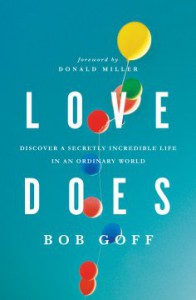
Goff (Nelson) $15.99  Again, this book
isn’t about racism or diversity but students know Bob from Jubilee, they know
he has done remarkable work for social change and global justice and they know
he is as fun as anybody – what a zany storyteller, reminding us that, well, the
call to love has to be embodied in real actions.  Love does, get it? 
I just had to push it, and was glad I did.  You really ought to read it if you haven’t.  Amazing!


Lluminous.jpguminous: Living the Presence And Power of Jesus  T. David Beck (IVP/formatio) $16.00  This is one of my new favorite books on spiritual formation, and seemed to be a very useful book to hold up as an example of a resource that can equip us to be the kind of person who can “let our light shine” in a very hurting world.  I am confident that many will be challenged, equipped, and blessed by this remarkably interesting book.  Lynn Baab says that this book itself is luminous; the Biblical scholar William Abraham (Perkins School of Theology) says it is “written with charm and simplicity” even as Mark Scandrette it is a “dangerously bright possibility..” This is about practicing the presence of God in a Kingdom-centered, missional manner.  Some of the earth-shaking insights of this, by the way, came out of his mission trips to Haiti.  
Bbreaking old rhythms.jpgreaking Old Rhythms: Answering the Call of a Creative God Amena Brown (IVP) $15.00 We love this vibrant
spoken word artist, a hip-hop author with a great message for anyone who needs
to move faith out of the ordinary and really learn to trust and grow, moving
out of safe, boring patterns of religiosity and learn to be used by God in missional
efforts, infused with great joy.  I
shared this not only because the author is a strong black evangelical woman,
but because this book – about trusting God and stepping in lively ways into new
patterns of outreach – is exactly what all of us need to be reminded of at
times like this. It seemed like a no-brainer to promote and I’m glad to remind
you of it here, now.

Pplaying god.jpglaying God: Redeeming the Gift of Power  Andy Crouch (IVP) $25.00  I hope you read my long review of this
and I hope you realize why this title would be essential to promote at an event
of this nature.  The opening
address said the conference wanted to raise up “barrier bustin’ leaders” and if
we are going to overcome obstacles and reform institutions, we have to take up
the question of power.  Anyone in
leadership, or anybody doing leadership development and anyone wanting to wield
influence with Christ-like humility should grapple with this once-in-a-lifetime
kind of book. I highlighted it up
from the first night, and re-announced it during my second up-front book
plug.  It is that important.


Cchrist in conflict.jpghrist in Conflict: Lessons from Jesus and His Controversies  John Stott (IVP) $16.00  This new, updated edition of this very old John Stott classic was just re-issued, and I couldn’t be happier.  I had it at this conference to embolden those who may be resistant to conflict or who aren’t sure that we ought to press to hard towards serious claims about justice and inclusion.  Yes, this reminds us that Jesus rocked the boat, caused some discomfort, and thereby points us to ways to be truthful, bold, even as we strive to be guided by grace. This is classic Stott, reasonable, creative, impeccably Biblical, and rooted in the core distinctives of historic Biblical faith.
MMisreading_Scripture_with_Western_Eyes_Removing_Cultural_Blinders_to_Better_Understand_the_Bible-74635.jpgisreading the Bible With Western Eyes: Removing Cultural
Blinders to Better Understanding The Bible
E. Randolph Richards & Brandon
J. O’Brien (IVP) This is a perfect book to transition from book about spiritual
formation and Christian discipleship – the basis for multi-ethnic mission in
the church or in organizations – because reading the Bible well is a
foundational Christian essential. 
And this book not only helps us all learn to understand the Bible better
– by exposing misreadings and assumptions we bring (“reading into” the text, we
used to say) – but it does this by showing how many of the most common
misreadings come from our Western assumptions.  I have reviewed this book previously and insisted it is
nothing short of brilliant.  It is
interesting, well-written, offering some important insights and some new
material even for those of use who have pondered this very matter. You will
learn stuff about culture and ethnicity and race and privilege and you will
learn about the Bible in its own historic social context.   Highly recommended.

BOOKS ON RACE, DIVERSITY, and CULTURAL INTELLIGENCE

Lliving in color woodley.jpgiving in Color: Embracing God’s Passion for Ethnic
Diversity
  Randy Woodley (IVP)
$18.00 Get this great book to anyone wanting a reliable foundation about God’s
great desire for celebrating multi-ethnic community. It is one of the best, written by a dynamic Native leader. The first section includes
chapters on “Understanding Diversity” and the second section explains
“Opposition to Diversity” and the final unit has chapters on “Restoration
through Diversity.” There is a great study guide, too.  It is well worth having, upbeat, culturally aware and spiritually alive. Fantastic!

Ggracism-book.jpgracism: The Art of Inclusion  (IVP) $15.00 The play on words is brilliant, the chapters are truly insightful, and the
experiences learned in the crucible of creating an intentionally multi-ethnic
church are stimulating and helpful. Basic, clear, positive, and nicely rooted
in the core truths of the gospel.  Here’s how they describe it: “Building on the apostle Paul’s exhortations in 1 Corinthians 12 to honor
the weaker member, Anderson presents a biblical model for showing
special grace to others on the basis of ethnicity, class or other social
distinction. He offers seven sayings of the gracist with practical
examples for building bridges and including others. A Christian
alternative to secular models of affirmative action or colorblindness,
gracism is an opportunity to extend God’s grace to people of all
backgrounds.” How can we see gracism undo racism?  Read this book and you’ll know how it can happen in your own place.

Ddisunity in christ.jpgisunity in Christ: Uncovering the Hidden Forces That Keep Us Apart Christena Cleveland (IVP) $16.00  I promoted this from up front, reading from the back cover, since it just came and I had only skimmed it quickly.  It is without a doubt on my list, as it claims to be an “eye opening book” which explores hidden reasons behind the many sorts of divisions in our local churches.  The author is a trained social psychologist, a woman of color and an award-winning researchers. (And that smile on the cover of her beautiful picture on the back draws me right in.  With a grin like that, she can surely handle hard and complex stiff with joy and a light touch.) She not only studies racial divisions, but explores class and gender, why little differences sometimes become big sources of painful conflict, and why “categorizing others is often automatic and helpful but can also have sinister side effects.” She looks at “groupthink” and choices of language which can significantly affect unity. The book offers tools we need to understand how to overcome the hidden forces that divide us. Also, I’m impressed with the theological diversity of those chosen for blurbs on the back.  Not every day does one sees Thabiti Anyabwile, Curtiss Paul DeYoung, Greg Boyd and somebody from McCormick Theological Seminary sharing in their rave reviews. Here is a good interview with her from Vineyard USA that is well worth reading.
Tskin you live in.jpghe Skin You Live In: Building Friendship Across Cultural
Lines
  David Ireland (NavPress)
$14.99  This book is fun for a
number of reasons, one of which is that the author works with professional
sports teams helping them learn to develop health inter-racial friendship.  (One of the endorsements on the back is
from NFL quarterback Kurt Warner.) Dr. Ireleand is senior pastor of a
six-thousand member multi-racial congregation in North Jersey (he has completed
post-doctoral work at U of Pennsylvania, which is quite prestigious.) This
clear, helpful book is a gold-mine of basic, practical guidance helping anyone
who wants to be more comfortable when reaching across racial and cultural lines
or who is leading a multi-cultural team. 
Leave it to Len Sweet to say it best, when he calls it “a primer on
cross-cultural relationships that deserves to be heard, heeded, and honored as
the primary toccata and fugue of friendship music. You are holding in your
hands a genesis gift of stunning originality, creativity and genius.”  

Ccultural i book cover.jpgultural Intelligence: Improving Your CQ to Engage Our Multicultural World  David Livermore (Baker) $22.99  We recommend this often, and had a big stack at the conference – it is ideal for beginners who want tons of great information on how to be more aware and effective in diverse cultural settings.  Livermore has written professional books for business executives who travel to other cultures, he has done good books on cultural awareness for youth going on mission trips (Serving with Eyes Wide Open) and this, good for youth workers, campus ministers, or anyone wanting to form the attitudes of those they teach or lead.  The rave reviews of this continue to come in, and we are happy to promote it as a must-have resource for effective ministry.


Mmany colors.jpgany Colors: Cultural Intelligence for a Changing Church Soong-Chan Rah (Moody Press) $14.99  Some have thought this to be the very best book – good for beginners, but not simplistic or naïve – and it moves from broad cultural exegesis to helpful insights about how to proceed in exploring our own congregational or organizational cultures.  This is a framework that is profoundly Biblical, passionate, and aware of the complexities and pain of a racial history. Rah is a professor of church growth and evangelism at North Park Theological Seminary in Chicago and is an important scholar and activist.

Llearning from the stranger.jpgearning from the Stranger: Christian Faith and Cultural Diversity David I. Smith (Eerdmans) $22.00  I am fond of David Smith as he has co-authored a great book on teaching foreign languages, he has done some good stuff on education, and he is a brings a profoundly Christian worldview to his thinking.   This is a fascinating, advanced-level book on everything from postmodern scholarship to the elusive meaning of “culture” to the Biblical themes of hospitality and otherness. There are three chapters on Genesis, Luke, and Acts, and then brings together insight from Smith’s own experiences.  Ideal, especially, for college students and leaders wanting to bring a Christian perspective to bear on multi-ethnic culture studies into the academy.

Lleading-a-healthy-multi-ethnic-church-seven-common-challenges-and-how-to-overcome-them.jpgeading a Healthy Multi-Ethnic Church: Seven Common
Challenges and How to Overcome Them 
Mark KeYmaz and Harry Li (Zondervan) $18.9  You may have heard of Mosaic Church; these authors have
affiliations with spin-off sister congregations (and Erwin McManus has a nice
blurb on the back.) Matt Carter of the important Austine Stone Community Church
in Austin Texas writes that “Mark DeYmaz, perhaps more than any pastor in
America, has his finger on the pulse of what it will take for the church to
find reconciliation in our generation.” 
I don’t know how he would know that, but the sentiment speaks volumes:
these guys have a huge heart for this and more importantly, have offered
hard-won insight about how to do it. 
One of the speakers at “Living in Color” said this is the resource he
found most helpful in doing this work in his own congregation.  This is an up-close-and-personal look
at seven common challenges.  You
face these.  This book will help.  This was previously published as Ethnic Blends.

Thidden wound (Berry).jpghe Hidden Wound Wendell Berry (Counterpoint) $15.95  There are a few remarkable localists at
Geneva who teach out of the agrarian vision of Mr. Berry and they were glad to
see that I had this book on the display table. And why wouldn’t we? 
Some have said this is one of Berry’s best, just so amazingly written, so
well-crafted and glorious, with provocative and profound insights about race
and land and place and progress and hope.  Granted, the poet Hayden Carruth is a like-minded soul,
but listen well to his comment in The Village Voice: “Berry has produced one of
the most humane, honest, liberating works of our time. It is a beautiful
book.  More than that, it has become
at one stroke an essential book. Every American who can read at all should read
it.” Novelist Larry McMurtry writes in the Washington Post that “the statement
it makes is intricate and beautiful, sad but strong.”


Ssome of my best friends.jpgome Of My Best Friends Are Black: The Strange Story of Integration in America Tanner Colby (Penguin) $16.00 I pushed this from up front in part because Beth and I so enjoyed it and because it is so well written — part memoir, part social history — and because it seems so very wise. It is clear about the failures of the grand liberal projects of the last 40 years. With great journalistic verve, this fun book exposes the structural/systemic issues or racism, a story too many of us still don’t quite get, even as he looks at the unintended consequences of the policies designed to alleviate institutional racism. (He tells of the injustices and complex scenarios in Southern urban education, in real estate and housing in the Mid-West, and in professions of Madison Avenue in New York City.) I have reviewed this a time or two previously and remain convinced that you should get it; it is a great read!
Tnew jim crow.jpghe New Jim Crow: Mass Incarceration in the Age of Colorblindness  Michelle Alexander (The New Press) $19.95 There is a reason is is considered “an instant classic” (Cornel West) and “devastating” by Forbes Magazine and “stunning” by Pultizer-Prize winning historian David Levering Lewis. To have the sinful inequities of how people of color are treated by police and in sentencing (in contrast to white people picked up and then indicted for the exact same crime) so documented makes this one of the most alarming books I have ever read. I assume you have heard of it. 


Aaliens in the promised land.jpgliens in the Promised Land: Why Minority Leadership Is
Overlooked in White Christian Churches and Institutions
edited by Dr. Anthony
B. Bradley (P&R) $16.00 This is a very important book and one some of us –
many who read this blog, I’d think – need to read.  As John Frame says, “This is a terrific book…a game changer…If
you are tired of the usual arguments about race, as I am, this book will take
you up with some new ideas.”  Old
Testament scholar Tremper Longman writes that it “prophetically addresses the
issues connected to evangelicalism and minorities.  Everyone, particularly church leaders, need to read this
book.”  Although I think it should
be read widely, it is situated among conservative, mostly (but not exclusively)
Reformed thinkers, and chapters are by a variety of multi-ethnic pastors,
church planters, denominational executives, seminary profs and others.   Here are Amos Young, Harold Dean
Trulear, Vincent Bacote, Orlando Rivera, Carl Ellis, and other strong men with
much to say. The book is dedicated to New City Fellowship in Chattanooga, which I first learned about from old friend, singer James Ward.  Nice!

Bbirmingham revolt.jpgirmingham Revolution: Martin Luther King Jr’s Epic
Challenge to the Church 
Edward
Gilbreath (IVP) $16.00 We had a bunch of books on the civil rights era (perhaps
you saw my previous list from last summer) and we were glad that Geneva offers
a civil rights tour that visits historic sites in the deep south, so there are
those there who have learned about that storied part of our history. I am sad
when there isn’t much interest in the writings of King that have come to mean
so much to me, but we continue to promote them.  Here is a brand new book that I have not even glanced at
yet, but it will be a joy to read, soon. 
Gilbreath wrote an important and good work called Reconciliation Blues:
A Black Evangelical’s Inside View of White Christianity
(and is an editor at
large for Christianity Today.) So we know he is a splendid journalist and good,
serious writer.  Not enough is known
about the back story and historical situation that gave rise to Martin Luther
King’s famous “Letter from a Birmingham Jail” and this may be the best book yet
on this remarkable, and now iconic event. 
I trust what Curtiss Paul DeYoung writes, who says, “Edward Gilbreath
has provided us with a truly magnificent look at Martlin Luther King, Jr. and
the Birmingham civil rights campaign…Those new to King will be intrigued,
informed, and inspired. Those very familiar with King and the events in Birmingham
will gain fresh and engaging insights. Birmingham Revolution is a must read.”

Mmore than serving tea.jpgore Than Serving Tea: Asian American Women on Expectations, Relationships, Leadership and Faith Nikkie Toyama & Tracey Gee, Jeanette Yep, and others editors (IVP) $16.00 This is such a great resource, written by a variety of Asian American evangelical women with various concerns and reflections and advice — powerful stuff.  The writing is really fascinating and at times quite poignant.  A must.  We have other resources by, for or on Asian American theology and ministry, too.  


Llatino americans.jpgatino Americans: The 500-Year Legacy That Shaped a Nation  Ray Suarez (Penguin) $18.00  We were once honored to sit next to Suarez at a book signing gig at the National Press Club, and he was a gem. He is a senior correspondent at PBS Newshour and this new work is a companion to the PBS Documentary series by the same name.  It looks tremendous.  By the way, for the record, you should know of the best entry level book on this topic, one of the few that is solidly evangelical, Being Latino in Christ: Finding Wholeness in Your Ethnic Identity by our friend (IVP; $16.00.)  Both of these are highly recommended, although we have many others by, for or about Latino ministry.


Frfrom ts to tbt.jpgom Times Square to Timbuktu: The Post-Christian West Meets the Non-Western Church  Wesley Granberg-Michaelson (Eerdmans) $20.00 This is one of the handful of books that I will surely declare as one of the most important of 2013 — I regret not having been able to describe it more thoroughly here, yet.  The author is an amazing, ecumenical leader and I hope you know his remarkable memoir, surprisingly germane to this topic, even, Unexpected Destinations: An Evangelical Pilgrimage to World Christianity (Eerdmans; $24.00.) In this new one, Wes takes the conversation about global Christianity a huge step further with a sustained look at how immigration and patterns of migration are bringing two-thirds world Christians and their unique theologies and church practices to our doorstep.  Yes, the demographic center of gravity is for the first time in church history no longer Western.  But the people and faith practices of those multi-ethic folk aren’t just a curiosity for those that study world missions, it is effecting the texture of most cities in America and nearly every denomination.  This is a grand and great book for those that have eyes to see.  And what a great title, with such a great cover!  Wes’ old friend Jim Wallis writes, “This is the most important book anyone can read about the future of the church.” You should check it out.

BookNotes
SPECIAL
DISCOUNT
ANY ITEM MENTIONED

20% off
order here
takes you to the secure Hearts & Minds order form page
just tell us what you want

inquire here
if you have questions or need more information
just ask us what you want to know

                   Hearts & Minds 234 East Main Street  Dallastown, PA  17313     717-246-3333
                                                       read@heartsandmindsbooks.com


DEEP DISCOUNTS/BIG SALE: BOOKS SOLD AT REDEEMER FAITH & WORK CONFERENCE

After a splendid whirlwind trip to Montreat College in the breathtaking mountains of Western North Carolina where I had the great privilege of talking about the integration of faith and learning, new initiatives within the college to emphasize vocation, calling, and work, and how faculty and others can mentor students into the radical practices of Kingdom living in all areas of life, I flew home, packed up the van, and heading into the equally breathtaking concrete canyons of mid-town Manhattan.   

While I was on the road we lost the largest sale of our 31 year career due to, I am convinced, humanizing work stage.jpga scurrilous bit of hanky-panky from a publisher and a well-known Christian author.  Ironically, we were heading to New York to sell books at the esteemed Redeemer Presbyterian’s Center for Faith & Work’s annual conference, this year around the theme of Humanizing Work.  Yes, there would be calls to better business ethics and reform of the world of work in a greedy commodity culture.  The contrast between the idealistic students and teachers at a rural Christian college and the sophisticated fast-paced texture of the New York culture-makers, and the real-world, back-home violation of basic rules of retail publishing, made my head spin.

So we need this stuff, learning to make the world a better place, not Playing God as Andy Crouch’s very important new book on power warns, but truly taking up Christ’s ways of love for neighbor by promoting, as Rev. Timothy Keller put it in a good keynote, human flourishing by strengthening the common good.  From the inspiring “lead from the heart” presentation by leadership consultant Mark Crowley (maybe you’ve seen his essays in Fast Company) to thebook browsing at CFW by stage.jpg passionate neo-Calvinist preaching of Anthony Bradley, from the amazingly helpful and wonderful presentation by Nancy Ortberg to the informative overview of the history of the faith and work movement and an up-to-the-minute report by David W. Miller of the Princeton University Faith & Work Initiative, we heard great, great, speakers inspiring us to join God’s redemptive purposes in the world by taking  up the call to integrate faith and work.  There were dozens of workshops, interviews, panels, artists, musicians and experiential glimpses into creative stuff which celebrates the human and humane – from farm to table chefs to high financiers working to understand the indices in normative ways to architects, designers, retailers, teachers, elected officials, engineers. Their faith-inspired intuitions and bold experiments were remarkable and these folks were stimulating to talk with.

Some participants knew they needed to do a bit more intellectual heavy lifting to deepen the theoretical foundation for what they do and were glad to see our books.  Many of the attendants were eager to learn that there were titles about their respective fields and everybody complimented us on bringing – curating, as they say – an array of titles, Christian and otherwise, that can help one understand the history of one’s field, and the unique quandaries facing Christ-followers and others of good will in this day and age. Each of our spheres of influence and job-sites and institutions offer unique challenges and opportunities and folks were thinking hard and praying specifically for vision and wisdom in their particular callings. That is, they were eager to read Christian books about medicine, teaching, economics, art, music, theater, about computer technology, about racial justice, about urban planning, about politics and clothing and food and farming and journalism.  From the sciences to the liberal arts, from history to mathematics, we heralded books to help equip, as some put it, the laity. The people of God serving missionally by thinking Christianly, in the world but not of it, career area by career area.

In other words, these folks discovered a central part of the selection of Hearts & Minds, and we told many about our (admittedly feeble and in need of updating) Books by Vocation annotated bibliography.  

As is often the case, some books sold out, and others didn’t sell as we thought.  Some great speakers hit a home run, but their books didn’t sell because they presented late in the day, and there wasn’t time to shop after their talks.  Some I intended to plug from up front, but didn’t. Yeah, we have a few piles of some left over.  So it goes.

Which means that we have some books we’d rather sell to you almost at cost and will offer some good discounts here, now.  Inventory clearance, you know.

FIRST SOME THAT SOLD WELL (20% OFF HERE NOW)

But first, a list of books that sold well at the conference.  Thought you’d enjoy knowing, making sure you are aware of the best.  We list the regular prices, but will deduct the savings when you order. We will continue to have them at a good BookNotes discount — 20% off.

AND SOME AT EXTRAORDINARY SAVINGS FOR YOU THIS WEEK ONLY

And then these others, further down, are offered for one week only at deep discounts.  I’m convinced these are truly stellar titles, and you can’t get a better price on fresh new copies anywhere.  I hope you appreciate this offer, but it only lasts until November 20th, 2013.  Order ’em now, while supplies last.

A FEW WHICH SOLD WELL  — NOW AT 20% OFF

Tthe call.jpghe Call: Finding and Fulfilling the Central Purpose of Your Life  Os Guinness (Nelson) $17.99  I say this all the time, but it is still one of my all-time favorite books, a wonderfully written, truly informative, game-changing set of reflections on Christ’s call and our response, in discipleship and in our various vocations and callings.  Take a lookie here at our big list from a year ago on callling and work and see if any others on this foundational theme call out to you.  Everybody should read something on this topic and if you haven’t now is the time.  These dry bones are arising!  Many of these books, by the way, draw on Os and cite his eloquent work.  

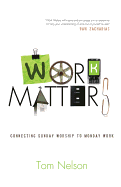
Wwork matters smaller.gifork Matters: Connecting Sunday Worship to Monday Work  Tom Nelson (Crossway) $15.99 Again, this is a recent gem, a soon to be modern classic, accessible and upbeat, telling the tale of a pastor who started preaching about these themes, equipping the folk in his church to take their faith into their jobs, offices, schools and businesses.  There are splendid sidebars, stories of others who have thought Christianly and creatively about the culture-making implications of their work in architecture, sales, education, lawyering, and more.  There are other books on the joys and sorrows of work, but this is the best place to begin.  Very highly recommended.

Pplaying god.jpglaying God: Redeeming the Gift of Power Andy Crouch (IVP) $25.00  I guess you know I hinted at my long review of this one last month that it is my pick for my favorite book of 2013.  I said that from the big stage, and sold some, but wished the book display had been stampeded.  Maybe I should have been more authoritative, exercising my cultural power to influence people to buy this thing. Or maybe I don’t quite have the power I think I do.  Come on people, humor me, at least.  This book is a winner and you will be wiser and more faithful if you grapple with it.  By the way, I gave a shout out to the seminal Culture Making: Recovering our Creative Calling (IVP; $20.00) which is now out in a handsome paperback.


Eeconomic shalom.jpgconomic Shalom: A Reformed Primer on Faith, Work, and Human Flourishing  John Bolt (Christian’s Library Press) $12.99  This volume is the third in a helpful series laying the ground work for a faithful view of work – the first offered a Wesleyan approach, the second a Pentecostal perspective – and it brilliantly unpacks a conservative Calvinist view.  Dr. Bolt is learned and astute, standing especially in the tradition of Dutch Reformed theologians like Herman Bavinck and Abraham Kuyper.  He shows how this robust tradition is a bit different on social policy than others (he even addresses the study of structural economic injustice as presented by the likes of Ron Sider and contrasts his view with more social democratic liberal views of some reformational thinkers.  I haven’t read that part cardefully yet, but know it will be stimulating, even if I’m wondering if he is a bit to enamored by so-called free markets.) It has a nice endorsement by Richard Mouw, amd there are interesting discussion questions. Agree or not with all of his approach, this is a significant little book, which, as CFW Director David Kim writes in his forward, is a “primer but not elementary.”

Bbusiness-for-the-common-good-a-christian-vision-_publication.jpgusiness For the Common Good: A Christian Vision for the Marketplace   Kenman Wong & Scott Rae (IVP) $24.00 I told people this was a  “step up” in seriousness from the one I promoted from the main stage, Jeffrey Van Dozen’s Why God Cares About Business (And What More Needs to be Done) (IVP; $20.00)  These are two must-read books for anyone in business.

By the way, if you are in the world of high finance or interested in a thoughtful, informed Christian view of the global economic crisis, try this book, by a economist (whose other work is published by the world class Oxford University Press) who is also a working pastor in the financial district of London, The Crisis and the Kingdom: Economics, Scripture and the Global Financial Crisis by E. Philip Davis (Wipf & Stock; $18.00) It is fairly brief, accessible, and a powerful analysis.

Sshaping a digital world.jpghaping a Digital World: Faith, Culture, and Computer Technology  Derek Schuurman (IVP)  $18.00 You may recall a huge review essay I wrote that finally got around to saying why this book is the best book on computer technology I’ve yet seen.  IT guys and computer geeks of all sorts snapped it up after I mentioned it up front.  This really is a must-read for anyone interested in digital culture and thinking in light of “creation/fall/redemption” to get a balanced view of technology. Highly recommended.

Mmaking-difference-christian-educators-in-public-schools-donovan-l-graham-paperback-cover-art.jpgaking a Difference: Christian Educators in the Public Schools  Donovan Graham  (Purposeful Design) $21.99  We go out of our way to order this rather rare book because it is one of the best that is clear, substantive, and practical.  This is a “public school” adaptation of the excellent one for teachers at Christian schools entitled Teaching Redemptively.  Of course we sold a few of Nicole Baker Fulgham’s Educating God’s Children: What Christian’s Can — and Should — Do to Improve Public Education for Low-Income Kids (Baker; $17.99.)  The CFW had hosted her for a workshop a few months ago, so many knew her good heart and good proposals.  I’ve told people that she is the evangelical Jonathan Kozol.

IIt was Good Making Music.jpgt Was Good: Making Music to the Glory of God  edited and compiled by Ned Bustard (Square Halo Books) $24.99 You know that we’ve pushed this everywhere we could since it released last month.  See my long review, here. I was a bit restrained talking about this one from the big stage since I was running out of time — if you heard me at Humanizing Work, this was the last one I mentioned, and I quickly shared my delight in it.  It is one of the best of the year, great for anybody who enjoys music, essential for anyone in the field.  With Broadway actors in the crowd we happily sold a few of the helpful Performing the Sacred: Theology and Theater in Dialogue by Todd Johnson & Dale Savidge (Baker; $22.00), of course, and Ian Bradley’s fun book You’ve Got to Have a Dream: The Message of the Musical (WJK; $30.00.)  Obviously.

Hhealth, healing and the church's mission.jpgealth, Healing and the Church’s Mission: Biblical Perspectives and Moral Priorities Willard Swartley (IVP) $24.00  We had a dozen different books on health care, healing, wholeness, medicine and the like.  One family doc told me he did his residency here in York, years ago and was influenced by our dear friend Dr. Peter Piper and other evangelical doctors.  Another complimented us on our selection; he had started an urban health care clinic designed for the under-served. He liked that we had Dust and Breath: Faith, Health and Why the Church Should Care About Both by Kendra Hotz and Matthew Mathews (Eerdmans; $14.00) a good telling of the good work of the clinic founded by Dr. Scott Morris in inner city Memphis.) This one by Willard Swartley is a masterpiece, an in-depth study of health in the Bible, by a premier Mennonite New Testament scholar.  Highly recommended.

DEEP DISCOUNTS ON THESE FIVE TITLES.  ONE WEEK ONLY.  

THIS SALE OFFER EXPIRES NOVEMBER 20, 2013 while supplies last

[AFTERWARDS, ASK FOR THE 20% OFF OFFER.]

Eevery good e.jpgvery Good Endeavor: Connecting Your Work to God’s Work  Timothy Keller & Katherine Leary Alsdorf (Dutton) $26.95  SALE PRICE $16.50 There is no doubt in my mind that this is the most substantive and important book in the recent spate of books on this urgent topic, most likely the best ever.  If you care at all about this field, you should have this.  If you don’t care about this field, I hope you pick this up to be challenged and convinced. If you care about this topic and your pastor doesn’t seem to, give him or her a copy.  Buy a few, start a group, read it with others, at church, at college, at work.  Give a few as Christmas gifts  Now is the time, buy this on sale while you can.  Keller, of course, is an excellent, clear, solid writer and a very good thinker.  Katherine Leary Alsdorf who wrote much of this happens to be one of my favorite people, an insightful business woman with extensive corporate experienced, a lover of Christ and a gospel-centered leader. Highly recommended.


Uunleashing power of rubber bands.jpgnleashing the Power of Rubber Bands: Lessons in Non-Linear Leadership Nancy Ortberg (Tyndale) $17.99  SALE PRICE $10.00  This is a very nice book by a great author and speaker, perhaps best known as the wife of famous pastor and author John Ortberg.  She is a great communicator in her own right, and we’ve often recommended this innovative and fascinating work on leadership.  It is ideal for nearly anyone – college students and rising leaders, women in church or at work or neighborhood, anybody needing to be refreshed in the art of vision casting, managing conflict, nurturing healthy teams.  We were really, really impressed with her and had her presentation not been late in the afternoon, I think we’d have sold a ton of this book.  As it was, folks had to move to their next events in other parts of the city, so we have a bunch, which we are happy to promote here. You will be glad. While supplies last.


Llooking for god.jpgooking for God: An Unexpected Journey Through Tattoos, Tofu and Pronouns  Nancy Ortberg (Tyndale) $14.99 SALE $10.00  Again, we were thrilled to meet Nancy, and were very impressed with her delightfully good talk.  When I read this a few years ago I loved it, realizing it was ideal for a number of different sorts of folks – it is part memoir, part Christian testimony, part an argument for doubt and struggle, especially during her years as a young mom.  She has been through a lot and this creatively done book tells her story, inviting us to pay attention to the details and texture of our daily lives, and respond to the call of the Spirit in the mundane.  I love this stuff, and having met her, now, will revisit this book again myself, soon.  I love books that affirm that “God is in the details” and this collection of well-crafted pieces remind us to find the holy in the ordinary.  This would make a great gift for those who perhaps see themselves as outside of the church, or too cool for organized religion or are needing help in discovering God in the real world.  Very, very nice.

GGod at Work Miller.jpgod at Work: The History and Promise of the Faith at Work Movement David Miller (Oxford University Press) $29.99 SALE PRICE $19.99  I think the cover of this sturdy hardback is a bit too staid — that Bible and the Wall Street Journal — and although this is a history of the movement, with tons of social science research, it is nonetheless riveting, a must-read!  Story after story, city after city, workplace after workplace, Miller reports to us of this still not well-known aspect of God’s renewal, happening under our noses, in our workplaces, at the end of the 20th century.  He documents the efforts to bring this wholistic gospel of the Kingdom to bear in different modalities and ways into the marketplaces and job sites of our messy, secularized world.  He has a section on Sam Shoemaker’s vision about Pittsburgh which lead to our beloved Pittsburgh Experiment (and now Serving Leaders) and documents the generative early work of Laity Lodge. He mentions heroes of mine like William Diehl (who spoke at Jubilee in the 1970s and made a huge impact on me.)  Man, I love this stuff.  Anyone who is a leader in this movement needs to know this history.  If you are not, maybe you would enjoy hearing about the on-going efforts people are being lead into, the organizations, strategies, and visions for marketplace ministry and workplace faithfulness.  Get it now, on sale.  It is important, and Miller is a good, good guy.

Llead from the heart.jpgead from the Heart: Transformational Leadership For the 21st Century Mark C. Crowley (Balboa Press) $13.95 SALE PRICE $10.99  I mentioned this upbeat guy above, and meeting him was a trip – what a story he has of overcoming an abusive childhood, learning to put one foot in front of the other and becoming a hugely successful executive in supervising regional banks and their financial products.  As he grew in deeper insight, he realized that the heart is the heart of the matter and that love shown, encouragement offered, supportive workplaces created, trust enhanced, really does pay off.  He sounds off against financial and social manipulation of employees (“the carrot and the stick”) and makes the case that treating others with humanness and care really does work.  He is not suggesting that we manipulate folks to produce more by being nice (although Keller pressed him on that in the conversation time) but is saying (without any Biblical references) what those who advocate for “servant leadership” have long said.  Leading from the heart is where it’s at. I felt very glad to meet Mark and glad to talk with him a bit about his journey, his family, his values. 

This is a cool little book and I think it could transform the work-worlds of many.  Since it doesn’t use heavy theological language or posit any traditional religion foundations – he actually talks about cardiology! – it would be accessible to those not comfortable with Christian literature. He makes the case, shows the numbers, tells the story. We don’t have many left, but wanted you to have a chance of getting them at this extra good price.

BookNotes
SALE
BOOKS FROM THE FIRST LIST
20% off

OTHERS PRICED AS STATED
THESE SALE PRICES GOOD UNTIL NOVEMBER 20, 2013

order here
takes you to the secure Hearts & Minds order form page
just tell us what you want, we’ll confirm and ship

inquire here
if you have questions or need more information
just ask us what you want to know

                   Hearts & Minds 234 East Main Street  Dallastown, PA  17313     717-246-3333
                                                       read@heartsandmindsbooks.com


A Baker’s Dozen: 13 Brand New Books: delightful, curious, controversial, helpful: ON SALE

I’ve been reading the fabulously interesting and very informative travelogue through importanin search of deep faith .jpgt Christian sites in Europe called In Search of a Deep Faith: A Pilgrimage into the Beauty, Goodness and Heart of Christianity (IVP; $17.00) by Jim Belcher, and I am not ready to write about it yet.  Some of its profundity is still sinking in and it deserves more than a quick shout out; it is one of the handful of best books of the year.  For those who have asked, it is indeed a great book, and his ruminations on visiting (with his wife and children) the locales of the authors of books that once shaped his life are really helpful. What a way to be introduced to (or re-reminded of) Cramner and The Book of Common Prayer, Sheldon Vanauken (A Severe Mercy), Lewis, Bonhoeffer, Andre Trocme, and more.  This is in many ways my kind of book, and I trust Belcher a lot, as a thinker, a writer, a person. I will be writing about it more, soon.

For now, I can’t not tell you about at least some of the other new titles we’ve gotten into the shop and onto our shelves the last week or so. It is exciting — such good books!  So here’s a quickie list of 12 + 1 (a “baker’s dozen” you know.) While some other places are pushing the new Joel Olsteen or other superstars promising prosperity (or the latest mega-seller slasher novel or fad diet or downloadable thingie) we’ve got some mature, thoughtful, wonderfully-created books that may not be on the bestsellers list. But these are real books; not mere products, units moved, but true books by real authors.  They are fun to describe, good to know about, and should be considered among us.  Most would make good choices for your next small group or book club or adult ed class.  All are 20% off (except where noted –the first two are 30% off!)


We’ll list the regular retail prices, but we’ll discount them for you when you place an order.  Hope you enjoy hearing about these as much as we enjoy heralding them.  Good books matter.

Ppaul-and-the-faithfulness-of-god.jpgaul and the Faithfulness of God N.T. Wright (Fortress) $89.00  Yes, this is the publishing event of the year, the long-awaited major work on Paul by what I believe is the most important Bible scholar (and certainly one of the most important Christian leaders) on the planet.  Wright has many books for non-specialists and you know we recommend them, always. (Not least his latest on the Psalms which I reviewed here.)  His magisterial “Christian Origins” set, however, is exceptionally meaty, and this fourth installment is itself a two-volume paperback (over 1700 pages!) We are selling this at 30% off to make it more affordable.

Ppauline perspectives.jpgauline Perspectives: Essays on Paul, 1978 – 2013  N.T. Wright (Fortress) $69.00  This is a major release in its own right, a supplemental volume to the previously listed one, a collection of essays, articles, talks and studies, some of which have never been in print before (others were in anthologies compiled by other scholars or in rare scholarly journals.)  I’ve read a few of these and this is a volume worth having!  Again, we are offering this at an extra discounted price of 30% off.


Tstory of god - sermon.jpghe Story of God Bible Commentary: Sermon on the Mount  Scott McKnight (Zondervan) $29.99  Scott McKnight and Tremper Longman III are the general editors of this very interesting new series — this is the second one so far (Philippians by Lyne Cohick released not long ago)  — which offers not only careful exegesis of the given Biblical texts, but attempts to place the Bible book in the bigger picture of the unfolding Scriptural story, the story of God’s redemptive plan for the planet, and moving us towards application.  These are no dry old-school commentaries. Each Biblical passage is explored in three easy-to-use sections: “Listen to the Story,” “Explain the Story,” and “Live the Story.”  John Ortberg says “it makes the text sing and helps us hear the story afresh.”  I am very interested in this method and approach; and who wouldn’t like to read what McKnight says about the Sermon on the Mount? This is very, very useful.

Hholy luck.jpgoly Luck Eugene H. Peterson (Eerdmans) $12.00 Imagine a small, square sized paperback with handsome french flaps, less than a hundred pages, the kind of book you just want to hold, to behold, one you read slowly, carefully — sometimes with joy and vigor, or with meditative pondering. This is the first-ever collection of the poems of pastor Peterson.  A few of us have been very honored to have seen a few of these over the years.  Others  of us have heard of them, or seen the rare one in Christian Century or somewhere. Here, finally:  seventy poems, offered in three sections. The portion called “Holy Luck” includes poems arising out of the Beatitudes.  “The Rustling Grass” section includes poems opening up Kingdom realities through particular created things and “Smooth Stones” offer occasional poems about discovering significance in life’s details encountered while following Jesus.  Enjoy these as the artful wordplay they are, but know that they are also well-suited for devotional use, could be used in classes or workshops, maybe even in sermons.  Highly recommended.

Ttt.jpgalking Taboo: American Christian Women Get Frank about Faith  edited by Erin Lane and Enuma Okoro (White Cloud Press) $16.95  This has gotten some nice buzz on the internet, but being from a small indie press, you may not have heard of it.  We are thrilled to stock it as it is the kind of book that many will enjoy, many will be nodding their heads in agreement (or rubbing their eyes in astonishment.) It makes for very moving reading, and it is good to hear folks as they “speak for themselves.” (The publisher has a few others in this series, with Muslim men and women, each given a platform to tell their own stories.) There are all kinds of women here, from various Christian traditions (mainline, Catholic, Orthodox, evangelical, Quaker, Pentecostal, etc.) and various races and ethnicities and social backgrounds.  You may know co-editor Enuma Okoro, whose Reluctant Pilgrim memoir we touted and whose work with Shane Claiborne on the Common Prayer project has been so important.  We’ve got a number of friends who are in here, and others whose work we know, women whose writing has been a blessing and challenge.  From Julie Clawson to Amy Julia Becker, Rachel Marie Stone to Andre Palpant Dilley, there are a number of excellent young writers whose work we so appreciate. (I just sent out on facebook the other day a powerful piece on breast cancer and the color pink by Sarah Thebarge.  She is the author of Invisible Girls, and she is in here, too.) Others here are new to us, and some are very, very good writers.  These essays are candid, speaking of everything from menstruation to church leadership, from sex to spirituality.  Jenny Hwang Yang (author of the very good book on immigration, Welcoming the Stranger) writes about “Being a Voice for the Stranger” and Rev. Rebecca Clark has a chapter called “The Pastor Has Breasts.”  Carol Howard Merritt  is here, as is Amy Frykholm, two writers whose names you might know.  We are most happy, though, that a long-time friend, with college-era connections to the CCO, Tara Woodard-Lehman, has a wonderful, wonderful chapter. When she talks about her Western Pennsylvania town, I know exactly what she is talking about, and she and I have chatted in that very town so many years ago.  Tara is a vibrant Presbyterian pastor in Princeton, and her very well-told journey, like all those told in this fascinating anthology, is essentially testimony.  God is alive and well, despite all, in and through these sisters in faith.  It is frank, it is at times painful, and the mix of styles and traditions and perspectives might take your breath away.  I hope so.  It’s that kind of book.

Tthe prod.jpghe Prodigal: A Ragamuffin Story  Brennan Manning & Greg Garrett (Zondervan) $15.99  Speaking of publishing events and much-anticipated books, this is the novel that dear Brennan Manning was working on at the time of his death earlier this year.  A contemporary, powerful retelling of the Prodigal Son parable, it is his last work, his last words, and we should be very grateful that the very good writer Greg Garrett was commissioned to finish it with and for him.  Those of us who had the privilege of meeting Brennan will never forget him.  His extraordinary books such as Ragamuffin Gospel (and its brilliant sequel, Ruthless Trust) The Signature of Jesus or Abba’s Child know that he was a man in need of grace, who fiercely and tenderly helped us all realize that we are the beloved of God.  What a story this will be, about forgiveness and transformation.  There is a new Ragamuffin Study Bible, too with “meditations for the beat up and bedraggled, bet up and brokenhearted” — with that cool red door on it — that is laden with quotes and insights from Fr. Manning.


Lluminous.jpguminous: Living the Presence and Power of Jesus  T. David Beck (IVP/formatio) $16.00 I love Mark Scandrette’s blurb, “Suggest the dangerously bright possibility that we can be tuned into and turned on by the same light that illuminates the whole universe with the love of God.”  Many of us have been drawn to — and get a lot of milage when speaking — about the classic Practicing the Presence of God.  I hear Beck is like a modern-day Brother Lawrence, who has lived well with God in the messy details of life.  In this upcoming season of reflecting on the incarnation, this book could be a perfect companion. That it is on the IVP imprint “formatio” is a great indication of the quality of the writing.  I can’t wait to read this myself, and I’m sure you will find it to be an exceptional book.  Why not get one for your small group, or a prayer partner?


YYes, And..jpges, And… Daily Meditations  Fr. Richard Rohr (Franciscan Media) $24.99  There have been other daily devotionals by the esteemed priest and they have been good. We love this writer who has such a knack for wedding the journey inward and the journey outward, the contemplative and the activist strains of Christian discipleship.  This one, though, draws from all of his previous works (including some recorded lectures), and is arranged in an intentional and thoughtful way.  It is a big, sturdy hardback and has a year’s worth of reflections. Includes an impressive forward by Protestant David Benner, which is nice to see. 


Aguide to all who walk with god.jpg Guide to Prayer for All Who Walk with God  Rueben Jobs (The Upper Room) $32.00  You hopefully know his other best selling devotional guides that are arranged with liturgical rhythms, offering daily Scripture,  prayers, and carefully selected  excerpts of meditative readings for each day, arranged around weekly themes.  There is the red one, the blue one, and the green one.  This one is in a richly handsome black leather —  all new, but arranged just like the others.


Sstitches.jpgtitches: A Handbook on Meaning, Hope, and Repair  Anne Lamott (Riverhead) $17.95  One advanced reader said this is the best thing she’s written in years.  She ruminates on stuff like this: “Where is the meaning in the meteoric passage of time, the speed in which our lives are spent? Where is meaning in the pits? In the suffering? I think these questions are worth asking.”  Or, “what do  we do when life lurches out of balance?” She is a good writer, a compassionate one, and very,  very interesting.  Brief, nicely printed (with colored ink) it would make a great little gift for someone who wants allusive, funny, and candid memoir and essay.


iigods.jpgGods: How Technology Shapes Our Spiritual and Social Lives  Craig Detweiler (Brazos) $17.99  Yes, there is a whole chapter on amazon, and yes I tweeted a cryptic comment last week about how dumb a line or two were, and how I disapproved.  And I’m still mad about it. But, still, Detweiler is a really good guy, this is a very up-to-date and truly interesting read, and he offers important ways to “interact with major symbols, or iGods, of our distracted age to investigate the impact of the technologies and cultural phenomena that drive us.” Heaven knows we need more serious “sons and daughters of Issachar (I Chronicles 12:32) that “understand the times” and help us think critically about what is going on in our day and age.  There are great blurbs, too — Q Schultze says it is a “wonderfully engaging romp…a splendid contribution.” Craig’s old colleague at Fuller, Robert Johnston. says that he is “one of the best at interlacing theology and popular culture…. it will inform both addict and skeptic.”  The digital age is fully upon us (as if you didn’t know) and many of us daily bless the apple folks for their istuff.  I am one of them, or I would be if I knew more. This book will help us figure it all out.  I think it is one of the best yet in this genre of very contemporary cultural criticism, with what promises to be a wise blend of being appreciative and dubious, or as one reviewer said neither “succumbing to the avalanche or rejecting it outright.”  I suspect you need this book, and if you think you don’t you really do.  Highly recommended. 

Jj to j.jpgourney Toward Justice: Personal Encounters in the Global South  Nicholas P. Wolterstorff (Baker Academic) $21.99  I know, Nicholas Wolterstorff is a world class, prestigious philosopher whose academic books carry extraordinarily rigorous thinking (and especially salty price tags.) This is Nic a bit more accessible, sharing his own heart, of how his encounters with injustice — most notably in Palestine and in apartheid era South Africa — effected his faith and, more so, his own scholarly vocation.  The passionate endorsements on the back are from vital voices for peace and justice, from Stanley Hauerwas to Richard Mouw, Bethany Hoang (of IJM) to Miroslav Volf, who writes, “If you have not read Wolterstorff’s great books on justice, you should.  This book — accessible and profound — is the easiest place to start.”  What an honor to carry such a book by an esteemed Reformed scholar, narrating firsthand how the realities of human suffering color his work as a political philosopher, an academic, professor, and human being.  Not to be missed.

Ffaith forward.jpgaith Forward: A Dialogue on Children, Youth, and a New Kind of Christianity  Edited by David Csinos and Melvin Bray  (CopperHouse/Wood Lake Publishing) $29.99  I have really been eager for this, know a few of the contributors, and wished I could have attended the gathering from which the essays were drawn.  You surely know about the “new kind of Christianity” that is being discussed among post-evangelicals and newly ecumenical folk like Brian McLaren and Rob Bell, and those who are called “emergents.”  One need not fully embrace this multi-layered and diverse movement to be interested and we all should be glad for the way they are asking questions, probing and re-imagining how faith can be practiced with integrity in our broken world.  We are glad that many of these folk embrace, or so it seems, the best of evangelicalism — heralding good news of God’s love based on the gracious work of Christ, joined with a wholistic and socially engaged sort of radical discipleship with a heart to be inclusive and hospitable, hearing voices on the margins, and also embodying some of the more typical sensibilities from the older-school mainline and liturgical churches.  This book is about children and youth ministry and asks big questions about how to share the emerging vision of the reign of God with little ones, pondering the joys and contemporary complexities about Christian education, family ministry, the role of women and men, and any number of important (if controversial) matters.  The many essays in this book bring a lot to the table, and I’ll be reviewing it more carefully as I am able — there are 21 serious chapters, written by newer evangelicals like Ivy Beckwith and older Episcopalians like John Westerhoff.  Kudos to David and Melvin for accomplishing the daunting task of bringing the talks and papers from the original conference into a lively and coherent book.  If you work in church-based education, children’s ministry, or care about families, youth, and/or young adults, this is a must. Blurbs on the back include great endorsements from Lutheran Seminary prof Andrew Root, contemplative Quaker Parker Palmer, Jeremiah Wright, the pastor emeritus of Trinity UCC (who has widely written on family life), Presbyterian educator Liz Caldwell, and of course, from Phyllis Tickle.  Jim Wallis has a nice blurb (his wife Joy has a chapter), Shane Claiborne wrote a forward, there is a rave endorsement by old timey civil rights leader, the ever vibrant Vincent Harding. We haven’t seen a book like this in a very long while, and think it will be stimulating. Agree or not with all their conclusions, you should join their conversation.

BookNotes
SPECIAL
DISCOUNT
ANY ITEM MENTIONED

20% off
order here
takes you to the secure Hearts & Minds order form page
just tell us what you want

inquire here
if you have questions or need more information
just ask us what you want to know

                   Hearts & Minds 234 East Main Street  Dallastown, PA  17313     717-246-3333
                                                       read@heartsandmindsbooks.com
WORLD SERIES BOOK BONANZA: 25% OFF BASEBALL BOOKS — GOOD UNTIL OCTOBER 31, 2013

Okay, I know.  Not all of us are sports fans.  But you know people who are, and wouldn’t they love a cool book about their national pastime?  Doesn’t God care about sports? According to my facebook feed, God cares about sports quite a lot. At least God’s friends do.

So here ya go.  A quickie, fun, just-the-best books about baseball list, on sale, while supplies last, good until the end of the month. (We show the regular retail price, and will deduct the 25% off for you.) No Halloweeny stuff, here.  It’s World Series time!  Nine innings?  Here’s nine books.
Rrivals.jpgivals! The Ten Greatest American Sports Rivalries of the 20th Century  Richard O. Davies (Wiley-Blackwell) $24.95 The cover has a scrappy picture of two baseball players fighting, and that speaks volumes of this fun and feisty book.  The Red Sox and the Yankees? The Tar Heels and the Blue Devils?  Arnie and Jack, Ali and Frazier.  This is deeply researched and entertaining, and, as one reviewer puts it “an insightful look at the cultural and athletic underpinnings of ten entrenched American sports rivalries.”  Admittedly not just about baseball, this helps us understand the history and nature of organized sports, a bit about the ethics of competition, and certainly the details of these contentious rivalries. Great for any fan!

Tjuju.jpghe Juju Rules: Or, How to Win Ballgames from Your Couch: A Memoir of a Fan Obsessed  Hart Seely $13.95  This guy is a beloved sports humorist, having written for everything from National Lampoon to the New Yorker.  He’s the editor of O Holy Cow! The Selected Verse of Phil Rizzuto, so there’s that.  But more importantly, he is a huge baseball fanatic.  Tony La Russa says “Clearly Hart comes to the classic fanatic level, and this chronicle of his life as a devoted fan is entertaining — and universal.” Well, I don’t know about the universal part, but it is hilarious — him yelling at the TV, pacing the floor, “harnessing the juju energy to  influence the outcome of games.  And it works!”  You know the Robert DiNiro character in The Silver Linings Playbook?  He mighta read this. The Philadelphia Daily News calls it “the wittiest baseball book since Ball Four.”

T
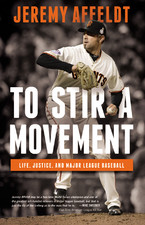
to stir a movement.jpgo Stir a Movement: Life, Justice, and Major League Baseball  Jeremy Affeldt (Beacon Hill) $21.99 I promoted this a bit this summer and shared how thrilled I was to read the memoir and Christian testimony of a major league pitcher who is honest, down to Earth, truly interesting and who is leveraging his fame and fortune for social justice.  Everybody knows about the scourge of modern slavery, but few of us really do anythingJeremyAffeldt1-920x590.jpg about it.

Jeremy  Affeldt is using his voice to demolish the barriers that stand between people, and invites us all to make a difference.  Not to mention that he’s been in two World Series and is one of the best left-handed relievers ever to play the game.  I’ve not read a sports bio that is quite like this.  Way to go, JA.

Inintentional walk.jpgtentional Walk: An Inside Look at the Faith That Drives the St. Louis Cardinals  Rob Rains (Nelson) $15.99  As it says on the back cover “baseball is for a season, but faith is for a lifetime.”  Some of these good guys are outspoken about the Lordship of Christ, others carry a quiet faith, and these interviews are sure to interest anyone curious about it all. What a season this team had in 2012, when reports of the players integrity became an important part of their backstory.

And what a season they’ve had this year!  Included are interviews with, or testimonies of, manager Mike Matheny, third baseman David Freese, pitchers Adam Wainwright, Jason Motte and Trevor Rosenthal, and a whole host of others — including support staff, even a renowned broadcaster. Plus, it’s a cool title for a book about discipleship among ballplayers.

Bbaseball as a road to god.jpgaseball as a Road to God: Seeing Beyond the Game  John Sexton with Thomas Oliphant and Peter Schwartz (Gotham) $27.50  This is a deep and thoughtful book, based on and telling about the wildly popular “Baseball as a Road to God” seminar that the author (President of New York University) has lead both at the university, and elsewhere, for years.  Few people know the sport, its legends and villains “its near irresistible appeal, its breathtaking  moments of drama” as well as Sexton and his associates.  He also is interested in religious perception, spirituality and faith. Bill Moyers says, “In the church of baseball, John Sexton is one of the preeminent theologians.”  Not too many scholars of the sport also know Aquinas, Tillich and Tolkien, but this guy does. Mature, illuminating, delightful.

Bbaseball, boys, bad words.jpgaseball, Boys, and Bad Words: A True Story of Little League, Laughter, and Life  Andy Andrews (Nelson) $12.99 This is a small-sized, full-color, gift-book type title where beloved storyteller Andrews narrates his 11th summer, in 1970, with a group of friends who began a Little League season they would never forget. In a funny tale that carries the smell of well-worn gloves, freshly cut grass and brand new uniforms, you’ll learn about their season with a new coach.  And that’s where it gets interesting. Nice pictures, graphics, quotes, too. Very sweet.

Tthe game.jpghe Game: One Man, Nine Innings, A Love Affair With Baseball Robert Benson (Tarcher) $12.99  I love this writer, admire him and trust him, and read almost anything he does — from gardening to fixed hour prayer to what we can learn from the Benedictines about being in community.  He’s a measured, caring writer, and you may recall I not long ago raved about his very moving book about his aged mother, Moving Miss Peggy.  Anyway, this is one that is always worth mentioning when one is search for classy, caring prose about this slow, beautiful sport. Everybody rightly mentions George Will and his amazing book on baseball,
but this one is similarly thoughtful, and fun, too.

Tbest am sports writing 2013.jpghe Best American Sports Writing – 2013  edited by J. R. Moehringer  (Mariner) $14.95  Okay, it isn’t  just about baseball, but we carry most of this great annual series — from the best comics to the best essays to the best infographics to the best short stories. A lovely gift for anyone who loves good writing or who wants to get up to speed on a topic or genre.  Here you have some stunning writers, ruminating on some amazing athletes and waxing wonderful on some remarkable aspects of our fascination with games.  Those who follow this sort of journalism will know some of the writers, and some are truly wonderful wordsmiths. Enjoy!

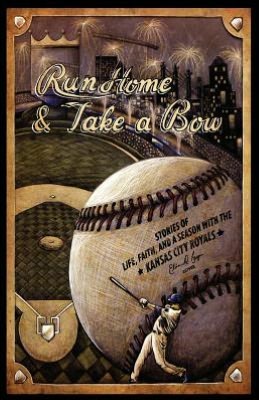
Rrun home.JPGun Home and Take a Bow: Stories of Life, Faith, and a Season with the Kansas City Royals  Ethan Bryan (Samzidat Creative) $14.99  Okay, I’ll admit it.  I put together this list mostly so I can tell you once again about my good friend Ethan’s good, good book. I really do admire it, and I admire him, and this is a perfect book to read now as the leaves are changing and the season is over.  Yeah, it is about the Royals.  But also his kids.  And his faith community.  And his calling. And his parents.  And it mentions me.  And it shares a lot of lovely lessons about life. And it is well written. And it has a fantastic, hand-drawn cover. So there; it is true — this is a great little indie sleeper that ought to be better known. There is even more to be found in this sequence of chapters, and it truly deserves an extended review.  You can read what I wrote about it here, and then order a few. If you know anybody with a soft spot in their heart for a losing team, or for their deep love for the game that they once played, this book is awesome.  It really is a world series winner.

BookNotes
SPECIAL
DISCOUNT
ANY ITEM MENTIONED

25% off
while supplies last
until October 31, 2013
after that, all items 20% off
order here
takes you to the secure Hearts & Minds order form page
just tell us what you want

inquire here
if you have questions or need more information
just ask us what you want to know

                   Hearts & Minds 234 East Main Street  Dallastown, PA  17313     717-246-3333
                                                            read@heartsandmindsbooks.com 
 

Writing in the Margins: Connecting with God on the Pages of Your Bible by Lisa Nichols Hickman – ON SALE

One of the places in our shop where the books are most bulging off the shelves is in the side room, which houses our section called Biblical Studies. We love books about the Book and hope you do too.  From my Sisyphus-like effort to read almost everything of Walter Brueggemann to our enthusiasm for older works (like, just for instance, the hard-to-find, four-volume early 20th century set Promise and Deliverance, by S.G. De Graff, translated by reformational philosopher Evan Runner, which we stock now in new paperbacks) to the latest in serious scholarship, to the easy to read introductions and overviews, we believe these sorts of resources can energize and help individual readers, small groups and Bible study fellowships, preachers and teachers.  

I hope you read at least one book about some aspect of the Bible every year. It’s a fine goal.

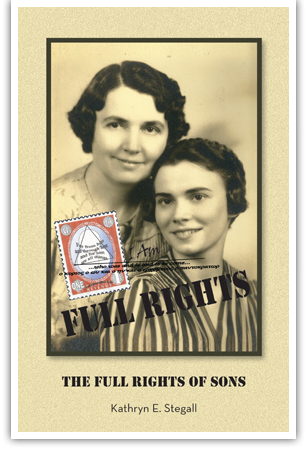
Just last week I started a fascinating book, The Full Right of Sons by Kathryn E. Stegall, which is afull rights of sons.png study about the full equality of women in the Bible, written by an astute lay scholar in the Reformed Presbyterian church.  She is deeply rooted in her conservative Calvinist tradition which — not incidentally — does not ordain women.  In this new work (done through Dog Ear Publishing; $14.99)  Stegall shares a bit of memoir (there is an old-fashioned picture of her mother on the cover and heirloom family pictures throughout) and a bit of theological rumination.  But mostly, it is careful, studious, and in many ways remarkable evangelical exegesis.  Just when I thought I had covered all the main Scriptural texts arguments about our adoption in Christ, and what the confers within the Body of Christ, I am taken aback by this fresh, honest, honorable approach.  That the book carries endorsements by passionate Reformed thinkers like John Armstrong and RP pastors like Bruce Hemphill and experienced Biblical counselors like Bonnie Piper (and opens with a wise excerpt from the Westminster Confession) is an indication of its conservative scruples.  It is surprising in many ways, and it is very good. Anyway, it is a rare book, and we have it.

Also, again, just for example, we’ve been telling folks about the brilliant work of Kenneth E. Bailey for years and his last one is a thick study of 1 Corthinians, but more.  It is, as the title suggests, a major work of understanding Paul in his Middle Eastern, first century Greco-Roman/Jewish context: it is called Paul Through Mediterranean Eyes  (IVP Academic; $30.00) and it has gotten rave reviews.  Also, to learn about the culture of that wild city, I’ve enjoyed A Week in the Life of Corinth by Ben Witherington III (IVP: $16.00) which uses narrative fiction to explore what was going on there.    

Tim Keller just released his popular level commentary Judges For You (The Good Book Company; $22.99) which matches his Galatians For You ($22.99.)  As the British publisher puts it on the cover of each: “This is to read, pointing you to God’s greatest rescue. This is for you to feed, helping you meditate on God’s Word day by day. This is to lead, equipping you to teach others.”

And we’ve just got the very impressive-looking latest release in the “Interpretation Resources for the

violence in scripture.jpg Use of Scripture in the Church” (Westminster/John Knox.) This new one is a big hardback exploring judiciously Violence in Scripture by Jerome F.D. Creach ($35.00.) Creach is an Old Testament prof at Pittsburgh Theological Seminary and a minister in the Presbyterian Church (USA.)  He wrote the Joshua commentary in the Interpretation commentary series.  I have read a lot in this topic, and hope that this one will be useful.  I have heard from a Godly scholar that I trust that it is quite good.

I have already raved about the recent book (which is truly one of the best reading experiences I’ve had all year) on the Psalms by N.T. Wright, The Case for the Psalms: Why They Are Essential (HarperOne; $22.95.)  Tom hit a home run with this, and it is fantastic. You really should have it, and I say why, here.

We are, of course, taking pre-orders for his long (long) awaited magisterial work on Paul that ispauline perspectives.jpgpaul-and-the-faithfulness-of-god.jpg coming out November 1st. As you probably know, it is the fourth in the extraordinary Fortress Press “Christian Origins and the Question of God” series and is his academic life’s work. Agree with it all or not, it is a landmark series, and this is the mature summation of decades of research.  It is called Paul and the Faithfulness of God and is a two-volume paperback (1700 pages, selling for $89.00.)  Further, there is a supplemental volume being released the same day entitled Pauline Perspectives: Essays on Paul: 1978- 2013 which includes Wright’s important and often auspicious essays, many which have been published in academic journals or anthologies of others work, and some that were delivered as papers or sermons but were never published. It is itself over 800 pages!  It regularly sells for $69.00.

While our most typical BookNotes discount is a generous 20% off, we are offering a 30% off discount on these on Paul by N.T. Wright.  We realize they are hefty and most pastors and those following this kind of work have limited book budgets.  We hope this helps.  We are grateful that you want to support our work, and look forward to any orders you’d like to send for these.  We believe we will have them to ship out before the street date.

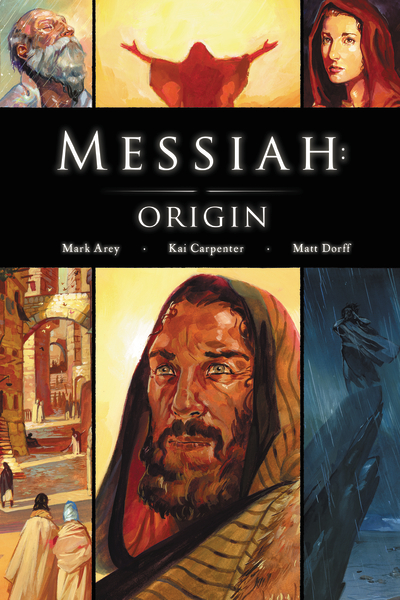
Jmessiah-origin.jpgust to show you the real diversity of the kinds of resources we have, we are very proud to announce that we now have the excellent graphic novel (that is, a classy, bound comic book) called Messiah: Origin by Mark Arey, Kai Carpenter, and Matt Dorff (Zondervan; $19.99.)  If you follow these things, and were looking forward to it, you may know that it was fist announced as The Last Adam, which I thought was way cool.  Alas, I guess the marketing division felt that not enough people would know what that meant.  And they might have been right, which, well, sort of proves my point about needing to buy and read and share these kinds of books that can deepen our Biblical literacy. 


Anyway, this is really well informed and excellently created within this genre. You may recall how we promoted the breathtakingly good Book of Revelation graphic edition that they did last year.  I’m sure you know somebody who might warm up to reading about Jesus in this very contemporary style.

****

Of all the many, many Biblical study resources we stock, the many I’ve perused and used this past year, there is one that I am truly most excited to tell you about.  I could go on and on about it, and in fact, I already have.  The author and her editor were kind enough to invite me to do a foreword to this book, and I have posted it at the monthly columns section of our website.  I am pretty proud of it, myself, the first time I’ve ever done such a thing.

But the book itself is why I’m really excited as it is creative, unique, and very, very well done.  Here is a shorter review; I’m trying hard not to write too much, even though I could — there is so much to like about it, and a lot to tell. I think you should  consider buying it. 

I’ll share my longer review (the foreword to it) that explains and extolls its virtues tomorrow, so look for that, too.  For now, let me tell you about a book that I believe could  profoundly affect your relationship with the Bible and, more importantly, your relationship with the God of the Bible.

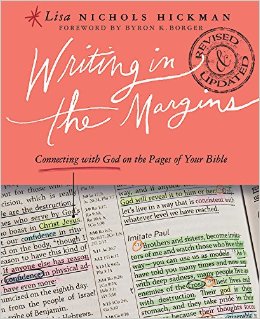
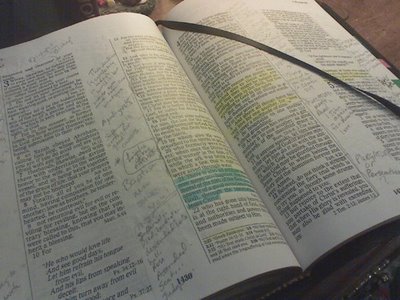
Wwriting in the margins.jpgriting in the Margins: Connection with God on the Pages of Your Bible  Lisa Nichols Hickman (Abingdon) $16.99  Yep, this is just as it sounds.  It is a book about writing in your Bible.

Actually, it is a book about meeting God as you read, as you pick up your pen and open your heart, and allow your study to move beyond paying close attention to the text (always a good first step) to paying close attention to your life.  This book, better than any other Bible study resource I have seen, invites you to creatively and playfully actually engage the text, and meet God there.  In the margins.  In the connections.  In the confusions.

(And, dare I say, if there aren’t confusions, you must be reading a different Bible than the rest of us.) 

So bring it on — your life, your messes, your questions, your insights, you hopes and dreams.  The promises you sense God speaking to you; the challenges and rebukes, too.  Write it all out there, on the very pages of your very Holy Bible. 

Rev. Hickman, inspired by the Word of God, invites you to write words.  God’s Word, your words, it will be an amazing alchemy, and the Spirit will show up.  She all but promises it, and after reading her incredible stories (well, not in-credible, really, when you think about it, but amazing) of others who have had transforming spiritual encounters with the Divine Author by not just reading the Word, but interacting with it, processing it, ruminating and engaging it, well, you will be eager to see what God will show you as you get out your own colored pens and pencils and get busy.

Here is how author Lisa Hickman puts it:

The invitation of this book is, at its simplest, to pick up a pen and write in the blank spaces ofpen-and-paper-890x342.jpg your BIble.

It is an invitation to look at the blank spaces of your biblical text and see in the margin around its border an opportunity for a life-giving, transforming, creative conversation between you and the eternal God.

And, importantly and powerfully, she continues,

To have a conversation in the blank spaces holds a particular challenge. You must be comfortable with the wide-open space — not just on the margin on the page but also of the invitation to sit still for an extended period of time, thereby creating the space for a real conversation.

Or, maybe you do not need to be comfortable with the blank spaces. Maybe  yo just need to be willing to become comfortable with the stillness. Or you need to be willing to brave the discomfort; I keep finding that some of the most fruitful spiritual experiences of my life come when I am willing to brave the discomfort.

Allow me to observe five quick things that make this book so very, very good.


WELL INFORMED/RELIABLE

First, Lisa Nichols Hickman is an excellent pastor, a sharp thinker, a real book lover and widely readlisa hickman photo.jpg, and it all comes through quite nicely in this enjoyable, stimulating, very interesting book.  As a student she attended the CCO’s Jubilee conference and has deep in her vision a wholistic understanding of faith and the relevance of the in-breaking of God’s Kingdom in Christ.  She eventually studied at Princeton Seminary, and as a pastor, she has the opportunity to regularly learn from the aforementioned Ken Bailey, who happens to go to her church in Western PA.  Again, Lisa is a serious thinker, a lover of words, and understands the Scriptures well, so when she starts asking us to mark up the pages and underline stuff and get all into it, she isn’t being silly or shallow.  The book stands upon the solid architecture of the author’s pastoral experience and her proper understanding of the authority of Scripture and how the Triune God speaks through the Word.

GREAT STORIES

Secondly, Writing in the Margins is loaded with stories, sidebars, examples, and testimonies of those who have written in the margins, connected the dots, processed passages with line and color, symbols and codes.  Their well-told stories are not only a delight to read, they are themselves very insightful.  Too many folks traffic in cliches and “Christianese” when they talk about their faith, and this book seems honest and real, as devout followers of Jesus grapple with the words, and listen for The Word.  I am sure you’ll be inspired and moved by it.


CLASSY CITATIONS & QUOTES

Thirdly, Lisa, as I said, is a good reader herself, and she cites some wonderful folks.  From memoirist Mary Karr to theologian Frederick Buechner, from Pulitzer Prize winning literary light Annie Dillard to (of course, come to think of it) the old school bookman himself Mortimer Adler, she brings just enough helpers along to make this a gem of a read. She is a good writer herself, and not every book about spiritual formation or lectio devino or Biblical scholarship is this classy.


WONDERFULLY DESIGNED

I almost put this first: Writing in the Margins book is lovely in its design. From the wonderful cover to the fantastic sidebars to the doodles and designs that are all over the margins, this book practices what it preaches, shows us how to do it by being itself marked up and creatively presented. I suspect you have not often seen a book like this before.  Kudos to the folks at Abingdon for a upbeat and clever way to make the point, giving us a work of art in this paperback.


PROPHETIC SOCIAL VISION

Number five: Writing… has a bit of a prophetic, social edge to it:  Hickman thinks you find God, I guess by way of a metaphor, on the margins of the page.  On the edges.  Okay, you could meet God by writing in a tablet or journal, too, but there is something special going on when you are writing right on the same page as Holy Writ.  But revisit that image of meeting God in the margins, along the edges.  There is this profound reminder here that, as she explains, the God of the Bible is a God of the marginal.  From the Levitical laws of gleaning and leaving margins in the field for the poor to Hebrew prophets insisting that true spirituality must include advocacy for the oppressed, to Jesus’ own relationships with the nobodies and outcasts, it is true that the God of the Bible is a God of the margins.  Deal with it. Literally.  Write on the margins, and see if God has something to say.

As Hickman puts it, “God’s best work occurs in the margins. If we have the courage to step into thabible and writing.jpgt wide-open space, God will meet  us there.”

I could list five more things I like about this book, but some of them will be mentioned in my own passionate piece from it that I’ll post tomorrow.

Now, just know this: if you are a long time Bible reader, but maybe the text is growing stale for you, this book can help.  In one of the very moving testimonies which is a full page side-bar, Renee Aukeman Prymus tells of her colorful, now duct-taped, compact Bible which she had as a youth — it went everywhere with her, on overseas missions trips and other profound life adventures.  She wonders why the flame has gone dim, why she doesn’t enjoy her BIble as much as she once did. You may feel God’s own prompting yourself when you read her story, and these final words: 

As I look through those pages, I stand in awe at my younger self. I was dedicated, devoted,and diligent in my studies, my prayers, and my relationship with God. I know that person is still inside me, still dedicated and devoted. Maybe I can discover her again. 

Next to Exodus 14:13-14, where Moses tells the people not to be afraid in the face of the Egyptians, I wrote “prescription for unexpected life.” Somehow, moving back  into the margins might help me live into that adventure.

There are really fun things in this book such as an awesome footnote link to a Lapham’s Quarterly article by the popular genius Maria Popova, documenting complaints and snarky notes scribbled by disgruntled monks on medieval manuscripts, a truly moving (and surprising) listing of some of the great things in the margins of street preacher and fundamentalist Bible scholar Dr. H.A. Ironside, and lots of very cool quotes — inspiring ones about church music found in the Bible of J.S. Bach to the one famous bit of marginalia in the Bible of Abraham Lincoln, to a great line by feisty historian Studs Turkel.  

Oh yes, you will learn a lot in this handsome, curious book. You will learn how to be a better reader, an active one, engaged and involved in the text.

But, more importantly, you will experience a new (or revive an old) habit: using underlinings and stars and explanation points and your own heart-felt words and sighs, written out on the page, enabling you to meet God — smack dab in the middle of the margins, where Word meets world.

writing in the margins.jpg 

BookNotes
SPECIAL
DISCOUNT
ANY ITEM MENTIONED


20% off
(30% off the N.T. Wright Paul books)

order here
takes you to the secure Hearts & Minds order form page
just tell us what you want

inquire here
if you have questions or need more information
just ask us what you want to know

                   Hearts & Minds 234 East Main Street  Dallastown, PA  17313     717-246-3333
                                                            read@heartsandmindsbooks.com 

5 New Books on Pain and Suffering — from theologian Tim Keller to peacemaker Jeremy Courtney to “The Dave Test.”

I was unloading, as I sometimes do, about the hard stuff in my life, grief and a general dismay at the state of the world, with my friend Brian Walsh.  His campus ministry faith community and the writings that come out of it (Wine Before Breakfast and Remixing the Empire) have a keen sensibility about the brokenness of this world and often hold a posture of lament in solidarity with those who suffer. I don’t know anybody who has taken Walter Brueggemann’s The Prophetic Imagination and its call to weep subversive tears so seriously.  This comes through in Brian’s co-authored books such as Truth Is Stranger Than It Used tokicking at the darknes.jpg Be and Beyond Homelessness and clearly in his wonderful study of the Canadian poet/rock star Bruce Cockburn, Kicking at the Darkness: Bruce Cockburn and the Christian Imagination. In that book, Walsh shows us some harsh material that Cockburn sings about.  But he reminds us that Cockburn sings that “Joy Will Find a Way.” We can believe the singer because he understands the hard stuff “out on the rim of the broken wheel.”

Anyway, Brian replied to me citing a song I love, from one of Cockburn’s fellow musicians and producers, Colin Linden, who sings that it is a “sad, sad, sad, beautiful world.” 
“Three sads and one beautiful,” Brian wrote.not the way.jpg 
Yep, for most of us, this is so, or nearly so.
When I was first becoming a Presbyterian, and learning about Calvinism and amazing grace, many in my circles talked about our sinfulness (rightly so; without an awareness of our great need, what good is the gospel of Christ?)  But even then, I protested: in a sinful world, people are not just sinners, they are, inevitably, sinned against.  As Cornelius Plantinga puts it, in the best book on this topic of sin, we have “vandalized shalom” and things are Not The Way It’s Supposed to Be.  In a good world now frayed, we are wrong, rebels, but we are wronged, too.  We hurt (and I mean that in both meanings.) So, yes, our doctrine of sin leads us to give an account of the various ways things are haywire.  Sometimes pain and sorrow is of our own doing, sometimes it is just because of the way of the world.  Who knows why there are tsunamis and terrorists and cancers and car-wrecks?  Why do we shed tears at this, but maybe not at that?  I tend not to think about it much, really, but carry the weight of it with me always.  Don’t you?
I can hardly wait — speaking of such things — to tell you that my dear friend Steve Garber has a new book coming in the winter; I will surely tell you more sometime in the New Year.  In some ways it is a sequel to Fabric of Faithfulness, and, among other things, it asks a question something like this: “Can we really know the world, and still love it?”  That is, knowing the sad, sad, sad world, can we still say (as Colin Linden sings) that it is beautiful? Can we take up vocations with Christ-like care, knowing what we know, carrying what we carry? I don’t recall that Steve cites him, but in his own words and way, he invites us to live into the vocation to which Henri Nouwen calls us, to be “wounded healers.”  To care deeply over the long haul of our lives we must learn to love what God loves, even as God does, especially as we come to know more and more that the world is terribly broken.
It’s a sad, sad, sad, beautiful world.  And joy will find a way.
So, here are five brand new books that take up this matter, each in their own genre and style.
Each really deserves its own lengthy review, but I will be brief.  Buy these books and share them. We have them at 20% off the listed prices, to make it more affordable for you. You will not regret having these.  If you don’t need them now, you will soon enough.
Wwalking with god through pain Keller.jpgalking with God Through Pain and Suffering   Timothy Keller (Dutton) $26.95  This is a truly amazing book, perhaps one of the very best of its kind. Not unlike, say, Philip Yancey or Gerald Sittser, Keller draws on wide sources, but is rooted in robust, theologically conservative, evangelical ground.  I assume you know that he is a widely respected, urban and urbane Reformed church planter, now head of staff of a large network of sophisticated parishes in New York City, and is renowned for his thoughtful books and clear, meaty teaching.  (The New York Times suggested that he was this generation’s C. S. Lewis, who, by the way, wrote widely on “the problem of pain” and his own observations of grief.)  I wasn’t sure this would necessarily make the book fresh and really useful — some books in this field are theologically sound but rather dry, abstract, even, and I feared this could be the case — might it be too academic and bloodless, proper but without passion?  Once I started the book I was immediately drawn in and any concerns I had were put to rest. 
I am happy to report that Keller the apologist and Keller the Bible scholar and Keller the pastor are all here.  In fact, the book is nicely sequential, starting with several more abstract and “big picture” chapters responding to what he calls, from Ernest Becker, “the rumble of panic” called “Understanding the Furnace” (in which he explores the cultures of suffering, the challenges suffering presents to the religious and the secular worldview, and other of the deeper matters surrounding the problem of evil.) The book then moves into its center piece, a unit called “Facing the Furnace” (which offers mostly conventional, but very profound Biblical and theological guidance for understanding suffering.) This insightful portion is then followed up by a third very pastoral section called “Walking with God in the Furnace” which shows a variety of responses, several ways of coping, different sorts of spiritualities that can help those in anguish. Rev. Keller suggests that those in seasons of suffering might want to read this section first.  
So, Walking with God Through Pain and Suffering is a amazingly thoughtful, very good book; it is sharp, orthodox, caring, offering a nice balance of lucid apologetics and crisp argument and tender Biblical insight alongside real-life stories that are both powerful and persuasive. I didn’t know of the personal suffering born by the Keller family, by the way, and knowing this from a few passing portions reminds me that this book emerges from his own walk with God through his own fiery furnaces, making it a very good addition to the library in this field, and a must-read for any Keller fans.  I will be revisiting this often, I am sure.
Uundone.jpgndone: When Coming Apart Puts You Back Together  Laura Sumner Truax (IVP/Cresendo) $15.00  When my friend who is an editor at IVP tells me a book is really good, I know it will be so, and this book, not surprisingly, was fantastic.  Well written, passionate, raw, at times funny, and a
truly great read, Undone is for anyone who feels like they’ve blown it, gone through hard times (especially if those detours were of their own making) and who may really need an invitation to own up to their own failings.  Ms Truax was the perfect Christian young woman, or at least gave the appearance of being so, and we learn much, eventually, about her pretending and her shallowness of faith and piety.  The book begins, though, in a riveting way, telling of the harsh day that her divorce was finalized.  She knew the failure of the religiously-laden marriage was much her fault, and she knew she had to admit she was falling apart.  Wow, have you been there?  If not, you know those who have been?  This horrible sense of falling part is not to be glamorized, and she does not write about it in that way.  Still, she calls this first chapter “my best worst day of my life.”
Can hitting rock bottom be freeing somehow — not in a cheap and sentimental way, but in a profound and authentic manner that really does allow one to grapple with the realities of one’s own messy life?  What do we do when life starts to fall apart, when one is coming undone?  And should one even encourage such a journey, towards admitting to ones own failures?  This narrative is bristling, full of life and energy and sadness and sin, and it is hopeful beyond imagining.  Kudos to the author for her vulnerability, exposing her story.  (Do you recall the memoir I raved about this summer called Sober Mercies by Heather Kopp, about a respectable Christian author who was an alcoholic? That book was more straight memoir, while this includes more Christian teaching and explication of how this all helps us in our discipleship and faithfulness; reading about the shame of being Undone reminded me of that brave book.)  
Although they at first felt a bit like a digression, I realized that Laura Sumner Truaz’s many Bible ruminations were actually quite central to her story, that seeing the great sins and failings and weirdnesses of many Bible characters, can be freeing and redemptive.  She has a great knack for weaving in and out of Bible stories, relating them to our own sorry lives, and taking great courage from it all.  It is, as I’ve said, a great, helpful book — for the hurting, or, perhaps more, for those of us who want to create fellowships that are congenial to the broken and hurting.  There are many books out now about being “authentic” but this one, well, it feels authentic.  As one urban minister writes, “I have marked up this book from start to finish with highlights and exclamation marks. Truaz courageously sheds her mask and invites us to do the same.”
If you, or anyone you know, have given up on faith (or even given up on church) because of the false piety or the failings of the so-called formulas for success, this story of a failed leader, now a pastor of the urban LaSalle Street Church in Chicago, a faith community known for its care for the confused and hurting, then this book is for you.  She knows, as they say, what it’s like when life hits the fan.  Her community relishes the frightening, liberating move of shedding our pretenses, of owning who we really are, wounds and foibles, hurts and sins, and all. Undone: When Coming Apart Puts You Back Together tells her story, and theirs, and I think you will love it.  Kudos to IVP for offering this kind of honest, helpful story.
Tlong awakening bmk.jpghe Long Awakening: A Memoir  Lindsey O’Connor (Revell) $17.99  You know how we love memoir.  When a story is very well told, if it is even slightly moral, we are grateful — a good lesson disguised in a literate telling and powerful narration of a life — a beautiful and artful example of how one makes meaning of one’s own days, is a gift indeed.  And this book is, indeed, a great gift.  As a memoir, it isn’t directly about the question of theodicy, nor does it directly offer advise about how to cope with life’s hardships.  It is profound and moving, though, and I wanted to share it in this list, now.
The story is complicated, but can be summarized simply: Lindsey O’Connor had unexpected complications during the birth of her fifth child, and ended up in a coma for nearly two months.  The book begins strikingly with her opening her eyes — she was hooked up to tubes and could hardly move, and could not speak — trying to recall what was going on.  She had no idea as she gazed into the face of her husband.  Her family is valiant in keeping watch (even as they care for a new baby) and as the story unfolds, we learn of the many subsequent surgeries, further health complications, repeated hospitalizations she went through. What obstacles this family endured, what fears and hardships! There are many useful books about those who have health complications, but this is extraordinary (both because of the unusual nature of the story, and the well crafted telling.)  The Long Awakening is beautifully, creatively, written, and O’Connor’s tale is stunningly complex, as she narrates her own inner consciousness (or lack of it, as the case may be) and tells — based on notes and interviews she pieced together later — the experiences of the family and friends that journeyed with her in her ailments.  Listen to what esteemed writer Patricia Raybon (I hope you know her wonderful book My First White Friend) says of it: “Brilliant and renewing. A spectacular work of reflection, remembering, reconciling, and recovering. Memoir writing at its finest.”
This is an intimate story, lyrical, honest, scary at times. There is illness, danger, medicine, science, doubt, faith, friendship, anguish and hope… a glimpse into the hard lives some endure, and the brave and good way they emerge towards wholeness.
I know this isn’t helpful, really, to say, but I must put it in writing, for the record: I was blown away by the incredibly beautiful epilogue, the few final pages that are themselves, nearly worth the price of the book.  What excellent writing by such a good, good writer, who gently frames her own struggles by other, equally moving stories.  As John Biewen (of the Center for Documentary Studies at Duke University) writes, The Long Awakening “glimmers with a keen understanding of what matters.”  Yes!

Tdave test.jpghe Dave Test: A Raw Look at Real Life in Hard Times
 Frederick W. Schmidt (Abingdon) $16.99  What is the Dave Test?  Dave
was the brother of esteemed Episcopalian writer (he holds the Rueben Job
Chair of Spiritual Formation at Garrett-Evangelical Theological
Seminary) who, as he was dying of cancer, asked searingly honest
questions of his famous brother.  As it says on the back cover: “Life is raw.
 So is the language of this book.”  Yes, when life is tattered at its
edges and you are faced with seemingly impossible decisions, the Dave
Test allows you to become the best, most honest self for you, your
friends, and your family. Instead of resorting to stain-glassed language
or offering false hope, do yourself a favor and pick up this book – and
take the Dave Test.

Mike Stavlund (whose breathtaking book, A Force of Will, about the loss of his young daughter which I mentioned when it first came out) writes,

We’ve
all been both victims and perpetrators of it — the hurtful bit of
spiritual sunshine that is foisted upon a suffering soul. In The Dave Test,
Fred Schmidt shows us a better way to be: honest, empathetic,
vulnerable, earnest, earthy, substantial, and refreshingly uncertain. It
is a beautiful vision for a helpful life.  

When
everything falls apart for those we love, what do we say? What do we
do? Well, before you do anything dumb, see if it passes the 10 questions
of “The Dave Test.”  
Walter Brueggemann, who wrote the forward, says,
I
read this book with great attentiveness because it rings true. More
than than, I read it with great attentiveness because I also have a
brother, Ed. Ed lives with kidney failure, and his doctors have given
him a limited time for his life.  Ed, moreover, is, like Dave, no
bull-shitter. He can  spot a phony a mile away. He is rooted in faith,
but he is totally impatient with phonies. For me every reference to Dave
sounded like Ed and I can see myself in Fred’s place. But then, every
reader who pays attention will make something of a like identity as
stand-in for Fred with some Dave who is at risk.
He continues,
This book will be cherished.  Because all of us, like Fred and Dave, face loss. We are never ready, I imagine…

Fred
and Dave are characters you will want to know (unless you are in denial
or unable to face such raw realism and nuanced faith.)  Schmidt says at
the end, “I am utterly dependent upon the One who loves us both and am
grateful in ways that escape expression. But, oh, how I miss him.”

Ppreemptive love.jpgreemptive Love: Pursuing Peace One Heart at a Time  Jeremy Courtney (Howard) $24.00
One cannot write as I am trying to do in this column, listing a few new books that are about suffering and hardship and the problem of evil in the world, without naming the sorrows brought about by poverty, injustice, and war.  There are many, many (thanks be to God) good books that tell of the good work some are doing to alleviate the misery of the human race. Evangelical Christians, especially, these days, have taken up the calling of being agents of change in the broken world, and publishers who have not previously released books about social justice and cultural renewal are now doing so, often with great effect.  I have written before how there is a new renaissance among younger evangelicals, and their stories are being told by many good publishers willing to risk controversy to share this good Kingdom news.
Jeremy Courtney is just such a young follower of Jesus and his faith motivated him and his wife (and two children) several years ago to move to Iraq, working at first with a relief and development agency there.  They lived without much electrical power in their home, they had marriage hardships, their work was fulfilling but difficult and frustrating.  And, then, in an encounter which truly changed the course of their lives, Jeremy met a man who tenaciously asked him to help find a doctor for his young nephew’s heart problems.
This encounter did indeed change Courtney — moving him (eventually) to learn to trust, to “love first and ask questions later.”  He eventually developed a philosophy of countering the injustices of the world which he has come to call “preemptive love” and the emergence of this profound missional vision is part of the story of this book.  The Preemptive Love Coalition is also the name of the organization he eventually co-founded, a ministry that — yes, you guessed it — helps heal the hurt hearts of Iraqi children.
You see, the wars there (starting at least with the genocidal gassing of Kurdish villages by Saddam Hussein and certainly including the enhanced radiation weapons US forces used in wars there) have caused parts of that region to become one of the most toxic places on Earth. Did you know that there is an epidemic of heart disease among Iraqi children?  And, you will not be surprised to know, they have no trained heart surgeons or places to do sophisticated heart surgery on children in the whole country.  For any number of reasons, the regimes there have not funded the medical infrastructure (and there was the devastating sanctions of previous decades) so there has been a brain-drain, as well — there just are not doctors or hospitals or researchers capable to do the sorts of life-saving heart work so very badly needed. The rate of congenital heart problems in Iraq is soaring and the Preemptive Love Coalition is working to end the backlog of kids waiting for surgery.
Courtney recounts taking by commercial airline sheaves of paperwork to nearby Jordon in a paper chase that was destined to save lives — but only a few lives. Which precious child’s heart could be repaired?  Only a few fortunate ones where chosen while hundreds if not thousands who had need were sent home.  Village doctors would (with uncanny gifts and knowledge) put their heads on the chests of the little ones, listening carefully for the holes in their hearts.  More advanced medical care just didn’t exist.
Preemptive Love is a heckuva book — thrilling, exciting, exasperating, tragic, comic, honest. I could write for pages about the episodes, from the first meeting with the tenacious uncle in the lobby of a Baghdad hotel to the vivid narrative of the horrific poison gas bombing of Halabja on March 16th 1988 to his telling of “The Iranian Bard and His Beautiful Shoes” to the stories of betrayal, hostility among the Turks, and the ongoing brave work bringing health care to families  of children in a volatile war zone.  And the price it has cost them, emotionally and spiritually, struggles and consequences about which they hint.  This really is an amazing story, and an amazing book.
There are fine and inspiring books of people who cope with hardships by trying to rise above it all.  There are fine and inspiring books that pull at our heart strings as they tell of serving the poor, stories of mission and ministry.  They sometimes feel like an info-mercial, and they are good for just such purposes.  
Mr. Courtney’s book, though, is in a different league, I think, as it covers mission and history,preemptive quote.jpg personal memoir and adventure, political insight and a broader vision of the common good than do some commendable specific mission stories. And the Preemptive Love Coalition has at its core this very, very important truth: that to be God’s agents of reconciliation, we simply must undo some of the wrongs we have caused or have been complicate.  We must not only seek to heal the wounded politics of war, we must serve the victims.  And even our enemies will be forgiving if we offer to help their dying children.  This book is a moving memoir telling of dramatic medical missionary work, but it is more: it offers a rare and profound vision of peacemaking.
Muslim, Christian, Arab, Kurdish, Turkish, Iraqi, Iranian, Western, terrorist, revolutionary, imperialist — the hostilities are thicker than Turkish coffee and yet Jeremy has walked among them all.  Offering to heal the broken hearts of those with a history, those with legacies of betrayal and persecution, by literally fixing the holes in the hearts of their children, seems to be a universally effective means of offering what I might call penance.  He does not use that word, and perhaps I am over-reaching, but it seems clear to me that if we are to be peacemakers  — to be called ‘children of God’ as Jesus Himself promises — we must insert ourselves in incarnational ways among the victims of our “warring madness” as the old hymn puts it.  Medical missions offered for sick children is an ideal and fruitful means of grace.  As he simply writes, “Surgeries speak.”  This is more, though, than a feel-good story of helping sick kids.  This is a profound example of new strategies for the doing God’s reconciling work among the nations.
The writing is simple and story-driven. It is not highbrow literature or allusive memoir. We learn frankly about the ups and downs of a young man from Texas starting an internationally renowned Middle Eastern ministry. We watch him navigate intense matters (of immense cultural, linguistic, religious, and diplomatic complexity) often, it seems, by the seat of his pants. The story is powerful and surprising and the book is remarkably good.  One U.S. Senator, himself Jewish, writes that this is “a beautiful and inspiring book about the power of love in a time of war and the capacity of personal interactions to break through, build trust, and save lives.”  
Listen to Shane Claiborne (who spent some time in Iraq himself, you will recall) wh
o writes:
Jeremy Courtney is doing some of the most redemptive work on the planet, providing lifesaving surgeries for Iraqi children. From TED talks, to mega-churches, to Congress to the UN, Jeremy’s message that “violence unmakes the world, and love remakes it” has been transforming hearts and minds. Now that message is in your hands. Share it with the world.

BookNotes
SPECIAL
DISCOUNT
ANY ITEM MENTIONED

20% off
order here
takes you to the secure Hearts & Minds order form page
just tell us what you want

inquire here
if you have questions or need more information
just ask us what you want to know

                   Hearts & Minds 234 East Main Street  Dallastown, PA  17313     717-246-3333
                                                            read@heartsandmindsbooks.com 

It Was Good: Making Music to the Glory of God edited by Ned Bustard (Square Halo Books) ON SALE NOW

It Was Good: Making Music to the Glory of God  ON SALE: 10% OFF.

Ssquare Halo Books logo.jpgQUARE HALO BOOKS

My friend Ned Bustard manages Square Halo Books, a boutique publishers in Lancaster, PA, that specializes in books about Christian faith and the arts.  The books he produces are always nicely designed – his day job is running his own graphic design firm – and are always a labor of love.  In 2007 they released what has become their most popular work, a fabulously diverse and rich anthology of essays about different aspects of art, and making art, It Was Good: Making Art to the Glory of God (Square Halo Books; $24.99 — on sale for $22.50.) Besides lots of full-color art, it includes mature and insightful essays by visual artists, Christian art historians and critics, aIt-was-Good-cover.jpg few musicians (pop music producer Charlie Peacock, jazzman and theology professor Bill Edgar), various and sundry other cultural creatives as well as a few who work in ministry with artists (Tim Keller, pastor of the thriving Redeemer Presbyterian Church in the heart of the arts district in Manhattan, written before he became as famous as he now is.) For what it is worth, it showcased the first chapter in a book by the esteemed founder of IAM, Makoto Fujimura, (his good chapter there is called “That Final Dance”) and his art wonderfully graced the cover. We here at Hearts & Minds raved about it.  It remains one of the handful of must-read titles we include in any list or display of books about the arts.


I think Ned knew all along that there would be a sequel, one specifically exploring the role of music in God’s world, IWG2, so to speak. Ned is a huge music fan with wide and passionate tastes — it may be that I first met him at a concert or festival. Years and years in the making (an artful story in itself) we could not be more proud to announce that we now have It Was Good: Making Music to the Glory odouble good.jpgf God compiled and created by Ned Bustard (Square Halo Books; $24.99.) With nearly 30 stellar chapters and 336 pages, it is a beautiful, beautiful resource, a worthy book to add to your shelf. If you work in the field of music – music teacher, choir director, aspiring rock star, high school band director, worship leader, concert promoter, record producer – you should buy several; you just should.  It is unquestionably now the best book in the field and you will want to share it with others, often. I predict there will be study groups and book clubs reading it together in rehearsal halls and choir lofts and recording studios and coffee shops and Christian education classrooms, wherever musicians gather to dream about their work. 

EXPERIENCE AMPLIFIED (OR: WHY THIS BOOK IS SO IMPORTANT)

Allow me to begin my review with a rumination on one of the last chapters in the book, one on booking and promoting concerts called “Experience Amplified” by Kirstin Vander Giessen-Reitsma.  Kirstin VG-R writes wonderfully – read her regularly by subscribing to catapult — and in this chapter she tells of the remarkable work of Calvin College’s Student Activities Office as it brings in thoughtful musicians, songwriters and bands to enhance the appreciation of (and discernment about) the popular arts among Calvin College students (and the wider Grand Rapids community who have enthusiastically affirmed their innovative work.) Like the other chapters in It Was Good: Making Musicconcert hall.jpg to the Glory of God, Ms VG-R was given a one-word title; in her case, “promotion”, and she walks us through the vision, theology, and storied details of booking acts, promoting shows, finding appropriate venues, the complexities of ticket sales and hospitality and education and live concert production. In her vividly portrayed piece she draws us in telling about all the concert posters on the cinder block walls of their grotto-like offices — I’ve seen those posters in that cluttered office noting advertisements for Dave Matthews, Andrew Bird, Lupe Fiasco, Emmylou Harris, Gungor, Iron and Wine, Mavis Staples, Sigur Ros, the Blind Boys of Alabama, Over the Rhine, Bruce Cockburn, fun., Jars of Clay, Aradhna, Kishi Bashi, Regina Spektor, and many, many more — country to rap to soul to indie pop and more.  She notes that the decor is, actually, theological:

It’s a messy witness, tacked to the walls with duct tape and poster putty, on  display for all to see and to discuss and to question. The motto of the Student Activities Office (SAO) is “changing the conversation about popular culture” andcalvin sao.jpg even the posters serve this purpose. But anyone can stick pieces of paper on the wall.  Beyond physical space is where the conversation really heats up, as live concerts draw people into the circle with all five senses.  Lights and speakers, instruments and microphones, musicians and fans converge in a big room for just a moment in time and each moment is precious enough to frame.

But it all begs bigger questions: Why should Christians spend time and money on such activities –and not just as observers, but as promoters? What, if anything, would make a concert venue run by Christians different from other venues? This chapter will use the Calvin College concert series as a case study for reflecting more deeply on the potential for concert venues informed and shaped by holistic Christian values.

Msoil and sun.jpguch of this amazing chapter is inspired by the leadership of SAO Director Ken Heffner, and Kirstin tells of his vision — inspired largely by the wide-as-creation redemptive theology of Dutch Reformed public intellectual Abraham Kuyper. I know a bit of how this has worked for Heffner and his staff and student team, and know that for them there have been huge struggles — not everyone in the religious community understands  the risks and blessings of the best popular art or the theological insights of common grace, and not everyone in the artistic community trusts or appreciates the conversations going on in places like Calvin College; some mainstream artists and managers and journalists, in fact, are unsure about their efforts to nurture Christian discourse, confusing their views with the censors of the religious right, perhaps. 

So, for instance, he ended up on the phone last year with one of the members of a world-famous band, literally while they were rehearsing at the famed NBC studios before their SNL gig talking through painful misunderstandings; his intentional and artist-savvy conversations about Calvin’s distinctive worldview with top-tier artists and their management have sometimes gone late, late into the night and continued long after the artists have left the campus.  

They have worked hard to generate trust and wisdom about how to host artists, which to avoid and who to work with, who to nurture and what boundaries to be clear about. It has been difficult, yes — with very few models at any other colleges being so intentional and discerning in this way.  

But there have also been great, great joys, some of them sowing seeds of gospel hope among musicians who are amazed that this small religious campus cares so very much about the arts, about popular culture, and about hosting and producing an excellent show in a quality venue. 

World famous, Grammy Award winning indie band Death Cab for Cutie last year made it a point to note that they could have played at other more lucrative halls, but knew that Heffner’s team treats them well and — fascinatingly — their students pay attention, appreciating the artfulness of the show, engaging the music as if it is, well, a gift made possible by a good God; by some accounts, SAO audiences are the best of any crowds on a performer’s entire tour. A rare culture of engagement in popular music has developed over time there, and even secular artists are caught up in moments of grace as audiences participate appropriately.

I SAY ALL THIS BECAUSE…

It seems to me that there are hundreds of faith-based and church-related colleges andIt was Good Making Music.jpg thousands of churches that host concerts, and yet very few have risen to this sort of conversation about the role of popular entertainment, seeking a coherent and faithful understanding of contemporary music, nor have many really been intentional about considering a set of uniquely Christian practices about appreciating music in all its many-splendored textures and tones and styles.  

The singular witness of Calvin’s SAO series — told so helpfully in Vander Giessen-Reitsma’s chapter — is vivid indication of just why It Was Good Making Music to the Glory of God is so very important. 

This book is a delight to read, a joy, thrilling even, if you are a music lover.  But, also, it is important.

ONE MORE TIME:  RESISTING SACRED/SECULAR DUALISMS TOWARDS A MORE FAITHFUL VIEW OF THE ARTS

And so, from this wonderfully-written chapter about this esteemed program near the end of the book we are reminded of a theme that most serious Christian artists intuit and need to learn to better articulate, a theme that arises quickly in both It Was Good books — there is no necessary division between the so-called sacred and secular; church music is not necessarily more “spiritual” than a love song or hoedown, God is honored and gladdened by faithful music of any sort, not just congregational or sacred music. 

Good art, guided by the spirit and values and vision of the artist, pays homage, more or less allusively, to a way of seeing life, a way of believing about life and in that sense all art is fundamentally religious (of one religion or another.)  Art or music that is intentionally Christian can nonetheless be bad art, and goodness and truth and wondrous artfulness can be found in the most profane of work.  In God’s good grace, we live in a world of color, texture, sound and rhythm, and we can, indeed, make all manner of music to God’s greater glory.  

Such humane and God-glorifying song, again, can be a child’s song about belly-buttonsmusic painting.jpg (as one of the great chapters here tells us) or a politically-charged bit of social criticism or it can be a liturgical chant or a passionate praise chorus.  All such songs (the kid’s song or the liturgical piece) can be well-made, insightful, healthy and good, or can be poor, shallow, harmful, and bad. 

That kind of extraordinary reminder of a glorious whole-life Kingdom vision which affirms the presence of God in common grace throughout all of life and culture is only one of the great reasons to enjoy this marvelous, and marvelously thought-through collection.

GLIMPSES

Reading It Was Good: Making Music to the Glory of God you will catch glimpses of that “every square inch” / all-of-life-being-redeemed vision lived out, explained and explored as many solid folks bear witness to the role of the good gift of music in their lives. You will enjoy hearing a bit about producing The Civil Wars and a lot about counterpoint in Bach; you get a grand workshop on the history of jazz, another on the spirituality of the blues; and you’ll learn about the hymn-writer who penned the beloved “In Christ Alone.” 


You will enjoy hearing about music in the life of parents and children and you will consider the rigors of those who perform as a vocation.  There are chapters about what the Bible says about song and there are chapters about how to be more artfully engaged in appreciating music — in church and in the rest of our lives, outside of the sanctuary doors.  Square Halo Books has done us a great service in enriching our lives by offering us this vivid conversation into which we are invited.  It is, in my humble view, one of the best books we’ve read in years — in part because it helps us think about faith in such a down-to-Earth, practical way.  

As Bustard says in his excellent foreword,

We were made to sing to the glory of God. He deserves glory from us due to his majesty as well as his kindness to us. Some see an obligation to glorify God as a burden or limitation. But this is simply not the case. Living lives to the glory of God makes us more of who we are. It is the difference between merely existing in black and white and taking in all of life in full technicolor.

SO MANY STYLES

Iiwg-m_cd_cover.jpgn It Was Good: Making Music to the Glory of God, thoughtful Christian singer/song-writers in the Americana/pop vein talk about learning their craft, about how to write, about collaboration and touring, even as classically-trained church leaders ruminate on their work (see the brilliant chapter on rehearsal by the Music Director at Redeemer Presbyterian Church in New York.)


Some chapters tend towards anecdotal entries that are interesting and entertaining such as Charlie Peacock’s reflection on his amazing career, a truly remarkable interview with hip hop artist and producer Shai Linne, Diana Bauer’s powerful telling of how music helped her in times of great sorrow — one of the best in the book! —  and a wonderful interview with Keith Getty (composer of beloved contemporary hymns, most notably “In Christ Alone.”) 

There are many more specialized chapters, focusing on Biblical study or a particular topic (collaboration, minor keys, participation, fame all of which are tremendous.) There are no tidy lines between genres, and there are pieces about music created for worship purposes — like a learned chapter on singing the Psalms  —  and many on the musical work done for popular entertainment and performance.  Some seem to be written for musicians, although as a non-musician, some of these were among my very favorites.

For instance, I absolutely loved Vito Aiuto’s chapter on songwriting and Sandra McCracken’s splendid and homey piece on creativity and Drew Holcomb’s reflections on touring.


Actually, there is a whole lot for non-musicians, for those of us who listen to recordings, take in live shows, or just sing at church or in the shower.  For instance, Katy Bowser’s piece on children’s music is absolutely excellent (the best I’ve even seen on this topic — I hope you know we stock her Coal Train Railroad CDs and the lovely Rain for Roots: Big Stories for Little Ones CD.)  What a thoughtful, inspiring chapter, a so fun to read.


The brilliant, profound work on the aesthetics of delight written by Bethany Brooks is fantastic. She is an accomplished classical pianist (who plays all over the world) who also is active in the roots music scene in Philly.  Oh yes, she also is a music director at City Church there.  Anyway, it is a very, very impressive chapter and musicians and music lovers should reflect upon.  It is one of the most important pieces centering the whole IWG project. 


Stephen Nichols’ wonderful telling of the life of Johnny Cash becomes a bit of a morality tale about fame, and is a treat to read.

Jeremy Begbie is spot on when he says on the back-cover that “this book shows that it is still possible to write about music in a way that enriches our experience of it.  Above all, it will renew your gratitude to God for making such art possible.”  

A REMEDY

It is interesting, isn’t it, that music is around us so very much, but we often fail to attend to it with much focus, and we rarely discuss it together, reflecting on faithful expressions and fruitful understandings.  We get upset when pop stars do hare-brained stuff and we renounce this or that trend, or complain about music we didn’t like in church. We turn the car radio up or down as the case may be. But, too rarely do we pursue the kinds of good conversations as given to us in this book.  Yes, this book is indeed a gift. The editor, the publisher, and the authors are to be commended for this labor of love.

It is notable when a book garners eloquent and passionate endorsements and this volume already is gathering just such glowing recommendations. Listen to rock and roller Dave Perkins, now Associate Director of the Religion in the Arts and Contemporary Culture program at the Divinity School of Vanderbilt:

Is it possible to fully elucidate the spiritual, emotional, intellectual, even physical experience of music making? Perhaps the best way to go about it is to gather a choir of voices. It Was Good: Making Music to the Glory of God offers a rich resource of perspectives, each working to share some aspect or moment in the experience of that mercurial characteristic of human being we call music and its place in the life of faith.

The book covers so much good ground that it is hard to describe — I just want to offer this plea that you buy It Was Good: Making Music right away! (It will, of course, make a fabulous Christmas gift, as does the first IWG volume.) I hope that our readers will trust us on this one.

SEE MY LONGER REVIEW EXPLAINING EVERY CHAPTER 

I don’t want to miss out on the joy of explaining some of what is to be found between these cool covers.  There truly are some amazingly interesting topics and some pretty stellar authors.

So, please bear with me as I give the shout outs.  I imagine them all lining up as after a show, hands clasped, bowing in unison before the encore.  I wanna be the emcee and call out with gusto “Ladies and gentleman, give it up one more time for….”

You can read the rest over at the Hearts & Minds website monthly column.


I give a short paragraph about each and every chapter, by whom it is written, what it is about, and why I liked it so. There isn’t a bad one in the bunch, so we’re going to clap long and hard for these folks, and by the end you’ll be holding up little lighters shouting “Encore!”


BookNotes
SPECIAL
DISCOUNT
10% OFF

It Was Good: Making Music to the Glory of God 
It Was Good: Making Art to the Glory of God
sale price just $22.50 each


order here
takes you to the secure Hearts & Minds order form page
just tell us what you want

inquire here
if you have questions or need more information
just ask us what you want to know

                   Hearts & Minds 234 East Main Street  Dallastown, PA  17313     717-246-3333

read@heartsandmindsbooks.com


HALF PRICE SALE + A FREE (HARDBACK) BOOK OFFER — Earth: The Operators’ Manual by Richard B. Alley AND Green Revolution: Coming Together to Care for Creation by Ben Lowe

HALF PRICE SALE + A FREE BOOK  

THIS SALE IS GOOD FOR FIVE DAYS ONLY.

EXPIRES on SATURDAY OCTOBER 5th 2013.

BUY EITHER (OR BOTH) AT HALF PRICE

Earth: A User’s Manuel  Richard B. Alley (Norton) $27.95 // sale price $13.99

Green Revolution: Coming Together to Care for Creation  Ben Lowe (IVP) $15.00// sale price $7.50

AND GET A FREE HARDBACK BOOclimate for change.jpgK

A Climate for Change: Global Warming Facts and Faith-Based Decisions Katharine Hayhoe (FaithWords)  Usually $19.99 in hardback — absolutely free. Excellent!

While supplies last.

All other books mentioned are offered at the BookNotes discount of 20% off.

THE GREEN BOAT

Near the beginning of the exceptional, and very moving, gentle book The Green Boat: Revivinggreen boat.jpg Ourselves in Our Capsized Culture by Kansas psychologist Mary Pipher (Riverhead; $16.00) she tells of attending a lecture on global warming.  It was during a season of great anxiety and exhaustion and fear and stress for her — and most of us in this changing world were we are increasingly isolated and dislocated from traditions and ways of life that might enhance social cohesion and build hope as we face climate change and other seemingly intractable problems.  The informative lecture, though, was so gloomy and the world famous presenter so dour and hopeless that she and her husband felt even more immobilized and distressed.  

This experience of feeling helpless motivated her to ponder the denial and confusion we experience about our huge global problems. She beautifully and humanely writes about what many of us feel. “We experience our own grief,” she writes, “but also the pain of the earth and of people suffering all over the world.”  

She explores her observation of a process we go through, a cycle from trauma (her friend says many of us have “mid-traumatic stress syndrome”) to denial to awareness and action which can lead to what she calls resilient coping.  In an earlier book she wrote about not being a very good Buddhist (she was raised Methodist) but she does end the book with some wise pointers towards a deepening sense of transcendence as we work together with friends and neighbors to resist the pressures of the modern age, working to made a difference. Even as she works for environmental justice, she tells of “savoring the world we’ve got” and her own beautiful writing attests to her love of her own beautiful back yard.

We have greatly appreciated Mary Pipher’s work (and loved selling books for her once years ago at our local hospital where she impressed us thoroughly.) She has written eloquently about the changing emotional terrain of the aging (Another Country), about resettling refugees (The Middle of Everywhere), about writing (Writing to Change the World), on how to be a good counselor (Letters to a Young Therapist), not to mention her world-famous book about teen girls (Reviving Ophelia) and the wonderful Shelter of Each Other about rebuilding our families and our social fabric. Her new Green Boat book is no different — she is a clear and caring writer, humane and decent, reflecting well on her small-town, mid-Western populism, even as she offers profound insight about some of the most important matters of our time.   Nature writer turned anti-global warming activist Bill McKibben — himself an old-school Methodist — writes that Piper “knows why we avoid and deny the truth and she knows how we can heal ourselves and our communities even as we try to heal the earth.  This book is a deep and true gift.”  

It has been a gift to me. The Green Boat served me as did a book by Joanna Macy decades ago as Iworld is not ours to save.jpg struggled with finding balance and hope and emotional stability amidst a campaign to alert the nation about the dangers of nuclear weapons. How can one study and speak and work and live with such apocalyptic horror without being drained by psychic numbing or the drift into jaded cynicism?  She reminds us that “action is an antidote to despair” and hints at spiritual resources to sustain us.  Although written differently, and to a different audience, it arises from the same need as the excellent and immensely gratifying The World Is Not Ours To Save: Finding the Freedom to Do Good by evangelically-minded anti-nuclear activist Tyler Wigg-Stevenson (IVP; $16.00.)

(In the second strong half of The Green Boat, by the way, Ms Pipher — a clinical psychologist but also wife and caring grandmother —  tells of joining with her neighbors and friends throughout Kansas to resist the planned XL Pipeline, forming a coalition to prevent its dangerous intrusion in their state and protesting our culture’s over-dependency on fossil fuels.) It is always inspiring to read stories of exemplary citizen action and agree or not with her campaign, the telling of this tale of the renewal of grass roots democratic action is a blessed tonic.  I really, really recommend this lovely, wise book which helps us reflect on our inner lives as we care about the world around us.)

DR. RICHARD B. ALLEY

Wearth.jpgell, for the record, the climate change expert mentioned in the new Mary Pipher book was clearly not Richard B. Alley, climatologist and Professor of Geoscience at Penn State University.  I heard Dr. Allen at the Faith for Thought conference yesterday, an almost annual conference organized by faculty and the campus ministry team of Calvary Baptist church, this year hosted at Grace Lutheran (ELCA) in State College. And, man, was he a hoot.  His most recent book, Earth: The Operators’ Manual (Norton; $27.95) is the companion volume to the PBS documentary and it is wide-ranging, upbeat, and fantastic.


Space does not permit a full explanation of Richard Alley’s prestige and credentials — the dude has a glacier named after him and he helped the United Nations Intergovernmental Panel on Climate Change (IPCC) win the Nobel Peace Prize, for crying out loud.  He has worked for oil companies, self-identifies as one whose political inclinations tilt right, has hiked and camped recreationally all over the world (with his beloved family of wife and two daughters), is a huge fan of Abraham Lincoln (who helped start the US Academy of Science, wanting the government to be informed by good science, and who held several patents for his own inventions. Lincoln was the only US President to have patents and Allen, who is a cheerleader for engineers and inventors, digs that.) Dr. Alley is a truly fascinating fellow and very cool guy.  And way smarter than your average guy.

Dr. Alley was trained in geology and is in the top tier of researchers in the world in the science ofrichard alley + flowers.jpg climate change.  His passionate talk at Grace Lutheran was peppered with slides of his research facilities in Greenland and in Antarctica (my goodness, those penguins are cute!) His philosophy of science which comes through in the book is reasonable, down-to-earth,  pragmatic, and humble.  He is not an ideologue.  His Christian faith is also humble and succinct: his church still teaches the Golden Rule, he said, which was an evident motivation for much of his work. (The book ends with significant proposals for solving our energy crisis, mostly for the sake of the poor and starving and the growing populations, a theme which also came out in his talk at Faith for Thought.)

The lecture giving the scientific data about the dangers of global warming which Mary Pipher described in The Green Boat left her feeling guilty, dis-empowered and unmotivated.  By contrast, Allen’s enthusiastic and entertaining presentation at Faith for Thought was motivating, stimulating, and drove me to revisit his hefty book.  I had mentioned it here at BookNotes when it first came out and what I said then I now affirm, even more so: Earth: The Operators’ Manual is a great blend of heavy science and upbeat anecdote. His travels around the globe, his narration of how they do experiments, his fabulously interesting bits of history and relevant episodes keep the book moving, keep even the untrained reader interested. I don’t know anything about CO2 levels or how they measure ancient ice or what the charts about changes in ocean temperature mean.  Or at last I didn’t until I read this  wildly informative masterpiece.

Alley is reluctant to give grandiose policy proposals.  He is a scientist and excellent teacher, not an activist or politico. (He none the less gets hate mail, seriously ugly emails that are ignorant and tragic.) Yet, he ends Earth with some general suggestions.

In the last chapter he writes,

If I were to stop right there, I would be happier, but my high school writing teachers would probably not be happy.  This is the point where, in a proper narrative, I would reveal the grand conclusion, point the path to the future, and lead the grand and glorious charge to a brighter tomorrow.

Fat chance.

My impression is that when we scientists try to recommend policy, we have no more insight than anyone else.  Asking me what to do runs the risk that someone might believe me because I have expertise in limited, somewhat-related areas. I am a geologist-turned-glaciologist-and-climatologist who took a lot of classes about Earth and enough physics and chemistry and biology and metallurgical engineering to support my interest in the planet, who has roamed the planet reading the history of climate written in ice and trying to understand the ice well enough to learn what it does to landscapes and sea levels.  Having me choose between cap-and-trade or taxes or business as usual, or nuclear or wind or sun or sequestration or geo-engineering, is akin to having a U.S. Senator use a universal stage to measure the c-axis fabric of a polar ice core — you are better off getting a real expert than you are pretending that someone else can do the job.

Yet, I do have some insights that may be valuable, and I am sensitive enough to the instructions of my high school teachers that I feel I owe you a little more insight on a few of the issues. If someone put a gun to my head and forced me to make recommendations, they would grow out of the following points.

Ya gotta love a world class scientist and clever guy like that.  There may be a teensy bit of false reluctance there, but he is humble and generous and down-to-Earth.  He does know his stuff, so he is right: we should listen to his practical points.  Anybody who wants to contribute to the conversations about climate change in the urgent upcoming years, should read this book. With experts and leaders like this, we may not respond with despair and sorrow as Mary Pipher did as she entered this conversation.  Alley is no Pollyanna, but he does seem to be a man of good humor and of good hope.  

Earth: The Operators’ Manual is not an overtly religious book; as a PBS-related title it is rich in social history and good science and is inspiring in a humanistic way.  But think about it: the very idea that there is an “operators’ manual” — that there is truth to be learned and that there is a prudent way to go — this is stuff that leads not to despair but to wisdom and hope.  Good scientists who are also upbeat, passionate teachers and reliable, entertaining writers like Alley can help us.  

LISA SHARON HARPER

Two other plenary speakers at Faith for Thought — besides the other great breakout sessions — were Lisa Sharon Harper and Ben Lowe. Lisa, who used to work for InterVarsity Christian Fellowship and helped found NY Faith & Justice, and now works at Sojourners, is a good friend and a great speaker.  She talked about the shalom God created as described in Genesis, and moved us through a

evangelical does not equal.jpg realization of the way our sin and rebellion has caused brokenness — that things are now “not the way it is supposed to be.”  Lisa’s first amazing book is called Evangelical Does Not Equal Republican… or Democrat (New Press; $24.95) and the accolades she has gotten (especially in a spectacular forward by John Perkins) indicated that she was a writer who deserved our full attention. Ms Harper’s second was co-authored with World magazine writer, the conservative D.C. Innes, Left, Right and Christ: Evangelical Faith in Politics (Russell Media; $24.95.)  This back-and-forth dialogue book is a splendid way to think through various issues of social policy, and a great study resource for groups who may not all agree on whether it is most faithful to tilt to the right or the left.  Her call to embody God’s story, to be people of hope, was a great way to start the conference.

(In many ways, these two books are foundational to the more general project of Christian perspectives on social action for the common good which then informs faith-based environmental concern.  They are both very, very good, but not exclusively about creation-care.)

BEN LOWE

Tben lowe's green r.jpghe closing talk was by another good, good guy, a friend (who has been to Jubilee more than once) Wheaton College grad and recent founder of the Young Evangelicals Climate Action, Mr. Ben Lowe. I have recently re-read most of his fabulous book Green Revolution: Coming Together to Care for Creation (IVP; $15.00) and again am convinced that it is one of the finest books on the topic.  It is handsomely designed, relatively inexpensive, and loaded with great content, solid theology, helpful Bible references, very insightful advise about deepening one’s resolve and action, and tons of great, great stories. 


Many of the sidebars and interludes are written by staff or students at various colleges, showing how evangelical students and institutions are taking the lead in working for environmental stewardship.  From Calvin College’s Plaster Creek restoration project to Messiah College’s Earthkeepers to descriptions of Peter Harris and the founding of A Rocha to a glimpse into “Christians for the Mountains” who are righting mountaintop removal, these testimonials offer great, great glimpses of what can be done, of what this “revolution” looks like, inspiring readers to be more involved.  I love this book and can’t say enough about it — why don’t you get one for your church library, or to pass on to somebody who might care.

If you work in college ministry or have young adult groups in your church (as some of the BookNotes readers do) please know that this book is a fabulous one to use with young adults.   Very highly recommended. Buy ’em during the half price sale, this week only!
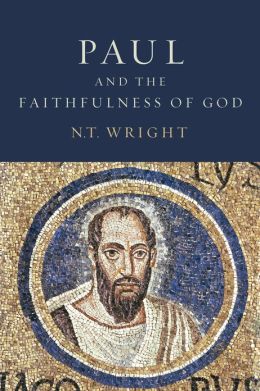
Kudos to Pennsylvania Interfaith Power and Light, GreenFaith, Evangelical Environmental Network, and other good groups who helped out, sharing information on everything from sustainable agricultural, divestment discussion, theological matters, and other important aspects of this movement.  As you may guess, we had tables and tables worth of many books on the calling to be thoughtful, developing a Christian mind to various sub topics —  science, food and eating, farming and land us, to more general things on Christian discipleship, reading Scripture, and of course resources for spiritual formation.  As always, we love selling books at events like this and invite you all to stay in touch.  Thanks to those who read books, who buy books.  Without you, we’d have no ministry here.

BookNotes
SPECIAL
OFFER
50% OFF

Earth: The Operator’s Manuel (Allen)
Green Revolution
(Lowe)
while supplies last
+
FREE BOOK
A Climate for Change
while supplies last

– Offer good through Saturday October 5, 2013 –
(after that, 20% discount on all items mentioned)
order here
takes you to the secure Hearts & Minds order form page
just tell us what you want

inquire here
if you have questions or need more information
just ask us what you want to know

                   Hearts & Minds 234 East Main Street  Dallastown, PA  17313     717-246-3333

read@heartsandmindsbooks.com

Helpful new books for ministry leaders, church revitalization, congregational life ON SALE

Churches, like schools, are back in swing and even though our last several passionate posts were about eloquent and profound culture-making books by the likes of James K.A. Smith, Andy Crouch, Os Guinness, and a new worldview shaping book by N.T. Wright — not to mention that huge bibliography on calling, work and vocation — we do love telling about more prosaic and practical tools for the church leaders toolkit. If you want a book on church revitalization, spiritual renewal, church conflict, small groups, Christian education, youth ministry, or preaching, sacraments and worship, we most likely have it (or can order it easily.)  Here is a quick, random sampling of some new books for enhancing congregational life that we recommend. Many, are, actually, very interesting and truly quite inspiring.

Trelational pastor.jpghe Relational Pastor: Sharing in Christ By Sharing Ourselves  Andrew Root (IVP) $18.00  Another excellent resource in the Praxis line, this is a book that (sorry, friends) I think many a minister needs. It certainly should be obvious that relationship skills are an essential aspect of effective ministry (and some, well… you know.) But this is more than “relational intelligence” but a mature and interesting rumination on the motivations and textures of various relationships, and what we mean by “relational” ministry. Rev. Landon Whitsitt (hip youngish author of The Open Source Church) said to me that he thought it was one of the best books for pastors he’s ever read. More than one reviewer comments on the “robust theology of pastoral ministry” that Root offers, and how he helps us realize how relationships can reveal the present Christ.  Very thoughtful, provocative, insightful.

Rresilient ministry.jpgesilient Ministry: What Pastors Told Us About Surviving and Thriving  Bob Burns, Tasha Chapman and Donald Guthrie (IVP) $17.00  It isn’t brand new and I have reviewed it before, but simply must list this again — this documents, from extensive research, what it takes to have fruitful ministry over the long haul. Pastors can and should thrive and effective ministry must be resilient (cuz it ain’t easy out there, folks.) There are moving stories about strength and success in ministry, about overcoming hardships, about keeping wise and healthy boundaries (and maintaining strong family lives with recreation and rest.) I have often noted how it documents that multi-cultural intelligence is a factor shown to ensure ministry resilience. The best thing I’ve read of this sort, by far —  if your pastor doesn’t have it, why not give it as a gift?

CCalled-to-Stay-Breakey.jpgalled to Stay: An Uncompromising Mission to Save Your Church  Caleb Breakey (Harvest House) $11.99  I have heard already this fall some folks say they are giving up on their local church, moving on, dropping out; this book may help folks like that gain new resolve to be gracious and helpful instead of giving up on their local congregation.  Called to Stay, however helpful it would be for anyone who is disillusioned or “church-hopping” is more specifically about younger adults — millennials — leaving the church and what brave and good work could happen if they committed to stay.  Breakey is himself young (but has the good sense to cite Life Together alongside the contemporary research by Stetzer, Rainer, et al.)  Most folks, even the older and the contented, need an occasional reminder of the role of Christ’s church and the importance of the local congregation. And if you know jaded younger Christians, this could be a life-saver.  Check it out, please!


Ssee, know & serve.jpgee, Know & Serve The People Within Your Reach Thomas Bandy (Abingdon) $19.99  Bandy made quite a splash a decade or so ago with a bunch of books shaking up his United Methodist associates (and others) insisting we get busy with vibrant, relevant and transformational ministry in local congregations.  This is the most important work he has done in years, and it is a motivating and practical guide for moving the local church outside itself. As Paul Borden says “Highly effective congregations know their communities well.  But most congregations are abysmally ignorant of their communities and are therefore ineffective…”  This will help,I am sure — with ideas about demographic research to hospitality opportunities to various models, options, and strategies.  If those who need it will only pick up and read.  Maybe you could share it within your congregation. A great cover, too.


Tmissional quest.jpghe Missional Quest: Becoming a Church of the Long Run  Lance Ford & Brad Brisco (IVP) $17.00 This bears the imprint of both Praxis and Forge and that should almost be “enough said” to show it’s theological quality and practical usability. That it bears rave, rave reviews from Alan Hirsch, Reggie McNeal, Dave Ferguson, and Ed Stetzer  should clearly put it on the map as a helpful contribution to missional outreach.  A real guide to getting every member on board, for “everyday Christians to be on everyday mission.” A strong Kingdom vision, based in the local church, for the life of the world.  Each chapter ends with exercises and discussion assignments called “Steps on the Quest.”


77 creative models.jpg Creative Models for Community Ministry  Joy F. Skjegstad (Judson) $16.99  Wow. Every church should have this around to spark new imagination, realize options, consider how best to take up new ministries.  Joy is a seasoned church-based community organizer and understands “mercy ministry” and other classic sorts of social services. She has written some very helpful and specialized  books on this stuff for the Alban Institute and here she takes the best models she’s seen and describes ways to do service, volunteerism and advocacy in the community (and how to fund them.)  There is nothing like this in print — very, very useful.

SSTIR.jpgTIR: Spiritual Transformation in Relationships  Mindy Caliguire (Zondervan) $16.99  If you are like me and eschew books whose titles are drawn from acronyms, please (please) give this cleverly-titled work a chance.  I love this new book by a very fine author of spiritual formation titles.  In clear and upbeat prose it offers a fresh approach to inner formation — an approach that I’d say is a “must read” for ministry leaders.  It seems that the backstory of this vision includes the serious self-reflection that Willow Creek went through as they examined their “one size fits all” small group discipleship programs.  Caliguire helped them uncover the notion of faith unfolding, developing along three distinct and sequential stages — and the need for different sorts of relationships to support growth through those different seasons. STIR describes  those stages (learning, journeying and following together) and hows how relationships form the essential context for maturity of the soul.  John Ortberg has a very compelling foreword, saying that the author ha;s “discovered how real people learn deep wisdom and bring healing to their minds and hearts and wills.” Wow, this is very impressive and very nicely done.


Ddiscovering the other.jpgiscovering the Other: Asset-Based Approaches for Building Community Together Cameron Harder (Alban Institute) $18.00  Just last week a local Lutheran pastor exclaimed to me how much he liked this book, finding it very, very useful.  It is thoughtful and refreshing but is simple to explain: it “integrates two soul mates: Appreciative Inquiry and Asset Mapping.”  As Rob Voyle (director of the Clergy Leadership Institute) writes, this includes “a foundation of theological reflection which provides a life-giving gospel way for congregation to be agents of transformation in their communities.”  Harder not only offers a robust Trinitarian theology, but he applies this (and the detailed practices of AI and Asset Mapping) within rural and small town settings.  (Hence, the rave review from Shannon Jung, renowned professor of town and country ministries at Saint Paul School of Theology in KC.) It’s ecumenically cool, too, I think, that the back has a great blurb from a Christian & Missionary Alliance denominational exec, too.


Iimaging the small church willis.jpgmagining the Small Church: Celebrating a Simpler Path  Steve Willis (Alban Institute) $17.00  We are glad for the on-going publishing program of the Alban Institute and value their important contribution to research-based, theologically centrist, helpful books that are usually wonderfully written and exceptionally practical. This is written by a great storyteller, inviting us into an alternative world not guided by the “bigger, faster, snazzier” ethos of the modern world but to a slower, less auspicious culture.  This book does not intend to “fix” the small church or mourn its limitations, but affirms that there is much good about the quirky, human-scale small church.  Willis has pastored both Presbyterian(USA) and UCC congregations.  He now pastors in the Appalachian Mountains of Virginia.

Ooverflow.jpgverflow: Increase Worship Attendance & Bear More Fruit  Lovett H. Weems Jr. & Tom Berlin (Abingdon) $13.99  I assume you know from our regular posts and the sorts of things we recommend that we do not necessarily think that “church growth” is a faithful measure of Biblical fidelity in the world.  We think churches need help nurturing the vocation of folks in the world, and, of course, think most parishes need deeper conversations about the whole missional thing.  However, when an esteemed and moderate mainline theologian (Weems is Distinguished Professor of Church Leadership and Director of the Lewis Center for Church Leadership at Wesley Theological Seminary) offers a practical book on increasing worship attendance, helping us learn to improve it so that our congregations bear more fruit, then I think it is worth reading.  Of course our congregations exist in order to glorify God and to serve God’s purposes in the world. This book is thoughtful and has a bit of a “workbook” feel so could be very useful to study together for those congregations seeking revitalization.  Highly recommended.

Ddevote yourself.jpgevote Yourself to the Public Reading of Scripture: The Transforming Power of the Well-Spoken Word with DVD  Jeffrey Arthurs (Kregal Academic) $19.99  I heard an esteemed professor of homiletics not long ago and by far the most moving part of the message was the astoundingly clear, dramatic (but not over-done) reading of the Bible text.  You most likely have been there — after such a powerful, well-rehearsed and appropriate reading one could just say “The Word of the Lord: thanks be to God” and go home. As one reviewer says of this handy resource “God created the universes with the power of his spoken word and continues to refashion lives where his Word is heard today. Jeffrey Arthurs serves the church well by showing us why and how to read God’s powerful words.” It is excellently done, eminently helpful.  It includes a DVD with tutorials.  I am glad for this important help and am sure that if you use it with others in your congregation, your worship life will deepen and mature with beauty and power.

FFeasting Worship Companion Year A 1.jpgeasting on the Word Worship Companion: Liturgies for Year A Volume 1 with Companion CD-ROM edited by Kimberly Bracken Long (WJK) $35.00  You should know the spectacularly rich, varied, and extensive multi-volumed Feasting on the Word preaching commentaries that follow the Revised Standard Lectionary. (There are four large, hardback volumes for preaching the lections of each church year.) Last year (Year C) saw the release of the first pair of these new, related, liturgical aids, drawing on the same insights and authors as the commentaries, offering calls to worship, confessions, prayers and collects and the like. The Worship Companion uses a rich and eloquent rhetoric but is yet creatively contemporary.  It is ideal for most mainline congregations, lovely and mature.  Year A, Volume 1 offers worship resources from Advent Through Pentecost.  Volume 2 from Pentecost on will be released in 2014.

Tworship sourcebook 2nd ed.jpghe Worship Sourcebook Second Edition with Companion CD-ROM  compiled by the Calvin Institute for Christian Worship (Baker Books) $44.99  I hope you know the extraordinary interdenominational work of the Calvin Institute.  I have not heard of anyone who uses this who does not love it, finding it exceptionally helpful. This sturdy and handsome, thick hardback contains — as it says on the back cover, “over 2,500 prayers, litanies and spoken texts for every element of worship service held throughout the seasons of the church year.  It has teaching notes (to offer guidance in planning each element of the service) and thought-provoking perspectives on the meaning and purpose of worship to help  stimulate discussion and reflection among worship planners.  The CD-ROM contains the entire text of the book for easy cutting and pasting into bulletins, PowerPoint slides, etc.  This new edition includes revised liturgies and additional prayers for challenging situations facing today’s church.”  I know one person who had the first edition and had to have this new updated one.  If you don’t have it, it could be very useful for anyone that uses any sorts of litanies or written prayers, etc.  (And if you don’t, well, may I suggest learning about the somewhat more liturgical tradition of the historic church by getting this volume as an occasional resource, at least.)

Aceltic liturgy for every season.jpg Celtic Liturgy for Every Season  Elizabeth Lovett Grover (Infinity) $11.45  We are very grateful that this multi-talented author (who earned a degree in Russian from Duke!) befriended us, allowing us to learn of her lovely little book of new celtic liturgies for many different occasions.  She became interested in Celtic spirituality while traveling with Philip Newell to the holy island of Iona. Some of these are thematic (sound, wind, light, peace) and some are specific, innovative services for different seasons of the church year.  Elizabeth explains that she is a cradle Episcopalian who started writing prayers while on staff at Church of the Redeemer. 115 pages.


AAbingdon Theological Companion To Preaching A.jpgbingdon Theological Companion to the Lectionary Year: Preaching Year A  edited by Paul Scott Wilson (Abingdon) $28.99  I sometimes jokingly call this the “poor pastor’s Feasting on the Word” which, I know, isn’t quite fair.  It is very comprehensive and arranged similarly, but in just one paperback volume (making it an excellent value.)  Each week provides several different angles of vision on each lectionary text.  One can read a good scholar or  working pastor offering textual comment for the lessons of the week offering a theme sentence, a key theological question, a pastoral need, ethical implications and gospel implications. Wilson is Professor of Homiletics at Emmanuel College of the University of Toronto and surely one of the most respect teachers of preaching in North America.  I like him a lot.

This edition, of course, starts with the first Sunday of Advent 2013 and goes into next year.  We have the current one (Year C) as well.

Tgood funeral.jpghe Good Funeral: Death, Grief, and the Community of Care Thomas Long and Thomas Lynch (WJK) $25.00  We already sold a few of these from announcing it at the Hearts & Minds facebook group; one good friend linked an article from Christian Century. This is surely one of the best books of the year, eagerly anticipated and, well, simply stunning.  As you should know, Mr. Lynch is a poet and undertaker (his award-winning The Undertaking: Life Studies from the Dismal Trade and Bodies in Motion and at Rest: On Metaphor and Mortality are among my all time favorite books; his memoir about traveling to Ireland and his poems and short stories are pretty amazing too!) And then there is the prolific Dr. Long, a great communicator and spokesperson for thoughtful, mainline denominational congregational life.  His acclaimed Accompany Them with Singing: The Christian Funeral is one of the best books on doing funerals ever done and a best seller for us!)  Well, here, the dynamic duo joins their insight and energy and wit and it is spectacular — a book as much for the grieving (or soon to be grieving, which is, yes, all of us) as the professional clergy, caregivers and funeral planners.  As Lillian Daniel writes, “In the rough terrain of death and loss, I can think of no more trusted advisors than Thomas Long and Thomas Lynch. This book can be read as wise preparation for the losses we all will inevitably experience. It is a gift to those who grieve and to those who care for those who grieve.”  You have been to some dumb and awkward funerals and you have hopefully been to some that are wondrous, beautiful, weighty, and real. This good book helps answer the controversial question” What makes a funeral good?”

Ddwell.jpgwelling: Helping Kids Find a Place in God’s Story  Jessie Schut (Faith Alive) $5.99 We named this as one of the “Best Books of 2012” last year, explaining that it is simple, brief, comprehensive, wise, winsome and useful.  It was designed to help volunteer teachers use the Christian Reformed Church (CRC) Dwell curriculum, but I assured readers that it only mentions this in passing a time or two. I think every Sunday School of any sort should have a few of these around as it offers guidance and sane help for nearly any problem, question, or spiritual need that arises in the church’s ministry with children. From multiple intelligences to special needs, from praying with children to involving parents, this offers wonderful insight, helping explained, with care and great love for God’s children. Very nice, meeting a need I bet your church has.  We have tons of kids books, children’s Bibles and can advise on all kinds of curriculum questions.  Drop us a line if we can be of service.

Yyouth min- what's gone wrong.jpgouth Ministry: What’s Gone Wrong and How To Get It Right David Olshine (Abingdon) $18.99  This book was, as they say, “30 years in the making” as the author is a long-term youth worker, a leader beloved by almost everyone in the field. He is the Director of Youth Ministry, Family and Culture at Columbia Internaitonal University in Columbia SC and the author of oodles of books and even more oodles of articles. He is the co-founder of Youth Ministry Coaches and in this book it seems that he is sharing all the basics, updating and refreshing anyone who cares about youth culture, teen ministry, congregational life and healthy mission among and with our youth. Chap Clark notes that “this book brings together the best of what David as taught and led for years.” Duffy Robbins writes in a very moving forward that even though we will continue to make mistakes — as they obviously did in their earliest days, before their really was much of an art or science to this emerging field of youth ministry — “this book will help cultivate cool heads, steady hands, and strong hearts so that the next generation of youth workers is prepared for a lifetime of fruitful ministry.”  If you have kids in your church, if you are a parent, teacher, or friend of teeangers, get this book.   We have tons of othres, but this is a great starter, a good overview with just the right balance of theory, theology, inspiration, fun and great strategics and objectives.  Highly recommended.

BookNotes
SPECIAL
DISCOUNT
ANY ITEM MENTIONED

20% off
order here
takes you to the secure Hearts & Minds order form page
just tell us what you want

inquire here
if you have questions or need more information
just ask us what you want to know

                   Hearts & Minds 234 East Main Street  Dallastown, PA  17313     717-246-3333

read@heartsandmindsbooks.com

Playing God: Redeeming the Gift of Power by Andy Crouch (InterVarsity Press) ON SALE

Hplaying god.jpgow do I describe one of the very best books of the year? How do I tell about a book (in a way that invites you to buy it from us) that is so very rich, journeys into so many fields of study, is oh so wonderfully, wonderfully written?  Words nearly fail me.  The brand new book by Andy Crouch, Playing God: Redeeming the Gift of Power (IVP; $25.00 – on sale for 20% off; $20.00) is very, very good, and – a credit to its remarkable breadth and glorious detail –  is a bit hard to adequately explain.

Mr. Crouch is a good thinker and has thought about this topic  — the nature of power — long and well, so his insight is profound and well-developed. He has thought of almost everything, and looks at his topic from many facets.  Like a shining jewel (if I may use an metaphor that is often used undeservedly) the book shimmers, reflecting this insight and that, from this angle and that, with beauty and texture and solidity.  It is a study of power and, significantly, as the subtitle insists, how God can use His image-bearers to bring redemption to the dangers and sadnesses of power abused.  I hope you will believe me when I say (and if you ponder it a moment you will see) that it is not just for CEOs or politicians or influential leaders.  It is for all of us.

POWER AS PART OF A GOOD CREATION GONE WRONG

First, a main point: power is a gift.  Crouch can say this because (as he explains in an excellent few chapters) it is part of the created order.  A robust and sturdy theology of creation and the cultural mandate to “make something of the world” that teems and swarms with potential is necessary for a full understanding of our call to culture-making, in which the use of power finds its home.  Although the gift  and vocation to take up our offices in cultural authority by exhibiting our human instincts for creativity and influence is the burden of his previous book, Culture Making: Recovering Our Creative Calling, just now out in paperback (IVP; $20.00 ) he revisits this Biblical theme with as much clarity and good sense as I’ve ever seen. 

There are no breathy shout-outs to Abraham Kuyper or Al Wolters and his generative book Creation Regained; surprisingly, he doesn’t footnote James K.A. Smith even once; nor does he cite the new and excellent God’s Good World: Reclaiming the Doctrine of Creation by Jonathan R. Wilson.  I’m a cheerleader and networker and get passionate about all this, so would have noted that his friend Gabe Lyon (in The Next Christians) has expressed wonderfully how the “next generation” of young adult Christians increasingly understand that the Bible presents a four-chapter story that starts with creation, moving through the cosmic and serious fall, graciously receiving Christ’s death-and-resurrection that brings redemption, to the final hope of a restored creation.  He doesn’t even cite N.T. Wright’s books (although he does cite an article) who taught us to be “surprised by hope.”

TO CHANGE THE WORLD

He does, in a serious footnote, mention an important few chapters in the Oxford University Press book, To Change the World by James Davison Hunter.  The body of Crouch’s text, though, is not laden with pull quotes from the usual suspects.  It is his own mature reflections, carefully developed, wondrously shown, informative and interesting.

Playing God does emerge from these sorts of authors and conversations, and his audacious claim that power is a good gift grounded in the possibilities built into the blessed creation itself and to be gladly taken up by people for the sake of human flourishing is clearly supported by the best of popular-level conversation these days amongst evangelicals, especially.  Who doesn’t want to change the world?  What religious author these days doesn’t at some point talk about transformation?  We are way past the “this world is not my home, I’m just a-passing through” nonsense of the pietistic “Christ against culture” which bred apathy about social concerns among many fundamentalists. Fundamentalists themselves, of course, have loudly moved away from such disinterest in social reform, seen clearly in the divisive rise and demise of the Moral Majority. 

But yet there is little consensus among church folk about the proper way to engage culture, work for social transformation;  it seems to me that some of the negative reactions to the religious right, even among their own disillusioned leaders, have taken us back to this basic question: can power be exercised well?  Can Christ-followers use power faithfully?  Are there avenues of culture-making, and using power well that are not particularly political?  That is part of the focus of Hunter’s work and his call to mere “faithful presence” (unlike the populist agitating organized by both the religious right and the religious left.) All of these kinds of questions (and more) simply must wrestle with the question of the nature and just use of power. 

And so, Playing God: Redeeming the Gift of Power has much, much to commend it that is so very needed in cultural conversations among those wanting to transform the world as well as those who are in retreat, given the noxious results of the culture warring of previous decades.  

For those who have read the aforementioned Al Wolters (for instance) it will come as no real surprise to hear that power is (like all things, according to the Biblical story) created good, terribly fallen, and being restored to normative use, redirected by Christ to serve human flourishing and the common good by people who are avenues of God’s grace and mercy.  

However sensible it sounds to some of us — made good, messed up, now being renewed in Christ — Andy is not sure that most people have this basic set of worldview assumptions.  Again, without using the language of worldview, he reminds us that creation and its structures and potentials is good,  things in it (such as power) are distorted by fallen ideologies and is in principle being redeemed – and he goes to pains to make his case.  

POWER AS GIFT

The first unit of the book is entitled “The Gift of Power.”  These are beautiful chapters and, in aAndy-Crouch.jpg style and pattern which he manifests throughout the book, he mixes fairly serious sociology, feet-on-the-ground storytelling, and very insightful Biblical reflections, not to mention examples from his own personal experiences. Crouch is, I suppose, a journalist by trade (not to mention an accomplished pianist which explains some excellent music-related illustrations and ruminations, from Bach to Shostakovich, to contemporary worship bands) so there is much good reportage of interesting and poignant episodes illustrating good uses of power from around the world.  Like the delightful stories and impressive examples that appeared in Culture Making, he tells of famous artists and social innovators (he draws on the biography of Steve Jobs a lot), of CEOs and politicians, but also home-makers and local businesses like his favorite mechanic. This makes the book, even the more abstract portions, very accessible, always showing the practicality of his insights about power.

His theory of power as creational good but always distorted by idolatry and misuse, opens up layers and layers of meaning, new angles of consideration, and will disavow us of many wrong notions and unhelpful postures.  He combats our cynicism as well as our fear of power. He connects this in a brilliant chapter to Jesus being made in God’s own image and how, in Him — we are icons!  It will invite us to realize that as God’s own agents in the world, bearing the image of the triune God of power, we have great potential to accomplish much.  And it is right that others bear authority and use power as well.  The whole thing is enlightening and so very fascinating.  The rave reviews from many impressive reviews are sound the same tone: it is a one-of-kind-book that is thoughtful and a delight to read. This is, simply, the best treatment of the subject I have ever seen. 

IDOLS AND INJUSTICE

And yet.  We know, and he knows better than most of us, that this is not simple.  Saying that power is a gift (even as we pay homage to how it is abused) just isn’t enough. In a fallen world, power is abused and abusive; it is hurtful and tragic.  Andy has spent hundreds of hours volunteering around the world in places where power is abused, where privilege and status and wealth align to form systems and institutions and structure of great injustice.  With potent, focused Biblical study (get Rich Christians in an Age of Hunger by Ronald Sider for a more sweeping study of all the Bible says about structural evil and systemic injustice or Just Courage or the other books by Andy’s friend from International Justice Mission, Gary Haugen) Crouch shows how idolatry and injustice are often related, nearly two sides of the same bad coin. He commends the recent little Tim Keller book, Counterfeit Gods, on idolatry, which is very good, but Andy brings unusual insight.  His chapters which study this, ruminating and exploring and pondering, holding each nuance and facet up to the light, are increasingly rewarding, with each chapter bringing greater clarity to the conundrum of the nature of brokenness in a modern world. We come to feel the horror of the title, the consequence of the ploy named in the title: playing god. As one reviewer wrote, reading it left “idol shards everywhere in its path…”

IJM

Some of this is painful to read.  Mr. Crouch is not only a huge fan and trustee of the justly famous IJM, he has been with them and with development organizations such as World Vision, in places like India, working with them to expose modern day slavery, child sex trafficking, the cultures of dysfunction where police are bribed and human rights conventions are flaunted.  These descriptions are not meant to be sensational and, again, he is not breathy or brash.  The writing is calm and clear and the prose, while crafted with consideration and care, cannot help but be poignant and moving — powerful.  Crouch’s insistence that power is a good gift and that image bearers can make something of the world that is good for all and which increases human flourishing, never, ever wavers.  In most chapters — including the excellent chapters in the first unit — he fearlessly takes us to the horrors of injustice and the awful implications of idolatry, but the book is not depressing.  There is joy amidst the hard stuff, as we are given glimpses of power being used well, unfair advantage examined, reconciliation and restoration actually happening.  If you are a sensitive soul who bears the weight of the world already on your shoulders, and don’t like books that are too heavy, do not fear.  Despite the ever-present concern of our prideful “playing god” with our power grabs and games, the book really is hopeful.  The good, the bad, the ugly are tempered by testimony of the ways of God, the good gifts of the Lord seen in the many creative initiatives humans take to do good in the world.  And for every bad and ugly thing he has seen, there are good and glorious things to which he introduces us as well.  From the cultural power to make good wine to ways to deconstruct gender privilege on to powerful stories of multi-ethnic prayer services, he makes us smile and be glad in every chapter.  What a journey!

FORCE? VIOLENCE?

Space does not permit a detailed evaluation of his many side-trips. One urgent topic should be noted: he explores well the terrain of conversation well-known among those who are called to peacemaking and to the work of conflict resolution. (And who of us isn’t, after all?)  He describes the nuances of difference between force, coercion, and violence, and examines the benefits and sorrows of each, in different situations.  His brief ruminations on Iraq and Afghanistan are truly insightful, offered mostly in passing, but wise and illuminating.  My, my, how I hope many will study this book line by line, carefully studying this part, especially, taking in his theologically sound perspective and notable balance. (Ideological hawks and Biblical pacifists alike may find fault, although – let it be so! – both may nod their heads in agreement at times, glad for his good words on their behalf.  He offers something better than the indecision of waffling — on the one hand, but on the other hand — but blends good insights from rich conversations between Augustinians and Anabaptists which have gone on for centuries.  Even now, as the world again ponders questions of war, this is very, very important material. It isn’t a large section, but it is good to get us thinking.
INSTITUTIONS

A very, very helpful part of Playing God is Crouch’s remarkable emphasis on institutions.  I have in previous posts noted the wonderful column by James K.A. Smith in a recent Comment, “We Believe in Institutions” and while Smith is more colorful than Crouch, his piece would be good to read alongside the vital third part of this book. (I am sure that Smith will review it soon in Comment, so watch for that, as I am sure it will be excellent.) Using power redemptively and fruitfully, Crouch insists, will entail “thinking institutionally” (he applauds the stylishly written book by that name by Hugh Heclo.) He makes much of the “generation to generation” rhetoric of Scripture and suggests that it takes three generations to accomplish lasting cultural contributions embodied in sturdy institutional forms.

Sorry to sound like a broken record but, again: this is notable stuff; really, really good, and rather rare.  I don’t know of any other book that ruminates on this so carefully, sanely, and helpfully.  He gives a nod in a good footnote to the good work of Victor Lee Austin’s Up With Authority but for my money, Playing God is so much better!

PROTEST? REFORM? 

I do admit to wanting a bit more, here, though.  Crouch usefully draws on “Letter From a Birmingham Jail” but doesn’t explore the role of prophets and whistle blowers very much.  Is outside-the-system protest most often a squandering of social capital, as he seems to suggest? How much patience ought we to have as we press for reforms and prudent changes as we serve as salt and leaven?  Citing King seemed to even work against his argument, as the famous letter pressed against moderation and patience and complicity — the letter was not written to nasty racists but integrationist-oriented pastors who argued for slow reform.  I know Andy does not minimize social sin (and he has particular passions about the sins of race and the lure of privilege.) But as good as this section was – and I’ve never read anything this interesting and wise and helpful – I hope those discussing it will press further along and deeper in.  Nothing would please him more, I’m sure, if culture-makers use their human power in good ways to undo the bonds of oppression, even if it rocks the boat.  He seems to think, although doesn’t dwell on it, that some who rise to denounce injustice or who opt out of the systems of brokenness, are not so much resisting the principalities and powers, but are merely opting out. Calls for radical change most often should account for the fact that our world is sustained by institutions, and social change, therefore, must be long-lasting, structural, cultural, and institutional.  He makes the point (interestingly) by talking a lot about football.  

So we shouldn’t opt out or mouth off in knee-jerks of cheap protest against The Man. Still, I know, and he does, too, I’m sure, those who have adopted a “Christ-against-culture” stance as a strategy to change the world.  They exercise the power of weakness, the moral force that emerges from those in solidarity with those in the margins. They are Franciscan “fools for Christ” and they are Catholic Workers serving with the homeless and dying. They are in jail for acts of civil disobedience and for acting up in ways that Old Testament prophets often did – not to influence legislation, really, or make minor reforms, but to dramatize the call to public repentance and shake up our captive social imaginations. Crouch is not tone deaf to this more anarchistic movement within the church and he surely respects the likes of Dorothy Day or Shane Claiborne. But it seems that he is inviting us to a different sort of lifestyle than resistance, but using power as culture makers, neither opting out or railing against… 
It is a vision we all need to more deeply understand and rehearse and embody and it should make for very important conversations about things that really matter.

In doing so, Playing God: Redeeming the Gift of Power seems to hint at a more faithful way that is “in but not of” the world of institutions, bureaucracies, and agencies of power. Some may be called to form new monastic communities away from the centers of Empire, but more of us exercise our insight, authority, and power in the midst of more traditional jobs, with vocations to professions and guilds and associations.  We may live in small towns, work in middle class careers, attend fairly ordinary churches. We discover ways to make a difference, using gifts and power, tempered by love, graced by God’s own desires for restoration and wholeness, here and there, as we can.  Radical, missional, reformational, or common-place, mundane, mainline disciple, this is a book for you!   

FORGIVE YOUR INSTITUTION

One of the ways he offers this vision of ordinary dispatches of redeemed power within fairly common social establishments and modern institutions – which reminds me of the famous phrase by Dorothy Soelle, about “revolutionary patience” – is in a simple line he shares from a friend of his who is a CEO of a large nonprofit.  This acquaintance suggested that those who are the best trustees of institutions are those who have forgiven them.  One early reader told me how this phrase struck him, and I looked for it as I read.  Indeed, when I got to that line, it caught me dead in my tracks.  What does that mean? How does one do that? Why would one do that? What organizations and institutions have I forgiven? Which institutional systems and cultures have I help create that need forgiving?  How is naming sin and dysfunction liberating and redeeming? (And whenis it mere discontent and narcissistic?) How can we be agents of change, with love in our hearts, resisting the inertia of harsh bureaucracies without revolting (or being revolting?) Can we be stewards of our institutional influence, by being profoundly aware of their brokenness and, in forgiveness, serve them nonetheless? 

Can, as one section puts it, power be tamed?

SPIRITUAL DISCIPLINES

Interestingly, the book ends with a rumination on spiritual disciplines.  I saw this in the table of contents and (sorry) nearly shrugged it off.  A bit trendy, I thought, perhaps a way to end the book in a way that preaches well, with an oh-so-popular nod to contemplative practices and such.  Oh my, how jaded of me.  These short chapters were brilliant, very insightful, helpfully challenging.  His teaching about the Older Testament legislation about gleaning and Jubilee and Sabbath point us to institutional structures that create space for God.  Leaders who exercise power (not to mention those of us with more common house-hold ways of exercising power) simply must pay attention to their interior lives and the cultures their spirits create.  As with other sections, I have pages noted to quote for you – alas, there are too many good lines, too many fine paragraphs, too many instructive analogies and illustrations.  You really are going to have to get this yourself.  You, too, will think it ends well.

DOING DISHES

Even in those final chapters, Andy follows his custom of offering solid Biblical teaching, helpful ociological insight, good storytelling, and some candid personal testimony.  His own story of doing dishes (often at the last minute before he departs for a trip) in service to his household rang so true, I laughed and sighed right out loud.  You too, Andy?  We are a funny bunch, aren’t we, those of us with middle class values and some degree of privilege and opportunities to travel and speak and make culture in public ways.  We may think it all through, preach and speak and join task forces and committees to accomplish much, but at the end of the day (sometimes, the end of a very long day) we have to do the dishes.  Such chores can be perceived as a dumb add on, a begrudging duty, even, maybe obliged out of odd and cranky motives. Or, it can be an authentic expression of culture-making service, power used by gifting others for the sake of long-lasting flourishing, within institutions (in this case, a family in a neighborhood and a network of friends and guests who have shared meals in a home.) His description of the warm suds and the need to do dishes before heading out the door to speak was a gift for me, and will be for many of you, I’m sure.  Yes, Playing God is informed by serious scholarship, and covers all manner of global concerns, social and culture analysis, theological depth, and hopeful stories from the front-lines of the world’s harsh injustices. It makes a radical case that the Biblical story gives us an account of the good and the bad and the glory of power, and this is essential to understand.  But it ends up, often, in places like this – homely, small, local. It is a book for us all.

POWER ABUSED IS HURTFUL (AND YOU’VE FELT, I’M SURE)

You have most likely experienced frustration, perhaps agony or worse, at the hands of power gone awry.  If you’ve been in the court system, if you’ve been in hospitals or schools, chances are you’ve been hurt by stupid bureaucracies and have seen hard-hearted power mongers, “lording it over others” as Jesus put it in Mark 10.  I know we have in our family and not a day goes by that I do not lament sorrowful things I have seen with my own eyes.  It is no wonder many of us are jaded or cynical or to damaged to care much more.  We have seen what this damned world has to offer.  We hunger for God, we cry out for redemption, we long for meaning, but sometimes – especially those of us on the grayer side – lose our zeal for social reformation, for cultural engagement, for public justice. This book is for you.

I know this book will help the rising generation, the entrepreneurs and movers and shakers that are taking up their callings with youthful idealism and righteous zeal. It will offer the intellectual tools to get the job done right.  I pray that many younger culture-formers buy this book.  I pray that you learn from Andy’s deep well of thoughtful consideration, that your worked is framed by his vision, your attitudes informed by his wise work.  If you have young friends who see themselves as responsible global citizens or Christian activists or interested in the common good, I hope you get them this book.  It is a must. 

But it is also for those of us who grow tired of doing good, who ponder if things can ever change, who are less “surprised by hope” than we ought to be. For those of us who chip away at this and that, reacting to what we see on the news, too tired to care or too unschooled to know much what to do.  We, too, are culture-makers, and whether we are called to be whistle blowers and prophetic agents of bold change or whether we are embodying slow, careful, relationships within tired institutions, we all can be servant leaders, gifting the world with wise exercise of the kind of power God has given us to use.  Playing God warns us of what not to do, but more, its subtitle rings out: it shows us how the risen Christ is Redeeming the Gift of Power.

What does that look like, redeemed power, exercised carefully within culture? What kind of exercise of power can we offer?  What habits of heart and spiritual practices will equip us to be faithful in our use of power (and in our reaction to the power of others?) Can we, as Crouch puts it, live into a way of life that shares “disciplined power”?

THE DISCIPLINE OF STUDY: READING TO HELP GET IT RIGHT

One such spiritual practice is the discipline of study.  We have to understand well the way power is seen in the Bible and how it is arranged in our culture.  We have to know and appreciate better  what we’re gifted with, what we’re up against, what directions we should point the institutions in which we live and move and have our being. We have to unlearn some stuff, battle some instincts and postures that do not serve us well.

 It would do the gracefulness of the writing and the subtly of the ideas of this fine book to say it is about “understanding power from within a distinctively Christian framework” but for some of us, this is how to say what it offers.  We will not be able to grapple with privilege and idols and learn to serve, repent and celebrate, share and use power well without this foundational approach.  Playing God is an essential book for thoughtful Christians, a true gift, a must-read.  I am thankful that God has graced Andy Crouch with the power of words, with the gift of gab, with the ability to report and to ruminate. Perhaps it is enough to say this: this book will help you understand our world and be God’s image bearers with Christ-like fruitfulness.  We commend it to you as it is surely one of the most important books we’ve seen in years.

Kudos to InterVarsity Press for the sturdy hardback, the colorful flyleaves, handsome typesetting and the nice production of this important work. It is a very handsomely produced book.

playing god.jpg.

BookNotes
SPECIAL
DISCOUNT
ANY ITEM MENTIONED

20% off
order here
takes you to the secure Hearts & Minds order form page
just tell us what you want

inquire here
if you have questions or need more information
just ask us what you want to know

                   Hearts & Minds 234 East Main Street  Dallastown, PA  17313     717-246-3333
                                                            read@heartsandmindsbooks.com