Discipleship in the Present Tense: Reflections on Faith and Culture by James K.A. Smith (Calvin College Press) ON SALE


In what some might call “an embarrassment of riches” I have
been enjoying three books in the last few weeks by three of my favorite non-fiction
authors. I will soon tell you about the new Os Guinness (The Global Public Square) and in our most recent BookNotes post I raved about the splendid and important The Case for the Psalms by N.T. Wright. (He recently wrote to us, saying that he very much liked the tag-line that was in a HarperOne ad: “What Would Jesus Sing?”  Indeed.)  And  — hooray! — the much-anticipated follow-up to Andy Crouch’s excellent Culture Making, entitled Playing God: Redeeming the Gift of Power arrived just today from IVP!  So, we’ve got Guinness, Wright, Crouch and the new Jamie Smith book about which I will tell you now.  Forgive me if I am a bit exuberant this month – you can call me
pushy if you want: it’s my job to convince you to buy these extraordinary volumes
from us (at the BookNotes 20% off, of course.) And, like last week’s
review of The Case for the Psalms, this week I can assure you without hesitation that
this brand new book by James K.A. Smith is fantastic and one you will want. It is both informative and fun to read; you will
enjoy turning the well-written pages which are full of great turns of phrases and fine vocabulary and you will — I guarantee it — be
challenged with good, new content that will help you live your life more thoughtfully in a way that I suspect you truly want.

Ddiscipleship in the present tense.jpgiscipleship in the Present Tense: Reflections on Faith and
Culture
by James K.A. Smith (regularly  $14.00 but on sale here at 20% off; $11.20) is published by a small academic publishing venture, The
Calvin College Press.  We have all the
other books in their small backlist catalog, but this new James Smith collection is without a doubt the
most important book they’ve yet done.  The author is one that Hearts & Minds fans should know. He is considered to be one of the premier Christian public intellectuals
of our time.  His stunning, and
very widely discussed Imagining the Kingdom and Desiring the Kingdom are
perhaps his “break out” books that catapulted him to a wider audience, but he
has been writing about culture, philosophy, science, faith, hermeneutics, Pentecostalism, the common good, and other topics at the interface of faith, scholarship, and culture, for more two
decades and has a slew of books to show for it. 

Indeed, his first major
book – The Fall of Interpretation: The Philosophical Foundationsfall of I.jpg for a Creational Hermeneutic – was a major contribution in the hey-dey of
evangelical conversations a decade or so ago around postmodernism (and it was happily expanded and reissued last year by Baker Academic.) 
That Smith studied Dooyeweerd and Vollenhoven with scholars at Toronto’s
Institute for Christian Studies (ICS) and had his cultural discernment honed there by the
likes of Brian Walsh, James Olthius, and Calvin Seerveld and Al Wolters comes through
in that early book, making the case (in Augustinian terms) that human limitation and
perspective (what common folk might call bias) is not bad, a part of the fall,
but a natural, good part of God’s intended creational make-up of how humans see and make meaning. There is no raw data but always interpretation.  This is hugely significant when we talk
about interpreting of the Bible, about relativism, about truth and tradition and so
forth. 

Anyway, he’s a post-moderndevil reads d.jpg philosopher
who reads culture and theology, continues to call himself a Pentecostal (and
likes NASCAR and Canadian hockey alongside his high-brow literature and fine wine.)  His first collection of short pieces
was published by Eerdmans in 2009 and is a tremendous anthology with essays on what Calvinists
can learn from Pentecostals, on why he doesn’t particularly like the Christian
left, on why colleges should not refer to students as customers, and other fascinating
ruminations on church, politics, education, and the arts. That one is called The
Devil Reads Derrida and Other Essays…
and we highly
recommend it.  Although all of it
is smart, most of it is not about French philosophy. 

This new Calvin College Press anthology, Discipleship in the Present Tense is not unlike that first collection
but it is, I believe, even more interesting, a bit more varied, and arranged in a
more coherent, helpful fashion.  Jamie (as his friends call him) writes fabulous introductions to each of four sections, and those one-pagers are
themselves wonderfully interesting and inspirational, a great window into how
Smith thinks, and how the book can help us.  Really, his explanations before each section show that the book’s delightfully diverse pieces (from essays to book reviews, sermons, letters, interviews) carry out his agenda
of embodying radical discipleship in all of life, shaped, as we always are, by
the habits of the heart, including the formative rituals and litanies that honor the things we most desire
and love.  For most of us, the most
durable litanies that have shaped us are those of the (secularized, idolatrous) American Way of Life and our earnest Christian faith is
too often added on to or held within forms and ways of living that have already been decisively shaped by
the idols of the age.  How to break
with these distorted ways of living, embedded as we are in particular cultures, trained in certain habits, driven by certain desires? How can our faith be
lived out with integrity and distinction, bearing fruit, even? As this year’s heavy Imagining the Kingdom argues, building on the thesis of Desiring the Kingdom, it has something to do, not least, with worship.

NOT SO MUCH WORLDVIEW…,

It was his intellectual mentors at ICS who first introduced
me to the language of worldview in the mid-1970s and helped many of us examine the “roots of Western
culture” (Dooyeweerd) and “capitalism and progress” (Goudzewaard) and took us a bit beyond the good work Francis Schaeffer was doing in those years, inspired by some of this same Dutch tradition.  Not a day goes by that I don’t think of The Transfoming Vision by Walsh & Middleton or Creation Regained by Al Wolters, who were at ICS in those years.

It is now common to
bring critical theological evaluations to late Western capitalism or the ideologies of 18th century Enlightenment views of progress or the habits of 20th century consumerism and the Empire that enforces such dysfunctions. We have good Christian writers engaging-culture-christianity-today-international-paperback-cover-art.jpghelping
us evaluate the day to day practices of how we use technology, video games and, say, suburban shopping malls or the ways in which we farm and shop and eat, or ways in which we think about the arts and entertainment.  To
talk about a “transforming vision” of subverting the empire by seeking Spirit-led newness in our ways of
thinking and doing (guided by reordered loves and prophetic imagination) is not unfamiliar these days. Yep, though all these developments and conversations and new evangelical postures, Smith has been
a major voice – and an ecumenical one, too, as he emphasizes the global and
catholic trajectory of all this reformational energy for robust cultural engagement.

But, as much as he stands in a Dutch neo-Calvinist tradition
that has taught us all about the integration of faith and learning in light of
the presuppositions of our worldviews (he teaches at Calvin College,
in the department where names like Wolterstorff and Mouw and Runner and
Plantinga still echo) he does not use the w-word (worldview, or even weltanschauung) all that much. 

The grand
Kingdom project of Professor Smith’s recent books moves us away from idea of worldviews asdesiring-the-kingdom.jpg
static and intellectual, towards the language of story and something like the “sociology of knowledge.” Such an approach emphasizes social forces,
daily practices, knowing that the plausibility of any sorts of reforming efforts are themselves somewhat determined by the culture and the
institutions we inhabit. (Read his fabulous piece “We Believe in Institutions“ in the recent
Comment for a beautiful example of some of what he means.)  Do you know the series published by Jossey Bass by mainline denominational authors on uniquely Christian ways of doing various things in life, launched by the anthology Practicing Our Faith: A Way of Life for a Searching People edited by Dorothy Bass?  Mr. Smith thinks along those lines, with a neo-Calvinist / Kuyperian accent, with a large concern about culture, on
steroids.  Anyway, embodiment within institutions matter, as we move from worldview to way of life by way of worship. Got it? Yeah, I know: who thinks like this?  Smith and company do, and you need his books! 

Which is a very long way of saying that this book of short
essays are all of a sort: moving us to think more clearly and talk more helpfully
about what it means to live out a radical sort of discipleship in the here and
now, embodied, daily, mundane, even, always worshipful, joyfully sober, in the world but not of it.  

I can name on the fingers of two hands the number of
people I know well who care to – and has the intellectual chops to – really
consider what it means to be faithful in every single area of life. Who view it a joy to ruminate on what grateful obedience looks like in the very texture of our daily lifestyles — in everything! Who are knowingly working out their salvation in ways that could be called Christianly idiosyncratic. And he is one of them, one of the best, or so it seems to me.

So many of us — most Hearts & Minds readers, I’m sure — who reject dualism and
embrace an embodied faith in the midst of a good but fallen creation, wanting
to press the claims of the Kingship of Christ in all spheres and aspect of life
and society intuit (often well) what redemption looks like.  Smith does more than intuit and speculate, he thinks hard
and well in jamie smith at desk.jpginformed and interdisciplinary ways – with feet on the ground, it seems – day by day, about what Kingdom discipleship in this day and age and in this North American society
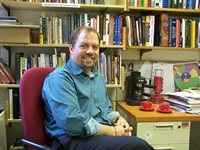
actually should be like.

And Smith does this in his writing and speaking with wit and whimsy, without much pride, without overstating his
principles (well, maybe a little) and usually with admirable civility. 
He’s no saint – those that follow him on twitter know he can scrapple in the fast-paced world of cyberspace.  He’s a scholar with scholar’s
passions and a reformer with Pentecostal zeal.  Which makes him a really fascinating (and dare I say entertaining) scholar to follow. 

Which brings us to the book.

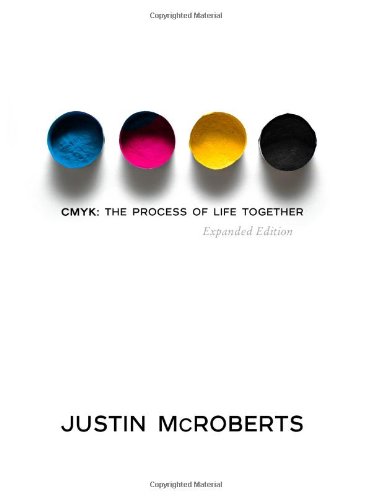
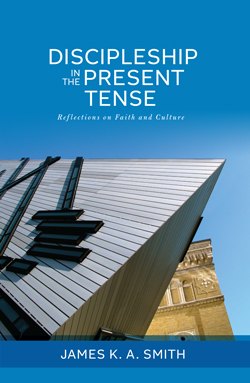
Discipleship in the Present Tense has an artsy photograph on
the cover which Smith discusses in the opening piece.  (True confession: I didn’t care for the cover that much until I read his description of it.)  It works very well – as he notes – to illuminate his whole
project, and certainly the theme of the first few essays.  The cover photo shows a modern rooftop of what we learn is a famous recent addition to the classy Royal Ontario Museum in Toronto. There is the older, more classically designed wing of the original building in the immediate
background.  In an informative and
interesting explanation he tells about the architectural details of both the older and newer designs. (He also shares that he first wanted to major in
architecture, which is why, I guess, he has such a good command of the
specialized languagediscipleship in the present tense.jpg of buildings and cityscapes and is often eloquent on new urbanism and the like.)  Although he tells it with a remarkable poignancy, you get the point: one can keep the old building in a stuffy traditionalism and make the new part just like it, or we can
tear it down in a revolutionary project of replacement — away with the old, in with the new!– or, as the photo and
his exegesis of it explains, we can do both, building on the old, in fresh new
ways.  Yes, yes, this is it!  Smith calls us to be faithful to the
great tradition of apostolic faith as passed down (Jude 3) but insists that we
embody it faithfully in innovative, contemporary patterns.  You have heard this before, I hope, but
to explore it in this first chapter is immensely rewarding, and he gets it just right.   If you are an old-school
traditionalist or a partisan of the emerging, you may especially need this
radical reminder and I’d invite you to pray and ponder this good introduction.  After all, we
all know so well what Marx said about “everything solid melting into air.”  Old or new? Both are co-opted and lead to trouble.  How about old and new? 
Smith says it elegantly and more precisely than I, so we commend it to you.  The rest of the book can be read as an
extended conversation on this first chapter, illustrated by the cover art
itself.

STORYLINES

As I said, Discipleship in the Present Tense is arranged in four sections.  The first is called “Storylines” and
includes pieces about his own faith tradition, his broad and ecumenical
thinking, always done “in Reformed accents.” (He tells his own Reformed people that some of their
best insights are like “buried treasures” which must be re-discovered. A few of
these pieces may, he admits, seem a bit in-house, written as they were for the
CRC denominational magazine The Banner, for the think-tank Cardus in the amazing magazine he edits, Comment, The Reformed Journal and
Perspectives or for Reformed Worship. (Ahh, he is so good in this part, with shades of Richard Mouw, it seems to me, insisting that to be most catholic, we must be clear about where we are from.
Particularity is always a good thing for Smith, as well it should be.)  Whether you, dear reader, are Reformed or
Presbyterian-ish or not, these are thrilling pieces.  The first essay which includes a litany of stirring examples of creational
renewal, Christ’s redemption of all things glimpsed in moments of human
flourishing through culture actions that go “along the grain of creation” is
enough to bring tears to one’s eyes. 
Who knew God’s great salvation was so very down to earth? Wow, I love this stuff.   

Other pieces in this chapter are not just wonderful
reminders of a wholistic, Kingdom vision, they offer exceptionally important
points to consider.  Is it really
correct to say “all of life is worship”? How do we talk about worship more
typically understood when one has an all-of-life-is-worship worldview?  What does the Bible verse about being a
“peculiar people” really mean? In what ways do rituals shape us?  One chapter was a speech given
to commemorate an anniversary of a Christian day school “Learning (by) Stories” and it is thrilling to read — one of the best in the book!  Smith is a
good public speaker and this keynote address had insight and energy and kind
words and righteous zeal – all while teaching about education, learning,
knowing, and the role of stories. You’ve got to read it!  As with several of these chapters I raised my
hands in praise as I read this, and thought to myself that it was well worth
the price of the book just for this. 

BOOKS AND CULTURE

The next section, simple called “Books and Culture” (perhaps a
nod the the splendid literary journal edited by John Wilson, whose blurb graces
the back cover) includes three long book
reviews.  Again, these are so
teacherly and wise – they explain the lay of the land of the basic arguments of
the book under examination and its context, the broader conversations going on about the book in
question.  As a really good book
review can do, you come away understanding a lot about the book being reviewed
and about other stuff, too. It may make you want to read the book itself, but even if not, you are now equipped to discuss it a bit.   Smith
offers his important critical evaluations of To Change the World by James
Davison Hunter, in a piece that first appeared in The Other Journal called “How
(Not) to Change the World.  He is
blistering in his critique of D.A. Carson’s Christ and Culture Revisited –
you’ve got to read this, especially if you are a conservative evangelical who
is a fan of DA — and he is (properly) harsh about large misunderstandings and unfair judgements in
the fascinating bit of cultural exploration in Hipster Christianity by Brett McCracken.

BRUSHSTROKES AND LINEBREAKS

The third section is called “Brushstrokes and Linebreaks”
and these are essays and reviews of painters and poets. I had read a few of
these in Comment, I believe, and wasn’t sure I’d enjoy giving them another reading, and two
of these, especially, were very, very nice. 
Even if you don’t typically buy poetry volumes, having an astute reader
tell you about what can be appreciated therein is truly quite nice.  Also in this section is another “worth
the price of the book” essay, a good (if a bit critical) of William A. Dyrness’
Poetic Theology.  That is a
serious, vital book, and Smith does him justice, ruminating on his good arguments
and concerns.  Dyrness is
important, and it is amazing to watch Smith in dialogue with him.  Anyone working out a Christian
aesthetic theory or artful practice would be wise to pay attention.

LINES OF SIGHT

Fourthly, the last 80 or so pages are gathered under the heading called “Lines
of Sight.” After a fascinating description of a “site lab” at a Grand Rapids art school, Smith writes, “You might think of this section as site-specific. They are occasioned by
specific issues and challenges, and often by specific invitations and
questions, but call for analysis and reflection that transcends their
situation. Sometimes these include from-the-hip responses to current events or
above-the-fold urgencies – which is also why sometimes such writing is brief,
compressed, dashed off to interject in the moment.”

These last pieces are mostly fun and often feisty, sometimes argumentative (as when he takes exception to a Lauren Winner piece) and always offering
value beyond the original location. 
These include a lovely, lovely letter to young parents (your children
will break your heart, and you will be overjoyed, still, in gratitude for the
experience of such love), a kindly bit of concern written as an open letter to contemporary “worship leaders” (worth the price of the book if you’ve got a loud rock band preforming worship songs at your church or fellowship) and
a forward which he had written for an academic book on faith and sports.  His perspective about what we hope for – on the occasion of
responding on-line to reviews of Rob Bell on hell – surprised me a bit, but was fully
sensible.  Yes, if all of life is
to be shaped by Scripture, even what we hope for should be tempered by divine
revelation.  In each of these “site specific” pieces,
Smith is a bit curious, offering a gatfly’s bit of provocation or empathy.  It’s part of what he does, and it is
good to see these short pieces alongside the more carefully developed ones.

INTERVIEWS

Lastly, there are two good interviews with him.  John Wilson suggests that readers start
there, and then dip in at will. 
Not bad advice; Wilson writes that the two interviews are “real
conversations, not perfunctory Q&As.”

Because the book has been published by a small, indie press,
it may not find readers asjames k a smith at Regent.jpg quickly as his other popular books have.  Friends, this is where we come in: do
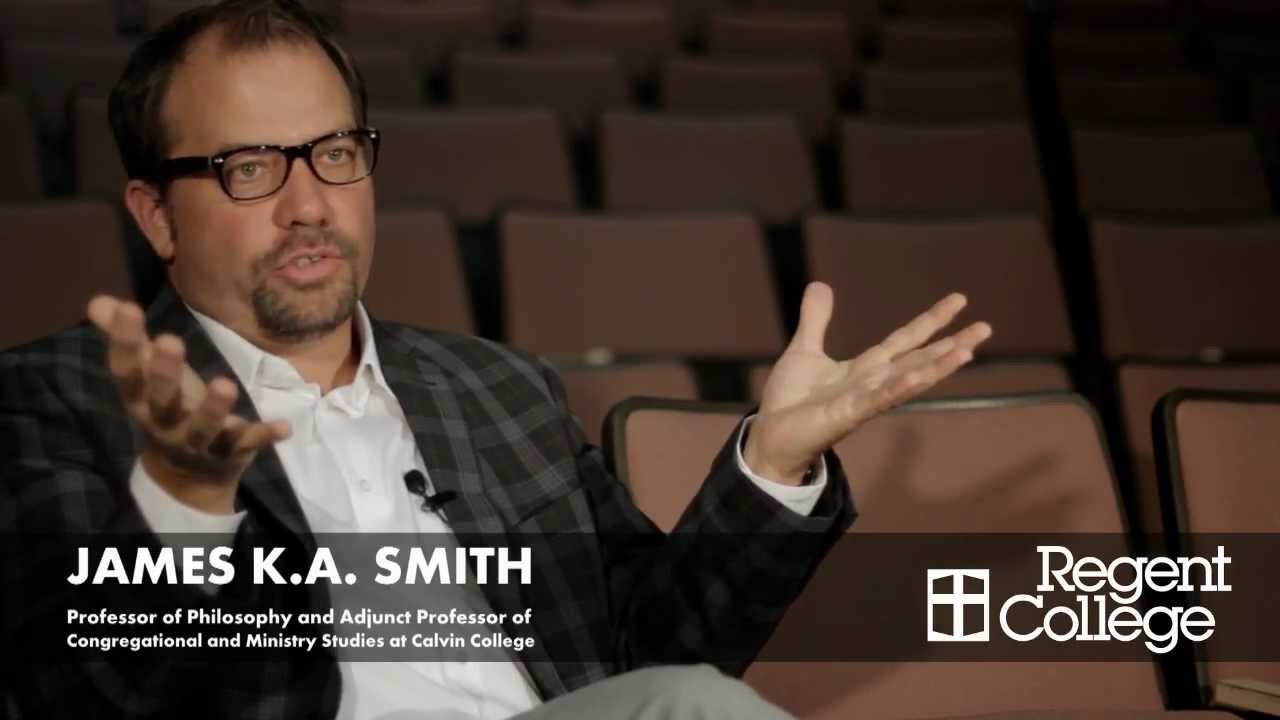
share this review, or tell others about it.  Read Discipleship in the Present Tense with others, buy some for gifts, start a study group, suggest it
at your book club. Even though Smith has a large following, this book is under the radar, and it would be cool (and of Kingdom service) if we helped spread the word.

There is no doubt that Desiring the
Kingdom
and Imagining the Kingdom are a bit intimidating to some. Who’s Afraid of
Postmodernism? Taking Derrida, Lyotard and Foucoult to Church
, while timely, is
a bit much for some. Thinking in Tongues has a small market, those who care about his claim to being a Pentecostal philosopher (may their tribe increase!)  His
forthcoming introduction, due in May 2014, to reading Charles Taylor, How (Not) To Be Secular, will
be fabulous, and so helpful, but, again, a bit much for most of us. 
I am a huge, huge fan of Letters to a Young Calvinist and
often say it is wise and helpful even if one is neither young nor a Calvinist, but it is pastoral and basic about faith development and under-appreciated.

So, Discipleship in the Present Tense just may be the book to introduce people to
this important public intellectual. The endorsements on the back of it are by upbeat scholars like Crystal Downing
of Messiah College and hip young culture makers like Jonathan Merritt and Gabe
Lyons. There is a sweet and elegant endorsement from Calvin College English
prof Debra Reinstra; Dale Brown of the Frederick Buechner Institute says “The pungent stories told here… provide
an invaluable resource for those interested in finding a way forward that sparkle
with integrity and hard-won faith.”  
There is a fabulous rave from a former National Director of the Vineyard
USA. That’s a wide range of recommendations!

 My favorite philosopher, David Naugle, says, 

I have learned much over the years
from James K.A. Smith.  I have
learned much from these fine essays of his. Every one of
them contained many helpful insights. 
Smith is a pundit, prophet, provocateur, and public intellectual. All
these attributes are rolled up together in these fine essays. 

Allow me to make one final pitch, a homely, practical one.  Many of us find it hard to find much time for heavy, sustained reading of long nonfiction works.  Short essays and stand-alone chapters are perfect to dip into when you have a few minutes, waiting for an appointment, between laundry loads, to read out-loud over dinner, on the subway, in the bathroom.  (There, I said it.) Maybe you aren’t able in this season of life to work through bigger volumes.  This is one you can handle, and you will be glad you did.  It’s very vocabulary and its wonderful line of vision will remind you of God’s goodness, and how we can be salt and light in a good but hurting world. Won’t you help us get this book known? Order some today, please.  We will join you in being grateful for public intellectuals, deep thinkers who serve God’s people, even we who need these sorts of short primers.  

Short chapters on big themes by a Reformed Pentecostal philosopher who likes hockey and fine architecture. and blue-collar poetry.  What’s not to like?

BookNotes
SPECIAL
DISCOUNT
ANY ITEM MENTIONED

20% off
order here
takes you to the secure Hearts & Minds order form page
just tell us what you want

inquire here
if you have questions or need more information
just ask us what you want to know

                   Hearts & Minds 234 East Main Street  Dallastown, PA  17313     717-246-3333
                                                            read@heartsandmindsbooks.com 
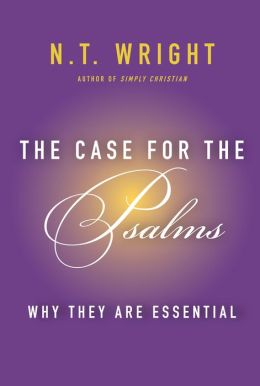
The Case for the Psalms: Why They Are Essential by N.T. Wright – ON SALE at Hearts & Minds BookNotes

What makes a great book?  Book-lovers, teachers and critics offer many aphorisms about classics but most agree: a book, to be truly great, has to at least be exceptionally enjoyable to read, even as it offers something wise or good or new  — inspiration, information, a new way to see. Great content well delivered.

I case for the psalms.jpgkept thinking this as I was reading the brand new book by N.T. Wright, The Case for the Psalms: Why They Are Essential (HarperOne; $22.99 – our 20% off SALE PRICE = $18.40) because I concluded early on that it was a truly great book. It is the best book I’ve read on the Psalms and it is the best book of Biblical studies I’ve read all year. I was immediately taken by the strong balance of personal reflection and scholarly insight, Wright’s own candid concerns and his remarkably learned explanations.  He noted that he is not an Old Testament scholar, but his insight was nonetheless world-class.

And, again, it was written in a way that was such a joy to read.  I even liked the rather small, compact-size and the squat hardback feel in the hand.  

So, yes, it is a great book.

As soon as I was finished, I started reading it again (something I rarely do.) I am part-way through my second read and cannot contain my enthusiasm.  I think it is a great book, and believe that it should be widely read.  I hope you agree and buy one or more today.

The Case for Psalms does teach new things (at least for me, and I suspect nearly any reader, even those who are fluent in Biblical studies.) Wright explains contexts and settings, a bit here and there about the development of the use of the Psalms, and certainly many New Testament connections — wow, does he connect the dots!  His Biblical knowledge is prodigious, and his insight about how the canonical  story of redemption fits together is impressive.  But to say it “teaches” doesn’t quite capture the experience of reading this — it draws the reader in, allowing us to not just intellectually grasp some new ideas about how the Psalms work, but it invites us into them, and challenges us to inhabit them.  We come away with new knowledge, yes, but also with a glad joy of having been with these amazing texts, almost shuddering as if on holy ground, in ways that deepen our faith and discipleship.

And this is exactly what Wright says the Psalms do to (for?) us.  They are, after all (he never fails to remind us) poems and songs, and they were first (and still) recited, chanted, sung. He tells us of how our brain’s right hemisphere works, and the powerful, life-altering capacity of poetry and of singing.  Although he is a historian and Biblical scholar, he knows that these texts are not just to be exegeted and properly understood.  They form litanies and are to color our imagination (indeed, with shades of James K.A. Smith, they can shape our desires!)  My own reading of this book allowed me to experience this very worldview-shaping, imagination-enhancing, faith-deepening, almost tactile encounter with the texts; they made me long for things, fresh and good things for me and my family, my community and God’s aching world. This is Biblical study, par excellance.

It is Rev. Wright’s worry that many Christians (especially evangelical Protestants and thosetom.jpg.display.jpg whose churches are most growing) don’t read the Psalms much, let alone use the Psalter in worship and prayer, either in liturgical, corporate worship or in private devotions.  As a cradle Anglican, it has been his practice to uses the Psalms in Morning and Evening Prayer and in weekly corporate worship.  Further, he has been drawn to chanting and song (he is a musician himself after all — did you know he majored in trombone in college, and met his lovely wife in a singing group?)  So this comes up from time to time, not as scolding, but as a bit of sage advice.  We would do well, in our personal lives and in our congregations, to avail ourselves of these means of grace that come at us in poem, image, dramatic lines, and songs.

By the way, I wrote a very long BookNotes piece last spring explaining why we so appreciate Tom Wright and highlighting most of his books (and some others, too.) You can see that here.

The only other person who I have found to be so compelling in extolling the value of the Psalms for shaping our memory and vision is Calvin Seerveld, who first taught me to love Psalm 19.  Oh, and Walter Brueggemann, especially in a set of three talks he gave on Psalms and the City at Pine Street Presbyterian in Harrisburg, tapes of which I nearly wore out.

Wright is not heavy handed in his “case for the Psalms.” But do listen to his concern about contemporary praise songs and the worshipers who mostly use them:

The enormously popular “worship songs,” some of which use phrases from the Psalms here and there but most of which do not, have largely displaced, for thousands of regular and enthusiastic worshipers, the steady rhythm and deep soul-searching of the Psalms themselves. This, I believe, is a great impoverishment.

By all means, write new songs. Each generation must do that. But to neglect the church’s original hymnbook is, to put it bluntly, crazy. There are many ways of singing and praying the Psalms; there are styles to suit all tastes. That, indeed, is part of their enduring charm. I hope that one of the effects of this little book will be to stimulate and encourage those who lead worship in many different settings to think and pray about how to reintegrate the church’s ancient prayer book into the regular and ordinary life of their fellowships.

And also this, which is a tad off subject, but vital and well-put:

As with all thoughtful Christian worship, there is a humility about this approach. Good liturgy, whether formal or informal, ought never be simply a corporate emoting session, however “Christian,” but a fresh and awed attempt to inhabit the great unceasing liturgy that is going on all the time in the heavenly realms. (That’s what those great chapters, Revelation 4 and 5 are about.) The Psalms offer us a way of joining in a chorus of praise and prayer that has been going on for millennia and across all cultures.

TRANSFORMING

Apsalms.jpggain, it is important to realize that this isn’t just an Anglican fetish, wanting us all to –cheerio, chaps — start a boys choir doing highly stylized cathedral services.  No, Wright the Biblical scholar knows how these pieces of Scripture are designed, and how they have been used, and how they are situated within the broader history of redemption, and how the Newer Testament uses them, so he knows that they are to be transformative.  This is, in fact, the very heart of his message: regular praying and singing of the Psalms changes “the way we understand some of the deepest elements of who we are, or rather, who, where, when, and what we are… (The Psalms) do this in order that we may be changed, transformed, so that we look at the world, one another, and ourselves in a radically different way, which we believe to be God’s way.” 

He doesn’t say as much as he might have, but it is clear he is working with what some might call a wholistic or non-Enlightenment epistemology — that is, we don’t just “know” data in our heads, as individual selves.  As he writes at one point of what the Psalms will reveal to us, he notes that we will come to understand. But then, he suggests, “it will be an understanding that grows out of a deeper and richer kind of knowing — something that brings together imagination, insight and love.” 

WORLDVIEW

Yes, Wright talks about worldview, as he does in almost all his books, in fresh and generative and vital ways. (I often point out the hefty and important first portion of the first big book of the five-volume Christian Origins series which is all about worldviews, and that it draws upon, and is dedicated to, Brian Walsh. Yet another reason why you should buy Walsh & Middleton’s Transforming Vision: Developing a Christian Worldview; it influenced much of Wright, and you can see it again, in this new volume.)

PRAY AND LIVE

The introduction to The Case for the Psalms says all this, and it assured me that this was tocase for the psalms.jpg be a very good book, stimulating, learned, and yet focused on arousing and shaping one’s faith-life. It starts saying it is “a personal plea” but also gets right down to business, explaining some cool scholarly details.  (Did you know that the Psalms are among the oldest poems in the world? Did you know that for a while, during the second Temple, the Levites were paid to do the singing? Did you know that Roman Catholic Bibles which draw on the Vulgate, have a slightly different numbering system for the Psalms, because they combine a few Psalms, and separate others, so the beloved shepherd Psalm is not the 23rd?) The lovely introduction struck a great balance of personal rumination and solid teaching, devotional tenderness and serious challenge, making for a very admirable start.

The second big chapter — “Pray and Live” —  serves, in some ways, as an overview of the whole book, and points us towards what is to come.  That chapter alone is well worth the price of the book. Besides noting Bruce Cockburn (and Schubert)  in passing, he explains how important the Psalms are in the New Testament, not least (as he says) in the life of Jesus. Wright’s moving us beyond a rather simple proof-texting of Christological connections towards a broader, deeper way in which the Psalms are Christ-centered is, again, well worth the admission price.  This is very important hermeneutical concern, and found it extremely instructive.

To whet your appetite, read this small excerpt:

The Psalms are enormously important in the New Testament, as a glance at any list of biblical  quotations and allusion in the New Testament will reveal. Jesus himself quoted and referred to the Psalms in the manner of someone who had been accustomed to praying and pondering them from his earliest days. Paul referred to several psalms and wove them in quite a sophisticated way into his remarkable theology. But behind those explicit references there stands, I believe, an entire world in which Jewish people were singing and praying the Psalms day by day and month by month, allowing them to mold their character, to shape their worldviews, to frame their reading of the rest of scripture, (not least) to fuel and resource the active lives there were leading and the burning hopes that kept them trusting their God, the world’s creator, even when everything seemed bleak and barren. 

For which whichever bit of the Old Testament we take, in fact, it is always worth asking, “How would devout Jews in the late first century BC have heard, read, sung, and prayed this?” This is particularly true of the Psalms. We cannot be sure which Jews studied which scriptures in what way, but we are on safe ground in saying that they used the Psalms as their basic prayer book. That was the world in which Jesus grew up. 

As in all of Wright’s books, he is good at summarizing a complex and important thesis: that Jesus, as a first century Jew, understood his own Kingdom mission in light of the covenantal promises of Yahweh given to the Jewish people. There were succinct  paragraphs I want to underline, post-it notes stuck here and there. 

JESUS SHAPED BY THE PSALMS

Wright makes it abundantly clear that Jesus’ own identity and mission were shaped, then, by the Psalms, and if we are Christ’s followers, and hope to embody any sort of faithful Kingdom lifestyle in the Way of Jesus, we should allow ourselves and our communities to also be shaped by the intentional reading and praying of these same Hebrew poems.  They will — as Eugene Peterson so helpfully put it (by quoting Nietzsche) in his fabulous book on the Psalms of Ascent — forge us towards “a long obedience in the same direction” and help us with our “discipleship in an instant society.”  Peterson, who has been an advocate for ritual use of the Psalms for a long, long time, would surely appreciate Wright’s emphasis here on the formational influence of these texts.

The next three chapters are the heart of the book, and they are amazingly astute, drawing specifically on all kinds of Psalms, on various texts, and explaining for us how to best understand them.  But this is not an orderly march through them, one by one.  No, Wright suggests and has on offer three major themes, themes that will give us broader and more robust faith, shaping us, again, at the deepest levels of our imaginations and worldviews.

TIME, SPACE, MATTER

The Psalms, he says, “invites their singers, as they alway have, to live at the crossroads of time, space, and matter. ”  (There is a chapter of his fantastic Simply Jesus, by the way, that puts these three in relation to Jesus himself that is quite good.)

By that, he means that we learn to inhabit time — thinking of our past and certainly our future — as God’s time, in His hands. This requires Biblically-shaped memory and Biblically-shaped imagination.  This book helps you think about that, and it is enriching, good, more important than you may realize.  What time is it, after all?

Similarly, we embrace space in new ways when we realize who God is and how God is reigning over all creation.  There are complicated matters here —  about Temple and bodies, about Zion and ideology, about prayer and politics, and land and justice, about God’s claims and history’s wreckage of those who abused these claims.  It can get sticky, and this explanation if as helpful as any I read.  The way the geography and the city is seen in the Psalms, and especially how there is a trajectory from Zion onward, is vital to appropriate in clear-headed, Christ-like ways, and Wright’s insight here is, again, partially intellectual, but more than that.  It is an invitation to live into this space of holy concern. Wow.

And, lastly, the Psalms effect even our understanding of matter.  There are so many beautiful nature Psalms, as they say — we should not say nature, but “creation,” I believe, as it connotes its lively relationship with the Creator.  And what a lively relationship it is! 


I have read a lot of devotional literature on creation, finding God in the outdoors and such, not to mention books about the stewardly duties of creation-care.  You know we have a huge environmental studies section in the shop. Wright’s The Case for the Psalms inspired me as much as any; it was not heavy-handed about climate change or the ethics of energy use or other controversies of the day. It just called us to worship a God who delights in animals and trees, to use in our liturgy the green poetry found in the Psalms where even the trees clap their hands in praise. (Have you read Psalm 104 lately and all the creatures God so loves?) 


Over and over, Wright allows the Psalms to speak and get at the biggest truths:


So, as with time and space, we are invited to stand at the intersection of the original created matter and the matter of new creation, the original matter that reveals God’s power and glory and the new creation that will be flooded,  saturated, with God’s presence and glory. 

And then he says this: 

And we do not stand there as mere observers. We, being ourselves part of that extraordinary picture, fine our own stories within the larger narrative of creation — our own small but significant stories of wine and bread, of work and rest, of death and new life, and through it all, of praise.

Nice, eh?

Dr. Wright reminds us, again and again:


Matter matters; it matters so much that God becomes human and in the resurrection launches that transformed matter, that immortal physicality, to which (I have been suggesting) the Psalms already point forward.

CELEBRATION AND…

There is much celebration in this part of the book, and much to get excited about.  For instance, few authors help us appreciate the goodness of judgement — where God vindicates the poor and his trampled creation (think of Romans 8) giving us much to hope for.


There are emotions in the Psalms and this is an emotional books. There is the goodness of God, yet, the fear of the Lord; there is the wonder of a complex creation, and the cries of lament; and there is the happy gladness that is ours when we are trained in seeing God’s faithful promises as good gift, hinted at in the very orderly structure of the creation itself, but there is death and decay and weirdness.  My, my, this is rich, good, relevant stuff.  

The final two shorter chapters are “At Home in the Psalms” (which offers some guidance and encouragement to start the discipline of using the Psalter in its entirety) and autobiographical, “My Life With the Psalms.”  Both pick up, quite directly, this theme that the daily use of the Psalms is a rich and helpful spiritual practice. 


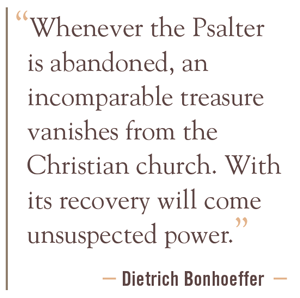
In the final afterward he merely narrates his own journey through his favorite Psalms, how hebonhoeffer quote.png has used some, how he has prayed others, how he has found others to be pointers to God’s will in his own life. His story about his own father’s death just a few years ago — something we talked a little bit about when he visited with us here at the shop last year — brought tears to my eyes, and I finally just let is wash, as I cried tears of joy for a scholar/pastor/brother of this sort.  There are few heady scholars in the academy who would be so vulnerable and simple as to share these nearly common-place insights.  This lovely and tender closing offered a very nice and instructive ending to a life-changing, great book. Thanks be to God.


A few other resources on the Psalms, also on sale:

TMessage-of-the-Psalms-Brueggemann-Walter-9780806621203.jpghe Message of the Psalms: A Theological Commentary  Walter Brueggemann (Augsburg) $18.00 A modern class where the passionate, dense scholar explains the Psalms as those of orientation, disorientation and re-orientation.  Remarkable.

By the way, we have a pretty edgy three session DVD curriculum, too, which interviews Walt on the Psalms of Lament. It is called The Psalmist’s Cry: Scripts for Embracing Lament DVD with Walter Brueggemann (House Studio) $39.99


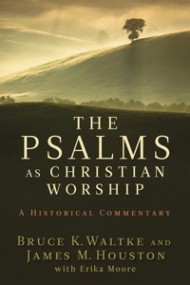
TPS-190x285.jpghe Psalms as Christian Worship: A Historical Commentary  Bruce Waltke and James Houston (Eerdmans) $28.00  A magisterial volume (almost 650 pages) blends a verse-by-verse exposition of select psalms with a history of their interpretation in the church from  the time of the apostles to the present.  Learned, thoughtful, mature by two esteemed evangelical scholars.


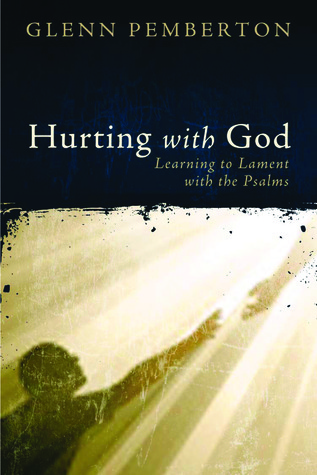
Hhurting with god.jpgurting with God: Learning to Lament with the Psalms Glenn Pemberton (ACU Press) $19.99 When this book (which Brueggemann calls “a masterful study of the Lament Psalms”) came out we named it one of the books of the year!  It offers solid Biblical and historical scholarship, passionate pastoral concerns, and honest, raw, insight.  Also includes some concrete proposals on how to use these psalms in the church’s worship.


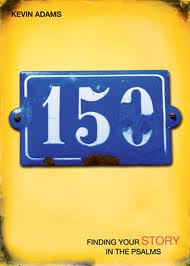
1150images1.jpg50: Finding Your Story in the Psalms  Kevin Adams (Square Inch / Faith Alive) $14.99 There are many lovely devotionals based on the Psalms and this is a wonderful, provocative, moving, work.  Lavish blurbs on the back from Haddon Robinson, James K.A. Smith, and Cornelius Plantinga, which speaks to the books elegant and insightful vision.  Remarkable.


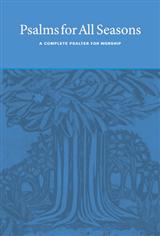
Ppsalms for all seasons.jpgsalms for All Seasons: A Complete Psalter for Worship  Martin Tel, Joyce Borger, John D. Witvliet  (Calvin Institute of Christian Worship / Brazos) $30.00  There are other hymnal-like hardback song books that put the entire Psalter to common tunes, and this is doubtlessly the best.  This is an amazing, comprehensive resource, offering an stunning array of indexes so they are easily used in planning worship. It includes musical settings useful for morning or evening devotions as well as responsorial settings for all the psalms in the Revised Common Lectionary and other good features. This is a true treasure trove, a must-have resource, which we are proud to promote.


BookNotes
SPECIAL
DISCOUNT
ANY ITEM MENTIONED

20% off
order here
takes you to the secure Hearts & Minds order form page
just tell us what you want

inquire here
if you have questions or need more information
just ask us what you want to know

                   Hearts & Minds 234 East Main Street  Dallastown, PA  17313     717-246-3333
                                                            read@heartsandmindsbooks.com

FREE BOOK OFFER for LABOR DAY — TWO DAYS ONLY (offer expires end of day September 3, 2013)

A year ago, to celebrate Labor Day, as I sometimes do here at BookNotes,
I tried to make anhonor labor.gif appeal for you to read books about work.  I think it was a good column, and I’ll give you the link to it below, in a moment.

And a free book offer, a small book, but a good one.

In that Labor Day column posted last September, archived at our H&M website, I explained that
this has always been a central aspect of our bookstore’s vision, and we’ve long been keen
on the idea that the ordinary people of God serve their neighbors and
consequently advance God’s Kingdom best while at their particular post
in the work-world.  Of course, not everyone has paid employment, and the
theological vision of calling and vocation surely includes all kinds of
“offices” where we take up our tasks for God’s glory. But the point is the same; we are missionally minded, thinking about how to practice our jobs and callings in ways that are inspired by the Biblical narrative, imagined in light of the God the Creator, Worker, Restorer.

(I was glad, by the way, that during the “March on Washington/I Have a Dream Speech”oldbroom.jpg anniversary
commemoration some folks cited that famous Martin Luther King Jr. bit about
sweeping streets to the best of your ability, if you are a street
sweeper.  We do our menial tasks, however seemingly humble, as
Michelangelo did his art, King preached.  What a good reminder for all of us this very
weekend.)

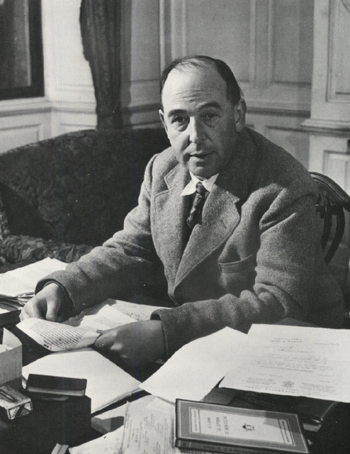
We serve a lot of clergy and church folks, who have their own hard jobs to do, but, of course, much of this vision — proclaimed blewis-at-his-desk.jpgy the best sermons, by the best preachers, applying the gospel to life — is for those who go to work in ordinary jobs, not church work.  And it is their duty to think it through.  As C.S. Lewis famously put it, “The application of Christian principles, say, to trade unionism and
education, must come from Christian trade unionists and Christian
schoolmasters; just as Christian literature comes from Christian
novelists and dramatists–not from the bench of bishops getting together
and trying to write plays and novels in their spare time.”
Our fear is that the unionists and educators, novelists and dramatists who Lewis mentions, are not very often inspired to think through these principles by their pastors. So pastors need to read this stuff, learning how to inspire the folks in their congregations to be thinking about the Godly principles that might help be restorative in the world world and society at large.  As I have sometimes lamented, not many people buy these books, and I wonder if it is because they just have never heard of the need to do so.
work matters smaller.gif
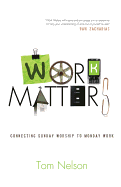
Perhaps that best book I’ve seen about a pastor who caught this vision, and starting talking and teaching it in his church, and all that subsequently happened is the delightful and inspiring Work Matters: Connecting Sunday Worship and Monday Work by Tom Nelson (Crossway; $15.99)  It is, of course, on the big list and you can read about it there.  It’s a good one.

As I’ve suggested, in that column a year ago I created a very extensive annotated list of books about
callingworkandvocation.jpg and vocation, and work and jobs and it is for both ordinary folks  and pastors. I am glad that this list has
gotten some attention, and hope that this Labor Day you might forward it
on to your own friends and pastoral staff (if you are a church-going
person.)  There are more extensive lists out there, perhaps, but this is the best
of the best, and still pretty diverse, for nearly any sort of reader. 
It is one of the more important lists I’ve created in the years of our
work here, and we pray it somehow helps. 

You see, we can’t
really fully do our work here without others spreading the news and buying the
books.  So, thanks for being a part, our co-workers, part of our team, helping us get some of these books off our shelves and into the mail. 

And say a prayer of thanks for the writers and publishing industry folks,  our UPS and FedEx drivers, and the hard-working USPS staff.  Not to mention our own staff here at the Dallastown shop, Amy, Patti, Kimberly, Diana, and Robin, who serve so diligently alongside Beth and I.

Give thanks for good work, even in a fallen world.  Pay for those in the work-world, and read up.  Start by studying that list of books, and sharing it.

HERE IS THE LINK TO THAT COLUMN

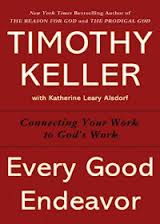
Not long after that Labor Day one, I did another BookNotes piece, highlighting Rev. Timothy Keller’severy good e.jpg very good book on this topic Every Good Endeavor: Connecting Your Work to God’s Work telling of our role in the book launch of it in New York, last November. It was written by Keller with an associate of his who has spent much time in the corporate world, Katherine Leary Alsdorf, who has thought about this as much as anybody I know, so it is excellent. (EGE was published by Dutton in hardback, regularly selling for $26.95. Our sale price for that one is $19.95.)

In that November 2012 BookNotes post, I offered some links
to other organizations that do good work in this arena of helping people
of faith relate faith and work (such as Redeemer Center for Faith and Work, The High Calling blog, the Washington Institute for Faith, Vocation & Culture, and our good friends in Pittsburgh at Serving Leaders. (By the way, check out their upcoming September event, Faith&Work2.0 here. Wow!)  I embedded a James Taylor song called Millworker that really moves me.  I told a story or two about my own
checkered job history, such as it is. That BookNotes piece was fun to write and I hope fun for you to read.

I INVITE YOU TO READ AGAIN
This Labor Day holiday, I invite you to read those Hearts & Minds columns afresh, ponder
those books, consider who to talk to about them. If you are a pastor or para-church worker, you have people who need to know about this liberating, game-changing message.

If you are a new hire or a seasoned manager, it will pay you to think about this stuff.  If you are a student, please, check it out.  Professional or blue-collar worker, self-employed or serving in a complex bureaucracy, retired or unemployed, happy at work or mad as hell, God bless you.

This is your day, and we want to be at least one bookstore that helps you in this most central calling of your life, learning to be faithful in the job site, office, shop floor or studio.  Allow us to help you figure it out, deeper in and further along, by suggesting these kinds of books.

AND WATCH
Maybe watching this tremendous video will inspire you to click over to that column and read that list.  I’ve used this with students and adults in several settings, and it is a great little video, created by RightNow Ministries.

HERE IS THE FREE BOOK BONUS:
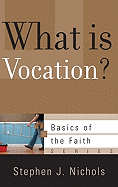
What is V.gif
If
you buy any book from those lists — at the BookNotes 20% off discount
—  before Tuesday (September  3rd) we will also send you a free copy of
a great little book about a Christian view of work, an excellent primer
on the topic written by Stephen J. Nichols.

The free one is called What Is Vocation (published
by P&R) and although brief, we think it will really help you, or
someone you give it to, get clearer about this whole complicated matter
— serving God in the work-world by living into a sense of vocation.

Again, the offer expires at the end of day Tuesday, September 3rd, 2013. The book is free with any purchase from the list to which we linked.  Use the links to the secure website, offered below.

BookNotes

SPECIAL
DISCOUNT
ANY ITEM MENTIONED

20% off
AND
What Is Vocation?
FREE
order here
takes you to the secure Hearts & Minds order form page
just tell us what you want

inquire here
if you have questions or need more information
just ask us what you want to know

                   Hearts & Minds 234 East Main Street  Dallastown, PA  17313     717-246-3333
                                                            read@heartsandmindsbooks.com
A Few More Books to Add to Yesterday’s List about Civil Rights. BOOKNOTES SALE – 20% OFF

I hope you found it helpful to read in my last BookNotes post to be reminded of the importance of reading about racial diversity, multi-ethnic ministry, and the need to recall andking years.jpg renew the valiant work of the civil rights movement of the 1950s and ’60s.  Those books that I listed about Dr. King, the March on Washington, and the civil rights struggles that went on before and immediately after that March, will inform you, move you, make you weep, and perhaps give you some glad joy that Christ’s own church stood with others of other faiths and no faith, to speak about justice, social transformation, racial reconciliation and economic justice. 

That the historic black church and its preaching, piety, prayers, hymns, practices of community, and Biblical literacy was the seedbed for this massive, nonviolent struggle (which lasted decades, against such vicious principalities and powers) remains one of the great testimonies in church history.  I hope you read that list, and know a few of the books I cited.  If not, we have “operators standing by” as they say.  We’re at your service.  Perhaps you might start with the Taylor Branch collection.  Or Harding’s take on the significance of King.  The one about the March on Washington, itself, The Dream, is fantastic, and you won’t put it down!

Here are a few more that I might have listed, not the core texts, perhaps, but excellent, provocative, and good.  Consider this a small part two to yesterdays essentials.

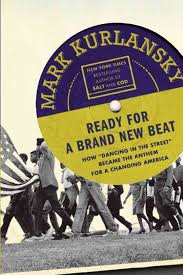
Rread for a brand new beat.jpgeady for a Brand New Beat: How “Dancing in the Street” Became the Anthem for a Changing America  Mark Kurlansky (Riverhead) $27.95  This was one of my most eagerly awaiting books that I was going to enjoy this summer, and was thrilled when it released a few weeks ago.  Haven’t read it yet (sigh) but here is what the astute and respected historian David McCullough says of Kurlanks (who wrote the exceptionally interesting books Salt and Cod.) “Every once in a while a writer of a particular skill takes a fresh, seemingly improbably ideas and turns out a book of pure delight.”

Kurlansky has written a previous book on 1968, but here his study starts in 1964, looking at the history of Motown, the story of racial integration during this tumultuous period in American culture.  And yep, he does all this through the lens of “Dancing in the Streets.”  The summer of 64 swept into the year the Beatles landed, and for some of that summer “A Hard Day’s Night” was number one on the Billboard Charts. And then a song by the Supremes; soon there would be a hit by The Animals. But the Martha and the Vandella’s hit was the song of the that fateful summer, the Warren Report, racial issues in major league baseball and serious conversations between King’s civil rights movement the rising Malcolm X (also in Detroit!) This is a fascinating and fabulous study and a fun way into these serious themes. Are you Ready for a Brand New Beat? This could be a great end-of-the-summer read for you.

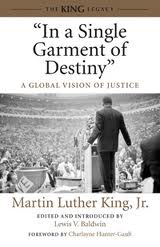
“Iin a single garment.jpgn a Single Garment of Destiny” A Global Vision of Justice Martin Luther King, Jr edited and introduced by Lewis V. Baldwin (Beacon Press) $26.95 I mentioned in yesterdays post that Beacon Press has been issuing some of MLK’s books in what they call “The King Legacy.” They have one compiling his speeches and writings on work and worker’s rights, but this one is surely unprecedented.  Here, Baldwin compiled all of King’s various speeches and sermons and writings on what we now know as the globalized economy.  For years, I used to use a famous King speech noting the various lands and countries and farmers and workers who ship our various foods to us, noting that we have touched folk all over the world with our morning breakfast.  Indeed, there is something good – and very troubling when it turns unjust — about the inter-connections in God’s world.  (It was King’s namesake, Martin Luther, who brought a theological description of that — the masks and persona’s we reveal, as God’s hand and feet in the world as we connect with and serve our neighbors.) So, yes, indeed, we are in “a single garment” together, and our destinies are clearly inter-twined. 

The first great chapter here is from “The Vision of a World Made New” a speech given by Rev. King at the Annual Meeting of the Women’s Convention Auxiliary of the National Baptists in 1954.  The Joint Statement against South African Apartheid done in 1957 with Elanor Roosevelt, as well as several others, are included.  His address in Amsterdam, Holland given in August of ’64 is reprinted as is his famous piece “World House” from Where Do We Go From Here (1967.) 

There are eight chapters in the second portion “Breaking the Chains of Colonialism: The Rise  of Peple of Color in the Third World” where King weighs in on global affairs, including observations about Africa, Ghana and India. 

The third portion of  “In a Single Garment of Destiny”…  compiles pieces about global poverty (including “The Octopus of Poverty” that appeared in The Mennonite in 1965.)  Again, these are important for their historic value, but also because in many ways he was prescient, and in some ways, his insights are as important today as then.  Times have changed, but the faith-based call to prophetic social change endures…

Several concluding pieces make up the last portion  — as useful today as then — and look at global injustices, revolution, and the Biblical call to principles but strategic nonviolence.  This powerful portion includes his important speech before the War Resisters League in 1959 as well as an article in the popular Redbook magazine in November of ’64 (Who know?)  Of course the famous and firey, must-read speech before CALC at Riverside Church April 4, 1967 is here, as are his hopeful words on “The Middle East Question” from 1967.

This is a fine collection, bringing together some good material about global concerns in one good volume.  Highly recommended.

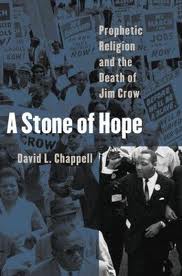
Astone of hope.jpg Stone of Hope: Prophetic Religion and the Death of Jim Crow
David L. Chappell (University of North Carolina Press) $23.5  This
massive work has been on my own reading list for a while, and although I
have not gotten to it yet, I know enough to list it here.  The Atlantic Monthly
says that it is “one of the three or four most important books on the
civil rights movement.”   They continue, “Chappell argues persuasively
that revivalism engendered the civil rights movement’s solidarity,
leadership, worldview, and rhetoric.”  Many reviewers have noted
surprise, suggesting it is “innovative” or “refreshingly unconventional”
and “a new interpretation.”  The Wall Street Journal says it is “delightfully opinionated” and “a first-rate work of history.”  I can’t help but love the New York Times Book Review
quote, “Intricate, dazzling in its reach into so many corners of black
and white Southern life and fascinating at every turn…In its mix of
rigor, daring, and perceptiveness, A Stone of Hope is a spectacular work.”

Makes
you want to put it on your, list, too?  I know that Fannie Lou Hamer
and James Lawson and Modjeska Simkins and other black leaders drew on
the prophetic tradition of the Old Testament and, although sometimes
translated into public, more secular language, found their intellectual
roots in their Biblical worldview.  Segregationists outvoted and
outgunned black intellectuals, but, Chappell argues, their cause lost,
“because they did have have a religious commitment to their cause.” Wow.
You should know this book. Professor Chappell teaches history at the
University of Arkansas.

Ffight.jpgight: A Christian Case for Nonviolence  Preston Sprinkle (David C. Cook) $14.99  Of course, most know that King encouraged those involved in sits ins and pray ins and civil disobedience to be fully committed to faith-based nonviolence.  Stride Toward Freedom, the riveting tale of the Montgomery bus boycott is one of the texts that both explain this, and tells how they prepared people to “turn the other cheek” even when physically assaulted. I myself used portions of the Montgomery pledges in training folks for nonviolence direct action against dangerous nuclear power plants in the 70s, and found others, in jail and out, who were equally inspired by King’s impressive journey to the power of Christ to disrupt injustice by embodying love for enemy.  Of course his liberal mainline Protestant’s almost talked him out of that (thank God for Ghandi and his influence on King, who returned his vision to Jesus!)  It is baffling to me how so many people can say they admire King, but disagree with the heart of his vision: Christian love lived out in a social gospel that was committed to the power of grace and mercy shown to all.  The verse from the Apostle John’s “we love because He first loved us” was important to King, as was the cosmic call to be agents of reconciliation (2 Corinthians 5: 16ff.)  Yes, he took Jesus literally on this whole business of praying for those who persecute us.

This new book, Fight,  by Preston Sprinkle is a masterpiece of a work, and surprising in many ways (not least of which that it was bravely published by a mainstream, conservative evangelical publisher.)  I think he is a new young voice that will help us understand Dr. King, and to grapple with his call to Biblical values when it comes to questions of the legitimate use of violence.  Interestingly, Sprinkle is known in some young Reformed circles, and among most book-buying evangelicals these days, as he has co-written books with the mega-seller Francis Chan, who, significantly, “highly recommends” this book.  Sprinkle is not an Anabaptist.  As he puts it, “I am not Amish, Quaker or Mennonite. I own several guns and still believe that the smell of a recently fired shotgun on a crisp fall morning comes darn near close to paradise.”  So he did not grow up learning about Biblical pacifism.  Neither was he a part of the 60s student activists, the secular or religious left (like, say, Jim Wallis  of Sojourners.) Sprinkle comes at this topic as a New Testament scholar. His PhD is from Aberdeen and he easily quotes top notch scholars such as Tremper Longman, Richard Bauckham, Tom Wright (and Chris Wright), Peter Leithart, Darell Bock, Gordon Fee, Ben Witherington, Richard Hays, and so many more, including, of course, John Howard Yoder.

This is a good, careful study of the Bible, especially the New Testament, by a conservative and careful exegetic. He explains, “the more I studied, the more I discussed, the more I’ve become  convinced: Christians shouldn’t kill or use violence — not even in war.”

I could say more, but at least know this: again, Sprinkle is not an idealist hippy, he is not anti-American, and he is not aligned with a historic peace church. The endorsements on this book are stellar, from significant Biblical scholars and theologians such as Jesus scholar (and follower) Scot McKnight and Michael Gorman (of Saint Mary’s Ecumenical Institute in Baltimore, who is particularly esteemed in Pauline studies.)  One moving blurb is from a retired Master Sergeant in  the US Marine Corp who served in WW II, Korea and Viet Nam (and a Purple Heart medal recipient.)  Robert Armstrong writes, “Fight will steer your gaze away from a nationalistic worldview and force  you to look upon Jesus, the One who conquered the enemy by suffering.”  Another rave review comes from a Lieutenant Commander inthe Chaplain Corps of the Navy SEALS.  I note this just so you know this is serious business,  and can be studied with an open mind.  If you are interested in King’s view, or, better, if you are interested in grappling with what some of us think the Bible teaches, you should read this book.

We stock many, many other books about this matter (from many different perspectives and views.) Please feel free to inquiry if you want other suggestions. 

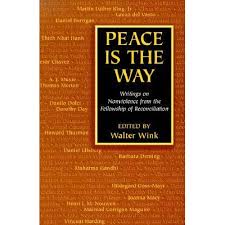
Also, there are several good anthologies of primary source writings by those who have been important in this arena. The aforementioned Preston Sprinkle, while a top-flight Biblical scholar, does not draw upon the more general peace movement and social change movements, the passionate thinkers and activists who have called to us from the past.  One ofpeace is (wink).jpg my favorite collections, for those wanting to dip in to this grand tradition, include Peace Is The Way: Writings on Nonviolence from the Fellowship of Reconcilation edited by Walter Wink (Orbis; $25.00)  Martin Luther King, Jr. was a part of FOR —  which, by the way, was founded by two Christians in the devastating wake of WWII, but now is broadly interfaith in its orientation. In this almost 300 page anthology, you’ll be able to read famous pieces from their historic magazine, authored by King, Howard Thurman, Barbara Deming, Mahatma Gandhi, A.J. Muste, Vincent Harding, Cesar Chevez, Dorothy Day, Henri Nouwen, Jim Forest, Jim and Shelley Douglas, John Dear, and so many others. These are the sorts of writers and activists that influenced King, in many cases, and, agree with all if it or not, it is a volume worth having.

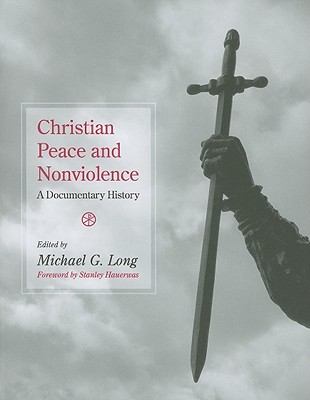
 An even more impressive anthology  — a reader that covers three millenia of writers, some famous, many less so — is the remarkable Christian Peace and Nonviolence: A Documentary History edited and compiled by Elizabethtown College professor, Michael Longchristian peace and nonviolence.jpg (Orbis; $40.00.)  This volume is so comprehensive, I’ll just quote the nice overview written by Orthodox theologian, Jim Forest, who describes it helpfully like this:
 

The book’s structure is historical, beginning with
a selection of scriptures of peace from the Old and New Testaments.
Authors from the early Church include Justin Martyr, Athenagorus,
Tertullian, Origen, Cyprian, Arnobius, Lactantius, Basil the Great,
Pelagicus, Paulinus of Nola, Benedict of Nursia and Francis of Assisi.
There are also extracts from the biography of Martin of Tours and
ancient accounts of the martyrdoms of Maximilian, Marcellus, and the
brothers Boris and Gleb.


Erasmus of Rotterdam is included in a
section of writings from the Reformation period. Among those represented
in the 1600-1900 section that follows are George Fox, William Penn,
John Woolman, William Lloyd Garrison, Frederick Douglass, Sojourner
Truth, Lucretia Mott, Jane Addams and Leo Tolstoy.

The book’s
twentieth-century authors include Martin Luther King, Thomas Merton,
Pope John XXIII, Oscar Romero, Stanley Hauerwas, John Howard Yoder,
Dorothy Day, A.J. Muste and André Trocmé. The anthology concludes with
twelve entries written in the past eleven years
…

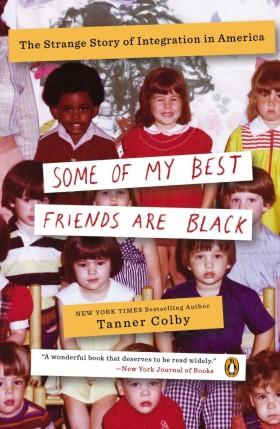
Ssome of my best friends.jpgome of My Best Friends Are Black: The Strange Story of Integration in America Tanner Colby (Penguin) $16.00  This is not about the Jim Crow years, the civil rights struggle or the brave movement of those who followed King’s activism.  Rather, it is what race relations were like in more recent years — with institutionalized racism prevalent and de facto segregation common in many place, but all the kids learning about the “I Have a Dream” speech in school.  We a just love the diversity vision, but how many are actually experiencing it?  It promised in the promo literature to be written with “boundless curiousity and a biting sense of humor.”  Since the author had written books on both John Belusi and Chris Farley, I expected it to be interesting and a bit funny.  It wasn’t really funny, but, still — what a book!

This just came out in paperback and it tells an amazing story of a white guy who realized that he had no black friends.  Raised in the white flight world of Alabama in the 70s, he realized he wanted to do something about his insular background. This book not only tells the general story of Colby learning about racial matters in the US, but describes in detail the situation of suburban Birmingham schools, his move to Kansas City and learning of the racist housing policies in that troubled town, the impact of “affirmative action” type protocols in the advertising world of Madison Avenue professionals, and the dramatic story of the efforts of a Catholic Church in a parish in Louisiana. This memoir really explores some unexpected aspects of our culture — both black and white. Many serious reviewers have commended this for being thoughtful and insightful. 

Timothy Nafuali says,

In weaving together the personal narratives (including his own) of the Children of White Flight and the Children of the Dream, Tanner Colby has crafted a powerful piece of social commentary and contemporary history. Hugely readable, quirky, and incredibly smart, Some of My Best Friends Are Black present four unforgettable smaller stories to tell the big story of race in today’s America.


BookNotes

SPECIAL
DISCOUNT
ANY ITEM MENTIONED

20% off
order here
takes you to the secure Hearts & Minds order form page
just tell us what you want

inquire here
if you have questions or need more information
just ask us what you want to know

                   Hearts & Minds 234 East Main Street  Dallastown, PA  17313     717-246-3333
                                                            read@heartsandmindsbooks.com
Great Books about Martin Luther King, the Civil Rights Movement and the March on Washington, 1963. ON SALE FROM HEARTS & MINDS BOOKS, HERE AT BOOKNOTES

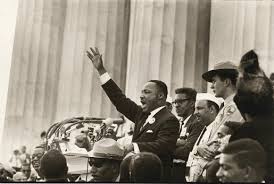
1963. The March on Washington.  I Have a Dream.  There has been so, so much written overking-arm raised.jpg the last decades, and these last days, about this iconic moment in American history that I am reluctant to add more. 

I hope you know that our Hearts & Minds bookstore has a large selection of books about Dr. King, a larger section of books about the civil rights movement, and an even larger section of books about contemporary race relations, multi-cultural concerns, and the ways in which the gospel can help heal the wounds and foibles of 21st century ethnic tensions.  We have a sub-section just on churches and how congregations can be more sensitive to multi-cultural concerns, which I would think church leaders would occasionally buy.  

Given the great needs and great opportunities in this area, I believe it is professionalmany colors.jpg malpractice for clergy to not have read at least one book on this subject, deepening one’s awareness of “cultural intelligence.” At the risk of seeming to open my column about the historic speech with a digression, please note this: a massive research project, co-led by an old and trusted friend, gave rise to a new book on what the research shows helps create clergy resilience.  That is, what do the most long-lasting, fruitful, happy, well-balanced pastors do; what factors help nurture resilience? How can you, if you are a pastor, or your pastor, if you’ve got one, grow and thrive?  And one of the practices is, curiously, developing a cross-cultural sensitivity.  Even those in mostly white congregations, this data suggests, will thrive in their ministries if they’ve taken initiative to learn and grow in this very arena. See Resilient Ministry: What Pastors Told Us About Surviving and Thriving by Bob Burns, Tasha Chapman and Donald Guthrie (IVP;  $17.00) for more.

So, we have a lot of these books, are glad to offer them, and feel a certain urgency to continue to promote titles about racial justice and multi-ethnic ministry.  Pastors and church leaders should take note, but this — I am sure — will be interesting and helpful for all of us. There are tons of books on this topic, and here are some of our selections.

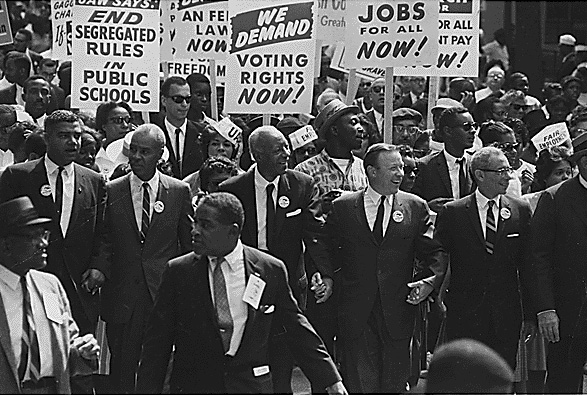
Tmarch-on-washington-19631.jpghis week we will all surely ponder that great event of August 1963, and notice the powerful pictures, the inter-faith leadership, the historic music, the coats and ties and Sunday best as Negro folks, especially, poured in to the city. I trust that many BookNotes readers will be glad to learn of good resources to help them learn more about this extraordinary, historic – and this time, the word is well-used! Historic! – event from 50 years ago. Here are some that we heartily recommend.  As always, we have them on sale here at BookNotes, and it would be our great pleasure to serve you by sending them out.  Use the order form page at the website, or send us an email.   Thanks!

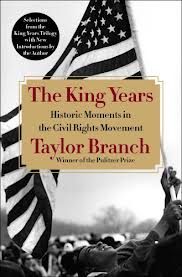
Tking years.jpghe King Years: Historic Moments in the Civil Rights Movement  Taylor Branch (Simon & Schuster) $26.00  This spectacular book includes selections from the hefty “American in the King Years” trilogy, the Pulitzer Prize winning magisterial volumes that are the gold standard for the history of this era. Branch sets up each excerpt with new introductions, making this an exceptionally interesting and splendidly useful brief resource.  I can’t say enough about it (although you can read my brief review in my “Politics & Prose” column at CPJ’s Capitol Commentary where I wrote about it.) 

Reading this sort of book will make abundantly clear that the March on Washington was part of a larger, broader project, which includes very important episodes such as the Montgomery Bus Boycott (and King’s first public address in 1955!), the student sit-ins of 1960, the Freedom Rides (and the Nashville Initiative of 1961), and of course Birmingham 1963 — in many ways it was the horrors and small victory of Birmingham that Spring the compelled the national civil rights organizations to unite around the idea of a national march. 

I am sure that some of the best coverage we’ll see this weekend will educate us about this essential American story, but I do sometimes fret that some of the coverage will romanticize the speech itself (or, as is often the case, excerpt just the lovely “dream” part about the children playing together, failing to even grapple with the full content of the speech, let alone the March, let alone the broader civil rights struggle of which it was a part.)  So, read up, brothers and sisters.  This is vital stuff, inspiring, important.

Ggod's long summer.jpgod’s Long Summer: Stories of Faith and Civil Rights  Charles Marsh (Princeton University Press) $18.95  There are so many great books about the civil rights movement, but few are as well written, as captivating, as raw, and as insightful as this.  It is compelling in an odd, even curious way; it shows how many on both sides of the movement were guided by faith, and in some cases, the exact same Bible verses!  What a poignant, weird, illuminating story, opening us up to the human drama behind these famous episodes.  This is as profound as it gets, and a truly fascinating reading experience. In Christianity Today, Randy Frame wrote that it is “haunting” and that “Marsh’s work speaks directly to the development of our own moral lives.” Jonathan Yardley in the Washington Post declared that it is “original and uncommonly thoughtful.”

This fine work looks at the summer of 1964, in the alarmingly violent Mississippi, where you meat lively people you will never forget, such as Fannie Lou Hamer.

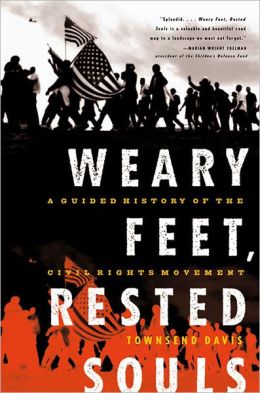
Wweary feet .jpgeary Feet, Rested Souls: A Guided History of the Civil Rights Movement Townsend Davis (Norton) $16.95  This is, literally, a guide to how to take a civil rights tour in any number of key cities throughout the South.  There are little maps and, like any travel guide, suggestions of what to see and what to look for.  But it is more, much more. In its over 425 pages it has sidebars and long narratives, brimming with anecdotes and local histories, including first-person accounts of the amazing courage shown in these dramas of resistance to state-sponsored terrorism.  Some of the stories are gut-wrenching and the eye for historical detail is amazing.  What a way to learn!  There are so many un-sung local heroes, so many awful stories, so many noble efforts, often faith-based and deeply inspiring.  As Marian Wright Edelman wrote, it is “splendid. Weary Feet, Rested Souls is a valuable and beautiful road map to a landscape we must not forget.”  Pulitzer Prize winner David J. Garrow says, “No other book on the movement offers a better “sense of place” and Weary Feet will allow you to follow in the footsteps of movement marchers all the way from Arkansas to North Carolina. Weary Feet is a moving, accurate guide, and an invaluable contribution to civil rights history.”

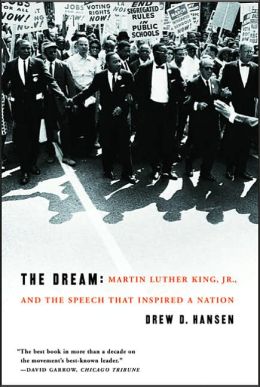
Tthe dream.jpghe Dream: Martin Luther King, Jr. and the Speech That Inspired a Nation Drew D. Hansen (Harper) $13.99  Glad this is now out in paperback (although we could sell you a good hardback or two at the paperback price, if you’d like that.) I have already noted that I sometimes fret that we don’t grapple adequately with the big, radical, goals of the civil rights movement, and the “I Have a Dream” speech can so easily be tamed and co-opted.  King was a civil and eloquent Baptist pastor, but he, like Aslan before him, was not safe. We must recall — as the stunning first chapter of this book helps us do — that just months earlier the fire hoses were viciously set upon children;  Bobby Kennedy directly made sure the Washington DC police dogs would not be out on August 28th as they would remind people of their awful, vile use in Birmingham. The White House called a meeting early in the summer to try to stop this march. It was tense and the time were dangerous.  

King and his colleagues in the movement can be domesticated, and have been; the whole “I Have a Dream” sequence has been, too — often.  This is to say that Drew Hansen’s very good book will have none of that.  It deftly explores the fascinating build up to the great day, the behind the scenes stuff, the celebrities and the push-back and the feedback – “Damn, he’s good” Kennedy said from the White House window.  It is, in the words of David Garrow (a Pulitzer Prize winning author of Bearing the Cross, one of the definitive books in the King studies field) “superbly perceptive.” Clayborne Carson, who is the director of the King papers project at Stanford, who was at the March on Washington and knows King’s work well, says of Hansen’s The Dream, “It accomplishes the remarkable feat of illuminating the deep historical, biographical, and intellectual roots of King’s “I Have a Dream” speech, while also illuminating the reasons for its lasting impact.”   The always wise Dr. Robert Coles says it is “a book that students of literature and history will want to read carefully: a great person’s words become a crucial turning point in a nation’s history.”  Very, very nicely done.

BBecoming-King-199x300.jpgecoming King: Martin Luther King Jr. and the Making of a National Leader  Troy Jackson (Kentucky University Press ) $35.00  Troy is an amazing youngish pastor in Cincinnati,  he has a PhD in history (and a seminary degree from Princeton) and had the remarkable privilege of being an editor of one of the esteemed Papers of Martin Luther King volumes. So he is an active pastor and a good scholar.  Becoming King studies the Montgomery bus boycott, and how King was catapulted there into leadership in a way that decisively shaped King’s identity as a civil rights leader. It has a great foreword by the important King scholar, Clayborne Carson. Consider this quote by Chana Kai Lee (who wrote the definitive work on Fannie Lou Hamer, by the way, called For Freedom’s Sake) “A sharply conceived and effectively rendered study that reminds us once again that the notional of a “historical accident” is woefully inadequate – indeed, too simplistic – in understanding the scope of arguably the greatest civil rights movement campaign and one of the most compelling twentieth century figures.”


Thgospel of freedom.jpge Gospel of Freedom: Martin Luther King Jr.’s Letter from a Birmingham Jail and the Struggle That Changed the Nation  Jonathan Rieder (Bloomsbury) $25.00  What a thrilling, important and wonderful book this is.  I’ve said before about it that it is a tremendous read – and so helpful to show the essential background and context to the letter, and the immediate struggle in that awful era in the south, and in Birmingham, particularly.  You probably know that the famous “Letter from a Birmingham Jail” has been put into dozens (if not hundreds) of anthologies and readers, and is considered one of the great pieces of literature and social ethics ever penned. Reading this wonderful book would be a great honor to the great Dr. King, and will help you realize some of what was “in the air” in the years right before the famous March on Washington. In fact, one can hardly understand the “I Have a Dream” speech without knowing about Birmingham.


Bblessed-are-peacemakers-martin-luther-king-jr-eight-s-jonathan-bass-paperback-cover-art.jpglessed are the Peacemakers: Martin Luther King, Jr., Eight White Religious Leaders, and the “Letter from Birmingham Jail”  S. Jonathan Bass (Louisana State University Press) $39.99 HALF PRICE $19.99 (while supplies last)  This is sadly out of print, and we have just one left, on sale, even, but it should be listed.  How many books have an endorsing blurb from the great Will Campbell? I learned a lot from this, I recall – it was the first full accounting of the letter and showed what scholars might call “its mediated context.”  That is, we are told about the complex elements of the Letter’s production and offered a “substantive challenge to the lore that surrounds its creation.”  But here is the thing to realize: the eight moderate clergyman (who criticized George Wallace, by the way as well as Dr. King) are given their due and readers may come away with a greater appreciation for their role in working for careful social change in the South.  Serious and illuminating.


Wwhile the world watched.jpghile the World Watched: A Birmingham Bombing Survivor Comes of Age During the Civil Rights Movement Carolyn Maull McKinstry with Denise George (Tyndale) $17.99  It has also been a half a century since the KKK bombed the Sixteenth Street Baptist Church, shortly after 10 am on a Sunday morning (September 15, 1963 — less than a month after the famous March on Washington and the speech in front of the Lincoln Memorial.)  The four young girls that died in that blast were good friends of Carolyn Maull McKinstry.  Here is what she writes in the introduction to this moving, personal story by a fairly ordinary young person growing up in those traumatic years: 

 For nearly five decades now I have tried to forget the deaths, the inhumane injustices, the vicious German shepherds, the fierce blast of the water hoses, and the brutal assassinations of those who spoke out for change. But now, as I see new generations coming and old generations passing, I feel compelled to write down in permanent ink my eyewitness account of exactly what happened… while the world watched. 

Ms Maull McKinstry is an often-cited spokesperson, has appeared in magazines, shows, and studies as diverse as Oprah, 20/20, and Spike Lee’s documentary Four Little Girls.  She remains active in her home church and is a wise voice for gospel-driven racial reconciliation. She recently earned an MDiv from Beeson Divinity School in Birmingham.

Frfree ellis.jpgee at Last? The Gospel in the African American Experience  Carl F. Ellis, Jr. (IVP) $21.95  Looking  back, I think I’d say this is one of the best books I’ve ever read on this topic, and certainly one of the most formative in my own journey. (Its earliest version was called Beyond Liberation and this is a considerably expanded version.)  Rev. Ellis has long been a friend of the CCO and has spoken at our Jubilee conference often; his commitments to Reformed theology and thoughtful cultural engagement are well-respected.  As it says on the back cover, “Ellis traces the maturing of Black consciousness from slavery days to the present, noting especially the contributions of Martin Luther King, Jr. and Malcolm X. Running through African-American history are traces of a theological soul dynamic, an authentic manifestation of Christianity in black culture. In this dynamic faith, says Ellis, African Americans will find true freedom in God’s grace.”  I think this is important  for one and all  —  a classic book for us here at Hearts & Minds and therefore one we heartily recommend.

Mmartin luther king the inconvenient hero.jpgartin Luther King: The Inconvenient Hero Vincent Harding (Orbis) $16.00  Go to any library and you can find a dozen or more books on King.  Here in the shop, we have them for little children, for older youth, and bunches for adults, of every size and shape and level. Some are about his life, some about his convictions.  This is one of the very, very best, in part because Harding calls us to the most radical visions and deepest hopes of King, including his concerns and action on behalf of the poor in the northern ghettos, his critique of the Viet Nam war, his work with the Poor People’s Campaign, and, of course, his principled, strategic nonviolence. Harding himself is an eloquent, passionate writer, and being with him once — with Parker Palmer at his side — was a great, great moment which I cherish to this day. Harding is an amazing writer, his insights about King are profound, and whether you finally agree with him – or his interpretation of King – or not, you should read this little volume. It is powerful and will stretch you, I promise.

Reading Harding would truly be a very good way to commemorate the 50th anniversary of the “I Have a Dream” speech and the March on Washington for Jobs and Freedom at which it was delivered. Can we have the speech without the March? Can we have the March without King’s radical Christian social gospel? Without his commitment to nonviolence and global justice?  Can we honor him well without Harding’s insight?  Read this book and you will know.  It is an amazing reading experience.

By the way, for a speculation of how King might have turned more conservative in his social policies in the new century, very much unlike the little classic by Harding, read this controversial, but very interesting study, What Would Martin Say by Clarence Jones (Harper; $14.99.) Jones knew King well and was a confidant for many years, and he obviously knows ML’s writings, so when he weighs in on very modern issues, he has good reasons for why he thinks Dr. King would have shifted in his policy analysis and proposals.  But many thought his effort presumptuous at best and not as likely as Jones speculates…

Mmartin l king for Armchair.jpgartin Luther King Jr. for Armchair Theologians Rufus Burrows Jr with illustrations by Ron Hill (WJK) $16.95  We often recommend these small, easy-to-read, but substantive paperbacks. (The series includes a bunch of different ones, all “for armchair theologians” including Augustine, Aquinas, Luther, Calvin, Wesley, Edwards, Barth, Bonhoeffer, Heretics.) This is an exceptional little book that tells about King’s life and culture. It features good discussion about King’s primary philosophical influences, his theological methods, and where he stood on a variety of issues. It has a good chapter on Birmingham, and a very good chapter about King’s concern for youth – we shouldn’t forget the way school integration, court rulings and such influenced the shape of the Jim Crow era, and, then, conversely, how the heroic service of children in the campaigns in Selma, galvanized a nation as they saw children abused by white police and their dogs and fire hoses.  There is oddly nothing in this book about the March on Washington, although it is otherwise very thorough, and a quick way to get up to speed on this influential, often-misunderstood Christian leader.

Mmarchbookone_Main.jpgarch: Book One  John Lewis, Andrew Aydin & Nate Powell (Top Shelf Productions) $14.95  I assume you know the important name John Lewis, a black leader, now a Congressman representing his district in George, who met King as a young man, helped organize the famous Nashville Student Movement, the lunch-counter sit ins and, of course,the March on Washington and more.  Lewis’s well-received auto-biography (telling of his journey from a share-croppers farm in a very poor part of Alabama, through Jim Crow and into the highest levels of the national civil rights movement, and finally into the US Congress) is called Walking with the Wind: A Memoir of the Civil Rights Movement, and he has more recently published Across That Bridge: Life Lessons and a Vision for Change.  March Book One is the first of a trilogy to be released in graphic novel form.  The illustrator, Nate Powell, has won numerous awards and has done other socially-conscious graphic books.  By the way, the story of Montgomery Bus Boycott — which Rosa Parks famously helped start and which King helped lead — was told in comic book form, and that comic book was used to inspire many in the late 50s (including one John Lewis!) So having this high-quality contemporary comic book style used again is nothing short of brilliant.  Excellent, and a great gift for anyone who enjoys this genre.

Sstride.pngtwhere do we go.jpgride Toward Freedom: The Montgomery Story and Where Do We Go From Here: Chaos or Community (Beacon Press) $14.00 each  Here, in recently released, newly type-set and finely edited versions are two essential King books — his very first, and his very last.  I have long told people that Stride… remains one of the most moving and influential reading experiences of my life.  I can count on one hand the books that were so important to me. And if you are concerned about the warning given above, about the common “co-opting” of King, watering down his radical message to sweet sentiments, you simple must read Where Do We Go… (1967) which was his prophetic call for economic justice, quality education, cast with eloquent zeal and Biblical hope for social healing.  If you admire King, if you are curious about King, if you want great books to own and share, these two should be in your personal library.  Kudos to Beacon for bringing these out in these handsome paperback editions and for their others books in “The King Legacy” series.

I i-have-dream-writings-speeches-that-changed-world-martin-luther-king-jr-paperback-cover-art.jpgHave a Dream: Writings and Speeches That Changed the World  Martin Luther King, Jr. edited by James M. Washington with a foreword by Coretta Scott king (HarperOne) $14.95 There are several compilations of King’s speeches out there and we recommend this because it covers all the major speeches, some good examples of lesser known ones, and is a fine size and a good price. From the famed keynote address at the March on Washington and “Letter From a Birmingham Jail” and the “Eulogy for the Martyred Children (1963) to the essay “Pilgrimage to Nonviolence”, the Nobel Prize acceptance speech, his piece about “Black Power” and sermons such as “The Drum Major Instinct”and Our God Is Marching On!” to his last sermon, “I See the Promised Land” preached the day before his murder, his collection is a thrilling, passionate, eloquent and timely anthology of speeches that we should continue to hear, continue to take to heart.  A thicker, bigger volume, which includes chapters from his books, interviews, writings and sermons and is much more comprehensive is Testament of Hope: The Essential Writes and Speeches of Martin Luther King, Jr (HarperOne; $24.99.) It is also expertly edited by James Washington; considering it is over 725 pages, is a great value and a very useful resource.

Llet me people go king.jpget My People Go with Martin Luther King, Jr. Charles Ringma (NavPress)$9.99  Heads up, people: read anything Charles Ringma writes.  He is a Dutch-born Australian citizen, trained at the Reformed Theological College in British Columbia (and has long and lovely connections with Regent College in Vancouver, BC.)  Ringma is a known for a whole-life sort of discipleship, culturally-engaged and thoughtful, but knows to equip us for our daily discipleship by helping us experience God’s presence by practicing spiritual disciplines. We might say that he is a contemplative activist; he is known for writing devotionals that bring together a deep, mystical encounter with God and a wide, mature ministry in the world. Here, as with others in this little series of pocket-sized devotionals (there is one drawing on the writings of Bonhoeffer, one on Ellul, one on Nouwen, and one on Mother Teresa.) Ringma
provides a great quote or short paragraph from King, a little meditation on it, and an invitation to prayerfully reflect upon it.  In 120 daily reflections we can ponder King’s words and dare to live the dream. Ringma is a lovely, wise guide, solid and helpful. 

I I have a Dream (Kadir Nelson).jpgHave a Dream Martin Luther King, illustrations by Kadir Nelson (Harper) $18.99  It is hard to express just how very moving this wonderful all-ages children’s book is, but the evocative illustration, and the way they capture the lines of the speech, is just wonderful.  It has won any number of prestigious awards last year, and we are happy to remind you of it here.  By the way, a high quality CD is enclosed of the entire speech, and it is written out in the back of this fine, large-sized book.  Wonderful.  Why not get one and donate it to your church or public library?  We are fans of his other good and beautifully illustrated books as well — including a wonderful one on US history and African Americans, a very cool one on the Negro Baseball Leagues, a stunning one (Moses) on Hariett Tubman, and another on Dr. King.

Mmartin's big words.jpgartin’s Big Words  Doreen Rappaport, illustrations by Bryan Collier (Hyperion; $17.99 hardback, $7.99 paperback) I hope you know this popular, over-sized big book, now out in paperback.  It has just excellent, somewhat modern artwork, and classy, modern typography,  and very well deserving of its Caldecott Honor Award.  It reminds children that they, too, can embrace these big ideas.  There is a nice resource page, too, offering other great books and websites. 

This is an artful and wonderful all-ages children’s book, with big type, big pictures, and very big ideas.

BookNotes
SPECIAL
DISCOUNT
ANY ITEM MENTIONED

20% off
order here
takes you to the secure Hearts & Minds order form page
just tell us what you want

inquire here
if you have questions or need more information
just ask us what you want to know

                   Hearts & Minds 234 East Main Street  Dallastown, PA  17313     717-246-3333
                                                            read@heartsandmindsbooks.com
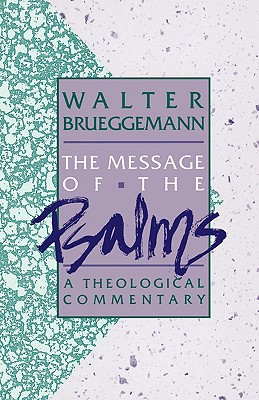
CMYK: The Process of Life Together by Justin McRoberts ON SALE

As I was doing my top ten memoirs for the summer in my last post —  a good list, I thought —  there was one title I really wanted to mention, but didn’t.  Besides it blowing my “top ten” limit, it isn’t exactly a memoir.  And, anyway,  it deserved its own very special review.

So, call this a happy ad-on to the top ten if you wish. 


We are one of the very few bookstores in the country carrying CMYK,  a very classy self-published book, and although we have previously given it a shout-out (in my 50 books for summer webinar), I wanted to tell you a bit more about it.  It is a tiny bit complicated to explain, but just marvelous to read.  it is even marvelous to behold. It is just mah-va-lus.


justin color line.jpg 

Justin McRoberts, sometimes known as McBob, is himself pretty mah-va-lus.  He’s a co-pastor of an edgy,justin standing.jpg good church full of sinners and saints, outside of San Fran.  He’s a road warrior who plays a great acoustic guitar, and has a belting voice that moves me deeply — and he performs all over the country.  I have to admit that although I like his work a lot, love him as a brother, and appreciate his good support for all things bookish (not to mention his support for Hearts & Minds —  he actually orders from us, rather than “liking” us on facebook, which, come to think of it, he never does — what’s with that?) I actually don’t know his backstory all that well.  So I’ll wing it, here; the short version, which should make you want to read his book.

It seems that more than a decade or so ago Justin starting putting out a few really cool, very smart, singer-songwriter albums, with songs that, I think by design, were not what most might call contemporary Christian music.  He has done some work with Young Life, has a heart for the unchurched and the hurting, and, well, he’s an artist.  Seriously.  So, his albums were deep with faith and rich with images and stories, and I think if you had the ears to hear, you’d get a bit of the grace that so shapes his life.  But they weren’t preachy and they weren’t mostly worship and they were not formulaic. 

And then CCM got a hold of him. He became a bit of a contemporary Christian music rock star, and he has confided that he doesn’t think those were good years for him.  I surmise that he had other people at the helm of his work, producing the sorts of projects than perhaps were not really “him” and, well, you can imagine.  As you might guess, Justin isn’t a slick and easily promoted gospel guy, and it didn’t quite work out.


Happily, he had the guts and grit and ingenuity to figure out how to reclaim his life. He continued to
Justine McRoberts.jpg write music and play and sing and speak, did the church plant thing,  and made more CDs, all independent of the industry. He became a spokesperson for Compassion International, and he continued to do his art. He actually did a bunch of indie albums, and they are really good. (He even did one of very cool acoustic covers of 80s songs, which was splendid.) I respect his song-writing (who else, I often say, writes a song inspired by urban education reformer Jonathan Kozol?) I respect his life.  And I’m glad to report he’s a fun and funny guy.  He is, as they say, the real deal.

And that is just the beginning, but it’s what I want you to know, that he is a man of character and integrity and joy, with a passion to do good work, creating indie pop type songs that tell stories that mean something.  Hejustin and books.jpg is a very well-read Christian (see the picture of him posing by a whole spread of his books — not a few of which he bought from us, I might add) which already makes him a curiosity right? He is honest and real, and his music reveals his depth, and his passion for life lived authentically, messy as it often is. 


A PROPHETIC IMAGINATION AS SONGWRITER

McRoberts’ songs are not at all religious propaganda, obviously, but they are not cryptic, either.  That is, if I might be the music critic for a moment, he does not tend to write lyrics that are so minimalist or impressionistic or obscure — art for arts sake — that they hardly seem to mean anything.  He may not want somebody to ask merely just what a song is about, but if you do, I suspect he wouldn’t just shrug and say “whatever.”  He is a good poet, but he is a preacher, too, after all — he reads Walter Brueggemann.  He nurtures his imagination, but he strives for it to be a bit prophetic.  Which means it has to connect, to evoke, to allude to stuff that matters in the real world of ache and mystery.

TCMYK book.jpgo wit, we want to tell you about this crazy-good, truly lovely, rather recent book that he also self-produced.  Yes, he’s a go-getter, and he not only self-produces music and social media stuff (see him on youtube, talking about his new project, here or here, playing one of his songs solo) but now he’s in the freakin’ book business.

And what tremendous books he has done.  Yes, that is plural. 


TWO VERSIONS

There are two editions of CMYK.  (Did I mention something about him being an over-achiever?) There is one edition that is rather plain (and fails to include the stellar blurb that I gave him.) It sells normally for $9.99, although we have it here for BookNotes friends at 20% off of that, $7.99.


And there is another version that includes a remarkable, full-color, graphic design, art that works well to illuminate and enhance the stories and lessons, page by wonderful page. That expanded edition sells usually for $24.99, but we have it at the BookNotes 20% off, making it just $19.99.


So, yeah: one trim and plain and a bit cheaper, one full-color, with hyper-designed, spectacular artful illustration and a slightly larger shape and heft — and well worth a few extra bucks.


Here are three video pieces with each of the artists who did art inspired by the songs, art that ended up in the expanded version of the book. Click on the “watch” link, there under the yellow paint. Don’t miss them.


BOOKS & MUSIC

And — it gets better! — he did four CDs to go along with each of the portions of this book.  Yes, it isCMYK-522x294.jpg a book (in two versions) and there is music to accompany it.  Or, more precisely, the book, actually accompanies the songs; in most cases, the book’s chapters reveal something of the backstory of the songs.  It really is a great idea, no?  Who does this kind of stuff?  Justin McRoberts, that’s who.

HERE is the CMYK site where you can sample some songs, etc.  Come back here to buy the book, but do check how his really spiffy website.

CMYK:  The Process of Life Together (in either edition, and with or without the music) is a great, great book.  The art does enhance it, so I’m fond of the slightly larger, full-color edition. (The interviews with the artists in the expanded one are actually very interesting, as well, noting how hard they worked to find design styles that somehow connected with the printed prose.)  But the plain one is a great read.  And reading this stuff is going to bless you, I am sure.

Here’s the explanation.  C-M-Y and K are the letters used in the color printing process (you knew that, right?) And we need all the colors, and they indeed overlap.  And McBob has these four recordings, a series, called, respectively, C, M, Y, and K. So, presto, the book he wrote expanding on the songs is entitled CMYK.  Colorful, eh?


And here is the fabulous book trailer, his overview of the book, in a really moving short clip.  Wow; don’t miss this!


And the writing is colorful.  McRoberts offers a full palette of human colors, the colors and tones and textures of grief and joy and lament and celebration and wonderment and struggle.  


THE BOOK IS ABOUT PEOPLE, ABOUT REAL COMMUNITY

Like any pastor, and like most good traveling songsters, he cares about people, connects with them, reaches out and enters into relationships. These songs, and the essays in the book, are the poetically-rendered stories inspired by some of the people he has met. In this good but fallen world, full of what Bruce Cockburn famously called “rumours of glory”, there are colorful people. Mincing few words, sparing us not much, telling it like it is, McRoberts reports back from the front lines of his role as friend and listener, one who has pursued deep involvement in the human condition. He cares for folks, he gets to know people, and, often with their permission, artfully tells their stories.  This book is that chronicle, the cataloging of the ups and downs, the fears and the foibles of folks far and wide.  As such, it is illuminating and valuable.  And really, really interesting. 

Do you care about people?  You will love this book.  You will love listening in as Justin writes letters tocmyk plain cover.jpg people — chapters are entitled “Letters to a Young Pastor”, “Letters to a Young Brother” or “Letters to an Affected Sister.”  You will get energy from his telling of their tales, and will appreciate the counsel and care he gives each.  His letters are in some cases almost like very short stories, mini-biographies where a life is revealed.

Do you find yourself a bit apathetic, frustrated by those who interrupt you or who make emotional demands? Are you sometimes just not a people person?  Well, you, too, should read this book.  You will, I think, circuitously, learn how to care a bit more, learn to take up the calling of being present to others.  In one, he offers a bit called “In Sickness and in Health” and in another he writes “It Must Be Hell on You” which is a letter to a lost friend, one who is uncertain about faith and their relationship is in jeopardy.  Remember Me Jesus is “A Letter to a Queer Sister” and it is a good example of good care for another.  He has a letter to an atheist, inspired by a person about whom he wrote the song The Fear of God.  His reflection, then, following that letter, is “Some People Just Want To Watch the World Burn” which, as you may know, is that line from the brilliant Batman movie, The Dark Knight.  I do think that we can learn much from somebody who has these pastoral gifts, who has learned somehow how to put his heart into words, and taken the risk of trying to forge community with others.

The Batman bit?  By the way, that isn’t uncommon in this book.  A line from another musician’s work (Arcade Fire, Regina Spektor, David Bazan) or good citations from premier writers (an epigram from The Abolition of Man or a quote from James K.A. Smith or a line from Flannery O’Connor) mashes up next to his own lyrics and reflections, with stories about everything from playing Nintendo to climbing Mt. Diablo, from the “doing life together” dreams of his Oikos faith community to the short solid letter he wrote to his own infant son. It makes for an engaging, provocative read, with lots and lots of dots to connect.  You will get your money’s worth, I assure you.

I don’t think I should reveal too much about any of the chapters, though, as part of the experience of this book is learning to care for these people, taking in their stories, pondering the insight Justin shares in his letters to and reflections about them.  I will say that the song 33 is about Justin’s deceased father, Justin himself turning 33, and is a powerful, powerful center of the book. I will also say, just for the fun of it, that one of our most regular customers, Dave Bekowies — who is known to sign off his emails with lyrics from Jethro Tull or U2 — is the subject of one of the very good chapters here.  And the epigram before that chapter comes from For the Life of the World by the late Orthodox theologian, Alexander Schmemann.  I think sold him that book, by the way.  So it’s a cool little couple of degrees of separation thing going on right there, with Dave and Schmemann and Justin’s song “Courage to Believe” which was a personal favorite, and is more so, now, realizing it is about something Dave taught him, that God is already involved in our lives, right where we are.

For all of us, it will —  as good art can — whisper and hint, alluding to matters of the heart, helping us hear the rumors, to affirm that, indeed, there is glory. People are strange, The Doors used to sing, and, yes, these are Strange Days.  But Justin reminds us through these songs, and the revealing stories about the people in the songs, and then the letters he writes to them, how to discern the hand of God amidst the strangeness.  These are real lives, with real pains, struggling with real stuff.  It seems to me that in this embrace of the very human condition, every chapter becomes a beautiful reminder of the central Christian doctrine of the incarnation.  He’s not that heavy-handed about it all, but there it is: this is an allusive, story-telling, beautiful example of incarnational spirituality.  In fact, the last page remarks that although he travels, he is committed to a particular place, with particular people.  The last words are “the soil beneath my feet.”  It doesn’t get much more incarnational than that.

MARK LABBERTON ON CMYK

CMYK: The Process of Life Together comes with a great forward by author, preacher, and now President of Fuller Theological Seminary, McBob’s friend, Rev. Mark Labberton.  He gives an extended meditation on how the church too often separates faith and life, especially “raw life.”  We in the churches are a bit sanitized, I guess he means to say, and we sometimes don’t affirm the messy rawness of real life in this broken world.  We like to keep it clean, keep it safe. “When Christian people,” he writes, “choose the cleaner option of keeping God and raw life apart, the incarnation, death, and resurrection of Jesus Christ becomes a religious cartoon.”

And then, of Justin and his book, he writes, 

The gift of this CMYK Project is that it brings this rare combination together. Any who have known Justin McRoberts would be surprised if it did not do so, of course. The blend is Justin’s life and vocation. It has been evident in his music and leadership for years. But here it is exposed vividly.

And then, this wonderful line, a line any author would be proud to have written about his or her book:


“What we are given is an invitation to join Justin in an unfinished, honest, empathic, hurting story of hope.”

I think Labberton is on to something here, saying the book is an invitation to hope.  It is why (Labberton also says) the story must be told in many dimensions: the letters, the lyrics, and music, theCMYK in hand.jpg visual art, the interviews.  “This is not an invitation into a cartoon encounter with God, nor with each other. It is a multi-dimensional, littered, vivid, living story of being human, seeking God and neighbor.”

And that is why I had to do a review of this, just this one — it is fairly rare, remarkably interesting, and, finally, about being human, in community.

So, get the CDs if you’d like, or download them at Justin’s site.

BUY THE BOOK

But surely buy the book, either the plain one, or the enhanced, full-color one, from us here.  Maybe you could read it together with others — after all, CMYK is, as the subtitle says “the process of life together.” It would be a great book to foster community.  Either way, be prepared for a joyful learning experience, an interesting set of stories, letters, and lyrics — littered and vivid — and join Justin and his friends in this lovely invitation to hope.  Incarnational hope.

BookNotes

SPECIAL
DISCOUN

20% off

CMYK (plain edition) regularly $9.99 now $7.99
CMYK (full-color edition) regularly $24.95 now $19.99
order here
takes you to the secure Hearts & Minds order form page
just tell us what you want

inquire here
if you have questions or need more information
just ask us what you want to know

                   Hearts & Minds 234 East Main Street  Dallastown, PA  17313     717-246-3333
                                                            read@heartsandmindsbooks.com


Great Late Summer Reading: Top 10 Recent Memoirs (BookNotes Special – 20% OFF)

You know we often promote memoirs.  I think they can make for wonderful reading — think of thehandling the truth.jpg glorious writing of Mary Karr, Rhoda Janzen, Kathleen Norris or Anne Lamott. Or the wildly popular Wild.  Or the take-your-breath-away writing of Kim Barnes and her amazing life stories. Or the fabulous rural life, small town stuff of Michael Perry. Think of Sarah Miles — wow, that woman can write! (And she has a new one coming in the fall!) What pleasurable hours I have had getting to know fine writers who tell us of their exploits or introspections.


(Beth Kephart, by the way, is a fine, fine writer whose books we’ve stocked, and has done several very good and highly regarded ones.  She has a brand new book out reflecting on the genre, Handling the Truth (Gotham Books; $16.00) speaking about the meaning of the work, and a bit about how to write memoir well, reflecting on its particular delicacies.  Some have likened it to the fantastic Bird by Bird. It looks very good!)

It is an important genre, I think, and such self-aware works are especially useful for people of faith who care about the world, and especially for pastors who care for people, as memoirs are essentially auto-biography.  They reveal how people narrate their own lives; how they make sense of life and times.  Worldviews become ways of life, and ways of life can be healthy or less so, dysfunctional or life-giving.  Either way, in the telling of the tale, insight about how people think and how people live is offered, in a style that many times can be as absorbing and artful as any novel. It is good to get to know how others think — suspending immediate judgements, and walking a mile in their shoes.  Further, the best memoirs are somehow universal.  You come away, as with a good novel, knowing the story, and knowing something more about yourself.

And, so, here are a few late summer stories, true ones, mostly.  Some are memoir, or memoir-like.  Some are more like essays that tell of episodes or journeys in a particular season of a life.  They are about people; testimonials, we might say.  I highly recommend them, and are happy to sell them.  I hope you enjoy our comments, and hope you consider picking up one or two.  Read ’em in these late days of summer, over an upcoming holiday, or give them to a book-group leader whose considering her reading lists for the fall.  She will thank you later, I am sure.

JJR and the GL B.jpgujitsu Rabbi and the Godless Blond: A True Story Rebecca Dana (Putnam) $25.95

I must say this was the most enjoyable memoir of the summer for me, maybe the most enjoyable since the early spring when I read Does This Church Make Me Look Fat which both Beth and I adored — and yet I cannot commend it to everyone.  The author is young, restless, urbane, and has a very sassy mouth.  She is as modernly secular as can be — living like the stars of Sex in the City was her dream, which she mostly accomplished, by the way, with the glamor, and VIP big-wig connections and perks of a snazzy job uptown in NYC. (You may have read some her work in nationally-known newspapers and magazines.)  And, man, is she funny.

But, yowza, her Big Apple fairy tale becomes unglued when a guy seriously, seriously breaks her heart, and she ends up — its an odd story, I know — living with a former Lubavitcher, Hasidic Rabbi from Russia, sharing an apartment in Crowns Heights.  He’s questioning his faith, and takes up martial arts. She is a pop culture maven, hip and cool, but comes to be enamored by the family life and faith of these serious Jews in her new Brooklyn neighborhood, and together they give new meaning to the phrase “the odd couple.”  She is smart, snarky, funny, heartbreakingly honest about her pain and disorientation, her lack of faith, her longings.  Ms Dana grew up somewhat Jewish in Pittsburgh (her parents were both scientists, so she learned to believe mostly in molecules. One parent specialized in plastics, the other in rust.) 


There is no happy ending here, and certainly no evangelical conversion.  But she is construing her life in new ways, the yearning for faith matters to her and she tells her New York story with a bit of raunch and a lot of charm and tons of Brooklyn gusto. My, my, this is an amazing book– had me full throttle by the crazy fight scene in the first pages — it’s well written, funny and not a little bit sad. I wish them both well.  You will too.

Brbw.jpgead & Wine: A Love Letter to Life Around the Table With Recipes Shauna Niequist (Zondervan) $18.99  When I did that pod-casted webinar with CPYU I raved about this (in the moments allotted — I did over 50 books in an hour!)  I don’t have time, sadly, to describe it well, here, either, which is ironic.  One should savor this as one would a good slow meal with dear friends.  Yes, this is memoiristic with episodes and reflections on thing in her life.  Like her others (Cold Tangerines and Bittersweet) is it thematic, of course, so not an autobiography as such.  Some of this is so tender, so frank, so beautifully rendered that I literally got choked up and had to fight back tears.  Her grace of learning to appreciate God’s good gifts of food and table fellowship is just so very beautiful and, I think, so very important.


As one reviewer of this handsome hardback, Bread & Wine is “a poetic reminder to appreciate the rituals, people, and sensory experiences of our everyday life.”


This is, I am convinced, exactly the sort of book that many of our favorite customers will love. It is very thoughtful, exceptionally well-written, deeply Christian, quite enjoyable, even practical — you want more? There are recipes!  One of the best books of 2013, for sure!  I bet if you read it, you’ll think of people to give it to — it’s that kind of a special book. 

Here is what Shauna Niequist herself says of what she hopes you’ll get out of it:


My prayer is that you’ll read these pages first curled up on your couch on in bed or in the bathtub , and then after than you’ll bring it to the kitchen with you, turning corners of pages, breaking the spine, spilling red wine on it and splashing vinegar across the pages, that it will become battered and stained as you cook and chop and play music loud and kitchen messy.

And more than anything, I hope that when you put this book down, you’ll gather the people you love around your table to eat and drink, to tell stories, to be heard and fed and nourished on every level.

Rresurrectin year.jpgesurrection Year: Turning Broken Dreams into New Beginnings Sheridan Voysey (Nelson) $15.99  The subtitle of this is audacious, and although many books (especially those from evangelical publishers) over-promise and make grandiose claims  of what the book will do for you, this is, in fact, a story of just this sort of journey.

The author and his wife had spent tens years of tear-soaked prayers, repeatedly dashed hopes, and multiple failed rounds of IVF, and finally came to the heartbreaking conclusion that their dream of having their own child was over.  Unlike most folks, there were able, then, to head out on a year-long journey of restoration, traveling to Rome, Paris, the Swiss Alps (yep, they end up at L’Abri), and ending up at their new home in Oxford. I like that the back cover says it is “one part spiritual memoir, one part love story.” It is also a great travelogue. 


And, it is, finally, a rumination about those broken dreams, something not a few of us know something about (right?)  As it says in large type on the back cover, “Perhaps a greater tragedy than a broken dream is a life forever defined by it.” This is a beautifully written story, moving and powerful and interesting as they discover the “healing qualities of beauty, play, friendship, and love.” 

Sshipwrecked in LA.jpghipwrecked in L.A.– Finding Hope and Purpose When Your Dreams Crash Christian Taylor (Wesleyan Publishing House) $14.99  There are a good number of great reasons why we are exciting to tell people about this, but let me mention just three.  Firstly,  it is memoir of a young woman learning to embrace the idea of serving God by taking up a holy calling in a career, rooting it in the doctrine of vocation. This “serve God in the work-world and make a difference in influential culture-shaping venues and spheres is popular in some of our best Christian colleges and parachurch ministries (like our beloved Jubilee conference) and any time a person tells of how this works for them, this growing sense of an integrated life, learning to care, to live faithfully in their careers and callings, it is always worth reading.  

Secondly, her chosen career was to serve God in Hollywood.  So there’s that: who isn’t interested in the small-town girl heading off to the bright lights of the big city and finding her place among the stars? Her college internship in Burbank and her later job in Beverly Hills is truly interesting, and it is fascinating to hear how she navigates working in the film industry as a missionary of sorts. 

And, thirdly?  Well, it doesn’t work out so well for her, there are significant “shipwrecks.” I think that learning about the complexities and struggles and ambiguities of the discernment of vocation can be immensely sobering for idealistic young adults heading out to make their mark on the world, with and for the Lord. The subtitle here is the heart of the book — what does one do when one’s Big Dreams come crashing down? How does it effect your sense of self and your future hope of finding purpose when one’s initial passions and significant opportunities erode? This is vital, helpful stuff, in the guise of a wonderful, clear, memoir.

 A final two quick reasons to buy this book: Ms Taylor now works at Gettysburg College, a fine church-related college where my wife, Beth, is an alum.  So, yay for G-burg.  And,  not insignificantly, it is well written.  The author teaches writing, now, and has clearly found a reliable calling.  This is a good first book, and it is quite a story.  Enjoy and learn!

Ddoes J really.jpgoes Jesus Really Love Me? A Gay Christian’s Pilgrimage in Search of God in America Jeff Chu (HarperOne) $26.99  I read some of this twice, so taken was I by the author’s candid approach, his honest travels to various sorts of folks who do or don’t accept his same-sex orientation and his questioning, Christian convictions.  Of course, this ends up being a not too subtle call for greater sensitivity to the issues faced by gay and lesbian brothers and sisters.  But It isn’t a rant. You may or may not agree with his views, but that isn’t the point, here.  It is a report from an honest reporter, giving us windows of insight into all sorts of folks and all kinds of beliefs about the ethics of sexuality. Mr. Chu is a journalist by trade, a good storyteller, and this reads like any other first-person travelogue.  I think it is valuable firstly as a great read — you will care about the characters, feel like you are on the road with him, sitting there as he listens to all manner of folks across these United States.  The backstories, and side-trips, the emails and family drama are well crafted and pull you in to the narrative. 


Further — as I said in the beginning — I think memoirs serve to help us understand how people see themselves, make meaning of their lives, construe their worldviews and make sense of the world and their relationships.  Again, agree or not, reading Does Jesus Really Love Me? is a very valuable exercise, allowing you to “walk a mile” in somebody else’s shoes.  These are shoes that have seen some strange streets, and you will be wiser to have walked along with him.

Ggrace in the maybe.jpgrace in the Maybe: Instructions On Not Knowing Everything About God  Katie Savage (Howard) $15.99  When this first came out  (under the curious title Whirlybirds and Ordinary Times) I raved about it, but it didn’t quite catch on. Now it is out in paperback with a new title and I’m still hoping it will catch on.  Savage is a good young writer — some of this shines and glimmers, capturing the texture of her day, in beautiful prose. Mostly, it is a formerly strict evangelical learning to embrace a more faithful and humane uncertainty, and attentiveness to the glories of the everyday. Some of these pieces are almost essays, and in them, she tells of her own journey, but often with a light touch.  They are a delight to read.  They are about “the maybe” times, and, well, finding grace.  What a topic — honest and real!  Oh yes, they are arranged nicely around the themes of the liturgical calendar, the keeping of which being a Christian practice previously unknown by her. Pretty frisky, pretty insightful, a pleasant meander through the church year.  Good insight and great writing. I like the new paperback cover, too — hooray!


Oon  looking.jpgn Looking: Eleven Walks with Expert Eyes Alexandra Horowitz (Scribner) $27.00  Okay, this isn’t memoir, really.  It is a very creative sort of serious non-fiction, written by the same popular, smart author who gave us the exceptional, intelligent, fascinating look at life from a dogs-eye view, Inside a Dog.  Loved that one? Or maybe you had heard about it, was intrigued, but didn’t want to read a whole book, just on that.  This will be perfect for you — it’s the same sort of approach, written large. You get to see all sorts of things, from new perspectives, new angles.  Wait till you see what other insights this amazing woman brings to us as she guides us on eleven different walks, and teaches us how to see.  Susan Orlean explains the author’s great gift like this:  “Horowitz writes like a poet, thinks like a scientist, and ventures like an explorer. Her book will have you looking in a new way at the world around you, and make you glad you did.”

Yes, it is fair to say that Horowitz’s On Looking teaches us to pay attention  — one reviewer said it helps us get “the scent behind the smell” — by describing these almost dozen small adventures. Jonathan Weiner says “On Looking teaches us that the world is just as rich, strange, and charmed when seen through the eyes of our local artists, doctors, architects, and toddlers.” Mostly set in her neighborhood in Manhattan, it could be anywhere, if you have “the eyes to see.” Great.

The Strange Death of Captain John Buckman and Other Obscure Stories Harry L. Borger (Sheridan Press) $14.99  Well, I’m not sure what to say about this since the author is my own very beloved older brother. I guess I’m biased, but I am sure some BookNotes fans will get a real kick out of this.  This is as indie as it gets.

Hharry camping.jpgarry L. was big in Boy Scouts in the 60s, and from an early age learned about telling camp fire stories.  Later, he learned to be a guide at the National Park in Gettysburg, worked in the ghost walking scene for a bit, and he’s matured into not just a fire-side story teller, but a vibrant oral historian, a keeper of many secrets, a guy who knows a bit about everything and loves for you to know the details. 

This is his self-published manuscript, and it includes some family stories, some stuff from his own life, and a whole lot of odd-ball history from central Pennsylvania (and beyond.  Way beyond, like a piece on Norway, which you really should read, and a bit on the central PA town of Karthaus, whose founder may have been working for the King of France and had some connections to silver belonging to Blackbeard at the Baltimore harbor, and some other clear connections with a ex-baron from Poland who was building the first interstate highway through Pennsylvania in the early 1800s.) 

So, I admit, it isn’t exactly a memoir.  But I’m putting it here, well, because it really does say much about his own life, his passions, and his hopes that people recall the past, their localities, the stories of their places, even if some of those stories are yarns.  If I were doing a history list, I’d put it there, too.  It is a book that defies easy categorization.

Do you know about the drawing of Lincoln’s feet?  Did you know there is a mini-nuclear reactor in the woods outside of State College, PA?  Did you know that early aviators made their way by looking at giant concrete arrows (almost the size of small roadways) and you can still find some of these slabs out in the wilderness, pointing this way or that?


I suppose it may not thrill you, but did you know that the famous artist M.C. Escher did a print in 1919 callthe-borger-oak.jpged “The Borger Oak”? Did you know about the murder of young Clara Price and the memorial about her along the Susquehanna River?  Do you know about the collier industry in many 19th century woodlands? Harry used to be an attentive adventurer and canoe paddler, so he knows these things.  He’s hiked here and there, snooped around, talked to the old-timers, and scavenged small-town historical societies and libraries. He’s unraveled a few murder mysteries in this book, and regales us with some funny tales, too. I suspect he made a few up on his many canoe trips on the West Branch. 

Harry knows about the Pine Grove Furnace Prisoner of War Camp (and the restoration project there.)  He knows about the largest shipwrecked fleet in the Western Hemisphere, and a local connection. You can learn this stuff, too  — like what he shares in an essay about the town of Pandemonium, PA.  Or how lumbering was done in the mid-Atlantic woods in the early 1900s. Harry is an outdoorsman, so there is some nice nature writing here. He’s into geo-caching, so there are unique stories about places and placements that are educational and inspiring. He’s got some old photos included, of historical buildings, of old equipment (steam engine era, for instance) and of maps and old newspaper stories.  My, my, it is hard to explain.  There’s a bit about our family, and our late, great father, Harry D. Borger. A few of his friends have contributed a couple of pieces, and he’s highlighted a few news excerpts of pertinent pieces, or stuff he happened to find amusing.  I have to admit I’m not sure if this will win any Pulitzer Prizes, but we all know that oral history and local storytelling is of great, great value. Especially when it is written by somebody with as much curiosity and flair as my big bro.  I was thinking of sending one to Wendell Berry, actually.  I think some Hearts & Minds readers will appreciate it.  I can even get it autographed, if you’d like.  Let us know.

MMMP.jpgoving Miss Peggy Robert Benson (Abingdon) $15.99 I have often said how much I love this gentle, clear, economical author.  I’d follow him anywhere — and have — as he has written a number of great books,  one by one offering ruminations on baseball and backyard gardening and vacations and vocations life, all including portions of his own story. He is known for his guidebooks on prayer and Benedictine views of community and neighborliness.  Here, he turns his attention to something so very, very tender (and, not incidentally, something very, very close to my own experiences these days.)  This is about his beloved mother’s growing dementia.  And, of course, moving her to a better living situation.

This is doubtlessly one of the best books I’ve read this year, and if you, or anyone you know, is facing this common situation of dealing with an increasingly frail or forgetful loved on, this is a will be a true companion for you.  He talks about his colorful mother, and his colorful extended family who all pitched in to figure out the finances and future of Miss Peggy.  He gives some advice along the way, but never at the expense of the unfolding narrative.  As all of his inspiring books, the lessons are mostly between the lines, coming quietly, connected to the quiet story as he so candidly tells it. 

Again, if you know anyone with aging parents, this book will be a godsend.  Even if you don’t now relate to this topic, it is a gem of a memoir, a wonderful telling of a touching tale, and I’d still heartily recommend it for book lovers of any sort.  Read Robert Benson.  Read Moving Miss Peggy.  Before you are even part way through you will care more about your family, the plot-line of your life and the plot-lines of your loved ones lives, and you will be grateful for the presence of God through it all.  Reading this is lovely experience (even though a few times it hit so close to home had to wipe tears from my eyes, reminding me of Dorothy Day’s famous line about love being a harsh and dreadful thing.)  Read this book and you will be better for it, I promise.

I wish the publisher could have provided a clearer jpg of the cover that could be imported for you to see — you’d better notice not only the very moving photograph, but a lovely, rare blurb by the esteemed theologian, Frederick Buechner.

Mmy sisters the saints.jpgy Sisters The Saints: A Spiritual Memoir Colleen Carroll Campbell (Image) $22.99  If you care about college students, young adults, and especially young women and their faith development, you will be hooked on this beautifully written memoir within the first few paragraphs.  It starts almost brutally, the attractive and worldly-wise young collegiate in the aftermath of a brazenly drunken party the night before, wondering how her life had brought here there, and what in the world it all meant. Well written with the sad ring of truth  — it could have been a scene from novels like Tom Wolfe’s  I Am Charlotte Simmons or Jeffrey Eugenides’ The Marriage Plot  — the author decides to make some other choices in her life. 


She writes,


“Returning my gaze  to the bleak scene beneath the window, I realized how much things had changed — how much I had changed — since I first arrived at my freshman dorm that muggy August move-in day. I had lost something. I didn’t know what it was or how to get it back. I only knew that this aching emptiness in the pit of my stomach had grown unbearable.”


The heart of the book tells of her own journey around the world, to some amazing places and some notable jobs (including a stint as a speech writer in the White House), driven by her angst and ambivalence about the sexual chaos and gender expectations of her generation’s culture, to discover and embrace the Catholic vision of five women saints. She writes,

Dissatisfied by the pat answers offered both by secular feminists and their antifeminist critics, I found grace and inspiration from  an unexpected source: spiritual friendships with six women saints. In the lives and writings of Teresa of Avila, Therese of Lisieux, Faustina of Poland, Edith Stein of Germany, Mother Teresa of Calcutta, and Mary of Nazareth, I discovered kindred spirits. These women spoke to my deepest longings, guided me through my most wrenching decisions, and transformed my understanding of love and liberation.

About Campbell’s work writing about these women, art historian Elizabeth Lev says Campbell has “liberated these great historical heroines from dusty altarpieces and stone effigies and has brought them into the new millennium.”

The memoir itself, which tells the broader story of her travels, her quest for faith, trying times with an ill father, her own marriage and new motherhood, it is deeply meaningful, but also a lot of fun.

Here she tells of, well, you’ll see:

I had not been expecting to work with him that day. I knew that Bush was an early riser, but no one had told me that he expected his speechwriters to arrive before sunrise on the morning after they had turned in remarks for his review. I felt faint when I strolled into my office at 8 A.M. and found “POTUS” listed on my caller ID. I had missed the President’s call — twice — and he still was waiting to see me so we could discuss the speech I had written for him on education reform.

I arrived in the Oval Office minutes later, breathless and sporting my cheapest blazer, a lumpy, pea-green number I had picked up at T.J.Maxx for $13. My drab brown slacks drooped at the waist, and my still-damp hair hung limply around my puffy eyes. I had spent most of the night before lying awake, wondering if this move had been a mistake. Now sleep-deprived and still panting from my sprint through the West Wing, I tried to remind myself that it’s an honor to work for a president even if he fires you the second week.

It is a fine and enjoyable read for anyone; Agnes Conovan says “You won’t put this book down until you have finished the last page.  And, as you read, you will hold your breath in hopefulness.” But it is quite particularly Roman Catholic.  Charles Chaput OFM (the Capuchin Archbishop of Philadelphia) writes that “Colleen Carrroll Campbell is one of the finest writers on the American Catholic scene, and My Sister the Saints shows her heart, her skill, and her keen intelligence at their best. This is a wonderful, engaging, personal memoir and a great witness of faith.”  Cardinal Timothy Dolan of New York says “Completely contemporary and totally timeless, this engaging spiritual memoir is the perfect guidebook for anyone who is looking for a companion to help her navigate life’s sometimes difficult and confusing journey.”


BookNotes
SPECIAL
DISCOUNT
ANY ITEM MENTIONED

20% off
order here
takes you to the secure Hearts & Minds order form page
just tell us what you want

inquire here
if you have questions or need more information
just ask us what you want to know

                   Hearts & Minds 234 East Main Street  Dallastown, PA  17313     717-246-3333
                                                            read@heartsandmindsbooks.com 


You should know, I did a longer column, posted as an August review at the website

Sometimes, I know, these BookNotes blogs get a little long.  I resist — it is almost a matter of principle — the popular wisdom that people just want sound bytes.  I am grateful for our true fans, and appreciate those that follow the books I talk about. I think most folks want some substance and some pleasure in reading, so I do my best.  We’re glad for your business, and appreciate the permission you give me to come into your inbox, iphone, or where-ever you read our Hearts & Minds BookNotes blog.

Sometimes, if I have a longer list, and it may not even be mostly new stuff, I feel like it should be placed at the website archives called “columns” for longer form reading.

I just wrote a bit of an essay ruminating on the last BookNotes blog, the one about the literature of spiritual formation, our joys and concerns, in which I mentioned a new book called Reading the Spiritual Classics, a Guide for Evangelicals recently published by IVP. In the previous post, and again in the new column, I explained that it was wisely and interestingly edited by Kyle Strobel & Jamin Goggin, and that I really think it is important — a wise resource for those who do spiritual formation, direction, or reflective reading of devotional classics.

Anyway, I did this longer reflection about it all, added a bunch of other books, and then got warmed up to do a nice, long list about spirituality.  I listed some beginner’s level books for those wanting to start their spiritual journey and then a few that are maybe intermediate level, some prayer books, and then a few that are pretty demanding, but vital. Nothing on this list is goofy or odd, and nothing should be controversial or confusing. One is pretty darn creative and one or two are pretty academic.  All are fantastic.

To help set up that list, I told a quick story of somebody we talked with in the shop recently.  It was almost emblematic of a trend — folks are yearning not just for truth and reliable knowledge about the faith, but are searching for an encounter with the Divine.  They want purpose and meaning and they want to know that God is real in their lives.  As Margaret Fienberg’s fine book puts it, some want to be Wonderstruck.

To invite you to that column over at the website, here is a teaser.  These are some comments about a book I mentioned that serves as a bit of a bridge book, it was a transition in my list  — perhaps reminding those who of us who are interested in apologetics and offering answers, that for many folks that isn’t their most urgent desire. They aren’t so much skeptics but they are seekers. They lean towards insight and meaning and relationship. I think this book, Yearning for More is really, really good in that it is on one hand a book of apologetics, making a case that there is something true out there, so to speak, and our daily questions and experiences even seem to tell us that.  I listed oodles more in the column, mostly about spiritual formation, but here’s some of what I said about this one:

….earnest conversations with such inquirers often reveal that they aren’t really skeptics, although they
might be glad to know there are intellectually sound reasons to hold
to conventional, historic orthodoxy, but, really they are seekers. 
They aren’t needing answers, but insights, not apologetics but
spirituality. They are like our new friend from the other day, hungering
to deepen their grasp of spiritual things. Such folks often are keenly
aware that we all have this looming hole in our hearts. To use Buber’s
language they want an I-Thou relationship.

yearning for more.jpg

One book that helps us understand this, and is perfect for somebody pondering their heart’s  deepest longings, is Yearning for More: What Our Longings Tell us About God and Ourselves
by Barry Morrow (IVP; $15.00.) There is hardly a book out that is just
like this, and I adore it — very highly recommended because it shows
how our daily sense of things, our yearnings, are themselves avenues
through which we can come to deeper spiritual insights.  Morrow, as
Kenneth Boa writes in the foreword, “has a penchant for leveraging
culture to illuminate timeless spiritual issues.”  He does more, though:
he helps us turn our longings for God into ways to enter His very
presence.

Listen to what John Wilkinson (author of the cleverly titled No Argument for God) says:

Yearning for More
uncovers the reality of God in the most unexpected places. Barry Morrow
cleverly identifies ‘signals of the transcendent’ in our hatred of
death, our desire for heaven and even the humdrum of daily living. So
often we are told to ‘go with your gut.’ Morrow takes this to a whole
new level.

Read the whole column (and learn of some fantastic, brand new books, as well as some of my favorite picks) here.  You might enjoy learning about one that I even wrote the foreword to — a real joy and privilege for me. Do click on over to the archived columns.

 All that are listed there show the regular retail price, but you know we have the BookNotes special going on with them — 20% off any mentioned.  Check ’em out. 

BookNotes
SPECIAL
DISCOUNT
ANY ITEM MENTIONED

20% off
order here
takes you to the secure Hearts & Minds order form page
just tell us what you want

inquire here
if you have questions or need more information
just ask us what you want to know

                   Hearts & Minds 234 East Main Street  Dallastown, PA  17313     717-246-3333
                                                            read@heartsandmindsbooks.com


Reading the Christian Spiritual Classics: A Guide for Evangelicals – 20% OFF

I’m going to try to keep this a bit brief. 

I know, I know, some of you won’t believe me.  Some are already buckled down laughing.  Well, just watch.  Not too brief, though.  That wouldn’t be prudent, as George Bush the First used to say.

I don’t know if it is prudent to open a can of worms and try to be brief.  I hope I don’t step on anyone’s toes.  But here goes.

way of the heart.jpgYou know we sell books at a lot of mainline denominational events. I have noted before with great gladness that I’ve noticed in my lifetime a more vibrant faith and robust spirituality within our mainline churches than ever before.  I think maybe 25 years ago or so reading about and experiencing contemplative spirituality became a major feature of nearly every mainline denominational clergy gathering of which I know.  Liberal or conservative, authors such as Richard Foster and — most obviously, Henri Nouwen — paved the way for new layers of talking about faith.  As one who has dabbled in this contemplative literature, starting (perhaps foolishly) with Thomas Merton, you surely know we think this is a good, good thing.
I am truly glad for authors that are most known and quite popular in many mainline denominational circles, and I am glad that many evangelical readers are now reading some of these same writers.  You know that we carry, appreciate (and have been blessed to have met) some of the likes of Joyce Rupp, Richard Rohr, John Philip Newell, Marcina Wiederkehr, Parker Palmer, Gerald May, Tilden Edwards.  I love the moving, gentle memoirs of Kathleen Norris and the fine writing of Paula D’Arcy and Sue Monk Kidd.  I like the Celtic stuff of David Adams, the ecumenical work of Taize, led by authors like Brother Roger.  I wish the community-minded, justice-seeking spirituality of Gordon Crosby and Elizabeth O’Connor were better known.  I am challenged and impressed by the deep work of Cynthia Bourgeault, drawing on the serious centering prayer tradition of Thomas Keating.  

Two dear writer friends who lived near us here for a season or two have been helpful in my journey on these very matters, one a very eclectic Presbyterian, Kent Ira Groff (founder of Oasis Ministries and a very prolific writer) and the other a United Methodist pastor schooled in iconography and the ancient mystics, Russell Hart (and his Center for Spiritual Formation; he has also authored several good books.) 

Another set of good friends — women who mostly are coming out of the evangelical tradition — have recently founded local retreat space and training center for those wanting to deepen their interior lives, Kavannah House, here in York, PA.

We are grateful, too, that some of their own students and mentors and
directors and seekers come to us to find the sorts of books they need, bread for their journeys, books by authors that can help us grow in deepened, focused spirituality.  Hooray!

Okay, you know much of this.  You know our shelves on these topics are bulging.

But here is my quick opening of a small can of worms. 

I fear that sometimes, some of this is getting, well, kinda goofy. Not most writers, and not necessarily the ones I named above, but some, are drifting from historic, classic, Christian orthodoxy.  I hate to sound like Eugene Peterson or Marva Dawn (well, actually, I’d be honored to sound like them) but we maybe have to be a bit gruff and remind ourselves to keep Christ the King at the center of our centering.

This is not the time or place to critique odd-ball theology or touchy-feely pscho-babble thatbeing human cover.jpg sometimes passes for spirituality.  It isn’t even the time or place (although I am tempted) to examine the inherent dualisms that undergird much medieval and monastic spirituality, and those modern writers standing in that legacy.  See the book Being Human: The Nature of Spiritual Experience by Ronald Macaulay & Jarram Barrs (IVP; $20.00) for a good start to that conversation.  Why, even Bill Edgar’s book on Francis Schaeffer‘s “counter-cultural spirituality” that we reviewed a few weeks ago would be useful. 
And I do not even mean to dismiss all touchy feely stuff.  I quite like the new Joyce Rupp collection of poems, which are almost prayers, My Soul Feels Lean (Sorin Books; $15.95.)  And not all contemporary popular-level mysticism is goofy, not at all.  Father Ronald Rolheiser’s very popular work comes to mind as some of the more substantive stuff on spirituality done in recent years.

 Most of his books are fantastic, but everyone agrees that The Holy Longing: The Search for a Christian Spirituality (Doubleday; $23.00) is amazing. I’d start with that one of his.

And I think most of the Franciscan RichardThe-Holy-Longing-Rolheiser-Ronald-9780385494182.jpg Rohr’s work is very, very helpful.  And Parker Palmer — oh my.  Excellent, in his gentle Quaker kind of way.
But. 

There is, these days, I think, a confusion that is popular, a conflating of spirituality and knowing one’s own self.  Now as a Calvinist, I know that the great Frenchman himself said that the two are profoundly inter-related, knowing self and knowing God.  Yes, yes. 

But still.

And, to confuse matters, there are books that don’t fall into this casually, as in error, but are about that topic (namely, what sort of human developmental growth we can have as we open ourselves to God.) And that is a good thing, too.

For instance, see a recent book called Spirituality and the Awakening Self: The Sacred Journey of Transformation by David Benner (Brazos; $19.99.) If I viewed this as a devotional study about how to experience God more deeply, I’d be annoyed.  I want to give Dr. Benner the benefit of the doubt, especially since (a) his other books on spirituality are so, so, good and (b) he is a psychologist by trade, and this is a book more to explore the human self rather than spirituality, per se; it isn’t about the spiritual disciplines, really, but on becoming; it is about growth.  It suggests meditation and dreamwork and prayer and all the other historic disciplines but turns them less towards communion with God but on self awareness and personal growth. 

You see, this is a bit vexing.  It may be a fine project.  Yet, he’s quoting nutty stuff like Eckhart Tolle, non-Christian theorists like Ken Wilber, and heterodox scholars like Matthew Fox. His citations from historic folks range from St. Bonaventure to Hildegard of Bingen to St. John of the Cross. Again, this is not necessarily wrong, but there it is: evangelicals are, well, I was going to say “getting kinda weird on us.”  Allow me to be more gracious.  Some evangelicals don’t sound like your father’s evangelicals.

And whether this is good or bad, well, there’s that can of worms that can’t be unpacked here, briefly. 

But let’s face it.

There is a very common style of devotional book these days that is more about one’s own self-hood than about God.  There are books that are about finding some vague spiritual center rather than union with Christ.  Basic Christian stuff like the Trinitarian nature of God and the cruciform nature of salvation, received through faith, by grace, is glossed over in terms that are sometimes so allusive as to be hardly meaningful, or so vague as to be hardly helpful. And some folks love them.

And so, I worry just a bit about this.

I long for books that are wild and mystical and poetic but that are also Bible-based, Christ-centered, and theologically sane.  I’m really not trying to deepen the sad gulf between mainline Protestants, the Orthodox, Roman Catholics and various sorts of evangelicals, and, as always, I think we can learn much from one another.  And not every book has to be perfect, either.  I give authors lots of wiggle room.  If you follow our reviews here, or look at the stuff on our shelves, you know that.  I love that phrase that invites us to a “generous orthodoxy.”

I think we need books that are whimsical, certainly we need those (a specialty of ours, here, actually) about the spirituality of the ordinary, finding God in the day to day, in a being-redeemed creation. Practicing the presence, being wholly holy, fully alive and mindful,  etcetera, etcetera.

But, we also need from time to time a heavy dose of the glory and holiness of God, revealedst ephrem hymns.gif also in a creation weighted with glory. 
Just today a customer picked up St. Ephrem the Syrian’s famous Hymns on Paradise (St. Vladamir’s Seminary Press; $18.00.) Wow, now that’s what I’m talikin’ about!

One need not read only the Russian or Syrian mystics, but some modern books on the inner journey seem to lack a certain gravitas.  This is serious business, you know, being made more human by knowing God through Christ.  Annie Dillard is right.  We should be strapping on crash helmets when we go to church.

There are a few recent evangelical books that I think counter some of the less than solid theology seen in some recent spirituality books.  I think these are mature and serious and solid and joyful — perhaps I can make a bigger list later.

For now, I must tell you about a major release, a book that some of us have been waiting for for decades.  It is magisterial; nothing short of brilliant.  As I’ve suggested, I think it is a book sorely needed, and I’m very, very eager to recommend it.

Rreading the christian classics a guide for e.jpgeading the Christian Spiritual Classics: A Guide for Evangelicals  Edited  by Jamin Goggin & Kyle Strobel (IVP Academic) $24.00

Here is what this amazingly diverse and very learned book does.  It offers clear-headed, centrist evangelical theologians offering their take on various sorts of great spiritual classics, giving ways to appreciate and benefit from this genre, even as some of the liabilities are named and exposed.  This is generous, ecumenical work at its finest, affirming the best of other traditions, and yet reading them as evangelicals.

And whether you see yourself as an evangelical or not, this book will help you.

For instance, here you have weighty, good chapters by the likes of James Houston, Bruce Demarest, Gerald Sittser and Tom Schwanda, weighing in on their specialty areas.  For Houston that is on the genre and use of classical literature;  Demarest writes on Catholic Spirituality, Sittser on the Desert Fathers, Schwanda draws on the heavy (but often overlooked) mystical elements of the Puritans. (He has an entire book on that and it is amazing!) These essays provide so much meat that it is a virtual feast.  It is delicious and very, very wise. Enjoy!

There are excellent chapters in this collection on how evangelical Protestants should appropriate the church Fathers and Mothers, good teaching on the Orthodox tradition, fine chapters on the monastics and why we should read them today (and with what sort of approach or bias.)  Is there a uniquely evangelical way to read the spiritual classics?  Must we be discerning as we read?  This book offers not only the life-changing renewal that can come from engaging these old masters and their ancient writings, but helps overcome fears, offers insight into some of the foreign theological traditions from which they come, making them that much more approachable and beneficial.

Here is what J.I. Packer writes of it:

Here you have an absolutely unrivaled mapping by experts of the whole church’s rich, smorgasbord heritage of Chrsit-centered, sanctification-focused devotional writing, most of which will be unknown to most of us.  What to do with it? Take it as your tour guide and start reading its recommended texts. You will be glad you did, I promise you. Wealth awaits.

And here is what Simon Chan writes,

This collection of essays is in every sense of the word an introduction to the Christian classics for evangelicals. It gives all the right reasons for reading the classics, pointers on how to do it and a handy map to navigate through various genres and traditions. The beginner will not be disappointed, while the more advanced may still pick up some useful tips from these seasoned guides.

My only quibble about that quote: Chan says “the more advanced may still pick up some useful tips.”  I say the more advanced certainly will be blown away!  If you have even a little familiarity with these historic devotional classics, you will eat this up.

I promised to try to be brief.  I won’t list any more titles,  although we continue to get good and useful resources for your spiritual life.  Lighter or heavier, there are lots, and we love to offer them.

But this.  This is one you really should buy and really should study.  There is nothing quite like  Reading the Christian Spiritual Classics: A Guide for Evangelicals and it may help turn the tide away from the light-weight and odd and sentimental, helping us choose the very best, and guiding us towards reading them well and faithfully.  For this, we can be very, very grateful.

BookNotes
SPECIAL
DISCOUNT
ANY ITEM MENTIONED

20% off
order here
takes you to the secure Hearts & Minds order form page
just tell us what you want

inquire here
if you have questions or need more information
just ask us what you want to know

                   Hearts & Minds 234 East Main Street  Dallastown, PA  17313     717-246-3333
                                                            read@heartsandmindsbooks.com

My time at the OCBP — Book-selling with College Students, Teaching Whole-Life Discipleship, and more! ALL BOOKS MENTIONED 20% OFF

OCBP 2013
The CCO, the campus ministry organization we often serve, runs a yearly summer residential discipleship house in Ocean City, NJ, known as the Ocean City Beach Project.  Students get summer jobs, experience intentional spiritual community in a large household, do some volunteer projects, learn to love their neighbors and co-workers, and get involved in the local Presbyterian (USA) Church which partners with the CCO to help mentor these young campus leaders. Every week they have a speaker who not only hangs out with the staff and students,OCBP gang 2013.jpg enjoying oodles of informal conversations with these eager learners, but who teaches quite a few hours of intense classes (in the air conditioned basement of First Presbyterian.)

You may recall me reporting other years when I have been a teacher or speaker there — we’ve had the privilege of being there for many years and our whole family has been blessed to be a part of the OCBP ministry.

books on OCBP shelves 2.jpgbooks on OCBP shelves 1.jpgNaturally, when we go, we take a lot of books, transforming some of their living space into a pretty slick book display. (Well, slick for being a pop-up display in the middle of their house, that is.  We use every available space to build shelves, stacking books on coffee tables and pool tables and air hockey tables.  The strong men and women there help lug the boxes up to the second floor on Wesley Avenue and then give me about 6 hours to work our magic, creating the display.  It’s a little crazy taking all these books for a few dozen folks, but it’s fun. And they are learning to be real readers, so it is well worth it.

We are so glad that CCO values mentoring Christian students in the practices of thinking deeply and learning much.  Faithful Christian living really is complicated, and although saving faith is to be child-like, we are called to grow up and mature in our knowing and doing –especially as one takes up one’s vocation in the world, thinking creatively about how the gospel should inform and shape our work (or, in the case of students, their major and studies and fidelity in their context of higher education.) They like that I promote books on the developing of the Christian mind and use their good phrase — first learned from Tim Sine, I think — “whole life discipleship.”
 
This year I was only there for a few days (there was another woman present doing the main teaching that week) and my main task was to make the case for the significance of life-long learning, for using books as tools in spiritual formation and on-going discipleship. The church and the world needs young adults rising into their vocations and professions with gusto and thoughtful engagement with the issues of the day, I explained.  Of course, I mentioned the “sons and daughters of Issachar” alluding to I Chronicles 12:32, and preached a bit about Romans 12:1-2, wondering what it means to serve God (worshipping even!) in our bodies, day by day, incarnating God’s ways in a world gone wrong.  Can we “know the times” without being absorbed by them and know how to respond with grace and proper Kingdom vision, as “living sacrifices”? 

Reading books old and new, Christian and otherwise, can help.  So I did my thing, telling some stories of folks to whom we’ve sold books before where it helped make a difference in their journey.  It was good to have these students so very interested about books and reading. 

I figured you’d be rooting for us, and wanted to share how well it went.

The students of OCBP 2013, as always, represented many different kinds of colleges and universities — community colleges and larger institutions, some Christian (Calvin, Eastern, Grove City, Geneva, Waynesburg, Malone) and some whose ethos is decidedly secular. Some students reported having professors who were respectful of faith (or that were Christians themselves) and some reported having hostile, anti-Christian teachers who made it clear that the students’ convictions about ultimate things were unwelcome in the classroom.
 
It’s a good thing these students were reading (among other things) Derek Melleby and DonOutrageous blurb and cover.jpg Optitz on The Outrageous Idea of Academic Faithfulness (Brazos; $13.99.) It is a book I refer to often whenever I’m with students and it really ought to be better known.  I even showed them Derek’s more basic book Make College Count: A Faithful Guide to Life andmake-college-count-a-faithful-guide-to-life-and-learning.jpg Learning (Baker; $12.99) which I thought would be helpful for those new to being intentional about thinking religiously about  why one goes to college. (Or, it would be a handy book to have that they might share with younger students they befriend when they get back to campus in the fall.)
I said it to them, and I might as well say it again here: if you know any young adults who are connected to a church and are heading off to college, these are two  essential books!  We think they are the very best of this kind of book, and nothing else in print approaches so well the context of college life and the call to be faithful to God even in the classroom as one thinks and considers, reads and learns, takes tests and reads paper, like The Outrageous Idea of Academic Faithfulness does.  And no other books raises as nicely the most profound questions about identity and the reasons for going to college as Make College Count does.  Both are great resources —  fun and yet stimulating books.
 
engaging god's world.jpgA few of the students wanted more along these lines, and picked up titles like Engaging God’s World: A Christian Vision of Faith, Learning, and Living the eloquent classic by Cornelius Plantinga (Eerdmans; $16.00) or the fun little book by Greg Jao, Your Mind’s Mission (IVP; $4.00) one, on the back of which, I have a ringing endorsing blurb.  I read my little rave on the back cover and gloated just a bit.  I was glad someone noticed The Mind of the Maker by Dorothy Sayers (HarperOne; $13.99) and of course we talked about James Sire and his two on the discipleship of the mind.
Of course we have a dozen other good books on the Christian mind.  Consider books like Think: The Life of the Mind and the Love of God by John Piper (Crossway; $15.99) or the wonderful and very provocative Virtuous Minds: Intellectual Character Development by Philip E. Dow (IVP; $16.00) or the small, wonderful A Mind for God by James Emery White (IVP; $13.00) or the meaty one by internationally esteemed scholar Alister Mc
Grath, The Passionate Intellect: Christian Faith and the Discipleship of the Mind (IVP; $22.00.) 

Each are fabulous, rich books for those who like to think about thinking, and read about reading. It is a curious fact that some students, well-guided in their reading by the likes of IVCF or RUF or CCO, have done more intentional consideration of the relationship of faith and learning than some church-going college professors, who have never once read a single book on this sort of thing.  Some days I grow cynical about the faith journey’s of some established professionals who are stuck in their ways.  I’m glad for the fresh energy of these students who God is using to promote a 21st century renaissance.  I hope you are encouraging your collegiate friends in this sort of renaissance.  The discourse is exciting, and students are learning to relate faith and learning, “taking every thought captive” to Christ, as the Scriptures say.  The books and these sorts of ruminations offer fun, interesting, and game-changing consequences for being a student.

If you know my style in this kind of ministry you won’t be surprised to know I pulled a copy offabric of f.jpgThe-Transforming-Vision-9780877849735.jpg The Transforming Vision: Shaping a Christian Worldview (by Brian Walsh & Richard Middleton (IVP; $17.00)  and showed a student the chapter near the end on being a young Christian scholar in community with other students.  It is an important portion of an important book and I almost read some of it out loud to her.

A previous OCBP speaker had worked a bit with Steve Garber’s book The Fabric of Faithfulness: Weaving Together Belief and Behavior (IVP; $17.00) which, as you surely know, is one of my all-time favorite books.  It isn’t simple or simplistic and is a bit demanding for some readers, but reading through its elegant prose and profound wisdom about the nature of “knowing and doing” and sustainable faith development is a life-changing experience for many.  I was glad that some of these younger students took up the challenge, realizing that this is a very important book for those of us in CCO circles. It has made a profound impact on many earlier OCBP students, some of whom are now old enough to be sending their own children to OCBP.
 
RECENT STANDARDS
Students grabbed some of the standard books that are popular among evangelical young adults these days: Blue Like Jazz and others by Donald Miller (Nelson; $16.99), Crazy Love by Francis Chan (Cook; $14.99), Not a Fan by Kyle Idleman (Zondervan; $14.99),  Radical by David Platt (Multnomah; $14.99), Irresistible Revolution by Shane Claiborne (Zondervan; $14.99.) We always take and sell Life Together by Bonhoeffer (HarperOne; $13.99) and we sold a few others on themes of community.  We sold the beautiful books by Shauna Niquist, a few of Margaret Feinberg and a few by John Ortburg and always Margot Starbuck. Students know Henri Nouwen (one young woman told me that his Inner Voice of Love was the book that most changed her life.) They were using his In the Name of Jesus (Crossroad; $14.95) for one of their week’s classes on leadership. Many appreciated Abba’s Child by Brennan Manning (NavPress; $15.99.)  We always take Richard Foster to such events, but sometimes Celebration of Discipline is a bit much for beginners.  Ruth Haley Barton is a mature and profound writer, but a bit more accessible on solitude and silence and the classic spiritual disciplines.  We sold at least one each of all four of her hardback books.  We sold books on prayer, daily devotionals, a few workbooks about how to journal and such.

EATING WELL, BEING STEWARDS OF LIFE
We sold books about food and eating, Wendell Berry and such. Eat with Joy: Redeeming God’s Gift of Food by Rachel Marie Stone published by IVP ($16.00) was a hit — hooray, it is such a good book! And books about resisting consumerism. We always take Julie Clawson’s important Everyday Justice: The Global Impact of Our Daily Choices (IVP; $16.00) which is still the best book about lifestyle choices7-by-jen-hatmaker.jpg, buying, eating, shopping, banking, energy use and the like. 7: An Experimental Mutiny Against Excess by Jen Hatmaker (B&H Books; $14.99) is a memoir of the journey away from excess that some women loved.  Don’t you love the sub-title? (Not to mention the author’s nifty name.) I think we sold a lovely book on the role of the body in spiritual formation, too — Life in the Body: Spiritual Formation and Physical Well-being by Valerie Hess and Lane Arnold (IVP; $15.00.)
 
This idea of that faith can relate to everything and that all areas of life are to be opened up and enjoyed in light of God’s Word – the path before our feet – makes a lot of sense, and Christian books can help us learn to walk in those ways, in those spheres, engaging in mutiny against conventional notions…

FAITH AND LEARNING, FAITH AND WORK, FAITH AND LIFE
Part of what we do more intentionally than most stores, and what the CCO and the OCBP desire of us, is to show resources that help people think about the relationship of faith and various spheres of life, from economics to psychology to popular culture but then also specifically for their thinking about how faith impacts their majors and future careers. If faith is not compartmentalized, and God cares about it all, and shows up in each and every nook and cranny of God’s world, then we must learn to think about ideas and ideologies and presuppositions in each career area.  For students, it means learning to approach each area of study and their future jobs with Biblical fidelity.  We call it “the integration of faith and learning” or “academic discipleship.”  We sell books with titles like Mathematics Through the Eyes of Faith by James Bradley and Russell Howell (HarperOne; $19.99.)  I know math teachers who are also Sunday school teachers — that is, they serve in this field and they love the Lord, but would never buy this book from us here in the story.  At OCBP the students were nearly giddy seeing stuff like this.

Curiously: nobody bought Derek Schuurman’s excellent and astute Shaping a Digital World:shaping a digital world.jpgviral.jpg Faith, Culture and Computer Technology (IVP; $18.00) about which I raved a month or so ago.  Or, the upbeat and different angle on computer culture, Len Sweet’s fascinating and hard to put down Viral: How Social Networking is Poised to Ignite Revival (Waterbrook; $14.99.) I wish I’d had sold a few of each!

We had books about nearly every major of all 30 participants, with faith-based books on engineering, math, art history, literature, music, education, neuros
cience, special education, and more. 

We sold a Phil Yancey & Paul Brand book on the human body to a sports medicine major and an Eat with Joy to a hospitality/restaurateur major; we had books on social work, urban development, agriculture (go Penn State!) and communication theory for media studies majors. We sold a few books on being Christian as teachers in the public schools including some educational philosophy and some just about how to share God’s love by being attentive and present to young children.  How exciting to see students thinking seriously about history, about politics, about counseling, about the arts and sciences, all from a Christian perspective, learning to learn about the world that is aflame with the glory of God. 

The Jesuit poet Gerard Manley Hopkins was right in his “Pied Beauty” about the glory of dappled things and Frederick Buechner was right to warn us about our dumb tendency to want to be more spiritual than God is (who delights in the creation He made!) We must care about this world, the stuff and creatures and cultures of it, and we are hoping to model for students how walking intimately with God shapes everything we do, and how being a follower of Jesus necessarily impacts our consideration of our ideas and practices in our academic careers.  And the very least, we praise God for the stuff we see and learn.
  
OF COURSE…
real sex lauren winner.jpgI suppose I don’t have to tell you that we also sold some books on sex and dating.  We have our favorites, including Lauren Winner’s well done, mature Real Sex: The Naked Truth About Chastity (Baker; $14.99) and there are plenty of others.  Self-help sorts of books about coping with personal struggles, gender roles, personal relationships, growing in self-knowledge, coping with family issues, sexual abuse, eating disorders, cutting and the like are always much-discussed. We have a lot of these sorts of books and pray they are helpful as people learn new principles and to live well, as they apply solid ideas to their daily habits, and find God’s grace in the midst of hard, daily stuff. 

The one that sold the most, of these sorts, by the way, was the excellent, thorough Stronger Than You Think: stonger than you think eckert.jpgBecoming Whole Without Having to Become Perfect — A Woman’s Guide by Kim Gaines Eckert (IVP; $16.00.) It is highly recommended, for younger or older women!

And, it is always charming and encouraging to see students buy books for their relatives, their kid sister, their mom, their co-worker, seeking specific books on this need or that, this topic or hurt or quandary.  It is an honor to help people us bibliotherapy and find healing and hope.
 
We sold some on how to address the claims of the new atheists, some about evangelism, some about helping understand other religions.  These students are less interested in apologetics, it seems to me, mostly because they are so relational and earnest (and don’t seem to want to be very strategic about debating others.) I gather that few of their friends marshal serious intellectual arguments against the faith.  We took A Case for Christ and A Case for Faith, and a dozen more similar titles, but none sold.  Interesting, huh?  Still, I think college people should read my friend Dick Cleary’s book In the Absence of God (Xulon; $24.99) which is a novel set on a modern campus as student and faculty stay up late, often discussing the biggest questions that really matter about the nature of truth and ethics and meaning.  It’s a murder mystery, sort of, but a lot of talking.  Kinda like at the OCBP (although nobody was murdered there!)

THE STORY OF THE SCRIPTURE
This year there was some interest in Biblical studies — OCBP does stuff on the unfolding bigthe big story.jpg drama of Scripture as it unfolds cover to cover and they do focused inductive study, learning to read and lead studies of a particular book of the Bible.  We sold a couple overview books suchcas for the psalms.jpg as Misreading Scripture with Western Eyes: Removing Cultural Blinders to Better Understand the Bible (IVP; $16.00) and the new The Big Story: How the Bible Makes Sense Out of Life by Justin Buzzard (Moody; $13.99.) We sold a few nice paperbacks by Kenneth Bailey and Tim Keller (and even some hardbacks of How God Became King by N.T. Wright!  I told a few students they should pre-order his soon-to-be-released book on the Psalms, The Case for the Psalms: Why They Are Essential (HarperOne; $24.99).  It’s releasing the end of August… pre-order it at our order form page if you’d like.  We’ll send it out as soon as it comes, at the 20% off discounted price.

STUDY BIBLES
And there was a grand interest in study Bibles.  We sold a few of the serious (and seriouslynlt life app study bible.jpgesv-study-bible.jpg Reformed) ESV Study Bibles, the fabulously friendly Life Application Study Bible in the upbeat (and very well done) NLT and, of course, the updated and expanded (with full color) NIV Study Bible.   Each come in hardback or leather, in regular size or in a personal size. These three are head and shoulders, in my view, above any other study editions, in terms of the sheer quantity of the notes, the introductions and outlines, the aesthetic presentation, the clarityNIV Study Bible.jpg and usefulness of the information.  All study Bibles have biases and blindspots, of course, but these three are our favorites. Call us if you want to talk more! 
I like the NRSV Harper Collins Study Bible (done by the Society of Biblical Literature) by the way, but these particular students were less warm to the NRSV.  The recently translated Common English Bible (funded by several mainline Protestant denominations, but published exclusively by Abingdon) will have a new study Bible edition released this fall, but they hadn’t heard of that translation, and at any rate didn’t want to wait.  It is a translation worth knowing about and it does some thing very nicely. 

These students were eager to make Bible reading a more helpful discipline and with the guidance of the CCO staff there, they had high hopes about growing in Bible study.  Many of them will be leading small group Bible studies in their dorms and apartments back on campus in the fall.  What a treat to r
esource them with these good books and study Bibles!

LOVE DOES
So, how about you my friend? Are you as glad to have Christian resources available to you as these eager students? Are you delighted to read, saving money week by week in order to purchase a few new books? (Are you so thrilled that you take pictures of your new books and post them on facebook?)  Are you going to start a book club or study group around some new topic this fall?  What reading goals have you set for yourself for this next season?  I was humbled and in awe at the happy seriousness of these fun kids.  Of course they have their sorrows and they carry much of the weight of this fallen world on their young shoulders.  But, as one of their heroes Bob Goff says, “love does.”  We get busy.  We do stuff. God shows up among us and good things happen.

Goff has spoken at Jubilee a few times, and many of these students have read his hilarious,Love_Does_240_360_Book.625.cover_-196x300.jpg entertaining book; his gracious whimsy might be rubbing off.  A few were sharing Love Does: Discover a Secretly Incredible Life in an Ordinary World (Nelson; $15.99) with each other, buying them to give to co-workers before they leave their beach jobs at the end of the summer.  It is the kind of book that one could give even to a person who isn’t that interested in religious literature, and who doesn’t want to read some crazy-funny stories of adventures of making the world a better place.
 
They will soon move on beyond Goff and his goofy anecdotes, as he himself would want.  One is thinking about starting a fair trade chocolate business, building partnerships in Africa.  Another is considering working in an orphanage Goff started in Uganda.  Another is hoping to carry faith into the study of clean water.  There were athletes, a dancer, a future high school teacher, a special education services major.  It is inspiring to be with those dreaming big about their lives, taking John Piper’s adage to heart from his powerful, passionate book “Don’t Waste Your Life.”  And knowing they need books to help them along the way. 

WHAT ABOUT YOU AND ME?
What about you?  What about me?  As I said to my new friends of OCBP 2013, we must “read for the Kingdom.”  I hope you’re finding time to think and pray, ponder and learn this summer.

As these crazy kids reminded me, it’s not only Biblically faithful; it is the most fun way to life.
reading in a hammock.jpg

BookNotes
SPECIAL
DISCOUNT
ANY ITEM MENTIONED

20% off
order here
takes you to the secure Hearts & Minds order form page
just tell us what you want

inquire here
if you have questions or need more information
just ask us what you want to know

                   Hearts & Minds 234 East Main Street  Dallastown, PA  17313     717-246-3333
                                                            read@heartsandmindsbooks.com