The Second Annual Hearts & Minds Pittsburgh Summer Lecture features William Edgar on Francis Schaeffer – Thursday July 18th. Books on sale, too.

Well, I’d love to go on and on about the recent Evangelicals for Social Action conference in Philly — what a joy to be with radical, activist, delightful Christians working for peace, justice, human rights and creation-care, and to honor our mentor and friend, Ron Sider.  I guess you saw my review of the new book done in his honor, Following Jesus: Journeys in Radical Discipleship, as the last two BookNotes posts have been about it. We may be the only bookstore stocking it at this point, and we have it at the deeply discounted price of just $25.00.  Seeing old friends and meeting new ones at the ESA 40th was a true joy.  Selling good books to folks who are making a difference is a privilege.  What an honor to resource and equip those working for a better world, loving neighbor with acts of mercy, doing justice for the common good, walking humbly with God.

But, we are unpacking the van today — Beth is one strong woman! — and repacking with even more books to head to our next gig, the staff training time of the Coalition for Christian Outreach (CCO) and then the Second Annual Hearts & Minds Pittsburgh Summer Lecture, hosted by the CCO.  We are presenting our friend Dr. William Edgar of Westminster Seminary who will lecture on his new book about Francis Schaeffer, Schaeffer on the Christian Life: Countercultural Spirituality. (Crossway Books; $17.99 –on sale for $14.40.)

Here’s how we rather formally put it on the press release:

schaeffer on.pngHearts & Minds, an independent bookstore in Dallastown PA, will partner with the Coalition for Christian Outreach (CCO), a Pittsburgh-based campus ministry organization, to host a public lecture of scholar and author Dr. William Edgar, July 18th at 7:00 pm.  The second annual Hearts & Minds Summer Lecture, will be held at the Sewall Center at Robert Morris University and is free and open to the public.  The title of the lecture is “The Prophetic Voice: Insights from Francis Schaffer for Today.” It will be drawn from his recently released, highly-acclaimed study of Francis Schaeffer, Schaeffer on the Christian Life: Countercultural Spirituality. (Crossway Books; $17.99.)

THIS MATTERS TO US…
I have written in past BookNotes columns describing (okay, pushing!) my interest in a whole-life sort of discipleship that embodies a vision of the Kingdom of God that is best defined as “creation regained.”  That is, all of life is being redeemed by Christ and being His disciples means we must be “non-conformed to the spirit of the age” but “think Christianly” about everything.  Life is worship, as Romans 12:1-2 puts it. And that means all of life, since God is redeeming the whole world.

Some of our favorite books teach this, and themes of this good news for the creation God so loves are picked up nicely in N.T. Wright’s Surprised by Hope: Rethinking Heaven, the Resurrection, and the Mission of the Church and quite explicitly in important books such as Salvation is Creation Healed: The Ecology of Sin and Grace: Overcoming the Divorce Between Earth and Heaven by Howard Snyder and Joel Sandrette, Heaven Is a Place on Earth: Why Everything You Do Matters to God by Michael Wittmer, Creation Regained: The Biblical Basis for a Reformational Worldview by Al Wolters, The Transforming Vision by Brian Walsh & Richard Middleton, or the short but potent Biblical reflection by Richard Mouw, When the Kings Come Marching In: Isaiah and the New Jerusalem.   I hope you’ve read at least some of these, and realize how this stuff — much of it most robustly articulated by followers of Abraham Kuyper — has been game-changing for us. 

Because God created and cares about everything, Christ is redeeming everything; hence, a Christian bookstore should stock books on everything — from urban planning to neuroscience, from play to work to rest, sexuality to agriculture, racial reconciliation to cookbooks. 

People wonder why we are so passionate about books about the arts and books about work and books about civic life and politics.  Duh.  All art and every workplace and every government belongs to God and we humans are called to reflect God’s image as creators, workers, Earth-keepers, salt and light and leaven, seeking the peace of the city, servants of all, building signposts of the more excellent way.  We have to think and read and learn about everything because it all matters and is all part of God’s redeeming work in the world.  How weird that most Christian bookstores don’t carry much that is very thoughtful about science or current affairs or history or film or gender or sports or criminology. 

And — get this! — realizing this broad scope of Christ’s mission makes Christian living so much more fun, and so much more interesting, calling us to be so much more adventurous, than most people ever imagine.  And, yes, we suffer more, too, as we care about the brokenness of the world.  This is the point of John 10:10 — abundant life!

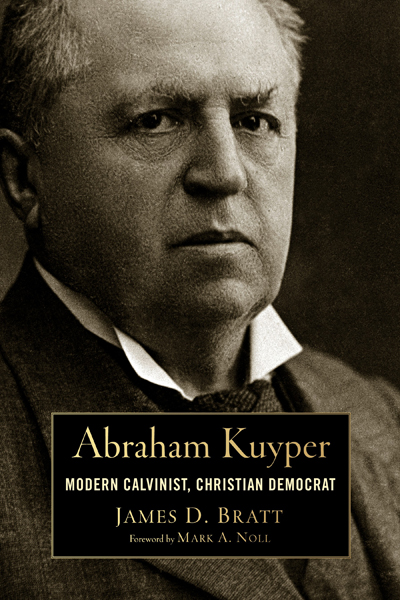
I like the theologian/statesman Abraham Kuyper (as if you didn’t know) and those in his line have written seriously about the integration of faith and the life of the mind, inspiring me to often say we should “read for the Kingdom.” Books about life matter, because life matters. I know you agree, even if you haven’t read Kuyper.

HEARD IT FROM SIDER AND SCHAEFFER
I heard this first from Ron Sider and Francis Schaffer, long before I had heard of Kuyper.  Sider reminded us in the early 70s that one of the most talked about topics in the entire Bible is economics and that our shopping and voting can be done in ways that affirm God’s justice and thereby witness to His grace.  Politics and economics and shopping and how and where we live are all religious questions.  At the roast of Ron Sider the other night, a number of folks — from the always energetic Tom Sine to the clever David Gushee to the long-standing friend and occasional co-author Heidi Unruh, poked fun of Ron’s commitments to simple, natural living. When his lovely wife Arbutus did a little spin and curtsey in a dress she bought at a thrift shop with Peggy Campolo, the crowd happily laughed. But we admired it, too, the gracious way Arbutus and Ron could “live simply so others can simply live” even with art and charm and joy.  So I learned the grand Christian vision of “all of life being redeemed” from Sider.  And I wrote about him the last two or three posts.

But Francis Schaeffer, whose 1970s books about philosophy and theology I was less interested in at first, won me over with two books that I found even more immediately relevant.  Yes, I appreciated Escape from Reason and The God Who Is There and find them still quite useful, but the lights really came on when I read Pollution and the Death of Man (firstPollution-and-the-Death-of-Man.png published in 1970 — yes you read that right! — now published by Crossway; $17.99.) It was more than a breath of fresh air, it gave vocabulary and Biblical basis for what I intuited and deeply believed. (I was involved in our small town in the very first Earth Day, after all, with one of the great, green ecology flags as our youth group picked up litter.)  Although I’ve read better stuff since, Schaeffer was a p
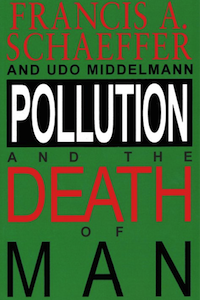
ioneer in evangelical creation theology, green living, inviting us to realize our solidarity with animals and all creation since we all have the same Creator.  Yes, this conservative Calvinist said, the Catholic Saint Francis was correct: “brother son, sister moon” indeed.

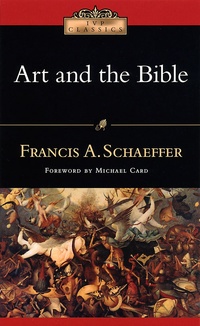
And the other pivotal book — I will watch myself so as to not write pages and pages — was the small but potent Art and the Bible (IVP; $8.00.) It was published in 1972 and I think I read it in ’73.  It included two sections, “Art in the Bible” and “Art and the Bible” and it made a simple, clear case thatArt and the Bible classic.jpg Christians should be aware of the influences of the art world, and be both critical and appreciative. We should have imaginations that fly beyond the stars — God desires what Cal Seerveld later called “rainbows for the fallen world.”  He showed that ‘religious art’ does not have to be so overtly like propaganda, but should be creative, nuanced, allusive — and that the style should fit the theme, opening up great and yet coherent possibilities. The latest edition has a lovely forward by Michael Card.  This book, again, gave us a framework and foundation for thinking about culture, literature, fiction, the arts — yes, yes, yes!
So, again, this is an important part of our story, part of why we do what we do, and — I guess this is fair to say —  part of your story, now, too, if you buy books from us.  We wouldn’t be here, I suspect, if it weren’t for God’s formational work in us through the writings of Francis Schaeffer.  The mainline Protestantism of my youth didn’t quite get us there.  The charismatic renewal and Jesus movement of the mid-70’s didn’t quite get us there. The religious right nor the religious left didn’t quite get us there.  Schaeffer explicating that a Reformed worldview based on the Bible means “substantial healing” in all areas of life, and that the gospel’s call cuts across all zones of life, that is what provided a basis that allowed us to do this odd thing of trying to sell the kinds of books we do.

And believing there were others who wanted books relating faith and life in this sort of way.

Whether you realize it or not, then, Schaeffer matters to all of us in the H&M tribe. 

FRANCIS SCHAEFFER
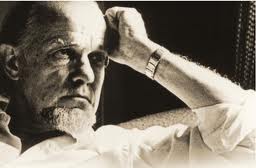
Francis Schaeffer was a Pennsylvania-born, fundamentalist Presbyterian minister who in the mfran schaffer.jpgiddle of the fundamentalist-modernist controversies of the mid-20th Century left the US to start a drop-in center for spiritual seekers in Switzerland.  His Swiss commune and study center was known as L’Abri, and by the late 1960s it had attracted scores of young adults who were critical of religion in the Western world, counter-cultural activists, and several famous seekers and celebrities, including a few well-known rock stars.  Schaeffer grew in popularity, publishing dozens of books and working on two award-winning film series, documenting how historic, Biblical faith could be relevant for contemporary issues. Bill Edgar was one of those disenchanted young adults who made their way to the robust theological center in the Swiss Alps.  As he explains in this great new book, it was Mr. Schaeffer himself who had the conversation with Edgar than led him to faith.  Schaeffer on the Christian Life starts with a great chapter of Bill’s own reminiscences which frames the more detailed center part of the book.  It ends, too, by the way, with another wonderfully personal chapter. I like that Bill is conversational throughout the book, but especially in the first and last chapters.  It is very inspiring to learn about this through a first-hand take on the L’Abi ministry.

Here is a very nice review of the book and here is another brief summary — we are not alone in commending this as a great resource, important and interesting and relevant to your life. 

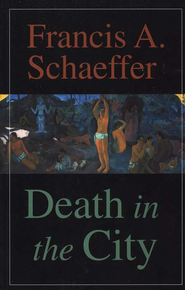
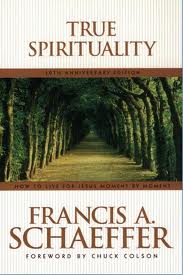
The heart of the book explores Schaeffer’s unique, clear, gospel-centered approach to spiritual growth.  As John Frame puts it, “Bill’s book focuses on the process we now calldeath in the city.png spiritual formation. The church can learn much from it.  I commend this excellent book to all who see to draw nearer to God.” Yet, it is equally clear about Schaeffer’s whole-life vision and multi-faceted, culturally engaged ministry.  It helps us put into context various aspects of, or topics within, Schaeffer’s body of writing.  For instance, Edgar weighs in on what he thinks is the best place to start reading Schaeffer (it’s Death in the City, the study of Jeremiah) and names his personal favorite (Pollution and the Death of Man, in part because it emphasizes natural beauty; Edgar is a musician and very interested in art history, culture and aesthetics, so that makes sense.) There are, though, several core chapters which are a rather systematic exploration of Schaeffer’s classic True Spirituality (Tyndale; $13.99.)  It is a key book for Schaeffer and Edgar notes that not much is made of it in the wide body of Schaeffer studies and biographies.
However, because there is so much of Bill’s own testimony, and his own overview of thetrue spirituality.jpg history and development of Schaeffer’s life and thought (not to mention the role of Schaeffer’s wife, Edith, who had her own large role to play at L’Abri and in Christian publishing) the book is not just a guide to True Spirituality.  It does certainly include that, and it is helpful.  It reminded me how good that book was, how it invited us to “moment by moment” faith reminiscent of Practicing the Presence of God but it also is so clear about the role of the cross in justification and sanctification that it seemed to me a precursor to the gospel-centered life material so popular in some Reformed circles.  True Spirituality really is a book for our times, and in Edgar’s fine hands, its insights and guidance come alive, clear and well-organized and explicated for practical application. 
EDGAR, SCHAEFFER, AND WORLDVIEWISH APOLOGETICS OF THE HEART
Dr. William Edgar is, you should know, a well-respected, nationally-known Christian leader who has written several other books on apologetics and what we might call reflections on “reasons of the heart.” (That is, his philosophy of defending the faith and presenting the gospel to seekers and skeptics is not unlike Schaeffer’s, using evidences and natural logic, of course, but much more aimed at the presuppositions of one’s deepest worldview.  For those who follow such things (forgive me if this is too arcane) Edgar stands in the grand tradition of Cornelius Van Til.

In fact, Edgar has recently re-edited and re-issued some of Van Til’s important work.  It may be surprising,
but he also draws on the heady Dutch philosopher, Herman Dooyeweerd.  He is not the first to note that Francis Schaeffer himself learned a lot about Dooyeweerd from one of his closest confidantes, the Dutch art critic and historian, Hans Rookmaaker.  I am anxious to learn more about this connection, which is also explored in the magisterial, definitive biography of Schaeffer, Colin Duriez’s Francis Schaeffer: An Authentic Life (Crossway; $24.99.)  Schaeffer was a lay philospher, and never formally studied art history, but he had a great love for art and art books (and film and classical music, and pop music, too.) Edgar tells some nice stories about these passions that were so very rare among conservative evangelicals in those days, especially.  And some of his framework for understanding things came from Van Til and Dooyeweerd.

Again, that means his apologetic is more about persuasion than arguing, more about the history and implications of living rather than just piling up “proofs for the existence of God” and more about the heart than sheer logic. When Edgar isn’t writing books and playing jazz or gospel piano, he is a full time Professor of Apologetics, holding the prestigious Chair of Christian Apologetics at Westminster Theological Seminary.   Here is the bio I gleaned and used in some PR for the upcoming lecture.  I hope it shows you that he is a reliable scholar and well worth reading:

Edgar graduated from Harvard University, completing his doctorate at Universite deheaven in a nightclup.jpg Geneve in Switzerland.  He has written several books for contemporary, thoughtful readers, inviting them to consider the reliability of the claims of classical Christianity and their relevance for contemporary life, art, and culture.  Besides being a professor and author, Edgar is himself a musicologist and accomplished jazz pianist, whose album “Heaven in a Night Club” tells the story of the history of African American music in America, and suggests how blues, black gospel and jazz music can illustrate the history, injustices, and strengths of the US African American struggle for meaning.

By drawing on a close reading of Schaeffers most important books, and his own personalschaeffer on.png experience with the Schaeffer’s ministry at L’Abri, Schaeffer on the Christian Life: Countercultural Spirituality is both informative and insightful and, I suppose, in this age of often goofy spiritiuality, counter-cultural. He really does offer a third alternative to overly inward, mystical experiences, and overly heady, abstract notions. This is warm, human, Christ-centered, ordinary faith, lived out, from the inside out.

Schaeffer’s cultural insights are particularly urgent today as well when Christian churches and organizations are re-evaluating their social, cultural, and political influence.  Schaeffer’s commitments to civil public theology and creative work for cultural renewal and the common good emerged from his profound inner life.  This “countercultural spirituality” is a faith which Edgar explores — teaching us, through Schaeffer, how we too can return to a sane and yet powerful awareness of grace and the impact walking with the Lord can really have, day by day, in all we do (including our public and social lives.)  It isn’t a manual or formula, though, which, again, illustrates its profundity; as wise contemporary writers such as Eugene Peterson would remind us, this is not about technique!

AWKWARD
I have written a bit about this before, and others have as well, but it is clear that Schaeffer was involved in the rise of the religious right in the mid 1980s, in part, encouraged in this by his son Frank (then known as Franky) in ways that struck many of us as unhelpful and inconsistent with his generous, nonpartisan earlier approaches.  Many who knew L’Abri well have insisted that Frank Schaeffer’s retelling is not fair or accurate, but there is no denying that Schaeffer garnered a reputation for being involved in partisan politics and heavy anti-abortion activism with Jerry Falwell and the like.  One ought not dismiss the fullest and best work of Francis and Schaeffer  — their personal interest in real people, offering honest answers for honest questions, often through tears — just because one heard weird things about his politics or was frustrated by Schaeffer’s strident tone near the end.  Edgar addresses this a bit and while it seems that Edgar shares some of Frank’s concerns about Francis’ involvement in the more extreme elements of the religious right, he is confident that Schaeffer’s body of work is enduring, and his spiritual insight profound.  I think Schaeffer on the Christian Life: Countercultural Spirituality could be a good introduction, or a good refresher course, on the things that mattered most to Fran.

WANT AN AUTOGRAPHED COPY?

bill edgar.jpgSo, you may not be able to join us in Pittsburgh on Thursday, but you can order the book from us at a 20% discount.  If you send us an email, we most likely can get an autographed copy for you, in fact — just let us know to whom you want it made out or if you just want an autograph.  That would make it a very special gift, if you want to share it with someone.

We will, of course, have all of Bill’s other books as well, including the great little Reasons of the  Heart: Recovering Christian Persuasion (Presbyterian & Reformed; $12.99) and a new book of apologetics for teens, Your Questions, God’s Answers (Christian Focus; $15.99.)

Beth and I are eager to join our friends in the CCO for the event.  You may recall that we lived in the Pittsburgh area in the 1970s and early 1980’s when we worked with them CCO; in those days it was known that the organization was influenced in decisive ways by the early writings of Francis Schaeffer. 

Here is what was said in a press release: “We established the annual Hearts & Minds Summer Lectureship to honor the influence CCO has had in the academic community in Pittsburgh, by bringing in authors whose books address the confluence of faith, culture, and college life,” Borger said. “Last year, we launched an Oxford University Press release, a book exploring the history of Protestant engagement in film, Reforming Hollywood: How American Protestants Fought for Freedom at the Movies (Oxford University Press; $29.95) written by former CCO staff member William D. Romanowski, and this year’s event with Bill Edgar will be just as interesting and enjoyable.  We think a wide audience will be eager to hear this 21st century reflection on the importance of Schaeffer’s significant work.”
g quote.jpg

BookNotes
SPECIAL
DISCOUNT
ANY ITEM MENTIONED

20% off
order here
takes you to the secure Hearts & Minds order form page
just tell us what you want

inquire here
if you have questions or need more information
just ask us what you want to know

                   Hearts & Minds 234 East Main Street  Dallastown, PA  17313     717-246-3333
                                                            read@heartsandmindsbooks.com
A bit more on Following Jesus (Essays in Honor of Ronald J. Sider) ON SALE

I do hope you saw my long ramble of a review in the last BookNotes post, a book written in honor of Ron Sider, Following Jesus: Journeys in Radical Discipleship: Essays in Honor of Ronald J. Sider edited by Paul Alexander and Al Tizon (published by Regnum and on sale from us for just $25.00.) I wrote that review with great joy, and a bit of trepidation.  This stuff means the world to me and Beth and I nearly sense that this new book in honor of our friend Ron Sider is, in some odd way, a bit of our story, too.  I know not all of our friends agree, or care quite so much.  But this is important to us and hits close to home, as they say.  Not that we’ve ever traveled to developing nations or are committed to new monastic practices; our earliest relationship with Ron was as an author (although I helped our Presbyterian geography professor bring him to my college in the mid-70s which may be the first time we met.) 

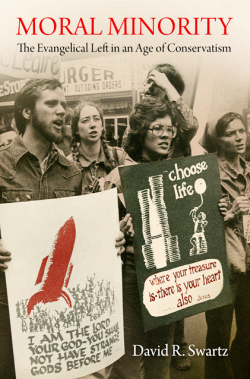
(Interesting, hot-off-the-presses aside: our dear, dear friend and former Pittsburgh house-mate Jennie Korn Geisler, is interviewed in a fascinating new scholarly exploration of what some call “the evangelical left” — which includes quite a lot about Ron Sider, the writing of the Chicago Declaration, the founding of Sojourners, the rise of the popularity of racial justice themes among evangelicals, sounded by the likes of John Perkins, the renewed interested in Anabaptist perspectives, the influence of Francis Schaeffer among some, the rise of alternative simple living, Radix magazine, and so forth.  It is cleverly called Moral Minority: The Evangelicalmoral minority.jpg Left in an Age of Conservatism and is meticulously written by prestigious Asbury College historian David R. Swartz (University of Pennsylvania Press; $47.50.)  Jennie talks with the author about how Dutch neo-Calvinism (that is, Kuyper’s worldviewish approach to all-of-life redeemed and societal reformation) influenced Pittsburgh’s campus ministry organization, the CCO; their flagship Jubilee conference got started in those years, for instance — we were studying the Mennonite John Howard Yoder’s Politics of Jesus with a reformational philosopher, and took the name Jubilee for the conference from that.  That chapter in Moral Minority on the likes of progressive Reformed leaders like Lewis Smedes, Richard Mouw, Nic Woltersdorff and Wesley Granberg-Michaelson — all who are friends of Sider’s and whose influence is notable in his work — is pretty amazing and made me run in to the kitchen to read it out load to Beth! Following that stream of world-transformative faith was a good addition to Swartz’s study of the evangelical social concern of the 70s and 80s, and it was so wonderful to see my pal Jennie in it.) 
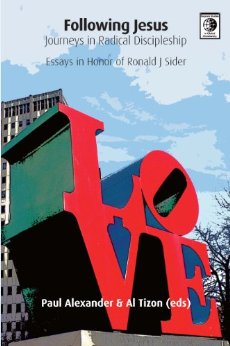
So, reading Following Jesus: Journeys in Radical Discipleship: Essays in Honor of Ronald J. Sider felt, in some ways, like it was my own story, certainly giving voice to many of my deepest concerns, even though I wasn’t nationally involved in much and don’t know most of the authors in the collection.  Sure, we had friends at places like The Other Side magazine, and the very first book review I ever got published (and paid for!) was of Sider’s Christ and Violence, which I raved about in Sojourners quite a few decades back.  I was about to lose the job I then had over my peacemaking ministry and we were up to our ears in teaching stuff such as the Biblical material in Sider’s Rich Christians in an Age of Hunger. I promoted his Completely Pro-Life with friends at the Consistent Life network. I’ve followed each new book Sider did and rejoiced, and took courage to do what little we could. 

ESA continues to be one of our favorite organizations and just this week had opportunity to tell people about Prism magazine. While it doesn’t say everything that we think needs said about God’s redemptive work in the world (what specialized organization does?) we are truly thrilled to be joining them at the Follow.Jesus.2013 conference celebrating their 40th anniversary. If you are in Philly on the 13th or 14th of July, swing by Eastern College.  We’ll have a large book display with tons of good books.

Following Jesus: Journeys in RadicalFollowing Jesus.jpg Discipleship: Essays in Honor of Ronald J. Sider edited by Paul Alexander and Al Tizon (published by Regnum and on sale from us for $25.00) is a righteously splendid book, and I predict it will profoundly impact those who work through it.  As I said in the previous BookNotes review, it is quite enjoyable, very well written, and covers a wide range of content.  It is especially strong on Biblical studies and always clear on Christ-centered, gospel-based, wholistic views of the Kingdom.  There are some tender stories, good testimonials by folks whose lives were touched by Ron, and there are good portions of interesting social analysis which provide insightful perspectives on how to faithfully carry on the work of the gospel in our broken world. It is well worth reading. 

Again:  promoting this book is important to us, and, if you follow our work here at the shop, you know it is so.  I hope that for some of you dear readers it will be one of those times you’ll just trust us, or humor me, and order the thing.  Sider is retiring, for crying out loud.  Buy the book!  The editors, Paul Alexander and Al Tizon, have put themselves into this project — compiling the book as a gift for Ron, and soon taking over his leadership at the helm of ESA —  and we need to support them.  I really believe that.  Get a few of these, and give ’em away.  Start a book club.  Pick it for your next small group study.  Invite them in to talk about it. (Invite me in to talk about it!)  Well, you get the idea…

Here is what I didn’t share in the last rumination about the books strengths and wonders.  The actual list of those who contribute.  Just check this out.  I hope it inspires you as it should.

FOREWORDS AND INTRODUCTIONS
The first three chapters of Following Jesus are really great, with two forewords by Sider’s long-time friends, Jim Wallis and Tony Campolo, which is followed by an excellent and very moving introduction by the editors who compiled this labor of love, Paul Alexander and Al Tizon.  Just reading these opening pages will make you want to dive in to the deep waters of the text.  And, as they suggest, you may be a bit shocked, but you will be refreshed.     

PART I:  EVANGELICAL COMMITMENTS
1.  Jesus Is Lord 
     Vinay Samuel and Chris Sugden
2.  ESA and the Church
     Jo Anne Lyon
3.  Biblical Fidelity
     Craig Keener
4.  The Whole Gospel: Avoiding Biblical  Malpractice
     Manfred Brauch

PART  II:  HOLISTIC  MINISTRY AND POPULARIZATION
5.  The Pilgrimage Toward Holistic Ministry
     Samuel Escobar
6.  Edge and Wedge: Leadership, Evangelicalism and Social Action
     H. Dean Trulear
7.  Reconciliation and Development
     John Perkins
8.&nbs
p; Simplicity and the Poor
     Shane Claiborne
9.  Word, Work, and Wonder as Holistic Ministry
     Douglas Peterson
10.  Popularizing a Call to Sexual Justice
       Kristyn Komarnicki
11.  People Power Revisited
       Melba P. Maggay

PART III: FAITH, DIALOGUE AND PUBLIC POLICY
12.   Political Methodology Beyond Left and Right
        Glen Stassen
13.   Completely Pro-Life
        David Gushee
14.   Economics as If Jesus Mattered
        Bruce Wydick
15.   Overcoming Global Warming
        Jim Ball
16.   Bridging the Evangelical-Ecumenical Divide
        Wesley Granberg-Michaelson
17.   Evangelicals and Catholics
        John Borelli
18.   Civil Discourse
        Heidi  Unruh

AFTERWORDS
There is a wonderful, wonderful afterword that I cited in the previous review, written by John Dilulio. Dilulio is an active Catholic, serious scholar of domestic poverty and public policy.  And he worked in the White House. His testimony of how Ron ministered to him is a great and beautiful thing to read.  It is an example of what makes this book so good — a happy blend of personal and political, of academic insight tempered with evangelistic stories, of policy proposals and clear Christian discipleship.  It makes it a very rich book, indeed.

ARon S .jpgnd, further, the complete text of the historic The Chicago Declaration is included as an appendix.  If you don’t know that document, or haven’t read it in a  while, it is important they included it.  Check it out.

Following Jesus, Journeys in Radical Discipleship: Essays in Honor of Ronald J. Sider is a book that will give you clearer glimpses into the nature of the Kingdom
of God and it will draw you close in your relationship with Jesus
Christ.

That would be Ron’s greatest hope, and it is evident in the way this book was crafted. Kudos to Al and Paul and the others who worked behind the scenes getting this book released. It is, indeed, a gift for Ron.  But it is a gift for us all. Thanks be to God.

BookNotes
SPECIAL
DISCOUNT
Following Jesus: Journeys in Radical Discipleship
Essays in Honor of Ronald J. Sider

(edited by Paul Alexander & Al Tizon)

on sale
$25.00
– all other books mentioned 20% off –
order here
takes you to the secure Hearts & Minds order form page
just tell us what you want

inquire here
if you have questions or need more information
just ask us what you want to know

                   Hearts & Minds 234 East Main Street  Dallastown, PA  17313     717-246-3333
                                                               read@heartsandmindsbooks.com


Following Jesus: Journeys in Radical Discipleship: Essays in Honor of Ronald J. Sider edited by Paul Alexander & Al Tizon (Regnum) $39.99 – SALE PRICE $25.00

FFollowing Jesus.jpgollowing Jesus: Journeys in Radical Discipleship: Essays in Honor of Ronald J. Sider  edited  by Paul Alexander & Al Tizon (Regnum) $39.99 SALE PRICE $25.00

Many of us enjoy watching award shows such as the Academy Awards or the Grammys.  Honoring the very best among us is more than interesting, it can be inspiring.  To know that visionary artists and producers did excellent work, often under grueling circumstances, sometimes against all odds, reminds us of what it looks like to see extraordinary dedication, the wonder of getting big things done, the joy of artful accomplishment. As purple cow marketeer Seth Godin remind us, after all our passion and art and soul, the point is to ship. To get it done. Who doesn’t admire somebody who can really get the job done, with grace and integrity?

Some of these shows may be cheap opportunities for self-congratulations but at their best they are full of great speeches offered by people who obviously care deeply about their craft; we get to learn about the diligence and insight of previously unknown stars, and they expose us to the best work done in that given year.

Well, dear readers, a brand new book brought that to mind as it is a collection of some of the very best people in their fields, offering great speeches (well, chapters) to pay tribute to the tenacious, artistic, world-changing accomplishments of one of the most important Christian leaders of the 20th century, who knows how (to God’s glory) get important stuff done.  Like a good awards show, it is long, and you’re going to want to break into applause from time to time.  You will come away inspired, I guarantee it.

(FREE) FOLLOW.JESUS.2013 CONFERENCE
EASTERN UNIVERSITY JULY 13-14
, 2013
We are the very first bookstore in North American to have this grand book, a collection compiled by friends, students, colleagues and associates of Dr. Ron Sider.  It is called Following Jesus: Journeys in Radical Discipleship: Essays in Honor of Ronald J. Sider  and was created as a surprise to honor him during his upcoming gala retirement gathering – which will include a roast, hosted by Tony Campolo, Jim Wallis, Tom Sine, Shane Claiborne and others,. We will then promote it at a (free) weekend conference – held at Eastern University, July 13 – 14th.  Besides Ron’s retirement bash and book launch, it is the 40th anniversary celebration of Sider’s flagship organization, Evangelicals for Social Action.
ESA40Post1.jpg

Go to ESA40.com to learn about the free Follow.Jesus.2013 conference to see who is speaking — you will be amazed at the roster of leaders, speakers, theologians, activists, musicians.  You should definitely come if you are anywhere in the mid-Atlantic!  It it “the” event of the summer for us and we look forward to selling books there!  In Philly?  Swing by!

The  brand new book Following Jesus: Journeys in Radical Discipleship was printed inFollowing Jesus.jpg England by Regnum and the Oxford Centre for Mission Studies, and stands in a bigger series of scholarly books published by the Centre.  We’ve been holding off telling you about it as we didn’t want to let the cat out of the bag, but I’ve heard that Ron now knows about it.  We are thrilled to have cartons of these important books hidden/stockpiled here and now you will be the first to officially hear about them.  And we have ’em marked down to a simple price of $25.00.

NOT GOOD, GREAT!
I knew this collection of essays was going to be a good since I am huge fan of Ron’s work – he is a friend and a bit of a mentor – but I was unprepared for just how great it is.

I read a lot in this field of public theology and social ethics and cultural reformation, but I was deeply, deeply moved at some points, very excited at others, grateful and glad, often.  I have not even finished every chapter yet but I can assure you that this is a truly excellent book. Turning each page was a joy, each new chapter a privilege to see and to enjoy.  Each and every chapter is chock-full of new insights or astute summaries of various aspects of the wholistic, evangelical gospel for which Sider and his wife Arbutus have given their lives.
  
This is, quite simply, one of the best books of the year; it is one of the best books in many a year.
 
Following Jesus, compiled so well by Sider’s successors Alexander and Tizon, is a great treat for those that appreciate Sider and his many ministries, organizations, and initiatives. For many Booknotes readers it will obviously come as a delight (maybe even a trip down memory lane) so you just have to get it; it is obviously a must for fans and followers of
ESA and other such projects.  Especially younger activists who are engaged with the oodles of hip social initiatives and (re)new(ing) projects with obscure names and spiffy websites, this will give you history and background and foundational insights. 

But I believe it is also great for newbies to the wholistic vision of gospel-driven social
reformation. For those only mildly aware of and only somewhat interested in Mr. Sider’s Christ-centered witness for peace, justice, creation-care, and a consistent ethic of life, it will be an excellent introduction, illuminating just how impressive –and rare — his voice was and is.
 
A RARE BIRD
And Sider is a rare bird, at times flying against the popular religious wind-currents. In the veryRonSider.jpg early 70s as the Indo-China war drug on and on, he called Jim Wallis to recruit him for a new political effort called “Evangelicals for McGovern” (a United Methodist, seminary-trained, anti-war candidate who was running for the Democratic Presidential nomination.)  Wallis quips that when he asked Ron how many were involved, Ron said that if Jim joined, there would be three of them.  He is against the death penalty but serious about crime. He is a feminist, but outspoken for strong families and the sins of sexual immorality — does that make him a conservative or a liberal?  He is solidly pro-life, but also pro-peace; Beth and I were supportive of Sider’s short-lived effort to form a political PAC called JustLife which raised political funds for anti-war, pro-life candidates — do you know how many of them there are? Not many. (And how neither party wants them? Neither party wants them.) He can rail against the injustices of the capitalist global economy, but understands the dead-end bankruptcy of  Marxism; he loves talking about leading people to a saving relationship with with Christ and yet he insists that following ChristSider b_w.jpg puts us into church, which leads us to concrete deeds of service, racial reconciliation, and serious reconsideration of our political views and policies.  He talks about and models simply living, but isn’t afraid to celebrate, to travel, and to spend time in his beloved outdoors of Northern Canada, fishing.  He is unashamedly evangelical, but has been in regular conversations with leaders of the National Council of Churches; he speaks at mainline seminaries and at evangelical colleges.  He is a historic Anabaptist who for a while shared an office with a strident Calvinist.  And he talks about some of the saddest things on the planet, and yet regularly smiles and laughs and exudes a tangible hopefulness.
sider, wallis, perkins protest.jpg

SIDER HAS BEEN A BLESSING IN MANY WAYS
Several of his essays (originally published in Prism) are among my all time favorites — he wrote about his fears while going on a Witness for Peace trip into the war zones of Nicaragua and how he read Andrew Murray on prayer to grow in faith; he wrote eloquently and profoundly, about the sad but deeply Christian death of his elderly father. (He was kind to Beth and as we grieved similar losses.) 

I love the picture of him in a corny winter hat as he is being arrested, singing hymns, during a nonviolent protest of budget cuts that hurt the poor, held inside the US Capitol; I still regret that I hadn’t been able to join them there. 

And, then, again, he recently has published a book about the need for “generational justice” on issues of debt, Fixing the Moral Deficit: A Balanced Way to Balance the Budget (IVP.)  He helped convene with the Center for Public Justice the “Circle of Protection” to stand with essential social services to protect them from budget slashing.  And, over a decade ago — as a few chapters in Following Jesus describes — he worked diligently with those of diverse and contested socio-political views to draft and have passed a balanced, thoughtful, evangelical social document for the National Association of Evangelicals.  The document and the book otowards an evangelical pub policy.jpgf essays about it is stunningly good, co-authored with his friend the late Diane Knippers, Toward an Evangelical Public Policy: Political Strategies for the Health of the Nations (Baker.) Ron Sider is a bridge-builder in many ways, but, evidently, he is often too liberal-sounding for the conservatives and too conservative-sounding for the liberals; too nuanced and considered for the activists and too activistic for the armchair scholars.  It is often a hard and painful place to be –let’s not be glib about how cool it is to be radical and edgy and alternative and third way — but Sider has through God’s grace been tenacious and consistent and more effective than nearly anybody in this line of work.  Following Jesus makes that clear and it is a model for many, how to influence a generation, making a difference over a lifetime, by building bridges, nurturing fellowships, working within networks and institutions, starting and influencing publications and more.

If you are unfamiliar with the background of Sider and his work (which has been so influential for Beth and I) here is an essay by Ron describing the history of ESA, his main vehicle for propagating the Biblical vision of wholistic social change. The story starts in the early 70s and it is thrilling.  Thanks be to God.
 
So, in this new book to honor Sider there are chapters on these topics and themes — the Biblical basis for wholistic ministry, studies about world missions, good presentations by women and men about complex issues (racism, peace-building, global climate change, sexual justice, etc.) and some very inspiring reminders of the need to live out our faith in concrete actions and fresh thinking.   

PRACTICAL, TOO
For instance, his friend and colleague Heidi Unrue has a remarkable piece near the end on civil discourse that should be required reading these days.  I am fond of Glen Stassen’s piece on Ron’s basic methodology, sort of a primer on Sider’s important Just Politics, that I have often recommended at BookNotes and elsewhere. And Prism magazine editor,  an very gifted writer, Kristyn Komarnicki, has given us a piece worth reading for several reasons; “Popularizing the Call to Sexual Justice” is a nuanced look at gender inequities, sexual violence, trafficking and the like, and it is also an affirmation of Ron’s own role as a scholar/popularizer.  A year or two ago he had a piece in the Christian Scholars Review inviting some to just  this vocation: scholars who have done good research and study but are not exclusively committed to the academy, but can explain scholarly analysis to ordinary church folks, and help mobilize us to faithful, thoughtful action.  Kristyn’s piece which is on a hard, very painful topic reminds us of Ron’s own legacy as a scholar/popularizer.  Right on!
 
AN AUDACIOUS CLAIM
Many of the chapters claim that Ronald J. Sider, the Canadian farm-boy born in 1939, who grew up wanting to do apologetics in a secular university, helped change the face of contemporary evangelical faith at the end of last century and consequently the religious landscape of the 21st.  It is an audacious claim,
but it is true.  I can count on one hand, I think, the religious leaders that have had as much actual impact, whose work has transformed, altered, enhanced, re-shaped the way faith communities think and live.

Just for instance, the phenomenon I document in this column of mine celebrating recent commitments from evangelical publishers to do these kinds of books simply wouldn’t have happened without Sider’s influence on the ethos of early 21st  century Christian publishing.
It was not Sider alone, but he’s fingerprints are all over this trend.

Ron’s work started before his rise to fame and controversy and world-wide renown in therich christians.jpg mid-1970s but it was with the publication of the extraordinary, seminal (and much-debated) work, Rich Christians in an Age of Hunger: Moving from Affluence to Generosity that put his name on the map (and his face on the cover of national magazines.) It has sold over 100,000 copies, is now still in print, in a 5th edition, published by Thomas Nelson.  (The first edition was published bravely by InterVarsity Press; who knows why they let it go out of print?) Christianity Today was just one review source who eventually named it as one of the most significant  books of our time.  Indeed, CT had it listed in the top few of the “Top 100 Books of the 20th Century.”  I have often said it is one of the most important books I ever read, and still maintain that everyone should have a copy. (Word to the wise: if you are a leader who does Bible teaching or public speaking about any of these themes, Rich Christians is a very useful resource, with Bible verses indexed, theological themes, and splendid quotes and pithy research conclusions. I still use it often in preparation for talks, classes or workshops.  Some sections are beautiful to read out loud, even.)

I was predisposed to agree with Rich Christians in an Age of Hunger when I first read the first edition, in our little urban apartment in McKeesport PA and had already done considerable Bible study on themes of justice, resisting materialism, and resisting global economic arrangements that favored the richer nations. Beth and I were almost charter members of the Christian political lobbying group Bread for the World and as a child learned about things like UNICEF; in college we studied Martin Luther King and Clarence Jordon and William Stringfellow and donated to World Vision and the like. I found it hard to believe that some thought it controversial.

Caring about world hunger somehow seeped into our hearts before reading Sider, but his book gave the most systematic teaching about it which I had ever seen and took the need for structural adjustment/systemic change to new levels of insight, pushing us towards authors as diverse as Bob Goudzewaard and Francis Moore Lappe and Wendell Berry. From the vast, vast array of Bible verses (who knew there were so many!) to the treatment of structural injustice, to the significant teachings about the nature of the church and the economic implications of Body life in the New Testament, Rich Christians covered so much ground with such urgency (and hope) that with nearly every page I knew it would be a classic.  I rarely use the phrase “instant classic” but for Rich Christians in an Age of Hunger, it is more than proper.

GOOD PERSONAL STORIES
One of the great features of this new Following Jesus: Journeys in Radical Discipleship tribute book is that almost every chapter has tremendous stories about Ron and his work.  Perhaps you have noticed that some books done in honor of a famous author or scholar are just chapters donated by friends or former students, creating a book that is scattered and not cohesive.  This, however, is not only cohesive – every chapter is one which adds to our awareness of the concerns of Evangelicals for Social Action and other like-minded organizations – but it has what can only be called testimony.  People testify of God’s work in their lives by encountering Sider and his wife and their ministries.  This is really, really sweet!

IFollowing Jesus.jpgt is more than endearing, though: it is a Biblically prescribed task, one generation telling the next of the mighty deeds of God.  John Perkins taking early courage from conversations with Ron; Jim Wallis recounting the writing of the famous 1973 Chicago Declaration; Wesleyan Church leader Joanne Lyon telling how she bought so many of that famous document and passed them out to her church leaders (and, soon enough, ended up on the board of ESA); Shane Claiborne recounting his early days of radical discipleship and being guided by Sider; John Dilulio, Roman Catholic public policy scholar, White House staffer, and prestigious U of Penn professor  telling of how Ron would counsel him, pray for him, nurture his sense of hearing God’s voice – when DiLulio says Ron has been the consummate Jesuit for him, it was an exceedingly wonderful moment.   I wonder how many great writers, especially about public theology and social justice, are remembered for their pastoral care, their evangelism, their kindly behind the scenes encouragement of others.  (I know for some of us the name Vernon Grounds comes to mind, as does Fuller’s Bill Pannell; there are others, but this sort of balanced ministry of the prophetic and pastoral is rarer than it should be.)
 
This theme of Ron really coming alongside emerging leaders and offering supportive guidance comes up often in this book.  For instance, Dr.  David Gushee opens his chapter on being consistently pro-life with this: “There are only a handful of people in a person’s life of whom it can be said that they clearly changed the trajectory of one’s entire journey. Ron Sider is one of those people in my life.  That is where my essay must begin.” (Gushee is a thoughtful, good ethicist and activist, by the way, who started out Roman Catholic, was converted into the Southern Baptist denomination, and studied, then, at the far left, nearly loopy Union Seminary in NYC.  Sider, he says, “taught me how to be an evangelical” and helped him navigate the strengths and weaknesses of various streams and traditions within the broader church.  Again, typical Ron.)

Many of us sometimes wonder how public figures and influential authors do life; how they treat people, how long they work, what they do on vacation, are they hard to work with.  This book is not a biography, but there are enough fascinating anecdotes to give us a good glimpse.  Did you know that there are two pictures of Ron in his office, one of him holding up a big steeleye he caught on his regular, serious fishing trips in Canada and another of him speaking firmly, advising with a group of other Christian leaders, a U.S. President.
 
Those of us that know Ron know this: besides being an outdoorsman, a devoted husband and father, a multi-issue political activist, a serious follower of Christ in the Brethren tradition, he is a serious, ecumenical organizer. In fact, Harold Dean Trulear (in a must-read, important chapter) quipped “If I had a nickel for every time I heard Ron say ‘We have to mobilize Christian leaders…’ I could retire.”  And Reformed leader Wesley Granberg-Michaelson has a whole chapter (also noting Ron’s role) on the state of the art of ecumenical affairs these days, with a special look at the relationships of evangelical
and mainline Protestants. He was there, Wes notes, when Christian Churches Together had its first planning retreat at St. Mary’s Ecumenical Institute in Baltimore.  Ron really does get involved, tirelessly, it seems, wherever the Spirit blows him.

So, just like in a great awards show, you get to see some of the behind the scenes curiosities about the person being honored. And you get to hear other people explain why it is important – both the little, personality bits and the larger, philosophical motivations. It all becomes very compelling.  You come away inspired and more clear about what matters most.  And you want to learn more, see more, do more.  This book is like that, and you should buy it.

The LOVE statue on the cover, by the way, will be recognizable to those who have visited Philadelphia, and is not only a shout out to Ron’s city, the home of ESA and Palmer Seminary and their Sider Center for Ministry and Public Policy but is a visual allusion to “concrete love.”  Get it?

TWO THIRDS WORLD FRIENDS AND COLLEAGUES
One of the key things you must know about Sider, that Following Jesus: Journeys inFollowing Jesus.jpg Radical Discipleship: Essays in Honor of Ronald J. Sider makes clear, is that he understood early on –  maybe from his early days running the urban branch campus of otherwise rural Messiah College in a rough neighborhood of his beloved Philadelphia or his tenacious experience of intentional Christian living in a blighted block of Germantown, or his role in the heated debates at the now famous 1973 Thanksgiving Workshop on Evangelical Social Concern convened by Sider, Carl Henry and others that gave rise to the Chicago Declaration — but Ron knows that to build a just world, we must have just practices of movement-building.  That is, every voice must be heard, especially those from the margins.  This has caused Ron to reach out to the ultra-conservative critics and to those of other faith traditions. As a white male, he has attempted to share leadership with women and those of other racial and ethnic backgrounds.  It has especially motivated him to bring third world – eventually called two-thirds world – scholars into the leadership of ESA and other such wholistic missional ministries.  How wonderful that for so many years he helped edit the extraordinary journal Transformation, published overseas with developing world, wholistic missional scholars.

So it is grandly appropriate that world Christian leaders – names you ought to know such as Vinay Samuel and Samuel Escobar and Melba Maggay — each have chapters here. (And other good, global friends are often cited, in the narrative and the footnotes, leaders like Rene Padilla and Vinoth Ramachandra and Wonsuc Ma.) These voices are here because these are some of Ron’s closest friends and colleagues — he has pals and comrades, mentors and mentees, all over the world!  They have fought the good fight together for decades, and to once again get to hear solid, robust, Biblical teaching from several different continents makes this book so very unique and particularly helpful.  Between the stories and jokes and color, there is such good substance here — Bible, theology, culture, missiology, economics, politics, and more Bible — and it is, frankly, the sort of substance we tend not to see as much as we might in mainstream Christian publishing.  Following Jesus: Journeys in Radical Discipleship is a very good book. Consider this penance for any shallow, cheesy books you’ve shelled out for in the last year.  This one is solid and very well written.

HE IMPACTED MANY IN DECISIVE WAYS
Sider did get around.  His books have impacted people considerably – the editors, and now co-directors of ESA, tell their own stories, that themselves are nearly worth the price of the book.
 
AAl Tizon.jpgl Tizon was a fairly typical evangelical with great passion for evangelism and getting people to heaven but little concern for the plight of the poor; reading Sider finally led him to work in the slums of his Filipino homeland and was, obviously, life changing.  Paul Alexander was a fiery Pentecostal and gun-toting, materialistic, entrepreneur who idolized Rush Limbaugh; rPaul A.jpgeading Ron led him to research and uncover the teaching of pacifism which was part of the earliest days of the Assembly of God, which lead him to international peacemaking trips, most notably in the hotbed zones of conflicts in Palestine.
 
These two sharp gentlemen, now of global repute themselves, understand the impact of good books like Sider’s and themselves have written several each, so it was natural that they knew to honor Ron not just with a retirement dinner or gold watch – ha! – but with a collection of essays that can do what Sider’s own work has done – call people to conversion, help others trust Jesus and embrace genuine Christianity, equipping them to effectively serve others as the counter-cultural people of a Holy God.
 

By the way, one of the nice books which gathers together talks, sermons, speeches and
I am Not a Social Activist.jpg essays that Ron has done over the years is called I am Not a Social Activist: Making Jesus the  Agenda (Herald Press.) We love it for it’s wholistic approach, its multi-faceted concerns, and its central claim that all social reforms should be grounded in our personal faith. We are firstly, followers of our Lord.  Yes, Ron has a reputation for being a progressive activist on issues of poverty, climate change, world hunger; he is a tireless advocate for public justice.  Yes, this is published by the anti-war, Mennonite publishing house; Ron’s pacifist book Christ and Violence remains one of the great, under appreciated studies of our time. But this is his heart of hearts, lifting Jesus up and doing gospel-based Biblically-informed mission. 

The new book which honors him, Following Jesus: Journeys in Radical Discipleship, truly honors him by helping explain this evangelical piety and Christ-centered agenda that so shapes and informs him.

THIS BOOK, TOO, CAN CHANGE THE WORLD
These essays can do for us what other 20-some books of Ron’s have done. They could (please, God!) ignite a new generation of those deeply committed to the authority of Scripture, to the Lordship of Christ, and to the upside down ways of of the Kingdom of God.  Across denominational traditions and the divides of race, class, gender, ethnicity, and political ideology, we can come together, learn from each other, read and learn and grow, so that we might serve, in all aspects of life, for the common good. It is no accident that this book is entitled Following Jesus.  This is what Ron wants.  It is the clearest legacy of his many organizations, networks, ministries and publications: they want to help equip us to follow Jesus, to be radical disciples. To
that end, with this book, a great man has been honored, and, if you read it, you will be challenged, stimulated, and inspired to care about the world God so loves and to draw closer to Christ the Savior, and to proclaim that goodness with greater passion and clarity.  Indeed, it can help us deepen our understanding and commitment to, as one of Ron’s best books put it, reach out with “good news and good works.”

Following Jesus.jpg

Following Jesus: Journeys in Radical Discipleship: Essays in Honor of Ronald J. Sider edited by Paul Alexander and Al Tizon (Regnum) is a book which cost us a lot to import from England, where it was published.  We factored in the exchange rate, and international fees.  It is a big book, loaded with great writing, by interesting and important authors. It is a very special resource, a good thing to have. It is a treasure of great worth, a book of enjoyable and stimulating content, much-needed for our contentious times.  I should sell for about $40.00.  It isn’t cheap, but we have it on sale, marked down considerably to just $25.00.  It really is the bargain of the year.  Spread the word.

BookNotes
SPECIAL
DISCOUNT
Following Jesus: Journeys in Radical Discipleship
Essays in Honor of Ronald J. Sider

(edited by Paul Alexander & Al Tizon)

on sale
$25.00
– all other books mentioned 20% off –
order here
takes you to the secure Hearts & Minds order form page
just tell us what you want

inquire here
if you have questions or need more information
just ask us what you want to know

                   Hearts & Minds 234 East Main Street  Dallastown, PA  17313     717-246-3333
read@heartsandmindsbooks.com
             

List of More than 50 Books as Described in the Free Webinar.

Well, I suppose you heard about the webinar a few days ago that was hosted and produced by my good friends at the Center for Parent and Youth Understanding (CPYU.)  Derek Melleby is their specialist researching and speaking on the College Transition Initiative (CTI) and he interviewed me mostly about summer reading ideas, tossing me softballs and giving me a chance to swing as hard as I wanted.  I don’t know if I batted 1000, but a few really took off.  Or course, it was easy.  He asked, “Tell us about why you and Beth started Hearts & Minds” and “Tell us why reading is important in Christian discipleship.”  He joked and prodded, trying to keep me moving, as he and I then together walked through a list of 10 categories, naming and describing over 50 books.  In just over an hour.

Those that signed up saw the covers pop up (and a few photo-shopped pictures; like the one of me with the cast of “30 Rock”, in case you wondered —  ha!) We zipped through titles and subtitles, quoted a couple of endorsing blurbs, sharing why I thought each book looks good and useful.  We invited folks to pick a few from a couple different categories and enjoy good reading this summer.

It was tricky, though, as I knew that the main audience was their mostly evangelical followers of pastors, youth workers, and parents but that it also would include a number of folks we didn’t know, and a handful of publishing world types, authors and scholars.  I knew some were pretty sophisticated, but also suspected some were newbies to intentional Christian reading.  So I put together a pretty diverse list.
 
Wanna watch our book review infomercial?  I never say “operators are standing by” but, well, we are.  Everything I mentioned is on sale here at the shop for 20% off.  Order in the next 24 minutes and we’ll send a month’s supply of… oh,  never mind.

For those that want the publisher and price, the actual list is below the show.  A link to our secure order form page at the Hearts & Minds website is just below that.

MEMOIRS & BIOGRAPHY
The Little Way of Ruthie Leming: A Southern Girl, A Small Town, and the Secret of a Good Life  Rod Dreher (Grand Central) $25.99  Have tissues handy; one of the great books of the year, as Dreher moves to a small town to be with his dying sister, and discovers a new pace of life and value-system among his new neighbors.

Sober Mercies: How Love Caught Up With a Christian Drunk  Heather Kopp (Jericho Books) $19.99 Incredibly interesting, really, really well-written. A window into the life of addiction and recovery, and the search for grace.  I could hardly put it down  — very highly recommended.

To Stir a Movement: Life, Justice, and Major League Baseball Jeremy Affeldt (Beacon Hill) $21.99  Classic Christian sports biography with a twist.  The guy leverages his fame and fortune on behalf of the oppressed, fighting sexual trafficking and working to end hunger.

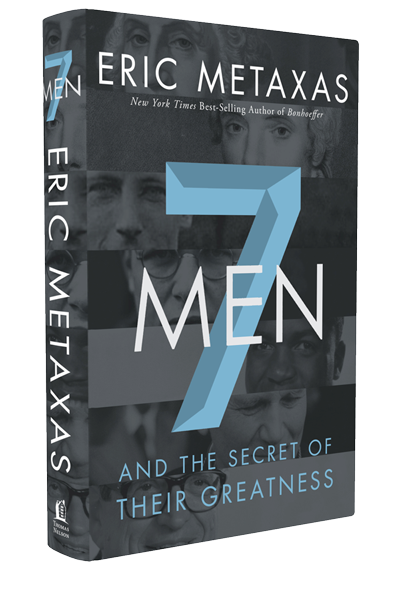
7 Men and the Secret of Their Greatness Eric Metaxas (Nelson) $24.95  We need men of nobility and courage and sacrifice. The skilled and enjoyable storyteller Metaxas nails it in this collection of biographies of truly great men.  Very well done. (I hope you saw the hilarious, provocative discussion about this book between John Wilson of Books & Culture and his friend Eric Metaxas. Whewie! did the sparks fly!)

C.S. Lewis: A Life  Alister McGrath (Tyndale) $24.99  Do we really need a new Lewis bio?  Yes. Yes, we do.  McGrath is a genius and brings some new information. A great first bio (except maybe Lewis’ own Surprised by Joy) and certainly a must for any true fans.
 
Free Fall to Fly: A Breath-taking Journey Toward a Life of Meaning  Rebekah Lyon (Tyndale) $19.99  I admire Rebekah for her candor about her anxiety attacks and her struggle as a woman to discern her own call. A moving story of her move to New York with her husband Gabe and her young children and the lessons learned along the way.
 
SPIRITUAL FORMATION
Reordered Love Reordered Lives: Learning the Deep Meaning of Happiness David Naugle (Eerdmans) $18.00  I’ve raved about this repeatedly, a wonderful, wonderfully rich study of the deepest disorders of our desires and how to love the right stuff in the right way.  This invites us to profound change from the inside out.

Living into Focus: What Matters in an Age of Distraction Arthur Boers (Baker) $20.00  Hard  to explain, but this is about practices — focal practices of  daily embodiment — and  how these clarifying habits help us experience God, day by day.  Brilliant.

Noticing God  Richard Peace (IVP) $15.00  How can we attend to the Spirit’s presence, God’s revelation, moment-by-moment, as we walk with Christ day by day.  From experiencing God in nature to honoring mystical experiences, from hearing God’s voice in stillness, among friends, and of course in the Bible, this is a helpful, inspiring guide.

Pursuing God’s Will Together: A Discernment Practice for Leadership Groups Ruth Haley Barton (IVP) $20.00  Her previous, marvelous books are on the spiritual disciplines, learned even in solitude and silence. Here, she offers insights for leaders about communal practices of discernment.  Turn your board or leadership team into a community guided by God, not just one that argues and votes and decides stuff.
 
Spirit of the Disciplines: Understanding How God Changes Lives Dallas Willard (HarperOne) $15.99  The books of the late Dallas Willard have been game-changers for many, and each of the ones you see here are serious and important.  This may be the best one with which to start; a classic. You should read a few of his, for sure.
 
CHRISTIAN DISCIPLESHIP
Bad Religion: How We Have Become a Nation of Heretics Ross Douthat (Free Press) $16.00  No, not the punk band, although they are pretty cool, too.  One of the most impressive books of the last year — agree or not, anyone serious about being a disciple should know about the shifts in worldview, theology, and ways we may have accommodated our assumptions and views and attitudes to the me-centered world around us. By the way, it isn’t every day (although it does happen more than it used to) that the Christian Century and Christianity Today agree on the importance of a book.  This is one.

Renewing the Evangelical Mission  edited Richard Lints (Eerdmans) $34.00  This is a collection of essays compiled to honor the massive, important work of David Wells.  From Os Guinness to Miroslof Volf, from Michael Horton to Cornelius Plantinga, this is an incisive lament, following Well’s powerfully argued critique, of how evangelicals have sold out to the post-Christian culture, and what we must do to get back to first things.

How God Became King N.T. Wright (HarperOne) $25.99  My favorite book about Jesus this year, I think — with a good emphasis on the theme of the Kingdom.  Everybody should read a book or two about Jesus every year, don’t you think? And everybody should read them some Tom  Wrig
ht.  Very nicely done.

Imitating God in Christ: Recapturing a Biblical Pattern  Jason Hood  (IVP Academic) $22.00  For an academic book this is truly inspiring; for a book to help us in our Christian growth it is meaty and substantive.  What does it mean to imitate Christ?  Who knew you could mine so much from a single phrase?

Prototype: What Happens When You Discover You’re More Like Jesus Than You Think Jonathan Martin (Tyndale) $15.99  This is easy to read, includes powerful illustrations and stories, and is all about being more human, not less, as we are conformed to Christ, the protoype human. Wow – surprisingly insightful, powerful, important. Get it!

CMYK: The Process of Life Together Justin McRoberts (Justin McRoberts) $24.95 for the full-color, illustrated edition// $9.99 for regular paperback  I love, love, love this first time author and his self-produced collection of stories, letters, reflections, each part inspired by a real person and his or her struggles and joys and journeys.  Each of the four sections — the letters are each of the colors of the printing process —   has a CD to go with.  The songs stand alone, as does the book, but it really is a music/book combo.  The look of the full color designed one, by the way, is somewhat like the inside of Shane Claiborn’s famously artful Jesus for President. A stunning production, one of the most creative packages in years. You will be moved as you read it.  Thanks Justin, for allowing us to carry it.  It is a privilege and a joy.
 
FOR CLERGY/PASTORS
Pastor: A Memoir Eugene Peterson (Eerdmans) $16.99 A slow, quiet memoir of the life of the famous, down-to-Earth Presbyterian pastor. Pastors, who those who care about pastors, will enjoy it, and, frankly, it is commendable as it has much to teach us about what really matters.

Sensing Jesus: Life and Ministry as a Human Being Zack Eswine (Crossway) $19.99  This book is hard to explain.  It is about being real. About being human, even as a spiritual leader. Jeramm Barrs says it is one of the best books on ministry he has read. Really, really interesting, whether you are a ministry leader or not.

Handbook for Battered Leaders Janis & Wesley Balda (IVP) $16.00  This couple has extensive experience in corporate world and church leadership and knows the research on hurting leaders. Draws on Corinthians, too.

Resilient Ministry: What Pastors Told Us About Surviving and Thriving Bob Burns, Tasha Chapman & Donald Guthrie (IVP/Praxis) $17.00  If you are a ministry leader, get this book.  If you are not, get it for your pastor. The stats are remarkable, the insights drawn, life-saving. Nothing like it in print. A must-read resource.

Spiritual Influence: The Hidden Power Behind Leadership Mel Lawrence (Zondervan) $19.99  I mentioned in the webinar that Beth and I met Mel this Spring (at the Blue Conference in Fairfax VA.) I was very, very impressed with him.  I’ve read other books of his, and have enjoyed them.  This is really good, about how to have a spiritual influence on others, so they might pursue their own callings, and share God’s goodness with others.  Very useful — oddly, something every Christian leader does, but a skill/art we don’t actually think about much.  This can help.
 
FOR YOUTH LEADERS
Intergenerational Christian Formation: Bringing the Whole Church Together in Ministry, Community and Worship Holly Catterton Allen & Christian Lawton Ross (IVP Academic) $22.00 Granted, it is thick and serious —  a masterpiece to make you think in new ways about how we  do church.  Anybody in CE or family ministry  — heck, anybody who goes to church — should ponder this stuff.

Almost Christian: What the Faith of Our Teenagers is Telling the American Church Kenda Creasy Dean (Oxford University Press) $24.95  Two decades ago I pronounced (loudly and often) that her God-Bearing Life was truly seminal, the most important book in youth ministry in decades. Then she did some other important ones, including, recently, the amazingly interesting and important Theological Turn in Youth Ministry, which she co-authored with Andrew Root.  But this, a research-driven, very important book around which there have been essential conversations.  If you are in youth work and haven’t read this yet, you ought to do what you must to get on it. It’s that important.

You Lost Me: Why Young Christians Are Leaving the Church and Redefining Faith  David Kinnamen (Baker) $17.99  The author is a good friend of Derek’s and both Derek and Walt Mueller are in the back, offering suggestions on how to maintain relationships with our 20-somethings.  I love this book, hope you know it, and highly recommend that you buy a few for folks in your congregation.  The DVD curriculum is very well made.  Kudos.

Taking Theology to Youth Ministry, Unpacking Scriptures in Youth Ministry,Taking the Cross to Youth Ministry, and Unlocking Mission and Eschatology in Youth Ministry Andrew Root (Zondervan/Youth Specialties) $12.99 each.  These are small, handsome hardbacks, each a continuation of a fictional youth worker trying to figure it all out.  What fun to be invited into her world, joining her journey of being a better youth pastor, knowing why she does what she does, and what the focus of ministry should be.
 
FOR PARENTS
Christian Parenting Handbook Scott Turansky & Joanne Miller (Nelson) $16.99  50 heart-based strategies for all the stages of your child’s life. I’ve written about this before and think it is very helpful.

Road Trip to Redemption Brad Mathias (Tyndale Momentum) $14.99 An instructive memoir of a cross-country road trip as these parents try to reconnect with their teens, and build family memories along the way.
 
Secrets of Happy Families: Improve Your Mornings, Rethink Family Dinner, Fight Smarter, Go Out and Play, and Much More  Bruce Feiler (William Morrow) $25.99  One of the most enjoyable books I’ve read this season, this mainstream author reports on the best research and what he learned from nationally-known leaders in various fields, as he applied those findings to his family.  Funny, unexpected, clever, this is a hoot — and may be a perfect family book for those who don’t like family books.

Habits of a Child’s Heart: Raising Your Kids with the Spiritual Disciplines Valerie Hess (NavPress) $14.99  This is unlike any other book, following the chapters of Richard Foster’s famous Celebration of Discipline. How ’bout that?  Yes!
 
Space Between: A Parent’s Guide to Teenage Development Walt Mueller (Zondervan/Youth Specialties) $9.99  I swear I didn’t include this — among the dozens we might have listed — because Walt runs CPYU and was sitting right there.  No, this is a handy, accessible guide to stuff parents really ought to know.  Nice.

Walk with Me: An Allegory Annie Wald (River North/Moody) $15.99 We didn’t have time to list much on marriage renewal — email me if you want some other ideas — but this is so unique. It is essentially Pilgrim’s Progress for married couples.  The author went to Cambridge.  The forward is by Eugene Peterson.  A small, handsome paperback. What’s not t
o like?
 
CULTURAL DISCERNMENT
Popcultured: Thinking Christianly About Style, Media and Entertainment Steve Turner (IVP) $17.00 Steve Turner is one of the masters of this topic, a British rock critic and Christian thinker.  He breaks some new ground here, too.  Trust me — this is fantastic!

Of Games and God: A Christian Exploration of Video Games Kevin Schut (Baker) $16.99  Nothing like it in print; nothing even close. Excellent. If you know teens or young adults, work in campus ministry or high school settings, you know you should be thinking about this.

Shaping a Digital World: Faith, Culture and Computer Technology  Derek Schuurman (IVP Academic) $18.00  I wrote extensively and then raved about this at a previous BookNotes piece, and commended it again in the webinar as a wonderful example of how to think faithfully and critically through an intentionally Biblical lens, about something in which we are all awash. Excellent.
 
Digital Invasion: How Technology Is Shaping You and Your Relationships Archibald Hart and Sylvia Hart Frejd  (Baker) $14.99  I am partial to the theoretical work done by Schuurman, but this looks at the important research, asks how to alleviate some of the negative side effects of over-stimulation from our virtual lifestyles, and makes excellent applications to youth ministry, parenting, and for any of us wanting to use our devices in healthy ways. The author is a respected Christian psychologist and the other, his daughter, is a thoughtful life coach.
 
I’m No Angel: From Victoria’s Secret Model to Role Model Kylie Bisutti (Tyndale) $19.99  Her story of being drawn into the fast-paced, glamorous world of high-fashion modeling, the severe pressure to be unhealthily skinny, the pervasive drugs and sensuality, is simply told and a good reminder of much that is wrong in popular culture.

Echoes of Eden: Reflections on Christianity, Literature and the Arts Jerram Barrs (Crossway) $17.99  Tim Keller says this is the best book on a Christian view of the arts he’s ever seen.  It is, indeed, very good.  The last half is mostly about literature with insightful, interesting chapters on Harry Potter, Jane Austen, Shakespeare, Tolkien and the like.
 
LIFESTYLE
An Unhurried Life: Following Jesus’ Rhythms of Work and Rest Alan Fadling (IVP) $15.00  I  am not joking when I say that you should read it  now, when your schedule may be a bit less hectic.  It is one of the most important books on the list! I should have discussed it more on the broadcasted webinar, but we were, ironically, rushed.  How many of us struggled with busy-ness, or are oddly proud of it?  This raises some weird stuff, you know, for us all. The best thing I’ve read on it, and I’m not even finished, as I’m slowly savoring it.
 
Eat with Joy: Redeeming God’s Gift of Food Rachel Marie Stone (IVP) $16.00  There is a growing body of literature on faith and food, and this is the best all-around, helpful, solid, study we’ve yet seen.  Please, please, consider this. A really helpful resource and a delightful read.

Bread & Wine: A Love Letter to Life Around the Table (With Recipes) Shauna Niequist (Zondervan) $16.00  When I said on the air that some of these wonderful essays made me cry, I wasn’t being sentimental.  This is moving, powerful, beautiful stuff, one of the best-written and fascinating and splendid books of the year.  I am so glad for it and for the things she so honestly hares from her own life. And we haven’t even done any of the recipes. Beautiful!
 
More or Less: Choosing a Lifestyle of Excessive Generosity  Jeff Shinabarger (Cook) $17.99  Derek and I both know Shinabarger from the CCO Jubilee conference and we agree that his role there this past year was nothing short of breath-taking — so many people were so deeply moved by his synopsis of his thesis here: we can be more generous, we can take the initiative to do more interesting stuff with our privilege, power, and resources, but we won’t quite have the inner resources to do that unless we are clear about God’s love for us.  Christ is enough. This book rocks, and could be shared with nearly anyone.  Introduction by Bob Goff, so you know it is fun.

Sex, Economy, Freedom & Community Wendell Berry (Counterpoint) $15.00  I went out on a limb and said this is the book to get first if you haven’t read any of Berry’s acclaimed essays. Any collection of his, really, would do, but this is the one I recommend most.

The Space Between: A Christian Engagement with the Built Environment Eric Jacobsen (Baker Academic) $22.99  I promised to the webinar listeners (as you will hear if you download and listen) that you will never see your town or city the same way again, after having read this. That is quite a claim. I guarantee that you’ll get your money’s worth with this, learning new things that you will greatly appreciate.  God wants us to be attentive to the world around us, including what Jacobsen called in an earlier book, “the sidewalks of the Kingdom.” This is really, really interesting and would make a good on-the-ground study book, especially if you include some interactive field trips to look around, seeing anew, with greater understanding.?
 
NOVELS
Jayber Crow Wendell Berry (Counterpoint) $15.95  It is common to hear people say this is their all time favorite novel.

Hannah Coulter Wendell Berry (Counterpoint) $14.95  Hannah shows up in other stories of the Port Williams membership, and it is maybe my favorite.

Chasing Francis: A Pilgrim’s Tale Ian Morgan Cron (Zondervan) $14.99  I am so glad this fantastic story is back in print.  Cron is a great writer, and this novel feels like it really happened to him.
 
Frame 232 Wil Mara (Tyndale) $13.99  I wanted to put in something fantastic, fun, a bit wild, with a solid Christian message.  Yep, this is about the Kennedy assassination, so if you know about the Babushka Lady, you are going to want to read this novel.

In the Absence of God
  (Xulon) Richard Cleary $24.95 Full-discloser: the author is a good friend, and I’m thanked in the book itself.  Okay, that doesn’t mean I have to promote it, let alone when I’m only picking a very few fiction works for this webinar.  But I felt strongly it really would be a cool beach book, a thoughtful summer read, as it is full of suspense and drama and real-world dialogue about important matters.  Set on a modern college campus, among curious students and open-minded professors (and some, uh, who are not so open-minded or interested in the benefits of authentic inquiry through the liberal arts), they have long talks on the meaning of truth, the plausibility of ethics, and wonder if we have a sustainable reason for morality if there is no God. And then some ugly stuff starts happening, and the point of it all becomes very, very clear. 
 
KEY CPYU RESOURCES
Youth Culture 101 Walt Mueller (Zondervan/Youth Specialties) $19.99  A standard, which every youth worker should have.  Share it with your volunteers, parents and grandparents.

Engaging the Soul of Youth Ministry Walt Muller (IVP) $18.00  I’ll tell you what: this book is one of the most thought-out, important, stimulating books on youth ministry that I’ve ever seen. This put CPYU o
n the map, showing their intentionally-constructed foundation for ministry.

Make College Count: A Faithful Guide to Life + Learning Derek Melleby (Baker) $12.99  You know all about this, and my advocacy for it.  Designed for high school students heading off to college, or first year students, wondering about the basic questions of who they are and what they’re doing in college. The best!

Outrageous Idea of Academic Faithfulness: A Student’s Guide  Donald Optiz & Derek Melleby (Brazos) $13.99  Nothing like it in print.  Am I self-centered to say that some of this came out of conversations with Derek right here in our shop? That he and Don both are doing work that we’ve promoted for decades? This is a must-have book for any serious Christian collegiate.
 
EXTRA INNINGS//OVERTIME
Desiring the Kingdom: Worship Worldview and Cultural Formation James K.A. Smith (Baker Academic) $22.99  You know that Derek, Walt and I all talk about worldview a lot.  Jamie isn’t sure that’s the best idea, and he tells you why.  Put on your seatbelt, get a fresh pot of coffee and dig in. I love this book — if you are a Hearts & Minds fan, I’m tellin’ ya, you should get a friend and read it together, wondering how it might alter your way of being in the world.
 
Imaging the Kingdom: How Worship Works James K.A. Smith (Baker Academic) $22.99  This is the second in the “cultural liturgies” series that brings theology, philosophy, critical cultural studies and a passion for the reign of God proclaimed in our churches into multi-layered conversation. Did I really say that these two books are among the most important books we’ve ever sold?  Yes. I. did.
 
Besides the Bible: 100 Books That Have, Should, or Will Create a Christian Culture edited by Dan Gibson, Jordan Green and John Pattison (Biblica/IVP) $15.00  Here are 100 great book reviews of mostly great books.  (A few were chosen because they were influential and therefore important to be reviewed, even if the authors don’t agree with or care for them.) There are surprises, too.  I like these editors, a lot and the choose some fascinating titles.  So if this hour’s-worth of suggestions didn’t fill you up, get this one book and I am sure you’ll find some important recommendations.

I even have a chapter in here, by the way — a short review of The Call: Finding and Fulfilling The Central Purpose in Life by Os Guinness (Nelson; $17.99)  which, for the record, is one of my favorite books ever.  I’m glad they wanted me to make a contribution, and glad they agreed that it could be that one. It, too, would make some very good summer reading.

BookNotes
SPECIAL
DISCOUNT
ANY ITEM MENTIONED

20% off
order here
takes you to the secure Hearts & Minds order form page
just tell us what you want

inquire here
if you have questions or need more information
just ask us what you want to know

                   Hearts & Minds 234 East Main Street  Dallastown, PA  17313     717-246-3333
                                                            read@heartsandmindsbooks.com


FREE WEBINAR THIS THURSDAY — 1:00 PM Books, Books, and Books!

Top Ten (or so) Picks for Your Summer Reading:
The Best Books for Pastors, Parents and Youth Workers

Did I mention it was free?  Me talking about books.  At a freakin’ webinar.  I think a month or so ago when Derek Melleby of the very classy CPYU asked me to do this, I didn’t even know what a webinar was.  And, to be honest, I still don’t like the sound of it.

But Derek can talk people, or at least me, into anything. He is one of my very favorite people, for a dozen reasons, but that is another topic.  For now, just know that it is going to be fun, informative, nicely produced, and well worth your time.Derek arms.jpg                                                                                                                 Derek Melleby in action.

byron with u2 book.jpgOnce you sign up (and you have to sign up, being it’s a webinar, after all) you can tune in live at 1:00 EDT this Thursday and you’ll be regaled with stories from the front lines of bookselling, Hearts & Minds style.  Derek will set me up to preach a bit about the significance of reading, why studying to develop the mind of Christ is so very important these days, and why the organization for which he works (CPYU) and his own ministry (College Transition Initiative) values what we do here at the shop.  I’ll tell some stories — maybe from church history, maybe from our experience — of how books well-chosen and carefully read can be life-changing.  We think that reading is a good pleasure and a necessary spiritual discipline. The best leaders and cultural influencers are readers.

I suspect I’ll be preaching to the choir, so we’ll keep that brief (unless I get wound up, and then there’s no telling what will be said. I’ll try to be reasonable.)

Then, for the main part of the program, that is, the aforementioned webinar, I’ll live up to myreading in the water with umbrella.jpg reputation of not being able to list just a few books.  We’ve announced it as a Top Ten List for your summer reading.  But noooo (spoiler alert!) I couldn’t do that.  So it will be Top Ten categories, with a handful of suggestions under each one.  Sort of a “choose your own” Top Ten Summer List.

I guess you should be prepared to take notes.

There will be good books mentioned, some juicy background about why I like ’em, and playful banter between Derek and I.  I’m not sure what educators or other professionals do at webinars, but we’re going to have a good time.  And you’ll be re-inspired to read some significant books and get a ton of good suggestions, free. 

Another perk, by the way: you will get an email afterwards, listing the titles.  Anybody whobackyard reading.jpg signs up gets that.  And, all of these books will then be on a special sizzlin’ summer sale — 20% off.  Or, I could say, a wonderful, wacky, winsome, webinar, sale.  Yep, that’s a special discount just for those who sign up for the CPYU webinar.

So, help us spread the word, right away, if you can.  I promise to describe some very profound works, highlight some brand new titles, and celebrate a few that you may expect. And, I’ll mention a few I bet you haven’t even heard of. 

A one-hour conversation about books in my Top Ten Categories for Summer Reading. 

Delivered live to your computer screen or phone, this Thursday, June 27, 2013.
1:00 to 2:00 Eastern Daylight Time.

G
arrow_6.gifO HERE TO SIGN UP.cpyu logo.jpg

Date: Thursday, June 27, 2013
Time: 1:00PM – 2:00PM EDT
 

Here is how our friends at CPYU have described it:

Seminar Description:
Join Derek Melleby as he asks CPYU’s favorite bookseller, Byron Borger, to suggest the best books to read this summer. Byron owns Hearts & Minds, a bookstore in Dallastown, PA and has been in the book business for over 30 years. He enjoys crafting custom-made lists for specific audiences. He is a long-time friend of us here at CPYU and has agreed to offer a list for us. Listen in as he shares key titles to inspire us in our tasks as parents, youth workers and Christian leaders.

Categories include:
memoirs
spiritual formation
books for clergy
youth ministry
parenting
engaging culture
Christian discipleship
novels
and more!

Really, this is a great opportunity to hear us speak about the Biblical vision of being life-long learners, why books are tools for Christian discipleship, and how Hearts & Minds is trying, as a small-town family-owned business, to live up to the high calling of being a thoughtful Christian bookseller. And to get a boat load of ideas for your own top ten list this season.

And to say you’ve been to a webinar.  How cool is that?  Won’t you join us?

Hearts & Minds 234 East Main Street  Dallastown, PA  17313     717-246-3333

                                                            read@heartsandmindsbooks.com


6 More Books about Being Church ON SALE! from Hearts & Minds

In my last BookNotes piece I reminded you of a longer essay I wrote about neo-Calvinism and Kuyper and how they influenced us.  That is posted at the “columns” section of our website.

Then I listed and described 13 books —  just couldn’t do a top ten — that highlighted the strengths and interests of mainline denominational churches.  I had a few things about preaching the lectionary, a devotional based on Feasting on the Word Year C, and gave a shout out to our friends at the Alban Institute who do sharp stuff about church revitalization, congregational best practices and pastoral ministry resources.  It was occasioned mostly by our recent book displays with a group of Presbyterian educators, a retreat with UCC clergy, and a Synod Assembly of the Lower Susquehanna Synod of the Evangelical Lutheran Church of America. I think it is known that we are particularly interested in the health of our mainline denominational parishes.  I think those books were pretty useful.

So, to follow up, here are 6 more about church life.  I think they are extraordinary, each in their own way.  I often huff and puff about the role of the laity in the world, about vocation and calling and culture-making.  We here invite you to nurture the Christian mind for God’s missional purposes in the world, thinking faithfully about art, science, media, business and more.

But let’s face it.  We learn this stuff in church.  Our Kingdom vision for a being agents of God’s reconciling work in the world happens, mostly, in the often mundane practices of doing church together, week by week by week.  Amen?

Cchurch worth getting up for.jpghurch Worth Getting Up For  Charles Gutenson (Abingdon) $16.99 Gutenson has done community development, health care ministry, public justice work, has been on staff at Sojourners, and now teaches systematic theology at Asbury Theological Seminary. A recent book looked at the practices of the early church (The Right Church.)  This is a distillation of much of his thought about congregational life that is vibrant, meaningful, missional, and inviting. He is a good writer, and this is exciting and clear; visionary and practical. He highlights well how churches must contextualize their ministry to their local  setting and reminds us of the need to keep younger adults involved.
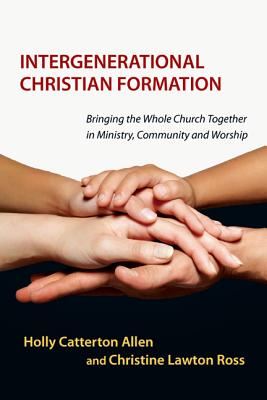
We hear lots of talk about being “authentic” these days.  He shows us what it looks like.  There are chapter titles like “The Big Six” and “Focus, Focus, Focus” and “Right Belief, Right Practice – Equal Partners?” He is all about getting beyond the “sacred/secular divide” (did he read that Kuyper essay of mine? Ha!)  I think you learn something from this, see some things in a new light, and — for leaders who don’t have a lot of time to read too much in any one thing — will be brought up to speed in some of the latest missional conversations and insights about making congregational life what it ought to be.

IIntergenerational-Christian-Formation-Allen-Holly-9780830839810.jpgntergenerational Christian Formation: Bringing the Whole Church Together in Ministry, Community, and Worship  Holly Catterton Allen and Christian Lawton Ross (IVP Academic) $22.00  It is always a delight to see mainline denominational leaders (in this case, Karen Marie Yust, whose books are on Chalice Press, and who works at Union Presbyterian in Richmond) endorsing books on historically evangelically publishing houses.  There is little doubt in my mind that this is the definitive book thus far on this vexing and much-debated topic.  How do we live out Psalm 145: 4 which invite one generation to commend God’s redemptive words to the next?  Allen and Ross have given us a comprehensive, thorough, systematic, and provocative study.  This rejects seeing church as largely (market-derived) demographics — which may appeal to what one friend calls “generational narcissism.”  There is practical stuff here, but it isn’t mostly a how-to handbook.  It is a rich, serious, mature rumination on the theology of church, the nature of Christian pedagogy, and what it means to be an inter-generational, diverse Body of learners together.  They look at worship, education, service and more.
When “Spiritual But Not Religious” Is Not Enough: Seeing God in Surprising Places,When-Spiritual-But-Not-Religious-199x300.jpg Even the Church  Lillian Daniel (Jericho Books) $19.99 You may know I promoted this earlier in the spring, naming it as a certain front-runner for my favorite book of the year, especially in the category of short, devotional essays.  I think I filed this under memoir.  And it is memoir-like; Lillian is a great storyteller, good, good writer, and a wise reporter, calling out sightings of Godly life here and there, as she sees it.  Alas, she sees it — surprise! — in ordinary stuff of ordinary churches.  
I know, it is more sexy to plant a hip, cool church with an edgy website.  I know your elders are supposed to have skinny jeans and you should have a craft beer night and latte art competitions; maybe you don’t even gather  — hey, it is cool to have virtual church.  Or, as many say, just skip it  —  Jesus isn’t about religion, anyway. God is alive and well in the world, so let’s talk about design and culture, and justice and visioneering. We can all be just spiritual and let it go at that.  Yeah, yeah, I get it. And so does Lillian Daniel, who does find God in a yoga class, or celebrates Christ’s grace showing up when encountering animals at the airport. (What a chapter that is!)

 But Lillian also lives in the world of fairly small, fairly ordinary, often struggling (but not always) mainline churches.  There are old people, children, liberals and conservatives, debates about using the old hymnal, versus the new (that isn’t so new) and the hard work of doing, well, fairly mundane stuff. For the folks of these churches, faith isn’t spectacular. And they haven’t heard about Crazy Love or Not a Fan.  These are the churches that have not been shaped by evangelical publishing or televised mega-churches. And it is the world Daniel, and many of us, inhabit.  And she makes it all glow, beautifully honoring through real-world essays about real-live ministry in common-place congregations.  She can be biting — the first, wonderful essay, especially, just sizzles with sarcasm. But she can be light-hearted and fun, tender and wise. I loved this book, about God, faith, social concerns, and, yes, mostly about ordinary Christian faith lived in ordinary churches.  This would be a really enjoyable summer read and might relieve some anxieties that your church isn’t as cool as it might.  Love it!

BBeingChurch-207x300.jpgeing Church: Reflections on How to Live as the People of God  John F. Alexander (Casc
ade) $29.00  I wrote about this book before, but have wanted to write with more depth about it, but haven’t been able to. Still, I simply can’t wait until I could review it at greater length to promote it again.  The late John Alexander took up the editorship of the magazine his father, Fred,  founded, The Other Side, which was about racial justice and inner city work and intentional community, and eventually so much more. They were fellow-travellers with Sojourners, in the 1970s and beyond. John Alexander’s writings have been exceptionally influential in my faith journey and his two previous books are among my favorites — they are feisty and radical and amazingly challenging, taking Jesus and the culture we live in, seriously. 

By the 80s he had ended up nearly losing his faith, nearly paralyzed with activism and high expectations about communal living; he left The Other Side and became a house church member out West, speaking, writing, pastoring. He had returned to robust, sustainable faith in a less ideologically left-wing way, and in a more intentional manner drawing on historic orthodox Bible teaching, including inputs from sources as diverse as the best of Francis Schaeffer and the radical Anabaptist folk.  He was influenced by the philosophical ethics of Stanley Hauerwas (and his rejection of liberalism’s view of rights) but more, his view of church as an alternative polis.  And he got cancer, and died in 2001.

John was a Wheaton trained philosopher, a justice and peace activist, and a house church/ intentional community advocate, and a servant of others.  This book is a collection of his pieces that were to become a book, put together posthumously.  It is a major work (with extraordinary footnotes, indicating a huge range of reading) on the nature of the church and happily, it does not feel unfinished.  It is truly amazing, challenging, wildly Christ-like, raw, real. It is witty and biting and well-thought out.  It is big on relationships (love and unity), on servanthood, social justice, grounded in grace, grace, grace and the mercy that flows from being forgiven sinners in a broken world.  There are glimmers of joy, but it isn’t upbeat.  There are signs of hope, but it isn’t cheap. There is theology, philosophy, pop-culture, Biblical study galore,  history, politics — making it a book that defies description.  There is an excellent forward by Jonathan Wilson-Hartgrove, and it is featured as a part of the important series on new monasticism called the New Monastic Library. Here is a piece Jonathan wrote at Patheos about John, “The Soul Friend I Never Knew.” 

Intense endorsing blurbs on the back are by Ron Sider, Tony Campolo, Mark Scandrette and Chris Rice. All say the most amazing things about this most amazing book.  I dare you to read this and not be driven to profound consideration about the nature of church and the nature of discipleship itself.  Very, very important.

Lletters-future-church-words-encouragement-prophetic-appeals-chris-lewis-paperback-cover-art.jpgetters to a Future Church: Words of Encouragement and Prophetic Appeals  edited by Chris Lewis (IVP) $15.00  We all know the letters to churches in the early part of Revelation.  Suppose the Spirit was inspiring people to write to churches today.  Suppose you could write a letter to church folk you know? You have one shot — what would you say?  How would you say it?  Lewis compiled this marvelously interesting, provocative, and stimulating book as a set of letters from all sorts of leaders, mainline and evangelical, Reformed and otherwise, social action-oriented and profoundly contemplative.  As the sub-title suggests there are gentle works of good encouragement and there are hard-hitting calls to prophetic action.  Here, you’ll real missives from Shane Claiborne and Tim Challies, from Rachel Held Evans and Walter Brueggemann.  There are pieces by John Ortberg and Will Willimon. The famous black preacher Gardner Taylor has an eloquent piece and so does Eugene Peterson.
Many of these letter-writers are young, or a bit on the margins of typical congregational life.  There are edgy thinkers like Peter Rollins and artist like Mako Fujimura.

One of the devices which adds an extra “wow factor” to this  interesting compilation is a set of four pieces by our acquaintance Janell Anema, who shares insights of her growing up as a super-churched kid, writing  a forward, a piece from her 16 year old self, as a 22 year old, as a 25 year old, and then a closing reprise.  Which is to say, these letters are not an excuse for pontification, but are all heartfelt hopes for real congregations — not abstractions! — that minister to and with people like Janell.  I’ve recommended this book before, and am happy to suggest it again.

Pprodigal christaity .jpgrodigal Christianity: 10 Signposts into the Missional Frontier David Fitch & Geoff Holsclaw (Jossey Bass) $24.95  I have respected these two deep thinkers for quite some time, and was glad to see this new book in the esteemed, useful “Leadership Network” series. I am not necessarily Anabaptist, but I greatly appreciate that Fitch and Holsclaw have brought a serious commitment to local body life in light of Yoder and other Mennonite theologians in their broad contribution to missional church conversation. That this book has gotten rave reviews from Scot McKnight, Alan Hirsch, Alan Roxburgh and others speaks a lot. They are both scholars and practitioners, so I want to hear their story.  I have not read this yet, but believe me, after just looking at the table of contents (and some videos of them speaking about it on line) I was hooked.  It is on my stack, one I will personally work through this summer.  I like what Gary Nelson, President of Tyndale University and Seminary in Toronto says, (they) “do something with Prodigal Christianity that most authors can’t pull off. They hold the tension between the prophetic and the priestly. As a result they make some readers squirm and others question.”  I like that there is an emphasis on the local, on being an incarnation of the gospel in the neighborhood.  I think these “10 Signposts into the Missional Frontier” are good pointers, and we should join the journey.

For what it is worth, I think our store carries almost every book published by mainstream publishers on the missional church.  Bunches; we’ve got bunches. We have some odd-ball ones, too, self-published and obscure, or specially ordered from overseas.  Too many start to sound the same.  I am confident this one does not, is a deep wrestling with real issues, and is an important contribution to the vision and practices that many of us trying to absorb and embody. Although this is largely around being missional faith communities in post-Christian North America, the authors are both very fluent in the emergent conversations, as well.  You may not like everything they say but I think anyone who reads this will be able to find something wise and good and useful here. 

Buying any of these will be money well spent.  Your church friends will thank you, as it always is g
ood to have folks in the church who are thinking intentionally about what it is we are and what it is we do. These are interest and raise the right questions. They each tell moving stories. I hope you find that they bear fruit in your place, for God’s glory. Let me know what you think. 

BookNotes
SPECIAL
DISCOUNT
ANY ITEM MENTIONED

20% off
order here
takes you to the secure Hearts & Minds order form page
just tell us what you want

inquire here
if you have questions or need more information
just ask us what you want to know

                   Hearts & Minds 234 East Main Street  Dallastown, PA  17313     717-246-3333
                                                            read@heartsandmindsbooks.com
  

13 Books for Mainline Protestants, or Anyone — 20% OFF

A COLUMN AND A FREE BOOK
Back before my two Father’s Day posts, I did a long piece that you may not have seen.  It waschallenges of cultural discipleship.jpg a heart-felt cry but too long to share here at BookNotes so I posted it as a “column” at the website, where I publish longer pieces and bigger lists.  I hope you read that ramble through reformational distinctives, some of the problems with the too-narrowly focused (so-called) new Calvinists, and why many churches – mainline denominational and indie evangelical alike — despite their best theological instincts, sometimes fail to offer a rigorous, embodied, practical “in the world but not of it” sort of perspective for faithful cultural engagement.
I ended the essay by describing (among others) a serious book published by Eerdmans written by Richard Mouw called The Challenges of Cultural Discipleship and I offered a free book, too.  Check it out, here. 

Everybody talks about vocation these days, but there is still only meager interest in books that invite intentionally theological thinking about how to relate faith and work, and few churches do all that much to equip lay people to life faithfully in their various spheres of life.  Public theological, cultural engagement, living out a vision of vocation – these are hot topics, but not as much is actually happening, I fear.  We are still too embedded in a narrative that divides the sacred and the secular; we still fail to connect worship and work, Sunday and Monday, we still don’t fully appreciate the implications of the gospel of the Kingdom of God.  Anyway, that column and the books I name there was more of my lamenting all of this, and, again, reflecting on how we came to this vision, and why we offer the resources we do. Of course, as I’ve said before, it was Kuyper’s reformational worldview that caused us to want arrange our store with these kinds of interests in mind.

We are glad you care, and share these concerns.

WAS I TOO HARSH?
I may have been a bit harsh, especially regarding my own mainline Protestant heritage. I know that the culturally-transforming worldview of Dutch neo-Calvinist Abraham Kuyper isn’t known in most mainline churches and even his late 20th century popularizer Francis Schaeffer isn’t known, let alone valued and studied. So as I write about this stuff, I feel a bit weird, marginalized, cryptic, even.  I suppose I realize why more traditional Christian bookstores are more successful. I didn’t mean to be sound grumpy. But I am frustrated when church leaders don’t help people relate faith and daily life and professional callings, or draw upon the resources that best promote that kind of integration and engagement. We know you share these concerns, longing for communities of faith that read and study, learning to apply faith to work and culture and all areas of life.

It is obvious that many mainline leaders and their flocks are good, good people of profound faith who desire nothing more than to bear witness to the power of the gospel. We attend a mainline church, as you know. The evangelical world has more celebrities and ministries known in the media, and evangelical publishers are doing the most lively books these days.  Granted. But we see many signs of life in ordinary, mainline churches.

I still appreciate the book Christianity for the Rest of Us: How the Neighborhood Churchchristianity for the rest of us.gif is Transforming the Faith (HarperOne; $14.99) by my friend Diana Butler Bass. Whether you are firmly situated in a ordinary, traditional congregation, or a hipster new church plant, or a conservative-leaning community or mega-church, seeing the practices she holds up and reading the stories of smaller, faithful churches doing good Kingdom work is helpful.  This book was hugely popular a few years ago and I think remains a classic in the field.   
I started writing some of this while selling books with good friends who are clergy within the UCC.  What a great time we had with them. (And they bought a lot of books, too, including Diana’s more recent book Christianity After Religion: The End of the Church and the Birth of a New Spiritual Awakening (HarperOne; $14.99.) They didn’t need me to tell them what a good writer she is and how fascinating this thesis and research is.  They are eager to push envelopes where needed, and I admire their book buying gusto!

And then I wrote more while Beth and I were selling books at a large local Lutheran Synod gathering while they were prayerfully voting for a new Bishop.  I actually know a few of the candidates whose names had been lifted up and I know they are wonderful Christian leaders, who serve the church with energy and insight. 

We regularly experience similar congeniality among our good friends – very good friends! – in United Methodist, Presbyterian, Brethren, Moravian, Episcopalian, Anglican, and other denominations where we have served.  Many BookNotes readers are involved in independent, conservative or evangelical churches, but we know there are lots of mainline Protestant and some Catholic fans, too. For this we are grateful.

After my long-winded jeremiad over at the columns, I thought I should do a more typical H&M list.  I’ll try to be succinct.
 
Here are 12 books among the thousands we took to the Susquehanna Synod Lutheran assembly (not to mention a healthy display of books by and about Luther.) These recommendations illustrate what mainline Protestants are interested in, what sells at events like this, and the sorts of titles and topics we notice people chatting about.
 
As we did at Synod, we show the regular retail prices, but have the 20% off discount deal going on.  Click on the order form link at the end which will take you to our certified secure website page, and just tell us what you want.  We’ll take it from there, sending these out promptly to you or your church.  Enjoy this list, generated at a mainline church gathering, interesting books for typical mainline pastors and church leaders. Maybe you could call this a top list of things these churches do well.  Good stuff, for sure!

Ffinding god in a bag.jpginding God in a Bag of Groceries: Sharing Food, Discovering Grace Laura Lapins Willis (Abingdon) $15.99  Leave it to a major mainline publisher to have an endorsement by Desmond Tutu, Franciscan guru Richard Rohr and Pulitzer Prize-winning historian and journalist Jon Meacham. This is a great example of what mainline churches have done well for generations – motivated people who, without much hoopla, get in their cars and deliver food to others. (Both Beth and I grew up knowing our parents were involved in the service called “Meals on Wheels.” This memoir tells of a woman who considered becoming a priest, got involved in a small food pantry, and came to realize how this ministry of offering food to others transformed her own soul. Don’t we all hunger, for God and sustenance, for community and justice and love? This is a great story by a good writer and experienced community organizer.  I’m glad for the social service witness of our friends here in the display hall, where
more than half of the booths are great examples of concrete service and advocacy on behalf of “the least of these.”
 
TWelcomingCongregation.jpghe Welcoming Congregation: Roots and Fruits of Christian Hospitality  Henry G. Brinton (Westminster/John Knox) $17.00  Mainline churches are all abuzz talking about hospitality, inclusion, graciousness.  They are right about this, of course, that we are called to offer graceful welcome to all.  There have been many writing on this lately, good studies, and this one is in their debt (that is, it is theologically rich and astute.)  This is designed as a congregational study, a reflection on faithful practice of churches that build community and what comes of it all. Good reflection questions at the end of each chapter. This is a great read for anyone, and certain will offer guidance for those wanting to achieve greater openness and diversity.  The author is senior pastor of Fairfax Presbyterian Church in Fairfax VA.
Sscattering seeds.jpgcattering Seeds: Cultivating Church Vitality  Steven Chapin Garner and Jerry Thornell (Alban Institute) $17.00  This is a recent book published by the Alban Institute, a publisher that does many research-based, best-practices sorts of books for mainline church leaders.  We take almost everything they do to these events, squeezing them all in.  So  many are useful, on church vitality, on leadership, on conflict or congregational systems, or congregational redevelopment and so much more.
 

This book is a fine example of much that we like about the mainline churches — the congregation seems balanced, politically progressive, deeply interested in the gospel and the leading of the Holy Spirit. I’ve read their other books, and this is full of stories and ideas.

Listen to what UCC pastor Martin Copenhaver writes:

The religious landscape of our country today is a picture of general decline, but with pockets of vitality — dynamic congregations energized by the Holy Spirit in ways that are inspiring and instructive. They play the role the abbeys played during the Dark Ages, preserving the tradition and building upon it. Chapin Garner and Jerry Thornell serve just such a faith community. There is so much we can learn from him and from the congregation they lead. 


A
unhurriedlife_sm.jpgn Unhurried Life: Following Jesus’ Rhythms of Work and Rest  Alan Fadling (IVP) $15.00  Mainline churches, like most people of faith these days, are interested in questions of spiritual formation, and know that principles of Sabbath are key to Biblical renewal.  Doesn’t the cover of this book speak volumes – the go, go, go of the speedboat with much noise and splash in its wake, and the slower, quiet, but somehow appealing paper boat floating along at a more graceful human scale? Are you a recovering speed addict?  Nobody suggests we ought not work hard  and there are times we do have to go fast.  But few of us have the work/rest rhythm quit right, so this book should have universal appeal.  Jan Johnson (we sold her book Abundant Simplicity the first day here!) says of it “greatness of soul requires an unhurried life.” She interestingly says it is a perfect follow up to The Contemplative Pastor by Eugene Peterson.  Whether you are a clergy person or not, this book is for you.  It is very profound; highly recommended, wonderfully written, and certainly speaking wisely to one of the great concerns of our era.

C51PNCadb9NL._SY300_.jpghurch, World, and Kingdom: The Eucharistic Foundation of Alexander Schmemann’s Pastoral Theology  William C. Mills (Hillenbrand Books) $18.00  We always feel at liberty to bring Catholic and Orthodox books to mainline events, and this Lutheran gathering certainly shows interest in the liturgical tradition. I hope you know the must-read For the Life of the World by Schmemann – it gets at the sacramental nature of an enchanted, being-redeemed creation as well as almost anything – and this study reflects on his view of pastoral work.  As an Orthodox theologian, he wrote exquisitely about the assembly of God’s people in worship, and how liturgy shapes the calling of the pastor.  Maybe you, like me, don’t know that much about Orthodox views of Baptism and Eucharist, but any pastoral leader could surely learn from this brief book. Kudos to Lutheran clergy who desire mature and faithful worship, and know that any renewal of public witness will emerge from ministries of Word and Sacrament.
 
Tfour-gospels-on-sunday-new-testament-reform-christian-gordon-w-lathrop-hardcover-cover-art.jpghe Four Gospels on Sunday: The New Testament and the Reform of Christian Worship  Gordon W. Lathrop (Fortress) $49.00  Lathrop is the renowned and vibrant professor from Lutheran Theological Seminary in Philadelphia. I have often talked about his heavy three-volume set Holy Things: A Liturgical Theology, Holy People: A Liturgical Ecclesiology and Holy Ground: A Liturgical Cosmology, a powerful trio that brings to mind the aforementioned Alexander Schmemann. Those are certainly worth reading.  Lutherans should be glad for this new book which is both scholarly and beautiful, bringing together his two great specialties of Biblical studies and liturgics. We could all learn from this.  This is a truly beautiful, solidly-made book, of great importance, but I wish it weren’t so expensive. I know it would sell better here if it were more reasonable.  Maybe the discount will help.

F
feasting on the word worship comp.jpgeasting on the Word Worship Companion Year C Volume 2 edited by Kimberly Bracken Long (Westminster/John Knox) $35.00  Most of our readers know of the extraordinary resource called Feasting on the Word, co-edited by Barbara Brown Taylor, a four volume set of preaching commentaries on each text of the lectionary for each liturgical year.  (That is, there are four volumes for Years A, B and C, making Feasting a 12 volume set, in all. Each volume offers four different perspectives on the pericapes of the day (an exegetical, theological, pastoral, and homiletical view) and they are by far the most talked about preaching resources we’ve seen in our 30 years of theological bookselling.) This new Worship Companion is the second of a two volume set for each year, offering liturgies drawn from Feasting.  This one, obviously, is for use now, the second half of Year C.  It starts on Trinity Sunday and ends right before Advent.  There are weekly calls to worship, c
onfessions, lectionary-based prayers, responsive readings, benedictions and the like. The wording is elegant but contemporary; theologically rich and generous. Comes  with a CD-ROM for easy use making bulletins, etc. Long is a Professor of Worship at Columbia Theological Seminary, which is Presbyterian CHurch (USA.)

Wworship as repentence.jpgorship as Repentance: Lutheran Liturgical Traditions and Catholic
Consensus
Walter Sundberg (Eerdmans) $18.00 Here is what it says in the
back.  A friend raved about this to me, so thought we’d recommend it:
“Against contemporary trends that conceive of Christian worship
primarily as entertainment or sheer celebration, Walter Sundberg argues
that repentance is the heart of authentic worship. He outlines the
history of repentance and confession within liturgical practice from the
early church to mid-twentieth Protestantism, advocating movement away
from the “eucharistic piety” common in mainline worship today and toward
the “penitential piety” of older traditions of Protestant worship.” 
This illustrates the significant discourse happening among the best
mainline clergy.  Not all are this astute, but when evangelicals
caricature traditional worship as nominal or blase, they simply aren’t
aware of the kinds of reforms happening within the mainline.  Important
conversations.

Zzionism through .jpgionism Through Christian Lenses: Ecumenical Perspectives on the Promised Land  edited by Carole Monica Burnett (Pickwick) $25.00  I am sure you know that mainline churches are strong on public justice advocacy, that their global denominational connections allow them to be in communion with brothers and sisters all over the world. In this powerful collection of essays you can get solid, Scripturally informed and political contextualized chapters by a Lutheran, two Roman Catholics, two Episcopalians, an American Baptist, and Eastern Orthodox Christian and a UCC pastor.  This explores ancient Israel’s covenant, the early church’s theological insights and the post-Reformation experiences of various branches of Christianity around this question of whether we are called to be pro-Zionist.  Naim S. Ateek, the Director of Sabeel Ecumenical Liberation Theology Center in Jerusalem wrote the passionate forward.  The author, by the way, is not only a peace and justice advocate in the Middle East, but is an editor of the Fathers of the Church series and an adjunct professor of Latin and New Testament Greek at the Dominican House of Studies in DC.  We’ve met, and I can assure you she is sharp and thoughtful.  This is an excellent book.  I am glad for the way mainline Christians have led the way to a balanced concern for peace in the Holy Land.
Ttruth speaks to power Brueggy.pngruth Speaks to Power: The Countercultural Nature of Scripture  Walter Brueggemann (Westminster/John Knox) $17.00  We take Brueggemann books anywhere we go where we take Bible stuff, and, naturally, he is esteemed in all sorts of circles. Lutherans know him as their publisher (Fortress) did many of his most famous books such as The Land, The Prophetic Imagination, and The Hopeful Imagination.  We are featuring a big stack of these right alongside others of his.  As I have mentioned in a previous BookNotes, he here looks at Moses, Solomon, Elisha, Josiah, and a final chapter called “Power and Truth Among Us.”  Amazing. Just amazing.  You should order this. Kudos to those in the mainline churches who have, in recent decades, redoubled their efforts to do serious Bible study in their parishes. I know there are some traditional denominations, who don’t have a particularly conservative view of the Scriptures, who study it more frequently and with more delight and intensity than their evangelical neighbors, who insist loudly that they are Bible-believing, but actually don’t study it that much.
 
 
Ggreen leaves for later.jpgreen Leaves for Later Years: The Spiritual Path of Wisdom Emilie Griffin (IVP/formatio) $15.00  Mainline pastors have been schooled well in pastoral care and it is evident that aging issues remain important for their congregations.  We take books about the greying of the church to all our religious events, and they are always discussed.  Here is one that we’ve sold a number of – Emilie Griffin is the author of a number of books, including some classics of contemplative spirituality; she knows formational literature very well, and has worked in this field a long time. Her good writing and her own life stage allows her here to offer a nearly one-of-a-kind book.  It is ideal for individuals or groups; it has great reflection questions and a prayer.  So well written – very highly recommended. By the way, we take all the formatio imprint of IVP almost everywhere we go — some of the very best stuff on spirituality out there.
H
healing marks.jpgealing Marks  Bruce Epperly (Energion Publications) $14.99  Bruce Epperly gets around and is well known in many circles – he is a Disciples pastor, not long ago served Lancaster Theological Seminar tirelessly and is the author of oodles of books.  He has published with the esteemed Alban Institute (we carry all his Alban titles, which are very well done) and he has worked with larger and smaller presses.  Here, in a book that ought to be well known, he offers a study of healing and spirituality (mostly from Mark’s gospel.)  Healing is multi-faceted and grace-filled. As his friend Kent Ira Groff writes on the back, “Jesus’ touching dirt-poor sick folks and well-heeled tax collectors bids us to spiritual practices and social justice using scientific tools.” That is, it is grounded in a critical study of the Biblical texts, uses deep psychological awareness to see touches of grace and healing that comes in many forms, and it is medically sound. (Bruce spent more than a decade as chaplain at Georgetown University Medical School where he also taught, innovating courses on faith, medicine, healing and wholeness. This isn’t a book of cheap miracles, but neither does it keep gospel transformation at arm’s length.  It is fascinating to see how many mainline churches anoint with oil and have (liturgically-oriented) healing services. We have this propped up for all to see.  And many of his other titles, too.
Wworship the lord with gladness.jpgorship the Lord with Gladness: God’s Children in Worship
Rita B. Hays (Abingdon) $18.99  This brand new study reminds us of the
important interest in mainline churches of helping children learn to
worship in the main worship service of the church.  This is a tremendous
study, great for teachers as it is so well arranged, helping younger children (kindergarten through 3rd grade, they say) understand what worship
is, learn what the Bible teaches about it, and appreciating different
aspects of typical Protestant churches.  It is fun, uses crafts and
activities for each of the 13 sessions, and kids get to learn about everything from understanding a
worship bulletin to the Apostles Creed to passing the peace.  This is
very highly recommended.

Wwhy do we have to be so quiet.jpghy Do We Have to Be Quiet in Church? And 12 Other Questions Kids Have About God  Clare Simpson (Paraclete) $14.99  This small hardback is a lovely little book, with great illustrations by Kay Harker, and is designed to answer typical questions younger children have about God and faith and church. We like this book and it is great here for at least three good reasons: it has a modern, contemporary feel; that is, it is artful and not too silly or cartoony.  Secondly, it has nuance and allusive hints to applying truth, unlike some books that are so didactic and heavy-handed. Thirdly, there are small hints of scenes of mainline church settings – pews, a pastor in a clerical collar, a Baptismal font. Children who attend ordinary mainline churches will recognize themselves in this. Why Do We Have To Be So Quiet in Church is a great little book, short and sweet, published by a contemplative Episcopalian publisher that we love.  That mouse is cool, too, eh?  Thanks to the Lutheran folk who bought kids books at their Assembly.  Kudos to all congregations who make room for kids of all ages and temperaments and needs. We have many, many more children’s books – I’ll list some others before too long.

BookNotes
SPECIAL
DISCOUNT
ANY ITEM MENTIONED

20% off
order here
takes you to the secure Hearts & Minds order form page
just tell us what you want

inquire here
if you have questions or need more information
just ask us what you want to know

                   Hearts & Minds 234 East Main Street  Dallastown, PA  17313     717-246-3333
                                                            read@heartsandmindsbooks.com
 

More Father’s Day suggestions — lesser known choices for Father’s Day and Beyond

A friend oh so gently chided me, maybe in jest, for the Father’s Day list from a few days ago.  It was a good list, I think, with a rather curious mix of titles.  7 Great Men by Eric Metaxas (Nelson) itself carries some very good writing about some very important men — from  William Wilberforce to Jackie Robinson to Dietrich Bonhoeffer.  So we remain confident that many of our readers liked the list.  Thanks for those who send us some orders — glad to be of service to you.

But my friend’s insinuation was that, well, it did play up to some fairly standard themes — road trips, being a good dad, being a great man, a hunter’s/camper’s devotional, a Civil War book.  Obvious.  Good, but obvious.

So here are some other titles I might have listed, grabbed quickly to remind you that here at Hearts & Minds we enjoy suggesting things that you may not have heard of, or may not have considered.  Betcha didn’t see these suggested at the Christian bookstore down the street.  Or at the big box store, either. 

Ffamilies living in the fabric.jpgamilies Living in the Fabric of Faithfulness: Parents and Children Describe What Works  Gloria Stronks and Julie Stronks (Outskirts Press) $18.95 Despite the bland cover, this is a book that I am confident will stretch you, make you think, invite you to deeper conversations, and will help you develop a worldview that is sufficient for the changing times and complex cultural crisis of the coming years.  The allusion in the title to Steve Garber’s serious, must-read study (you’ve heard us mention it here often) The Fabric of Faithfulness: Weaving Together Believe and Behavior (IVP; $17.00) is intentional.  It is a book taking Garber’s book and applying it to parenting. Stronks and Stronks have taught Garber’s book for years; they are educators and philosophizing moms, they are home-makers with a profound vision of how to struggle to raise families of compassion and service. They live the upside-down values of the ways of Jesus, in and for the world.
Ahh, but just how does one do that? How does one live what one claims to believe, how doesfabric of f.jpg one nurture sustainable, life-long faith, lived without cynicism, but with hope and vitality?
They take Garber’s 3-part thesis, and his elegantly told research, and his major points of cultural discernment and apply that work to parenting, teaching, home-making.  This book examine the way different Christians try to parent and raise families in keeping with their most profound believes, and what kind of “integration” of their faith story and their parenting they’ve experienced.

As they say on the back cover “this book captures moments in time as we live ina world that has been redeemed but not fully reconciled to God.  It captures our hopes, our beliefs, our struggles. And, it lets us learn not only from scholars, but from each other.”

If you’ve read Steve Garber’s Fabric of Faithfulness, you need to read this interesting, practical follow-up.  If you haven’t read Garber, but you like parenting books, do consider reading this.  You will then want to turn to his remarkable book, and dig in deep.  Kudos to Whitworth University in Spokane who helped fund the Stronks mother and daughter team and their own unique research, inspired by Garber.

Kkingdom-family-re-envisioning-gods-plan-for-marriage-trevecca-okholm-paperback-cover-art.jpgingdom Family: Re-Envisioning God’s Plan for Marriage and Family  Trevecca Okholm (Cascade Books) $22.00  There are a lot of books by professional Christian educators and church school instructors, but it seems to me that most books on marriage and family are  not written by those who do ministry with children.  This woman has served for decades, currently at St. Andrew’s Presbyterian (USA) Church in Newport Beach.  With an MA in Educational Ministries from Wheaton Graduate School, she knows what she’s doing.  Her book should be better known among us. 
What sets this apart and makes me list it here, is, well, this Kingdom vision that permeates the book.  There is a lot of talk these days about being missional, or Kingdom-focused and we use that language ourselves, here.  Have for years.  But most books about upholding the family or inspiring parents are less than wholistic, not framed by Kingdom language, and fail to connect God’s redemptive work in the world with the intimacies of our daily lives in homes.  Or it takes for granted, as this book does not, the legitimacy of the consumerist culture in which we live. As S. Steve Kang (who has written well on inter-generational teaching in the church) writers, “Okholm invites readers to re-envision — namely, to reflect, remember, recommit, and rehearse — the life of God’s Kingdom.”  The world needs Kingdom people, and God’s reign a-coming needs Kingdom families. This invitation to a better way is very, very good.

Sspirited men.jpgpirited Men: Story, Soul, & Substance  Brian Doyle (Cowley) $14.95  We only have a few of these left (it has gone out of print) but wanted to highlight it as it is so very interesting and, admittedly, a bit unusual. You may know Doyle as a fabulous Catholic writer, poet, storyteller, teacher.  He is the editor of the esteemed Portland Magazine.  There are endorsements on the back from poet Mary Oliver and the novelist David James Duncan, which gives you a huge clue to its caliber.  Here, Father Doyle ruminates in colorful prose about interesting soul men — from Van Morrison to Robert Louis Stevenson. What other book about men has a chapter on Plutarch of Greece (or William Blake or James Joyce?) Yep, many of these guys are shaped by their lives in the British Isles.  But there is an Australian, an American jazz man (Paul Desmond) and an American children’s author. Many you have heard of and a few you haven’t. Boyle suggests that he is offering “resurrections, restoration, reconsiderations, appreciations, enthusiasm, head-long solos, laughing prayers, imaginary meetings with most unusual and interesting men.”  Wow.
C
cultivating reality.jpgultivating Reality: How the Soil Might Save Us  Regan
Sutterfield (Cascade Books) $16.00 I don’t know if listing this here,
now, traffics in gender stereotypes (I’m currently reading a social
history of farm women in Iowa!) But for anyone who cares about land,
farming, the agrarian vision, or who just likes getting one’s hands
dirty, this is an amazing, perhaps one-of-a-kind book.  As Fred Bahson
writes of it, “Like tenacious alfalfa roots, which reach deep into the
ground and transfer essential nutrients to the soil’s surface, Ragan
Sutterfield digs deep into the subsoil of agrarian thought, Christian
faith, and his own experience as a farmer, and brings up life-giving
nourishment for all to share.”  What a graceful and creatively done
work, ruminating on land and place and the agrarian worldview of
farming, food, and faith.

Ggreen leaves for later.jpgreen Leaves for Later Years: The Spiritual Path of Wisdom  Emilie Griffin (IVP) $15.00  For those whose dads are getting up in years, and who are willing to read a book on contemplative spirituality by an older woman, this book is truly wonderful. She is a fantastic writer, has been writing about our interior lives for decades (and works still with Richard Foster’s Renovare ministry.) She has written about the workplace (she served in a corporate job in New York) and she has written about aging.  But she is most know as an eloquent teacher and fine writer about prayer.  This spiritual path of wisdom is for men or women, the aged, or those who plan to be.  Ha.  What a great little gem of a book.  Her friend poet Luci Shaw writes “Emilie Griffin writes grittily, wittily, and transparently. For Emilie, pain and transcendence live in the same body… A story of amazing grace and faithfulness.”


lamentations of the father.gifLamentations of the Father Ian Frazier (WJK) $10.95  I almost forgot about this — we had so much fun with it years ago.  It is a small, comic, gift book, designed for dads with small children.  It is written to children as if by an Old Testament prophet, or maybe as if from Leviticus.
For instance,

Cast your countenance upward to the light, lift  your eyes to the hills, that I may more easily wash you off.  For the stains are upon you; even to the back  of your head, there is rice, thereon. 

This is how he starts a long diatribe about the complicate, but gracious, rules of getting desert.

For we judge between the plate that is  unclean and the plate that is clear, saying, first, if the plate is clean, then you shall have dessert. But of the unclean plate,  the laws are these:..

Or, a personal favorite,

And though your stick of carrot does indeed resemble a marker, draw not with it upon the table, even in pretend, for we do not do that, that is why.

Thou shalt howl with delight, thou wilt, and you will want to read it out loud to other irreverent parents.  The great illustrations by Bruce Zick are fun, too. We have this edition, while supplies last. The pieces found here are also found in a larger collection of essays by the author, without the illustrations.

Uunder constr.jpgnder Construction: Reframing Men’s Spirituality  Gareth Brandt (Herald Press) $13.99  Let it to the Mennonite’s to offer a profound, wonderful book that deconstructs the macho, pseudo-military, kick-butt, worldly vibe of many current evangelical men’s books. I have reviewed this before, and it celebrated it as a mature, wise, careful, nuanced, and good study of men’s ministry, pondering a truly Christ-like vision of masculinity. There is a foreword by the wonderful spiritual director and pastor Arthur Paul Boers.  There are candid stories, it is disarming (in more ways than one.) I appreciate his rejection of the warrior imagery as a main metaphor for Christian men.  He is a dreamer. He is a real man. He is a solid Christian.  He’s given us, here, one of the more important studies in the field.  Really, really nice.
Ffrom the belly of the whale.jpgrom the Belly of the Whale: Poems of the Male Soul N. Thomas Johnson-Medland (Resource Publications) $17.00  Tom is an ordained United Methodist clergyman, has been a camp director, a garden-to-table chef, and now is CEO of a prominent hospice ministry. He is also a great writer and poet.  There are some good poems here about hiking, including a whole section called “Yosemite at Fifty: The John Muir Poems” which are very nice.
As his Franscian friend and popular men’s author Richard Rohr writes, “Men are rediscovering poettry if it speaks to their honest experience, people are rediscovering poetry when it is accessible and evocative. Well, here it is — for your discovery and enlightenment!”


W
weakness.jpgeakness is the Way: Life With Christ Our Strength  J. I. Packer (Crossway) $14.99  This is a small, compact hardback, sans dust-jacket, making it a cool-looking little gift. It is also a truly stunning work, a powerful remind of gospel-centered truth.  Christ is our strength.  We can embrace our frailties — whether one is wracked with pain, wracked with anxiety, or facing the common ailments of aging. Most of us try desperately to be sufficient on our own, and we resent our limitations and our needs.  Packer (who you should know is a very popular, thoughtful, Reformed theologian and gracious Bible teacher) was hit by a truck as a young man and is of course himself facing now his own older years and he is candid about that. Drawn from 2 Corinthians.  Watch this brief, but very moving,YouTube video of Packer talking about the book, here.
Llike dew your youth.jpgike Dew Your Youth: Growing Up with Your Teenager Eugene Peterson (Eerdmans) $16.00 Holy moly, did you know that Peterson had a parenting book? Written early in the career of the careful, slow, mature theologian and spiritual author, it is nonetheless nearly timeless.  Granted, there isn’t anything in it about facebook or social networking with kids, but his wisdom is enduring and profound, his writing eloquent.  He claims that adolescence is a gift from God to the parent of middle-age.”  This is not your most typical book of can-do parenting advice but it is sage and solid.

Peterson is one of those authors that I think we should read anything he writes.  I’m glad this is still in print, and we commend it, for Father’s Day or for anyone who cares about teens.

BookNotes
SPECIAL
DISCOUNT
ANY ITEM MENTIONED

20% off
order here
takes you to the secure Hearts & Minds order form page
just tell us what you want

inquire here
if you have questions or need more information
just ask us what you want to know

                   Hearts & Minds 234 East Main Street  Dallastown, PA  17313     717-246-3333
                                                            read@heartsandmindsbooks.com

10 Books for Father’s Day — or any day! 20% off

77 .png Men and the Secret of Their Greatness  Eric Metaxas (Nelson) regularly $24.95
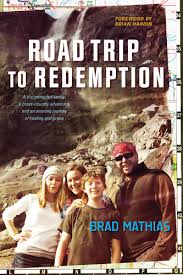
Special Sale Price only $18.99 – this week only. Offer expires June 15, 2013. 

One could hardly select a more perfect book
to give as a Father’s Day gift. This is sturdy, well- designed hardback,
written by a lively, respected writer, about being a great man. It is inspiring, interesting, and quite informative about great stuff from various eras of mostly modern history.  Many women will enjoy this, too, but it
is a book about men, their secrets of success which is, finally, not about
being successful, but rather about being committed to the harder path of being faithful, wise, good. In another author’s hands, these stories
could be overly moralistic, all about charming virtue, but not all that interesting or
profound or captivating.  Instead, Metaxas gives us
stunning portraits, gritty examples of authentic, real-world heroes, living in the complexities of real history.   I think this is a great book.

Some were not what one might call traditionally Christian
(George Washington) while others were renowned for their socially engaged, evangelical faith, such as we see in the excellent chapter on William Wilberforce.  Some were once scoundrels (the Chuck Colson
chapter really is a great read; like him or not, it is a splendid testimony of
God’s remarkable grace and Colson’s radical discipleship.)  There are two sports figures included, and both
have stories layered with pathos and profundity and Metaxas does them justice: Jackie Robinson and Olympic
runner Eric Liddell. 
(Interestingly, both had movies made about them, too.)  Pope John Paul II is here, as is
Dietrich Bonheoffer, described in a marvelously succinct re-telling of Metaxas’
popular, thick Bonheoffer bio.  What’s not to
like?  This is a great choice and
we are happy to promote it at an extra discounted price this week.

You know we have promoted Metaxas’ several other books, that we enjoy his
style, and appreciate his scholarly chops, always delivered with a light, playful
touch.  He’s a great figure in today’s religious publishing and we like him a lot.

Os Guinness says of 7 Men

This is a book to read, to read aloud to
others, and then to read again. In a day when children are growing up stunted
because of our of empty-headed celebrities and contemptible villains, true
heroism and manliness need special nourishment. Eric Metaxas has done it again,
and again we are in his debt.

Rroad trip to redemption.jpgoad Trip to Redemption Brad Mathias (Tyndale Momentum) $14.99  This book is amazing, pretty well written, passionate, raw.  The author admits to being so seriously involved in his work that he terribly fouled up his marriage.  Further, he had an affair, and ended up living separated, in another state from his wife and children.  God spoke to him in a pretty dramatic way and, long story short, he profoundly repents, returns to regain his wife’s trust, and through a miracle of God’s grace, is reunited.  But that is merely the backstory, told in the opening chapters.  Later, Mathias finds that he is growing distant from his teen kids — one maybe never forgave him from his earlier failings — so he and his wife and kids do a long road trip across the country. 
This book narrates this heart-stirring, hair-raising trip and although it is firstly a great USA road narrative — part Jack Kerouac with a touch of the hapless Griswalds maybe — it is also about rebuilding family trust, about dads and daughters, a dad and his son, a husband and wife.  Mathias was desperate to get everything right after his return to his family, lost control, and then, through this risky, wild journey, sees the country and gets a new perspective on his kids, and learns a lot about parenting.  There are some suggestions at the end, too, if you want to try such a journey.  Most of us won’t, but for some reason, the advice is still helpful to read.  And the story itself is a blast — very fun, poignant, and inspiring.  Been through hard times?  Been on road trips with your fam?  This book brings it all together, with (yep) vacation pictures.  Ha.  This is a fine, fun book and I think will help many who may not read a more traditional parenting book.

Mmanhood restored.jpganhood Restored: How the Gospel Makes Men Whole  Eric Mason (Broadman & Holman)
$14.99  Eric has spoken (which is a mild world for his passionate, loud, edgy, preachin) on the main
stage at the Jubilee conference in Pittsburgh a few times and he’s brought the house down. His hip-hop style
is powerful, and particularly interesting to many young men these days, black and white.  Eric is the founder and
pastor of Epiphany Fellowship in inner city Philly, and is a strong, theologically serious
presence in urban ministry there. 
Matt Chandler says this book is “bold, fearless, Scripture saturated.”  Tony Evans says “This fine work by one
of my sons in the ministry does a masterful job of unearthing the biblical teaching
of the Creator’s intent in creating men.” 
This new book is arranged in three parts – the scope of manhood, the
problems in manhood, and, thirdly, the redemption of manhood.  There is theological depth, here, the
footnotes include lotseric mason red tie.jpg of Greek or Hebrew words, referencing study tools of the
Bible student.  

There
are some
references to the African American church tradition, but it is not
necessarily
a book for African American men, although I trust black men will
especially appreciate it. (Epiphany is a mixed race, urban church.)  Manhood Restored is for anybody who wants an energetic, well-informed, straightforward, intense, traditionalist
view of men, manhood, fathering, and how the gospel alone can make it all
happen as it should.  Very solid by a guy I am sure is going to have other books in years to come.
Right on.

Sstations of the heart.jpgtations of the Heart: Parting with a Son  Richard Lischer (Alfred Knopf)  $25.00  It is notable that a Lutheran clergyman, Duke Divinity
school theologian and professor and classy writer is published by one of
the most prestigious publishers in the land. But it isn’t surprising, really — perhaps you know his exquisite book on preaching, The
End of Words
, or have seen him in the Christian Century. He’s a splendid wordsmith and sage thinker.
It is more notable, I think, that such a public figure would
bare his soul with such candor, sharing an intimate memoir about the death of his adult
son.  Some have called this
poignant love story “at once funny, heartbreaking and hopeful.”  There is much wit; it is well written;
although emotionally-riveting, it “probes the heart without sentimentality or
self-pity.” For those who appreciate literary memoir and subtle, mature views of faith, this is may become an enduring classic in the genre.

Here is a sample paragraph from it:

He was so young and inexperienced he thought he had
discovered a new way to die. All my wife and I could do was keep him company
and follow him on what he somewhat dramatically called his “new path.”  His new way, which was actually a very
old way, carried him beyond the starts to the very origins of his universes and
to the source of everything he loved. We traveled the path with him, but at a
respectful distance behind him, learning from him and trusting him to show us
the way. The last leg of his trip took him exactly ninety-five days.  We never imagined how much grace would
be required for so brief a journey. Now we rely on it every day.

I suppose a book about grief and a couple losing an adult son is not the standard Father’s Day fare, and it may not be suitable for many families.  But I have this hunch that it will be a thoughtful blessing to somebody.  It is well-written, moving, often very sad, and very, very good.

Ggod on the rocks.jpgod on the Rocks: Distilling Religion, Savoring Faith  Phil Madeira (Jericho Books) $24.00  This brand new book is very creatively

written, more or less a life story of a former Baptist boy, Christian rock
star, esteemed studio musician and Americana guitar man. Currently in Emmy Lou
Harris’ band, Madeira has played with everybody from Phil Keaggy to Elvis
Costello, from edgy Christian hipsters like The Choir to top-shelf bluegrass
stars like Alison Krauss.  But this
book is not just the story of a storytellin’ Nashville staple, although he does dish a bit about some fellow performing artists, but it is the
record of the journey of faith of a thoughtful, honest, and often funny,
doubting Thomas.  As the great
Episcopal novelist and memoirist Ian Morgan Cron says of it, “If you’re a
cage-pacing, God- haunted pilgrim like mphil m.jpge, then this deftly penned collection of

stories will deeply move you. Madeira’s voice is gritty and tender, broody and
vulnerable, unwaveringly honest, yet compassionate. I’m supremely grateful for
this heartfelt travelogue of faith.” 

Perhaps you know the CD (which we carry, natch) Mercyland:
Hymns for the Rest
mercyland.jpg of Us that Maidera pulled together — it has songs from The Civil Wars, The North Mississippi All-Stars, the Carolina Chocolate Drops to Emmy Lou to Matt Kearney to Buddy and Julie Miller.  It is firmly grounded in the Americana roots sound and replete with Southern faith
traditions, layered with questioning, social criticism, honesty, and a pinch of righteous anger; think Flannery O’Connor, maybe.  It’s a really fine album, and
in many ways is the perfect soundtrack for this fascinating and creatively
written set of reflections on Maidera’s faith and family, experiences of church, somewhat changing understandings of God and the call to justice, hope, beauty…

I agree with Amy
Grant who writes of her friend “Thank God for a storyteller like Phil Madeira,
who delivers a feast for the ears, and for the mind…” God on the Rocks is a very cool book that
will take you on your path of discovery, hearing some great stories — like most good storytelling traditions, you almost wonder if some of this is really true! — and the (slightly irreverent) pondering of great mysteries. He doesn’t have the faith thing all sewn up, and God is too big to fit simply in his back pocket.  Do you know somebody who needs a book like this?

Tgod of the mundane.jpghe God of the Mundane: Reflections on Ordinary Life for
Ordinary People
  Matthew B .Redmond
(Kalos Press) $12.95  First, you
should notice that this is the same publishing house as the The Exact Place, the wonderful 2012
memoir by our friend Margie Haack, of Ransom Fellowship. 
This publisher delights in finding good writers, solid Christians who do
literary work that, in some ways, defies categories.  In this case, this is a memoir-like set of meditations on
practicing the presence of God, a manifesto about honoring all people in all
careers or jobs, and a bit of a reminder that God doesn’t always expect us to
be remarkable.  Can we find joy and
meaning in truly ordinary stuff? Can we take – as the funny old fashioned
carnivalesque poster cover design shouts – “A Breath-Taking Escape from the Fantastical?” (That’s great irony, eh?) Yeah, when they say “Ladies and
Gentleman, we are pleased to present…” Matt Redmond in “His First Appearance in
Decades” as “Your Host and Guide” you know it is going to be clever.  This guy boasting about not doing too much, becomes, in some sort of subversive way, a great celebration of God’s great gospel; it is a book about grace, about being “good enough” in an age when it seems even among Christians who ought to know better, we want the sensational and something to prove our worth.  So, this wise rumination of an ordinary Christian life teaches that we need
not be remarkable.  This book is
about real, small-town pastors and plumbers and common folk who eat chicken fingers and stay
home watching movies.  It is about
the God of the ordinary, the commonplace. The quotidian.

And it is
brief.  The medium really is the
message, man.  A simple book on a simple theme, that is, though, very well written.  Enjoy!

Hhappy.jpgappy, Happy, Happy: My Life and Legacy as the Duck Commander 
Phil Robertson (Howard Books) $24.99 Have you see the A&E Duck Dynasty show yet? What a hoot – it is smart, funny, snarky,
red-neck as can be, and yet gently Christian and pretty solidly moral.  I had no idea how addicting this is,
and can’t wait to read the new book about it all.  I don’t care if you live in sophisticated New York City,
slick LA or inner city Chi-town. This is crazy fun.  Give your dad this
ticket to rural Louisiana.  Reading about
it, though, thank goodness, means you don’t have to deal with the snakes and mud.  An easy, upbeat, inspirational read.


Bbiking across.jpgiking Across America My Coast-to-Coast Adventure and the People I Met Along the Way Paul Stutzman (Revell) $12.99 The first book this guy wrote was a big seller, and very well loved. People would come back and buy extras to give away. Hiking Through was his account of hiking the Appalachian Trail as he coped with the

grief of his deceased wife.  This
one allows the author to see other parts of the country, meet more people, and
tell a similar story of travel, faith, all sorts of hi-jinx and trouble, and a good bit of happy adventure. He goes from the coast of Washington State to the Florida Keys!  This is a very nice book, ideal for
bikers, fans of travelogues, and anyone who likes neat stories about ordinary folks all across
America.

Tthe civil war in 50.jpghe Civil War in 50 Objects Harold Halzer (Viking) $36.00  This is a bit of a neat fad, these days, and a good one, I think,

using this clever device to explore history.  In this case, the author, with help from historians at the New-York Historical Society, choose ordinary artifacts — slave shackles intended for a child, circa 1800, John Brown’s pike, several different flags, odd uniforms, a snare drum, a diary, letters, battlefield sketches, official paintings, a footlocker, the first Dixie Reader, newspaper announcements, a sprig from Lincoln’s Bier, and so much more
— and arrange their telling of the war and its consequences by way of teaching about these
items.  This is unlike any Civil
War book you’ve seen, and may be a great gift for the guy who has it all. The New-York Historical Society, by the way, was founded in 1804 and is still operative today.  This is a very handsome book, a real keeper.

Mmossy.jpgossy Oak Trail Guide: Featuring Devotions from The Message: Solo  (NavPress) $19.99 This is a camo covered, slim devotional is ideal for hunters or outdoorsman.  It includes some true stories of hunting and wilderness survival, has some outdoor survival conditions info, practical pointers even for tracking and dressing game. Best, the devotions are better than most in this genre —The Message Solo was devised with a “read/think/pray” process by Eugene Peterson — and has been for us a beset-selling devo (in a larger paperback edition) for years. This fuzzy-covered trail edition is pretty cool for guys that hunt or camp. Comes with a bright orange wrap-around paper sleeve  — hunter orange, get it? Yeah.

BookNotes
SPECIAL
DISCOUNT
ANY ITEM MENTIONED
except
7 Men And The Secret of Their Greatness
which is offered at the deeper discounted sale price of $18.99.

20% off
order here
takes you to the secure Hearts & Minds order form page
just tell us what you want

inquire here
if you have questions or need more information
just ask us what you want to know

                   Hearts & Minds 234 East Main Street  Dallastown, PA  17313     717-246-3333
                                                            read@heartsandmindsbooks.com
 

Shaping a Digital World: Faith, Culture and Computer Technology by Derek C. Schuurman (IVP Academic) ON SALE

In our last post here at BookNotes I ruminated a bit (or was it a rant?) about how oura k modern calvinist.jpg bookstore’s unique inventory and category-busting ethos are, to some extent at least, marked by the influence of what some call neo-Calvinism, or Kuyperianism. That is the movement of those working with the intellectual tools and spiritual impulses of the early 20th century Dutch public intellectual and civic leader, Abraham Kuyper, perhaps most popularly represented by Al Wolters’ book Creation Regained (Eerdmans; $15.00) or Brian Walsh & Richard Middleton’s still essential Transforming Vision (IVP; $17.00.)
Kuyper’s followers have engaged in a vigorous re-appropriation of Reformed theology into a culturally engaged worldview calling for the renewal of all of culture around various spheres of life, learning to think distinctively about everything. 

(This short piece by Gideon Strauss entered my inbox just this week, a good example of a Kuyperian consideration of why an office chair matters, and the theology gleaned from the use of it.  Or, consider this brilliant manifesto of James K.A. Smith about his role in our beloved Comment magazine, a prime example of the neo-Cal vision if ever there was one. Or, please, enjoy one of a good friend’s most powerful little pieces, written a few days ago, about a talk he was asked to give about vocation and ethics in the multi-national business world.  Garber is Reformed and Kuyperian and brings in the likes of Os Guinness and Wendell Berry and Jean Valjean.)
  
That kind of stuff just gets me up in the morning.  Sometimes keeps me up at night, too.  How about you?

Well, after explaining in my last BookNotes post how this particular tradition influenced us and helped to set the vision for our bookstore, we quickly reviewed four new books about Kuyper himself.  They are pretty great books and I hope you at least read my reviews of them.
 
I will soon offer a longer essay about our evaluation of all this, and our minor role in this Kuyperian movement which I’ll post under the “columns” tab at the website. It will include a description of what I consider to be one of the very best serious books about Kuyperianism and how it contributes to various modern issues and compares with other contemporary social theologies. Look for that soon.

Okay, okay, you may be thinking. Enough about the old Dutch guy and his followers with hard to spell names.  We realize that Kuyperian worldview thinking is a valuable thing, a vital sort of neo-Calvinism which tells the story which invites us to seek God’s ways “in but not of” the world, in all areas of culture.  It offers a robust, thick, sort of perspective and approach that demands discernment and intellectual engagement in every zone of life.  We get it.
 
THE BEST IN EACH FIELD
I really do not mean to overstate this kind of neo-Calvinism, and as you know, we are more ecumenical than most.  But I have my list of favorite Christian books that are seminal and extraordinary in their specialized fields, and most are frankly influenced by this working tradition.  For instance, just think of Michael Schutt’s essentialrainbows for fallen world.jpg Redeeming Law: Christian Calling and the Legal Profession (IVP) or Calvin Seerveld’s legendary book on the arts, Rainbows for the Fallen World (Toronto Tuppence) or Del Ratz’s Science and Its Limits (IVP) or Steve Bouma-Prediger’s For the Beauty of the Earth (Baker) or Quentin Schultze’s Communication for Life (Baker) or David Koyzis’ Political Visions and Illusions (IVP) or Bill Romanowski’s Eyes Wide Open: Finding God in Popular Culture (Brazos) or Mark Noll’s History Through the Eyes of Faith (HarperOne) or John Van Dyke’s The Craft of Christian Teaching (Dordt) or Jeff Van Duzer’s Why Business Matters to God (IVP.) Each one of these are the very best in their fields, beautifully and profoundly integrating faith and their academic discipline and are absolutely foundational for further Christian thinking in their subject area.  And are influenced by this whole Kuyperian worldview life-is-religion tradition.
 
And now a new one just has been added into this essential list!  It is doubtlessly the best Christian book in its field.

Sshaping a digital world.jpghaping a Digital World: Faith, Culture and Computer Technology by Derek C. Schuurman (IVP Academic; $18.00) This is brand new and it is truly a one-of-a-kind resource, a book that, drawing on the tools and insights of the Kuyperian movement, is able to be wiser than any other book on the subject.  I think it is simply a must-read, not only for those who work in this field, but, frankly, for almost all of us, since we all live in a technological society and a digital milieu.
There are other books that I like in this field, and each have their own strengths and reasons we should enjoy and learn from them.  We all swim in this topic, but, oddly, I am afraid don’t read much about it.   Nicholas Carr’s The Shallows: What the Internet Is Doing to Our Brains (Norton; $15.95) is up to date and beautifully written, even as he warns about the dangers of reading on line. I do hope you have bought it (or at least read the famous article he wrote, “Is Google Making Us Dumb” — it is so important! I hope you know Sherrie Turkle’s wonderful, wonderful Alone Together: Why We Expect More From Technology and Less from Each Other (Basic Books; $16.99.) Leonard Sweet always takes you on an energetic road trip of learning, and you will end up excited by the possibilities of our hot-wired world by reading his optimistic Viral: How Social Networking Is Poised to Ignite Revival (Waterbrook; $14.99.)  Information Technology and Cyberspace by David Pullinger (Pilgrim Press; $18.95) is a dense and serious book, grounded in a more liberal theological background, important for what it does, bringing together ethics and theology. I appreciate that it thinks deeply about fundamental things.

The Next Story: Life and Faith after the Digital Explosion by Tim Challies (Crossway; $19.99) is a great effort at bringing together a balanced, worldviewish, culturally savvy evaluation, informed by solid theological insights and offering nearly pastoral guidance. He covers most of the requisite topics — information overload, distraction, the need for discernment.  I highly recommend it; some will be challenged if they haven’t seriously considered a Godly perspective on their digital lives, although it isn’t as serious as it might have been. Please do check it out — we take it to most book tables and displays we do these days.

From the Garden to the City: The Redeeming and Corrupting Power of Technology by John Dyer (Kregal; $13.99) is actually a quite recent gem which I hope gets to be better known — we just discovered it!  It draws a bit on the important work of Albert Borgman, and it is obvious that the author has done serious reading in the field — Heidegger, McLuhan, etc. He works in computer science and he has explored the whole “media ecology” schools.  Best of all, he has this great vision of how the Bible works, which, as we will see, is one of the great strengths of Schuurman’s book. (And Dyer is at the dispensational Dallas Theological Seminary  – my, how times are changing!) I hope to write more about it, as it gets a whole lot right, and is quite well written. I do think it is a very good book, helpful in many ways. I will be eager to see if Dyer reviews Schuurman.  I suspect that Schuurman didn’t cite Dyer’s good book because it wasn’t released when he was finishing the manuscript.
 
I have regularly said that anyone who uses computers should read one that is exquisite, ahabits of a high tech heart.jpg wise book called Habits of the High-Tech Heart: Living Virtuously in the Information Age by Kuyperian media specialist at Calvin College, Quentin J. Schultze (Baker; $22.00.) It isn’t a study of the field of computer science, precisely, but a guide for anyone who interfaces (as they say) with the digital world. I re-read it recently and it remains a truly exemplary book, helping all of us guard our hearts and develop faithful dispositions and practices. Kuyperian that he is, he has a grand and reliable vision, but the topic is about virtue and faithful presence, mostly. It is a great book, but doesn’t set out to do what Derek Schuurman does.

Each of these are good in their own way, but they offer only a piece of the puzzle, or they offer inspiration without doing serious re-thinking about the presuppositions of the field itself. Or they do so with an imbalance, an imbalance that makes the final book less righteous than it ought to be.  Schuurman’s Shaping a Digital World gets it all spot on, as they say.  It is clearly written, profound, and very, very helpful.  Especially for those who work in the field (programs, engineers, mathematical folks) is is simply a must. And, as I will explain, for many, many of us as well.

Here are four things that make this new book truly extraordinary.

FIRST: HIS PROPER USE OF THE BIBLE AS AN UNFOLDING STORY
bible and glasses.jpgFirst, I appreciate the way Schuurman uses the Bible to shape its argument, not by coming up with simplistic proof-texts or narrow moral constraints, but by being formed by the biggest truths of the Scripture. He is a math and computer science professor (with a PhD in electrical engineering, having done scholarly publishing in that field.) But he teaches at the Kuyperian-influenced neo-Cal college, Redeemer, in Ancaster, Ontario.  So he gets the worldview- shaping structure of God’s promise and deliverance story in the Bible. It is his colleagues there, Michael Goheen and Craig Bartholomew who wrote extraordinary The Drama of Scripture: Finding Our Place in the Story of Scripture (Baker Academic; $21.99) after all.  You may know the spiffy, simplified, and abridged version (with discussion questions) The True Story of the Whole World: Finding Your Place in the Biblical Drama (Faith Alive; $13.99) No wonder sciency-guy Schuurman gets it right, hanging around these these Biblical visionaries.
 
One of the themes of Kuyperian neo-Calvinism is the way in which Scripture holds together as one coherent unfolding story.  We sometimes talk about the four acts in the Biblical drama, the four chapters of the story: first, there is a blessedly good creation and humans tasked with developing it and then a radical fall which curses everything, but the plot moves towards a wholistic redemption with the bodily resurrection of Christ assuring the last chapter, the full scope of final restoration. 

This coherent creation-oriented, Christ-centered account of the story of the drama of God’s plan of cosmic redemption is often explained this way these days.  Marva Dawn has used thisstory we find ourselves.jpg approach for years.  Brian McLaren wrote a fantastic novel about it (The Story We Find Ourselves In, published by Jossey-Bass.) Sean Gladding has a book and video curriculum called The Story of God, The Story of Us (IVP.) N.T. Wright popularized it although I’ve heard it earlier from Brian Walsh and Sylvia Keesmaat (both of whom influenced Tom early on, as he has often admitted.) In the excellent The Next Christians (Multnomah) Gabe Lyons has a succinct section showing why we need the four-chapter approach (creation/fall/redemption/restoration) rather than the typical two-chapter (fall/redemption) definition of the gospel, and how this is the way to help the current generation understand their faith.  He clearly has Kuyperians to thank for teaching him this.

 
Back when I was learning the neo-Calvinist lingo of rejecting dualism and see the full unfolding Biblical “story” as an alternative to reading the Bible piecemeal, the phrase “creation/fall/redemption” became short-hand for expressing the storied nature of the Bible and a hint towards the Kingdom vision that insists that it is this good creation that God so loved, this world that Jesus died to redeem, that it is the very real groaning creation (Romans 8) that will someday be set free, into renewed shalom, along with some of its cultural artifacts.  A historical-redemptive “method” of discerning the broader Biblical story is so much more commonplace these days and everybody from Roman Catholics to Nazarenes to Anabaptists have published fantastic books that highlight the contours of the Biblical drama, describing it as “redemption history” and calling us to find our place in the unfolding story of which we are yet still a part.

I say all this to note that Derek Schuurman uses this four-chapter “drama of Scripture” structure to analyze the nature of technology; it becomes the very way he formats the chapters of Shaping a Digital World. And this works really, really well.

(This format reminds me of the explicit structure of Lewis Smedes’  wonderfully-written and well-thought out, classic book Sex forsex for christians smedes.jpg Christians [Eerdmans; $20.00] which likewise uses the “made good, messed up by sin, but substantially restored in Christ” – creation/fall/redemption approach to his topic. What an insightful and sensible way to lay out a book. It worked well for the eloquent Mr. Smedes, despite the title that some find rather dumb, and it works well for Schuurman as well.)
 
Schuurman shows, to put it too simply, how the possibility of computer science, and the structures that shape it (rooted as they are in God’s created order) are essentially good (God made the world “very good” after all.) He helpfully does this in a great chapter called “Computer Technology and the Unfolding of Creation”
and it is beneficial not only for those interested in technology, but  as an example of a great way to be shaped by this foundational teaching of the Bible. I wish other scholars and authors writing in other fields read this chapter as an example of how to start a book.

And, yet, the very structures and possibilities that emerge from a good creation, developed by humans made in the image of a good, creative God, are marred by sin.  Everything is messed up, distorted by idols and ideologies, shaped by sinful people in a broken world. Things are, as Cornelius Plantinga puts it in his amazing book about sin “not the way it’s supposed to be.”  Again, the neo-Calvinist worldview helps him immensely here as he is not surprised, nor devastated, by the realities of sin. It is interesting how so many Christian books either understate or overstate the impact of sin in our world.  Schuurman understands how sinful ideas and practices can lead to distorted values and ideologies.  He can name these, insightfully help us understand their contours and impact, and in this, he preforms a prophetic task.  Others have explored the downsides of our digital age, but Schuurman gets it particularly right.  He has drawn on the best social critics (Turkle, Postman, Ellul, et  al) and frames them in light of the Bible’s own teaching about sin and idolatry and hubris and the like. That exceptional chapter is on the way the fallen nature of our world effects the doing of science and it is solid and wise and interestingly informative.

And, yes, in Christ, God has launched his Kingdom project.  The promise of Revelation — “all things new”  — is the truest truth!  What good news! God is faithful and in God’s grace, through Christ, in the power of the Spirit, we get to “sing to the Lord a new song” which is to say we get to use our God-given intelligence, insight, creativity and passion to help bring new social initiatives, healing, helpful plans, fresh, good ideas, into the marketplace of ideas. Even technology and computers can be redeemed, touched with the healing influence of the cross and resurrected Christ.  The chapter “Redemption and Responsible Computer Technology” is brilliant, and this is where the previous two chapters — the goodness seen in the sustained nature of the created order and the propensity to sin and wrong-headedness in our fallen world — combine, allowing Schuurman to explore responsible agency. Just how do we live in this area, knowing what we know?  What a question!
 
He makes plain that we are not to be romantic idealists wishing for a pre-fallen world, but neither are we pessimists, merely lamenting the messiness of the complexities of our damaged culture. We don’t opt out of modern projects but neither do we except everything to be gloriously proper.  We must learn to navigate our role in society — and in this case, our use of computer technologies, and our engagement with the whole digital scene — with “in the world but not of it” prudence and hope.
 
Some day, computer science will be used in the new creation, in glory to the Lamb and inwhen the kings come (Mouw) good.jpg service to all.   This world and parts of our culture will be redeemed.  For a beautifully explored case study of this very topic ( I just have to interject) see the little but life-changing book When the Kings Go Marching In: Isaiah and the New Jerusalem by Richard Mouw (Eerdmans; $15.00) And don’t forget the wonderfully rich, very insightful rumination on this by Andy Crouch in his essential Culture Making: Recovering Our Creative Calling (IVP; $25.00.)  Dr. Schuurman quotes both of these great books and his own eschatology vision for technology is itself very nicely developed. My, this is good. It’s pretty neat to have an electrical engineer and math teacher talking about God’s redemptive promises to renew all creation, eh?
 
But we are not there yet. We still inhabit this world laden with possibility and danger.  His chapter about the future is itself quite exciting, hopeful, sober, but he warns about the potential issues, and offers keen and balanced insight as we move towards robotics, 3-D computers, civilian use of drones and the like. (Can anybody say Google Glass?) Schuurman looks at artificial intelligence, the theories of Ray Kurzweil, and playfully explores some science fiction stuff. He knows all about the Turing Machine and the halting problem. His writing here is not so in-depth that those of us who aren’t into this scene will be lost, but it is informed enough to be of interest even to sci-fi fanatics, futurists, math geeks and AI experts.
 
Again, Schuurman avoids the two extremes of Luddite negativity or utopian optimism.   Created, fallen, redeemed, and someday restored – this is the story told by any neo-Calvinist/Kuyperian scholar worth his or her salt.  Schuurman helps us see technology, and specifically, computers, in this light.  Such insight is worth its weight in gold. As I have suggested, there are no accessible books on this topic which explain this so well and have these Biblical/theological categories so overtly in place.
 
SECONDLY: HE COMPARES & CONTRASTS OTHER VIEWS
A second strength makes this book very helpful. One of the strengths of neo-Calvinist or Kuyperian thinking (although it can be annoying if it gets too prideful) is the custom of illustrating how other traditions haven’t given the fullest account of things in God’s world.  In other words, the helpfulness of Schuurman’s neo-Calvinist approach is contrasted with other writers who, in his estimation, get it less than right, get stuck on the horns of dilemmas, or inevitably fail to give a fully proper theological account. In this case, Dr. Schuurman is gracious and, I think, nearly brilliant. He affirms the very best of other authors, engages them well (if in a cursory fashion) and honors their work, showing how their particular insights can be used, even if they aren’t the whole story. And then he shows why their contribution isn’t fully adequate.

For instance, there are critics of technology who have a looming Biblical blind spot.  Jacques Ellul comes to mind.  He is a very, very important writer, and we stock most of his many books. Yet, he is always negative, critical, disbelieving that God can (or desires to) redeem the stuff of earth.  This makes him amazingly astute in prophetic denunciation of idols and ideologies, but less useful when it comes to offering alternatives.  He’s strong on the nay-saying, but weak on much positive.
 
At the risk of oversimplifying, consider how Ellul’s book on communication suggests thatEllul_Politics_Technology_And_Christianity_sm.jpg media is always propaganda (that is the title of that book of his.)  His book on cities suggests that cities are not grounded in the good creation, and therefore something normative, but, rather, are signs of Babel and always bad.  Ditto with his view of politics: it is always violent, necessarily the abuse of power.  His book on technology, of course, exposes the idol of reducing everything to technique; it’s mostly bad.  So, again, he is helpful in exposing what has gone wrong, what is dangerous and inappropriate and bad. (And we need this prophetic edge, more now than ever, I’d say!)
 
I only say all this to help you see that when Schuurman evaluates Ellul’s important work, he is both appreciative, but shows that Ellul can’t muster the resources
to offer much that is positive; there are precious few norms to guide the development of a redemptive kind of technological work in the world for Ellul (and that may be because he simply doesn’t have a good view of creation; like many liberation theologians, he reads the Bible as if it begins after the fall.) Ellul, and those who espouse his approach, basically say, as Nancy Reagan put it regarding teen sex, “just say no.”

Schuurman explains that neo-Calvinist philosophy in the line of Kuyper (such as the aforementioned Herman Dooyeweerd) offers intellectual tools to see into the reality of God’s ordered world, and thereby can come up with norms or principles that help us determine appropriate technological  design and use. With a robust theology of creation, one can imagine ordinances built into the world that can be opened up for positive guidance in doing stuff faithfully.  That is, we don’t have to only say “no.”
 
(He doesn’t go into it too much, but this is important for him.  With Scripture as lenses, we can see into the realities of God’s creation, discerning His ordinances for, in this case, prudent, responsible, multi-dimensional technological design. Interestingly, some would say that there is somewhat of a parallel here with the Roman Catholic methodology of determining principles from natural law.)
 
Anyway, Professor Schuurman (teacher and engineer that he is) shows you how it works and lays out design principles — a multitude of them, including aesthetic ones, for instance — and ways to create great programs and normative digital platforms for human flourishing.  This is truly remarkable, that he offers not only this richly Biblically-informed vision of the meaning of culture, technology, and computers, but he offers proposals and principles for opening up God’s intentions for these technologies, computing for shalom, if you will.  He not only tells you what all means, but offers wise, normative guidelines for faithful advancement of the field.  In other words, he does a lot more than sound the warnings or tell you to be spiritually careful.

It takes a neo-Calvinist, I’d say – can somebody prove me wrong, here? – to offer a book like this, one that is robustly and equally convinced of the goodness of the structures of science and the dangers of the sinfulness of the direction it has been developed, and yet is also hopeful about the possibility of a reformation of the field.  In really simple parlance, he tells you what’s right, what’s wrong, and what, in faith, we might do about it all.

As you yourself have probably discerned, even from watching movies or advertisements, even, some nearly make demons out technology, others almost make idols out of it.  Some are too pessimistic, some nearly utopian. They overstate the evil or the potential.  Better, is knowing, really knowing, deep in one’s spiritual bones, how the Biblical truths of “creation-fall-redemption” allows us imagination to at least get this right; we needn’t be Luddites or utopians. We don’t have to give up computers a la Wendell Berry nor wax eloquent about their spiritual potential a la Kurzeweil or the crew from Wired.  And so, Schuurman can truly appreciate Ellul (and he does!) and those in his wake (Neil Postman, God bless him, or  Borgman or Berry.)  But he doesn’t fall for the gnostic heresy that there is something wrong with this creation, per se.  Sin is a parasite on a good creation, and any thing in life – computers, in this case – can be (must be, if we are to get it right) seen as made good, distorted by sin, and being redeemed and restored by the resurrected Christ.  We have to move beyond critique to re-formation!

This is one example of why Shaping a Digital World: Faith, Culture and Computer Technology is unlike any other accessible book in this field of technology, and the only book like it in the field of computer science.  That it draws on books like Al Wolter’s Creation Regained (Eerdmans; $16.00) and uses its Kuyperian lingo of creation/fall/redemption, allows it to be balanced and intregal and extraordinarily helpful, not falling off into either extreme. Because it can hear the critique of the idols and the distortions caused by technology (indeed because it can name them so well) without lingering in the dangers, it becomes useful.  That is, it isn’t just another abstract critique about the ideas of a technological society, but it offers practical guidance for new practices, norms for faithfulness in this field.

It sounds boring to say it is well balanced, so I won’t say just that. It would be a blessing to have a book that is both critical and appreciative.  But Shaping a Digital World isn’t just “balanced” — it is stunningly insightful, extraordinarily fresh, radically integrated, wisely multi-faceted, practical and full of prophetic imagination!

Interestingly, writers from an earlier generation of reformational scholars have done good worktechnology and the future.jpg on the philosophy of technology, including the prolific and weighty Egbert Schuurman, whose several significant books we stock and whose books Douglas helpfully cites.
 
It was, in fact, Dutch neo-Calvinists at Calvin College in Grand Rapids (at their Center for Christian Scholarship) who in the late 1970s, perhaps inspired to come up with a moreresponsible-technology.jpg balanced and multi-dimensional and positive assessment of technology in contrast to Ellul and Stringfellow and Postman, who, with Egbert Schuurman (from Borger, Holland, I might add) undertook a multi-disciplinary project out of which came the one-of-a-kind Christian book on engineering, Responsible Technology: A Christian Perspective edited by Stephen Monsma (Eerdmans; $27.00.)  Responsible Technology may be just a bit dated now, but is still the go-to, best-of book for anyone looking through the eyes of Christian faith at the topic of engineering and industrial design. If you are a metallurgist, civil engineer or industrial designer, or involved in the economics or public policy of this arena, that book is a must! Again, there is nothing like it.

 
The next generation Schuurman, by the way, is easier to read, I think, than his namesake and I’m grateful for his clarity and passion. And, of course, his focus is on digital technologies and computer science.  He draws on the seminal Calvin Center’s Responsible Technology: A Christian Perspective and the philosophical work of Egbert Schuurman, but updates it well, taking its reforming orientation and prophetic insights into the digital world of the 21st century.

THIRDLY: MULTI-DIMENSIONALITY INSTEAD OF REDUCTIONISM

A third way in which Derek Schuurman’s Kuyperian worldview perspective helps him help us think through all these aspects of the subject is by drawing on the intellectual tools of Herman Dooyeweerd and his philosphy that insists on a multi-dimensional view of any and everything in God’s world. One needn’t follow heavy philosophy, though, to appreciate this. Dooyeweerd’s imaginative listing of modalities that exist in God’s world attempts to give a proper account of the way in which any given thing in God’s world has various dimensions, facets, sides — and so therefore has different laws or norms (he doesn’t want to call them values) that must be considered. For example, a good design is not only cost efficient, but it will be practi
cally useful, but it should also be aesthetically pleasing and environmentally sound, facilitating relationships, with proper legalities, etc.)

 
Attention to this helps us prevent “reductionism” (one of the devilish characteristics of Western modern culture, it seems, and something that scholars as diverse as C. S. Lewis and Albert Einstein, Michael Polanyi and Leslie Newbegin all railed against.)  By using Dooyeweerd’s modal scale, and its structure of norms and laws that hold each dimension in relation to the other, Schuurman is able to give us a picture of how good computing works.  Whether one is a programmer or website designer or a typical browser and typer, this study of the very structure and dimensions of this slice of life is amazingly insightful. I really enjoyed it, and hope you would too.
ReductionistsPurityofScience_thumb.png

 
Here is one quote where he reminds us of the nature of a multi-dimensional approach, an approach he thinks is grounded in the way God wants us to think about his vastly interesting and coherent creation:

Computer scientists and  engineers who spend much of their time looking at the world through the narrow lens of logic and algorithms must avoid tunnel vision. God’s world is much more complex and diverse.  Even though many things possess computable attributes,they cannot simply be reduced to numbers. This notion is captured well by William Cameron, who wrote, “It would be nice  if all of the data which sociologists require could be enumerated because then we could run them through IBM machines an draw charts as the economists do. However,  not everything that can be counted counts and not everything that counts can be counted.” The attempt to reduce created reality to something that can be computed is a form of reductionism.

FOURTHLY: DELIGHTFULLY CLEAR AND INSPIRING
derek.jpgThere is a fourth reason why this is a book that I find so helpful, so good, illustrative of the sorts of books we are most excited about.  It is serious, but not too demanding to read. It is enjoyable. It is pleasantly well written.  Dutch neo-Calvinist philosphy isn’t usually know for its lovely prose, and the Kuyper stuff can get dense. (Kuyper’s own work, of course, is translated from Dutch, from a hundred years ago, which is never simple.) Yet Shaping a Digital World by Derek C. Schuurman shines.  The author is a good communicator, passionate about his task, and clearly excited about teaching us to think faithfully about it. It is not dumbed down, but it isn’t overly abstract or arcane, either.  Again, this is just the kind of book we most thrilled about, educated, interesting, faithful, helpful.

Shaping… is based on a very wide reading of the germane literature, it brings various schools of thought into dialogue, it takes seriously the insights of thinkers who may not be fully correct about everything, but who have something valuable to contribute.  That is to say, it is gracious and open.  And, yet, it is passionate about trying to frame the discussion in light of God’s good care for the world, the Bible’s insights, the need for uniquely Christian scholarship.  Dare I say it is holy?  Yes, this work is done on holy ground; Schuurman’s approach is an act of worship.  I am glad for this heart-felt conviction, and I am glad for the teacherly clarity.  You will even be glad for the copious and interesting footnotes. It really is a very nice book.

And, there is a website that has some discussion questions and other resources to help you through the book.  Visit the book’s webpage, here.

Some other authors may be more super-spiritual, pious, and inspirational as they gloss over hard work needed to be done in this field.  Other books may be more critical, passionately rejecting the reductionism and dangers of digital culture, alarmingly so, heavy in their critiques.  Few get it right, though, offering a vibrant reading of the good, the bad, the ugly, faithful and hopeful.  Few books so clearly call for good and beautiful and multi-dimensional reformation of the very art and science of computer use.  I am not kidding when I say this book is exemplary in nearly every way, and that every field of study would be so fortunate as to have such a young, learned, wise, and creative writer to guide us into the basics of a truly Christian approach to their field. Kudos to IVP Academic for acquiring this kind of manuscript, and kudos to Schuurman for  offering it to us.
 
I’m sure you know somebody who is eager to learn about a Christian philosophy ofshaping a digital world.jpg technology, especially information science and digital domains.  Most people reading this use computers a lot, I’d bet, so maybe this would be helpful, a good reading experience for you.

Perhaps you even know somebody who is eager to learn more about what we
mean by neo-Calvinism, wanting to see a contemporary example of a young
Kuyperian in action. Maybe you continue to be intrigued by the mix of titles and suggestions we make here at Hearts & Minds.  This is a great example of the sort of thing we most appreciate.

I also bet you know somebody who needs a good, practical example of how to “think Christianly” about a subject, how to study and evaluate and make contributions that are fundamentally shaped by Biblical faith, but that doesn’t (mis)use the Bible as some kind of cheap handbook.  How about suggesting it as an option for your next book club? Or, start a reading group!

Christian students wanting to bone up on the whole process of doing Christian cultural analysis, Christian professors who haven’t quite figured how to integrate faith and learning/teaching or maybe someone writing a paper, drafting a study document, or even authoring a book about the nature of our times would all benefit from this, I’m sure.

If you work with youth, young adults, or in campus ministry I’d say this is as good of a book as you can find that relevantly gets at this proper view of thinking Christianly, engaging culture, the doctrines of creation-being-regained, living with Kingdom hopes as “salt and light” disciples. If I were such a youth or college pastor, I’d have a few on my shelf.  Unless you want your young friends to go through life not thinking critically or Christianly about one of the major influences in their entire world!
 
For any of these folks, Shaping a Digital World is a good resource. May its vision be considered, its content be discussed, and its suggestions be embodied, for the sake of our own faithful presence in the world, corem deo, for the sake of our neighbors, and for the glory of God.  Calvinist, Kuyperian or not, we all want that, right?

BookNotes
SPECIAL
DISCOUNT
ANY ITEM MENTIONED

20% off
order here
takes you to the secure Hearts & Minds order form page
just tell us what you want

inquire here
if you have questions or need more information
just ask us what you want to know

                   Hearts & Minds 234 East Main Street  Dallastown, PA  17313     717-246-3333
                                                            read@heartsandmindsbooks.com