Blog Special on a few more books about justice

Here are a few more recent titles to supplement this week’s theme, books about global justice, inspired by the G20 Summit and the protests in Pittsburgh.  For more serious or academic titles, see the brand new list I posted over at my monthly column, here (September 09.)  Some great deeper books listed there, from the new, fantastic Justice Project (which really isn’t that deep, just very comprehensive and in hardcover, so I listed it there) to the fascinating and diverse collection in The Gospel and Globalization by Michael Goheen & Erin Glanville (one of my own personal favorites)  and several more excellent ones….

Here are a few to whet your appetite, perhaps more basic and less academic.

The Skeptics Guide to Global Poverty  Dale Hanson Bourke (Authentic) $9.99 This is a
skeptics guide to global poverty.jpg handsome paperback, full color inside, similar to another fabulous one the author did on AIDS.  These answers the tough questions real people ask, a simple overview of the complex issues. I have long been a fan of Ms Bourke’s journalism and writing, and here she provides a great service.  Very solid information, nicely arranged and usefully presented, simple and clear. 

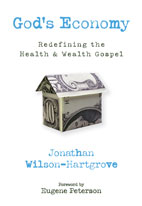
god's economy.jpgGod’s Economy: Redefining the Health & Wealth Gospel  Jonathan Wilson-Hartgrove (Zondervan) $14.99  Kudos to Zondervan for being willing to publish this feisty author, who draws on radical sources and is impeccably Biblical.  Eugene Peterson has a very good forward, reminding us that the Bible indeed talks about abundance and abundant life but that, ironically, although most Americans talk about it a lot, few seem very content.  This is not a self-help book, nor really a scholarly overview of globalization.  It is just a solid, inspiring, helpful way to get our heads (and hearts) on straight about money, materialism, and God’s call to an upside down way of life that is blessed.  Just what is God’s economy? I suppose you know that isn’t what the television preachers say…

do justice.jpgDo Justice: A Social Justice Road Map  edited by Kristin Vander Giessen-Reitsma (catapult) $7.95  You may recall that we’ve promoted this before…it is a small collection of mostly great writing (aha: I have a bibliography here, too) about development, poverty, justice-education, globalization and God’s call to service, community development and such.  We love the bi-weekly ezine catapult and some of these pieces were published on line.  Some are new for this handsome paperback collection.  Very nicely done.

EMC paperback.jpgEverything Must Change: When the World’s Biggest Problems and Jesus’ Good News Collide Brian McLaren (Nelson) $14.99  You may know how we were somewhat involved in the hardback book’s tour, how we promoted this wonderful study of the inter-relatedness of major world problems and the framing narratives that drive them.  I have used some of Brian’s brief youtube clips around this theme and tour, and then the DVD curriculum, which is very exciting, visionary, inspiring. (Email me if you want more info on that!)  Now, the book is out in paperback, with a bright new cover and a provocative new sub-title. Glad that they are trying to help folk understand what this is about, how Jesus’ Kingdom ways are uniquely able to address the complexity of our broken global world, as we take up our role as “revolutionaries of hope.”  I really recommend this big picture book, readable and interesting and in many ways quite profound.

Social Justice Handbook: Small Steps for a Better World  Mae Elise Cannon (IVP) $20.00social justice handbook.jpg  I have been wishing for a fabulous guidebook like this for 30 years, and in all of my study of resources for social action, there is simply nothing like this on the market. It includes lots of topics, and is well written.  From trafficking to environmental concerns, from homelessness to debt relief, from global trade issues to domestic violence, this has brief articles, good theology, practical suggestions.  There are nice biographical sketches too of folks who have made a difference, Christians throughout church history, and some activists today.  Very instructive, pointing you to further resources.  Rave review on the back from Gary Haugen and a forward by John Perkins.  Thank God for what Shane Claiborne calls “a cookbook for plotting goodness and stirring up holy mischief.”


G20
20% off

any book mentioned
Order Here
or call
717.246.3333
Hearts & Minds 234 East Main Street  Dallastown, PA  17313

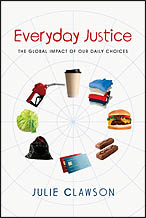
Everyday Justice: The Global Impact of Our Daily Choices by Julie Clawson

In the last post, I reflected that people of faith ought to be aware of the major issues being discussed at the important G20 Summit in Pittsburgh last week.  I tried to suggest that some of what they were doing was good, although I also implied that I believed that the protesters–or at least some of them–had some valid concerns.  I obliquely criticized friends who dismissed ’em all, and invited us to be engaged, both supportive of legitimate institutional reforms, and glad for some civil protest in the streets that dramatized the urgent issues.  Had I been in the ‘burgh, I’d have been with ’em.  I cited one powerful book by a theologian who participated in the famous “battle for Seattle” when the G8 Summit was hosted there many years ago.  Her call for social action and resistance to the forces of globalization are well worth reading. If you are a “big picture” kind of reader, an activist or one wanting to be, this will suit you.  I also suggested that if you really don’t get what the fuss is about–or why in heaven’s name anybody would want to support civil disobedience around these arcane matters—it is a good introduction to how the resistance movement sees things.  It is called Shaking the Gates of Hell and we offered it at 20% off.

everyday justice 2.jpgFor anyone interested in one of the most foundational matters when
talking about the global economy, there is a brand new book that is literally
the best simple introduction to it all I’ve ever read.  Is is called Everyday
Justice: The Global Impact of Our Daily Choices
by Julie Clawson (IVP; $16.00.) 
I will suggest other books about the issues of globalization, development and
such in the September monthly column, but Clawson’s great book deserves to be
mentioned first.  It is an engaging and informative read about how the stuff we buy—coffee, clothes, gas, candy, meat—comes from places where the work situations may have been harmful to the growers or producers.  Our ordinary shopping choices may effect others in serious ways, and looking at this is a layperson’s entry into the field of global economics. I highly, highly recommend it.

I mention it right off the for three great
reasons, at least.

First, it is upbeat, practical, and interesting. It makes the sometimes abstract theory more human, more concrete. It lets us all get involved.  We simply have
to dig deep into some heavy ground if we are going to be responsible stewards of
our gifts as (to use Ron Sider’s phrase from his classic book) “rich Christians
in an age of hunger.”  But this helps us see the big picture in practical and
informative ways. 

Clawson has chapters on coffee, chocolate, clothes,
fuel, waste, even banking and credit…in
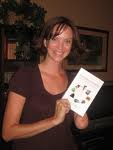
julie clawson.jpg each section she shows just how our daily choices effect those
in faraway lands.  She maps our place in the global big picture in a way that is
easy to follow and, although serious, not terribly harsh.  That is, she is not
about creating guilty or knee-jerk over-reaction, and she isn’t simplistic in assigning undeserved blame.  Her first sentence, borrowing
from gonzo fantasy novelist Doug Adams, is “Don’t panic.”   As Tom & Christian Sine write in the
forward, “Everyday Justice filled us with hope as we read Julie’s insights and
the practical ideas she shares of how we can make decisions that really will
bring everyday justice.  These suggestions are possible for all of us to
implement without panicking or feeling overwhelmed.”   So it is a great way into the conversation, a primer that is at once helpful without piling on guilt or drama.

Secondly, not only
is this informative and clear as she traces the journey of sweat-shop clothes,
or sugar picked by child labor, or the way gasoline gets from an oil well in
Africa to your gas pump at the convenience store, but she is, as I’ve said,
practical.  She understands that we cannot change everything, that social and
political change happens in many ways, and that we each can play a part in
understanding and responding to the ethical dimension of our daily choices. 
Consumer demand drives much of the exploitation of God’s groaning creation, and
this affords us a chance to vote with our pocketbooks, making specific informed
decisions about fair trade products, sweat-free producers,
environmentally-conscious corporations.  No, we cannot get it right all the time,
but we are linked irrevocably, into a web of interdependence (as King once marvelously put it) and we can do
certain things to love our neighbors better.  Everyday Justice offers concrete suggestions, a
few key books and websites in each chapter, and is a fabulous handbook to understanding
particular practices and habits that we can move towards.  Almost every chapter has a
case-study store of somebody who has made it a point to make changes in this
aspect of his or her life. Remember that movie What About Bob that had the
therapist teach Bill Murray how to do “baby steps.”  Julie Clawson is your
therapist, guiding you baby step by baby step on the journey towards more responsible lifestyle
choices.  Everybody quotes Ghandi, these days, about being the change we want to
see in the world.  Start here.

Thirdly, Clawson, whose intercultural
studies master’s degree is from the not too shabby Wheaton Graduate School, is a
good writer who is distinctively Christian.  That is, she sees that these daily
choices of what food to buy, which coffee shop to support, what kind of
transportation to use, and how to be more committed to ethically traded
products, as a spiritual practice.  While this isn’t a Bible study or devotional
guide, it is obviously and intentionally rooted in a high regard for Scriptural
knowledge and faithful obedience.  This is not some trendy fad or liberal social
gospel: this is Biblical piety, Christ-like discipleship, firmly orthodox in
intent and tone.  It is, as Will Sampson says on the back cover blurb, “a more
complete way of following Jesus.”  Or, as Nancy Ortberg writes, “By refusing to
make justice a liberal or conservative cause, she helps us participate in
restoration, ethical consumption and the beautiful pursuit of justice in God’s
world.”   I like the way she weaves theological concerns with daily
discipleship; how ordinary choices of where we buy our coffee and chocolate and
jeans and dresses are framed by the call to an abundant life of passion and
purpose.     This tour of everyday life includes some sticky
subjects—international tariffs and child labor and sustainable farming–but
it is done corem deo.   Thanks be to God for InterVarsity Press for doing such a
fun, thoughtful, practical and righteous resource.

fair trade.jpgBy the way, Clawson
cites some sweet titles that we have long stocked here at the shop.  Julia Alverez’s lovely
little coffee plantation tale,  A Cafecito Story,  the fascinating study of where cotton and our jeans
come from, Fugitive Denim, David Batstone’s must-read, truly excellent Not for
Sale
, or the recent Food Inc. book and documentary are all mentioned, showing
that she has waded through the tons of stuff out there on this topic, and has
suggested follow up study using the very best resources.  I rather wish (of course I do) that she might have addressed the “buy local” movement, the question about whether cheaper is better and the problems with the faceless corporations, big box stores and monster websites like (ahem) a-zon etc.  It would have been useful to give a shout out to indie bookstores, at least, no?  It is so frustrating that so many even Christian publishers link to such places, but say nothing in their marketing about local, real stores who deserve support.

By the way, for a wonderfully inspiring call to see shopping as an act of shalom, see Born to Shop? by Hope College professor  Dr. Todd Steen, in the latest Comment e-zine.  He doesn’t develop his perspective on normative shopping as an appropriate human calling with great detail, but it a quick thesis that would make for fascinating conversation alongside this book. As always, Comment gets this “in but not of” tone of Christian discipleship just right, careful and joyful, on balance, neither liberal nor conservative. Thanks, Todd. 

Everyday Justice by Julie Clawson is a book that is not overwhelming, but offers an excellent, readable overview of the complexities of the global economy in a way that is inspiring; it is practical and useful for enhancing our ethical lifestyle habits in different sides of our lives, teaching us what good stewardship entails; it is delightfully rooted in the good news of the Bible.  Regardless of what you know about the G20 stuff, or what you feel about the protests and arrests, we all have to understand the ethical dimensions of our daily choices.  Authors from Ron Sider to Wendell Berry, from Bill McKibben to Marva Dawn, from Terry Tempest Williams to Gary Haugen and more have said as much. We can add Julie Clawson to this distinguished list, and happily know that she makes it all sound quite plausible, even fun.  Order it and another for a friend. We all need support when we make even baby step changes.  Join together and pledge to see the covenantal nature of our economic choices come alive with insight and blessing.

G20
20% blog deal
Everyday Justice
usually $20
now only $16
order here


Hearts & Minds 234 East Main Street  Dallastown, PA  17313  717.246.3333


G20, protests, globalization and Christian faithfulness

pittsburgh.jpgI believe that Hearts & Minds customers are the
sorts of folks who are aware of the news..  I am sure I don’t have
to explain the significance of the recent G20 Summit, and I suspect many of us
are praying that the diplomats there will follow through with intentions to be
fair and just.  

You also know that there were protests.  It needs to be
said that some of the protesters (a large number of them) are anarchists;  some
have legitimate concerns about the complicity of the modern state in Empire
building and colonialism and injustice.  Some are just rowdy ideologues wanting
to smash stuff–nasty left wing versions of skinheads out to cause some
trouble. And, it seems evident, Pittsburgh sure did have a lot of riot-police there to suppress dissent, which, it seems, they did quite thoroughly.

police.JPGHowever, it is also important to note that many who marched were
attempting to make an important statement, a witness to the ways in which these
important global leaders have failed to take the poorest members of the human
family into consideration; from its earliest days, and the infamous meeting in Seattle, this Summit has symbolized
how just a few powerful countries (or, should we say, a few powerful leaders
within those countries) have dominated and set the terms for international
economic issues.   So, many NGOs and human rights groups use it to campaign for a more just global order, and
they are right to do so.

The Jubilee USA campaign to Drop the Debt, for
instance, has been embraced by denominations and church leaders from across the
globe and this is a perfect venue to ask questions about the Western developed
nations promises to set right the injustices and human suffering that were
caused by their previous manipulation of aid and trade, debt and high interest. 
An evangelical friend of mine, with many contacts in the African community in
Pittsburgh, helped lead workshops and teach-ins on this huge issue this week. 
He worked with African diplomats, scholars and students and, while they threw no bricks
and did no rioting, their good work is seen and dismissed too easily by lumping
them all together with the anarchist disruptions.  (Click on the Jubilee USA campaign link above to find a chapter near you if you want to be more involved.)

The ONE campaign, also
had a presence in Pittsburgh with a simple plea: schedule the next global
economic global economic summit in Africa, where the needs are so great, and the voices under-represented. Again, they have a great website with some good information.  If you haven’t visited them lately, please do.

This is the moral heart of the protests, that
those who are in greatest need–sometimes and in some ways because of the bad
policies of previous Western leadership–are given a voice of redress, are
treated as participants in their own futures, and that the trade and aid biases
be reconsidered in ways that are guided by justice for all and not the self-interest
of the powerful. Yes, there is much to the critique, even if it obscured by the kids with handkerchiefs over their faces and their silly sloganeering.

I heard a radio advertisement on a Christian radio
station in Pittsburgh that week that cheerfully advised listeners to avoid downtown during the Summit (which was garrisoned off by National Guard, anyway) by attending a helpful event that they were sponsoring
in the suburbs.  “Get far away from the crazies and the politicians,” they
advised.

It is a shame that evangelicals (and many other faith traditions) so easily
dismiss both groups, without realizingsummit.jpg that they had brothers and sisters in
Christ in both camps, politicians and protesters, whose calling they (unintentionally) demeaned.  Surely there are some well-intended Christians seeking to
be salt and light Daniels or Josephs or Esthers, voices of wisdom and justice, within the high-powered diplomatic
community;  likewise, as I have noted, some of the protesters were themselves
devout Christians, seeking to raise a Godly voice for the common good.

 Perhaps
instead of running to the suburbs the radio station should have boldly invited
folks into the mix of politicians and protesters.  Yes, yes, I know, it is easy
for me to say this from the relative quiet of Dallastown.  And I understand that
there was some danger, not knowing what the unauthorized, wilder faction of protesters were going
to spring.  Still, there were congregations and faith communities in Pittsburgh
that were trying to support both Summit leaders, protesters, the press and the
curious with a ministry of presence and involvement. (There was also a considerable prayer ministry, behind the scenes, that some churches had developed.)  I hope you had some
friends that were there; one good friend went to “pray with his feet” as Rabbi Abraham Heschel used to say, but left when the tear gas canisters came; another H&M fan was quoted in one of the national news stories.  I hope you were paying attention to some of these reports.  Resistance to
injustice is a holy calling and while hitting the streets, doing civil
disobedience and mass protest may not be the most effective way to work for
appropriate reforms, there obviously is a time and place for such public
witness. 

There are opportunities to be involved in issues of
creation-care, global justice, economic stewardship, witnessing for peace and public righteousness and the conversations next week about the Summit will be interesting, I’ll bet.  In my September monthly review column (to be posted soon) are a few books that will help guide us as we engage in thoughtful
conversations about what went on in Pittsburgh this week, in the convention center and in the streets, and what will continue
to go on in the months to come. 

We have specialized in these kinds of books about Christian views of public justice and international affairs
since we opened, and are sad to hear that not many religious bookstores stock
stuff on global poverty, Christian views of economics, stuff for citizen
action.  Maybe that is changing, as most religious publishers have done some
books along these lines.  Let us pray they continue to do so, that bookstores
stock them and that people buy them.  It is easy to fault local bookstores or
church libraries for not having this kind of stuff, but it is often because they
are not purchased by the consumers.  (Uh, dear reader, that you be you.)  When they don’t sell, the publishers are understandably reluctant to issue too many more, and then, of course, folks complain that the church isn’t adequately resourced.  We’ll, we stock ’em whether they sell or not, and trust that the right readers will find us.

 So if
you care to know that we have these kinds of things, pony up and buy some; read ’em or give ’em away to people who might be interested. 
Start a study group, get a social concerns committee going at your church or
campus fellowship, start a Sunday school class.  Let us know what your doing,
and perhaps we can serve you further by offering resource lists, book titles or
action projects.  There are so many really good books available.  Will  trust you value our telling you about them.  Will you help us get the word out?  We believe that is why
you choose to read our blog and order from our shop.  For that, we thank
you.

Here is the link to the book list of a few good titles on
globalization, international justice  over at the monthly column pages.  These may be helpful to inspired faith-based folk to raise up a
witness for the common good, offering unique insights and passions,
Biblically-influenced and spiritually sound.  Feel free to forward it to anybody
who might care.  Thanks again.

In the meantime, though, I will do a brief shout out to a few that you just have to know about.  Firstly:

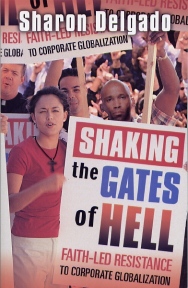
shaking the gates.jpgIf you want to do some theological reflection written by the kind
of person who would be protesting—and arrested–at the Summit, I have to tell
you about Shaking the Gates of
Hell
: Faith-Led Resistance to Corporate Globalization
by Sharon Delgado
(Fortress; $20.00.)  The first page of the book describes her night in jail
after the infamous Seattle G-8 Summit.  Here, she speaks hard truths
about
the injustices of the global economy, the imbalances of power, the
rape of the Earth and the way nonviolent active resistance can be spiritually
enriching, joyful, showing a better way as a symbol of Christian hope.  Jurgen Moltmann says of it, “This
book is authentic and convincing with personal experience and a great vision.  In many
corners of the world there is a new paradigm emerging…I read this book with a
moved heart and new encouragement.”  Catherine Keller, a theologian from Drew,
simply says, “This book doesn’t just shake, it rocks!”  If you wished you could
be part of a spiritually rooted, nonviolent uprising, this is for you.  If you
really don’t have a clue why some people see the world like this, and intend to
make a better world a reality, read it and learn.  Before you dismiss the
protesters as crazies or anarchists or fools, give her a chance.

G20
20% blog deal
Shaking the Gates of Hell
usually $20
now only $16
order here


Hearts & Minds 234 East Main Street  Dallastown, PA  17313  717.246.3333

Hearts & Minds on WORD FM

Thanks to my friends, talk show hosts John & Kathy out in Pittsburgh, PA, who call from time

john and kathy.jpg to time asking me for an on-air book reviews. They sometimes interview me and, as you may guess, they have a huge listening audience.  I feel a bit intimidated, although they couldn’t be sweeter.

Or, sharper.  Half the authors I recommend, they’ve had on the air, it seems–it is Christian talk radio done right!  You may even be able to hear it on line at the WORD FM facebook page here.  

I was on this afternoon, even fielding some calls from listeners.  After talking about Coop: A Year in Pigs, Poultry & Parenting (Michael Perry), The Unlikely Disciple (Kevin Roose) and Holy Roller (Julie Lyons) and some of the others on our blogged list of most fun books of the summer, we got into it. Calls ranged from the need for books about financial planning to the consequences of the Protestant reformation, from a question about Little House on the Prairie to books for one going through a dark night of the soul.  This was a bookselling buzz and the time went too fast. Thanks to those who called in. 

I had a stack of books sitting by my phone, new stuff that I would have loved to have given a shout out about, but time didn’t permit.  It is rare I get to celebrate and recommend books to such a vast audience, and I wish I coulda squeezed ’em in somehow.  So, here, now, for anybody who was listening, the titles I intended to promote.  Thanks again to J&K for their generosity and support. 

In no particular order, then, here are some new, important books that we are excited about:

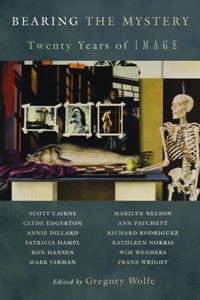
bearing the mystery.jpgBearing the Mystery: Twenty Years of Image  edited by Greg Wolfe (Eerdmans) $30.00  Maybe it is best I didn’t bring this up live on air as I could have talked about it for the full hour: it is a large collection of essays, short stories,  creative fiction, insightful non-fiction, paintings and a goodly number of poems from the flagship journal for those involved in the movement of those doing faith-based literary art.  Image has been around for 20 years and stands doubtlessly as the most classy and significant faith-based literary magazine in publication.  This wonderfully bound, handsome and thick hardback is testimonial that through much blood sweat and tears, joy, goodness and grace, a small band of serious Christian writers (and subscribers and donors) have kept this journal alive.  Contributors to this “Images’ greatest hits” text include Scott Cairns, Annie Dillard, Clyde Edgerton, Mako Fujimura, Pat Hampl, Ron Hansen, Denise Levertov, Kathleen Norris, Ann Patchett, Richard Rogriguez and many, many more.  Film-maker Wim Wenders has a piece; there is something by the late, great musician Mark Heard; there is poetry by Luci Shaw; there are stunning full color plates by the likes of Bruce Herman, Catherine Prescott, Tim Lowley, Ed Knippers.  There is a great woodcut by Barry Moser, a moving charcoal scene of Christ’s passion by Wayne Forte, a haunting b/w piece (graphite, gesso, steel, and pastel on birch) by Erica Grimm-Vance.  This book is a stunning bit of serious literature and art and criticism, artfully made, as a labor of love and celebration.   With rave endorsements on the back dustjacket by Dana Gioia and Kenneth Woodward and Jeremy Begbie and Lauren Winner, you can see this is the highest quality stuff.  It perhaps one of the best examples of the ways in which deeply religious artists have made a contribution to the culture.  See their wonderful Image website here. Glory be.

Woman Overboard: How Passion Saved My Life  Jo Kadlecek (Fresh Air) $17.95  This isWomanOverboard.jpg the second book I’ve enjoyed from this new imprint of the legendary Upper Room press, and it is spectacular.  Fireworks were going off in my brain with certain pages, and I kept running inside from my backyard perch to read a section to anybody that would listen.  Kadlecek has written a number of books and she is good; very good.  These autobiographical pieces hold together as nearly an extended memoir, offering insights about work, calling, passion, relationships, suffering, always finding a way to do more than just go through the motions of life.   Robert Benson, whose tender book on vocation,
 The Echo Within was one of my favorite books of the summer, says that she is a rare writer that has the courage to examine her life closely and gifted “to write so that others can more clearly see the truth in their own lives.”   Learn more about her, her novels and other writing, and her husbands documentary film work at Lamppost Media, here. 

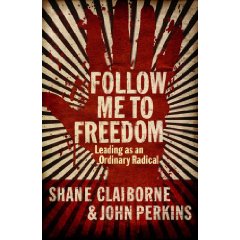
Follow Me.jpgFollow Me to Freedom: Leading and Following as an Ordinary Radical  Shane Claiborne & John M. Perkins (Regal) $14.99  Since my Pittsburgh days with the CCO days in the 70s and our time spent hanging around a few urban churches then, we came to admire and respect John Perkins, an elder African American statesmen of evangelical faith whose books on racial reconciliation and economic development has made him one of the most significant writers of our lifetime. (Read his first autobiographical testimonial, Let Justice Roll Down if you don’t believe me.)  That he founded the wholistic outreach and leadership school in Mendanhall MS, Voice of Calvary, and the important, national CCDA and authored books inviting conservative evangelicals into the civil rights struggle is not his only legacy;  he has mentored dozens of others, leaders in urban ministry, mostly, and is now, in his 80s, wanting to know how to pass the baton on to create a new generation of leaders and followers. These are transcripts of live conversations, with John offering no-nonsense wisdom, and young Shane offering humor, passion and whimsical revolutionary spirit that was seen in his zany and profound Irresistible Revolution.  His own experiences from his work in The Simple Way are amazing, and he adds very relevant insights.  A book by either is worth reading, but this dialogue format makes for a really unique project.

            
shane.jpg shane c.jpg              john m. perkins.jpgJohn Perkins.jpgThese two men–and older black gentleman and a hipster young white guy— are a perfect duo, and this may be the most interesting book of the fall.  Highly recommended, just for the privilege of listening in on two very, very important and feisty and experienced leaders.

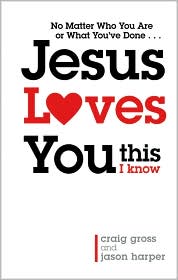
Jesus Loves You 2.JPGJesus Loves You This I Know  Craig Cross & Jason Harper (Baker) $17.99  Many admire Craig Cross for his triple x church, the edgy outreach to porn stars and those in the thick of the adult entertainment industry.  They’ve concluded that, in many ways, these are among the most despised folk of our day, and they’ve earned the right to be heard as they show up, buying booths, at this detestable venues (trade shows of porn dealers, etc.)  Believe it or not, they are taken seriously (not so much by the church community, but by the porn dealers and filmakers.)  So, now, after their stint in that, they’ve created this collection of stories that shows that God loves everybody, that the chance to repent is offered to all, and that it is the job of Christ-followers to met people “where they are at” and offer grace and mercy.   These stories are basic, tender, tough, and strangely moving: God really is love, and as we share that good news, people come to understand religion–and a relationship with Christ–in a whole new way.  There is a DVD that goes with it, too ($12.00.)  This DVD has face-to-face conversations with the people described in the book, showing that Jesus does love the porn star, the outcast, the broken, the skeptic, the crook… Pretty touching stuff.  Check it out at www.jesuslovesyou.net and then come back and place an order.  Thanks.

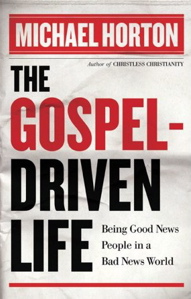
The Gospel Driven Life: Being Good News People in a Bad News World  Michael Hortongospel driven life.jpg (Baker) $19.99  Okay, wondrous literary work, passion for life, radical discipleship for justice, and tender tales of care and outreach make for wonderful, inspiring and helpful reading.  I really meant everything I wrote above about how we commend these titles.  I wish I could have explained about them on the air in the radio talk.  Yet, it is our strong conviction (and has been for as long as we’ve been recommending books) that we also need solid, mature, and serious, orthodox theology to under-gird and guide our culturally savvy and edgy, relevant outreach.  A year ago, Reformed theologian Horton gave a devastating critique to both mainline traditions and especially to shallow and trendy evangelicalism in Christ-less Christianity;  he not only exposed the vapidness of liberal Christian doctrine, but lamented the lack of teeth in most evangelical theology.  In both cases, both “sides” of the Protestant church are basically self-help: we can get by without a radical conversion to Christ exalting faith. We don’t really believe in the doctrine of grace.  Here, Horton revisits this dilemma and offers lasting hope: the good news is a narrative of God’s saving work in the world, and the redemptive work of His cross can be applied not only to those outside the church (who need to “hear the gospel”) but to those inside the church who long for Christian growth and maturity.  We must (as Luther said) preach the gospel to ourselves.  This book shows you how.  Right on.

(Not) On the Radio
BLOG SPECIAL
any mentioned
20% off
Order Here
or call
717.246.3333

Hearts & Minds  234 East Main Street  Dallastown, PA  17313

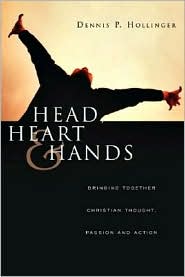
Head, Heart & Hands: Bringing Together Christian Thought, Passion and Action

Those who follow Hearts & Minds know that we sometimes get to go out to speak at conferences and retreats, doing presentations on vocation, worldview, cultural engagement, social justice and, of course, talks on reading and other book-related themes.  We were thrilled this past weekend to be a part of the student leadership retreat for those involved in the Gordon College chapel ministry.  Held at a lovely, classic, lakefront camp in New Hampshire, I spoke to vibrant students who do various sorts of ministries and mission projects through the chapel.  Dr. Greg Carmer and his extraordinary staff do great work offering programs, discipleship, worship and mentoring and it was a delight to seem them in action with their student leaders—and to hang out with very impressive college students.  (Plus, I will never hear Tom Petty’s Free Fallin’ again, without thinking of the epic Verizon spoof, Free Callin’.  I love college kids!)

head heart hands.JPGThe theme of our time was captured by the wonderfully titled book by our friend, ethicist and now President of Gordon-Conwell Seminary, Dennis Hollinger, called  Head, Heart & Hands: Bringing Together Christian Thought, Passion, and Action (IVP; $15.00.)  What an important concept and challenge, to bring together these facets of Christian growth in a balanced and wholistic way.  It is a theme Dennis has written about, preached on and listened to folks discuss for years, and this book is a culmination of his good insights.  I think it is very important and helpful.

I think we know the sort of reader who attends to our reviews, here, and I think you’d find this to be a great resource, just as the students did at the retreat.  Hollinger tells good stories, sharing about people he has met who have lived in only one facet of their faith, overstating the role of thinking, or feeling, or doing.  That is, many people (and many churches or faith traditions) tend to miss the depths and riches of a truly balanced and multi-faceted faith journey and live with distortions and subsequent problems.  To put it bluntly, they are lopsided. Yes, yes, we must think, and think deeply; we must feel God’s Spirit and be open to heart-felt faith; of course we must live in obedience, doing concrete acts of daily service, deeds, and mission.  But to see faith as only or mostly a matter of the head or heart or hands is to live a fragmented and reduced form of faith that is not adequate, sustainable, or Biblical.  The distortions are real, and dangerous.  Head, Heart & Hands shows us why, and what do to about it.  Perhaps you might refresh your faith this season by considering your own imbalances or peculiar tendencies.  Or you might know somebody whose faith is less than robust, perhaps a bit odd, maybe toxic.  Maybe your own congregational leadership is a one-note song.  Sadly, many churches are not good places for helpful growth, but feed the very distortions described in the book.  This book could help.

Interestingly, this call to nurture all three aspects of faith reminded me of why we chose “hearts & minds” as a phrase to capture what our store is about.  This stuff is important to us, and important to our calling, here.  Do you, too, have a passion to help others grow in balanced and wise faithfulness?  You should know this book.  It is a book that I truly love, and that speaks well to what we hope will be the fruit of selling the books that we do.  We do indeed need to reject shallow faith, anti-intellectualism, or a religion that fails to grapple with life’s deepest questions, and the culture’s toughest critics.  We need to “think Christianly” and read widely. However, we don’t want just arid dogma or a brainy faith, but an experiential encounter with the Spirit (which leads to a wholesome and authentic sense of self, emotional health and a well-centered personality. It was John Calvin, by the way, who insisted that knowledge of God and knowledge of self are intimately related.) And, of course, it is our calling to live out daily discipleship in real practices, coram deo, especially in our particular careers and vocations, seeing all of life as service to God and neighbor.  Besides daily acts of kindness and obedience, we need to be advocates for public justice and peace and creation-care, working hard in the culture for the common good, as neighbors, citizens, and as people of faith communities. 

One of the great strengths of Head, Hearts & Hands is the way Hollinger shows that we don’t just need more of all three aspects of faith.  Actually, all three are deeply intertwined, and our thinking/feeling/doing can be mutually related.  To think more faithfully will truly allow us to love differently–that is, to care–which, if authentic, will cause us to live differently, as we embody the passions of are heart.  And these experiences of passionate feeling and living will naturally allow us to hold new insights, even as we ask deeper questions about the very things we feel and do.  This leads to what he calls “mutual reinforcement” as we seek a whole faith for whole people.  Dennis is very clear about this, concise and helpful, and we really recommend his work.  I only wish I could have cited him more to the students, as re-reading the book helped me prepare for my passionate messages to these young leaders.  So, I commend it to you, here. 

A beautiful, rich book that deserves it’s own review on similar themes, by the way, is the profound Reordered Loves, Reordered Lives: Learning the Deep Meaning of Happiness by David Naugle (Eerdmans; $18.00.)  I have referred to it here before, and told the Gordon students about it.  What we most love, what we care most about in life, will indeed shape what we think and do. Naugle reminds us that worldview formation and spirituality and distinctive Christian lifestyles are, finally, less a matter of our rational views or creedal affirmations, but a matter of the heart and imagination.  You can learn more about it here. 

We hope our book reviews and book-selling facilitates among God’s people more thoughtful
Byron at Gordon retreat.jpg faith, mature spiritual formation, and relevant, faithful social action.  It is our hope that Hollinger’s ruminations on this in Head, Heart & Hands are read and discussed, helping us all with a faithful, balanced, healthy disposition to the things of God’s Kingdom.  And here is a picture of me in lovely Deer Run lodge.  You can’t see it, but the orange chair to my right has a book on it.  Guess what?
 

meaning of sex.jpgDr. Hollinger, by the way, has a recently released book, (which I actually mentioned earlier this summer, I believe.)  It is called The Meaning of Sex: Christian Ethics and the Moral Life (Baker; $19.99.)  As a wise and thoughtful ethicist, I think Hollinger gives us, as Richard Mouw writes, “a rare combination of theological-philosophical expertise, cultural savvy, and pastoral sensitivity.”  Walt Mueller (of the Center for Parent/Youth Understanding) says “it is the best contemporary treatment…I’ll be recommending it as a must read for all pastors, parents, youth workers and young adults.”  We stock that too, of course.  It is a real case study of the need for a unity of tender thinking, passionate feeling and embodied deeds, eh?  Hollinger is really on to something.

BLOG SPECIAL
Head, Heart, & Hands
regularly $15.00
now 20% off
$12.00
Order Here
Hearts & Minds 234 East Main Street  Dallastown, PA  17313     717.246.3333   

New Donald Miller: A Million Miles in a Thousand Days

Okay, I sort of told a white lie.  Yesterday I waxed on about my favorite books of the summer, hoping folks would shell out for Michael Perry or Richard Doster.  I explained about Holy Roller and The Unlikely Disciple.  Oh yeah, we listed the books we most loved, enjoyed, learned from, and appreciated over these last few months.

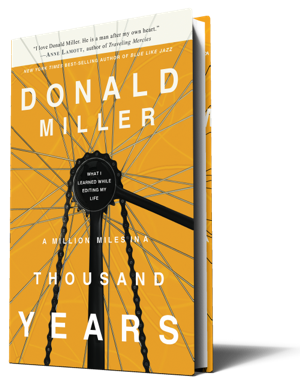
Million Miles in a Thousand.pngBut I did not tell you about one of my absolutely finest reading experiences of the season, the time I spent with my advanced promo copy of the forthcoming Donald Miller, A Million Miles in a Thousand Years: What I Learned While Editing My Life (Nelson) $19.99.  I didn’t feel right mentioning it since it isn’t out yet, and it is a real privilege that I got an early review copy.

So I didn’t mention it.  But when I look at that list from yesterday–and a fine one it is, if I do say so myself–and I think about sitting out back at our picnic table, I have to mention the forthcoming Miller.  I was a highlight of my summer reading.  Heck, it was a highlight of my summer!

I really did like his million-selling Blue Like Jazz: Non-Religious Thoughts on Christian  Spirituality, and thought his Searching for God Knows What was even stronger—clearer about theological concepts, and an important, helpful look at true faith. (For some reason, some are fretful of his doctrine, and I suggest they actually read this one, at least.)  I got teary at his book on fathering (To Own a Dragon), and am happy to be one of the few bookstores that really got behind his very first book, later re-issued as Through Painted Deserts which tells of a post-college road trip in a van, thinking about God, girls, beauty and such. Well worth reading!  I am not sure exactly why I like his books so much, besides the zany characters he seems to meet and the sly stylings, but if you haven’t read him, you simply must.  He is a good, clever, interesting writer that speaks in a voice that really works.  And he’s got fans.

Miller is a somewhat edgy, s they say, a youngish, hipster-slash-bohemian writer whose evangelical faith is challenged by its cheesy and shallow oddities; he’s smart enough to see through that, and so wants to tell about a more authentic, Christ-like, real kind of faith experience.  So he’s been on a journey, trying to be authentic and hip and real and honest about Jesus and life and times.  It has helped some of our customers when I say that he is moving out of evangelical faith’s cultural in-house ways and sort of meets Anne Lamott on her way into faith, out of her sex and booze addled bohemian past.  They are coming from different places, to be sure, but have a bit in common, it seems.  She is truly one of the better essayists of our time (and a fine novelist) and it is nice that, now, on the very front of Miller’s Million Miles in a Thousand Years hardback, there is this solid Anne Lamott blurb: “I love Donald Miller. He is a man after my own heart.”  Well, there ya go.

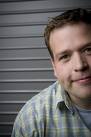
miller.jpgMiller is rooted in and seems to remain in the evangelical church, though (in a way Lamott does not, exactly.) He is a writer that reminds me for some reason of Holden Caulfield, with these simple repetitive sentences and odd places for periods.  He tells stories, and he tells them very well, in an understated kind of way.  He’s funny and also insightful, and this may be his most important book. It is certainly less overtly religious than his others, making it ideal for seekers, or for those wanting to figure out their lives.  I suppose that many Christians will want to give it to people, especially angst-ridden 20-somethings or, those like Miller, angst-ridden 30-somethings who may not read a more obvious theological book.  I know it sure won’t turn anybody off, and it will draw people in.  It is a fabulous memoir.

The book will be out in a few weeks, and I must say that I cannot wait to sell it.  I so enjoyed it earlier this summer, truly wanting to see what happens to him as he re-evaluates his life Big Time.  Why does he do this, you ask?  Well, you’ve got to read the book, but basically it is this: some guys are making a movie of his life, based on the popularity and appeal of Blue Like Jazz.  They ask him—white board now moved into his living room at the condominium, starting to map out the screenplay—what he does.   What does he do?  He thinks about God a bit, imagines himself a writer of deep thoughts. He ponders his last and next book,  goes to the coffee shop, complaining about the Christian right, maybe, with some righteous indignation.   He cares about stuff.  Yeah, yeah, they tell him.  Nobody cares about that.  It becomes evident, in chapters that are hilarious, and yet somehow very convicting (to this reader, at least), that for a movie about one’s life to be compelling, it has to have some narrative arc (as they say in the story-biz) and without some admirable action, some struggle, some movement, well, there isn’t much of a movie or story.

 So–get this– the real Don decides that the movie Don is much more interesting and nobleDonald Miller.jpg and important that he, the real Don, actually is, and decides to do something about it.  If the real Don wouldn’t be all that interesting in the movie, well, perhaps the theories of movie-making—that is, what makes a good story, what makes a good life—might help him reconfigure his own life.

 The subtitle, “what I learned while editing my life” really is exactly what happened.  And, man, does he fly.  A listless, writerly, ironic, Portland-based,  post-evangelical thinker, becomes more intentional, more earnest, more active, more radical, more really real.  It is an amazing transformation, actually.  Graceful?  Well, it isn’t without stumbles and set-backs, but I think it is graceful.  Yes, this is a graceful book.  It is about making a movie about your life, and what that might make you think and do.  That is, he wants his real life to be as interesting and noble as the one in the movie they are making.  Is that a crazy-good idea for a book, or what?  Sederis or Palahniuk didn’t think of that, did they? 

A Million Miles in a Thousand Years: What I Learned While Editing My Life by Donald Miller is a can’t-put-down saga, a dramatic bit of storytelling about, well, about storytelling.  It is about the making of a movie, and the need to have the life the movie is about be worthy of making a movie about.  How about you?  Would a movie of your life be interesting?  Good?  If you studied film a bit, read some novels, learned some stuff about narrative arc and virtue and story, might it effect your own sense of the story you are a part of?  Do you think God is a part of that?

We say, these days, that our lives should be part of God’s story.  That our worldview is really best described as the narrative that shapes us, the story we are a part o
f.  That is exactly what Miller discovers, in his lackluster, oddball way.  He is honest and funny and a bit goofy and ends up in Africa and riding his bike across country and paddling in a kayak or something up to Alaska or somewhere.  He meets some rich people, and some not so rich people.  He tells of a very, very moving funeral, where the person’s life obviously was worth mourning and celebrating.  He wonders about his.  And he invites you to wonder about yours.  This is one of the books of the year, hip, funny, interesting, contemporary, and deeply right.  Our lives need to make sense, and they do that when we live for something other than our own sorry selves.


BLOG SPECIAL
PRE-ORDER
Donald Miller’s new
A Million Miles in a Thousand Years
$5.00 off
now just
$14.99
and get
Blue Like Jazz

for $5.00
Feel free to order extra Blue Like Jazz at this great price if you’d like.
while supplies last

ORDER HERE

Hearts & Minds 234 East Main Street Dallastown, PA  17313     717.246.3333


BEST BOOKS OF THE SUMMER 09: Coop, Holy Roller, Unlikely Disciple, Plenty, and more

As is often the case, I’m not quite ready for the Fall to begin.  For one thing, there are too many books still on my “want to read soon” stack, and a few lovely titles that just seem right for summer.  Oh well.  This really has been a rich reading season for Beth and I—that isn’t always the case as sometimes we are just too busy handling the books to actually read much.  So, we’re happy about the lists we’ve made, and the titles we’ve loved.   Here are

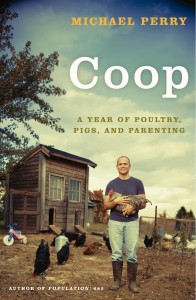
coop bigger.jpgCoop: A Year of Poultry, Pigs and Parenting Michael Perry (Harper) $25.99  I’ve noted this before and both Beth and I name this as our number one book of the summer.  Perry is a decent, decent chap, a funny and thoughtful guy, and a heckuva good writer. We love his work.  Some of his sentences just made me smile, others had an impact that I can hardly explain.  Here he is, again, in the middle of rural Wisconsin, recalling his religious upbringing, his farming family, and he narrates a season where he and his new wife do a home birth, raise some pigs, build a chicken coop, mourn the death of relatives child, struggle with the balance of his writing life and their rural life, trying to be good neighbors, good to each other, and actually get some stuff done.  This is one of my all time favorite books, and it is intelligent, wise, very well crafted, and deeply caring.  Highly recommended.  Then get his others, Population 485: Meeting Your Neighbors One Siren at a Time,  Off Main Street, and Truck: A Love Story.
 

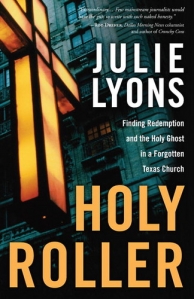
holy roller.jpgHoly Roller: Finding Redemption and the Holy Ghost in a Forgotten Texas Church Julie Lyons (Waterbrook) $18.99  This is the story of a white reporter who enters the world of inner city, Black Pentecostalism, where she is mentored by a self-taught holiness pastor and his wife, even as she reports on their healing ministry among crack addicts.  From learning about deliverance from demons, to learning about racism and urban struggles, Lyons and her husband and young child take to the church, and, twenty-plus years later, are still members, the only whites in the African American storefront congregation.  Ms Lyons—a fairly conservative evangelical, now Holiness Pentecostal, who herself has a bit of a backstory of her own sadnesses—writes a blog for her newspaper, the Dallas Observer, that is owned by The Village Voice;  her pro-life stance and calls for traditional sexual ethics are not popular amongst the liberal gay-friendly readership, but the Voice, to their credit, keeps her on. (Talk about diversity!)  So, this woman from a pretty strict, all-white, up-tight, up-bringing, now is getting death threats from her newspaper readership, working the crime beat in what in the 90s was one of the most dangerous neighborhoods in America, and learning to be a spirit-led Christian among these elder brothers and sisters in a run-down Dallas church where poor blacks come, expecting miracles amidst drugs, sexual violence, gangs and all the rest.

It is hard to tell you how thrilling this book was, and how it oddly kept both Beth and I up nights, reading to see what crazy episode would crack open next.  For those who have any interest in charismatic renewal, urban problems, the historic black church, racial reconciliation, or a just rip-roaring spiritual memoir, this is a fine read.  As Rod Dreher, of the Dallas Morning News says, “Extraordinary…Few mainstream journalists would have the guts to write with such naked honesty.”  For a fabulous interview with the author, go here.


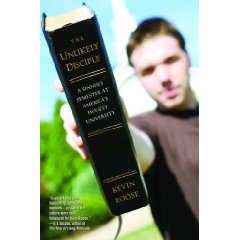
unlikely d.jpgThe Unlikely Disciple: A Sinner’s Semester at America’s Holiest University  Kevin Roose (Grand Central) $24.99  I think it was my friend Derek Melleby who convinced me that this was really very important, a fabulous inside look at evangelical students, at college life, and at how American fundamentalism is seen by an outsider.  A very talented young journalist from Brown University takes on, as it says on the back, a “cross-cultural journey of Biblical proportions.”  Roose is a fun,  writer—he was an intern with the talented and hilarious A. J. Jacobs, who helped him cook up this crazy idea of going undercover to pretend he was a fundy student at Falwell’s Liberty U. Of course, Roose doesn’t quite know enough to know how to do that, (like, for instance, that he wasn’t supposed to cuss, and he ought to know how to locate and pronounce the books of the Bible–duh.) Those of us who have spent time in the evangelical sub-culture will cringe and laugh and cry at his awkward situations. (And those who wonder what a men’s dorm is like, well, you get that, too, vividly.) Yet, Mr. Roose is open-minded, and like any good undercover anthropologist, learns to love his subjects.  And what subjects they are!  Rob Bell says of it, “This is a brilliant book. Absolutely brilliant. Roose’s wisdom, humanity, and love kept me going.  And I laughed.  A lot.”  Yep.  I don’t care if you like Falwell or don’t like Falwell, if you are interested in American colleges or care about the evangelical sub-culture, this is a great story, well written, interesting and humane.  Enjoy.

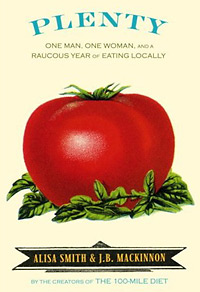
Plenty: One Man, One Woman, and a Raucous Year of Eating Locally  Alisa Smith & J.B.plenty.jpg Mackinnon  (Harmony) $13.95  All right, I’ll say it right out: I liked this better than another book I said I liked last summer, Animals, Vegetables, Miracles by the esteemed and vital Barbara Kingsolver.  Yes, Kingsolver is a master of luscious sentences, and her story of their year of farming was very nicely done.  But this!  This was fun, really interesting, and significantly engaged me as this young couple promise to live on what they’ve dubbed “the 100 mile diet.”  That is, to keep from wasting energy and fuel by shipping food all over the planet–a wasteful and unsustainable habit that they don’t spend too much time describing—they intend to eat only stuff grown within 100 miles of their Vancouver home.  They are both journalists, so they’ve got the reporting thing down, and as young writers, they’ve got a spunky style that is appealing and clever. Some of their pages are truly beautiful, some nearly anguishing.  As Deborah Madison, author of Local Flavors, writes, “I assure you that your farmer’s market will never again look the same.  Nothing you eat will look the same!  This inspiring and enlightening book will give you plenty to chew on.”  Yes, it is noble, and give us much to think about as we try to live better lives; Bill McKibben is right in his blurb that says that their account shows us how we might
live in a way that is “better for this earth, better for the community and better for our bellies.”  But  here is why I list it now: it was just a hoot to read and I really grew to care about them. They can really write.  It was a great saga. I couldn’t put it down. Yay.  By the way, I showed the cover art of the wonderful hardcover ($24.95) above,  although the paperback has a new design.  And a new subtitle, the more prosaic Eating Locally on the 100 Mile Diet. 

Causing a Scene: Extraordinary Pranks in Ordinary Places With Improv Everywhere
causing a scene.jpg Charlie Todd & Alex Scordelis  (William Morrow) $19.99  I know I often list heavy books about theology and social criticism and social injustice and deep stuff about our inner lives.  It’s what we do, mostly, and we think our readers appreciate knowing books about the intersection of faith and culture, worship and work, prayer and politics.  I love regular non-fiction. But sometimes, I just am taken with a book, or even a part of a book that doesn’t have too much point.  I had know idea about “Improve Everywhere” (but my kids knew, and you probably do to.)  They just pull off these large-scale outdoor stunts, pranks that they truly insist should not harm anyone, with a network of folks that show up that they call “agents.” (I’m not making this up!)   They invade a Best Buy store with hundreds of people dressed in blue and kakhi, and watch the mayhem for a bit.  They recruit people to “freeze” in Grand Central Station, freaking people out. They host an autograph signing in a real bookstore with an author that has been dead for a century, until the store makes ’em leave.  They are unpredictable, off the grid, loony, brave, and I think on to something.  I’m just not sure what.  This book explains some of their best pranks, how they came up with the ideas, and I think explained the details of what actually went down during the actions.  I can’t actually say, because I was laughing too hard to actually read it all, and went on line right away to see this stuff.  The Youtube videos are  entertaining, but–and I’m not just saying this–the book really is better. In the acknowledgments, the authors admit that they’ve learned about the “Situationists” art movement, but they mostly thank Andy Kauffman and the Flaming Lips in the acknowledgments.  Of course they do.  Check out .www.improveverywhere.com. 

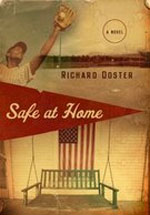
I have not read nearly any novels this summer, although (as you can see) my love for memoirssafe at home.jpg leads me to books that nearly seem like fiction—who could make up this kind of stuff?  Beth has covered a lot of fictional ground, though, and wanted to give a shout out to a writer we respect, a smart guy who edits a very thoughtful magazine called byFaith, Richard Doster.  Doster’s novel of last year, Safe at Home (Cook; $6.99) was a 2009 Christy Award Nominee and is now available in an inexpensive, handsome mass market sized paperback.  It is about a sports writer, covering baseball in the south about the time of the civil rights movement. It covers sports, yes, and has a classic Southern feel, taking us into the spring of 1953, in a small town called Whitney. (Doster himself lives in Atlanta, and is a Mississippi native.)  As the town comes to grips with racial integration, some very moving stuff unfolds.  Beth loved it, actually, and insists that one doesn’t have to be a baseball fan to appreciate the well-told story.  One doesn’t have to like bee keeping, necessarily, to enjoy The Secret Life of Bees, of course, and Moby Dick isn’t really just for fisherman.  Get it.
. 

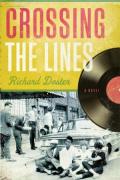
Crossing the Lines.jpgCrossing the Lines is Richard Doster’s new one (Cook; $14.99) and it picks up where Safe At Home ended.  The reporter Jack Hall has moved and yet finds himself on the fault lines of race and class as he is sent to cover the Montgomery bus boycott for his new paper.  Beth may not be a scholar or historian of this, but she knows a bit about the civil rights movement, and was impressed at the historical accuracy that Doster carries.  Some rare names are mentioned, showing us he’s done his homework on the details.  More importantly, though, for a novel, the story rings true. The characters are interesting.  The plot unfolds well, the writing is much better than average.  Thank goodness for this kind of fiction, rooted in a Christian worldview, but not didactic or preachy. It is full of drama, though…  Highly recommended.

BEST OF SUMMER
BOOK BLOG BLAST
25% off on any two
10% off on any one
ask for the Best of Summer deal
Order Here

Hearts & Minds 234 East Main Street  Dallastown, PA  17313     717.246.3333        

Labor Day

Some years near Labor Day we note recent books that help people of faith relate their spirituality to the workplace, develop a Christian perspective in their career fields, or learn to be a faithful agent of God’s Kingdom “in, but not of” the culture of the work-world. 

As you may know, we have an annotated bibliography––just click on “vocations“ at the
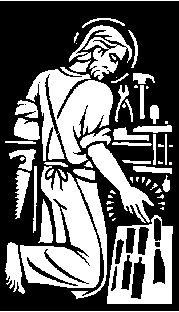
jesus the carpenter.gif website—that lists and describes a handful of books for various career areas.  Originally designed for college students wanting to supplement their studies by reading  authors who related Biblical thinking to their academic discipline, we’ve heard of professionals and career oriented folk in the world-world who say they’ve never been invited to read a book about their job, and were astonished to see our vast listings there.  So, we encourage Hearts & Minds friends to check out that set of bibliographies, seeing how I describe books for businesspeople, media professionals, artists, farmers, counselors, teachers, or engineers.  From special education to environmental studies, from law to literature, from health care to home-making, we have descriptions of titles that would allow you to see your job in light of God’s light.  Pastors or campus ministers or youth workers who are reading this— I hope you keep this bibliography bookmarked on your favorites list, so you can refer to it often as you equip your saints for daily discipleship, serving God in their particular field of endeavor.  What does it say about our pastoral leadership when folks are interviewed about their call to serve God in their career areas and they report that they never heard of such a thing, rarely heard a sermon about work, never knew there were books offering a spirituality of labor? 

In fact, I will list two books about these themes that are exactly for pastors. I hate to say it, but our experience is that most pastors don’t read this kind of stuff, so if you are passionate about the role of what they call “the laity” and would like to see your church leadership more overtly involved in raising up work-world concerns within your congregation, you may have to buy this for him or her.  I’m sure they wouldn’t mind the encouragement, and may be eager to know you want more nurture in a theology of labor, how to live faithfully at the job site, and how to find greater meaning in the 9-to-5.

Lasting Investments: A Pastor’s Guide for Equipping Workplace Leaders  Kent Humphreys (NavPress) $14.99  This is an excellent guide for how pastors can influence key folks, helping them in their own marketplace ministries.  Highly recommended, clear and precise, and a good reminder of what it means to mentor folks so that they themselves can then make a difference.

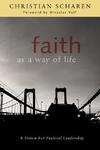
Faith as a Way of Life: A Vision for Pastoral Leadership Christian Scharen (Eerdmans)
faith as.jpg$15.00  Scharen is a sharp writer and good thinker working as the director of the Faith as a Way of Life Program at the Yale Center for Faith & Culture (at Yale Divinity School.)  Drawing on foundational work about practices developed by the likes of Dorothy Bass, this book tells of the research this author has done among mainline pastors, asking them how they equip their congregants to live out faith in the ordinary.  He not only reports on the ways in which folks can think faithfully about life, but offers pastoral guidance about helping the faithful “connect the dots” between Sunday and Monday.  He drew on workers, artists, politicians, family leaders and others to help hear how best to construe the primary spheres of contemporary life as a place of God’s presence, and how to caste a vision of whole life discipleship across the whole of culture.  Very nicely done.

Playing Heaven: Rediscovering Our Purpose as Participants in the Mission of God  R. Paul Stevens (Regent) $21.95  A hard to find treasure, this author has been at the forefront of thoughtful evangelical advocacy for everyday theology, marketplace ministry, and helping pastors support ordinary folks in their vocations and callings.  Missional living?  Relating faith and work?  Equipping the whole people of God to to live out their faith in the real world?  This is a collection of articles, studies, book reviews, interviews, nearly an omnibus book of Steven’s shorter pieces published on this vital topic.  Should be in every church library and every pastor’s bookshelf, for quick reference and loaning out.

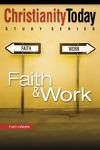
CT Faith & Work.jpgChristianity Today Study Series Faith & Work  Current Issues Bible Studies (Nelson) $9.99 This includes a few brief articles that have appeared in the award winning journal, with discussion questions, reflection pieces and Bible study material.  8 weeks.  Really the best small group resource on this topic.  (They have others in this series, by the way, on pop culture, on creation care, on the role of the Bible, on politics, and one we love called Engaging the Culture.  All are highly recommended, as they bring together brief articles and Bible texts.)

There are classic works on a Christian view of the dignity of work, and we have recommended many before: Loving Monday, Monday Matters, Your Work Matters to God, The 9-to-5 Window, The Other Six Days, The Gift of Work, Joy at Work.  There are books on vocation and calling. There are devotionals for workers, books to give business people, etcetera, etcetera etcetera. Please call for more info!

Here, though, are some others that have captured my attention just recently.  Enjoy!

pleasures and sorrows of work.jpgThe Pleasures and Sorrows of Work  Alain De Botton (Pantheon) $26.00  I reviewed this briefly earlier this summer in a Comment magazine article, and I remain convinced it is beautifully done, thoughtful, and important guide to various jobs and how people manage in their work.  De Botton, you may know, has written a wonderful book called The Architecture of Happiness and some on how philosophy matters for ordinary life.  At the end of the first chapter, on dock workers, he notes that they inspired the book, and that he hopes it might function like those eighteenth-centur
y paintings of cityscapes that show so many different folks in their various stations and jobs and places.  These inclusive scenes, he writes, and his book, he hopes, “serve to remind us of the place which work accords each of us within the human hive.”  De Botton continues, ” I was inspired by the men at the pier to attempt a hymn to the intelligence, peculiarity, beauty and horror of the modern work-place, and, not least, its extraordinary claim to be able to provide us, alongside love, with the principal source of life’s meaning.”   Lovely, smart, inspiring, insightful.    Read my fuller review here.

shop class.jpgShop Class as Soulcraft: An Inquiry into the Value of Work  Matthew B. Crawford (The Penguin Press) $25.95  We’ve been touting this book before it even came out and believe it to be one of the great books of the year.  A brainy PhD working in the world of think tanks and the academy ends up starting a motorcycle repair shop and discovering not only his own passion and calling, but discerns much about the nature of schooling and work.  He’s been on The Colbert Report, excerpted in the New York Times magazine, and is getting buzz among sharp folks that are interested in the nature of what it means to know stuff in our world of information, data, bytes and bites.  He is interested about the relationship between working with one’s hands and what it means to find meaning in daily work, hard work, work that takes craftsmanship and quality, insight and care.  As philosopher Albert Borgman notes, our cultural renewal “will have more depth and grace if we read Crawford’s book and take it to heart.”  One reviewer, Rod Dreher, says it is “brilliant and true and perfect for its time.”

The Echo Within: Finding Your True Calling  Robert Benson (Waterbrook) $14.99  I’ve read his book on baseball, on tourism, on gardening, on fixed hour prayer, on the Rule of Benedict, and, just recently, his new one on community. (Which was brief and utterly lovely.)  He is an economical writer, not splashy or verbose, but tells wonderful stories, explains his insights in clear, wonderfully crafted prose laced with just a bit of understated humor.  I cannot exactly say why I am so appreciative of his dignified writing style;  others agree, though, that it is honest and clear and enjoyable and tender, making him a fine and important author.  He is often self-depreciating, humble, candid.  He writes as a friend, and that is a great grace to get right.  Anyway, this book may be one of his most personal, telling of his love for the book biz–he went to his father’s publishing plant even as a boy–and how that eventually, through ups and downs, false starts and hairy turns, led him to become a writer.  This is a wondrous book, full of insight into finding one’s calling, learning to be attentive to our most authentic selves, and find joy by listening to God’s voice as it is heard, deep within.  Truly lovely.

One Life.jpgThe One-Life Solution: Reclaim Your Personal Life While Achieving Greater Professional Success Dr. Henry Cloud (Collins) $24.95  I tend to avoid recommending typical self-help books, supposing that BookNotes readers are looking for stuff they may not find other places, and these kinds of personal guides to improved living– well, they are ubiquitous.  I greatly appreciated Cloud’s several book on boundaries, and his Integrity:The Courage to Meet the Demands of Reality (Collins; $16.99) is very good.  So I finally gave this a fair glance, and found myself being described on waaaaay too many pages.  Frustrated, nearing depression, energy zapped, fearful of challenges at work, and sadly, aware that my personal mess has hurt or discouraged others.  I love the language that Cloud uses, inviting not balance or managing tensions between work and home, relationships and self, professional success and inner happiness, but, rather, the language of integration.  We have just one life, after all, and being the same person, in each zone or side of life–and fully present relationally, emotionally, professionally, being competent and kind along the way—is the key.  The “one-life” solution.  Are you aware how in the last decade many job stresses have increased as we pile on more and more, mostly via the web and email and cell phones?  Do you fret about the erosion of sane boundaries between work and home?  Perhaps those who have been helped by Boundaries or other Cloud titles would see this as Boundaries at Work, and it is at least that.  And more.  Highly recommended for, well, if the statistics are true, nearly everybody out there.

truth about you.jpgThe Truth About You: Your Secret To Success  Marcus Buckingham (Nelson) $29.99  This author is one of these top-tier consultants that has worked with Fortune 500 companies, and has done a huge amount of work in the corporate world.  He has done more than 150,000 interviews over the last two decades and has developed a thesis for how to determine one’s personal strengths, and how to develop them in the workplace.  This is an interactive book, which comes with an enhanced DVD and a memo pad.  This uses some of the Stengthfinders stuff, applying it in a very hip package, colorful, usable, interesting.  We have a few extras of these nifty little volumes, so can sell them at half price, while supplies last.  That’s $15 even.

Working: Its Meaning and Its Limits  edited by Gilbert Meilaender (University of Notre Dame) $19.95  Want to read excerpts about work, gleaned from sources as diverse as Aristotle to Marx, Longfellow to Sayers?  With an anthology of 75 selections, this is a fascinating, wise, and profound resource. Want to dip into the heavy theorist Charles Taylor?  Enjoy the charm of Witold Rybczynski?  Be challenged and inspired by Tolstoy or Oliver Wendell Holmes?  Here is Abraham Joshua Heschel and Karl Barth and John Calvin.  And  poetry and Bible, and George Will’s piece called Men at Work on baseball.

Forgetting Ourselves on Purpose: Vocation and the Ethics of Ambition  Brian J. Mahan (Jossey Bass) $21.95  This author teaches a college course on vocation and ambition, drawing on deeply thoughtful sources such as Gerald May and Robert Coles and James Fowler and Parker Palmer…he tells stories, offers mature insight, and writes wonderfully.  If you’ve followed our fascination with books like the classic Os Guinness title, The Call, or other studies of vocation, this is a fabulous study, deeper in and farther along.  Sweet.

LABOR DAY BOOK SPECIAL
20% off
any books mentioned

ORDER HERE

Hearts & Minds 234 East Main Street  Dallastown, PA  17313     717.246.3333


Word Pictures, reading about the shifts of culture, learning to become “sons & daughters of Issachar”

I Chronicles 12:32  seems to extol the legacy of those who “understood the times and knew what God’s people should do.”  I say often that our bookstore exists, in part, to create sons and daughter of Issachar.  Reading widely is a God-given obligation for those who want to understand the times; we cannot develop a faithful perspective only by reading the Bible and attending worship; we must read the times, study the world, endeavor to understand more.

In these cooler days here on the East coast I’ve been trying to sit outside…morning, day or late night, reading books I’ve been wanting to get through this summer. I read different sorts of things, as I’m sure you do, and I will tell you more in a few days.  Here are a few that hopefully could make you wiser as you learn to more deeply discern the twilight of Western civilization and the shifting epoch we finding ourselves in.  Here are a few I’ve worked with lately.

Why You Think the Way You Do: The Story of Western Worldviews from Rome to Home
  Glenn Sunshine (Zondervan) $14.99  I know, I know, you most likely don’t want to read a history of the Western world.  Not even a survey that is called “accessible and eminently readable.”  A few readers, though, may need to know about this.  This seems a very nice approach, showing the flow of ideas as a continuous narrative rather than a simple catalog of ideas.  It traces the effects changes in worldview had on society.  Sunshine wrote the great little primer The Reformation for Armchair Theologians and I commend him as a clear and insightful guide.  Can Christian thinking and the subsequent lifestyle of alternative practices and ways of being truly transform the culture, the way Christian faith once did?  If we live out the full implications of the gospel, we surely can hope so.  This new, interesting overview of our culture’s history could help.

promised land.JPGI’ve happily, but slowly,  tackled a few chapters of the really interesting work by the very learned Jay Parini called Promised Land: Thirteen Books That Changed America (Doubleday; $24.95.)  Now this is a fabulous way to learn about American history, the shift in ideas, the significance of books and letters, and how we ended up where we are today.   It starts with a splendid account of the mythic and valuable Of Plymouth Plantation and then The Federalist Papers and ends up with a description of the impact of On The Road and The Feminine Mystique.  (With a good 9 other titles in between.)  Learning about American history, intellectual history, and social trends never ceases to interest me, and I think those interested in how the church must speak into our times would do well to learn from these kinds of surveys of historical development.  Books and writers alone have not shaped our world, but we would be ignorant to dismiss the significant way these authors have impacted us.  As a bookseller, I was proud, reading some of this…of course, Uncle Tom’s Cabin is in here, as is Walden and a fascinating description of the impact of Huck Finn. The chapter on How to Win Friends and Influence People is very important, as it shows the ways in which we’ve shifted to a self-help ethos. 

Speaking of influential books, there is a new translation of Fyodor Dostoevsky’s little Notesdostevsky.jpg From the Underground (Eerdmans; $15.00) that I has been long in coming, re-translated by the most eminent of Russian translators.  John Wilson of Books & Culture tells of reading this book in high school (of course he did) and ever since seeing his description of how it impacted him, I wanted to get a newer translation.  Kudos to Eerdmans for releasing it. Notes…, obviously, is an older book–published first in 1864— that has shifted our thinking, prefigured existentialism and even what we now may call postmodernism.  It helps us, they say, understand Dostoevsky’s fiction, too, as he unflinchingly examines the dark, mysterious depths of the human heart. 

Speaking of heady stuff that helps us get at our place in history, I have started the latest two in the series edited by philosopher James K.A. Smith in the series called “The Church and Postmodern Culture.”  They are fairly slim but serious, attempting to bridge the most serious philosophical stuff and the life of Christian thinkers in the churches.  Merold Westphal is a Mennonite scholar that anyone who has followed discussions of postmodern thinking most likely has heard of and here is a very great example of his concise prose and passion for aiding churches walk into these heavy topics.  And it is heavy stuff.
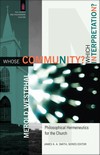
Whose Community Whose Intert.jpgHis brand new book in this series is called Whose Community? Which Interpretation? Philosophical Hermeneutics for the Church (Baker Academic; 19.99.)  Jens Zimmerman of Trinity Western University calls it “beautiful.”  Bruce Ellis Benson, the chair of the philosophy department at Wheaton says that Westphal “deftly navigates between hermeneutical despair and arrogance to arrive at a hermeneutic that affirms the vital importance of interpretation and yet insists that Scripture itself truly speaks.”  If this doesn’t turn you on, I understand.  But it is one of the critical issues of our times: who does get to interpret the Bible, or anything, for that matter? 

The first book in this series is very good, written by the editor of the whole set, James K.A. Smith, and is called, Whose Afraid of Postmodernism: Taking Derrida, Lyotard, and Foucalt to Church ($17.99.)  As we’ve explained here before, they were lectures Dr. Smith (of Calvin College) gave at L’brai in Switzerland, with some application to the philosophical world, but more for those interested in the kinds of questions being raised by the emergent church conversations. Another recent one in the series is called Globo-Christ: The Great Commission Takes a Postmodern Turn by Carl Raschke ($17.99.)  Despite the corny title, it is a very, very important and vibrant work.

(It was, I assume you realize, a myth of the modern world, and the theology that emerged from it, that pure reason or pure science or pure faith or something could enable us easily get to a pure truth.  That is, somebody out there could tell us “the” bare facts, and that was that. Reason worked that way, our minds could figure it out objectively.  The view that has developed beyond that doesn’t bemoan bias or call for some impossible objectivity, but tries to attend to the very human ways we all “see” and interpret things, most obviously, the Bible.  We “see” and interpret, as full-bodied, limited, creatures.  A modern view might say that truth is “self-evident” and the Bible is just to be read and taught the way Joe Friday might have—“just the facts.”  The postmodern view, rightly in many ways, admits that it just isn’t that simple.  The “light” of the Enlightenment may have given us some, but it’s singular focus on
individuals and Reason isn’t the way God’s world, and our way in it, really works.  Hence, the study of hermeneutics, the process of interpretation, and the need to humbly admit that while God’s speaks to us “truth” we always “see through a glass dimly.”  To reject rationalism does not demand that we embrace relativism, though.  Our era is the time these two historic worldviews are colliding.  

The latest in this series is a heavy one by British philosopher Graham Ward and it, too, struggles with the postmodern questions, once we realize we are in somewhat fluid ground, politics of discipleship.jpgand live in a real world where, in deed, the facts aren’t so evident, and the church & world often collide.  Ward knows his cultural theory, and he is an orthodox theologian and his is very prolific.  This new one is called The Politics of Discipleship: Becoming Post-Material Citizens  (Baker; $19.99.)   I find the sub-title off putting, but I want to know why Jamie thinks this is so worthy, so I’ll dip into it a bit.  Smith calls it a “thick” description, almost like ethnography.  John Milbank raves, calling it “extremely significant” as does Stanley Hauerwas, who exclaims “Extraordinary!”  This is not old-school liberal social gospel stuff, and it is not, obviously, anything like the religious right.  Hmmm.  In a post-everything world, this may be what discipleship demands.
My Year in Radical Islam: A Memoir  Daveed Gartenstein-Ross  (Tarcher) $14.95  How doesMy Year In.jpg a kid born Jewish go off to college, end up becoming a Sufi, and then shift to being a radical Islamist, working for a Saudi-funded charity that was accused of funding al-Qaeda?  How does one become a true believer, even with hippy-dippy new age parents and evangelical Christian friends and a girl friend who is not a Muslim?  Give up music?  Pray for the mujahideen? Grow the beard?  Start allowing the possibilities that friends with multiple wives and violent ideologies could be right?  This is a book I could not put down, literally zipped through in one long Sunday, and have been haunted by it ever since.  I don’t want to say to much, but it is an eye-opening memoir of the journey into fundamentalism, and one learns a bit about Islam along the way.   As the L.A. Times put it, this author has “something rare to offer, namely the perspective of someone who has ties with each of the major monotheistic faiths.”  That is putting it mildly.  Fascinating.  I do think it would have been helpful if he would have explored his own psychological state a bit more;  more, his spiritual state.  That is, his slow embrace, and then shift away from this odd subculture seems to be such a radical thing, he might have told us more about his deepest convictions and the feelings of his heart in these times.  Some seemed nearly matter-of-fact, which, perhaps it was.  I wanted a bit more, in part because I cared about the characters and their stories. 
I really did enjoy this troubling, but very earnest telling, and certainly the rise of radical Islam is a reaction to the decadence of the modernized, secularized West.  Those who think that the terrorists are mostly concerned about social injustice or poverty simply aren’t paying attention. Bin Laden and the boys are against the West because of our commitments to science, freedom, hedonism, crass materialism, individualism, secularity, pluralism…Che Guevera or the mid-80s Sandinistas, perhaps, claimed to care about justice for the poor, but the American left, it seems to me, is misguided in thinking of Islamic terrorists in those categories, as if they attack us over Cold War stuff.  The folks that Gartenstein-Ross came to belong with were radical Muslims who wanted Salifism, a sharia theonomy under Quranic rule, and are deeply religious.  This conflict, obviously, is a major aspect of our times, and we would be well to know more about it.
beauty awakening.jpgBeauty Awakening Belief: How the Medieval Worldview Inspires Faith Today  Jon M. Sweeney (Morehouse Publishing) $20.00  Sweeney is a good writer and memoirst himself (he is an editor at the lovely Paraclete Press.) Here, he walks us through two major, historic cathedrals in Europe, showing how the symbolism of the archetecture showed forth a way of seeing life that, actually, could be a profound asset for those seeking a third way out of the secularism of modernity and the weirdness of postmodernism.  Here, in high medieval vision, we see the integration of heaven and Earth, space and sanctuary, stone and light…a lovely and awe-inspiring work that helps us learn about the past, about the arts, and about a God-centered way of thinking.  From the deeper meaning of gargoyles to flying buttresses, from darkness to flight, this look at medieval architects and masons has much to commend to us today.

Word Pictures: Knowing God Through Story & Imagination  Brian Godawa (IVP) $16.00
word pictures.jpg   Wow-o-wow, this is a fun and clever book, with photos and cartoons and etchings on nearly every other page, and every chapter in a different type font. It is interesting and new and deep and exciting.  And all those doodads and pictures!  Of course it would have to be so decorated since the book is about our shift towards images in this postmodern culture, the need to engage the world of pictures, images, art.  Godawa tells in the first chapter about being a tough-minded evangelical interested in rationalist proofs for the existence of God and arguments that could prove the validity of the Bible.  From his deep knowledge of all the sources listed in resources like Josh McDowell’s Evidence That Demands a Verdict and such, he could attack anybody willing to intellectually spar, and usually win the battle of the mind. (And, from the fascinating footnotes in this easy to read book, it is very evident that he was, and remains, one very sharp cookie.) And yet, was this really proper Christian apologetics?  Why the sole reliance or logic, reason and proposition, to the exclusion of metaphor, symbol, visuals, mystery?  Was he actually dehumanizing others, and himself, by not being wholistic, dealing with mind and heart?

The varied sorts who have so enthusiastically endorsed this remarkable book should clue you in that he has not thrown the baby of truth out with the bathwater of cold rationalism; William Edgar and Nancy Pearcey, and Leland Ryken (all serious, conservative scholars) all have very insightful and clever raves.  Rock critic Steve Turner says it is “a timely corrective to those of us who would reduce faith to words and arguments, given by an author who uses words and arguments so well.”  Len Sweet says “This book deserves, and will delight, a wide readership.&nbsp
; It’s part autobiography, part aesthetics, part historical theology, and only a ‘Renaissance man’ like artist-intellectual-communicator Brian Godawa could have brought together ‘word’ and ‘image’ with such serene, soaring mystery.”   Godawa’s classic Hollywood Worldviews (IVP; $) has recently been reissued, and the new edition is better than the first; it is highly recommended to develop a discerning eye as we enjoy films.  This is a guy to watch.  And Word Pictures is a book to read, discuss, and pass on others who are wanting balance and insight in the midst of a fastly changing cultural landscape
wrestling with moses.jpgWrestling With Moses: How Jane Jacobs Took on New York’s Master Builder and Transformed the American City  Anthony Flint (Random House) $27.00  Most educated people at least have heard of the legendary Jane Jacobs and her book The Death and Life of the Great American City (Vintage; $15.95.)  She is known as the most important writer about humane city planning and could be considered the great-grandmother of what we now know as “new urbanism.” From the feisty writings of James Howard Kuenstler to the calm theological take of Eric Jacobsen’s Sidewalks in the Kingdom (Brazos; $20) the call to support sane and gracious cityscapes and resistance to gross suburban sprawl has been shaped by Jane Jacobs who protested intrusive, devastating planning in New York city in the early to mid- 1960s.  Few know the name of Robert Moses whose large-scale efforts for so-called urban renewal brought powerful forces to bear against local folk.  As it says on the flyleaf, “Time and again, Jacobs marshaled popular support and political power against Moses, whether to block traffic through her beloved Washington Square Park or to prevent the construction of the Lower Manhattan Expressway, a ten-lane elevated superhighway that would have destroyed centuries-old streetscapes and displaced thousands of families and businesses.”  And she did all this with her young children in tow.

“Notorious for exacting enormous human costs, Moses’s plans had never before been halted—not by governors, mayors, or FDR himself, and certainly not by a housewife from Scranton.”  Sure this is a book about the cobblestone streets of Greenwich Village, when Bob Dylan was around, and the time’s they were a-changin.  But besides the inspiring account of the bohemia of the 60s,  it is a story of two visions of American life, a struggle that pitted local folk against Big government and Big business–that pitted scientific reductionism against charm and grace and small scale dignity, and in many ways pointed to the very struggles that seem to swirl around all of the books mentioned above.   Whose interpretation, indeed?

BLOG SPECIAL
20%
any book mentioned
Order Here
ask for the blog special discount

Hearts & Minds 234 East Main Street Dallastown, PA  17313     717.246.3333  

On Being a Teacher by Jonathan Kozol and other back to school books for teachers

A week or so ago I did a post highlighting some books that might be helpful as college students go back to campus, or for those first year students who may need some help thinking through the broadest themes about learning, vocation, calling and being a person of faith in the world of higher education.  We have done our fair share of talking with college students and I know there are campus ministers and youth workers that follow the lives of their young adult friends, and most really agree that having some thoughtful Christian books around in those critical years is so, so important.  I’d encourage you to revisit that BookNotes list and give us a call if you’d like to chat about ways to help connect your college friends (or children, if you are a parent) to solid Christian resources to accompanying them on their journey.

And, of course, this is the time of year that others are heading back to the halls of learning, too.  Are you a teacher who may need some extra encouragement?  Do you know teachers who might appreciate a gift book that says “I care about what you do”?  Maybe you are a parent who just wants to be clued-in to what teachers go through, or want to be able to support the educators you know. or get involved in education reform.  Well, here are a few that we like.

on being a teacher.JPGOn Being a Teacher Jonathan Kozol (OneWorld) $14.95  Thank goodness for the work and witness of this amazing person, his love for children, his outrage about the inequities of how so many poor public schools are underfunded, for his relentless work and impassioned writing over decades and decades.  I love a lot of books, but there are a rare few that I truly mean it when I say they “changed my life” and I would say that Mr. Kozol’s first two books fall into that category for me. His Death and an Early Age earned the American Book Award in the 1968.  This 1981 book is a strongly argued work offering a “fervent and provocative assessment of thejonathan kozol.jpg role of the teacher in America’s schools.”  He advocates–as it says on the back—“an approach to education that is infused with ethical values, fairness, truth, and integrity, and a driving compassion for the world beyond the classroom.  I like the way he offers ways not only to navigate the classroom, but how he invites teachers to partner with parents and other students.  A passionate activist for quality schools with a deep sense of social justice, this is a landmark book by an very important author. Kudos to this British publisher who brought this back out after being unavailable for years.  It seems to me that not many know about this new re-issue, so we are happy to announce it here.

letters to a young teacher.jpgLetters to a Young Teacher  Jonathan Kozol (Three Rivers Press) $12.95  I love this series of  “the art of mentoring books.”  Mary Pipher has Letters to a Young Psychologist, Perri Klass has an excellent one for young doctors, Samuel Freedman wrote a good one for young journalists, Tony Campolo even has one called Letters to a Young Evangelical.  They do read like letters sent from a wise professional mentor, and in the case of this wonderful Kozol one, they really are a set of letters he wrote to a young elementary ed major who had written to him, asking some basic questions about how to integrate a sense of social justice into her care for children and her daily work as a teacher.  The letter format makes it easy to dip into (which is great for busy teachers.)  From getting along with administrators to keeping hope alive, from thinking about grades to wondering about school choice (Kozol is, frustratingly, against it) this is a marvelously written and compelling set of humble advice, gentle suggestions, and the occasional passionate encouragement. Gracefully done and very helpful.

letters to lisa.jpgLetters to Lisa: Conversations with a Christian Teacher  John Van Dyk (Dordt College Press) $11.95  I am very fond of all of Van Dyk’s books on thinking Christianly about schooling.  Here, we have a series of lovely letters with a point; in each letter, a young teacher, Lisa (who happens to be Van Dyk’s daughter, just out of his college classes on education) asks her father/ professor how to apply a certain principle in a contemporary, real-life setting.  Yes, yes, she says, it was so inspiring to have you lecture on a Christian worldview, on how to integrate faith and learning, faith and teaching, how to serve God by serving the classroom.  But here I am, she seems to write, with real kids that don’t get along, with real parents with their own set of demands, with an administration to deal with, with, with…well, you get the point.  Each letter from Professor Van Dyk reiterates a lesson from his classes on Christian thinking about education, and applies the point to her real classroom.  This is a great way to join in the conversation about developing a Christian perspective on pedagogy and the philosophy of education, but always shows the daily difference it makes amidst the typical problems, challenges and joys of classroom work. Lisa, by the way, teaches in a thoughtful and creative Christian school, but I would imagine that public school teachers of Christian faith could apply the principles in their setting as well. 

teaching with fire.jpgTeaching With Fire: Poetry That Sustains the Courage to Teach  Sam Intrator & Megan Scribner, editors (Jossey Bass) $16.95  In the years following the publishing of the extraordinary Courage to Teach, there were workshops and seminars for educators about Parker Palmer’s insightful book about spirited teaching.  Part of what came out of some of those times were poems shared, teachers who used a certain poem to give them courage, to keep them going, to remind them of the joy and calling of being a caring teacher.  Eventually, educators were invited to send in their poem, along with a brief description of why it so motivated them.  This is just a wonderful, wonderful collection of poetry that has restored the faith of teachers.  A good collection of poems in its own right, a wonder when seen as an ally for inspired teaching and learning.

schools with spirit.jpgSchools with Spirit: Nurturing the Inner
Lives of Children and Teachers
  Lina Lantieri, editor (Beacon) $23.00  This is an extraordinary and wide-ranging collection of pieces by those who desires an deeper integration between some deep sense of values and spirit and the ways in which we teach and learn.  While not a “Christian” book, it has some lovely writers, some important voices—Parker Palmer, Jacob Needleman, Geoffrey Canada, and other peacemakers and activists.  Some of these essays are very, very insightful, and we’re excited to think of teachers reading it.  Daniel Goleman (of Emotional Intelligence fame) wrote a forward, noting how formation of character and an awareness of the deepest ways children construe meaning, is a vital aspect of the best education.

end of education.jpgThe End of Education: Redefining the Value of School Neil Postman (Vintage) $13.95  One can hardly think of a more important cultural critic and trenchant writer than the dear Jewish scholar Neil Postman.  I spent a few hours with him walking around together before he died, and it was a thrill (similar to my card ride talking about Jesus with Jonathan Kozol.)  I just think that thoughtful folks should read this stuff, and here, he playfully asks what the end–the point?–of education is.  For, of course, with out a sustainable and virtuous end, well, it could be “the end.”  He isn’t goofy about it, but is elegant and incisive and very insightful.  I was once preparing lectures for a group of teachers and chose this as our primary conversation partner, and was so, so glad for his wisdom. 

going public.jpgGoing Public: Your Child Can Thrive in Public School  David & Kelli Pritchard  (Regal) $12.99  We are big supporters of the idea of alternative Christian schooling, and many creative faith-based schools do a great job allow the distinctives of a Christian view of life to shape the experience of learning, the content and ethos.  Yet, for most of us, these innovative schools aren’t around, or we cannot afford them.  I know of some parents who seem to think that they are lesser disciples of Christ if they don’t home-school or send their children to Christian schools.  Using Biblical truths and practical examples, this book holds out the possibility that ordinary kids from strong Christian families can and should thrive amongst their peers in the local public school.  With a fun forward by Denny Rydberg (President of Young Life) this book is the only one of its kind.  If you know of parents fretting about this, this book could bring solace, encouragement, and some practical pointers on being active as Christian parents in the public school systems.  Nicely done.

Bible and Task of Teaching.jpgThe Bible and the Task of Teaching  David I. Smith & John Shortt (The Stapleford Centre) $27.99  You may recall my mentioning Learning From the Stranger, the new book by David Smith on multi-cultural concerns (he’s a foreign language teacher at Calvin College and co-authored a faith-based perspective on language learning called The Gift of the Stranger.)  David also has the reputation for doing excellent teacher training events, conjuring up visions of an integrated Christian worldview and the best practices in coherent, caring classrooms.  Of course, people of Christian faith want their work–in this case, teaching–to be shaped by the Biblical story. How does that happen?  What does that look like?  What do we mean by a Christian view of education, and how do we then teach our subjects in a way informed by the Biblical truth?  This is a book we import from England and it is excellent.  A bit serious-minded, but a must-read for any teacher who wants to honor God in her everyday work of teaching.

vocation of the child.jpgThe Vocation of the Child  Patrick McKinley Brennan (Eerdmans) $36.00  Wow.  This is a scholarly collection of essays that bring the language of calling and vocation to our understanding of the task of childhood.  There are eccentric pieces here, scholarly case-studies and a few chapters that won’t appeal to everyone.  Yet, there is stuff written here that simply has not been put down before, and we highly recommend it for that reason.  Renowned theologians and writers include Marcia Bunge, Vigen Guroian,  and Bonnie J. Miller-McLemore, and there are some serious Catholic philosophers included as well. Legal scholars such as John Witte are represented and a very important educational analyst, Charles Glenn.  All in all, this is a keepsake reference book, a resource for those wanting to deepen their scholarship around issues of the nature and calling of the child.

BACK TO SCHOOL TEACHERS BLOG SPECIAL
buy any one mentioned
10% off
buy any two mentioned
25% off

Order Here

offer expires September 7th

Hearts & Minds 234 East Main Street  Dallastown, PA 17313     717.246.3333