More on Mako: Refractions: A Journey of Faith, Art, and Culture

We have often written here—offering books, ideas, resources—to remind customers that we are all called to live creatively, engaged, alive to delight, intentional about making the world a better place (to God’s glory.)  As Andy Crouch’s much-discussed book, Culture Making (IVP; $20) reminds us, we are made in the image of a Creator, after all, and it is natural that we humans make stuff. His book is not for artists, really, but for all of us.  The sub-title is Recovering Our Creative Calling.  It is one of the most truly interesting books I’ve read in years—what new ideas, what old ideas put in new ways, what insight, what fun writing about omelettes and courthouses, spelling changes and church buildings, teaching children to eat new foods and how those with power might serve the poor, why small initiatives are best hatched among small groups and why “third places” are vital to ongoing cultural renewal.  No, this isn’t about being artsy, but it is surely about how God has made us to be active and aware of the “horizons of possibilities” that are inherent in God’s unfolding, interesting, messy, complex, beautiful world.  His Culture Making website is pretty darn interesting, too, by the way.

Beth and I and our H&M staff see our bookish ministry here as enabling that kind of vision, that kind of work, amongst our customers and friends and clients.  We are glad to be a place which suggests and recommends authors who encourage this attentiveness to the world around us, the world that Jesus died for (John 3:16), to offer books that are then read, pondered, discussed, applied.  We are in this together, you and we, and we are, as Andy argues, culture-makers.  We would be so, so pleased if a few customers got their church group or book club or reading circle to buy a bunch of Culture Making.  You will be pleased, too, I’m sure.

We often think of Calvin Seerveld’s extraordinary book (still in print, published in the 70s)Rainbows.gif Rainbows for the Fallen World (Toronto Tuppence Press; $25.00) which explains that there is an aesthetic dimension to all of life.  No reductionism (“time is money” or “we are nothing but chemical reactions, brains in motion” or “whatever works” or “we just have to preach the gospel”) can adequately account for this call to respond to the multi-dimensional goodness of creation;  our technocratic culture too often seems not to have time for such things, but there is no denying this aspect of our lives.  We are, all of us, living in God’s world, a world which by its very structure calls forth a response to the good gifts of color, texture, tune and type that is built-in to the creation, like a rainbow gift of common grace from God’s good hand.  The first chapter of the Gospel of John and the first chapter of Colossians (among others) teaches that Christ made the world for His glory, gave it to us, for His and our neighbors sake, and it is wondrously good.  I learned much of this first from Seerveld, I think, and it shaped how and why we opened the bookstore.  We commend his rich meditations again and again, unique as it is, as one of our foundational books that opened up new possibilities of what a “Christian bookstore” could be.  Hence, our large selection on the arts and creativity, on film and popular culture, on worldview and social renewal.  Etecetra.
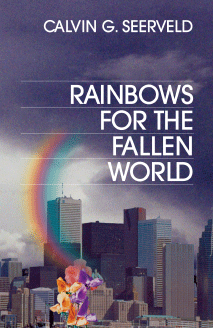
I often cite Seerveld on how odd it is that we have believed (at least since the Enlightenment times) that we humans, rational beings that we are, can make up our own mind about this stuff.  We can think it through ourselves, thank you very much (stuff that can be thought through is all that really matters, anyway.)  Artsy stuff is, well, subjective, anyway, a matter of our own preferences, so culturally-influenced and taste-driven that there couldn’t be any true truth in this matter.  So who cares, really?  Seerveld writes, 

If a medical doctor tells a person to cut the fat out of his diet or he’ll have a heart attack, one does it and starts eating Rye Krisp and a lot of cottage cheese.  If a doctor of aesthetics tells a person to sell all his chrome and plastic kitchen furniture and have a garage sale on the overstuffed living room sofa or risk a life of materialistic superficiality, one would tell such a doctor to mind his own business.  Why?  Why obey the one and become offended by the other?  If people hire trained lawyers when they buy a house, to get the whereases, the party of the first part and the party of the second straight, so they don’t get caught with an unfree property line, why are we house-buyers often satisfied with untrained or uncharismatic musical leadership for the high point of our worshiping the Lord Yahweh on Sunday, as if that doesn’t need to be straight?…

My point is:…the plastic a man or a woman associates with, the drag or tempo alert to one’s singing, is the place to look for discovering whether there be an obedient or disobedient aesthetic life exercised before the face of God.

So: from the joy of the graphic design of your iphone to the ways a silver moon can take your breath away, from how we dress (differently for different occasions) to the appreciation of the feel of the weight of a good book in the hand, or the ceramic mug that you hold as you read, or the comfort of the chair in which you sit, or the beauty of the shade of paint in your doctor’s office, there is a truthfulness to all of this. And some Christian scholars believe that there are norms that can guide us into appropriate response to this, that attentiveness implies responsiblity.  Of course, we need not be artists, properly speaking, to be open to and deepened by the aesthetic dimension to be found in every thing in life, but we may need some help.  Could artists help?  Could Christian scholars and authors help the artists, who themselves may not have thought this through faithfully?  Can we, together, learn how the aesthetic dimension of life needs unfolded in distincively Christian ways, that our spiritual formation should include a richer aesthetic life?
rock that is higher.jpgI hope this next few lines aren’t seen as a sly sales pitch or a digression;  it is true: we read novels and listen to CDs and recite poetry and treasure memoir, in part, because, as Eugene Peterson reminds us with his book title happily swiped from Emily Dickinson, these storied creations “tell it slant.”  Madeline L’Engle has a book expanding on this, and her title is from a Psalm: The Rock That Is Higher.  Her subtitle? Story as Truth  (Shaw; $14.99.) I’ve written here before about the time I heard children’s writer Katherine Paterson (I think it was) reply to someone who asked if her books were “a mere story.”  “Ahh,” she reportedly replied, “if you knew what a story was, you would never call it mere.”

I once told an aspiring religious singer-songwriter that perhaps he was called to be a preacher since his songs were so terribly didactic, with no allusive quality, no nuance, no metaphor, no poetics, no suggestion.  Artists and storytellers and poets and composers should most know how to “tell it slant” and if they do not, perhaps they should not pretend to be artists, but just give it to u
s straight, in solid, no-nonsense non-fiction.  Of course, even a good sermon or  biology text or history book or training manual can honor God’s invitation to be beautiful, well-designed, colorful, creative…no one is exempt from the call to be playful, slanted just a bit.

Rainbows for the Fallen World also reminds us that being aware of, tutored by, steeped in, God’s colorful world and the habits of being imaginative that form from such tutelage, is a practice/persuasion to help us read the Bible better, learn better, and know God more deeply.  An obvious, simple example: if one (or one’s faith community) is practiced in reading poetry, it is reasonable to think that one (and one’s church community) will read the Psalms more faithfully and fruitfully.  If one is fluent in stories and storytelling (perhaps by listening to skilled songwriters, or by reading short story collections) one will perhaps have “ears to hear” the parables of Jesus. Lew Sweet once suggested to me that kid who grow up on fast-paced MTV-style, jump-cut cinematopgraphy may understand the imagistic book of Revelation better than her logical, printing press father.  Well, as Peterson suggests, the Bible does, quite often, “tell it slant.”   As Bruce Cockburn said in a song years ago, “you need the poet and you know it.”  Except, of course, that some of us do not know it very well.

And, so, this stuff matters.  It matters for those who desire to be obedient to God’s foundational command, His first great commission (Genesis 1:26-28) to be those who cultivate—creative history-makers and culture-shapers.  And it matters to those who want to stay alive in this bureaucratic world, those who want to live well, be fully human and humane.  Although the Bible didn’t say it exactly this way, it is important to recall that the great thinkers of antiquity linked the good and the true to the beautiful.

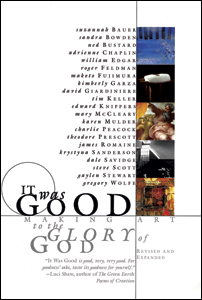
In the must-have anthology on the arts, It Was Good: Making Art to the Glory of God,It was good.jpg edited by Ned Bustard, (Square Halo Press; $24.99) art historian James Romaine has a fabulously rich study of the creation of the world, The Sistine Chapel, Genesis and Michelangelo, all reflecting on the delirious question of what we mean by creativity. The chapter, “Creation, Creator, and Creativity” is lush and helpful (and ends well with a potent quote about our embeddedness and our end within the creation by Nicholas Woltersdorff, from his clasic Art in Action (Eerdmans; $25.00) which I noted in our last post that he was an honored guest and keynote speaker at the recent New York IAM 2009 Encounter. Andrienne Chaplin (author of Art and Soul [IVP; $30.00]) has a chapter in It Was Good on the vexing question of beauty, perhaps an overused word in essays on these themes.  She reflects more deeply on what might be a proper Christian aesthetic, a faithful and wise view of beauty.  Of course, it is not about being “pretty” and not about being sweetly “inspirational” like the shallow works of Thomas Kinkade.  She writes,
 As fallen creatures living in a broken world, we cannot ignore, deny or escape its flawed condition. But as renewed and redeemed creatures, living in the expectations of a new heaven and new earth, we are also capable of seeing traces of the world’s original goodness and of tasting the Lord’s presence in the midst of it all.  To recognize true beauty requires mature, sensitive, and spiritually attuned discernment

[Here is an aside I cannot resist:  we just got a new academic press book in, The Art Instinct: Beauty, Pleasure, and Human Evolution by one Denis Dutton (Bloomsbury Press; $25.00)  He edits what The Guardian claimed was “the best Web site in the world”, The Arts and Letters Daily.  Anyway, here, he asks, as a Darwinian, it seems, if we are, somehow, wired for creativity, inborn for beauty.  Famous Harvard evolutionary thinker Steven Pinker says, “This book marks out the future of the humanities—connecting aestheticis, and criticism to an understanding of human nature from the cognitive and biological sciences.  Denis Dutton has thought about this topic as much as anyone alive today.”  Well, Pinker must not have met up with Cal Seerveld.  And, yes, this may be “the future of the humanities.”  If world class cultural creatives and scholars of this calibre are insisting we think about this fundamental question—what does it mean to be human, and is there an instinct for creativity and beauty?—let us spread the word in our churches and fellowships that, indeed, some Christian thinkers are addressing this.  “Let he who has ears…”]

Anyway, this splendid Square Halo collection of extraordinary essays, It Was Good: Making Art to the Glory of God–so well designed that it is itself a work of art, manufactured on ecologically-careful alternative papers, too—is the best resource to read if you want to mature in this sort of spiritually-attuned discernment of the aesthetic dimension of life.  Kudos, again, to Square Halo, for getting practicing artists to contribute chapters, artists such as Makoto Fujimura, Ed Knippers, Mary McCleary, Ted Prescott, Krystyna Sanderson, musicians such as Bill Edgar and Charlie Peacock, and critics and thinkers such as Greg Wolfe, Steve Scot, the aforementioned Ms Chaplin, and Tim Keller.  Although I suppose this was published as an aid for growing Christian artists, we commend it to one and all.  As John Franklin, Director of the famed Imago art movement in Canada writes, “This is a book that is engaging and will inspire fresh appreciation for the God-given gifts of creativity and imagination.”
 

refractions.jpg

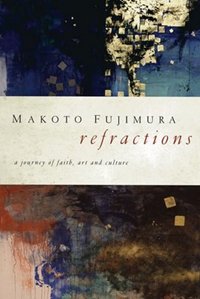
All of this I write to once again remind you of the opportunity to own the new book by Makoto Fujimura, Refractions: A Journey of Faith, Art, and Culture (NavPress; $24.95.)  It is a great book to introduce you to these kinds of themes, easy to dip in to since the chapters are short and all stand alone, or as a particular artist’s take, a great follow-up book to a general study of Culture Making, or something (like Rainbows…or It Was Good) on the importance of the aesthetic side of life.

[If you haven’t, please scroll back to see my long blog post and March website column from last week about Mako, his IAM organization, and our bookselling at their annual Encounter conference in NYC.] 

This delightful new Refractions paperback (handsomely made with French folds and full color) includes the reflections, ruminations, insights and cultural observations of a man who is indeed a culture-maker, steeped in this Seerveld-esque rainbowed worldview that sees a God-graced world of wonder, created by Christ’s own hand, given to us to unfold, even amidst much horror and evil and ugliness.  Perhaps no artist working today has gotten such acclaim for nuanced, allusive, imaginative Christian testimony in his work.  Refractions shows off some of his strangely evocative pieces—gold hues, many done in his Japanese Nihonga style—but it also allows Mr. Fujimura the opport
unity to explain himself, ask big questions, ramble through contemporary art, modern dance, a movie or two, tell of a trip through an art museum, wonder about how ideas take hold and last.  I don’t say it lightly at all, and it is not mere rhetorical flattery, but this wise young man may be a sort of prophet.
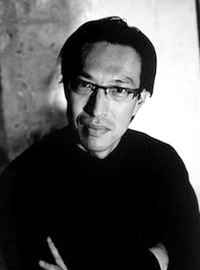
mako.jpgGod has given him extraordinary gifts, insights, and abilities and a passion to communicate wisely; he has thus far stewarded them well.  His calling is to make good art, to do good work, but he is also positioned not only to speak carefully into the mainstream art community and to be a “public intellectual” but also to inspire and network others who want to work in a collegial spirit of artistic purpose and hope.  From his work with the National Endowment for the Arts to his ministry with IAM, and, now, significantly, with his handsome  new volume, he is a person who is worth paying attention to.

I am not going to be too allusive here, now: we hope you consider buying Refractions from us, perhaps giving a few as gifts to encourage those who have artistic leanings, interests in culture, or anyone who may want to ponder life’s biggest questions—Makoto and his family lived through the terrorist attacks in his neighborhood in lower Manhattan on 9-11, after all, and writes and paints about it (and many other serious topics) with nuance and care.  We truly, truly, recommend it.  It is, in its own way, a rainbow gift for this fallen world, lovely and light, yet important.

Please see our special price offer if you’d like to give one away, shown below.

A book like this with the subtitle: A Journey of Faith, Art, and Culture necessarily covers a lot of ground, each essay free-standing, but the chapters do hold together nicely.  Some are clever (“The Housewife That Could”) and some a bit surprising (“Optimal Foraging Theory: Can You Have Your Birds and Eat Them Too?”) and others beautiful—his title description of the unfurling Gates exhibition in Central Park as “A Visual River of Gold” continues on through Biblical references and teaching about gold from his own Japanese tradition.  That these were initially blogged reflections (now edited a bit) at his respected refractions website does not diminish their literary quality.  Some are quite eloquent, matching the elegance of the art.  Some are fairly simply told, but deeply moving, as in the story of his work organizing artists to help name and grief and re-cast hope after the 9-11 attacks on his TriBeCa neighborhood near Ground Zero.  Here is a small excerpt of that chapter called  “The Disintegration Loops: September 11th Issue”

On September 11, 2001, musician and composer William Basinski peered over the East River from his loft in Williamsburg, Brooklyn, and watched in horror as the Twin Towers fell.  He had been scheduled to interview for a job at the World Trade Center that morning.  When I visited him a few days later, Billy told me that he had begun to lose his desire to continue to work, or even to continue to live, after that day.  He, like many other artists, felt devastated by the experience.  His heart was oppressed by fear and anxiety.

I prayed with him that day, and when I returned a few days later, he told me he had begun work on a series of compositions called The Disintegration Loops.  I listened to the Loops, with Billy while we looked at the footage of video he had taken of the sunset over the smoke of the fallen towers (see photo on opposite page.)  The sound of Disintegration Loops resonated and somehow completed itself in my mind.  It affirmed an idea that came out of conversations I’d had with artists around my home and studio in what was now Ground Zero.  As artists, we needed to gather our thoughts, pray, and reflect on what had happened. 

“I thought I had been unwittingly commissioned to do the soundtrack for the end of the world,” Billy would later recall at a gathering at The Village Church in Greenwich Village, commemorating the first anniversary of September 11. His melancholic composition Disintegration Loops, played in the background…

…As he worked on the new composition, Billy also helped me to begin TriBeCa Temporary…TriBeCa Temporary ended up being over twenty exhibitions, happenings, prayer meetings, and poetry readings until our closing exhibition in April of 2001.  My studio mate, Hiroshi Senju, kindly contributed a small space, which Billy called our Ground Zero teahouse….

You simply have to read the rest of the chapter as he tells without sensation of the healing power of the arts, the significance of aiding artists to respond to social crisis, and God’s gracious work, even amidst our own disintegrating lives.

Mako not only tells of his own creative process, and shares his own journey into the art world, but he interacts with considerable art critics, and, more broadly, cultural critics.  For instance, in a chapter entitled  “Planting Seedlings in Stone” he discusses how urbane art critics carry certain assumptions about the nature of ordinary American life.  He observes,

One symptom of the cultural disconnection between the art produced in cities and the cultural realities of regional America is evident in the media.  The media feeds upon the fragmentation and fear between the urban and the agrarian.  Journalism today seems content to operate only in sensationalism, echoing the same systemic ills of the art world.  This disconnect affects us all, contributing to a greater cultural disengagement and to distrust and cynicism.  But the fine arts do serve as upstream sources of cultural expression, for good or for ill.  Therefore, we need to begin to address the source—if we are to effect positive change.

Fujimura talks about Christian cultural reformation, speaks of art as peace-making, writes about his own efforts of living into his vocation, offers considerable and astute interactions with the ideas about art, and even shares personal stories (such as a fabulous telling of taking his teenage son on trips for college visits, or a trip with his boys through China.)  Some of his pieces, though, are about how he is affected by viewing great art.  I loved a chapter, for instance, where he describes his feelings as he took in a Fra Angelico showing at the Metropolitan Museum of Art.  It raised questions for him of what ideas and work of today might last for 500 years (“the opposite of the Warholian 15-minutes of fame.”)  He notes the frustrations of mid-career 50 year-old artists iwho have worked hard at their craft, now in their prime, who are considered passe—how SoHo galleries give huge showings to just-out-of-art-school faddish kids, who are quickly replaced by the Next New Thing.  And how the church seems to no longer have the ability to nurture life-long artistic sensibility or sustainable visions of how life ought to be for the very long haul.

If you spoke with those people staggering about in the Met with me, having a similar reaction to looking at the glory of Fra Angelico’s paintings, you may find them to be enlightened secularists who also grieve over the fragmentation, the loss of a spiritual anchor in the contemporary
art scene.  They may even be atheists who by the very essence of their denial have to appreciate the sheer weighty anchor of Fra Angelico’s paintings.  Atheism demands a language of belief to wrestle against.  Fra Angelico’s paintings are undeniably Christian to the core.  Enlightened secularists would be staggering because the Spirit has left them.  Atheists would stagger because they have lost the defining opposition.  As a Christian, I stagger and grieve because I do not see anyone on the horizon who creates and paints today who would rival Fra Angelico’s angelic weight.

In short, we are all staggering about, or should be…those who have eyes to see.  That is precisely how we should react to Fra Angelico and the five hundred-year question.  We stagger because we have lost even our ability to ask that question.

So I took the subway home and Googled “the 1500s.”  During that century the Tudors ruled the early Renaissance, having ended the War of the Roses in 1485.  In 1503, da Vinci painted the Mona Lisa, and Michelangelo created David.  Not a bad start.  The Sistine Chapel and The Last Supper, of course, would follow.  Christopher Columbus was sailing to sites unknown, trying again to get to Asia.  Magellan noted the global shape of the earth.  Martin Luther posted his ninety-five theses on the Wittenberg door (1517).  And very significant for me, Hasegawa Tohaku, the Michelangelo of Japan, was born (1539.)

I closed my eyes again, and the angels of Fra Angelico reinvited themselves in.

Will we see another Renaissance in the days to come?  Will we have another chance to steward our culture, without losing our identity and faith in the process?

BLOG SPECIAL
BUY ONE
Refractions
25% off

($16.75)
and get a second copy to give away
50% off
($12.50)
please say you want the buy-two special
ORDER
HERE

or call
717.246.3333

Hearts & Minds 234 East Main Street Dallastown, PA  17313    
Refractions: Selling books at IAM with Makoto Fujimura

Makoto Fujimura is a man you should know.  A painter, author, social critic, and cultural organizer, he is also a sweet Christian brother, a dedicated husband and dad, and the center of a multi-faceted, increasingly respected, truly fascinating, faith-based art group, known simply as IAM. (Started in Japan by Makoto the New Yorker, it stands for The International Arts Movement)

We have enjoyed brief moments with Mako over the years and have enjoyed promoting—more than enjoyed, we have felt called, obliged— his earliest published work.  There is an early great chapter in the essential anthology of Christians in the arts, It Was Good: Making Art to the Glory of God edited by Ned Bustard (Square Halo; $24.99) and a fabulous interview with him in James Romaine’s excellent tete a tete with visual artists, gloriously produced in full-color in Objects of Grace: Conversations on Creativity & Faith (Square Halo; $19.99.)  Mr. Fujimura’s artwork itself has graced more than one book cover, and he has been often discussed as a contemporary leader in cultural conversations.  He is not the only reason to buy these two great books, but that he is in them is important.

Now, there is a brand new, very handsomely designed, collected of his thoughtful and
refractions.jpg fascinating essays, wonderfully called Refractions: A Journey of Faith, At, and Culture (NavPress; $24.99.)  It is doubtlessly the most exquisite book published by NavPress, and Caleb Seeling, the editor who worked on it (himself a bright light in the publishing world) deserves great credit for bringing Mr. Fujimuro’s work to the reading public with such an attractive book design.  Here, at Conversantlife.com you can listen to a five part interview with Mako (and then continue on with some interviews Christy Tennant did with other IAM speakers.)

Fujimura has also released a small hardback volume of high quality reproductions of his stunning, reflective artwork, River Grace (self-published; $29.95) which we have stocked since it was first released through IAM.  His MFA is from Tokyo National University of Fine Arts and Music and is a National Scholar in Nihonga—his art style.   His work (highly regarded in Japan and his New York home), is shown in It Was Good, Objects of Grace, and River Grace; in Grace…he chronicles in allusive beauty and an amazing essay, his “transfer of alliance from Art to Christ.”  In 2003 he was appointed to the National Endowment for the Arts (then headed by Dana Gioia.) To see such a young, talented and articulate follower of the Lord Jesus serving as a prudent spokesperson for our nations cultural health is a glory itself.

As great as Mako’s refractions may be—in his writing and his gold-drenched Nihonga panels— he is also known for his considerable ministry among artists, patiently befriending and networking painters, jazz musicians, donors, critics, film-makers, mentors, gallery owners, marketing executives and advertisers, models, actors, writers, dancers, sculptors, docents, and such, creating a movement of Christ-followers of all sorts (and others, too) working under the audacious banner of IAM.

It was the annual IAM Encounter 09 that called us to New York in yet another rented van commandeered by our midnight driver, Scott Calgaro.  We set up a large, large display of authors and musicians speaking or playing at the event, books on aesthetics, literature and poetry, culture-affirming theology, wise art history, and a ton of actual art books, including many of working contemporary Christian artists.  (For instance, do you know the UK publisher Piquant Press?  They have lovingly republished the multi-volume, expensive Complete Works of Hans Rookmaaker now in a $50 CD-ROM!  We had nearly all of their books–from Betty Spackman’s esteemed—if a bit unusual—and much-discussed A Profound Weakness: Christian and Kitsch, to various coffee table works by Anneke Kaai, and more—about which I will write more, soon.)  It wasn’t an easy load-in or set up on the 18th floor of a Manhattan high-rise, but it was truly one of the more interesting events we’ve ever served.  Getting to feature our huge selection of book on the relationship of faith and art, media studies, pop culture, writing, philosophical aesthetics, music, and art books was a thrill.  Having all these creative types from all over the country as customers was even more so.  Or, as the Visa card ad says, Priceless.

Yale University philosopher Nicholas Wolterstorff kicked of the IAM Encounter with a reasoned apologia for the arts.  Hardly necessary in this crowd, it was, nonetheless, magisterial; Wolterstorff is one of the world’s leading philosophers (with recent academic publications on Oxford, Cambridge, Princeton University Presses; his early 80s release Until Justice & Peace Embrace (Eerdmans; $22.00) which were the Kuyper lectures at the Free University of Amsterdam, remains in print and is one of my all time favorite books.)

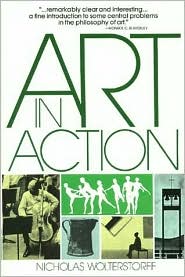
art in action.JPGHis Art in Action: Toward a Christian Aesthetic (Eerdmans; $25.00) is considered a classic among those interested in distinctively Christian aesthetic theory, and served the IAM event as the conference theme.  In fact, it was none other than Calvin Seerveld (A Christian Critique of Art and Literature, Rainbows for the Fallen World, Bearing Fresh Olive Leaves, Being Human) who was chosen to first review it when it was initially released in 1980, I believe.  (Nic returned the favor, turning in a cautiously rave review of his old friend Seerveld’s own Calvinistic, worldviewish, book on the need for aesthetic richness and responsibility in God’s good world.)  This generation of Christian artists and writers affirm the significance of Dr. Wolterstorff, the logical and teacherly philosophy Prof., and the more colorful, Bible-preaching aesthetician,  Calvin Seerveld.  Their names pepper the footnotes of writers such as Mako, Lambert Zuidevaart, Michael Card, Steve Turner, Adrienne Chaplin, Ned Bustard, Luci Shaw, Albert Pedulla, Bruce Hermann, Bill Romanowski, Ena Heller, Steve Scott, Jeremy Begbie. Dr. Wolterstorff remained at the IAM Encounter (some famous speakers fly in and quickly depart events like this) and it was an joy to see him chatting with the participants, young and old, working artists and culture reformers, serious fans and those who had never heard of him before. 

Other keynote speakers had written books and we of course featured them: we have often recommended the excellent Culture Savvy Christian by Dick Staub (Jossey-Bass; $14.95.) Get the great subtitle of this excellent primer: A Manifesto for Deepening Faith and Enriching Popular Culture in an Age of Christianity-Lite so it was sweet to have him around.  Our very good friend Steve Garber gave a packed out seminar—-he’s a he
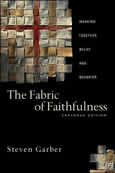
ck of a supporter of the arts himself, citing Walker Percy and Bono and Seerveld and the novels of Wendell Berry and the poetry of Steve Turner by memory.  It is always a good day when we get to tell folks about how important Fabric of Faithfulness: Weaving Together Belief and Behavior  (IVP; $18) is to us.

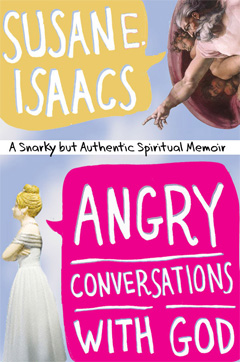
Maybe most memorable was meeting an author who works in the artistic field (and who would deny that it is an art?) of comedy.  Susan Isaacs has preformed in Hollywood comedies
angry conversations.jpg (Planes Trains and Automobiles) and television, and has written for Seinfeld, SNL and My Name Is Earl.  She was raised Pentecostal, joined the comedy sub-culture, and is a working gal using her chops to make people laugh.  We were the very first place in the country to snag her not-yet-released (as of late February) memoir Angry Conversations With God: A Snarky But Authentic Spiritual Memoir (Faithwords; $24.00) and now that it is officially out, we promise to review it in earnest, soon. The word the press review used—cheeky— does indeed capture this crazy lady’s style—and she rocked the big house at IAM.  As you might imagine, it will be a blessing (I say this seriously) for the often de-churched and spiritually marginalized creative types to hear her honest story, her journey of faith, her endurance in a pretty rocky world of performance, travel, fear, fame, and foibles.  She sometimes writes for the Burnside Collective, so you may know she is a thoughtful woman, rooted in a community of open-minded, big-hearted wordsmiths.

billy-collins.jpg
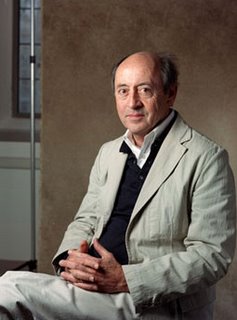
Speaking of big-hearted wordsmiths, one of the most celebrated poets of our time—the former Poet Laureate of the United States, Mr. Billy Collins, read from his various works.  What an honor to be a part of a gig like this! (And how great to think that people of historic Christian faith have the wherewithal to pull it off!)   Of course, we had all of Mr. Collins’ volumes (Sailing Alone Around the Room, The Trouble with Poetry, Questions About Angels, etc. etc.) but naturally stacked up his new one, Ballistics (Random House; $24.00.)  I just love The New Yorker when they write that Collins is “A poet of plentitude, irony, and Augustinian grace.”  Entertainment Weekly writes that he “spins gold from the dross of quotidian suburban life…” Gotta love that, eh?

We have discovered that there is a CD recording package of him doing a live reading in 2005: tons of poety, well read, in an obviously classy venue. (Have you heard him on Prairie Home Companion?) It is introduced by Bill Murray (yep) and highly recommended.  We’ve got it here, now: Billy Collins Live (Random House audio; $19.95.)  

What a joy it was, too, to be able to feature the 20th anniversary issue of Image: A Journal of the Arts and Religion, a classy arts and literary quarterly of great note.  Drawing broadly from faith-inspired artists, writers, poets, short-story writers and pop musicians, Image–dreamed up, legend has it, in part, by popular poet and evangelical writer Luci Shaw—has illustrated this integration of faith and cultural writing as well as any institution in the past generation.  Where else might one read, say, an interview with T-Bone Burnett, a scholarly piece on Flannery O’Connor, wood-cuts by Barry Moser, previously unpublished poetry by Scott Cairns, wonderfully-reproduced full color plates of the work of Sandra Bowden, a short story by an unknown lit prof, a poem by a cloistered nun, and long, serious essays by art critics fluent in Protestant, Catholic and Orthodox spirituality?  From Ron Hanson to Wendell Berry to Brent Lott to Annie Dillard, luminous and important writers grace their pages.  Their splendid 20th anniversary issue includes, by the way, a lengthy interview with Mako Fujimura about his own artwork, and his IAM mission.  Please visit their website—it will make your mouth drop open.  Subscribe to their blog, here: Even if one does not believe with Dostoevsky and Day, that “beauty will save the world”, you know it sure can help.  Showing off Image at jsut $10 an issue at IAM sure made it feel that way.   We still have some back issues available, so let us know if you’d want to purchase any. 

Another way towards this perspective is the tremendous, tremendous, very handsome little paperback (adorned with woodcuts of Barry Moser) of Image editor Greg Wolfe’s essays (gleaned from years of Image) called Intrudingintruding upon the timeless.jpg Upon the Timeless: Meditations on Art, Faith and Mystery (Square Halo; $9.99.)  This should be on everyone’s nightstand, a great collection of short, wise, and glorious essays.  It certainly would make a great little gift, too, for anyone who wants to impress a seeker who doesn’t think that religious folks are interested in great literature, or that art must always be propaganda.  If I can’t sell ya on it, listen to this endorsement by Pulitzer Prize winner Annie Dillard:

Intruding Upon the Timeless takes its title from a phrase of Flannery O’Connor.  That’s apt, because not since O’Connor’s Mystery and Manners has there been such bracing insight on the pile-up where art and faith collide.  This book will rev your engines and propel you down the same road.

So, we repacked, boxed up, loaded out–thanks, again, to IAM volunteers, the aforementioned S.C. and the NY union guys—propelling ourselves down that same snowy road back to PA, full of timelessness ourselves, for having been at IAM, selling these kinds of books to folks who care.  And now the harder job:  we wonder how to let our readership, customers and friends in on our remarkable time, this glimmer of God’s beauty, truth, grace, glory, service, reform, kindness, care, excellence and all manner of goodness that we experienced in New York.  What else to do but tell ya about it (thanks for reading) and to offer a sale on some books from the IAM book display.  I hope that isn’t anti-climatic.  It is what we do, after all.

Want to see a description of some of the other books we featured at the IAM arts conference?
For our recommendations, SEE OUR MARCH 09 monthly review article at the Hearts & Minds website, HERE.  Feel free to spread the word to others who might find such a list helpful  In the meantime, buy Mako’s fabulous essays for $5.00 off, and get a good deal on any of these others, too. 

BLOG SPECIAL
BUY
Refractions: A Journey of Faith, Art, and Culture
Makoto Fujimu
ra
 $5.00 off
regularly $24.99
now only
$20.00
AND
get any other title mentioned
 25% off
Order Here
www.heartsandmindsbooks.com

Hearts & Minds 234 East Main Street  Dallastown, PA 17313     717.246.3333
InteGratE, books on work & Jubilee tapes from IND Duplication

Bob Robinson is one of my good friends, a supervisor for the CCO campus ministry in Ohio.  Bob has a number of passions, and was one of the first bloggers I knew.  He’s written widely about the emergent conversation (discerningly supportive), the missional church (oh yeah), non-partisan social justice work (passionately committed) and the wholistic, reformational worldview of neo-Calvnist Kuyperianism (integrate! integrate! “Every square inch!”)  Bob is a talkative guy who reads tons, and is always thinking about new ways to, as we say, “get the Word out.”  He’s a first-class dreamer and visionary and leader (with a great wife and kids, to boot.) 

InteGratE is a low-key and helpful event he’s put together at his church (The Chapel in Akron Ohio) on March 7th which attempts to take the visionInteGratE.png and whole-life discipleship perspective of the CCOs Jubilee conference, into the ordinary, local congregation.  Can we name and explain a Christian view of the work-world, holding up God’s care for and interest in marketplace and shop floor, medical center and office cubicle?  Can we help church folk learn to serve creatively and faithfully (as some obviously already are) in areas as diverse as the building trades and town council, from public school classroooms to the civil courtroom, from careers in journalism to jobs in corporate sales, from blue to white to pink to no collar callings?  Indeed, as we challenged students last week at Jubilee to relate their faith and their academic majors, thinking in Biblically-informed ways now as they prepare for callings and vocations in their future careers, Bob wants to help equip adult Christian lay people to live out their spirituality in the 9 to 5.  Jesus is Lord of all of life, after all, eh? 

You know that we promote the wonderful books such as Your Work Matters To God by Doug Sherman and William Hendricks (NavPress; $15) to help our customers and friends think about this.  It is still one of the very best, although we have a whole shelf full here at the shop.  Catholics, Lutherans, Mennonites, Methodists, charismatics, Presbys old and new— everybody is writing on this these days (thanks be to God!) There are plenty of new titles, too (how about: Mastering Monday: A Guide to Integrating Faith and Work by John Beckett (IVP; $18) or the great new Christianity Today Study Series one simply called Faith & Work (Nelson; $9.99) which is useful for personal study, an excellent for small groups.  Most of us spend a lot of time at the daily grind and it confounds me why we don’t sell more books along these lines…

The InteGratE event will sell these kinds of books, and more.  We’ve consigned them titles on art, business, science, engineering, sports, home-making, politics, law, medicine, etc. 

Here is wonderful brief short article (complete with discussion questions) that Bob did to prepare folks to attend this great event on a Christian perspective on work.  You can read the excellent additional portions here,  here, or here.  We are so impressed with this upcoming event that we invite you to consider going if you live anywhere near Eastern Ohio.

 Or, consider InteGratE a model for your own local event.  Beth and I organized just such a conference at our own church 15 years ago which we called FaithWorks.  We had Os
the call.jpg Guinness give lectures which later because the must-read book The Call: Finding and Fulfilling the Central Purpose of Your Life (Nelson; $17.99.)  You should know that it is one of my all-time favorite books, one I come back to often.  If you haven’t read it, do consider ordering it.

Happily, Bob will be featuring the Guinness book at his event, too.  It really is a classic in this field, and I pray that folks at The Chapel event pick it up.  Although it is a classic, and lays the essential foundation for any serious thought about relating faith and work or vocation and career, a brand new book by the truly luminous writer Robert Benson just came out in a slim hardback, nicely titled The Echo Within (Waterbrook; $14.99)  Not quite as mystical as echo within.jpgParker Palmer’s moving Let Your Life Speaking: Listening for the Voice of Vocation (Jossey-Bass; $18.95), the new Robert Benson has as its subtitle “Finding Your True Calling” so it is moving in similar terrain.  He is a man who is both practical and contemplative, deeply serious yet quite humorous, and it seems he here strikes just the right balance, with his honest reflections on his own struggle to discern what God has for him, how to say “yes” to the process of sensing God’s pleasure in one’s work, and how to discovery your own vocation.

He writes, “Your vocation is not only about the work that you do with your hands and your heart and your mind; it is about what shapes that work, about the person that you become in and around that work as well.  Vocation is about the things that shape the work before the worker even begins to work.” 

Heaven is a Place on Earth.gifThe keynote speaker at the Ohio InteGratE conference is Michael Wittmer, whose book Heaven Is A Place on Earth: Why Everything You Do Matters to God (Zondervan; $16.99) explores a Christian worldview as clearly and pleasantly as anything we know.  Reflecting on the unfolding Biblical narrative–creation-fall-redemption-restoration—Wittmer’s book is packed full of ideas, discussion questions, application points and provocative theology that is at once assesable, interesting and a bit provocative.  Do you really think much of the glorious future of heaven coming to Earth (Revelation 21 and 22) and that it includes a bodily existence, where we worship as we work?  Do you think “everything you do matters to God?”  This is highly recommended for anyone seeking an integrated lifestyle where convictions and character are one, where praise and politics are seamlessly related, where work and worship are part of the same whole-life lifestyle of making much of God by serving His Kingdom in all that we do. The audacity of hopefulness?  Try imagining heaven on Earth!  Heaven is a Place on Earth will help.

HERE IS A BIG  HEADS-UP and RECOMMENDATION
 which has no direct benefit for Hearts &a
mp; Minds, but is so important for our readers, I’m eager to hook you up.  I’ve mentioned last week’s tremendous Jubilee conference, with the plenary speakers, musicians and workshops galore (even one that I did, on the significance of reading, raving on some Biblical/spiritual reasons for reading widely and being a life-long learner.)  You can order CDs or MP3s of most of these talks, even DVDs of a few, by visiting IND Duplications who were cool enough to drive from Atlanta to Pittsburgh because they believed in the significance of this Jubilee worldview stuff.

IND has free shipping, too.  Check ’em out, to see what they have (at reasonable prices)— the famous speakers (Andy Crouch, Lauren Winner, Bill Strickland, Tom Sine, Kelly Monroe Kullberg, Paul Marshall) and the lesser knowns but often brillant (ahem, ahem) on topics such as a Christian worldview in contemporary culture, engineering & technology, theater, law, social justice & urban ministry, modern art, film-making, race, creation-care, politics, sexuality, immigration issues, missional church planting, sports, apologetics, urban education, faithful ministry with the GLTB community, what Muslims believe, journalism, psychology, reading, business, the high school-to-college transition, the work of Wendell Berry, the role of theology, fighting sexual trafficking, new urbanism, social justice & worship music, and much more.

Going to InteGratE in Ohio would be fabulous (you’d get, at least, to meet Bob Robinson and hear Michael Wittmer.)  But buying a couple recordings of these major addresses and breakout session discs could be a whole new learning experience for you.  If the speakers mention any books (as some surely do) you know who to call.  Thanks.

BLOG SPECIAL
any book mentioned
20% off
ORDER HERE
or call
717.246.3333

Hearts & Minds 234 East Main Street Dallastown, PA  17313
Academy Awards, Hollywood worldviews, and Finding God in Popular Culture

oscar.jpgDid you watch the Academy Awards last night?  We sure did.  Even though we don’t go out to the theatrer much (well, at all, really) we enjoy these award shows and think it is important to keep up with the movies our friends, neighbors, culture-leaders and critics are affirming.  I think Beth and I both agreed that The Visitor, a DVD we rented on a whim when it first came out, is our favorite film of the year (and Richard Jenkins was nominated for Best Actor; just sayin’.)  I think I’ll blog about why we so appreciated it another time.

For now, though, here are a few books from our large film studies department here at the shop.  Although we have more than just overtly Christian books, there has been, in the decades since we opened, a wonderful outpouring of thoughtful resources relating faith and film, and we love ’em.  For the serious film-maker, the thoughtful critic, or just anyone who enjoys a good movie and wants to think about entertainment in a way shaped by Christian convictions, there are interesting and helpful books out there. 

Eyes Wide Open.gifIf this notion of watching movies in a uniquely Christian fashion is new to you, my old friend Bill Romanowksi’s book Eyes Wide Open: Looking for God in Popular Culture  (Brazos; $19.99) remains the best introduction.  (We still have his great lecture series—highlighted with oodles of film clips—-for sale or rent on video, too.)  Every church library should have this book on hand; youth leaders, young adult ministries, college fellowship leaders, and anyone interested in the popular arts should own it.  Here are some quick reviews that might assure you this is an excellent study.  For another voice saying as much, click here for Denis Haack’s of Ransom Fellowship’s astute recommendation.  By the way, their film reviews and discussion guides are as interesting and significant as any I’ve seen.  They offer all this to the reading public for free, but you sure might want to consider offering them some finanicial support if you use their great web resources.  If you are interested in cultural discernment, interesting small group conversations, grappling with the deepest things in winsome ways, you should check them out. 

Faith & Film: A Guidebook for Leaders by Edward N. McNulty (WJK; $24.95) offers short synopsis of hundreds of films, some insightful discussions of key moments in each film, a set of Scriptural texts that make for parallel reflection, even where to cue up key scenes which are able to be used for discussion purposes.  Ed has spoken on the topic of film and religion for decades and has edited a monthly newsletter Visual Parables.  He is quite sharp, and this is a fabulous resource for those wanting to start faith-based film groups, use movie clips in educational settings, or learn the process of dialoguing with contemporary films.

cartoon.jpg

Hollywood Worldviews: Watching Films With Wisdom and Discernment  Brian Godawa  (IVP; $16.00)  This has been a staple in our film category for years, now, and it is still very, very useful for the way the author is able to help us discern worldviews, ideologies and philosophical assumptions in modern movies.  There are great links to on-line conversations about these perspectives and, even if you think he is “fishing” a bit, overstating the role of existentialism, scientism, postmodern relativism or whatever, it makes your viewing that much more discerning to be thinking about it all.  I may not agree with every assessment he offers (although I quite often do) but he is absolutely right on in helping us learn how to be wise about what is really coming at us in the flickering celluloid and between the lines of the screenplay. 

gospel according to hollywood.jpgThe Gospel According to Hollywood Greg Garrett (WJK; $16.95)  Garrett is a fabulous young writer, a memoirist and novelist, a Southern Baptism boy turned Episcopalian and a guy whose books you should know.  He’s a heck of a good writer, knows the popular arts well, and has an honest and authentic voice.  This is a great overview of the topic, touching down on certain key films, and sharing his own personal story of being (surprised to be) significantly moved to spiritual insight by watching movies such as Pulp Fiction.  Mark Pinksy (author of the classic The Gospel According to the Simpsons) says Garrett is “brilliant, probing, pioneering….”  Notable stuff.  Read his Holy Superheroes, by the way, if you like that genre!  Pow!

Useless Beauty: Ecclesiastes through the Lens of Contemporary FilmUseless Beauty.jpg Robert K. Johnston (Baker Academic; $17.99)  I’ve written about this before, naming it as one of the most important such books of our generation.  With endorsements from Biblical scholars like Brueggemann, Patrick Miller and Regent’s amazing Rikk E. Watts, it stands as a creative and vital illumination of the Biblical text.  And yet, it is essentially a collection of exceptionally thoughtful film reviews, focusing on the darker (prophetic?) stories which offer critique to the American Dream and the weightlessness of late modern culture.    From films such as Magnolia,  America Beauty, and About Schmidt to important directors like Akira Kurosawa, Woody Allen or M. Night Shyamalan,  the wide-eyed Dr. Johnston knows contemporary film and filmmakers and brings his interesting insights into dialogue with Ecclesiastes.  He teaches at Fuller, by the way, and really is one of the best guys writing on these themes these days…those who follow this field know his (now updated) classic, Reel Spirituality, an earlier contribution in the on-going Baker “Engaging C
ulture” series.

into the dark.jpgInto the Dark: Seeing the Sacred in the Top Films of the 21st Century  Craig Detweiler (Baker; $18.99)  I wrote about this when it first came out this summer, again, exclaiming how great it was.  Detweiler has done work on pop culture before, and is well equipped to offer Christian insights into the most regarded films of our times.  He used the prominent Internet Movie Database to determine which films are considered the most important and worked with those.  Fascinating and highly recommended.

Listen to this clever endorsement by Dick Staub (certainly a guy who is to be trusted on these matters): “Soak a brain in billions of digital bytes of filmic splendor and an equal amount of dynamic theology, awaken it to the ‘sudden and miraculous grace’ available at the intersection of faith and film, and you’ve got Craig Detweiler’s tour de force. A brilliant, timely, and useful piece of work from the only brain that could have produced it!

Reframing Theology and Film: New Focus for an Emerging Discipline  edited by Robert Johnston (Baker Academic; $24.99)  This is, without a doubt, the definitive collection for those on the cutting edge of this several decades old discipline of relating theology and film, exploring the landscape of the discipline, thinking through recent insights, and charting a possible future for this evolving subject.  S. Brent Plate, editor of The Religion and Film Reader writes, “In this single volume, the field of theology an film has matured from infancy to adulthood…No future writing on the topic can ignore the categories reframed by the contributors here.”  Way to go Baker, for this latest volume in their “Cultural Exegesis” series.

BLOG SPECIAL
25% off
any book listed
Order Here
Hearts & Minds 234 East Main Street Dallastown, PA 17313  717.246.3333
Selling books, once again, at the spectacular Jubilee

Mid-day Friday we still had box upon heavy box stacked all over the beautiful, cavernous pre-function lobby of the spectacular Pittsburgh convention center, with books spilling out on every available surface.  The helpful Teamsters had gotten us more tables, CCO friends had lugged in lamps and Beth was trying hard to get our credit card machines to work.  The stress was stinking bad.  Around us the booths coming to display their work to the thousands of college students who would be attending Jubilee were setting up.  Most—from Blood:Water Mission to TeachAmerica, from Bread for the World to Cardus/ Comment, from area church camps to nationally known seminaries—had spiffy and attractive display booths, and most whipped ’em up in under 15 minutes, nicely showing off a few glossy brochures and free pens, maybe a slide show under a bank of small lights.  boxes.jpgWe had pulled and boxed books for days and days, my fingers were bleeding, and now, with only hours to go before the flood of students poured into our portable bookstore, it felt like we had maybe six more hours of work to go.  We would never get the thousands of books that were unceremoniously sprawled everywhere into some kind of order for our arriving customers.  This was chaos in the primordial Genesis sense.  I wanted to crawl up under the boxes and cry.

every square inch.jpgThe miracle happened, we pulled it off, God gave our desperate spirits renewed energy and soon we had a great looking, full-service bookstore set up complete with a few good volunteers (Jason, Justin & Debi) working the registers.  Nearly 3000 folks were singing their hearts out in worship being lead by the fabulous Josh Moyer band, and next thing I know I’m under the spotlight glancing over my shoulder at the Jumbo-tron as I told Jubilee participants what they should be reading, plugging a few key books.  Three times through-out the event I was given ample time to explain the significance of Christian reading, and about the stuff we had there—including hard to find books of Christian perspectives, resources to help in the integration of faith and learning, books by authors who are world-changers in their own fields of politics or film or science or business or health care.

CCO (the campus ministry that sponsors Jubilee each year) has deep in its history the desire to spread the good news of Christ’s Lordship over life, helping college students enter into Christian faith in robust and faithful ways.  That is, they are solidly evangelical, yet considerably influenced by those faith traditions that call us to seek, as Francis Schaeffer used to say, “substantial healing” across the “whole of life.”  We call the conference Jubilee because of the profound image of multi-faceted healing–a restoration of shalom—found in the land redistribution and debt cancellation policies at the shofar blow of Leviticus 25, a passage that is poetically picked up by the prophet Isaiah, famous, largely, because it served as the text for Jesus’ first sermon (Luke 4.)  The Kingdom of God is at hand, Jesus taught us to say, because, in Him, it is.  What good news, what extraordinary, remarkable, exciting, challenging, life-transforming news!  God’s reign is breaking into human history and those who are in Christ shall reign with him.

If Christian faith, then, is about more than awaiting death, or only experiencing God’s personal solace, but involves us in a rescue plan for the planet, good news for all creation, then college students, especially, must be helped to see that the lives of leadership they are studying for, the careers and callings they will soon enough take up in their professional lives, are avenues of Kingdom service.  They can be more than doctors, lawyers, city planners, journalists, teachers, artists or engineers who also happen to go to church, or who hold a personal spirituality.  Rather, they, with the help of mentors like those found in the CCO, and with inspiration from events like Jubilee, can develop a tranformational Christian perspective in their fields, think and live in ways consistent with a Biblical worldview, and learn to be salt and light and leaven in the spheres of influence in which they find themselves.  We can help them understand, as one book puts it that Your Work Matters to God as they do the requisite thinking and praying to figure out what that looks like on Monday in the marketplace.  It is also why I held up, in a workshop I did on these things, the handsome little book A Mind for God by James Emory White.

 This Biblical flow from Leviticus law to prophet Isaiah to Lucan Messianic proclamation is central to the CCO’s historic-redemptive view of the Scriptures, and it makes perfect sense that Michael Goheen, author of The Drama of Scripture: Finding Your Place in the
drama of scripture.jpg Unfolding Story of God, did Bible teaching at Jubilee.  He gave four small devotional talks before each main plenary session and, as you might guess, they were about the key moments in the Biblical narrative, the high water marks of the story that shape our view of all things: the goodness of creation, the radicality of the fall, the centrality of Christ’s death and resurrection for redemption, and the concrete hope of a final restoration of all things.  This is the basis of Jubilee living—Surprised by Hope as N.T. Wright puts it— and learning to live out the implications of this storied Biblical narrative is not only central to the ministry of CCO but is, I presume, the heart of Christian ministry everywhere.  I know it is why we stock so darn many Biblical resources and why we are sad that we don’t sell more books about the Bible.  We were thrilled, though, when students purchased books like the very brief, but truly helpful A Walk Through the Bible by Leslie Newbigin, The Bible Makes Sense by Walter Brueggemann, The Blue Parakeet by Scot McKnight or Eugene Peterson’s delightful into to each book of the Bible, The Invitation.  And what a thrill to sell Heschel’s classic The Prophets or any number of good books on the life of Jesus (do you know the recent book by Dan Russell,  Flesh-and-Blood-Jesus: Learning to Be Human From the Son of Man?  Very, very nicely done.)  And, you bet we displayed Colossians Remixed: Subverting the Empire by our friends Brian Walsh & Sylvia Keesmaat, a book which provocatively honors the postmodern setting of these dangerous times and opens up with great insight this revolutionary letter from the first century. 

Jubilee this year was stunning in its creativity, an interesting blend of performance and teaching, improvisation and drama, jazz and testimony.  I was not the only one weeping as renowned Philadelphia jazz singer Ruth Naomi Floyd sang her heart out, illustrating the powernaomi.jpg of the story of suffering and hope, longing and homecoming, guilt and redemption in black music, especially in spirituals, blues and jazz.  There are a number of YouTube videos of her (and worth every minute so check ’em out. Here is a brief portion of a documentary about her to introduce you if you don’t know her work.) You can buy her CDs from us, although heaven in a nightclub.jpgyou should start with the amazing CD Heaven in a Nightclub, the live recording of the show Bill Edgar, Naomi and the rest of Renewal did in New York, which is an extended version of the show they offered us at Jubilee.  The instrumentalists are smoking, Professor Edgar’s comments understated and clear and inspiring, and Ruth’s mighty vocals are powerful.  This artistic presentation from main stage at Jubilee carried as much truth as a typical keynote lecture and it was a fabulous part of the program.

Another artistic highlight of Jubilee was hearing (andjustin.jpg selling books to) our pal Justin McRoberts.  In his workshop on songwriting and justice he recommended books like Brueggemann’s The Prophetic Imagination and Mark Labberton’s The Dangerous Act of Worship (I hope some of the many worship leaders from campus fellowship groups were paying attention: we really need liturgy and song and prayers that give voice to these Kingdom dreams and Biblical mandates for justice and cultural renewal.)  I know McRobert’s singer-songwriter acoustic vibe caught the attention of a lot of students and his plea for Compassion International was excellent. Later, when the young singer Joy Ike (and her very talented sister Peace) joined him on stage, and New York poet John Walton did his beatbox thing, it was a moment of zany syncopation.

strickland.jpgMr. Bill Strickland‘s amazing story of the success of his classy art school for urban youth, The Manchester Craftsman Guild, just left everyone with their jaws dropped; it was one of the most inspiring moments in Jubilee history, I’d say.  The standing ovation was for his guts and care and vision and boldness, insisting that poor people deserve dignity, that the arts should flourish in all schools, and that with a bit of pluck, you can raise money to accomplish extraordinary social betterment.  I’ve linked to his website before, and I again recommend checking out his video clips about this great center in a very rough part of the ‘burgh.  And then order his book from us, Making the Impossible, Possible.  You won’t regret it. Visit his sites, browse around, and thank God for such blessings of uncommon grace.

Much of the conference, time and again, came back to the themes Andy Crouch presented in his sessions on Culture Making: Recovering Our Creative Calling, the book which we have pushing since the day it came out!  His masterful presentations, his vital insight and gentle hopefulness, his call to serve well and to think through the ways our cultural power could open up new possibilities, are well worth pondering.  I’m tickled we sold a lot of his books to the Jubilee crowd, but I pray that this book gets even wider distribution.  If you haven’t visited his fascinating website lately, I hope you do.  He has a link at his site, Culture-Making, back to Hearts & Minds if you want to buy one.  (Thanks, Andy!)  One need not be an artist or entrepreneur to want to make a creative difference in the world; indeed, all of us, made in the image of a Divine Creator and Worker, can do little else.  As humans, it is what we do.  (Our friends at *cino, which stands for “culture is not optional” which is a line from Calvin Seerveld’s Rainbows for the Fallen World, have established a virtual community around this very theme—“culture is not optional” and we love the way they facilitate conversations about all manner of things.)  The question, then, is whether we do it faithfully and well.  Many of us are quite busy with our culture, family, church, and money-making; I hope we are not too busy to reflect on the meaning of it all, and we commend his book to you.  I don’t think you’ve read anything quite like it, and you will ponder it long after you are done.

I was not the only one eager to see Fermi Project main-man Gabe Lyons.  Gabe is thegabe.jpg co-author of UnChristian, the book that presents Barna’s research on how younger folks in the US think about evangelical Christians.  (It is one of the most talked about books of the last year or so and churches who wonder about the lack of involvement of young adults simply must study it. Check out the book’s informative website, but come on back…)  He opened the conference with a clear and inspiring call to show forth a meaningful and gracious faith that attracts, not repels, seekers and skeptics.  Many are convinced that Christian faith is narrow and nasty, and not particular relevant to real living.c-f-r-r- chart.jpg 

Telling the full “four story” gospel—remember the four talks of Mike Goheen of creation, fall, redemption, restoration?—is one way to counter the misperceptions non-churched folks have of believers.  Salvation is more than a ticket out of hell after death, but is a gift of grace for abundant life, for meaning, purpose, joy.  Living out the Christ-like ways in practical acts of service is another, and Gabe ended his presentation with some inspiring stories to show that it can be done, in ways that are both relational and public, that touch individual lives and can bear fruit of cultural transformation.

Gabe’s own creative work with others in Atlanta educating doctors how to more graciously speak of Down’s Syndrome was a great example, nicely illustrated with some pictures of his own special needs child, a pretty hip looking 7 year old.  (He’s got a haircut just like his not so old man.)  There was hardly a dry eye in the house when he invited us to social initiatives to live out the faith showing love, creativity and care as we invite others into the adventure of living Jubilee day by day.

There were dozens of au
thors at Jubilee, and we had a hey-day selling books, getting authors to autograph the pages of their works, of recommending this or that title to go with the move of the Spirit in this or that workshop.  Cheers for Matt Bonzo and Michael Stevens work on Wendell Berry!  Hey to Lauren—I was charmed when I heard somebody call you “Professor heaven is not.jpgWinner.”  I’m glad I promoted Paul Marshall’s excellent handbook for Christian living, Heaven Is Not My Home: Living in the Now of God’s Creation, which captures the reformational worldview perspective across all of life.  His new Oxford University Press book on religious blindspots among journalists (Blind Spots: When Journalists Don’t Get Religion)  is very, very important, too—what a classy scholar and impressive speaker.  And Vincent Bacote—ya gotta love an African American theologian that loves Abraham Kuyper!  (It was Abraham Kuyper, you should know, who first coined the expression that was the theme of this year’s Jubilee: Christ’s claims “every square inch” of His creation!)  How can we sell more copies of Bacote’s fabulous The Spirit in Public Theology, that’s what I want to know.  What a book, bringing together (among other things) Kuyper’s great passion for the Holy Spirit and His broad, public claims about Christ in civic life.

It is always energizing to be around Tom Sine…the title of his recent The New Conspirators could be about the Jubilee gang, I’d say. “Creating the Future One Mustard Seed at a Time” indeed!  I think that our biggest seller of a book not by a keynote plenary speaker, by the way, sepaking of mustard seeds, was Kirstin Vander Giessen-Reitsma’s small “road map” collections of brief pieces,  Eating Well.  Both Doing Justice and Eating Well are compiled *cino titles which we are proud to stock (and, hey, I’ve got a small chapter in each!  I didn’t even remember to say that to anybody at Jubilee, not that it would have enhanced sales much.  Ha!)  Let’s hope there will be more “road map” collections released soon, as they are beautiful little books, perfect for bedside reading or small group discussions. 

Many Christian college students inspire us, as they really want to study and learn, honor God, live right.   It is a privelege to hang out with them at Jubilee and we give a big shout out to those who asked questions, allowed us to serve them, who picked our brains and bought out books. There is a sense that they are on the bleeding edge of growth, and I very much admire that.  Thank goodness that they had the willingness to buy some books; we truly pray that they will read well, learn much, and embrace this “whole life discipleship” that the Jubilee conference promotes.  I guess we won’t know the impact of these moments of learning for years to come…our prayer, though, is that these days in Pittsburgh–and their reading of books bought in weeks to come— will help shape the character of tomorrow’s leaders, impact the nature of cultural institutions, and sustain authentic and normative reformation of society.  Soli Deo Gloria. 

Thanks to those who worked hard at Jubilee, those who spoke, sang, performed, recycled, cleaned up, followed through, and brought us lattes, and served the assembly of students.  Thanks especially to the authors that visited with us at the book display…what joy to meet folks whose books we love, authors whose names we’ve spoken but who we’ve never met.  Hats off especially to Danny Carroll R, for his great work on immigration (Christians at the Border, which is a must-read for these times, if you ask me), to Mission Year’s Leroy Barber (New Neighbors), to Daniel Siedell (God in the Gallery) and L.L. Barkett (Stone Crossings) for their browsing around.  Extra thanks to Jack Swearengen who not only bought books from us several years back as he wrote his book on a Christian look at technology (Beyond Paradise: Technology and the Kingdom of God) but helped lug books around for us as we set up the show.  Friends like this, those who write books and those who promote them—-some award should go to Jory Fisher, professional coach and guidance counselor and book pusher extraordinaire—deserve our heartfelt appreciation.

 And, to those of you who read about our role in Jubilee, just because you care about what we do, we thank you.  May it give you a lift as well, that you, too, will be ever more captured by God’s Jubilee vision, living for Christ’s sake, learning to love the world enough to help make it more of what it ought to be.  Call it culture making or social action, revival or reformation, Kingdom living or being Jubilee people, we hope we can somehow assist you in the journey towards faithfulness and hope.  As we sometimes said at the conference, “Read for the Kingdom!”books.jpg 

JUBILEE: Every Square Inch

Usually, about this time of year, I get really, really jittery.  It’s the pre-game Pittsburgh nerves, stress from all the hoopla and build-up.  And I’m not talking about the Super Bowl, although the Borger household is uniformly pro-Steelers, so had our share of jitters last weekend. I’m talking about the run-up to Jubilee.

Jubilee large group.jpgIf you’ve read our blog for more than a year or lingered in the Dallastown shop, you’ve heard tell of our bookselling role in the annual Jubilee conference, this event, this amazing, beautiful mess, with over 2000 folks, mostly college students, gathered annually in Pittsburgh to reflect seriously—with raucous joy and all manner of tomfoolery—on what it means to say that our Triune God runs the world for His pleasure, and that we, His servants, are called to join Christ in establishing a Kingdom on Earth.  This vision, of course, is not like some theocratic sharia state, not even like Calvin’s Geneva (although that generally was not as bad as some historians suggest.)  Jubilee, “the favorably year of the Lord” as Jesus called it in Luke 4, is lived out, as Jesus Himself put it, like leaven in a loaf, salt, light (or, in a particularly vexing analogy) an alternative city on (another?) hill.  In/not of is how close readers of the end of John put it.  We are a counter-culture, but one for the good of the host culture.  We are called–all of us—to explore how our vocation and calling has something to do with this cultural mandate to be busy with good stuff on the Earth.  As Andy Crouch puts it in his fabulous Culture Making: Recoving Our Creative Calling, we “make something” of the world around us, which means we must attend to “the power of cultural goods.”

Serve the Lord.  Serve the people.  That’s how the old Sojourners magazine used to put it, butCultureMaking.jpg that is just a start.  To adequately glorify God by loving our neighbors, we must attend to institutions, cultural customs, principalities and powers–creational givens and idolatrous distortions.  We can’t fully or adequately love sick people without an effort towards a reform of health care.  We can’t helpfully love third world poor people without thinking through the implications of canceling international debt or the complexities of global trade.  To truly love our children, surely, we have to think about what is broken in public education or youth culture entertainment, say.  Our neighbors whom we are called to love are embedded in and influenced by culture.  The God we are to honor has made it so.  All areas of life, and the cultural forms we’ve created in them, need to be restored to something of what God intends, and in figuring that out “(thy light is a lamp” the psalmist wrote, so we are guided by the Bible) we see the good, the bad, and the possible.  (One Jubilee speaker this year, Bill Stickland, who works in the inner city with urban kids teaching practical arts, serious crafts and music, has a renowned book called Making the Impossible Possible.  Nice, eh?)  Jubilee exists to recruit students into a life-long adventure into the possibilities of authentic and world-changing Kingdom living and to give them the intellectual categories, life stories/examples and mentors and spiritual resources to do so.

 For collegiates, especially, this includes “thinking Christianly” and learning to relate faith and studies, piety and politics, worship and scholarship.  Just what does it mean to be a distinctively Christian witness in film studies or special education or bioengineering?  (You outragous idea of academic.jpgknow how we promote Derek Melleby & Don Opitz’s great little book for students, The Outrageous Idea of Academic Faithfulness.  We will promote that there, natch.)   How, really, does a Christian person conceive of, reflect upon, and then practice her chops as journalist, business person or traffic cop?  If we are to serve the people do we not have to work for the common good, and does that not mean doing some Biblical and theological reflection on our entire worldview, which could give rise to some sort of intentionally faithful philosophy, which could then fund uniquely Christian concepts about things?  What is a state, after all, and what should the government do?  What is the task of the business enterprise?  Is advertising good or bad?  Is technology innately idolatrous?  Does a family have to be defined in heterosexual terms?  Can we really expect to change the corporate culture where we work?  With all of these questions, and more, we must help Christian laypeople to think faithfully and then live well in their various spheres of influence.  This is the audacious claim of the Coalition for Christian Outreach (CCO), the campus ministry group who sponsors Jubilee.  We are associated with them, and have been involved in one way or another with Jubilee for over 30 years.  I do not jest when I say it is part of our liturgical calendar. 

I have good friends who have crossed the line of faith at Jubilee and they are able to name that time when they understood that they were born anew.  For most, though, it is a vision engendered, a direction refined, a journey begun, books bought, friendships enhanced—the slow boil of influences that can shape a life for a lifetime.  I know others who had nearly given up the faith, thinking that God didn’t really have much to say about art or justice, creation-care or poetry; if the church doesn’t seem interested in the passions of my heart, they’d say, why bother?  When this worldviewish way of life broke upon them at the conference, this radically costly and yet joyful adventure to change the world for Christ’s sake, starting by thinking Christianly in each side of life, they found new lights coming on and embraced the faith anew.  The old, old gospel was explored in stunning new ways.  I’ve sadly seen some who got excited about living fully for God’s reign at an event like this, only to drift, or despair.  It is easy (and some churches, and our secularizing public lives make it easier) to segregate our faith into a “religious” box, to maintain a private faith experience, go to church, as they say, and yet neglect what Jesus called “the weightier matters of the law” (Matthew 23:23.)  Still, most students come back from Jubilee never to be quite the same again.  Just the other day, while doing a radio interview about books we will be selling at Jubilee the radio host noted that many years ago as an undergrad she bought a book when she attended the conference—about how all of life is redeemed, including career aspirations—which shaped her in profound ways. 

The Episcopal prayer book and my Free Methodist grandma, the Anabaptists struggling with alternative Christ-centered lifestyles amidst a consumer culture and the neo-Calvinists asking about the reformation of ideas, the radical voices of liberation theology and the liturgical worldview
of the Russian Orthodox all in their own way point us in the same direction: “thyfabric of faithfulness.jpg Kingdom come, On Earth…” Faith must be embodied in the ways we think, in the formation of our character, and in the lives we live, even in our work and play.  Jubilee gathers students to explore, in winsome and culturally-savvy ways, how to live out the meaning of the gospel for the rest of their lives.  As Steve Garber puts in, in the subtitle to his remarkable Fabric of Faithfulness, some of which grew out his own involvement as Jubilee conference organizer, we are to “weave together belief and behavior.” 

And so, with over 50 speakers, artists, performers and teachers, oodles of booths and mission agencies, and literally more books displayed—we’re renting a truck!— than are in some small bookstores, this is a life changing time.  We are exhausted already as we plan for it, and not a little bit nervous.  There are over 20 different speakers who themselves have written books (from poetry to books about neighborliness, from research on radical Islam to delightful memoir, from books about vocation to books about technology, books about immigration to books about modern art.  You get the picture.)  You might guess why we are nervous, getting the right quantities of the right books.  And then selling the right books to the right customers.  And honoring the authors in our midst, friends like Lauren Winner, Andy Crouch, and Kelly Monroe Kullberg.

Please pray for us.  Check out the Jubilee website, and study the credentials of the speakers (scroll on the headshots…and keep on scrolling!  It is amazing how much good stuff is going on, and how these speakers represent the best of socially engaged evangelical wholistic ministry.)  Pray with us that our bookish work pays off, that the young seekers who attend this exuberant event are not merely manipulated by the moment, but, in the quiet of their own dorm rooms or coffee shops, later, they read what they bought, recall the speakers and workshop, and think deeply in concert with new friends and networks, how to build a new world in the shell of the old.  May you, too, think about your life with this grand vision, to see Christ glorified “in every square inch” of His creation  (as the old statesmen and public theologian Abraham Kuyper*** put it in the Dutch revival of the late 1800s.)  Funny that that slogan has captured the generation of Jubilee leaders, every square inch.  May your reading equip you to be that kind of Christian, serving God by loving neighbor, in every square inch of life and culture.  Thanks.

***A final quick observation:  Father Abraham, as some of us who are pleased to reflect on theOur Worship.jpg rich theological heritage of Dutch Calvinists like theologian  journalist-Prime Minister Abraham Kuyper who taught and worked for cultural reformation at the turn of the last century, call him,  wrote more than his famous works about “every square inch” and Calvinism as a world and life view.  For instance, just this month Eerdmans has released the first English translation of his detailed pieces on worship called, simply, Our Worship  (edited by Harry Boonstra; $30.00.)  With endorsements from the likes of historian Mark Noll, and a great afterward by Nicholas Woltersdorff, this comprehensive volume has a section on worship in daily life.  Leave it to Kuyper to regularly note how mature and solid worship in a Biblically-shaped local church equips us—compels us–to walk out into holy ground.  In fact, another fine afterward by John Bolt asks, “Is All of Life Worship?”  Father Abe would surely say yes.  So would the folks at Jubilee.

New books for pastors, church leaders, or anyone who cares about congregations and ministry…

Earlier this week I had a chance to spend some time with a small group of local pastors, friends from a particular denomination that, like many of our old-line denominations, are struggling with membership decline and controversy due to theological shifts.  Yet, these wonderful clergy serve well, gather for reflection and encouragement, and, in many cases, are doing fine jobs of caring for  their local congregations and our community.  Their good humor and steadfastness always impresses me and that they allowed me to ramble on about new books, stuff I like, things I think they ought to read, is an encouragement.   Now if they could just find the time to read the resources I reported on, or get their parishioners reading more.  I know they are trying, and I’ll bet you are too…spread the word about BookNotes blog, please, if you think it might be helpful to other readers, or those who ought to be reading.  Thanks.

One of the many books I told this groups of pastors about deserves a mention here:  Changing the Conversation: Achanging.jpg Third Way for Congregations by Anthony B. Robinson (Eerdmans; $18.00.) I’ve mentioned it here before, but I think some of our readers will appreciate knowing that there are books which help with this process—helping mainline (and other) congregations learn to change by learning to frame our conversations a bit differently, by being more theologically grounded and creative.  In the  20th century, many of us church folk, if we got out much, realized that there were mostly two kinds of churches, liberal and conservative.  (I know, I know, many actually didn’t fit into that simple dichotomy, and rather, were somewhere along a continuum, or not on the continuum at all: pacifist Mennonites?  High-church, pro-life Lutherans?  Russian Orthodox?  The historic black churches?  None fit the simple mold of liberal or conservative do they?)  Well, now most or our churches don’t fit the simple mold, if they ever did, but yet, we so often talk as if we do.  Our imaginative construct is stilted, I’d say, and we either are ideologically driven or we are theologically lazy.  Robinson offers a handful of urgent conversations that transforming congregations need to have, and—importantly—shows how to have these conversations in ways that get beyond old, tired dichotomies.  Surely God’s invigorating Spirit can push us to faithful ways to be church that are current and contemporary, but rooted in the ancient traditions, that are relevant and faithful, that are some alternative combo of the best of what some call liberal and conservative. As Bishop Willimon writes, “For some time now Tony Robinson has been changing what we mainline Protestants talk about.  In this book Tony furthers the conversation with clear, wise insights into how we can be a changed church.”  I told these pastors yesterday that they should be about leading these kinds of gentle paradigm shifts, so that our churches can be vibrant and faithful places, which inform lay folks to live out their callings in the world.  I think this book is quite a resource for those on the journey…

Of course, as is often the case, by the time I returned to the store, great new stuff had be delivered by our stalwart UPS and FedEx guys, so when I got back from the gig, book bags and boxes under arm, I found even more stuff I could have told them about.

Here are a few I didn’t mention, but should have.

pastor as minor poet.jpgThe Pastor as Minor Poet: Texts and Subtexts in the Ministerial Life  M Craig Barnes (Eerdmans; $18.00.)   I loved many of Dr. Barnes’ books, and his last was especially good, on developing a spirituality of homecoming (Searching for Home.) He has been a friend to many Presbyterians (and others) in DC and in his recent position in Pittsburgh. Dr. Barnes is a poet himself, writing with considerable grace and something beyond charm, although charming he is.  It is wise and deep, luminous and provocative.  Anyone who has paid attention to serious theological literature in our time knows of the seminal role of Walter Brueggemann’s Prophetic Imagination or his homiletics works such as Finally Comes the Poet.  Well, finally, the poet has come, and Barnes calls pastor to a poetic ministry, to see themselves as “minor poets” and to help them interpret the text of Scripture and the lives of the congregations, thereby helping them understand their lives as poets of their souls.  Can faithful words pull this off (I mentioned to the UCC pastors how I like the Lutheran writer Richard Lischer’s remarkable book about preaching called The End of Words which makes this audacious claim.)  One good friend, himself a poetry lover, said this was one of the finest books he’s ever read.  Highly recommended. 

mad church disease.jpgMad Church Disease: Overcoming the Burnout Epidemic  Anne Jackson (Zondervan; $16.99)  When organizational guru and best selling hip marketeer Seth Godin blurbs a book about the church, you know it has to be interesting. And this one really is!

  This play on words is itself pretty funny, but the book is remarkable.  Bloggers may know the author’s collaborative  FlowerDust.net blog about Christian leadership issues, so she has thought long and hard about this stuff.  She is a fine writer, too, clever and punchy and smart.  Here’s the starting point of the book: she asks–and tells of her own asking of it—“Does working at this church interfere with your community with Christ?” Whew.   That question saved her life and she believes it could save yours too.

Christianity Beyond Belief: Following Jesus for the
christianity beyond belief.jpg Sake of Others  Todd D. Hunter (IVP; $22.00)  Many of us have been waiting for this thoughtful and systematic study of how the local church can promote deep living, real life, and thereby stand a chance at enfolding into our communities the disenfranchised and cynical.  Hunter, who was for a while the director of Alpha in the US,  is known as a vibrant speaker and his “Society for Kingdom Living” is all about life outside the institutional church, yet he lives to invite others into God’s Kingdom.  I love a book that is endorsed by George Hunsberger and Dallas Willard, and delightfully, Brian McLaren, who cares about the unchurched (and the postmodern culture in which they live) as much as anybody I know.  Can we really “get” the good news of the Kingdom of God?   Can we truly be transformed into Kingdom people, not viewing faith as merely some security for after death?   Can we b
ecome churches where we help people understand the whole scope of the story of God, and see our lives as a part of that redemptive drama?  There is a very, very great introduction by Eugene Peterson and it builds expectation for this wise, passionate and very practical book.  Here is his website, with changes to hear him, see other work he does, and learn more. Better, here’s a video clip of Todd talking about the book.

Creative
 BLOG SPECIAL
Buy one,
 get another half price.

least expensive one half price
ORDER HERE
Please mention you want the second one half price blog special

Hearts & Minds 234 East Main Street Dallastown, PA  17313  717.246.3333 

Seven Great New Releases

I’m feeling a little bad about the blog—it seems the feed that tells you that we’ve posted a new review isn’t working real well.  I know some of you have had issues with our subscription service.  Hang in there, and keep checking back, even if nothing shows in your inbox as it should if you’ve subscribed….please know of our appreciation.  Further, I’m feeling badly since I’m swamped these days (more on that later) and don’t have enough time to tell you about the amazing stuff that keeps coming out.  Maybe God put me in this work so I can be encouraged nearly every day, as new books, DVDs and music come out.  We really are excited about the very good new things we show off in the shop.

So, here, too quickly, are seven (eight if you count the study guide) new items we’d love to wax on about.  I’ll try to keep it brief.

open table.jpgThe Open Table: An Invitation to Know God DVD and Participants Guide  Donald Miller  (Nelson;  DVD, $39.99 and guidebook $9.99) Yes, the Blue Like Jazz man is back, doing a discussion guide which is a tool to invite ordinary folks, seekers, the unchurched or anybody else who agrees to sit through some very moving testimonials on this DVD curriculum.  Honest, forthright, gut-wrenching, these interviews are with people (some of whom had appeared in Miller’s books) who tell about their journey to faith.  The workbook has readings for each day, and this is more than enough for good conversations, maybe over a meal, an open table, inviting good questions and honest talk.  God can show up and lives can be touched deeply as we think through these important things and I think the workbook itself is useful.  The narratives of these folks are very helpful, though.  There are five units:  Is there God?  Is the world as it should be?  Can God show up?  Is Jesus the way to God?  Can we follow Christ?  Fabulous.

taize.jpgA Community Called Taize: A Story of Prayer, Worship and Reconciliation  Jason Brian Santos (IVP; $15.00)  We’ve raved about nearly everything in the “formatio” line of this evangelical publisher, and this memoir of a journey to Taize is stunning.  (The author, now a PhD. candidate at Princeton Theological Seminary, arrived the day Brother Roger was murdered.)  This is as close to getting there as most of us will ever experience, and it is well, well worth the read.  Forward by Desmond Tutu.  Brother John of Taize has a brief endorsement included, indicating the community’s support for this report.  Very nice.

Missional Renaissance: Changing tghe Scorecard for the Churchmissional renaissance.jpg  Reggie McNeal (Jossey-Bass; $24.95.)  With blurbs from Alan Hirsch, Victor Pentz,  Neil Cole, Leonard Sweet and other gurus of contemporary thinking of the missional parish, this looks like it could be his best, yet.  I don’t want to make it sound boring, but it offers a metric by which we can asses the vitality of this whole matter of being missional.  The Leadership Network Publications books are all interesting, full of stories, unique challenges, and perhaps a bit overly optimistic.  This isn’t dry scholarship, or heavy theology, but a cry out from the deck…

sabbath.jpgSabbath  Dan Allender  (Nelson; $17.99)  I  heartily recommend that  you read anything that Dr. Allender writes.  It is as simply as that—he is a fascinating, caring, innovative and solid guy.  This new one, the third in the Ancient Practices series, though, is remarkable; just when I thought everything that could be said about sabbath keeping has been said, this precious writer daringly offers new vistas, new meanings, new angles on these ancient ecumenical practices….He explores, particularly,  sensual glory and beauty, ritual, communal feasting and playfulness.  I know I have to read this.  This is the series that began with Brian McLaren’s delightful and important Finding Our Way Again and the beautiful and compelling In Constant Prayer by Robert Benson.  (I mentioned them here.)

fasting.jpgFasting  Scot McKnight (Nelson; $17.99)  The other new one in this great Ancient Practices series, any new book by Biblical scholar and blogger and teacher S McK is worth celebrating.  How does such a scholar find the ability to write so clearly and with such inspiration?   I’ve only read the first brief section “A montage of Christian voices on fasting” introduces us to a point made by King David, Isaiah, the early Christian church fathers,  John Calvin, Andrew Murray and a Benedictine monk named Adalbert De Vogue, each with a certain insight.  He cites contemporary writer Dallas Willard and Baptist preacher John Piper and then summarizes how this practice taps into God’s grace, and I’m hooked.  Amy Frykholm says “Fasting is about three things: attentiveness, compassion and freedom.”

The NRSV  Wesley Study Bible
  senior editors Joel Green & William Willimon (Abingdon; $49.95.) It is a great gift that so many scholars, writers and pastors from across the Weslyan world have come together on this remarkable project.  (Where else have Nazarenes and Unitedwesley study bible.gif Methodists, Free Methodists and Salvation Army guys, Pentecostals and liberation theologians all worked to bring their gifts to enhance Christian discipleship?)  I have skimmed through some of the notes—and they truly are done by some of the best Biblical scholars around such as Joel Green, Ben Witherington, Bruce Birch and Maxie Dunnam, Amy Oden and Howard Snyder.  There are an array of multicultural, international voices, and some working pastors.  There are, true to Wesley’s vision, practical application teachings, and they are often rooted in the best of classical Christian thinking.  This is a wonderful study Bible, thoughtful, a nice typeface, in a very handsome green and brown duo-tone.  On the box it says “Love God with a warmed heart.  Serve God with active hands.”  Glad to see it in the New Rev
ised Standard Version!

love like that.jpgLove Like That Pierce Pettis (Compass Records; $17.98.) How many years has it been since a new Pettis release? A lot of us have been waiting eagerly…  This singer songwriter is among our favorites, gentle, funny, clever, and sometimes incredibly powerful, with his rich and booming voice thrashing on his acoustic.  Yes, he starts the album, as is his custom, with a cover of an old Mark Heard tune. We got the new Springsteen in the store the same day, and I opened this one first.  Perhaps I will review it in earnest later;  there are amazingly good songs here, from a true poet, often with a Southern voice, writing about life and times, faith and pain, joys and goodbyes.

BLOG SPECIAL
10% off
any purchase of any of these items.

ORDER
HERE

Hearts & Minds 234 East Main Street Dallastown, PA  17313     717.246.3333  
A great column, a great interview

I suppose that you have subscribed to, bookmarked, or drop by BookNotes mostly to see what is new at Hearts & Minds, or what I am most recently reading.  You perhaps appreciate our particular mix of titles, and the way we promote reading widely as an act of Christian faithfulness.  If you want long, serious, critical reviews from other authors, I suppose you know where to look.

Still, every now and then, an author we admire does an interview or essay that summarizes their work in a way that I badly want to share with others.  In this past year we have given rave reviews to Os Guinness’ The Case for Civility And Why Our Future Depends on It and to David Naugle’s elegant and deeply moving Reordered Loves, Reordered Lives.  The good doctors are both heroes of mine, and I trust they wouldn’t mind me calling them friends.  If you follow Hearts & Minds, you will want to know them specifically, and, these sorts of books.

During inauguration week, Guinness had a very thoughtful piece in the widely-read USA
Os pic.jpg Today, a piece suggesting that President Obama is uniquely situated to offer a major speech or public initiative to frame the ways in which we attempt to resolve the “holy war front of the wider culture wars.”  That is, Os explains how a way could emerge that is faithful to the framers and founders of this nation that could truly advance the ways in which religion is seen in the public square.  Rooted in the best thinking of our founding years—James Madison called the American settlement “the true remedy”—and insightfully aware of the various ideologies that drive of the contemporary contentiousness, Guinness is wise and winsome and always worth reading.   The op ed piece is a clear summary of much of his eloquent work The Case for Civility.  I hope you agree that the article is very suggestive and that this is, indeed, an exceptionally urgent matter.  You can read it here.  If it strikes you as helpful, send it on to someone (perhaps an elected
USA Today.jpg official) and order the book, soon.

Naugle photo.jpgDave Naugle has a heck of an interview in Comment, the on-line e-zine that comes from the Canadian think-tank Cardus  This interview is really fabulous—from talking about his dog “Kuyper” to the things he loves to the best definition of happiness—and we commend it to you.  If you’ve read Reordered Loves you will want to read this interview.  If you haven’t, check it out here, and then order the book from us.  It truly is one of the books of the year! 

Thank God with us today that there are thoughtful writers, like Os and David, good books like these (and so many others), and that, occasionally, their good voices are heard beyond the covers of the texts, outside the bookstore, beyond those who have bought their books, and in such broad public venues as USA Today and Comment.  Spread the word. 

It Still Moves

Everybody’s blogging about the inauguration, and I intended to do a book list of Presidentially-related themes, or a list of books I wish the new President would read.  Wisely, I gave up that project.

The great communicator, as most recent Presidents have, talks about the common people of middle America.  About ordinary folks.  From sharecroppers to coal miners, single moms to emergency room workers (or, as Obama put it, firefighters) these salt of the Earth folk help make this land great.  He suggests he’s interested in the little guy, even the forgotten on the fringes.

Want a book to remind you of the rattle and hum of the heartland?  Of the grand and
it still moves bigger.jpg messy and fabulous story, at least a part of the story, of the U S of A?  And want to learn a whole lot about the roots of pop culture while your at it?  I recommend one of the most learned and funny and interesting collections of reportage I’ve read in a while, It Still Moves: Lost Songs, Lost Highways, and the Search for the Next American Music by Amanda Petrusich (Faber & Faber; $25.00.)

Petrusich, who writes for the much-debated indie rock review site Pitchfork, and, importantly, is a contributor to Paste magazine, knows her rock and roll.  And old-timey bluegrass, blues, old folk, new folk, country, old and new.  Heck, she seems to know a lot about ragtime and vaudeville, early jazz, heavy metal and punk.  She knows gospel, black and Southern, and just loves the twangy history of American music.  And she loves to travel.  And she loves to eat.  Her descriptions of meals and juke joints and greasy spoons (and an endearing short chapter on Cracker Barrel) makes me hungry, like those PBS shows about the best road-trip diners or regional sandwich places. Man, I want to get me one of those Corn Nuggets from Banks Dairy Bar near Vicco Kentucky, which seem to be a ball of battered and friend cream corn.

It Still Moves is both rollicking travelogue and  a vital history of 20th century Americana music.  One chapter, for instance, is on the crossroads where Robert Johnson alleged sold his soul to learn the blues (a legendary story told about other bluesmen before Johnson;  if he didn’t make this Faustian bargain with the devil, somebody sure seems to.  It’s spooky, despite the cheesy signs out there at the fork in those roads.)
robert johnson.jpg
With her good ears and eyes, we learn about the culture that gave rise to the blues;  about the huge plantations and their shacks, cotton sharecropping, the Mississippi Delta, and the nuances between several different kinds of blues, even beyond the classic schools of Delta and Chicago.  She is quotable, interesting, and has the storytelling chops to know when to shift from detailed citations of her research to describing the sloppy BBQ she spilled on her white tank top.

She goes to Memphis, of course.  The story about Sam Phillips and Sun Records in fabulous and important.  She goes to Nashville, and is gracious, if critical.  The way country music developed a big pop sound in the 60s—she names the producers, the studio players, the hits—is much lamented by country purists, and it gave rise to the Outlaw sound, itself rather co-opted by commercial interests.  She eats and drinks and travels and talks, telling the story of her drive, her hotel stays, people she meets, records she buys.  Like any good road trip, there are detours, literal and figurative, as she sees, and tells us, the oddest mix of stuff.   And then she is back to the history, the pop culture studies, the stories of these great American heroes, from the Carter Family to Lead Belly, from Alan Lomax and his field recordings for Folkway (now owned by the Smithsonian) to, yes, Elvis Presley. To say she’s “going to Graceland” is an understatement.  She knows this stuff, cares about it and, it seems to me (or is it wishful thinking?) see a solid stream of redemption through it all.

carter family.jpgSome of our readers will be fascinated by her chapter on what is sometimes called alt-country, No Depression music.  (The name, picked up by the rag of that same name that reviewed this neo-country tradition, comes from a line from Carter Family song covered by folkster rockers Uncle Tupelo—the predecessor of Son Volt and Wilco, staples in the No Depression scene.)  In fabulous overview, she connects dots as diverse as John Prine and Gram Parson and the Byrds and Neil Young, and the guys from Uncle T to the oddly appealing Bobby Bare, Jr to grunge rockers like Pearl Jam. (Later, she continues this trajectory in a chapter on hyphenated indie-rock, discussing guys like Sam Beam from Iron and Wine.)  She names the clubs where she sees ’em, describes albums, tells who plays with who, and who thinks the whole alt-country thing can’t be defined.  And, the roads she travels to get to these interviews.  She’s a good writer, as I’ve said, but there was one line that didn’t fit.  She mentions her Diet Coke.  Sigh.

The chapter on the rise of country, which necessarily goes South, and into the rise of radio, was fabulous, and may have been reverbing around my brain as I decided to tell you about this book on inauguration day.  Petrusich is a music lover, she is a good journalist, she writes beautifully about the environments through which she journeys.  (Yes, for those who know it, her work reminds me at times of Blue Highways. by William Least Moon.)  Importantly, it is evident, too, that she has a deep concern about justice—why wouldn’t she, since she listens to Woodie and Seeger and such?  She seems insightfully sensitive to race relations and although the book isn’t about the exploitation of black musicians, it comes up often. It almost makes me cry, thinking of just this one example of institutional racism that exists to this day, and the mixed bag of good and evil that runs through this land of ours.  (You know that rockabilly, which became rock and roll, was mostly white guys like Elvis trying to sing like blacks….it was called “race music” at first, and helped cause the middle class controversy about rock.**  She doesn’t get lost in diatribes (and notes, as some realists have, that in some cases, the white owners of recording studios and record labels in the earlier parts of the last century, did serve a good role in getting these songs out there.  The chapters on Folkways capture this ambiguity especially well.)

**My dear friend William David Romanowski has explored much of this in his extraordinary book Pop Culture Wars (IVP; $24 while supplies last;  the new reprinted edition cost $43!) placing the artistic conflict between so-called high and low culture in the sociological context of immigration, racism, class and such.  He offers an implicitly Christian framework for rethinking rock history from an aesthetic theory informed by a Reformed worldview, which yields great insight about the popular and entertaining arts.  He surely isn’t the first to note the racism and classism in these areas, but he may b
e the first to think it through theologically.

It Still Moves is a wonderful read, a fun and clever book, a road trip down, and beyond, Highway 61, complete with soundtrack. (Even the cover is printed in a way, with thick ink, suggesting a silk-screened music poster.) Yet it is more that a memoiristic travelogue.  It is a caring look into the American Southland, with its friendly populace, its poverty, its odd history of blacks and whites making music together, and the legacy of slavery and the Klan.  It is a tale which twists like the Mississippi and is as heavy, and beautiful, of the glorious Appalachian mountains of Eastern Kentucky.  From the  NC hollers to the MS delta, she traces how this geography and culture shaped music which has become–and continues to become-something very uniquely American.

Presidents, especially this good one now, like to talk like populists.  My hunch is they mean well, but aren’t, really. Granted, in the years of campaigning, they really do get out to the hinterlands and meet thousands of people, rich and poor.  (Still, how ’bout that story of VP Biden talking about his beloved diner where he chows down with the locals, which,  it came to be known, had closed a decade earlier.  Guess he wasn’t a regular there after all.)  Amanda Petrusich could take you to some diners.  She’d get talkin’ about local music.  She’d catch an unknown playing in some coffee shop or back room.  She’d buy a locally-made CD with poorly photo-copied artwork.  And she’d make you very, very glad to be a part of a country with such enterprising music makers, such good highways, and so many backroads.  Maybe It Still Moves…The Search for the Next American Music should be on the Presidential reading list after all.

Here is an interview with her from Salon, discussing the book.  Enjoy.

BLOG SPECIAL
buy
It Still Moves: Lost Songs, Lost Highways,
 and the Search for the Next American Music

$25
get
a free CD
our choice
something fitting