The Courage to Teach and other gifts for teachers

school arch.jpgThe evening weather has been cool and crisp, making it feel all the more as if autumn is approaching.  Every night this week we’ve heard the nearby Dallastown High School drum-line practicing, a bittersweet sound that assures us that it is back-to-school time.

In my last post I told of giving a presentation for college faculty reflecting upon their job as Christian teachers and mentors.  I mentioned books not only important for collegiate staff and educators, but for students themselves heading back to dorms and student unions. Some readers of BookNotes, though, are going back to public schools, elementary or high schools, to take up their posts anew in the fresh fall air.

One of my life heroes is Jonathan Kozol, whose early books in the 70s reminded us of the politics of schooling, the way curriculum—what is taught and what isn’t—is more than transmitting data, but the shaping of values such as concern for common-good citizenship and social justice.  Kozol, you may recall, was fired from an impoverished Boston ghetto school in 1964 for using a Langston Hughes poem that was, as they said, unauthorized.  He won the prestigious National Book Award for Death at an Early Age in 1968, a book that riveted me and has not quite let go, decades later.  The Night Is Dark and I Am Far From Home, now out of print, remains one of the very most influential books I’ve ever read.

Kozol has gone on to study, describe and protest what he has called the “savage inequalities” of our schools, with some being quite beautifully well-off and others being poor and under-funded.  As an advocate for children, especially those forced to attend bad schools, he has made his mark.  His last large book about these things, just a year or so ago, and now in paperback, was The Shame of A Nation: The Restoration of Apartheid Schooling in America.  (For the record, as much as I esteem Mr. Kozol—and cherish a long car ride I once had with him talking mostly about Jesus and His radical politics—I think he is misguided in his critique of school vouchers, Charitable Choice, and such.)
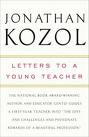
letters to a young teacher.jpgHis very lovely new collection of thoughtful letters to a first year teacher, Letters to a Young Teacher (Three Rivers Press; $12.95) recently came out in paperback.  It would make a wonderful “back to school” gift for a teacher of any kind, and Kozol’s practical advice (even a recipe for making goo) would be inspiring for a young, new teacher or an older more experienced one.  His advice is almost always spot on, and his tone is not the least bit condescending.  He is a radical thinker and a prophetic voice for justice, but this book is less about his social vision and more about his classroom demeanor (which is, nonetheless, informed by a deep humanistic vision of care for the students and the need to sometimes work to reform educational institutions.)  We commend it to anyone who wants to think a bit about the profession of teaching.

The Courage to Teach: Exploring the Inner Landscape of a Teacher’s Life
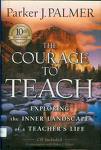
by Parker Palmercourage to teach.jpg (Jossey-Bass; $27.95) may be the most talked about book for teachers of the last decade, and for good reason.  Palmer, the profound writer, mystic, Quaker, activist, is another favorite of ours, and this book emerged firstly from his spectacular work on educational theory—exploring a Hebrew view of what it means to know (To Know As We Are Known: Education as a Spiritual Journey which is a very important little book indeed.)  After that meditation on forming educational communities of deep knowing and responsible caring (rather than teachers being the sole transmitter of abstract facts) where education makes a personal, even spiritual, difference, he set off doing workshops for educators.  His masterpiece The Courage to Teach emerged from those workshops (followed by a beloved book on vocation, Let Your Life Speak, which he tells us was written after being so inspired by so many teachers who seemed to truly be called—vocare–into this line of work.)  A new anniversary edition was released recently of CtT and a fabulous follow up has been compiled as a companion study/reflection book, too.  You can follow some of Parker Palmer’s other work, listen to podcasts and such, at the Center for Courage & Renewal. (Fans should know that his very first book, The Promise of Paradox, has also recently been reissued in a great little hardback!)
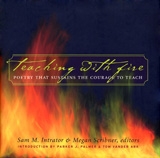
teaching with fire.jpgMany who have been in the network promoting Parker’s model of teaching with the heart were asked what keeps them going, and particularly, if poetry helps.  Many sent in poems, with a brief description of why this particular work is taped to their classroom desk, or in their lunchroom, or in the cover of their grade-book.  These “teacher-selected” poems have been compiled by Sam M. Intrator in a lovely hardback, Teaching With Fire: Poetry That Sustains the Courage to Teach (Jossey-Bass; $16.95.)  It, too, would make a lovely “welcome back to the classroom” gift for any teacher, old or young.

Letters to Lisa: Conversations With a Christian Teacher (Dordt College Press; $11.95) is aletters to lisa.jpg fabulous book we often tell folks about.  John Van Dyke teaches education from a Christian perspective at his post at Dordt College (a CRC related college in Iowa) and has authored the excellent Craft of Teaching.  As the story goes, his daughter, one of his former college students, ends up teaching fifth grade in a fairly sophisticated alternative Christian school, yet is frustrated with the old “how to apply what we learned in college to the ordinary day-in-day-out classroom of a real school?”  So this book is a set of questions from Lisa, the first year teacher, back to her dad, the esteemed reformational professor of Christian education.  She says, in effect, “Remember how you taught us about x, y or z?  Well, let me tell you how it really is in this crazy classroom.  What do I do?  And Van Dyke, part college mentor, part caring dad, writes back these wonderful epistles translating wholistic pedagogical philosophy rooted in a solid worldview, into very practical advice for a first time teacher, trying to be faithful in her daily job of students, discipline, grades, administration, parents and all the r
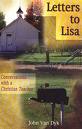
est.  In this sense, in style and format, it resembled the aforementioned book of letters from Mr. Kozol.  In its naturally-breathed faith perspective, though, it is a perfect example of the faith-work integration stuff that I lectured about at Geneva last week, the notion of ordinary folks serving God in their ordinary jobs by developing a view of work and set of practices in their workplace that reflect the core truths of the Biblical story and a Christian framework.  Every career should have a book of letters just like this one.  Thank God that there are so many useful resources for teachers.  May they take great courage for their work is so very important.
Hearts & Minds 234 East Main Street  Dallastown, PA  17313  717.246.3333

Outrageous Idea of Homemaking & Culture-Making in Higher Education

Fighting off illness after packing up the van, Beth and I took our books Westward to Geneva College, where good friends there had invited me to address their faculty. (And, man, was I nervous!)  As an obviously Reformed institution, they are all about the sovereign reign of Christ over all of life.  Francis Schaeffer gave his wonderful lecture that became Art and the Bible there.  (I had friends who hitchhiked there from our college in the early 70s and I foolishly did not go.  What did I know?)  Now, decades later, Geneva is a small but important voice in the movement to promote the worldview that calls for an integration of faith and learning, the stuff inspired by Schaeffer, not to mention Abraham Kuyper’s famous line about Christ pointing to “every square inch” of creation and declaring “Mine!”  Like most intentionally-Christian colleges, professors are expected to “think Christianly” about their fields, to teach in a distinctive fashion, to invite students into the deepest conversations about what matters as they prepare for vocations in the arts and sciences, and are tasked to mentor young adults with not only the Christian mind, but a counter-culturally powerful alternative Christian way of life, “in but not of” the world, as the Gospel of John puts it.  My lecture to them, my sermon, was a heartfelt cry of appreciation for their strategic work in raising up a generation of young scholars who will be robust disciples of the King of creation, and who will pursue their studies, now, and their careers eventually, with a distinctiveness that is honoring of Christ Jesus, attentive to His ways in His world.

“Do all to the glory of God”, the apostle says.  Indeed.  But what does that look like if one is a chemist or speech pathologist, a PR guy or a civil engineer?  How does the Christian worldview shape the heart and mind and practices and intentions of the future schoolteacher or filmmaker, the businesswoman or physical therapist?  How does engineering or astrophysics, child development or music teaching,  politics or poetry, witness to the manifold truth that we are in a good world, broken by sin, being restored by the Maker incarnate?  How can higher education in all its facets, be a place to help young folk come away with a radically thoughtful and faithful purpose driven life?   Can institutions of higher learning, anticipating God’s healing reign of creation, also be, to swipe N.T. Wright’s phrase quite knowingly, “surprised by hope”? From my experience earlier this week with these Genevans, I think so.  Their leadership is committed to truly “doing education” in ways that are coherent and principled and good.

Well, I showed our large selection of books about higher education.  I cited everything from the Christian Scholars Review to the Chronicle on Higher Education, and pondered stuff as diverse as the controversies about linguistics to intelligent design, what ways we can encourage service to the poor and how social networks and cultural reform can help good ideas bear fruit over time.  I reminded them of the importance of the Jubilee conference next February, which is knowingly designed (somewhat inspired by a former and legendary Geneva prof) to explore these very themes.

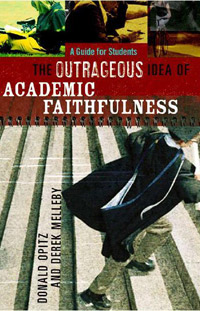
Outrageous Idea.jpgObviously, I cited Geneva professor Donald Opitz, whose PhD was taken under the imminent sociologist Peter Berger, who co-wrote (with Derek Melleby) The Outrageous Idea of Academic Faithfulness (Brazos; $13.99.)   I challenged these college professors, newbies and tenured, those from various faith traditions perhaps less inclined to think in these terms of integration, and those who were there in the years of Schaeffer’s visit and who have been at this faith and learning project a long time, to re-read Opitz & Melleby.  Written in breezy prose with stories and humor, it is perfect for the younger student, inviting them to take their college classes seriously, the develop habits of the heart that allow them to serve God in their course work and to be faithful as students.  Yet, professors, I believe (and parents and youth workers too) need to be ever aware of how younger adults think,  need to know the kinds of resources that  make sense to their young friends,  need to recall basic ways to articulate a whole life Christian vision that relates faith and learning, worldview and way of life, heart and mind.  Outrageous Idea… is ideal for this and it would be foolish to think that it is “beneath” us to be refeshed with such important, important insights.  It is obviously one of the most important books for those who do campus ministry or young adult work. It is fabulous for RA staff, for student affairs leaders, for college administrators, for highschool youth workers—not to mention college students themselves!  Don’t you know somebody you can send it to early this fall, as part of a “back to school” care package?

Hopefully, our mind-boggling (if somewhat outdated) biblio of “books by
vocation
” can offer more resources for this journey, too.  We’ve listed entry-level annotations of books that help develop Christian perspectives across the curriculum, in nearly every career area.  Know anybody you could forward the link to?

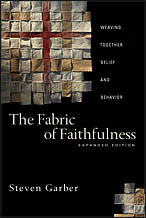
Another book that I begged them to read and re-read is written by a Geneva alum, and I hope they (and you) don’t tire of hearing this, too, but I will promote this book as long as I have breath and will try to sell it as long as we are in business: The Fabric of fabric 3.jpgFaithfulness: Weaving Together Believe and Behavior by Steve Garber (IVP: $15.99) is an elegant and exceptionally thoughtful book, wide-ranging philosophically, with profound stories of those who desire to live out their deepest cares in the world, to not be overwhelmed by the daunting obstacles to wholeness and transformation, and to live out of the insights they’ve learned in their young adult years.  From commitments to truth, to having mentors that shape character, to the strength gained from being intentional about life-long relationships and community, Garber has documented glorious practices that can sustain a live-long discipleship that is faithful and fruitful.  I was gratified that a handful of scholars took up the challenge anew, to read Garber and consider how to be better at what they do, living into their vocation of being teachers.  Given the issues of the day, the need for church folk to step into the fray of modern times a bit more insightfully, and the earnestness of many young adults, nothing cheap will do. Garber is very, very highly recommended for those with the most honest questions who desire only the most honest answers.

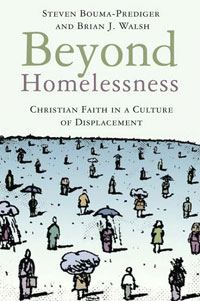
beyond homelessness.jpgTwo other books were on my tongue at the Geneva bookselling extravaganza.  I have already declared that Beyond Homelessness: Christian Faith in a Culture of Displacement by Brian J. Walsh and Stephen Bouma-Prediger (Baker; $24) is the book of the year.  When I met a prof who did his doctoral thesis on hobo studies, I knew he needed this. I told an environmental science teacher about it (Stephen’s For the Beauty of the Earth, if a bit demanding, is truly one of the very best books on the theology of creation care and his insights and passions are very influential for Beyond Homelessness!)  Several profs there are doing much with localism and reflections on “a sense of place” and they were eager to pick it up.  One retired prof is studying exile, and had read Walsh’s Colossians Remixed so this seemed a natural pick for his ongoing reading.  What an amazing book, interesting to many different kinds of folks, from those interested in literal homelessness and poverty to those interested in postmodernity and cultural studies and, not insignificantly, Biblical studies.

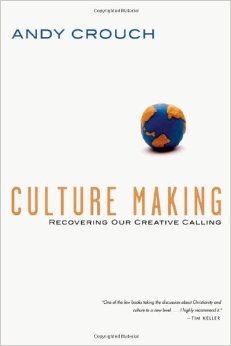
culture making.jpgCulture Making: Reclaiming Our Creative Calling by Andy Crouch (IVP; $20), of course, could be promoted anywhere, but I offered that they should see this as one of the fruits of a Christian liberal arts education–that students get a vision for themselves made in God’s image and responsible contributors to culture buoyed by the possibilities of their lives making some small difference through social and cultural innovations that they birth.  Students as culture-makers (or, in Walsh & Bouma-Predigar’s language, “homemakers”) could be a theme here; perhaps not just for educators at Christian colleges, but for any churches, any ministry:  we want to form folks into faithful Christlikeness so that they might serve God by being active in the world, creatively contributing to the betterment of the world by making stuff. 

Outrageous, to think that church-related institutions could form the hearts of young people to be something other than consumers, who could dream dreams other than the American one, who could give themselves to living for God’s glory by serving their neighbors with whatever gifts and abilities God has given them, in places wherever they find themselves.  Andy’s Culture-Making book, as I’ve said before, is a fabulous and interesting way to be reminded of all that this entails.  I’m very glad some Geneva folks purchased it.

We’re grateful that Geneva gave us the chance to share this stuff with them.  We’re glad that books can help the process along.  Maybe you, too, could make a new contribution, if only by promoting these kinds of books with us.  Why not start a book club this fall, reading something a bit different.   Here’s a bit of incentive, offering you all the discount we had going out at the  college gig.  20% off anything you order.  Just mention this blog special.   Thanks.

BLOG SPECIAL
20% off
any order
order here
please mention blog special discount offer

or call
 717.246.3333

Hearts & Minds 234 East Main Street Dallastown, PA  17313     717.246.3333

A Christian view of Sport? What the Book Says…

beijing.jpg

Do you have Olympic fever?  It’s a certifiable diagnosis, you know, and we’ve got
it.  We’ve loved watching it all, staying up late each night this week,
and even admit to a fair amount of Team USA patriotism.  We especially
enjoy the features on the athletes and wonder about their character,
how they’ve gotten to be successful, and what sort of sportsmanship
they show.

Which raises the natural question here at BookNotes: in what way does
the gospel of Christ effect athletes in what they do?  What is a Christian perspective,
as we like to ask, on sports?  And, of course, what good books help us
go more deeply into that question?

First, an important rant.  You may know, if you follow these things,
that there are a goodly number of books that are about Christian faith
for the sports fan or athlete.  There are some fine daily devotionals
with a sporting theme and some fine books about character and
sportsmanship and the like. Books like the recent The Goal and the Glory
compiled by Josh Davis (Regal; $14.99) are great, offering testimonials
of world class Christian athletes.   Many use effective sporting as a
platform for evangelism. One new series from FCA look very nice, one
called Integrity, and one called Service,
asks how successful athletes have learned from their discipline and
training lessons that can be applied to ordinary living. These are
helpful and make fabulous gifts for athletes you may know.

And yet.  As is our often-repeated concern here, the bigger question,
is one of worldview and perspective.  That is, how does a Christian
understanding of life, of the human body, of play and recreation, of
leisure and of competition and so forth, shape our vision of what
sports is to be?  What does it mean to be faithful as Christian people
in the arena of athletics?   If something is wrong (and who would say
there aren’t some large problems in sports, from kids’ leagues on up?)
we have to have some normative vision to know what ought to be which can inform how to
fix things.  So, we could ask,  (a) in what way are the possibility for
sports and play created by a good God in a certain kind of good world, (b) and how is recreation and sport distorted by our sinful
tendencies and screwy culture, and  (c) how can faith in Christ (who
makes “all things new’) lead us to imagine sport in more redemptive
ways?   How can we develop a wholistic Christian framework for 
approach sports in a distinctive and helpful way?

There are hardly any books like this.  Again, catch the situation: 
oodles of books on devotional life for athletes, few on a Christian
view of actually playing “to the glory of God.”  Plenty on character and
inspiration, few on what it means to play as a Christian.  Many
that view faith as an add-on or supplement to business as usual, few
that are intregal.  In fact, a few decades ago, a prominent leader of a
prominent ministry in the world of athletics caught this vision and
wanted to write a book approaching the question of competition.  His
supervisors made it very clear that this was unhelpful:  if one
relativizes competition by having some transforming vision of play, the
team might not win and the evangelistic testimonies would be less
compelling. This is what they told him; don’t think about sports from a
Christian perspective, just play well, and then share the gospel.  The
guy thought this was crazy, and wrote the book anyway, despite threats
that it would jeopardize his ministry.  I was told that he was then
fired for daring to see sports not merely as an avenue of testimony,
but a side of life that has to truly come under the Lordship of Christ
and be structurally and philosophically explored in light of a Biblical
worldview.  We stocked the book 25 years ago but it went out of print.

Here are a few rare and exceptional ones that really do offer an
integrated and wholistic view of faithfully exploring sports from a
mature theological perspective.   There are others, too, if you  want to give us a call. 

What the Book Says About Sport  Stuart Weird  (BRF)
$8.95  Published in England, this mass market sized paperback is solid,
mature, interesting and a great Biblical perspective.  Nothing else
quite like it in print.  Highly recommended.

Focus on Sport in Ministry  Lowrie McCown & Valerie
J. Gin (360 degree) $24.95  This is a book about coaching, and a study
of how to train coaches to see their work as a Christian ministry. 
Still, Lowrie and his colleague are deeply engaged in training a
natural and integrated perspective rooted in faith-based values.   This
is profound stuff.

Physical Education, Sports and Wellness: Looking to God as We Look At Ourselves
edited by John Byl & Tom Visker (Dordt College Press) $19.95  
Thoughtful leaders in collegiate physical education, sports, coaching,
leisure studies and such offer chapters that were once speeches given
at various conferences and symposia.   This important collection offers
theological, sociological and ethical evaluation of thinking and
practices in this whole arena.  A must-read for those serious about a
Godly perspective in playful sports or health education.

In Praise of Athletic Beauty  Hans Ulrich Gumbrecht
(Harvard University Press) $22.95  This is a lovely small hardback, a
book that doesn’t seem guided by religious faith but is nonetheless a
perfect addition to our reading this week.  What moves us so as we
watch these world class Olympians?  The aesthetics of all this, the
sheer beauty of it all, comes to the fore in this marvelous, rich
exploration.  Scholarly and charming.

Hearts & Minds 234 East Main Street Dallastown PA 17313   717.246.3333

Culture Making, The Cloisters and Angels in the Architecture

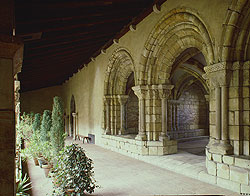
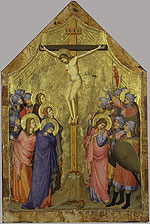
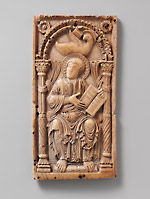
cloister arch.jpgI happened to be near New York city in North Jersey yesterday with several unscripted hours and no books to lug.  Ever since my oldest daughter, Stephanie, read Girl Meets God and  Lauren Winner’s description there of The Cloisters, she has gone several times.  As you may know,  this spectacular spot is a site of the Metropolitan Museum, off on Manhattan’s largest hill, in a lovely Olmsted-designed park, and is one of the world’s finest installations of medieval religious stuff.  Set in an old castle-like mansion, much of the inner structure of the building is, in fact, imported from ancient cloisters, monasteries, and churches from cloister christ.jpgMiddle Ages Europe.  The setting—from the garden’s planted in authentic ways to the breathtaking vaulted ceilings, stained glass and dark hallways–is perfect to display 12th century doorways, 13th century columns and windowsills, 14th century chancels or furniture from the 1400s.  The liturgical art, frescoes andcloister art.jpg icons were stunning and the whole place offered a spirit of awe and, for me, deep, emotional worship.  Seeing a detailed carving from the time of Charlemagne or a crucifix from a 12th century Cistercien worship space or an entire Chapter House from a 1500-era Benedictine monastery took my breath away. That they knew who made many of these items, or who the craftsman studied under, is astonishing and set me thinking about the legacy of our work and our lives.   Beholding old illuminated prayerbooks, portions of handwritten and delicately illustrated pages of Bibles, and a few rare books from the early Middle Ages—created my nameless scribes—actually got me choked up.

In my last post I commended Andy Crouch’s fabulous new book Culture Making: Recovering Our Creative Calling (IVP; $20.00, but offered for $15.) Seeing close up the artistic glory of the architecture, dinnerware, liturgical art, albs and tunics and staffs and chalices and jewelry from the high Middle Ages surely reminds us that God’s people have a grand history of sharing God’s call to creativity and beauty.  What amazing work is shown!  What diligence and giftedness it took to create these items!  I kept thinking of Andy’s new book, and a phrase which is the title from one of my all time favorite books, Calvin Seerveld’s book about aesthetic richness as God’s gift and our responsibility to offer “rainbows for a fallen world.”

And—and this is something I need to recall since, as a theological advocate of the role of the laity in their daily tasks in the world, I am often critical of the “sacred/secular” dualism and churchy piety that gives rise to neo-Gnostic monastic spirituality and an overstatement of the role of worship, the role of the clergy and church life generally, as if church life on Sunday matters more to God than work or political life on Monday, as if religious art was somehow more important or valid than ordinary stuff—it was a sheer delight for me to see the beauty not only in the liturgical art that has been traced to various monastic and sanctuary settings, but also in their items displayed from more ordinary, family settings.  From intricately carved wooden stairwells to enamel dishes to stone carvings from outbuildings or garden walls, from “secular” statuary and portraits to the famed (erotic?) Unicorn tapestries, it seems clear that (for at least the upper classes) there was a wholesome desire to make material culture that was beautiful and excellent and uplifting.  I despise the superstition, the Christendom violence, the gilded art in honor of a homeless Savior, and other problems with that complex era, of course.  But still, the aesthetics of these devotional objects (and the way they must have been integrated into people’s lives) was a good testimony.

All of this brought to mind my urgency for selling Andy’s Culture Making book, and also reminded me of a book we have stocked for years entitled Angels in the Architecture: A Protestant Vision for Middle Earth by Douglas Jones & Doug Wilson (Canon Press; $15.)   Their positive take on the earthy goodness of daily life, understood as Christian service in a good creation, was provocative and helpful, and I shall pull it off the shelf again, I’m sure.  The Cloister’s beauty, besides making me thankful for inspired curators and wealthy donars, raised questions of class and injustice, of course.  Thank God for the Franciscan renewal of the early 1200s.  But obviously there is more to study about the Medieval world than our proper critique of the Crusades, the bloated Catholic aesthetic, or my concern about St. Thomas Aquinas’ accomadation to pagan Aristotle.

I saw the best and worst of culture in my quick day trip to New York.  I was lost due to sometraffic jam.gif very (very!) bad advise from a very (very!) bad employee of the state of New Jersey.  I ended up in Harlem for a few hours, but didn’t explore the Renaissance there, interesting as that would have been.  No, I was stuck in traffic of the worst sort.  For hours, in crisscrossing roads of dubious integrity, serious congestion and significant urban ugliness.

Our other daughter Marissa saw Radiohead and Girltalk and some other hipster groups at a fabulous outdoor festival overlooking Manhattan.  Back at the store, faithful employees dusted shelves and talked about books.  Beth was enthralled with the opening exercises of the Olympics.  Daughter Steph drove to an out of town funeral of a young friend tragically killed, and Micah worked at the climbing gym and drove home measuring his gas mileage.  And I got lost again coming home, in the industrial zone outside of Newark.

Yes, we are all cultural beings; we don’t speak of it much, taking it just for granted, living for better or worse with rock stars, rituals and roads.  Of course, we are embodied people—-some religious folks who talk endlessly about our souls seem to forget this essential truth of Genesis 1—and our lives unfold embedded in the culture(s) we have, and, if we are followers of our Creator, perhaps they point to His good intentions for this planet.

 I’d like to think that our book selling can help serve that large hope, to encourage a thoughtfulness about our world and God’s vision for life in it.  BookNotes readers hopefully want to be exposed to books like Culture Making: Recovering Our Creative Calling which will help us get beyond the mere consuming of culture, to an insightful bit of reflection and criticism, and then to renewed commitments to making modest and hopeful contributions.  Even though Andy explains that his book is not about a renewal of high culture or museum-going, my visit to The Cloisters, and the step back in time it allowed, reminded me of
much, and inspired me to again promote his great new book.  And to spend a bit more time with those perplexing cultural artifacts known as maps.

Culture Making

Thanks to email and Facebook friends who’ve wondered where my blog reviews have been lately.  I had the great joy and privilege to teach, hawk books, and chill a bit with OCBP again and even shared a class with great pal Derek Melleby, co-author of The Outrageous Idea of Academic Faithfulness (my favorite book to give to Christian college students wanting to relate their beliefs about God to their classroom learning.)  I was happy to sell a few copies of Jim Wallis’ old Call to Conversion, a book I truly love about how faith is “personal but never private” and Os Guinness’ classic, The Call (which I take to nearly every book display I do, regardless of the topic, it is such a favorite.)  Some picked up the classic worldview book, The Transforming Vision by Walsh & Middleton, since they had heard me pushing their Truth Is Stranger Than It Used to Be and the brand new Beyond Homelessness by Walsh & Bouma-Prediger in other settings.  These young collegiate leaders are great fun and yet aware of the seriousness of the call to meaningful discipleship and it was good being with them again.  Sorry, guys, about turning all of your dinner tables into the portable bookstore.  Thanks for your interest in books.

And then, home from NJ,  I drove a van full of middle school kids to an event in another part of the state, returning home at 2 am, and then spent a day with my mother at a funeral of an old family friend, a man of great character, kindness and philanthropy.  I talked with a few older men who knew my dad about how they balanced their obvious success in their careers and their dedication to community service and fund-raising for organizations they believed in.  I wish I could show them books about this, as some good stuff has been written, including excellent books on the “second half” of life shift “from success to significance.”   From helping with Middle School-age discovery of God’s grace to collegiate reflections on vocation and calling to retirement-years dreams of “finishing well” it has been an rewarding and yet exhausting week or so…we are grateful for customers who buy books from us, supporting our bookish ministry and on-going effort to be “more than a bookstore.”

Are these travels, our mail-order business and friendships with authors and conspiring with folk like the OCBP activities that could be considered “culture-making”?  It is a more complicated question than you might think, and an urgent one, I believe, one that gets to the very heart of everything we are about here at Hearts & Minds.  Such a question raises questions of our responsibility as humans, the cultural mandate of Genesis, and meaning of work and leisure in our age.

culture making.jpgI’ve been working on a review of a splendid new book by that name, Culture Making: Recovering Our Creative Calling by Andy Crouch, published as the lead title in the new IVP catalogue ($20) but haven’t quite polished that particular artifact.  But I can’t wait: you have to know that this book is now out, it is spectacularly important and truly wonderful; wonderful for the cogent ideas and the lovely writing, the insight and the charm.  I could not put it down, have much to say about it, maybe a few small bones to pick, and an upbeat hope of publicizing it Big Time this fall.  Andy may show up at the shop, here, to chat a bit about the book and you will be seeing several good reviews of it in magazines and websites.  I’ll say more later, but for now, trust me, please, please—this is a book that if you are a BookNotes reader, if you support H&M, if you like the kind of stuff we promote about cultural reformation and the Christ-honoring social innovations and a Biblical vision for human flourishing, then this is a book you must have.  You can get a feel for it at his intriguing website, here.   Please spread the word by passing it on.  The YouTube promo for the book—yep, that’s culcha for ya—is very, very nice, so take 3 minutes and watch that. (He talks about a coffee shop in it, so you gotta love it!) You can listen to an interview with Andy done by a great blogger over at Good Will Hinton.

If you feel any small yearning to be creative, to start something, to make something, to contribute, this book will inspire you, and help you be assured of God’s good blessings on your endeavors.  If you are distressed by the apathy of too many churches, or if you are creeped out by some of the plans of the triumphalist groups mired in culture wars (I think of the grandiose vision of the Christian Right, but I suppose others are similar) then Andy’s wise call—can I call it faithful localism?—for small steps and local activism and human-scale projects will surely reassure you.  Culture Making is one of the great books of the decade, and our little Hearts & Minds culture-making mission will be successful insofar as we help get this book on the sales charts and its vision in the conversations of our friends.  I don’t write this with irony:  let’s make culture by starting book discussion groups using Culture Making.

BLOG SPECIAL
Culture-Making: Discovering Our Creative Calling
$5 off
regularly $20
now $15
ORDER
HERE

Hearts & Minds 234 East Main Street Dallastown PA  17313      717.246.3333

Fun summer music

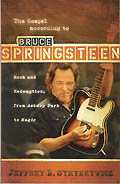
Last week I posted a few times about various titles my wife and I are enjoying–history, humor, novels, memoir, alongside the important stuff we promote for more direct learning and serious Christian worldview formation.  I cited a few rare ones and a few fun ones that are kinda under the radar. And, I’m thinking I am going to read Truck: A Love Story by Michael Perry (Harper; $13.99) again, since he is a spectacular writer, and maybe something about outdoorsy stuff, hiking or wilderness, although I often get that bug in the early fall.  More great books keep coming into the shop each day, some that are exquisite and very richly written like Souls in the Hands of a Tender God: Stories of the Search for Home and Healing on the Streets by Craig Rennebohm (Beacon; $23.95) which is a very tender portrait of the mentally ill (and a passionate call for justice and grace.)  And there is the really interesting and fun romp pulling out the themes of faith and struggle, guilt and redemption, justice and hope,  through every one of the Boss’ albums, The Gospelgospel according the bruce springsteen.JPG According to Bruce Springsteen: Rock and Redemption from Asbury Park to Magic by Jeffrey B. Symynkywicz (Westminster/John Knox; $16.95.)  Any Bruce fan has to get this one, as does anyone who wants ways into conversations about faith, values and popular culture    Late last night I started a brand new novel set in rural Appalachia, Dogwood, by Chris Fabry (Tyndale; $12.99.) It starts off with a pair of epigrams, one from Isak Dinesen and another by my man Jackson Browne so I had to see what this guy’s up to.

Still, any quickie posts about fun stuff this summer would have to list a couple of odd albums, naming some of our soundtrack these days. You’ve read before that I listen to Indelible Grace a lot, and a month or so ago I did long reviews of some very rare recordings–if you haven’t visited the May column at the website, please do.  Now, though,   I’d love to tell you briefly about some a few tha yo might not hear about otherwise.  CDs lay around our house almost as much as books, although my kids mostly use ipods.  I’m not so old school that I insist on vinyl, but I do love my CDs and their artwork and liner notes; I hate the idea of “downloading” a “song” without the full context.  Why not invest in a a couple of CDs before they start to disappear?  The lyrics and artwork and liner notes on these are nice, too.

So, here are a few unusual ones we are recommending these days.

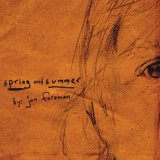
spring summer.jpgSpring/Summer  Jon Foreman  (Credential) $13.99  I love Switchfoot, and have a bunch of reasons to respect them, not the least of which is the powerful, thoughtful, allusive, rowdy, moving rock music. Their frontman, Jon Foreman, recently recorded a set of four very acoustic, nearly unplugged, solo sets, each for one season of the year. (They are not all that much about that season, but apparently a chronicle of his life’s journey over a year.)  The first pair, Fall and Winter, came out a while back, and the second set is now available.  I’ll tell ya what: a few of these jangling, whiny solo pieces are absolutely beautiful;  I keep hitting replay on a few of the songs while driving around in the car.  His setting of the 23rd Psalm is alone worth the price of the album (and has Sarah Mason singing, which is stunning in its understated alt-country simplicity.)  Foreman and his pals do a great song that incorporates the Lord’s Prayer (“Your Love is Strong”), full of angst and bohemian sighs and longing and hope.  These two sets of short double albums have some great guitar work and his cool vocals, stuff from his own seasons of life, a few pretty overtly praise songs, a bit of pain, some sweetness, deep faith and some odd-ball hip arrangements (the Sufjan effect, I’d call it, what with the horns and hammer dulcimer and Eastern European tempos) that really, really work.  I love this, especially, now, Spring and Summer.   Highly recommended.

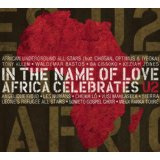
in the name of love.jpgIn The Name of Love: Africa Celebrates U2 various (Shout) $18.99 Okay, I’m a sucker for cover versions of stuff, and even bought the CCM cover disc of u2 songs a few years ago, knowing I’d only love few tracks of it.  (I’ve got a wonderful recording of all Bruce Cockburn songs by Steve Bell, My Dinner With Bruce, which is pretty darn cool.  Nanci Griffith did a whole album of covers that I like, I’ve raved to friends about The Band cover album–imagine Death Cab doing The Band!–and I one of my all time favorite albums is the Mark Heard tribute and we love the soundtrack to I Am Sam which has some wonderful version of Beatles songs, but I digress.)  But this, this is something else indeed.  This is a collection of well known, mostly recent, U2 songs done by 10 different African pop bands, produced as a fund raiser for The Global Fund.  A few have a fairly typically Western rock feel, versions pretty faithful to the original, just sung with a way cool accent and the bold bass lines that Graceland introduced to the pop music scene here.  Others are in native tongues, if still done in a pretty rock style, even though there are some unusual instruments being used.  (Nothing is quite like, say, Ladysmith Black Mombazo, really, if you wondered.)  Bands include the famous Sierra Leon Refugee Allstars, the Soweto Gospel Choir,  Waldemar Bastos, Les Nubians, Anglique Kidjo, Vieux Farka Toure, Cheikh Lo, and others…Wow.

This is fun, fun, fun, and at times really moving.  I won’t lie to you: one song made me shed a tear or two, too.  Rolling Stone is right to say, that, as a tribute to Bono’s work for Africa,  it is a “rootsy thank-you, not a world-music
cheesefest
.”  Still, it is a nice way into the world music scene alongside all those cool Patamayo recordings we sell. 

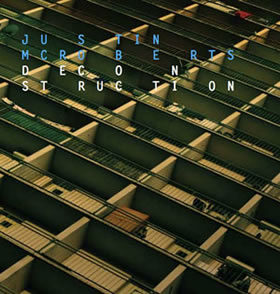
deconstruction.jpgDeconstruction Justin McRoberts (Justin McRoberts) $12.95  Oh, man, I am so glad I got to know this guy a bit, as we’ve sold a few of his albums in the shop before, and is pretty highly regarded in the younger singer-songwriter circuit;  he’s also done some cool stuff with Young Life camps, and is a hit on the Christian college coffeehouse circuit.  Having heard him do a live show this past fall, and watching him lead worship at a college ministry event, I was amazingly taken, even more so as I got to know a bit about he and his wife and their urban ministry work in San Fran.  He’s ordered some books from us and I realize he is a deep thinker, a serious activist, a fun and funny guy, and an artist of considerable depth.  (Who else has written a song inspired by writer Jonathan Kozol?)  Songs like “A Hope Deferred” and “America and the Soul” give a hint that this is an album with more than typical religious clichés.  Here, he does his thoughtful acoustic singer-songwriter stuff, with a voice that won’t quit, deep and melodious, rough and gritty, soulful at times, almost booming like Bono (and that is not a cheap comparison.) Most of Justin’s songs belie a deep seriousness about faith and doubt and struggle and art and excellence; a few could be used in particularly creative worship services.  (The lyrics to the song somebody judged or turned away by church, also about taking communion, “On the Night You Were Betrayed”, just blew me away and I am sure it could be played in worship or in conversational settings to great benefit, for those who have the guts.)  Justin covers one of my favorite Patti Griffin songs, too, “When it Don’t Come Easy” and does so with a great vibe and a very strong vocal performance.  We have a batch of these CDs to sell here in the store, and I’d love for you to know about him.  Buy Deconstruction now, and you won’t regret it–and you’ll be supporting  indie music, too.  Check out his really cool website (but come on back to H&M.) Thanks!

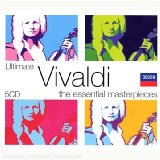
utlimate vivaldi.jpgUltimate Vivaldi: The Essential Masterpieces  (Decca) $18.00 Okay folks, check this out: five discs.  There are Wind Concertos, Cello Concertos, Guitar Concertos, Four Seasons and the Gloria and more.  Performances by the likes of the Academy of St. Martin in the Fields and conductors as esteemed as Iona Brown.  Here’s the deal:  Decca has done these five volume sets for just $18.00 and they’ve released 5-disc sets of “ultimate” essentials for all the greats: Mozart, Chopin, Bach, Beethoven, Tchychovski, Handel, Rachmaninoff…which should I open next?  I can’t afford ’em all, but a few are, well, almost essential.  Having picnics or garden parties or sleep-overs this summer?  Wanting a chill-out mood for reading?  Hey, these tunes aren’t called Masterpieces for nothing.

BLOG SPECIAL
FREE SHIPPING

ANY CD
mentioned here
ORDER
Hearts & Minds 234 East Main Street Dallastown, PA  17313     717.246.3333


The New Conspirators: Creating the Future One Mustard Seed at at Time

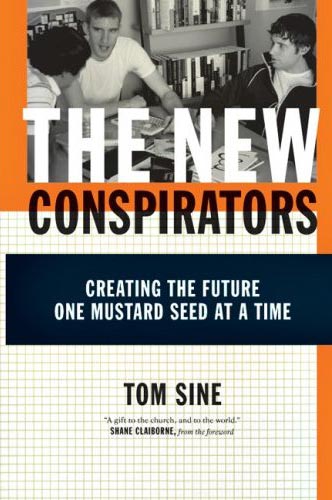
New Conspirators.jpgOkay, everybody, take a long deep breath.  Hold it a bit.  Now go to the Hearts & Minds website page which is our monthly review column.  The June column is my telling of the work and seed-
sowing writing over the years of Tom Sine and his incredible importance.  His latest, The New Conspirators, is one I’m pretty jazzed about, and want to offer you this hefty review. Perhaps you might share it with someone who you think might find it helpful or interesting.  Thanks.

The deep breath together, by the way, is kind of a joke—a playful nod to a definition of conspiracy: “to breath together.”  And, maybe an admission that my monthly columns are a bit longer than my blogs.  Take a deep breath.

And, if you are convinced that this would be a worthy addition to your library, or you want to have it to share with others, or consider for a reading group, you can order it here for $5 off.

BLOG SPECIAL
 The New Conspirators: Creating the Future One Mustard Seek at a Time
regularly $15
$10
ORDER
HERE
.
Hearts & Minds 234 East Main Street Dallastown, PA  17313     717.246.3333

More Reading for the fun of it…

reading book.jpgOne or two folks said they enjoyed my random little fun list from the last post, naming some titles I’m just enjoying—not the heavy and incredibly important stuff that I’ve mentioned recently, urgent and wise work like Brian Walsh & Steven Bouma-Prediger’s Beyond Homelessness, say, or the new Gary Haugen, Just Courage or Who Gets to Narrate the World by Robert Webber.  You know from former posts how seriously I believe we need to be reading these kinds of books.  It doesn’t take much to encourage me to digress, though, so here are a few more miscellaneous suggestions that came to mind, books that are around our bedside, beside the couch, on the picnic table, even though it is too hot to read until late at night when I take a lamp out just to read outdoors.

I hope you’ve heard of Rapture Ready! Adventures in the Parallel Universe of Christian Pop Culture (St. Martin’s; $25.00.) Daniel Radosh is a “secular liberal” who writes for GQ and The New Yorker and suchlike, who enters the conservative Christian subculture and writes well about it in ways that are unpredictable, funny and fun.  Some of it is very well-rendered, much of it spot on, and occasionally is surprisingly moving.  Even when he doesn’t get it fully right, it is a good glimpse into the lives of many Americans, many of us, and is a joy-ride of a good story.  As A.J. Jacobs (author of The Know It All and the fabulous The Year of Living Biblically) puts it, “Everyone should read this book–with the possible exception of Stephen Baldwin [see page 143.]”  It would be perfect if you loved, as we did, the “outsiders” exploration of Christian rock,  Body Piercing Saved My Life: by Andrew Beaujon.  Great book!

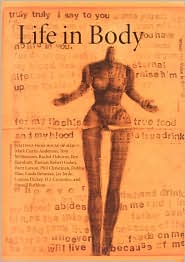
life in body.JPGOne lesser known book which we are very proud to offer is Life in Body  put out by the House of Mercy (Cathedral Hill Press; $15.00.)  I hope you know the extraordinary voice–literally and writerly–of hipster emergent pastor Debbie Blue.  She sounds like Anne Lamott, but more so, and has a poet’s sensibility, even in her spoken word delivery. (Here is a brilliant, brillant talk she gave at Houghton College on flesh.) The wildly creative faith community House of Mercy–which I first heard of at the very end of one of my all time favorite memoirs, The Jesus Sound Explosion by Mark Curtis Anderson (University of Georgia Press; $29.95)—has a little artsy publishing venture (along with a rockabilly recording studio.  Go figure.)  You may know of Russell Rathburn, who wrote the much-discussed, incredibly weird apocalyptic, comedic tragic novel Post Rapture Radio: Lost Writings From the Failed Revolution (Jossey Bass; $12.95.)  He’s a pastor there, if it helps you get the picture. 

Ms Blue’s stunning Sensual Orthodoxy (Cathedral Hill; $13.95) was her first book and it is insightful and beautiful and important, about embodiment, creation, humanness, goodness and such.  (A very literate and kind UCC pastor friend told me about her, having heard her read at the Calvin Festival of Faith and Writing, and opined that evangelicalism is in fine hands if she is any indication of the up and coming leaders and writers.)  Brazos Press published her next eloquent and provocative one, From Stone to Living Word: Letting the Bible Live Again ($16.99) which should be getting much more attention.  Life in Body seems to have her imprint upon it, although only one chapter is her own;  this is a marvelous collection of essays, memoir, Bible study and poetry, all around the theme of body image, the journey of our human experiences from birth to death.  Ragged and lovely, scary and moving, this is a “lit mag” kind of collection, hardly known, and exceptionally rewarding.  My daughter once gave me a collection of essays of writers from Minnesota and I was surprised at how good these common folk were, this odd admixture of upper mid-West rural populism, creativity and localism.  Upper mid-west writers rock and this book is a witness. 

I’ve been taken with the look and feel of the paperback memoir Virgin Time: In Search of the Contemplative Life by Patrician Hempl (North Point Press; $14.00) who is another writer from St. Paul, and have had it in my room for over a year, I think.  I read the first page this week and was instantly hooked, just thrilled by the giftedness of the writing. Wow.  I don’t expect it to be as full of whimsy and pluck as Eat, Pray, Love but it surely is going to be a journey worth taking. 

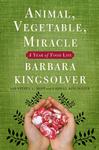
animal, vegetable, miracle.jpgI actually haven’t finished Animal Vegetable Miracle: A Year of Food Life yet, and I hope to pick that back up;  the paperback has a nice textured cover and a good interview with Barbara Kingsolver.  I’ve been saying I’m going to read her early novel Animal Dreams this summer, and I hope I can get to it.  Do you know her earliest fiction, before Poisonwood Bible?  I think Bean Trees and Pigs in Heaven are among our all time favs–tremendously enjoyable.  I was glad to see Brian and Steve (in Beyond Homelessness) cite her essays from Small Wonders too.  It was our old pal and former worker Gordon Carpenter who first turned us on to her;  he and his fam lived near Tucson AZ so naturally became fans. Her first non-fiction collection was High Tide at Tucson and that, too, makes for great summer reading, enjoyable, smart and inspiring.

Want a fun book to have around to dip into whenever you’re between novels or wanting to remind yourself (or others) about the power of fiction and creative writing?   Dale Brown has gifted us all with another fabulous collection of interviews (as he did years ago with Of Fiction and Faith) called Conversations with American Writers: The Doubt, the Faith, the In-Between (Eerdmans) $18.00.  It isn’t the kind of book that chain Christian bookstores are likely to promote;  it probably is not seen as essential reading in theological bookstores, either (although we echo Eugene Peterson’s oft-quoted comments about the importance of preachers reading fiction.)  Yet, this is remarkable, and we hope you can tell folks about it!  Here are conversations with David James Duncan, Ernest Gaines, Ron Hansen, Lee Smith, Jan Karon and others.  These are writers whose work wrestle with the sacred and Brown has listened well, reporting from this community of thoughtful storytellers who (whether they identify themselves as Christians or not) raise important questions about meaning, doubt and how art can sustain faith, even in unexpected ways.  Kudos to Dale Brown, former director of the famed Calvin Festival and now head of the Buechner Institute at Kin
g College in TN.

Speaking of Frederick Buechner, I suspect you know his three clever little books of short pieces, Peculiar Treasures: A Biblical Who’s Who, Wishful Thinkers: A Seeker’s ABC, and Whistling in the Dark: A Doubter’s Dictionary have been combined, a few new entries added (to make 365), and released in a chunky one-a-day one volume book called Beyond Words: Daily Readings in the ABC’s of Faith (Harper; $20.95.) I grabbed one from the shop last week and thought I’d start reading it a bit each day (I admit I’ve never read through all three, fully.)  Getting in a Buechner mindset will be helpful as we just got the brand new
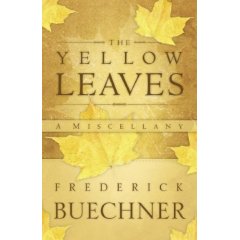
yellow leaves.jpg release The Yellow Leaves: A Miscellany (Westminster/John Knox; $17.95.) You may recall, or have heard (I wouldn’t have know!) that the line is taken from a Shakespeare sonnet, #73.  The book is a rare collection, various “leaves” left–fiction pieces, remixes and previously unreleased bits, a little memoir and some essay.  A must have for fans, and a nice intro for browsing if one is only a bit aware of his varied stylings.

I haven’t started it, except for the afterward that starts out riffing on the popularity of “Bad to the Bone” by George Thorogood (which was even used in the Sponge Bob movie), but I’ve been eyeing up the latest collection of essays by one of the most literate guys on the planet, Alan Jacobs.  His latest is called Original Sin: A Cultural History (HarperOne; $24.95.)   It has garnered rave reviews from the likes of Buechner;  you have to love a Wheaton College prof who gets this said about his work  (by Alan Wolfe of Boston College): “I do not believe in original sin. I do believe in Alan Jacobs.  He is one of the smartest and wittiest writers around on matters involving religion and Original Sin is a gem”

BLOG SPECIAL
ANY BOOK MENTIONED
20 % OFF
ORDER HERE

Hearts & Minds 234 East Main Street Dallastown, PA 17313         717.246.3333

What I’m reading for fun…

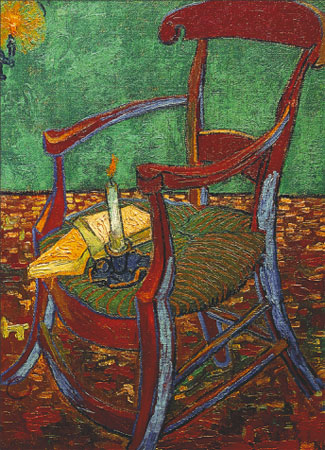
JG71~Gauguin-s-Chair-with-Books-and-Candle-Posters.jpgI’ve had a bit of writer’s block these days, but not “reader’s block”…I’ve got a dozen books that I’m in the middle of or have recently finished.  Besides the Big and Important ones that I announce here–scroll back over the last week if you don’t recall— and some that I am prayerfully reading devotionally, there are smaller, eccentric little volumes that keep me up and smiling late lately, bringing much interest and joy. Eat, Pray, Love: One Woman’s Search for Everything Across Italy, India and Indonesia by Elizabeth Gilbert (Penguin; $15.00) is surely one of the most well-written and delightfully fascinating books I’ve read in a while (despite, or it is partially because of, her esoteric spirituality and frank descriptions of her libido.)  As you may know, since you mostly likely have talked to somebody who has been insisting you read it, EPL is the well-realized memoir of a respected fiction writer who, after a heartbreaking divorce, spends four months in Italy mostly eating, four months in an ashram in India, and then four months in Bali.  Sensuous and funny passages tell of her year long journey to discover important things about herself and life in the universe.  Please don’t misunderstand, thinking this is written out of evangelical piety, as it isn’t.  There is a lovely Anne Lamott quote on the front, but this is beyond her ways, even.  I still found it to be one of the best and most enjoyable books I’ve read this year!   I’d like this woman as a friend, or even a writing mentor, and can’t wait for the sequel in ’09…

Lost in the Museum: Buried Treasures and the Stories They Tell by Nancy Moses (AltaMira; $22.95) is a fun history book, inspired by the stuff in the back rooms of museums, artifacts that aren’t seen by the general public.  It recounts the stories of the difficulties of curating museums, and preserving the vast amount of stuff;  the author’s first-hand experiences (she was the former director of the Atwater Kent Museum of Philadelphia) are gloriously shared so we can all be “insiders” who know what is really going on behind the well lit cases.  Who knew how it all works, and how much untold/unshown stuff there is?  And how much of it is Really Cool.  Excursions to see John Audubon’s birds (at the Academy of Natural Sciences), to weirdo glowing Blaschka sea animals at the Carnegie Museums of Pittsburgh, in a story about a biology/art interface) to John Brown’s pike (!) held at the Civil War and Underground Railroad Museum in Philly and to pessaries (look it up!) at the famous morbid Mutter Medical Museum are just a few of the chapters here. This is an eccentric and rather random way to learn, but the back-rooms-at-the-museum structure ties the stories together.

I’ve been reading through a more serious history, too, with one chapter to go, written by a stellar and renowned conservative social thinker, Allan Carlson.  Carlson directs the Howard Center for Family, Religion and Society, and has given us a brilliant bit of social history called The  “American Way”:  Family and Community in the Shaping of the American Identity (ISI Books; $15.)  What important stuff to know.   I had no idea that there were protests against German-American’s using hypens in their ethnic designations in the early 1900s (indeed, the Democratic Party declared in their 1916 convention that it was “the supreme issue of our day” and the nature of national unity created a near civil war.  Who knew (but the radical feminists who despise it) that the New Deal of Roosevelt had such a traditional view of women working at home. (Maternalists fought for anti-industry child labor laws will feminists and unionists opposed such decent proposals.)  The chapter on the famous Luce publishing empire was fascinating–I had no idea that Paul Tillich or Neihbur or John Courtney Murray or Evelyn Waugh had written for them.  He started Sports Illustrated because of his vision of how American’s should care about baseball and several suburban living magazines because of his hope that this would strengthen the wholesome family  (ahhh–how wrong he was, eh?)   How the American Dream was portrayed during the Cold War years is insightfully told in the next chapter as the argument unfolds that much bolder measures of cultural reformation are needed if we are going to create a society that is community and family-friendly.

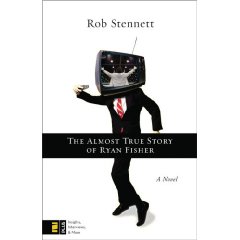
The Almost True Story of Ryan Fisher.jpgStill, this summer season is a time for even lighter fare, and I’ve started a novel called The Almost True Story of Ryan Fisher by Rob Stennett (Zondervan; $12.99.)  It is about a self-assured real estate agent who discovers a Christian business directory and places an ad complete with a Jesus fish, thinking he can, by pretending to be an evangelical, make a mint.  As the back cover puts it, “While watching a news special late one night, he sees evangelical Christians raising their hands in worship.  It’s like they’re begging for affordable but classy starter homes.”  How many books published in the CBA world have a Kurt Vonnegut epigram in the front?
I think this is going to be very, very funny.

 The Almost True Story of Ryan Fisher is the second sort of edgy, funny and ironic bit of pomo fiction that Zondervan has released, the other being My Name Is Russel Fink by Michael Snyder, which is the story of a twenty-something copier salesman who lives with his mom, dates an actress, hates his job, and has a clairvoyant basset hound named Sonny that is murdered. Christian fiction ain’t what it used to be, I can tell ya that…

Stories, either rich and lovely memoirs, history (either told specifically around certain artifacts or told grandly around broad social themes) or novels, are, it is often said, what makes us tick.  We love stories, we read the Bible as a Story, we allow our lives to unfold as stories.  Even newer books on evangelism are about story theology and inviting folks into the Story of God.  Even jokes can illustrate how we all love a good story.  And then there’s movies, the chief medium for storytelling in our time.

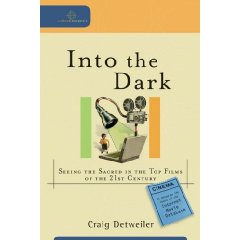
into the dark.jpgWhich brings me to a very great summer read, a fun and well written book of stories, which, to be honest, deserves to be announced as a BookNotes Really Important Book.  Craig Detweiler has just released a substantial and refreshing new book on movies entitled Into the Dark: Seeing the Sacred in the Top Films of the 21st Century (Baker Academic; $18.99.)  It is in the fabulous series about which we’ve raved here before, a series called “cultural exegesis.”    It is a very enjoyable book, very smart and, as much as I hate to break my lite summer tone here, is truly a very helpful contribution to our formation of the Christian mind, and a Christian assessment of the current contemporary context. (Preachers, pastors, teachers, parents, are you listening?)  He has, as
the subtitle says, chosen arguably the most important films of our times and grouped them around themes, allowing God to speak in even the fiercest and funniest.  His methodology included studying the IMDb, the Internet Movie Database, to select the most influential contemporary films.

Detweiler dissects 45 films, from Little Miss Sunshine to Million Dollar Baby, from Shrek and The Incredibles to Big Fish and V for Vendetta.  Some of the biggest sections explore issues of identity (in Memento and Eternal Sunshine of the Spotless Mind), community (in films like Crash and Talk to Her) and hstory (Finding Neverland and Spirited Away.)  His insights are nearly brilliant at times and a wide array of Christian film critics and Hollywood workers have raved about it. Although he is deeply theological (his PhD is from Fuller) he is very open-minded and positive about the common grace of these popular and influential stories.

Dick Staub, host of the fabulous The Kindlings Muse, author of the wonderful The Culturally Savvy Christian, writes about Craig and his new book,

Soak a brain in billions of digital bytes of filmic splendor and an equal amount of dynamic theology, awaken it to the ‘sudden and miraculous grace’ available at the intersection of faith and film, and you’ve got Craig Detweiler’s tour de force.  A brilliant, timely, and useful piece of work…

So, summer is a time to rent some movies, think and talk about them, maybe read some books about film, stories, or leisure.  Craig Detweiler’s bit of “reel revelation” is a great addition to any library on the interface of film and faith, and a very mature guide to your movie viewing enjoyment.

And, lastly, speaking again of enjoyment this summer: check out Jesus Laughed: The 
Jesus Laughed.jpg Redemptive Power of Humor Robert Darden (Abingdon; $16.00.) I know I’ve written too much in this post and can only hope somebody has scrolled down here to the bottom and will see this.  This is a winner—one of the only books about the theology of humor (there are a few, I hope you know) that is, uh, actually funny.  Robert Darden is the Senior Editor of The Wittenburg Door, if that gives you a clue.  Come on, people, how cool is this? 

Tell me that you’re going to mail one to the grumpiest person you know and I’ll give you an extra discount. Heee,heeee.  Subversive humor. Mirth abounds, in all kinds of stories.  Enjoy.

The painting above is Paul Gauguin’s Chair With Books and Candle by Vincent Van Gogh, painted in 1888.  I don’t use a candle, unless I have to.

BLOG SPECIAL
ANY BOOK MENTIONED ABOVE
20% off
ANY TWO
25% off
ORDER
HERE

Hearts & Minds 234 East Main Street Dallastown, PA  17313   717.246.3333

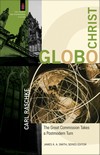
GloboChrist: The Great Commission Takes a Postmodern Turn by Carl Raschke


GLOBO.jpg


WHOSE AFRAID.jpg
WHAT WOULD JE DE.jpg
    
We have enjoyed promoting the “Church and the Postmodern Culture” series of books edited and pulled together by James K. A. Smith (whose wonderful article in Christianity Today about the blending of his Pentecostal and Calvinist traditions, Teaching a Calvinist To Dance, just thrilled me in its simple ecumenical clarity and good sense–hey, what do you expect from a bookstore called Hearts AND Minds?)  Jamie is a serious post-modern scholar, also involved in the Radical Orthodoxy movement, as well.  Whew.

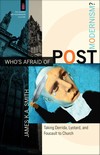
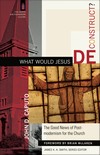
The first small book in this series was his own brilliant Whose Afraid of Postmodernism: Taking Derrida, Lyotard and Foucault to Church, which I very highly recommend.  The second was John Cuputo’s feisty (and very Christ centered) reaction to the Christian right cleverly called What Would Jesus Deconstruct?  Both of these are published by Baker Academic ($17.99.)

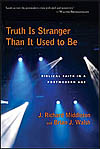
truth is stranger.jpgAs brief and interesting as these are, I still most often recommend Truth is Stranger Than It Used to Be: Biblical Faith in a Postmodern Age by Brian Walsh & Richard Middleton (IVP: $18–new cover, too!)  Its overview of the socio-economic idolatries of modernity/ hyper-modernity and its ideology of modernism, and the subsequent culture of post-modernity and and the philosophy of post-modernism, and then the extraordinary Biblical study which forms the core of the book, makes it still my favorite book on this topic.  It is the one I look to see if other Christian thinkers cite.  Dr. Crystal Downing’s How Postmodernism Serves (My) Faith: Questioning Truth in Language, Philosophy and Art (IVP; $18) is an excellent and quite positive overview and not only very enjoyable, but very clear.  Several customers have told me that Postmodernism 101: A First Course for the Curious Christian by Heath White (Baker; $17.99) is also one of the clearest for beginners so that, too, would make an excellent introduction if you haven’t read any of the above.

The new, third one in the “Church and the Postmodern Culture” is so far the most intellectually challenging of the three, and the most seriously insistence that postmodern perspectives are essential for faithful Christian outreach in our age.  GloboChrist: The Great Commission Takes a Postmodern Turn by Carl Raschke (Baker Academic; $17.99) is spectacularly fluent in the whole postmodern field, written with blunt Lutheran instincts, sort of a Bonhoeffer meets Kierkegaard interacting with Philip Jenkins and Lamin Sanneh and maybe Vinoth Ramachandra.  He is remarkably fluent in Islamic scholarship, too, and draws on resources about globalization that are wide and surprising.  He is deadly serious, of course, but ya gotta love a book that talks about globopomo.

Read a PDF of the introduction here.  And then come back to order from us!

Rev. Raschke (PhD, Harvard University) is an author to contend with and he surprises us often with his unique insights.  He has written a lot, and in his earlier contribution to the conversations about the postmodern turn is called The Next Reformation: Why Evangelicals Must Embrace Postmodernity (Baker; $22.)  You can see his really serious philosophical fluency by checking out this very arcane debate about Gilles Deleuze and other contemporary theorists.  Philosophy majors really ought to be paying attention to some of this important stuff although I admit it loses me…It is a blog site that brings together a variety of important theologians discussing this heady stuff.

For those who follow these things, you may want to know that Raschke has an appendix which includes a hard-hitting response to some anti-pomo critics, and a critical review of one of Brian McLaren’s books (Generous Orthodoxy) which will hopefully generate some generous conversation within, at least, the emergent village. 

BLOG SPECIAL
order any two books from this review and get 25% off both
ORDER
HERE

Hearts & Minds 234 East Main Street Dallastown, PA  17313       717.246.3333