Karl Barth’s Fifty Prayers

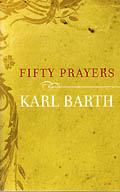
fifty prayers.JPGI wanted to type this on Sunday, as I was using this new book in some sabbath reading, but just didn’t get to it.  Even though it is a day late, now, I’d like to share that we now have this book of prayers written by Karl Barth, prayers never before translated into English.  It is a very sweet and thoughtful little paperback simply called Fifty Prayers (Westminster/John Knox; $12.95.)

After noting that a colleague gave him an A in preaching and a D in liturgy,  the famous theologian wrote this in the preface in 1962:

For a long time I never felt good when before and after my sermons I thought I should, or was allowed, to keep to the order of the usual liturgical books…I was disturbed by the lack of functional relationship, but also by the inorganic relationship between the archaic or even the modern language of these prayers and the language of my sermons.  For a while, I sought help by replacing the petitions of the order of liturgy not with extemporaneous prayers ( I have never dared to risk such a thing), but with freely bringing together biblical passages from the Psalms.  Only in more recent years did I begin to set forth such texts, first for the end and later for the beginning of the main part of the worship service, within the context of preparing for the sermons themselves.

Isn’t it interesting that in just a few generations we have even one of the century’s foremost preachers and theologians uncomfortable with conversational prayer in worship, to a time when liturgy in many Protestant churches has been so thoroughly contextualized to the commonplace and extemp, where nearly anyone can utter nearly anything?  I am not overly fastidious about liturgical purity (even though some of my friends in our church’s contemporary service think I’m fussy) but it is evident that Barth has a certain gravity and thoughtfulness that is striking.

He continues, naming the considerations that guided him in writing these prayers.

The worship service, the center of the entire life of the community, must be presented as a whole, a whole of calling on the gracious God.  Following the greeting of the community as the people of this God, the worship begins with the common singing, which I think is not seen as being as important as it truly is.  It continues with the pronouncement of the community’s thanks, its penance, and its special petition for God’s presence and support in the special act of gathering for worship, by the member of the community who service as the leader of the action.  It ascends to the sermon, in which the call to explanation and application of the Scripture passage (better short than long!) is spoken and proclaimed.  From here, it descends to the final prayer, in which the proclamation of the sermon is briefly summarized (with a direct call to God), but in which the worship service is possibly opened, above all, as an outstretched petition to the outside, to all other people, to the rest of the church and the world (is this too often neglected?) 

It doesn’t matter much to me whether you or I agree with his description or vocabulary here.  I quote it because it shows his deep awareness of the flow, of the wholeness, of worship, and his description of the sermon being the highpoint reminds us of his regard for the Bible. He explains a few more elements of the service, including more singing and a final dismissal (apparently by a layperson) of blessing—again, this is for us as we serve the world. (His parenthetical question hangs still, over the decades, does it not?)   This brief description calls us to that which constitutes meaningful worship.  (He mentioned communion only in passing, but gives attention to the liturgical year.)

Anyway, these prayers were first written in the context of a whole worship service, and are tied to the sermons that the great man preached.  (By the way, Regent College Press recently published two previously untranslated sermons of Barth’s, one on the 1912 sinking of the Titanic, under the title The Word in the World. ) At the conclusion of the forward to Fifty Prayers, Barth says he hopes that the prayers (each about a page long) may be useful for personal and private devotion, but also to inspire “consideration” among other worship leaders.   It is an understated recommendation, fitting from a humble saint who understood God’s redemptive work in Christ in exceptional and awesome tones.

These stunning pastoral prayers mostly follow the liturgical calendar, but the rest are arranged thematically. They give us a glimpse of how the Swiss theologian practiced this huge Christian discipline and his rich words and cadences and theological depth can only help us, these days.  Kudos to the publisher for making them freshly available to us.

Scandal of Evangelical Politics

We just got back from selling books at Palmer Theological Seminary in Philadelphia.  We were at the conferencescandal of evangelical politics.jpg organized by Evangelicals for Social Action, a gathering convened to study themes raised by Ron Sider’s new book, The Scandal of Evangelical Politics (Baker; $15.99.) I reviewed this book in our monthly website column in February and I hope you saw it; it is very, very important.  One of the opening speakers at the conference was Dr. David Gushee, whose excellent new book, The Future of Faith in American Politics: The Public Witness of the Evangelical Center (Baylor University Press $24.94) makes a very strong case for what he calls a “centrist” evangelical witness. Gushee has been a friend and colleague of Sider and ESA for years and it was fabulous to be with him, again; the book is very good, and he has been in high-level conversations with evangelical leaders around these themes and has an insightful grasp of the movements, inclinations and future of the faith and politics debates.  Like these books by Sider and Gushee, the conference advanced the notion that although a “third way” and radically centrist alternative to the Christian right has been being researched and written about for years, the recent demise of the fundamentalist right really has created a new opportunity for responsible, Biblically-balanced perspectives to become better known.  Scholar/activists like Stanley Carlson-Thies and John DiIllo (both who have served in the White House in the Office of Faith-Based and Community Initiatives) and serious political science scholar Jim Skillen (of the Center for Public Justice) were presenters, and both Sider and Gushee tipped their hat to the solid work Skillen has done for many, many years in helping us “think Christianly” about politics, citizenship and statecraft.

 Also, there were strong voices from outside the mainstream, white evangelical culture—ethnic minority leaders like the vibrant and forthright Louis Cortes (Esperanza) and Al Tizon (a young, Asian-American Prof. at Palmer who I was tickled to finally meet) and racial diversity trainer, author (and Hearts & Minds booster) Brenda Salter-McNeil.  Buster Soares preached up a storm in classic African American style on Sunday morning—showing how Jeremiah Wright could be best understood after spending time with Jeremiah the prophet, who, naturally, leads us to Jesus and his radical reorientation announced in Luke 4.  I’ve not been so challenged and moved by a sermon in years!  Testify, indeed!

 There were workshops on how to advance a consistently pro-life ethic in the public square, ways to help conservatives and liberals work together, especially on matters of common concern like religious liberty and overcoming poverty, and good stuff on creation-care.  It was a working conference, with panels and workshops and non-stop conversations.  We met some new folks, got re-connected with long-standing H&M customers, and hopefully added value to the event by offering resources, book-buying advise, and a general reminder that to make a difference as thoughtful Christians in the public square we simply have to read, study, learn, and reflect.  Selling books at events like the ESA conference is a large part of our calling, it seems, and we are glad to be able to tell you about it.

The “Scandal” event didn’t attract a huge crowd, but it generated the same hope and zeal that we are hearing about from the current Jim Wallis/Sojourners book tour (The Great Awakening: Reviving Faith & Politics in a Post-Religious Right America) and the radical commitments to find real answers to societal crises such as thoseexplored by Brian McLaren in his stunning Deepshift/Everything Must Change tour, based on his book, Everything Must Change: Jesus, The Global Crises and a Revolution of Hope.  We sold some copies of Jesus for President by Shane Claiborne, of course, and, he, too, is soon to go out on a conference/book tour (although nobody else’s will have juggling, “Amish for Homeland Security” tee shirts, or a service component the way Shane’s surely will.)


These are good times to be courageous “third way-ers”, to be something other than the secular left or the Christian right.  Why even conservative blogger extraordinaire, Joe Carter, over at The Evangelical Outpost has issued an open letter to his colleagues on the Christian right, advising more balance and less right-wing venom.  Hat tip to Dick Cleary at Viewpoint for linking us with that.

If you’ve never read Ron Sider’s Rich Christians in an Age of Hunger, you really should.  Christianity Today listed it as one of the top 100 books of the 20th century, and we have re-read every edition since its much-heralded 1976 release.  What he did for global poverty in that book, he did for domestic poverty in Just Generosity: A New Vision for Overcoming Poverty in America; it was given great forwards by Catholic Democrat John DiIllio and evangelical Republican, Chuck Colson.  That in itself says something, eh?

Sider’s latest, The Scandal of Evangelical Politics, may be his most thoughtful and sophisticated yet, a systematic call to a conscientious and consistent Christian public philosophy–rooted in the Biblical story and a subsequent Christian worldview—coupled with non-partisan, interdisciplinary social analysis.  I know we’ve been saying this kind of “framework & foundations” stuff for years, so it is great to have an eminent Christian leader like Sider insist not only that we take the Bible seriously,(as he has prophetically called us to on issues of war, violence, poverty, materialism, creation-care, sexual ethics and such) but to develop a distinctively Christian set of theories about the state, about society, about the norms which should guide the unfolding of institutions, who should do what, and so forth.  We need more than rhetoric—even more than calling for Jesus to be President—and Sider delivers in this great new book.

iamnotsocialactivist.jpgYou may not know of his brand new I Am Not A Social Activist: Making Jesus the Agenda (Herald Press; $16.99) This is a collection of his short pieces from Prism magazine.  I have cried at some of these, photocopied many, saved them for future use.  I know I am not the only one to read Sider’s back-page column first in Prism, and it is fabulous to have them in one convenient volume.  Here you have Sider calling for a wholistic vision, for integrating faith and life, for doing evangelism and social action, for uniting prayer and politics.  Here is his piece on Paul Marshal’s Heaven Is Not My Home, and here are several of his best columns on the nature of the Kingdom of God. Several are quite tender, all notably full of piety and faith. From love of creation, to love of his beloved wife, from his rage against the Bush tax cuts to his proposals for evangelicals to get involved in the global warming debate, these are some of the best short polemics you will find.  If you care about the world in which we live, and want some guidance in offering a balanced, Biblical view to the issues of the day, pick it up and start on any page. It will draw you closer to Christ. It will give you something clear and important to talk about with those who don’t quite do this kind of reading.  It will help you help our sad, needy, world.   And that is something to which we are all called.

Stone Crossings

Istone crossings.jpg‘m wondering what to write about, the day after Easter, and it seems only natural to cite N.T. Wright’s spectacular recent book Surprised by Hope (Harper; $24.95.)  You surely know, if you’ve read BookNotes for long, that we despise the unbiblical dualism that sets the so-called secular against the sacred; those ideas of Plato that wiggled their pernicious way into the church so that true spirituality was segregated from ordinary life, where Christ’s teachings were seen to be relevant not for here and now, but for another place, or just for the super-spiritual.  God’s intention is seen not as the promised restoration of all things, a new creation created out of the shell of the old (to paraphrase Dorothy Day) but as an ethereal pie in the sky.  Wright has stood against this unhelpful way of thinking with wisdom and Biblical balance for years.  He stands strong on the doctrine of creation and the way in which Christ’s reign is proclaimed here, “on Earth as it is in Heaven” given his insightful appreciation for Jesus’ Jewish messiahship.  His serious work on resurrection has explored that deeply, and in this new one, he ponders the various meanings and true hope we have in resurrection.  It is perfect to help us realize just how momentous yesterday’s celebration was.

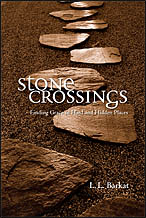
Still, I want to write about something else, one of the best books I’ve read in a while.  A writer who posts here from time to time, and whose blog I’ve commended, (Seedlings in Stone), L.L. Barkat, just released her collection of Bible reflections, based not only on her solid and sane reading, her immense and articulate understand of the Bible, but on her own troubled life.  Stone Crossings: Finding Grace in Hard and Hidden Places  (IVP; $15) is much more than a typical “basic Christian growth” book of insight into discipleship—she tells with an artist’s eye the keen memories of her  difficult childhood, her coming of age, her college and young adult years.  The second half of the book unfolds insights from her marriage and relationship with her multitude of stepparents and stepsiblings, narrating in gorgeous prose snapshots from her life, memories of her past as they come into God’s healing light, and moments of her on-going steps toward a sane lifestyle and faithful discipleship.

This glorious book is thoughtful without being laborious, literate without being self-conscious.  She has a great eye for details, and a luminous style that revels in God’s presence in the day-to-day.  She is drawing lessons from life, and is candid about her ups and downs.  And, boy, has she has some.  Yet, God’s great grace in her life has kept her from bitterness and she has emerged as an obviously mature, wise, and articulate citizen of God’s healing land.  I had to fight back tears on Good Friday and Holy Saturday as I sat with this, dropping the book to my knees as I looked to the heavens to whisper a thanks to God for her fine work, and Christ’s reign over the caste of characters on this stony road.

Yes, stones are the main metaphor here, as she steps on stones in the rivers of her youth, picks up smooth ones to cherish, visits caves and walls and works and reworks writerly memes and theological themes that have to do with the rocks, stones and stonewalls.  I really enjoyed her deft handling of these images, and, more importantly, learned much, and was reminded of even more, of how God’s grace works to bring healing and hope to a rough-hewn life.

Ms Barkat loves Annie Dillard, and quotes other creative types (from Make Fujumaro’s essay in Comment or Toni Morrison to a particularly powerful story from a Salvador Dali biography or the John Donne stuff in Wit.)  She is delightfully fluent in solid Biblical scholarship, too, citing good guys, Lyland Ryken to Tremper Longman to Iain Provane. It isn’t too far off when Scot McKnight (on the back cover) likens her to Eugene Peterson.

Each of the 20 chapters of memoir/Bible study/story unfolds a particular theme—-forgiveness, inclusion, doubt, humility, baptism, gratitude, to name a few.  They unfold increasingly, showing her growth and maturity, even though the book is technically not a biography.  Still, as she tells her story, opens up Scriptural insight, we come to see not only a life touched and graced by the Resurrected Christ, but we see just how tangible—-solid as a stone—God’s grace can be.

This is a perfect book for Eastertide; it is real, hard, and yet, gently triumphant.  God is at work among His people, slowly, but surely. Stone Crossings chronicles this joyful, good, truth graciously and helpfully, and we are happy to commend it to you.  There are discussion questions, too, making it ideal for a book club or small group.  And, she now has a stonecrossings website dedicated to the book, for readers to join a virtual community. There, you can read an interview with Barkat, see some PR stuff, and listen to some chapter’s being read.  Check it out, and return to our website and place an order.  You won’t regret it.

Exile: A Good Friday prayer, it seems…

EXILE
on reading 1 & 2 Kings                                                           
prayers for a privileged people.jpg
Like the ancients, we know about ashes,
    and smoldering ruins,
    and collapse of dreams,
    and loss of treasure,
    and failed faith,
    and dislocation,
    and anxiety, and anger, and self-pity.

For we have watched the certitudes and
entitlements
of our world evaporate.

Like the ancients, we are a
mix perpetrators,
   knowing that we have brought this on
         ourselves, and a
         mix of victims,
                  assaulted by others who rage against us.

Like the ancients, we weep in honesty                                                                                                                   at a world lost
    and the dread silence of your absence.                                                                                                          

    We know and keep busy in denial,                                                           
Walter Brueggeman picture.jpg    but we know.

Like the ancients, we refuse the ashes,
    and watch for newness.
    Like them, we ask,
    “Can these bones live?”

Like the ancients, we ask,
    “Is the hand of the Lord shortened,
       that the Lord cannot save?”

Like the ancients, we ask,
    “Will you at this time restore what was?”

And then we wait:
    We wait through the crackling of fire,
                and the smash of buildings
                and the mounting body counts,
                and the failed fabric of
                   medicine and justice and education.

We wait in a land of strangeness,
    but there we sing, songs of sadness
                songs of absence,
                belatedly songs of praise,
                acts of hope
                gestures of Easter,
                gifts you have yet to give
.
                                                          Walter Brueggemann
                                                          Prayers for a Privileged People
                                                          Abingdon Press (2008)   $19.00

Race, Racism, Reconciliation and Justice–And a Free Book Offer

Lots of people are talking about Obama’s speech about race, his relationship to his pastor, Jeremiah Wright, and other ways in which race (and gender) have shaped the Democratic primary and, by extension, the civic discourse over recent weeks.  I, too, have been emailing friends and talking–for hours and hours over the several days—sharing my own interests and concerns and opinions about racial justice, Martin Luther King, and the charges against Rev. Wright.  It has reminded me of much that I hold dear, and I feel very raw about it all.  I have been through a little bit on this stuff, from the late 60s onward, but have no special insight, really, although [geek alert:] I have read more than your average person on this matter.  And so, it is only natural that I share a few titles with you now, my contribution to the on-going conversations about race, multi-culturalism, ethnicity and the legacy of American’s original sin.

I’ve compiled other similar bibliographies, other times at the website, and we have a very large selection of books on racism and multi-ethnic ministry here at the shop.  Few churches, sadly, are truly working on this, so there they sit.

Still, great books keep coming out; IVP is particularly to be commended for doing some of the best, and consistently good, faith-based resources.  God bless “Ëœem.

credible witness.jpgA Credible Witness: Reflections on Power, Evangelism and Race Brenda Salter McNeil  (IVP) $13  Brand new, this is by one of our favorite speakers, a passionate and charming communicator, a woman who has walked through much of the turmoil of working for racial justice.  As a Black woman, she is able to introduce us to important insights from her experience, and offer new insights on Biblical stories— Jesus’ encounter with the Samaritan woman, say.  Interestingly, this is also about evangelism, and how racial reconciliation offers a glimpse of the Kingdom in a way that makes our witness credible. See also her co-authored The Heart of Racial Justice: How Soul Change Leads to Social Change (IVP; $13.)

Free to Be Bound: Church Beyond the Color Line Jonathan Wilson-Hartgrove (Navpress) $12.99  Wilson-Hartgrove has been a friend and partner-in-crime with Shane Claiborne and has been instrumental in calling together folk to live in community, in service to the poor.  Such “new monasticism” has lead him to the rural south, and the insights of this provocative, powerful call to rediscover the role of faith in crossing into the social spaces of others.  Chris Rice, codirector of the Center for Reconciliation at Duke Divinity School (and himself the author of a moving memoir about his work with John Perkins and his late son) says that this “marks Jonathan Wilson-Hartgrove as one of the freshest and most important new voices in an American church still deeply divided and confused by the color line.”

Beyond Rhetoric: Reconciliation as a Way of Life Samuel George Hines & Curtiss Paul Deyoung (Judson Press) $14  Both of these men are renowned church activists, doing mature and thoughtful ministry out of the historic black church.   Heavy with insight, and life-transforming spirituality, this is the real deal, motivating and practical.

Living in Color: Embracing God’s Passion for Ethnic Diversity Randy Woodley (IVP) $16  Woodley is a Cherokee leader, and this lovely book is a call not just to reconciliation between blacks and whites, but a beautiful call to truly celebrate the diversity God has given us.  “We would never give Picasso a paintbrush and only one color of paint, and expect a masterpiece” he writes.  A very good study guide is enclosed, making this a fine introduction for churches of all sorts. 

Beyond Racial Gridlock: Embracing Mutual Responsibility George Yancey (IVP) $15 I am inspired reading sobeyond racial gridlock.jpg many of these books, some of which cause deep sadness in my soul, reminding me of older hurts I have witnessed or read about, and the anguish of our society of “deferred dreams.”  I commend reading books about race, at least for white folks who often have large blind spots on this issue, regularly, to remain educated and alive to this struggle.  This book, though, takes the conversation to new levels, offering a taxonomy of how different ethnic groups tend to react to the call for racial reconciliation, and with unflinching nerve, lays blame across the board, and offers guides to the unique responsibilities each party has.  His survey of the range of approaches that have been used, and their respective weaknesses makes this a major contribution of distinctively Christian thinking.    Mark McMinn, writes, “I am so drawn to this book.  It gets me beyond my guilt, denial, and defensiveness.  Yancey, as a black man, is coming along beside me, a white man, and acknowledging that this is our mutual task to figure out how to treat one another well.  I don’t feel condemned; I feel welcomed into a conversation.”

Understanding & Dismantling Racism: The Twenty First Century Challenge to White America Joseph Barndt (Fortress) $17  Barndt is a legendary educator and workshop leader within mainline church settings, mostly, and this revised version of his classic book is a work of analytical brillance, challenging and deep.

Subverting the Power of Prejudice: Resources for Individual and Social Change
Sandra L. Barnes (IVP) $16 Dr. Barnes is a serious sociological scholar, here translating the data and language of her field into theological insights, helping anyone, but especially Christians, understand the prevalence of prejudice in our society and what to do about it.  Very thoughtful, very important.

a bound man.jpgWhite Guilt: How Blacks and Whites Together Destroyed the Promise of the Civil Rights Era Shelby Steele (Harper) $16 No list would be complete without an iconoclast who breaks with the typical discourse and offers an alternative reading of the problem at hand.  Known for his very eloquent call to stop talking about race in The Content of our Character, he has generated a degree of controversy with his critique of Mr. Obama in his brand new, brief A Bound Man: Why We Are Excited About Obama and Why He Can’t Win (The Free Press; $22.)  Here is his piece in yesterday’s Wall Street Journal, a piece that struck me as somewhat insightful at points, and infuriating at others.   I am not convinced he’s correct—in fact, I was once told that it was his wrong-headedness that inspired Cornel West to pen his still vital Race Matters (Vintage; $12.95.) Still, Steele’s peculiar views are a viable part of the conversation, and we invite you to read widely, seek discernment, to think, talk, share.  Drop us a posted comment, too, if any of this strikes you as helpful or unhelpful. Thanks for being a part of our feeble efforts.

HERE IS THE BLOG SPECIAL DEAL
ORDER ANY OF THESE MENTIONED BOOKS
AND WE WILL THROW IN A FREE COPY
OF ANOTHER BOOK ABOUT RACE.

PLEASE JUST LET US KNOW IF YOU PREFER A FREE COPY (OUR CHOICE) OF A BOOK ABOUT THE CIVIL RIGHTS ERA, ABOUT FAITH-BASED RACIAL RECONCILIATION OR SOMETHING ABOUT AFRO-CENTRIC FAITH.  We will grab something for you, a free surprise, but no exchanges or complainin’ allowed.  ORDER HERE

Hearts & Minds 234 East Main Street Dallastown, PA  17313   717.246.3333

My new monthly review column explains why I’m interested in the emergent conversation

new christians.jpgI’ve posted one of my long columns at the website’s “review articles” page, the one for March.  It starts with a link to a fun and helpful little piece in Publisher’s Weekly where the writer wonders if Christian publishers, in their desire to jump on the emergent bandwagon, will so over-use the term that it will become meaningless, co-opted.  You can visit that good essay here.

My column, though, goes on for pages sharing my interest in theological dialog and cultural reformation, telling how the North American students of Dutch Calvinist philosopher Herman Dooyeweerd—a behind the scenes influence upon Francis Schaeffer, actually—taught many of us in the 70s to deconstruct the Enlightenment project and the alleged autonomy of Reason long before anyone heard of postmodernism, let alone the emerging theologies.

Ironically, being schooled in this conservative Protestant tradition which critiqued secularized rationalism, and which honored honest questions, and which insisted upon robust, Biblically-guided cultural involvement, has made me more open to the emergent questions, not less.  I know some of our readers and friends worry about this, so I make my case, sharing how we’ve come to appreciate their basic impulse and publishing agenda.  I tell about some of my favorite books that set me up for this recent firestorm of new authors, hip book imprints, e-zines, clever ministries and the missional call to reinvent faith in ways that are different than middle American Christianity as we know it.

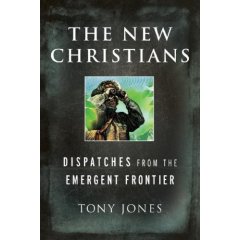
I hope my column explains our eagerness and concerns for the emergent conversation, lets you in on more of our past journey, and alerts you to some of the recent history of the emergent movement by highlighting some of the most important books in this field over the past five years or so.  The best new book that tells the story of the leaders of the new movement is doubtlessly the page-turning delight The New Christians: Dispatches From the Emergent Frontier by Tony Jones (Jossey-Bass; $22.95.) Jones is doubtlessly the one to tell this story, currently the coordinator for the Emergent Village. It has garnered rave, rave reviews from everybody from McLaren to Phyllis Tickle to Mark Oestreicher.  If my rambling whets your appetite, read Jones next, and then some of the other books I cite.  If my rambling turns you off, forget it, and read Jones.  And, wherever you are, join the conversation!

BLOG SPECIAL
New Kind of Christians: Dispatches from the Emergent Frontier
Tony Jones
$5 off
now $17.95
ORDER HERE
Hearts & Minds 234 East Main Street Dallastown, PA  17313  717.246.3333

Everything Must Change tour and We The Purple

Greetings to new readers of BookNotes visiting from the recent Everything Must Change/DeepShift event with BrianEverything Must Change (smaller cover).jpg McLaren in DC.  We have been grateful to be the EMC tour official bookstore as we’ve shipped stuff all of the land, offering Brian’s books and other resources for those who are exploring the most urgent issues of our time at the series of DeepShift conferences.  As I’ve said here before, Everything Must Change: Jesus, Global Crisis and a Revolution of Hope (published by Nelson; $21.99) is a notable and important shift for Brian as he spends less time making a case for being a “new kind of Christian” or finding ourselves seeking a “church on the other side” —the whole postmodern, emergent conversation—but rather, inviting imagination and hope and action in light of the pressing global concerns of sustainability, climate change, poverty and war. From mountain-top removal in Appalachia to the ways in which South Africa found new vision while overthrowing the old apartheid era, from churches that reach out to the homeless poor to the crisis of international security, war and nationalism, we grappled with big, big concerns in a spirit of collegiality and, more importantly, spirituality. 

Those that know us here at the bookstore know that we have long carried the best Christian (and some Jewish and secular) resources on global issues, as wholistic mission and faith-based social action has always been a feature of our shop.  It is no accident that alongside our fairly traditional (some say conservative) historic Biblical theology and classic spiritual formation books we have long carried books by William Stringfellow and Ron Sider, by Phil Berrigan and Rachael Carson, John Stott and Rene Padilla, John Perkins and Dorothy Soelle, Martin Luther King and Marva Dawn, Jonathan Kozol and Tom Sine, John Howard Yoder and Dorothy Day, Richard Mouw and Thomas Merton, just to name a few.  Brian is not the first to say that the framing stories that shape our worldviews, and consequently our ways of living in the world—-caring or not caring about the burning issues of the day—are the most important thing to get right. (I still say that Brian Walsh & Richard Middleton’s worldview masterpiece, Transforming Vision is one of the most important books in our shop; McLaren, happily, draws upon Walsh & Keesmaat’s Colossians Remixed to show the kinds of transformational Biblical study that can guide us into this kind of radically Biblical change.) Indeed, we often call ourselves radical Christians, not to suggest revolutionary fever or lefty politics; not at all, really.  Radix is the Latin root word from which “radical” derives and it means “root.”  We need to get at the root causes, the deepest ideologies which shape the current ways of understanding and being in the world. (The emergent gang is mostly right about this, that the Christian faith ought not be uncritically wedded to a modernist worldview, and that radical rethinking is needed to disentangle centuries of cultural capitulation to the spirits of the Enlightenment et al. I suspect it was Francis Schaeffer that first taught me that.)  As McLaren suggests in Everything Must Change, we must “wake up” to new dreams of what God is doing in the world, and think considerably differently, “singing a new song” into the new world God is ushering into history.  We call that—as he explicates nicely in The Secret Message of Jesus–the Kingdom of God.  And so, we just came back from a nice witness to the Kingdom, an experience of the Kingdom, a gathering of various ages, diverse denominations, conflicting theologies and different preferences for worship and liturgical styles, even, I’d imagine, different impulses around politics and public policy proposals.  Praise be to God, Nazarenes and Episcopalians, Methodists and PCA Presbyterians, Baptists and Lutherans (though not many historic black churches represented, or Catholics, it seemed) joined together to reflect on the deepest issues of our cultural crisis and what King Jesus might want us to do.  It was a precious time, a joyful time, if a difficult time of selling books (yes, amidst illness, again.)  Many, many thanks to our stalwart volunteers from Vienna Pres and the CCO, especially.

The tour moves on to other cities over the next month or so. Check out the DeepShift schedule and make plans to be a part of a very exciting, well planned, and multi-faceted experience of song, art, lecture, conversation, silence, worship, meals and book-buying.  Yes, indeedie:  buying books is part of the way to wake up to a new world.  We’ve got a lot of ideas to consider, plans to make, lives to change (starting, of course, with our own.)  Books are allies in the journey, food for the day,  insight for new living.  Thanks for your support of our store, for you interest in good books. Buying books from us, here, enables us to stay afloat long enough to continue serving these kinds of conferences and folks on deep in the trenches of important work.  We are glad to be able to serve them, and you help make it possible.  We are grateful for your ongoing support.

The biggest selling books (other than McLaren’s) at the EMC DeepShift event? Clearly Claiborne’s Jesus for President (the amazing graphic designers of the book, Ryan and Holly Sharp, were there, doing music as the Cobalt Season and it was terrific to meet them.) Many took up my recommendation of the serious-minded and richly provocative Hope in Troubled Times by Mark Vander Vennen, Bob Goudzwaard & David Van Heemst.  I promoted Os Guinness’ The Case for Civility, and it seemed useful to many.  A handful of people bought Scot McKnight’s Community of  Atonement, a balanced and wise bit of refreshing theological thinking, which made me glad.  A few people got John Caputo’s What Would Jesus Deconstruct?, which I found a bit troubling, although I loved Jamie Smith’s earlier book in the series, Whose Afraid of Postmodernism: Taking Derrida, Lyotard & Foucoult to Church, so sold that to ’em too.

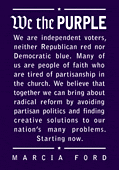
we the purple.gifA book that arrived today that I really wished I could have taken there: We the Purple by Marcia Ford (Tyndale; $17.99.)  I am not sure I am purple, exactly–a blend of red and blue, obviously, and I sometimes think I’m a completely different color—but it does capture something, doesn’t it?   The cover itself looks like a manifesto.  It makes the case, obviously, for independent voters, stating on the cover that it is about people of faith “who are tired of partisanship in the church.  We believe that together we can bring about radical reform by avoiding partisan politics and finding creative solutions to our nation’s many problems.”   There are tons of stories, lots of interviews, profiles and testimonials of grassroots, truly  third way folk.  Looks good.

With similar concerns, although not quite the same strategy, my dear, dear friend, Steve Garber did a very important piece last summer for Comment, on not being cynical about “proximate justice.“  Alas, a good handful of folk, mostly younger, responded to his article in the latest issue, a symposium of responses.  I commend that to you.  If we are going to rock the worldviews, and rock the vote (or, as Shane puts it, vote the Rock) we will have to continue to think about all of this stuff.  Get McLaren’s book if you haven’t yet, start a small group around some of the political ones I reviewed last month at the website column, or check out this new independent voice—Ford is a fun writer, we know that from her lovely, poignant, Memoir of a Misfit.  It isn’t exactly the feisty brilliance of the smalltown anarchist Bill Kauffman (Look Homeward America) or the “crunchy con” of hippy conservatives like Ron Dreher, but it is a new voice, outside the bi-polar predictabilities of the religious right or the faith-based left.  As Becky Garrison (of The Wittenburg Door) puts it, “Marcia Ford employs sass, spirituality, and statistics to expose the failings of our current two-party system”¦”   Key Life preacher Steve Brown even says, “”¦Ford almost convinced me to give up my partisan political positions and join her.”  Maybe it is not quite radix enough, but it sure does make us think.  And laugh, which, as Brian reminded us at EMC, is a deep Christian virtue.

Hearts & Minds 234 East Main Street  Dallastown, PA  17313  717.246.3333   www.heartsandmindsbooks.com

New books on Christian faith and politics AND a free book offer

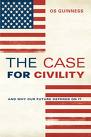
I hope you had the chance to visit our monthly column last month over at that part of the website.  I explore four  recent books on Christian politics, and how a balanced, Biblical agenda might shape the common good.  As you might guess, we described the new Jim Wallis, The Great Awakening (which is very much a sequel to his best-selling God’s Politics) and we celebrated the very thorough, and quite excellent new book by Ronald Sider, The Scandal of Evangelical Politics (the scandal being, that most evangelical political work hasn’t been adequately Biblical or all that evangelical.) I told about the excellent new book by Steve Monsma, Healing for a Broken World: Christian Perspectives on Public Policy.  And, perhaps most importantly, I review the very, very insightful work by Os Guinness, The Case for Civility: And Why Our Future Depends on It.

case for civility.jpgThis new Os Guinness book offers something that these other three do not, but without which none of them will leave much of a legacy, and that is the serious (if eloquent) reminder to respect our American first amendment, recapture the genius of the Founder’s balanced approach to religion and law, and to ever and always remain peaceable people, civil and fair, even in the most robust of public debate.  The first books are exciting explications of various aspects of Christian views on contemporary public life and how our citizenship can be shaped by the values and practices, principles and positions, of a Scripturally-based worldview.  Guinness, though, insists that we back up and shape and share these views in a manner that is in keeping with the best impulses of the American experiment (freedom for and from religion, for instance, pluralism without capitulation to relativism and such.)  More importantly, he calls us who are people of faith to work in ways that are in keeping with the graciousness of Christ Himself.  Please read my mini-reviews of these stellar books;  we are very, very impressed with them all.

justice rights and wrongs.jpgNone of these are really academic, but here is one that is.  Here is a quick announcement that a major Christian philosopher has released his major, long-awaited work on the theories of justice.  I refer to the Princeton University Press release, Justice: Rights and Wrongs by the impeccable and impressive Nicholas Wolterstorff. At $39.50 you may want to check it out of your local library—I know I will—but some of you should own it.  We are happy to stock it here, of course, and ask you to tell anyone you know who happens to be interested in deep and deeply Christian political philosophy (maybe they can order it from us, a just thing to do, I’d say, rather than going through the faceless carts at you-know-where.)  Aquinas/natural law scholar Jean Porter of University of Notre Dame writes, Justice is “the work of a first-rate philosopher at the top of his game” which “sets forth a distinctive and challenging theory of justice formulated in explicitly scriptural and Christian terms.”  She continues, “Not only does this book reflect the clarity and acuity of thought that characterize Wolterstorff’s work, it also reflects the humane sensibilities of someone who has thought and felt deeply about these matters for a long time.”

Here’s a blog special:  You may recall that our friends at *cino/catapult, Rob & Kirstin VanderDo Justice cover.jpg Giessen-Reitsma, have published what they call a “road journal,” a lovely small paperback with stories and testimonies, book lists and film reviews, which serves as a guided tour into the journey of justice.  (*cino publishes these from time to time; the next one forthcoming will be on food issues.)  Here’s the deal: buy any of the books just mentioned and we will give you a free copy of *cino’s Do Justice: A Social Justice Road Map (a $7.50 value.) 

New insight.  Free book.  Sounds like more than justice to me.

Order here.

or call 717.246.3333.

Hearts & Minds
234 East Main Street
Dallastown, PA  17313

Leonard Sweet, sailing inspired into The Perfect Storm, and uninspired macaroni salad

church of perfect storm.jpgThe other day, after days of pulling and packing (yet again) we lugged too many boxes over to a good and growing local church who was hosting a conference for Sunday school teachers, child-care workers and children’s ministry folks.  Setting up rows and rows of craft books, pre-school lesson plans, brightly colored children’s picture books, and, yes, some theology and worldviewish stuff (the foundations of thinking faithfully about children, education and church) took about 7 hours.  Exhausted from the stress of that, we hustled off to pull and pack the next gig, getting to another church late at night for the next day’s seminar with white-haired, silver-tongued pneuma-naut (his word), Leonard Sweet.  After the exhilarating day with Len at which I sold books, and the terrific and busy Christian ed conference over at Living Word Community Church, which Beth and her sister worked, I scooted back, helping them tear down, bringing everything from both shows back to the H&M garage.  We are, as is often the case, thrilled that folks buy our books, happy for the positive feedback, and always just a little sad that more people don’t take in learning events such as these, that the very best books don’t always sell as much as we would wish, and wonder how best to get the word out that there are amazing resources to be found, good books that can enhance one’s life, deepen one’s discipleship, and move us towards more faithful living in God’s good world.  Jesus called disciples, which, you know, means learners.  Life-long learners grow and mature in many ways, but surely reading widely and deeply, is part of that. Some churches become communities of bookish discourse, and some, sadly, do not.  Some people have a curiosity and eagerness to want to learn and grow, but some do not.   Thanks to those who help us get set up at these gigs, and thanks to those who pray and care, and thanks, especially, to those who purchased books from us.  We really hope it helps.

A custodian winked at us slyly late at night as we were slowly pushing the heavy carts full of boxes of unsold stuff back to our van.  He, too, was working the night shift and happy to be there, after the crowds left.  He said, “Beats cleaning up after macaroni salad.”  My blank stare tipped him off that I had no idea what he was talking about.

“Macaroni salad in the church basement,” he said (as if that cleared it up.)  He explained that in previous churches where he worked as janitor he had to clean up after events that, well, just didn’t seem to him to be that urgent. Just light little lunches.  “What war are they going to fight,” he asked, “after sitting around eating macaroni salad?”

I am a pacifist and rarely use such militaristic language, but he’s right that spiritual warfare is a theme of the Bible.  Or, we could say, using Blues Brother’s phrasing, that “We are on a mission from God!”  What battle, what race, what mission, what endeavors, emerge from low-expectation, boring church meetings, from gathering with little passion or point?  Of course, eating together is a hugely important Christian practice, and Jesus’ himself ate, if not macaroni salad, something like it, often with others, and the on-lookers complained.  But my late-night janitor buddy had seen what I am sure you have seen: a whole lot of church activity that doesn’t seem to motivate anyone to do much of anything.  He was right to observe that he and Beth and Debi and I were cleaning up after a day which mattered, equipping caring Sunday school leaders with passion and excellence, to care for babies and kids, children and youth.  All the work, before and after, is, we pray, a contribution to greater faithfulness, serious learning, equipping saints for making a difference. 

Len Sweet said that as a theologically-interested bookseller, I am like a dinosaur, like the last living turtle on Galapacos Island.  I don’t know about that, but I do know that we were the very first store in the world to get his brand spanking new book—shipped to us directly from the book bindery thanks to some magic worked by my friends at Abingdon Press.  The Church of the Perfect Storm is a Sweetly edited anthology of chapters on the rough waters of our times, the ways in which the church should and can ride into the storm, how to not only ride out the waves, but do effective ministry in these raging waters.  Sweet has played with this analogy often before (although it is out of print, we have some of his fascinating Aqua Church left) and his first chapter is wonderful introduction to his take on the times.)  The last chapter, by the way, is a great sermon on ways to react to wild waters of postmodernity and post-Christendom, chart notes for stormy seas.  As he often reminds us, the most dangerous place for boats during a storm is in the harbor.  We are called to launch out into the deep, knowing Christ is with us helping us enjoy the ride.

What battles are you equipped to fight, what races to run, what vocations to take up,  what storms to chase, after you gather with others? What conversations of what consequence occur?  What books will help you move towards your goals?  How do you trust the Spirit more fully as you are called forth to deep and raging waters, and what resources may help you through it all?  The busy crowds buying kids books this weekend at Living Word, and the exciting time with Len at Grace United Methodist, wore us out, but, as the late-night custodian reminded us, such events are as important as any war.

The Church of the Perfect Storm is edited by Leonard Sweet (Abingdon; $16.)  This includes essays from around the world—from the likes of Alan Jamieson (New Zealand), Greg Glatz (Canada) a South African, a South Korean, Bill Easum, Peter Walker and Mark Matterson, from the U.S., and Tom Bandy is Canadian.  This international view gives this collection a very broad weather report, although they all share Sweet’s penchant for the storm metaphor, for the urgency of taking up the 21st century hot-wired culture, and they each offer insight about how to do ministry in the world of complex and converging social trends.    Want to reorient your thinking into the new social context?  Want to leave “terra nova” behind and move out into stormy seas?  This new title could help.  He ends his acknowledgments with these lines from William Cowper (1731-1800.)

Ye fearful saints fresh courage take,
 the clouds ye so much dread
Are big with mercy and will break
In blessings on your head

Judge not the Lord by feeble sense,
But trust him for his grace;
Behind a frowning providence

He hides a smiling face.

Os Guinness reviews Crazy for God

I have said before that I try not to use this platform to just link you to other reviews on the web…there is so very much good stuff out there, that I could do that all the time.  I assume most BookNotes readers pay attention to reviews, thoughtful religious essays and cultural news, so I don’t need to alert you to every good thing that arrives each day.

Still, this week brought a book review and essay so urgent, so insightful, and so personally moving (for reasons that I trust will become clear) that I urge you to read it.  Our esteemed friend Os Guinness wrote a passionate and wise review of Frank Schaeffer’s anguished and anguishing memoir Crazy for God that appeared in Books & Culture.  He takes his old friend Franky to task for dishonoring Francis & Edith Schaeffer, (or here) for writing a book that is deeply dishonest and chastises reviewers who have applauded the books style without questioning its substance.
If you don’t subscribe to B&C read Guinness’ review here.

I hope I am not one of the reviewers that Dr. Guinness reprimands;  I wrote in my remarks that I found the book very disturbing and insisted that we must not presume that we know that he is telling the truth.  I wrote a “letter to the editor” in The Nation on-line that chastised that reviewer, a contemporary novelist,  for taking all of Frank’s claims as gospel (about L’Abri and about modern evangelicalism)  without using the reporter’s fair eye for ferreting out the truth.  Other reviews and readers have lamented the anger and weirdness of Frank talking about utterly personal things about his parents, but few questioned his veracity.

 I found Frank’s reflections on his early years often beautifully rendered (but not nearly as well written as the first reviewer in Books & Culture exclaimed, and, as I said in my review, the writing often devolved into shock tactics and the bluntly stated mediocre cliche.  More so, I wrote both publicly and privately that I had reasons to mistrust him (and that I written to his journal and his publishers nearly two decades ago in protest to what I then considered to be needlessly incendiary rhetoric and unfair criticism of anyone that disagreed with his far-right views.)  I have long lamented—and I know I am not alone—the shift in Francis Schaeffer’s tone and writing in the last years of his life; how he was co-opted by those who clearly did not understand his worldviewish take on cultural reformation.  Crazy for God shows how Franky–filled with what Guinness calls self-loathing—pushed and promoted his famous dad in that particular direction, arranging meetings with Falwell, Robertson, et al.  I found the book thrilling and fascinating at times, but shared considerable ambivalence about it.  Thanks for those who have written heart-felt notes (mostly off line) about their anguish, and their appreciation for the warning I give as we’ve sold the few we have.

I must say again, though, that I could hardly but the book down, although I had to catch my breath sometimes, reading portions aloud to my wife as we shook our heads, and, on more than one occasion, had to catch myself from weeping over the sadness of the whole affair.  We have read the Schaeffer’s own memoirs, letters, and other testimonials by those whose lives were impacted (as Os says, “without regret.”)  This was to be the “insiders” report and in many ways it was.  If only it was not so ugly, mean, and as Guinness explains, fundamentally wrong in attacking the truthfulness, faith and integrity of his famous parents.

Guinness gets it as right as I imagine we will.  It is the most important, perhaps the only really important, review that has yet been done. He was there, living with the Schaeffer’s and serving as one of Franky’s best older friends, even serving as best man at his wedding.  It has the ring of truth, and the passion of a great man of God, vindicating not the saintliness–not at all—but the truthfulness, of the famous leaders of L’Abri.  Beth and I commend it to you.