April review at the monthly column: Spiritual formation

typewriter.jpgNear the end of April, I did a blog post announcing some wonderful new books on spirituality, such as the new Richard Foster, a new Brian McLaren (the first in the Ancient Practices series), a new one on praying the daily offices by Robert Benson, and a similiar, fabulous one on being attentive to God throughout the day by Leighton Ford. There were some blog discount specials offered, too, as I recall. 

 I promised I would describe these fantastic, rich books a bit more in an upcoming monthly column, and I realize I’ve never directed you to that long piece, naming other books and reviewing some other new ones, too (like the new John Eldridge—betchaya want to know what I say about that, now, doncha?)  Check it all out, here. I trust it will be good for your soul.

By the way, this week, I’ve read more carefully the most recent Gary Thomas, called The Beautiful Fight: Surrendering to the Transforming Presence of God Every Day Your Life (Zondervan; $14.95) (the title is a
nod to an Orthodox phrase, actually.) This was just fabulous and I can’t recommend it strongly enough. As usual, Thomas show he is ecumenical and widely read, and yet utterly reliable theologically, pleasantly written with lots of moving, faith-filled stories.  Four stars, that one.  I read it along side good, challenging, stuff by
Dallas Willard (I’m listening to Renovation of the Heart on CD, too) and the very useful and wide-ranging, really smart book that I call “spirituality as worldview formation”, Metamorpha: Jesus as a Way of Life by Kyle Leeson Strobel (Baker; $14.99.)  I didn’t mention these in the April column, since they aren’t brand new, but they would have fit in nicely.

And this, just in today, so obviously not listed–but I think I will have to blog about it eventually:Sacred Chaos: Spiritual Disciplines for the Life You Have (IVP; $15.)  In the review article I mention the Formatio line of books which IVP has released, and this is the latest in that imprint.  Of it, Gary Thomas writes, “Sacred Chaos is a sacred gem…her best work yet, a tour de force of real-life spirituality.”

Even as you read my remarks about formation, prayer and the inner life, perhaps you will pray for us.  In the last few days, we’ve be asked by customers to assembly recommendations on everything from thoughtful books about the gnostic and alternative “gospels” to serious and Christian resource on domestic violence.  One customer had a terrible tragedy befall a young college age friend, another asked for help with how to help a young believer develop interests in stuff other than the rapture.  Never a dull moment, here, and we feel like we are often in over our heads, suggesting books that are, thankfully, wiser than we.  Pray for our staff, our family, our customers.  Thanks to one and all for supporting good books and good bookstores.  Don’t forget to read that April column.  The May on will be up soon, and it will be interesting!

Hearts & Minds 234 East Main Street Dallastown, PA  17313  717-246-3333

Brand New: The Doctrine of the Christian Life by John M. Frame

We had a thrilling time in Pittsburgh, selling the very thoughtful, accessible and nicely written New York Times best-seller, A Reason for God: Belief in an Age of Skepticism,
at the author appearance with Rev. Tim Keller.  I hope you read our
last post about him, and followed some of the good links.  If you
wanted to hear his presentation, here is a podcast video version of one that, I’m guessing, was very similar, done in Berkley California.

We still have some of these for sale for $20 if anybody needs to order any this week (while supplies last.) 

Pittsburgh’s
Carnegie Music Hall was certainly one of the most ornate locations in
which I’ve ever had the privilege of selling books. Even though the
lecture attracted causally dressed college students and working class
pastors alongside the well-heeled from Pittsburgh elite circles, it was
a thoroughly classy evening, with  Keller’s literate presentation a
perfect fit for the thoughtful crowd in that elegant setting.  We thank
the CCO for allowing us to be
the bookseller, and thank the Kellers for their friendliness to us as
we worked the gig.  After packing up and running some errands we eat a
very late night meal with Derek & Scott, I ended up arriving home
just before the sun came up Friday morning.  Whew.

doctrine of the christian life.jpgWhat
an extra thrill, then, to see that the UPS guy has just brought a big
stack of a thick new book, the long-awaited and magisterial third
volume in John M. Frame’s “Theology of Lordship” series.  Entitled The Doctrine of the Christian Life,
(P& R) this weighs in at over 1000 pages and sells for $45.95.  It
is classic Frame at it’s best, I’m told, with rave, rave, rave reviews
from serious Reformed writers, ethicists and Biblical scholars (like
Richard L. Pratt and P. Andrew Sandlin.)  As therapist David Powlison
puts it, “Frame sets forth God’s commandments as broad and deep, as
sweetly adaptable to the varieties of human experience.  He shows how
the person, promises, and actions of our redeemer God are always
intrinsic to our wisdom, faith and love.  He sets forth a vision for
the Christian life that, in fact, glorifies the God of glory.”

Frame
is a brilliant teacher of ethics, complex and fair and thorough,
utterly sound and faithful to Biblical revelation.  He’s aware of the
disagreements within the broader Christian community, is widely read in
all kinds of literature, and knows post-Reformation Reformed thinking
better than most.  He is trying hard not to capitulate to secularized
categories (conservative, liberal) but is holding up a standard of
radical Christian perspective.

The Doctrine of the Christian Life
may spend more time on methodological questions than typical readers
may wish, and there will be sections some may want to skim through
(skim through a full half, and you still get your money’s worth!) 
Still, the vast amount of material, the lucid account of how decisions
are made and ethics developed, and the deeply pastoral desire to help
folks address relevant contemporary topics makes this the sort of
significant resource that isn’t often published.  Kudos to the
publisher, Presbyterian & Reformed,  for their brave commitment to
such sound thinking, for vital book publishing, and for daring to
release such a massive volume of such serious stuff.  May many find it
worth owning, and may many learn to live out this vision of the
Lordship of Christ, across every sphere of life and culture.
 
Frame
unpacks all of this carefully—exploring what we mean by culture,
explaining various schools of thought about spiritual maturity,
teaching solid stuff about church, world, Kingdom… Sadly, not many
church folk know this kind of material very well, but it is a splendid
example of the renaissance of thoughtful evangelical literature, and it
would be a useful resource to have in church libraries.  (His long and
detailed study of the application of the Ten Commandments is itself for
thorough than many lesser books on the subject. Anybody teaching on
this subject will have to consult this.)  I am not using bookseller
hype when I say this is magisterial;  I am aware that I disagree with
the good doctor on several important matters, but that is just beside
the point.  This book is an amazing contribution to the scholarly field
of Christian living, ethics, and seriously Christian witness in public
life. 

One need not have read the previous two, but I thought I’d name them, here.  The first was The Doctrine of the Knowledge of God and the next was The Doctrine of God.  It
is in these seminal texts that he develops his thought about
multi-dimensional knowing, applied, then to our relationship with God.

BLOG SPECIAL
We are selling this at about 25% off
 $35.00
ORDER HERE


Hearts & Minds 234 East Main Street  Dallastown, PA  17313  717.246.3333

Author and pastor Tim Keller to speak in Pittsburgh this week

keller.jpg

One of the great pastors and churchman of our time is doubtlessly Rev.Timothy Keller, a PCA church planter who founded Redeemer Church in Manhattan.  Keller is known for his seriously orthodox Reformed theology, his great vision of cultural engagement, their center for encouraging the relation of faith and work, and his creative and persistent support of Christians in the artistic community.  He’s been written up in city magazines in NY and is widely respected among civic and religious groups there.  As he often says, quite nicely on the Christian Vision Project’s Where Faith and Culture Meet DVD curriculum, the Jeremiah 22 passage about “seeking the peace of the city” means not only a concern for urban ministry, for shalom and justice, but for a commitment to a sense of place, to a locale.  His loyalty to the city, to New York City, is as palpable as is his commitment to the gospel of Christ’s Kingdom.

reason for god.jpgKeller released a book this winter that is getting rave reviews in a variety of circles, a book which invites skeptics to examine their doubts and which invites Christian believers to explore doubt with a bit more freedom. The Reason for God: Belief in an Age of Skepticism is the title of this book released by the major New York house, Dutton Books ($24.95.)  Some have suggested, with good reason, that it is the Mere Christianity of our day.  These are his responses to some of the most typical objections to faith that he hears in his work in New York, and, as such, is useful for any who may have or hear these kinds of concerns.  It is smart and interesting, and includes many anecdotes and stories of his evangelistic work among the young adult and very multi-cultural tribes in lower Manhattan.

I need not review it here, although it is worthy of considerable review, as it covers so many important topics in apologetics, philosophy,  culture, spirituality, and faith.  We have promoted it since its release last February, and many of our most loyal customers are fans of Keller and the many church plants that have emerged from Redeemer Presbyterian through-out the region.  It is, we are confident, a book that will endure.

We want to announce (and ask for your prayers) that we will be with Rev. Keller at a free lecture in Pittsburgh, this coming Thursday, May 22, 2008.  His event is sponsored by the campus ministry organization of which we are associated, the CCO.  We will set up a book display of Reason for God in the prestigious Carnegie Music Hall and help with an autograph session with Rev. Keller after his speech.  We are thrilled to have this opportunity. Here are the details, if you can make it, or want to tell anyone you know about it.

BLOG SPECIAL
Want an autographed book?
 We are selling them for $20 and if you give us the name to whom
it is to be made out (by late Wednesday night, please)
 I will try to get “Ëœem autographed for you. 
We can send them, then, signed, sealed, delivered
.

I have to admit this is a bit dicey.  I will be manning the book table, Keller’s time will be limited, we have to see how supplies last.  Still, I’m thinking it would be a sweet gift for somebody you know, and we just might be able to pull it off.  (If we cannot, if something goes haywire, I will email you back on Friday.) 

Let us know.  Send an email soon; give us the proper spelling of who you want it made out to.  We’ll be in touch.

In the meantime, check out this important and significant spokesperson for creative cultural engagement out of thoughtful, caring, historic, evangelical faith. Pay a visit to the Reason for God website, which includes a nice video clip of Keller talking about the book. Here is a very thorough collection of Keller articles, sermons, news clipping about him, video links and such.  Here is a recent Newsweek story.  That his vision has born such fruit in the city of cynics is a testimony to the substance and fidelity of Redeemer’s approach and we are pleased to commend Keller’s earlier books, one on social ministry (Ministries of Mercy: The Call of the Jericho Road) and a chapter he contributed in a book called Worship By The Book.  Mostly, though, we thank God for his good work in NYC and hope his presentation bears fruit in Pittsburgh.  We hope you enjoy knowing about him, and consider joining us if you can, this Thursday, in Pittsburgh, PA.  It will be an evening to remember.

Hearts & Minds 234 East Main Street Dallastown, PA  17313    717.246.3333     read@heartsandmindsbooks.com

The Weight of Story: Prince Caspian

I am sure that many of our readers read and re-read the classic C.S. Lewis essay in the book by the same name, The Weight of Glory.  The clever play on words in this Christianity Today interview with the Producer of the newly opened Narnia movie just took my breath away.  The Weight of Story.  I hope you know enough about Lewis to know that he would happily concur.

Here is an interview, which is very, very nice.  I found it fascinating, less about the story, I suppose, than the making of the movie.  One of the interesting lines was Doug Gresham’s observation that Prince Caspian is, as a book, not as good as The Lion, The Witch and the Wardrobe, but the movie ended up better!

inside prince caspian.jpgThere are, of course, oodles of books that have come out about the Caspian story, and many seem to be very good.  We read and reviewed many that came out for the fist Narnia movie three years ago, and some of the same authors have written on this one, now, too. Lyland Ryken, of course, deserves honorable mention, A Readers Guide to Caspian (IVP; $15.00) and Gene Vieth’s is great (The Soul of Prince Caspian published by Cook; $12.99.)   I think I am prepared to say that the best of the lot is Inside Prince Caspian: A Guide to Exploring the Return to Narnia which is written by Devin Brown, author of Inside Narnia, both published by Baker. It sells for $12.99 and is a very, very good guide, considered by smart guys like Eric Metaxas, as “wonderful and absolutely necessary.”   It studies Caspian in light of Lewis’ wide body of work, but doesn’t focus on the theology and religious meanings (the way Vieth does [very well] for instance.)  It does close literary work, and, believe it or not, is really, wonderfully enjoyable. (Here is a very thoughtful little review of the book which just might win you over, if you’re understandably reluctant to read a book about a Narnia story.)

Another new Lewis-related book is a real hoot.  One of the very best books of the batch two years ago on Narnia was the one on good and evil in the stories, written by the brillant Robert Verlarde, one which recently has been reissued with a new title, now called, The Heart Of Narnia: Wisdom Virtue and Life Lessons from the Classic Chronicles (Navpress; $12.99.)  But the brand new one that has to be mentioned is a novel-like story of a guy who alledgedly meets Lewis, and chats him up about a whole bunch of stuff.  It is imaginative and insightful, well-written and fun— Conversations With C. S. Lewis: Imaginative Discussions About Life, Christianity and God (IVP; $15.)  It’s no bus ride through hell, mind you, just a playful exploration of what it might be like to get to grill the Oxford don if he wandered into your town nowadays.

Speaking of imaginative work on Lewis, have you heard of the heavy weight scholarly study of Lewis and the symbolism of planets, secret code stuff uniting into coherence all of the Chronicles?  Planet Narnia: The Seven Heavens in the Imagination of C.S. Lewis by Michael Ward (Oxford University Press; $29.95)  may be the most important new work on Lewis in decades, and while I have no idea about any of it, serious reviewers have paid close attention to the close attention the author pays to cryptic hints. (Stunningly rave reviews from guys like Walter Hooper!)   Read some reviews, at least, or form a study club, if you can find anybody who knows the Chronicles of Narnia well enough to evaulate it all.  Pretty interesting, eh?

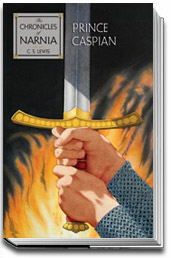
But the movie, yes the movie.  Here is the link to the Harper Prince Caspian website, with their nice motto, “Read itprince caspian cover.jpg before you see it.”  Nice trivia games and other good stuff, including trailers for the film and such.  Spread the word.  Read the books, or books about the books.

Here, if you haven’t seen it, is yet another cover;  we have several editions, trade paper size, or rack (smaller, trim) sized ones, some with full color art, colorized work of Bayles, some with the original old black and white drawings, some older covers, and these new vivid ones, done in watercolor.  Happily, no one has messed with the text.  

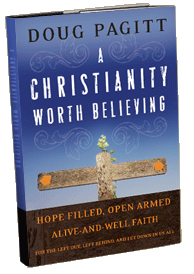
Brand new Doug Pagitt: A Christianity Worth Believing

Doug Pagitt.jpgHey, with all my connections (yeah, right) in the big publishing world (ha) do you think I could score an advanced copy of Doug Pagitt’s forthcoming book?  I’ve been his pal on Facebook, not to mention in real life, joined up with his promo team, and asked the officials at his otherwise friendly publisher.  But nooooooooooooooo, as Belushi used to say.  No dice.  So it is now released, just came today and I’m not hip like the other hipster reviewers with a leg up.

Maybe it’s bad karma because I harbor a secret dislike for the title, a dislike that is secret no more.  What?  Real, orthodox, ordinary, historic, decent faith, like the kind of my mother and father, ain’t believable?  Maybe Dougie doesn’t know the right people, solid and good and utterly orthodox in belief and lifestyle.

Okay.  Got that off my chest.  I probably wouldn’t have had time to read an advanced copy anyway, and I’m really not that peeved by the title, just wary of an implied jab, which I suppose it may be, of old school faith. Nevertheless, I am very excited it is here, and, provocative title or no, it is gonna be a late night.  I can’t wait to start reading this thing, eager to ponder and dream and hope and probably be convinced that the title is just fine.   I hear it is a bit autobiographical, too, and I love a good testimony.

Anyway, any book with such a great subtitle has to be taken seriously; listen to this: A Christianity Worth
christianity worth believing.gif Believing is Hope-filled, Open-Armed, Alive-and-Well Faith For the Left Out, Left Behind, and Let Down in Us All.  So there ya go,  the new book by one of the leading voices of the open-ended emergent conversation about the nature of faith in our time, pastor of Solomon’s Porch, author of Church Re-Imagined and Preaching Re-Imagined, and an odd little prayer book called Body Prayer (yep, check that out if the sacred-secular dualism weirds you out or if you’ve heard that God somehow dislikes our bodies.)  CWB is for anybody who feels left and or let down.  Excellent.

I like Doug as lot.  He has a little reputation for being a bit of a loose canon, maybe even with a big mouth, albeit one that laughs a lot.  So?  As my friend Vince used to say, “It takes an agitator to get the cloths clean.”  I’ve always found Doug to be a caring gentleman, a fun speaker, an engaged spiritual leader, winsome and sincere. I have no idea what he will say here, but I suspect he’s going to be saying things that need saying; as a pastor of an informal church that invites the mixed up to feel safe and a part of the community, I suspect that the theology he’s doing here will be contextualized to the hurting and disaffected, the needy and, well, left out.  He will say it in creative ways, relish in the calling to make us think, and I am confident he will interact with Scripture.  Maybe he will overstate some things, or understate some things, I don’t know.  I just hope folks give him a chance and that those fearful of this edge of the Body of Christ don’t overstate their critique.  He’s an honest brother, hanging out in the Kingdom of God, offering what Phyllis Tickle says is “emergence Christianity at its clearest and best.” 

Check out Pagitt’s own description of this, his most ambitious book yet, here.  It is a very, very nice introduction to the project, how and why he came to write it, and his awareness of the complexities of it all.  (Just don’t click on the silly corporate links at the end, but come on back here, please.)

So, come on, join me and many others this week in finding time to read this must-read book, to think, pray, ponder, and, if the Spirit uses it to work a change in your heart, you will be that much more passionate and alive, reaching those who perhaps haven’t yet seen a Christianity Worth Believing.  Or for whatever reason have grown sour on faith as they used to know it.   Maybe you’ll give a copy or two away to somebody who needs just this approach.  May God be pleased to use it well.  I am sure nothing would make Doug happier.

A Christianity Worth Believing: Hope-Filled, Open-Armed, Alive-and-Well Faith for the Left Out, Left Behind, and Let Down in All of Us
  Doug Pagitt (Jossey Bass) $21.95

BLOG SPECIAL
A Christianity Worth Believing
25% off
ORDER HERE
Hearts & Minds 234 East Main Street  Dallastown, PA  17313     717.246.3333

David Wells, J. Philip Newell, the Heidelberg Catechism, and Jesus Brand Spirituality

We sold books for several days last week with a great gang of friends, pastors of the Penn SE Conference of the United Church of Christ and I promised them this shout-out.  They are a caring group, kind to me, and fun to be with.  They buy a wide variety of books and although obviously deeply rooted in the ecumenical and mainline denominational context, it is always interesting, even a bit surprising, to see what sells.  The very first customer asked about the brand new release by Gordon-Conwell scholar David Wells, The Courage to be Protestant: Truth-Lovers, Marketers, and Emergents in a Postmodern World (Eerdmans; $25) which looks to be a readable finalization of his remarkable, thorough, serious and culturally-conservative series that began with No Place for Truth and moved to the stunning God in the Wasteland then Losing Our Virtue and concluded—or so we thought—with Above All Earthly Pow’rs, his important, if somber, socio-theological critique of postmodernity’s influence on Christian thinking and living.

The second person, as I recall, bought the new Joyce Rupp book on prayer; the mystical Catholic nun was their speaker last year. It is simply called Prayer and is part of a new series published by Orbis ($10.)  Everywhere we go, you should know, we sell books about spiritual formation, monastic practices, Sabbath and contemplative prayer. 

 Several folks got the brand new J. Philip Newell Christ of the Celts: The Healing of Creation (Jossey-Bass; $19.95.)  We here at BookNotes, of course, love much of celtic spirituality–thank God for it’s affirmation of creation and the cosmic scope of redemption— and read Newell’s stuff joyfully.  I fret about his harsh critique of traditional views of the cross, though, and his quirky appreciation of Palagius, although plead ignorance on the veracity of his perspective.  Some of my UCC pals my senior know much about this and I am glad for good conversations.

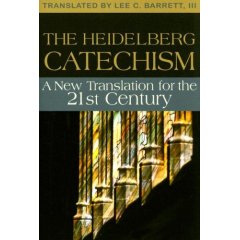
The biggest seller was a newly translated edition of the old Heidelberg Catechism, freshly
Heidleburg Catechism.jpg rendered by Lancaster Seminary theologian and all around genius, Lee Barrett III.  Lee has written a very useful introduction, a long chapter explaining why even modern mainline churches ought to pay attention to the role of catechisms and confessional traditions.  It is fine stuff, thoughtful and solid, and, while I’m no linguist, it is said that this is a vast improvement upon the older translations, which were based on odd German editions.   Thanks to the UCCs and their Pilgrim Press for releasing this little gem…

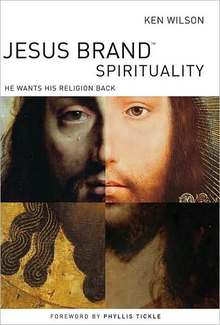
One of the books I announced to them, that had just arrived here that very day, is a book that I’ve long awaited.  My good friend and Nelson sales rep assured me it would be one I’d appreciate.  Wordsmith, publishing whiz and spiritual genius herself, Phyllis Tickle, wrote an absolutely stunning introduction, noting that the sheer beauty of the core of this book—Jesus Himself—moved her to tears.  When it finally arrived, all I could do was hold it up, babble about it and read them a quote from the back about a guy who left the Christian faith, but wondered, after having read the book, if he would have left the church if his pastor sounded anything like this.

jesus brand spirituality.jpgI refer to the fabulous and generous new book by Ken Wilson, entitled Jesus Brand Spirituality (Nelson; $19.99)  I was sure these mostly liberal UCC leaders would resonate with the way in which this charismatic (from the Ann Arbor Vineyard) pastor sounded out a deep fidelity to Christ and the complexities of the best of the Christian tradition, and within various sorts of Christian churches, while distancing himself from fundamentalism, the religious right, and all kinds of simplistic or sloganeering religiousity. I read them the first sentence, where Wilson declares, “Jesus wants His religion back” and told them his open-minded thoughtfulness reminded me of the sorts of ministries I gather they are about.

The book, happily, is not just another (nowadays fairly common) critique of the shallowness of evangelical certitudes or the meanness of some of the religious right or yet another call to be open and in conversation as we emerge into new ideas.  It is a thoughtful and deeply engaging and mature study of the ways in which we can approach Jesus, how to make sense of life in light of His ways, about how the best of four streams within Christianity can unite to help create a passionate, faithful and yet grace-filled, life-giving spirituality.  (The four dimensions are, by the way, the  active, the contemplative, the Biblical and the communal.) Wilson himself is very widely read, with great and interesting footnotes (where does a Vineyard pastor buy these kinds of books, commonplace stuff here at H&M but rare in most evangelical stores?)  He is obviously really smart and a clear, inspired writer. He tells good stories, some moving, some understated, gentle.  I can see why Tickle–a woman with a good eye for good words if ever there was one—raved so about it. 

Jesus Brand Spirituality is ideal for any mainline person who wants to make sure their liberal theology doesn’t go off the tracks, who wants to stay close to Jesus and the earliest Biblical truths, even if they are not quite where the more traditionalist conservatives are.  It is equally helpful for anyone committed to historic Christian orthodoxy, but who may sense that the recent cultural conflict, dogmatism, moralism and overlays of the evangelical subculture may have obscured some of the clearest elements of the faith.  And—please don’t miss this–it is also a fabulous read for anyone who is a skeptic or seeker; at times, it seems like it is written precisely for those who just are willing to get “one step closer to knowing.”

 Yes, it is a U2 song title, and Wilson wisely cites it.  This book really is a beautiful invitation.  Join the journey, find out more about our connectedness, to God, one another and, indeed, all created things.  The book is nearly a pilgrimage, to be read and considered as we take new steps toward Christ and into Christ’s Kingdom.  Join this ecumenically-minded evangelical pastor (the only Vineyard pastor to have been had hands laid upon him by a bishop and assistant to Pope John Paul II) who himself has a degree in science and is passionate about how faith and the best contemporary thinking can not only co-exist, but feed each other into deeper and complimentary ways of living out vibrant, authentic and solid Christian spirituality.  No matter where you are on your spiritual journey, or with what denomination or tradition you stand, I am confident this is a book that will challenge, stretch, inspire and bless you.  The excellent discussion questions will be very useful for book clubs and they are obviously created with great sensitivity for the cynic, skeptic or searcher.

As Tickle puts it in the foreword,

The faith we Christians claim has been so dented and chipped and discolored by the centuries, so institutionalized and codified an
d doctrinalized, so written upon and then so overwritten into palimpsest, that there are few Christian who still can discern the contours of the original.  There are fewer still who know, and can persuasively teach, that Christianity was only and always just the container, the wrapping paper being used in shipment through the centuries of time.  It is the Jesus beyond dent or chip or discoloring that is the beauty.

For those that might wonder about the title, Wilson plays with the “brand” language a bit but is aware that it can been seen as a crass capitulation to consumerism (the very stuff David Wells rails against.)  Don’t be put off by it as he isn’t cheesy or crass and it isn’t really a substantial aspect of his thought.

In the beginning, he does write,

I realize that the word brand can be used in a negative sense, as shorthand for the crass attempt to “sell” Jesus in a consumer culture.  But there are two positive senses in which Jesus is a kind of a brand.  First, like a brand-name product, Jesus has a distinct as opposed to a generic identity.  Jesus brand spirituality is not a generic spirituality concerned with processes that can support any number of outcomes.  It’s about forming certain kinds of persons, capable of certain kinds of deeds, creating a certain kind of world: persons, deeds, and a world infused by love, properly understood.

No, this isn’t a feel-good, universalist call to generic spirituality; it is a call to the Biblical Christ and His church and the specific story of His redemptive plan in the world.  This “love, properly understood” is the subject of one whole chapter, and it is very, very good stuff.  There is so much good here, it is hard to describe in a simple post like this.
Here is an interview with him, and a video, too, which is pretty great.   Here is his blog, onestepcloser.

Wilson notes that copyright infringement of brands is commonplace, and it
is the duty of the real brand owner to do exercise proprietary
rights. Throughout church history there have been those who have infringed upon the Jesus way, distorted it for other purposes.  “We can only hope,” Wilson writes, “that Jesus will continue
to challenge every effort to hijack his brand, because he is, and
always will be, the main attraction.”

We are pleased to announce this good new book to you, a book that seems similar, yet a cut above, many that are raising these kinds of questions these days.  We think it is truly useful, and truly enjoyable.  Jesus Brand Spirituality is a beautiful book, and the claim is true: Jesus Wants His Religion Back.  May this book help it be so.

Jesus Brand Spirituality: He Wants His Religion Back  Ken Wilson (Nelson) $19.99

BLOG
 SPECIAL

Jesus Brand Spirituality
$5.00 off
now
$14.99
Order Here

Hearts & Minds 234 East Main Street Dallastown, PA  17313        717.246.3333

Hearts & Minds on the road again: Bookselling with Brian McLaren, Ravi Zacharius, Art Lindsley

brian mclaren.jpg

ravi pic.jpg
Even when it entails surreal all-nighters and renting vehicles for stalwart friends who meet us at 3 am to transfer boxes of books, the demanding work of lugging boxes out to conferences and setting up displays for events remains a thrill—rewarding and usually fun, once the brain-draining prep work is done.  Arranging tables, draping and taping fabric, building shelves and laying out the hundreds (and sometimes thousands) of titles is daunting, but when the customers tell us how pleased they are to find good books—stories of the dearth of thoughtful Christian literature in local bookstores and church libraries abound—it is all worth it.

As you can guess, we enjoy mixing it up, selling books at all kinds of events, and feel like it is right and good to support those groups and ministries that seek us out.  In most cases, we feel so honored to play a small role in the events of folks we’ve come to respect and admire.  For instance, this weekend, we sold books at the Everything Must Change event with Brian McLaren at the Latino Pastoral Action Center in the Bronx, New York.  Raising deep questions about the shifts of perspective needed to address with Biblical fidelity the most urgent issues of the day—poverty, environmental degradation, war—is the focus of this tour, and partnering with this renowned, New York-based, Spirit-filled, politically savvy urban ministry this time was a real treat. (Here is a brief essay about Rev. Ray Rivera and amazing work.)  Thanks to McLaren and the good people at the LPAC, and the Latino emergent cohort there for allowing us to serve them by selling books.  Thanks to my guys Scott, Damen and Bill for manning the display with gusto, talking up Hearts & Minds, and making books available that folk might not otherwise see.

We’ve written here often about the Biblical call to do justice, to be involved in transforming institutions that are broken, about how the imaginations of church folk should be unleashed to forge social innovations; we believe that the Biblical worldview and our best theological traditions call us to this.  We are thrilled that Brian and his Everything Must Change tour team are helping stoke these fires, and we hope you bookmark the EMC interactive website the tour has generated.   If you haven’t picked up Everything Must Change: Jesus, Global Crisis and a Revolution of Hope (Nelson; $21.99) yet, you really should.  It usually sells for $21.99 but we have it here for $20.

At the same time this weekend, Beth and I and some other helpers were selling books at a huge event in Falls Church VA where the C.S. Lewis Institute hosted the internationally renowned apologist and Christian thinker Ravi Zacharius.  (Do check out his website. What a rich and thoughtful resource.)  We’ve sold books for Ravi before and it was a true honor to be with him again.  We provided oodles of his own thoughtful books and many more about apologetics, evangelism, cultural engagement, theology and serious spiritual formation (not to mention quite a bit of Lewis, books about Lewis and all things Narnia.)

In his impeccable style of oration (tinged with that charming Indian accent) Ravi told powerful stories of seekers who’ve come to Christ, skeptics who have become convinced of the truth of the gospel, conversations he is having with persons of various religious views, all over the world.  He told of death threats he gets (from radical Muslim groups mostly) and his compassion and faith in the face of very taxing speaking settings.  It was delightful to hear of his ability to hobnob with the very richest and most powerful and how he is at home, often it seems, with the very poor, with common people from Bangalore to Singapore.  He shared astounding stories of his lectures in the halls of world-class, post-Christian academia (his degree from Cambridge doesn’t hurt) and to congresses and parliaments of developing countries in Africa and Asia.  When the atheist leadership of Albania asked him to make a case for the truth of the Christian worldview for a group of scholars and museum directors, they offered him a special treat—white gloves to handle the gold-painted 4th century parchment of the gospel written by John Chrystostom.  (It was recovered in an archeological dig there in the 900s!)  He opened to the page in Matthew where a woman pours extravagant perfume over Christ and the prophecy is given that her story will be proclaimed far and wide.  Indeed.

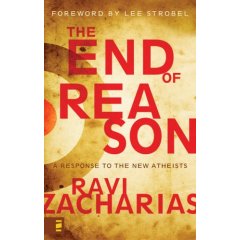
End of Reason.jpgDr. Zacharias’ latest book is a cogent critique of the new atheists, Sam Harris, Richard Dawkins et al., entitled The End of Reason: Responding to the New Atheists (Zondervan; $14.99.)  The theme of his lectures, though, was taken from the subtitle of the recent volume of apologetic essays written by his RZM staff.  That excellent book is called Beyond Opinion (Nelson; $24.94) and the subtitle is this: Living the Faith We Defend. 

Living the faith we defend.  In an age of increasing secularization and anti-Christian sentiment among the intellectual elites, we must know how to present the truth of the gospel in ways that are clear, compelling, and consistent with Biblical revelation.  But, yes, yes, dear gentleman Ravi begged us, we must live it.  The truths we teach in public must be true in our private lives as well.  As he eloquently writes in his recent book The Grand Weaver (Zondervan; $18.99), God is at work weaving a coherent and deep purpose in our lives, and although we must learn to be articulate in our faith, we must first learn to see God’s own hand shaping us, molding and maturing us.  Our evangelism must be rooted in good doctrine and sophisticated understanding but it even more must be lived in community with authenticity and integrity.

 I know Ravi and Brian would not see eye to eye on every matter of doctrine and it seems they have very different understandings of the complex blessings and curses of postmodernity.  They stand together, though, I am sure, in holding up the message of Christ’s cross as an entry into the Kingdom of grace where true life and lasting social change can be found.  Our books, we hope, helped both of their events carry forth their unique take on Christian ministry.  It was a privilege to serve them both.

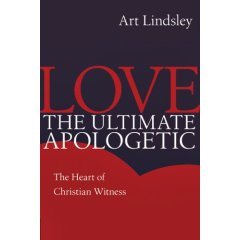
Love, Ultimate Apologetic.jpgOh, by the way.  I will tell you more later, but one book we took to both events is the brand spanking new work by Hearts & Minds friend and CSLI resident scholar, Art Lindsley, a book that uses the great Francis Schaeffer line that love is the ”
final apologetic.”   Although Art’s approach is clearly more aligned with the rigorous and conservative Dr. Z, and perhaps suspicious of any movement that shifts away from historic orthodoxy on core doctrinal matters, his basic premise is one that is consistent with the best impulses of nearly every Christian reform movement, left, right or center, namely, that our deepest call to faith and repentance must be spoken in love.  “By this all will know”¦” Jesus said.  After two important InterVarsity Press books on apologetics, True Truth ($15) and C.S. Lewis’ Case for Christ ($16), Lindsley’s new book underscores the theme raised in slightly different accents by both speakers this weekend, Brian and Ravi:  we must live out the faith we defend, and we do that in love.

I will write more soon about the unique insights of this very thought-provoking, substantive book—not only are there few books on love,  there are none that I know of that does what this one does.  For now, know that we premiered it at both events this weekend, and we have it here in stock at the shop.  Love: The Ultimate Apologetic, The Heart of Christian Witness  (IVP) $15.

The Psalms of Lament, and other emotions

One of the events we do each year, setting up a large display of books, is the conference of the Eastern region of APCE (Association of Presbyterian Church Educators.)  Your denomination, if you have one, probably has a similar  professional association for encouragement, training and networking of educators.  If your faith tradition has church educators—heck, even if you have Sunday school teachers—you should befriend them.  Judging from our experiences, and certainly at EAPCE each year, these are stellar folks, creative, caring, forward-thinking, working (hard, at too little pay) to make things happen in the churches.  From training nursery care-givers to recruiting Sunday school teachers, from doing small group training to organizing service-learning and short-term mission trips, educators are truly “in the trenches.”  They buy books for their own spiritual formation and tons of kids books.  We spent about 10 hours setting up a large display full of stuff on everything from programming for special needs kids to spiritual formation of teenagers, from intergenerational curriculum to picture books about cultural diversity and God’s love for all the peoples of the Earth.  These last few days were exhilarating as we talked about the most artful illustrations in children’s Bibles to the theology of suffering in the Psalms.

The main speaker was Dr. Beth Tanner who teaches Old Testament at New Brunswick seminary andPsalms for Today.jpg has been working hard with some other women Hebrew scholars on the forthcoming Psalm’s volume in the prestigious NICOT commentary series for Eerdmans.  It will be a while yet, but she does have a delightful, new, introductory-level book, The Psalms for Today (Westminister/John Knox; $14.95.)  Very useful for small group study or adult classes. 

There were good and serious conversations about the Psalms of lament.  Many of these dear educators had pretty weird stories of people in the church who were not permitted to share grief or express anguish about God’s seeming lack of care.  My goodness, a third of the Psalms have lament and rage and I sort of thought our churches had gotten over this overblown sense of propriety and fake faith;  to shame those who express doubt or pain is just wrong.

Walter Brueggemann wrote a classic reflection on the Psalms years ago, The Message of the Psalms: A Theological Commentary (Augsburg; $18),  one that Tanner drew upon and which reminds us that there is a shape to the Psalter:  there are Psalms of orientation, Psalms of disorientation, and then, mostly after exile, Psalms of re-orientation.  This “good–bad–better” flow naturally reminds us of the bigger theme of the entire Bible, the schema of the Story, “creation-fall-redemption.”  That the Psalms can take us through these realities, give voice to these emotions, frame our experience in faithful and true ways is a great benefit of spending much time in the book of Psalms. The publisher Wipf & Stock recently re-issued Walt’s smaller book Praying the Psalms, too ($14.)  Very nice.

I got back from APCE late last night, thinking about the Psalms of lament, the church’s occasional failure to be a safe space of honest conversation and authentic sharing.  Today, I heard a first hand story of a very unpleasant episode where a fella unloaded a host a Bible verses on a very hurting guy, offering discouragement and what seemed like judgment on this guy—a combat vet—who had shared his pain and frustrations.  None of the verses this guy cited included the lament Psalms.  So, it looks like we do need to remind God’s people of the Psalms of lament, the ways in which God invites (through these holy poems) us to share our deepest stuff.  It sort of reminds me of Bill Hybel’s recent book title Holy Discontent. 

For someone new to this notion, I have noted here before Michael Card’s  A Sacred Sorrow: Reaching Out to God in The Lost Language of Lament (NavPress; $13.99)and his The Hidden Face of God: Finding the Missing Door to the Father Through Lament (NavPress; $12.99.)  Both are fabulous examples of how lament is not only permitted in the Bible, but a way in which we can come to know the deep care of a God who can take our cries of anguish. Highly recommended!  Here is a review of the CD that Card did to give voice to his own sorrow, sort of a soundtrack for the book.  Let us know if you want us to ship you one.

The Cry of the Soul by Dan Allender & Tremper Longman (NavPress; $14) is another amazing book, co-authored by a psychologist and an Old Testament scholar.  The subtitle reads “How Our Emotions Reveal Our Deepest Questions About God” and it a study of the various emotions of the Bible.  There are chapters on “righteous anger” and “redemptive despair” and ” constructive fear” (even as they are contrasted with in appropriate versions of these emotional state. I’ve read everything these two guys have written together and it is all good.

Sally Brown and Patrick Miller compiled an extraordinary volume on the laments of the Palms and how to used them in preaching and counseling and in daily life,  simply called Lament: Reclaiming Practices in Pulpit, Pew & Public Square  (Westminster/John Knox; $24.)  A bit academic, rooted in the most thoughtful scholarship and long involvement in mainline church ministry.

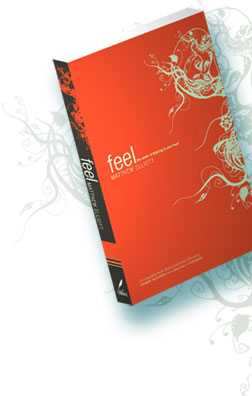
feel.jpgSpeaking of emotions, we just got the new book by Matthew Elliott called Feel: The Power of Listening to Your Heart (Tyndale; $13.99)  Some reviewers have called it “the definitive book on the proper God-given place for emotions in our lives.”  This really looks good—Elliott has a PhD in New Testament from Aberdeen and works in publishing in the developing world.  (You can visit his website here.)

I didn’t get to share these titles with my APCE friends, although Dr. Tanner drove them to the Psalms.  If we all remain rooted in the practices of reading, studying, teaching, praying and singing the Psalter, I am sure we will deepen in our emotional lives, find hope and courage in hard times.  And we will “see” life in light of these grand themes of orientation/disorientation/re-orientation. 

New books on spiritual formation: Eldridge, Benson, Foster and more…

I just finished an oddly fascinating book, John Eldridge’s Walking With God (Nelson; $22.95) a book which was not exceptionally well written nor a sustained example of good teaching.  Still, I wanted to weigh in, suggesting it to interested readers for a variety of good reasons.  For those who haven’t heard of popular evangelical superstar John Eldridge, you should know that he wrote two fine early books, The Sacred Romance and The Journey of Desire (recently reissued as Desire: The Journey We Must Take to Find the Life God Offers) that I really liked.  They were passionate and spiritual, full of purpose and meaning and joy.  These notions were well captured in a later book which was good, too: Waking the Dead: The Glory of a Heart Fully Alive.  Like several other vibrant evangelical authors, Eldridge is convinced that many of us missing our dreams, afraid to honor the desires of our hearts, and are sleep walking through a routine life and routine faith.

He took a wrong turn (in my estimation, a view that seems to be more accepted than when I first voiced it, but is still the minority report) with the famous, mega-seller Wild at Heart.  I disdained the book for many good reasons and still get good feedback from the long and feisty review I did several years ago. (You can read it here.)  Although I tried to affirm some of the insights in the book, and admitted it resonates with many,  it was still the most critical review I’ve ever done.  Mr. Eldridge’s mix of bad theology, psycho-spirituality and macho gender assumptions combined for an odd and dangerous book; I didn’t even touch the one he and his wife did for women, Captivating.  Ugh.  When he did, though, a fabulously fun, brief book about the Bible’s unfolding narrative, and our privilege to be passionately involved in God’s epic plan to rescue the planet–Epic, it was called, and you can buy or rent the DVD talks, that are great—I cheered.  I’m not at all against the man, despite his truly unbiblical view of gender, and the strong rebuke I wrote in that review.  You can visit his interesting website for tons of stuff here.

Walking With God (with the subtitle that tells you, in a phrase or two, the strengths and weakness of this book, Talk to Him, Hear From Him, Really) is his new one, a book that is essentially a journal Eldridge kept over a year, with plenty of insistences that readers pay attention to the way God speaks to us. 

Like I said, I don’t think this is brilliant.  There are a few sections that seem overblown, and I feel badly that a guy with such obvious talent and passion for the things of God is bogged down with inner hurts, past issues, self-doubt, and needlessly high expectations for transcendent moments.  He’s got such a craving for some large sense of joy, nearly a fetish for joy.  He is striving so hard—and teaches that that is normative—to fight for joy.  I got tired and filled with self-doubt just reading about his singular Quest for God’s Voice. I, like Eldridge, like most of us, have baggage—issues, fears, hurts, sin, and I don’t think I take any of it lightly. I, too,  am grieved by my own sin and long to know the comfort of a loving Abba.   Still, his daily inner conversations (if this journal is typical, which I have no reason to think it isn’t) are some days exhausting.

I am not so sure everyone is as deeply hurt as Eldridge assumes, although (as I have written not long ago in a blog post about the Psalms of lament) it is obvious we all have hurts and anguish, and need not fear sharing our hurts and troubles and doubts.  I appreciate Eldridge’s call to be real, to be more self-aware, to live with daily faith, to sense God’s Spirit throughout the day and I found some of his entires about how God wants to touch us in very deep places to be very moving.   I think he frets a bit too much, and yet his intensity doesn’t seem to have the depth that such a book would demand.  Still, it is instructive to see how he yearns for healing.

I also believe that we can learn to sense and follow the promptings of the Spirit. And I believe this sometimes happens through signs and wonders.  Yet, when he says God gives him “words” or mysterious phrases it made me wonder why God is so inarticulate, mono-syllabic, in his revelations to Mr. E.  These “words” of revelation are not the way God has typically communicated in the past, and Eldridge’s unquestioning assumption that these are, in fact, from God, struck me as both a bit weird and a bit prideful.  (Couldn’t he have at least cited something of the Pauline literature on “words of knowledge”, told of some church service where such was appropriately manifested, or drawn on the work of, oh, say, Jonathan Edwards whose meaty and wise Religious Affections guides us in these precise matters.  Surely, if he is commending this practice of listing for cryptic words to ponder, he should explain where this is shown in Scripture as a way of God’s revealing things to us, and, further, some guidance about how to discern which are the words from the Spirit and which are just stuff spilling freely from our overactive imaginations or subconsciences.  He doesn’t really explain this much, just tells us how God wants to give us these phrases from time to time.  Unlocking their meaning becomes a major part of his spirituality. 

I have experienced a bit of this first hand so do not mock him, as some might.  Still, as naturally as John tells of it, sharing this or that phrase, and how it has blessed him to discern its appropriate meaning, I am a bit skeptical.  How, really, does he “hear” this voice speaking?  (The words he gets are, interestingly, predictable.  For instance, he gets “intimacy” but not “fair trade.”  God wants him to ponder His “love” but doesn’t say much (that he reports, at least) about “racism.”  Why is this?  And, why doesn’t it occur to him?  As he sometimes says, Geez Louise.

In my diatribe against the macho madness in Wild at Heart, I affirmed his reflections on spiritual warfare, wanting to honor him where I could, and aware that he was at least offering some insight about this controversial and complicated arena.  In Walking With God he is deeper into resisting the work of Satan’s agents, and some of his stories are compelling.  Many of his ruminations, and teachings, though, are nearly off the chart weird, more psychobabble than theology, with little or no serious exegesis.  He is obsessed with past “agreements”, as he calls them, pacts we make (unknowingly, with slips of the tongue and subsequent formation of heart-deep attitudes) with the demonic.  You know, we “agree” with the accusation “you’ll never amount to anything” and thereby are bound–psychologically, and spiritually, perhaps eternally, held back by bad self-image and evil spirits, smelly guys that he sometimes senses as a foreboding and menacing presence in his home. I found myself riveted, but wishing for more, well, balance and insight.  Cliches, I know, but there you have it; his reminders to work on this stuff just didn’t get very deep, despite the drama.

As is often the case with bad doctrine and incoherent worldviews, a legitimate insight becomes absolutized and consequentially distorted.  At times, his call to break with past ways works as a metaphor, but his insistence on this literal spooky narrative of the devil binding us seemed to (at times) trivialize the very real possibility of the need for rites of deliverance.  Sometimes, he is offering interest
ing insight (he notes something spiritually awry when a son brings some artifact into the house that had very pagan connections) and other times he seems to say how the demonic works, without much reliable explanation.  The casual flavor of his teaching, coupled with his earnest yearnings and constant reference to the heart, his heart, your heart, God’s heart, makes this friendly, touching, but dangerous.  Just because he’s sincere, and telling stories, doesn’t mean he’s well-grounded in Biblical teaching or the history of the church’s best thinkers on this stuff.  Maybe he is, but it doesn’t come across in this casual, instructional memoir.

I am not at all opposed to honest memoir and at times Eldridge’s year’s worth of reflections really works—his longing for friends, his severe grief over the loss of a beloved family dog, his desire to pray with his sons, his recovery from a riding accident, which necessarily slows down his active outdoorsy lifestyle.  Interestingly, the book seems to work best when it is not at its most intentionally passionate or instructional; the heavy dramatic portions most often seemed precious.  At times, I wanted to give him a bit of his own macho medicine and tell him to just buck up and quite blubbering. 

Still, I couldn’t put this book down, which says something about the strength of the writing, the narrative, the story, the insight or the four-season structure of the book.  I wondered what God was doing in his life, or at least what Eldridge thought God was doing, and was astounded at his vulnerability in sharing his journey with such honesty.  Who doesn’t want a life of walking dearly and daily with God?  For those with time and inclination—especially if you don’t have a real community that talks like this, or a regular spiritual director or soulfriend—it is worth the investment to buy books as companions on the journey, even as conversation partners that you might not fully agree with, and this one could be useful and enjoyable.  Walking With God (which has a website, too, with more stories and continued teaching about various subjects he raises in the book) helps remind us to pray persistently, to be attentive to God’s active involvement in our lives, to resist the banal and secularizing forces of contemporary life that marginalize and silence our active, speaking, loving, God.  Right or wrong about some details, quirky or not in his own expressions of his unique brokenness, fully brilliant in his proposals for finding hope and healing or not, exceptionally graceful in his creative writing or not,  Eldridge is a guy who has bravely laid it out there for us, a year in his Colorado life, a memoir of seeking God’s voice and guidance.  We suggest it to you, to be read with discernment, and expectation.  Maybe like him, you, too–I, too–will be more able to hear the still small voice of God, day by day, and live out a more daring discipleship in the year ahead.

* * *

A more wise and much better written volume in this quest to hear God’s voice is the remarkable (and in some ways surprising) new book by Leighton Ford.  As a lifelong colleague of Billy Graham, I have assumed Dr. Ford’s many books to be fine but non-essential; good workman-like stuff on evangelism, missions, basic Christian growth. 

The Attentive Life: Discerning God’s Presence in All Things (IVP; $18.00) is an extraordinary book about fixed hour prayers, a practice that I do not feel at all drawn to.  It is a prayer tradition–“praying the daily office” or “praying the divine office”—that many are writing about these days, and many of the books about it are truly inspiring.  Ford shares Eldridge’s bold claim that God is still speaking but tells the tale of learning to discern God’s voice with less bathos and in truly beautiful prose.  Perhaps he is from a different generation (in his retirement years, he is older than the youngish boomer Eldridge) so is less inclined to spill his guts (as we ungraciously put it) or perhaps he just isn’t as needy and broken as Mr. Eldridge.  Still, he writes as the elder evangelical statesman he is, graciously and wisely telling how he has shifted from a public ministry of evangelism (“making new friends for God” as he puts it) to a ministry of spiritual direction and reflecting on his inner journey.   He deeply hungers not just to serve God but to know God, and in the pace of life, the daily grind, he yearns, like Eldridge, to be more spiritually alive.  The Attentive Life chronicles this new desire to “be attentive” and more deeply nurture a viable set of practices that facilitate such spiritual intimacy with God.

Mr. Eldridge’s memoir tells of his long quiet times, his journaling, his struggle with simple phrases the Spirit seems to lay on him.  It is earnest, individualist, and typically evangelical with no apparent connection to the wider body of Christ or the insights of church history.  Ford, in contrast, has submitted himself to this new (for him) discipline of fixed hour prayer, of joining others all over the world who have, for centuries, bowed in prayer at certain times during the day.  These set practices, regular prayer, using historic prayers from a standard prayer book, set the stage for a mature discernment of the very things for which Mr. E searching.  As Ford’s good subtitle puts it, Discerning God’s Presence in All Things.  Here is the IVP website that includes Q & A with Ford, a video clip and book excerpts.  Nice!

Let me be candid.  I have no intention of starting the fixed hour prayer custom; I don’t care that many find it helpful.  (Many find other things helpful, too, like street preaching and drinking prune juice, but I’m not drawn to those customs, either.)  Nonetheless, I found great, great solace in these pages, and great if quiet joy in his journey.  That mainstream evangelicals like Ford are quoting Thomas Merton (for instance) and helping others to take seriously what the monks and mystics know is just so exciting.  Whether one is drawn to the actual habits of using the classic prayers or not, the creation of rituals and solitude, even daily, is very important, and Ford draws us to this very nicely.  Thanks to InterVarsity Press for their “Formatio“ line of books, of which this book is a part, books that are well written and designed lovingly, to enhance our spiritual lives in contemplative and prayerful ways.

 Here is what the IVP website says:

 Formatio is a line of spiritual formation books written by men and women steeped in the traditions of the church and designed to lead you on a journey of transformation that ends in the life-giving presence of God.

Attentive To God is a perfect example of the kinds of things the Formatio line is about.  We highly recommend it.  Here is a videotaped interview with Dr. Ford where he delightfully explains his writing of the book. 

* * *

Fixed hour prayer is explained even more elegantly in a new book by the very fine writer–one of the best penmen today—the sweet, spiritual, understated, exceptionally clear and always enjoyable Robert Benson.  His new one is called In Constant Prayer (Nelson; $17.99.)  It is easy to read and spectacular.  Really it is.  As I hoped, it would be itself prayerful, gentle, nice.  And, as I hoped, it would be clever and funny and a bit witty.  It was.  It is!

Whether he’s writing about Saint Benedict’s habits for ordinary folk (The Good Life), baseball (The Game), eucharist and learning to love (The Body Broken), vacationing (Home By Anot
her Way
), gardening (Digging In), or compiling his own handsome prayerbook (Veniti), Bob Benson is always interesting, clever, gracious and quietly inspiring.  He is one of those writers who has a “fan base” who will read anything he writes.  Of course, he has written about prayer before, in the well-rendered Between the Dreaming and the Coming True and in the 1999 release, Living Prayer.  Not a bad oeuvre for a guy who spends a lot of time messing around in his backyard.

You can check out excerpts of his books at his own bookshelf, here.

As I noted in the rave blog post announcing this book, you must know that it is the first of a projected 7-set series called “Ancient Practices.”  To be published by Nelson, these will explore various ancient practices (shared by Muslim, Christians, and Jews) which are increasingly being found useful for seekers and pilgrims in our postmodern world.  There will be books on tithing, sabbath keeping, fasting, pilgrimage, sacred meals, and so forth.  More on these in a moment”¦.

* * *

It is a bit inaccurate to say that Mr. Benson’s book, In Constant Prayer, is the first in the series.  It is the first that explains and invites us to one of the particular historic practices, the first specific one of the others to follow.  The actual first in the series, though, is the overview of them all, just out, an introduction and invitation to the series, to the practices, one which, as such, stands as a fine overview.  The very first in the Ancient Practices series, then, is the very, very enjoyable Finding Our Way Again: The Return of the Ancient Practices, authored by Brian McLaren (Nelson; $17.99). He sets the stage, warms us up, as it were, for the rest of the project.  McLaren not only gives a very lovely overview of these practices, but makes a very solid case why they are so urgently needed in these unhinged, epoch-changing, postmodern times–I love this stuff, this cultural analysis and spirituality.  With his cultural expertise, his pastoral experience, his openhearted and increasingly ecumenical involvements, Brian McLaren is the perfect author to make this case, to offer the invitation, to explain the importance and relevance of  this life-giving way of life;  this book does it wonderfully.  A life shaped by engaging in ancient-future practices like these makes perfect sense as he weaves the story.  Reading Finding Our Way Again made me want to live differently, take small steps, be more intentional about ways to make this whole spiritual journey work, and it did not overwhelm.

Half a year from now I will surely name Finding Our Way Again as one of my favorite books of the year.  Although not disconnected from Brian’s unofficial eldership in the emergent village or his role as a major voice in that evolving conversation, this new book is a step away from controversies about epistemology, post-modernism and theology or (as with Everything Must Change) global politics.  Brian does hang out with a very wide variety of folks—Christians and otherwise—and dialogues with everyone from secular environmentalists to conservative CBA authors.  His wide interests and ecumenical spirit come through clearly in this generous book but it is not a call to activism, not a call for new kinds of Christianity, nor a call to “think globally/act locally” as are his other recent (important) works.  This is a gentle, spiritual guidebook to thinking about what practices might best facilitate true spiritual growth.  As a pastor and fellow-seeker, Brian is a capable of such teaching and is kind.  As an evangelist (he’s written two books on apologetics and one on evangelism) he cares about unchurched folks coming to know Christ, and this offer to be formed by ancient ways could be useful for those who are seeking faith.  The tone is conversational, light, inviting.  The idea of the project itself, which will not be completed until 2010, is weighty.  Some of the writers (Scot McKnight, Dan Allander, Phyllis Tickle) are themselves weighty scholars and mature writers.  McLaren’s introduction to it all is done with a perfect touch, conjuring up both the significance of this stuff, and offering a light invite to take it in as a glad experiment in faith. 

Visiting the tradition of the daily office–praying seven times a day as Psalm 119 instructs—is, as mentioned, the first one to follow Brian’s introduction, and was written by Robert Benson.  Benson has a great little glossary in In Constant Prayer about such stuff (what is a breviary, what is the Divine Office, where do words like lauds or compline or vespers come from?) and tells truly lovely stories about saints, ordinary folk like Bettie, who pray a lot.  I personally enjoyed his description of different kinds of prayer books and his joy in finding various ones; his little names for them made me chuckle.  Mostly, though, he unfolds the reasons and mysteries of this kind of regular prayer, and how it has effected his pretty ordinary life. His own foibles, his funny stories about his own less than stellar success, and his conviction that it all matters made for a truly great read.  It is inviting and hopeful, even as I say, again, that it is not my custom, although he did make it sound pretty righteous, pretty cool.  It may not be your custom or intention, but reading about it sure can’t hurt, can it?  And it will surely be a fabulous reading experience, perhaps even if you are not Episcopalian.

Other books have been released in recent years on this topic, some from authors who are themselves from faith traditions that do not carry out this practice.  Arthur Paul Boers, for instance, is a Mennonite pastor and very good author (you should know his spectacular book about going on a hiking pilgrimage along the Spanish El Camino de Santiago, called The Way is Made by Walking.)  A few years ago, he–urban pastor, peace activist, Anabaptist theologian–took up the fixed hour prayer practice, and wrote a small book about at least a part of this, called The Rhythm of God’s Grace: Uncovering Morning and Evening Hours of Prayer (Paraclete Press, $15.95.)  Scot McKnight did a book last year, also with Paraclete, called Praying With the Church (not, notably, praying in church) with the great subtitle, Following Jesus Daily, Hourly, Today ($15.95.) Most significantly, Phyllis Tickle made a truly historic contribution, in an extraordinary publishing event, with her seasonal three-volume Liturgy of the Hours, then a pocket-sized abbreviated one, and a beautiful edition called The Night Offices: Prayers from Sunset to Sunrise.  We are fond of the Northumbria Community prayerbook called Celtic Daily Prayer, and there are so many more…

* * *

Catholic monks have long been maligned—by me, especially–for being simply unbiblical in their escape from the world; I have written else where that we ought not so greatly esteem the Desert Fathers and any others who fail to be leaven in the world by irresponsibly eschewing ordinary life and social obligations.  Although that may be a bit harsh as an over-reaction, it is an impulse of my Reformed tradition that I think is correct.  Still, some of those who have spent the longest time in ancient prayer practices have been the very ones to most clearly remind us of God’s presence in the ordinariness of mundane life.  (And, in cases like Merton, say, have energized a faith-based and spiritually-driven historic movement for peace and justice; where would Dan Berrigan be if not for Merton?  Dorothy Day without her Pittsburgh retreat house and spiritu
al director?)  Which brings me to the new book by Sister Macrina Wiederkehr, whose sweet book Tree Full of Angles has helped many of us “see the holy in the ordinary.”  Yes!  Now, guess what?  Her beautiful new release is a small hardback with a beautiful cover, winsomely entitled Seven Sacred Pauses: Living Mindfully Through the Hours of the Day (Ave Maria; $18.95.)  Again, we are seeing many of our best spiritual writers, in the longing to know God deeply and attend to God’s presence in the ordinary hardships and joy or real life, drawing upon the practices that have sustained many before us.  Wiederkehr has thrilled many with her past books, including a co-authored one with Joyce Rupp (whose new book, by the way, is simply called Prayer.)  From all this comes a sacramental view of reality, a worldview shaping set of experiences that cannot help but be fruitful as we learn to live in all things before God, and for God. 

* * *

As I’ve implied by this observation against the near Gnostic, anti-cultural approach of many monastics, not all spiritualities yield care about and fidelity in the complexities of life in the real world.  Some contemplative habits and monastic disciplines (and charismatic excesses and fundamentalist dispensationalism, too) fail to facilitate a fully human, incarnational, spirituality.  Some encourage either pious narcissism or apocalyptic resignation.  Some are so mystically focused on God alone that they miss the beauties and duties of living in a real creation.  We need not embrace the panenthism of Matthew Fox, say, to glory in and expect to find God in our daily vocations as earth-dwellers, culture-formers, history-makers.  That is, true spirituality should make us more human and alive, not less so; our union with Christ heals the very image of God within as we are restated to our task to rule with Him over all things earthly.

Brokenness and Blessing: Toward a Biblical Spirituality by Frances M. Young (Baker; $16.99) is a book which does encourage fruitful human witness in this world of wonders.  It is not disengaged, but engaged, not romantic but real.  As Marva Dawn puts it on the back cover, “”¦Young’s profound insights draw us into the kind of biblical spirituality needed for this century–a spirituality of discovering our limitations, wrestling, following, imitating, emptying, and longing”¦.”

Young, a Methodist minister and theology professor in England (with a Ph.D. from Cambridge) works this magic–authentic spiritual formation and judicious cultural engagement—by placing our inner journey within “the overarching story of the Scriptures, read as a unity.”  This is an urgent project and Ms Young does it with not only wise Scriptural exegesis, but with a close and inspiring medley of images, stories, autobiography.  This is a book that is serious and rewarding!

I would be remiss, in this celebration of recent books on  solid spirituality, not to mention one of last year’s favorites, one of the books I named as a “best of” in last years end of the season award lists.  I refer to the very important overview of the history of spirituality, and a call to new ways to engage the best practices of the best spiritualities in our contemporary culture written by the late, great Robert Webber.  It was called The Divine Embrace: Recovering the Passionate Spiritual Life (Baker; $16.99 )and offers a non-dualistic, culture-transforming, fully ecumenical, historically-rooted and creatively contemporary call to live out of God’s love as well as anything I know.  That, too, is a serious work, but it is the sort of meaty spirituality we need if we are going to get further than the self-absorbed, very sincere, and very shallow efforts of some of the best of our CBA evangelical superstars.

* * *

No contemporary author has done as much to introduce modern readers, especially Protestants, to the classic contemplative traditions and the best historic spiritual masters as Richard J. Foster, who has just graced us with a brand new book, Life With God: Reading the Bible for Spiritual Transformation (Harper; $24.95.).  We love his Renovare small group resources and testify that his guidance—writing and speaking—in these areas is reliable and healthy and very, very usable.  His Celebration of Discipline and Prayer: Finding the Heart’s True Home are true classics, among the most important books of our time.  His Streams of Living Water (now in paperback) is a personal favorite, offering the best thinking and insights of various aspects of the Body of Christ to help us mature into a fully developed, balanced and faithful spirituality.  In an era that is only getting more hectic, busy, and, frankly, more worldly, his books Freedom of Simplicity and The Challenge of the Disciplined Life: Christian Reflections on Money, Sex, and Power are under appreciated and under-used resources.  Such books are lifelines of Biblical sanity leading us to inner depth and public courage, showing the way to fidelity and shalom.  We cannot recommend them enough!

Colleagues and friends such as Eugene Peterson, Dallas Willard, and Walt Brueggemann helped Foster in his large project of last decade, the creation of a devotional/study edition of the NRSV Bible, The Renovare Spiritual Formation  Bible (Harper; $39.95) whose notes are specifically about spiritual formation.  Again, it hasn’t sold nearly as well as I would have expected, and think it is a truly under-appreciated treasure.  Check it out if you haven’t, please.  I would think that it was his work with this sophisticated Bible project that gave rise to Richard’s most recent writing emphasis—Biblical study.  (This is not new for him, of course, and he has in every book insisted that the best and most faithful and most enduring spiritual practices must be Biblical in nature.)

Life With God (Harper; $24.95) is the first new Foster book in over a decade.  It has been endorsed, of course, by leaders from across the church—J.I. Packer, Lauren Winner, Will Willimon, David Neff etc.  In it, he deftly works, this time more intensely, with the interplay of spirituality and Bible reading.

As with most of Foster’s books, this one offers plain teaching, much Bible study, stories of ancient saints and quotes from spiritual classics.  He doesn’t make it difficult with deep dissertation or complex theology, although this is what the Apostle Paul would have surely called “meat.”  Foster does not, though, go out of his way to offer tender stories, clever illustrations, or moving parables.  There is nothing sentimental or schmaltzy here; it is not condescending or manipulative.  I wouldn’t call it inspirational.  It is very helpful, though, and there is a exceedingly helpful chart in the back outlining all kinds of spiritual traditions, practices, outcomes, and such.  This is a solid teacherly book.

Learning to read the Bible, though, in ways that intentionally effect our lives–the spiritual transformation of the subtitle–is surely among the most urgent and deadly serious tasks of our time.  For churches, classes, small groups, youth ministry, and individual Christians, the importance of this cannot be overstated.  Are disciplines required for discipleship?  Of course.  Do we need a more disciplined discipleship?  Need we even answer?  Do we need an orientation to Bible reading that helps us in this?  And how might that differ from more typical approaches to Bible reading? 

Hear Mr. Foster himself:

Regarding the Bible, then, perhaps the most basic questi
on is: shall we try to control the Bible, that is, make it “come out right” or shall we simply seek to release its life into our lives and into our world? Shall we try to tilt it this way or that, or shall we give it complete freedom to tilt us as it will?

Can we surrender freely to the life we see in the Bible, or must we remain in control of that life, only selectively endorsing it so far as we find it proper and safe from our perspective?  Can we trust the living water that flows from Christ through the Bible, open ourselves to it, and open it up into the world the best we can, and then get out of its way?  This is the goal of reading the Bible for spiritual transformation.

About half of this important new book is specifically about how to read the Bible; there may be other better guides to this, but the brilliance of Life With God is the way in which Foster relentlessly and helpfully keeps the text before as a way to God, as a form of prayerful interaction.  Our own encounter with the Sacred Story leads to our own transformation–as is often said, we don’t read for information, but for formation.  After teaching us helpful methods and (more importantly) attitudes about lectio divino–sacred reading—Richard ends the book with vast and practical implications for the spiritual life.  Some of this seems like ground he’s covered before, but yet it has a new ring.  His teaching on freedom, his emphasis on relationships, his insistence on grace, all is solid, mature, clear, Biblical.  How can I write about a new Richard Foster without hype?  If you have read his other work, you know how important he is.  If not, this is a fine introduction to one of the great Christian leaders of our time.  Thank goodness for his mature and helpful work.  May it, as he writes, help us experience a bit of the glorious reality of God’s everlasting loving community.  “We can taste it now” he writes, “by entering the Bible in order to plunge our dry lives into the great river of life with God.  And just as surely as rivers run toward the sea, this vision will sweep us into the practice of life with God, for we will no longer be satisfied to stand on the banks and watch others swim past.”

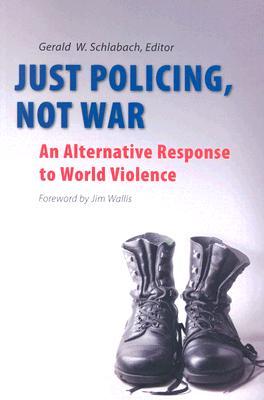
Global Peacemaking: A Brief List

It is a great privilege anytime a customer taps out an inquiry on email or picks up the phone to call in an order.  Best of all, we love seeing folks in the shop, although I’ve grown fond of some of my favorite blogger pals and mail order customers.  We try to keep in homey, but this high-tech stuff has allowed us to serve folks far and wide.

Which is extra cool of course.  Today, for instance, an old acquitence that has started an extraordinary NGO is a very war torn and troubled land asked for some prices on some books about international affairs, peace building, faith-based diplomacy and such.  Knowing he’s a bookman, I figured I could rattle off a couple others that, if not precisely what he needs, will at least remind him that there is a growing body of literature on conflict resolution, peacemaking and creating alternatives to war and violence.  Heaven knows—I know heaven knows—that he needs reminded of this in his land of sorrows.

I thought some of you, too, might like to see this little list.  My descriptions are pretty much off the top of my head, cribbing a bit from back covers. There are more.  After some small talk and answering the questions he asked about, I sent off this list.

Forgiveness in International Politics…An Alternative Road to Peace
William Bole, Drew Christiansen & Robert Hennemeyer (USCCB)
$19.95  A splendid collection of essays compiled by US Conference of Catholic
Bishops, which draws largely on three case studies—Northern Ireland, Bosnia
and the truth commissions in South Africa.  With endorsements from the likes of
Mary Ann Glendon (Harvard) and scholar of diplomacy, Douglas Johnston,  this should be taken seriously.  What a
remarkable notion— forgiveness offers implications for diplomacy  and statecraft.
 
at peace and unafraid.jpgAt Peace and Unafraid:
Public Order, Security and the Wisdom of the Cross
edited by
Duane Friesen & Gerald Schlabach  (Herald Press) $16.99  A hefty paperback
volume from the Mennonites from all over the world offering principles and
practices to guide international peacemaking efforts.  There are plenty of case
studies, fairly scholarly studies, great stories, and very hopeful examples of
field-based discourse on this whole movement.  Very,
very impressive.
 
Just Policing, Not War: An
Alternative Response to World
just policing.jpg Violence  Gerald Schlabach, editor
(Michael Glazier) $27.95  Again, a masterful volume collecting a variety of
fairly academic case studies and new notions about just policing.  The
contributors are from across the theological spectrum and raises lots of
interesting theological/spiritual reflections (from Augustinian thought to
Benedictine spirituality) and social ethics in a violent
world. Those of us who are advocates against war have to think this through:  on what basis are some opposed to intervention, say, in Iraq, and yet favor military involvement in the Sudan?  Perhaps this exploration will help. 
 
Transforming Violence: Linking Local and Global
Peacemaking
  Robert & Judy Zimmerman-Herr (Herald Press)
$12.99  This is a tremendous collection of case studies, including some examples
of peace building in Africa, compiled by MCC workers who we knew years ago in
Pittsburgh.  These are dear folks, really sharp, with remarkable experience in
how to link very broad global peacemaking concerns with specific episodes of
local reconciliation.  Very useful. 
 
Civil Society East and
West  
Peter Blockhuis (Dordt College Press) $18.00  What a
fascinating gathering, a world-class conference which brought together scholars
and leaders on civil society issues, especially around the changing cultural
landscapes in Eastern Europe.  Some of my neo-Calvinist Kuyperians are here, and
their insight is extraordinary.  Sponsored by International Association for the
Promotion of Christian Higher Education (IAPCHE) A rare
find!
 
Globalization and
Grace 
edited by Max Stackhouse (continuum) $34.95  This is the
4th volume in the academic and prestigious “God and Globalization” series, with
papers by a stunning array of thoughtful Christian scholars.  Here is a great
pdf article which reviews this project and summarizes it’s serious themes,
written by Gabriel Fackre
http://www.ctinquiry.org/publications/fackregodandglobalizationreview.pdf  Not sure if this is the sort of stuff you’re reading, but it sure
looks meaty, eh?
  Any one of these would be well worth working through to enhance the big picture of our times.

Hope in Troubled Times: A New Vision for Confronting Global Crises
Bob Goudzwaard, Mark Vander Vennen, and David Van Heemst  (Baker) $19.99  I have blogged about this often, celebrated our tiny role in encouraging the authors, and explain to anybody that will listen that this is a profound and worthy bit of Christian thinking—wise and insightful thinking–about the nature of ideologies in the modern world.  With a forward by Desmond Tutu, the “New Vision Group” (as Brian McLaren calls them in his popular Everything Must Change) this explores how to break with the engine which fuels some of the largest problems of our time.  To relate international peace-building to environmental degradation and global poverty is essential, and these guys understand these dynamics deeply.  Here is a very thoughtful review worth reading.

Hearts & Minds 234 East Main Street  Dallastown, PA  17313    717.246.3333