IAM, selling books on the arts, and the spectacular new The Art of Guy Chase (edited by James Romaine; Square Halo Books)

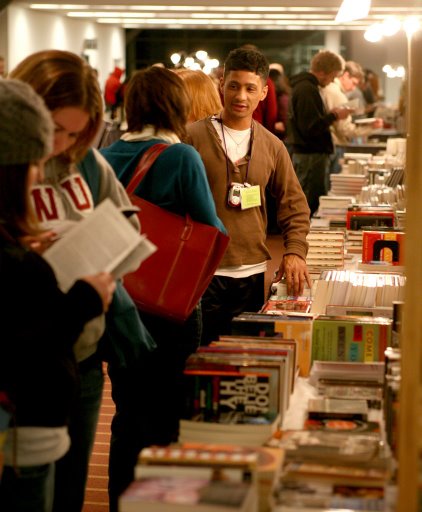
Selling books at the IAM Encounter is one of the most exciting events we do; and I mean
E11hompageLogo.jpg literally exciting.  First it entails driving the van into lower Manhattan—yes, the van that broke down on Thursday in a long and complicated story you don’t want to hear.  Then there are the truly amazing folks that show up; urban photographers from China, film-makers, dancers, actors, cultural critics, reviewers, painters, potters, scholars and a whole bunch of folks who care. (And folks whose names I’ve known because they read our blog and order books from us, friends who are nice to finally meet.) 

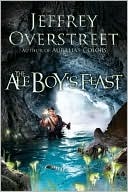
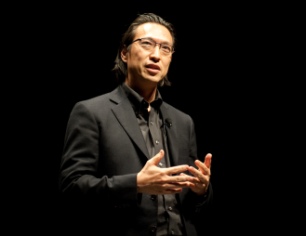
Makoto Fujimura and his team bring together a generative array of leaders, speakers, performers, artists of all sorts that create an on-going conversation for three and a half days, stimulating us all to think how best to honor God with our creative gifts, and how to speak wisely about Christian faith to those outside of the church, especially those situated in the serious arts culture.  There was much to take inspiration from day by day, from the passionate attendees, and, of course, from the main stage speakers: from the storytelling of fantasy writer Jeffrey Overstreet–we were the first place in the world to get his yet to be released fourth volume of his Auralia’s Colors series, 8291272.jpgThe Ale Boy’s Feast–to the personal story of former pastor Irwin McManus (whose lastest book, Wide Awake, dares us to make our dreams reality by getting busy actually doing what we are called to), to the exceptionally popular poet Li-Young Lee.  He read from his latest, Behind My Eyes: Poems which was an exceptionally moving experience. The book is available from us in a hardcover edition that includes Li-Young reading his work (or paperback without the CD.)  His father had been Mao’s personal physician until his conversion to Christ, which eventually lead him to a time of imprisonment in Indonesia.  (When the father finally escaped China, he became a Presbyterian pastor in Western Pennsylvania.  Li-Young is now a highly regarded, esteemed poet.)

In the midst of all this is the book display featuring key titles from our arts section, including, of course, the speakers and poets who were there (see the Encounter webpage for a listing of speakers.)  And, we had books like the ordinary-life aesthetics of Calvin Seerveld’s Rainbows for the Fallen World and his more recent Bearing Fresh Olive Leaves to the heavy work of Hans Urs Von Balthasar; the brand new William Dyrness Poetic Theology (which I raved about, here) to the important one by Daniel Siedell, God in the Gallery.  We sold out of an excellent anthology of chapters gleaned from a similar conference held in Austin a few years back (it was fun selling it to some people who were at that conference) called For the Beauty of the Church: Casting a Vision for the Arts edited by W. David O. Taylor (which you really ought to have!)  One of the important lectures at IAM was delivered by Adrienne Chaplin, whose book Art and Soul: Signposts for Christians in the Arts we still say is one of the top two or three most important texts for studying art from a faithful perspective.   And we so enjoy showing the lovely book by poet Luci Shaw called Breath for the Bones: Art, Imagination and Spirit, which is a great ally for anyone considering how to deepen their own creativity or perhaps new to this conversation.

Of course we had our standard Square Halo Books selections—I think that no collection of books about faith and the arts can be without It Was Good: Making Art to the Glory of God (edited by Ned Bustard) and Objects of Grace: Conversations on Creativity and Faith (edited by James Romaine) and Gregory Wolfe’s fine collection of short pieces taken from Image journal, Intruding Upon the Timeless, all released by Square Halo.  The first two have chapters by IAM founder, Mr. Fujimura, by the way, and I believe represent the first places he was ever published. 

MakotoFujimura.jpgOf course we sold his exquisite and very interesting NavPress release Refractions: A Journey of Faith, Art, and Culture, his luminous self-published work, River Grace, and many were glad to see Rouault/Fujimura: Soliloquies, his small book showing his abstract work inspired by Rouault paintings alongside some famous (and rare) pieces by the famous French impressionist, with a long essay by Thomas Hibbs. (I reviewed that significant book, here.) Naturally, his new ESV illuminated manuscript, The Four Holy Gospels, was on hand (although the publisher, Crossway, was providing that, so we didn’t get to sell it.  We were among the first to review it, though, so happily told customers all about it in their absence. Your welcome, Crossway.)  See our comments about this breathtaking project, here.

And that isn’t even mentioning a nice selection of books about faith and literature, a bit of good poetry, books about writing, media and film studies—like the new books in the IVP “Christian worldview integration” series Authentic Communication: Christian Speech Engaging Culture by Tim Muehlhoff & Todd Lewis and Christianity and Literature: Philosophical Foundations and Critical Practice by David Lyle Jeffrey & Gregory Maillet.  We had books on film and books on music, and a few on dance (publishers—we need a solid Christian book on this!) and several on theater (such as Performing the Sacred: Theology and Theater in Dialogue by Todd Johnson & Dale Savidge and You’ve Got to Have a Dream: The Message of the Musical by Ian Bradley.)

We take Shane Claiborne’s Common Prayer: Liturgy for Ordinary Radicals anywhere we can, and it seemed suitable here (especially since it is enhanced with original woodcuts and some calligraphy.)  We sold a couple.  Another lovely book on spirituality that seemed especially appropriate for this crowd was God in the Yard: Spiritual Practice for the Rest of Us by memoirist, poet, publisher, and blogger extraordinaire, L.L. Barkat. (Thanks for the generous hugs, LL!) God in the Yard is a daily devotional, a guided reflection on paying attention to the beauty around us, a sitting meditation, “in the yard.”  One doesn’t have to be an artist to appreciate this common effort to slow us down, but it seems that those who have a creative temperament would really find it useful. (Writer Denise Frame Harlan did a great review of it, by the way, at the Englewood Review< /a>.) And, we loved showing off the new Contemplative Vision: A Guide to Christian Art and Prayer by Julie Benner, a marvelous set of spiritual reflections inspired by great paintings, which are lovingly reproduced in color in this beautiful paperback.  As I said in an earlier BookNotes review, if you liked Henri Nouwen’s meditation on the Rembrandt painting in Return of the Prodigal Son, you’ll love these vision divina ruminations.  In this little devotional corner of the big display we also had Cal Seerveld’s stunningly good, imaginative, and deeply insightful Bible meditations–On Being Human: Imaging God in the Modern World—again, each reflecting on an art piece, a sculpting in Rotterdam, a painting by a young American student, a photo by a middle Eastern woman, a woodcut, a hymn tune.  Do you know it?  Wonderful! And we had the three small Bible study books in the Through Artists Eyes series based on the arts that we described here.

There was much music at IAM, and it was fun to catch up with Jason Harrod (we now have his new CD, Bright as You) and to see New Yorkers lovin’ on Joy Ike (and, yep, we have her CDs too, Good Morning and Rumors)  and we enjoyed the improv of a very cool project between IAM staffer and professional saxophone Kevin Gosa and violinist Jake Armerding. (Check out The Fretful Porcupine here.) The Brooklyn-based Zac Williams Band played and rocked the house after the astute literary conversation with poet and former head of the National Endowment of the Arts, Dana Gioia. (His 1992 Graywolf book Can Poetry Matter? is still very important, just so you know!)  What a closing night!

There is more I could tell about this fabulous event and the books that we offered. We’re glad for new friends and grateful for the kind words and support.  Click back to a list of books I compiled two years ago after the IAM event (here) if you’d like a few more titles about integrating faith and the arts. It isn’t comprehensive, but I’m told it is one of the more interesting lists from any store anywhere on these themes.  I hope you might buy a few, pass ’em on to somebody who might not otherwise know about this great body of literature (or at least copy the list and pass it on as a gift to an artist you know.)  We are pleased to stock this kind of stuff, but it sure is nice when we get to actually sell some.

* * *  
One book which we featured simply has to be described in greater detail (although my words cannot do it justice.)  We are happy to announce its release this month, and proud to stock it.

The Art of Guy Chase
 edited by James Romaine (Square Halo Books) $19.99

agc_cover.jpgThis is a brand new title, published in cooperation with a  This is a brand new title, published in cooperation with a retrospective
exhibition by the inestimable artist at Bethel College, Mr. Guy Chase. 
Guy has been pushing the envelope of his allusive—fun and yet
demanding— modern art for years, and has been an important voice in
circles such as IAM and CIVA (Christians in the Visual Arts.)  In
private conversation with me at the IAM Encounter, Mako spoke tenderly
of him–Guy has been ill with cancer–and assured me he is loved by many
contemporary Christian artists.  His work is respected, considered,
celebrated (Mako said he owns a piece or two himself.)  Guy Chase
himself, too, it seems, is a piece of work.  This book shows off his
vision and his work, and invites others to reflect upon it.  It itself
is a piece of work, a good piece of work.  Kudos to graphic-meister Ned
Bustard at Square Halo for his signature and very appealing design.

This book, then, is, at least, a tribute to Chase’s good work, and a
testimony to his wide circle of friends who appreciate his gentle demeanor and deep, contemplative spirituality.   Not every artist has a body
of work that is important enough to do a major show of this nature, and
it is wonderful to have more than a thin catalog showing the pieces
displayed.  This is a lasting volume, important in its own right. 
Edited by art historian James Romaine—whose first great essay is
called “Negative Thinking: Why I Don’t Like Guy Chase’s Art”—sets the
stage for a thorough-going discussion of said art.  And discuss it, they do!  What a joy to listen in to these contemporaries ruminating on Chase’s work and how it is situated among the best of the contemporary art world.

Other tributes or evaluations include a great piece by Joel Sheesley, a
good commentary by Ted Prescott, a chapter called “Disruption and
Illumination: Subtitle” by Wayne Roosa and an insightful essay by Albert
Pedulla entitled “Rescinding Disbelief: The Post-Skeptical Realism of
Guy Chase.”  The book ends with an honest and illuminating interview done by James
Romaine.

The Art of Guy Chase is printed well on glossy paper, is produced in a square format (almost8 x 8) and is 131 pages.  It is not

becky.jpg

massive, but it certainly is not meager: it is lavish, to say the least,
fun and interesting, colorful and arresting.  Chase’s work is almost
indescribable, and he works in many mediums, in several contemporary
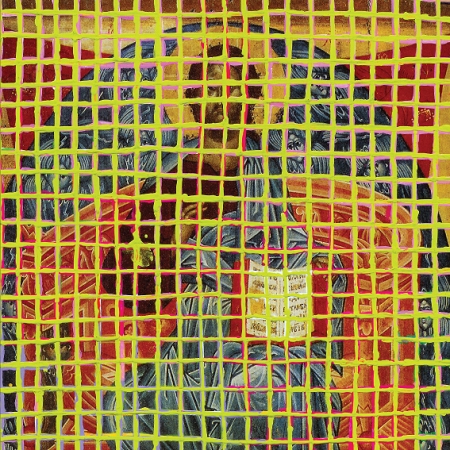
styles.  One piece will look at first like a piece of graph paper. 
Another is a huge white sculpture of a wrecked car.  Some are simple
sketches mounted on hefty wooden scaffolds. There are classic modern
pieces—squares in circles with splashes of primary colors—and there
are subtle watercolor grids on mirrors.  He works in gouache on torn
paper, he has superimposed photographs on craft bags and he has a
fascinating piece that I can’t stop looking at called Grail described as
“Grape Juice on Aluminum Cans.”  Some of the photographs of his work
show the whole room, as they are larger installation pieces. 

I have only begun to enjoy the many pieces of Guy’s art that is shown here, and haven’t yet

orangecrossthumb.jpg

  seriously considered all the articles, which I’ve only skimmed, as I
wanted to see what each contributor thinks.  But I will read and
re-read; I am confident this is edifying stuff, challenging (in a
playful sort of way.)  This is good for the heart and mind, to ponder
why this work is considered important, to appreciate how it helps us
see, to realize this is a Godly man, a decent human, doing expressive
artwork in a way that causes his fellow Christ-followers (and others) to
take notice.  And, besides shaking my head in wonderment at it all, it
makes me smile.  Thanks be for the artistry and for the care given by
his friends and critics in their thoughtful essays. 

Makoto Fujimura has a nice quote on the back.  Consider this:

Guy Chase’s art if full of surprises, twists, humour,
candor, inventiveness and delight; Chase takes the postmodern visual
language to its ends of hubris and significance, always turning our
attentions upside down.

Here is how another artist explained the book:

The Art of Guy Chase explores the visual,
conceptual, and spiritual complexities of one of the most provocative
contemporary visual artists of faith.  Chase’s art is characterized by
intentionally cultivated contradictions between humor and sobriety,
contemplation and irony, material tactility and sacred meaning. 
Lavishly illustrated, this book documents Guy Chase’s faithful response
to an artistic calling and his methodical engagement with the history of
Christianity and the visual arts as a strategy of renewing that
relationship today.

Heavy, I know.  And when you’ve got heavy-weight artist/thinkers like
Romaine and Roosa, Prescott and Pedulla and the others, this is a
wonderfully astute example of the “state of the art” of contemporary
Christian art and criticism.  Yet, again, Chase is a piece of work and
has earned the privilege of being taken seriously.  This book is wild
and fun.  It is interesting and clever, outrageously so.  I think you’ll
like it if you give it a try, and you’ll learn something, too.

I didn’t get to do my “book announcements” that I do at some conferences
at IAM Encounter.  If I would have had a shot at it, The Art of Guy Chase is a book I
would have highlighted.  I would have held it up, gladly and graciously,
and said it may have been one of the most important books in the room. 
For those who have eyes to see, I am sure they would have agreed.

BookNotes
SPECIAL
 DISCOUNT
 – any book mentioned –
BUY ONE 10% off
BUY ANY TWO 20% off
order here
takes you to the secure Hearts & Minds order form page
inquire here
if you have questions or need more information

Hearts & Minds 234 East Main Street  Dallastown, PA  17313     717-246-3333 


Five brand new books: Janell Paris on sexuality, a long-awaited memoir of Eugene Peterson, The Pastor, the new Timothy Keller on Jesus, N.T. Wright on the Scriptures, a collection of critical engagement with the work of Wright,

It always happens that when we go away to sell books at a large event, we return home only to find a few books that arrived in the shop the day we left.  If only.  That’s what I routinely say.

Well, I didn’t get to show or sell these at the Jubilee conference last wee, so I’m saying it.  If only.  You can make it better by buying them now.  At least I can sell a few of these that would have been popular in Pittsburgh.

51uhmBcoLML._SL500_AA300_.jpgThe End of Sexual Identity: Why Sex Is Too Important to Define Who We Are  Jenell Williams Paris (IVP) $15.00  Had I taken this to Jubilee, some thoughtful leaders and mature Christians would have been very eager to consider it.  In fact, a few had asked us about it, thinking it was to release in March sometime.  Yet, it may not be for everyone.  It is very thoughtful—written by a progressive, evangelical anthropologist—and will be sure to attract the ire of some.  If I understand Paris correctly, she is trying to de-emphasize the ways in which sexual identity has become an idol (both in the culture at large and within the Christian subculture.)  Just for instance, concepts like “gay” and “straight” are relatively recent developments in human history.  As it says on the back cover, “We let ourselves be defined by socially constructed notions of sexual identity and sexual orientation—even though these may not be the only or best ways to think about sexuality.” 

This offers a clearly Christian standard of holiness for sexuality, but one that takes into consideration the ways of our postmodern times.  She is attempting to move beyond culture-war impasses, but I am not sure most on any side wants to enter that kind of gracious space for genuine conversation.  (She tells the story in early in the book about going to a gay bar for the first time with a lesbian fellow-graduate student. She had never been to a bar before, gay or otherwise, and yet was comfortable and attempt to be gracious with her new friends.  When they discovered that she held to fairly traditionally-understood Biblical sexual ethics, her classmate announced that they simply could never be friends, calling Paris a “homophobe.”)

Andy Crouch notes that “this is a singularly important book, about sexuality but also about culture, and it is a model of charity, clarity and creativity.  While this is certainly not the last work on Christian sexual ethics, it could be the first word of a better and more honest conversation about holiness and faithfulness amidst our age’s sexual confusion.”  

Singularly important.  Wow.

The-Pastor-A-Memoir-by-Eugene-H.-Peterson.jpg

Pastor: A Memoir  Eugene Peterson (HarperOne) $25.99 
Well, I’ve been saying “if only” about this, too, because had I taken it
to Jubilee I am sure we would have sold a batch.  Not, interestingly,
to the college students, probably, but to adults, former CCO staff,
ministry leaders, some of the speakers, the volunteers staffing the
missions booths, and to the good representation of pastors who show up
at Jubilee just to check it out and learn about young adult ministry. 
And I would have pressed it into the hands of any young adult who said
they were thinking of going to seminary or sensing a call to vocational
ministry.  This poetic and at time mysterious volume–why tell this, but
not that?—could be a God-send, a message back to the trenches from a
serious, wise, fellow-traveler on that journey.

This is a book that I read in an advanced manuscript months ago, and
I can’t wait to read it again, more slowly.  I have made myself a
promise that I will read everything Peterson writes, and this was a
delight. Those of us that know him a bit know of his penchant for slow old-fashioned storytelling and plumbing the ordinary for great meaning.  The Pastor his life story, his memoir, his understated reflections
on being callid to the ministry, his early years doing a Presbyterian
church plant north of Baltimore, and his eventual rise to fame as Bible
translator, writer of The Message, and his shift to public
speaker, author, poet, contemplative, and nature lover.  Anyone who
likes a well-told story, or Peterson’s good prose, or a fairly ordinary
testimony of a fairly ordinary pastor of a fairly ordinary church will
surely love this wonderful new memoir.  Clergy folks, or those that love
clergy folks, will want to have it.  Listen to what Dallas Willard
says: “If you are hoping to be a pastor, or just to understand what that is,
get this book and soak in it for at least three full days with no
distraction. It may save your life and make you a blessing.”

Kings Cross: The Story of the World in the Life of Jesus  Timothy Keller (Dutton) $25.95Tim-Keller-Kings-Cross-255x255.jpg  Last week I had published a few brief reviews in Comment, an electronic journal I read faithfully (and commend to you.) I knew this was new Keller book would arrive any day, so I wrote the following, which I’ve edited just a bit:
 

Most savvy readers know who Timothy Keller is. His church in the well-heeled and
culturally savvy sub-cultures of Manhattan and its plants are known as
shining examples of faithful and relevant contemporary ministry.
Redeemer Presbyterian’s support for thinking about work, their
encouragement of artists, and their commitment to urban flourishing is
vital. And Keller’s recent writing ministry has caused not a few
journalists to note his effective way with words, making compelling
cases for Biblical truth and a Christian worldview.

In this brand new book, Keller brings his clear and insightful
approach to a study of the life of Jesus (mostly told through the eyes
of the fast-paced gospel of Mark). Yet this is not a traditional
commentary, exegeting line by line, but a broad and sweeping overview of
key themes that relate particularly to his urbane audience–and,
perhaps, anyone wondering if the New Testament documents about Christ
are not only historically reliable, but also keys to unlocking our
deepest human longings and our culture’s deepest social needs. The
chapters are each titled with a poignant word: “The Dance,” “The
Waiting,” “The Turn,” “The Sword,” or, in the second-to-last chapter,
“The End.” The last chapter? “The Beginning,” of course. A great new
resource for good conversations exploring the basics of the life of
Jesus, and an invitation to live into the world His gospel creates.

51r1Ve0y-9L._SL500_AA300_.jpg

Scripture and the Authority of God: How to Read the Bible Today  N.T. Wright (HarperOne) $25.99  I’ve often said that Wright’s other good book on how best to read the Bible just a bit too brief to be really helpful.  I was eager to see his new one, long-awaited, and now here.  Alas, this is an expanded version of The Last Word which they now have on the front cover.  Not sure how much new material is here (would have been nice to know from the publisher, eh?) but it seems to me that it could be nearly twice as much.  It is considerably re-packed and nicely revised and expanded.  It is nice that it now matches his previously three from HarperOne, with uniform black and white hardback covers.  I’m sure it is going to be great to read, a fine and important contribution, ideal for adult classes, serious readers and thoughtful beginners.  Rave endorsements on the back are from authors as diverse as J.I. Packer and Brian McLaren.  Timothy George says “Here is Wright at his best…uncommon wisdom for all who read and love the Bible.”

51+oogxq7ZL.jpg

Jesus, Paul and the People of God: A Theological Dialogue with N.T. Wright  edited by Nicholas Perrin and Richard B. Hays (IVP Academic) $24.00  For my own tastes, this may be the most exciting book so far this year.  It is certainly the one I couldn’t wait to see, and I immediately skimmed it, even as I was exhausted from Jubilee packing and a general lack of sleep.  A bit more rested, I realize now I was not temporarily loosing touch for wanting to tell everybody about it: this is, indeed, one of the great, great books of the new year. 

It was last spring when we had the immense privilege of setting up a N.T. Wright book display for the New York Center for Faith and Work (of Redeemer Presbyterian) as they hosted Wright doing a lecture on his then-brand-new book on character, After You Believe. Tom had just come from a several day conference on his work held at Wheaton and he was happy to talk a bit about it.  My good friends Brian Walsh and Sylvia Keesmaat had done one of the more, uh, memorable presentations about Wright and he described it just a bit to me.  And pushed back just a bit.  (He and Brian have been very good friends for years, and Sylvia got her PhD under him and is also a close friend.)  I was thrilled to realize that the Wheaton symposium was all on line and the lectures given and critiques offered and Wright’s replies were all able to be watched.  It was a fantastic educational experience and a great example of significant, candid and friendly intellectual discourse.

I hope to explain this book in greater detail later, but know that it includes some very well crafted papers about Wright’s majisterial work, from Marianne Meye Thompson doing “Jesus and the Victory of God meets the Gospel of John” to Richard Hays (on Jesus and what we can know) to Edith Humphrey (on Paul) to Jeremy Begbie (on Wright’s ecclesiology)  to Kevin Vanhoozer on “Wrighting the Wrongs of the Reformation? The State of the Union with Christ in St. Paul and Protestant Soteriology.”  And more!

Here is why I have to commend this so eagerly right away:  Brian and Sylvia dared to ask–in fine taste and good smiles—some hard questions of the conference and of Tom’s own work.  Basically, they ask the “so what?” question.  They push Wright to reflect on how a clear call to justice work might be better sounded by his Biblical study and whether his now-many and properly famous books are going to truly motivate anybody to care much about the sorrows of this world.  Some found it a bit blunt, I’m told, and yet Tom replied with graciousness and both agreed with their desire that this academic work not be in vain, and defended his own style a bit in some fair rebuttal.  Part of his reply is that, yes, he does desire for his work to bear fruit, including an informed church on the march for peace and justice.  I must say that besides this dramatic moment of breaking the professional etiquette for such a fine scholarly conference, Brian, and especially Sylvia, brought some very (very) interesting exegesis of one or two of Jesus’ parables which created some vigorous conversation afterwards.  The scholarly conversation record in this book was generally so insightful in part because the scholars knew Wright’s body of work so well, and because he was so gracious in sitting for their evaluations and critiques and then responding.  This is a fantastic project, interesting, well-informed, and charitable.  It is a resource worth having.  Especially with those important prophetic words from Brian and Sylvia: who cares and so what?  Maybe every book should come with a question like that attached…

BookNotes
SPECIAL

 DISCOUNT
BUY ONE 10% off
BUY ANY TWO 20% off
order here
takes you to the secure Hearts & Minds order form page
inquire here
if you have questions or need more information

Hearts & Minds 2345 East Main Street  Dallastown, PA  17313     717-246-3333

Jubilee authors, best-selling books and that fulfillment of prophecy: Bob Goff’s door

I have been pretty sick for a few days and wanted to do this in two parts but I just couldn’t do it earlier.  Sorry it is now so long.  Consider it two for the price of one. I’ve posted it as a monthly “review column” since those are generally longer than a blog.  I hope you read it all, not only because I tell of Jubilee—which means so much to us—but because I explain great books all along the way.  I think I’m on to something with this, and hope you agree.   If your a new reader (maybe somebody we met at the conference, welcome aboard.)

PERHAPS IT WAS THE DOOR

Perhaps it was the door that symbolized for me the power of Jubilee 2011.  Storytelling evangelist of holy whimsy and God-generated goodness–trusting Jesus and loving others with creative initiative–Bob Goff metaphorically, and literally, ripped the door off of a hell-hole of a small prison where 74 African children languished in jail for want of trials.  Since he volunteered to train lawyers and then became a judge in the Ugandan court system, he got fair trails for these children who had been jammed in this awful prison room for over three years.  73 were found innocent and delivered to their homes and the prison shut down.  He had the door there on stage.  It sent shivers up my spine when he explained what it was—the actual door! It dawned on me that the Jubilee text of Luke 4 itself promises liberation from dark prisons; this was a partially fulfillment of that exact promise! I simply couldn’t hold back the tears.  What does seeing something like this do to a young adult, sitting in a room, being similarly moved to think of doing great things with their own lives?   Oh, if you weren’t, I wish you coulda been there.
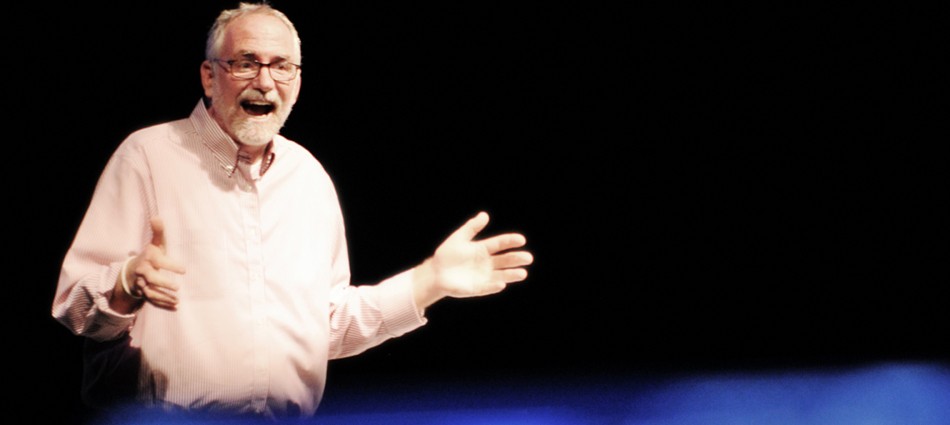
Bob-Goff-950x425.jpgGoff briefly told of how his playful style got him the opportunity to gather some parliamentary leaders together and, well, got them to vote to ratify the United Nation’s law against child trafficking.  He told a story some horrific abuse by some cruel witch doctors who had mutilated a child, leaving him for dead.  Goff prosecuted the bad guys, and announced that they will get a ruling “this Wednesday.”  He had a picture of the kid, with his attorney, Bob Goff.  This, the first case applying an international treaty that he single-handedly got ratified.   Man, I wish you coulda been there.

OR THE MATH MAJORS


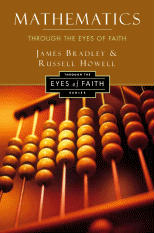
Or perhaps it was the pack of math majors who were crowded around the book table, astonished to be doing serious theology as they considered the books a speaker cited, books like Mathematics in a Postmodern Age: A Christian Perspective (Eerdmans; $35.00) or Mathematics and Religion: Our Language of Sign and Symbol by Javier Leach, a Spanish Jesuit writing in the Templeton Science & Religion series (Templeton; $19.95.)  The Jubilee workshop leader, Anthony Tongen, came up through the ranks of CCO, attended Jubilee as an undergrad, heard me do my book talks about integrating faith and scholarship and was thus 9780062024473_0_Cover.jpgencouraged to see his planned career as a teacher as a holy calling.  He now teaches as a prestigious university and will be a published author, as a book he has contributed to will be released later this year. Mathematics Through the Eyes of Faith edited by Russell Howell and James Bradley (HarperOne; $19.99 ) will take its place along others in that series like Literature Through the Eyes of Faith, Music Through the Eyes of Faith, Sociology Through the Eyes of Faith, Biology…., Psychology…, History…, Business, and others.  All are quite good and knowing this Pennsylvania college kid has grown up to contribute to the rather arcane topic of religion and math, in this solid series published by HarperOne, and does this cheerfully at a secular university, well, it sort of sums up the vision of the Jubilee mission.
Another iconic moment for us was getting cheered as I stumbled on to the huge stage, under stadium lighting, and seeing out of the corner of my eye the jumbotrons showing off the books I was celebrating.  If you click on the link to the pictures (at bottom) you’ll see one of me on the big stage and the screen behind me.  I was telling about Richard Mouw’s tremendous little study of new creation called When The Kings Come Marching In: Isaiah and the New Jerusalem (Eerdmans; $14.00)  We always promote a book or two about the Bible at Jubilee since Biblical literacy is a key to personal growth and subsequent social transformation.  This year I also gave a shout out to Why the Bible Matters: Rediscovering Its Significance in an Age of Suspicion by Mike Erre (Harvest House; $13.99), which I thought would be perfect to get smart young guys and gals aware of the Big Picture of the Story, in a way that would resonate. You may recall me reviewing it earlier this year. And of course we pushed the easy-to-read, brief overview The True Story of the Whole World: Finding Your Place in the Biblical Drama by Michael Goheen and Craig Barthlomew (Faith Alive; $12.99.)  They had a heavy duty Bible scholar doing a workshop on Scripture, too, although his important book isn’t due for a few months.  We’ll have it for sure.  Check out Old Testament Wisdom Literature: A Theological Introduction Ryan O’Dowd & Craig Bartholomew (IVP; $30.00.)

I don’t mean to brag, but we are often applauded when we’re out doing our book tables and I get to do up-front book announcements and blurbs; whether it is a retreat of Philadelphia area Episcopal priests or local UCC clergy or a conference on faithful politics in DC, it is gratifying that folks allow us to announce and describe books that might be helpful on their journey.  We are grateful.  Jubilee, though, takes this to the level of an extreme sport: there are slides and book covers shown in the program guide, gaggles of authors, and me under the spotlight with the timer ticking.  (No, they don ‘t give me free reign with the clock.  Not even the keynote speakers get that!)  But it is deeply moving for us to know that a younger generation of vibrant Christians want to think hard about stuff, are will to buy Christian books, are learning the art of serious discernment as they grow into wise and active leaders who can be salt and light and leaven and hope for a world gone awry.

Although we may have been the most prominent display area—30 some tables, 70 some book categories (maybe you saw our cheat-sheet set up guide poster that somebody photographed and leaked on facebook and twitter)—the other booths were also indicative of the ways in which the Jubilee event draws students to think theologically (seminaries as diverse as Denver Seminary, Pittsburgh Theological and RTS are there) and to serve wholistically.  Agencies like Blood:Water Mission and Mission Year stand along side booths helping students grapple with issues such as abortion, welfare reform, racial justice, creation care and the like. There are opportunities for students to work at summer church camps.  CCO invites students to their stellar summer programs such as their two week kayaking trip for seniors, called Crossings, an adventure/ service project trip to Peru, and the one we have played some part in, Ocean City Beach Project where leaders learn to integrate personal spiritual formation, develop a Christian worldview, explore the call to Christian scholarship, learn to lead Bible studies and gain experience at relational evangelism in a shared living experience at the shore.  (Do check out these links as CCO is searching for students to apply for these opportunities, regardless of where they are enrolled.)  Just strolling through these Jubilee booths, catching their flashy graphics, the cool video loops, the compelling brochures, well, it just thrills us to know of what God is doing in the world and how Jubilee networks so many innovative and fruitful organizations, from think-tanks like Center for Public Justice to savvy, mission sending agencies like World Harvest Mission.  

And wonderfully, our friend Walt Mueller (who himself had sat at Jubilee as a young one some 30 years ago), did a keynote speech, and then invited students to commit to adopting a child through Compassion International.  The call to do so was honest and sincere (Walt has walked through some of the worst slums in the whole world), not pushy or manipulative.  I think over 165 students (or groups of students) signed up to invest in the lives of a third world child.  I know that some events that are twice the size yield considerably lower results.  Thanks be to God.

(Walt by the way, has a brand new book out—so brand new that I watched him open the box there at the convention center that had been sent that very day .  How cool!  It didn’t sell well among the collegians because it is called 99 Thoughts for Parents of Teenagers (Group; $5.99.) I suggested they buy it for their parents, but, well, you know…  Maybe you know somebody who’d want pretty serious theology and sound insight packaged as quick and easy as it comes.  Walt is a serious scholar of youth ministry (his Engaging the Soul of Youth Culture: Bridging Teen Worldviews and Christian Truth (IVP; $18.00) is a must-read in this field!)  His CPYU is highly regarded in all corners of the church.  He wasn’t so sure he should follow the proposal the publisher gave him for these quickie little sayings because he doesn’t want to give the impression that this is silly or simple stuff.  I think it worked out, and we are happy to have it, even if it didn’t sell at Jubilee.  Ha.)

WHY DIDN’T SOMEBODY TELL US THIS BEFORE?

Perhaps one of the other moments that took our breath away—in joy and, I’ll admit, and with a touch of frustration—was to hear what a speaker doing a workshop on Christian insight for the technological world and how engineering students might think more faithfully about their vocations reported.  He said that several excited students (all engineering majors, natch) exclaimed, “Why hasn’t anyone ever told us this before?”  Told us what?  I’m not exactly sure, but the workshop leader surely had two major points: all of life is being redeemed by Christ so every legitimate career is a holy calling; one can be an engineer for God’s sake.  And, then, it follows that if one wants to be a Christian engineer one must think about the ways in which that field is construed, taught, and understood, and seek God’s wisdom for the norms and principles inherent in his world that hold for good design; this should be our pride and joy, giving God glory by doing good (engineering) work.
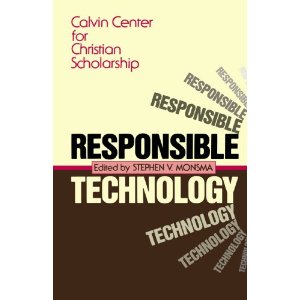
41GDt0psUnL._SL500_AA300_.jpgAerospace scholar and workshop leader Ryan O’Dowd was pleased to see a batch of books on engineering in our display, not just those that properly critique the idol of technologism (say, Neil Postman’s Technology, or Jacque Ellul’s The Technological Society, or Langdon Winner’s The Whale and the Reactor) but those that point in a redemptive direction.  Civil engineer, humanist Samuel Florman wrote the very nice The Civilized Engineer (St. Martins; $17.99) and the wonderful Existential Pleasures of Engineering (St. Martins; $15.99) and the Calvin College Center for Christian Scholarship years ago did a significant inter-disciplinary study of norms for design called Responsible Technology edited by Stephen Monsma (Eerdmans; $26.00)–a must-read in the field.  We stock the serious Christian reflections by Dutch professor of engineering Egbert Schuurman although most U.S. students haven’t seemed to catch a vision for thinking this philosophically about the underpinnings of their practical majors. Former Jubilee speaker Jack Swearengen has a thick, important book Beyond Paradise: Technology and the Kingdom of God (Wipf & Stock; $35.00.)  Do you know any engineers who read this kind of stuff?  Has your pastor ever suggested they do so?  Probably not. In those students lament—why hasn’t anybody ever told us this before?—you hear the whole raison d’ etre of the Jubilee and the CCO’s call to whole-life discipleship in God’s good but fallen world. Why don’t Christian bookstores carry this stuff?  Why don’t many Christian colleges, even, not use these sorts of texts?  Why don’t church-going engineering professionals seek them out?

It is why each year the conference attracts earnest young students but also eager adult leaders, pastors wanting to brush up on the real role of the laity, and those eager to understand how best to minister to young adults who naturally are in the vanguard of this kind of interest. Not a few church leaders, elders and pastors show up, wanting to learn how to navigate this world that—most likely—their seminary training or elder training didn’t even touch. (Scroll pack to last month’s column to see what one local church is doing to advance this conversation.) The word is getting out: God cares about your work and you have a duty to think about what you do for a living.  

Here is another example of this too rare kind of conversation: Mel McGowan is an award
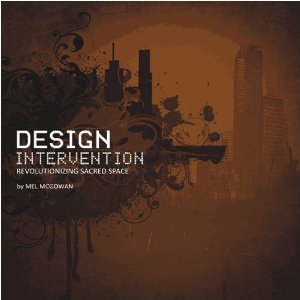
51kOssKEepL._SL500_AA300_.jpg winning designer whose high-end firm, the Visioneering Studio, has done everything from ball stadiums to innovative church design.  His blog has done some serious re-thinking about notions of sacred space and the way aesthetics matters for the common good.  His book–whose title is a play on the title of a world-famous design book–is called Design Like God Gives a Damn: Revolutionizing Sacred Space. (PlainJo; $15.00.)  Well, think what you may of the catchy title, you have to admit it is true.  God cares.  It matters.  This book is visually stunning, sort of a portfolio of his architectural work and altogether interesting.  To hear Mel, check out the Q Society Room DVD entitled Where You Live Matters: Developing a Vision for Your City (Zondervan; $29.99) where he, with some other new urbanists, talk about place, architecture and renewal of our built environment.  Again, students who are st
udying this stuff at the university level were just dazzled to hear evangelical Christians speaking about ideas and insights that related to their field of study with passion and excellence and care.  You should get one of these DVDs and pass it on to somebody you know whose on your local zoning board or housing council or township offices.  What a witness that would be, faithful insight applied to the details of place. 

I wish you coulda been there to see all the empty cardboard boxes being recycled at the end.  We sure did sell a good amount of books.

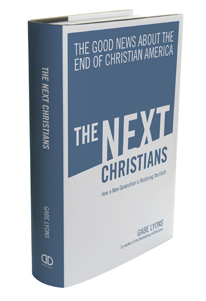
Many of the keynote speakers had major releases. Q Ideas founder, Gabe Lyon’s Next Christians: The Good News About the End Of Christian America (Doubleday; $19.99) is nearly quintessential as a Jubilee book about young adults rising up to be known as restorers; his opening talk was just fabulous, interesting, helpful, clear.  Lisa Sharon Harper’s Evangelical Does Not Equal Republican…or Democrat (New Press; $24.95) has a title that is also perfect for Jubilee.  Jubilee promotes thinking beyond the standard assumptions and rejects ideologies that are rooted in assumptions that are inconsistent with the teachings of Scripture.  She just rocked the house telling stories of her NY Faith & Justice organizing, and later used her drama background in a performance during worship.  Wow.  (She is working on a couple of other book projects, too so keep an eye on this woman!)
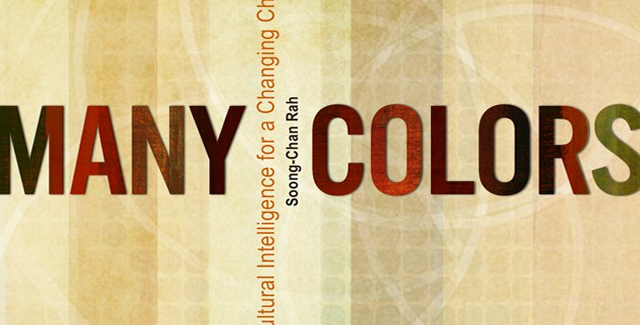
mca1.pngSoong-Cha Rah is a incredible communicator and a scholar of racial and ethnic diversity that is clearly on par with his older colleagues Philip Jenkins, Lamin Sanneh, or Andrew Wells.  The Next Evangelicalism (IVP; $15.00) carries a powerful subtitle which he explicated in a quick-paced and punchy Saturday morning lecture, “Freeing the Church From Western Cultural Captivity.”  This project is important for at least two reasons, it seems to me: firstly, if we truly want to understand the Bible on its own terms we ought to try to question our own cultural assumptions that we bring to the text; that is, a multi-cultural or different interpretation may help us correct blind spots and unhelpful biases. Secondly, the world, including the West, is increasingly multi-cultural so we might as well prepare now for the future that is nearly upon us.   Rah’s more recent book, Many Colors: Cultural Intelligence for a Changing Church (Moody Press; $14.99) has been used by CCO for their staff training to further resource them in offering leadership in our obviously increasingly diverse college settings.  Serious stuff.  We are thrilled to sell books like this, so glad to meet brother Rah and hear his important presentation, and be reminded, again, of how this conference has always promoted God’s vision of racial reconciliation and multi-ethnic ministry. I hope your congregation is responding to God’s call to this aspect of our witness, but is preparing for the “many colored” future that is soon upon us.  His books would be useful places to start if you want to move forward on this.

One of my favorite main stage speakers was James Emory White. (Check out his website,
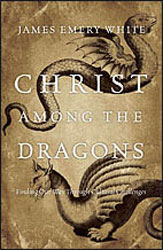
9780830833122.jpg Church&Culture.)  He brought home–with the always workable story of Esther–the call to be agents of change, to be used by God, to live into the destiny that God may have, “in a time such as this.”  He was a forceful communicator, really compelling, no-nonsense and very, very interesting.  Whether it was reporting from a recent trip to Egypt (and his insights about revolutions) or his teaching from his great book on change agents in history called Serious Times: Making Your Life Matter in an Urgent Day (IVP; $15.00), he brought remarkable challenge and upbeat inspiration for those wanting to make a difference.  I have not finished but can fully recommend his latest, Christ Among the Dragons: Finding Our Way Through Cultural Challenges (IVP; $17.00) which is exactly the careful sort of study we need that is insightful but not dry, critical but not negative, culturally-engaged but Biblically orthodox.  And I was sincere when I told him back stage, and announced to the crowd in my book plug, that sometimes I have pulled out A Mind for God (IVP; $13.00) and re-read a few chapters that hold up the significance of reading, just to remind me of why we got into this book-selling business in the first place.  I love that little book!  If you read my reviews with any regularity (or attend Jubilee) then I hope you would to!  Give it a try!

Not all of my readers are used to what used to be called in some circles “altar calls” and I’m sure some have been turned off by manipulative and pushy preachers insisting that listeners come forward to get born again.  Of course the abuses are commonplace in the popular imagination, but when the invitation to consider the claims of Christ, to repent of one’s own sin, to accept the grace offered by a justifying God who offers grace, and to do that in the context of a world-changing call to seek justice and be restorers of the common good, well, it brings tears to my eyes.  White is a good preacher and I pray his final call bears fruit for the Kingdom.  Ahhh, I wish you coulda been there.  Guys like this make me happy to remain a card-carrying evangelical.

Sunday morning featured two more main stage authors.  I’ve already mentioned Goff.  Many of you know him from the “Meeting Bob” chapter in Donald Miller’s Million Miles in a Thousand Days memoir (which, by the way, just released in paperback this week, now selling for $14.95) or have seen his presentation from last year’s 2010 Jubilee which is able to be watched at jubilee tv.  We have just a few of his book Finding Karishma: Modern-Day Slavery and the New Abolition Movement (Pascoe Publishing; $17.95.)  The back cover notes that Bob has a passion for “unconventional, entrepreneurial activities.”  Oh yeah, I’d say so.  In Finding… he chronicles not only the founding of his organization Restore International, but tells of the risky effort of busting a brothel in India, how a young kidnapped and enslaved girl named Karishma didn’t get set free (when the complicit police tipped off the brothel owners) and how they subsequently traipsed through every village in that part of India trying to find her.  The story is eye-opening and riveting—how many guys who write religious books have been bloodied when hit with rocks by third world pimps?— audacious and full of great hope that a small group of people can make a big difference.  The way Goff wove together the goofy stories and joyful shenanigans was great fun—like the time he told us about when he had a Minister of Justice from an African nation visit him, took the dignitary to Disneyland and tricked him into thinking he had to wear the Mickey Mouse cap with mouse ears all day “because it was his first time there” (he had a slide
of the dignified chap in Mickey ears to prove it!)  But then he starts talking about global justice and the reforms his team has  made in Ugandan justice systems and the schools he’s started—-(think of the scene in Million Miles when Goff invites Miller to plant a ceremonial tree, there)— and how he uses his legal training for important things, well, its almost a perfect kind of talk.

And then there was the brilliance of Bush-era White House speech writer, now WashPo columnist and PBS pundit, Michael Gerson, offering what was perhaps the most brilliant speech of the weekend, a thorough-going challenge to excellence and Biblical faithfulness and cultural engagement.  This guy knows his political theory, is informed by Kuyper and the neo-Calvinist worldview stuff that so animates the founders of the conference, and has served, well, in one of the most important spots on the planet.  Can anybody say Daniel?  You may know Mr. Gerson’s  important books Heroic Conservatism: Why Republicans Need to Embrace America’s Ideals (HarperOne; $15.95) (by which he means, among other things, a decent sort of populism, rejecting the crass ideologies of neo-conservativism, and deepening a concern for the poor) and the recent (co-authored) City of Man: Religion and Politics in a New Era (Moody; $19.99) with a helpful forward by Timothy Keller.  I don’t know if these students quite realized that they were taking in the rare opportunity of listening to a speech by someone who has help draft some of the most significant speeches of our lifetime, but it was pretty great.  No matter what your political or theological leanings, Sunday morning was extraordinary.  And I haven’t even mentioned the important liturgical aspects of the gathered assembly, or the amazing worship led by the Bi-Frost Worship Arts team and Pittsburgh’s own Josh Moyer and friends.  Joy Ike & Peace Ike even joined on stage!  I really truly wish you could have been there.

* * *

NOT JUST THE MAIN STAGE STARS

Yet, the books that sold the absolute best at Jubilee 2011 were not main stage keynoters, they were guys that spoke to smaller crowds in packed side rooms, with students spilling out into the hallways.  This is fascinating to me and Beth and we were glad that each of these speakers were friends; it is embarrassing to run out of books, and we ran out of three.

Eric Metaxas did a workshop on using his apologetic books Everything You Always Wanted to Know about God (Waterbrook; $18.99) and Everything Else You Always Wanted to Know About God (Waterbrook; $14.99), and a third, Everything You Always Wanted to Know About God: Jesus Edition (Regal; $19.99) which are witty and smart and balanced and helpful and serious, mostly.  What else would you expect from a guy who organizes philosophy and current affairs lectures in Manhattan (under the name Socrates in the City) and also has been a writer for Veggie Tales?  He’s a good writer and care about important things.  For several years now we have promoted his Amazing Grace: William Wilberforce and the Heroic Campaign to End Slavery (Harper; $13.95) which is a fabulous companion biography to the movie about William Wilberforce and his campaign to end slavery in England.  If you haven’t read it, it is a great read, putting you into the campaign like no other book.
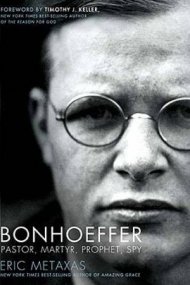
9781595551382.jpgBut Metaxas’ Bohoeffer: Pastor, Martyr, Prophet, Spy (Nelson; $29.95) took a prize, for sure.  I’m not sure what kind of a prize, but it it a bit fat book, selling for nearly $30 and we sold a good, hefty, batch of them.  Not as many as some other books, say, but for the size and price, the commitment to reading and further study, the number of pages they were actually buying—and the excitement among older and younger students as they heard him speak—was remarkable. He served folks well as he visited and signed books, likable and humble and astute. I knew we were right when we named it an H&M Book of the Year.

I have not reviewed here adequately a book that we were very impressed with this past year, and I am so glad the author did a Jubilee workshop.  In fact, I did a very careful read of it before publication and was asked to contribute a blurb—most of the other endorsers were famed neuroscientists or medical scholars or big-wig theologians.  I guess they needed the “everyman” voice of a small town guy like me.  Well, I was happy to offer a rave review because I truly believed in this book.  If you’ve been in the store anytime this fall you probably saw it: Anatomy of themedia_httpfilestyndal_fIfjo.gif.scaled500.gif Soul: Surprising Connections between Neuroscience and Spiritual Practices That Can Transform Your Life and Relationships.  This great resource is penned by Curt Thompson, M.D. (SaltRiver; $14.99.)  Thompson is a psychiatrist and Christian leader in the DC area.  He and his family have been faithful at an inter-racial, urban church and we have known of his work for years; he attended Jubilee decades ago in fact!  That this book came out—drawing on his distinctively Christian perspective on brain studies, psychiatry, and how that can help us in ordinary living–has been a God-send to many.  That students flocked to his workshop and gave it huge thumbs up is telling.
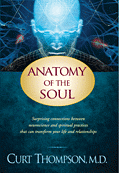
Curt himself suggested that neurology is hot right now.  Faith and science question loom large.  And the trend to be interested in spirituality is deepening.  To think about formation in light of how God wired the brain to work, and to apply that to ordinary stuff like relationships and growth, maturity and Christ-likeness is a useful combo.  For whatever reason, this was a hugely popular workshop, a much-discussed book, and we have gotten more in stock.  Whether you are seriously interested in psychology, counseling, brain studies and helping others or if you are an ordinary person just needing some new insights about solving your own life issues, Anatomy of the Soul could be helpful, and will surely be an interesting, absorbing read.   It sure was a big hit in Pittsburgh!
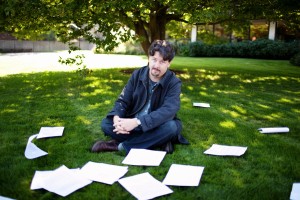
Response-Jeff-Overstreet-33-300x200.jpgAnother workshop leader at Jubilee whose books were a bit hit was Jeffrey Overstreet.  He did a workshop on film criticism and his book Through a Screen Darkly: Looking Closer at Beauty, Truth and Evil in Movies (Regal; $17.99) nearly sold out.  It’s a good one, too
, and we’ve enjoyed recommending it.  He will be at the IAM Encounter 2011 arts event in NYC next week so we ordered more of his book right away!

 Also popular was his workshop on why reading stories is good, how fiction works, especially the epic sort of fantasy that he writes.  Students who like well written fantasy novels snatched up Aurialia’s Colors, Ravens Ladder and Cyndere’s Midnight (Waterbrook; $13.99 each.) We even took a few pre-orders for the forthcoming next one in the series, The Ale Boy’s Feast which officially releases in early April.  Most people that read the first are hooked and are eager to learn how the epic plot unfolds…

What an upbeat and kind guy he was, too.  It is good to connect to authors, to hear about their writing and hopes and artistic vision and, of course, to be reminded of this natural connection between writer and bookseller and reader. Thanks to Jeffrey for his good work, kind spirit, the encouragement he offered to young readers and aspiring writers, and for befriending this stressed out bookseller amidst the craziness of such a large gathering.

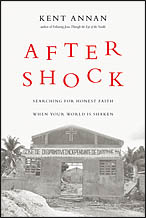
Kent Annan of Haiti Partners was very moving as he walked students through his two books, one that came out3617.jpg a year ago (just before the horrific earthquake in Haiti) Following Jesus Through the Eye of the Needle: Living Fully, Loving Dangerously (IVP; $16.00) and the brand new one—honest, raw, powerful, poetic, courageous—After Shock: Searching for Honest Faith When Your World is Shaken (IVP; $15.00.)  Those that met him and his Haitian friend were very, very moved; honored.  What a good man.
The few CCO staff whose job it is to curate and orchestra and execute this huge gig deserve more credit than most can ever realize.  I get to see some of the behind the scenes stuff—I’m nosy, for starters, but our large role there necessitates interfacing with sound guys and schedule keepers and stage hands, not to mention most of the key speakers.  I can’t tell you how complicated it all is and how these few manage it.  We’re tickled to be a part of it year after year, selling books about this same theme: God cares about all of life, Christ’s redemption is broad in scope, and we need to think faithfully as we serve the culture God has placed us in, making a difference in big and little ways.  Students, especially, get to think about this as they ponder their life’s callings in the university classroom.

MELLEBY SAYS “MAKE COLLEGE COUNT”

This is why we did a special shout out and celebration for the brand new Derek Melleby
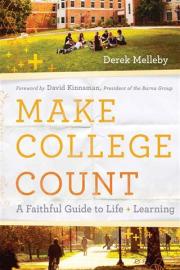
make-college-count-a-faithful-guide-to-life-and-learning.jpg book—inspired in no small part by the Jubilee conference itself—Make College Count: A Faithful Guide to Life + Learning (Baker; $12.99.)  Derek did a workshop for first year students, and in a side-bar event nearby, for nearly 150 high school seniors.  This little book is a pre-Jubilee primer, the best resource of its kind to get high school kids thinking about these great questions that will frame their college years.  You’ll hear be promote it as the graduation gift-giving season approaches this spring.  In a way, I’m sure this year’s Jubilee felt like a real celebration for Melleby and his closest friends and family.  He mentions Jubilee in his book, so it was fun to do a quick hat tip.   Yay.

* * *

Not every great conference has great authors.  But it is our experience that the buzz of the book display, the fame of the authors, the quality of conversation around speakers who are passionate and writers who who care enough about a topic to write a whole book on it creates, most often, a vibrant and robust setting for serious transformation, for big ideas, for on-going commitments to read and learn and grow.  A cynic might say that it is obvious why we think this, as it is all about the money for us.  (Yes, at least one blog–written by a person who does not know us at all–suggested as much.)

Think what you will, but we know in our hearts that it is our great joy to watch folks buy good books, to anticipate the growth and learning that will take place, and to hunger for God’s glory to be known as His people do good works.  From engineering to the arts, from political theory to fighting slavery, from writing fantasy to thinking about math, from reforming our food habits to reforming our engagement of popular entertainment, there is much good to be learned. There is much to be done.  Jubilee is about God’s claim in Christ over all of life and Christ’s gospel of grace so transforming college students that they, empowered by the Spirit, involves themselves in local congregations and attempt to transform the world.  I wish you coulda been there.

See lots of great pictures of Jubilee 2011 here. Thanks to Andrew Rush.

As we unpacked the rented truck in the snow when we got home Monday night, a friend and local customer offered to help.  It was a great blessing.  Now I’m sick, we’ve got boxes everywhere, and we are off to two other smaller events before regrouping and heading to IAM Encounter in NYC next week.  Pray for us if you can.  Thanks for caring.

The “Wish I Was There” post-Jubilee Special
any book mentioned
20% off
this week only
order here
takes you to the secure Hearts & Minds order form page
inquire here
if you have questions or need more information

Hearts & Minds 2345 East Main Street  Dallastown, PA  17313     717-246-3333



Two more glimpses into Jubilee, three more popular books

In my March monthly column which I posted the other day I had a long piece about the Jubilee conference; I really hope you enjoyed it. Alongside a lot of descriptions of a lot of authors and books,  I noted a few things that were symbolic of the Pittsburgh Jubilee gathering, episodes that offered windows into the wonder of it all.

Here are two more.

Imagine a gathering of more than 1500 college students (and a goodly batch of adults, too.)  They are run ragged attending serious workshops, listening to several plenary speakers at a time, blasted with sound and lights and “late night ops.”  There is a lot to do and a lot of content. 

As the final few shoppers lingered at the book display area around 12:30 am one night, a large group came spilling down a near-by escalator.  I figured most students were over at the hotel, singing, praying, eating pizza or out running around the city, fooling around as kids do.  Yet, a large gang had stayed up late after the main sessions, taking in a screening of the heavy documentary Waiting for Superman.  As you probably know, this is a study of the problems with public education.  A spirited conversation ensued and it is fantastic to think that these students– tomorrow’s educators, policy makers, parents, and citizens– would (as thoughtful Christians) take up this controversial debate, late into the night.  I was glad we sold a few Jonathan Kozol books, too.  Everybody should read a Kozol book or two at some point in their lives. 

Another vignette: some of these same night owls—with minds ablaze with important discussions and hearts full of visionary dreams of reforming culture—got up early before the start of the day to pray.  CCO offers several prayer rooms and opportunities for pastoral care throughout Jubilee, but this was an early morning op for practicing lectio divina, a prayerful and open-hearted reading of Scripture.  Drawing on exercises from Divine Intervention: Encountering God Through the Ancient Practice of Lectio Divina (Zondervan; $11.99) students were invited to experience God more directly through The Word.  Hundreds of students participated.  The prayer time was led by a very solid, exceptional CCO staffer and I can’t stop thinking of how good it is that the conference created this unique kind of sacred space for quiet time and that so many collegiates chose to rise early for morning prayer. 

Discussing the future of our troubled school system and wanting to enter in to ancient, slower ways of attending to God in prayerful Scripture reading.  And more than just a few students choose these extra opportunities!  Thanks be to God!  I hope you have know any young students away at college that they are being enfolded into fellowship groups and Christian ministries like this.

180134_10150107806043351_343966923350_6179306_7809793_n.jpgOf course, for us, at least, much of the memory of Jubilee involves the books that were most popular, the good conversations we had at the book tables, and the joy of knowing that students were learning the habit of reading as an act of discipleship.  Here are three more books we promoted–the authors were not there, but I high-lighted them from up front, and we sold them well; order them now from us and get the “wish I coulda been there” disount!

Letters to a Young Calvinist: An Invitation to the Reformed Tradition James K.A. Smith
51KK-mlP4QL._SL500_AA300_.jpg (Baker) $14.99  As I have said here before, this is an ideal guide–thoughtful, wise, aware, a bit assertive, and yet kindly–written as a series of pastoral letters from an “older brother” to some younger, fired-up Christians who have discovered the intellectual and doctrinal meat of a robust, conservative Calvinism.  James understands the passion of this new movement and yet invites them to a somewhat more broad and culturally-engaged sort of Reformed tradition.  As sometimes say that this is a great read, spiritually beneficial whether one is young or Calvinist.  It is also a very helpful overview of the different “sorts of” or expressions of the Reformed traditions, written by a popular philosopher who in many ways captures the neo-Calvinist worldview that animates much of the Jubilee vision.  I didn’t say in my announcement my rhyme that it is a survey moving from John Piper to Abraham Kuyper” but I know at least some would have gotten the allusion.  Highly recommended.

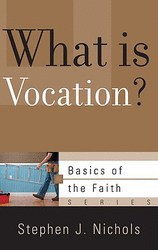
What is Vocation?  Stephen Nichols (P&R) $3.99  I highlighted this when I described the
1596381779_l.gif local Summit: Your Work Matters to God that we helped with a few weeks ago.  Steve is a very sharp young theologian who has written in this booklet the best, simple, brief teaching on work and calling and vocation that we know of.  I pushed this from up front, thinking that if students get this, they will be far along the journey of relating faith and life in the way the conference intends.  You hope you agree that this is one of the important conversations in which the local church must be engaged.   Let us know if you want to order any in bulk for your congregation or group.

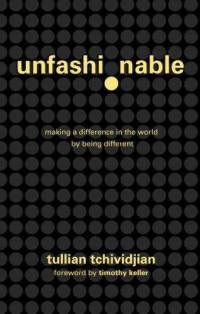
Unfashionable: Making a Difference in the World by Being Different Tullian Tchividjian (Multnomah) $18.99  Whenever one works with younger folks in a big way like this, attracting some of the most hip and savvy missional organizations and speakers in the country, we run the risk—or so it seems to me—of sending a message that what the event is about is mostly just being relevant. Edgy.  Fashionable.  Reaching out through accommodation and contextualization.  Much good can be said for that bridge-building impetus and heaven knows that too many churches are too boring, too ugly, too unaware of the interests and needs of their members, disinterested in the postmodern ways of most Americans under the age of 50.  However, awareness of, and engagement with, the artistic styles, forms and fashions of the culture should not be understood as a call to compromise.  The ethos of Jubilee is not one of merely being cool;  it is way cool, but simply is not the point. 

unfashionable-making-difference-in-world-by-being-different-tullian-tchividjian-hardcover-cover-art.jpgTo make this un-mistakenly clear, I touted this book and we were thrilled that we sold a bundle.  This is one of the wisest, most compelling, and inspiring books that does this Biblically-grounded dance of “in but
not of” the world of which we know.  That CCO students believed my quick announcement, that this would be a worthwhile book to own, and that the ideas are urgent, meant a lot to us.  This is radical stuff. 

The author has done his walk on the wild side, and has experimented with missionally-savvy, culturally-relevant church planting, too.  He is now the pastor of a large and rather typical Presbyterian (PCA) church in Florida.  Tchividjian is actually Billy Graham’s grandson and we love all three of his recent books.  Unfashionable really is fantastic and it captures much of what Jubilee is about, much of what we believe here, and we are happy to commend it.  Frankly, I hope you are at a place that worries about these things (if you are not, you may be just a bit too out of it, or a bit too comfortable.)  Read this book!

The “Wish I Was There” post-Jubilee Special
any book mentioned
20% off
this week only
order here
takes you to the secure Hearts & Minds order form page
inquire here
if you have questions or need more information

Hearts & Minds 2345 East Main Street  Dallastown, PA  17313     717-246-3333


Perhaps it Was the Door: Word Pictures–and books—from Jubilee 2011

06b3b_jubilee%20%5B104%5D.jpgThanks for your prayers and your interest in our work at the CCOs Jubilee conference in Pittsburgh last week.  And for those of you we bumped in to at Jubilee, please forgive me if I was rushed or confused.  I was, well, rushed and confused (and more cranky that I should have been.)  Still, crazy-making as it may be, it was fun to be out there, again, wasn’t it??

For those who did not make the pilgrimage to Pittsburgh, I invite you to click over to my March monthly column where I do an extended review of some of the moments that stood out, some of the authors we met, some of the books that sold best.  Whether you care about this gathering of young adults or not–and you should, you know–I think the points raised and the descriptions of the books will be beneficial.  Let me know what you think, if you’d like, by posting a comment below.  (Facebook comments are welcome, too, but are less lasting, so why not comment right here on the blog.  No orders here, though—that’s what the webpage order form page is for, and it’s a bit more discreet.)

I found myself typing this writerly riff—I wish you coulda been there.  Oh, and I really do wish you could have experienced it for yourself—nearly 2000 college students learning about God’s Kingdom.  Seeing the now-defunct
jubilee  booktable.JPG prison door, brought from Northern Uganda by Bob Goff.  Seeing me on stage with the jumbotron book covers, celebrating great authors.  Listening in as engineering majors asked why no one ever invited them to think about the relationship of faith and technology. Watching the math nerds argue about pages in a book we carry offering a Christian view of mathematics. Meeting folks just back from Haiti.  Experiencing the glorious insights from the multi-racial speakers–and learning about that subject from a passionate evangelical sociologist of the global church.  Catching the book buzz as titles flew off the tables—Anatomy of a Soul (or neuroscience), Bonhoeffer (on a Nazi-resisting Lutheran martyr), Aurilia’s Colors (the first in a well-written fantasy series), books on localism, food, and farming, books on faith and science, faith and business, books on calling and vocation, resources on doing justice, a brand new book on American history, books about prayer, books on faith and scholarship, books about making a difference.

And being blessed as friends brought us pizza and coffee and sandwiches and throat lozenges.  I wished you coulda seen us, working the book display from 8 am until 1 am, talking not stop, listening, recommending resources, highlighting titles.  Doing our H&M thing. 

Yep, I think the column is pretty great, not that I tell it that well.  (This is hard to express and I leave so much out, good authors and good friends who should have been named.)  But the stories told are instructive for anyone interested in how churches can equip ordinary folks to live life with a lively faith in the real world, and how best to inspire younger adults to be, as Gabe Lyon’s describes them in his must-read book—and the Friday night keynote talk at Jubilee 2011–The Next Christians.  We offered a lot of links to authors and organizations so you can check them out for yourself.

I hope by reading my description of Jubilee 2011 you not only get a glimpse more into what your support of Hearts & Minds enables us to do, but helps you get a sense of some of the themes and topics and books and authors about which we are most impressed. Stay in touch if we can serve you further.  Thanks for reading.

Do consider taking advantage of the
“Wish I Coulda Been There” Discount Special”
which I describe at the end of the column.

Click over to the monthly Review Column, here.


Hearts & Minds 234 East Main Street  Dallastown, PA  17313     717.246.3333 

The Four Holy Gospels

FourHolyGospels.jpgBeth and I have had the great pleasure of often hearing Makoto Fujimura, the esteemed New York abstract painter, and founder of IAM (International Arts Movement) at venues large and small, including a moving plenary presentation at last year’s Jubilee conference in Pittsburgh.  We will sell books again at the upcoming IAM Encounter (March 3-5) with an extraordinary array of artists, dancers, actors, writers, designers, thinkers, cultural creatives, musicians, and patrons of the arts. We have often commend his moving collection of essays—many set in the immediate aftermath of the fallen towers on 9-11—called Refractions: A Journey of Faith, Art, and Culture (NavPress; $24.99)  It is a truly wonderful paperback, handsome, well-designed, and worth reading again and again, as we see this multi-cultural global citizen, living for God’s Kingdom in Manhattan, ruminating on what art and artists might offer as we see the common good in times such as ours.

Although Mako is low key and humble–the IAM Encounter is so full of remarkable people that he is just one among many strong Christian thinkers and creators–but I suspect that this year, the event will have at least some strong energy from the historic release of Mr. Fujimura’s collaboration with Crossway Books, the much-anticipated illuminated Bible edition called The Four Holy Gospels.  This commissioning was pitched to Fujimura by the President of Crossway, who envisioned doing something extraordinary to celebrate the much-publicized  400th anniversary of the King James Bible this year.  How about a rare illumination by a modern abstract artist, in the recent, beautifully-rendered English Standard Version?  The ESV is a recent, elegant and exceptionally accurate translation (which some, by the way, say is the most accurate Bible translation yet done, and which has a cadance and feel, or so it seems to me, somewhat like the old RSV.)  Fujimura is one of the living masters of nihonga, the ancient Japanese technique of painting, on the floor, using crushed mineral pigments.  I’ve talked about his stunning work here before (here, for instance) and we stock his other books.  To invite him to do major original paintings on the themes of the four gospels (not to mention embellished letters and such) was brilliant.  The project must have felt daunting.  See his exceptional, crisp website and a bit about his thoughts doing these paintings, here.
 
9781433521942.jpgThe Four Holy Gospels project is nothing short of spectacular.  The Biblical text is in a good font, in a good size, making it ideal for liturgical reading—some churches carry the gospels in during the assembly and some hold high the book as they read from the gospel each week.  It is nice not only for reading aloud in public (the nice font is so helpful) but beautiful for home use as well.  We are not fancy people, Beth and I, and our home is crummy and cluttered.  But there is a place for such beauty and we trust that many of our readers will not balk at the price of such a high quality volume.  This may be a once-in-a-life time type purchase, something wonderful to have and to give.

As Jonathan Wilson said last week in his wonderful Books & Culture podcast, some may keep this as a collectors item, or as a coffee-table art book. It is (as all of the Crossway Bibles) exceptionally made, with a smyth-sewn binding, and durable, elegant paper.  John is fastidious about his books and he knows that there is no shame in wanting to handle a Bible like this with great reverence, or to keep it nice for display.  But I was thrilled to hear him say he is prepared to allow it to get beat up a bit as it is going to be used in his home.  Am I cheesy to think of the Velveteen Rabbit story?  Yes, The Four Holy Gospels are illustrated with original, important artwork, making it very special. It is on glossy paper and has the look of a coffee table art piece, and it is.  But it is meant to be used. I am sure of it.

It is interesting that this sort of project—one single artist illuminating the Biblical text–has not been done, as far as we know–for perhaps 400 years!  When I said in my first paragraph that this was historic, I wasn’t not using breathy hyperbole. 

You may know the ongoing Bible calligraphy project called The Saint John’s Bible, beautifully20071130stjohnbible.jpg produced by The Liturgical Press of St. John’s Benedictine Abbey in Minnesota.  (Do visit their truly great website, here.  Do a “google image” search and see some of the wonderful work done.)  We have stocked those hefty volumes as they’ve come out, one by one, the Pentateuch, the Wisdom Literature, the Prophets, The Gospels & Acts. The Historical Books is the sixth and most recent (and the largest and most expensive, selling for $70.00.)  We sell each volume for 20% off.

The writing of The Saint John’s Bible is equally historic–a lost art being revived by a team of world class calligraphers doing the entire Bible (in the NRSV) by hand.  We are very fond of these, stock a few little paperbacks about the project as well, and have enjoyed a video documentary on the making of it. Some of our customers have seen the originals in an exhibition that was traveling (and spoke to us of how deeply moving it was to behold them.)  We pray God will use these artists to illuminate the text, in every sense of the word.  The joy and beauty and craftsmanship of this is tremendous, but my sense is that it isn’t used as a reading Bible.  Not too many will risk reading the calligraphy in church or lug this thing to a Bible study.

D8B9-170.jpgCrossway’s The Four Holy Gospels, though, just might find its way into ordinary home use, or at least churchly readings.  It is large, it is artfully embellished, and it may feel unusual for those of us used to tossing our compact paperback Bible into our purse or backpack.  But we commend it.  This is art to be used, the Bible enhanced, the Word of God made vital to encounter, to open up a multi-sensual, worshipful, heightened reading.

We are eager to offer this handsome ESV gospel volume, complete with13404710_Screen-shot-2010-11-15-at-10.26.29-AM2-560x416.png the handsome and sturdy slipcase.  We will sell it, at least for now, at an introductory price that is seriously discounted; we understand that good art and well-crafted books are expensive, but want to make this more affordable for you.  Read the publisher’s description of it here for further background, details, and some basic dimensions and such. There is a great video there, too, which you’ll want to see….Help us spread the word. 

BLOG SPECIAL DISCOUNT
The Four Holy Gospels
illustrated by Makoto Fujimura
usually $129.00
now only
 $75.99

order here
takes you to the secure Hearts & Minds order form page
inquire here
if you have questions or need more information

Hearts & Minds 2345 East Main Street  Dallastown, PA  17313     717-246-3333

Jubilee bound: Pray for our work in Pittsburgh

So I’m sitting here shaking my head at the over three foot tall poster with brightly colored paper taped on cardboard which I convinced Beth to make, listing, in rather large type, the almost 70 categories of books we have to pack to eventually put in the rented truck, heading West to JUBILEE 2011 next week.  I can prop this bad boy up in our basement warehouse, and see what I’m needing to do.  Make a big sign.  Check.  Pray and ponder, study and sweat.  Check.  Get busy boxing up the titles, selected from stacks laying around everywhere, from garage to cellar, from van to back office.  Nope.  Can’t get in that zone yet.

Better World Books warehouse 2.jpg                                                                                                 okay, so it isn’t this bad..
.

Soon, though, we’ll be pulling and packing, maybe listening to the new Over the Rhine CD or the recent Indelible Grace Live Hymns album (you really ought to order that from us) or an old fav to get me going, Zwan, the first post-Smashing Pumpkin’s project of Billy Corgan.  And Bill Mallonee, perfect for the near despair and “just over the horizon” hope we have prepping for these exhilarating gigs.  Music is a must as we’re pulling the books.  If I really need to ramp up out of a slump, I break out the Bach.

Few folks really know how much mind-numbing back room works goes on planning and executing these off site traveling bookstores.  If you’ve seen us on the road, this Jubilee conference is a lot bigger than anything we do anywhere else.  And, getting ready for this one, is more complicated because there is so darn much going on, so many topics and speakers and issues.

Just today I was negotiating the shipment of a very innovative architecture book rethinking notions of “sacred space” (see the stunning website of their award-winning design firm VisioneeringStudios) hoping it arrives in time. And we’re trying to figure if historian John Fea’s forthcoming book that is slated to release from the bindery just next week—Was America Founded as a Christian Nation?: A Historical Introduction (WJK; $30.00)–will be shipped to our site in time. He will be there, and won’t have seen it yet.  We will have it before the Westminster/John Knox warehouse, Lord willing, so that will be very fun.  We had a very interesting hunt looking for just the right books for a workshop on faith and food; they’ll be drawing on Pollen and Berry and the new localism, framed by serious Christian convictions about home and place; we have so many on that topic, but which are most useful for this gang? I know they will use Food Politics: What Everyone Needs to Know by Robert Paalberg (Oxford University Press; $16.99.)  I think I’ll show ’em the new Food Rebels, Guerrilla Gardeners, and Smart-Cookin’ Mamas: Fighting Back in an Age of Industrial Agriculture by Mark Winne (Beacon; $24.95.)  If only I can remember who distributes that publisher, nowadays.  

And that was the easy part, researching more books, making some calls, thinking about related, relevant titles, and getting publishers do get us the goods.

ron at book table.jpgSo, here we go, needing to ask you to pray for us again.  We will talk to many of the nearly 2000 participants at this upbeat and zany gathering for college students, and they will have good questions, important book needs, wanting to read the right stuff.  Jubilee is loud and big, but it is, in a joyful way that is hard to describe, studious.  Students want to consider—some for the first times in their lives—the implications of their religious convictions for college, for career, and for their citizenship in the 21st century. 

I mentioned in our last post that Gabe Lyon will be there, talking about the vision behind his last book, The Next Christians (Doubleday; $19.99.)  I featured it at the LWCC Summit on work, which I wrote about in the last post,  and offered a discount on my last blog post about it, because he writes about the notion of calling, and how folks are thinking in terms of not just employment, but of holy vocations, so it was a great fit for that event.  Gabe is right that there are new sorts of faith expressions around the evangelical churches these days, and Jubilee is a part of that story.  Jubilee has helped create that story.

Next Christians is mostly about how younger adults are drawn to faith that is principled, active, caring, and creative, faith that enables them to take up careers and vocations where they see themselves as agents of0310324491.jpg restoration, seeking God’s best for the world.  Lyon’s hosts the Q Society Room DVDs that we’ve reviewed before are and these are somewhat indicative of what Jubilee is like.  (In fact, that innovative architect and design firm I mentioned? Mel McGowan is on the Q DVD Where You Live Matters and he will be speaking at Jubilee 2011 next week. He is an example of the caliber of the folks who speak there, evoking deeper faith and action from these twenty-somethings, showing how to be a serious Christian and passionate about your calling, career or service.  You won’t get the energy or loud music, but those four DVDs and their companion study books really are the sort of thing we’re talking about.  Check ’em out with you group!

Not all of the speakers are as hip and splashy as all that, though, and some are doing important work with the world’s poorest and most vulnerable.  There will be workshops on stopping human trafficking, including one or two by IJM staff; you may know books like Not for Sale or Just Courage or The Good News About Injustice; we’ll have ’em.  Few conferences or movements bring together the thoughtfulness of nurturing the Christian mind and topics like work and vocation, all alongside this big passion to help mend the world of some of it’s hurts.  Only God builds Christ’s Kingdom, of course, so we lift high the cross.  But we do so with intentions to be agents of change, in service to our neighbors. 

zealous-love-practical-guide-social-justice-danae-yankoski-paperback-cover-art.jpgA keynote speaker, Bob Goff, who plays a significant part as a mentor to Donald Miller in Million Miles in a Thousand Days will be back–do watch his fantastic, funny talk from last year at jubileetv—and has a good chapter in a collection of pieces about stepping out and getting involved in social reformation.  It’s called Zealous Love: A Practical Guide to Social Justice edited by Mike and Danae Yankoski (Zondervan; $16.99) with a foreward by Eugene Peterson.  We couldn’t be happier to promote it.  Great chapters, handsome, colorful look, excellent authors, very useful.  And Bob’s chapter, “Why I Do What I Do” has as much verve and spunk as he does.  Good advise from an international activist and all around good guy.

Another speaker or two will talk about writing (Denise Frame Harlan has that amazingly good chapter in Spirit of Food: 34 Writers… that I’ve raved about here; heck, she talks about CCO in that chapter, so it’s great she’s speaking) while another speaks about mathematics from a Christian perspective. (Mathematics Through the Eyes of Faith is coming out later in 2011 from HarperOne; somebody out there has to care, eh?)

 throughascreendarkly_2.jpgA fabulously energetic couple from New York will join us—he is an actor, and she a dancer. Jeffrey Overstreet will bring together his passion for visual arts and writing by doing a workshop on his great book about film, Through a Screen Darkly: Looking Closer at Beauty, Truth and Evil at the Movies and another on writing fantasy.  You may know his Auralia’s Thread series is considered some of the most nicely written fantasy stuff in quite a while.  The first three books are Auralias Colors, Cyndere’s Midnight, and Raven’s Ladder. The fourth installment, Ale Boy’s Feast, will be arriving in March.  Three cheers.  Students who love fantasy and those wanting to learn to write will so enjoy Overstreet.  (By the way, it is said that the director of WALL-E, during the last months of him making that great animated film, was reading Jeff’s movie book.  How cool is that?

Yes, Jubilee is all about equipping students to be faithful to Christ, living their lives–including their studies and their eventual careers—for the advancement of God’s glory.  We hope they learn, are inspired, network with other students, and buy books so that they might be more faithful to Jesus.  We hope that church leaders pay attention, and see this broad Kingdom vision, this emphasis on cultural engagement, work, vocation, thinking faithfully, living out discipleship in all zones of life.  What would a local congregation look like if this Jubilee vision–the Lordship of Christ making a transforming difference in people’s lives and in all of society—was thoughtfully proclaimed and modeled?  How can you nurture in your circles a deeper commitment to the grace of the gospel and the willingness to think about new ways to connect faith and life? 

Please look here to see the speakers at Jubilee.  If you read it carefully, you see many are authors and we will have their books there.  (Or, in the case of the important indie musicians playing their recorded work.  Don’t miss the descriptions of Zac Williams and the unique Colonizing the Cosmos, who we love, by the way.)  There are nearly 20 authors who have published books, some of them a lot of books, and we are thrilled to cross paths with so many good writers and Godly teachers.  Check these out, pray for us as we pack them, and let us hope that they sell.  These books in the hands of college-age disciples–those Next Christians–will rock the world.  Maybe you should pick up a few so you can be a part of the movement, whether you come to Pittsburgh or not.

 Order anything Jubilee related
mentioned here or in those bios shown at the
 Jubilee website link,
and
we’ll offer you
  20% discount.
 

Or maybe you should just drop everything and head to Jubilee.  Stranger things have happened.  Be a last-minute show up there, and we’ll give ya some free books at the mammoth book table display.  If you can choose, from the over 70 categories.  Come on!

If you go, or if you know some college student you can convince to go, they’d hear, among others:

Daniel Sepulveda, a professional athlete, from a little outfit called The Pittsburgh Steelers.

Dr. Curt Thompson, a psychotherapist who wrote a wonderful book on brain studies, Anatomy of the Soul: Surprising Connections Between Neuroscience and Spiritual Practices That Can Transform Your Life and Relationships (SaltRiver; $14.99)  I’ve been touting this for much of the year.  Very, very interesting.
      
Soong-Cha Rah, author of the new Many Colors: Cultural Intelligence for a Changing Church (Moody; $14.99)  A must-read on multi-ethnic ministry.

Charlie Peacock, recording artist, Grammy-winning producer, and mentor through his Nashville Art House. Author of New Way to Be Human (Waterbrook; $12.99.)  This is a perfect example of ordinary discipleship stuff with this creative, engaged, real take.  Right on.  Just a few left!

Andi Ashworth, co-founder of Art House, and author of Real Love for Real Life: The Art and Work of Caring (Waterbrook; $12.99.)  One of our favorite books on the vocation of homemaking.

Walt Mueller, Director of CPYU, and author of, among other good stuff, the seriously brilliant Engaging the Soul of Youth Culture (IVP; $18.00.)

Lisa Sharon Harper, New York activist and author of Evangelical Does Not Equal Republican or Democrat (New Press; $24.95.) An important voice!  With a forward by John Perkins. 

Eric Metaxas, most recently, author of the award-winning biography, Bonhoeffer: Pastor, Martyr, Prophet, Spy. (Thomas Nelson; $29.99.)  See my review, here.

James Emory White, author of Christ Among the Dragons, Serious Times, and The Mind of God.  (InterVarsity Press; $17.00 $15.00 and $13.00.) A visionary calling folks to thoughtful engaged cultural reformation.  I recommend these three, especially.
 
Kent Annon, just back from his work in Haiti, will launch his brand new book After Shock: Searching for Honest Faith When Your World Is Shaken, the follow up to the excellent Following Jesus Through the Eye of the Needle: Living Fully, Loving Dangerously (IVP; $16.00 and $15.00.)  These will str
etch you for sure.

make-college-count-a-faithful-guide-to-life-and-learning.jpgDid I mention Derek Melleby?  There are more speakers, but I have to mention Mr. Melleby.   I’ve already announced his very new book Make College Count: A Faithful Guide to Live + Learning (see my description here.) It is published by Baker, selling for just $12.99.  It’s a small, handsome, well-designed hardback.  In many ways, Derek’s book is at the heart of this whole Jubby shindig.  The CCO, the campus ministry organization that sponsors Jubilee, is all about helping students think about their experience in higher education in ways that are fresh, meaningful, and good.  That is, they invite students to wonder what God thinks of it all—what is a Christian perspective on college?  

This is the extraordinarily important question for college students that Derek and his co-author Donald Opitz raise in their earlier book, The Outrageous Idea of Academic Faithfulness: A Guide for Students (Brazos Press; $13.99.)  In many ways, that book is “the” Jubilee introduction, helping students this this “outrageous” idea that God cares about their college life and that a Christian worldview can provide insight, direction, meaning and purpose to their classroom work.  I dare say if it weren’t for the influence of the Pittsburgh Jubilee Dr. O and Derek never would have thought to write Outrageous Idea.  And if they would have, it wouldn’t have been so good.  I still say that there is simply no other book for collegiates like it.

And that is important (if I may preach just a bit more.)  Many don’t get it. Even some who care a lot for students don’t quite get it.  They don’t see that young adults want a vibrant faith, ought to bend their knee to Christ Jesus, and that when they do, they will have an entire new vista of meaning and coherence in their sense of vocation as students. Their renewed minds will necessarily lead them to consider their academic work in a new light (literally, a new Light.)  Because Derek studies the transition high school students make as they move off to college,  he was convinced there needed to be a resource to give to younger students, inviting them to ask the big questions about the point of college, before they leave for campus.  Can their church experiences and faith from their high school youth groups sustain them into being intentional Christian students in their college years?  Make College Count: A Faithful Guide is that book, the small, but handsome, short but powerful gift item to give to high school kids, or first year college students.  Derek will be at Jubilee, too, doing one good workshop for high school students and their parents, and another for younger college students.

 I am sincere when I say Derek’s work at Jubilee is really as important as any.  Yes, they haveCTI Logo - Web.jpg scientists, PhD’s in economics, internationally known preachers and several professional artists, playwrights and novelists.  They have a former White House speech writer, and a State Department staffer who has, well, she has traveled extensively into countries I can hardly spell. They have exceptionally successful and thoughtful business people and there are workshops on everything from sports to medicine, engineering and psychology,  from being a college professor to being a homemaker, from fighting for justice in Africa to thinking about new ways to heal our racial tensions and our hurting urban schools.  But Derek?  His little Make College Count is the starting point, helping students at least enter the conversation of what God thinks about their higher learning and why they have reason to think that the Christian faith will help them get through it well.  It isn’t a bad question to consider, is it?  Please pray that we help them answer it well. 

Want a Melleby book autographed?  We can make it happen.  What a nice gift to a student transitioning to college.   Just give us the name of the guy or gal.  Give ’em that now, and who knows, maybe they’ll want to attend Jubilee 2012.

BLOG SPECIAL
20% off
any book mentioned
order here
takes you to the secure Hearts & Minds order form page
inquire here
if you have questions or need more information


Hearts & Minds 2345 East Main Street  Dallastown, PA  17313     717-246-3333

Reflections on a “Conversation with Steve Garber” and the Summit on Vocation: Your Work Matters to God

Well, friends, I wrote a long and (I hope) interesting reflection on the “evening with Steve Garber” conversation from Friday night, and the Living Word Community Church Summit on Vocation and Work.  Along the way, I note some books, old and new, and give the big picture of Steve’s journey, how we here so resonate with his vision and style, and then segue into a reminder of our role in the upcoming Jubilee 2011 conference in Pittsburgh.  Since it’s a bit long, I posted it as the monthly column for February.  I really, really hope you take a few minutes to read it.

Here is how it starts, with a sincere word of gratitude for prayers and supportive friends.  We have been touched by the many prayers offered on our behalf.  So, to start:

Thanks to those who read my face book plea a few days ago to pray for
our staff, our families, and the conversation we were hosting on Friday
with Steve Garber, author of Fabric of Faithfulness: Weaving Together Belief and Behavior (IVP; $16.00.)  (See my hefty review of it here.)
It means a lot that so many folks—including those who order books
from us on line, even though we’ve never met—support our ministry, and
call upon God to bless and sustain us.  There is some pain and hardship
on this end—where isn’t there?—and we are glad that friends care. 
We are blessed.

The Garber event hosted at Living Word Community Church was fabulous…

                                                                                        READ THE WHOLE PIECE, HERE.

Here are just a few of the book covers of titles I mention at the longer review.  There’s a good discount deal over there, too, so check it out.  And pass it on.  Thanks for caring.

1596381779_l.gif
0802865593.01.LZZZZZZZ.jpg15261973.JPG

shop class.jpg

41589_47708448650_5486088_n.jpgResizeImageHandler.ashx.jpg


Hearts & Minds
234 East Main Street
Dallastown PA 17313

717.246.3333
read@heartsandmindsbooks.com

Reflections on a local Summit: Your Work Matters to God

Thanks to those who read my face book plea a few days ago to pray for our staff, our families, and the conversation we were hosting on Friday with Steve Garber, author of Fabric of Faithfulness: Weaving Together Belief and Behavior (IVP; $16.00.)  (See my hefty review of it here.) It means a lot that so many folks—including those who order books from us on line, even though we’ve never met—support our ministry, and call upon God to bless and sustain us.  There is some pain and hardship on this end—where isn’t there?—and we are glad that friends care.  We are blessed.

The Garber event hosted at Living Word Community Church was fabulous.  Steve is a dear,16975_100196520011356_100000630242594_2816_6847126_n.jpg kind friend, and it was an honor to chat him up, as the Brits might say, in front of a crowd of more than 100.  He is rich in his vocabulary, honest and profound, and although I tried to insert a bit of goofy upbeat energy, his intense and deeply meaningful conversational style carried the day.  The mood in the Living Word coffee bar wasn’t somber, really (indeed, Steve talked a bit about his adolescent view of girls, joked about being a California boy who still isn’t fond of the cold Pennsylvania weather, and the significance of hope, informed by a Stanley Hauerwas article he uses with students sometimes.) But there was remarkable intensity in the room as people leaned forward to catch every word.  We did struggle with important, weighty matters; he is a man of passionate energy, but gentle and soft-spoken.  He told stories of having conversations about Africa with folks as different as rock star Bono, a republican leader in DC with whom he is friends, and Gary Haugen, who Steve had encouraged as he was starting the International Justice Mission (IJM) which pioneered the struggle against sexual trafficking; he has traveled to Africa with Jars of Clay promoting their Blood:Water Mission (he’s on their board) and has a son who is a veterinarian who studied disease control in India.  Whew.  The mood grew lighter, but no less insightful, when he talked about his own story—dropping out of college in the early 70s to live with other Christians in a Bay area commune and then going to L’Abri to meet Francis and Edith Schaeffer, learning to “not leave your brains at the box office” by attending cinema with the late Donald Drew, or moving to Pittsburgh to work for the CCO, mentoring young law or medical students in thinking about “the truest truths of the universe.”  For a few years he helped organize our beloved Jubilee conference; there were some Jubilee-bound students there, in fact!

15261973.JPGOne of the themes that emerges from nearly every page of Fabric of Faithfulness is the question of what it means to be a responsible human being, especially once we know things.  From the ethical implications of “knowing” in a Biblically-informed (Hebrew) way–-yada, means to know and to care for and to be responsible for—through the media criticism of Neil Postman’s Amusing Ourselves to Death, through recent critiques of the info-glut culture of the internet, lamented by significant books like Nicholas Carr’s The Shallows: What the Internet is Doing to Our Brains—which may actually keep us from knowing and doing as we should— Steve invited us to think with our heads and our hearts, to feel deeply this truth that we are implicated in the brokenness of the world.  The telling of the Good Samaritan story (as an answer to a lawyer who wondered about who we must love) could be, as he sometimes says, quoting novelist Walker Percy, the story of the guy who “got all A’s but flunked Life.”  We can be smart and successful and so well informed, but not do anything about it all.  What good is that? How human is that?

He didn’t set up a video screen, but he described the power of the song “Numb” written by The Edge and Bono, recorded on the U2 album Zooropa.  (Don’t feel, don’t touch, don’t think, don’t connect…I feel numb!) There were some serious U2 fans in the crowd, sipping Seattle’s Finest roast, and this was a nice touch.  We had some fun doing analysis of popular culture, and he shared a few key Bible insights.  He told us about his longing for better answers about the meaning of our caring (or not caring, as the case may be) and what lead him to write this book about long-haul, responsible discipleship.  I know a lot of folks enjoyed hearing a thoughtful author talk about his life, and how it shaped his book.  Who knew it would go from the San Joaquin Valley to Helmhotlz Switzerland, from the Greek Stoics to contemporary Seinfeld.  Yada, yada, yada, you know?

It was especially moving for us when he told about a moment he said he’d never forget, an evening when he was invited to listen to and talk about the gospel with, a private gathering of Tiananmen Square protest survivors, some who, in fact, where the actual ring-leaders of that historic uprising and massacre.  He could not be glib–he does not believe in “cheap answers” he said—as he carefully listened to these young leaders who love China, and wondered if Christianity might provide them with a full-body vision of life, if it would be true enough, to answer the deepest questions for their heroic lives and their changing culture.  He was speaking to the best and the brightest of the Asian world’s emerging culture, young leaders who saw their childhood friends die in their arms, perhaps the “Chinese Vaclav Havels” as the State Department China expert put it to him.  What would you say?

And we smiled as he answered a good question (what are some of the best things anybody said to you, what conversations were the most memorable or formative?) He told how his father wrote a letter blessing him when he chose to drop out of college; as a serious Christian and scientist in the early 70s this must not have been easy for him to do, and Steve is even now grateful for that blessed encouragement.  And he told how his future mother-in-law affirmed him when he and Meg announced they were to be wed.  He may be a bit of a romantic, but this is more than romantic sweetness—he knows that it is the deepest truth of the gospel that we can be known (in our clay-footedness) and still be accepted.  This grace shown to him by family is symbolic, for him, it seems, of the very grace of our merciful God, who knows us and loves us still.  And who commissions us to know the world ever more deeply, and love it, as God does.  Good stuff, this lovely episode from his courtship of Meg to a gospel centered life, to a passion for common grace for the common good in a world of war and sadness.

Well, the event was a good one, and we were glad to host an important writer, whose good words emerge from his good work, hosting conversations, networking artists and business folk, writing and speaking about the integration of vocation and the missio
n of God, the need to live fully for God in meaningful ways our secularized culture might understand.  People stayed and asked good questions, hugged one another, browsed important books under the subdued lighting.  It was a rich feast, an important and moving evening.  Steve writes on occasion for Comment, so you can find some archived essays there if you’d like.  And be sure to visit his own organization’s site, The Washington Institute on Faith, Vocation and Culture.

These questions about human responsibility to care was the thrust of his keynote addresses the next day as over 300 people gather at the LWCC Summit on Vocation: Your Work Matters to God.  He suggested that a wise and faithful work world ministry is all about translating the truest things about the human condition and the nature of the world into concrete and incarnational practices that can help our neighbors and culture flourish.  (It should come as no surprise, then, that he read Jeremiah 29, instructions for Daniel and the other exiles to “seek the peace of the city” where they find themselves.)  We live in a needy world, and few have gotten this matter of work and economics and justice and jobs very well figured out.  (Charles Dickens and Karl Marx lived in the same part of London in the same years, Steve noted, asking important questions about the meaning of the industrializing forces of the West, at the same time Pittsburghers were killing each other in the streets over labor uprisings and large factories and mills abusing their workers.)  No, there are no easy answers or simple formulas for a wholistic and historically relevant kind of lifestyle or work life here within late-model capitalism.  I’m not sure most of us who want to serve God day by day think about the big picture that much, so Garber was very helpful on this score.  Yet, this isn’t abstraction (as he often said.) This is the full, down-to-Earth weight of our living in God’s world, with it’s needs and tragedies and joys and pleasures.  He even told the story of his friend Hans Hess who has a top-shelf, organic-type, fair-trade, eco-friendly burger chain, Elevation Burger (yes, named after the U2 song.)  The tag line is “Ingredients Matter.” 

Comment magazine’s quarterly hard copy (they do a free weekly on line edition) had a great interview with Hans, by the way (“Jesus, Burgers & Taxi-Cabs”) in their last issue.   We have a few that we sell for just $5.00.   See it here and then let us know if you want one. 

Again, despite these rather intense observations in Steve’s talks, and some passionately told stories, it was an upbeat day of thinking and learning and celebrating our call to leadership and service in our work.  I got to introduce Steve, had the pleasure of touting his book, and I later led a workshop as did other folks who did seminars on thoughtful Christian engagement of the worlds of education, medicine, management, banking, and the like.  There was a panel about women in the work-world, one workshop was on ethics, another on how to do evangelism in the workplace.  Yet another popular one was on discerning one’s vocation and choosing a new career area. a lot of books.  I believe the audio recordings of Steve’s two plenary talks will be available from LWCC and we will be glad to try to acquire them if you are seriously interested.

In a way, this event thrilled me as much as anything we have done for a while; to bring our friend Steve to a local church, to have that church so affirming and gracious in allowing he and I to have a public conversation, and then to help lead an entire event the next day, is a privilege.  Equipping folks for thinking about Godly ways within their careers and callings has long been a passion of ours and I would love to have chances to talk further about being in the business world, say, or to help social workers or educators or blue collar employees.  I am touched that some of my friends wanted to be a part of this kind of rare conversation and that LWCC pulled it off as they always do, with excellence and grace.

1596381779_l.gifMuch of all of this call to think Christianly about calling and career can be summarized, albeit a bit briefly, in a wonderful booklet we featured at the LWCC Summit, What Is Vocation? by Steven J. Nichols (P&R) $3.99.   I loved promoting it at LWCC and hope you, too, might want to know about it.

 This little booklet is just fantastic to explore a Christian view of calling, vocation, work and career.  It is simply a great read, a fine tool, and a useful way to invite people of faith to consider how their ordinary jobs may reflect God’s deepest care for the world.  You may know of my fondness for The Call: Finding and Fulfilling The Central Purpose of Your Life by Os Guinness (Nelson; $17.99.)  The short Steve Nichols booklet would appeal to any who like that, or it might be good for anyone who thought that the Guinness book to be a bit too literary or long.  Nichols spends more time on simple teaching about work, serving God in your job, and learning to have an appropriate vision for and attitude about the old 9-to-5, so it is a bit more focused on employment than Guinness on the notion of calling.  We really, really recommend it.  (Plus, it is so important to, well, almost everybody, that you could easily share it with someone you know–who knows, maybe to start off a conversation at your own workplace.  At this price, why not buy a batch?)

In my own workshop on work I noted four things that are described in a John Piper book called Don’t Waste Your Life (Crossway; $9.99) in the chapter called “Making Much of God in the 8 to 5.”  Rev. Piper wonders–helpfully, as it ends up—how human work is different than, say, the work of a hummingbird or beaver.  Beavers build dams and such, but somehow our work is different; we are made in God’s image and called to reflect His stewardly rule over the creation. We have freedom to work in certain ways.  How is our work unique? 

Piper mentions four things; I will paraphrase them here.

 1.  We self-consciously dedicate our work to God.  Like Genesis 1:26-28 suggests, and Romans 12:1 states, and Paul implores, our work is to be done to God’s glory; it is worship.  I don’t think beavers intentionally do their building for God (unless they are Narnians, of course.)  Like his hero Jonathan Edwards, Piper says we can do so, and we must.  

 2.  We are called to live our lives in service to our neighbor.  That is, Piper says, we must do our work as an act of love.  With a bit of thinking, we can see the place nearly any job plays in that great web of social inter-dependence, and it seems to me that if you see the bigger picture of your supply chain or place in culture, you can see that what you do matters to somebody; your product or service, somehow, makes the world a better place.  If not, maybe you should find another job.  Anyway, Piper says we do our work in service, motivated by love.

3.  While not everyone has the luxury of this, it is unique to our human condition to be able to be self-reflective about our skills and aptitudes, our gifts and abilities.  We can wonder how we’re wired, and do work that brings some measure of satisfaction. We can be useful.  Piper doesn’t g
o into this quite like, say, the great book by Max Lucado called The Cure for the Common Life or Randy Singer’s Made to Count but he does affirm that we should find a place of employment, to the extent that we are able, that is a good fit for who God has made us to be. We work using the gifts God has given us.

4.  The fourth is very intriguing to me, and is brief, but clear in the Piper chapter.  Basically he notes that we are called to use our minds, determining the normative nature of any given job or task, and we then can use our God-given abilities to open up the possibilities of that sphere of creation in a way that is appropriate.  That is, we do our job the right way, in harmony with the very structures of creation.  We are called to wise reflection on normativity, and to submit to something like natural laws or creational ordinances.  At the very least, this suggests a commitment to excellence, to mastering the habits, practices and skills of your given craft.  We have to learn the ropes and do good work the right way.

ResizeImageHandler.ashx.jpgI promoted other good books that would serve well as an introduction to this topic such as the standard Your Work Matters to God by Douglas Sherman and William D Hendricks (NavPress; $16.99) and Mastering Monday: A Guide to Integrating Faith and Work by John Bennett (IVP; $18.00) or the handsome study guide for personal devotional use or small group What Do I Do With My Life: Serving God Through Work by Kenneth Baker (Faith Alive Resources; $9.99.)

One of the foundational books on this topic, a serious and good collection I’ve mentioned here before is The Others Six Days  Vocation, Work, and Ministry in the Bible  (Eerdmans; $27.00) by R. Paul Stevens (who is a professor of marketplace theology at Regent College in Vancouver.) Read anything this good thinker writes!   Leaders who are hoping to raise these concerns (pastors, preachers, campus ministers?) really should know this stuff and we recommend that as a key text.  Professor  Stevens has a new one that we commented on right before Christmas—what a wise and interesting work, Taking Your Soul To Work: Overcoming the Nine Deadly Sins of the Workplace (Eerdmans; $14.99.)  This isn’t a cutesy title about “deadly sins of the effective worker,” meaning not dressing for success or something like that, but is a true study of the historic seven deadlies, plus two more, and ends up being a remarkable reflection on the sort of self-aware, gospel-based formation we need if we are going to do this “Christian perspective on the work world” stuff in long-term, sustainable ways.

 As Eugene Peterson writes in his brilliant forward, noting that God works (creating the world) on the very first page of Scripture, and most of Jesus’ stories are set in fields and fishing boats, “Once we identify God in his workplace working, it isn’t long before we find ourselves in our workplaces working in the name of God….this is a major work for restoring dignity to the laity and infusing vigorous health into the Christian community.”

I told a number of folks about a book we had displayed, Shop Class as Soul Craft: An
shop class.jpg Inquiry into the Value of Work by Matthew Crawford (Penguin;$15.00)  You may recall us raving about it when it first came out in hardback—it is about a thoughtful white collar scholar who is drained by the abstractions and confusing ethics of the think-tank world so he dropped out and started a stellar motorcycle repair shop.  This is an eloquent, and much discussed book, about why we seem to devalue craft and mechanical skills; how will we survive the so-called “information age” if we fail to pass on the skills and dispositions needed to, well, fix stuff?  How can work have greater meaning in an age when working with one’s hands is nearly despised.  Great stuff, a bit literate for many blue collar guys who would tend to agree with it, and yet we commend it with hopes folks will work their way through it’s elegant, thoughtful prose and important, weighty arguments.

Ad.jpgAnd we announced that we were fond of the very creative, deeply faithful (but not written with religious sounding lingo) Sequencing: Deciphering Your Company’s DNA Decipher by Mike Meztger (Game Changer Books; $17.95.)  It is ideal for anyone in business or the corporate world, or for anyone wonder how to help their company tell a better story, framing their work by the biggest questions and themes.  You can get a flavor of his insight and writing style at the Clapham Institute’s DoggieHeadTilt blog.  

And, I told them about those who reflect on all kinds of jobs and work-world matters at The High Calling blog.  In fact, I quoted their recent piece “Your Artisanal Life” which was pretty nice.   That’s a place you should check out daily! 

In the workshop, we brainstormed a bit about songs and movies and jokes and saying that tend to impose a negative view of work upon us, and struggled to consider how to be faithful in corporations that do not treat us well.  We wondered how we can be agents of God’s rule, even among supervisors, co-workers, clients and customers who may not have an idealistic vision of the exalted purpose of our work.  It was important stuff for church folks to be talking about.

41589_47708448650_5486088_n.jpgThis great LWCC gathering—stretching and thoughtful and serious—feels now like a bit of a prelude to the bigger and splashier event with 2500 college students in Pittsburgh on Feb 28-20, the CCOs JUBILEE 2011 (not to mention the excellent Jubilee Professional day, held also at the Pittsburgh Convention Center all day on Friday, February 28th, co-sponsored by Pittsburgh Leadership Foundation, an event collaborating with the student event, but designed for adults in the workworld.)

Check out that Jubilee conference link for archives of some of their old presentations—they have a cool feature called Jubilee TV which hosts video archives of some of the keynote speakers of the recent past.

If the local LWCC Summit event was more tender and important to me because it was among my best friends and neighbors here, the CCO Jubilee event is great because, well, it is about the best large conference in the whole world, and we’ve been attending since the mid-1970s, and it is run by a few of our very best young friends who are doing truly exceptional work.  It is the largest thing we do and if you follow o
r pray for our bookstore ministry much, you already know of our yearly role there.  There are Jubilee students for all kinds of college students,  workshops on science and art, business and engineering, mathematics and theater, writing poetry and writing memoir, film and politics, creation care and soul care. It is energetic and fun, multi-ethnic and ecumenical.  There are solid missions groups like IJM and Compassion International and World Harvest Mission there, and groups which network culture leaders around issues of worldview, cultural reformation and engaging the Christian mind—including web-based communities like catapult and the Canadian think-tank Cardus.  That is going to be an amazing gig.  If you know any college students anywhere in the mid-Atlantic, at least, it isn’t too late to get them to go.  The younger generations of visionary evangelicals are energetic and thoughtful, and it seems to me that Garber and I worked out a lot of the vision for the very stuff we now talk about, the things about vocation and culture and caring about justice and nurturing the Christian mind in glory to the risen Christ, as we did at LWCC’s Summit this weekend, when we were their age, trying to make sense of a lackluster and disengaged evangelicalism of the post-Jesus movement years. Jubilee has been a signpost towards God’s Kingdom for Steve and Meg and Beth and me, as it has been for many…  

bookNext.jpgGabe Lyon gets at this wonderfully when he writes about what he calls The Next Christians: How a New Generation is Restoring the Faith (Doubleday; $19.99) I was happy to be among the first booksellers to review this book last fall and we called it one of the books of the year in our “Best of 2010” list last week.  I really like how we explains and holds up this wholistic vision of those who have little interest in culture wars or defending a Christian America, but only want to follow in the way of their savior, the true King Jesus, as they serve Him with grace in all areas of life.  In many ways, this approach–based on the four-chapter story of the gospel of creation/fall/redemption/consumation is the very ethos of the Jubilee event!

Gabe writes that these “next Christians” see themselves as called into vocations, not merely employed at occupations.  They see themselves more as creators of culture than moralistic critics.  They are less interested in pronouncing judgment about social evils, but are eager to help solve problems, in God’s ways.   In all of this and more they want to be agents of God’s restoration. His Next Christians book and/or the new DVD is a perfect companion and follow-up, it seems to me, of the LWCC Summit and really resonates with the overall message offered by Garber at our time together last weekend.  Lyon, in fact, is one of the many rising young evangelical leaders who esteems Garber and values his writings and work. 

 â€¨â€¨And (as things come full circle) Mr. Lyons is speaking in two weeks at Jubilee 2011.  He’s one of several major main-stage speakers.  Jubilee is a conference about nurturing young restorers.  Garber will be there, too.  What a month!


WEB SITE SPECIAL
20% off
any book mentioned
please note that you saw the special and request the special discounts
order here
takes you to the secure Hearts & Minds order form page
inquire here
if you have questions or need more information


Hearts & Minds 2345 East Main Street  Dallastown, PA  17313     717-246-3333

Best Books of the Year List finally posted. Whew, what great books we’ve seen this year.

first-place-blue-ribbon-300x283.jpgBEST BOOKS OF 2010 POSTED.

Yes-sir-eeeee, folks, it is finally here.  I’ve rambled on and on and finally had to call it a day.  I was starting to think up goofy categories like I do some years in this “best of” list, just to have the opportunity to tell you about a book I really liked.

I was even going to list John Dower’s mighty Cultures of War: Pearl Harbor / Hiroshima / 9-11 / Iraq as “The Best Book of Contemporary History That Is Way Over 500 Pages That I Haven’t Really Read Yet But Think It Deserves An Award Anyway” but then I realized that Ratification: The People Debate the Constitution 1787-1788 by the highly esteemed Pauline Maier would have to win the award for “Best Book of History of the 18th Century That is Way Over 500 Pages That I Haven’t Really Read Yet But Think It Deserves An Award Too” and that sounded sketchy. 

I had cooked up the “2010 Shhh Award” for The Unwanted Sound of Everything We Want: A Book About Noise by the excellent wordsmith Garret Keizer but that was just too dumb of a an award category, and didn’t want to sully the reputation of this outstanding study with my loud tomfoolery.   Images of Salvation in the New Testament, a remarkably brilliant and serious work by Brenda Colijn was lined up to receive an award alluding to her ability to kick the behinds of Bible guys who only have one single image of how salvation must be described, but I realized that, while it is true, it isn’t an Award, now is it?  And when I wanted to honor a book by a popular inspirational author by creating “The Worst One-Paragraph Description of Postmodernism I Have See This Year Award” I knew I was getting grumpy.

So, this year, I’ve thought long and hard, and wrestled the list to, well, be less wordy than some years.  These are all really solid winners.  You may want to print it out.  Get some hot chocolate and prop those feet up.  This is going to be sweet.  We are grateful for the winners, and a whole lot that didn’t end up on the program.  And see are time-limited award-winning discount below.

Please click on the link for the 2010 Hearts & Minds Best books of the Year Awards list, posted as the January 2011 monthly column over at the website.  Thanks for reading—the reviews that we do, of course, and more importantly, for supporting the authors and publishers who do the writing and releasing.  As I sincerely say at the very end (may you arrive there eventually) there wouldn’t be a book industry and bookstores, if there weren’t readers like you who want to read, and perhaps own some real books.  Thanks for caring.

First Prize Center.jpg

SPECIAL BLOG READERS DISCOUNT: THIS WEEK ONLY
Say you read the Awards list, and see what is honorably mentioned and earn a 25% DISCOUNT OFF ANY BOOK MENTIONED.  Offer expires February 7th.

order here
takes you to the secure Hearts & Minds order form page
inquire here
if you have questions or need more information

Hearts & Minds 2345 East Main Street  Dallastown, PA  17313     717-246-3333