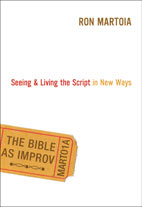
Biblical Studies (Part 2) More recent books about the Bible—introductory and scholarly

Last month in the “review column”  I offered a list of books about the Bible, some relatively recent, true favorites of ours that have proven to be helpful, especially for those who need (and who doesn’t?) a reminder of the central unfolding narrative of the Biblical story.  Some see the “acts” of this drama to be creation-fall-redemption-consummation, although we need not use those phrases to learn to live into the Scriptures as the “true story of the whole world” as Leslie Newbigin put it years ago.  So do jump back to that list and share the news with others.  There are exciting, readable, fun, and helpful resources to help us “get” the vision of Christ’s Kingdom a-coming, as anticipated and foretold, described and explained, in Holy Scripture.  I love telling about these aids to Bible understanding, and hope you do to.
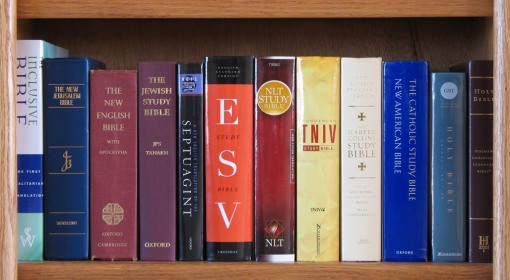
bible_shelf.jpg

So, we are happy to pick up where we left off. Here are some other basic books that have caught my fancy of late.  Most are recent and I thought you should know about them.  Keep in mind that this is not a comprehensive list and hardly scratches the surface of the titles we have in the shop.  Use our “inquiry” tab to ask us questions or to check prices if you’d like.  Or call.  We’re always eager to chat, especially about Biblical research.

A Passion for God’s Story: Discovering Your Place in God’s Strategic Plan Phil Greenslade (Paternoster) $19.99  The new cover of this fairly serious British import has a child walking through some artsy photo of what I suppose is a Middle Eastern desert.  Weird.  The book, though, could have easily been listed with those last month and certainly deserves to be recommended—it explores the overarching strategy of God, explaining the underlying structure of the Bible.  It helps us (as it promises on the back) to “recognize the significance of your life by seeing your personal story as part of God’s story.”  With endorsements from the likes of Christopher J.H. Wright, Vinoth Ramachandra, and Greg Haslam, you can tell this is starting to wade in the deeper end of the evangelical gene pool.  These are very sharp folks (engaged in cutting edge, wholistic ministry) affirming this call to seeing the way in which the Biblical narrative fits together.  Slewyn Hughes says “Nothing, I believe, galvanizes the human spirit more than an understanding of the big story that God is writing.  Greenslade’s exposition of this theme is one of the finest I have ever read.” 

Fixing Abraham: How Taming Our Bible Heroes Blinds Us To The Wild Ways of God  Chris Tiegreen (SaltRiver) $14.99  As you may know, younger evangelicals ain’t what they used to be, and this call for a raw and honest study of the weird humanity of our Bible characters is, well, either troubling or refreshing, depending on how you see such things. I’d go with refreshing. This is clever and conversational, a bit sarcastic, and a good critique of how we, well, uh, wouldn’t really want the kinds of people who populate the Bible in our parish or ministry team.  Isaiah going naked for three years?  Paul turning everybody of?  Ruth throwing herself at some guy’s feet in the middle of the night?  What a hoot this is, imagining how we might grapple with the real people of the real text.  Good for him. Who said Bible study has to be boring or safe?

Genesis from Scratch: The Old Testament for Beginners  Donald L. Griggs & W. Eugene March (W/JK) $12.95  Perhaps you know Grigg’s popular volumes The Bible From Scratch: Old Testament for Beginners and The Bible From Scratch: The New Testament for Beginners.  This is modeled after those popular paperbacks, written by a legendary educator know in mainline denominatikonal circles, especially.  With endorsements from the likes of Princeton Bible scholar and educator (respectively), Patrick Miller and Freda Gardner, this is obviously the sort of thing that is solid, useful, and fully suited for teachers wanting to study, or lead a study.  Griggs, by the way, has expert help, here, from Eugene March from Louisville Presbyterian Theological Seminary.  Half the book is a 7-session participants study, half is a leaders guide.

Mark’s Gospel From Scratch: The New Testament for Beginners  Donald L. Griggs & Charles D. Myers, Jr. (W/JK) $12.95  Again, as I said above, you should know Grigg’s popular volumes The Bible From Scratch volumes on Old & New Testament which have been popular in mainline circles for years.  This new series is
modeled after those popular paperbacks, written by the legendary Griggs.  The Genesis one (above) is the first in the new series, and now this—on Mark.  Yay.  I am very, very excited about this as Grigg’s co-author is one of my own favorite Bible teachers, C. “Buzz” Myers, a Presbyterian minister who teaches in the religion department at Gettysburg College.  And man, does he teach well.  He’s very well loved by folks who have heard him and he has been generous in speaking and teaching throughout our South Central PA region.  Buzz was involved as a recording secretary noting all the changes being made for the evolving NRSV years ago, so he is very aware of Greek details and textual nuances.   Half the book
is a six-week participants study, half is a leaders guide.

Genesis for Everyone part one and part two John Goldingay (W/JK) $14.95 each  You may know how we recommend the “everyone” series of New Testament commentaries by N.T. Wright.  About the same handy size as the old Barclay series, or the Tyndale ones, they are perfect for quick reading, helpful insight about both the immediate text and the way it is placed in the broader story.  There was some debate about who might do a similar Old Testament “for everyone” series that would be winsome, brief, informed, and helpful.  Thank God that W/JK chose a wonderful Bible guy, the prolific, insightful, and well-read Brit, J.G.  These are going to be released pretty quickly—he’s quite the faithful author and is the man for the job.  Start collecting your series now, and make sure your church librarian knows about them for those needing this level of reliable, interesting work.
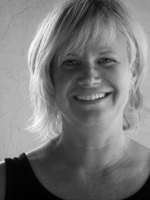
51iJjGRgagL._SL110_.jpgFrom Stones to Living Word: Letting the Bible Live Again  Debbie Blue (Brazos) $16.99  Blue is the Minnesota pastor of one of these really unusual, edgy, faith communities that may be called emergent (although I don’t know if they call themselves that, but with a name like House of Mercy, who knows what they’re called.) She wrote a few years ago a spectacular collection of essays called Sensual Orthodoxy that was published at an indie publishing venture, so perhaps wasn’t as well known as it should have been.(We have it, though!)  She sounds a bit like Anne Lamott when you hear her—maybe a bit more intense—and she is a good, if quirky, preacher.  This collection of Debbie-Blue1.jpgsermons/essays seems at first to be about how to get the Scriptures to “live again” in our post-modern midst, but her strategy is age-old.  She tells the darn stories in all their bloody complexity and lets it go at that.  Sally Morgenthaler writes of it, this: “Debbie Blue’s soulful reconstitution of the Christ narrative is nothing short of divine alchemy. Absolutely brilliant.”  If you want renewed wonder, new, robust curiosity about these Godly/human texts, this will help you come to new appreciation (which seems a tame word) of the Bible.  Mark Scandrette says she is “smart and earthy.”  Oh yeah.  And, I think, faithful–creatively so– to the texts. 
God as Author: A Biblical Approach to Narrative  Gene C. Fant, Jr. (B&H Publishing) $19.99  Well, we talk about how the Bible is a grand Story, and these days even theology is construed  narratively.  As you might guess, I think this is mostly a good thing. Professor Fant is a teacher of English and this provocative book could be put with literary studies as easily as Biblical studies.  Essentially, he says that the Christian gospel permeates all other stories, the stories of our lives under God’s sun, even as he insists this is because of God’s self-revelation (as disclosed in the Bible.)  As Michael Travers (Professor of English at Southeastern Baptist) says, “This is an important book—accessible and thought provoking.”

Worldview guru and mystery novelist J. Mark Betrand writes, “If you want to know what our knowledge of a story reveals about God and what our knowledge of God tells us about story, God as Author is the place to start.  Keenly focused yet wonderfully digressive, Gene Fant’s book will be an invaluable companion for artists and theologians alike.”  James Sire says there are “beautifully written gems on every page.”  This kind of stuff is rare, and I applaud Broadman for releasing it.  I think it will help you be a better reader, more appreciative of good books,  attuned to living your own story, and, happily, will help you understand your Bible better.
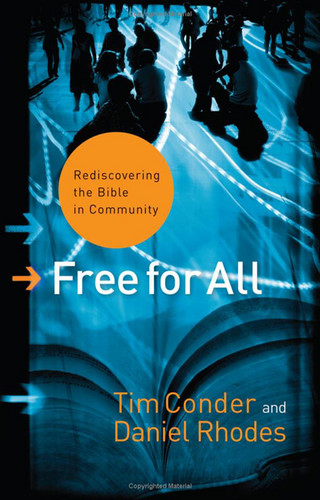
free-for-all.jpgFree for All: Rediscovering the Bible in Community  Tim Conder & Daniel Rhodes (Baker) $16.99  This is one of the books in the emersion line that are billed as “Emergent Village resources for communities of faith.”  It is a spectacular book, rich, thoughtful, demanding, messy, and maybe one of the most important ones they have done.  This is not yet another call for hipster and inclusive churches or ancient-future liturgies, but a serious and radical invitation to be communities of discourse gathered around the complex and life-giving Holy Bible.  Community,  Bible-reading.  A free-for-all?  Holy-moley, this could get crazy, couldn’t it, if we have utter commitments to one another and profound submission to the authority of the living Word, but are invited to be honest about our disagreements and struggles living in to and out of this strange new world of the Bible.  This, though, isn’t about brawling.  Here are a few important voices who can describe it better than I can:

This is as clear and thought provoking a statement as I have seen yet of a theology of Scripture for emergence Christianity.  Phyllis Tickle

A wonderful exercise in biblical hermeneutics…Weaving in popular culture, well-informed Christian theological insights, and excitement for the Bible as uniquely revelatory, Condor and Rhodes lead us into a fresh new encounter with Scripture.  Will Willimon

And this, from a person whose radical insights about the Bible I trust deeply, and who is living it out it vibrant and admirable ways, Brian Walsh (co-author of Colossians Remixed and those moving fictionalized Biblical narratives in Beyond Homelessness)

There is, in this book, good news for those of us who are passionate about Scripture, deeply committed to community, and longing to experience the power of both with candor and openness in the midst of our pain, confusions, and disappointments.

40 Questions About Interpreting the Bible  Robert Plummer
& Benjamin L. Merkle (Kregel) $17.99 It seems to me that many of 
those who are regular church-goers and even active in a Bible study may
never have really studied just how to read the Bible well. They just do
it (or, more likely, don’t.)  This is an excellent, honest primer on how
to interpret the Bible faithfully, offering fine and fair answers to
very, very important questions. These questions move beyond the obvious
pointers towards a lively and faithfully conservative hermeneutic.   It
is quite clear and truly interesting. The authors happen to be Southern
Baptist, but their strongest blurb on the back is from Kevin Vanhoozer,
one of the best names in this biz (from Wheaton College.)  I enjoyed it a
lot—very nicely done.

Gospel-Centered Hermeneutics: Foundations and Principles of Evangelical Biblical Interpretation  Graeme Goldsworthy (IVP) $29.00  Okay, we are getting more academic, here, but this splendid Bible scholar from Australia is a gentleman all should know.  Three older books about the Bible and the Kingdom of God are available in one paperback, affectionately known as the “Goldsworthy triology.”  He has done stuff on IVP, on Eerdmans, on Paternoster.  This recent hardback has gotten rave, rave, reviews from the likes of Tremper Longman, Asbury’s Joel Green, Kevin Vanhoozer.  “Erudite and seasoned reflections” one scholar called these and even though they are about hermeneutical practice, there is lovely pastoral concern for the people of God as we read, interpret, and seek to live by God’s Word written.

Bible Babel: Making Sense of the Most Talked About Books of All Time  Kristin SwensonBible Babel.jpg (HarperOne) $24.99  I hesitate listing this next to brilliant and reliable scholars like Goldsworthy, or faithful and honest strugglers like Condor or Blue.  Yet, here goes: it is a readable introduction to the Bible for those who are perhaps not familiar with its views or are unaware of these theological quandaries.  Robert Alter says it is a “breath of fresh air” and Stephen Prothero calls it “a book on the Bible for the rest of us.”  Well, I think the ones listed above are “for the rest of us” but you get what he means, believers or otherwise.  This is a call to Biblical literacy, aware of how the Bible shows up in popular culture (like that scene of raining frogs that perplexed fans of Magnolia or those ubiquitous fish symbols.)  Funny and feisty, informed by critical scholarship, this is an interesting intro for skeptics or seekers who need an honest, liberal take on “the biggest story ever sold.” 
Making Sense of Bible Difficulties: Clear and Concise Answers from Genesis to Revelation Norman Geisler & Thomas Howe (Baker) $13.99   Those who are exposed to undergrad introductions of the Bible, often
taught by unbelieving profs who are parroting out-dated critical
scholarship from a generation or more ago, sometimes start falling for
the credibility of the case against Scripture.  This is the sort of book
they should read before they dismiss the historic case for the
reliability of Scripture.  There are bigger and better books, I suppose,
but for my hard-earned cash, this is one solid resource that would
assure anyone that there can be great confidence in the orthodox view and that there are intellectually plausible ways to resolve some of the evident oddities of Scripture.  This is written in a “problem/solution” format, offering dozens of questions or problems—this text contradicts that one, this manuscript seems flawed, these dates seem out of sync, etc., etc.  This is an abridged and revised version of an older title, The Big Book of Bible Difficulties.
4874_91804269002_22629804002_1954752_1412235_n.jpgWords of Life: Scripture as the Living and Active Word of God Timothy Ward (IVP) $22.00 I’ve mentioned Kevin Vanhoozer.  I was truly struck by his remarks, “I have been on the lookout for a compelling and contemporary treatment of the nature and authority of Scripture for years.  I ask of every promising new title, ‘Are you the one who is to come, or shall I look for another?’ Ward’s book may be the one.  Words of Life rightly roots its thinking about Scripture in the doctrine of God, and that means trinitarian theology. His central insight: God’s word is something that God does…highly recommended.”  This is meaty stuff by a Team Vicar in England and has published an even meatier volume on Oxford.  Sterling reviews by the likes of Donald Macleod (Free Church of Scotland), J.I. Packer and Paul Helm (both from Regent) and Julia Harrdyman from Eden Baptist in Cambridge.  Heavy stuff, judicious, and shaped itself by the Scriptures themselves.  

Collected Writings on Scripture D.A. Carson (Crossway) $27.99  I have taken issue
9781433514418.jpg withsome of Dr. Carson’s blunt dismissal of postmodern thinking and what I considered to be rather unkind polemics at times.  I suppose that is his style, and suppose he is just a fairly straight-forward writer. Some might suggest that his writing isn’t, uh, warm (but then again, most serious scholarship isn’t.)  Yet, he is one of the important Biblical scholars of our time, and his many books have found to be very, very helpful for many a young evangelical scholar.  He is a serious and weighty academic, and it is a great gift to have such a very handsome collection of some of his miscellaneous pieces on the authority and interpretation of Scripture.  I’ve long wanted to read some of these journal articles, essays, and book reviews, and am thrilled to promote this important volume which brings together these pieces in one place.  The usual serious suspects grace the back dust jacket—Michael Horton, Ligon Duncan, John Woodbridge.   Westminster Seminary’s Academic Dean, Carl Trueman sums it up well,

Scholarly, reverent, carefully argued, and generously footnoted, these pieces all make important contributions to current debates; and taken as a whole, they admirably expose the problems of the revisionism offered by certain voices within the church while pointing readers to a better way.

The day this came I turned to his thorough, critical engagement with Pete Enns important book Inspiration and Incarnation which helped give important insight to why he was so maligned in some circles.  And, I read with great interest his fine critique of N.T. Wright’s little book The Last Word. This is high caliber stuff and it is highly recommended.  If you know conservative evangelical scholarship, you know the caliber of his work.  If you are still reading this, but don’t find yourself familiar with this intellectual tradition, I’d invite you to check it out as an example of the level of discourse happening in places like Trinity, Deerfield, where Carson works.  His PhD, by the way, is from Cambridge, and he has authored over 50 books and is a recent co-founder of the “Gospel Coalition.”
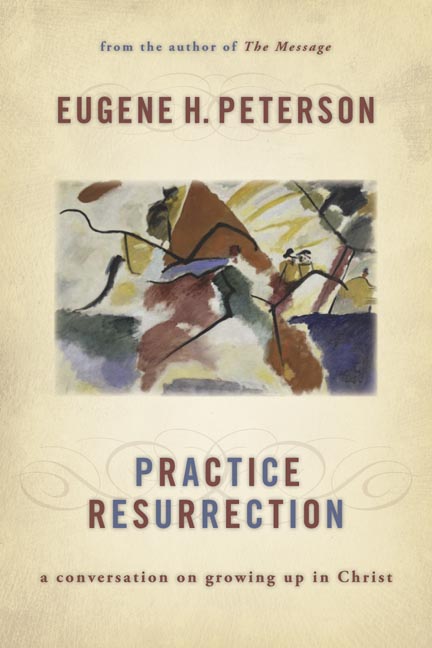
9780802829559_l.jpgPractice Resurrection: A Conversation on Growing Up in Christ Eugene Peterson (Eerdmans) $24.00  Did I save the best for last?  Perhaps so.  After all our evaluations of what the Bible is, how it comes to us and how it works, after our reflections on its grand flow and overall point, of how to read it and make sense of it and how to struggle with it, finally—yes—it comes down to reading it.  And one of our finest, pastoral, warm and thoughtful guides to careful reading is Eugene Peterson.  This is the fifth in his majestic series of “conversations” on spiritual theology.  It is a study of Ephesians.  I think my favorite may still be the very first (Christ Plays in Ten Thousand Places) but it is not uncommon for other customers and friends to each have their own favorite; Eat This Book is precisely on how to read slowly and meditatively, so should be mentioned here.  Not a one has been poorly received and anybody who is interested in contemporary pastoral theology will own Peterson’s books.  Enough said.
Hearts & Minds 234 East Main Street  Dallastown, PA  17313     717.246.3333


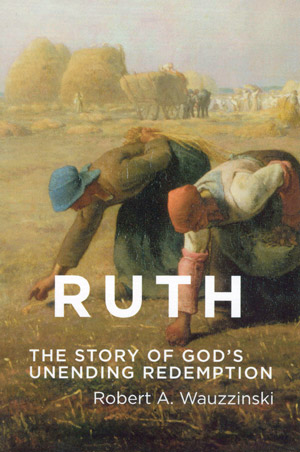
A big list of books about the Bible, but first, this…Ruth by Robert A. Wauzzinski

I just did the first part of a “monthly review column” that I sometimes do, longer lists that we compile over at the “review” section of the website.  Thanks for keeping up with BookNotes (at the blog, or on facebook or twitter) but–if your a real fan, or in need of fabulous, longer lists—please click on over to the review column from time to time.  We have so many archieved, longer reviews or bigger lists to be found by clicking on the “review” tab.  Or just click here.

For a little teaser: I name what I think is the best book I’ve yet found as an introduction to the Bible.  Ever hear of Mike Erre?  He has a few other books that are fine, but his new book on the Bible?  Wow!  I am just stunned by how great this is, an excellent overview for
9780736927307_200px.jpg perspective, clarity, vision, and—yeah–fun writing.  For those who like the fabulously-done, brief, The True Story of the Whole World by Craig Bartholomew & Michael Goheen (which is an adapted and abridged version of their essential—essential!—The Drama of Scripture) or who appreciate N.T. Wright’s vision of how the Bible stories are inter-connected.  This captures that storied nature of the unfolding drama as a worldview-shaping narrative, walking us through the epic adventure of God’s rescue of the planet.  Sound good?  Check it out.  I tell about a handful of others, too, including a few you really will be glad to hear about, I’d guess.  Please feel free to pass it on to anybody you know who teaches, studies, or is interested in learning about the Scriptures.  I tell you a bit about each one, and I think they are reliable, fun, feisty, and helpful.  

Just for instance, here is one of the books I list, Ruth: The Story of God’s Unending Redemption written by my friend, Dr. Robert A. Wauzzinski (Dordt College Press) $14.00.  It is the only one that I listed, I think, that isn’t a full Biblical overview, but it is so very helpful, such a good example of how to read the Scriptures, that I had to list it.  This book is more thorough than a typical small-group Bible study guide, but isn’t as big or tedious as a full commentary.  I think this is truly a helpful sort of book—meaty enough for nearly anybody to learn something (smart guys and pastors, too—trust me) but not a scholarly tome.  Perfect for busy folks, for Sunday school teachers, for adult classes or book clubs or anyone wanting to dig into a particular book of the Bible. 

More important than the size and format—brief and usable—is the insightful, inspiring, and at times, nearly provocative, content.  As I explain below, this is a case study in a wise and faithful use of the Bible.  It doesn’t reduce the text to a “moral lesson” nor does it make it merely about doctrine or dogma.  It draws from more evangelical/conservative readings as well as more liberal/critical scholars, while being something considerably more than a balanced approach between the extremes.  No, this is a full-throated and redemptively wise telling of a full-orbed tale, a story placed in the broader Story of God’s Kingdom a-coming, on Earth as it is in Heaven.  Do you believe it—the gospel according to Ruth.  Of course he is not the first to have this Christ-centered reading, but I think he unpacks it better than any of the other recent ones that we also commend, such as the good work of Iain Duguid, Dean Ulrich, and Carolyn Custis James, all who have recent books on Ruth.  

7427.jpgRuth: The Story of God’s Unending Redemption Robert A.
Wauzzinski (Dordt College Press) $14.00  You know of our desire to
promote books about the big picture of Scripture, how to best understand
the major chapters of the grand Story, our effort to help folks be
faithful and fruitful with a wise and appropriate study of the whole
counsel of God.  Most of the books I’ve mentioned in the list share the
conviction that the authoritative Word is one major story, with a
coherent, redemptive plot that shows God’s promise and fulfillment.  To
reject any significant tension between Old and New Testaments and to
reject any reductionism or sentimentalism that fails to see the way in
which God’s faithfulness to creation is need of the hour.  I don’t know
who tends to drop these balls more often, mainline liberals or
conservative independent folks, Catholics or Orthodox.  Nearly everyone
needs a refresher, I’d say, on how best to read the Bible in coherent
and realistic ways that point to God’s reign coming and our role in the
Story the Scripture tell.  This book is exactly the kind of refresher we need.

One way to do this is to study a certain book of the Bible with a view
not only of teaching that book of the Bible, but of modeling faithful
and wise and fruitful engagement with the text. This book does exactly that making it very interesting and informative.  I want to review this is greater detail soon so won’t say much more here, except that
we commend it for anyone that wants to study Ruth, and who wants
to see how best to study any given book of the Bible in its place
within the bigger story of God’s shalom project.  Wauzzinski knows this
Bible book well—he’s taught it in synagogues and prisons, in college
Bible studies and congregations large and small. He’s got a particular
focus on the history of intellectual ideas, a degree in philosophical
economics, and he is an ordained Presbyterian (USA) minister.  This book
isn’t a serious, dry commentary, and it isn’t a fill-in-the-blank inductive
study.  It is short enough to be used as an adult elective or book
group, and challenging enough that nearly anyone will learn new
insights—about Ruth, about the Bible, and about how to read the
Bible in a way to hear God’s Word to us anew.  We are not the only ones who highly recommend it.

Here is what Old Testament scholar Walter Brueggemann graciously wrote about it:

Two important things are going on in Ruth. First, one gets the wonder of the Book of Ruthbrueggemanncloseup.jpg with its’ ‘central character,’ the God of ‘cascading grace’ who is extravagantly displayed in this plot.  Second, one gets a patient, self-aware pastoral pedagogy that keeps connecting the contemporary reader to the ancient narrative.  The outcome is a narrative articulation of a vision of generous offers of unending goodness, offers that contradict the pervasive violence all around us.  Readers are invited to a deep, welcome alternative, as welcome as healed humanness, as deep as the unswerving purposes of God.

Here is what Calvin Seerveld, professor of aesthetics and Bible teacher, said,

Bob Wauzzinski has served us well by reading the biblical book of Ruth in its full relevance327.180.jpg for our current lives in society fraught with greed for self and lovelessness for the stranger….(he) has given us a compelling way to understand how hearing God speak in this Older Testament book may help American’s today to cope not only with our evils of war and recession, but positively to reform our ways, if painfully, towards God’s blessing of shalom.

…the unmistakable, powerful truth of the good news of Ruth is told with conviction.

Lastly, I have to tell you–among friends, here at BookNotes—that we particularly like supporting projects like this.  Bob has taught in prisons, done research an been an advocate for a Pittsburgh, African-American-owned urban bank,  and is quite a fellow—few things would make us happier than to have him get some credit for this gift of good work, even though that isn’t his desire.  And, we dig supporting faithful, little alt houses, like this small Dutch Reformed Iowa college press.  Some of the bigger publishers gave Ruth very good thumbs up, but couldn’t imagine a book selling that was more than a “fill in the blank” study for small groups that had some academic cred, or an evangelically-minded author citing social justice stuff, or a serious scholar being so accessible for ordinary folks.  I don’t know the publishing world, really, but this is a no-brainer in my book– the very sort of book we ought to be about.  We hope agree.  Let us know how many you want for your next small group or class.

And don’t forget to check out the bigger list at the “review column” for June.  Buy something over there and get an extra discount on Ruth.  Almost like gleaning, eh?

 sort of like gleaning
RUTH
BLOG SPECIAL

Ruth: The Story of God’s Unending Redemption
10% off
OR
25% off
with the purchase of any book from the longer list
(which will get a 10% discount, too.)

ORDER HERE
takes you to the secure order form page at the website

Hearts & Minds 234 East Main Street  Dallastown, PA 17313     717.246.3333


book list about young adult ministry

Sometimes I like to share with readers some of the lists I generate for customers who inquire.  Just today I did a serious list of commentaries about 1 & 2 Timothy, a brief list about war & peace, a good list of some favorite novels for a church-based reading group, and a bunch of books for a friend who has a seeker at work who may read about a book about Christian faith. Want to see ’em, such as they are, just give a holla.

Here is another I just finished, at 2 am tonight.  It is for a good friend who is writing a paper on how churches might reach out to young adults, and how to better understand that “missing generation.”  Since we just did that special offer on the Outsider Interviews I figured this might be good to share now.

Please keep in mind it isn’t exhaustive, and was created for a customer I know well.  There could be some others, but this pretty much is just the real list I sent out today.  Thanks for allowing me to send it to you, here, as well.

young_adults.jpg

Also, I apologize for the lack of book covers and clever visuals.  I’m just too tired.  Here ya go.

Souls in Transition: The Religious and Spiritual Lives of Emerging Adults
Christian Smith (Oxford University Press) $24.95  Required reading, the best scholarly  research on college age young adults…

The Outsider Interviews: A New Generation Speaks Out…
Jim Henderson, Todd Hunter, Craig Spinks (Baker) $24.99 w/DVD Did you see my review on the blog earlier this week?  Not just college students, exactly, but un-churched young adults…brand new, very good.  Came out of the inspiration of unChristian which I know you have.  Getting churches watching their DVDs or reading that would be a good start, no?

Dear Church…Letters from a Disillusioned Generation Sarah Cunningham (Zondervan) $12.99  These are open letters to the evangelical church by a gal in her 20s.  She does talk a bit about her college years… older folks have to hear these voices, I’d say…

My Generation: A Real Story of Change and Hope Josh James Riebock (Baker) $14.99 Raw and edgy, this guy tells it like he sees it about today’s 20s. I reviewed this at the blog and raved as I was very touched and felt very authentic to me.

The New Faithful: Why Young Adults Are Embracing Christian Orthodoxy Collen Carroll (Loyola Press)  This claims that many young adults, including those on campuses, are turning to Catholicism and Orthodoxy and are more culturally conservative than ever, due to strong renewal of faith.  Pretty well researched and very interesting. I actually know a few young adults in their later 20s where this seems to be right on.  Not too many 18 year olds, though…

God on the Quad  Naomi Schaeffer Riley (Ivan Dee) $14.95  I suppose you’ve heard of this, a non-Christian reporter doing first hand research on religious faith on campuses.  She calls this the “missionary generation.” Fascinating!

The Tribal Church: Ministering to the Missing Generation Carol Howard Merritt  (Alban Institute) $17.00  I don’t think this is quite as good as some think it is, but it is quite popular in mainline denominational churches, wondering what they can do to meaningful attract younger post-college serious adults.  There just isn’t that much for mainline folks… I’ve met the author and really enjoyed chatting with her, so I’m glad for her work.  She’s got another book coming this year, and is being widely read in some congregations.

Hungry Souls, Holy Companions: Mentoring a new Generation of Christians Patricia Hendricks (Morehouse) $16.00  Again, this is from a more mainline, Episcopalian perspective, asking how to do “youth ministry” with younger adults…invites adults to the role of spiritual director and guide, and less programs, etc.

The Slow Fade: Why You Matter in the Story of Twenty-somethings Reggie Joiner, Chuck106520lg.jpg Bomar, Abbie Smith (Cook) $14.99  You may recall that Chuck did a workshop on campus ministry, based on his book, at Jubilee this year.  The previous two or three years, Abbie was at Jubilee, on her “keeping your faith in college” book.  She’s great!  Here they offer evangelical churches a vision of extending their ministry from youth to include collegiates. Brand new, so check it out!  Here is a link to a nifty youtube video for the book.  Here is an interview with co-author Abbie Smith that Derek Melleby at CPYU did.

College Ministry 101 Chuck Bomar (Zondervan) $15.99  It is my sense that Chuck’s model is more or less having “youth group” at the church for college members.  It may work if there is a lively church right near campus…still, there isn’t much about college ministry and even if this “guide” isn’t fully  adequate for campus ministry, it is a good start for congregations who can hire a full time college worker to create programs just for that outreach.

6a00e008da83f68834011570fa28dc970c-800wi.jpgThey Like Jesus But Not the Church: Insights from Emerging Generations Dan Kimball (Zondervan) $18.99  There is also a DVD and participants guide. Very helpful.  I suppose you know this…very cool.  I’m not always sure he is right, but it is necessary resource for anyone seriously interested in this topic.

The Multi-generational Congregation: Meeting the Leadership Challenge Gil Rendle (Alban Institute) $15.00  I’m not sure that this is focused enough for your purposes, but it is about how regular mainline churches can manage the variety of ages and stages within the various generations in the congregation.  I like Rendle, whose got insight and passion for ordinary congregational life.

The Church of All Ages.jpgThe Church of All Ages: Generations Worshiping Together Howard Vanderwell (editor) (Alban Institute) $17.00  This fairly recent book is a good collection of serious essays about mainline churches and their desire to be multi-generational.  Very important stuff.

Young Adult Ministry in the 21st Century: The Encyclopedia of Practical Ideas Brad Lewis and others, editors (Group Publishing) $24.95  Jam packed full of ideas; this is part of a good series, they have ’em for women’s ministry, men’s ministry, children’s, etc.  A practical, programatic handbook.

SimChurch: Being the Church in the Virtual World  Douglas Estes (Zondervan) $16.9
9  I am not so sure that the church can possibly be “on the internet” but this makes a good case.  Seriously?  Check it out if you care about the current realities and what they might mean for enfolding youth into (local?) parish life.  This isn’t as sophisticated as the brilliant Thy Kingdom Connected by Dwight Friesen (which I’ve raved about here before) but it is a very helpful read about new dimensions of ministry.  For those wondering if this is a cheapo job, the author has a PhD in Johannian studies from the University of Nottingham and an academic monograph on Brill.  Not too shabby.

Why We Love the Church: In Praise of Institutions and Organized Religion Kevin DeYoung &Ted Kluck (Moody Press) $14.99 These are two guys who also wrote a book about being edgy twenty-somethings who are not emergent.  Here they make a case for mostly younger adults, house church folks, para-church kids and others who are giving up on the institutional church and insisting that that isn’t faithful.  Love it!

***
I didn’t mention this one to my friend in the above list, but just to be interesting, here’s one more that doesn’t fit the topic.  Or does it?

67231464.JPGBaby Boomers and Beyond: Tapping the Ministry Talents and Passions of Adults Over 50  Amy Hanson (Jossey-Bass) $24.95  Listen to what Marc Feedman, author of Encore: Finding Work That Matters in the Second Half of Life and CEO of Civic Ventures writes:

“In this powerful and impassioned book, Amy Hanson urges the church to better serve boomers so boomers can better serve others.  It’s simple and ingenious, revolutionary and reasonable, lofty and practical.”

 I’m all for that!

Brand new.  Give us a call if you want to order anything.

Order on line, here.  It will take you to our secure order form page at the website.

Or inquire, here, if you have any questions at all.

Hearts & Minds 234 East Main Street  Dallastown, PA  17313            717.246.3333

The Outsider Interviews: A New Generation Speaks Out on Christianity

35727_406379022915_736902915_4577582_5490654_s.jpgWe loved the in-store party with Ned Bustard and his family, celebrating the Church History ABCs book.  Ned told us a bit about making some of the pages, and why he put little quirky things in. (Ahh, the button down Oxford shirt on John Owen, from Oxford.  I hadn’t noticed that!) There are some fun photos at facebook; it was fun seeing kids and parents, eager to learn 36214_406379352915_736902915_4577612_2303086_s.jpgsomething about this clever, new ABC book. 

It dawned on me, as it does from time to time, how foreign this stuff must sound to many.  Being excited about Tertuillian? Ignatius? Queens and artists and missionaries of years ago?

Well, indeed we do care.  We are rooted in this tradition called church and while each age lives out the burning issues of their time hopefully in fresh and fruitful ways, we do so rooted in the knowledge of God’s faithfulness to His people over time.  Disciples of Jesus don’t go it alone, so we care about the past, and others who have walked this journey before. 

For a simple but compelling book on church history for adults, why not try ABC author Steve Nichols one for grown ups called Pages From Church History: A Guided Tour of Christian Classics?  (Aside: you will recall how we raved a week or so ago about Diana Butler Bass’ People’s History of Church History, which is more about how ordinary folks lived out faith in various eras of the past.  Steve’s emphasis on important books and ideas that shaped the theology of the practices Diana writes about is very helpful and is a good supplement to her approach.) Steve is a good, clear writer and we are happy to suggest books that are relatively easy to read and yet solid and mature.  Kudos to Dr. Nichols for this good ability and gift to us all. 

And yet, I come back to this question of how the Christian books we sell, the ideas and convictions we talk about, the rhetoric, the practices, the lingo, are often off-putting to those outside of the church or Christian community.  This, naturally, cannot finally change—that is what conversion is, after all, being transformed and transported into a new community—but we should attend to it, thinking about how our ways of doing church may or may not be hospitable and helpful to those wanting to check us out.

You most likely recall me promoting the important book UnChristian: What a New
3d_unchristian_cover.jpg Generation Really Thinks About Christianity…and Why it Matters by Dave Kinnamon and Gabe Lyon (Baker; $18.99) which is research done on what young adults think about religion and Christianity, particularly. The book, and the DVD curriculum that was done later around it is very, very much worth reading.  If anyone cares about what that generation thinks or how evangelical faith is perceived, it is a must.  Happily, it also has tons of great stories that show that the perceptions aren’t fully fair: there are plenty of devout Christian folks that are doing remarkable work in the world—the stereotypes just aren’t accurate!  This book can help us work on how we present the faith to younger outsiders.

After the huge buzz on that vital book, a group of folks who tend to specialize in thinking about outreach, evangelism, reaching out to seekers and forming friendship with those outside of traditional faith communities got to thinking.  What would happen if they set up shop in a given city and invited young non-churched folks to come and share, filming the events? The three who pioneered this project are Jim Henderson, who has written some very good books on evangelism (including the clever Jim and Casper Go To Church where he takes the agnostic Casper to a bunch of churches to get his feedback), Todd Hunter, whose recent Christianity Beyond Belief tells of new ways to live out a Kingdom vision in a postmodern culture, and Craig Spinks, a production geek with a heart for meaty conversations and using new media to spark discussion about the faith journey.

Image.asp.jpgThe narrative of this effort, the road trips to several cities, the report on what happened, is told in lively and helpful chapters in The Outsider Interviews (Baker; $24.99.)  I really, really liked it.  Yet, as the story unfolds, it becomes evident that the enclosed DVD of the actual interviews is equally central to the experience (perhaps more so.)  In fact, they call this a DVB—a blend between a book and DVD—to try to show the integrated nature of this whole project.
Reading and viewing can be done in any order and they invite you to go back and forth.  Both, though, are vital.

 According to statistics, it says on the back cover, young adults are more disenchanted with the church than ever.  But “beyond the statistics are the stories—real people with real opinions, and real experiences.  These people are more than just numbers…what if we took time to listen to the voices behind the statistics?”

As these three leaders traveled and took the time to listen to the candid stories of these young adults, the film and book increasingly became intertwined.  You can read the book.  You can watch the interviews.  Hopefully you’ll do both.  The DVD is slipped into the book, although you can buy it separately for $19.99, skipping the book.  If you care about these folks that are missing from your congregational life, if you want the new generation to embrace Christ and His church, if you wonder how to help those young adults or college age students that are in your church, this could be an excellent resource.  Of, if your congregation isn’t interested, maybe you might start your own study group.

The whole notion of “insiders” and “outsiders” is an important bit of the dialogue.  Kinnaman tells us in a good forward just what he used those words in UnChristian.   That is bit of the first chapter, too, the “backstory” that Jim Henderson tells. His organization, Off the Map, is designed to help Christians see themselves through the eyes of outsiders.   Interesting, eh?

Here is a “trailer” for the book.  Take a look. 

I suspect that some readers of this review are themselves in the age group–the demographic, as they say—found in UnChristian and The Outsider Interviews.  Why not invite your local barista or college room-mates or co-workers to watch this together, or just read the book.  I think unchurched folks will appreciate it a lot (just to see that somebody wants not first to tell them what to believe but to hear them out) and w
ould stimulate remarkable conversations.

Or, if you are somewhat older, traditionally committed to a real church, I am sure you wonder about those you love who haven’t embraced your own faith.  As this book puts it, see the “hearts behind the charts” and learn to truly hear the probing questions offered by those who aren’t convinced that the church is important in their lives. I envision folks of various denominations and church traditions caring
enough to use this. I envision folks of various denominations and church traditions caring
enough to use this.

Teaching strong doctrine and church history and experiencing rich liturgy and deep community will continue to be important; caring about what outsiders think doesn’t mean we are at liberty to change the truths of the gospel.  However, it is unforgivable to not care about our neighbors, including what they think.  We are called to give witness, to serve others, to be God’s ambassadors.  This book is an indespensible guide to doing that in our time.

OUTSIDER
BLOG SPECIAL DISCOUNT
20% off
Order Here
this takes you to our secure order form page of the website
Inquire Here
this is for asking any questions you may have

Hearts & Minds 234 East Main Street Dallastown, PA  17313     717.246.3333

The Church History ABCs. Stephen Nichols & Ned Bustard tell God’s story as our story: church history for kids of all ages

I enjoyed sharing the last post I did, talking about serving student leaders at OCBP and curating the book display at the Civitas gathering, sponsored in DC by our friends at CPJ.  I was just trying to be clever when I mentioned the alphabet soup.

But at 7:00 Wednesday night here in Dallastown we really are diving into Godly alphabet 41422_736902915_5168_n.jpgsoup.  As we’ve said before, our friend Ned Bustard (Square Halo Books) designed and illustrated a fantastic new children’s book on church history, called The Church History ABCs: Augustine and 25 Other Heroes of the Faith (Crossway; $15.99.)  Most of the text was written by uber-smart PhD guy Steve Nichols from nearby Lancaster Bible College, and the spiffy artwork was done by the aforementioned Mr. Bustard, almost shown, to your right.  We will be hosting a book release party, reception, and reading here at the shop.  There will be some alphabet-themed refreshments, too. 

ChurchHist_ABCs-book1.jpgHow does one do a reading from an alphabet book, you ask?  Hey, have you never read Dr. Seuss right out loud?  Of course you have!  This is going to be great!  It will be fun to read this out loud–maybe even get some crazy unison thing going on. (Will the Lutherans out-shout the Calvinists on their respective pages?  Will we all groan at the Knox-Knox joke?)  We’ll hear about Ned’s artistic vision, maybe his collaboration process with author and editors, learn just how a classy kid’s book comes to be.  With the interesting blend of bright color, stylized illustration, computer graphics and real photography, The Church History ABCs really is tremendous-looking.  I think it is one of the more artfully designed kid’s picture books on any Christian publishing house, and certainly stands up with the greats so far this year in the design category.  I suppose I’d want to say this even if it weren’t true since Ned is such a nice fellow, and really deserves acclaim (even from our small corner of the universe) but—yes—it really is true.  This is a very, very wonderfully designed book.

35401_1417483511285_1058522605_1212391_3832648_n.jpg

 And the content?  Whewie, let’s hear it for nerdiness of the first order.  A kid’s book about church history?  Most adults don’t even read church history. Well. Maybe, just maybe, that may be part of these dude’s sneaky plan.  Come to think of it, I’ll bet this will make Screwtape himself squirm like the devil: helping young covenant kids learn about martyrs and heroes, men and women who served God in significant ways, saints who did important things to keep God’s work going?  Children learning about the past faithfulness of God to His people?  Having fun learning about early church conversions, medieval scholars, Reformation leaders, missionaries, artists and thinkers, queens, servants and prophets?  My, my, this is important stuff.  It is a very important contribution to Christian education, and I don’t know anybody else who had attempted such a thing with such simple focus and great gusto.

So. Having raved about the creative design and the important, informative content, allow me to note how well form and function unite in this happy book.  That is, there is cool artwork for each character, nifty stuff that teaches well, even in small ways that will reveal themselves upon repeated reads.  Playfully studying the text together a second or third time, looking carefully, you’ll learn even more about cool details—why does Jonathan Edwards have a bar of chocolate in his hand, and why the Indian feather?  And what is that in Spurgeon’s vest coat pocket?  What’s with the picture of Venice in the Vivaldi page?  And the baby Jesus by Ignatius?   Who–with a B name—was “America’s first bard”?  Granted, the word Pirates starts with P so it fits on the P-page with Patrick, but is there another reason for that skull & crossbones? And why the Philadelphia Liberty Bell on the J page with Absalom Jones?

The last few pages are for older readers (or mom and dad or Sunday School teachers) as it gives more detail about each of the characters shown.  Very helpful, and so important.
And, after they do the alphabetical order descriptions of the characters, they offer another listing, this time in chronological order, as in an historical timeline.  Did I mention that Ned helps design homeschooling curriculum?  This small touch is very, very helpful, and further shows the thoughtfulness they put into this.

Another great little touch. In the lovely introduction, they write, as they explain what we mean by church history,  “In fact, this story
hasn’t ended yet. Someday you will be adding your own story to it.”  At the very, very end, they note again in passing that God’s unfolding of church history isn’t quite over yet.  “The story of church history is your story” they say.  So right.  Insofar as we are in Christ, a part of His Kingdom, then this is, indeed, our story.  Or, should I say, it is God’s story, being written in the characters of our lives.
 
Even the back cover is a hoot, and only those who know a bit about this stuff will get the jokes.  “An excellent resource for young and old,” they have C.S. Lewis saying in mock endorsement, “but where is Athanasius?”  Ha! Lewis wrote the forward to the modern edition of his third century classic (so would naturally want him in there. Sorry, Clive.)  “I really enjoyed this church history book for young people, until I got to the letter W” blurbs colonial- era evangelist George Whitefield. Of course, W is, uh, somebody else.  (In fact, they cheated puttimh two brothers on page W.  Guess who?)

One big beef of my own.  Saint Francis of Assisi.   Yeah, yeah, I know they felt they had to put somebody else on the coveted F page, but really? Skipping Saint Frank?  Or, maybe he will be in the next volume, perhaps already in the scheming?  If only they can think of another saint with an X and a Z name.

Here is a picture of Stephen Nichols and Ned Bustard.  I only wish they’d have been in Ned’s drawn caricature, to show that they, too, are great characters in God’s unfolding history.

 
Nichols-Bustard.jpg

WANT AN AUTOGRAPHED COPY?  PLACE AN ORDER ASAP.
If you want it inscribed to anyone particular, be sure to tell us to whom you want it signed.

Order Here
This will take you to our secure order form page.

Hearts & Minds 234 East Main Street  Dallastown, PA  17313         717.246.3333     

H&M travels through the alphabet: OCBP and CPJ

We’ve been on the road, again, this time doing a series of classes on Kingdom living and social transformation for CCO-related college students that live in community for the summer in Ocean City, NJ. Thanks to the PC(USA) church there for helping host the “Ocean City Beach Project.”  I arranged my talks around the phrase “living Jubilee” (taken from the blog that promotes and follows up the annual Jubilee conference.)  How does the multi-faceted shalom of Leviticus 25—the topic for Jesus’ first sermon in Luke 4— inform our living?  What does it mean to be agents of God’s “Jubilee” work in the world?  How does the Biblical teaching that God is renewing the whole of creation impact our daily lives, even our vocations and public lives? How can we, touched deeply by God’s gift of grace, share such a vision of “promise and fulfillment”  with a broken society, post-Christian society? And, for young adults in their college years, how do they not only live for Christ’s glory in their campus settings, but how can their studies have helpful, shaping influence as they prepare for careers and professions and future jobs?

51XKANA+vEL._SL500_AA300_.jpgWe watched together one night the wonderful movie Patch Adams and wondered about Patch’s remarkable passion and how he navigated an inhumane med school education and how he integrated a less mechanistic model of healing into his education and eventual medical practice.  We wondered what it takes to be social innovators, starting up projects, ministries, making cultural contributions big and small.  Oh, to grasp the good news of Christ’s Jubilee reign that calls us to be in, but not of, the world around us!  Oh, the find mentors and guides (and books!) to guide us into this life-long discipleship.

Drawing just a bit on Neibuhr’s classic Christ and Culture we explored varying ways in which church folk have tended to engage the society and cultures of which they are a part.  Liberal churches, by and large, have traditionally watered down Christian distinctives to accommodate to culture, while fundamentalists have typically employed an over-heated and often self-righteous holiness allowing them to keep their distance from the institutions which govern culture. If one sells out, the other cops out.  In Jeremiah 29, we are called to “seek the shalom” of the city in which we find ourselves.  To truly bring blessing, though, we need to be more than merely “relevant” but true.  Maybe Patch Adams can help us think through a faithful way to be innovative and effective in our care for place, for neighbors and our callings, seeing how God can use us to accomplish His purposes in the world.

transforming vision.jpgimages.jpg31PonJQK9aL._SL110_.jpgYou might guess that I invited them to read more deeply in this aspect of discipleship.  I recommended the meaty and provocative Transforming Vision: Developing a Christian Worldview by Brian Walsh and Richard Middleton (IVP; $17.00) which will take them deeper into a radical cultural analysis rooted in a Christian worldview.  I routinely talk about the wisdom and eloquence of Os Guinness’ masterpiece The Call (Nelson; $17.99) and naturally pushed Andy Crouch’s Culture-Making: Recovering Our Creative Calling (IVP; $20.00) which is really helpful as we think about these very things.  OCBP students are already reading some excellent books for their summer project such as the concise and powerful old book by Tom Sine, Taking Discipleship Seriously which invites us to arrange our lives around “God’s intentions for the future.” Of course they are reading  The Outrageous Idea of Academic Faithfulness by Don Opitz & Derek Melleby—a must for every college student; Henri Nouwen’s profound little book on spiritual leadership, In The Name of Jesus, and Michael Goheen & Craig Barthlemew’s overview of the Bible, The True Story of the Whole World: Finding Your Place in the Biblical Drama.  Each day they41tSF0OJaFL._SL500_AA300_.jpg are reflecting on a great story from The Unexpected Adventure: Taking Everyday Risks to Talk With People About Jesus (Lee Strobel & Mark Middleburg) which reminds us to be praying and seeking opportunities to share the gospel, to be willing to tell others about the need for saving faith in Christ Jesus.  What a fun and inspiring collection—it is very highly recommended.  Maybe you will pray that these 30 students will not only think deeply about “living Jubilee” and cultural transformation, leadership, calling and such, but that they will each do verbal evangelism when appropriate, taking inspiration from the Strobel/Middelburg stories, to play their part in sowing seeds of Christ’s message.

***

29758078_f5c9c67925_m.jpgAfter this whirlwind week of passionate conversations with these campus leaders, we drove to Washington DC to set up a nice little book display about political theory and healthy citizenship for the  truly remarkable Civitas week sponsored by the Center for Public Justice. (Read Lauren Winner’s interesting report about it from a few years back, here.)  I assume readers know CPJ (we’ve linked to them before) and will perhaps spend some of this holiday weekend ruminating on just what our citizenship duties may be.  Of course we dare not sin by engaging in idolatrous nationalism—don’t get me started on the civil religion in some of our patriotic hymns—but that surely doesn’t mean that we should be disengaged from civic responsibilities.  We think CPJ gets it pretty much right.

CPJ is neither conservative nor liberal but takes their cue from (among other influences) Abraham Kuyper, the famousGods renaissance man.jpg preacher, journalist, devotional writer and Prime Minister of early 20th century Holland.  Kuyper, while a Parliament m
ember,  gave the renowned “Stone Lectures” at Princeton Seminary (prior to visiting President McKinley at the White House) in 1898 and those lectures are still in print. It is considered one of the seminal texts for the contemporary popularity of the world “worldview.”  In those lectures he invites us to stand in the grand tradition of the 16th century reformers, like Calvin, who strongly emphasized the cosmic sovereignty of Christ over all things. Jump-starting an emphasis on culture renewal sometimes now called “neo-Calvinism” Mr. Kuyper encouraged a graceful reflection on the claims of Christ the King over science, education, commerce, the arts, and, of course, politics.  Interestingly, I started my lecture series at OCBP with a quote from Kuyper that helped form the early days of the Jubilee conference three decades ago.  Kuyper famously insisted that the ascended Christ, upon looking down from heaven, does not see “one square inch” over which He does not point and declare “mine!” This “wide-as-life” view of redemption has inspired many to faithful cultural involvement and activism in our generation.

Importantly Kuyper’s beloved “every square inch” quote starts with this line, a reminder to think Christianly:  No single piece of our mental world is to be hermetically sealed off from the rest…  As a bookseller committed to helping folks think about all of life from a Biblical perspective, this call thrills me.  We must relate faith to the life of the mind and our ideas must direct us to faithful thinking and living in the world.   Kuyper was quite a man, known for mystical spirituality and public theology, for journalism and education, for interest in church renewal, science, and politics. There is only one biography in print that I know of of Kuyper, one that we import from England, Abraham Kuyper: God’s Renaissance Man by James E. McGoldrick (Evangelical Press; $18.99)  Check out this gateway to all things Kuyperian at “Friends of Kuyper” website.

For what it is worth, this rather obscure theological and political tradition is increasingly known and significant; it is surprising who all quotes Kuyper and appreciates his balanced political viewpoints.  It is fascinating that a new publishing project is reflecting upon how his ideas might apply today.  See, for instance, the recent Eerdmans release, done in cooperation with Princeton Center for Public Theology, The Kuyper Center Review Volume 1: Politics, Religion, and Sphere Sovereignty edited by Gordon Graham (Eerdmans; $24.00.)

 CPJ (for good and complex reasons rooted in thoughtful evangelical reflection) tends to think that the Christian right has failed in doing politics in a truly Christian fashion.  Similiarly, CPJ advocates a perspective that is something other than the so-called Christian left.  To seek a third way, rooted in Biblical assumptions about history, human nature, social architecture and the task of the state, and to be principled, passionate and civil about it all, is a project (it seems to us) many should support.

At Civitas, they will hear experts and public policy leaders reflecting on this “third way” thinking about uniquely Christian politics.  Much of the CPJ vision includes encouraging thoughtful dialogue to create on-going deepening of our views, rooted in the love of God and the conviction that the Bible teaches us norms about how the world is to work, including ways that government and civic life might be.  Along with our friends at Civitas this week, we invite you to consider some books about what truly “Christian politics” might be.

2796.jpgChurch, State, and Public Justice: Five Views edited by P.C. Kemeny (IVP; $19.00)  A month ago, Sojourners editor Jim Wallis wrote a piece asking if the view of government and the civic philosophy of the Tea Party movement was consistent with Biblical views.  This set off a firestorm of critique, some of which (I believe) was understandable as Jim unwisely conflated the various views of Tea Party folk and libertarianism.  Still, as I posted at the Sojo blog, this is a good, good, question, and it is one worth asking of any of us.  Is our view of the task of the State, our political philosophy, how we construe our view of citizenship, in line with a Biblical life view?  This book, I think, can help us with this question.  I can’t say enough about it as it allows some of the primary, current perspectives to be in on conversation and allows us to consider each approach. Each chapter includes not only the primary author giving his view, but also the other four replying with a critique, allowing readers to see not only the perspective, but the critics best response.   In just one  volume you get the basic view of a Roman Catholic showing the consistency of Catholic social teaching, a neo-Calvinist Kuyperian teaching about principled pluralism, a “peace & justice” Anabaptist who holds up an “evangelical for social action” view, a Baptist author teaching as a “strict separationist” and a liberal mainline Protestant.  I’ve reviewed this in greater detail previously, and think it is a fabulous resource.  Kudos to the publisher and editor for advancing the conversation among Christian about a Biblical view of the State and the nature of a Christian perspective.

2726.jpgPolitical Visions and Illusions: A Survey & Christian Critique of Contemporary Ideologies  David T. Koyzis (IVP; $22.00) Again, I’ve discussed this before and it may be the most important book of its kind.  This seriously exposes the deepest assumptions and ideas of the basic contours of the West’s approach to politics.  Certainly in the United States, “conservatives” and “liberals” are considered the two major political options and understanding how this is so, so important if we are going to be insightful citizens and make up our minds on where we stand on contemporary issues.  Koyzis is a brilliant thinker and this book (which won a number of prestigious awards) is highly recommended.  Read here a few endorsements by folks we respect.

If you have about 25 minutes, I encourage you to watch and
strauss_2010_02_17_04_43_48.jpg listen to one of our best friends, the new Director of CPJ, Dr. Gideon Strauss, as he does a chapel talk at Gordon College earlier this school year.  This talk, “Justice Is Not Optional” can be seen on YouTube.  Gideon is from South Africa, and tells about his truly remarkable journey to faith and while he isn’t talking about statecraft and political philosophy, he does give a great overview of the Biblical call to justice, somewhat inspired by his conversion story, his work with the Truth and Reconciliation Commission there, and his discovery of Isaiah 58.


CapitolFireworks2.jpgBLOG SPECIAL
any book mentioned
THIS WEEK ONLY
17.76% OFF
Fun, eh?

Order Here
this will take you to our secure order form page
or
Inquire Here
this will take you to our inquiry page where you can ask anything you’d like

Hearts & Minds 234 East Main Street  Dallastown, PA  17313     717.246.3333    

A brand new Wendell Berry collection, newly re-issued older ones, too.

A few weeks ago, I posted a quote here at BookNotes by the Kentucky farmer, novelist, poet, and essayist, Wendell Berry.  Some very good friends used the quote in a wedding, and it was lovely to share the experience (and the quote) with our readers.

One of the things Wendell Berry emphasizes is human-scale living, a sense of place, being attentive to bio-regions, the lay of the land of the neighborhood.  His slow, sweet, well-rendered and much-loved novels all explore these themes, as do his clear, thoughtful essays.  This summer, as folks think about supporting farmer’s markets, and as “localism” continues to get good press, as Christian people, even (like readers here) ponder the implications of Biblical teaching about stewardship for our daily economic practices, as we look for charming efforts at more sustainable neighborhood planning, and protest the cheapness of Wal-Mart, it is good to know we have another set of essays from our ally Mr. Berry. 

9781582436067.jpgWhat Matters? Economics for a Renewed Commonwealth is a new gathering of essays around this theme, published in paperback by the classy Counterpoint. Just as the eloquent and passionate food sociologist Michael Pollen introduced a gathering of Berry’s writing on food, and wrote a lovely forward to it (Bringing It to the Table), here, we have a bit of a collaboration with the renowned professor of economics Herman E. Daly. Daly is known for ecological economics, for a steadfast career of fighting the idol of unbridled growth (indeed, one book is called Beyond Growth) and for his work, For the Common Good.  For those of us in the Dutch neo-Calvinist tradition, it brings to mind the indispensable work of Bob Goudzewaard; younger emergent folk may think of Everything Must Change by Brian McLaren.  Jim Wallis’ recent book on economics comes to mind.  The discussion about Christian principles and economic theory is on-going and complex.  Mr. Berry is very, very important in helping us understand some very basic things.

Here, Berry wisely confronts the financial structure of our modern society, and the impact of late capitalism on American culture.  A few of these articles were published elsewhere, and a few are new.  As the back cover puts it, two of the new pieces (“Money Versus Good” and “Faustian Economics”) are “treatises of great alarm and courage.” 

Berry is sometimes considered to be aligned with the left.  He has done civil disobediencewendell1.jpg against the pollution of the coal companies, has protested mountain top removal in his beloved Appalachia,  and while he has written about why he distrusts movements, he has been increasingly available to help environmental activists, like his good friend Bill McKibben.   Recently, Mr. Berry removed a historic archive of his letters and papers, early drafts of his novels and such, from their home, housed at the University of Kentucky, because the UK has taken large money from big coal companies, even naming buildings after them.  You can read about Berry’s principled opposition to this, here.

As What Matters? Economics for a Renewed Commonwealth will show, however, Berry is less a leftist or liberal than a Jeffersonian.  He is a serious Christian, as well, and his faith and theology shape his commitments to the small and local and caring, as it does his skepticism about bigness, growth,  and ideology (especially, the ideology of progress.) He has a piece here on Liberty Hyde Bailey, the Methodist rural theologian that is very good. (We have a great biography of him, and a paperback collection of his mid-20th century work, by the way.)  He has a piece called “The Work of Local Culture” and one entitled “Two Economies” that first appeared in 1988 which I have always loved.  It is good to see these pieces together with the new ones, compiled all around the themes of true and appropriate economics, written as only a practicing farmer could.  Highly recommended.

41cRlg21HUL._SL500_AA300_.jpgWe are also happy to announce that two old Berry collections that have been out of print for several years have been re-issued, with new covers.  I do not know why they went out of print previously, and one (What Are People For?) is truly great, fairly standard Berry fare—literature, farming, land use, religion, localism, eating well, and so forth. I have been sad that it has not been available for a while because I often suggest it as a good place to start to dip into Berry’s essays.  This includes a few of his most significant essays ever, I think.  (You may know his one called “Word and Flesh” and his piece about not buying a computer, and his one about feminism, or “A Few Words for Edward Abbey”, all here.)

9781582434865.jpgThe old one happily reissued, The Hidden Wound, is truly an extraordinary book, a bit rare, even for Berry.  This is his look at the quandary of race and racism in America.   Poet Hayden Carruth wrote in The Village Voice that Berry “has produced on of the most humane,
honest, liberating works of our time.  It is a beautiful book.”  Larry McMurtry wrote that it is “A profound, passionate, crucial piece of writing…Few readers, and I think, no writers, will be able to read it without a small pulse of triumph…the statement it makes is intricate and beautiful, sad, but strong.”

Much could be said about this brief book, but, as you might guess, Berry shows that our disconnect to land, and to place, leads to all sorts of barbaric stuff (like school busing), including this old wound of race.  He wrote much of this as a young man, in 1968.  He re-visted and expanded it in 1988.  I’m glad it is back in print with this lovely new cover.

BERRY BLOG SPECIAL
20% OFF
any book mentioned

Order Here
this will take you to our secure order for
page at the website

Inquire Here
if you have any questions

Hearts
& Minds 234 East Main Street  Dallastown, PA  17313    
717.246.3333


Two truly unique books about church history. A People’s History of Christianity and The Church History ABCs

We had a great few days at a lovely Penn State conference center, hosted by the Presbyterian Church (USA) Synod of the Trinity. Thanks to those who helped us lug our heavy boxes and supplies for the bookstore.  A whole lot of effort goes into setting up these book rooms, and it is really wonderful when strong hands and backs show up.  Even though the time was short, it was well worth it, since this is our own denomination and region—our peeps, as somebody said–and we got connected and reconnected to many old friends. And sold some books. Nice. 

What a joy it was for us was to once again cross paths with Diana Butler Bass.  You may knowStrengthfortheJourney.jpg her wonderful, thoughtful memoir, Strength for the Journey: A Pilgrimage of Faith in Community (Jossey-Bass; $16.99), a faith story that tells about the various congregations of which she has been a part, as she travels through the American religious landscape.  It ranks easily with other such memoirs (think Nora Gallagher or Kathleen Norris or Phylis Tickle) however it is distinctive because she is, after all, a scholar of American religious life, with a specialty in research on mainline denominational congregational health.  She did the often-cited Lilly research on churches—published in summary form by the Alban Institute as Practicing Congregation: Imagining a New Old Church (Alban; $17.00)—so she knows how to hear and tell a congregation’s story.  And, at our Presby Synod gathering, she did just that, weaving extraordinary examples of mainline churches that have grown into maturity and ministry by exploring specific practices. From these many stories of learned and shared practices—hospitality, say, or service, or habits of deepening, mystical prayer, or learning the “spirituality of the ordinary” where faith is taken into daily life, even the marketplace and work—she drew insights about how we might proceed as mainline churches with distinctive theologies and faith-styles and inherited traditions. 

Her most famous book (making her a sought after speaker all over the world) is Christianity9780060859497.gif for the Rest of Us: How the Neighborhood Church is Transforming the Faith (HarperOne; $14.99) which is exactly about how uniquely Christian practices can deepen and renew mainline churches.  In a way, it is a more lively version of the Lily-funded research promoted at Alban, telling about the churches she visited and the people she met along the way.  As she says early on in the book, she was tired of the commonplace myth (which she learned in her own master’s work, prior to getting her PhD in this stuff) that mainline churches and their centrist theology were out of touch with the 21st century and that only evangelicals, and, evangelical mega-churches, would be sustainable and growing.  She was tired of the media only covering conservative evangelicals and televangelists, or the stories about the demise of the mainline denominations.  Christianity for the Rest of Us shows how more ordinary Protestant churches, some with quite moderate theology, some with “progressive”, liberal theology, are learning to forge a faithful kind of discipleship that is neither fundamentalist nor blandly mediocre.  Robust and serious Biblical and theological engagement by the community—discerning God’s vocation for that particular congregation—is a practice underneath and behind all other intentional practices.  Knowing who we are in Christ (a common phrase she knew from her more evangelical days) is still the key question: what is God doing in our midst, and how might we discern where the Spirit is leading, shaping who we most deeply are and what we are to be about?  Strength for the Journey narrates her story as she lived into those questions in the various churches she found herself involved in as a somewhat younger woman.  Christianity for the Rest of Us wonderfully tells (as only a religious scholar and invested, attentive journalist like her could) about the congregations she listened to, studied, and complied research about over recent decades, and the 10 or so practices she heard about from them.  This is certainly one of the great books within mainline religion in our generation, and I commend it to one and all—-agree with it or not, it is worth reading.  Of course those within mainline denominations will most resonate with it (and take great hope from it) but I find that open-minded evangelicals also benefit from it and have really enjoyed it. It is good to read about other parts of the Body of Christ, and this fine book could dispel myths about mainline Protestants (even if it brings into focus essential differences between those with more liberal theology and those with more historic, traditional theology.)  Being with her again reminded us just how much we appreciate her work.

PeoplesHistory.jpgThis emphasis on how ordinary folks practice faith allowed her to make this major contribution to this field of the sociology of American church life, but also set her up to make a major contribution to the field closer to her work as historian.  She has now given us one of the most interesting and helpful views of church history we have seen.  It has been out in hardback for a year, and now is available in a paperback, which includes a discussion guide for book groups or adult ed classes.  It is called A People’s History of Christianity: The Other Side of the Story (HarperOne; $14.95.)

Here is the simple explanation: each section tells of a reigning metaphor, a key image, that that particular era of church history tended to use.  Of course this is a huge leap of imaginative scholarship, but it rings true, and she explains herself quite nicely in an opening chapter in each of those sections.  (For instance, in the earliest days of Christian history, faith was seen as a “way.”  During the reformation, faith was shaped by the image of “Word”)  Out of this primary metaphor for faith, a certain kind of worship developed—practices of devotion, and a certain kind of life in the world—practices of ethics.  Not to make it more simple than it is, the book basically reflects on five eras of church history, showing what the main image for God and faith was, and what kind of worship and service emerged out of that.  How do we love God (worship practices) and serve God (ethical matters) if a certain view of faith was predominant?   

As you may know, most church history books look at the leaders, and, more so, the theological claims and ideas of the leaders.  And so we have this very helpful and important tradition of studying doctrine, theology, church splits, heresy and such, as the way into the study of our family past.  In this book—perhaps taking a cue from Howard Zinn’s important work showing the underside of history, the voices of the common folks and the underdogs—Butler Bass shows us how typical followers of Jesus did their thing—how and why they worshiped the way they did, and how and why they engaged the world around them, relating to their ne
ighbors, in the way they did.  In certain parts this becomes nearly revolutionary, showing how folks came to seek the radical implications of Jesus’ call even in the midst of rigid church hierarchy.  Even a bit more interesting in her historiography is her interest in telling the story of the church in ways other than through the lens of expansion, the imperial efforts, the spread of Christendom.  Seekers will enjoy this, too—there is just a bit of subversive energy here, showing how these main images really did shape new and fresh practices that brought renewal and made a difference, as followers of Jesus resisted some of the corruption of the institutions.

Diana_Butler_Bass_ap2_c.JPGHere is a short lecture where Diana tells of why we need to remember, and how knowing something about church history—viewed through lens of the “great command” of love, how grassroots folks humbly served, even when the religious institutions went wrong—is necessary and instructive for today. 

This is, obviously, a huge and significant paradigm shift in how we understand church history.  Bass obviously is a smart and knowing scholar, and this new way of construing how to do “church history” is itself a major thing (again, with an obvious nod to Zinn, RIP.)  This alternative approach—how a predominant metaphor shaped practices, both of worship and work, spirituality and service—and how it transformed real folk, is so interesting and often helpful!  Each metaphor of each era unlocks new vistas of faith and practice and while it is never bad to learn about the ideas of the past (the dogma and doctrine and church splits and innovations) it is also undeniable that this kind of study of church history can help us all live our faith more intentionally, bridging the gap between the field of church history and the daily discipleship with which we all struggle.  A People’s History of Christianity is a gift, a scholarly romp through the ages that offers new insights, insights that can help us as we practice our own habits of subversive fidelity.  I think it would make a wonderful study for nearly any educated adult group.  I didn’t get to talk about it much at Synod school, but if I had the opportunity, I’d have foisted it on everybody.  Maybe we’ll sell a few more here, now.  I hope so.  It is truly a rare and unique book, written by a top scholar who uses her academic gifts (not to mention her notable eloquence and charm) to build up God’s people.

***

In our headline, I mentioned two new approaches to the doing of church history.  Yup, believe it or not, we are pleased to announce another new resource that we can truly say “there is nothing out there like this.”  This is a brilliant idea, and I’m amazed it hasn’t been done before (or at least not done with this much elan.)  This new book I’m building up to announcing is by two Lancaster friends, prolific author from Lancaster Bible College, theologian and bluesman Stephen J. Nichols and graphic designer Ned Bustard (known in H&M circles as the head of Square Halo Books whose titles on faith and art are so widely respected.)  The unique approach? What innovation hasn’t been done before?   A splendid kids book!

51azXRKnNxL._SL500_AA300_.jpgYes, we are thrilled to announce the brand, brand new The Church History ABCs: Augustine and Twenty-five other Heroes of Faith (Crossway; $15.99.) This really is an ABC book, with full color, good rhymes, 26 characters from church history described and illustrated with remarkable insight and accuracy (and a cool guide in the back, with more details for parents or older youth.)  I will tell you more about it soon, but just had to shout about it now.  If you care at all about church history, and know any readers under the age of 10, this is a must-have gift-book.  We are among the first to have it, although I’d seen the pages a while ago.  It is truly a classy hoot—with wit and clarity and innovative art, offering children a picture of great Christian leaders of the past (Protestant, mostly, but a few Roman Catholic women and men included and a few very early folks, too, like .) 

We will be having an book release party, getting autographs, having some out loud readings, refreshments and a few other nifty activities on July 7th (a Wednesday night.)  Watch out here (and on facebook and twitter) for more info.  Just know we are selling it soon, and if you want to wait until the 7th, we can even get ’em autographed for you.  The Church History ABCs?  It is at least the children’s book of the year.  Maybe the book of the year.  C is for cheers.  B is for Buy it today!  I is for I Am Not Kidding.

Here is a great blog offer, a special deal for our on-line friends.  Let us know if we can ship you anything—it would be our great pleasure.  Thanks.

BLOG SPECIAL
20% OFF
any book mentioned

Order Here
this will take you to our secure order for page at the website
Inquire Here
if you have any questions

Hearts & Minds 234 East Main Street  Dallastown, PA  17313     717.246.3333


Q Society Room DVDs: Ideas That Create a Better World

Many of our readers know of Gabe Lyons, the fun andlyonsg.jpg deeply faithful, interesting, hipster who co-wrote (with David Kinnaman of the Barna Group) UnChristian: What a New Generation Really Thinks About Christianity and Why It Matters, and went on to create the fascinating cultural-engagement conferences, Catalyst and The Q. (The Q website, by the way, is one of our favorites!)  Both of these events are stellar, in their own way, and all sorts of folks—left, right and center within the spectrum of Christian faith, and some of those who make no claims about being Christian (like Seth Godin)—have appeared at their classy gigs.  James Davison Hunter even discusses Gabe and his fellow-travelers in his important Oxford University Press release, To Change the World.  Gabe and his events are attractive and exciting and positive and, despite Hunter’s high-brow concerns, will remain a major influence in a younger generation of informed and vibrant evangelicals over the next few years.  You may recall that Gabe spoke at our beloved Jubilee conference in Pittsburgh a few years ago. (See his presentation there at Living Jubilee.)  More recently, I linked (on Facebook and Twitter) to an amazing ABC news clip with a panel of younger evangelicals which explored the changing face of evangelical belief and practice these days.  Gabe just shines in that, as do his colleagues, some of whom I count as friends and partners-in-crime (even though I am not so young or new.)

I say all this to introduce you to Mr. Lyons’ four extraordinary DVDs, educational curriculum put out by the fabulous folks over at Zondervan.  (You may recall how I raved last fall about their excellent 6-week DVD piece on being a Good Samaritan, Start. They are doing tons of good DVDs!)  Here, Gabe and his Q cohorts have put together what they are calling “Society Room” lectures.  These are named after the famous gatherings sponsored by William Wilberforce’s Clapham group in the early 1800s, whereby folks would gather in parlors to engage good ideas that can transform the world.  Small groups of folks, talking in-depth about seriousgroup.jpg questions–in dialogue and partnership, with a view to following Jesus in meaningful ways in both personal and public life—truly can make an impact.  We believe small groups and Bible studies and book clubs have done this for years, and we rejoice that through God’s grace, folks have matured, lives are touched, and good news is spread, person to person, home to home, often within small groups. With these Q Society Room DVDs, such bands of friends can engage issues of cultural transformation, learn from some of the best folks writing and speaking today about relevant faithfulness, and struggle to put faith into more thoughtful action.  How can we tell you how excited we are—after years and years of saying this kind of stuff without great curriculum options at hand—to have just this kind of resource?  Thanks, Gabe, Q, Zondervan, and all those who make this kind of project possible. 

Now we just have to get folks–ahem, that would be you–to buy and use the stuff.

So far, there are four Society Room DVDs. All are hosted by Gabe Lyons with a roundtable discussion with several thoughtful leaders (other than the presenters.) There are some essays to read in a companion participants resource, as well, stretching the “unit” to several additional weeks.  This is some of the coolest stuff we’ve seen in ages, done by leaders we respect. Each of the main presentations are less than 20 minutes, so a typical church school class could use them.  They each sell for $29.99 but we have ’em on sale for just $20 each, now.  (See below for ordering and expiration date of the dealio.)

 0310325188.jpgThe Whole Gospel: Revisiting Our Message to the World

This includes live lectures by Chuck Colson, Tim Keel, Jamie Tworkowski, and Ron Martoia, all about re-framing the gospel in ways that are Biblically faithful, engaging folks in authentic spirituality, and learning to reach out to both culture-shaping elites and the hurting and fringes of our damaged culture.  These are excellent communicators, wise and thoughtful and we think their content deserves deep consideration.  (Jamie is the founder of To Write Love on Her Arms, and Ron Martoia wrote the excellent Transformational Architecture.) This is an excellent survey of how to express the gospel in wholistic ways and how to be salt and light of healing and hope, living out the implications of the News that is Good.  Highly recommended.

0310325218.jpgEngaging Post-Christian Culture 

What a thrill to hear and see our favorite “cultural historian” the always eloquent (and complex) Os Guinness speaking about the rise and fall of the West and how the gospel could penetrate even our most secular institutions.  Andy Crouch is here speaking beautifully about his Culture Making book, which has considerably shaped this whole Q Society Room project. The energetic Aussie Alan Hirsch describes “post Christian mission” and Jon Tyson (who was on that panel I linked to from ABC, above) talks about “renewing cities through missional tribes” and other ways to make a difference.  What good stuff this is. Maybe the most important of them all.  Please order this and help us make a difference!

0310325153.jpgThe Spirituality of Science

Well.  Passion worship leader opens this up with a marvelous bit ab out the indescribable wonder of God discovered as we consider the magnitude of the galaxies and beyond.  Famous geneticist Francis Collins appears, speaking about The Language of God (you surely know his important work as the head of the Human Genome Project and now Obama appointee to the NIH.)  Heady theologian Alister McGrath (who also has a science PhD) is here, and, my favorite, a lovely presentation by Swathmore prof, physicist Catherine Crouch.  Each of these speakers are tremendous, and the four together are beyond brilliant. Yes!  The roundtable includes heros green activist Rusty Pritchard and anti-nuke leader, Tyler Wigg-Stevenson.  This is just fabulous.

0310324491.jpgWhere You Live Matters: Developing a Vision for Your City

The drive behind the Q, and certainly the Society Room curriculum project, is to create good conversations about “ideas that make the world a better place.”  Of course, as historical, Biblical Christians, they believe that this is deeply tied to faithfulness to the Scriptures and a robust, intentional discipleship in the way of Jesus.  The ideas of all of the above three are excellent, with insights from solid and gracious folks who call us to understand our times, and engage the issues of the day—from the history of culture, to the needs of the neighbor, from the arts and into the sciences.  This fourth Q Society Room DVD, however, brings it all, quite literally, home.  Here we have Presbyterian urban church planter, New Yorker Tim Keller speaking about our place in the city, the grace and brokenness of our urban landscapes, and how God is, indeed, calling us to “seek the peace of the city.”  Joel Kotkin is a visionary social thinker, and, with Mel McGowan, an urban planner and designer, discusses the future of the suburbs, how to be involved in caring about what another author has called “the sidewalks of the Kingdom.”  The roundtable—including Andy Crouch, Jon Tyson, Sean Womack and Allie Tsavdarides, introduces this Society Room and invite you to deeper care for your own place.  Can we be challenged by this fundamental lifestyle question: where should we live, and how should we care about our neighborhoods?  I don’t know many adult Sunday School classes that tackle this stuff (although my own church had a local historian do a walking tour of our York downtown one Sunday.)  I think small groups, local forums, coffee shop meet-ups and home studies could truly enjoy exploring this provocative, generative content.

BLOG SPECIAL
$10.00 off
any Q Society Room DVDs
regularly $29.99
NOW $20.00*
*special offer expires July 31st.
ORDER HERE
this will take you to the secure order form page at our website
INQUIRE
this will take you to our inquiry page if you have any questions

Hearts & Minds 234 East Main Street  Dallastown, PA  17313     717.246.3333


Biblical Studies (Part 1) RECENT INTRODUCTORY BOOKS TO THE BIBLE

I lesson five, “Developing the Christian Mind,” of the great, lucid, packed-with-content paul_the_apostle.jpg6-session DVD by John Stott called The Bible & the Christian Life he notes how the apostle Paul rented a public hall to offer lectures for about 5 hours a day, six days a week, for two years.  “Not a measly one hour lecture like I am doing here for you” he says, wryly.  And I am struck hard: my, how little time I spend studying God’s Word.  How much I’ve accepted my intellectual state, such as it is, and not endeavored to seriously stretch myself.  How I’ve been seduced by the anti-intellectual ethos of our age.  How about you?

And so, here is a brief bibliography—not at all comprehensive, please note—of some mostly recent books that I think to be nearly essential for typical Bible students.  I hope you enjoy reading through it.  We would be pleased to serve you further if you have questions, and, of course, to sell some of these titles.  Thanks for your support.

***

bible_light3.jpgIt has been a while since I’ve described books about Biblical studies.  There are so very many in that specialized field—from the mundane to the brilliant, the weird to the very helpful—that I hardly know where to begin.  I’ve been keeping a stack of recent ones here that I’ve been meaning to describe, and it seems that a few continue to cry out to be announced.  

I taught an adult education elective at our local church (First Presbyterian, York, PA) and attempted, in just a few weeks, to cover the basics of how the Scriptures came to be written, how they were chosen, how to best understand the basic plot-line of the unfolding Story, and how, then, to understand and interpret texts within the context of the redemptive Story told.

You can imagine that I used the “four chapter story” overview of creation, fall, redemption and consummation?  Or the seven acts of the drama described by N.T. Wright?  Or the “c” words that Brian McLaren introduced—creation, crisis, covenant, conversation, Christ, church, etc?  These are all very helpful ways to help folks keep in mind the big picture, a key to proper and fruitful Bible reading that simply cannot be overstated.

So, here are a few I’ve found helpful or interesting in recent months.  I’ll describe them, trying to highlight if they are complex and somewhat academic or if they are introductory or fairly basic.  As I say above, please know that this is in no way a comprehensive list of good recent books in our collection nor is it necessarily the essential top few.  I’ve listed some that are recent or helpful or important in some way, one’s that I wanted you, our readers, to consider.  Welcome to another idiosyncratic Hearts & Minds handful.  Do let us know if you have any questions (or, if you have personal favorites, list them as a “comment” to the post—not so much on facebook which isn’t permanent the way a “comment” would be.  Thanks.)

A FEW THAT ARE  SOMEWHAT INTRODUCTORY, BASIC, BUT STILL DESERVE A WOW!

This Book We Call the Bible: A Study Guide for Adults James Davison (Geneva) $10.95  Jim Davison is a pastor in Pittsburgh and this is a fine overview of how the Bible came to be, how best to understand its authority, and how to meaningful read and live it.  Designed for mainline denominational adult ed classes, it is very, very useful.  We have others on how the Scriptures were compiled, on canon formation, or the ways in which God’s book got written.  Everybody should read up on that from time to time.

The Last Word: Beyond the Bible Wars to a New Understanding of the Authority of Scripture N.T. Wright (HarperOne) $12.99  I wish I could say that few folks these days fall for the extremes approaches such as wooden unimaginative literalism (on one fundamentalist hand) and merely metaphoric, watered-down, this really isn’t God’s Word liberalism on the other.  Yet, with the popularity of deconstructing authors like Marcus Borg—whose recent novel I truly enjoyed and recommend, by the way, despite the inadequate views of the characters, and the rather squishy view in the new Brian McLaren book (another book worth studying with care) I think it is helpful to offer a resource that is robust, faithful, and yet is something other than the typical poles.  Of course the proof with Wright is in the reading of his good commentaries and scholarly texts (and his mid-range stuff, like the fantastic book called Following Jesus which I regularly recommend.)  Here, in this little one, he explains what we mean when we say the Bible is the Word of God and in what way in functions to be authoritative in our faith communities and personal lives.  Agree fully with his formulation or not, it is a courageously moderate view, and well worth considering.

9780736927307_200px.jpgWhy The Bible Matters: Rediscovering Its Significance in an Age of Suspicion Mike Erre (Harvest House) $13.99  Erre wrote an okay book a while back called Jesus of Suburbia and then a good one called Why Guys Need God and an even better one called Death By Church.  He has gone beyond “hitting his stride” on this one, and has given us a master-piece, a great, great book—now my favorite introduction to the Bible.  I thought this might be mostly apologetics, insights about how to combat disbelief or to assure us of the reliability of the ancient texts.  His bibliography in the back (which is excellent) has plenty of those sorts of resources listed and categorized for beginners, moderate-level, or more advanced researchers. (Those who do ministry with skeptics might get the book just for this biblio.)

But, no, this is not what I thought, not exactly what the sub-title suggests—it is so much better! Why does the Bible matter?  It is God’s Story.  Stories show us what the world is like, and the Bible tells the truest story of all.  By borrowing generously from Mike Goheen and Craig Bartholomew (The Drama of Scripture will be described—again—below) and N.T. Wright and Leslie Newbigin and Mike Witmer and others who explore the essential narrative nature of Scripture, Erre has brought to a very popular reading level, some of the best Biblical innovations of our generation.  That is, he has read pretty widely, kept an open mind, brought together insights and teaching points from these other great scholars, and put ’em together in one heck of a readable and fun and funny book.  I’m telling you: this is the best introduction to the Bible, the best overview, the finest handbook to go along with your reading, especially if you have a bit of a youngish reading style.  Mike Erre is a hipster guy, wayErre_3085_WPG.jpg cool, formerly working at some missional church plant and eager to communicate well to a ne
w generation of  younger adults.  I love his stories, I love how he invites us into the Biblical story, how a Christian world-and-life view can shape who we are and how we live.  It is thorough enough to walk us through each phrase of the unfolding story, but it doesn’t get bogged down in detail.  It serves its purpose beautifully.  This is it!

The True Story of the Whole World: Finding Your Place in the Biblical Drama Craig Bartholomew & Michael Goheen (FaithAlive) $11.95  Before I discovered the lively Erre book (above) I have insisted that this is the best one-volume, brief, readable, intro to the Bible I knew of.   I love these authors and their “four chapter” overview, their telling of redemptive work of God as a worldview shaping narrative.  This significantly edited and abridged and re-designed version of The Drama of Scripture is still the best quick overview out there.  Leslie Newbigin’s fantastic little Walk Through the Bible captures the integrated nature of the one big story, but it is nearly too brief.  Walt Brueggemann’s provocative The Bible Makes Sense is a personal fav, but I’m afraid is just a little off-putting to a few that don’t always appreciate his metaphoric (and at times meteoric) rhetoric. We recommend it, but Bartholomew & Goheen are impeccable in their viewpoint and clarity.  So this is it– readable, balanced, radical, integrated, profoundly insightful, only 175 pages of nice-size type, great discussion questions, and pull quotes. For the size and profundity, it simply cannot be beat.  

God’s Shalom Project: An Engaging Look at the Bible’s Sweeping Story Bernhard Ott (GoodBooks) $7.95  This book is a translation of a splendid little work by a German Mennonite, which uses the topic of shalom as the unifying theme of the redemptive work of God.  It is clear, almost too brief, and includes a few provocative and insights, nicely explained.  Three cheers for this plainspoken, clear-headed Anabaptist approach.  But here is what makes this a fabulous resource.  At the end of every chapter he has a device where he writes a letter to a young man and woman, answering questions they allegedly wrote after reading that chapter. Ott says in the forward that he is a teacher, and loves the give and take that comes in a lively classroom, so this attempt to duplicate at least a bit of that sort of dialogical education.  He obviously cares for and respects young Monica and Peter.  I think you will find those conversation pieces, answering key questions and drawing out the implications of each era of the Biblical story.  There are good discussion questions, too, making this quick read a great little adult study.
 
DVD  John Stott on The Bible and the Christian Life: Six Sessions on the Authority, Interpretation, and Use of Scripture John Stott  (Zondervan) $19.99  These are content rich, systematic and learned lectures on the authority of the Bible, the nature of the Bible’s double authorship, principles for wise interpretation of the Bible, the problem of culture (the modern culture and the cultural setting of the Biblical texts), how the Scriptures informs the Christian mind, and how to make an impact on society.  These rich lectures, given live a few years ago at All Souls London, are very, very helpful for those who haven’t studied this important sort of material.  Stott is one of our chief influences, a man of great evangelical passion–some say he was the “Billy Graham of England” in the middle and later parts of the 20th century—who is yet reasonable, thoughtful, a bit progressive on social issues, and insists of a Biblical worldview, faithful and fair.  Highly recommended.  (Each lecture is about 50 minutes, but there are stopping places if you want to discuss together.  I know one group that did this 6 week DVD in 12 weeks and still had plenty to discuss.)

0310865786.jpgThe Bible and the Land and Jesus, the Middle Eastern Storyteller Gary M. Burge (Zondervan) both $14.99  My, my, what splendid paperback handbooks, with glossy paper and great full-color photographs, in this set called “Ancient Contexts, Ancient Faith.”  This includes much more than standard introductory helps, maps, or inspiring Holy Land photography, though.  These great books truly unlock some of Burge’s keen insights about Biblical land and culture and are really useful in opening up our understanding of the original meaning of both Older and Newer Testaments.  He has spent years learning about (and critiquing) one-sided Christian Zionism, and has a deep love for both Jews and Palestinians.  These two paperbacks would appeal to those who like the nuanced, passionate and somewhat innovative insights of the likes of Old Testament professor Walter Brueggemann, or New Testament genius, Kenneth Bailey.  Very accessible, but really exciting, presented in a lovely visually appealing format.  (For a somewhat more scholarly overview of his view of how Christian Zionism misunderstands the role of land in the Bible, see his new Jesus and the Land: The New Testament Challenge to “Holy Land” Theology  [BakerAcademic; $21.99  or, for a more contemporary political and sociological plea, read the important Whose Land? Whose Promise? What Christians Are Not Being Told About Israel and the Palestinians [Pilgrim Press; $23.00.] Burge is a New Testament professor at Wheaton College.

The Invitation: A Simple Guide to the Bible Eugene Peterson (NavPress) $16.99  I don’t care what you think of the creative paraphrase The Message (although almost everybody that uses it likes much of it, even if one has quibbles about this portion or that, as I do.)  I think it should be evident that Peterson is one of the great theological writers of our time, and everyone should own a few of his important books (at least his devotional reflections on the Psalms, Long Obedience in the Same Direction and the powerful Where Your Treasure Is, for starters.) The Invitation is simply a handsome hardback collection of the introductions to each book of the Bible as they appear in The Message which are both literate and insightful.  These beautifully rendered set-ups to each and every book helps you see what will happen in that book of the Bible and how it fits in and adds to the ongoing narrative plot.  I have turned to this time and again, enjoyed and learned, have been blessed and challenged, even moved to tears.  I think this makes a great gift for nearly anyone who loves the Bible, or is learning to read the Bible for the first time, or who has made new commitments to enter into conversation with the text of the Scripture.  Nice.

god-stories.jpgGod*Stories: Explorations in the Gospel of God Andrew Wilson (Cook) $14.99  Not sure what so appealed to me to pick this up—the typewriter text on the cover, the allusive title, the big claim on the back which says “the gospel is bigger than you think.”  Of course, I applaud any book that attempts to not only unlock the storied nature of the texts of Scripture, but intends to unite them, showing that they are not mere random episodes or quaint lessons or morality tales, especially if it well-written, clever, interesting, and invites u
s to sincere appropriation of the grace which is central to the gospel.  As this puts it “if we’re not careful, we can take a story about Jesus rescuing creation and reduce it to a story about ourselves.  We can turn stories into statements, and poems into punchlines. We can miss the sweeping, triumphant, heartbreaking, and glorious stories that make up the gospel of God.”  Wilson holds a degree in theology from Cambridge.  Love those Brits, who seem ahead of most American evangelicals.  Discover more online at www.GodStoriesBook.com.  Order it from us, of course.

The Bible as Improv: Seeing & Living the Script in New Ways Ron Martoia (Zondervan)0310287707.jpg $14.99  Let me make something clear: this recent talk about the Bible being a drama or Story or script, and that we engage and are shaped by it and, now, live out of it in improvisational ways, is not saying the Bible isn’t true, or that it isn’t God’s Word, or that we don’t have to obey it faithfully.  Although this “improv” approach to “the Script” in “new ways” may give some traditional thinkers the willies, rest assured.  This author is pushing us to be faithful, to live as the Spirit guides as we think through what it means to live out this stuff in real and fruitful ways.  “This book will change the way you read The Book” says Mark Batterson, lead pastor of National Community Church.   Well, maybe that sounds controversial, but I don’t think it really is.  Surely we want to “get it right,” right?  Shouldn’t we want to repent of bad readings and unhelpful approaches and crass misunderstandings?  Reading such books that push us to be open to getting it right, or closer to right, should be received as the blessing they are intended to be.  I don’t think this is that controversial, although missional guru Alan Hirsch suggests it may be: “Surely the Bible, of all books. out to stimulate serious dialogue.  If it doesn’t we should wonder whether it is being read properly. Ron provides us with a completely unconventional and deliciously controversial look into how we interpret Scripture, or rather, how we allow it to interpret us.”  I think Hirsch is correct in noting that this may be new—putting ourselves into the entire narrative sweep and regaining a big-picture view.  But it shouldn’t be seen as controversial.  Just a whole lot of fun.  For a deeper, more complex call to the same sort of project, read my comments on another similar, meaty volume called Free for All below.

God’s Big Picture: Tracing the Story Line of the Bible and Life’s Big Questions: Six Major Themes Traced Through the Bible Vaughan Roberts (IVP) $13.00 each I like the way this first one uses a movie themed overview of the grand plot of the Bible.   It looks at the theme of the Kingdom of God by studying it as patterned, perished, promised; it moves to the partial kingdom, the prophesied, the proclaimed, and the perfected Kingdom.  What a great way to teach the whole big plot in a few simple studies. The second one explores these “big question” topics, tracing how the Bible presents foundational ideas. It explores “Who Rules the World” by way of Psalm 2; “Who Am I” by way of Psalm 8 and Hebrews 2; God’s marriage (drawn mostly from Ezekiel 16 but actually is a summary of each of the “p” words in the Big Picture book), wealth and possessions (I Timothy 6:6-19); the Holy Spirit (a study of the role of the Spirit in John) and “God and the Nations” in Isaiah 66.  Both are slim, pocket paperbacks, really useful, clear summaries, and good discussion questions.

7427.jpgRuth: The Story of God’s Unending Redemption Robert A. Wauzzinski (Dordt College Press) $14.00  You know of our desire to promote books about the big picture of Scripture, how to best understand the major chapters of the grand Story, our effort to help folks be faithful and fruitful with a wise and appropriate study of the whole counsel of God.  Most of the books I’ve mentioned above share the conviction that the authoritative Word is one major story, with a coherent, redemptive plot that shows God’s promise and fulfillment.  To reject any significant tension between Old and New Testaments and to reject any reductionism or sentimentalism that fails to see the way in which God’s faithfulness to creation is need of the hour.  I don’t know who tends to drop these balls more often, mainline liberals or conservative independent folks, Catholics or Orthodox.  Nearly everyone needs a refresher, I’d say, on how best to read the Bible in coherent and realistic ways that point to God’s reign coming and our role in the Story the Scripture tell.

One way to do this is to study a certain book of the Bible with a view not only of teaching that book of the Bible, but of modeling faithful and wise and fruitful engagement with the text.  I’ve reviewed this stunning new study at the blog, so won’t say much more here, except that we commend it for anyone that wants to study Ruth, and who wants to see how best to study any given book of the Bible in its place within the bigger story of God’s shalom project.  Wauzzinski knows this Bible book well—he’s taught it in synagogues and prisons, in college Bible studies and congregations large and small. He’s got a particular focus on the history of intellectual ideas, a degree in philosophical economics, and he is an ordained Presbyterian (USA) minister.  This book isn’t a serious commentary, and it isn’t a fill-in-the-blank inductive study.  It is short enough to be used as an adult elective or book group, and challenging enough that nearly anyone will learn new insights—about Ruth, about the Bible, and about how to read the Bible in a way to hear God’s Word to us anew.  Highly recommended.

MORE COMING SOON.
 Next up: a few more fascinating titles, some that are perhaps more serious, semi-scholarly, provocative and important.  Do check back.  Thanks.