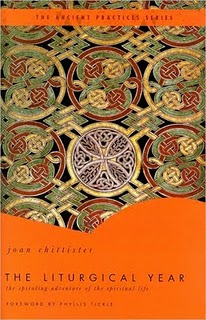
A key resource for lectionary preaching and a rare hymnal: Feasting on the Word and Hymns of Glory Songs of Praise

Following my last post, I thought I’d highlight just a few other titles that mainline denominational folks, especially, might want to know about.  Of course it is our deep wish that more evangelical folks would draw on these resources, just as I hope our more mainline friends consider the recommendations we make from conservative publishers.  We try hard to get beyond those increasingly unhelpful labels, and seek truth and renewal and helpful stuff any and everywhere.  We bet that in many ways, you, too, long for this, hoping to learn from those outside of your own immediate camp.

9780664231002.jpgDo you know the much-celebrated on-going series Feasting on the Word: Preaching the Revised Common Lectionary, the lectionary commentary edited by David Bartlett and Barbara Brown Taylor? (The Christian Century called them “monumental” which, I assume, is a good thing!)  Published every three months by Westminster/John Knox, there are four large hardbacks a year, for each of the three liturgical cycles, selling for $39.95 each.  Last year (year B) started the series, and we just got Year C, Volume 4.  That is, this recent one offers preaching aids for the Season After Pentecost 2.  The lectionary geeks will know this is what is sometimes called Propers 17 through the Reign of Christ.  In other words, this picks up at the end of August and makes the journey with you up until the start of Year A, the first Sunday of Advent. [Please note, the picture on the left is not the one for Volume 4; the publisher oddly doesn’t have a picture of that one available. They all look the same, though, except for the designation of the weeks.]

Bartlett and Brown Taylor are remarkable in their own right, but in Feasting… they’ve pulled together nearly anyone who is known in mainstream Christianity, and a few others, too—some to the left, some to the right, all skilled and guided by the Spirit, writing insightfully (usually) about the texts in question.
 
For each week, the reflections are arranged in four distinct themes or modes.  Somebody does a “homilietical” reflection (that is, hints to how to preach the text); one offers an “exegetical approach” giving detailed study of the words and such; then there is the “theological” contribution; and then insights from the “pastoral” perspective. It is surprising to me that not only are there these four different angles of vision into the text and the sermon preparation, but there are, among them, different interpretive moves going on.  That is, the four writers offering insights into these four aspects of the lection don’t necessarily agree.  My own pastor noted how much he appreciates that and what seemed a bit odd to me immediately was seen as the gift that it usually. is.  This is like having a veritable army of women and men at your side, inviting you into conversation with the assigned texts every week.  Even if you are not a preacher, this is a set of books worth considering.  If you are a regular preacher, it is a very useful volume.  If you buy one, I’ll bet you’ll want others, as they are that helpful.  They are ecumenical and mainstream in orientation.  We had a big stack at the Lutheran event just last week.

Speaking of being a bit geeky, I really like reading books about homiletics.  Yeah,  I know. You can read that sentence again, and it won’t get any more sensible.  I think these books designed for preachers are amongst the most under-rated texts around.  Preachers don’t even read them.  They rarely sell in the shop, although we have hundreds.  I’ve been dipping into a few, as I do from time to time, and my ecumenical dreams are underscored by the diversity of authors in conversation in those books.  Liberals, moderates, evangelicals, all in the same books!

The Folly of Preaching: Models and Methods  edited by Michael Knowles (Eerdmans) $18.00.  This is a collection edited a few years ago by a professor of preaching at McMaster in Ontario.  Some of these are just powerful, rockin’ insightful sermons—from David Buttrick, Thomas Long, Cleophus LaRue, Haddon Robinson, John Stott.  (There ya go for some mainline and evangelical collaboration!)  A few of the pieces are more like essays. Tony Campolo, whose professional sociological work was done like preaching, anyway, has a great chapter called “Preaching to a Culture of Narcissism” and Martin Marty reflects on “Preaching Rhetorically: Thanks, Aristotle and Apostles.” Edwina Hunter weighs in on the topic “Imagination, Creativity and Preaching.”  John L. Bell is in here, Stephen Farris, Elizabeth Achtemeier and more.  What a cool collection.

Interestingly, one of the strongest and most serious homiletics books this year is from an evangelical publisher not known for releasing preaching books.  I refer to the thoughtful, profound The Glory of Preaching: Participating in God’s Transformation of the World by Darrell W. Johnson (IVP) $23.00.  Johnson is renowned for being a good communicator at that renowned evangelical institution of higher education,  Regent College, in British Columbia. You know how interestingly faithful that place is with so many solid folks, from Gene Peterson to Marva Dawn.  Highly recommended.

The Preaching of Jesus: Gospel Proclamation, Then and Now by William Brosend (WJK) $19.95. This is a new study I’m itching to read.  It has a moving forward by Marcus Borg and a great blurb on the back by Ben Witherington who I greatly trust.  It shows four different styles of rhetoric used by Jesus, and then illustrates each chapter with a sermon that captures that style.  The sermons includes some of the most respected mainline folks preaching today—Barbara Brown Taylor, Fred Craddock, Bishop Michael Curry, Tom Long, which he then analyzes. What fun!  Preacher friends, get in on this and your Sunday messages will be better.  And the rest of us?  Join this conversation and you’ll learn how to hear good sermons, learn to critique them fairly, instead of just being grumpy on the way home from church about something the pastor did or didn’t say.  Hee, heee.  Plus, you’ll impress your pastor if you casually note that your reading a book like this.

6a010536b8214c970c013480342cda970c-120wi.jpgHere is just one more recommendation of the many we have: Alyce McKenzie, a United Methodist pastor who used to minister here in the York, PA, area, has done several book on preaching.  Her new one is another of these sorts of those of us who are laypeople just might get a kick out of.  It is called Novel Preaching: Tips From Top Writers on Crafting Creative Sermons (W/JK; $16.95.)  Just as it sounds, she interviewed (or found interviews) with dozens of contemporary writers, novelists who are known for their craft, and she draws from them the habits of mind and heart, the daily practices, the tricks of the trade, of learning how to write, and write consistently.  Writing a good sentence or two is a good step towards creating a solid and mature sermon.  I know, I know–solid exegetical skills and orthodox theology are the foundation, and no clever tricks or awesome words-smithing can substitute for heart-felt proclamation of God’s Word for life.  B
ut, still, even the most Biblically-faithful thinkers and sincere pastors of the flock need some help figuring out how to write and speak well.  This book is a lot of fun for anybody who is called upon to create.  Kudos to Alyce for this cool idea. See, there is some very interesting stuff in the “homiletics” section.

HYMNS OF GLORY SONGS OF PRAISE

978-1-853-11900-2.jpgHymns of Glory Songs of Praise edited by John Bell (Canterbury Press) $56.00  Well, I never know how to sell hymnals, really, and most often just hope folks know if they want one that they can inquire with us.  This, though, deserves special mention.  You may know John Bell of Iona, the vital and progressive spiritual community in Scotland (who publisher their own creative worship resources under the name Wild Goose.)  Bell has written so very much evocative, folksy, contemporary music, and has written widely about the significance of singing in our communal church lives, that when I heard he was helping compile this new volume (for the Presbyterian Church of Scotland and distributed here by the Episcopalians) I was truly excited.  The very day it came last winter, I sat down and read the introduction and it is very helpful. An index lists songs most suitable for children, and what they call “short songs” (some of which are like Taize chants.)  It is over 700 pages yet feels right in the hand.

 Hymns of Glory Songs of Praise starts off with a section of Psalms to be sung, a blessed contribution to any hymnal.   There are ancient lyrics here, and some rich, modern hymns as well.  Still, to see the fascinating selections—a lyric from John Bunyan, a song by Bonhoeffer, a prayer turned to song from a Book of Hours (circa 1500), to Halleluya! Pelotsa Rona from South Africa to Tom Troeger and Carl Daw. There are some folky liturgical composers, of course, in the “St. Louis Jesuits” style—there is a selection or two from Michael Joncas, Marty Haugen and David Haas, and a few from Dan Schutte.  And a good number of international tunes, from China, Guatamala, various African lands.

What fun to see lyrics by John Calvin next to Shout to the Lord by Darlene Zschech; Brian 
6a00e54ef51d768834011572070e92970b-800wi.jpg Wren next to William Cowper and Horatius Bonar.  There are classics by Philip Brooks and a modern chorus by Twila Paris.  I just smiled to see an index listing Julian of Norwich and Matt Redman.  I appreciate John Bell (and his work at Wild Goose) a lot, although it must have been fascinating to be involved in the Kirk committee picking these songs.  I really smiled to see so much from the Scottish Psalter and Paraphrases (Biblical paraphrases) and songs by Ralph Vaughn Williams, right there with Gaelic folk melodies, or songs by Ruth Duck.

The hymnal is arranged in Trinitarian fashion, with songs about God, Christ and the Spirit; in the Holy Spirit portion, however, is a major section called “The Church Celebrates” and it includes songs for a variety of purposes, from Baptism or confirmation, to grief, national concerns, and music for healing and wholeness.  This is very well thought through, and will be useful, I’m sure, for music planners and worship leaders of all sorts.

Speaking of hymns, the challenge of learning new songs, we just got in a new title published by P&R, Why Johnny Can’t Sing9781596381957.jpg Hymns: How Pop Culture Rewrote the Hymnal written by T. David Gordon. In a way, it seems to be another critical lambast of popular culture like his earlier book, Why Johnny Can’t Preach which was very thoughtful, witty, even.  I, of course, have large concerns about whether this is the best way to understand culture, music and such, but it is none-the-less certainly worth reading whether you agree with him fully or not. We sold it well at the Lutheran even last week; they don’t need it as much, though, as our friends whose worship services approximate a rock concert without the pot.  Not sure what I think, but you may want to check it out—I’m sure you’ll learn about forms and styles, and why we postmoderns ought to know a bit more about the process of music.  Sure would generate some good conversations, at least, eh?

BLOG SPECIAL
10% OFF
any book mentioned

order here
takes you to the secure website order form page

Hearts & Minds  234 East Main Street  Dallastown, PA  17313          717-246-3333


Life Among the Lutherans: selling books at a Synod Assembly

From our first days nearly 28 years ago, Beth & I were eager to represent books from a diversity of publishers, religious and general market.  One aspect of that diversity is our interest in books published by mainline denominational publishers (Augsburg/Fortress, Westminster/John Knox, Pilgrim Press, Church Publishing, Chalice, Abingdon, Upper Room, and the like or British publishers like SCM or Canterbury) as well as Catholic and Orthodox presses.  Of course, our favorites are the progressive evangelicals like InterVarsity Press (IVP), Baker/Brazos or Eerdmans, and even more traditionalist evangelical houses (like Zondervan and Nelson) are putting out some of most interesting religious publishing today.  Old friends at places like Presbyterian & Reformed and Dordt College Press have released some personal favorites, and then there are the indie presses, folk that do this one book or that series, odd-ball children’s books or hard-to-find stuff.  Do you know SkyLight Paths? Wipf & Stock? Regent College Press? Jossey-Bass? Faith Alive? Religious publishing is more interesting these days, I think, than at any time in our memory.

Who knows what is going to sell when we do our big displays, custom selected for particular gatherings?  The last few days we met some old friends and a lot of new ones when we served the Lower Susquehanna Synod of the Evangelical Lutheran Church in America.  Beth was raised Lutheran and it was sweet to see a Gettsyburg College booth and to chat with an old classmate, now a Lutheran pastor, from her old church, as well as the pastor serving that parish, now.  Local church camps, social service ministries, justice advocacy groups, mission groups, all had nice displays alongside our temporary bookstore installation.  Thanks to those who said so many nice things to us at the Synod assembly. Not a few said that they appreciated our diversity, selling books geared to Lutheran congregational life, of course, but showing other interesting things as well.

Life-Among-the-Lutherans1-194x300.jpgBest sellers?  Naturally, Garrison Keillor’s Life Among the Lutherans (Augsburg; $23.99) was a big hit, perhaps our best seller there.  If you have enjoyed his Lake Woebegon novels or the Lutheran stories from the radio show, you’ll love this.  It is great writing, very, very funny, and often remarkably insightful—the gospel in through the back door of this uncommonly graced storytelling.  We hear this is coming in paperback soon, but we have some hardcovers now, at the blog special discount price.  What a fun book to take on vacation!

I mentioned unusual publishers.  We stock a few different books about pray shawl ministry, and they were appreciated.  A number of churches do this, a knitting ministry, prayerfully making shawls and other such items to be used in ministries of mercy and healing.  I’m glad we had a selection on hand, and hope they will touch lives, mediating God’s love to the sick and sad.

And, we sold some memoirs.  I love reading this genre, learning about and from the telling of410aRJ0oBOL._SL500_AA300_.jpg other’s lives.  Anne Lamott, Nora Gallagher, Sarah Miles, Barbara Brown Taylor, stories of growing up in the faith, missionary stories, memoirs of nature writing and stories of marriage and stories of grief. Paul Farmer and Edwidge Dandicat on Haiti.  Three Cups of Tea and his newer one, too. The striking, new conversion narrative (Rage Against God) by Peter Hitchens, the brother of  world-famous, outspoken atheist Christopher.

 The extraordinary writer Walter Wangerin, Jr. is well known in ELCA circles (of course we took Ragman and Miz Lil and some were surprised to see them still.) His last two are powerful; Father and Son: Finding Freedom (Zondervan; $19.99) and his recent, poignant, Letters from the Land of Cancer (Zondervan; $16.99) were appreciated. This one seemed to be handled with care, knowing the sacred power of these letters about his serious illness.

6a00e54ef51d76883401287716ec17970c-200wi.jpgI kept telling those who were browsing that Barbara Brown Taylor’s An Altar in This World: A Geography of Faith (Harper; $14.99), now out in paperback, is one of my favorite books in recent years.  Her usual elegance, her insight, her great attention to the writing craft, bring this book of memoir and reflection to us with the end result being a book of lovely, enjoyable reading, and remarkable theological insight.  God shows up everywhere–every moment can be a sacramental one, and we must practice attentive spirituality, day by day, in the ordinary stuff of life.  I love this theme, and it is surely one of the best books about the embodied nature of life in God’s good world.

bonhoeffer-by-eric-metaxas.jpgNot sure if it was a “best seller” but we did sell several of the magisterial, new biography of Dietrich Bonhoeffer, Bonhoeffer: Pastor, Martyr, Prophet, Spy, by Eric Metaxas (Nelson; $29.99.)  There is little doubt that this is the Bonhoeffer book of our time, perhaps the best yet done.  It is, like Eric’s great book on Wilberforce (Amazing Grace) both historically detailed, powerfully written, interesting and insightful.  That is, he gets the details right, presents them in a vibrant and compelling way, and, without any preachy moralism, tells the tale in a way that makes you care, that helps us see that this matters.  It is a hefty book, but it is not the kind that people buy but never finish.  It is one of the great books of 2010!  Yay for Lutherans who still care about their man and his famous ministry of resistance, bearing the full cost of discipleship.

There was a lot to look at, and little time for most shoppers—they had their complicated denominational business to attend to, of course. For fun, if anyone might find it interesting, here are a few titles we wished we could have talked about more, alerted folks about.  Call it, books I wish we would have sold, or titles that somehow didn’t get noticed.  Like orphaned children, every time we come home from these large gigs we find these small stacks of books that were missed.  Oh, if only somebody would have found a home for these wayward texts.

On Christian Liberty  Martin Luther  (Fortress) $9.99  This “Facet” edition is a small 
544652.jpg paperback, recently re-type-set with a cool cover, offering the timeless, classic Lutheran teaching about the freedom we have i
n Christ.  For the Christian, Luther insists, this freedom includes not only liberty from sin and death, but the opportunity to serve one’s neighbor.  Every follower of Jesus can benefit from dipping into the older books, and this simple, little volume, is a great way to be reminded not only of the treasures of the past, but to clarify the first things of the gospel.   His “open letter to Pope Leo X” is included in the back, and is worth reading itself.

9780802865281.jpgWe Have Seen His Glory: A Vision of Kingdom Worship  Ben Witherington III (Eerdmans) $16.00  I have promoted this elsewhere and think it is an important little book where he “teases some minds into agtive thought about what worship should look like if we really believe that God’s Kingdom is coming…It’s time for us to explore a more biblical and Kingdom-oriented vision of worship.”  Lutherans in central PA like Gordon Lathrop’s important triology (Holy Things: A Liturgical Theology , Holy People: A Liturgical Ecclesiology, and Holy Ground: A Liturgical Cosmology) and this Weslyan author brings similiar concerns to bear: if God’s reign, celebrated by some churches in “Kingdomtide” is a real fact of our history–a liturgical cosmology in Lathrop’s rich phrase—how might that effect our worship?  And how might our worship shape our lives?  This is another volume in the on-going “liturgical Studies Series” of the Calvin Institute of Christian Worship, one of the most important ministries in North America.   We stock all of the books they’ve commissioned.  Lutherans, like most mainline groups these days, care about worship.  This book could expand our conversation about renewal.

For All God’s Worth: True Worship and the Calling of the Church N.T. Wright (Eerdmans) $13.00  I’ve mentioned this before, and find it so acessible, so wise, so stimulating.  The first half of the book is about the worth of the God we worship while the second half is about caring the worship of God into the world, imaging God in all we do.  I would have thought all of N.T. Wright’s good books would have been purchased, and it was odd to be at such a large gathering where he wasn’t being discussed much.  This older paperback is a sleeper, a great little book that I wished we could have foisted on everyone.

9780835810128.jpgLike Breath and Water: Praying With Africa Ciona D. Rouse (Upper Room) $18.00  Like many mainline denominations, the Lutherans have some historic and solid connections with sister congregations and synods in Africa.  Many of us care deeply about that troubled continent, and the world is paying attention, perhaps now more than ever, about the hope and horrors there.  This full color paperback is packed full of stunning photographs–are they almost like icons?—to turn the heart and imagination to prayer.  Can we see God there?  Can we be touched by the need, and driven to prayer?  What a beautiful book!   Ciona Rouse is a Nashville-based African-American who has done some innovative work on African-influenced liturgies, books on spiritual formation, and is a photographer and poet.  Check out www.PrayWithAfrica.com.

madeforgoodness.jpgMade for Goodness and Why This Makes a Difference  Desmond Tutu and Mpho Tutu
desmond-tutu-001.jpg (HarperOne) $25.99  I don’t know why this big stack of bright, purple hardbacks didn’t fly off the shelf.  Maybe if the Desmond’s big smile were on the cover, or if the back jacket photo of his beautiful daughter–also an Episcopalian priest—were shown, readers would be drawn in to this wonderful collection of stories and reflections.  Famous father and daughter make a powerful case, less in Biblical terms, using common language and pitched to the non-churched as well as Christ-followers, that we are created to live a certain way.  Goodness matters.  This is no dry text about situation ethics and no screed about taking a stand, although, having read it, I want to be more ethical and take a clearer stand.  Anyone can choose to cultivate compassion.  We can find a path of hope.  I would supplement a book like this, naturally, with a strong study of Jesus and the authority of Scripture, to illustrate just what Christian goodness is.  But for what it is designed to do, it is a masterpiece.  A nice blurb on the back form Bono, too, where he (once again) says that Tutu is his “boss.”  Gotta love that.

0470431024.jpgConnecting Like Jesus: Practices for Healing, Teaching, and Preaching  Tony Campolo and Mary Albert Darling (Jossey-Bass) $21.95  No matter where we are displaying books, we usually take the last book the two of the did together, The God of Intimacy and Action, which is a spectacular, rich, solid survey of how the inner journey of contemplative spirituality is related to evangelism and justice work.  Here, in a brand new volume, this dynamic duo team up to offer a book about (how to say this without it sounding boring?) communication skills.  That is, how can contemplative spirituality (and other devotional practices) make us into more expert communicators, doing good work in sharing the gospel, teaching, preaching, speaking, organizing.  I am convinced that one of the reasons smaller mainline churches are often lackluster is that the leaders are simply not skilled at good communication.  One needn’t be a spiffy, blow-dried tele-evangelist or a cool Willow Creek dude in pressed casual khaki to know that image and style and communication and passion are vital to those that want to be effective in impacting others.  Dull and inept communicators turn people off, and the church has too long tolerated boring preachers and teachers.  This is a very practical (and yet really interesting) collection of tools and ideas that will help you be more effective in leadership, in public speaking, in getting the job done well.  How can we communicate more faithfully?  What is the relationship between soul care and public ministry?  How can we care for people–even the tender, inner stuff of their souls–even in ministries of teaching and preaching?  What an interesting book showing the various sides of ministry. Highly recommended, especially for those in traditional churches who are weary of the media-driven and often shallow versions of ministry but who may need to improve their ability to “connect” with listeners.  This is serious and solid, and will push you to be faithful and fruitful, spiritually-rich and effective in shari
ng the gospel.

images100318.gifYour Church Is Too Small: Why Unity in Christ’s Mission is Vital for the Future of the Church  John Armstrong (Zondervan) $19.99  I have been taking this book with a mis-leading title around to church leadership events, telling everyone I can that I think it is important (and pointing out the very clear and properly urgent sub-title.)  I’ve been working on a longer review that will appear here soon, although it is not an easy book to describe well.  The short version is this: Armstrong was once a very strict and separatist Baptist, a gifted communicator with several books, including some on publishers that do mostly Puritan theology.  Yet, his natural good-natured personality and intellectual curiosity kept him reading widely and relating to others outside his own circle.

 This new book is partly John’s own story of growing into a heart-felt ecumenicity and a Biblical and theological call to a rich, evangelical view of the Body of Christ.  With a moving and solid forward by evangelical,  Anglican J. I. Packer, John has given us a large gift, born of his own pain and struggles, friendships lost and friendship gained, as he explores the meaning of the “missional church” in these postmodern times.  Mainline denominations have had a consistent, if thin, vision of ecumenical work, so leaders and readers in mainline circles may not feel they need to read a book like this.  For reasons I’ll explain in my longer review later, I think they are sadly mistaken, and need, more than ever, to root their ecumenical views (and practices, such as they are) in a robust Biblical ecclesiolgy.  As groups like the ECLA are torn at their seams by recent controversial positions, we all need a reminder of what we are called to be as Gods people, how we can find solidarity beyond denominational boundaries, even amidst tensions; it is understandable in hard times to focus on our own issues and concerns. Still, as Your Church Is Too Small reminds us, too often, our view of the church is too small.  We must rediscover and live into an active expression of being a global and faithful Body of Christ, ambassadors for His reign of shalom, witnessing to the reconciliation He has wrought.  A book on the church, on being ecumenical, told by a recovering separatist?  With blurbs by a Roman Catholic, an Orthodox priest, and an evangelical on the back, this is a ground-breaking book! I wish I could have told my new Lutheran friends about it.  It is a book we all need.  We hope it is widely discussed.

BLOG SPECIAL
20% OFF
ANY BOOK MENTIONED

Order Here
takes you to the secure order form page at our website
Inquire Here
takes you to a page to ask questions about titles, prices, or availability

We will personally reply within a day to any order or inquiry.  We love to stay in touch.

Hearts & Minds 234 East Main Street  Dallastown, PA  17313     717.246.3333 


The Wisdom of Stability: Rooting Faith in a Mobile Culture

In my last post I mentioned that we were at a wedding in Pittsburgh where the bride and groom had read a quote from Wendell Berry.  As you may know—and if you don’t, get any collection of his essays, or the novel Jayber Crow right away—Berry is a literary star, a Kentucky farmer, and a deeply religious man of the land who has resisted “modern” ways for a lifetime.  One of his themes is that it is no crime to stay put.  (“Oh, she’ll go far” it is said, when we want to applaud a young adult with talent and ambition, as if leaving is somehow a mark of success.)  A month or so ago we celebrate his most recent, a collection of mostly literary studies, of writers with “a sense of place.”  (Imagination in Place it is provocatively entitled.)  I’ve mentioned social critics and splendid writers like Bill Kauffman (Look Homeward, America) or James Howard Kunstler (The Geography of Nowhere and Home from Nowhere) who have lamented the suburban angst of our time, and pointed us to principles of stewardship, charm, and a local scale. Is it right to stay put?  Are our Up in the Air values eroding relationships, meaning, a sense of our place in history?  I’m not so sure about any of that, but we find that some of our sharpest readers resonate with this school of thought.  At least we know that our place matters to God.  In fact,   Eugene Peterson puts it bluntly in the forward to Eric Jacobson’s book Sidewalks of the Kingdom) by asserting that “In the Bible, where one lives may be as important as what one believes.”

There is an increasing body of literature on the importance of place, the theology of place, Christian thinking about the way being embodied as creatures effects our spirituality and discipleship.  You know we’ve raved about the serious, provocative Beyond Homelessness: Christian Faith in a Culture of Displacement, by Brian Walsh & Steven Bouma-Prediger which is a must-read text for those wanting to go deep into this vital theme.

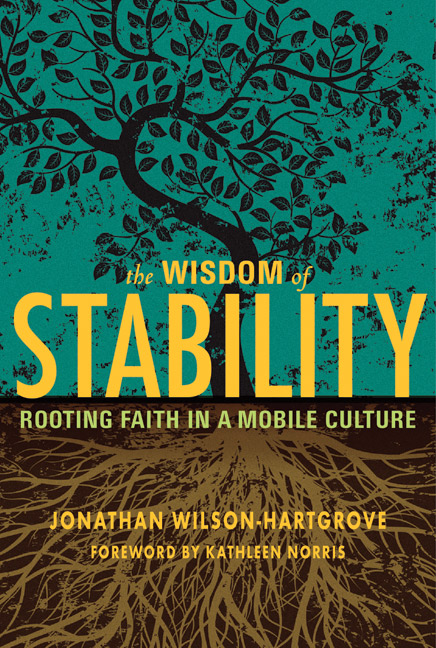
stability2.jpgWell, we are happy to tell you that there is another new book that opens up our hearts and thinking about this topic, a book that is kind and gracious, well written and gentle, even as it is bold and prophetic.  It is called The Wisdom of Stability: Rooting Faith in a Mobile Culture, written by Jonathan Wilson-Hartgrove (Paraclete Press; $14.99.)  As you may guess, it is a great blending of several styles of writing, and showing several sorts of interests by Wilson-Hartgrove who has written wisely and passionately about much in recent years. 

He is a peace-maker (went to Iraq on a peacemaking mission, and his pal Shane Claiborne wrote about his being wounded there. He then wrote about it movingly in To Baghdad and Beyond: How I Got Born Again in Babylon.)  He has written about being missional, a book with Shane about prayer,  a very important work on racial justice within the Body of Christ (Free to Be Bound: Church Beyond the Color Line) and, recently, a fine book on a Christian view of money, God’s Economy.   He was one of the conveners of the gathering (at his intentional community called Rutba House in Durham, NC) that coined the phrase “the new monasticism” and he has edited a few books on this new radical house-church/Christian community movement. (School(s) for Conversion: The Marks of the New Monasticism.)  He is a busy guy, a young leader of an ecumenical and socially active sort of evangelicalism, and he writes well.  I think this may be his best book.

And, given how busy he is, this book is leisurely.  I feel myself slowing down, even as I read it.  His stories include lovely writing about the color of the porch boards, and the taste of the sweet tea drunk in the humid South, of how he and his young daughter notice a bird making a nest near their porch, during an early morning rest on the stoop.  I like the narrative nature of these reflections, and applaud Paraclete for the aesthetic touches—each chapter starts with a several page reflection that is set apart with some wood-cut-looking page embellishments of vines.  Even the cover has a bit of a subtle embossed feel; it is nice they did this, as this is a book to be carried and read slowly, with joy, I’d say.  It is about staying put, about being rooted.  Rooted?  Artwork of vines?  Yeah, you get it.  Very nice.

Lauren Winner writes on the back cover “Stability may be the virtue of the 21-st century Christians most ignore—and the virtue we are most called to embrace.  This fine book will inspire you to look at your own life, asking ‘Where am I restless? Where might God be calling me to be rooted, to stay put?'”

Indeed, most of us have failed in this virtue; we have not cared for our neighbors (or our own neighborhoods) as we ought.  We have not been rooted in place, or really engaged with the people and plot of creation in which we are placed.  We have been too busy to participate in the simpler rhythms of life. 

Kathleen Norris knows about this.  You most likely know her book from a decade or more ago called Dakota: A Spiritual Geography, where she came to Christian faith while exploring the historic desert fathers and mothers and the rugged landscape of her native state.  Later she wrote beautifully about being in a monastery (Cloister Walk), learning the sacred time of the monks.  Can ordinary folks live like that, somehow?  She is working on that, so it is fabulous to have her write the forward to this book.  It is a wonderful foreword, and it is no small thing to have a writer of her caliber and life experience to offer such a solid introduction to the topic, and the book.

Stability.  It is a gift, Wilson-Hartgrove rightly tells us.  And it comes as we work at it, too, in a “school for prayer” (which is a section in his chapter called “Stability as a Craft.”)  He looks at some of the stuff the desert fathers and mothers have taught—serious stuff about self-reflection and boredom and temptations, all that militate against forming mature bonds of community in place.

And, so, we are glad for these kinds of books, and certainly for The Wisdom of Stability, which is so nicely done, emerging, obviously, from his own (unfinished) journey.  Or is journey—this moving away image—the wrong metaphor, here?  Well, it is a journey, a journey home, deep into place, a journey towards wisdom and care and stability.  Our mobile culture does not want this.  The media does not encourage it.  Pop culture makes icons of those who have to be “movin’ on” or who are “on the road.” Our own families may not expect it.  But, maybe, just maybe, books like this, written out of communities like this,  about experiments like this, may hold a key to renewal in our fast-paced, too-hectic, politicized culture.  This is not a call to “drop out” or ignore our global neighbors, or the fabulous opportunities that call some of us to new vistas and new places.  But it does ask the big questions, and invites conversations around the meaning of discipleship as it comes to bear on serving, jobs, relationships, community, house-holding, stewardship, and spiritual practices of attentiveness to the near-by.  I really, really enjoyed it.  In fact, I needed it.  You might, too.  We’d love you to support your own local bookseller, if you’ve got one, or this virtual community of H&M folk w
ho care about similar sorts of things.  If you’re in this tribe, and feel “at home” with us,  send us an order.  Part of our call to stability in these postmodern times—I really think this—is staying together on line, too.  May our tribe increase, even as you remain rooted in place, with a spirituality that resists a place-less mobility.  God’s peace to you.

Here is a very cool youtube video of him talking about the book.  Filmed right on the porch. 

BLOG SPECIAL
10% discount
Order Here
takes you to our secure website order form page
Inquire Here
 if  you have questions

Hearts & Minds 234 East Main Street     Dallastown, PA  17313     717.246.3333

an excerpt from Wendell Berry, read at a wondrous wedding

In 1976 Beth and I sent out wedding announcements, creatively designed by a college friend.  It rather boldly proclaimed “Remember This Day.”  It was not intended as a “save the date” announcement as much as an invitation to join us in thinking (perhaps a bit presumptuously) that God was doing something Big here, and that, like the piles of stones set up in ancient Israel to remind of God’s faithfulness, our joined lives were supposed to stand for something.  Idealistic as it may have been, we still believe that there are times in our lives (I hope it is so with you) that we should memorialize, a stake in the ground, a pile of rocks.  Christ is present and He reigns, even in such things.  Remember those days, indeed.

By phrasing it the way we did, we also were asking that our friends and loved ones help us.  We knew enough to know that friends and family are needed to make something like a meaningful marriage; the shared vocation of creating a Kingdom outpost in a family, takes help. We spoke a lot about “community” in those years, and formed an intentional household or two with a batch of other young marrieds and singles in an urban neighborhood in Pittsburgh.  The African proverb “it takes a village” had not come to our attention yet, but it sure seemed that way for us.

***

And so, we so enjoyed being at several weddings this month (literally and in spirit.) And at one, this quote from Wendell Berry was read, alongside a lovely poem by Luci Shaw, and some wonderful Scripture texts.  To hear St. Wendell read from the lectern of this impressive Anglican church was sweet, and it reminded me of our feeble effort to say something like this at our own special day, November 20, 1976. 

Thanks to the extended community of Andrew and Morgan, for helping shape them into the sort of young lovers who would think to have this excerpt from one of the best collections of his essays, Sex, Economy, Freedom & Community (Pantheon), read out loud prior to our vows to support them.

Lovers must not, like usurers, live for themselves alone.  They must finally turn their gaze at one another back toward the community.  If they had only themselves to considers, lovers would not need to marry, but they must think of others and of other things.  They say their vows to the community as much as to one another, and the community gathers around them to hear and to wish them well, on their behalf and on its own.  It gathers around them because it understands how necessary, how joyful, and how fearful this joining is.  These lovers, pledging themselves to one another “until death,” are giving themselves away, and they are joined by this as no law or contract could ever join them.  Lovers, then, “die” into their union with one another as a soul “dies” into its union with God.  And so, here, at the very heart of community life, we find not something to sell as in the public market but this momentous giving.  If the community cannot protect this giving, it can protect nothing—and our time is proving that this is so.

wendell_berry.jpg

Here at the shop we are often asked for books on marriage.  Sometimes it
is young couples about to be married.  Sometimes it is a church
marriage retreat or small group.  Sometimes folks are in trouble,
sometimes it is for a shower or wedding gift.

Here is a list with a description of a handful of our favorites, found over at the
May monthly column. Perhaps you might want to share one or two with a couple you care about.

Hearts & Minds 234 East Main Street  Dallastown, PA  17313     717.246.3333

new edition of Donald Miller’s Searching for God Knows What (including hidden game)

Not too long ago a website came to my attention (they were complaining about the heretical books we sell, authored by the likes of Eugene Peterson or Brennen Manning or on topics like creation care) and although I have tried to forget their cult-like narrowness (seeming to advocate book burning, literally) I involved myself (against dear Beth’s wiser wishes) in asking them to, at least, tell the truth about what authors do or don’t really say.  We can disagree about much in our culture, and certainly even within the church, but this nasty tendency to make our adversaries worse then they are is just wrong.

I mention this because I realize that a few folk out there—maybe even among our fair readers—don’t trust Donald Miller.  They have heard he is a bohemian who is a bit out there.  Blue Like Jazz (I first ordered it not only because I had so liked his previous book about a post-college road trip in a mini-van, but also for the sheer allusiveness of the title) is a bit meandering, full of odd musings, edgy, even.  It is laugh-out-loud, hold yourself so you don’t pee on the floor, funny.  It is not an orderly theology book. But I think it not only has a good heart, but is very thoughtful, even wise at times.  His memory of growing up, his ponderings about deep things, his understanding of being a follower of Jesus, it is all very, very much worth reading.

And so, I was particularly peeved when that dumb website said the most outlandish things about the book, saying things about it, and about the author, that simply were untrue, grossly untrue.  I called ’em out on it, but they did not back down.  One can find fault with Mr. Miller, I suppose, but these were flat out lies and it nearly made me ill to think of it, and the great harm done by people who are too sure that they are defending God.  I am sad even writing it now.

It is nearly a cliche, it seems, one that the emergent movement and many others (including some Christ-followers who are now writing books about not belonging to a church) seem nearly defined by, that ugly and shallow fundamentalists have made grace-filled, robust Christian faith nearly untenable these days.  Yeah, yeah, I get that.  Don’t get me started.  But, sometimes, I want to shout out: get over it!  Sure there are lots of unappealing and even mean Christian folks, too many slimy televangelists, plenty of tacky “Christian” kitsch in the “Christian bookstores” (that don’t stock many real books.)  But we sure don’t need to reject orthodoxy or traditional faith communities because some are overly middle class or up-tight or seem to not quite understand what Jesus called “the weightier matters of the law, mercy and justice.” (Matthew 23:23.)  And, anyway, for every so-called “Christian” militia plotting evil in God’s name, or some using despicable language about gays and lesbians, or every super slick “name it and claim it” religious huckster,  there are decent and dedicated followers of Jesus doing quiet deeds of Kingdom worth.  And there are those who are indeed credible, innovative, and interesting who bring a creative eye and voice and yet maintain clear Christian conviction.

Which brings me back to Donald Miller.  He is a fun author, and he is interesting, and his last big book—A Million Miles in a Thousand Days: What I Learned While Editing My Life—has gotten great press.  I’ve raved about it here at BookNotes, truly enjoying the notion of how the principles and structures of “story” (they were making a movie about his life, and realized there wasn’t much happening in Blue Like Jazz except going to the coffee shop to think and write about God) could help him actually make something of his life.  It really was one of the best books I read last hear, and so love certain parts that I’ve taken to reading pages out loud to friends who will listen.  Lawyer and global humanitarian Bob Goff plays a part in it, too, and anyone who knows Bob knows he is about the most amazing fellow one could ever meet, all three of the musketeers (and stooges) rolled into one.  If Goff befriends Miller, and Miller tells about that, trust me, it is worth reading. 

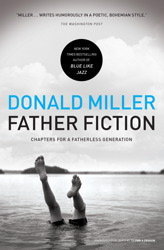
Miller also is doing some pretty considerable work in getting guys to sign up to mentorfatherfiction.jpg fatherless young men.  He writes about not knowing his own father in Blue… and then revisited that in an entire book—a tender and thoughtful book about why boys need men in their lives—called To Own a Dragon.  Happily, it has been considerably expanded and re-released this spring under the title Father Fiction: Chapters for a Fatherless Generation (Howard Books; $19.99.)  It isn’t quite as hilarious as his other stuff as it is a tad more serious in focus, but it still is Donald Miller.  Lots of stories, anecdotes both amusing and poignant, a bit zany, with considerable insight.  We recommend it.

So, no, Donald Miller is not that “out there” and he seems to hold a very orthodox, evangelical faith.  Those who have met him have enjoyed his presence, his honest, Gen X tone, and his authentic, casual demeanor.  (I’ve been with Christian authors and convention speakers who just reek of showmanship and pride.  I honestly don’t see this in Donald, although he may have to fight for integrity and character here, who knows?)

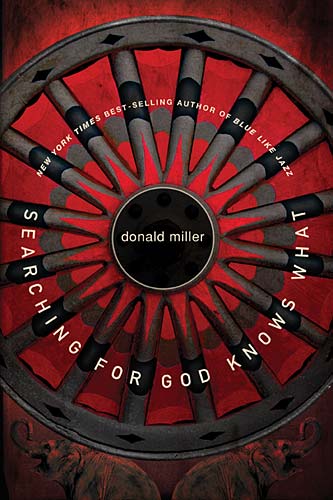
1400202752.jpgThose who care about solid doctrine, who worry about what kind of wacky stuff this Portland storyteller is promoting only need read his most substantial book, newly released this month, Searching for God Knows What (Nelson; $14.99.)  It has a structure a bit like Blue…, but perhaps less memoir and a bit more exposition.  He does extended riffs on certain notions (including his fairly famous Calvinist take on Romeo & Juliet.)  He’s got the edgy counter-cultural beatnik thing going on, and the artful cover—a very authentic-looking bit of Americana, a carnival-esque publicity poster—sure gives it the feel of a book that any young literary type or coffee shop hipster would love.  Yet, despite the feel, the tone, the vibe, when the haze from the smoke and mirrors in the fun house clear, this dude can preach.  This is gospel.  Not so plain and not so simple, but it is solid.  We are thrilled that such an fine writer and interesting thinker can speak with clever prose and wild analogies into the hearts of seekers, reminding them of pretty basic, true truths. Truths about Jesus.

(And, yes, there are some of those weirdo shifty mirrors in this fun house.  One chapter is called “The Circus of Redemption: Why a Three-Legged Man is Better Than a Bearded Lady.”  Got that?)

He has some serious ideas, here, but yet–and this is an idea worth savoring (as John Piper might say)—“Being a Christian is more like falling in love than understanding a series of ideas.”

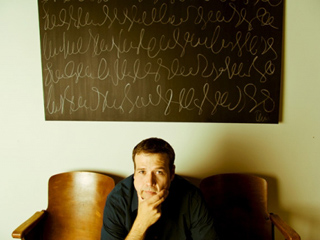
I liked what Christianity Today wrote when the first edition came out in 2004 “Like a shakennews_1256819541_Donald_Miller.jpg snow globe, Donald Miller’s newest
collection of essays creates a swirl of ideas about the Christian life that eventually crystallize into a lovely landscape…”

The new expanded edition, by the way, is considerably expanded, and also includes a brand new introduction, a personality theory based on Genesis (essentially a whole new chapter), and a game hidden in the book with clues, anagrams, and codes that unlock prizes and secret content.

I almost feel like some barker on the mid-way, asking you to “step right up” ladies and gents.  But it really is a hoot.  This revised version of Miller’s most substantial book really is a bit more interesting, and re-reading it, with an eye for these weird clues—it is sort of explained in a cool, glossy insert—makes the book a bit like a tilt-a-whirl.  I’m enjoying the wit, appreciating his famous cadence, making sure that my claim that he’s really quite orthodox hasn’t been undone in this new version, and yet all the while doing this odd anagram thing.  Only Donald Miller, I think to myself.  Or maybe Bob Goff.  I bet he cooked this up, daring Miller to put games in his most serious, theological book. What a holy, goofy blast. 

All the game instructions and (yes) the decoder wheel can be found at www.DonaldMiller.Fan.com or www.SearchingForGodKnowsWhat.com.

Our little game is simple.  Buy Searching for God Knows What (revised) from us and we will thank you for it.  And give you a 20% off.  Buy the book from us along with any other Donald Miller book or DVD and we will give you a 30% discount on them all.  Step right up…

ORDER HERE
Takes you to the secure order form page at our website.
Or click here to be go to our “inquiry” page if you have questions
.


Hearts & Minds 234 East Main Street  Dallastown, PA 17313          717.246.3333 

Wisdom Chaser: Mountain climbing with Richard Foster (and the healing power of the outdoors)

No, silly, I wasn’t mountain climbing with Richard Foster, or anyone, for that matter.  Beth and I did have a recent rendezvous with some long lost pals from Beth’s college days in the foothills of the Rockies.  I even walked around a bit (hiking would be an overstatement.)  We were at a wedding, so forgive me if I didn’t take a backpack.  The weather and scenery and micro-brews and recovered friendship were stunning.

So it seemed right to be reading a book about the famed Colorado “fourteeners” along the way.  To be reading about Mt. Quandary as one friend mentioned it, or the breath-taking Long’s Peak while literally gazing at its snow-capped jut into the sky, was really cool.  As with so many topics, reading can enhance an experience (knowing a bit about Colorado climbs was helpful as I listened to a local climbing expert and reading about the various chains and canyons helped me appreciate them even as we drove around) and it serves as a great, vicarious substitute.  We can “do” and “visit” so many things and places in the pages of a book that I can hardly imagine why more people don’t read widely.  What fun!  What learning! 

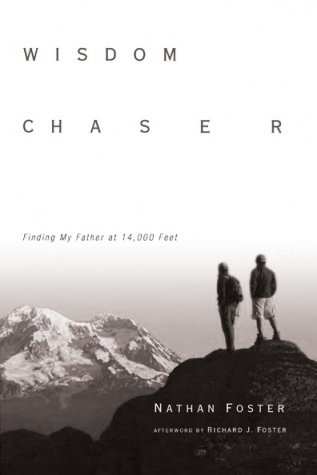
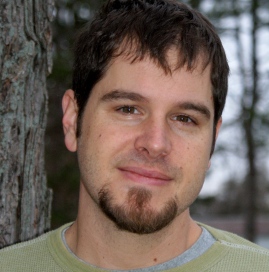
wisdom-chaser-6b2.jpgThe book I carried is about climbing with famous mystic and Christian author, Richard Foster.  It is called Wisdom Chaser: Finding My Father at 14,000 Feet (IVP; $16.00) and is written by his son, Nathan.  It has a very interesting thesis, and it is a story that is nicely told.  It is on the fabulous “likewise” imprint of InterVarsity Press, so has an honest, contemporary feel.

Here’s the brief version: Richard Foster, as most BookNotes readers will know, is a studious and quiet author who has brought the deep mystic tradition of the ecumenical church to evangelicals (and others, too.)  His best-selling books from the 1970s and 80s, Celebration of Discipline or Prayer: Finding the Heart’s True Home or the one against speed, greed, and materialism, (Freedom of Simplicity) are must-reads.  I think Foster is the only living author in the top ten of the Christianity Today list of top 100 Christian books of all time.

Sadly, Nate was a somewhat quirky kid who became a truly troubled youth, and it seems that Foster in his monk-like practice, and his seriously introverted job (writing about the inner journey) and his (often difficult for him) rise to fame and subsequent world-wide travels, simply didn’t relate well—hardly at all, it seems—to his boy.  As Nate remained unaware and, then, increasingly hostile to his father’s work, he fell into aloofness, rebellion, addictions, self-injury, and hostility to organized religion.  He doesn’t dwell too much on his descent into such pain, but the few scenes he describes are shocking.  How could a member of the household of a solid, Godly author become so unglued? 

In his young adulthood, Nate approached his father and basically said something like this: ” I don’t know you and you don’t know me and, despite my rage and dysfunction, we ought to get to know each other.  Let’s climb a bunch of fourteeners and see what happens.” 

As the back jacket copy puts it, “It began with a simple question…and for Nathan and Richard that simple question changed everything.”

Surprisingly, to Nate, and to some readers, too, I’d bet,  60-something father Foster says yes.  Climb by climb, Wisdom Chaser unfolds the story of the reconciliation of father and son, describing Nate’s own journey–with frank language, telling of huge frustrations, painful episodes, and his deep questions in his “lovers quarrel” with the church.  As he matures and grows (and comes to understand and appreciate his famous Quaker dad) he tells of his own young, struggling marriage, his entry into parenting an infant, finishing a college degree, and seeking out his own vocation, first as a crisis counselor and  leader of an Outward Bound-type of program for very troubled youth, and, eventually, becoming a college teacher.  He continued to climb, or hike, with his dad (and their faithful companion, a dog named Ziggy) as Nate’s recovery blossomed and their relationship saw considerable healing.

I loved this book, in part due to its simple and clear prose, and its fairly obvious themes. It’s very good stuff, traversing some serious emotional and spiritual terrain, but it is a very quick read.  Famous and famously spiritual dad fails to connect with his son, son rejects traditional faith and dives into self-abuse and addictions, they re-connect in some trying and dramatic episodes of wilderness experiences.

Almost anybody who is a Foster fan will enjoy this, as you learn a bit about his life, his family, and his approach to these daunting tasks—the climbing and the relating.  Those of us who have met and been ministered to by Richard know of his humor and his nearly casual way of approaching extraordinary spiritual experiences (but we learn here how we learned some of these gifts.)  He and Nate are so different on this that it produces some conflicted (and, at times, hilarious) situations; from packing to pacing, Richard is slow, methodical, and gentle.  His son is, well, exhuberant and wild.  What a duo!

I can think of several sorts of readers who will enjoy this.

I think almost anyone who loves outdoor education, wilderness expeditions, or even moredsc02399.jpg casual day hikes will love this.  There is much to learn about experiencing the harsh terrain and dangerous weather and “going with the flow”, resisting presumptions about “conquering” nature and learning to respect nature’s wild ways.   Nathan Foster’s writing style is not richly literate like Annie Dillard or Terry Tempest Williams, Brenda Peterson or Aldo Leopald.  He’s not writing mostly about the aesthetics of the wild.  (Although there are beautiful sentences here, and Richard’s slower pace allows Nate to see and be attentive to striking little flowers and lovely colors of rocks as the slant of sun changes, or as ice forms in lovely detail.  The writing about an encounter with wild lightening was itself electric, and the coming to grips with certain “failures” during climbs was very moving.)  So it isn’t about nature, per se.  Still, the dramatic center and arche of the book—Nate’s recovery and the healing the wounds of his boyhood—is set in the great outdoors.  It is not a book of pure “nature writing” but it is about mountain climbing. 

Further, I think anyone interested in psychology, AA stories, recovery, discovering one’s self, inner healing from deep hurts, learning to find a radical Christian faith community that is authentic and hopeful, relevant and not about marketing or glitz, but about Christ-like relationships, will find this immensely useful, too.  It isn’t a guide book to recovery or how to be honest about one’s pain within the religious community, but it is important to hear these kinds of stories of brokenness and restoration, fears, foibles and the search for reconciliation.

 Whether or not the story is about a famous (distant) dad and his hurting son, and whether or not the story is set in the spectacular drama of Western wilderness sojourns, this messed up fella finds God’s great grace to be real and m
akes commitments to being an agent of Christ’s reign of shalom on Earth.  He is a poster boy for Nouwen’s nice phrase, “wounded healer.”   I suppose it is fair to say that, at the end, besides the tender parent/child stuff, and the thrilling accounts of mountaineering, this is a testimonial book, a memoir of what God can do for needy sinners, through ordinary stuff—talking, hiking, paying attention,being faithful in relationships, surrender.  It is a book about deepening discipleship, about being serious as followers of Christ.  What a wonder that an adult child and an older parent can become friends and partners in the journey of grace and write about it with such candor.

Here is a link to Richard Foster’s website that has some great youtube videos of the two of them talking about their quest, and the book.  Enjoy. 

***

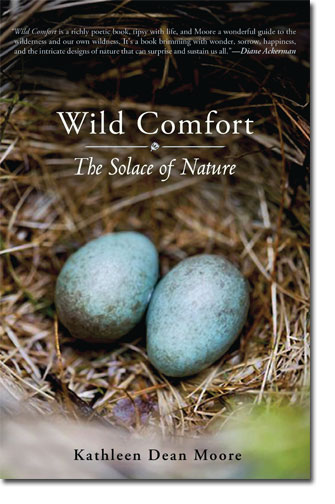
9781590307717.jpgOther books come to mind on this topic, especially about how being in the outdoors can be revelatory.  I’ve written previous entries about great nature writing, about memoirs that illustrate the beauty of creation.  One of my favorite writers is Kathleen Dean Moore, an exceptionally talented writer, a trained naturalist and philosopher, who has an ability to help us see by telling of what she sees.  She has given us a lovely, lovely gift in a recent book  entitled Wild Comfort: The Solace of Nature (Trumpeter; $15.95.)  The always impressive Diane Ackerman says it is “a richly poetic book, brimming with wonder, sorrow, happiness, and the intricate designs of nature that can surprise and sustain us all.” 

Most who know this genre respect the prolific Scott Russell Sanders (do you know his splendid A Private History of Awe, with that great blurb in the form of a letter from his friend Wendell Berry?  Sweet!)  Sanders says of Moore’s Wild Comfort,

…in spite of grieving over the death of friends, the extinction of species, and
the tattering of Earth’s web, she finds comfort in natural and human creations,
in symphonies and snakes, in science and stars, in the beauty constantly
upwelling from the mystery we call life.  This book itself is such a consoling
creation, a cause for gratitude and joy.

Wisdom Chaser is simply written, very interesting, and clearly helpful—he tells of lessons learned along the way, insights gleaned from the talks with his father, stuff he learned from creation and stuff he learned in his own journey towards healing and wholeness.  Even if you’ve never been to Colorado, this is a book we highly recommend.  As Eugene Peterson (perhaps only half-jokingly) writes, “Wisdom Chaser is as poignant and winsome as successive mountains deepen for each, the son and the father, what it means to be a son, to be a father.  Add mountain climbing to your list of spiritual disciplines.”

And Wild Comfort, again, is great for anyone who loves good nature writing, beautiful and luminous words about the glories of seeing stuff.  Whether one is in grief or not, don’t we all need comfort and care?  Shouldn’t we be glad for authors who model for us how to be attentive, and find solace in the commonplace?  Who can with such elegance point things out along the way?  Kathleen Dean Moore has much to teach us, and teaches in such a gorgeous and stimulating way.  Thank God for good writers who share their wild experiences with us.  Especially when the wildness is quiet, gentle, healing and hopeful.

BLOG SPECIAL
“fourteener” special

$14.00
either book

ORDER HERE
(takes you to our order form page which explains shipping and billing options)

Hearts & Minds 234 East Main Street Dallastown, PA  17313     717.246.3333


Five great books about the struggle with radical Islam

After the last post’s mention of the Paul Marshall books and his expertise on a balanced and informed view of Islamic extremists, I thought I’d list a few books that those serious about this crisis of our times might want to know about.  Two are a bit demanding, two are more readable and inspiring.  All are recent.

By the way, those of us who are followers of Christ have to always keep in mind–sorry to preach–that despite however unjust and grossly dangerous our enemies may be, we are called to exhibit a Christ-like demeanor, always protecting the dignity of all who are made in the image of God, with the goal of seeking reconciliation, not necessarily victory.  (Gandhi was right, I think, that a defeated enemies is not nearly as good as a converted friend.) Just war theorists and pacifists alike who are serious Christians agree that we must frame our examinations of these current affairs by the coming reign of the One who was slain.  We are to bring great glory to Him, and we know how He did that.  Through suffering love, the sort of non-violent grace that Peter says is “an example for us to follow.”

I don’t know if any of these authors share this ethic of Biblical peacemaking in the way of the Christ, but they are nonetheless vital resources for contemporary living.  We recommend them.

images.jpgFaith and Power: Religion and Politics in the Middle East  Bernard Lewis (Oxford University Press) $24.95  Agree fully with him or not, there is little doubt that he is one of the top world-wide scholars of the Arab world.  For years he has researched, written, observed and guided the world’s leaders into a deeper understanding of the conflicts of our age.  “Lewis has done us all–Muslim and non-Muslim alike–a remarkable service”, says Paul Kennedy in his New York Times review of the classic What Went Wrong?  In this collection released just this week, the Emeritus of Near Eastern Studies at Princeton gives us previously unpublished pieces, chapters formerly published in obscure academic journals, and a few first released in foreign languages.  A long introduction frames the collection.  Very important. Here is a good summary of some of his views, an overview of some of the criticisms waged against him and a link to a transcript of his debates with Noam Chomsky.

www.randomhouse.com.gifFlight of the Intellectuals  Paul Berman (Melville House) $26.00 Mr. Berman’s post 9-11 book Terror and Liberalism was one of the most stimulating and important I read in those hard years. Considered one of the most significant books on the topic, it was widely reviewed. He admitted that as a proud and classic liberal intellectual and activist (a framer of what was once called the New Left and a true man of letters), he resisted abuses of American power, worked for international justice, presumed that war was a front for crass U.S. power and investigated how imperial interests too often propped up unjust regimes, and failed to stand for human rights.  Oddly, however, in his view, his liberal comrades failed to see or understand the horrific human rights abuses and despotism found in radical Islam.  From their treatment of homosexuals and women to their foreign policies of terror, their hatred for modernity and reason, extreme Islamists stood against everything liberals stood for.  So why the failure to speak a clear “no” to the repression and totalitarian tendencies of some of the more unsavory parties within radical Islam, such as the Muslim Brotherhood?  Why the failure to denounce the rabid anti-Semitism? Why blame the West?  Terror and Liberalism brilliantly exposed the inconsistencies and blinds spots on the left and while I didn’t agree with all of his conclusions, it was a very, very important work.

 Here, in this very important new work, Berman continues to skewer the failures of the left, asking tough questions about the integrity of the American intellectual tradition.  Perhaps you saw the much-discussed piece about Oxford professor (and near celebrity) Tariq Ramadan in The New Republic from which this book grew.  It is respectfully dedicated to two great liberal journalists and intellectuals, Marty Peretz and Leon Wieseltier.  These are top shelf intellectual reflections, which I commend for the sheer joy of seeing a master essayist at work, to spend time with the writings of a public intellectual, who, sadly, may be more correct than we realize. 

0310325757.jpgThe Imam’s Daughter: My Desperate Flight to Freedom Hannah Shah (Zondervan) $19.99   There are several great books that illuminate conservative Muslim culture, that tell the fascinating tales of what it is like living in places where fundamentalist Islam is the primary culture. In this instance, Hannah Shah (not her real name)  lived in the strict Pakistani Muslim sub-culture of  Northern England.  Sexually violated and abused, with a submissive mother, she fled to freedom at age 16 (to avoid an arranged marriage), married for love, and writes poignantly about trauma and freedom.  Some of the story is harrowing, even after her escape as there is the need to flee from her families efforts to execute her in an “honor killing” (since she converted to Christian faith.)  A moving, powerful story from a woman who Rob Bells says has “Jesus-sized courage.”    See more about her at www.hannahshah.com.

Untitled-Image_1269995700.jpgSon of Hamas Mosab Hassan Yousef (SaltRiver) $26.99  Before the age of 21 Mosab Yousef had seen things that are truly horrible—-Palestinian poverty, human rights abuses, torture, even.  He observed historic backroom arrangements with some of the leading figures in the Arab world, participated in the Intifada, was held captive deep inside an Israeli prison.  He eventually gained the trust of various factions within Hamas, and had access to extraordinary secrets that only a few people in the world really know.  He is the son of Sheikh Hassan Yousef, a founding leader of Hamas, internationally recognized as a terrorist organization and responsible for countless suicide bombings against Israel.

It isn’t every day we get to read the account of a potential double-agent, a man interested in jihad, who has slowly come out of it.  Here is a good interview with him, oddly, in GQ (sorry.) As they say in the interview, this is not your typical Christian book.  By the way, his father has now disowned him, and he is under threat.  He says he is not afraid, and still loves his father, and stands with his people.

The dust jacket reports that “aft
er a chance encounter with a British tourist, he began a soul-searching journey that lead him to jeopardize his family and threatened his life.  He has since embraced the teachings of jesus and sought political asylum in America.”
Ron Brackin helped him write this and he is a man with extensive and dramatic investigative journalistic experiences (from the Al Aqsa Intifada to Baghdad, from southern Sudan to time in Gaza.) 

The subtitle puts in powerfully: “A Gripping Account of Terror, Betrayal, Political Intrigue, and Unthinkable Choices.”  Pretty amazing stuff.

stones.jpegStones Into Schools: Promoting Peace with Books, Not Bombs, in Afghanistan and Pakistan Greg Mortenson (Viking) $26.95  Even the most politically jaded warmed to the great adventure and beautiful humanitarianism of Three Cups of Tea. We are glad it has even been made into a children’s picture book called Listen to the Wind.   Here, he is back, with a forward by Khaled Hosseini, affirming the joy of books, the beauty of learning, the need for cross-cultural relationships, and how his tenacious work to help girls in remote mountainous villages may be the very best way to resist terrorism.

BLOG SPECIAL
20% off
any book mentioned
ORDER HERE
link takes you to our secure order form page

Hearts & Minds 234 East Main Street Dallastown, PA 17313     717.246.3333


Glad to hang out with Paul Marshall. Glad for churches who care.

Thanks to Shepherd of the Hills (UCC) and Morningstar Fellowship (Assembly of God) in Bechtelsville (near Pottstown, PA) who Friday and Saturday co-sponsored an event with my old pal Paul Marshall for an exceptional set of lectures on radical Islam, the religious dimensions of global terrorism, how the media does and doesn’t report on that well, and what the persecuted church in the third world is going through.  Paul just got back from a very high level meeting in Europe with several Prime Ministers, Duchesses, Baronesses, and Dukes and famous folks from Tony Blair to an official from the Vatican.  From there, despite jet lag, to a couple of small town churches here in Pennsylvania.  It is to Dr. Marshall’s credit that he lectures amongst the world’s elites, and he worships with common folk in Sudan, Pakistan, Indonesia, or Nigeria.  He has seen the worst sort of human rights abuses (documented in the chilling book, now out of print, Their Blood Cries Out) and that may be what motivates him to speak so often, so passionately.  

Paul, as you may know, wrote one of my all time favorite books, a call to live faithfully in the9780849990403.jpg ordinary, with good chapters on a Christian perspective on work, play, education, art, politics, technology, and the like.  We are embodied, made for this creation, and therefore can worship God gladly in the ways in which we live into our daily practices, from shopping to voting, playing, to resting, doing our jobs and thinking about evangelism.  Heaven is Not My Home: Living in the Now of God’s Creation (Nelson; $15.95) preceded by a decade Surprised By Hope (N.T. Wright) or Randy Alcorn’s Heaven, each which also celebrates the “this world being restored/creation-regained” vision, and emerges from the worldview stuff that we are so fond of.  That Os Guinness, while writing his magnificent book The Call, encouraged Paul to write this—an easy to read, wide-as-life, guide to discipleship—reminds me of how excellent and vital it is.  The folks at the two churches were thrilled to hear about this— intuiting, I think, that if we are to care about the big stuff of human rights and be faithful in this age of terror, we must first get it into our minds that God cares about this world.  Real life matters, and we do live “in the now of God’s creation.”  We are meant to be here.  You know that “for God so loved the world” stuff?  It’s really, really true!

41HG79WXK0L._SL500_AA300_.jpgPaul also wrote what I take to be the best book on politics from a distinctively Christian view, God and the Constitution: Christianity and American Politics (Rowman and Littlefield; $27.95.)  It isn’t partisan, and, to be honest, I believe the title is mis-leading, as it isn’t about the constitution, as such.  It is more generally about faith and civic life, the Biblical framework for governance, what the task of the state is and isn’t, and how faith informs and funds a vision of pluralism and justice.  It isn’t academic, really, but it is quite substantive.  If you are wishing to get beyond the fairly predictable examples of the “Christian right” and the “social action left” this provides a thoughtful foundation…

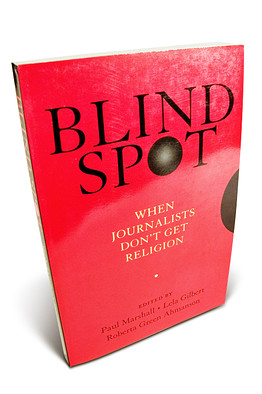
blindspot2.jpgMarshall literally rolled up his sleeves for the jam-packed lecture of examples of how the leading newspapers and news sources in the Western world don’t seem to get how religion influences major world events.  From the religiously-motivated Al Quada, for instance, to the ways in which American citizens vote, the press seriously and routinely make significant errors and omissions.  It is, as the book he co-edited puts it, a “blind spot.” (Blind Spot: When Journalists Don’t Get Religion, [Oxford University Press; $19.95.]) It is a big seller right now for Oxford, and, although it is written to the journalistic community, firstly, it is great reading for anyone serious about the nature of religion in the modern world, and the secular “tone deafness” that is prevalent, especially among cultural leaders.)  Marshall’s examples—over and over—of how, for instance, radical Islamist terrorists kill Christians in developing countries (say, Pakistani Catholics or Christians in Bali, or believers in certain states of Nigeria) and the typical Western press (The New York Times, say, or the Associated Press, or the major papers in France or England) says the terrorist actions were against “Westerners.”  Of course the dead Pakistanis or Nigerians aren’t Westerners, and they were targeted because of their faith.  This misunderstanding of religion, even where it seems so evident, is an example of a perplexing matter in how we get our information and how we see God’s work in the world.  (His lecture, I might add, was not about media bias, about whether Fox news or CNBC is more honest or balanced.  It was about this blind spot which is evident in most major media outlets.)  Other great chapters in the book are by other faith-based media scholars (not all Christians, by the way) and a great piece by the Orthodox  syndicated columnist Terry Mattingly, who I admire a lot.  A Jewish scholar says on the back that it isn’t always when he “let’s out a whoop of joy” in reading a book, but he did with this. 

Well, again, it is great to see one who has this deeply spiritual and robust faith who sees his calling as mostly to the secular world, scholars, activists, and think-tank wonks.  Praise God with me for Paul’s good work at the Hudson Institute, for congregations who bring in authors (and booksellers) allowing us to do our thing.  Maybe through this learning and thinking together, we will not only be better prepared to help “repair the world” but to work together across denominational lines.  It was worth the trip to Bechtelsville just to see two very different congregations sharing in a joint project.  An Assembly of God mega-church with a very cool contemporary worship space and coffee shop and a UCC parish (with wooden beams and stained glass in their lovely circa-60s Protestant sanctuary) bringing in a human rights activist who is Episcopalian, who had just gotten back from Europe— with a Presbyterian bookseller from Dallastown.  It was a good week-end.  Thanks for caring.  

Living the Christian Year: Time to Inhabit the Story of God

In yesterday’s post I celebrated some good and useful books about the liturgical year.  Joan Chittister’s has gotten some good press, as have most in that fabulous “Ancient Practices” series.  (The last two have been on tithing and going on pilgrimages.) 

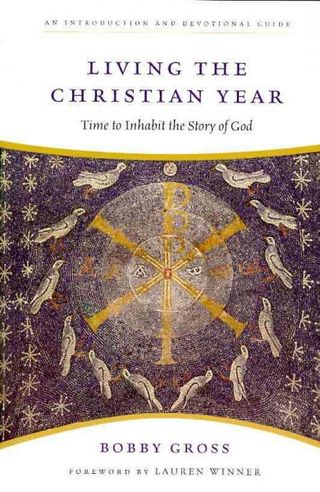
9770.jpgAnd, I celebrated that we are doing an author appearance with Bobby Gross.  He is the author of the aforementioned Living the Christian Year, a book we commented upon when it first came out, and which we are very happy to be able to promote again now.  Having an author around keeps us on our toes and we are filled with nervous anticipation.  We hope you are with us in spirit, as they say, and that if you’re in the area, you might stop by.  As we’ve announced, we will have a worship service at First Presbyterian Church of York (downtown)  at 7:30 to celebrate Ascension Day with Bobby reading excerpts from the book and more.  Afterward, we will gather for refreshments and another “ancient practice”—that of getting books signed with author autographs.  I doubt if that will get into the series edited by Ms Tickle, but it is classic, eh?  Something about signing books. 

If you want one, just send us WHO it is to be made out to, and we’ll get Bobby to autograph a book for you.  We’ll send it, at the sale price of $15.00.

Living in the Christian Year: Time to Inhabit the Story of God starts out with Gross giving anliving the christian year.jpg historical overview, educating us about the “intersection of time and eternity” and how living into these sacred cycles really helps attune us to the ways of God.

That very first part alone is worth the price of the book, but, of course, there is immense wisdom scattered in the rest of the daily devotions, too (and I mean that— there are treasures of insight here, good, good stuff.)  In that first chapter he tells of his own growing journey into liturgical time and how living in New York during the horrors of what we now call “9-11” effected him.  His judicious use of good quotes from the likes of Eugene Peterson, Lawrence Stookey, and Dorothy Bass show that he has read widely and deeply in this sacramental view of time.  And, given his own experiences (as one who didn’t grow up in a highly liturgical church), there is nothing taken for granted. He tells us a bit about where these notions come from, and—what is most important, I think—how inhabiting these patterns, allowing these cycles and seasons and holy days to shape our imaginations, allows us to do what even the most recent Donald Miller book invites us to: living into a bigger and better story.

Bobby starts the book with a brief, but well written and tender recollection of having Bible devotions in his family  (see, he did have some ritual experiences early on.)  This love for Bible stories and other stories, too, gave him the “ears to hear” the deeper meanings of epics like the Tolkien myths, which he cites to great advantage. 

“Most of us,”  he writes,

think of ourselves as ordinary people living quiet lives in unremarkable places.  We are merely hobbits in our shires.  But listen!  We may not be caught up in dangerous drama like Frodo and his loyal companion, Sam, but we nonetheless live inside a big story, one that started long before our birth and that will go on long after our death, one that’s as wide as the universe and as old as eternity: the Story of God as centered in Jesus the Christ.

Our personal narratives take their fullest shape and deepest meaning in relation to God’s purposes for us and for the world.  As Eugene Peterson puts it, “God is the larger context and plot in which our stories find themselves.” A very large context and very long plot indeed.

Later, Bobby summarizes, “In other words, we want to inhabit the still-unfolding Story of God and have it inhabit and change us.  And this is exactly what the ancient liturgical habits of living the Christian year helps us to do.”

I don’t know if this language of “story” resonates with you.  Bobby has worked with university students, and now directs those who do this hard work, campus ministers among grad students, faculty, and emerging young scholars.  I do not think it is an accident that he has found this approach helpful, as it is a common-place that our post-modern generations long for coherent stories.  Some of us still just tell the gospel in terms of dogma and doctrine with little beyond theological facts either affirmed or rejected. (Think of the debate about how to best describe justification and imputation that raged at my Facebook site after I applauded N.T. Wright last week.)  Some of us talk about faiths as worldviews, but often as if they are mere intellectual constructs, philosophies, ideas.  Yet others are increasingly realizing that worldviews are, in fact, shaped not only by ideas, but by the flow of narrative, by images, by metaphor.  That is, our lives are story-shaped and our deepest convictions come to us as a story of which we are a player.  As scholars as diverse as Stanley Hauerwas, Eugene Peterson, Madeline L’Engle, Lesslie Newbigin,  (and yes, N.T. Wright) remind us, the Bible itself is story-shaped.

So how to “get into” the Bible story?  Reading it in bits and pieces won’t do, and wading through Genesis, Exodus, Leviticus, Numbers and so on, while mandatory, isn’t enough, either. Perhaps this ancient wisdom of a liturgical calendar, of arranging our very days and months and seasons in terms of the life of Jesus might help us.  Bobby makes a brief, but solid case that this is so, and then gives us 52 weeks/chapters showing us how it is done.

At one point he nicely reminds us that the Christian year “gives us a panoramic view of the triune God and his Story.  But we don’t just survey the landscape; we inhabit it.”  Nicely put, isn’t it?

Near the very moving last page, he wonders how the reader is doing.  He wonders out loud for a paragraph or two about different kinds of readers, those who naturally enjoy this approach, or those who have found it odd or off-putting.  Some are part of communities of faith that reinforce these ancient rituals and practices, others not so much. 

He suggests, “But whether all this seems brand new or old hat, feels liberating or overwhelming, I encourage you to stick with it.  Continue to avail yourself of this means of grace.  Enjoy the freedom to experiment and find the patterns of observance that work for you.
And be patient.  Like any new habit, the doing gets easier over time and the dividends grow more rewarding.”

Reading and pondering books like this is a way to grow up in Christ, to deepen discipleship.  In workshops I do, I sometimes call reading a “spiritual discipline.” Whether it is this resource or another, I hope you are doing “spiritual reading” and “sticking with it.”

Here is the transcript of an interview with Bobby Gross about Living the Christian Year.

Order Here
takes you to our secure website order form

Hearts & Minds  234 East Main Street  Dallastown, PA 17313     717.246.3333

Living the Christian Year author Bobby Gross to speak here on Ascension Day

living the christian year.jpgLiving the Christian Year: Time to Inhabit the Story of God by Bobby Gross (IVP; formatio line; $17.00) is one of the most interesting and unique 52-week devotional books I’ve seen.  We’ve mentioned it before, and we could hardly recommend it more gladly.  I love even the first few pages about the power of stories, and what it means to have our story shaped by God’s Story.  It is, as you might guess, a devotional guide to the church calendar, so it is arranged with daily readings from the cycle of Light— Advent, Christmas and Epiphanhy, through the season of Life Lent/Holy Week/Eastertide, and into the ordinary days, which he explains compose the “cycle of love.”

Although not all churches frame their year through this three-fold cycle, and even fewer attend to the lesser known festivals and feast days, nearly everyone knows about Advent; many non-liturgical churches have Maundy Thursday services or Good Friday sermons.  So this is pretty universal stuff.  We think it is a great way to learn about ways to live into the graces of God, in ways that may not come quite naturally, but, once considered and experienced, really, really do make sense.  This is not just a quick pick-me-up sort of daily inspiration, but an invitation to deeper ways of being.  “Inhabiting the Story of God” as the sub-title puts it.

the-sabbath.jpgYet, few really plumb the deepest depths of understanding time–the rhythms of our days and weeks and seasons–in light of a truly spiritual view of the calendar.  20th-century Hebrew prophet Abraham Heschel, of course, gave us one of the great classics in his little book The Sabbath (Farrar, Struass & Giroux; $15.00) which explores notions of time from within the Biblical, Jewish worldivew.  It is a serious and important work, highly regarded. (It is such a rich and lovely book that we stock a gift edition in a small compact hardback with ribbon marker that is very, very handsome to hold. Send me an email if you want more info.)


0787956473.jpgAlso,surely one of the most elegant and insightful books I’ve ever read is  Dorothy Bass’s sublime Receiving the Day: Christian Practices for Opening the Gift of Time (Jossey-Bass; $14.95.)  Words can hardly express how much I enjoyed this when I first read it, very slowly, when it first came out. It is one of the three or four books on Sabbath that are “must reads” in my view.  I always need to be reminded of this deeply faith-filled and wonderous view of time, so this is helpful for me. 

liturgical year.JPGMuch more recently there is a lovely book in the “Ancient Practices” series by popular Benedictine sister Joan Chittister called The Liturgical Year: The Spiraling Adventure of the Spiritual Life (Nelson; $17.99)  So many folks are exploring this ancient and historic way of thinking about our lives, that it seems that we are reaching what might be a new ecumenical agreement.  Evangelicals are learning about this from the Orthodox; liberal Episcopalians are teaching staunch Reformed folks, and Roman Catholic practices are enriching even charismatic and non-denominational folks.

 I recall with glee how Marva Dawn once confided that she often dressed according to the colors of the church year.  Many of us adore the writing of where Vigen Guroian such as the small and delightful Inheriting Paradise: Meditations on Gardening (Eerdmans; $12.00) where he tells of his garden, and how he plants flowers to bloom to compliment thinking about the liturgical colors andthe church year.  Listen to his fabulous Krista Tippett interview from NPR, here.  I think this is really quite interesting, how this ancient notion of an embodied spirituality, enhanced by thinking about time and seasons and our church calandar is cropping up in many, many circles.  

9781566993968.jpgYet another example of this trend is seen in the wonderful new book on these themes published by the Alban Institute, that think-tank that most typically publishes reliable guides to parish life, mainline authors offering best practices learned from the thorough research within healthy mainline churches. It is by a Presbyterian author that we like and the title and subtitle shows how it is linking this year-long practice of attending to the church year and ordinary parish issues.  It is called The Wisdom of the Seasons: How the Church Year Helps Us Understand our Congregational Stories (Alban Institute; $18.00.)  Isn’t that just a fabulously rich idea?  The book looks very good, and we’ve been happy to tell pastors about it— thinking that such a resource will firstly enrich their parish spirituality even as it strengthens their congregational management competencies.  Knowing the church year is good for disciples of Jesus and it is good for congregations.

Which brings me to this great announcement, that we have Bobby Gross coming to our bookstore9770.jpg this Thursday to do a presentation on Living the Christian year: Time to Inhabit the Story of God.  Actually, we are hosting the book talk and author appearance and book signing in the context of an Ascension Day service so we won’t do it here at the shop.  We are inviting folks to gather at John Calvin chapel at First Presbyterian Church (York, PA) to celebrate this very significant holy day.  40 Days after Easter, you know—always a Thursday.  Yep, we’ll sing and pray and Bobby will read from his book, and do a bit of a sermon on the significance of Christ’s ascension, his exaltation and reign.  Then we’ll have some refreshments and hang out while he signs books.  If you know anybody in central PA, we sure would love it if you’d spread the word.  It is being co-sponsored by the InterVarsity Christian Fellowship Emerging Scholar’s Network here in Central Pennsylvania (That’s Tom Grosh) who does creative work trying to reach and connect those in grad school, young scholars, and seasoned professors. (Bobby is the National Director of graduate and faculty ministries and is on the national board of one of our favorite organizations, CIVA (Christians in the Visual Arts.)  Bobby is a very thoughtful guy, a good friend,
and, as we’ve noted, this is a topic of increasingly popularity.  Come and join us if you can.

hemingway-ernest1.jpgWant an autographed copy of the book?  On sale, even!

It sells usually for $17.00 but we’ll be offering them at $15.00 
 okay, it might not look like this...  

 With a forward by Lauren Winner, and some helpful explanations about the seasons and cycles, Living the Christian Year is a daily reading guide really that is a wonderful, wonderful resource for you or your family.  I’ll tell you a bit more about it in a post tomorrow, but, for now, let us know if you want us to get him to sign one for you.  Tell us TO WHOM IT SHOULD BE SIGNED and we’ll take it from there.

ORDER HERE
takes you to our secure website order form page

Hearts & Minds 234 East Main Street  Dallastown, PA 17313     7117.246.333