“Summer’s here, I’m for that, got my cold beer, got my straw hat,” James Taylor once sang.
Or, more sardonically, Arcade Fire sings:
Children, wake up.
Hold your mistake up
before they turn the summer into dust.
It seems this summer business — optimistic with leisurely cold beer or with prophetic foreboding (we are “turning every good thing to rust” the Arcade song “Wake Up” continues) — is serious business.
There is something about this recent holiday weekend’s shift to summer that makes many of us buoyant. We look forward to longer days, being outdoors more, a different rhythm, maybe even a vacation or two.
Don’t we who are Christians owe it to ourselves — to God, really — to think seriously about all of life, including the straw hats of summer? (And is Arcade Fire right, that we have a tendency to turn everything to rust, even our time-off and our visions of vacations?) Shouldn’t we wonder what leisure means and looks like from the perspective of faith and discipleship what is right about it, and maybe what is wrong?
Here are a handful of books that could help you have better fun this summer. Or, should I say, help you explore a spirituality of leisure, remind you of the human calling of play, or re-creation, of living into the joy of the Lord in our off hours, so you think about your leisure time — and, consequently, experience your leisure time — in an appropriate, Godly manner. Plus, I’ve just listed some books that seem fun, restful, adventurous, helping us learn to pay attention.
John Piper calls himself (drawing significantly on C.S. Lewis) a “Christian hedonist.” That is, he develops a theologically robust vision to get us to enjoy joy, to search for pleasure, which (of course) comes from glorifying God in all we do. Lewis reminds us to put first things first, and that when we do, we get everything else, too. On this, at least, brother Piper is right.
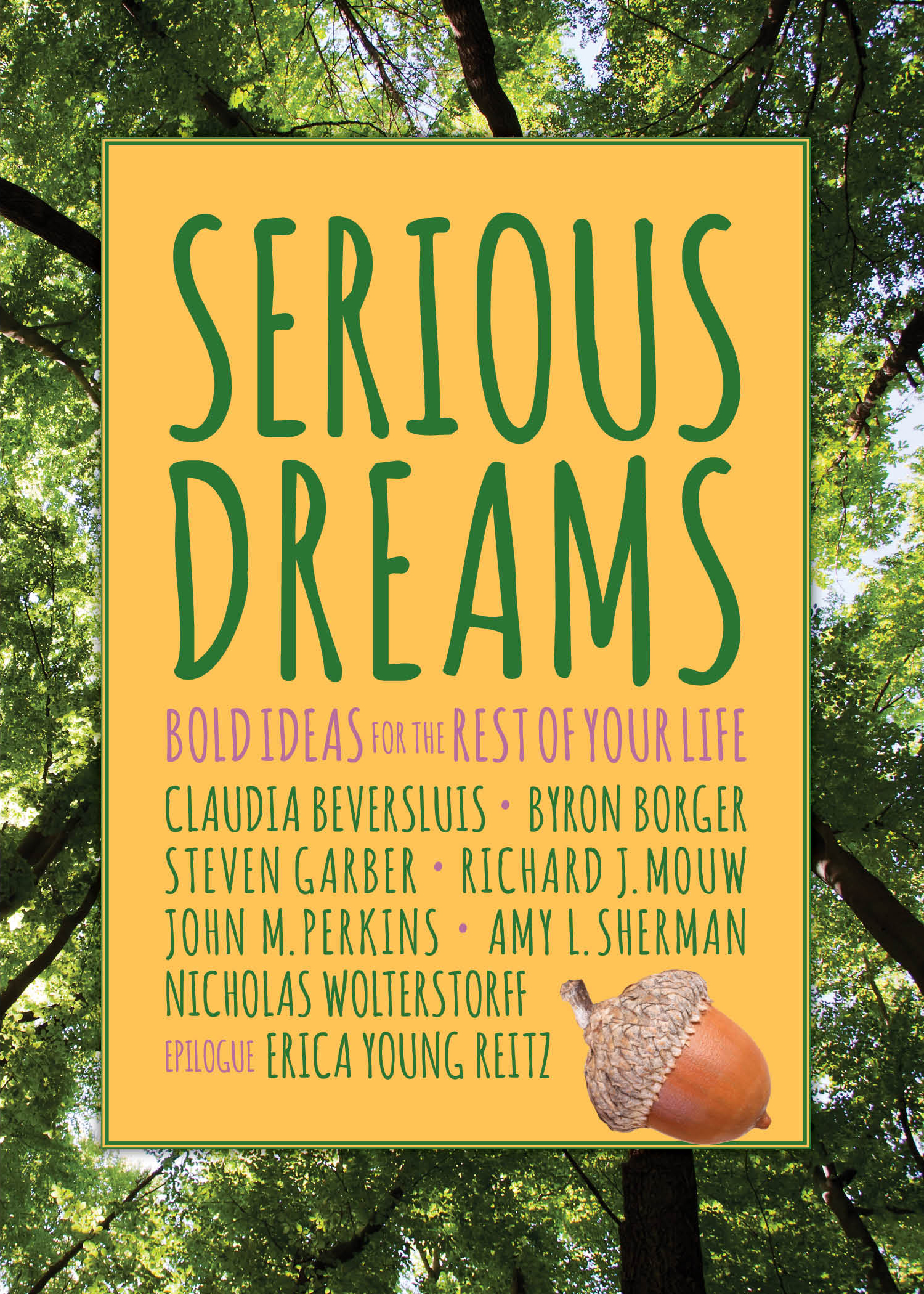
Two quick comments before the list: I write a lot at BookNotes about vocation and work, calling and careers. We have that bibliography by vocation link at our website. (And, yes, even the recent book I edited, Serious Dreams, invites recent college grads to relate faith and work in ways that are intentional and enduring.) Books about work and calling are important to us, as they are to you, our readership and customers.
In a way, thinking about leisure and play and rest is the flip side of all that. We are glad for recent interest in thinking Christianly about work, but what about our leisure? What about rest and play and re-creation?
But it isn’t always simple. For many of us there is a joy at work and a diligence at play that ends up blending the boundaries between the two; those of us who work out of our homes or work on weekends are further confused about the distinctions between work and play and “time off.” (And, of course, many of us fool around a bit at work, making it lovely, and there is plenty of unpaid work to do around the house when we aren’t at our places of employment, some of which is difficult.)
Secondly, as I will explain, the first book is magisterial, a great example of serious Christian scholarship, and a substantial work about the subject of leisure. I realize not everyone wants to “go there” so the rest of the books are more pleasurable, fun, even — books less about leisure as such, but titles that piled up on my stack as I pondered creating this little list about recreation. But please don’t skip the first one. It is, for those of us who are serious about developing a uniquely Christian take on all of life, reading widely to help us craft a coherently, faithful worldview, a God-send, vital, more valuable then you may realize. I very highly recommend it.
 Leisure and Spirituality: Biblical, Historical and Contemporary Perspectives Paul Heintzman (Baker Academic) $24.99 Thank goodness for the great “engaging culture” series from Baker Academic, and for this long-awaited, just released new volume. Heintzman has been on our radar screen for years having co-edited Christianity and Leisure: Issues in a Pluralistic Society (Dordt College Press) which includes papers done by Christians working in leisure studies, sports theory, recreational fields, sociologists and theologians exploring the integration of faith and this aspect of life and culture. He is a remarkable scholar, has been through Regent College in Vancouver, and has been teaching at the University of Ottawa. As we learn in the book, he is not only a professor of leisure studies, and has not only done a major PhD project doing research into the spiritual benefits of leisure, but he is an avid outdoorsman – backpacker, paddler, and a leader in wilderness treks and thinking about experiential education .
As I have said, I think this book is nothing short of magisterial, and stands, at this point, as the definitive Christian book in the field. There is simply nothing like it on the market, and it should appeal to any number of readers.
First, there are those among us who are studying this topic. If you are in sociology or cultural studies or interested in this growing sub-field, it is a no-brainer: you should order Leisure and Spirituality today.
Also, this book is important for you if you work at a camp, if you lead wilderness trips, if you do experiential education, if you work in recreational programs in any way, if you are interested in thinking about recreation in our culture — perhaps you work in athletics, you are a coach or gym teacher or help others in these fields. There are insights here that are important for medical caregivers, for those working in rehabilitation, in elder care, in therapy. There are connections here, and Heintzman explores it usefully.
Further, allow me to suggest that if you are an educated reader — a pastor, say, or a campus minister or blogger who writes about Christian worldview or cultural renewal — this is a book for you.
Let’s face it, all of those who we intend to influence (pastors: your flocks!) have complicated relationships with their leisure time. Early on in the book, Heintzman quotes J.I. Packer explaining that most of us in the West have two oddly conflicting views of leisure: we make an idol out of it, or we belittle it. That is we are workaholics who rest too little or we are hedonists who live for pleasure and play. (And, for those with economic means, it is sometimes both: work too hard, party too hard, you know.)
So, yeah, if you want to help people live good lives, opened up, multi-dimensional, happy and whole, and you are passionate about equipping people to imagine their lives seamlessly, then learning the vocabulary and wisdom of this book will help you help them.
And, of course, that leads me to most all of us, fans and friends of BookNotes. You want this for your own life, I gather — books to help you think, to care, to put the pieces together of this mystery called whole life discipleship. Hearing what this scholar has learned — even learning to use terms correctly is helpful. The vast research in this remarkable book will help us ask better questions, and learn to discuss what we might mean as we use certain words. What is leisure, after all? What is rest? Recreation, play? Is there qualitative difference between, say, taking a hike, playing an outdoor game with others, or watching TV? Is one more restorative, more normative, life-giving than others? What is the role of exercise, should we be more intentional about hobbies, should we take up new tasks as we age? What is the role of quiet time, silence and solitude? What about celebration and partying?
There are many great endorsements of this deliciously intellectual and important book. Really, this is impressive!
Listen to Leland Ryken (author of a classic on this, Redeeming the Time: A Christian Approach to Work and Leisure)
For the past quarter of a century, Paul Heintzman has been a leader in the field of Christian leisure theory. Leisure and Spirituality is the fruit of Heintzman’s long career. And the most notable feature of the book is its thoroughness: all of the important topics are covered and the survey of scholarship is breathtaking. The book is a triumph of scholarship and a helpful guide to thinking Christianly about leisure.”
Or, consider Robert Banks (whose book Redeeming the Routines is tremendous, by the way) who says,
This is, quite simply, the most thorough and thoughtful book about the relationship between leisure and spirituality. It covers biblical, historical, theological, cultural, and practical terrain. I encourage you to read it in a leisurely and therefore more spiritual way. If you follow this book’s suggestions you will be the better for it, as will your relationships, activities, and world.
I so respect Loren Wilkinson at Regent, who served as a friend and mentor to Heintzman,; if he recommends it, that carries a lot of weight. Do read this:
The things closest to us are often the hardest to see, understand, and talk about. In his Leisure and Spirituality Paul Heintzman does a masterful job of casting light on many of those crucial closest things: work, rest, leisure, time, body, and soul. The book itself is ‘leisurely’: the author does not hurry us through these hard topics, but becomes a thoughtful guide: through the confusions of our own time, the long history of different views of work and leisure, and–most important–the deep biblical sources for a life which lets us both be and do as thankful recipients of the gift of being. For scholars in leisure studies, this study is likely to become the most helpful and comprehensive resource for a long time to come.
After a more thorough reviews, Calvin College professor emeritus of sports sciences, Glen Van Andel summarizes,
With this book Dr. Heintzman has given the Christian community a wonderful gift that will transform our perspective on common elements of our daily lives: work, rest, and play.
I think Van Andel is right; books like this are a gift to the Christian community, and they have the potential to help us transform our perspective — and experience — of so much of our daily lives. We are happy to promote Leisure and Spirituality and hope many will consider it.
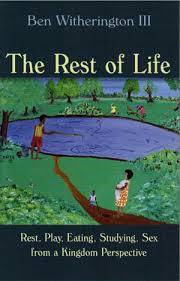 The Rest of Our Life: Rest, Play, Eating, Studying, Sex from a Kingdom Perspective Ben Witherington III (Eerdmans) $18.00 I have mentioned this before, noting that this excellent United Methodist Biblical scholar has done (besides his major Biblical commentaries) a few small books on Kingdom living; that is, what the overall theme of living in the commonwealth of God, under the reign of Christ, means for daily living. He has a great one on the story of the Kingdom in the Bible and how we celebrate it within the church calendar, another on Kingdom worship, a great one on work, and now this. A bit more then 150 pages, this is good Bible stuff, interesting ruminations, and a reminder about God’s care for these everyday parts of life.
R. Paul Stevens (author of Work Matters) says that Witherington “gives us bifocal lenses so we can look at life both close up, as it is now, and as it will become in the fullness of God’s lovely reign This is an invigorating book, a delight to read.” That’s a great quote, eh, about bifocal lenses?
We highly recommend the lovely essays found in The Rest of Our Life.
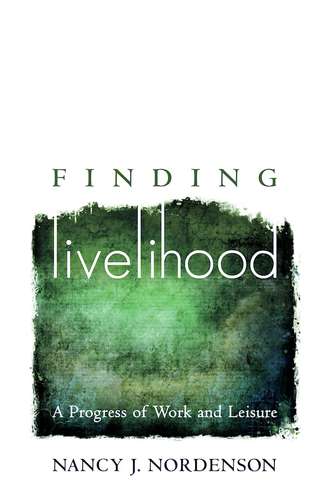 Finding Livelihood: A Progress of Work and Leisure Nancy J. Nordenson (Kalos Press) $14.95 I have given this a shout out already, and am working on a more substantial review for later, but I want to note two quick things here. Notice the title: it is not just a book on work, but on livelihood, which includes, in Nodenson’s insightful vision, leisure.
And, secondly, it is so wondrously, beautifully, elegantly written, it is a joy to read even a page or two, and I find it invites a leisurely pace. It is not a didactic study of a Christian view of work, but a lyrical rumination, more memoir and storytelling then overt instruction, on how to navigate “the tension between passion and need, between aspiration and limits, between the planned life and the given life.”
The wise and energetic and eloquent writer Leslie Leyland Fields (Nordenson has a fabulous chapter about comfort food and her family’s Swedish pancakes in the spectacular book Fields edited, The Spirit of Food) says Nordenson Finding Livelihood “offers us real ways of finding astonishment and transcendence eve in the most stultifying jobs. This book is a revelation. It goes with me to my fishing camp.”
 Receiving the Day: Christian Practices for Opening the Gift of Time Dorothy Bass (Jossey Bass) $14.95 I just might re-read this this summer, and see if it still holds up as one of my favorite books. I will never forget the profound impact it had on me, the luminous prose, the nearly mystical vision of time and reality it offers. More than a book about Sabbath — although it catapulted (along with Marva Dawn’s Keeping the Sabbath Holy) that conversation into the mainstream of Christian churches — this invites us to experience all of time as a gift from God. I suppose this is the point of the highly regarded and often cited Sabbath by Abraham Heschel, but this touched me even more deeply than that important book. If you are feeling frantic or stressed, these reflections will be helpful, I’m sure. At work or at home, getting paid or not, on the clock or off, we are all bound by time, which, Bass shows, can be opened and stewarded as the gift of God that it is. One can’t think about “leisure time” without first grappling with the notion of time. Very nicely done.
 The Rest of God: Restoring Your Soul by Restoring Sabbath Mark Buchanan (Nelson) $14.99 There are so many good books on the practice of keeping sabbath, but I mention this one for a few reasons. It is really fun to read; Buchanan is a very find wordsmith. (The book is endorsed on the back by Lauren Winner and Philip Yancey, for what it is worth!) And, he starts with a good chapter on work, framing the call to rest by the call to work, which is helpful. However, he not only does the conventional stuff about deepening our appreciation for God’s creation, for joy and renewal, and such, but has chapters like on on play which commends “stopping just to waste time.” Hooray!
 Sabbath Dan Allender (Nelson) $12.99 I have often recommended this whole series of “Ancient Practices” books compiled and curated by Phyllis Tickle, each one by great authors reflecting on various ancient spiritual practices. I mention this one, among oodles of books on sabbath and sabbath keeping, because Dan Allender brings a particular insight to his study of sabbath. He suggests here that the heart of Sabbath is not just to “stop” or rest, but to be re-created (a generative way to think about recreation, eh?) In other words, sabbath is designed for play. I’d heartily recommend anything by Allander, but this seemed so relevant, I had to list it here.
 Simplify: Ten Practices to Unclutter Your Soul Bill Hybels Tyndale/Momentum) $15.99 I know, I know, there are a dozen of these kinds of books inviting us to trim down our over-scheduled and overwhelmed lives. Perhaps you are exhausted, to frantic to do anything about your own out-of-control clutter and stress? Believe me, I relate. I like Hybels, trust him a lot, and have really enjoyed his other books. Although this seems to be more about one’s interior life, and simplifying one’s own spirituality, I am sure it advises practices — including play and rest — that will help. Shauna Niequist says of her famous father’s book “I don’t know who doesn’t need this kind of rich thinking about what it means to live with focus and sanity and peace. I love these ideas.”
 The Fringe Hours: Making Time for You Jessica N. Turner (Revell) $14.99 You may know Turner from here popular lifestyle blog “The Mom Creative” where she documents her pursuit of “cultivating a life well crafted.” Brigid Schultz, author of the New York Times bestseller Overwhelmed says that this book “is like one gigantic permission slip to carve out some space in your day for the things that give you joy and feed your soul.”
Shauna Niequist (whose wonderful devotional Savor would be a nice daily reader for your summer months) writes,
I want to give The Fringe Hours to every woman in my life, because this is the conversation we’re having over and over, at soccer practices and church and crammed between meetings. Jessica’s practical style made me feel like another way is possible.
 Abundant Simplicity: Discovering the Unhurried Rhythms of Grace Jan Johnson (InterVarsity Press) $15.00 This wonderful, rich book is one to study carefully and enjoy reading devotionally — it has a large, rave review on the back from Dallas Willard (the last line of which is “Do what she says”) and another by Norvene Vest. I suppose any number of book on the inner life, slowing down, practicing the presence, receiving grace in the ordinary, would enhance your summer leisure time. But this is just such a lovely reflection on our relationship to time and energy and money, I had to list it. Anyway, you’ve got to read chapter 8 nicely called “Putting the ‘Free’ in Free Time.” Do I hear an “Amen”?
 Like a Child: Restoring the Awe, Wonder, Joy and Resiliency of the Human Spirit Rev. Timothy J. Mooney (Skylight Paths) $16.99 Mystic Richard Rohr says “This might be the most intelligent, inspiring and integrated book I have read on the subject. It will not give you cliches or glib answers, but genuine wisdom.” Sure, we all should “grow up” and mature into full adulthood. But what if Jesus’s own praise of spiritual childhood shapes our view of what maturity means, and what we tend to lose in our culture of modern speed and work and responsibility? Can we cultivate childlike ways of attention, self-awareness, joy and resilience? How might playfulness effect our daily discipleship and faith formation?
John Buchanan, editor of The Christian Century, says “With a scholars careful eye and a pastor’s heart… Mooney employs the insights of art, theology, literature, popular culture and his own winsome humanity to invite us to become the children Jesus meant us to be. This is an important book.” The author is an artist and Presbyterian pastor of an intentional faith community in urban Denver.

You will find here a fascinating blend of hip insight from modern marketers like Seth Godin and Steven Pressfield, thoughtful Christian insight from contemporary writers about the arts like Madeline L’Engle and Makoto Fujimura, and some good gleanings from the latest research on the creative brian. Nice.
 Free to Learn: Why Unleashing the Instinct to Play Will Make Our Children Happier, More Self-Reliant, and Better Students for Life Peter Gray (Basic Books) $16.99 What a stimulating book, by an author who is a research and professor in the Department of Psychology at Boston College. Gray is critical of compulsory schooling (think of the amazing work of John Taylor Gatto on that such as Dumbing us Down) but more importantly, it is about how children are wired to play, and how curiosity and joy and becoming emotionally resilient should be see as being part of the task of the child. This is “a brave, counterintuitive proposal for freeing our children…” and suggests that we must entrust children to steer their own learning and development. We may not agree with all of his policy proposals or views of the systems of education we’ve devised, but his insights about the role of free play as the primary way children solve problems and learn is remarkable. It is not a leisurely book but for some parents it will remind them, at least, of the need for play and freedom and joy, for their kids and, perhaps, even for themselves.
 Eyes Wide Open: Enjoying God in Everything Steve DeWitt (Credo House) $14.99 Do you really enjoy something? Have a hobby or passion? We all enjoy so many things in this world, and DeWitt helps us hold that up to the light, think about it faithfully, and enter into a journey of discovering how to allow God to speak to us in the things we enjoy. “The outdoors, art, food, sports, sunsets, coffee, mountains or anything else?” Eyes Wide Open enriches these experiences by turning them toward their created purpose. As it says on the back cover, “This is a book about our beautiful God who designed our craving for beauty to lead us back to Him.” This is a tremendous book with solid theology and plenty of winsome guidance. There are reflection questions for small groups, too. It would make a fun, fun book to do on summer evenings with some good friends — maybe over a good meal, dessert or wine and cheese. Enjoy — soli deo gloria.
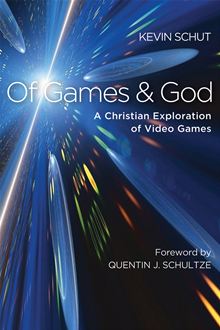
 Of Games and God: A Christian Exploration of Video Games Kevin Schut (Brazos) $16.99 I know nothing about video games, I’ll admit it, but I am confident that, without a doubt, this is the best book for Christians to reflect on the meaning and joy and goodness and downsides of this vastly popular form of entertainment. It is engaging, looks at the problems and promises of interactive entertainment, and is a very valuable resource for this long over-due conversation. If you know gamers, they will enjoy this one, for sure.
Ipod, YouTube, Wii Play: Theological Engagement with Entertainment D. Brent Laytham (Wipf & Stock) $19.00 Again, we’ve mentioned this before, but just have to list it here. Here is what Jaimie Smith says of it: “A generation of theologians has been worried about the deforming
practices of the liberal state. What we really need to worry about are
its games. The devil is in its bread and circuses. In this wise,
accessible book Brent Laytham offers an engaged theological analysis of
our entertainments and distractions, inviting us to follow Jesus with
new intentionality.” Or, if you want to be sure this is a fun read, how about this comment by Todd Johnson: ‘Witty, wistful, and wickedly provocative.”
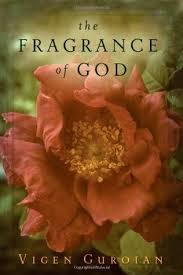
 Inheriting Paradise: Meditations on Gardening and The Fragrance of God Vigen Guroian (Eerdmans) $14.00 each We promote these books routinely, and mention them from time to time here. What a fine time to suggest them again; they are lovely to read and great to own. Guroian is an Orthodox theologian and professor, but is also renowned for his spacious garden about which he is immensely knowledgeable and can truly wax eloquent — perhaps you will recall his great talk on NPR. Both of these books are exquisite, brief, profound; they are a delight to read, and you will be inspired. Bill McKibben says of The Fragrance of God “Vigen Guroian’s fine book is proof that Christians would do well to spend more time outdoors, in the one great megachurch that operates as a planet-scale museum of divine intent.” Frederica Mathewes-Green says it is “Earthy in all the best senses.” Yes, there are plants and dirt and flowers and bugs here, but also stories and spirituality. What a great pair of books.
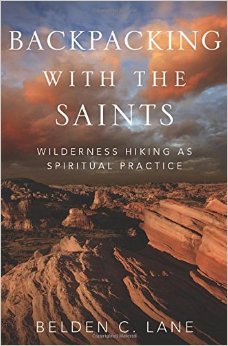 Backpacking with the Saints: WIlderness HIking as Spiritual Practice Beldon Lane (Oxford University Press) $24.95 I have written about this before, as well, but it seems prefect to mention it now. Lane has written extraordinary, important book on the spirituality of land (see The Solace of Fierce Landscapes) and here narrates a series of hikes (to some world renowned places) linked to a particular spiritual writer, from Luther to Gandhi to Theresa of Lisueux. I don’t get away much, and certainly will not attempt these strenuous journeys out of the trailhead and towards a summit and back again (he has a spiritual author for each leg of the journey, so the book is arranged in these stages.) Still it is a book I can enjoy, vicariously.
I really do like Barbara Brown Taylor’s blurb, though, where she suggests at least being is some kind of outdoor setting to read this one:
The only problem with this remarkable book is that it cannot be read rightly from a comfortable chair. As Lane and the rest of the saints in these pages insist, what the soul most needs is not found in safe places but in wild ones, where the dangers are as real as the courage they call forth. So find a high rock, a far hill, or a patch of desert that scares you a little and let this book persuade you that you are exactly where you need to be.
She should know. Ms Taylor has written two books herself about “the geography of faith” and I have read parts of each more than twice: An Altar in the World and Learning to Walk in the Dark.
 On the Water: A Fishing Memoir Guy de la Valdene (Lyons Press) $25.95 When I saw this handsome hardback had an endorsement by Carl Hiaasen, I thought it might be funny. Then I saw a blurb by — get this! — the author of Forrest Gump, Winston Groom, who says it is “a splendid and beautifully written insight into the vicissitudes of man and nature.” I think we could all use some vicissitude, and this meditation on water and nature and fishing and growing older and (as it says on the back cover) “of the sporting life well lived” could be a lovely addition to your library. The novelist Philip Caputo says of it “At a time when just about everything in America seems to be monetized, On the Water reminds us of values that don’t carry dollar signs.” Another reviewer says it is a “mixture of memory and desire, of wit and wisdom, nothing less then a classic.”
 Downstream: Reflections on Brook Trout, Fly Fishing, and the Waters of Appalachia David L. O’Hara & Matthew Dickerson (Cascade Books) $18.00 This is another we are very proud to stock, and about which I have written before. Both of these authors are serious literary figures, professors and writers. (O’Hara has written in Books and Culture and Orion and Dickerson has published a number of books about fantasy literature, such as From Homer to Harry Potter on Brazos, and a pair of books on the environmental vision of both C.S. Lewis.) There is an afterward by Bill McKibben, blurbs on the back by Middlebury College author John Elder and a wonderful endorsement by Eugene Peterson. It is a memoir of their fishing the trout streams from New York down through Pennsylvania and into West Virginia and the Smokey Mountain headwaters of Tennessee. . They quote the likes of Kathleen Dean Moore and Wendell Berry and try to pay attention to the fish and mountains they visit. What an intelligent, beautiful read.
 No Ordinary Game: Miraculous Moments in Backyards and Sandlots Kirk Westphal (Down East Books) $16.95 I’m sure I’m not alone in loving books about small towns, and small town sports — the charms writing about Little League and local soccer and pick-up games are many. “Many of the sporting world’s most profound achievements,” the back cover of No Ordinary Game says, “are never recorded. They happen on sandlots, asphalt, and backyards. Stories of well-known athletes and teams abound in popular literature. What is missing is an exaltation of the moments that can happen to any of the rest of us — and do.”
I love that the publishers say this is “the grandstand for everyday miracles.” It is a collection of poignant memories of games played without grandstands.
There are some very fun moments here, lovely reading, good stories. There is almost quiet substance in these reports from the home front, gentle tales of good stuff done by ordinary folks, but this author has a better eye then most. (It doesn’t hurt that his father is the famous Christian philosopher and Kirkegaerd scholar, Merald Westphal.)
You will find here a young boy weighing baseball against illness, the teaching of dignity in games played. There is a chapter about a refugee family from despoiled East Africa playing soccer in a suburban American backyard. You may like the chapter telling of a group of college boys who are challenged to a game of basketball by the women’s varsity team. You will smile hearing of Westphal’s first home run, hit when he was thirty-three years old. These are not ordinary games.
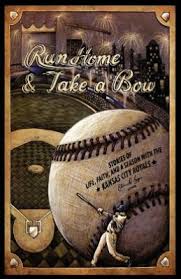 Run Home and Take a Bow: Stories of Life, Faith, and a Season with the Kansas City Royals Ethan Bryan (Samzidat Publishing) $14.99 I have mentioned this before, but want to name it again for several reasons. Ethan is a friend and customer, and we think a very fine writer. The book is nicely crafted and very enjoyable to read; what a great thing for many of us to read a baseball book or two each summer! So, yeah, on a list about leisure time reading this summer, this has to be included.
The heart of the book is about going to a summer’s worth of home games at the (then losing) Kansas City Royals stadium, and something the author observed, a lesson learned, a moral to the story, of each and every game he attended. He narrates some fun baseball, and some sad baseball (it was KC, after all) but it is much more than that — the book is partially a memoir about Ethan’s own sense of calling, his own love of sport, and his enduring desire to share his passion for the game with this daughters, and how that fits in to his own life of faith as a follower of Jesus. Run Home and Take a Bow even mentions me — Ethan suggests that reading books and having open minds (even about controversial authors) is a good thing as it can help us see things from a different perspective, which is the point of one chapter as he and his daughters watch a game from different seats, getting a fresh perspective on the field and the unfolding game. This is an enjoyable book, with lovely lessons, and although it is mostly about baseball, it is really, finally, about other stuff as well. Enjoy.
 Going Driftless: Life Lessons from the Heartland for Unraveling Times Stephen J. Lyons (Globe Pequot Press) $16.95 I didn’t know that there was this portion of the United States known as the Driftless — the portion of the Upper Midwest covering parts of four states (Illinois, Iowa, Wisconsin and Minnesota.) This journalist here reports on his journeys throughout this region, all near the upper Mississippi. (Mark Twain, Lyons reminds us, lamented that this part of the river isn’t better known. The part below St. Louis, he said in a Chicago newspaper in 1886, “is the least interesting part.”
There are at least three reasons some readers will enjoy this book. It’s just a fun read — a guy stomping around this region that was spared the glacial activity that leveled the rest of the midwest landscape. There is a bit of natural history, and while this writer isn’t exactly Annie Dillard, there is nice writing, fascinating maps and photographs, and it makes for an enjoyable trip.
 Secondly, there is something going on among the people and culture of the Driftless, and, at least as Lyons tells it, it has to do with populism and small town pride and localism and community renewal; that he cites Wes Jackson and Wendell Berry is no surprise. Tucked away in these hills and valleys are remarkable examples of small-scale farming and food co-ops and CSAs and close-knit communities who value their unique ways. If you are alarmed by the homogenization of the American Way of Life, these indie-minded folks may have something to teach us. There are nature preserves and organic famers and local markets and any number of 21st century manifestations of the 1970s back-to-nature movement that took hold these parts. It is fascinating to see how they’ve endured, adapted or how a new generation is working out their creative spirits in this new era.
Thirdly, not only do you learn about the natural history of this curious bio-region and watershed, and not only do you learn about innovative ways to keep older aways alive but you meet the people doing so. The back cover promises that you will meet “seed savers, off-the-gridders, birders, famers, musicians, artists, and writer., all who share a common bond in a separate nation called the Driftless.” From the founders of a Permaculture Center in Wisconsin called Dancing Waters to folks that organize land cooperatives in Minnesota to the spiritual master of a Zen monastery in Iowa, to more than one indie bookstore owner, these are colorful characters, doing curious work, in interesting places. What fun to listen in on their stories, told by this natural-born storyteller.
 Crafting Calm: Projects and Practices for Creativity and Contemplation Maggie Oman Shannon (Viva Editions) $16.95 This is a fabulously interesting DIY book, with spiritual quotes and lovely sketches and tons of ways to “craft your way to inner peace.” The author is a spiritual direction in the Unity Church, so there are some interfaith and new age touches, but it still is useful for more orthodox Christian believers, I’d say, who want to “knit love and hope into every stitch” and use handicrafts as a way to achieve serenity and good intentions. This really is a lovely book, and trust it could help increase the mindfulness of those doing these interesting craft projects as a fun and creative spiritual discipline.
 Bread & Wine: A Love Letter to Life Around the Table With Recipes Shauna Niequist (Zondervan) $19.99 I thought it would be a fine way to end this list with a book on food and fellowship — we have a large section in the bookstore on the theology and spirituality of food and eating and have made lists of just those sorts of books. But for this leisurely list of fun summer reads that help us frame our sense of joy away from employment, this handsome book is one of our favorites. I hope you have some picnics and parties this season and I hope you have some time to read. This is one you really will enjoy. Part memoir, part theology of eating, part celebration of hospitality and friendship (and even part recipe book) Bread and Wine is an excellent, pleasant and important read. Highly recommended. Cheers!
BookNotes
DISCOUNT
ANY ITEM MENTIONED
20% off
order here
takes you to the secure Hearts & Minds order form page
just tell us what you want
inquire here
if you have questions or need more information
just ask us what you want to know
Hearts & Minds 234 East Main Street Dallastown, PA 17313 717-246-3333
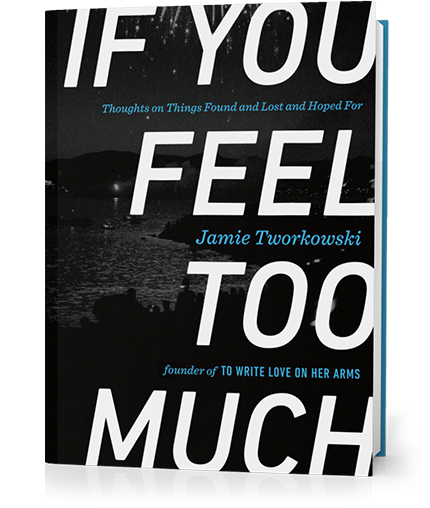


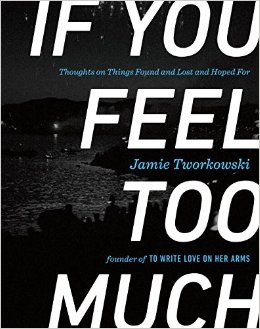
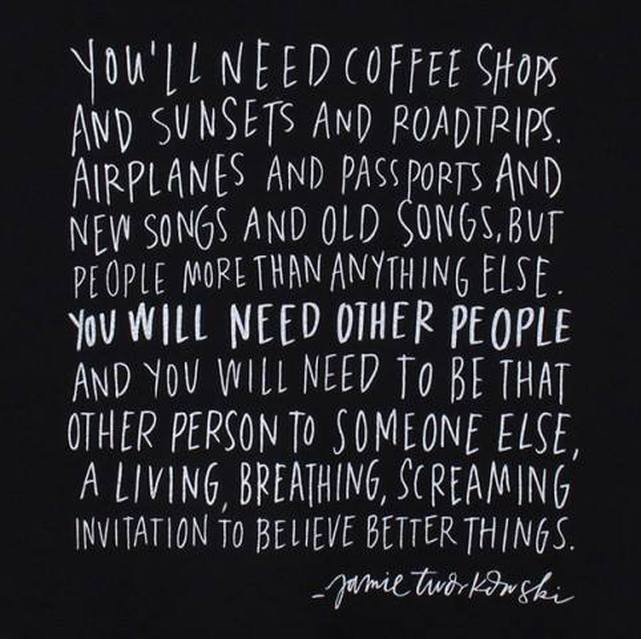
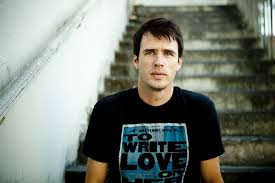 Jamie and his friends. They would be there for her, they promised — Renee was her name, and she struggled with addiction and depression and thoughts of suicide — and they wanted Renee to know, above all, that she is beloved of God, and has friends in this world who will walk through life with her. There was no literal writing “love” on her arms — that is apocryphal — but Renee moved in with this group of friends until they could get her into a treatment place. It was a moving time for all of them, and Jamie’s writing about it is poetic, passionate, raw.
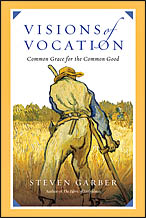 the horrible ways people suffer. Perhaps without realizing it, they’ve embodied some of the principles of Steve Garber’s Visions of Vocation: Common Grace for the Common Good, the rumination on how to mourn with the world, knowing how broken things are, and yet be responsible to do something about what we know and feel and care about. They want to (as Garber reflects upon) feel what God feels and respond in God’s own ways, embodied, real, Christ-like, true. That this new Tworkowski book is called If You Feel Too Much is fascinating, isn’t it? That it promises in the subtitle writings about what is “hoped for” is vital. I can’t wait to continue through it myself.


 CHURCH KIDS GROWING UP
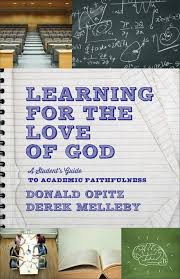 students about taking their faith perspective into the classroom, Learning for the Love of God (a must-have resource for students, presuming a somewhat more intentional reader.) This illustrates the broadly evangelical perspective he holds, and the exceptionally thoughtful approach he brings — all offered with an upbeat tone, alongside funny stories, great interviews, and the artful design of the small hardback. This is a book you can give to any college-bound student with great confidence that it will be appreciated.

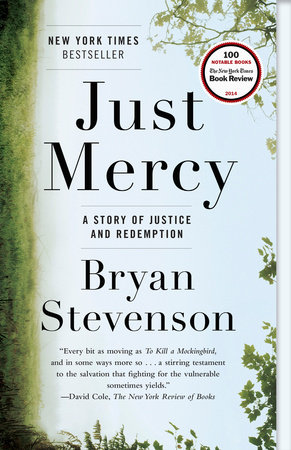
 More readable, I think, than the definitive and compelling The New Jim Crow: Mass Incarceration in an Age of Colorblindness by Michelle Alexander (The New Press; $19.95) Just Mercy stands alongside her work as a must read for anyone wanting to understand racial tensions, crime and punishment in our age.
 GhettoSide: A True Story of Murder in America was written over many years of detailed research by Jill Leovy, an award-winning reporter for the Los Angeles Times who certainly deserves acclaim and honor for her extra-ordinary work documenting how mostly black-on-black murders in Compton and other parts of South L.A. are investigated and prosecuted. I would suggest that if anyone wants to understand episodes such as the uprising in Ferguson MO or the riots in Baltimore, the recent national conversation about community policing, or, for that matter, if one wants to understand the real life work of criminal investigation and gritty urban police work (beyond Law and Order or Blue Bloods) this is the book to read. In fact, if you like those popular police shows, you will love this book.
 all sides, the different facets and factors, the different people and their stories, their lives and their circumstances, colorful and poignant as they often are. She captures with vibrant prose the nature of inner city street life, the housing projects, the houses and lawns and alleys, the charm and goodness as well as the drugs and violence. She understands inner city lifestyles, the people of many ethnicities that live in the many neighborhoods that make up South Los Angeles County, and with such good writing helps us feel like we understand the nuances and difference between this avenue and that block, between the Crips and the Bloods, the druggies and the preachers and social workers and prostitutes and more. And yet, the book, set in Compton and about urban homicide, is a bigger story, finally about police work, the vocation of being a detective, and the “lucid social critique” she makes about it all.
 Wanted: A Spiritual Pursuit Through Jail, Among Outlaws, and Across Borders Chris Hoke (HarperOne) $25.99 I have already given an early shout out to this amazing book, too, and, again, it deserves so much more. I hardly feel like I can do it justice as it is such a moving and rare work.


 continues to come out — and we can’t wait for the Devin Brown DVD study Discussing Mere Christianity [Zondervan; regularly $49.99] which has the very engaging Eric Metaxas as a host, to release later next month. (We’ve waited for decades for just such a resource, so when it arrives we will be almost incredulous. Finally! More on that, soon.)
 C.S. Lewis’s List: The Ten Books That Influenced Him Most edited by David Werther and Susan Werther (Bloomsbury) $24.95 This fantastic, interesting, and learned book is the sort that makes me think “why didn’t someone do this sooner?” And, it makes me say, with a hint of pride, that we had a tiny role in this: the book compiles papers given at a conference – 10 scholars talking about the 10 books that influenced Lewis in 10 different lectures about said books – and we provided the books to sell at the event, held in Madison Wisconsin a few years ago. What a thrill to display classic books such as Phantastes by Lewis’s beloved George MacDonald, Chesterton’s The Everlasting Man, Virgil’s The Aeneid or The Descent into Hell by Charles Williams. There are other remarkable literary works and books that Lewis himself says influenced him, and each are discussed, from poems by Wordsworth and George Herbert to mystical writings by Rudolph Otto to the eloquence of Boswell’s Johnson biography.
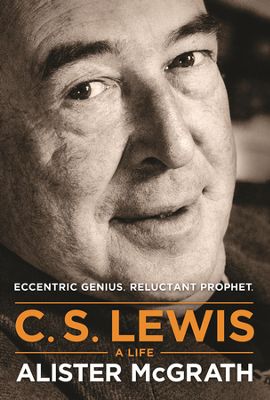 C.S. Lewis: A Life — Eccentric Genius. Reluctant Prophet Alister McGrath (Tyndale) $24.95 I have extolled the value of this remarkable, recent biography before but just had to give it another shout out here. It may be the definitive biography now and although it became known for some new insights about the dating of Lewis’s own conversion, and some new light on a few other topics, it ought to be known not ony because it adds a small bit of new information but for how it so interestingly weaves together so very much. McGrath is ideal for writing this – a former atheist himself, one who has taught at Oxford himself, one who has done magisterial biographies already, almost as a hobby, he once told me. Important, lively endorsements grace the back from Timothy Keller, N.T. Wright, Alan Jacobs, Lyle Dorsett, Michael Ward. It is very highly recommended.
 The Intellectual World of C.S. Lewis Alister McGrath (John Wiley/Blackwell) $32.95 This is only a somewhat smaller book than the previously mentioned, major biography, but it is weighty, mature, and exceptionally useful for understanding the man in light of his philosophical context and intellectual milieu. Some have gone so far as to say it “should be on everyone’s reading list, whether that of the research scholar of general reader.” Michael Ward notes that it is “thoughtful and thought-provoking” and that “these essays help to set C.S. Lewis’s writing in its broader context.” There are topics and ideas explore here that it seems no one else has tackled and it may be that it is distinctive, unlike any previous study.
 If I Had Lunch with C.S. Lewis: Exploring the Ideas of C.S. Lewis on the Meaning of Life Alister McGrath (Tyndale) $17.99 If the big hardback is McGrath’s fabulous, meticulous biography, and the Blackwell paperback is a more academic study of Lewis’s intellectual world, this is the one that showcases McGrath’s vast knowledge of Lewis and which shares it in a creative, winsome, enjoyably storied way. What a fun idea — imagining a series of lunchtime chats with Jack himself. It isn’t overly speculative, though, as McGrath so carefully draws on Lewis’s work; it is playful in imagining a semester’s worth of weekly meetings, supposing what it would be like to chat and learn from him, but it isn’t exceedingly fanciful. Each week the lunch date covers certain specific topics — among other things, the importance of stories, the art of apologetics, the nature of education, Lewis’s views of hope and heaven, friendship, even a week all about Aslan. This hand-sized hardback is a true delight and you are sure to learn about Lewis, and from Lewis.
 The Romantic Rationalist: God, Life, and Imagination in the Work of C.S. Lewis edited by John Piper and David Mathis (Crossway) $17.99 In the class I mentioned, I drew fruitfully on a few of these great essays; I really appreciate the way these capture these two large themes in Lewis’s life and work: imagination and reason. Some know Lewis as a storyteller and fantasy writer, a poet and author of books about friendship, love, suffering. Most, though, I suspect, think of him as a scholar, a thinker, one schooled in rational argument, heady apologetics. Could we have misjudged him (and, well, the entire project of the West, pitting head and heart, romance and reason, thinking and loving against one another?)
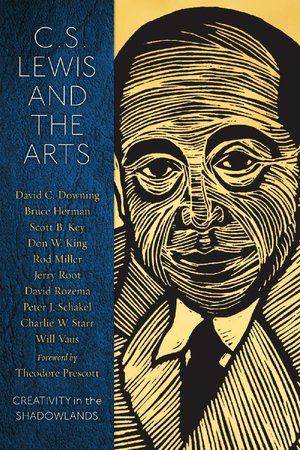 C.S. Lewis and the Arts: Creativity in the Shadowlands edited by Rod Miller (Square Halo Books) $18.99 This is another I’ve mentioned before — I did a lengthy description when it first came out — but think it deserves an extra word here. There is nothing like it in print, and it is very handsomely created. There is an original Ned Bustard linograph (“Saint Jack”) reproduced inside and a crisp typeface for the chapter titles and sub-headings. I really like the stuff Square Halo Books produces (as you may guess, since they did my own Serious Dreams, which does, in fact, cite C.S. Lewis more then once, but I digress.) More importantly, there are original essays here, thoughtful, interesting, important, even, for those who want to understand Dr. Lewis and for those interested in the arts and the creative life. Some of these contributors are top-tier Lewisians (David Downing, Don King, Jerry Root, Peter Schakel) and the forward is by the important contemporary artist, retired recently from the excellent art department at Messiah College, Theodore Prescott. What a fine, fine book! It should be better known among us and I’m happy to include it here in this list of relatively recent books about St. Jack.
 Plain to the Inward Eye: Selected Essays on C.S. Lewis Don W. King (Abilene Christian University Press) $25.99 Another lesser-known book that deserves to be on the shelves of any Lewis fan, this remarkable collection gathers together a lifetime of critical thinking about Lewis and his concerns by one of the great Lewis men of our age. Don King has been a professor of English at Montreat College since 1974 and, significantly, has edited the prestigious Christian Scholar’s Review since 1999. He has contributed articles on Lewis’s poetry to significant books about Lewis, even being drafted to contribute to certain enclopedia entries; further, he has authored several full books on Lewis and on Joy Davidman. But this collection of pieces is his best yet for general Lewis readers.
 Bedeviled: Lewis, Tolkien and the Shadow of Evil Colin Duriez (IVP) $17.00 For some, Colin Duriez is the most significant scholar of the Inklings and is known for being a commentator on the extended version film DVDs of the Lord of the Rings trilogy. In this new book — which I suspect will be widely discussed and significantly reviewed in all the right places – Duriez explores how the battle between good and evil (in the seen and unseen worlds) is understood by Lewis and Tolkien and how their views work their ways into their own writings. How did the Inklings respond to the great tragedies of their time? (Lewis, by the way, we should recall, by the way, saw horrific action in World World I and was seriously wounded in the front.) As it says on the back cover of this new paperback “In these pages we turn also to the way of goodness and the promise of a far country as we explore a the way out of the shadow of evil.”
 Called: My Journey to C.S. Lewis’s House and Back Again Ryan Pemberton (Leafwood) $14.99 This is a fun and fabulous new book which is hard to explain. Well, maybe it isn’t. It’s about a young guy — who tells us early on that he never imagined himself, not in a million years, studying theology, let alone in England, at Oxford. Long story short, this memoir is Pemberton’s telling of his discerning his sense of a calling, his leaving a career in marketing, his tragi-comic roller coaster ride to Oxford. One reviewer likened it a bit to Donald Miller of Blue Like Jazz fame, although perhaps they meant his Million Miles one. In prose that has been called “beautiful and heart wrenching” and “a breath of fresh air for the generations raised to equate divine calling with radical adventure” Pemberton tells his tale, even if it isn’t a radical adventure. For a few of us, though, this really is an amazing adventure, as Pemberton meets Walter Hooper, ends up working as a docent/tour guide at The Kilns, Lewis’s world-famous and beloved homestead. Who gets to house-sit the Lewis home? Called to the Kilns? You’ve got to be kidding me! I bet this will be a great read.

 maker,
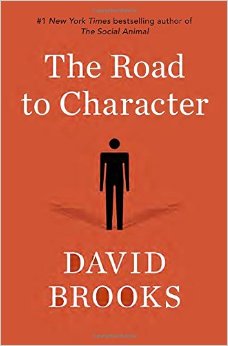
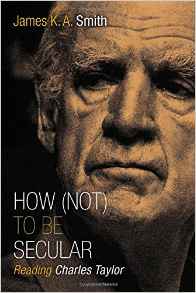 stunning, deeply rewarding new book by pundit David Brooks The Road to Character (Random House; $28.00) which combines perceptive cultural analysis and nifty reportage as well as hints of his own journey towards more explicit theological awareness. I note that these two books by Smith and Brooks include astute observations about the texture of our times, and help people of faith understand our culture and embody faith in daily discipleship that makes sense. Again, if God is redeeming all of life, and we are to take up our vocation to be Christ’s agents of restoration and hope in the world, these sorts of books (that are certainly not pietistic or devotional in any conventional sense) are profoundly useful for Christian discipleship.
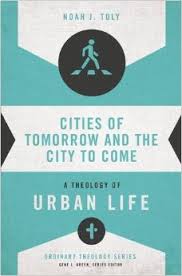 The Cities of Tomorrow and the City to Come: A Theology of Urban Life Noah J. Toly (Zondervan) $11.99 This is a must-read for nearly all of us, I’d say (and I live in a small town!) Knowing about new urbanism, thinking about our spaces and built environment, and wondering how to be faithful as we consider the trends towards urbanization are urgent. This whole area (not just urban ministry, as urgent as that is, but what might be called urban sociology, thinking about design, planning and the like) is increasingly important and even church folks are starting to think about the role of things like zoning, or buying local, or how farmer’s market’s and art galleries enhance neighborhoods. Missional churches are intentional about their locations and the nature of what makes towns flourish and the uniqueness of their own places. This all can be very exciting stuff, and this book is fabulous – what an example of all this we are talking about, relating faith to social location, being attentive to our environment, relating faith the public life. I am perplexed why Toly (who is an experienced professor who guides undergrads in an urban living semester as they consider how to inhabit our spaces) doesn’t cite the wonderful The Space Between: A Christian Engagement with the Built Environment or even Sidewalks of the Kingdom both by Eric O. Jacobsen, which are very nice introductions to these themes as well. Otherwise, Toly’s bibliography is fabulous, his writing is passionate, and the opening story, about a well-known urbanist who asked why he, as a scholar in this field, wanted to “think Christianly” since we wasn’t, technically a theologian, is worth the price of the book. He ends with a lovely prayer for the city from the Book of Common Prayer. This is very highly recommended and should be discussed in churches wanting to be intentional about their own mission to seek the peace of the city.
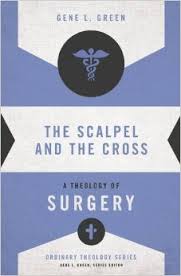 The Scalpel and the Cross: A Theology of Surgery Gene L. Green
 The Political Disciples: A Theology of Public Life Vincent E. Bacote
 Faithful: A Theology of Sex Beth Felker Jones

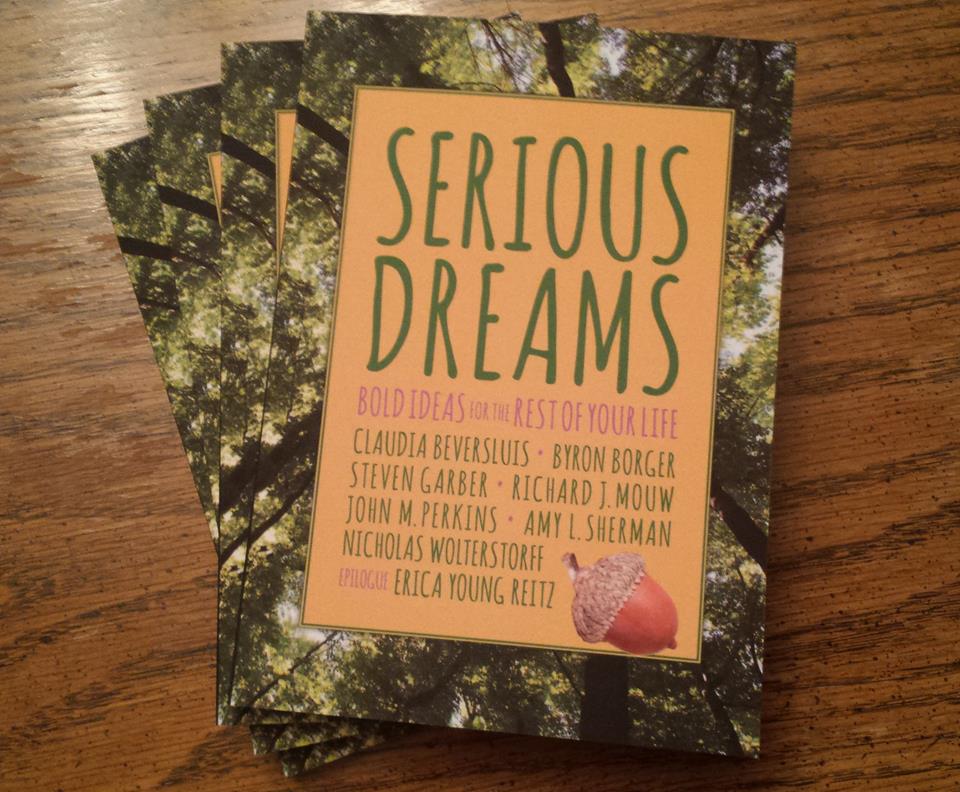

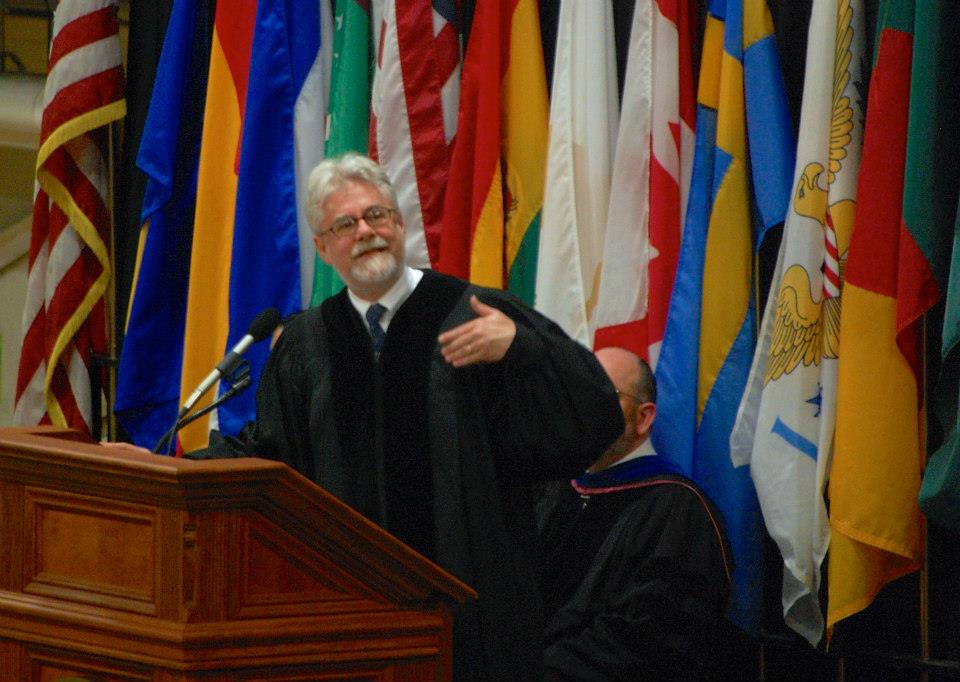
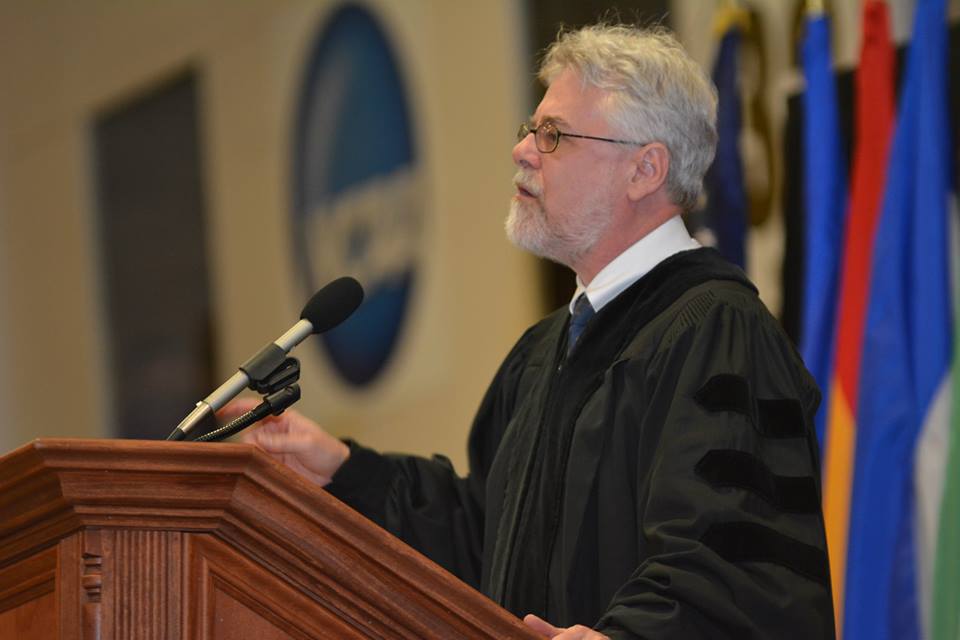 imagine the complex tasks of stepping into their vocations in the world, for the life of the world. I preached on a few favorite passages, told a few stories, and cried out to God and the gathered community, hoping that these talented young adults would help advance Christ’s Kingdom, especially in their various careers, jobs, workplaces. It got a pretty good response, for which I was humbled and grateful. A number of people asked if I might print it up, and we considered briefly doing a little booklet to share with those who had wanted to read it. Borger getting a free doctorate was quite the news for a bit — ha, ha – and we wanted to honor those who wanted to read my remarks.

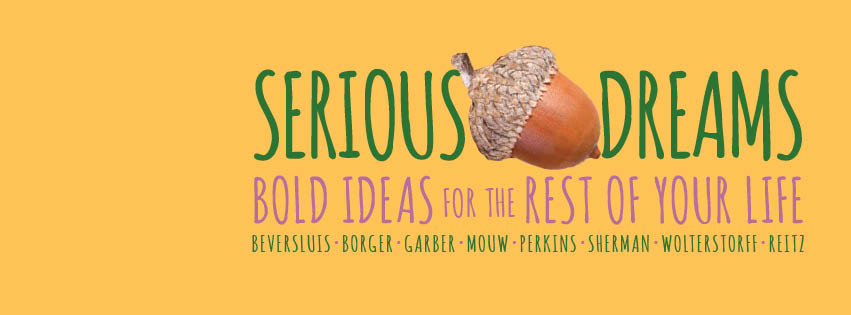 Serious Dreams: Big Ideas… includes seven great messages and they all translate well from the spoken word format to the printed page. (I will write a bit about the adventure of editing these manuscripts, and why we left most of the talks mostly unedited, soon.) I think this small. compact sized book is not only a great gift for a graduating college young adult, but for anyone wanting to be reminded of the big picture of our call to follow Christ in all areas of life, living missionally for the reign of God, even in our work and careers.
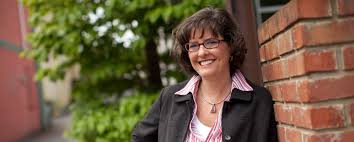
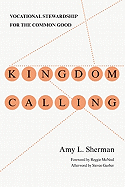 whole talk about it, but the text which Dr. Sherman explores says that the whole city will rejoice when “the righteous prosper.” Rather than producing resentment (which would be understandable, the have-nots frustrated with the haves, so to speak) those who perhaps are not prospering will be gladly rejoicing if God’s righteous ones are successful in ways that cause the healthy flourishing for all. That is, the city rejoices because, precisely, the tsaddiqim are not in it for themselves. Their prosperity apparently is a blessing to others, and develops because of, and is bound up with, the good of the city in which they live.
 imagination and gospel-centered, evangelical faith.

 has
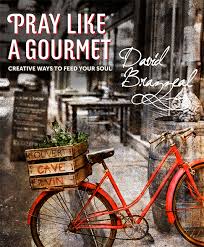 Pray Like a Gourmet: Creative Ways to Feed Your Soul David
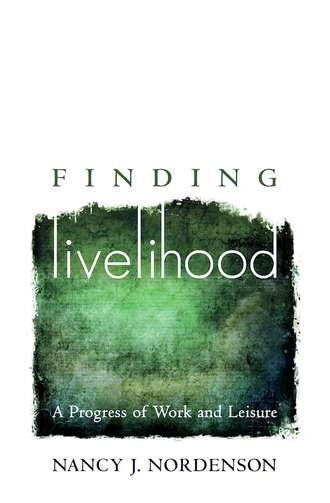 Finding Livelihood: A Progress of Work and Leisure
 Jesus Outside the Lines: A Way Forward for Those Who Are Tired of Taking Sides
 From Here to Maturity: Overcoming the Juvenilization of American
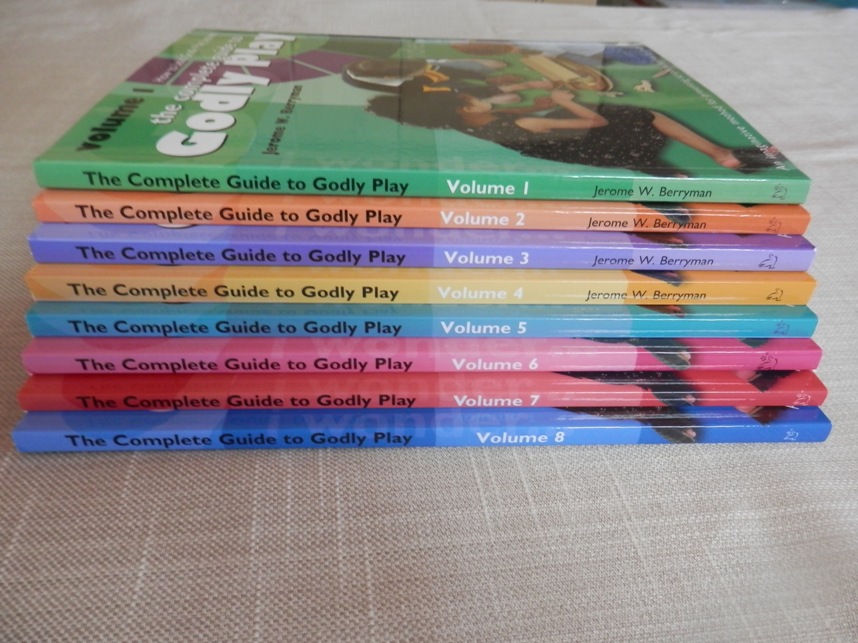 The Complete Guide to Godly Play Volume 8 Jerome W. Berryman (Living the Good News) $29.95 We have sold these unique resources since they first came out, and while this “Montessori” approach to Christian education is beloved by those who use it, it takes a serious and spiritually profound commitment to trust the Spirit’s leading in drawing children to the Biblical text and playfully/prayerfully allowing them to imagine its meaning. You may know that the various books cover various seasons, or themes; this new one includes 15 new presentations. The back cover tells us “it also includes a wealth of capstone insights gleaned from decades of research and practice, as well as an appendix summarizing the foundational literature and describing the entirety of the Godly Play spiral curriculum as it exits today.”
 Becoming the Gospel: Paul, Participation, and Mission Michael
 The God We Worship: An Exploration of Liturgical Theology Nicholas
 Believe: Living the Story of the Bible to Become Like Jesus
 Believe: Living the Story of the Bible is not exactly an abridged NIV Bible, but it is almost entirely Scripture, in a Bible-sized hardback, with the passages and texts arranged around three major
 Think, Act, Believe Like Jesus: Becoming a New Person in Christ is


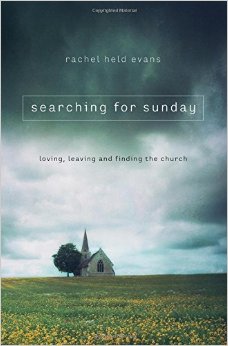
 healthy love for the Body of Christ, for the local church, and for the ordinary stuff that gets done in the daily life of faith. It isn’t exactly the same as When Spiritual But Not Religious Is Not Enough: Seeing God in Surprising Places, Even the Church (Jericho Books; $16.00) by UCC pastor Lillian Daniel — which really is a tribute to the small, ordinary, local parish — but I still cannot tell you how grateful I am for this fine work, this voice from the margins, aware of so much wrong with so many expressions of faith, and yet willing to tell us in such beautiful prose and revealing stories, why the church still matters. And that it can still change our lives. This is ecumenical, serious faith, expressed with wonder and grace and captivating prose.
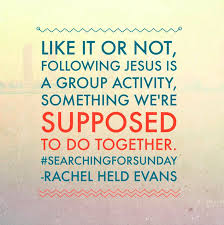
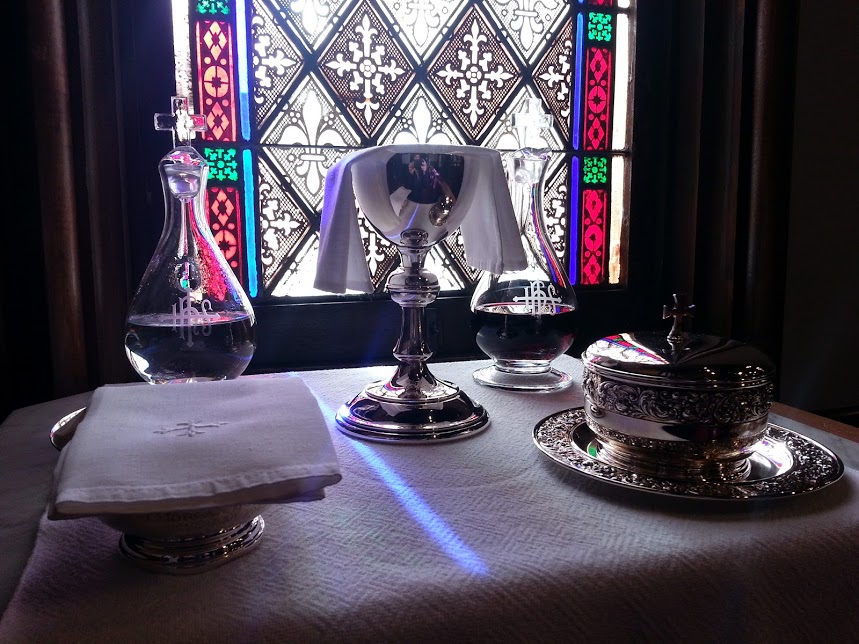 Catholics call the seven sacraments. (When I first heard this I wondered, although didn’t think it was likely, that Rachel had become Catholic.) These seven parts, each with several chapters, of sacramental reflections are rich and give the book a structure which is more than just a random collection of her latest thoughts. It is a mature, developed, and highly insightful flow of what might be called spiritual theology. She is doing helpful good work here, besides offering us an entertaining third installment of her ongoing series of memoirs. As she unfolds some of her story – their stint away from church, sleeping in on Sunday, watching Meet the Press and reading the paper (“one New York Times crossword puzzle away from liberal nirvana”) and their eventual return, somewhat sobered – she also tells us what she has learned about the seven sacraments.
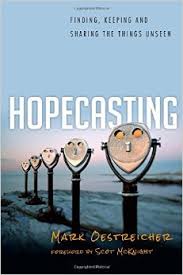 Hopecasting: Finding, Keeping and Sharing the Things Unseen Mark Oestreicher (IVP) $16.00 Oh my, this book (with a nice foreword by Scot McKnight) deserves a long, weighty review. “Why is it that some people are full of hope,” the author asks, “while many of us struggle to get past the snooze alarm?”