A Last Minute DIY Option: Our Make Your Own Gift Certificate Deal

It has been a busy week or two for all of us, I’m sure.  Here at the bookstore, we’re waiting on and chatting with friends and neighbors, folks we love and new customers, too. There are books to hand-sell, inquiries to track down, conversations to have, joyful and hard. In the last days we’ve had quite a handful of out of town guests in the shop, and we are so grateful for those who swing by our central Pennsylvania town, reconnecting, or putting a face with a mail order, on-line friend.  We hope you like meeting our staff and checking out our heavily stocked shelves here in Dallastown.

At BookNotes, we’ve done some energetic writing, too.  Of course, yesterday I made a case for continuing your gift giving festivities throughout the 12 Days of Christmas, and told you about some nifty kids books, some of which I bet you had never seen before.
CS Lewis Reluctant Disciple DVD.jpg
Before that, I hope you saw our review of a beautiful and informative new DVD series about C.S. Lewis, narrated nicely by Os Guinness. It is called C.S. Lewis: Reluctant Disciple — Faith, Reason, and the Power of the Gospel.  As I described, it is really, really nice.
god in sink.jpg
I really hope you didn’t miss one of the most anticipated releases of the year (at least for some in our circles), God in the Sink: Essays from Toad Hall by Margie Haack, published by the lovely literary imprint, Kalos Press.  As I explained, Margie and her husband Denis have had a ministry for decades (helping others engage culture, learn the art of wise discernment, and winsomely present the gospel in socially-relevant ways) mostly out of their Minnesota home which their children dubbed Toad Hall. Margie has published her “Notes from Toad Hall” for years, and this is an anthology of some of her best writing. I enjoyed telling you about it, here.
Seerveld books screen Shot 2014-04-11 at 20.42.30.png
Not only do I do BookNotes reviews, but sometimes I place my articles at the part of our website marked “columns” which means they are longer, even epic sometimes. Just the other night I posted a larger column there, an complex essay I had been working on for months, a description of an important set of books (6 volumes!) by Calvin Seerveld. I called it “the publishing event of the year.” Find out why, here.
Even while doing some BookNotes lists of good Advent books, and some gifty-type, wondrously done, artful works, or top brand new releases, I compiled a set of links of several lists I’ve made in recent years about racial reconciliation, multi-ethnic ministry, diversity and the like. Obviously, there is a lot being said about these concerns this month, and I thought some wise books on the subject would be useful. You can see at least  some of my recommendations on race matters, here.

new heavens and new earth.jpg
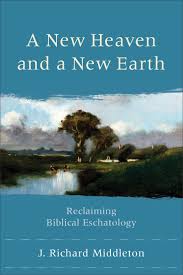
And, oh my, I did a long review of Richard Middleton’s new book A New Heaven and a New Earth which I think is very, very important. I’m excited he will be on the main-stage of our Jubilee conference out in Pittsburgh this February.  See my review, here.
All of these are archived at our website, and you can scroll back to see these vital reviews, or the ones that are lists of key titles, new releases, or books we just had to tell you about, even if briefly.  Many of the titles on those random lists are truly great, and we have been pleased to be able to describe so many new books this past few months.  Go back farther, and you’ll see even more great titles on display by some very good authors.

Perhaps you could forward some of these reviews or lists to somebody you know; invite them into a reading group, or a book of the month club for the new year, or at least invite them to sign up to receive BookNotes. It’s free, and keeps you up on important new releases for the heart and for the mind.

Yeah, you saw what I did there.

And, of course, there is our annual invitation to quickly make your own gift card.  If you want to highlight any of these titles for your loved ones, print out pages from our website, or just give a plain old open-ended gift certificate, we’re more than happy to honor whatever you can cook up.

It’s simple, really; and fun.  Let’s do this.

Last, last minute, lots of fun, DIY Gift Certicate. You make it, you give it. Simple.

MAKE YOUR OWN HEARTS & MINDS GIFT CERTIFICATE
Abook wrapped in brown.jpgs
do most real stores, we enjoy selling and sending out gift
certificates.  You may call them “gift cards” but ours aren’t plastic, 
but nicely printed certificates; old school.  Some customers really
enjoy giving them and they are the perfect solution for gifts large or
small.  We make them for any amount you’d like, and can send them out
anywhere.

But here is what is fun — this time of year we invite a
little homemade DIY action.  Why not get crafty, use your imagination,
open up that aesthetic dimension of life, and prettify something as a
way to share some H&M joy?  You can make your own gift certificate
and we will honor it.

Yep, you can make your own gift card, for
any amount, drawing it up in any way you’d like.  Give them to your
loved ones, and voila, they can be ordering whatever they like, whenever
they like.

Here is how it works.  On the secure order form page at our website, just type in that you arpaper trail.jpge
making your own gift card and tell us the dollar amount you want it to
be for.  We will send to you the cc receipt (or a bill, if you’d rather)
to your address for your records.  We will also reply promptly via
email (as we always do) and give you a little gift certificate number
that you can write on the card somewhere, just for everybody’s records
.  (Be sure to give us YOUR email address, not the recipients, as we want to confirm with you.) 

If you tell us to whom you are giving it, that would be helpful for our
files, too.  We won’t correspond with them, but having a name would be
good.  That way, if they lose it — heaven forbid, since it will be a
work of art — we can still honor it. 

This is so easy, and if you’d
rather do it over the phone, that is simple, too.  Just call the shop at
717.246.3333.

Mhandmade christmas.jpgaking
and giving your own gift certificate is one last way for you to say
Merry Christmas, Happy New Year, or to commemorate any of the Twelve
Days of Christmas, including (our family favorite)  Epiphany.  The
Persian astrologers brought gifts to Jesus on that day, so you could put
Epiphany art on it.  Smart thinking, eh?  Or use it for a Christmas eve
stocking stuffer or along with a thank you to someone who has blessed
you this year.

Speaking of gift-giving, you all are a great
gift to us.  Beth and I and our staff thank you for caring about books,
for supporting a real store, and for allowing us to inform you about
books we think you’ll like, all through the year.  We enjoy our on-line
friends and appreciate those who follow along, sharing in our efforts. 
You are part of this story and we are grateful, daily.  At this glorious
holiday time, though, we are especially aware of how we wouldn’t be
here if it were not for you, our friends and customers.  Merry, merry
Christmas.

BookNotes

order here
takes you to the secure Hearts & Minds order form page
just tell us what you want to order

inquire here
if you have questions or need more information
just ask us what you want to know

                   Hearts & Minds 234 East Main Street  Dallastown, PA  17313
    717-246-333
3

    read@heartsandmindsbooks.com

For the 12 Days — a handful of great children’s books and books for young readers and teens. ON SALE

I swear it isn’t a marketing ploy, but a sincere hat tip to the ancient wisdom of the Christian calendar.TWELVE_DAYS_image.jpg  As the mall tells the story, Xmas starts in the fall, and then goes full tilt from the stupid black Friday frenzy, ending abruptly,  cynically, as quickly as they can stock the shelves with Valentine stuff. Then it’s on to the President Day sales!  Whatever.


But the month of December is for Christians not a time of Christmas, but an Advent time of waiting, hoping, expecting, and crying out — Ferguson and Iraq aren’t the only places that cries “how long O Lord?”  but we join them in lament and longing.  Yes, yes, we want Christ  to “be born in us today” but we want Christ not only in our own broken little hearts but to reign, bringing his shalom to his fallen creation as a redeemer King.  We want those crazy promises of the Magnificat to come true in history, don’t we?  This takes a lot of faith and so it helps to have a lot of ceremony and ritual over a substantive block of time.


Which is why we are glad to continue to suggest books and gifts to keep the festivities going through the classic twelve days of Christmas.  We used to give our own family gifts to our children on Epiphany, celebrated 12 days after Christmas day, teaching them that one of the reasons we give gifts at Christmastime is because of the wise men who did so. It was our way of trying to honor the liturgical calendar, a little way to subvert how the culture tells the story, and a even little way to relieve us of gift-buying anxieties in mid-to-late December. And we got to keep our tree up — what fun!


So, yep, we’re happy to try to sell you some more books, to help you give gifts for some of the 12 days. This is a grand time to give small items, especially to children, as we stretch out the happy days of this glad season.  Here are a few, mostly new, that we wanted to recommend.


We show the regular retail price, but will deduct the 20% discount when you enter the title at our website’s order form page. (Please see the link below.) The page is certified secure so you can enter credit card numbers safely, or you can just as for an invoice, if you’d rather send a check, later.  We like that!  Either way, we promise a prompt, personal confirmation.


Happy gift-giving.  Merry Christmastime.


saint-nicholas-and-the-mouse-of-myra-24.jpgSaint Nicholas and the Mouse of Myra: A Graphic Novel Jay Stoeckl, OFS (Paraclete Press) $15.99  I suppose this compact graphic novel is a book for all ages, but I think smart kids would love it.  Are the legends of St. Nicholas true?  This is a vital and good question, and a way to navigate the Santa stuff, and this paperback is a great aid.  For what it is worth, there is another book out now by a popular evangelical children’s writer and big time publisher and the cheesy art and glitter on the cover should have warned me away.  That they have the legend of Nicholas in what looks like the Victorian era — he lived in Asia Minor in the late third century (and even attended the famous Council of NIcea!) — makes me crazy with perplexity.  What was the author, illustrator, editor, publisher, and sales reps thinking? Ugh.

This cool book from a much smaller publisher, though, is an excellent introduction to the life of one of the most important, least understood and oh-so-very-real characters in Christian history.  The cartoonist has a light touch and adds some fun — a talking mouse named Cicero, dressed like a Greek philosopher, which, let’s face it, is pretty darn funny.  (He did something this in a previous book called Saint Francis and Brother Duck.)  Stoeckl has taught elementary school kids and is a now a middle school teacher.  If you like comic books or graphic novels, this is a nice way to learn how Nicholas learned to practice generosity, and a whole lot more. Nice!

song of the stars 12 - 14.jpgThe Song of the Stars: A Christmas Story  Sally Lloyd-Jones, illustrated with paintings by Allison Jay (Zonderkidz) $15.99  We have simply raved about this for two years, now, and it remains one of the best children’s books we’ve seen. The whole creation gets in on the action here in this gentle, serious, visionary, playful, subtle, artful rendering of the Nativity.  I assume you know how much we esteem Lloyd-Jone’s wonderfully written, beautifully done, theologically sound Jesus Storybook Bible and the fabulous sequel Thoughts to Make Your Heart Sing, both regular best sellers for us.  She is such a reliable and helpful narrator for our little ones. There is proper Biblical language here — Christ is called “Our Rescuer” and it has the weight of glory.  Simple, clever, solid, highly recommended.  Enjoy!

animals from song of the stars.jpg

it's time! banner.jpg

let there be light.jpgLet There Be Light  Desmond Tutu  & Nancy Tillman (ZonderKidz) regular hardback book, $16.99; small board board, $7.99  When this came out a year ago, we raved.  Beth continues to tell customers that it is one of her all time favorite children’s books.  The combination of an esteemed, powerful, winsome, global Christian leader and one of our most lovely children’s illustrators combines for a truly beautiful, moving, happy story, an imaginative and even playful vision of the creation — with royal humans cavorting with animals of all kinds.   Yes, that is a son of Adam writing an ostrich on the cover!  You’ve got to see this close up to appreciate how great it is. We have a few on hand now for immediate shipment, and a few more coming in later in the week.  Nice for little ones!  Splendidly creative.Let There Be Light Tutu scene.jpg

song of the king.jpgThe Song of the King Max Lucado (Crossway) $17.99  You may know of the many beloved children’s stories of this master communicator, and you may appreciate his gentle way of telling a story which is a metaphor for things of God’s Kingdom.  The back cover here states, “A timeless tale about the most important choice on your journey through life.”  This is at first blush a story of a princess, brave knights that want to prove their worth, and with only the King’s song to guide them, they must overcome obstacles. “Who will be victorious? Carlisle the strongest, Alon the swiftest, or Cassidon the wisest?”  Illustrated by Chuck Gillies, of Kendall School of Design and a popular illustrator for over 50 books.  Ages 5 and up.


Andrew Draws David McPhail .jpgAndrew Draws David McPhail (Holiday House) $16.95  Wow — this is not only a charming little book, but a great conversation starter.  On the first page, the child star of the book finds a crayon and starts to scribble on the floor and walls. His love of drawing is honed over the years, he becomes better and better and you realize this is a book about finding one’s passion, the power of art, the joy of creativity.  It is simple, but good. But then one day he asked a someone what they would like him to draw and when she says a bird, he draws a nice on, and it flies right off the page on to her shoulder.  He becomes famous for this, and soon the President of the US calls him, asking him for some help.  What will he do? What does he draw, and for whom? What a great question? What might your child say?  The crayon stub is almost gone, he’s got enough for one picture left.  (Spoiler alert: he makes a drawing for himself. Which licks him, afterwards.)

The Magnificent Thing Ashley Spires .jpgThe Magnificent Thing Ashley Spires (Kids Can Press) $16.95  Do you know any enterprising children who like to make stuff? Who are maybe even destined to be inventors? Or you might like a story of encouragement, even if things don’t work out at first? This little girl and her assistant (a odd little dog) are making the most magnificent things. She repurposes all kind of junk and almost makes a great thing, but, uh, well, it just isn’t quite right. But then she goes back to the drawing board and it ends up being just what she wanted.  Fun for early elementary children.  It notes on the copyright page, by the way, “The artwork in this book was rendered digitally with lots of practice, two hissy-fits, and one all-out tantrum.” The author apparently understands the “it turned out all wrong” frustration, and knows how to keep at it, with whimsy and joy.  

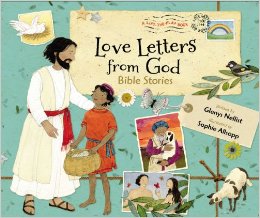
Love Letters from God Bible Stories  .jpgLove Letters from God Bible Stories  written by Glenys Nellist, illustrated by Sophie Allsopp (Zonderkidz) $16.99  This is without a doubt one of the best designs in a children’s Bible story collection we’ve seen — it is colorful, fun without being cute, with a creatively designed part that sets it apart and brings it all home. Yes, it has engaging pictures, sidebars and graphic design on each two page spread; if that were all, it would still be much better than average and highly recommended.  But there is also a little tipped in, lift the flap sort of letter or card, with a letter to the child in each one.  In other words, it says in simple, personalized prose exactly how this passage teaches about God’s great love and faithfulness to the child. These notes are very colloquial, and talk about “being on Jesus’ team” love-letters-from-God-2.jpgand things being super-duper. It is child-like, just a little silly, even. This lift-the-flap feature isn’t so prominent as to distract from the pictures and the telling of the story, but is an extra, enhancing contribution.  We love this book, and congratulate ZonderKidz for doing such fine work.


  Sharing God's Love- The Jesus Creed for Children.jpgSharing God’s Love: The Jesus Creed for Children Scot McKnight & Laura McKnight Barring  illustrated by Dave Hill (Paraclete Press) $15.66  I hope you know the impressive, important, and very useful book about loving God and others simply called The Jesus Creed by the preeminent (and fun) New Testament scholar.  There is a teen version of this book, and now a children’s book.  This is a splendid resource, with pastel art and a gentle storytelling style (the co-author is Laura McKnight Barringer, Scot’s daughter, a kindergarten/first grade teacher and graduate of Wheaton College.  The illustrations are not stunning, just straight on illustration which for this book is, I think, perfect.  This book is more about the life-changing content then the story itself, although it does work nicely as a fun book to read with an elementary age student. 

Ann Voskamp writes of it’s importance and value:


Parents know what the great theologians know: Good theology for future grown-ups should start when kids are little. Start with books that become their favorites that they want to return to over and over again. This book is one for every home of faith. If a generation of children made the words in these pages their creed, it’d change the world — and eternity.

Shauna Niequist nicely says,


Like all parents, Aaron and I are always on the hunt for ways to each big ideas to our little people, and this book makes it easy. I love the illustrations, and I love that by the end, my kids have learned a creed they can carry with them, through childhood and beyond.


My-Librarian-Is-a-Camel.jpgMy Librarian is a Camel: How Books Are Brought to Children Around the World Margriet Ruurs (Boyds Mill Press) $16.95  Any kid who goes to the library will be thrilled to learn how other children get their books.  This shows bunches of libraries, some in, uh, surprising locations!  How interesting, and what a testimony to the love (and value) of the printed page.  This brightly photographed book has won a number of important awards — a “Notable Book for a Global Society” and was a “Children’s Crown Award” nominee for the National Christian Schools Associations. It’s sold from National Geographic to other prominent museum shops. This teaches about books, offers global awareness with a eye-popping multi-ethnic around the world journey.  What a fun book, truly fascinating.  Maybe adult book lovers will get a kick out of it, too. 

  Whatever You Grow Up To Be Karen Kingsbury,.jpgWhatever You Grow Up To Be Karen Kingsbury, illustrated by Valeria Docampo (ZonderKidz) $15.99  What a curious, wacky, fun, sentimental book this is!  With zany pictures in each busy two-page spread, the mom wonders what the boy will grow up to be. Political leader, Fireman, Businessman, Rock star, husband? In each case, the dream is named, the ethical and noble way he will serve in that vocation simply described, and (of course) the big if.  Perhaps this is a book for moms and dads — or grand-moms or grand-dads, since it ends there, actually.  Fun for kids, fun for parents, fun for grandparents, to remind one and all about God’s plans for God’s own children, whatever they grow up to be.  I have to admit, I was choked up as I read it, grinning.


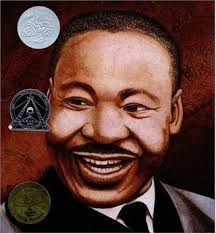
As Good as Anybody .jpgAs Good as Anybody: Martin Luther King, Jr. and Abraham Joshua Heschel’s Amazing March Toward Freedom Richard Michelson illustrated by Raul Colon (Knopf) $16.99 Is it the soon-to-be-released Selma movie that makes me want to name this book, or the troubles in Ferguson and beyond? We have stocked it for several years, and smile at the powerful story, hard as it is.  It shows Martin’s youth anger, how he stepped into his father’s vocation of being a preacher, and, well, you know the rest. He gives out a call for other people of other faiths to join him at the bridge in Selma.  Heschel is a notable, wondrous Jewish scholar — his book on the prophets and his book on sabbath remain true classics that we continue to sell! — raised in Poland.  As a child, he, too, wondered if he as as good as others.  You can imagine the horror. It shows him moving to America, and, as a young rabbi, taking up King’s call.  The two men were good friends, Christian and Jew, black and white, leaders for peace and justice. We need to tell this story, and this book is a splendid way.  

martin's big words.jpgMartin’s Big Words: The Life of Dr. Martin Luther King, Jr Doreen Rappaport, illustrated by Bryan Collier (Hyperion) $6.99  This slightly over-sized book has big pictures, exceptionally artful design, and a perfect use of vocabulary and text. It is no wonder it has been awarded for such excellence, over and over. Every child should see something like this, and it may be our favorite kids book on King. It offers a bit about his life, some of the key events, with a few good, actually quotes. (By the way, the same artful blend of text and image is found in the similar book Abe’s Honest Words about Lincoln, and other colorful bios of Teddy Roosevelt, Helen Keller, Jack Kennedy. Very nicely done!) Highly recommended,


wrinkle graphic.jpgA Wrinkle in Time: The Graphic Novel  Madeleine L’Engle  Adapted and Illustrated by Hope Larson (FSG) $19.99  I wrote a bit about this last year when it first came out, and not only celebrated the brilliant idea of it, but its artistic excellence; I mentioned, importantly, I think, that the L’Engle family approved of this large project.  We sold a few, then, and those who got it were astonished at how very cool it was. This is a contemporary classic, written by dear and wise Christian woman, and this new graphic edition — like a serious comic book, in a sturdy hardcover — brings it freshly.   What a great gift idea this is!  Popular YA author James Patterson insists it is “page-turning, eye candy of the highest order.”  Yes!


Both of Me Jonathan Friesen.jpgBoth of Me Jonathan Friesen (Blink) $16.99 When Zondervan, a large evangelical publishing house owned by Harper, announced a new project, an imprint of books called “Blink” folks wondered: they were up front that this was a line designed to reach out to the general teen market, sharing wholesome values, even Christian ideas, but without any obvious religious content. If this is an example of what they mean, I think we can all rejoice — this is a fine book, a handsome hardback with a provocative story, good writing, meaningful conversations about stuff that matters. The plot revolves around a teen girl and her mysterious friend, who has dissociative disorder (what used to be called “multiple personalities”) and one of his selves has some profound secrets. 

“We quietly left the room and the inn and
wandered out beneath a full-moon sky. Elias’s face brimmed with confidence, and I rubbed my eyes.  I was helping half of him. I was using the other half. What I was running from had finally found me.
“

Remnants- Season of Wonder  Lisa T. jpgRemnants: Season of Wonder  Lisa T. Bergren (Blink) $15.99  This is another one of the new and important releases for the new imprint of books called “Blink.” This is a YA/teen fiction line created by Christian writers, but muting the overt messages, making the stories more applicable for a wider market, longing for wholesome books with good writing, without some of the sex and violence and vulgarity that is prevalent in YA titles these days. This is a great example, Book One in “The Remnant” fantasy/adventure series, a not too distant cousins of The Hunger Games and the like. Yes, there are kids that have to save the world, but what else would you want? Right on!  Ms Bergren is a prolific and award winning author, with most of her 40 books appearing in the Christian marketplace. Kudos to her, to Blink, and to the kids of The Remnants. As it is written,”our coming was foretold by the elders…”


Brown Girl Dreaming Jacqueline Woodson.jpgBrown Girl Dreaming Jacqueline Woodson (Nancy Paulsen Books) $16.99 Not only is this a fantastic book by a great YA writer, it has won the National Book Award in her category.  It unfolds as a story, written as a series of poems. Wow — so good.  Here is what one reviewer wrote: “Jacqueline Woodson, one of today’s finest writers, tells the moving story of her childhood in mesmerizing verse. Raised in South Carolina and New York, Woodson always felt halfway home in each place. In vivid poems, she shares what it was like to grow up as an African American in the 1960s and 1970s, living with the remnants of Jim Crow and her growing awareness of the Civil Rights movement. Touching and powerful, each poem is both accessible and emotionally charged, each line a glimpse into a child’s soul as she searches for her place in the world. Woodson’s eloquent poetry also reflects the joy of finding her voice through writing stories, despite the fact that she struggled with reading as a child. Her love of stories inspired her and stayed with her, creating the first sparks of the gifted writer she was to become.”

DVD Kaleidoscope- A Skateboarding Film  Steelroots  .jpgDVD Kaleidoscope: A Skateboarding Film  Steelroots  (Kaleidoscope) $19.99  I’m not gonna lie — I don’t know enough about skateboarding to say I love this. But the reviews have been good, and we are eager to promote it.  It really is the real deal;  very authentic, with much blood, sweat, and tears spilled, years of hard work going into making this killer movie about 10 world-class skateboarders sharing their Christian faith as they travel around the world. They have footage from Barcelona to New York, from Philly to California and I might say it really rocks. This is a documentary of the talent and testimony of this crew, and includes some extras (outtakes, of course, interviews, Bible studies and more.) This might appeal to unchurched punk kids, and it would appeal to Christian teens or young adults who are into the skate scene.


The NIV Teen Study Bible (Zondervan) Italian duo-tone, $34.99 / $39.99 There are a number of teen-friendly Bibles, in various translations. (NRSV? New Living Translation? ESV?  Catholic or Protestant?  Call us if you need more guidance.) This one, though, in the popular and readable New International Version is a good bet, at least for Protestants — it has very fine information alongside many passages, sidebars and a bit of graphic interest, some color, some Q & A stuff, but not tooo much.  It’s reliable, relevant, interesting.  It comes in a regular Bible size and a compact size, in hardback and paperback. Here are some great gift editions, soft, leather-like Bibles that are rich and artful and beautiful to hold and use, and that hold up under use (or carrying around in a backpack.) Although they look much better up close and personal, here you can see four lovely faux leather versions called “Italian Duo-Tone.” They are named chocolate (with a Celtic-like cross design), espresso (with a darker look and cool embedded pattern), sienna (with a small, crisp cross), and raspberry/chocolate. The second one shown (with the pattern) is $39.99 and has a cool design on the page edging, too.  The other three are regularly $34.99 — we off course will take off our BookNotes sale discount.  Just click below to order.

duo tone with cross.jpg

teen study espresso with pattern.jpg

duo tone sienna w_ cross.jpg


teen study rasp and choc.jpg

BookNotes

SPECIAL
DISCOUNT
ANY ITEM MENTIONED

20% off
order here
takes you to the secure Hearts & Minds order form page
just tell us what you want

inquire here
if you have questions or need more information
just ask us what you want to know

                                     Hearts & Minds 234 East Main Street  Dallastown, PA  17313     717-246-3333

THIS JUST IN: DVD on C.S. Lewis, narrated by Os Guinness “C.S. Lewis: Reluctant Disciple: Faith, Reason, and the Power of the Gospel” – ON SALE NOW

Wow, what good news.  We just got into the shop a brand new DVD on C.S. Lewis, narrated by Os Guinness!
 
C.S. Lewis: Reluctant Disciple: Faith, Reason, and the Power of the Gospe
l  (Discovery House) regular price, $19.99. Hearts & Minds BookNotes sale price – $17.99.

We have been waiting for this, and have been eager to tell you about it, and was tickled that it arrivedCS Lewis Reluctant Disciple DVD.jpg just yesterday. We were up quite late last night, watching this lovely set of eight lessons, listening to the charming accents, viewing breath-taking scenes of Donegal, Ulster, the Northern coast of Ireland, and of course, the Kilns and the colleges at Oxford and Cambridge.  I don’t know what was more visually stunning, the bright green scenes of the lawns and gardens, or the glorious architecture of those hallowed academic halls, the churches and even the pubs. 

The production of C.S. Lewis: Reluctant Disciple is top class, not edgy or wild or unusually creative, but gentle, beautiful, very nice, with a lovely and effective orchestral score.  Filmed on location in Ireland and England, there are remarkable archival shots, old black and white photographs, of Lewis’s early years, and up to his death in November 1963.  The production has — for lack of a better way to explain it — a PBS/Ken Burns sort of style. There are lots of interviews with lots of people, and the camera moves from these handsomely set interviews to old black and white pictures, close-up shots of letters and notesDVD.jpg and family documents, to contemporary scenes of the lively locations at Oxford or Cambridge or the countryside Kilns where he and his brother Warnie lived.
Time does not permit me to explain all the wonderful people who are shown here, the scenes shot, or the insider information that is shared, but I’ll make three quick observations.
First, it is just wonderful to hear people who knew Lewis personally, to have these candid andirish landscape.jpgIreland.jpg first hand interviews, some which were quite enlightening, some which were a bit light-hearted, and a few which brought tears. I wasn’t expecting these first-hand accounts, and was a bit surprised at how touched I was by this. Jack’s longing to enter the other country near the end of his life, and hearing testimony of people that were with him in his last days was deeply affecting to Beth and I.

We think you will enjoy this, be moved by it, and be very, very glad for this wondrous opportunity to be in the company of those who knew this great man.

Secondly, you should know that it is not particularly academic; it is not so much a work aboutlewis face.jpg apologetics as the subtitle of the DVD curriculum might lead you to believe. It bears witness to the life of this great man, a thinker, writer, professor of note, and that is enough. There does come with it a very thorough study guide, with discussion resources, reflection questions and Scripture verses, and it is clearly arranged (in eight lessons) for group exploration.  The Leader’s Guide is well made and useful, but the sessions can be viewed almost back to back, like a series from PBS.  
This production really is a delight, so informative, even though I’d say it offers less “teaching” about his views, then about his life.  There are several sessions on his early years, the war years, his early disappointing efforts at poetry and the like.  The bits on Narnia are brief, there is littleoxford-university.jpg dissection of Mere Christianity (although the backstory of the BBC inviting him to lecture live, and his voice becoming the second most famous voice in all of England, only surpassed by Winston Churchill, is great.) They interview a friend who told of how he wrote the whole first Screwtape letter in his head during a communion service (and show the church) and they show the pew in which he sat for morning prayer each day at Oxford. The interviews with a US friend of Joy Davidman was delightful, and a few of Lewis’s old friends who told of how he handled his grief when she died — on the page, in his writing, not in his public life — is all here. (Oh how he loved to write. “Ink,” he declared, “can solve anything.”)

lewis with signature.jpg

CS Lewis Reluctant Disciple DVD.jpgThis DVD curriculum is, again, less a direct teaching tool about faith and reason and the like, or a study of his theories and theology, but truly a documentary glimpse into the life of C.S. Lewis.  It is dignified and classy and warm, and perhaps could be described as dignified, sharp but pleasant in a way that befits this Oxford don, who was known as quite a fine chap and a very decent human being.
Thirdly. I daren’t exploit this, but it is true: Os Guinness is so very articulate and gifted as an orator, that even if he is reading from a script, as seems evident, it is simply marvelous, a perfect narrator for this project. To hear Os narrate this story of his hero from Belfast, a don at Oxford (where Os once studied, after Lewis had died) and to hear his own charming cadences and accents, well, it was just wonderful. os guinness.jpgWhat a great pairing of a contemporary voice and this glorious subject. To hear Dr. Guinness reading lines from The Weight of Glory or A Grief Observed or a great passage from Screwtape Letters —  it is worth the price of admission, just for that. 
Here is what it says on the back of the DVD. 
Escaping to a place of imagination and mythology during his time away in English boarding schools, young C.S. Lewis convinced himself that God did not exist. And despite his Christian upbringing, he moved further and further from the truth, ceasing to be a Christian in every aspect of the word. But from the trenches of World War I to his time at Oxford University, he began to seek the Lord until God’s indescribably joy finally found him.
C.S. Lewis: Reluctant Disciple gives you a deeper look into
the life of one of the twentieth century’s most influential writers as it chronicles his journey from disillusioned atheist to fearless defender of the faith.

We have been waiting for a good video study of Lewis and when we heard of the many friends and former colleagues or students of Lewis and the many Lewis scholars that were involved — on both sides of the Atlantic — we were very enthused.  Having watched it all, we can say that it is very well done, a true delight and more, a testimony of a life well lived, of a good man, of a writer, scholar, teacher, and mere Christian, saved by grace and living in to his own calling as an lucid apologist, good teacher, argumentative but charming conversationalist, and loyal friend.

You will enjoy this DVD, and I suspect you know someone who will be made exceedingly glad to receive it as a gift.  We can, of course, ship it out right away, even gift wrapping for free if you’d like.
There are eight sessions, and most are between 10 – 15 minutes in length. The exceptionally well done Leaders Guide is included in the case. This is to be sold for $19.99 but with our discounted savings for BookNotes readers, we have it for just $17.99.

BookNotes

SPECIAL
SALE PRICE
$17.99

DVD
curriculum

C.S. Lewis: Reluctant Disciple

order here
takes you to the secure Hearts & Minds order form page
just tell us what you want

inquire here
if you have questions or need more information
just ask us what you want to know

                                     Hearts & Minds 234 East Main Street  Dallastown, PA  17313     717-246-3333

God in the Sink: Essays From Toad Hall by Margie L. Haack (Kalos Press) ON SALE – 20% OFF


God in the Sink: Essays From Toad Hall by Margie L. Haack (Kalos Press) regular price $11.99  ON SALE   20% OFF our discounted price $11.56

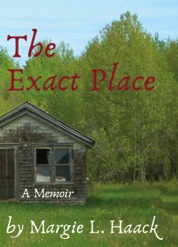
god in sink.jpgTwo years ago our biggest selling book was a lovely,exact place.jpg wonderfully-written, nuanced telling of a tale of girlhood in rural poverty, the memoir The Exact Place (Kalos Press; $13.95 — our sale price, $11.16) by our friend Margie Haack.  It is a great, gentle story, enjoyable and profound, describing how her life was, and how her girlhood story unfolded amidst rural poverty and a less than ideal home life.  We still recommend it often, and hope you know it.

Margie and her husband Denis have been heroes of ours, mostly for just being thoughtful and charming and winsome and honest and for showing such support and care for us.  They are solidly evangelical in the historic faith, but with the rare gift of living it out with beauty and grace and culturally savvy, low-key but caring about things that matter.

For decades they’ve had a ministry which has been at least two-fold: offering hospitality in a big old house in Minnesota (although they had a pad in the 1970s in urban Albuquerque which attracted all kinds of disaffected youth, young adults asking big questions about life and faith, etcetera and etcetera) and speaking, writing, and publishing resources to help Christian folks be more open to what their good friend Steve Garber calls “common grace for the common good.” 

Which is to say, they have a ministry of hospitality and they review movies and rock albums, TV shows and documentaries, and the occasional social or political trend, with incisive commentary, Biblical reflections, good journalism and very helpful discussion questions.  They long to see ordinary church folks and evangelical fellowships and campus ministries and faith leaders learn to appreciate the popular arts and learn to be discerning about the worldviews and visions, the good and the bad, coming to us from cultural creatives.  From small groups Bible studies to discussion salons to Sunday school classes, many people use their web pages and their publications.

I am not the only one to have suggested that their Ransom Fellowship (which publishes Critique journal) and their home that they nicely named Toad Hall are perhaps something like a North American version of the Swiss L’Abri (except for the real North American L’Abri’s, of course, here and here.)

I suppose there are plenty of reasons this isn’t exactly so, but I sometimes describe them as a postmodern or 21st century Edith and Francis Schaeffer. (And now that we have Edith Schaeffer’s 1977 book A Way of Seeing back in stock, after being out of print for so many years, we think it is nice to bring them up.)

Anyway, be that as it may, we like them a lot, and they have been doing good work, serving others, thinking well, sharing ideas, doing life with others, and promoting good books and music and food and frienships.

We have long appreciated Critique and some of our best and most favorite mail-order customers are friends who Denis or Margie sent our way.  They seem to understand that our own vision and inclinations and theological orientation here are somewhat akin to their own.  We respect them for holding to orthodox faith and applying it in sometimes unorthodox ways.  We respect them for the deep legacy of abiding in the Word, and living it out in the complexities of the contemporary context.

Yes they are all about the contemporary context —  in their publications and great website, they’ve done insightful album reviews, have encouraged people to watch serious films, they’ve aided and nurtured visual artists and poets and they have mentored hundreds of people to embody genuine, risky faith, with Biblical discernment, while living in something like a Babylonian exile.  If anybody gets the “in but not of”  and “already but not yet” / creation-fall-redemption vision, it is they.  We have learned much from Denis and Margie, about the details of a coherent, gracious Christian orientation and approach to culture, but also about the real-world, day-to-day expression of real caring for real people in their very real home. The house they called Toad Hall.

And that, my friends, is the bare-minimum background I needed to tell to help you understand the absolutely fabulous, truly exceptional, sometimes hilarious, sometimes tragic, always interesting newly released collection of essays and meditations offered in this anthology of Margie’s monthly Notes from Toad Hall.  God in the Sink: Essays From Toad Hall has been long-awaited and eagerly anticipated by so many of her loyal fans.  If you order it from us, you’ll see why.

Critique was a pioneering journal, offering incisive reviews before the likes of Relevant magazine or the Mockingbird website and remains an wonderful resource for anyone wanting to keep up with cultural trends, even hosting conversations on the latest important films or indie rock albums. Denis and Margie have done this together as a labor of love, and over the years many good writers have chimed in and contributed essays and reviews and discussion guides.
margie in light.jpg
But – perhaps like Edith Schaeffer – it has been Margie’s home-making and hospitality, inventing recipes, teaching others to set tables and do dishes, ruminating on God’s presence in the day by day, that has not only made Toad Hall a home and haven for many, but has allowed Ransom Fellowship to become a down-to-Earth, making-it-real, incarnational experience, grounded in a real place of grace. Want to know what beauty and goodness and holiness look like, beyond the good essays in Critique?  Join them at Toad Hall.

Or, since few of us actually have made the trek to their big old Minnesota home, we can listen in, learning about the day-to-day stuff of life, through the pen of Margie Haack. Her Notes From Toad Hall has been a report and an essay, sharing life and ruminating, and it has been one of my favorite publications.

Each month when the mail carrier brings our packet of extra copies of Critique and Notes from Toad Hall — we love sharing them with folks who would appreciate them — both Beth and I dive into Margie’s Notes… first. Critique is important, informative and well done.  Notes from Toad Hall is powerful, moving, funny, and sometimes real as hell.

We are astonished at Ms Haack’s ability to describe her life, the craziness of hosting events, the anxieties of wondering what others might think when they see the mess of her own daily life, the complex emotions when facing hard family stuff (and the complex emotions when, well, not facing hard family stuff: Margie wears her heart on her sleeve, and names what is going on, like it or not through the small and large issues of her days.)  In her Notes from Toad Hall she has offered, month by month, a brave look into their real lives,
and it is both stunning to see a Christian leader with such raw candor, and wonderful to see a vulnerable, funny story develop as she narrates her life and times running a household as interesting as the Haacks.
Notes From Toad Hall began as a family newsletter, the sort of ministry update written by missionaries and those who raise their own salaries from contributors; but, as she says in the first essay compiled in God in the Sink: Essays...

It was our desire to update the friends on our mailing list in a way that was informative but not so dull you would want your time back after you read it. The challenge was how to write truthfully about the place where we all must dwell — in whatever is our ordinary and everyday — without over-emphasizing what our culture, Christians included, defines as success.

This paragraph captures her honest style and the intent of her Notes, and the pieces that became God in the Sink.  Don’t you want to read something that promises to tell you about this kind of stuff?  Talk about a spirituality of the mundane; listen to this:

The rhythm of ordinary life is rarely that exciting or sensational. I wanted to honestly share what it meant to be a faithful follower of Jesus not so much when a hundred people praised my spinach quiche and artisan bread or a lecture on tattoos – that part was easy – it has always been much harder for me to believe God calls us to the very place where the thistles and thorns of the fallen world creep into our vocations and callings every day. It’s a place where there are painful disagreements with your spouse, where a child’s vomit stains the woodwork, and where the espresso machine explodes. Faithfulness is tested and strained through the mundane, often boring, offices of life where the pantry must be kept stocked and mistakes are made when filing your taxes. These things are so ordinary we hardly consider that this is where God mentors us and gives us grace and rest and meaning and life, but these were the bones that grew into a personal essay I included in every letter. This is a collection of some of those essays gathered together with the hope that others would be encouraged, as I have been, to recognize God’s presence in the ordinary.

I am sure that you will enjoy these finely crafted essays, these good pieces about a life livedgod in sink.jpg with ordinariness. I am sure you’ll find your own faith enhanced, your own sense of the presence of God heightened, your own willingness to laugh at yourself liberated.
These reflections are fun and good; they make for nice reading, and they make for solid spiritual nourishment.  You will enjoy them, and you will be appreciative.

I wish I could cite excerpts from each of these essays but this review would be too, too long if I started.  I want to press this into your hands, invite you to press it into the hands of others.  I suppose women who do behind the scenes family stuff may be the primary audience, but I certainly hope you don’t think that it is exclusively for women or homemakers or those involved in this kind of ministry.  This book is certainly for anyone, reflections about finding God in the ordinary, the hidden art of finding the joy of living; a way of seeing, even.
But it is also about how real caring in real life mediates God’s own grace and holiness, exposing our own deep need to some inner work, re-doubling our trust in God’s goodness and promises, saying no to household gods and inner idols, letting go of self-importance and the attendant anxieties when we live for things other than “the audience of One.”

In many of these gracious essays, the writer shares her own heart, inviting us (without sanctimony or cliché) to repentance and sanctification.
jesus - god in the sink bobblehead.jpg
The first essay, by the way, tells of Margie doing dishes with a three-year old granddaughter.  The child wants to wash the bobble head Jesus figurine, perched ironically on her counter.  Her snarky side is on display a bit more vibrantly in other essays, but you get a glimpse of this here:

I wondered how to explain irony to her. How to say it had an obscure, but special meaning to me. I’ve often thought, I should put it away because people must look at it all the time and wonder if I’m a heretic of some kind, worshiping saints or idols or something equally suspicious. This is my explanation. He was a gift from a friend, Jeremy Huggins. Together we appreciate the humor and irony in Christian paraphernalia that is marketed in certain stores. Things like Frisbees that say “Flying high for Jesus.” Or night-lights with the inscription: “Jesus is the light of the world.”
 
So there Jesus sits bobbling on the edge of my sink as a reminder to laugh at ourselves for the absurd ways in which we represent Christian faith to the world, and to try to push against the trivialization of such great a thing as the gospel. I mean no disrespect to a God I love. I think he knows that.
 
When it took too long to think of a simple answer to this dear child, she moved on to the next question.
 
“Can I give God a bath? He wants a bath.” I gently said no. He will get all rusty inside and not bobble anymore, and I quickly moved to pack him in a box, ready for my next kitchen. Yes, my next kitchen. The words were both exhilarating and terrifying.

And, yes, this is a big reveal: the Haack’s have left Toad Hall and their new location has generated a new name, and her beloved newsletters have a new name.

In another essay she shares about the new phase of their life, and their transition to a new place.  It is moving stuff, relevant for many, I’m sure,

So, this is, perhaps, the winter of our lives. Or at least late fall. There is still lots to be done. I’d like to keep going with Notes From Toad Hall. Denis wants to keep writing Critique. I’d like to keep on letting you know how this aging bit goes. Is it possible to serve God well with failing body parts, Social Security and Medicare? We plan to lean into this and listen and learn new ways of being faithful in the midst of our ordinary. We’d like to be signposts of encouragement to others. We are going to avoid the advertisements of our culture that insist “You can do ANYthing you want no matter how OLD you are.” Bah. Denis jokes that we’re not quite ready for assisted care, but with a play on words, says, “perhaps we will name our next home “The Out House,” referring to the last place we will own somewhere out there on the prairie on our way out of life. And, Bonus! he suggests I write “Sheets from the Outhouse.” Maybe.

margie.jpg
This collection of pieces written over a decade or so hangs together and chronicle their life and ministry in Minnesota.  It is not a memoir, so it is not quite a sequel to her beloved The Exact Place biography.  But in a way, it nearly is: these essays emerge from the exact place she has been these years, literally and metaphorically.

There is much honest wisdom here.  For instance, she occasionally writes about her own lack of energy, spiritual dryness and such.  As she pokes at the typical modern middle-class habit of shopping as an antidote to depression, she writes,

What I’m experienci
ng is spiritual dryness, and my first instinct is to do exactly what Tim Keller describes in a sermon on Psalm 42. He says that when something goes wrong for American Christians, they look for someone or some thing to pin it on. We tend to be very moralistic and think that surely, spiritual dryness is the result of un-confessed sin in our life. We haven’t pushed the right button, we’ve neglected our Christian “to-do list.” What we need to grasp, he says, is that dryness is going to happen no matter where, who, or how old you are as a Christian. It isn’t necessarily because you’ve done something wrong, or haven’t had faith, or neglected to read through the Bible in a year. It’s because you’re human and we live in a fractured, fallen world.
 
Keller examines Psalm 42 which examines the nature of our disorder. The Psalmist asks “Why are you downcast, O my soul? Why are you so disturbed?” The question is not rhetorical; it isn’t at all cynical, or sarcastic. It is actually asking us for self-examination. So the Psalmist searches for hopes.

Her insights about her own life, and how God in mercy deals with us, are always good, and usually refreshing in their honesty.  In an essay entitled “Calm Down” she is reflecting on her own strengths as one who is good at intuition.  And yet, she gets herself involved in a battle with Sudoku.  Can you see it?

After supper on Wednesday I began my third Sudoku with a jaunty confidence. Two and a half hours later Denis begged me to please come to bed. I did, but I took it with me and worked on it for another hour without adding a single number. Only then did I notice five stars at the bottom of the puzzle with three of them shaded. A crack of light entered my darkened mind: Oh. This indicates difficulty factor. The one in my hand was a 3-star. The previous night’s (with solution) was printed at the bottom; it had only been a 2-star. With logic gaining momentum despite intuition, it occurred to me that as the week goes by the puzzles increase in difficulty sort of like the NYT Crosswords so that by the time you get to the weekend they’re so punishing you want to pay your own way to New York, find the editor, and force him to eat iceberg lettuce and Velveeta cheese until he can give you an eight-letter-word for “rugged outdoor clothing.” Carhartts! Idiot! As anyone north of Minneapolis would know. And I don’t want to hear, my friend, how you can do it in 10 minutes while blogging, writing a movie review, and flirting with the barista. By then I was crushed, in addition to feeling slightly crazy. But I rallied and told myself, “You’ve always despised logic, so why in the name of all your precious hormones don’t you just intuit the solution? A few numbers should not defeat you.”
 
Have you ever considered, even for one second, praying that God would help you finish a puzzle? Well. Okay. Maybe you haven’t. But what about scoring a three-pointer from mid-court, or beating a red light? Or shooting a trophy buck? You know it’s the same thing.
 
At 11:30 p.m. Denis raised an eyebrow at me and turned out the light on his side. I held the paper out for us to observe — it was covered with hundreds and hundreds of teeny, tiny numbers written in patterns, grids, and graphs. Suddenly, it was so scary because there it was: A Beautiful Mind! Remember that scene from the movie when the door of John Forbes Nash’s office opens and on every wall, floor to ceiling, are little papers with hand-written numbers, formulas and codes, and you suddenly understood how ill he is, even though he is a genius? This was my mind on paper and it was not well. I shrieked, threw the paper and pen across the room, and turned off the light.

 
She moves from there to some painful needs in her life and in her family. They’ve got financial concerns, health concerns, a leaky roof, ruined books. She feels convicted by the lack of joy in her life.  She takes up some Psalms as she often does, and then recalls Sufjan Stevens’ version of Come Thou Fount.  “He completely redeems, what for me was an – I’m sorry – annoying old hymn.” With banjo and simple vocals, so quiet, so profound, he sings Come Thou Fount.”
 
“I didn’t mean to cry,” she writes, “to be taken by joy with a hymn I knew so well and formerly resented from my childhood. Every verse came back unbidden.”
 
And so it goes in God in the Sink, Essays… From retelling scenes from Julie & Julia to citations from the Book of Common Prayer to honest reporting of arguments with her beloved husband, and plenty about her adult children and her grandchildren, she crafts honest, interesting ruminations.  There is sadness and snark and joy. There are remedies for poison ivy, a recipe or two, and a bit about Stephen Hawking, written in the summer of 2005, right after a beautiful chapter on “Cool Cotton Sheets.” These are great pieces, on all kinds of things, and I loved reading them all.
 
There are books described, song lyrics, natural history and nature writing, and lots of Bible and some stuff about their own sense of calling, their community, their travels.  It is a collection of reflections that work on many levels, writings that should appeal to anyone who enjoys the art of the essay.  And it is a glimpse into the life and times of Margie Haack, formerly of a house called Toad Hall.  God in the Sink: Essays From Toad Hall is a testament of her life in those years, and we all should be very, very grateful that such places exist, and that such books tell the tale.  Thanks be to God.

For what it is worth, we can send these right out, and we do complimentary gift wrapping, too.  We have these at a BookNotes special price, and think they would make a lovely holiday gift.

god in sink.jpg

BookNotes

SPECIAL
DISCOUNT
GOD IN THE SINK: ESSAYS FROM TOAD HALL
by
Margie L. Haack


20% off
our sale price $11.56
order here

takes you to the secure Hearts & Minds order form page
just tell us what you want

inquire here
if you have questions or need more information
just ask us what you want to know

                      
               Hearts & Minds 234 East Main Street  Dallastown, PA  17313     717-246-3333


Fifteen Great Gift Books — Fabulous, Fantastic, Fun, For-Sure. 20% OFF (while supplies last.)

Here are some great gift ideas, some not the sort of thing we typically review, nor titles that we havegold gift wrap.jpg tons of.  If you want ’em, order quickly.  These are awesome, for sure.


We show the regular retail price, but we’ll deduct 20% OFF those prices, at least as long as we have these in stock. We can gift wrap for free, too, if you’d like — just add a note to the bottom of our order form page.  Easy.


Our order form page is certified secure, by the way, so you are safe entering credit card digits.  If you’d rather, we can just send you an invoice, and you can pay later by check, as we explain at the order form page.


Just see below for the links to get to our order form page, or give us a phone call, if you’d like. During the holidays we are here 10 – 8 Monday through Friday, and 10 – 6 on Saturday.


We’re closed on Sunday, of course, but every other day, we reply to inquiries, orders, or  emails pretty promptly.  If you don’t hear back from us within a few hours or so, you might want to give us a ring, or email me at read@heartsandmindsbooks.com  We want to make your shopping with us enjoyable and confident, even if we’re a little clunky and old fashioned.


As old fashioned as anyone who believes books still make really great Christmas presents! 

history of the book.jpgThe History of the Book in 100 Books: The Complete Story, for Egypt to e-book  Roderick Cave & Sara Ayad (Firefly) $35.00  This is a weighty, well-made book, with sturdy binding and glossy paper, over 360 pages, slightly over-sized.  It should be well made, too, because — as you can tell from the title — it literally is a book about books. You may know the “100 items” craze (we have one on the Civil War, a new one on WWI) where 100 items are explored as significant examples of key markers, transitions, or signifiers of important points in history.  Here you have museum-quality photographs of key books, both in how they developed from cave paintings, Egyptian cuneiform tablets, Burmese palm leaves, up to parchment scrolls to actual books.  Here you will see and learn much about, obviously, the Book of Kells, Gutenberg, the controversies about Bible translations, the rise of all manner of printing and publication through the modern era and into the digitization age.  This is a great, great overview of the rise of the book, but it is also a fascinating collection of dozens of book reviews.  Do you know the first modern study of anatomy? Much about Johnson’s Dictionary? A “literary oddity that entranced Europe? Tristam Shandy! One of the very first children’s books published (does the name Newbery ring a bell?) Do you know who the first celebrity chef was? Or much about the publishing history of Diary of a Young Girl?


And what is the future of the book, from manga to e-books to the question “what is a book?”  The History of the Book looks at all this and more. It is a treasure trove and joy to behold, a fabulously detailed book for any book lover and would make a truly awesome gift.  

one hundred portraits moser.jpgOne Hundred Portraits: Engraved by Barry Moser  Barry Moser, with a Foreword by Ann Patchett (David Godine) $35.00  Godine remains one of the most reliably prestigious book publishers around, and this gift book, slightly oversized, brings together the exceptionally artful engravings of one who has been called “probably the most important book illustrator working in America today.” (And, hooray, I recall that Ned Bustard’s Square Halo Books has a paperback collection of essays by Gregory Wolfe, Intruding Upon the Timeless, that is nicely illustrated with Moser’s work.) In this magnificent new book you see Moser’s portrayal of writers, poets, theologians, scholars, leaders (and a number of people I’ve never heard of.) You’ll be thrilled to see full page (or sometimes half page) portraits of important figures such as Milton, Dickens, Twain, Auden, Frederick Douglas, Flannery O’Connor, Eudora Welty, T.S. Eliott, Herman Melville, Alexander Pope, Martin Luther King, and a must-see, wild woodcut of Chaucer — and so many more. In his own afterward he writes about his philosophy of portraiture, a bit about why he selected the visages he did, and grouped them a bit for our own background information. And how many books get an introduction by novelist, book-lover, and book seller, Ann Patchett? Very, very nice, lovely, striking, artful.


terrapin.jpgTerrapin And Other Poems Wendell Berry, illustrated by Tom Pohrt (Counterpoint) $25.00 Tom Pohrt spent years gathering those poems of Wendell Berry that he imagined children might enjoy and appreciate.  These are not written as children’s books, and aren’t new, but they are pleasantly set, one on a page with a large type font, making it look a bit like a very classy kid’s picture book.  As it says on the dust jacket flap, “Over the past several years a dialogue has evolved in which the poet has come to advise the illustrator on the natural history of the animals and plants seen so intimately in the poems.  Then came the august book designer David Bullen, who has been designing the books of Berry for more than thirty years.”

The resulting volume of twenty-one poems includes dozens of watercolors in what amounts to a visual meditation on poems they work to illustrate.  Again, the publishers believe this is “a consummate example of the3 collaborative effort that is fine bookmaking, the perfect gift for children, grandchildren, or any love of the book as a physical object.”  And, of course, for any lover of good poetry, and any fan of the esteemed Kentucky farmer, naturalist, and storyteller. 

written in wood.jpgWritten in Wood: Three Wordless Graphic Narrative  George A. Walker, with an introduction by Tom Smart (Firefly) $29.95  This is an amazing undertaking, and we stock it as an example of what graphic novels can do, how visual art can itself form a story, and how woodcut art is so very, very powerful.  Each of these is moving, and I think if you know anyone who enjoys graphic novels, these wordless ones will really captivate them.


George Walker is a renowned woodcut artists and this contains his telling of three wordless stories.  The Mysterious Death of Tom Thomson explores the death of the iconic Canadian artists who went missing in the summer of 1917. Book of Hours tells the mundane yet meaningful way in which the people int he World Trade Center spent their last hours before the tragic events of the attack on 9/11.  Conrad Black relates a story of a famous and notorious media baron.  All three of these stories are themselves worth “reading” (viewing?) repeatedly, and the artwork shows how versatile the medium is, and how talented Mr Walker truly is.  Cool, huh?

Art & Prayer by Verdon.jpgArt & Prayer: The Beauty of Turning to God Timothy Verdon (Mount Tabor Books/Paraclete Press) $32.50  First, I want to say kudos to Paraclete Press for bringing such wonderful books to the marketplace, and for making them with nearly monastic care, beauty, quality.  Their rich ecumenical context and their own monastic lifestyle makes them one of the most interesting publishers these days, and one of our favorites.  I can hardly think of a book they’ve published in the last decade that we haven’t stocked.

This one is magisterial, and we are glad they offer it here at such a reasonable price.  It is a heavy, well bound book, made with glossy paper, and vibrant, classical artwork. Monsignor Verdon explores the essential interactions between prayer and the imagination, and although this book seems to be a book of art history — and it is; we stock it in our art section — it is mostly a profound rumination on the nature of prayer. The first chapter is entitled “Prayer, life, art” and it then has mature chapters on spaces of prayer, liturgical prayer, the prayer of pleading, lectio divina, contemplative prayer, and a moving chapter on “the hour of death.” This is all lavishly illustrated, and the artwork is not only illustration, but a springboard for deeper reflection and application.   Notice the subtitle: the beauty of turning to God.

Father Verdon is one of the world’s most respected art historians, is Academic Director of the Mount Tabor Centre in Barga Italy.  He earned his PhD at Yale, although for most of the last 50 years he has lived in Florence where he directed the Diocesan Office of Sacred Art and Church Cultural Heritage and the Cathedral Foundation Museum there. 


sacred pause hackenberg.jpgSacred Pause: A Creative Retreat for the Word-weary Christian Rachel G. Hackenberg (Paraclete) $21.00  Leave it to Paraclete to once again give us a splendid, rich, wonderfully made small book of prayerful meditation, illustrated with good graphic design and full color photography and artwork.  Hackenberg is a UCC pastor and the writer of the popular Writing to God, so you can expect a vivid, colorful, aesthetic experience.  Here, she invites us to “reconsider and re-engage” with the words we typically use to describe our faith.  As Bruce Epperly notes, “This book will awaken you to a sensational faith, encompassing all your senses and enabling you to experience the holiness of God in the quotidian adventures of life.” Yes, this is inviting us to leave behind stagnant faith and tired expressions, but it is light-hearted and joyful, too. From grammar lessons to poetry, stuff on letters and helpfully playful definitions, this is upbeat, making you glad to be reading and pondering and doing such good stuff.  She draws on Microstyle by Chris Johnson, Finally Comes the Poet by Walt Brueggemann, and so many more artists, poets, scholars, pray-ers.  Handsome, unusual, nice.


Consider the Birds- A Provocative Guide to Birds of the Bible.jpgConsider the Birds: A Provocative Guide to Birds of the Bible Debbie Blue (Abingdon) $16.99  This has been out a year or two, and we’ve carried it to various events, pressed it in to the hands of anybody that (a) likes birds, (b) likes Bible ruminations, (c) likes good sermons, creative, interesting, compelling, and (d) if they just love really good writing, a great, surprising book to enjoy.  Blue is a great wordsmith, a really honest pastor, a preacher at the edgy House of Mercy, an emergent church in Minnesota. Lauren Winner said it was “the best book I’ve read all year” which speaks volumes. It has fancy french folds, giving the paperback a very handsome feel, it has woodcuts throughout, making it a tremendously nice book, a great gift. You should buy two, one for you to keep, and one to give away.  And be sure to tell whoever you give it to where they got it, since, they, too, will then want to order more to give away.  It’s that nice.


glory of the tree.jpgThe Glory of the Tree Noel Kingsbury, photography by Andrea Jones (Firefly) $39.95  I have long been taken with trees, and love good photography of these glorious creatures. Some books art a bit too artful, some a bit too tedious, some more poetry than science, others just wooden lists.  (Sorry.) This one gets it right —  beautifully written, nicely designed, arranged showing ninety-one of the world’s greatest tree species; it describes their botany and origin, and of course, for each picture it explains the location, size, characteristics, and the potential age (which itself is great fun and mind-boggling!)  I love this large book, glad for the vibrant color and the great photography. 


Dr. Noel Kingsbury, a Welshman, is recognized internationally as a leading innovator in horticulture and has written widely on landscape and plant ecology; Jones is one of the world’s foremost garden photographers.  Her work has appeared in all the obvious popular nature magazines as well as scholarly journals.  She lives in Scotland.


human age ackerman.jpgThe Human Age: The World Shaped by Us Diana Ackerman (Norton) $27.95 This is by, quite frankly, one of the most important living nonfiction writers, a gracious and vital author, one that has achieved the sort of acclaim that only comes to the finest thinkers and wordsmiths. Her work here has blurbs on the back from luminaries such as Siddhartha Hukherjee (who won the Pulitzer for The Emperor of All Maladies), the notableTerry Tempest Williams, the Pulitzer-Prize winner Jonathan Weiner (who says she writes with “brilliance, zest, and high style. We need to hear this voice of affirmation. It is important. It matters.”) Another Pulitzer finalist says “with this stirringly vivid, darkbright manifesto, Ackerman summons us to the wager of sheer possibility: life against death, delight still (if only barely) trouncing despair.”  You may have heard of her luminous book A Natural History of the Senses or her lovely The Moon by Whalelight and that she was highly rewarded a few years ago for the book that has been compared to “Schindler’s List”, about the Warsaw Zoo’s saving people from the Nazis, The Zookeeper’s Wife. 


readers-bible-blog.jpgESV Readers Bible  (Crossway)  hardback, with slipcase:  $29.99;  brown/walnut Portfolio design ingenesis page from Readers Bible ESV.jpg TruTone faux leather: $44.99;  black TrueTone faux leather: $44.99  We have so many BIbles, and so many are made with striking, nice covers, attractive fonts, and many have useful notes, helpful, insightful commentary, making Bible buying these days an art in itself. We could name many, but this new edition is worth crowing about.

This truly is a “readers” version — it offers a single column page (just like any other book, without two columns or notes or distracting cross references) and has the poetic sections off set in verse form, but, most importantly, it has no verse numbers!  It really does look great on the page, like an ordinary book, allowing for an ease and coherence of reading that is perhaps unsurpassed. There are chapter numbers (printed in a beautiful red ink in a nice font) giving at least some customary guidance; the lack of verse numbers, though, makes for an extraordinary experience. This is a great translation, too (based on the old RSV, actually) and is increasingly popular, especially in Reformed churches. It has been made very accurate, nicely readable, and just reverent/classy enough.  This edition of the ESV, though, stands out.  It comes in three cover designs, a hardback, or two kinds of TrueTone imitation leather. Kudos to Crossway for producing yet another very well made Bible, and for the extra effort put into this fine project and the resulting truly exquisite Bible design.

title pending.jpgTitle Pending: Things I Think About When I Make Stuff Justin McRoberts (Justin McRoberts) $8.99  Funny, I thought “title pending” was literal, just what Justin was calling this project as he was working on it. Little did I know it was really the name of the book. Ha.  McRoberts is fun, funny, and also really serious, as a follower of Christ, as a husband, father, pastor, friend, and as an agent of the reign and commonwealth of God; he is dedicated to being a good singer-songwriter, videographer and all around cultural creative. He’s an artist and he don’t look back, if you get my drift.

You may know how we’ve pushed his wonderful, wonderful CMYK, a book of stories, letters, graphic art, pictures of installation art, song lyrics (and a CD to go with it all.) We still love selling that book, and enjoy explaining it to folks — the cool design, the artwork commissioned for it, and the song lyrics and letters that form the core of the book, as each letter and essay offers backstory and context for the song. Justin McRoberts, as you might tell, is a very creative guy.  His vision of faith is robust and broad — and his musical tastes and aesthetic influences are mature and diverse, too: here he quotes artists and thinkers from Dylan and Rage Again the Machine, to Van Gogh and author Scott Belskey and his helpful book Making Ideas Happen.  This brand new little book tells you how he does it.

Yes, this is a wonderful guidebook for anyone wanting to be a bit more creative in their lives, who wants permission and courage to think deeply, blow some fuses, make stuff happen.  It is, most obviously, a commentary on the creative process, offering examples of how an artist and activist like McBob does his creative best.  His master class about reading David Sedaris and ripping off Tom Petty is, well, it is pretty great. I’m not a musician or very creative at all, but I really liked it, I guess. As a bit of a writer, I guess it’s what I, do, too: steal shamelessly. 

But, like other such books (think, maybe of Lewis Hyde’s The Gift or The War of Art  by Steven Pressfield or Ed Catmul’s Creativity Inc) Title Pending is not just a handbook for artists and singer-songwriters, and it is more than a rumination on the creative process.  It is a brief guide to living deeply, daring to do what we should, giving it a good shot, being faithful in little things, and maybe some bigger, cool stuff, too. He uses a mountain climbing and hiking metaphor throughout the book (and has a section on cliches, too — ha) and these insights, although directed to artists or those wanting to be more creative, are useful and applicable for anybody wanting to life a more abundant, purposeful, joy-filled, honest life.  I’m not just saying this because I’m a fan, because Justin shows up at places I respect (Calvin College Festival of Faith and Music, Jubilee, Q and the like) or because he is a fine friend. I say it because it is exactly so: this little book is a must-read for creative types and artists, and it is also really nice for anyone who wants their very life to be a work in progress, perhaps as St. Paul put implied, a living canvas.


small victories.jpgSmall Victories: Spotting Improbable Moments of Grace  Anne Lamott (Riverhead) $22.95  This is a wonderful collection of this fine writer’s best pieces on grief, coping with harder times, finding (spicy) grace amidst the brokenness of our screwy lives and oh-so-hurting hurting world.  Most essays are gathered from other other collections, although one or two had only appeared in magazines, and there is maybe one new one.  We so enjoyed hearing Anne at the Calvin Festival of Faith and Writing last spring, and had even asked to host here at the shop, thinking she might appear at a small indie bookstore. (Improbable, we knew.)  She’s been out promoting this book a bit, and it deserves acclaim. It reveals her big spirit, her kind heart, her eccentric faith and her deep awareness of God and mercy and hope, and the joy of baby steps on the right road towards recovery.  The jacket is especially handsome, the heft of the book is considerable (even though a handy size, like her other recent ones) and even the ink is colored on very nice creamy paper.  This is clearly created to be a keepsake or gift book, and it is a nearly perfect design. 


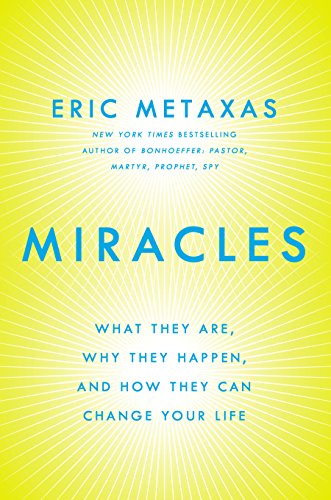
Miracles.jpgMiracles: What They Are, Why They Happen, And How They Can Change Your Life Eric Metaxas (Dutton) $27.95  I have been waiting for this amazing book, published by this old, prestigious publisher, to fly off our shelves, and although we’ve promoted it at BookNotes already, I wanted to remind you of it again, now. This is a hefty, handsome hardback, a solid, thoughtful gift. You know Mr. Metaxas is a zesty writer, a serious, deft, thinker, a great communicator. He graduated from Yale with honors and he worked for VeggieTales for a while (honing his wit and good humor there, no doubt.) He came to fame by writing a biography of William Wilberforce (which became the wonderful film, Amazing Grace, which has helped catapult the new abolitionist movement against trafficking and modern day slavery.) He hit his stride with the big bio, Bonhoeffer, which is doubtlessly the most popular and widely read (and widely discussed) book on the German theologian and martyr, ever.  Metaxas has edited a great collection of essays (Life, God, and Other Small Topics…), an anthology of shorter biographies (Seven Men) and some clever books on apologetics for skeptics and seekers. He’s even written some lovely children’s books. He is way talented, energetic, productive, and we should be glad somebody with this calibre of smarts and this level of energy is on the side of the angles.

To wit: he has been studying the claims of miracles for a while, and, like C.S. Lewis before him (you know Miracles, by the Oxford don) he wonders if, at the most basic philosophical level, things that don’t match up with ordinary scientifically proven processes really do happen.  And if so, what in the world do we call them? What is the natural? The super-natural? And how do we give an account of the weirdo stuff that happens out there?  Even if we tend to be suspicious of many of the claims of the miraculous, it is hard to deny that, as a famous playwright once had a curious King say, “There are more things in heaven and earth, Horatio, Than are dreamt of in your philosophy.”

Just check out some of these rave reviews of Miracles: 

“Metaxas provides a compass for our intellect and inspires our journeys with profound miracle stories — with his attuned humor shining throughout.”   Makoto Fujimoro, artist and cultural leader                                                             

“In his inimitably entertaining way, Eric Metaxas shows us that it is okay to believe in a world in which God still speaks and shows up in the cosmos and the lives of people just like you.  By opening this book, you’ll embark upon a divine conspiracy.”   Gregory Thornbury, President, The King’s College

“Metaxas’s Miracles mixes storytelling with logic and inspiring beauty with profound mystery. It’s an intoxicating combination.”    Patricia Heaton, Emmy-Awarding Winning actress

“If you are a skeptic, read this book with an open mind and you might just discover that miracles are real. If you’re already a believer, be ready to be inspired.”    Kristen Powers, The Daily Beast


“As a secular reader, I come to such books with a certain resistance. Metaxas won me over instantly by meeting me where I live. His intellectual honesty, coupled with an openhearted wonder at the sheer breadth of human experience, is irresistible.”    Christopher Noel, author, Impossible Visits


when holidays hurt.jpgWhen Holidays Hurt: Finding Hidden Hope Amid Pain and Loss  Bo Stern (Nelson) $12.99  Every year we feature a book or two or three about this topic, and many respond by buying multiple copies; there is a real need for books likes this, and as we move through the longing and anticipating of Advent, it is a good time for all of us to be aware of the deepest “hopes and fears of all the years.” But sometimes, rather then experiencing quiet Advent longing and anticipation of redeeming hope that gives us room to mourn and space to be honest and raw, we end up with false faces, too much cheer, movies about romance, mistletoe, joy, joy, joy, joy.  How in the world are we to cope with this cheeriness when our hearts are heavy from grief or loss? What resources are there for those who hurt?  This book is arranged as a devotional, so the reader can reflect a little bit each day — not a bad idea! — but it also unfolds as the author tells her story of her husband being diagnosed with ALS, the pain of his impending death, and the struggle to connect the joy of the season with the suffering within their own family.  You should be aware of this small, handsome hardback, and perhaps consider sharing it with somebody you know who needs some hope about coping the next few weeks.

my true love gave to me.jpgMy True Love Gave to Me: Twelve Days of Christmas Illustrated by Scot McKowen (Firefly) $19.95 Perhaps you just need a little stocking stuffer, a handsome book without too much serious content, a nice gift, nicely made. Or something to kick off a new tradition of keeping Christmas alive for twelve more days, towards Epiphany!  This is our favorite book with the odd lyrics, lyrics that are in fact full or religious symbolism. This is one of those nice clothbound books, rich, without a dust jacket, and great illustrations, more for adults than kids. Certainly you have a true love, no? This is really sweet.

Here is one of the spreads, showing the type on one page, and the artwork on the facing page. Nice, eh?

seven swans a-swimming pages.jpg 

BookNotes

SPECIAL
DISCOUNT
ANY ITEM MENTIONED

20% off
order here
takes you to the secure Hearts & Minds order form page
just tell us what you want

inquire here
if you have questions or need more information
just ask us what you want to know

                                     Hearts & Minds 234 East Main Street  Dallastown, PA  17313     717-246-3333

Re-run, Encore: Reviews of The Cosmopolitan Canopy, Just Mercy, Forgive Us, Some of My Best Friends Are Black, Bloodlines, Living in Color and more… HEARTS & MINDS recommends BOOKS ON RACE – ON SALE 20% OFF

In BookNotes a few days ago I shared with you about our work serving an Episcopalian clergy retreat;martin-luther-king-pic.jpgfor those that enjoy knowing about our work, and to give a thank-you shout-out to those who hosted us, we talked a bit about books we highlighted there, and some of what sold.


And then I told you about their speaker, urban sociologist and “people watcher” Dr. Elijah Anderson, and his useful book on building safe spaces for true multi-ethnic conversation, exploring how some cities are able to develop “cosmopolitan canopies” and how people of color navigate these different sorts of cultural spaces. The book is called The Cosmopolitan Canopy: Race and Civility in Everyday Life (Norton; $17.95 — sale price, $14.35) and we told you about it.


Then I highlighted what I have been saying is one of the most important, and truly thrilling books I’ve ever read, Just Mercy: A Story of Justice and Redemption (Spiegel & Grau; $28.00 — sale price $22.40) by Eastern University alum and Harvard Law School grad, Bryan Stevenson. What a book!


I rarely do this, but wanted to re-post those two reviews, since some people may not have seen them.  The books are so good, and so timely, I just had to share them again.


I’ve taken the liberty of collating a few other reviews that I’ve done on books about race and sharing links of other lists I’ve made on this topic in the last year or so.  


I hope you have some of these kinds of resources in your personal library, for your own reflection, for sharing with others, for using as tools in your church or fellowship as you continue to have important, hard conversations about these vital matters.  These are “things that matter” and we are grateful for the opportunity to serve you as you read and learn and share.


cosmo canopy.jpgThe Cosmopolitan Canopy: Race and Civility in Everyday Life  Elijah Anderson (Norton)  $17.95 — our sale price, $14.35


…our speaker, Dr. Elijah Anderson, was gracious and kindly. His grandmother was a mid-wife (and knowingly named him after a Biblical prophet) and his parents worked on a plantation in the south, picking cotton in the years of Jim Crow and lynching and horrors big and small, until they moved North in the great migration.  Dr. Anderson himself came of age as cities were burning after the killing of Martin King, and his own interest in people watching and trying to figure out how and why things were happening in the “iconic ghetto” grew into a life calling in urban sociology.  His early books include the scholarly ethnographies, A Place on the Corner, Street Wise, and the remarkable study of inner city Philadelphians, The Code of the Street. His work is considered classic ethnography — serious sociology which is also, in the words of People magazine, “a people watcher’s delight.”

I have been reading his latest book The Cosmopolitan Canopy: Race and Civility in Everyday Life and have been blown away by how very interesting, and useful it is. I so hope people come to study it — it offers really enlightening and even necessary information in these days of complicated conversations about racism, white privilege, police brutalities, and what is or isn’t plausible about racial aggressions in modern North America.  I’ve read a lot of books about how races interact, what minority folks do or don’t tend to do, or say, in “white spaces” and the like.  Maybe you have, too.  But there is data in here that is very important, really enlightening, and interesting to read.  

Many pages could be shared just reproducing the many, many rave reviews this important book has accrued, such as Ellis Cose (who wrote The End of Anger: A New Generations’s Take on Race and Rage) who called it, simply, “An amazing achievement.”

Or, William Julius Wilson, the eminent urban sociologist from Harvard, who said it is “Vintage Elijah Anderson – original, creative, engaging, and thought provoking… a must-read.”

It isn’t every book about racial disunity and the glimmers of hope found in truly cosmopolitan settings that earns rave blurbs from authors as diverse as Cornel West and George Wills.  Have West and Wills ever agreed on anything else?  They both commend this book.

It may even be true, what Randall Collins, president of the American Sociological Association, says: “The Cosmopolitan Canopy is the most important book on race relations in many years.”

Two things you should know about this book.

Firstly, it isn’t a rant against racism – not at all like, say, the new Cornel West title which is called Black Prophetic Fire a book of interviews with Christa Buschendorf and up-to-date criticism of the current status quo in race relations and public theology. Agree with him or not, Brother West is always worth reading, and we commend it to you.

The Cosmopolitan Canopy, however, is nuanced, and at times quite delightful.  One reviewer said that Anderson may be the nation’s leading “people watcher” – and who doesn’t enjoy that?  He is, here, attempting to offer a major reinterpretation of the racial dynamics in America, by introducing terms such as the “cosmopolitan canopy” by which he means islands of civility and cultural convergences existing amid the ghettos, suburbs and ethnic enclaves in which segregation is the norm.  Of course, he identifies “the racial fault lines that on occasion rend the ‘canopy’ and describes the ways in which it recovers.”   His stories of racial injury, discrimination, harm, are painful – in part because they are so commonplace and believable.  (As the Springsteen song [I had mentioned American Skin: 41 Shots in the earlier version of this review] puts it, “It ain’t no secret…”) Yet, white folks too often haven’t talked with their black friends enough about this, or haven’t immersed themselves in the literature.   So reading this sociological account could be very, very useful.

Dr. Anderson – even though he has accumulated his own experiences of demeaning discrimination over his lifetime – seems relaxed, here.  He is a congenial people-watcher and he is telling the stories and making connections;  The Cosmopolitan Canopy  is popular sociology and not terribly polemical.  He loves the city, and he loves trying to understand the social boundaries, constructs, institutions, and social locations that help create a flourishing public space. As a skilled ethnographer, he is exceptionally perceptive.  And he relishes his task as storyteller and interpreter.


Here’s the second thing you should know: not only does Anderson enjoy cities and telling the stories of their inhabitants and their patterns of behavior, he particularly loves Philadelphia. The Cosmopolitan Canopy is a study of race relations in the city of Brotherly love, and a tribute to the unique public spaces in that city of neighborhoods.  Even if, like me, you do not know Philly all that well, you will love these chapters on different places in the metropolitan area that seem to invite greater civility and racial harmony.  Not unlike, say, James Howard Kunstler who (in The Geography of Nowhere or Home from Nowhere) tells of very specific suburban messes, bad city planning and ugly American architecture, you don’t have to really know or care much about the particular place he is describing: you get the picture. But Cosmo Canopy is set in Philadelphia.

Doc Anderson takes readers through a walking tour of Center City, and that first chapter is sheer delight, learning how urban spaces do or don’t facilitate multi-ethnic diversity and civility.  But then the real fun begins, as he then moves to the Reading Terminal (a true “cosmopolitan canopy” he says.) The Gallery Mall is a “ghetto downtown” and his look at Rittenhouse Square offers a study of the practice of civility.

You see, Anderson is not just lamenting the ghettos and the “white spaces” that dominate much American life, he is pointing towards what works, how to create more democratic and safe spaces that are civil and full of what he calls comity.

Anderson’s survey of those he calls “ethnos” and “cosmos” is very, very illuminating. That is, there are those who chose to see themselves largely as part of a particularized racial enclave (this can be whites, blacks, or others, of course) and whose worldview is formed mostly by surrounding themselves mostly by people who are just like them.  And there are those who have a more cosmopolitan vision, who are truly multi-racial in their orientation, comfortable with diversity.  Of course there are those who have to switch sensibilities – urban blacks who live in black neighborhoods, are formed in black churches, and attend mostly black schools but who go to work in mostly white career tracks or white institutions.  Some resent and find this very difficult while others seem to relish this.

Don’t you just wonder about all of this?

Anderson explains for us the emotional toil and drama of being “black middle class in public” and this part was especially interesting for me.  If most BookNotes readers are white, but who have black friends, it may be surprising to you how your black friends may relate in the predominantly white spaces, and how they may act in their own homes and neighborhoods.  All of this was very stimulating, if hard, at times – I thought I knew a lot about this stuff, and I feel, now, as if I’ve got so much more to learn!

Even as Anderson documents features of a healthy civic society, and these places that are “cosmopolitan canopies” — thanks, Philadelphia! — he follows with a powerful chapter called “The Color Line and the Canopy.” (You may know that “the color line” phrase comes from W.E.B. Du Bois.) There is stuff about “provisional status” that you must read, and an excellent bit about how many black employees experience the mostly-white workplace. The Cosmopolitan Canopy ends with some powerful stories that invite all readers to ask if they are committed to civility and willing to resist those who are racist or rude or uncivil. 

He writes,

Under the cosmopolitan canopy, city dwellers learn new ways of interacting with people they do not know who are visibly different from their own group. They become more comfortable with diversity and discover new ways that people comfortable with diversity and discover new ways that people express themselves in public. These experiences may lead people to question and modify their negative presuppositions about others. Even if they do not want to know those others intimately they practice getting along with everyone. The canopy offers a taste of how inclusive and civil social relationships could become. That people find such pleasure in diversity is a positive sign of the possibilities of urban life in the twenty-first century.


JM.jpgJust Mercy: A Story of Justice and Redemption Bryan Stevenson (Spiegel & Grau) $28.00 — our sale price $22.40

In recent days I have had some difficult conversations with friends who do not seem to trust the concerns and perceptions of the uprising against the apparent sense of abuse felt by many people of color, especially when thinking about criminal justice, the police, and so forth. I do not know how you’ve talked about Ferguson or the NYPD/Garner case, and if you are seeking a moderate, fair-minded, just approach – which is to say, not knee-jerk reactionary one way or the other, but seeking evidence, prudence, justice.  But if you have had these conversations, I am sure you have met people (maybe you yourself are one of them) who are suspicious of the claims that race is, without a doubt, a factor in many of the situations of police violence and what seem to be unjust verdicts and mishandling of evidence by the courts.

I myself have often said — despite my passion for racial reconciliation and public justice — that it is unwise to jump too quickly to accusations about motivations, especially when we don’t know all the facts of any given incident.  Although we dare not be naive about the prevalence of racial animus in our land, and must continue to struggle with the legacy of racial injury upon which this nation was built, it is nonetheless wrong to declare that racism is involved if we do not know that.  Fair enough?

But we do need to know about the patterns of institutional racism, the ways in which things tend to go wrong, even in our good land.  To be ill-informed about how (for instance) our courts and criminal justice systems has been tainted by racism is irresponsible, in my view (especially if one is sharing opinions about it.) We simply must know the facts on the ground.

And so, I beg you to purchase (as soon as you can!) and read this amazingly moving book, a book I’ve been saying is one of the most important books I have read in my entire life, the stunningly outrageous, very interesting, page-turning, and finally inspiring work by Bryan Stevenson, Just Mercy: A Story of Justice and Redemption. I will say a bit more about this when we announce our “Best Books of 2014” at the end of the year, as this will be named. 

Here is a video of a 20-minute talk we heard Bryan give at the Q gathering in Washington DC a few years ago, an event at which I spoke, and Beth and I sold books.)

Here is a review of Just Mercy that I had published (in an slightly edited version) in Capitol Commentary, a weekly on-line publication of the Center for Public Justice, for whom I write a monthly book review column. I hope it inspires you to read the remarkable book.

For those who care to learn about the need for greater public justice, and how legal practices, lower court rulings and higher court appeals, and complex cultural attitudes about poverty and race in the United States too often subvert “liberty and justice for all” there is simply no more compelling way to be introduced to the painful realities of our land than to take up the study of racially-charged mass incarceration and the inequities of how poor people are treated by the criminal justice system. We can learn much from the experiences of those courageous lawyers who toil over legal details at low wages as they serve in legal aid clinics to help the under-represented get a fair hearing in court. 

It is in such a world that even stalwart conservatives like the late Charles Colson have spoken out against the death penalty: in our terribly broken legal systems, even what some might see as a legitimate task of the state cannot be adjudicated justly.  And it is into just such a situation that Bryan Stevenson has served in the deep American south, fighting unjust incarceration, and what are often poorly handled legal cases involving poor, usually black, often uneducated citizens who have been degraded and sometimes abused in U.S. prisons. His Equal Justice Initiative is an extraordinary organization, and those that have heard him speak — at gatherings such as Jubilee or Q or The Justice Conference — have long awaited this fuller telling of his heroic tale. Just Mercy: A Story of Justice and Redemption is one of the most powerful, painful, informative and inspiring books that I have ever read. It has been worth the wait for Stevenson to find time (amidst a grueling schedule of life-and-death advocacy) to pen this must-read memoir.

In this volume, we come to learn the excruciating details of several key cases on which Stevenson worked.  We learn about the most egregious miscarriages of justice, the most brutalizing treatment of people in prison, and it is revealed how – in Alabama, particularly – bad laws and ugly practices have continued on with little reform or safeguards that have been instituted in most other states.  In some cases Alabama is one of the few places in the country where certain choices (like putting young teens in with adult prisoners, where rape and abuse is common) are still permitted. This book documents outrage after outrage, and you will be troubled. This is an expose that needs to be read; written in Stevenson’s first-person narrative, it is nothing short of riveting.

Some of the racial inequity regarding mass incarceration and extreme punishment has been documented in Michelle Alexander’s rightly famous The New Jim Crow: Mass Incarceration in an Age of Colorblindness so it will come as no surprise to read her glowing endorsement: “Bryan Stevenson is one my personal heroes, perhaps the most inspiring and influential crusader for justice alive today, and Just Mercy is extraordinary.” 

Desmond Tutu says that Stevenson is “America’s young Nelson Mandela, a brilliant lawyer fighting with courage and conviction.” 

Southern Baptist bestseller, lawyer John Grisham says, “Not since Atticus Finch has a fearless and committed lawyer made such a difference in the American South. Though larger than life, Atticus exists only in fiction. Bryan Stevenson, however, is very much alive and doing God’s work fighting for the poor, the oppressed, the voiceless, the vulnerable, the outcast, and those with no hope.”

Throughout some of these stories, ironically, Stevenson is working — against compromised prosecutors, judges complicit in gross negligence and sometimes overt, disturbing racism — in the very town made popular by the filming of To Kill a Mockingbird. When Time magazine last month asked Mr. Stevenson about the obvious comparison with Atticus Finch, he was quick to note that Finch lost the famous fictional case. He realizes deep in his bones that lives of real people are at stake; he dare not resign himself to lose. He dare not rest in the popularity of his TED talks or NPR interviews.  He simply must win more of these cases, prevent children from prison abuse, staying the gruesome execution of the innocent, offering presence and hope to the families of criminals and victims alike.

You will be hooked on this stunning story within the first few pages, and by the end of the first dozen pages, you will be feeling things you may not have felt in a long while, on the edge of your seat, wanting to know how this young man from a poor village in rural Maryland, who attended a small Christian college in Philadelphia, who was so unsure of himself at Harvard Law School, ended up staring down crass injustice with little assistance and no money in the dangerous South. You will be reminded of the awful last chapter of Dubois’ Soul of Black Folk (“Of the Coming of John”) and you will know that intimidation and even the fear of lynching remains a reality for many of our fellow citizens here in America. Your heart will break when you watch as Bryan visits in very poor homes with family whose loved ones have been abused by the legal system, who say to him, “These people have broken our hearts.”

How can it be that “these people” remain supportive of intransigent, structural injustice, upheld by prosecutors, judges, prison officials (some who appear gruff and abusive, some who appear kind and ashamed of the outcomes of their work)? Why do not more cry out from within the legal system?  What can citizens do?  What might Christian lawyers and legal scholars do? This is the epic stuff of great literature, a grand story that will engage you, inspire you. As Rev. Tutu writes, “It is as gripping to read as any legal thriller, and what hangs in the balance is nothing less than the soul of a great nation.”

forgive us banner.jpg

I have given announcements and brief presentations about Forgive Us: Confessions of a Compromised Faith by Mae Elise Cannon, Lisa Sharon Harper, Troy Jackson, Soong-Chan Rah (Zondervan) at probably half a dozen events this fall, and have tried to be an avid supporter of it. I know three of the four authors (and have met the other) and even helped a tiny bit with some copy editing of this book. I was sent an advanced manuscript so I could offer a blurb, which is included alongside authors, pastors, leaders from across the spectrum of churches and faith traditions. (My little claim to fame — ha!)  We think this book is educational, important, and the prayers and laments are, in fact, useful and healing.  Please consider how you might use this book.  We haven’t sold nearly as many as we would have wished — I’m aware that it looks at some hard stuff but it really is good to read; repentance can lead new joy and sturdy hope.  As I say in my review blurb, it will help you be a “son or daughter of Issachar” (see 2 Chronicles 12:32.) Don’t shy away, please.

Here is a review that I did of this that first appeared in Capitol Commentary from CPJ for whom I’ve been writing a monthly column, mostly on nurturing faithful citizenship.  I had this on facebook, too, so you may have seen it.
forgive us .jpgForgive Us: Confessions of a Compromised Faith Mae Elise Cannon, Lisa Sharon Harper, Troy Jackson, Soong-Chan Rah (Zondervan) regular price $22.99 — our sale price $18.39

Perhaps you have seen that Facebook cartoon showing an indigenous First Nations person musing, “Speaking of bringing deadly diseases to our shores…” The cartoon intends to remind us, in the midst of the fear over the Ebola crisis, that white Europeans have wreaked havoc on local populations in the past, and that the horrific impact was only matched by the gross malfeasance. It is appalling to think about the intentional genocidal decimation of whole populations and the later abuses in North America such as the Trail of Tears, the sins of Kit Carson, the dubious treaties signed and broken, and the injustices of Native American schools and reservation policies.

Forgive Us: Confessions of a Compromised Faith documents such abuses in overwhelming detail that might be disturbing to the tenderhearted. For many readers of Capital Commentary, though, spending time with its four good authors exploring the history of some very heavy stuff will be a significant experience. This is an important book for our organization.

Forgive Us brings together four esteemed evangelical social justice activists and scholars (two who are trained as historians), each telling the sordid tale of a particular group’s abuse and how the Christian church has been complicit in it. The authors in turn teach us about how US churchgoers have hurt native peoples, people of color, women, the GLBTQ communities, immigrants, Jews and Muslims, and in one powerful chapter, the creation itself. These informative chapters bring together important facts about how the church has been harmful.  As a reader, you will most certainly exclaim more than once “Why haven’t we talked about this before? Why did I not know this?” Perhaps it will drive you to your knees.

The authors are convinced of the Biblical truth that confession and repentance precede outbreaks of gospel good news and that understanding and naming past cultural sins is an essential contemporary spiritual practice. From its earliest days, the Center for Public Justice has called for confession of social injustice, rejecting the hubris of civil-religious pride that would resist admitting to national sin. Learning more – for the first time, or as a refresher – about these complex and harmful past policies, whose implications reverberate in the present, will make us better neighbors, better citizens, and more sensitive to language, feelings, and experiences of others in the public square.  It may help us truly become more caring and just people, appropriately transformed by at least some of the burdens of history that have implicated us.

This feisty quartet of scholar-activists has given us a great and difficult gift. They are all loyal church leaders, desiring above all that Christ be glorified and that God’s message be heard afresh. Indeed, one of the motivations for this book has been their profound personal sadness that too often the watching world realizes (better than many in the church) that the history of Christianity in North America has included great shortcomings like these. This move towards confession will hopefully be noticed by those estranged from the dominant expressions of Christianity and could bear fruit among those who carry within them wounds and worries about the church’s integrity. It might help the public know whether Christian social and political movements such as CPJ care enough about them and their concerns. For these practical reasons, reading and discussing and living out the suggestions found in Forgive Us could be a very important activity.

One thing should be made clear: the Bible teaches, and these authors remind us, that although social sin hurts our neighbors, our land, our culture, and even ourselves, it is first an affront against a Holy God. In Christ alone, through faith alone, by God’s grace alone, we can be forgiven and restored. Confession is an essential step, a response to God’s Spirit working among us, bringing to clarity our sin against God and others. This book includes a litany of confession after each chapter, and these liturgical aids could be useful in one’s personal devotions, in small prayer groups or fellowship meetings, or in more formal worship services. These poetic prayers are reminders of the heart of this book: the profoundly religious call to repent. Naming and confessing our sins, seeking absolution and healing from God, and being open to new opportunities to rebuild trust before th
ose whom we have harmed could be, oddly, a great joy and blessing.  Read Forgive Us: Confessions of a Comprised Faith and thank the Holy One for grace and for these authors, scholars and prophets and pastors that they are, who serve us well by inviting us into this spiritual practice so necessary for a public faith worthy of the name Christian.
some of my best friends.jpgSome of My Best Friends Are Black: The Strange Story of Integration in America Tanner Colby (Penguin) regular price, $16.00 — our sale price $12.80 


This is not about the Jim Crow years, the civil rights struggle or the brave movement of those who followed King’s activism.  Rather, it is what race relations were like in more recent years — with institutionalized racism prevalent and de facto segregation common in many place, but all the kids learning about the “I Have a Dream” speech in school.  We a just love the diversity vision, but how many are actually experiencing it?  It promised in the promo literature to be written with “boundless curiousity and a biting sense of humor.”  Since the author had written books on both John Belusi and Chris Farley, I expected it to be interesting and a bit funny.  It wasn’t really funny, but, still — what a book!

This just came out in paperback and it tells an amazing story of a white guy who realized that he had no black friends.  Raised in the white flight world of Alabama in the 70s, he realized he wanted to do something about his insular background. This book not only tells the general story of Colby learning about racial matters in the US, but describes in detail the situation of suburban Birmingham schools, his move to Kansas City and learning of the racist housing policies in that troubled town, the impact of “affirmative action” type protocols in the advertising world of Madison Avenue professionals, and the dramatic story of the efforts of a Catholic Church in a parish in Louisiana. This memoir really explores some unexpected aspects of our culture — both black and white. Many serious reviewers have commended this for being thoughtful and insightful.  

Timothy Nafuali says, 

In weaving together the personal narratives (including his own) of the Children of White Flight and the Children of the Dream, Tanner Colby has crafted a powerful piece of social commentary and contemporary history. Hugely readable, quirky, and incredibly smart, Some of My Best Friends Are Black present four unforgettable smaller stories to tell the big story of race in today’s America.

Here is a link to a list of books I put together after the exciting “Living in Color” conference at Genevaliving in color woodley.jpg College in 2013.  This really does include some of our classic, go-to resources, and a few other fun titles we threw in.  This is a good list, I think. Please, please, copy this, forward it, spread the word. And thanks to those good friends at Geneva and other Christian colleges who are working hard to bring evangelical and Reformed faith to bear on the issues of life, and to give voice to concerns of minority staff and students. 

https://www.heartsandmindsbooks.com/booknotes/sale_great_resources_for_livin/

Here is a link to a BookNotes blog post I was proud of, a listing of some of the many books we havefree ellis.jpg and recommend on Martin Luther King, Jr. and the famous March on Washington and the history of the civil rights struggle. What lessons we can learn from those who were faithful in working for justice so many years ago.  I wrote this the week of the commemoration of the 50th anniversary, thinking it would be timely for our customers who wanted to read up on this extraordinary event in American history.  I was sad we didn’t sell any of these that week.  
https://www.heartsandmindsbooks.com/booknotes/great_books_about_martin_luthe/

Here is a long column I did in the fall of 2011, a major review of Bloodlines: Race,bloodlines.jpg
Cross, and Christian published by Crossway.   This an important book by a conservative, passionate evangelical leader, Rev. John Piper (with a foreword by Timothy Keller.)  I not only ruminate on Piper’s grace-filled, gospel-centered, exceptionally rigorous Biblical orientation, and how that names racism as sin, but list 10  strengths of this intense book.

https://www.heartsandmindsbooks.com/booknotes/bloodlines_race_cross_and_the/

Here is a review I wrote a long time ago, sharing (in light of a few good books ofbeing white.jpg worldview studies) about a title called Being White: Finding Our Place in a Multi-ethnic World by Paula Harris & Doug Schaupp, and a very creatively written, deeply moving, feisty anthology about inter-racial friendships, Some of My Best Friends: Writings on Interracial Friendships edited by Emily Bernard.  The formatting of my piece may be a bit odd, and I apologize — it is worth knowing about these books, though, so thanks for your patience with some errors in the fonts. Gotta figure out how to correct some of our old archived stuff.  We do still have these books, by the way.

https://www.heartsandmindsbooks.com/reviews/worldviews_race_and_interracia/

As is sometimes my approach, I sometimes rattle off a handful of titles that are important, name-dropping for your sake so you know key authors, and books we esteem and stock.  In the middle of the review of the intense Calvinistic Baptist John Piper, I do this little rant:

Do you know the very insightful sociological study Why Are All the Black Kids Sitting Together in themany colors.jpg Cafeteria and Other Conversations on Race (Basic Books) by Beverly Daniel Tatum? Or the heavy anti-racism classic recently updated and reissued by Joseph Barndt, Becoming the Anti-Racist Church: Journey Toward Wholeness (Fortress)?  I really hope you know the excellent recent title Many Colors: Cultural Intelligence for a Changing Church by Soong-Chan Rah (Moody Press.) I really appreciate the neo-Calvinist worldviewish perspective of foreign language scholar David Smith who wrote Learning from the Stranger: Christian Faith and Cultural Diversity (Eerdmans) as it brings a somewhat scholarly, hospitable bit of research tocultural_intelligence_cover.jpg the conversation. Even more scholarly is the extraordinary and highlymore than equals.jpglearning from the stranger b-N.jpg reviewed (if dense) work The Christian Imagination: Theology and the Origins of Race by Willie James Jennings of Duke that came out last year on Yale University Press. (Which just was announced — December 2014 — to have won the prestigious and generous Grawemeyer Award in Religion Prize offered by Louisville Theological Seminary.) More practically, I hope every church leader or youth worker, especially, has practical educational resources like Cultural Intelligence: Improving Your CQ To Engage Our Multicultural Worldleading a healthy multi-ethnic church.jpg by David Livermore (Baker), or the practical books on increasing and navigating congregational diversity such as One New People by Manuelrace matters.jpg Ortiz (IVP.)  Do you know the progressive theologian and Episcopalian church diversity trainer, Eric Law? UCC conference minister Lorene Beth Bowers?  Or the books by Curtis DeYoung? Or Brenda Salter McNeil? Mark DeYmaz? Soong-Chan Rah? Howard Thurman? Shelby Steele? Cornel West? John Perkins, of course?  

There are so many good leaders working on this topic, so many fine books, and we have many.  Why not make a commitment to read something new in this field, find a group, get a partner, form a start a class.  Maybe make a donation of a few to your local church or library. Let’s get the word out about these helpful gifts of shalom. Let’s do the work. 

Read for the Kingdom!


BookNotes

SPECIAL
DISCOUNT
ANY ITEM MENTIONED

20% off
order here
takes you to the secure Hearts & Minds order form page
just tell us what you want

inquire here
if you have questions or need more information
just ask us what you want to know

                                     Hearts & Minds 234 East Main Street  Dallastown, PA  17313     717-246-3333

The Cosmopolitan Canopy: Race and Civility in Everyday Life (Elijah Anderson) AND Just Mercy: A Story of Justice and Redemption (Bryan Stevenson) BOTH 20% OFF


I heard the news a bit late, about the
lack of an indictment of the policeNY_DN.jpg officer who, against NYPD protocols,
used a choke-hold on and killed a non-threatening guy selling loose cigarettes in New York. As you surely know, the incident was caught on video tape and it was
exceptionally baffling to wonder why this officer was not held
accountable.  Was race involved in
how the man was handled? Was race involved in how the case was handled? It is a
large claim to make without evidence that it was due to race that this was so
mishandled, but it isn’t implausible to suggest so. 

On the heels of the decision in Ferguson, it has catapulted once again some very important issues onto the front burner of our national discourse.  


Ironically, I missed the breaking story earlier this week as we were away from the news media while we were
selling books at a gathering which was exploring the nature of subtle (and not
so subtle) racism in America, and how to create what our speaker called a “cosmopolitan
canopy.” 


What a week!

I can’t tell you how my
heart aches — as yours does, too, I’m sure — as I’ve listened to our speaker,
Dr. Elijah
Anderson
, a renowned black sociologist,
and read his most recent book, and heard the news about the Eric Garner trial, and
followed all manner of conversations on line about Ferguson and now NYC and the general state of race relations.  On PBS over the weekend, Beth and I watched a tribute to Bruce Springsteen, and I cried as I listened
to Jackson Browne’s moving rendition of Bruce Springsteen’s song about another
case of ethnically-charged police violence American Skin (41
Shots.)

Lord have mercy.

And just this morning I suggested in a class I’m teaching about incarnation, Advent, and missions, that this season is less a countdown to the Big Day,Advent poster from High Calling.jpg but a season to inhabit, not unlike Lent, to allow God to work on our longings, desires, laments. As I tried to write in my essay at The High Calling blog, Advent allows us to intensify our longings for the restoration of all things as we anticipate not so much a celebration of the first coming of Christ, but of the second coming of Christ.  

Come Lord Jesus. 

***

Our speaker at our event was Dr. Elijah
Anderson, who has taught sociologyelijah anderson.jpg for three decades at the prestigious University
of Pennsylvania and, more recently, at Yale, and he walked us through some of
his academic work and then illuminated racial dynamics in American cities. He
told stories of how even middle class blacks who are often comfortable in
mixed-race or largely white social settings carry great stress because of the
inevitable “nigger moments” that they face.  Because of the history of racial injury in our country, even
slight episodes of disrespect are freighted with great and sometimes
debilitating emotion.  Of course we
talked about Ferguson, and the clergy that had gathered for this event talked
candidly among themselves about their own experiences of racial injustice.  It was sobering, but helpful.

Icosmo canopy.jpg want to tell you about how very
important (and how very, very interesting) Dr. Anderson’s book,
The Cosmopolitan Canopy: Race and Civility in Everyday Life (Norton; $17.95) really is. But first, a bit of a report about our book-selling efforts at the event in New Jersey.

We were selling books as we do each
year at a clergy retreat for priests and church leaders of the Pennsylvania Diocese
(the greater Philadelphia area) of the Episcopal Church.  This is not my own tradition — what
again is a warden or canon or deanery and which Rite are we using, and whose feast day is it
today? — and I guess it shows. (And I thought my evangelical friends had a lot of in-house jargon!  Ha!)  But these exceptionally thoughtful pastors working in the
context of high church, liberal mainline Protestantism are good to Beth and me
and we have a lot of fun. They let
me tell them about books I love, and they often buy some of the ones I describe
in my presentations up front. (Thanks,
friends, for your rousing enthusiasm for my rousing books presentations! Nunc dimittis.)

From our “Book of the Year” (Steve
Garber’s Visions of Vocation: Commonlife together in christ.jpgvisions of vocation.jpggood shepherd bailey.jpg Grace for the Common Good) to the new Biblical studies work by the
eminent New Testament scholar Kenneth Bailey, Good Shepherd: A Thousand Year Journey from Psalm 23 to the New
Testament,
to a lovely new book on spiritual formation by Ruth Haley Barton
(Life Together in Christ: Experiencing
Transformation in Community
) they were receptive and generous in their book
buying.

These priests ask good questions about
serious resources, and tease me just enough to show we’re welcomed. (And I tease them just enough to let
them know I feel at home with them.) I told them about St. John Before Breakfast by my pal Brian Walsh. They loved that he
does a morningSt. John Before jpgwe make the road McL.jpg Eucharistic service at the University of Toronto which he calls “Wine
Before Breakfast” and bought all the copies we had. Not too surprisingly, they
bought a bunch of Cathleen Falsani’s edited collection of “rants and readings
of the odd parts of the Bible” called Disquiet
Time. 
We pushed We Make the Road by Walking: A Year-Long Quest for Spiritual Formation,
Reorientation, and Activation
, the latest Brian McLaren book designed for
small groups to read the Bible through in a year; I am quite fond of it, and
recommended it slow church.jpgto them. Of course I told them about our good time recently with
Chris Smith, with one of the authors of Slow
Church: Cultivating Community in the Patient Way of Jesus
and sold a number
of that.

We just figured you’d like to know what
these folks bought, and the kinds of things we’d promote at an event like
that.  It was a good time, even
though we had to pull an all-nighter to set everything up. It isn’t every group that buys J. I Packer alongside Joan Chittister,
Marcus Borg and Jamie Smith.

We are glad for friends there that
worship well, serve their parishes, and are working to be sure their people
grapple with the Bible, and the implicationsbible challenge cover.jpg of the Bible. One of their
priests, Marek Zabriski, is nationally known for his effort to get parishes to
read the Bible through in a year. His edited guide to reading the Bible
through, accompanied by devotional-like readings, The Bible Challenge: Read the Bible in a Year (which is published
by Forward Movement and which we carry, of course) is a year’s worth of daily devotional
readings, written by authors as prominent as Walter Brueggemann and Barbara
Brown Taylor, which illumine the Biblical reading of the day.  There are guides to what to read (and
why) and reflection questions for personal or small group use. His effort — as documented in another
book called Doing the Bible Better and
the Transformation of the Episcopal Church
— is remarkable, and the book is
a great tool for anyone wanting a moderate, balanced perspective on reading and
inhabiting the Biblical story in a coherent, contemporary way. 

So, yes, we were with mainline
Protestant clergy who were buying books about theology, the Bible, parish revitalization,
spirituality, missional service, liturgy, and more.  It was a great time in the lovely book room.

And our speaker, the aforementioned Dr.
Elijah Anderson, was gracious and kindly. His grandmother was a mid-wife (and
knowingly named him after a Biblical prophet) and his parents worked on a
plantation in the south, picking cotton in the years of Jim Crow and lynching
and horrors big and small, until they moved North in the great migration.  Dr.
Anderson himself came of agecode of the street.jpg as cities were burning after the killing of
Martin King, and his own interest in people watching and trying to figure out
how and why things were happening in the “iconic ghetto” grew into a life
calling in urban sociology.  His
early books include the scholarly ethnographies, A Place on the Corner, Street Wise, and the remarkable study of
inner city Philadelphians, The Code of
the Street.
His work is considered classic ethnography — serious sociology
which is also, in the words of People magazine,
“a people watcher’s delight.”

I have been reading his latest book and
have been blown away by how very interesting, and useful it is. I so hope
people come to study it – it offers really enlightening and nearly necessary
information in these days of complicated conversations about racism, white privilege,
police brutalities, and what is or isn’t plausible about racial aggressions in
modern North America.  It is called
The Cosmopolitan Canopy: Race and
Civility in Everyday Life
 and we highly, highly recommend
it.

Pcosmo canopy.jpgages could be shared just reproducing the many, many rave
reviews this important book has accrued, such as Ellis Cose (who wrote The End of Anger) who called it, simply,
“An amazing achievement” or William Julius Wilson, the eminent urban
sociologist from Harvard, who said it is “Vintage Elijah Anderson – original,
creative, engaging, and thought provoking… a must-read.”

It isn’t every book about racial
disunity and the glimmers of hope found in truly cosmopolitan settings that
earns rave blurbs from authors as diverse as Cornel West and George Wills.  Have West and Wills ever agreed on
anything? 

It may be true, what Randall Collins,
president of the American Sociological Association, says, the Cosmopolitan Canopy is “the most
important book on race relations in many years.”

Two things you should know about this
book.

Firstly, it isn’t a rant against racism
– not at all like, say, the new Cornel West title which is called Black Prophetic Rage, a book of
interviews and up-to-date criticism of the current status quo in race relations
and public theology. Agree with him or not, Brother West is always worth
reading, and we commend it to you.

The Cosmopolitan Canopy is nuanced, and at times delightful.  One reviewer said that Anderson may be the nation’s leading “people
watcher” – and who doesn’t enjoy that? 
He is, here, attempting to offer a major reinterpretation of the racial
dynamics in America, by introducing terms such as the “cosmopolitan canopy” by
which he means islands of civility and cultural convergences existing amid the
ghettos, suburbs and ethnic enclaves in which segregation is the norm.  Of course, he identifies “the racial
fault lines that on occasion rend the ‘canopy’ and describes the ways in which
it recovers.”   His stories of racial injury,
discrimination, harm, are painful – in part because they are so commonplace and
believable.  (As the Springsteen
songs puts it, “It ain’t no secret…”) Yet, white folks too often haven’t talked
with their black friends enough about this, or haven’t immersed themselves in
the literature.  So reading this
sociological account could be very, very useful.

Dr. Anderson – even though he has
accumulated his experiences of demeaning discrimination over his lifetime –
seems relaxed, here.  Again, he is
a people-watcher and he is telling the stories; again, it is urban ethnography
and not very polemical.  He loves
the city, and he loves trying to understand the social boundaries, constructs,
institutions and social locations that help create a flourishing public space.
As a skilled ethnographer, he is exceptionally perceptive.  And he relishes his task as storyteller
and interpreter.

urban ethnography.jpg
Here’s the second thing you should
know: not only does Anderson enjoy cities and telling the stories of their
inhabitants and their patterns of behavior, he particularly loves Philadelphia.
The
Cosmopolitan Canopy
is a
study of race relations in the city of Brotherly love, and a tribute to the
unique public spaces in that city of neighborhoods.  Even if, like me, you do not know Philly all that well, you
will love these chapters on different places in the metropolitan area that seem
to invite greater civility and racial harmony.  Not unlike, say, James Howard Kunstler who tells of very
specific suburban messes, bad city planning and ugly architecture, you don’t
have to really know or care much about the particular place he is describing:
you get the picture. But the book is set in Philadelphia.

Doc Anderson takes readers through a
walking tour of Center City, and that first chapter is sheer delight, learning
how urban spaces do or don’t facilitate multi-ethnic diversity and
civility.  But then the real fun
begins, as he then moves to the Reading Terminal (a true “cosmopolitan canopy”
he says.) The Gallery Mall is a “ghetto downtown” and his look at Rittenhouse
Square offers a study of the practice of civility.

You see, Anderson is not just lamenting
the ghettos and the “white spaces” that dominate much American life, he is
pointing towards what works, how to create more democratic and safe spaces that
are civil and full of what he calls comity.

Anderson’s survey of those he calls “ethnos”
and “cosmos” is very, very illuminating. That is, there are those who chose to see themselves largely as part of
a particularized racial enclave (this can be whites, blacks, or others, of
course) and whose worldview is formed mostly by surrounding themselves mostly
by people who are just like them.  And there are those who have a more cosmopolitan vision, who
are truly multi-racial in their orientation, comfortable with diversity.  Of course there are those who have to
switch sensibilities – urban blacks who live in black neighborhoods, are formed
in black churches, and attend mostly black schools but who go to work in mostly
white career tracks or white institutions.  Some resent and find this very difficult while others seem
to relish this.

Don’t you just wonder about all of this?

Anderson explains for us the emotional
toil and drama of being “black middle class in public” and this part was
especially interesting for me.  If
most BookNotes readers are white, but who have black friends, it may be
surprising to you how your black friends may relate in the predominantly white
spaces, and how they may act in their own homes and neighborhoods.  All of this was very stimulating, if
hard, at times – I thought I knew a lot about this stuff, and I feel, now, as
if I’ve got so much more to learn!cosmo canopy.jpg

Even as Anderson documents features of a healthy civic
society, and these places that are “cosmopolitan canopies” – thanks,
Philadelphia! – he follows with a powerful chapter called “The Color Line and
the Canopy.” (You may know that “the color line” phrase comes from W.E.B. Du Bois.)
 There is stuff about “provisional
status” that you must read, and an excellent bit about how many black employees
experience the mostly-white workplace. The Cosmopolitan
Canopy
ends with some powerful stories that invite all readers to ask
if they are committed to civility and willing to resist those who are racist or
rude or uncivil. 

He writes,

Under the cosmopolitan canopy, city
dwellers learn new ways of interacting with people they do not know who are
visibly different from their own group. They become more comfortable with
diversity and discover new ways that people comfortable with diversity and
discover new ways that people express themselves in public. These experiences
may lead people to question and modify their negative presuppositions about
others. Even if they do not want to know those others intimately they practice
getting along with everyone. The canopy offers a taste of how inclusive and
civil social relationships could become. That people find such pleasure in
diversity is a positive sign of the possibilities of urban life in the twenty-first
century.

I could say more about this fabulous book of social observation, and
why BookNotes readers, especially, may find it useful. I am very eager to promote it, and glad
to have had the chance to listen in to these conversations facilitated by Dr. Elijah
Anderson and his good books.

The Pennsylvania  (Episcopal) Diocese is itself diverse –
there is a white pastor of a church made up of Africans and those from the
Caribbean where there are understandable regional tensions; there are clergy of
every ethnic background who serve various kinds of parishioners from blue
collar whitesmary oliver line - uses of sorrow.jpg to African American professionals (etcetera, etcetera – we live
in such a colorfully diverse world, don’t we?)  Some who serve are GLBT or in other ways seen as minorities. Women priests continue to struggle in some places with ugly discrimination and
some live with great sadness and frustration for ways in which they’ve been
mistreated. These clergy friends are candid with one another about their own
sense of race relations within their collegial associations and in their own
relationships, and within their churches. Was the gathering itself “white space”
or “cosmopolitan”?  Again, you see,
just having people of different hues or backgrounds in the same room doesn’t
make it civil or safe, let alone cosmopolitan.

I admire any organization that desires to embody God’s will,
and which attempts to be attentive to the implications of the gospel; these
last days reminded me of the daunting task ahead if we are to be faithful and
fruitful responding to the call of the gospel to be agents of reconciliation. Dr.
Anderson and his talks about the social/racial dramas played out, day by day, especially among middle
class blacks, college students, professionals, and others living in places like
Philadelphia, helped focus our conversation in fresh ways. I suspect it could
be helpful to you, too, wherever you live and work, no matter what your race or
ethnicity or status.

In our book display we had dozens of
other books on racial reconciliation, ethnic diversity, growing a multi-ethnic
church. We have a lot of these
kinds of resources for nearly any kind of church; give us a call if you’d like
us to suggest some resources.

(By the way, if you write or call, knowing
something of the racial make-up, the history and fruitfulness of previous
conversations about this you may have had, and the theological tradition in
which you stand would be helpful as we help you by suggesting a few good
resources.)

For a very good overview of the changing
face of North American ethnicities,living in color woodley.jpgmany colors.jpg I really recommend, by the way, Many
Colors: Cultural Intelligence for a Changing Church
by Soong-Chan Rah (Moody
Press; $14.99) and it was fun selling it to my Episcopalian friends. If you’ve
followed BookNotes for long, you may know we are fond of Randy Woodley’s lovely
and challenging call to racial diversity in the Body of Christ, Living
in Color: Embracing God’s Passion for Ethnic Diversity
(IVP; $18.00.) More
Than Equals:more than equals.jpg Racial Healing for the Sake of the Gospel
by Spencer
Perkins and Chris Rice (IVP; $20.00) tells the story of one white guy
and one black guy who became friends, partners in ministry, and the struggles
they had at learning to work well together and move people towards “the beloved
community.” It remains a life-changing book for many.


***

Just Mercy: A Story of Justice and Redemption (Spiegel & Grau; $28.00.)

In recent days I have had some difficult conversations with friends who doJM.jpg not
seem to trust the uprising against the apparent sense of
abuse felt by many people of color, especially when thinking about criminal
justice, the police, and so forth. I do not know how you’ve talked about
Ferguson, and if you are seeking a moderate, fair-minded, just approach – which
is to say, not knee-jerk reactionary one way or the other, but seeking
evidence, prudence, justice.  But
if you have had these conversations, I am sure you have met people (maybe you
yourself are one of them) who are suspicious of the claims that race is, without
a doubt, a factor in many of the situations of police violence and what seem to
be unjust verdicts and mishandling of evidence by the courts.

b-stevenson-0410_021_scrs.jpgAnd so, I beg you to purchase (as soon
as you can!) and read this
amazingly moving book, a book I’ve been saying is one of the most important
books I have read in my entire life, the stunningly outrageous, very
interesting, page-turning, and finally inspiring work by Bryan Stevenson, Just Mercy:
A Story of Justice and Redemption.
 I will
say a bit more about this when we announce our “Best Books of 2014” at the end
of the year, as this will be named. (You could check out his powerful TED talk, or his great NPR interview, too, or visit his Equal Justice Initiatives webpage at www.eji.org/.)  

For now, please read (or re-read) this review that I had
published (in an slightly edited version) in Capitol Commentary, a weekly on-line publication of the Center for Public Justice, for whom I write a monthly book
review column. I hope it inspires you to read the remarkable book.

For those who care to learn about the need for greater public
justice, and how legal practices, lower court rulings and higher court
appeals, and complex cultural attitudes about poverty and race in the United
States too often subvert “liberty and justice for all” there is simply no more
compelling way to be introduced to the painful realities of our land than to
take up the study of racially-charged mass incarceration and the inequities of
how poor people are treated by the criminal justice system. We can learn much
from the experiences of those courageous lawyers who toil over legal details at
low wages as they serve in legal aid clinics to help the under-represented get
a fair hearing in court. 

It is in such a world that even stalwart conservatives like the late
Charles Colson have spoken out against the death penalty: in our terribly
broken legal systems, even what some might see as a legitimate task of the
statestevenson.jpg cannot be adjudicated justly.  And it is into just such a situation
that Bryan Stevenson has served in the deep American south, fighting unjust
incarceration, and what are often poorly handled legal cases involving poor,
usually black, often uneducated citizens who have been degraded and sometimes
abused in U.S. prisons. His Equal Justice Initiative is an extraordinary
organization, and those that have heard him speak — at gatherings such as
Jubilee or Q or The Justice Conference — have long awaited this fuller telling
of his heroic tale. Just Mercy: A Story of Justice and Redemption
is one of the most powerful, painful, informative and inspiring books that I
have ever read. It has been worth the wait for Stevenson to find time
(amidst a grueling schedule of life-and-death advocacy) to pen this must-read
memoir.

In this volume, we come to learn the excruciating details of several
key cases on which Stevenson worked.  We learn about the most egregious
miscarriages of justice, the most brutalizing treatment of people in prison,
and it is revealed how – in Alabama, particularly – bad laws and ugly practices
have continued on with little reform or safeguards that have been instituted in
most other states.  In some cases Alabama is one of the few places in the
country where certain choices (like putting young teens in with adult
prisoners, where rape and abuse is common) are still permitted. This book
documents outrage after outrage, and you will be troubled. This is an expose
that needs to be read; written in Stevenson’s first-person narrative, it is
nothing short of riveting.

JM.jpgSome of the racial inequity regarding mass incarceration and extreme
punishment has been documented in Michelle Alexander’s rightly famous The
New Jim Crow
so it will come as no surprise to read her glowing
endorsement: “Bryan Stevenson is one my personal heroes, perhaps the most
inspiring and influential crusader for justice alive today, and Just Mercy is
extraordinary.” Desmond Tutu says that Stevenson is “America’s young
Nelson Mandela, a brilliant lawyer fighting with courage and conviction.” 
Southern Baptist bestseller, lawyer John Grisham says, “Not since Atticus Finch
has a fearless and committed lawyer made such a difference in the American
South. Though larger than life, Atticus exists only in fiction. Bryan
Stevenson, however, is very much alive and doing God’s work fighting for the
poor, the oppressed, the voiceless, the vulnerable, the outcast, and those with
no hope.”

Throughout some of these stories, ironically, Stevenson is working —
against compromised prosecutors, judges complicit in gross negligence and
sometimes overt, disturbing racism — in the very town made popular by the
filming of To Kill a Mockingbird. When Time magazine last month
asked Mr. Stevenson about the obvious comparison with Atticus Finch, he was
quick to note that Finch lost the famous fictional case. He realizes deep
in his bones that lives of real people are at stake; he dare not resign himself
to lose. He dare not rest in the popularity of his TED talks or NPR
interviews.  He simply must win more of these cases, prevent children from
prison abuse, staying the gruesome execution of the innocent, offering presence
and hope to the families of criminals and victims alike.

You will be hooked on this stunning story within the first few
pages, and by the end of the first dozen pages, you will be feeling things you
may not have felt in a long while, on the edge of your seat, wanting to know
how this young man from a poor village in rural Maryland, who attended a small
Christian college in Philadelphia, who was so unsure of himself at Harvard Law
School, ended up staring down crass injustice with little assistance and no
money in the dangerous South. You will be reminded of the awful last
chapter of Dubois’ Soul of Black Folk (“Of the Coming of John”) and you
will know that intimidation and even the fear of lynching remains a reality for
many of our fellow citizens here in America. Your heart will break when you
watch as Bryan visits in very poor homes with family whose loved ones have been
abused by the legal system, who say to him, “These people have broken our
hearts.”

How can it be that “these people” remain supportive of intransigent,
structural injustice, upheld by prosecutors, judges, prison officials (some who
appear gruff and abusive, some who appear kind and ashamed of the outcomes of
their work)? Why do not more cry out from within the legal system?
 What can citizens do?  What might Christian lawyers and legal
scholars do? This is the epic stuff of great literature, a grand story that
will engage you, inspire you. As Rev. Tutu writes, “It is as gripping to
read as any legal thriller, and what hangs in the balance is nothing less than
the soul of a great nation.”

As usual, we’ve listed the regular retail prices, but will deduct 20% off for BookNotes readers — just click on the Hearts & Minds website order form page at the link below (it is secure) to send us an order. Fill out the form, and we’ll take it from there. Thanks for reading our reviews, for caring about good books, for supporting our efforts.  We are grateful.

BookNotes

SPECIAL
DISCOUNT
ANY ITEM MENTIONED

20% off
order here
takes you to the secure Hearts & Minds order form page
just tell us what you want

inquire here
if you have questions or need more information
just ask us what you want to know

                                     Hearts & Minds 234 East Main Street  Dallastown, PA  17313     717-246-3333


God With Us: Rediscovering the Meaning of Christmas by Eugene Peterson, Scott Cairnes, Emilie Griffin, Richard Neuhaus, Kathleen Norris, Luci Shaw, Greg Pennoyer, Gregory Wolfe — 30% OFF (one week only OR while supplies last)


I hope you saw last week’s list of good Advent resources, books to help you, as I put it
advent word.jpg(rather cleverly, if I do say so myself), get ready to get ready.  

Included in that post last week, I offered links
to previous Advent and Christmas lists from older seasonal BookNotes. A few of those titles from other years may be out of print, but most are still available.  I enjoy
telling you about these kinds of helpful little books, and invite you to avoid the
malls and check out those book lists — I think reading book annotations is itself a nice, educational habit.

I want to note one quick point, now (and a book to go with it, of course) and
then revisit a previously published Advent/Christmas book that is one of our all time
favorites, which we have on an
extra special discount deal for a limited time or until we run out.

First, the quick point: it is said among those who study the liturgical
calender and church year that Advent is less a time of counting down to our
celebration of the incarnation at Christmas, but is a time of getting in touch
with our longings and hope for the final consummation of God’s plan for
history, the restoration of all things, at Christ’s glorious return.

Insofar as Advent includes creating space for naming our
waiting for the second comingnew heavens and new earth.jpg (which in a mysterious way has already begun now as we inhabit
“the already and not yet”) it would be very apropos in Advent to study J. Richard Middleton’s new book
A New Heaven and a New Earth: Reclaiming Biblical Eschatology (Baker Academic; $26.99) which I raved about in a BookNotes review a week or so ago. It is one of the most impressive and
important books of Biblical scholarship I’ve seen in years. (Richard himself makes the connection with Advent overt in his week’s worth of Advent devotions in Advent of Justice [Wipf & Stock; $9.99] which was edited by Biblical scholar and farmer Dr. Sylvia Keesmaat, with contributions by Brian Walsh and Mark Vander Vennen.) I reviewed that here.  Reading Middleton this time of year would be great, I’m just saying.

If you want a more traditional, seasonal selection of readings with a warm and reflective tone, written by beautiful writers who have paid much attention to their own interior lives and the nature of seasonal practices in the church and world, allow us to remind you of what, when it was released 5 years ago, we said
was one of the best Advent books
we’ve seen in all our years of
book-selling. We don’t usually run
repeats of our reviews, but we have often done annotations of this one, and
wanted to edit a few of my earlier comments, and share them with you here.  If you know this book, you know how lovely it is.  And that it makes a
great gift as well.
 

THIS ITEM IS NOW OUT OF PRINT — We don’t really want to take down our review, but please note we did say (in Advent 2014) “while supplies last.”  There are no more of the hardcover.  HOWEVER there is a new and quite lovely paperback edition, very richly produced, but with only a few art pieces. It is called GOD WITH US READERS EDITION and sells for $18.99. We will describe that in a future BookNotes blog, offering it there at our usual 20% off.)  Read on!

GGod-with-Us-9781557255419.jpgod With Us: Rediscovering the Meaning of Christmas 
edited by Greg Pennoyer & Gregory Wolfe (Paraclete) regular price $29.95  SALE PRICE 30% OFF = $21.00 

If
some of the previously mentioned ones have the great strength of including a diversity of authors,
theological and literary, and they include enough material to take you through
Epiphany in early January, this one has as its great strength two more wonderful
features: the stunning, gloriously reproduced, serious artwork through-out and
the quality of the five primary authors who offer five great chapters. (Five, of
course, because they wisely include the week after Advent, between Christmas and
Epiphany.) This is printed on high-quality, glossy paper, and includes a
ribbon marker, making it a glorious gift, a fabulous book to hold and
behold. 

The authors
include Scott Cairns, the Orthodox poet and eloquent contemplative, Emilie
Griffin, the wise Episcopalian writer who has done books on spiritual formation
(and serving God in the workplace),the  late Richard John Neuhaus, a Lutheran
scholar and pastor who became Roman Catholic in mid-life and founded the
rigorous public policy journal First Things,
the wonderful Presbyterian memoirist and essayist, Kathleen Norris, and the splendid poet and advocate for the
creative arts, Luci Shaw. There is a nice forward by Eugene Peterson and a nice page about the church calendar and an interesting appendix about Epiphany dates written by Beth Bevis. The page design and graphics nicely accentuates the accompanying art. My, my, this is a great
treasure.god-for-us-rediscovering-the-meaning-of-lent-and-easter-7.jpg

Important, too, is that this work emerged from the mature writing in the pages
of our best literary journal, Image, a sophisticated, faith-based
quarterly of literature and art and criticism; Pennoyer & Wolfe are extraordinary thinkers and writers
themselves, and have put together what is without a doubt one of the most glorious books you could own. (Except, perhaps for the long-awaiting, luxurious sequel, God For Us: Rediscovering the Meaning of Lent and Easter which Paraclete released this past Spring [regularly $29.95.] What a great set of books, so similarly produced.)

Eugene Peterson’s introduction to God With Us: Rediscovering the Meaning of Christmas, is lengthy and
robust, wise and beautiful. Here is how he starts,

Birth: wonder…astonishment…adoration.  There can’t be very many of us for
whomn the sheer fact of existence hasn’t rocked us back on our heels. We take
off our sandals before the burning bush. We cath our breath at the sign of a
plummeting hawk. “Thank you, God.” We find ourselves in a lovish existence in
which we feel a deep sense of kinship – we belong
here; we say thanks with our lives to Life. And not just “Thanks” or “Thank
It” but ThankYou.“ Most of the people who have lived on
this planet earth have identified this You with God or gods. This is not just a
matter of learning our manners, the way children are taught to say thank you as
a social grace. It is the cultivation of adequateness within ourselves to the
nature of reality, developing the capacity to sustain an adequate response to
the overwhelming gift and goodness of life.

And then Pastor Pete continues,

Wonder is the only adequate launching pad for exploring this
fullness, this wholenesseugene peterson hands open.jpg, of human life. Once a year, each Christmas, for a few
days at least, we and millions of our neighbors turn aside from our preoccupations
with life reduced to biology or economics or psychology and join together in a
community of wonder. The wonder keeps us 
open-eyed, expectant, alive to life that is always more than we can
account for, that always exceeds our calculations, that is always beyond
anything we can make.

He goes on from there to reflect on the meaning of this
season, the particularity of Jesus’ birth, and the relationship between
creation and incarnation, between God’s work and our own.  It is really, really rich, a wonderful
opening to this handsome, deep volume and deserves repeated readings.

Peterson eventually offers a few beautiful lines that are truly memorably (and quotable) and then
follows with a very astute observation. Notice: people in the first century were not credulous, even as they were influenced by their culture’s religious and political ways:

Birth, every human birth, is an occasion for local wonder.
In Jesus’ birth the wonder is extrapolated across the screen of all creation
and all history as the God-birth. “The Word became flesh and dwelth among us” –
moved into the neighborhood, so to speak. And for thirty years or so, men and
women saw God in speech and action in the entirely human person of Jesus as he
was subject, along with them, to the common historical conditions of, as
Charles Williams once put it, “Jewish religion, Roman order, and Greek
intellect.” These were not credulous people and it was not easy for them to
believe, but they did. That God was made incarnate as a human baby is still not
easy to believe, but people continue to do so. Many, even those who don’t
“believe,” find themselves happy to participate in the giving and receiving,
singing and celebrating of those who do.

Yes, even those who don’t believe “find themselves happy to participate…with those who do.”

I don’t need to tell most BookNotes readers that we disapprove of those Christian organizations that want to turn this holy season into a battle-ground against the secularists, protesting those who say “happy holidays” and whatnot. Ugh. We think being winsome, respectful, and gracious during this time of year is the better way, and, anyway — as Peterson has suggested — most people are at least vaguely interested in Christian Christmas practices. Rather than pick a fight, why not show some good will?  And be ready to explain the hope that is within us…

book giving, tan paper.jpgI have long thought that Christmas is a wonderful time for
natural, winsome evangelism, for showing that we live with hope and expectation. People really do sing theological truths in the
carols; even the malls blare songs with religiously-rich lyrics. People do ponder “the hopes and fears of all the years” in the quiet moments of December. People are truly open to getting gifts and cards. It is a great time to give books about the Christian faith to those with
whom you otherwise may not feel comfortable taking about
your faith.  It may be one of those
rare opportunities to share a book or CD with your un-churched friends and it
won’t seem intrusive.  Lots of people give books this time of year, and an Advent devotional of this literary and artistic tone would work well as a gift for nearly any educated friend. 

30% off red.jpg

We are happy to sell this throughout the season at the customary 20% BookNotes discount, but for this week only — until December 5, 2014 — we have it at 30% off.

Or, until we run out — it’s “while supplies last” as they say.   You can order by clicking on the “order” link below. Or give us a call, if you’d like to talk.  

god with us open.jpg

god with us on beige cloth.jpg


BookNotes


SPECIAL
DISCOUNT
30% OFF
this week only
– offer expires December 5, 2014 –

God With Us:
  Rediscovering the Meaning of Christmas
edited by
Greg Pennoyer & Gregory Wolfe
(Paraclete Press)

order here
takes you to the secure Hearts & Minds order form page
just tell us what you want

inquire here
if you have questions or need more information
just ask us what you want to know

                                   Hearts & Minds 234 East Main Street  Dallastown, PA  17313     717-246-3333


12 Great New Advent Books for Your Seasonal Spiritual Formation: 20% OFF (and a free book offer, if you order now.)


Okay, friends, here it is, our annual description of new
Advent resources.  Don’t delay —
we are giving away a free Advent book if you order anything in the next 72
hours.

After that, all these fine
resources (and some that we’ve mentioned other years, here, here, or even here, if they are still in
print and still available) still qualify for the BookNotes reader’s 20%
discount. 

And don’t forget my review of the newly re-issued The Advent of Justice devotional by Sylvia Keesmaat, Brian Walsh, J. Richard Middleton, and Mark Vander Vennen, which I described here. 

So, if you order by the
end of day Sunday, we’ll toss in an Advent book or study (of our choice, something nice, with real value, as our gift to you.) After that, we still offer a 20% discount, deducted off the retail price that is shown.   

Spread the word, gather your group, send an email to Santa or do
whatever you have to do.  There is
something for almost anyone. We’re here, helping you get ready to get ready.

Tthe-season-of-the-nativity.gifhe Season of the Nativity: Confessions and Practices of an Advent,
Christmas & Epiphany Extremist
Sybil MacBeth (Paraclete Press)
$17.99  Wow, what’s not to like
about this – written, as it is, by a self-professed season “extremist.”  Ha!  I love that! (And, as a good liturgical aficionado would,
this resource includes ample stuff for Epiphany!) The spiffy ad copy on the
back – with a design that looks warm and contemporary – says “Christmas
sparkles brighter – when you celebrate the season in all of its fullness.”  Okay, there’s an allusion to Advent,
Christmas, and Epiphany – but it
means more, I think.  Ms MacBeth,
you see, is the author of the very, very popular Praying in Color (and the pocket edition, and the kid’s edition)
that invites us to doodle and design and be creative in our playfully serious coloring
our prayers.  From colored pencils
to other creative options, that book, like this one, is fabulous for those who
can’t just sit still and read and meditate.  When this invites us to celebrate in “fullness” it means to
suggest a multi-dimensional, holistic kind of engagement.  And – kudos to the Sisters of Paraclete
Press – the design of this colorful book is as lovely as the idea.  It really is vibrant, colorful, and
winsome.

Listen to what Lauren Winner writes about it.  (She was, by the way, an early booster
of MacBeth’s earlier projects.)

This gorgeous book is going to remain at my reading chair, dog-eared
and bookmarked, all through the Yuletide season. It will also be under the tree
of just about everyone on my gift list. We will all have more interesting
winters, and greater intimacy with Jesus, because of it.

Aall I really want abingdon cover.jpgll I Really Want: Readings for a Modern Christmas Quinn G.
Caldwell (Abingdon) $15.99  Well,
somewhat like the Sybil MacBeth one, this looks cheery and upbeat, like one of
those bright red advertisements for chain department stores that are so
alluring this time of year (until you look carefully at the lower right corner.  Ha.)  But – but! – this is some pretty radical stuff, not
just a pretty package.  As the
author (a pastor of Plymouth Congregational UCC Church in Syracuse NY) writes,

“Let’s get one thing straight: this book is not going to help you ‘simplify the
season.’ It’s not going to help you throw a stress-free Christmas party or
create the Best Christmas Ever in five easy steps. I’m not here to simplify
anything for you.  Neither is God.
If you have too many cookie exchanges or whatever, you’re just going to have to
find a way to deal with that yourself. This book is actually designed to
complicate the season. It’s here to invite you to think and pray a little more
deeply about it.”

So, yeah, there’s that. 

As Lillian Daniel writes of it, “Accept this invitation to a
five-week birthday party for Jesus, populated by aggressive cousins, evil
dragons, and last-minute shoppers. Your Christmas is about to get hilariously
complicated.”  Or, listen to the
punchy, passionate Debbie Blue (you do know her crazy-good, very provocative Birds of the Bible don’t you?) “I love
that the suggestions are surprising (set something on fire, decorate garishly,
believe in a God that can co-opt the culture’s co-option.) It’s playful and
funny and theologically profound.” 
These readings are pretty amazing, sure to make you think, knock you off
balance a bit, maybe even knock some sense into us all.  As Stephanie Paulsell of Harvard says,
he “releases us from forced cheerfulness and invites us to relish the rich,
complex darkness of the season…” 

TThe Christmas Countdown .jpghe Christmas Countdown: Creating 25 Days of New Advent Traditions for
Families
Margie J. Harding (Paraclete Press) $15.99  I’m always a little suspicious when a
book promises “meaningful and fun activities” for families with children.  I’m not sure that most of these sorts
of earnest resources work that well. 
Maybe our family was just spiritually dull or religiously lazy (or, at
times, overwrought?) but we were often a bundle of antsy un-cooperation.  I wish we’d have had this handsome book
when our children were young: it combines moderate, ancient, solid theological
insight and interesting, earnest, maybe even fruitful activities, from word
puzzles and games to recipes and songs. 
There are readings, discussion questions, prayers. There are “action” steps for adults and
“prompts” for kids of varying ages, including an “onward” session for after
Christmas.  I don’t know how “new”
these traditions will be – but if you’ve not tried this sort of thing before,
or if you haven’t found it meaningful, well, this could be a good next step.   Very nicely done.

LLight of Lights- Advent Devotions from The Upper Room.jpgight of Lights: Advent Devotions from The Upper Room Upper
Room (Abingdon) $10.00  This little
guy is a gem for a few reasons. It is brief, inexpensive, pocket-sized
(almost.)  It could be used
personally, as any devotional guide would be; the readings are mature,
contemplative, well-written, as you’d expect from the altogether lovely Upper
Room. But this is the main value and point: it is designed, really, to be a
resource to be used with an Advent wreath.  There are four weeks of devotions with the themes (of the
Advent wreath) of Hope, Love, Joy, Peace. There are some little tips for
including the tradition of the wreath in your home or congregation, and there
is a small group guide in the back, so it could be used in a small group,
Sunday school class, or other faith community setting. We highly recommend this
hands-on customer – especially if you have kids that like fire!  Light of Lights suggests a
flame-retardant artificial wreath, but we say “humbug!” to that.  Go get some fresh-smelling pine or
holly or anything real.  Let
Christ, the very God of very God, be your light of lights!

Nnot-a-silent-night-leader-guide.jpgot a Silent Night: Mary Looks Back to Bethlehem Adam Hamilton
(Abingdon) $16.99  I suppose by now
you know of this Kansas-based, United Methodist pastor, nearly a rock star, one
of the biggest selling religious authors these days, a passionate, powerful
speaker who appeals very widely. 
His previous studies of Advent and Christmas, Lent and Easter, and the
life of Jesus (see, The Journey and The Way) have been very useful, and are
purchased by individuals, families, and, of course, congregations.  Like many of the others he has done, this book (which can
be read as a stand-alone devotional) has a DVD, a leader’s guide, a youth
version, a children’s resource, even a little flash-drive full of
congregational ideas and preaching resources. We gave the different components, for sure!

Anyway, if you’ve read any of his other thoughtful, inspiring
books, you’ll want this. I suppose
the “spend Christmas with Mary” has been done before, but maybe you’ve not explored it — at least not like this, imagining
Jesus from Mary’s point of view. 
Hamilton starts at the end, with Mary at the crucifixion and
resurrection, and then travels back in time as she witnesses Jesus’ life and
ministry, and ends at the beginning, “with the Christ child born in a stable,
Mary’s beautiful baby.” Wow.

UUnwrapping the Greatest Gift.jpgnwrapping the Greatest Gift: A Family Celebration of Christmas Ann Voskamp (Tyndale) $24.99  Last year we raved about a very handsome hardback devotional by Ann Voskamp, the amazingly good writer of the very popular One Thousand Gifts.  It was called The Greatest Gift.  There is a fabulous DVD curriculum to use with it, which explores the great, rich tradition of “The Jesse Tree.”  We were fond of that book and DVD, too, but can hardly express how this material has generated yet another Advent book by Ms Voskamp — a full-color, oversized hardback with good, glossy pages, which beautifully helps families explore moving scenes from the Bible that lead us, step by step, through the history of redemption and towards the birth of Christ and the Advent of His Kingdom. Vivid, contemporary illustrations enhance the Scripture readings and questions and activities; links for downloadable ornaments are included that help communicate the stages of salvation history, starting with the Garden of Eden.  On the back cover of Unwrapping the Greatest Gift they invite us to “Celebrate the best love story of all time with your family!” Indeed, this helps your family retrace the linage of Jesus and fall in love with the story of God, unfolded bit by bit, with very nice artwork and these great downloadable ornaments. 

This is a beautiful book you will want to keep, because, we hope, it is one you will cherish.

Ffeasting on the word Advent Companion.jpgeasting on the Word Advent Companion: A Thematic Resource for Preaching and Worship edited by David L. Bartlett, Barbara Brown Taylor, and Kimberly Bracken Long (Westminster/John Knox) $25.00  You very well may know all four volumes, of all three liturgical cycles, all 12 of the Feasting on the Word preaching commentaries.  And you may have used some of the creative, helpful Feasting on the Word Worship Companion volumes which offer liturgical resources, prayers, litanies, and such, drawn from and inspired by the Feasting… project.  Well, the rumors are true: they’ve created one convenient volume for Advent (and Christmas eve and Christmas day) use, that includes preaching ideas as well as worship aids, with ideas on everything from Advent wreath litanies, suggested hymns and carols to children’s service ideas and ready-to-use options for a mid-week service.

I know we’ve mentioned this earlier in the season, but it is useful for those that need such an all in one pastor’s companion and deserves to be listed with the other best of 2014 Advent resources.

EEvery Valley- Advent with the Scriptures of Handel's Messiah.jpgvery Valley: Advent with the Scriptures of Handel’s Messiah foreword by Albert L. Blackwell (Westminster/John Knox) $15.00  This is an amazing, wonderfully done hardback (at a great price, I might add) that prints the libretto from Messiah (crafted by GFH’s friend Charles Jennens) and the NRSV Biblical texts upon which they are based.  The 40 Biblical meditations are by a variety of pastors, scholars, and mainline denominational writers, adapted or drawn from the exegetical and theological material in — wait for it… — the preaching commentaries, Feasting on the Word Year A, B, and C.  Actually, this is a great idea, with sophisticated, brief theological reflections based on these classic texts, presented in a very nice devotional format. As it reminds us on the back cover, “These memorable words can easily be heard in a kind of sentimental haze, familiar from countless church choir concerts and Christmas eve services. But the Scriptures Handel set to music in his most beloved oratorio also tell as powerful story — of God’s promised one, from prophetic foretelling to birth, death, resurrection, and ultimate victory.  Find inspiration for your holiday season and year-round faith with these forty insightful meditations.”  Hallelujah! 

TThe Messiah- The Texts Behind Handel's Masterpiece (Lifeguide Bible Study).jpghe Messiah: The Texts Behind Handel’s Masterpiece (Lifeguide Bible Study)  Douglas Connelly (IVP) $8.00  You may know that the Lifeguide Bible Studies are the most popular small group Bible study guides out there, basic, clear, thoughtful, inductive without being self-evident.  This doesn’t have too much about Handel or Messiah and so could be done by those who have little interest in classical music.  It examines in 8 sessions the key Bible texts that make up the grand oratorio.  Maybe you could even do a few weeks of it now, and safe the last portions for Lent or Eastertime.  There is a very nice suggestion at the end of each study (which they call “now or later”) which invites a careful listening to the music, attending to this feature or that characteristic of the performance. It would be fantastic to do that as a group – I favor the “now” rather than the “later” – but they realize not every group wants to do that.  This really is a nice part of this inexpensive study, and we highly recommend it.  Maybe this is a bit overstated, but on the back it suggests, “Perfect for Advent or Lent, this guide leads you through Scripture passages used in Handel’s Messiah that highlight who Jesus is and what he came to do. It might change the way you listen to Handel’s oratorio. Even more, it might change the way you live.”

IIn the Manger- 25 Inspirational Selections for Advent Max Lucado.jpgn the Manger: 25 Inspirational Selections for Advent Max
Lucado (Nelson) $9.99  I think of
all the many, many great books and devotionals Max has done over the last 30
years, God Came Near is one of his
best, and remains a enduring, lovely, moving set of ruminations on the
incarnation.  In this handsomely
designed little hardback, we get short excerpts from this and other popular
books by the evocative author. 
Sentimental, challenging, insightful, worshipful, tender – each page is
a delight, nicely done, helpful.   Lucado has written a lot of beloved books over his career, and this little compilation is very nice, not pushy or heavy, but yet compelling.

 In the Manger is the kind of book that you will enjoy
if you are a fan of Max Lucado, and it is very nice book to give away to those
who may not know his rich, inspiring prose.  A perfect stocking stuffer or gift to tuck in with another
gift or greeting.


UUnder Wraps- The Gift We Never Expected .jpgnder Wraps: The Gift We Never Expected Jessica LaGrone, Andy
Nixon, Rob Rendroe, Ed Robb 
(Abingdon) $12.99  Okay, the
“unwrapping” gifts has been done before in too many sermon series, Christmas
tracts, Advent devotionals. I know. 
I don’t even love the cover of this with the silly (retro?) type font.  But you know what? This is a truly
lovely book, handsomely designed with some very nice artful touches inside,
with mature and meaty insights, good reflection questions and eloquent prayers.  I like it a lot.

The writers have been teaching pastors
at The Woodlands United Methodist Church in Texas, and this is solid, accessible,
interesting stuff.  I was almost
bowled over by the simple paragraph that talked about God becoming incarnate in
Jesus “under wraps” and as I opened myself to reflecting on these short sets of
readings, concluded that this is a very faithful, very fine, easy-to-use
resource. The chapters attempt to reveal the attributes of God throughout redemptive
history, in chapters called “God is Expectant”, “God is Dangerous”, “God is
Jealous” and “God Is Faithful.” 
There is a final section for use during Christmas week called “A Season
of Joy.”

Besides this devotional, they’ve produced a DVD, a Leader’s Guide, a
youth study book, a children’s resource, even a worship planning flash drive
with lots of good stuff for sermons, PowerPoint, creative liturgical
resources.  Call us if you want more info, as we have all the various supplemental pieces, including the nice DVD.

Llight-upon-light-a-literary-guide-to-prayer-for-advent-christmas-and-epiphany-31.jpgight Upon Light: A Literary Guide to Prayer
for Advent, Christmas, and Epiphany
compiled by Sarah Arthur (Paraclete
Press) $18.99  Dare I tip my hand
and say that I intend to use this often this season?  It really is an extraordinary book, a literary and spiritual
feast full of fiction, poetry, and excerpts of great literature. The book is
elegantly designed with French folded covers, and an equally beautifully
tone.  Perhaps you know Arthur’s
previous one like this, At the Still
Point
which was for use in Ordinary Time.  This includes a daily prayer which is most often a poem
(including some surprising choices) and then a Psalm, Scripture readings, and
then some daily offerings of poems and short excerpts of fiction.  If you believe in the holy coming to us
in the guise of literature, this is for you. 

As poet Luci Shaw writes of it, “Sarah Arthur illuminates
our whole year with the gift of flaming words. A treasure of
enlightenment.”  Just a thought:
even if you aren’t interested in Oscar Hijuelos or MacDonald’s Gifts of the Christ Child or Elizabeth
Barrett Browning or Gerard Manley Hopkins or Fred Buechner or Christiana
Rossetti, you surely know some lit-lovers, English majors, or aspiring poets
who don’t want a more customary Advent devotional.  This would make a beautiful, appreciated gift.

BookNotes

SPECIAL
DISCOUNT
ANY ITEM MENTIONED

20% off
order here
takes you to the secure Hearts & Minds order form page
just tell us what you want

inquire here
if you have questions or need more information
just ask us what you want to know

                                     Hearts & Minds 234 East Main Street  Dallastown, PA  17313     717-246-3333
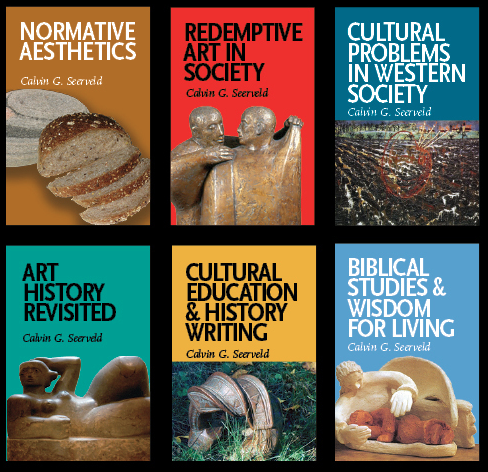
Hearts & Minds presents: Eight Great New Books, all 20% OFF at BookNotes


Lots of great books keep coming in to the shop. Sales may be down in indie bookstores,
but the publishing world is strong, writers doing their thing, publishers releasing important work.  What a joy, what a gift, to be a reader
in these times.  Here are a few you
should consider for your own library, or maybe for your small group. At least you could put some on that Christmas list you know you’re making.  Or maybe you can’t wait for that.  Send us an order, today!

Rrebel souls.jpgebel Souls: America’s First Bohemians  Justin Martin (De Capo) $27.99 I love
books that do social history, placing ideas and movements within a broader
context, that unlock the personalities of people (famous or less so) showing
how they reflected (and in some cases caused) features of our society that we
now take for granted. In Rebel
Souls
Justin Martin tells us about Pfaffs, a storied 1850s bar in New
York City that became (quite knowingly) the first place in America to forge an
alt-community of artists and creative thinkers who called themselves bohemians. The word, coined in Paris a decade before, was inspired, in fact, by Puccini’s
classic opera, La Boheme (which, in
turn, inspired the long-running Rent,
set in the East Village.) Walt Whitman
was a nightly feature at Pfaffs, and the coterie of these creative, troubled
souls, had a reach that was stunning: into this story comes Emerson, Mark
Twain, Abraham Lincoln, and some very important, if lesser known folks, including, perhaps America’s first stand-up comic. They had
no word for stand-up comedy in the 1850s so they called the performances of
Artemus Ward “comic lectures.”

You may know Justin Martin from his nicely-written, very informative,
fascinating books such as the highly regarded Genius of Place: The Life of Frederick Law Olmsted; he is a fine
historian and great writer. Pulitzer Prize winner Debby Applegate says about Rebel Souls,  “A terrific book about a magical
time and place in American history – Pfaff’s basement saloon on Broadway on the
eve of the Civil War, where boozers, brawlers, and barflies, journalists,
comics, actors, and poets came together to create a bohemian paradise.  Like the West Bank of Paris of the
1920s or Greenwich Village during the Beat Generation, Pfaff’s scene burned
brightly and then burned out…” 

If
space permitted, I’d tell you about the role of their writings and reviews, and the lasting significance. I’d tell you about the
Naked Lady, the guy who wrote the first book (a big seller, published by Harper
& Brothers!) on hashish, the role of theater in those years, the role of women, the Pffafians relationship with John Wilkes Booth, and –
of course – more about the one who became the Good Grey Poet himself. I learned so much, and enjoyed the story greatly.

Also, I’d be sure to tell you how important it is to
understand the ethos and orientation of bohemia for understanding today’s new
romantics, hipsters, neo-hippies, many artists and indie rockers, and some of
the emergent religious communities. 
As Martin tells us early in the book,

The Pfaff’s Bohemians were part of the transition from art
as a genteel profession to art as a soul-deep calling, centered on risk-taking,
honesty, and provocation. Everyone from Lady Gaga to George Carlin to Dave
Eggers owes a debt to these originals. They were also the forerunners of such
alternative artists groups as the Beats, Andy Warhol’s Factory, and the
abstract expressionist painters who hung out during the 1950s at New York’s
Cedar Tavern. 

The pendulum continues to swing from rationalism to
romanticism, control to freedom, thinking to feeling, from the straight and narrow to the wild and
free (and it is not a stretch to say, red states and blue states.)  For at least one major
manifestation of a zeitgeist that still attracts, hang out a Pfaffs for a bit
with Whitman and his rag-tag crew of cultural creatives. Experience how this
bawdy group of writers and thinkers shaped, in some ways, the very way some
artists increasingly imagined their own vocations and work. Follow Whitman
after the Civil War to DC, and then to Camden NJ, even as he publishes yet
another edition of Leaves of Grass,
this time with “O Captain! My Captain!” included. Think of Robin Williams, even, and say a prayer.

This is a wonderful book about bohemian culture, a fascinating history that reverberates yet today.  Thanks to Mr. Martin for his painstaking research and the obvious care of his subject that come out so nicely in his writing.

Ffather factor.jpgather Factor: American Christian Men on Fatherhood and Faith edited
by R. Anderson Campbell  (White
Cloud Press) $17.95  I do hope I
can write more extensively about this later, because it is truly a fabulous,
fabulous book, interesting, well-written, helpful. There is a small backstory
or two: The “I Speak for Myself” series of which this is a part includes two
books of young Muslim writers telling about their lives. These were helpful testimonials written by young Americans who were Muslims, one by women, one by men — lovely stuff.  The third in the series was Talking Taboo which we reviewed and
touted, a wonderful, important project of young Christina woman talking about
their experiences as women in the church. A host of important writers I admire
and a few friends were in that one, and we carried it around to many places
we’ve done book displays.  The new
fourth one is perhaps the best yet, with really, really good writing, and very,
very moving stories.  I happily
admit that Mr. Campbell is aanderson campbell.jpg friend I admire, and a dad I admire, and that two other former CCO staff
friends — Kurt Ro and Brian Shope — are included among these 30 writers under
30 years old. (I don’t think
my judgment is too clouded here) but their pieces are amongst the strongest in the
book.! Congrats, friends.

To summarize, these moving
pieces are ruminations on the fathers of these guys, or their own role as a
father, on knowing God as a father, and on this whole messy male business.  Sometimes, naturally, the
reflections include both recalling their own dads, and their being a dad; you can imagine.  A young dad wants to be just like his own father; another young dad
does not at all want to be like his own father.  There is joy and sadness and faith and rage and great grace
in these pieces and I truly recommend them.

Matthew Paul Turner notes that “In many ways, Father
Factor
is a work of art, a beautiful collage of humanity and soul, a
thoughtful collection of stories detail the lives, dreams and fears of American
fathers. The essays in this book will make you laugh, bring you to tears, and
at all times, cause you to rethink your approach to parenting. But most of all,
Father
Factor
will give you hope.

I was fortunate enough to get to offer a blurb, alongside
more famous and better writers, from Richard Mouw, Christena Cleveland,
Eboo Patel, to my friend Lisa Sharon Harper.  For what it’s worth,
here’s what I wrote:

I love memoirs — who doesn’t love a good story? — and these short
narratives are a joy to read, a reader’s delight, getting a glimpse into
the lives of others. There is wonder, loss, love, joy, pathos, romance
and laughter, a little cursing and a lot of praise. But there is more:
these are exceptionally brave stories from many different sorts of men
reflecting profoundly about God the father, their own fathers (for
better or for worse) and their own particular journeys into fatherhood.
This is not a self-help manual, but guys from all stages of life will learn much and be better fathers because of it. Highly recommended. -Byron Borger, Hearts & Minds Books, Dallastown, PA

Llife together in christ.jpgife Together in Christ: Experiencing Transformation in Community Ruth
Haley Barton (IVP//formation) $18.00 
Do you long to experience transformation in community?  Ponder that, and ponder it again. You know we’ve admired Ruth Haley Barton for years,
view her as nearly a spiritual mentor, and have read and commended all her many books
over the years. This, though, I must say, really, really touched me. I believe it was just what I needed, and it
may be what you need, too.  She offers a
concise, powerful, but sensible call to combine two things, two things we all long for, and yet are rarely adequately combined: community and spiritual growth, or, in other words, relationships and
transformation. 

Life Together in Christ  provides a model that is specifically created to help you be more intentional about your
journey into spiritual growth by being in the company of others.  I love her reflections (sometimes
fairly obvious and lovely, other times creative and extraordinary) on the
much-loved story of the two walking on the road to Emmaus. The back cover promises that she
“offers substantive teaching and direction for small groups of spiritual
companions who are ready to encounter Christ – right where they are on the road
of real life.”

There are some great conversation starters at the end of
each chapter, some things to ponder solo highlighted in sidebars and boxes, as
well as some resources for small group use, making this not only inspiring but
very practical.  Some of us don’t
value the “processing” stuff in these books, but for this one, it is essential.  As I’ve already pondered some of these
bits, I can am confident that they will be worth your time, valuable for you
and your group.

There are, not surprising, rave reviews here from authors as
diverse as Mark Labberton and Ronald Rolheiser, James Bryan Smith and J.R.
Briggs.  And they are right – this
is an excellent resource, a lovely book, and a sure guide to deepening one’s
life, by allowing God to bring transformation to a group walking together. 

Bbeloved dust.jpgeloved Dust//Drawing Close to God By Discovering the Truth About
Yourself
Jamin Goggin & Kyle Strobel (Nelson) $16.99  I have been pondering how to describe
this book; I had an advanced copy, as I respect these two thinkers
immensely.  Goggin edited one of
the best books of earlier this year, a serious, semi-scholarly work inviting
evangelicals (and others) to be more intentional and thoughtful as they take up
the best mystical and devotional classics; Stobel (who is, among other things,
a Jonathan Edwards scholar) has a real gift to take deep, sanctifying truth and
make it upbeat and helpful for readers who are perhaps not used to wading in
deep spiritual waters.  

At any
rate, Beloved Dust is a very contemporary book, with a self-awareness about life and
times, written in a witty and at times clever narrative way. But, but, believe me, this is remarkable material, including
some excellent Bible study and some guidance into patience, prayer, and
openheartedness. If you want to
truly know God, John Calvin taught, one must know oneself. And knowing ourselves as we are –
beloved dust – is the heart of this book about spiritual formation.  This is one of a great kind of book
I’ve noticed recently, a happy blend of pretty ancient, dare I say profound
stuff, presented as only young, contemporary pastors can. Maybe it’s the double-slashes in the title, maybe it’s the subtitle, artful cover.  But this is a cool book, but one that,
as cool as it is, has a degree of gravitas. Nice!

If you’re not sure if a heavy book of serious spiritual theology could be written in a very contemporary way, and be as solid as it is winsome and inviting, just check this out, and then come back and place an order with us.

Wwhat your body knows about god.jpghat Your Body Knows About God: How We Are Designed to Connect, Serve,
and Thrive 
Rob Moll (IVP)
$16.00  Where to begin to let you know how great this book is?  How about this: Christianity Today gave
this a very rare, exceptional five-star review.  Singer-songwriter Michael Card wrote a truly lovely,
well-written foreword. Scot McKnight and Richard Sterns and Katelyn Beaty and
other good writers have added their rave reviews. You really should know about this.

Or, get this, from the very smart Jamie Smith:

“The theologian Henri de Lubac once said that human beings
were created with a natural desire for the supernatural. This marvelous,
accessible book by Rob Moll picks up on this conviction brilliantly, inviting
us to embrace our bodies as the gifts they are. The incarnate God meets us in
our bodies and brains. An excellent exposition of the bodily basis of
discipleship.”

I loved Rob Moll’s 2010 IVP book The
Art Of Dying
which was beautiful and wise and worthy of repeated reading. This new examination of neuroscience and brain studies and religion
is, without a doubt, the best one of this sort I’ve yet read (and there have been a good handful the last few years.) Moll tells a lot of very tender and
engaging stories, including a brave section about his wife and her mysterious chronic illness. He does mature and solid Bible study, he draw connections between all sorts of things
and invites us to take seriously that God has wired us for God’s own self,
which – get this! –  can release
stuff in the brain that literally can help us become more empathetic and kind. You will learn a bit about amino acids and the role of the brain and the body in our faith (even a chapter on worship.) You will learn that Moll works for World Vision and cares deeply not only about our own molecules and the mystery of our spiritual lives, but of the brokenness of the world, and efforts to bring redemption and hope. The title and subtitle of this important new book is very helpful to explain
what it is like and just what the book is about.  It is a real winner.  Spread the word!

Mme to we.jpge and We: God’s New Social Gospel Leonard Sweet (Abingdon)
$17.99  I hope you know my
appreciation for Len Sweet, as a thinker, a writer, a leader, a public speaker,
preacher, and friend.  I’m a fan, and
that won’t easily change.  His
early books were important for me, his recent ones fantastic.  They are always energetic, playful,
learned, and always worth the price tag in part due to the truly extraordinary
amount of fascinating, unexpected, and important footnotes.  One can enhance one’s plan for being a
life-long learner just by reading carefully Sweet’s own reading recommendations
and sources.

Like most of the books on this little list, this new one
truly deserves a long and more attentive review.  Time and space do not allow, but I can say these few things,
too quickly.  If you like Sweet you
will like this, but you may have to, as with some of his books, overlook a few
jumps in logic, one ADHD leap from topic or illustration to another. Although
the “house and garden” metaphor, drawn from the magazine title, I guess, figures
prominently, I still don’t know what he means by that.  I track with most his stuff pretty
well, but I was left scratching my head on occasion, maybe moreso in this one
than in others.  (Take that as a
dare, friends, not a warning.)

Secondly, you might surmise this, but if you don’t know, you will learn
right away: Sweet may be seen as an edgy postmodern prophet, but in his
heart of hearts he’s an old school Wesleyan revivalist of the holiness tradition.  He has no patience for those who might
drift from a Bible-based, God-exalting, Christ-centered, cross-preaching,
church-going, soul-saving, true gospel. 
He is ruthless in dismissing the liberal social reformers of the early twentieth century, and, seemingly, as hard on the new century post-evangelical, hip, emergent folk
who seem to similarly allow their missional vision to become so attuned to (at
least the rhetoric, if not the work) of social justice that the first things of
the gospel are squeezed out. He
is, on this score, not unlike Scot McKnight or even John Piper.  As deeply as he swims in the waters of cultural studies, he does not sound like Brian McLaren, let alone the politico Jim Wallis. Yet, despite his apparent disapproval
of the so-called Christian left, he is adamant, as he always has been, that our
gospel work must be culturally-relevant, socially-engaged, communal, green.

It isn’t that complicated, but in Sweet’s witty, provocative
hands, this stuff sounds wildly innovative, perhaps a viable alternative
between the right and the left, the conservatives and the progressives.  Sweet cites Ivan Illich and Wendell Berry
a bit (and calls him “the world’s best living poet”) and he affirms some of the
passionate voices who critique consumerism and materialism. He offers some interesting ruminations
on racism, a little tirade against “simple living”, and some blunt observations
about the anti-globalization movement. A good part of the last half is about what
it might take to birth a new (Christ-like) economy.  He works creatively with Genesis — “tend and keep” (the garden) becomes “conserve and conceive.”  Whether you pick up on and draw energy from his endless
plays on words or whether you roll your eyes, his framing of the gospel as
both/and – me and we – is immensely helpful. His hinting at or briefly stopping to give a cursory critique to all kinds of stuff in light of his relational/holiness theology along the way is
evocative, and his weighing in on a few major day issues of the day is
important.  He invites us to see
the world in a very different way. When an author – through profound wisdom
or sheer literary elan, or a bit of
both – can do that, that, my friends, it is worth buying a few, gathering some
people together for a night or so, and chatting it up. 

In this case, it may be a bit of a roller-coaster ride, and you may be a little
dizzy when it is all done.  But
you’ll not only be glad you took the Sweet ride, you’ll be very glad for the
“we” that emerges from that shared experience.  Heaven knows we
need a social gospel.  A new kind
of social gospel. Me
and We: God’s New Social Gospel
will make you think about that in ways you haven’t before. 

Iimagination redeemed.jpgmagination Redeemed: Glorifying God with a Neglected Part of Your Mind
Gene Edward Veith, Jr. & Matthew Ristuccia (Crossway) $16.99  I have been waiting for this book for a
long time, and I think we need a Biblically and philosophically faithful
Christian view of imagination that is written in a way that ordinary people can
appreciate and learn and grow from it. 
This is that book, the best thing I’ve seen at an accessible level, and
no other book that I know of does quite what this does. Redeemer Presbyterian’s Center for
Faith and Work had Matt Ristuccia speak at their annual event a week or so ago,
and everyone raved.  The Executive
Director of CFW, David Kim, wrote about the book “Through their seasoned
pastoral and scholarly gifts, Veith and Ristuccia have done the church an
incredible service in lifting up the critical role of the imagination in the
Christian life.”  When a scholar of aesthetics and musician of the caliber of Jeremy Begbie says it deserves to be
widely read, you know it is important.

I’ll say just a few quick things.  Firstly, Vieth is clear and succinct in his unpacking of the
role of the imagination, which he insists is merely the ability of the mind to
create mental images.  I think he’s
a bit wrong about that, and his latent conservative rationalism colors this
book, as it has his others. Still, it’s an informative, instructional and even colorful read,
and his parts are a valuable contribution.   I’m pondering (among a whole lot of other things, the cover, too, by the way.  What is going on there? And what kind of cover would have been evoked to serve a book with a more robust, wild, less linear view of imagination? Just some kind of inchoate hunch here…)

This is not exactly the place to pick scholarly nits — imagine a mental image for that, if you will — and in any regard, I am not enough of a philosopher, I’m afraid, to do so. (I say this as I’m working on a long review of a new set of Calvin Seerveld books which I’ll publish soon, by the way, DV.  Dr. Seerveld, I would suppose, might not locate the human ability to imagine in the brain as simply as Veith & Ristuccia do.) If you like to think about these things, certainly you should get this book and let your mind run wild, as you consider what the imagination is and what it means for our daily life.

The second part of each chapter is written by Rev. Ristuccia, who does,
basically, a vibrant, evocative Bible study of Ezekiel, and it is quite good. (The few lines where he compares the different visions
of Ezekiel with different Beatles albums is, uh, spectacular!) This bit of prophetic imagination is splendid, solid, helpful, and makes for good reading. Three cheers, right there! 

If you are not drawn to a critical evaluation of the
assumptions about these things — is Veith right about what the imagination is, and how it works, and is Ristuccia right in bringing Ezekiel to the table like this? —  then, by all means, read the book happily, and
be glad that this literary scholar/professor and Bible scholar/pastor have
dreamed up this very interesting book. You will be glad to consider how things like remembering and planning,
learning and listening, dreaming and hoping, are contingent on a robust,
redeemed imagination. You will learn about the goodness of how God made us, be reminded of the vexing ways sin can disrupt and distort our imaginative capacities, and will be invited to open up your efforts to enhance this aspect of your God-given mindfulness. 

There is, finally, a nice concluding appendix which will be of special
appeal to some, a suggestive reflection on how paying more sustained attention
to the imagination (and the arts) can help in our apologetics.  There are full books on this, thank
goodness, and it is nice to have these few extra pages included in Imagination
Redeemed.
This is good stuff, and we should be sharing this book widely
– it will help us embrace this too-often ill-considered gift of our human-ness,
this part of the mind that is a gift of God designed to bolster and deepen our
faith and lives.

VVainglory.jpgainglory: The Forgotten Vice Rebecca Konyndyk DeYoung
(Eerdmans) $14.00  It isn’t every
day that we get to announce a mature, thoughtful, but popular-level book
released from the prestigious philosophy department of Calvin College;  we are happy to note that Dr. DeYoung
is a stellar prof at that productive, legendary department. Her scholarly work
has been on Aquinas and a previous excellent book called Glittering Vices: A New Look at the Deadly Sins and Their Remedies was,
in my view, not as widely read or valued as it should have been. I suppose it is fair to say that this new
one is a bit of a follow-up, related, obviously, to her study of sin and dysfunction
in the human heart and how culture can reflect the sad situation.

The books starts in an eloquent, but nonetheless funny way:
she is to give the heady, respected Stob lectures, and is wondering if it is
prideful, or even vainglorious, to be glad about such a thing.  Should she tell of her own struggle
with vainglory as she explores the topic in the lecture (or is that, in itself,
vainglorious?) Does not talking about her own foibles imply she is above the
fray? Is that reflective of some
distorted desire? She ends up
inviting her students to check her, making lists of instances of pride,
vainglory, or hints of false humility. 
Ha – even those pages were a razor’s edge, and she navigated it
wonderfully.  I was hooked, knowing
she would be a thoughtful, nuanced, and pleasant, an honest guide.  Early on, I realized that she would be
candid, but not gooey, erudite, but easy to read, even as she was rigorous with
herself and her readers. The book
maintains these standards and seems to me to be a quintessentially excellent
Eerdmans release.

First, you should recall this: vainglory was one of the
earliest, deadliest sins in that nasty list, but was dropped somewhere along
the line. Through nuances of
definition and translation, we now more commonly talk about pride.  Or vanity. Vainglory, though, is a particular sin, and although we
don’t use the word, much, we all know the sin. In others, and, I suspect, too often, in ourselves.  Especially (as DeYoung explains in one
very good section) those of us who are public figures, teachers, preachers,
artists, writers, all whose job it is to publicly impress others.  I suspect not a few BookNotes readers may find this important to their own developing virtue.

It is always good – at least for our little corner of the
book world here at Hearts & Minds and our little BookNotes niche – to see philosophers,
spiritual directors and pastors all endorse a new book with equal
enthusiasm.  Robert Roberts (who I
seem to think is a Kierkegaard scholar) has written deeply about the spirituality
of emotions and the psychology of virtue, says “DeYoung’s Vainglory is the best
thing out there on the vices of pride. 
It’s profound, readable, witty, telling, historically informative, and pastorally helpful.”  William
Mattison notes that “DeYoung writes with the wisdom and expertise of a
theologian of psychologist, yet with the accessibility of a college roommate
discussing life over a meal in the dining hall.”

And then there is this from Richard Foster, who is judicious
in his endorsements:

At last a book that takes head-on what is perhaps the capital vice of modern culture.
Rebecca Konyndyk DeYoung draws from the classical tradition of Christian moral
thinking to introduce us to the life-giving virtues, which alone can free us from the plague of narcissism that is the cultural zeitgeist
of our day. I recommend this book highly.

BookNotes

SPECIAL
DISCOUNT
ANY ITEM MENTIONED

20% off
order here
takes you to the secure Hearts & Minds order form page
just tell us what you want

inquire here
if you have questions or need more information
just ask us what you want to know

                   Hearts & Minds 234 East Main Street  Dallastown, PA  17313     717-246-3333