I know, I know, I’ve already declared (months ago) that
Steve Garber’s exquisite, profound, deeply thoughtful book Visions of Vocation: Common Grace for the Common Good (IVP; $16.00) will surely be the Book of the Year, which we will properly announce in our Best of
2014 awards column at the end of the year.
There have been so many other good
releases this year — there will be a handful of other true very honorable
mentions.
It may be that the just
released A New Heaven and a New Earth:
Reclaiming Biblical 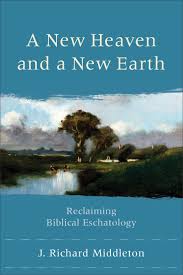 Eschatology by J. Richard Middleton (Baker Academic; $26.99) is the most
important book in its field, a magnificent, innovative, lasting contribution
to the field of Biblical studies. I can hardly understate just how significant this new book is.
Walter Brueggemann says, “when his book catches on, it will have an immense
impact…”
James K.A. Smith notes
that “Richard Middleton has been one of my most important teachers. Every
encounter changes me. This book is
no different…. if as widely read as I hope, this book would transform North
American Christianity.”
Interestingly for many Hearts & Minds customers, this
book about God’s promises to renew all things, is actually not unrelated to Garber’s
important voice about recovering a sense of vocation in a fallen, complex
world. It is also somewhat related to what
has become our biggest selling item in years, the colorful, nuanced, delightfully interesting, and very useful DVD curriculum published by the Acton Institute, For the Life of the World. All three have some connections to
Toronto’s Institute for Christian Studies graduate school in the 70s where they
were, in one way or another,
influenced by the legendary Christian philosopher of aesthetics, Calvin
Seerveld, and the philosopher cum Bible scholar Al Wolters who wrote the
often-cited Creation Regained: The Biblical Basis for a Reformational Worldview. Like Transforming Vision, which Richard Middleton co-authored in 1984,
these innovative reformational thinkers at ICS did their high level scholarship
in light of the inherent connection between different acts of the Biblical
drama: creation-fall-redemption-and restoration/consummation.
H ere, on the left, is how my dear friend, Bonnie Liefer, an artist working for the CCO (Coalition for Christian Outreach) has shown the Biblical story, inspired somewhat by these same teachers back in the 1970s. Notice the themes from Genesis 1 and 2, Genesis 3, Matthew 27 and Revelation 22.
Richard’s passion to explain a full-orbed and fully Biblical holistic eschatology, the last square on the lower right, so to speak — God restoring all creation, following the revealed trajectory in the Bible of a good creation, a radical fall into idolatry and distortion, a decisive redemption by Christ, and a creation-wide restoration — was nurtured by that story, taught by scholars in that place in those years.
Understanding the historical-redemptive unfolding of the
Biblical drama in light of this grand story has been one of the most popular
developments in popular-leve l Biblical literacy in this generation and nearly
an y church plant (in this remarkable era of so many fresh church plants)
nowadays, besides cool graphics and nifty names, will invite people to find their story
and meaning in light of the big story of God’s redemptive work in
the world. From emergent to missional, from Acts 29, The Gospel Coalition, the Fresh Expressions movement, to the 1001 new projects the Presbyterians are working on, the language of story, and the appreciation for the vision of the Kingdom of God and this renewed emphasis of the overarching trajectory of the Biblical narrative is central. It seems
that all kinds of folks are surprised by hope these days.
Yes, Surprised By
Hope: Rethinking Heaven, Resurrection, and the Mission of the Church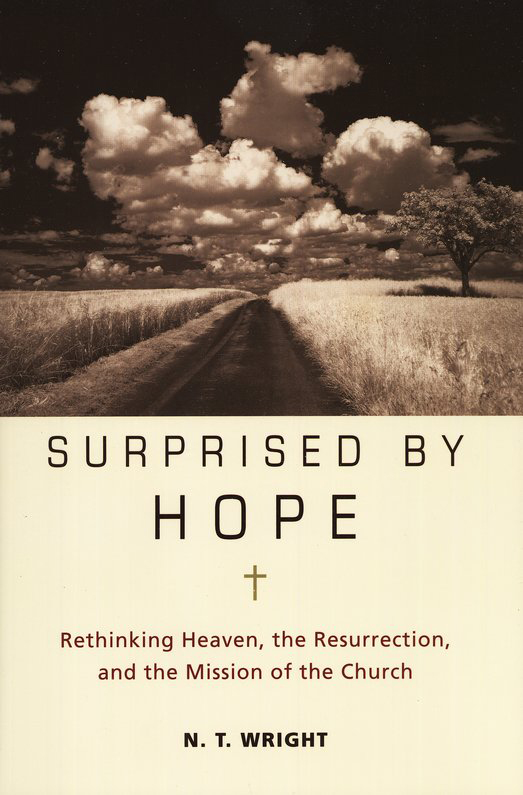 (HarperOne; $24.99) by the
former Anglican Bishop, N.T. Wright, may have popularized these themes more than
early books of Wolters, Middleton, et al, but there is no doubt that Wright
himself was influenced by them (and was in conversation with them in the late 70s via his
friendship with Middleton’s co-author, Brian Walsh, whose recent work I
highlighted just a week or so ago, here.)
If you do not know the magisterial, much-discussed Surprised by Hope you should know
it. It is surely one of my all time favorite books. If you aren’t much of a
serious reader, the Surprised by Hope DVD curriculum expertly produced by Zondervan, is an informative, clear-headed, lecture series with N.T. Wright and is very creatively
produced. I cannot recommend it enough. Both the book and the DVD remind us,
to put it simply, that many of our most cherished assumptions (and much of our
popular vocabulary) about heaven and the afterlife are not Biblical.
Of course it is more complicated, and
there are perplexing Biblical texts and notions from church history – for better
or worse – that must be examined, but the short version is sensible, but counter-intuitive for many, still: God’s Kingdom comes “on Earth as it is in
Heaven” and the end of the grand Biblical narrative (Revelation 21-22) is not about us leaving the Earth, but Emmanuel, again, God with us, in a restored, healed cosmos. That is, Left Behind and
Hal Lindsey and apocalyptic bumper-stickers about the rapture notwithstanding, we don’t go to
heaven to live forever. Heaven
comes to Earth. The meek inherit the Earth. As Paul Marshall puts it in his tremendous book about living out the Christian life in various arenas and sides of life, “heaven is not my home.”
This is the carefully argued thesis of A New Heaven and a New Earth: Reclaiming Biblical Eschatology, Richard Middleton’s careful, complex, book of fascinating Biblical study.
SO IMPORTANT
I can hardly tell you (based on my own intentional
observations about these things for nearly 40 years) just how important this all is. It is not arcane or an eccentric little side matter. In what feels like a lifetime
ago, I considered writing a book about it.
WHAT GETS YOU UP IN THE MORNING?
You see, it is almost always the case that people live their lives in
light of some sense of what they expect in the future. Garber lapses into Latin and talks beautifully
about our telos. “Why do you get up in the morning”
is a more playful way of asking it, he notes in the powerful first chapter of his
first book, Fabric of Faithfulness:
Weaving Together Believe and Behavior (IVP; $17.00.) What gets us up, our
sense of what matters, the goal of our purpose driven lives, our telos, always animates and
guides and informs and shapes how we live. That is, our view of the end of things matters a lot.
W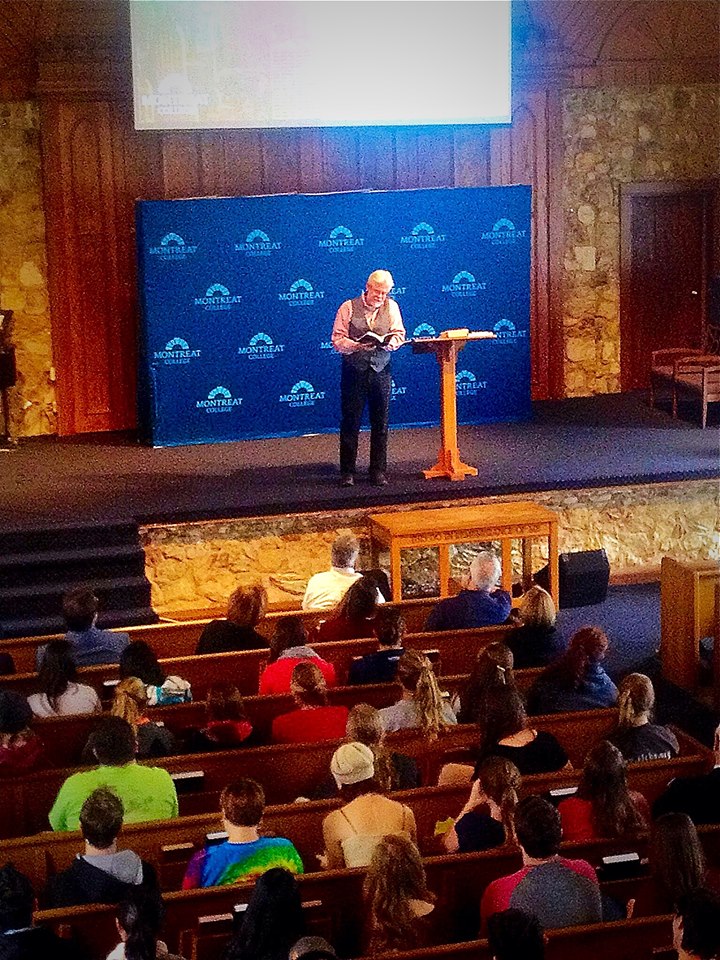 hen speaking on this very theme at Montreat College in
North Carolina last week – at a symposium for students on work and vocation,
arranged around keynote talks exploring themes of
creation/fall/redemption/restoration – I cited, I think, Romans 8, that
mentions that the whole creation is groaning, awaiting the salvation of
humankind so that the creation itself can be healed. John 3:16, I reminded them, uses the Greek word cosmos for world, which is to say that when Jesus
says “God so loved the world” He means just that. (And Leonard Sweet once quipped, if God so loves the world,
why don’t we?)
Yes, we should care
about God’s good, if fallen world, because God loves it, and intends to rescue
it. The verse does not say that for God so loved our souls, or for God so loved our churches. Cosmos.
When more than one professor thanked me profusely after that talk at Montreat, I shared
my own little concern: am I just firing people up with my natural talent for
enthusiasm, but not really saying much new? Maybe my big insight that God died
to save the universe, that the new creation is really this world restored, that (as C.S. Lewis put it) “matter matters,”
is really just a lot of stuff we all know, dressed up as some big paradigm
shift. But just not that urgent to keep saying, over and over, as I tend to.
But — and this is the
point, for now — both professors insisted that they hear “all the time” people
saying that we need not care for this Earth since “it’s all going to burn,
anyway.” Yep, we live inspired by our view of the end, and if we think God is whisking us off to some other place — we’re “only visiting this planet” as one famous Christian rocker said — then why care about current events, or much of daily life, really? I was once scolded (one can’t make this stuff up) for caring about world hunger because, as my critic explained, the worse things get here on Earth, the sooner Jesus will come back to carry us home to heaven. So, let ’em starve was the take-away of that awful eschatology. And it made a difference in that person’s daily living, including a blatant disregard for the poor and starving.
One professor of environmental studies at Montreat says he oddly gets asked from
evangelical church folks why a Christian college would teach ecology (again, since it is all going to burn.) Interestingly, he has also been asked this by secular colleagues from state universities as well. Why indeed would you (at your Christian college) teach environmental studies, they wondered, if your religion tells you it is all going to burn? Odd, both the skeptics from the church
and the secular university each assumed that a Christian college wouldn’t care about
caring about the Earth. Because God is going to destroy it all anyway and “take us to heaven to live with him there” as the beloved carol Silent Night puts it.
Which is just one example of why we’ve got work to do to
give a better account, to the church and to the world, of God’s gracious (Triune)
goodness in creating the world, blessing it,  sustaining it, and – after our rebellion and tragic fall from
grace, the “vandalization of shalom” as Cornelius Plantinga put it in his
excellent Not The Way It’s Supposed to Be
– Christ’s own redemptive work to reclaim and restore the world He so
loves. That “salvation is creation
healed” (as Howard Snyder and Joel Scandrett put it in their great book of that
title) needs to be proclaimed with Christ-exalting clarity. That God is not scraping the covenant
made with all the critters (see Genesis 9) and nuke the creation, but intends to
remain faithful to the promises, and will remake and restore and heal the world is a
major theological truth that must be understood and explained, taught and
preached, appreciated and lived.
J. RICHARD MIDDLETON: AN AUTHOR YOU SHOULD KNOW
Enter Dr. J. Richard Middleton, (PhD, Free University of
Amsterdam), whose new book will help us more than any other serious study yet
done on this topic.
Middleton is professor of Biblical worldview and exegesis
at Northeastern Seminary and adjunct professor of theology at Roberts Wesleyan
College. (He has also taught at
Colgate Rochester Crozer Divinity School for a season.) I have already mentioned that he co-wrote The Transforming Vision and its sequel, Truth Is Stranger Than It Used to Be with Brian Walsh. His large, scholarly work on what it
means to be human, exploring the nature and consequences of the Biblical
teaching about the imago dei is
called The Liberating Image (Brazos Press;
$27.00) and it has been considered by some to be the definitive book on the
subject. Heavy as it may be, it is
an extraordinary work, with vast implications, and should be on the shelf of
anyone with serious interested in Biblical theology. It is that important.
A New Heaven and a New Earth is also a bit hefty, over 300 pages, some of it fairly
detailed. But it is not designed
only for the guild, or Bible professors or even clergy, but is offered as a
serious gift for anyone who wants to read and study and learn. It is, like Liberating Image, so significant in its research and so fresh in its
articulation, that it might be considered definitive. The great wordsmith and thoughtful preacher Cornelius
Plantinga observes that it is “comprehensive, learned, accessible, and
exciting.” Al Wolters says he is inclined to call it “magnificent.” Terence Fretheim of Luther Seminary
says it “deserves wide attention.”
We helped “launch” this book at the very first place it was sold, last weekend’s conference on imagination and innovation in the workplace at Redeemer Presbyterian’s NYC Center for Faith and Work. Apparently Keller’s team there thought it was important enough to have him speak at their famous yearly gathering about this brand new book.
The book opens with a poignant story of Richard as a young man, sitting with a friend atop a glorious mountain in his Jamaican homeland. They climbed there to enjoy a beautiful
sunrise, and were deeply taken by the sublime beauty of it all. As they praised God for this moment,
Richard’s friend said “what a shame it is all going to burn up.” Even as a young guy, he recoiled. A strong evangelical Christian with early familiarity and love for the Bible, Richard sensed that this was
not so. He set himself, he tells
us, to explore this theme in the Bible, and it has been a passion of his ever since.
HYMNS WITH BAD LINES AND BAD IDEAS
He pokes at bit at some old hymns that talk about going to
heaven, to live there forever.
From obvious examples like “I’ll Fly Away” or “When the Roll Is Called Up Yonder” to lines in “Love Divine, All Love Excelling” or “My Jesus, I Love Thee” to “Silent Night” and
many others, he documents our fuzzy thinking about all this. (Wasn’t it the revival preacher A.W.
Tozer who said the church doesn’t have to tell lies, we just get together and
sing them?) I have my own
list of stupid lines that I find detrimental, and these few pages are striking and will cause us to think. Again, we have our work cut out for us
if we are going to unlearn centuries of poor articulation and outright unbiblical
ideas.
After this opening foray in Part 1, sharing the journey “from creation to
eschaton” and showing the real plot of the Biblical storyline, Middleton walks us
through in Part 2 what he calls “holistic salvation” in the Old Testament. From “the exodus as a paradigm of
salvation” to “earthly flourishing in law, wisdom, and prophecy,” and even the
nature of the coming of God in both judgment and salvation, he offers
excellent, illuminating, clear Bible study, including some formulations that
may be new to some. This is rich, fresh, solid stuff.
Whether you
are at a mainline church or an independent, evangelical one, whether you are
highly liturgical or less so, I am convinced some of this material will simply
rock your world. You will be made to reconsider shibboleths and sacred cows and you will have “aha” moments.There are
fascinating and useful footnotes, too (a lot of them — hooray!) and Richard’s passionate insight about the
Biblical text is matched by his fluency in the most important literature, old
and recent, scholarly and popular.
In the next 50 or so pages, Middleton offers in Part 3 two
strong chapters under the headline “The New Testament’s Vision of Cosmic
Renewal” and here he echoes N.T. Wright’s good work about how the resurrection
of the body implies so very much about our future hope. (Middleton also explores “the
restoration of rule” which is excellent and generative, drawing somewhat on his previous work on our task as image bearers) even as he points us to
what it means to say that God intends “the restoration of all things.” Again, this is dynamic, fresh, and for some, new, radical material. I have not read a book about the Bible as exciting as this in years!
For what it is worth, I had an advanced copy of the manuscript, which is how I had the good fortune of getting to study this long before it arrived this week.
BUT WHAT ABOUT…
Part 4 of A New Heaven and a New Earth looks helpfully at problem texts for holistic
eschatology. After my presentation at
Montreat College’s symposium on this topic last week folks
lined up to talk about the rapture, the curious I Peter passage about the
elements being destroyed (or does it say “disclosed” as any good study Bible
will note?) and other contested texts. This part of the book is immensely helpful, and you will need it if you are using the creation-fall-redemption-restoration drama as part of your own spiritual formation work. If you see salvation not as an escape plan from the world, but as a “homecoming” and restoration to our place in a (re)new(ed) earth, these few problem passage must be addressed.
The Greek word used in the popular “all things new” promise of
Revelation 22 is the word that means re-newed (not “brand new.” They had a
word for that, but that isn’t what John saw in his vision; it is a restored earth, not a brand new earth, indicating some continuity, between, as they say, this world and the next.
Why do we continue to think of eternal life as some ethereal place for
disembodied souls (and worse yet, why do we say dumb stuff when a child dies,
like “God needed another angel” as if humans ever become angels?) The Biblical tradition is does not
offer some dream-world, some woo-woo spiritual soup into which we all merge — Christians give a different account for our hope than do Hindus, Buddhists or Platonists.
We care about the environment because God has pledged his Holy Self to it.
And Jesus entered it, and died for it. He — remember Colossians 1 — holds it all together, and is reconciling “all things” through the blood of His cross.
The Bible teaches that this
good world will be saved and restored and renewed and transformed as we, in renewed,
resurrection bodies, rule once again in some kind of culturally developed paradise. As the very good book on technology and digital culture by John Dyer (who did a workshop Montreat) puts it, we move “from the garden to the city.”
SO WHAT?
Does all of this really matter that much? I will give you my short answer, and tell you about how
Richard answers it, as well.
As I tried to develop in my passionate Montreat College
talk, I am convinced (as I wrote earlier) that how we think of the future does
indeed effect the tone and vision of our contemporary lifestyles. It’s that telos thing mentioned previously: how we think about the future, our end-goal, colors the sort of hope we have now, which shapes the kind of life we live, the things we invest in, the stuff we do, and how we do it, and how we explain it to others.
When a couple finds themselves to be
pregnant, it slowly changes everything: the birth which is to come starts to
effect daily choices, from nutritional decisions to economic ones to even legal matters. The couple grows closer in their love
as they dream together about the good future they will share with their
offspring. They start preparing
the baby’s room, shopping for a crib, picking names. Oh yes, this future blessing has present consequences. The reality of what is to come rubs off in the here and now,
and nothing is ever the same. The
present itself is pregnant and the future is like a magnet, pulling us toward
its hope. As we sing at
Christmastime, “the hopes and fears of all the years” are met in Christ. This alludes to our past longings and
anxieties, but perhaps also to those regarding the years yet to come. I truly believe that our daily
discipleship is deepened and enhanced and given direction by a proper
understanding of the new creation God has promised to bring into our
midst. We start to live in the “already” even though we know the Kingdom’s fullness is “not yet.”
N.T. Wright assures us of the confidence we can have, given that Christ Himself has walked into and through death, and come out alive on the other side, in the reality of new creation. It is, he says, like a call we may get in the middle of the night from an earlier time zone. It may seem like night to us, but — in fact! — the caller is calling us from the future, and it is bright as day there. Yes, with Christ’s Easter victory and ascension, we know the future is assured. He is risen, in the body, a first hint of the new creation which is ours.
David Arms offers this artful rendering of the creation/fall/redemption/restoration story:
As Marva Dawn and Tom Wright and Brian Walsh have all
written, our current-day faith communities can be seen as actors doing
improvisation, acting out a missing scene or two in coherent ways, inspired and
informed by the parts of the play we have: the first part and the last
part. We know how the playwright worked in the past. We know how the story resolves. Here in the middle of time,
we improvise, knowing the plot of which we are a part, and knowing how that
story ends.
Understanding the
ending correctly is essential for getting our daily work now right. This stuff really does matter, and it matters a lot. Which is why I think this book is so very right for our times, when there is renewed interest in the fate of the Earth and the full picture of the Story of God.
Here is how our friend Sylvia Keesmaat (co-author of Colossians Remixed and editor of The Advent of Justice) puts it, in her rave review blurb inside the front pages:
Richard Middleton is talking about a revolution! Why should Christians settle for the anemic goal of eternity spent in heaven when the Bible’s robust vision is one of a resurrected humanity on the new earth? Set your imagination free from the chains of other-worldly dualism, and enter into the brilliant and fascinating world of the biblical story, where the vision of all things redeemed breathes new life into our discipleship.
Richard Middleton also wants to show how this has vast consequences; almost like he’s talking about a revolution. He ends A
New Heaven and a New Earth with a major section exploring how this all
might matter now.
He calls this
section (perhaps unwisely, in my view) “The Ethics of the Kingdom.” He does not mean only ethics as some
might think of that word – what we are to believe about euthanasia or lying or genetic engineering or sexuality)
but he means how we live out our daily life, in a full-orbed, multi-faceted,
way that is animated by a Kingdom vision, embodied in society.
He starts with Luke 4, that famous passage where Jesus reads from an
Isaiah passage which alludes to the Year of Jubilee in Leviticus 25. This Nazareth manifesto insists that
Jesus is the long-awaited God of Israel who is bringing this new era of shalom and grace
to the culture. Richard’s explication of the implications of this Jubilee
theme is remarkable.
He begins the second chapter in this last section like this:
In the receding chapter I argued that Jesus’s proclamation
of the kingdom of God in his sermon at Nazareth was good news because it
addressed his hearer’s full-bodied, concrete earthly needs. But the episode at
Nazareth did not end on a positive note, with the praise of his audience. It is
the burden of this chapter to explore how Jesus went on to complicate this good
news, so that it would not be understood superficially and self-righteously.
Rather, the good news of the kingdom can be grasped only through a radical
challenge that requires a fundamental reorientation of life.
I wish I could summarize this provocative chapter where he
does close readings of many gospel passages, and draws out important mandates for our Jubilee vision. He is both prophetic and pastoral, here, and I appreciate how he warns us – including
those who are fond of worldview education, and kingdom language – to seek God’s
Spirit to guide us in these perilous days ahead. I have read this chapter twice, now, and commend it to you
as an excellent way to end this extraordinary, vital work.
Ahh, but that isn’t even the end.
There is an appendix that will appeal to those interested in
Christian scholarship, in other books on this topic, and on recent church history. The appendix is called “Whatever Happened to the New Earth”
and there Middleton annotates a variety of books and schools of thought, explaining in this
literature review the twists and turns of the story where we’ve tended to get
this topic so very wrong. He does
review Wright, and Randy Alcorn, and others who have in recent years reminded
us that (as Wright put it in our
backyard a few years ago, preaching from his book How God Became King) “Orthodox Christian doctrine affirms the
rescue of the created order itself, rather than the rescue of saved souls from the created order.”
Richard is not alone in making a case for a very robust,
very multi-dimensional, very “this worldly” sense of God’s rescue plan. He is not alone in insisting that this
is exactly what the Bible teaches, misunderstandings and heresies and bad pop
theology notwithstanding. But with A New
Heaven and a New Earth: Reclaiming Biblical Eschatology he has become the
preeminent scholar who has given us the preeminent work on this vexing, vital
subject. It is my hope that every
Bible teacher, every pastor and preacher, and every Christian who longs for a
more coherent, meaningful, faithful daily discipleship struggles long and hard
with the content of this book. It is that important. Our visions of the future, and our faithfulness to the
Biblical story, matters more than we may know.
Getting this right is urgent. This book will help.
AND A FREE BOOK — A $15.00 VALUE. OFFER GOOD UNTIL 11-16-14
To sweeten the deal just a bit, if you buy this book now at our sale price we will – this week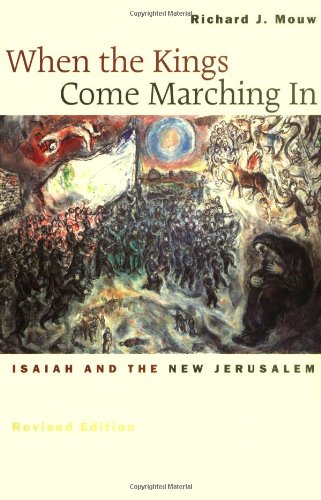 only
– send you also a free copy of one of my all time favorite books, a little book that
is as life-changing as any I know on these topics, Richard Mouw’s lovely When the Kings Come Marching In: Isaiah
and the New Jerusalem (Eerdmans; $15.00.)
You know (and you will know better, if you read the Richards — Middleton and Mouw) that humankind was given the grand task to “tend
and keep the garden” which, as Genesis 1 puts it, means we are to “fill the
Earth.” This so-called “cultural mandate” implies God wants us to cultivate or “fill”
creation by developing its glorious potential. From schools to CD players, from games to governments, art to astrophysics, humankind
has filled the Earth. Mouw reminds us that the Psalmist claims that the Earth
is the Lords and the “fullness thereof” which is an allusion to the
“filling” – which is to say, the development of human culture, skyscrapers and all. God must love the Beatles and Monet and chocolate and ipads,
perhaps. In the famous “wealth of
the nations” passage of Isaiah 60, this filling, this stuff, the cultural
artifacts (like lumber from Lebanon) are renewed and purified for the new
creation, another signal that we are not destined to inhabit some disembodied
heaven singing worship songs for eternity. Isaiah and John imagine a new city filled with good
stuff, animals and culture and restored civic life. “What are [the international commercial vessels] the ships of Tarsish doing here?” Mouw asks?
I hope you wonder that, too. Knowing at least a bit about what God is working towards will help us discern norms and patterns for our engagement in culture, now. We will give you this great book for free if you order
Richard Middleton’s A New Heaven and a
New Earth right away. While
supplies last, naturally — we’re not in the new Earth yet, so we have some limits. Our offer ends November 16, 2014.
The BookNotes offer of 20% OFF A New Heaven and a New Earth remains indefinitely, of course,
but we can only give away the Mouw book for the next few days. I hope you agree that these two books, one on sale and one for free, could be very helpful for you and yours.
BookNotes
DISCOUNT
ANY ITEM MENTIONED
20% off
order here
takes you to the secure Hearts & Minds order form page
just tell us what you want
inquire here
if you have questions or need more information
just ask us what you want to know
Hearts & Minds 234 East Main Street Dallastown, PA 17313 717-246-3333
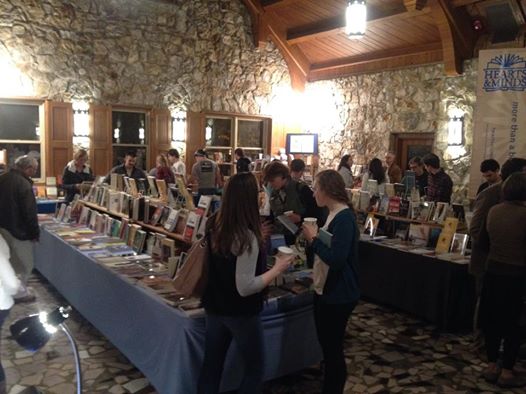 are doing there at that small, liberal arts college tucked into a mountainous cove in the Black Mountains of North Carolina. Doing workshops and selling books and speaking there, serving their “Faith and Vocation Symposium,” was surely one of the most memorable and rewarding things we’ve done this year. Thanks to folks there for hospitality and receptivity (and for help with the book packing!) It was a whirlwind event, but very meaningful for us.
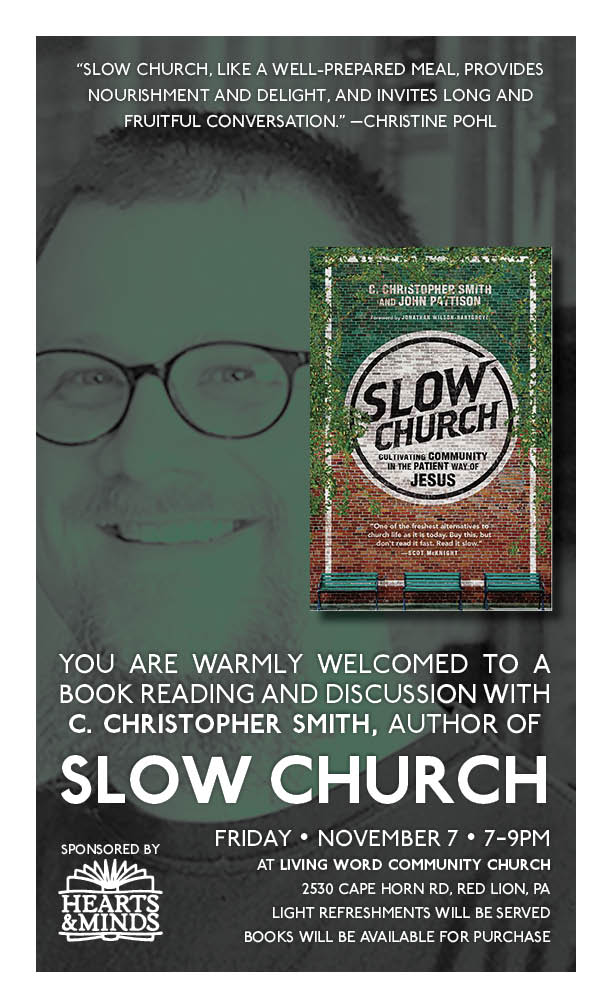 Chris, starting at 7:00 pm over at the nearby Living Word Community Church, 2530 Cape Horn Road, Red Lion, PA. (We’re very grateful for their support of our occasional projects, and their great coffee bar, free parking and warm space to host a book signing like this.)
 down, practicing spiritual disciplines, keeping Sabbath, focusing on quality, being deeply faithful rather then merely popular, we too often are undone by our own bad habits and co-opted imaginations. (Alan Fadling’s An Unhurried Life: Following Jesus’ Rhythms of Work and Rest is just one recent book that I found very, very helpful and wise in this area.) As Jamie Smith has reminded us in his stunningly important Desiring the Kingdom, our passions and desires and habits and practices are most often informed more by the secular liturgies of the world than the often thin formation generated within the local church.
 slow food theme, each unit of the book is envisioned as one of a three course meal.)

 he Way of Tea and Justice: Rescuing the World’s Favorite Beverage From It’s Violent History Becca Stevens (Jericho Books) $22.00 Maybe you know the deep, profound, tender, feisty writings of this strong woman, who has given us lovely, thoughtful, good books in the past. Her own memoir, called Thistle was powerful and wonderfully written. Here she tells the story of her cafe and soap-making business that employs former prostitutes and addicts, giving them a new lease on life. Who knew this work with Thistle Farms and the Thistle Stop Cafe would end up not only being central to new stories and new lives for countless woman who have been abused, trafficked, silenced, but has become part of an astonishing movement to bring freedom and fair wages to women producers worldwide where tea and trafficking are linked by oppression and the opiate wars. As it says on the inside cover, “in this journey of triumph for impoverished tea laborers, hope for cafe workers, and insight into the history of tea, Becca sets out to defy the odds and prove that love is the most powerful force for transformation on Earth.”
 rayer: Experiencing Awe and Intimacy with God Timothy Keller (Dutton) $26.95 I probably don’t need to tell you that Tim is a thoughtful and articulate spokesperson for historic, Reformed faith, and is situated in Manhattan doing successful ministry with some of the world’s leading artists, financiers, designers, movers and shakers, along with the ordinary, forgetaboutit New Yawkers. Skeptic, seeker, struggler — anyone wanting a mature, no-nonsense, theologically mature exploration on the meaning and practice of Christian prayer will find this exceptionally valuable. Given that Tim’s own wife and he himself have suffered serious health issues (not to mention the stress of such a high-profile, demanding leadership calling) it should not come as a surprise that they have learned to practice daily prayer, and have considered its meaning, carefully, deeply. What might be surprising is how it didn’t come naturally, and how he has had to ponder, think, study, and obey the commands (and take in the promises) of the God of the Bible. Rev. Keller, as you might guess, is not fully comfortable with some of the more subjective mysticism floating around out there, and he does a good job distinguishing Christian spirituality that is wise and grounded from more trendy sorts of fascination with the inner life. More should be said, but this is an important book, a rare substantive contribution to a field that is loaded with titles, some good, some less so. Agree with all his conclusions or not, take up all his suggestions or not, this is very higly recommended.
 ierce Convictions: The Extraordinary Life of Hannah More — Poet, Reformer, Abolitionist Karen Swallow Prior (Nelson) $24.99 Oh my, where to begin? I want to read this because I don’t know much about the remarkable woman who came alongside William Wilberforce in his on-going struggle against slavery (perhaps you recall her small role in the film Amazing Grace.) I am sure such a valiant woman’s story will be very, very valuable to many, and I for one need to know more about this era, and her role. Secondly, Karen Swallow Prior is the smart and sassy author — her first book was a memoir about influential books in her life — and I think I’d line up to buy whatever book she had on offer after that brilliant debut. And, then there are these magnificent, ebullient blurbs: sometimes you pick up a book just because so many people you really respect rave about it. From the foreword by Eric Metaxas (whose earlier book on Wilberforce was fantastic) to Richard Mouw to Mark Noll to Ann Voskamp to Leonard Sweet, many are insisting it is one of the best of the year. Sweet (who knows a thing or two about the Brits in this era, by the way) writes, “Here is that rarity of a book: scholarship of impeccable rigor that’s also a compulsive page-turner. Reading Karen Swallow Prior feels like a privilege.” Yes!
 with this release, Brazos shows themselves to be one of the most important presses in the North American religious publishing landscape. I’ve been waiting for this sequel to The Shape of Living for, oh, gee, maybe fifteen years. I read that book about the time my father died in car wreck (not realizing there was a chapter on death) and it took my breath away. Subtle, nuanced, deep, beautiful without being flamboyant, this wise, thoughtful theologian has given us practical theology and a spirituality of life itself. It isn’t simple, but it is eloquent.
 he ZimZum of Love: A New Way of Understanding Marriage Rob and Kristen Bell (HarperOne) $24.99 I suppose you know Bell’s pushing the boundaries, very creative, delightfully interesting and poetic writing style. I think you know he speaks to and for many, many people of diverse faith. I think he brings a lot of very helpful, Biblically-informed insight, and here he writes — perhaps almost like he did in that amazing little book on grief (Drops Like Stars) about a very personal, human situation: marriage. Tzimtzum is a Hebrew word, used at least in the Rabbinic traditions, as a way of getting at this energy of of creation. It’s about mutuality, and I suppose it is fair to say this new book includes a little sciency stuff, a little theology, a little self-help practical advise rooted in the deeper mysteries of grace, something built deep into the very fabric of the universe. There are some funny dialogues between Rob and his wife, and one I read touched me right away.
 (Dutton) $27.95 I am sure you know: this guy is a way too talented follow, an amazing writer, a great conversationalists, a fabulously entertaining storyteller, funny as all get out (yes, it is true, he used to write for Veggie Tales) and his early books were very clever, straight one questions-and-replies for seekers and skeptics. This sort of brings all of this together in an amazingly energetic study and apologetic for that one-word title that has been appropriated by everybody from C.S. Lewis (always worth re-reading) to the smarmy tele-evangelist that is hardly worth watching for a moment. Yes, this topic has been done and redone, explored well, and poorly. This books has tons of fun and exemplary endorsements — from the hilarious Susan Isaacs and very smart actress to the artist Makoto Fujimura to the Daily Beast journalists Kirsten Powers.
 od’s Wider Presence: Reconsidering General Revelation Robert K. Johnston (Baker Academic) $25.99 Wow, I have got to get to this, and soon. Johnston is one of the premier faith and film scholars, having written widely about the common grace that comes to us through engagement with the arts, and specifically, the art of cinema. As Michael Frost says, “Johnston weaves a marvelously rich tapestry that opens up our understanding of how God’ whispers to us through nature, conscience, and culture. Who else could reference baroque art, Gerard Manley Hopkins, Ingmar Bergman, C.S. Lewis, and Star Wars in such a scholarly and yet readable fashion. I thoroughly enjoyed every page.”
 500 pages of this in a few days over a weekend — my friend Jeff blessed me generously by giving me an early manuscript that he somehow acquired, and I’ve hardly been happier all year. What a read! How fun to revisit old songs and earlier albums, learning about them all.
 with this (8 CDs, one an entire disc of previously unreleased or rare releases) and a video of concert footage, as well as a 90-some page booklet that is said to be beautiful. It retails for $149.99 but we will sell it on sale, for $20.00 less– $129.99, if you just have to have it. It, too, is called Rumours of Glory: Limited Edition Boxed Set.
 mall Talk: Learning from My Children About What Matters Most Amy Julia Becker (Zondervan) $15.99 Becker writes about faith, family, and disability for parents.com, the New Yorker Times, The Christian Century, Huffington Post, etc. Her first book (A Good and Perfect Gift about “a little girl named Penny” was excellent, and widely admired. (It was named one of the Top Ten Religious Books of 2011 by Publishers Weekly.) This just came in today, so I haven’t yet read any of it, but we all know that sometimes God uses the smallest voices to teach us great truths. The three main parts of these essays are “Holding On” “Letting Go” and “Growing Up” and I think it looks very, very good. excellent writers I admire give rave reviews — women like Margot Starbuck, Rachel Marie Stone, Ellen Painter Dollar, Rebekah Lyons. Looking for a smart, entertaining,reminder of the joys and issues of parenting, by a beautiful, thoughtful writer. This looks fabulous!
 oul Feast: An Invitation to the Christian Spiritual Life Marjorie J. Thompson (Westminster/John Knox) $17.00 This newly revised, expanded, updated edition just came out, and I’m glad it did. It carries a new foreword by the always eloquent Barbara Brown Taylor (as well as the classic one by Henri Nouwen.) Whenever anyone asks about good primers on spiritual formation, or a handbook for deeper growth, this is always one of the first I think of. From the contemplative practices of meditation to the corporate practice of worship, from Bible study to prayer, this offers nuanced, wise insights and helpful, good advice. She worked for over a decade as the Director of Congregational Ministry with Upper Room Ministries. We recommend this as a tool for your work, or, as Taylor says, “a map to living water, along with a packing list of what you might need…”

 ubversive Christianity: Imaging God in a Dangerous Time Second Edition Brian J. Walsh (Wipf & Stock) $15.00
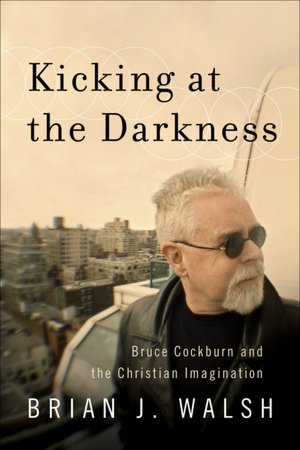
 Christian worldview, and the socio-religious / cultural critique is strong there. (The brief history of dualism and rise of secular idols is exceedingly helpful.) But it becomes even more incisive and impassioned in Subversive… In some ways Walsh was following the journey of his favorite Canadian rock star, whose Humans and Inner City Front albums documented his shift from a pleasant, folkie vibe informed by his evangelical conversion (“Wondering Where the Lions Are” you know) to a multi-ethnic, urban neighborhood and the music’s increasing awareness of the deep brokenness in our lives, personally and culturally. Cockburn was singing more about “the falling dark,” about regret and toxic pollution, social injustice, his divorce, even as Walsh took up similar concerns. Brian was involved in the work of urban mission and public justice, trying to say no to the idols of the age (so clearly explained in The Transforming Vision) and immersing himself in the edgy discourse that eventually found voice in Truth Is Stranger Than it Used to Be (still the best book on postmodernism, and a must read for those interested in the pain of our times
 and an authentic gospel response.)
 cultural resistance was explored in Colossians Remixed: Subverting the Empire (still the best commentary on Colossians, perhaps the best commentary on any Biblical book I’ve ever experienced reading!) Although separated by two decades it isn’t that big of a jump from the punchy, succinct Subversive Christianity: Imaging God in Babylon (catch that important sub-title) and the dense, wide-ranging, spectacular bit of analysis of the dislocating pressures of our nomadic culture in Beyond Homelessness: Christian Faith in a Culture of Displacement coauthored with Hope College environmental science professor, Stephen Bouma-Predigar.
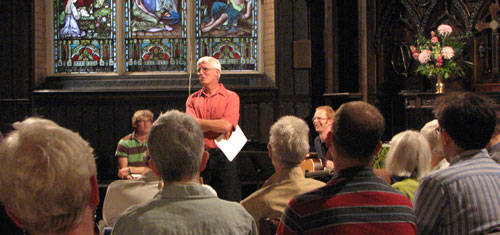
 deep love for the Bible, and his Cockburn-inspired poetic honesty about both (to cite Cockburn songs) the “Lord of the Starfields” and the rim of the “Broken Wheel.” That is, Walsh understood in those years, as now, both glory and pain, creation and fall, goodness and grief. (I don’t think I know anyone who reminds us of this so candidly, especially in recent years on his Empire Remixed blog from his current faith community at the University of Toronto and their Wine Before Breakfast services.)
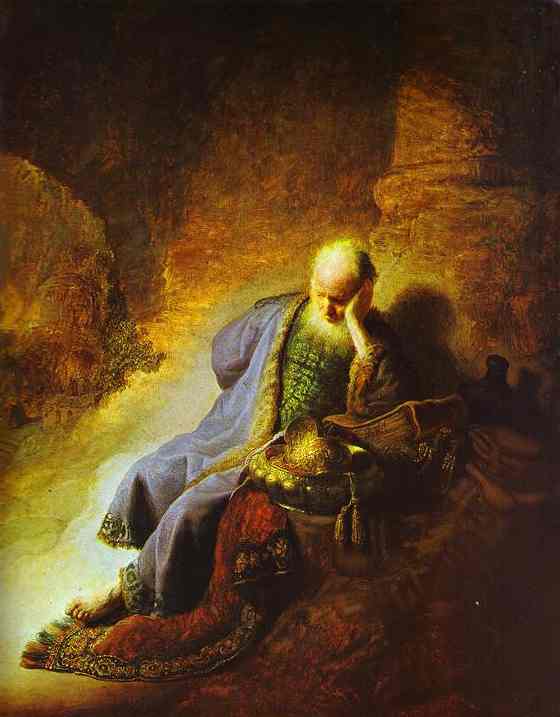 modern scholar and his role in shaping North American political and economic policy, and then a shift to profound Biblical lament.
 have long said that there is no other Advent devotional like this, nothing in print that comes close. It has been out of print for a few years, and we are glad it has been re-issued, with a nicer, full-color cover. (Otherwise, the inside, the handsome fonts and nicely designed pages with a few art pieces by Willem Hart remain.)
 ow — we are just jazzed to tell you about this. We may be one of the very first bookstores to carry this, and it is an honor to be in on its distribution.


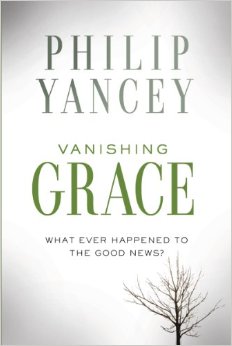 anishing Grace: Whatever Happened to the Good News? Philip Yancey (Zondervan) $22.99 It isn’t every day that a Zondervan book gets a wondrous blurb on the back from rock star St. Bono and evangelical popularizer Max Lucado. Mr. Yancey’s What’s So Amazing About Grace was nearly a landmark book and this could be seen as a long-awaited sequel to that contemporary classic. This new one showcases his trademark journalistic style, story-filled, thoughtful, accessible yet with no fluff. I am confident that it will be very, very compelling. The back jacket says “Yancey explores how grace can bridge the gap between Christian faith and a world increasingly suspicious of it.” Oh my.
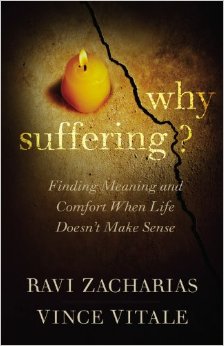 hy Suffering? Finding Meaning and Comfort When Life Doesn’t Make Sense Ravi Zacharias & Vince Vitale (FaithWords) $22.00 Many people have wished for a book like this from Ravi, one of the most articulate, thoughtful and elegant apologists of our time. A convert (in his young adult years, after considering many, many world religions and philosophies) from Hinduism, he has been a caring, if rigorous, evangelist. Not every evangelical leader grapples so honestly with Nietzsche, drawing on Alvin Plantinga and other stunning thought leaders. And (for any old Pittsburgh friends who may be reading) he cites Bill Rowe, who taught for a season at ICS in Toronto. A great cover, too, for this moving hardback.
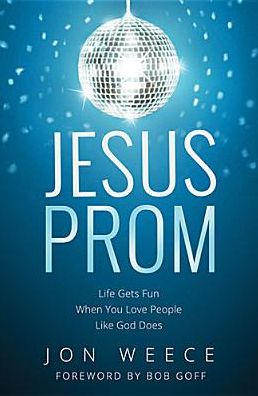 esus Prom: Life Gets Fun When You Love People Like God Does Jon Weece (Nelson) $16.99 My Nelson sale representative is a good man, and patient with me as I ply him with questions, sometimes needlessly snarky ones, suspicious as I am of some pop evangelical books these days. “Jesus Prom”? I almost cussed. What in the heck does that even mean? And why does a book about Jesus need a disco ball on the cover? My ever-patient salesman pointed out the foreword by Bob Goff, a man I admire immensely. And then he explained that at the heart of this book is the story of a church that holds a full-on, big time prom for students with special needs. I almost cried hearing about it, glad for a church like this, doing stuff like this. Jesus loves people. Wouldn’t it make sense, Weece asks, “that those who claim to love Jesus would love the same people Jesus loves?” This central Kentucky church pulls off this extraordinary event, and if Goff says it’s the real deal, I believe him. I can’t wait to read this, and am eager to promote the new DVD curriculum, too. When Beth and I used to work for an Easter Seal Society Camp in the summers, by the way, dancing with wheelchair-bound kids and young adults at the “Final Banquet” was a highlight of each week and, if truth be told, remains a highlight of my life. This book, I’m telling ya, will touch your heart.
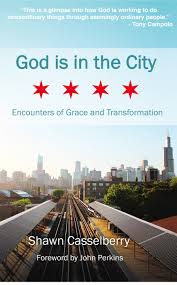 od is in the City: Encounters of Grace and Transformation Shawn Casselberry (Mission Year Life Resources) $17.00 Aww, I’ve been waiting for this. I hope you know Mission Year, an organization Tony Campolo started back in the day, that invites young adults to take a year to live in community in really rough ghetto neighborhoods, and share life with the poor, walk alongside those who are disenfranchised, and experience God in solidarity there, maybe bringing some fresh gospel light to often broken communities. A hero/acquaintance of ours, Leroy Barber, was their Executive Director for years, and wrote a book or two that we have truly loved. (I hope you saw my review of Red, Brown, Yellow, Black, White…) How folks come to learn neighborliness, and find goodness in raw places has been a theme in Mission Year — it isn’t about suburban college kids coming in to save the lost, poor people. Shawn Cassleberry is an advocate for God’s justice and the current head of Mission Year and this handsome volume (which is really attractively designed, and produced by them as a fund-raiser) looks splendid.
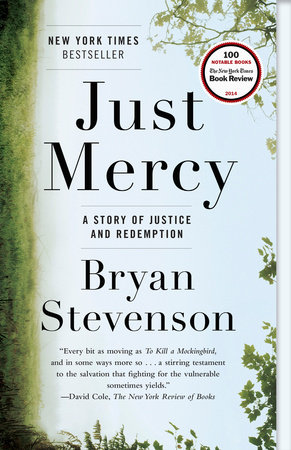 ust Mercy: A Story of Justice and Redemption Bryan Stevenson (Spiegel & Grau) $28.00 Speaking of Campolo: years ago we heard Tony tell the story of an African American boy who grew up poor and ended up through God’s grace at Harvard Law School. He could land any prestigious job he wanted, a top-of-the-class black man with such a prestigious degree. The graduate eschewed worldly success and fame and wealth, though, discipled into the ways of Christ as he was, and went back to poor, rural Alabama, and served the oppressed there, working, then, with organizations like the Southern Poverty Law Center, and helping get those who claimed innocence a fair trail, often off of death row. A friend of mine and I asked Campolo po
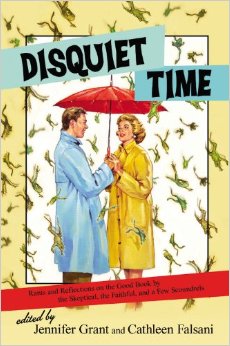 isquiet Time: Rants and Reflections on the Good Book by the Skeptical, the Faithful, and a Few Scoundrels edited by Jennifer Grant and Cathleen Falsani (Jericho Books) $24.00 Well. This will absolutely need a longer review, but know this much: it is a wild and woolly anthology of all sorts of little pieces — some remarkably well written, some really funny (Susan Isaacs) some a bit snarky (okay, a lot snarky) — asking whether this or that weird part of the Bible is really so, or may somehow not, or something other, or whatever it all may mean. “The Bible is full of not-so-precious moments” they say (and if that doesn’t win you over, you may not get the allusion to those awful little cutesy figurines.) From murder to mayhem to sex and slavery, the Bible is perplexing. Instead of turning a blind eye to the difficult (“and entertaining,” they slyly note) passages, these authors take ’em head on.

 from small and struggling churches who we served again this year at Wee Kirk — Scottish Presbyterian-ese for small church. Every year we gather at the great Laurelville Mennonite camp in Mt. Pleasant, PA, and hear great speakers, take in important workshops, and eat lots of food, laughing and worshiping with mostly rural and small town Presbyterians friends. They buy a lot of books from us, and we thought we’d share a few of the best sellers, or at least some that were nicely discussed. I have to be quick — let us know if you have questions, or want other such resources.
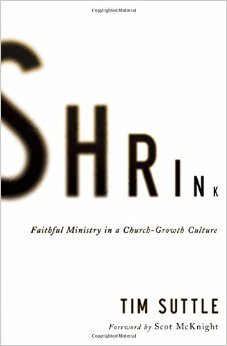 hrink: Faithful Ministry in a Church-Growth Culture Tim Suttle (Zondervan) $16.99 I raved about this from up front, indicating how very well written it was, about how great the foreword by Scot McKnight was, and for all the great pull quotes on nearly every page that are themselves great gems for those who aren’t serious readers. It is dedicated to pastors of small churches, and carries endorsements such as this by Chris Smith (author of Slow Church), “Shrink is one of the wisest and most significant evangelical books that I’ve read in the last decade; it is essential reading for every pastor and church leader!” I agree. This book is extraordinary, offering critique to our fascination with bigness and growth, and calling us to fidelity and maturity.
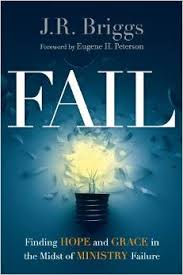 ail: Finding Hope and Grace in the Midst of Ministry Failure J.R. Briggs (IVP) $16.00 I have written about this before, and couldn’t wait to share with these church leaders the great story behind this, Briggs own dis-ease with the “success” and big-time glitzy visions of so many other church conferences and books and websites. His own “epic fail” lead to shame and discouragement, and not a few Wee Kirk friends share this sense of rejection and betrayal that comes with ministry failure. The introduction by Eugene Peterson is wise and good, and if the story of J.R.’s coming to the transforming role of not measuring up to the heroism and big successes of the church-world enterprise can help folks recover from their pain and cope with their disillusionment, we are more than glad to promote this. It was a big hit, for good reason. Highly recommended.
 Beautiful Disaster: Finding Hope in the Midst of Brokenness Marlene Graves (Brazos) $15.99 Two things we find everywhere we go: many people are hurting, or have been through serious anguish in their lives, and people of faith long for greater experiences of God, and are interested in practicing spiritual disciplines which make room for God to work in their lives. That is, the two things this book is about — spirituality during hard times — is exactly what folks need. Marlena (who grew up in rural North-Western Pennsylvania, where many of our Wee Kirk friends are from) has been through a lot, tells her story well, and offers Biblical insight about God making a way in the wilderness. Beth and I knew it would be a hit.
 ila: A Novel Marilynne Robinson (FSG) $26.00 What a joy to let people know that this new book released this very week. As you hopefully know, it is a new novel, the story about the wife of the pastor in Robinson’s beloved Pulitzer Prize-winning novel Gilead. We sold Gilead, Home, and Lila. That Robinson herself is not only a brilliant storyteller but a Calvin scholar is pretty great. We had announced this as pre-order but Wee Kirk was the first place I got to announce it. Nice.
 omewhere Safe with Somebody Good Jan Karon (Putnam) $27.95 Of course our small-town church folk loved hearing that there was a new Mitford book, and that we had autographed copies of this handsomely made hardback on hand made it that much better. Fun. If you order any soon, we’ll send a true, autographed copy (no extra cost.) While our supplies last.
 magining the Kingdom: How Worship Works James K.A. Smith (Baker Academic) $22.99 Last year I regaled the Wee Kirk community with the urgency of reading anything by Jamie Smith, and challenged them to dig deep into the importan
 easting on the Word Advent Companion:
 ercy & Melons: Praying the Alphabet: Thanking God for All Good Gifts, A to Z Lisa Nichols Hickman (Abingdon) $15.99 Lisa is nearly a neighbor to some of the Wee Kirk gang, and even for those who do not know her they have recalled that we had promoted her creative proposal for creative Bible study, Writing in the Margins, last year (with a contest of people who could show us their own scribbled-in, marked up Bibles.) This year, I explained about just how very lovely and very eloquent and very moving this new set of meditations is. I’m glad we’ve told you about it here before, but thought you should know how popular it was at this gathering. How ’bout that tag-line? “Thanking God for All Good Gifts, A to Z” which wonderfully links the so-called sacred and secular.
 ong Walk to Freedom: The Autobiography of Nelson Mandela Nelson Mandela (Back Bay Books) $18.00 There was a wonderful workshop by a bold urban activist (and dean of student life at Pittsburgh Theological seminary, John Walsh) comparing and drawing on the social ethics of Martin Luther King and Nelson Mandela for our own contemporary social problems. Despite the reality that most small churches in this region are primarily white, and not particularly political liberal, these good folks wanted to learn more about racism, poverty and resistance to injustice. Mandela’s huge memoir was a national best-seller and the basis of a powerful movie. The Los Angeles Times Book Review reviewer said, “Irresistible. One of the few political autobiographies that’s also a page-turner.” The Financial Times raved, “One of the most extraordinary political tales of the twentieth century… for anyone interested in the genesis of greatness.” Many have put it on their life-long, best-ever, must-read lists. Three cheers!

 Conspiracy: Returning to the Radical
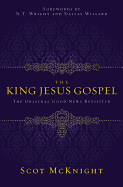 Jesus Gospel: The Original Good News Revisited (Zondervan; $19.99)
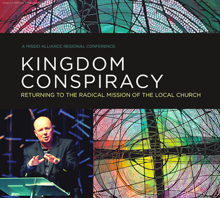 n this very contemporary assessment,
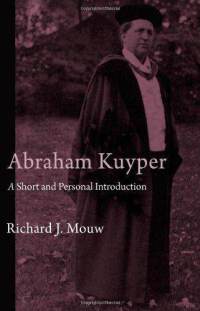 and Personal Introduction; Eerdmans; $16.00) and ponders “Kuyperian
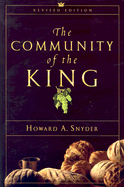 radical Wesleyan Howard J. Snyder.
 Of course, McKnight mostly expounds the
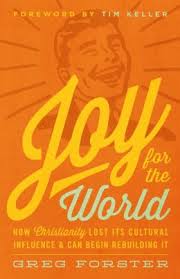 oy for the World: How Christianity Lost Its
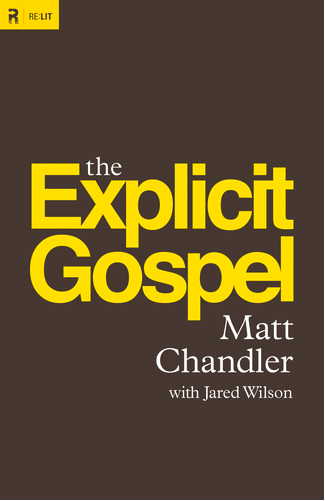 he Explicit Gospel

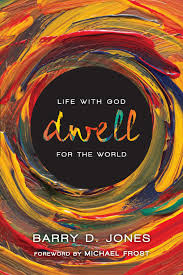 longer review than I want to give it here, and I am confident that it will be receiving a Hearts & Minds year’s end “Best Book of 2014” award — it is certainly that good. And that important. With a great foreword by Michael Frost, this wonder book makes the case that with all of our talk about being missional, we are often missing the need for being intentional about our inner formation (or, conversely, with those who are most interested about our interior lives and spirituality, often unhinge these from the missional project of God’s redemptive work in the world.) So we often get it wrong, imbalanced at best. This is age old stuff — I’ve written before about my own fascination with authors like Thomas Merton and Parker Palmer who have written profoundly about the relationship between what Betty O’Connor used to call “the journey inward and the journey outward.” Yes, Psalm 24:1 reminds us that all of the Earth is the Lord’s and the “fullness thereof.” This implies that God shows up everywhere, and that our redemption is — as the popular Acton Institute DVD puts it For the Life of the World. This is a book that made me think about holy worldiness, about incarnational spirituality, about mystical earthiness, about what another author calls “missional spirituality.” It is so, so good!
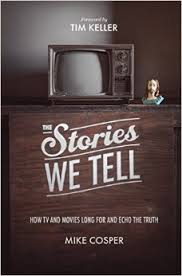 Keller (Crossway) $15.99 I will be brief: I adored this book, so enjoyed it, thought it was one of the very best books exploring pop culture that I’ve read in a long while. Some (like the must read Eyes Wide Open: Looking for God in Popular Culture by William D. Romanowski) are broad and lay the Biblical basis for thinking faithfully about the popular arts. Others examine certain films or trends within pop culture — I hope you know David Dark’s extraordinary Everyday Apocalypse: The Sacred Revealed in Radiohead, the Simpsons, and Other Pop Culture Icons which is my favorite example of this.) This new one, though, Stories We Tell, has an exceptionally clear and well balanced framework, is both pious and open-minded, celebrating the imagination God has given us and our disposition to tell and enjoy stories. Ponder the subtitle a bit — this so rich. But it also spends most of its time looking at TV shows, past and present, and is as up to date as any book like this, including some ruminations on current reality shows. The cover — that retro look with an old TV and a cheesy Jesus statue — is maybe supposed to appeal to the hip or ironic, but please know that this is a truly earnest, insightful, joy-filled and very helpful book that is very current. Given how much time people spend watching TV and movies, I think this is a very important resource to have around.
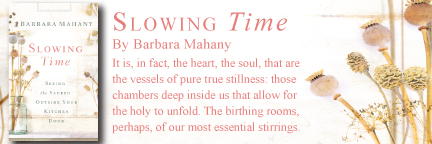 lowing Time: Seeing the Sacred Outside Your Kitchen Door Barbara Mahany (Abingdon) $15.99 The important industry journal Publishers Weekly said this was one of the top 10 books of the fall (in the “religion” category) and that made me eager to see it. Abingdon has been doing some very lush, well-written, interesting books of late (think of Debbie Blue’s breathtaking Birds of the Bible or the two books, mentioned above, by Lisa Nichols Hickman, or the wonderfully little book on prayer called The Book of Not So Common Prayer by Linda McCullough Moore; I think editor Lil Copan and wordsmith Lauren Winner have something to do this glorious output.)
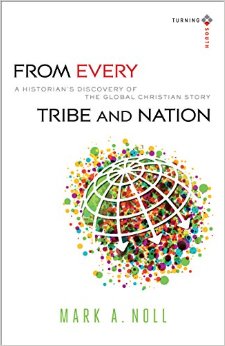 (Baker Academic) $19.99 I have raved about this unfolding series of books before; this new one is the third in the “Turning South” series, which tells the stories of “Christian scholars in an age of world Christianity.” First up was Journey Towards Justice, the fabulous memoir/argument by Nicholas Wolterstorff who told passionately of how he came to take up his work as a political philosopher, inspired by meeting suffering Christians in Palestine and South Africa. Next was Reading a Different Story: A Christian Scholar’s Journey from America to Africa a wonderful, slim book by literature professor Susan VanZanten who wrote wonderfully about her coming to appreciate the stories of the developing world. This new one shows how this leading historian, by offering his own personal account, has come to do his work, and particularly his recent work on the global Christian story. Rave, rave, reviews grace the back, from Richard Mouw, George Marsden, Philip Jenkins and Robert Louis Wilken. Who knew that Noll was such a good storyteller — he tells of his own boyhood growing up Baptist in Cedar Rapids, Iowa, his early love of baseball, and, now, to his groundbreaking work on global faith.
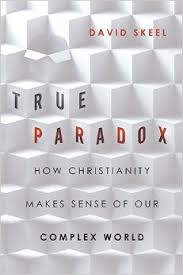 $15.00 I admire this legal scholar, a Presbyterian professor of Corporate law at University of Pennsylvania Law School. (Not too shabby, eh?) who has often engaged in thoughtful forums on campuses, nicely representing Biblical notions of goodness, justice, tolerance, and truth. He’s a very impressive guy.
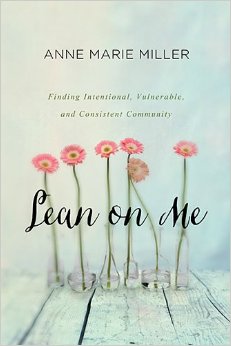 (Nelson) $15.99 Some of us know Anne Marie Miller as the former Anne Jackson, who wrote the funny, fabulous, helpful book on the epidemic of church leader’s burn-out called Mad Church Disease and the engaging, even horrific at times, yet wonderful collection of stories (and art pieces) of things people feel they couldn’t share in church, Permission to Speak Freely: Essays and Art on Fear, Confession, and Grace. This book seems to be the natural follow up to these two, and posits — in her beautiful, winsome, engaging style — that real community is the antidote to burnout and shame, exhaustion and loneliness. In other words, in religious institutions where “mad church disease” is so prevalent, and yet where we are discouraged from talking about our brokenness, fears, or foibles, we simply have to re-doubled our efforts to seek grace-filled, Christ-centered, life-giving friendships. It says on the back cover, “we live in a world and a generation where the world ‘community’ is often discussed. But how genuine and authentic are your relationships, really? Miller noticed an important tension all of us must recognize in order to have life-giving friendships. “We desperately want to belong yet as the same time, we yearn for independence.” Yeah, there’s that. I am very glad that Anne has attempted to tackle this. She’s gonna tell it like it is, I’m sure.
 centered, mature. It’s a book decrying the hip new trend of being over-the-top passionate, extraordinary, world-changing, transformational, emerging, missional, big and bold, radical, celebrating instead the rhythms of the ordinary life of discipleship, and the ordinary means of grace. Offering “ordinary and content” in part two instead of “radical and restless” is a useful rubric, and it works well, bringing grace and truth to those of us a bit too hyped up on making a difference. Mark Galli notes that “Horton’s Ordinary is, well, extraordinary.” And indeed, it is. As a confessional Presbyterian, especially, I’m fond of this approach (even though it would be reasonable to worry if such a message might create luke-warm faith or cultural accommodation. Horton does not think so, and I suspect he is right.)
 Piper & David Mathis (Crossway) $17.99
 Allow me to sneak in another new Lewis title, too, that just arrived last week: this one is written by a pastor of Adult Discipleship and College Ministries at Bidwell Presbyterian (USA) Church in Chico, CA, although he had previously served at the prestigious Faith Avenue Presbyterian Church. In this new paperback he shows us how Lewis can be a good guide for us in our own “ups and downs” as we cope with the hardships of our own faith journey. Lewis felt the absence of God in his life, he wrestled with grief, with doubt, and he knew temptation. Why haven’t we unpacked this more?

 new and I’ve only skimmed them, enough to say that they all deserve more then pith, even more than brevity. I’m too busy, though, for much more, now, but these are so good, I just had to tell you that we have them here in stock, on sale for BookNotes readers.
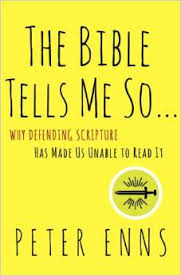 he Bible Tells Me So: Why Defending Scripture Has Made Us Unable to Read it Peter Enns (HarperOne) $25.99 Not too many professional Bible scholars have such deep history in places like an evangelical Christian college and Westminster Theological Seminary, where Enns was edged out having taught there for 14 years, as well as the more mainstream Jewish and liberal Protestant scholars at Harvard Divinity School where he was profoundly tutored about what to do “when the Bible doesn’t behave.” And none are as witty and entertaining as Enns as he walks us through the Bible’s big problems (Canaanite genocide, just for instance) and how to best understand them all. Rachel Held Evans says it is a “game-changer” and Brian McLaren says it is “super-enjoyable, highly informative, disarmingly honest, and downright liberating.” Tony Campolo writes, “I, as an old-fashioned evangelical have some problems with what he has written, I think that many other readers will find answers to some of the most perplexing questions that they have about the Bible.”
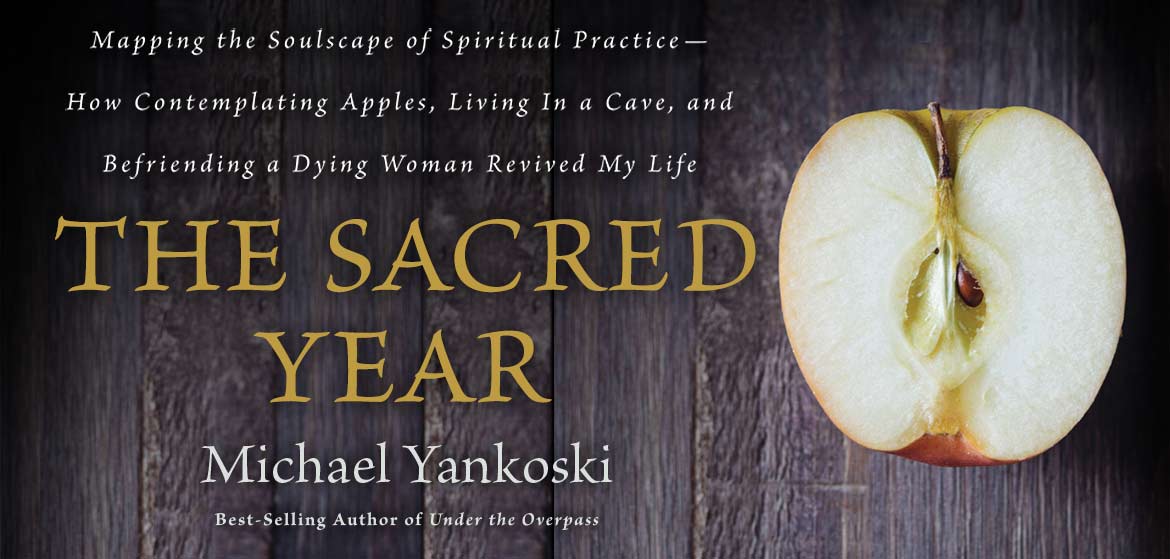 he Sacred Year Michael Yankoski (Nelson) $15.99 All right, I’ll admit it, I was drawn to this because of the cover. Yankoski is an energetic speaker and his book about living with the homeless — Under the Overpass — is fantastic: clear, passionate and inspiring. He received his MA at Regent in British Columbia and is a novitiate Oblate of St. Benedict, which is pretty cool. Here is what it says on the lovely front cover: “Mapping the Soulscape of Spiritual Practice — How Contemplating Apples, Living in a Cave, and Befriending a Dying Woman Revived my Life.”
 he Making of An Ordinary Saint: My Journey From Frustration to Joy with the Spiritual Disciplines Nathan Foster (Baker) $14.99 We know Nathan is a storyteller — he wrote a captivating, raw book about the growing distance he felt from his famous father (Richard Foster) and the subsequent disillusionment about Christianity he faced as a troubled young adult, and how he wisely challenged his dad to hike a bunch of Colorado mountains with him, in a last-ditch effort to restore their relationship. (That was the very nice Wisdom Chaser: Finding My Father at 14,000 Feet.) I heard the two of them do a splendid, entertaining tag-team talk at the Calvin College Festival of Faith and Writing last spring, and have been waiting for this book ever since. In a way, this is a second generation Celebration of Discipline as the hip, young son tells of his own frustrations (and restorative glories) of practicing the classic spiritual disciplines. Ruth Haley Barton says it is “Delightful…. simply delightful” and Eugene Peterson says “Read this book and find yourself a new companion as you follow Jesus.” Yeah, that’s it. He is a honest, ordinary, reliable companion. Richard Forster, by the way, offers a nice foreword and good reflections throughout.
 resence and Encounter: The Sacramental Possibilities of Everyday Life David G. Benner (Foreword by Richard Rohr) (Brazos Press) $15.99 I am really drawn to these kinds of books, about the spirituality of the ordinary, the mystical embedded in the mundane, practicing the presence of God and so forth. Some are truly luminous, beautifully done and so very helpful. I am sure that this book — inspired by the author’s early confrontation with the “I-Thou” worldview of Jewish philosopher Martin Buber — will help us realize that attentive presence is what allows for real encounters to occur. As it says in the advanced promo: “Drawing on over thirty-five years of experience integrating psychology and spirituality, Benner examines the transformational possibilities of spiritual presence and encounter in fresh, exciting, and practical ways.” There are end-of-chapter reflection exercises for individuals or groups, and these are profound and experiential (that is, not just discussion-based study questions.) This is a bit deep, and may be important for those longing for greater discernment about God’s presence in their daily lives.
 $15.99 I hope you recall how we raved about Shinabarger’s previous book about a more simple — and creatively generous — lifestyle (called More or Less
 ed Brown Yellow Black White: Who’s More Precious in God’s Sight? A Call for Diversity in Christian Missions and Ministry Leroy Barber with Velma Maia Thomas (Jericho) $26.99 I have been with Leroy on several occasions and just love him — he’s real, funny, dynamic, caring, and a true leader, bringing together folks to care about racial justice, wholistic ministry, urban renewal and more. He told riveting short stories of urban youth and how Mission Year communities work for renewal in their lives and in their neighborhoods in the creative small book,New Neighbor, and then wrote a more general book which I adored called Every Day Missions. (If you haven’t used that in your small group or book club, it works really well.)
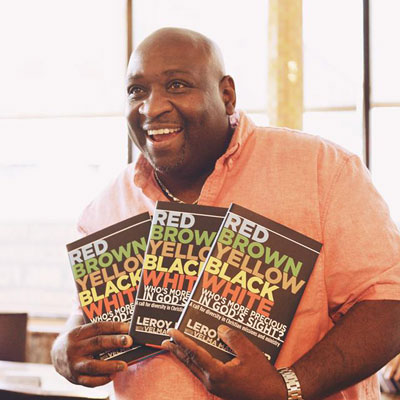 y within US ministries, and the implications of our racial dysfunctions upon who ends up taking up mission projects, domestically and globally. I think this may end up being a much-discussed, very significant book as it brings some things together about multi-cultural diversity and racism and missions that no other book has yet done. If you are in any para-church organization or mission agency, especially, it is simply a must-read — the sooner, the better, too. As Jim Wallis says, “It is the start of a much-needed conversation on diversity in missions leadership from a man who has lived out these ideas in his own life in an exemplary way.” Ground-breaking, yes, but with practical, action-oriented solutions. Let’s spread the word on this so the those who need to grapple with it learn about it.
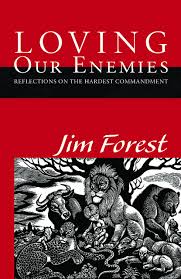 oving Our Enemies: Reflections on the Hardest Commandment Jim Forest (Orbis) $20.00 Those of us who have been involved in peacemaking ministries or anti-war activism know well the name of this author; he was an international leader of Fellowship of Reconciliation, a long-standing, vivid activist and advocate for nonviolent resistance, and wrote what some still think are the best biographies of both Dorothy Day (All Is Grace: A Biography of Dorothy Day) and Thomas Merton (Living with Wisdom: A Life of Thomas Merton.) I met Forest years ago, and admire his courage and depth and ecumenicity. He is now an Orthodox Christian (and has written a few good books on icons, too), living in the Netherlands. I am sure this will be very, very moving, insightful, a mixture of deep spirituality, Biblical study, and a bit of savvy public theology. Rowan Williams says it is “a statement of the gospel challenge and the gospel hope so clear that it is frightening; this is real, this is possible, this cannot be written off…” Even if one isn’t drawn to the bigger social issues of the day, all of us must learn to forgive, after all, and this certainly is a very helpful guide.
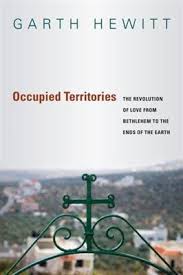 ccupied Territories: The Revolution of Love From Bethlehem to the Ends of the Earth Garth Hewitt (IVP) $16.00 This surely deserves a more substantive review, but for now you may know that Hewitt was a British evangelical folk/rock singer, doing thoughtful, engaging Christian music with friends of his such as the late Mark Heard and other socially conscience faith-based troubadours. (Has he ever played with Bruce Cockburn? I wonder.) Hewitt has worked for the Micah Trust traveling all over the world as a storyteller and advocate for just solutions to some of the world’s most grueling problems, and has written widely, and beautifully, including liturgical resources for peace and justice. I have a friend who knows him well, who worked on this manuscript a bit, and who assures me it is one of the best books in many a year!
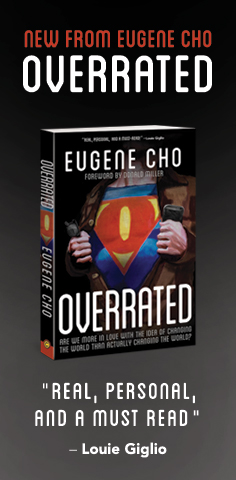 verrated: Are We More in Love With the Idea of Changing the World Than Actually Changing the World? Eugene Cho (Cook) $15.99 I could hardly put this down, and could hardly stop grinning, so glad to hear an evangelical leader say this mature, wise, honest stuff about the recent rhetoric about changing the world, transforming the culture, serving the poor, et cetera, et cetera. (And, might I add, honest about his own foibles and lifestyle, motivations and family life.) The subtitle — Are We More in Love With the Idea of Changing the World Than Actually Changing the World? — says it all, but you will want to be warned that the author (who not only is a pastor but the visionary founder of One Day’s Wages) does in fact, want to change the world. His organization works to alleviate extreme global poverty and Cho does want to recruit us to make choices in our own lives to be more giving and active, more Christ-centered and faithful in our service to others. There’s a cool foreword by Donald Miller, too, but listen to these blurbs on the back, with which I heartily concur:
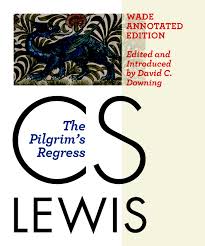 he Pilgrim’s Regress – Wade Annotated Edition C.S. Lewis; edited and introduced by David C. Downing (Eerdmans) $25.00 Wow! C.S. Lewis fans have been wishing for a volume like this for decades, and when word was out that this was in the making, it has been eagerly anticipated. It is a needed book, and will help enhance many a perplexed reader.

 from Shakespeare’s
 honest about our own fears
 right, alongside Petra and Amy Grant (and, yes, all of Bruce
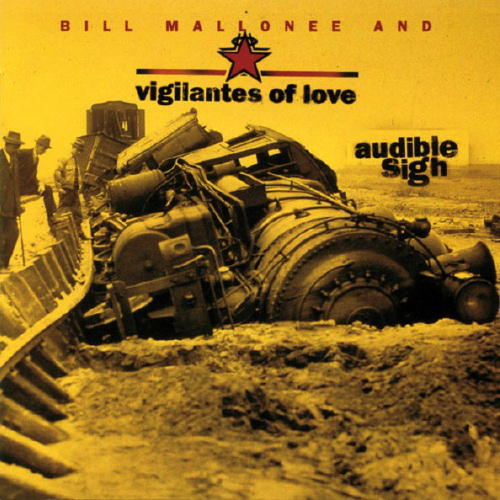
 ut I just can’t write about the new
 shout and the whispers,

 songs inspired by Jack Kerouac, from allusions to miners
 nother slow, sad song achingly, but
 community, even if of misfits,