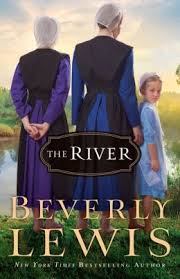
In-Store Author Appearance: Beverly Lewis promotes her new book, The River (And, yes, I give a shout-out to Springsteen and more.)


The River author Beverly Lewis (Bethany Publishing House) $15.99 BookNotes sale price 20% off; $12.79.the river banner.jpg

Although we’ve shouted it out on Facebook and Twitter, we
thought we should share here for those that were wondering that our “Evening
with Author and Activist Jeremy Courtney” went very well. Jeremy and his wife
Jessica, who features prominently in Jeremy’s book Preemptive Love: Nurturing Peace One Heart at a Time, did a great
job sharing with us about their brave work as peacemakers in Iraq, forging
creative collaborations with Arabs, Kurds, Christians, Muslims, Jews and
others… all focused on the audacious goal of finding a structural remedy to the
backlog of tens of thousands of sick Iraqi kids who need heart surgery to save
their lives.  The conversation
moved from dramatic stories and pictures of medical staff working in pediatric
surgery theaters to broader themes of peacemaking in such a tense and violent
context. 

Through stories and slides, pictures and even a live song (Jeremy
hails from Texas so his love for folkie blues music is strong) they humanized
the people and cultures of what was once the land of Babylon. Yes there is awful stuff going on, but there is also goodness and beauty.  Their stories were so good, and I thought of them when I read this powerful, splendid short piece at the High Calling blog by our friend Denis Haack called “The Power of Storytelling: From Understanding Ideas to Indwelling Them.”  

Iraq was, of course, once known as Babylon to whom Jeremiah wrote a famous letter (Jeremiah 29:7) from which we have the famous Biblical command to “seek the peace of the city.” Perhaps storytelling is part of that.

We had some lovely refreshments that Beth called “a Pennsylvania Dutch interpretation of Iraqi snacks” — Hadgi Bada, pistachio cookies, cardamom tea and stuffed dates were all fun to share. 

Our local newspaper, the York Daily Record, did a front page story the next day, too.

We have some autographed Preemptive Love paperbacks left, and ourpreemptive love.jpg on-line price here at
BookNotes has been 20% off. They usually sell for $15.00; our sale price is just $12.00.  Let
us know if we can send one. Just use the order form which is secure for credit
card digits, or give us a call.

Jeremy left Central PA and headed in to mid-town Manhattan to
tape an episode of of the talk show with Mike Huckabee; I hope the Preemptive
Love Coalition
lets their followers know when it will air. Then he was off to London to offer a briefing with members
of Parliament.  Pretty great, eh?

And so, thanks for caring about the things we do here at
Hearts & Minds.  I know some of
you prayed for us, and others pre-ordered the paperback. And some of you helped
spread the word to others who might want to order from us, or who might even be
able to attend.  I know some of our
friends and followers have contacts in our area.

***

On the heels of that, I’m going to ask you to share some new
information today, too, if it seem right.  Is there somebody to whom you could forward this?

We are hosting an autographing reception to meet and greet
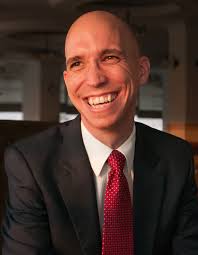
New YorkBL head shot.jpg Times best-selling author Beverly Lewis, this Thursday (September 11,
2014) here at the shop, starting at 7:00 pm
.  There is free parking available at several lots nearby, and on the street in front of the store.

Her new book is called The River.

We have
enjoyed sponsoring a Beverly Lewis event before, and were delighted with how many
different sorts of folks enjoy her Amish-themed fiction.

As I said at the
Jeremy Courtney gig as I was announcing it – and I’m sure a few of my super
intellectual and sophisticated friends maybe thought I was reaching a bit to
connect the events – it seems to me that the heart of most of Lewis’
easy-to-read, breezy books are, in fact, of enduring, classic stuff: identity
(who are we? to what community do we belong?), hospitality (how do we relate to
others? who’s in and who’s not?) and can we get along despite our differences?  And what does it mean to know God’s grace and do right?

From Romeo and Juliet to the profound
work of Chaim Potok to Preemptive Love
(and, just to show off, I’ll add Exclusion
and Embrace
the heady, award-winning theological work of Miroslav Volf
written in the context of the Serbian-Croation war and Bosnian genocide) this is familiar and fearful, yet vital territory.  If part of the gospel is about showing
hospitality to “the other” and serving “the stranger” and working towards
reconciliation, certainly learning about those who have had to cope with
forgiveness after being excluded, shunned or betrayed, can only
be an asset to our discipleship. 

Even if it comes to us in a fun, stirring story.

AThe River cover Lewis.jpgnd so, we can suggest that although Beverly Lewis is a genre
writer and some may find her work a bit obvious with
the Christian messages and sentimental lessons learned, we are very proud to host her,
glad for her support of our shop, and eager to have you tell those who might
enjoy it, inviting them to swing by Thursday evening to meet her. She has an obvious care for her fans, and a heart to share the gospel through her storytelling and writing. Of course you may not know anyone nearby, but you can buy an autographed copy, here on line of almost any of her work — we’ve got it all.  We have plenty of her adult and kid’s
books, and we can easily have her autograph some for you or yours. (If you want them inscribed to a
person, just be sure to tell us the name, hopefully before Thursday evening!)

Beverly Lewis was born in the heart of Pennsylvania Dutch
country, but now lives (where she occasionally writes with her husband David) in
Colorado.  Her own mother’s
dramatic story of leaving the Old Order Mennonite tradition is told in her most famous book The Shunning which has sold more than one
million copies and was made into a Hallmark Channel movie. (In 2007 her similarly
popular novel The Brethren was
honored with a Christy Award.)

Here is a wonderful, enchanting video of Beverly briefly talking about her young years and her early love for writing, keeping a journal, doing short stories, and some of the early inspirations of her creative fiction.  It is very nice.

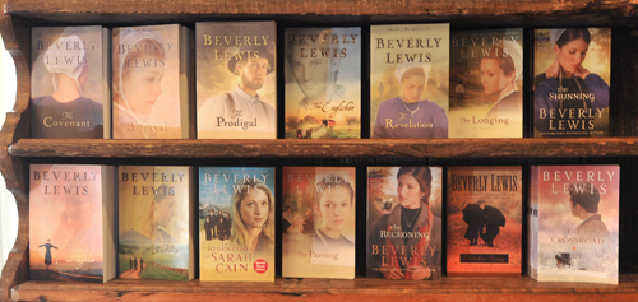
row of Bev Lewis books.jpg

Beverly Lewis has written over 25 adult novels, 6 lovely picture books, over 50 youth books, a cookbook, and more…

the river banner.jpg

The River is her newest novel, just released
last week. Beverly is doing a 25-stop tour to promote the new book and to have
the opportunity to meet her fans and readers.

We are pleased to host Beverly in part because she is so
gracious, and because so many of our local customers appreciate her books.  (One local Presbyterian leader is
related to her, and vouches that some of the landmarks and descriptions of the
homestead in The Shunning are spot on accurate!)

But I myself am drawn to this new story for a couple of
reasons. Let me explain.

Interestingly, a friend who is herself a sophisticated author
of non-fiction religious books offered a question just the other day at her
facebook page: are there rivers in America that we might consider holy or
sacred? (What does that mean, I asked, as I speculated about the iconic and
mythic role of the Mississippi in Americana roots music, which gave rise to gospel,
blues, and rock and roll, not to mention the title track from Paul Simon’s Graceland.)

Two things worth sharing:
scores of people immediately shared stories of their favorite rivers and why they
are spiritually attracted to them, revealing their own sense of place. This all was quite lovely and reminded me not only of
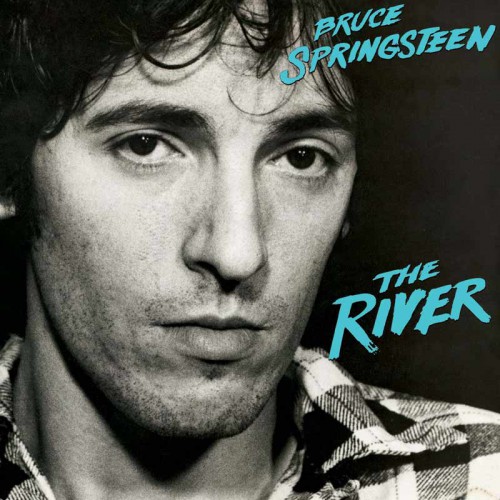
SPRINGSTEEN_RIVER_5X5_site-500x500.jpgWendell Berry and his novels that include a vivid sense of (rural) place, but
it also, oddly, brought to mind that powerful short story of a song, “The River,” by brother Bruce Springsteen. I can hardly listen (especially to the more raw, acoustic
versions) of that song without being overcome with anguish. The river may have some deep, good attraction for many, and maybe even some
redemptive meaning in the Springsteen story, but it ain’t easy, that’s for
sure; at the end “the river is dry” he it continues to haunt him.

One of my
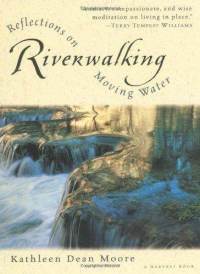
favorite nature writers, Kathleen Dean Moore has a book called Riverwalking: Reflections on Moving Water whichriverwalking-reflections-on-moving-water-kathleen-dean-moore-paperback-cover-art.jpg exquisitely explores
the deep beauty of bodies of water and those who appreciate them. I can hardly think of rivers without thinking of that wondrous book. But, again, this excellent writer and serious thinker is aware of the foreboding nature of moving water.

Around here, rivers are dangerous
(especially our own mighty Susquehanna with sink holes and weird currents and deadly low-head dams.) Some around here who enjoy boating and
swimming in rivers travel the tributaries of the Susquehanna, and love the many
streams around these parts, including the namesake river alluded to in this
tragic Beverly Lewis tale, the Conostoga. The Conostoga River winds its way through Lancaster County like a snake,
twisting and curving in geologically surprising ways. 

The deadliness of the river in The River novel is not due to exceptionallyc creek.jpg bad currents or particularly
bad water features, though.  No, it
came from human error. We learn in the first few pages that the protagonist,
Tilly, who has long ago left the Plain life for modern English ways, is haunted
by a catastrophic accident in which her younger sister drowned, years ago, while
playing in the river.

No need to explain it all, but the plot of this, not unlike
many others in this genre, explores the tensions of broken relationships and
complex ethical dilemmas as two sisters – both no longer in meaningful
relationships with their Lancaster county Amish parents and siblings – feel
compelled to return home to an anniversary celebration of their parent’s
marriage.  Their father is sick and
they surely cannot remain aloof much longer.  But there is this unresolved sadness and responsibility for
what happened at the river. As it asks even on the back cover, “Can they face
the future in the light of a past they can’t undo?”

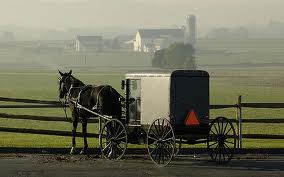
Aamish buggy.jpgmish folks with their rejection of modern technologies and
Anabaptist commitments and old order ways are – it seems dumb to even say it –
quite human. They are not caricatures.  Any fiction that tells a story from within a subculture – Iraqi Muslims, Jewish New Yorkers, 
duck hunting rednecks down South, hipster atheists in Pamish-clothes-sm.jpgortland — can run the risk of
devolving into stereotype, and good storytelling will be careful.  Lewis
runs this risk, of course, in this sort of writing that isn’t attempting
extraordinary nuance. But there are rich
aspects of typical Amish life, and she plumbs them well.  From “letting it all loose” during the infamous rumspringa seasons to the difficulties of offering forgiveness (see Donald
Kraybill, Steven Nolt, and David Weaver-Zecher’s Amish Grace and the sequel, The Amish Way) there are fairly universal human emotions at play, and
to write stories about those who are, or are no longer, within this close-knit
subculture is certainly fascinating. 

The River is not only about the consequences of this tragic loss
of a littleThe River cover Lewis.jpg one, and the large matter of regret,  but is also about mended fences, reconciliation, learning to
love across differences. Is the river a symbol of danger? Is it a symbol of the
flow of healing that can wash over us? 
Or maybe it is not a metaphor for much, just a huge geographic fact in
the background of this story set in a particular geographic region.

Anyway, I suspect you know about, and have opinions about,
this mass marketed genre of Amish fiction.  If you are a brainy type and want to know more, we heartily
recommend Valerie Weaver-Zercher’s important semi-scholarly work, Thrill of the Chaste: The Allure of Amish Romance Novels (Johns Hopkins
University Press; $24.95.) It studies the
development of the genre and wonders about the appeal. Her thesis is fascinating and her study
– of everything from the book cover designs to the plots themselves, to the
small sisterhood of popular authors in this field – is well worth reading for anyone interested in
the interplay of religion in American commercial fiction.

All of which is to say I’m in the middle of this brand new
book by Mrs. Lewis don’t want to spoil anything, but am eagerly awaiting her visit with us here at Hearts & Minds. 
If you want us to ask her anything for you, or want any books — early
Christmas presents for mom or grandmother, perhaps? — just let us know.

By the way, I was struck by the importance of the river in The River (which may be why I get paid the big bucks — tee-hee) and wrote most of the above before I noticed, just a bit ago, an “author’s note” as an afterword on pages 315 – 316 of the book.  

She writes, 

The Conestoga River captured my attention one October afternoon two years ago — it seemed to call to my heart. I was preparing for the final shoot of the long day, the last segment of my documentary, “Glimpses of Lancaster County with Beverly Lewis” [which you can see at her website.] We were set up right near the historic Hunsecker’s Mill Bridge, and I had walked down the grassy slope to review what I’d planned to say, inching my way toward the wide river. There, as I stared at the rushing water, Tilly’s story presented itself to me, as did little Anna’s drowning. In that moment I knew I had to write The River, with all of its heartrending yet redemptive threads.

I will long remember the surge of emotions, the power of the story. And the way the river seemed to demand top billing in my lineup of Eden Valley characters. 

BookNotes

SPECIAL
DISCOUNT
ANY ITEM MENTIONED

20% off
order here
takes you to the secure Hearts & Minds order form page
just tell us what you want

inquire here
if you have questions or need more information
just ask us what you want to know

                   Hearts & Minds 234 East Main Street  Dallastown, PA  17313     717-246-3333


OP-ED COLUMN SENT TO OUR LOCAL NEWSPAPER – Preemptive Love author Jeremy Courtney to speak at First Presbyterian Church, YORK


I thought my BookNotes review last week of Jeremy Courtney’s book, Preemptive Love, just out in paperback, ended up pretty good, so I do hope you read it.  It’s really a spectacular book, page-turning, informative and inspiring. 

And, we are hosting an event with Jeremy here in the area this Friday night. 

Here is an early (longer) draft of an op-ed column I sent to our local newspaper, which they chose not to run.  Somedays I rub my eyes at the silly stuff that gets in the paper, but I suppose I’m biased here. 

Hosting Jeremy is a great, great privilege and the event is going to be awesome, fun, even, amidst the horrific news of what is going on in Iraq these very days.  We are grateful that our church has partnered with us to bring this event to Central Pennsylvania.

Here’s how I tell tried to tell local folks about it.

In recent weeks the story of the terror waged in Iraq by the
army known as ISSI has exploded across the news and social media.  We have learned of religious hatred and
political crisis.  Some of us
despair of the reports of genocide while others rant against the political
party that we think has been most irresponsible.  The situation is tragic. There is very little good news
coming from the Middle East these days.

Cpreemptive love.jpgentral Pennsylvanians will have an opportunity to hear an
aid worker just in from Iraq, the founder of a medical NGO there, Jeremy
Courtney, who may be one of the most fascinating people I have ever met. Hearts & Minds Bookstore in
Dallastown named Courtney’s book, Preemptive Love: Pursuing Peace One Heart at
a Time
, about his work with sick children in Iraq, one of the Best
Books of 2013. The first Friday of
September (9/5/14) we will be the first bookstore to officially launch the new paperback
edition of Preemptive Love with a guest appearance by the author himself.

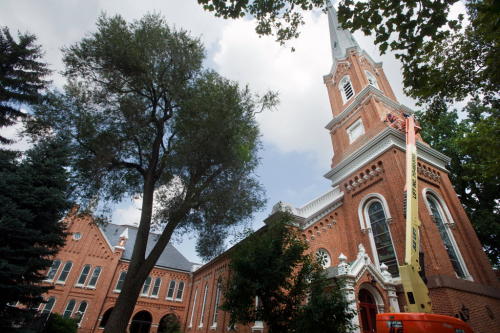
The historic sanctuary of First Presbyterian Church in
downtown York is a perfect venue to host Mr. Courtney and his family, whose work in Iraq invites
racial and ethnic reconciliation by way of collaborating in the dramatic effort
to do much-needed pediatric heart surgeries. A binding 1967 document of the
Presbyterian Church (USA), called a “confession,” insists that peacemaking is part of the high calling
of followers of Christ, and First Presbyterian has long attempted to serve as
agents of reconciliation. In the tense days of race riots in York, First
Presbyterian merged with Faith Presbyterian, bringing together as a signpost of
inter-racial unity a primarily black church and a primarily white one. In the hot heat of the 1980s Cold War,
FPC hosted meetings of the nuclear freeze campaign, insistingfpc.jpg that treaties for
bi-lateral disarmament were necessary and in keeping with a faithful politics. We hosted Russian clerics in a time when
that was not popular (indeed, an international religious service was picketed
by out-of-town hawks.) Drawing on our Confession of 1967, we use the word “reconciliation” a lot.

Like most
churches, the congregation has developed partnerships with ministries in other
lands, even sent our own health care teams overseas. We’ve hosted classes on peacemaking, understanding Islam, explored racial
concerns, and have taken other initiatives to explore how the gospel leads to
wise and fruitful relationship-building for the common good.

Ahh, but none of us have done the sort of audacious ministry
as has Mr. Courtney, whose work has earned him an Islamic fatwa, or death threat, and has landed him in foreign jails.  

Why?  

By helping Arab kids get life-saving heart surgery in Israel,
where they met, perhaps for thePLC logo.jpg first time, real Jews, who showed themselves to
be kind and good. As Mr. Courtney
explains in his book, Preemptive Love: Pursing Peace One Heart at a Time, these medical miracles did just what the religious
extremists who opposed them feared: kids and their families learned to love
their enemies!  The standard-fare
demonization of enemies can’t stand when it is undermined by preemptive love.

Courtney’s PLC organization experienced further obstacles and agony in helping save
lives of countless children in the Kurdish region of Iraq when it became clear
that the only hospital in the region able to serve them was in Turkey
(interestingly, a Johns Hopkins affiliate.) Those who know the anguish of the people of Kurdistan know
that the Turks have committed their own genocide against them and have repressed
them for centuries. Can love win
in the effort to overcome such long-standing mistrust and animosity? Can a legacy of violence and abuse be
overturned? 

Courtney thinks that
the power of love can do what our bombs cannot: by building trust, families and
village can be transformed.

child with chest scar.jpgOf the children his Preemptive Love Coalition has served and
whose lives were saved by multi-ethnic, inter-faith cooperation, he says “they will
carry the scars on their chests into law school and parliament and tell a new
story of a new Iraq…” 

Perhaps we, too, can play a part, telling a new story, even here.

* * *

Medical missions are always complicated in the developing
world when infrastructure is problematic, funds lacking, and procedures
untried. When the needs include pediatric heart surgery, in a war zone, amongst
people groups who are hostile to Western ideals, the mission is extraordinarily
fraught.  And yet, this young Texan
continues to believe that love can overcome the worst of odds. He has been betrayed and threatened,
and yet, his Preemptive Love Coalition is finding success.  As he quickly says, he and his wife and
teammates have been shown hospitality and grace by new Iraqi friends and global
colleagues. Together, they are
learning to do the heart-mending operations in Iraq, building local capacities
and infrastructure. The backlog of kids needing heart surgery is immense (Iraq
has one of the highest amounts of childhood heart defects in the world, apparently thanks
to the enhanced radiation warheads used in the first Gulf War and the horrific gassing
of the Kurds by the brutal “Chemical Allie” serving the dictator Saddam
Hussein.)  And they are doing
something about it, in trainings they call The Remedy.

The war, the embargo, the limited worldviews, the radiation
and the poison gas have all conspired to create one of the most urgent health
crises in the world. Jeremy
Courtney has become a hero in the efforts helping to end the backlog of kids
awaiting life-saving surgery. 
While some still threaten him and his team, many more are joining the
Coalition, coming to believe that their motto —  “Love first, ask questions later” — is not only the need in
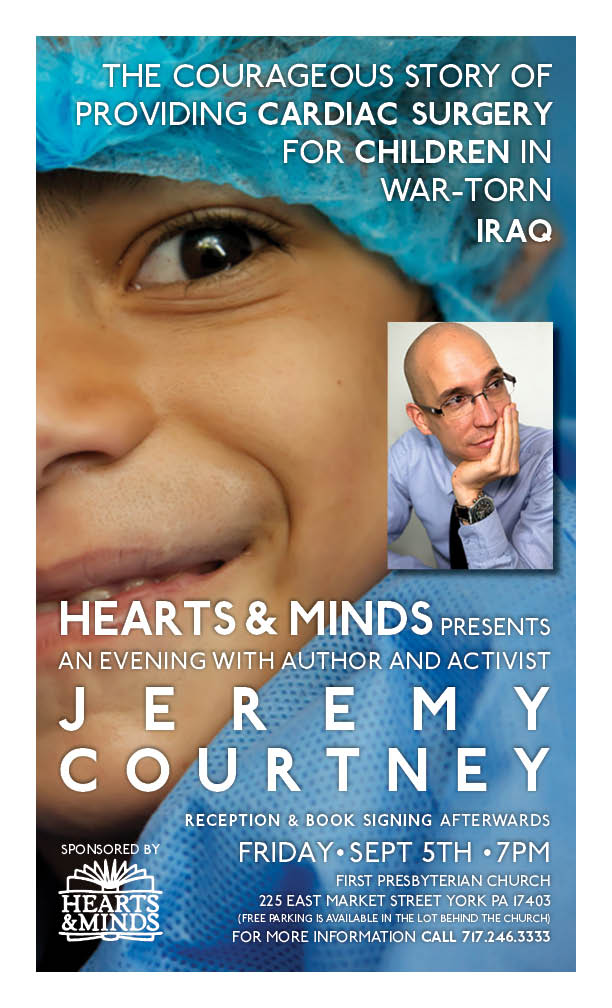
Iraq, butPreemtive Love poster.jpg perhaps, a way into a new way of life for us all.

SEPTEMBER 5, 2014

You are invited to hear Mr. Courtney as he talks about his
book Preemptive
Love
and his organization, The Preemptive Love Coalition, September 5th
at 7:00 pm at First Presbyterian Church at the corner of Queen & Market in
York.  There will be a reception
afterword, with light (Middle Eastern) refreshments and a time for autographing books. There is free
parking behind the church. 

The LA Times said,
“this is the best news to come out of Iraq in a long time.” 

We can experience it right here in
Central PA.


WE CAN SHIP AUTOGRAPHED BOOKS

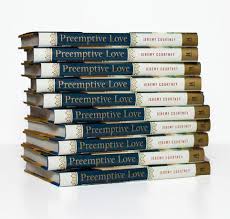
stack of preemptive love books.jpg

If you want an autographed copy of the book, we may be able to get you one.  Just tell us if you want the hardback or paperback, and to whom you want it inscribed. If we have books left over Friday night, we’ll get one for you, and ship it, happily.   Use the link to the order form, shown below, or give us a call. As they might say in Arabic speaking Iraq:  Shukran Jazeelan


BookNotes

SPECIAL
DISCOUNT
Preemptive Love:
Pursuing Peace One Heart at a Time


20% off
order here
takes you to the secure Hearts & Minds order form page
just tell us what you want

inquire here
if you have questions or need more information
just ask us what you want to know

                   Hearts & Minds 234 East Main Street  Dallastown, PA  17313     717-246-3333

Visions of Vocation: Common Grace for the Common Good by Steven Garber (IVP) ON SALE at Hearts & Minds

visions banner.jpgI just love hearing stories of how churches have special liturgies or ceremonies to honor people’s work lives.  Of course, some do this during the Labor Day season; more than once I’ve helped organize litanies as people brought to the front of the church items from their workplace. 

moveable feast tt.jpgThe great new book that I mentioned last week, A Moveable Feast: Worship for the Other Six Days (ImaginationPlus; $12.00) by our friend Terry Timm, offers a whimsical, smart, and inspiring theology of worship that realizes and develops the inherent relationship between corporate Sunday worship and our various offices and tasks to which we are called on weekdays. (In fact, there is a wonderful appendix that offers an entire service around the themes of work, with worship aids, prayers and litanies and such.) It might be worthwhile Labor Day meditation for some of you.

Mainline denominational churches, it seems, were hot on this topic twenty or thirty years ago (with good books by standard denominational publishers.) Now, evangelicals have been the most thoughtful and — to use the overused word  — robust in promoting a uniquely Christian view of work, based on a mature theology of calling and vocation, drawing on themes such as common grace, public faith, the renewal of institutions, the dignity of labor, and the common good. From Os Guinness’ seminal and still essential, eloquent volume The Call: Finding and Fulfilling Your Life’s Purpose (Thomas Nelson; $17.99) to the exceptionally insightful book co-written by Timothy Keller and Katherine Leary Alsdorf, Every Good Endeavor: Connecting Your Work to God’s Work (Dutton; $16.00), we have seen in the last decade or so a remarkable consensus of the importance of themes of calling and vocation, leading to intentional reflection on the meaning of labor and the spiritual practices needed to be faithful and fruitful in the work-world.

I have written here about why all this is so vital and exciting for us (check out that live James Taylor video doing “Millworker” this Labor Day!) Here is a piece I wrote about this topic, inspired after a forum on faith & work here in our area with Steve Garber. Here is a piece I wrote after one of the Redeemer Presbyterian Center for Faith & Work annual conference. (I hope you find the rumination and reviews helpful, but the special sale announced there is over.)

Here is a large bibliography on vocation and work that I did a few years ago which some have found helpful. It is one of the most-visted pages at our website, I gather.

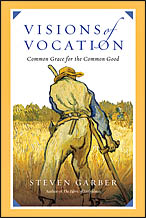
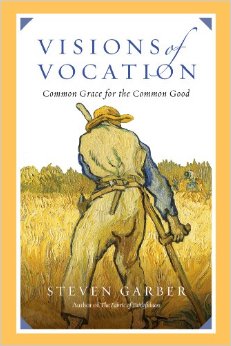
visions of vocation.jpgThrough many, many of these conversations and in the development of new ministries, non-profits, think-tanks and publications from coast to coast, there has been one person, our good friend Steve Garber, author of Visions of Vocation: Common Grace for the Common Good (IVP; $16.00; our sale price = $12.80.) 

Steve has encouraged city-wide organizations helping professionals think and serve faithfully in their varied professions, and has helped seminaries develop curriculum to equip pastors to think about their priestly work among workers. I have written before how he has been influential in my own life,and my small connection to his earlier book.  He has been influential, and especially among our friends in Pittsburgh who run the Jubilee conference for college students. I know there are other strategic leaders and authors, but Steve has nurtured relationships and conversations around themes of caring for God’s world, taking up our places in various spheres and careers, that have been transformative and consequential. He has been showing up behind the scenes in church basements and coffee shops, workshop rooms, or retreat center spaces for years, inviting people to deeper discipleship, thoughtful, relevant orthodoxy, and an “all of life redeemed” sort of wholistic Kingdom vision.

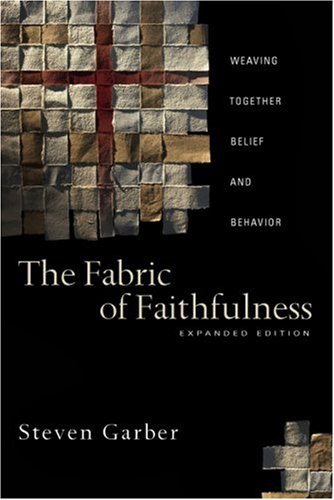
Garber’s reputation as a mature thinker, eloquent speaker and author, and a caring friend andfabric of f.jpg teacher grew nation-wide after the publication of his much-acclaimed book about the years beyond higher education called The Fabric of Faithfulnness: Weaving Together Believe and Behavior (IVP; $17.00; our sale price = $13.60) In that book he uses pop culture and heady philosophers and cultural critics to ask the huge questions of those trying to figure out the meaning of their lives: what does it mean to know something, and how can I keep on, with Christian convictions lived out with character and integrity, in community with friends. I has been very positively reviewed and is esteemed by very reliable authors and leaders. The new Visions of Vocation book has echoes of similiar themes, and in some ways it is a sequel. Yet, it seems more accessible, and will surely attract a broader audience. I think VoV is a good place to start if you haven’t worked through FoF.

So, again, this new book — which we helped launch into the world at Jubilee in February — is called Visions of Vocation: Common Grace for the Common Good. I had the great privilege of reading an early manuscript and so knew how very good the book was before it was released. We confidently announced as we took pre-orders last winter that it would doubtlessly be the 2014 “Book of the Year” and I have no reason, now more than a half a year later, to back down from that big claim. There are some fantastic books that have come out this year, but this truly is the most eloquent, wise, interesting, stimulating, and valuable book I’ve read in years. It surely will be the Hearts & Minds Book of the Year.

VoV speaks volumes of Steve’s long obedience in the same direction as he pursues his own calling to be a raconteur and traveling professor and friend to many, helping folks “weave together believe and behavior” as they consider their own tasks and callings and places to serve.

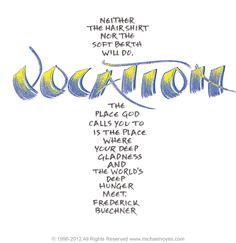
You know that famous Buechner quote about our vocations being that place where “your deepvocation - buechner quote.jpg gladness and the world’s deep hunger meet”? Garber agrees, it seems, that “neither the hair shirt nor the soft berth will do” and he helps people explore that, day by day by day and although he doesn’t say so, Visions of Vocation could be seen as an extended mediation on that potent quote.

I could ramble for way too long about the merits of this exceptional book, or citing the rave, rave views on the cover and inside pages (wow!)  but instead I will be relatively focused, naming four things I like about it, things that I think will benefit you as a serious reader. 

THE FIRST REASON

If you are familiar with the language we often use here — the integration of faith and learning, aVoV.jpg wholistic Kingdom vision, the unfolding story of God’s redeeming work in the world, taking faith into public life — you will know that Garber’s worldview and vision are consistent with (in fact has helped shape) our perspective here. I hope you know I am sincere when I say that if you appreciate our work at the bookstore, our curating of books at events, and these BookNotes reviews, you should get this book!

That is the first thing. Steve, without using much of the breathy rhetoric and lingo to which I so often resort, stands in the tradition(s) that have helped evangelicals learn to speak so passionately about cultural engagement, social change, and a long-term vision of living with integrity “in the world but not of it.” He reads Kuyper, Al Wolters, N.T. Wright, writes for Comment magazine, The High Calling blog and more. Steve is humble, increasingly an older, capable friend to rising leaders, trusted because he himself has been guided by some of the best evangelical leaders of the previous generation, those that have held together solid theology, deep piety and prayer, and a non-partisan, sensible, radical Christian view of life and times. From Francis Schaeffer and Os Guinness to J.I. Packer and John Stott, Steve has been informed by lasting friendships with important leaders.

And, he reads widely, carefully, delightfully, even, awed, often, by good lines from Dickens and Marx, Walker Percy and Camus, Chaim Potok and Wendell Berry, the contemporary novels of Thomas Wolfe and classics like Victor Hugo and, always, the poetry of Steve Turner. For those who want to know these things, he often cites Church of South India missionary Leslie Newbigin and Jewish Biblical scholar Abraham Heschel. I love a guy who quotes Dutch Calvinist Geerhardus Vos and the famous British Archbishop Rowan Williams, the Lutheran intellectual Jean Bethke Elshtain and the poetry of Madeline L’Engle.

So, Garber gets it. God cares about all of life, we must move from thinking about worldviews to embodying restorative ways of life, and we do that over a lifetime of being shaped by worship and Word, reading and talking, slowly and carefully, drinking deeply from the deepest wells, renewed so that we can be the people God calls us to be in this creation being restored.

SECONDLY

Secondly, not only does Steve’s book call us to this wide-as-life, creation-regained worldview that pushes us to discern our vocations and callings and take up our places in the work God gives us to do, but he does this heavy lifting with eloquence and real tenderness.  He is an excellent writer, knowing how to develop a theme with quotes and stories, Scripture and song, drawing on older authors and the latest sociology, pacing things just so with some sophisticated analysis and some charming prose.

For those who just love a good book, this quite simply is one of the best.

There are many books these days written with whimsy and upbeat energy. These are cool and fun and commendable, especially for younger readers or those who need the hip banter and jokes to keep their interest. But these titles and their authors, I’m afraid, will not last, and will not guide us very deeply, not for a lifetime. On the other hand, I hardly have to say that dense, stodgy works that are dusty and dry don’t help many of us very much, either.  

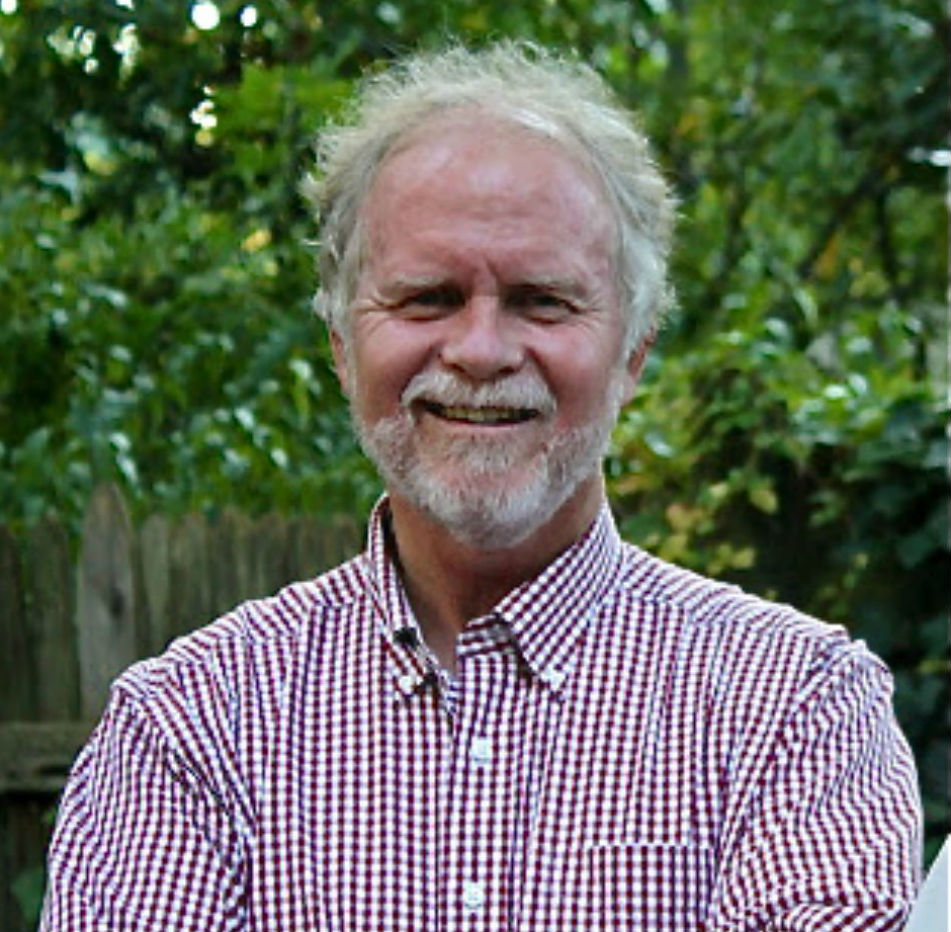
GSteve Garber Jubilee headshot.jpgarber strikes a balance, with his gifted style, his deep knowledge, his mature guidance, and his very stimulating stories, richly told. He delightfully cites movies, mentions meetings with pop icons and rock stars. U2, Mumford & Sons, Dave Matthews Band, are quoted. He exegetes poems and rock songs and films, always offering exceptional insight, gifted as he is at doing these things. He doesn’t just cite a star so he can seem hip to a demographic, or because some editor asked him to lighten up. Steve is one of the most naturally gifted discerners of popular culture who can speak with profundity and intellectual acumen, keeping a foot properly planted in what some call the real world. 

So that’s the second thing: he not only gets the big picture of the Biblically-saturated mind and the way toward a reformingly Christian perspective, he writes really well, striking a rare balance between serious insight and great stories. I truly believe this to be one of the best written non-fiction books of applied theology I’ve seen in a long while. I know that Steve poured his heart into this manuscript for years and years, not rushing to complete it, letting his life and words simmer so they sounded out truth truly and nicely.

THIRD: A MAJOR THEME

Thirdly, besides the perspective and the prose: I think this book strikes an amazing tone of joy and sorrow, of idealism and realism, of honesty and hope. Books like this are all too rare. Many religious books are glib, happy-clappy, or superficial in their positivity. (There are also those that are so harsh and hard that, while beneficial, can be almost too somber or angry, creating agitation in the reader, not wisdom and hope.) So the third strength of this book is how it handles the hard stuff of our lives and our world.


Actually, this is a major theme of Visions of Vocation. That is, it is not just another rumination on the doctrine of calling or the joy of a purpose driven life or a rousing call to make a difference. It isn’t mostly about labor and the work-world, even though that is a large part of the consulting and teaching he does through his remarkable Washington Institute on Faith, Vocation and Culture. If it has “vocation” in the title, but isn’t a book mostly about callings and careers, exactly, what then does he mean by the title?

I think it is mostly this: we are, indeed, called by a covenant-making God who initiates redemptive work in our lives, recruiting us for God’s own purposes in the world. That invitation — that call to us — comes with a large consequence: like Jesus, the incarnate One who models this very calling to serve God, to pray and live “thy Kingdom come, on Earth,” we are called to behold the world, and realize its deep sorrow. This is our vocation: to care for the world as God does, to love, to take upon ourselves some of the aches of our time. If we are not to grow jaded or cynical or apathetic or pessimistic, we will simply have to figure out how to love well despite disappointment. Although not a cheap “self help” book,VoV will help you do that. 

I recall years ago, in a story that is hinted at inVoV, Steve shared how when he and his wife were first married, and she got to know him more intimately, privately, learning of his deepest flaws and foibles, he wondered if, knowing who he really is, could she continue to love him. That is a very fundamental question for us all, isn’t it?  Once we are known, we wonder if people will still love us as much as they did before they saw us as the broken, stupid sinners that we are.  And what kind of a person can do that?

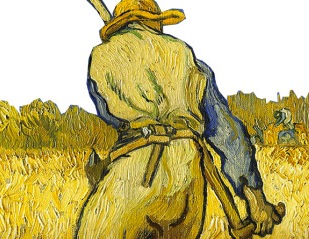
And so it goes, as we are called to care about the world, to serve God in the world, to be Christ’s agents of change in the culture, to take up our own place in the choir, even as we find out that it isn’t as easy as we thought. It is messy. Change the world? I can hardly change myVan Gogh sad man.jpg attitude. Make a difference in politics or business or media or medicine? I can hardly make a difference in my own skin or my own family. It’s a bumpy ride, this journey to live well in a screwy world, and Garber thinks we need a strong and lasting sense of vocation to withstand the tendencies to grow cold, to care less, to give up. We need to internalize deep and solid and fruitful visions of vocation, knowing just what we are called to do and be. 

So, this book, unlike almost any other, gets us to think about what we most care about, how we choose to live, in light of various images and ideas about our calling into the world. Can we know the world, and still care?  Can we care and not burn out? Can our relationship with the rabbi Jesus help us shed tears like He did, to flare up in righteous anger as He did, in holiness and mercy, to reach out and heal hurts, in some way, as he did? Can we be Christ-like image-bearers even in our public lives, in the spheres of influence where we spend our dollars and our days?

As Steve asks, more than once in this profound book, knowing what I know, what will I do?

That question really is the heart of the book.

I mentioned that he tells good stories, and that they aren’t cheap little inspirational nuggets gathered from some writer’s anthology of neat illustrations. Steve walks alongside people — medical researchers stationed in Africa, movies stars stationed in LA, college students stationed in Ivy Leagues colleges, mothers pondering the art and vocation of caring for families — and the stories he tells of them are inspiring and, frankly, somehow extraordinarily meaningful. He has a way of underscoring and illuminating the dignity and meaning of the struggles of these brave folks to serve God where they are, even in their own brokenness. I cannot put my finger on it, but Garber sees into the holy reality of these friends of his, and tells their stories in ways that capture dignity and purpose.

From his pals in Jars of Clay (and their Blood:Water Mission) to his friend Hans who started anb-wm.jpg environmentally-sensitive burger chain using organic ingredients and grass-fed cattle to a Korean friend who works at the World Bank to a Lawrence, Kansas, carpenter guy, a former student of his who now owns his own small construction business, rebuilding homes with integrity, stories are shared as examples of people who are intentional about their live’s callings and the fidelity needed in that arena or responsibility. In each case, these folks have stepped into a way of doing their work that starts with deep knowing. He describes one as a person with “a seriousness about things that matter and a softness of heart.”

One story he briefly tells is of a school teacher who struggled with the deep implications for education found in C.S. Lewis’ The Abolition of Man. Another is of a white South African, now in the states, who tells of his journey towards political action for public justice by his regular reading of the Psalms; yet another friend he tells us about is an Anglican priest who is recasting his vision of ministry, learning to be a pastor to people who take their work and public life seriously. Another couple has a gift of hospitality, serving good wine with good laughter among friends and guests. 

Of them, Steve writes, “People who keep at their callings for a lifetime are always people who suffer. The world is too hard and life too broken for it to be otherwise. And that is true for Deirdre and Claudius.” After describing some of their illnesses and surgeries and hardships, Garber continues, “But they live with gladness and singleness of heart, which at the end of the day is the best that any of us can do.”

As he reflects on this couple and the witness of their lives, he writes,

Their life for others is a window into the meaning of common grace for the common good. From the hospitality of their table to the way they live in their neighborhood to the work that is theirs in the worlds of law and psychology, they have chosen vocations that give coherence, making sense of what they believe about God and the human condition, and have unfolded habits of heart that are a grace to the watching world.


FOURTH: BEING A GRACE FOR THE WORLD

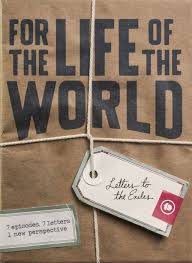
I suppose this captures the fourth reason I think Visions of Vocation: Common Grace for the Common Good is such a stellar book, a wise gift to us all, a work well worth reading. It offers an exceptional idea, really: that the Christian life is to be offered for the watching world, as a grace, as he puts it. It may not come as a surprise that Garber has been influential among those who made the popular For the Life of the World DVDs that I have raved about here. The title of that video series is an answer to the question “What is our salvation for?” Interesting, isn’t it?

“A grace for the watching world”, he says. 

Igrce&peace.jpg know there is much written these days about a gospel-centered life, about the doctrine of grace, both as it helps us understand the work of Christ’s cross (for our justification and sanctification) and as a style of nonjudgmental living, a gracious shift away from legalism. Yes, yes, we need gospel-drenched teachings. But Garber talks also about what some call “common grace” which is to say that God (in patience and mercy) upholds the creation for all creatures under the sun, and all of life somehow can point us towards the truth of the God who is there, and the sustainable abundance of life as it was meant to be. We can happily live in the real world, spending our ordinary days, in our ordinary occupations, knowing of God’s presence we can offer grace to a needy world. Perhaps our gift will be mundane; in our day to day we will learn to incarnate goodness, showing forth lives that embody meaning. In other words, living well for the sake of the world, because of God, makes sense, unfolds the meaning of our days. I think that may be close to what Garber means by a call to coherence — to craft lives that makes sense because the gospel is true. 

We take up our human calling to care and we find ourselves complicit and responsible; therein lies the beauty and the joy. We can, in Christ’s power, take steps to reverse the curse, to live for better things, to actually do what we know. Words can become flesh. 

Garber writes,

The Hebrew vision that echoes across the centuries through culture offers a different way to be human, where knowing becomes doing. And the Christian vision incarnates this conviction, telling the story of the Word become flesh, and of words becoming flesh in and through our vocations.  This vision calls us to know and to care about what we know; in fact to love what we know. And, strange grace that it is, it becomes possible to know without becoming disillusioned, to know the worst and to still love – not only people, but the world in which we live. We will never do that perfectly, only proximately, at our very best. But in this now-but-not-yet- moment in history, that is enough.


Visions-of-Vocation Van G.jpgHere, then, a quick summary. 

FOUR GOOD REASONS TO BUY Visions of Vocation: Common Grace for the Common Good. And we have it at 20% off, too, a reason I hardly need to mention.

1.   1.    It is one more very good example of a growing body of literature about cultural engagement, about serving God in the world, especially in our work, and this big picture of how to imagine the Kingdom coming — moving from worldview to way of life — is timely, important, and offers insights into the best way to live out daily discipleship. If you like books about a Christian worldview (and I hope you do!) this is great. If, however, you don’t resonant with that word, this book is really great — I don’t recall that he uses the W word at all. Steve’s ecumenical, orthodox vision is broad and important, a transforming vision.

2.     2.  Visions of Vocation is very well written, eloquent and inspiring, without being cheap or glib. The stories are well-told, offering important clues into lives well-lived, but aren’t so dramatic or historic that we cannot relate. This is a beautifully-crafted book, profound and realistic, even as it is written with a seriousness of vision and an exceptional command of language. The sentences are good, the paragraphs and pages sometimes sublime. One reviewer said “love and vulnerability exudes from every page.” I think the artful cover even hints at this: this is a beautifully-done book to own and to share.

3.     3.  The heart of VoV, like FoF before it, is profound and vital, and something we just don’t hear much: not only are we invited to be agents of Kingdom transformation, serving Christ in all areas of life, but to do this will inevitably cause us to suffer. In fact, the deepest meaning of our human-ness is to know how to be responsible in a complex, broken world. Can we love well, even knowing what we know? Will we resist the tendency to sell out, burn out, or to grow cynical or apathetic? I predict that 20 years from now, some people will report that the reading of this book was one thing that helped them keep the faith, in part because it was honest about the human condition and the state of the world. To say it is realistic about our pain and the agonies of the world is a deep, good thing, and sets it apart, even making it urgent.

4.    Visions… points us to coherence, to a meaningful life that makes sense, a way of being that is sane and good and full of faith, hope and love. That is, it is an uncommon grace to us; God will use it to inspire you as you realize how you serve the common good. As you care about the world you will thereby find ultimate meaning: loving God and loving neighbor. Put simply, I am sure this rich book will help you discover a depth of meaning and significant coherence to the story of your life and will help you flourish, yes, for the sake of the world.

visions banner.jpg

BookNotes

SPECIAL
DISCOUNT
ANY ITEM MENTIONED

20% off
order here
takes you to the secure Hearts & Minds order form page
just tell us what you want

inquire here
if you have questions or need more information
just ask us what you want to know

                   Hearts & Minds 234 East Main Street  Dallastown, PA  17313     717-246-3333

You are invited to “Just In From Iraq: An Evening with Author and Activist Jeremy Courtney” as he speaks about his book Preemptive Love: Pursuing Peace One Heart at a Time – Friday, September 5th, 2014 at First Presbyterian Church YORK, PA


Preemtive Love poster.jpgOver the years, we have hosted some famous people and
important authors here at the shop, or in partnership with nearby
churches.  We are always a bit
surprised, if truth be told, that folks of the renown of Jim Wallis, Os
Guinness, Ruth Haley Barton, David Kinnaman, Lauren Winner, Andy Crouch, Margot
Starbuck, or Tom Wright would show up here with us in south-central Pennsylvania.
We are always honored and grateful; it is a real encouragement to Beth and me
and our staff when writers visit. Of course it helps book sales when an
important author appears (which, for a struggling indie shop like ours, is
sorely needed.) Best of all, it is a delight for our customers.

For instance,
we know it will be a fantastic time for fans when we host novelist Beverly
Lewis on September 11, 2014 to sign her brand new Amish tale, The River.

My heart is especially full, though, as we prepare for what
feels like the most important event we’ve ever done, hosting a young author (on Friday, September 5th) that
has accomplished more in the last decade than most people have in a lifetime and
who has written a spectacularly thrilling book about it. 

Preemptive
Love: Pursuing Peace One Heart at a Time
(Howard Books) $24.00 hardback; $15.00 paperback both editions include full-color pictures.

Jeremy Courtney is the author of Preemptive
Love: Pursuing Peace One Heart at a Time
andpreemptive love.jpg founder of the Preemptive
Love Coalition
. Both in his book and in person he has a way of bringing together important concerns of ours —
peace-making, multi-culturalism, global justice, interfaith dialogue, gospel-centered
nonviolence, Christian mission — in an accessible way as he tells the story of
his advocacy for sick children in war-torn Iraq. The “one heart at a time”
subtitle alludes to his work arranging pediatric heart surgery for children in
Iraq, but is also a large, large metaphor.

Jeremy and his wife Jessica are
people who are often guided by their hearts, their big hearts, and the book,
laden with political history and medical facts and edge-of-your-seat drama as
critical and controversial surgeries are done in dangerous locations such as
Kurdistan and Fallujah, Mosul and Kirkuk (the legendary burial site of the biblical Daniel) nevertheless uses beautifully a true language of the heart. They are
self-aware and honest about their deepest longings, their dreams, their faith,
their foibles and fears; they live out their desire to trust others, to do what
they think is right, and live out that line from Bill Mallonee’s song about
Vincent van Gogh, “sew your heart on to your sleeve and let the chips
fall.” 

And let the chips fall, they do. Preemptive Love tells the
amazing story of the consequences of “loving first and asking questions later.”
It is a way of life that is inspiring, even probing, for any
reader who longs to live with integrity — do you trust God, put the needs of others first, hedge your bets, hold grudges, maneuver for power, shade the
truth, live in fear, failing to heed the hints of the Spirit?  Although this book tells the tales of
stuff most of us will never experience, the confessional nature, about their
experiences exploring the efficacy of love, applies to us all.

Can love win,
after all?

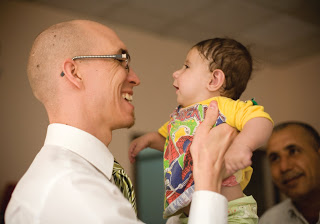
TJeremy aand baby.jpghis way of life, being intentional about being open to God
and grace, living in mercy and love, is also a way of life that leads to adventure, if
not some serious trouble. In their
desire to save the lives of kids with heart disease — Iraq has one of the highest
amounts of pediatric heart disease anywhere in the world! — they have to navigate
broken medical systems, deal with the results of bombings and embargoes (and the subsequent damage to
literal infrastructure and on the communal psyche of many people groups) not to
mention religious bigotry and fears. They face down donors that will give money to help “Arabs only” or “Kurds only.” They tried to build trust with fearful Iraqi
parents who have been convinced by certain mullahs that working with the
Preemptive Love Coalition and allowing Israeli doctors to help them is just a plot
to bring harm and dishonor. Alas, on the other side of the country, they’ve
faced parents whose religious leaders similarly forbid them, proud Kurds, to
send their children with the Coalition to hospitals in the land of their former
brutal enemies, the Turks.

Every chapter has its own drama, and it deepens and grows
more complex as the story unfolds. We eventually learn that Jeremy and Jessica
have been under surveillance — the betrayal that led to their offices and home
and bedroom being bugged is as stunning as anything you’d read in a spy novel —
and when radical Islamists issued a fatwa
(death threat) against their team (and anyone who cooperated with them)
they knew they had to evaluate if this medical mission was worth the dangers. 

Few of us have faced such challenges in our own efforts and
ministries, naturally.  But we can
learn much from these kinds of stories, and it is spectacular to hear of meetings
with sheikhs and imams and mullahs, of sharing the gospel of peace with angry
tribal leaders and offering hope to Turkmen, Yazidis, Muslims, Christians and
Jews alike. The book describes vivid internal organizational debates among the small, young staff of the
Preemptive Love Coalition about all kids or remarkable matters.  Should they serve the children of known terrorists, what
expenses might be spared (or justified) as they triage the backlog of tens of
thousands of needed surgeries. They nearly exhaust themselves trying hard
to be fair, learning how to be wise and just in such perplexing,
anguishing situations, with literal lives at stake.

(Like most places in the
world, those with money and power seem to be able to get themselves to the
front of waiting lines, pushing their own agendas and demands; when this is
combined with ethnic and religious hostilities, you can see that Jeremy and his
team were literally in the middle of life and death situations, sometimes
connected to significant back-stories of infamous people, with cultural/political
ramifications.) The ethical dilemmas and emotional tensions faced almost every
day among their teams makes for a gripping read. 

I couldn’t be more glad that we named Preemptive Love one of
our Hearts & Minds “Best Books of 2013” and am confident that you will
thoroughly enjoy reading it if you haven’t yet.

CHAI, COFEE, and KLASH,

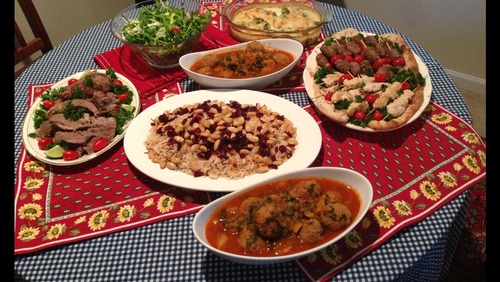
iraqi food.jpgIt is fun, too, to read about the feasts and meals, complete with local
coffees, chai teas and other regional delicacies. What
a culture that can be so hospitable and relational, full of gift-giving,
charitable customs, and tangy food: eggplant and olives and humus and roasted
lamb and sometimes tobacco. The book tells of all sorts of celebrations as they hold
meetings and share long conversations about God and chai teacups.jpgpeace and hope
and almost always the growing crisis of a particular sick baby or handicapped child. (And how weird it is, reading about being with sheikhs and clerics
embracing Jeremy with kisses and hand-holding — “Brother Jeremy, you are a true
man of God!” — only to realize that some of these same new friends are also in
league with people who want to kill him.) 
Again, this book is fascinating to read as we learn about Kurdish klash shoes and fenjan cups of Arab coffee and jamming with the three-stringed
Persian tar. What fun!

And yet, let us be clear: Preemptive Love is a book
mostly about following God’s leading to be agents of healing and transformation,
reversing centuries of hatred and mistrust by providing life-saving medical
health to dying Iraqi children and showing gracious love to all.

The back-stories and description of
these surgeries — the drama of Arab families trusting Israelidoctor_image.jpg doctors, of
Kurdish families submitting to the help of doctors in Turkey (from the region
that had committed genocide against them), of cooperating with all manner of
governmental agencies and mid-level autocrats and diplomatic rules, fighting
for money and visas and permits, always against the ticking clock of failing hearts — are
surprisingly moving. This
narrative is very well-written, with colorful language and vivid storytelling.
The pacing is just right as the book moves from the medical details of a
certain heart procedure to a father of a dying child bringing a bomb into
Jeremy’s office, from the struggle to procure funding for this or that child’s
surgery to the politics and drama of families learning to trust, to forgive, to
love, even after serious conflict or missteps.

preemptive-3.jpg

For instance, read this account of a surprising move by an
important sheikh whose own baby was dying:

We made haste to get Hussein’s gutsy initiative to send baby
Noor to surgery under way. A group from Baghdad helped with logistics; a church
in South Carolina gave generously. The day of her departure, we spoke one last
time with her family by phone. Sheikh Hussein was intoning words of comfort in
Arabic as they sat in the airport waiting for their flight to take them out of
the country; they would be the first in the history of their entire family to
leave Iraq. I’m certain the sheikh’s smile was felt as much as it was heard on
the receiving end of the line. Suddenly, he said, “Okay, one second…,” as he
passed the phone to me.

Putting the phone to my ear in the home of this cleric where
I had never seen a woman, I felt like I was breaking some taboo as I heard
Noor’s mother on the other end whispering something to the person beside her in
Arabic. Turning her face back to the mouthpiece, she took a leap across the
Great Gulf of Language in an effort to get to me and convey her gratitude:

“Mister… my child,” she said haltingly, “good… is good. You
save my child.”

Her daughter’s name, Noor, means “light,” and is often
construed to mean “God’s light” or “light that guides.” And here she was this fifteen
month-old little baby girl in the Baghdad airport, illuminating the way into a
future where God’s light, unlike all the other luminaries by which we live,
does not cast a dark shadow across our ethnicity, geography, of history. Light
was driving back darkness. The obviousness of it all only made it more
profound, as though someone has planned it that way so we would all get the
message.

I handed the phone back to Sheikh Hussein, where he received
a final barrage of blessings for the both of us and hung up, fearful of what
still lay ahead, but overjoyed that we had risked it and taken the plunge
together. With the fatwa still looming in the distance, it seemed like the
history of a people hanged in the balance.

And who’s to say it didn’t? How many hearts were really
healed that day?

LOVE, ALWAYS

What does it mean to be loving in all things, to be merciful
and just and decent, even to one’s own enemies? Should you, for instance, re-hire a
staff person who have betrayed you? Should you confront someone you think is lying to
you, or give them the benefit of the doubt, if even to allow him or her to save
face? He only once quotes the classic spiritual book The
Imitation of Christ,
but we gather that this is an extraordinary life
experiment in being formed in the ways of Jesus.

But yet, Courtney is quick to point out that this is not the story
of a do-gooder Westerner helping backward, hostile Arabs. In fact, he reminds readers of “the countless times in this story in
which Iraqis acted first, offering protection, intervening, or taking a risk to
welcome us in, even though we were often cast as their enemies.”

Such experiences have given Jeremy opportunities to learn much, and we will be better forjc red tie.jpg having read his story. What does it take to tell a poor peasant mother that her
first born has died on the operating table? (Indeed, what does a young
Christian idealist like Jeremy know about repatriating the body of a child
who did not survive surgery back to a proper Muslim funeral, from a plane out of Turkey
to a pick-up truck heading to a desert village?) And how does all of this
effect the marriage (and parenting) of this young Christian couple, once from
Texas, now far away from family and friends and church?  Preemptive Love, we come to realize, is
not just a strategy for peacemaking in a war-torn society or the ethic for a
medical mission, it is also the way of life for couples and children, offering
counter-intuitive wisdom for friendship and fundraising.

Is it possible that preemptive love wins in this broken world, full of broken people like the
unlikely cast of characters in this amazing book?  Among people like you and me?  Can we actually step into a faraway country (as Jeremy
sometimes calls the beloved community of the reign of God)?  If so, this book and its witness of
healing hearts will surely help show us the way.

preemptive love.jpgSo, yes, this fascinating, page-turning book, so full of
edge-of-your-seat, page-turning drama, upbeat stories, intrigue and glory and
tragedy and insight, informative politics and gospel truth, is a winner.  The paperback is due out any day now, and
we are the first bookstore to help Jeremy launch it.

We are honored to sponsor this event and not unaware of the
gravitas of the moment; as Iraq explodes and the world watches in horror, we
are grateful for the opportunity to host a conversation with Jeremy and
Jessica, home for a bit as they make new contacts, raise money and
promote their hope that preemptive love is the way of the future.

Does all of this make a lasting difference, besides the obvious
difference in the lives of the kids and their families who are healed?  I love the last line of this paragraph,
written about Arab families who, against religious and political pressures,
allowed the Coalition to arrange surgery for their kids by traveling to Israel.

Thankfully, four of the families had the courage to stand
their ground in the face of intimidation and moved forward with their scheduled
surgeries in Israel. Like those who had gone before them, they found the
doctors and nurses and social workers in Israel to be wonderful people who were
full of kindness and love, absolutely nothing like the horror stories they had
heard. The mullah’s nightmare – and that of his friends in parliament – had
just come true: of these thousands of
children whose lives we would save, some would one day carry the scars on their
chest to law school and on to parliament, where a new story of preemptive love
would be told to the people of Iraq which would turn over a new page with the
people of Israel
.

Preemtive Love poster.jpg

SEPTEMBER 5, 2014 at FIRST PRESBYTERIAN CHURCH, YORK PA

If you are able, please join us for a public lecture, “Just
in from Iraq: An Evening with Author and Activist Jeremy Courtney” at First
Presbyterian Church, 225 East Market Street, York, PA at 7:00 PM.  There’s free parking in a lot behind the church, which is in downtown York.  After his presentation, there will be
time for questions, healthy discussion, and a reception (with some appropriate
refreshments, although we won’t sit on the floor or smoke hookah.)  Who knows, maybe even some music. Preemptive
Love
books will be available for purchase in hardback or paperback, and
Jeremy will gladly autograph copies. 
We think it will be a splendid, informative and encouraging
evening.

Please help us spread the
word — if you know anyone anywhere near central Pennsylvania, this will be an
amazing opportunity.

If you are unable to attend and want us to get an
autographed copy of the book, just let us know. Tell us if you want hardback or paperback, and to whom it should be inscribed and we will try
our best to make it happen. It
will be a very full night, and we trust we will have copies left available for this, but customers present with us there will naturally get first dibs.

 * * *

Enjoy this short excerpt, from the closing pages of Preemptive Love: Pursuing Peace One Heart at a Time

Where you are sitting in the world as you finish this story
may influence how you interpret my idea of preemptive love. If you are in the
States, you may think first in terms of American kindness toward enemy Iraqis.
If you are in Iraq, however, you may be more quick to see the countless times
in this story in which Iraqis acted first, offering protection, intervening, or
taking a risk to welcome us in, even though we were often cast as their
enemies. The truth is, preemptive love does not begin in the heart of humanity.
Neither Americans or Iraqis are inherently better at loving first than the
other. We are all tribal, programmed to protect our own,


Instead, preemptive love originates in the heart of God. The
one who made the universe and holds everything in it – the one to whom Muslims,
Christians, and Jews are all ostensibly pointing – is the first and the last
enemy lover. And in the end, it is not our love that overcomes hate at all.  It is God’s…  Preemptive Love is who God is…


What Jess and I learned in that broken-down neighborhood so
many years ago is still true today: we don’t need power to live in peace.
Because even though fear, hatred, and violence conspire to unmake the world,
preemptive love unmakes violence. Preemptive love fulfills the fears of
fundamentalist fatwas, making children love their enemies. And preemptive love
overcomes fear.


And before all is said and done, the far country is the
near-and-now country for all who enter the marathon, lean on love, and make it
to the finish line
.

BookNotes

SPECIAL
DISCOUNT
Preemptive Love:
Pursuing Peace One Heart at a Time


20% off
order here
takes you to the secure Hearts & Minds order form page
just tell us what you want

inquire here
if you have questions or need more information
just ask us what you want to know

                   Hearts & Minds 234 East Main Street  Dallastown, PA  17313     717-246-3333

GREAT GREAT NEW COVERS (AND SOME REPRINTS) of OLDER N.T. WRIGHT PAPERBACKS // ON SALE AT HEARTS & MINDS

I don’t usually just swipe other blogs for our BookNotes
reviews, but, as they say,tom in our back yard.jpg there’s a first time for everything.  I found
these descriptions of these brand new editions of older Tom Wright books in an Eerdmans Publishing blog to be very helpful. And so, he says a bit sheepishly…

And, hey, the new cover designs themselves deserve some celebration!  They are quite striking.  So, I borrowed heavily from the
Eerdmans blog — EerdWord, it’s called — which describes seven older Wright books,
each freshly adorned with all new covers.

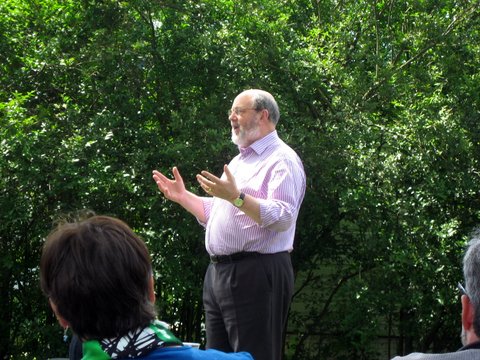
                                                                                                                                                                                           Tom Wright speaking in our backyard, Spring 2013.

We ourselves have had
a long relationship with Wm. B. Eerdmans Co. The first “sales rep” I ever
worked with, I’m eerdmans.jpgsure, was an Eerdmans one, who helped us learn a bit about the book biz. And they’ve published some of our perennial best sellers — When the Kings Come Marching In by Rich Mouw, Creation Regained by Al Wolters, and authors such as Marva Dawn, Eugene Peterson, Ken Bailey, Nicholas Woltersdorff, and so many more.

And, yes, early N.T. Wright, whose early paperbacks thrilled us, back before he was so internationally acclaimed.

So, we’re happy to share
the news of these redesigned and reissued affordable paperbacks. I hope you like uniform
covers and sets of books like this as much as I do.  I think these are
very handsome, and we’re glad for the time and care that Eerdmans put
into this project.

A few of these books with new covers are
now actually back in print after having been unavailable for a while.
 Three big cheers for that!


SUPER SALE ON SOME OF THOSE WITH OLDER COVERS
However, please see the note at the end: we
have some of the older editions which we have to clear out to make room for the new ones.  We have these with the original Eerdmans cover designs at a really good
discount, while supplies last.  More on that, below.

BUT FIRST
But first, here, with permission, a bit from a recent Eerd-word blog.

He’s a brilliant scholar. A respected church leader. A best-selling author.

N. T. Wright is . . . well, according to Christianity Today’s April cover story (“Surprised by N.T. Wright”):

People who are asked to write
about N. T. Wright may find they quickly run out of superlatives. He is
the most prolific biblical scholar in a generation. Some say he is the
most important apologist for the Christian faith since C. S. Lewis. He
has written the most extensive series of popular commentaries on the New
Testament since William Barclay. And, in case three careers sound like
too few, he is also a church leader, having served as Bishop of Durham,
England, before his current teaching post at the University of St.
Andrews in Scotland.

But perhaps the most significant
praise of all: When Wright speaks, preaches, or writes, folks say they
see Jesus, and lives are transformed.

We
at Eerdmans have enjoyed our long friendship with Wright — and a
fruitful publishing partnership that, back in the 1990s, resulted in a
number of excellent books.

A few of those books are still
easy to find today. Others, though, have followed the natural life cycle
of print publications, moving gradually into our print on demand program or even — gasp! — going out of print entirely.

But not anymore. 

This summer, Eerdmans will be releasing fresh new editions of seven modern-day classics by N. T. Wright.

And so, EerdWord first
announced these new covers. (Actually, I was privy to them previously as I even got to
have a bit of input on some earlier suggested drafts.) These are, I
think, very cool.

BOOKNOTES SALE – NEW WRIGHT EDITIONS 20% OFF

We just got these in last week and have them at a BookNotes 20% off discount. Just
click on the order link below to go to our certified secure order form
page.

But, first, back to Eerdmans helpful descriptions.  My own brief comments are in italics.


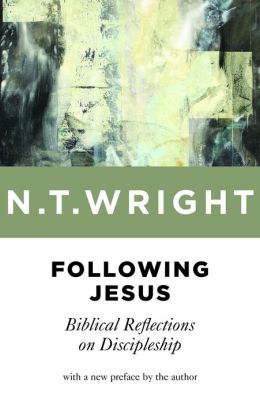
Ffollowing jesus n.jpgollowing Jesus: Biblical Reflections on Discipleship (Eerdmans) $14.00 our price = $11.20


Wright
first outlines the essential messages of six major New Testament books —
Hebrews, Colossians, Matthew, John, Mark, and Revelation — looking in
particular at their portrayal of Jesus and what he accom
plished in his
sacrificial death. In the second part of the book Wright tak
es six key
New Testament themes — resurrection, rebirth, temptation, hell, heaven,
and new life in a new world — and considers their significance for the
lives of present-day disciples.

 I often tell people who do not want one of his thick, scholarly works that this is one of the best books with which to be
introduced to Wright’s good Bible study. This is fantastic, about Jesus, about other New Testament writers, and about the call to contemporary whole-life discipleship. I very
highly recommend it.


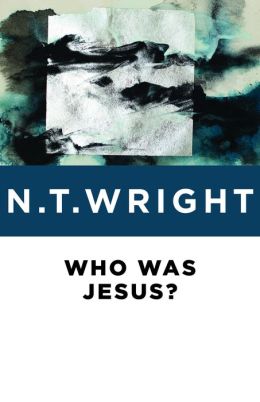
Wwho was jesus n.jpgho Was Jesus? (Eerdmans) $14.00 our price = $11.20

Written from the standpoint of professional biblical scholarship yet assuming no prior knowledge of the subject, Who Was Jesus? shows convincingly that much can be gained from a rigorous historical assessment of what the Gospels say about Jesus.

This is very good
for anyone studying the authors who contribute to the “quest for the
historical Jesus and who question the reliability of the gospel
witnesses.


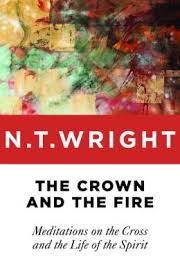
Tcrown and the fire.jpghe Crown and the Fire: Meditations on the Cross and the Life of the Spirit (Eerdmans) $14.00 our price = $11.20

This
long-popular book contains thirteen powerful meditations and sermons
challenging readers to reassess their own responses to Jesus’ death, his
resurrection, and the continuing influence of his Spirit on those who
follow him today. 

You most likely haven’t seen this, so it is a must
for any NT Wright fan.  I think it is very strong. He hasn’t written that much on the Holy Spirit,
so this is very, very important for his oeuvre.

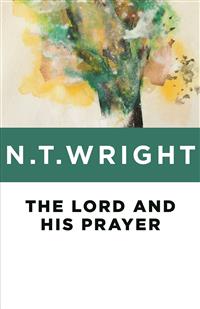
Tlord and his prayer n.jpghe Lord and His Prayer (Eerdmans) $11.00
our price = $8.80

In a
series of pastoral reflections, N. T. Wright explores how the Lord’s
Prayer sums up Jesus’ own agenda within his first-century setting.  
Taking
the Lord’s Prayer clause by clause, Wright locates this prayer within
the historical life and work of Jesus and allows the prayer’s devotional
application to grow out of its historical context. He demonstrates how
grasping the Lord’s Prayer in its original setting can be the starting
point for a fresh understanding of Christian spirituality and the life
of prayer.

Yes! Amen! Loaded with Kingdom vision, this makes a great study for a prayer group or any small group.


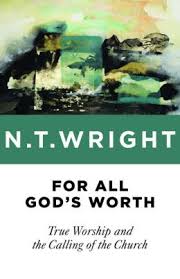
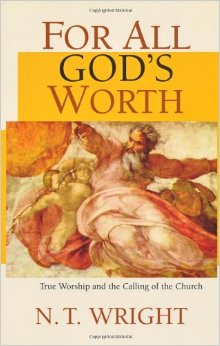
Ffor all god's worth n.jpgor All God’s Worth: True Worship and the Calling of the Church (Eerdmans)  $14.00 our price = $11.20

This insightful book by N. T. Wright explores both the meaning and the results of worship. Based firmly on sensitive and creative readings of the biblical text, For All God’s Worth is an inspiring call for renewal in the worship and witness of today’s church.

Again,
this is one of my all time favorites, reflecting well on traditional
(corporate) worship as well as the worship we offer, twenty-four/seven, even in our
jobs and vocations. An early call to relate Sunday and Monday, worship
and work. I highly recommend it.

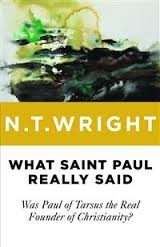
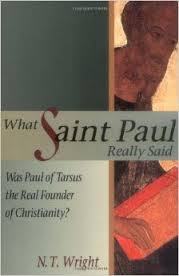
Wwhat saint paul really said nn.jpghat Saint Paul Really Said: Was Paul of Tarsus the Real Founder of Christianity (Eerdmans) $18.00
our price = $14.40

Wright
leads readers through current scholarly discussions of Paul and gives a
concise account of the actual contribution Paul made to the birth of
Christianity. Wright offers a critique of the argument that claims that
it was Paul who founded Christianity and shows clearly that Paul was not
“the founder of Christianity” but was the faithful witness and herald
of Jesus of Nazareth, the Jewish Messiah and the risen Lord of the
Christian faith.

Wright has written a lot lately about Paul, much of
it deep and the books expensive. Buy this one, for sure, to get the major themes
of his recent thinking, and how he compares to other critical scholars.  Very impressive.

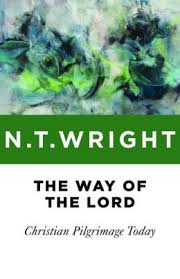
Tway of the lord.jpghe Way of the Lord: Christian Pilgrimage Today (Eerdmans) $14.00  our price = $11.20

In
this inspirational and informative guidebook for Christian
pilgrims, Wright explores all the sites that travelers usually visit on a
tour of the Holy Land, explaining not only what is to be seen but also
the context of faith that makes these sites, and the events associated
with them, famous around the world. By weaving together Old and New
Testament stories, poetry, and original insights, Wright helps readers
enter imaginatively into each scene. He also sprinkles his narratives
with reflections on the nature of pilgrimage generally and with
discussion of vital contemporary issues related to the Holy Land.  This
is another that is not well known, under-appreciated, and about which
we can rejoice that it is now once again available.  Yes, it is about
places, a theology of pilgrimage. Brilliant and inspirational!


We do hope you like these new covers — I happen to like the use of modern
art, suggesting something classy, but yet contemporary, enduring like
good art, but a little edgy.  And thank goodness that we have such
readable books from such a scholar.  We’re very glad to announce them. 
Don’t forget, these handsome new editions are all 20% off.

HALF OFF ORIGINAL COVERS while supplies last.for all god's worth old.jpg

And now, the sale on the older covers. We have a limited supply of a few which we are sellingwhat st paul old.jpg for BETTER THAN HALF PRICE.  What Saint Paul Really Said usually sells for $17 and we have ’em at just $8.  For All God’s Worth used to sell for $13 and we have ’em for just $6. Who Was Jesus, The Lord and His Prayer and The Way of the Lord are also, while supplies last, just $6. Nice, eh?

Here is what would be helpful: if you are ordering the older editions, please note that.  And then you should tell us, if we are out of the older editions, if you are willing to take the new ones.  If you only want them if they are super cheap, let us know that, please, so we can honor your intentions and send just the right ones.   


BookNotes

SPECIAL
DISCOUNT
ANY ITEM MENTIONED
20% off

(except for super sale older editions, priced as mentioned)
order here

takes you to the secure Hearts & Minds order form page
just tell us what you want

inquire here
if you have questions or need more information
just ask us what you want to know

                                   Hearts & Minds 234 East Main Street  Dallastown, PA  17313
                                                                717-246-3333
                                                 read@heartsandmindsbooks.com 

Good Books to Follow the FLOW — 20% OFF


We are glad to welcome some new friends to Hearts & Minds – perhaps you’ll become one of our tribe, our gang, our fam. We are grateful for those who read BookNotes (you can subscribe so that the reviews come right to your inbox) and we are very appreciative of those who send orders our way.  Some say that they really like the mix of titles we suggest, our curated lists and unique inventory here at the shop, and we are glad for customers who become friends, friends who become almost like family. Sometimes we joke, saying we give new meaning to the idea of a family business! Anyway, thanks for caring, about books, about God’s work in the world, about Christian literature, and about our work.  Our team here couldn’t do this without writers, publishers, readers, and book-buyers.  We think this kind of reading can make a difference, for God’s glory and our world’s repair.

Wfield guide FLOW.pnghich leads me to mention yet once again the vivid For the Life of the World DVDs and the newly published Field Guide study books ($9.99. on sale here for $7.99.) If you decide to use this video curriculum with a small group or class this fall, you really should have a few on hand, especially for those who many not be able to easily access the on-line version.  It really is a good participant’s resource, full color, nice paper, great discussion questions, background stuff, packed with ideas to maximize your use of the films.  I hope you are thinking about calling some folks to watch this together this fall, if you haven’t yet.  I love it and the conversations you will have around it will be provocative and interesting, I’m sure.

For now, I hope you are enjoying the good days of summer, maybe using this time to reflect on the goodness ofSurprised by Hope-b.jpg God’s world, the ways in which Christ’s glorious atoning work brings redemption to all areas of life, and how we can live faithfully in every zone of life and society with real hope. I’ve recently re-read a little of N.T. Wright’s classic Surprised By Hope: Rethinking Heaven, the Resurrection, and the Mission of the Church (HarperOne; $24.99) and have again recommended the DVDs by the same name (Zondervan; $36.99 for the six session DVD and a participants guide.)

The For the Life of the World DVD – which is abbreviated FLOW — is a good follow up for those who have used that down-to-Earth hope-ster stuff from the always-eloquent Tom Wright. Or, vice-versa: Surprised by Hope would be a great DVD curriculum to follow up your use of FLOW.  There really are some theological connections, for those with eyes to see…

FOLLOWING THE FLOW

Here is a handful of resources that seem to me to be useful follow-ups to at least some of the themes of the For the Life of the World DVD.  If you want to live well in the world, aware of the abundant, orderly economies of creation and the creation-wide scope and consequences of redemption, you may need some help. To wit, some practical and inspiring resources to help you in your journey into a life in-and-for the world.  Enjoy.

Aastonished.jpgstonished: Recapturing the Wonder, Awe, and Mystery of Life with God  Mike Erre (Cook) $14.99  One of the great themes in FLOW is that God made a good world, the various economies and spheres are themselves wondrous, and we are invited to a world of wonder. The interview in episode 6 with Mako Fujimura may seem to be about the value of the arts, but the deeper theme is that while most of us are not artists, we are all able to nurture the eyes to see and to stand in awe. (Read the wonderful essay inspired by this episode by my friend Bruce Herman, “Wonder Is Not Just For An Artistic Elite” here.)

Well, Mike Erre’s easy-to-read, playfully good book is less about awe in the world at large, but how we can respond in awe to the mystery of faith. It is a book about, as Rick McKinley puts it,  “rescuing us from being underwhelmed by a God of our own making.” In a way Astonished: Recapturing the Wonder… reminded me of another lovely book I often recommend, WonderStruck: Awakening to the Nearness of God (Worthy; $14.99) by the ball of energy and goodness known to the book world as author Margaret Feinberg. Erre and Feinberg are both creative and fun, upbeat and energetic, offering insight about knowing God better, nurturing one’s spirituality in ways that help us attend to the beauty and realty of the world around us and God’s awesome presence around us.  Perhaps a more subtle and sophisticated approach would be to read the updated second edition of the Oxford University Press book, now out in paperback, Reverence: Renewing a Forgotten Virtue by philosopher and classicist Paul Woodruff ($17.95.) That is a very impressive work, helping us “see” our world and our place in it with great dignity and deep meaning.

Nno home like place.jpgo Home Like Place: A Christian Theology of Place  Leonard Hjalmarson (Urban Loft Publishers) $16.99  This may be the most important book that you’ve never heard of.

I say this, that it is so important, for three reasons.  First, a sense of place is a huge theme these days (thanks, Wendell) and localism is a major interest (thanks, IndieBound, ShopLocal and anybody who shops at the farmer’s market) that most of us still need to ponder and pursue. It is an important principle, but even if one isn’t quite fully enchanted by the locavores, it could be argued that you should read up on this because it is a theme of importance to your neighbors, and to the rising generation. So, it’s important; you should know what the fuss is about, and this will help. 

Secondly, I say this book is important because it is so very rare. There are a few books that develop a Christian perspective on place, and the two other must-reads (Where Mortals Dwell by Craig Bartholomew and Beyond Homelessness: Christian Faithfulness in a Culture of Displacement by Brian Walsh and Stephen Bouma-Predigar) are thick and a bit heavy; rewarding, important, but not easy. No Home Like Place is meaty enough and considerable, but perhaps a better primer. It is winsome; Brad Jersak nicely says “to find someone rebuilding place after the great postmodern deconstruction is beautiful.” So, it is very well written and nicely engaging, even “joy-filled” as another reviewer said. 

Thirdly, you need to know this book because it is, without quite saying so, part of the vision of FLOW. The Acton Institute that funded and produced the FLOW project seems to stand in a mostly Catholic tradition where small is, most often, better than large, and local control is better than distant rule – the Catholic social teaching calls it “subsidiarity.” Those in the line of Abraham Kuyper, the Dutch Reformed theologian and social architect that influenced the actual writers of FLOW, had a distinctively neo-Calvinist approach which also has tendencies towards the local, if not the whole “small is beautiful” view. Although this has complex implications for the ordering of society – populist and democratic – at the very least we can say it means starting where you are, attending to your neighborhood, caring about your own context.  No Home Like Place will give you the theological and missional foundation for appreciating a sense of home, a sense of place, resisting the homogenization of the Big and the loss and injustices experienced in, as Walsh and Bouma-Predigar put it, “a culture of displacement.”

Leonard Hjalmarson helps us with all of this in ways that are theoretically insightful, theologically beautifully,Missional-Spirituality.jpg and spiritually alive. He co-wrote the wonderful Missional Spirituality: Embodying God’s Love from the Inside Out (IVP; $16.00) which was substantive and inspiring, bringing together the too-often separate themes of the inner journey and the outer, piety and politics, formation and faithfulness in the world. The very notion of missional spirituality is ripe with potential, and that book has helped readers grow deeper in their interior lives as well as see that spiritual transformation as part of a Kingdom vision, missional, engaged. Hjalmarson brings that same vision of caring about God’s work in the world and our aligning ourselves with the redemptive purposes of God in how he approaches this neighborhooded view of place.

There are a few important themes in No Home Like Place. We are “sent” of course – this is missional 101 – but can our sentness effect how we inhabit our own places, our homes? Is there, as Dwight Freisen puts it (in his rave review blurb) a way to attend to our locatedness? 

Or, as sociologist Mark Mulder of Calvin College writes, “In a world of increasing mobility, No Home Like Place: A Christian Theology of Place makes a compelling case for Christians to be more attentive to the places they inhabit. Hjalmarson calls us to consider how cultivating connection is integral to the incarnational mission of the church. Moreover, this book prompts a re-imaging of how the recovery of place might foreshadow the coming Kingdom.”

Notice the words: inhabit, incarnational, cultivating connection.  These are themes that are common in various missional organizations and networks these days and it is no surprise that the book has gotten rave reviews from the prominent leaders in these movements such as J.R. Woodward, David Fitch, A.J. Swoboda, Alan Hirsch, Paul Sparks, MaryKate Morse, Stuart Murray, and the like. That No Homenew parish.jpg Like… draws on the savvy analysis of culture and cultures makes it in itself a good intro or reminder of the conversations and discoveries in church life these days. Hjalmarson not only draws on his strong educational gifts (he is an adjunct professor at Northern Baptist Theological Seminary in Chicago, at Tyndale Seminary, Toronto, and George Fox Evangelical Seminary in Portland) but on his own leadership in the Parish Collective, and his missional community on the shores of Thunder Bay, Ontario. The Parish Collective, I might as well say, published the stellar book about local missionalism, The New Parish: How Neighborhood Churches Are Transforming Mission, Discipleship and Community written by Paul Sparks, Tim Soerens, and Dwight Friesen (IVP; $17.00.) It’s in this same ballpark, too.

There are generative ideas in this book about place and localism, stuff about theology and eschatology and culture, creation, and covenant. There is good advice about exploring place and the practice of place. He looks wisely and knowingly about the urban landscape and is helpful in a good chapter called “Politics and Public Space.”  Here is a surprise, though: one chapter is called “Re-placing the World Through Pilgrimage.” (Yep, go figure; there’s nothing wrong with travel, of course, and our sense of home can be enhanced by our trips.) There is another really important chapter about localism and the arts, enhancing our sense of home and place by deepening ourspace between.jpg embodiment and creativity. (It isn’t a simple chapter, by the way, and it left me glad for the fresh thinking but wondering how to live it out.)

Put this book on your list as soon as you can, and ponder it for years to come. Read it alongside the aforementioned books on place, and resources on neighborhoods such as the two by Eric Jacobson (Sidewalks of the Kingdom and The Space Between, which are essential.) I am sure that you will learn something new, be inspired to new, ground-level commitments, and your own neighborhood and locality will be blessed by your attentiveness.  There are even some prayers and litanies that have been used that give voice to these good concerns. 

Sgo small.jpgmall: Because God Doesn’t Care bout Your Status, Size, or Success Craig Gross (Nelson) $15.99  If I were just reviewing this one book, and had unlimited time and attention, I’d just copy the foreword by Josh McCown, Quarterback for the Tampa Bay Buccaneers, who talked about his short stint in the NFL, being traded, demoted, his dream of stardom not panning out as he had hoped. Inspired in part by reading an early version of this, he determined to lower his big dreams and overly visionary expectations and focused on being good and kind to whoever he was with, which ended up being a small high-school team in Waxhaw, NC. 

Well, you get the point: the old adage “go big or go home” is not, according to Gross, a sustainable way to live, and it is an cultural attitude which chews people up and debilitates us all with chronic unhappiness.  Rather, he suggests that it is in the seemingly ordinary moments of life that God does His greatest work, and that to trust God and serve Christ well, we neither have to go big nor go home.  We can endure, day by day, in the small stuff, the mundane, even. “It’s time to invest in stamina, to cultivate endurance, to recognize the miraculous world of the ordinary, little things.”  It’s time to go small, and keep at it.  This is inspiring, includes upbeat Bible stories, and helpful reminders about humility,  acceptance, and the “wrench in the works.” Gross has done a lot of pretty extraordinary things, so there are exciting stories, and lessons learned, making this fun for small groups that need nice and practical resource.

Iis reality secular.jpgs Reality Secular? Testing the Assumptions of Four Global Worldviews Mary Poplin (Veritas Books/IVP) $18.00 As I considered resources to share to accompany you and your group in your journey into the FLOW DVD sessions, I didn’t want to just cite the obvious. So I let my thoughts ramble a bit, and I couldn’t stop thinking of this very thoughtful, richly written, substantive book that offers an evaluation of the claims made by those worldviews which insist that the world is secular.  What does this even mean? Who makes these claims? And what do the most vital world philosophies say about it?  Maybe this has something to do with the other big book here this summer, Jamie Smith’s How (Not) To Be Secular: Reading Charles Taylor. 

I’ve written in the last post on memoirs about Mary Poplin, the brave, faithless college teacher whose life was transformed by working alongside Mother Teresa in Calcutta, who advised her to “find her own Calcutta” back on college campuses.  Ms. Poplin took up her call with gusto, involving herself in relating faith and scholarship, bearing witness to her new life among colleagues and academics, students and parents. She became friends with Dallas Willard (who wrote a very good foreword to this book.) She studied and loved and cared and entered into dialogues with not only thoughtful Christians, but many who were antagonistic to her new-found faith. 

As the back cover puts it, “at the root of our deepest political and cultural divisions are conflicting principles of four global worldviews – material naturalism, secular humanism, pantheism and Judeo-Christian theism. While each of us holds to some version of one or more of these worldviews, we are often unconscious of their differences.” The For the Life of the World DVD doesn’t directly evaluate alternative visions of life under the sun, but they are not unaware that the multi-dimensional, whole-life, Kingdom vision they propose is to be lived out in ways that are different than the typical visions of the meaning of life on offer. (The center of each film is, after all, a “Letter to the Exiles.”) 

This book by Mary Poplin will help us be aware of the spirit of the age, the issues of the day, the ideas that matter.  This is a stunning, brilliant work — even the non-Christian writer Michael Ruse affirms her: “Mary Poplin and I take very different sides on the topics discussed in her book. That is why I prize her writings, because they are so fair and comprehensive.  She shows me clearly what I must grapple with and defeat – or give up and join her side! Very much recommended.”  Other heavyweights have raved, as well – Robert George of Princeton and John Lennox of Oxford and J. Budziszewski of University of Texas at Austin. 

Not only heavyweight philosophers, though. Popular pastor John Ortberg says this: “Truth, as wise man said, is valuable because it is what allows us to navigate reality.  Mary Poplin has done us a great service – she helps us explore where truth lies and how it guides.”  I think that captures why I couldn’t escape thinking about this as a serious follow-up to the down-to-Earth pleasantness of the For the Life of the World movies. This will give some intellectual grit and deep cultural criticism to our life “in but not of” the world in which we sometimes seem as exiles.

Jjourney to common good walt B.jpgourney to the Common Good  Walter Brueggemann (WJK) $17.00 I do not need to belabor the importance of Old Testament scholar, Dr. Brueggeman, and he remains one of my favorite authors, and a church leader who has influenced me significantly. I recommend almost all of his books (a new one on the Psalms called From Whom No Secrets Are Hid is to be released by WJK in few weeks, and the much anticipated Ice Axes for Frozen Seas: A Biblical Theology of Provocation comes from Baylor in mid-September.) I have enjoyed almost all of his many works.  His most recent – Sabbath as Resistance -also comes to mind as a very appropriate study to enhance our joyful life as exiles who are “against the world, for the world” as envisioned by the good folks of FLOW.  I am not sure they would be as enamored with Walt as I am, but these do seem apropos.


This one, Journey to the Common Good, is a true favorite, the transcripts of stunning talks he gave at Regent College in British Columbia. His evangelical vision is evident as he invites us to deep study of the Hebrew Scriptures to fund our commitments to the common good. That FLOW mentions this phrase (and many of the speakers who make cameos like John Perkins insist on our commitment to Biblical justice and love of others as the true heartbeat of any Christian lifestyle) is notable.  The very title of the films – For the Life of the World — and the question it seeks to answer (“What is our salvation really for?”) should make it clear that a perfect follow up would be a study of the notion of the common good.  Journey to the Common Good is sophisticated and invigorating Biblical reflection that once again shows how deep, thick reading of nearly any part of the Bible yields a grand vision of public justice, social righteousness, and a “seek the peace of the city” orientation that desires the flourishing of all peoples and cultures and the deepening of the common good.  It’s a journey worth taking with Walt.

CChrist Plays in .jpghrist Plays in Ten Thousand Places: A Conversation in Spiritual Theology  Eugene Peterson (Eerdmans) $16.99  I still love my first Peterson books – A Long Obedience in the Same Direction (on the Psalms of Ascent) and Run with the Horses (on Jeremiah) which I read in the late 70s. Perhaps these are your first, too; they remain very popular and highly regarded. Like his many others, they certainly are consistent with the vision of FLOW – embodied, patient, non-ideological, nurturing habits of faithfulness that over a lifetime lead to life as it was meant to be lived, in God, for others.  Yes, yes, those are good.

Yet, there was no doubt that I wanted to cite this one from 2005, for what should be obvious reasons. If you read my review you will know that FLOW cites the famous Jesuit poet Gerard Manley Hopkins, the very “Christ Plays in Ten Thousand Places” poem from which this Peterson classic takes its title. I have discussed this mature book before, and it is complex, but orderly. It is the first of an extraordinary set of five volumes that Peterson calls his “spiritual theology.” Christ Plays in Ten Thousand Places: A Conversation in Spiritual Theology goes to great length to show how – according to the Bible! — Christ shows up in creation itself, in history, and in community with other believers. In each of the three long sections he shows how Christ’s birth, death, and resurrection are the good news that affirms these three locations of grace. (There are three attendant threats to getting this right, too, and he offers three necessary practices to overcome these threats to the true good news.)

And, yes, again, the title is from Hopkins. Evan, in FLOW, is wearing a Hopkins tee-shirt in one of theQuotation-Gerard-Manley-Hopkins-poetry-Meetville-Quotes-269509.jpg episodes (you can learn about all seven of the tee shirt portraits in the Field Guide.) The reading in the DVD of that good portion of the poem is nearly worth the price of the whole set. I’m sure that the FLOW guys knew this poem previously – many do – but I also bet that Pastor Peterson’s work was an inspiration. The whole set of his momentous spiritual theology books are exceptional, but this one is foundational.  As Marva Dawn observes it’s “Eugene Peterson at his best – poet, storyteller, wonderer, biblical scholar, sage, practiced disciple, and lover of God… A life-transforming and liberating book.”  Yes!

Amoveable feast tt.jpg Movable Feast: Worship for the Other Six Days Terry Timm (ImaginationPlus) $11.99  Well, you may not know this name, but I’m happy to share that he is a hero to many, a great, caring pastor of a fine missional church in the suburbs of Pittsburgh.  Terry has worked with Steve Garber (using his Visions of Vocation) to help his parishioners get a vision for their lives, framed by Garber’s line that “vocation is integral, not incidental, to the missio Dei.”  Pastor Timm has focused on his lay people and their own Kingdom callings, equipping them well, and holding up this wholisitc vision of the common good, cultural renewal, creational flourishing.

As a celebration and follow up to this year-long study of vocation and calling and the mission of serving the common good,  group from his church took the four hour road trip to Hearts & Minds, allowed me to share with them our vision for using books to help think Christianly and creatively about this “in the world but not of it” sense of taking up the tasks of serving God in careers and callings.  You’ve got to love a pastor like that, eh? 

So it should come as no surprise that Terry Timm and his church have been big supporters of a cadre of churches in Pittsburgh using the For the Life of the World videos. (This gang is even bringing in Jars of Clay for a concert where they’ll play some of the live tunes recorded for the FLOW project.) This new book, in so many ways, is a fantastic follow up (or prelude to) FLOW.  As Gideon Strauss (of the Max De Pree Center for Leadership at Fuller Theological Seminary) puts it, “A Moveable Feast will be a gift to those of us who know ourselves to be called into struggle with, and gratitude to,  God who loves every thumbprint patch of this wondrous, shattered world.”

Terry has shaped his congregation around this very theme — that worship is a “moveable feast” and that we worship, actually, 24/7. As Lisa Slayton, the President of Pittsburgh Leadership Foundation puts it, “This book tells the story of what it looks like when a Biblical community truly begins to realize that God desires their ‘everyday, walking around life’ to be offered as an act of worship, that worship is not just what we do on Sunday morning corporately but what we don Monday… We all need help bridging our theology to our praxis. This book serves as such a bridge.”

Although the vision of this book is, indeed, how we serve God in all areas of life, in all our endeavors, the heart of it truly is about the recovery of worship, mature and solid, good and effective, honorable and fruitful.  I think many a contemporary worship leader would benefit from it for its wise council. And, the implications of this God-centered, gospel-fueled view — “worshiping for the other six days” as well — are so very nicely spelled out, too.


We are thrilled to be one of the first bookstores to carry this brand new indie press book by Rev. Terry Timm. It is handsomely done, nicely written, covers much good ground, and includes a good study guide (“feasting together.”)  There is even an appendix called “an ordinary, everyday liturgy” which outlines an entire worship service with prayers and litanies designed to honor the ordinariness of daily life, the goodness of work, the calling to serve the common good.  I think that this powerful book could help nearly any kind of congregation deepen their sense of these things, and I hope church leaders buy it and use it.  Terry is the real deal, a friend to Hearts & Minds, and his book is yet another example of the fresh sorts of things being written during this 21
st century renaissance of “all of life redeemed” wholistic faithfulness.  Whether you’ve used FLOW or not,  Movable Feast: Worship for the Other Six Days is a delight.  Thanks be to God.

BookNotes

SPECIAL
DISCOUNT
ANY ITEM MENTIONED

20% off
order here
takes you to the secure Hearts & Minds order form page
just tell us what you want

inquire here
if you have questions or need more information
just ask us what you want to know

                   Hearts & Minds 234 East Main Street  Dallastown, PA  17313     717-246-3333

The Power of Story: Memoirs for Pre-Evangelism, Spiritual Insight and Enjoyment, too ON SALE from Hearts & Minds

In my previous column offering resources for apologetics and
sharing the gospel, I mentioned that we might use memoirs for what some call
pre-evangelism. 

That is, as we try
to help people construe meaning and find their way, books of others doing that
can be both reassuring and helpful. Religious seeking, even confusion, is not uncommon — and, yet, as Echoes of a Voice: We Are Not Alone, the
James Sire book mentioned yesterday indicates — many people have what might be
called epiphanies, or acute awareness of what might be called signals of
transcendence.  Some memoirs helps us appreciate that.

memoirs.gif

Of course we read memoirs, like we do novels, also for the
pleasure, for the joy ride of immersing ourselves in a well-told story. I adore this genre and have bunches of
favorites (not all about the profound search for meaning or spiritual
experience.) Some of these books I cherish. There are more than I can mention…

I think of the luminescent story about grief, The Tender Land: A Family Love Story by
Kathleen Finneran (one of the most beautiful, well constructed and moving books
I’ve ever read) or the beautifully
told journey of Andrew Krivak preparing to become a priest, A Long Retreat: In Search of a Religious
Life.
I loved Wild: From Lost to
Found on the Pacific Crest Trail
by Cheryl Strayed, who can write like
nobody’s business; the memoirs of Elizabeth Gilbert are nicely done, and I
adored Mary Karr’s must-read trilogy (and will say more about one of them,
below.)

The down-home, rural writer Michael Perry from Wisconson is a writer who’d I read no
matter what he’s describing; Beth, too, and her favorite is his wonderful book Truck while I favor Coop, although they are each splendid examples of what he calls “roughneck grace.” Perhaps you’ve tasted the foodie memoirs of Ruth Reichl like Comfort Me With Apples (who now has a
novel out, too, but I digress.) And how about those memoirs about homesteading, farming, or living more sanely —  any number are so nice.

Years ago I wrote a review about The Cliff Walk: A Memoir
of a Job Lost and a Life Found,
a stunning story about a literature prof
named Don Snyder who got laid off, lied about his shameful unemployment, but eventually
found a sense of calling to a new vocation as construction worker.  Someday I will re-read that magical
book. Terry Tempest Williams is a truly magnificent writer, and I am better for
having read her work.  Start with Refuge and then Red which are about her loves for the deserts of Utah, and her departure
from the conservatism of her Latter Day Saints family. Which reminds me of a
cult-classic that I’ve read twice: Desert
Solitaire
by the indomitably crusty Edward Abbey. I really do love this genre!

Recently Beth and I discovered by serendipity the great,
great writer, Catherine Gildiner whose story of her girlhood near Niagara Falls
Too Close to the Falls and her coming of age in the crazy late 60s, After the Falls, defy being put down –
they are so entertaining and nicely written, funny, even.  These were just so fun to read, and we
both were struck not only by her writerly skill, but were amazed how authors
can tell their life story this way. 
Do order them from us if you’d like, but be prepared to stay up late,
following her escapades.

Some biographies carry this
same theme — telling how somebody pieced their life together, finding hope, or
not.  I hope you’ve read the
excellently written, unforgettable Unbroken:
A World War II Story of Survival, Resilience, and Redemption
, by Laura
Hillenbrand, about Louis Zamperini (which, finally, was just released in paperback.) Even those of us not drawn to extreme sports have been
thrilled, and moved, by books like Into
Thin Air
which aren’t memoirs per se, but have that feel. Krakauer’s account of the tragic story Into the Wild gives us all pause, and makes us ponder. Although not
a memoir, the sports biography of Joe Ehrmann, a Baltimore Colt football star
who went to seminary and learned to coach inner city kids, ­­­­­Season of Life: A Football Star, A Boy, A Journey to Manhood written
by Jeffrey Marx, is beautifully done.

I don’t know if Jonathan Kozol’s poignant pieces about urban kids in
failingstride.png schools count as memoir, but they are nearly that, and movingly written
– with titles like Amazing Grace and Ordinary Resurrections you pick up that
something important is going on. Stride
Towards Freedom
by Martin Luther King Jr. I think, counts as memoir; in retrospect it is a very large story, set as
it is in the days of the historic Montgomery Bus Boycott. It is one of my all-time
favorite reads, and it chronicles Dr. Kings faith, his doubts, his intellectual/theological
struggles, his prayers, and, finally, his trajectory to becoming the
leader he became, all set in the blazing history being made in that famous city.

Some of these stories address important issues, and some are
about faith, but many are not.  Still,
I love reading the delightful and moving ways people tell their stories and
think, at the least, that helps us have greater understanding of others, and perhaps empathy towards their search for meaning.

Of course, this is nothing new:  just think of the popularity, even in the mainstream press,
of classics like Seven Story Mountain by
Thomas Merton or The Long Loneliness
by Dorothyyou converted me.jpgcon.jpg Day or Surprised by Joy by
C.S. Lewis. Even Gilbert’s Eat, Pray, Love,
which took the country by storm and then was made into a movie with Julie
Roberts – it is about her search for
meaning, and even God, is it not?

Can
you remember the first time you read The
Autobiography of Anne Frank
, or, say,
The Hiding Place
by Corrie Ten Boom? Or
the quartet of autobiographies by Frederick Buechner? Or Kathleen Norris? (Surely if you are a Hearts & Minds
fan, you’ve read Buechner and Norris!)  

Did you know that the first person in history, or so they
say, to do a self-conscious spiritual autobiography is one former African
Bishop, Augustine of Hippo, whose Confessions
we carry in any number of editions? Talk about an enduring story — sexy party
boy turned sober Christian leader!

Here I will list a fabulous batch of books that are, mostly, about
the search for religious truth, the journey towards the Divine, and, in some
cases, towards Christian discipleship of one sort or another. Leaning over the
shoulders of some of these writers as they reflect on their pilgrimages is a
good way to help others think through their own lives, and a good way to help
people see how it is done.  Perhaps
you could share them with seekers and skeptics, friends and loved ones. Or
maybe you yourself might enjoy following along the trek some of these writers make, and
their ruminations offered for us all.

Again: while few of these end up with the sort of
distinctive, historic Christian faith I might endorse, their reporting about
their quests are certainly well worth reading. These are mostly not
classic conversion narratives (although a few are) and none are simple; their
allusive and artful telling about their sometimes disappointing struggles and
their epiphanies and joys is the point.  Perhaps these books can be used in the kinds of conversation
where simple conversion testimonies wouldn’t typically work; it is why I
sometimes suggest that these are pre-evangelistic.
(Lewis, you know, had his “imagination baptized” by reading a fairy tale,
before he committed himself to Christ.) These books may not necessarily bring
the gospel clearly (some do) but they all offer us the language of story,
coherence, plot and searching, and the vocabulary of self-aware consideration.

By
recommending them, we are aware that some are not presenting a
Biblically-shaped worldview, and their use of language may be more R-rated then
many readers of Christian books are comfortable.

 

story.jpgSo, there. Hope that helps. All are on sale, too, if you are a BookNotes reader. Just use the order link, below, or click the “order” tab at the top of the website. It leads you to a secure order form page and you can just tell us what you want.

Ppilgrim.jpgilgrim: Risking the Life I Have to Find the Faith I Seek Lee
Kravitz (Hudson Street Press) $25.95 
What a delightful, plainly told story of a baby boomer raised Jewish, who experimented (rather unsuccessfully) with Transcendental Meditation in the ’60s (the Beatles, ya know) and who always had a desire for deeper spirituality. Living now in (post 9/11) New York, with teenagers and a successful career, he is knowingly seeking spiritual depth.  Kravitz moves from very liberal Judaism to hosting an interest in Protestantism, joins a
Quaker meeting, eventually trying Zen. As Hope
Edelman writes, “Lee’s Kravitz’s journey of spiritual renewal leads him right
into the heart of what matters most: family, community, and love.”  StoryCorp founder David Isay says it is
“a courageous work filled with wisdom and life lessons.”

Lilit.jpgt: A Memoir Mary Karr (Harper) $14.99  Her searing story of growing up in a
rough family in hard-scrapple East Texas, The
Liar’s Club
, and her next book further reporting on her descent into some
very, very crazy stuff, Cherry, are
legendary, both used in writing classes, and cited as examples of the
renaissance in quality memoir in our time.  In this one, Ms Karr pursues her literary career even as she
remains an alcoholic, so the title itself is a punchy double entendre. How she
lives into her eventual sobriety, her literary career, her hunger for God, her ongoing
family problems — recall that stuff in her earlier books; that doesn’t go away
easily, you know — and her new found faith is extraordinary, wonderfully
written and exceptionally compelling. What a life. What a read. Superb.

Ssurprised by ox.jpgurprised by Oxford: A Memoir Carolyn Weber (Nelson) $15.99 I
have reviewed this fast-paced, intellectual conversion story before, and raved,
also, about her follow-up memoir of being a busy Christian professor and mom,
seeking spiritual guidance for each day (Holy
Is the Day
– so good.)  Surprised
by Oxford
is a major autobiography, focusing on her year of study
in England, and her conversion there to reasonable, heart-felt, evangelical
faith.  The allusion in the title,
of course, is to the more famous Oxford conversion story, Surprised by Joy. This really is a marvelous book, for anyone who
is in academia, a serious student, or who has studied abroad (or, more
importantly, wondered about great literature and the Christian vision of life.)
Lyle Dorsett says that Weber is “an unconventional thinker whose engagingly
told faith journey will speak to folks who still believe that thoughtful people
cannot be Christian.”

Texact place.jpghe Exact Place: A Memoir Margie L. Haack  (Kalos Press) $16.95   I did a long, rave review of this when it first came out, and

we declared it truly one of the best books we had read in 2013. Margie is a
fine writer (look for a collection of essays coming later this year) and
her style is intelligent, honest, poignant at times, but not sentimental. She
writes here about growing up poor in a shotgun shack in rural Minnesota, and,
evoking a strong sense of place, wonders if she was at “the exact place” she
needed to be all along, the place where God could draw her to Himself in divine
mercy.  This is not the least bit
preachy, and in the beautiful closing she offers up that take-away
insight.  Anybody who starts their
book with a line from Wendell Berry, and then makes us laugh right out loud
with antics, and causes us to get a lump in our throat reading about her afflictions, so that we finally
come away with insight and wonder, well — this is that kind of amazing sort of book.  Highly recommended, written by a friend
of Hearts & Minds, and an artful, good storyteller.

Tlittle way of ruthie l.jpghe Little Way of Ruthie Leming: A Southern Girl, a Small Town, and the
Secret of a Good Life
Rod Dreher (Grand Central Publishing) $16.00  This really is a spectacular book, very
moving and sad (it is about the sickness and death of the author’s
sister.)  But it is also a look at
a caring community, offering a serious sense of place, and the discovery of a
slower-paced, more humane pace of life in small town. 
The New York Times calls it “illuminating.”
Ann Voskamp has a gorgeously crafted rave review. The epigram in the front is
from St. Therese of Lisieux, “What matters in life and not great deeds, but
great love.”  Tell me this wouldn’t
create good conversations for seekers, skeptics, or those sensing a hunger for
a sustainable, flourishing life. Watch this short Youtube clip by the author to get a sense of how good this book really is.

FFalling into Place- A Memoir of Overcoming.jpgalling into Place: A Memoir of Overcoming Hattie Kauffman
(Baker) $17.99  This handsome book
is well written — the author is an Emmy Award winning broadcast journalist, so she is wonderful with words. Hattie Kauffman
is, in fact, one of the only Native American’s working at this level in this
profession. She is determined, focused, and knows how to get to the heart of a
story, and her story is very much worth telling.  A veteran CBS/NBC colleague
notes how many good stories she has covered and says, “Now she shares her own
heart.  And that’s the best story
yet.”  This is a true story both
heartbreaking and redemptive, pointing to what is faithful and true.  Very moving, very nicely done.


Ggirl meets god.jpgirl Meets God: On the Path to a Spiritual Life Lauren Winner (Waterbrook)
$14.99 This is the book that catapulted Lauren to considerable fame and those
who love good memoir will certainly see why. Few contemporary conversion
narratives have captured the angst of Gen X young adults, and her particular
journey – into conservative Orthodox Judaism and then into Episcopalian faith –
is so well told that it is often used as an example in classes on writing
spiritual autobiography.  Beth and
I love her writing, and care for her very much. This is one of the great
memoirs of our generation. You should have an extra to share  — it is that good.


Fflirting with faith.jpglirting With Faith: My Spiritual Journey from Atheism to a
Faith-Filled Life
Joan Ball (Howard Books) $14.99  There are many books in this genre, and
this one is told with verve and what Len Sweet in his rave review calls her “attitude” which he compares to Anne Lamott. Sweet also says, “her splendor of
rendering life in the spirit is unmatched.”  Wow.

Becky Garrison, an Episcopalian
writer who has some attitude herself, has a blurb on the back: she says, “Joan
Ball reveals the scarred soul of an avowed atheist who found herself
unexpectedly God-smacked. In Ball’s story, readers will find another broken
believer who walked a crooked spiritual path that eventually wound its way to
God.”


Ffinding calcutta.jpginding Calcutta: What Mother Teresa Taught Me About Meaningful Work
and Service
Mary Poplin (IVP) $16.00  Speaking of academia, this is a very nice story, the journey
of a non-Christian, liberal feminist college professor who takes a year to
serve alongside Mother Teresa, trying to make sense of her life, and finds a
deep relationship with God. In wondering what to do next, Poplin is told by
Mother T to “find your own Calcutta” in higher education. There are plenty of
hurting young adults and colleagues in modern universities, and she should
serve there, she was told.  This is
the story of her time in Calcutta, her religious awakening, and, then, her
moving efforts to live her new life as a Christian college teacher. Very, very nicely
done.


Ssunday in america.jpgundays in America: A Year Long Road Trip in Search of Christian Faith Suzanne
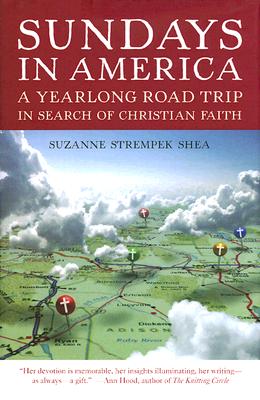
Strempek Shea (Beacon) $16.00  When
Pope John Paul II died, Suzanne Shea, who had not been an active member of a
church community for some years, recognized in his mourners a faith-filled
passion that she longed to recapture in her own life. So she set out on a
pilgrimage to visit a different church every Sunday for one year – a journey
that would take her through the broad spectrum of contemporary Protestant
Christianity practiced all over this country.  Want to sit in the pews with dozens of different
congregations, getting to know all manner of spiritual experience and
congregational life? Humor and grace abound as she allows us to join her in
this year-long road trip through 30 states, and 52 different churches.

Mman seeks god.jpgangeography of bliss.jpg Seeks God: My Flirtation with the Divine Eric Weiner (Twelve) $26.99  Of course this is not the only book one should read if one wants to know about comparative religions, and it obviously does not bring a uniquely Christian, or Biblical framework to the project, but still — what a fun read! But what a curious project it is. Perhaps something like Bruce Fieler (Walking the Bible, The Year of Living Biblically, etc.) Weiner, who calls himself a “spiritual voyeur” and inveterate traveler, wants to actually experience what various religions have to offer, so he actually tries to adopt them the best he can. From practicing with Hindus and Buddahists, to serving with Franciscans, to some lesser known outfits, he tries to see what is good about them all. It is a clever read, and one really does show at least some of how these faiths are practiced on the ground. 
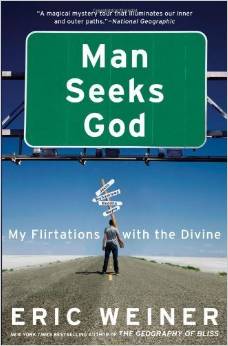
By the way, I really, really enjoyed his previous one, where he visits the countries that have been measured to be the happiest on the planet, to see what they do right. That one is called The Geography of Bliss: One Grump’s Search for the Happiest Places in the World (Twelve; $14.00.) Fascinating and fun, and a bit instructional, too, about what really makes us happy.

Ssalvation on sand.jpgalvation on Sand Mountain: Snake Handling and Redemption in Southern
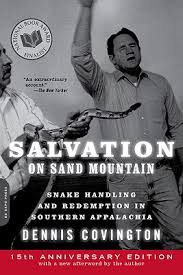
Appalachia
Dennis Covington (DeCapo) $14.95 I have often said this is
one of my all time favorite books, a high octane, powerhouse story by a great
writer, a gutsy, wounded journalist who is assigned to do a serious story on
the snake-handling sub-culture in rural, very Southern West Virginia. I will
not spoil the story, but you should know this is beautifully written,
energetic, fascinating, and very surprising, even as this author ponders some
of the biggest stuff we can ask about religion in America, and faith in our own
lives.  What a book! By the way, I
was blown away by the story he wrote with his wife, novelist and essayist,
Vicki Covington, about their troubled marriage, movingly called Cleaving: The Story of a Marriage. What
writing!


Ddemon camp.jpgemon Camp: A Soldier’s Exorcism Jennifer Percy (Scribner)
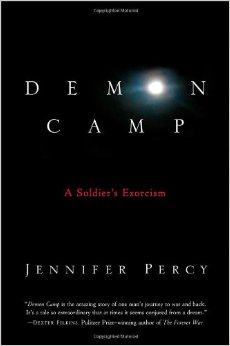
$26.00  I heard about this from an Episcopal
friend and then on NPR and it made me think a bit of Salvation on Sand Mountain. This exploration of demons and exorcism
didn’t come from Oral Roberts or super-charismatic Pentecostals, but from a
mainstream, secular writer (of the literary caliber who gets reviewed on NPR.)
This is one helluva book — is about post traumatic stress, telling the story
of an emotionally wounded vet who is convinced he is being haunted by demons.
He finds help (or does he?) from an almost spooky exorcist ministry in very
rural Alabama. This brilliantly told story traces not only the surreal narrative
of the demon-haunted vet, but of the journalist herself, as she accompanies him
into the memories of the horror of the battlefields in Afghanistan and the
horror of serious spiritual warfare. I am left wondering what to think about
this, and you might as well. Whew.

Bblood brothers.jpglood Brothers Elias Chacour (Baker) $12.99 I have wanted to
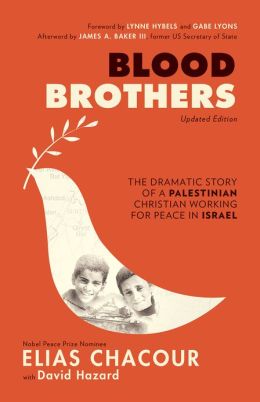
remind our friends about this since an updated second edition came out a year
ago.  This is the dramatic story of
a Palestinian Christian working for peace in Israel. The late James Baker III
wrote a moving afterward. Father Chacour, known to be a delightful and generous
man, is an Archbishop of the Middle Eastern Melkite Church and founder of the
Mar Elias University in Galilee. He has been nominated for the Nobel Peace
Prize three times, by the way – and his story here is a stunning example of
Christian advocacy for justice, for reconciliation, and for Biblical
nonviolence.  It is a riveting life
story and a beautiful vision of the hope for peace amidst the Arab-Israeli
conflict.


Iin the wilderness coming of age.jpgn the Wilderness: Coming of Age in an Unknown Country Kim
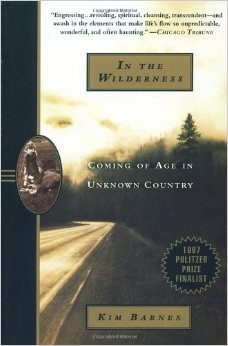
Barnes (Anchor) $15.00  I found
this to be one of the most moving books I’ve read in a long, long time, and
continue to ponder it, even though I read it several years ago. It was a
finalist for the Pulitzer Prize, in fact. Barnes, now a novelist, was raised in
rural Idaho, born into a rustic family of nearly migrant loggers.  When her isolated extended family
became involved in nearly cult-like fundamentalism, her life changed – as did
her family’s relationship with the land, with others, with everything from
sexuality to politics to work and education.  Her rugged journey out of this worldview, and away from her
formerly close-knit family, is riveting reading.  Here is how the back cover described it: “Into the Wilderness is the poet’s own account of a journey toward
adulthood against an interior landscape every bit as awesome, as beautiful, and
as fraught with hidden peril as the great forest itself. It is a story of how
both faith and geography can shape the heart and soul, and of the uncharted
territory we all must enter to face our demons. Above all, it is the clear-eyed
and moving account of a young woman’s coming of terms with her family, her
homeland, her spirituality, and herself.”

Thungry for the world.jpghe subsequent sequel by Ms Barnes, Hungry for the World: A Memoir (Anchor;
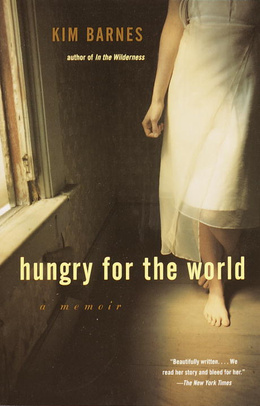
$15.00) is passionate and well worth pondering, again, wonderfully
written with intelligence and grace, although it has some sexual stuff that may
trigger painful memories for some readers. This is literate, never gratuitous,
describing her profound exploration of the meaning of it all, and her search
for a healthy, sane life.  


Nnorth of hope.jpgorth of Hope: A Daughter’s Arctic Journey Shannon Huffman
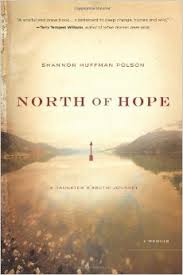
Polson (Zondervan) $16.99  I have
on occasion said that this is perhaps the most literarily rich book every
published by this evangelical publisher. I have met Polson, and know that she
is an extraordinary writing talent, a deep thinker, and a thoughtful Christian
writer.  In this gutsy memoir, she
retraces the steps of an outdoor river adventure through Alaskan wilderness
coming to grips (in the exact journey, at the exact spot) where her parents
were mauled to death by a bear the year previous. Is this a helpful way to
grieve a tragic and gruesome loss? Why is she doing this? How does it
feel?  As she prepares for this
journey, she is also rehearsing her role as singer in a Mozart Requiem, and
these interludes are themselves gloriously written and deeply affecting. What a
book.

Tlife you save may be your own.jpghe Life You Save May Be Your Own: An American Pilgrimage Paul
Elie (Farrar Straus Giroux) $17.00 
A renowned book, a labor of love, highly literate and exceptionally well
researched, this was a finalist for the prestigious National Book Critics
Circle Award. It explores the lives of four great writers who sought to change
lives through their work, and the way their own lives were changed by
books.  In a way, it can be
described as four interlocking biographies, telling us in beautiful prose about
Thomas Merton, Dorothy Day, Flannery O’Connor and Walker Percy.  If one is at all interested in American
literature, the world of intellectual Catholicism, or the impact of the
Catholic left, this is “a perfectly realize work.” For three decades, by the
way, these four read each other’s work, corresponded, and grappled with what
Percy called ” a predicament shared in common” as they strove to bring together
faith and art.

Mmy bright abyss.jpgy Bright Abyss: Meditation of a Modern Believer Christian
Wiman (Farrar, Straus, Giroux) $13.00 
I have written about this often, and hope you know that Wiman was for a
long time the editor of one of the nation’s most respected poetry journals.
When he was diagnosed with terminal brain cancer, he wrote not only a poem with
this title, but a piece in The New Yorker, which eventually became this book.
Here, he reevaluates his drift away from Southern fundamentalism – his
description of faith in his Texas boyhood is worth the price of the book – and
wonders if liberal Protestant faith is adequate. This much-discussed book by
this thoughtful professor at Yale (yes, he lived!) is exceptional. Endorsements
on the back are from the likes of Marilynn Robinson and Kathleen Norris and
other intellectuals who long for faith, even if not of the evangelical sort.

DDays of Oblation My Argument with My Mexican .jpgabrown rr.jpgys of Oblation: My Argument with My Mexican Father Richard
Rodriguez (Penguin) $15.00  I hope
you know Rodriguez, a fine, fine Catholic writer, whose memoir Brown and Hunger of Memory have all won awards. One prestigious reviewer
wrote that (it) “looks into American – north and south of the Rio Grande – as
penetratingly and eloquently as Camus did when he compared the mental
landscapes of France and Algiers.” The
Village Voice
said is explores “the grandeur and grief of the American
soul.”

TThe Color of Water-  Black Man's Tribute to His White Mother .jpghe Color of Water:  Black
Man’s Tribute to His White Mother
James McBride (Riverhead) $16.00  James McBride is a fine wordsmith and a good
novelist, but here he gives us his own story, and that of his remarkable mother, a woman who was worthy of having a book written about her!  This book is certainly one that readers adore, and it remains a popular seller in bookstores everywhere.  It is touching, and informative — as The Washington Post Book World puts it, “As lively as a novel, a
well-written and thoughtful contribution to the literature on race.”  Indeed, this inspiring story is “suffused
with issues of race, religion and identity.”  This is a very eloquent book, finally about family and grace
and goodness. Highly recommended.


Aan american childhood.jpgn American Childhood Annie Dillard (Harper) $13.99  Okay, she’s won a Pulitzer, is a
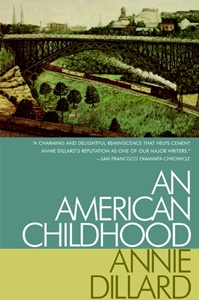
delightful Presbyterian writer, and there is a scene from her Pittsburgh
hometown painted on the cover.  One
critic said it will “take the reader’s breath away” and another says it is “breathtaking…
a work marked by exquisite insight.” The Philadelphia
Inquirer
reviewer wrote, “The reader who can’t find something to whoop
about is not alive” and went on to say it was one of the very best American
autobiographies. Another critic said it was about “the capacity for joy.” So.
What kind of conversations can you have in a book group with a resource like
this?


Llittle black sheep ashley c.jpgittle Black Sheep: A Memoir Ashley Cleveland (David C. Cook)
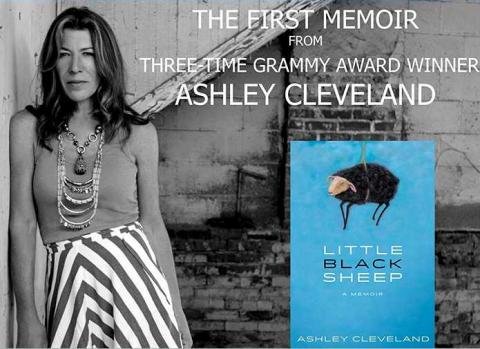
$17.99  I hope you know the rowdy,
gravelling voice of rock and roller Ashley Cleveland.  Now you can know her story – raised in a dysfunctional,
hurting family, struggling with her own destructive days of drugs, alcohol and
sex, and her eventual encounter with a forgiving God.  Dan Allender says of it “This book delivers me face-to-face
with a God who just might be good news. To say that I enjoyed the book is far
from the truth.  I devoured it.
Wept. Raged. Swore. And said yes again to Jesus.”  So, yeah: that’s just what a good story can do. You should
give this to somebody who needs to know there is a better way.

Ttraveling mercies1.jpgraveling Mercies: Some Thoughts on Faith Anne Lamotte (Anchor)
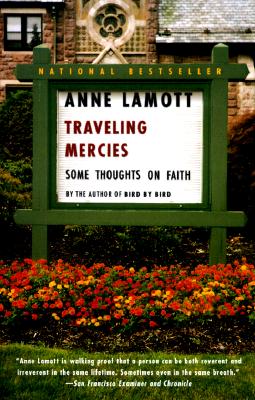
$15.99  How can I not list this?
Anne is a beloved writer, novelist, essayist, and this is her most famous work,
the one in which she gives up her own (drunken) way, and yields to Jesus. If
you have a bohemian, lefty friend who needs a “shot of love” (as Dylan put it)
this crazy story of hard times, wild writing, and earnest faith just might
help. Look for a new anthology of pieces about coping with grief and getting by
amidst great pain, coming later this fall. She is a good, clever writer, and
her story, unorthodox as it may be, is a treasure.  This continues to sell well, and we take it everywhere we
go.


Ddancing through it.jpgancing Through It: My Journey in the Ballet Jenifer Ringer (Viking) $27.95  There are so many good autobiographies
of those involved in the arts, and some are truly fascinating, and many illustrate
(for those with the eyes to see, at least) the longing for God of beauty that
often accompanies those with creative spirits. Here is a rare story, written by
a strong Christian and exceptionally talented dancer. Ms Ringer has been the principal
dancer in the New York City Ballet!  
Not only does she draw accolades for her talent, and her story, from
critics, but her friend Kathy Keller (of Redeemer Presbyterian in Manhattan)
says it is “an honest an exhilarating look into the life of a young dancer,
with both the excitement of achievement and the desperate anxiety given proper
treatment. ” She thinks it is good “for any young person passionately following
their dream.  Jenifer was fortunate
to have help in conquering her eating disorder and other demons, and this book
may be a help to those wrestling with their own issues.”

Techo within.jpghe Echo Within: Finding Your True Calling Robert Benson
(Waterbrook) $13.99  I love this
gentle, sensible writer who can speak of very deep spiritual truths on one
page, and tell a self-effacing episode from his own storied life on the next.
Benson’s good books aren’t exactly full memoirs, but they all share so much of
his life, casually told, nothing splashy, that I wanted to suggest them on this
list: he is a master writer, storyteller, with an eye to see the deeper things
behind his daily life. From his early books on learning about contemplative and
liturgical prayer (Between the Dreaming
and the Coming True
and Living Prayer)
to this one on his own discovery of his own sense of calling as a writer, (to
one on caring for his back yard, or the year he had to help his aged mother
move to an assisted living place, or his new one on the craft of writing) he
invites readers into his life, names important stuff, and writes so clearly
that one can’t help but want to reconsider his or her own life patterns,
assumptions, and ways of being in the world. For memoir lovers who are writers,
artists, or anyone seeking a meaningful calling, this book on vocation is a
fun, fascinating glimpse of how it is discerned, and how it can be done.

Wway below the angels.jpgay Below the Angels: The Pretty Clearly Troubled But Not Even Close to
Tragic Confessions of a Real Life Mormon Missionary
Craig Harline (Eerdmans)
$22.00  You know this has to be a
good book for the editors of one of the most storied and prestigious religious
publishers in America to offer it as one of their biggest titles of the season.
No, this guy doesn’t covert to Protestantism, and there is no grand conclusion,
but, wow, does he write well – colorfully and creatively (does the subtitle
give you a hint that he’s upbeat about it all?) And this memoir is certainly about his pondering his own faith,
choices, the nature of spiritual experience (including failure) as he ponders the role of religion in his life, and in our culture. And did I mention he’s a good writer?  As Jana Riess
writes of it, “How could a memoir that primarily deals with religion and
rejection be so flippin’ hilarious? Craig Harline’s experience as a Mormon
missionary in Belgium in the mid-70s are ingeniously funny, but they also point
to important issues – how religious people deal with apparent failure and
navigate grown up faith after childish certainties have proven
inadequate.” The demanding Kirkus Reviews said it displays a “fine
mix of pathos and hilarity… a touchingly human memoir.”  Here is a nice, thoughtful interview with him in a 15 minute video clip.

Aa severe mercy.jpg Severe Mercy: A Story of Faith, Tragedy and Triumph Sheldon Vanaukan (HarperOne) $14.99  Do you know this book? It was very popular a few decades ago, and I keep hoping there will be a renaissance of its popularity.  A whole new generation of readers should know this heartbreaking story of romance and intellectual discovery, of tragedy and grief, of loneliness and friendship, of God and grace. Part of the story includes the illness and death of Davy, Sheldon’s young wife, and his grief as he correspondied with and become friends with C.S. Lewis, whose moving letters are enclosed in the book. (Lewis, you know, lost his wife, Joy, shortly after their marriage.) What an amazing, wise, powerful book, about a truly memorable couple and a nearly universal story of love, loss, and hope.
Ffaith and other flat t.gifaith and Other Flat Tires: Searching for God on the Rough Road of
Doubt
Andrea Palpant Dilley (Zondervan) $14.99   I have written about this before,
partially because it rang so very true, partially because I think this story
needs told as it isn’t uncommon: a girl whose parents are evangelical
missionaries returns home, attends a conservative Christian college, is
attracted to the bohemians and skeptics, ends up nearly losing her faith, laden
with new ideas, moving feely into the world outside of the religious
sub-culture, and yet can’t shake her love for family and church. Through a
faithful older friend, she is enfolded back into the faith, perhaps less sure,
but perhaps more deeply faithful and wiser. This is a fine young adult memoir
that captures the texture of “the critical years” and is an entertaining read, compelling
us to care about the author and her tale of doubt, “flat tires” and set-backs
on the journey towards mature faith.

CCracking the Pot- Releasing God from the Theologies That Bind Him.jpgracking the Pot: Releasing God from the Theologies That Bind Him Christine
Berghoef (Resource Publications) $22.00 
I know, the subtitle makes this sound like merely another emergent
anti-evangelical manifesto, but it is not; it is an engrossing memoir.  It includes her journey exploring “the
simplicity and complexity of faith” and offering honest, tested hope. Rave,
rave reviews come from Brian McLaren and Cornelius Plantinga.  Phyllis Tickle, who reads more widely
than almost anyone, says “Theological autobiographies are rare, and intriguing
ones are even rarer. Few of us have the candor to construct them, much less the
skill to endow the result with grace. Christine Berghoef has all those things,
however, and the result is this enormously appealing memoir of a questing
Christian mind.”  If Phyllis calls
it “enormously appealing memoir” it’s worth reading. By the way, Berghoef’s husband, Bryan, has a book called Pub Theology: Beer, Conversations and God (Cascade
$15.00.) They are church planters in
urban Washington DC.

Rradical reinvention.jpgadical Reinvention: An Unlikely Return to the Catholic Church Kaya
Oakes (Counterpoint) $15.95 This book, I’ll say from the start, isn’t for
everyone, but I couldn’t put it down. The indie-girl, radical-punk-anarchist
author will appeal to transgressive readers and socially progressive folks –
and all will be surprising how her deep desire for a meaningful life that makes
sense of the biggest questions and gives motivation to address social concerns
draws her to the historic Irish church of her youth.  She grows to love the Mass, she meets some feisty feminist
nuns, and joins a “pray and bitch” circle with other misfits trying to find
their voice in what they think is an outdated institution. What a story — the
journey from an ex-Catholic punk to an (unconventional) amateur theologian. And
a great writer.

Tgirl in orange.gifhe Girl in an Orange Dress: Searching for a Father That Does Not Fail Margot Starbuck (IVP) $16.00  I continue to tell people they just must read this extraordinary book, this story of a young woman who was adopted, whose adopted dad(s) left her, and her subsequent struggle to discover if God as Father was a viable notion, whether He was really there, and if He truly cared. Is grace real, and does it matter? I simply loved this book about this good woman’s life which is both poignant and full of pathos and yet delightful to read and laugh-out-loud funny at times. This is just a fantastic memoir, a great read, and loaded with very important deep-down insight. We love this writer, and, will say it again: you must read this book!   And then read her others, too.
UUndistorted God Reclaiming.jpgndistorted God: Reclaiming Faith Despite the Cultural Noise Ray
Waddle (Abingdon) $15.99  I just
started this brand new memoir, a faith journey written by a religion writer,
wondering how Christianity might work for him; he had seen plenty of distorted
faith, disconnected and confused. Yet, “people are yearning for connections –
with one another, with God, and with a usable and undistorted faith.”  He “avoids coy or watered-down
spirituality and instead gives breathing room for the “divine patience” in this
“shaggy, swarming, world.” Nora Gallagher, an eloquent writer herself (and Episcopal
priest) says “This book is like a poem, or a room suddenly cleared of clutter
so you can see its fine, clean bones.”


Wwhen we were on fire.jpghen We Were on Fire: A Memoir of Consuming Faith, Tangled Love, and
Starting Over
Addie Zierman  (Convergent) $14.99 
This is not so much a narrative of a conversion to Christian faith, but
the story of one young woman’s near journey out of it, or at least of the fundamentalism
of her youth and her struggles now with clichés big and small.  I have reviewed this before, and found
it hard to put down – she is a feisty writer, and this is good for anyone
wondering if one can maintain faith even if one is no longer confident in the
evangelical subculture and its commercial trappings. Less intense, but very popular,
is Rachel Held Evan’s book about “growing up in Monkey-town” (the town of the
infamous Scopes Trial against Darwinism) recently re-issued as Faith Unraveled: How a Girl Who Knew All the
Answers Learned to Ask Questions
(Nelson; $15.99.)  You really ought to know these, and
ponder their stories, their lives, their new kind of faith. 

FFaith, Interrupted- A Spiritual Journey.jpgaith, Interrupted: A Spiritual Journey Eric Lax (Knopf) $26.00  What a clear, interesting telling of the tale of a boy growing up in the household of an earnest, happy, and thoughtfully traditional Episcopal priest who grew into doubt and confusion in mid-life after a boyhood of piety and conviction. Lax’s description of being a pastor’s kid is remarkable, and his eventual shift — having a “foot in both cultures, dubious as plain believers, equally dubious as plain unbelievers” is how Jack Miles put it in a glowing review–  is told with eloquent honesty. This quiet spiritual autobiography is, for him, a story of discovery (and, perhaps, rediscovery.) Lax has written other books, including  best-selling study of Woody Allen, who makes an appearance or two in this story.  (As does, by the way, the Archbishop of Canterbury, and a host of other figures important within the Anglican communion of those years.) Is it natural for faith to flow and ebb? This is a fascinating story which will appeal especially, I think, to baby boomers raised in, or interested in, high church Protestantism.
Ttorn.jpgorn: Rescuing the Gospel from the Gays-vs.-Christians Debate Justin
Lee (Jericho Books) $15.00 There is a shift in evangelical literature about the
topics of gender and same sex attractions, and it is not now my point to weigh
in on the many recent books; I list this here because it is a very moving story
of an evangelical boy who came to realize he had homosexual desires, and worked
to bring some sort of dialogue between his evangelical family and friends and
the gay friends he had in college. That is, it works as a spiritual memoir, the story of a life quest. Lee was nick-named “God Boy” as a teen and his
loving family supported him through his coming of age. It is disarming, honest,
and painful, documenting his disillusionment with the “ex-gay” movement and the
courage of his convictions that God would accept him as he ways. Although there
is more here there mere memoir, it is, at heart, a touching story of a guy
trying to figure out his life, his family, his identity, and his faith. Agree
or not with his conclusions, it is a nicely written story and a good example of
the narratives experienced not a few young Christians.

Tatake this bread.jpgke This Bread: A Radical Conversion Sarah Miles (Ballantine) $16.00 I
have read three books by this beautiful writer, astonished and delighted that
one can string together such beautiful lines, good phrases, moving paragraphs
about such heart-breakingly beautiful stuff. By narrating her life in literary
memoir, she brings an intimate detail to view, helping us sense just what her
life is like. And, wow, what a life. As you may know, this first book of hers
narrates her conversion to Christ by simply partaking – for the first time
ever! – the elements of Episcopalian Eucharist. Realizing she encountered the
living Christ in this parish’s open table and profound hospitality to her, a
stranger and outlier, she figured the next step was to “go and do likewise.” Or
almost: she started a food pantry for the poor in the San Francisco
neighborhood in which the church is located.  A sassy, quick, and clever lay theologian, now, she tells us
about not only her interior life, but her struggle to serve the marginalized,
bring gospel news to the broken, and use food and eating as a way to build
human community in the context of her liturgical church.  This is a story well worth reading –
enjoyable for the sheer verve of the writing, and extraordinary for the complex
and beautiful story it narrates.

“jesus-freak.jpgI came late to Christianity,” writes Sarah Miles,” knocked
upside down by a mid-life conversion centered around eating a literal chunk of
bread. I hadn’t decided to profess an article of doctrine, but discovered a
force blowing uncontrollably through the world.” The punchy sequel to Take This Bread tells powerfully how she carries
on her new found faith and her life of radical discipleship, serving the poor
and hurting within this progressive, liturgically rich urban faith community —
it is called Jesus Freak: Feeding, Healing, Raising the Dead (Jossey-Bass $21.95.) You most likely
haven’t read anything like it. Wow.

PPastrix.jpgastrix: The Cranky, Beautiful Faith of a Sinner & Saint Nadia
Bolz-Weber (Jericho Books) $22.00  I
have said before that I almost didn’t read this as I figured I well understood
the “I’m no longer a straight-laced fundamentalist” arch of this story, and had
read enough of the cool emergent stories celebrating their post-evangelical shtick.  I am so, so glad Beth and I both read
this, and will admit that we found it to be a remarkable book, very well-written,
funny, engaging, surprising, and very thought-provoking. We loved hearing about
her journey out of ultra-fundamentalist faith, her struggles with addictions,
the reconciliation with her alarmed faily, and, despite her foul mouth, her
call to become a Lutheran clergy person who preaches sermons about law and
grace.  Yes, she has part of the
church calendar tattooed across her torso; yes, she sometimes wears a clergy
collar, and yes, many of her community are marginalized from the mainstream;
her artfully emergent Denver mission congregation is called “House of All
Sinners & Saints” and is as culturally-diverse and engaged in transgressive
hipster culture as one can be; it is not for everyone. But it is a sample of a faith
journey that will be a life-line to some. 
I sometimes joke that if Anne Lamotte is too tame or too old, try
Nadia.  Her writing is like Anne on
steroids. And it just might open conversations about the meaning of faith in
our time – even if you don’t agree with her theology or congregation’s style. A truly fascinating, even eccentric, perhaps one might say
postmodern, contemporary memoir.

FFinding God  A Treasury of Conversion Storie.jpginding God: A Treasury of Conversion Stories edited by John
Mulder  (Eerdmans) $22.00 With
almost 400 pages, this is a jam-packed, potent collection of some of the most
thoughtful, dramatic, or literate examples of Christian conversion narratives
anywhere in print. There are sixty inspiring stories, here, of life-changing
experiences. Endorsements are from Randall Balmer and Richard Rohr and Joel
Carpenter, very different writers, all interested in the contours of faith and
culture in our time. Here you will find short excerpts from the memoirs of
Martin Luther and John Calvin, Therese of Lesieux and Toyo Kagamwa, but also
Evelyn Underhill and Albert Schweitzer and Bono. You can read about the
surprising Christian conversions of Black Elk and Charles Colson and Dorothy
Day, and the rigorous thoughts of philosophers like Alvin Plantinga and
scientists like Francis Collins. 
This monumental, wonderful, and a very useful resource for anyone not
only needing good examples of authentic faith, but for anyone wanting to share
these stories with others.

BookNotes

SPECIAL
DISCOUNT
ANY ITEM MENTIONED

20% off
order here
takes you to the secure Hearts & Minds order form page
just tell us what you want

inquire here
if you have questions or need more information
just ask us what you want to know

                   Hearts & Minds 234 East Main Street  Dallastown, PA  17313     717-246-3333



Books to Follow-up James K.A. Smith lectures — spiritual but not religious // the nones // desires // practices ON SALE at Hearts & Minds Books

For those who are curious, who had prayed or wondered, our third annual Hearts & Minds Pittsburgh Summer Lecture with James K. A. Smith went fabulously. He’s such a deep and well-read philosopher, but has such a dynamic, passionate presence.  We had a great crowd, had the chance to greet (or miss greeting, as the case may be) old college friends, CCO staff alum, students we’ve met at Jubilee or OCBP, and an array of friends from the greater Western Pennsylvania world. Kudos to folks like Lisa Slayton and her team at Pittsburgh Leadership Foundation/Serving Leaders and friends at Geneva College for helping to promote our work.  And, of course, the CCO staff, old and brand new, had been gathering at Robert Morris University anyway, so they were out in force. What good folks they are! 

At the public event Jamie talked about his new book How (Not) To Be Secular: Reading Charles Taylor (Eerdmans; $16.00.) Smith guided us into a heady conversation — what do wehow not to be secular.jpg mean by the secular, are we in a secular age, and what does that even mean, and how can the heavy Canadian philosopher Charles Taylor help us? Nicely, though, he helped us along the way (yes, he quoted The Postal Service and Wallace’s Infinite Jest and British novelist Julian Barnes.) His entry into all this was the recent conversation about the “nones” (that is, those who check “none” on the survey’s asking for religious affiliation.) These folk, however, are often also those who claim to be “spiritual but not religious.”  Oh my, this was an important stuff for anyone interested in cultural discourse, understanding the times, or who may be interested in the religious landscape, congregational health, evangelism, or a missional vision of relevant ministry in our postmodern contexts. Pastors? Elders? Evangelists? Artists? Journalists? Youth Workers? Christian teachers? College administrators? Parents?  Yes! Yes! Yes!

In the morning, Jamie had given one of the best talks I’ve heard in quite a while, pouring his teacherly heart out instructing CCO staff about the sorts of things he writescultural liturgies - both.jpg about in great detail in Desiring the Kingdom: Worship, Worldview, and Cultural Formation and Imagining the Kingdom: How Worship Works (both Baker Academic; $23.00 each.) If you want to understand what we’re about here at Hearts & Minds and our own unique heritage and passions, these books certainly get at that well.  We were just thrilled to have him teach at CCO staff seminar, and glad that CCO is the sort of organization that wants to be shaped by this Calvin College prof.  We gave a little pitch for his work at the neo-Calvinist/Kuyperian journal of public theology, Comment magazine, too. I don’t write for them anymore, but still promote their classy quarterly journal whenever I can.  So, again, thanks be to God.

I have a hunch that there are those who may appreciate our recommendations of these books by Smith but are either intimated by their intellectual heft, or the size and price. 

You know we understand that, and although these are important volumes, we are very (very)discipleship in the present tense.jpg eager to promote the best little collection of shorter pieces by Smith, some of them covering much of this ground — reviews, essays, sermons, speeches, articles and the like.  I highly recommend Discipleship in the Present Tense: Reflections on Faith and Culture by James K. A. Smith (Calvin College Press; $14.00) as a great anthology and primer and companion for your own journey towards a deeper and more meaningful daily walk through the world. Although I love almost all of these many chapters, there are one or two that are literally worth the price of admission. 

If you are a preacher or teacher, by the way, you will get some mileage out of the introduction, which exegetes the ancient/future connections shown on the very cover of the book — a new modern wing of an art museum built out of but refreshing the tradition of the older style. That’ll preach!  And if you are a fan of books about cultural engagement and social reforms, you should know he has a very good chapter which explores the thesis and implications in the much-discussed Oxford University Press book, To Change the World by James Davison Hunter which takes him to task a bit.) And there is that chapter, an open letter to praise bands. So, yes! This is very good.

* * *

Here, then, are a few quite readable books that might relate to Smith’s two lectures. If you don’t have the aforementioned Smith volumes you should get them from us. (And if you take my advice here, but get them elsewhere, well, that’s just wrong.)

Bbelief without borders.jpgelief Without Borders: Inside the Minds of the Spiritual but not Religious Linda A. Mercadante (Oxford University Press) $29.95 This is a very recent and notable book filled with real conversations, interviews and observations with some conclusions drawn from this primary source research.  Perhaps it was Diana Butler Bass in her controversial but very important Christianity After Religious: The End of the Church and the Birth of a New Spiritual Awakening who really best described this trend, and gave significant energy to wondering how to best do ministry among that cohort, in these times. Butler Bass offers a rave review to this scholarly volume: “For those who think that being ‘spiritual but not religious’ is intellectually vague,” she writes, “it is time to think again…. Linda Mercadante explores the beliefs of the religiously unaffiliated regarding God, sin, community, the afterlife, and ethics and finds people living “between” the worlds of secularism and traditional faith.”  

Phyllis Tickle — ever the book woman! — compares this to the award-winning Habits of the Heart by Robert Bellah, saying that it offers “a brilliant narrative introduction to the theology and belief systems of the “spiritual but not religious” among us. Highly accessible and rife with insightful commentary Belief Without Borders is far and away the richest study I have seen to date of the SBNR and is destined to become a classic in the field.” These in-depth interviews and Mercadante’s evaluation offers a much-needed contribution to both the role of belief in contemporary American culture but also to the ways and work of the local parish. I think this is important, and wish I could have showed it to the crowd gathered to hear Smith talk about Taylor (especially those who have reason to work particularly with this rising population.) It would have gone nicely with his great question, “How is it that we live in a culture that gives us both Elizabeth Gilbert and Richard Dawkins?”  Exactly.

Dr. Linda Mercadante is Professor of Historical Theology at the Methodist Theological School in Ohio and is an ordained minister in the Presbyterian Church (USA.)

TRise of the Nones.jpghe Rise of the Nones: Understanding and Reaching the Religiously Unaffiliated James Emery White (Baker Books) $15.99  I am a fan of James Emery White — his two IVP books, Serious Times and Christ Among the Dragons are very good at pondering our moment with a grave awareness of our cultural ethos and ways to faithfully “engage the culture” with the newspaper in one hand, as they say, and the Scriptures in the other. His little (IVP) book A Mind for God  is one I often share, sometimes give as a gift, and  from which I sometimes read out loud in workshops and sermons. White is a solid evangelical, mega-church pastor, reads the times well, and is a lively, clear writer.  Although I haven’t read it, I’ve been told his recent one The Church in an Age of Crisis: 25 New Realities Facing Christianity is also quite good, a sobering, basic cultural overview pitched to ordinary church leaders. 

Now, he has taken some of that passion to understand the times, and offers us a quick and easy overview of the “nones.” Again: the single fastest-growing religious group of our time is those who check the box next to the word “none” on national surveys. In America, this is nearly 20% of the population.  And most churches are doing very little to reach them with the gospel.  And, it seems, what intentional effort we’ve made, has been not too fruitful.  (I applaud, by the way, those who have used You Lost Me: Why Young Christians Are Leaving the Church… and Rethinking Faith by David Kinnaman —  you know we brought him to Dallastown a few years ago to talk about that stellar book, and it is still very, very valuable, as is the DVD curriculum which we also sell. It is about young adults who have left the church, but who often still see themselves as Christian, or at least some kind of religious.)

This new Rise of the Nones book by James Emery White gives you the important definitions and data you need: exactly who are the unaffiliated? What caused this seismic shift in our culture? And it offers ways churches can more effectively reach these people, insights that are wise and reliable — the sort of relevant orthodox vision I think many of our churches need to explore.

Here is church growth and church planting guru Ed Stetzer:

 “In an era of increasing complexity and religious apathy, James Emery White has written a book that is helpful, informative, challenging, and timely. Those who care about communicating the gospel in this complex culture and think the church must regroup and re-engage should read Rise of the Nones.”  

TTeach us To Want.jpgeach us To Want: Longing, Ambition, & the Life of Faith Jen Pollock Michel (IVP/Crescendo/her-meneutics) $16.00  I stood up in front of CCO staff telling them how good this one was, glad that it so nicely dove-tailed with Smith’s staff seminar lecture on Desiring the Kingdom. and was, further, just a moving, delight to read. In that lecture, of course, he insisted that we are not merely “brains on a stick” and a wholistic anthropology must lead us to pedagogy and methods of ministry that honor our deepest heart/gut desires. Worship (and worldview formation) shapes our longings, teaches us to love (but what?)  Of course, the secular liturgies and ideologies of the day do this, too, so our habits are often shaped less by the things of God, and more by the longings drawn out by the secularized forces and habits learned (at the mall, most obviously?) So Smith is all about desire, which he gets from Augustine, by the way.


This beautiful new book, almost written as a memoir, attends to this vital question of how we come to love the things we do, and the ways we do, and asks what we should do with our desires. As a woman, particiularly (but written for anyone) she asks big questions about her longings, her passions, her body, her vocation… it is marvelous, rich stuff.

The Gospel Coalition blogger Bethany Jenkins (who reads quite a lot, I happen to know) writes of it, “Seriously, one of the most beautiful nonfiction books I have ever read.”   The very impressive writer Leslie Leyland Fields says, “I’ve been waiting for this book for a very long time.” 


And Rebekah Lyons (who wrote the lovely Freefall to Fly) notes that “Through her own story of fear, loss, and God’s goodness, Jen Pollock Michel stirs us to recover and reshape (these) desires in light of the kingdom of God.”

Here is what the very fine wordsmith Mark Buchanan says of it:

Jen Pollock Michel fuses three things that make her book essential
reading: deep insight, raw honesty and radiant prose. She’s a terrific
writer, an agile thinker and–if that were not enough–a fearless witness
to her own heart’s darkness and light. By inviting me deeply into the
mess and beauty of her own story, she has given me courage to step into
the mess and beauty of my own–and, with her, to meet afresh the One who
awakens, names, purifies and meets all the desires of my heart.

Here is a short interview with Ms Michel, with some nice points about the book, and some good quotes. Check it out, and come back to us, please. 

By the way, IVP / Crescendo Books is an imprint of very thoughtful books by and mostly for women  — every one so far has been a winner.  The her-meneutics imprint refers to the wonderful blog, for which Michel writes.  

Rreordered love.jpgeordered Love, Reordered Lives: Learning the Deep Meaning of Happiness David K. Naugle (Eerdmans) $18.00 Well. This wonderful, rich, provocative, interesting, important book came out a few months before Smith’s Desiring… and it covers (in somewhat different language and tone) some very similar material. It is clear they are both traveling in some similar circles, with similar influences and insights. Not only do they both allow their friends to use rather intimate nicknames — James K.A. goes by Jamie, and Professor David goes by Davey — they both have studied Dooyeweerd and other Dutch Reformed philosophers, have written about the notion of worldview, and both are excellent, excellent teachers. Davey spends a lot of time with undergrads and teaches a lot — and has learned to take deep, mature, and important stuff and help convey it to ordinary, thoughtful folks. They both love Augustine (and both have epigrams from the 4th century Bishop in their books.) As John Witvliet of the Calvin Institute on Christian Worship notes, “Naugle’s candid discussion of the disordered human condition is particularly crucial for explaining just how dramatic and transformative the gospel really is.” 


I agree. In the hands of writers like Jamie and Davey, the old “our hearts are restless until they rest in Thee” line comes alive, is seen as a powerful counter to the confusions of our times, and the key to a multi-dimensional, relevant and radical Christian spirituality. Wow, this is great, great stuff. Anybody reading Smith should pick up Reordered Love, and anyone who has taken our advice on this — we’ve raved about it before — should follow up Naugle with a few of Smith’s important works.  Do it! It is a “rightly ordered” choice that will help rid you of disorder.  I promise.

Ddangerous passions.jpgangerous Passions: Deadly Sins: Learning from the Psychology of Ancient Monks Dennis Okholm  (Brazos Press) $16.99  Smith, as I gather you now realize, makes a bit deal about the “loving” nature of the heart — that we come to desire certain things, we love sometimes the wrong things, and we are transformed less by data and information then by images and seductive longings. I think this brilliant work fits right in!

Once again, Brazos Press gives us a remarkable, learned, thoughtful book that can help the church universal. Okholm, an evangelical with a PhD from Princeton, who teaches at Azusa Pacific and Fuller Theological Seminary, is a pastor at Holy Trinity Anglican, and a Benedictine oblate.  I love this ecumenical mash-up, and this book — the subtitle says it nicely — does what few books do well: bringing the ancient insights of the church Fathers and Mothers into dialogue with modern authors and our postmodern milieu.  This really is a book about how the ancients viewed the seven deadly sins, and it may be the most magisterial book on this topic yet. One reviewer has called it a “tour de force of early Christian monastic psychology and theology.” Another says it is “wise, accessible…brims with insight…practical and profitable.” 

Gary Moon writes of Dangerous Passions, Deadly Sins,

Dennis Okholm reminds us of the classic nature of what is at the heart of humans — a tendency to move away from the heart of God — and the fact that some of the beset Christian psychologists lived before modern psychology was born.

Ssinning like a christian.jpginning Like a Christian: A New Look at the 7 Deadly Sins William Willimon (Abingdon) $14.99  I am a fan of former Bishop Will Willimon, who has an lovely elegance and profundity of his clear, literate sermons, and good, practical theology. He usually emphasize something that Jamie Smith did in his Hearts & Minds Lectures, namely, that the church has a very, very important role in forming the desires and habits and hopes and visions of the people of God. Spiritual formation happens mostly in church, in community, and (for better or worse) is shaped by the congregation’s liturgy.  Worship — directed towards the Triune God or directed towards false gods in the culture — does something to us.  If we are called to be transformed as Romans 12:1-2 says (in our bodies, by the renewal of our minds, non-conformed to the culture, expressing worship in all of life) we must concern ourselves with not only proper and effective worship, but the insidious ways sin creeps in and idols take hold.  This is a matter of reflecting together about virtue and brokenness.


And so, reflecting on how we think about sin, how we are misinformed and misinformed by idols and the distortions of our virtues, really is something we must talk about.  Willimon, with his famous Duke U philosophy buddy Stanley Hauerwas, always has much to say about how embodied virtue in the way of Christ is shaped in community.  Here, he gives this fresh take on the propensity to sin, and what it means when Christians sin.  This updated edition is a really good resource — as it says on the back, “penetrating observations will be welcomed by readers who are dissatisfied with shallow, feel-good Christianity (from the left or the right…)” It includes discussion questions.  If you thought that the serious Okholm one seemed a bit much, try this.

Ccounterf gods 2.jpgounterfeit Gods: The Empty Promises of Money, Sex, and Power and the Only Hope That Matters Timothy Keller (Dutton) $15.00  This is not new, and yet it just cries out to be mentioned whenever we do cultural analysis about the things that most seduce us.  I have long recommended Richard Foster’s powerful, thorough study of materialism, Freedom of Simplicity (HarperOne; $13.99) and his very useful, and nearly prescient book The Challenges of the Disciplined Life: Christian Reflections on Money, Sex & Power (HarperOne; $14.99.) This powerful little book by Keller — who does ministry at the heart of the empire, near Wall Street and Broadway, I might add) — is up to date, brief, and offers the centrality of sanctification through the cross and grace of Christ as the antidote to these misguided loves. Although Foster is one of my favorite writers, and he is wise in his cultural discernment and spiritual direction, Keller is a bit more philosophical and a bit more astute about the idolatrous lures of the age.  Highly recommended.

Ppracticing our f.jpgracticing Our Faith: A Way of Life for a Searching People (second edition) edited by Dorothy C. Bass (Jossey Bass) $19.95  When this first volume came out in the late 1990s I predicted that it would create an avalanche of new books and new ways of talking about the uniquely Christian things we do, practices, habits, ways of leaning into life with idiosyncratic stuff we do. I said it was prophetic, important, yada, yada, yada.  And I was partially correct: it was very well reviewed and a whole series of books spun off it it, offering uniquely Christian insights into living before God, with spiritually attuned ways of engaging our bodies, music, money, time, speaking, caring for children, and more.  We respect the ecumenical, mature, and lovely writing that is on offer in each of the “Practices of Faith Series.” But this is the one that started it all, and we couldn’t be happier to be reminded of it when Jamie cited it as an example of the “liturgical” ways of being in the world. Here is a considerable re-take on the language of spiritual disciplines, practices are communal and outwardly tangible.  There are chapters here on how to think about dying, sabbath, offering testimony, being hospitable, ways of doing “household economics” and more. The more general chapters (by Bass and Craig Dykstra) on thinking about practices, and, well, practicing them, are very generative and thoughtful.  


Some of our conversation with Smith touched on this question of how worship shapes us well (this is the heart of Imagining the Kingdom) but he was quick to invite us to realizing liturgies, practices, and habit-forming rituals are woven into the fabric of our daily life as discipleship in God’s world.  This book helps open up that conversation considerably.  This includes suggestions for conversation and further reflection.

We also stock the teen version (co-written by some church teens) called Way to Live: Christian Practices for Teens (Upper Room $18.00) and the amazing, and under-utilized edition for hip, young adults, On Our Way: Christian Practices for Living a Whole Life (Upper Room $17.00.)

Dflow package.jpgVD For the Life of the World: Letters to the Exiles (Acton Institute) regular price $59.99 our sale price $35.00 


No, no, I’m not just slipping this in because we’re on the FLOW bandwagon: this really does offer a way of being in the world that is somehow idiosyncratic, from thinking about work to family to art to law, and living into the wonder and mystery of it all. This is allusive and creative and fun, and although I’ve reviewed it extensively already, had to note that anyone reading Jamie Smith, or pondering the nature of uniquely Christian ways of life in the world, resisting disorderly affections and the distortions of idols, will surely find this insightful, provocative, and useful. Yes!

See my long BookNotes review of the For the Life of the World DVD HERE.  See the cool trailer, HERE.

BookNotes

SPECIAL
DISCOUNT
ANY ITEM MENTIONED

20% off
order here
takes you to the secure Hearts & Minds order form page
just tell us what you want

inquire here
if you have questions or need more information
just ask us what you want to know

                   Hearts & Minds 234 East Main Street  Dallastown, PA  17313     717-246-3333

Join Us for the Third Annual Hearts & Minds Pittsburgh Summer Lecture – with James K.A. Smith July 22, 2014

James KA Smith poster.jpgIf you are friends with either Beth or I on Facebook, or a member of the Hearts & Minds Facebook group, or follow me on twitter, well, then, you know we are sponsoring a free public lecture with James K.A. Smith this Tuesday, July 22nd, in Pittsburgh. (See the poster below.)

Our very competent bookstore staff will of course keep the shop open while Beth and I sojourn West to be with our friends in the CCO campus ministry during one of their annual training events; we are even now pulling and packing boxes, lugging stuff up stairs and soon into our big van. We set up a pretty large book display there, and glad to share our curated wares with them.
Ahh, but what titles to take?

The CCO folks who do campus ministry are interested in almost everything, and they help college students relate evangelical Christian faith to the details of daily life. So we take theology and spiritual formation as well as books specifically about Christian engagement with art, film, music and culture. Of course we have books about higher education, that section onlearning for the love of god.jpg the tables anchored by the lovely little hardback Make College Count by Derek Melleby (Baker; $12.99) and Learning for the Love of God: A Guide for Students by Derek Melleby and Donald Opitz (Brazos Press; $14.99.) We will be with Steve Lutz, too, and of course will promote his great book for collegiates, King of the Campus (House Studio; $14.99.) We have a lot of books on how to help students gain a vision for their careers and callings, with titles on vocation and work, of course promoting Steve Garber’s rich, eloquent Visions of Vocation: Common Grace for the Common Good and the new paperback edition of Every Good Endeavor: Connecting Your Work to God’s Work by Tim Keller and Katherine Leary Aldsdorf (Dutton; $16.00.) 

We take books on developing the Christian mind and resources on sports, sex, and science. We have books on evangelism and books on prayer, books on politics and books on the arts, books on law and books on worship, books on food and books on nursing, teaching, and engineering.  CCO works hard to apply their robust and relevant vision of Christ’s Lordship to issues like racial diversity or global poverty and, naturally, to ordinary things kids go through on campus like eating disorders or roommate problems, stuff about digital technology and even how best to use video games. Did you know there were really thoughtful Christian books about such things?  If you’ve followed us for long, I guess you do.
So, off we go to serve the staff of the CCO, selling books that they will use in their ministries at dozens of campuses in the Mid-Atlantic region and beyond.  
And then, in the middle of that, we and the CCO throw what I like to think of as a Hearts & Minds party. We underwrite a lecture series, and invite as many folks as can come to hear a famous author and a good time is had by all. (That’s a party in my book — right? And, as Andrew Bird puts it in one of his very cool songs, “there will be snacks!”)
Which brings me to just one of the glimmers of insight into this year’s Hearts & Minds lecture: Jamie Smith, who is a very serious philosopher, with scholarly books admired literally all over the world, who cares deeply not only about allowing his faith to be formative and controlling of his academic work, also cares about relating his scholarly research not only to the academy, but to the church and world. And he loves pop culture — I’m sure he got the Andrew Bird “Tables and Chairs” reference. He is immersed in indie rock and contemporary cinema and the best modern novels. In fact, I have reason to think that in his Pittsburgh lecture this Tuesday he will site Infinite Jest by David Foster Wallace and the upbeat, melancholy songs of Death Cab for Cutie.

(Just notice how he uses music lyrics in this beautiful, new piece in Comment.  Did I mention he edits Comment?)

I suspect that you, too, believe that God cares about all of life, that we not only may, but should, think seriously about all manner offor the life- letters to the exiles.jpg things in popular culture and, empowered by God’s grace and Spirit, dive deep into the real world around us, messy as it is.  Almost like the Jewish exiles of old, we are called to help the flourishing of our world; we are called to know the world around us. That DVD we were promoting last week gets it right: For the Life of the World, indeed.  

Maybe that is why you are a customer of Hearts & Minds, you want to support a business trying to work this stuff out, and help you in your own faith journey.

So there is a lot to know, a lot to learn, new habits to embrace, and books can help us on our way.  I’m sure you believe that.
My own passion for this kind of missional Kingdom vision, that insists that all of life in God’s ordered creation is spiritual and that true faith is lived out in the daily, mundane stuff of ordinary life (as well as in big and important gestures of being involved in whatever may be the burning issues of the day, taking up causes and involvements in social initiatives with winsome passion and gusto, giving ourselves away to the needs of the world) was formed in many ways by the CCO’s ministry among students when I was in college in the early and mid- 1970s.  And then, more so, when Beth and I worked with them in the late 70s, helping in a small way to create that little conference now known as Jubilee.
 
pittsburgh.jpg
PITTSBURGH
For these important reasons, although we are not “from” Pittsburgh, we go back to the Three Rivers to co-host with the CCO a public event that tries to illustrate and underscore, celebrate and extend this heritage of proclaiming the good news that all of life is redeemed. For some of us, it is what (drawing on Al Wolter’s influential Creation Regained, perhaps) we used to call a reformational worldview.  
And this year, James K.A.Smith is our man, and man, does he do it well.
jamie hand on chin.jpgAs I mentioned, Professor James K.A. Smith captures much about contemporary culture, and he is very much in tune with music and art and architecture and movies; he experiences
and engages these artifacts from within his classic, historic, ecumenical, faith. He sometimes says he is Pentecostal — he wrote one serious book about being a Pentecostal philosopher called Thinking in Tongues (Erdmans; $19.00) although he is also a member of the Christian Reformed Church (he teaches at their flagship Calvin College in Grand Rapids.) In most of his writing, though, one senses a deep loyalty to the grand apostolic tradition, to the communion of the saints in the one, big Body of Christ; in his book Imagining the Kingdom: How Worship Works (Baker; $22.99) he offers a phenomenology of worship that is resonant with many of the best liturgical thinkers these days, Anglicans, Lutherans, Roman Catholics and the Orthodox, even. I guess he is a lower case c catholic and a capital K Kuyperian. In all of his body of work he is giving a fascinating and generative account of this grand story and how it can shape our deepest desires, our life and times and how we “do life” together in this 21st century as only such a faith-based philosopher can.
HOW (NOT) TO BE SECULAR
The topic he will be addressing at the CCO/Hearts & Minds Pittsburgh Summer Lecture ishow not to be secular.jpg based on his very thoughtful recent book called How (Not) To Be Secular: Reading Charles Taylor (Eerdmans; $16.00.) 
As you can see on the poster below, the title of his talk alludes to the much-discussed “nones” (those that checked “none of the above” in the religious category in the recent census and other surveys and polls.) Many people today in the West, especially younger adults, including many who have had some connection to the church, call themselves “spiritual but not religious.”  Much ink has been spilt and every denomination is pondering what to do about this growing crowd.
Perhaps the first thing to say is that we all (still) long for transcendence. 
And Smith maintains that the massive Harvard University Press book by the eminent Canadian philosopher Charles Taylor (The Secular Age) helps us understand our times and those who might be caught in the Death Cab for Cutie/David Foster Wallace world, a world that although not overtly religious in any conventional sense, is still haunted; our longings are freighted, there are signals of some desire for transcendence nearly everywhere. We don’t so much live in the land of the new atheists, and while every Christian publisher has released apologetic resources to counter them, Taylor and Smith believe this isn’t quite the needed approach. Smith’s own new book, How (Not) To Be Secular, is, to put it simply, a guide to the Taylor tome, which gives a better account of what is going on these days, even given the rise of the new atheists and their hostility to Christianity, and what it might mean for Christian witness. 
Smith’s book draws us into Taylor insights, and then adds his own explanation not only of Taylor’s insight, but what gospel-centered folks might do, what difference it all makes.
Tim Keller, the thoughtful pastor of Redeemer Presbyterian in New York, says of Smith’s book 
This volume (if read widely) could have a major impact on the level of
theological leadership that our contemporary church is getting. It could
also have a great effect on the quality of our communication and
preaching.I highly recommend this book.

LINKS AND REVIEWS
Here are a handful of resources to help you learn more about Jamie Smith and some of his many books.  I do hope that if you are anywhere near Pittsburgh this Tuesday, you’ll join the party.  If not, watch these videos, order some books, and be with us in spirit.   Thanks!

  • Here is a broader, more general overview of Smith’s work that I did as I promoted his wonderful collection of essays called Discipleship in the Present Tense: Reflections on Faith and Culture (Calvin College Press; $14.99.) I love that book.
  • Here is a splendid 3-minute intro to the project of these two books (there will be a third!)   After watching that, you can see several other short takes on other aspects of these important books, especially the second. Wow. You will want to watch them more than once.
  • Here is a short video about his lovely small paperback, Letters to a Young Calvinist: An Invitation to the Reformed Tradition James K.A. Smith (Brazos; $14.99) Several years ago, Smith weighed in on the discussions and debates about what Time magazine called, drawing on a book title by this name, the phenomenon of the “young, restless and Reformed.” Anyone observing the American religious landscape knows there has been a renewal of conservative Calvinistic theology, and many passionate young adults have their own heroes, authors, bloggers, church planters, many who are identifying themselves as seriously Reformed. Go to any evangelical conference and you’ll see young folks talking about Jonathan Edwards and the Westminster Confession or the latest trend in PCA hymnody.   But it isn’t always pretty.  Uh, yeah.

So, Jamie wrote this series of letters to a fictional young man and a young woman, which guides them through the strengths and weaknesses of this new interest in old Calvinism and frames their interest by the bigger question of their own spiritual growth and involvement in the broader church. Smith’s fondness for Augustine comes up, here, again, and it is warm and inspiring. These letters are theologically informed, pastoral, interesting, and very, very helpful for anyone wanting to grow in their faith.  For those who care about these details, I tell folks that these letters draws the reader along, from Piper to Kuyper. I also tell customers that even if they are not young or not Calvinist, this has wisdom for which you will be grateful and glad. Letters… is a quiet little book that deserves a wide readership.

  • Here is a review I did of Smith’s other very new book, Who’s Afraid of Relativism: Community, Contingency, and Creaturehood, which is part of the very important “The Church in Postmodern Culture” series. Smith did the first book in that series, the popular Who’s Afraid of Postmodernism: Taking Derrida, Lyotard, and Foucault to Church (Baker Academic; both $19.99.)  Learn about them here — but come back and buy ’em from us. We stock the whole set, of course.  Thanks.

We have all these books at a BookNotes discount — 20% OFF. 
Just use the link shown below, which will take you to our secure order form page. 
Or, come to Robert Morris University near Pittsburgh this Tuesday and join the party.

                                                       Thanks to Ned Bustard of World’s End Images for the poster. He desires the Kingdom.

James KA Smith poster.jpg


BookNotes

SPECIAL
DISCOUNT
ANY ITEM MENTIONED

20% off
order here
takes you to the secure Hearts & Minds order form page
just tell us what you want

inquire here
if you have questions or need more information
just ask us what you want to know

                   Hearts & Minds 234 East Main Street  Dallastown, PA  17313     717-246-3333
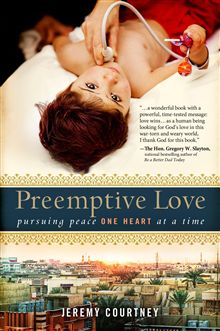
A balanced, helpful, reliable, brief guidebook – The Skeptic’s Guide Series: “The Israeli-Palestinian Conflict” by Dale Hanson Bourke ON SALE

The outbreak of war between the Palestinians and Israel again these last days has been upsetting for all decent folks, and has caused many of us here in the States to discuss and debate the relative merits of the claims made by each side, highlighting the different injustices, the different fears, the different geo-politics, and trying to understand the leading ideological and religious motivations. It is sad to say that this outbreak is nothing new, and the history of this beautiful and violent part of the world is nothing if not complicated.

I spent a bit of time involved in several on-line conversations about it all. Not only did I get several different views, but I was reminded —  this time, painfully for me — how deep the differences of perception are.somebody is wrong cartoon.jpg One man, from a Mediterranean country, would not allow me to blame the Palestinians for anything; it was all the Zionist’s fault. Another friend of Jewish descent had an equally one-sided view. Neither would budge and although both were followers of Jesus, they seemed utterly disinterested as I tried to interject into the conversation His holy call to peacemaking. Like many these days, it seemed as if their faith didn’t equip them for even having open minds or tender hearts, let alone unconventional solutions: their minds were made up, and the other guys were to blame.

In these kinds of discussions, my call for a third way, for being God’s agents of transformation by maybe “thinking outside of the box” or using prudent, faith-based insights about wisdom and reconciliation, are hindered; sometimes people just don’t care about Biblical visions and proposals, but sometimes, although I can usually preach that stuff in a way that sounds good in theory, I sometimes just don’t know all the facts.  And in the Israeli-Palestinian conflicts, the facts are, as I’ve said, complicated.
Not only was the need for having a reliable source for basic data pressed upon me again this week as I listened to the news of the death of youths, then the rocket attacks, and then found myself gaping at Christians who seemed not to care about nuance and fairness and balance, but I’ve found myself talking a bit about the needs for a just solution in this Middle Eastern trouble-spot as my own denomination’s recent policies were in the news. The PC(USA) passed resolutions to selectively financially divest from three US-based companies who were involved in building equipment used by Israel in what our denominational voters concluded were unjust and inappropriate ways. Many didn’t understand or agree with this vote, so the issue has come up. Other Christians, Jewish activists, and even non-religious organizations have either applauded or protested our vote. (You can read about the history of this evolving discussion here, or a report about the recent vote here, if you’d like.) A few leaders in our tribe even posted an open letter (signed by a few friends of mine) which called for social justice but also reminded those who care about justice for the Palestinians not to overstate the matter, thereby seeming to minimize Israel’s great and very legitimate concerns. That letter, an attempt at balance and civility, resulted in the revoking of what some thought was a one-sided study piece. (You can read that letter here, and a critique of it.) So it has been an emotional few weeks talking about this stuff, with people I respect offering differing views, positions, and passions.  As I said to some friends the other day, I’m feeling kind of beat up.
I do not usually use BookNotes as a platform for expressing the details of my own policy views, and this post is not offered to you for that purpose, either.  Rather —  of course, of course — I want to highlight a book or two to help you sort through the issues, to offer some direct answers to tough questions, that I found helpful to get “up to speed” on the basics.

Our inventory of books here in the Dallastown bookstore about the Middle East, by the way, is pretty large and certainly diverse, so if you want more sophisticated, detailed, treatments just give us a call.  But if you need a quick read that is fair-minded, and up-to-date, allow me to recommend this.   It is a must-read for anybody who cares about this topic.

WE HAVE THESE AT 20% OFF and you can order them at the link below.


T
israeli-palestinian.jpghe Skeptic’s Guide Series: The Israeli-Palestinian Conflict  Dale Hanson Bourke (IVP) $13.00  First let me say that I’ve used other books in this “Skeptic Guide Series” and they are each excellently done. Bourke has traveled all over the world, is a first-class journalist, and while she has deep concerns about peace, justice, compassion, and other Christian virtues, her desire for fairly and clearly reporting the facts and explaining the background of the issues at hand are impeccable. I have admired her for the early books she released, and for her days as editor of the Today’s Christian Woman. (Don’t ask, but I used to read it, okay?) She’s a darn good writer.
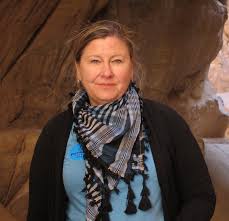
The format of these “Skeptic’s Guides” is appealing as they are all published on paper that is just a bit heavier then usual, flexible and glossy, with full-color photos and just the right amount of helpful graphs, charts, and nice side-bars. The Q & A format is really helpful, and if you’ve ever said I wonder about… but maybe felt too dumb to ask, or didn’t know which website to check for a reliable (and concise) answer, any of these, but especially the one about the Holy Land troubles will be a fabulous resource for you.

Bourke has obviously read very widely in the field, has interviewed some key playersdale.jpg, and has done on-the-ground research.  That she firstly thanks the deeply respected Telos Group and their staff, including Todd Deatherage (renowned for balance and respect for all parties and for the trusting relationships they’ve developed with many important leaders on both sides of the Wall) I knew this was going to be a very rare, balanced book.
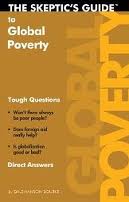
One reviewer (Mark Galli of Christianity Today) says she is “unmatched in giving an even-handed and readable account of controversial matters.”

Bill Hybells, founder of the influential Willow Creek Church (which has been very socially involved in recent years, by the way) writes this great endorsement:

It’s important to have civil discussions on difficult issues even when
we disagree. I’m thankful for the hard work of Dale Hanson Bourke, who
sifts through the thorniest issues–HIV/AIDS, global poverty,
immigration, even the Israeli-Palestinian conflict–to extract what we
need to know not just to get along but to make meaningful change in the
world. Her Skeptic’s Guides have been important for our church, and I
know they will be for your community as well.

It seems to me that although these short books are for those of us who need a quick primer, those who are already engaged in learning and advocacy will find them good resources as well. They are, as they say, “user-friendly” and great to use when preparing presentations, drafting letters, creating classes, or answering questions of whoever you got into a conversation with about these things.
global poverty.jpg
I previously read her early one in the “Skeptic’s Guide Series” about global poverty — what a great little guidebook it is, useful for anyone who cares about world hunger — and her powerful one about the global aids crisis. (Order those from us, too!) I love the concise depth and balanced vision and informed background she is able to give to these complex topics in such a short, inexpensive, and colorful volume.
global aids crisis.jpgAnother source of anguish for some of us this week has been some of the controversies that came into the spotlight this week regarding the detention centers for children of immigrants in Arizona.  Several related issues have come up in the news, and have been debated on-line in the last few days.  Again, few of those with whom I was in lengthy debates (who had strong opinions, based on one news report, about Who Was To Blame for some of the sad situation and failing policies there) seemed to have much actual data about the very thing we were discussing. I sensed that my interlocutors didn’t know much about the details or texture of the people or places involved, but, again, I didn’t, really, either. Once more, I realized that my own passion — not unlike a whole lot of people also posting on the web — gets ahead of me, and I have deep feelings and opinions, but sometimes not a lot of facts.  Do you relate?  We need answers!

And, yep, it was Dale Hanson Bourke again to the rescue with her latest little book in theimmigration.jpg series called, simply, The Skeptic’s Guide Series: Immigration (IVP; $13.00.)  I have been involved in one way or another in some immigration right’s issues over the years, and have great appreciation for (may I say it again?) how darn complicated some of these policy matters are.  Still, at the very least, as people of faith (and others citizens) develop their opinions on things, besides a thoughtful, Biblically-informed worldview, we do need some basic facts. We need to know the terms being used in the field, and what reporters and solid activists mean by this or that. If you are like me, you will welcome this fine compendium of helpful definitions, a few easy-to-follow charts, a bit of historical background, and good answers, presented in a way which is fair-minded, thoughtful, concise and reliable.

With the tragic news unfolding this very weekend — in Gaza, the West Bank, the Golan Heights and other such places, and along the US Southern border, too — we need to know some basic data. We need to know the meaning of the words used in the debates, who the various stakeholders are, and what is at stake for each side. I am very, very grateful for having read these books, and, today, as I finished The Skeptic’s Guide Series: The Israeli-Palestinian Conflict, I realized that the maps and pictures and stories and history lessons and background pieces have reinvigorated my own interest and desire to be fair, balanced, informed and faithful.  Most of us want to be on the right side of history, standing up against injustices, adding our voices to the right.  But it sometimes isn’t easy to know just what to do, and who is who in the great issues of the day.

If you, too, want to be brought “up to speed” on where the “West Bank” is, about what The Temple Mount and Dome is, questions about Hamas or the differences between the PLO and the Palestinian Authority, about how it is that Israel is a religious but democratic country, about the history of the infamous refugee camps, and about the contested terms used for the wall, the green-line, even of the term “occupied,” I am sure Bourke’s little book will serve you well.

israeli-palestinian.jpgimmigration.jpg


BookNotes

SPECIAL
DISCOUNT
ANY ITEM MENTIONED

20% off
order here
takes you to the secure Hearts & Minds order form page
just tell us what you want

inquire here
if you have questions or need more information
just ask us what you want to know

                   Hearts & Minds 234 East Main Street  Dallastown, PA  17313     717-246-3333