Reflections on a “Conversation with Steve Garber” and the Summit on Vocation: Your Work Matters to God

Well, friends, I wrote a long and (I hope) interesting reflection on the “evening with Steve Garber” conversation from Friday night, and the Living Word Community Church Summit on Vocation and Work.  Along the way, I note some books, old and new, and give the big picture of Steve’s journey, how we here so resonate with his vision and style, and then segue into a reminder of our role in the upcoming Jubilee 2011 conference in Pittsburgh.  Since it’s a bit long, I posted it as the monthly column for February.  I really, really hope you take a few minutes to read it.

Here is how it starts, with a sincere word of gratitude for prayers and supportive friends.  We have been touched by the many prayers offered on our behalf.  So, to start:

Thanks to those who read my face book plea a few days ago to pray for
our staff, our families, and the conversation we were hosting on Friday
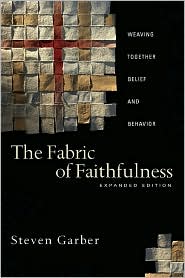
with Steve Garber, author of Fabric of Faithfulness: Weaving Together Belief and Behavior (IVP; $16.00.)  (See my hefty review of it here.)
It means a lot that so many folks—including those who order books
from us on line, even though we’ve never met—support our ministry, and
call upon God to bless and sustain us.  There is some pain and hardship
on this end—where isn’t there?—and we are glad that friends care. 
We are blessed.

The Garber event hosted at Living Word Community Church was fabulous…

                                                                                        READ THE WHOLE PIECE, HERE.

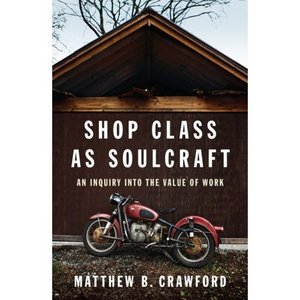
Here are just a few of the book covers of titles I mention at the longer review.  There’s a good discount deal over there, too, so check it out.  And pass it on.  Thanks for caring.

1596381779_l.gif
0802865593.01.LZZZZZZZ.jpg15261973.JPG

shop class.jpg

41589_47708448650_5486088_n.jpgResizeImageHandler.ashx.jpg


Hearts & Minds
234 East Main Street
Dallastown PA 17313

717.246.3333
read@heartsandmindsbooks.com

Best Books of the Year List finally posted. Whew, what great books we’ve seen this year.

first-place-blue-ribbon-300x283.jpgBEST BOOKS OF 2010 POSTED.

Yes-sir-eeeee, folks, it is finally here.  I’ve rambled on and on and finally had to call it a day.  I was starting to think up goofy categories like I do some years in this “best of” list, just to have the opportunity to tell you about a book I really liked.

I was even going to list John Dower’s mighty Cultures of War: Pearl Harbor / Hiroshima / 9-11 / Iraq as “The Best Book of Contemporary History That Is Way Over 500 Pages That I Haven’t Really Read Yet But Think It Deserves An Award Anyway” but then I realized that Ratification: The People Debate the Constitution 1787-1788 by the highly esteemed Pauline Maier would have to win the award for “Best Book of History of the 18th Century That is Way Over 500 Pages That I Haven’t Really Read Yet But Think It Deserves An Award Too” and that sounded sketchy. 

I had cooked up the “2010 Shhh Award” for The Unwanted Sound of Everything We Want: A Book About Noise by the excellent wordsmith Garret Keizer but that was just too dumb of a an award category, and didn’t want to sully the reputation of this outstanding study with my loud tomfoolery.   Images of Salvation in the New Testament, a remarkably brilliant and serious work by Brenda Colijn was lined up to receive an award alluding to her ability to kick the behinds of Bible guys who only have one single image of how salvation must be described, but I realized that, while it is true, it isn’t an Award, now is it?  And when I wanted to honor a book by a popular inspirational author by creating “The Worst One-Paragraph Description of Postmodernism I Have See This Year Award” I knew I was getting grumpy.

So, this year, I’ve thought long and hard, and wrestled the list to, well, be less wordy than some years.  These are all really solid winners.  You may want to print it out.  Get some hot chocolate and prop those feet up.  This is going to be sweet.  We are grateful for the winners, and a whole lot that didn’t end up on the program.  And see are time-limited award-winning discount below.

Please click on the link for the 2010 Hearts & Minds Best books of the Year Awards list, posted as the January 2011 monthly column over at the website.  Thanks for reading—the reviews that we do, of course, and more importantly, for supporting the authors and publishers who do the writing and releasing.  As I sincerely say at the very end (may you arrive there eventually) there wouldn’t be a book industry and bookstores, if there weren’t readers like you who want to read, and perhaps own some real books.  Thanks for caring.

First Prize Center.jpg

SPECIAL BLOG READERS DISCOUNT: THIS WEEK ONLY
Say you read the Awards list, and see what is honorably mentioned and earn a 25% DISCOUNT OFF ANY BOOK MENTIONED.  Offer expires February 7th.

order here
takes you to the secure Hearts & Minds order form page
inquire here
if you have questions or need more information

Hearts & Minds 2345 East Main Street  Dallastown, PA  17313     717-246-3333

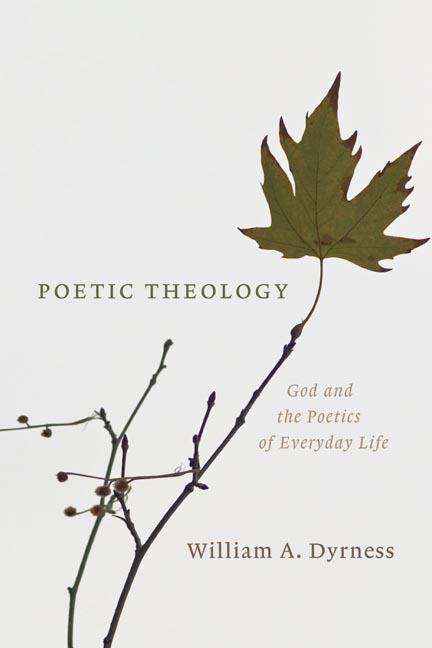
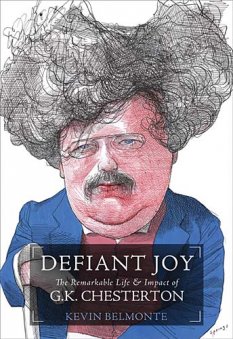
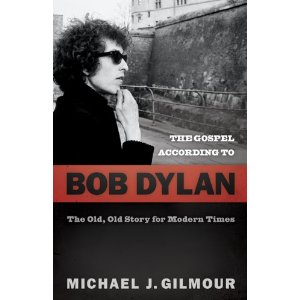
Poetic Theology (William Dyrness), Defiant Joy: The Remarkable Life & Impact of G.K. Chesterton (Kevin Belmonte) and The Gospel According to Dylan (Michael Gilmour)

Great new books keep showing up.  Despite the hassles of too much snow and a few too many irons in the fire, I’m thrilled to sneak away for a bit and dip into brand new releases.  These are three that I’ve been waiting for, and now that they are available, they seemed to make an interesting set to tell you about this snowy day.
9780802865786_l.jpgPoeticTheology: God and the Poetics of Everyday Life William A. Dyrness (Eerdmans) $26.00  I know the very word “aesthetics” may sound highbrow to some, and the discipline is–once one gets beyond saying that God cares about creativity and the arts—is known for obtuse writing and nettlesome quandaries.  Yet, Dyrness, as always, has an eye to everyday life and how an openness to allusiveness (as Seerveld puts it) and experiences of beauty can help us frame meaning, honor God, and move towards personal flourishing and social transformation.  This is a heavy book in many ways, but is a treasure to behold.  A simple but elegant cover, spectacular prose, and serious footnotes, all make this a reader’s delight.  Anyone interested in the best of culturally engaged contemporary theology will love it, I am sure.  Anyone interested in the arts, aesthetics, beauty and the like should consider it a “must read.”  It is a very important contribution.

A few of these chapters have appeared in slightly abridged forms other places, in academic journals in the fields of systematic theology and aesthetic theory. (Dyrness wrote the entry on “The Arts” in the Oxford Handbook of Systematic Theology.)  And some chapters are adapted from lectures, at places as diverse as Dubuque Theological Seminary, Covenant College and a missionary conference in the Philippines.  Bill Dyrness is professor of theology and culture at Fuller Theological Seminary (the most multi-cultural seminary in the world, I’ve heard, and a thoughtfully evangelical one at that!  And they most likely do the best work on the arts at their Brehm Center, of any seminary anywhere.)  He has been active in good conversations and leadership in faith-based arts groups such as CIVA, IAM, and the Calvin Institute of Christian Worship.  I like that he has done serious scholarly publishing (such as Reformed Theology and Visual Culture on Cambridge University Press) and thoughtful, mid-range stuff for the educated layperson, pastor or serious undergrad (Visual Faith: Theology, Art, and Worship in Dialogue published by Baker.)  This wonderful collection is formed with obvious great care to create a coherent case, nurturing a theology of desire and delight and is at once both scholarly and readable, academic yet truly enjoyable.   

I am especially impressed with the breadth of his investigation.  Dyrness tells stories of ordinary folks who find great meaning in the beauty of nature–people who ski or fish–and he is fluent in the latest, mainstream theological renderings about aesthetics, from Paul Ricoeur to David Bentley Hart to so many others.  He even devotes good space to the tradition that has most influenced my own thinking on these things, tracing the ideas of Dutch statesman Abraham Kuyper through philosopher Herman Dooyeweerd, on to Calvin Seerveeld, Nicholas Wolterstorff and Jeremy Begbie.  Poetic Theology is not about poetry, as such, and moves fluently from theology to social life and the arts,  from ritual worship to ordinary sensual experiences, from Reformed spirituality and Protestant piety to important insights about cultural reformation and God’s restoration of creation.

Mark Burrows of Andover Newton Theological School notes that this great book “reminds us that truth itself is beautiful to behold and poetic to the core…Dyrness’s call for a poetic theology is one we ignore at our peril, reminding us that faithful living is not only about proper thinking but also–and, perhaps, more properly–about the texture of our living and the quality of our loving.”  Hooo-ray for that!

_233_380_Book.348.cover.jpgDefiant Joy: The Remarkable Life and Impact of G.K. Chesterton  Kevin Belmonte (Thomas Nelson) $16.99  I cannot say much about this yet as I have only glanced through it.  It is brand new, and I can say this much:  Firstly, Chesterton is often cited, well known, but few of us really know much about the wildly important, zany character.  Authors as diverse as the current Pope and Phil Yancey and the great literary figure T.S. Elliot rave about him.  (Well, in Elliot’s glowing obituary for Chesterton on June 20, 1936, he writes that “Chesterton’s cheerfulness..was depressing.”)

 Belmonte quotes further from Eliot, who said, “What matters here is Chesterton’s lonely moral battle against his age.” 

Indeed, the joyful Christian apologist (whose book on Jesus, The Everlasting Man, help convert C.S. Lewis and whose book Orthodoxy so shaped Yancey) was a voice against the secularism and muddled views of his age.  He often debated the cranky George Bernard Shaw, yet his charm was irrepressible.  Belmonte writes, “Their worldviews were as different as their physical appearance: Shaw, the rail-thin ‘heathen mystic’; Chesterton, the rotund, Johsonian champion of orthodoxy.”  He continues, noting Shaw’s tribute after Chesterton’s death, “Shaw had a ‘deep affection’ for his departed friend, which was warmly returned.  He mourned Chesterton’s loss greatly.”  Shaw wrote to G.K.’s widow (aware that Gilbert, as he called him, hadn’t watched his money carefully) and offered her financial support.  In his final letter, he made a lovely allusion to The Pilgrims Progress, in an example of what Belmont calls “great tenderness.”  “The trumpets are sounding for him,” Shaw said.

Yes, the great G.K. Chesterton fought the culture wars with charm and grace and wit and intelligence. He loved many (he was quite the fan of Mark Twain) and met many more (he had an important encounter with Winston Churchill, for instance.)  We could all learn from this man who was known for his great appetites, charming stories, extraordinary journalistic output and well-argued orthodox theology.  There are other biographies of the curious Chesterton (The Outline of Sanity is a standard) but this looks like a perfect, serious, yet easy-to-read work.

I can say this, also.  Kevin Belmont is a rigorous historian and fine writer.  Before the popular Amazing Grace movie about Wilberforce gave us the recent Amazing Grace biography by Eric Metaxas, Belmont’s William Wilberforce: Hero for Humanity was surely the finest Wilberforce biography available and is happily still in print. He has done some other very nice, brief biographies, and we think he’s an author you should know.  Certainly he is well matched with this topic, and seems to be the perfect man for the perfect Chesty book.  I’m enthralled with the footnotes, even—including a stunning expose of an unfounded Chesterton rumor!—and know that I will learn much when I read this more carefully.  I am sure you will, too.

7477014.jpegThe Quotable Chesterton: The Wit and Wisdom of G.K. Chesterton compiled by Kevin Belmonte (Thomas Nelson) $15.99  What more can I say?  A lovely companion volume, jam-packed full of aphorisms, sayings and witticisms, helping readers dip in and appreciate this prolific patron saint of good writers.  His knowledge was immense and his interests as wide as life.  He has been considered a true master of the essay form, and a brilliant genius.  Over 850 entries.

The Gospel According to Bob Dylan: The Old, Old Story for Modern Times  Michael
51+VSiQNKPL._SL500_AA300_.jpg Gilmour (WJK) $15.00  As you probably know, we here at the shop have been fond of this series that the Presbyterian Church (USA) press has done, starting with the million-selling Gospel According to Peanuts by Robert Short in 1965.  The series got new life with the fantastic Gospel According to The Simpsons, and continues strong doing faithful cultural criticism, both trying to determine what “the gospel” (as in “the message of…”) the person in question might be, and how it does or doesn’t compare to the Biblical gospel of Christ. A few are fairly critical of their topics (The Gospel According to Oprah and The Gospel According to Disney come to mind.) The authors are always well versed in their field, and some, especially so—the remarkable Steve Turner on the Beatles, say, or fanboy Greg Garrett on U2–and this is doubtlessly true in this case.  In fact, I might wager that this may be the best volume in the series; Gilmour is as insightful a Dylanologist as I’ve seen anywhere, amazingly well versed in the music, concerts, bootlegs, liner notes,  interviews, and the books by and about Mr. Zimmy.  (I’ve been reading the esteemed and often perplexing collection Bob Dylan by Greil Marcus: Writings 1968-2010, by the way, and this, frankly, is much more rewarding.)  Faithful to Dylan’s own sense, I’d guess, Gilmour makes much of the ambiguities in the narratives and demanding art of Dylan, and emphasizes the ways in which the work functions as it is received by the listener.  That is, he isn’t making a simple case that Dylan believes this or that theological proposition and insists that listeners discover insight and even religious meaning in their own (communal?) hearing. This isn’t going to please everyone, and although the author is a New Testament professor, he doesn’t do much obvious Biblical reflection here.  He does, however, have a fascinating book enumerating the many Biblical allusions in the Dylan oeuvre; see his Tangled up in the Bible: Bob Dylan in Scripture (Continuum; $21.95.)  Professor Gilmore also wrote, by the way, a very thoughtful book which we stock published by Baylor University Press ($19.95) called Gods and Guitars: Seeking the Sacred in Post-1960s Popular Music.   

Gilmour is personal in his writing (he knows and loves the Dylan material, obviously) and is candid about the religious complexities of it all.  As theologian, mystic, and New Testament scholar Dale Allison writes, “It is by turns lyrical analysis, biography of a myth, and a phenomenology of listening.  Bobheads of all stripes should devour it with enthusiasm.”

I love the rave reviews on the back of The Gospel According to Dylan.  Debbie Blue, author of two spectacular books herself, writes, knowingly,

This is a rare book amid the proliferation of Dylan literature—a thorough read of the rich, playful, and unruly theological imagination of Bob Dylan.  Gilmour doesn’t simplify, classify, or categorize, recognizing that faith for Dylan may be more about wandering than standing still.  Beyond all the good Dylan stuff, it is an intelligent exploration of how meaning is generated, and how popular culture provides religious experience.  Dylan fans won’t want to miss it, but anyone interested in the intersection of faith and culture should read it.

BLOG SPECIAL
20% off
any book mentioned
order here
takes you to the secure Hearts & Minds order form page
inquire here
if you have questions or need more information


Hearts & Minds 2345 East Main Street  Dallastown, PA  17313     717-246-3333


Ancient Practice series just out in paperback. The sale continues…

We were delighted that our readers were so responsive to our half-off deal with the goodshowImage.aspx.jpg series in the Ancient Practices series that was edited by Phyllis Tickle.  I described each book and found myself again impressed and delighted about these.  We turned a number of friends away since it was a “while supplies last” offer and they didn’t last long.  We noted that the hardbacks were soon out of print and the paperbacks were to be released shortly.

The 8 books are now all here again, in slim paperbacks, and they each include a brief study guide for classes, book clubs, spiritual direction teams or for personal reflection.  You can click here or scroll on back to my description of the books where we showed the cover, cited impressive endorsements, and explained what each is about.  Please note (again) that the hardbacks I describe there are no longer available, that the 50% off deal–we were trying to get ride of the hardbacks quickly at a price below our cost—is now done.

We will sell these paperbacks a just a bit better than a 20% discount, making them each $10.00.  Ten buckos.  Easy to remember, eh?  However, if you get the whole set (which we do recommend, as they are all worthwhile) we’ll kick that up to a 30% discount.  No substitutions or switcheroos.  And no whining.  (I know you book lovers: you may have some in hardback and the paperbacks just won’t match your set perfectly. I sympathize.)

We are very happy to sell these for a variety of reasons; mostly because they are well-written books by good authors.  The publisher took a bit of a risk bringing together esteemed authors who are known within pretty different circles, and putting them together as the “best of the best” for a contemporary bit of rumination on these ecumenical practices.  We should support this kind of “crossover” reading, and Nelson is to be applauded (as is the ever interesting Ms Tickle.)  Several of these authors are best known in traditional evangelical circles while others are liturgical and celebrated in mainline or Catholic circles. 

finding-our-way-again-return-ancient-practices-brian-mclaren-cd-cover-art.jpgBrian McLaren, whose very good book Finding Our Way Again, kicks off the series, was an independent evangelical, became a leader of the emergent conversation, and seems now quite comfortable in mainline circles. (His forthcoming book on spirituality, by the way, is excellent so far; I’ve just started an advanced copy.  It will be called Naked Spirituality and released in a month or so.)  We love this series and the  blend of insight and good scholarship and deep and authentic spirituality, each true to their own voice, withing their own tradition, but aware that these practices have been used by all quarters of the church. (Indeed, these are all practices shared, in one way or another, by Christians, Jews, and Muslims.)  Besides the good ecumenicity, we like the historicity of this—they aren’t called “Ancient Practices” for no reason—and agree that knowing the insights of those who have gone before us is especially appealing in this 21st century era.   And each author tell stories, making these quite appealing to those who like memoir.  From the elegant Bob Benson telling about his ups and downs with fixed hour prayer to Nora Gallagher beautifully describing her experiences with Eucharist to Doug LeBlanc sharing stories of giving and grace, to the travails of life on pilgrimage with the feisty Charles Foster, these are tales of the journey, reports from the road. They are informative and inspirational, formational.   We are eager to promote them, glad they are inexpensive, and happy to offer a bit extra discount of these brand new paperback editions.

Here they are again.  You can read them in any order…

Finding Our Way Again  Brian McLaren
In Constant Prayer  Robert Benson
Sabbath                    Dan Allander
The Liturgical Year  Joan Chittister
The Sacred Meal     Nora Gallagher
Fasting                     Scott McKnight
Tithing                      Douglas LeBlanc                     
Sacred Journey       Charles Foster

BLOG SPECIAL
$10.00 each
any book in the Ancient Practices series
order here
takes you to the secure order form page
inquire here
if you have questions or need more information


Hearts & Minds 2345 East Main Street  Dallastown, PA  17313     717-246-3333


Beautiful and important brand new books from Wolterstorff, Benner, Melleby and Waltke & Houston

I know, I know, I ought to use my limited blogging energy and time to post that big ‘ol Best of 2010 list.  But I can’t help myself: I have to tell you about these few.  They just arrived within the last day or so–one just a few hours ago–and I’m all jingly.  Just have to tell you.  So here are a few new ones, the best so far of the new year. 

41LssjsYWjL._SL500_AA300_.jpgHearing the Call: Liturgy, Justice, Church and World  Nicholas Wolterstorff  (edited by Mark Gornick & Gregory Thompson) (Eerdmans) $30.00  I suspect that those who know of his work and reputation will need no convincing: Wolterstorff, the Noah Porter Professor Emeritus of Philosophical Theology at Yale University, is truly one of the great philosophers of our time.  He came to prominence in the 70s—I think the first time I knew of him was reading his serious review of his friend Calvin Seerveld’s Rainbows for the Fallen World.  (Nic had just done his own book on aesthetics, Art in Action, and Seerveld had reviewed that.)  Many found his brief and tender diary kept after the tragic death of his young adult son, Lament for a Son, to be eloquent and helpful.  Reason within the Bounds of Religion was nearly seminal, giving birth to–or at least giving public understanding to–what became known in some circles as “reformed epistemology.”  His Until Justice and Peace Embrace brought renewed conversations about social justice to those with an intentionally Reformed worldview and it remains a significant contribution to culturally-engaged public theology. He has a book on a Christian philosophy of education, and a book on higher education.  And these meaty works are mostly semi-scholarly, designed for non-academic readers.  He has numerous academic works as well; last year, Princeton University Press released his heavy text Justice: Rights and Wrongs (a companion volume will come out on Eerdmans later this Spring.) Cambridge University Press released a two volume hardback set of philosophical essays.   All in all, Wolterstorff has been one of our more prolific serious authors, with a wide variety of readers lauding him.  On the back cover of this new collection we have rave comments from Notre Dame’s Mark Noll (natch), Nigel Biggar (a scholar from Oxford) and a great endorsement from Gabe Fackre, a fine UCC theologian from Andover Newton.

This new book weighs in at 450 pages and includes essays, articles, sermons and shorter pieces, a compendium of good stuff from years of his semi-scholarly journal articles and his popular magazine pieces.  Nic has long been intensely engaged with issues of liturgy and justice and how faithful worship can compel faithful living in the (global) culture.  Here, he looks at topics as wide ranging as the role of worship, church hymnody and liturgical space to his own journey to justice (via the deep pain amongst black scholars in South Africa and an ever-heightening sense of the pain of the Palestinians. There are pieces on lament, a study of women in the Bible, a few on a truly Christian view of politics and the state.  Again and again, he comes back to the Biblical theme of shalom and the need for a just sense of human rights.  An interview with him—“How My Mind Has Changed About Justice” is especially illuminating.   I have clipped several of these stellar pieces from old magazines, and am delighted to have them here, in one volume.  Hearing the Call: Liturgy, Justice, Church, and World is more than a thrown-together collection of occasional pieces (although that, too, would be worth having if from the pen of N.W.)  It is a coherent and wisely arranged anthology, a volume that astute readers will return to again and again.  Thanks to Gornick for gleaning these and thanks to Eedmans for releasing it.  

3544.jpgContemplative Vision: A Guide to Christian Art and Prayer  Juliet Benner (IVP) $17.00  I maintain that IVP is the most consistently good publisher of solid religious literature today, and their formatio line of contemplative resources never fails to impress.  Once again, they hit one out of the ballpark with this handsome, holy, paperback that I’ve anxiously awaited.  It is a wondrous example of not just lectio but visio divina, slowly pursuing a sacred gaze, reflecting on the full color paintings beautifully reproduced in a centerpiece signature.  For those who follow inter-disciplinary spiritual formation resources, you may know the Conversations journal (edited by the brilliant Gary Moon whose books we highly recommend.)  In that semi-annual, there is always an art piece, with gentle meditations and a good invitation to explore our inner selves by way of these classic artworks.  Think of the fine introspective work done by Henri Nouwen in his beloved book Return of the Prodigal Son, or any good work on praying with icons.  This is that sort of approach.

Drawn from those columns in Conversations Journal, Ms Benner—trained as a visual artist, now a spiritual director—has given us all a great and lavish gift.  She includes meditations moving us towards “Transformed Awareness” (with Bruegel the Elder and Vermeer and others) and “Transformed Vision” (using Rembrandt, Caravaggio, and many more) and “Transformed Living” (with paintings by artists as diverse as He Qi and Peter Rubens.) Wonderful endorsements on the back are from the Margaret Guenther (Holy Listening) and Ruth Haley Barton (Invitation to Silence and Solitude and Sacred Rhythms.)  Very well done.

Image.asp.jpgMake College Count: A Faithful Guide to Life + Learning  Derek Melleby (Baker) $12.99  Let me get it out of my system now.  Or not, because your going to be hearing a lot more about this, I’m sure.  It is–without a doubt, bar none–the best little gift book to give to a college-bound high school student that I have ever seen!  It raises the right questions, is priced and packaged wonderfully (including some cool page design and a few b/w photos) and is written with wit and true insight.  Derek, as you know, co-authored the extraordinary paperback The Outrageous Idea of Academic Faithfulness, a winsome book that advances the thesis that God cares about a college student’s studies and delightfully invites collegiates to take their minds seriously as they take up their vocations as followers of Jesus in the classrooms of higher education.  This new one backs up a bit and explores where true success at college (and beyond) comes from; it ponders the key, most foundational matters that need to be explored (hopefully) prior to setting foot on campus.  It asks teens to consider big questions, including why they are going to college in the first place, who they see themselves to be, what story they find themselves a part of, and what assumptions they have about the nature of God’s concern for their college experience.   There are good interviews scattered through-out, too, giving it a nice,
practical touch, with just the right amount of goofiness, to boot. Nothing has quite been done like this and I seriously think it is a hugely significant book measured by the lives it will touch and the impact it will have.

I happily admit that Derek is one of my best friends and that some of this work was hammered out in stimulating conversation over the many books he bought here at Hearts & Minds (and the many cups of soup he bought me at a local joint.)  Derek has followed the very best discourse on worldview formation—-from Walsh & Middleton to Steve Garber, from David Naugle to James K.A. Smith—and has allowed these deep and profound writers to inform his playful, funny handbook to the big questions young women and men simply must answer if they are going to succeed in college.  As youth ministry stalwart Chap Clark (author of Hurt: Inside the World of Today’s Teenagers) puts it, “For years I have been looking for the right book to give to Christian high school grads: readable, honest, grace-focused, Christ-centered, and practical.  Finally, I’ve found just the ticket—Make College Count is that book.”  I’ll write more about this, but we are thrilled and honored that the good folks at Baker got me a handful of these to show off early.  We are the first place in the free world to have these and I couldn’t be happier.  If you know any high school students currently doing the college circuit tours, or trying to figure out who they are and what they should be doing next year, this would be a sweet, nicely packaged, handsome little hardback gift to give as soon as you can.  This is the right stuff.

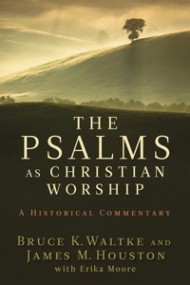
PS-190x285.jpgThe Psalms as Christian Worship: A Historical Commentary  Bruce Waltke and James Houston (Eerdmans) $28.00  I’d promote this book with enthusiasm if it were twice the cost!  It’s a bargain at this price with 625 pages of rich, rich, work; in fact, this is nearly two books in one and it is easy to explain its value.  First, Dr. Bruce Waltke, professor emeritus of biblical studies at Regent in Vancouver, is one of the great Old Testament scholars around.  Here, he does the long-awaited literary, exegetical work he is so known for, offering serious and very readable (and very useful) nuggets of insight about a dozen or so representative Psalms.  He has taught and preached the Psalms for fifty years, he says, and it surely shows in the tone and style. Dr. James Houston—a legendary ecumenical writer of deep thoughtfulness—offers a second layer of insight by doing a historical survey of how these same Psalms have been considered down through church history (even doing some helpful new translations of Latin stuff.)  Houston (a founder of the prestigious C.S. Lewis Institute in Washington DC area) moved decades ago to Vancouver to teach spiritual formation and what he termed “spiritual theology.”  Eugene Peterson was his successor there at Regent, if it gives you a sense of his level of mature and gracious thinking.  Houston is a wide-ranging scholar and historian of ideas and is very rooted in the church fathers and mothers, the medieval mystics, the Puritans and other streams of spiritual renewal.  I’ve listened to his tapes and have friends that know him well and esteem him like few other leaders.  He is an orthodox, reliable guide to the best of the best writers of church history.  In Psalms as Christian Worship he uses his good knowledge to supplement Waltke’s already brilliant research.  This one-two combo of no-nonsense, serious writing with a devotional tone is a gift to anyone who loves the Bible, anyone who appreciates the Psalter, and anyone who wants to join the best of contemporary evangelical study with a discerning insight about the traditions and insights of the past.

BLOG SPECIAL
20% off
any book mentioned
order here
takes you to the secure Hearts & Minds order form page
inquire here
if you have questions or need more information


Hearts & Minds 2345 East Main Street  Dallastown, PA  17313     717-246-3333


5 books on Martin Luther King, 5 books on race AND an offer for a free book

Just got back from selling books with the staff of the CCO, the thoughtful and vibrant campus ministry organization that I often talk about.  Their fun and good work with college students in Ohio, Pennsylvania, the DC area and a few other spots in the mid-Atlantic gives me great hope.  Evangelical faith can be nurtured, commitments to local churches can be deepened, new students can be introduced to the saving grace of Christ and students can be equipped to become salt and light in the world as they take up their vocations, careers and callings in the classroom.  The Jubilee Conference in Pittsburgh each February, of course, is their flagship event, an event we’ve been deeply involved with for decades.

The topic for their staff training seminar was racial reconciliation, multi-ethnic ministry, and cross cultural intelligence.  Besides other books on faith, discipleship, social action, cultural engagement, the Christian mind, worldview, and the always-needed Bible study resources and books for growing young adult Christians—from sex and dating to prayer and spirituality—we featured books on race relations and multi-ethnic ministry.  I might guess that your church could use some help in these areas, too.  We were happy to promote (among the over 100 books on this topic we displayed) the important new book by Soong-Chan Rah, Many Colors: Cultural Intelligence for a Changing Church, the new, very useful collection of essays for congregational leaders, The Multi-Cultural Ministry Handbook: Connecting Creatively to a Diverse World edited by David Anderson (also the author of the cleverly titled and very helpful Gracism: The Art of Inclusion, both published by IVP) and Cultural Intelligence: Improving Your CQ To Engage Our Multi-Cultural World by David A. Livermore (Baker.) We really like The Heart of Racial Justice: How Soul Change Leads to Social Change by Brenda Salter McNeil & Rick Richardson (IVP) so had that featured.  I often recommend (especially for beginners in this topic) the lovely and powerful Living in Color: Embracing God’s Passion for Ethnic Diversity by First Nations leader Randy Woodley (IVP).  Of course we had the meaty must-read Race Matters by Cornel West (Vintage) and, for a considerable counter perspective, The Content of our Character and White Guilt by the eloquent Shelby Steele (both Harper.)  The recent Zondervan DVDs Justice for the Poor (Jim Wallis and Sojourners) and Start: Becoming a Good Samaritan (World Vision) are excellent ways to move towards this conversation as well and are ideal for small groups or adult Sunday school classes.  Do let us know if you want prices or other lists of recommended resources for your setting.

Although I didn’t necessarily promote these at the event, here are some that seem right to celebrate now.  Check out the good deals on these below.  Click on the link shown to order.

5 Books on King

0069.jpgStride Toward Freedom: The Montgomery Story  Martin Luther King, Jr (Beacon) $14.00  I have often said that this is on my list of my all time, top-ten favorite books.  It was King’s first book, narrating with edge-of-your-seat detail his work in the famous bus boycott of 1955 and 1956, published to great acclaim by Harper in 1958.  Do you recall when some dumb pundits mocked candidate Obama for being a “community organizer” as if ACORN-type groups don’t really do anything?  They should read this electrifying and edifying memoir, a quintessential book reporting on the work of organizing.  King also struggles here with the question of nonviolence, his experience at seminary, his work as pastor and his sense of call to this work (as a 26 year old!) Read along as he offers leadership transforming a community, inspired by the nonviolent direct action of Mahatma Gandhi, living the literal agonies and ecstasies of this great chapter in American history.  Stunning, not only as a chronicle of history, but a charge to us all.

0067.jpgWhere Do We Go From Here: Chaos or Community?  Martin Luther King, Jr. (Beacon) $14.00  This was King’s final book, and a lot had happened from the story of 1955-1956 told in Stride to this visionary book of great hope for a better world, penned amidst the turmoil of the the late sixties civil rights struggle.  Cornel West notes that King was “one of the greatest organic intellectuals in American history.  His unique ability to connect the life of the mind to the struggle for freedom is legendary, and in this book—his last grand expression of his vision—he put forward his most prophetic challenge to powers that be and his most progressive program for the wretched of the earth.” This recent edition includes a valuable introduction by the remarkable Vincent Harding.  (Harding, you may know, helped draft King’s powerful, explosive speech delivered at Riverside Church in April of 1967 where he critiqued American militarism and the Viet Nam war.  Harding’s ten page intro is itself a wonder and very valuable. Coretta Scott King has a forward as well.)

Martin Luther King, Jr for Armchair Theologians  Rufus Burrow, Jr. (WJK) $16.95
Do you51ESJkTTJJL._SL500_AA300_.jpg  know this series of basic introductions to various theologians–from Augustine and Aquinas through Luther, Calvin, Wesley and Edwards, into modern authors like Barth and Bonhoeffer? There is even one called The Reformation and one called The Heretics.  These are all quite enjoyable, very informative, sometimes pretty witty with winsome cartoons, even.  True to form, this is a great and readable overview, exploring deep stuff in simple ways.  Written by experts with good storytelling gifts, these are all good.  The King one is suburb.  Not to be missed.  (We have all the others in this series, too, of course.  Great for small groups.)


cover-of-what-would-martin-say1.jpgWhat Would Martin Say?  Clarance Jones (Harper) $13.99  Jones was recruited by King in 1960 and worked with him as a principal adviser and now is a scholar in residence at the Martin Luther King Jr Research and Education Institute at Stanford University.  Can anybody speak for King, imaginging what the great, if flawed, leader, would be saying to today’s contemporary social problems?  Tavis Smiley suggests that Jones is “one of the few who possess the moral authority necessary to even attempt such as task, one that he more than accomplishes with a compelling cando
r and uncommon grace and dignity.”  This is not mere speculation about bedeviling modern issues—Islamic terrorism, illegal immigration and such—but a great way to “get into” the mind of King.  This is a fascinating way to learn and we highly recommend it as a way to further conversations about the significance of King’s views.

Never to Leave Us Alone: The Prayer Life of Martin Luther King, Jr.                                 Lewis Baldwin (Fortress Press) $16.95   49813015.JPG We stock several books about King’s preaching, but this is the only book available on this important topic, King’s prayer life.  The author is an esteemed scholar in the study of King, and he has done years of original research to write this very useful, and thrilling book.  Several of King’s closest associates have vouched for Baldwin’s claim of King’s desire to “pray without ceasing” and the mystique of his rare, gentle power.  Needless to say, it explores also his prayers of lament, his rage, his doubt—all that was well known.  That is, this is both a fabulous historical contribution—essential for a honest understanding of the man, I’d say—and a very helpful window into the life of the Spirit for any of us wanting to live a life of public discipleship rooted in prayer, meditation, and child-like dependency upon God. Nicely done.

5 Books about Race

gods-long-summer-stories-of-faith-and-civil-rights.jpgGod’s Long Summer: Stories of Faith and Civil Rights  Charles Marsh (Princeton University Press) $18.95  This award winning and highly esteemed bit of oral history explores the religious foundations of both the civil rights activists and those who opposed desegregation, often on Biblical grounds.  Marsh is an excellent historian and an excellent writer, bringing the reader right in to this harrowing era. Interestingly, he allows both sides of the struggle to be heard, and it is amazing how sometimes the same Bible verses were used in very different contexts, for very different purposes.  Whew.  This amazing book is beyond vivid, it is riveting, heartfelt, serious, graceful—the affirming adjectives in the many reviews have piled up, reminding us that this is one of the great books in this vast field.  And, it is a good case study of profound moral questions and how people do or do not take stands in faithful, coherent way.  A very interesting book, provocative and important.

Not in My Neighborhood: How Bigotry Shaped a Great
Not-In-My-Neighborhood.jpg American City  Antero Pietila (Ivan Dee) $28.95 We have here at the shop a large section on urban ministry; the stories of those living in American ghettos has long intrigued us and we long to resource those doing city work.  There are many good books with faith-based perspectives on the profound and complex problems of urban poverty and segregation and the particular sorts of racial problems in our urban centers.  None of these many books about race or poverty and ministry can be understood without knowing the history of “white flight” and the pivotal rise of segregation in U.S. cities in the middle of the 20th century.  Baltimore, Maryland was one of the cities that most enacted this awful practice and it has felt the consequences for half a century.  This important book tells the tale (as one reviewer put it) as a “page-turner”  “chock-full of riveting and shocking stories and vivid, unforgettable characters.”   The large back-story of this, further, is the story of the great migration of southern blacks to the North, and that is beautifully told in the spectacular new social history called The Warmth of Other Suns: The Epic Story of America’s Great Migration by Isabel Wilkerson (Random House; $30.00.)  This rich book, too, has garnered superlative reviews and is truly one of the great publications of the year.

51swoVb8ygL._SL500_AA300_.jpgMore Than Equals: Racial Healing for the Sake of the Gospel Spencer Perkins & Chris Rice (IVP) $16.00  As a bookseller wanting to attract new customers and keep old ones interested, I often tell of new books, push exciting recent releases and feel awkward sounding like a broken record describing older books that are well known amongst our core audience.  Still, I will say it again: this is one of the great books on this topic, honest, mature, raw, Biblically-based, practical, inspiring, tough and hopeful.  Few books get rave reviews from, say, The Christian Century and the old Moody Monthly and we can assure you that this one deserves the wide acclaim.  The late Spencer Perkins is the son of legendary black preacher of reconciliation and justice, John Perkins and here they tell of their efforts to forge inter-racial ministry and friendship.

Welcoming Justice: God’s Movement Towards Beloved Community  
cmarsh.jpg Charles Marsh & John Perkins (IVP) $15.00  This is a recent release from the Center for Reconciliation at Duke Divinity School, which, like the others five in the Center’s series, links an academic scholar and a practitioner/ activist to write moving, thoughtful, theologically-mature reflections on topics of great relevance for those wanting to see God’s gospel of reconciliation advanced.  Lauren Winner notes that while we admire the many excellent books of both of these two important authors, this may be the best they’ve yet done.  Brief, powerful, very highly recommended.  The other ones, by the way, are extraordinary as well.

 
9780802830685_l-200x300.jpgConsuming Jesus  Beyond Race and Class Divisions in a Consumer Church  Paul Louis Metzger (Eerdmans) $16.00  This came out a few years ago and I think it is exceptional (and exceptionally under-appreciated.)  Do you know Metzger’s important and fruitful efforts at the The Institute for the Theology of Culture at Multnomah Biblical Seminary in Portland? (He has a new collectio
n of various essays on theological cultural engagement called New Wine Tastings, just out from Wipf & Stock.)  Consuming Jesus has a thoughtful forward by Donald Miller and an afterward by John Perkins.  Pastor Rick McKinley says that “Paul Metzger has become a catalytic voice in the city of Portland; his passion for the gospel engaging the culture is at the core of his life.”  This is beyond a study of America’s race problem, it is a larger study of our culpability in reducing church and ministry to “success” measured by numbers and data and dollars.  How can we create authentic community across race and class lines, nurturing fidelity in a culture of consumption?  Can we learn to be Kingdom people, can our churches become centers of real compassion and not merely purveyors of religious services?  This is an incisive and important book, serious but well written, challenging and interesting.  I would think our customers and friends would find it very helpful.  Thanks for letting us tell you about it.

BLOG SPECIAL
20% off
any book mentioned
order here
takes you to the secure order form page
inquire here
if you have questions or need more information


Hearts & Minds 2345 East Main Street  Dallastown, PA  17313     717-246-3333


The Ancient Practices series: hardbacks on sale at 50% off

I regret not having time to write up a huge “best of 2010” list.  Typical for us, I guess, I do my writing before and after trips to serve at out of town events, and in between conversations with local customers, friends, and sales reps, so it is a touch stressful.   Soon, I’ll get the time and energy needed to try to describe to you some of the great reads I’ve been most taken by this last year. I want to do it, but just haven’t finished it.  Soon, I hope.

In the meantime, I do want to give a quick announcement, and tell of a limited time offer on a few overstock hardbacks of a very favorite series that is soon to come out in paperback.  This Ancient Practices Series, published by Thomas Nelson, edited by Phyllis Tickle,  really is award winning in itself, so we’re happy to tell of this now completed set.  While supplies last, we are selling the hardcover books described below for 50% off.  This makes them less expensive than the paperbacks will be, so it is a good deal.

From the Pennsylvania State Pastor’s Conference to clergy retreats with the UCC, Episcopalians, Presbyterians, a Lutheran Synod meeting and other mostly mainline denominational gatherings, and among my friend in the CCO, over the past year, I’ve been touting the fascinating and useful series called Ancient Practices edited by Phyllis Tickle.  If you picked up any of these when I was promoting them and want to add to your collection, in matching hardbacks, now is the time to do so, as the hardbacks will soon be discontinued. 

This Ancient Practices Series (Nelson) edited by Phyllis Tickle, each regularly sells for $17.99.  We have a few of them at $9.00 each.

I hope this doesn’t end up being a frustrating offer; we don’t have too many left.  First come, first served.

_233_380_Book.286.cover.jpgFinding Our Way Again: The Return of the Ancient Practices Brian McLaren  The first one, an overview is a wonderful, succinct call to these older, historic practices of faith development, authored nicely by emergent writer Brian McLaren.  One or two serious contemplatives found it a tiny bit glib but I disagree–it is an introduction, after all.  I was elated to see this, enjoyed it very much, and in a review I did suggested how much I myself benefited from it, stirred to want to continue in embodied practices that will, in fact, help shape my character and my soul.  It nicely framed the look backward to older spiritual formation habits (and explained that this series lifts up practices that are, in fact, shared by Muslims, Christians and Jews) and hinted at why this particular phenomenon and deep yearning is so prevalent in our postmodern cultural context. He discusses the role of practices, of mentors, of grace and how we can slowly be transformed into the sorts of people God desires us to be.  Very, very nice.

_233_380_Book.292.cover.jpgThe next one in the series, the first one to focus on a particular practice was In Constant Prayer by Robert Benson.  I’d read anything by this gracious writer (and have enjoyed everything from his travel book to his gardening one, from his excellent one on vocation to his one on baseball.)  I am not drawn to “fixed hour” prayer, but this is the best book I’ve read on it (and I have read a few!)  Almost made me pick up a “liturgy of the hours” and get me a better alarm clock.  And that says a lot.  Bob is dear man and a good writer with lots of plain-spoken, clear stories of how this routine of liturgical prayer has shaped him.  It seems to me that even though the intent of this book–as in the series—is to invite people to these habitual practices, even if one doesn’t stand in the tradition of daily “fixed hour prayer” one can learn a lot about praying by leaning in close to hear the stories of a guy who prays.  If you read it, you will be blessed.

sabbath_medium.jpgSabbath  Dan Allender  I am a sucker for reading books
about the Sabbath and have my list of favorites.  Some are particularly
good at Biblical stuff, others at cultural criticism and why we need to
break free from a culture of busy consumption.  Some are tender and
spiritual, others visionary and bold.  Most seem to agree that “rest” is
a theme of the Sabbath, and Allender doesn’t disagree.  Yet, he makes a
very provocative move and roots the Sabbath less in rest and more in
the call to play.  Re-creation. Delight.  Allender is one of those authors — he happens to be Reformed — that
brings together deep authenticity (he’s a counselor, after all) and a
large commitment to the large meta-narrative of the unfolding Biblical
drama.  He’s honest about our hurts and insightful about our context. He understands the way broken families work, he knows and has written about the pressures of leadership, and gets the “big picture” of having our story shaped by God’s redemptive Story, all which seeps into this very fun, very thoughtful, and truly great book on a much-debated topic.

liturgicalyear.jpgThe series really hit its stride with the next two, which were excellently written and important and helpful.  The Liturgical Year: The Spiraling Adventure of the Spiritual Life by Sister Joan Chittister tapped in to a very popular recent yearning, and one can hardly recommend books on the church calendar too strenuously these days–in our hectic, virtual time, this ancient sense of ritual time is more needed than we may realize.  Thank goodness for her Benedictine good sense and her deep spirituality and fine insight about how this view of time really matters.  Whether or not you follow all the feast days and cycles of liturgical holy days, this overview of the church year is very useful and shows how living in this sense of God’s time can change everything.  It is very informative for those unaware of theses Catholic rhythms. Sister Joan is known as an activist for peace and justice, is a contemplative and has quite a following.  Her pitching the liturgical calendar as a “spiritual adventure” will resonate with many.

sacred_meal_lg.jpgNora Gallagher is an excellent writer, a West coast Episcopalian memoirst, whose other books are beautifully done (including a novel) and it was good to see her in this series.  The Sacred Meal is perhaps one of the most moving books I’ve read on Eucharist, and Lauren Winner’s nice blurb on the back nearly chokes me up–it speaks to the power of books, and the power of God’s grace in Holy Communion.  Winner writes, “Gallagher is a writer I would follow anywhere, but it is a particular thrill to follow her to the Lords Table; I know of no contemporary writer whose insights about the Eucharist match hers.”  Or, as Barbara Brown Taylor says, “This is the book I have been waiting for–to give to seekers who are wary of pious language, to believers who have dozed off in their pews, to pastors who want to know how to speak in fresh ways of old truths, to anyone who asks me why I am still a Christian.  This is the book I’ve been waiting to give, but it is also the book I’ve been waiting to read.”  Makes me glad to be a bookseller and invite you to consider what these author found to be so enriching.  Agree with the details or not, this is rich food, fruitful for living a deeper sort of discipleship.

The next two were not the biggest sellers (for us, at least) which is a shame as they teach us much about customs that are sometimes not taken seriously as weighty spiritual practices. They explore practices that are seen to have much, much substance when opened up by these capable authors.  The first practice is passed over, perhaps, because it is too scary or may easily be abused; the second isn’t often explored with deep and gracious rumination because the topic seems legalistic or pragmatic in nature.  I refer to the practices of fasting and tithing.  Skip food and pay up; how thrilling is that, really?  Really? Read on!

_240_360_Book.285.cover.jpgFasting was penned by North Park prof Scot McKnight and I think choosing him to be a part of this series was a stroke of genius on the part of the editors (Ms Tickle, I presume.) Scot is a New Testament scholar who is both evangelical and ecumenical, widely respected, sharp, a quick writer, and fun.  Furthermore, besides his legendary blogging, and several volumes on Jesus, he has done a few things on liturgical prayer.  So he has the right chops for this series, the cred, the vibe.  But, alas, does he himself fast?  He can describe the Scriptural and historical background, and he can walk us wisely through the dangers and extremes.  But does he allow his own body to talk in the way he describes here—he calls it “whole body spirituality”— in good and mature ways? Is he a practitioner?  This is very profound and was for me one of the great surprises of the series.  Yes, he knows.  Yes, he tells us what he knows.  Highly recommended, for the solid teaching and for the nice bit of personal reflection.  It is simply the best book yet done on the topic.

_233_380_Book.291.cover.jpgTithing by Douglas LeBlanc is the next in the series and, again, may seem less than sexy (as they say) than some.  Rich topics like Eucharistic prayer or the renewing power of Sabbath, writers of McLaren’s or Benson’s popularity, these are easy to explain as “must reads.”  But tithing?  Oh my, I can’t tell you how this surprised me, much as McKnight’s poetic and insightful one on fasting did.  The first clue was a blurb by Beth Maynard, the Episcopal priest who put together the fabulous Get Up Off Your Knees: Preaching Through the U2 Catalog who raved about it. A good sign, I thought; she likes U2 and two of my favorite writers (Steve Garber and Brian Walsh) were accepted for that sermons collection.  LeBlanc writes for Christianity Today and is an Anglican, so he’s in touch with a wide variety of folks across the denominational traditions and is theologically sound.  In fact, this book is mostly stories, examples of testimonials of those who are generous with their money, committed to tithing.  In tight financial times, perhaps nothing is as helpful as telling the tales of others who have sought to be faithful, to be giving, to live into and out of a sense of God’s abundance and generosity.  This may be the most ecumenical of the series as the author has reported on all kind of folks and their remarkable stories.  If you like intimate journalistic portraits, this is for you.  If you are interested in how different kinds of faith communities are renewing a sense of living missionally, this will thrill you as it did me.  This is a book of compassion and joy.  Do it!

_233_380_Book.289.cover.jpgSacred Journey  Charles Foster  This barrister from England has published a very thoughtful book on science, and has a new one forthcoming on the arguments about the historical resurrection of Jesus.  He’s really smart, and a very, very energetic writer with not a little bit of pluck.  It makes sense that this guy who sets off on pilgrimages all over the world–mostly in the Middle East— is on the move, and his writing has a verve and humor a
nd daring unlike any in this series.  I’ll be brief: I didn’t intend to read this one.  I care about pilgrimage even less than fixed hour prayer.  I read the prayer one because I so enjoy the lovely prose of Mr. Benson.  But this?  One of my favorite books of the year was Jonathan Wilson-Hartgrove’s The Wisdom of Stability, about putting down roots in a badly mobile culture.  Last year, one of the very best books of the year was by the heavy-weight thinkers and activists, Steven Bouma-Prediger & Brian Walsh called Beyond Homelessness that suggested that even our disregard for the Earth and the urban poor is somehow related to our transient lack of place, our dis-placement.  So along comes the hiking science guy/lawyer, reminding us that most characters in the Bible were pilgrims and that sojourners never quite ought to fit in, that we’d be wise–physically, spiritually, relationally, politically–if we moved more, if we got out to see the world, and find God in wild places away from our comfort zones.  And he makes a compelling case.  Foster means it quite literally, he says, and his stories of pilgrimages are proof–and fascinating.  Reading at times like a holy travelogue, with a bit of history and Bible study thrown in, he mostly calls us, though, (at least) to embrace the metaphor of journey.  Who doesn’t relate to that, that we are on a journey of faith?  Phyllis Tickle, in a humorously candid forward, notes that she, too, was less than thrilled with the idea of this topic and the one she delayed editing.  Alas, she names it as her favorite.  You may be in for a surprise as well.  What a fun book.  Agree or not, it is a good journey to read along.  Go for it!

BLOG SPECIAL
50% off
any book in the Ancient Practices series
 while supplies last.
order here
takes you to the secure order form page
inquire here
if you have questions or need more information


Hearts & Minds 2345 East Main Street  Dallastown, PA  17313     717-246-3333

 â€¨â€¨

More Books on Books: Reading Fiction

THANKS to those who replied to the last post about book-selling and reading.  And special kudos to those who ordered some of our books about books; we are grateful.  I hope you had a chance to click through some of the links I offered—they are good articles on reading and book-selling and we thought you’d appreciate them. One is a kind but radical critique of “Christian bookstores” by my pal Shane Claiborne and another is an “insider” column from a trade journal called Christian Retailing, noting that the most important question in this age of the demise of the indie bookstore is whether booksellers love to read and can pass on the value of bookish passion to their customers.

I didn’t want to link to too many on-line articles, but here another link: this is a piece I wrote a few years ago for the esteemed think-tank Cardus, who publish the on-line (and quarterly hard copy) magazine, Comment.  I wrote this for college students, but it may be helpful for anyone wanting to commit to new reading habits.  One little contribution I tried to make–besides the rather pedestrian advise of carrying books with you and making a schedule to read, even having a favorite place,–is that, despite my love for all things Postman, and his masterpiece Amusing Ourselves to Death (Penguin; $15.00), I do not think we need to play off as mortal enemies print and image, reading books vs watching films or TV.  Popular culture need not be the whipping boy for those of us who want to nurture a love for books.  I’d love your feedback if you have anything to share…
Reading-iStock_000003479799XSmall.jpg
Of course there are many other “books about books.”  One intriguing and enjoyable one that was popular a year ago is now in paperback, How To Talk About Books You Haven’t Read by Pierre Bayard (Bloomsbury; $14.00.)  (One friend joked that it could be my auto-biography!  Tee-hee.)  I love the line on the back by Jay McInerney from The New York Times Book Review, “I seriously doubt that pretending to have read this book will boost your creativity.  On the other hand, reading it may remind you why you love reading.”  The poet Billy Collins calls it “mildly unsettling” and the London Review of Books says it is “brilliant and witty…” calling it “literary sociology.”  Think I read it?  I’m talking about it, aren’t I?  Hmm.

Several of the books I listed in the last post were about those who love books, memoirs about reading, or the loss of reading in this electronic culture. Of course more ink has been spilled on this topic–and will continue to, although increasingly the ink isn’t spilled, but (what’s the word?  Pixelated?)  On-line or on real paper, the debate rages.  You may have heard of one of the more passionate books warning against the virtual world that came out this year called The Shallows: What the Internet Is Doing to Our Brain by Nicholas Carr (Norton; $26.95.) Or the heady, anti-virtual manifesto, You Are Not a Gadget by the colorful Jaron Lanier (Knopf; $24.95–coming in paperback in February, by the way) which appeared on a number of “best of 2010” lists.  These are important voices in the broader conversation about the ethos of our time and the habits of attention that are demanded by–and created by–the long-form reading of books.

literature-and-theology.jpgFICTION & POETICS  I didn’t list many books in that last post, though, that specifically helped us appreciate fiction.  Again, reading about fiction isn’t the same as actually reading a real novel–do it, if you haven’t lately!–but it is itself a precious joy to some of us, reading about other books.  And so, here are a few books mostly about fiction books.  We have plenty of others, but these are just a few I grabbed from our literary criticism section to illustrate the sorts of things we enjoy showing off and talking about.

Literature and Theology  Ralph Wood (WJK) $11.00  Granted, one need not do ‘theology’ proper to do Christian literary criticism, but this fine author from Baylor surely has the great chops to do both.  Endorsements on the back are from story-lovin’ theologians like Stan Hauerwas and Fleming Rutledge and  the always erudite English professor Alan Jacobs.
Short, clear, engaging.  (Professor Wood has a particularly illuminating book on Tolkien, by the way, called The Gospel According to Tolkien: Visions of the Kingdom in Middle-earth published by WJK; $15.00.)

Reading Between the Lines: A Christian Guide to Literature  Gene Edward Veith (Crossway) $15.99  This is most often my “go to” book when an undergrad wants a basic overview of a Christian perspective on literature.  Endorsed as “superb” and “profound” by poet Luci Shaw and given thumbs up by the likes of Leland Ryken from Wheaton, this is a fine, thoughtful, and insightful guide to the joys of reading.  Every college student, at least, should have a book like this.

A Christian Critique of Art and Literature  Calvin Seerveld (Toronto Tuppence Press)b943820dd7a02c7783a3f010.L._SL500_AA300_.jpg $15.00  This was my first Seerveld book ever, in an earlier edition, in maybe 1973. I was struck by what seemed like both dense and yet colorful prose, and radical, critical serious, flamboyant insight that demanded an utterly Biblical frame of reference.  Much of it is on art and aesthetics, but there is good stuff on literature here, too, and a bit on theatre.  If you have read his classic Rainbows for the Fallen World you may want to back up and read this.  For a taste, take a deep breath and read this remarkable, short Seerveld piece which he wrote for a recent edition of Comment, in response to an earlier essay about  the meaning of “Christian” fiction by another writer.  

A Taste of the Classics volume 1, volume 2, volume 3, and volume 4  Ken Boa (Biblica) $9.99 each  Yep, the master apologetics writer, and author of an excellent textbook on spiritual formation also is a literary buff.  In these four great paperbacks he summarizes and explains classics of older novels (and some serious devotional non-fiction as well, such as Pascal or Tozer.) Boa on Dante or Austen or Dostoyevsky or Bunyan?  Go here to see which ones he describes in which volumes, and come back to order ’em from us.  What fun!

yhst-38174537758215_2136_165513639.gifThe Emmaus Readers volume one and volume two edited by Susan Felch & Gary Schmidt (Paraclete Press) $17.95 each  I’ve mentioned these books before; they came out of a great gang of thoughtful Christian friends in Grand Rapids and tells of their interaction with some of the best of contemporary fiction, “listening for God” as it were, through these stories. The first one includes studies of the work of Fred Buechner, Leif Enger, David Guterson, Oscar Hijuelos, P. D. James, Yann Martell, Nicole Mazzarella, Ian McEwan and more.  Volume Two includes Geraldine Brooks,  Michael Chabon, Kate DiCamillo, Khaled Hosseini, Edward Jones, Cormac McCarthy, Marilynne Robinson, and many more. I can’t say enough about them, and hope you’ll be inspired to try one.  

The Oprah Affect: Critical Essays on Oprah’s Book Club edited by Cecilia Konchar Farr (SUNY Press) $24.95  You may recall Ms Farr’s important Reading Oprah: How Oprah’s Book Club Changed the Way America Reads. This collection explores the cultural impact of the OBC, particularly in light of debates about the definition and purpose of literature.  A few weeks ago I tweeted an article that was in The New Republic mocking Oprah for suggesting to have ordinary women read Dickens. (Stop the presses, sound the alarms: housewives will be storming the big box stores looking for Oliver Twist. Ye gads!)  I noted how I despised the elitist criticism, and appreciated the way the scholar was taken to the woodshed by many who posted comments, taking exception.  Maybe some read this book.

Wayfaring: Essays Pleasant and Unpleasant  Alan Jacobs (Eerdmans) $18.00  I shall admit that the extraordinary art of the short-form essay is one of my favorite styles of prose, and I admit it isn’t fiction.  Yet, here, the master of the essay–aesthetically delightful, one reviewer says—writes also about fictional books.  Harry Potter.  Kahlil Gibran.  And about sentences, even.  Truly interesting, learned, and wise, on all manner of topics.  

mockingbird parables-755153.jpgThe Mockingbird Parables: Transforming Lives through the Power of Story  Matt Litton (Tyndale) $14.99 I wish I had time a way to read some of this out loud to you, convincing you it is thrilling, inspiring, practical in a way that is at once literary—it is reflecting on portions of To Kill a Mockingbird, of course–and prophetic.  Litten teaches high school English, so this is, in a way, a report from the trenches, emerging from good conversations about the meaning of of Harper Lee’s timeless novel with ordinary kids.  As Scot McKnight says, “you’ll be enchanted…”

Mending a Tattered Faith:  Devotions with Dickinson Suzanne VanZanten (Cascade) $15.00 This is new, and another unique way “into” a deeper appreciation of classic literature.  This is just what is sounds like—a daily Christian devotional inviting reader’s to ruminate a bit on the spirituality of Emily Dickinson’s intense, brief poems.  Very nicely done, by a scholar in the field.  John Wilson, certainly one of the better read people in these United States, says “I’ve never read a book quite like this, and I’m hoping it will inspire a new genre: engaged reading, slow reading, deeply informed by scholarship but inviting to all.”

Speak What We Feel: Not What We Ought to Say  Frederick Buechner (HarperOne) $12.99  You may recognize the quote from Shakespeare, which is fitting as here the master Presbyterian preacher explores four important authors of great literature—“four who wrote in blood” as he puts it.  He ruminates on G.K. Chesterton, Gerard Manley Hopkins, Mark Twain, and William Shakespeare.  

Conversations with American Writers: The Doubt, the Faith, and the In-Between  Dale Brown (Eerdmans) $18.00  I’ve praised this before, but Brown deserves very special praises for these fine interviews with tremendous contemporary writers, mostly novelists.  This is a spectacular treasure-chest, full of good stuff.  From David James Duncan to Jan Karon, Lee Smith to Ron Hanson, Philip Gulley to Eleanor Taylor Bland, these are a truly fun (and informative) dialogue on the power of art to sustain faith, often in unexpected ways.  Highly recommended. Brown was the founder of the famous Calvin College Festival of Faith and Writing and now directors The Buechner Center at the Kings College in Tennessee.

Shouts and Whispers: 21 Writers Speak About Their Writing and Their Faith edited by Jennifer Holberg (Eerdmans) $16.00  Again, this is a world class collection, many gleaned from interviews done at the aforementioned Calvin Festival of Faith and Writing.  Here you have discussions with Doris Betts and Betty Smartt Carter and Koy Kogawa and Anne Lamott and Madeleine L’Engle and Bret Lott.  There are a few who aren’t known mostly as novelists, such as undertaker and poet Thomas Lynch, spiritual memoirist Kathleen Norris, and film-maker Paul Schrader.  Barbara Brown Taylor is here—she’s a wordsmith for sure, as a preacher and writer, and Luci Shaw’s interview about poetry is just excellent.  Yay.

Invisible Conversations: Religion in the Literature of America  Roger Lundin, editor (Baylor University Press) $29.95  A beautifully bound hardback collecting important, scholarly essays at the interface of Christianity and literature.   This is serious, impressive, and what one reviewer called “exhilarating.”

Dostoevsky: Language, Faith + Fiction Rowan Williams (Baylor University Press) $24.95  Again, BUP has given us a richly done, beautiful hardcover study of one of the great writers of all time.  Rowan Williams, the Archbishop of Canterbury brings considerable knowledge and insight to this energetic study.  As a prof at Yale writes, “Williams is at home in Russian philosophy, particularly the Orthodox emphasis on kenosis, the voluntary emptying out of Christ’s divine attributes…this is a work of learning and passion, a heteroglot blend of literary, ethical, and subtle theological argument that is full of surprising local triumphs of interpretation…”

Bearing the Mystery: Twenty Years of Image edited by Greg Wolfe (Eerdmans) $30.00content27143a7169c9018baf89aea05372ad68.png  This is a book lovers masterpiece, which I have extolled before.  It is perhaps the finest collection of significant short stories, essays, criticism, poetry, interviews and full color art that we have ever seen.  These are drawn from 20 years of Image, the premier journal at the intersection of religion, the serious arts, and good literature.  Breathtaking, to be savored, over a lifetime.  Visit their great website, sign up for the blog, but don’t forget to come back.  You can order this on sale, below.

 Greg’s own regular column from Image, by the way, was collected by my friend Ned Bustard over at Square Halo Books, illumined with very moving woodcuts by Barry Moser, making a truly lovely little paperback that you ought to have.  It is an under-appreciated gem, short, thoughtful pieces about art, literature, faith and culture, written with substa
nce, integrity and deep insight.  Intruding Upon the Timeless: Meditations on Faith, Art, and Mystery Gregory Wolfe (Square Halo Books; $14.00)  Comes with a rave review of Annie Dillard.  Nice.

How to Grow a Young Reader: Books for Every Age for Readers for Every Age  Kathryn Lindskoog & Ranelda Mack Hunsicker (Shaw) $14.99  This equals–and surpasses for great recommendations—the classic Honey for a Child’s Heart by one of the Christian booksellers’ patron saints, Gladys Hunt (Zondervan; $12.99.)  While I’m on the subject, the properly famous The Read Aloud Handbook by Jim Trelease (Penguin; $16.00) is in a sixth edition, and remains  a book that should be on every parents home, hopefully on a coffee table or kitchen counter. What fun, and not just for those with little kids.  And, you (or somebody you know) should know Guys Write for Guys Read edited by Jon Scieszka (Viking; $10.99.)  It isn’t all gross-out and sports and adventure, but it is an anthology of boys’ favorite authors writing about being boys.  Dig that, if you dare.  

Speaking of children’s literature, I think one of the best essays I have read in years, certainly one of the ones I enjoyed most this year, came from a 2005 Harvard Divinity Bulletin, written author8079_2416871634174009445526734.jpgby the esteemed Presbyterian children’s writer, Katherine Paterson. It was called “Are You There God” and you can read it here.  It is a great joy to read.  It was included, by the way, in the The Best American Spiritual Writing 2006 edited by Philip Zaleski (Houghton Mifflin; $14.00), a luminous volume of 30 some folks like Wendell Berry, Rick Bass, Mary Gordon, John Updike, Scott Cairns, Brian Doyle and the aforementioned Paterson with an eloquent forward by Peter J.Gomes.  Click on the link and spend 15 minutes or so reading this lovely and inspiring tribute to the power of story.  You’ll be glad you did. 

BLOG SPECIAL
20% off
any book mentioned
order here
takes you to the secure order form page
inquire here
if you have questions or need more information


Hearts & Minds 2345 East Main Street  Dallastown, PA  17313     717-246-3333

Books about Books and the Importance of Reading

At year’s end many good friends wondered how the year was for us, financially-speaking.  One doesn’t have to be a greedy tycoon to realize that businesses must, well, do business.  If we don’t make enough to pay our staff–not to mention our publishers and suppliers–we simply won’t remain solvent.  I don’t mean to sound apocalyptic, but in this age of amazon and cbd, where cheap price is a chief consideration, smaller stores, charming as they may be, often lose out.  I sometimes grow cynical knowing that some folks, some churches, some authors doing research, will miss us, or others like us, if we’re gone, and they will then wonder why.  Perhaps that they “picked my brain” for the best book on this or that, and then purchased said book elsewhere, will be part of the story.  I know other small stores that also seek to provide great service and passion and care and as much as some truly appreciate this, the demise of the local economy and the lack of support of indie stores is undoing them.  Anyway, we appreciate your “vote in the marketplace” and trust that with your help we will flourish in 2011.
cincinnati_bookstores.jpgHaving said that–the obligatory morality tale over for now–I think there are other, equally pressing issues that plague especially my colleagues in religious book sales. One I won’t talk about now–don’t get me started–is what some call “Jesus junk” and the problem of stores that carry insubstantial stuff, or God-and-county pablum that doesn’t advance the Kingdom of Christ.  I will refer you to Shane Claiborne’s fine two-part op-ed floating around the internet gently chiding the weird compromises of the “Christian industrial complex.”  Don’t miss Part Two of that piece, either!  That there is plenty of evangelical crap like “Christian toothbrushes” and Catholic perversity like “The Pope’s Cologne” causes me to roll my eyes, but I don’t have energy to fight those battles.  What really gets me worked up is our lack of reading.

Earlier in the year I tweeted a tweet that had been tweeted to me.  (Yup, I did and I do.) It was a very good little piece telling how an author was shocked that so many Christian bookstore managers she met while promoting her books don’t seem to read;  then it dawned on her that some pastors don’t either. (I was surprised that she was shocked, I must say.)  First published at Burnside Writer’s Collective, you really should read it and perhaps share it.

Then, just a few days ago, I read an article in one of the professional journals we get, Christian Retailing.  It was a piece written to other Christian booksellers but as soon as I read it I knew I had to share it with our friends and customers.  Beth and I have been at this work for nearly 30 years and it was one of the best “industry” pieces I’ve read. It is about the need for Christian bookstore staff to read more, to love books. 

I hope you read it.  David Almack (U.S. Director of CLC International) notes that “Reading is our industry’s key to survival: knowing and loving the books we publish and sell is essential to our success.”  I sure know that I could learn a bit more about the details of management, overhead, inventory control, tax law, advertising, and whatnot.  But it is our passion for books and our commitment to the sometimes tedious ministry of helping folks with their habits of reading that is at the heart of our calling.  The small gang that works with us here were asked about their favorite authors and reading habits in their first interview.  None of us are brainy, but we are each here because of what Mr. Almack reminds us of: we believe books make a difference, that reading is an important aspect of faithful Christian living in these complex times, and that it is a great privilege to serve those who want to make a difference in the world—which we try to do by curating a book selection that might help deepen their discipleship, offer them new worlds through reading, and by writing reviews that we hope inform people about useful and faithful resources.  We love selling books.

The very great High Callings blog (do sign up if you’d like) recently posted this brainy and well-written rumination on the task of book-selling.  You might enjoy it; it sure struck a cord with me.

From yet another blog, Across the Page, here is a spectacular list of 25 reasons to read.  Very, very nice.  Spread the word!  I think many could benefit from being reminded. 

BOOKS ABOUT BOOKS

We have a section in our shop we call “books about books” which is a sub-section of our “literary criticism” section.  I pulled a few random ones to give you a feel.  If you are a book lover, you’ll love reading about them.  If you don’t want to own them, check ’em out of your library!  Sometimes, it’s helpful to remind ourselves about the joy of doing this eyeball-to-the-print, thing.

AAAAAratTH8AAAAAAQJDyw.jpgLeave Me Alone, I’m Reading: Finding and Losing Myself in Books  Maureen Corrigan (Vintage) $13.95  You know the author as the book critic on NPR’s Fresh Air and here she tells of her life as an obsessive reader. This has some very, very great stories and some true insights.

Running the Books: The Adventures of an Accidental Prison Librarian Avi Steinberg (Doubleday) $26.00  The old “library stamps” are used to great effect on this cool cover as they make up the face of the author.  The book is hip and breezy and pretty darn vulgar (set, as it is, in prison. Be warned.) It is nonetheless a wise and good memoir that one reviewer describes as “a cross between Dante’s Inferno and HBO’s The Wire.”  Another blurb offers “Imagine Kafka as a prison librarian” which is clever, but this joyful book is not dark nor Kafkaesque. I like the humorist A.J. Jacobs who says it is “also about love, religion, Shakespeare, murder, the human condition, and Ali G.  This is a book for everybody who loves books—felons and non-felons alike.”

Read for Your Life: 11 Ways to Transform Your Life With Books 
Pat Williams (HCI) $14.95 Williams is a renowned basketball coach,
motivational speaker, and inspirational author.  The publisher is a
classic “self help” press (ever hear of those Chicken Soup books?) 
Well, he really does know how to tweak the lazy soul, and his 11
pointers are right on.  He has a tremendous gift of offering uplifting
advice, in small chunks, with easy-to-understand side-bars and bullet
points.  Get this for anyone who needs reminding of the importance of a
life-changing habit of reading, or for anyone that needs a “life coach”
to walk them through the stages of becoming a life-long reader.  Nice.

The Call of Stories: Teaching and the Moral Imagination  Robert Coles (Houghton Mifflin)The-Call-of-Stories-Coles-Robert-9780395528150.jpg $14.00  How many books do you know that have a blurb on the back from Catholic novelist Walker Percy? Who, by the way, says this is “Coles at his wisest and best.” Here he holds up his conviction that we can move directly from stories to our lives, that the stories of others help us construe our own lives.  Serious literary criticism, narrative thinking, storytelling and how to teach ethics, or discern a life well lived.  Rich, thoughtful, mature, life-giving stuff.  This is a book to read and re-read, to consider often.

Handing_One_Another_Along.jpgHanding One Another Along: Literature and Social Reflection  Robert Coles (Random House) $27.00  Recently released and edited by two of his students, this is stuff from the legendary course at Harvard, similar to the one listed above.  Delve wisely into writers such as Orwell and Agee, and Ellison,  Zora Neale Hurston and Raymond Carver, seeking “character, courage, and compassion.”  I’ve read the demanding and rewarding forward four times so far.  Stunning. 

How to Read Slowly: Reading for Comprehension James Sire (Waterbrook) $13.99 Oh how I wish we’d sell more of this: it is about how to read “between the lines” and discern the deepest convictions, arguments, claims and presuppositions of the authors.   To fully engage (and benefit from, or critique the flaws of) any book—fiction or non-fiction, poetry or prose–we must seek out the author’s viewpoint.  Sire shows how.

How to Read a Book: The Classic Guide to Intelligent Reading  Mortimer Adler & Charles Van Doren (Touchstone) $16.99  A classic.  Truly.

Invitation to the Classics: A Guide to Books You’ve Always Wanted to Read Louise Cowan & Os Guinness (Baker) $16.97  What a bargain on a lavish and full color guide to the best of Western literature.  A fine overview, handbook, and introduction.  

Opening Hearts By Opening Minds Connie Wineland (Wipf & Stock) $23.00  I wish this weren’t so pricey, but it is almost three books in one since it covers a lot of ground.  First, the author narrates her own conversation to Christian faith by reading quality fiction.  Then, there are some helpful sections about reading widely and wisely and her own annotated lists of helpful books in various areas.  Thirdly, there are discussion questions and tips for running a thoughtful book club.  There may be other such books, but this brings the kind of perspective that I think many of our customers would appreciate.   This is one sharp woman, widely read in world literature.  She teaches in Ohio, living in Kentucky.

9780865479579.jpgThe Gutenberg Elegies: The Fate of Reading in an Electronic Age  Sven Birkerts (Faber & Faber) $15.00  I’ve described this every few years it seems, in a blog, magazine or talk show, and I never tire of telling about how it moved me so.  It is a lament for the loss of literature in these days, a memoir about the authors work in book-selling and college teaching, and his reflections about how the experience of the solitary reading of a book can effect the reader’s inner life.  If you care about books or electronic culture or the pleasures of reading, this will be become a treasured volume, I’m sure.

The Lost Art of Reading: Why Books Matter in a Distracted Time David Ulin (Sasquatch Books) $12.95  This brief essay, in a lovely hand-sized hardback, is both memoir and criticism, noting that reading has been considered a revolutionary act—but, in an electronic age, does it even matter.

Reading Lolita in Tehran: A Memoir in Books  Azar Nafisi () $15.00  You most likely have heard of this memoir of the Iranian revolution and its effects on women, written by a brave college professor there. It is a widely respected memoir of the power of teaching modern literature in a cultural context of repression, a story of banned books and the courage to read–from Fitzgerald to Jane Austen and more.  One reviewer called it “anguished and glorious.”  

Besides the Bible: 100 Books that Have, Should Have, or Could Create a Christian
BtB.jpg Culture Dan Gibson, Jordan Green, John Pattison and others (Biblica) $14.99  I hope you saw our review of this previously since I am pretty excited about it.  Am I uncouth to say I have a small chapter here, and have that little extra reason to want you to consider it? I was honored to be asked to join these three dudes, and a batch of other smart readers, each of us reviewing one of the 100 books chosen “besides the Bible” that we book-lovers hope others read?  There are some great little pieces in here, making their case for some truly wonderful books.  This is a wonderful, wonderful gift for book lovers, for those eager to build a library, for anyone wanting advice on “what to read next.”  Get it, give it, use it.  You’ll be inspired, I’m sure. It includes overtly Christian books and those that are not, it includes old and new books, fiction and non-fiction.  Quite a list!  Follow their bookish blog, too.  Love it!

FREE BOOK.
WHILE SUPPLIES LAST.  ONE FREE WITH ANY PURCHASE FROM THIS LIST.

How To Read a Christian Book  David L. McKenna (Baker) $10.99  McKenna is smart and well read and has worked in higher education for decades (currently at Asbury Seminary.)  This has a nice section on why Christians should read, it is jam-packed with lists and suggestions, and helps navigate the overwhelming amount of reading options and huge selection, guiding readers through a reading plan.  The title may seem a bit odd, maybe a play on Adler.  Still, it is very very nice.  We’ll give ya one with any purchase.

BLOG SPECIAL
20% off
any book mentioned
order here
takes you to the secure order form page
inquire here
if you
have questions or need more information


Hearts & Minds 2345 East Main Street  Dallastown, PA  17313     717-246-3333
New books arrive even this week…great reads not to be missed.

I don’t know why some publishers launch new books a few days before or after the 25th; wouldn’t it make more sense to ship ’em earlier, or later?  Yet there are always a few fresh new stacks of brand new titles here at the end of the year and it is sort of exciting amidst all the exhaustion of the bustle and fa-la-la-ing. Some even have 2011 copyright dates.

Here are a few that arrived, in all but one case, just within the last few days.  Don’t want them to slip through some time warp here at the end of the year, since they look really good.

HTBP Cover.jpgHow to Be Perfect: One Church’s Audacious Experiment in Living the Old Testament book of Leviticus  Daniel Harrell (Faithwords)$19.99  A.J. Jacobs, author of the must-read, wonderfully written and flat-out hilarious The Year of Living Biblically, writes “Thou shalt read this book.  How to Be Perfect is a very interesting examination of commandments both famous and obscure.  I’m honored my project helped inspire it.”  Tony Jones says “I think what I like most about (it) is the outrageousness of the idea.”  Harrell is an amazing guy who has lectured at mainline and evangelical seminaries and for two decades was the pastor at the historic Park Street Church in Boston.  He’s now somewhere off the deep end in Minnesota.  Or maybe not so crazy.  Harrell knows that Leviticus is the deep soil of Jewish Torah and the source of Jesus’ “love thy neighbor” stuff.  One can hardly understand Jesus, or much of the Christian faith, without an understanding of Leviticus.  As the President of Biola University puts it on the back cover “I came to grasp my own faith as a child of God on a deeper level…(and it) taught me important lessons about holiness, worship, service, forgiveness, sacrifice, celebration, joy…”  He continues, “all who want a contemporary peek at a sacred text, read it.”  I’d say, anybody who wants not just a peek, but a full-on, seriously fun stare into the heart of Christian discipleship will want to read this. 

Two things, at least, make this different than the fabulous A.J. Jacobs book: the experiment it describe wasn’t done for a year and it wasn’t solo.  Harrell realizes that Torah was given to a community, so he somehow hoodwinked a gang of friends to do this stuff with him.  As a working pastor, he worried his flock wouldn’t really sit still–or show up, once word got out–for a sermon series on Leviticus, so he devised this “reality show” storytelling series, sharing lessons learned along the way.  It became a website and blog, facilitating a communal conversation about mildew and kosher foods and holiness and questions of hermeneutics, the relationship of the Older Testament to the Newer, the call to obedience, and, finally, grace, grace, grace.  I started this last night and found myself talking to customers about it this morning.  Highly recommended. 

Image.asp.jpgRight Here Right Now: Everyday Mission for Everyday People  Alan Hirsch & Lance Ford (Baker) $14.99  Unless you’ve had your head in the sand or never follow religious trends or literature, you’ve surely heard that the latest churchy buzz word is “missional.” Here is a great, short video by Michael Frost on the “organizing principle” of mission that should shape congregations; not as an add-on but a call to a new paradigm.  It is a good definition. Here is a nice 5-minute video by Tim Keller.  Don’t miss this evocative photo-story by our missional friend Christine Sine which captures the vision beautifully.)  From church planting evangelicals to cultural-engagement hipsters to mainline denominational execs helping with church redevelopment, everyone is drawing on the deep insights of Lesslie Newbigin and other older missiologists to insist that congregations ought not see themselves as part of the cultural status quo, being about self-preservation, or existing for some purpose other than to be agents of God’s reign in the world. God’s mission in the world is where it’s at.  Churches are to be crucibles for character formation of the sort that equip folks to erect signposts of God’s redeeming work in the world, to become Kingdom witnesses that are both culturally relevant and yet counter-cultural, advancing God’s movement.  Using time-honored missionary principles, local churches must re-think their relationship to the ethos of the surrounding Western culture (where faith is in decline and the forces of modernity and secularization press upon us) and learn to serve others in Christ-like passion oriented all they do by this overarching Kingdom mission.  Worshiping congregations are to be about God’s Kingdom and as communities of the King, they seek to witness meaningfully and serve well.  After the “missional” term was coined by some Princeton guys, and the Gospel in Our Culture Network was formed, a seminal work, The Shaping of Things to Come, was written by Alan Hirsch and Michael Frost.  In more recent years Hirsch has written The Forgotten Ways, and a companion handbook for congregational study, and (with Frost, again) a fabulous book which I heartily recommend called Re:Jesus: A Wild Messiah for a Missional Church. Hirsch has earned the right to be one of those missional leaders whose books we simply must know about.

This brand new release, Right Here, Right Now is remarkable, with “briefing” and “debriefing” sections, a webpage with video clips for each section and an array of culturally savvy ideas for living missionally and some fabulous sidebars and discussion stuff.  Not unlike Len Sweet’s fascinating volumes, just the footnotes alone are worth the price. Very much like the powerful book the Aussie Hirsch wrote with his wife Debbie earlier this year, Untamed: Reactivating a Missional Form of Discipleship, this takes the missional church conversation and shifts it to the “right here right now” daily implications for ordinary disciples.  Everyday people, as the subtitle puts it.  As Francis Schaeffer once wrote, there are “no little people.”  We’re all recruits for the reign of God.  Whether your own congregation is abuzz with the missional paradigm or not, this will help you discern important wants you can life more fully embraced by the missio Dei yourself.  What a way to start the year!

bakker-jay.jpgFall to Grace: A Revolution of God, Self, and Society Jay Bakker (FaithWords) $19.99  I met the previously nerdy son of the discredited tele-evangelists Jim & Tammy Faye Bakker years ago; he already had full sleeves of tattoos and his warehouse Revolution church which provided a safe place for disaffected, underground kids was in f
ull swing.  He was passionate, had a huge heart for the hurting, and was smart, very smart, and just a bit sassy.  His previous book, Son of a Preacher Man, was hard to put down as he told of his family’s situation, his journey into radical faith, ministry among the marginalized and his call into this work among a pierced subculture many fear or despise.  This new book continues his journey, with an emphasis on his discovery of the gospel of grace, and how to be gracious, sharing grace with all, especially those who are often unaccepted in typical churches.  And, hey, how many books cite knowingly Martin Luther and South Park, the 700 Club and pro-gay leader Mel White?  Put on your seatbelt; this is going to be a wild ride through a bittersweet fun house, a fall into grace.

The Purpose of Passion: Dante’s Epic Vision of Romantic Love  Kurt Bruner & Jim Warepurpose-of-passion-dantes-epic-vision-of-romantic-love.jpg (Saltriver) $12.99  These two guys have written together before, with nicely done evangelical books like Finding God in the Lord of the Rings.  I’m not sure “Finding God in Dante’s Hell” is quite what they were going for here, and, of course, this new one is on more than just Inferno and Purgatorio, but explores the all of The Divine Comedy.  With an application for your love life.  (Think of the Maria song from West Side Story: “Beatrice!  I’ve just met a girl named Beatrice!”)

Before you think this is too cheesy, let me assure you it is not.  It isn’t an academic study, they translate the Latin for those of us who don’t get it, and walk us through some complex poetry in some very understandable and reliable ways.  They pull out some great insights, cite important scholars—Charles Williams, Sheldon Vanauken, and C.S. Lewis on The Discarded Image and The Four Loves, for instance, and Christopher West, the Catholic “theology of the body” scholar–and do a very nice job.  Get it now to be ready for Valentine’s Day! 

1onelife.jpgOne.Life: Jesus Calls, We Follow Scot McKnight (Zondervan) $14.99  Scot with one t McKnight is one of the most important popular Christian writers of recent years, relentlessly doing a high-quality blog (Jesus Creed), reporting and reviewing on the best books in Biblical studies and theology, doing exceptional scholarly work on New Testament literature, all the while releasing several popular level books on Jesus, spiritual formation, praying the litany of the hours, fasting, how to understand the Bible (The Blue Parakeet, btw, just came out in paperback.) Here in One.Life McKnight has given us an extraordinary book about “whole life discipleship” and how Jesus’ announcement of the advent of the Kingdom of God’s influences our understanding of discipleship.  With rave endorsements from Bill Hybels, April Diaz, John Ortberg, and Margaret Feinberg, you can see that One.Life will be an easily read but thoughtful, helpful, practical, and deeply faithful guide to living with abandon in the “one.life” we have to live.  Will yours be a cross.life? How will it effect your church.life?  Your justice.life? Your vocation.life?  I mentioned this a few weeks ago when I was doing that uber-post about all kinds of book recommendations for all kinds of people.  I didn’t want it to be missed so announce it again, here; it is very well done, a bit clever, somewhat challenging and very helpful.  McKnight is important and this could be his best yet!

Unshaken: Rising from the Ruins of Haiti’s Hotel Montana  Dan Woolley (Zondervan)
512Iiu2OrxL._SL500_AA300_.jpg $22.99  It was nearly surreal getting this in just the other day, in the “hap, hap, happiest time, of the yeeeaaaar.”  Woolley is an important Compassion International staffer and was, in fact, in Port-au-Prince the day of the horrible Earthquake a year ago.  He was, in fact, buried under a deep and dark pile of rubble from the six story hotel and amazingly survived after being in what Wess Stafford called his “dark and dusty tomb.”  Hundreds of thousands of people did not survive that 7.0 Haitian earthquake so we dare not be glib about God’s blessing to Mr. Woolley in his trauma, but this a truly extraordinary and inspiring story.  The author details his three days trapped and describes his survival methods—using an iPhone app to treat his life-threatening injuries, conversations with strangers buried nearby, letters to his family, and the decisions he made that were decisive for his survival.  It is powerful to see his blood-stained diary, prayers and letters to his family, written in the literal and metaphorical darkness of those 65 hours. Unshaken looks really powerful, set, of course, in the context of the poverty and joys of this island country and of the good work of Compassion International.  A portion of all book sales will be given to Compassion’s work in Haiti.

END OF YEAR
BLOG SPECIAL
25% off
any book mentioned if ordered before the end of day January 1st 2011.
Orders after that will happily get a 20% off.
order here
takes you to the secure order form page
inquire here
if you have questions or need more information


Hearts & Minds 2345 East Main Street  Dallastown, PA  17313     717-246-3333