Love Wins Review: A Long Part 1

Love Wins Review: Part One

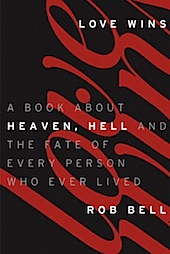
Love Wins: A Book About Heaven, Hell, and the Fate of Every Person Who Ever Lived (HarperOne; $22.99) by Grand Rapids Mars Hill pastor Rob Bell, as you surely know by now, is a controversial book.  It is less clear and more controversial than it would have needed to have been about some things, it is very clear about some other things and, as most fair-minded reviewers have noted, it is a very mixed bag.  Those who don’t like paradox or living with tensions may find it unbearably inconsistent, but for those willing to host a bit of messy uncertainty and head-scratching complexity, it is a very memorable read.

It remains uncertain to me if Bell has moved beyond what can reasonably called evangelical, or even orthodox.  Although it does not remain uncertain to others, who insist that he is scandalous and dangerous. Some say he is a heretic, others say he is heterodox, which is just shy of heresy.  Or, as non-universalistic evangelical Richard Mouw writes, Bell has written “a fine book…I basically agree with his theology.”  Here Eugene Peterson explains why he has on the book’s dust jacket an endorsement stating Bell does not “compromise an inch of evangelical conviction”, which even I find to be a bit of well-intended rhetorical flourish.

 A very helpful overview of the whole conversation is nicely described in an essential piece by Christianity Today’s Mark Galli, (“Heaven Hell and Rob Bell: Putting the Pastor in Context”) noting that Bell’s approach to judgment and hell—seemingly a Christ-centered universalism, although Bell specifically does not use the U word—is not all that new; from a few early church leaders to the estimable Karl Barth to maybe C.S. Lewis (and to his beloved George MacDonald) and, in a qualified manner of speaking, right up to evangelical statesman John Stott, the conclusion that God’s love will melt the hardest hearts (or extinguish them in death without eternal anguish) is not novel or new.  I do hope you’ll read the CT report as it is the best background piece I’ve read and very informative.

To say the conclusions of Love Wins aren’t new doesn’t excuse it if it is wrong, of course. (And, it is important to recall, as Russell Moore, in an excellent and fascinating critique called “The Blood-Drained Gospel of Rob Bell” observes, that even where it has been accepted, “every church that embraced universalism had died out, whithering away from the gospel.”)   Still, keeping it in perspective that this has been an on-going conversation may lower reader’s expectations that it presents something really innovative and out-of-the-box crazy.  It doesn’t.   As Bell puts it, “It’s a wide stream we’re swimming in.”  And like it or not, all we can say is “Ain’t that the truth!”

Bell says in the preface, “If this book, then, does nothing more than introduce you to the ancient, ongoing discussion surrounding the resurrected Jesus in all its vibrant, diverse, messy, multi-voiced complexity—well, I’d be thrilled.” 

INFORMED CIVILITY
In my two previous posts I’ve suggested that you watch the TV interviews, read the early Tim Challies & Aaron Armstrong critique (and, if you can find it in the comments posted at Armstrong’s Blogging Theologically, my reply naming ways I think they misrepresented the book.)  I recommended the lengthy and passionate critique by Kevin DeYoung, an expose of what DeYoung insists is shoddy history and an “indefensible” misuse of Scripture.  There is a lot of trash talk on the internet, but some of these critiques are well worth reading, and they do a different sort of job than I am able to, so I recommend them.  In fact, just to get you thinking even more, see an imagined alternative promo script in this brief send up (it isn’t exactly a parody) of Bell’s initial Love Wins promo video.  It won’t make as much sense if you haven’t seen the Bell video as it takes many of his exact phrases, reversing them in an illuminating way.  It is called “Justice Wins.”

I expressed my disagreements with DeYoung in my last post but I will say this right away as well: he demolishes some of Bell’s interpretations of Bible passages and opines that

Bell has a reputation for being brilliant and creative, and he probably is in certain spheres.  But his use of Scripture exhibits neither characteristic.  In fact, it is naive, literalistic biblicism.  He flattens everything, either to make traditional theology sound ridiculously inconsistent or to make a massive point from one out-of-context verse.  He makes no attempt to understand metaphors, genre, or imagery (either in Scripture or in his grandmother’s painting.)  He does not try to harmonize anything that might rot his fresh take on the Bible.  He loves Jewish background and context, but he shows very little familiarity with the actual story-line and the shape of the Old Testament.  His style may be engaging to some, but look up the passages for yourself and then pick up a reputable study Bible or a basic commentary series.  You’ll seriously question Bell’s use of Scripture.

Hmmm.  Harsh words, and I am not sure I think it is fair without some qualifications; I am not just being civil when I ask if this might be more honest if it said “sometimes” and “often” and “on some occasions” amidst some of the huge allegations.  I cannot adjudicate this for you, so you will simply have to read it for yourself and keep an eye out for the bad stuff DeYoung warns about.  I do have sympathies with his concerns, though, even if I feel DeYoung himself does a bit “flattening of everything” that Bell says, perhaps with a bit of “naive and literalistic reading” as well, where the critic makes a “massive point from an out-of-context” line or two.

So, I hope you have read my last two long posts, both about rules for
engagement and guidelines for Christian civility and some ruminations on ways this matters and doesn’t matter much.  The ugliness on the
internet around this book, especially in comment threads, is a sad sign
of the times and if we are going to be critical of Bell, we must also be
critical of those who have expressed vitriol and arrogance. This is not
saying (as I have repeatedly said) that we ought not offer critique,
but it is a call for fairness and kindness, for deepening the art of
Christian disagreement, conflict resolution, and insightful book
reviewing.

For those who don’t think Rob minds the dust-up all that much, since he
is “laughing his way to the bank” and loves being the center of
controversy, I would wager that you are seriously mistaken.  I do not
think Bell is happy to be misunderstood and marked as evil and I do not
think the Lord Jesus who said “by this all will know…that you love one
another” is happy with this shameful fiasco.  Those who chided me for
overstating the call to civility are wrong (and yes, a few of you are
among my closest friends, so we’ve already had this conversation.)  John
13:35 is unequivocal: by this all will know that we are true Christians: that we love one
another—not that we were spot on this or that doctrinal formulation or
exegetical effort.  As I hope you know, Francis Schaeffer, in his marvelous little classic The Mark of a Christian (IVP) carried this to the next nearly unbelievable step: John 14:21.  God says that the world has the right to disbelief the claims of Jesus if we do not show visible unity.  Love is, indeed, “the final apologetic.”

MY AMBIVALENCE
I guess I have to admit to my ambivalence with the really strong critics because, to be honest, I didn’t scribble “no way” or “impossible” or “ugh!” or even plaster too many question marks on every page of my advanced copy, the way DeYoung and Moore and others surely must have.  There are a few real boners, a few serious gaffes, and a line or two I just crossed out.  And a lot more I wish he would have said.  (And sometimes think the most inner circle of hell is surely for those who don’t have good footnotes, but I’ll let that slide.)   Most of it was pretty good and some was great.  More importantly, it is very, very interesting that these two evangelical Presbyterian heroes of mine, Christian leaders and PhD-ed intellectuals who are obviously much sharper than I, gentleman I trust,  Eugene Peterson and Richard Mouw, have both said that Love Wins is well within the bounds of Biblical orthodoxy. They both were clear (I gave you the links, above) that they don’t agree with all of what Bell says, or how he says it, but they are happy to celebrate it as a book very much worth reading.  Peterson and Mouw.  Well, there ya go.  

Whether you stand with the strict critics like John Piper, Justin Taylor, Kevin DeYoung and others who go hard against Bell for serious and specific doctrinal and Biblical error or you appreciate Rob’s Nooma-esque effort at a culturally-relevant style that gives an appealing call to postmoderns to urgently follow Christ, the lover of all and the restorer of all creation, or fall, as I think I do, somewhere in between, I hope you are eager to learn from both sides, to use this as an opportunity to rethink some stuff.  Many readers of BookNotes are better read than I but, yet, I know many of us often have opinions we haven’t through through very carefully.  So welcome to my rambling overview. 

Naturally, I suggested you buy the darn book from us (which, a few days ago, in that first post, we offered at a good discounted price) and read it for yourself.  The publisher has run out of the first edition already although we will have more in a few days, we hope.  Love Wins is thoughtful and interesting (especially if you enjoy his speaking style, like in the two dozen Nooma videos or the long-form pieces like Everything Is Spiritual, The Gods Are Not Angry, or Drops Likes Stars.)  You may find his urgent, passionate, earnest, bohemian style distracting but you should know it resonates with many thousands.  As a communicator and person (we only met once) I like him a lot.  But the point is that his ideas matter, it is beneficial to discuss them, but let’s not get carried away.  Do read my post about my sense that the it isn’t quite so important as some claim that it is and if you want to see why I insist that theological precision is simply not as ultimate as some seem to make it out to be.  I used the word “pre-theoretical.”  Go figure.

MY TAKE ON HIS SLIGHTLY NEW TAKE
We’ve said that it is wise to admit that this isn’t utterly new and that others have expressed this before.  I’m ambivalent, at best, but enjoyed the book if only for its verve and how it gave voice to very understandable questions that many of us have.

However,  I want to suggest something I don’t
think I’ve heard anyone else say, and it is what I’ve chosen to use as
my contribution to the discussion: at times I think that Bell’s view of God’s likely defeat of a literal eternal
hell is a bit new, or at at least offered in a somewhat new framing and
emphasis
.  His view is consistently shaped by his understanding of the reality of
heaven-on-Earth and a sort of realized eschatology of new creation where
literally “every single particle” is reconciled in Christ, or will be,
as the Bible promises over and over.  It is not that God is too nice to
punish bad people, or that people really aren’t so bad–he is clear that they are and that we build plenty of hells on earth—or even that
there are many ways to God—that is not his tone or teaching at all. I
think his eschatological background framework and emphasis on Christ’s
creation-restoring work is a larger and more serious approach and one
that may offer at least a new reason to revisit this ancient question.

Still, whether this frame is a bit of a new on-ramp to the questions
about the “wideness of God’s mercy” and the nature of heaven and hell, a
brand new CT piece by Mark Galli “Rob Bell’s Bridge Too Far” concludes
that Bell has, in fact, gone beyond what the Bible teaches and what
evangelical doctrine requires.  It is a very, very good review and I
commend it to you.  I think he is kind and fair, civil and candid.  And
pretty much right, even though he misses some important features of the
book, features that I will explore because I think they are important.  So if you don’t want to read my rambling roll of a several part
review, at least read Galli. 

BELLIAN NEW CREATION HOPE
Two chapter titles in Love Wins are illustrative of how he frames the discussion of “the fate of every person” by this broad and comprehensive reading of the full-on hope of creation-wide restoration.  They are typically allusive–is Bellian a word?– provocative and hip: “Here is the New There” and “Good News That Is Better Than That.”  They illustrate the background and context of his ruminations on hell: God’s heaven is coming on Earth (just like Jesus said) and in union with Christ we can begin to experience it here and now and this great news is much, much better than a mere assurance of escaping punishment in the hereafter.  Every knee is going to bow to Christ and will see this spectacular goodness, so you might as well get on the gospel train now. Etc. Etc.

He is serious about this and we should be to.

Just for instance, after a handful of Older Testament promises of goodness (which he extrapolates to include–as the texts sometimes say but may or may not mean—all people and their lands. Check out these punchy one-sentence paragraphs:

The prophet Ezekiel said that people will be given grain and fruit and crops and new hearts and new spirits (chap. 36)

The prophet Amos promised that everything will be repaired and restored and rebuilt and “new wine will drip from the mountains.” (chap. 9)

Life in the age to come.
If This sounds like heaven on earth,
that’s because it is.

Literally.

This is good stuff and important.  It is important because I believe it is true (and sadly underestimated in most churches) and important because without those views, we cannot adequately understand his expansive view of grace and the very title of the book.  Do note that the book is not firstly or primarily about hell.  He is all about the presence of God come to Earth in Jesus and in the Kingdom He is establishing here.

Once again, Bell is not the first to say this–it is not that uncommon, actually—and he has said it since his first book.  Here is an excerpt from 2005s Velvet Elvis (Zondervan) which could have been an excerpt from Love Wins

Let me take this further: If we only have a legal-transaction understanding of salvation in which we are forgiven of our sins so we can go to heaven, then salvation essentially becomes a ticket to somewhere else. In this understanding, eternity is something that kicks in when we die…

The Bible paints a much larger picture of salvation. It describes all of creation being restored. The author of Ephesians writes that all things will be brought together under Jesus. Salvation is the entire universe being brought back into harmony with its maker.

AN EVEN DEEPER CONTEXT
Alas, I think a lot of even deeper context may be helpful, and I will first say this: as we’ve already said, but it is vital to say again here, so you can follow the tale, Bell is not the first to wonder about the moral defensibility of God consigning people to conscious torture forever even if God’s holiness is such that human rebellion is inexcusably traitorous. This has been pondered (as Bell explains, perhaps making a bit too much of it historically) from the earliest days of church history. In about the only line from the brilliant Mark Galli review that I found wanting, Galli says that only a “tiny minority” held this view.  What he means is only a tiny minority of theological writers who were deemed orthodox held to this view. I’d say a lot of people, people you and I know, actually do hold this view (and if you don’t have friends who have told you that they believe something like this about not really believing in hellfire as typical understood then you either don’t have friends who are being honest with you or you don’t get out much.) 

 Of course, popularity doesn’t make it true, but Bell is correct that he is not alone in suspecting–or at least hoping–that God’s love and mercy outweighs God’s anger at the unaware or unrepentant.

But there is something else going on here, something sometimes pretty deep below the surface, but it is something I think we can observe about Bell’s overall work and mission.

It seems some of the more responsible debate about Love Wins and Bells views of hell being defeated by the redemptive intentions of God’s love, are trying to wonder if it is orthodox to allow such an idea.  Can we say that all souls go to heaven?  Of course there is the huge question about the teaching of wrath and judgment, but let’s focus just on this background piece for a moment.  It seems obvious that a lot of people take sides on this question–all souls go to heaven, yes or no, true or not?

But what if that isn’t an especially Biblical way to ask the question?  What if Bell’s contribution, intended directly or not, is to help us reframe the assumptions of the question, or at least part of the question.  Should we believe in disembodied souls and do people live forever the the Heaven where God and angels dwell?  And where or what is our final destination?  Let’s back up a bit.  I’m positive it will help you understand Rob Bell better and not many have said it yet.

PLATO AND SOULS
We must explore—hang in there with me because this is important—a matter presupposed within this conversation that has been going on, what people (leaders, theologians, artists, or more ordinary folk) tend to assume and therefore believe about the afterlife, any why they believe what they do.  It is an important matter that Bell himself doesn’t adequately address, but is surely in his mind.  We must explore the unhelpful influences of the pagan assumptions and weird views of Greek philosopher Plato, called Platonism (and, more precisely, the later, 3rd century revival and “Christianized” version of Plato that became known as neo-Platonism.) That unbiblical approach to the life of the so-called “eternal soul” influenced the intellectual categories of the early church.  And this has been bad, generally, and vexing as it influenced our thinking and talking about this topic.

BAD SYNTHESIS
It may be simple-minded to explain it this way, but just think of what one gets in chemistry when one creates a synthesis—something synthetic, artificial.  The pure thing is lost in the amalgam, now a composite, no longer the real deal.  So, the early church’s synthesis, its tainted acceptance of these Platonic ideas was disastrous and plague us still.   Bell doesn’t talk about this stuff, but I know that he knows it.  It is surely between the lines, part of his intellectual agenda. And I believe he is right–call it prophetic, even–on this score.

DUALISM’S LEGACY
Just consider the alleged gulfs, the great divides, renown in the early church and medieval world that have in various ways deformed the modern church and how we lean into our lives:  the (good) soul vs the (bad) body, the (perfect) calling to be a prayerful contemplative vs the (lesser) calling to do ordinary work, the ideal of the (pure) celibate life vs the disapproval of (dirty) sex and procreation, the (sanctifying) role of pain vs the (tempting) joys of pleasure, the glories of the (rationalistic) intellectual life vs the (despised) life of manuel labor, the value of the (private) inner life vs the less valuable (public) life of the commons, and, eventually, the commonplace perception of a battle that is lined up as faith vs reason, and reason vs creativity, and, as Nancy Pearcy’s important work in Total Truth (Crossway) and Saving Leonardo (Broadman) helps us understand, knowing vs believing, fact vs value.  These unnecessary and deforming dualisms (and church le
aders did and do teach every single one of them) play out today in the oddest ways.  Most enduring, perhaps, and most relevant for the debate about the afterlife, is the hard dualism of a focus on the (eternal) afterlife as opposed to the (temporal) things of Earth, rooted in the old Platonic heresy of a hard division between the so-called pure form of a soul locked inside a (bad) material body.  Of course, this is not a Biblical way of understanding adama (literally, Earthling), the human person made in God’s image, but we hear it said yet today.  All the time.  

Add a little anti-matter gnosticism, some rationalistic scholasticism, some medieval Catholic mysticism—see Being Human: The Nature of Spiritual Experience by Ranald Macaulay and Jerram Barrs (IVP) for an excellent critique of how some of those enduring monastic writers perpetuate this hugely wrong and finally inhuman dichotomy—and throw in notions of the Divine Right of Kings and the idol of unrestrained scientific and industrial growth (“Knowledge is Power!”) wedded to the nationalism that confuses God and country and we have the gigundus confusions of Christendom which we are yet to discern our way out of.   Interestingly, the Mennonites and Brethren have offered some help on this whole affair, but others mostly silenced them.  Early 20th century social gospel liberalism and early 21st postmodern emergent conversations have been valiant in trying to offer an alternative vision to this unbiblical mess, but have simply not offered enough Biblical truth to be valuable or sustainable.  I find great hope, even in Bell’s contributions, but, better, in new books like A Light to the Nations: The Missional Church and the Biblical Story by Michael Goheen (BakerAcademic) showing the generative and fruitful way good Bible teaching can fund a missional vision for a missional church.  It is nearly monumental and will be a real blessing moving us in the right direction.

To try to again put it simply, a synthesis between Christian thinkers and the the dualism between the realms of the sacred and secular from  Plato gave rise to an ungodly ritualized church and a privatized personal faith, which facilitated a secularizing force (starting with the Renaissance and into the French Revolution and the British Enlightenment) to become prominent in Western culture, so we now have an often culturally irrelevant faith where the one thing people most religious people hope for—being immortal souls in an ethereal heaven—is itself an indication of our deeply unbiblical views.  The story of our lifetime is mostly shaped by the American Dream and our hope for the afterlife is shaped by a synthetic, lazy view that  just isn’t the story of God.

A WHOLE AND HOLY WORLDVIEW?
The mid-1980s book, The Transforming Vision: Shaping a Christian Worldview by Brian Walsh & Richard Middleton (IVP) is still the best overview of this less than positive take on the accommodation of seminal church thinkers with Greco-Roman ways of thinking and the subsequent capitulation to the Enlightenment roots of Western culture with its idols of technological and economic progress at all cost.  The first chapter of their must-read sequel, Truth is Stranger Than It Used to Be: Biblical Faith in a Postmodern Age (IVP) is a very succinct and prophetic bit of discernment about the ways modernity deformed our ability to live faithfully in God’s being-redeemed world.  Although it can be a tad dry at times, Living at the Crossroads: An Introduction to Christian Worldview by Michael Goheen and Craig Bartholomew (Baker) is jam-packed with vital insights about our era (and how we got here). this “crossroads” time of a shift from modernity to postmodernity, and invites us to “think Christianly” as we develop a worldview and way of life in this setting, in light of the full unfolding drama of Biblical redemption.  Again, Bell doesn’t say it like this, but I believe if you can get this vision from these reliable scholars, it will put the debate about Love Wins in a bit of a different setting, and might be seen just a bit differently than the pretty predictable pro and  pro and con essays we’ve seen to date.
 

Now I do not know if Rob Bell has been influenced by these books.  The analysis which rejects the early church assumptions about the soul vs the body, spirit vs matter, church vs world, which were taken from Platonism and the subsequent adaptation of this sacred/secular dualism is important to really absorb if we are going to understand Bell’s view of new creation and the nature of the renewed world to come.

Interestingly and importantly,  Bell properly critiqued this sacred/secular split in his first book, Velvet Elvis: Repainting the Christian Faith, and revisited the topic forcefully in Sex God: Exploring the Endless Connections Between Sexuality and Spirituality, and he explored it by way of a study of modern astrophysics in his long-form DVD, Everything Is Spiritual (all bravely published Zondervan.)  Not everyone who cries “No Dualisms!” and proclaims that Christ rules “Every Square Inch of Creation” or those who is attentive to the deforming ways pagan ideas have crept into our understandings and lifestyles agree with him on, least of all on his view of hell.  Still, he does cry (or at least whisper) “No Dualisms!” in almost everything he writes.  And that is essential to appreciate if we are going to understand him fairly.

SO THIS IS THE CONTEXT OUT OF WHICH…
This is the context out of which Bell comes, then, and (or so it seems to me) some of the concerns that seemed to have propelled him, some of the stuff he maybe learned when he was at Fuller, some of the questions he pondered (I’m guessing) when he worked with the ex-fundamentalist church planter Ed Dodson who was learning to disentangle himself from his former right-wing work with Jerry Falwell, now hanging around people in Grand Rapids with AIDS as well as folks from Calvin College with their beloved Kuyper quote about the Lordship of Christ over “every square inch” of the creation–it’s on tee shirts in Western Michigan—starting up a hipster congregation with a serious, savvy and sassy concern for how the unchurched have been turned off by all of this bad religious stuff, this irrelevance and weirdness and ugliness and profound worldliness.  Early on he was rejecting dualism and rejecting Christendom and affirming creation, common grace, and a significantly Christ-centered view of the coming of the Kingdom of God.  Again, as early as 2006 he did a lecture tour (performing sometimes at rock clubs and other unusual venues) on the spirituality of science which was marketed in DVD as Everything Is Spiritual!

He was, without saying it, making a statement which was profoundly anti-Platonic dualism in his first Nooma, 001 Rain. You know the one, where he holds his baby while hiking in the storm. The point is important: God’s creation is fallen and we must own up to our pain.  And God suffers with us.   God is not a distant deity and we are not called to be stoic.  Much later (012) he did one about a friend dying of cancer, Matthew.  God is present even in our pain, and important feature for Bell.

And in the next one, 002 Flame he again is deconstructing dualism.  Sex is a good, good thing, but can be abused.  Of course all manner of Christian folk might say it that way, but the power and passion and non-moralistic edge got to the heart of things, the way one might if one rejected the stupid dualism of Plato and the boys.  A pietist or dualist or liberal simply wouldn’t have done a DVD like Flame.  His very Jewish-sounding “blessing” at the end–what one friend calls his “may you” sound
like an invitation to good sex.  Some youth leaders wouldn’t use it.

With a vision of creating an incarnational, creative place to invite people into a more wholistic and radical and truly Biblical story, Bell took up rethinking things, trying to disentangle what the (mostly Jewish) Biblical writers most likely really thought, not the ways their visions have been dogmatized by a tradition that we now know has been significantly influenced by unholy forces, like the neo-Platonism stuff and all that led to.  It should not be surprising that he hosts a degree of uncertainity in these, honors people doubts and fears and comes across as genuine, raw, even.  This is another example of the reject of static Greek thinking.  The last Nooma (0024) was called Whirlwind.  It’s tag line?  “What do we do when there aren’t nice, neat answers?”

003 Trees is my favorite of them all and speaks squarely and directly to the relationship between creation and new creation.  He literally plants a gree on a city street, conjuring images of the “trees whose leaves are for the healing of the nations” from Revelation 22.  Good trees in the garden, good trees in the new Earth.  We live, as he literally stands there, “between the trees.” Brilliant.  No dualism, all of life redeemed, creation-being-restored kind of realism.

I don’t know if he gets the customs of Second Temple-era Judaism precisely right, or names the right rabbinical texts, but 008 Dust is a tremendous Nooma, one of the most popular, and it is about how disciples of rabbis acted in first century Palestine, seeking to be accepted into a prestigious rabbinical school.  In an outrageously uncommon move, Jesus chose them, invited them into his movement, these unwashed fisherman.  Follow me, he says. And they stay close, allowing their character to be formed so they resemble Jesus as they apprentice with this odd rabbi.  It is about Biblical discipleship in response to calling and grace, living out our faith in action in the ways of the master, and not to be missed.

Do you know the 011Nooma called Rhythm?  Some thought it verged on pantheism, so taken as it is with God’s nearness.  He points out that some think God is distant, somewhere else (pulling levers?)  But God is like a song (it is filmed as classical musicians rehearse in their orchestra) and can be heard and felt, around us anywhere we are.  Knowing God isn’t the result of some separate religious activity but can be nurtured in all that we do.  God.  All that we do.  Bell is smashing the Western assumption of dualism and standing firmly in an authentic Biblical vision that God is huge and here and that creation speaks to us of the Creator.  He is not a Platonist or a stoic.

 Again I don’t really know if as a younger man Bell ever read the devastating critique of Western culture’s accommodation with Plato (and, later, through Aquinas, with Aristotle) by Francis Schaeffer, or the similar take on 20th century dualisms of the culture and counter-culture, rationalism and romanticism, such as The Dust of Death by Os Guinness or seminal works about these things like Leslie Newbigin’s Foolishness to the Greeks, say.  But his passions and language and cultural discontent and desires to present an alternative telling and living of the gospel story makes a whole lot of sense in light of these important, broad cultural readings.

On this connect-the-dots to Plato theory which I realize I am now on the verge of driving into the ground, Love Wins doesn’t say much, but it is clear that he is taking on those assumptions at a profound level, rejecting things like the very way in which some of the early church fathers, through these influential lenses of Plato, described things like an immortal soul which seems to have significantly influenced the anthropology (that is, the view of the human person) in the earliest centuries of early theology.  So we now have this debate about whether people’s souls burn or don’t burn forever in a literal hell when, to some extent at least, our most careful scholars admit that this simply is not how Jews or the first century Gentiles who followed Jesus would have thought about the afterlife.  I wish I could say this more clearly or concisely but I invite you to re-read that last sentence.  It is important.

DON’T READ THE BIBLE THROUGH PAGAN GREEK GLASSES
Notice, for instance, what Bell is getting at here, from his chapter called “Hell.”  He is describing a few Biblical words and their best translations.  (DeYoung, by the way, takes exception to his word studies and I am not sure if Bell, or his editors at HarperOne are to be trusted.  But I suspect that he is not as bad as DeYoung says.)  Bell suggests that a few words about the judgement of the goats in Matthew 25 may be mistranslated or at least misconstrued.  He says we read “eternal punishment” presuming it means never going to end, but that may not be accurate.

He asserts that “…’forever’ is not really a category the biblical writers used.”  Say what?


I don’t know if he is right, but he maintains that the closest the Hebrew writers come to a word for ‘forever’ is the word olam.   He gives a few Old Testament citations, noting that when it is talking about God it seems to mean what we mean (time with no beginning or end, eternal.)  But it is also used to mean a period of time.  Like in Jonah.

Olam, in this instance
turns out to be three days.


It’s a versatile, pliable word,
in most occurrences referring to a particular period of time.

So when we read ‘eternal punishment’ it’s important that we don’t read categories and concepts into a phrase that aren’t there.  Jesus isn’t talking about forever as we think forever.  Jesus may be talking about something else, which has all sorts of implications for our understandings of what happens after we die, which we’ll spend the next chapter sorting.

Hmm.  I told you this was interesting.  Even our views of time and eternity and what words mean need to be reconsidered in light of a consistently Biblical worldview and in light of the best literary, grammatical, and historical insights of Hebrew, Greek, Aramaic and such.  He may not be correct in this instance but some of those that say Bell is intent on ignoring verses he doesn’t like may not be adequately aware of or seriously grappling with his basic project of  disentangling faith from its enculturation by Greco-Roman thought, Western dualism, modernist/rationalist assumptions, Victorian morality, civil religion and all the rest.  My hat is off to him for being so audacious, even if he over-reacts or moves towards views that I do not agree with.

N.T. WRIGHT: SURPRISED BY HOPE
It is no surprise that Bell recommends N.T. Wright’s magisterial study entitled Surprised By Hope: Rethinking Heaven, The Resurrection and the Mission of the Church (HarperOne.)  It is one of the small handful of books he suggest for further study (along with, naturally, C.S. Lewis’ Great Divorce.)  Surprised by Hope is a very well-documented and carefully-argued text also insists on a bodily resurrection (not the ethereal forms of Platonism, or the surreal otherworldliness of the Christian imagination under the influence of neo-Platonism or an equally unsound pietistic gnosticism.)  We have to reconsider the state and geography of everlasting life if God is renewing all things (Revelation 22), relieving the entire creation from the distortions and pains of sin (Romans 8:22) offering everlasting life in a healed (re)newed cosmos.

(And, yes, although Bell doesn’t say it, the ”
all things new” promise of Revelation 21:5 uses the Greek word “renew” not “brand new” which is to say a renewal of the original good creation, not a utterly new place after the old one burns up. And it can be argued (as do the notes in my literalistic New American Standard Bible, that the fire “reveals” not destroys the elements of creation in 2 Peter 3:10.  But I digress.)

Tom Wright helps us rethink things in light of fully Biblical history and grammar and thinking and he does it as well as anyone. To date Surprised By Hope the most important book on this topic. (Although, as I have said before, I think Al Wolters’ Creation Regained: Biblical Basics for a Reformational Worldview (Eerdmans) and Randy Alcorn’s Heaven (Tyndale) and Heaven Is a Place on Earth by Michael Witmer (Zondervan) are very helpful here and should be on your bookshelf. This is absolutely not to suggest these author’s agree with Rob Bell or have directly influenced the research behind Love Wins.  But I think they are helpful, solid, and important resources to understand some of this discussion.)

DEEPER STILL: BEYOND HOMELESSNESS
For those inclined to go a bit deeper into the questions of what it means to live in this kind of counter-cultural Christian hope for a renewed creation, urban activist, campus minister and Ontario farmer Brian Walsh along with environmental science professor and activist Steven Bouma-Prediger have done an extraordinary, serious, fascinating study of how our sense of place and ecological stewardship has been eroded by the double-whammy combo of Platonic dualism that has oriented Christians toward the otherworldly afterlife and the secularized frantic ideologies of progress, growth, and upward mobility.  It is called Beyond Homelessness: Christian Faith in a Culture of Displacement (Eerdmans) and when it came out I named it a book of the year.  They describe the eschaton as homecoming after exile and use their robust Biblical imaginations to ask about home-making, caring for the literal homeless, and creating a way of life that “practices resurrection” (as the Wendell Berry poem puts it) in the here and now, even in the face of the horrors of environmental crisis, massive poverty, and middle-class family breakdown.  If there is a connection between the old mad farmer Berry and the young mad pastor Bell, it can be found here, in the work of Walsh & Bouma-Prediger. 

Beyond Homelessness doesn’t tackle the question of hell—and, again, I have no idea if Bell has read it although I betcha he has—but it offers the most expanded study of what it means to explore questions of “who’s in and who’s out,” the meaning of hospitality, inclusion, judgmentalism, living graciously, the relationship of place and redemption, and so forth of any book I know.  There are fabulous Bible interludes between each chapter which begin to offer insights about the goodness of the redemptive ways of God with God’s world. These are moving vignettes which remind me of Bell’s take on things at time.  It offers a vision and framework (including a reminder that in the Bible hospitality and graciousness to outsiders is central, based on God’s own character and the covenant duty of God’s people to bless others.)  I truly think that Bell’s impulse to be expansive in his hope for all to be saved can be understood better with Beyond Homelessness as an admittedly different, but somehow exceptionally relevant, conversation partner.  

If we want to be Biblical faithful we simply must get rid of our non-Jewish lenses that mis-color our understanding of pertinent Biblical texts. (In his small Paul for Everyone Commentary Series on 1 Corinthians (WKJ), N.T. Wright does this specifically with the admittedly complex teaching, made more troublesome by unhelpful translations that presupposed the immaterality of eternity, of 1 Corinthians 15, which is certainly a very germane study to this topic.)  We must sort out our cultural assumptions about things like heaven, hell, what fire is and does (refining? destroying? revealing?) and what we mean by the soul (immortal or otherwise) and interpret them, firstly, from within the world of the Bible itself.  We have to ask what the Bible says about insiders, outsiders, Jews and Gentiles, holy and unholy, exclusion and embrace.  We have to do the word studies and, more, immerse ourselves in the Biblical story until it sanctifies our very imaginations.

THE PAINTING
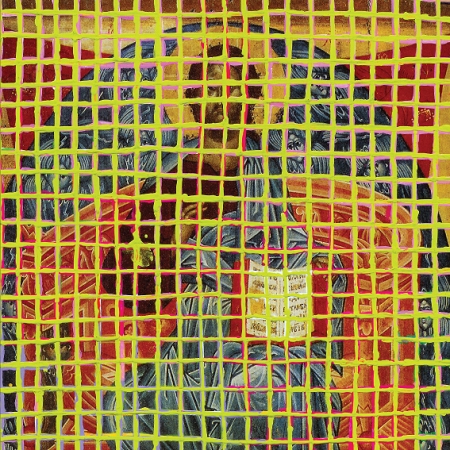
This is perhaps why Bell starts his book with an admission that a rather tacky painting of his youth weirded him out—it shows people walking across a suspended cross like a bridge from this earth to a shiny cloudy place, heaven, evacuated white robed people zooming away to this other (peculiar) place.  This sincere painting simply does not capture Christ’s own teaching about the Kingdom coming on Earth, any sense of Paradise Lost but Regained, or the promise of a new earth and sky promised at the end of the book of Revelation.  

At least one conservative reviewer has derided Bell for finding this painting confusing, as if the point is that Bell doesn’t care about Jesus, the cross, or heaven; such a serious theologian, though, should have applauded Bell for wanting our art and imaginations about the new creation to be as earthy as the Bible says it is— to be, well, as Biblical as the Bible is.  Bell is quite right about this creation regained stuff, I am sure of it, and it is a part of Love Wins that isn’t being discussed nearly enough.  And we won’t really appreciate the debate about God’s redemptive power to reconcile all things unless we are significantly rooted in the Biblical vision.

But we are ahead of ourselves.  It must be noted, then, that Bell’s chapter on new creation is helpful and solid.  He may say things with a bit too much poetic passion so you may need to turn to, as I’ve said, foundational books by the likes of Wolters, Alcorn, or Witmer to get a more carefully developed explication of the nature of God’s new creation coming “on Earth as it is in Heaven.”  But Love Wins explores this energetically and pushes us in the right direction, evoking imaginative ways of seeing the goodness of God, God’s covenantal faithfulness to the good creation, and how sin is being eradicated, in Christ.  Swords into plowshares, reconciliation between hostile ethnicities, rich and poor having their fortunes blessedly intertwined, justice and peace kissing in a fond embrace (to use the lovely imagery of Psalm 85:10 )—Bell takes these images seriously and he should not be faulted for not paying attention to the Bible. He is notably animated by these images and hopes and dreams.

Bell seems to read the New Testament verses in light of this grand sweep of the Hebrew hopes, and this is helpful, usually, and makes for interesting, fruitful interpretations.  Kevin DeYoung offers 10 very important examples where Bell gets his exegesis way wrong.  He makes a good case that Bell is worse than sloppy, but you and your Bible study group will have to look up the texts and decide for yourself.  In many ways he has this Hebrew vision and the Jewishness of Jesus deep in his bones; his worldview seems to breath this hope for restoration through Christ and it could offer a healthy corrective to cramped or misguided interpretations, informed by inadequate assumptions or trains of logic.  This is not to say he is correct about any and every detail (I think he is not–again, see  DeYoung’s Gospel Coalition article that I’ve cited.)  But those who suggest he isn’t adequately attuned to Scripture just aren’t paying attention.

LOVE WINS REVIEWED PART TWO COMING NEXT
In my next post I’ll spend more time exploring an important aspect of this essential background to most fully appreciate some of the frame
work I see behind Rob Bell’s Love Wins.

It will include some complex thinking about the nature of the work of the cross.

LOVE WINS REVIEWED PART THREE COMING SOON
Then, in a final Part Three I’ll list about ten random points to consider about the book.  I’ve got a tablet full, but will keep it succinct.

Thanks for your diligence and care.  I’m grateful for the chance to write my thoughts, for those who encouraged me to do this.  I hope it helps a bit.

Hearts & Minds  234 East Main Street  Dallastown, PA  17313     717.246.3333

Bellapalooza: a bit more on the Rob Bell Love Wins controversy. Bring on the (civil) critiques and four cavaets.

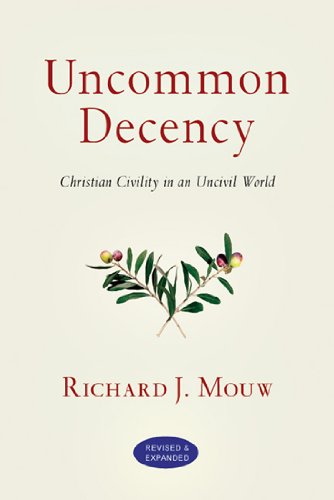
Oh my, my friends.  I outlined yesterday some virtues and practices for civil discourse—how to “speak the truth in love”—and I’m really, really appreciative of the kind remarks folks have made.  One friend wondered, though, if my call to civility would have the unintended consequence of obscuring serious critique, in this case, of Rob Bell’s heterodox views of hell and God’s judgment.  If you saw the comment thread, you’ll see that I admitted the concern is a fair one, but not particularly relevant here.  Richard Mouw’s book, Uncommon Decency (InterVarsity Press; $16.00) that I so commended, says (as I pointed out) that we need both conviction and civility.  We must always debate fairly and honestly and kindly, I said, but, as Mouw puts it, there are “limits to civility.”  He has a chapter called “When There is No Other Hand” about those times when on-going dialogue and pleasantness is inadequate to the demands of honest protest.

Is this now a time to stop being polite and bluntly protest the dangerous ideas of Mr. Bell’s book?  I don’t think so.  I do not intend to obscure differences about his ideas or suggest we dare not make judgments as we engage in endless nice conversation, but I do not think it is wrong to exercise some patience as we debate this complicated theological matter and hear each other out.   Bell is not the first to write about this and he will not be the last.  Welcome to Living Theology 101.

(That this sort of evolving “living” process of (re)formulation of God’s ways was going on in thesmall group picture new.png Old Testament—the Hebrew prophets sometimes altered the demands of the law, or re-emphasized new portions—and in the New Testament, too, is itself a helpful thing to recall as various writers used and re-used Older Testament quotes, appropriating them in what we might call creative ways.  Note how Jesus, in his inaugural sermon in Luke 4 deleted the line he was quoting from Isaiah about the vengeance of the Lord.  And think of the stunningly revolutionary way they heard the new things the Spirit was saying to the group of Jews gathering in the Jerusalem council in Acts 15.  Or that dream that changed everything for Peter.   Living Theology, indeed!)

So, theology is sometimes a bit messy and we don’t all agree. It is obviously vital for us all to explore what we believe and why and how it does or doesn’t fit in to the ongoing story of redemptive history;  we should have some room to explore ideas, I’d say; our respect for others (even if we think they are off-base) and the practice of gracious hospitality demand a bit of that.  I hope you have a community that encourages honest conversations around serious study of the Biblical texts and that you can take up this conversation face-to-face.  We need not fear questions.  Of course this needs to be civil, but it also needs to be real. One influential blogger today suggested there is a difference between fair questions and a spirit of constant questioning. Well, fair enough, but what do we do with one who has endless questions, who can’t quite take the standard position?  Tell her, eventually, to shut up or go to hell?  I don’t think so.

As you can see, I’m still thinking about the ways in which Bell’s book has been evaluated these past weeks; interested, as I said in the last post, in the conversation about the book as much as the book.  

Below is a link to a 3 minute example that I found a touch unsettling.  It is well worth watching.  The interviewer on MSNBC asks some tough questions of Bell, and I think they are fair.  But near the end, he says something very critical about the quality of the book and Rob’s bad intent and says something like “isn’t that true?”  Bell says no it isn’t and the guy doesn’t bat an eye, and continues on as the interview turns towards hostile interrogation.  It raised good questions but I felt it was a tad smarmy and needlessly confrontational.  And then a couple of friends with whom I was emailing criticized Bell for being vague, while I was reeling for the odd tone of the questioner. Interesting, eh, these differing perceptions.


A common trope against Bell is that he’s watering down the gospel in order to make it culturally palatable and a few say that in terse comments after the video clip.  Now that is a good case study: I do not think that is a fair accusation and violates the principle that it is uncivil to impugn the motives of someone without warrant.  His teaching may be having the effect of watering down Bible truths (although he doesn’t see it that way) but he nowhere says “let’s do away with some stuff because it isn’t cool enough for our postmodern culture.”  So the comments carrying this unfounded accusation at the post are also troubling. The video is a helpful window into the controversy.

Watch it here:
http://www.youtube.com/watch?v=Vg-qgmJ7nzA

Another very interesting, thorough, and important critical review comes from Kevin DeYoung over at the Gospel Coalition site.  I really liked his excellent book Why We Love the Church: In Praise of Institutions and Organized Religion and a book he recently did on the beloved Heidelberg Catechism, The Good News We Almost Forgot. I respect him as a passionate, youthful, conservative, Reformed pastor and writer. I need to reply to a bit of his strong critique, will use it as a bit of a case study, and will mention it again in my own review of Love Wins tomorrow.  For now, I suggest you print it out if you have to, get a cup of coffee, and settle in for a lengthy assessment.  You may want to bring your Bible.  He doesn’t use his sense of humor much, but he gets credit for, in another place, calling this whole business a Bellapolooza.

Bell was on ABCs Good Morning America and it was interesting how the question of the horrific disaster in Japan came up right away; does a good God allow just evil and then consign the nonChristians to hell?  Rob doesn’t give a quick answer–could you be quick on your feet on national television?—but you get a sense of his view and where he goes in this good clip:

Watch it here:
http://abcnews.go.com/gma/oncall/video/home-ready-japan-style-earthquake-13138885&tab=9482931&section=1206833

Read it here:
http://thegospelcoalition.org/blogs/kevindeyoung/2011/03/14/rob-bell-love-wins-review/

* * *

So.  Last night I wrote a reflection here at BookNotes on Christian civility, a recognition of
0830833099.jpg disagreements within the Body of Christ and I listed a few books reminding us of both legs of Ephesians 4:15: truth and love.  If you are just tuning in, I hope you go back and read that.  I suggested that the Bellapolooza firestorm of nasty comments about Bell and the many equally nasty comments back—including some making unwarranted accusations without having read the book, or snarky ones like “Bell, read your Bible!”—was an indication of a shallow and inappropriate
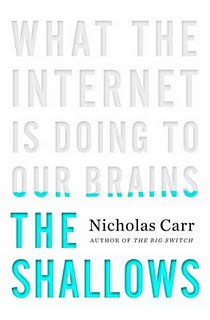
sort of discourse, a style of engagement that isn’t helped by our fast-paced lifestyles, 24/7 talk news channels which model vitriolic debate, or the Web 2.0 “cult of the amateur.”  I mentioned the importance of the recent Nicholas Carr book, The Shallows, regarding this internet milieu.  In this hot-wired age it is hard to do slow reading, to offer careful consideration and to submit to a humble “hermeneutic of love.”  I hope my suggestions for fair play didn’t just add to the noise or further the courseness of our public discussions.  Hey, at least I wrote a lot, and didn’t just do a tweet.  Ha.

I’ve continued to reflect on the book Uncommon Decency.  The good doctor call us to “convicted civility” and offers winsome wisdom on how to disagree with Christian gracefulness, warning us against “angry rhetoric” and rejecting “the crusading spirit.”

I wish I could quote more, but here is an excerpt:

Getting cured of incivility means learning how to speak more honestly.  But I have insisted that civility runs deeper than words.  It is grounded in the way we view reality.  This means that we Christians must work to view things—as far as possible for mere mortals—the way God does.

Psalm 139 is one of my favorite biblical passages.  It’s filled with awe in the presence of the divine holiness.  But it also contains what strikes me as a delightful and instructive little drama.   For eighteen marvelous verse the writer extols the mysteries of God’s knowledge and power.  Then he gets so overwhelmed by this spiritual exercise that he seems to slip into a crusading spirt for a few verses;

    Do I not hate those who hate you, O Lord?
          And do I not loathe those who rise up against you?
    I hate them with perfect hatred;
          I count them my enemies. (vv 21-22)

This is an understandable reaction, and in a sense it is perfectly legitimate.  God’s majesty is so awesome that everything else pales in comparison.  How can we offer anything short of total commitment to such a being? Can we do anything less than hate those who hate the Lord and loathe those who rise up against him?

But abruptly the psalmist seems to catch himself.  He senses that it is rather presumptuous for a creature such as he to pretend to have either the knowledge or the integrity to posses a “perfect hatred” of unrighteousness.  So he pleads, not for the defeat of the hosts of wicked ones, but for a correcting grace that will reach into the depths of his own being.

    Search me, O God, and know my heart;
         test me and know my thoughts.
    See if there is any wicked way in me,
         and lead me in the way everlasting.  (vv 23-24)

This is where a proper view of reality begins: in our own awareness of the divine gaze.  The Lord not only hears all–he sees all.  He knows not only our habits of speech; he sees the hearts in which those habits are formed.  Christian discipleship is permeated by the consciousness that we live coram Deo—before the face of God.

I wonder if our discourse might be more chastened if we nurtured the quiet and slow spiritual
godaloneisenough.jpg disciplines that remind us that we are coram Deo?  Perhaps contemplative time with God being shaped into the character of Christ whose image we are to bear, might calm us a bit.  It might give us greater passion for justice and truth, too, but it may make us “poor in spirit.”   You know, it seems that some of the zealous Puritans who like that phrase coram Deo sometimes don’t write in a way that illustrates that they’ve been with the God whose holiness they so love to remind us of.  And it seems that some of the hipster Bell supporters seem to be so enamored with the marketing package–the Love Wins plasticine cover design is pretty cool—that they hardly sound like they care about holiness at all.  Or humility,  or any of what Greg Spencer has called in a recent book, “the quieter virtues.”  Maybe if we regularly whisper the Jesus Prayer—Lord have mercy on me, a sinner—it might shape how we do our critiques.  And I say this to myself, as well.


screen-shot-2011-02-26-at-1-49-55-pm.pngI have to admit I am nervous about talking about Love Wins.  I don’t want to get it wrong (in style or substance) and I know I’m going to lose respect and business because of it, one way or the other. There are several important reasons (and some unimportant ones) why evangelical folks get riled up by discussions of heaven and hell;  all the best theologians and all the major creedal documents are pretty explicit about hell (the Apostle and Nicene Creeds less so, interestingly.)  Before describing this passionate, interesting, and in many ways perplexing book which takes issues with the standard views, I just have to offer a few more random notes.  Sorry.

Firstly, I thought I was clear, but since a few have asked, I will assert (as I did above)  that it is absolutely appropriate to speaking firmly with conviction when one believes with good reasons that an idea or book is unfaithful to Biblical truth, that it cannot be seen as consistent with the Biblical story.  Even though we must avoid (as I outlined last night) unwarranted insinuations and cheap shots, to painstakingly critique the truthfulness of an author’s teaching is certainly appropriate and sometimes called for.  Not every bad book is worthy—bad enough or interesting enough—to be taken seriously enough to deserve a hard-hitting critique.  I think Bell is important enough to be taken seriously and those that have dismissed him cavalierly are unwise.

So, yes,  I am legitimizing firm rebuke.  If one needs reminding, just read the prophets for crying out loud, or a few pages from the battles of Jesus (usually with the Pharisees, an important textual cue to seeing much of this debate, or so it seems to me.) 

4 caveats.

It’s just a book.  As a bookseller I do what I do because I believe in the power of the printed page, the influence of books (for better or worse) and the importance of the ideas they carry.  This is my bread and butter, so do not misunderstand.  Not a day goes by that I do not talk about the significance of good books and the danger of bad ones.  

I love that great forward to Robert Heilbroner’s The Worldly Philosophers where he talks about the serious influence and suffering caused by economists who

by all the rules of schoolboy history books were nonentities: they commanded no armies, sent no men to their deaths, ruled no empires, took little part in history-making decisions….but what they did was more decisive for history than many acts of statesmen who basked in brighter glory, often more profoundly disturbing than the shuttling of armies back and forth across frontiers, more powerful fo
r good and bad that the edicts of kings and legislatures.  It was this: they shaped and swayed men’s minds.

The Noble Prize-winner continues,

And because he who enlists a man’s mind wields a power even greater than the sword or scepter, these men shaped and swayed the world.  Few of them ever lifted a finger in action; they worked, in the main, as scholars—quietly, inconspicuously, and without much regard for what the world had to say about them.

He tells of how they “left in their train shattered empires and exploded continents… not because they plotted mischief, but because of the extraordinary power of their ideas.”  

The extraordinary power of their ideas.

I still use the old adage a mentor taught me years ago “ideas have legs.”  Or, as Calvin Seerveld noted, perhaps some “grow legs.”  So I do not underestimate the power of words, the deadly influence of ideas in books.  Still: Love Wins is just a book with an overblown subtitle.  Few people will build their whole worldview around this short and punchy essay by Rob Bell.  Many will have their minds made up before they approach it and I doubt it will rock the world much.  Even his own congregation in Grand Rapids is debating his views, so the conversation, the context of the social interactions, the discourse about the book is a major aspect of the phenomenon and may be as important as the text itself.  It is not the apocalypse, it just isn’t, so lighten up just a bit.

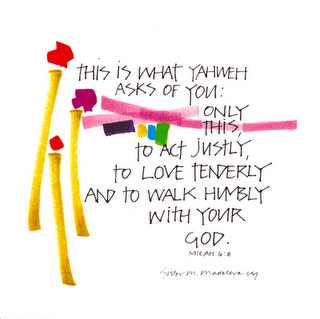
By their fruits ye shall know them.  Jesus did say this, you know, in Matthew 7:16.  And, one of the clearest teaching about the final judgment spoken by our Lord is found in Matthew 25, which unequivocally asks a tough question about our commitment to living out Micah 6:8, Amos 5, Isaiah 58, Jeremiah 22:16 and so many other Scriptures insisting that if we don’t serve the poor and stand up for justice we simply aren’t as spiritual or as right as we think.  Campolo is correct when he jokes “This stuff is on the final.” 

sr-nancys-words1.pngSo here’s a question: Does the inclusive vision of Bell’s invitation to live in presence of a fully loving God, His understanding of the mercy at the heart of the reign of God over a being-restored creation, lead to greater service to the poor, to more fruitful mission, to deepening examples of solidarity with the hurting?  Does it bear that kind of fruit?  Jesus asks us to ask that question.   And are his critics known for these very things, or not?  I’ve said and linked to what I think is one of the best critiques of Love Wins I’ve seen by Kevin DeYoung, a good pastor from a good church also in Michigan.  Perhaps I am mistaken, but he seems to minimize Bell’s concern for the sins of war, assaults against women, oil spills and other violent injustices (he says these “vices” are “well known” which isn’t the sort of thing said by those whose hearts are broken by these sorts of things.)  Has his church been involved in working against torture or stopping the grinding third world debt crisis or justice for women or with the homeless?  I don’t know, of course, but Bell’s church is known for these things.  It would be an over-statement to say “ignore anybody who critiques Rob Bell’s theology if they aren’t at least as faithful at living out Matthew 25 as he and Mars Hill are” but not by too much.  I didn’t make up that line about fruit.

Who cares?  Rob Bell—and others who are working on alternative understandings of hell and judgement, rethinking the best way to understand the Biblical texts about wrath, reframing notions of propitiation and penal sacrifice and such—insist that these traditional views are a stumbling block, that the toxic nature of that particular way of telling the story of redemption and the seemingly violent God behind it have turned off a “staggering number” (as Bell puts it) of sensitive and subsequently unchurched people.  In his critique, DeYoung counters that a “staggering number” want the straight-up, unvarnished truth, the way he preaches it, presumably.

I’m just not so sure.  Liberals like Spong & Borg, post-evangelicals McLaren & Bell, and emergent guys like Pagitt & Jones, all suggest in their own way that a major reason young adults drift from the church is because of their distaste for evangelicalism’s antiquated doctrines and judgmentalism.  Even the must-read Unchristian: What a New Generation Really Thinks About Christianity….and Why It Matters (David Kinneman & Gabe Lyons) moves along these lines, using some research.  Frankly, this just isn’t my experience.  Is it really yours?  I think that most unchurched folks just don’t care much about the God of the Bible, don’t find going to worship all that interesting or meaningful and generally don’t know much about church life or orthodox theology, one way or the other.  They aren’t really rejecting classic doctrine as it isn’t even on their radar screen.  

American-Gothic1.jpgMostly, I think, their imaginations and ways of life are captured by other stories. Walter Brueggemann (in The Bible Makes Sense) calls these other seductive stories either the “Modern-Industrial Scientific” one or the “Existentialist” model, more or less corresponding to cultural conservatives and cultural liberals, rationalists and romantics, although he shows that both are increasingly co-opted by and pretty much shaped by the religion of consumerism.  Francis Schaeffer simply warned of “personal peace and affluence” blinding people to much else other their own happiness.  In the brilliant analysis The Trouble With Paris: Following Jesus in a World of Plastic Promises Mark Sayers shows how media-driven “hyper-reality” convinces us to search for personal fulfillment in things that are “better than the real thing” which has become a folk religion, a framing narrative for our age.  Or, as the Indigo Girls song wryly puts it, some just want “cold beer and remote control.”  Even for the conscientious, as The Edge puts it in U2s rumination on information overload, we are just “Numb.”

Bell makes a case that his telling of the gospel is, besides being most deeply Biblical, is, after all,  a “better story.” Critics retort that (a) it isn’t a better story if it ain’t true and (b) traditional teachings about God’s glory, sovereign grace, wrath averted and limited atonement are a much better story anyway.  This is a very important debate–we have to get the contours and details of the Bible Story right—but my sense is that neither are all that compelling to the world, mostly because few people care—they are living by the scripts given them by the North American culture and worldview, reinforced by “secular liturgies” as James Smith’s extraordinary Desiring the Kingdom puts it. 

Most of us probably know some people who have been turned off by their perception of harsh religion, and Bell has admittedly attracted some of those damaged by negative sorts of fundamentalism. (Watch the fabulous Bullhorn Nooma DVD as he talks about how this pushy, unfriendly guy yelling about hellfire into his bullhorn isn’t helpful in Bell’s own effort to talk about Jes
us with his unchurched friends; they think he is so scary and weird–and he is.)  Bell, importantly, brings some of those who have been hurt into the narrative of the book—more on that tomorrow.  But I suspect that he overstates how many spiritually-abused, set-free-from-toxic-faith victims of hurtful religion he really encounters.  Some people just go to Mars Hill because they like the light show or his cool glasses or the hip music or the non-liturgy.  (I am not all that cynical, really, just saying what I suppose most mega-church leaders are very aware of themselves.)  Of course we have to seriously care for those who are victims of legalism and fundamentalist narrowness and it is to Bell’s credit that he is able to help create a safe place for spiritual refugees and exiles.  That is a great grace and to be affirmed.  Still, I don’t think that most folks run from the gospel because they fear fundamentalists.  Most folks just don’t care, or even know about, much of this.

Framing the debate around this “we have to tell a better story to attract victims of those scared by teachings about hell and damnation” or “we have to teach conservative Reformed theology because people want the unvarnished truth” allows both camps to think that their views are more culturally weighty than they probably are.


So here I am, writing about this at a local coffee-shop.  I’m sitting here pondering all this and just now in walks a somewhat frazzled, apparently single father, buying something creamy and fruity for his two little daughters.  A lovely and graceful woman came up to them, bringing cookies she just bought to the kids, and told the man her story of raising children after a divorce (or a spouses death or something, I couldn’t quite make it out.)  She handed him a card.  Now I don’t know if he most liked her high heels and perky haircut or the free cookies or the kind words of great encouragement she spoke: you don’t have to do this alone.  She reminded him of the card telling of a support group (a Christian ministry?) that he could attend to draw strength and guidance and find friends.  I heard her say, again, that there is hope.  I do not think that the working class dad, the two kiddos, or the support group evangelist gave one whit about Kevin DeYoung’s or my thoughts about Rob Bell or what Rob Bell thinks about hell.  Let’s just keep this in perspective.  The book may be interesting to read and important to debate, but we are fooling ourselves if we think many people care.

We are not saved by our ability to describe salvation properly. And the corollary, one’s salvation is not usually in danger due to theological error.  In yesterday’s post I noted that I have a heart for–as Jesus surely does in a depth I cannot comprehend—ecumenical efforts towards Christian unity.  I mentioned good books on this like John Armstrong’s Your Church Is Too Small and Robert Benson’s The Body Broken.  It is just unacceptable to say that mainline Protestants or Eastern Orthodox or Roman Catholics or the currently persecuted Egyptian Copts (not to mention radical Anabaptists, historic black church folk, Latino Pentecostals or Joel Olsteen’s cheery TV congregants) are somehow not a valid part of the Body of Christ, are not true Christians.  Bell perhaps embarrasses himself when he says that Origen, whose views on hell were roundly denounced, or the Platonist Clement of Alexandria, say, represent the “deep, wide, and diverse stream” of “historic, orthodox, Christian faith.”  But his impulse to take a wide, long view is correct.

Some of the harshest critics of Love Wins seem to suggest that if you can’t articulate the five points of Calvinism or don’t use their particular rubric for selecting the most pertinent texts and their proper interpretations or if you unwittingly endorse a lame false doctrine, or are part of a denomination whose national headquarters published something questionable, you may not be a real Christian. 

This over-emphasis on knowing and saying the right stuff about doctrinal formulations marginalizes folk from other denominations and traditions who explain their faith differently or don’t sound in their style of talking about their convictions the way they should.  Some may even sing the hymns that DeYoung describes as so meaningful to his flock and—imagine!— they may not resonate with the lines he cites (about wrath averted, say.)  Or they may sing completely different hymns with a somewhat different orientation.  I know some Christians who find Good Friday services much more deeply moving than upbeat Easter ones.  Should I wrinkle up my nose and say they must not understand the victory of God?  Ethnicity, culture and denominational tradition play a large influence here, too, and we’d be wise to attend to how that happens (and why it isn’t being mentioned in the Bell brouhaha.)  Dare we think ill of others if their experience of God and testimony of their understanding of grace is a bit unlike what the critics, the guardians of orthodoxy, describe, or if their liturgical habits or ethnicity have shaped them to talk about faith in somewhat different terms?  I think it is wrong to just naturally jump to the uncharitable conclusion that this means others have “another gospel” that must be rebuked; this default position to be against others who name the name of Christ if their understanding or expression is different than ours is wrong-headed.  Again, Jesus most often affirmed the theologically inarticulate and blasted the doctrinal know-it-alls. Authentic faith is pre-theoretical trust not theological precision, so as interested as we should be in God-glorifying, Christ-exalting, Kingdom-bringing, historically-shaped, Biblically-proper doctrine, the variety of  ways of doing that and getting it said is to be provisionally affirmed, not fought.  Those who understand this, I think, will approach Bell’s book with a bit more willingness to listen appreciatively rather than to only scrutinize it for error.

I think the severe critiques of Bell offered all over the internet not only privilege certain denominations in ways that erode an honorable concern about ecumenicity but they obviously privilege the theologically well-read and maybe the left-brained to boot.  Again, do not misunderstand me here: I believe in theological education and theological debate (and love selling books to well-educated book lovers!)  But let’s be honest—many admirably serious and deeply pious and significantly faithful followers of Jesus simply have never been exposed to the systematic theology (or exegetical tools) demanded by critics like DeYoung.  Heck, though-out most of church history, and, globally, today, most Christians can’t even read!  This does not leave authors (in this case, Rob Bell) off the hook, of course and it would be goofy if you think I’m saying that.  It does remind us, though, that this exceptionally detailed line by line analysis as done by DeYoung, an analysis I have read carefully with great appreciation and have commended to you, is not the sort of thing most people do.

 If somebody picks up Bell’s easy-to-read book and likes it, it will not most likely threaten her soul or her salvation.  We are, let’s be clear, saved by the saving grace offered at the initiation of the Triune God, not through our ability to formulate proper assertions about how it happens.  

It is for this reason that I have reservations with Rev. DeYoung’s studious piece.  He is to be thanked for a careful reading of Bell and for his passionate convictions and often-helpful warnings.  I have chosen to comment upon it because it is worthy of our consideration and is a major contribution to the discourse about Love Wins.  I think he is mostly correct and I share many of his concerns, e
ven if I would have wished for a bit more nuance at times, and a bit more affirmation of some of the good stuff that Bell says.  But then there is that Big Ending on the last page.  With the obvious truism that “bad theology hurts real people” and the reminder that he fights this fight for truth as a pastor who cares about “real people in East Lansing” DeYoung then insists why this is so important.  He claims that “suffering or salvation, heaven or hell may hang in the balance.”

Friends, the apostle Paul uses his most forceful rebuking language (in Galatians 1:6-9 and famously in Galatians 5:12) for those who teach any other gospel, who insist there is something else to do other than receive God’s grace shown in Christ.  And this claim that imprecise theological speculation can lead you to hell is, I believe, approaching a very close form of “another gospel.”  We are not saved by (theological) works, or any kind of works (lest anyone should boast of getting it right, I think I hear Ephesians 2:8 saying.)  I don’t know if Bell is right that love always wins, but I know this much: God is not going to smite you if you read Love Wins, not even if you mostly like it.  Your eternal suffering is not so much at stake here, regardless of the huffing and puffing of the good pastor.  Doctrinal certainty (which I’m mostly for) does not prove you are saved any more than doctrinal doubts consign you to hell.  I presume that DeYoung agrees.  That overwrought Big Ending is just foolishness, the redutionism of theologyism run amok.


Read the sentences before the last one, though; DeYoung offers good advice.

“Is Love Wins true to the word of God?  Open a Bible, pray to God, listen to the faithful Christians of the past, and answer the question for yourself.”

theology-795293.gif 

Hearts & Minds  234 East Main Street   Dallastown, PA  17313     717.246.3333

BookNotes reviews Love Wins by Rob Bell. Eventually. But first, a word on civility, diversity within the Body of Christ, the art of discernment and criticism, and a short book list on theology and unity.

BookNotes is happy that we seem to attract a fairly wide readership.  We obviously are a bookstore and we want to sell books and enjoy having a diverse gang of friends and followers who like to read.  And yes, today (the 15th) is the release day of Rob Bell’s much-anticipated Love Wins: A Book About Heaven, Hell, and the Fate of Every Person Who Ever Lived (Harperone; $22.99.)

 rob-bell-love-wins-book.jpgWe know we have friends who have been deeply immersed in recent weeks in conversations about Love Wins and am glad for those who asked our opinion.  I also know that some of you don’t quite know what the fuss is about.  I’m sure most of you know of Rob’s popular Nooma videos and his several books (the last of which, a brief and artful meditation on the relationship of suffering to creativity, is now out in a smallish paperback, called Drops Like Stars.)  Whether you know his work or not, you probably know he is an edgy, passionate, artful, and controversial, post-evangelical mega-church pastor from Grand Rapids whose congregation worships in an old mall.  He went to Wheaton, played in a rock band and did youth ministry for a while, and has an advanced degree from Fuller.  He’s not your typical evangelical and he has a huge following, and some serious critics.  This new one—which releases today, bumped up by the publisher a week earlier than first announced because of all the frantic buzz, somewhat stimulated by John Piper’s ill-advised and cryptic tweet, “Farewell Rob Bell”—isn’t really surprising for those who have followed him.  It is, more or less, a description of the powerfully reconciling, cosmos-restoring, new-creation coming, Jesus’ Lordship over all, view of the Kingdom of God, the imminence of God, the grace of the gospel, leading to a sort of Christ-centered universalism and a rethink of the typical views of hell.  I’ll review it more soon.

Of course those of us who hold to fairly traditional, Biblically-orthodox theology understand why some have branded Bell a heretic; whether it is warranted or not is another matter, but I understand the concern fully.  There is no doubt that he isn’t your typical evangelical preacher and his view of the wideness of God’s mercy (while nothing new in mainline circles) is not the standard conservative view.  Those of us who want to continue on within a moderate and broadly evangelical tradition but are eager to learn from, engage with, and think about all sorts of stuff—including authors in the more theologically ecumenical/liberal camps, the post-modern/emergent camp, or the heady intellectual types in the Radical Orthodoxy movement, say— are frustrated that so many have ruled Rob Bell as out of court without much consideration.  Many have weighed in on Love Wins based only on a provocative promo video clip he released and many others have taken them to task for speaking prematurely.  A lot of readers are more than willing to be critical of him, if necessary, but want to be fair and prudent about it, which at least means holding judgment until reading the nuances of his position carefully.  This is my view.  

As you know we are eager to promote books worth talking about, happy to sell titles like the ones by Rob Bell (and Brian McLaren’s too, by the way, whose New Kind of Christianity: Ten Questions That Are Transforming the Faith is now out in paperback ($14.99) and his brand new Naked Spirituality: A Life With God in 12 Simple Words which releases today from HarperOne; $25.99.)  Also important, brand new, and potentially controversial is Allah: A Christian Response by Yale theologian Mirosolv Volf (HarperOne; $25.99) which I’ve only skimmed briefly.  We hope these kinds of major books can generate helpful and good and fair conversations; we believe in this kind of theological debate and learning.  There is pablum and silliness out there, of course, and I don’t spend my limited blog place hyping or critiquing that.  There are oodles of Christian books that are fine, too, but don’t deserve much comment here.  But Bell and McLaren seem controversial to many in our circles.   Although I feel a bit of a nervous need to justify it, I don’t think there is anything wrong with selling books to discerning readers that will help them think—whether or not they finally agree with the books or not.  And Bell is an author who is on the map.  He deserves your consideration.
 â€¨â€¨
Still, even as many have asked my opinion about the Bell brouhaha, I think that Love Wins is not easy to review well.  Sometimes I joke about how the diversity of titles on our shelves and at our book displays offers “something to offend everyone” and it usually gets laughs—at least among more ecumenical folk.  (A few sour-pusses fail to see any humor in it, I suppose.)  Still, it is easy to say we step on the toes of liberals and fundamentalists equally, but this—this is a serious conversation and I don’t think many are taking it lightly.  Neither do I.  I’ve read it twice and still wonder what I have to say that will help the conversation. 

I will tell you that just today I posted a lengthy comment at an important web review of Love Wins co-written by the esteemed Reformed authors Tim Challies and Aaron Armstrong after they read an advanced copy.  I chimed in and commend my criticisms to you because I found at least five areas where I believed they (unintentionally, I suppose) mis-represented or mis-characterized the book. And these are some of our more reliable critics, not the simplistic ones that major in ugly name-calling. I mention it not only because Challies got 50,000 readers yesterday (not to mention the thousands at the Blogging Theologically site where it was also posted and the numerous blogs that linked to their sites) but because I believe it illustrates how even thoughtful and sound critics have not done a particularly good job at being fair.  After their posts at their respective sites oodles of folks then raved about the critique, posting comments thanking them for their insight. (It astonishes me how many posted comments saying the review was good; how would readers who hadn’t yet seen the book fairly determine if the review was good?) The damage has been done; Bell got a raw deal from serious thought leaders who ought to have done a better job.

Here, Scot McKnight offers a teacherly and kind overview of the topic, written before he saw the book, insisting that we shouldn’t speculate (or trust publishers blurbs or provocative video trailers.)  I was glad for this amidst the twitter-trending about Bell.  As expected it is sound and very helpful. 

So, in fact, I’m as interested, now, actually, in the caliber of conversation and what it means to do theological debate in responsible ways as I am in the book itself.  

Although Love Wins just came out I’ve had an advanced review copy for a few weeks.  I’ve read it twice, and have recently skimmed a handful of other books on the topic of hell, some that I had read previously.  I’ll discuss Love Wins in a day or so, and I’ll list a few other resources that might be helpful if your interested in a wide range of opinion.
As McKnight notes (in the link I gave above) Bell isn’t the first to write about this, and he won’t be the last.  In fact, Brian McLaren addressed it in a very interesting 2005 novel, The Last Word (And the Word After That) (Jossey Bass; $14.95) and it is an important part of his recent book.  More on that anon.

For now, allow me to say a few things that I want to get off my chest, and name some books that might help remind us of the need for good theology and fair debates.  Thanks for giving me your time—I know this isn’t simple.

We are called to speak the truth in love (Ephesians 4:15) and we dare not fudge or minimize either aspect of that formula.  It is vital to seek orthodox truth, to struggle for clearly articulate Biblical formulations and to remind those in error of the plain teaching of the Bible when they stray from it, although I also think, as in other disciplines, we are free to be creative, to float ideas, to engage in commentary on new concepts and to carry on the on-going task of doing helpful theological ruminations;  while we ought not to this with abandon, unmoored from the great tradition, innovative thinkers shouldn’t be condemned as heretics for asking burning questions.  It isn’t wrong to offer critique and rebuke but sometimes we could lower the volume.  Not every wrong-headed idea needs to be denounced as full heresy.  (Bell is at times a bit too confident in his view, I think, and he is quite hard on the traditional formulation, but he does invite conversation, asks questions, and more questions.  I don’t think he presents his take as “the final word”—but as an invitation for deeper and more fruitful thinking.  This is a tone I also find in Brian McLaren, by the way, who, while critical of an older version of evangelical faith, is eager to admit to being unsure of all the new pieces, humbly submitting—with verve—some new things to consider.  Not everyone reads him as being that gracious, but it is how I “hear” him.  That’s not a bad posture, I don’t think, when an out-side-the-box thinker is at least humble and tentative creating space for readers to make up their own minds.)

My wife and I recently watched DVDs of Showtime’s The Tutors, vividly portraying in extraordinarily graphic R-rated ways, the sex and violence at the center of the English reformation, started by Henry the VIII.  What TV mini-series has Sir Thomas More, Thomas Cranmer, Hugh Latimer and conversations about Luther and rumors of William Tyndale’s Bible being read, detailing not only early reformation theology, debates about the closure of the monasteries, but piety and politics and romance, too?  The gruesome, evil ways theological minorities were treated—drawn and quartered, beheaded, burned at the stake—was not new news to us, of course, but seeing it so vividly dramatized deeply and profoundly saddened us.  Such violent behavior is never, never permitted by followers of Jesus, and I only bring it up to recall, firstly, how we have come a long way from those awful days, but also how terribly important it is to learn to handle disagreements decently.  This horrible stuff is in our past and we dare not forget it.  We must not stomach the spirit of inquisitions or violent intolerance.

And, anyway, as is so often the case in the Old and New Testaments, there are great surprises for those who think they have their ideas about God or God’s expectations all figured out.  There are reversals and upsets and we should never be too confident or complacent or set in our ways.  In changing and anxious times (where there really are dangerous ideas out there and the church seems sometimes nearly unhinged with unorthodox nonsense) we sometimes run too quickly to “batten down the hatches” and “circle the wagons” into an unfaithful and actually unfruitful fortress mentality.  This is usually not a good sign and healthy faith communities will embrace creative thinkers, poets and prophets even as they hold to ancient truths. We will be hospitable and eager to learn, child-like, even, in healthy curiosity. And we will have a passion to learn new ways to explain the gospel in ways that make sense to our culture. The polarizing “pro” and “con” knee-jerk reactions about Bell’s book (before most bloggers had actually read it) has generated much heat and not too much serious insight.  It seems to me the twitter firestorm was mostly a knee-jerk reaction and not a sign of maturity or wisdom.  One might wish for a least a bit of the wise prudence of Gamaliel in Acts 5. 

Wisdom? Prudence? The spectacularly important book The Shallows: What the Internet is
The Shallows.jpg Doing to Our Brains by Nicholas Carr (Norton; $26.95) has reminded us that the blogo-sphere, with the distractions of hyperlinks, pop-up ads, flashing pixels and the temptation to think we are engaging in serious discourse when we argue in short-form rebuttals on twitter, is not always a helpful medium for sustained discourse or mature thinking.  In fact, as Carr painstakingly demonstrates, literally different parts of the brain fire when we are doing the skimming sort of reading that we do on line.  We think and process and even feel differently when we read and write on line.  Carr properly frets about the nature of our discourse as our neurology is rendered shallow (reminding me of Neil Postman’s Amusing Ourselves to Death or Marva Dawn’s precient concerns about contemporary worship capitulating to the culture of fast-paced screens.)

(Ahh, the irony is thick, isn’t it, commending The Shallows here at a blog post?  Ha!  And presuming that BookNotes readers actually read with nuance and care these long sentences of mine.  I hope you don’t do the F scan “read”—-reading the whole way across the first sentence, part way across the page a few sentences down, and then scanning the left margin, your eyes essentially making an F across the screen—that Carr says characterizes most on-line reading.)

(Again, with irony, I’ll interrupt your reading and suggest (maybe best to be visited later, not now) that you at least read Is Google Making Us Stupid?, The Atlantic Monthly piece that Carr wrote prior to releasing The Shallows in 2010. Now that is worth having a fire-storm about!)

Or, see this New York Times review of another book I recently read, and found hard to put   down (and hard to argue with), The Cult of the Amateur by Andrew Keen (Crown; $14.00.)  It worries that the Web 2.0 user-generated media invites us to an unhelpful democratization where even encyclopedias are created by, well, any high school kid with a lap top and entertainment is reduced to watching vapid home-made youtube clips, eroding long-enduring standards and expertise, which is “destroying our economy, culture and our values.”  Can you see where I’m going with this: does having access to a blog account qualify you to do serious theological discourse?  To critique books (you haven’t even read?)  I’m no elitist—-I want you to read me, obviously and I’m not too credentialed—but the firestorm on the web (noticed even by the data-miners at twitter) surely should give us pause.  Bell’s book needs to be read, and discussed.  In that order.  Face to face, hopefully, with real friends who can hold one another accountable and learn from one another’s diverse Biblical
knowledge.  

Which is to say—if you are still with me—that you really ought to buy Love Wins and make up your own darn mind.  I obviously believe in reviewing books (I write them and read them) and obviously hold in high regard the task of the critic.  But let us be clear: no book of this nature can be captured adequately in short review and it is simply irrelevant how many people click “like” on somebody’s review.

So, my first point, then, is this: realize that knowing about the firestorm on line and having read a few blogs, including my own, is simply no substitute for serious reviews (in real journals by reputable critics with some literary expertise, some critical thinking skills and some theological chops, and not the rantings of anybody who claims to have discernment or is a self-appointed prophet.  Note that most serious reviewers usually say that their comments and critiques are no substitute for reading the book yourself, and talking amongst trusted friends.

(A hopefully relevant aside: my wife and I were once engaged in deep spiritual warfare, working hard to stay in relationship with a gal who had gotten deeply brainwashed by an unequivocally evil cult that had ties to the occult, hoping that we might minister to her.  She told us she was not allowed to read our literature.  I asked her if she was troubled by this intellectual censorship, and, of course, she said no.  I asked her why that didn’t trouble her and wondered with her whether her disinterest in whether she was being bullied by these cultists  may be a sign that, actually, she was brainwashed.  As you might guess, it wasn’t a winning strategy, but I use it still when I’m talking with Mormon missionaries who come in our shop, disallowed to read.  That it doesn’t bother them that somebody tells them what they are not permitted to read for themselves never ceases to astonish me.)

Secondly, it should go without saying that we need to be honest and fair.  We ought not speculate about an author’s motives and should refrain from uncharitable pot-shots.  In the critical review I mentioned above they slid into a clever line they should have omitted, saying, in so many words, that Bell’s hermeneutic seemed designed for “your best life now” suggesting the rather shallow and self-indulgent prosperity preaching of Joel Olsteen.  Perhaps their point was that Bell finally shares with Olsteen a view that allows one to cavalierly pick and choose whatever they like in the Scriptures, but that would be a serious charge that, if levied, would have to be proven. Does he handle the Scripture like this?  That Bell has preached passionately against the American Dream consumerism of our culture, it seemed a particularly ill-informed shot.  Similarly, they suggest that Bell simply doesn’t love God enough because we must love others and God enough to be honest about Him.  Of course, that may be the implication in Bell’s own book, that our traditional views of God’s wrath and hell fire haven’t been honest before the texts that suggest otherwise (and boy, does he list ’em!)  I did not sense in Bell’s book that he felt that advocates of the traditional view don’t love God enough—as his accusers said of him—although he in no uncertain terms thinks that some have portrayed God in hurtful, even vile, ways. (More on this when I describe the book.) This illustrates an important principle: it is fair to be robust and even colorful in a critique, but one ought not judge the motives or piety of an author with whom we have differences unless we have proof of our accusations or insinuations.  That is unwarranted.  Bell can say that presenting God as an eternal torturer is wrong but he dare not say that those who hold to such a view are badly motivated.  Bell’s critics can reasonably say he is some sort of a Christ-centered universalist, but they can’t say that he is lukewarm in his piety.  The critics of the critics can cry foul if they make unkind insinuations or unfounded claims or if they (knowingly or unknowingly) misrepresent or caricature the idea they are robustly criticizing.  However, a good portion of the long comment threads were Bell supporters whining about reasonably fair and obvious critical assessments. It isn’t necessarily unkind to call a spade a spade and it isn’t unloving to firmly say if you think something is untrue or Biblically unsubstantiated.

Thirdly, and this follows as a way of saying a bit more about the call to be honest and fair, and to not take potshots or punch below the belt, so to speak, we must be civil in our disagreements.  Our loud talk show radio culture has not helped us here, and both extremes of the political spectrum these days have earned enough blame to go around.  (Saying that those who disagree with Obama are racists, without evidence that this is so, or saying that those who agree with him are socialists who hate America, or suggesting some vile conspiracy behind an opponents view, or lifting less than stellar quotes out of context are too-common examples of incivility that Christians must boldly askew.)  And so, our theological conversations should not be carried on in the manner the world carries out, say, political discourse these days. We should certainly be trying to be agents of calm and clarity and gentle candor in the public square, but we should at least be exhibiting gracious civility within the faith community, eh?  

0830833099.jpgRichard Mouw’s Uncommon Decency: Christian Civility in an Uncivil World (IVP; $16.00) remains for me the best book on this I have yet read.  I have gotten it out again to re-read his chapters on inter-faith conversations and his chapter “Is Hell Uncivil” as I prepared my heart to try to draft a review of Love Wins.  Mouw, as is usually the case, holds fairly conservative, traditional views, but holds them with great grace, always honest about the strengths and weaknesses of the views of others, and the strengths and weaknesses of his own impulses and conclusions.  

Here, for instance, he writes about “What’s Good About Pluralism?”


Christian hearts must be open to other people.  God wants that of us.  That is what I have just been arguing.  But how open are we supposed to be? We live today in the midst of many lifestyles, many systems of thought—don’t we run the risk of having our hearts pulled in so many different directions that we will finally have no center of our own?

That is an important concern.  There is much about contemporary pluralism that frightens me.  But there is also much that I find exciting from a Christian point of view.

After a good several pages outlining the dangers and benefits of engaging religious and cultural diversity, Mouw ends up with a favorite Bible text from Revelation 5 which illustrates the ethnic and cultural diversity of the heavenly chorus who honors Christ.  And then he writes, “We cannot be any less affirming in our own–more earthly–encounters with created human diversity.  To cultivate that spirit of affirmation is crucial to our growth in civility.  It is also a good way to get ready for heaven!”

Learning the habits of heart that allow us to see the good in other’s arguments and positions does not mean giving up our own convictions.  In fact, Mouw has a chapter on the limits of civility called “When There is No Other Hand”  But even here, we are tempered by love, by our kindness and sense of respect shown towards others.

This humble and open spirit shapes his chapter called “The Ch
allenge of Other Religions.”  His story of his own work at advocacy for Muslim friends in the dangerous times right after 9/11 was moving.  His call for inter-religious dialogue and cooperation (even as he highlights the importance of Christ-centered evangelistic efforts) is right on.  I think there is more wisdom in this short chapter than in some whole books on the topic, and I commend it to you.

And, again, to be clear, Dr. Mouw doesn’t think that interfaith conversation means compromise of essential Christian convictions.  After a string of tough questions that might be raised by others regarding his desire for interfaith friendships and mutual learning, he says,

These are not cranky questions.  They express important concerns.  I have to admit it: if entering into dialogue with Muslims means that I must be willing to set aside my belie in the uniquely redemptive work of Christ, then I cannot do it.  For me that is one of several nonnegotiable convictions.

He starts the book, in fact, with a call to convicted civility.  That is, some people have few convictions (so it is easy for them to be civil, since they don’t believe much.)  Others have great conviction, but press them on others to forcefully.  He commends the balanced approach of strong convictions and decent civility. 

And, then, eventually, he gets to the subject of hell.  It seems a bit odd since so much of his book is about the deep instincts we’ll need and the gracious habits of how we engage in public discourse, how we debate and discuss.  Here is is tackling (albeit briefly) a traditional Christian doctrine.  Is this doctrine itself uncivil and even if not, how can we speak of it in kind ways that are not needlessly off-putting?  (This reminds me a bit of another favorite Richard Mouw book, Calvinism at the Las Vegas Airport Making Connections in Today’s World  (Zondervan; $14.99) where he tries to explain the somewhat controversial “five points of Calvinism” in a kind and gentle manner.  You know he’s a generous guy when he has even written a fantastic book on what we might learn from fundamentalists, an enjoyable read called The Smell of Sawdust: What Evangelicals Can Learn from Their Fundamentalist Heritage (Zondervan; $14.99.))

In his chapter in Uncommon Decency on hell, Mouw cites a favorite Dutch theologian, G.K. Berkouwer, who wrote about the topic of hell.

 “He observes,” Mouw writes, “that when a questioner asked Jesus, “Lord will only a few be saved?” Jesus began his answer with a command: “Strive to enter through the narrow door.” (Luke 13:23-24).  This may seem an evasive response, says Berkouwer, but it really is not.  This is Jesus’ answer to the question. We are not to understand the hereafter by speculating about the demographics or geography of heaven and hell.  The appropriate mode of understanding is to obey the will of God and to invite others to do so also.”

 “Strive to enter through the narrow door.”  The stakes are very high–they have eternal significance.  Caring deeply about how people respond to this imperative can be an important way of being a gentle and reverent Christian.”

Well, I like Uncommon Decency and I think the chapter on hell offers four or five very good points about how best to approach the discussion.  Maybe you should order that along with Love Wins.  I’m not kidding.

Insisting on civility and fairness is itself a fairly difficult job.  (I don’t know if I did it very graciously or well over at the Blogging Theologically blog.)  Still it is our job to be vigilante against sloppy thinking and unfair accusations.  Here is an example of what I mean:

I recently reviewed one of those “pro and con” books about hell (I’ll describe it in my next post) written by two Bible scholars, one who argues for annihilationism while the other offered a counter-point in favor of the more traditional position on hell.  In the reply to the first author, the second names four things that first author did in his opening chapter that he thought was unhelpful.  In a section called “techniques that do not advance the debate” the second author maintained that the first used “straw man arguments”  (that is, he refuted all kinds of things that the second author himself doesn’t believe, sort of going against a caricature of a view, not the real thing), he used an “argument from silence” (saying what the Bible doesn’t say, rather than what it does say), he engaged in “ostentatious use of Greek” (which gives the impression of scholarly weight and privileges his argument, whether they were cogent or not) and, finally, that he used dramatic and overblown rhetoric that appealed to the emotions in manipulative ways.  Whether these criticisms of the essay of the first author are valid, the points are well taken. 

The second author then also said this:

In the interest of fair play I add one more thing.  Obviously I am not impressed by Fudge’s employment of these techniques.  I will leave it to readers to judge whether Fudge has played the game according to the rule.  But in fairness to him I want to state that although these techniques do not advance the debate between us, neither do they prove Fudge wrong. Even as readers should not embrace Fudge’s position because of the techniques, neither should they reject his view simply because he employs those methods.


Now that seems to me to be an admirable and even noble approach.  He warns against some under-the-table approaches that he discerns in his opponent, but even as warns against them, he says they should not, on the face of it, disqualify his opponent’s argument.

Learning to think fairly and honestly, using critical thinking and rejecting faulty arguments and unfounded attacks–and sometimes calling people out on that– is a part of what it means to “speak the truth in love.”  We need to be discerning about books and we need to be discerning about the critiques offered to the books, even when those critiques come from usually reliable sources.  (And, naturally, you should take my own reviews with a grain of salt, considering them carefully, although I do appreciate being given the benefit of the doubt.  Who doesn’t?)   Learning how to exercise careful consideration and how and when and where to say it is part of what it means to be wise and helpful and civil.  Of course we need to expose some bad thinking in some bad books—although in Matthew 23:23, Jesus, in telling the theologically-conservative and intellectually rigorous Pharisees what matters most, “the weightier matters of the law, justice, mercy, and faithfulness” seems to tell us what we should get most riled up about.  If Rob Bell had said, “You know, I’m not sure we should be talking about social justice quite so much as we do here at Mars Hill” do you think the righteous bloggers would have created their uproar?

Perhaps the bloggers and attackers who are shouting that Bell must be roundly condemned—one guy has as his blogging picture a barbarian with an axe!—are not interested in this sort of humane, open-minded dialogue, or Mouw’s call to the the virtues of civility, or even “the weightier matters of the law”.  Our bookstore has been named as a peddler of heresy already and a year ago one blogger (writing anonymously, of course) implied at her site that she advocating burning some of our books.  Since we have also gotten a veiled death threat from the KKK for our anti-racism books, I won’t say it didn’t scare me at first.  Yet, they are obscure and cultish. Ignore them. Sorting out the legitimate and responsible critics of Bell from the nutty ones is itself a large project.

Good fol
ks within the body of Christ know that the church has not been on one mind about the nature of end time judgment and wrath and hell since, well, since the earliest church fathers.  And most of us realize that the Bible itself–as Bell in Love Wins makes pretty clear—can be read in a few different ways, depending which texts are taken figuratively and which ones are taken literally.  He thinks we have good reason to take literally those that teach of an inclusive salvation based on God’s redemptive intentions in Christ.  Most serious Bible scholars understand that some of the talk about fire and brimstone may be metaphorical.  So church tradition and the Bible itself isn’t as single-mindedly clear as some think.  Recognizing this, and admitting it, prohibits glib judgments about Bell’s view.  As we try to parse this, whether we end up affirming or reforming our older views, let us do so in discussion with the church writers who have gone before us and with the whole Bible in view, with prayerful thoughtfulness, kindness, honest and grace.  Let’s follow Mouw in his call for civility.

Lastly, and perhaps a bit ironically, I’ll note that Mouw suggests we not talk about this too much.

Is hell uncivil?  I think not.  Hell is about God’s honor and our freedom.  Those are very important issues.  To care about such things is to care about human flourishing.  But that does not mean that civil Christians should devote much time and energy to thinking and talking about hell itself.  There are more helpful ways of highlighting the importance of God’s honor and human freedom.

Even though Dr. Mouw counsels that we need not devote too much time and energy to thinking about hell, it is a topic about which Jesus (and the rest of Scripture) speaks. So it is good to know what we believe and why.

To that end, I’ll describe Rob Bell’s book a bit in a day or so.  And I’ll list a few others, too, that might be helpful, like the pro/con one I mentioned earlier.  For now, allow me to suggest this bit of advise:  no one doctrine (like salvation or hell) can be properly understood outside of a larger narrative of Biblical theology.  And while systematic theologians sometimes overstate their rigid dogmas and their air-tight logical systems—rationalistic theologyism, I call it, making an ideological idol out of their own doctrinal formulations—it does help to have a broad reading of a bit of general theology under your belt before diving seriously into any specific sub-topic.  Just because we may be tempted to turn our theology into a hammer to bludgeon others, or an idol, even, doesn’t mean we shouldn’t humbly study it.  We should and we must.

So, rather than diving into the Rob Bell’s Love Wins book itself, at first, at least, if you haven’t read this sort of stuff before, may I suggest, for instance, something like these. 

jesus-wants-to-save-christians.jpgJesus Wants to Save Christians: A Manifesto for the Church in Exile  Rob Bell & Don Golden (Zondervan)  $19.99  This is a controversial book, and I think an important foundation for reading Love Wins.  This is mostly a Biblical study, sort of Bell’s take—in his Nooma-esque writing style—on how the whole Biblical narrative leads us to a counter-imperial view, great reversals, and the coming of the reign of God “on Earth as it is in heaven.”  He seems to have been reading Colossians Remixed (by Brian Walsh & Sylvia Keesmaat) and Evil and the Justice of God by N.T Wright and maybe Dom Crossan; certainly this might appeal to those who liked Jesus for President by Shane Claiborne and Chris Haw.   Whether you agree with all of his politics of empire or not, you will learn much from this feisty overview of the Bible, showing God’s intention to bring restoration and healing to an unjust, broken world.

41604_86559675245_3755_n.jpgDon’t Stop Believing: Why Living Like Jesus Isn’t Enough  Michael E. Witmer (Zondervan) $16.99  Here, Witmer offers a critique of the emergent and missional tendency to minimize doctrine and to follow “in the way of Jesus.”  “Not creeds, but deeds” an earlier liberalism professed. This is a fabulous book on the significance of doctrine, the role of belief, the uniquenesses of the Christian truth claims, and the wholistic vision of knowing and doing, faith and action, doctrine and discipleship.  I believe this book really ought to be better known and I cannot say enough good about it.  I liked his previous Heaven Is a Place on Earth: Why Everything You Do Matters to God, about a wholistic Christian worldview, quite a lot.  This one is hard-hitting but very fair.  Very well done.  

What’s Theology Got to Do With It? Convictions, Vitality and the Church  Anthony B. Robinson (Alban Institute) $18.00  Tony is a beloved and wise UCC pastor who you may know from writing in The Christian Century.  He invites those in mainline congregations (and others, I’d think) to good conversations about what matters most.  He makes a good case that doctrine, in fact, does matter, and can be explored in life-giving ways in our local parishes.  This would be a fine study for an adult class, asking good questions in practical ways for ordinary church folk.

Head Heart Hands: Bringing Together Christian Thought, Passion and Action  Dennis Hollinger (IVP) $15.00  Some of us are drawn to highly intellectual engagement, thinking about the Christian mind, theology and such.  Others are passionate about the inner life, things of the heart, spiritual formation and sensing God’s affections.  Still others are quite willing to minimize theology and spirituality in order to get busy, living out mission in action.  As you might guess, this book not only affirms the importance of all three, but insists that without all three—a faith of the head, heart and hands–we are not just imbalanced, but woefully unfaithful.  I think any doctrinal dispute (like the Rob Bell controversy) must be entered from this viewpoint that it matters what we think, how we feel and what we do.  This is brilliant stuff!

Dug Down Deep: Unearthing What I Believe and Why It Matters Joshua Harris 
dug-down-deep-frontcover.jpg (Multnomah) $19.99  This author became a bit famous as a home-school youngster who wrote a popular (if a bit odd, in my view) book on dating a decade ago.  As he matured in faith and became a pastor he realized the need to determine more fully and deeply what he believed.  This is a wonderful story of his learning about conservative Calvinist theology.  He’s wise to invite us to this important journey.

Letters to a Young Calvinist: An Invitation to the Reformed Tradition  James K.A. Smith (Baker) $14.99  I named this as one of the books of the year, inviting readers (including those that are neither young nor Calvinist) to this series of gentle pa
storal letters, slowly nurturing some of the new-Calvinists into a broader Reformed worldview.  I love these gracious, informative, wise, short missives. They are good reminders of the way theology can be helpful, why knowing stuff like this is important, and how to be discerning about what’s most important.  While you’re at it, read anything else this guy writes!

NotTheWay-01.jpgNot the Way It’s Supposed to Be: A Breviary of Sin  Cornelius Plantinga, Jr. (Eerdmans) $22.00  Some of our customers have said this is among their all time favorite books.  If we are going to study the doctrine of hell, if we are wondering about God’s wrath, then it is essential we reflect on the nature of sin.   Plantinga is an elegant writer, drawing on classic old books and contemporary films, wisely offering some very relevant reflections. This is without a doubt the best book on the topic.  Wow.

Your Church is Too Small: Why Unity in Christ’s Mission is Vital for the Future of the Church John Armstrong (Zondervan) $19.99  I’m sort of on a roll, here, now, but this book really is relevant.  I’ve reviewed it before and named it as one of the most important books of 2010.  Armstrong is a generous-minded evangelical, seriously Reformed and deeply committed to global ecumenism. (For what it is worth he was somewhat inspired in this by a powerful call to such unity by a serious essay by the earnest and respected Puritan scholar, Anglican J. I. Packer.)  We are so glad to read a Biblically-solid defense of working towards rapprochement within the divided body of Christ and this reminder of the wide nature of the church could be a good reminder even as we debate particular theological ideas. I recommend subscribing to his blog which always is written with charity and humility.    Very nicely done.

The Body Broken: Answering God’s Call to Love One Another Robert Benson (Waterbrook) $9.99)  I’ve raved before in these pages about the sweet writing of this fine author, and how much I enjoy all of his books.  He’s written several books on prayer, one on Benedictine insights about neighborliness and community, a great one on home gardening, and maybe The Game, his baseball one, would be good to commend about now—we can’t get too angry with one another if we are thinking about that great American pastime, can we?  Here, though, The Body Broken, is perhaps his most tender and serious one, a lament about the divisions in the Body.  He works, mostly, in spiritual direction, so, even as a Protestant, he ends up staying at Catholic retreat centers.  He cannot receive Eucharist, of course, and this grieves him in quiet and responsible ways.  This is a very, very good book, part memoir, part meditation on the unity (and disunity) within the Body.  Again, it seems to me that how we engage in theological debates might be softened if we had this sad and deeply moving and strangely hopeful book under our belts.  I suppose that those most interesting in high-octane heresy-hunting won’t be drawn to this, but one can wish.  And hope.  It is a good book by a good man.

9780830834495.jpgLove One Another: Becoming the Church Jesus Longs For  Gerald Sittser (IVP) $15.00  This is a considerably revised edition of an earlier book by the wonderful and wise author of A Grace Disguised
(the best book on grief I’ve ever read, and our best-seller in our
consolation section of the shop.)  Here, he invites us—liberals and
conservatives, amongst others—to handle our church conflicts in a way
that is truly loving.  Eugene Peterson says of it that it will “develop
spiritual maturity.”  We agree.  There is solid Biblical meat here and we really ought to take it to heart.  It is stuff most of us know, I’d guess, but we need a sustained, serious reminder and explication.  Very highly recommended!

Uncommon Decency: Christian Civility in an Uncivil World  Richard J. Mouw (IVP) $16.00  Didn’t I list this one already?  Well, maybe you missed it above, so I have to list it again. It is the internet, after all, and you’re probably just skimming.  Ha.  I can’t tell you how important I think this is.  Please get it, and give it away when your done.  Spread the word—whether we are debating politics or theology, writing letters to the editor about the tea party or blogging about Rob Bell, debating sexual ethics or thinking about hell, this guide to public manners and how to be fair-minded and civil  is simply a must-read.

BookNotes
SPECIAL
 DISCOUNT
 – any book mentioned –
20% off
order here
takes you to the secure Hearts & Minds order form page
inquire here
if you have questions or need more information

Hearts & Minds 234 East Main Street  Dallastown, PA  17313     717-246-3333 


Reflective books for Lent

Thanks to my pals John & Kathy who call from time to time to do live interviews on Pittsburgh’s WORD FM, a fine978-1-4143-3582-7.jpg Christian radio station.  I was on after Miroslov Volf talking about his new book Allah.  I’d have been nervous (I don’t even want to know their drive time listener numbers) but John and Kathy are so supportive and say such outlandishly nice thing about our work here that they put me at ease.  I named a few books for Lent and thought I’d share with you some of what I described to them, and a few others.  As we move this week into this season of the church year may your walk with God be deepened and your journey with Christ be expanded. 

Devotions for Lent 
from the Mosaic Bible (Tyndale) $2.99 The picture to the right which I intended as a generic Lenten graphic actually is a fabulous little pocket-sized booklet of 40+ Lenten readings, with artwork, handsome (small) typeface and fonts, a Celtic cross image on most pages, and enhanced with quotes from across the church universal. The Mosaic Holy Bible is a very nicely done New Living Translation (NLT) with a liturgical feel, some iconography and such, calligraphy and good quotes throughout which we stock in hardback and a lush leather-like. The devotional is handy and handsome. 

The Liturgical Year: The Spiraling Adventure of the Spiritual Life  Joan Chittister (Nelson) $12.99  This is one of the “Ancient Practice” series that we have so raved about, now out in paperback, and it frames our spiritual growth by the on-going “spiraling” church seasons.  I like these kind of basic books on how to live into a God-centered view of time.   A lot of the book is on this particular season from Ash Wednesday into Holy Week and she covers it well (and beyond, of course, into Paschaltide or the days of Pentecost and ordinary time.  If you aren’t familiar with this important custom and way of seeing our lives, this is a fine introduction by a popular writer, a Benedictine nun.

Tim-Keller-Kings-Cross-255x255.jpgKing’s Cross: The Story of the World in the Life of Jesus  Timothy Keller (Dutton) $25.95  This hardback is not too hefty and the 240 pages read easily, offering a fine study of the gospel of Mark.  It is divided into two parts, the first half called “The King” and the second half “The Cross.”  I announced it previously here, and mentioned it on the radio interview because I hope that reading it will root our Lenten journey to Jerusalem not only with Jesus—that’s the point, you know—but in the accounts of his life as given to us in the Scriptures.  We don’t get to make this up as we go along, and Keller is an insightful contemporary pastor with much cultural savvy and not a small amount of apologetic skill.  He’s done his homework on Mark’s gospel and this book walks us through the life of Jesus and into his final weeks.  Keller is always worth reading and is one today’s most important Christian writers and church leaders.

ProductImages.ashx.jpgBread and Wine: Readings for Lent and Easter  (Orbis) $18.00  Year after year we’ve exclaimed about how rich an anthology this is, compiled originally by the now-defunct Plough Press, a very literary publishing ministry of a Hutterite community.  This is an unparalleled collection of authors such as C.K. Chesterton, Madeleine L’Engle, Henri Nouwen, C.S. Lewis, Dorothy Day, Frederick Buechner, Phil Yancey, Will Willimon, Barbara Brown Taylor, Edna Hong,  and so many more.  What collection has Philip Berrigan and Oswald Chambers?  Blaise Pascal and Emil Brunner, Fleming Rutledge and Watchman Nee?  These readings are fabulously interesting, deeply rewarding in many cases— short enough to read quickly but profound enough to ponder all day long.  From “A Father’s Grief” by Martin Luther to “The Signature of Jesus” by Brennan Manning to “The Central Murder” by the late Dale Aukerman, this is well written and challenging.  Even after Lent, these excerpts by Yoder and Wright and Romero and Stott and E. Stanley Jones are worth keeping nearby. There are poems, too—Dylan Thomas, Oscar Wilde, and the important “Seven Stanzas at Easter” by John Updike.  Perhaps you know the companion volume for Advent and Christmas, Watch for the Light. 

61715573.JPGReflecting the Glory: Meditations for Living Christ’s Life in the World N.T. Wright (Augsburg) $14.99  Drawn mostly from Pauline Epistles and the gospel of John, this is solid Bible reflection inviting us to live the life of Christ, sharing God’s glory in the world.  As he puts it, “The more we find out about Jesus, and particularly about his death and resurrection, the more we are then energized by the Spirit to reveal God’s love to the world…This is our vocation: to take up our cross and be Jesus for the world, living with the joy and sorrow woven into the pattern of our days.”   Excellent.

Christians at the Cross: Finding Hope in the Passion, Death and Resurrection of Jesus  N.T. Wright (The Word among us Press) $10.95  In one thin volume you can ponder 8 great sermons by the eloquent (former) Bishop, when he preached at Easington Colliery, a grief-stricken industrial town in England that had had a mining terrible disaster.  Wright preaches through each day of Holy Week, and these homilies bring the pain of Christ to the pain of that place, expertly weaving together pastoral and prophetic insights, naming local injustice and sorrow even as he points to the ways the Christ suffered on our behalf and rises to bring new creation.  These are real homilies, tender and meaty, raw and hopeful.

Lentwise: Spiritual Essentials for Real Life  Paula Gooder (Church Publishing House)
978-0-715-14165-6.jpg $8.99  We import this from the the Anglican publishing house in England because it is so interesting, innovative and useful.  This uses a “journey” motif, with graphic icons to mark our way.  The book is arranged in five sections, offering these spiritual essentials (using passages from John’s gospel.)  It includes units on Compass (finding direction), Nourishment (keeping going), Light (gaining wisdom), Shelter (finding security), and Water (enjoying refreshment.)  This can be used individually but is set up for 90 minute sessions with a small group.  This is user-friendly and inclu
des prayer exercises, group activity and discussion and the like.  To be honest, if you are involved in a small group looking for something other than fill-in-the-blank inductive Bible studies, but don’t want something over-wrought or complex,  I think this would make a fine study any time of the year.  Nice.

9780830835492.jpgThe Kingdom and the Cross  James Bryan Smith (IVP) $8.00  Co-produced by Renovare, Richard Foster’s wonderful ministry which resources folks for the contemplative life, this is a very brief and handsome book reflecting on the huge question “why did Jesus have to die?”  The answers are nuanced and rich, rooted in the narratives about the nature of God and the truth of who God is, revealed by Jesus: a God who loves to help the helpless.  A God who doesn’t play favorites, a God who is, in essence, self-sacrificing–even to death–to save a people He loves.  In these six short chapters there is a dual focus: Christ’s work on the cross and how we might live in response.  For each chapter there is a several page “soul training” exercise, included to (as they put it) “help the new true narrative take root in our hearts.”  These suggestions of things to think about and do are excellent ideas.  Delightfully and very helpfully, most chapters include a visual—an classic icon, a drawing, a photo of The Pieta.  They also suggest several websites and films to view, so this could be a very rich, multi-dimensional experience, designed for individuals or (better) for a small group.  You may know Smith’s excellent “Apprentice” trilogy, The Good and Beautiful God, The Good and Beautiful Life, and The Good and Beautiful Community.  Dallas Willard has suggested they are among the best discipleship and formation books he’s ever seen.  This is small but, like the others in the IVP formatio series, exceptional.  Not necessarily Lenten, it sure seems like a perfect time to use it.  Highly recommended.

Contemplative Vision: A Guide to Christian Art and Prayer Juliet Benner (IVP) $17.00  I3544.jpg often say that IVP is our favorite publisher, and that their formatio line (see the Smith book, above) does some of the best stuff on spirituality these days.  This is a wondrous example of a book released under their formatio imprint, a book I highlighted at BookNotes when it was released a month ago.  It is about, well, learning to see.  Ms Benner is a trained spiritual director and an artist.  Here, she offers close readings of historic religious paintings, helping us “read” them with deep spiritual intent and guiding us into a more profound life of prayer.  This is beautifully done, of course.  And it is rigorous and mature.  Margaret Guenther (Holy Listening) says it is a “delightful a lavish feast, it left me hungry for more!”  Lent could be a time for you of slowing down, paying attention, noticing God and self and others.  This creative meditation could help you learn to do that, to be that kind of a person, one who has developed a contemplative vision, who can see and care and pray.  Remarkable. 

6a00d8341c7c8e53ef014e5f36c4d6970c-800wi.gifWriting to God: 40 Days of Praying With My Pen Rachel G. Hackenberg (Paraclete) $15.99  I don’t know if you know the others in this “Active Prayer” series which include Praying in Color and Praying With the Body.  This new one in the series is exactly what the wonderful sub-title says: praying with your pen!  Yet it isn’t just about writing out prayers, but using creative writing exercises, letting the words flow.  There are prayers here, there are prompts and Scripture texts and ideas offered to guide you into the deepening of a life with God.  This can be used as a guide to journaling during any season of your life, but there is some specifically Lenten materiel as well.  Tired of trying to “pray the right way” or only thinking about theological ideas.  Allow this central Pennsylvania  UCC pastor (graduate of Princeton Theological Seminary) to guide you into unleashing your heart, by way of your pen.

the-jesus-inquest1-204x300.jpgThe Jesus Inquest: The Case for and Against the Resurrection of the Christ  Charles Foster (Nelson) $15.99  This book is a worthy investment at twice the price as it is really two books in one.  This feisty writer—he wrote an in-depth book called The Selfless Gene about Christian faith and Darwin and the beloved last volume in the “Ancient Practices” series The Sacred Journey—takes us into the serious debates amongst historians, scholars, theologians and philosophers.  The tale begins as Foster observes that he thought he had this all figured out, understanding the standard, traditional view.  As he grapples with alternative theories, a new generation of liberal scholars, he needs to rethink the question of whether there is sound historical foundations for believes about the resurrection of Christ.  As it says on the back cover “He turned the war in his head—the war between faith and doubt—into this heated, no-holds-barred debate, which presents the case both for and against the resurrection of Jesus.”  It looks at medical evidence, Jewish burial practices, archaeological hypotheses, maps, ancient artifacts, the canonical and non-canonical gospels and much more.  If you read his book on pilgrimage you know he has traveled and explored extensively in the Middle East and has both a scholarly side (he’s a practicing trial attorney and an Oxford grad) and a tactile, adventurous, journalistic style.  This debate rages in many places (outside of and within the church) and Charles Foster gives us, in The Jesus Inquest, an intellectually exciting, seriously probing, well-written, survey.

Fasting  Schot McKnight (Nelson) $12.99  Another in the “Ancient Practices” (like the liturgical calendar one above) I thought I’d mention this as self-denial is, after all, one of the most classic motifs of the Lenten period.  Whether you “give something up” or not, this study of the practice of fasting is the best I’ve ever read.  Now might be a good time to explore it, no?

Comforts from the Cross: Celebrating the Gospel One Day at a Time  Elyse Fitzpatrickcomfortscross.jpg
(Crossway) $14.99  I end with this as it is so very clear; I would not call it an anti-Lent book, but it is clear (without a polemic about it, really) that we need not “earn” God’s favor by seasonal spiritual activities.  This i
s not a book to invoke self-hatred or weird ascetic practices or odd mystical experiences but is a clear-headed and happy reflection on the way the cross of Christ is at the heart of the good news of salvation.  This is no-nonsense, meaty, orthodox and oh so helpful for those that need to return to first things.  Ms Fitzpatrick is a retreat leader and the head of Women Helping Women Ministries.  Of her many books, her recent Because He Loves Me is a current best-seller.  Don’t you love the title: Comfort from the Cross.  These “celebrations” are 31 solid, endearing, faithful Biblical meditations on applying gospel truths for gospel transformation.

A GREAT BOOK FOR FAMILIES WITH CHILDREN

Amons adventure.jpgAmon’s Adventure: A Family Story for Easter  Arnold Ytreeide (Kregal) $16.99  This author has written three other similar books, short stories that unfold day by day to be read and discussed as a family devotional, written for Advent (Jotham’s Journey, Bartholomew’s Passage, and Tabitha’s Travels.) They show that he understands the culture and history of first century Judaism, and he knows how to weave a good tale.  In the new Amon’s Adventure he carries the story 30 some years into the future. (Amon is the 13-year old son of Jotham and Tabitha—ha!)  Not unlike the other ones, there is some serious stuff here, so it isn’t for little children.  Amon’s father is accused of a terrible crime and Jotham, seemingly sacrificing his boyhood innocence, tries to free him.  In what ensues he is swept up in the jubilant crowds gathered on Palm Sunday, hears the Messiah address the angry mob, is present during the daring betrayal of Judas, and witnesses the bloody afternoon of Good Friday.  These are good read-alouds, include a daily short devotionals and allows us to enter into the drama of the story, helping this season become a time of reflection and worship.  There is a very nice page or two in the beginning about Lent, a discussion of how the story avoids “on screen” graphic violence, there is serious conflict and the murder of Jesus can be upsetting to children.  In just a few pages he offers some helpful wisdom about story and truth and parenting.

BookNotes
SPECIAL
 DISCOUNT
 – any book mentioned –
20% off
order here
takes you to the secure Hearts & Minds order form page
inquire here
if you have questions or need more information

Hearts & Minds 234 East Main Street  Dallastown, PA  17313     717-246-3333 


IAM, selling books on the arts, and the spectacular new The Art of Guy Chase (edited by James Romaine; Square Halo Books)

Selling books at the IAM Encounter is one of the most exciting events we do; and I mean
E11hompageLogo.jpg literally exciting.  First it entails driving the van into lower Manhattan—yes, the van that broke down on Thursday in a long and complicated story you don’t want to hear.  Then there are the truly amazing folks that show up; urban photographers from China, film-makers, dancers, actors, cultural critics, reviewers, painters, potters, scholars and a whole bunch of folks who care. (And folks whose names I’ve known because they read our blog and order books from us, friends who are nice to finally meet.) 

Makoto Fujimura and his team bring together a generative array of leaders, speakers, performers, artists of all sorts that create an on-going conversation for three and a half days, stimulating us all to think how best to honor God with our creative gifts, and how to speak wisely about Christian faith to those outside of the church, especially those situated in the serious arts culture.  There was much to take inspiration from day by day, from the passionate attendees, and, of course, from the main stage speakers: from the storytelling of fantasy writer Jeffrey Overstreet–we were the first place in the world to get his yet to be released fourth volume of his Auralia’s Colors series, 8291272.jpgThe Ale Boy’s Feast–to the personal story of former pastor Irwin McManus (whose lastest book, Wide Awake, dares us to make our dreams reality by getting busy actually doing what we are called to), to the exceptionally popular poet Li-Young Lee.  He read from his latest, Behind My Eyes: Poems which was an exceptionally moving experience. The book is available from us in a hardcover edition that includes Li-Young reading his work (or paperback without the CD.)  His father had been Mao’s personal physician until his conversion to Christ, which eventually lead him to a time of imprisonment in Indonesia.  (When the father finally escaped China, he became a Presbyterian pastor in Western Pennsylvania.  Li-Young is now a highly regarded, esteemed poet.)

In the midst of all this is the book display featuring key titles from our arts section, including, of course, the speakers and poets who were there (see the Encounter webpage for a listing of speakers.)  And, we had books like the ordinary-life aesthetics of Calvin Seerveld’s Rainbows for the Fallen World and his more recent Bearing Fresh Olive Leaves to the heavy work of Hans Urs Von Balthasar; the brand new William Dyrness Poetic Theology (which I raved about, here) to the important one by Daniel Siedell, God in the Gallery.  We sold out of an excellent anthology of chapters gleaned from a similar conference held in Austin a few years back (it was fun selling it to some people who were at that conference) called For the Beauty of the Church: Casting a Vision for the Arts edited by W. David O. Taylor (which you really ought to have!)  One of the important lectures at IAM was delivered by Adrienne Chaplin, whose book Art and Soul: Signposts for Christians in the Arts we still say is one of the top two or three most important texts for studying art from a faithful perspective.   And we so enjoy showing the lovely book by poet Luci Shaw called Breath for the Bones: Art, Imagination and Spirit, which is a great ally for anyone considering how to deepen their own creativity or perhaps new to this conversation.

Of course we had our standard Square Halo Books selections—I think that no collection of books about faith and the arts can be without It Was Good: Making Art to the Glory of God (edited by Ned Bustard) and Objects of Grace: Conversations on Creativity and Faith (edited by James Romaine) and Gregory Wolfe’s fine collection of short pieces taken from Image journal, Intruding Upon the Timeless, all released by Square Halo.  The first two have chapters by IAM founder, Mr. Fujimura, by the way, and I believe represent the first places he was ever published. 

MakotoFujimura.jpgOf course we sold his exquisite and very interesting NavPress release Refractions: A Journey of Faith, Art, and Culture, his luminous self-published work, River Grace, and many were glad to see Rouault/Fujimura: Soliloquies, his small book showing his abstract work inspired by Rouault paintings alongside some famous (and rare) pieces by the famous French impressionist, with a long essay by Thomas Hibbs. (I reviewed that significant book, here.) Naturally, his new ESV illuminated manuscript, The Four Holy Gospels, was on hand (although the publisher, Crossway, was providing that, so we didn’t get to sell it.  We were among the first to review it, though, so happily told customers all about it in their absence. Your welcome, Crossway.)  See our comments about this breathtaking project, here.

And that isn’t even mentioning a nice selection of books about faith and literature, a bit of good poetry, books about writing, media and film studies—like the new books in the IVP “Christian worldview integration” series Authentic Communication: Christian Speech Engaging Culture by Tim Muehlhoff & Todd Lewis and Christianity and Literature: Philosophical Foundations and Critical Practice by David Lyle Jeffrey & Gregory Maillet.  We had books on film and books on music, and a few on dance (publishers—we need a solid Christian book on this!) and several on theater (such as Performing the Sacred: Theology and Theater in Dialogue by Todd Johnson & Dale Savidge and You’ve Got to Have a Dream: The Message of the Musical by Ian Bradley.)

We take Shane Claiborne’s Common Prayer: Liturgy for Ordinary Radicals anywhere we can, and it seemed suitable here (especially since it is enhanced with original woodcuts and some calligraphy.)  We sold a couple.  Another lovely book on spirituality that seemed especially appropriate for this crowd was God in the Yard: Spiritual Practice for the Rest of Us by memoirist, poet, publisher, and blogger extraordinaire, L.L. Barkat. (Thanks for the generous hugs, LL!) God in the Yard is a daily devotional, a guided reflection on paying attention to the beauty around us, a sitting meditation, “in the yard.”  One doesn’t have to be an artist to appreciate this common effort to slow us down, but it seems that those who have a creative temperament would really find it useful. (Writer Denise Frame Harlan did a great review of it, by the way, at the Englewood Review< /a>.) And, we loved showing off the new Contemplative Vision: A Guide to Christian Art and Prayer by Julie Benner, a marvelous set of spiritual reflections inspired by great paintings, which are lovingly reproduced in color in this beautiful paperback.  As I said in an earlier BookNotes review, if you liked Henri Nouwen’s meditation on the Rembrandt painting in Return of the Prodigal Son, you’ll love these vision divina ruminations.  In this little devotional corner of the big display we also had Cal Seerveld’s stunningly good, imaginative, and deeply insightful Bible meditations–On Being Human: Imaging God in the Modern World—again, each reflecting on an art piece, a sculpting in Rotterdam, a painting by a young American student, a photo by a middle Eastern woman, a woodcut, a hymn tune.  Do you know it?  Wonderful! And we had the three small Bible study books in the Through Artists Eyes series based on the arts that we described here.

There was much music at IAM, and it was fun to catch up with Jason Harrod (we now have his new CD, Bright as You) and to see New Yorkers lovin’ on Joy Ike (and, yep, we have her CDs too, Good Morning and Rumors)  and we enjoyed the improv of a very cool project between IAM staffer and professional saxophone Kevin Gosa and violinist Jake Armerding. (Check out The Fretful Porcupine here.) The Brooklyn-based Zac Williams Band played and rocked the house after the astute literary conversation with poet and former head of the National Endowment of the Arts, Dana Gioia. (His 1992 Graywolf book Can Poetry Matter? is still very important, just so you know!)  What a closing night!

There is more I could tell about this fabulous event and the books that we offered. We’re glad for new friends and grateful for the kind words and support.  Click back to a list of books I compiled two years ago after the IAM event (here) if you’d like a few more titles about integrating faith and the arts. It isn’t comprehensive, but I’m told it is one of the more interesting lists from any store anywhere on these themes.  I hope you might buy a few, pass ’em on to somebody who might not otherwise know about this great body of literature (or at least copy the list and pass it on as a gift to an artist you know.)  We are pleased to stock this kind of stuff, but it sure is nice when we get to actually sell some.

* * *  
One book which we featured simply has to be described in greater detail (although my words cannot do it justice.)  We are happy to announce its release this month, and proud to stock it.

The Art of Guy Chase
 edited by James Romaine (Square Halo Books) $19.99

agc_cover.jpgThis is a brand new title, published in cooperation with a  This is a brand new title, published in cooperation with a retrospective
exhibition by the inestimable artist at Bethel College, Mr. Guy Chase. 
Guy has been pushing the envelope of his allusive—fun and yet
demanding— modern art for years, and has been an important voice in
circles such as IAM and CIVA (Christians in the Visual Arts.)  In
private conversation with me at the IAM Encounter, Mako spoke tenderly
of him–Guy has been ill with cancer–and assured me he is loved by many
contemporary Christian artists.  His work is respected, considered,
celebrated (Mako said he owns a piece or two himself.)  Guy Chase
himself, too, it seems, is a piece of work.  This book shows off his
vision and his work, and invites others to reflect upon it.  It itself
is a piece of work, a good piece of work.  Kudos to graphic-meister Ned
Bustard at Square Halo for his signature and very appealing design.

This book, then, is, at least, a tribute to Chase’s good work, and a
testimony to his wide circle of friends who appreciate his gentle demeanor and deep, contemplative spirituality.   Not every artist has a body
of work that is important enough to do a major show of this nature, and
it is wonderful to have more than a thin catalog showing the pieces
displayed.  This is a lasting volume, important in its own right. 
Edited by art historian James Romaine—whose first great essay is
called “Negative Thinking: Why I Don’t Like Guy Chase’s Art”—sets the
stage for a thorough-going discussion of said art.  And discuss it, they do!  What a joy to listen in to these contemporaries ruminating on Chase’s work and how it is situated among the best of the contemporary art world.

Other tributes or evaluations include a great piece by Joel Sheesley, a
good commentary by Ted Prescott, a chapter called “Disruption and
Illumination: Subtitle” by Wayne Roosa and an insightful essay by Albert
Pedulla entitled “Rescinding Disbelief: The Post-Skeptical Realism of
Guy Chase.”  The book ends with an honest and illuminating interview done by James
Romaine.

The Art of Guy Chase is printed well on glossy paper, is produced in a square format (almost8 x 8) and is 131 pages.  It is not

becky.jpg

massive, but it certainly is not meager: it is lavish, to say the least,
fun and interesting, colorful and arresting.  Chase’s work is almost
indescribable, and he works in many mediums, in several contemporary
styles.  One piece will look at first like a piece of graph paper. 
Another is a huge white sculpture of a wrecked car.  Some are simple
sketches mounted on hefty wooden scaffolds. There are classic modern
pieces—squares in circles with splashes of primary colors—and there
are subtle watercolor grids on mirrors.  He works in gouache on torn
paper, he has superimposed photographs on craft bags and he has a
fascinating piece that I can’t stop looking at called Grail described as
“Grape Juice on Aluminum Cans.”  Some of the photographs of his work
show the whole room, as they are larger installation pieces. 

I have only begun to enjoy the many pieces of Guy’s art that is shown here, and haven’t yet

orangecrossthumb.jpg

  seriously considered all the articles, which I’ve only skimmed, as I
wanted to see what each contributor thinks.  But I will read and
re-read; I am confident this is edifying stuff, challenging (in a
playful sort of way.)  This is good for the heart and mind, to ponder
why this work is considered important, to appreciate how it helps us
see, to realize this is a Godly man, a decent human, doing expressive
artwork in a way that causes his fellow Christ-followers (and others) to
take notice.  And, besides shaking my head in wonderment at it all, it
makes me smile.  Thanks be for the artistry and for the care given by
his friends and critics in their thoughtful essays. 

Makoto Fujimura has a nice quote on the back.  Consider this:

Guy Chase’s art if full of surprises, twists, humour,
candor, inventiveness and delight; Chase takes the postmodern visual
language to its ends of hubris and significance, always turning our
attentions upside down.

Here is how another artist explained the book:

The Art of Guy Chase explores the visual,
conceptual, and spiritual complexities of one of the most provocative
contemporary visual artists of faith.  Chase’s art is characterized by
intentionally cultivated contradictions between humor and sobriety,
contemplation and irony, material tactility and sacred meaning. 
Lavishly illustrated, this book documents Guy Chase’s faithful response
to an artistic calling and his methodical engagement with the history of
Christianity and the visual arts as a strategy of renewing that
relationship today.

Heavy, I know.  And when you’ve got heavy-weight artist/thinkers like
Romaine and Roosa, Prescott and Pedulla and the others, this is a
wonderfully astute example of the “state of the art” of contemporary
Christian art and criticism.  Yet, again, Chase is a piece of work and
has earned the privilege of being taken seriously.  This book is wild
and fun.  It is interesting and clever, outrageously so.  I think you’ll
like it if you give it a try, and you’ll learn something, too.

I didn’t get to do my “book announcements” that I do at some conferences
at IAM Encounter.  If I would have had a shot at it, The Art of Guy Chase is a book I
would have highlighted.  I would have held it up, gladly and graciously,
and said it may have been one of the most important books in the room. 
For those who have eyes to see, I am sure they would have agreed.

BookNotes
SPECIAL
 DISCOUNT
 – any book mentioned –
BUY ONE 10% off
BUY ANY TWO 20% off
order here
takes you to the secure Hearts & Minds order form page
inquire here
if you have questions or need more information

Hearts & Minds 234 East Main Street  Dallastown, PA  17313     717-246-3333 


Five brand new books: Janell Paris on sexuality, a long-awaited memoir of Eugene Peterson, The Pastor, the new Timothy Keller on Jesus, N.T. Wright on the Scriptures, a collection of critical engagement with the work of Wright,

It always happens that when we go away to sell books at a large event, we return home only to find a few books that arrived in the shop the day we left.  If only.  That’s what I routinely say.

Well, I didn’t get to show or sell these at the Jubilee conference last wee, so I’m saying it.  If only.  You can make it better by buying them now.  At least I can sell a few of these that would have been popular in Pittsburgh.

51uhmBcoLML._SL500_AA300_.jpgThe End of Sexual Identity: Why Sex Is Too Important to Define Who We Are  Jenell Williams Paris (IVP) $15.00  Had I taken this to Jubilee, some thoughtful leaders and mature Christians would have been very eager to consider it.  In fact, a few had asked us about it, thinking it was to release in March sometime.  Yet, it may not be for everyone.  It is very thoughtful—written by a progressive, evangelical anthropologist—and will be sure to attract the ire of some.  If I understand Paris correctly, she is trying to de-emphasize the ways in which sexual identity has become an idol (both in the culture at large and within the Christian subculture.)  Just for instance, concepts like “gay” and “straight” are relatively recent developments in human history.  As it says on the back cover, “We let ourselves be defined by socially constructed notions of sexual identity and sexual orientation—even though these may not be the only or best ways to think about sexuality.” 

This offers a clearly Christian standard of holiness for sexuality, but one that takes into consideration the ways of our postmodern times.  She is attempting to move beyond culture-war impasses, but I am not sure most on any side wants to enter that kind of gracious space for genuine conversation.  (She tells the story in early in the book about going to a gay bar for the first time with a lesbian fellow-graduate student. She had never been to a bar before, gay or otherwise, and yet was comfortable and attempt to be gracious with her new friends.  When they discovered that she held to fairly traditionally-understood Biblical sexual ethics, her classmate announced that they simply could never be friends, calling Paris a “homophobe.”)

Andy Crouch notes that “this is a singularly important book, about sexuality but also about culture, and it is a model of charity, clarity and creativity.  While this is certainly not the last work on Christian sexual ethics, it could be the first word of a better and more honest conversation about holiness and faithfulness amidst our age’s sexual confusion.”  

Singularly important.  Wow.

The-Pastor-A-Memoir-by-Eugene-H.-Peterson.jpg

Pastor: A Memoir  Eugene Peterson (HarperOne) $25.99 
Well, I’ve been saying “if only” about this, too, because had I taken it
to Jubilee I am sure we would have sold a batch.  Not, interestingly,
to the college students, probably, but to adults, former CCO staff,
ministry leaders, some of the speakers, the volunteers staffing the
missions booths, and to the good representation of pastors who show up
at Jubilee just to check it out and learn about young adult ministry. 
And I would have pressed it into the hands of any young adult who said
they were thinking of going to seminary or sensing a call to vocational
ministry.  This poetic and at time mysterious volume–why tell this, but
not that?—could be a God-send, a message back to the trenches from a
serious, wise, fellow-traveler on that journey.

This is a book that I read in an advanced manuscript months ago, and
I can’t wait to read it again, more slowly.  I have made myself a
promise that I will read everything Peterson writes, and this was a
delight. Those of us that know him a bit know of his penchant for slow old-fashioned storytelling and plumbing the ordinary for great meaning.  The Pastor his life story, his memoir, his understated reflections
on being callid to the ministry, his early years doing a Presbyterian
church plant north of Baltimore, and his eventual rise to fame as Bible
translator, writer of The Message, and his shift to public
speaker, author, poet, contemplative, and nature lover.  Anyone who
likes a well-told story, or Peterson’s good prose, or a fairly ordinary
testimony of a fairly ordinary pastor of a fairly ordinary church will
surely love this wonderful new memoir.  Clergy folks, or those that love
clergy folks, will want to have it.  Listen to what Dallas Willard
says: “If you are hoping to be a pastor, or just to understand what that is,
get this book and soak in it for at least three full days with no
distraction. It may save your life and make you a blessing.”

Kings Cross: The Story of the World in the Life of Jesus  Timothy Keller (Dutton) $25.95Tim-Keller-Kings-Cross-255x255.jpg  Last week I had published a few brief reviews in Comment, an electronic journal I read faithfully (and commend to you.) I knew this was new Keller book would arrive any day, so I wrote the following, which I’ve edited just a bit:
 

Most savvy readers know who Timothy Keller is. His church in the well-heeled and
culturally savvy sub-cultures of Manhattan and its plants are known as
shining examples of faithful and relevant contemporary ministry.
Redeemer Presbyterian’s support for thinking about work, their
encouragement of artists, and their commitment to urban flourishing is
vital. And Keller’s recent writing ministry has caused not a few
journalists to note his effective way with words, making compelling
cases for Biblical truth and a Christian worldview.

In this brand new book, Keller brings his clear and insightful
approach to a study of the life of Jesus (mostly told through the eyes
of the fast-paced gospel of Mark). Yet this is not a traditional
commentary, exegeting line by line, but a broad and sweeping overview of
key themes that relate particularly to his urbane audience–and,
perhaps, anyone wondering if the New Testament documents about Christ
are not only historically reliable, but also keys to unlocking our
deepest human longings and our culture’s deepest social needs. The
chapters are each titled with a poignant word: “The Dance,” “The
Waiting,” “The Turn,” “The Sword,” or, in the second-to-last chapter,
“The End.” The last chapter? “The Beginning,” of course. A great new
resource for good conversations exploring the basics of the life of
Jesus, and an invitation to live into the world His gospel creates.

51r1Ve0y-9L._SL500_AA300_.jpg

Scripture and the Authority of God: How to Read the Bible Today  N.T. Wright (HarperOne) $25.99  I’ve often said that Wright’s other good book on how best to read the Bible just a bit too brief to be really helpful.  I was eager to see his new one, long-awaited, and now here.  Alas, this is an expanded version of The Last Word which they now have on the front cover.  Not sure how much new material is here (would have been nice to know from the publisher, eh?) but it seems to me that it could be nearly twice as much.  It is considerably re-packed and nicely revised and expanded.  It is nice that it now matches his previously three from HarperOne, with uniform black and white hardback covers.  I’m sure it is going to be great to read, a fine and important contribution, ideal for adult classes, serious readers and thoughtful beginners.  Rave endorsements on the back are from authors as diverse as J.I. Packer and Brian McLaren.  Timothy George says “Here is Wright at his best…uncommon wisdom for all who read and love the Bible.”

51+oogxq7ZL.jpg

Jesus, Paul and the People of God: A Theological Dialogue with N.T. Wright  edited by Nicholas Perrin and Richard B. Hays (IVP Academic) $24.00  For my own tastes, this may be the most exciting book so far this year.  It is certainly the one I couldn’t wait to see, and I immediately skimmed it, even as I was exhausted from Jubilee packing and a general lack of sleep.  A bit more rested, I realize now I was not temporarily loosing touch for wanting to tell everybody about it: this is, indeed, one of the great, great books of the new year. 

It was last spring when we had the immense privilege of setting up a N.T. Wright book display for the New York Center for Faith and Work (of Redeemer Presbyterian) as they hosted Wright doing a lecture on his then-brand-new book on character, After You Believe. Tom had just come from a several day conference on his work held at Wheaton and he was happy to talk a bit about it.  My good friends Brian Walsh and Sylvia Keesmaat had done one of the more, uh, memorable presentations about Wright and he described it just a bit to me.  And pushed back just a bit.  (He and Brian have been very good friends for years, and Sylvia got her PhD under him and is also a close friend.)  I was thrilled to realize that the Wheaton symposium was all on line and the lectures given and critiques offered and Wright’s replies were all able to be watched.  It was a fantastic educational experience and a great example of significant, candid and friendly intellectual discourse.

I hope to explain this book in greater detail later, but know that it includes some very well crafted papers about Wright’s majisterial work, from Marianne Meye Thompson doing “Jesus and the Victory of God meets the Gospel of John” to Richard Hays (on Jesus and what we can know) to Edith Humphrey (on Paul) to Jeremy Begbie (on Wright’s ecclesiology)  to Kevin Vanhoozer on “Wrighting the Wrongs of the Reformation? The State of the Union with Christ in St. Paul and Protestant Soteriology.”  And more!

Here is why I have to commend this so eagerly right away:  Brian and Sylvia dared to ask–in fine taste and good smiles—some hard questions of the conference and of Tom’s own work.  Basically, they ask the “so what?” question.  They push Wright to reflect on how a clear call to justice work might be better sounded by his Biblical study and whether his now-many and properly famous books are going to truly motivate anybody to care much about the sorrows of this world.  Some found it a bit blunt, I’m told, and yet Tom replied with graciousness and both agreed with their desire that this academic work not be in vain, and defended his own style a bit in some fair rebuttal.  Part of his reply is that, yes, he does desire for his work to bear fruit, including an informed church on the march for peace and justice.  I must say that besides this dramatic moment of breaking the professional etiquette for such a fine scholarly conference, Brian, and especially Sylvia, brought some very (very) interesting exegesis of one or two of Jesus’ parables which created some vigorous conversation afterwards.  The scholarly conversation record in this book was generally so insightful in part because the scholars knew Wright’s body of work so well, and because he was so gracious in sitting for their evaluations and critiques and then responding.  This is a fantastic project, interesting, well-informed, and charitable.  It is a resource worth having.  Especially with those important prophetic words from Brian and Sylvia: who cares and so what?  Maybe every book should come with a question like that attached…

BookNotes
SPECIAL

 DISCOUNT
BUY ONE 10% off
BUY ANY TWO 20% off
order here
takes you to the secure Hearts & Minds order form page
inquire here
if you have questions or need more information

Hearts & Minds 2345 East Main Street  Dallastown, PA  17313     717-246-3333

Two more glimpses into Jubilee, three more popular books

In my March monthly column which I posted the other day I had a long piece about the Jubilee conference; I really hope you enjoyed it. Alongside a lot of descriptions of a lot of authors and books,  I noted a few things that were symbolic of the Pittsburgh Jubilee gathering, episodes that offered windows into the wonder of it all.
Here are two more.

Imagine a gathering of more than 1500 college students (and a goodly batch of adults, too.)  They are run ragged attending serious workshops, listening to several plenary speakers at a time, blasted with sound and lights and “late night ops.”  There is a lot to do and a lot of content. 

As the final few shoppers lingered at the book display area around 12:30 am one night, a large group came spilling down a near-by escalator.  I figured most students were over at the hotel, singing, praying, eating pizza or out running around the city, fooling around as kids do.  Yet, a large gang had stayed up late after the main sessions, taking in a screening of the heavy documentary Waiting for Superman.  As you probably know, this is a study of the problems with public education.  A spirited conversation ensued and it is fantastic to think that these students– tomorrow’s educators, policy makers, parents, and citizens– would (as thoughtful Christians) take up this controversial debate, late into the night.  I was glad we sold a few Jonathan Kozol books, too.  Everybody should read a Kozol book or two at some point in their lives. 

Another vignette: some of these same night owls—with minds ablaze with important discussions and hearts full of visionary dreams of reforming culture—got up early before the start of the day to pray.  CCO offers several prayer rooms and opportunities for pastoral care throughout Jubilee, but this was an early morning op for practicing lectio divina, a prayerful and open-hearted reading of Scripture.  Drawing on exercises from Divine Intervention: Encountering God Through the Ancient Practice of Lectio Divina (Zondervan; $11.99) students were invited to experience God more directly through The Word.  Hundreds of students participated.  The prayer time was led by a very solid, exceptional CCO staffer and I can’t stop thinking of how good it is that the conference created this unique kind of sacred space for quiet time and that so many collegiates chose to rise early for morning prayer. 

Discussing the future of our troubled school system and wanting to enter in to ancient, slower ways of attending to God in prayerful Scripture reading.  And more than just a few students choose these extra opportunities!  Thanks be to God!  I hope you have know any young students away at college that they are being enfolded into fellowship groups and Christian ministries like this.

180134_10150107806043351_343966923350_6179306_7809793_n.jpgOf course, for us, at least, much of the memory of Jubilee involves the books that were most popular, the good conversations we had at the book tables, and the joy of knowing that students were learning the habit of reading as an act of discipleship.  Here are three more books we promoted–the authors were not there, but I high-lighted them from up front, and we sold them well; order them now from us and get the “wish I coulda been there” disount!

Letters to a Young Calvinist: An Invitation to the Reformed Tradition James K.A. Smith
51KK-mlP4QL._SL500_AA300_.jpg (Baker) $14.99  As I have said here before, this is an ideal guide–thoughtful, wise, aware, a bit assertive, and yet kindly–written as a series of pastoral letters from an “older brother” to some younger, fired-up Christians who have discovered the intellectual and doctrinal meat of a robust, conservative Calvinism.  James understands the passion of this new movement and yet invites them to a somewhat more broad and culturally-engaged sort of Reformed tradition.  As sometimes say that this is a great read, spiritually beneficial whether one is young or Calvinist.  It is also a very helpful overview of the different “sorts of” or expressions of the Reformed traditions, written by a popular philosopher who in many ways captures the neo-Calvinist worldview that animates much of the Jubilee vision.  I didn’t say in my announcement my rhyme that it is a survey moving from John Piper to Abraham Kuyper” but I know at least some would have gotten the allusion.  Highly recommended.

What is Vocation?  Stephen Nichols (P&R) $3.99  I highlighted this when I described the
1596381779_l.gif local Summit: Your Work Matters to God that we helped with a few weeks ago.  Steve is a very sharp young theologian who has written in this booklet the best, simple, brief teaching on work and calling and vocation that we know of.  I pushed this from up front, thinking that if students get this, they will be far along the journey of relating faith and life in the way the conference intends.  You hope you agree that this is one of the important conversations in which the local church must be engaged.   Let us know if you want to order any in bulk for your congregation or group.

Unfashionable: Making a Difference in the World by Being Different Tullian Tchividjian (Multnomah) $18.99  Whenever one works with younger folks in a big way like this, attracting some of the most hip and savvy missional organizations and speakers in the country, we run the risk—or so it seems to me—of sending a message that what the event is about is mostly just being relevant. Edgy.  Fashionable.  Reaching out through accommodation and contextualization.  Much good can be said for that bridge-building impetus and heaven knows that too many churches are too boring, too ugly, too unaware of the interests and needs of their members, disinterested in the postmodern ways of most Americans under the age of 50.  However, awareness of, and engagement with, the artistic styles, forms and fashions of the culture should not be understood as a call to compromise.  The ethos of Jubilee is not one of merely being cool;  it is way cool, but simply is not the point. 

unfashionable-making-difference-in-world-by-being-different-tullian-tchividjian-hardcover-cover-art.jpgTo make this un-mistakenly clear, I touted this book and we were thrilled that we sold a bundle.  This is one of the wisest, most compelling, and inspiring books that does this Biblically-grounded dance of “in but
not of” the world of which we know.  That CCO students believed my quick announcement, that this would be a worthwhile book to own, and that the ideas are urgent, meant a lot to us.  This is radical stuff. 

The author has done his walk on the wild side, and has experimented with missionally-savvy, culturally-relevant church planting, too.  He is now the pastor of a large and rather typical Presbyterian (PCA) church in Florida.  Tchividjian is actually Billy Graham’s grandson and we love all three of his recent books.  Unfashionable really is fantastic and it captures much of what Jubilee is about, much of what we believe here, and we are happy to commend it.  Frankly, I hope you are at a place that worries about these things (if you are not, you may be just a bit too out of it, or a bit too comfortable.)  Read this book!

The “Wish I Was There” post-Jubilee Special
any book mentioned
20% off
this week only
order here
takes you to the secure Hearts & Minds order form page
inquire here
if you have questions or need more information

Hearts & Minds 2345 East Main Street  Dallastown, PA  17313     717-246-3333


Perhaps it Was the Door: Word Pictures–and books—from Jubilee 2011

06b3b_jubilee%20%5B104%5D.jpgThanks for your prayers and your interest in our work at the CCOs Jubilee conference in Pittsburgh last week.  And for those of you we bumped in to at Jubilee, please forgive me if I was rushed or confused.  I was, well, rushed and confused (and more cranky that I should have been.)  Still, crazy-making as it may be, it was fun to be out there, again, wasn’t it??

For those who did not make the pilgrimage to Pittsburgh, I invite you to click over to my March monthly column where I do an extended review of some of the moments that stood out, some of the authors we met, some of the books that sold best.  Whether you care about this gathering of young adults or not–and you should, you know–I think the points raised and the descriptions of the books will be beneficial.  Let me know what you think, if you’d like, by posting a comment below.  (Facebook comments are welcome, too, but are less lasting, so why not comment right here on the blog.  No orders here, though—that’s what the webpage order form page is for, and it’s a bit more discreet.)

I found myself typing this writerly riff—I wish you coulda been there.  Oh, and I really do wish you could have experienced it for yourself—nearly 2000 college students learning about God’s Kingdom.  Seeing the now-defunct
jubilee  booktable.JPG prison door, brought from Northern Uganda by Bob Goff.  Seeing me on stage with the jumbotron book covers, celebrating great authors.  Listening in as engineering majors asked why no one ever invited them to think about the relationship of faith and technology. Watching the math nerds argue about pages in a book we carry offering a Christian view of mathematics. Meeting folks just back from Haiti.  Experiencing the glorious insights from the multi-racial speakers–and learning about that subject from a passionate evangelical sociologist of the global church.  Catching the book buzz as titles flew off the tables—Anatomy of a Soul (or neuroscience), Bonhoeffer (on a Nazi-resisting Lutheran martyr), Aurilia’s Colors (the first in a well-written fantasy series), books on localism, food, and farming, books on faith and science, faith and business, books on calling and vocation, resources on doing justice, a brand new book on American history, books about prayer, books on faith and scholarship, books about making a difference.

And being blessed as friends brought us pizza and coffee and sandwiches and throat lozenges.  I wished you coulda seen us, working the book display from 8 am until 1 am, talking not stop, listening, recommending resources, highlighting titles.  Doing our H&M thing. 

Yep, I think the column is pretty great, not that I tell it that well.  (This is hard to express and I leave so much out, good authors and good friends who should have been named.)  But the stories told are instructive for anyone interested in how churches can equip ordinary folks to live life with a lively faith in the real world, and how best to inspire younger adults to be, as Gabe Lyon’s describes them in his must-read book—and the Friday night keynote talk at Jubilee 2011–The Next Christians.  We offered a lot of links to authors and organizations so you can check them out for yourself.

I hope by reading my description of Jubilee 2011 you not only get a glimpse more into what your support of Hearts & Minds enables us to do, but helps you get a sense of some of the themes and topics and books and authors about which we are most impressed. Stay in touch if we can serve you further.  Thanks for reading.

Do consider taking advantage of the
“Wish I Coulda Been There” Discount Special”
which I describe at the end of the column.

Click over to the monthly Review Column, here.


Hearts & Minds 234 East Main Street  Dallastown, PA  17313     717.246.3333 

The Four Holy Gospels

FourHolyGospels.jpgBeth and I have had the great pleasure of often hearing Makoto Fujimura, the esteemed New York abstract painter, and founder of IAM (International Arts Movement) at venues large and small, including a moving plenary presentation at last year’s Jubilee conference in Pittsburgh.  We will sell books again at the upcoming IAM Encounter (March 3-5) with an extraordinary array of artists, dancers, actors, writers, designers, thinkers, cultural creatives, musicians, and patrons of the arts. We have often commend his moving collection of essays—many set in the immediate aftermath of the fallen towers on 9-11—called Refractions: A Journey of Faith, Art, and Culture (NavPress; $24.99)  It is a truly wonderful paperback, handsome, well-designed, and worth reading again and again, as we see this multi-cultural global citizen, living for God’s Kingdom in Manhattan, ruminating on what art and artists might offer as we see the common good in times such as ours.

Although Mako is low key and humble–the IAM Encounter is so full of remarkable people that he is just one among many strong Christian thinkers and creators–but I suspect that this year, the event will have at least some strong energy from the historic release of Mr. Fujimura’s collaboration with Crossway Books, the much-anticipated illuminated Bible edition called The Four Holy Gospels.  This commissioning was pitched to Fujimura by the President of Crossway, who envisioned doing something extraordinary to celebrate the much-publicized  400th anniversary of the King James Bible this year.  How about a rare illumination by a modern abstract artist, in the recent, beautifully-rendered English Standard Version?  The ESV is a recent, elegant and exceptionally accurate translation (which some, by the way, say is the most accurate Bible translation yet done, and which has a cadance and feel, or so it seems to me, somewhat like the old RSV.)  Fujimura is one of the living masters of nihonga, the ancient Japanese technique of painting, on the floor, using crushed mineral pigments.  I’ve talked about his stunning work here before (here, for instance) and we stock his other books.  To invite him to do major original paintings on the themes of the four gospels (not to mention embellished letters and such) was brilliant.  The project must have felt daunting.  See his exceptional, crisp website and a bit about his thoughts doing these paintings, here.
 
9781433521942.jpgThe Four Holy Gospels project is nothing short of spectacular.  The Biblical text is in a good font, in a good size, making it ideal for liturgical reading—some churches carry the gospels in during the assembly and some hold high the book as they read from the gospel each week.  It is nice not only for reading aloud in public (the nice font is so helpful) but beautiful for home use as well.  We are not fancy people, Beth and I, and our home is crummy and cluttered.  But there is a place for such beauty and we trust that many of our readers will not balk at the price of such a high quality volume.  This may be a once-in-a-life time type purchase, something wonderful to have and to give.

As Jonathan Wilson said last week in his wonderful Books & Culture podcast, some may keep this as a collectors item, or as a coffee-table art book. It is (as all of the Crossway Bibles) exceptionally made, with a smyth-sewn binding, and durable, elegant paper.  John is fastidious about his books and he knows that there is no shame in wanting to handle a Bible like this with great reverence, or to keep it nice for display.  But I was thrilled to hear him say he is prepared to allow it to get beat up a bit as it is going to be used in his home.  Am I cheesy to think of the Velveteen Rabbit story?  Yes, The Four Holy Gospels are illustrated with original, important artwork, making it very special. It is on glossy paper and has the look of a coffee table art piece, and it is.  But it is meant to be used. I am sure of it.

It is interesting that this sort of project—one single artist illuminating the Biblical text–has not been done, as far as we know–for perhaps 400 years!  When I said in my first paragraph that this was historic, I wasn’t not using breathy hyperbole. 

You may know the ongoing Bible calligraphy project called The Saint John’s Bible, beautifully20071130stjohnbible.jpg produced by The Liturgical Press of St. John’s Benedictine Abbey in Minnesota.  (Do visit their truly great website, here.  Do a “google image” search and see some of the wonderful work done.)  We have stocked those hefty volumes as they’ve come out, one by one, the Pentateuch, the Wisdom Literature, the Prophets, The Gospels & Acts. The Historical Books is the sixth and most recent (and the largest and most expensive, selling for $70.00.)  We sell each volume for 20% off.

The writing of The Saint John’s Bible is equally historic–a lost art being revived by a team of world class calligraphers doing the entire Bible (in the NRSV) by hand.  We are very fond of these, stock a few little paperbacks about the project as well, and have enjoyed a video documentary on the making of it. Some of our customers have seen the originals in an exhibition that was traveling (and spoke to us of how deeply moving it was to behold them.)  We pray God will use these artists to illuminate the text, in every sense of the word.  The joy and beauty and craftsmanship of this is tremendous, but my sense is that it isn’t used as a reading Bible.  Not too many will risk reading the calligraphy in church or lug this thing to a Bible study.

D8B9-170.jpgCrossway’s The Four Holy Gospels, though, just might find its way into ordinary home use, or at least churchly readings.  It is large, it is artfully embellished, and it may feel unusual for those of us used to tossing our compact paperback Bible into our purse or backpack.  But we commend it.  This is art to be used, the Bible enhanced, the Word of God made vital to encounter, to open up a multi-sensual, worshipful, heightened reading.

We are eager to offer this handsome ESV gospel volume, complete with13404710_Screen-shot-2010-11-15-at-10.26.29-AM2-560x416.png the handsome and sturdy slipcase.  We will sell it, at least for now, at an introductory price that is seriously discounted; we understand that good art and well-crafted books are expensive, but want to make this more affordable for you.  Read the publisher’s description of it here for further background, details, and some basic dimensions and such. There is a great video there, too, which you’ll want to see….Help us spread the word. 

BLOG SPECIAL DISCOUNT
The Four Holy Gospels
illustrated by Makoto Fujimura
usually $129.00
now only
 $75.99

order here
takes you to the secure Hearts & Minds order form page
inquire here
if you have questions or need more information

Hearts & Minds 2345 East Main Street  Dallastown, PA  17313     717-246-3333

Jubilee bound: Pray for our work in Pittsburgh

So I’m sitting here shaking my head at the over three foot tall poster with brightly colored paper taped on cardboard which I convinced Beth to make, listing, in rather large type, the almost 70 categories of books we have to pack to eventually put in the rented truck, heading West to JUBILEE 2011 next week.  I can prop this bad boy up in our basement warehouse, and see what I’m needing to do.  Make a big sign.  Check.  Pray and ponder, study and sweat.  Check.  Get busy boxing up the titles, selected from stacks laying around everywhere, from garage to cellar, from van to back office.  Nope.  Can’t get in that zone yet.

Better World Books warehouse 2.jpg                                                                                                 okay, so it isn’t this bad..
.

Soon, though, we’ll be pulling and packing, maybe listening to the new Over the Rhine CD or the recent Indelible Grace Live Hymns album (you really ought to order that from us) or an old fav to get me going, Zwan, the first post-Smashing Pumpkin’s project of Billy Corgan.  And Bill Mallonee, perfect for the near despair and “just over the horizon” hope we have prepping for these exhilarating gigs.  Music is a must as we’re pulling the books.  If I really need to ramp up out of a slump, I break out the Bach.

Few folks really know how much mind-numbing back room works goes on planning and executing these off site traveling bookstores.  If you’ve seen us on the road, this Jubilee conference is a lot bigger than anything we do anywhere else.  And, getting ready for this one, is more complicated because there is so darn much going on, so many topics and speakers and issues.

Just today I was negotiating the shipment of a very innovative architecture book rethinking notions of “sacred space” (see the stunning website of their award-winning design firm VisioneeringStudios) hoping it arrives in time. And we’re trying to figure if historian John Fea’s forthcoming book that is slated to release from the bindery just next week—Was America Founded as a Christian Nation?: A Historical Introduction (WJK; $30.00)–will be shipped to our site in time. He will be there, and won’t have seen it yet.  We will have it before the Westminster/John Knox warehouse, Lord willing, so that will be very fun.  We had a very interesting hunt looking for just the right books for a workshop on faith and food; they’ll be drawing on Pollen and Berry and the new localism, framed by serious Christian convictions about home and place; we have so many on that topic, but which are most useful for this gang? I know they will use Food Politics: What Everyone Needs to Know by Robert Paalberg (Oxford University Press; $16.99.)  I think I’ll show ’em the new Food Rebels, Guerrilla Gardeners, and Smart-Cookin’ Mamas: Fighting Back in an Age of Industrial Agriculture by Mark Winne (Beacon; $24.95.)  If only I can remember who distributes that publisher, nowadays.  

And that was the easy part, researching more books, making some calls, thinking about related, relevant titles, and getting publishers do get us the goods.

ron at book table.jpgSo, here we go, needing to ask you to pray for us again.  We will talk to many of the nearly 2000 participants at this upbeat and zany gathering for college students, and they will have good questions, important book needs, wanting to read the right stuff.  Jubilee is loud and big, but it is, in a joyful way that is hard to describe, studious.  Students want to consider—some for the first times in their lives—the implications of their religious convictions for college, for career, and for their citizenship in the 21st century. 

I mentioned in our last post that Gabe Lyon will be there, talking about the vision behind his last book, The Next Christians (Doubleday; $19.99.)  I featured it at the LWCC Summit on work, which I wrote about in the last post,  and offered a discount on my last blog post about it, because he writes about the notion of calling, and how folks are thinking in terms of not just employment, but of holy vocations, so it was a great fit for that event.  Gabe is right that there are new sorts of faith expressions around the evangelical churches these days, and Jubilee is a part of that story.  Jubilee has helped create that story.

Next Christians is mostly about how younger adults are drawn to faith that is principled, active, caring, and creative, faith that enables them to take up careers and vocations where they see themselves as agents of0310324491.jpg restoration, seeking God’s best for the world.  Lyon’s hosts the Q Society Room DVDs that we’ve reviewed before are and these are somewhat indicative of what Jubilee is like.  (In fact, that innovative architect and design firm I mentioned? Mel McGowan is on the Q DVD Where You Live Matters and he will be speaking at Jubilee 2011 next week. He is an example of the caliber of the folks who speak there, evoking deeper faith and action from these twenty-somethings, showing how to be a serious Christian and passionate about your calling, career or service.  You won’t get the energy or loud music, but those four DVDs and their companion study books really are the sort of thing we’re talking about.  Check ’em out with you group!

Not all of the speakers are as hip and splashy as all that, though, and some are doing important work with the world’s poorest and most vulnerable.  There will be workshops on stopping human trafficking, including one or two by IJM staff; you may know books like Not for Sale or Just Courage or The Good News About Injustice; we’ll have ’em.  Few conferences or movements bring together the thoughtfulness of nurturing the Christian mind and topics like work and vocation, all alongside this big passion to help mend the world of some of it’s hurts.  Only God builds Christ’s Kingdom, of course, so we lift high the cross.  But we do so with intentions to be agents of change, in service to our neighbors. 

zealous-love-practical-guide-social-justice-danae-yankoski-paperback-cover-art.jpgA keynote speaker, Bob Goff, who plays a significant part as a mentor to Donald Miller in Million Miles in a Thousand Days will be back–do watch his fantastic, funny talk from last year at jubileetv—and has a good chapter in a collection of pieces about stepping out and getting involved in social reformation.  It’s called Zealous Love: A Practical Guide to Social Justice edited by Mike and Danae Yankoski (Zondervan; $16.99) with a foreward by Eugene Peterson.  We couldn’t be happier to promote it.  Great chapters, handsome, colorful look, excellent authors, very useful.  And Bob’s chapter, “Why I Do What I Do” has as much verve and spunk as he does.  Good advise from an international activist and all around good guy.

Another speaker or two will talk about writing (Denise Frame Harlan has that amazingly good chapter in Spirit of Food: 34 Writers… that I’ve raved about here; heck, she talks about CCO in that chapter, so it’s great she’s speaking) while another speaks about mathematics from a Christian perspective. (Mathematics Through the Eyes of Faith is coming out later in 2011 from HarperOne; somebody out there has to care, eh?)

 throughascreendarkly_2.jpgA fabulously energetic couple from New York will join us—he is an actor, and she a dancer. Jeffrey Overstreet will bring together his passion for visual arts and writing by doing a workshop on his great book about film, Through a Screen Darkly: Looking Closer at Beauty, Truth and Evil at the Movies and another on writing fantasy.  You may know his Auralia’s Thread series is considered some of the most nicely written fantasy stuff in quite a while.  The first three books are Auralias Colors, Cyndere’s Midnight, and Raven’s Ladder. The fourth installment, Ale Boy’s Feast, will be arriving in March.  Three cheers.  Students who love fantasy and those wanting to learn to write will so enjoy Overstreet.  (By the way, it is said that the director of WALL-E, during the last months of him making that great animated film, was reading Jeff’s movie book.  How cool is that?

Yes, Jubilee is all about equipping students to be faithful to Christ, living their lives–including their studies and their eventual careers—for the advancement of God’s glory.  We hope they learn, are inspired, network with other students, and buy books so that they might be more faithful to Jesus.  We hope that church leaders pay attention, and see this broad Kingdom vision, this emphasis on cultural engagement, work, vocation, thinking faithfully, living out discipleship in all zones of life.  What would a local congregation look like if this Jubilee vision–the Lordship of Christ making a transforming difference in people’s lives and in all of society—was thoughtfully proclaimed and modeled?  How can you nurture in your circles a deeper commitment to the grace of the gospel and the willingness to think about new ways to connect faith and life? 

Please look here to see the speakers at Jubilee.  If you read it carefully, you see many are authors and we will have their books there.  (Or, in the case of the important indie musicians playing their recorded work.  Don’t miss the descriptions of Zac Williams and the unique Colonizing the Cosmos, who we love, by the way.)  There are nearly 20 authors who have published books, some of them a lot of books, and we are thrilled to cross paths with so many good writers and Godly teachers.  Check these out, pray for us as we pack them, and let us hope that they sell.  These books in the hands of college-age disciples–those Next Christians–will rock the world.  Maybe you should pick up a few so you can be a part of the movement, whether you come to Pittsburgh or not.

 Order anything Jubilee related
mentioned here or in those bios shown at the
 Jubilee website link,
and
we’ll offer you
  20% discount.
 

Or maybe you should just drop everything and head to Jubilee.  Stranger things have happened.  Be a last-minute show up there, and we’ll give ya some free books at the mammoth book table display.  If you can choose, from the over 70 categories.  Come on!

If you go, or if you know some college student you can convince to go, they’d hear, among others:

Daniel Sepulveda, a professional athlete, from a little outfit called The Pittsburgh Steelers.

Dr. Curt Thompson, a psychotherapist who wrote a wonderful book on brain studies, Anatomy of the Soul: Surprising Connections Between Neuroscience and Spiritual Practices That Can Transform Your Life and Relationships (SaltRiver; $14.99)  I’ve been touting this for much of the year.  Very, very interesting.
      
Soong-Cha Rah, author of the new Many Colors: Cultural Intelligence for a Changing Church (Moody; $14.99)  A must-read on multi-ethnic ministry.

Charlie Peacock, recording artist, Grammy-winning producer, and mentor through his Nashville Art House. Author of New Way to Be Human (Waterbrook; $12.99.)  This is a perfect example of ordinary discipleship stuff with this creative, engaged, real take.  Right on.  Just a few left!

Andi Ashworth, co-founder of Art House, and author of Real Love for Real Life: The Art and Work of Caring (Waterbrook; $12.99.)  One of our favorite books on the vocation of homemaking.

Walt Mueller, Director of CPYU, and author of, among other good stuff, the seriously brilliant Engaging the Soul of Youth Culture (IVP; $18.00.)

Lisa Sharon Harper, New York activist and author of Evangelical Does Not Equal Republican or Democrat (New Press; $24.95.) An important voice!  With a forward by John Perkins. 

Eric Metaxas, most recently, author of the award-winning biography, Bonhoeffer: Pastor, Martyr, Prophet, Spy. (Thomas Nelson; $29.99.)  See my review, here.

James Emory White, author of Christ Among the Dragons, Serious Times, and The Mind of God.  (InterVarsity Press; $17.00 $15.00 and $13.00.) A visionary calling folks to thoughtful engaged cultural reformation.  I recommend these three, especially.
 
Kent Annon, just back from his work in Haiti, will launch his brand new book After Shock: Searching for Honest Faith When Your World Is Shaken, the follow up to the excellent Following Jesus Through the Eye of the Needle: Living Fully, Loving Dangerously (IVP; $16.00 and $15.00.)  These will str
etch you for sure.

make-college-count-a-faithful-guide-to-life-and-learning.jpgDid I mention Derek Melleby?  There are more speakers, but I have to mention Mr. Melleby.   I’ve already announced his very new book Make College Count: A Faithful Guide to Live + Learning (see my description here.) It is published by Baker, selling for just $12.99.  It’s a small, handsome, well-designed hardback.  In many ways, Derek’s book is at the heart of this whole Jubby shindig.  The CCO, the campus ministry organization that sponsors Jubilee, is all about helping students think about their experience in higher education in ways that are fresh, meaningful, and good.  That is, they invite students to wonder what God thinks of it all—what is a Christian perspective on college?  

This is the extraordinarily important question for college students that Derek and his co-author Donald Opitz raise in their earlier book, The Outrageous Idea of Academic Faithfulness: A Guide for Students (Brazos Press; $13.99.)  In many ways, that book is “the” Jubilee introduction, helping students this this “outrageous” idea that God cares about their college life and that a Christian worldview can provide insight, direction, meaning and purpose to their classroom work.  I dare say if it weren’t for the influence of the Pittsburgh Jubilee Dr. O and Derek never would have thought to write Outrageous Idea.  And if they would have, it wouldn’t have been so good.  I still say that there is simply no other book for collegiates like it.

And that is important (if I may preach just a bit more.)  Many don’t get it. Even some who care a lot for students don’t quite get it.  They don’t see that young adults want a vibrant faith, ought to bend their knee to Christ Jesus, and that when they do, they will have an entire new vista of meaning and coherence in their sense of vocation as students. Their renewed minds will necessarily lead them to consider their academic work in a new light (literally, a new Light.)  Because Derek studies the transition high school students make as they move off to college,  he was convinced there needed to be a resource to give to younger students, inviting them to ask the big questions about the point of college, before they leave for campus.  Can their church experiences and faith from their high school youth groups sustain them into being intentional Christian students in their college years?  Make College Count: A Faithful Guide is that book, the small, but handsome, short but powerful gift item to give to high school kids, or first year college students.  Derek will be at Jubilee, too, doing one good workshop for high school students and their parents, and another for younger college students.

 I am sincere when I say Derek’s work at Jubilee is really as important as any.  Yes, they haveCTI Logo - Web.jpg scientists, PhD’s in economics, internationally known preachers and several professional artists, playwrights and novelists.  They have a former White House speech writer, and a State Department staffer who has, well, she has traveled extensively into countries I can hardly spell. They have exceptionally successful and thoughtful business people and there are workshops on everything from sports to medicine, engineering and psychology,  from being a college professor to being a homemaker, from fighting for justice in Africa to thinking about new ways to heal our racial tensions and our hurting urban schools.  But Derek?  His little Make College Count is the starting point, helping students at least enter the conversation of what God thinks about their higher learning and why they have reason to think that the Christian faith will help them get through it well.  It isn’t a bad question to consider, is it?  Please pray that we help them answer it well. 

Want a Melleby book autographed?  We can make it happen.  What a nice gift to a student transitioning to college.   Just give us the name of the guy or gal.  Give ’em that now, and who knows, maybe they’ll want to attend Jubilee 2012.

BLOG SPECIAL
20% off
any book mentioned
order here
takes you to the secure Hearts & Minds order form page
inquire here
if you have questions or need more information


Hearts & Minds 2345 East Main Street  Dallastown, PA  17313     717-246-3333