Reading through the crackle of 4th of July fireworks:Thomas Jefferson (Christopher Hitchens) and Luther Martin (Bill Kauffman)

The neighborhood kid’s firecrackers and bottle rockets have finally calmed down—so annoying to a man like me, flat on his bed, from another painful back injury.  Even as the stupid little pop-pop-pops where driving me nuts, I took some patriotic inspiration and roared through two serious books pertinent to the rocket’s red glare.  Or, more precisely, to the debates and characters and ideologies that raged in the late half of the 18th century and into the first decades of the 19th, giving shape to this great nation.  (I believe I first heard from Os Guinness the notion that the U.S. was the first nation ever to be created by intent, by an idea.)  So between the jabs of pain I read a spectacular little biography of Thomas Jefferson, one I’d been meaning to study as it seemed one of those perfect matchings of author and subject.  I refer to the contemporary Enlightenment modernist and religious skeptic Christopher Hitchens and his compact volume Thomas Jefferson: Author of America (HarperCollins; $15.95.) This controversial, world-renowned scholar has done a book on Thomas Paine, too, which I am sure I will read soon. 
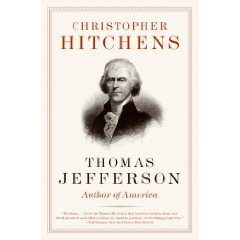
jefferson hitchens.jpgIt is hard to underestimate the robust scholarship, wide reading and great learning that are presented in Mr. Hitchens’ book.  Just under 200 smallish pages, it is in the lovely and respected Eminent Lives series. (Other fabulous match-ups in this series include historian Paul Johnson on George Washington and world religion scholar Karen Armstrong on Muhammad.)

I am simply unable to (I can blame it on the back pain and Vicodin, but I am sure even at my best I cannot) do justice to how much ground Hitchens covers, how insightful he is about Jefferson’s worldview—his involvement in the French Revolution, of course, his scientific ways, his scoffing at orthodox Christian faith.  And he shows the excitement of the years leading up to the Revolution, and the serious debates that followed. (More on that, below.)  I had little idea of the large international intrigue during the Jefferson’s presidency, as he shrewdly played off the interests of Great Britain, Spain, and France (think, Napoleon Bonaparte!) Mr. Hitchens knows the best Jefferson scholarship (and roundly mocks the worst) even tossing great accolades to Gore Vidal’s great novel Burr.  The questions of Jefferson’s relationship with Sally Hemings are well described without breathy moralism, briefly cutting through some of the controversy in that area.  (Of the massive amounts of letters Jefferson wrote, the ones that would most likely cover this have gone missing.)

Jefferson’s years serving in DC are well covered as is his evolving views, and his desire to do agrarian work at Monticello, his founding of University of VA, and the start of the Library of Congress after the first batch were burned in the War of 1812. (Some congressmen were not sure they wanted his books, laden as they were with atheism and French Revolution works.) Hitchens makes a case that besides writing the first draft of the Declaration, his greatest legacy was perhaps the Louisiana purchase and the spectacular achievement of planning and funding of the extraordinary Lewis & Clark expedition.

Hitchens is deeply interested in revolution, and is well schooled in and influenced by the Marxian critique of power.  He is a (British) atheist on the left living in Washington who supported the U.S. war in Iraq. Hitch is renowned for his sharp tongue and he despises any who might subvert liberty; his awareness of and work against Islamo-fascism drew him to become a strange bedfellow of the American right.  Oppression of non-Muslims inspired by the Koran plagued Jefferson’s foreign policy and led to the Barbary wars, and the first time the flag of the American empire was planted on foreign soil, in Tripoli, Northern Africa.  Of course, the most serious on the serious right in America are in many ways Jeffersonian. (It was Jefferson’s nemesis, the New York Federalist, Alexander Hamilton, who stood for markets and wealth and a consolidation of centralized power.) As I said, it seemed a nearly perfect task for the redoubtable, anti-imperial, Mr. H. to write about all this.

Of course there is the awful topic of slavery—the only slaves Jefferson ever freed where his own children to Hemings.  That such an awful inconsistency would plague such a great scholar and activist for liberty needs even deeper exploration, even though Hitchens brings it up often.   For what it is worth, this is no hagiography!  (By the way, I have a friend who I respect completely, a scholar and Christian leader himself, who is working on a manuscript that is very, very good, comparing the respective views and actions regarding abolition of William Wilberforce and Thomas Jefferson and what leadership lessons can be learned.  If any prominent editors are looking in, do give me a call, as this is a manuscript that I pray gets picked up soon.)  

I know there are other major books on Jefferson. Hitchens proclaims that Merrill Peterson’s is the finest and best written of the condensed biographies, only surpassed by th great work of R. B. Berstein.  Other books are given helpful summaries in the moving acknowledgments, moving, mostly, for his description of the Jefferson room at the Library of Congress.

***

The next book I devoured (skipping a few pages here and there when I couldn’t adequately concentrate) included a very moving library tribute also.  Bill Kauffman, one of my favorite writers, dedicated kind words to a few smaller libraries, the Maryland Historical Society and such. It isn’t surprising as Kauffman is the consummate homeboy.  (You remember, I sure hope, my rave review a few years ago of his “sense of place” story of returning to his small town to take up a buying local campaign and coach a little league team, endearingly entitled Dispatches From the Muckdog Gazette, or his more politically-minded collection of essays on weird and wonderful front-porch revolutionaries, Look Homeward America, or the almost equally weird and wonderful study of anti-war conservatives, Ain’t My America.)  So, Kauffman’s a small town wise-ass, and he may be the only author alive able to make the detailed blow-by-blow speeches of the Constitutional Convention interesting, and even funny.  Man, can this guy write. 
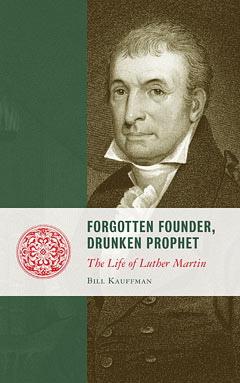
forgotten 2.jpgThis, too, seems a nearly perfect combo of biographer and bioed.  I do not mean anything demeaning to the down-home Mr. Kauffman, but this book is called Forgotten Founder, Drunken Prophet: The Life of Luther Martin (ISI; $24.95) It is in the  “Lives of the Founders” series published by the Intercollegiate Studies Institute, a thoughtful, paleo-conservative think-tank who publishes the likes of Richard Weaver, Russell Kirk and, yes, Edmund Burke.  Kauffman is an anti-Empire, anti-war, “front-porch revolutionary” and we can only guess why he is drawn to write about good-hearted and eccentrics; perhaps it is his counter-cultural wont, or maybe a bit of the gospel.  He likes Dorothy Day and Wendell Berry, after all, and has a healthy blue-collar suspicion of the big-wigs and abstract talkers, which may be why ISI publishes him, although it seems to surprise me a bit;  he is anything but stuffy, unlike, uh, well, most
of their other prestigious authors.  So, anyway, quite naturally, Bill loves the anti-Federalists who worked hard to defeat the writing of the Constitution in that summer of 1787 (the secret writing of the Constitution was done under strict rules which Kauffman summarizes as “What happens in Philadelphia, stays in Philadelphia.”) When these protesters lost, they worked hard to defeat its ratification in the states, a story told well here. These guys were for localism, decentralized government, anti-military and a Bill of Rights.  Antis included the likes of Patrick Henry and Samuel Adams and George Mason (did you know these great revolutionaries resisted the Constitution?!)  Luther Martin was esteemed in their midst, but never achieved their fame; he was a character—a radical who was ruffled, uncouth, a rough-speaking sot who was as known for being long-winded as un-sober.  He nearly drove people crazy with his sprawling 15-hour speeches (sometimes given over two days) and yet was highly regarded as one of the most compelling jurists of his times.  He could lecture about things his hearers didn’t think mattered, only to show—sometimes, at least—that obscure details did matter.  Similarly, Kauffman is not terrible well-known but knows US history as well as anyone.  And he does go on and on.  About some really, really arcane stuff.

And, like our Esquire & Judge, the pontificating Martin, just when the sledding gets tough, and the eyes start to drop over the page, the most outlandish thing is said, the most controversial notion documented, dots connected in new and stunning ways, and I once again can’t put the darn thing down. A detailed book on one of the Founding Fathers we never heard of?   Life is short, why bother? My back hurts and these darn bottle-rockets are killing me.  Luther Martin? Really?  Well, I literally don’t want to skip the boring parts of this tedious book because I know if I did, I just might miss something illuminating, important, inspiring or downright outrageous.  Kauffman is vital and impressive and his passion for the man—he calls him the “Confounding Father”—comes through on every page, even the complex or saddest ones. 

Like Hitchens’ Jefferson, Kauffman’s Forgotten Founder is no hagiography.  How could it be; Luther Martin was a mess of a man, a troubled genius, a beloved character, broke, drunk, but always kindly, except for those he came to cross swords with, most notably, Thomas Jefferson. (When, early on, we learn that Martin came to detest Jefferson, who was close to his republican, localistic, Anti-Federalist persuasion, Kauffman wryly writes, “Patience, dear reader.  No shortcuts via the index, please.”)  Which, just to prove my independence, I promptly checked, only to find a list of every person from this era you’ve ever heard of in history class, and then some; L. Martin was connected and nearly legendary (even if often scorned.)  Martin’s wife was the daughter of the great Jonathan Edwards, and his lack of Calvinist piety most likely broke his in-law’s hearts.  Yet, he was known as a Biblically-literate man, and more than one roommate on a patriot’s trip noted him using the Book of Common Prayer before sleep. 

I say again that Kauffman is a feisty and clever writer, tossing out asides like one about the famous 1700s George Clinton not being the funky parliamentarian (if that isn’t the best quip you’ve heard all day, you might not get it, so google, quick.) He is usually pithy in his all too true observations.  When quoting a Fed framer during the convention who talks highly about being above local concerns, not bound by particular places, but having a grand vision of the global vision, Kauffman quips, “Behold: the Founder as IBM recruiter!”

Kauffman shows how Luther Martin was a complicated thinker and a confusing man.  He spoke and ruled as a judge (he became the Attorney General for the State of Maryland) in favor of abolition and had heart-felt concern about the plight of Africans.  Yet, he owned slaves at one point, even as he worked as a pro bono lawyer for a very committed Christian abolition society.  Confounding, indeed.

I am not sure I can agree with Mr. Kauffman, who ends the book admitting (as he does throughout) that Martin had faults and wrong views and, well, issues.

As we survey the minatory contours of the U.S. government and see a powerful central state involved in perpetual warfare around the globe, a tax-gathering apparatus with its grip on every paycheck, states and localities reduced to mere administrative units of the central state, this anti-Federalist suspects that for all his vices, for all his inability to shut the hell up, for all the gallons upon gallons of rotgut he imbibed, Luther Martin was not a reprobate, but a prophet.

Go here for a nice overview of the book, some blurbs and endorsements, and a good interview with Kauffman about it. 

It seems to me that many of us don’t know as much about this time period and these thinkers and these debates as we should.  They still reverberate, of course.   As the usually contrarian Hitchens writes near the end of his wonderful study, “Jefferson is one of the few figures in our history whose absence simply cannot be imagined: his role in the expansion and definition of the United States is too considerable, even at this distance to be reduced by the passage of time.”  Few would disagree.

Yet, Hitchens continues, writing about the sinister ways Jefferson’s phrase (in his last letter) of the American “experiment” has been also alluded to or used by despotic socialists, Nazis, Ho Chi Minh and other communist dictators.  He concludes, though, “The French Revolution destroyed itself in Jefferson’s own lifetime.  More modern revolutions have destroyed themselves and others.  If the American Revolution…has often betrayed itself at home and abroad, it nevertheless remains the only revolution that still retains any power to inspire.
 
Beyond these two books there are other classic and well-known works on the subject.  Well loved recently is David McCullough’s award-winning John Adams and the Pulitzer winner, Founding Brothers by Joseph Ellis.  Do you know The Great Upheaval: America and the Birth of the Modern World 1788-1800 by Jay Wink (HarperPerennial; $17.95)?  One reviewer wrote of it “Riveting…Spectacular…Dazzling…One of those books you want to buy for friends and family.  And our country’s leaders.”  The serious Gordon Wood wrote in the New York Review of Books that it is “unusally engaging…Winik is not a political scientist but a storyteller, and a superb one.”   

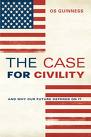
While not a specific history of our land, Os Guinness has written wisely and urgently aboutcase for civility.jpg the “first freedom” found in the Bill of Rights, and the need for a vision of the public square that can allow robust debate about the deepest things.  I’ve often recommended his Case for Civility, And Why Our Future Depends on It (HarperOne; $23.95), but kept thinking of it as I read these other two biographies this weekend.  How does freedom of and from religion work out in a pluralisistic culture?  And can we keep the bonds of our union together?  A must, must read!
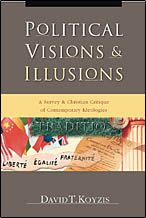
political visions.jpgI have also I have I have also suggested this one before but, again, I dare not leave this topic without the invitation for us who are Christians to do serious study and discernment of the spirit of the age, the shaping ideas then, and now.  No better serious resource can be found that the brilliant Political Visions and Illusions: A Survey & Christian Critique of Contemporary Ideologies (IVP; $20.00) by David T. Koyzis, whose book traces the ideologies of the Enlightenment that so influenced Federalists and Anti-Federalists alike, supporters of McCain & Obama, progressives and traditionalists. It is slow going, but would be very rewarding as a summer read and we highly commend it. 

***
  

The U.S. holiday weekend is over.  My meds are making me sleepy.  The folks in the neighborhood apparently still have some blasting fireworks, noise but no show.  These books are not like that: these are noise and show, sound and fury, fun writing and very, very serious content.   Regardless of your political persuasion, I would think that dipping into these printed fireworks will be an education, and perhaps will light up the contours of our times for you.

Oh: I mentioned that both authors, Hitchens and Kauffman, thanked librarians and that Hitch wrote a bit about the Library of Congress, both his own use of it, and the creation of it under Jefferson.  Libraries make another brief appearance in Forgotten Founder, Drunken Prophet; Kauffman quotes childrens writer Jean Fitz, in her Shhhh!  We’re Writing the Constitution, who noted that Luther Martin talked too long and bored people.  And that he stole books from the Philly library.  Obviously that is in poor taste, but it does remind me: if you don’t want to buy these from us, you can get ’em at the local library.   But in the amount some of you might stack up in library over-due fees, you might as well buy ’em…  

June monthly column up under “reviews” Books on Prayer

I had reason to develop a big ol list of my favorite books on prayer for a friend, so thought I’d post it as the June column here at the website.  I describe each book, and there are some wildly different sorts there, some more theological, some more practical, some quite oriented around Biblical prayers, others a bit more contemplative, from Walter Brueggemann to J. Oswald Sanders; C.S. Lewis to Scot McKnight.  Want to grow in intercession?  Have a favorite book on praery that you have used?  Click here to see my large listing.  May you find resources that nourish your soul, that equip you to greater faithfulness in this urgent aspect of Christian formation.

Just for fun, here are justin constant prayer.jpg a few covers of some of the titles I describe.

ORDER any on the list and get a special 20% OFF prayerful blog-readers discoun
t
.  And, we promise to pray for you.  Seriously. 

Order here.   Or call us at 717.246.3333.  Thanks.

prayer.JPG
folly of prayer.jpg

together in prayer.jpg

Lord, Have Mercy.jpg
life of prayer.jpg
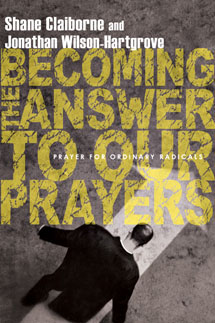
becoming the answer.jpgpraying for dear life.jpg
life of prayer.jpg

The Girl in the Orange Dress: Searching for a Father Who Does Not Fail A memoir by Margot Starbuck (Likewise. books)

girl in the orange dress.jpgI really, really wanted to write this earlier in the week, but I was busy proving to be a less than perfect dad.  Consider this a Father’s Day confession, or a clever way to introduce a book about the search for a father who is truly there for his child.  The Girl in the Orange Dress: Searching for a Father Who Does Not Fail (Likewise. $16.00) by Margot Starbuck is a great book to tell you about on Father’s Day weekend, although it is not about fathering.  It is about being a child of a father.  Or fathers, as the case may be.

Margot Starbuck is one heckuva great writer, a breezy, witty gal who will be (or ought to be) compared to Donald Miller (Blue Like Jazz) and Lauren Winner (Girl Meets God), perhaps even the queen of all memoirs, Mary Karr.  She is less bohemian than Miller, not as elegant as Winner, but (sorry Lauren) funnier by far.  (And while making comparisons, her life was not as hardscrabble as Karr chronicles in The Liars Club and Cherry but for some reason it made me think of those amazing works.  Starbuck is raised in a seemingly safe suburb of Chicago.)  Her quick wit and self-consciousness—how do good memoirists recall such details about their days lived out in previous decades?—serves us well, as The Girl in the Orange Dress is a rollicking story, moving quickly with some laugh out loud lines and some very clever tales, and yet has this wonderful novelistic arch.  It is a powerful read.

It gets heavier as it goes as Margot struggles to reconcile a loving God who calls Himself Father with the lack of faithful fathers in her own life.  I don’t want to spoil the story, but she is searching for her birth parents after her adoptive parents divorce, re-marry, divorce again.  Early on, she easily sees what she considers the good gift in having many caring adults in her life, and doesn’t quite see the anguish to come as she becomes more aware of issues of abandonment and family dysfunction. 

Margot tells of her high school years, her church life and coming to more robust faith, even choosing to go to an evangelical Christian college (although, admittedly, not for the most pious of reasons.)  The stories set in this portion of the book ring so very true; anyone now in college, longing for intentional community, learning to serve the poor and work for justice, trying to discern vocation, to make a difference and make ends meet, and (yes, of course) falling in and out of love–with all the requisite embarrassments and tomfoolery—will surely relate to these chapters.  She gets this part really right and I recommend it to college students and parents of college students.

Ms Starbuck is quite a pistol in those years, the kind of 80s punk chic grrrl who wears maybe different color converses and dies her hair weird colors, showing off multiple piercings.  Her mom (I can just hear it) is concerned about her wardrobe, even as she tries to be supportive, more or less.  Here she describes her look:

    …I looked like the strange offspring of Pippi Longstocking and G.I. Joe. Blond spiky hair, candy-cane striped tights, mismatched socks, rhinestone jewelry, and daisy-painted combat boots did not a mothers dream make.  When I look at the short stack of pictures I have from the period, I am forced to admit that I cannot distinguish from my clothing a typical school day from our high school’s annual Wacky Tacky Day.  Could we really have celebrated it five days a week?

She continues writing about her decision to go to Westmont College, a short ride from the Southern California beaches.  She and her mom, while visiting, noted the tastefully dressed girls in cute sandals.  By this time, Margot had a half-shaved head, visiting campus in cut off overalls.  She reflects, “Mine had to have been the only family in the Midwest to hope that the child they were sending off to college in southern California might actually be domesticated by the experience.  My family would, of course, be sorely disappointed.”

“I would be changed there”, she continues, “but not in a way I ever expected.”

Navigating a conservative religious ethos while being an artsy firebrand is not an uncommon journey for many younger friends, and her journey through these good years is well told.  Finally, there is the sojourn to Portland.  An epic road trip, talking about justice and romance and Providence and beauty?  In a blue Chevy Nova, no less?  Move over, Donald Miller, that open road stuff ain’t just for the edgy Christian boys any more…
Yet, these lighthearted escapades and heart-wrenching experiences (she does inner city work in Camden for a summer, has some relationship and spiritual crises, a friend becomes a single mom) are backdrop for what is clearly more than a postmodern evangelical coming of age narrative.  Girl in the Orange Dress tells of this desire to find a God who can be the parent who does not reject her, who can heal her deep woundedness, who can bring her Home.

Our grrrl ends up donning some somewhat more reliable cloths and ends up at Princeton Seminary.  And how I appreciated the story of a moderately evangelical, slightly charismatic, intuitively feminist student at a liberal seminary where one may not use masculine pronounces about God.  She had served in reconciliation work in South Africa as apartheid fell; yet here, abstract post-colonial theology ruled, oddly without much traction for the real poor that she so obviously served herself.  Ideologically strict males yell at women who have more traditional faith for not being pro-woman.  Hmmm.  Unless one is experienced in this arcane theological academic climate, her observations in the chapter “Welcome to Oz” may seem surprising.  For many, mainline Protestant seminaries nearly ruin one’s vibrant faith and she tells it fairly.

She moves on, through very painful physical disabilities and the trajectory towards reunion (ormargot.jpg not?) with her long lost birth mom and dad. She works at a church while seriously depressed. She sleuths and prays and yells at God.  Suffice it to say that I stayed up way too late reading this thing, as I had to know what comes next.  I even read while on a Greyhound bus, a dizzying feat for those of us who are easily made queasy.  I had tears in my eyes at one point, savoring the pathos and joy and goodness of insights gained the hard way.  And the poignant story of the Pink Post-It note is worth the price of the book, right there (especially if you have any tenderness for aging grandparents.) 

This is a fun book, and, I think, it is an important one.  Whether you have, who know someone who has had, experience with adoption, or know adopted kids or foster parents or have divorced parents in your extended circle of family and friends, or a clay-footed father, this matter—knowing we are beloved and accepted by a God who is there for us—is of extraordinary significance. 

Near the end, Margot tells of seeing an unusual church sign–not that unusual, oddly, since our churches are so often theologically murky and grossly sentimental—that said something dumb about good parents, implying that it would be “unthinkable” for a parent to fail a child.  Ahh yes, s
he is driven to knock on the door, to ask the pastor what in the heck he meant by this.  Didn’t he know?  It is all too thinkable for parents to do hurtful things.  Ask her.  Ask me.

The Girl in an Orange Dress: Searching for a Father Who Does Not Fail is a beautiful gift for anyone, a perfect kind of book because it is easy to read, a bit lighthearted (no, it is downright funny) and yet packs a notable punch, in the story-line, the sheer emotions in conjures, and in the theological truths it conveys.  It is published by an edgy recent imprint by one of our most respected publishers, IVP. (They did the truly stunning memoir Stone Crossings by L.L. Barkat a year or so ago.)  Shauna Niequist (Cold Tangerines) calls it “lovely and challenging” and novelist Lisa Samson says it is for “anyone who needs to know, really needs to know, how much God loves his children.”  Happy Father’s Day, indeed.

Check out the publisher’s webpage that has samples of her writing, endorsements of the book and such, but please come back and order it here.  Thanks.

ORANGE DRESS
BLOG SPECIAL
$4 off
regularly $16
mention the “orange” special and pay only

 $12.00
plus shipping

order here

Hearts & Minds 234 East Main Street Dallastown PA  17313     717.246.3333

***

I mentioned the memoirist Donald Miller.  I presume you know his books published by Nelson, which have sold over a million copies.  Blue Like Jazz is his most popular. His second (and more substantive) is Searching for God Knows What, and his epic road trip saga is Through Painted Deserts (first discovered by Terry Glaspy at Harvest House, originally titled Prayer and the Art of Volkswagen Maintenance, although now considerably expanded.)  Mr. Miller has co-authored a book about the absence of fathers, not as witty or precocious as his others, but a deeply moving story of a man who stepped up and mentored him, since Miller’s father had left the family.  It is called To Own A Dragon: Reflections on Growing Up Without a Father and it is very highly recommended for fathers, young men, or anybody who cares about them.

And, for the record, I truly recommend Starbuck’s The Girl in the Orange Dress for men and women readers, and, likewise, Miller’s To Own A Dragon is not just for men, although I suppose it may be most helpful to hurting guys.  Or dads who need reminded of the value of their love.

Donald Miller’s very long-awaited fifth book, A Million Miles in a Thousand Years: What Imillion miles.jpg Learned While Edited My Own Life is due out in hardcover at the end of the summer. It will detail one man’s opportunity to edit his life as if he were a character in a movie, which he sort of is. You can order it now if you’d like, and be among the first to receive it in September.

Check out his blog, and tell me if he isn’t trying to look like Tom Waits.  Great stuff.  We stock the DVD projects he talks about, too, btw (The Open Table and Free Market Jesus.)  

Religious Knowing? Stages of Spirituality? A Hidden Wholeness and more

You may know that our shop is renowned for having a large and diverse selection of books onlonging for god 2.JPG spirituality, contemplative practices and classic spiritual disciplines.  We ponder these books often, and have our favorites, but occasionally some arrive that deserve special celebration.  For instance, a month ago we showed the brand new Richard Foster book, his best in years.  This title, Longing for God: Seven Paths of Christian Devotion (IVP; $25.00 )has been getting very good customer reviews and we are learning so much through these little spiritual biographies.   As John Ortberg says of it, “This is the best and richest of Christian thinking and soul-making made accessible to everybody.  It would be very hard to read this without having your heart grow.”

Two new books came in recently that are not just how to deepen one’s relationship with God or how to practice the spiritual life.  These two are about how to know, really, whether what we think or feel about God is true, and whether one is making proper headway in one’s journey “deeper in and farther along” (as Lewis put it.)  These are fairly serious books, so  may not be for everyone, but are for anyone who is fluent in this literature, experienced in these habits, or involved in spiritual director or pastoring or teaching others, they are very, very important.

Knowing Christ Today.jpgFirst is the most serious work Dallas Willard has done to date (well, excepting his professional scholarly work as a philosopher.)  Knowing Christ Today Why We Can Trust Spiritual Knowledge (HarperOne; $24.99.)  It is a thorny debate, actually, about the nature of truth—can we really know spiritual things?  (What are spiritual things, really?  If religious truths are real—as Christians insist—than why do we have this sort of dichtomy in our language?  Is there a split between “facts” and “values”?  Others have addressed this helpufully (Leslie Newbegin, for instance, in his brief but potent Foolishness to the Greeks, or Nancy Pearcy in her worldview opus Total Truth.)  To see Willard “focusing like a laser beam” (as Foster puts it) “on the issue of moral knowledge as a legitimate source for understanding reality” is extraordinary.  How many books on Christ-likeness and formation carry endorsements by eminent sociologists, as this one does, with the rave blurb from Boston University’s Peter Berger?  Do you recall the Bible verse “My people are destroyed for lack of knowledge”?  This lucid account of the issues of what true knowledge is, and how that helps us gauge our growth into Christ-likeness, give an excellent lay of the land to how we can regain faith-based knowing, authentic insight, and confident spirituality. This one is worth working through slowly, pondering and underlining as you go.  

seasons of the soul.jpgSeasons of the Soul: Stages of Spiritual Development Bruce Demarest (IVP) $16.00  This is another book that is less about how to grow as a Christian, but how to measure or discern the maturity and adequacy of this growth.  And how to learn to appreciate the new levels and stages and ages of the trek.  Some of us have read and appreciated the developmental research done by James Fowler et al.  A bit too influenced by Piaget’s rationalism, perhaps, and a bit too academic, that school of thought has influenced Christian educators, but hasn’t caught on for ordinary folks as a helpful tool for self examination or aiding formation.  Stages and ages are useful, but haven’t necessarily helped us be more aware of understandable ups and downs on the journey with God, or more comfortable in our spiritual stages.  This new book fills a real need and looks to be just spectacular.  It uses the structure of Walter Brueggemann’s seminal assessment of the Psalms, namely, that there is orientation, disorientation and re-orientation.  Demarest calls it “initial orientation” (the first stage of putting our faith in Christ), “painful disorientation” (which is the season of experiencing struggles, doubts, and the dark night sort of loss of God’s presence), and the phase of coming to subsequent deeper faith, which he calls “joyful reorientation.”  Are they three simple chronological stages?  Cycles or phases?  How can our deepest relationship with God and our devotional life help us as we suffer?  

Demarest, of Denver Seminary, has a very helpful appendix summarizing other authors who have used the journey as a metaphor for spiritual maturity, from the desert fathers, the medieval mystics, to contemporaries such as Evelyn Underhill to M. Scott Peck.  Throughout the book, Dr. Demarest proves himself fluent in the widest readings;  what a delight to see the Syrian fourth century Pseudo-Macarius quoted next to 20th century CM&A preacher A.W. Tozer; to see Elizabeth O’Connor cited next to John Owen.    Like I said, it may not be for everyone, but there are many Hearts & Minds readers who would benefit from this slower, deeper sort of reading, which actually is delightfully written and really quite amazing.  Seasons of the Soul will help you, and equip you to help others. Highly recommended.

A Hidden Wholeness: The Journey Toward an Undivided Life: Welcoming the Soul and
hidden wholeness.JPG Weaving Community in a Wounded World Parker J. Palmer (Jossey-Bass)  $19.95; DVD included  This is not particularly academic or dense, but for those who are used to primarily evangelical piety, this blend of spirituality and psychology, community and pain, may be bracing.  Parker, of course, is a beloved writer, a clear and kind thinker, old friend of Henri Nouwen, and contemporary philosopher of education.  We stock all of his stuff (and his very first, Promise of Paradox, was re-issued this year in a lovely hand-sized hardcover.)  This new paperback edition of Hidden Wholeness includes two new features. Circles of Trust is a DVD containing interviews with Parker Palmer and footage from retreats he facilitated for the Center for Courage & Renewal.  Bringing the Book to Life is a reader’s and leader’s guide to exploring the book’s themes.  (The discussion guide particularly connects the DVD and the book, drawing on the insights and practices of “circles of trust.”)  As it says on the back, “Together, these features gives readers new ways to internalize the themes of A Hidden Wholeness and share with others this approach to sustaining identity and integrity in all the venues of our lives.”

brazos introduction to spirituality.JPGIf one wants to delve into these thoughtful areas, deep spirituality and classic convictions, habits and practices, and learn the broad teachings of the church universal, you may want to pick up as a life-long reference what may be the best collection of essays and articles in a large textbook format, The Brazos Introduction to Christian Spirituality  edited by Evan B. Howard (Brazos) $39.99. At 500 large pages, this is a treasure trove, interdisciplinary and ecumenical.  There are chapter outlines and objectives, sidebars, focus boxes, charts, pictures (and even cartoons) a useful glossary, chapter summaries, questions for consideration and very helpful “looking further” resource lists.  If one wants to know what a relationship with God looks like for Christians, and is willing to hear the perspectives of the breadth of Christian spirituality, this comprehensive volume is a must.


BookNotes
BLOG SPECIAL
ORDER ANY TWO OF THESE
25% off both
order here
credit card or by check


Hearts & Minds 234 East Main Street Dallastown, PA  17313     717.246.3333 

Finding Beauty in a Broken World by Terry Tempest Williams

In the last post I linked to the May Review column where I annotated a whole bunch of great books about nature, wilderness, and finding God in the great outdoors.  Some were overtly Christian, although some were not.  I don’t know how many other so-called Christian bookstores stock this kind of stuff, but we hope you like our distinctiveness in bringing together these genres and perspectives, books and authors not commonly found together. Do check it out if you haven’t; it’s a fun early summer list!

Finding Beauty.jpgI’ve just recently finished Terry Tempest Williams brave and unusual and deeply moving book Finding Beauty in a Broken World (Pantheon; $26.00.) It deserves more than I can give but I thought I’d offer a few remarks and reflections. We commended her in the previous post, so this is a natural follow-up, as she is known as an eminent nature writer, a memoirist of place, a passionate critic of the foolish policies of progress that have eroded sustainability and sanity.  We like her a lot.

Finding Beauty in a Broken World
is a sprawling, big book, divided into three distinct portions.  This is a bit unusual, and although she weaves the themes of each portion together a bit, I would have wished for more connection, making explicit what I presume is understated purposefully.  Still, at the end my jaw was dropped in one of those experiences of epiphany and connectivity.  It really did come full circle.

The book opens with a beautiful, mysterious account of her learning the fine art of mosaic
tiles.jpg work; the frontispiece line These fragments I have shored against my ruins from T.S. Eliot’s The Wasteland** becomes clearly relevant. Ms Tempest Williams is in Ravenna, Italy, waxing on about the history and power of mosaic.  “Eloquence is spoken through the labor of hands, anonymous hands of forgotten centuries.  With eyes looking up, artisans rolled gold tessarae between their fingers in thought, as they searched for the precise placement in domes and aspes where light could converse with glass.  Jeweled ceilings become lavish tales.  I want to understand these stories told through fragments.”

Even as I type that quote it dawns on me—” stories told through fragments,” how did I miss it?—that the fragmentary nature of this book (some pages only have one sentence, some appear to be journal entries or quotes from other books) is itself mirroring these fragmented tales, made luminous as they are brought together.  Hmm;  a stroke of brilliance perhaps, some hint at form and content?

This first part is brief but beautiful.  She tells about the “city of mosaics” and tells of her learning the craft, in this mosaic workshop, so that she could “learn a new language with my hands.”  It is interesting that this art form uses broken pieces.  It is an imperfect beauty.

The second more lengthy portion is more typical terrain for Ms Williams as she has volunteered to serve as an assistant with the world’s leading scholar of several species of prairie dogs.  She is at Bryce Canyon National Park, assisting the study of this fascinating critter, a controversial animal beloved and hated in the developing West.  She makes a very strong case for the preservation of prairie dog towns and it is helpful to learn of how the eco-spheres of the prairie lands are dependent and inter-dependent on these rodents maintaining their traditional habitat.  It is also interesting how government mandates of protecting habitats of such creatures are and are not followed, are contested and ignored.  As a small side-note, she is banned from some National Parks because she was a signature of a class-action type lawsuit against the feds in their disregard for environmental law protecting the dogs.  Who knew citizens could be banned for such things?  Outrageous.  It is not a large portion of the book, but the expose of the corruption in the Fish and Wildlife Service, the Bush appointee Julie MacDonald who so undermined the mandates of law, is important as we assess the current state of environmental law after recent years of disregard.

In this well-written portion she laments the gross mismanagement of Western lands, and portrays the gross hostility of those who love to squish to death these small creatures (not to mention the companies that burn them alive in their burrows which she describes in a harrowing paragraph.)  This battle about exterminating the dogs is symbolic of much of the public debate around ecological living, and her personalizing it—working in this one spot, marking and observing these mammals’ behaviors, following their habits for 8 hours a day sitting in a little tree stand—was helpful and informative.  (Her method, offering fragments of repeated numbers and letters from her daily log was tedious, and I admit to skipping pages at at time, having “gotten” the painstaking monotony of natural science research in action.)  Still, learning about these “prayer dogs” was very interesting and oddly compelling reading. You may want to read “Report from the Burrow” or glance around the website of WildEarth Guardians which she recommends.

This section becomes truly riveting, though, as she narrates the story of her blue-collar family, whose family work is in large excavation.  Her father and brothers are honorable men, hard-working and dedicated, and Tempest Williams’ sincere appreciation for their diligence and skill give her a local working-man’s view of the eco-conflicts.  That her brother was dying of cancer during this portion of the book adds an extra poignancy.  Without drawing it out into overstatement, the battle over protecting endangered species, the cancer that is prominent in Nevada and Utah due to the testing of nuclear weapons, and the inter-relationship with family, land, local history and prairie dog towns, becomes profound. One chapter reprints some of her famous piece in the New York Times, written on Groundhog Day, 2003.   Given the world’s large and looming problems (this was just weeks before the U.S. invasion of Iraq) why should we care about rodents?  “Quite simply, she wrote, because the story of the Utah prairie dog is the story of the range of our compassion.  If we can extend our idea of community to include the lowliest of creatures, then we will indeed be closer to a path of peace and tolerance.  If we cannot accommodate “the other,” the shadow we will see on our own home ground will be the forecast of our own species extended winter of the soul.”

She raises important questions for all of us, even those of us who hold to a Christian worldview, which insists on distinguishing between God and creation, and humans and non-humans.  Yet, even the conservative theologian and cultural critic Francis Schaeffer went to great lengths to show that evangelicals should agree with St. Francis as he talked about our unity with fellow-creatures.  Terry Tempest Williams writes,

Most people are not comfortable making a connection between racism and specism or the ill treatment of human beings and the mistreatment of animals.  We want to keep our boundaries clean and separate. But isn’t that the point, to separate, isolate, and discriminate?  We create hierarchies, viewing life from the top down, top
being, of course, God, then a ranking of human races, and so our judgements move down “the Great Chain of Being” until we touch rocks.  This is the attitude of power, and it hinges on who is in control.  Who has the power over whom?  How does this kind of behavior infiltrate the psyche of a culture?  And what are the consequences of scala natura?

The third portion of this book was even more captivating, and I was riveted by the tale she weaves of her journey to Rwanda with a Philadelphia artist, Lily Yeh, whose movement of “Barefoot Artists” work to create spots of beauty to memorialize the inhuman brutality of the genocide there.  Her time in this crowded African country is told powerfully and engagingly and the relationships that develop in this part of the book moved me as deeply as any great novel. Whether you know much about this place (think of Hotel Rwanda) or very little, this is an amazing bit of writing and very, very worthwhile reading.  Some of it is horrific as she tells of listening to the stories of the genocide victims; some is healing in a manner made known to the world by the South African Truth & Reconciliation Commission.  That is, it is hard, hard stuff, but told in the service of healing, justice, and even forgiveness.  There is great grace reported here, and their desire to offer an artistically rich spot, a regional memorial, as a symbol and place of remembrance, is truly one of the most amazing things about which I’ve ever read.

Much could be said about this moving last third of the book, but I cannot do it justice.  The plotTerry Tempest Williams 3.jpg develops and unfolds as we read of Terry’s month-long stay and friendship with rural Rwandan folk (and of a subsequent visit later with some fabulous episodes which I won’t spoil by telling.)  She studies the local soil erosion, visits the Congo and hears of the killing of guerrillas (this is the area where Diane Fossey did her famous research), the rise of evangelical religion, the creation of small local businesses, like a sunflower oil press. The arts are celebrated, schools are started, art classes begun, villages beautified and the architectural plans and creation of this mosaic-laden memorial completed.  Through rain and illness, hard stories and great laughter, multi-cultural teams find beauty as hopeful as they empower and work with those at the Genocide Survival Village in Rugerero.

A Catholic mystic writer once said that beauty can save the world and my esteemed friend an editor of Image, Greg Wolfe, will have a book out soon with that title.  I do not think it is so.  But it sure can help, and my simple formulation is woefully inadequate. It does more than “help.”  Such gifts of true beauty are, as Calvin Seerveld says in his book of this title, a “rainbow for the fallen world.”  People of Biblical faith can give away their artistic gifts, he says, as signs of redemptive hope, like the dove returning to the ark (Seerveld’s other famous book about the arts is entitled Bearing Fresh Olive Leaves.) Terry Tempest Williams and her gang of barefoot artists do just that, offer hope in color and texture, fragments of light, forming truth and goodness.  Thank God for this brave and important book and the work it so passionately documents.  What connections there are that linger, nearly unspoken, between art, justice, ecology, life.  “Grace” sings Bono of U2, “makes beauty out of ugly things.”  Finding Beauty in a Broken World by Terry Tempest Williams is an example of just that.  As they proclaim in Rwanda, Ukurikurakiz!  Truth heals!  Read it and take hope.

You can see pictures of the memorial, and other great global arts projects of the Barefoot Artists project at their glorious website. There is even a 24-minute film you can watch.

**in a footnote, TTW writes, “…the poet William Caros Williams described the effect of The Waste Land as that of an atom bomb.  This 433-line poem is Eliot’s monument of words to a fragmented and disparaging world, his own poetic mosaic of collage that celebrates the failure of civilization, the distractive and destructive impulses of the modern era.”

By the way, kudos to Zondervan for recently publishing two books on Rwanda (rather a risky move for a publisher, doing not only one, but two.)  Both are excellent. 

mirror to the church.jpgMirror to the Church: Resurrecting Faith after Genocide in Rwanda  Emmanuel Katongole (Zondervan) $15.99  Katongole is a prof at Duke and co-director (with Chris Rice) of their Center for Reconciliation.  He is a Catholic priest of the Kampala Archdiocese in Uganda. Fr. K had some help in the writing by Jonathan Wilson-Hartgrove. Not only does this serve as an excellent and brief introduction to the horror of the Hutu’s and Tutsi’s barbarism, it explores what we can learn, and how the gospel must transcend national and ethnic differences.  Very important stuff, indeed.


as we forgive.jpgAs We Forgive: Stories of Reconciliation from Rwanda  Catherine Claire Larson (Zondervan) $15.99  This well written collection is inspired by the award-winning film of the same name.  As We Forgive was the Gold Winner for Best Documentary in the 2008 Student Academy Awards (yes, sponsored by the Academy Awards!)  An evangelical Episcopalian living in the DC area, this film-maker is a talented, sharp young woman and her film would be a good compliment to anyone reading Larson’s powerful book.  You can get info at the As We Forgive website.

Brand New May Review Column–books about wilderness, memoirs of place, meditations on creation

I’m hoping that many Hearts & Minds customers will click on over to the larger May 09 Review Column to see my annotated bibliography of books of nature writing, devotions for the outdoors, backpack inspirations and memoirs of gardening, hiking and such.  It is a great list, if I do say so myself, with a mix of titles and authors I suspect you may not find in any other bookshop anywhere.

Here is how I introduced the list.  We hope it invites you to check it out, maybe order some.  Enjoy the Springtime.  Thanks for reading—-we couldn’t be booksellers if there weren’t good readers.

A few years ago I did a book review
column that really meant a lot to me.  (Then, in the pre-blog era, I
did them every month and they are still archived in the “reviews”
section here at the “reviews” section of the website.)  I told about a new nature writer that I
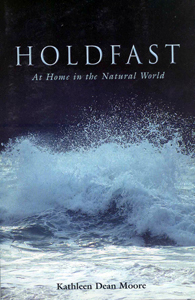
holdfast.jpg discovered, a woman who occasionally writes for Orion, and whose work I really, really loved.  Her name is Kathleen Dean Moore and one of her wonderful, wonderful books is called Pine Island Paradox: Making Connections in a Disconnected World. (Mildweed Editioins; $14.95)  Another is called Holdfast: At Home in the Natural World (Lyons; $20.00) another yet is Riverwalking: Reflections on Moving Water (Harvest; $13.00)
and they are truly among some of the best essays I’ve ever read, drawing out
themes of philosophy and religion, marriage and family and commitment,
caring for home and caring for nature, being at home in this world.  And, lots of good ol’
adventure, outdoorsy stuff.  You can read that old review here, and I would be pleased if you did, as I still hold her work in utmost respect. 

I’ve
rarely found anyone who can write like she does, but the nature writing
genre is an old one with many classics, and it continues to grow and there are authors who take my breath away. 
My wife Beth and I have both recently finished the stunning and
haunting book
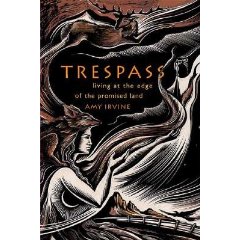
trespass.jpgTrespass: Living on the Edge of the Promised Land
(North Point Press; $15.00) by Amy Irvine, and we continue to talk
about it as it haunts us so.  Set in the Redland canyons and deserts of
Utah, it evokes a very strong sense of the place making for a memorable
reading journey;  I was  holding those last few chapters, reading
slowly, so I could savor them, when I heard that it had been chosen as
the Orion magazine Book of the Year.  Orion is a
remarkably literate environmentalist journal, with contributors like
and Bill McKibben, Wendell Berry and Terry Tempest Williams.  I have to
say I’m a little proud for choosing Trespass before they
did.   I may write more about it eventually, as it is a serious study
of belonging amidst hostility (the redneck locals hate “tree huggers
and the upright, Mormon locals hate anybody who isn’t like them, it
seems) of competing visions of progress, a story, finally, of loss and
hope.  Irvine and her husband work to protect wilderness land, even as
in the Bush years, land was being sold off for drilling and
desecration.  She tells of her time in the desert, recovering from a
dysfunctional family of origin, coping with her own inner turmoil as
she bonds with her passionate new husband, recalling ancient Pueblo
culture and not-so-ancient Mormon history.  It is a heavy and
beautifully written book, insightful and lovely and troubling and
unforgettable.  And so keenly aware of place: colors, smells,
experience of light and soil, temperature, sensations of God’s
extraordinary creation near the famous four corners region of South
Eastern Utah.  Like Terry Tempest Williams’ famous Refuge: An Unnatural History of Family and Place,
this is quintessential nature writing woven together with a woman’s own
memoir full of politics and faith and weirdness and  love.  It is a wonderful sort of
literature that I truly love.

Other similiar “nature” books are
also memoiristic, but with less inner turmoil, less back-story.  These
kind of books narrate a journey into the woods, into the wilderness,
tell about adventure or hi-jinx, hard living or joyous contemplation of
beauty, farming or gardening, but they are, well, just that.  Shorter
on biography or politics, they tell the tale of what happened when, and
show you around the place.  Think of the great Bill Bryson’s A Walk in the Woods which
is his beloved tale of hiking the Appalachian trail.  Often the ones I
like may not even be about a canoe trip or wilderness climb, but are
just reflections on a ordinary life with a particularly clear sense of
place; that is, they are a memoir of what Russell Scott Saunder’s
called, in a lovely book by this name, “staying put.”  For those who
love the great out of doors, or enjoy the slower life, these make nice
reminders of the beauty of nature, and are perfect for a day off,
Sabbath reading, or a book to take along on a day hike or vacation.

If you skip on over to the monthly review column, filed under May 2009,  you will see I start off with One Square Inch of Silence: One Man’s Search for Naturalone square inch of silence.jpg Silence in a Noisy World, an earnest and interesting story of a road trip by the world’s leading recorder of natural sounds, Gordon Hempton. I only describe it a bit, but could say much more—it is fascinating!  I list a book by the Adventure Rabbi, (yes, there is an Adventure Rabbi, and she rocks), classics like Desert Solitaire, and philosophical studies on the nature of landscape and place.  Mostly, though, fun stories of those who love the great outdoors.  One title is called Heaven is a Leaky Tent.   Another brings luscious reflections on the beauty in creation, and gardening, by an Orthodox theologian. 

I hope you enjoy the May list.  We could have listed more…what are you favorites in this genre?  Annie Dillard? McKibben on silence?  Into Thin Air? Feel free to post suggestions…

New Titles— No Hoopla, but these are great!

I have been too busy to write well about our work, our recent times with clergy retreats and other opportunities to talk books with good folks, or to develop detailed reviews of great titles.  Sorry…Forthwith, I will dispense with the hoopla and hype, and just list a bunch.  I am enthusiastic and glad, just so you know.  Holler back when you can.

Yoder.JPGChristian Attitudes to War, Peace and Revolution  John Howard Yoder (Brazos) $34.99  A few more cheers for Brazos who has brought this largely unknown collection of posthomously published lectures, class notes and underground curriculum to light.  It is a marvelous 450+ paperback, long, long-awaited.  Thanks to Theodore J. Koontz and Andy Alexis-Baker, Mennonites who gathered this together and edited it well.  A new Yoder—imagine!

Divine Presence Amid Violence: Contextualizing the Book of Joshua  Walter Brueggemann (Cascade) $13.00  This is the second new Brueggy book from Cascade issued just recently.  As one reviewer said of this brief work, he addresses this pressing matter of violence in the Bible “with theological candor, exegetical rigor, and literary eloquence.”  Of course he does.  Whew.

The New Shape of World Christianity: How American Experience Reflects Global Faith
  Mark A. Noll (IVP) $25.00  With a stellar blurb from Lamin Sanneh on the back, and the spirit of Philip Jenkins hovering, this is more than another urgent investigation of global faith.  This provides deep insight into the relationship (or lack thereof) of American evangelicalism and the growth of Christianity throughout the world.   Noll is a historian so he looks back to the 19th century, and makes what Ogbu U. Kalu (McCormick Theological Seminary) calls “startling conclusions.”  Complex and nuanced, Noll is a great read;  IVP Academic extraordinary in their  important, high-quality output.  

Fingerprints of God: The Search for the Science of Spirituality  Barbara Bradley Hagerty  (Riverhead) $26.95  A prestigious and literary imprint, an author known by all who listen to NPR.  A Christian friend, a great journalist, a true seeker.  What more do ya want, I ask?  This looks to be one of the books of the year—can we measure faith?  What’s going on in brain studies?  Who are we, after all?  How many sharply written, insightful books have blurbs from Coki Roberts and Donald Miller?  As Sister Helen Prejean writes, this will “provoke you, intrigue you, and inspire you.”  I think it will be a delight and inspiration to many.

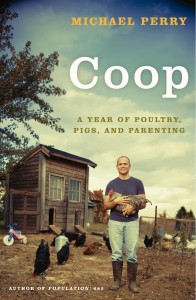
Coop: A Year of Poultry, Pigs, and Parenting  Michael Perry (Harper) $25.99
I hope youcoop bigger.jpg know that Beth and I really, really love this guy, this writerly rural fella who regularly makes you laugh, and occasionally cry, and often clap your hands at the joy of a well crafted sentence.  Jonathan Miles (Dear American Airline) says he writes books of “ultra-charming midwestern earnestness and serrated wit” and that he is “outrageously funny and surprisingly touching.”  Homesteader Gene Logsdon writes that “There is a literary gem on every page.”  We adored his Population 485 and Truck and the thoughtful essays Off Main Street. Here he revisits the faith of his youth, buys some pigs and poultry, tells of some other crazy stuff that happens at his rickety new farm, and home births their baby.  You don’t want to miss it; trust me, you don’t want to miss this.  

Indwelling the Forsaken Other: The Trinitarian Ethics of Jurgen Moltmann  J. Matthew Bonzo (Pickwick) $14.00  We have oodles of what appear to be doctoral dissertations that become books in theology, social theory, political science, and some are pretty good.  This is great.  It is concise and clear and offers important insights for anyone interested in contemporary theology of the way in which a Christian worldview impacts our hurting world.   What does it mean that we are to copy God? How does that work, anyway?  Okay, he doesn’t say anyway; it’s a thesis. But, man, this is good stuff.  Matt is a friend, now teacher at Cornerstone in Grand Rapids, where he operates a sustainable farmstead.  He co-wrote (with Michael Stevens) A Celebration of Life: Wendell Berry’s Vision of Life.

Life, Inc.  How the World Became a Corporation and How to Take It Back
  Douglas Rushkoff (Random House) $26.00 Decades ago I was taken with social critic Jeremy Rifkin.  Years ago, somebody said that Rushkoff is a postmodern Rifkin.  I don’t know about that, but some of us await every new book he does.  The corporatization of public life and personal space is urgent and there are blurbs on the back from Naomi Wolf and Seth Godin.  How cool is that?

The Meaning of Sex: Christian Ethics and the Moral Life  Dennis P. Hollinger (Baker) $19.99  We have said before that Dennis is one of the most sane and thoughtful ethicists around. He is a friend and I admire his work and his writing.  Now the President of Gordon Conwell Theological Seminary, this deeply faithful book addresses the complexity of this tender and painful and joyous side of life.  Blurbs on the back come form scholar-leaders like Rich Mouw, those who have worked in socio-sexual research like Stanton Jones, and youth worker guru Walt Mueller.  We’ll send it in brown paper if you want, but just buy it!  Very thoughtful.

orthodox heretic.jpgThe Orthodox Heretic And Other Impossible Tales  Peter Rollins  (Paraclete) $19.99  This is a handsome little book that fits nicely in the hand, with endorsements from Phyllis Tickle and Frank Schaeffer.  I think it is worth it just to see that, if you know what I mean. (If not, don’t worry about it.)  I don’t fully grasp the meaning of these wild stories but Rob Bell says that he heard Pete once and just thought that, “Everybody needs to hear these.” You may know his other books, How (Not) To Speak of God and The Betrayal of Unbelief.  Founder of the Ikon community in Ireland, which may explain the storytelling.

Peter Rollins.jpg 

BLOG SPECIAL

10% off
any of these titles
order here
please mention you want the blog deal
Hearts & Minds 234 East Main Street Dallastown, PA 17313  717.246.3333