Living the Christian Year author Bobby Gross to speak here on Ascension Day

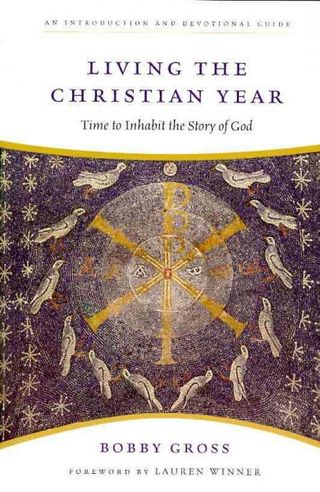
living the christian year.jpgLiving the Christian Year: Time to Inhabit the Story of God by Bobby Gross (IVP; formatio line; $17.00) is one of the most interesting and unique 52-week devotional books I’ve seen.  We’ve mentioned it before, and we could hardly recommend it more gladly.  I love even the first few pages about the power of stories, and what it means to have our story shaped by God’s Story.  It is, as you might guess, a devotional guide to the church calendar, so it is arranged with daily readings from the cycle of Light— Advent, Christmas and Epiphanhy, through the season of Life Lent/Holy Week/Eastertide, and into the ordinary days, which he explains compose the “cycle of love.”

Although not all churches frame their year through this three-fold cycle, and even fewer attend to the lesser known festivals and feast days, nearly everyone knows about Advent; many non-liturgical churches have Maundy Thursday services or Good Friday sermons.  So this is pretty universal stuff.  We think it is a great way to learn about ways to live into the graces of God, in ways that may not come quite naturally, but, once considered and experienced, really, really do make sense.  This is not just a quick pick-me-up sort of daily inspiration, but an invitation to deeper ways of being.  “Inhabiting the Story of God” as the sub-title puts it.
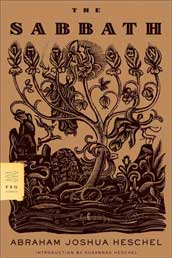
the-sabbath.jpgYet, few really plumb the deepest depths of understanding time–the rhythms of our days and weeks and seasons–in light of a truly spiritual view of the calendar.  20th-century Hebrew prophet Abraham Heschel, of course, gave us one of the great classics in his little book The Sabbath (Farrar, Struass & Giroux; $15.00) which explores notions of time from within the Biblical, Jewish worldivew.  It is a serious and important work, highly regarded. (It is such a rich and lovely book that we stock a gift edition in a small compact hardback with ribbon marker that is very, very handsome to hold. Send me an email if you want more info.)
 

0787956473.jpgAlso,surely one of the most elegant and insightful books I’ve ever read is  Dorothy Bass’s sublime Receiving the Day: Christian Practices for Opening the Gift of Time (Jossey-Bass; $14.95.)  Words can hardly express how much I enjoyed this when I first read it, very slowly, when it first came out. It is one of the three or four books on Sabbath that are “must reads” in my view.  I always need to be reminded of this deeply faith-filled and wonderous view of time, so this is helpful for me. 
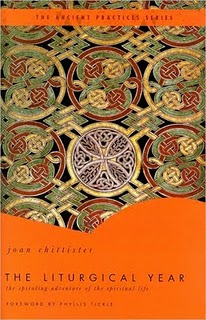
liturgical year.JPGMuch more recently there is a lovely book in the “Ancient Practices” series by popular Benedictine sister Joan Chittister called The Liturgical Year: The Spiraling Adventure of the Spiritual Life (Nelson; $17.99)  So many folks are exploring this ancient and historic way of thinking about our lives, that it seems that we are reaching what might be a new ecumenical agreement.  Evangelicals are learning about this from the Orthodox; liberal Episcopalians are teaching staunch Reformed folks, and Roman Catholic practices are enriching even charismatic and non-denominational folks.

 I recall with glee how Marva Dawn once confided that she often dressed according to the colors of the church year.  Many of us adore the writing of where Vigen Guroian such as the small and delightful Inheriting Paradise: Meditations on Gardening (Eerdmans; $12.00) where he tells of his garden, and how he plants flowers to bloom to compliment thinking about the liturgical colors andthe church year.  Listen to his fabulous Krista Tippett interview from NPR, here.  I think this is really quite interesting, how this ancient notion of an embodied spirituality, enhanced by thinking about time and seasons and our church calandar is cropping up in many, many circles.  
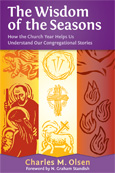
9781566993968.jpgYet another example of this trend is seen in the wonderful new book on these themes published by the Alban Institute, that think-tank that most typically publishes reliable guides to parish life, mainline authors offering best practices learned from the thorough research within healthy mainline churches. It is by a Presbyterian author that we like and the title and subtitle shows how it is linking this year-long practice of attending to the church year and ordinary parish issues.  It is called The Wisdom of the Seasons: How the Church Year Helps Us Understand our Congregational Stories (Alban Institute; $18.00.)  Isn’t that just a fabulously rich idea?  The book looks very good, and we’ve been happy to tell pastors about it— thinking that such a resource will firstly enrich their parish spirituality even as it strengthens their congregational management competencies.  Knowing the church year is good for disciples of Jesus and it is good for congregations.

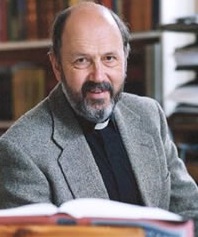
Which brings me to this great announcement, that we have Bobby Gross coming to our bookstore9770.jpg this Thursday to do a presentation on Living the Christian year: Time to Inhabit the Story of God.  Actually, we are hosting the book talk and author appearance and book signing in the context of an Ascension Day service so we won’t do it here at the shop.  We are inviting folks to gather at John Calvin chapel at First Presbyterian Church (York, PA) to celebrate this very significant holy day.  40 Days after Easter, you know—always a Thursday.  Yep, we’ll sing and pray and Bobby will read from his book, and do a bit of a sermon on the significance of Christ’s ascension, his exaltation and reign.  Then we’ll have some refreshments and hang out while he signs books.  If you know anybody in central PA, we sure would love it if you’d spread the word.  It is being co-sponsored by the InterVarsity Christian Fellowship Emerging Scholar’s Network here in Central Pennsylvania (That’s Tom Grosh) who does creative work trying to reach and connect those in grad school, young scholars, and seasoned professors. (Bobby is the National Director of graduate and faculty ministries and is on the national board of one of our favorite organizations, CIVA (Christians in the Visual Arts.)  Bobby is a very thoughtful guy, a good friend,

and, as we’ve noted, this is a topic of increasingly popularity.  Come and join us if you can.
hemingway-ernest1.jpgWant an autographed copy of the book?  On sale, even!

It sells usually for $17.00 but we’ll be offering them at $15.00 
 okay, it might not look like this...  

 With a forward by Lauren Winner, and some helpful explanations about the seasons and cycles, Living the Christian Year is a daily reading guide really that is a wonderful, wonderful resource for you or your family.  I’ll tell you a bit more about it in a post tomorrow, but, for now, let us know if you want us to get him to sign one for you.  Tell us TO WHOM IT SHOULD BE SIGNED and we’ll take it from there.

ORDER HERE
takes you to our secure website order form page

Hearts & Minds 234 East Main Street  Dallastown, PA 17313     7117.246.333

ONE MORE DAY for the N.T. Wright sale

We’ve extended the N.T. Wright sale for one more day.  We’re calling a halt to this mad sale atsale-sign.jpg midnight, Saturday night. 

Ya snooze, ya lose.

(And thanks to those who have responded so far.  It is gratifying to know that folks really are reading the blog.  Sometimes one wonders, and to know we’ve got a tribe of friends who care about books–who “read for the Kingdom”—is a joy and encouragement.)

NTWright-thumb-275x329-4737.jpgWant to know if your interested?  Heard some funky stuff about Tom’s views?  Read him for yourself, and we are confident you will be blessed. Agree fully or not, this is truly “must read” Christian literature. Our offers are the best prices around, on several of his paperbacks, and the three latest hardcovers. Call us up or send an email order.  Eager to serve you, happy to help.

Here is a link to a recent chapel talk at Wheaton College.  Very, very nice.  He tells the students to memorize Ephesians and preaches from a few key verses, showing their place in the book.  Would that all our Episcopalians would preach like that.  Would that all our preachers of any sort would break open the Word in this way.

Here are videos of all the Wheaton talks, friends offering critique (and his replies.)  You know I’m partial to Walsh & Keesmaat, and it will knock your capitalist socks off, if you’ve got any left.   You’ll have to open your Bible, though, as the exegesis is serious. 

Here is the N.T. Wright page, where you can see articles, sermons, hear lectures and come to a fuller understanding of his large body of work.

Here is a review of the latest book, After You Believe, which explains it all quite nicely. It’s from a blog called “Kingdom People” written by a thoughtful Reformed Baptist fellow.  Note the other archived pieces, including an interview with Wright, a discussion of John Piper’s critique (on justification) and some other stuff especially important to evangelicals who have reason to fret that Wright is perhaps proposing views that are less than fully orthodox.

Here is another review by a theologically conservative author.  I link to it because it shows a generous reading from a guy who may have some concerns about other aspects of Wright’s work.  Would that all critics would be so fair and appreciative.
 
You can see our prices in the previous BookNotes post.  Spread the word, ASAP. Thanks.

ORDER HERE
This takes you to the secure order form page at our website, where you can pay with a credit card or ask us to send you a bill.  We will confirm promptly, except on Sunday when we are closed.

Hearts & Minds 234 East Main Street  Dallastown, PA  17313     717.246.333

A FEW FAVORITE BOOKS ON MARRIAGE

We have more books about relationship, sexuality, marriage, family, parenting, baby-care, teen care, aging and elder care than you can imagine.  Some promise quick solutions if you follow their easy plan.  We sometimes roll our eyes at these, and even mock a few that are too cheesy.  Yet, folks are dying for good conversation, eager for help, in such need of common sense advice (at least) and (even better) balanced and helpful faith-based wisdom, that a little intentional time spent reading and learning nearly anything is bound to help.

Still, I like the advise in the closing to John Piper’s recent book on marriage. In explaining why his book doesn’t describe the sociological benefits of strong marriages and the pragmatic stuff, he writes,

Focusing on the pragmatic effects of marriage undermines the very power of
marriage to achieve the effects we desire.  In other words, for the sake of all
these beneficial practical effects, we should not focus on them.  This is the way
life is designed by God to work. Make him and the glory of his Son central, and you
get the practical effects thrown in.  Make the practical effects central, and you
lose both.

Here, then, are some that we regularly recommend, some of which are fairly practical, and a few that are more foundational in nature; all are well written and a delight to read.  Why read the dumb ones when you can find the richest and most useful?  This started as a list to be used in a pre-marital setting and I adapted it to suggest to a small group wanting to read something together. We think these are all quite good in their own way.  Enjoy.
 
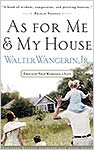
0785266712.jpgAs For Me and My House: Crafting Your Marriage to Last  Walter Wangerin (Nelson) $14.99  This is part teaching, part memoir, typically passionate Wangerin— great stories, by one of our great living authors. Stuff about forgiveness and communication and failure and goodness.  A good discussion guide in the back is beneficial for anyone, couples or small reading groups.  I suppose it doesn’t explain all that a pre-marital course should cover, but it is a wonderful, wondeful book, and a H&M favorite.  I know a pastor who gives it as a wedding gift, and tells the starry-eyed couple to read it in ten years.  I’d say read it now, and every five years for the rest of your life.
 
intimate marriage.jpgIntimate Mystery: Creating Strength and Beauty in Your Marriage  Dan Allander & Tremper Longman (IVP) $13.00  I really loved their bigger book based on Genesis (Intimate Allies) which uses a “case study” approach of marriage problems, and then referring back to the “original plan” in Genesis, but it maybe was a bit much for most folks. So this new one is fabulous, and much more useful since it is more slim.  It uses the framework of “leaving and cleaving” and it is wonderful to see a shrink and a Bible scholar working together like this.  There were, with the previous hardcover edition, a set of Bible study guides for each chapter, which now, in the paperback, are included in the back of the book making it a gem to have.  There is a DVD, too.  Excellent, solid, beautiful stuff.  Highly recommended.
 
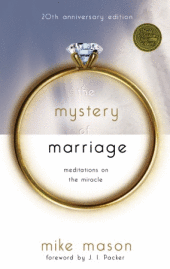
The Mystery of Marriage: Meditations on the Miracle Mike Mason (Multnomah) $13.99 mystery of marriage.gif  Contemplative, rich, thoughtful, deeply spiritual, quite lovely. I cannot say how much I was touched by this beautiful read.  Eloquent and elegant, and just a bit mystical, it may therefore not be for just everyone.  A favorite of many, though;  there is nothing like it in print!  His friend and mentor J.I. Packer writes the tender forward.  Later, get his wondrous collection of brief reflections, The Mystery of Children.
 
Sacred Marriage Gary Thomas (Zondervan) $14.99 This, too, attempts to offer more the “reason for” and “meaning of” like Mike Mason, but it not as deep or richly mystical as his.  Still, this is a wonderful look at the deeper theological and spiritual nature of marriage.  His tag line is “what if marriage wasn’t to make us happy, but make us holy.”  Whew.  Still, he’s not a heavy writer, tells nice stories, and brings this spirituality stuff into the ordinary, daily work of crafting a Godly marriage. There is a companion called Devotions for the Sacred Marriage: A Year of Weekly Devotions for Couples (Zondervan; $14.99; hardcover) too, which is a nice gift to give, or which could be used a resource during the pre-marital time. (By the way, I’d read anything Gary Thomas writes. Amongst his books on spirituality, Christ-like character formation,  even one on enjoying the pleasures of life, he has also written the excellent Sacred Parenting and Devotions for Sacred Parenting which, like the marriage ones, bring a nice blend of philosophic/spiritual stuff and practical stories.)

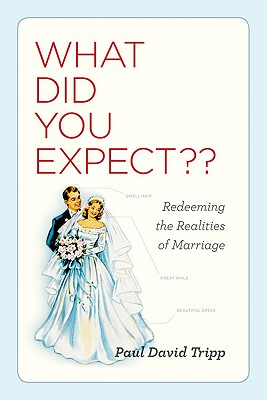
9781433511769.jpgWhat Did You Expect? Redeeming the Realities of Marriage Paul Tripp (Presbyterian & Reformed) $21.99  This is brand new and just in time to offer a significant does of reality to happy couples being married this season, or an offering of great grace to those who are struggling, as we all do, East of Eden.  This is a seriously theological-informed study, yet applied in clear, pastoral wisdom to real people, with real expectations, and real hurts and sins and baggage.  Can God bring redemption to dysfunctional folk like us?  Does the Christian gospel empower us to live more joyfully, even in our aches and sorrows?  Can a Kingdom vision and a Christian worldview help us navigate a healthy and happy relationship?  Some may find Tripp’s strong views about gospel transformation off putting, but for many, it is the wondrous truth of the power of the gospel that is the only reliable foundation for a solid Christian marriage.  Highly recommended.

REL-0065-2T.jpgTo Become One: After ‘I Do’ The Real Journey Begins  Chris Seay & Chad Karger (Relevant) $13.99  You may know Seay as a guru of pop culture; he’s written books on religious questions and insights found in The Matrix, The Sopranos, and, most recently, he did a nice book on Lost.  Here, his down-to-earth style, and his savvy awareness of younger adult culture, and the insight learned from being a third generation pastor (his grandfather and father were Baptist preachers) all combine in an interesting, theologically mature, insightful, a
nd very, very helpful way.  We recommend this book highly, and it seems to appeal well to those who are younger, a bit edgy, who don’t want pablum or cliches, but are eager for Biblically-rooted, practical advise that is authentic and hopeful and witty.  Very nicely done.
 
Gender and Grace: Love, Work & Parenting in a Changing World   Mary Stewart Van Leeuwn (IVP) $23.00 It may not be the first choice for marriage counseling as it is a bit rigorous, but I always recommend it, and truly hope many young folks read it and discuss it. If one doesn’t get this fundamentally right, there will be troubles…I think it is wise and thoughtful, but, admittedly, a bit heady and theological for some folks.  Every pastor should have it though, and foist it on anybody who will go for it.  As you may guess, it recommends a more egalitarian view of marriage and rejects the worldly constructs of stereotypical gender roles.  The sequel, also on IVP Academic,  which is a bit more demanding, is called My Brother’s Keeper? What the Social Sciences Do and Don’t Tell Us About Masculinity (in which, Beth and I are mentioned—ha!)  Very thoughtful.  
 
Marriage at the Crossroads: Couples in Conversation About Discipleship, Gender Roles, Decision Making and Intimacy  William & Aida Spencer and Steve & Celestia Tracy (IVP) $20.00  This is not a simple marriage guide or an easy-to-use class book; not eve a typical textbook.  It is sprawling, diverse, thoughtful, and very (very!) interesting.  These two couples differ in their assumptions: one couple describes themselves as “egalitarians” and the other as “complimentarians.” (For those not familiar with the term, it indicates a more traditionalist understanding of the complimentary role of men and women, using older views of “headship” and such which has arisen in the scholarly evangelical community in reaction to the rise of evangelical feminism.)  Each couple are vibrantly and robustly followers of Jesus, and they are each marriage counseling professionals.  So they bring their own personal marriages and their work as specialists to the table as they work their way through this extraordinary set of conversations.  It is very useful for those trying to figure out what to believe about what the Bible says and what our theological and doctrinal views might be, and it is equally practical, full of daily guidance and example of working out the details of a committed Biblical marriage.

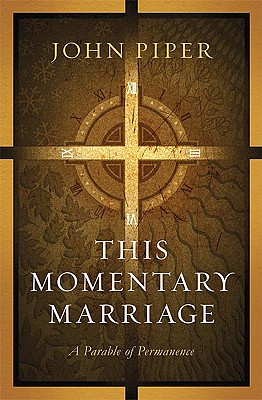
9781433507120.jpgThis Momentary Marriage: A Parable of Permanence John Piper (Crossway) $17.99 I suppose regular readers might know that I do not agree with all of Piper, and yet, I really enjoy reading him, and recommend him always. He is a fiery Baptist with serious commitment to the specifics of the Bible, and he does his tough stuff with a tender heart and a hearty laugh. Of course, if we are to be Biblical people, we simply must deal with the texts (most notably in Ephesians) that talk about mutual submission, and then the ways in which men and women are called to live into the mystery–that marriage somehow signifies the breath-taking glory of Christ and His church.  I do like Piper’s passion, his thoroughness, his deep desire to place everything he writes about (in this case, marriage) in the context of the Christ-exalting, God-pleasing, worth-dying-for faith which makes much of God even as we die to self.  He is a fine pastor, here, walking folk thorough hard stuff, and reflecting deeply on the Bible and practical evangelical living.  I pity the person whose pastor offers cheap cliches of inspiration sentiment or the latest psycho-babble from the pages of a trendy journal.  In these trying times, married folk need this kind of meaty study, and I’d rather take exception to a page or two, than offer something more politically correct that is vapid.  For what it is worth, he has a bit about singleness (he’s for it) and divorce and remarriage (he’s against it.) This handsome little hardback is worth giving (or having on your nightstand) if only for the splendid subtitle which reminds us that marriage is a “parable of permanence.”  

Here is something else that is remarkable about this firm, little book.  Each chapters starts with an excerpt of the truly extraordinary insight of Dietrich Bonhoeffer’s pastoral letter on marriage, known to us as a chapter in Letters and Papers From Prison.  Why not give that as a wedding gift: notes from a dying martyr…whew1  Kudos to Piper, like him or not, for wanting the supremacy of Christ to shine as we do marriage in counter-cultural ways that allow us to fully serve, love, pray and enjoy each other, and the world, for God’s sake.

Why Marriages Succeed or Fail…And How You Can Make Yours Last  John Gottmanwhy-marriages-succeed-or-fail-and-how-you-can-make-yours-last.jpg (Simon & Schuster) $15.00  This is not written from a Biblical perspective, but it emerges from what may be the most important marital research yet done.  Dr. Gottman has pioneered extraordinary methods of observing couples in action, and for 20 years has been documenting at his center/learning lab exactly how couples interact.  His tested methods show exactly what practices and traits are needed for a successful long-term relationship, and exactly what attitudes and habits create patterns that erode a happy marriage.  What he shows here is surprising (frequent arguing itself isn’t bad; financial problems aren’t the worst thing; more sex doesn’t necessarily improve a marriage.)  Gottman notices how habits of making sour faces—signs of contempt—are one of the most reliable indicators of a doomed marriage.

His breakthrough study of over 2000 married couple has lead him to make this remarkable claim that he can predict within 94% accuracy which people will stay marriage and which will divorce.  Coupled with a foundation of Biblical theology and graceful spirituality, I think this kind of secular book could be very, very helpful.

Saving Your Marriage Before It Starts: Seven Questions to Ask Before and After You Marry  Les & Leslie
Parrot (Zondervan) $19.99  Surprisingly insightful, these two authors are very sharp,
and I’d recommend anything they do (and they do a lot!)    This one is obviously most designed for pre-marital use, although I think
anybody could benefit from9780310207481.jpg it.  It is a bit more psychological,
self-helpy and practical that the ones I’ve named above, so I’d recommend it be coupled with some sort
of substantial theology of marriage for a sound foundational framework.
Still, the Parrot’s pick the key topics of handling money, sexuality,
communication and such and offer very helpful insight into how to handle these matters.  It is really very fine, so engaging and useful. There are separate workbook guides
for men and women, too, that can be purchased separately. And, now,
there is a brand new DVD curriculum, too.  Very cool.

 Very, very valuable for some will be another one they did with a similiar title, Saving Your Second Marriage Before It Starts (Zondervan; $17.99) which is arranged in a similarly helpful format, designed for those going through a re-marriage.  That one, too, has workbooks for men and women to do on their own.  Again, it has a most practical flavor and although rooted clearly in the Christian faith, avoids serious Biblical questions regarding the appropriateness of remarriage.  This one offers “nine questions” to answer, geared specifically for those in this awkward sitatuion…

Drs. Les and Leslie have done some other popular marriage and family books, but one
little one that might be helpful is a small, very fun book, The Love
List
(Zondervan; $14.99), which
names things couples should do once a day, once a week, once a month,
and once a year.  A lot of wisdom presented in a clever “check up” kind
of way.  Another invites men and women to “trade places” as they work through the habits of their relationship.  A very recent one documents different personality types and “love language” sorts of things.  We stock all of their work
 
Ten Great Dates Before You Say I Do  David & Claudia Arp (Zondervan) $12.99  These are fun and interactive “dates” that have a “point” or experience built in to then discuss.  What a great idea!  They wrote one years ago for married couples, now revised and entitled Ten Great Dates to Energize Your Marriage (and there is another one called Ten Great Dates for Empty Nesters) which have been so popular, they did a pre-marital one.  Fun and interesting and a good resource to have on hand, even if you don’t do (or have the couple do) all ten in a row.  Some groups have done the dates, and then gathered later to talk about how it went, what they learned, and process the conversations in the book.
 
Sheet Music: Uncovering the Secrets of Sexual Intimacy Kevin Lehman (Tyndale) $14.99book-sheet-music.jpg  We have lots of fairly standard sexuality books—I still love the classic Eerdmans release by Lewis Smedes called Sex for Christians—which is arranged in three units: creation, fall, redemption.  I suspect that his Biblical/theological reflections are still the best. But we list this newer one by the ever-popular and creatively crazy Kevin Lehman because he is so upbeat, well known, and enjoyable to read. Excellent, even if it is pretty racy!   Clifford & Joyce Penner’s Gift of Sex (Nelson; $14.99) is often used for those who have no sexual experiences, who need clinical and instructional information. Very frank and clear.

Real Sex: The Naked Truth About Chastity Lauren Winner (Brazos) $14.99 Especially for those who are not yet or currently married, this is simply a must read; the best on the topic I know of for serious young adults.  Of course, Winner is a hip and serious writer, and her prose shines, her stories are very illuminating, and her broad vision is very solid. Did I say it was a must-read?  A, while you’re at it, get a hold of her other two, her conversion memoir, Girl Meets God and her Jewish-inspired set of spiritual practices, Mud-House Sabbath.

9781567691115m.jpgThe Christian Lover: The Sweetness of Love and Marriage in the Letters of Believers Matthew Haykin (Reformation Trust Publishing) $15.00  I needn’t remind you how profound, deep, and eloquent old letters often are, and this handsome small hardback makes not only a very special gift and keepsake, it is a model of Christ-centered, beautiful renderings of the meaning of marriage.  A few of these are from famous folks, hymn-writers, Puritans, authors.  Most are not.  They are substantial and well worth reflecting upon (even if you aren’t a church history buff.) If you value the instincts of the past, though, this is a real gift. My, my, how folks used to think and write and live.

NEED MORE HELP? 
WANT TO ASK QUESTIONS?

E-MAIL US at read@heartsandmindsbooks.com.  We always reply promptly.

OR click on our inquiry page.

OR click on our secure order form. 


Best Prices Ever on N.T. Wright books!

As I wrote in the last post, The right Rev. Wright was excellent in his lucid and inspiring lecture at Redeemer’s Center for Faith & Word in New York City last week.  Thanks to those who prayed for us—we unloaded the van in an (illegal) parking place that providentially opened up, and we couldn’t have been more glad.  Central Park West is stunning in springtime, and maddening all the time, with traffic and people and all the mid-town Manhattan tension creating a stressful spot to unload boxes and cash.  Load-in was an adventure, but late-night load-out was cool. Thanks be to God, and all who helped.

Now, we’ve got some extra books.  I’ll be candid.  One doesn’t want to run out of books during an author appearance—a blunder we’ve made only a time or two—so we tend to take more books than any reasonable bookseller can hope to sell.  The Wright event did have nearly 800 folks and this new book about virtue is certainly urgent and important.  You may know about the conference about Wright held at Wheaton last week, too (google that and see the lectures and panels) so he is quite the man, these days.  We sold a lot of books, but we have a lot left over.

I’m not ashamed of this, and it isn’t anything cheesy to say we are going to offer a one week “inventory clearance” sale.  We would rather lose some dough selling them at a great savings to you, rather than pay the high shipping costs to send ’em back.  Win/ kinda win, I’d say.

THIS OFFER GOOD UNTIL FRIDAY, MAY 7, 2010. (And while supplies last.)

Here are the items we are selling cheap.  Half off, mostly.  Awww right!

b77ac17aa0d118083416da2c076ffeb3-200x300.JPGAfter You Believe: Why Christian Character Matters (HarperOne) $24.99  sale price$13.00

Surprised By Hope: Rethinking Heaven, the Resurrection, and the Mission of the Church (HarperOne) $24.95  sale price$13.00

Surprised by Hope DVD Six Sessions (Zondervan) $24.99  sale price$13.00

Simply Christian: Why Christianity Makes Sense (HarperOne) $24.95 sale price $13.00

Following Jesus: Biblical Reflections on Discipleship
 
(Eerdmans) $14.00 sale price $7.00

For All God’s Worth: True Worship and the Calling of the Church (Eerdmans) $13.00 sale price $7.00

What Saint Paul Really Said: Was Paul of Tarsus the Real Founder of Christianity? (Eerdmans) $17.00 sale price $9.00

The Lord and His Prayer (Eerdmans) $10.00 sale price $5.00

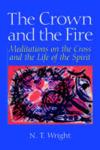
9780802841315.jpgIt is not on sale, but you should know that we now have a rare Wright paperback, an early 90’s set of messages about the Holy Spirit.  It had been out of print for quite a while and we are thrilled to find it is now available again. I read it over a decade ago and loved it.   

The Crown and the Fire: Meditations on the Cross and the Life of the Spirit (Eerdmans) $14.99

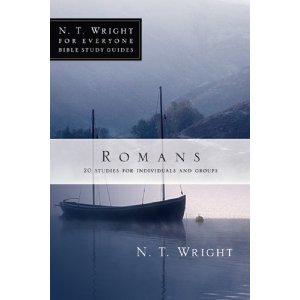
And, while we are at it, you may not know that besides his astute,41YBRSv6lEL._SL500_AA300_.jpg readable “For Everyone” New Testament commentaries, IVP has recently released a set of almost a dozen small group Bible study guides put together by N.T. Wright.  They are called the “N.T. Wright for Everyone Bible Study Guides” and are quite useful little resources for personal study or discussion groups or Bible classes. Most are six sessions and they sell for $8.00.

Of course we stock all other Wright books, and a couple that offer critique of his views.  Drop us a line if you have any questions.

Remember the half-price deal is good for one week only.   We’re acting like a real discount store, here, huh?  Woo-hooo.  Sale time!

Order Here
(link takes you to our secure order form page at the website)

Hearts & Minds 234 East Main Street  Dallastown, PA 17313     717-246-3333

Wright and work

I don’t have time to do much of a review but wanted to post for BookNotes friends a request to keep us in your prayers.  In the next few days we will be at five different events, lugging late, driving through the night, unpacking and re-packing.  When it rains it pours, they say, and this configuration of book-selling opportunities is a great chance to serve God’s people.  And we sure don’t have to face the persecution or shipwrecks of the Apostle Paul on his journeys.  Can you imagine how far that man walked?  And he carried books (well, scrolls and manuscripts) with him.

I bet we’ll cross paths with some of our faithful readers, and we’ll have tons of manuscripts!

Momentarily, Beth, and I will head out the door for Manhattan, selling books at the prestigious Redeemer Presbyterian Church’s Center for Faith and Work.  The speaker is N.T Wright and we are very excited to be with him again.  They expect a big crowd, hosted in a historic building on Central Park West.  We are nervous and giddy with excitement.

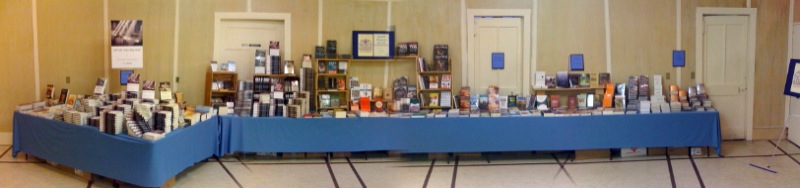
book table photo.jpgAdd this in after Chris Carson took this shot of our set up.  Got it set up in record time!, Wright books and books about vocation, calling, work and witness in the world.  And some Tim Keller resources on the right end, since this was a Redeemer Presbyterian Function. 

This is a very appropriate event for us, since the Center for Faith and Work (who partners with our friends at Cardus to publish Comment, by the way, a journal I sometimes write for) is all about helping people live our their Christian discipleship in the marketplaces and studios and offices of the daily work-world.  They invite and equip folks to honor Christ’s Lordship over labor, helping people connect the dots between Sunday and Monday, between prayer and politics, between worship and work. 

N.T. Wright has longed helped us imagine how the new creation/Kingdom which was launched with Jesus’ resurrection–which he steadfastly argues was historical and bodily—might effect the missional ways of the church of Christ.  That is, how does the mission of God become our mission?  How can our congregations—and church members, scattered throughout the professions and workplaces and social institutions thought-out the week—take up the responsibility of witnessing to the ways of God?  How can we develop a Christian view of work?

Wright’s little book called For All God’s Worth (Eerdmans $10.00) is exactly on this theme.  The first half is about what one might consider traditional worship, and the second half is about worshiping in the world, daily living out the claims we make in our liturgy.

Although it may be missed, his very thoughtful and important small hardback, The Challenge of Jesus (IVP; $18.00) has a section in it inviting each and every worker to think of the implications of faith for his or her disciplines, industry or profession.  (See the section “Retaining and Forgiving Sins.”  He even talks a bit about his own work being “in but not of” the world of higher education, and witnessing there to his Christian perspective.

Simply Christian (Harper; $24.00) also mentions work.  So does his one on the Holy Spirit (The Cross and the Flame, now happily available again.)  I don’t recall, but I bet the one on evil, does, too..  (It at least discussion globalization and such.)  Because he fleshes out the implications of this idea of bodily resurrection and new creation, it is natural for him, it seems.  He rejects a “sacred secular dualism” and lives out whole life discipleship, Biblically-informed and with God’s energy and creativity.

Of course his new one is all about character.  It is called After You Believe: Why Characterb77ac17aa0d118083416da2c076ffeb3-200x300.JPG Matters (HarperOne; $24.99.) We suppose this will be his theme tonight.  It should be obvious that “thinking Christianly” and serving God as agents of gracious renewal within the various spheres and occupations of the marketplace demands more than fresh ideas (although certainly it does include that, new theories, new proposals.)  But it demands new people.  In what ways are our characters shaped into Christ-likeness, and what sort of ethics and values does that create?  Character?  This is a very, very important matter, and Wright tells us why. 

I’ve said before that the book starts a bit slow. Hearing him speak, though, about the ways in which classical virtues (the Greeks and pagan Romans) and uniquely Christian virtues do or don’t overlap and why character is so misunderstood in our postmodern culture, reminds me that this foundation few chapters are very important.  Soon enough, the book explodes into relevance and practicality, as Wright calls us to live with  character, as people of virtue.  We recommend it.  Maybe you could even read it at work!

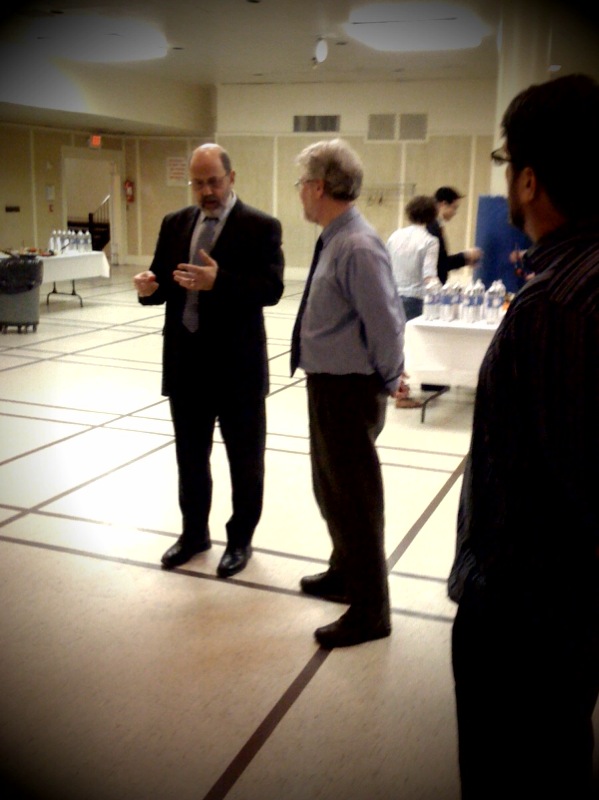
NT Wright photo.jpg
This shows that Tom is animated even in those few moments between speaking to a crowd of 800 and his autographing session.  We were discussing our mutual friends Brian Walsh & Sylvia Keesmaat who had presented at paper at the Wheaton conference on Wright earlier in the week.  I wanted to note that both Wright and Borger endorsed their Colossians Remixed on the back–my name is right there next to his!—, but that seemed a bit of a stretch.  Ha!  I’m hardly worthy to be standing next to him, pestering the poor chap about books and authors when he just needed a 2 minute break before the reception.  Thanks to Scott, too, every lurking around the edges of this crazy work of ours.

Hearts & Minds 234 East Main Street  Dallastown, PA  17313     717-246-3333 

4 Poets (Part 4) L.L. Barkat

In Peter Leithart’s provacative, well-written, witty, learned and altogether orthodox study of what the scholars call hermeneutics (how to read the Bible), Deep Exegesis: The Mystery of Reading Scripture (Baylor University Press), he reminds us that part of learning the “inside” story—the joke, as it were (most jokes, like, say, lawyer jokes, presume some prior knowledge to “get it”)—comes, from, well, spending the time and energy to read the text and pay close attention to it.  The art of interpretation comes from experience.  Ahem! Didn’t I say something like that a few posts ago about poetry? Speaking as much to myself as BookNotes readers, I hinted that we may not “get” poetry because we just haven’t worked at it very hard.  We haven’t read enough, haven’t found the good ones, haven’t invested a bit to develop an eye and ear for it. 

Leithart has one chapter that is curiously called “Words are Players.”   He says that words are characters and have “rich, perhaps contradictory personalities and behaviors and hidden but influential pasts.”   After a bit of good etymological observation from the gospel of John, he asserts that “The Bible is closer to poetry than of linguistics or scientists…how can we hear good news as news if the Bible’s words are not permitted to say anything new?” 

I write this heady stuff to once again say that words matter, that even for the most spiritual among us, the most astute students of God’s Word, language matters.  Poetry matters. 

And, it may not be a long shot to argue that the patience and imagination and playful work it takes to learn the inner vocabulary of an art form—contemporary architecture, Medieval tapestries, iconography, be-bop jazz, and yes, poetry of all sorts—creates a character and disposition that is human and humane.  I hate to sound like your mom telling you to eat your vegetables, but we all know that mom is right about that.  Yup, poetry is good for you.

Is poetry good for your soul?  Can it help shape us into what God might want us to be?

I heard a friend say something like that recently, saying matter-of-factly how she buys a new volume whenever she can.  She herself is a serious Christian, a theologically-aware disciple, and a writer of memoir and story.  She longs for playful juxtaposition of words, cleverly-crafted lines, new sounds, images, similes, metaphors.  My friend is Laura Barkat and in a gleeful and certain way—as if this was very exciting news or as if she was sharing a very important secret— she insisted that poetry is good for her soul.

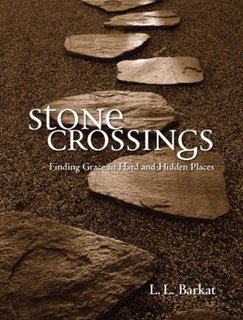
If you don’t know L.L.’s wonderfully written and deeply affecting memoir Stone Crossings:stone_crossings.jpg Finding Grace in Hard and Hidden Places (IVP; $15.00) please read my review of it from a year or so ago.  I was truly blessed by spending time with her reflections, and a few chapters I have read and re-read. Not a few smart writers have given it their endorsements, and one reviewer properly linked her to Annie Dillard.  It is one of my favorite books and she deserves to be known as a very profound writer.

I heard her, at Jubilee 2010 in Pittsburgh last February, doing a talk/reading on her commitment to experience beauty, and it was one of the highlights of a very memorable weekend.  Beauty can be healing and it may take a person who has seen the hardest of times to testify. 

Ms Barkat not only searched for greater beauty in her life, she made a choice to embody a spiritual practice of attentiveness, of being present to creation–in her own backyard, a sliver of space in a pretty urban outskirt of New York city—and to make poems from her observations. 

I committed to sit outdoors every day for at least the time it would take to finish a cup of tea.  It was nothing fancy, mind you; each day for a year, I sat in my back yard under a pine tree.  Having begun the endeavor in winter, Fall was my final season.  I used to think the times of leaves drifting, air crisping, apples ripening was my favorite…Now I am undecided…

“It was nothing fancy, mind you.”  I love that.

I also love her preface in which she suggests that we all might try our hand at this game of making poems. 

Few of us who play with words will become the next  poet laureate, but why should that stop us?  If we can read poetry well, or speak poetry in our normal conversation (which many of us uncannily do), then it might not hurt to try writing poetry too.  At some point I must have decided this for myself.  For better or for worse, you hold that decision in your hands.

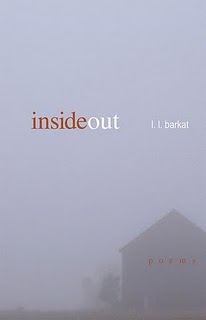
InsideOut.jpgWell, you don’t hold insideout by L.L. Barkat (IAM; $15.00) in your hands, yet, but it is my pleasure to tell you that you ought to consider holding this very book, this fruit of her year-long experience of waiting and watching and writing.  The collection is divided up into four nice seasons, and often the offerings are quite short.  Some are full of colorful imagery of nature—“impossible white tips evergreens blankets dead leaves” or “Furled leaves of wild garlic mustard and, soon, forsythia breakfasts!” or “Light plays upon the pine, dips her in golden oil.”  Yet, these are not back-to-nature Walden tributes to the wild.  Some are just her interaction with her back yard, perhaps a garden, or the neighbor’s dog, or her own sensations, as when she writes of her “eyelashes now saffron pollen freckled, undone.”

In winter, she writes short lines such as, “Blueberry bushes stripped lean, amber crimson against a bronze need bed” and “Snow empties the sky to a bare whiteness, but it fills me, fills me.” 

Some, though, seem to be about things other than what she saw in her year-long, tea-drinking sitting.  A few are about memories, or global concerns (a powerful one about Sudan) and some are about her own inner journey. A few are quite obviously about the mystery of creativity, the arts, her own work as writer, photographer, blogger and cultural agent.

Verse

What is poetry,
she asked, fetching
it to me with full
hands. How could I
answer the woman?
I do not know what
it is any more than
she. I guess it must
be marks on tender
skin, bearers of sin,
cool cups of rain
and bottles of tears
collected on midnight
trains from the eyes
of old men, old women
and infants traveling
to God knows where,
it hangs and is lifted
from our hair
goes onward
and onward speaking
itself, tripping us
as we debark
chewing-gum mottled
metal stairs.

And, as we have seen in the other three great poets I’ve highlighted this week, human suffering and great grief finds (healing?) voice in poems.   Some of these poems are about the sadness of the human condition, but (of course) not generically so.  It is different than reportage, but there are stories here. 

There are hints in the titles.  This one, “Instructions” is for a person, whose name is given.

What to do when a best friend’s husband dies
on the eve of your little girl’s birthday:

Hang up the phone, lean into the counter
in a kind of conscious faint.  Moan.
Moan, a deep cry that comes from a place
you didn’t know existed, tremble,
feel the ice sensation that begins
rising and falling within you like
Northern Lights
shimmering up and down
a midnight sky

The poem continues, with gloriously rich description as in (a poet’s) recipe, as she cooks the birthday meal,  “one glass, one dish at a time.”  Several beautiful stanzas would delight any literary-minded cook, with such lovely descriptions or her utensils and ingredients.

And then this interlude:

Curse the maker
of lawn mowers. Beg the man
to come back and this time decide
upon a nap instead of simple exercise
of back and forth on green, where he has
fallen.  Did fall.  Ask God to turn back time,
if only for this one whose heart has failed
him.  Let it not be so, that he has fallen.

And back to some final instructions for the meal, more good lines, then this:

In the morning, sing happy birthday
to your eight-year-old.  Kiss her on the
cheek and forehead. Hold her to your
chest.  Give her the black-handled scissors
so she may go out into the green.

The birthday sauce will be needing fresh basil, fresh.
And she will go out skipping,
snip it for you at the tender neck.
Put it in your hand with soft, round
fingers.  Toss her head and smile.

Life, indeed, does go on, and beauty–even the beauty of thoughtful words well parsed—can help.  I commend this work to you, this nice little book of experiments with words.  Laura is a kind soul, a good thinker, and one who seems to have a mature awareness of the deeper currents of her own emotions.  Not only does seeing (reading? hearing?) her poetic ruminations on these feelings give us joy for the sheer beauty of the poems themselves (that it, it is art) but we can (I hope I’m not being too blunt) also “get something out of it.” 

Poems are not self-help books.  One doesn’t slap down the payment and demand a unit of insight, a package of advice.  Yet, it pays off, if we must use such a term, as immersion in another’s story, and immersion in her allusive use of imagination and the literary arts, creates in us a way of seeing.  Perhaps a new way, perhaps a (re)newed way.  Either way, art can transform us, usually in subtle nudges.  (I don’t mean to be too blunt about this, but, you know, if the art comes on too forthrightly strong, it probably is bad art.  It is propaganda.  I sometimes tell young religious songwriters, especially, that if they want to preach that badly, get a pulpit or lectern, not a sound-stage.  Of course art can be bold and brave, but most often is must suggest, not say.)

L.L. Barkat does this well.  I think she has a gift, a gift of sight and of vocabulary, which makes her descriptions so wonderful and enjoyable.  She has obviously worked at her craft, but she does have this glorious bundle of words she carries, this tool-kit, this laundry list.  Good writers must, I suppose.  But also, beside her natural gift and her hard work, she did this thing.  She put herself in her backyard and looked and listened, pen in hand.

Introducing the Spring portion of the books she says,

In the semi-urban environment where I make my home, it is hard to embrace solitude for even fifteen minutes.  The culture of the place agitates and urges.  No time for rain (it will muss up your hair for the next appointment), no time to watch Spring’s first blossoms.  Seasons turn and we miss the nuances.  But I had committed to sitting still in my yard and watching.  So I saw things I never saw before…

As we’ve said, she has some great nature stuff going on.  She uses the language of color, of fruit, of fragrance, and it is really enjoyable, better with second and third readings. Bird-watchers will love some of these, as will gardeners.  And, she has some relationship stuff, romance stuff, a few that are a little sexy, even.  What is this about?

Bottled

I am fizzle
fazzle pizazz
snap crackle,
slide your hand
past my red belt
take me by the
ribbed neck
set teeth on edge
flick fluted tin
and, pop!

Kudos to IAM (International Arts Movement) for producing this lovely paperback poetry book, for honoring L.L. as a writer in their movement. (She writes for their fantastic journal The Curator, too.)  She also works managing the remarkable, multi-voiced HighCallingBlogs (of the Laity Lodge folks) and has for years had her own classy website, Seedlings in Stone.

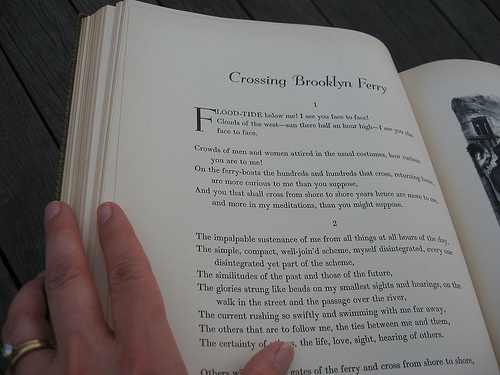
2545722702_9c388d761d.jpg

picture of L.L. reading a poem by Walt Whitman on the Brooklyn Bridge

Thanks for allowing us to tell you about some of the poetry we stock, some of the writers we like (remember that first part of the first post where we named Luci Shaw, Wendell Berry, Mary Oliver and others?)  And thank you even more for allowing us to share some of the lines of four new books, each of them somewhat “under the radar.”  And each by friends of H&M. 

These four are pretty much indie artists and they deserve our support.  Could you perhaps share these reviews with somebody you know who might be interested in thoughtful, faith-shaped poetry?  Could you call together a reading group to read these poems out loud?  Might you considering ordering one or two?  It is National Poetry Month, after all.  Cool. huh?

Kent Ira Groff is a spiritual director whose latest poems are prayers.  You can use it devotionally in conversation with Bible passages.  Lew Klatt is a Calvin College English prof and award-winning, avant-garde poet.  This is serious stuff.   Michele Barnes McClendon  is a brilliant black woman who shares her life with great poignancy and grace. I can’t express how tender some of these are, and how I enjoyed them. L.L Barkat is a professional writer, artist, editor, whose beautiful writing illustrates her practice of seeing well and writing with lovely, striking words.  It may be that for many, her insideout may be the one to start with.  We thank each of these pals, encourage them to keep at it, and thank you, our bookish friends for caring about good lines.  Happy National Poetry Month!

BLOG SPECIAL
10% off

any book mentioned
ORDER HERE
(takes you to the secure order form at the Hearts & Minds website)

Hearts & Minds 234 East Main Street  Dallastown, PA 17313     717.246.3333

4 Poets (Part 3) Michele Barnes McClendon

If you are just joining us, this is part three of a four part series in honor of National Poetry Month.  I’m hoping to introduce Hearts & Minds customers/friends to some other friends of mine—ahhh, that social networking thing—friends of mine who happen also to be poets.  I am unashamed to be promoting these four scribblers, all whose books have come out recently.  First I told you about prolific Kent Groff, formerly of central Pennsylvania and renowned in spiritual direction work, who has done a new book of poems that are arranged around four weeks of devotional reading using some of his Jesuit insights.  Kent is an ordained Presbyterian pastor and wrote these prayer-poems in India.

In the last post I told you about L.S. “Lew” Klatt, who I first met when he worked for the CCO with graduate students at Pitt Law and Pitt Med schools.  He did very moving work, helping them gain a sense of their vocations in law and medicine, even as he schooled them in theology and spirituality.  He encouraged mission work, even among the local homeless, and, no doubt, read to his young friends with whom he was ministering, lots of poems, favorites of his and his own.  It wasn’t long until Lew was clear about his own calling, to pursue the vocation of being an English professor and a writer.  His award-winning collection of serious, playful, unusual verse is called Interloper.  I hope you enjoyed my reflections on it.

 (It is difficult doing this—describing poems, which are often so visceral, like music.  I’m not sure how to encourage folks to buy poetry volumes, so I tell you who these friends are and a bit about their work.  I hope you enjoy it.)

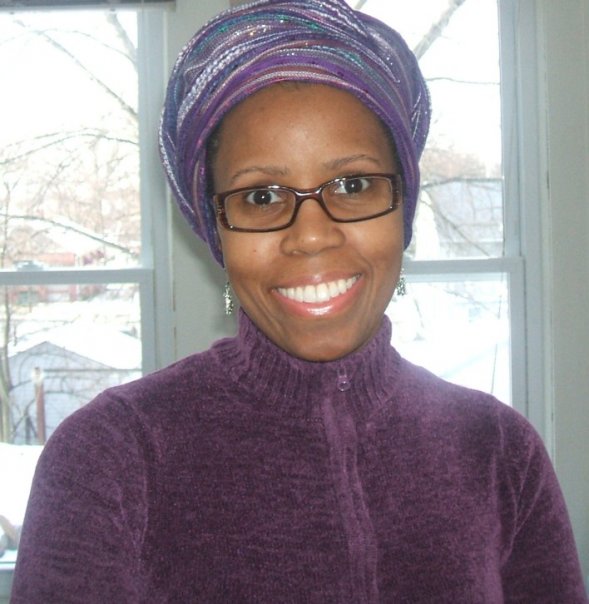
4881_101378799872736_100000018501482_35091_1154938_s.jpgNow I am eager to tell you about a woman who also worked for the CCO for a spell, doing campus ministry in Ohio.  Michelle Barnes McClendon did good outreach for the CCO and I was so glad to know of her efforts working with students, and was sad when she moved on from her campus ministry stint.  However, as she became a blogger, I came to realize what remarkable talents she had, what good writing she did, and although she posts less, now, her mundane stuff about family, kids, food, Jesus, recipes, hubbie….it just glowed.  I think her fine writing inspired me to blog here at BookNotes.  She is a very talented writer, a good wordsmith, and a person of huge, huge integrity.  It should come as no surprise that I think that much of what makes a writer worth reading is beyond sheer talent, but has to do with their character, their vision, their heart.  Ms. McClendon is that kind of a writer, who works hard at her craft, and—in the best way possible—wears it on her sleeve.  Did somebody say something about hearts and minds?  I invite you to listen to this wonderful one minute video clip of her talking about what she learned as a student at Kent State, before being employed by the CCO.  The Ted Schumacher she mentions is one of my oldest friends from college who was an older friend and mentor to me!  

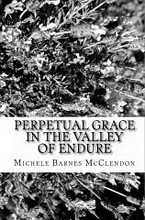
Perpetual Grace in the Valley of Endure Michele Barnes McClendon (CreateSpace; $9.99) is her fine 
ThumbnailImageperpetgrace.jpg recently published collection, and when I got it with a hand-made ribbon marker, I was overjoyed at the sheer gift.  This is what artists do, I know, they give gifts.  They use their gifts—their talent, their heart, their passion—and give it away, like bread in the wilderness. Indeed, my favorite writer about the arts, Calvin Seerveld, has a brilliant essay in a book by the same title, called Bearing Fresh Olive Leaves which tries to capture this radical sense of the contribution of Christianly-inspired art work.  That is the sign of hope the dove brought back from the ark—olive leaves—and they are neither earned nor deserved, but point to a whole new creation.  It is a sheer gift of grace, this God-sent branch of beauty, and we are invited to pass it along, to carry good cultural artifacts into the needy world.  Art is gift.  Michele is a housewife and mom and active in extended family, neighborhood and church ministry, but I don’t think she sees herself as a professional writer or full-time poet.  She did this book as a gift.

She tells us a bit about this in a lovely preface, a well-written and fun story of her wanting to get together some older poems to cheer some friends.  Alas, notebooks and journals had gone missing (surprising for such an organized person) so she had to work anew.  One thing led to another (she tells it better than I) and she ended up creating this book, literally as a gift.  (Girl, what happened to the age-old customer of visiting with chicken soup?  You wrote a book for your friends??!!)  And, I am not kidding you, what a gift it is!  This is doubtlessly the best volume of new poems that I have seen this year.  Some of these were so deeply moving that I fought back tears sitting at the coffee shop; elegant and eloquent, tender and angry, insightful and honest, she narrates her life in charming ways, allusive and imaginative, yes, but utterly clear; clear as a bell.

I recommended Groff’s use of poetry as prayer.  I celebrated Klatt’s energetic aesthetic, his messing with words, sounds, playing in cryptic ways that demand attention to create mature art.  McClendon is a different sort of writer, a poet of the everyday, sharing poigant lines composed that are about mostly obvious things: the betrayal of a friend, loneliness, broken homes, the joy of children, fear, risk, romance, marriage.  She has a sensuously charged worldview, seeing God’s hand in everything, it seems, so she can celebrate the good and the bad.  It sounds like a cliche, and not terribly poetic of me, but these poems really, really, spoke to me.  Her life is interesting and her attention to her inner life and the raw honesty of the work shows her as willing to be vulnerable.  To name this stuff, this longing, this heartache, this joy—it is a blessing to hear, and I salute her.

Michele (as I hinted in a previous post) stands in a grand tradition, and she is well read and studied, especially in the movement of women and men writing intentionally as people of color.  One need not know (but it might help, so get thyself to a bookstore or library if you need to) the names of our best black poets, but she does pay good homage.  In fact, one section of the book (“gravity”) is exactly a collection of tributes to other writers.

In the preface she writes,

When I first began writing poetry at around the age of eight, it was a release for me: a way to comfort my own fears and insecurities.  As I grew, my love for poetry grew right along with me.  In my teen years, I was heavily influenced by such writers as Nikki Giovanni, Gwendolyn Brooks, Langston Hughes and Paul Lawrence Dunbar.  I would sit and read the words of these great poets and, in many ways, I felt deeply connected to them….In my teens I also discovered Toni Morrison’s hauntingly colorful literary style of writing and I fell in love. Later, I read Alice Walker, and I continued to be inspired and write about my world
—and the world of others—which was growing and changing all the time.

Here is a poem that not only pays honor to Toni Morrison, but shows the power of a book, of serious literature, of pressing on for dear insight.  Oh, yes!

“For Toni”

i have read your books
some of the books i must
return to
and read again
must remind myself
again
of your literary mystery
why i am pulled
inward
ushered into a world
of friends
nappy-headed lovers
childhood grief
\religious tones
southern towns
black folks built themselves
after the war
a world of
wounded men
lost women
naked
and
fully clothed words
you bring me
pieces of a puzzle
i think i shall never assemble
but then you creep in
quiet as a reprimanded child
offering a single clue
that stitches
 it all together
some say
you are too difficult to grasp
hop to the point already
but me
i’d rather be lost
in your literary forest
forced to find my way
and
in the end
to understand
to grow wiser
to see deeper
my own self
in a thousand different selves
from a thousand different
worlds
how could i look away
choose the path
of least resistance
for a chuckle at the end
or a mere tear
I choose reflection
contemplation
and a prayer
here
in your world
there is life
and love
and God waiting
and above other things
I choose
these

There are some wonderful poems in a section called “Growing Up Black” that she admits is a bit of a catch-all.  (Besides the ones about other writers, there is a good section about her marriage, and a section on suffering, a topic she knows a bit about.)  Regardless of the reader’s ethnicity, these poems are both insightful as a glimpse into at least this particular black woman’s life, but in many ways, are insightful about any of our lives.   Not all of these are her exact lived experiences as she tells stories of others, too—friends, loved ones, relatives. 

A few of these are about what might be called inner city life, American poverty, some hard stuff going down.  These are not overwrought, but tell of aspects of her experience; one about an uncle with whom she corresponded while he was incarcerated is very moving.

And one that just knocked me over was “I Sang George Benson”

you taught me to respect
my elders
and to properly fear mice
there we were
standing on chairs
at the edge of the living room
hoping that the noise
of our voices
would drive away
the unwanted scurrier
you said
“Sing Michele!
Sing something
Sing anything!”
so I sang George Benson
you sang escape
from a prison
of abuse
and in the spring of 1997
while he was at work
we hopped a greyhound
left our pretty big house
behind
(for his anger to fill)
and settled in
small roach-invested rooms

i sang george benson
you sang struggle

She continues this tale, her mother working, her “unsupervised hair” and the refrain before each short stanza is  you sang pride, you sang men, you sang femininity, you sang alone…there is a twist, as there often is, as she plays on these images–a long tale in a few short minutes.  It ends,

i sang george benson
but you
sang
life

There is a remarkable poem about dating a white fellow, and how they broke up.  It is laden with race and awkwardness, what their respective friends and family may have thought, with Michele sharing great regret.  It is one of the most moving poems I have read, so simple but so true.  As the story unfolds she nears the end and writes

in the end
your departure
was no more a race issue
than with the black men
before you
but
looking back
of course
i’d like to think
i’d handle it all differently now
that id hold my head high
and your hand tight

(Oh, how those last two lines struck me, the cadence and commitment…)

For those who have been in chronic pain or have longed for healing, her hopeful, but realistic poem “Healing” is a great gift.   

healing don’t come
with a command
God gimmee it
make my grass grow green
like Charlotte’s…

After great, great lines of other stunning word-play and theological insight, she continues,

make me want to cry
that I can’t earn it
but
make me grateful
too
and sometimes
just sometimes
healing don’t come at all
and in the ache of it all
there is healing
(to some degree)
just not like you thought
not the healing
make you run wild
and forget God
but small enough
make you remember

There are light-hearted poems in Perpetual Grace…, lovely ones for her husband, great odes to loving mentors, brown skin, fine food, good days.  As with the best work, usually, there is particularity—she talks about specific events or certain failings or specific stories of her life—that then allow for some universal insight from the reader.  Yes, these are her tales, and we thank her for allowing us into her life with such poignancy.  (M: were you scared to put this out there?)   And, yes, we can all ponder life’s moments, reflect on our loves and losses,  our longings for justice, and personal stories,  it will “make you remember.”

 As we do, we come, through God’s grace working through (un)common work, a great insight.  She names it in a poem dedicated to her father-in-law, where the last lines are these:

we are
miraculous tales
of a whimsical glory
we scarcely
knew
we
owned

20063_107293065947976_100000018501482_196923_4061505_n.jpg

We stock these and other poetry books in our bookstore, of course.  Tomorrow, I’ll offer part 4 of this “4 poets” series.  It is a beautiful book by a writer who I am really, really fond of.  

Hearts & Minds  234 East Main Street  Dallastown, PA  17313     717-246-3333

4 Poets (Part 2) L.S. Klatt

Yesterday I wrote a brief invitation to consider poetry—not just the idea of it, but to actually invest in and read some poems.  I quickly gave the old shout out to a few of our favs, and then described the first of four friends  (ahhh, how ’bout that alliteration?) who have each recently published poetry volumes.  I wanted to tell you about these because they are friends and we would love it if you supported them—sort of like going to the verbal deli and asserting, right out loud in front of everyone, “I’ll take a pound of poetry, please.”   These are most likely writers you don’t know about, so we’re doing our cool thing of letting you know.

Also in yesterday’s post I shared a few poems from the first of the four,  Kent Ira Groft, from his lovely devotional book rooted in the Ignatian spiritualilty method, poems he happened to write while on a retreat and sabbatical in India, Facing East, Praying West (Paulist; $12.95.)

Now, I want to tell you about two very different writers, both who used to work for the Pittsburgh-based CCO (Coalition for Christian Outreach) doing innovative and thoughtful evangelism and disciple-making in the context of higher education.  You probably know that I worked for the CCO decades ago and Beth and I continue to serve them as book-sellers, speaker, trainer, cheerleader.  CCO is doing great work linking local churches to near-by campuses and it is in this capacity of lay ministry with young adults that Lew Klatt and Michele Barnes McClendon became friends of mine.  To say that I admired their ways with students, their fidelity to the gospel, and their good work with CCO is an understatement.  I can vouch for their integrity, their passion, their ministry, and their well-read, bookish disposition.  It doesn’t surprise me that both have been writing for a while; they have been poets in word and deed for years.  It doesn’t surprise me that both are now published poets.  And, while CCO didn’t intentionally shape their literary stylings, it did shape their worldview.  I would say that, happily, these are both integrally Christian, but not usually overtly so.  To swipe the old gal’s line, they “tell it slant.”

First, Dr. L. S. Klatt, known to friends as Lew.                                  

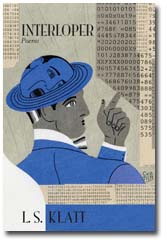
Interloper: Poems by L.S. Klatt (University of Massacusetts Press; $14.95)
klatt.jpg
Lew now teaches in the English Department at Calvin College (Michigan) and has been having his work published in prestigious journals for some time now.  He is doing a workshop at the famed Calvin Festival of Faith and Writing this very weekend, and perhaps some of those talks will be recorded or shared. He is dear, dear guy, incredibly smart, and may more than the other three friends I’m celebrating in this column seem like the caricature of a bohemian poet (as long as folks don’t know that he went to seminary, too.)  That shaved head and long goatee; the cool delivery, the English prof job.  Yep, he’s got the coffee-house cred.  And his work is informed and demanding.

One critic and fellow writer, Dara Wier says,

There are cows of higher mathematics in Interloper’s pages.  Invention, imagination, thinking invited to test what is new, what hasn’t been imagined—-these are given pride of place in Klatt’s poems…The book is a field guide for any mind exercising to learn unknown transfers and connecting combinations.

klatt_228.jpgThe image of poet as interloper (who traffics where perhaps they don’t belong) is important, here. (The word is from a Whitman line in the epigraph.)  He is here sticking his curious nose into everything—from Native American landscapes to modern car crashes, from contemporary commerce to homage to Walt Whitman.  One poem is called Chicago (with a nice nod to Sandburg) while another is Nebuchadnezzar and the Paparazzi and yet one is The Leek as Bazooka  I liked one curiously called The Beet as a Bloody Tenet.  I don’t think I’ve ever read a poem with “quinces from Persia” before.  And I know I’ve never hear a poem called ekphrastic.

Crazy stuff, this free verse, odd sounds (beyond Hopkins), meditative discourses, a line from Jonathan Edwards, another a riff on a painting I’ve not heard of, and a few inspired by a journal entry from Emerson.  Mostly, though, he is being creative; doing art.  Here is a line from the back that I love as much as any in the book: (for Klatt) “words are musical and versatile, more about play than utility, and he therefore seeks to dislocate language to freelance and maneuver, to alter common sense on the way to new sense.”   

Careful reading pays off, though, eventually, with some new visions, indeed:

pears become guitars, racks of ribs are presented as steamboats, and helicopters transmute into diesel seraphs….in symbols that scat and ricochet, the interloper scores a new song, one that composes—and decomposes—on the page.

Interloper won the prestigious Juniper Prize for Poetry and it is a thrill to announce that this important Amherst publisher saw Klatt’s work worthy of serious publication.  One may not understand all these lines. (Ha!  One will not!)  I wish I could reproduce some here, but there are squiggles and 8-balls and pi signs and Chi-rhos and games of hangman and the darndest stuff one ever saw in verse.  I don’t think it is merely frivelous, although it is allusivity gone gonzo.  He plays with words, with sounds, with lines, with images, so many images– I am left speechless and wondering.  Man, this is a piece of work, deeply moral, somehow, God-drenched and weird.

Some, I really don’t get. Some were so cryptic that I had to laugh, and yet wanted to
“do it again” like a kid dizzy from spinning.

 And then was the awful line, the one I knew to be about the death of my father in a horrible car wreck, and my pain; even here, it isn’t exact or representational, and I know Lew and his loved ones have also experienced excruciating grief.  The tears that well up even as I write are for you, too, my friend.

                The husk of his car
crumpled like a Coca-Cola
can. You stick your head in
the front (passenger) door
& pick through Ovid
& Aristotle covered with
pulverized glass
like sapphires
like sugar
The library is open
& how you remember
your father at a time like this
is excruciating fire
& smite.  The world
is aluminum & how you know
is because
                you are the car
& no one (no one else is)
driving

Hearts & Minds 234 East Main Street  Dallastown, PA  17313  717.246.3333

4 Poets (Part 1) Kent Ira Groff

Books about books are favorites of mine, and books about words are a real book geek’s delight.  I am even excited about the academic study In the Beginning Was the Word, a God-centered philosophy of linguistics, by Reformed mathematician cum theologian, Vern Poythrus (Crossway; $25.00.)   I’ve raved before in these pages about the truly beautiful Caring for Words in a Culture of Lies by Marilyn Chandler McEntyre (Eerdmans; $18.00.)  She reminds us of the power of words, about truth, but also about beauty and charm.   Of course Eugene Peterson, especially in his collection of essays and interviews, Subversive Spirituality (Eerdmans; $26.00) has a few great chapters on the power of fiction, and the joys of poetry.  He believes that those who love the Bible ought to also love words, and that our poets and fiction writers are among our best allies as we learn to read, and to care about language.  He is blunt in his frustration that most pastors say they are too busy (or too theological or too spiritual) to read novels.  Calvin Seerveld in Rainbows for the Fallen World (Toronto Tuppence Press; $25.00) has a chapter on how deepening our allusive imagination could help us (among other things) read the Bible better.  And many of the wonderful chapters in a book we named as one of the books of the year last year, Bearing the Mystery: Twenty Years of Image Journal, edited by Gregory Wolfe (Eerdmans; $30.00), make, in serious and thoughtful prose, paintings, poems, and interviews, this exact point.  

I am not very schooled at poetry—I had an e e cummings paperback as a kid and my dad used to read Tennyson out loud, but that’s about it— and much of it frankly doesn’t interest me.  Some of that is my fault, I confess—one needn’t work so hard reading luminous prose from a good memoirist, and there is more immediate feedback if you follow the narrative—and I suppose most of us could admit to not spending enough quiet time ruminating on the word play and joy of our poets.  (Of course some of it is not our fault—there are a lot of bad poets, who are either overly sentimental and schmaltzy or overly cryptic and off-putting.  But take heart: there are good ones, that are playful and allusive and meaningful and fun.)

I just started Poetry in Person: Twenty-five Years of Conversation with America’s Poets edited by Alexander Neubauer (Knopf; $27.95.)  It includes sparkling exchanges about their work, about why we should care, about the state of our artistic culture, and (as in most interviews) a happy blend of the curious and the profound.   There are details about drafts and there is advice about craft.  Mostly, though, you get to eavesdrop with poets who are considered some of the best of our age.  I am sorry to admit I didn’t know most of them. 

Better, though. here in National Poetry Month, is to read some poets.  I could tell you about many we’ve got in the store, many obscure or lesser known (Ron Jellema has a recent one, and he is known in some Christian circles, at least; we occasionally get some orders for Scott Cairnes who has recently done some good writing that isn’t poetry.) And there are some ways “into” poetry  by some who are rightly famous.  For instance, we have a great daily devotional called 40 Days With Gerard Manley Hopkins for those who like his stunning wordy style.  It is just wonderful!  There are the excellent anthologies compiled by Billy Collins (or any of his own accessible work; Ballistics just came out in paperback) or Garrison Keillor’s chosen favorites, Good Poems, which is a great one-volume introduction to meaningful poems that can buoy the spirit.  We are glad for the new paperback version of Mary Oliver’s latest The Truro Bear…, and we always recommend the always-popular selected collections of Wendell Berry.  (Oh, how we celebrated a year ago when his Mad Farmer Poems were finally re-issued handsomely by CounterPoint, in a large sized, gift edition, lavishly illustrated with engravings by Abigail Rorer.)  I hope you know the good work of Luci Shaw, one of our favorites and best sellers.

The 2008 Pulitzer Prize in poetry went to Philip Schultze and he just released a new collection of old and new poems (The God of Loneliness) and I’ve been browsing through a West Virginia poet named Maurice Manning that has been liked to Mr. Berry, whose book is called  The Common Man.

A great, great way to learn about poetry and the ways it can enrich us is to learn from those who have been touched by certain poets or their work.  I often recommend  Teaching With Fire: Poetry That Sustains the Courage to Teach edited by Sam Intrator & Megan Scribner (with an introduction by Parker Palmer) published by Jossey-Bass ($16.95) or Leading From Within: Poetry That Sustains the Courage to Lead, also edited by Sam Intrator & Megan Scribner (Jossey-Bass; $19.95.)

These two may be just what you need: the editors asked teachers, and then, more generally, leaders, to name a poem that has helped them endure their hard word, poems that have inspired them, poems that they found helpful as they from time to time revisit why they do what they do.  Great clippings poured in, teachers and leaders shared remarkable poems, and remarkable stories as to why these verses helped them.  Their little testimonials are offered, and then the poem itself.  I have found the stories about the work to be as interesting to me in some cases as the poems themselves, although the explanations really helped open up the riches of the words.  Nice!

Allow me to introduce you to four volumes of poetry that I have been reading and re-reading recently.

 I will do this in four parts, sharing about each one in the next few posts.

These four are each quite different, and (I admit happily) that all four are friends.  I guess that was why I was firstly drawn to them, as I know the faces and voices of each.  The first is written by a seasoned spiritual director, whose books on spirituality are often enhanced by his fine exegesis of poems or his own simple verse, who has now written a poetical guide to spiritual discernment. One is the work of a professor of English and poetry, and his book is published by a prestigious poetry house; the third poet is a housewife who has recently self-published (and should, I’d say, get herself an agent and become big and famous in the small pond of poets, cause she is that good.)  The last I will tell you about is the first published volume by an established memoirist, a spectacular writer, whose book was published by IAM [International Arts Ministry.]  It is their first effort publishing a book, and we are thrilled to promote it.

Come on folks, follow along.  This is going to be fun.  First: Kent Ira Groff.

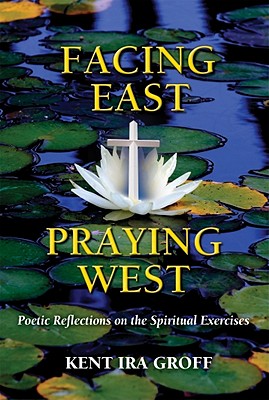
Facing East Praying West: Poetic Reflections on the Spiritual Exercises  Kent Ira Groff (Paulist Press) $12.95  Almost anyone in central Pennsylvania who has followed the rise of ministries of spiritual direction knows about Oasis, and Kent’s leading work in this deep field.  He’s written before, books about the inner journey, a book about congregational life that is imbued with a deeper spirituality, a wonderfully evocative book for men and a very interesting book about the spirituality of writing.  Here, he gives us poems he wrote while in India, alongside guidance from the famed Exercises of Ignatius, and a Bible passage on which to meditate. 
9780809146284.jpg

Does this stand alone as a poetry book, worthy to be celebrated in National Poetry Month?  Yes, I think it does.  However, for better or worse (for better, in my book) these lovely works are linked to his passion to help others in spiritual formation.  Yes, he was hanging around Anthony De Mello, yes he was in India, and yes these are arranged as a guide through four weeks of the Jesuit discernment stuff.  But mostly, these are prayer guides, lovely words created to help us ponder the riches of life and faith and give voice to ponderings one might have in conversation with the Biblical text.  Use it as a devotional, or read them as poems in their own right.  I cannot commend this enough because I think for many of us, we will warm to the power of poetry when we see it connected to our deepest spiritual concerns.  And, also for many of us, our prayer lives could use some imagination, some zest, some playfulness and some way to connect spirit and life.  Kent Groff is experienced as an aid and fellow traveler on this journey.  Let his avocation of artistic word-play help you appreciate poetry and prayer.

Here is his reflection from Week Two which is themed “Incarnation.” It is called Luke’s Good News.  He writes out Luke 12:22 and then this:

Try this for Christology:
Lord Jesus as you show
us to life life from below
    cradle manger,
     pulpit  boat,
     temple mountain,
eating bread at others’ tables,
befriending Prodigal and Samaritan,
not a place to lay your head,
     gambled robe,
     Roman cross,
     borrowed tomb,
still rising from the dead,
revealing friend in stranger,
known in breaking bread,
giving life forgiving love:

Now I raise doxology:

Let me treasure how I borrow
life today to love tomorrow.

Kent offers a similar incarnational reflection a few pages later, one called Love and Pain, inspired by Luke 7:47.

My young Chinese artist
host plays music on his car radio.
I like it and ask, “What are the words?”
He pauses—
                     “Love and pain.”

How is it life’s one cosmic soup
of love and pain?
Someone with pain of rejection
loves forgiveness’s restoration.
Jesus parties
with folks with little—yet wastes
it all for love—and ends
with not a thing.

Love and pain–
then love—
life’s song.  Again…
    
Many BookNote readers, I’d guess, have often pondered Mary’s Song from Luke 1.

Here is Kent’s poem Revolutionary Magnificat

This Magnificat is revolutionary:

When a Nazi army encircled an Austrian village one Holy Saturday
(but did not consider what day
the next would be)
and church bells rang
Easter hymns at dawn,
the enemy army (thinking many troops had gathered
overnight) fled with
Alleluias at their heels.

Our praise will be the thing
wherein we’ll catch
the consciousness of the king,
bring peace instead of warring ways.

I was very touched by one called Healing Wounds  which is part of the Week Four portion on “resurrection.”  The devotional text is John 20:26, after which the poem appears.
Groff-2.jpg
I tried for years
to heal with scars,
but love’s wounds run
deep.  Then One appeared
who knows such pain
as will remain
forever open
yet life giving,
all forgiving

“Peace be with you,”
came Love’s refrain.

I will gladly
keep these wounds
if you will only use
my vulnerable Self as strength
for giving others
faith and hope and love at length.

Kent Ira Groff is a good guy, a friend of Hearts & Minds, and I think a thoughtful, yet accessible wordsmith.  His vocation is helping others become more aware of God’s presence and how to live transformed lives for the reign of God.  He trains other spiritual directors and is respected among those who work in that field.  Yet, from the very first time I met him, selling his Alban Institute book in Red Lion, PA, I knew he had a poet’s heart.  He resonates with St. John of the Cross and other mystical poets.  He often adds his own verse in his books.  Here, at last, is Kent doing this—his gift, as gift.  We think you might find it both enjoyable and useful. 

Next up:  a college prof who is an old CCO friend, whose new work is, uh, complicated. For reasons I’ll explain, one of them made me bawl. And another former CCO campus minister who stands clearly and powerfully in a grand tradition of black women poets.

Hearts & Minds  234 East Main Street  Dallastown, PA  17313     717.246.3333

Globalization, student development, and Somewhere Down the Road with Amy Grant

Thanks to friends at Geneva College (Beaver Falls, PA) who allowed me to speak briefly at their sociology department forum on globalization last night.  I had the great opportunity to supplement the interesting and insightful lectures, video pieces, and small group conversation with some hearty suggestions on books that help us live in this shrinking/stretching world, the hot-wired world Friedman called flat.  I described basic stuff on global justice issues like Rod Sider’s Rich Christians in an Age of Hunger, to the insightful study of how the ideology of idolatry works to drive the inter-connectedness of the most urgent problems of our age, Hope For Troubled Times, by Bob Goudzwaard, Mark Vander Vennen & David Van Heemst, and Subverting Global Myths, the seriously profound and highly recommended critique by Sri Lankan evangelical Vinoth Ramachandra. We displayed more than a dozen different books on various aspects of the globalization phenom, and it was great to expose younger Christian students to semi-scholarly Christian books or activist guides to help them as they think through the implications of transforming faith in the 21st century. 

And further thanks to the student development office who allowed me to preach to their professional staff—resident life people, career guidance staff, outdoor education leaders, health care providers and counselors, multi-ethnic specialists and the campus ministry team who all conspire to help students “weave together belief and behavior” in Steve Garber’s memorable phrase (which is the subtitle of Fabric of Faithfulness.)  I talked about defining moments in my life, key Biblical texts and theological “aha” moments that have pushed me to be a cheerleader for the integration of faith and the Christian mind, thinking about vocation and calling, reading as an act of Kingdom fidelity, and the transforming/worldviewish “life is religion” perspective that animates us here at the bookstore.  I asked if they–mature Christians at an evangelical institution of higher learning–have had formative times and helpful places where they’ve been guided into how their faith impacts their understanding of the institutions and settings in which they work.  (What would you say?  Has anyone asked you how you’ve come to think about your own calling and career? What does it mean to “image God” in your own work?  Have you ever read a Christian book about your particular passion or vocation?)

And, yep, somebody was counting how many books or authors I cited or alluded to the hour lecture—from Jamie Smith to Andy Crouch to Derek Melleby & Don Opitz, Calvin, Luther, Kuyper, King.  Nearly 20, not the least of which was the amazing new book Souls in Transition: The Religious & Spiritual Lives of Emerging Adults by researcher Christian
Smith (Oxford University Press; $24.95.)

In the last meeting I participated in, I spent some time with a few valiant leaders who are helping foster conversations on campus about community involvement, service learning, social transformation, and justice advocacy as part of spiritual formation and theological witness, which is one of the tasks of their Center for Faith and Practice.  My own less-than-stunning forays into public action became the jumping off point into talking about how best to sustain wholistic ministry that cares about word and deed (Good News and Good Works as Ron Sider’s book puts it.)  There are quite a number of resources that can be used–DVDs and Bible study booklets and brief books that are designed for reading clubs or discussion groups and we are glad some of their folks may be using some of them. 

I suppose it shouldn’t surprise anyone that one of the things that comes up–in talking with youth, young adults, or any other cohort or generation—is the deep question of how to sustain healthy practices of serving, even standing up for social change, being prophetic, subverting the idols, rocking the boat, without growing overwhelmed, cynical or jaded.  The Bible says not to grow tired of doing good. Isaiah 58 promises that those serving the oppressed will have intimacy with God as God shows up for us.  Yet our world is full of brokenness, our lives are touched by sadness, and often our views of faith development and our experiences in church don’t particularly honor this human side of life East of Eden.  What do we do with all this pain? 

I drove the 5 hours home excited about book-selling, glad to have shared ideas and resources for integrated Christian lives, lives that make sense and are coherent, informed by the Biblical story.  But I was haunted by my own weariness, the sadness of disease and injury and disappointments, even close to home. (Please, please pray for my neighbor Marc who is in critical care after a motorcycle accident.)

Somewhere 2.jpgI put on the new Amy Grant album, Somewhere Down the Road.  Think what you will about Amy as a symbol of CCM, but she is a smart, smart almost middle aged woman, a fine pop singer, and a substantial thinker.  There have been tons of cheesy evangelical pop and not a few vapid, inarticulate evangelical stars, but, with a few exceptions, Amy has avoided the schmultz and has produced a serious body of entertaining and artful pop music.

Her new album is a thematic one, about life as journey, about “road” as metaphor, and about the ups and downs of life under the sun.  It is not quite Eccelsiastes, but she has named her own pain and broken-ness before, and this record includes some of those older songs (one in a bare acoustic version) that are in what Francis Schaeffer called “the minor key” of Christian art.  For many of us, the hard stuff is not so minor, but a fairly major aspect of our lives.  Not enough of the most popular Christian music admits that.

The first song made me cry.  I had to pull over.  Simply put, it says that our cries and laments and miseries are, to God’s ears, “better than a hallelujah.” 

Perhaps that is a good part of what I was saying at Geneva.  In a globalized world of complexity (both delightful and dangerous) and injustice, our human-ness matters.  God cares for the suffering.  As student affairs staff come alongside young adults in their journey of faith, they come across significant pains and losses and griefs, and God can be found in these hard times; we are, as Nouwen memorably put it, “wounded healers.”  And, yes, as we mentor folks to do the hard work of wholistic ministry, being missionally-minded Good Samaritans,  we must encourage them to cry out, to know that–like in the Bible–God hears the cry of the suffering.  Lament and fear and tears may be, “better than a hallelujah sometimes.”

Here is a lovely youtube video somebody made to this brand new Amy Grant single, “Better Than a Hallelujah.”  It is a very sweet song, a wise set of lyrics, and a touching slideshow.  It is worth watching (and we would love to see your comments—post ’em as a “comment” at the Booknotes blog if you care to.)

Here is a youtube video of Amy talking for few minutes about the concept of her new album.  You may enjoy hearing her describing her interest in roads and life as journey. [I have to admit that I rolled my eyes a little when I realized there was a song about hopping a train–the beautifully coiffed Amy, for crying out loud—but the darn thing works, the tongue-in-cheek “What’s the Chance of That?” cracks open the song along with the killer harmonica.]  The album has a few great songs (and includes a pretty hip track sung with her daughter, Sarah and one cleverly co-written with Mindy Smith about not being critical of others .)

You can read her description of the record here.

We have the CD, of course.  It sells for just $13.99.  You can order it from us here.

Thanks for your support, buying books and music from us, which allows us not only to sell good stuff, but to go out on the road sometimes, bringing encouragement and resources and energy to folk doing the hard work of serious ministry. It is a privilege to partner with them, and it is a privilege to sell books to those–perhaps like you–who are on the journey “somewhere down the road”, and who know that God hears you in the ups and downs, just like Ms Grant sings—“into the arms of love.”

Hearts & Minds 234 East Main Street  Dallastown, PA 17313     717.246.3333